


Abstract
The economic viability of news organizations underpins public access to information, yet media sustainability research has mostly asked how the media report on sustainability, not whether news media can themselves be sustained. We map how the economic sustainability of news media is conceptualized in 518 Web of Science and Scopus publications (1987–2026), retrieved through a keyword search and a targeted search of three core media-economics journals, combining bibliometric indicators, NMF topic–modeling and cosine mapping onto five a priori dimensions. The field has grown by 11.5% per year over the last decade, is anchored in media-economics and media-management journals and remains nationally fragmented (16.4% international co–authorship). Its mapped core is economic and institutional: platform dependency (39%), the economic value of news (14%) and revenue models (11%), with business models as the most central theme and 31% of the corpus unmapped. The social pillar is weak: neither journalistic labor nor audience relationships emerged as a topic, and audience vocabulary was absorbed by a broad platform-related topic. AI-related research shows no statistically significant concentration in any dimension (Cramér’s V = 0.09); its share reached 33% in 2025, and an exploratory projection points to about 41% by 2029, although the post-2020 trend is not statistically significant.
1. Introduction
According to The State of Local News: 2024 Report (Metzger, 2024), the United States alone has lost more than one-third of its print newspapers since 2005, newsroom positions (reporters and editors) have declined by more than 60%, and in the past year alone newspapers closed at a rate of almost two and a half per week. These developments have led to the emergence of areas where, as of 2024, almost 55 million people have limited or no access to local news. The crisis is not confined to the United States. In Spain, newspaper sales revenues fell by 14.2% and advertising revenues by 42.9% between 2007 and 2010, while online advertising accounted for only 13.5–16% of companies’ revenues, indicating that digital income was far from sufficient to offset print losses (Casero-Ripollés & Izquierdo-Castillo, 2013). Similar pressures have been documented in China, where declining advertising revenues hit commercially oriented titles hardest (Wang & Sparks, 2019), and in Zimbabwe, where mainstream publishers have turned to digital platforms to generate new revenue (Chiridza & Mare, 2026). Reader revenue has not filled the gap either: across 20 richer markets, only 17% of respondents paid for online news in 2024, a share that had remained unchanged for four years (Newman et al., 2024). The economic crisis facing news media is therefore no longer a marginal issue but a structural problem that directly threatens access to democratic information.
1.1. Revenue Models and Alternative Financing
Academic and industry attitudes, decisions and responses to the economic crisis facing news media generally remain framed around individual interventions. However, it must be acknowledged that structural problems cannot be resolved through isolated initiatives. A review of some studies in the literature also reveals that the problem remains evident: most of these studies appear to be devoted to evaluating how direct strategies to generate revenue from readers work in practice. Herbert and Thurman (2007), in their field study of online editors and managers of national newspapers in the United Kingdom, report that none of the websites examined charged for general news content; instead, charging was limited to brand-specific content, such as columnists’ articles and archives, while advertising remained the dominant source of revenue. Another group of researchers, Kammer et al. (2015), found, through a survey of Politiken.dk readers in Denmark (n = 1054) and a focus group study, that the key factor determining willingness to pay was not the amount of the subscription fee but rather the reader’s principled attitude toward the idea of “paying for news”. The same study found that younger readers were less willing to pay, but that this reluctance decreased in models that allowed readers to personalize the content. A similar finding was confirmed in the U.S. context: Goyanes et al. (2023), using a two-wave panel survey (n = 1338/511), found that news consumption on social media positively influenced payment behavior over time, while media skepticism had a negative effect. Indeed, studies focusing on digital revenue diversification also present this issue from a more holistic perspective. Vara-Miguel et al. (2021), examining 2874 active digital news sites in Spain, found that 74.5% of the sites relied on only one or two revenue sources, with advertising being the predominant source (85.8%). In contrast, traditional-origin, national-scale and specialized news outlets had significantly more diversified revenue structures compared with digital-native, local and general-interest sites. On the other hand, crowdfunding and nonprofit models represent a distinct area of intervention. Carvajal et al. (2012), by compiling a database covering 77 crowdfunding initiatives worldwide, demonstrated how pioneering platforms such as Spot.us, launched in 2008, helped popularize a model of financing journalists through direct reader support. Westenskow and Carter (2021), examining The Salt Lake Tribune’s transition to 501(c)(3) nonprofit status, argue that this model offers both financial advantages for local newspapers and considerable potential for producing high-quality journalism. Nonprofit journalism more broadly has been analyzed as a response to market failure that creates new dependencies on funders (Konieczna, 2018), and Pickard (2020) argues that the market has never supported the level of journalism that democracy requires, which moves the debate from business strategy to public policy. Aitamurto and Lewis (2013) demonstrated how the use of open APIs in four major news organizations (The New York Times, The Guardian, USA Today and NPR) accelerated research and development processes and thus created new revenue opportunities for these organizations. Similarly, C. Cook and Sirkkunen (2013), who examined 69 digital-native news ventures across ten countries, found that the long-tail model partially explains the economics of niche journalism but, in contrast, does not fully capture the complexity of platform- and B2B-based revenue streams. The Spanish data discussed above illustrate the crisis underlying these efforts (Casero-Ripollés & Izquierdo-Castillo, 2013). Taken together, these studies show that digital revenue has not replaced print revenue, that revenue diversification remains limited and uneven, and that readers’ willingness to pay depends more on attitudes and habits than on price.
1.2. The Economic Value of News
Beyond specific revenue strategies, a further strand of research asks what value news creates and for whom. Drawing on the Norwegian case, Olsen (2021) conceptualized the relationship that local newspaper organizations establish with readers and the community as an “integrated value creation model” that blends business, social responsibility and reader satisfaction perspectives. Thus, Olsen demonstrated how revenue streams operate within a “three-sided market” structure consisting of government subsidies, readers and advertisers. The empirical basis for this model can be found in the interviews conducted by Olsen and Solvoll (2018) with 22 sales and commercial directors from 20 local Norwegian newspapers. Paywall implementations simultaneously pursue a protective “braking” strategy focused on existing subscribers in the reader market and an “acceleration” strategy in the advertiser market based on collecting user data (Olsen & Solvoll, 2018). These individual attempts to find solutions are also evident in strategies aimed at reducing content production costs. Bakker (2012), by examining how “content farm” and aggregation models have contributed to the proliferation of low-paid or unpaid journalistic practices, highlights the economic sustainability challenges faced by news organizations in the context of digitalization, pressure to reduce content production costs, labor, content aggregation and automation. Siles and Boczkowski (2012), critically reviewing the literature on the newspaper crisis, argue that the manifestations of its causes and proposed solutions should be examined systematically. The pursuit of economic sustainability in news media is not a new phenomenon; with digital transformation, the ways in which news organizations adapt to economic pressures have also changed. In this context, Cornia et al. (2020), based on 41 interviews conducted at 12 newspaper and broadcasting organizations across six European countries, argue that the traditional distinction between editorial and commercial activities has become increasingly blurred. They note that, alongside the commitment to preserving the professional autonomy of journalism, a new approach has emerged that emphasizes interdepartmental collaboration and commercial thinking to ensure the organization’s economic viability. This transformation has also prompted a critical examination of the different revenue models and financing mechanisms adopted by news organizations to ensure economic sustainability. Schauster et al. (2016), based on 56 qualitative interviews, found that native advertising has the potential to deceive readers when it becomes indistinguishable from editorial content and thus threatens the credibility of journalism. Indeed, a critical body of literature questioning the actual effectiveness of paywall models has gradually emerged. Myllylahti (2014) questions whether paywalls always deliver the revenue they promise in practice. Furthermore, the impact of public funding on media independence constitutes a separate axis of debate (Dragomir, 2018). Public funding does not, in itself, make media independent, because governments can use it to keep media in line. Publicly funded outlets also face competitive pressure towards “mainstreaming”. These studies indicate that the value of news is negotiated not only between publishers and paying readers but also with advertisers, funders and the state, and that each source of revenue carries its own risk to editorial independence.
1.3. Platform Dependency
The shift of advertising to digital intermediaries does not affect all publishers equally. Based on 104 interviews conducted across six provincial-level press groups in China, Wang and Sparks (2019) demonstrated that the decline in advertising revenues accompanying digitalization hit commercially oriented titles hardest, whereas party newspapers found new, state-linked sources of funding, thus shifting the balance between editorial independence and economic sustainability away from independent journalism. Usher (2019), meanwhile, argued from a place-centered framework that the scale logic of the digital advertising economy and platform algorithms (Google, Facebook) systematically disadvantage local news organizations while favoring national and international media outlets. Another important strand of research concerns the monopolization of distribution channels by Big Tech companies. Meese and Hurcombe (2021) demonstrated how Facebook’s algorithmic governance directly affects the traffic and revenue structures of news organizations. Examining the institutional consequences of this dependency by analyzing the Facebook traffic received by 32 major Australian news organizations and more than 2 million Facebook posts between 2014 and 2020, Bailo et al. (2021) found that the effects of Facebook’s January 2018 algorithm change were diffuse rather than concentrated, alongside declining news sharing and variable referral traffic. Iosifidis and Andrews (2020), meanwhile, discuss how internet intermediaries can be regulated beyond the framework of media policy. Pavlik (2013), by contrast, argues that the viability of news media depends on innovation guided by research, free expression, accuracy and ethics, while Nielsen and Ganter (2022) analyze the relational and productive power of platforms over publishers, revealing the contemporary dimensions of this dependency. Studies of automated news production (Diakopoulos, 2019) and of AI in the news (Simon, 2022, 2024) suggest that this dependency is now extending from the distribution of news to its production.
1.4. Journalistic Labor
The economic crisis of news media is also a crisis of the labor that produces news. Aggregation and content-farm models have expanded low-paid and unpaid forms of journalism (Bakker, 2012), and journalism increasingly takes place beyond the stable newsroom employment that once defined it (Deuze & Witschge, 2018). Comparative research shows that journalists have come to accept precarity as a normal part of their profession (Örnebring, 2018), and survey evidence identifies job precariousness as a multidimensional condition (Rodelo et al., 2024). These pressures are unevenly distributed: women journalists in Ghana face gendered labor inequalities and economic vulnerability (Anchirinah & Zirugo, 2026), and freelance reporters in Turkish digital newsrooms experience similar precarization (Uzunoğlu, 2018).
1.5. Audience Relationships
Reader revenue depends ultimately on the relationship between news organizations and their audiences. Willingness to pay is shaped more by readers’ principled attitudes toward paying for news than by price (Kammer et al., 2015), and the share of paying readers varies considerably across countries (Fletcher & Nielsen, 2017). Journalists’ conceptions of their audiences shape how they pursue them (Nelson, 2021), and in local journalism the value created for readers and the community is integral to the business model itself (Olsen, 2021). From this perspective, audiences are not only a source of revenue but also a condition of the continuity of journalism.
1.6. Research Gap and Analytical Framework
These approaches, which are widely reflected in the literature, demonstrate that the economic sustainability of news media is not an isolated problem that can be resolved by fixing a single mechanism. However, whether this assumption has been systematically tested in the literature remains unclear. Particularly in the current era, where generative artificial intelligence permeates the news economy in all respects, whether these interventions should target a single channel or the entire system remains an open question and a research gap. Bibliometric analysis offers a powerful tool for systematically mapping such a multidimensional and fragmented body of literature. Pan et al. (2023) demonstrated the power of this method in rendering a fragmented field visible by revealing productivity and citation trends, country/institution/author collaboration networks and keyword co-occurrence alongside thematic evolution analyses through a corpus of publications retrieved from the Web of Science. However, for such analyses to have scientific value, the criteria for type, focus and data collection must be defined transparently. Kraus et al. (2022) provide a pragmatic framework for this need for transparency and replicability by systematically addressing the criteria for type (systematic/non-systematic), focus (domain/theory/method) and data collection (database selection, keyword strategy, quality filtering, etc.) that must be considered when designing literature reviews as standalone studies.
Sustainability is, in general, an overarching concept concerned with the responsible use and management of resources, and it functions as a unifying framework that promotes intergenerational wellbeing (WCED, 1987; Muniz et al., 2023). This study, in turn, addresses the issue of the economic sustainability of news media. The economic sustainability of news media, in brief, refers to the capacity of news organizations to generate, over time, sufficient and sufficiently diversified resources to finance the production of journalism without compromising their editorial independence (Picard, 2011; Cagé, 2016). This definition differs from financial performance in a narrow sense in two respects. First, it concerns the continuity of the journalistic function rather than the profitability of the firm. Second, it recognizes that economic viability is intertwined with the social conditions of news production, namely the labor of journalists and the relationship established with audiences; the sustainable journalism approach does not treat these conditions separately from the economic pillar. Accordingly, the sufficiency and diversification of resources correspond to the revenue models and economic value of news dimensions, and the continuity of the journalistic function depends on platform relations, journalistic labor and audience relationships, whereas editorial independence is a normative condition that cuts across all five dimensions and is not operationalized by a separate dictionary. In particular, the book “What Is Sustainable Journalism?”, written by Berglez et al. (2017), addresses the concept of sustainable development together with its environmental, social and economic dimensions through a more holistic approach. In the book, the economic sustainability of the traditional field of journalism is evaluated in the context of the development of digital journalism, which incorporates the reader into the system as a content producer. Sustainable journalism, in this sense, is defined as a form of journalism that offers the means to meet the information needs of present and future generations of newspaper readers (Berglez et al., 2017). In addition, the main problem that Berglez et al. (2017) emphasize is not so much how the sector can transform and renew itself in a period in which the dynamics of news–making are rapidly changing, but rather “how the existing business model can be transferred to the digital world”. This point is highly important because, from this perspective, sustainable journalism practice also directly overlaps with other concerns about the future of global journalism (Van Leuven & Berglez, 2016; Reese, 2016).
Existing bibliometric studies on media and sustainability focus on how the media cover the Sustainable Development Goals (e.g., Alwan et al., 2025), whereas this study examines the economic sustainability of the news media themselves. Existing reviews of media business models, in turn, predate the platform and AI era (Siles & Boczkowski, 2012), focus on a single mechanism in a single market, such as paywalls in Spain (Soria-Salvador, 2026), or analyze subscription business models across industries (Sharma & Sijariya, 2024); this study complements them by covering revenue, platforms, the value of news and AI in a single map.
Beyond this difference in focus, existing bibliometric studies in both strands also share methodological limitations. They typically rely on a single database, remaining limited to descriptive co-word mapping rather than predictive NLP techniques and do not provide a quantitative projection for the future of the literature. This study, by contrast, focuses on the news media sector, combines WoS and Scopus, statistically maps a priori dimensions (three economic dimensions, namely revenue models, platform dependency and the economic value of news, and two social dimensions, namely journalistic labor and audience relationships) on the basis of cosine similarity using NMF-based topic modeling and provides a cross-validated (LOOCV) projection of the share of generative AI up to 2029. Although these two strands of the literature have developed separately, no comparable bibliometric/NLP study focusing specifically on the news media sector, with an emphasis on economic sustainability/business models and using combined WoS and Scopus data, has been identified. This study aims to provide an empirical foundation for addressing this question by examining the literature obtained from the Web of Science and Scopus databases (N = 518 after a keyword search, a targeted search of three core media-economics journals, deduplication, contextual screening and a classifier-assisted screening audit) through bibliometric methods and NLP-based topic modeling (non-negative matrix factorization, NMF). The extracted themes are mapped onto a priori dimensions regarding the economic sustainability of news media (revenue models, platform dependency, the economic value of news, journalistic labor and audience relationships), developed from the literature reviewed above, using cosine similarity, thereby revealing the structure and thematic evolution of the research area in question. Furthermore, the growth trend of the sub-theme associated with generative artificial intelligence is statistically tested and a cross-validated (leave-one-out cross-validation, LOOCV) projection up to 2029 is provided. This study contributes to the existing literature in four respects. First, while most studies in the field rely on a single database and are generally limited to qualitative methods, this study offers a Python-based, reproducible quantitative approach that combines two databases. Second, unlike existing bibliometric studies that focus on the media’s contribution to the Sustainable Development Goals (SDGs), that is, its role in news coverage, this study places the media’s own organizational economic sustainability at the center of its analysis. Third, the role of generative artificial intelligence in news media revenue models including mechanisms such as content licensing, revenue-sharing agreements and the transformation of traffic sources constitutes a growing sub-theme that has not yet been systematically mapped in the literature. Finally, in terms of methodological transparency, the number of topics (k) was selected according to a predetermined rule based on NPMI coherence, Jaccard stability and topic balance criteria, while the projection model was selected based on cross-validation (LOOCV) error rather than the Akaike information criterion (AICc). This approach aims to prevent, from the outset, the issues of arbitrary selection of k and unvalidated projections, which are frequently criticized in bibliometric and NLP-based studies.
Concrete examples of this sub-theme are becoming increasingly prevalent in the literature. For example, Nam (2024) examines copyright debates surrounding the training of large language models on news content from a cultural political economy perspective and discusses how publishers may either create a new revenue stream through content licensing agreements or suffer losses in copyright revenue. Caswell (2024) demonstrates how large language models are transforming news production workflows by using the case of BBC. Marconi (2020) examines the integration of artificial intelligence into news production processes within a broader framework, while Dodds et al. (2026) investigate the impact of generative artificial intelligence on the professional authority of journalists. Whether research on revenue models, platform relations and the economic value of news is progressing along independent lines or should instead be understood as different facets of a single interconnected system is a question that determines both the conceptual maturity of the field and where interventions concerning generative artificial intelligence should be focused. The question of whether generative artificial intelligence is penetrating a single dimension (e.g., only content production or only licensing) or permeating the system as a whole reflects the same uncertainty; without clarifying this distinction, policy recommendations may risk being either unnecessarily narrow or overly broad.
The study also examines how the weight of these dimensions has changed over time. Because annual shares fluctuate with journal volumes and special issues, this change is examined across three periods rather than individual years. The periods follow turning points in the news economy. The first period (1987–2009) precedes the mainstreaming of digital news, when the economics of news was still largely the economics of print newspaper markets. The second period (2010–2022) begins after the 2008–2009 recession, when the decline of print advertising accelerated and publishers turned to digital revenue, paywalls and platforms (Casero-Ripollés & Izquierdo-Castillo, 2013; Chyi, 2012). The third period (2023–2026) begins after the public release of ChatGPT in November 2022, which brought generative AI into news production and into debates on content licensing and copyright (Caswell, 2024; Nam, 2024).
In this connection, the study seeks answers to the following research questions:
- (Q1)
- What are the publication volume and growth trend (compound annual growth rate, CAGR) of the literature over time and what are its key bibliometric performance indicators (productive countries, journals, authors and citation impact)?
- (Q2)
- What are the main thematic clusters identified through NMF and how are these clusters mapped onto the a priori dimensions of the economic sustainability of news media?
- (Q3)
- How has the relative weight of these sustainability dimensions in the literature evolved across three periods (1987–2009, 2010–2022 and 2023–2026)?
- (Q4)
- When did the sub-theme associated with generative artificial intelligence emerge in the literature, at what rate has it grown and how is this growth distributed across the sustainability dimensions?
- (Q5)
- What does an exploratory, cross-validated projection suggest about the share of AI-related publications in the period between 2027 and 2029?
2. Materials and Methods
2.1. Data Collection and Screening Process
The dataset of the study was obtained from the Web of Science (WoS) Core Collection and Scopus databases through two complementary searches. The first was a keyword search covering the title, abstract and keyword fields (the topic field for WoS and the TITLE–ABS–KEY field for Scopus):
Keyword search: (“sustainab*” OR “viability” OR “business model”) AND (“journalis*” OR “news media” OR “news industry” OR “newspaper*” OR “online news” OR “digital news” OR “local news” OR “news organi*” OR “news publish*” OR “news outlet*”) AND (“revenue” OR “subscription” OR “advertising” OR “paywall” OR “generative AI” OR “AI licensing”).
Because research on the economics of news does not always use the vocabulary of sustainability, a second, targeted search was conducted in three core media-economics and media-management journals (Journal of Media Economics, International Journal on Media Management and Journal of Media Business Studies). It combined news terms (“journalis*”, “news”, “newspaper*”, “newsroom*”) with revenue and business model terms (“revenue”, “subscription*”, “paywall*”, “business model*”, “monetiz*”, “willingness to pay”, “membership”, “philanthrop*”, “donation*”, “advertis*”, “pric*”, “circulation”, “funding”, “financ*”, “generative AI”, “AI licensing”).
The first two journals were verified to be fully indexed in both databases (Journal of Media Economics: 512 Scopus and 564 WoS records; International Journal on Media Management: 221 and 343). A version of the keyword search without the newspaper and news-organization terms had retrieved only three records from these two journals; the extended news terms and the targeted search were added to close this gap. Both searches were limited to records published up to 2026.
The searches retrieved 1160 raw records (keyword search: 549 Scopus and 280 WoS records; targeted search: 156 Scopus and 175 WoS records). Automated deduplication based on DOI and normalized title left 753 unique records, which were screened individually at the title, abstract and keyword levels; two further duplicates (bilingual title variants) were identified during screening. Records were included when they addressed the revenue, business models, financing or economic condition of news organizations. Records were excluded when they concerned other media sectors only (e.g., film, music, magazines or cable television), analyzed news content or advertising discourse without an economic focus, or fell outside media altogether; trade and professional magazines (17 records) were excluded as non-peer-reviewed sources. To audit the consistency of these manual decisions, a supervised text classifier (TF-IDF unigrams and bigrams with class–balanced logistic regression) was trained on the titles, abstracts and keywords of the 751 screened records and evaluated with 10 × 10 repeated stratified cross-validation, averaging the out-of-fold inclusion probabilities. The classifier agreed with the manual decisions for 90.7% of the records (Cohen’s κ = 0.77; balanced accuracy = 0.88; ROC AUC = 0.96) (Cohen, 1960; Brodersen et al., 2010). The classifier served only as an audit; all final decisions were made manually. All discordant records were re-examined: ten initially included records were reclassified as off-topic (e.g., general media-industry texts, a media-ethics textbook and a news recommender-system study) and two initially excluded records on newspapers’ revenue models were included. The final corpus therefore comprises 518 records (see Supplementary Materials; 419 retrieved by the keyword search, 30 of them also by the targeted search, and 99 by the targeted search only; even with the extended news terms, the keyword search retrieved only two of the 39 Journal of Media Economics records), which formed the basis for all bibliometric and natural language processing (NLP) analyses; the screening log, all decisions with their reasons and the audit script are available in the Zenodo repository. It consisted of 417 journal articles (80.5%), 55 book chapters (10.6%), 20 conference papers, 13 reviews, six books and seven other records (proceedings papers, editorials and records indexed as both article and book chapter). No restrictions on language, document type or publication year were applied; the corpus spans 1987–2026 and is predominantly in English (462 records), followed by Spanish (34) and Portuguese (13). Records other than journal articles were retained deliberately. Scopus indexes not only journals but also books, book series and conference proceedings, and the Web of Science Core Collection also covers proceedings papers; all book chapters, books and conference papers in the corpus were retrieved from Scopus, and the 13 reviews are review articles published in journals. Including these document types follows the aim of mapping the field as a whole rather than its journal literature alone. Part of the research on the economics of news, particularly on the Global South and on generative AI, is published in edited volumes and handbooks (e.g., on digital journalism in South Asia, on media viability in sub-Saharan Africa and on generative AI in African news media); excluding it would under-represent these regions and the most recent research. Records that are not journal articles or reviews number 88 (17.0% of the corpus). The dataset was frozen on 30 October 2026.
Studies on environmental sustainability and the SDGs were excluded manually. These studies examined how the media communicate sustainability (e.g., the representation of COP25 sponsors in the Spanish press) rather than how news organizations finance themselves. A subsequent search of the final corpus for terms such as environmental, climate, SDG and ESG flagged 23 records, all of which address the economics of news, with environmental terms appearing only as background. In addition, 21 records address news alongside other media sectors, such as magazine publishing, broadcasting or podcasting. These records were retained because they also discuss the funding of news organizations; Section 3.6 reports the results obtained when they are excluded.
2.2. Bibliometric Indicators
To examine the change in the number of publications over the years, the annual growth rate (Equation (A1)) and the compound annual growth rate (CAGR; Equation (A2)), calculated separately for both the entire period and the most recent ten–year period, were used, following Santha Kumar and Kaliyaperumal (2015). All formulas are reported in Appendix B (Equations (A1)–(A23)). To account for the growth of the databases themselves, the corpus CAGR for 2016–2025 was compared with the CAGR of all social science documents indexed in Scopus (subject area SOCI) over the same period.
Journal and author names were normalized by converting them to lowercase, removing diacritics, harmonizing “&” and “and” and trimming whitespace to prevent duplicates arising from differences in capitalization, accents and spacing. Author names were additionally matched on surname and first given name after harmonizing hyphenation, and three remaining variants (e.g., “Carvajal Prieto, Miguel” and “Carvajal, Miguel”) were merged manually; all merged variants are reported in the Zenodo repository. This procedure reduced 216 raw journal tags to 202 unique journals and 861 raw author name variations to 828 unique authors. The degree of concentration of the literature around core sources was evaluated within the framework of Bradford’s Law (Bradford, 1934). The journal-level analysis was conducted on 514 records as the journal name field was blank for four records. The overall corpus size (N = 518) was kept unchanged for all the other analyses. The journals were ranked by the number of publications and the cumulative number of publications was divided into three equal zones (core, middle and dispersed) and the observed numbers of journals per zone were compared with the theoretical 1:k:k2 distribution, obtained based on the k = Zone2/Zone1 ratio, using a chi-square goodness-of-fit test (Equation (A3); df = 2). A significant chi-square result should be interpreted as indicating that the observed distribution across the zones does not conform to the theoretical 1:k:k2 ratio and deviates statistically significantly from this ratio.
Author productivity distribution was modeled within the framework of Lotka’s Law (Lotka, 1926) using both ordinary least squares (OLS) regression (Equation (A4)) and the exact maximum likelihood estimator for a discrete power law, obtained by numerically maximizing the Hurwitz-zeta likelihood (Clauset et al., 2009) (Equation (A5)); the latter was preferred because log–log OLS estimates of power-law exponents are known to be biased (Clauset et al., 2009).
As a descriptive check of the power-law fit, the maximum deviation between the empirical and estimated cumulative distribution functions was reported using the Kolmogorov–Smirnov statistic (Kolmogorov, 1933; Smirnov, 1948), computed on the discrete cumulative distribution function at each observed productivity level (Equation (A6)).
2.3. Topic–Modeling and Sustainability Dimension Mapping
The abstracts of the publications (or the title, for the six records without an abstract), after the removal of publisher copyright statements, were transformed into a numerical document-term matrix using term frequency-inverse document frequency (TF-IDF) weighting with smoothed inverse document frequency and L2 row normalization (Salton & Buckley, 1988) (Equation (A7); min_df = 3, max_df = 0.4, unigrams and bigrams, English stop words removed; all 4048 terms meeting these criteria were retained).
The resulting matrix was decomposed into k latent topics using non-negative matrix factorization (NMF) (Lee & Seung, 1999) (Equation (A8)).
The number of topics (k) was determined by screening the range k = 3–10 and jointly evaluating the normalized pointwise mutual information coherence score (NPMI; Bouma, 2009) among the 10 highest-weighted words of each topic (Equation (A9)) and the Jaccard stability score (Greene et al., 2014) (Equation (A10)). For each k, NMF was fitted with four independent random initializations. Stability was computed as the mean best-match Jaccard similarity between the top-10 word sets of the topics obtained in these runs, and coherence was averaged over the same four runs, so that both criteria refer to the same set of solutions (single-initialization values are reported in the Zenodo repository).
The final k was selected with a rule fixed before inspecting the topics: among the solutions whose Jaccard stability was at or above the median of the sweep and in which no single topic absorbed more than 40% of the corpus, the solution with the highest NPMI coherence was retained. k = 3 was excluded because a single topic absorbed 56.2% of the documents and its stability (0.73) fell below the median (0.79), k = 4 and k = 5 because their largest topics absorbed 50.8% and 42.3% of the documents, and k = 8, 9 and 10 because their stability (0.75, 0.68 and 0.74) fell below the median. Of the two remaining candidates, k = 7 had the higher coherence (NPMI = 0.193, SD across initializations = 0.007; Jaccard = 0.823; largest topic share = 31.7%), whereas k = 6 performed slightly worse (NPMI = 0.188; Jaccard = 0.865). Both solutions produced the same set of assigned categories (Section 3.6). The final seven-topic model was fitted with deterministic NNDSVDA initialization (see Figure 1).
Figure 1.
Topic-count (k) selection: coherence, stability and balance. NPMI coherence is averaged over four random initializations. k = 7 was selected as the most coherent solution among those that met the stability (Jaccard at or above the median) and balance (largest topic share at most 40%) criteria (NPMI = 0.193; Jaccard = 0.823; largest topic share = 31.7%); the dotted line marks the selected solution.
The five a priori dimensions were derived from three strands of research in media economics and journalism studies. First, news organizations have traditionally operated in a dual-product market, that is, a two-sided market. In this context, they sell content to audiences and audience attention to advertisers (Picard, 2011; Doyle, 2013; Rochet & Tirole, 2003). The erosion of this model and the search for reader revenue, paywalls and diversified income define the revenue and business models dimension (Chyi, 2005; Myllylahti, 2014; Vara-Miguel et al., 2021). Second, the platformization of news distribution has made publishers dependent, in terms of reach and revenue, on search engines, social media and, increasingly, artificial intelligence infrastructures (Nielsen & Ganter, 2018; Poell et al., 2019; Simon, 2022); this constitutes the platform dependency dimension. Third, the question of how valuable news is to audiences willing to pay, to advertisers and, more recently, to artificial intelligence developers seeking training data forms the basis of the economic value of news dimension (Hamilton, 2004; Fletcher & Nielsen, 2017; Nam, 2024). This value is of critical importance, particularly when considered in terms of the relationship between the digital economy and the concept of sustainability. The concept of the “digital economy”, which began to spread from the 2010s onwards, refers to the field of economic activities in which digital technologies such as mobile phones, the internet, computers and tablets are used (Rosário & Dias, 2023). The digital economy has created new areas of problems and tension for traditional media and journalistic practice. In this context, in line with the sustainable journalism approach, which argues that the economic crisis of journalism cannot be considered separately from its social conditions (Berglez et al., 2017), two social dimensions were added to the study: journalistic labor, covering newsroom employment, precarity and automation (Deuze & Witschge, 2018; Bakker, 2012), and audience relationships, covering engagement, trust and the community ties on which reader revenue ultimately depends (Nelson, 2021; Olsen, 2021). Generative artificial intelligence, on the other hand, was treated not as a sixth dimension but as a cross-cutting category, because it can simultaneously affect revenue, platform relations, the value of content and labor (Simon, 2024; Peña-Fernández et al., 2023). Each dimension was operationalized through a keyword dictionary determined on the basis of this literature (Appendix A, Table A1). The design therefore combines two steps. Topics were extracted without supervision. They were then mapped onto five dimensions developed from the literature review, using a supervised, dictionary-based procedure. The dictionaries played no role in extracting the topics and served only to assign them. The dimensions are analytically distinct, but they are not mutually exclusive.
Each topic was mapped onto five a priori dimensions of the economic sustainability of news media (revenue models, platform dependency, the economic value of news, journalistic labor and audience relationships) and a generative AI category. Each dimension was represented by a keyword dictionary projected into the same TF-IDF space as a pseudo–document, and each topic was assigned to the dimension with which its topic-term vector had the highest cosine similarity (Equation (A11)). The minimum similarity threshold was set at 0.10, and topics falling below this threshold were classified as “Unmapped (context)”. The robustness of the threshold was tested through a sensitivity analysis over the range 0.05–0.25: the generative AI assignment held across the whole range, the revenue models assignment up to 0.20 and the economic value of news assignment up to 0.15, whereas the two platform dependency assignments held only up to 0.10. The robustness of the a priori framework itself was tested by repeating the mapping for every k in the screened range. Across k = 3–10, journalistic labor was never the best-matching dimension of any topic, and audience relationships became the best match only at k = 3, where a single topic absorbed 56.2% of the corpus. Journalistic labor vocabulary was most similar to the generative AI topic (0.353 in the final model), but this similarity was driven by four AI-related terms in the labor dictionary (automation, augmentation, human–AI collaboration and AI-assisted); without them it fell to 0.045. The broad platform-related topic was almost as similar to the audience dictionary (0.105) as to the platform dependency dictionary (0.106); without the subscriber and user-data terms, its audience similarity rose to 0.113, which would have reversed the assignment. Full sweep results are available in the Zenodo repository. The seven topics identified by NMF were labeled on the basis of their highest-weighted terms: news media, business models and platforms (T0); generative AI (T1); newspaper industry and markets (T2); local news (T3); paying for online news (T4); native advertising and branded content (T5); and publishers and platforms (T6) (see Section 3.6). The topic-term vector of each topic was then compared with the six dictionaries (the five a priori dimensions and the generative AI category), and the topic was assigned to the dictionary with the highest cosine similarity, provided that this similarity reached 0.10. This procedure assigned two topics to platform dependency (T0 and T6), one to revenue and business models (T5), one to the economic value of news (T4) and one to the generative AI category (T1), whereas two topics (T2 and T3) remained below the threshold and were classified as unmapped. No topic was assigned to journalistic labor or audience relationships, and the broad topic T0 was almost as similar to audience relationships (0.105) as to platform dependency (0.106) (Section 3.6).
2.4. Keyword Network and Strategic Diagram
In the keyword co-occurrence network, author keywords were first harmonized by merging spelling variants and singular/plural forms (e.g., “newspaper”/”newspapers”, “paywalls”/”paywall”, “advertizing”/”advertising”) and synonymous AI terms (e.g., “LLM” and “ChatGPT” → “generative AI”). Edges with weights below 2 were removed, the network was restricted to the 55 keywords with the highest weighted degree, and keyword clusters were identified using greedy modularity optimization (Clauset et al., 2004). Node size was determined by weighted node degree (Equation (A12)).
The density (internal cohesion) and centrality (connectivity with the rest of the field) of each keyword cluster were calculated using Equation (A13), based on the strategic diagram approach of Callon et al. (1991). External edges refer to connections with keywords outside a given cluster, whereas internal edges refer to connections among keywords within the same cluster.
2.5. Generative AI Trends and Projection Analysis
A publication was classified as AI-related when its title, abstract or author keywords contained at least one of the following terms: “generative AI”, “GenAI”, “artificial intelligence”, “AI” (as a standalone token), “AI-generated”, “AI licensing”, “ChatGPT”, “large language model”, “LLM”, “machine learning” or “automated journalism”. This dictionary-based flag, which identified 46 records (8.9%), is independent of the NMF topic assignment; nevertheless, 28 of the 29 records assigned to the NMF generative AI topic were also flagged by the dictionary, indicating convergent validity between the two procedures. For brevity, figures refer to this category as generative-AI-related, although the dictionary also captures broader AI terms such as machine learning and automated journalism. The trend in the share of publications related to generative AI was tested using the rank-based Mann–Kendall test, which does not require assumptions of linearity or normality (Mann, 1945; Kendall, 1975), with the variance of S corrected for tied values (Equation (A14)), separately for the entire period and for the subperiod beginning in 2020. This distinction serves as a precaution against the risk of artificially inflating the significance of the long sequence of zeros at the beginning of the series. The magnitude of the slope was complemented by the robust Theil–Sen estimator, which is resistant to outliers and small-sample noise (Theil, 1950; Sen, 1968) (Equation (A15)).
For the projection for 2029, two functional forms—linear regression (Equation (A16)) and a logistic (saturation) growth model (Equation (A17))—were compared across three different time windows (the last 5 years, the last 7 years and from 2020 onward). Because the first AI-related publication appeared in 2020, the last-7-years and from-2020 windows coincide (2020–2026); the six model–window combinations therefore correspond to four distinct fits. The partial-year value for 2026 was retained because the indicator is a within-year share rather than a count; its influence is examined in Section 4.2.
In the selection of the model, the corrected Akaike information criterion (AICc) (Hurvich & Tsai, 1989) (Equation (A18)), which can be highly sensitive to the window width in small samples, was considered as a secondary indicator. As the primary selection criterion, leave-one-out cross-validation error (LOOCV RMSE; Equation (A19)), which directly measures actual out-of-sample prediction accuracy, was used. This choice was justified by the fact that AICc may remain sensitive to the window width when n is small (5–7), whereas LOOCV directly measures actual out-of-sample predictive performance.
The selected model’s 95% prediction interval (Equation (A20)) was calculated based on the residual variance of its own window. Because the Mann–Kendall test specific to the post-2020 subperiod did not reach statistical significance, the projection results should be interpreted as descriptive/visual in nature. They are not claimed to be based on a formally validated trend.
2.6. Statistical Tests
The conformity of the Bradford zone distribution to the theoretical ratio, as well as the distribution of publications related to generative artificial intelligence across sustainability dimensions, was assessed with the chi-square goodness-of-fit test (Equation (A3)) and the chi-square test of independence with Cramér’s V (Equation (A21)) as a measure of effect size, respectively. In the second test, publications for which generative artificial intelligence was the dominant theme were excluded from the analysis to avoid the risk of circularity. When a substantial proportion of the expected cell counts fell below 5 (Cochran’s rule), the results were checked with a Monte Carlo approximation of the Fisher–Freeman–Halton exact test (Freeman & Halton, 1951), in which 100,000 tables with the observed row and column totals were simulated (Equation (A21)). Differences in the distribution of categories between periods (Section 3.8) were tested with the same chi-square test of independence.
The difference in citation impact across sustainability dimensions was examined using the non-parametric Kruskal–Wallis test on the publication-age-normalized citation rate (citations divided by the number of years since publication, counting 2026 as one year), accompanied by the epsilon-squared effect size (Equation (A22)), comparing five groups (the three economic dimensions, the generative AI category and the unmapped category).
For records indexed in both databases, the higher of the two citation counts was used and the author affiliations of both records were combined. Country names were extracted from the affiliation fields and standardized against the ISO 3166 country list. The level of international collaboration was reported using the international collaboration rate (ICR; Equation (A23)), defined as the proportion of all publications (N = 518) containing authors from at least two different countries.
All the analyses were conducted in a Python 3 environment using the pandas, scikit–learn, SciPy, NetworkX and pycountry libraries (the full code is available in the Zenodo repository, see Supplementary Materials).
3. Results
3.1. Growth of Publications, 1987–2026
The number of publications remained very low until the late 2000s, with no more than five publications per year between 1987 and 2009; most of these early records are economic studies of newspaper markets published in the Journal of Media Economics. A first peak occurred in 2010 (18 publications), followed by a gradual and fluctuating increase between 2012 and 2018. From 2019 onward, the increase became more pronounced; after a decline in 2023, the number reached its highest point in 2024 (57 publications) and remained high in 2025 (48). Since the 2026 data are incomplete, the year-end figure remains uncertain. Most of the growth has therefore occurred in the last decade (see Figure 2). This growth does not merely reflect the expansion of the databases: between 2016 and 2025, the number of social science documents indexed in Scopus increased from 365,635 to 611,214, an average growth of 5.9% per year (retrieved 30 October 2026), whereas the corpus grew by 11.5% per year. Research on the economic sustainability of news media has thus grown about twice as fast as the indexed social science literature as a whole.
Figure 2.
Growth of Publications, 1987–2026. Annual number of publications (N = 518), 1987–2026. Years with zero publications are shown as actual zeros without interpolation. The hollow marker and dashed segment distinguish 2026 as a partial year. The compound annual growth rate (CAGR, Equation (A2)) was calculated as 10.7% per year for the entire period (1987–2025) and 11.5% per year for the last 10 complete years (2016–2025). Because the full-period estimate depends on a very small early baseline, it should be interpreted alongside the 10-year estimate. The 2026 data are partial (as of October 2026) and have not been extrapolated to a full year.
3.2. Journal and Author Productivity
The 10 most productive journals account for 244 publications, representing 47.1% of the total corpus (N = 518). Three journals specialized in media economics and media management lead the ranking: the Journal of Media Business Studies (61 publications, 11.8%), the Journal of Media Economics (39, 7.5%) and the International Journal on Media Management (29, 5.6%), followed by Journalism Practice, Journalism Studies, Digital Journalism and Journalism. The first four journals, which constitute Bradford Zone 1 (the core sources), account for 29.4% of the records with journal information. A similar pattern of concentration is observed in author productivity. The most productive author, Goyanes, has ten publications, followed by Carvajal (nine) and Chyi (eight), while 12 authors have five or more publications. This sharp decline indicates that repeat authorship is concentrated in a small core of authors, a pattern examined in more detail with Lotka’s Law in Section 3.4 (see Table 1).
Table 1.
Bibliometric summary of the corpus (N = 518): (a) top 15 source journals; (b) authors with at least five publications (n = 12). * Three of the six journals with four publications each.
3.3. Bradford’s Law: Journal Core/Scattered Zones
When the journals are ranked according to their productivity and plotted on a logarithmic scale, three distinct zones emerge. Zone 1, consisting of the first four journals, represents the region with the steepest decline and comprises a small number of core sources that account for a substantial share of the literature. The 39 journals in Zone 2 form an intermediate band in which productivity declines more gradually. In Zone 3, 159 journals are represented by one or two publications each, forming an almost horizontal line. This corresponds to the “long tail” structure frequently observed in the bibliometric literature. The observed zone sizes deviate statistically significantly from the theoretical 1:k:k2 distribution (χ2(2) = 27.40, p < 0.001; Equation (A3)) (see Figure 3).
Figure 3.
Bradford’s Law: Journal Core/Scattered Zones. The 202 journals were divided into three zones according to their productivity ranking: Zone 1 = 4 journals, Zone 2 = 39 journals, and Zone 3 = 159 journals.
3.4. Lotka’s Law: Author Productivity Distribution
Figure 4 shows that the observed author counts decline more steeply than the theoretical Lotka curve (n = 2) at every productivity level above one publication. Of the 828 unique authors, 674 (81.4%) contributed a single publication, whereas only 42 authors contributed three or more. Because only ten distinct productivity levels (one to 10 publications per author) are observed, the few highly productive authors exert a disproportionate influence on the log–log OLS fit. The OLS estimate was = 3.01 (R2 = 0.94, p < 0.001), and the exact discrete MLE estimate was = 3.02; both estimates lie well above the theoretical value of two. Since log–log OLS is known to yield biased power-law exponents (Clauset et al., 2009), the MLE estimate was adopted as the basis for this study. The Kolmogorov–Smirnov statistic (D = 0.02; Equation (A6)) indicates a close correspondence between the empirical and fitted discrete distributions; however, because the corpus contains only ten productivity levels and the exponent was estimated from the same data, this value is reported descriptively rather than as a formal goodness-of-fit test (cf. Pao, 1985). An exponent above two means that repeat authorship is rarer than Lotka’s Law predicts: the field is populated largely by occasional contributors, while a small core of authors publishes repeatedly (see Figure 4).
Figure 4.
Lotka’s Law: Author Productivity Distribution.
3.5. Keyword Co-Occurrence Network
In Figure 5, which presents the keyword co-occurrence network, the “business model” and “journalism” nodes stand out at the center of the network (112 and 74 occurrences, respectively). Around them, six clusters can be distinguished. The largest cluster combines “business model” and “journalism” with audience- and AI-related terms such as “online news”, “audiences”, “willingness to pay” and “artificial intelligence”. A second cluster brings together “paywall”, “digital journalism” and “subscriptions” with “social media”, “sustainability” and “engagement”, and a third groups “newspapers”, “advertising” and “digital business models”. Three smaller clusters cover the product economics of newspapers (e.g., “mobile apps” and “customer lifetime value”), local and entrepreneurial journalism (“local journalism”, “entrepreneurial journalism” and “media financing”) and branded content (“branded content” and “native advertising”). The “artificial intelligence” node is relatively small (21 occurrences) but is directly linked to both central nodes, co–occurring seven times each with “business model” and “journalism”. This indicates that, although artificial intelligence is not yet a central concept in the literature, it is directly associated with the main theme (see Figure 5).
Figure 5.
Keyword Co-occurrence Network. Node size reflects weighted degree (Equation (A12)); node colors indicate keyword clusters identified by greedy modularity optimization. Only edges with at least two co-occurrences and the 55 keywords with the highest weighted degree are shown. The modularity of the six-cluster partition is modest (Q = 0.22), so clusters should be read as overlapping thematic neighborhoods rather than sharply separated communities.
3.6. Distribution of Publications Across Sustainability Dimensions
Table 2 lists the seven topics and their assignments. The largest topic (164 publications, 32%) is a broad topic on news media, business models and platforms (“news media”, “public”, “social”, “business models”, “journalists”, “companies”, “platforms”, “audience”). It was assigned to platform dependency, but only narrowly: its similarity to platform dependency (0.106) barely exceeded both the threshold and its similarity to audience relationships (0.105). Together with a smaller topic on publishers and platforms (39 publications), platform dependency accounts for 203 publications (39%). The unmapped category accounts for 160 publications (31%) and consists of a newspaper-industry and market topic (102 publications) and a local-news topic (58 publications). The economic value of news accounts for 70 publications (14%) and revenue models for 56 (11%), while the generative AI category accounts for the smallest share (29 publications, 6%; Figure 6).
Table 2.
NMF topics (k = 7), their labels, top terms and assigned categories. Best cosine = highest cosine similarity with any dimension dictionary; topics below 0.10 were classified as unmapped.
Figure 6.
Distribution of Publications across Sustainability Dimensions (k = 7). Unmapped (context) comprises the two topics (newspaper industry and markets; local news) whose highest cosine similarity with any dimension was below 0.10. No topic was assigned to journalistic labor or audience relationships; the platform dependency assignment of the broad topic is marginal (Section 3.6).
The assignment of the broad topic is the least robust result of the mapping. It changed to “Unmapped” when the threshold was raised to 0.12, its similarity to audience relationships was almost identical to its similarity to platform dependency, and at k = 6 the same vocabulary formed the largest, platform-dependency topic (33.2% of the corpus). Audience relationships therefore did not emerge as a separate topic; the broad topic is best read as research on news organizations, and their business models and their audiences as mediated by platforms. The other assignments were robust: the generative AI assignment held across the entire tested threshold range (0.05–0.25), the revenue models assignment (native advertising and branded content; cosine similarity 0.211) up to 0.20 and the economic value of news assignment (paying for online news; 0.172) up to 0.15. Excluding the 21 records that address news together with other media sectors (N = 497), or in addition three environment-adjacent records (N = 494), left the three economic dimensions and the generative AI category in place at the rule-selected k, produced no labor or audience topic and no AI concentration (p = 0.186–0.275), but changed the shares of individual dimensions; in the first scenario, for example, the broad topic fell below the threshold. These shares should therefore be read as approximate.
3.7. Strategic Diagram: Thematic Centrality and Density
In Figure 7, two themes are positioned in the “Motor Themes” quadrant, characterized by both high centrality and high density: “business model” and “paywall”. The “business model” theme has both the highest centrality (2620) and the highest density (826.3), indicating that it is the theme most strongly connected to the rest of the field and the most internally cohesive. The “paywall” theme, which also includes “digital journalism” and “subscriptions”, has the most recent average publication year (June 2021). The “newspapers” theme, which also includes “advertising”, lies on the centrality median and below the density median, at the boundary of the “Basic/Transversal” quadrant, and has an older average publication year (August 2018). The “digital media” theme, which includes local and entrepreneurial journalism, has low centrality and density and is located in the “Emerging/Declining” quadrant, whereas the small “news” cluster on the product economics of newspapers lies on the density median, between the “Niche/Isolated” and “Emerging/Declining” quadrants. The diagram is based on clusters with at least three members derived from the keyword network presented in Figure 5; because only five clusters meet the minimum size, quadrant positions are defined relative to the medians of these five clusters and should be read comparatively (see Figure 7).
Figure 7.
Strategic Diagram: Thematic Centrality and Density.
3.8. Relative Share of Sustainability Dimensions over Time
Figure 8 presents the annual relative shares of the dimensions and the unmapped category for the years with at least five publications. Because annual shares fluctuate strongly with journal volumes and special issues, the corpus was also grouped into three periods: before the diffusion of digital news (1987–2009), the growth of digital news and platforms (2010–2022) and the emergence of generative AI (2023–2026), with the last period beginning after the public release of ChatGPT in November 2022 (Table 3). Before 2010, 71.2% of the publications belonged to the unmapped category, mainly to the newspaper-industry and market topic, which indicates that the early literature studied the economics of newspaper markets rather than the mechanisms captured by the dimensions. In the second period, the unmapped share fell to 31.2%, while platform dependency (42.3%), the economic value of news (15.1%) and revenue models (10.8%) gained weight. In the third period, the generative AI category rose from 0.7% to 14.4% and the share of AI-flagged records from 2.2% to 21.4%, while the unmapped share fell further to 19.3%. The distribution differed significantly between the last two periods (χ2(4) = 41.78, p < 0.001); the first period is reported descriptively because it contains only 52 records (see Figure 8 and Table 3).
Figure 8.
Relative Share of Sustainability Dimensions over Time.
Table 3.
Distribution of publications across categories by period, n (row %). AI-flagged = records identified by the AI dictionary (Section 2.5).
3.9. AI-Related Publication Share Within Each Sustainability Dimension
The share of publications related to generative AI is distributed within a narrow range (2–6%) across the four categories (excluding the generative AI category itself, to avoid circularity). The highest shares were observed in the economic value of news (5.7%) and platform dependency (4.9%), and the lowest in the unmapped category (1.9%) and revenue models (1.8%). Overall, 18 of the 46 AI-flagged records (39.1%) were assigned to non-AI dimensions. The chi-square test of independence found no statistically significant difference across the dimensions (χ2(3) = 3.74, p = 0.291, Cramér’s V = 0.09; N = 489). In other words, there is no evidence that AI-related studies are concentrated in any particular dimension. Only 18 AI-flagged records fall outside the AI topic, however, so the test has limited power. Because some of the expected cell counts were below five (two of the eight cells, with a minimum value of 2.06), the Fisher–Freeman–Halton exact test was also applied and yielded the same result (p = 0.283) (see Figure 9).
Figure 9.
AI-Related Publication Share within Each Sustainability Dimension.
3.10. Exploratory Projection of the AI-Related Share for 2027–2029
Figure 10 shows that no AI-related publication appeared before 2020, followed by a fluctuating but upward trend. Following the decline observed in 2023 (2.9%), the share reached its highest observed value of 33.3% in 2025, before declining to 23.4% in the partial year 2026. The model selected for the projection is a linear regression fitted to the 2020–2026 window (R2 = 0.66, p = 0.026; AICc = 33.1; LOOCV RMSE = 8.65), chosen from among the candidate model–window combinations because it had the lowest LOOCV error. According to this model, the share is projected to be 32.0% in 2027, 36.5% in 2028 and 41.0% in 2029; the corresponding 95% prediction intervals are wide (6.2–57.7%, 8.4–64.5% and 10.3–71.6%, respectively). The Mann–Kendall test was significant for the full 1987–2026 series (S = 242, z = 4.26, p < 0.001), but this result is inflated by the long run of zero values before 2020; for the post-2020 subperiod, the trend did not reach statistical significance (S = 11, z = 1.50, p = 0.133), and the Theil–Sen slope was 4.53 percentage points per year (95% CI: −2.20 to 9.40), an interval that includes zero. The nominally significant OLS slope therefore reflects the parametric assumptions of a seven-point regression rather than a robust monotonic trend, and the projection is reported as a descriptive scenario rather than a forecast (see Figure 10).
Figure 10.
Projection of the AI-related publication share, 2027–2029. Gray: observed annual shares; green: data used for the selected fit (2020–2026; 2026 is a partial year); red crosses: linear projection; shaded band: 95% prediction interval (Equation (A20)).
3.11. Country Productivity and Citation Impact
According to Table 4, country productivity is concentrated in the United States (110 publications, 22.1%) and Spain (94, 18.9%), followed by the United Kingdom (7.6%) and Germany (7.0%). The top three countries account for almost half (48.6%) of the records for which country information could be identified. The international collaboration rate is 16.4% (Equation (A23); 85 of 518 records), indicating that the literature is largely produced by author teams from a single country. In terms of citations, the most highly cited study is Siles and Boczkowski (2012) (205 citations), a critical review of research on the newspaper crisis, its causes, manifestations and proposed solutions. Through the broad topic, it was assigned to platform dependency, which illustrates that a topic assignment describes the vocabulary of a record rather than its main argument; its high citation count reflects its influence as a review, not the weight of any single dimension. Five of the ten most cited publications concern paying for news and the economic value of news, including Chyi (2005, 2012), and the other five belong to the broad platform-related topic. No statistically significant difference was found in age-normalized citation rates across the five groups (H(4) = 6.28, p = 0.179, ε2 = 0.004), providing no evidence that citation impact depends on the dimension on which a study focuses. The country percentages were calculated based on the 498 records for which country information could be identified, while citation counts were obtained from the combined WoS/Scopus dataset as of October 2026 (see Table 4).
Table 4.
Country productivity and citation impact: (a) the ten most productive countries; (b) the ten most cited publications. The two panels are independent rankings.
4. Discussion
The findings of this study indicate that the economic sustainability of news media is addressed in the literature not as a single revenue-related issue, but on the basis of multiple interrelated dimensions. The distribution of the publications across the sustainability dimensions (Figure 6) shows that the economic value of news, revenue models and platform dependency together account for almost two-thirds of the corpus, led by platform dependency, which includes a broad topic on news organizations, business models and platforms, while almost a third remains unmapped context. The leading role of media-economics and media-management journals, and the dominance of the newspaper-industry topic before 2010 (Table 3), show that the field originated in the economics of newspaper markets before turning to digital revenue, platforms and, most recently, AI. The strategic diagram (Figure 7) complements this picture from the keyword perspective: the “business model” theme is the most central and most cohesive theme in the field, and the “paywall” theme is the most recent motor theme.
A central finding is that journalistic labor did not emerge as a topic at any topic number, and audience relationships only in the unbalanced three-topic solution, even though both were defined a priori and tested across all topic numbers. Because the search was revenue-oriented, this characterizes revenue-focused research rather than journalism studies as a whole. Within this literature, labor terms other than “journalist” and “newsroom” occur in only 5.8% of records, whereas audience terms occur in 47.3% but are spread across the broad platform-related topic and the value topic. This is consistent with the observation of Berglez et al. (2017) that research on the business crisis of journalism tends to leave the social dimensions of journalism aside. What is meant here is not that labor is ignored in journalism studies; rather, it concerns the problems related to precarity and the transformation of news labor. There is extensive literature on this issue (Deuze & Witschge, 2018). For instance, Uzunoğlu (2018) argues that a crisis similar to the one known worldwide as the “dot-com bubble” was unfolding in the context of Türkiye’s digital newsrooms; as a result of the uncertainty in the news economy and the transformation of the media industry, dozens of digital newsrooms had emerged over the preceding decade. These newsrooms try to sustain their activities not only through traditional advertising revenues but also through grants and donations. In general, there appears to be a consensus in the relevant literature on the multidimensional nature of precarious employment. Drawing on interviews with journalists in 14 European countries conducted in three periods between 2008 and 2017, Örnebring (2018) shows that journalists increasingly accept precarity as a natural part of journalism, that is, as a “new normal” consistent with professional norms such as entrepreneurship and meritocracy. Similarly, a survey of 460 Mexican journalists found that precariousness is multidimensional and higher among women, freelancers and journalists working for digital or local outlets (Rodelo et al., 2024). These findings show that the problem of precarity in news labor needs to be considered not only in its organizational, temporal and economic dimensions but also in its social dimensions. A study examining gender-based labor inequalities among women journalists in Ghana in terms of economic vulnerability, on the other hand, points rather to the sociopolitical and economic realities that shape women’s experiences in the media (Anchirinah & Zirugo, 2026). Despite such comprehensive examinations, the real issue here is that this literature does not appear to be addressed within the framework of the economic sustainability of news media per se. Moreover, the qualitative transformation that labor has undergone along with digital media culture is also an issue that requires careful attention. In this study, labor vocabulary is most similar to the generative AI topic. This association, however, is driven by AI-related terms in the labor dictionary (Section 2.3). At most, it suggests that labor enters this literature mainly through automation, consistent with Peña-Fernández et al. (2023), who identify the professional and social consequences of the adoption of artificial intelligence as a fundamental challenge for the media. Audience vocabulary, in turn, is absorbed by a broad platform-related topic, to which it is almost as similar as the platform dependency dictionary (cosine similarity 0.105 versus 0.106). This indicates that audiences are studied primarily as traffic mediated by platforms rather than as communities whose loyalty sustains reader revenue (see Nelson, 2021; Olsen, 2021). The dominance of the newspaper-industry topic in the early literature (Table 3) is also compatible with a field shaped around institutional and economic questions. However, this sequence is not a relationship tested with the data, but an interpretation suggested by the thematic distribution.
The close association between platform dependency and audience vocabulary is consistent with research documenting the asymmetric relationship between publishers and digital intermediaries (Nielsen & Ganter, 2018; Meese & Hurcombe, 2021). Simon (2022, 2024) argues that artificial intelligence extends the control of platform companies from the distribution of news towards its production. The finding that AI-related research shows no statistically significant concentration in any single dimension (Figure 9) is compatible with this argument, although it does not demonstrate it. In the literature, artificial intelligence appears not only as a production tool but also as a force that may affect revenue, platforms and the value of content.
The corpus also shows how news organizations cope with platform dependency. In the UK, independent community publishers with larger social media followings, particularly on Twitter, report higher income, although direct advertising returns from platforms remain limited (C. E. Cook & Milburn-Curtis, 2023). In Norway, public service media can afford to step back from platforms. Commercial outlets cannot, because their business models depend on them (Olsen & Sjøvaag, 2025). Australia has used competition law to rebalance bargaining power through its News Media Bargaining Code (Balasingham & Neilson, 2022). Where platforms offer no meaningful revenue sharing, as in Zimbabwe, publishers fall back on traditional revenue streams like advertising, subscriptions, paywalls, and licensing fees (Chiridza & Mare, 2026).
The “paywall” cluster, which contains the terms “digital journalism” and “subscriptions”, is the most recent motor theme and reflects the long–running debate on the transition from free to paid (Chyi, 2005; Myllylahti, 2014; Arrese, 2016; Fletcher & Nielsen, 2017).The topic mapped to the economic value of news is built around paying for online news (online news, pay, willingness to pay, paying intent and subscription), which suggests that the value of news is discussed predominantly through audiences’ willingness to pay rather than as a distinct concept. The most recent question concerning the value of news as training data for artificial intelligence (Nam, 2024), meanwhile, remains marginal in the corpus.
Research on willingness to pay shows a gap between the social and the private value of news. Readers often see news as a public good that should be free (Goyanes et al., 2022), and this “free mentality” weakens the link between perceived value and paying intent (O’Brien, 2022). Paywall design also matters. At The New York Times, a stricter paywall reduced readership but increased subscriptions (Aral & Dhillon, 2021).
Studies in the corpus also propose new business models, such as branded content studios (Carvajal & Barinagarrementeria, 2021), memberships (Vara-Miguel et al., 2023), hybrid commercial and non–profit forms (Sparviero, 2021) and community-based print-centric newspaper startups (Dugmore et al., 2024). Most are studied as single cases. Whether they remain viable over time is rarely tested.
The two unmapped topics, the newspaper industry and its markets, and local news, are also relevant to economic sustainability. They remained unmapped because their vocabulary describes markets, places and organizations rather than the mechanisms captured by the dimension dictionaries; the newspaper-industry topic, for example, centers on circulation, prices and competition, a classical media-economics vocabulary that the dictionaries, built around digital revenue, do not cover. The framework therefore shows how news is financed and distributed, but not where it is produced or disappears, as in news deserts. These losses are spatially uneven: news deserts are concentrated in poorer, predominantly rural counties, while new digital outlets and philanthropic funding cluster in metropolitan areas (Metzger, 2024). In this context, journalists’ working routines have also changed as part of a broader place-based reorganization of journalism (Usher, 2019). The local-news topic was as close to audience relationships as to any dimension (cosine similarity 0.049, below the 0.10 threshold), which links it to the social side of sustainability (Olsen, 2021; Park et al., 2022).
Generative AI also stands out as a particularly noteworthy category among the findings. As seen in Figure 9, publications related to generative AI do not exhibit a statistically significant concentration in any particular sustainability dimension (χ2(3) = 3.74, p = 0.291); rather, their share varies only within a narrow range (2–6%) across the four categories. This is compatible with generative AI being a cross-cutting rather than an isolated subtopic. However, only a few AI-related records fall outside the AI topic, so the result does not show that AI research is evenly distributed. The marked increase in the share of publications (Figure 10) and the descriptive projection (from 32.0% in 2027 to 41.0% in 2029, with wide prediction intervals) indicate that this category is occupying an increasingly prominent place in the literature. However, given the short observation window, this trend should be interpreted not as a formally validated trend, but rather as a direction that warrants monitoring. If confirmed in larger corpora, this positioning would suggest that technological transformation should not be considered independently of specific areas such as revenue models or distribution channels in discussions of economic sustainability.
The bibliometric indicators exhibit a pattern suggesting that the field is still undergoing a process of maturation. The finding from the Bradford’s Law analysis (Figure 3) that core journals account for a substantial portion of the literature, while the observed distribution deviates significantly from the theoretical ratio (χ2(2) = 27.40, p < 0.001), together with the Lotka’s Law analysis (Figure 4) showing a steeper-than-Lotka productivity distribution ( = 3.02), in which 81.4% of authors contributed a single publication, indicates that research on the economic sustainability of news media constitutes a relatively young field in which a small core of repeat authors is surrounded by a large number of occasional contributors. Seen from a sociological perspective, this situation may be interpreted as indicating that the field may still be at a stage in which it has not yet developed a shared paradigm embraced by a broad community of researchers.
4.1. Theoretical and Practical Implications
The findings of this study offer two key implications for the sustainability literature. Because a bibliometric map shows how research is organized rather than whether particular policies or business models work, these implications are directions suggested by the mapped literature rather than conclusions established by the analysis. First, they highlight the need to conceptualize the economic resilience of news media as a multidimensional system shaped by the interactions among platform dependency, revenue models and the economic value of news. This approach supports a more holistic perspective on sustainability that does not limit media sustainability to financial performance alone, but instead requires the economic, technological and institutional conditions to be considered together. Therefore, interventions aimed at developing sustainable news ecosystems may benefit from being based not on a single channel, but on the integrated management of these three dimensions. Second, the mapped literature suggests that the impact of generative AI on economic sustainability cannot be reduced to a specific mechanism (e.g., content production alone or licensing alone); rather, it may be considered as a transformative force that permeates the system as a whole, from revenue diversification to platform relationships. For the evolving business models of news media, this raises two questions that the literature has only begun to address: whether search engines and generative AI services can become revenue sources for publishers through licensing and revenue-sharing agreements (Nam, 2024; Pasquale & Sun, 2024), and how such income would interact with publishers’ dependence on the same intermediaries for traffic, given that revenue diversification that relies on platform-mediated traffic may reproduce rather than reduce platform dependency.
An independent and diversified news economy may be considered to be connected to the institutional dimensions of sustainable development (e.g., goals concerning strong and transparent institutions). However, since this study does not directly test this relationship, this connection should be interpreted not as a finding but as a possible theoretical extension suggested by the findings. Accordingly, the economic sustainability of media organizations can be considered a topic that merits a central place on the research agenda, just as environmental and social sustainability do. Therefore, it would be useful for future research to further investigate an economically resilient news ecosystem in terms of the institutional capacity and access to information dimensions of sustainable development.
4.2. Limitations
The study has some limitations. The keyword search did not include terms for journalistic labor or audiences. Studies on these topics were therefore less likely to be retrieved unless they also dealt with revenue. The keyword search also relied on the vocabulary of sustainability, viability and business models; the targeted search of three core media-economics journals compensates for this only within those journals, so economic studies of news published elsewhere without this vocabulary may be under-represented. Some dictionary terms are shared by more than one dimension. Such overlaps can increase the similarity between related dimensions (Section 2.3). In addition, the share of each dimension changes with the composition of the corpus and with the number of topics; in particular, the assignment of the broad topic to platform dependency rather than audience relationships is marginal (Section 3.6). The non-significant results of the post-2020 Mann–Kendall trend test, the chi-square test of independence and the Kruskal–Wallis test may be partly attributable to the relatively small size of the corpus (N = 518); the findings should therefore be interpreted as descriptive rather than causal. The projection is based on only seven annual observations, including the partial year 2026; excluding this partial year steepens the fitted slope (5.3 percentage points per year; about 47% by 2029) without making the post-2020 trend significant (Mann–Kendall p = 0.260), so the reported projection is the more conservative of the two and should be read as a scenario that warrants monitoring. The NMF-based topic modeling and the 0.10 cosine similarity threshold leave almost a third of the corpus (the “Unmapped” category) outside the sustainability dimensions framework; the taxonomy therefore reflects the empirically supported portion of the literature rather than its entirety. The keyword network has a modest modularity (Q = 0.22), so its clusters, and the strategic-diagram quadrants derived from them, describe overlapping rather than sharply separated themes. Finally, AI-related publications were identified with a keyword dictionary, which may include studies on broader AI applications (e.g., machine learning or automated journalism) and miss studies that address AI without using these terms, although the high overlap with the NMF AI topic (28 of 29 records) supports its validity.
5. Conclusions
This study mapped how the economic sustainability of news media is conceptualized in 518 Web of Science and Scopus publications using bibliometric indicators, NMF topic–modeling and dimension mapping. Four conclusions follow. First, the field is growing (11.5% per year over the last decade), is anchored in media-economics and media-management journals, and remains concentrated in a small core of journals and authors and in a few countries, with a low international collaboration rate of 16.4% (Q1). Second, its mapped core is economic and institutional: the extracted topics correspond to the economic value of news, revenue models and platform dependency, with business models as the most central theme, while almost a third of the corpus, mainly research on newspaper markets and local news, falls outside this framework (Q2); over time, the literature has shifted from the economics of newspaper markets towards digital revenue, platforms and, since 2023, AI (Q3). Third, journalistic labor, although specified a priori, did not emerge as a topic for any k, and audience relationships did not emerge in any balanced solution, its vocabulary being absorbed by a broad platform-related topic; within this revenue-focused literature, labor is rarely addressed and, where it is, mainly through automation, while audiences appear mainly as platform-mediated traffic or as payers. Fourth, AI-related research emerged in 2020, shows no statistically significant concentration in any single dimension and reached a third of annual output in 2025; an exploratory projection suggests continued growth to about 41% by 2029, but the post-2020 trend is not yet statistically significant and should be monitored rather than assumed (Q4, Q5). Taken together, these results indicate that research on news media sustainability has been framed mainly around how news is financed and distributed, and much less around who produces it and for whom. Integrating labor, audiences, local news and AI into a single analytical framework, and testing it in comparative settings that include the Global South, is an important task for future research.
Supplementary Materials
The deduplicated and screened bibliometric corpus (N = 518), the screening log including the classifier-assisted audit, and the Python code used in this study (01_screening_audit.py; 02_run_analysis.py; 03_robustness_checks.py; 04_sensitivity_news_only.py) are available at https://doi.org/10.5281/zenodo.23819304.
Author Contributions
Conceptualization, B.B.A. and H.K.; methodology, B.B.A. and H.K.; software, B.B.A.; validation, H.K.; formal analysis, B.B.A.; investigation, H.K.; resources, H.K.; data curation, B.B.A. and H.K.; writing—original draft preparation, H.K. and B.B.A.; writing—review and editing, B.B.A. and H.K.; visualization, B.B.A. All the authors contributed equally to the current study. All authors have read and agreed to the published version of the manuscript.
Funding
This research received no external funding.
Institutional Review Board Statement
Not applicable.
Informed Consent Statement
Not applicable.
Data Availability Statement
The dataset comprising 518 Web of Science- and Scopus-indexed publications analyzed in the current study is openly available on Zenodo, together with the Python scripts used for the bibliometric and natural language processing (NLP) analyses, including topic–modeling, sustainability dimension mapping and statistical robustness tests: https://doi.org/10.5281/zenodo.23819304.
Acknowledgments
The screening audit described in Section 2.1 used a conventional supervised text classifier (logistic regression); no generative AI tools were used for data analysis.
Conflicts of Interest
The authors declare no conflicts of interest.
Appendix A
Table A1.
Keyword dictionaries used to represent the a priori dimensions in the TF-IDF space.
Appendix B
This appendix reports the formulas of the indicators and tests described in Section 2 (Equations (A1)–(A23)).
log10A(x) = β0 − nlog10x
References
- Aitamurto, T., & Lewis, S. C. (2013). Open innovation in digital journalism: Examining the impact of open APIs at four news organizations. New Media & Society, 15(2), 314–331. [Google Scholar] [CrossRef] [Scilit]
- Alwan, B. M., Mansoor, H. M. H., Al–Shami, A. M., & Alquaary, M. A. (2025). Bibliometric analysis of the media–sustainable development nexus: Mapping trends and future directions. Discover Sustainability, 6, 774. [Google Scholar] [CrossRef] [Scilit]
- Anchirinah, A. D., & Zirugo, D. (2026). Navigating precarity: Gendered labor inequalities and economic vulnerability among women journalists in Ghana. Journalism & Mass Communication Quarterly. [Google Scholar] [CrossRef] [Scilit]
- Aral, S., & Dhillon, P. S. (2021). Digital paywall design: Implications for content demand and subscriptions. Management Science, 67(4), 2381–2402. [Google Scholar] [CrossRef] [Scilit]
- Arrese, Á. (2016). From gratis to paywalls: A brief history of a retro–innovation in the press’s business. Journalism Studies, 17(8), 1051–1067. [Google Scholar] [CrossRef] [Scilit]
- Bailo, F., Meese, J., & Hurcombe, E. (2021). The institutional impacts of algorithmic distribution: Facebook and the Australian news media. Social Media + Society, 7(2). [Google Scholar] [CrossRef] [Scilit]
- Bakker, P. (2012). Aggregation, content farms and Huffinization: The rise of low–pay and no–pay journalism. Journalism Practice, 6(5–6), 627–637. [Google Scholar] [CrossRef] [Scilit]
- Balasingham, B., & Neilson, T. (2022). Digital platforms and journalism in Australia: Analysing the role of competition law. World Competition, 45(2), 295–318. [Google Scholar] [CrossRef] [Scilit]
- Berglez, P., Olausson, U., & Ots, M. (2017). What is sustainable journalism? An introduction. In P. Berglez, U. Olausson, & M. Ots (Eds.), What is sustainable journalism? Integrating the environmental, social, and economic challenges of journalism (pp. xi–xxvi). Peter Lang. [Google Scholar] [CrossRef] [Scilit]
- Bouma, G. (2009). Normalized (pointwise) mutual information in collocation extraction. In From form to meaning: Processing texts automatically: Proceedings of the biennial GSCL conference (pp. 31–40). Gunter Narr Verlag. [Google Scholar]
- Bradford, S. C. (1934). Sources of information on specific subjects. Engineering, 137, 85–86. [Google Scholar]
- Brodersen, K. H., Ong, C. S., Stephan, K. E., & Buhmann, J. M. (2010). The balanced accuracy and its posterior distribution. In Proceedings of the 20th international conference on pattern recognition (pp. 3121–3124). IEEE. [Google Scholar] [CrossRef] [Scilit]
- Cagé, J. (2016). Saving the media: Capitalism, crowdfunding, and democracy. Harvard University Press. [Google Scholar]
- Callon, M., Courtial, J. P., & Laville, F. (1991). Co–word analysis as a tool for describing the network of interactions between basic and technological research: The case of polymer chemistry. Scientometrics, 22(1), 155–205. [Google Scholar] [CrossRef] [Scilit]
- Carvajal, M., & Barinagarrementeria, I. (2021). The creation of branded content teams in Spanish news organizations and their implications for structures, professional roles and ethics. Digital Journalism, 9(7), 887–907. [Google Scholar] [CrossRef] [Scilit]
- Carvajal, M., García-Avilés, J. A., & González, J. L. (2012). Crowdfunding and non–profit media: The emergence of new models for public interest journalism. Journalism Practice, 6(5–6), 638–647. [Google Scholar] [CrossRef] [Scilit]
- Casero-Ripollés, A., & Izquierdo-Castillo, J. (2013). Between decline and a new online business model: The case of the Spanish newspaper industry. Journal of Media Business Studies, 10(1), 63–78. [Google Scholar] [CrossRef] [Scilit]
- Caswell, D. (2024). Audiences, automation, and AI: From structured news to language models. AI Magazine, 45(2), 174–186. [Google Scholar] [CrossRef] [Scilit]
- Chiridza, P., & Mare, A. (2026). Digital platforms and revenue generation strategies adopted by Zimbabwean mainstream news publishers. Journalism, 27(4), 803–823. [Google Scholar] [CrossRef] [Scilit]
- Chyi, H. I. (2005). Willingness to pay for online news: An empirical study on the viability of the subscription model. Journal of Media Economics, 18(2), 131–142. [Google Scholar] [CrossRef] [Scilit] [PubMed]
- Chyi, H. I. (2012). Paying for what? How much? And why (not)? Predictors of paying intent for multiplatform newspapers. International Journal on Media Management, 14(3), 227–250. [Google Scholar] [CrossRef] [Scilit]
- Clauset, A., Newman, M. E. J., & Moore, C. (2004). Finding community structure in very large networks. Physical Review E, 70(6), 066111. [Google Scholar] [CrossRef] [Scilit] [PubMed]
- Clauset, A., Shalizi, C. R., & Newman, M. E. J. (2009). Power–law distributions in empirical data. SIAM Review, 51(4), 661–703. [Google Scholar] [CrossRef] [Scilit]
- Cohen, J. (1960). A coefficient of agreement for nominal scales. Educational and Psychological Measurement, 20(1), 37–46. [Google Scholar] [CrossRef] [Scilit]
- Cook, C., & Sirkkunen, E. (2013). What’s in a niche? Exploring the business model of online journalism. Journal of Media Business Studies, 10(4), 63–82. [Google Scholar] [CrossRef] [Scilit]
- Cook, C. E., & Milburn-Curtis, C. (2023). Sharing for sustainability: Relating independent community news management practices within digital platforms. Journal of Media Business Studies, 20(4), 320–338. [Google Scholar] [CrossRef] [Scilit]
- Cornia, A., Sehl, A., & Nielsen, R. K. (2020). ‘We no longer live in a time of separation’: A comparative analysis of how editorial and commercial integration became a norm. Journalism, 21(2), 172–190. [Google Scholar] [CrossRef] [Scilit]
- Deuze, M., & Witschge, T. (2018). Beyond journalism: Theorizing the transformation of journalism. Journalism, 19(2), 165–181. [Google Scholar] [CrossRef] [Scilit] [PubMed]
- Diakopoulos, N. (2019). Automating the news: How algorithms are rewriting the media. Harvard University Press. [Google Scholar]
- Dodds, T., Yeung, W. N., Mellado, C., & De Lima–Santos, M. F. (2026). On controlled change: Generative AI’s impact on professional authority in journalism. Journalism Studies, 27(7), 1051–1068. [Google Scholar] [CrossRef] [Scilit]
- Doyle, G. (2013). Understanding media economics (2nd ed.). SAGE. [Google Scholar]
- Dragomir, M. (2018). Control the money, control the media: How government uses funding to keep media in line. Journalism, 19(8), 1131–1148. [Google Scholar] [CrossRef] [Scilit]
- Dugmore, H., Barnes, R., English, P., Stephens, E. J., & Natoli, R. (2024). “Communal news work” as sustainable business model: Recent print–centric news start–ups in regional Queensland. Media and Communication, 12, 7555. [Google Scholar] [CrossRef] [Scilit]
- Fletcher, R., & Nielsen, R. K. (2017). Paying for online news: A comparative analysis of six countries. Digital Journalism, 5(9), 1173–1191. [Google Scholar] [CrossRef] [Scilit]
- Freeman, G. H., & Halton, J. H. (1951). Note on an exact treatment of contingency, goodness of fit and other problems of significance. Biometrika, 38(1–2), 141–149. [Google Scholar] [CrossRef] [Scilit]
- Goyanes, M., Demeter, M., & de Grado, L. (2022). The culture of free: Construct explication and democratic ramifications for readers’ willingness to pay for public affairs news. Journalism, 23(1), 207–223. [Google Scholar] [CrossRef] [Scilit]
- Goyanes, M., Scheffauer, R., & Gil de Zúñiga, H. (2023). News distribution and sustainable journalism: Effects of social media news use and media skepticism on citizens’ paying behavior. Mass Communication and Society, 26(5), 878–901. [Google Scholar] [CrossRef] [Scilit]
- Greene, D., O’Callaghan, D., & Cunningham, P. (2014). How many topics? Stability analysis for topic models. In Machine learning and knowledge discovery in databases: ECML PKDD 2014 (pp. 498–513). Springer. [Google Scholar] [CrossRef] [Scilit]
- Hamilton, J. T. (2004). All the news that’s fit to sell: How the market transforms information into news. Princeton University Press. [Google Scholar]
- Herbert, J., & Thurman, N. (2007). Paid content strategies for news websites: An empirical study of British newspapers’ online business models. Journalism Practice, 1(2), 208–226. [Google Scholar] [CrossRef] [Scilit]
- Hurvich, C. M., & Tsai, C.-L. (1989). Regression and time series model selection in small samples. Biometrika, 76(2), 297–307. [Google Scholar] [CrossRef]
- Iosifidis, P., & Andrews, L. (2020). Regulating the internet intermediaries in a post–truth world: Beyond media policy? International Communication Gazette, 82(3), 211–230. [Google Scholar] [CrossRef] [Scilit]
- Ju, A., Jeong, S. H., & Chyi, H. I. (2014). Will social media save newspapers? Examining the effectiveness of Facebook and Twitter as news platforms. Journalism Practice, 8(1), 1–17. [Google Scholar] [CrossRef] [Scilit]
- Kammer, A., Boeck, M., Hansen, J. V., & Hauschildt, L. J. H. (2015). The free–to–fee transition: Audiences’ attitudes toward paying for online news. Journal of Media Business Studies, 12(2), 107–120. [Google Scholar] [CrossRef] [Scilit]
- Kendall, M. G. (1975). Rank correlation methods. Griffin. [Google Scholar]
- Kolmogorov, A. N. (1933). Sulla determinazione empirica di una legge di distribuzione. Giornale dell’Istituto Italiano degli Attuari, 4, 83–91. [Google Scholar]
- Konieczna, M. (2018). Journalism without profit: Making news when the market fails. Oxford University Press. [Google Scholar]
- Kraus, S., Breier, M., Lim, W. M., Dabić, M., Kumar, S., Kanbach, D., Mukherjee, D., Corvello, V., Piñeiro–Chousa, J., Liguori, E., Palacios–Marqués, D., Schiavone, F., Ferraris, A., Fernandes, C., & Ferreira, J. J. (2022). Literature reviews as independent studies: Guidelines for academic practice. Review of Managerial Science, 16(8), 2577–2595. [Google Scholar] [CrossRef] [Scilit]
- Lee, D. D., & Seung, H. S. (1999). Learning the parts of objects by non–negative matrix factorization. Nature, 401(6755), 788–791. [Google Scholar] [CrossRef] [Scilit] [PubMed]
- Lotka, A. J. (1926). The frequency distribution of scientific productivity. Journal of the Washington Academy of Sciences, 16(12), 317–323. [Google Scholar]
- Mann, H. B. (1945). Nonparametric tests against trend. Econometrica, 13(3), 245–259. [Google Scholar] [CrossRef] [Scilit]
- Marconi, F. (2020). Newsmakers: Artificial intelligence and the future of journalism. Columbia University Press. [Google Scholar] [CrossRef] [Scilit]
- Meese, J., & Hurcombe, E. (2021). Facebook, news media and platform dependency: The institutional impacts of news distribution on social platforms. New Media & Society, 23(8), 2367–2384. [Google Scholar] [CrossRef] [Scilit]
- Mersey, R. D., Malthouse, E. C., & Calder, B. J. (2010). Engagement with online media. Journal of Media Business Studies, 7(2), 39–56. [Google Scholar] [CrossRef] [Scilit]
- Metzger, Z. (2024). The state of local news: 2024 report. Medill Local News Initiative, Northwestern University. Available online: https://localnewsinitiative.northwestern.edu/projects/state-of-local-news/2024/report/ (accessed on 10 September 2026).
- Muniz, R. N., da Costa Júnior, C. T., Buratto, W. G., Nied, A., & González, G. V. (2023). The sustainability concept: A review focusing on energy. Sustainability, 15(19), 14049. [Google Scholar] [CrossRef] [Scilit]
- Myllylahti, M. (2014). Newspaper paywalls—The hype and the reality: A study of how paid news content impacts on media corporation revenues. Digital Journalism, 2(2), 179–194. [Google Scholar] [CrossRef] [Scilit]
- Nam, S. (2024). Who gets paid (for) what? The cultural political economy of news content in generative AI. Emerging Media, 2(3), 397–421. [Google Scholar] [CrossRef] [Scilit]
- Nelson, J. L. (2021). Imagined audiences: How journalists perceive and pursue the public. Oxford University Press. [Google Scholar]
- Newman, N., Fletcher, R., Robertson, C. T., Ross Arguedas, A., & Nielsen, R. K. (2024). Reuters Institute digital news report 2024. Reuters Institute for the Study of Journalism. Available online: https://reutersinstitute.politics.ox.ac.uk/digital-news-report/2024 (accessed on 10 September 2026).
- Nielsen, R. K., & Ganter, S. A. (2018). Dealing with digital intermediaries: A case study of the relations between publishers and platforms. New Media & Society, 20(4), 1600–1617. [Google Scholar] [CrossRef] [Scilit]
- Nielsen, R. K., & Ganter, S. A. (2022). The power of platforms: Shaping media and society. Oxford University Press. [Google Scholar] [CrossRef] [Scilit]
- O’Brien, D. (2022). Free lunch for all?—A path analysis on free mentality, paying intent and media budget for digital journalism. Journal of Media Economics, 34(1), 29–61. [Google Scholar] [CrossRef] [Scilit]
- Olsen, R. K. (2021). The value of local news in the digital realm—Introducing the integrated value creation model. Digital Journalism, 9(6), 810–834. [Google Scholar] [CrossRef] [Scilit]
- Olsen, R. K., & Sjøvaag, H. (2025). Platform retraction? Discourses of entanglement and disentanglement in news media’s platform engagement. Digital Journalism. [Google Scholar] [CrossRef] [Scilit]
- Olsen, R. K., & Solvoll, M. K. (2018). Reinventing the business model for local newspapers by building walls. Journal of Media Business Studies, 15(1), 24–41. [Google Scholar] [CrossRef] [Scilit]
- Örnebring, H. (2018). Journalists thinking about precarity: Making sense of the “new normal”. #ISOJ Journal, 8(1), 109–127. [Google Scholar]
- Pan, L., Xu, Z., & Skare, M. (2023). Sustainable business model innovation literature: A bibliometrics analysis. Review of Managerial Science, 17(3), 757–785. [Google Scholar] [CrossRef] [Scilit]
- Pao, M. L. (1985). Lotka’s law: A testing procedure. Information Processing & Management, 21(4), 305–320. [Google Scholar] [CrossRef] [Scilit]
- Park, S., Fisher, C., & Lee, J. Y. (2022). Regional news audiences’ value perception of local news. Journalism, 23(8), 1663–1681. [Google Scholar] [CrossRef] [Scilit]
- Pasquale, F., & Sun, H. (2024). Consent and compensation: Resolving generative AI’s copyright crisis. Virginia Law Review Online, 110, 207–247. [Google Scholar] [CrossRef] [Scilit]
- Pavlik, J. V. (2013). Innovation and the future of journalism. Digital Journalism, 1(2), 181–193. [Google Scholar] [CrossRef] [Scilit]
- Peña-Fernández, S., Meso–Ayerdi, K., Larrondo–Ureta, A., & Díaz–Noci, J. (2023). Without journalists, there is no journalism: The social dimension of generative artificial intelligence in the media. Profesional de la Información, 32(2), e320227. [Google Scholar] [CrossRef] [Scilit]
- Picard, R. G. (2011). The economics and financing of media companies (2nd ed.). Fordham University Press. [Google Scholar]
- Pickard, V. (2020). Democracy without journalism? Confronting the misinformation society. Oxford University Press. [Google Scholar]
- Poell, T., Nieborg, D., & van Dijck, J. (2019). Platformisation. Internet Policy Review, 8(4), 1–13. [Google Scholar] [CrossRef] [Scilit]
- Reese, S. D. (2016). The new geography of journalism research: Levels and spaces. Digital Journalism, 4(7), 816–826. [Google Scholar] [CrossRef] [Scilit]
- Rochet, J.-C., & Tirole, J. (2003). Platform competition in two–sided markets. Journal of the European Economic Association, 1(4), 990–1029. [Google Scholar] [CrossRef] [Scilit]
- Rodelo, F. V., Minor Montes, M., & Rivera Lugo, N. (2024). Job precariousness in journalism: Dimensions and predicting factors. Revista Latina de Comunicación Social, 82, 1–18. [Google Scholar] [CrossRef] [Scilit]
- Rosário, A. T., & Dias, J. C. (2023). The new digital economy and sustainability: Challenges and opportunities. Sustainability, 15(14), 10902. [Google Scholar] [CrossRef] [Scilit]
- Salton, G., & Buckley, C. (1988). Term–weighting approaches in automatic text retrieval. Information Processing & Management, 24(5), 513–523. [Google Scholar] [CrossRef] [Scilit]
- Santha Kumar, R., & Kaliyaperumal, K. (2015). A scientometric analysis of mobile technology publications. Scientometrics, 105(2), 921–939. [Google Scholar] [CrossRef] [Scilit]
- Schauster, E. E., Ferrucci, P., & Neill, M. S. (2016). Native advertising is the new journalism: How deception affects social responsibility. American Behavioral Scientist, 60(12), 1408–1424. [Google Scholar] [CrossRef] [Scilit]
- Sen, P. K. (1968). Estimates of the regression coefficient based on Kendall’s tau. Journal of the American Statistical Association, 63(324), 1379–1389. [Google Scholar] [CrossRef]
- Sharma, Y., & Sijariya, R. (2024). Uncovering the trends and developments in subscription business models through bibliometric analysis. Journal of Service Theory and Practice, 34(2), 242–269. [Google Scholar] [CrossRef] [Scilit]
- Siles, I., & Boczkowski, P. J. (2012). Making sense of the newspaper crisis: A critical assessment of existing research and an agenda for future work. New Media & Society, 14(8), 1375–1394. [Google Scholar] [CrossRef] [Scilit]
- Simon, F. M. (2022). Uneasy bedfellows: AI in the news, platform companies and the issue of journalistic autonomy. Digital Journalism, 10(10), 1832–1854. [Google Scholar] [CrossRef] [Scilit]
- Simon, F. M. (2024). Escape me if you can: How AI reshapes news organisations’ dependency on platform companies. Digital Journalism, 12(2), 149–170. [Google Scholar] [CrossRef] [Scilit]
- Smirnov, N. V. (1948). Table for estimating the goodness of fit of empirical distributions. Annals of Mathematical Statistics, 19(2), 279–281. [Google Scholar] [CrossRef] [Scilit]
- Soria-Salvador, A. (2026). Paywalls and subscriptions in Spanish digital newspapers: Exploratory scoping review. Estudios Sobre el Mensaje Periodístico, 32(3), 573–584. [Google Scholar] [CrossRef] [Scilit]
- Sparviero, S. (2021). A digital platform for ethical advertising and hybrid business models for news organizations: Are they greening methods for ‘news deserts’? Media, Culture & Society, 43(7), 1328–1339. [Google Scholar] [CrossRef] [Scilit]
- Theil, H. (1950). A rank–invariant method of linear and polynomial regression analysis. Proceedings of the Koninklijke Nederlandse Akademie van Wetenschappen, 53, 386–392, 521–525, 1397–1412. [Google Scholar]
- Usher, N. (2019). Putting “place” in the center of journalism research: A way forward to understand challenges to trust and knowledge in news. Journalism & Communication Monographs, 21(2), 84–146. [Google Scholar] [CrossRef] [Scilit]
- Uzunoğlu, S. (2018). Gazeteci emeğinin dönüşümü ve güvencesizleşme: Türkiyeli dijital haber odalarının serbest muhabirleri üzerine bir çalışma [Transformation of journalistic labor and precarization: A study on freelance reporters of digital newsrooms in Türkiye]. Moment Dergi, 5(2), 195–218. [Google Scholar] [CrossRef] [Scilit]
- Van Leuven, S., & Berglez, P. (2016). Global journalism between dream and reality: A comparative study of The Times, Le Monde and De Standaard. Journalism Studies, 17(6), 667–683. [Google Scholar] [CrossRef] [Scilit]
- Vara-Miguel, A., Sádaba, C., Negredo, S., & Sánchez–Blanco, C. (2023). Revenue diversification strategies of online news organisations: Subscriptions and memberships. Profesional de la Información, 32(2), e320205. [Google Scholar] [CrossRef] [Scilit]
- Vara-Miguel, A., Sánchez-Blanco, C., Sádaba Chalezquer, C., & Negredo, S. (2021). Funding sustainable online news: Sources of revenue in digital–native and traditional media in Spain. Sustainability, 13(20), 11328. [Google Scholar] [CrossRef] [Scilit]
- Wang, H., & Sparks, C. (2019). Chinese newspaper groups in the digital era: The resurgence of the party press. Journal of Communication, 69(1), 94–119. [Google Scholar] [CrossRef] [Scilit]
- Westenskow, R. C., & Carter, E. L. (2021). Journalism as a public good. Communication Law and Policy, 26(3), 336–375. [Google Scholar] [CrossRef] [Scilit]
- World Commission on Environment and Development (WCED). (1987). Our common future. Oxford University Press. [Google Scholar]
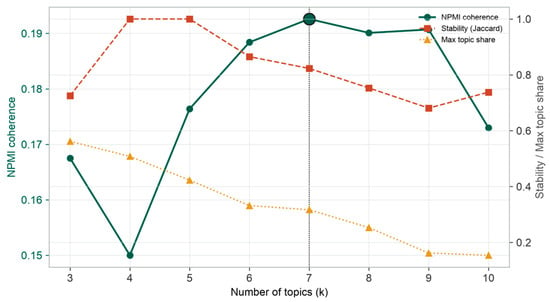
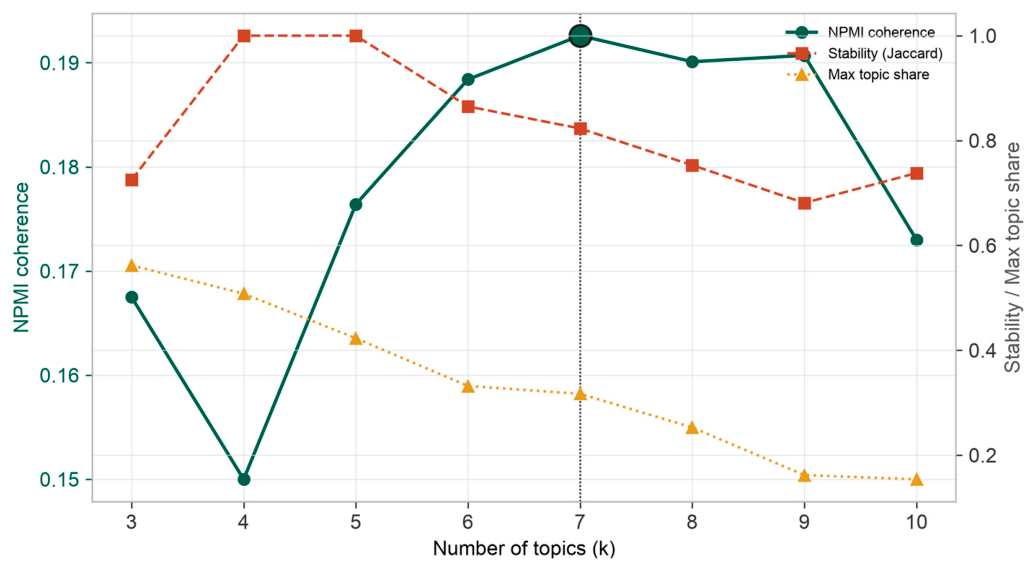
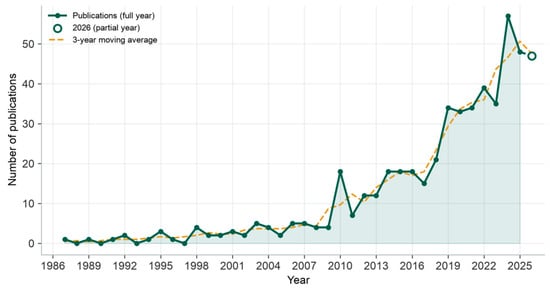
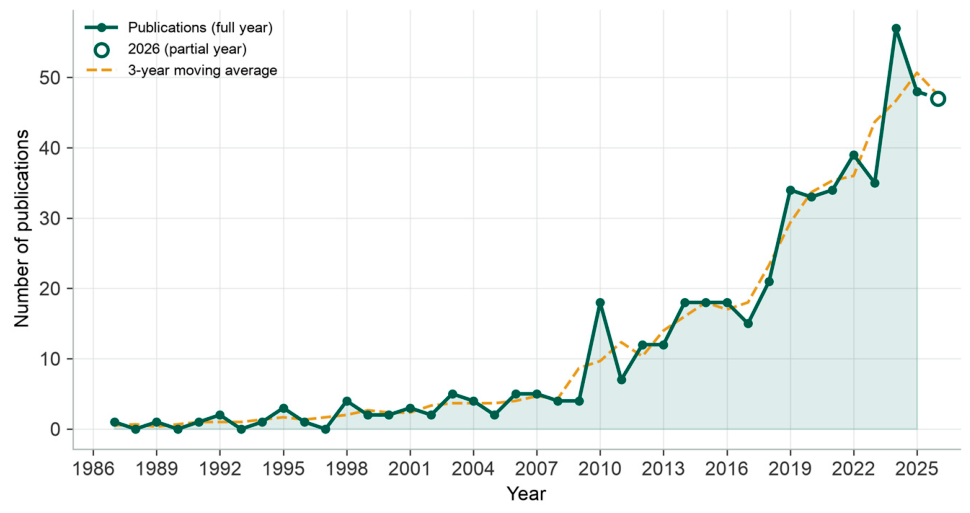
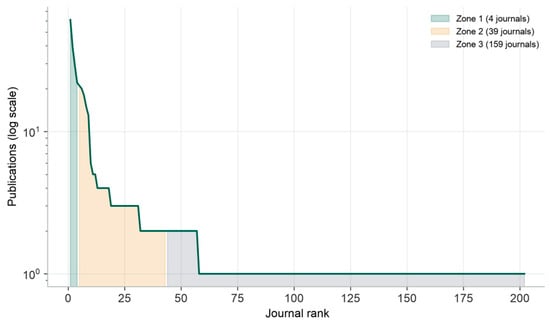
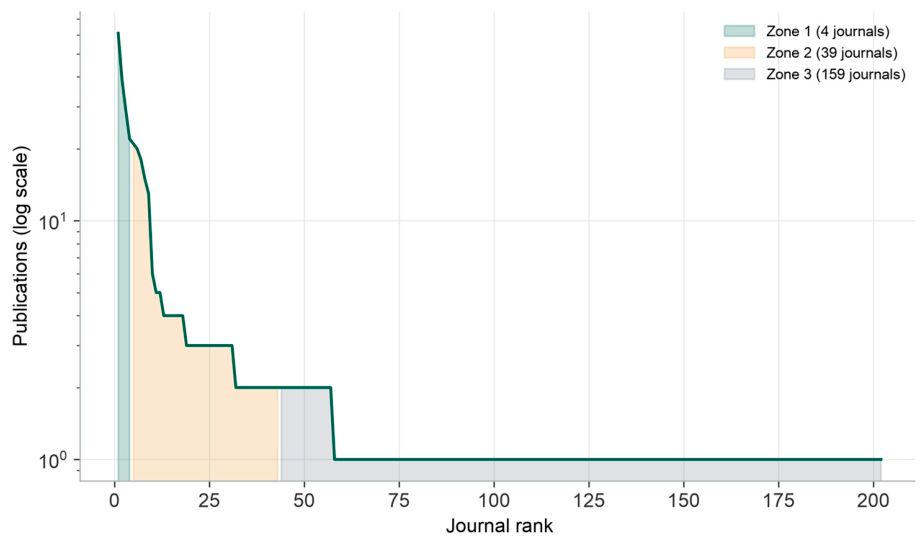
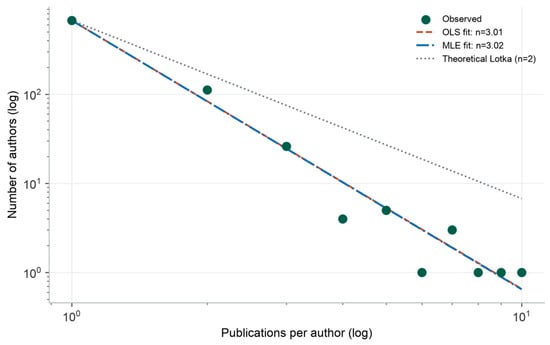
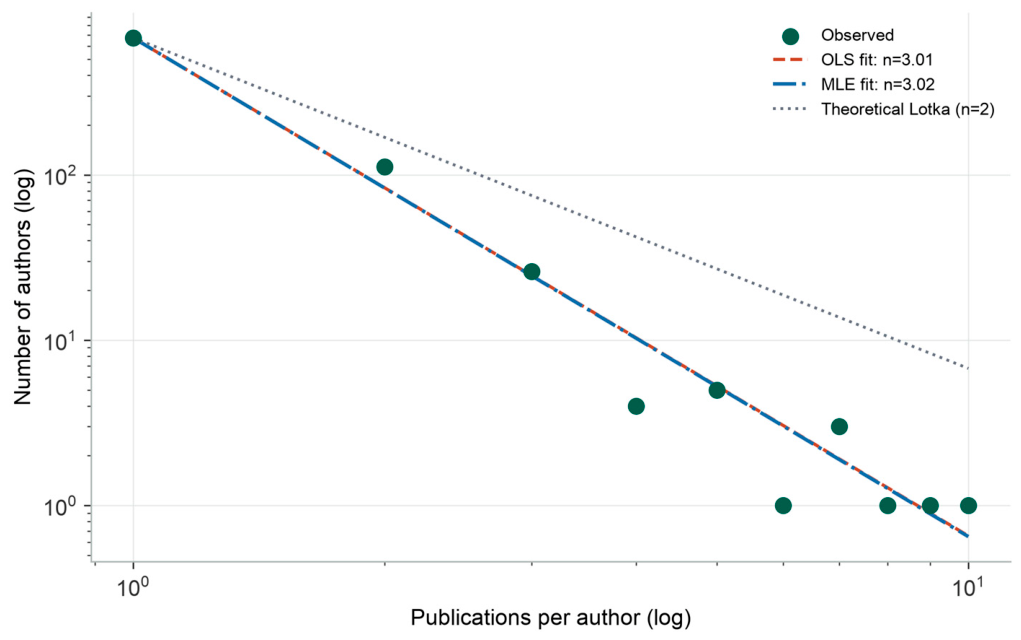
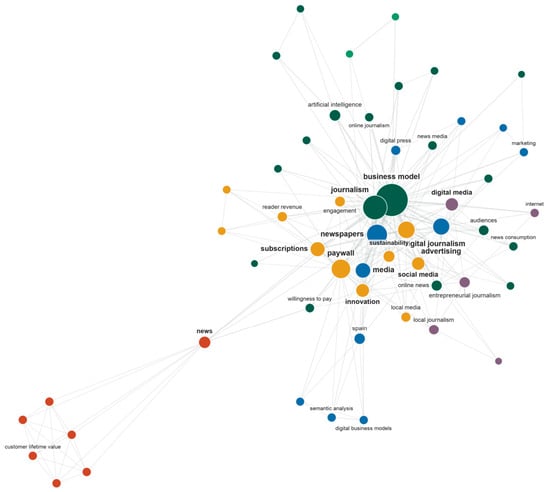
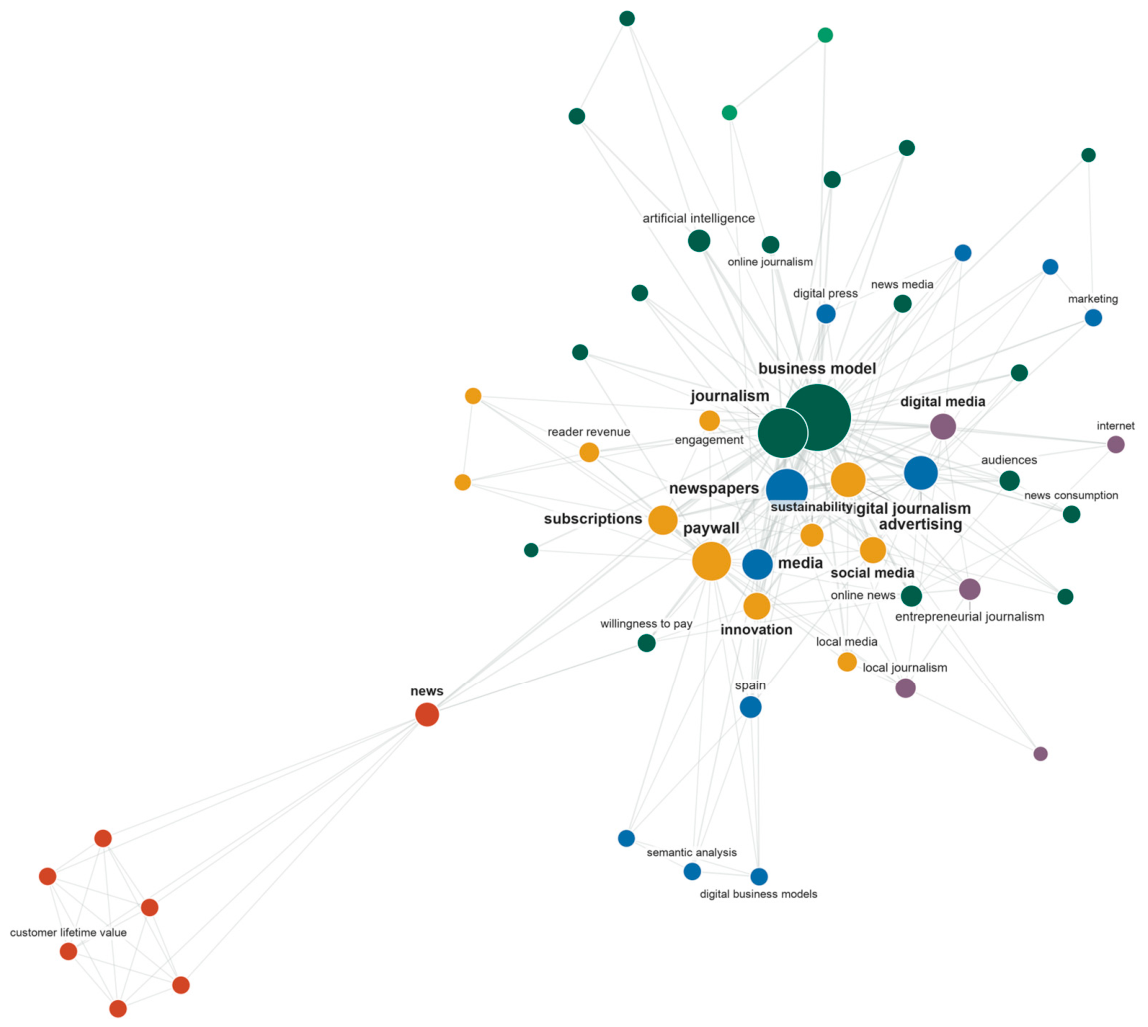
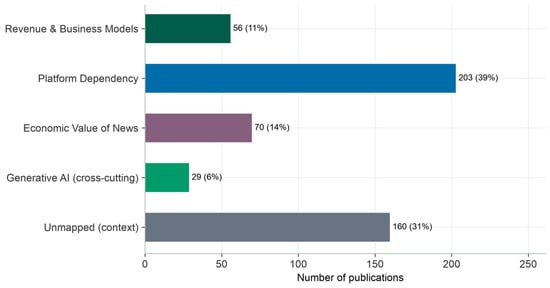
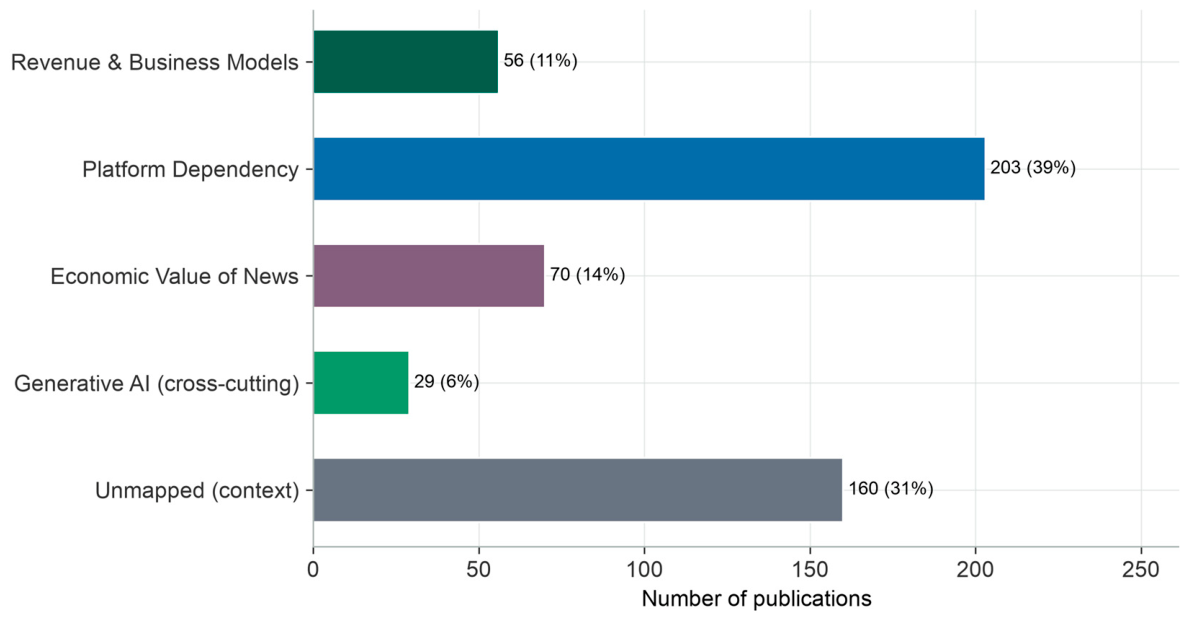
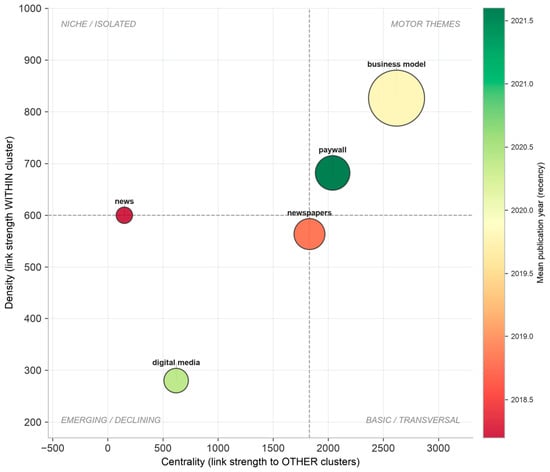
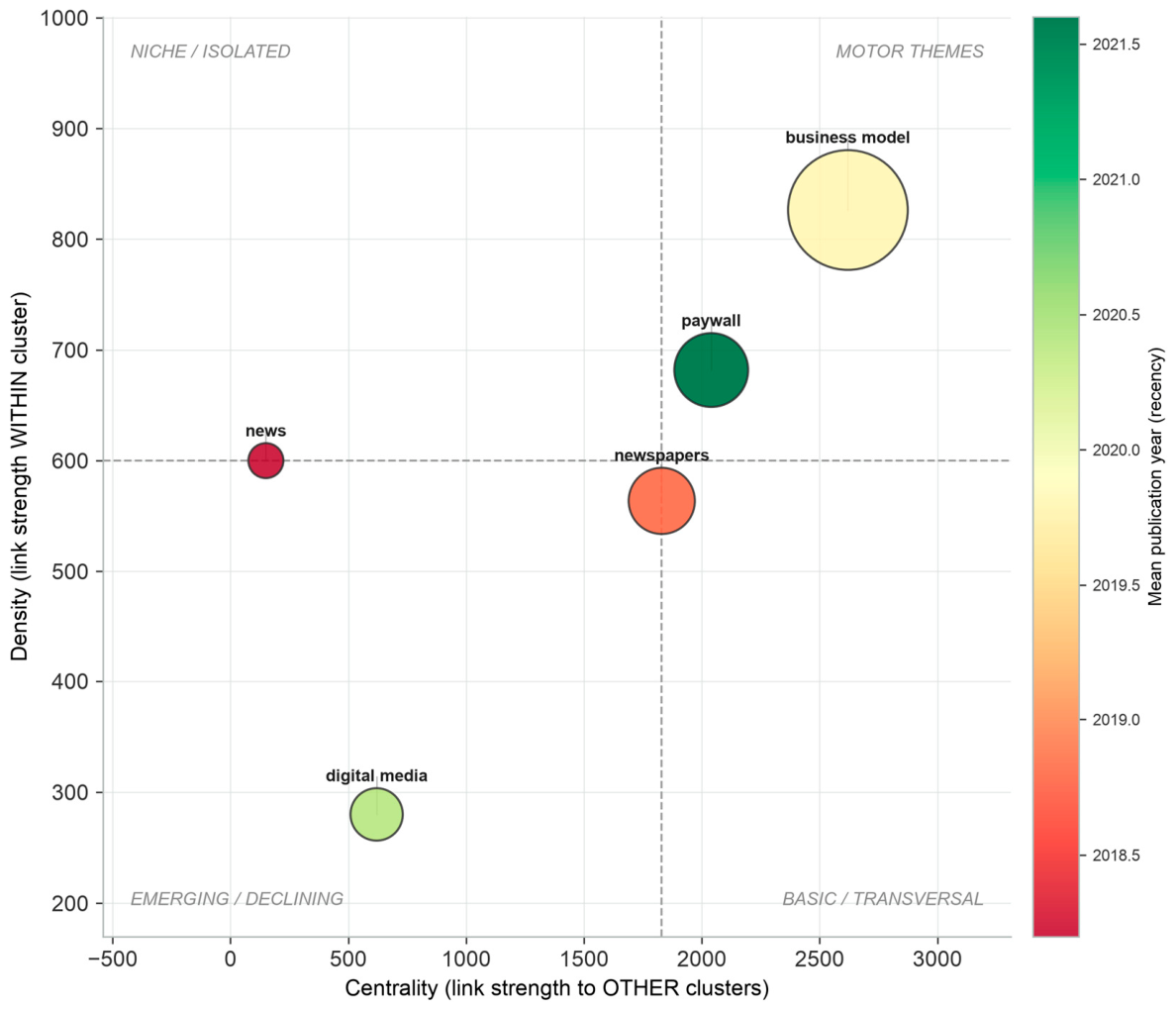
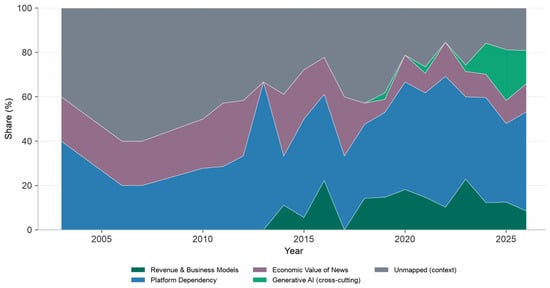
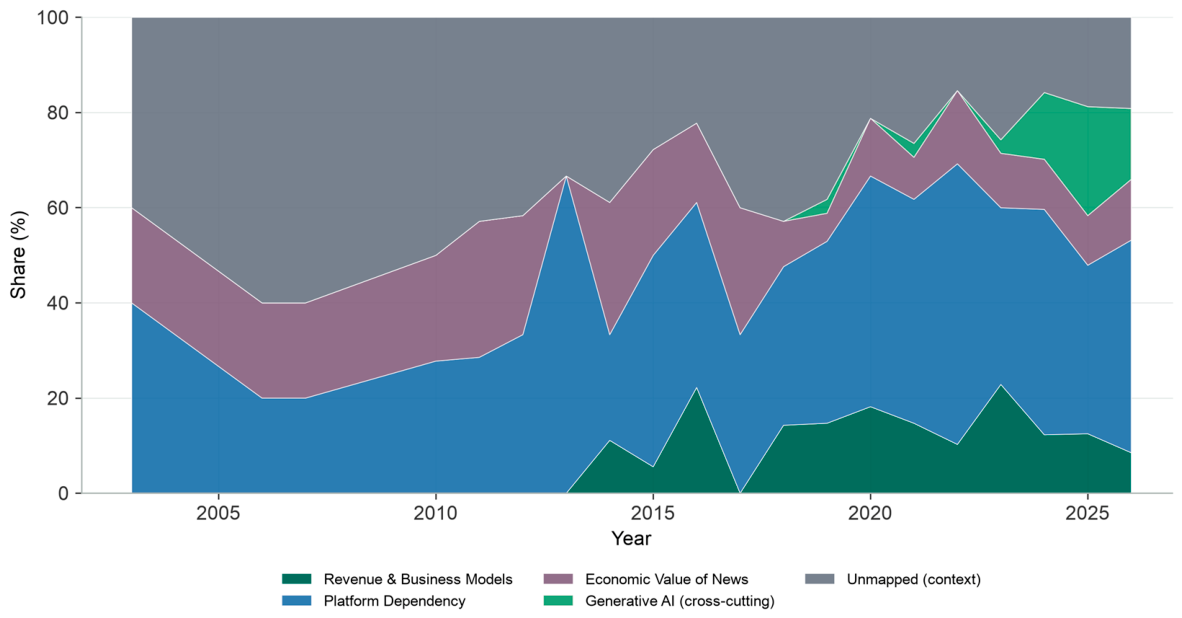
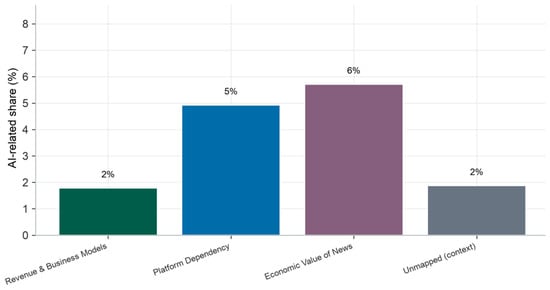
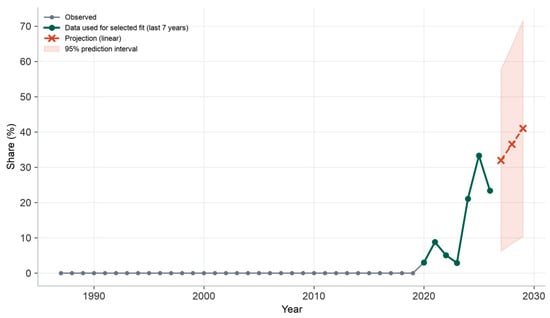

Disclaimer/Publisher’s Note: The statements, opinions and data contained in all publications are solely those of the individual author(s) and contributor(s) and not of MDPI and/or the editor(s). MDPI and/or the editor(s) disclaim responsibility for any injury to people or property resulting from any ideas, methods, instructions or products referred to in the content. |
© 2026 by the authors. Licensee MDPI, Basel, Switzerland. This article is an open access article distributed under the terms and conditions of the Creative Commons Attribution (CC BY) license.