


Abstract
Across Latin America, digital technologies helped cushion some of the pandemic’s worst effects, creating new opportunities that were not equally distributed between men and women. This study analyzed three waves of Latinobarometer data across 17 countries before, during, and after the pandemic to examine gender differences in labor perceptions and digital skills. The findings indicate that women consistently reported higher levels of perceived poverty and greater concern about unemployment than men. To assess the digital labor divide, the study developed a Digital Dexterity Index (DDI) based on social media use and educational attainment. Results indicate that the pandemic accelerated digital skill development for both genders, with statistically significant changes over time. Although women generally scored slightly higher than men on the DDI, patterns varied across countries. The study highlights a paradox: higher digital dexterity among women did not translate into greater confidence or security in the future of work. Despite their stronger digital skills, women expressed greater anxiety about their future labor-market prospects than men.
Keywords:
labor market; Latin America; globalization; income; gender; labor; unemployment; employment; digitization; digital technology; females 1. Introduction
Six years after the onset of the COVID-19 pandemic, its social and economic consequences continue to shape everyday life around the world. In Latin America, as elsewhere, digital technologies helped mitigate many of the consequences of the pandemic. On the one hand, it increased the use of social media platforms, facilitated social interaction, and reinforced smartphones as the primary gateway to the digital economy. On the other hand, new economic activities and digital job opportunities flourished. However, these new opportunities may not have been distributed equally, affecting men and women in different ways. Since childcare requires more hours from mothers than fathers, the closure of schools and daycares during the pandemic could have had a disproportionate impact on mothers. In this context, the digital gender divide could have widened (Goldin, 2014, 2022).
Women constitute approximately half of the population, yet substantial gender inequalities persist in Latin America. Women continue to face marked disparities in earnings and political representation, as documented in World Economic Forum gender-gap reporting (Hausmann et al., 2012; The Global Gender Gap Report, 2022).
Data from the annual Latinobarómetro survey indicate that by 2018, 36.2% of women in Latin America were engaged in housework or did not work, compared to only 7.5% of men. In 2020, this figure increased significantly, doubling in the case of women, to reach 78.2% of women and almost tripling in the case of men, reaching 21.8% of men. Unfortunately, this question was not included in the 2023 survey, so the post-pandemic value is unknown (Latinobarómetro, 2018, 2020).
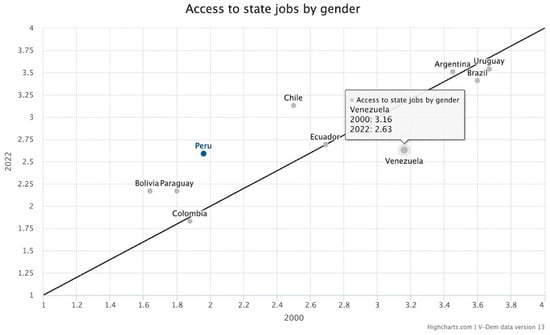
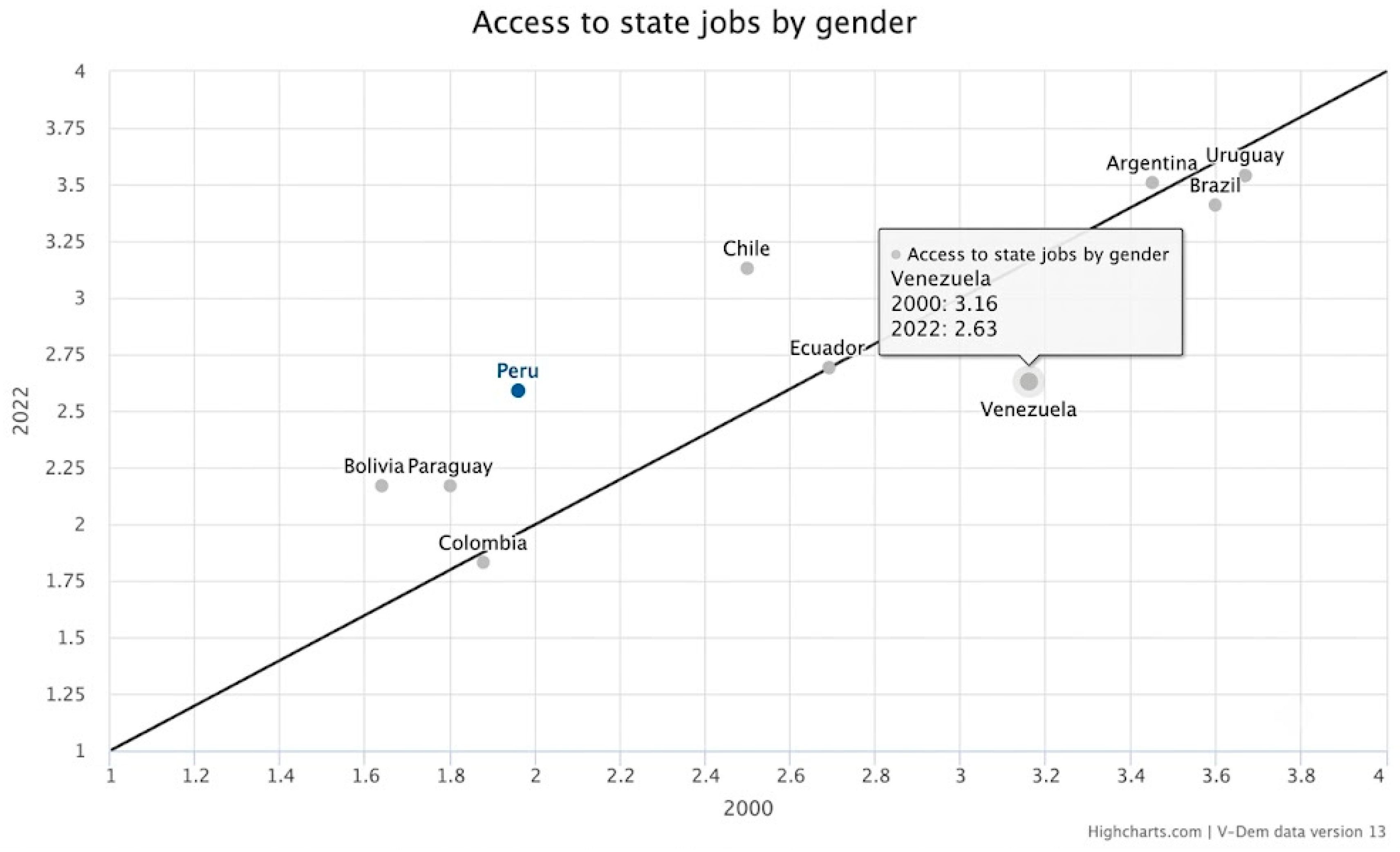
For the V-Dem contextual comparison, the manuscript uses the V-Dem Dataset v12 (Coppedge et al., 2022), focusing on the indicator of women’s access to public-sector employment reported on an ordinal scale from severe exclusion to near-equal access. The indicator is used descriptively to contextualize longer-term cross-national gender differences rather than as an outcome in the Latinobarómetro models. V-Dem’s Gender Exclusion indicators also highlight the barriers women face in accessing public-sector employment. Data from South America show a positive trend toward gender equality over the last 20 years. In other words, as societies have progressed in the massification of the Internet, the gender gap in public employment has also been balanced (Coppedge et al., 2022), which would support the thesis of those who defend the possibilities of digitalization contributing to labor equality. There are, however, important differences between countries. The assessment ranges from extreme inequality of 0, where 75 percent (%) or more of qualified women do not have access to state jobs due to their gender, to almost total equality of 4. Some countries have experienced notable progress, such as Chile (from 2.50 to 3.13) and Peru (from 1.96 to 2.59); other countries show stagnation, such as Colombia, Ecuador, and Argentina; and a very marked regression in the Venezuelan case (which goes from 3.16 in 2000 to 2.63 in 2022), as shown in Figure 1.
Figure 1.
Evolution of access to the public labor market between 2000 and 2022 in South America. SOURCE: V-DEM 2000 to 2022.
The consequences of digitalization concerning the gender gap are not entirely clear, and the academic debate is still open. This paper aims to understand how the pandemic affected the vision of the future of work for both genders in Latin America and explores whether these differences are associated with disparities in digital competencies and skills between genders.
From a media and communication perspective, these inequalities can also be understood through research on digital inclusion and digital inequality. Access alone does not ensure equivalent digital outcomes: differences in skills, types of use, autonomy, and the capacity to convert online participation into social or economic benefits remain important. Deep mediatization further underscores how everyday life and work are increasingly organized through digital media and platforms. Accordingly, the present study treats social-media engagement not merely as media consumption, but as one observable dimension of participation in an increasingly mediatized environment (Couldry & Hepp, 2018; Hargittai, 2002, 2010; Helsper, 2021; Van Dijk, 2020).
2. Literature Review
At the end of the twentieth century, dot-com companies expanded rapidly, the expansion of dot-com companies grew exponentially, and many investors assumed that demand for Internet-related products and services would continue to grow indefinitely. Global investment during this period focused on expanding digital networks and deploying fiber-optic infrastructure worldwide (Friedman, 2006). The “digital bubble” brought about major changes in global labor markets. The expansion of the digital economy transformed labor markets: some occupations disappeared, new ones emerged, and employers increasingly demanded different skill sets (Perez, 2018, Bustelo et al., 2019, Knell, 2021, Goldin, 2022). The contemporary digital bubble (Perez, 2018) and overinvestments in the sector made it possible that when the global pandemic greatly increased the demand for digital services in 2020, there was an idle infrastructure already in place, which made it easier for supply to adapt almost immediately.
Almost simultaneously, also at the end of the 20th century, there was a convergence of the roles of men and women as never seen before. Female labor-force participation increased, domestic responsibilities became more evenly shared, and income disparities between men and women began to narrow (Goldin, 2014), particularly in the so-called Global North.
While it is true that the decades since World War II have shown significant improvements in these areas, gender gaps in the labor market have been a persistent constant in most countries of the world for a long time, and this has been well-studied empirically and academically (Blau & Kahn, 2007; Bustelo et al., 2019).
Closing the employment gap can be leveraged by government intervention, women’s greater negotiation skills, men being more responsible at home, or by the flexibilization of the labor market. For Claudia Goldin, winner of the 2023 Nobel Prize in Economics for her work on the gender gap, it is essential to change the way jobs are structured and remunerated to improve temporary flexibility (Goldin, 2014).
The discussion is open on whether this long-standing gender gap can be affected by the digital economy, either by reducing or increasing it, depending on factors such as the skills that men and women can acquire and develop in the labor market (Bustelo et al., 2019), and the public policies that can be put into practice seeking greater equity (ECLAC and the United Nations, 2023), or changes in the time structure of the labor market (Goldin, 2014).
Some studies have documented that women benefit more than men from digitalization; there would be more job opportunities and more economic activities available to women, which would help reduce the gender gap. A study by the World Bank found that women entrepreneurs are more active than male entrepreneurs when it comes to selling and buying products online (Sicat et al., 2020). The same study found that women-led businesses were more likely to export through e-commerce platforms. However, other studies argue that digital transformation tends to widen the gender gap. Greater digitalization and globalization would promote the development of the technology-intensive, male-dominated, high-wage sector (Yin et al., 2023), while promoting the development of the informal sector, which is dominated by women and has low wages and low skills (Alves & Steiner, 2017; Hammer & Karmakar, 2021), which would widen the gender pay gap and widen the gap.
A longitudinal study with data from G20 countries for the period 2006–2021 explored the direct and moderating impact of digitalization on the gender gap, finding that the increasing level of digitalization tends to reduce the gender gap in the labor force participation rate, with a greater reduction in the gender gap effect in high-income countries than in upper-middle-income countries and lower-middle-income countries (Yin et al., 2023). The study concludes that digitalization could increase the female employment rate and generate the opposite effect on men.
On the other hand, the World Economic Forum has identified that the largest gender gaps exist in the emerging jobs that drive the new economy. There would be a wide variety of jobs that are increasing in demand globally, across industries and roles. Eight job clusters are growing the fastest: People and Culture, Content Production, Marketing, Sales, Product, Data and Artificial Intelligence, Engineering and Cloud Computing (The Global Gender Gap Report, 2018, 2020, 2021, 2022, 2023).
Focusing on a set of high-income countries, the Organization for Economic Co-operation and Development (OECD, 2018) concludes that differences in skills endowment between male and female workers explain some, but not all, of the wage gap. There is evidence of gender gaps in skills; however, among recent generations, the study finds that the gender gap in skills relevant to the digital economy is more ambiguous: in some areas, girls outperform boys (e.g., collaborative problem-solving), but are outperformed by boys in others (OECD, 2018).
Despite decades of progress, closing the employment gender gap may have slowed recently (The Global Gender Gap Report, 2022). Women in the U.S. earn about 18% less than men, and their employment rates are 10 percentage points lower. In the UK, the pay gap is 20%, and the employment gap is 9 percentage points. In most continental European countries, wage gaps are narrower, but employment gaps are substantially larger (Petrongolo & Ronchi, 2020).
Decades of progress in women’s labor rights have reportedly been brought to a major standstill by the COVID-19 pandemic and its effects. Compared to previous recessions, the COVID-19-induced recession affected women’s employment and labor force participation more relative to men (Goldin, 2022). However, the gap was smaller between men and women than between the most educated and the least educated. Goldin asserts that while educational differences have been present in other recessions, the ability of educated people to work remotely and more securely should have exacerbated educational differences relative to those in typical recessions.
“Contrary to what many say, women did not leave the workforce in large numbers and did not reduce their working hours much. The aggregate rate of female labor force participation did not plummet. The ability to balance care and work differed greatly by education, occupation, and race. The more educated would be able to work from home.”(Goldin, 2022)
A 2019 report prepared for the Inter-American Development Bank (IDB) (Bustelo et al., 2019) focused on the interaction between the digital economy and the gender gap in four Latin American countries: Chile, Bolivia, Colombia, and El Salvador, and found that even within specific STEM (science, technology, engineering and mathematics) skills there is a significant difference between genders: An increase of one standard deviation generates a return on income of 15% for men and a return of 9% for women. They also found that higher levels of education implied significantly higher returns for men, but not for women. The report also points out the limitations of data in the approach to studies in the Latin American region: representative data at the individual level, capable of capturing the skills required in the digital economy, are scarce (Bustelo et al., 2019).
Goldin (2022) argues that important dimensions of the pandemic’s economic burden were gendered, with particularly strong pressures on mothers of school-age and younger children. The most affected were mothers of school-age children and younger. The only time in U.S. history that childcare was considered essential to the nation’s economic health had been during World War II. In 1940, only 18% of married women were in the labor force, and the overwhelming majority of Americans (both men and women) agreed with the statement that “A preschooler would probably suffer if his mother worked for wages.”
In general, childcare requires many more hours from mothers than fathers, and that’s true even if both are college graduates who are employed full-time. Therefore, the closure of schools and daycares during the pandemic had disproportionate impacts on mothers. According to estimates in studies by Claudia Goldin, childcare time (including education) increased from 8.7 h per week before the pandemic to 22.4 in the fall of 2020 (Goldin, 2022).
A McKinsey-LeanIn report (LeanIn.Org and McKinsey & Company, 2022) also cited by Goldin, surveyed more than 40,000 employees at 47 companies in the post-pandemic period and concluded that “one in four women are considering reducing their careers or leaving the workplace.” In other words, the “Great Resignation” is an economic trend in which employees voluntarily quit their jobs masse in the post-pandemic period, and which has received substantial scholarly attention (Formica & Sfodera, 2022; Gittleman, 2022; Tessema et al., 2022) and could be more associated with gender than with other variables, and lead to a regression of the advances of the digital divide.
3. Method
To understand the impact of the pandemic on the gender gap in Latin America, quantitative and descriptive research was carried out whose design corresponds to a survey study (Kerlinger & Lee, 1999), obtained as a secondary source (Malhotra et al., 2020).
The following research questions were posed:
- RQ1: How did the pandemic affect the vision of the future of work between men and women in the different Latin American countries?
- RQ2: Is there a digital divide between men and women that explains the employment gap in Latin America?
3.1. Data
This study analyzes the impact of the COVID-19 pandemic on labor market gaps in Latin America. Utilizing data from the Latinobarómetro survey, a renowned annual public opinion poll conducted in 18 Latin American countries since 1995, we focus on three waves: pre-pandemic (2018), during the pandemic (2020), and post-pandemic (2023).
To ensure data consistency across all three periods, our analysis includes 17 countries for which data were available for all years. Nicaragua was excluded due to missing data for 2018. Each Latinobarometer wave surveys approximately 1200 individuals per country using a quota sampling method, providing a representative overview of public opinion on a wide range of issues. This comprehensive dataset allows us to examine the labor gap within the context of the pandemic’s socio-political and economic repercussions in the region.
Although the study has been carried out regularly since 1995, not every year the same questions are asked, so it was necessary to review the verbatim questions to ensure consistency between the different waves, it was not possible to be guided by the code of the question, but rather by the wording of the question, in the same way, the codes of the answers were verified and the necessary adjustments were made to match the relevant questions for this study.
In general, 1.6% of the data were found to be missing or missing in the database for the variables of interest; an imputation was made using the average in the numerical variables and the mode in the categorical variables.
3.2. Participants
The sample is made up of a total of 57,613 participants, divided equally between the three years and the 17 countries. The quota sampling also ensured that 52.2% of the sample were women and 47.8% were men between the ages of 16 and 100 years, with an average age of 41 years and a standard deviation of 16 years. About educational level, 15.3% of the sample was illiterate, 21.9% had incomplete basic education, 18.8% completed basic education, 8.6% had incomplete secondary education, 19.2% completed secondary education, and 16% reached different levels of higher education. These values consider the three years of the study (see appendices 1, 2, and 3 for further information1).
3.3. Analysis Tools
To answer the first research question, RQ1: How did the pandemic affect the vision of the future of work between men and women in the different Latin American countries? An exploratory factor analysis (EFA) was performed using responses to four questionnaire items: (i) subjective social class (declared by the interviewee), (ii) concern about running out of enough food in the last year, (iii) the degree of concern about becoming unemployed in the next year, and (iv) whether the family’s needs were covered by family income. In the questionnaire used by the survey, these questions are measured on 4-point or 5-point Likert scales, which allows factor analysis to be performed.
Using these two new variables, which are standardized from the exploratory factor analysis, a hierarchical cluster analysis with Euclidean distance was performed. The clusters found here were characterized, and subsequently, a logistic regression analysis was performed to identify the variables that influence the individuals belonging to the clusters.
To answer the second research question, RQ2: Is there a digital divide between men and women that explains the labor gap in Latin America? A Digital Dexterity Index (DDI) was developed, derived from two variables: the intensity of use of the different social networks2 (which in turn is an index derived from the integration of several questions of the questionnaire) and the highest level of studies achieved3. The DDI could only be calculated for the years 2020 and 2023, since for the 2018 study, the scale used in educational level was not comparable with that used in subsequent studies.
4. Results
The study began with Exploratory Data Analysis to understand the nature of the variables and to select the questions of interest in the three years of study; an important criterion in this sense was to have the same statement (wording) in the three studies, since the survey does not always ask the same questions. Therefore, it is not possible to compare the effect of the pandemic on some of the variables in the study (Schuman & Presser, 1996).
Factor analysis (FA) was performed using the following: (i) subjective social class (declared by the interviewee), (ii) concern about running out of enough food in the last year, (iii) the degree of concern about becoming unemployed in the next year, and (iv) whether the family’s needs were covered by family income. KMO was 0.568, and Bartlett’s Test of Sphericity was significant at 5% (p-value = 0.000), rejecting the null hypothesis that the correlation matrix is equal to an identity matrix, giving sufficient input to continue with the FA.
The factor-analytic results should be interpreted cautiously. The KMO value of 0.568 indicates only modest sampling adequacy, and the analysis contains four observed variables. Moreover, the second dimension is dominated by the unemployment-worry item and therefore is better treated as an empirically standardized indicator of unemployment risk perception than as a strongly established multi-item latent construct. The EFA was retained primarily to obtain standardized dimensions for subsequent comparisons and clustering.
This yielded two factors that explain 65% of the original variability in the data (Table 1); for the definition of the new variables, those with coefficients greater than 0.4 were considered. The first factor, with 40% variance explained, is called Poverty Perception (based on both Food Security and Socioeconomic Well-being) and includes the original variables: (i) satisfactorily cover their needs with total family income, (ii) they have not had enough food to feed themselves in the last year and (iii) subjective social class. The construct can help identify people who need support to improve their food security and socioeconomic well-being; high scores in this new variable are associated with a lower social class, a lack of food to meet the food needs of the family group and a greater difficulty in covering basic needs with salary. On the other hand, low scores of this construct are associated with a higher social class (self-perception) and a greater tendency to cover needs with salary and to feed oneself completely.
Table 1.
Factor loads for each construct.
The second factor, with 25% of variance explained, called Unemployment risk perception, is defined by the degree of concern about being out of work within the next twelve months; in this sense, a higher score indicates a lower sense of risk when becoming unemployed, and lower values of the construct indicate greater concern about it or less certainty that you will not lose your job.
It was decided to work with these new variables instead of the original ones since they are not only normal variables, but they are also standardized, so not only is their interpretation simpler, but also statistical tests of hypothesis contrast can be applied. In this sense and using an ANOVA test, statistically significant differences were found between the average values of both constructs when considering the three years studied. In the case of the Unemployment Risk Perception, it can be observed how the value has been increasing year after year, and although in general terms the differences are small, of only 0.1 standard deviations, it is worrying that after the pandemic, when many countries have managed to stabilize economically, and there is greater job stability (World Bank Group, 2024), in the Latin American region this remains a major concern. Job stability reduces unemployment and poverty, as people have more opportunities to find a job and earn an income.
4.1. RQ1: How Did the Pandemic Affect the Vision of the Future of Work Between Men and Women in the Different Latin American Countries?
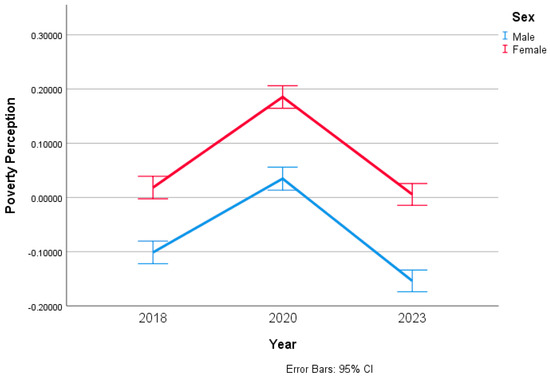
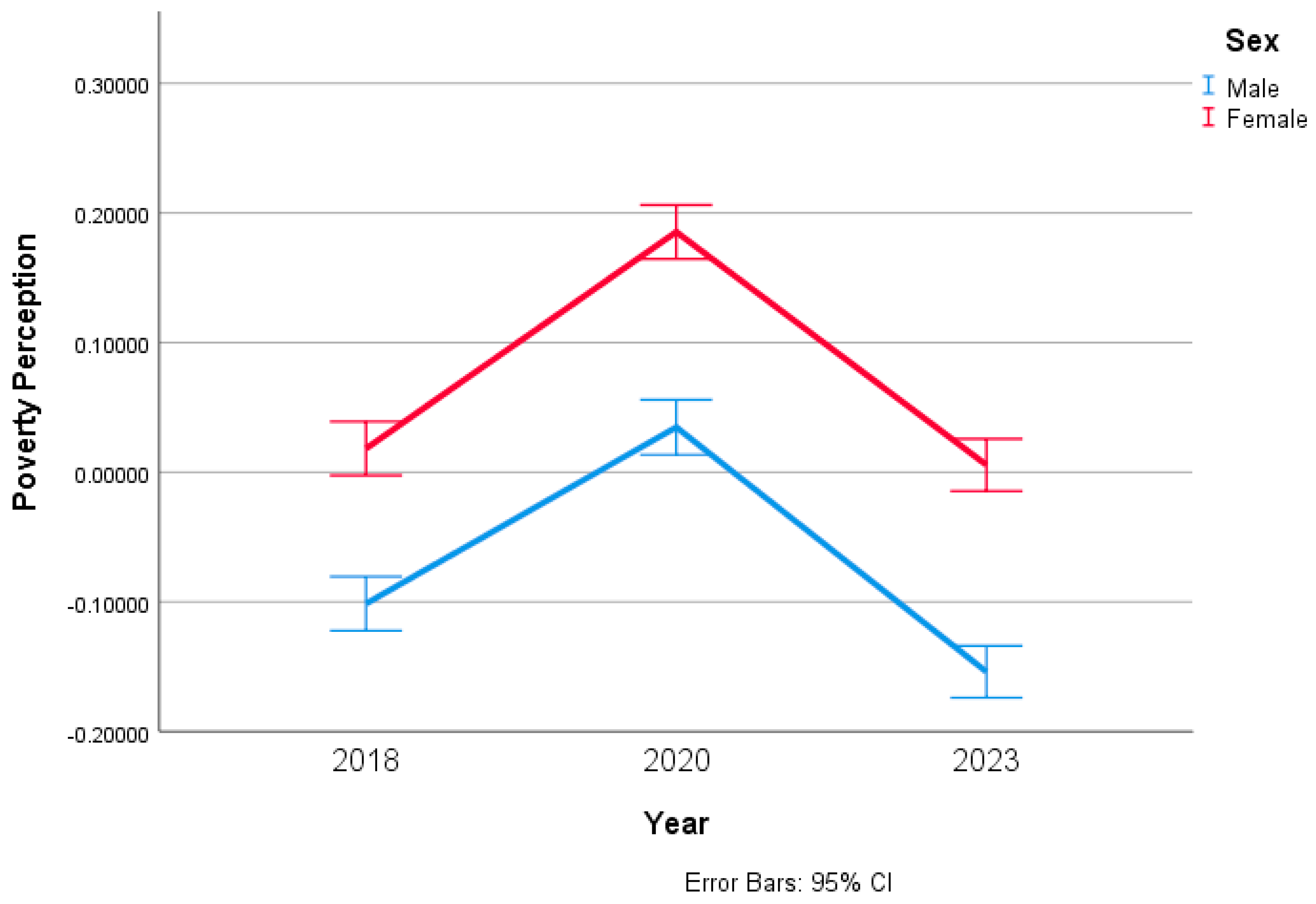
Perceived poverty is consistently higher among women than men (Figure 2). It had its highest value during the pandemic years when many people became unemployed or salaries were suspended, and it was unknown if they were going to be reactivated or for how long. After the pandemic, for the year 2023, this value decreased, even taking lower values than those of 2018, indicating that in Latin America, respondents perceived themselves as belonging to a higher social class in general, and with fewer concerns that the salary is not enough and that they do not have enough to eat, compared to the concerns present during the COVID-19 pandemic.
Figure 2.
Poverty perception by year and sex. SOURCE: Authors’ elaboration, based on data from the Latinobarómetro (2018, 2020, 2023).
To complement this analysis, the behavior of these variables was analyzed for each of the 17 countries under study, confirming the longitudinal consistency of this difference between men and women, with women expressing greater fear in almost all of the 17 countries in the study, with the only exceptions of Guatemala and Venezuela, where there are no statistically significant differences (Figure 3). The country that consistently perceives itself as poorer is Venezuela, where the index is above 0.5 throughout the entire period studied, although in the third year of measurement, there is a significant decrease, perhaps explained by the narrative of “Venezuela has been fixed” (Aveledo, 2022; Rojas Silva & Angel, 2023). Colombia also stands out, where the perception of poverty has been increasing, even after the pandemic, and women’s perception of poverty is growing faster than that of men. The countries that perceive themselves as having a low risk of poverty (negative indices) are Brazil, Chile, Costa Rica, Paraguay, and Uruguay (Figure 3).
Figure 3.
Poverty perception, by Latin American country, year and sex. SOURCE: Authors’ elaboration, based on data from the Latinobarómetro (2018, 2020, 2023).
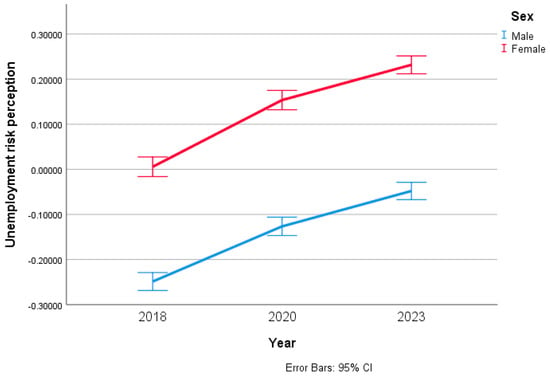
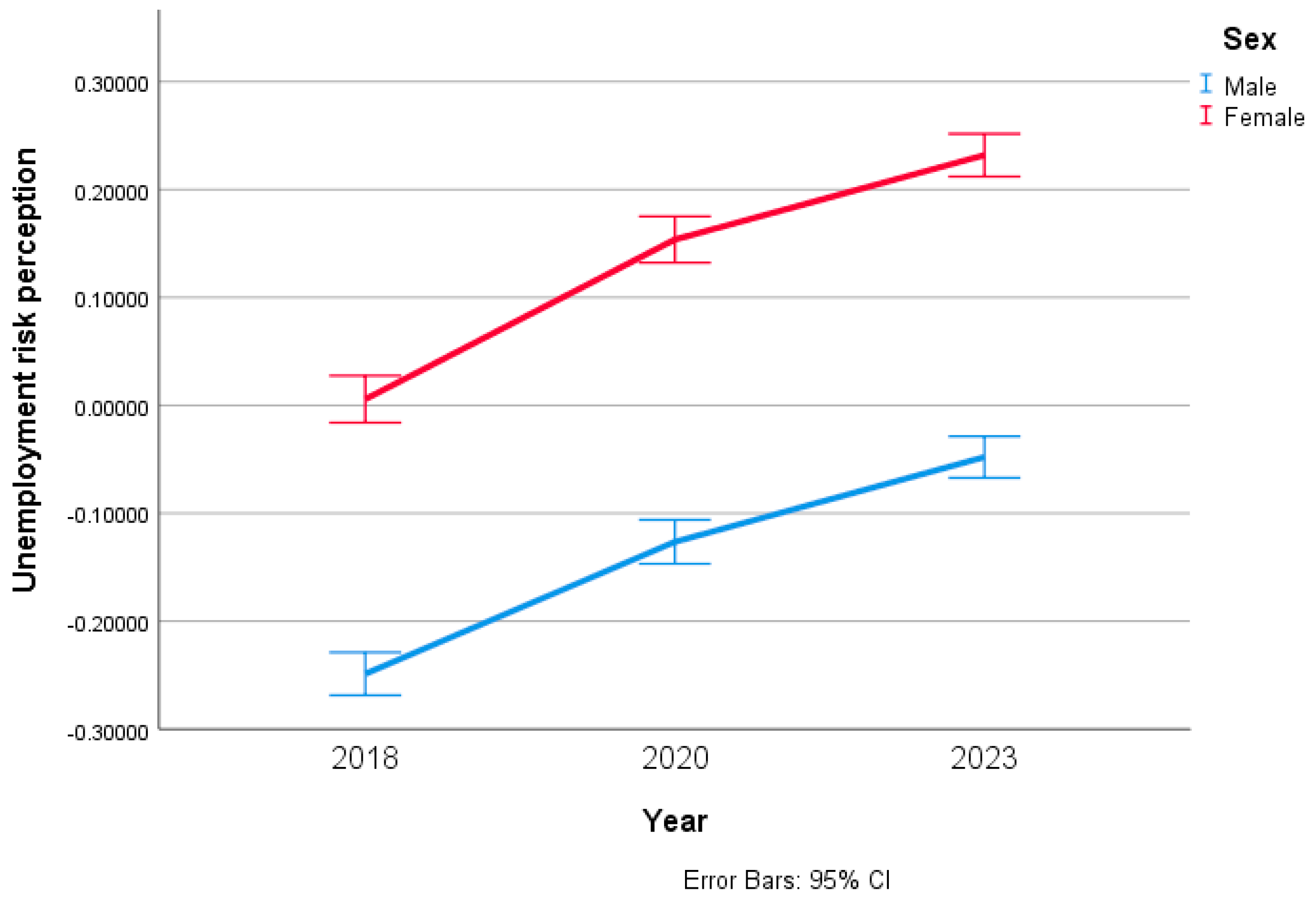
On the other hand, there are also differences in the unemployment risk perception between men and women. Fear of the future of work has been growing in all three measures, but it shows a relatively constant difference between the two genders, where women consistently show greater fear of their future work than men (fear of becoming unemployed in the next twelve months) (Figure 4).
Figure 4.
Unemployment risk perception by year and sex. SOURCE: Authors’ elaboration, based on data from the Latinobarómetro (2018, 2020, 2023).
Here, it is necessary to consider that there are differences in unemployment rates between men and women and that this concern, being a self-perception, can have multiple factors and will be affected not only by the economic and political aspects of the country but also by the nature of the job performed and the type of industry.
It also highlights the fact that the highest levels of concern are in 2020; the countries where women are more concerned than men post-pandemic are Peru, Honduras, and the Dominican Republic.
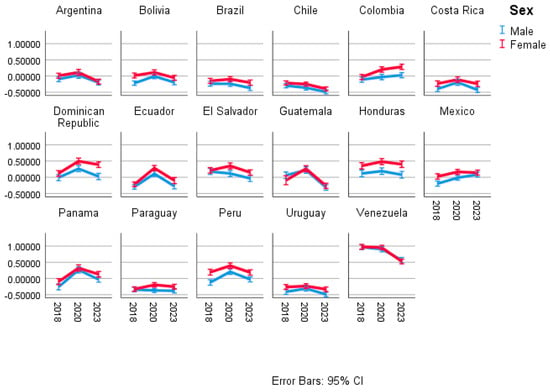
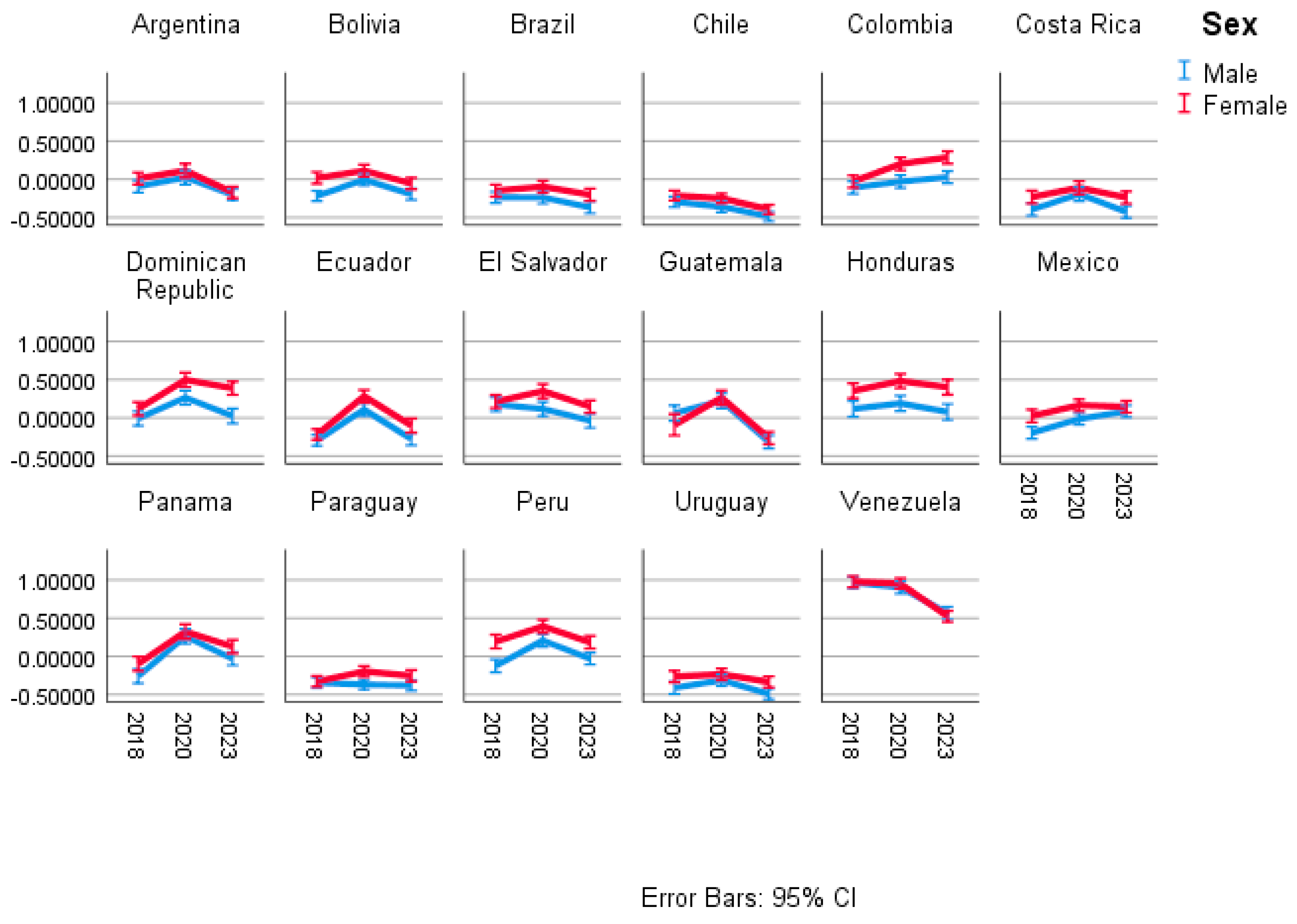
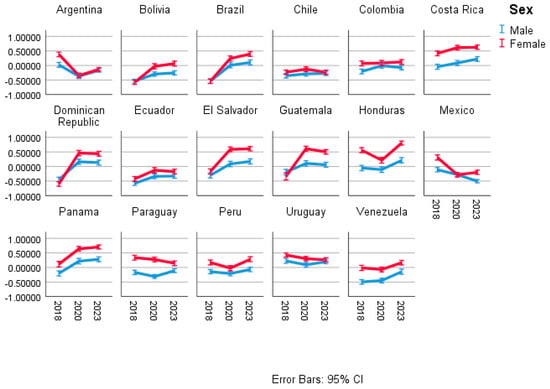
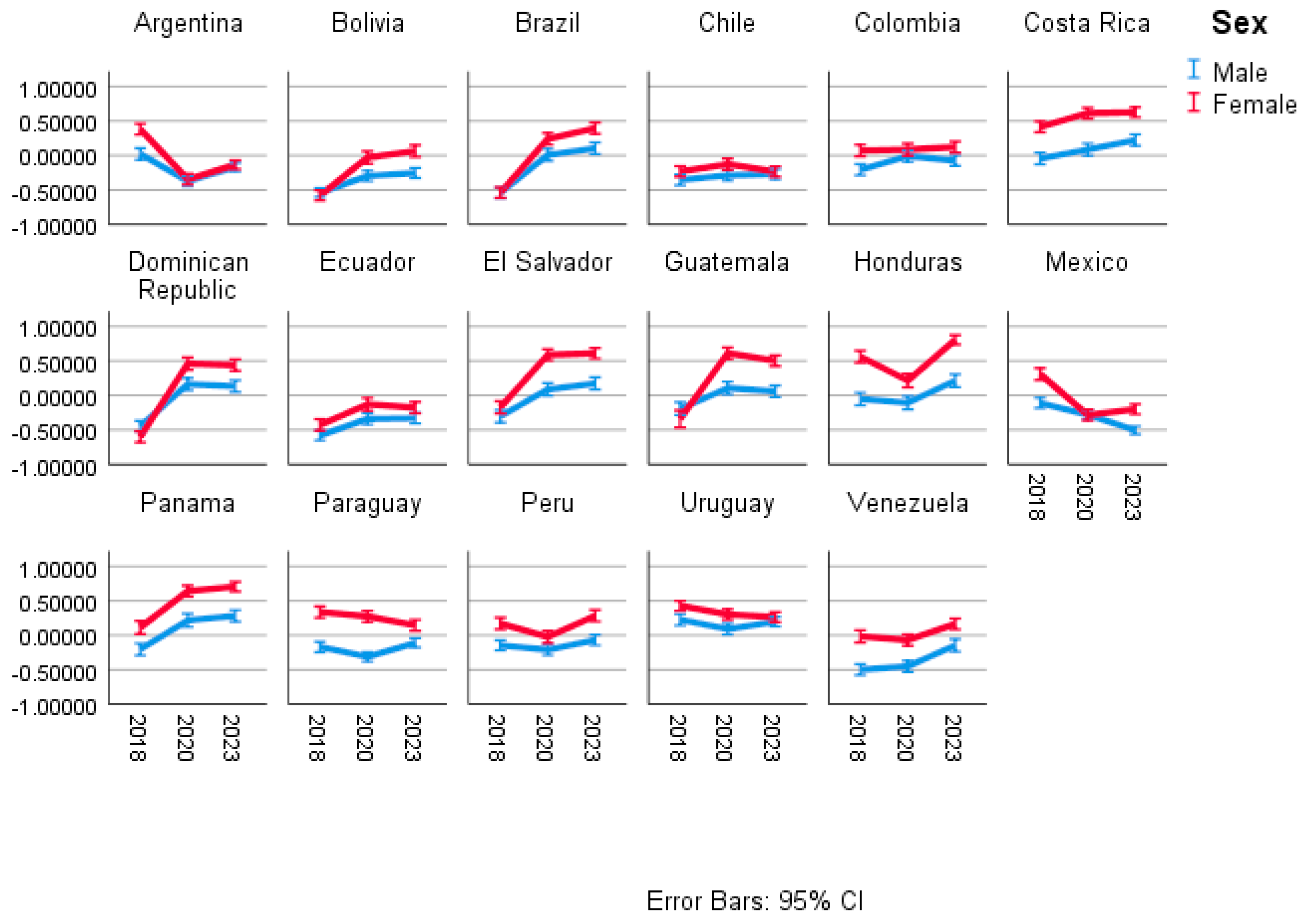
The phenomenon is also observed in each of the countries analyzed (Figure 5). Consistently, for each of the 17 countries in the study, the fear of losing a job in the next 12 months is higher among women than men. However, it should be noted that, being less than 0.1 standard deviations below zero, the changes in perceptions over the years have been very small. The countries with the largest difference between men and women are Bolivia, Brazil, Costa Rica, Dominican Republic, El Salvador, Guatemala, Honduras, Mexico (increased in 2023), and Panama. Also worthy of special mention are the countries where this gap has been narrowing, such as Chile, Paraguay, Uruguay, and Venezuela, where the gap between men and women in the risk of becoming unemployed is narrowing.
Figure 5.
Unemployment risk perception by country, year, and sex. SOURCE: Authors’ elaboration, based on data from the Latinobarómetro (2018, 2020, 2023).
The differences are statistically significant (5%) between the two groups for unemployment risk perception. Except in countries such as Uruguay and Mexico, women have greater job insecurity, as it is more common among them to indicate concern about job loss in the next 12 months. In addition, this concern has increased over the years studied.
Again, it is necessary to note that the survey data is based on people’s self-perception. This means that data can be subject to perceptual biases.
After the preliminary analysis, the standardized variables were used in an exploratory cluster analysis. Given the large number of observations, the sample was divided into ten random subsamples, and hierarchical cluster analyses were independently conducted for each. Visual inspection of the resulting dendrograms consistently suggested a two-cluster structure across the subsamples. On this basis, k = 2 was retained for the subsequent k-means analysis using Euclidean distance. The purpose of this procedure was exploratory and descriptive rather than to establish a definitive classification of respondents: the clusters were used to identify broad socioeconomic profiles associated with differences in poverty and unemployment-risk perceptions. The recurrence of the two-group structure across ten independently generated subsamples provided evidence of the stability of this descriptive solution, although formal internal cluster-validation indices were not employed.
A comparative analysis of the clusters according to survey year, country of origin, age, gender, education level, poverty perception, and unemployment risk perception reveals statistically significant differences (5%) in all these variables. Utilizing the obtained information, a description of the clusters is formulated. Further elucidation is provided in Appendices 4 and 54.
4.1.1. Cluster 1: Higher-Vulnerability Cluster
This cluster (45%) is characterized by a steady growth over time, concentrating mainly on women in countries such as Brazil, the Dominican Republic, and Panama. Despite their growth, the members of this cluster have lower educational levels on average, which places them in a position of greater economic vulnerability. The perception of poverty and the risk of unemployment is significantly higher compared to the average, suggesting a precarious socioeconomic situation.
4.1.2. Cluster 2: Higher-Education/Lower-Vulnerability Cluster
This cluster (55%), which has experienced a decrease in size over time, is mainly composed of men in countries such as Argentina, Chile, and Mexico. Its members have higher levels of education on average, which translates into greater job and economic stability. The perception of poverty and the risk of unemployment is significantly lower compared to the average, suggesting a better quality of life.
To identify the factors associated with membership in each of the clusters and to construct a predictive model, the use of a logistic regression model was considered appropriate. The binary nature of the dependent variable (belonging to one cluster or another) and the ability of logistic regression to estimate probabilities and model relationships between variables make this technique an ideal statistical tool for this analysis. In addition, the regression coefficients obtained allowed us to interpret the influence of each predictor variable on the probability of classification.
4.2. RQ2: Is There a Digital Divide Between Men and Women That Explains the Employment Gap in Latin America?
To answer the second question of the research, two indices were constructed: an index of Intensity of Use of Social Networks and an aggregate index that combined the latter with the maximum educational level achieved to define the Digital Dexterity Index (DDI).
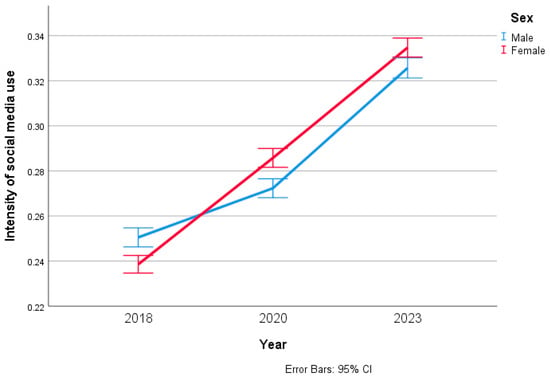
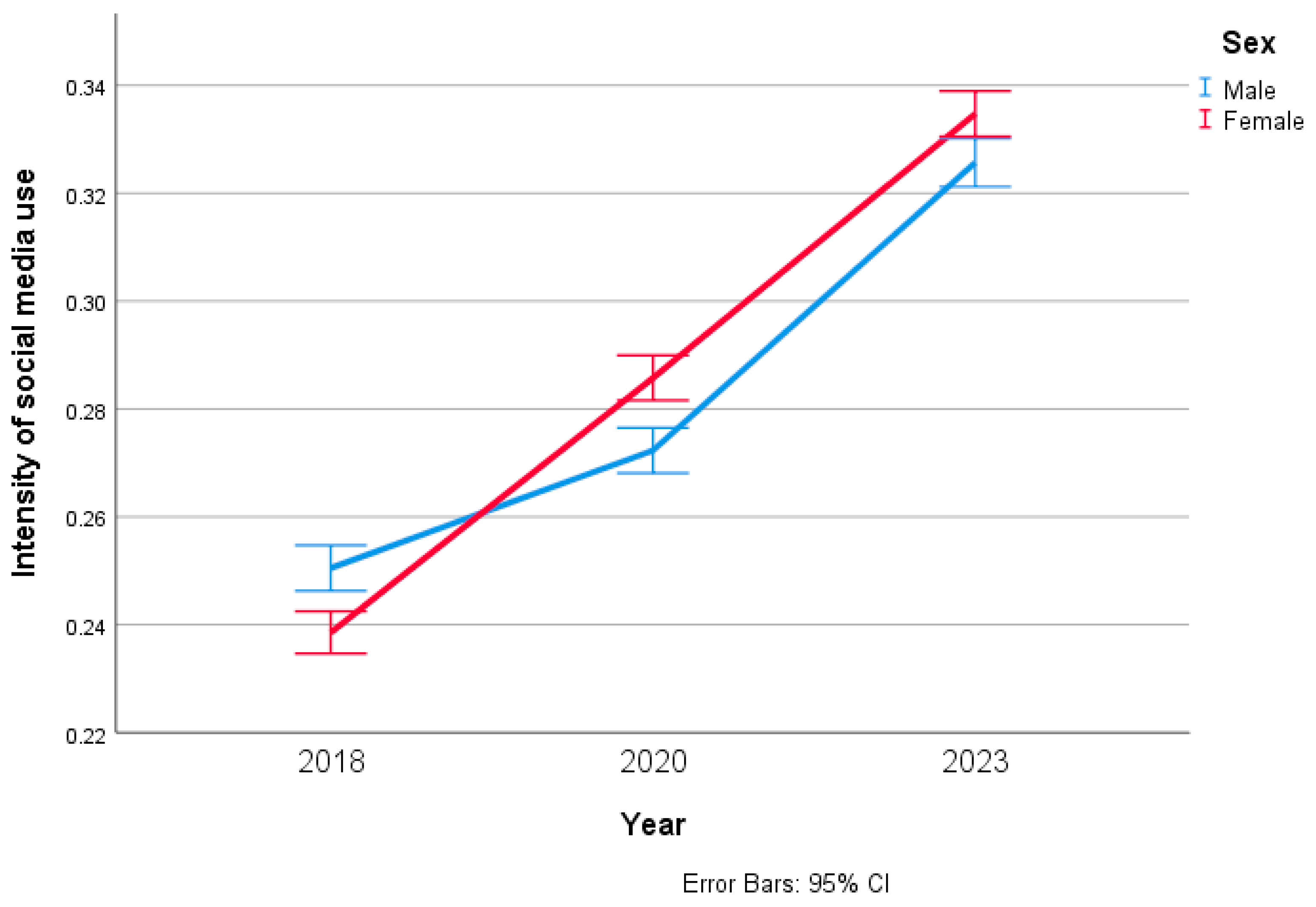
Regarding the first index, the Intensity of Use of Social Networks, statistically significant differences were found between men and women (mean difference) in favor of the latter. Additionally, an interesting element was observed: between the pre-pandemic and the pandemic, the behavior of men and women concerning this item changed. By 2018, men reported greater diversity in the use of social networks than women, but for the measurement of the pandemic (2020), although both indicators increased, men only increased by 2 percentage points, while women increased the index by almost 5 percentage points. Subsequently, in the 2023 measurement, both men and women again report an increase of almost 5 percentage points, with women again reporting a greater intensity in the use of social media.
When this behavior is studied for each country independently, it is observed that the differences are mainly found in Argentina, Brazil, Honduras, Panama, Uruguay, and Venezuela (Figure 6). Here, Argentina’s behavior stands out, being the only country that decreased the intensity of the use of social networks after the pandemic, when the other countries in the region have maintained growth. It is possible that Argentina, being one of the most digital Latin American societies and with the most intensive use of the Internet, has experienced the phenomenon of “burnout” that has been identified in societies of the Global North (Pressley, 2021; Van Hoy et al., 2022).
Figure 6.
Social media use intensity index by sex and year. SOURCE: Authors’ elaboration, based on data from the Latinobarómetro (2018, 2020, 2023).
Although social networks have multiple uses and not all of them are associated with the world of work, this research has used them as a proxy for adapting to the digital world. Social networks can not only be used as a means to get a job, but also as job skills in themselves in some specific job niches, such as those linked to digital communications, recruitment and selection of human resources, content production, community managers, marketing, digital sales, etc. (The Global Gender Gap Report, 2022). In addition, social networks are, by their very nature, structures to connect with different people and communities with common interests, an aspect that could facilitate labor inclusion.
Accordingly, social-media intensity is not interpreted here as equivalent to digital literacy or labor-market readiness. It is a behavioral proxy for breadth of engagement with digital platforms, which may reflect exposure to digitally mediated communication, information, networking, and services. The analysis, therefore, focuses on associations between this proxy and labor-market perceptions rather than claiming that platform use itself constitutes employability-related competence.
4.3. Digital Dexterity Index
To delve deeper into its impact on the world of work and explore the digital labor divide in the region, the highest level of education achieved was incorporated into the previous index, obtaining the DDI (Digital Proficiency Index), as mentioned. The IDD was compared between Latin American men and women, for each of the countries analyzed, in order to explore whether the employment gap is explained by differences in digital skills between men and women.
The IDD takes values between 0 and 1; values close to 0 are associated with lower use of social networks and lower educational level, while higher values are associated with greater use of social networks and a higher level of education. The higher the index, the more academic training people have, along with more intense social networks, so they will have an easier time inserting themselves in a world of work that is increasingly digital.
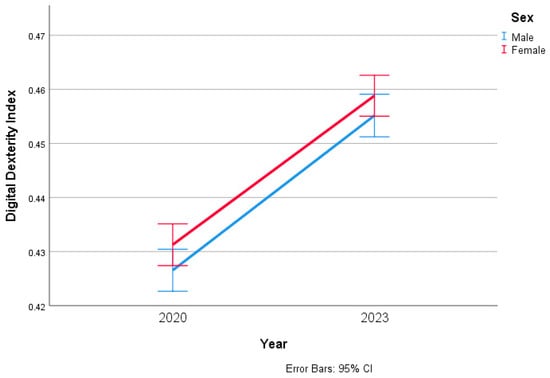
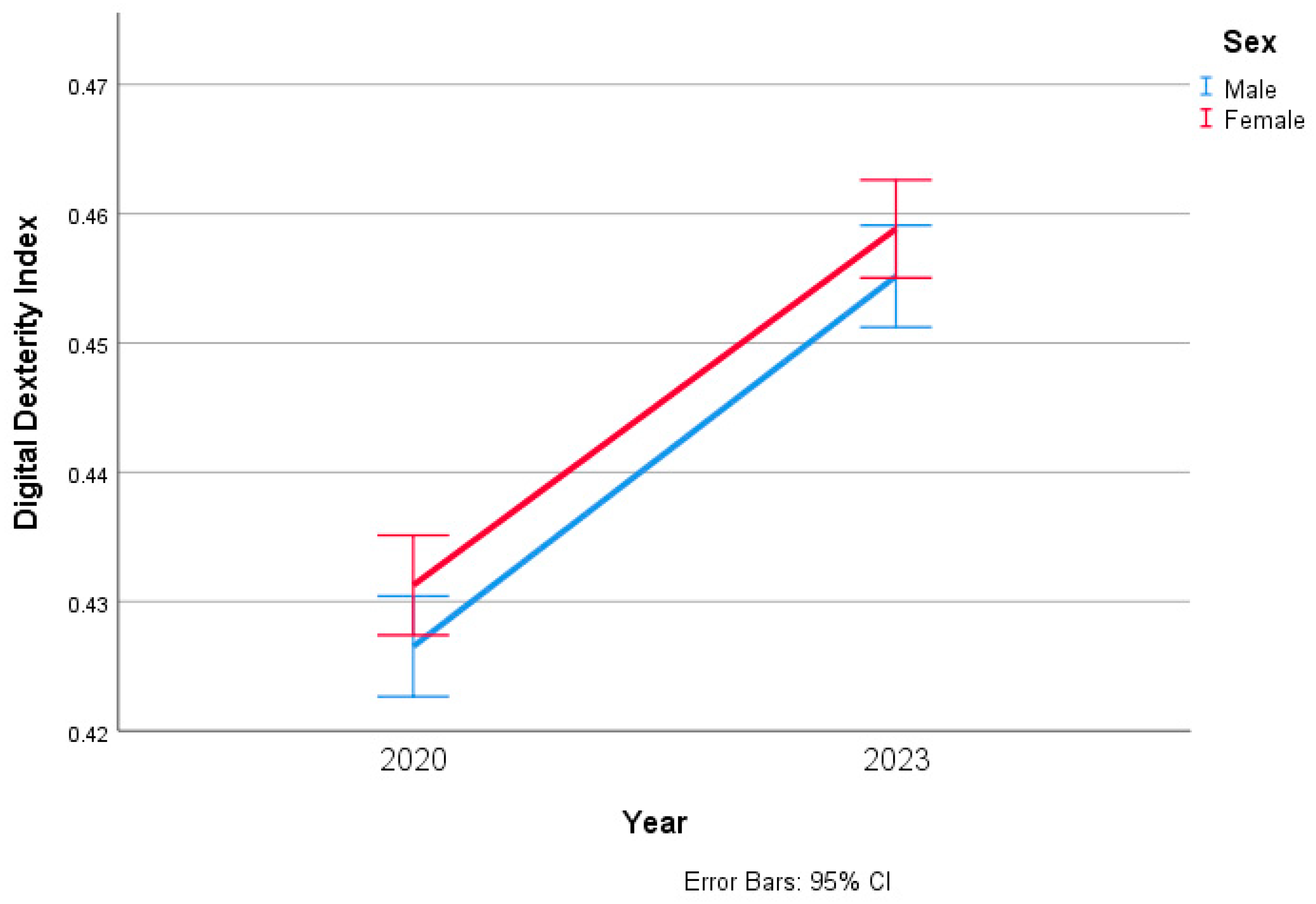
First, the general change in this index can be observed at the two points in the study: 2020, in the middle of the pandemic, versus 2023 in the post-pandemic. The pandemic seems to have acted as an accelerator of digital skills. In this sense, the ANOVA test indicates that there are significant differences between the two years, with a consecutive increase in the value of the index in each measurement. For 2020, the average is 0.43 with a standard deviation of 0.19, and in 2023, it reaches an average value of 0.46 and a standard deviation of 0.19. In this sense, and although there are differences between the two years of study, the observed increase is consistent with greater social-media use during and after the pandemic period; however, the observational design does not permit attributing this change causally to the pandemic.
Second, it is observed that in general, women possess greater digital skills than men, although by a small difference. Figure 7 shows this variation between the years of study by visualizing the 95% confidence intervals (CI) of this index for men and women. It is important to note that the percentage variations between the two years are only 5 percentage points, and between both genders just under one point, so it will be convenient to study the trend of this indicator over time to understand whether the differences are the product of the historical moment and/or distinctive behaviors of both groups.
Figure 7.
Social media use intensity index by country, sex, and year. SOURCE: Authors’ elaboration, based on data from the Latinobarómetro (2018, 2020, 2023).
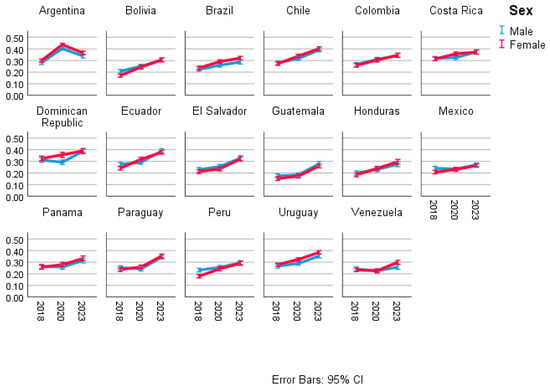
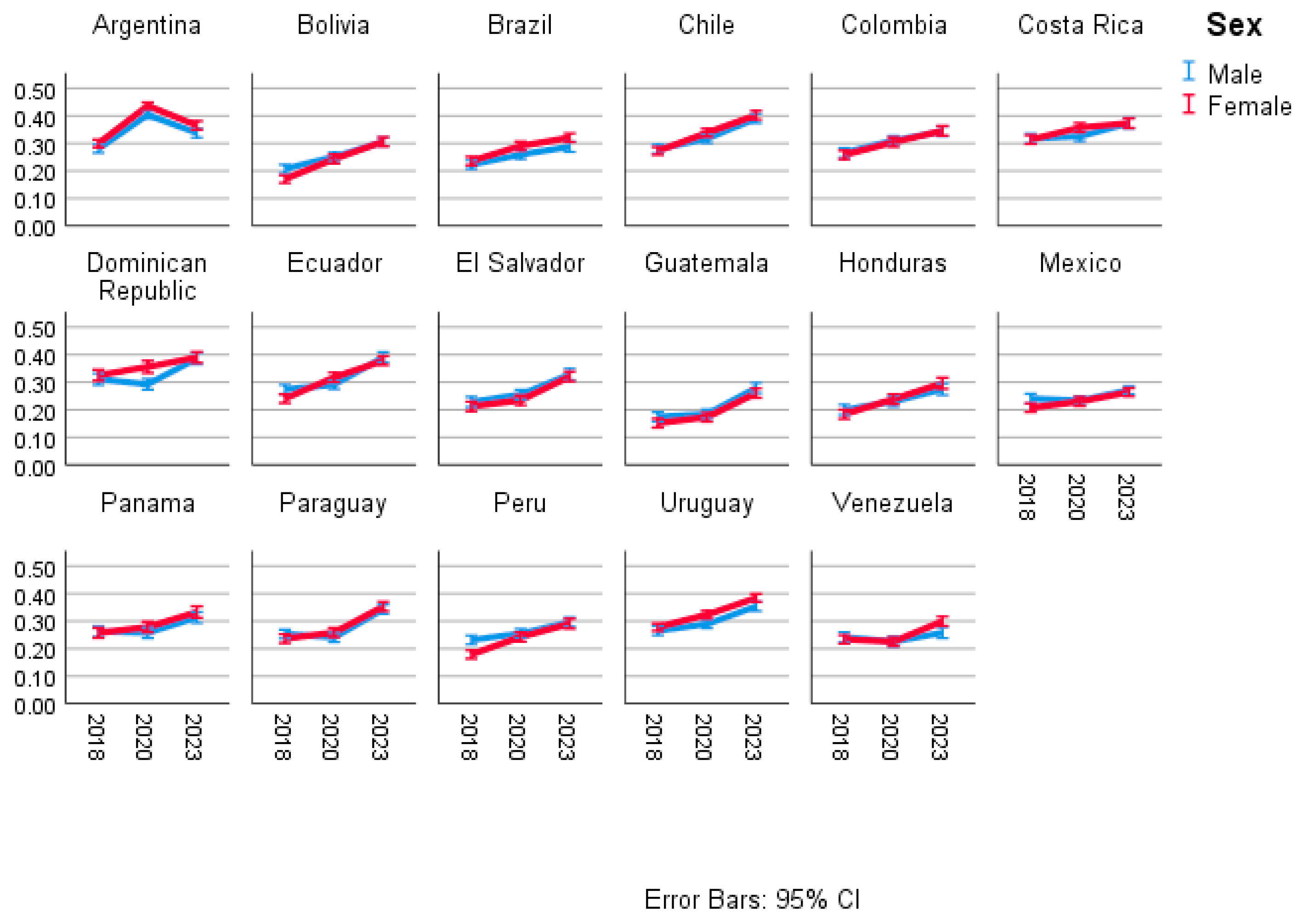
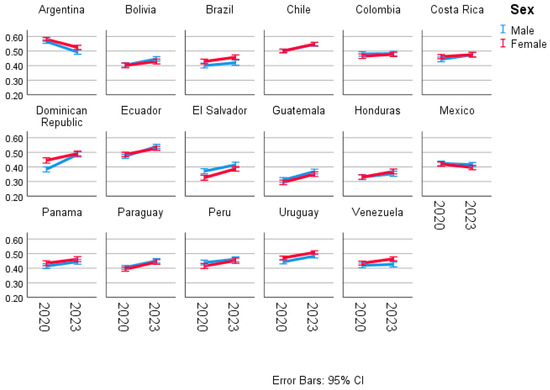
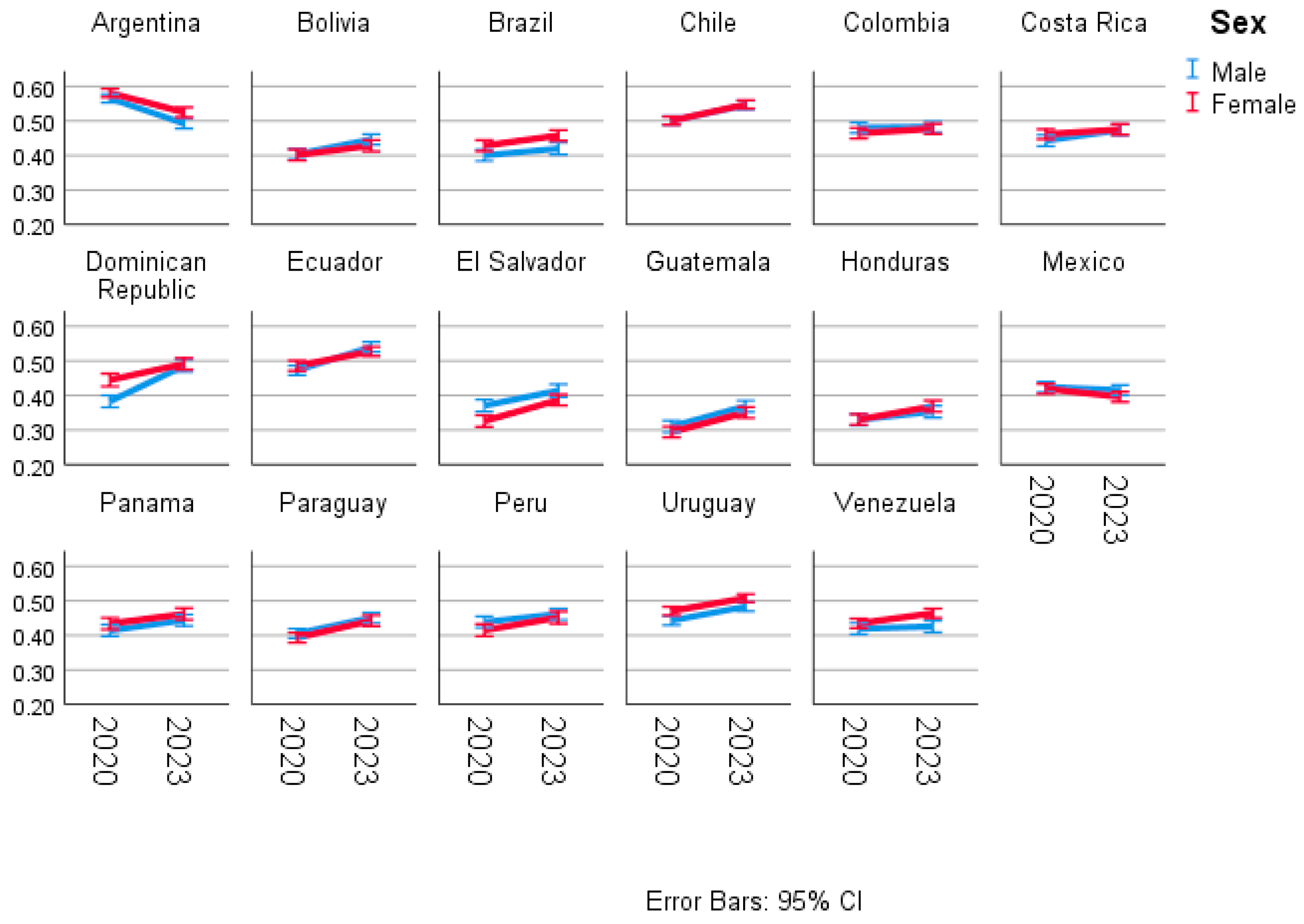
When viewing this same information for the 17 countries studied (Figure 8), significant variations between countries are identified. Although the clear trend is that digital skills, as measured by the DDI, are higher among women than among men, there is no homogeneous behavior among the different countries in the region. In Figure 9, it is noteworthy that in Chile, men and women present almost identical values for both periods of study. Countries such as the Dominican Republic, Colombia, Costa Rica, and Peru show a meeting of the average values between men and women for 2023, closing the gap in terms of their digital skills (intensity of use of social networks and educational level). On the other hand, countries such as Argentina, Bolivia, Brazil, Honduras, Mexico, and Venezuela show a tendency to increase the gap between men and women, in favor of the latter.
Figure 8.
Evolution of Digital Dexterity Index in pandemic and post-pandemic, by sex and year. SOURCE: Authors’ elaboration, based on data from the Latinobarómetro (2020, 2023).
Figure 9.
Evolution of the pandemic/post-pandemic Digital Dexterity Index, by country, gender, and year. SOURCE: Authors’ elaboration, based on data from the Latinobarómetro (2020, 2023).
The variations found among the countries analyzed could be explained by differences in the public policies to compensate for the pandemic that were applied in the different countries; however, this is not validated in this article, so nothing can be asserted in this regard.
To conclude, it can be said that there is a minimal digital divide between men and women in Latin America, but it would not explain the labor gap. On the contrary, with the digital divide in favor of women, one would expect female competitive advantages in the labor market. Latin American women would be showing greater digital skills than men, which in theory would enhance their opportunities for employment, training, and professional development, which does not correspond to the secondary data analyzed regarding differences in income levels, nor to the primary data analyzed regarding fear of the future of work and self-perception of poverty.
5. Conclusions
Reported job insecurity increased across the study period, a pattern that coincided with the pandemic and post-pandemic years. Between 2018 and 2023, fear of the future, expressed as fear of becoming unemployed, grew significantly. Despite the fact that this is a concern shared by men and women, women are more fearful of their future employment, consistently across countries and at different times of measurement, with differences in the perception of unemployment risk between men and women.
Although this observation may suggest that the gender employment gap has grown in the post-pandemic period, its impact is not homogeneous among the countries analyzed and has varied in the different Latin American countries, depending on the specific characteristics of each of them. Cross-country differences are evident in the trajectories observed; however, this study does not directly measure public-policy responses and therefore cannot attribute these differences to the relative effectiveness of national policies. In general, when answering the first PI of this work, it was observed that the pandemic negatively affected the vision of the future of work among men and women in the different Latin American countries, both in terms of fear of the future of work and the self-perception of poverty. The pandemic would have exacerbated gender inequalities in the Latin American labor market.
About the self-perception of poverty, the region feels that the worst experienced in the midst of the pandemic and measured in 2020 is over. For 2023, the risk of self-perceived poverty is generally better than it was pre-pandemic in 2018. However, women continue to consistently feel poorer than men, and the gap between this perception has widened in countries such as Colombia, El Salvador and the Dominican Republic.
On the other hand, there are statistically significant differences between men and women regarding the intensity of Social Media Use, with women showing higher habits and intensity of use. Although social networks are not directly associated with the world of work, they can be seen as an approximation to the ability to adapt to the digital world, since they constitute job skills in themselves in some specific clusters (The Global Gender Gap Report, 2022).
Working from home, the increasing number of Zoom or Meet meetings, as well as telemedicine or teletherapy, without travel or overnight stays, would suggest that it is easier for women to work without straying too far from home and children (Goldin, 2022). However, our results reveal a paradox: Latin American women have greater digital skills than men (DDI), but a higher perception of the risk of becoming unemployed, accompanied by greater fear of the future than men.
A majority of the literature suggests that the digital employment gap is linked to women’s lack of interest in STEM professions and a consequent lack of competencies in digital skills. Our research, however, indicates that despite being more digitally skilled than men, women would face more access problems and less security in the labor market. In this sense, our conclusions are closer to those of Bustelo et al. (2019) for the IDB, which speak of a significant asymmetry of income by gender, even analyzing within the technological labor clusters (STEM). Thus, the causes of the digital divide would not be linked to differences in digital skills and abilities, but other explanations would have to be sought, perhaps more linked to those linked to motherhood, child-rearing, and the weaknesses of Latin American education systems, more in line with the explorations of Goldin (2022).
The digital labor gap could be a sign of a lower ability to access jobs, despite having greater training and digital skills, although this cannot be concluded from this research, whose data move more in the field of self-perceptions than in that of economic indicators. In this sense, it will be necessary to continue deepening the research and incorporating new elements into the analysis.
Finally, about the methodological aspects of the study, it is also important to make a couple of notes and recommendations. There are limited options for access to data in the approach of studies in the Latin American region: there are few sources of data that interpret the digital economy or, in general, the multiple variables of societies. One of the most important and valuable sources is the one offered by the Latinobarómetro. However, the survey, which has been pioneering and offers great opportunities to researchers, suffers from some leaps and variations in its instruments that threaten the conduct of historical and/or longitudinal studies. In our particular case, the year 2018 had to be excluded when working with the Digital Dexterity Index, due to a lack of consistency in the response options in the classificatory categories of the level of studies. Other questions in the questionnaire, which would have been of interest to the research, such as the variable of dedication to housework, were not included in the 2023 survey, so they could not be included longitudinally in the analysis. Maintaining some stability in the questionnaires, both in ordering and wording, as well as in the response scales in longitudinal surveys is essential to ensure the quality, reliability, and validity of the data collected. In this sense, the recommendation is to maintain stability in the questionnaires as much as possible, from one year to the next. This allows for accurate and reliable analyses of changes over time and allows data from different waves of studies to be compared. If the wording changes, an unknown variable is introduced that can distort the results, since the meaning of the text is different. Changes observed in the data when these elements vary may not be the result of the trend, but of the change in the wording of the questions, their scales, or the order of the questionnaire.
A further limitation concerns the construction of the DDI. The Latinobarómetro items do not measure task-specific digital skills, distinguish active production from passive consumption, or identify whether platform use is professional or recreational. Consequently, the DDI captures a combination of educational attainment and breadth of social-media engagement, not digital competence in the stronger sense used in digital-literacy research. Future studies should validate the index against direct measures of operational, informational, communicative, and content-creation skills.
Author Contributions
Conceptualization, C.B.F. and J.C.; Methodology, C.B.F. and J.C.; Formal analysis, J.C.; Investigation, C.B.F. and J.C.; Writing—original draft, C.B.F. and J.C.; Writing—review & editing, C.B.F. and J.C.; Visualization, C.B.F.; Supervision, C.B.F.; Project administration, C.B.F. All authors have read and agreed to the published version of the manuscript.
Funding
This research received no external funding.
Institutional Review Board Statement
Ethical review and approval were waived for this study, as it relies exclusively on secondary analysis of data from Latinobarómetro (https://www.latinobarometro.org). As stated in Latinobarómetro’s privacy policy (https://www.latinobarometro.org/privacidad, accessed on 30 July 2026), the data collected from their surveys is strictly anonymous and does not contain any personally identifiable information (PII). Furthermore, this data is publicly available for academic and research purposes. Since the study did not involve direct intervention with human participants and the dataset used is completely anonymized and public, formal ethical committee approval was not necessary in this case.
Informed Consent Statement
Informed consent was obtained from all subjects involved in the study from Latinobarometro.
Data Availability Statement
The original data presented in the study are openly available in the Latinobarómetro repository at https://www.latinobarometro.org/agregados, accessed on 30 July 2026. The specific datasets used are: Estudio Latinobarómetro 2018 (https://www.latinobarometro.org/latinobarometro-2018, accessed on 30 July 2026), Estudio Latinobarómetro 2020 (https://www.latinobarometro.org/latinobarometro-2020, accessed on 30 July 2026), and Estudio Latinobarómetro 2023 (https://www.latinobarometro.org/latinobarometro-2023, accessed on 30 July 2026).
Conflicts of Interest
The authors declare no conflicts of interest.
Notes
| 1 | See appendices at https://docs.google.com/document/d/12GfAKIEipXDzQwbG8VJdW2ZtvvNQ3cYY/edit?usp=sharing&ouid=112009112558156647059&rtpof=true&sd=true (accessed on 30 July 2026). |
| 2 | Social Networks used: Facebook, Snapchat, Youtube, Twitter, WhatsApp, Instagram, Tumblr, Linkedin, Other. (1 = Yes, 0 = No). |
| 3 | 1 = Illiterate, 2 = Incomplete Basic, 3 = Complete Basic, 4 = Secondary, Middle, Incomplete Technique, 5 = Secondary, Middle, Complete Technique, 6 = Incomplete Higher, 7 = Complete Higher Education. |
| 4 | See Note 1 above. |
References
- Alves, E. E. C., & Steiner, A. Q. (2017). Globalization, technology and female empowerment: Breaking rights or connecting opportunities? Social Indicators Research, 133(3), 859–877. [Google Scholar]
- Aveledo, G. T. (2022). Human rights: Venezuela was not fixed. Political Dialogue. Available online: https://dialogopolitico.org/agenda/venezuela-no-se-arreglo/ (accessed on 30 July 2026).
- Blau, F. D., & Kahn, L. M. (2007). The gender pay gap: Have women gone as far as they can? Academy of Management Perspectives, 21(1), 7–23. [Google Scholar] [CrossRef] [Scilit]
- Bustelo, M., Flabbi, L., & Viollaz, M. (2019). The gender labor market gap in the digital economy (No. IDB-WP-1056). IDB Working Paper Series. IDB. [Google Scholar]
- Coppedge, M., Gerring, J., Knutsen, C. H., Lindberg, S. I., Teorell, J., Alizada, N., Altman, D., Bernhard, M., Cornell, A., Fish, M. S., Gastaldi, L., Gjerløw, H., Glynn, A., Hicken, A., Hindle, G., Ilchenko, N., Krusell, J., Lührmann, A., Maerz, S. F., … Ziblatt, D. (2022). V-Dem dataset v12 [Data set]. V-Dem. Available online: https://www.v-dem.net/data/the-v-dem-dataset/country-year-v-dem-core/ (accessed on 30 July 2026).
- Corporación Latinobarómetro. (2018). Latinobarómetro 2018 (Version 2018). Corporación Latinobarómetro. [Google Scholar]
- Corporación Latinobarómetro. (2020). Latinobarómetro 2020 (Version 2020). Corporación Latinobarómetro. [Google Scholar]
- Corporación Latinobarómetro. (2023). Latinobarómetro 2023 (Version 2023). Corporación Latinobarómetro. [Google Scholar]
- Couldry, N., & Hepp, A. (2018). The mediated construction of reality. John Wiley & Sons. [Google Scholar]
- ECLAC and the United Nations. (2023). Buenos aires commitment. Available online: https://repositorio.cepal.org/server/api/core/bitstreams/6ef02df9-68a1-4d75-a707-f753a31405ae/content (accessed on 30 July 2026).
- Formica, S., & Sfodera, F. (2022). The great resignation and quiet quitting paradigm shifts: An overview of the current situation and future research directions. Journal of Hospitality Marketing & Management, 31(8), 899–907. [Google Scholar] [CrossRef] [Scilit]
- Friedman, T. (2006). La tierra es plana. MR Ediciones. [Google Scholar]
- Gittleman, M. (2022, July). “The “Great Resignation” in perspective”. In Monthly Labor Review. U.S. Bureau of Labor Statistics. [Google Scholar] [CrossRef] [Scilit]
- Goldin, C. (2014). A grand gender convergence: Its last chapter. American Economic Review, 104(4), 1091–1119. [Google Scholar] [CrossRef] [Scilit]
- Goldin, C. (2022). Understanding the economic impact of COVID-19 on women (No. w29974). National Bureau of Economic Research. [Google Scholar]
- Hammer, A., & Karmakar, S. (2021). Automation, AI and the future of work in India. Employee Relations: The International Journal, 43(6), 1327–1341. [Google Scholar] [CrossRef] [Scilit]
- Hargittai, E. (2002). Beyond logs and surveys: In-depth measures of people’s web use skills. Journal of the American Society for Information Science and Technology, 53(14), 1239–1244. [Google Scholar] [CrossRef] [Scilit]
- Hargittai, E. (2010). Digital na(t)ives? Variation in internet skills and uses among members of the “net generation”. Sociological Inquiry, 80(1), 92–113. [Google Scholar] [CrossRef] [Scilit]
- Hausmann, R., Tyson, L. D., Bekhouche, Y., & Zahidi, S. (2012). The global gender gap index 2012. In The global gender gap report 2012 (pp. 3–27). World Economic Forum. [Google Scholar]
- Helsper, E. (2021). The digital disconnect: The social causes and consequences of digital inequalities. SAGE Publications Ltd. [Google Scholar]
- Kerlinger, F. N., & Lee, H. B. (1999). Foundations of behavioral research: Educational, psychological and sociological enquiry. Cengage Learning. [Google Scholar]
- Knell, M. (2021). The digital revolution and digitalized network society. Review of Evolutionary Political Economy, 2(1), 9–25. [Google Scholar] [CrossRef] [Scilit]
- LeanIn.Org and McKinsey & Company. (2022). Women in the workplace. Available online: https://www.mckinsey.com/~/media/mckinsey/featured%20insights/diversity%20and%20inclusion/women%20in%20the%20workplace%202022/women-in-the-workplace-2022.pdf (accessed on 30 July 2026).
- Malhotra, N. K., Nunan, D., & Birks, D. F. (2020). Marketing research. Pearson UK. [Google Scholar]
- OECD. (2018). Bridging the digital gender divide: Include, upskill, innovate. OECD Publishing. [Google Scholar]
- Perez, C. (2018). The technological roots and structural consequences of the “double bubble” at the turn of the century. Cuadernos el Cendes, 35(98), 1–37. [Google Scholar]
- Petrongolo, B., & Ronchi, M. (2020). Gender gaps and the structure of local labor markets. Labour Economics, 64, 101819. [Google Scholar] [CrossRef] [Scilit]
- Pressley, T. (2021). Factors contributing to teacher burnout during COVID-19. Educational Researcher, 50(5), 325–327. [Google Scholar] [CrossRef] [Scilit]
- Rojas Silva, N., & Angel, S. (2023). The year of official propaganda: “Venezuela has been fixed” and the gallery of paradoxes. Journal of Political Science (Santiago), 43(2), 403–431. [Google Scholar]
- Schuman, H., & Presser, S. (1996). Questions and answers in attitude surveys: Experiments on question form, wording, and context. Sage. [Google Scholar]
- Sicat, M., Xu, A., Mehetaj, E., Ferrantino, M., & Chemutai, V. (2020). Leveraging ICT technologies in closing the gender gap. World Bank. [Google Scholar]
- Tessema, M. T., Tesfom, G., Faircloth, M. A., Tesfagiorgis, M., & Teckle, P. (2022). The “great resignation”: Causes, consequences, and creative HR management strategies. Journal of Human Resource and Sustainability Studies, 10(1), 161–178. [Google Scholar]
- The Global Gender Gap Report. (2018). World Economic Forum. Available online: https://www.weforum.org/publications/the-global-gender-gap-report-2018/ (accessed on 30 July 2026).
- The Global Gender Gap Report. (2020). World Economic Forum. Available online: https://www.weforum.org/publications/gender-gap-2020-report-100-years-pay-equality/ (accessed on 30 July 2026).
- The Global Gender Gap Report. (2021). World Economic Forum. Available online: https://www.weforum.org/publications/global-gender-gap-report-2021/ (accessed on 30 July 2026).
- The Global Gender Gap Report. (2022). World Economic Forum. Available online: https://www.weforum.org/publications/global-gender-gap-report-2022/ (accessed on 30 July 2026).
- The Global Gender Gap Report. (2023). World Economic Forum. Available online: https://www.weforum.org/publications/global-gender-gap-report-2023/ (accessed on 30 July 2026).
- Van Dijk, J. (2020). The digital divide. John Wiley & Sons. [Google Scholar]
- Van Hoy, A., Rzeszutek, M., Pięta, M., Mestre, J. M., Rodríguez-Mora, Á., Midgley, N., Omylinska-Thurston, J., Dopierala, A., Falkenström, F., Ferlin, J., Gergov, V., Lazić, M., Ulberg, R., Røssberg, J. I., Hancheva, C., Stoyanova, S., Schmidt, S. J., Podina, I., Ferreira, N., … Gruszczyńska, E. (2022). Burnout among psychotherapists: A cross-cultural value survey among 12 European countries during the coronavirus disease pandemic. Scientific Reports, 12(1), 13527. [Google Scholar] [CrossRef] [Scilit] [PubMed]
- World Bank Group. (2024). Global economic prospects. Available online: https://www.bancomundial.org/es/publication/global-economic-prospects (accessed on 30 July 2026).
- Yin, Z. H., Zhang, T. H., & Choi, C. H. (2023). Toward sustainable development: Does digitalization narrow the gender gap in the labor market? Sustainable Development, 31(5), 3528–3539. [Google Scholar] [CrossRef] [Scilit]

Disclaimer/Publisher’s Note: The statements, opinions and data contained in all publications are solely those of the individual author(s) and contributor(s) and not of MDPI and/or the editor(s). MDPI and/or the editor(s) disclaim responsibility for any injury to people or property resulting from any ideas, methods, instructions or products referred to in the content. |
© 2026 by the authors. Licensee MDPI, Basel, Switzerland. This article is an open access article distributed under the terms and conditions of the Creative Commons Attribution (CC BY) license.