


Abstract
This paper aims to develop a conceptual framework of digital resilience rituals in order to illuminate the ways in which media practices can be seen as adaptive responses to information stress in the context of the current digital communication environment. By incorporating the theoretical perspectives of the concept of ritual communication and the theories of resilience and salutogenesis, the current study aims to reconceptualize the use of digital media as routinized and meaning-making practices. Algorithmically curated, information-rich environments generate continuous cognitive and affective demands, experienced as information stress. In response, users engage in ritualized media practices that structure attention, regulate emotional responses, and maintain a sense of control. The model identifies three types of digital resilience rituals: orientation rituals, emotional regulation rituals, and boundary-setting rituals. Conceptually, the framework links structural characteristics of the media environment with psychological resources, positioning ritualized practices as mediating mechanisms between environmental stressors and adaptive outcomes. By doing so, the study extends ritual communication theory toward adaptive regulation in digital contexts and offers a theoretically grounded basis for future empirical research on media practices, information stress, and resilience.
1. Introduction
The rapid and structural transformation of the digital media environment has fundamentally reshaped the ways in which information is accessed, processed, and interpreted. As a result of algorithmic content curation, platform logics, and the functioning of the attention economy (Hendricks & Vestergaard, 2019), users are exposed to an unprecedented volume and complexity of information, generating a continuous demand for interpretation and decision-making. It is in this context that media use has come to be viewed as an active process that calls for extensive cognitive and emotional effort, involving uncertainties and unstable processes of making meaning (Bawden & Robinson, 2009; Hepp, 2020).
Under this perspective, informational stress may be at the epicenter. This is due to the situation created by information overload, the lack of transparency in algorithmic processes, as well as misinformation. This process imposes significant cognitive and affective demands and contributes to the experience of uncertainty, anxiety, and loss of control (Eppler & Mengis, 2004; van Dijck et al., 2018).
Although the literature has extensively examined misinformation (Vosoughi et al., 2018; Lewandowsky et al., 2017; Wardle & Derakhshan, 2017), media literacy (Hobbs, 2010; Livingstone, 2004; Potter, 2013), and digital competencies (European Commission, 2016; Ferrari, 2013; van Dijk & Alinejad, 2020), considerably less attention has been paid to the everyday, practice-based mechanisms through which users cope with the uncertainty inherent in the digital media environment. The present study seeks to address this gap by interpreting digital media practices through the lens of ritual communication. Drawing on Carey’s (1989) cultural view of communication and Couldry’s (2003) theory of media rituals, media-related actions are understood not merely as processes of information transmission, but as meaning-making, repetitive, and socially embedded practices.
In the era of deep mediatization, digital media practices increasingly take on a ritualized character. Their function lies in reducing uncertainty and maintaining cognitive and emotional stability (Hepp, 2020). In parallel, resilience theory and the salutogenic perspective highlight that individuals are capable of coping with complex and stress-laden environments by relying on internal resources. Of specific interest is the sense of coherence (SOC), which guides interpretation along the dimensions of comprehensibility, manageability, and meaningfulness dimensions (Antonovsky, 1993), and emotional intelligence (EI), which helps individuals recognize and regulate their emotions (Salovey & Mayer, 1990; Mayer et al., 2008b).
Following the theoretical foundation laid out earlier, this paper presents the notion of digital resilience rituals, which is understood as media rituals that help people organize their information ecology, manage their emotional states, and control their media consumption practices. In pursuit of two distinct goals, this paper attempts to develop a theoretical framework for understanding this notion through insights offered by media ritual theories and psychological resilience theories, and then build a conceptual framework for examining how media rituals influence the adaptation process in response to the structural features of the digital media ecology.
This article is threefold in its contribution. On a theoretical note, it advances media ritual theory to incorporate the notion of digital resilience. On a conceptual note, this article attempts to bridge the gap between salutogenic theory and emotional intelligence theory and media studies. On a methodological note, this article proposes new avenues for researching media rituals and attempts to emphasize the importance of triangulating survey, experimental, and ethnographic approaches.
2. The Theoretical Framework of Ritual Communication
The ritual perspective in the study of communication represents a paradigm shift in the study of the media, which is significantly different from the classical information transmission approaches. Unlike the Shannon–Weaver model (Shannon & Weaver, 1949) of communication, which considers the linear flow of information, the cultural perspective of Carey (1989, 1992) considers the process of communication as a tool for maintaining and reproducing social reality. This approach was developed and elaborated upon in the field of communication research by Rothenbuhler (1998), who describes ritual as “the voluntary enactment of appropriately patterned behavior for the symbolic achievement or participation in the serious business of life”—thus combining elements of Carey’s cultural theory with ritual theory in anthropology.
This perspective follows the classical sociological approaches to the study of ritual, as described by Durkheim (1912/1995), in the context of the role of rituals in the maintenance of social integration and the promotion of the collective consciousness of society. Carey’s theoretical perspective has also been further elaborated by Couldry (2000, 2003, 2019) in the context of the study of the role of the media as a ritual institution in society. According to Couldry, the primary function of the media in the context of the ritual perspective is the legitimization of the “mediated center”, i.e., the promotion of the idea that the media hold a central position in the definition of social reality. In that respect, the media are not just a reflection of reality, but a tool in the definition of reality in society. The consumption of the media, even in the context of the most private practices of the individual, constitutes a symbolic act that reconfirms the authority of the media system and the validity of the meanings that it conveys (Couldry, 2003).
A proper understanding of the concept of ritual would require an examination of anthropological and practice-theoretical works. First of all, the difference between habit, routine, and ritual should be established. Habit is an automatized and reflexive behavioral pattern that requires no cognitive effort (Wood & Neal, 2007). Routine behavior is structured and purposeful, however, it has little symbolic meaning. Ritual, on the other hand, can be defined as normatively structured and socially validated behavior, which produces effects going beyond its instrumental meaning (Bell, 1991). According to Bell (1991), rituals should not be regarded as a static phenomenon. Instead, ritual should be viewed as a “ritualization” that sets practices apart from normal activities. The theory of social practices suggested by Reckwitz (2002) sees rituals as socially meaningful practices that involve material mediation through repeated and corporeal actions. From an anthropological perspective, what is most important about rituals is their capacity for transformation: the theory of rites of passage created by Van Gennep (1909/1960) reveals the structure of ritual as a transition from one state to another via separation, liminality, and reintegration phases. Turner’s (1969) theory of liminality adds another stage of symbolic and psychological transformation within this model. Applying this scheme to the digital environment, one may conclude that a digital resilience ritual involves not merely a repeated action, but a whole ritual practice, during which the subject of the ritual undergoes a micro-transition from being overwhelmed with information to achieving a greater sense of orientation and control or even emotional balance. The idea of communication being “ritual” is explored by Rothenbuhler (2006) to further support this claim, as he asserts that the power of ritual exists not only during special ceremonies, but also during ordinary, repetitive forms of communication; therefore, ritual plays a direct role in the repetitive forms of digital communication that are being considered here.
The explanation of media rituals can be further extended through mediation and mediatization theory. Mediatization theory, based on Couldry and Hepp (2017), states that mediatization is not just a change in media technology but a change in the very structure of society. Deep mediatization theory argues that media are not just forces that act upon society; rather, they are a part of it and penetrate almost all areas of our lives (Hepp, 2020).
Ritual communication in this new mediatization theory has undergone a tremendous change. In a mediatization theory, media rituals that are traditionally organized and carried out by institutions are being replaced by new and personalized media rituals. Media are not just decentralized but also more intensive and extensive. People are not just passive media consumers; rather, they are actively involved in shaping and transforming their own media environment. New and different patterns of ritual communication are being formed (Couldry & Hepp, 2017).
The most interesting aspect of this new mediatization theory is that these new patterns of ritual communication are not just ritual; rather, they are changing. New patterns of media practice, like digital media practices that are repetitive and normative in nature and provide stability and certainty in a chaotic and changing information environment, are being formed. This is in line with practice theory that states that social reality is made up of repetitive and routine actions (Couldry, 2012; Schatzki, 2001).
The reinterpretation of ritual communication in a digital mediatization theory is closely related to its affective and cognitive dimensions. Media practice is not just a cognitive process; rather, it is an emotional experience that is actively intensified by media itself (Papacharissi, 2014).
In the digital age, the theoretical model of the ritual of communication maintains its significance and extends itself to include new dimensions. In this context, rituals can be conceived of as the adaptive response to the structural change in the media environment and can be seen as allowing the user to cope with the complex and uncertain information space. In this way, media use in the digital environment can be conceived of as micro-level, repetitive, and functionally adaptive patterns of action in the context of daily coping strategies and hence provides the conceptual foundations for the development of the concept of digital resilience rituals. The above view fits within the paradigm expressed by Rothenbuhler (2010), who argues that ritual communication theory must be reinterpreted in the age of the Internet and the networking of media, whereby the logic of ceremony in media events is replaced by personalized ritual media participation.
3. Deep Mediatization and the Structural Characteristics of the Information Environment
The media system in the digital age differs from previous media systems not only in terms of technology, but also in that it creates a fundamentally new socio-communicative structure. This is because platform-based media operation, algorithm-based media selection, and media network structures together produce a dynamic, individualized, and sometimes structurally opaque media system (van Dijck et al., 2018). In this sense, the media system is no longer merely an information transmission system but rather a complex and self-organizing system that constantly reproduces perceptions of social reality.
The theory of “deep mediatization” captures this transformation in terms of the media system. In this context, Hepp (2020) states that “the media do not function as external forces acting on society; they function as constitutive elements within society.”. In this sense, communication occurs increasingly via media platforms that both mediate and structure communication. This results in the “mediated construction” of social reality (Couldry & Hepp, 2017), where users’ experiences are increasingly influenced by information environments that are algorithmically structured.
The structural information overload is perhaps one of the most important outcomes of this process of deep mediatization. In this context, information volumes increase exponentially, while information quality, reliability, and relevance become increasingly heterogeneous. While Eppler and Mengis’s (2004) classical definition of information overload—“an evaluation situation where the amount of information exceeds an individual’s information processing capacity”—remains applicable, information overload is amplified in the digital environment because of information fragmentation, information transformation, and information loss of context, which altogether increase cognitive overload (Bawden & Robinson, 2009).
The information overload not only poses a cognitive problem, but also a structural problem, in the sense that due to the dynamic nature of the information environment, users are constantly forced to engage in re-evaluation processes. This can be regarded as a key characteristic of the digital media environment, which calls for significant mental processing (Andrejevic, 2013). This implies that users do not simply consume information; instead, they constantly navigate through a sophisticated, multidimensional information environment.
The situation is worsened by the rise in misinformation in the media environment, which has led to the creation of a “post-truth” media environment. According to Vosoughi et al. (2018), false news tends to spread faster than accurate news, especially in social media environments. This can be attributed to novelty and emotional appeal, which increase the willingness to disseminate news. According to Lewandowsky et al. (2017), in the post-truth media environment, the evaluation of the credibility of information tends to turn into an affective and identity-based process, which further undermines the possibility of objective evaluation.
The existence of information bubbles or echo chambers in the media environment also contributes to the distortion in the information environment. According to Pariser (2012), the “filter bubble” phenomenon shows how the algorithmic nature of social media environments isolates individuals from different viewpoints, which minimizes cognitive diversity and increases polarization. Although the extent to which this phenomenon affects the media environment is debatable (Bakshy et al., 2015), the reality is undeniable.
The digital media environment, therefore, represents a sophisticated, dynamic, unstable, and unpredictable environment in which users are constantly forced to engage in adaptive processes. The media environment can no longer be regarded as a process in which individuals consume information; instead, it represents a dynamic and adaptive behavioral process in which individuals are constantly engaged in attempting to impose order in a structurally uncertain environment.
This theoretical perspective is of vital importance for the current research, as it emphasizes the fact that the practices of digital media are not arbitrary but rather follow patterns and are structured. These patterns provide the background for the development of the ritualized practices that are of vital importance for the development of digital resilience.
4. Information Stress and Psychological Burden
The structural characteristics of the digital information environment directly influence the development of informational stress, which plays a key role in modern media studies and psychological research in organizational contexts. Although the phenomenon of informational stress is not new, in the digital environment, its development is structurally enhanced to the extent that it can be perceived as a persistent condition. The sources of the development of informational stress in the digital media environment are diverse but closely interrelated. The first obvious source of informational stress in the digital media environment is information overload, which stems from the quantitative increase in available information. According to Bawden and Robinson (2009), information overload not only stems from the volume of available information, but also from its lack of structure, redundancy, or internal contradictions. The information presented in the digital media environment consists of decontextualized pieces of information, which demand significant mental effort to integrate them into a coherent whole.
The second key source of the development of informational stress in the digital media environment is the pressure of time, or the need to immediately respond to the information presented in the digital media environment. The development of the digital media environment has been accompanied by the development of real-time communication, which demands constant availability in the virtual environment. Individuals are not only passive consumers but also active participants in the flow of information, which demands rapid decision-making and constant psychological readiness to process information. According to the research on technostress, the constant demand to be available in the virtual environment results in significant psychological strain, which in the long-term can lead to burnout.
The third structural factor concerns the presence of uncertainty and the problem of credibility. In the digital media environment, information sources are ambiguous, and the reliability of information is hard to verify. Such epistemic uncertainty leads to cognitive overload since the user has to not only process the information, but also verify its reliability. According to Lewandowsky et al. (2017), in the post-truth era, the evaluation of information also involves mechanisms of affective and identity-based information processing. This dynamic is particularly evident in high-stakes public communication contexts, where institutional messaging and public perception diverge sharply, generating information stress and resistance patterns among citizens (Rajcsányi-Molnár et al., 2026).
The fourth structural factor concerns the lack of algorithmic control, which leads to a loss of user autonomy. In the case of information environments that are algorithmically organized, the user cannot understand the reason behind the information presented to them, leading to a loss of control and a feeling of uncertainty (Gillespie, 2014). This problem relates to the so-called “black box” problem, where the mechanisms of the algorithms used in the information environment are not understandable to the user, whether it is due to the complexity of the algorithms or the lack of institutional transparency (Burrell, 2016; Diakopoulos, 2016; Pasquale, 2015). As a result, the causal mechanisms behind the algorithms cannot be interpreted by the user.
The consequences of the information overload phenomenon are not limited to cognitive overload. According to Bawden and Robinson (2009), information overload also has a number of affective consequences, including anxiety, frustration, and decision paralysis. Decision overload, or the so-called “choice overload” phenomenon, as described by Schwartz (2004), reveals that information overload leads to a loss of efficiency in the decision-making process and a decrease in the overall satisfaction that the user derives from the information environment. In the case of the digital environment, the presence of a constant stream of information leads to the so-called “interrupted attention” phenomenon, as described by Wu’s (2016) attention economy model. According to the model, the primary goal of the information environment is to attract the user’s attention, leading to a series of constant interruptions that fragment the user’s attention. Research in cognitive psychology reveals that the presence of such interruptions leads to a loss of efficiency in the processing of information and leads to mental fatigue (Mark et al., 2008).
This is closely related to the notion of technostress. This is defined as stress reactions that occur due to information technology usage. Tarafdar et al. (2019) define technostress as a multidimensional construct that incorporates overload, complexity, and uncertainty. These three dimensions are also characteristic of the digital media environment. Research studies have also demonstrated that technostress negatively influences performance, well-being, and psychological functioning. In this way, informational stress and psychological burden create a situation where users must constantly find a balance between active engagement and avoidance. This is also a paradox of using digital media because, on the one hand, users can access information and social connections. On the other hand, they are also exposed to overload and stress.
Because of this duality, there is a need to develop structured coping mechanisms. In this context, there is growing support in the literature that users are not merely recipients of this environment. Rather, they actively cope with it. This is carried out via information filtering, limiting media usage, and emotional control. These coping mechanisms are not necessarily spontaneous. Rather, they occur via recurring and structured patterns. At this juncture, there is a conceptual connection between informational stress and ritual communication theory. This is because coping mechanisms that users develop over time acquire ritualistic characteristics and serve a balancing role within the digital environment. This leads us to the conceptual framework of digital resilience rituals. This is explored in detail in the next sections.
5. Resilience and Psychological Resources in the Digital Media Environment
In order to understand the psychological burden that emerges in the context of the digital information environment, it is necessary to re-conceptualize the construct of resilience. Indeed, resilience has emerged as a core construct in psychological studies, highlighting the adaptive capacities of individuals in the context of stress, uncertainty, and crisis (Burleson & Davis, 2013; Konaszewski et al., 2021; Shackleton et al., 2024; Taşan-Kok et al., 2013). In alignment with Masten’s (2001) “ordinary magic” construct, resilience has also been viewed as a normative, everyday adaptive process that is embedded in routine coping (Luthar et al., 2000; Southwick et al., 2014). Such a conceptualization has particular relevance in the context of the digital media environment, where stressors are not limited to specific or extraordinary conditions but are constantly present (Al-Abdulghani, 2021; Galinec & Luić, 2020; Qamaria et al., 2025; Sharma et al., 2022).
While classical approaches to the construct of resilience have primarily highlighted the role of individual characteristics, more recent approaches to the construct in psychological studies have highlighted the dynamic, systemic nature of resilience. Indeed, in alignment with the social-ecological model of Ungar (2015), resilience has also been viewed as a construct that not only involves the availability of inner resources, but also the availability of access to conditions in the environment (Ungar, 2015). Such a conceptualization has particular relevance in the context of the digital media environment, where the environment itself actively influences the experience of the individual (Beer, 2017; Boyd & Crawford, 2012; Gillespie, 2010; Van Dijck & Poell, 2013).
Within this framework, the salutogenic approach, as developed by Antonovsky (1993), offers a theoretical framework to view the phenomenon through the lens of salutogenic resources rather than stressors. Within the context of digital media, the salutogenic concept of sense of coherence assumes particular importance. The comprehensibility of algorithmically ordered information spaces is undermined by the fragmented nature of the information presented. Manageability is undermined due to the lack of control over information flows. The meaningfulness of the information presented also becomes precarious due to the increasing mediation of content interpretation through emotional and identity-based filters (Couldry, 2003; Hepp, 2020). The digital media environment, therefore, represents a structural threat to the development of a coherent interpretation of reality. The integration of the concept of resilience with salutogenic resources offers a framework to view digital media adaptation not only as a reactive process, but also as a process of meaning-making.
In the process, emotional intelligence acts as a mediating factor in the regulation–interpretation interface. Emotional intelligence, as defined by Salovey and Mayer (1990), refers to the capacity to monitor one’s emotions, to discriminate between different emotions, and to use emotional information to guide one’s thinking and actions. The more recent model developed by Mayer et al. (2008a, 2008b) identifies four components of emotional intelligence—emotion perception, emotion facilitation, emotion understanding, and emotion regulation. Emotional intelligence plays a critical role in information processing, especially in environments where the information presented is highly emotionally charged.
Algorithmic environments are known to favor emotionally charged information, thereby increasing emotional engagement with the environment while also making the user more vulnerable to its influence (Vosoughi et al., 2018). Emotional intelligence, in this context, enables the regulation of impulsive behaviors, critical evaluation of information, minimization of emotional bias, and regulation of stress. Emotional intelligence, therefore, needs to be viewed not only as an individual capability, but also as a critical mechanism of resilience in mediating the interface between the individual and the environment.
From the perspective of the present study, one of the most important observations is that such psychological mechanisms do not occur in isolation. Rather, they are manifested in specific behavioral patterns. It can be argued that although the term “digital resilience rituals” is not explicitly used in the scientific literature, its basic elements have been extensively explored in various scientific fields. Sas et al. (2016) showed that ritualized forms of digital disengagement, such as deleting digital content, are crucial elements in emotional processing and psychological adaptation. In communication and media studies, collective forms of digital rituals, such as communal responses using hashtags, also contribute to the formation of social resilience (Garcia & Rimé, 2019; Sumiala et al., 2016).
These findings suggest that within the digital environment, resilience is not merely an internal state but a process embodied in practices that take on a ritualized structure. However, different research traditions—such as human–computer interaction (HCI), communication studies, organizational theory, and developmental psychology—tend to address these phenomena in a fragmented manner, employing divergent terminologies and theoretical frameworks.
At the same time, this fragmentation creates an opportunity for the development of an integrative theory. Accordingly, the present study argues that adaptive practices emerging in the digital media environment can be conceptualized as digital resilience rituals, which are: recurrent and structured patterns of behavior; endowed with symbolic and meaning-making functions; serving a psychological stabilizing role; and mediating the relationship between the individual and the complex informational environment.
Within this integrated framework, resilience represents the adaptive outcome, SOC provides the cognitive–interpretive structure, EI functions as the regulatory mechanism, and ritualized digital practices constitute the mode of enactment. This model allows digital adaptation to be understood not merely as a set of coping strategies, but as a system of structured, culturally embedded, and repetitive practices that contribute to stable functioning within the informational environment.
6. The Model of Digital Resilience Rituals
The model of digital resilience rituals is grounded in the fundamental premise that adaptive processes in the digital media environment cannot be adequately understood solely within media-structural, purely psychological, or exclusively practice-theoretical frameworks. The platform-based, algorithmic, and attention-based economy-driven media system creates a complex and fluid information environment that inherently intensifies the risks of information overwhelm, uncertainty, and cognitive fragmentation (van Dijck et al., 2018; Gillespie, 2014; Wu, 2016). In the above framework, information stress may not be considered a state or a phase but a permanent attribute of the media environment that stems from the constant disparity between information processing ability and the environment (Eppler & Mengis, 2004; Bawden & Robinson, 2009).
However, at the same time, it has been identified that information stress does not linearly contribute to information overwhelm, alienation, or avoidance behaviors. Instead, people develop adaptive coping strategies that allow them to effectively manage the digital environment (Reinecke et al., 2017; Sweeny et al., 2010). However, these strategies do not merely appear as situational coping mechanisms; rather, they evolve into recurrent, structured, and socially reinforced practices. According to the theory of ritual communication, such repetitive actions are not only functional, but also serve as fundamental mechanisms of meaning-making and the maintenance of social order (Carey, 1989; Couldry, 2003). Accordingly, certain digital media practices acquire a ritualized character and fulfill a stabilizing function within an otherwise uncertain informational environment.
Therefore, the model can be interpreted as a mid-range integrative theoretical framework situated at the intersection of multiple scientific traditions. On the one hand, it is connected to the theory of ritual communication and media rituals, which conceptualize communication as a set of recurrent, meaning-sustaining practices (Carey, 1989; Couldry, 2003). On the other hand, it is embedded within resilience and salutogenesis research, which frame adaptive functioning as a resource-based process (Antonovsky, 1993; Masten, 2001). Third, it aligns with structural analyses of the digital media environment, focusing on the effects of algorithmic selection, platform logic, and deep mediatization (Hepp, 2020; van Dijck et al., 2018).
Although the term “digital resilience rituals” has not yet been explicitly established in the literature, the underlying phenomenon is documented across several research traditions. In the field of human–computer interaction studies, the concept of digital rituals has been established as “recurring actions aimed at reducing uncertainty” (Primlani et al., 2022; Kwon, 2022). In media studies, the emphasis is placed on the role of collective digital rituals in enhancing social cohesion and solidarity in the face of crises (Sumiala et al., 2016; Garcia & Rimé, 2019). Moreover, studies in psychology and organizational studies have shown the significant role played by adaptive behavioral patterns in the development of resilience in the context of digital environments (Reinecke et al., 2017; Tarafdar et al., 2019).
In this context, the originality of the proposed model does not reside in the introduction of a novel concept; rather, it is located in the unifying of a number of disparate phenomena—digital rituals, psychological coping strategies, and the process of building up resilience—into a single conceptual framework. This enables the reconceptualization of the process of using digital media not only as a process of information processing, but as a system of structured and recurring practices of meaning-making that can contribute directly to the process of adaptation.
7. The Ontological Foundations of the Model
The ontological assumption of the digital resilience rituals model is based on the understanding that it is no longer possible to conceive of the digital media space as a “neutral” information transmission channel. Instead, it is a “highly mediatized” space that significantly influences issues of visibility, relevance, temporality, and attention (Hepp, 2020; Couldry & Hepp, 2017). Information is not simply transmitted by digital media platforms, but is, in fact, actively selected by algorithms that determine what is “visible”, “interpretable”, and “salient” in society (Gillespie, 2014; van Dijck et al., 2018). Therefore, it is necessary to conceive of the media space both as infrastructure and as a space of experience: a data-driven, constantly updated, and platform-based system in which both individual and collective meaning-making is possible.
In this context, it is no longer possible to conceive of the user of digital media spaces as a passive recipient of information, but as a participant in a constantly evolving system in which media use is organized in a constant cycle of exposure, selection, and response. Competition for attention, algorithmic ranking, and the prioritization of emotionally intense content produce an informational environment characterized by interrupted and fragmented cognitive processing (Wu, 2016; Mark et al., 2008; Andras & Balázs, 2025). At the same time, uncertainty regarding the credibility of information, along with the presence of misinformation, further increases epistemic instability (Lewandowsky et al., 2017; Vosoughi et al., 2018). Consequently, informational stress should not be understood as an exceptional condition, but as a structural outcome of digital media use (Eppler & Mengis, 2004; Bawden & Robinson, 2009).
Within this framework, the digital resilience rituals model conceptualizes digital resilience as positive adaptation in a digitally demanding environment. This form of adaptation does not imply the elimination of stressors, but rather the sustainable organization of functioning under conditions characterized by information overload, misinformation, algorithmic uncertainty, and competition for attention.
Within the framework of the model, the outcome of digital resilience is not withdrawal from media use or the avoidance of information, but rather a selective, goal-oriented, and psychologically sustainable relationship with media, in which orientation, self-regulation, and a sense of control are simultaneously maintained. This interpretation is consistent with the salutogenic perspective, which locates the key to adaptation in the establishment of a coherent relationship between individual resources and environmental demands (Antonovsky, 1993). In the digital environment, however, this coherence is not given but must be continuously reproduced, further underscoring the importance of ritualized practices as mechanisms for maintaining stability.
8. Core Components of the Model
8.1. Exogenous Component: The Digital Media Environment
The exogenous nature of the digital resilience rituals model is the digital media environment, conceptualized as a structural pressure field in which the media are seen not only as a context but also as a determinant of the experience of individuals. This is in accordance with the theory of deep mediatization of the world and of society, in which the media are not seen as a separate system, but rather as an infrastructure that penetrates all levels of the social reality of individuals (Hepp, 2020; Couldry & Hepp, 2017). At the same time, the platform society’s logic leads to the algorithmic reconfiguration of the interaction and information flows and the visibility of the individuals (van Dijck et al., 2018).
One of the most significant characteristics of the digital media environment is the data-driven selection and algorithmic determination of the relevance of the information, in which the platforms are not only information transmitters, but also information selectors and classifiers (Gillespie, 2014; Napoli, 2019). This is closely related to the process of the commodification of the attention of users of the platform economy, in which the attention of the users becomes a central category of the platform economy (Wu, 2016; Davenport & Beck, 2001). This means that the information environment is not only rich but also scarce and competitive, and often opaque and structured in accordance with logics that are often impossible for the users to follow (Pariser, 2012).
This structural environment is the reason for the significant enhancement in the probability of the occurrence of informational stress in the following way: the information does not appear linearly but rather in parallel and often competitive forms and in accordance with the external algorithmic factors (Eppler & Mengis, 2004; Bawden & Robinson, 2009).
8.2. Proximal Stress Component: Informational Stress
The second component of the model refers to informational stress, which acts as a psychological burden that comes about as a result of the structural characteristics of the digital media environment. Informational stress may be described as a state in which the equilibrium between the information-processing capacity of the person and the information environment is disturbed (Eppler & Mengis, 2004). This state in the digital environment, however, is not transient but rather permanent and repetitive in nature. This component of the model may be operationalized in three major ways. First, the quantitative overload refers to the burden that comes as a result of the increasing volume and rate of information that exceed the processing capacity of the person (Bawden & Robinson, 2009). Second, the attentional competition refers to the stress that comes as a result of the constant stream of stimuli that emanates from the digital environment (Mark et al., 2008; Wu, 2016). Third, the algorithmic uncertainty refers to the stress that comes as a result of the non-transparent logic that guides the selection of information (Gillespie, 2014; Napoli, 2019).
All of the above elements contribute to a psychological state characterized by a feeling of overload, anxiety, decision-making paralysis, and loss of control (Bawden & Robinson, 2009). Empirical studies also indicate that the presence of informational uncertainty and misinformation in the digital environment enhances the experience of the psychological state, especially in the absence of stable interpretive frameworks (Vosoughi et al., 2018; Lewandowsky et al., 2017). This component of the model may be regarded as the dynamic turning point, since it is at this point that behavioral divergence takes place, leading to maladaptive or adaptive self-regulation processes.
8.3. Psychological Resources as Transformative Mechanisms
The third part of the model consists of the psychological resources system, which, rather than being viewed as a background variable, is conceived as a transforming mechanism. According to the theories of resilience, adaptation depends on the capability to access psychological resources rather than on the lack of stressors (Masten, 2001; Ungar, 2015). Two key psychological resources are included in the model: sense of coherence (SOC) and emotional intelligence (EI).
Sense of coherence can be defined as the perception of the environment as structured, manageable, and meaningful, which fundamentally influences individuals’ interpretations of stressful situations (Antonovsky, 1993). This aspect is especially relevant in the context of the digital media environment, where fragmentation and informational uncertainty are constant challenges to interpretation. An individual with a high level of SOC tends to form a coherent picture in the face of informational noise.
Emotional intelligence, in turn, can be defined as the capacity to recognize and regulate emotional responses (Salovey & Mayer, 1990; Mayer et al., 2008a). Digital media environments are especially prone to triggering emotional responses due to the design of the content, which can lead to impulsive actions and biased judgments in individuals (Brady et al., 2017). Emotional intelligence can be used to regulate these emotional responses, thus reducing the emotional aspect of informational stress.
The key proposition of the model is that these two psychological resources form a complementary adaptive mechanism. While SOC acts as a cognitive–structural–motivational stabilizer, EI acts as an emotional-regulatory mechanism. Together, they transform informational stress into behavioral responses rather than maladaptive reactions.
8.4. Central Mediator: Ritualized Media Practices
The most crucial part of the model is the level of ritualized media practices, which translate the resources into action in the form of concrete behavioral patterns. The practices should not be seen as the result of habituated action, but rather as the normative structures of action that provide stability in media use. This approach is in line with the theory of ritual communication, which argues that the most significant role of communication is not the transmission of information, but the reproduction of social order (Carey, 1989). The theory proposed by Couldry (2003), which describes media rituals as the ways in which media practices legitimize social reality and draw boundaries within it, also supports this argument. In the digital environment, media rituals take the form of decentralized and individualized rituals, yet their role in structuring the environment remains the same (Hepp, 2020). The most crucial part of the proposed model is the statement that the rituals are not secondary phenomena but rather the behavioral manifestation of resilience. In other words, the manifestation of resilience is not the abstract concept of it but the concrete practices in the form of rituals. In order to provide the reader with a comprehensive idea about the structure of the proposed model as a whole, Figure 1 presents the digital resilience rituals model.
Figure 1.
Conceptual Model of Digital Resilience Rituals. Notes: The model illustrates the relationship between the structural load of the digital media environment and individual adaptation through the mediating role of ritualized media practices.
As shown in Figure 1, the model links the structural characteristics of the digital media environment to adaptive outcomes through a mediational pathway, in which psychological resources are translated into resilience via ritualized media practices.
9. Internal Structure of the Model: Types of Rituals
The core elements of the internal structure of the digital resilience rituals model are the types of rituals, which transform psychological resources into concrete, recurrent, and structured media practices. In this interpretation, rituals are not merely habits or individual preferences, but normative, temporally stabilized, and meaning-making patterns of action that can be understood as adaptive responses to the complexity of the media environment (Carey, 1989; Couldry, 2003; Hepp, 2020). The model distinguishes three functionally distinct yet interdependent types of rituals: orientation rituals, emotional regulation rituals, and boundary-setting rituals.
It is important to point out that even though these three forms can be analytically separated, empirically speaking, they do not necessarily need to be mutually exclusive. One media-related ritual may fulfill more than one type of function. For instance, interrupting one’s doomscrolling can be considered as both an emotional regulation ritual (as it alleviates affective overload) and a boundary setting ritual (as it restores boundaries between media usage and personal life). Another example would be when people arrange the hierarchy of reliable sources of information that will help them in structuring their epistemic uncertainties. Here, we have both an orienting ritual and a boundary setting ritual at once, since it also helps them avoid accessing unreliable sources. Consistent with the findings from the emotion regulation literature, coping with emotions is usually multi-faceted rather than unidimensional (Gross, 1998; Lazarus, 1984).
9.1. Orientation Rituals
The primary task of the orientation rituals is the structuring and interpretation of the digital media environment and the epistemological stabilization thereof. In the platform-based media environment, information is often fragmented and contradictory and is subject to algorithmic filtering. This makes it more challenging to develop a coherent worldview (van Dijck et al., 2018; Gillespie, 2014). In this environment of information complexity, the orientation rituals of cross-checking information, establishing a hierarchy of information sources, and engaging in fact-checking and following trusted channels can be conceptualized as cognitive ordering rituals.
From a theoretical perspective, orientation rituals can be conceptualized as being closely associated with the dimension of comprehensibility of the sense of coherence (SOC), which is the perceived ordering and predictability of the environment by the individual (Antonovsky, 1993). In the digital media environment, the ability of individuals to comprehend the environment is particularly susceptible to disruption, as information is not linear and does not offer any clear interpretation cues (Eppler & Mengis, 2004; Bawden & Robinson, 2009).
In this context, orientation rituals can be conceptualized as information epistemic anchors that reduce information uncertainty and facilitate critical processing of information (cf. Floridi, 2014; Hutchins, 2005; Lievrouw, 2014). Empirical studies have shown that the application of source evaluation and multi-channel verification can enhance the ability of individuals to resist misinformation (Vraga & Bode, 2017; Pennycook & Rand, 2019). In the model, orientation rituals can be conceptualized as the behavioral dimension of the cognitive dimension of the resilient response.
9.2. Emotional Regulation Rituals
Emotional regulation rituals are aimed at managing the affective burden of the digital media environment. One of the defining features of contemporary media is the dominance of emotionally intense content, further amplified by algorithmic processes (Brady et al., 2017; Berger & Milkman, 2012). This emotional dynamic increases the risk of impulsive reactions, polarization, and cognitive biases (Del Vicario et al., 2016).
In this context, practices such as interrupting doomscrolling, consciously limiting commenting activity, temporarily suspending media use, or avoiding emotionally charged content can be interpreted as affective self-regulatory rituals. These practices enable users to reduce emotional overload and restore psychological balance.
Theoretically, these rituals are embedded in a dual framework. On the one hand, they relate to the meaningfulness dimension of SOC, which ensures the cognitive and emotional integration of experiences (Antonovsky, 1993). On the other hand, they are linked to the regulatory component of emotional intelligence (EI), which enables the conscious control of emotional responses (Salovey & Mayer, 1990; Mayer et al., 2008a).
In the digital environment, emotional regulation is particularly critical, as misinformation and manipulation often rely on emotional activation (Lewandowsky et al., 2017). Thus, emotional regulation rituals not only reduce stress, but also contribute to more rational information processing. Within the model, this category highlights that digital resilience cannot be reduced to cognitive processes alone, but fundamentally includes an affective dimension.
9.3. Boundary-Setting Rituals
Boundary-setting rituals aim to maintain and renegotiate the boundaries between the digital media environment and the individual’s personal lifeworld. The constant availability and continuous flow of stimuli generated by platforms tend to blur the boundaries between work and private life, as well as between online and offline spaces (van Dijck et al., 2018; Couldry & Hepp, 2017). This blurring of boundaries increases the level of cognitive and emotional stress and decreases the opportunity for recovery. Rituals of boundary setting, such as the restriction of media notifications, the designation of media use time windows, the management of screen time, information detoxification, and temporary disengagement from media platforms, are the mechanisms through which individuals can re-establish control. These rituals enable individuals to re-configure their media environment and reduce the level of stress associated with environmental demands.
From a conceptual perspective, boundary setting rituals relate to the manageability dimension of the sense of coherence (SOC), which is the extent to which individuals perceive themselves as able to cope with demands in their environment (Antonovsky, 1993). This dimension is particularly vulnerable in the context of the digital media environment, where algorithmic systems often deny individuals the perception of control (Napoli, 2019).
Empirical evidence suggests that boundary setting and media detox strategies reduce stress and improve the overall well-being of individuals (Syvertsen & Enli, 2020). In the context of the theoretical model presented in this study, boundary setting rituals are the most salient indicator of the behavioral manifestations of the resilience of individuals in the face of the demands of the digital media environment.
In summary, the three categories of rituals—orientation rituals, emotional regulation rituals, and boundary setting rituals—represent the internal dynamics of the digital media environment and the digital media environment’s impact on the well-being of individuals.
10. Mediator Dynamics: From Resources to Resilience
One of the major contributions of the digital resilience rituals model is the clear articulation of the idea that the application of psychological resources—specifically, sense of coherence and emotional intelligence—does not occur directly but rather through the medium of ritualized media practice. This is in accordance with the latest process-oriented conceptualizations of the concept of resilience (Rivera et al., 2020; Sun et al., 2022), which emphasize the importance of the activation and consolidation of resources in the process of adaptation rather than the availability of resources alone (Masten, 2001; Ungar, 2015). This is clearly outlined in the four interlinked processes of routinization, social validation, attention structuring, and epistemic anchoring.
Routinization is the process through which cognitive demands and the predictability of situations are reduced through the repetition of actions. As theories of habit and routine clearly demonstrate, the more actions are repeated, the more they become automated and require less executive processing (Wood & Neal, 2007; Lally et al., 2010). This is particularly relevant in the context of the digital media environment in which constant decision-making demands—what to read, how to reply, and so on—place significant cognitive demands on the individual. In this way, the application of rituals provides a structured response in complex information environments.
Social validation is the process through which the communal nature of rituals is made clear. As the theory of rituals in communication clearly demonstrates, the application of shared practice is not simply the passing of information but the creation and maintenance of norms and meanings (Carey, 1989; Couldry, 2003). In the context of the digital environment, this might include shared frameworks of interpretation and discursive processing. Social validation is particularly significant in reducing uncertainty and the legitimacy of interpretation—a particularly significant issue in the environment of misinformation (Vraga & Bode, 2017).
The structuring of attention is a significant aspect in the development of digital resilience, as the attention of the user is considered a crucial resource in the platform economy (Davenport & Beck, 2001; Wu, 2016). In the context of the information environment, characterized by high interruption rates, the quality of attention is compromised, leading to increased levels of stress (Mark et al., 2008). The development of rituals in media use helps to reduce interruption costs, allowing for cognitive processing.
Epistemic anchoring refers to the development of stable points of reference in the context of the uncertain information environment. In the context of digital media, the high rates of algorithmic decisions and misinformation compromise the quality of the information environment (Gillespie, 2014; Lewandowsky et al., 2017). Epistemic anchors, such as the use of trusted sources, expert channels, or verification mechanisms, reduce interpretive uncertainty, facilitating the development of coherent knowledge structures (Pennycook & Rand, 2019).
The four mechanisms described above outline the mediational infrastructure through which the resources are transformed into behavioral patterns and eventually into digital resilience. The basic idea behind the proposed model is not merely the development of rituals in media use, but the idea that media use rituals serve as mediating mechanisms in the development of adaptations.
11. The Output Side of the Model: What Counts as Digital Resilience
On the output side, digital resilience is not conceptualized as unidimensional but as a multidimensional and adaptive construct, including cognitive, affective, and behavioral components. This conceptualization is consistent with systemic and complex theories of resilience (Masten, 2001; Ungar, 2015).
The first dimension is reduced perceived overload and informational anxiety, indicating a decrease in informational stress. Research shows that information overload and uncertainty can lead to anxiety and decision paralysis (Bawden & Robinson, 2009; Eppler & Mengis, 2004); thus, their reduction represents a core indicator of adaptive functioning.
The second dimension is an increased sense of coherence, particularly in terms of enhanced comprehensibility and manageability. According to the salutogenic model, higher levels of SOC facilitate more effective coping with stress and promote psychological stability (Antonovsky, 1987, 1993; Braun-Lewensohn & Sagy, 2011; Moksnes, 2021; Super et al., 2016). In the digital media environment, this implies that individuals are able to interpret the informational space as structured and manageable.
The third dimension is lower levels of persistent negative affect and more advanced emotion regulation. Research on emotional intelligence indicates that emotion regulation plays a crucial role in reducing stress and improving decision-making quality (Mayer et al., 2008a). In digital media contexts—where emotional manipulation is frequent—this becomes particularly critical.
The fourth dimension is sustainable civic engagement, which emerges as an alternative to news avoidance. Recent studies have shown that information overload and exposure to negative news lead to increasing numbers of individuals disengaging from news consumption (Skovsgaard & Andersen, 2020). In contrast, the model suggests that a resilient media relation is not characterized by abstention but rather by reflective and goal-oriented engagement with information. Finally, the model’s normative perspective does not conceptualize the ideal media use as being maximally engaged with the media but rather as being in a state where media use is sustainable, self-regulated, and psychologically integrated. This perspective is in accordance with the current discourse on the importance of digital well-being and media reflection (Büchi, 2021; Syvertsen & Enli, 2020; Gui et al., 2017; Przybylski & Weinstein, 2017).
12. Theoretical Integration of the Model
The digital resilience rituals model is located at a crossroads between a range of different theoretical traditions that have developed largely in parallel. However, it is their interdisciplinary integration that lends the model its explanatory power. First and foremost, the digital resilience rituals model is closely aligned with ritual communication theory, which thinks of media use not just in terms of information processing and representation, but rather in terms of a series of recurrent practices that are involved in sustaining meaning and setting boundaries. According to Carey (1989), communication is not primarily about the transmission of messages, but about the maintenance of society over time; Couldry (2003) extends this logic in his critical theory of media rituals by describing media-related practices as mechanisms of legitimation, center formation, and the performative reproduction of social reality. The digital resilience rituals model advances this tradition by conceptualizing ritual practices not only as cultural or symbolic forms, but also as media-related practices with adaptive functions.
The model’s second major theoretical anchor lies in resilience theory. Classical resilience research has gradually moved away from viewing resilience as a stable personality trait and toward understanding it as a dynamic, process-oriented form of adaptation (Luthar et al., 2000; Masten, 2001). Masten’s (2001) “ordinary magic” thesis emphasizes that resilience arises from the functioning of everyday adaptive systems, while Ungar’s (2015) social–ecological model further conceptualizes resilience as the outcome of dynamic interactions between individuals and their environments. The digital resilience rituals model simply carries over this logic to the digital media environment: in the latter case, resilience cannot be seen as the absence of information stress, but rather as the sustainable organization of functioning in a structurally uncertain environment.
In addition, the model has a high degree of congruity with the salutogenic framework, and specifically Antonovsky’s (1993) construct of sense of coherence (SOC). SOC has three essential orientation schemas that are highly relevant to the digital information environment. In the information-overloaded, misinformation-filled, and opaque environment of the media, adaptation primarily depends on the ability of the individual to experience the environment as structured, manageable, and meaningful. In the present model, the ritualized behavior in the media environment was seen as the behavioral manifestation of SOC, where orientation rituals facilitate comprehensibility, boundary-setting rituals facilitate manageability, and emotional regulation rituals facilitate meaningfulness and emotional integration.
A fourth theoretical linkage of the model is to the literature on emotional intelligence. Following Salovey and Mayer (1990) and Mayer et al. (2008a, 2008b), emotional intelligence is understood not merely as a social skill, but as a self-regulatory capacity that enables adaptive functioning in emotionally charged environments. This is particularly relevant in the digital media space, where the algorithmic amplification of emotionally intense, morally charged, and polarizing content is well-documented (Berger & Milkman, 2012; Brady et al., 2017). The model therefore treats affective self-regulation not as a supplementary element, but as a central mechanism of digital adaptation.
Finally, the model is consistent with theories of deep mediatization and platform society, as it conceptualizes rituals not as abstract psychological processes, but as practices embedded in platform affordances. According to Hepp (2020), deep mediatization entails that digital media become constitutive elements of social practices, while van Dijck et al. (2018) demonstrate how data-driven and algorithmically organized platform logics reshape the structure of interactions. Consequently, the success of ritualized adaptation is not independent of the technological infrastructure: feeds, notifications, ranking systems, and trend logics not only provide the environment for rituals, but also partially shape the conditions of their possibility. One of the key theoretical strengths of the model lies precisely in its ability to integrate this structural–psychological–practical nexus into a unified framework.
13. Toward Empirical Operationalization
Despite being a largely conceptual framework, the model of digital resilience rituals incorporates several elements of empirical tractability. In particular, all three proposed types of rituals can be operationalized using combinations of self-reports, behavioral indicators, and experience sampling techniques, making it possible for future researchers to empirically test the model’s propositions among different populations and in various media environments.
First, orientation rituals can be operationalized using source diversity measures and multi-channel verification behaviors. Building upon the framework proposed by Thorson and Wells (2016), which focuses on the process of curating media flows in order to achieve desired exposure patterns, one can utilize analytical tools for analyzing patterns in media use and the extent to which individuals structure their media diets. As far as behavioral indicators are concerned, relevant variables might include regularities in the process of fact-checking, dependence on selected sources of media content, as well as the sequence with which users consume media content on different platforms.
Second, emotional regulation rituals seem particularly suitable for operationalization through experience sampling methodology (ESM). ESM allows researchers to record emotions and media consumption behaviors as they occur in natural situations. As demonstrated by the work of Reinecke and Hofmann (2016) on the difference between media use for recovering from stressful conditions and procrastinating, ESM can help differentiate between adaptive and non-adaptive forms of regulating affective state through media use. As far as relevant variables are concerned, these could include both self-reports of emotions preceding and following the use of media, the frequency of voluntary media detachment, as well as whether or not media detachment helped to recover from stress.
Third, boundary-setting rituals might be measured using digital trace data, such as media device screen time logs and the number of notifications sent out, in conjunction with self-report instruments focused on perceived media use control. The empirical findings provided by Vorderer et al. (2016) on the nature and implications of permanent online connectivity offer a valuable baseline to explore the issue of media use regulation further and to identify the psychological effects related to setting boundaries around media use.
Finally, a combination of standardized surveys (measuring SOC, EI, and information stress perceptions), ESM measuring real-time media consumption and affect, and behavioral logs (digital trace data) would produce the best measurement strategy.
14. Conclusions: The Novelty of the Model
The novelty of the digital resilience rituals model lies not in the discovery of an entirely new empirical phenomenon, but in the theoretical integration of a set of phenomena that have previously been examined in a fragmented manner. In the current literature, the concept of “digital resilience rituals” does not yet have a stable or widely accepted usage; however, its constituent phenomena are well-documented across multiple research traditions. Human–computer interaction (HCI) research has identified digital rituals that serve to manage technological uncertainty, lack of trust, or vulnerability (Primlani et al., 2022). Studies on digital mourning and disengagement demonstrate that certain online practices support emotional processing and adaptation in ritualized forms (Sas et al., 2016; Sumiala et al., 2016). Research on collective digital responses further shows that hashtag-based practices, as well as online forms of mourning and solidarity, can strengthen social resilience (Garcia & Rimé, 2019).
Thus, the conceptual gap does not reflect the absence of the phenomenon, but rather terminological and disciplinary fragmentation. Different research streams consistently capture the ritual, coping, or resilience-related functions of digital practices, yet they typically do so using distinct vocabularies and theoretical frameworks. The key contribution of the digital resilience rituals model is that it brings these dispersed components together within a single, coherent analytical language. As a result, individual coping practices, collective digital rituals, and resilience processes can be interpreted not as isolated phenomena, but as different levels of the same adaptive logic.
This integration is particularly meaningful insofar as it makes it possible to think about previously isolated concepts together—such as trust-based digital routines, online mourning rituals, risk management strategies, and collective hashtag practices that emerge in response to crises. This model brings such concepts together under a unifying logic of being recurring, meaning-infused, and sociably encouraged forms of practice that facilitate psychological and social stabilization in the context of digital uncertainty. In this way, this model does not merely propose a new concept; it proposes a new theoretical synthesis that is able to capture various forms of micro-level, meso-level, and even macro-level forms of digital adaptation.
A further innovation of this model is that it rethinks resilience not merely as an outcome measure, but rather as a ritualized mediational process. This rethinking of resilience makes it possible to think about adaptation not merely in terms of individual psychology or structural factors, but rather as a product of recurring forms of practice that are empirically tractable and accessible to various forms of methodological investigation. In this way, this model of digital resilience rituals makes a contribution to both conceptual clarity and theoretical synthesis that is also laying the groundwork for empirical investigation.
Funding
This research received no external funding.
Institutional Review Board Statement
Not applicable.
Informed Consent Statement
Not applicable.
Data Availability Statement
No new data were created or analyzed in this study.
Conflicts of Interest
The author declares no conflicts of interest.
References
- Al-Abdulghani, Y. (2021). Exploring digital resilience in Qatar: A socio-technical perspective [Doctoral dissertation, Carnegie Mellon University]. [Google Scholar] [CrossRef] [Scilit]
- Andras, I., & Balázs, G. (2025). Representation, virtuality, and cognition. Rethinking language in the digital attention economy. Magyar Nyelvőr, 149(5), 637–648. [Google Scholar] [CrossRef] [Scilit]
- Andrejevic, M. (2013). Infoglut: How too much information is changing the way we think and know. Routledge. [Google Scholar]
- Antonovsky, A. (1987). Unraveling the mystery of health: How people manage stress and stay well. Jossey-Bass. [Google Scholar]
- Antonovsky, A. (1993). The structure and properties of the sense of coherence scale. Social Science & Medicine, 36(6), 725–733. [Google Scholar] [CrossRef] [Scilit] [PubMed]
- Bakshy, E., Messing, S., & Adamic, L. A. (2015). Exposure to ideologically diverse news and opinion on Facebook. Science, 348(6239), 1130–1132. [Google Scholar] [CrossRef] [Scilit] [PubMed]
- Bawden, D., & Robinson, L. (2009). The dark side of information: Overload, anxiety and other paradoxes and pathologies. Journal of Information Science, 35(2), 180–191. [Google Scholar] [CrossRef] [Scilit]
- Beer, D. (2017). The social power of algorithms. Information, Communication & Society, 20(1), 1–13. [Google Scholar] [CrossRef] [Scilit]
- Bell, C. (1991). Ritual theory, ritual practice. Oxford University Press. [Google Scholar]
- Berger, J., & Milkman, K. L. (2012). What makes online content viral? Journal of Marketing Research, 49(2), 192–205. [Google Scholar] [CrossRef] [Scilit]
- Boyd, D., & Crawford, K. (2012). Critical questions for big data: Provocations for a cultural, technological, and scholarly phenomenon. Information, Communication & Society, 15(5), 662–679. [Google Scholar] [CrossRef] [Scilit]
- Brady, W. J., Wills, J. A., Jost, J. T., Tucker, J. A., & Van Bavel, J. J. (2017). Emotion shapes the diffusion of moralized content in social networks. Proceedings of the National Academy of Sciences of the United States of America, 114(28), 7313–7318. [Google Scholar] [CrossRef] [Scilit] [PubMed]
- Braun-Lewensohn, O., & Sagy, S. (2011). Salutogenesis and culture: Personal and community sense of coherence among adolescents belonging to three different cultural groups. International Review of Psychiatry, 23(6), 533–541. [Google Scholar] [CrossRef] [Scilit] [PubMed]
- Burleson, M. H., & Davis, M. C. (2013). Social touch and resilience. In The resilience handbook: Approaches to stress and trauma. Routledge. [Google Scholar] [CrossRef] [Scilit]
- Burrell, J. (2016). How the machine ‘thinks’: Understanding opacity in machine learning algorithms. Big Data & Society, 3(1), 2053951715622512. [Google Scholar] [CrossRef] [Scilit]
- Büchi, M. (2021). Digital well-being: Theory and research. New Media & Society. Advance Online Publication. [Google Scholar] [CrossRef] [Scilit]
- Carey, J. W. (1989). Communication as culture: Essays on media and society. Routledge. [Google Scholar]
- Carey, J. W. (1992). Communication as culture: Essays on media and society (Rev. ed.). Routledge. [Google Scholar]
- Couldry, N. (2000). The place of media power: Pilgrims and witnesses of the media age. Routledge. [Google Scholar]
- Couldry, N. (2003). Media rituals: A critical approach. Routledge. [Google Scholar]
- Couldry, N. (2012). Media, society, world: Social theory and digital media practice. Polity Press. [Google Scholar]
- Couldry, N. (2019). Media: Why it matters. Polity Press. [Google Scholar]
- Couldry, N., & Hepp, A. (2017). The mediated construction of reality. Polity Press. [Google Scholar]
- Davenport, T. H., & Beck, J. C. (2001). The attention economy: Understanding the new currency of business. Harvard Business School Press. [Google Scholar]
- Del Vicario, M., Bessi, A., Zollo, F., Petroni, F., Scala, A., Caldarelli, G., Stanley, H. E., & Quattrociocchi, W. (2016). The spreading of misinformation online. Proceedings of the National Academy of Sciences, 113(3), 554–559. [Google Scholar] [CrossRef] [Scilit] [PubMed]
- Diakopoulos, N. (2016). Accountability in algorithmic decision making. Communications of the ACM, 59(2), 56–62. [Google Scholar] [CrossRef] [Scilit] [PubMed]
- Durkheim, É. (1995). The elementary forms of religious life (K. E. Fields, Trans.). Free Press. (Original work published 1912). [Google Scholar]
- Eppler, M. J., & Mengis, J. (2004). The concept of information overload. The Information Society, 20(5), 325–344. [Google Scholar] [CrossRef] [Scilit]
- European Commission. (2016). DigComp 2.0: The digital competence framework for citizens. Publications Office of the European Union. [Google Scholar] [CrossRef] [Scilit]
- Ferrari, A. (2013). DIGCOMP: A framework for developing and understanding digital competence in Europe. Publications Office of the European Union. Available online: https://publications.jrc.ec.europa.eu/repository/bitstream/JRC83167/lb-na-26035-enn.pdf (accessed on 7 February 2026).
- Floridi, L. (2014). The 4th revolution: How the infosphere is reshaping human reality. Oxford University Press. [Google Scholar]
- Galinec, D., & Luić, L. (2020). Design of conceptual model for raising awareness of digital threats. SEAS Transactions on Environment and Development, 16, 463–473. [Google Scholar] [CrossRef] [Scilit]
- Garcia, D., & Rimé, B. (2019). Collective emotions and social resilience in the digital traces after a terrorist attack. Psychological Science, 30(4), 617–628. [Google Scholar] [CrossRef] [Scilit] [PubMed]
- Gillespie, T. (2010). The politics of ‘platforms’. New Media & Society, 12(3), 347–364. [Google Scholar] [CrossRef] [Scilit]
- Gillespie, T. (2014). The relevance of algorithms. In T. Gillespie, P. J. Boczkowski, & K. A. Foot (Eds.), Media technologies: Essays on communication, materiality, and society (pp. 167–194). MIT Press. [Google Scholar] [CrossRef] [Scilit]
- Gross, J. J. (1998). The emerging field of emotion regulation: An integrative review. Review of General Psychology, 2(3), 271–299. [Google Scholar] [CrossRef] [Scilit]
- Gui, M., Fasoli, M., & Carradore, R. (2017). Digital well-being: Developing a new theoretical tool for media literacy research. Italian Journal of Sociology of Education, 9(1), 155–173. [Google Scholar] [CrossRef] [Scilit]
- Hendricks, V. F., & Vestergaard, M. (2019). The attention economy. In Reality lost. Springer. [Google Scholar] [CrossRef] [Scilit]
- Hepp, A. (2020). Deep mediatization. Routledge. [Google Scholar] [CrossRef] [Scilit]
- Hobbs, R. (2010). Digital and media literacy: A plan of action. Aspen Institute. [Google Scholar]
- Hutchins, E. (2005). Material anchors for conceptual blends. Journal of Pragmatics, 37(10), 1555–1577. [Google Scholar] [CrossRef] [Scilit]
- Konaszewski, K., Niesiobędzka, M., & Surzykiewicz, J. (2021). Resilience and mental health among juveniles: Role of strategies for coping with stress. Health and Quality of Life Outcomes, 19, 58. [Google Scholar] [CrossRef] [Scilit] [PubMed]
- Kwon, H. (2022). Ritual of everyday digital life: Towards human- centred smart living. Archives of Design Research, 35, 27–43. [Google Scholar] [CrossRef] [Scilit]
- Lally, P., van Jaarsveld, C. H., Potts, H. W., & Wardle, J. (2010). How are habits formed? European Journal of Social Psychology, 40(6), 998–1009. [Google Scholar] [CrossRef] [Scilit]
- Lazarus, R. S. (1984). Stress, appraisal, and coping. Springer. [Google Scholar]
- Lewandowsky, S., Ecker, U. K. H., & Cook, J. (2017). Beyond misinformation: Understanding and coping with the “post-truth” era. Journal of Applied Research in Memory and Cognition, 6(4), 353–369. [Google Scholar] [CrossRef] [Scilit]
- Lievrouw, L. A. (2014). Materiality and media in communication and technology studies: An unfinished project. In T. Gillespie, P. J. Boczkowski, & K. A. Foot (Eds.), Media technologies: Essays on communication, materiality, and society (pp. 21–51). MIT Press. [Google Scholar] [CrossRef] [Scilit]
- Livingstone, S. (2004). Media literacy and the challenge of new information and communication technologies. The Communication Review, 7(1), 3–14. [Google Scholar] [CrossRef] [Scilit]
- Luthar, S. S., Cicchetti, D., & Becker, B. (2000). The construct of resilience: A critical evaluation and guidelines for future work. Child Development, 71(3), 543–562. [Google Scholar] [CrossRef] [Scilit] [PubMed]
- Mark, G., Gudith, D., & Klocke, U. (2008). The cost of interrupted work: More speed and stress. In Proceedings of the SIGCHI conference on human factors in computing systems (pp. 107–110). Association for Computing Machinery. [Google Scholar] [CrossRef] [Scilit]
- Masten, A. S. (2001). Ordinary magic: Resilience processes in development. American Psychologist, 56(3), 227–238. [Google Scholar] [CrossRef] [Scilit] [PubMed]
- Mayer, J. D., Roberts, R. D., & Barsade, S. G. (2008a). Human abilities: Emotional intelligence. Annual Review of Psychology, 59, 507–536. [Google Scholar] [CrossRef] [Scilit] [PubMed]
- Mayer, J. D., Salovey, P., & Caruso, D. R. (2008b). Emotional intelligence: New ability or eclectic traits? American Psychologist, 63(6), 503–517. [Google Scholar] [CrossRef] [Scilit] [PubMed]
- Moksnes, U. K. (2021). Sense of coherence. In G. Haugan, & M. Eriksson (Eds.), Health promotion in health care—Vital theories and research (pp. 63–78). Springer. [Google Scholar] [CrossRef] [Scilit]
- Napoli, P. (2019). Social media and the public interest: Media regulation in the disinformation age. Columbia University Press. [Google Scholar] [CrossRef] [Scilit]
- Papacharissi, Z. (2014). Affective publics: Sentiment, technology, and politics. Oxford University Press. [Google Scholar] [CrossRef] [Scilit]
- Pariser, E. (2012). The filter bubble: What the Internet is hiding from you. Penguin. [Google Scholar]
- Pasquale, F. (2015). The black box society: The secret algorithms that control money and information. Harvard University Press. [Google Scholar]
- Pennycook, G., & Rand, D. G. (2019). Lazy, not biased: Susceptibility to partisan fake news is better explained by lack of reasoning than by motivated reasoning. Cognition, 188, 39–50. [Google Scholar] [CrossRef] [Scilit] [PubMed]
- Potter, W. J. (2013). Media literacy (5th ed.). Sage. [Google Scholar]
- Primlani, N., Blythe, M., & Marshall, J. (2022). Digital rituals in performance: Transitions to internet of things trust and security. In Nordic human-computer interaction conference (NordiCHI ‘22) (pp. 1–11). Association for Computing Machinery. [Google Scholar] [CrossRef] [Scilit]
- Przybylski, A. K., & Weinstein, N. (2017). A large-scale test of the Goldilocks hypothesis: Quantifying the relations between digital-screen use and the mental well-being of adolescents. Psychological Science, 28(2), 204–215. [Google Scholar] [CrossRef] [Scilit] [PubMed]
- Qamaria, R. S., Kuswandi, D., Setiyowati, N., & Bahodirovna, A. M. (2025). Digital resilience in adolescence: A systematic review of models, methods and theoretical perspectives. Multidisciplinary Reviews, 8(9), 2025287. [Google Scholar] [CrossRef] [Scilit]
- Rajcsányi-Molnár, M., Andras, I., & Konczos Szombathelyi, M. K. (2026). Public perceptions under the spotlight: The role of public communication in shaping acceptance and resistance towards nuclear energy and battery manufacturing in Hungary. Energy Research and Social Science, 132, 104531. [Google Scholar] [CrossRef] [Scilit]
- Reckwitz, A. (2002). Toward a theory of social practices: A development in culturalist theorizing. European Journal of Social Theory, 5(2), 243–263. [Google Scholar] [CrossRef] [Scilit]
- Reinecke, L., Aufenanger, S., Beutel, M. E., Dreier, M., Quiring, O., Stark, B., Wölfling, K., & Müller, K. W. (2017). Digital stress over the life span: The effects of communication load and internet multitasking on perceived stress and psychological health impairments in a German probability sample. Media Psychology, 20(1), 90–115. [Google Scholar] [CrossRef] [Scilit]
- Reinecke, L., & Hofmann, W. (2016). Slacking off or winding down? An experience sampling study on the drivers and consequences of media use for recovery versus procrastination. Human Communication Research, 42(3), 441–461. [Google Scholar] [CrossRef] [Scilit]
- Rivera, A., de Rooij, A., & Jones, S. (2020). Reflective journaling: A theoretical model and digital prototype for developing resilience and creativity. In P. Zaphiris, & A. Ioannou (Eds.), Learning and collaboration technologies: Designing, developing and deploying learning experiences (Vol. 12205, pp. 148–162). Lecture Notes in Computer Science. Springer. [Google Scholar] [CrossRef] [Scilit]
- Rothenbuhler, E. W. (1998). Ritual communication: From everyday conversation to mediated ceremony. Sage. [Google Scholar]
- Rothenbuhler, E. W. (2006). Communication as ritual. In G. J. Shepherd, J. St. John, & T. Striphas (Eds.), Communication as… perspectives on theory (pp. 13–21). Sage. [Google Scholar]
- Rothenbuhler, E. W. (2010). Media events in the age of terrorism and the Internet. Romanian Journal of Journalism and Communication, 2010(2), 34–41. [Google Scholar]
- Salovey, P., & Mayer, J. (1990). Emotional intelligence. Imagination Cognition and Personality, 9, 185–211. [Google Scholar] [CrossRef] [Scilit]
- Sas, C., Whittaker, S., & Zimmerman, J. (2016). Design for rituals of letting go: An embodiment perspective on disposal practices informed by grief therapy. ACM Transactions on Computer-Human Interaction, 23(4), 1–37. [Google Scholar] [CrossRef] [Scilit]
- Schatzki, T. R. (2001). Practice mind-ed orders. In T. R. Schatzki, K. Knorr Cetina, & E. von Savigny (Eds.), The practice turn in contemporary theory (pp. 50–63). Routledge. [Google Scholar]
- Schwartz, B. (2004). The paradox of choice: Why more is less. HarperCollins Publishers. [Google Scholar]
- Shackleton, R. T., Malherbe, W., & Biggs, R. (2024). Resilience. In Elgar encyclopedia of interdisciplinarity and transdisciplinarity. Edward Elgar Publishing. [Google Scholar]
- Shannon, C. E., & Weaver, W. (1949). The mathematical theory of communication. University of Illinois Press. [Google Scholar]
- Sharma, M. K., Anand, N., Roopesh, B. N., & Sunil, S. (2022). Digital resilience mediates healthy use of technology. Medico-Legal Journal, 90(4), 195–199. [Google Scholar] [CrossRef] [Scilit] [PubMed]
- Skovsgaard, M., & Andersen, K. (2020). Conceptualizing news avoidance. Journalism Studies, 21(4), 459–476. [Google Scholar] [CrossRef] [Scilit]
- Southwick, S. M., Bonanno, G. A., Masten, A. S., Panter-Brick, C., & Yehuda, R. (2014). Resilience definitions, theory, and challenges: Interdisciplinary perspectives. European Journal of Psychotraumatology, 5(1), 25338. [Google Scholar] [CrossRef] [Scilit] [PubMed]
- Sumiala, J. M., Tikka, M. M. T., Huhtamäki, J., & Valaskivi, K. (2016). #JeSuisCharlie: Towards a multi-method study of hybrid media events. Media and Communication, 4(4), 97–108. [Google Scholar] [CrossRef] [Scilit]
- Sun, H., Yuan, C., Qian, Q., He, S., & Luo, Q. (2022). Digital resilience among individuals in school education settings: A concept analysis based on a scoping review. Frontiers in Psychiatry, 13, 858515. [Google Scholar] [CrossRef] [Scilit] [PubMed]
- Super, S., Wagemakers, M. A. E., Picavet, H. S. J., Verkooijen, K. T., & Koelen, M. A. (2016). Strengthening sense of coherence: Opportunities for theory building in health promotion. Health Promotion International, 31(4), 869–878. [Google Scholar] [CrossRef] [Scilit] [PubMed]
- Sweeny, K., Shepperd, J., Miller, W., & Melnyk, D. (2010). Information avoidance: Who, what, when, and why. Review of General Psychology, 14(4), 340–353. [Google Scholar] [CrossRef] [Scilit]
- Syvertsen, T., & Enli, G. (2020). Digital detox: Media resistance and the promise of authenticity. Media, Culture & Society, 42(7–8), 1269–1286. [Google Scholar] [CrossRef] [Scilit]
- Tarafdar, M., Cooper, C. L., & Stich, J.-F. (2019). The technostress trifecta—Techno eustress, techno distress and design: Theoretical directions and an agenda for research. Information Systems Journal, 29, 6–42. [Google Scholar] [CrossRef] [Scilit]
- Taşan-Kok, T., Stead, D., & Lu, P. (2013). Conceptual overview of resilience: History and context. In GeoJournal Library. Springer. [Google Scholar] [CrossRef] [Scilit]
- Thorson, K., & Wells, C. (2016). Curated flows: A framework for mapping media exposure in the digital age. Communication Theory, 26(3), 309–328. [Google Scholar] [CrossRef] [Scilit]
- Turner, V. (1969). The ritual process: Structure and anti-structure. Aldine. [Google Scholar]
- Ungar, M. (2015). Social ecological complexity and resilience processes. Behavioral and Brain Sciences, 38, e124. [Google Scholar] [CrossRef] [Scilit] [PubMed]
- van Dijck, J., & Alinejad, D. (2020). Social Media and Trust in Scientific Expertise: Debating the COVID-19 Pandemic in The Netherlands. Social Media + Society, 6(4). [Google Scholar] [CrossRef] [Scilit]
- Van Dijck, J., & Poell, T. (2013). Understanding social media logic. Media and Communication, 1(1), 2–14. [Google Scholar] [CrossRef] [Scilit]
- van Dijck, J., Poell, T., & de Waal, M. (2018). The platform society: Public values in a connective world. Oxford University Press. [Google Scholar] [CrossRef] [Scilit]
- Van Gennep, A. (1960). The rites of passage (M. B. Vizedom, & G. L. Caffee, Trans.). University of Chicago Press. (Original work published 1909). [Google Scholar]
- Vorderer, P., Krömer, N., & Schneider, F. M. (2016). Permanently online–Permanently connected: Explorations into university students’ use of social media and mobile smart devices. Computers in Human Behavior, 63, 694–703. [Google Scholar] [CrossRef] [Scilit]
- Vosoughi, S., Roy, D., & Aral, S. (2018). The spread of true and false news online. Science, 359(6380), 1146–1151. [Google Scholar] [CrossRef] [Scilit] [PubMed]
- Vraga, E. K., & Bode, L. (2017). Using expert sources to correct health misinformation in social media. Science Communication, 39(5), 621–645. [Google Scholar] [CrossRef] [Scilit]
- Wardle, C., & Derakhshan, H. (2017). Information disorder: Toward an interdisciplinary framework for research and policy making. Council of Europe. Available online: https://rm.coe.int/information-disorder-toward-an-interdisciplinary-framework-for-researc/168076277c (accessed on 19 January 2026).
- Wood, W., & Neal, D. T. (2007). A new look at habits and the habit–goal interface. Psychological Review, 114(4), 843–863. [Google Scholar] [CrossRef] [Scilit] [PubMed]
- Wu, T. (2016). The attention merchants: The epic scramble to get inside our heads. Knopf. [Google Scholar]
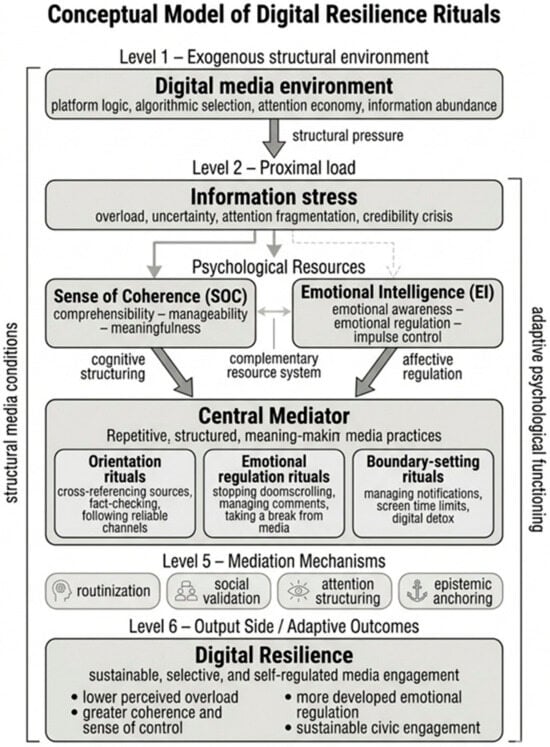
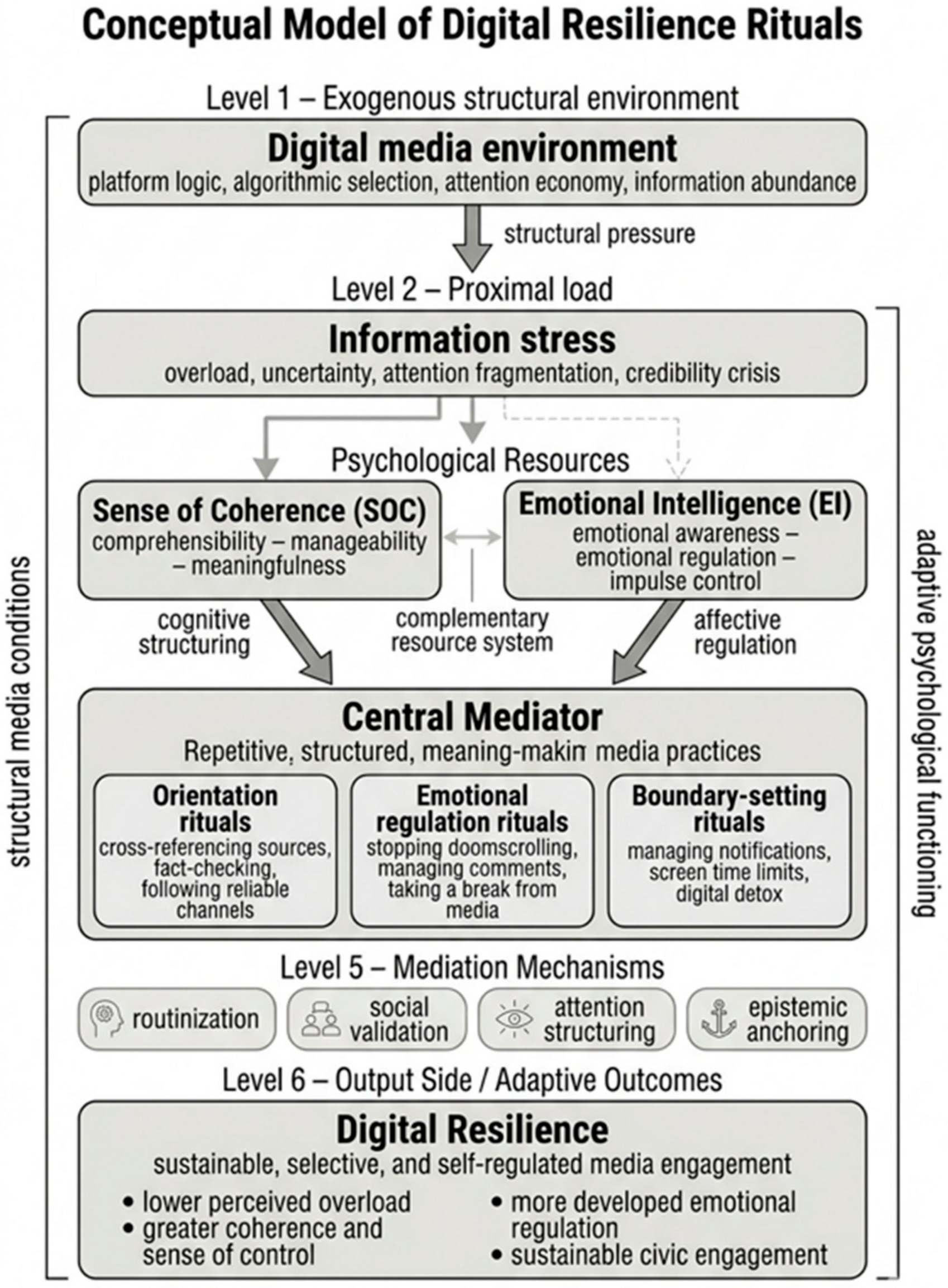
Disclaimer/Publisher’s Note: The statements, opinions and data contained in all publications are solely those of the individual author(s) and contributor(s) and not of MDPI and/or the editor(s). MDPI and/or the editor(s) disclaim responsibility for any injury to people or property resulting from any ideas, methods, instructions or products referred to in the content. |
© 2026 by the author. Licensee MDPI, Basel, Switzerland. This article is an open access article distributed under the terms and conditions of the Creative Commons Attribution (CC BY) license.