


Abstract
Alizarin Red S (ARS) is a persistent anthraquinone dye whose discharge into aquatic environments represents an important concern due to its chemical stability, intense coloration, and potential ecological impact. Adsorption has emerged as one of the most practical approaches for its removal from aqueous media because of its operational simplicity, adaptability, and compatibility with low-cost and regenerable materials. This review critically examines recent progress in the adsorption of Alizarin Red S using a broad spectrum of adsorbents, including biomass-derived materials, activated carbons, carbon nanotubes, graphene-based systems, polymeric sorbents, metal oxides, metal–organic frameworks, hydrogels, magnetic composites, and hybrid nanostructures. Particular attention is given to the relationship between adsorbent composition, surface chemistry, porosity, functional groups, and adsorption performance. The effects of pH, adsorbent dosage, initial dye concentration, contact time, temperature, and coexisting ions are discussed as key factors controlling dye uptake, equilibrium behavior, and removal efficiency. The reviewed studies indicate that ARS adsorption is commonly governed by electrostatic attraction; hydrogen bonding; π–π interactions; surface complexation; pore diffusion; and, in some systems, dye–metal complex formation. Langmuir and Freundlich isotherms, together with pseudo-second-order kinetics, are the most frequently reported models. Despite significant laboratory-scale advances, challenges remain regarding adsorbent regeneration, selectivity in complex matrices, long-term stability, cost-effective synthesis, and scale-up. Future research should prioritize real wastewater validation, multicomponent systems, circular adsorbent design, computational modeling, machine learning-assisted optimization, and life cycle assessment to support the transition of ARS adsorption technologies toward practical wastewater treatment applications.
1. Introduction
Increasing population growth coupled with less availability of water sources has caused chemical pollutant contamination of water bodies, which can become a significant threat to natural resources and global ecosystems [1]. Among these pollutants, synthetic dyes are of major concern owing to their ability to pollute surface and ground water. Owing to the fact that synthetic dyes absorb light, their release into surface and ground water environments can possibly reduce light penetration from sun rays into aquatic ecosystems, thereby affecting the cycles of photosynthesis and reducing the level of oxygen supply in aquatic bodies [2]. The release of dye-contaminated effluents from industrial sources has become a prevalent environmental issue. The increasing demand for inexpensive, readily available dyes has led to the discovery and fast growth of synthetic dyes. The process of textile dyeing is one of the main sources of environmental pollution, releasing colored wastewater that is toxic and carcinogenic and has mutagenic or allergenic effects on living organisms, even when it is present at low concentrations [2,3]. Among other synthetic dyes, Alizarin Red S dye is extensively used in the dyeing of textile materials as a staining agent [4].
Alizarin Red S (ARS) dye is a water-soluble and highly durable anionic synthetic dye belonging to the anthraquinone group that is mainly utilized in the textile industry for dyeing cotton, wool, and woven fabrics [5]. ARS is a derivative of alizarin, which has been extensively used in textile dyeing since antiquity. The structural formula of Alizarin Red S is presented in Figure 1.
Figure 1.
Structural formula of the anionic dye Alizarin Red S.
Alizarin Red S has complex aromatic ring structures with high thermal, physical, optical and chemical firmness, which makes its biodegradation inefficient [6]. The products of Alizarin Red S are toxic, carcinogenic, or mutagenic, and can persist due to incomplete degradation. When effluents containing Alizarin Red S dye are discharged into the natural environment without proper treatment, there is an increased rate of persistent environmental pollution, which can be detrimental to human health due to the high level of toxicity and carcinogenic nature of ARS dye [7]. The impact of ARS can disrupt physiological processes such as growth, reproduction, and survival, ultimately affecting biodiversity and ecosystem stability [8]. Thus, the removal of ARS dyes from wastewater is quite challenging and difficult for environmental and industrial scientists [9]. Many physical, chemical, and biological technologies, such as ion exchange, flocculation, coagulation, photodegradation, membrane filtration, electrochemical oxidation, electrocoagulation, and adsorption processes, have been utilized for the uptake of ARS dyes from aqueous solutions [10,11]. Each method has been applied to control the environmental hazards posed by ARS-contaminated water. Among these methods, the adsorption method is more efficient, readily available, and cost-effective in the removal of ARS dye contaminants from aqueous media than the other methods mentioned above. Adsorption is a known separation method in which particular chemical substances accumulate mainly on the external surface of the adsorbent solid material [10]. The popularity of the adsorption method stems from its operational simplicity, cost feasibility, ease of operation, wide application, low energy requirements, and efficient regeneration [12,13]. Unlike chemical or biological treatments, the adsorption process does not generate toxic byproducts or require complex pretreatment, making it preferable regarding environmental sustainability [14]. Moreover, the adsorption process requires less sophisticated equipment, making it a practical solution for the removal of organic and inorganic pollutants from wastewater across several industrial sectors. Compared with other methods, adsorption removes biodegradable and nonbiodegradable contaminants, even at low concentrations. Additionally, the process permits regeneration and reuse of adsorbing materials and operates under mild conditions with enormous industrial processing capacity, which makes it economic and environmentally friendly [15].
Recently, researchers have employed various adsorbing materials for the removal of ARS dye from aqueous solutions. These adsorbing materials include carbon-based materials, polymers, metal or metal oxide-doped composites, metal oxides, aluminosilicates, and other emerging materials, each of which have been explored for their potential for the efficient uptake of ARS dye pollutants. Remarkable examples include biomass-based materials [16,17,18,19,20,21], carbon nanotubes [15,22,23], nanocomposites [24,25,26,27,28,29], activated clay [30], activated carbon [31,32], polymeric materials [33,34,35], and metal–organic frameworks [36]. Among these analyzed adsorbents, biomass-based materials and nanocomposites have attracted increasing interest.
The main purpose of this study is to critically review the development, characterization, adsorption behavior, and performance of different adsorbent materials utilized for ARS dye removal, highlighting their adsorption mechanisms, influencing parameters, regeneration ability, and future prospects for large-scale wastewater treatment applications.
2. Materials and Methods
This review includes scientific articles published up to 2026, identified through searches in Google Scholar (Google LLC, Mountain View, CA, USA), Scopus (Elsevier, Amsterdam, The Netherlands), and Web of Science (Clarivate, London, UK) using keywords such as “Alizarin Red S”, “adsorption”, and “wastewater treatment”. Studies were selected based on their relevance to ARS adsorption, adsorbent materials, adsorption mechanisms, and factors affecting adsorption efficiency.
Some graphical elements were created using Canva (Canva Pty Ltd., Sydney, Australia; web-based version accessed in March 2026). The authors developed, reviewed, and approved all scientific content and final graphical elements.
3. Operational Parameters Governing ARS Adsorption
Adsorption is one of the most widely used technologies for removing organic pollutants, heavy metals, and emerging contaminants from various industries, including food, textiles, pharmaceuticals, petrochemicals, and mining. Similarly, at the research level, this technique has gained relevance because of its relative simplicity of operation, high efficiency in removing contaminants, and possibility of regenerating the adsorbent, making it an attractive alternative for environmental applications. In this context, this review analyzes the operating parameters that most influence the adsorption process (Figure 2). The compilation of information and analysis with different materials allows for the identification of trends, comparison of different adsorbents, and experimental results that could significantly assist future research.
Figure 2.
Representation of the main parameters influencing the adsorption of Alizarin Red S.
The adsorption of ARS is influenced by several operational parameters that determine the efficiency and mechanism of the removal process. Among the most studied factors are pH, temperature, initial dye concentration, adsorbent dosage, and contact time, which directly affect the adsorption capacity, equilibrium behavior, and adsorption kinetics. This study also examined the behavior of adsorbents in the presence of other ions and their interference, which are commonly found in complex wastewater matrices. Competing ions can significantly affect the adsorption performance by competing for active sites, modifying the surface charge, or forming complexes with dye molecules, thereby altering the adsorption mechanism and overall removal efficiency. Therefore, understanding the role of interfering ions is essential for evaluating the practical applicability of adsorbents under realistic environmental conditions.
3.1. Overview of Adsorbent Classes and Physicochemical Properties
The adsorption performance of Alizarin Red S is not only governed by the operational conditions but also by the intrinsic physicochemical characteristics of the adsorbent. Parameters such as specific surface area, pore volume, pore size distribution, point of zero charge (pHPZC), and surface functional groups determine the accessibility of adsorption sites and the predominant interaction mechanisms. Therefore, understanding these characteristics provides the necessary framework for interpreting the adsorption behavior discussed in the following sections.
Based on their chemical composition, structural characteristics, and adsorption performance, the adsorbents reported for ARS removal can be broadly classified into several major categories: carbon-based adsorbents (activated carbons, biochars, hydrochars, and carbon nanomaterials), polymeric and biopolymeric adsorbents, composite adsorbents, inorganic and hybrid adsorbents, and biomass-derived adsorbents. This classification provides a useful framework for comparing the physicochemical properties, adsorption mechanisms, and operational performance of the different adsorbent families discussed throughout this review.
The representative adsorbents exhibit substantial differences in their physicochemical properties, reflecting the diversity of materials currently investigated for ARS removal, as summarized in Table 1. One of the most evident differences between the adsorbent families is their specific surface area and pore volume. Activated carbons and carbon nanomaterials often exhibit higher BET surface areas than polymeric adsorbents and some biomass-derived materials. This larger accessible surface provides a greater number of adsorption sites, which frequently results in higher adsorption capacities, particularly at elevated dye concentrations. However, the comparison also reveals that a high BET surface area alone does not guarantee superior adsorption performance, since the accessibility and chemical nature of the active sites are equally important. For instance, chitosan-based adsorbents can exhibit effective ARS removal owing to the presence of amino and hydroxyl groups capable of interacting with dye molecules, even when their specific surface area is limited.
Table 1.
Physicochemical characteristics of representative adsorbents reported for Alizarin Red S adsorption.
Overall, the physicochemical characteristics summarized in Table 1 provide a useful framework for interpreting the adsorption behavior of ARS reported throughout the literature. Rather than acting independently, properties such as surface area, pore structure, surface charge, and surface functionality collectively influence the adsorption process. Consequently, the adsorption performance discussed in the following sections should be interpreted considering the combined effects of these material characteristics together with the operating conditions, including pH, contact time, adsorbent dosage, and temperature.
3.2. Effect of pH
pH is one of the most important parameters in the adsorption of Alizarin Red S because it simultaneously determines the charge of the adsorbent and the dye, controlling electrostatic forces and chemical interactions and therefore the adsorption efficiency of Alizarin Red S. The acid–base speciation of ARS is governed by two stepwise proton dissociation constants. The sulfonate group of ARS is ionized at very low pH, giving the dye an initial negative charge. Depending on the experimental conditions reported in the literature, the first dissociation of the phenolic hydroxyl group occurs at a pKa of approximately 5.49 to 5.82 [40,41], converting the monoanionic dye (ARS−) into its dianionic form (ARS2−). The second dissociation occurs in the alkaline regime, with pKa values between 10.78 and 10.85 reported [40,41], resulting in the formation of the trianionic species (ARS3−).
Consequently, ARS adsorption is strongly influenced by the interaction between dye speciation and the pH-dependent surface properties of the adsorbent. Overall, the reviewed studies indicate that ARS uptake is frequently favored under acidic conditions, although the optimum pH varies among materials. This trend is generally associated with the protonation of surface functional groups at low pH, which promotes favorable interactions with anionic ARS species. However, the magnitude of the pH effect depends on material-specific characteristics, particularly surface charge, point of zero charge (pHpzc), or isoelectric point (IEP), as appropriate, and surface functional groups, as illustrated by the studies discussed below.
In this sense, studies conducted with phenyl/amine end-capped tetraaniline (TANI) have shown that a pH value below the isoelectric point (IEP ≈ 6.8) generates a positively charged TANI surface that strongly attracts the anionic sulfonate groups of ARS through electrostatic interactions, resulting in higher adsorption under acidic conditions. As pH increases above the pHPZC, the adsorbent surface is negatively charged; this effect promotes electrostatic repulsion with ARS and markedly reduces adsorption capacity. Spectroscopic evidence further indicates that π–π interactions between the aromatic structures of TANI and ARS contribute to the adsorption process. Overall, this study demonstrates that pH regulates adsorption primarily by modulating the balance between the adsorbent’s surface charge and ARS ionization, identifying electrostatic attraction as the dominant driving force, while π–π interactions play a complementary role in enhancing adsorption stability [33]. Recently, the influence of pH on silica-supported nanocomposites of zero-valent iron (nZVI) was reported [38], demonstrating that maximum adsorption takes place under strongly acidic conditions (pH ≈ 3), where protonation of surface hydroxyl groups generates a positively charged interface that promotes strong electrostatic attraction toward the anionic sulfonate groups of ARS (89.9% for nZVI/Cl−; 45% for nZVI/NO3−). As pH increases, a progressive deprotonation of the adsorbent surface and increased ionization of ARS (pKa ≈ 5.5) occur. As a result, electrostatic repulsion occurs, resulting in a marked decline in adsorption efficiency. This behavior also highlights the critical role of adsorbent physicochemical properties since the precursor anion influences surface reactivity and charge distribution: nZVI/Cl− exhibits higher Fe0 availability, lower surface oxidation, and greater surface area, whereas nZVI/NO3− undergoes enhanced oxidation to Fe(III) oxide, generating a more negatively charged and less reactive surface, particularly at neutral and alkaline pH values [38]. Sujitha and Ravindhranath also achieved high removal percentages (89%) of activated carbon derived from the stems of Achyranthes aspera plants at acidic pH (2), with a considerable decrease (50%) observed when the pH was increased from 2 to 10; lowering the pH promotes the protonation of the functional groups of activated carbon, and owing to the predominantly anionic nature of the dye, its affinity is increased, whereas increasing the pH promotes surface deprotonation and electrostatic repulsion, which markedly reduce the adsorption efficiency. FTIR evidence confirms the participation of hydroxyl, carbonyl, and ether groups in dye binding [42]. Similar to Sujitha and Ravindhranath, studies conducted on hydrochar (HC) and modified hydrochar (MHC) derived from avocado waste revealed an optimal pH of 2, with adsorption percentages of 99.81% and 99.92%, respectively, while increasing the pH to 10 significantly decreased adsorption, reaching values of 33.08% (HC) and 27.55% (MHC). Under acidic conditions, the surfaces remained protonated (hydroxyl and amine functional groups), enhancing electrostatic interactions with the dye; as the pH increased, progressive deprotonation of some functional groups generated negatively charged surfaces, causing electrostatic repulsion [10]. Under acidic conditions, ARS adsorption onto sheep wool is more favorable; at pH 2, 90% removal was achieved, whereas at pH 5, the percentage of adsorption decreased significantly to below 20%. As a result, adsorption is favored for the acidic form of ARS. The authors attribute this behavior to ARS speciation, indicating that the acidic form predominates below pH 4.6, whereas the basic form is dominant above pH 6.0, and conclude that the acidic form is more favorably adsorbed by wool [14]. Comparable results were observed when a flax fiber-based semicarbazide biosorbent was used; the study of the effect of pH was carried out in the range of 2–8. At the lowest pH, approximately 95% removal was achieved, whereas as the pH increased, the removal efficiency decreased dramatically to values close to 30%. This phenomenon is attributed to the influence of pH on the biosorbent binding sites as well as dye species distribution. The DAC@SC biosorbent had a pHPZC value of about 6.04, and adsorption at pH 2 was a result of electrostatic interaction between the (SO3−) functional group of ARS and the protonated nitrogenous functional groups (NH3+) of the biosorbent surface [37].
However, the predominance of enhanced ARS adsorption under acidic conditions is not universal. Different pH-dependent behavior has been reported for adsorbents with distinct surface properties and interaction mechanisms. A study reported by Yang et al. on oxygen-rich pentaerythritol-modified multiwalled carbon nanotubes (ox-MWCNT-PER) revealed that alkaline pH is favorable for ARS adsorption, with an optimum of around pH 8 [23]. This behavior was associated with changes in ARS surface chemistry rather than modifications of the adsorbent itself: the sulfonic acid group of ARS dissociated more readily at higher pH, producing negatively charged ARS species that exhibited stronger binding to ox-MWCNT-PER. At low pH, the adsorbent surface was surrounded by hydrogen ions (H+), whereas increasing pH promoted ARS adsorption partly through electrostatic interactions between the adsorbent and the dye. Comparable results were obtained when an ICY-AM hyper-cross-linked resin was used: adsorption of ARS onto the ICY-AM was strongly governed by pH because of dye speciation. The experimental data revealed that the maximal removal efficiency was reached at pH 7.2. According to the results, the ionic form of Alizarin Red S depends on the solution pH, which is crucial for the adsorbate–adsorbent interaction. The Supplementary Materials of Firmansyah et al. [43], further show that ARS undergoes pH-dependent structural changes, presenting different ionic forms at pH < 5.2, pH 7.1, and pH > 10.1. Thus, the pH governs the adsorption process by controlling the dye form involved in the interaction.
From a practical point of view, the predominance of acidic optimum conditions reported for many ARS adsorbents may represent an important limitation for application to real wastewater, because operation at a strongly acidic pH may require additional chemical consumption for pH adjustment and subsequent neutralization, thereby increasing treatment costs and reducing the environmental sustainability of the process. Therefore, adsorption performance should not be evaluated only on the basis of the maximum removal achieved under optimized laboratory pH conditions. Adsorbents capable of maintaining high ARS removal under near-neutral conditions may offer greater practical applicability by minimizing the need for pH adjustment and should receive greater attention in future studies.
3.3. Effect of Adsorbent Dosage
Across the reviewed literature, increasing the adsorbent dosage generally improves ARS removal because a larger amount of solid provides more accessible binding sites and a greater effective solid–liquid interfacial area. This common behavior has been reported for chemically distinct materials, including TANI, nZVI-based nanocomposites, activated carbon, hydrochars, wool, flax fiber biosorbents, UiO-66, and Ni-Fe-layered double hydroxides [10,14,33,37,38,42,44,45]. However, the improvement is typically non-linear: beyond a material-specific dosage, the increase in removal becomes progressively smaller. This response should not be interpreted as simple saturation of the adsorbent. At a fixed ARS concentration and solution volume, additional solid increases the number of available sites faster than the amount of dye available to occupy them, while particle overlap or aggregation may reduce the fraction of surface that remains accessible. Accordingly, removal efficiency can increase with dosage even when the adsorption capacity expressed per unit mass decreases.
The dosage required to reach this diminishing-return region depends strongly on adsorbent architecture and surface chemistry rather than on adsorbent mass alone. Materials with high accessible porosity or a high density of favorable surface functionalities can achieve substantial removal at comparatively low dosage, whereas fibrous, biomass-derived, or lower-surface-area materials may require more solid to provide a comparable population of accessible sites [10,14,37,44,45]. This interpretation is consistent with the lower dosage required by modified hydrochar relative to its unmodified counterpart, indicating that surface modification can improve effective site density and affinity [10]. Thus, comparisons among adsorbents should account for differences in pore accessibility, functional group density, and particle stability, because these properties determine how efficiently an added mass of adsorbent is translated into usable adsorption sites.
The same principle also explains system-specific deviations from the general dosage trend. In adsorption–photocatalytic composites such as FeWO4/polypyrrole, increasing the dosage initially increases the number of active domains, but excessive loading may promote agglomeration and optical shielding, thereby limiting the surface effectively available during subsequent degradation [46]. Mineral adsorbents show a comparable diminishing benefit: iron oxide-modified clays improve markedly from low to intermediate dosage, after which additional material produces little gain, possibly consistent with the overlap of particles and incomplete utilization of newly introduced sites [30]. These examples indicate that an apparent optimum dosage reflects a balance between site availability and the physical accessibility of those sites under the selected operating conditions, rather than a universal material constant.
From a process perspective, adsorbent dosage should therefore be evaluated together with initial dye loading and liquid volume, and not solely through the maximum removal percentage. A high removal efficiency obtained with an excessive solid dose may mask inefficient adsorbent utilization, higher material consumption, greater sludge production, and increased regeneration or disposal costs. Consequently, both removal efficiency and adsorption capacity should be reported when comparing studies. Optimization approaches, including response-surface and data-driven methods, are particularly useful for identifying the minimum adsorbent dose required to meet a treatment target while preserving effective use of the adsorbent and limiting downstream solids handling.
3.4. Effect of the Initial Dye Concentration
The initial ARS concentration exerts a dual and often contrasting influence on adsorption performance because it simultaneously controls the concentration gradient for mass transfer and the ratio of dye molecules to available adsorption sites. Across cow-dung-derived adsorbents, flax fiber biosorbents, hydrochars, and activated carbon from Achyranthes aspera, increasing the initial concentration generally increases the amount of ARS adsorbed per unit mass while decreasing the percentage removed once the most readily accessible sites become progressively occupied [10,12,37,42]. These trends are not contradictory: a higher concentration strengthens the driving force for transport from the bulk liquid to the solid interface, which can raise the adsorption capacity, whereas the finite population of adsorption sites prevents the removal efficiency from increasing proportionally. Surface modification can shift the concentration range over which high uptake is maintained. Acid/base treatment or hydrothermal modification may introduce additional functional groups and improve pore accessibility [10,12], while layered double hydroxides can sustain uptake over a broader loading range because their positively charged layers and interlayer domains provide abundant sites for anionic species [45]. Composite biosorbents such as Aspergillus terreus immobilized in alginate can similarly maintain relatively stable uptake over an intermediate concentration range, which may be attributed to the ability of the polymeric matrix to disperse the biomass and provide complementary binding domains; at higher loading, however, site exhaustion and intraparticle diffusion become increasingly important [47].
The response to increasing concentration therefore depends on whether the adsorbent can convert the larger mass-transfer driving force into effective access to internal and chemically favorable adsorption domains. This distinction is particularly evident for carbon nanomaterials: the higher performance of SWCNTs relative to MWCNTs has been associated with a greater accessible surface area and pore volume, which increase available adsorption domains and contribute to faster adsorption rates [5], whereas graphene-derived materials can exhibit high capacities at elevated ARS concentrations through extended aromatic surfaces, developed porosity, and possible π–π interactions with the anthraquinone structure [26]. At low dye concentrations, adsorption is governed mainly by surface affinity and access to high-energy sites; as the concentration increases, the site density, pore volume, and internal diffusion increasingly determine whether additional ARS can be retained. The initial concentration should therefore be interpreted jointly with adsorbent structure and dosage rather than as an isolated variable. Cross-study comparisons should distinguish adsorption capacity from removal efficiency and should avoid ranking materials from values obtained at different initial concentrations or other non-equivalent operating conditions, particularly when assessing adsorbents for high-load wastewater applications.
3.5. Effect of Contact Time
Contact time is a key kinetic parameter in ARS adsorption because it determines both the rate of solute uptake and the time required for the system to approach equilibrium. Across the different adsorbent families evaluated for ARS removal, a common biphasic behavior is observed: adsorption proceeds rapidly during the initial stage and subsequently slows as equilibrium is approached [48]. This biphasic pattern is typical of processes involving surface and diffusive phenomena.
The time needed to reach equilibrium in ARS adsorption varies considerably with the physicochemical characteristics of the adsorbent. Comparing the reported equilibrium times therefore gives direct insight into how surface chemistry, pore architecture, and active site density influence adsorption kinetics. Among the studies reviewed, ARS adsorption equilibrium was attained within 7–240 min, with most systems equilibrating in 120 min or less. Equilibrium times of 80–120 min were reported for several biomass-derived and inorganic adsorbents [12,25,37,42,44].
In one study, clay–chitosan composite can reach equilibrium within approximately 10 min, indicating that rapid electrostatic interactions and favorable surface accessibility can substantially reduce the kinetic limitation associated with diffusion [39]. By comparison, biomass-derived adsorbents and hydrochars can require contact times ranging from approximately 30 to 100 min, reflecting differences in surface characteristics and adsorption-site accessibility [10,12]. These differences show that short equilibrium times depend less on how many adsorption sites a material has than on how quickly ARS molecules can reach and occupy them.
Nanostructured and carbon-based adsorbents exhibit a broader kinetic range, highlighting the combined influence of high surface area, particle morphology, surface charge, and internal transport pathways. Metal oxide nanoparticles and silica-supported nanoscale zero-valent iron systems have been reported to reach equilibrium over a wide range of approximately 7–180 min [13,25,38], whereas carbon nanotube-based adsorbents typically exhibit equilibrium times of about 40–100 min [5,15]. Their fairly high adsorption capacities and moderate equilibrium times suggest that a large specific surface area does not, on its own, guarantee the fastest kinetics. Pore accessibility, particle aggregation, surface functionality, and diffusion path length matter just as much. Adsorbents with similar capacities can therefore reach equilibrium at very different times if their active sites differ in accessibility or distribution.
Several findings show that equilibrium time cannot be predicted from material class alone. Magnetic chitosan particles showed substantial adsorption within 120 min, although equilibrium was reported at 240 min [49], considerably longer than the clay–chitosan composite [39], so a chitosan matrix does not by itself ensure fast kinetics. Modifying a given material also changed the equilibrium time: nZVI/Cl− required 180 min, compared with 120 min for nZVI/NO3− [38], and base-treated cow dung waste reached equilibrium at 80 min, compared with 100 min for the untreated and acid-treated materials [12].
Short equilibrium times were likewise not necessarily linked to high adsorption capacities. Brookite TiO2 nanocomposite reached 140 mg/g in 7 min [13], whereas UiO-66 and MgO/ZnO nanocomposite showed 400 and 378.79 mg/g (maximum adsorption capacities from the Langmuir model), with reported contact times of 90 min [25,44], and MPC and PQ/G reached 2923 and 3290 mg/g in 80 and 120 min, respectively [26]. Direct comparison among studies remains limited, however, because the adsorbent dosage (0.04–36 g/L), initial ARS concentration (10–1500 mg/L), and time windows evaluated differ widely. CNT-based adsorbents, reported to reach equilibrium within 40–100 min [5,15], fall within the commonly observed range.
From a practical standpoint, contact time should not be evaluated in isolation. Short equilibrium times are advantageous for rapid treatment, but they must be considered together with the capacity, removal efficiency, and cost of the adsorbent. Future studies should report equilibrium times under comparable dosage and concentration conditions to enable meaningful comparisons across adsorbent systems.
3.6. Effect of Temperature
Temperature is a key operational parameter in ARS adsorption because it simultaneously influences dye-molecule mobility, mass-transfer rates, pore diffusion, and the strength of adsorbate–adsorbent interactions. Unlike most operating variables, which affect ARS removal in a broadly similar way across adsorbents, temperature shows no single trend. The reviewed studies report two opposite behaviors: uptake increases with temperature in endothermic systems and decreases in exothermic ones. The net effect therefore depends on the balance between enhanced mass transfer at higher temperatures and the reduced stability of the interactions that bind ARS to the adsorbent surface.
For several chitosan-based, composite, waste-derived, and nanostructured adsorbents, increasing the temperature enhances ARS adsorption, indicating that the gain in molecular mobility and accessibility of adsorption domains may outweigh any thermal weakening of surface interactions [5,12,38,39,49]. In these systems, raising the temperature gives ARS molecules more kinetic energy, which helps them reach internal pores and less accessible binding sites. This eases mass-transfer limitations and allows more of the available sites to be used. The effect is especially relevant for porous, heterogeneous adsorbents, where intraparticle diffusion plays a major role in the overall process. Thermodynamic data reported for some of these materials support this interpretation: positive ΔH° values confirm that adsorption is endothermic, and negative ΔG° values show that ARS uptake remains spontaneous under the conditions tested [38]. Positive ΔS° values reported in such systems additionally suggest increased disorder at the solid–liquid interface during adsorption.
However, this endothermic response is not universal. Other adsorbents, including some metal oxide nanocomposites and polymeric hydrogel systems, exhibit decreasing adsorption capacity as temperature increases, consistent with an exothermic process [10,25,50]. In these cases, the added thermal energy appears to weaken the interactions that hold ARS on the adsorbent, lowering its affinity for the available sites. In structurally responsive polymeric matrices, higher temperatures may also alter how the adsorption network is organized or how accessible it is, which can further change uptake. Taken together, these contrasting behaviors show that the effect of temperature cannot be predicted from adsorbent class, surface area, or porosity alone. What matters is how much mass transfer improves relative to how stable the binding interactions remain, whether these are electrostatic forces, hydrogen bonds, π-π interactions, or other mechanisms.
Overall, the available evidence indicates that the effect of temperature on ARS adsorption is highly dependent on the physicochemical characteristics of the adsorbent and the dominant adsorption mechanism (Table 2). Temperature should therefore be treated as a coupled kinetic–thermodynamic effect rather than an isolated operating variable. In endothermic systems, higher temperatures favor ARS transport and access to adsorption domains. In exothermic systems, the weakening of binding interactions dominates and adsorption declines. Changes in capacity should also be read alongside thermodynamic parameters such as ΔH°, ΔS°, and ΔG°, because similar increases or decreases in uptake can arise from different combinations of transport and energetic effects. In practical terms, the goal of temperature optimization is not simply to maximize adsorption capacity but to find conditions that lead to sufficient ARS removal without unnecessary energy demand. Adsorbents that keep removal efficiency high near ambient temperature may therefore be better suited to large-scale wastewater treatment, because they cut heating requirements and operating costs.
Table 2.
Representative adsorption parameters reported for Alizarin Red S removal on different adsorbents.
3.7. Interfering Ions
Interfering ions and coexisting species matter for the practical use of ARS adsorption, because real wastewater contains many inorganic and organic components that can alter how the adsorbate interacts with the adsorbent. Even so, this aspect has received less attention than other operating parameters, because most ARS adsorption studies use simplified single-solute systems. The available evidence suggests that coexisting species do not act in a uniform way. Their effects can be grouped broadly into negligible, inhibitory, selective, or complexation-mediated, depending on the charge, concentration, chemical identity, and affinity of the interfering species for the adsorbent surface.
For simple background electrolytes, interference may be limited when competing electrostatic effects offset one another. In TANI-based systems, for example, increasing the NaNO3 concentration produced little change in ARS uptake, suggesting that the reduction in electrostatic repulsion between adsorbed dye species was counterbalanced by partial screening of the attractive interactions between ARS and the adsorbent surface [33]. In contrast, more chemically diverse inorganic ions can reduce ARS adsorption to different extents. Activated-carbon systems retained relatively high removal even in the presence of excess co-ions, but the magnitude of interference depended strongly on ion identity, with carbonate and chloride exerting only minor effects and nitrate, sulfate, and particularly phosphate producing progressively greater inhibition [42]. Divalent cations had comparatively smaller effects under the same conditions. Hydrochar-based materials showed similar decreases in ARS adsorption in the presence of Cl−, F−, SO42−, and NO3− [10].
These observations suggest that ionic strength alone cannot explain the effect of inorganic species. Competition for adsorption sites, electrostatic screening or repulsion, ion charge density, selective affinity for surface functionalities, and possible changes in the interfacial environment may all act at the same time. The relative weight of these mechanisms depends on the chemical nature of the adsorbent surface, so the same ion can have different effects on materials dominated by electrostatic interactions, hydrogen bonding, metal–ligand coordination, or other binding mechanisms.
Coexisting organic molecules add another layer of complexity, because adsorption selectivity then depends on both molecular structure and the affinity of the adsorbent. Brookite TiO2, for instance, retained a marked preference for ARS in a binary ARS–bromocresol green system, with only a limited decrease in ARS uptake, whereas the adsorption of the competing dye was more strongly affected [13]. This indicates that competition does not necessarily suppress all adsorbates equally. When ARS fits well with specific surface sites, selective adsorption can be preserved even in multicomponent systems. A different type of interaction occurs in the presence of multivalent metal ions. Pb2+ can form complexes with ARS prior to adsorption, altering the identity of the species interacting with the adsorbent and enabling simultaneous removal of both contaminants on functionalized chitosan–SBA-15 materials [51]. Coexisting metal ions may therefore act as more than competitors: they can also change ARS speciation and open new adsorption pathways through complex formation.
Overall, the available studies show that coexisting species can have negligible, inhibitory, selective, or complexation-mediated effects on ARS adsorption. The size and direction of these effects depend on the concentration and charge of the competing species, their affinity for the adsorbent surface, and their ability to alter ARS speciation or interfacial interactions. Even so, the current evidence is not sufficient to establish universal interference trends, because only a limited number of ions and organic competitors have been systematically evaluated and most experiments were run under controlled model conditions. Adsorption performance in single-solute systems should therefore not be assumed to carry over directly to real wastewater. Future work should prioritize multicomponent systems, competitive adsorption experiments, and real or simulated wastewater containing representative inorganic ions, organic contaminants, and metal species. Such studies would show how selective, robust, and practical these adsorbents are under environmentally relevant conditions.
4. Isotherm and Kinetic Studies
An adsorption isotherm is the relationship between the remaining concentration of the adsorbate and its adsorbed amount on the adsorbent at the equilibrium state [52]. The analysis of this relationship determines the type of interaction and maximum performance for an adsorption system and facilitates the design of its operating unit [53]. Based on Table 3, several isotherm equations, including the Langmuir, Freundlich, Temkin, Redlich‒Peterson, Sips, Dubinin‒Radushkevich, Liu, and Halsey equations, were applied for the analysis of isotherm data for the adsorption of ARS dye. The experimental isotherm data were best analyzed via the Langmuir equation (Equation (1)), followed by the Freundlich equation (Equation (2)). The Langmuir and Freundlich equations describe mono- and multilayer adsorption on homogeneous and heterogeneous surfaces, respectively [54,55,56].
where Ce (mg/L) is the dye equilibrium concentration, qe (mg/g) is the dye equilibrium capacity, qm (mg/g) is the maximum adsorption monolayer capacity, bL (L/mg) indicates the adsorption affinity, and KF ((mg/g) (L/mg) 1/n) and n are Freundlich constants.
According to the data presented in Table 3, a variety of materials have been adopted as adsorbents for Alizarin Red S dye. Composite materials, followed by activated carbon and agricultural wastes, represent the most widely used adsorbents; however, other adsorbents based on carbon nanotubes, chitosan, metal–organic frameworks, hydrochar, zeolite, graphene oxide, clay, rocks, etc., have also been applied. The highest adsorption capacities of the tested dyes are reported for activated carbon and composite adsorbents, particularly 980 mg/g for papaya stem/H3PO4-derived activated carbon and 522.81 mg/g for the carbon‒alumina composite. These results may be related to the high porosity and functionality of carbon-based adsorbents. On the other hand, agricultural wastes show limited capacities against dye, with the lowest value of 0.5 mg/g reported for Lantana camara wastes, which may be related to their low porosity.
Adsorption kinetics are essential tools for determining the equilibrium time and rate-controlling step of an adsorption system [57]. Based on Table 3, most kinetic data adhere to the pseudo-second-order PSO [58] equation (Equation (4)) and, to a lesser degree, to the pseudo-first-order PFO [59] equation (Equation (3)):
where qe and qt (mg/g) are the dye adsorption capacities at equilibrium and at time t, respectively, and k1 (min−1) and k2 (g/mg min) are the PFO and PSO rate constants, respectively.
Table 3.
Best-fitting kinetic and isotherm models, along with the maximum adsorption capacities of various adsorbents for the removal of Alizarin Red S (ARS).
5. Thermodynamic Analysis of Alizarin Red S Adsorption onto Various Adsorbents
Thermodynamic parameters, such as the standard Gibbs free energy change (ΔG°), standard enthalpy change (ΔH°), and standard entropy change (ΔS°), are important because they provide information about the spontaneity and the endothermic or exothermic nature of the adsorption process, as well as changes in randomness at the solid–liquid interface during adsorption [86]. In the examined studies, the thermodynamic parameters are determined using the Gibbs free energy equation together with the Van’t Hoff equation, as follows:
where K is the equilibrium constant, R is the universal gas constant, and T is the absolute temperature in Kelvin (K).
ΔG°=−RT lnln K
ΔG°=ΔH°−TΔS°
Table 4 presents the thermodynamic parameters regarding the adsorption of Alizarin Red S dye onto various materials. In all the reviewed studies, the ΔG° values were negative, indicating that the ARS adsorption was found to be a spontaneous process. Endothermic adsorption was observed for many adsorbents, including raw Typha grass (T. latifolia), Schima wallichii-derived activated carbon (ZnCl2-activated), NiFe2O4/polyaniline magnetic composite, coal bottom ash, and phenyl/amine end-capped tetraaniline. In contrast, exothermic adsorption was noticed for several adsorbents, including chemically activated Typha grass (T. latifolia), semicarbazide-functionalized dialdehyde cellulose derived from flax fibers, native chitosan, single-walled carbon nanotubes, and sulfate cross-linked chitosan–bentonite composite. An increase in disorder at the solid–liquid interface (ΔS° > 0) was reported for several adsorbents, including chemically activated Typha grass (T. latifolia), multiwalled carbon nanotubes, MgO/ZnO nanocomposite, and coal bottom ash-derived zeolite. In contrast, a decrease in disorder at the solid–liquid interface (ΔS° < 0) was observed for several adsorbents, including semicarbazide-functionalized dialdehyde cellulose derived from flax fibers, native chitosan, and sulfate cross-linked chitosan.
Table 4.
Thermodynamic parameters reported for the uptake of ARS on different adsorbents.
6. Adsorption Mechanisms
The adsorption of Alizarin Red S from aqueous solutions is governed by a complex interplay of physicochemical processes that depend on the molecular structure of the dye and the surface chemistry of the adsorbent (Figure 3). Unlike neutral organic molecules, ARS contains several functional groups capable of simultaneously participating in different adsorption pathways, including a sulfonate group (–SO3−), hydroxyl groups attached to the anthraquinone structure, and an extended π-conjugated aromatic system. Consequently, the adsorption mechanism is rarely dominated by a single interaction, but rather by the synergistic contribution of electrostatic attraction; hydrogen bonding; π–π interactions; pore-filling effects; and, in metal-containing adsorbents, coordination or surface complexation phenomena [88].
Figure 3.
Adsorption mechanisms of Alizarin Red S on different adsorbent classes.
As established in the pH studies section, the adsorption mechanism of ARS is fundamentally governed by the dynamic interplay between the dye’s ionization state and the surface charge of the adsorbent. While the sulfonate group retains a permanent negative charge across the working pH range, the progressive deprotonation of the phenolic hydroxyl groups at higher pH values shifts the dominant electrostatic forces. Consequently, the magnitudes of these electrostatic interactions are dictated by the relative alignment between the solution pH, the dye’s dissociation thresholds, and the point of zero charge of the adsorbent (pHPZC). When the pH of the solution is below pHPZC, the surface of the adsorbent acquires a positive charge, which favors electrostatic attraction toward the anionic dye. Conversely, at pH values above pHPZC, electrostatic repulsion becomes more significant, and adsorption depends to a greater extent on non-electrostatic interactions, such as hydrogen bonding, π-π stacking, and Lewis acid–base interactions [89].
Electrostatic attraction constitutes the primary adsorption mechanism for most polymeric adsorbents [39,49], some biomass and waste-derived adsorbents [12], and metal oxide-based materials [25]. Chitosan-based adsorbents represent a typical example of this behavior. Under acidic conditions, particularly at pH values close to or below the point of zero charge of the clay–chitosan composite (pHPZC = 4.36), the adsorbent surface becomes predominantly positively charged as the amino groups of chitosan are protonated to –NH3+. At the same time, Alizarin Red S undergoes pH-dependent speciation (pKa1 ≈ 5.49–5.8; pKa2 ≈ 10.78–10.85), and below the first dissociation constant, the dye remains mainly in its protonated form, where the sulfonate group (–SO3−) constitutes the principal negatively charged adsorption site. This electrostatic complementarity between the protonated amino groups of chitosan and the sulfonate oxygen atoms of ARS strongly promotes dye adsorption, explaining the maximum adsorption capacity observed at pH 2. Under these conditions, the positive surface charge generated below the pHPZC enhances attractive electrostatic forces, while hydrogen bonding involving hydroxyl groups from chitosan and the clay matrix further stabilizes the adsorbed molecules. As the solution pH increases above the pHPZC and approaches or exceeds the first dissociation constant of ARS, progressive deprotonation of the adsorbent surface together with the higher negative charge density of the dye reduces the electrostatic driving force, resulting in a marked decline in adsorption efficiency [39].
A comparable behavior has been observed in magnetic chitosan composites, where the incorporation of magnetic nanoparticles increases the availability of active adsorption sites while retaining the primary electrostatic mechanism [49]. Similarly, in several metal oxide systems, including MgO/ZnO nanocomposites, adsorption is governed primarily by electrostatic interactions between the charged surface sites and the anionic sulfonate groups of ARS, as well as by hydrogen bonding involving surface hydroxyl groups. These interactions are highly sensitive to pH and surface charge conditions, which directly influence the adsorption efficiency [25].
Although electrostatic attraction frequently governs the initial adsorption stage, it rarely acts alone. Hydrogen bonding provides an additional stabilization mechanism in many adsorbent systems. Functional groups such as –OH, –NH2, –COOH, and surface hydroxyls may act as hydrogen bond donors or acceptors toward the hydroxyl and carbonyl groups of ARS. To directly verify these interactions, FTIR spectra were recorded in the region of 4000–400 cm−1 for hydrochar (HC) adsorbents before and after ARS adsorption. As a result, the characteristic broad band associated with hydroxyl (O-H) stretching shifted from 3429 to 3437 cm−1 to post-adsorption, providing direct evidence of hydrogen bond rearrangement between surface hydroxyls and the phenolic or sulfonate groups of ARS. Simultaneously, a pronounced shift in carbonyl (“C=O”) stretching from 1710 to 1742 cm−1 demonstrates that surface carbonyl oxygen actively acts as a hydrogen bond acceptor toward the hydroxyl protons of the dye molecule. This hydrogen bonding network on hydrochar is further corroborated by the attenuation of weak absorption bands in the 2946–2888 cm−1 region post-adsorption, indicating dense coverage of ARS molecules over the aliphatic and hydroxylated domains of the surface [10]. Similarly, this type of interaction was verified through FTIR studies on cow dung waste adsorbents [12].
Additionally, electrostatic, hydrogen bonding, and π–π interactions play an important role for carbonaceous adsorbents, including activated carbons [32], hydrochars [10], and carbon nanotubes (CNTs) [5,15,23]. In these materials, particularly carbon nanotubes (CNTs), π–π interactions can contribute to the adsorption of ARS because of the aromatic character of the ARS molecule and the delocalized π-electron system of graphitic surfaces. A significant molecular-level study combined experimental adsorption measurements with ab initio calculations. The study results provided key insights into the binding mechanisms between ARS and carbon nanotubes across various chiralities, diameters, and defect configurations, including pristine and vacancy-containing structures [5]. The theoretical calculations demonstrated that the most stable adsorption geometries occur when ARS adopts a planar or parallel orientation relative to the nanotube surface, driven predominantly by π–π interactions between the aromatic rings of the dye and the carbon lattice. Additionally, the calculated binding energies were characteristically low—a hallmark of electrostatic interactions—which closely aligned with the experimental enthalpy (ΔH∘) values. Computational findings further revealed that the binding energy increases with larger nanotube diameters. In contrast, the presence of surface vacancies substantially lowers the binding energy, rendering the interaction more energetically favorable due to the charge acceptor character of ARS, which demonstrates that surface defects modulate the local electronic transfer. Altogether, these theoretical and experimental insights confirm that electrostatic forces and π-π stacking operate cooperatively to govern dye retention [5].
In metal-containing adsorbents, particularly those incorporating transition metal oxides or zero-valent iron, adsorption frequently involves specific chemical interactions at the solid–liquid interface. Beyond electrostatic attraction, hydroxylated metal surfaces can interact with the hydroxyl or sulfonate groups of ARS via ligand-exchange reactions and surface complexation. Depending on the hydration state and surface chemistry of the metal centers, these interactions proceed through either outer-sphere complexes where hydration layers physically separate the dye from the surface or inner-sphere complexes, characterized by the displacement of coordinated water molecules and direct chemical bonding between ARS functional groups and surface metal atoms. Although explicitly distinguishing between outer- and inner-sphere mechanisms remains uncommon in the general ARS literature, characteristic FTIR band shifts in hydroxyl or sulfonate vibrations, together with XPS binding energy displacements in the O 1s and metal core-level spectra, provide strong indirect evidence supporting inner-sphere complexation in iron-containing adsorbents [38].
Overall, the available evidence indicates that ARS adsorption should be regarded as a multimechanistic process rather than being attributed to a single interaction. The relative contribution of electrostatic attraction, hydrogen bonding, π–π stacking, pore-filling effects, and surface complexation varies according to the physicochemical properties of the adsorbent, the speciation of ARS, and the operating conditions, particularly pH. Consequently, a rigorous mechanistic interpretation requires integrating adsorption experiments with complementary physicochemical characterization and molecular-level analyses. Such an approach not only improves the understanding of adsorption phenomena but also provides rational guidelines for the design of next-generation adsorbents with enhanced selectivity, adsorption capacity, and regeneration performance.
7. Regeneration and Reuse
Regeneration and reuse are essential for assessing the practical feasibility of ARS adsorption because an adsorbent that shows high one-cycle uptake but rapidly loses performance after reuse is unlikely to be economically or operationally viable in real wastewater treatment. In the ARS adsorption literature, regeneration is usually evaluated by desorbing the loaded dye with an acidic or alkaline eluent, followed by washing, drying, and reuse in successive adsorption runs. The available ARS studies show that regeneration is feasible across several classes of adsorbents, including magnetic chitosan composites [90], mineral-based magnetic nanocomposites [91], biomass-derived carbons [61], metal–organic frameworks [36], and waste-derived bioadsorbents [12], but the durability achieved is highly material-dependent, and the testing protocols remain far from standardized.
For ARS, the choice of regenerant is closely related to the adsorption mechanism. Because ARS is an anionic anthraquinone dye bearing sulfonate and phenolic groups, adsorbents that capture it mainly through electrostatic attraction under acidic conditions are often regenerated effectively in alkaline media, where OH− ions weaken dye–surface interactions and promote desorption. This behavior was observed for magnetic chitosan core–shell networks [90] and Fe3O4@talc nanocomposites [91], where NaOH was used successfully as the desorbing agent. In contrast, some biomass-based systems have been regenerated with weak acids such as acetic acid [12] or dilute HCl [92].
One of the clearest ARS-specific regeneration studies is the magnetic chitosan core–shell network developed by Rathinam et al. [90]. The spent adsorbent was regenerated with 0.1 M NaOH for 60 min, washed to neutral pH, dried, and reused in five consecutive cycles. Although the ARS removal efficiency gradually decreased with increasing number of cycles, the adsorbent still retained approximately 73% of its original efficiency by the fifth cycle. Importantly, ATR-FTIR analysis of the regenerated material revealed no remaining ARS bands, indicating that incomplete desorption was not the main cause of performance loss. Instead, the authors attributed the decline to changes in the adsorbent surface during repeated adsorption–desorption treatments. This is a useful result for ARS adsorption studies because it shows that even when dye desorption is effective, repeated chemical regeneration may still alter the accessibility or chemistry of the active sites.
A stronger regeneration outcome for ARS was reported for the Fe3O4@talc nanocomposite [91]. In that system, more than 94% of the adsorbed ARS was desorbed via 0.001 M NaOH, and the regenerated adsorbent maintained more than 92% adsorption efficiency after six regeneration cycles. This level of stability is notable because it suggests that the mineral–magnetic matrix tolerated repeated alkaline regeneration better than some polymeric or biomass-derived sorbents did. This finding also reinforces an important practical point for ARS systems: adsorbents that rely strongly on reversible surface charge interactions can sometimes be regenerated very efficiently when the eluent is chosen to invert or neutralize those interactions without damaging the adsorbent structure.
Biomass-derived sorbents show more varied regeneration behavior for ARS. In the cow dung waste study of El-Rayyes et al. [12], desorption was performed with acetic acid after each adsorption cycle. Over six cycles, the desorption of raw cow dung decreased from 76.7% to 52.3%, whereas that of the base-treated material decreased from 82.3% to 68.9%, and that of the acid-treated material decreased from 85.4% to 70.2%. These results indicate that surface modification improved not only the initial adsorption performance but also the reusability of the ARS sorbent. A similar encouraging trend was reported for tassel-derived activated carbon prepared from Phragmites australis, which retained more than 85% efficiency after seven adsorption–desorption cycles [93]. Together, these studies suggest that waste-derived ARS adsorbents can achieve meaningful reusability.
Not all ARS adsorbents show equally strong regeneration. For example, a magnetic Fe2O3 nanocomposite derived from walnut shell biomass was reported to be reusable for up to four cycles, with a desorption efficiency of 50.52% when 30 mM HCl was used [92]. Likewise, the Zn-MOF nanoparticles used for ARS removal, regenerated using 0.01 M HCl and NaOH, were reported to maintain a removal efficiency of approximately 60% after three cycles, whereas the initial removal efficiency was approximately 71% under the tested optimum conditions [36]. These results are valuable; however, they illustrate a broader limitation in the ARS literature: many studies demonstrate proof-of-concept reusability over only a small number of cycles, making it difficult to judge long-term process robustness.
An especially interesting case is the sheep wool system reported by Khamis et al. Rather than relying only on conventional solvent regeneration, ARS-loaded wool was subsequently used for Cr(VI) removal, where the adsorbed ARS underwent oxidation while Cr(VI) was reduced to Cr(III). In three sequential batch cycles, the study reported no significant decline in the removal efficiencies of either chromium or ARS [14]. Although this differs from classical desorption-based regeneration, it is still highly relevant for ARS because it represents a route for integrated reuse in coupled treatment systems. In other words, some ARS-loaded adsorbents may be repurposed in a secondary treatment step instead of being regenerated solely by chemical elution.
Taken together, the published evidence shows that regeneration of Alizarin Red S adsorbents is achievable, but performance retention strongly depends on the adsorbent composition, regeneration chemistry, and structural stability. Some magnetic inorganic composites appear particularly robust in repeated ARS cycles, whereas modified biomass carbons can also perform well when their surface chemistry is sufficiently stable. Polymer-based and bioderived materials may suffer gradual declines possibly due to site alteration, partial pore blockage, or framework damage during repeated elution and drying. For this reason, future ARS adsorption studies should report not only percent desorption or percent removal after reuse but also the retained adsorption capacity (qe or qmax), sorbent mass loss, regeneration conditions, structural changes after cycling, and performance in real or multicomponent wastewater. This would make comparisons across ARS adsorbents far more meaningful and would better identify which systems are truly suitable for scale-up.
8. Conclusions and Outlook
8.1. Concluding Remarks on Adsorbent Classes and Scale-Up Challenges
The findings of this review indicate that various types of materials (carbon-based materials, polymers and biopolymers, composites, and inorganic and hybrid materials, as well as biomass-derived adsorbents) have been successfully used for the adsorption of Alizarin Red S (ARS). It was found that adsorption parameters such as adsorbent dosage, initial dye concentration, temperature, contact time, and pH influence the adsorption of ARS dye. Among these parameters, pH plays a significant role. Overall, ARS adsorption is favored under acidic conditions, although the optimal pH may vary depending on the physicochemical properties and surface chemistry of the adsorbent. In most cases, equilibrium results were found to follow the Langmuir or Freundlich isotherms models, while kinetic data obeyed the pseudo-second-order model. Adsorption was found to be a spontaneous process.
Owing to the performance of several tested adsorbents for removing ARS dye from aqueous solutions, certain challenges must be addressed before large-scale industrial application is possible. First, controlling the cost during the preparation of a wide range of adsorbents is quite difficult, especially when chemically modified adsorbents that require high-energy and activating agents are involved. Second, organic co-contaminants may interfere with ARS adsorption. Third, the mechanical strength and regeneration performance decrease after repeated cycles, reducing their long-term application. Finally, designing highly selective adsorbents for ARS remains a grand challenge owing to the effects of competing organic and inorganic species. Transitioning adsorbents from laboratory-based research to industrial treatment processes is vital for addressing these limitations through optimization process integration, machine learning modeling, and life cycle assessment for global water security.
8.2. Future Outlook
Future research should focus on the simultaneous removal of co-contaminants to identify suitable adsorbents for a wide range of applications. Standardization of adsorbent preparation methods, characterization procedures, and experimental adsorption conditions is necessary to enable reliable comparison of adsorbent performance and facilitate the selection of the most suitable materials for ARS removal. With the aforementioned process, the efficiency of adsorbents can possibly be evaluated under real-world conditions. Furthermore, the use of computational chemistry, such as density functional theory (DFT), is invaluable for predicting binding energies and preferred adsorption sites. The use of machine learning algorithms and computational modeling in the experimental design of adsorbents is vital for modernizing the discovery and optimization of novel adsorbents for ARS dye removal. These methods can facilitate the development of adsorbing materials with tailored physical and chemical properties and stable adsorption performance by interpreting structural/property connections and predicting optimum synthesis parameters. Another area for future research includes the development of robust reusability techniques to confirm long-term application, reduce the consumption of resources, and prevent the disposal of spent materials into the environment. Given the current emphasis on achieving zero-waste objectives, improving resource efficiency, and promoting a circular economy for environmental sustainability, further efforts aimed at the reuse of adsorbent materials are required.
ARS is a stable synthetic anthraquinone dye widely used in textile and industrial coloring processes. Further study is required to investigate the occurrence of Alizarin Red S in real wastewater and validate promising adsorbents under realistic treatment conditions to understand complex matrix interference, evaluate real-world treatment limits, and reduce potential environmental risks.
Author Contributions
Conceptualization, J.R.L.L., M.d.J.L.-L., K.D., C.T.O., E.O., M.J.A., I.A., E.A.L.M. and P.F.M.H.; methodology, J.R.L.L., K.D., C.T.O., E.O., M.J.A., I.A. and P.F.M.H.; software, J.R.L.L.; validation, J.R.L.L., M.d.J.L.-L.; K.D., C.T.O., E.O., M.J.A., I.A., E.A.L.M. and P.F.M.H.; methodology, J.R.L.L., K.D., C.T.O., E.O., M.J.A., I.A. and P.F.M.H.; formal analysis, J.R.L.L., K.D., C.T.O., E.O., M.J.A., I.A., E.A.L.M. and P.F.M.H.; investigation, J.R.L.L., K.D., C.T.O., E.O., M.J.A., I.A., E.A.L.M. and P.F.M.H.; resources, I.A., E.A.L.M. and P.F.M.H.; data curation, I.A., E.A.L.M. and P.F.M.H.; writing—original draft preparation, J.R.L.L., K.D., C.T.O., E.O., M.J.A., I.A., E.A.L.M. and P.F.M.H.; writing—review and editing, J.R.L.L., M.d.J.L.-L., K.D., C.T.O., E.O., M.J.A., I.A., E.A.L.M. and P.F.M.H.; visualization, M.d.J.L.-L., I.A., E.A.L.M. and P.F.M.H.; supervision, M.d.J.L.-L., I.A., E.A.L.M. and P.F.M.H.; project administration, M.d.J.L.-L., I.A., E.A.L.M. and P.F.M.H.; funding acquisition, I.A. All authors have read and agreed to the published version of the manuscript.
Funding
This research received no external funding.
Data Availability Statement
No new data were created or analyzed in this study. Data sharing is not applicable to this article.
Acknowledgments
Conflicts of Interest
The authors declare no conflicts of interest.
References
- Gautam, R.K.; Banerjee, S.; Gautam, P.K.; Rawat, V.; Kumar, A.; Singh, S.K.; Chattopadhyaya, M.C. Biosorption of an Acidic Dye, Alizarin Red S, Onto Biosorbent of Mustard husk: Kinetic, Equilibrium Modeling and Spectroscopic Analysis. Asian J. Res. Chem. 2014, 7, 417–425. [Google Scholar]
- Delpiano, G.R.; Tocco, D.; Medda, L.; Magner, E.; Salis, A. Adsorption of Malachite Green and Alizarin Red S Dyes Using Fe-BTC Metal Organic Framework as Adsorbent. Int. J. Mol. Sci. 2021, 22, 788. [Google Scholar] [CrossRef] [Scilit] [PubMed]
- Nuengmatcha, P.; Mahachai, R.; Chanthai, S. Adsorption Capacity of The As-Synthetic Graphene Oxide for The Removal of Alizarin Red S Dye from Aqueous Solution. Orient. J. Chem. 2016, 32, 1399–1410. [Google Scholar] [CrossRef] [Scilit]
- Liang, Y.-D.; He, Y.-J.; Zhang, Y.-H.; Zhu, Q.-Q. Adsorption property of alizarin red S by NiFe2O4/polyaniline magnetic composite. J. Environ. Chem. Eng. 2018, 6, 416–425. [Google Scholar] [CrossRef] [Scilit]
- Machado, F.M.; Carmalin, S.A.; Lima, E.C.; Dias, S.L.P.; Prola, L.D.T.; Saucier, C.; Jauris, I.M.; Zanella, I.; Fagan, S.B. Adsorption of Alizarin Red S Dye by Carbon Nanotubes: An Experimental and Theoretical Investigation. J. Phys. Chem. C 2016, 120, 18296–18306. [Google Scholar] [CrossRef] [Scilit]
- Limchoowong, N.; Sricharoen, P.; Chanthai, S. A novel bead synthesis of the Chiron-sodium dodecyl sulfate hydrogel and its kinetics-thermodynamics study of superb adsorption of alizarin red S from aqueous solution. J. Polym. Res. 2019, 26, 265. [Google Scholar] [CrossRef] [Scilit]
- Balji, G.B.; Kumar, P.S. Adsorptive Removal of Alizarin Red S onto Sulfuric Acid-Modified Avocado Seeds: Kinetics, Equilibrium, and Thermodynamic Studies. Adsorpt. Sci. Technol. 2022, 2022, 3137870. [Google Scholar] [CrossRef] [Scilit]
- Gollakota, A.R.K.; Munagapati, V.S.; Volli, V.; Gautam, S.; Wen, J.C.; Shu, C.M. Coal bottom ash derived zeolite (SSZ-13) for the sorption of synthetic anion Alizarin Red S (ARS) dye. J. Hazard. Mater. 2021, 416, 125925. [Google Scholar] [CrossRef] [Scilit] [PubMed]
- Bhomick, P.C.; Supong, A.; Baruah, M.; Pongener, C.; Gogoi, C.; Sinha, D. Alizarin Red S adsorption onto biomass-based activated carbon: Optimization of adsorption process parameters using Taguchi experimental design. Int. J. Environ. Sci. Technol. 2020, 17, 1137–1148. [Google Scholar] [CrossRef] [Scilit]
- Balji, G.B.; Kumar, P.S.; Chitra, B.; Parthasarathy, V.; Rangasamy, G. Adsorptive potential of hydrochar produced from avocado waste biomass for the sequestration of Alizarin red S dye from aquatic environment. Sci. Rep. 2025, 15, 33820. [Google Scholar] [CrossRef] [Scilit] [PubMed]
- Ramavandi, B.; Najafpoor, A.A.; Alidadi, H.; Bonyadi, Z. Alizarin red-S removal from aqueous solutions using Saccharomyces cerevisiae: Kinetic and equilibrium study. Desalin. Water Treat. 2019, 144, 286–291. [Google Scholar] [CrossRef] [Scilit]
- El-Rayyes, A.; Babatimehin, A.M.; Refat, M.S.; Alsuhaibani, A.M.; Bamigbade, A.A.; Ilesanmi, N.Y.; Ofudje, E.A. Cow dung waste as an eco-friendly adsorbent for Alizarin Red S dye removal. Sci. Rep. 2025, 15, 29641. [Google Scholar] [CrossRef] [Scilit] [PubMed]
- Hmoudah, M.; El-Qanni, A.; Abuhatab, S.; Marei, N.N.; El-Hamouz, A.; Tarboush, B.J.A.; Alsurakji, I.H.; Baniowda, H.M.; Russo, V.; Di Serio, M. Competitive adsorption of Alizarin Red S and Bromocresol Green from aqueous solutions using brookite TiO2 nanoparticles: Experimental and molecular dynamics simulation. Environ. Sci. Pollut. Res. 2022, 29, 77992–78008. [Google Scholar] [CrossRef] [Scilit] [PubMed]
- Khamis, M.I.; Ibrahim, T.H.; Jumean, F.H.; Sara, Z.A.; Atallah, B.A. Cyclic Sequential Removal of Alizarin Red S Dye and Cr(VI) Ions Using Wool as a Low-Cost Adsorbent. Processes 2020, 8, 556. [Google Scholar] [CrossRef] [Scilit]
- Zhang, Z.; Chen, H.; Wu, W.; Pang, W.; Yan, G. Efficient removal of Alizarin Red S from aqueous solution by polyethyleneimine functionalized magnetic carbon nanotubes. Bioresour. Technol. 2019, 293, 122100. [Google Scholar] [CrossRef] [Scilit] [PubMed]
- Albadarin, A.B.; Mangwandi, C. Mechanisms of Alizarin Red S and Methylene blue biosorption onto olive stone by-product: Isotherm study in single and binary systems. J. Environ. Manag. 2015, 164, 86–93. [Google Scholar] [CrossRef] [Scilit] [PubMed]
- Aravindhan, S.; Bharath Kumar, G.; Saravanan, M.; Arumugam, A. Delonix regia biomass as an eco-friendly biosorbent for effective Alizarin Red S textile dye removal: Characterization, kinetics, and isotherm studies. Bioresour. Technol. Rep. 2024, 25, 101721. [Google Scholar] [CrossRef] [Scilit]
- Gautam, R.K.; Gautam, P.K.; Chattopadhyaya, M.C.; Pandey, J.D. Adsorption of Alizarin Red S onto Biosorbent of Lantana camara: Kinetic, Equilibrium Modeling and Thermodynamic Studies. Proc. Natl. Acad. Sci. India Sect. A Phys. Sci. 2014, 84, 495–504. [Google Scholar] [CrossRef] [Scilit]
- Gautam, R.K.; Mudhoo, A.; Chattopadhyaya, M.C. Kinetic, equilibrium, thermodynamic studies and spectroscopic analysis of Alizarin Red S removal by mustard husk. J. Environ. Chem. Eng. 2013, 1, 1283–1291. [Google Scholar] [CrossRef] [Scilit]
- Gul, A.; Muhammad, S.; Nawaz, S.; Munir, S.; Rehman, K.U.; Ahmad, S.; Humphrey, O.S. Ficus religiosa bark an efficient adsorbent for Alizarin Red S dye: Equilibrium and kinetic analysis. J. Iran. Chem. Soc. 2022, 19, 1737–1746. [Google Scholar] [CrossRef] [Scilit]
- Nasoudari, E.; Ameri, M.; Shams, M.; Ghavami, V.; Bonyadi, Z. The biosorption of Alizarin Red S by Spirulina platensis; process modelling, optimisation, kinetic and isotherm studies. Int. J. Environ. Anal. Chem. 2023, 103, 633–647. [Google Scholar] [CrossRef] [Scilit]
- Ghaedi, M.; Hassanzadeh, A.; Kokhdan, S.N. Multiwalled Carbon Nanotubes as Adsorbents for the Kinetic and Equilibrium Study of the Removal of Alizarin Red S and Morin. J. Chem. Eng. Data 2011, 56, 2511–2520. [Google Scholar] [CrossRef] [Scilit]
- Yang, J.-Y.; Jiang, X.-Y.; Jiao, F.-P.; Yu, J.-G. The oxygen-rich pentaerythritol modified multi-walled carbon nanotube as an efficient adsorbent for aqueous removal of alizarin yellow R and alizarin red S. Appl. Surf. Sci. 2018, 436, 198–206. [Google Scholar] [CrossRef] [Scilit]
- Ahmed, I.M.; Arafa, W.A.A.; El-Ossaily, Y.A.; El-Sayed, M.Y.; Abd-Elhamid, A.I.; Aly, A.A.; Nayl, A.A. Low cost and sustainable biochar-based nanocomposite for the effective remediation of persistent Alizarin Red S. Int. J. Environ. Anal. Chem. 2025, 105, 7756–7779. [Google Scholar] [CrossRef] [Scilit]
- Al-Kadhi, N.S.; Al-Senani, G.M.; Algethami, F.K.; Shah, R.K.; Saad, F.A.; ur Rehman, K.; Khezami, L.; Abdelrahman, E.A. Facile synthesis of MgO/ZnO nanocomposite for efficient removal of alizarin red S dye from aqueous media. Inorg. Chem. Commun. 2024, 162, 112233. [Google Scholar] [CrossRef] [Scilit]
- Burakov, A.; Neskoromnaya, E.; Babkin, A. Removal of the Alizarin Red S Anionic Dye Using Graphene Nanocomposites: A study on Kinetics under Dynamic Conditions. Mater. Today Proc. 2019, 11, 392–397. [Google Scholar] [CrossRef] [Scilit]
- Fayazi, M.; Ghanei-Motlagh, M.; Taher, M.A. The adsorption of basic dye (Alizarin red S) from aqueous solution onto activated carbon/γ-Fe2O3 nano-composite: Kinetic and equilibrium studies. Mater. Sci. Semicond. Process. 2015, 40, 35–43. [Google Scholar] [CrossRef] [Scilit]
- Nawaz, S.; Salman, S.M.; Ali, A.; Ali, B.; Shah, S.N.; Rahman, L.U. Kinetics and thermodynamics investigations of efficient and eco-friendly removal of alizarin red S from water via acid-activated Dalbergia sissoo leaf powder and its magnetic iron oxide nanocomposite. Front. Chem. 2024, 12, 1457265. [Google Scholar] [CrossRef] [Scilit] [PubMed]
- Sarkar, M.; Sarkar, P.; Sarkar, S.; Denrah, S. Optimization and Feasibility of Alizarin Red S Retention on IronLoaded Cellulose Nanocomposite Bead. Nanoarchitectonics 2021, 39–60. [Google Scholar] [CrossRef] [Scilit]
- Fu, F.; Gao, Z.; Gao, L.; Li, D. Effective Adsorption of Anionic Dye, Alizarin Red S, from Aqueous Solutions on Activated Clay Modified by Iron Oxide. Ind. Eng. Chem. Res. 2011, 50, 9712–9717. [Google Scholar] [CrossRef] [Scilit]
- Ghaedi, M.; Najibi, A.; Hossainian, H.; Shokrollahi, A.; Soylak, M. Kinetic and equilibrium study of Alizarin Red S removal by activated carbon. Toxicol. Environ. Chem. 2012, 94, 40–48. [Google Scholar] [CrossRef] [Scilit]
- Tran, G.T.; Tran, T.V. Response surface methodology for optimization of alizarin red S dye removal by carbon-based adsorbents derived from durian fruit shells: A waste-to-wealth approach. Chem. Pap. 2026, 80, 2389–2405. [Google Scholar] [CrossRef] [Scilit]
- Liu, Y.; Li, J.; Zhu, J.; Lyu, W.; Xu, H.; Feng, J.; Yan, W. The adsorption property and mechanism of phenyl/amine end-capped tetraaniline for alizarin red S. Colloid Polym. Sci. 2018, 296, 1777–1786. [Google Scholar] [CrossRef] [Scilit]
- Mus, Z.; Isik, B.; Ugraskan, V. Sequestration of hazardous alizarin Red S dye from water using mesoporous sponge-PANI composite. J. Dispers. Sci. Technol. 2025, 46, 1707–1722. [Google Scholar] [CrossRef] [Scilit]
- Zhou, J.; Sun, Y.; Zhou, C.; Sun, X.; Han, J. Polyaniline/carbon hybrids: Synthesis and application for alizarin red S removal from water. Colloids Surf. A Physicochem. Eng. Asp. 2023, 676, 132204. [Google Scholar] [CrossRef] [Scilit]
- Abdelwahab, M.A.; Abdelhamid, A.M.; Eliwa, A.S.; Abdelhamid, A.M.; Abdelhady, S.; Auf, S.; Awad, H.A.; Abdelkader, R.M.; Ghanem, J.; Mohamed, M.H.; et al. Synthesis and characterization of novel zinc–organic framework for the effective removal of Alizarin Red S. Sci. Rep. 2025, 15, 43275. [Google Scholar] [CrossRef] [Scilit] [PubMed]
- Akl, M.A.; El-Zeny, A.S.; Hashem, M.A.; El-Gharkawy, E.-S.R.H.; Mostafa, A.G. Flax fiber based semicarbazide biosorbent for removal of Cr(VI) and Alizarin Red S dye from wastewater. Sci. Rep. 2023, 13, 8267. [Google Scholar] [CrossRef] [Scilit] [PubMed]
- El-Hallag, I.; Al-Owais, A.; El-Mossalamy, E.-S. Kinetic and thermodynamic investigation of the removal of alizarin red dye using silica-supported nanoscale zero-valent iron particles. Sci. Rep. 2025, 15, 31461. [Google Scholar] [CrossRef] [Scilit] [PubMed]
- Bellaj, M.; Yazid, H.; Aziz, K.; Regti, A.; Haddad, M.E.; Achaby, M.E.; Abourriche, A.; Gebrati, L.; Kurniawan, T.A.; Aziz, F. Eco-friendly synthesis of clay-chitosan composite for efficient removal of alizarin red S dye from wastewater: A comprehensive experimental and theoretical investigation. Environ. Res. 2024, 247, 118352. [Google Scholar] [CrossRef] [Scilit] [PubMed]
- Shalaby, A.A.; Mohamed, A.A. Determination of acid dissociation constants of Alizarin Red S, Methyl Orange, Bromothymol Blue and Bromophenol Blue using a digital camera. RSC Adv. 2020, 10, 11311–11316. [Google Scholar] [CrossRef] [Scilit] [PubMed]
- Zhou, W.; Carlson, K.; Wu, Q.; Wang, X.; Xu, S.; Li, Z. Sorption of Alizarin Red S and Methylene Blue on Halloysite from Single and Mixed Solutions. Crystals 2023, 13, 664. [Google Scholar] [CrossRef] [Scilit]
- Sujitha, R.; Ravindhranath, K. Extraction of anionic dye, Alizarin Red S, from industrial waste waters using active carbon derived from the stems of Achyranthes aspera plant as bioadsorbent. Der Pharma Chem. 2016, 8, 63–73. [Google Scholar]
- Firmansyah, M.L.; Ashraf, M.; Khan, S.; Ullah, N. Comparative optimization of alizarin red S adsorption on hyper-cross-linked resin using response surface methodology and artificial neural network techniques. New J. Chem. 2025, 49, 13416–13428. [Google Scholar] [CrossRef] [Scilit]
- Embaby, M.S.; Elwany, S.D.; Setyaningsih, W.; Saber, M.R. The adsorptive properties of UiO-66 towards organic dyes: A record adsorption capacity for the anionic dye Alizarin Red S. Chin. J. Chem. Eng. 2018, 26, 731–739. [Google Scholar] [CrossRef] [Scilit]
- Ismail, M.; Hedi, B.; Djellabi, R. Facile Fabrication of Ni-Fe-Layered Double Hydroxide for Boosted Adsorption of Alizarin Red S Dye in Water. Iran. J. Chem. Chem. Eng. 2024, 43, 2968–2979. [Google Scholar] [CrossRef]
- Hussain, D.; Siddiqui, M.F.; Shirazi, Z.; Khan, T.A. Evaluation of adsorptive and photocatalytic degradation properties of FeWO4/polypyrrole nanocomposite for rose bengal and alizarin red S from liquid phase: Modeling of adsorption isotherms and kinetics data. Environ. Prog. Sustain. Energy 2022, 41, e13822. [Google Scholar] [CrossRef] [Scilit]
- Tagyan, A.I.; Yasser, M.M.; Mousa, A.M.; Alkhalifah, D.H.M.; Hozzein, W.N.; Marzouk, M.A. Potential Application of Innovative Aspergillus terreus/ Sodium Alginate Composite Beads as Eco-Friendly and Sustainable Adsorbents for Alizarin Red S Dye: Isotherms and Kinetics Models. Microorganisms 2023, 11, 1135. [Google Scholar] [CrossRef] [Scilit] [PubMed]
- Abbasi, A.; Khatoon, F.; Ikram, S. A review on remediation of dye adulterated system by ecologically innocuous “biopolymers/natural gums-based composites”. Int. J. Biol. Macromol. 2023, 231, 123240. [Google Scholar] [CrossRef] [Scilit] [PubMed]
- Vedula, S.S.; Yadav, G.D. Treatment of wastewater containing alizarin red dye: Development and application of magnetic chitosan as a natural eco-friendly material. Clean. Technol. Environ. Policy 2023, 25, 865–878. [Google Scholar] [CrossRef] [Scilit]
- Fatima, Q.u.A.; Khan, S.A.; Khan, M.; Sun, W.; Ullah, R.; Shahat, A.A.; Ali, E.A.; Nishan, U.; Badshah, A. Optimization of Gelatin-based 3D hydrogel scaffold for effective removal of Methylene Blue and Alizarin Red S from aqueous solutions and food samples: Kinetic and isotherm investigations. Polym. Bull. 2025, 82, 479–500. [Google Scholar] [CrossRef] [Scilit]
- Pourebrahim, F.; Ghaedi, M.; Dashtian, K.; Heidari, F.; Kheirandish, S. Simultaneous removing of Pb2+ ions and alizarin red S dye after their complexation by ultrasonic waves coupled adsorption process: Spectrophotometry detection and optimization study. Ultrason. Sonochem. 2017, 35, 51–60. [Google Scholar] [CrossRef] [Scilit] [PubMed]
- Selim, M.M.; Tounsi, A.; Gomaa, H.; Hu, N.; Shenashen, M. Addressing emerging contaminants in wastewater: Insights from adsorption isotherms and adsorbents: A comprehensive review. Alex. Eng. J. 2024, 100, 61–71. [Google Scholar] [CrossRef] [Scilit]
- Chen, X.; Hossain, M.F.; Duan, C.; Lu, J.; Tsang, Y.F.; Islam, M.S.; Zhou, Y. Isotherm models for adsorption of heavy metals from water—A review. Chemosphere 2022, 307, 135545. [Google Scholar] [CrossRef] [Scilit] [PubMed]
- Freundlich, H.M.F. Over the Adsorption in Solution. J. Phys. Chem. 1906, 57, 385–471. [Google Scholar] [CrossRef] [Scilit]
- Langmuir, I. The adsorption of gases on plane surfaces of glass, mica and platinum. J. Am. Chem. Soc. 1918, 40, 1361–1403. [Google Scholar] [CrossRef] [Scilit]
- Mahdavi, P.; Siol, A.; Thöming, J. Adsorption-based removal of pharmaceutical from water: A critical review on adsorbent performance. J. Environ. Chem. Eng. 2025, 13, 117520. [Google Scholar] [CrossRef] [Scilit]
- Wang, R.; Niu, S.; Jiang, Y. Adsorption of heavy metals by biofilm-coated microplastics in aquatic environments: Mechanisms, isotherm and kinetic processes, and influencing factors. Sci. Total Environ. 2026, 1015, 181388. [Google Scholar] [CrossRef] [Scilit] [PubMed]
- Ho, Y.S.; McKay, G. Pseudo-second order model for sorption processes. Process Biochem. 1999, 34, 451–465. [Google Scholar] [CrossRef] [Scilit]
- Lagergren, S. About the Theory of So-Called Adsorption of Soluble Substances. K. Sven. Vetenskapsakademiens Handl. 1898, 24, 1–39. [Google Scholar]
- Wanassi, B.; Hariz, I.B.; Ghimbeu, C.M.; Vaulot, C.; Hassen, M.B.; Jeguirim, M. Carbonaceous adsorbents derived from textile cotton waste for the removal of Alizarin S dye from aqueous effluent: Kinetic and equilibrium studies. Environ. Sci. Pollut. Res. 2017, 24, 10041–10055. [Google Scholar] [CrossRef] [Scilit] [PubMed]
- Moheb, M.; El-Wakil, A.M.; Awad, F.S. Highly porous activated carbon derived from the papaya plant (stems and leaves) for superior adsorption of alizarin red s and methylene blue dyes from wastewater. RSC Adv. 2025, 15, 674–687. [Google Scholar] [CrossRef] [Scilit] [PubMed]
- Bhomick, P.C.; Supong, A.; Baruah, M.; Pongener, C.; Sinha, D. Pine Cone biomass as an efficient precursor for the synthesis of activated biocarbon for adsorption of anionic dye from aqueous solution: Isotherm, kinetic, thermodynamic and regeneration studies. Sustain. Chem. Pharm. 2018, 10, 41–49. [Google Scholar] [CrossRef] [Scilit]
- Wagh, P.B.; Shrivastava, V.S. Removal of Alizarin Red-S Dye from Aqueous Solution by Sorption on Coconut Shell Activated Carbon. J. Sci. Res. Rep. 2014, 3, 2197–2215. [Google Scholar] [CrossRef] [Scilit]
- Attia, N.F.; Shaltout, S.M.; Salem, I.A.; Zaki, A.B.; El-Sadek, M.H.; Salem, M.A. Sustainable and smart hybrid nanoporous adsorbent derived biomass as efficient adsorbent for cleaning of wastewater from Alizarin Red dye. Biomass Convers. Biorefin. 2024, 14, 4989–5004. [Google Scholar] [CrossRef] [Scilit]
- Khapre, M.A.; Jugade, R.M. Hierarchical approach towards adsorptive removal of Alizarin Red S dye using native chitosan and its successively modified versions. Water Sci. Technol. 2020, 82, 715–731. [Google Scholar] [CrossRef] [Scilit] [PubMed]
- Rahul; Vaid, V.; Nandal, K.; Sharma, R.K.; Joshi, V.; Saini, P.; Devanshi; Jindal, R.; Kaur, K. Synthesis and characterization of Chitosan-Tamarind Gum-CaO nanoparticle hydrogels for improved adsorption of Alizarin Red-S Dye from aqueous solution: Performance assessment and mechanistic insights. J. Sol-Gel Sci. Technol. 2025, 113, 717–736. [Google Scholar] [CrossRef] [Scilit]
- Ikram, K.; Jamil, N.; Salman, M.; Shehrbano, M.; Siddique, A. Use of Polyalthia longifolia based alumina composites for the removal of reactive dyes from aqueous medium. Desalin. Water Treat. 2020, 185, 364–374. [Google Scholar] [CrossRef] [Scilit]
- Raut, P.A.; Dutta, M.; Sengupta, S.; Basu, J.K. Alumina-carbon composite as an effective adsorbent for removal of Methylene Blue and Alizarin Red-s from aqueous solutaion. Indian J. Chem. Technol. 2013, 20, 15–20. [Google Scholar]
- Wanassi, B.; Hariz, I.B.; Ghimbeu, C.M.; Vaulot, C.; Jeguirim, M. Green Carbon Composite-Derived Polymer Resin and Waste Cotton Fibers for the Removal of Alizarin Red S Dye. Energies 2017, 10, 1321. [Google Scholar] [CrossRef] [Scilit]
- Gholivand, M.B.; Yamini, Y.; Dayeni, M.; Seidi, S.; Tahmasebi, E. Adsorptive removal of alizarin red-S and alizarin yellow GG from aqueous solutions using polypyrrole-coated magnetic nanoparticles. J. Environ. Chem. Eng. 2015, 3, 529–540. [Google Scholar] [CrossRef] [Scilit]
- Nodehi, R.; Shayesteh, H.; Rahbar-Kelishami, A. Fe3O4@NiO core–shell magnetic nanoparticle for highly efficient removal of Alizarin red S anionic dye. Int. J. Environ. Sci. Technol. 2022, 19, 2899–2912. [Google Scholar] [CrossRef] [Scilit]
- Ohale, P.E.; Chukwudi, K.; Ndive, J.N.; Michael, M.E.; Abonyi, M.N.; Chukwu, M.M.; Obi, C.C.; Onu, C.E.; Igwegbe, C.A.; Azie, C.O. Optimization of Fe2O3@BC-KC composite preparation for adsorption of Alizarin red S dye: Characterization, kinetics, equilibrium, and thermodynamic studies. Results Surf. Interfaces 2023, 13, 100157. [Google Scholar] [CrossRef] [Scilit]
- Roosta, M.; Ghaedi, M.; Mohammadi, M. Removal of Alizarin Red S by gold nanoparticles loaded on activated carbon combined with ultrasound device: Optimization by experimental design methodology. Powder Technol. 2014, 267, 134–144. [Google Scholar] [CrossRef] [Scilit]
- Insuwan, W.; Srihongthong, S.; Permngam, N.; Tongkasee, P. Effectiveness of adsorption of alizarin red s and alizarin yellow 2G from aqueous solutions using zeolite L. Agric. Nat. Resour. 2023, 57, 163–172. [Google Scholar] [CrossRef] [Scilit]
- Mohammadi, A.A.; Niazi, Z.; Heidari, K.; Afarinandeh, A.; Samadi Kazemi, M.; Haghighat, G.A.; Vasseghian, Y.; Rezania, S.; Barghi, A. Nickel and iron-based metal-organic frameworks for removal of organic and inorganic model contaminants. Environ. Res. 2022, 212, 113164. [Google Scholar] [CrossRef] [Scilit] [PubMed]
- Li, Z.; Bowman, A.; Rayniak, A.; Strommen, J.; Allen, L.; Xu, S. Heat Treatment of Calcite to Enhance Its Removal of Color Dye Alizarin Red S. Crystals 2024, 14, 450. [Google Scholar] [CrossRef] [Scilit]
- Li, D.; Liu, Q.; Ma, S.; Chang, Z.; Zhang, L. Adsorption of Alizarin Red S onto Nano-Sized Silica Modified with γ-Aminopropyltriethoxysilane. Adsorpt. Sci. Technol. 2011, 29, 289–300. [Google Scholar] [CrossRef] [Scilit]
- Sowjanya, B.; Sirisha, U.; Suhasini Juttuka, A.; Matla, S.; King, P.; Vangalapati, M. Synthesis and characterization of zinc oxide nanoparticles: It’s application for the removal of alizarin red S dye. Mater. Today Proc. 2022, 62, 3968–3972. [Google Scholar] [CrossRef] [Scilit]
- Gautam, P.K.; Shivapriya, P.M.; Banerjee, S.; Sahoo, A.K.; Samanta, S.K. Biogenic fabrication of iron nanoadsorbents from mixed waste biomass for aqueous phase removal of alizarin red S and tartrazine: Kinetics, isotherm, and thermodynamic investigation. Environ. Prog. Sustain. Energy 2020, 39, e13326. [Google Scholar] [CrossRef] [Scilit]
- Rehman, R.; Mahmud, T. Sorptive Elimination of Alizarin Red-S Dye from Water Using Citrullus lanatus Peels in Environmentally Benign Way Along with Equilibrium Data Modeling. Asian J. Chem. 2013, 25, 5351–5356. [Google Scholar] [CrossRef] [Scilit]
- Samusolomon, J.; Devaprasath, P.M. Removal of Alizarin Red S (Dye) from Aqueous Media by using Cynodon dactylon as an Adsorbent. J. Chem. Pharm. Res. 2011, 3, 478–490. [Google Scholar]
- Akram, B.; Umar, A.; Ali, M.A.; Elshikh, M.S.; Igwegbe, C.A.; Iqbal, R.; Ghosh, S. Kinetic and thermodynamic analysis of alizarin Red S biosorption by Alhagi maurorum: A sustainable approach for water treatment. BMC Biotechnol. 2024, 24, 85. [Google Scholar] [CrossRef] [Scilit] [PubMed]
- Gautam, P.K.; Gautam, R.K.; Banerjee, S.; Chattopadhyaya, M.C.; Pandey, J.D. Adsorptive Removal of Alizarin Red S by a Novel Biosorbent of an Invasive Weed Mikania micrantha. Natl. Acad. Sci. Lett. 2017, 40, 113–116. [Google Scholar] [CrossRef] [Scilit]
- Rahbar, N.; Tabatabaie, K.; Ramezani, Z. Adsorption of Alizarin Red S Dye on Raw Endoskeleton Nanopowder of Cuttlefish (Sepia Pharaonis) from Water Solutions: Mechanism, Kinetics and Equilibrium Modeling. J. Water Wastewater 2022, 32, 1–11. [Google Scholar] [CrossRef]
- Sani, M.; Ayuba, A.M. Adsorption of alizarin red S dye from aqueous solution using chemicallyactivated Typha grass (T. latifolia): Equilibrium, kinetic andthermodynamic studies. Arab. J. Chem. Environ. Res. 2022, 9, 150–167. [Google Scholar]
- Anastopoulos, I.; Kyzas, G.Z. Are the thermodynamic parameters correctly estimated in liquid-phase adsorption phenomena? J. Mol. Liq. 2016, 218, 174–185. [Google Scholar] [CrossRef] [Scilit]
- Sani, M.; Ayuba, A.M. Alizarin Red S Dye Removal from Synthetic Effluent Solution Using Untreated Typha Grass Adsorbent. Chem. Rev. Lett. 2023, 6, 340–349. [Google Scholar] [CrossRef]
- Mittal, J. Recent progress in the synthesis of Layered Double Hydroxides and their application for the adsorptive removal of dyes: A review. J. Environ. Manag. 2021, 295, 113017. [Google Scholar] [CrossRef] [Scilit] [PubMed]
- Crini, G.; Lichtfouse, E. Green Adsorbents for Pollutant Removal: Fundamentals and Design; Crini, G., Lichtfouse, E., Eds.; Springer: Cham, Switzerland, 2018. [Google Scholar]
- Rathinam, K.; Kou, X.; Hobby, R.; Panglisch, S. Sustainable Development of Magnetic Chitosan Core–Shell Network for the Removal of Organic Dyes from Aqueous Solutions. Materials 2021, 14, 7701. [Google Scholar] [CrossRef] [Scilit] [PubMed]
- Nayl, A.A.; Abd-Elhamid, A.I.; Ahmed, I.M.; Bräse, S. Preparation and Characterization of Magnetite Talc (Fe3O4@Talc) Nanocomposite as an Effective Adsorbent for Cr(VI) and Alizarin Red S Dye. Materials 2022, 15, 3401. [Google Scholar] [CrossRef] [Scilit] [PubMed]
- Parimelazhagan, V.; Sharma, P.; Tiwari, Y.; Santhana Krishna Kumar, A.; Ayyakannu Sundaram, G. Recycling of Walnut Shell Biomass for Adsorptive Removal of Hazardous Dye Alizarin Red from Aqueous Solutions Using Magnetic Nanocomposite: Process Optimization, Kinetic, Isotherm, and Thermodynamic Investigation. ChemEngineering 2025, 9, 40. [Google Scholar] [CrossRef] [Scilit]
- Moheb, M.; El-Wakil, A.M.; Waly, S.M.; Awad, F.S. Eco-friendly tassel-derived activated carbon for efficient dye removal in wastewater treatment. Sci. Rep. 2025, 15, 43018. [Google Scholar] [CrossRef] [Scilit] [PubMed]
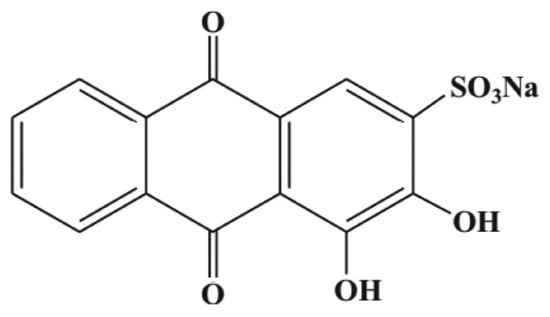
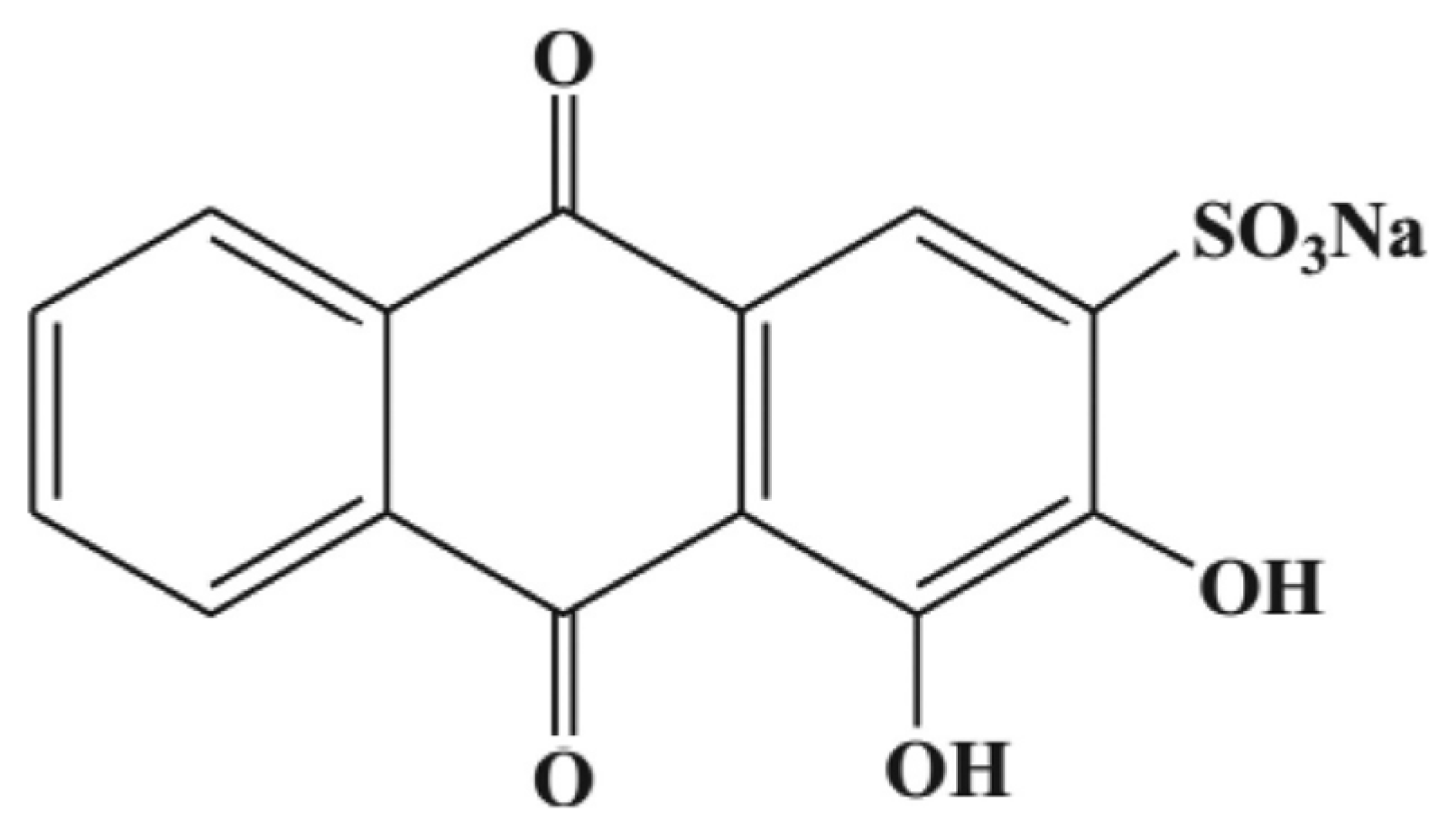
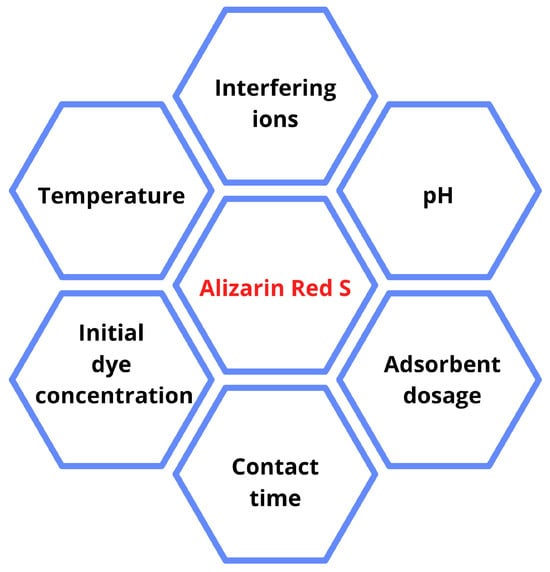
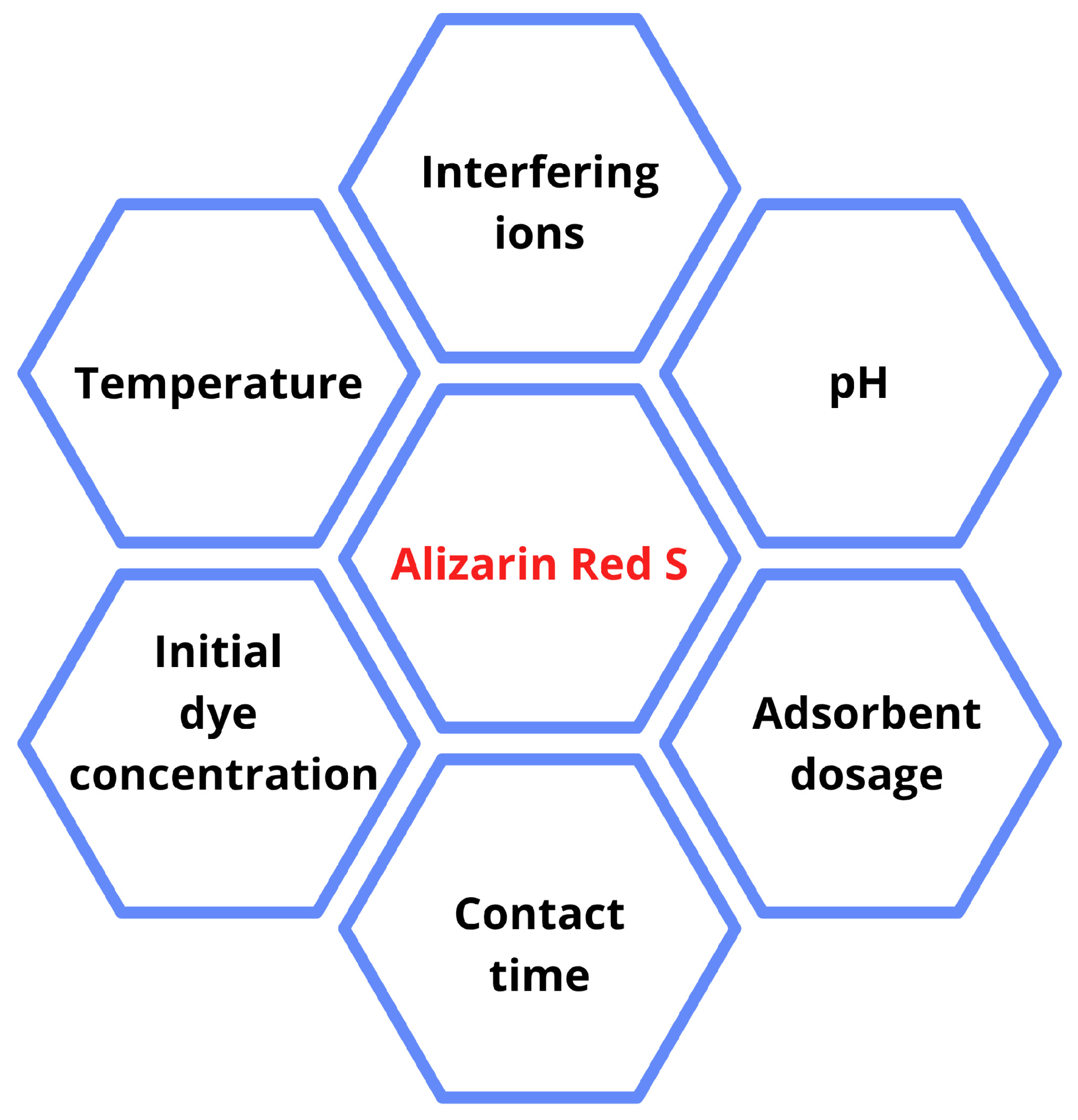
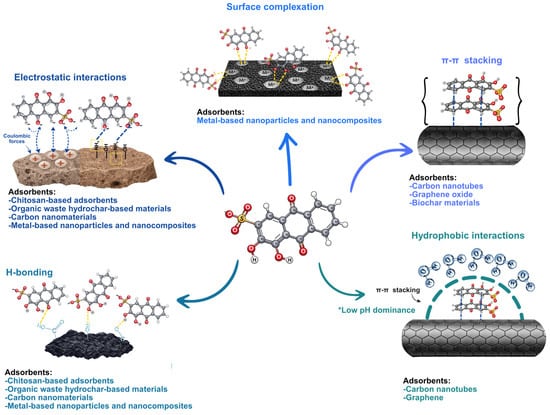
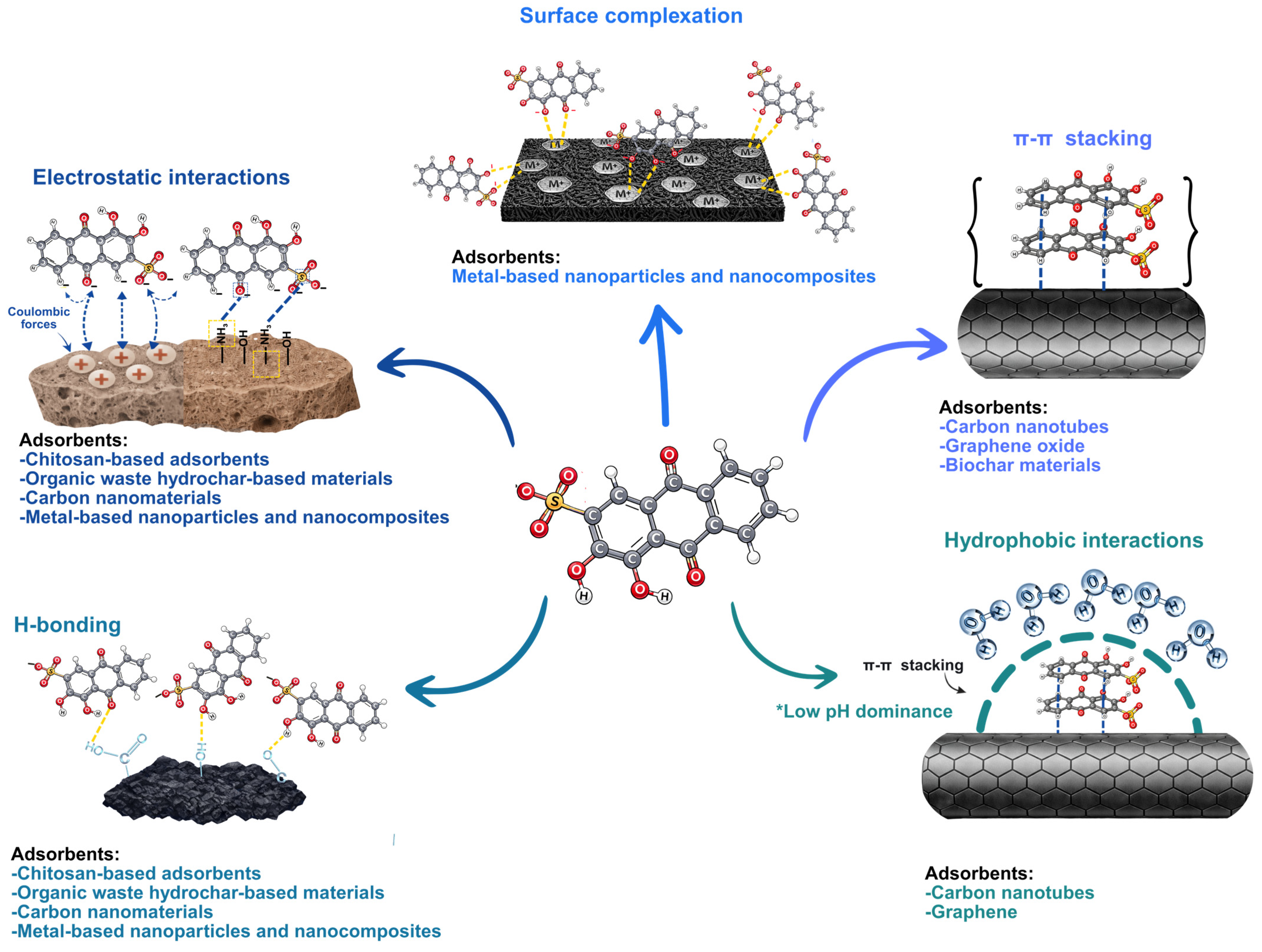

Disclaimer/Publisher’s Note: The statements, opinions and data contained in all publications are solely those of the individual author(s) and contributor(s) and not of MDPI and/or the editor(s). MDPI and/or the editor(s) disclaim responsibility for any injury to people or property resulting from any ideas, methods, instructions or products referred to in the content. |
© 2026 by the authors. Licensee MDPI, Basel, Switzerland. This article is an open access article distributed under the terms and conditions of the Creative Commons Attribution (CC BY) license.