


Abstract
Per- and polyfluoroalkyl substances (PFAS) are persistent contaminants with growing evidence of systemic health effects, but their potential influence on gastrointestinal function remains poorly understood. This study evaluated associations between serum PFAS mixtures and bowel health indicators, including self-reported constipation and bowel movement frequency, among 116 U.S. adults aged ≥20 years from the 2009–2010 National Health and Nutrition Examination Survey. Six PFASs were examined: PFOS, PFOA, PFHS, PFNA, PFDE, and PFUA. Constipation was assessed using the NHANES Bowel Health Questionnaire item coded from 1 = Always to 5 = Never, so that higher values represented less frequent self-reported constipation, and bowel movement frequency was recorded as movements per week. Bayesian kernel machine regression (BKMR) estimated joint and nonlinear mixture effects, and survey-weighted regression models examined individual PFAS, each adjusted for age, sex, body mass index, education, and income. Higher combined PFAS exposure was associated with higher constipation response scores across the mid-range of exposure, indicating less frequent self-reported constipation, with PFOA identified as the primary contributor through a nonlinear, inverse U-shaped exposure–response pattern. In survey-weighted models, PFOA and PFUA were associated with less frequent self-reported constipation, whereas PFNA was associated with more frequent constipation. Associations with bowel movement frequency were weak and inconsistent; only PFOS reached significance in regression, and this association would not survive correction for multiple comparisons, so these data provide little evidence of a robust association between PFAS and bowel movement frequency. Overall, higher PFAS exposure was associated with less frequent self-reported constipation, particularly for PFOA, whereas evidence for an association with bowel movement frequency was limited.
1. Introduction
Bowel function is an important indicator of gastrointestinal health and reflects coordinated digestive, absorptive, microbial, neural, and motility-related processes [1]. Given the role of bowel function in overall health, growing attention has focused on dietary intake, lifestyle factors, and environmental exposures that may influence gastrointestinal function [2]. Healthy bowel movements reflect optimal digestive function and efficient nutrient absorption, both of which are closely linked to overall health and mental well-being [3]. Altered bowel habits, including changes in bowel movement frequency and constipation, can affect quality of life and may reflect broader disturbances in gastrointestinal function [4]. Because bowel health is influenced by diet, hydration, lifestyle, medication use, comorbid conditions, and environmental exposures, identifying factors associated with bowel dysfunction remains an important public health and clinical research priority.
Scientific research continues to provide clear, evidence-based recommendations for improving digestive health, particularly for individuals significantly affected by gastrointestinal issues [5]. Conditions such as irritable bowel syndrome and gastritis can substantially impair quality of life through chronic abdominal pain, altered bowel habits, and persistent gastrointestinal discomfort [6]. Epidemiologic studies have documented a substantial global burden of gastrointestinal disorders and have identified demographic, behavioral, dietary, infectious, inflammatory, and environmental contributors to digestive health outcomes [7].
Among the many factors contributing to digestive disorders, environmental exposures have emerged as a significant influence on bowel health [8]. Factors such as cigarette smoking, diet, and air pollution have all been shown to increase the risk of developing an inflammatory bowel disease (IBD) [8]. Although several environmental and lifestyle risk factors for gastrointestinal dysfunction have been studied, the potential role of per- and polyfluoroalkyl substances (PFAS) in bowel health remains less well characterized [9].
Per- and polyfluoroalkyl substances (PFAS) are a class of persistent synthetic chemicals of growing concern in environmental health research [10]. They have been widely used in industrial and consumer products because of their resistance to heat, water, and oil [11]. The strength of the carbon-fluorine bond contributes to their environmental persistence and resistance to degradation [12]. Several commonly measured PFAS, including PFOS, PFOA, PFHS, and PFNA, are detectable in human serum and may remain in the body for extended periods because of their relatively long biological half-lives [13].
Human exposure to PFAS is widespread and occurs through multiple environmental media. The most common pathways include consumption of contaminated drinking water, dietary intake from food and food-contact materials, and ingestion or inhalation of indoor dust, with additional contributions from consumer products such as nonstick cookware, water-repellent textiles, and food packaging [10,11,12]. Because several PFAS resist metabolism and have long biological half-lives, even low-level but continuous exposure can lead to measurable serum concentrations and bioaccumulation over time [13]. Importantly, ingestion is a dominant route of exposure, and once ingested, PFAS are efficiently absorbed across the gastrointestinal epithelium and undergo enterohepatic recirculation. This brings the intestinal mucosa, the resident gut microbiota, and the bile acid pool into direct and repeated contact with these compounds, providing a biologically plausible basis for PFAS to influence digestive function and motivating the present focus on bowel health outcomes.
Emerging evidence indicates that exposure to PFAS may disrupt gastrointestinal functions through multiple biological pathways [14]. One proposed pathway involves alteration of the gut microbiome, leading to changes in microbial composition and metabolic processes [15]. Additionally, PFAS can modulate bile acid metabolism, potentially affecting lipid digestion and absorption [16]. Other studies suggest that immune dysregulation and inflammation of the intestinal lining may occur following PFAS exposure, contributing to chronic gastrointestinal symptoms [17]. Finally, interference with endocrine pathways that regulate intestinal motility could further worsen digestive dysfunctions and overall gut health [18].
While animal studies suggest that PFAS exposure may disrupt gut physiology and microbiome balance, evidence from human epidemiological studies linking PFAS to gastrointestinal (GI) outcomes remains both limited and inconsistent [19]. Although prior work has examined PFAS exposure in relation to constipation, evidence remains limited regarding PFAS mixtures, nonlinear exposure–response patterns, and bowel movement frequency as a related gastrointestinal outcome [20]. Examining PFAS mixtures in relation to constipation response scores and bowel movement frequency may help clarify whether these persistent contaminants are associated with measurable variation in gastrointestinal function [21]. Because the present analysis does not measure molecular, inflammatory, microbiota, or metabolic markers, it cannot directly characterize these biological pathways; rather, identifying epidemiologic associations between PFAS mixtures and bowel health outcomes can help generate hypotheses about how PFAS exposure may relate to digestive function [22].
The primary objective of this study is to examine the associations between PFAS exposure levels and bowel health outcomes, specifically constipation and bowel movement frequency. This study hypothesizes that serum PFAS levels are associated with self-reported constipation frequency and bowel movement frequency after adjusting for age, sex, body mass index, education, and income.
2. Materials and Methods
2.1. Study Design and Data Source
This study used publicly available data from the 2009–2010 National Health and Nutrition Examination Survey (NHANES). NHANES is a continuous, nationally representative survey conducted by the National Center for Health Statistics to assess the health, nutritional status, and environmental exposures of the noninstitutionalized U.S. population. The survey uses a complex, multistage probability sampling design and collects data through household interviews, physical examinations, laboratory testing, and standardized questionnaires. The present analysis linked demographic, examination, laboratory, and Bowel Health Questionnaire data to evaluate associations between serum PFAS concentrations and bowel health indicators among adults aged ≥20 years. The 2009–2010 cycle was selected because it is the only NHANES cycle in which the Bowel Health Questionnaire, which contains both the self-reported constipation and bowel movement frequency items, was administered to the same subsample of participants who had serum PFAS measured. Because these two data components do not overlap in other cycles, pooling additional or more recent years was not feasible for the present outcomes, and restricting the analysis to 2009–2010 ensured that exposure and outcome data were available for the same individuals.
2.2. Ethical Approval and Participant Consent
All procedures for the National Health and Nutrition Examination Survey (NHANES) 2009–2010 cycle were reviewed and approved by the National Center for Health Statistics (NCHS) Research Ethics Review Board. Written informed consent was obtained from all participants prior to participation. The present study used publicly available, de-identified NHANES data, thereby protecting participant confidentiality. Accordingly, this secondary analysis was deemed exempt from additional institutional review board oversight.
2.3. Study Population
The study population was derived from the 2009–2010 National Health and Nutrition Examination Survey (NHANES) and consisted of adults aged 20 years and older. Individuals were eligible for inclusion if they completed the relevant items of the Bowel Health Questionnaire and had laboratory measurements available for selected PFAS compounds. Participants were excluded if they were pregnant or had missing data for outcome, exposure, or survey design variables, including required sample weights. These selection criteria were applied to ensure data accuracy, representativeness, and comparability across participants. After applying these inclusion and exclusion criteria, the final analytic sample comprised 116 adults with complete data on serum PFAS concentrations, the Bowel Health Questionnaire outcomes, covariates, and survey design variables. Participants were excluded primarily because they lacked PFAS laboratory measurements (PFAS were measured only in a one-third examination subsample), did not complete the relevant Bowel Health Questionnaire items, were pregnant, or had missing covariate or survey design information.
2.4. Assessment of Bowel Health Outcomes
Bowel health outcomes were assessed using questions from the NHANES Bowel Health Questionnaire (BHQ). Bowel movement frequency was assessed using the National Health and Nutrition Examination Survey (NHANES) Bowel Health Questionnaire variable. Participants were asked, “How often do you usually have bowel movements?” with a standardized probe to report the number of bowel movements per week. Responses were recorded as a continuous variable ranging from 1 to 63 bowel movements per week. Participants with responses coded as “Refused,” “Don’t know,” or missing were excluded from the analysis. This variable was treated as a continuous outcome in statistical models to evaluate associations with PFAS exposure. Constipation was assessed using the NHANES Bowel Health Questionnaire variable. Participants were asked, “During the past 12 months, how often have you been constipated?” Response options included “Always,” “Most of the time,” “Sometimes,” “Rarely,” and “Never.” This variable was treated as a continuous ordinal response, with original NHANES coding ranging from 1 = Always to 5 = Never. Therefore, higher values reflected less frequent self-reported constipation. Participants with responses coded as “Refused,” “Don’t know,” or missing were excluded from the analysis. The bowel movement frequency variable was inspected for implausible values. Although the reported range extended to 63 movements per week, values at the upper extreme (equivalent to roughly nine per day) are physiologically unusual and most likely reflect transient diarrhea or atypical reporting rather than habitual frequency. Such responses are retained in the public-use NHANES data and were not recoded as missing. To ensure that the findings were not driven by these extreme observations, sensitivity analyses were performed in which bowel movement frequency was truncated at survey-weighted upper percentiles (Section 2.9); the direction and significance of the associations were materially unchanged, indicating that the reported results were not attributable to outlying values.
2.5. Assessment of PFAS Exposure
The analysis of the relationship between serum PFAS concentrations and bowel health outcomes included six compounds measured in the NHANES 2009–2010 cycle: PFOS, PFOA, PFDE, PFHS, PFNA, and PFUA. Serum PFAS concentrations were measured by the CDC National Center for Environmental Health, Division of Laboratory Sciences, Organic Analytical Toxicology Branch using online solid-phase extraction–high-performance liquid chromatography–Turbo Ion Spray–tandem mass spectrometry (online SPE-HPLC-TIS-MS/MS) according to the NHANES Laboratory Procedure Manual. Automated extraction and chromatographic separation were performed using a Symbiosys extractor equipped with a Triathlon autosampler and SparkLink software (Spark Holland, Plainsboro, NJ, USA), an Agilent 1100 binary pump and degasser (Agilent Technologies, Wilmington, DE, USA), and a Betasil C8 analytical column and precolumn (Thermo Electron Corporation, Bellefonte, PA, USA). Detection was performed using an API 4000 tandem mass spectrometer operated in negative-ion Turbo Ion Spray mode (Applied Biosystems, Foster City, CA, USA). Mass spectrometry data were collected, processed, and archived using Analyst software for the API 4000 workstation (Applied Biosystems, Foster City, CA, USA), with data management performed using Microsoft Access (Microsoft Corporation, Redmond, WA, USA) and quality-control/statistical processing performed using SAS software (SAS Institute Inc., Cary, NC, USA). Reagents and standards used in the NHANES method included HPLC-grade methanol, acetonitrile, and water from Honeywell Burdick & Jackson (Muskegon, MI, USA), formic acid from EM Science (Gibbstown, NJ, USA), acetic acid from J.T. Baker (Phillipsburg, NJ, USA), selected PFAS standards from 3M Company (Saint Paul, MN, USA), PFAS native and isotope-labeled standards from Wellington Laboratories (Guelph, ON, Canada), and 18O2-PFOSA from RTI Laboratories (Research Triangle Park, NC, USA). For values below the limit of detection (LOD), concentrations were initially replaced with the LOD divided by the square root of two for descriptive analysis. To handle missing or undetected values more accurately, multiple imputations by chained equations (MICE) were used to impute PFAS concentrations prior to further analysis.
2.6. Data Preprocessing and Transformation
PFAS compounds were standardized using mean-centering and unit variance scaling to ensure consistency across variables. This scaling allowed for direct comparison of effect estimates and supported mixture modeling methods, such as Bayesian Kernel Machine Regression (BKMR), which evaluate the individual and combined effects of correlated PFAS exposures.
2.7. Covariates
Covariates were selected based on prior literature and their potential association with both PFAS exposure and bowel health outcomes. Models were adjusted for age, sex, body mass index, education, and income. These variables were included to account for demographic, anthropometric, and socioeconomic differences that may influence serum PFAS concentrations and gastrointestinal health indicators.
2.8. NHANES Complex Survey Design and Weighting
Analyses that included PFAS laboratory data used the study weights to generate nationally representative estimates of the U.S. population. All analyses accounted for the NHANES complex survey design by incorporating strata and primary sampling units (PSUs). This approach improves the accuracy of estimates and reduces bias introduced by the complex sampling design [23]. For analyses restricted to the 2009–2010 cycle, the original 2-year survey weights were used without modification, as each NHANES cycle is independently nationally representative.
2.9. Data Management and Missing Data
Data from demographic, laboratory, questionnaire, and examination components were merged to construct the analytic dataset. PFAS measurements were reviewed to ensure consistent reporting in ng/mL [24]. Outliers were identified using survey-weighted percentiles, and sensitivity analyses, including percentile truncation, were performed to evaluate their potential impact on the findings. Missing data were assessed to characterize the extent and pattern of nonresponse. The primary analysis was conducted using multiple imputations by chained equations (MICE).
2.10. Statistical Analysis
All descriptive and regression analyses were conducted using methods that accounted for the complex, multistage sampling design of NHANES. Examination sample weights, strata, and primary sampling units (PSUs) were incorporated to produce nationally representative estimates. Survey-weighted means with 95% confidence intervals were used to summarize continuous variables, and weighted proportions were used for categorical variables.
Pairwise associations among PFAS compounds were evaluated using Spearman correlation coefficients to characterize the correlation structure of the exposure mixture.
The primary mixture analysis was conducted using Bayesian Kernel Machine Regression (BKMR) to flexibly model potentially nonlinear and interactive effects of multiple correlated PFAS exposures. Let Yi denote the outcome for individual i, Zi = (Zi1, Zi2, …, Zip) represent the vector of PFAS exposures, and Xi denote the vector of covariates. The BKMR model is specified as:
where h(·) is an unknown exposure–response function modeled using a kernel function, β are regression coefficients for covariates, and εi ~ N(0, σ2).
Yi = h(Zi) + Xiᵀβ + εi
A Gaussian kernel was used to define similarity between exposure profiles:
where ρm are exposure-specific parameters that reflect the relative contribution of each PFAS to the overall mixture effect.
K(Zi, Zj) = exp(−Σm ρm (Zim − Zjm)2)
BKMR was applied to estimate overall mixture effects by comparing predicted outcomes when all exposures were jointly set at different quantiles of their distributions; univariate exposure–response functions by varying one exposure while holding others fixed; bivariate exposure–response relationships to assess potential interactions; and posterior inclusion probabilities (PIPs) to quantify the relative importance of individual PFAS within the mixture.
BKMR models were run for 5000 iterations, with the first 1000 iterations discarded as burn-in. Posterior inference was based on the retained samples after burn-in. Variable selection was used to estimate posterior inclusion probabilities for each PFAS compound. Model outputs included overall mixture effects, univariate exposure–response functions, bivariate exposure–response functions, single-variable effects, and single-variable interaction summaries.
Because BKMR does not inherently accommodate complex survey design, these models were estimated without incorporation of sampling weights, strata, or PSUs. Accordingly, BKMR results should be interpreted as internally valid associations within the analytic sample rather than nationally representative estimates.
As complementary analyses, survey-weighted regression models were used to estimate associations between individual PFAS and bowel health outcomes. Survey-weighted linear regression models were fitted for both bowel movement frequency and constipation, treated as a continuous ordinal measure, adjusting for age, sex, body mass index, education, and income. These models incorporated NHANES sampling weights, strata, and PSUs to provide nationally representative inference.
All statistical tests were two-sided with a significance level of α = 0.05.
3. Results
3.1. Descriptive Statistics
The mean age of participants was 37.71 years, and the mean body mass index was 26.63 kg/m2. The sample was 49% male and 51% female. Non-Hispanic White participants comprised 64.65% of the sample, followed by non-Hispanic Black participants at 12.04%, Mexican American participants at 10.47%, participants classified as other race or multiracial at 7.38%, and other Hispanic participants at 5.46%.
Table 1 examines PFAS by gender and shows that males had consistently higher mean serum concentrations for most compounds, particularly PFOS, PFOA, and PFHS, while PFUA levels were nearly identical between males and females, indicating a general pattern of higher PFAS exposure among males.
Table 1.
PFAS by Gender.
3.2. Linear Regression
Table 2 presents adjusted linear regression results for individual PFAS and bowel movement frequency. PFOS was modestly but significantly inversely associated with bowel movement frequency, whereas the remaining PFAS were not significantly associated with this outcome. Quantitatively, each 1 ng/mL increase in serum PFOS was associated with approximately 0.03 fewer bowel movements per week (β = −0.027; 95% CI −0.052, −0.002). Across the interquartile range of PFOS, this corresponds to well under one bowel movement per week, indicating limited clinical relevance. Moreover, PFOS was the only one of six PFAS that reached statistical significance for this outcome, and this association would not survive correction for multiple comparisons; it should therefore be interpreted with caution rather than as evidence of a robust exposure–outcome relationship.
Table 2.
Linear Regression Bowel Movement Frequency.
Table 3 presents adjusted linear regression results for individual PFAS and the constipation response score. PFOA and PFUA were positively associated with the constipation response score, indicating less frequent self-reported constipation under the original coding. In contrast, PFNA was negatively associated with the score, indicating more frequent self-reported constipation. The remaining PFAS were not significantly associated with the constipation response score.
Table 3.
Linear Regression Constipation.
3.3. Spearman Correlation
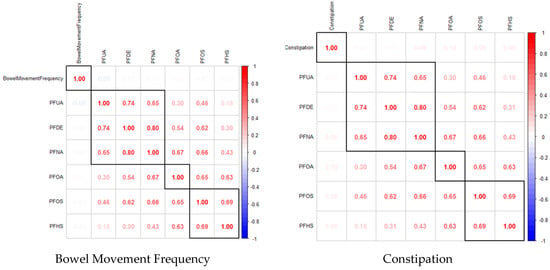
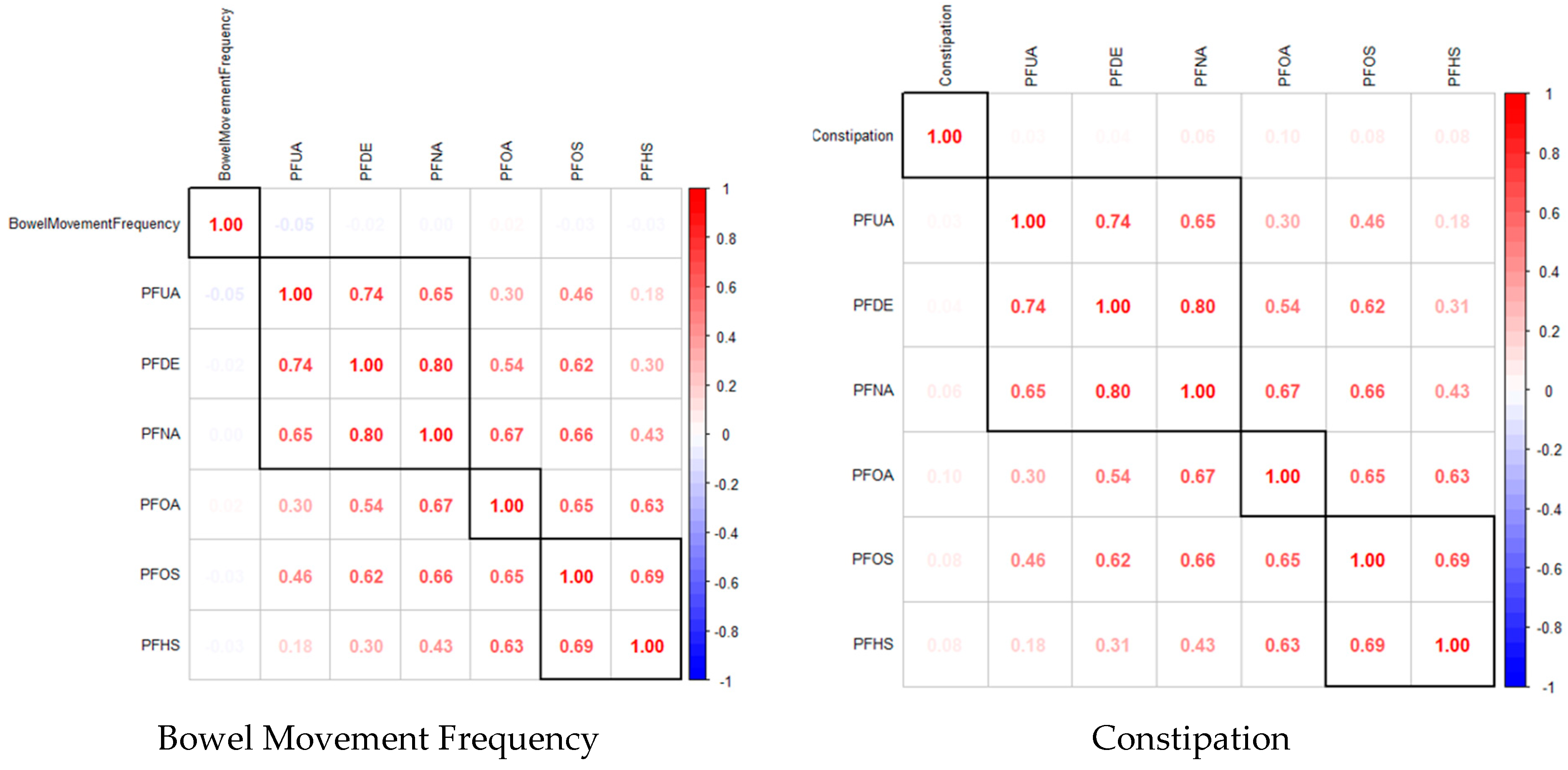
Figure 1 below shows the Spearman correlation plots for bowel movement and constipation. For bowel movement, key results include moderate positive correlations among several PFAS, with PFOS and PFOA especially strongly correlated with each other. For constipation, key results were that PFAS positively correlated with one another but showed only weak, non-clear correlations with constipation itself.
Figure 1.
Spearman correlation analysis.
3.4. Bayesian Kernel Machine Regression
In this study, Bayesian kernel machine regression was used to assess the joint effects of multiple, correlated PFAS on bowel movement frequency and constipation by flexibly modeling potentially non-linear and interactive relationships within the PFAS mixture and identifying which specific PFAS contributed most to the overall mixture effect on these outcomes.
3.4.1. Posterior Inclusion Probability
Table 4 below shows the posterior inclusion probabilities for bowel movement and constipation. For constipation, key findings indicate that PFOA had the largest PIP, suggesting it was the most influential PFAS in the mixture for variation in the constipation response score, while the other PFAS had very low PIPs, indicating limited individual importance for constipation in the BKMR model.
Table 4.
Posterior Inclusion Probability (PIP).
3.4.2. Univariate Exposure–Response Function
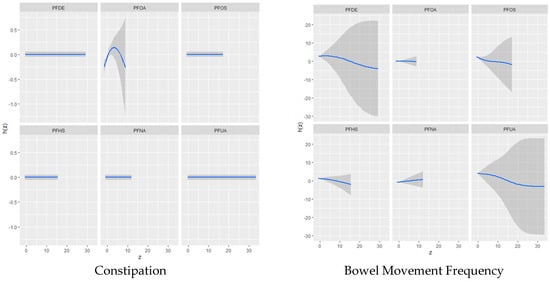
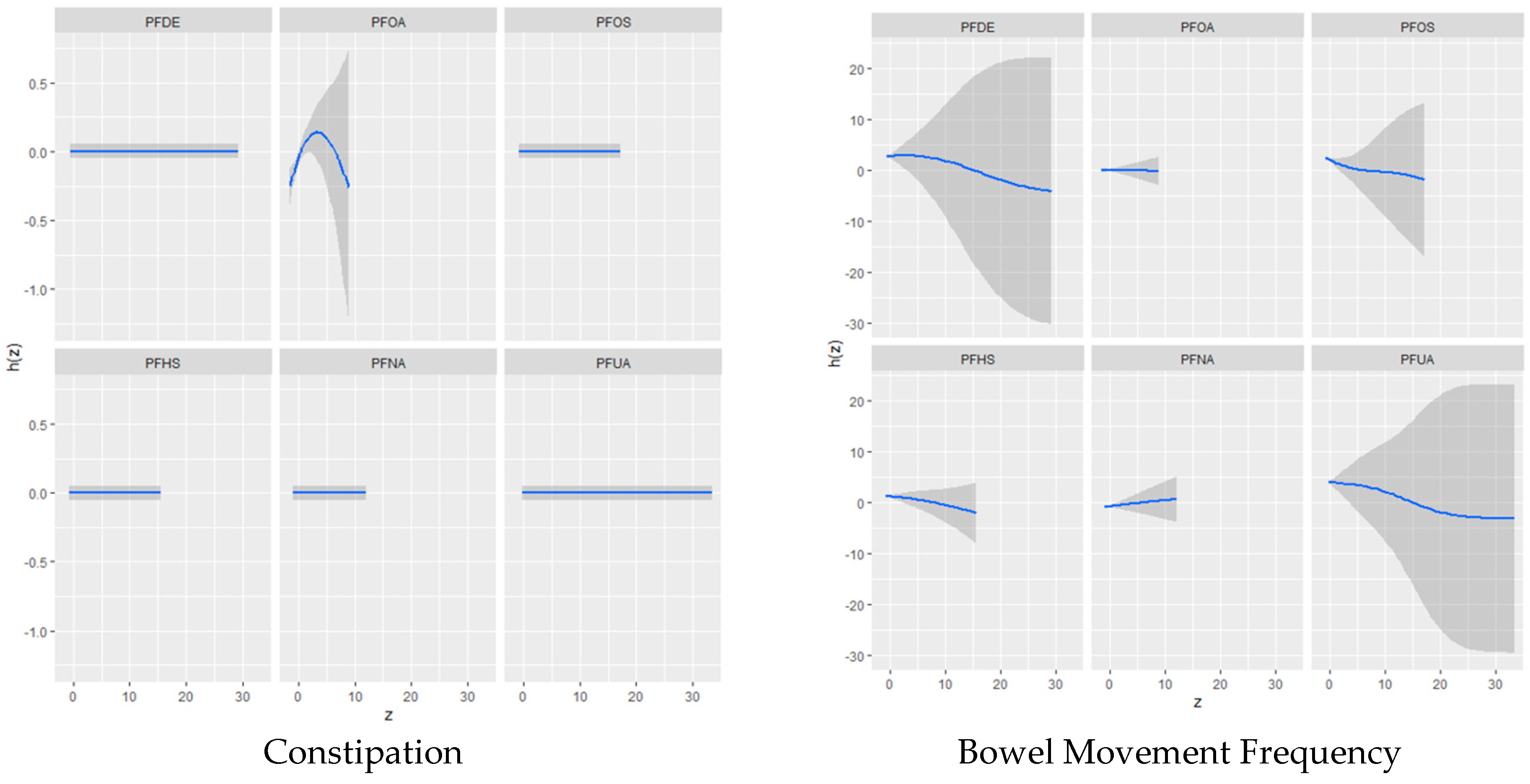
Figure 2 shows the univariate exposure response function. For the constipation response score, PFOA showed a nonlinear inverse U-shaped pattern, where mid-range exposure levels corresponded to higher scores reflecting less frequent self-reported constipation, while the other PFAS exposure–response functions were relatively flat. For bowel movement frequency the results were relatively flat with PFDE, PFOS, and PFUA showing hints of a complicated pattern.
Figure 2.
Univariate Exposure–Response Function for Individual PFAS Compounds. The blue line represents the estimated univariate exposure–response function, h(z), for each PFAS compound, while the gray shaded region represents the 95% credible interval. Each panel shows the estimated association between an individual PFAS compound and the bowel health outcome, including PFDE, PFOA, PFOS, PFHxS, PFNA, and PFUA. Wider credible intervals indicate greater uncertainty in the estimated exposure–response relationship.
3.4.3. Bivariate Exposure–Response Function
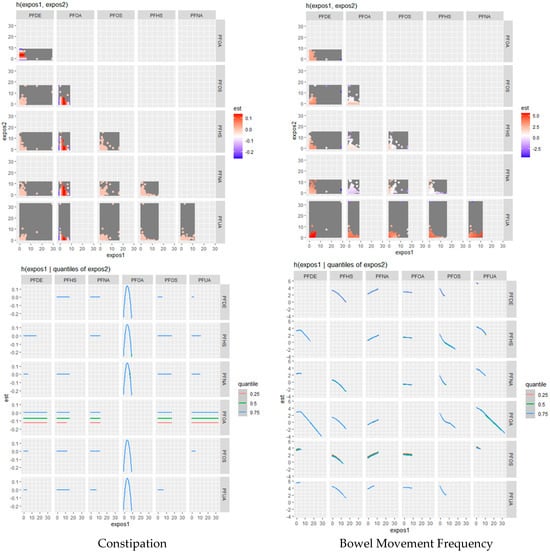
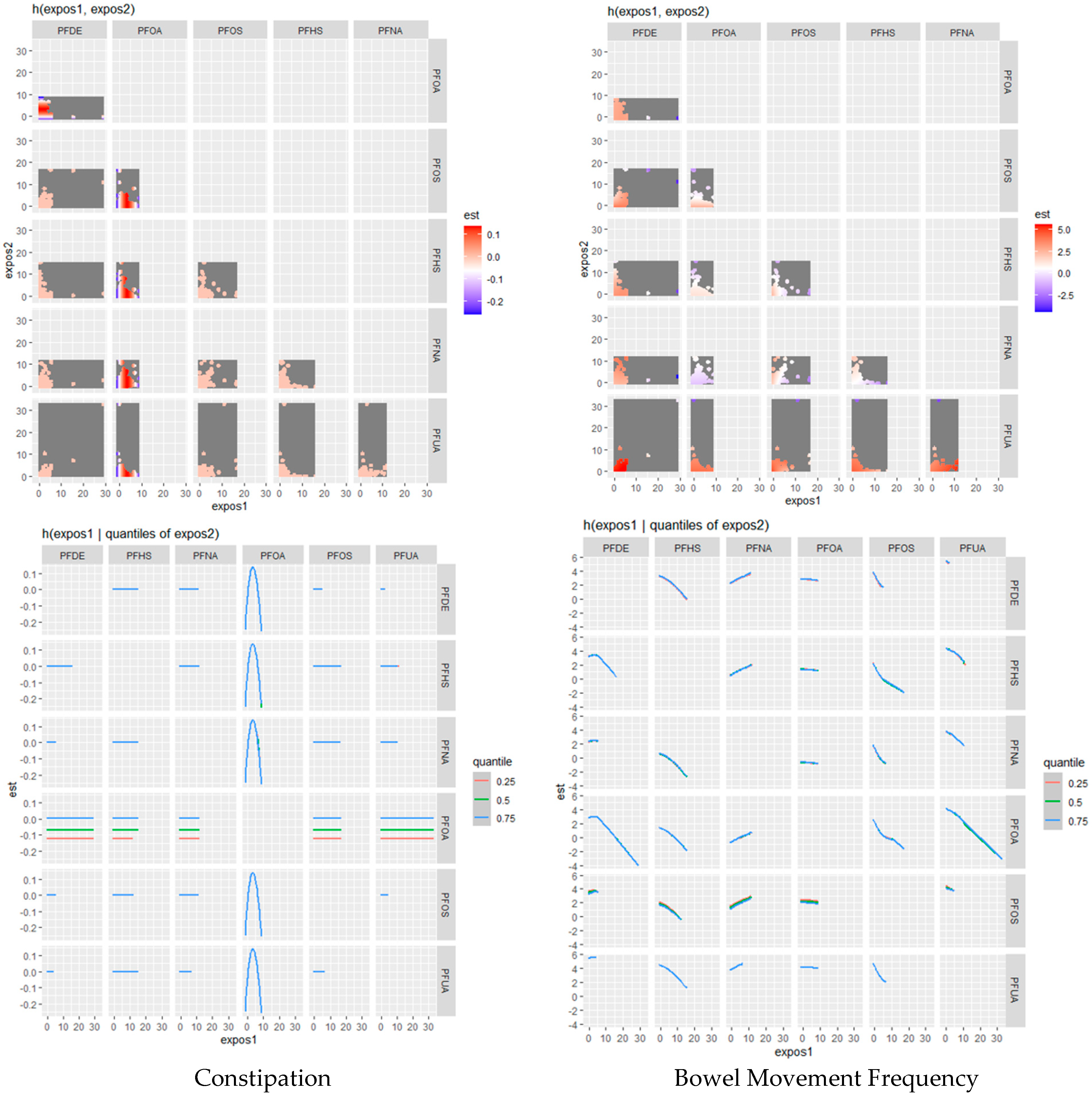
Figure 3 below shows the bivariate exposure–response function. For constipation, the plots show how the predicted outcome changes as two PFASs increase together, highlighting areas where higher joint levels are linked to stronger effects. For bowel movement frequency, the plots are mostly flat, suggesting little evidence that pairs of PFAS jointly change bowel movement frequency within the observed exposure ranges.
Figure 3.
BKMR bivariate exposure–response and interaction plots for PFAS mixtures in relation to constipation and bowel movement frequency. The left panels present results for constipation, and the right panels present results for bowel movement frequency. In the upper panels, BKMR bivariate exposure–response functions, h(expos1,expos2), are shown for pairwise combinations of PFAS compounds; the color scale represents the estimated change in the outcome associated with the joint levels of the two exposures, with warmer colors indicating positive associations and cooler colors indicating negative associations. In the lower panels, BKMR univariate exposure–response functions, h(expos1∣quantiles of expos2), display the estimated association between one PFAS compound and the outcome while holding the second PFAS compound at its 25th, 50th, and 75th percentiles.
3.4.4. Overall Exposure-Function
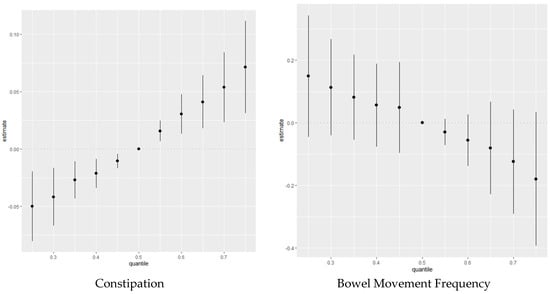
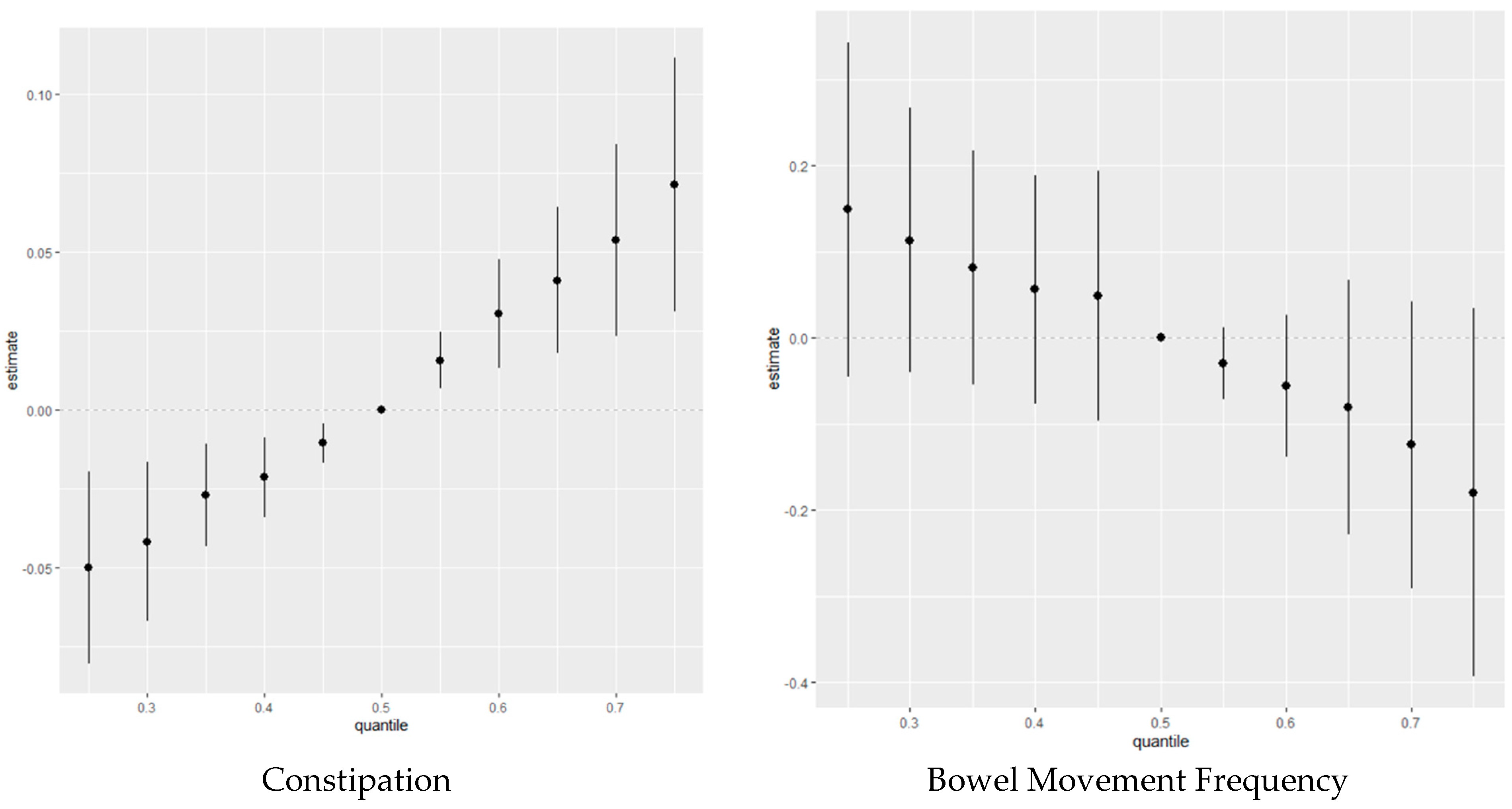
Combined exposure to all PFAS was associated with higher constipation response scores between approximately the 0.25 and 0.75 quantiles of the joint exposure distribution, reflecting less frequent self-reported constipation under the original 1 = Always to 5 = Never coding (Figure 4). In this sample, this mid-range region corresponded approximately to total serum PFOA concentrations between roughly 2 and 5 ng/mL, centered near a median of about 3 ng/mL. For bowel movement frequency, the overall trend decreased modestly with increasing combined PFAS exposure (Figure 4); however, the magnitude of this change was small, on the order of less than one additional bowel movement per week across the observed exposure range, and is unlikely to be clinically meaningful.
Figure 4.
Overall exposure effect estimates from BKMR for the PFAS mixture in relation to constipation and bowel movement frequency. Points represent the estimated change in the outcome when all PFAS compounds are fixed at a given quantile compared with the reference quantile, defined as the 50th percentile. Vertical bars represent the 95% credible intervals. The left panel shows the overall mixture effect for constipation, and the right panel shows the overall mixture effect for bowel movement frequency.
3.4.5. Single-Variable Effect
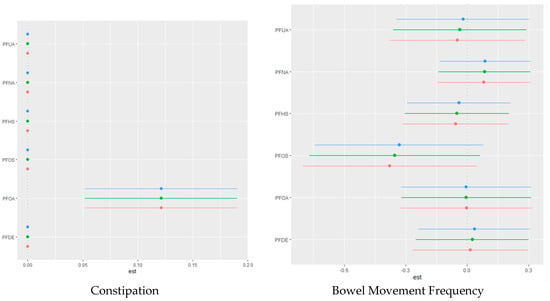
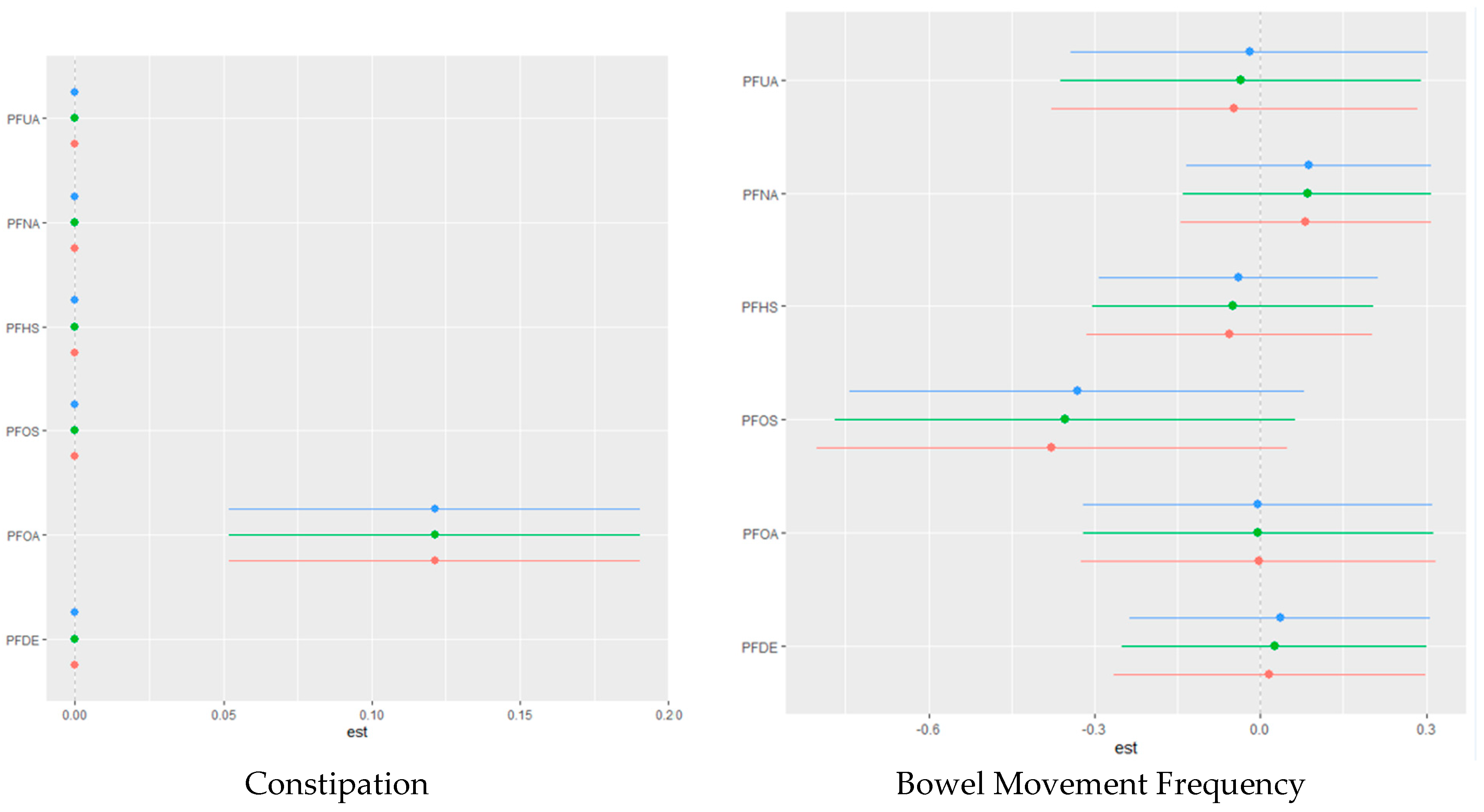
Figure 5 below shows the single-variable effect. For the constipation response score, the curves show how the predicted outcome changes as each PFAS increases while the others are held at their median. Higher predicted values indicate less frequent self-reported constipation. For bowel movement frequency, the curves are generally flat, suggesting that changing one PFAS at a time, while keeping the rest constant, has little impact on bowel movement frequency in this study.
Figure 5.
Single-variable effect estimates from BKMR for individual PFAS compounds in relation to constipation and bowel movement frequency. Points represent the estimated change in the outcome for each PFAS compound, and horizontal bars represent the 95% credible intervals. Estimates are shown while the remaining PFAS mixture components are held at the 25th percentile/red, 50th percentile/green, and 75th percentile/blue. The left panel shows single-variable effects for constipation, and the right panel shows single-variable effects for bowel movement frequency.
3.4.6. Single-Variable Interaction Effect
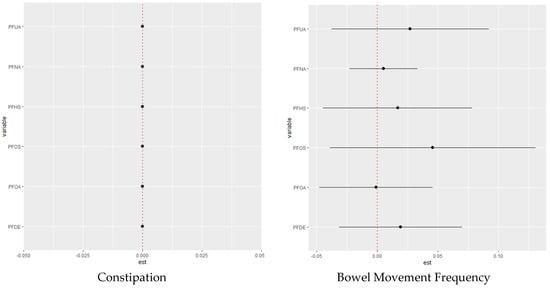
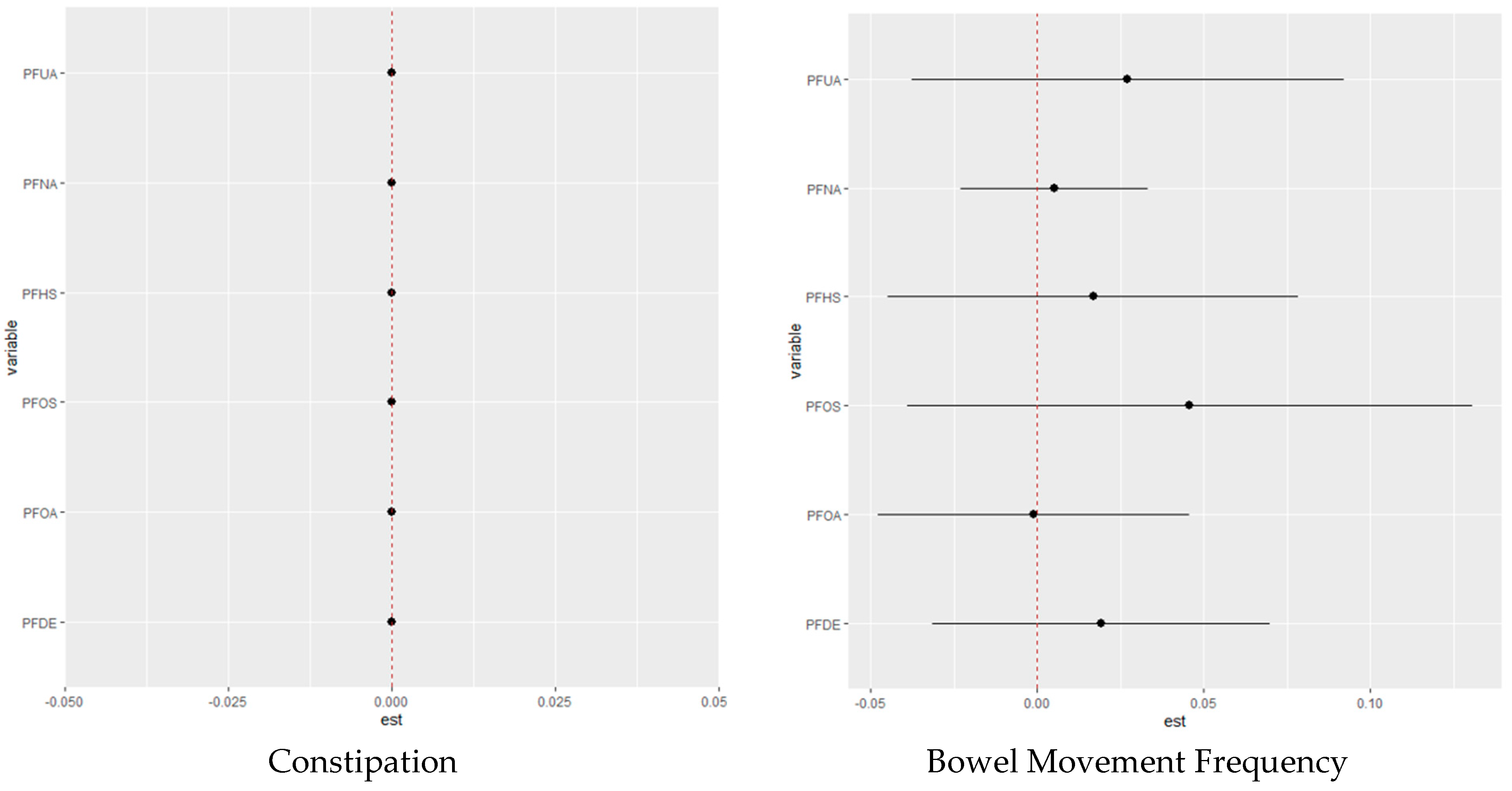
Figure 6 below shows the single-variable interaction effect. For constipation, the plots show how the effect of each PFAS changes when another PFAS is set to low, medium, or high levels, indicating that the impact of one PFAS can differ depending on the level of another. For bowel movement frequency, the curves look similar across these levels, suggesting little evidence that interactions between PFAS meaningfully change bowel movement frequency in this study.
Figure 6.
Single-variable interaction effect estimates from BKMR for individual PFAS compounds in relation to constipation and bowel movement frequency. Points represent the estimated interaction effect for each PFAS compound, and horizontal bars represent the 95% credible intervals. The vertical dashed line indicates the null value of zero. The left panel shows interaction effects for constipation, and the right panel shows interaction effects for bowel movement frequency.
4. Discussion
4.1. Principal Findings
In this study of U.S. adults, PFAS exposure showed a clearer and more coherent association with self-reported constipation than with bowel movement frequency. For the constipation response score, the mixture analyses indicated a clearer overall signal, with higher combined PFAS exposure associated with higher response scores across the mid-range of the exposure distribution. Because the original NHANES coding ranges from 1 = Always to 5 = Never, this pattern reflects less frequent self-reported constipation rather than greater constipation burden. Within the mixture, PFOA emerged as the most influential contributor, supported by the highest posterior inclusion probability and a nonlinear exposure–response pattern suggestive of an inverse U-shaped relationship. In contrast, the evidence for an association with bowel movement frequency was weak and inconsistent. Although PFOS was inversely associated with bowel movement frequency in the survey-weighted regression model and the overall BKMR function suggested a slight decreasing trend, PFOS was the only one of six PFAS to reach statistical significance and this association would not survive correction for multiple comparisons. The posterior inclusion probabilities were uniformly low and the single-exposure response functions were largely flat. The most parsimonious interpretation is therefore that these data provide little evidence of a robust or meaningful association between PFAS and bowel movement frequency. Taken together, the findings indicate that higher PFAS exposure was associated with less frequent self-reported constipation, particularly for PFOA, whereas support for an association with bowel movement frequency was limited.
4.2. Comparison with Prior Literature
The present findings can be situated within the emerging literature linking PFAS exposure to gastrointestinal dysfunction, while also extending that literature in important ways. The most directly comparable prior work is the NHANES-based analysis by Zhao et al., which reported that higher PFAS exposure was associated with greater odds of self-reported constipation across the 2005–2010 cycles [20]. Importantly, the direction of association in the present study is opposite to that report: higher PFAS exposure, whether modeled as a mixture or as PFOA individually, was associated with less frequent self-reported constipation rather than more. This discrepancy warrants direct consideration, and several methodological differences are likely contributors. First, the outcome definitions differ. Zhao et al. analyzed constipation as a binary outcome derived from stool consistency and frequency, whereas the present study modeled the NHANES constipation item as a continuous ordinal response coded from 1 = Always to 5 = Never, in which higher values denote less frequent constipation; because the two studies operationalize and orient the outcome differently, their coefficients are not directly comparable in sign. Second, the exposure modeling differs: Zhao et al. emphasized individual PFAS in logistic models across pooled cycles, whereas the present analysis applied BKMR to capture nonlinear, joint mixture effects within a single cycle. Third, the analytic periods differ (2005–2010 versus 2009–2010), over which PFAS serum distributions and population characteristics shifted. Taken together, these differences in outcome coding, exposure modeling, and study period provide plausible explanations for the divergent directions and indicate that apparent inconsistencies in PFAS gastrointestinal epidemiology may partly reflect methodological heterogeneity rather than truly conflicting biology. A side-by-side comparison of the two studies is presented in Table 5. At the same time, the present study advances the literature by moving beyond single-chemical analyses to evaluate PFAS as a correlated mixture, which better reflects real-world exposure conditions. This distinction matters because PFAS compounds co-occur in human populations and are often highly correlated, making conventional single-pollutant models potentially incomplete or misleading. In addition, the present study identified nonlinear patterns, particularly for PFOA, that would be difficult to detect under standard linear assumptions.
Table 5.
Comparison of the present study with the prior NHANES-based analysis of PFAS and constipation by Zhao et al. (2024) [20].
By contrast, the literature on PFAS and bowel movement frequency is far less developed. Much of the existing epidemiologic evidence has focused on broader gastrointestinal symptoms, inflammatory processes, or general digestive health rather than routine bowel frequency itself [9,14,19]. In that regard, the present findings add nuance to the field: the data provide little evidence that bowel movement frequency is meaningfully associated with PFAS exposure, in contrast to the clearer pattern observed for constipation. This contrast between outcomes may help explain why prior gastrointestinal findings in PFAS epidemiology have often appeared inconsistent. Outcome definition matters, and more symptom-specific or clinically interpretable endpoints may be more sensitive to environmentally mediated bowel dysfunction than broad or behaviorally variable measures.
4.3. Interpretation of the Bowel Movement Frequency Findings
The bowel movement frequency findings require careful, conservative interpretation. Although PFOS was significantly associated with lower bowel movement frequency in the survey-weighted regression model, and the overall BKMR exposure–response function suggested a slight decline in bowel movement frequency with increasing combined PFAS exposure, these isolated signals are not well supported by the remaining evidence. PFOS was the only one of six PFAS to reach significance and would not survive correction for multiple comparisons. Posterior inclusion probabilities for bowel movement frequency were low across all PFAS, with PFHS showing the highest value but still at a modest level, and the univariate exposure–response functions were largely flat, with only limited suggestion of more complex patterns for PFDE, PFOS, and PFUA. Considered together, the most parsimonious interpretation is that these data provide little evidence of a meaningful association between PFAS and bowel movement frequency, and the few nominally significant results are most plausibly attributable to chance or to the limitations of a blunt, behaviorally variable outcome rather than to a true exposure effect.
This pattern indicates that the bowel movement frequency results are weak, diffuse, and not mechanistically resolved, and should not be interpreted as evidence of a PFAS effect on bowel movement frequency. One likely explanation is that bowel movement frequency is a relatively blunt measure that reflects a broad range of physiologic and behavioral influences, including diet, hydration, medication use, physical activity, and daily routine. Such a measure is prone to substantial nonspecific variability, which can produce occasional nominally significant associations without a true underlying exposure effect. In contrast, constipation more directly reflects impaired bowel transit and symptom burden, which may be more closely aligned with the biological pathways through which PFAS could plausibly act on gastrointestinal function.
4.4. Interpretation of the Constipation Findings
The constipation findings were stronger and more internally consistent across methods. In the survey-weighted models, PFOA and PFUA were positively associated with the constipation response score, indicating less frequent self-reported constipation, whereas PFNA was negatively associated with the score, indicating more frequent self-reported constipation. In the BKMR analyses, the overall mixture effect demonstrated increasing constipation response scores across the mid-range of exposure, which corresponds to less frequent self-reported constipation under the original coding, and PFOA clearly stood out as the most influential mixture component based on posterior inclusion probability. Moreover, the univariate BKMR plots suggested a nonlinear association for PFOA, whereas the remaining PFAS appeared comparatively flat. This combination of findings supports the interpretation that constipation is the more informative and more sensitive bowel health endpoint in this study.
Importantly, the constipation results also demonstrate the value of mixture modeling. Had the analysis relied only on conventional regression, the interpretation would have centered on a small set of exposure-specific coefficients. BKMR showed a more integrated picture by demonstrating that the overall PFAS mixture mattered, that the signal was not strictly linear, and that one exposure, PFOA, contributed more strongly than the others within the broader correlated profile. This provides a more integrated mixture-based interpretation than a purely single-pollutant approach, although the direction of association should be interpreted cautiously given the original coding of the constipation outcome.
4.5. Biological Plausibility
The mechanisms summarized in this subsection are offered solely to provide biological context and should not be read as evidence of causation. Because the present study is cross-sectional, exposure and outcome were measured at the same point in time; temporality cannot be established, and the data cannot determine whether PFAS exposure influences bowel function or vice versa. Accordingly, all relationships are described as statistical associations rather than effects, and the pathways below are presented as candidate explanations that would require longitudinal and mechanistic studies to test. It is also important to note that the observed association was in the direction of less frequent self-reported constipation at higher PFAS exposure; the mechanisms discussed below therefore illustrate why PFAS could plausibly alter bowel function in general, but they do not, on their own, explain the specific direction observed here.
Several mechanisms may plausibly explain why PFAS exposure was associated with variation in the constipation response score, although the observed direction should be interpreted cautiously because higher values reflect less frequent self-reported constipation. Experimental and emerging translational research suggests that PFAS can disrupt gut microbial composition and downstream metabolic activity, which may alter stool formation, mucosal homeostasis, and intestinal function [14,15]. PFAS have also been linked to perturbations in bile acid metabolism [16], a pathway with direct relevance to intestinal motility, luminal fluid balance, and stool passage. In addition, immune dysregulation and intestinal inflammatory changes associated with PFAS exposure may contribute to altered bowel function [14,17]. Neuro-gastrointestinal and endocrine disruption may represent additional pathways, particularly given the importance of coordinated neural and hormonal signaling in peristalsis and colonic transit [18].
These mechanisms indicate that PFAS could plausibly modify bowel function, but they do not by themselves account for the specific direction observed here, namely that higher PFAS exposure was associated with less frequent self-reported constipation. The mechanistic interpretation should therefore be framed cautiously and treated as hypothesis-generating. Constipation reflects a broader functional construct than frequency alone, encompassing difficulty, infrequency, and impaired passage, and the clearer and more internally consistent association observed for the constipation response score is conceptually compatible with the current mechanistic literature, even though the present cross-sectional data cannot establish the underlying pathway or its direction.
4.6. Integration of Regression and BKMR Findings
The regression and BKMR findings should be interpreted as complementary. For constipation, the two approaches converged in identifying PFOA as an important exposure. The regression analyses also identified PFUA and PFNA, whereas the BKMR model emphasized the dominant contribution of PFOA within the mixture and indicated that the overall association was nonlinear. This difference is expected. Regression models estimate exposure-specific associations under parametric assumptions and can be influenced by correlation among co-exposures, whereas BKMR is specifically designed to evaluate joint effects, nonlinearity, and complex mixture structure. Thus, the BKMR findings do not invalidate the regression results; rather, they refine them by showing that the constipation signal is most convincingly expressed at the mixture level and is driven more strongly by PFOA than by the other PFAS.
For bowel movement frequency, the same principle applies, but the convergence points toward a null rather than a positive conclusion. The isolated inverse association for PFOS in the regression model is not corroborated by the mixture analyses, where posterior inclusion probabilities were uniformly low and single-exposure response functions were flat; moreover, PFOS would not remain significant after correction for multiple comparisons. The most defensible interpretation is therefore that these data do not provide convincing evidence of an association between PFAS and bowel movement frequency, and any apparent signal is weak, unstable across mixture metrics, and not attributable to a specific compound.
4.7. Public Health and Research Implications
These findings have several implications. First, they suggest that gastrointestinal health should receive greater attention within PFAS epidemiology. PFAS are persistent, bioaccumulative, and widely distributed, resulting in chronic exposure through drinking water, household dust, food contact materials, and consumer products [10,11,12]. To date, much of the PFAS literature has centered on cardiometabolic, endocrine, immune, hepatic, and reproductive outcomes. The present findings suggest that bowel health indicators may warrant greater attention in PFAS epidemiology. It should be emphasized, however, that the observed association was with less frequent self-reported constipation at higher PFAS exposure; these results therefore indicate a measurable association between PFAS and self-reported constipation rather than evidence that PFASs increase constipation-related dysfunction.
Second, the findings underscore the importance of selecting bowel health endpoints that are physiologically meaningful. The contrast between constipation and bowel movement frequency in the present study suggests that environmental epidemiology may miss important associations if it relies on overly broad or weakly informative gastrointestinal measures. Third, the results support the use of mixture-based methods in PFAS research. The clearer inferential value of the BKMR findings for constipation shows that real-world exposure profiles may be better understood through flexible mixture modeling than through single-pollutant approaches alone.
4.8. Strengths, Limitations, and Future Directions
This study has several strengths. It used a nationally representative NHANES sample, enhancing the population relevance of the findings. It incorporated survey design features, improving inference and generalizability. It also evaluated multiple PFAS simultaneously and applied BKMR to examine nonlinear and mixture-based relationships, thereby providing a more realistic representation of human PFAS exposure patterns. In addition, the inclusion of two different bowel health outcomes allowed for a more nuanced assessment of gastrointestinal function.
These strengths should be interpreted alongside several limitations. The cross-sectional design precludes conclusions regarding temporality or causality. The bowel outcomes were self-reported and may be subject to recall error or misclassification, although NHANES uses standardized assessment procedures. Residual confounding is a major limitation. Bowel function is strongly influenced by dietary fiber intake and by fluid intake and hydration status, yet these factors were not included in the adjustment set; their omission could bias the observed associations in either direction, and the constipation findings in particular should be viewed with this caveat in mind. Geographic location is an additional potential confounder because regional differences in drinking-water contamination, diet, water quality, and lifestyle can jointly influence both PFAS exposure and bowel health; however, sub-national geographic identifiers are suppressed in the public-use NHANES files for participant confidentiality and therefore could not be incorporated or examined here. Other gastrointestinal determinants, including medication use and physical activity, were likewise not fully captured. A further limitation is the small analytic sample (n = 116), which reflects the restriction to participants with both Bowel Health Questionnaire data and serum PFAS measurements; this limited statistical power, widened confidence intervals, and increased the likelihood that the few nominally significant bowel movement frequency results reflect chance. These results should accordingly be regarded as preliminary and hypothesis-generating. PFAS concentrations were measured at a single time point, although the relatively long biological half-lives of several PFAS partially mitigate this concern. Finally, the weaker and less specific bowel movement frequency findings should be interpreted cautiously and not overstated.
Future work should build on these findings using longitudinal designs and more refined gastrointestinal endpoints. Studies incorporating stool consistency, transit-related measures, clinically defined functional bowel disorders, repeated symptom assessment, and mechanistic biomarkers such as gut microbiome, bile acid, inflammatory, and metabolomic profiles would be especially valuable. Such work would help determine whether the modest bowel movement frequency signal observed here reflects a true but diffuse physiologic effect, while also clarifying the mechanistic basis of the stronger constipation-related associations.
5. Conclusions
In this cross-sectional analysis of U.S. adults, higher PFAS exposure was associated with less frequent self-reported constipation, with a clearer and more internally consistent pattern for the constipation response score than for bowel movement frequency. The mixture analyses indicated a nonlinear association in which higher combined PFAS exposure corresponded to less frequent constipation, and PFOA emerged as the most influential contributor within the mixture. By contrast, the data provided little evidence of a robust association between PFAS and bowel movement frequency. Because the study is cross-sectional and the analytic sample is small, these results should be interpreted as preliminary and hypothesis-generating rather than causal. Even so, they suggest that gastrointestinal endpoints warrant greater attention in PFAS epidemiology and should be examined in larger, longitudinal studies using more refined bowel health measures.
Author Contributions
Conceptualization, E.O.-G.; methodology, E.O.-G.; formal analysis, B.L.W.II and E.O.-G.; investigation, B.L.W.II and E.O.-G.; resources, E.O.-G.; data curation, B.L.W.II and E.O.-G.; writing—original draft preparation, B.L.W.II and E.O.-G.; writing—review and editing, B.L.W.II and E.O.-G.; supervision, E.O.-G.; project administration, E.O.-G.; funding acquisition, E.O.-G. All authors have read and agreed to the published version of the manuscript.
Funding
Research reported in this publication was supported by the Office of Naval Research (ONR) under award number N00014-25-12363. The content is solely the responsibility of the authors and does not necessarily represent the official views of the ONR.
Data Availability Statement
The data presented in this study are openly available on the CDC NHANES site at https://wwwn.cdc.gov/nchs/nhanes/continuousnhanes/overview.aspx?BeginYear=2009 (accessed on 18 April 2026).
Conflicts of Interest
The authors declare no conflicts of interest.
References
- Bischoff, S.C. ‘Gut health’: A new objective in medicine? BMC Med. 2011, 9, 24. [Google Scholar] [CrossRef] [Scilit] [PubMed]
- Vermorken, A.J.; Andrès, E.; Cui, Y. Bowel movement frequency, oxidative stress and disease prevention. Mol. Clin. Oncol. 2016, 5, 339–342. [Google Scholar] [CrossRef] [Scilit] [PubMed]
- Van Hul, M.; Cani, P.D.; Petitfils, C.; De Vos, W.M.; Tilg, H.; El-Omar, E.M. What defines a healthy gut microbiome? Gut 2024, 73, 1893–1908. [Google Scholar] [CrossRef] [Scilit] [PubMed]
- Long, M.D.; Schreiber, S.; Hibi, T.; Gibble, T.H.; Fisher, D.A.; Park, G.; Moses, R.E.; Higgins, P.D.; Lindsay, J.O.; Lee, S.D. Association of bowel urgency with quality-of-life measures in patients with moderately-to-severely active ulcerative colitis: Results from phase 3 LUCENT-1 (induction) and LUCENT-2 (maintenance) studies. Crohn’s Colitis 360 2024, 6, otae001. [Google Scholar] [PubMed]
- Corbin, D.; Kristin, M. Restoring Digestive Health. Doctoral Dissertation, Georgia College & State University, Milledgeville, GA, USA, 2015. [Google Scholar]
- Helvaci, M.R.; Algin, M.C.; Kaya, H. Irritable bowel syndrome and chronic gastritis, hemorrhoid, urolithiasis. Eurasian J. Med. 2009, 41, 158. [Google Scholar] [PubMed]
- Shah, S.M.; Yousafzai, M.; Lakhani, N.B.; Chotani, R.A.; Nowshad, G. Prevalence and correlates of diarrhea. Indian J. Pediatr. 2003, 70, 207–211. [Google Scholar] [CrossRef] [Scilit] [PubMed]
- Vedamurthy, A.; Ananthakrishnan, A.N. Influence of environmental factors in the development and outcomes of inflammatory bowel disease. Gastroenterol. Hepatol. 2019, 15, 72. [Google Scholar]
- Estevinho, M.M.; Midya, V.; Cohen-Mekelburg, S.; Allin, K.H.; Fumery, M.; Pinho, S.S.; Colombel, J.-F.; Agrawal, M. Emerging role of environmental pollutants in inflammatory bowel disease risk, outcomes and underlying mechanisms. Gut 2025, 74, 477–486. [Google Scholar] [PubMed]
- Panieri, E.; Baralic, K.; Djukic-Cosic, D.; Buha Djordjevic, A.; Saso, L. PFAS molecules: A major concern for the human health and the environment. Toxics 2022, 10, 44. [Google Scholar] [CrossRef] [Scilit] [PubMed]
- Itumoh, E.J.; Data, S.; Chen, J.L.-Y.; Kah, M.; Padhye, L.P.; Leitao, E.M. Addressing the persistence of per-and poly-fluoroalkyl substances (PFAS): Current challenges and potential solutions. RSC Sustain. 2024, 2, 3183–3201. [Google Scholar]
- Glüge, J.; Scheringer, M.; Cousins, I.T.; DeWitt, J.C.; Goldenman, G.; Herzke, D.; Lohmann, R.; Ng, C.A.; Trier, X.; Wang, Z. An overview of the uses of per-and polyfluoroalkyl substances (PFAS). Environ. Sci. Process. Impacts 2020, 22, 2345–2373. [Google Scholar] [CrossRef] [Scilit] [PubMed]
- Xu, Y.; Fletcher, T.; Pineda, D.; Lindh, C.H.; Nilsson, C.; Glynn, A.; Vogs, C.; Norström, K.; Lilja, K.; Jakobsson, K. Serum half-lives for short-and long-chain perfluoroalkyl acids after ceasing exposure from drinking water contaminated by firefighting foam. Environ. Health Perspect. 2020, 128, 077004. [Google Scholar] [PubMed]
- Durham, J.; Tessmann, J.W.; Deng, P.; Hennig, B.; Zaytseva, Y.Y. The role of perfluorooctane sulfonic acid (PFOS) exposure in inflammation of intestinal tissues and intestinal carcinogenesis. Front. Toxicol. 2023, 5, 1244457. [Google Scholar] [CrossRef] [Scilit] [PubMed]
- Hampson, H.E.; Li, S.; Walker, D.I.; Wang, H.; Jia, Q.; Rock, S.; Costello, E.; Bjornstad, P.; Pyle, L.; Nelson, J. The potential mediating role of the gut microbiome and metabolites in the association between PFAS and kidney function in young adults: A proof-of-concept study. Sci. Total Environ. 2024, 954, 176519. [Google Scholar] [PubMed]
- Sinisalu, L.; Sen, P.; Salihović, S.; Virtanen, S.M.; Hyöty, H.; Ilonen, J.; Toppari, J.; Veijola, R.; Orešič, M.; Knip, M. Early-life exposure to perfluorinated alkyl substances modulates lipid metabolism in progression to celiac disease. Environ. Res. 2020, 188, 109864. [Google Scholar] [CrossRef] [Scilit] [PubMed]
- Durham, J. Elucidating the Adverse Effects of Chronic PFOS Exposure on Gastrointestinal Pathology and Colorectal Cancer. Doctoral Dissertation, University of Kentucky, Lexington, KY, USA, 2025. [Google Scholar]
- Fukui, H.; Xu, X.; Miwa, H. Role of gut microbiota-gut hormone axis in the pathophysiology of functional gastrointestinal disorders. J. Neurogastroenterol. Motil. 2018, 24, 367. [Google Scholar] [CrossRef] [Scilit] [PubMed]
- Radke, E.G.; Wright, J.M.; Christensen, K.; Lin, C.J.; Goldstone, A.E.; Lemeris, C.; Thayer, K.A. Epidemiology evidence for health effects of 150 per-and polyfluoroalkyl substances: A systematic evidence map. Environ. Health Perspect. 2022, 130, 096003. [Google Scholar] [PubMed]
- Zhao, Y.; Pu, K.; Zheng, Y.; Wang, Y.; Wang, J.; Zhou, Y. Association of per-and polyfluoroalkyl substances with constipation: The National Health and Nutrition Examination Survey (2005–2010). PLoS ONE 2024, 19, e0301129. [Google Scholar] [PubMed]
- Lazarevic, N.; Smurthwaite, K.; Trevenar, S.; D’Este, C.; Batterham, P.; Lane, J.; Armstrong, B.; Lucas, R.; Clements, A.; Banwell, C. PFAS Health Study Component Three: Cross-Sectional Survey of Self-Reported Physical and Mental Health Outcomes and Associations with Blood Serum PFAS December 2021; The Australian National University: Acton, Australia, 2021. [Google Scholar]
- Orešič, M.; McGlinchey, A.; Wheelock, C.E.; Hyötyläinen, T. Metabolic signatures of the exposome—Quantifying the impact of exposure to environmental chemicals on human health. Metabolites 2020, 10, 454. [Google Scholar] [CrossRef] [Scilit] [PubMed]
- National Center for Health Statistics (US). National Health and Nutrition Examination Survey: Analytic Guidelines, 1999–2010; Department of Health and Human Services Public Health Services: Washington, DC, USA, 2013. [Google Scholar]
- Caudill, S.P.; Wong, L.-Y.; Turner, W.E.; Lee, R.; Henderson, A.; Patterson, D.G., Jr. Percentile estimation using variable censored data. Chemosphere 2007, 68, 169–180. [Google Scholar] [CrossRef] [Scilit] [PubMed]

Disclaimer/Publisher’s Note: The statements, opinions and data contained in all publications are solely those of the individual author(s) and contributor(s) and not of MDPI and/or the editor(s). MDPI and/or the editor(s) disclaim responsibility for any injury to people or property resulting from any ideas, methods, instructions or products referred to in the content. |
© 2026 by the authors. Licensee MDPI, Basel, Switzerland. This article is an open access article distributed under the terms and conditions of the Creative Commons Attribution (CC BY) license.