


Abstract
With the boom in outdoor recreational activities in Inner Mongolia, grassland protection has become significant, but the impact of different tourism models on the grassland environment has received little attention. The purpose of this study was to explain the impact of different tourism development models on the grassland environment from a local perspective through small-scale case studies. We took two types of grasslands as objects: the scenic grassland led by developers and the natural grassland led by herdsmen. The study results showed the following: (1) there are four types of tourism development models in the research area; (2) three factors that affect model development are physical geography, seasonality, and policy; and (3) herders emphasized the risks of grassland under climate change. Finally, the main factor that divides the grassland into two appearances is the formalization of tourism content. The concentration of livestock impacts the tourism model. The optimized tourism model was small-scale grassland ecotourism, which best integrated culture and development potential.
1. Introduction
In the definition of cultural landscape, grassland and its human ecosystem have become valuable world heritage [1]. Grassland is one of the most iconic, flagship, and commercialized tourism products in Mongolia, and the combination of grassland, nomads, cattle, sheep, and yurts is an attractive cultural landscape [2]. The Mongolian grassland has a long history. It is an important cultural belt bridging Europe and Asia and also a geographical area that regulates the climate in the north and south of Mongolia. The nomadic life of the horse-riding nomads on the Mongolian grasslands has a history of nearly 5,000 years. The drying of the grasslands caused by climate warming and the development of horse-riding technology are important in the formation of nomadic culture [3,4]. The interaction between horse-riding nomads and settled civilizations has promoted historical evolution. However, due to the lack of written records of nomads, most descriptions are made from the perspective of settled civilization. For example, the historian Sima Chian (109 to 91 BC) of the Han dynasty wrote “Historical Records” and the biography of the Xiongnu (means horse-riding nomads) records that they migrated in search of water and grass, did not build permanent castles, and did not engage in farming [5].
The foreign cultures described by historians have exaggerated the legends and imaginations of horse-riding nomads. Thousands of years of accumulated curiosity have made settled civilizations want to explore the mystery of nomads. Therefore, nomads have become a tourist attraction for settled societies.
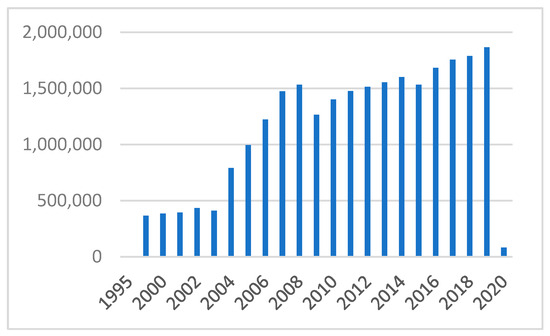
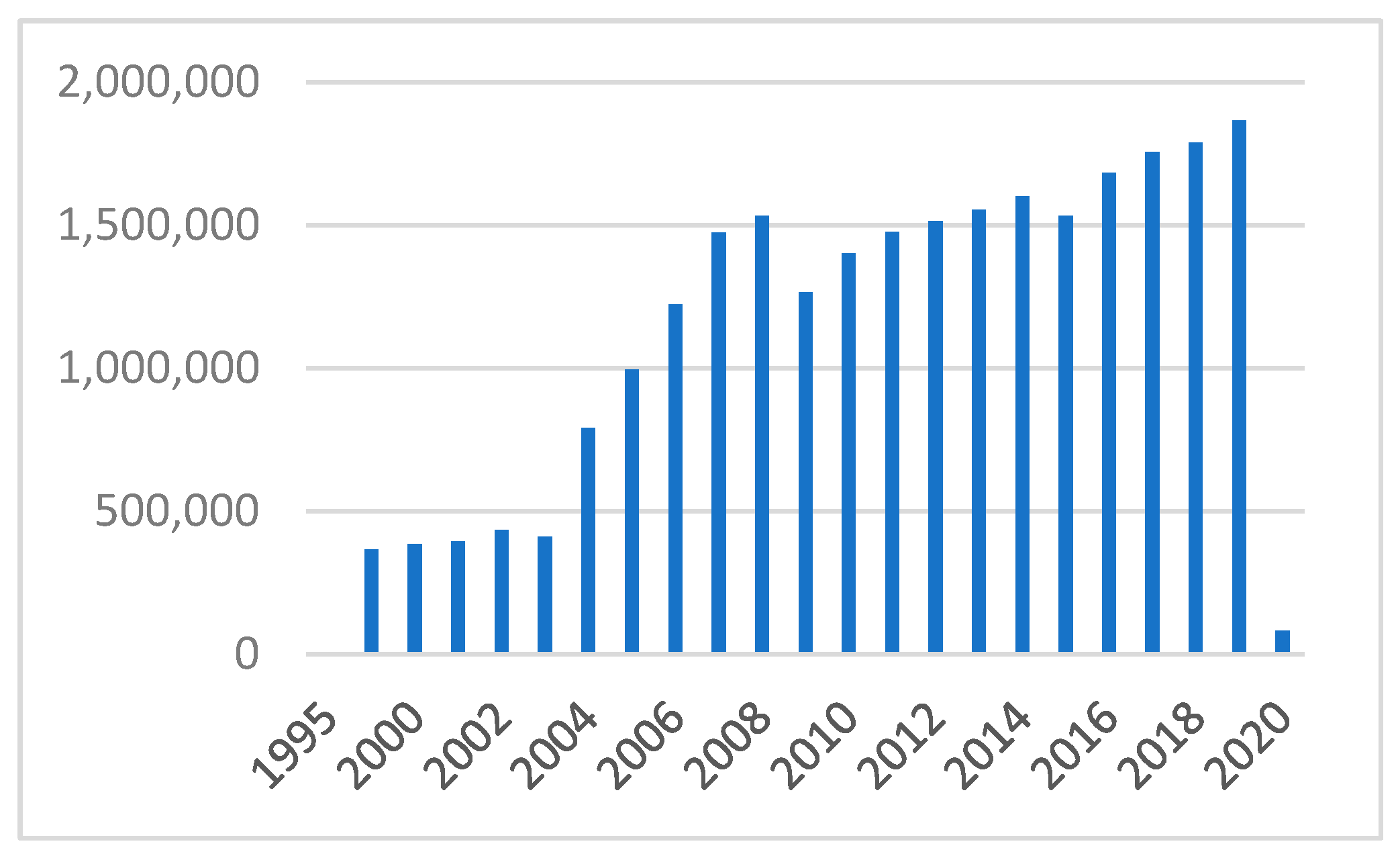
According to statistics, the number of foreign tourists entering Inner Mongolia has increased every year since 1999, and by 2019, it exceeded 1.85 million, which was five times more than the number in 1999 (Figure 1). In the first five days of China’s Golden Week in 2023, Inner Mongolia received 14.5343 million domestic tourists, 1.29 times more than that of the same period in 2019, and tourism revenue reached 9.933 billion yuan (RMB), 1.12 times that of 2019 [6].
Figure 1.
Number of inbound foreigners (including foreign Chinese) tourists (person-time).
Overgrazing is an early cause of grassland decline [7]. However, the development of tourism in Inner Mongolia’s grasslands had already made social and environmental impacts in 1999 [8]. Factors such as climate and socioeconomic structure have caused ecosystem degradation [9,10]. Research has pointed out that there is an imbalance between tourism demand and tourism destination protection [11]. The spatial correlation effect of tourism eco-efficiency in Inner Mongolia decreased from 2009 to 2019, and the differences among cities were large, indicating that spatial heterogeneity contains important influencing factors [12]. In particular, grassland has high ecological environmental vulnerability, and the spatiotemporal concentration of grassland tourism may exacerbate the vulnerability of grassland ecology [13]. Although the number of studies on grassland ecology in Inner Mongolia has grown exponentially in the past thirty years, effective strategies have still not been proposed to protect biodiversity, ecosystem functions and ecosystem services [9].
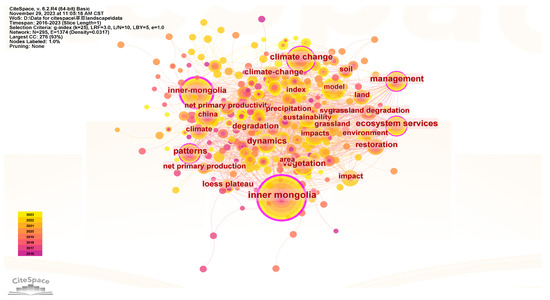
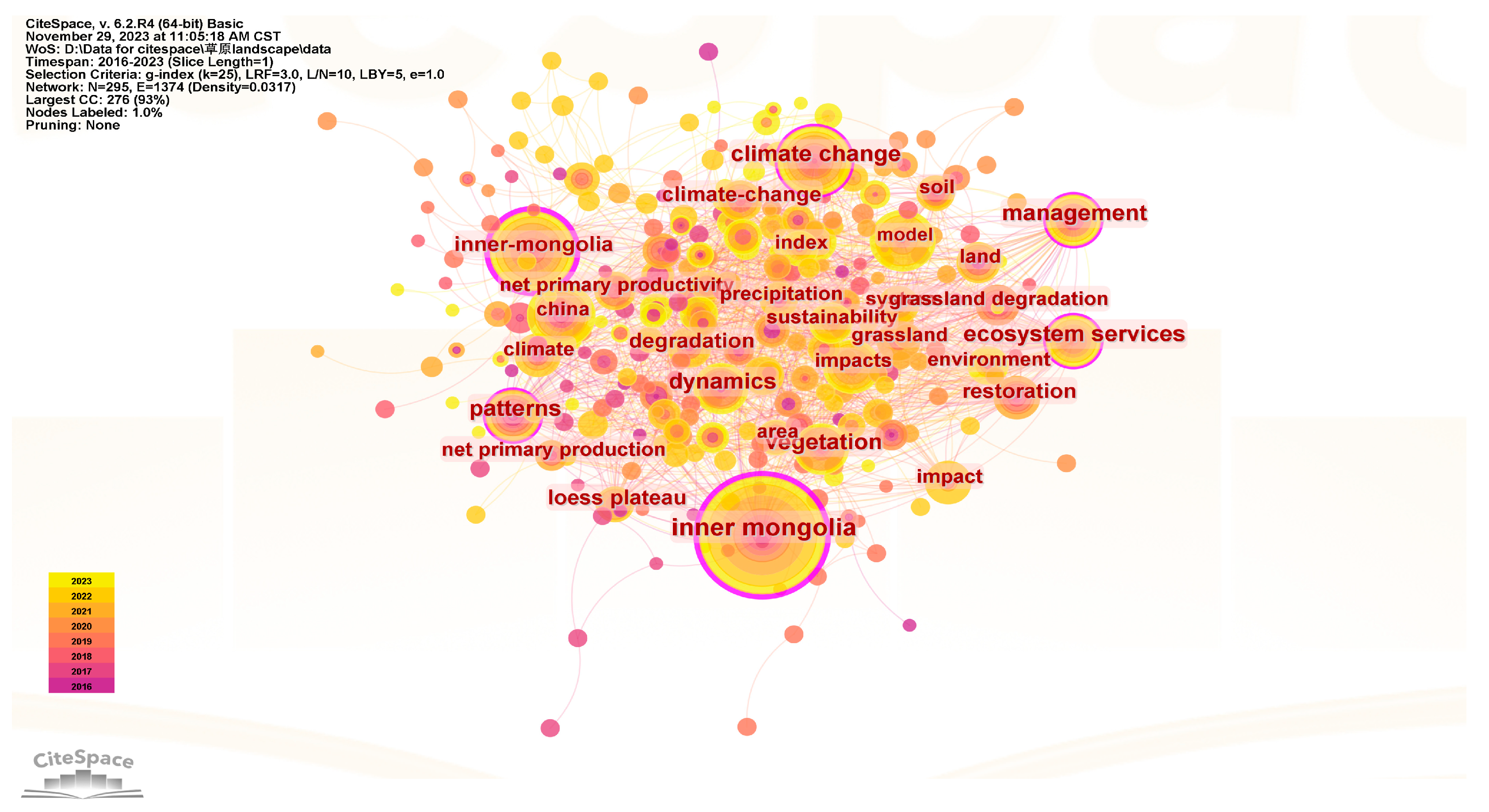
This study used CiteSpace to analyze research topics (Figure 2). Bibliometric analysis of publications from 2015 to 2023 was conducted in the Web of Science, a core social science database with indices of the subject “Inner Mongolia” and “steppes” (on 29 November 2023). Through manual search, we found 439 papers involving “Inner Mongolia”, “steppes”, “ecotourism”, “cultural landscape”, “case study”, and “local perspective”. Frequently appearing keywords were “climate change”, “ecosystem services”, “vegetation”, “management”, “impacts”, and “dynamics”. Most of the research focused on grassland ecology and ecological protection and the development models to promote tourism performance [14,15]. A few studies have proposed the topic of using ecotourism to deal with environmental protection based on the conditions of over-exploitation, environmental imbalance, and pollution [11,16,17].
Figure 2.
Analysis of related topics related to this study.
Previous large-scale spatial studies on Inner Mongolia pointed out the overall problems, strategies of grasslands, and the environmental decline of grasslands. Different types of grassland development models inevitably affect changes in the grassland environment. All previous research results show the perspective of development and policy, although several studies proposed local participation [14,17]. However, there are no studies that have discussed the development of the grassland environment from the perspective of local herdsmen. The current discussion of tourism development in Inner Mongolia lacks the voices of local herdsmen. Herdsmen are the main users and managers of grasslands, and environmental issues in grasslands need to be dealt with from local perspectives. Therefore, the purpose of this study was to explain the impact of different tourism development models on the grassland environment from the perspective of herders.
2. Methodology
2.1. Method and Materials
The research methods used in this study included case study, text analysis and geospatial information analysis. Through purposive sampling, the Xilingele League, which has rich grassland resources and was developed earlier, and the Baotou City Darhan Muminggan United Banner (hereinafter referred to as Damao Banner), which has relatively slow development and degraded grassland, were selected as the research area. In-depth interviews were conducted to collect the experiences and opinions of local herders, local residents and tourists on tourism development, a total of five samples (Table 1). The interview was conducted from October 2023 to December 2023. In-depth interview data were used for text analysis, and the analysis results were used to explain the pattern and impact of grassland tourism development. Arc MAP 10.2 was used as a spatial data analysis tool. The main data included the 2000 grassland resource map and the 2005 soil type map. In this study, in-depth interviews with local herders, tourists and others were conducted to obtain text materials. The reliability and validity of this study are verified by three kinds of data: oral verbatim draft, literature, and spatial data.
Table 1.
Summary and Coding of Interview Samples.
2.2. Study Area
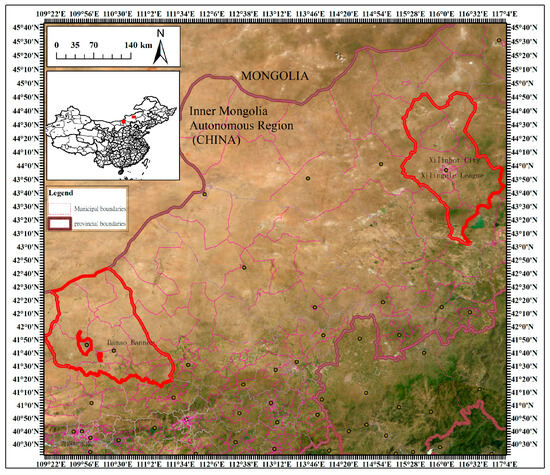
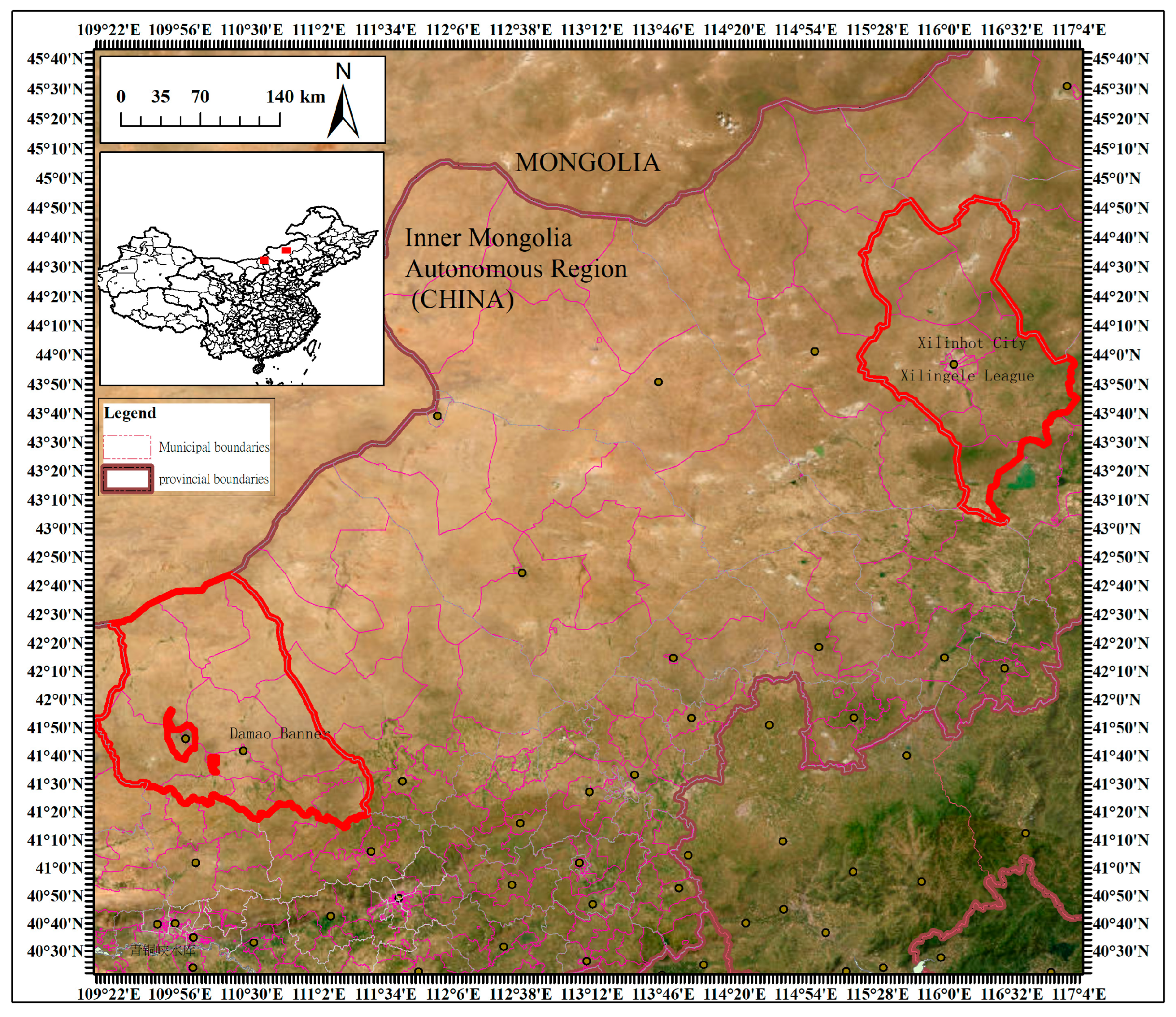
Xilingele League is located in the eastern part of the Inner Mongolia Autonomous Region between 110°50′–119°58′ east longitude and 41°30′–46°45′ north latitude. Xilingele is a Mongolian word meaning river [gele] on a ridge [xilin]. Meanwhile, it is one of the few well-preserved areas of the Inner Mongolia grassland region. The ecological environment of the Xilingele League is fragile, and the population is densely distributed. It is the area with the most tense relationship between man and land in the entire Mongolian Plateau [18]. The other case, Damao Banner, is located in the west of the Inner Mongolia Autonomous Region, with geographical coordinates between 09°16′–111°25′ E and 41°20′–42°40′ N. It covers seven towns with a total population of 120,000 [19]. Damao Banner is a border banner with Mongolians as the main body, Han as the majority, multi-ethnic groups living together, and mainly pastoralists (Figure 3).
Figure 3.
Study area.
3. Results
3.1. Grassland Tourism Development Model
3.1.1. Overview of Tourism Development in the Two Study Areas
Damao Banner is an artificial grassland with poor natural conditions. Herders are restricted by their economic conditions. Several herders operate grassland tourism without investing in facilities and projects. Therefore, the tourism types that can be developed are based on their conditions. However, tourists can experience the most primitive herders’ life. This type of tourism development is characterized by high cultural quality and low economic capacity. The geographical conditions of Xilingele show better natural landscapes and historical monuments, which are most suitable for the development of tourism, such as Xilingele Jiuqu Bay and Xilingele Duolun Lake scenic area. However, these areas have often been discovered by people with “insightful” and “investment capabilities” and have been developed into relatively large-scale tourism development zones or national scenic areas with government approval. Their investment is increasing, their infrastructure is better, and tourists stay in hotels or semi-Mongolian yurts (made of bricks). This type of tourism development is characterized by high economic capital and low cultural quality.
3.1.2. Tourism Development Model
Through the text analysis of interviews, the development models of grassland tourism in the study area were divided into the following four models: Complete family tourism (the main income of the family comes from tourists), half pastoral/tourism (half of the family’s income comes from tourists), developers investment and national scenic area. The four different tourism development models depend on the source of income and the grassland tourism activities they can provide to tourists (Table 2).
Table 2.
Tourism Models and Corresponding Activities.
Tourism activities in the grassland include natural scenery sightseeing (grassland scenery, rivers and lakes, etc.), cultural heritage sightseeing (palaces, temples, etc.), Nomadic traditional activities (such as Naadam Conference, bonfire parties, song and dance performances, etc.), experiencing traditional nomadic culture (horseback riding, archery, etc.) Wrestling, etc.), non-traditional activities (grass skiing, driving karts, jeeps, etc.), tasting Mongolian cuisine (grilled meat, roasted whole lamb, tripe meat, kumiss, etc.), and accommodation (hotel or yurt-like).
3.2. Factors Affecting Grassland Tourism Development Model
3.2.1. Physical Geographical Factors
Physical geographical conditions affect the differences in grassland tourism development, especially hydrology and soil factors (Table 3).
Table 3.
Physical Geographical Factors of Two Study Areas.
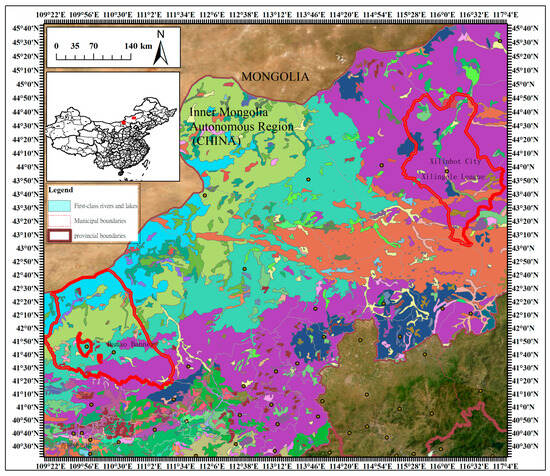
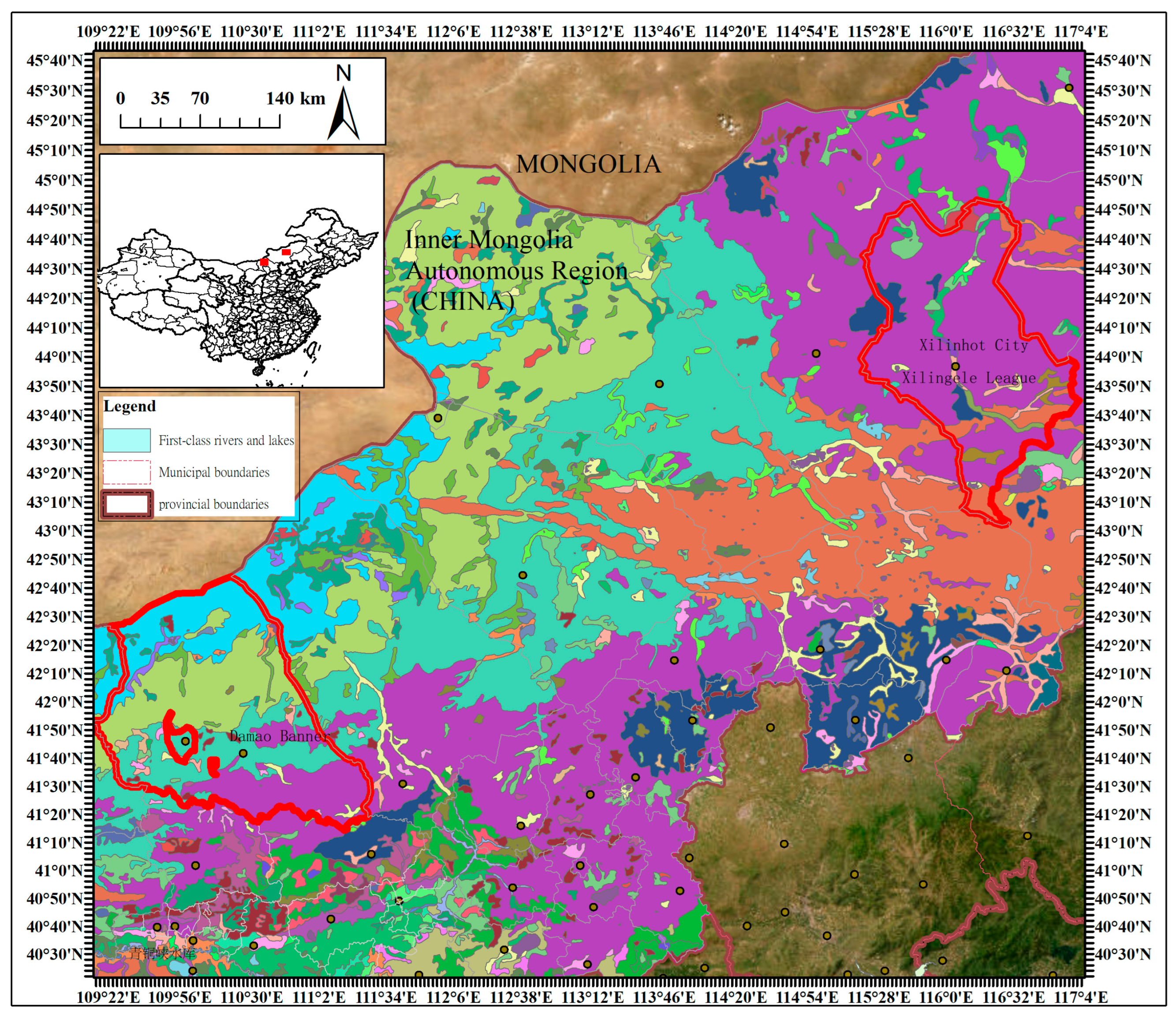
Figure 4.
Soil type of study area.
Figure 5.
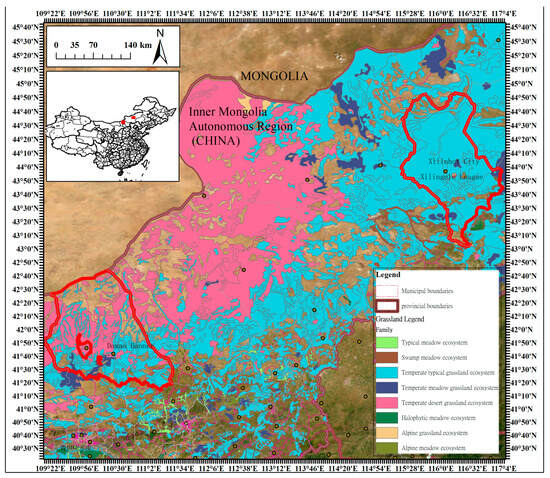
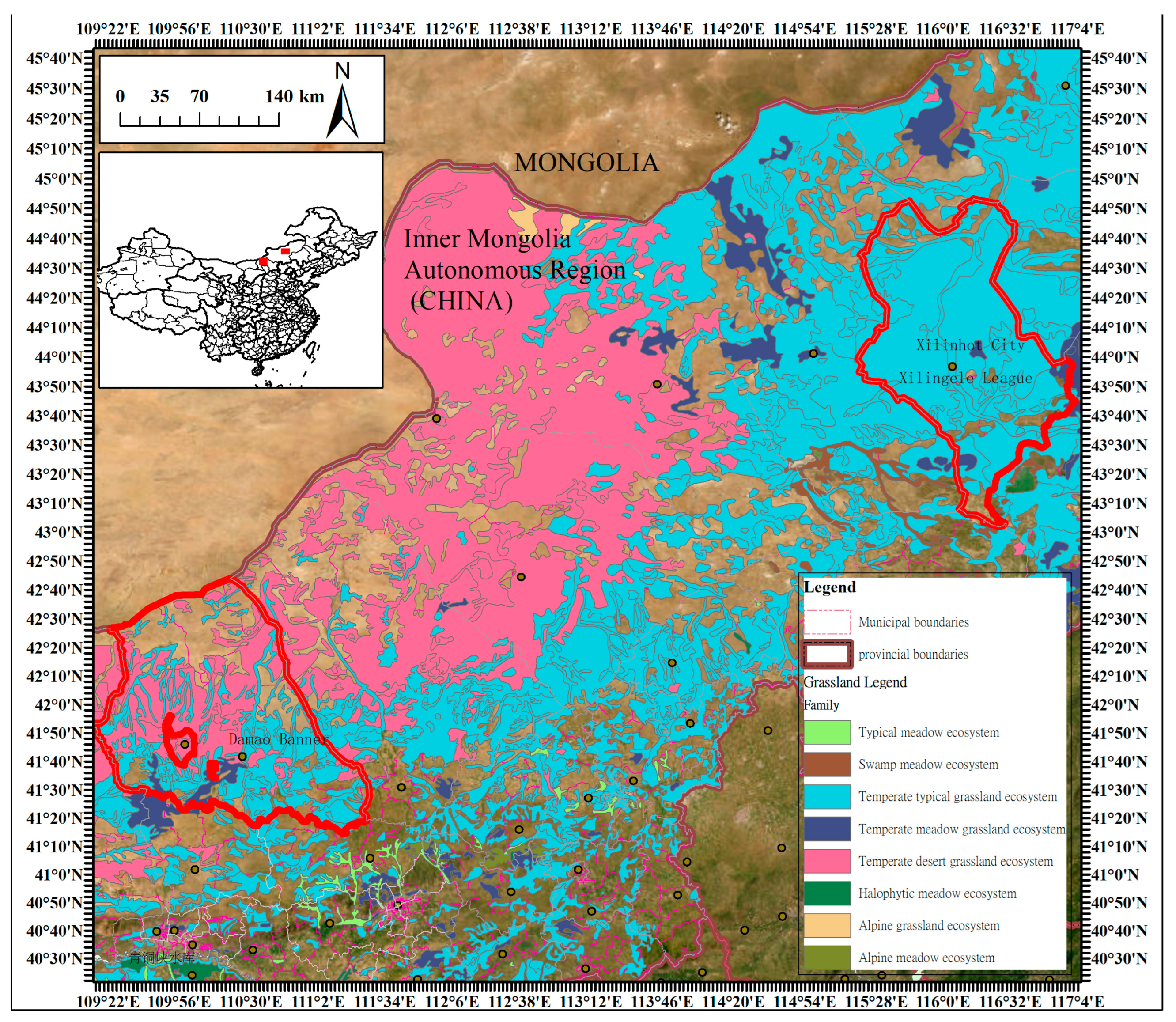
Grassland type of study area.
The Xilingele League belongs temperate typical grassland ecosystem. In most years, up to 80% of the total precipitation falls from May to September, coinciding with the peak temperatures. This coincidence of high moisture and temperature favors the growth of plants; otherwise, accumulated snow is important for winter water use and for the regrowth of plants in spring [10]. High temperatures and abundant rainfall are conducive to plant growth, attracting tourists with the vast natural landscape of green grassland:
“Our place in Xilingele is originally a prairie area, so you have to grasp the mountains and rivers.”(Table 1, M-1).
The geographical location of Damao Banner is between a temperate desert grassland ecosystem and a temperate typical grassland ecosystem. Beginning in 1975, the Grassland Research Institute attempted to establish artificial grasslands in Damao Banner on the Wulanchabu Plateau. In the course of nine years, this project resulted in the creation of 807 hectares of artificial grassland [20]. Artificial grassland has ecological and economic functions. It regulates the climate and functions for grazing. Damao Banner has little rainfall and diverse soil types.
Although the conditions are not suitable for grassland growth, the saline-alkali soil contains trace elements, and the free-range sheep must find scarce grass and water sources in the saline-alkali land. Their tender meat attracts tourists. A tourism model of sharing meals with herdsmen was developed.
“I went to some herdsmen’s houses and their roasted mutton was so delicious that you could eat it with your hands.”(Table 1, F-1).
3.2.2. Seasonal Factors
Due to the cyclical characteristics of pasture growth, grassland tourism has two peak periods. The first peak is mostly concentrated between June and September when the grassland is at the end of the regreening period (returning to green, which refers to the transplantation of plant seedlings. After overwintering, it changes from yellow to green and resumes growth for a period of time), the grassland is the greenest, and the scenery is the most beautiful. From July to September, students have summer vacation, and most travel platforms and developers promote packages, so a large number of tourists enter Inner Mongolia during this period.
The second peak period is concentrated in the winter from December to February of the following year. The grassland is covered with snow. The other seasons of these two peak tourism periods are the greening period and the yellowing period of the grassland (Table 4). The prohibition of grazing during the greening period is a tacit agreement between herders and grasslands.
Table 4.
Seasonal Characteristics of Grassland Tourism.
“The Grazing prohibited period is from April 1st to July 1st every year”(Table 1, M-2).
3.2.3. Policy Factors
In 2005, China promulgated the Measures for the Balanced Management of Grassland and Livestock as a law that focuses on maintaining a virtuous cycle in the grassland ecosystem, effectively improving the ecological environment of the grassland, restoring the grassland to a certain extent, and alleviating the excessive demands of the livestock industry on the grassland.
“Yes, give subsidies! The so-called April 1st to July 1st is the Turn Green period of the grassland”(Table 1, M-2).
However, the implementation of the grazing ban policy, grass-livestock balance and other policies have also reduced the family income of herdsmen, prompting families whose main income is livestock to find new sources of income. As a result, half-grazing and half-tourism have been formed, or the entire family is fully engaged in the tourism business:
“We often go to herdsmen’s homes. The herdsmen’s grasslands are their own grasslands or other people’s grasslands (contracted). What he set up was nothing special, just a few yurts, a camel and a horse, and we went archery, horseback riding, and camel riding.”(Table 1, M-2).
The other is to benefit from the strong support and policy guarantees of the government. The government provides strong support for the development of grassland tourism. Capital investment from enterprises or developers has enabled the rapid development of grassland tourism.
3.3. Grassland Tourism Development and Protection: Pastoralists’ Perspectives
Herdsmen have been sensitive to the climate change of drought and lack of rain in recent years, especially the delayed greening of grasslands. The livestock industry in the two study areas is the most direct bearer of changes in the grassland environment.
“In particular, grassland is not the same as humanistic architecture, which always be there, but grassland pays great attention to the months. It may be that the rain falls later this year, so it will become green later.”(Table 1, F-1)
Although the development of grassland tourism has greatly promoted tourism income, it has not greatly promoted the restoration of the grassland environment for the following reasons:
- The area of grassland used for tourism development is limited, and even if it is protected, it is only protected in a very limited environment, with little effect(Table 1, M-1).
- There is no causal relationship between the development of grassland tourism and environmental protection because developers only choose areas with beautiful environments and prosperous pastures to develop tourism rather than selecting grasslands with severe desertification for the purpose of restoring the grassland environment(Table 1, F-1).
- The grassland environment is greatly affected by rain and temperature. In recent years, with the continuous decrease in rainfall, it has been difficult for the grassland to turn green(Table 1, F-1).
- Developers’ business behavior is aimed at seeking economic benefits. Therefore, if the quality of the grassland environment is not directly linked to the developers’ economic benefits, they will not pay for it(Table 1, M-1).
4. Discussion
4.1. “Formalization” Causing Differentiation in Grassland Tourism Development
Under the influence of “globalization”, standardized consumer culture disappears or is homogenized into local traditional culture and is also replaced with regional identity and traditions [21]. The different cultures on the grasslands are the focus of contemporary tourism. However, tourism with sightseeing as the center stage caters to the needs of tourists [22]. At present, most tourists visit famous tourist attractions. Whether these tourist venues or routes led by developers display or sell local culture, they package the cultural festivals, historical sites and even daily lives of nomads in situations and images. Maximizing profits is the goal of every developer. They select projects with more economic value to retain, while those that are not cost-effective must be discarded. On the other hand, not all local customs can be consistent with tourism planning. Tourism practitioners need to consider tourists’ perceptions and experiences. Therefore, local culture is often presented to tourists with a stage effect through certain artistic processing. The performances after artistic processing make the traditional culture of nomadic people more colorful, but at the same time, it also loses its authenticity. The total of the package itinerary may become a bitter nothingness [23].
However, there are also people who “do not take the usual path.” They visit traditional herders’ homes, see the beautiful scenery of the grasslands, eat the most traditional Mongolian meals, and experience the cultural life and production methods of the nomadic people. Conversations with local people who have experienced different values and generate more thoughts showed the following. “I think it’s still the kind that hasn’t developed yet, and it might be closer, because once it develops, it will have some very formal things.” (Table 1, F-1)
“Visiting herdsmen’s homes”, a tourism concept, is different from the exquisite beauty of developers and the development model of grassland tourism. “No development” and “no formalization” may become the most authentic aspect of grassland tourism.
4.2. Impact of Grassland Tourism Model on Environment
The development of tourism can preserve the culture or relics that are about to disappear, but the commercialization of culture causes the culture to lose its intrinsic meaning and weaken the importance of culture to the local people [24]. The developer’s investment encourages the package of the commercialized tourism model, which directly affects the selection and refinement of traditional culture in line with the preferences of the wider public but causes unforeseen environmental problems. For example, horse-riding activity causes conflicts between the physiological characteristics of horses and the demand of the tourism business [17]. Pollution by waste and the disappearance of animals on the grasslands are observed by herdsmen. It is impossible to distinguish which tourism model has caused it, but the influx of tourists changes the grassland environment.
“There are no trash cans or garbage recycling on the grassland. It just decomposes naturally and no one handles it at all.”(Table 1, F-1)
“You see, for example, there may still be wolves in Xilingele, but now there are basically none in Damao Banner, and it is no longer suitable for them to survive.”(Table 1, F-1)
Because the herders lack the knowledge and skills to develop ecotourism, they do not understand their own value and the role they should play. This study holds that guiding herders to develop small-scale family tourism mode can not only help herders increase their income and promote the spread of grassland culture but also disperse the phenomenon of a large number of tourists concentrated in time and space in scenic spots, thus promoting the sustainable development of grassland ecological environment.
4.3. Optimizing Development Model
The development of tourism has undoubtedly promoted the development of the grassland economy. Scenic spot sightseeing, cultural experiences, accommodation, food, specialties and related cultural and creative products all promote economic circulation. Tourists have started a series of consumption in traveling. However, herdsmen want to develop the economy in a suitable way and still rely on the development of animal husbandry to obtain income. How to guide herders for appropriate grassland development with more benefits is an important issue. The development of small-scale grassland ecotourism closer to the lifestyle of nomadic people is the direction to optimize the grassland tourism model with great development potential.
5. Conclusions
From the perspective of herdsmen and tourists, this paper discusses how to promote the sustainable development of grassland through tourism. It is found that terrain, climate, hydrology, soil and ecology have caused the two appearances of grassland ecological environment and tourism mode. The results show that herdsmen have a positive attitude toward the economic benefits of developing grassland tourism but do not recognize that tourism will promote grassland ecological protection. At present, the existing grassland tourism modes are mainly large-scale commercial tourism dominated by developers and small-scale original pristine tourism dominated by herdsmen families. Now, the grassland tourism model must be optimized. Developers need to mitigate commercialization, promote grassland culture to a greater extent, reproduce grassland production and lifestyle, and provide tourists with a richer experience. Developers and herdsmen should pay more attention to the ecological protection of grasslands. Only in this way can we better promote the sustainable development of grassland culture, economy and ecology. This study highlights the protective effect of small-scale ecotourism on the grassland environment, which can not only make up for the defects of homogenization of tourist attractions by developers but also promote the restoration and protection of grassland.
Author Contributions
Conceptualization, S.-C.T.; methodology, S.-C.T.; software, S.-C.T. and J.W.; validation, S.-C.T. and J.W.; formal analysis, J.W. and S.-C.T.; investigation, J.W.; resources, J.W. and S.-C.T.; data curation, J.W. and S.-C.T.; writing—original draft preparation, J.W.; writing—review and editing, S.-C.T.; visualization, S.-C.T.; supervision, S.-C.T. All authors have read and agreed to the published version of the manuscript.
Funding
This research was funded by the scientific research start-up fund of Jimei University, China, grant number Q202214.
Institutional Review Board Statement
This study was approved by the Science and Technology Ethics Committee at Jimei University (JMU202307039). No harm was caused to the participants during the study.
Informed Consent Statement
Informed consent was obtained from all subjects involved in the study.
Data Availability Statement
The data of this study are available from the corresponding author upon reasonable request.
Acknowledgments
The study benefited from all respondents, including herders, tourists, etc. Thanks to everyone who worked on this study. All deficiencies in the article are the responsibility of the authors.
Conflicts of Interest
The authors declare no conflicts of interest.
References
- UNESCO. Cultural Landscapes in the 21st Century: Tourism and Economics. In Proceedings of the Forum UNESCO 10th International Seminar, University of Newcastle, Upon Tyne, UK, 11–16 April 2005. [Google Scholar]
- Buckley, R.; Ollenburg, C.; Zhong, L. Cultural landscape in Mongolian tourism. Ann. Tour. Res. 2008, 35, 47–61. [Google Scholar] [CrossRef] [Scilit]
- Tsai, W. From Marco Polo to Macartney: Inner Asia and China since the Mongol Era; Gūsa Press: New Taipei City, Taiwan, 2020. [Google Scholar]
- Hayashi, T. The Birth of Steppe Kingship: Scythia and the Huns, the Civilization of Early Nomadic Countries; Gūsa Press: New Taipei City, Taiwan, 2019. [Google Scholar]
- Sima, C. Xiongnu records. In Historical Records; Chung Hwa Book Company (Hong Kong) Limited: Hong Kong, China, 2011. [Google Scholar]
- Yang, C.-A. China’s Golden Week: Inner Mongolia’s Revenue Increases Sixfold This Year. Business Times, 10 June 2023.
- Jiang, Y. Investigation of herbage resources and collection of materials on typical regions of the tropical, subtropical and temperate grasslands of China. Compil. Sci. Results 1988, 3, 1–5. [Google Scholar]
- Wei, Z.; Yang, J.; Han, G. The Management of Rangeland for Tourism. Inn. Mong. Grassl. Ind. 1999, 3, 34–37. (In Chinese) [Google Scholar]
- Wu, J.; Zhang, Q.; Li, A.; Liang, C. Historical landscape dynamics of Inner Mongolia: Patterns, drivers, and impacts. Landsc. Ecol. 2015, 30, 1579–1598. [Google Scholar] [CrossRef] [Scilit]
- Wu, J.G.; OL, L. The Xilingol grassland. In Grasslands and Grassland Sciences in Northern China; National Research Council, Ed.; National Academy Press: Washington, DC, USA, 1992; pp. 67–84. [Google Scholar]
- Dong, J.; Xing, Z.; Song, Z.; Bao, T. Research on the Role of Ecotourism from the Perspective of Ecological Civilization. Fresenius Environ. Bull. 2021, 30, 3291–3297. [Google Scholar]
- Wang, Y.; Wu, X. The spatial pattern and influencing factors of tourism eco-efficiency in Inner Mongolia, China. Front. Public Health 2022, 10, 1072959. [Google Scholar] [CrossRef] [Scilit] [PubMed]
- Liu, L. Some thoughts on the development of grassland tourism. J. Inn. Mong. Univ. Financ. Econ. 2005, 3, 92–95. (In Chinese) [Google Scholar]
- Wang, Y.; Zhang, Y. Discussion on the Sustainable Development of Rural Tourism in Inner Mongolia: Based on the Perspective of Rural Tourism Development. Stud. Sociol. Sci. 2016, 7, 51–60. [Google Scholar]
- Zhong, L.-S.; Niu, Y.-F.; Liu, J.-M.; Chen, T. Development of Grassland Tourism Resource in Inner Mongolia Autonomous Region. J. Arid. Land Resour. Environ. 2005, 19, 105–110. (In Chinese) [Google Scholar]
- Wang, Y.; Zhang, P. (Eds.) An ecotourism perspective: The development of tourism industry in Inner Mongolia. In Proceedings of the International Conference on Manufacture Engineering and Environment Engineering (MEEE), Hong Kong, China, 3–5 July 2013. [Google Scholar]
- Li, L.; Dong, Y.; Zhang, T.; Wang, H.; Li, H.; Li, A. Environmental and social outcomes of ecotourism in the dry rangelands of China. J. Ecotourism 2023, 22, 430–450. [Google Scholar] [CrossRef] [Scilit]
- Tong, B.; Bao, Y.; Yang, B.; A, R. The Evolvement Characteristics and Mechanism of Settlement System in Xilingol Pastoral Area. Sci. Geogr. Sin. 2018, 38, 410–418. [Google Scholar] [CrossRef]
- Chang, H.; Yang, W.; Shi, L.; Liu, Y.-H.; Qiu, X.; Yi, F.-Y.; Sun, H.-L. Spatial and temporal changes of carbon sequestration and soil conservation based on land-use in the farming pastoral ecotone of north China. J. Agric. Resour. Environ. 2021, 484–493. [Google Scholar] [CrossRef]
- Dong, J. Huangmohua caoyuan jianli rengong caodi zhonghexing fengcan jishu [Integrated Techniques for Establishing Artificial Grasslands in Desertified Grasslands]. Keyan Chengguo Huibian 1988, 3, 22–26. [Google Scholar]
- Schiller, H.I. Communication And Cultural Domination. Int. J. Politics 1975, 5, 1–127. [Google Scholar]
- MacCannell, D. Staged Authenticity: Arrangements of Social Space in Tourist Settings. Am. J. Sociol. 1973, 79, 589–603. [Google Scholar] [CrossRef] [Scilit]
- MacCannell, D. Why it Never Really was About Authenticity. Society 2008, 45, 334–337. [Google Scholar] [CrossRef] [Scilit]
- Greenwood, D. Culture by the Pound: An Anthropological Perspective on Tourism as Cultural Commoditization. In Tourists and Tourism: A Reader; Gmelch, S., Ed.; Waveland Press: Long Grove, IL, USA, 2004. [Google Scholar]

Disclaimer/Publisher’s Note: The statements, opinions and data contained in all publications are solely those of the individual author(s) and contributor(s) and not of MDPI and/or the editor(s). MDPI and/or the editor(s) disclaim responsibility for any injury to people or property resulting from any ideas, methods, instructions or products referred to in the content. |
© 2024 by the authors. Licensee MDPI, Basel, Switzerland. This article is an open access article distributed under the terms and conditions of the Creative Commons Attribution (CC BY) license (https://creativecommons.org/licenses/by/4.0/).