


Abstract
This research investigates the mechanical properties of a re-entrant hexagonal auxetic metamaterial fabricated from thermoplastic polyurethane (TPU) and polylactic acid (PLA) materials for possible application in safety vest design. Test specimens were fabricated using fused filament fabrication technology with TPU and PLA materials. The design parameters, including strut thickness, re-entrant angle, fabrication material, and unit cell dimensions were varied. Parametric testing was then performed on re-entrant structures with varying design parameters under quasi-static compression loading conditions to evaluate their structural performance defined by energy absorption capacity, densification strain, and peak stress. The findings revealed that a structure with a strut thickness of 2 mm and a re-entrant angle of 70°, printed using thermoplastic polyurethane material, demonstrated superior compliance. These findings demonstrate the feasibility of integrating re-entrant auxetic metamaterials into wearable safety vests for improved mechanical protection.
1. Introduction
The auxetic re-entrant hexagonal structure is characterized by its negative Poisson’s ratio behaviour [1], a property that enables it to expand laterally when subjected to compression. This unique deformation mechanism makes it particularly suitable for applications where energy absorption and impact resistance are critical. Due to its geometry, the structure distributes stress more uniformly and enhances energy dissipation under load [2].
Auxetic re-entrant metamaterials, unlike conventional cellular structures, induce inward lateral contraction under compressive loading [1], thereby promoting progressive densification of the structure. This densification enhances indentation resistance by increasing local stiffness and contact area, thereby reducing the likelihood of further penetration under localized impact [3]. In addition to improved indentation resistance and energy absorption capacity, re-entrant auxetic structures exhibit enhanced shear resistance [4]. This behaviour arises from the rotation and reorientation of the inclined struts during loading, which contributes to improved load redistribution. The mechanical response and overall auxeticity of the structure are highly dependent on geometric parameters, particularly the re-entrant angle. More acute re-entrant angles generally increase auxeticity and structural compliance, whereas angles approaching 90° reduce auxetic behaviour and result in a more conventional mechanical response [5].
Auxetic re-entrant structures are commonly fabricated using additive manufacturing (AM), as conventional manufacturing techniques are often incapable of producing their complex inward-angled geometries with sufficient precision. The most frequently employed AM methods include Fused Deposition Modelling (FDM) for thermoplastic polymers, Stereolithography (SLA) for photopolymer resins, Selective Laser Sintering (SLS) for polymers, and metal-based processes such as Direct Metal Laser Sintering (DMLS) and Wire Arc Additive Manufacturing (WAAM). Additionally, robocasting (direct ink writing) has been applied in the fabrication of ceramic and composite auxetic architectures [6]. In the present study, FDM was employed to fabricate the auxetic re-entrant specimens. Although this technique offers rapid prototyping capability and considerable geometric flexibility [7], certain manufacturing limitations were observed. Specifically, the layer-by-layer deposition process introduced quality-related issues that affected the fragility and structural integrity of individual struts. Furthermore, fabrication was constrained by minimum feature size; struts below a critical dimension could not be reliably printed due to nozzle diameter limitations, extrusion control constraints, and interlayer bonding deficiencies.
Auxetic re-entrant structures have already demonstrated significant application in protective systems such as sports helmets [8], where enhanced energy absorption and impact resistance are critical. Building on these established applications, this study extends the potential of auxetic structures beyond conventional protective systems by demonstrating their suitability for integration into motorcycle safety vests, rather than limiting their relevance to ballistic or rigid armour [9]. By incorporating a re-entrant auxetic structure into a wearable textile system, effective impact mitigation can be achieved while maintaining ergonomic performance. The geometric configuration of the reinforcement structure, combined with the material properties of TPU and PLA [10], enables flexibility and conformity to the human body, making it particularly suitable for protective garments where both safety and comfort are essential.
While auxetic re-entrant structures have been widely investigated for rigid protective systems, such as sports helmets, there is limited research on their integration into wearable textile-based safety garments. Specifically, the combined effects of geometric design, material selection, and 3D printing parameters on energy absorption performance and ergonomics in soft, flexible protective systems remain underexplored. This gap highlights the need to investigate how auxetic metamaterials can be adapted for textile reinforcement to improve impact mitigation for motorcyclists without compromising comfort or mobility.
2. Materials and Methods
2.1. Design of Re-Entrant Auxetic Structure
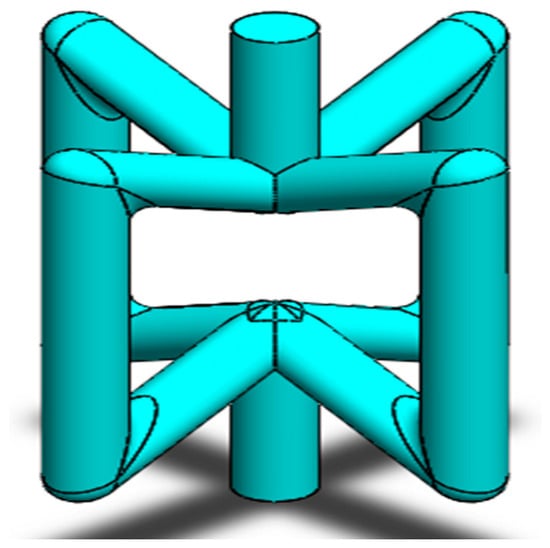
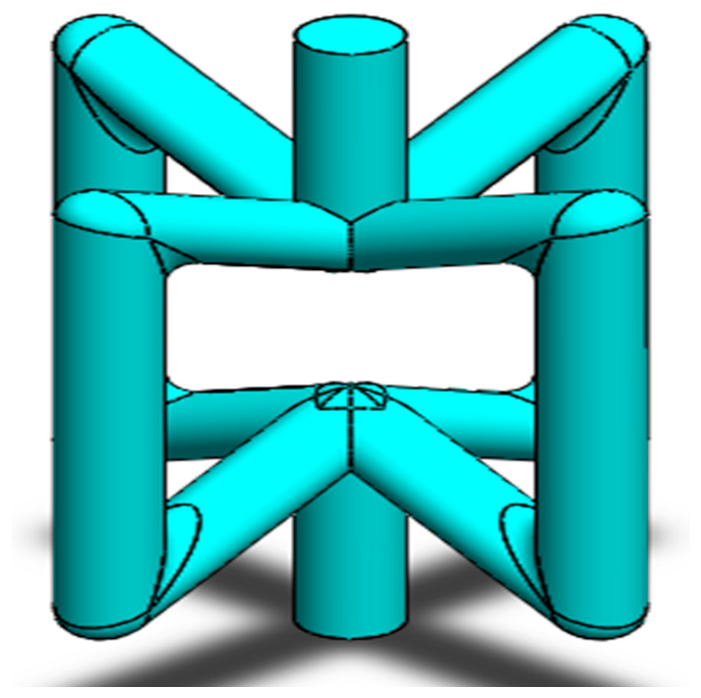
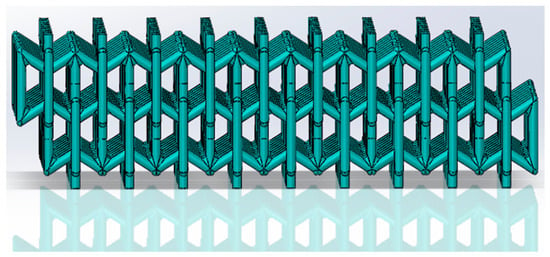
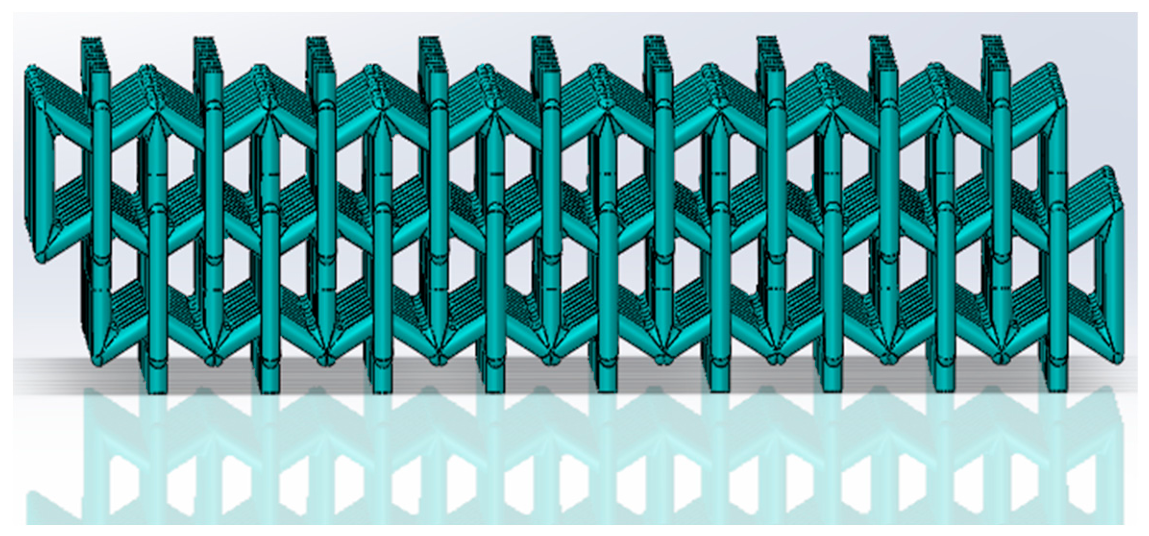
The re-entrant auxetic unit cell was designed using SolidWorks Version 2025 (Dassault Systemes SOLIDWORKS Corp, Waltham, MA, USA) CAD modelling software, based on a honeycomb lattice exhibiting a negative Poisson’s ratio. Based on the results from studies relating to the optimization of geometric parameters of re-entrant auxetic structures, the key geometric parameters adopted included strut thickness (t = 1.6 mm, 1.8 mm, 2.0 mm), re-entrant angle (θ = 60–70°), height-to-length ratio (h/l = 1.5–2.0), and unit cell size (20 mm × 20 mm × 20 mm). Figure 1 presents a 3D model of a single unit cell, while Figure 2 shows the assembled auxetic lattice composed of multiple unit cells, demonstrating the overall structural configuration. The selected parameters were intended to enhance lateral expansion under tension and promote densification under compression, thereby optimizing energy dissipation.
Figure 1.
A 3D model of a single re-entrant auxetic unit cell.
Figure 2.
A 3D model of an assembled re-entrant auxetic lattice composed of multiple unit cells, demonstrating the overall structural arrangement.
With a strut thickness-to-length ratio of 0.16 to 0.2, which is less than 1.0, and sin θ not approaching zero, the corresponding values of Poisson’s ratio of the structure were calculated based on Equation (1) [11], and found to be between −0.45 and −1.0.
2.2. Fabrication of Samples
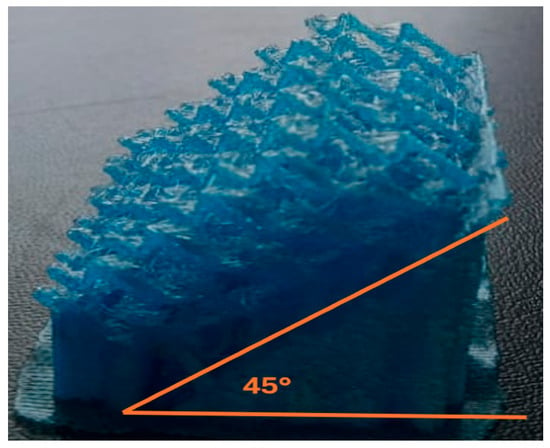
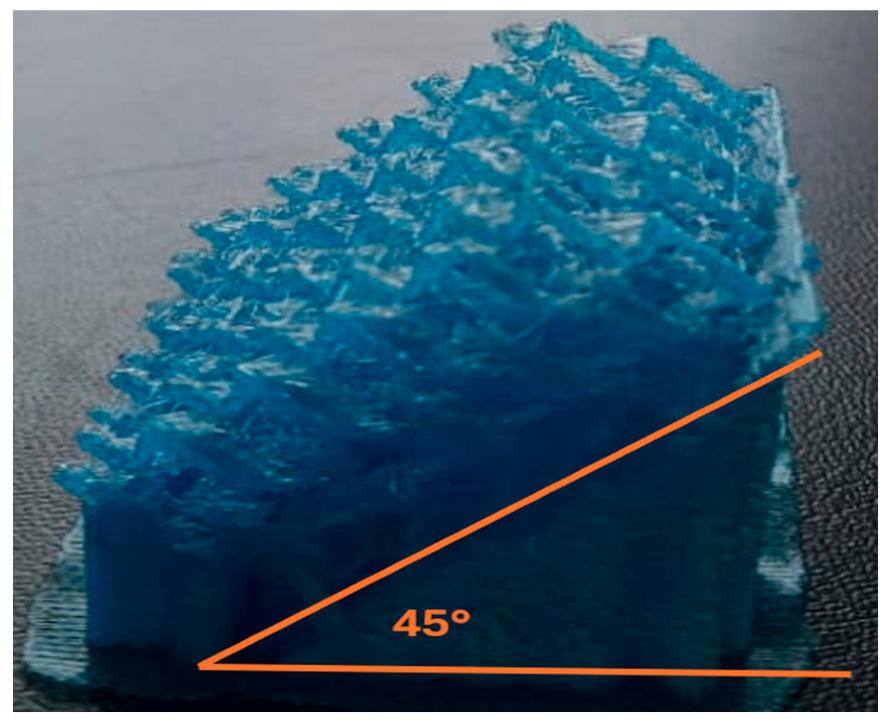
Two filament materials were used for Fused Deposition Modelling: Polylactic Acid (PLA) for rigid prototypes and Thermoplastic Polyurethane (TPU) for flexible ones. PLA provided high stiffness for initial testing, while TPU ensured ductility and recoverability suitable for wearable applications. Prototypes were fabricated using a Creality Ender-3 (Shenzhen Creality 3D Technology Co., Shenzhen, China) FDM printer with a 0.4 mm nozzle. Adopted printing parameters included: nozzle temperature (PLA: 200 °C; TPU: 200 °C), bed temperature (60–65 °C), print speed (30–40 mm/s to avoid defects in thin struts), layer height (0.1 mm), infill (100% for solid struts), and support angle (45° for overhangs > 60°). A representative 3D-printed auxetic re-entrant structure fabricated from TPU is shown in Figure 3.
Figure 3.
A 3D-printed TPU lattice specimen fabricated at a 45° print angle.
2.3. Compression Testing
Compression tests were conducted using a Shimadzu AGS-X (Shimadzu Corp., Japan) Universal Testing Machine under quasi-static conditions and according to ASTM D695 standard [12]. Specimens were placed between parallel compression plates and tested at a constant crosshead speed of 1.3 mm/min at room temperature. Testing continued until densification occurred. For repeatability, three similar specimens were tested for each configuration.
Compressive stress (σ) and strain (ε) were calculated as given by Equations (2) and (3), respectively.
where σ = stress (N/mm2 or MPa, F is the applied force (N), A is the original cross-sectional area (mm2, ε is strain, ∆L is the change in specimen height (mm), and L is initial height of the specimen (mm).
Energy absorption (EA) was determined from the area under the stress–strain curve, based on Equations (4) and (5).
Specific Energy Absorption (SEA) was calculated based on Equation (6).
where ρ is the density of the specimen (g/cm3).
The densification strain was determined using the energy absorption efficiency (EAE) method, with the values of energy absorption efficiency computed based on Equation (7). The strains corresponding to the highest global energy absorption efficiency were selected as the points of densification.
2.4. Vest Integration
For integration onto a safety vest, the optimized structure (of 2.0 mm struts) could be integrated into a prototype vest using a pocket enclosure: where a 250 mm × 300 mm lattice is sandwiched between Cordura outer and mesh inner layers, stitched peripherally and non-permanently for removability. This would maintain flexibility while securing the insert.
3. Results and Discussions
3.1. Introduction
This section presents and interprets the experimental results obtained from the quasi-static compression testing of the 3D-printed re-entrant auxetic lattice structures. The main objective of the testing was to evaluate the influence of strut thickness and material selection on the mechanical performance and energy absorption capability of the auxetic metamaterial intended for integration into a safety vest. The results are analysed using force–displacement curves, stress–strain relationships, and energy absorption calculations to determine the optimal configuration for potential impact protection.
3.2. Compression Behavior of PLA Structures
The compressive behaviour of the PLA re-entrant lattice structures was first evaluated to understand how variations in strut thickness influence structural stiffness and deformation response. Force–displacement curves obtained from the compression tests show that the mechanical response of the structures strongly depends on the thickness of the struts forming the re-entrant geometry.
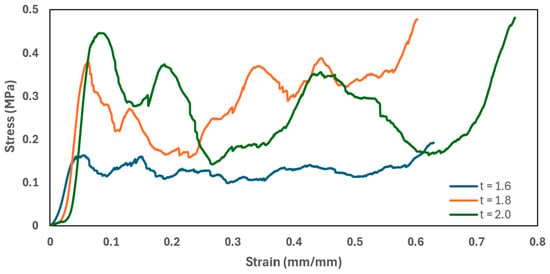
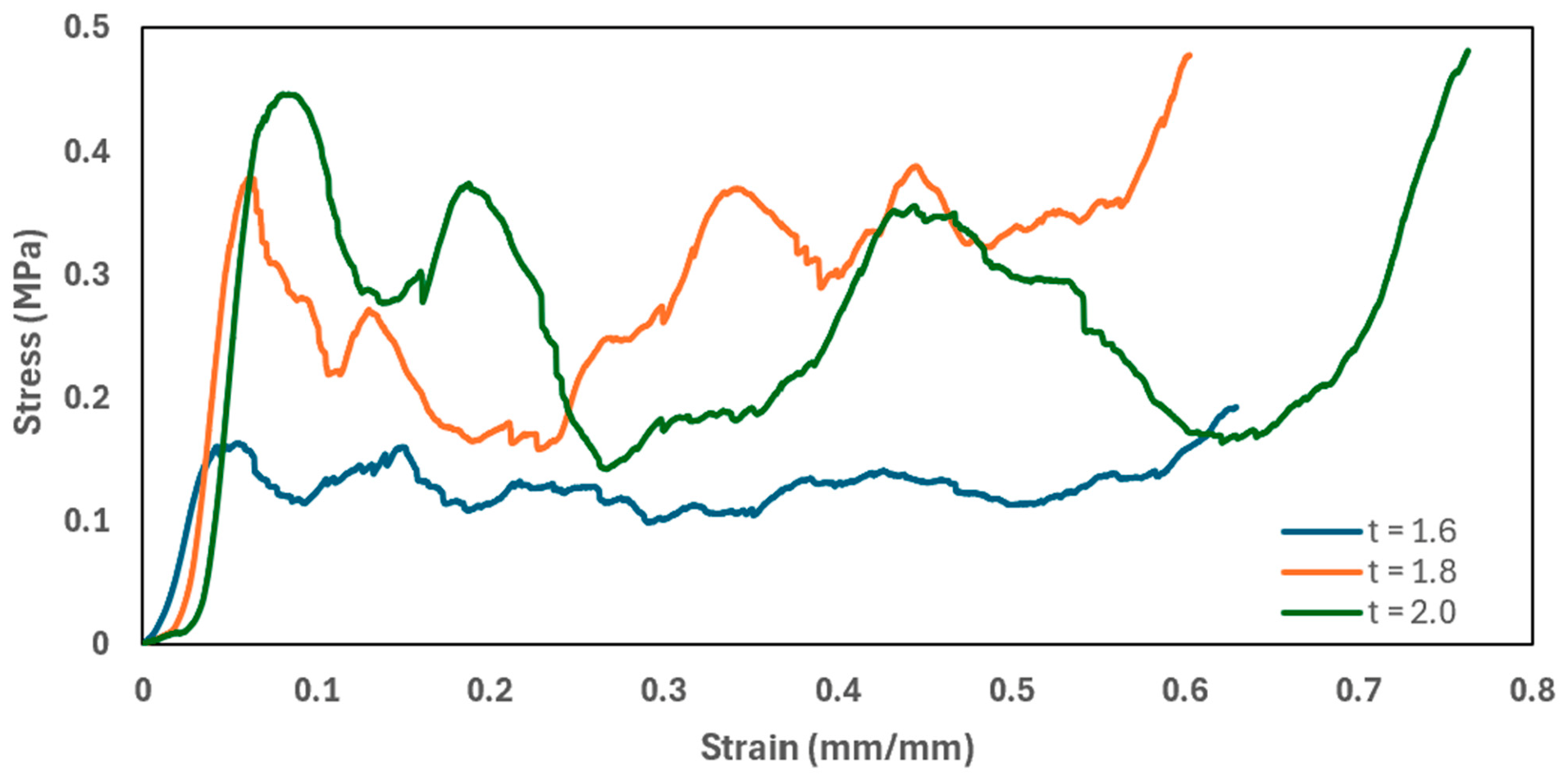
As shown in Figure 4 and Figure 5, the PLA specimens with strut thicknesses of 1.6 mm, 1.8 mm, and 2.0 mm exhibit progressively increasing load-bearing capacity. The specimen with 2.0 mm strut thickness reaches the highest force values, followed by the 1.8 mm and 1.6 mm specimens. This behaviour indicates that increasing strut thickness increases the relative density of the lattice structure and improves its resistance to compressive deformation. The corresponding stress–strain curves further illustrate the typical mechanical response associated with auxetic re-entrant structures. The curves clearly exhibit three characteristic deformation regions: the elastic region, the plateau region, and the densification region [2].
Figure 4.
Force-displacement curve for the 3D-printed PLA re-entrant structure under quasi-static compression for strut thicknesses 1.6 mm, 1.8 mm and 2.0 mm.
Figure 5.
Stress–strain curve for the 3D-printed PLA re-entrant structure under quasi-static compression for strut thicknesses 1.6 mm, 1.8 mm and 2.0 mm.
In the elastic region, the structure deforms linearly with increasing load. This stage is primarily governed by elastic bending and slight buckling of the inclined re-entrant struts. The deformation in this region is reversible and the structure returns to its original shape once the load is removed.
Following the elastic region, the structure transitions into the plateau region, which represents the primary energy absorption phase. In this region, the stress fluctuates slightly while the strain increases significantly due to progressive folding and rotation of the re-entrant cells. The yield stress values for the PLA specimens were approximately 0.157 MPa for 1.6 mm, 0.3682 MPa for 1.8 mm, and 0.4354 MPa for 2.0 mm strut thickness.
The increase in yield stress with strut thickness confirms that thicker struts provide greater structural rigidity and allow the structure to sustain higher loads before collapse occurs. At higher strain levels, the lattice enters the densification region, where the cells collapse, and the structure begins to behave like a compact solid. The densification strain values were determined to occur at approximately 0.58 for 1.6 mm, 0.55 for 1.8 mm, and 0.64 for the 2.0 mm PLA specimen. In this stage, the cell walls come into contact, and the structure becomes significantly stiffer, resulting in a rapid increase in stress. While PLA structures demonstrated relatively high stiffness and strength during compression, the material exhibited irreversible deformation and brittle collapse after densification.
3.3. Compression Behavior of the TPU Structures
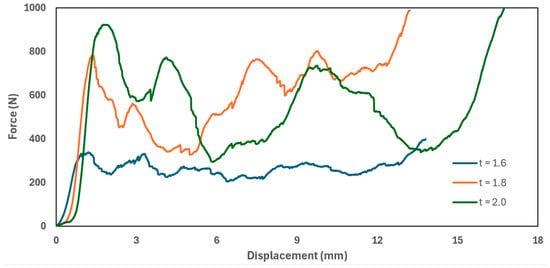
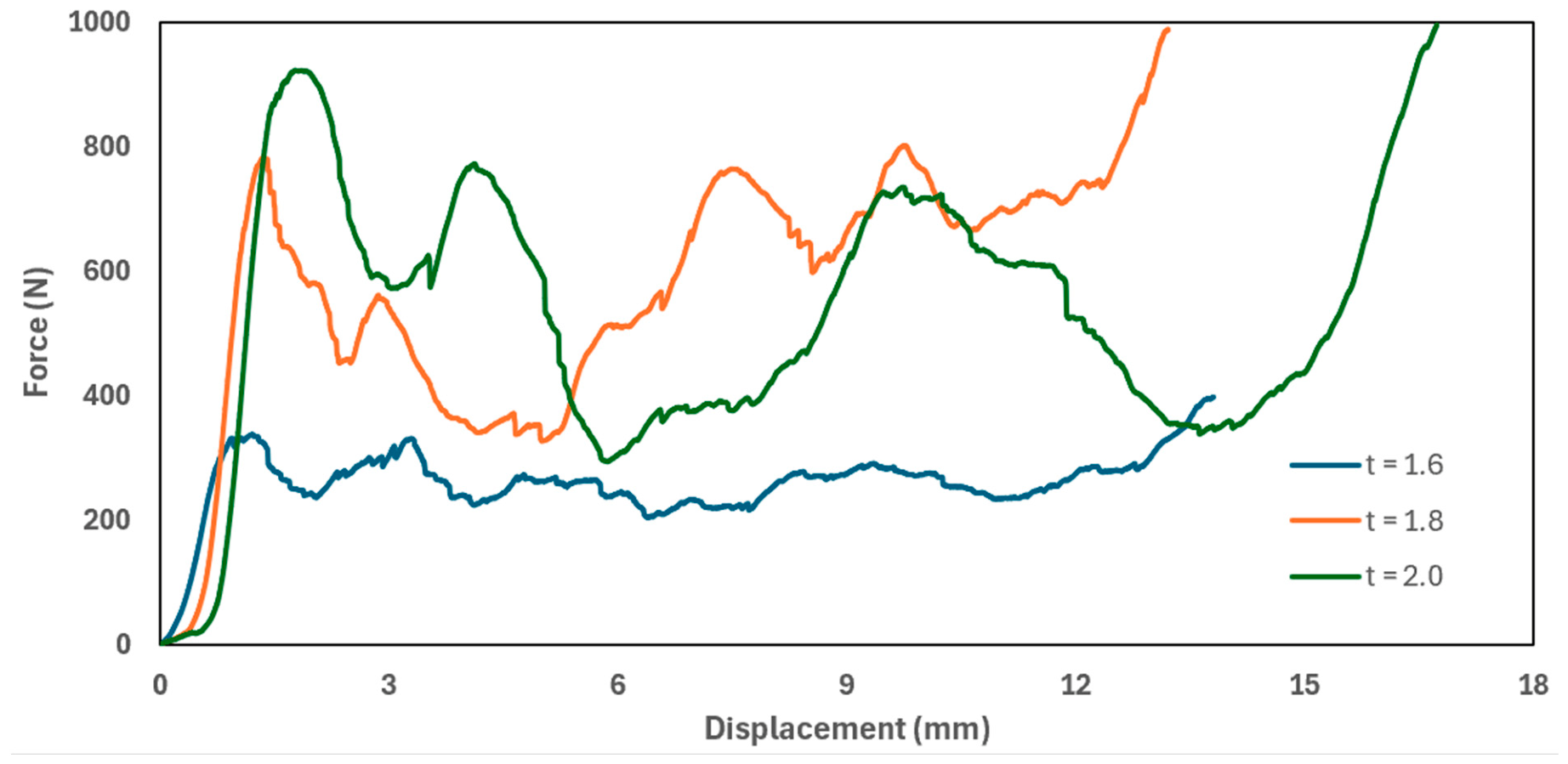
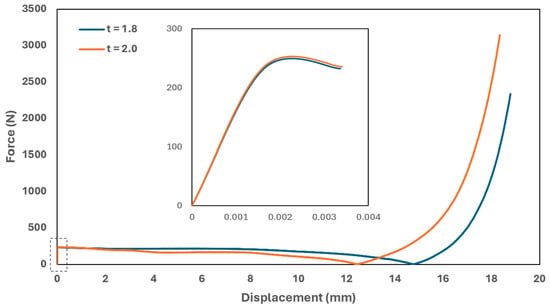
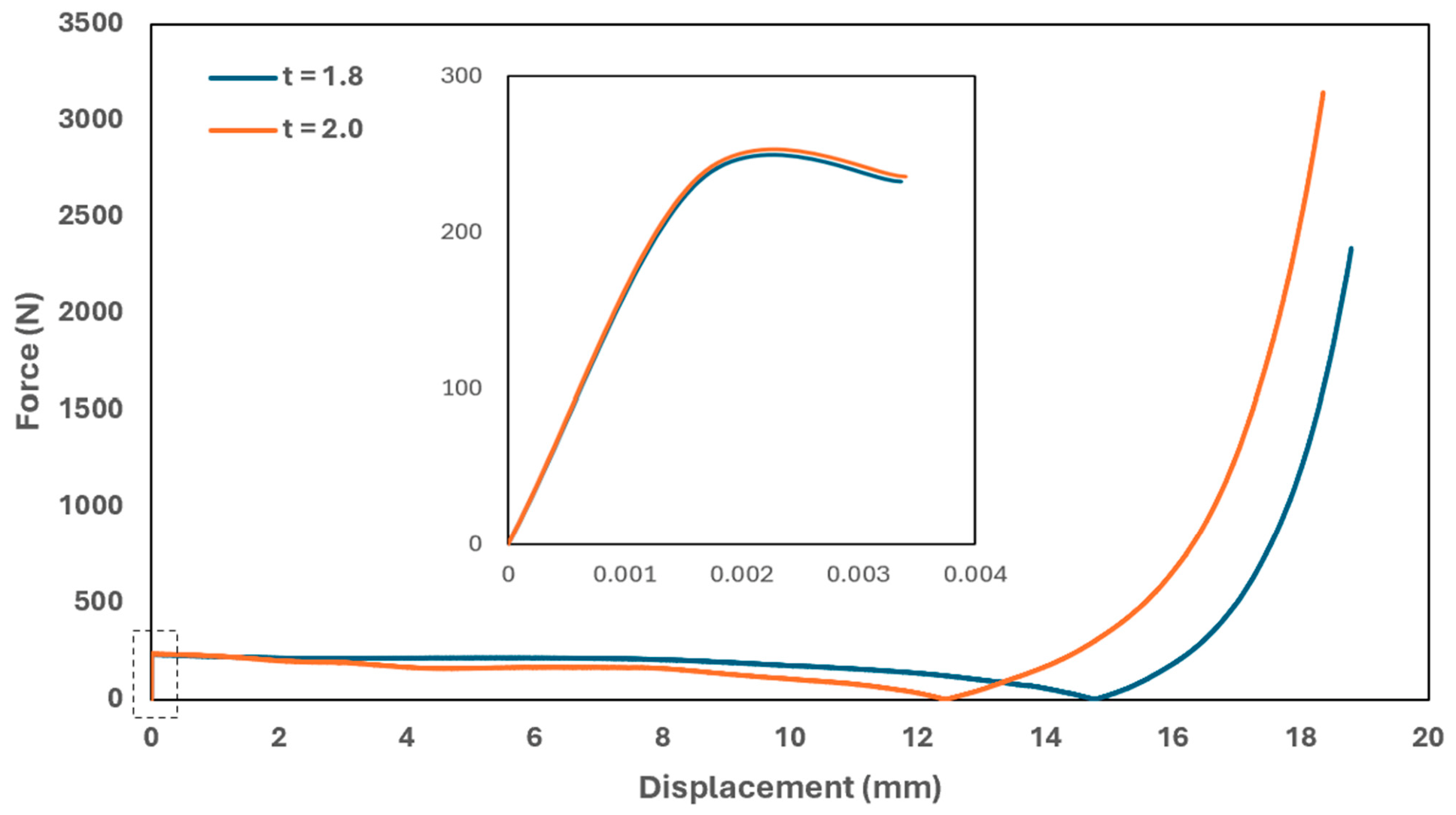
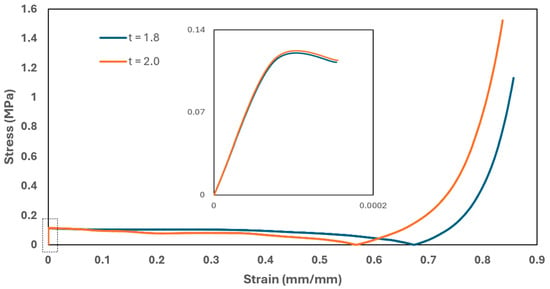
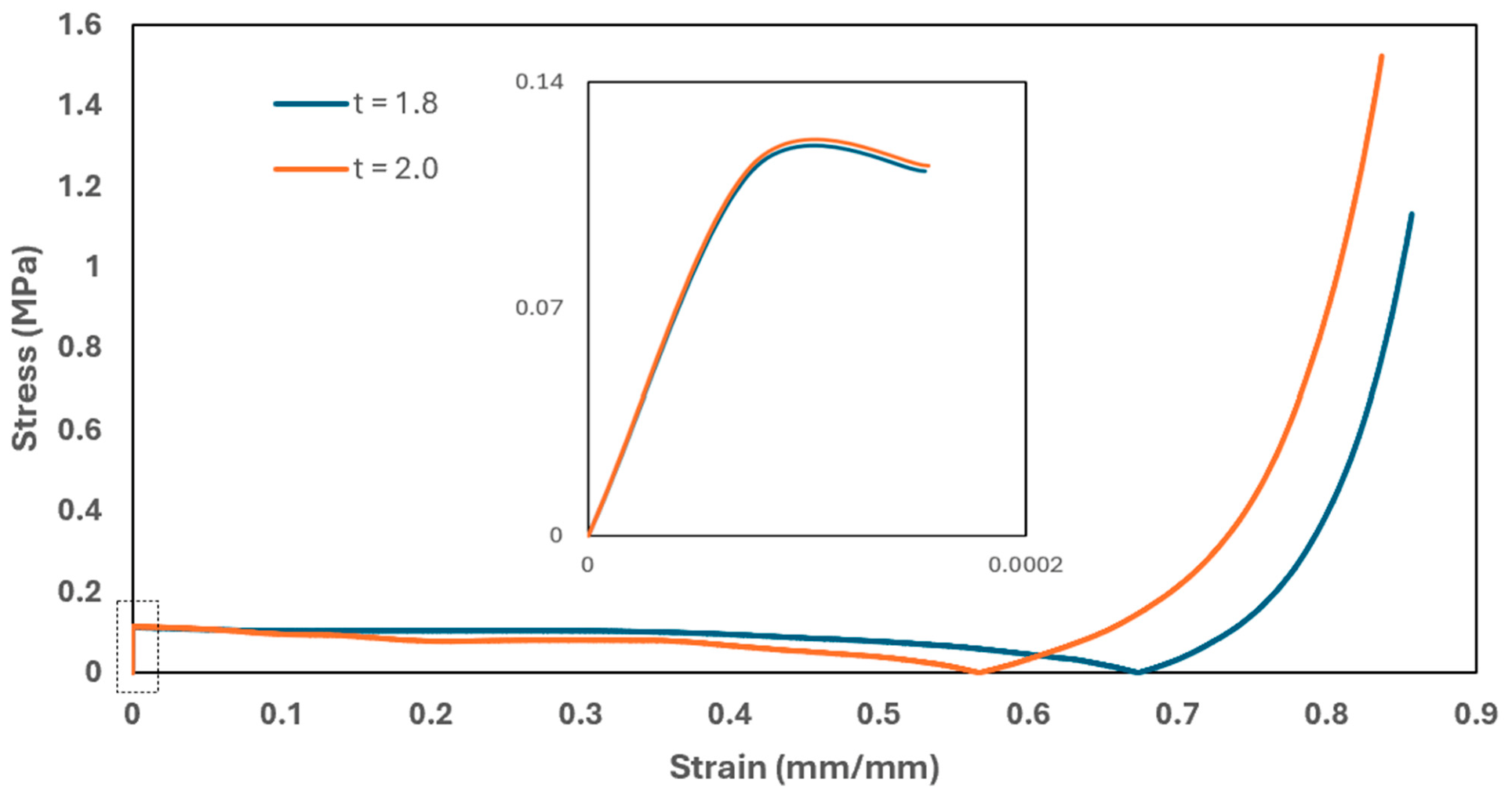
The mechanical behaviour of the TPU specimens showed notable differences compared to the PLA structures due to the elastomeric nature of thermoplastic polyurethane. The force–displacement and stress–strain curves, as shown in Figure 6 and Figure 7, for the TPU structures exhibit smooth and continuous deformation behaviour throughout the compression test, without any sudden drops in load or structural fractures. This response is characteristic of TPU materials, which are known for their high elasticity and ability to undergo large recoverable strains [13].
Figure 6.
Force–displacement curves for thermoplastic polyurethane (TPU) re-entrant auxetic lattice structures under quasi-static compression for strut thicknesses of 1.8 mm and 2.0 mm.
Figure 7.
Stress- strain curves for thermoplastic polyurethane (TPU) re-entrant auxetic lattice structures under quasi-static compression for strut thicknesses of 1.8 mm and 2.0 mm.
Unlike the PLA specimens, the TPU lattices demonstrate a shorter elastic region followed by a smooth and extended plateau region. The elastic region is relatively compliant because TPU has lower stiffness compared to PLA. However, once the structure enters the plateau phase, the re-entrant cells undergo progressive deformation through bending, rotation, and stretching of the struts. The plateau region in the TPU structures remains stable over a large strain range, which is beneficial for energy absorption applications. This extended plateau behaviour allows the structure to dissipate impact energy gradually without producing large stress spikes.
Another important observation is that TPU structures display significant elastic recovery after unloading [13]. After compression testing, TPU specimens were able to regain much of their original geometry, whereas the PLA structures remained permanently deformed [14]. This recoverable behaviour makes TPU particularly suitable for protective applications where the structure may experience repeated loading events.
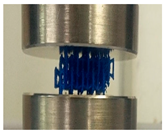
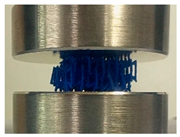
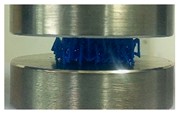
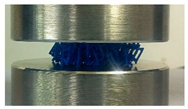
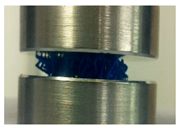
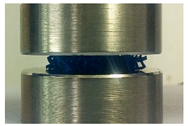
Table 1 illustrates the sequential deformation mechanisms of the re-entrant auxetic structure compressed between rigid platens. The structure exhibits characteristic auxetic behaviour associated with a negative Poisson’s ratio, where lateral contraction accompanies axial compression. Progressive stages show cell wall bending, inward re-entrant rotation, and eventual densification, contributing to enhanced energy absorption, which could form potential for impact energy absorption.
Table 1.
Time-dependent compressive deformation.
3.4. Influence of Geometric Parameters
The results clearly demonstrate that strut thickness and re-entrant angle are key design parameters controlling the mechanical behaviour of re-entrant auxetic structures. Increasing the thickness of the struts increases the relative density of the structure, which leads to improved stiffness, higher peak stress, and greater resistance to buckling [15]. Thicker struts also enhance the stability of the progressive collapse mechanism within the plateau region.
Similarly, the re-entrant angle plays a critical role in governing the deformation mechanism and auxetic response of the structure. A decrease in the re-entrant angle promotes a more pronounced negative Poisson’s ratio effect, facilitating lateral expansion under compressive loading [2]. This geometric configuration enhances the rotation and hinging of struts, leading to improved energy dissipation through controlled deformation. Conversely, larger re-entrant angles tend to reduce the auxetic effect [5], resulting in a stiffer response with limited lateral expansion and a less stable collapse mechanism. Table 2 shows a comparative summary of quasi-static compression test results for re-entrant auxetic structure specimens, illustrating the influence of strut thickness, re-entrant angle, and material type (PLA and TPU) on peak stress, densification strain, and specific energy absorption (SEA).
Table 2.
Influence of geometric parameters.
Peak stress (MPa) corresponds to the maximum compressive stress prior to the plateau region, while densification strain indicates the onset of rapid stress increase associated with cell collapse. Specific energy absorption (SEA, J/g) was calculated as the energy absorbed per unit mass from the area under the stress–strain curve up to densification, evaluated using the trapezoidal rule. Although PLA specimens exhibit higher SEA and peak stress values, TPU demonstrates superior ductility and deformability, enabling more stable energy dissipation and reduced risk of brittle failure.
As shown in Table 2, structures with larger strut thickness exhibit higher energy absorption capacity and improved load-bearing capability, as reflected by increased SEA and peak stress values [16]. However, increasing strut thickness also increases the overall weight of the structure. For wearable protective equipment such as safety vests, it is therefore necessary to balance mechanical performance with weight and flexibility considerations. Overall, the interaction between strut thickness and re-entrant angle dictates the balance between stiffness, strength, and energy absorption, highlighting the importance of geometric optimization for potential impact-resistant applications.
3.5. Optimal Structure for Vest Integration
Based on the experimental results and deformation behaviour, the TPU specimen with 2.0 mm strut thickness was selected as the optimal configuration for integration into the safety vest prototype. This configuration demonstrated the most favourable combination of mechanical characteristics required for protective applications. First, the structure exhibited a stable and extended plateau region, enabling efficient energy dissipation through progressive cell collapse.
Second, the elastomeric properties of TPU allow the structure to recover its original shape after compression, making it more suitable for repeated loading scenarios compared to PLA structures.
Finally, TPU provides greater flexibility and comfort, which is essential for wearable protective systems. The ability of the material to conform to body contours while maintaining structural functionality ensures that the protective vest remains both effective and ergonomically acceptable for the user.
Overall, the results demonstrate that combining auxetic re-entrant geometry with elastomeric materials such as TPU offers significant potential for improving the performance of wearable protective equipment.
4. Conclusions
This study investigated the mechanical behaviour and energy absorption performance of 3D-printed re-entrant auxetic lattice structures for potential integration into safety vests. Specimens fabricated using PLA and TPU filaments with varying strut thicknesses (1.6 mm, 1.8 mm and 2.0 mm) were evaluated through quasi-static compression testing. The following conclusions were made from this study.
- The experimental results demonstrated that the mechanical response of the auxetic structures is strongly influenced by both material selection and geometric parameters. Increasing strut thickness resulted in higher stiffness, improved load-bearing capacity and greater energy absorption for both materials due to the increased relative density of the lattice.
- PLA structures exhibited higher stiffness and peak stress values but experienced permanent deformation and brittle collapse after densification. In contrast, TPU structures displayed smoother deformation behaviour, an extended plateau region, and significant elastic recovery after compression. These characteristics enabled TPU lattices to absorb energy more efficiently over larger strain ranges.
- Among the tested configurations, the TPU auxetic structure with a 2.0 mm strut thickness and a70° re-entrant angle provided the most favourable balance between energy absorption, structural compliance, and recoverability.
This study formed a basis for the utilization of auxetic structures in safety gear, and the results obtained herein could guide future studies exploring the performance of auxetic re-entrant structures integrated into safety vests.
Author Contributions
Conceptualization, F.M., S.O. and J.W.; methodology, S.M.O., J.G., S.O. and J.W.; formal analysis, S.O., J.W. and F.M.; investigation, S.M.O. and J.G.; resources, N.N.; writing—original draft preparation, S.M.O. and J.G.; writing—review and editing, F.M., J.W., S.O. and N.N.; supervision, N.N. All authors have read and agreed to the published version of the manuscript.
Funding
This research received no external funding.
Institutional Review Board Statement
Not applicable.
Informed Consent Statement
Not applicable.
Data Availability Statement
The original contributions presented in this study are included in the article. Further inquiries can be directed to the corresponding author.
Acknowledgments
During the preparation of this manuscript, the authors used ChatGPT-4.5 (OpenAI) and Grammarly (Grammarly Pro, 2025) for text editing and paraphrasing to improve the grammatical accuracy and conciseness of specific phrases within the manuscript. The authors reviewed, edited the output and take full responsibility for the content of this publication.
Conflicts of Interest
The authors declare no conflicts of interest.
Abbreviations
The following abbreviations are used in this manuscript:
| 3D | Three dimensional |
| CAD | Computer-aided design |
| EAE | Energy Absorption Efficiency |
| PLA | Polylactic acid |
| SEA | Specific energy absorption |
| TPU | Thermoplastic polyurethane |
References
- Balan P, M.; Johnney Mertens, A.; Raju Bahubalendruni, M.V.A. Auxetic mechanical metamaterials and their futuristic developments: A state-of-art review. Matrials Today Commun. 2023, 34, 105285. [Google Scholar] [CrossRef] [Scilit]
- Niranjan, K.C.; Biranchi, P.; Uday, S.D. Energy absorption characteristic of fused deposit modelling 3-D printed auxetic re-entrant structures: A review. Mater. Eng. Perform. 2023, 32, 8981–8999. [Google Scholar] [CrossRef] [Scilit]
- Florentina, N.R. Brief review of metamaterials and auxetic materials. Univ. Pitesti. Sci. Bull.-Automot. Ser. 2021, 31, 1–9. [Google Scholar] [CrossRef] [Scilit]
- Du, N.C.; Zhang, Y.; Shi, J.W.; Xue, T.; Jiang, W.Z.; Qu, Y.C.; Ren, X. Shear behavior of auxetic and non-auxetic cellular metamaterial. Int. J. Mech. Sci. 2025, 307, 110891. [Google Scholar] [CrossRef] [Scilit]
- Şimşek, T. Additive Manufacturing of Over-Expanded Honeycomb Core Lattice Structures and Their Characterization. Master’s Thesis, School of Natural and Applied Sciences, Middle East Technical University, Ankara, Turkey, 2024. [Google Scholar]
- Athul, J.; Vinyas, M.; Dineshkumar, H. On the application of additive manufacturing methods for auxetic structures: A review. Adv. Manuf. 2021, 9, 342–368. [Google Scholar] [CrossRef] [Scilit] [PubMed]
- Davide, M.; Rosaria, R.M.; Vincenza, A.; Ilaria, P. Fused Deposition Modelling of Polymeric Auxetic Structures: A Review. Polymers 2023, 15, 1008. [Google Scholar] [CrossRef] [Scilit] [PubMed]
- Daniel, H.; Foster, L.; Hart, J.; Greenwood, R.; Tom, A.; Pooya, S.; Olly, D. Mechanical metamaterials for sports helmets: Structural mechanics, design optimisation, and performance. Smart Mater. Struct. 2023, 32, 113001. [Google Scholar] [CrossRef] [Scilit]
- Luan, K.; Newman, Z.; West, A.; Lee, K.L.; Rokkam, S. Efficient poisson’s ratio evaluation of weft-knitted auxetic metamaterials. Text. 2023, 3, 275–286. [Google Scholar] [CrossRef] [Scilit]
- Bustihan, A.; Hirian, R.; Botiz, I. Reusable 3D-Printed Thermoplastic Polyurethane Honeycombs for Mechanical Energy Absorption. Polymers 2025, 17, 3035. [Google Scholar] [CrossRef] [Scilit] [PubMed]
- Wang, X.T.; Wang, B.; Li, X.W.; Ma, L. Mechanical properties of 3D re-entrant auxetic cellular structures. Int. J. Mech. Sci. 2017, 131, 396–407. [Google Scholar] [CrossRef] [Scilit]
- ASTM D695-15; Standard Test Method for Compressive Properties of Rigid Plastics. ASTM International: West Conshohocken, PA, USA, 1942. Available online: https://www.astm.org/d0695-15.html (accessed on 29 July 2025).
- Wilińska, K.; Kozuń, M.; Pezowicz, C. Elastic Properties of Thermoplastic Polyurethane Fabricated Using Multi Jet Fusion Additive Technology. Polymers 2025, 17, 1363. [Google Scholar] [CrossRef] [Scilit] [PubMed]
- Taşdemir, M.; Toktaş, İ.; Motameni, A.; Evis, Z. Experimental and numerical investigation of mechanical properties of PLA based auxetic structures. Int. J. Adv. Manuf. Technol. 2025, 137, 83–103. [Google Scholar] [CrossRef] [Scilit]
- Abhinav, C.; Mir, I.U.H.; Raina, A.; Singh, R.R.; Narendra, B.P.; Manjeet, S.B. Effect of fused deposition modelling process parameters on mechanical properties of 3D printed parts. World J. Eng. 2019, 16, 550–559. [Google Scholar] [CrossRef] [Scilit]
- Özdemir, Z.; Eren, E.; Korkmaz, M.E.; Göksenli, A. Synergistic Effects of Foam Reinforcement and Geometric Parameters on the Mechanics of Re-Entrant Auxetic Structures. Exp. Mech. 2025, 65, 1167–1181. [Google Scholar] [CrossRef] [Scilit]

Disclaimer/Publisher’s Note: The statements, opinions and data contained in all publications are solely those of the individual author(s) and contributor(s) and not of MDPI and/or the editor(s). MDPI and/or the editor(s) disclaim responsibility for any injury to people or property resulting from any ideas, methods, instructions or products referred to in the content. |
© 2026 by the authors. Licensee MDPI, Basel, Switzerland. This article is an open access article distributed under the terms and conditions of the Creative Commons Attribution (CC BY) license.