


Abstract
This paper reports on the results of the experimental investigation carried out to evaluate the bond–slip relation between bonded CFRP strip and concrete. The experimental program was conducted on three hinged beam specimens that were prepared according to modified RILEM standard. The beams used for the test consist of two RC blocks interconnected at the top by a steel hinge and at the bottom by the embedded reinforcing steel bar and bonded CFRP strip. Slip of the embedded reinforcing bars was measured at free ends with LVDTs. Tensile stress in the bar was measured with strain gauges. Bond and slip of the CFRP strip were calculated based on measured strain in discrete points along the surface of the CFRP strip by using strain gauges. Recorded failure mode for each sample was loss of composite action between CFRP strip and the concrete surface. Based on test results, tensile stress distribution of the CFRP strip along the specimen and experimental bond–slip curves of CFRP-to-concrete and reinforcing bar-to-concrete were obtained.
1. Introduction
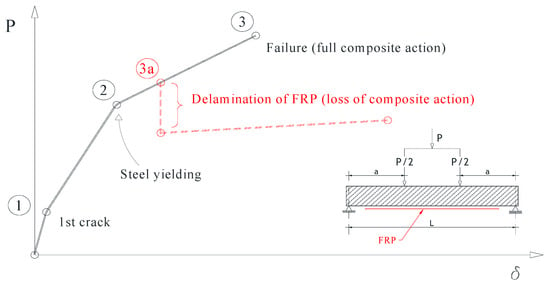
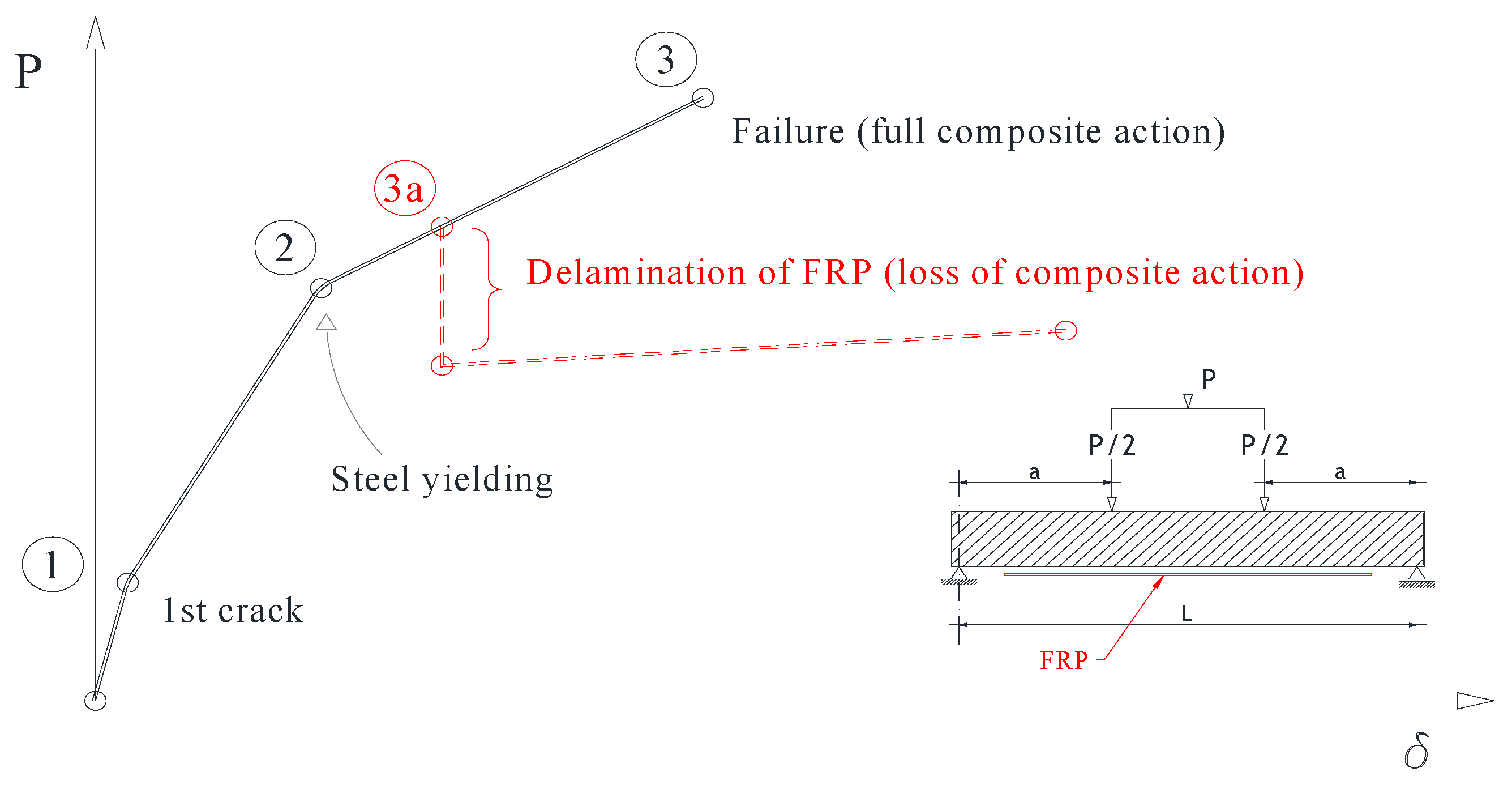
Numerous studies have shown that debonding and the consequent delamination of FRP from the concrete surface is the main and dominant failure mode of RC girders strengthened in flexure with FRP strips or sheets [1]. Such forms of failure, regardless of whether they occur in the FRP anchorage zone near the bearings or in the cracking zone in the mid span, usually occur suddenly, without prior warning, with a sudden drop in load-bearing capacity and stiffness, and are therefore dangerous and unacceptable (Figure 1).
Figure 1.
P-δ relation for the mid-section of the simply supported strengthened beam.
FRP is a supreme material characterized by very high tensile strength and it does not corrode. For this reason, in the past 20 years, it has found its application primarily in the strengthening of reinforced concrete structures. However, the loss of bond is the main reason why the full capacity of the high tensile strength of FRP cannot be utilized to increase the load-bearing capacity of reinforced concrete beams and slabs.
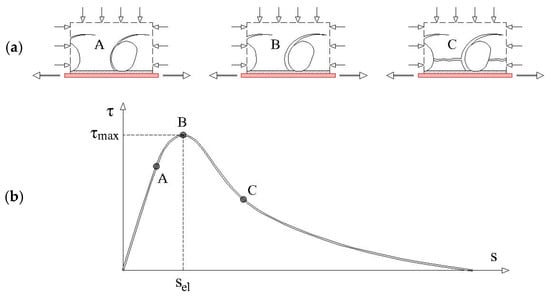
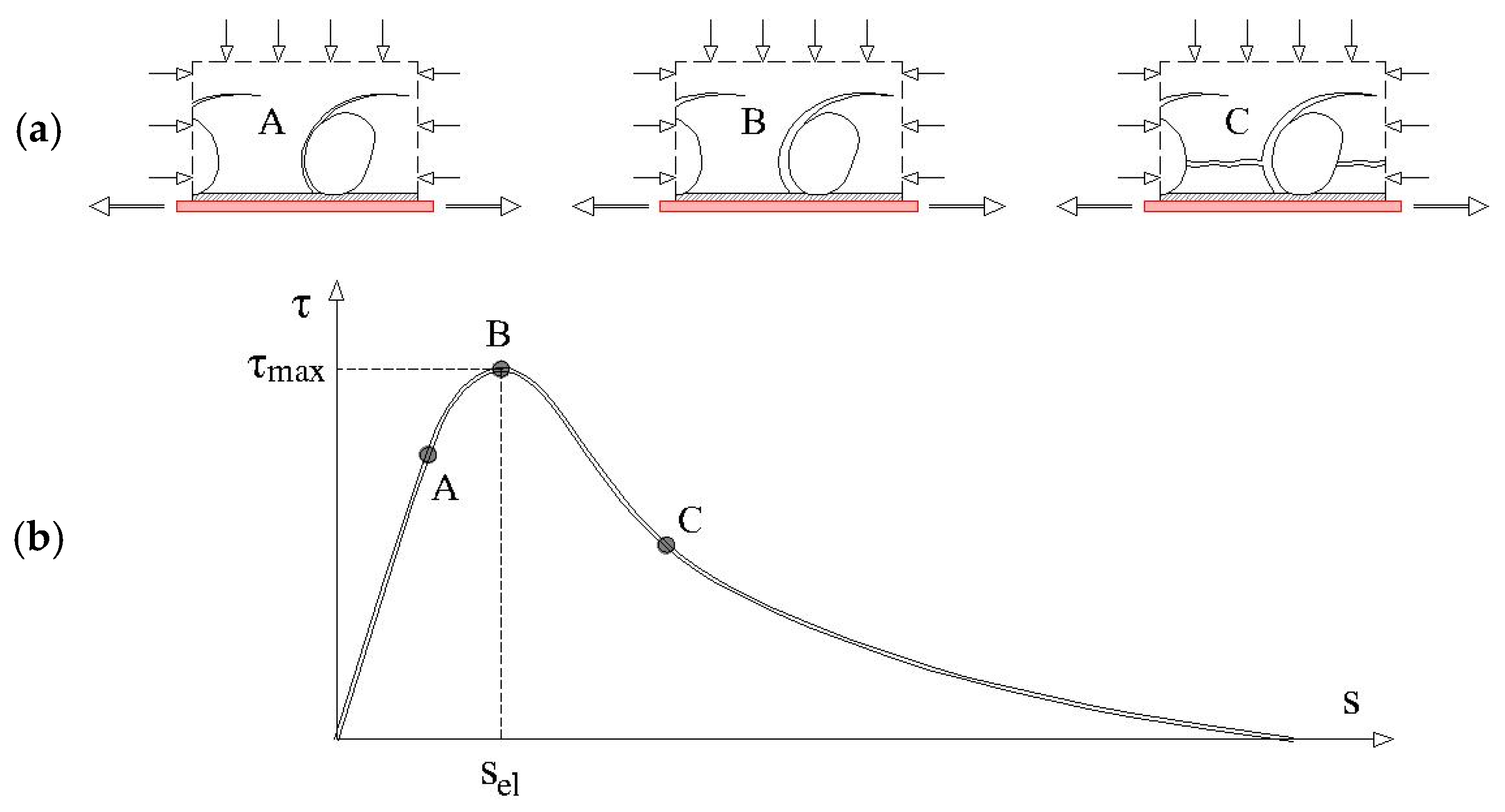
The bond relation between FRP and concrete can be illustrated in the best way through a diagram of the relationship between the local bond shear stress (τ) and slip (s) (Figure 2b). Figure 2a shows the mechanism of micro-crack development in concrete on the tensile surface of the strengthened beam.
Figure 2.
(a) Mechanism of micro-crack development in concrete; (b) relation between the bond shear stress (τ) and the slip (s) between FRP and concrete.
The bond–slip curve between FRP and concrete can be determined experimentally in several ways [2]. Also, there are standardized procedures for determining the bond–slip relation between the embedded steel reinforcement and the concrete. One of them is described in [3].
The following pages describe an experimental study of bond between FRP and concrete and steel rebar and concrete carried out on simply supported hinged beams. The presented experiment is unique because it investigates the bond relation between FRP-to-concrete and steel rebar-to-concrete on one specimen at the same time.
2. Experimental Research
2.1. Outline of the Experiment
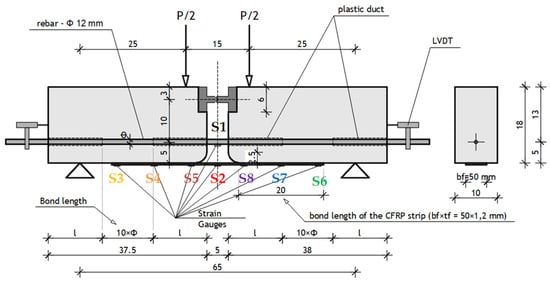
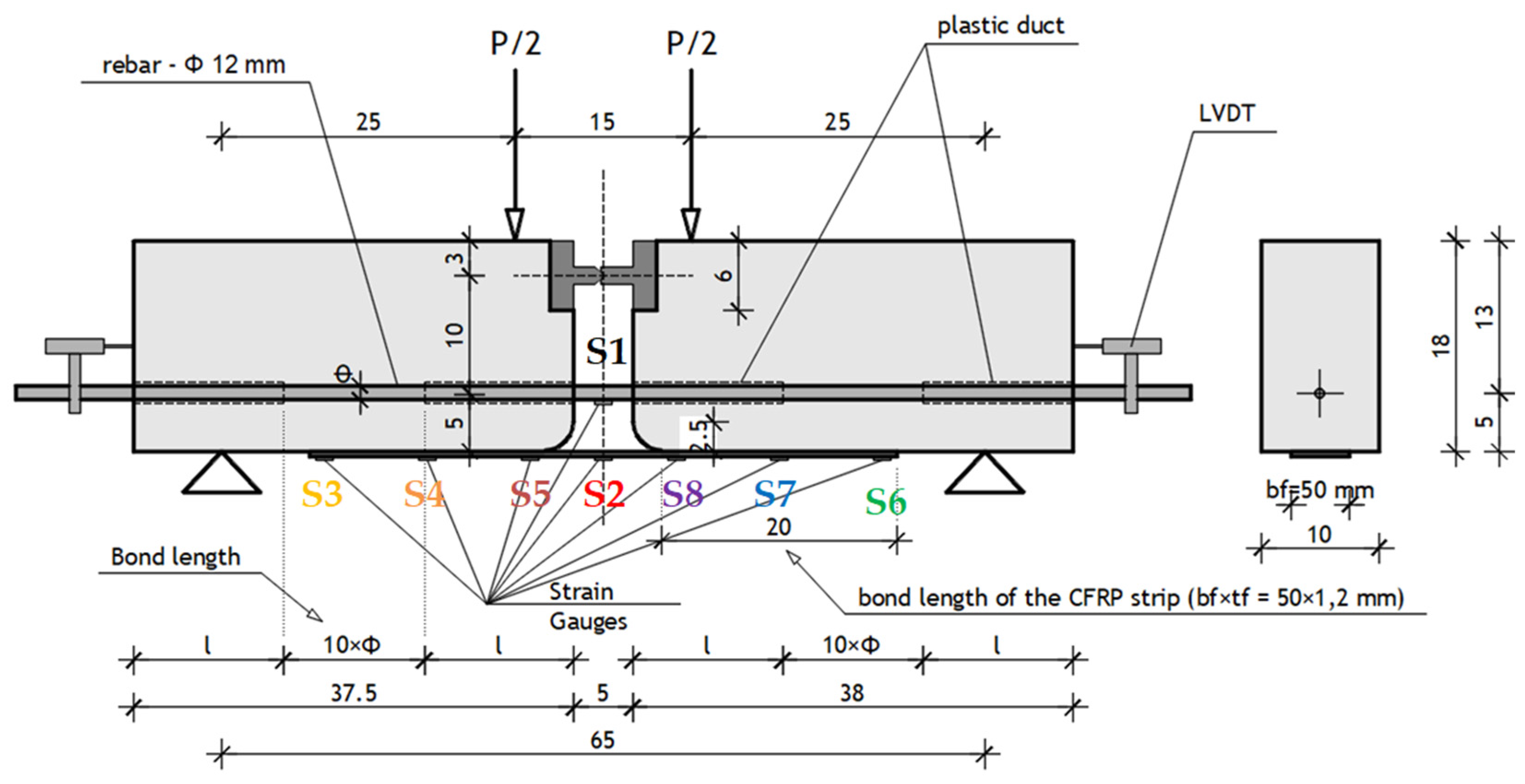
On three beam samples (Figure 3 and Figure 4), the bond test was conducted in order to investigate the relation between the bond stress and the slip between FRP and concrete, and between the steel reinforcing bar with diameter of ϕ12 mm and concrete.
Figure 3.
Laboratory test setup.
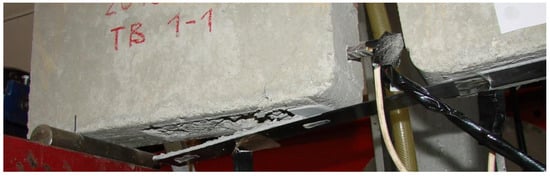
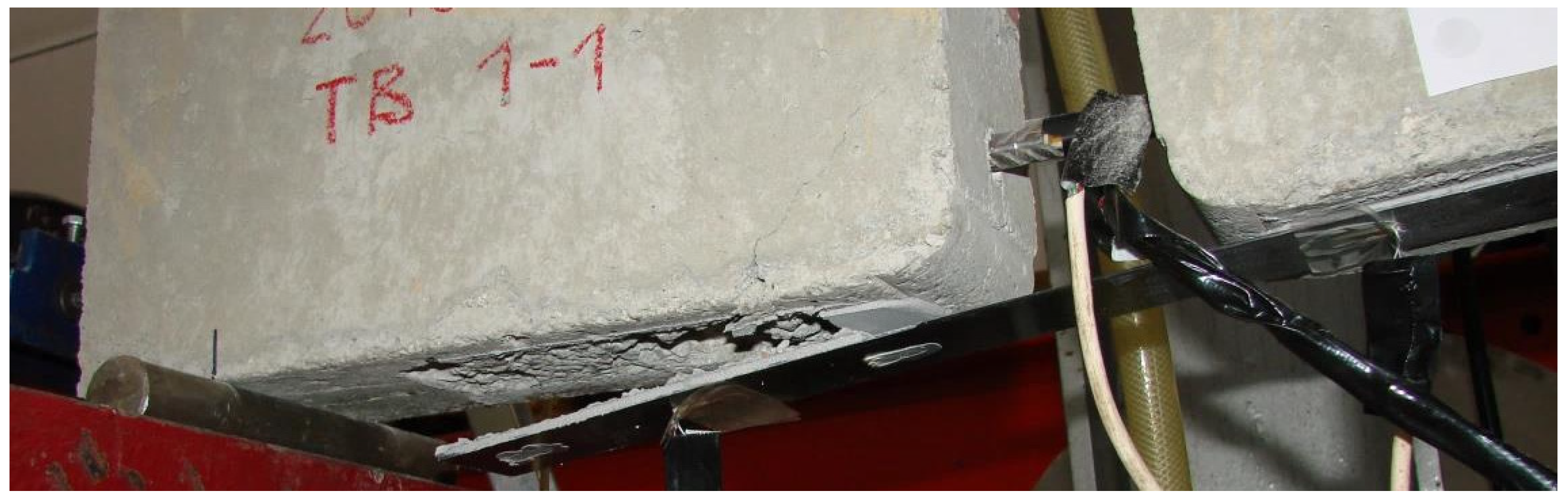
Figure 4.
Failure mode due to loss of bond between FRP and concrete surface.
The concrete specimens were made of C30/37 concrete class. Steel grade of the rebar was B500B. The tensile strength of the CFRP strip was 3000 N/mm2.
The beams used for the test consist of two RC blocks interconnected at the top by a steel hinge and at the bottom by the embedded reinforcing steel bar and bonded CFRP strip. The slip of the embedded reinforcing bars was measured at free ends with LVDTs. Tensile stress in the bar was measured with strain gauges.
The bond and slip of the CFRP strip were calculated based on measured strain in discrete points along the surface of the CFRP strip by using strain gauges (expressions (1) and (2)).
where
Δx—distance between measurement points;
εi, εi+1—strain;
Ef—E-module of CFRP strip;
tf—CFRP thickness.
2.2. Results and Discussion
Failure mode of the strengthened specimen was loss of bond between CFRP and concrete surface (Figure 4).
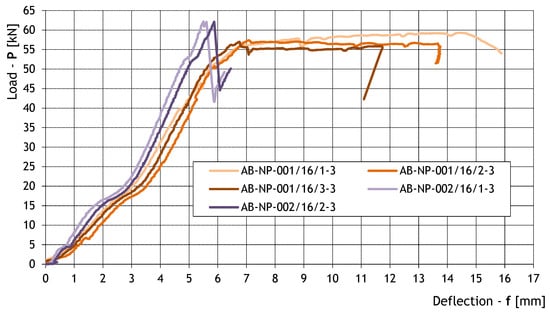
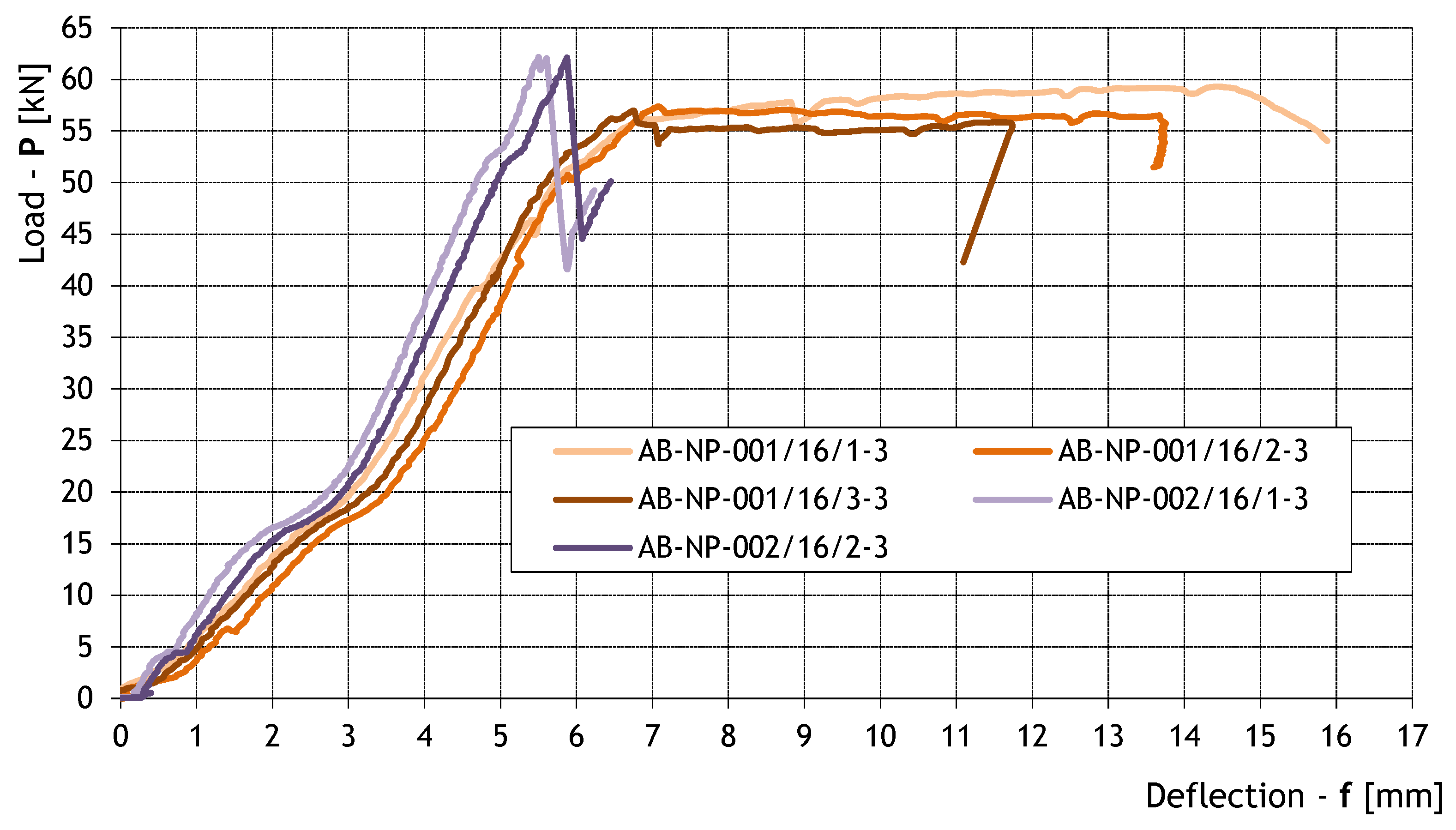
The stiffness of the beam specimens is very high up to the moment of failure, which is visible from the relation between the concentrated load (P) and the deflection in the middle of the sample (Figure 5).
Figure 5.
Load–deflection curve.
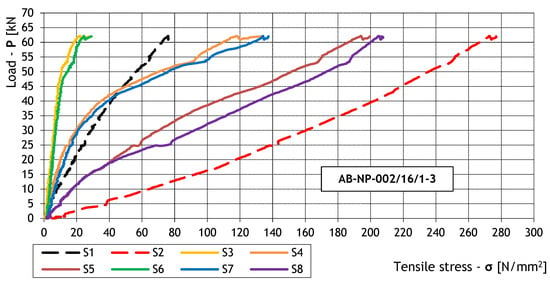
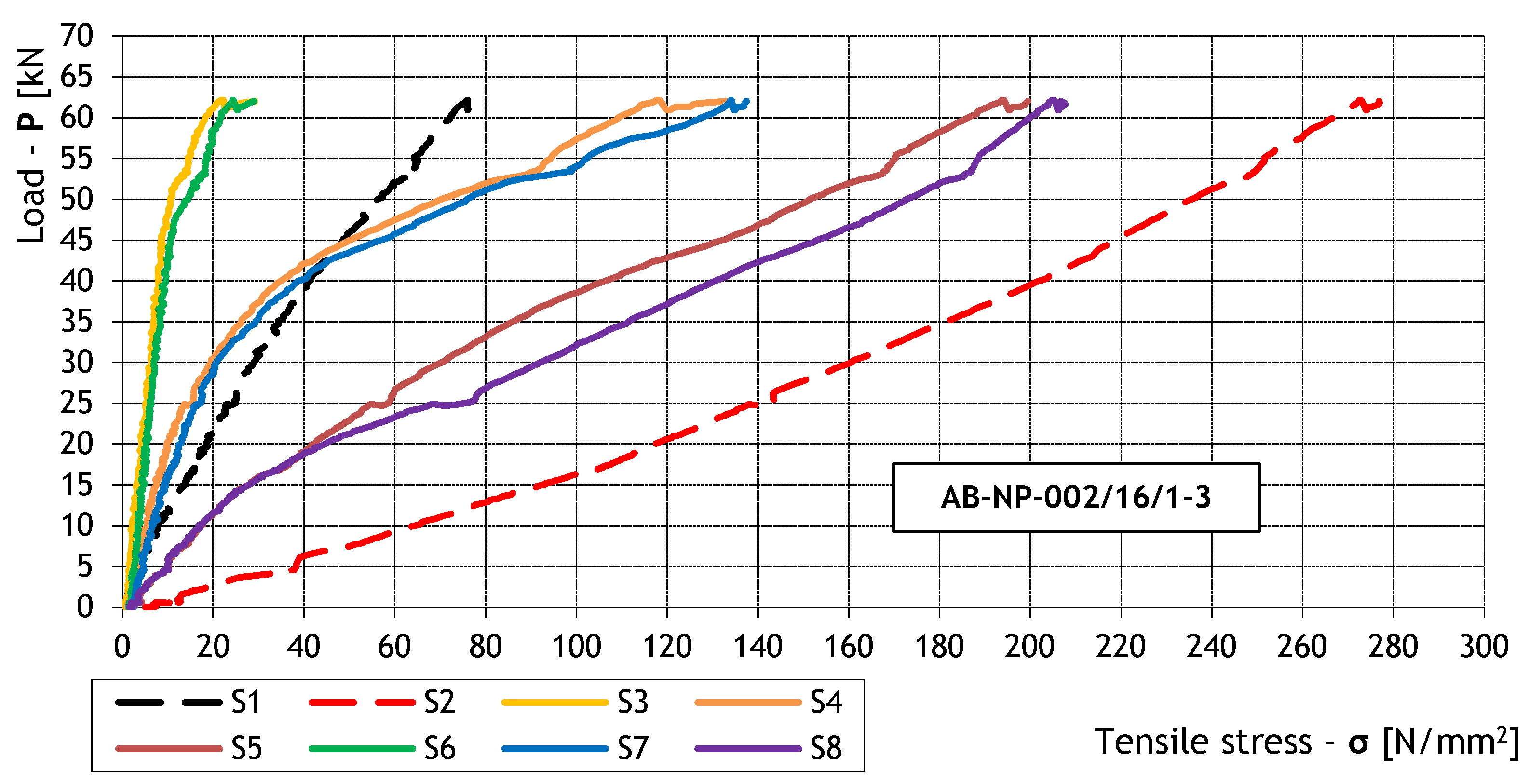
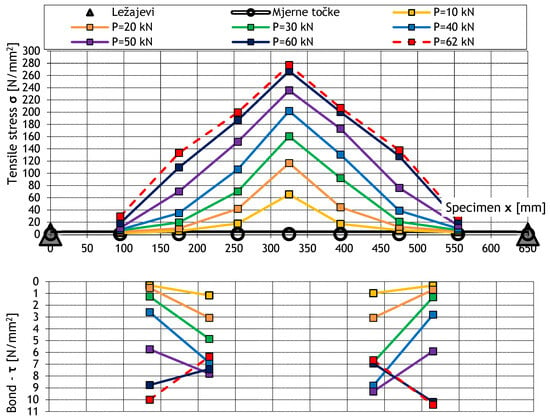
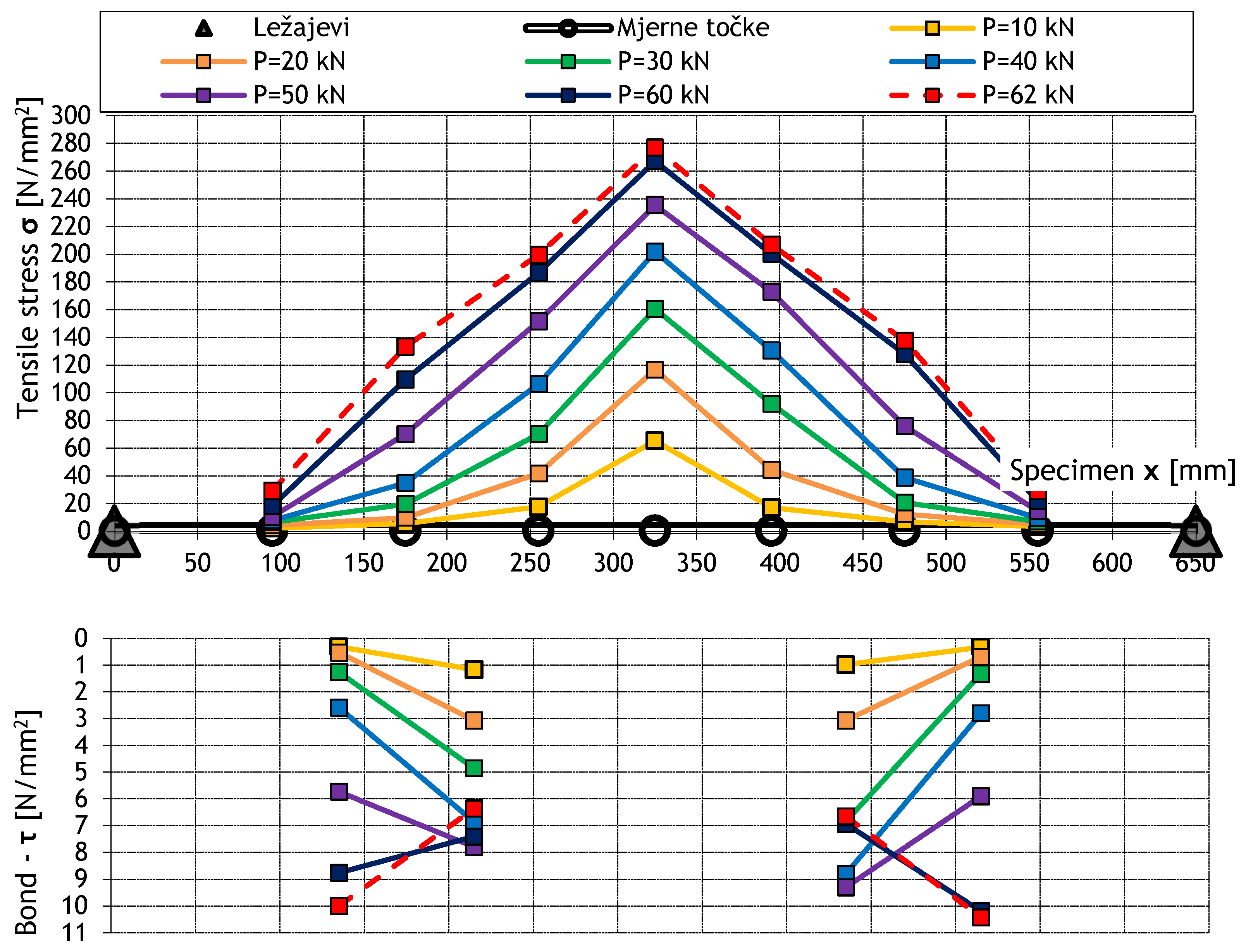
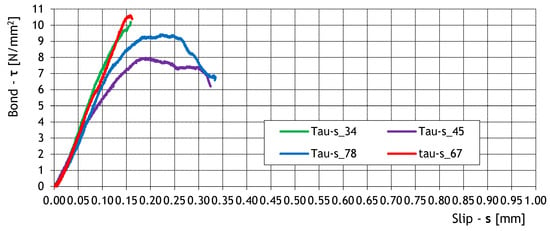
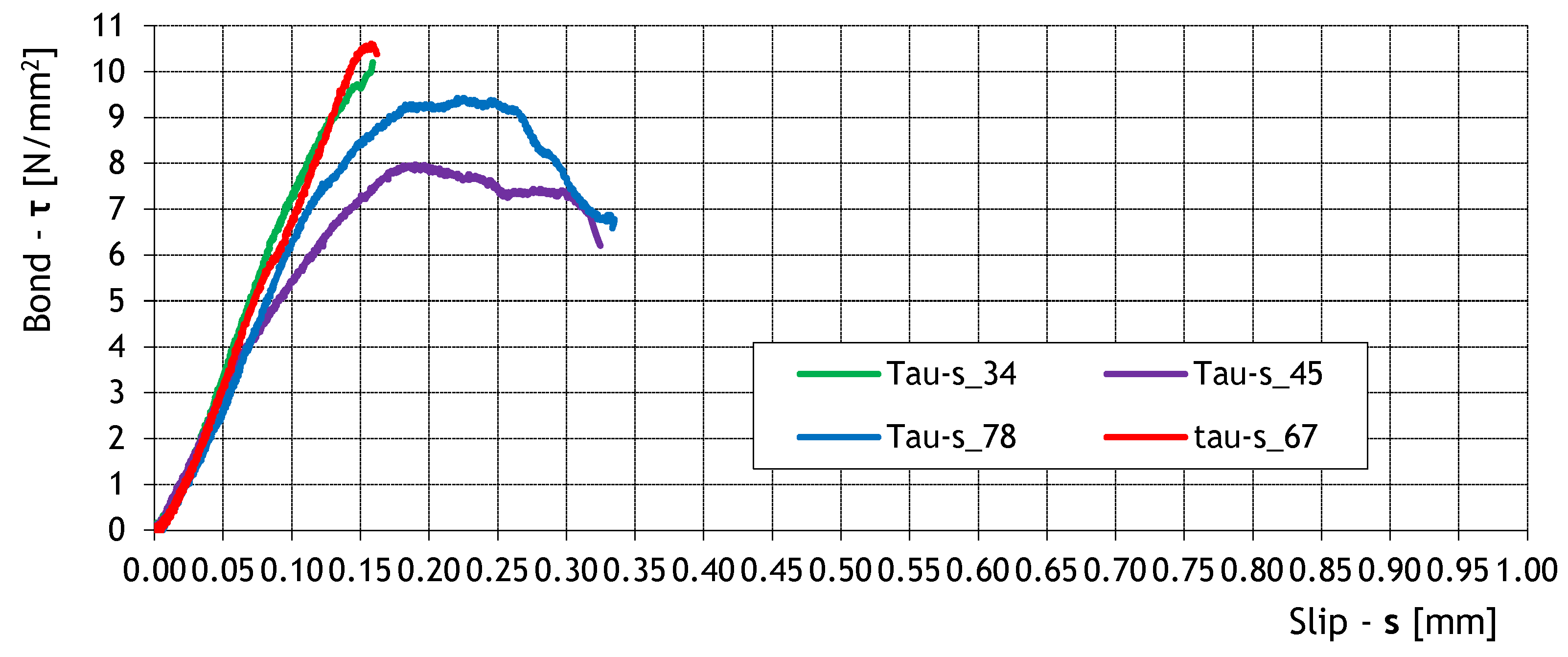
On the following pages, some of the results from the lab test are presented (Figure 6, Figure 7, Figure 8, Figure 9 and Figure 10).
Figure 6.
Relation between applied load (P) and measured stress in discrete measuring points (σ).
Figure 7.
Tensile stress in measuring points (top) and bond stress in measuring points (bottom).
Figure 8.
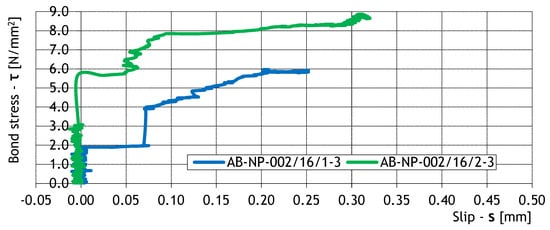
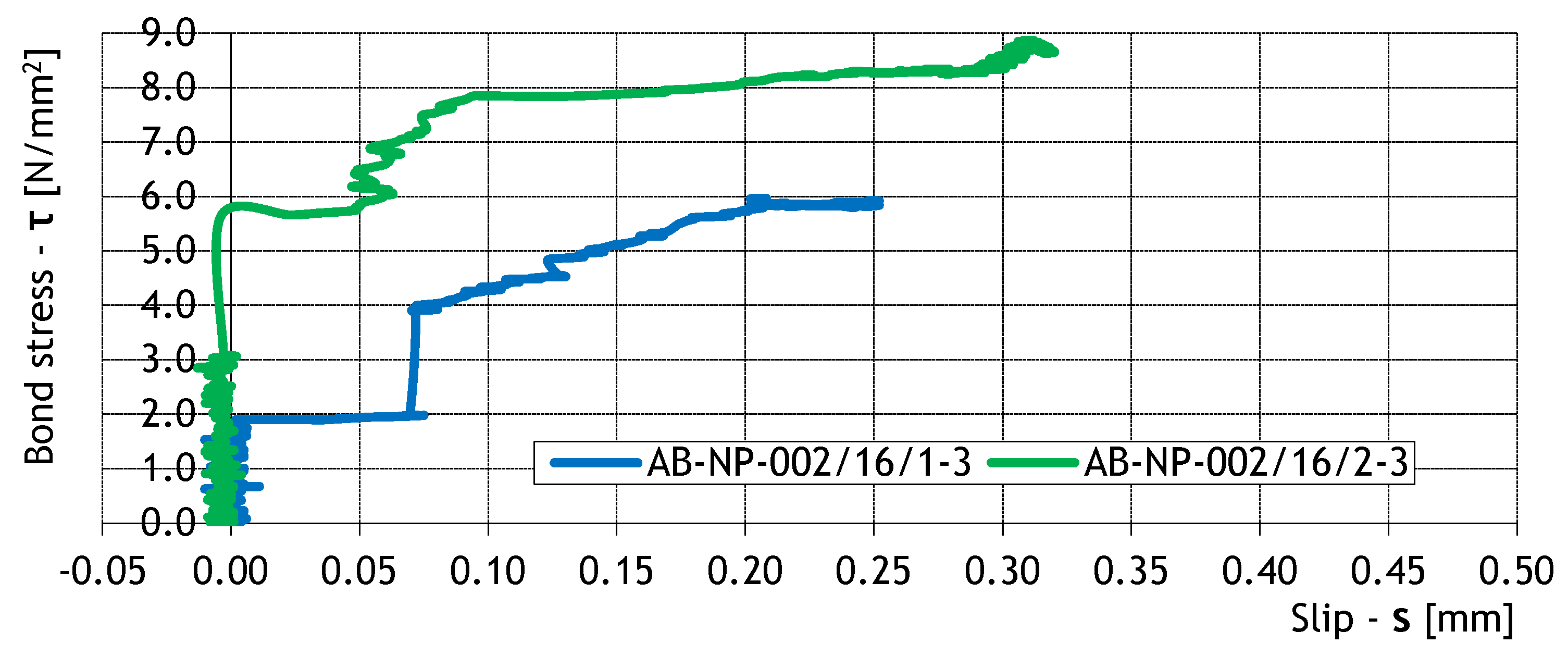
Bond–slip curves between FRP and concrete.
Figure 9.
Bond–slip curves between steel rebar and concrete.
Figure 10.
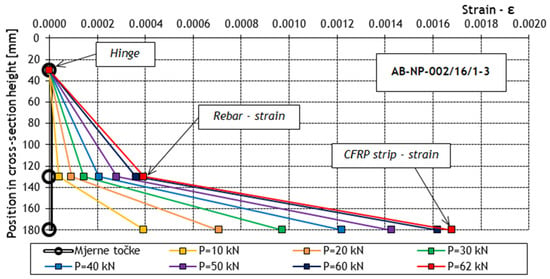
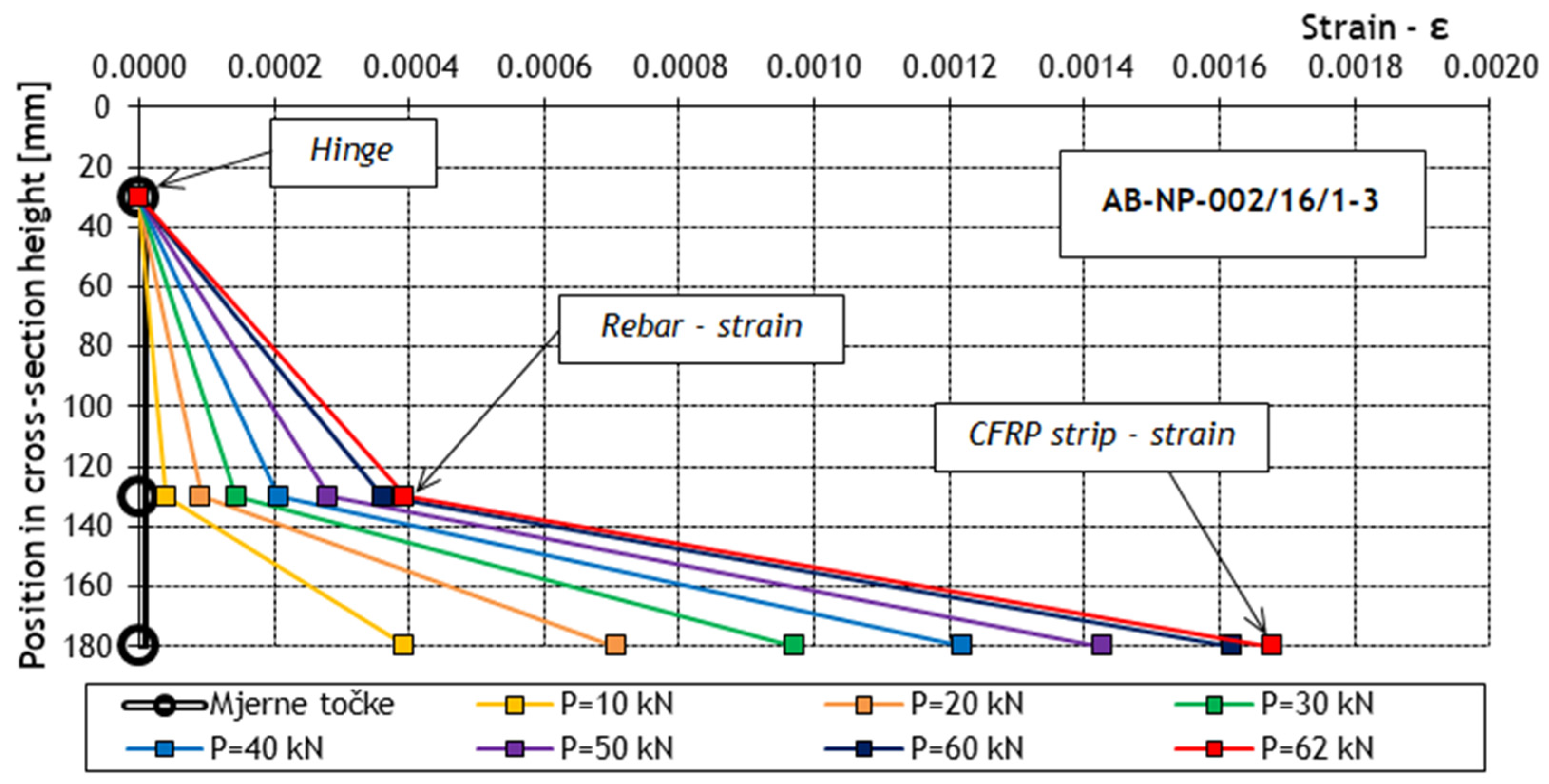
Load–strain relation for the cross section in mid-span.
From the presented diagrams, the following can be concluded:
- -
- Specimens are very rigid until failure;
- -
- The failure mode is loss of composite action between FRP and the concrete surface;
- -
- No slip occurs in steel reinforcement until failure;
- -
- Descending branches of bond–slip curves are recorded for points closer to the mid-span.
3. Conclusions
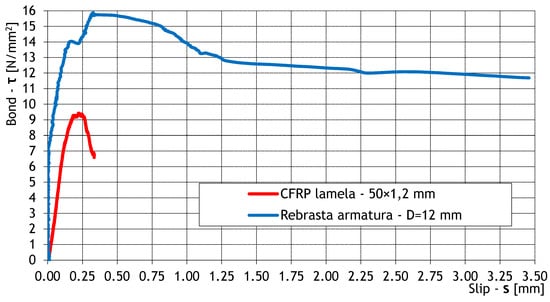
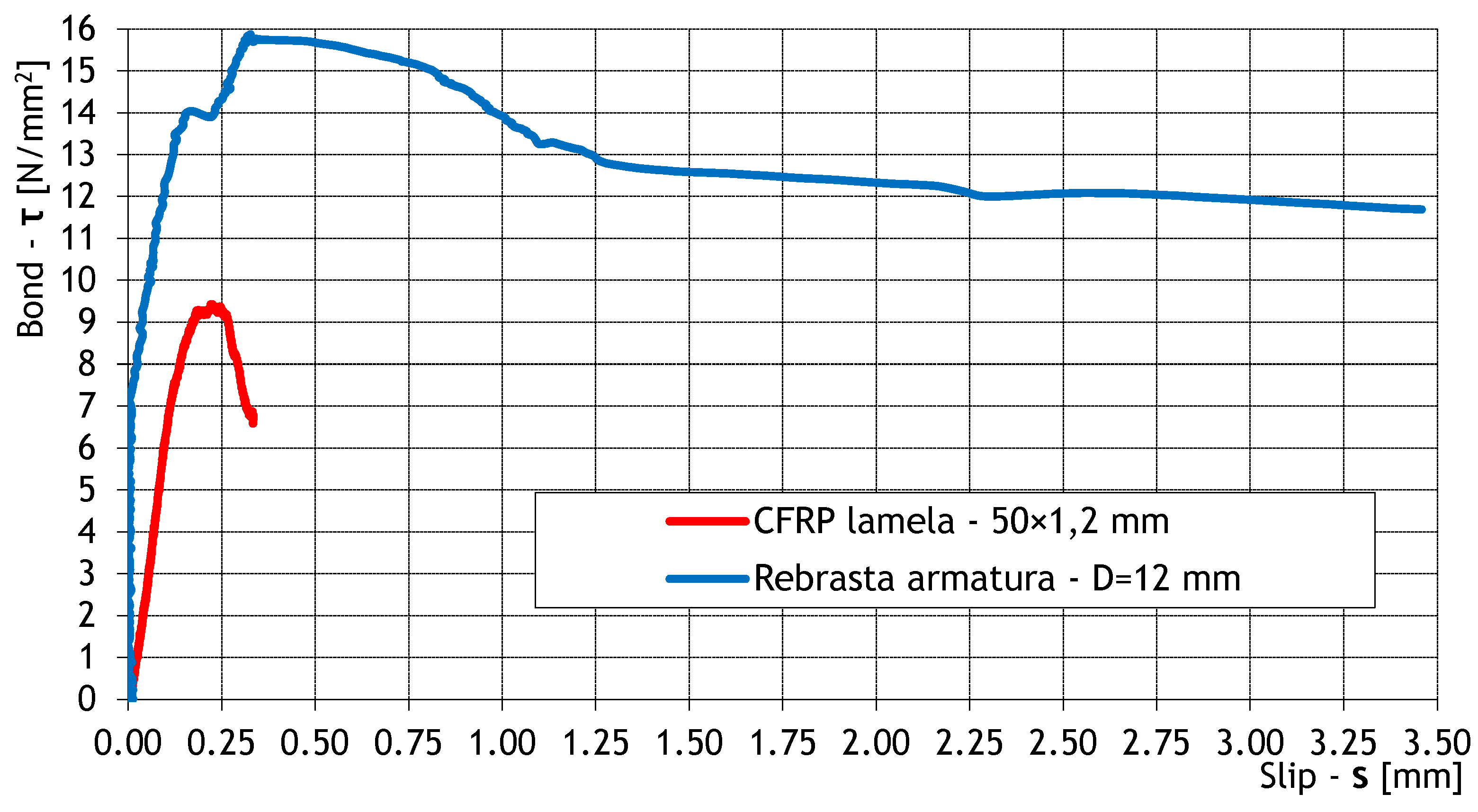
The fundamental problem of the effective application of FRP in terms of increasing the load-bearing capacity of reinforced concrete structural elements is very low bond strength between FRP and concrete and consequently low utilization level of high tensile strength of FRP. A good indicator of the above problem, which is also confirmed in this work, is the comparison of experimentally obtained diagrams of the bond–slip relation between FRP strip and concrete and between the steel rebars and concrete (Figure 11). Comparing the diagrams, it is evident that the bond strength is much higher between the rebars and the concrete. The reason for this is the fact that the bond strength between FRP and the concrete surface is achieved exclusively by bonding, while the bond of ribbed reinforcement is achieved not only by bonding but also by friction and mechanical connections via the ribs on the surface of the bar. Therefore, between FRP and concrete, only the shear bond (τf) is noticeable, achieved by bonding, while the resistance to pulling out of the ribbed reinforcement from concrete is contributed by shear at the connection between the concrete and the bar (τs), compressive stress on the surface of the ribs (σs), and shear in the concrete between the two ribs (τc).
Figure 11.
Bond–slip curves between FRP strip and concrete (colored in red), and between steel rebar and the concrete.
It is possible to increase the bond strength between FRP and concrete, especially in the anchoring zone, by applying mechanical anchors or with the wrapping technique [1].
Furthermore, it is possible to increase FRP-to-concrete bond strength by preparing the concrete surface with grooves that are then filled with epoxy resin during FRP bonding.
Since relatively few studies have addressed this topic [4], additional research is needed to find the optimal groove pattern that can maximize FRP-to-concrete bond strength and ultimately increase the utilization level of FRP.
Author Contributions
Conceptualization, T.B. and T.K.; methodology, T.B.; validation, T.K.; formal analysis, T.B.; investigation, T.B.; writing—original draft preparation, T.B.; writing—review and editing, T.B. and T.K.; visualization, T.B.; supervision, T.K.; All authors have read and agreed to the published version of the manuscript.
Funding
This research received no external funding.
Institutional Review Board Statement
Not applicable.
Informed Consent Statement
Not applicable.
Data Availability Statement
The original contributions presented in this study are included in the article. Further inquiries can be directed to the corresponding author.
Conflicts of Interest
The authors declare no conflict of interest.
References
- Matthys, S.; Fib Working Group. Externally Applied FRP Reinforcement for Concrete Structures; International Federation for Structural Concrete: Lausanne, Switzerland, 2019; No. 90. [Google Scholar] [CrossRef] [Scilit]
- Sayed-Ahmed, E.Y.; Bakay, R. Bond Strength of FRP Laminates to Concrete: State-of-the Art Review. Electron. J. Struct. Eng. 2009, 9, 45–61. [Google Scholar] [CrossRef] [Scilit]
- RILEM TC. RC 5 Bond Test for Reinforcement Steel 1. Beam Test, 1982; E & FN SPON: London, UK, 1994; pp. 213–217. [Google Scholar]
- Sanginabadi, K.; Yazdani, A.; Mostofinejad, D.; Czaderski, C. Bond behavior of FRP composites attached to concrete using EBROG method: A state-of-the art review. Compos. Struct. 2022, 299, 116060. [Google Scholar] [CrossRef] [Scilit]
Disclaimer/Publisher’s Note: The statements, opinions and data contained in all publications are solely those of the individual author(s) and contributor(s) and not of MDPI and/or the editor(s). MDPI and/or the editor(s) disclaim responsibility for any injury to people or property resulting from any ideas, methods, instructions or products referred to in the content. |
© 2026 by the authors. Licensee MDPI, Basel, Switzerland. This article is an open access article distributed under the terms and conditions of the Creative Commons Attribution (CC BY) license.