


Abstract
We developed a wave energy conversion system that harnesses vertical ocean wave motion using a buoy–rod mechanism directly coupled to a generator within a sealed enclosure. The system was fabricated with a durable mechanical structure and an electrical system including a rectifier, battery storage, and sensors. The developed wave IoT monitoring system enables real-time data acquisition. The system produces stable power for low-energy applications, demonstrating a practical, modular solution for off-grid coastal energy needs and supporting small-scale renewable energy deployment.
1. Introduction
The transition to renewable energy is essential for reducing the environmental impact of fossil fuels. Marine energy, particularly wave power, offers significant potential because of its high energy density and the vast coverage of oceans, which span about 70% of the Earth’s surface [1,2]. As global electricity demand continues to rise, tapping underutilized resources such as wave energy becomes critical for long-term energy security [3].
Wave energy converters (WECs) transform the kinetic and potential energy of waves into electricity [4]. Recent innovations, including hybrid wave–photon systems [5] and buoy–piston mechanisms [6], have expanded applications to remote areas and low-energy seas. Unlike earlier triboelectric nanogenerator and electromagnetic generator (TENG-EMG) systems tested only under laboratory conditions [7], we evaluated performance through real-world deployment in Manila Bay. The prototype incorporates an ESP32-C3 module, which provides more reliable real-time telemetry than standard Arduino-based harvesters [8]. This approach addresses the gap in accessible, small-scale secondary power solutions. Most existing research focuses on large-scale infrastructure requiring substantial investment, leaving smaller-scale WECs underexplored.
We also assessed the feasibility of integrating small-scale WECs as secondary energy sources in coastal regions. We designed, fabricated, and prototyped mechanical and electronic systems, then tested them in actual marine environments. A central objective was to evaluate their capacity to charge battery systems for backup power and emergency use. By offering a resilient, carbon-neutral alternative, energy security can be enhanced for coastal communities. By focusing on cost-effective, small-scale designs, the results of this study provide sustainable energy systems that can serve as secondary supplies.
2. Methodology
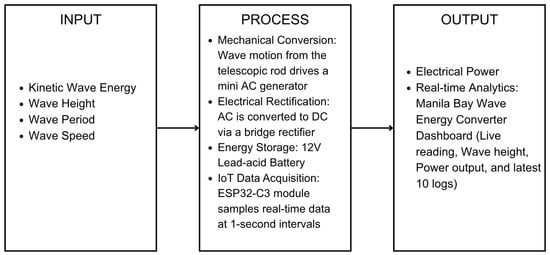
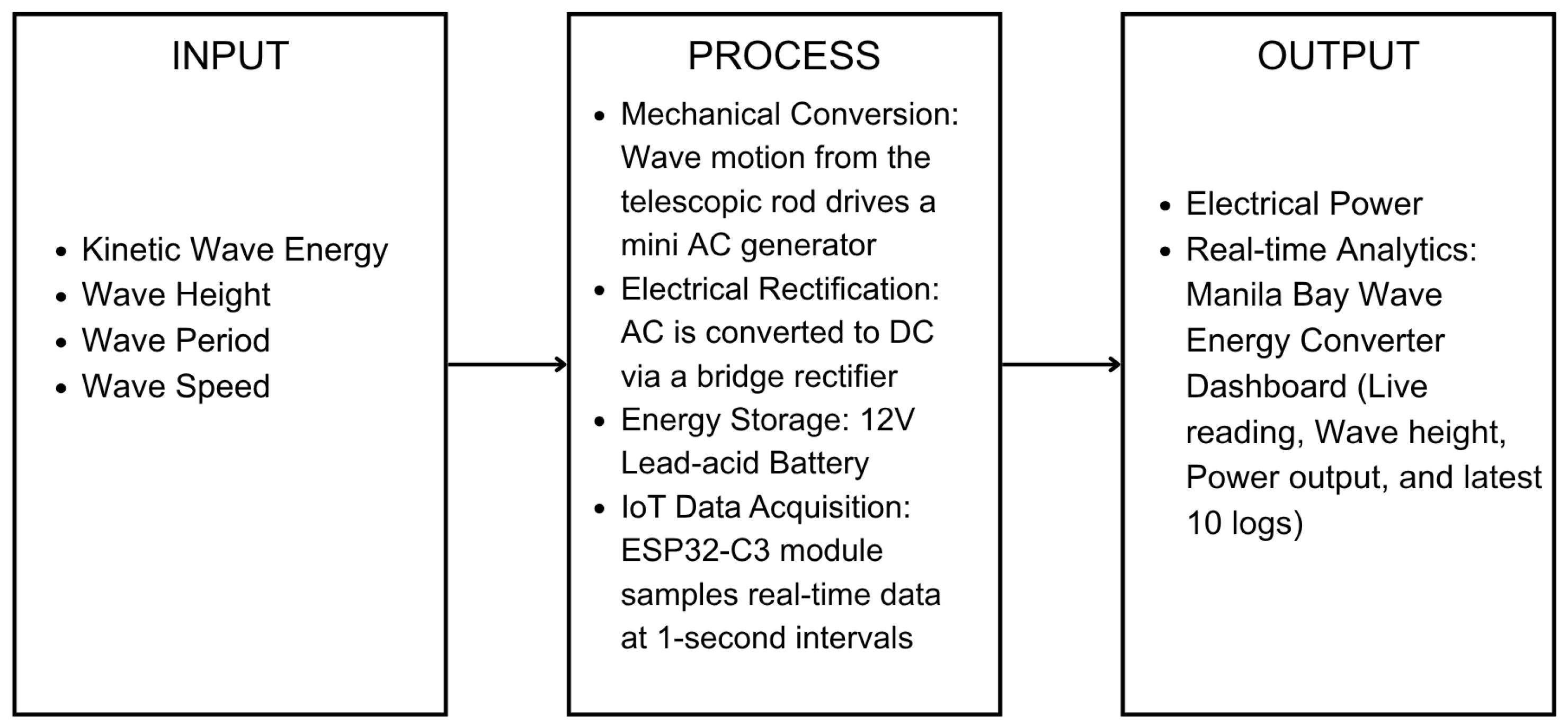
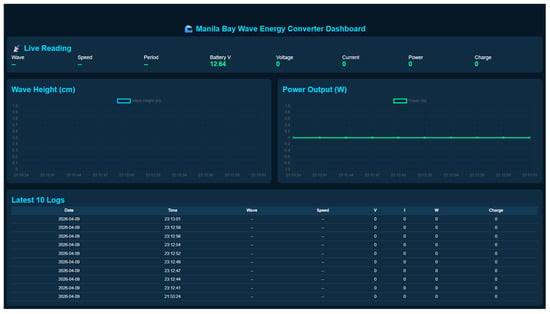
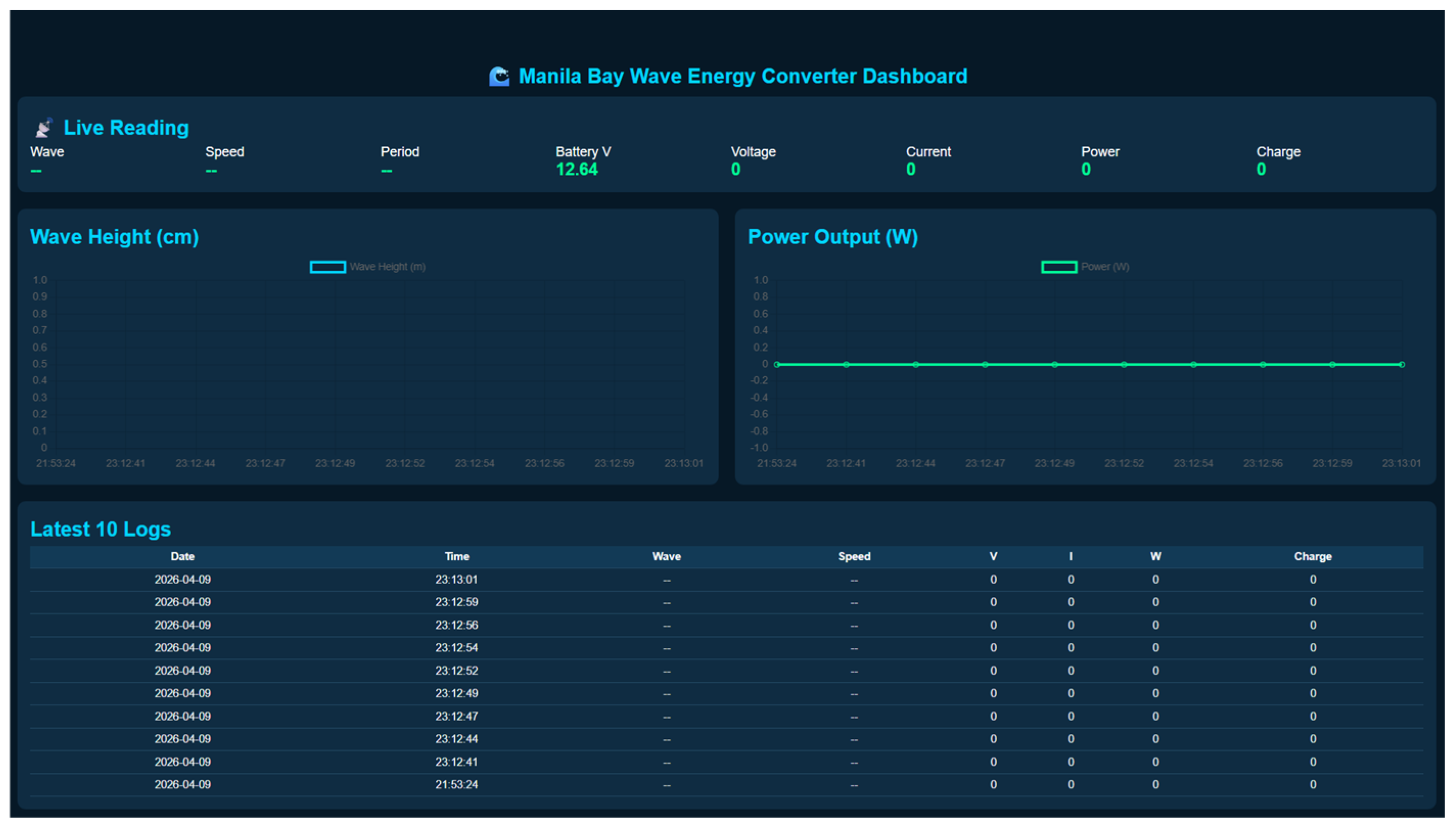
The developed system harnesses the kinetic energy of ocean waves, defined by their height, period, and speed (Figure 1). These inputs act directly on the hardware to initiate the mechanical and electronic processes. Vertical wave motion is captured by a Styrofoam buoy connected to a telescopic rod (Moldex, Quezon, Philippines), which drives a mini AC generator (repurposed from a generic ceiling fan). The AC output is rectified through a bridge circuit to produce direct current voltage. This DC power is stored in a 12 V lead-acid battery (TIANNENG, Huzhou, China). Throughout the process, an ESP32-C3 (Espressif Systems, Shanghai, China) module continuously acquires IoT data, sampling real-time system performance at one-second intervals. The system delivers electrical power for charging and real-time analytics. These analytics are displayed on a custom “Manila Bay Wave Energy Converter Dashboard,” which provides live readings of system status, wave height, and power output, along with a detailed log of the ten most recent data events.
Figure 1.
The workflow of the developed system in this study.
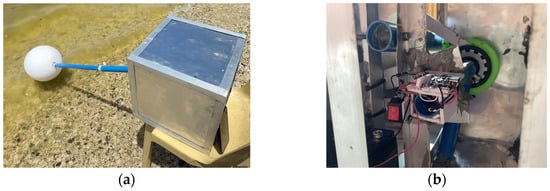
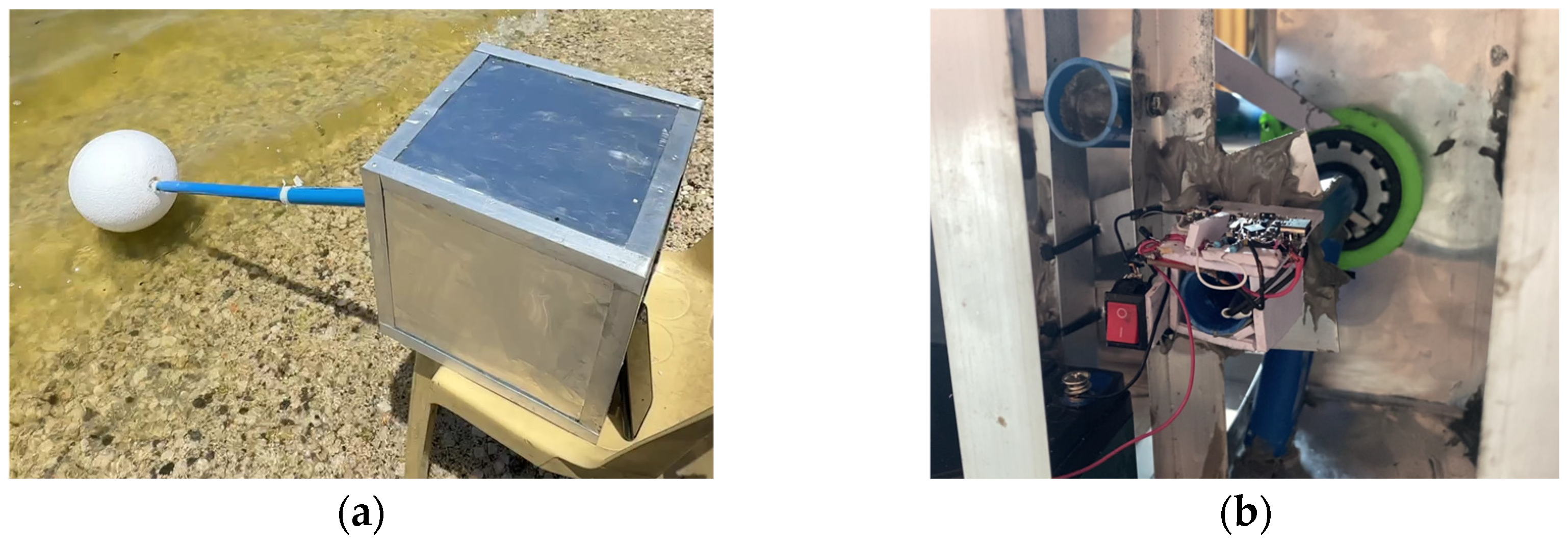
The system was built as a small-scale energy harvester for coastal environments. It is enclosed in a 0.30 × 0.30 × 0.30 m box, which houses the electrical and mechanical components (Figure 2). A Styrofoam buoy with a diameter of 0.25 m serves as the floating unit, capturing kinetic wave energy under simulated coastal conditions with wave heights ranging from 0.05 to 0.18 m.
Figure 2.
Components of the developed system: (a) Styrofoam buoy and rod, with aluminum case; (b) mini AC generator and IoT devices.
The monitoring layer is centered on the ESP32-C3 IoT module, which features an uptime of 0 min 32 s, chip ID ae3b0010, chip rev 4, a flash size of 419,430 bytes, 0 bytes PSRAM size, a CPU frequency of 160 MHz, 215,364 bytes of free heap memory, a sketch memory usage of 861,520 out of 2,172,440 total bytes, and a temperature of 45.64 °C/143.69 °F. This architecture enables high-resolution data acquisition, sampling parameters such as generator input voltage, rectified output voltage, and current flow at one-second intervals. To improve efficiency, the firmware uses event-based recording, logging data only when wave activity or significant voltage changes occur.
The software framework provides remote visualization through the Manila Bay Wave Energy Converter Dashboard, version 4.6.1 (Figure 3). This interface displays live readings of wave height and power output, along with a log of the ten most recent captured events. By integrating the IoT layer, the system improves monitoring accuracy and validates the linear correlation between wave amplitude and electrical output, which reached a peak of 18.7 V during high-amplitude wave tests.
Figure 3.
Manila Bay Wave Energy Converter Dashboard.
3. Results and Discussion
The WEC was tested across 20 distinct cases to assess its responsiveness under varying coastal conditions. As summarized in Table 1, the device demonstrated high sensitivity to wave dynamics. At the lower threshold of activity (wave heights of 0.05–0.06 m), the system initiated power generation with outputs ranging from 3.0 to 4.2 V. At peak wave height (0.18 m), mechanical-to-electrical conversion was optimal, producing a maximum of 18.7 and 11.22 W. These results show that the vertical motion of the Styrofoam buoy and telescopic rod is sufficient to charge a 12 V lead-acid battery, validating the prototype as a viable small-scale energy harvester in active ocean conditions.
Table 1.
Experimental performance data of the WEC across 20 test cases.
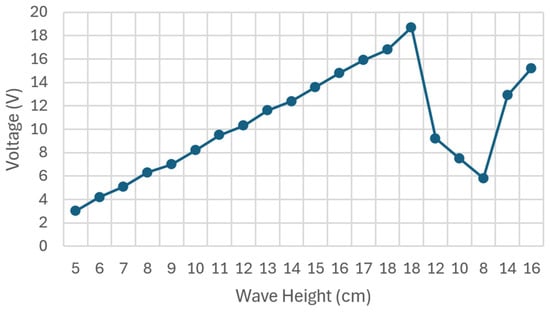
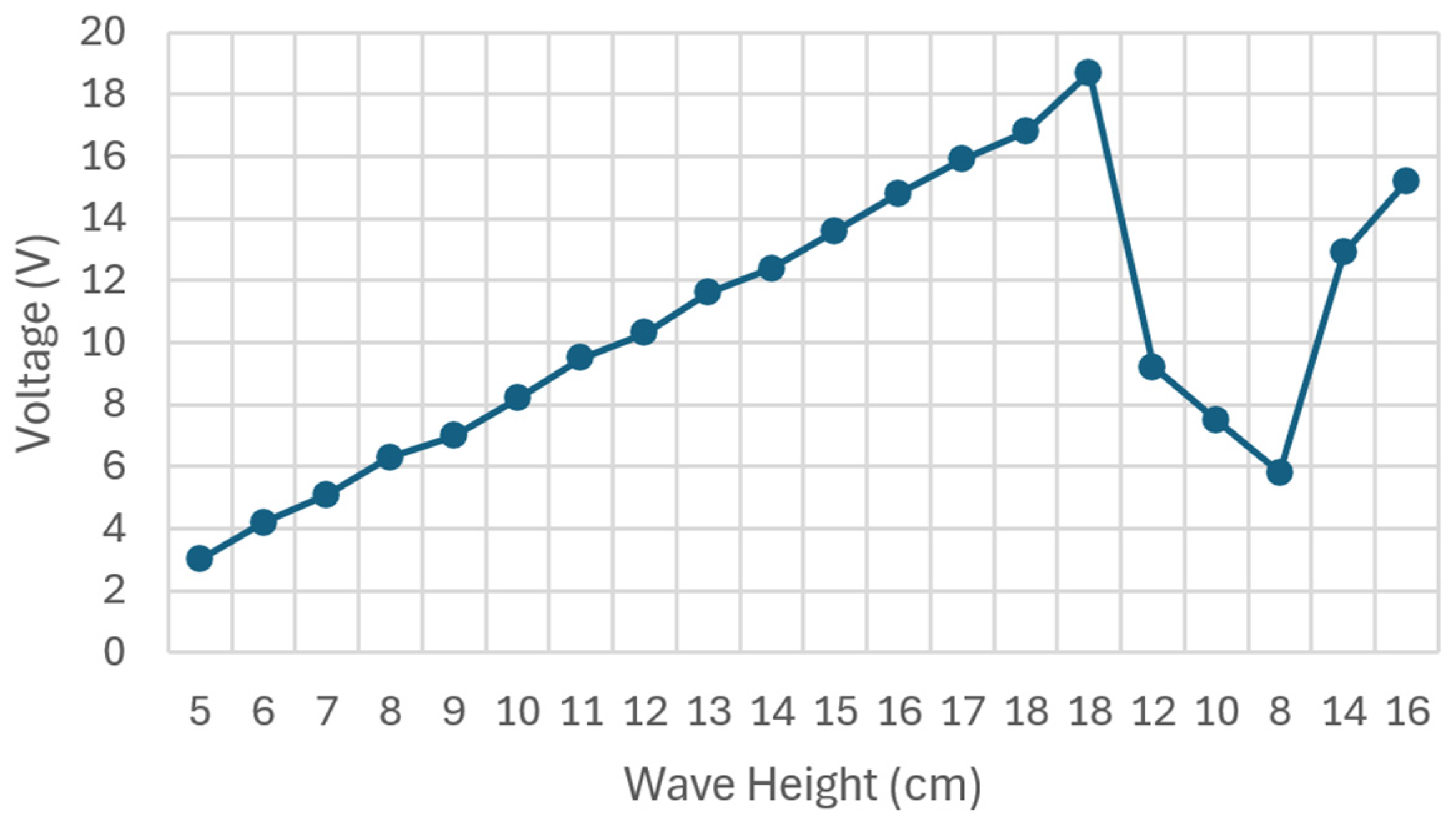
The collected data show a positive correlation between wave height and voltage output. As shown in Figure 4, voltage increased steadily from 3.0 V at 0.05 m wave height to 18.7 V at 0.18 m. This indicates that larger wave amplitudes provide greater mechanical energy, which the system effectively translates into electrical potential. The sharp voltage drop beyond 0.18 m, followed by recovery, suggests nonlinear behavior at extreme amplitudes, likely due to mechanical limits in buoy displacement or generator efficiency.
Figure 4.
Wave height and voltage.
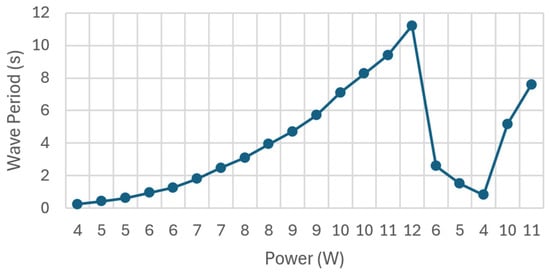
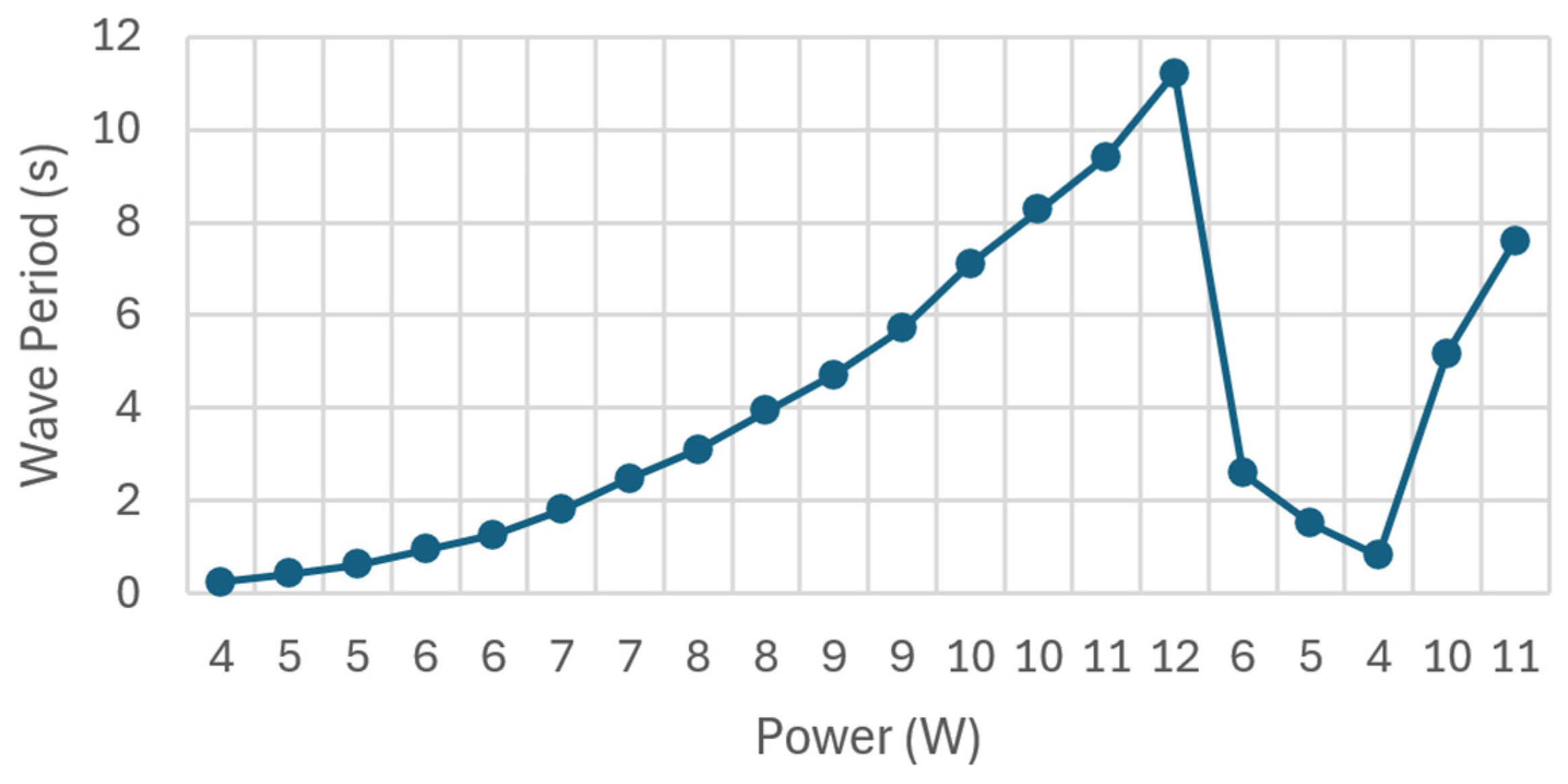
A similar positive correlation was observed between wave period and power output. Figure 5 shows that power rose from 0.24 W at 4 s to a peak of 11.2 W at 12 s. Longer wave periods sustain buoy motion, resulting in higher rotational energy and more efficient generator output. The curve also highlights diminishing returns beyond 12 s, suggesting an optimal operating window for maximum energy capture.
Figure 5.
Wave Period vs. Power.
Table 2 shows the charging capability of the WEC evaluated against the requirements of a 12 V lead-acid battery. Results indicate a distinct operational threshold: effective charging begins only once generated voltage exceeds the battery’s nominal potential. Minimum charging was observed at ~12 V, while efficient charging occurred between 13.5 V and 18 V. Below 10 V, no charging was recorded. This behavior confirms that charging efficiency is highly dependent on sufficient rectified voltage from the wave input.
Table 2.
WEC Charging Performance at Different Voltage Levels.
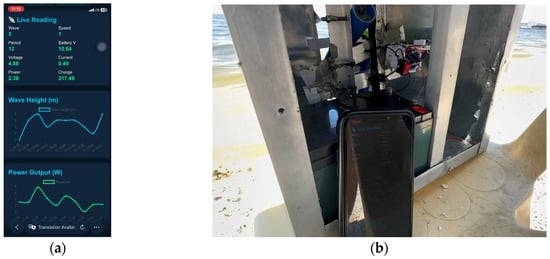
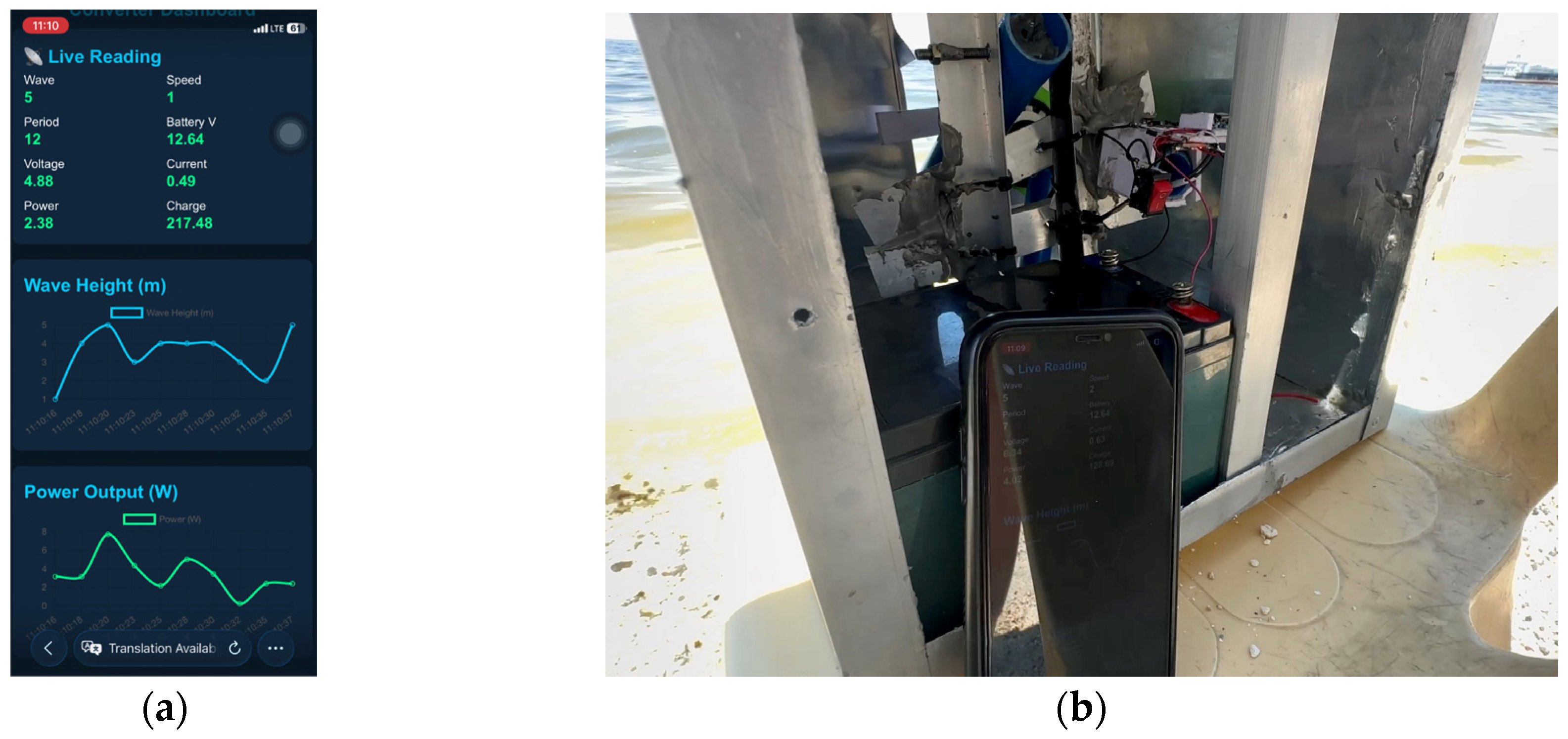
The IoT monitoring system, implemented with the ESP32-C3 module, provided continuous real-time tracking of voltage, current, and power generation at one-second intervals. Event-based recording ensured efficient data logging, capturing only wave-triggered activity or significant voltage changes. As shown in Figure 6a, the Manila Bay Wave Energy Converter Dashboard visualized live readings of wave height and power output, and Figure 6b shows the on-site deployment setup. These results indicate that the IoT layer enhances monitoring accuracy and provides actionable insights into system behavior under dynamic marine conditions.
Figure 6.
(a) Real-time IoT monitoring interface; (b) on-site deployment with IoT device.
4. Conclusions and Recommendations
We developed a small-scale WEC that produced outputs ranging from 3 to 18.7 V, which engineers confirmed was sufficient to charge a 12 V lead-acid battery. Output voltage of the developed WEC increased directly with wave height, while longer wave periods allowed operators to capture higher rotational energy and greater power output. Technicians integrated an ESP32-C3 IoT module, and this addition enabled them to optimize the system through real-time, event-based data logging. The monitoring team recorded information only when wave-triggered activity occurred, ensuring efficient and accurate performance tracking. For future improvements, engineers recommend installing a gear amplification system to generate higher torque, adopting a maximum power point tracking charge controller to improve electrical efficiency, and deploying multi-buoy arrays or hybrid wave–solar systems to increase scalability and reliability.
Author Contributions
Conceptualization, D.S.B. and P.M.D.R.; methodology, P.M.D.R.; software, D.S.B.; validation, D.S.B., P.M.D.R. and F.R.G.C.; formal analysis, D.S.B. and P.M.D.R.; investigation, F.R.G.C.; resources, D.S.B. and P.M.D.R.; data curation, D.S.B. and P.M.D.R.; writing—original draft preparation, D.S.B. and P.M.D.R.; writing—review and editing, D.S.B. and P.M.D.R.; visualization, D.S.B.; supervision, D.S.B. and P.M.D.R.; project administration, D.S.B. and P.M.D.R.; funding acquisition, D.S.B. and P.M.D.R. All authors have read and agreed to the published version of the manuscript.
Funding
Financial support for this study was provided by the authors’ personal funds; no external funding or sponsorships were received.
Institutional Review Board Statement
Not applicable.
Informed Consent Statement
Not applicable.
Data Availability Statement
The data will remain confidential and will not be made available unless the authors receive explicit permission and approval from the corresponding authors.
Conflicts of Interest
The authors declare no conflicts of interest.
References
- Rupesh, P.L.; Rana, H.K.; Shashidar, S.; Darshan, M.S.S.; Teja, G.V. Power Generation to the Coastal Areas with an Approach to Wave Energy Device-A Prototype. IOP Conf. Ser. Mater. Sci. Eng. 2021, 1013, 012035. [Google Scholar] [CrossRef] [Scilit]
- Mohammed, O.M. Renewable Energy: Sources, Integration and Application: Review Article. J. Eng. Res. Rep. 2021, 20, 143–161. [Google Scholar] [CrossRef] [Scilit]
- Flagel, J. Is Wave Energy the Next Renewable We Should Be Looking? Linq Consulting. Available online: https://www.linq-consulting.com/post/is-wave-energy-the-next-renewable (accessed on 9 April 2026).
- Yoshimura, R.; Iida, T.; Kaiser, M.S.; Irifune, K. Fast real-time prediction of wave exciting force for a point absorber based on impulse response functions. Ocean Eng. 2025, 255, 111458. [Google Scholar] [CrossRef] [Scilit]
- Prasad, K.A.; Chand, A.A.; Kumar, N.M.; Narayan, S.; Mamun, K.A. A Critical Review of Power Take-Off Wave Energy Technology Leading to the Conceptual Design of a Novel Wave-Plus-Photon Energy Harvester for Island/Coastal Communities’ Energy Needs. Sustainability 2022, 14, 2354. [Google Scholar] [CrossRef] [Scilit]
- Foteinis, S. Wave energy converters in low energy seas: Current state and opportunities. Renew. Sustain. Energy Rev. 2022, 162, 112448. [Google Scholar] [CrossRef] [Scilit]
- Enriquez, J.N.M.; Payao, U.H.M.; Ibarra, E.J.B. Implementation of a Wave Energy Harvesting Device with a Semi-Cylindrical Hybrid TENG-EMG System for Wave Energy Harvesting with IoT Application. In Proceedings of the 2025 10th International Conference on Power and Renewable Energy (ICPRE), Hangzhou, China, 19–22 September 2025; pp. 1682–1687. [Google Scholar] [CrossRef] [Scilit]
- Arevalo, G.S.; Agtalao, A.P.; Pacis, M.C. Energy Harvesting on Playground Slide with Implementation of Lead Zirconate Titrate (PZT) Cantilever and Gear System with IoT Monitoring. In Proceedings of the 2021 IEEE 13th International Conference on Humanoid, Nanotechnology, Information Technology, Communication and Control, Environment, and Management (HNICEM), Manila, Philippines, 28–30 November 2021. [Google Scholar] [CrossRef] [Scilit]

Disclaimer/Publisher’s Note: The statements, opinions and data contained in all publications are solely those of the individual author(s) and contributor(s) and not of MDPI and/or the editor(s). MDPI and/or the editor(s) disclaim responsibility for any injury to people or property resulting from any ideas, methods, instructions or products referred to in the content. |
© 2026 by the authors. Licensee MDPI, Basel, Switzerland. This article is an open access article distributed under the terms and conditions of the Creative Commons Attribution (CC BY) license.