


Abstract
An automated watermark embedding method was developed to enhance the anti-counterfeiting capability of postage stamps. The method converts an RGB image into the cyan, magenta, yellow, and black color space and embeds the watermark in the magenta channel using the dot phase modulation technique. The grayscale values of the watermark are processed through convolution to control dot displacement, ensuring smooth transitions and reducing discontinuities among halftone dots. Additionally, the green-noise halftoning model is incorporated to improve the imperceptibility of the embedded watermark. The printed results are verified using a lenticular lens and analyzed digitally to evaluate decoding stability and visual imperceptibility. This study aims to enhance the visual quality of the host image after embedding while improving watermark invisibility, thereby enabling its application in secure printing.
1. Introduction
The growing demand for personalized applications has made personalized postage stamps an important medium that combines customized design with postal functionality. However, the widespread availability of printing devices and advances in reproduction technologies have lowered the barrier to stamp forgery, posing threats to postal systems and the philatelic market [1]. In printing, watermarking is a key anti-counterfeiting mechanism. Traditional watermarks are embedded during papermaking; although secure, they are complex and costly to produce. With advances in digital and image processing technologies, digital watermarking has been applied to copyright protection and anti-counterfeiting authentication [2]. It embeds information into images while preserving the visual quality, enabling effective authentication.
Among various digital watermarking approaches, halftoning-based techniques have gained increasing attention because they can be directly integrated into existing digital imaging and printing processes. Accordingly, many studies have investigated embedding methods based on dot structures or specialized halftoning algorithms. Fu and Au embedded watermark information by modifying pixel values at selected positions during error diffusion halftoning [3]. Hecht proposed using oblique threshold matrices, encoding binary data through combinations of dot structures with different orientations [4]. Wang et al. concealed watermarks within halftone dots of varying size and density, exploiting scanning sampling differences to prevent reproduction [2]. Phillips replaced conventional dots with micro-text or patterns that are visually indistinguishable but difficult to reproduce due to limited resolution and ink spread [5]. Dot phase modulation embeds information by precisely adjusting the spatial positions of halftone dots. van Renesse suggested combining micro-structure-based anti-counterfeiting techniques with digital algorithms to embed more complex information, enabling reliable machine extraction of hidden watermark images and enhancing document security and value [6]. However, most existing methods rely on the manual adjustment of dot arrangements, resulting in low efficiency and possible dot fragmentation or boundary defects, which degrade the visual quality and decoding performance.
Halftoning is a fundamental technique in printed image reproduction, converting continuous tone into binary dots, due to the limitation that printing devices can only control whether a dot is printed or not. Due to the low-pass filtering property of the human visual system, neighboring dot boundaries are blurred at an appropriate viewing distance, producing a smooth appearance [7]. In digital image processing, halftoning techniques are mainly categorized into amplitude modulation (AM) and frequency modulation (FM). AM halftoning features fixed dot spacing and represents the image intensity by varying the dot size [8]. This method is computationally simple and provides stable print quality. However, its regular dot structure is prone to Moiré patterns in color printing, and dot loss or gain may occur in highlight and shadow regions, degrading image details. In contrast, FM halftoning maintains a constant dot size and represents tonal variations by adjusting the dot density, typically using error diffusion. This approach distributes quantization errors to neighboring pixels, yielding a more uniform dot distribution and effectively reducing graininess while improving detail preservation [3]. In addition, FM halftoning does not rely on a fixed periodic structure, reducing Moiré artifacts and enabling high-quality output, but it requires relatively high device precision. On the basis of FM halftoning, further developments introduce noise masks to modify the dot distribution. Among them, the green-noise halftoning model combines characteristics of both AM and FM halftoning, producing dots with randomly varying size and spacing. This maintains good visual quality and image detail while enabling compatibility with a wider range of printing systems [9,10].
Dot phase modulation originates from the Scrambled Indicia patented technique [11], where an original pattern is decomposed into microscopic fragments and spatially shifted, rendering the printed image visually unrecognizable. A transparent lenticular lens with parameters identical to those used during encoding is required for reconstruction. Through light refraction and focusing, it concentrates light onto specific lines or gaps, enabling the visual reassembly of the original image. Dot phase modulation techniques inherit this concept by precisely controlling halftone dot positions to conceal information. Through a lenticular lens, light is focused onto specific dot lines, revealing the hidden pattern. When the displacement of a dot center reaches half of a screen line, a phase inversion effect occurs [6]. Alasia et al. suggested integrating this encryption approach with four-color printing to embed different encrypted patterns into specific color separations of an image [12]. However, existing methods mostly rely on the manual adjustment of the dot arrangement, which is inefficient and prone to dot fragmentation or boundary defects, affecting the overall visual quality and decoding effect.
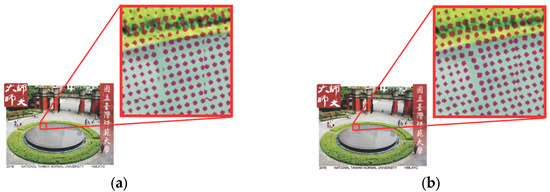
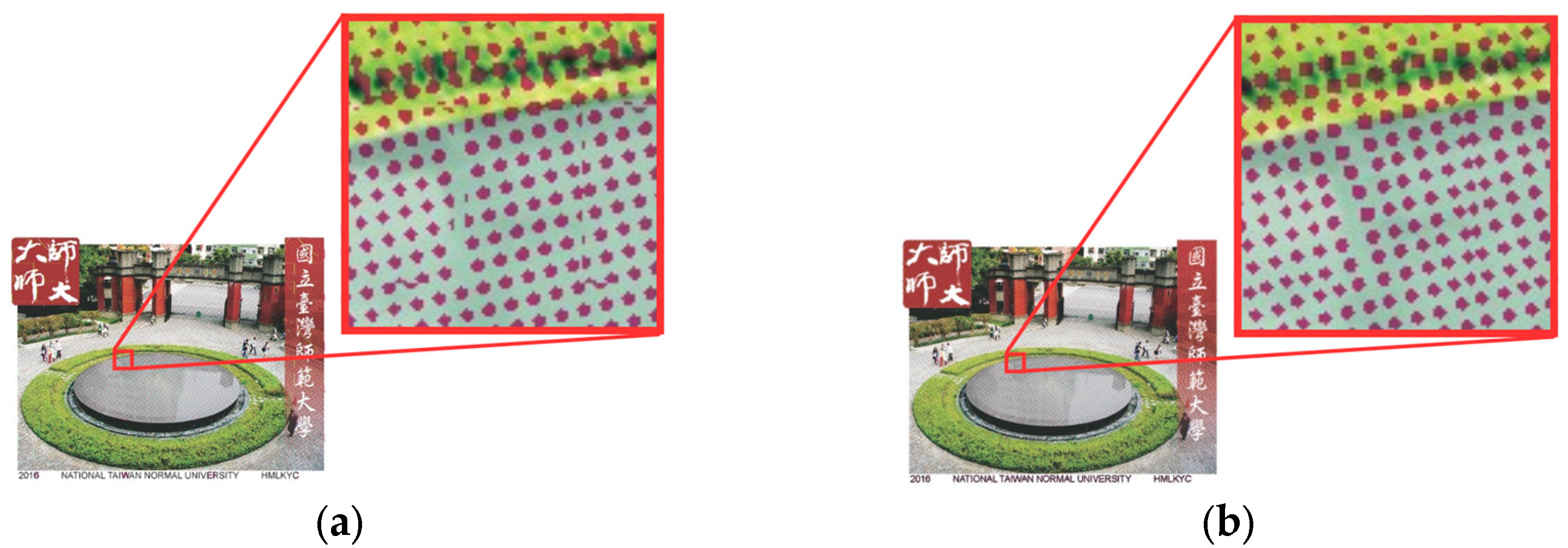
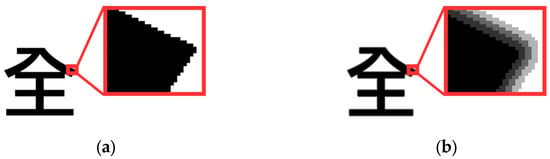
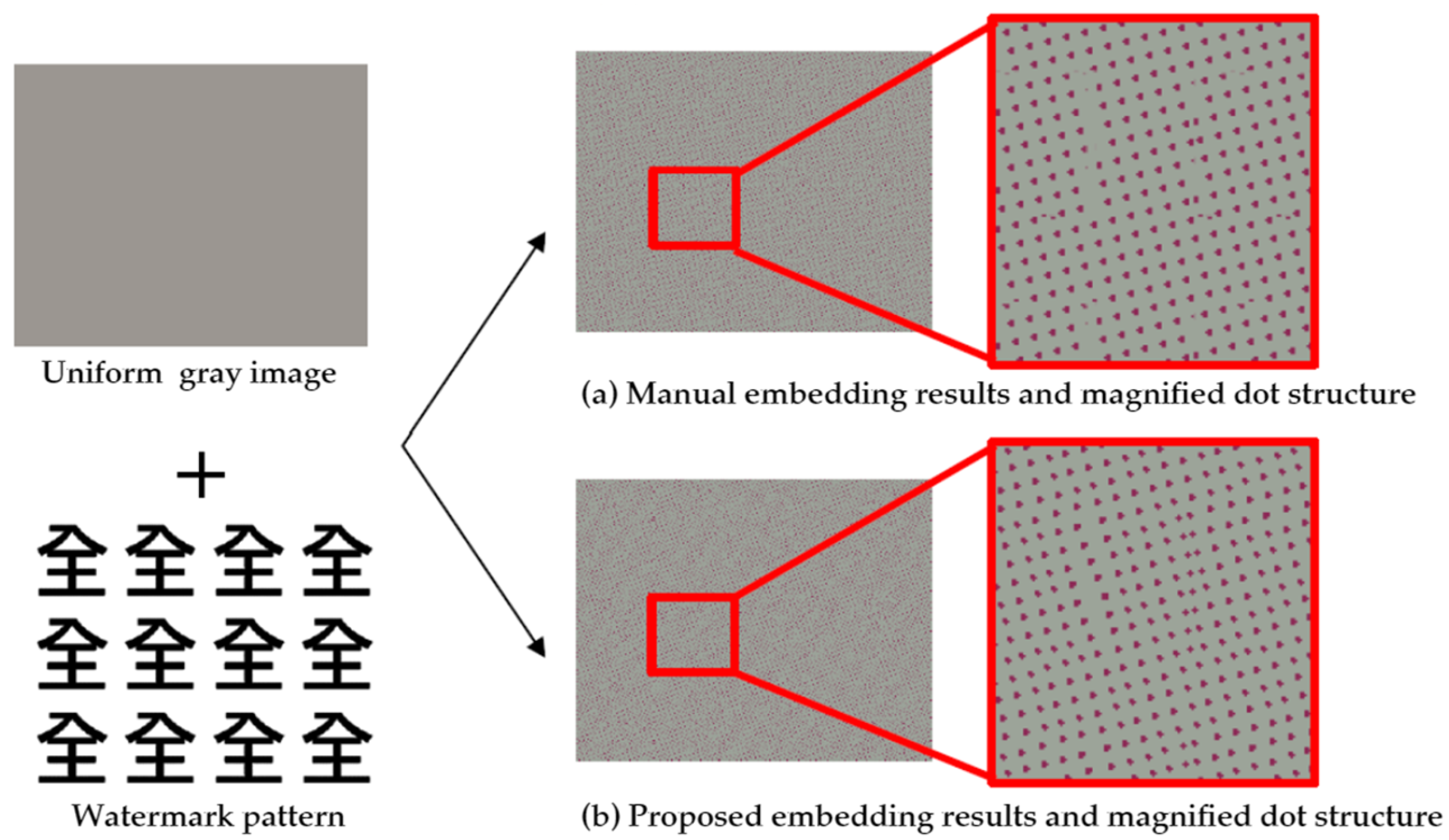
In this study, we develop an automated system that embeds watermarks into specific color separations using dot phase modulation techniques, integrating digital halftoning and dot phase modulation into a unified workflow. This enables an automated embedding process while ensuring stable decoding performance and reducing visually perceptible dot artifacts, achieving a balance between visual quality and anti-counterfeiting capability (Figure 1). The printed image is evaluated to verify the decoding stability and visual imperceptibility and analyze the influence of different image characteristics on the embedding performance to assess the applicability and robustness of the developed method.
Figure 1.
Dot phase modulation watermark and local structure comparison: (a) manual displacement; (b) proposed method. The Chinese text appearing in the postage stamp image is part of the original stamp design.
2. Methods
2.1. Preprocessing of Original Image and Watermark
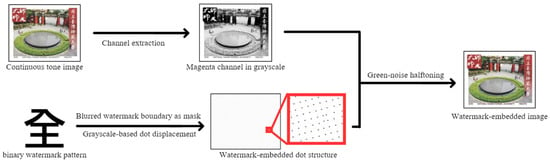
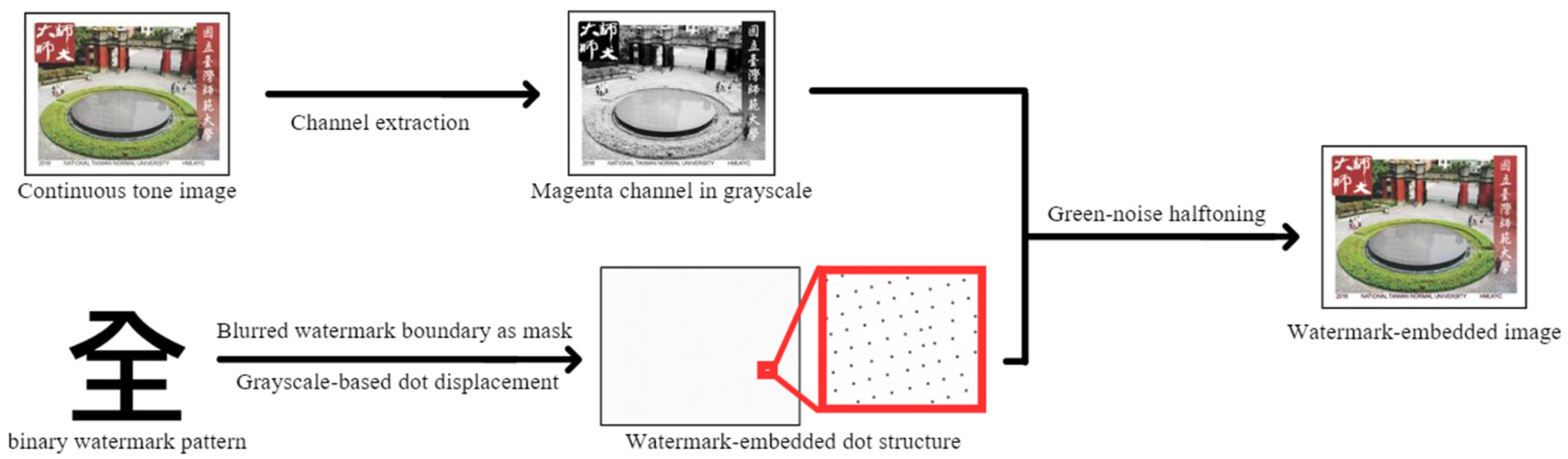
For imperceptibility and operational convenience, the magenta channel is selected for watermark embedding. Color printing is based on the cyan, magenta, yellow, and black (CMYK) model, consisting of cyan, magenta, yellow, and black channels. The yellow channel exhibits low density and higher susceptibility to interference, while the black channel has high density, making modifications more perceptible. Although cyan and magenta have similar density characteristics, magenta is chosen in this study. The developed method converts the input image into CMYK and extracts the magenta channel as the embedding layer. A binary pattern is used as the watermark and serves as a mask to modulate the dot phase displacement. The overall workflow is shown in Figure 2.
Figure 2.
A schematic diagram of the research process. The Chinese character “全” (meaning “whole” or “complete”) is used as the watermark pattern.
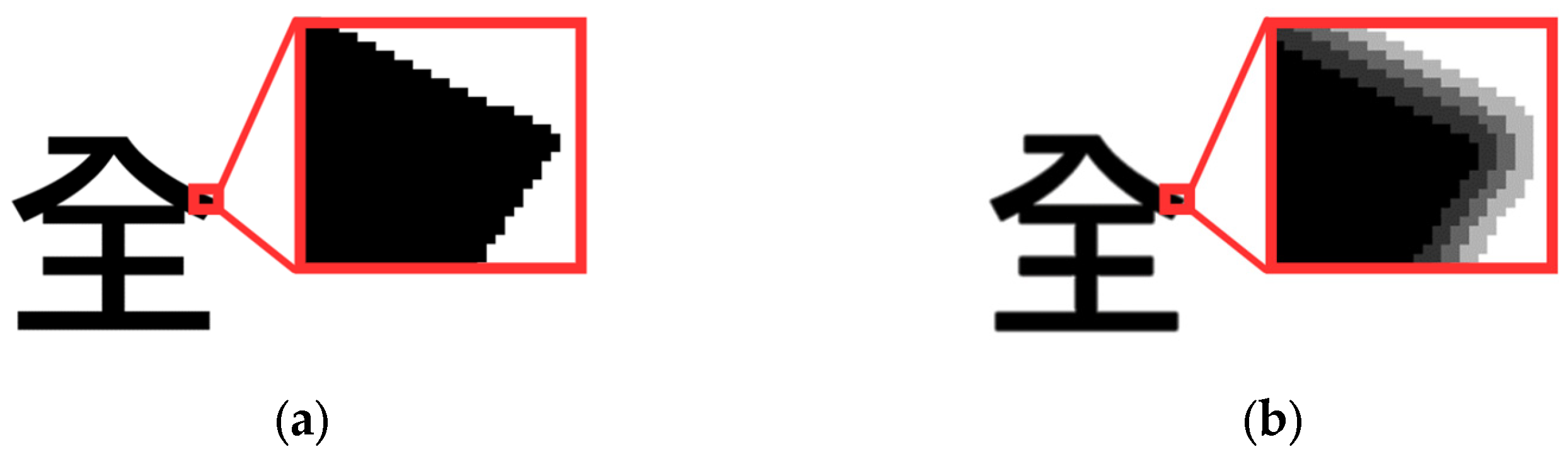
To gradually increase the dot displacement, an 8 × 8-pixel averaging filter ℎ[m,n] in MATLAB format (Equation (1)) is applied for 2D convolution (Equation (2)). x[m,n] represents the original watermark pattern, and y[m,n] represents the blurred image after processing. This operation converts binary edges into grayscale values, which are classified into five displacement levels, mapping white to black to 0–4 pixel shifts (Figure 3).
h[m,n] = ones(8,8)/16
y[m,n] = x[m,n] ⊗ h[m,n]
Figure 3.
Watermark pattern with enlarged local boundary: (a) binary image before blurring; (b) grayscale segmentation after blurring. The Chinese character “全” (meaning “whole” or “complete”) is used as the watermark pattern.
2.2. Dot Phase Modulation and Watermark Embedding
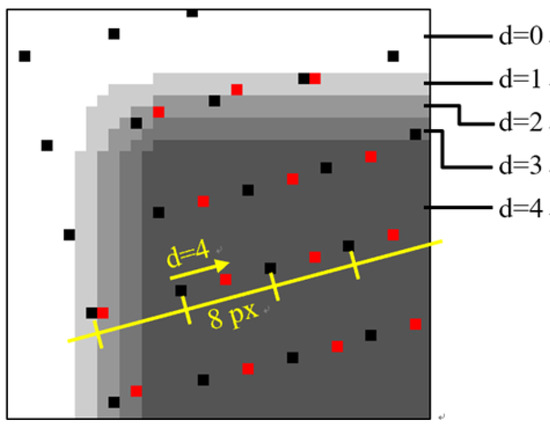
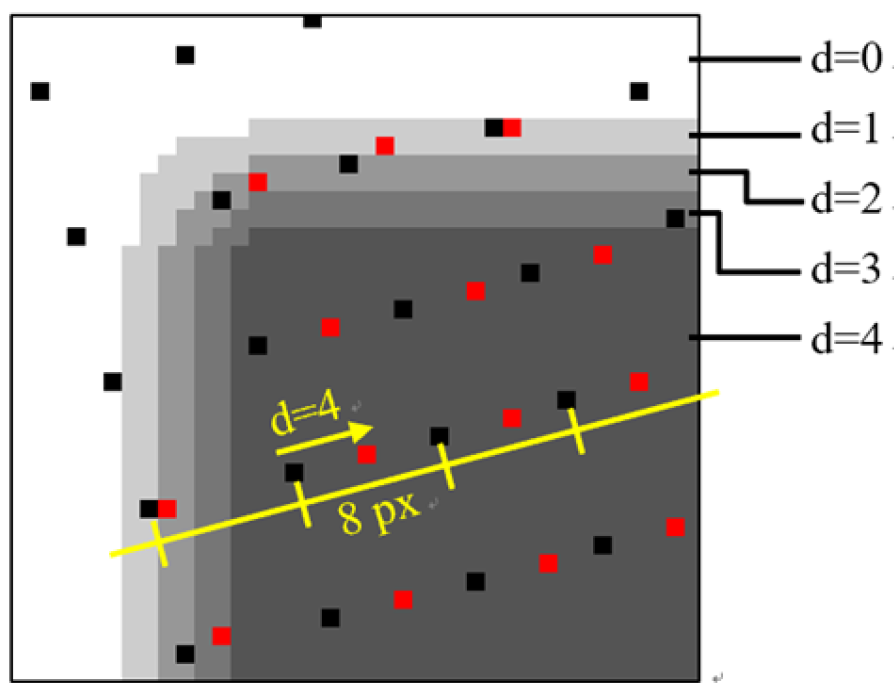
After preprocessing, the image is halftoned at 600 lines per inch (dpi) with a screen angle of 15° and a screen ruling of 75 lines per inch (lpi). The grayscale values obtained from Equation (2) are used to determine the dot displacement. Each halftone dot is then shifted along the 15° direction according to the corresponding displacement levels in the watermark grayscale matrix, embedding the watermark into the dot structure (Figure 4).
Figure 4.
Dot displacement illustration (black: regular dots; red: displaced dots in mask; d: displacement amount based on grayscale).
After watermark embedding via dot phase modulation, a green-noise halftoning process is applied by treating the modulated dot structure as the seed distribution of a parent process, followed by a daughter process to generate green-noise halftone dots. The resulting dots are embedded into the magenta channel of the original image.
2.3. Watermark Embedding in Original Images
To evaluate the impact of the image characteristics on the watermark embedding performance, the same watermark is applied to different types of images. Flat-color images without texture or content variation are used to observe dot structures and evaluate the magenta density range for stable embedding and decoding. Specifically, magenta channel densities of 1–5% and 95–99% are tested with 1% increments, and a uniform gray image is used as a reference. A complex image with rich textures is also included to represent the real-world case (Figure 5).
Figure 5.
Original images: (a) magenta image with different gradations; (b) uniform gray image (C = 26, M = 26, Y = 26, K = 102); (c) complex image. The Chinese text in (c) is part of the original postage stamp design.
2.4. Decoding Methods and Watermark Restoration
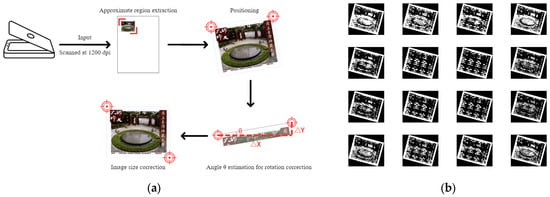
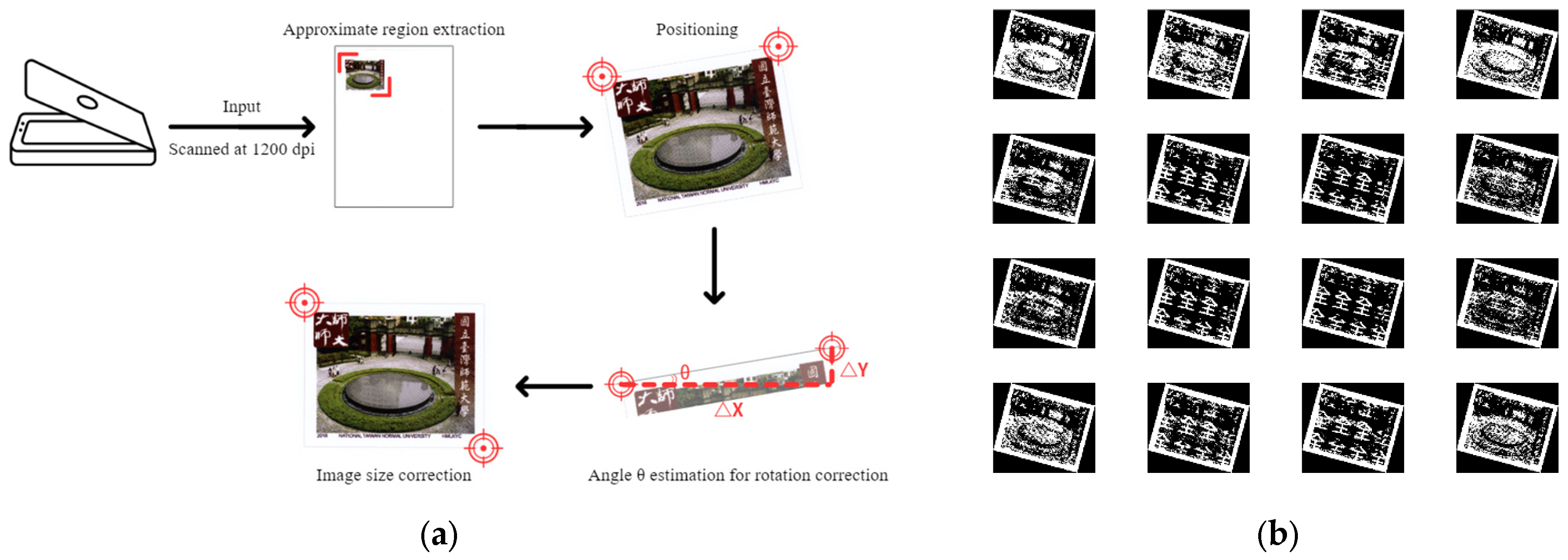
The embedded watermark is decoded using two approaches. The first is digital decoding using a standalone program. For printed outputs scanned at 1200 dpi, the image is first processed in MATLAB R2024b to detect registration marks for rotation correction and size reconstruction. The magenta channel is then extracted and rotated by 15°, followed by sampling with initial offsets of 1–4 pixels in both row and column directions at an interval of 8 pixels, yielding 16 sampling results that simulate the phase-dependent visual focusing of halftone dots (Figure 6). The second approach is optical decoding using a lenticular lens. After printing, a 75 lpi lens is overlaid on the printed image and rotated to align with the 15° screen angle of the magenta channel, enabling reconstruction of the embedded pattern (Figure 7).
Figure 6.
Process of digital decoding and restoring watermark: (a) rotation and size correction procedure; (b) digital sampling and decoding results. The Chinese text in (a) is part of the original postage stamp design, and the Chinese characters visible in the decoded images represent the watermark pattern.
Figure 7.
Decoding the printed image with 75 lpi lenticular lens.
To evaluate the proposed method, a conventional approach is simulated using the same input image, watermark, dot arrangement, and halftoning settings. Manual embedding is performed in Adobe Photoshop CC 2017. The difference lies in whether dot phase modulation is integrated into the green-noise halftoning process. Preliminary tests are conducted using Fujifilm Apeos C5240 (FUJIFILM Business Innovation Corp., Tokyo, Japan), while final postage stamp outputs are printed with Fuji Xerox Color 560 ((FUJIFILM Business Innovation Corp., Tokyo, Japan) and scanned using Epson Perfection V600 Photo (Seiko Epson Corporation, Suwa, Nagano, Japan).
3. Results and Discussion
In this study, each original image has a size of 1512 × 1896 pixels and is printed at 600 dpi, corresponding to an actual size of approximately 6.4 × 8 cm. The binary watermark has a size of 300 × 300 pixels, is arranged in a 3 × 4 layout, and is then scaled to match the host image size. The printed results are scanned at 1200 dpi for analysis. Flat gray images without texture or gradient interference are used to evaluate watermark concealment across different embedding methods. One can observe the effect of displacement embedding of the watermark on halftone dots by magnifying the dot distribution. In the conventional method, dot displacement is applied after halftoning, resulting in discontinuities and dot breakage at watermark boundaries. In contrast, the proposed method integrates dot displacement into the green-noise halftoning process before grayscale-based halftone generation, thereby avoiding artifacts caused by post-modification (Figure 8).
Figure 8.
Comparison of dot structures of different watermark embedding methods: (a) manual displacement; (b) proposed method. The Chinese character “全” (meaning “whole” or “complete”) is used as the watermark pattern.
3.1. Dot Smoothness Analysis of Different Embedding Methods
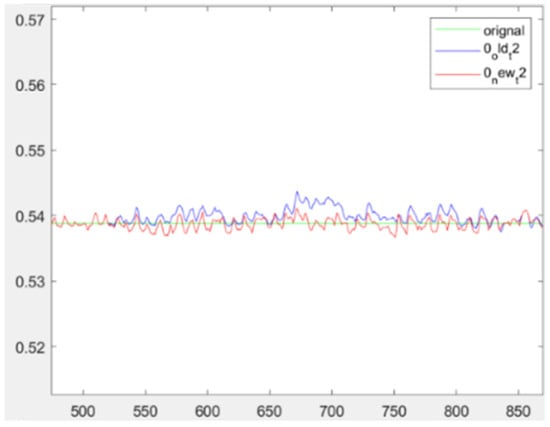
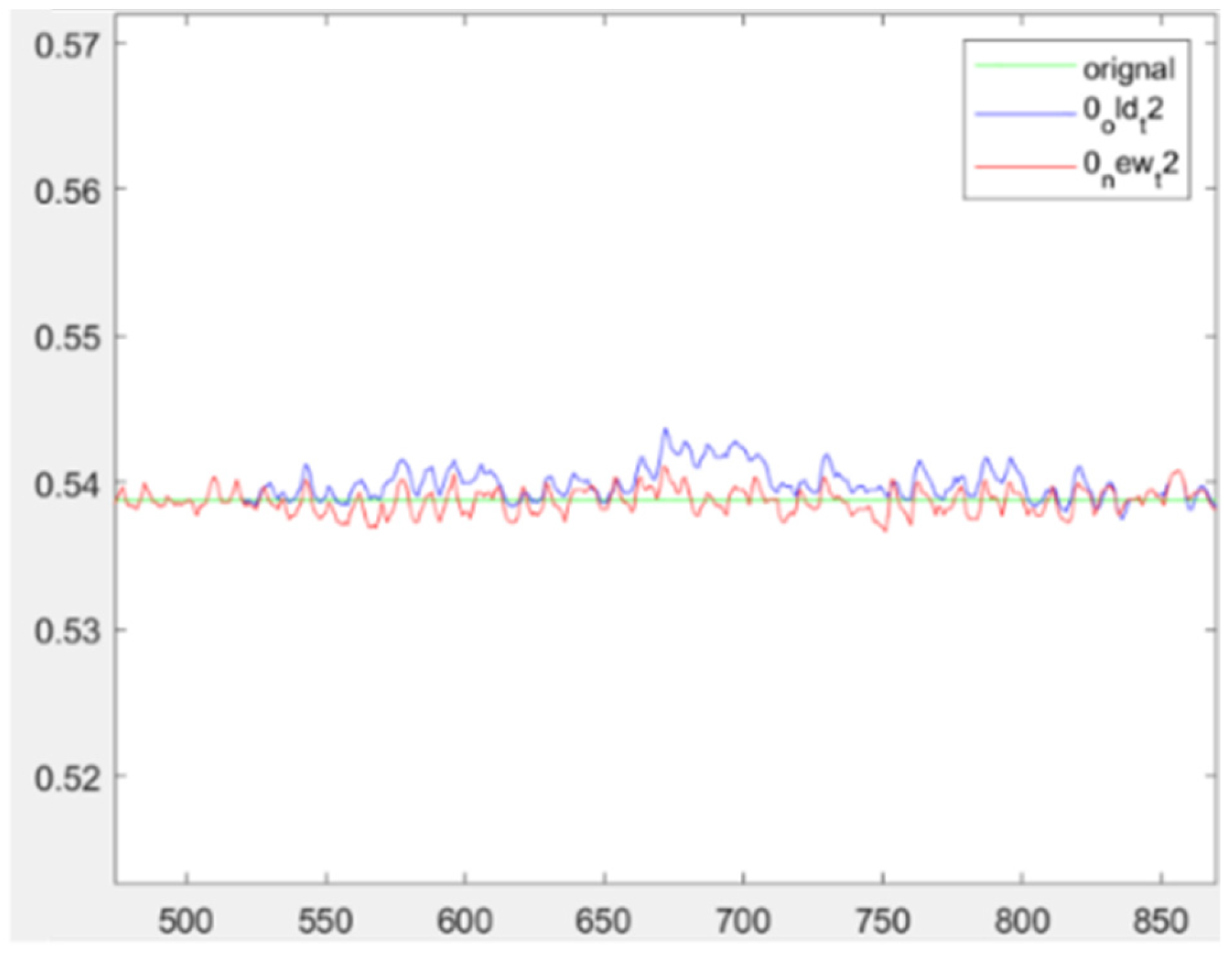
To evaluate dot smoothness under different embedding methods, each digital image is converted into a grayscale matrix and blurred to simulate human visual observation. A horizontal line across the watermark region is extracted, and its grayscale values are plotted for comparison to identify visual differences and potential artifacts (Figure 9). The x-axis represents the spatial position, and the y-axis represents the grayscale intensity. The green curve represents the non-watermarked image, the blue curve the manual embedding, and the red curve the developed method. The results show that both embedded methods introduce intensity variations compared to the green curve. However, the manually embedded method shows larger and less consistent variations, while the proposed one exhibits smoother transitions and higher consistency in amplitude, indicating improved halftone continuity.
Figure 9.
Dot smoothness analysis.
3.2. Effect of Print-and-Scan on Decoding
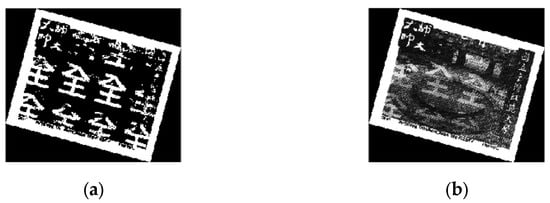
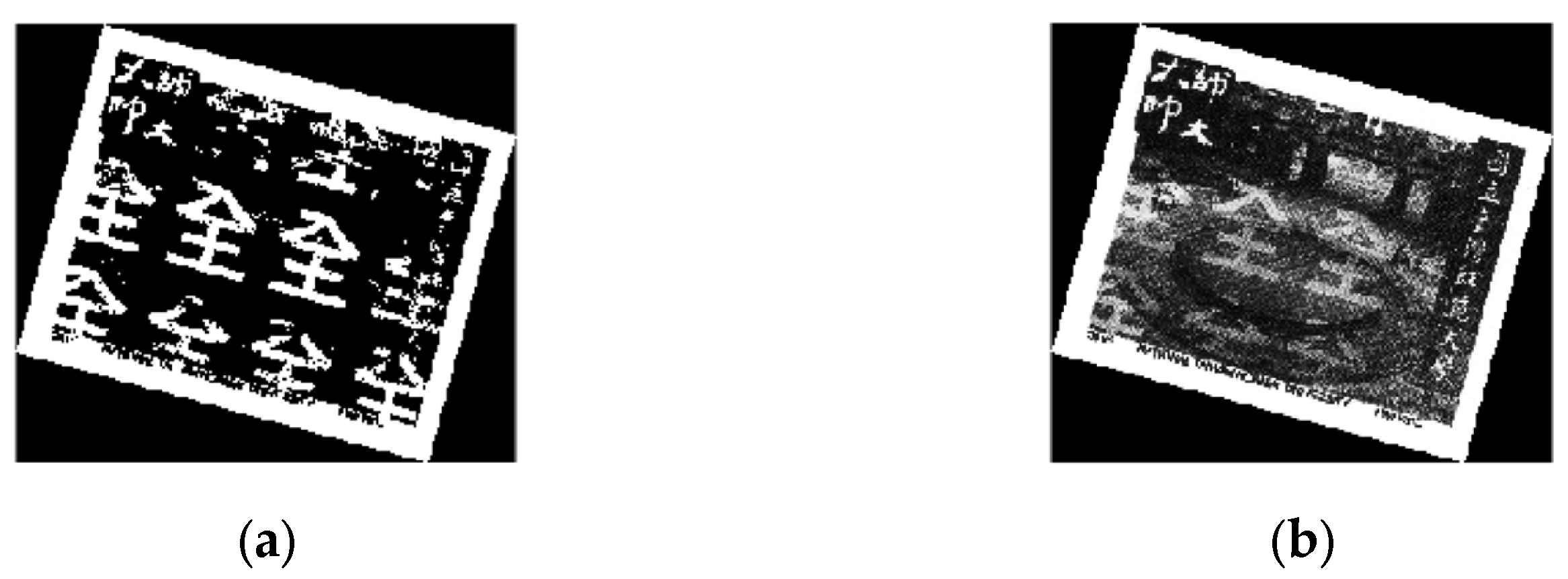
To evaluate the impact of printing on watermark decoding, the optimal digital decoding results are compared between the digital image and the print-and-scan image (Figure 10). The results show that the watermark is clearly decodable in the digital image, but contrast and edge sharpness degrade after printing and scanning, reducing visibility and recognizability.
Figure 10.
Digital decoding results: (a) digital image; (b) print-and-scan image. The Chinese character “全” (meaning “whole” or “complete”) is used as the watermark pattern.
3.3. Comparison of Different Magenta Gradations
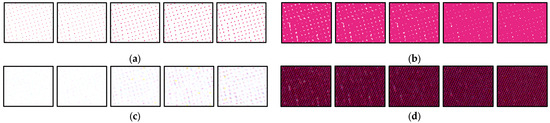
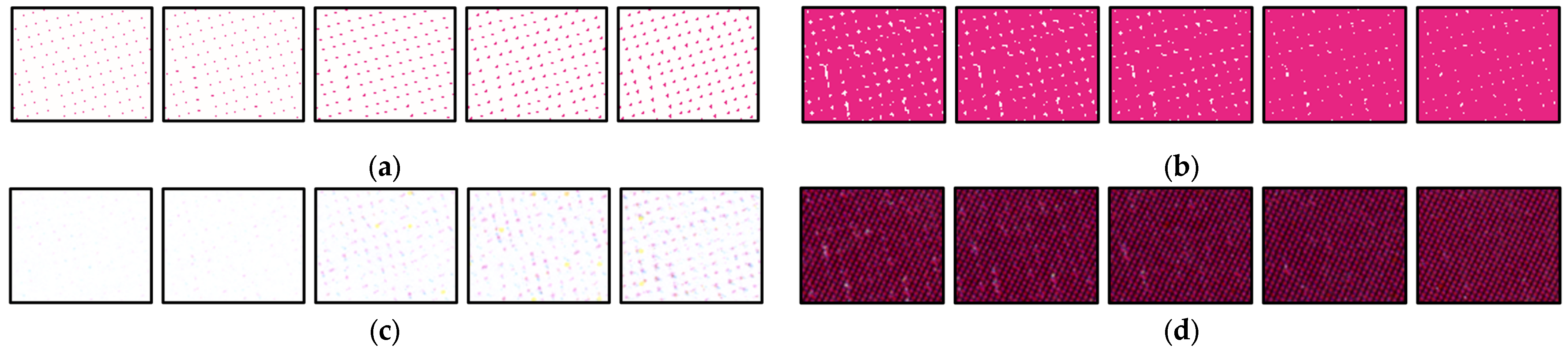
To determine the applicable magenta density range, embedding is tested at 1–5% and 95–99% under identical conditions (Figure 11). At low densities, 1–2% are decodable only in digital images, whereas printed images are not detectable using a lenticular lens. At 3%, the printed results are detectable but with low recognition. At high densities, 97% remains barely detectable after printing, whereas densities above 97% are not recognizable.
Figure 11.
Magnified partial halftone dot images: (a) 1–5% tone digital image; (b) 95–99% tone digital image; (c) 1–5% tone print-and-scanned image; (d) 95–99% tone print-and-scanned image.
The results indicate that the printing density affects the proposed method. Low density causes dot loss, while high density leads to dot gain effects, degrading the designed displacement structure. Therefore, a suitable density is required to ensure recognizability and stability.
3.4. Application in Real Postal Printing Conditions
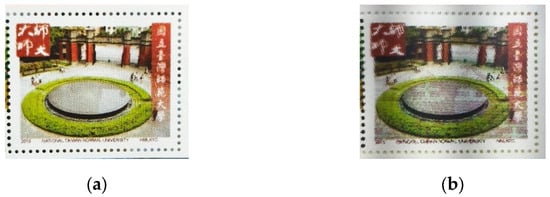
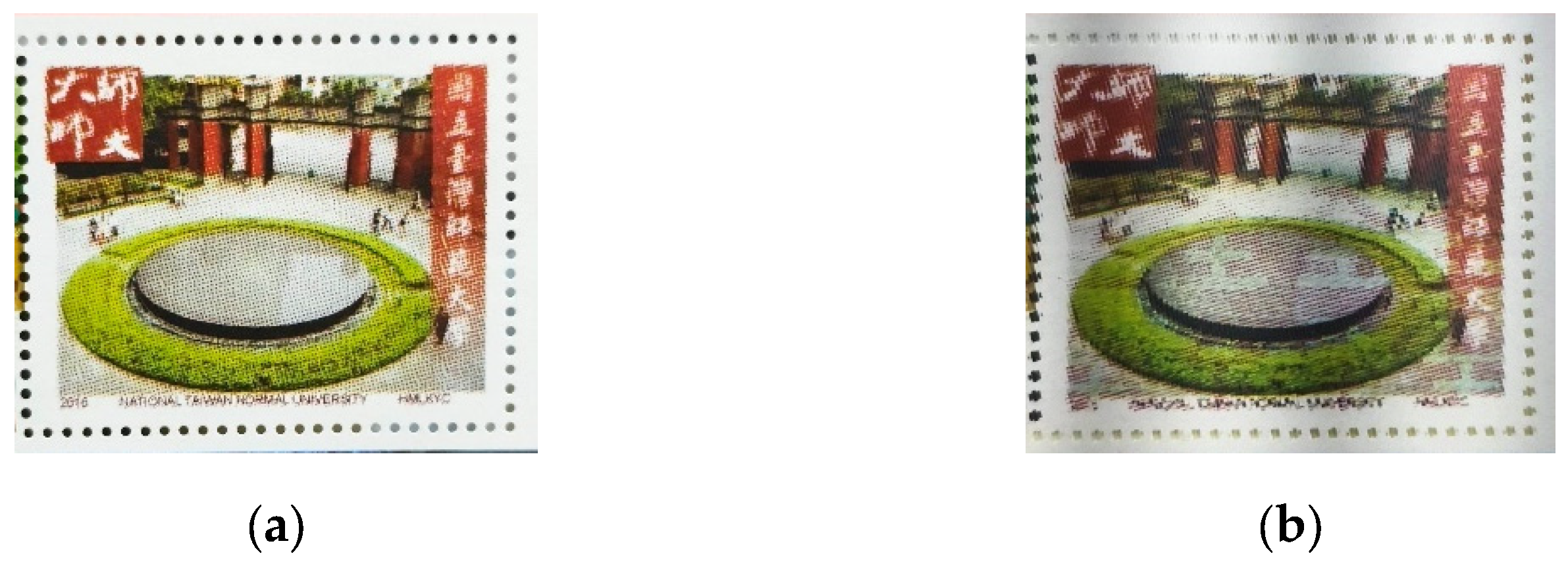
The model’s performance was validated in a postal printing environment (Figure 12). The output is 756 × 948 pixels printed at 600 dpi (3.2 × 4 cm). This proves that the image with the embedded watermark can still be successfully decoded by the lenticular lens after being output from a personalized stamp machine, and the reconstructed pattern is recognizable. These results demonstrate stable embedding and decoding performance in practical printing conditions, indicating feasibility for stamp anti-counterfeiting applications.
Figure 12.
(a) Final printed stamp; (b) decoded image with lenticular lens. The Chinese text in (a) is part of the original postage stamp design, and the Chinese characters visible in the decoded images represent the watermark pattern.
4. Conclusions
An automated watermark embedding method was developed by combining digital halftoning and dot phase modulation for stamp anti-counterfeiting. By integrating dot displacement into the green-noise halftoning process, the method reduces dot breakage and boundary artifacts, improving the visual quality and imperceptibility. The watermark is successfully reconstructed in both digital and printed outputs, with reliable decoding under appropriate phase and density conditions. Density tests indicate that a magenta channel range of 4–96% is appropriate for embedding and decoding, providing a reference for practical printing adjustments. To enhance the model performance, multi-channel embedding and extended printing applications can be further explored.
Author Contributions
Conceptualization, H.-C.W.; methodology, Y.-C.Y.; software, Y.-C.Y.; validation, Y.-C.Y.; formal analysis, H.-C.W.; investigation, Y.-C.Y.; data curation, Y.-C.Y.; writing—original draft preparation, Y.-C.Y.; writing—review and editing, H.-C.W.; visualization, Y.-C.Y. and H.-C.W.; supervision, H.-C.W.; project administration, Y.-C.Y. and H.-C.W. All authors have read and agreed to the published version of the manuscript.
Funding
This research received no external funding.
Institutional Review Board Statement
Not applicable.
Informed Consent Statement
Not applicable.
Data Availability Statement
Data are available in this manuscript.
Conflicts of Interest
The authors declare no conflicts of interest.
References
- Universal Postal Union. Counterfeit and Reused Postage Stamp Manual, Version 2.0, 2024. Available online: https://www.upu.int/UPU/media/upu/files/postalSolutions/programmesAndServices/postalSupplyChain/Security/Counterfeit%20and%20Reused%20Postage%20Stamp%20Manual/En_POC-C-1-2024-2%E2%80%93Doc-6-Annex-2.pdf (accessed on 14 April 2026).
- Wang, H.C.; Hsiao, P.C.; Lien, C.M. Method of Watermark with Hybrid Halftone Dots. U.S. Patent 7,554,699 B2, 30 June 2009. [Google Scholar]
- Fu, M.S.; Au, O.C. Data hiding watermarking for halftone images. IEEE Trans. Image Process. 2002, 11, 477–484. [Google Scholar] [CrossRef]
- Hecht, D.L. Printed embedded data graphical user interfaces. IEEE Comput. 2001, 34, 47–55. [Google Scholar] [CrossRef]
- Phillips, G.K. Combining nanocharacter printing, digital watermarking, and UV coded taggants for optimal machine-readable security. In Proceedings of the SPIE Conference on Optical Security and Counterfeit Deterrence Techniques IV, San Jose, CA, USA, 23–25 January 2002; SPIE: Bellingham, WA, USA, 2002; pp. 150–158. [Google Scholar]
- van Renesse, R.L. Optical Document Security, 3rd ed.; Artech House: London, UK, 2005. [Google Scholar]
- Ulichney, R.A. Digital Halftoning; MIT Press: Cambridge, MA, USA, 1987. [Google Scholar]
- Lau, D.L.; Arce, G.R. Modern Digital Halftoning, 2nd ed.; CRC Press: Boca Raton, FL, USA, 2008. [Google Scholar]
- Lau, D.L.; Arce, G.R.; Gallagher, N.C. Green-noise digital halftoning. Proc. IEEE 1998, 86, 2424–2444. [Google Scholar] [CrossRef]
- Lau, D.L.; Ulichney, R.; Arce, G.R. Blue and green-noise halftoning models. IEEE Signal Process. Mag. 2003, 20, 28–38. [Google Scholar] [CrossRef] [Scilit]
- Alasia, A.V. Process of Coding Indicia and Product Produced Thereby. U.S. Patent No. 3,937,565, 10 February 1976. [Google Scholar]
- Alasia, A.V.; Alasia, A.J.; Alasia, T.C. Digital Anti-Counterfeiting Software Method and Apparatus. U.S. Patent No. 7,796,753 B2, 14 September 2010. [Google Scholar]




Disclaimer/Publisher’s Note: The statements, opinions and data contained in all publications are solely those of the individual author(s) and contributor(s) and not of MDPI and/or the editor(s). MDPI and/or the editor(s) disclaim responsibility for any injury to people or property resulting from any ideas, methods, instructions or products referred to in the content. |
© 2026 by the authors. Licensee MDPI, Basel, Switzerland. This article is an open access article distributed under the terms and conditions of the Creative Commons Attribution (CC BY) license.