


Abstract
Repeated recycling of metal injection molding (MIM) feedstock can influence not only the binder system and processing behavior, but also the final properties of sintered metallic components. This study investigates the effect of eight consecutive processing cycles on sintered 4605 low-alloy steel specimens. The recycled feedstock was processed under identical injection molding and sintering conditions, and the sintered parts were evaluated by tensile testing, HV5 hardness measurements, linear shrinkage analysis and microstructural observations. The results showed that tensile strength remained relatively stable during the initial processing cycles, while a more pronounced decrease appeared in the later cycles. Elongation at break was more sensitive to repeated reprocessing and decreased markedly after the fifth processing cycle. In contrast, hardness changed only moderately, indicating that the degradation was not primarily caused by matrix softening. The results suggest that repeated recycling mainly affects defect formation, microstructural homogeneity and the reliability of sintered MIM parts.
1. Introduction
Metal Injection Molding (MIM) is a powder metallurgical manufacturing process that combines the shape-forming capability of polymer injection molding with the material properties of sintered metallic components [1,2]. The technology is particularly suitable for the production of small and complex-shaped parts, where high dimensional accuracy, good material utilization and near-net-shape manufacturing are required [3]. In MIM, the feedstock consists of a high fraction of metal powder and a multicomponent polymer binder system. The binder enables the injection molding of the powder mixture and provides sufficient strength for the green part, but it must be removed during debinding before the final sintering step [1,4]. During sintering, the porous brown part is transformed into a cohesive metallic component, accompanied by considerable shrinkage and the development of the final microstructure and mechanical properties [2,5].
The feedstock represents a significant part of the material cost in MIM production; therefore, the reuse of runners, rejected parts and residual material is an important economic and technological issue. In practice, recycled feedstock may be used either as fully reground material or mixed with virgin material in a controlled ratio. However, repeated reprocessing can modify the powder–binder system, affect the homogeneity of the feedstock and change its flow behavior during injection molding [6,7]. Previous studies on recycled powder injection molding feedstocks showed that repeated processing may influence viscosity, moldability, debinding behavior and shrinkage. Cheng et al. reported that the deterioration of recycled feedstock is mainly related to binder degradation [6], while Manonukul et al. showed that the ratio of recycled material can significantly affect green density and shrinkage, even if the sintered mechanical properties are less affected in some cases [7].
For 4605 low-alloy steel feedstocks, the binder system and powder loading have a strong influence on the rheological behavior, microstructure and mechanical properties of the sintered parts [8,9]. The final properties of MIM steels are determined not only by the chemical composition of the alloy, but also by the preceding processing steps, including feedstock preparation, injection molding, debinding and sintering. In this context, even moderate changes in the binder system may affect carbon distribution, oxide formation, interparticle bonding, porosity and the stability of dimensional shrinkage. These effects are especially relevant for recycled feedstock, where the material is exposed to repeated thermal and shear loading before sintering.
Earlier investigations on the same 4605 MIM feedstock system showed that repeated recycling affects binder integrity, melt flow behavior, thermal stability and wax-related material characteristics [10]. Additional microstructural observations indicated that reprocessing can also influence surface oxidation and phase-related features in the sintered state [11]. However, the relationship between repeated feedstock recycling and the final metallic performance of sintered 4605 steel still requires further evaluation. Therefore, the present study focuses on the mechanical properties and dimensional stability of sintered specimens produced over eight consecutive processing cycles. Tensile behavior, maximum tensile strength, elongation at break, HV5 hardness, linear shrinkage after sintering and selected microstructural features were evaluated in order to determine whether the degradation observed at feedstock level is also reflected in the final metallic state.
2. Materials and Methods
2.1. Material and Recycling Procedure
The investigated material was a commercially available 4605 low-alloy steel feedstock containing a proprietary multicomponent binder. As discussed in our previous study, a comparable binder formulation contains approximately 70 wt.% wax components, 25 wt.% polypropylene and 5 wt.% stearic acid, while SEM–EDS and TGA indicated progressive wax loss during recycling [11].
The material was processed through eight consecutive processing cycles. In the first cycle, the virgin feedstock was injection-molded into tensile test specimens. After each molding cycle, the remaining molded parts and runner systems were collected, ground, and reintroduced into the injection molding process as recycled feedstock for the subsequent processing cycle. This procedure was repeated for a total of eight processing cycles.
Injection molding was performed under constant processing conditions during the complete recycling series. This was necessary to ensure that the observed differences in the sintered specimens were mainly related to repeated material recycling rather than to changes in processing parameters. The main injection molding parameters are summarized in Table 1.
Table 1.
Main injection molding parameters used during the recycling experiment.
2.2. Debinding, Sintering and Shrinkage Measurement
Selected green specimens from all processing cycles were debound and sintered in a single furnace cycle. The linear shrinkage after sintering was determined using the same measurement procedure as in the previous study. The distance between selected reference points of the specimens was measured before and after sintering, and the shrinkage was calculated from the dimensional difference. This method enabled the comparison of dimensional changes between the different processing cycles.
The linear shrinkage was calculated as:
where S is the linear shrinkage, Lgreen is the measured dimension of the green specimen and Lsintered is the corresponding dimension after sintering.
2.3. Tensile and Hardness Testing
The mechanical properties of the sintered specimens were evaluated by tensile testing using an Instron 5900R universal testing machine (Instron, Norwood, MA, USA). The maximum tensile strength and the elongation at break were determined for each processing cycle. Representative load–extension curves were also selected to compare the deformation behavior of the reference and later recycled specimens. In addition, the work to fracture was determined for the representative load–extension curves by numerical integration using the trapezoidal method:
where F is the tensile load, δ is the tensile extension, and δf is the extension at fracture. The calculated area, expressed in joules, represents the mechanical work absorbed by the specimen up to fracture.
Vickers hardness measurements were performed on the sintered specimens using a Struers Duramin 100 hardness testing machine (Struers ApS, Ballerup, Denmark) with an HV5 load. The average values and standard deviations were calculated for each processing cycle and compared with the tensile test results.
2.4. Scanning Electron Microscopy (SEM)
Unetched fracture surfaces of tensile-tested specimens from selected processing cycles were examined using a Zeiss Sigma 300 VP scanning electron microscope (Carl Zeiss Microscopy GmbH, Jena, Germany). The observations focused on pores, local defects and microstructural heterogeneity relevant to tensile behavior.
3. Results and Discussion
The specimens produced during the different processing cycles were evaluated in the sintered state in order to determine whether repeated reprocessing affected the final metallic properties. The results are discussed through tensile behavior, hardness, linear shrinkage and SEM observations of fracture surfaces.
3.1. Tensile Behavior and Mechanical Properties
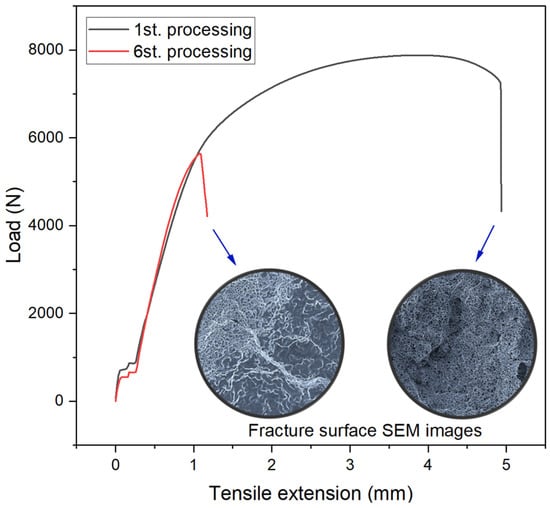
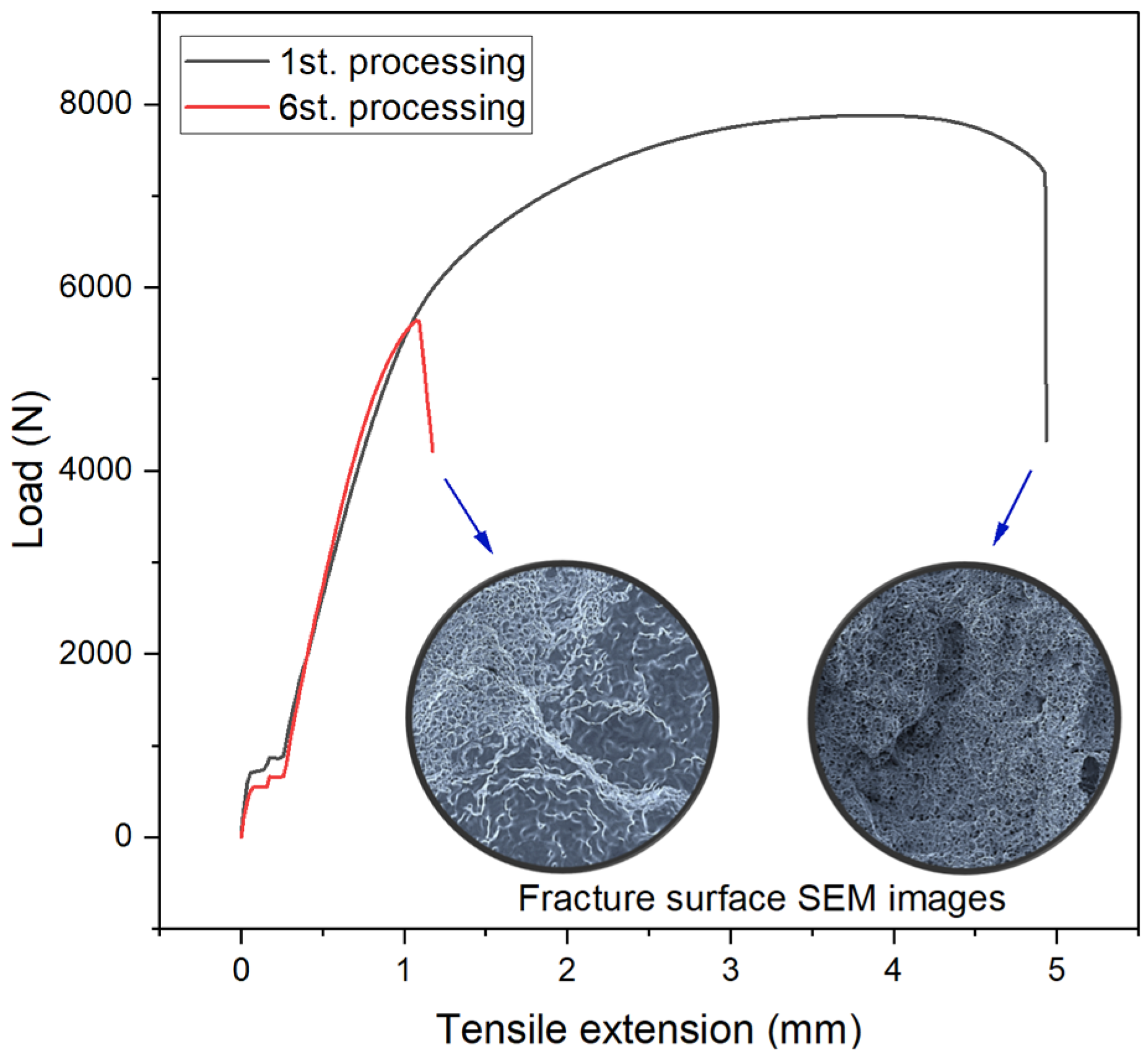
The tensile curves were used to compare the deformation behavior of the reference and recycled specimens (Figure 1). The 1st processing cycle represents the initial material condition, while the 6th processing cycle was selected as a later recycled state where changes in mechanical behavior were already visible.
Figure 1.
Representative load–extension curves of the 1st and 6th processing cycle sintered 4605 MIM specimens.
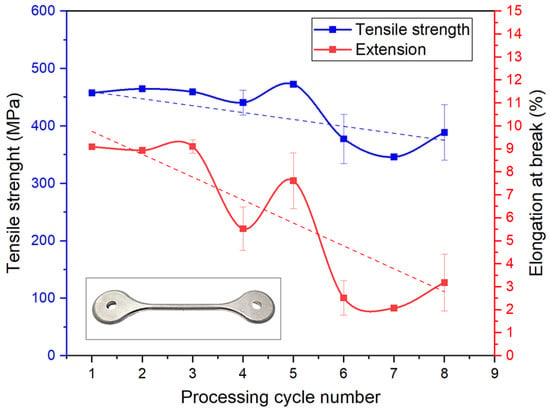
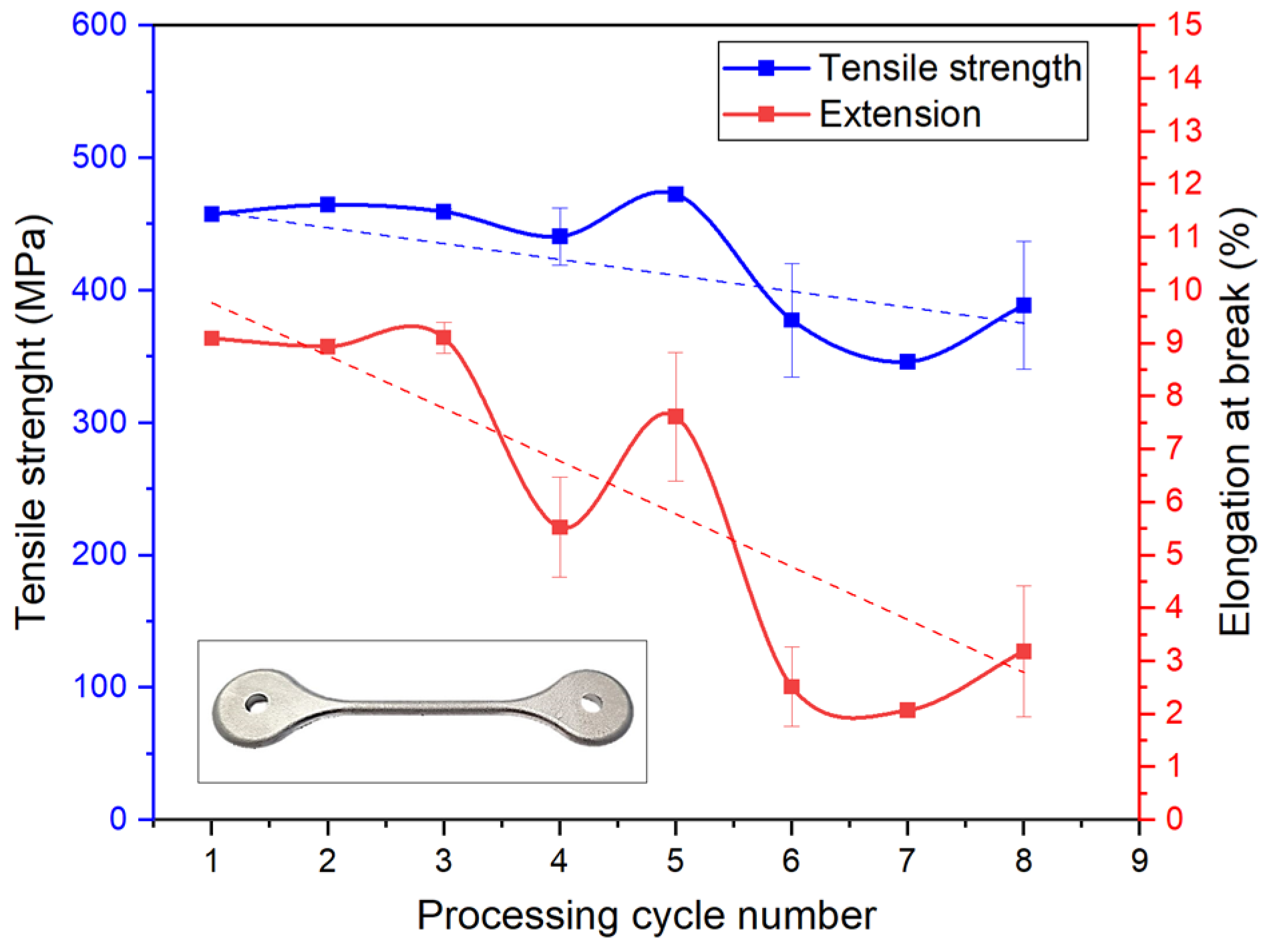
The specimen from the 6th processing cycle fractured at lower load and extension than the specimen from the 1st processing cycle. The calculated work to fracture decreased from 31.7 to 3.3 J, corresponding to an 89.5% reduction in energy absorption. Maximum tensile strength and elongation at break were also compared across all processing cycles, as shown in Figure 2.
Figure 2.
Maximum tensile strength and elongation at break of sintered 4605 MIM specimens as a function of processing cycle.
The tensile strength remained relatively stable during the initial processing cycles. A decrease was observed in the later cycles, mainly after the fifth processing cycle. The tensile elongation at break showed a more sensitive response, as the later processing cycles exhibited lower extension values. This indicates that ductility is a more sensitive indicator of recycling-induced degradation than tensile strength alone.
The scatter observed in the later processing cycles can be related to the increasing heterogeneity of the recycled feedstock and the sintered structure. In MIM parts, tensile failure is affected by pores, weakly bonded regions and local defects. Therefore, structural heterogeneity and possible local thermal differences caused by furnace positioning may both have contributed to the scatter in tensile properties.
3.2. Hardness
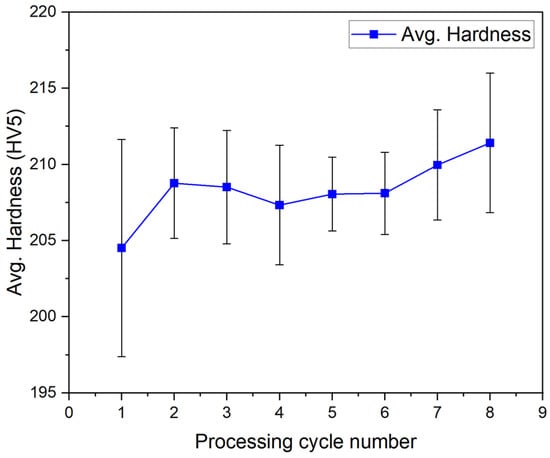
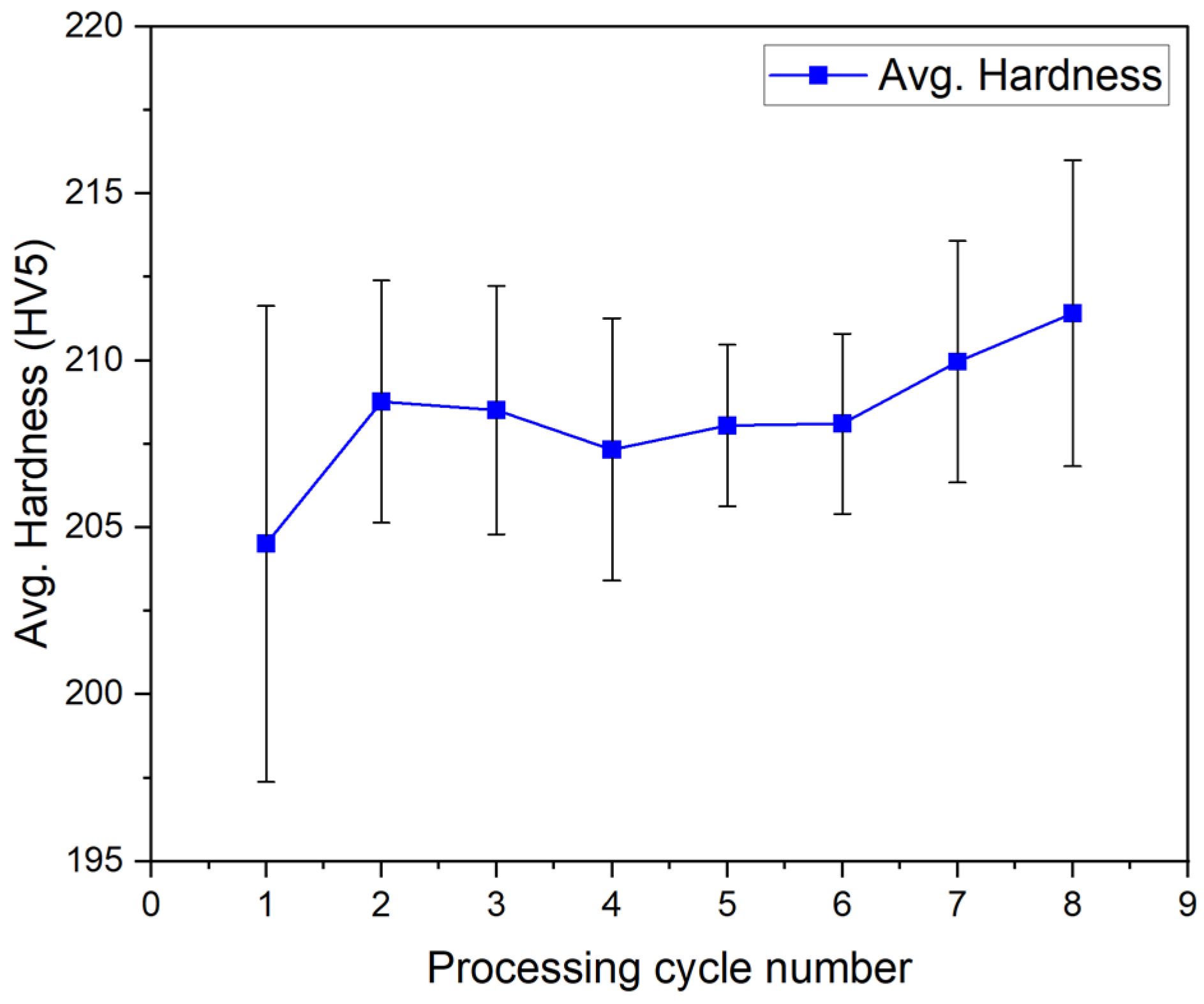
The hardness measurements (Figure 3) were used to check whether the changes in tensile properties were accompanied by a change in the average hardness of the metallic matrix.
Figure 3.
Average HV5 hardness of sintered 4605 MIM specimens as a function of processing cycle.
The HV5 hardness changed only moderately with an increasing number of processing cycles. The values remained in a narrow range, and the standard deviations partly overlapped. Therefore, repeated recycling did not cause a clear change in the average hardness of the sintered matrix.
This result shows that the decrease in tensile properties was not mainly caused by matrix softening. The difference between the hardness and tensile results suggests that the tensile behavior was governed primarily by local defects, porosity or microstructural heterogeneity.
3.3. Linear Shrinkage After Sintering
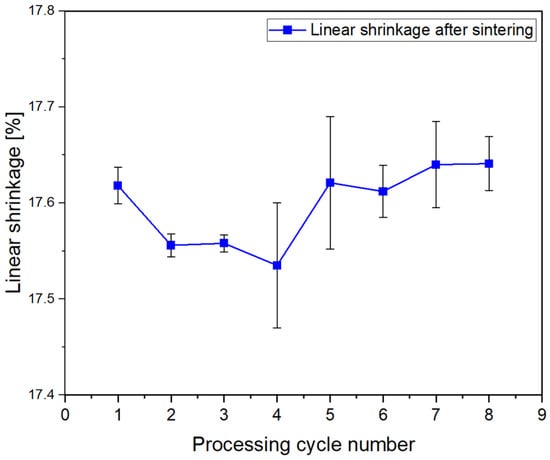
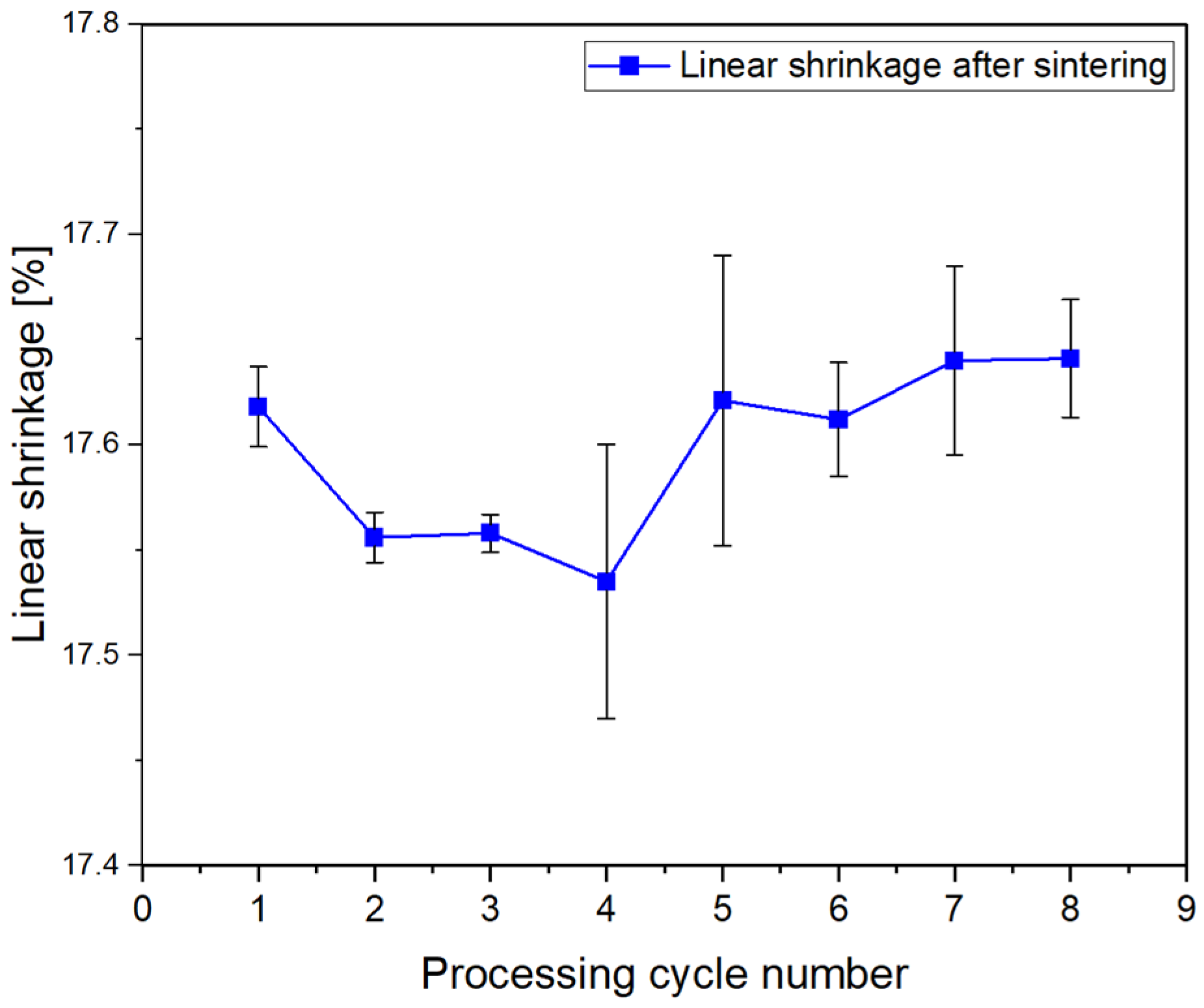
The linear shrinkage after sintering was evaluated to determine whether repeated recycling affected the dimensional behavior of the specimens, as shown in Figure 4.
Figure 4.
Linear shrinkage after sintering as a function of processing cycle.
The measured shrinkage values changed only slightly between the processing cycles. The variation was small compared with the total shrinkage of the MIM process. However, even small differences can be relevant in MIM, because the final dimensions are strongly affected by sintering shrinkage.
The results indicate that repeated recycling had a smaller effect on dimensional shrinkage than on tensile deformation. The lower shrinkage observed during the intermediate processing cycles may be connected to changes in the powder–binder system, but the shrinkage data alone do not indicate severe dimensional instability.
3.4. Fracture Surface Morphology and SEM Analysis
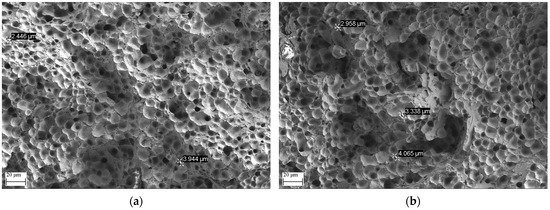
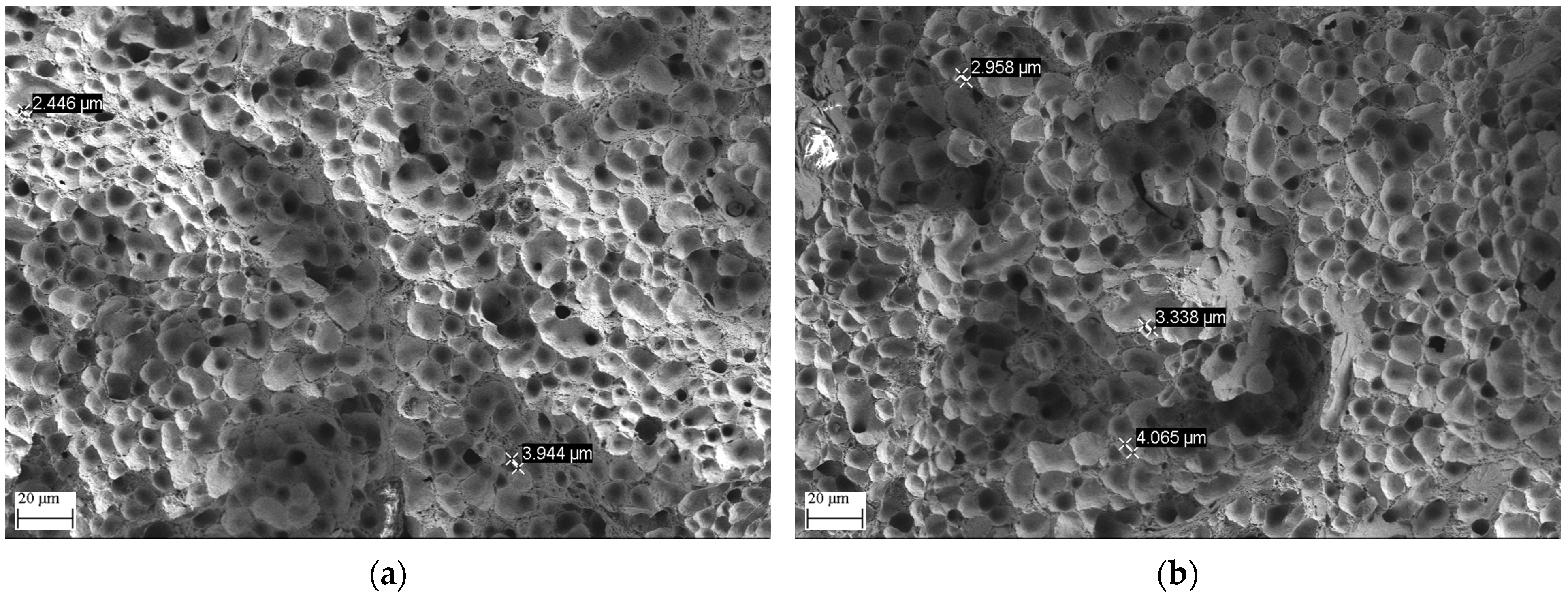
SEM images of the fracture surfaces were used to support the interpretation of the tensile results (Figure 5). The aim was not to characterize a polished and etched microstructure, but to observe the broken cross-sections after tensile testing.
Figure 5.
SEM micrographs of fracture surfaces of sintered 4605 MIM specimens after tensile testing: (a) 1st processing cycle and (b) 6th processing cycle.
The reference specimen showed a more uniform fracture surface. In specimens from the later processing cycles, more local defects and heterogeneous regions were observed. These features can act as crack initiation sites during tensile loading and can reduce the extension before fracture.
The SEM observations are consistent with the tensile and hardness results. The hardness remained nearly stable, while elongation at break decreased in the later processing cycles. This indicates that the degradation was not caused by a general decrease in matrix hardness, but rather by fracture-controlling defects and local heterogeneity in the sintered structure.
4. Conclusions
This study investigated the effect of repeated recycling on the sintered properties of 4605 MIM steel. The tensile results showed that specimens from the initial processing cycles retained relatively stable strength, while a decrease appeared in the later cycles. Elongation at break was more sensitive to recycling and decreased after the fifth processing cycle.
The HV5 hardness changed only slightly during the recycling series, indicating that the reduced tensile performance was not caused by general matrix softening. Instead, the results suggest that local defects, porosity and heterogeneous fracture features played a more important role.
The linear shrinkage after sintering showed only minor changes between the processing cycles. SEM observations of the fracture surfaces supported the tensile results, as later recycled specimens showed more defect-related features. Overall, the results confirm that repeated recycling affects the final metallic performance of sintered 4605 MIM steel, mainly through reduced ductility and defect-controlled fracture.
Author Contributions
Conceptualization, G.L. and Z.W.; methodology, G.L. and Z.W.; investigation, G.L.; formal analysis, G.L.; data curation, G.L.; writing—original draft preparation, G.L.; writing—review and editing, Z.W.; visualization, G.L.; supervision, Z.W. All authors have read and agreed to the published version of the manuscript.
Funding
This research received no external funding.
Institutional Review Board Statement
Not applicable.
Informed Consent Statement
Not applicable.
Data Availability Statement
The original contributions presented in this study are included in the article. Further inquiries can be directed to the corresponding author.
Acknowledgments
The authors would like to thank AFT Hungary Ltd. for their material and technological support during the experimental work.
Conflicts of Interest
The authors declare no conflicts of interest.
References
- Heaney, D.F. Handbook of Metal Injection Molding, 2nd ed.; Elsevier: Amsterdam, The Netherlands, 2019. [Google Scholar]
- Radulovic, J. Powder Injection Moulding Technology: Properties, Possibilities and Starting Activities. Sci. Tech. Rev. 2015, 65, 20–28. [Google Scholar] [CrossRef] [Scilit]
- Ji, C.H.; Loh, N.H.; Khor, K.A.; Tor, S.B. Sintering Study of 316L Stainless Steel Metal Injection Molding Parts Using Taguchi Method: Final Density. Mater. Sci. Eng. A 2001, 311, 74–82. [Google Scholar] [CrossRef] [Scilit]
- Narasimhan, K.S. Sintering of Powder Mixtures and the Growth of Ferrous Powder Metallurgy. Mater. Chem. Phys. 2001, 67, 56–65. [Google Scholar] [CrossRef] [Scilit]
- Greene, C.D.; Heaney, D.F. The PVT Effect on the Final Sintered Dimensions of Powder Injection Molded Components. Mater. Des. 2007, 28, 95–100. [Google Scholar] [CrossRef] [Scilit]
- Cheng, L.H.; Hwang, K.S.; Fan, Y.L. Molding Properties and Causes of Deterioration of Recycled Powder Injection Molding Feedstock. Metall. Mater. Trans. A 2009, 40, 3210–3216. [Google Scholar] [CrossRef] [Scilit]
- Manonukul, A.; Muenya, N.; Léaux, F.; Amaranan, S. Study of Recycled and Virgin Compounded Metal Injection Moulded Feedstock for Stainless Steel 630. J. Solid Mech. Mater. Eng. 2007, 1, 411–420. [Google Scholar] [CrossRef] [Scilit]
- Momeni, V.; Zangi, H.; Allaei, M.H. Effect of Polypropylene as the Backbone of MIM Feedstock on the Micro-Structural Phase Constituents, Mechanical and Rheological Properties of 4605 Low Alloy Steel Compacts. Powder Metall. 2020, 63, 27–34. [Google Scholar] [CrossRef] [Scilit]
- Momeni, V.; Askari, A.; Alaei, M.H.; Rahimi, A.H.; Nekouee, K.; Zangi, H. The Effect of Powder Loading and Binder System on the Mechanical, Rheological and Microstructural Properties of 4605 Powder in MIM Process. Trans. Indian Inst. Met. 2019, 72, 1245–1254. [Google Scholar] [CrossRef] [Scilit]
- Ledniczky, G.; Ronkay, F.; Hansághy, P.; Weltsch, Z. Impact of Recycling on Polymer Binder Integrity in Metal Injection Molding. Sci. Rep. 2025, 15, 21600. [Google Scholar] [CrossRef] [Scilit] [PubMed]
- Ledniczky, G.; Tajti, F.; Marokházi, S.; Weltsch, Z. Effects of Reprocessing on Surface Oxidation and Microstructural Composition in Metal Injection-Molded Materials: Insights from SEM, EDX, and Metallographic Analysis. In Proceedings of the Sustainable Mobility and Transportation Symposium 2024, Győr, Hungary, 14–16 October 2024; Volume 79, p. 9. [Google Scholar] [CrossRef] [Scilit]

Disclaimer/Publisher’s Note: The statements, opinions and data contained in all publications are solely those of the individual author(s) and contributor(s) and not of MDPI and/or the editor(s). MDPI and/or the editor(s) disclaim responsibility for any injury to people or property resulting from any ideas, methods, instructions or products referred to in the content. |
© 2026 by the authors. Licensee MDPI, Basel, Switzerland. This article is an open access article distributed under the terms and conditions of the Creative Commons Attribution (CC BY) license.