


Abstract
In this paper, the formation of viscous liquid droplets in a micro 3D printing process is presented. Differences in the behavior of liquid flows under specific microsystem conditions are numerically modeled. Two working fluids, water and acrylic resin, are numerically tested. The relationship between the internal forces acting within the fluid volume during droplet formation, such as viscosity, surface tension, and capillary forces, is estimated. Results can be used for micro 3D printing process optimization.
1. Introduction
Microfluidics is a multidisciplinary scientific field that deals with the behavior, precise control, and manipulation of fluids at the micrometer scale. This technology is widely used in biomedicine, analytical chemistry, the pharmaceutical industry, and biotechnology, providing innovative solutions for diagnosis, treatment, and research. One of the main reasons why microfluidics is so important is the ability to manipulate minimal amounts of fluid with high accuracy and efficiency. This not only reduces the consumption of reagents and samples but also speeds up analysis and experimental processes. Developments in this field allow the creation of miniaturized lab-on-a-chip laboratories that can perform complex biochemical analyses in a short time and with minimal human intervention. The usefulness of microfluidic technologies is particularly evident in medical diagnostics, where they facilitate the early detection of diseases through fast, accurate, and affordable tests. In addition, these systems are used in personalized medicine, allowing therapies to be adapted to the individual characteristics of the patient. In the industrial aspect, microfluidic devices are used to develop new drug formulas, to conduct high-throughput analyses, and to synthesize nanomaterials with precise control over reaction conditions [1,2,3].
Micro 3D printing at a scale of 1 to 5 micrometers represents one of the most advanced areas in the field of additive manufacturing, located on the border between micro- and nanotechnology [4,5]. Works in this size range allow the creation of ultra-miniature structures with extremely high spatial resolution, which are used in precision biomedical devices, tissue engineering, microfluidics, and optical metamaterials. The formation of the drop is essential for the precision of micro 3D printing, as these drops create the basis of micro- and nanostructures. When the droplets are formed with high precision, it ensures that every small part of the structure is exactly where it needs to be, which is critical for creating complex and small geometries on a scale of 1–5 μm. What is sought is a balance between these factors in order to be able to control the drop and its behavior during printing. This is also one of the great challenges of the technology, especially when it comes to micro and nano 3D printing [6,7,8,9].
In this work, the viscose liquid droplet formation in the micro 3D printing process is one of the most significant problems to be solved in the field of additive manufacturing at the micro level. In this paper, numerical simulations are performed in order to model the differences in the behavior of liquid flows in the conditions of a microsystem. The relationship between the internal forces acting in the fluid volume during droplet formation, such as viscosity, surface tension and capillaries, is estimated. A bi-phase fluid dynamics modeling for the droplet formation in a fluid-air environment is implemented.
2. 3D Printing Micro-Nozzle
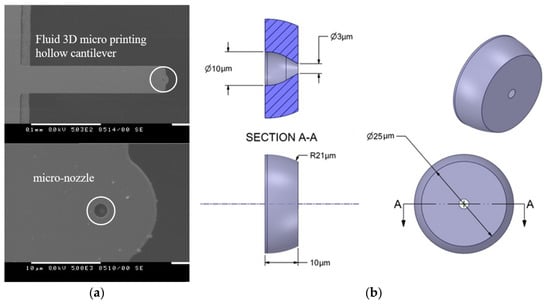
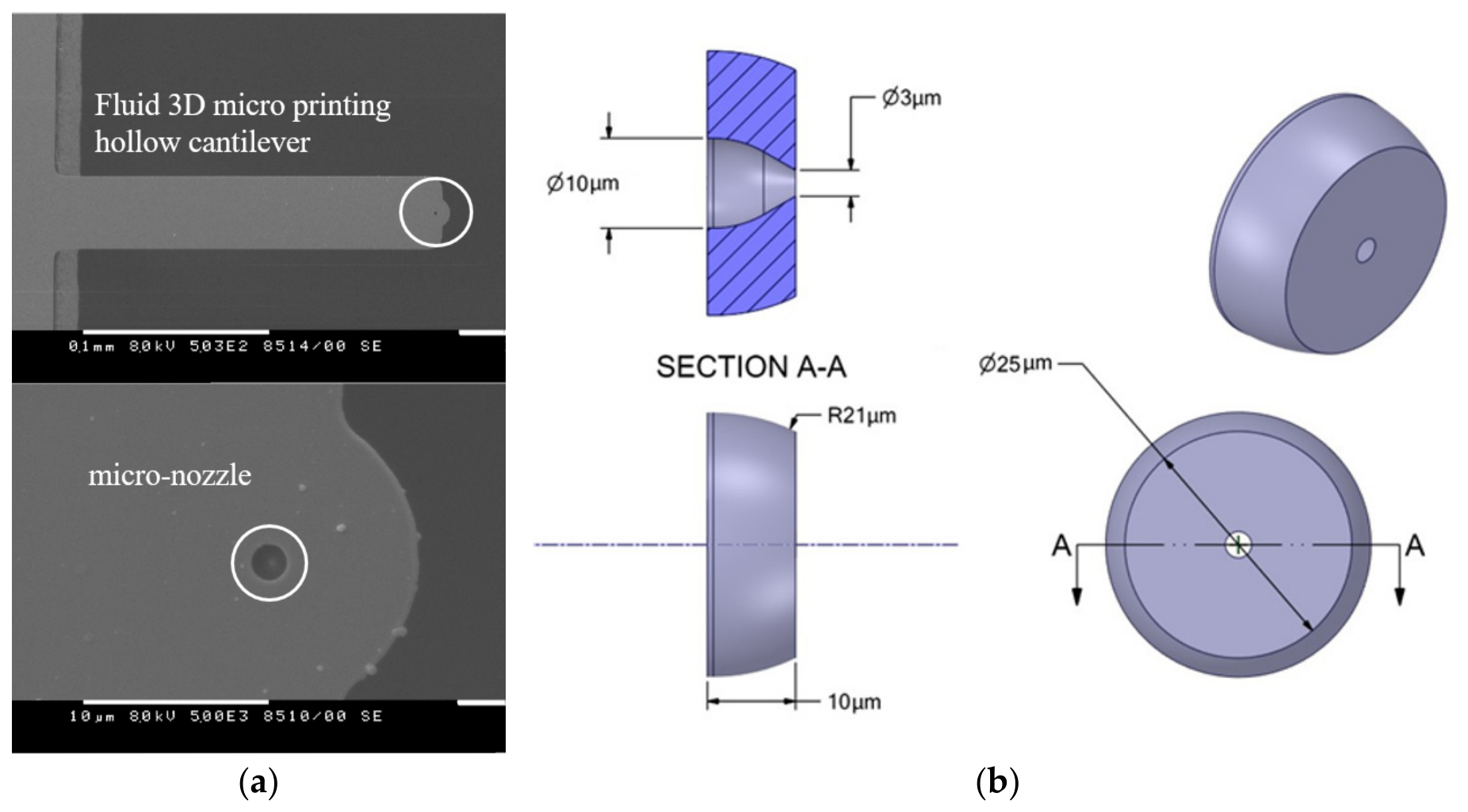
Numerical simulations were conducted in order to observe the differences in the behavior of liquid flows in the conditions of a microsystem. The geometric model of the micro-nozzle is presented in Figure 1. It is a conical nozzle with a nonlinear profile.
Figure 1.
Model of the micro-nozzle. Scanning Electron Microscope (SEM) image of the actual cantilever micro-nozzle, shown in white circle (a) and modeled geometry with nozzle sizes (b).
An ANSYS SpaceClaim (2024 R1) software was used for microfluidic cantilever design geometry modeling.
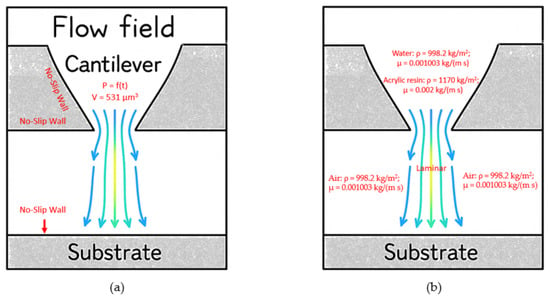
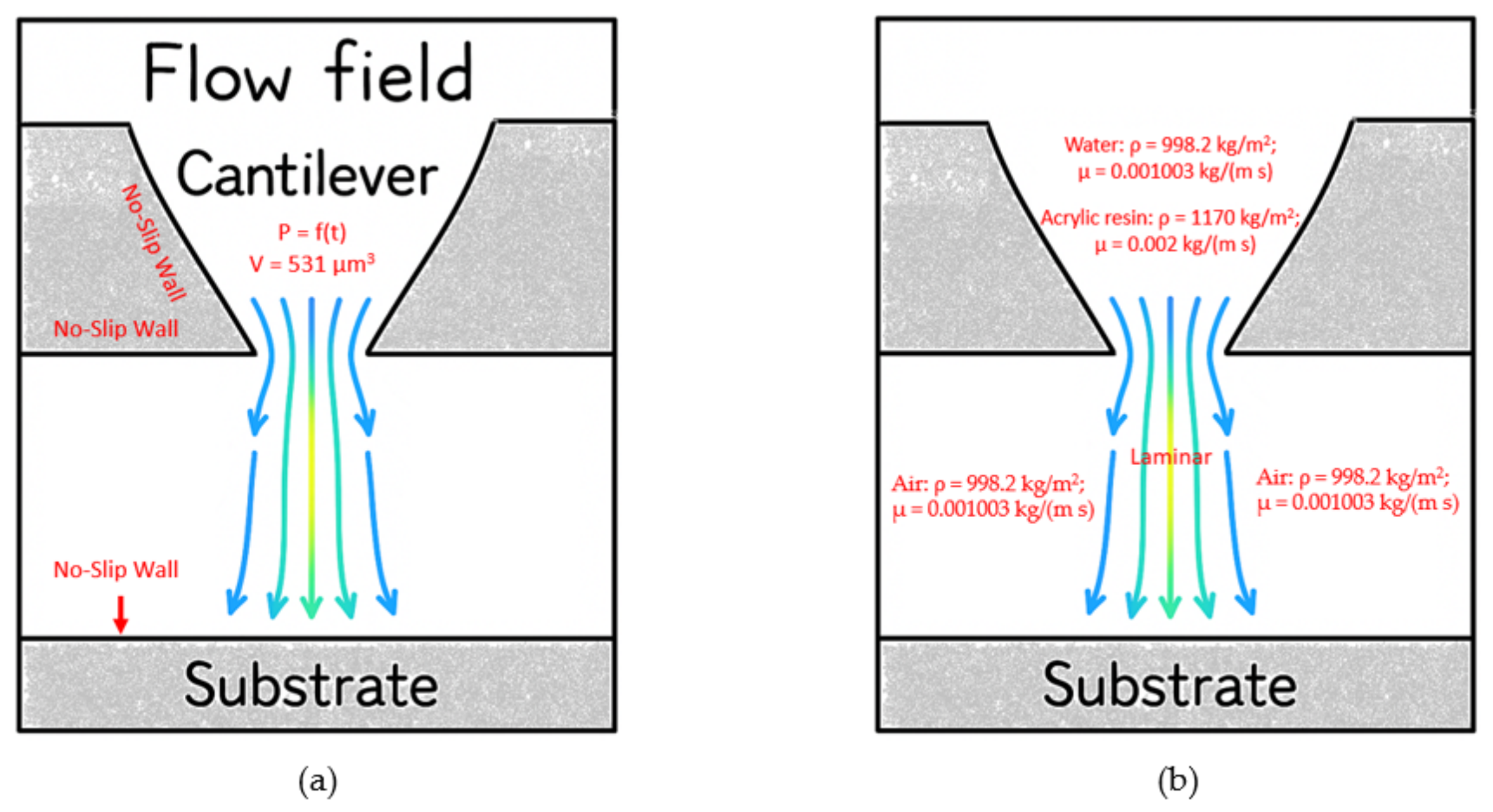
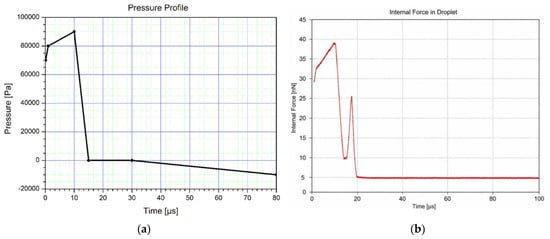
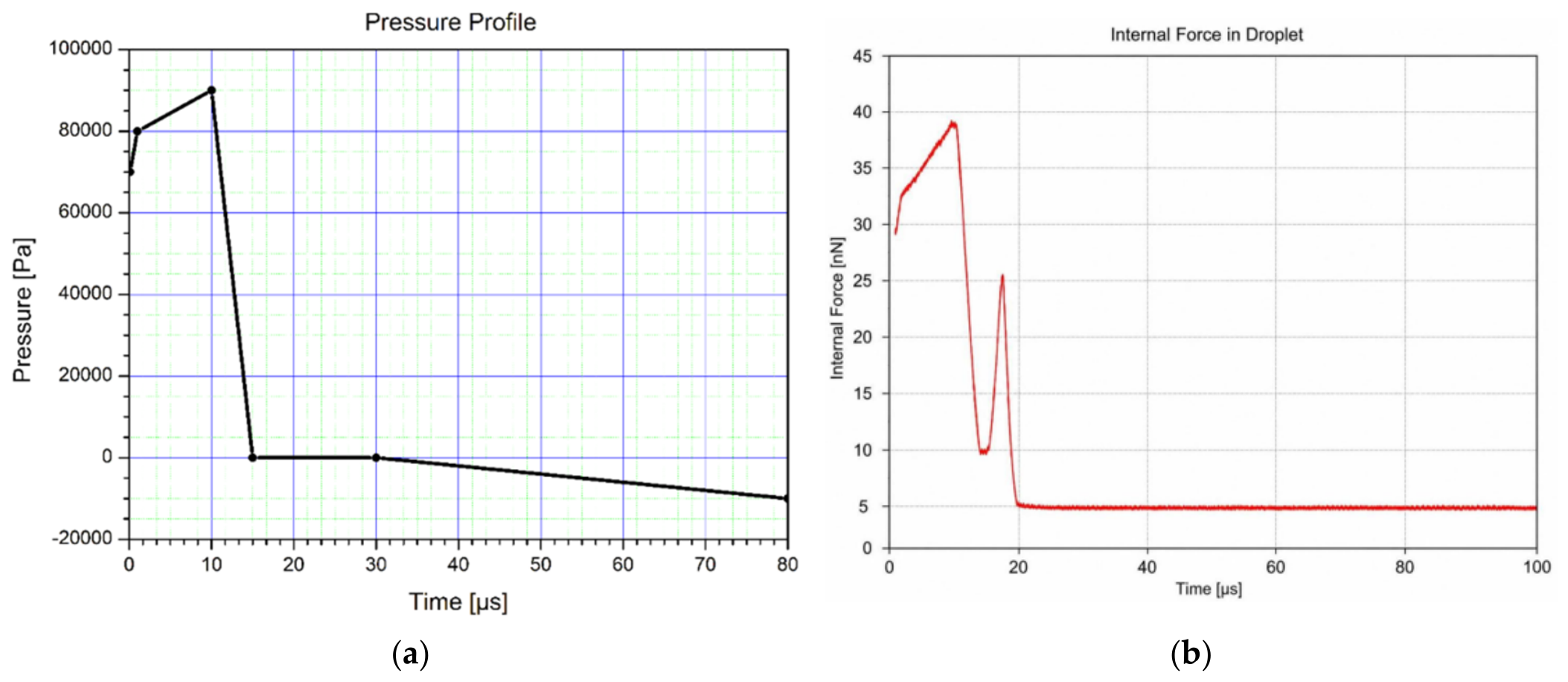
Fluid is situated in the internal cantilever nozzle channel (Figure 1b), represented in a schematic cross-section in Figure 2. A time-dependent pressure pulse is applied on the inlet top side (Figure 2a). Pressure pulse profile is presented in Figure 3a. The outlet is a 25 µm hole in the cantilever end. Internal droplet force at the nozzle outlet line is shown on Figure 3b.
Figure 2.
Modeling flow field domains (a), defined properties and boundary conditions (b).
Figure 3.
Applied transient pressure profile over the nozzle top surface (a). Internal droplet force at the nozzle outlet (b).
Droplet formation and position are dependent on fluid material properties at the cantilever nozzle parameters and internal boundary conditions, presented on Figure 2b.
3. Modeling Formulation
The Volume of Fluid (VoF) method is a multiphase flow solving technique in which each phase (e.g., liquid or gas) is represented by the volume functions α, which determines the fraction of the volume occupied by each phase in any given control volume. The method traces the boundary between phases through a single function α, which is defined as the volume fraction of the liquid in each lattice cell. A geometric model of the micro-nozzle is presented in Figure 1.
The governing equation of the Volume of Fluid (VoF) method is presented by (1).
where αi is the fractional Volume of Fluid in the cell (for each phase), v is the velocity of the fluid flow (velocity vector), and ∇ is the gradient Laplace operator.
If α = 1, the volume cell is completely filled with liquid (full phase).
If α = 0, the cell is filled entirely with gas (empty phase).
If 0 < α < 1, the cell contains a mixture of phases (partial phase).
Surface tension is expressed by the Laplace Equation (2)
where ΔP is the pressure difference inside and outside the droplet, γ is the surface tension (N/m), and R is the radius of the droplet.
Fluid material properties used in the modeling procedure are presented in Table 1.
Table 1.
Basic parameters of the fluids used in the experiment.
Parameters of the model and boundary conditions are presented in Table 2.
Table 2.
Parameters of the model and boundary conditions.
The outlet was defined as a pressure outlet, with a gauge pressure = 0 Pa.
Each model was solved with 50,000 iterations. The complete time duration period of the model is 100 µs, with a time-step size of 0.01 µs. The method used is VoF in a 2D cylindrical axisymmetric coordinate system. ANSYS Fluent (2025 R1) has been used in transient modeling mode.
4. Modeling Results
Numerical simulations were conducted in order to observe the differences in the behavior of liquid flows in the conditions of a microsystem. Two fluids have been numerically tested: these are water and acrylic resin. The relationship between the internal forces acting in the drop during droplet formation and the physical parameters of the liquid, such as viscosity, surface tension, and capillaries, is explained.
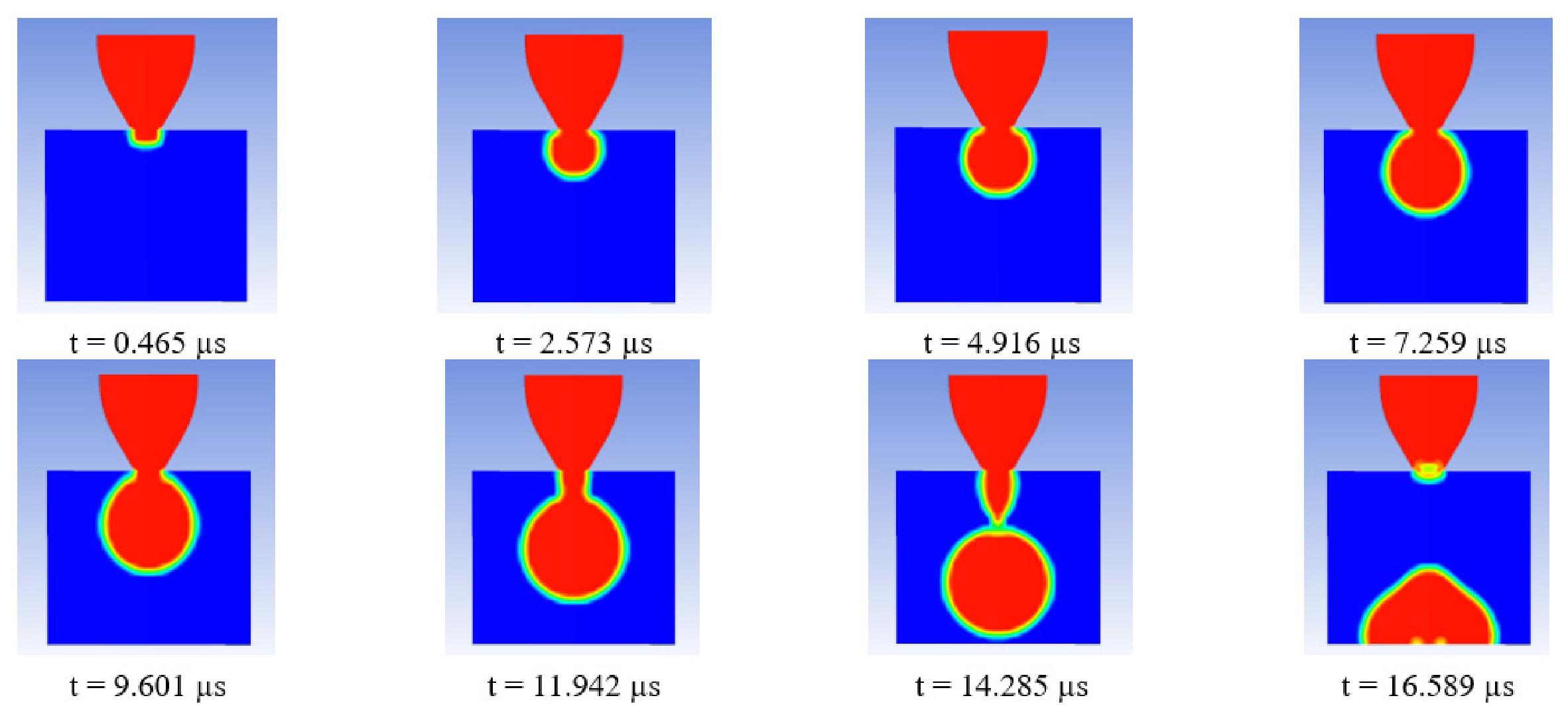
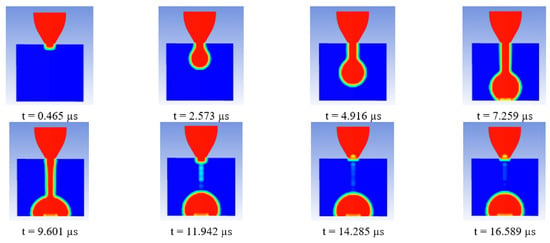
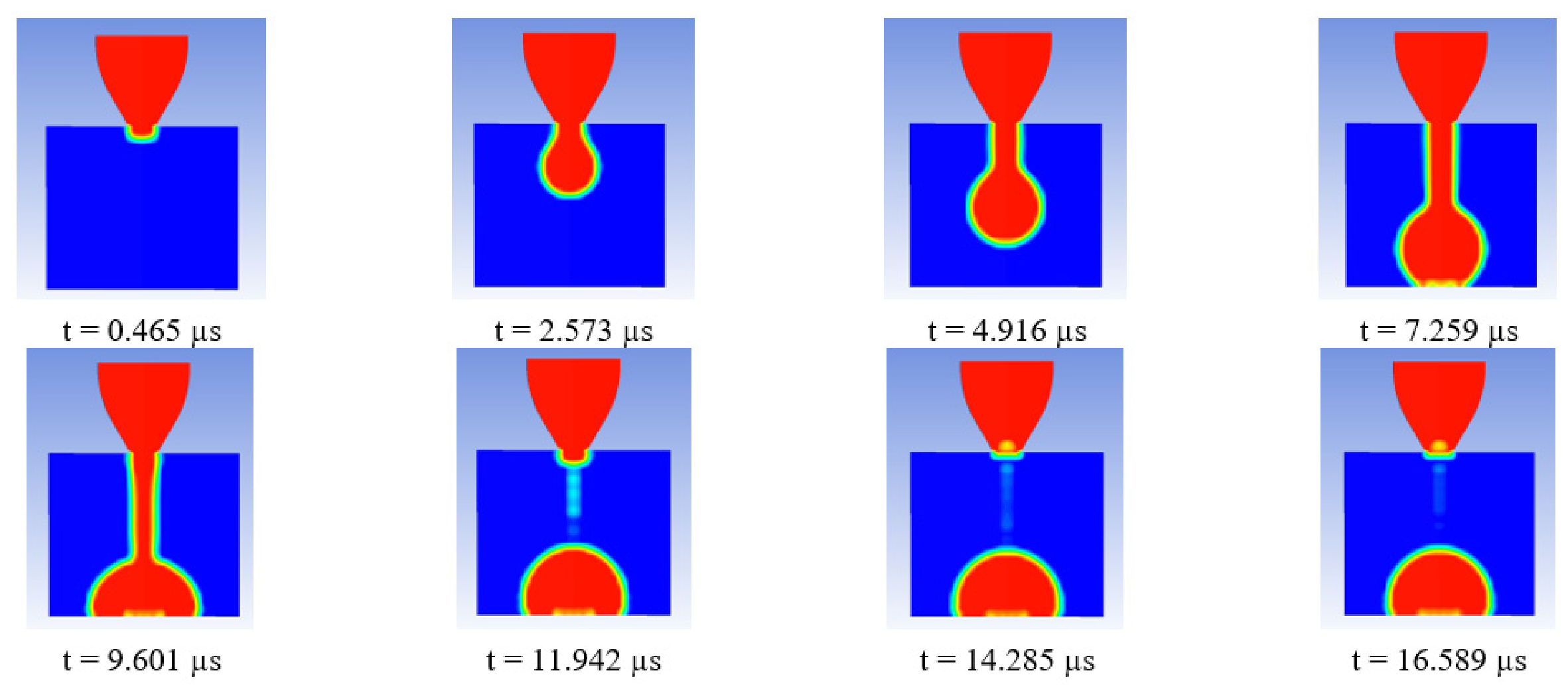
The time series contours of volume fraction for the water droplet formation are shown in Figure 4.
Figure 4.
Volume fraction time-series for the water droplet formation. The red color represents the droplet liquid phase α = 1 and blue color is the air phase α = 0.
The time series contours of volume fraction for the acrylic resin droplet formation are shown in Figure 5.
Figure 5.
Volume fraction time-series for the acrylic resin droplet formation. The red color represents the droplet liquid phase α = 1 and blue color is the air phase α = 0.
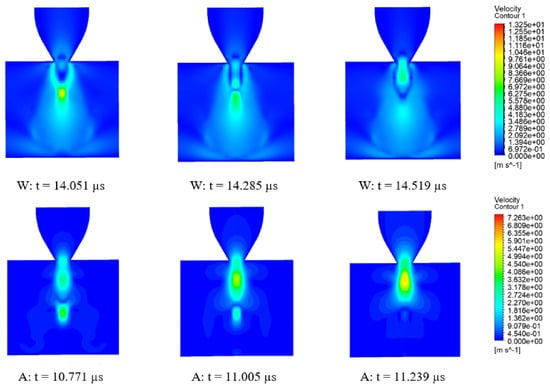
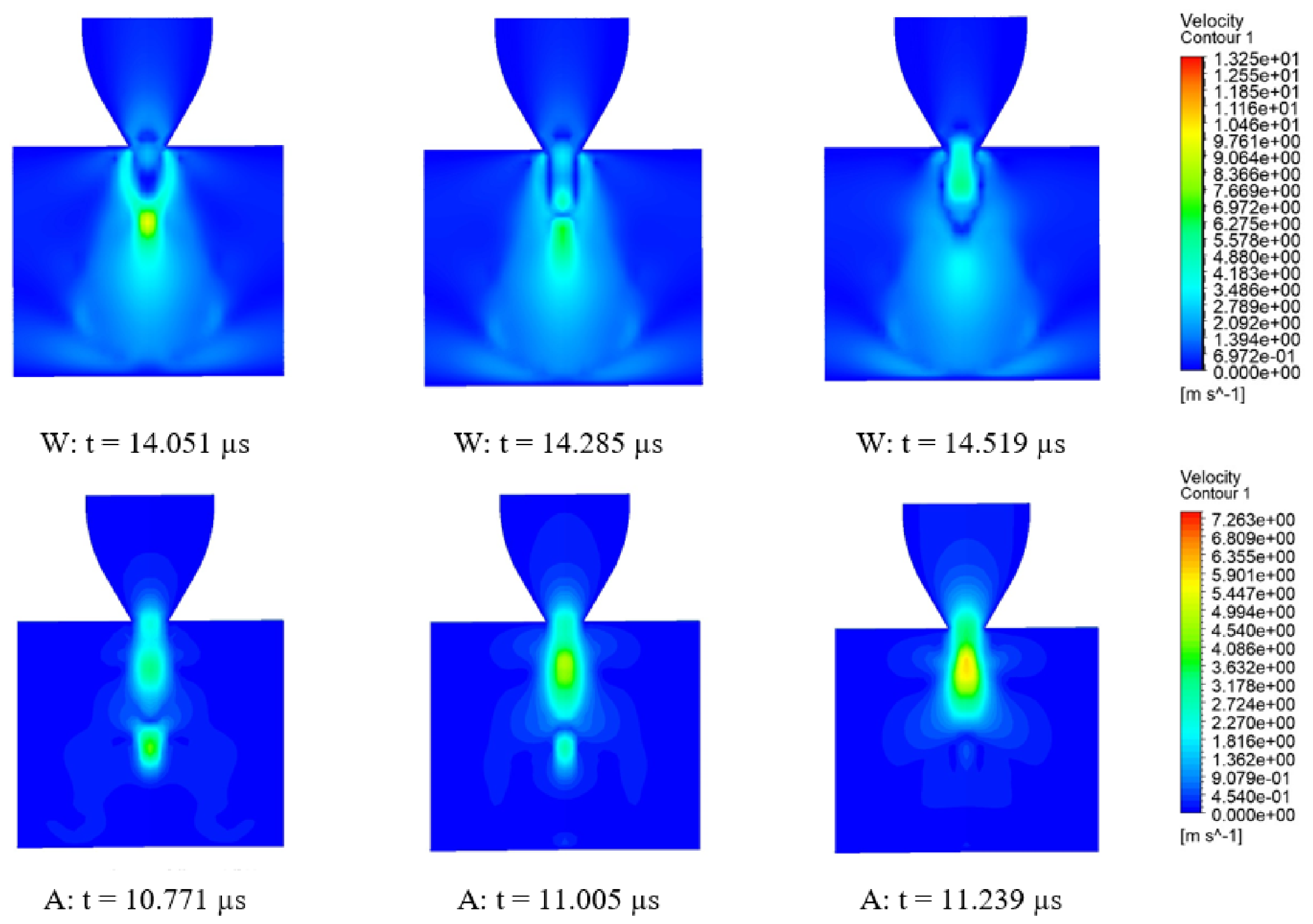
It is evident that the formation of the drop, when water is used (Figure 4), ending with its detachment, is observed around time-step 14.2854 µs, and for the acrylic resin, it is around time-step 11.9427 µs, starting from the same initial conditions. Therefore, these time intervals will be considered in more detail. The figures below show the three time moments for each material (Figure 6).
Figure 6.
Fluid velocity inside the droplet volume time-series results. For the water (W)—(top row) and for the acrylic resin (A)—(lower row).
Acrylic resin results for the same time-step of 0.4685 s, starting from 10.7714 µs to 11.2399 µs, are presented in Figure 6. The fluid velocity inside the droplet volume time-series results is represented for the water (W) (top row) and the acrylic resin (A) (lower row).
Viscosity and surface stress are the main factors that will determine how deformable the drop will be. Higher viscosity results in a higher strain rate, longer drops, and more complex dynamics. Lower surface tension makes the drop more vulnerable to stretching, which also leads to greater internal forces.
In micro 3D printing processes, such as Drop on Demand (DoD) or Continuous Inkjet Printing, controlling droplet formation and internal forces is crucial for the accuracy of the parts. Here, it is key to optimize the conditions for complete separation of the drop from the surface to ensure accuracy.
The role of viscosity, surface tension, and capillaries in micro 3D printing (especially when working in micro and nano scales) is significant because the very small droplets that are extruded must have proper droplet formation to ensure accuracy. High viscosity: At higher viscosity (as with the second fluid), we may have slower and more difficult droplet separation, resulting in longer drops and a greater strain rate. This can lead to greater internal stresses in the droplets, causing unwanted stretching or spillage of the material if not controlled. For example, printing thick materials or viscous liquids can lead to malformed elements—i.e., structures that are not precise or that do not connect properly. Low Surface Tension: If the material has a lower surface stress, the drop will deform more easily and have less stability. This can lead to unwanted sticking or leakage of the material during printing if the process is not well-controlled.
This microfluidic study and the relationships between viscosity, surface tension, and droplet formation will practically allow us to better understand how to control the printing of micro and nano structures. This will not only improve the accuracy of printed objects but will also provide more stable and functional materials for microelectronic applications, biotechnology, and other areas where high resolution is critical.
Practical outcomes can be directed to optimization of drip conditions: In order to control the 3D micro printing process at micro scales, we need to optimize the viscosity and surface tension parameters of the material. This includes the following: selection of the appropriate viscosity for the materials so that the drop is accurately separated without blurring or deforming too much; selection of surface tension that allows stability of the drop during its separation and positioning on the printed object; control of fluid dynamics (especially for viscous materials), including optimization of printing parameters such as temperature and extrusion speed, will be key to achieving high resolution and structure quality.
5. Conclusions
Numerical simulations are performed in order to model the differences in the behavior of liquid flows in the conditions of a fluid microsystem. The relationship between the internal forces acting in the fluid volume during droplet formation, such as viscosity, surface tension, and capillaries, is estimated. Two fluids, water and acrylic resin, have been numerically tested. The case under consideration is a part of a micromanipulator system for droplet pattern formation in microscale for 3D printing. Internal pressure distribution in the cantilever channel is calculated for precise process control. Results on the fluid type with the fluid flow parameters are calculated and presented. Further, this model will be used for micro 3D printing process optimization. Future work will be directed to pressure and temperature profile optimization for continuous and discontinuous flow formation.
Author Contributions
Conceptualization, V.M., T.G., M.R. and I.M.; Methodology, V.M., T.G., M.R. and I.M.; Software, V.M., T.G., M.R. and I.M.; Validation, V.M., T.G., M.R. and I.M.; Formal analysis, V.M., T.G., M.R. and I.M.; Investigation, V.M., T.G., M.R. and I.M.; Resources, V.M., T.G., M.R. and I.M.; Data curation, V.M., T.G., M.R. and I.M.; Writing—original draft, V.M., T.G., M.R. and I.M.; Writing—review and editing, V.M., T.G., M.R. and I.M.; Visualization, V.M., T.G., M.R. and I.M.; Supervision, V.M. and I.M.; Project administration, V.M. and I.M. All authors have read and agreed to the published version of the manuscript.
Funding
The present work is supported by the National Science Fund of the Bulgarian Ministry of Education and Science, Project KP-06-N97/5.
Institutional Review Board Statement
Not applicable.
Informed Consent Statement
Not applicable.
Data Availability Statement
The results obtained in this study are included in the article. Further inquiries can be directed to the corresponding author.
Conflicts of Interest
The authors declare no conflicts of interest.
References
- Balashov, V.; Savenkov, E.; Khlyupin, A.; Gerke, K.M. Two-phase regularized phase-field density gradient Navier–Stokes based flow model: Tuning for microfluidic and digital core applications. J. Comput. Phys. 2025, 521, 113554. [Google Scholar] [CrossRef] [Scilit]
- Das, S.; Roy, R.K.; Bezboruah, T. A computational approach for prediction of viscosity of chemical compounds based on molecular structures. Results Chem. 2025, 13, 102039. [Google Scholar] [CrossRef] [Scilit]
- Hysing, S.-R. Numerical Simulation of Immiscible Fluids with FEM Level Set Techniques. Ph.D. Thesis, Universität Dortmund, Dortmund, Germany, 2007. [Google Scholar]
- El-Ajou, A.; Oqielat, M.N.; Ogilat, O.; Al-Smadi, M.; Momani, S.; Alsaedi, A. Mathematical Model for Simulating the Movement of Water Droplet on Artificial Leaf Surface. Front. Phys. 2019, 7, 132. [Google Scholar] [CrossRef] [Scilit]
- Han, D.; Lu, Z.; Chester, S.A.; Lee, H. Micro 3D Printing of a Temperature-Responsive Hydrogel Using Projection Micro-Stereolithography. Sci. Rep. 2018, 8, 1963. [Google Scholar] [CrossRef] [Scilit] [PubMed]
- Harris, M.; Wu, H.; Zhang, W.; Angelopoulou, A. Overview of recent trends in microchannels for heat transfer and thermal management applications. Chem. Eng. Process.—Process Intensif. 2022, 181, 109155. [Google Scholar] [CrossRef] [Scilit]
- Juodkazis, S. Manufacturing: 3D printed micro-optics. Nat. Photonics 2016, 10, 499–501. [Google Scholar] [CrossRef] [Scilit]
- Kjar, A.; Huang, Y. Application of micro-scale 3D printing in pharmaceutics. Pharmaceutics 2019, 11, 390. [Google Scholar] [CrossRef] [Scilit] [PubMed]
- Kree, R.; Rückert, L.; Zippelius, A. Dynamics of a droplet driven by an internal active device. Phys. Rev. Fluids 2021, 6, 034201. [Google Scholar] [CrossRef] [Scilit]

Disclaimer/Publisher’s Note: The statements, opinions and data contained in all publications are solely those of the individual author(s) and contributor(s) and not of MDPI and/or the editor(s). MDPI and/or the editor(s) disclaim responsibility for any injury to people or property resulting from any ideas, methods, instructions or products referred to in the content. |
© 2026 by the authors. Licensee MDPI, Basel, Switzerland. This article is an open access article distributed under the terms and conditions of the Creative Commons Attribution (CC BY) license.