


Abstract
Governments have a pivotal role in the realm of AI. In order to achieve success within the context of the AI revolution, it is essential to possess robust political intentions. The capacity to exert influence over these entities is predicated on the formulation of policies, rules, and incentives. In the global competition to develop AI and data-driven businesses, the EU’s investments in public computing infrastructure are a key part of encouraging AI innovation across Europe. In this aspect, we look for the internal and external factors under which the countries of the European Union, and specifically AI factories, are clustered and differentiated from one another. The object of the present study is the current artificial intelligence ecosystem in Europe’s efforts to be recognized as a global leader in supercomputing technologies. Contribution: Our strategic points in this study are to indicate the geographical diversification between the two leaders, France and Germany, and the other member states of the European Union.
1. Introduction
Access to high-speed networks is crucial for the effective functioning of artificial intelligence systems and promotes inclusive digital participation. Artificial intelligence (AI) is expected to be the main driver of demand for data centers. The global demand for data center capacity could increase threefold by 2030 as well as other data-intensive applications, leading to an unprecedented surge in demand for computing power [1].
According to the authors of this study, there are four key prerequisites for the development and operation of artificial intelligence systems:
- Innovation and development in the field of information and communication technologies, and in particular in technologies utilizing artificial intelligence.
- The existence of political will and the corresponding regulatory framework for the use of these innovations by businesses in European Union countries.
- The creation of concrete structures and the funding of activities aimed at establishing conditions for the practical use of artificial intelligence systems by businesses.
- The role of education is key in training and creating ready specialists to work with artificial intelligence. This will improve the overall performance of the ecosystem and the coordination among its individual participants.
In this context, the Invest AI plan will bring together the necessary elements to help European companies to achieve excellence in AI by establishing at least 19 AI factories across Europe [2]. Currently existing is a network consisting of 13 existing factories—5 AI giga factories, large-scale facilities with massive computing power and data centers [3]. They will enable the training of complex AI models on an unprecedented scale. The activities carried out by the AI factories will be open to public and private users, with special access conditions for startups and small and medium-sized enterprises. Advanced AI models require investment, infrastructure, and collaboration and reliable data.
2. Review Methodology
The present study employed an approach based on a structured literature review with the objective of providing a comprehensive and systematic analysis of the development of artificial intelligence centers in the EU within the context of the regulatory framework, the adoption of legislative acts, and the ecosystem and leading practical proposal for its optimization. A comprehensive search was conducted in academic databases, including MDPI, Eurostat, ResearchGate, industry technical reports, etc.
Entrepreneurial activity is another significant topic indicated by the concepts of entrepreneur, startup, and leadership. At this point, the focus is on ways to accelerate innovation, especially in startups, small, and medium enterprises, where AI technologies can transcend and shift the national boundaries of production capabilities.
In this aspect, we look for the internal and external factors under which the countries of the European Union, and specifically AI factories, are clustered and differentiated from one another. The object of the present study is the current artificial intelligence ecosystem in Europe’s efforts to be recognized as a global leader in supercomputing technologies. The subject reflects the operational side of the transformation of an ecosystem where there is collaboration with public institutions, startups and other actors. These aspects suggest structural approaches to implementation, timeframes for evaluation and expanding new capacities.
Exclusion: in the interest of maintaining the specific scope of this review, articles that focused solely on the supply chain, security, scale of investment, energy consumption, and environmental impact were excluded.
A substantial rise in AI usage rates was also seen in Europe for 2024, rising by 23 percentage points to reach 80% since 2023 [1]. It is evident that artificial intelligence will become an integral component of national infrastructure, akin to the integration of other public services.
The European High-Performance Computing Joint Undertaking (EuroHPC JU) was set up in 2018 to work together to make Europe a global leader in the field of supercomputing [4]. On 24 January 2024, the Commission suggested a new law to change the current rules (Regulation (EU) 2021/1173 of the Council), adding a new goal for the joint venture: helping to develop a European AI ecosystem by creating and running 13 AI factories [5].
3. Discussion
Governments are important investors in this market. So far, its main goals have been to develop, use, expand, and maintain the EU’s ecosystem for supercomputing, quantum computing, and data infrastructure; to promote its use; to support the development of components, technologies, and knowledge for supercomputing systems; and to support the development of computing skills for European science and industry [6]. Large, high-quality datasets are essential for developing and training advanced AI models. We need to set the right conditions for a single data market through the “Data Union” strategy, which will get different sources of high-quality data to work together.
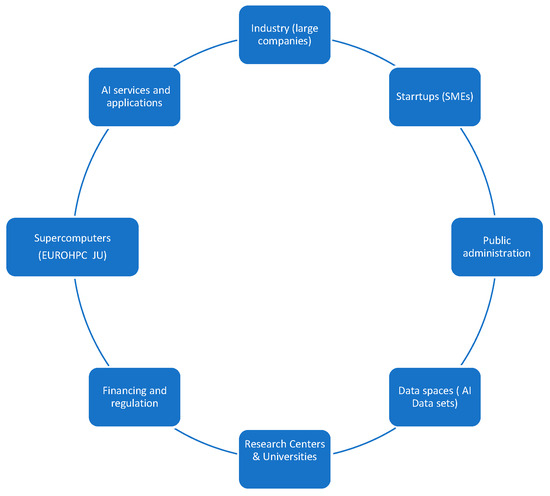
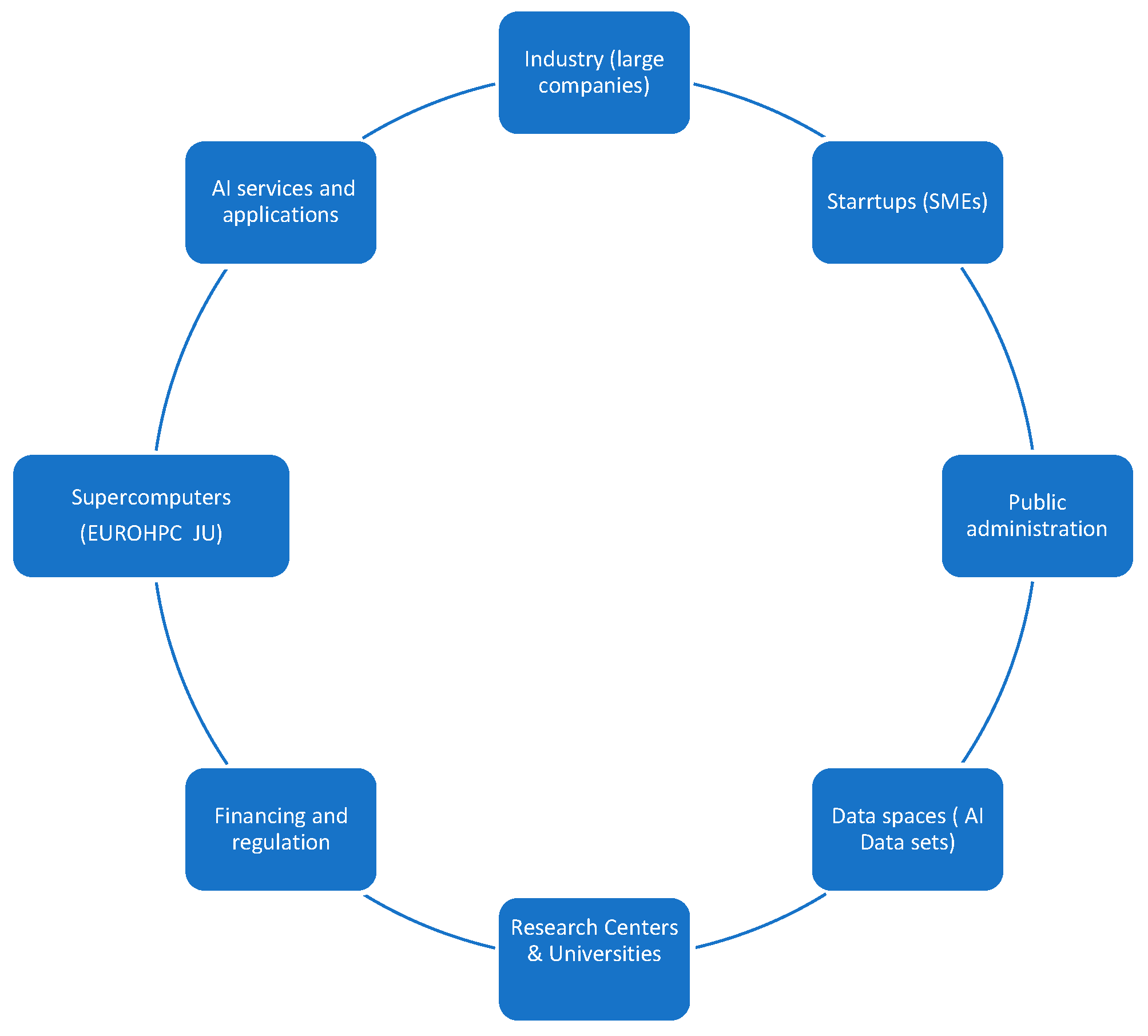
Currently, only 13.5% of EU companies use AI. To bridge this gap, the Commission launched the AI strategy [6] with the aim of boosting the EU’s competitiveness among market leaders such as the United States and China. This plan will increase the capacity of data centers in the EU by a factor of three over the next five to seven years, with a priority on data centers that do not harm the environment [7] and helping to grow a highly competitive and innovative ecosystem in Europe. The challenges are complicated and involve many actors. This will give researchers and developers the tools they need to innovate [6] (see Figure 1).
Figure 1.
Ecosystem—key components by authors’ research.
It is evident that large enterprises are at the vanguard of the development of artificial intelligence across various sectors of the economy, often with limited government involvement. Nevertheless, collaboration with the public sector, academia, and other stakeholders is imperative for achieving inclusive growth in the domain of artificial intelligence.
The SMEs and startups are very important actors for the economy. If they start using artificial intelligence (AI) quickly, they can greatly increase growth and prosperity. However, many SMEs tend to delay adopting it and often do not understand how it can help them or reduce their costs. On the other hand, tech startups are often the first to use AI, using it more extensively and having access to a wider variety of data. They also help people generate new business ideas and encourage local innovation [8]. The examples for the difference between the clusters in economic and organizational aspects are in Germany (Mittelstand) and France (Mistral). They are serving the needs of small and medium-sized enterprises.
The German Mittelstand (backbone) of the German economy is a huge array of small to medium-sized enterprises (SMEs) [9].
There are four things that need to improve the ecosystem [10]:
- ✓
- It is very important that the growth in data centers is powered by green energy that does not harm the environment.
- ✓
- The big spending on this infrastructure in some regions will be too expensive for most countries. So, we will need other options, and energy companies, environmental organizations, technology firms and governments will all need to work together. This shows how big the promises are that global tech companies have started to make in the most developed AI markets.
- ✓
- Economies of scale are important because many parts of the supply chain have very high fixed costs. This means that a large degree of scale is needed to cover these costs. For example, it has been found that there are significant economies of scale at the cloud level.
- ✓
- Because markets are always changing, there are extra risks involved, which might stop people from entering.
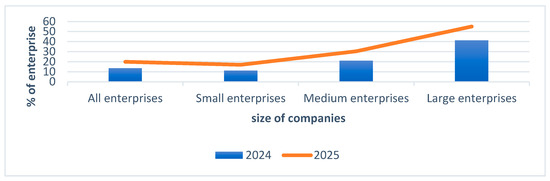
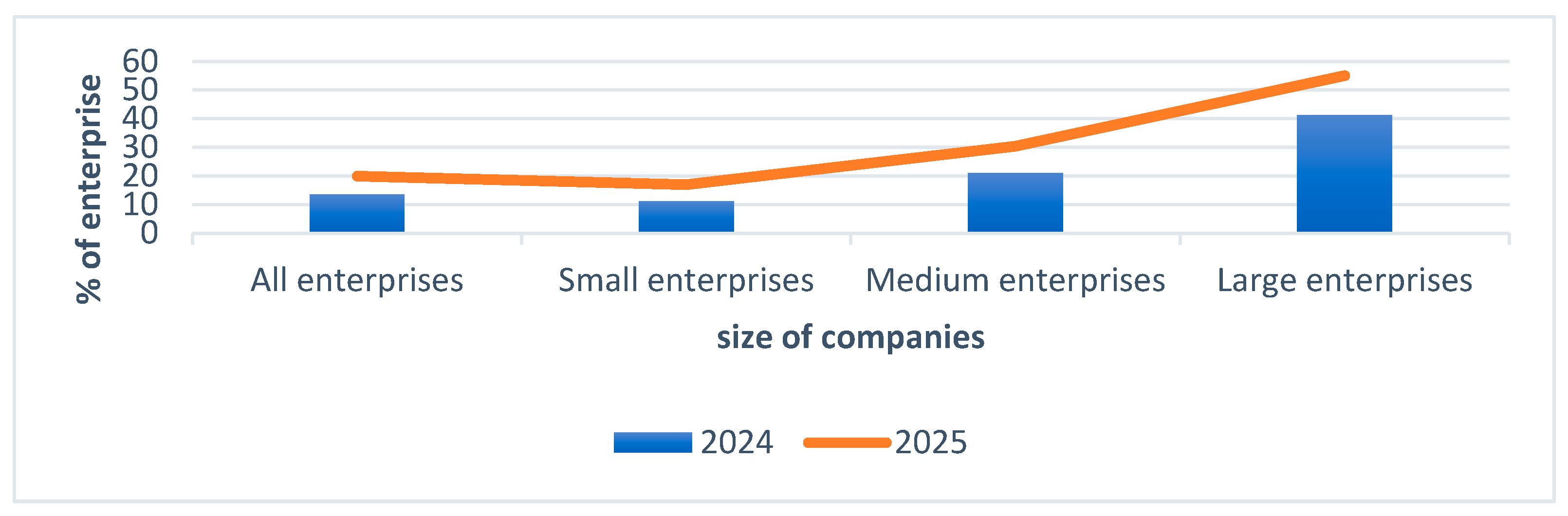
As indicated by the data in Figure 2, it is evident that, amongst small and medium-sized enterprises in the EU, the proportion of those utilizing artificial intelligence (AI) technologies has increased by 14% over the past year. The biggest users of artificial intelligence are large entrepreneurs (55.03), with a significant difference from medium-sized entrepreneurs (30.36). This is understandable, as by using artificial intelligence, they significantly reduce labor costs and operational expenses for marketing, logistics, etc. [1]. The average values from 2024 compared to 2025 show negligible change.
Figure 2.
Enterprises using AI technologies by size class, EU 2024 and 2025 (% of enterprises). Source: Eurostat (isoc_eb_ai) [11].
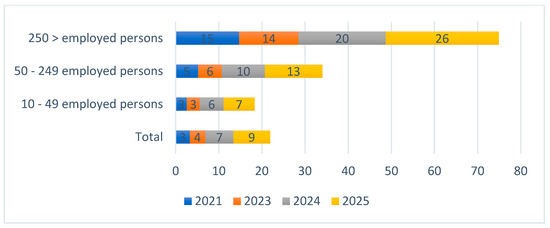
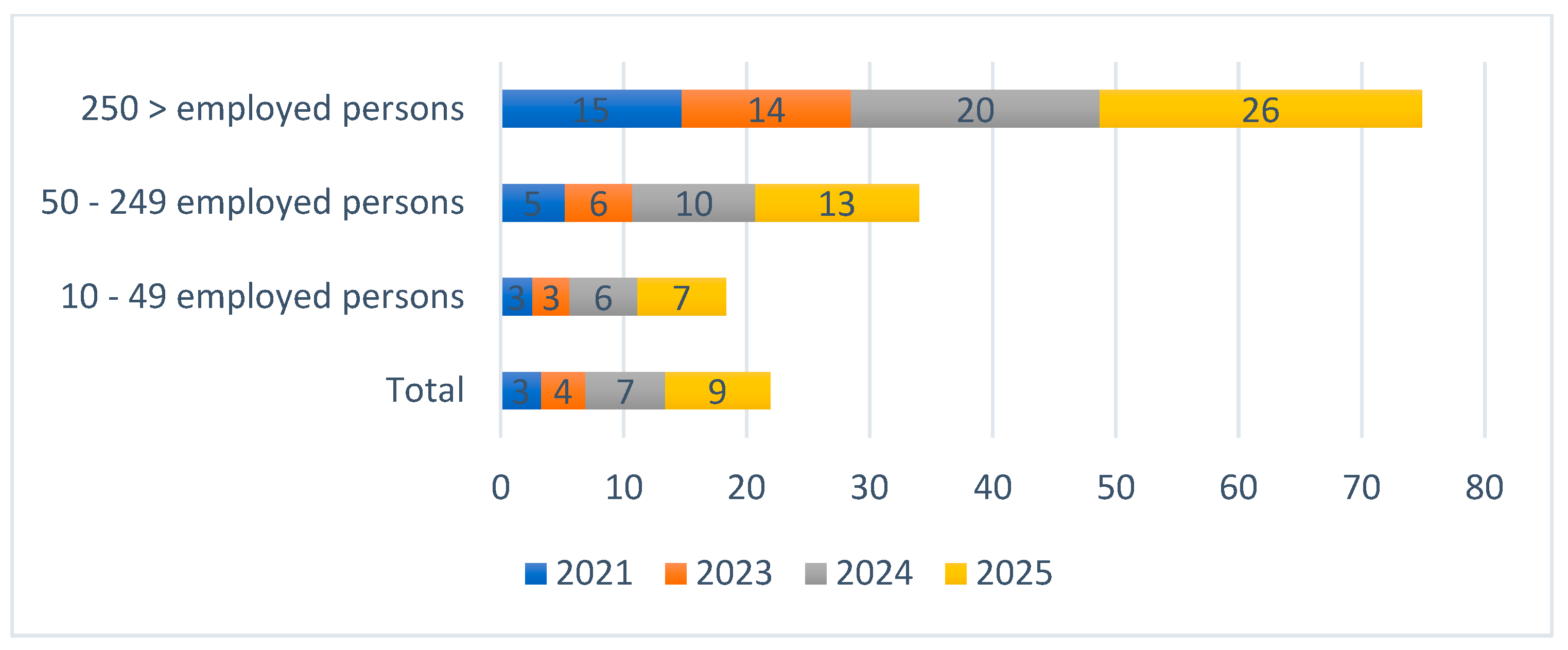
As indicated by the data in Figure 3, it is evident that, amongst small and medium-sized enterprises in Bulgaria, the proportion of those utilizing artificial intelligence (AI) technologies remains comparatively low. Nevertheless, an apparent trend of a consistent rise has been witnessed over the past four years. A positive development is evident in enterprises demonstrating modest growth. Through the EuroHPC Access Calls, European scientists and users from the public sector and industry can benefit from these supercomputers, which rank among the world’s most powerful. As part of the plan to use AI, the Commission has launched the Frontier AI Grand Challenge [3]; it invites top European scientists to develop new AI models with a computing power equal to at least 400 billion parameters [4]. This is a key EU-wide competition to stimulate the development of European AI models that are large-scale and can be used by all EU countries. The plan is to support the creation of new general-purpose AI systems that can adapt to different areas with minimal modification, and to use Europe’s world-class supercomputing infrastructure (see Table 1). Using clever designs like Mixture-of-Experts (MoE) will make these models much better than before. This new project supports wider EU efforts to make Europe a leader in AI [3]. We use the EU term “AI factory” to describe supercomputers that are designed especially for artificial intelligence. These are computers that are much better at complex calculations than normal computers, and they often perform very difficult tasks. We also use the term “AI factory” to describe the groups of computers and other equipment that work together. Data centers are designed to handle all kinds of computing tasks, while AI factories are designed for artificial intelligence workloads. They are especially good at making sure AI systems work well and use energy efficiently [12].
Figure 3.
Enterprises using AI technologies by numbers of employees (person size class) in the EU, 2021–2025 (% of enterprises). Source: NSI (statistical data/312/895) [13].
Table 1.
Supercomputers (EuroHPC JU).
However, supercomputers designed for AI differ from other supercomputers in terms of their hardware, which requires specific chips and network infrastructure. A number of supercomputers, including those headquartered in Spain and Germany, have undergone an upgrade with hardware that has been optimized for artificial intelligence [15].
A broad user base can access high-performance computing resources designed specifically for artificial intelligence in AI factories, and these are subsidized. However, the scale and flexibility of private AI supercomputers or cloud providers cannot be matched.
The host entities of AI factories will be entitled to receive EU financial support to cover up to 50% of the acquisition costs of AI supercomputers and up to 50% of their operating costs [15]. AI supercomputers will be used mainly to develop and test AI training models, applications and solutions. Despite being suitable for supporting the training of medium-sized AI models, AI factories are insufficient for stimulating innovation in commercial AI across the EU on a grand scale.
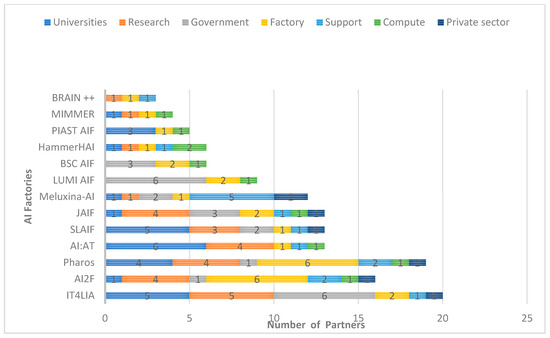
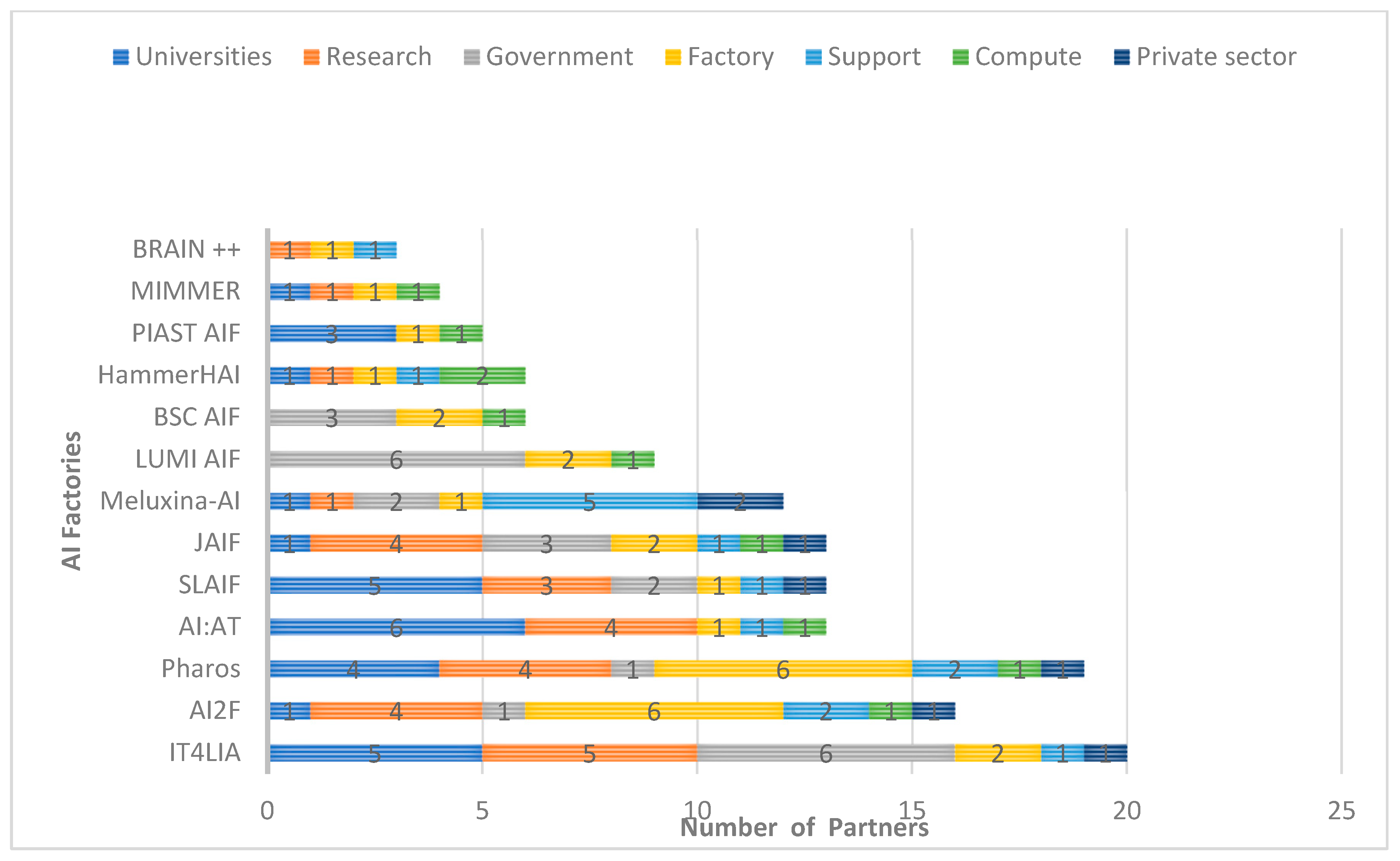
Only two of the thirteen factories (see Figure 4) we looked at have a group that does not work with a research or academic partner. This shows how well the factories are set up to support scientific research and public innovation [5].
Figure 4.
AI factories in Europe by organizational and strategic spread. Source: https://www.interface-eu.org/publications/ai-factories [5], accessed on 17 March 2026.
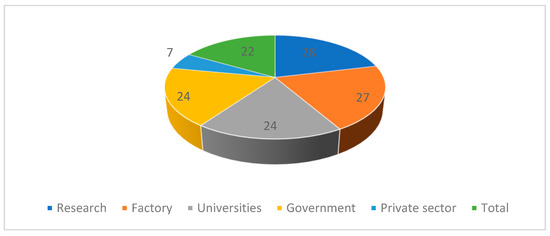
In Figure 5 it is clearly seen that research centers have the largest share, followed by industrial enterprises, universities, and the government with an equal number of 24 participants. However, industrial companies need to understand how they can use artificial intelligence (AI) to make plans and decide which applications might work best for them [5]. Partner consortia are mostly made up of research institutions, not commercial companies. Although the global computing infrastructure dedicated specifically to AI is controlled primarily by private companies, in the “AI factories” ecosystem, academic and research institutions are the main partners. In the global competition to develop AI and data-driven businesses, the EU’s investments in public computing infrastructure are a key part of encouraging AI innovation across Europe. To get the AI landscape that the EU wants, we need to understand commercial needs better and make technology hubs stronger. This could be a big business opportunity for telecoms companies and tech firms, especially in areas where there is not much infrastructure [16].
Figure 5.
Absolute number of AI organizations’ compositions in Europe. Source: https://www.interface-eu.org/publications/ai-factories [5], accessed on 17 March 2026.
Moreover, France and Germany are emerging as AI hegemonies in the European Union in terms of creating policies and strategies, and they also play a decisive role in research through their scientific institutions. Germany, with (106) companies, is the leader among other EU member states, followed by France with (92) companies that have raised capital in 2024 according to CBINSIGHTS. This increase in the number of startups is a top priority, but the question of competition for later-stage funding among other pools remains [16]. AI is successfully being integrated into various industries and different sectors, (see Table 2). A McKinsey study cites data on the most widely used AI applications in marketing and sales across all sectors of the economy. The second most common use is in service operations, primarily in media, financial services, and technology. In the IT sector as a whole, it accounts for 48%, and in software engineering, 45%, which is a breakthrough.
Table 2.
AI use by industry and function, 2024. Source: McKinsey Survey, 2024, design by author.
4. Conclusions
Contribution: Our strategic points in this study are to indicate the geographical diversification between the two leaders, France and Germany, and the other member states of the European Union [17]. Future research directions are how effective the investments in building artificial intelligence factories are, whether the number of data users and the number of developed patents have increased, and how economically advantageous it is compared to leading countries such as the USA and China. In 2022, just 100 companies, most of them from the United States and China, spent 40% of the world’s money on research and development in artificial intelligence. These two countries also hold the most AI patents, and together they publish a third of all scientific papers in this field. China is the global leader in AI patents, with 60% of all patents in this field [18]. In 2024, American institutions created 40 significant AI models, compared to 15 in China and three in Europe. The academic community is still the main source of research that is often cited [1].
In conclusion, the topic implies a holistic approach to AI factories and their technically justified efficiency according to the needs of the other participants in the ecosystem. The European Commission thinks that AI factories are an important way of encouraging innovation in Europe, especially when compared to the US and China. In 2024, almost 90% of the important AI models came from industry, which is more than the 60% in 2023. To achieve the goals set out in the EU’s AI plan and subsequent strategies, it is necessary to analyze how well current legal instruments work and assess the effectiveness of the relevant regulatory bodies. Engineering and technical innovations are critical in this agenda when concluding contracts, preparing steps, and making long-term plans for deploying the potential of AI factories.
Author Contributions
Conceptualization, M.K. and V.K.; methodology, M.K.; formal analysis, M.K.; investigation, M.K.; resources, M.K.; data curation, M.K.; writing—original draft preparation, M.K.; writing—review and editing, M.K.; visualization, V.K. All authors have read and agreed to the published version of the manuscript.
Funding
The authors would like to thank the Research and Development Sector at the Technical University of Sofia for the financial support.
Institutional Review Board Statement
Not applicable.
Informed Consent Statement
Not applicable.
Data Availability Statement
The data supporting the conclusions of this article are available from the authors on datasets: NSI, EUROSTAT.
Conflicts of Interest
The authors declare no conflicts of interest.
References
- HAI. The 2025 AI Index Report; HAI, Stanford University: Stanford, CA, USA, 2025. [Google Scholar]
- EU Launches Invest AI Initiative to Mobilise €2Billion of Investment in Artificial Intelligence. Available online: https://digital-strategy.ec.europa.eu/en/news/eu-launches-investai-initiative-mobilise-eu200-billion-investment-artificial-intelligence (accessed on 16 March 2026).
- Turning Strategy into Action: Commission Launches Frontier AI Grand Challenge. Available online: https://digital-strategy.ec.europa.eu/en/funding/turning-strategy-action-commission-launches-frontier-ai-grand-challenge (accessed on 17 March 2026).
- European Commission. European High-Performance Computing Joint Undertaking—EuroHPC JU. Available online: https://digital-strategy.ec.europa.eu/en/policies/high-performance-computing-joint-undertaking (accessed on 16 March 2026).
- Nicole Lemke, C.S. The European Union’s AI Factories; Interface: Berlin, Germany, 2025; Available online: https://www.interface-eu.org/publications/ai-factories (accessed on 16 March 2026).
- Shaping Europe’s Leadership in Artificial Intelligence with the AI Continent Action Plan. Available online: https://digital-strategy.ec.europa.eu/en/library/ai-continent-action-plan (accessed on 16 March 2026).
- The European Commission Launched a New AI Innovation Package. Available online: https://bdva.eu/news/the-european-commission-launched-a-new-ai-innovation-package/ (accessed on 16 March 2026).
- World Economic Forum. Blueprint for Intelligent Economies: AI Competitiveness Through Regional Collaboration. Available online: https://www.weforum.org/publications/blueprint-for-intelligent-economies/ (accessed on 17 March 2026).
- Germany’s Mittelstand: Foundations of Economic Strength and Innovation. Available online: https://www.thediplomaticaffairs.com/2024/11/03/germanys-mittelstand-foundations-of-economic-strength-and-innovation/ (accessed on 17 March 2026).
- Competition in Artificial Intelligence Infrastructure. Available online: https://www.oecd.org/en/publications/competition-in-artificial-intelligence-infrastructure_623d1874-en/full-report/component-6.html (accessed on 16 March 2026).
- Artificial Intelligence by Size Class of Enterprise. Available online: https://ec.europa.eu/eurostat/databrowser/view/isoc_eb_ai/default/table?lang=en (accessed on 17 March 2026).
- Glossary AI Factory. Available online: https://www.nvidia.com/en-us/glossary/ai-factory/ (accessed on 17 March 2026).
- Enterprises Using Artificial Intelligence Technologies. Available online: https://www.nsi.bg/en/statistical-data/312/895 (accessed on 17 March 2026).
- TOP 500 THE LIST. Available online: https://top500.org/lists/top500/2025/11/ (accessed on 17 March 2026).
- Council of European Union. Council Adopts Regulation on Use of Supercomputing in AI Development. Available online: https://www.consilium.europa.eu/en/press/press-releases/2024/06/17/council-adopts-regulation-on-use-of-supercomputing-in-ai-development/ (accessed on 16 March 2026).
- McKinsey and Google Cloud Launch the McKinsey Google Transformation Group to Scale Enterprise Impact for the AI Era. Available online: https://www.mckinsey.com/about-us/new-at-mckinsey-blog/mckinsey-and-google-cloud-launch-the-mckinsey-google-transformation-group-to-scale-enterprise-impact-for-the-ai-era (accessed on 16 March 2026).
- The Great Electrification: Can the EU Power Its AI Ambitions? Available online: https://www.rabobank.com/knowledge/d011521526-the-great-electrification-can-the-eu-power-its-ai-ambitions (accessed on 17 March 2026).
- China Leads in Global AI Patents with 60% Share. 2026. Available online: https://www.techinasia.com/news/china-leads-global-ai-patents-60-share (accessed on 16 March 2026).

Disclaimer/Publisher’s Note: The statements, opinions and data contained in all publications are solely those of the individual author(s) and contributor(s) and not of MDPI and/or the editor(s). MDPI and/or the editor(s) disclaim responsibility for any injury to people or property resulting from any ideas, methods, instructions or products referred to in the content. |
© 2026 by the authors. Licensee MDPI, Basel, Switzerland. This article is an open access article distributed under the terms and conditions of the Creative Commons Attribution (CC BY) license.