1. Introduction
In modern cities, the planning of transport infrastructure is of essential importance. Incorrect decisions in this field can lead to serious problems related to road safety, urban mobility, and all economic and social aspects associated with the efficiency of transport infrastructure.
The implementation of ex-ante and ex-post evaluations of the effectiveness of implemented infrastructure solutions, such as roundabouts, represents an important component of the urban planning process and the subsequent management of traffic flows. Therefore, it is not surprising that numerous scientific studies in this field exist worldwide, such as [
1,
2,
3,
4,
5,
6,
7]. These studies assess the capacity of roundabouts using various methods and theoretical approaches.
With regard to scientific guidelines and regulatory requirements, numerous regulatory and/or guidance documents are also available. These vary across countries, but are generally based on the fundamental principles and characteristics of traffic flows and intersections [
8,
9,
10,
11,
12]. In some countries, such regulations have the status of “guidelines” for the design and/or evaluation of specific characteristics, leading to a corresponding set of possible solutions. In other countries, however, these documents are mandatory and must be followed strictly, without allowing variations or the introduction of innovations that have not yet been incorporated into the regulatory framework.
In both cases, a lack of a comprehensive methodology can be observed—one that performs a complete preliminary assessment on the basis of which informed decisions regarding the development of transport infrastructure can be made. For this reason, the use of traffic modelling (transport models) is increasingly being adopted as the most effective and comprehensive method for accurately predicting the operational performance of various infrastructure solutions even before they are physically constructed or implemented.
Over the past decade, an increasing number of scientific studies and research projects based on transport modelling have been conducted through the use of specialized software tools [
13,
14,
15,
16,
17,
18,
19,
20]. Transport modelling and the associated software platforms continue to evolve, incorporating increasingly complex relationships and interactions between individual road users. Improvements are observed both in the modelling of user behavior and in the visualization and presentation of the data and parameters analyzed by the models, making them more accessible and understandable to a broader audience.
Today, the use of transport modelling has become an integral part of traffic flow management and urban planning, applying a multi-stage approach to assessments at both the macro and micro levels. There are virtually no large developed cities that do not possess and utilize a “transport model” for the planning and management of their transport infrastructure and traffic flows.
The aim of the present study is to examine and evaluate a real, implemented roundabout located at the intersection of Alexander Lyapchev Boulevard and St. Kliment Ohridski Boulevard with respect to its capacity and related operational characteristics.
For this purpose, a comparative analysis will be carried out using traffic modeling with the specialized software PTV Vissim.
2. Materials and Methods
In the evaluation of the capacity of roundabouts, a number of theoretical methods are used, such as:
Empirical/regression methods.
Theoretical/analytical methods—gap-acceptance.
Quantitative methods—queuing theory.
These methods apply relationships between vehicle headways, queue lengths, intersection geometry, and other relevant parameters.
A widely accepted formula for calculating the theoretical capacity of roundabouts is:
where:
qe—entry capacity (veh/h);
q0—basic (theoretical) capacity at zero conflicting flow;
qc—circulating flow rate upstream of the entry (veh/h);
k—coefficient depending on the geometry of the entry and the roundabout;
e—base of the natural logarithm (≈2.718).
A more specific (unified) form of the empirical model, which takes into account the exact geometric dimensions of the intersection, is:
where:
This formula is widely used in:
All methods currently used provide only a partial evaluation of the theoretical capacity of roundabouts. In many real-life situations this is insufficient, which leads to inaccuracies that may result in traffic congestion and future operational problems.
In the present study, a specialized software product for the development of traffic simulation models will be used. These models take into account many more aspects of the interactions between infrastructure, driver behavior, and the local characteristics of traffic flows.
Based on the output data obtained from the simulation modeling, a comparative analysis will be performed in order to provide a clearer assessment of the capacity of different types of intersections. At the same time, the analysis will highlight problematic areas and enable the identification of specific issues that have led to the deterioration and/or improvement of certain operational parameters.
2.1. Proposed Method
The method/tool used for the evaluation is traffic simulation using specialized software.
The application of this method makes it possible to reproduce very realistically all parameters of the transport infrastructure, the movement of vehicles and other road users, as well as the interactions between them.
2.2. Structure
Preliminary studies;
Traffic volume surveys;
Development of traffic simulation models—three-way intersection and roundabouts;
Validation of the simulation models;
Processing of the output results;
Comparative analysis;
Conclusions and recommendations.
2.3. Building the Models
For the purposes of the present study, three simulation models were developed, as follows:
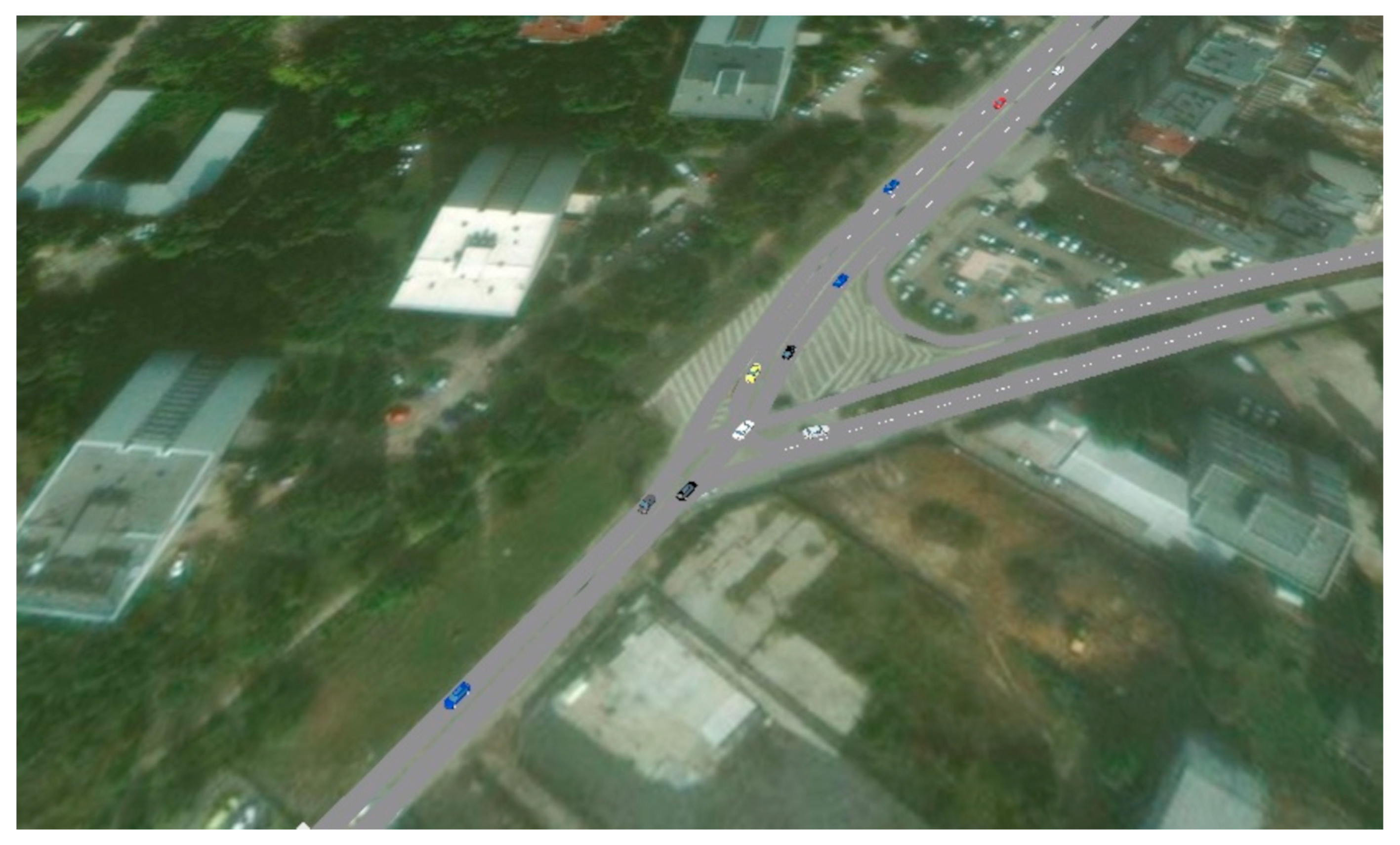
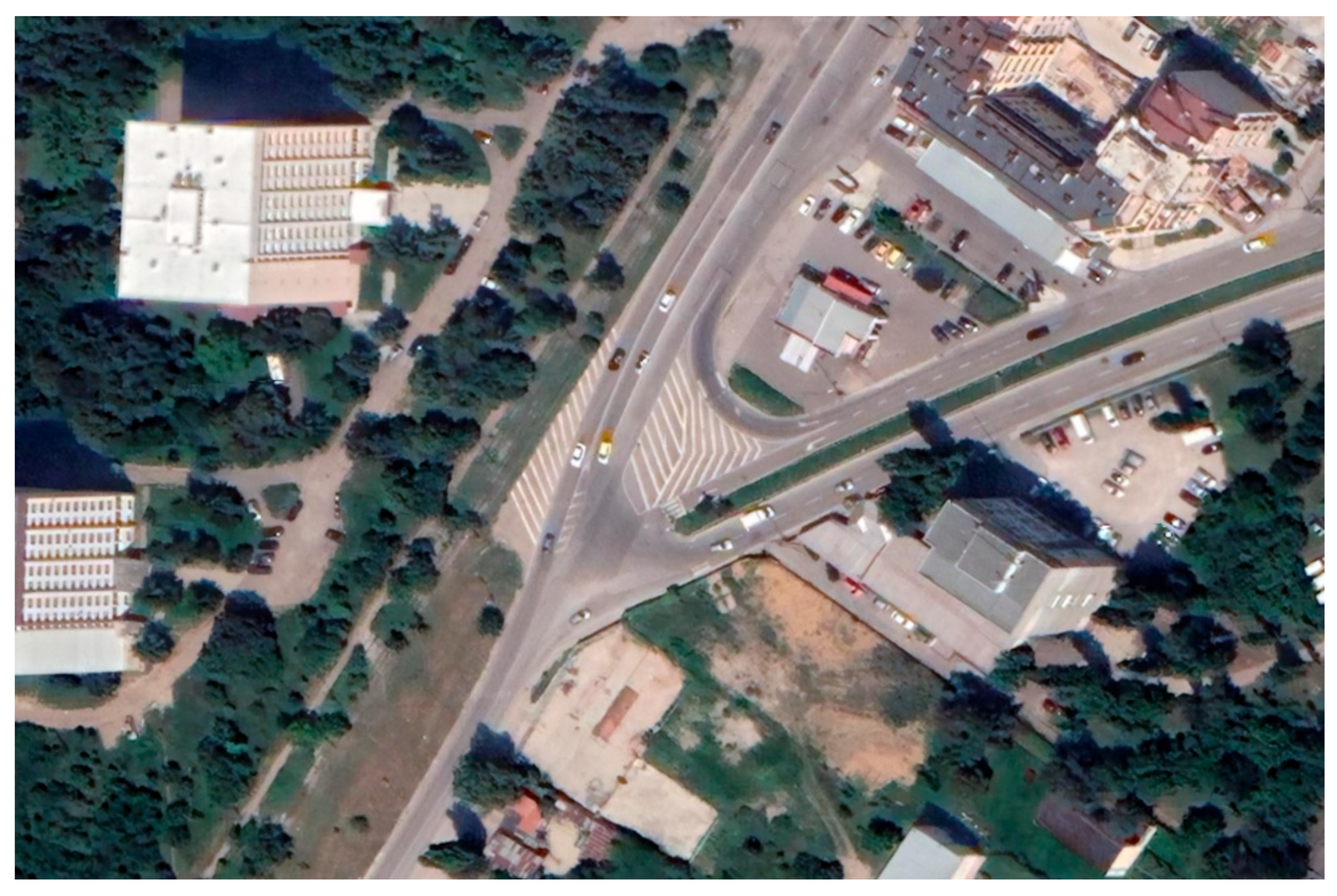
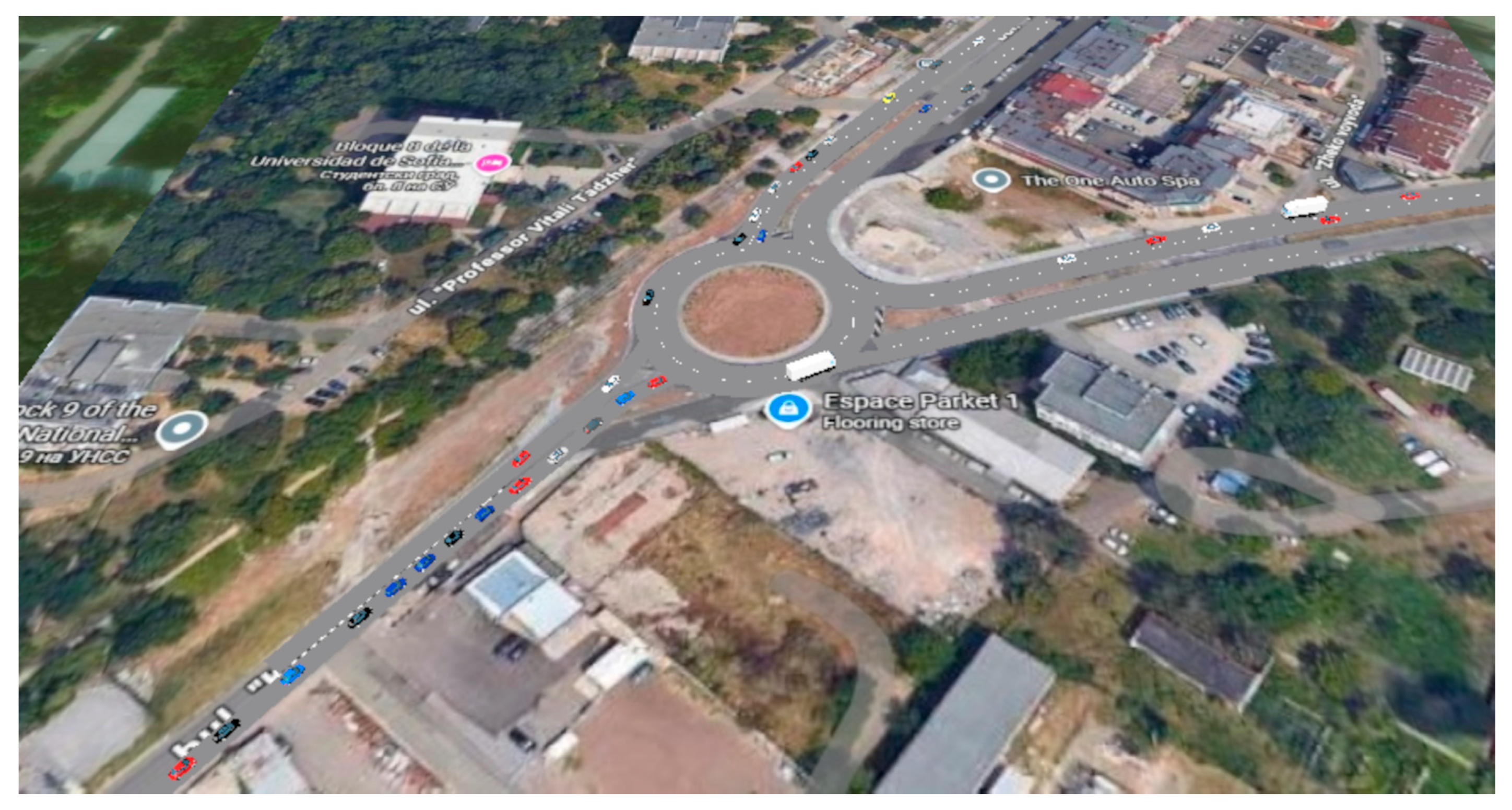
“Old situation”—three-way intersection (
Figure 1);
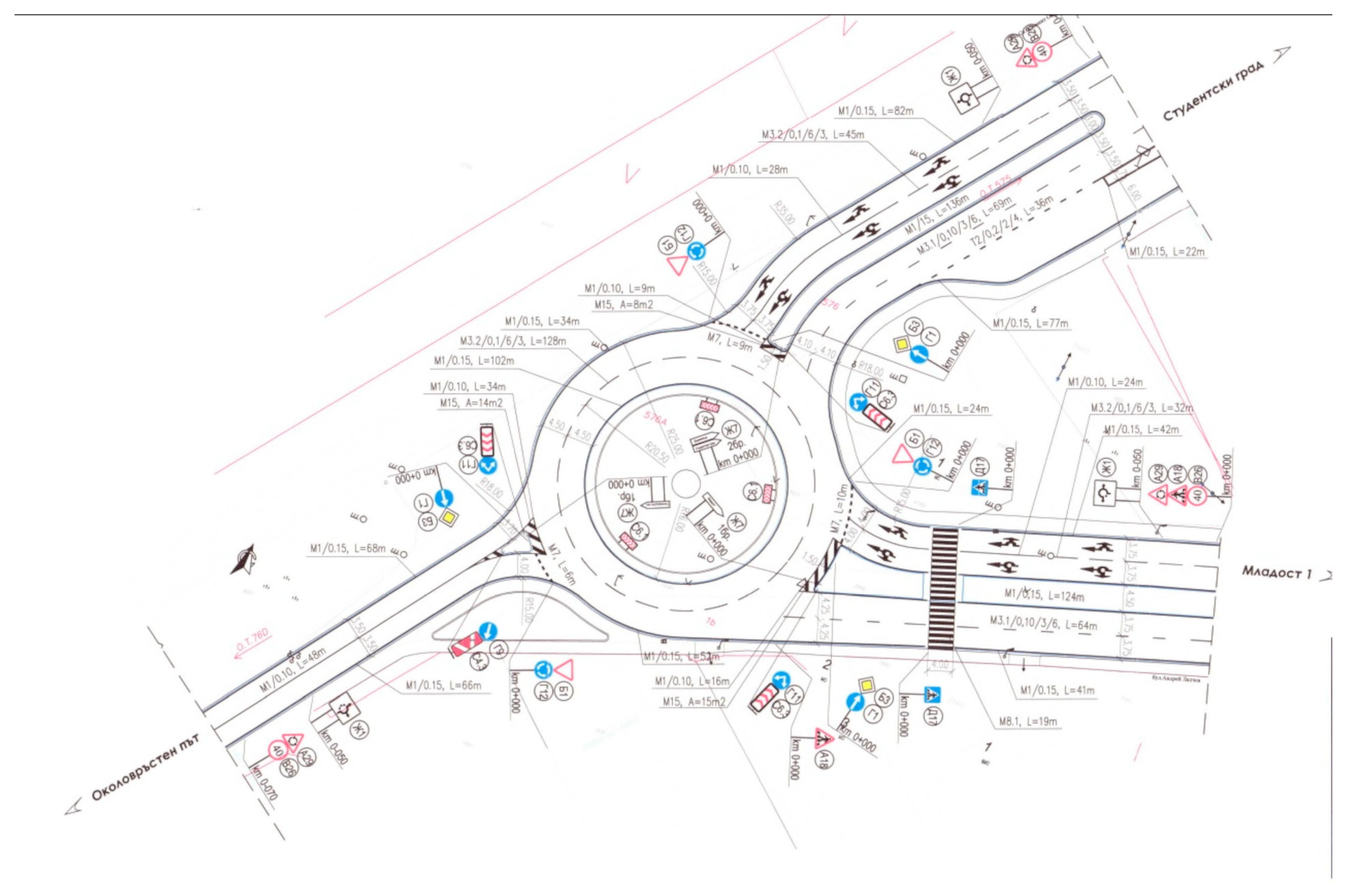
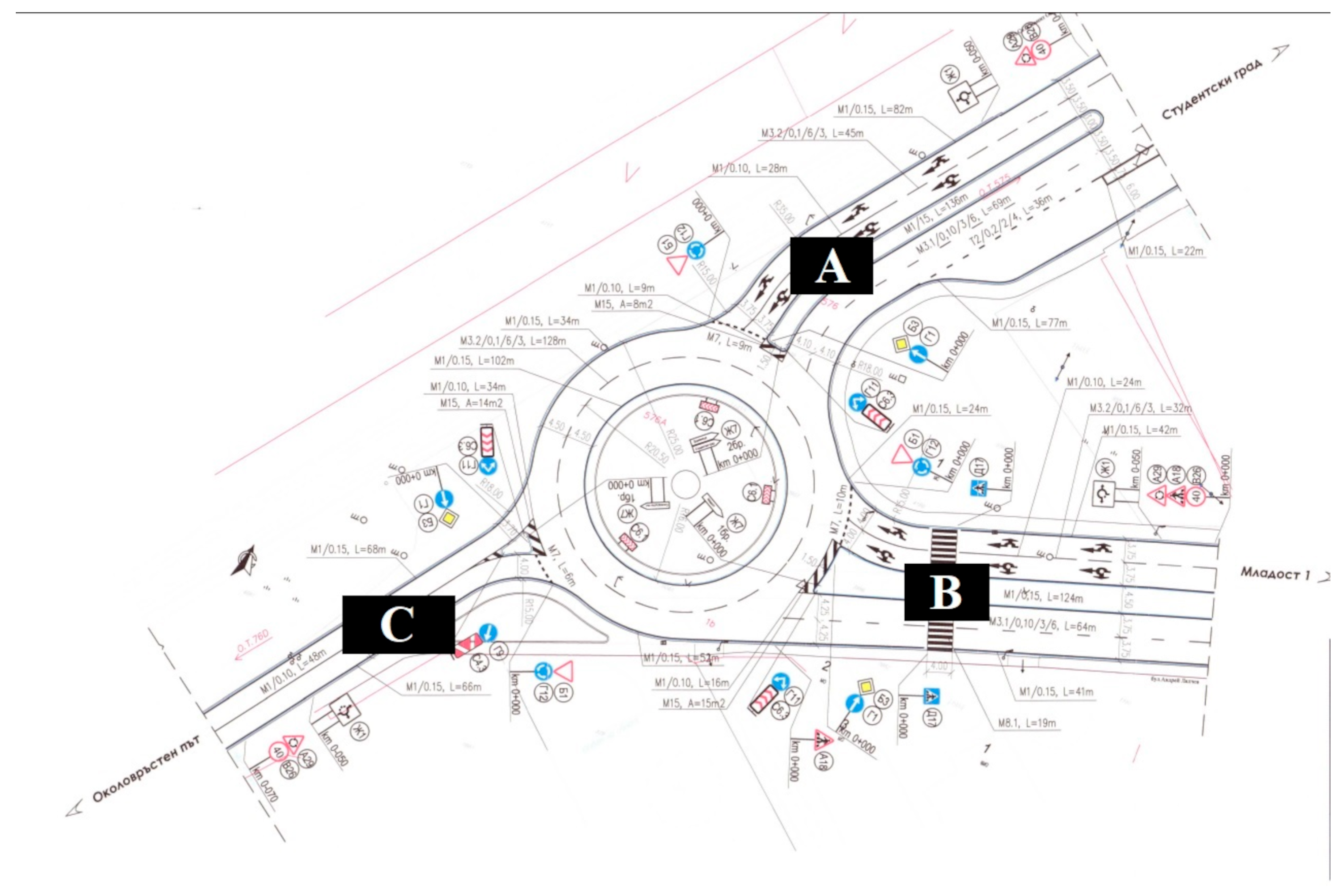
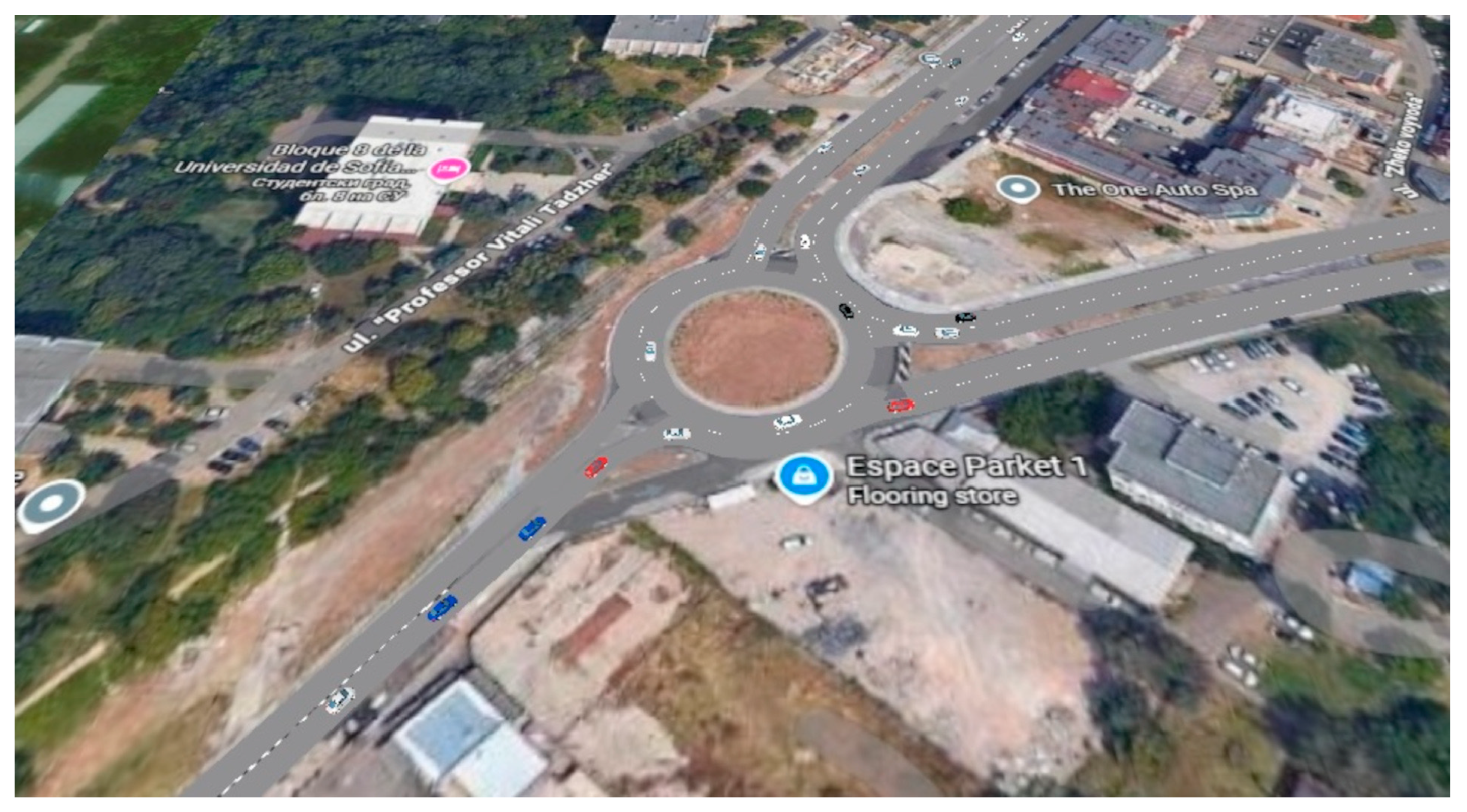
Roundabout with realized measures for optimization (
Figure 3).
2.3.1. Measuring the Traffic Flow
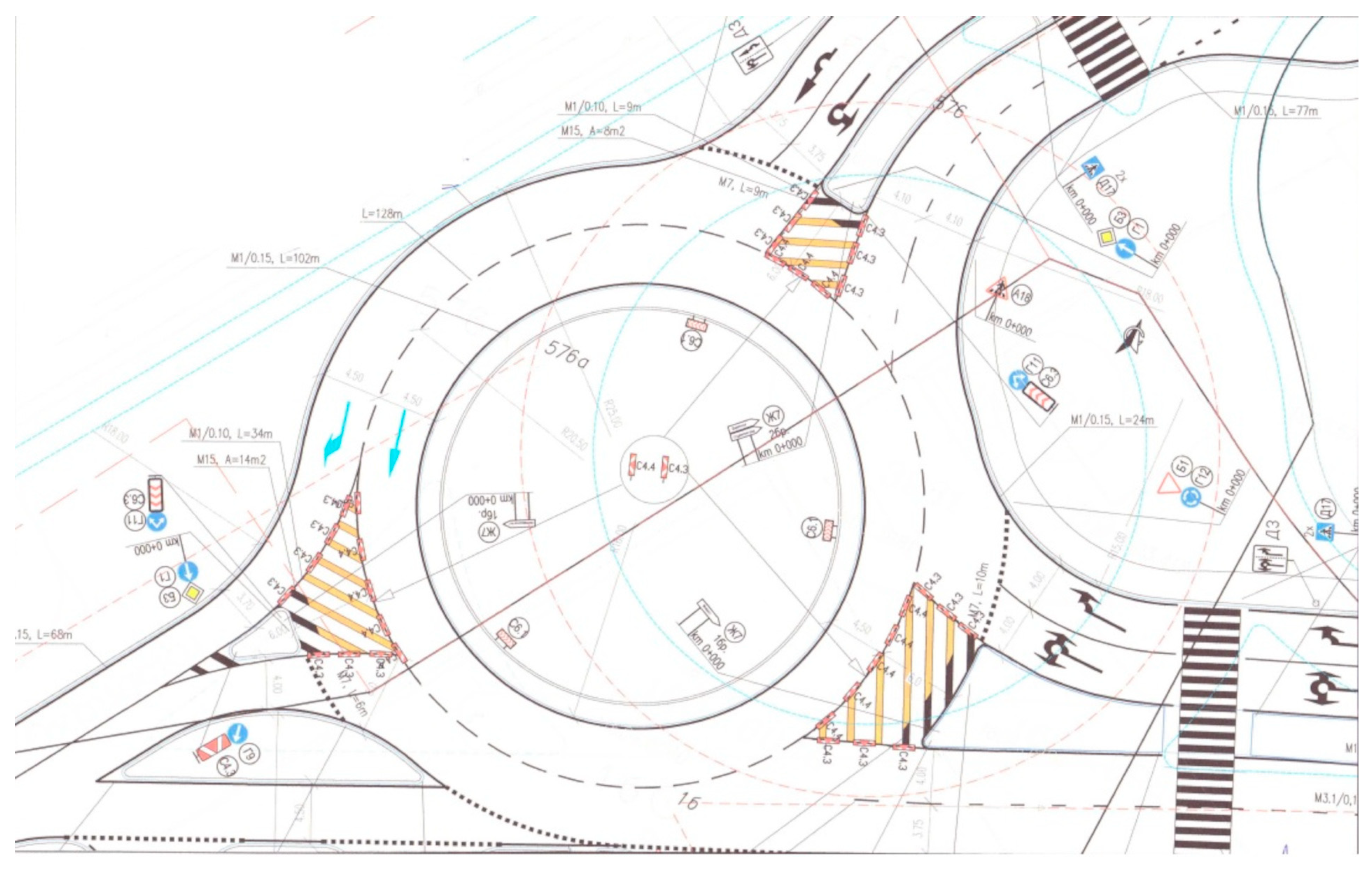
Scheme of Traffic volume survey at the intersection of A. Lyapchev Blvd. and Kliment Ohridski Blvd. is shown in
Figure 4. Results are shown in
Table 1.
2.3.2. Building the Traffic Simulation Models
3. Results and Analysis
According to the formula (2) the theoretical capacity of each roundabout entry was calculated for the scenarios “Roundabout” and “Roundabout with realized measures for optimization” is
Entry “A” qe = 3358 veh/h
Entry “B” qe = 2102 veh/h
Entry “C” qe = 2524 veh/h
Entry “A” qe = 2851 veh/h
Entry “B” qe = 1793 veh/h
Entry “C” qe = 2054 veh/h
As can be seen from the above results, theoretically, the roundabout without the implemented improvement measures (i.e., without the restriction of traffic in one of the outer circulating lanes before the entries) should provide higher capacity, while the implemented restriction would lead to a reduction in the overall roundabout capacity.
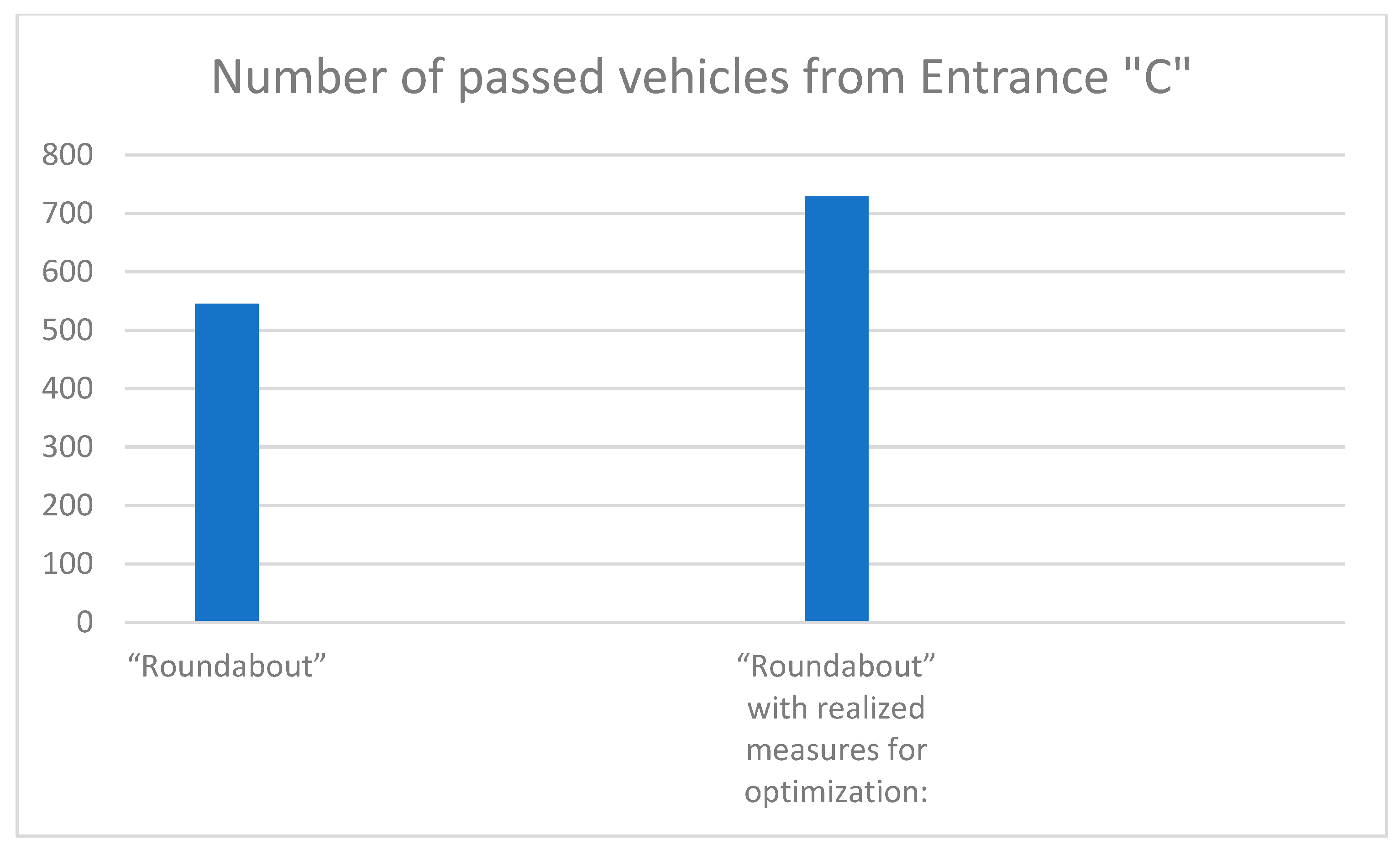
As can be seen from the displayed graph, the number of vehicles entering from Entry C during one hour of simulation time in the “Roundabout” scenario is 545, compared to a minimum generated capacity of 754 vehicles. In the “Roundabout with realized measures for optimization” scenario, 729 vehicles entered from Entry C, out of a minimum generated capacity of 754 vehicles (the difference is due to vehicles that were generated but did not complete their trips/paths within the 3600-s simulation period).
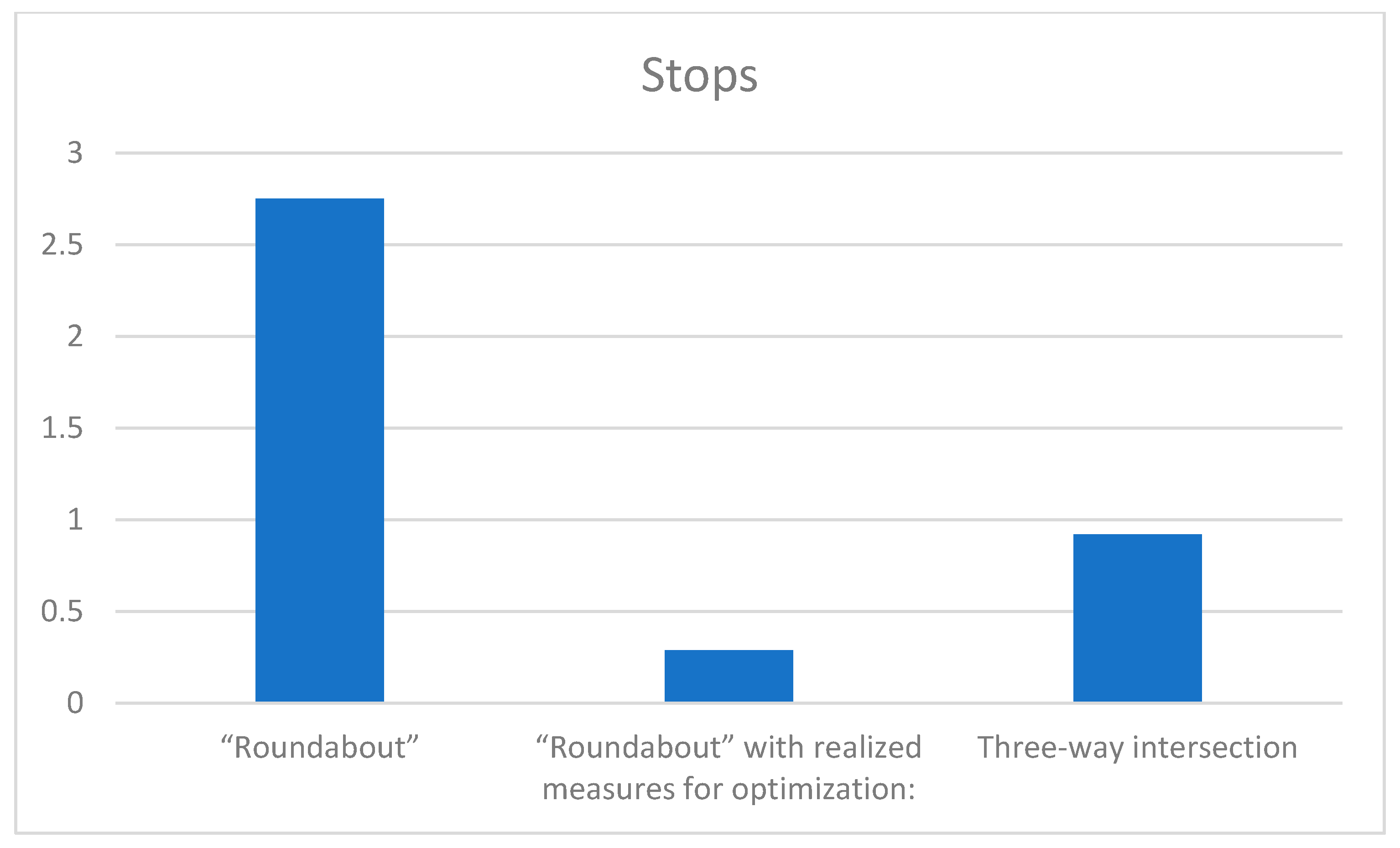
The data regarding the average number of stops performed by vehicles when passing through the intersection represent a clear indicator of traffic flow homogeneity. This parameter has environmental implications, as well as a purely psychological impact on driver behavior.
The greater the number of stops, the more irritated and aggressive drivers tend to become, while harmful emissions generated by traffic flows increase significantly, since the highest level of emissions occurs during vehicle deceleration and acceleration phases. These emissions originate both from vehicle braking systems and from internal combustion engines.
In the “Roundabout” scenario, for direction “C”, an average number of stops per vehicle while passing through the intersection of 8.47 was observed. This indicates that each vehicle traveling through this direction stops on average 8.47 times.
For comparison, in the other developed scenarios/models, the same indicator for this direction has an average value of less than one stop per vehicle.
These data indicate that the implemented measures achieved the desired effect—significantly increasing the capacity of the roundabout. The model did not reach the saturation point of the traffic flows, at which exponential queue formation would begin. In other words, the roundabout has an even higher potential capacity than that measured using the currently applied input data.
As can be seen from the results, the problem with the existing three-way intersection was not its capacity, but rather the large no-go zones, which were not physically separated. These zones frequently experienced violations, leading to traffic accidents. From this perspective, the decision to implement a roundabout appears logical.
However, the lack of a preliminary analysis and consideration of alternative solutions resulted in the construction of a roundabout that significantly reduced the intersection’s capacity. Had a more in-depth analysis been conducted—evaluating all technical characteristics of the intersection—an alternative solution might have been considered, such as the implementation of traffic signal control at the existing three-way intersection. This could have eliminated conflicts between traffic flows while maintaining good capacity and allowing for adjustments in response to changes in traffic volumes in future.
Since such an alternative was clearly not considered, the present study focuses on the development of traffic models and a comparative analysis of the results from the implementation of the roundabout, as well as the necessity and effectiveness of the measures and changes introduced in traffic organization.
The comparative analysis clearly demonstrates a significant discrepancy between the theoretically expected capacity of the two considered scenarios and the actual performance observed both in the field and through the simulation models.
4. Discussion
As can be seen from the above input data obtained from the simulation models, the scenario “Roundabout with realized measures for optimization” shows a significant reduction in the average queue length at the intersection. These results are contrary to the theoretically calculated capacity of roundabouts when applying the widely used formula for this type of assessment.
But why does this occur?
The explanation is that the formula, as well as most models used for the theoretical calculation of the capacity of roundabouts and/or their individual approaches, do not take into account a number of factors such as the distance between the exits and entrances of the intersection, driver behavior, and other operational characteristics. But why those factors/parameters are so important?
In the present case, the roundabout is relatively small, with the entry and exit legs located in very close proximity to each other. In the southern part of the intersection, there are two circulating lanes within the roundabout, as well as one entry lane and one exit lane. At the same time, the distance between the exit lane and the entry lane is less than 5 m.
In combination with the behavior of many drivers—particularly their tendency not to activate the right turn signal when exiting the roundabout—this situation forces the incoming traffic to wait unnecessarily long periods of time. This occurs because drivers entering the roundabout lack clear information about whether vehicles traveling in direction A–C will continue circulating within the roundabout or perform an exit maneuver.
This effect is further intensified by the extremely short distance between the exit and entry legs on the southern side of the intersection, which does not allow entering drivers to make a reliable judgment about whether they can safely merge into the circulating traffic in cases where vehicles within the roundabout intend to continue circulating rather than exit.
Such a situation is very difficult to represent within a standardized traffic model or analytical method, as it is highly specific to the particular location. The challenge is that, in the case of roundabouts, site-specific factors of this kind can have a very strong influence on traffic flows, while at the same time numerous variations of these factors may exist.
There is a lack of a clear methodology and/or guidelines for performing a comprehensive evaluation of capacity that is applicable to all types of roundabouts.
The use of simulation models and specialized software solutions represents a more comprehensive approach through which significantly more and more accurate data can be obtained regarding the expected operational parameters of different types of intersections.
Naturally, the use of specialized software tools alone is not a sufficient condition for conducting a high-quality assessment and reliable forecasting. The specialist responsible for developing the model must possess in-depth knowledge and understanding in the field of traffic flow management and must carefully select the appropriate tools in order to accurately reproduce drivers’ perceptions and behavior.
Such behavior is often influenced by seemingly minor factors, such as those described above, which can nevertheless have a significant impact on traffic flow dynamics.
5. Conclusions and Future Work
The existing individual methods and models for evaluating the capacity of approaches and/or entire roundabouts are, in many cases, insufficient and associated with a high level of error. This often leads to incorrect decisions by both political and technical authorities responsible for traffic management and the development of transport infrastructure. As a result, significant financial losses occur, traffic congestion is formed, road safety problems arise, and overall the results from the invested funds and efforts remain unsatisfactory or low.
In the present study, a comparative analysis was carried out between the theoretical capacity and the actual capacity of an implemented roundabout intersection in the city of Sofia. In addition, an assessment was made of the effects of applied traffic management measures aimed at increasing the capacity. A specific measure/solution addressing a particular problem is examined, which had not been identified prior to the implementation of the roundabout. Within the design process, reliable and contemporary methods were not employed, such as the use of specialized traffic simulation software to identify conflict points and the issues arising from them. As a result, following the implementation of the roundabout, a significant increase in delays experienced by public transport vehicles traversing the intersection has been observed, along with a substantial growth in queues of waiting vehicles.
Within the scope of the study, the need for more in-depth research in this field was demonstrated, as well as the necessity of developing a more comprehensive model or method for the theoretical evaluation of the capacity of different types of intersections.
The use of specialized transport modeling software is a powerful tool for more accurately assessing, in advance, various applicable technical solutions for a given road junction and/or intersection.
In future studies, the full potential of transport modeling should be examined and demonstrated through the use of specialized software tools, incorporating additional factors such as the presence of on-street parking, pavement condition, and the deterioration of driver behavior under conditions of increased congestion, among others. Furthermore, an analysis should be conducted and, where necessary, the existing theoretical methods and models for determining and predicting the capacity of various types of intersections should be updated and/or refined.
In the field of signalized intersections, theoretical models significantly lag behind contemporary transport modeling approaches due to their inability to accurately capture the temporal variability of traffic flows. In contrast, modern traffic modeling and simulation software allows for direct integration with real-time data sources, enabling the acquisition of up-to-date information on traffic demand and its fluctuations. This provides the capability to develop transport models and simulations that reflect the operation of traffic signal systems under adaptive or flexible control regimes.