


Abstract
The study concerns the simulation of an active personal protective mask that performs air purification of incoming and outgoing air to and from the user using ultraviolet germicidal irradiation (UVGI). The specific method for determining the radiation dose is done using a CFD simulation of the process of breathing to determine the duration of the irradiation of the air. Additionally, an optical simulation is performed in order to determine the average irradiance in the illuminated zone. For the purposes of the UVGI, a radiation dose of 20–40 J/m2 is sufficient to achieve LD90 when applied to most Flu and Corona viruses.
1. Introduction
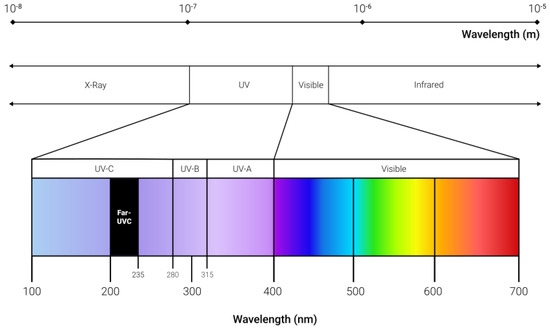
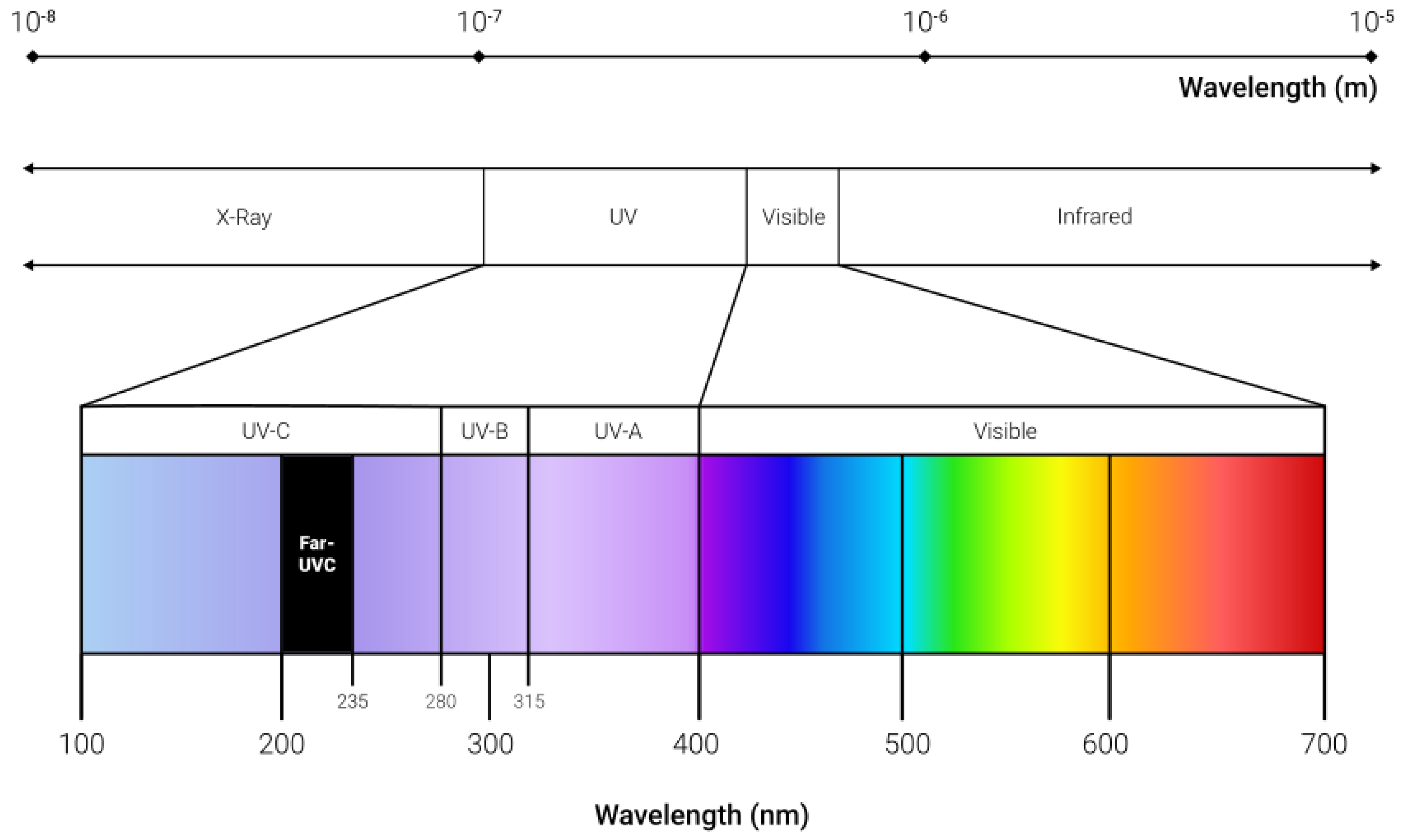
The utilization of ultraviolet germicidal irradiation (UVGI) has emerged as a potent method for disinfection, although not so much in the context of personal protective equipment (PPE). Given that, from 2020 to 2022, the world was amid ongoing public health challenges due to the COVID-19 virus, a novel design for a protective mask has been created that utilizes UVGI technology for work in contaminated zones. This study focuses on the determination of the ultraviolet (UV) intensity and radiation dose created from light-emitting diodes (LEDs) used for active air purification. The adoption of UV LEDs is not enough. For effective UVGI, an ultraviolet light is needed in the UV-C spectrum which emits light at wavelengths typically between 200 and 280 nm. They are effective at inactivating a wide range of pathogens, including viruses, bacteria, and fungi, with low energy consumption, unlike a UV lamp. Understanding the precise UV intensity and radiation dose is critical for optimizing the disinfection process, ensuring a death level of over 90% death and above if a longer exposure is done. The UV-C spectrum and which wavelengths it occupies compared to the X-ray, visible light and infrared spectra is shown in Figure 1.
Figure 1.
Ultraviolet spectrums by wavelength [1].
This research employs advanced photometric techniques to quantify the UV output irradiance from LEDs and to evaluate the spatial distribution of UV intensity within the protective mask. UVGI primarily inactivates microbes by damaging their genetic material, thereby inhibiting their capacity to carry out vital functions.
Optical simulations are integral in the design and optimization of photonic systems as they enable the precise modeling of light–matter interactions. These simulations employ advanced computational techniques to predict the behavior of light within complex structures, facilitating the analysis of parameters such as reflectance, transmittance, and absorbance. Software solutions for optical simulations utilize different methods for calculation, though ray-tracing has become the most widely used as of late. Optical simulations can accurately replicate the propagation of electromagnetic waves through different media. This predictive capability is crucial for developing efficient optical devices, such as LEDs, lasers, and photodetectors, as it allows researchers to refine device geometries and material properties before experimental validation.
The UVGI method has an effectiveness that is highly dependent on the radiant exposure, also known as fluence in radiometry; this is the radiant energy received per unit area, or the irradiance of a surface integrated over the time of irradiation, and is denoted as He.
where Qe is the radiant energy; A is the area; T is the duration of irradiation; and Ee is the irradiance in J/m2.
Computational fluid dynamics (CFD) simulations are a powerful tool in the study and analysis of fluid flow for engineering and scientific applications. These simulations employ discretization methods, mainly a finite element method (FEM), in order to convert the continuous flow domain into solvable algebraic equations. CFD enables the visualization and quantification of parameters such as velocity distribution and pressure distribution, which are critical for optimizing the design and performance of systems ranging from aerospace and automotive engineering to environmental and biomedical applications. In order to evaluate the design of the UV PPE for active air purification, a fluid flow simulation is done to determine the fluid flow velocity of air through the irradiated zone and to determine the exposure time so that the given dose for a radiant exposure can be calculated.
Recent studies have substantiated the ability of UV-C light to inactivate SARS-CoV-2, the strain of coronavirus that caused COVID-19, depending on the radiant exposure; a 90% lethal dose (LD90) is between 20 J/m2 and 37 J/m2 [2,3,4,5,6].
2. Geometrical Model of the PPE and Main Characteristics
The proposed personal protective equipment (PPE) is in the form of a mask that covers the nose and mouth of the user in order to stop untreated air from entering the respiratory system. The main feature of the PPE mask is that the UV-C module for UVGI is replaceable when the batteries for the device are low, and there is no downtime allowed.
A method for creating an anthropometric shape model from 100 MRI scans was used to accurately predict and analyze human scalp shape. The shape model was parameterized using the main anthropometric characteristics of head length, face width, bitragion breadth, ear height, horizontal ear position, vertical ear position, projected ear height, circumference, and others. Several combinations of these anthropometric measurements offer good predictions, but the best is obtained by combining all but ear height. The sample size was checked using cross-validation analysis of the anthropometric model, which revealed the mean geometric error rates for a sample size of 90 individuals.
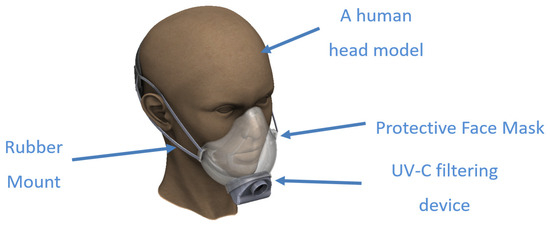
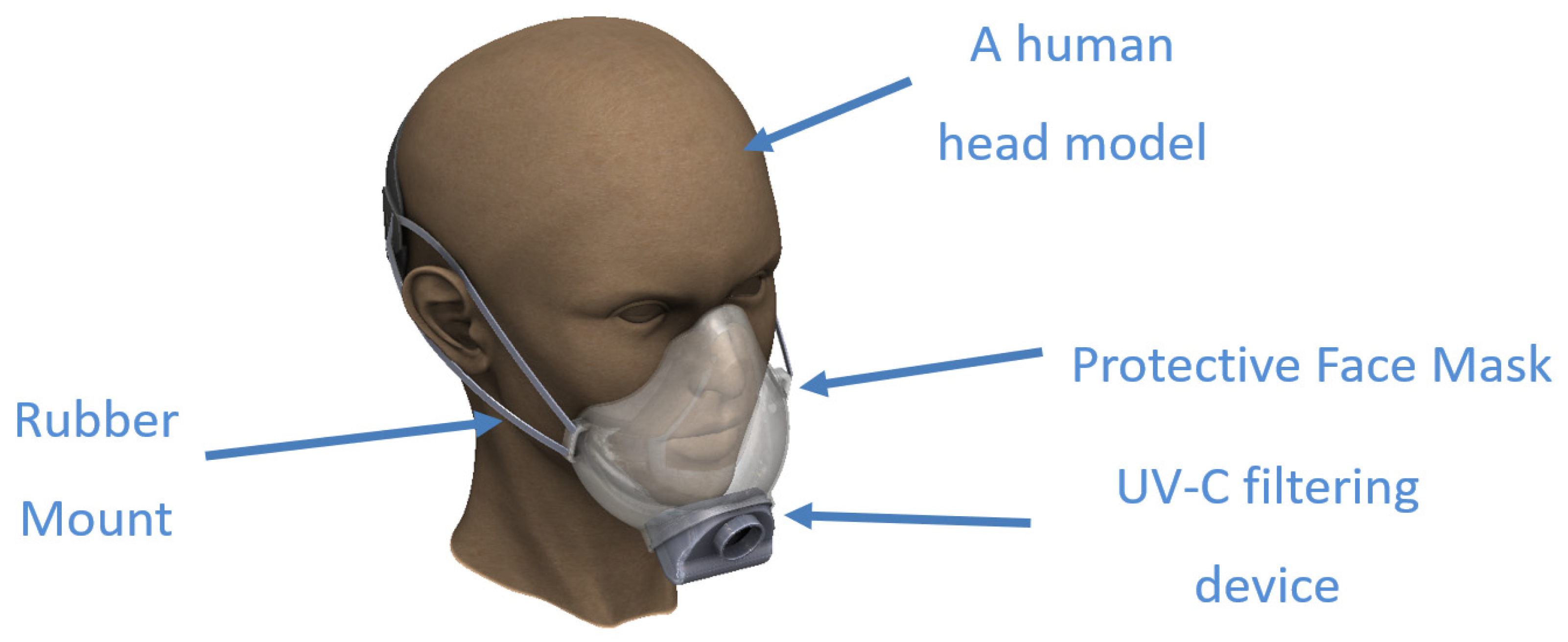
The design was shaped with a “lip” on the side touching the face in order to maximally pressurize the facial area, thereby eliminating the entry of contaminated outside atmospheric air from the area. A front opening is formed in front of the mouth area, and a contour is specially designed for the air purification device. Given that the UV-C emitted radiation is only inside the filtering device, the protective face mask can be made clear for a more pleasant experience when communicating and for visual feedback. The design of the PPE active air purification mask is shown in Figure 2 and was done in SOLIDWORKS (version. 2022).
Figure 2.
Design of PPE face mask with a UV-C filtering device worn on a human head.
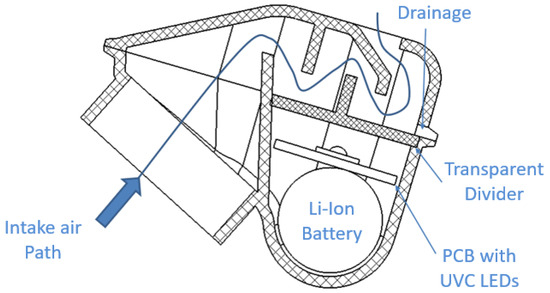
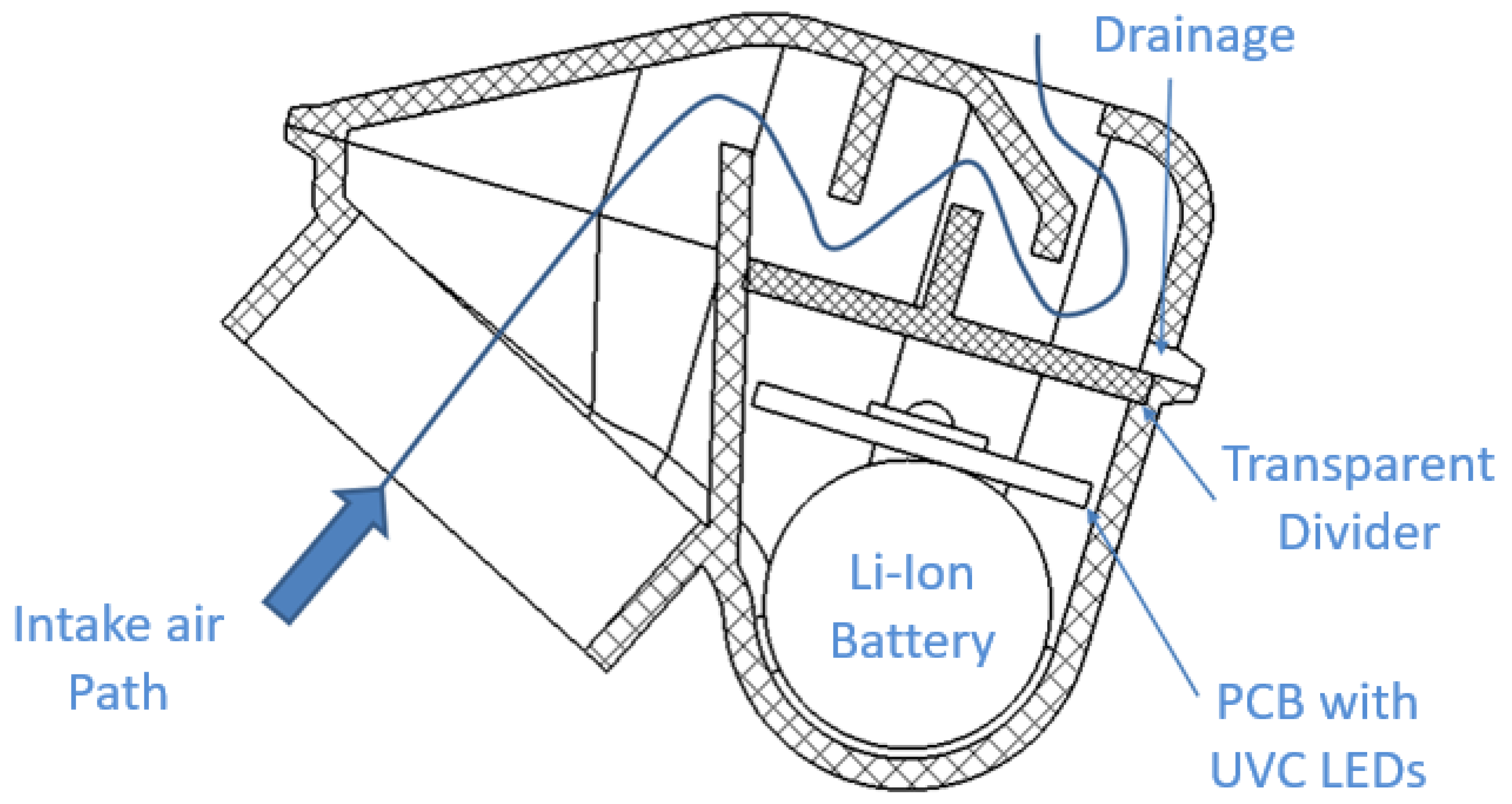
The UV-C filtering device is made from opaque material in order to shield the user from harmful UV light. Additionally, the insides of the irradiated zone of the filtering device housing are lined with a highly reflective material that achieves 97% reflectivity. This is done in order to maximize the irradiance inside the filtering device. To power the UV-C filtering device, an inhouse produced PCB at the Technical University of Sofia with two UV-C LEDs (manufactured by BOLB Inc. from USA, California, Livermore with a part number of S6060-DR250-W272-P100) is mounted beneath a transparent divider on top of a Li-Ion battery. The Li-Ion battery is selected for having one of the highest energy densities compared to different battery types (so that it does not wear out the user from its weight) and also for its ability to have a deep discharge [7]. The air path has a zig-zag shape that is used to lengthen the air flow path to have a prolonged exposure in the irradiated zone. The elements of the filtering device are shown in a cross-section view in Figure 3.
Figure 3.
Design of PPE face mask with a UV-C filtering device in a transverse cross section.
3. Fluid Flow Simulation
A fluid flow CFD simulation of the UV-C filtering device is needed to analyze the air velocity inside the filtering device. In order to evaluate the irradiation, it is important to calculate the average velocity of the air flow inside the mask. Doing this allows for the calculation of the time in which the air is being irradiated, given that the air flow path length is known. Additionally, this calculation shows the pressure drop inside the mask, which helps to evaluate how much harder it will be to breathe in it.
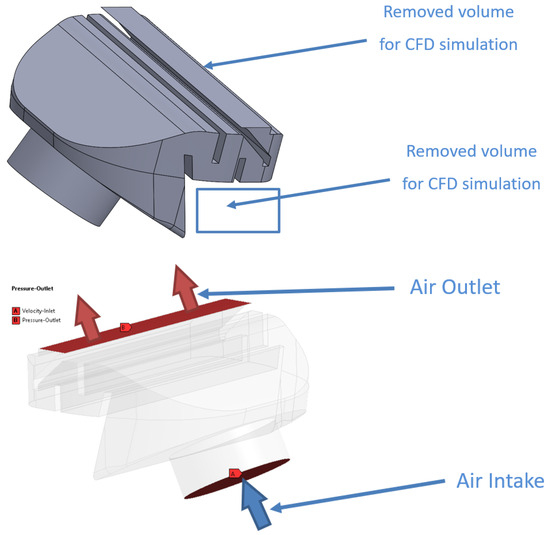
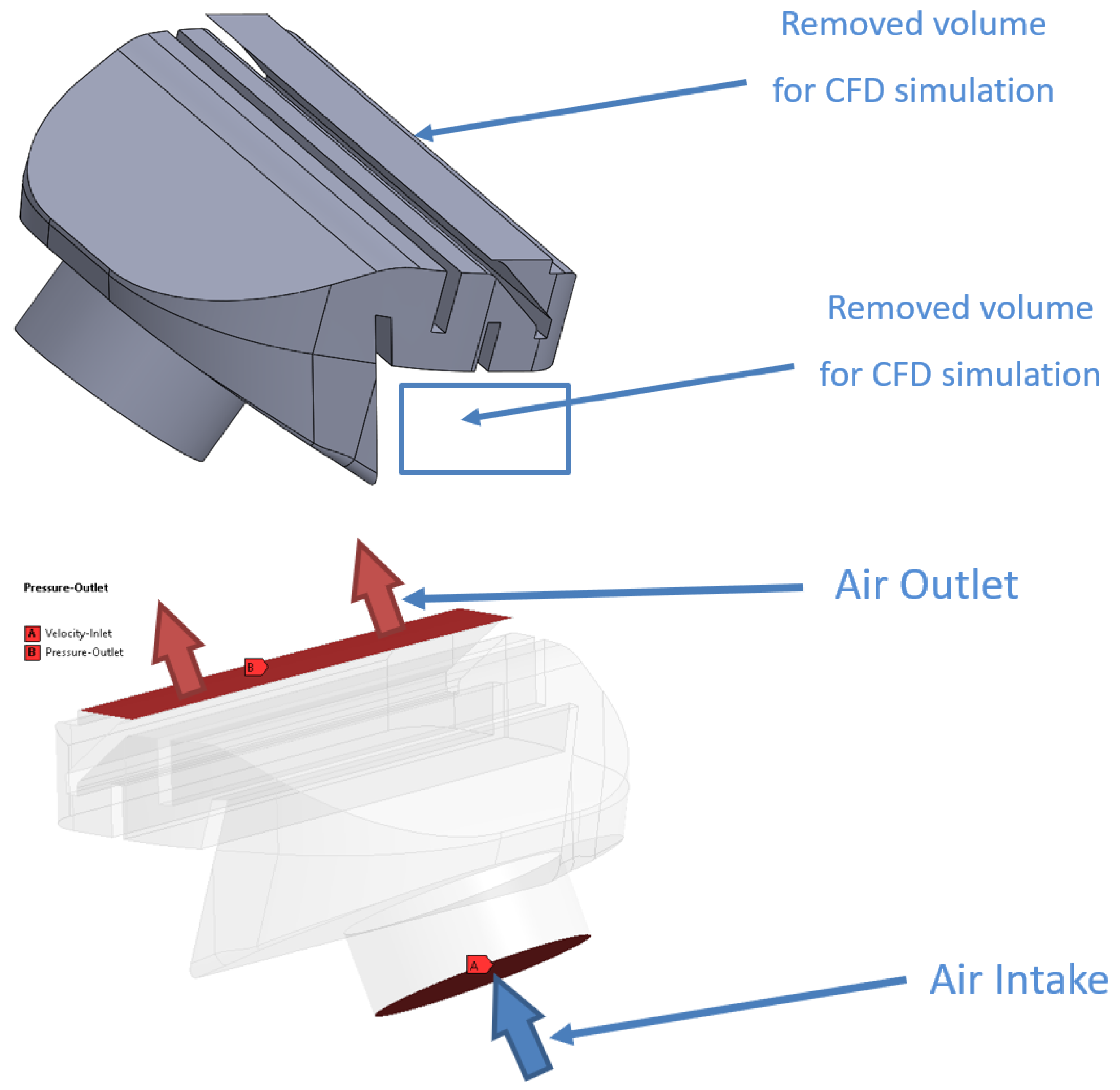
The geometric model for the CFD analysis comprises the negative volume inside the UV-C filtering device. The part under the transparent divider is removed, given that no air moves physically in that volume.
The software that was used for the fluid simulations is ANSYS Fluent 2019 R2 and the boundary conditions for the CFD simulation are as follows:
- For the air intake, the boundary condition is set as a velocity inlet with a velocity of ~0.003 m/s (based on a Volumetric Flow Rate of breathing of 6 L/min) [8];
- The air outlet is set as a pressure outlet at 0 Pa to gauge pressure from atmospheric pressure.
The geometric model and boundary conditions are shown in Figure 4, along with the results from the CFD fluid flow simulation in terms of velocity distribution.
Figure 4.
Geometric model (top) and boundary conditions (bottom) of the CFD fluid flow simulation.
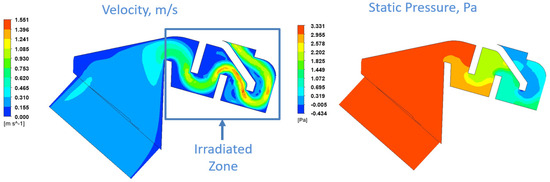
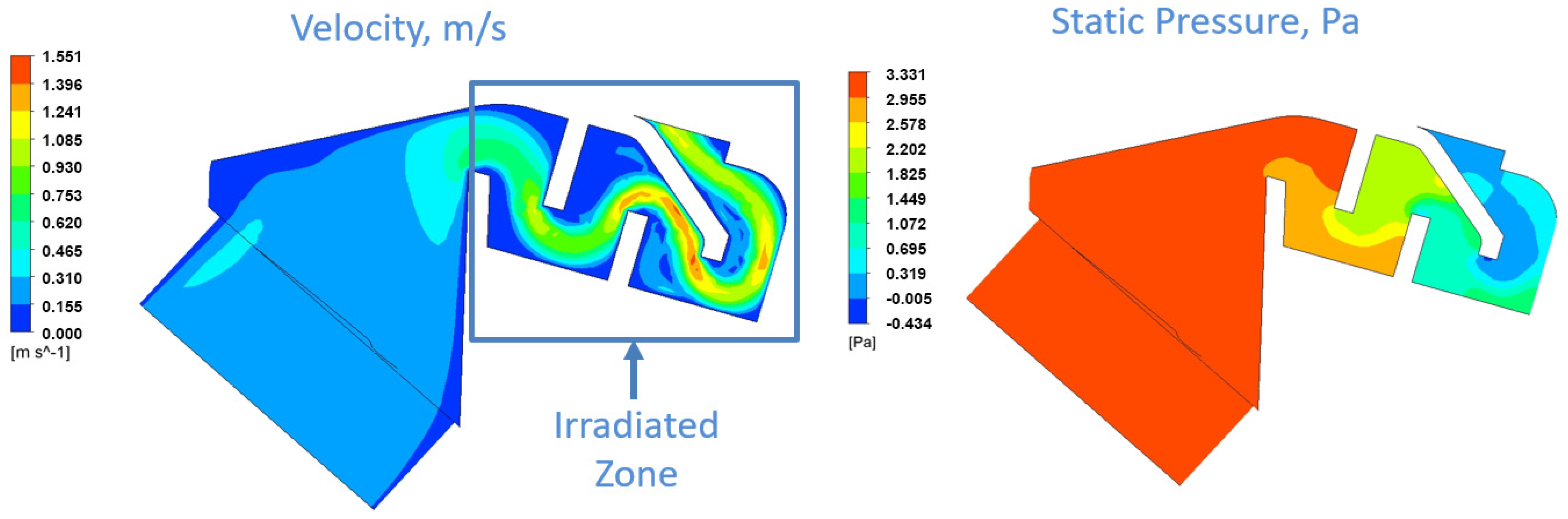
The results in Figure 5 show that the average velocity in the irradiated region is 0.5 m/s and the pressure drop is 3.331 Pa. Given that the pressure drop is only 3.3 Pa, breathing through this filtering device is done with minimal resistance in terms of fluid flow.
Figure 5.
Velocity distribution and static pressure of the UV−C filtering device.
4. Optical Simulation
Optical simulations are very useful when evaluating the irradiance inside a certain volume. These types of simulations are highly dependent on the physical properties of the materials as well as the properties of the light-emitting objects inside the simulation.
For this type of simulation, the geometric body of the UV-C filter is needed in order to enclose the irradiation zone properly, alongside a simplified PCB with a simplified geometry for the two UV-C LEDs. The optical simulation was performed using ANSYS Speos 2019 R2.
The boundary conditions for the simulation are as follows:
- The material properties of the UV-C filtering device housing are set as opaque with 97% reflectivity, simulating the reflective coating that will be added to the final product.
- The UV-C LEDs are set as emitting surfaces with a monochromatic spectrum (UV) at a wavelength of 272 nm.
- The type of flux of the emitting surfaces is set as radiant flux and is set at 0.10 W.
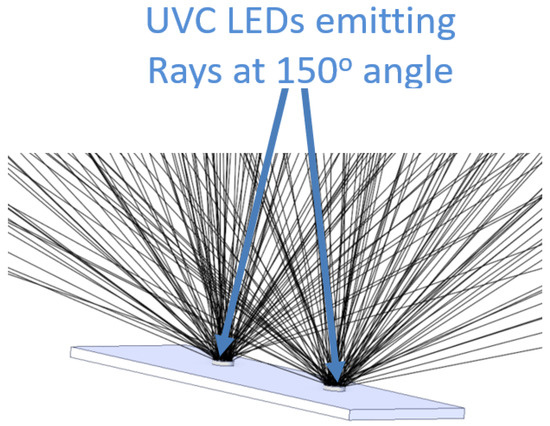
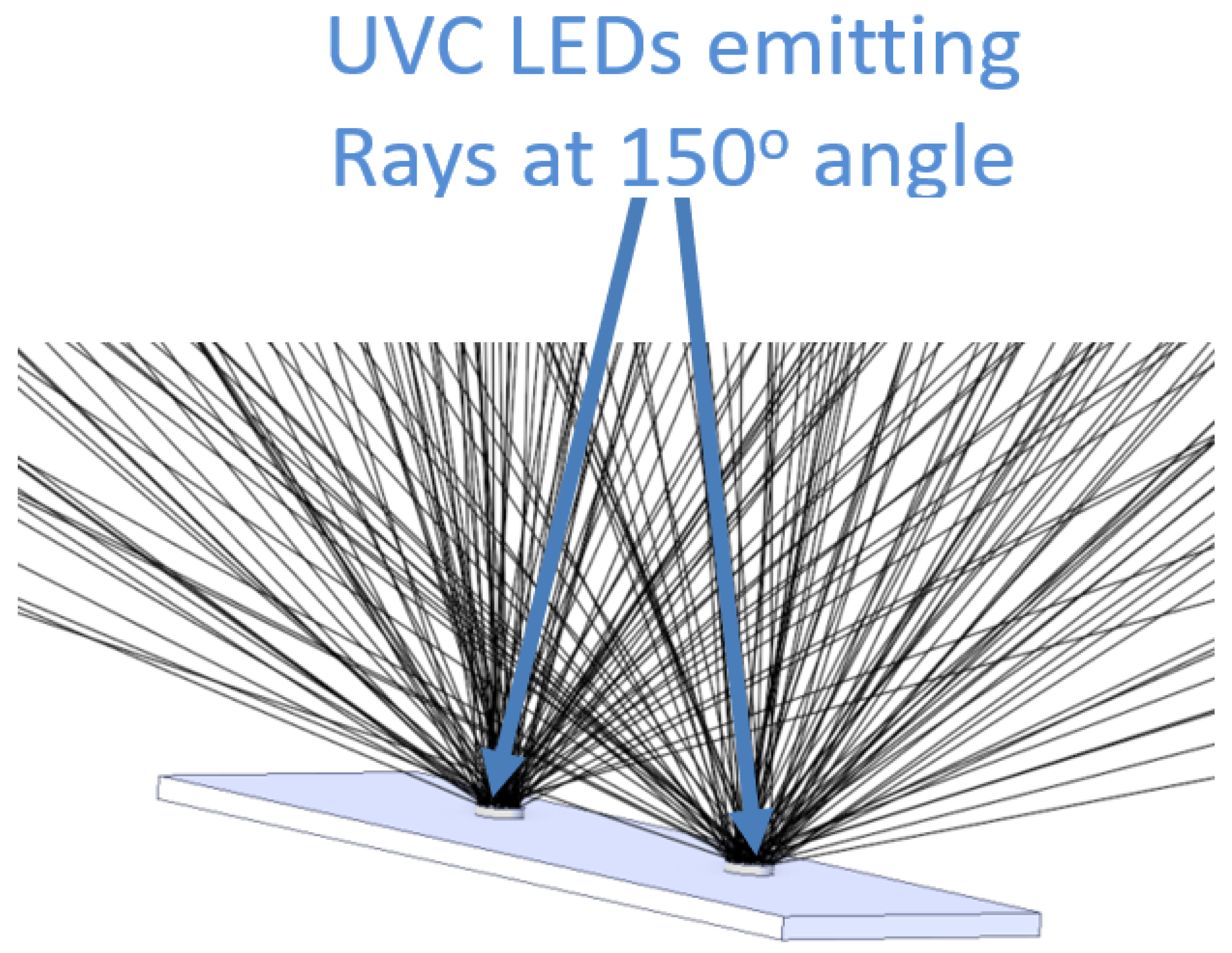
- The Lambertian angle of emission is taken from the S6060-DR250-W272-P100 UV-C LED datasheet and is set at 150°.
- The UV-C LEDs with their Lambertian angle and positions are shown in Figure 6.
Figure 6.
UV-C LEDs light emission boundary condition at 150° each.
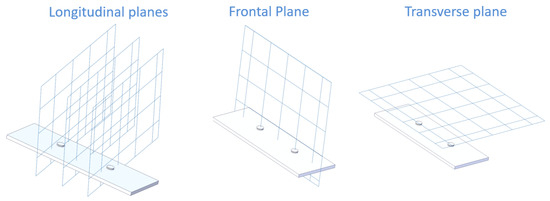
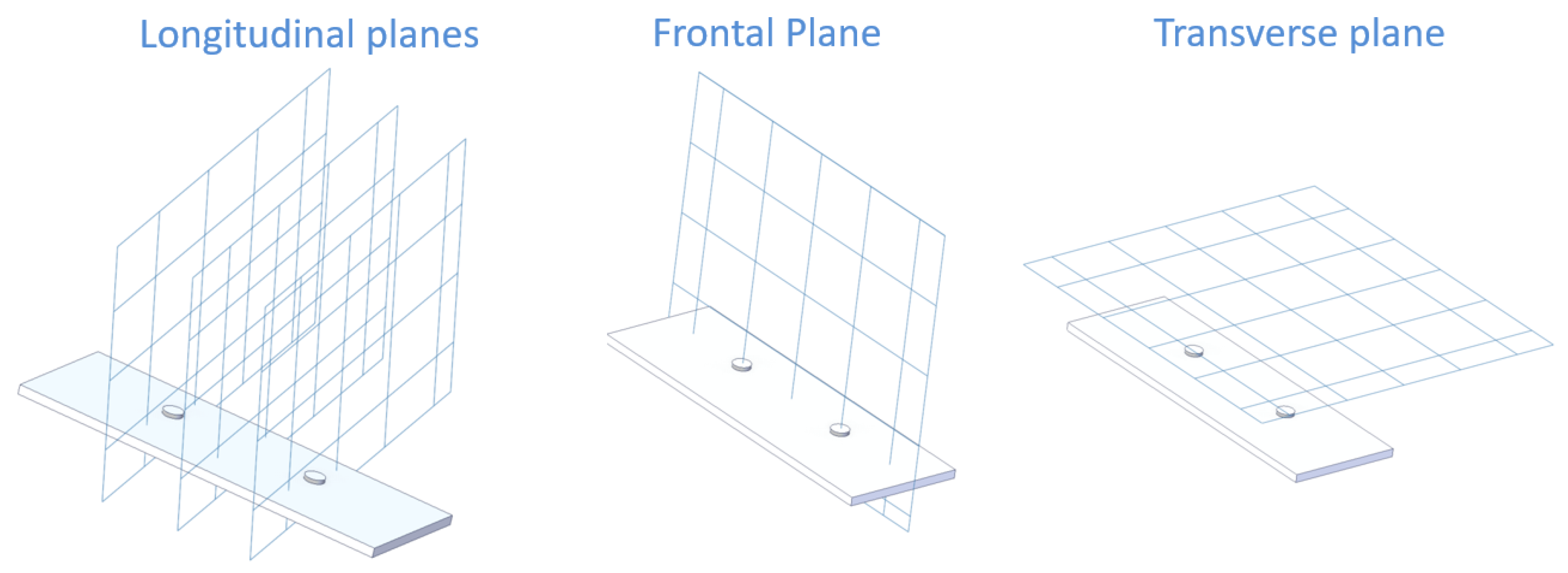
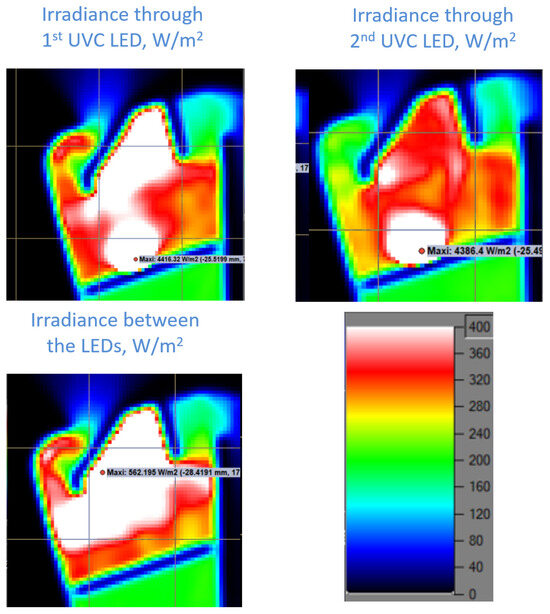
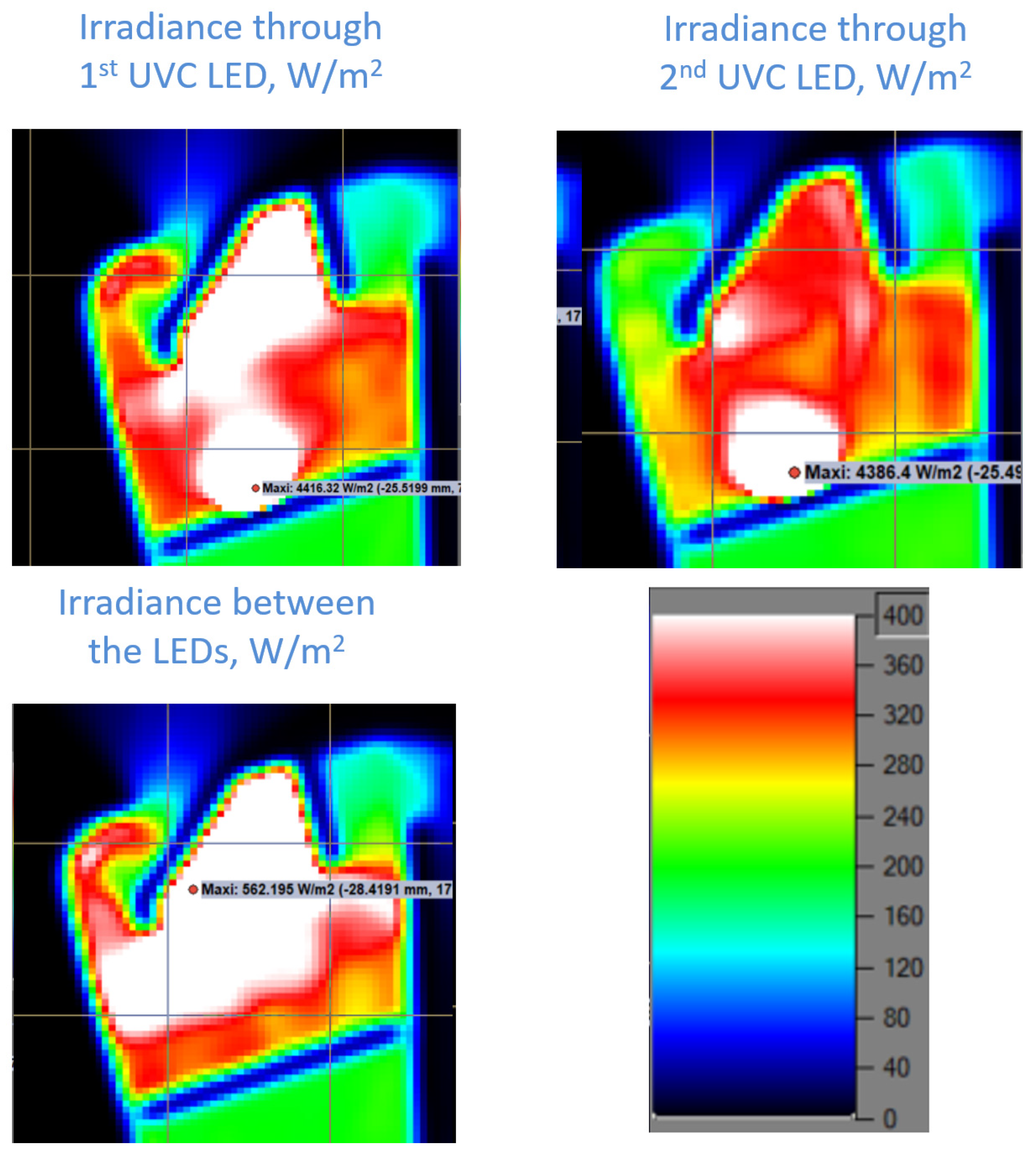
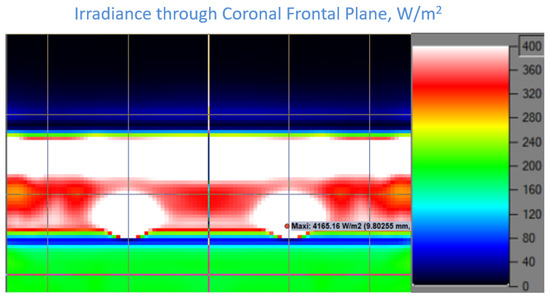
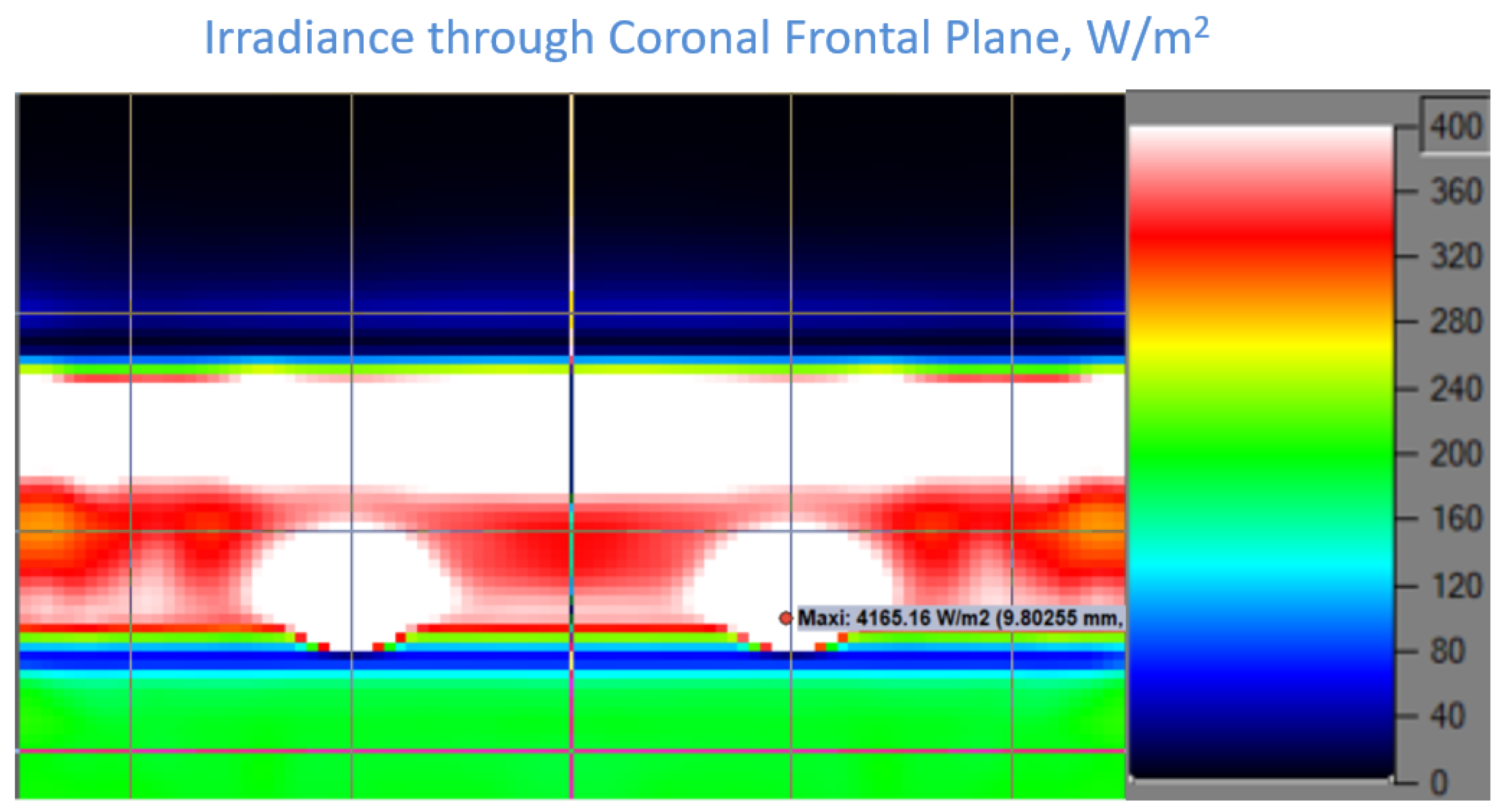
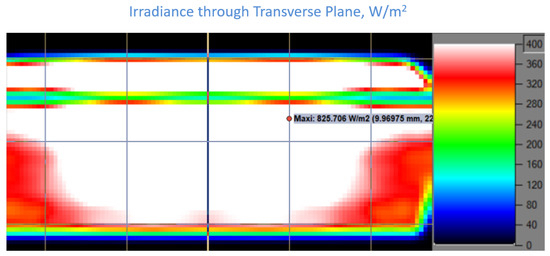
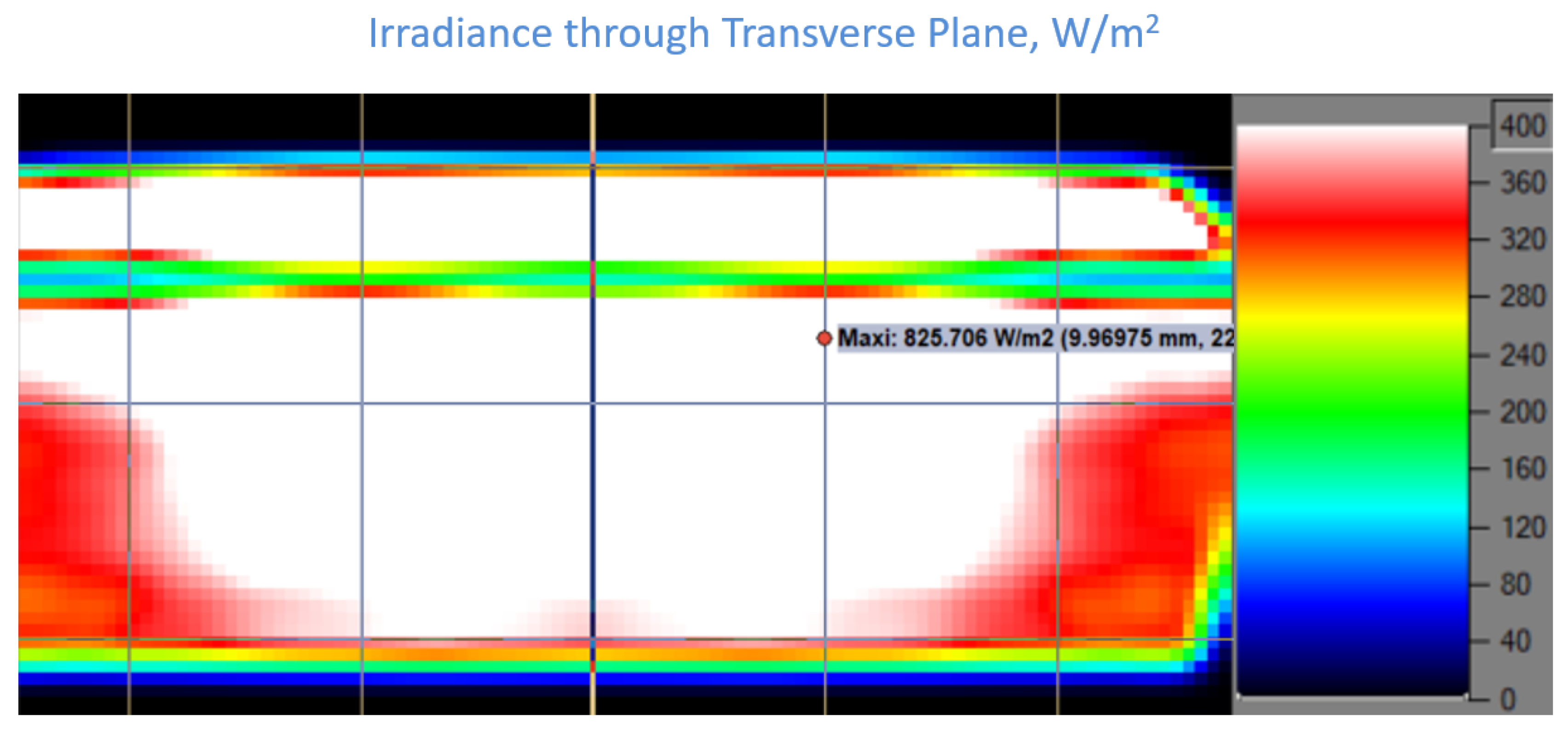
Evaluating the irradiance inside the UV-C filtering device is done using five sensors which are in the form of planes, with three longitudinal planes (two of which are through the LEDs’ centerlines and in the middle between them), one coronal or frontal plane (through the LEDs’ centerlines) and one transverse plane that is above the LEDs. These sensor planes are shown in Figure 7. The results for the irradiance of these sensors are shown in Figure 8, Figure 9 and Figure 10.
Figure 7.
UV−C filtering device components in longitudinal cross-section.
Figure 8.
Irradiance through three longitudinal plane sensors.
Figure 9.
Irradiance through coronal frontal plane sensor.
Figure 10.
Irradiance through transverse plane sensor.
5. Calculation of Radiant Exposure
Given the velocity distribution result from the fluid flow simulation, the duration of the air being exposed to ultraviolet radiation can be calculated. Given that the path of exposure of the air has a length of 0.063 m (63 mm) and the fluid flow has an average speed through the irradiation zone of 0.5 m/s, the duration of exposure is calculated as
Based on the ray optical simulation, it can be seen that the area through most of the sensors is in the range of 380–400 W/m2 and above. The calculated radiant exposure is then as follows:
6. Conclusions
Based on the performed CFD and optical simulations, the following conclusions can be derived:
- The proposed UVC housing design does facilitate a good airflow throughout the UVC irradiated zone with ease and also stops the harmful light from going outside of it.
- The selected UVC LEDs perform effectively and produce an irradiance (flux density) that covers the whole volume with over 380 W/m2.
- Based on the performed numerical simulations, the radiant exposure is calculated at a minimum of 47.88 J/m2 for the whole volume, which is higher than the requirements mentioned in the literature on UVGI for achieving an LD90 (between 20 and 37 J/m2) for SARS-CoV-2 and other Corona and Flu viruses.
Author Contributions
Conceptualization, K.K. and Y.S.; methodology, D.I.-M. and B.Z.; software, B.Z.; validation, B.Z. and M.S.; formal analysis, T.T. and Y.S.; investigation, D.I.-M.; resources, T.T.; data curation, M.S.; writing—original draft preparation, B.Z.; writing—review and editing, B.Z.; visualization, T.T.; supervision, K.K.; project administration, K.K. and M.S.; funding acquisition, K.K. and Y.S. All authors have read and agreed to the published version of the manuscript.
Funding
The equipment for the study was financed by the European Union-Next Generation EU, through the National Recovery and Resilience Plan of the Republic of Bulgaria, project № BG-RRP-2.004-0005. The research and analysis for the study were performed with the support of project “Research of the opportunities of developing “active” safety goggles with UV-light face mask implementing functions for fast sanitizing breathing air—ACTIVE PRO UV”—KП-06-H47/9.
Institutional Review Board Statement
Not applicable.
Informed Consent Statement
Not applicable.
Data Availability Statement
The data presented in this study are available upon request from the corresponding author.
Conflicts of Interest
The authors declare no conflicts of interest.
Abbreviations
The following abbreviations are used in this manuscript:
| CFD | Computational Fluid Dynamics |
| LD90 | Lethal Dose of 90% |
| LED | Light-Emitting Diode |
| PCB | Printed Circuit Board |
| PPE | Personal Protective Equipment |
| UV-C | Ultraviolet C Range |
| UVGI | Ultraviolet Germicidal Irradiation |
References
- Wikimedia Commons (Owned by Wikimedia Foundation). File:Far-UVC in the Electromagnetic Spectrum.svg—Wikimedia Commons”. 13 August 2024. Available online: https://commons.wikimedia.org/wiki/File:Far-UVC_in_the_Electromagnetic_Spectrum.svg (accessed on 31 July 2026).
- Biasin, M.; Bianco, A.; Pareschi, G.; Cavalleri, A.; Cavatorta, C.; Fenizia, C.; Galli, P.; Lessio, L.; Lualdi, M.; Tombetti, E.; et al. UV-C irradiation is highly effective in inactivating SARS-CoV-2 replication. Sci. Rep. 2022, 11, 6260. [Google Scholar]
- Bedell, K.; Buchaklian, A.H.; Perlman, S. Efficacy of an Automated Multiple Emitter Whole-Room Ultraviolet-C Disinfection System against Coronaviruses MHV and MERS-CoV. Infect. Control. Hosp. Epidemiol. 2016, 37, 598–599. [Google Scholar] [CrossRef] [PubMed]
- Mills, D.; Harnish, D.A.; Lawrence, C.; Sandoval-Powers, M.; Heimbuch, B.K. Ultraviolet germicidal irradiation of influenza-contaminated N95 filtering facepiece respirators. Am. J. Infect. Control. 2018, 46, e49–e55. [Google Scholar] [CrossRef] [PubMed]
- Fisher, E.; Shaffer, R. A method to determine the available UV-C dose for the decontamination of filtering facepiece respirators. J. Appl. Microbiol. 2011, 110, 287–295. [Google Scholar] [PubMed]
- Lindsley, W.G. Effects of Ultraviolet Germicidal Irradiation (UVGI) on N95 Respirator Filtration Performance and Structural Integrity. J. Occup. Environ. Hyg. 2015, 12, 509–517. [Google Scholar] [CrossRef] [PubMed]
- Velev, B.; Djudzhev, B.; Dimitrov, V.; Hinov, N. Comparative Analysis of Lithium-Ion Batteries for Urban Electric/Hybrid Electric Vehicles. Batteries 2024, 10, 186. [Google Scholar] [CrossRef]
- Pleil, J.D.; Wallace, M.A.G.; Davis, M.D.; Matty, C.M. The physics of human breathing: Flow, timing, volume, and pressure parameters for normal, on-demand, and ventilator respiration. J. Breath Res. 2022, 15, 042002. [Google Scholar] [CrossRef] [PubMed]
Disclaimer/Publisher’s Note: The statements, opinions and data contained in all publications are solely those of the individual author(s) and contributor(s) and not of MDPI and/or the editor(s). MDPI and/or the editor(s) disclaim responsibility for any injury to people or property resulting from any ideas, methods, instructions or products referred to in the content. |
© 2026 by the authors. Licensee MDPI, Basel, Switzerland. This article is an open access article distributed under the terms and conditions of the Creative Commons Attribution (CC BY) license.