


Abstract
Anaerobic digestion of municipal wastewater sludge is often limited by slow hydrolysis rates. This study evaluated the effects of ozone pretreatment on methane production during mesophilic batch digestion. Ozone was applied at 0–10% for 30–90 s, with inoculum-to-substrate ratios of 1.0–2.0. Methane production was monitored using the AMPTS II system. The maximum methane yield (736 NmL CH4 g−1 VS; 1381 NmL total) was obtained at 10% ozone for 30 s and I/S = 1.5. Kinetic modelling showed enhanced methane production rates and reduced lag phases, with the Gompertz and Logistic models providing the best fit.
1. Introduction
Wastewater treatment plants play a crucial role in protecting water resources; however, managing the large volumes of sludge generated remains a significant challenge [1]. Treating sludge consumes a lot of energy; therefore, determining how to make this step more efficient is key to running these plants sustainably [2]. Anaerobic digestion has become an established method for stabilizing sludge and recovering renewable energy, but it has limitations because complex organic activated sludge breaks down too slowly [3]. To mitigate this challenge, researchers have explored several pretreatment methods. Ozonation has received considerable attention because ozone is a powerful oxidant that does not leave much chemical residue [4]. If the dose is correct, ozone pretreatment can significantly boost methane production; however, excessive ozone can over-oxidize the organics and inhibit energy production [5]. In addition, digestive performance depends on many operational details, such as the inoculum-to-substrate ratio, which determines microbial functional responses and process stability [3]. This study investigated the effects of ozone pretreatment and I/S ratio on methane output from municipal sludge in a mesophilic batch using the AMPTS II system. The aim was to determine the best setup for higher biogas yields and more energy-efficient wastewater treatment [6].
2. Materials and Methods
2.1. Study Site and Experimental Overview
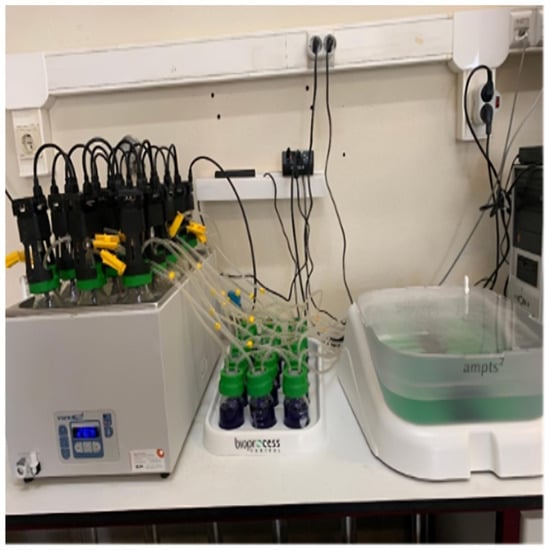
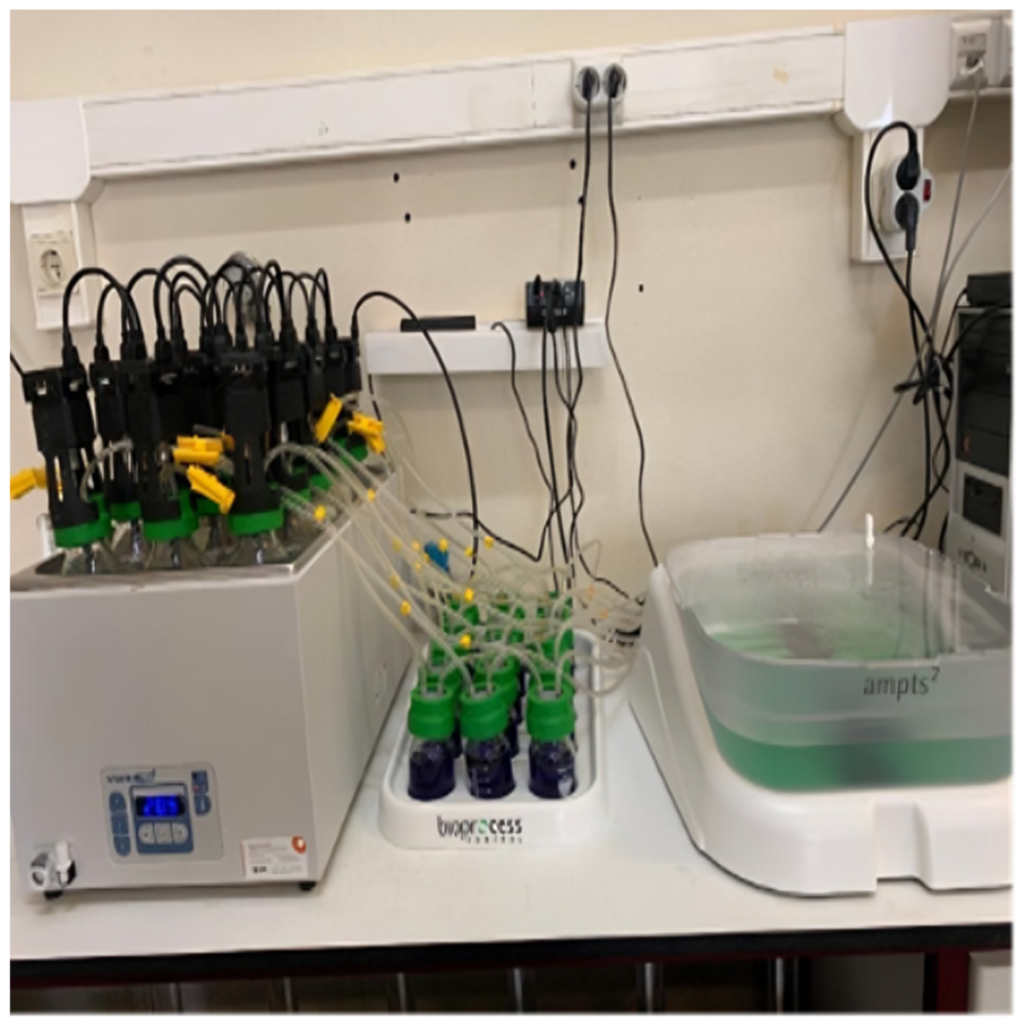
This study evaluated the effects of ozone pretreatment on the performance of an anaerobic digestion (AD) system with respect to the sludge produced by a wastewater treatment facility. The experimental work was conducted in Bragança, Portugal at the Instituto Politécnico de Bragança and involved using a series of biochemical methane potential (BMP) tests, which were performed under controlled temperature conditions of 35 °C (±2 °C), using the Automated Methane Potential Test System (AMPTS II) that was developed by Bioprocess Control (Sweden). The AMPTS II system contains various components, such as a digester unit that allows for monitoring the amount of biogas produced and CO2 removed from the digester using an absorption bottle and measuring the volume of the produced methane using a volumetric gas measuring device. The AMPTS II allows for accurate tracking of all stages of biogas production during the experimental study, The AMPTS II system by Bioprocess Control. A digester unit, a CO2 absorption bottles, and a volumetric gas measurement unit from left to right as illustrated in Figure 1.
Figure 1.
The AMPTS II system by Bioprocess Control. A digester unit, a CO2 absorption bottles, and a volumetric gas measurement unit.
2.2. Substrate and Inoculum Collection and Characterization
The inoculum was collected from the Porto wastewater treatment plant (ETAR Gaia Litoral) operating under stable anaerobic digestion, and the municipal sludge was obtained from a nearby facility. Prior to experimentation, both materials were characterized for key digestion-related parameters, including solid content (total solid, volatile solid), oxygen demand, volatile fatty acids, and pH, with the main physicochemical properties summarized in Table 1. The elemental composition of the sludge was estimated from literature values for municipal wastewater sludge [7].
Table 1.
Physicochemical Characteristics of Wastewater Sludge Used for Anaerobic Digestion.
Substrate pretreatment was conducted using a 7G ozone generator (maximum capacity: 3 g/h at 100% power) with atmospheric air as the feed, and a flow of 4.4 L min−1. Ozone pretreatment was applied at doses of 0–10% with contact times of 30–90 s to enhance biodegradability. Anaerobic digestion was performed in 400 mL batch reactors under mesophilic conditions (35 ± 2 °C) for 45 days using different inoculum-to-substrate ratios (1, 1.5, 2). Anaerobic conditions were ensured by nitrogen flushing, methane production was continuously monitored after CO2 removal, and trace elements and micronutrients were supplemented, according to standard anaerobic digestion protocols (Table 2).
Table 2.
Nutrient Supplementation for Anaerobic Digestion [9].
2.3. Theoretical Biochemical Methane Potential (TBMP)
Theoretical biochemical methane potential (TBMP) was calculated using the empirical Buswell and Mueller equation, which is based on the elemental composition of the substrate (C, H, O, N, S). The molecular formula for the sludge was derived as (C223H356O106N27S) is derived from the elemental analysis according to the molecular formula as it illustrate in Table 1 [7], leading to an estimated theoretical methane potential of approximately 517 mL CH4 g−1 VS. The Buswell and Mueller equation (Equation (1)) [8] for the anaerobic digestion of organic matter is as follows:
a, b, c, d, and e represent the molar amounts of carbon, hydrogen, oxygen, nitrogen, and sulfur, respectively, derived from the ultimate elemental analysis, and these coefficients define the empirical molecular formula of the substrate (CaHbOcNdSe) used to calculate the theoretical biochemical methane potential (TBMP).
2.4. Methane Production Modeling
Methane production kinetics were modelled using the modified Gompertz equation, a widely adopted approach for describing cumulative methane production over time in anaerobic digestion systems (Equation (2)).
where:
B(t): Cumulative methane (NmL) at time t;
Bmax: Maximum methane potential (NmL);
Rmax: Maximum methane production rate (NmL day−1);
λ: Lag phase (days);
e: Euler’s number (~2.718).
Model parameters, including the maximum methane production rate and lag phase duration, were extracted via nonlinear regression analysis, which was used to interpret the microbial activity, production efficiency, and impact of varying ozone pretreatment conditions on the AD process [10].
3. Results and Discussion
3.1. Effect of Ozone Pretreatment on Methane Yield
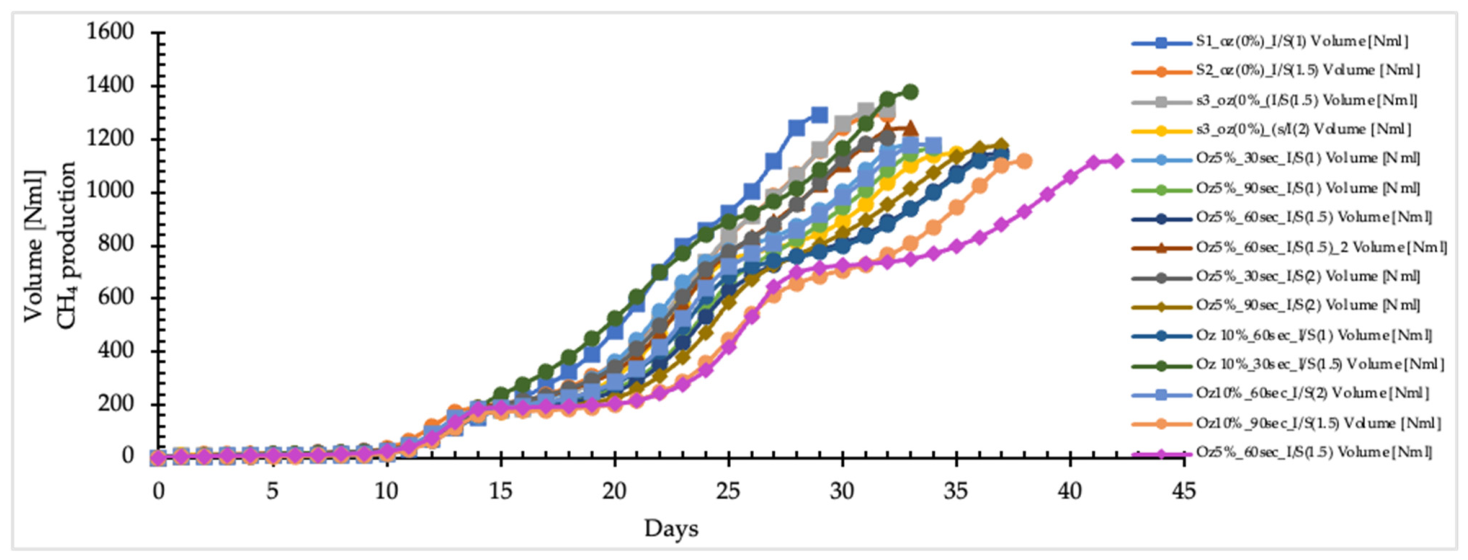
Ozonation has been shown to influence the rate of methane production during anaerobic digestion. With an ozone concentration of 10% and an exposure time of 30 s at an initial to final (I/S) ratio of 1.5, the yield was 1381 NmL CH4, which is an increase of 5% compared to that of the untreated control group (1315 NmL). Using moderate concentrations of ozone (5–10%; 0.57–1.14 mg L−1) and shorter exposure times (<60 s) resulted in a greater amount of solubilized sludge and increased digestibility. Longer durations (≥60 s, 10% ozone) resulted in reduced yields (due to microbial inhibition or excessive oxidation). When conditions were balanced, for example, 10% ozone, 30 s and I/S of 1.5, the highest yield of methane was achieved along with a shortened lag phase, as depicted in Figure 2. The cumulative methane profiles demonstrated a multiphase pattern over 40 d. Phase 1 (lag, 0–10 days) is characterized by microbial adaptation and hydrolysis; Phase 2 (10–15 days) presents rapid accumulation of methane generated from volatile fatty acids (VFAs); Phase 3 (15–20 days) represents the adjustment toward producing methane and period of near plateau due to VFA induced inhibition; Phase 4 (20–30 days) shows continued methane production as the more slowly decomposing organic matter continues to be consumed; and Phase 5 (>30 days) represents stabilization of methane production after most of the biodegradable waste.
Figure 2.
Cumulative methane (CH4) production over time (days) for samples treated with varying ozone concentrations, exposure durations, and inoculum-to-substrate (I/S) ratios.
These results underscore that moderate ozone pretreatment improves methane yields by accelerating hydrolysis and enhancing substrate availability; however, excessive ozonation or improper I/S ratios can hinder microbial activity. These findings highlight the importance of optimizing the ozone dose, exposure time, and microbial balance for efficient biogas production in engineered AD systems [11].
The amount of methane produced was affected by the amount of inoculum (I) compared to the amount of substrate (S). A higher I/S ratio led to increased methane production, which is associated with greater microbial activity and improved nutrient availability; however, an I/S ratio of 2.0 resulted in decreased yields, possibly due to substrate overload and changes in pH. This finding was consistent for both untreated and ozone-treated sludge, with an I/S ratio of 1.5. The initial pH values of both the untreated and ozone-treated samples were between 6.95 and 7.33, which is the range most favorable for methanogenesis, and after digestion, the pH of both the untreated and ozone-treated samples increased to between 7.91 and 8.28. The results from the ozone-treated samples showed a more stable pH than those of the untreated samples, indicating a greater extent of substrate degradation and the production of buffers during the anaerobic digestion of the ozone-treated samples.
3.2. Theoretical vs. Experimental Methane Yield
The theoretical biochemical methane potential (TBMP) was estimated to be 517 mL CH4 g−1 VS. The best-performing experimental setup reached 1380.9 NmL CH4, which aligned well with the projected volumetric yields when normalized per gram [12].
3.3. Modified Gompertz Model Fitting for Methane Production Kinetics
The modified Gompertz model was applied to analyse methane production kinetics under fifteen experimental conditions differing in ozone concentration, contact time, and inoculum-to-substrate (I/S) ratio. The lag phase (λ), which reflects microbial adaptation time, was particularly sensitive to pretreatment severity. At low to moderate ozone doses (5–10%) and short contact times, λ decreased, indicating enhanced substrate solubilisation and faster microbial adaptation, resulting in improved methane production. Conversely, prolonged exposure or higher ozone intensities (10% for 60–90 s) led to an increase in λ, suggesting microbial inhibition due to over-oxidation or the formation of inhibitory by-products [9,10].
The model showed excellent agreement with experimental data (R2 > 0.98), with the maximum methane potential (B_max) ranging from 1286 to 1696 NmL. The highest B_max was observed at 10% ozone, 90 s, and I/S 1.5, whereas the most favourable overall performance was achieved at 10% ozone, 30 s, and I/S 1.5 (B_max = 1526 NmL, λ = 13 days, R2 = 0.9955). Maximum methane production rates (R_max) varied between 41.7 and 99.9 NmL d−1, with the highest rates recorded under untreated conditions, indicating that ozone pretreatment enhances total methane yield but may moderately reduce production rates depending on exposure intensity [11]. Overall, the modified Gompertz model effectively captured anaerobic digestion kinetics, providing biologically meaningful parameters and demonstrating its suitability for optimising methane production under ozone pretreatment conditions.
3.4. Evaluation of Mathematical Models for Anaerobic Digestion Performance
Anaerobic digestion is a key process in municipal wastewater treatment, enabling the stabilisation of sewage sludge while simultaneously generating renewable energy in the form of biogas. Mathematical modelling plays a critical role in predicting, managing, and optimising methane production in anaerobic digesters. To this end, a wide range of models has been developed, ranging from simple empirical equations to more detailed mechanistic approaches that describe microbial interactions, substrate degradation, and methane formation pathways.
Among the kinetic models most applied in anaerobic digestion studies are the modified Gompertz, Logistic, Transfer, and Cone models. Each of these models captures distinct features of the methane production curve and is used to estimate key kinetic parameters, including the maximum methane potential (B_max), maximum methane production rate (R_max), and the duration of the lag phase (λ). The formulation and application of these models have been extensively documented in the literature, including the work of [13], which supports their suitability for both academic research and industrial applications. The mathematical expressions of the four models are presented in Table 3, following the classification proposed by [13].
Table 3.
Mathematical models for methane production kinetics in anaerobic digestion.
Together, these models provide a robust analytical framework for evaluating and comparing anaerobic digestion performance under different operational and pretreatment conditions. In this study, they were applied to simulate methane production kinetics and to extract biologically meaningful parameters across the tested treatments. The comparative assessment of the models enhances understanding of their predictive capabilities and limitations, thereby contributing to improved interpretation and optimization of anaerobic digestion dynamics.
The four different types of modeling for the kinetics of ozone pretreatment were assessed with respect to methane production over fifteen types of experimental conditions. The four models used were the Gompertz, Logistic, Cone, and Transference models. The Gompertz and Logistic models provided good fits with R2 values greater than 0.99 for every experimental condition. However, the Gompertz Model had shorter lag phases than the Logistic Model; the Gompertz Model had early phase before reaching steady production of methane of 13–16 days and the Logistic Model reached steady production of methane by 21–26 days [12,16]. Maximum methane potential (Bmax) predictions varied by model, illustrating how choice of model influences performance estimates, with Gompertz yielding the highest (1294–1647 mL g−1 VS) and Logistic providing more conservative values (1188–1450 mL g−1 VS) [13]. The Transference model produced unrealistic parameters and poor fits (Bmax > 106 mL g−1 VS, R2 0.91–0.94), while the Cone model consistently returned zero lag, which is mathematically convenient but biologically less plausible [16]. Overall, the Gompertz and Logistic models are the most reliable and straightforward methods of determining the kinetics of anaerobic digestion systems for engineering purposes, with a choice between the two models dependent on which model provides a better estimate of the lag time for producing methane in ozone pre-treated anaerobic digestion systems.
3.5. Comparative Analysis of Kinetic Models Using F-Test: Oz 10%, 30 s, I/S = 1.5 Condition
This study compared four kinetic models—Modified Gompertz, Logistic, Transference, and Cone—using an F-test under 10% ozone pretreatment for 30 s and an inoculum-to-substrate ratio of 1.5. The F-test was applied to evaluate whether differences in variance among the models were statistically significant in terms of goodness of fit, with significance defined at p < 0.05. Table 4 summarises the estimated methane potential, variance, and F-values for each model. The Logistic model provided the best fit, exhibiting the lowest variance, followed closely by the Cone and Modified Gompertz models. In contrast, the Transference model showed substantially higher variance, indicating poor agreement with the experimental data.
Table 4.
Statistical comparison of model fits based on variance and F-Values for sample Oz 10%–30 s (I/S 1.5).
Further validation is provided in Table 5, which presents a broader set of performance indicators, including the maximum methane production rate (R_max), lag phase duration, coefficients of determination (R2), and model variances.
Table 5.
Model performance comparison for Oz 10% 30 s, I/S (1.5) Volume [NmL] condition, analysis of the four models.
Kinetic analysis of methane production from ozone-pretreated sludge demonstrated that all four mathematical models—Gompertz, Logistic, Cone, and Transference—can be applied to describe methane evolution. Among them, the Logistic model showed the best agreement with the experimental data (R2 = 0.9957) and the lowest variance, followed closely by the Cone (R2 = 0.9956) and Modified Gompertz (R2 = 0.9955) models. In contrast, the Transference model exhibited the poorest performance, with lower correlation and unrealistic estimates of methane potential, likely resulting from overfitting. Based on the Gompertz, Logistic, and Cone models, the predicted maximum methane potential (B_max) ranged between 1430 and 1550 NmL.
The values predicted by the latter three models were consistent with both experimental measurements and theoretical expectations. However, the estimated lag phase varied substantially among models: the Gompertz model predicted a lag of 13 days, the Logistic model 23 days, whereas the Cone model returned a lag phase of 0 days, a result that may be mathematically convenient but is unlikely to reflect the biological reality of methane production. F-test comparisons among the Logistic, Gompertz, and Cone models indicated no statistically significant differences between them (F < F_crit), while the Transference model differed significantly from all three and was therefore excluded from further analysis.
Ozone pretreatment can effectively boost methane production from municipal wastewater sludge when applied carefully. The improvement comes mainly from better solubilization of organic matter and enhanced hydrolysis, which make more substrate available for methane-producing microbes.
The highest methane yield of 1380.9 NmL CH4 was obtained under mild ozonation conditions (10% O3 for 30 s), which was 15% higher than that of untreated sludge. This difference was likely due to the partial disruption of sludge floc and the lysis of microbial cells, both of which enhance biodegradation. By contrast, methane yields were lower at higher ozone exposures (60–90 s) because of excessive oxidation and inhibition of methanogenesis. The inoculum-to-substrate (I/S) ratio was also a factor. An I/S ratio of 1.5 consistently provided the best results, as it allowed for optimum microbial activity while preventing the accumulation of acids and dilution of the substrate [17]. Kinetic modeling supported these observations: optimal ozonation shortened lag phases and increased methane production rates, while excessive ozone slowed digestion. Models like Gompertz, Logistic, and Cone fit the data well, with the Logistic model performing best.
In short, low-dose ozone pretreatment can enhance anaerobic digestion and biogas recovery. These findings provide practical guidance for wastewater treatment plants, highlighting the need to balance pretreatment intensity with microbial health for sustainable operation.
4. Conclusions
Ozone pretreatment, as demonstrated in this study, enhanced methane production from municipal wastewater sludge in anaerobic digesters monitored with the AMPTS II system. Maximum methane yield (1381 NmL CH4; 736 NmL CH4 g−1 VS) was achieved at 10% ozone for 30 s, representing a 5% increase over untreated sludge relative to the theoretical potential predicted by the Buswell and Mueller equation (~517 mL CH4 g−1 VS). Kinetic analysis using the modified Gompertz model indicated faster methane production and minimal lag phases under optimal treatment. Longer ozone exposure or higher concentrations reduced methane yield due to over-oxidation and excessive degradation of organic matter. An inoculum-to-substrate ratio (I/S) of 1.5 provided the best performance by maintaining pH buffering and promoting efficient digestion. Among the evaluated kinetic models (Gompertz, Logistic, Transference, Cone), the Gompertz and Logistic models performed similarly, with the Gompertz model offering the highest predictive accuracy (p < 0.05). Overall, optimized ozone pretreatment can significantly improve methane recovery and energy generation from municipal sludge. Future research should focus on process scale-up, energy balance analyses, and hybrid pretreatment strategies combining ozone with thermal or alkaline methods to enhance efficiency and cost-effectiveness.
Author Contributions
Conceptualization, S.A. and R.M.; methodology, S.A.; validation, S.A.; formal analysis, S.A.; investigation, S.A.; resources, R.M.; data curation, S.A.; writing—original draft preparation, S.A.; writing—review and editing, R.M.; visualization, S.A.; supervision, R.M. All authors have read and agreed to the published version of the manuscript.
Funding
This research received no external funding.
Institutional Review Board Statement
Not applicable.
Informed Consent Statement
Not applicable.
Data Availability Statement
The data supporting the findings of this study are available from the corresponding author upon reasonable request.
Acknowledgments
The authors gratefully acknowledge the support of the Instituto Politécnico de Bragança and the technical assistance provided by the Águas do Norte WWTP in Porto. The authors also thank the lab technicians involved in sample analysis and ozone treatment trials.
Conflicts of Interest
The authors declare no conflicts of interest.
Abbreviations
The following abbreviations are used in this manuscript:
| TBMP | Theoretical Biochemical Methane Potential |
| TS | Total Solids |
| VS | Volatile Solids |
| WWTP | Wastewater Treatment Plant |
| BOD | Biological Oxygen Demand |
| COD | Chemical Oxygen Demand |
| VFA | volatile fatty acid |
References
- Silva, J.A. Wastewater Treatment and Reuse for Sustainable Water Resources Management: A Systematic Literature Review. Sustainability 2023, 15, 10940. [Google Scholar] [CrossRef] [Scilit]
- Li, Z.; Lu, J.; Lu, J. Energy Efficiency Evaluation and Optimization for Wastewater Treatment Plant. Desalination Water Treat. 2024, 319, 100487. [Google Scholar] [CrossRef] [Scilit]
- Du, H.; Wu, Y.; Wu, H.; Li, F. Reconsidering Hydrolysis Kinetics for Anaerobic Digestion of Waste Activated Sludge Applying Cascade Reactors with Ultra-Short Residence Times. Water Res. 2021, 202, 117398. [Google Scholar] [CrossRef] [Scilit] [PubMed]
- Du, H.; Li, X.; Zhang, Y. Effect of Ozone Pretreatment on Characteristics of Dissolved Organic Matter Formed in Aerobic and Anaerobic Digestion of Waste-Activated Sludge. Environ. Sci. Pollut. Res. 2021, 28, 2779–2790. [Google Scholar] [CrossRef] [Scilit]
- Junior, I.V.; de Almeida, R.; Cammarota, M.C. A Review of Sludge Pretreatment Methods and Co-Digestion to Boost Biogas Production and Energy Self-Sufficiency in Wastewater Treatment Plants. J. Water Process Eng. 2021, 40, 101857. [Google Scholar] [CrossRef] [Scilit]
- Nguyen, V.K.; Kumar, S.S.; Rajendran, K. Review on Pretreatment Techniques to Improve Anaerobic Digestion of Sewage Sludge. Fuel 2021, 285, 119105. [Google Scholar] [CrossRef] [Scilit]
- Sichler, T.C.; Nelles, M.R.; Schmidt, T.C. Variation of the Element Composition of Municipal Sewage Sludges in the Context of New Regulations on Phosphorus Recovery in Germany. Environ. Sci. Eur. 2022, 34, 84. [Google Scholar] [CrossRef] [Scilit] [PubMed]
- Yuen, P.K.; Lau, C.M.D. Using Mean Oxidation Number of Organic Carbons to Quantify Buswell’s Equation. Int. J. Chem. 2024, 16, 41–52. [Google Scholar] [CrossRef] [Scilit]
- Admasu, A.; Bogale, W.; Mekonnen, Y.S. Experimental and Simulation Analysis of Biogas Production from Beverage Wastewater Sludge for Electricity Generation. Sci. Rep. 2022, 12, 9107. [Google Scholar] [CrossRef] [Scilit] [PubMed]
- American Public Health Association; American Water Works Association; Water Environment Federation. Standard Methods for the Examination of Water and Wastewater, 24th ed.; APHA Press: Washington, DC, USA, 2023. [Google Scholar]
- Harirchi, S.; Tabrizi, H.S.; Rahmani, A.R. Microbiological Insights into Anaerobic Digestion for Biogas, Hydrogen or Volatile Fatty Acids (VFAs): A Review. Bioengineered 2022, 13, 6521–6557. [Google Scholar] [CrossRef] [Scilit] [PubMed]
- Achinas, S.; Euverink, G.J.W. Theoretical Analysis of Biogas Potential Prediction from Agricultural Waste. Resour.-Effic. Technol. 2016, 2, 143–147. [Google Scholar] [CrossRef] [Scilit]
- Zhang, H.; Li, Z.; Wang, Y. Modeling the Methane Production Kinetics of Anaerobic Co-Digestion of Agricultural Wastes Using Sigmoidal Functions. Energies 2021, 14, 258. [Google Scholar] [CrossRef] [Scilit]
- Mihi, M.; Ouhammou, B.; Aggour, M.; Daouchi, B.; Naaim, S.; El Mers, E.M.; Kousksou, T. Modeling and Forecasting Biogas Production from Anaerobic Digestion Process for Sustainable Resource Energy Recovery. Heliyon 2024, 10, e19521. [Google Scholar] [CrossRef] [Scilit] [PubMed]
- Qiu, Y.; Zhang, L.; Sun, J. Impacts of Municipal and Industrial Organic Waste Components on the Kinetics and Potentials of Biomethane Production via Anaerobic Digestion. Waste Biomass Valorization 2025, 16, 5019–5035. [Google Scholar] [CrossRef] [Scilit]
- Moharir, S.; Deshmukh, P.; Patil, S.P. Comparative Analysis of the Amount of Biogas Produced by Different Cultures Using the Modified Gompertz Model and Logistic Model. Eur. J. Sustain. Dev. Res. 2020, 4, em0141. [Google Scholar] [CrossRef] [Scilit] [PubMed]
- Zhao, L.; Meng, X.; Zhao, Y. Ozone Decreased Enteric Methane Production by 20% in an In Vitro Rumen Fermentation System. Front. Microbiol. 2020, 11, 571537. [Google Scholar] [CrossRef] [Scilit] [PubMed]

Disclaimer/Publisher’s Note: The statements, opinions and data contained in all publications are solely those of the individual author(s) and contributor(s) and not of MDPI and/or the editor(s). MDPI and/or the editor(s) disclaim responsibility for any injury to people or property resulting from any ideas, methods, instructions or products referred to in the content. |
© 2026 by the authors. Licensee MDPI, Basel, Switzerland. This article is an open access article distributed under the terms and conditions of the Creative Commons Attribution (CC BY) license.