


Abstract
Power electronics is a cornerstone of modern electrical engineering, underpinning technologies from renewable energy systems to electric vehicles. Traditional lecture-based methods often emphasise rote learning and procedural skills but provide limited opportunities for higher-order thinking or experiential practice. To meet the needs of Generation Z learners and align with industry expectations, new pedagogical frameworks are required that combine cognitive rigour with authentic, technology-enhanced learning. This study introduces a Higher-Order Thinking Skills with Real-Time Simulation pedagogical framework to enhance learning outcomes in diploma-level power electronics. A quasi-experimental mixed-methods design was applied with 40 students divided into control and experimental groups. The control group received lectures, while the experimental group engaged with the HOTS–RTS framework across four topics: rectifiers, converters, inverters, and applications. Pre- and post-tests, Likert-scale surveys, reflections, and instructor observations provided data for both quantitative (t-tests, effect sizes) and qualitative thematic analysis. The experimental group achieved higher post-test gains (20.1 vs 9.5 points), with a large effect size (d = 1.9). Surveys revealed that 65 per cent of respondents rated RTS as highly effective, and Likert scores improved by 1 or more points in HOTS-related skills. Reflections emphasised clarity, confidence, and collaboration. HOTS–RTS effectively integrates cognitive rigour with real-time practice, aligning with STREAMS principles and equipping learners with next-generation industry competencies.
1. Introduction
Power electronics is a core discipline in modern electrical engineering, underpinning applications such as renewable energy systems, motor drives, electric vehicles, and smart grids [1,2,3,4]. Its importance is increasing as global decarbonisation and electrification drive demand for engineers with strong theoretical and practical competence [5,6,7]. International bodies, including the World Economic Forum, emphasise digital power conversion skills as essential for the future workforce [8].
Despite its significance, power electronics education, particularly at the diploma level, faces persistent challenges. Fundamental topics such as switching transients, harmonic distortion, PWM, and converter efficiency are abstract and mathematically demanding [8,9]. Students often struggle to relate theory to real-world behaviour, resulting in weak conceptual understanding, low confidence, and limited industry readiness [10,11,12,13]. Traditional lecture-based approaches further exacerbate these issues by prioritising lower-order cognitive skills over analysis, evaluation, and design.
Educational research increasingly advocates integrating Higher-Order Thinking Skills (HOTSs), which promote deeper cognitive engagement and improved problem-solving in engineering education [14,15,16,17,18,19,20,21]. Complementing this, Real-Time Simulation (RTS) enables experiential learning through interaction with time-accurate models, allowing students to visualise system behaviour, test control strategies, and explore dynamic operating conditions [22,23,24,25]. While both HOTSs and RTS independently enhance learning outcomes, their systematic integration in power electronics education remains limited, and existing application-oriented laboratories are often time-intensive and instructor-dependent. In addition, Generation Z learners prefer interactive, visual, and applied learning environments, reinforcing the need for structured, technology-enhanced pedagogical frameworks. To address these gaps, this study introduces a novel HOTS–RTS framework, adapted from the STREAMS paradigm, which integrates cognitive rigour with real-time experiential learning. The framework is implemented across key power electronics topics, including rectifiers, DC–DC converters, inverters, and renewable energy applications, guiding students through analysis, evaluation, and design in realistic simulation-based laboratory environments.
This study addresses two research questions: How HOTSs and RTS can be effectively integrated into power electronics education, and what impact this integration has on student engagement and learning outcomes. Accordingly, the study contributes by proposing a novel HOTS–RTS pedagogical model tailored to diploma-level power electronics education and by providing empirical validation through a mixed-methods approach that incorporates quantitative assessments, surveys, and qualitative reflections.
2. Proposed Framework
The proposed HOTS–RTS framework integrates higher-order thinking skills with real-time simulation to enhance cognitive and practical learning outcomes in diploma-level power electronics education.
2.1. Higher-Order Thinking Skills (HOTSs)
Based on Bloom’s taxonomy, the framework emphasises analysis, evaluation, and creation. Students analyse waveform distortions, evaluate efficiency under varying operating conditions, and design alternative modulation or control strategies beyond the application of basic formulas.
2.2. Real-Time Simulation (RTS)
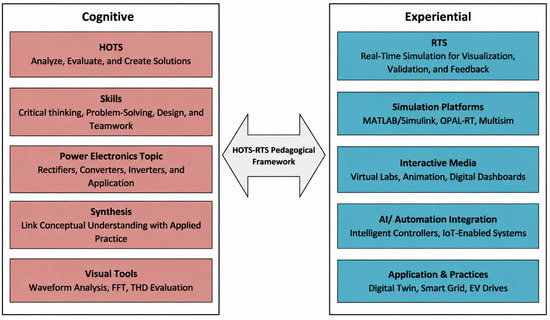
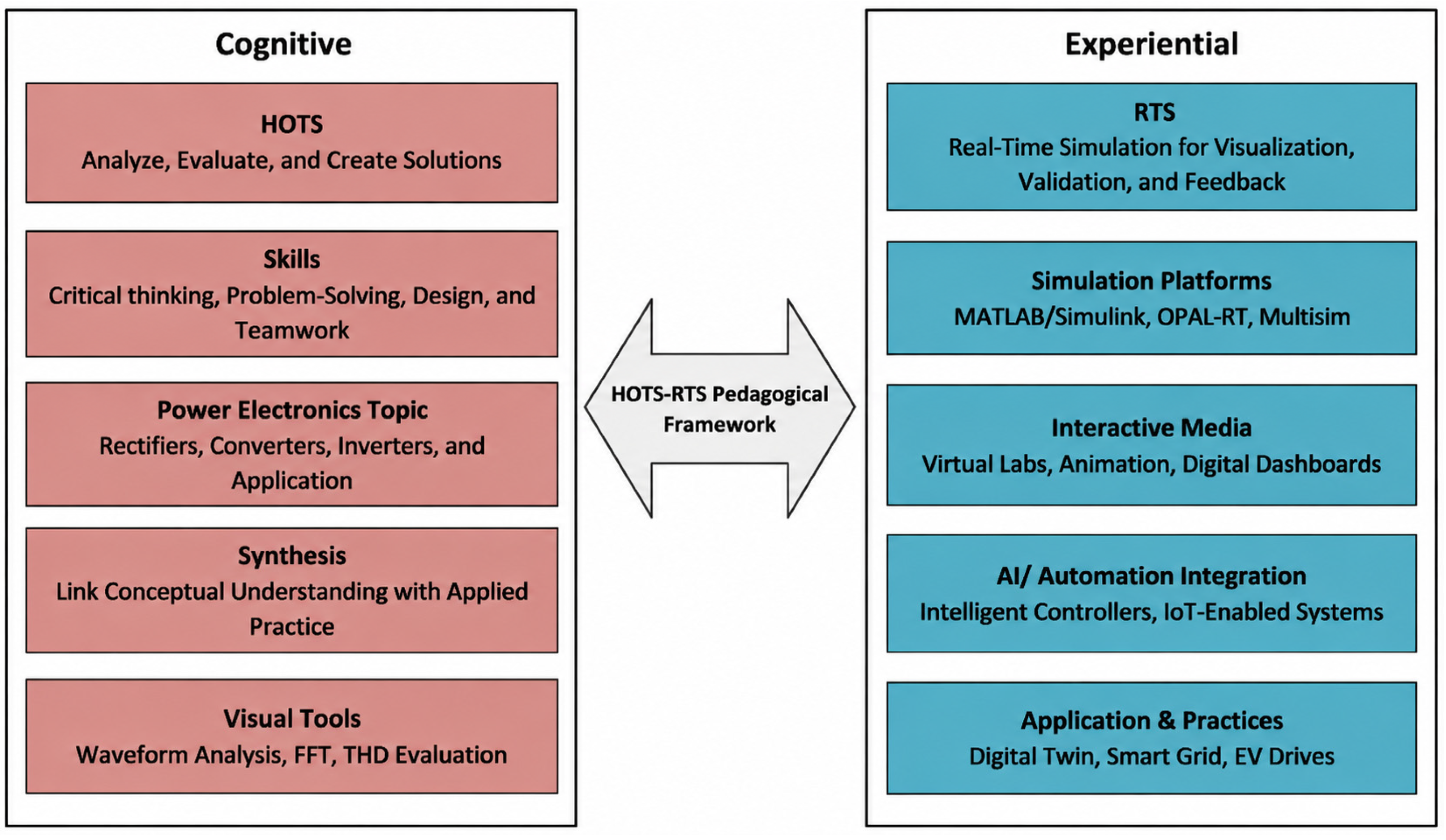
RTS provides a dynamic learning environment where students simulate converters and inverters under realistic conditions, such as variable loads and irradiance. It enables real-time visualisation of harmonics, evaluation of performance trade-offs, and iterative refinement of control strategies. The integration of HOTSs and RTS creates a systematic learning process in which students: (1) analyse waveform and system behaviours through visualisation tools; (2) evaluate alternative solutions using quantitative metrics such as efficiency and total harmonic distortion (THD); (3) create design strategies and test them under realistic, real-time conditions. For all analyses, evaluations, and design tasks, MATLAB/Simulink 2022b by MathWorks, Natick, MA, USA, was employed. As shown in Figure 1, the framework combines cognitive rigour with experiential authenticity, bridging the gap between theoretical understanding and industry-relevant practical skills. This framework advances existing pedagogical models by embedding critical and creative thinking within simulation-based laboratories, aligned with the STREAMS (Science, Technology, Representation, Engineering, Application, Mathematics, Simulation) paradigm. Its application in power electronics demonstrates adaptability across content areas while addressing the learning preferences of Generation Z students.
Figure 1.
HOTS–RTS proposed framework.
3. Methodology
This study used a quasi-experimental mixed-methods design to evaluate the HOTS–RTS framework in a diploma-level Power Electronics module. Forty students were divided into a control group receiving traditional instruction and an experimental group taught using the HOTS–RTS approach.
3.1. Research Design
A quasi-experimental mixed-methods design was used, with intact classes assigned to control and experimental groups. The experimental group received HOTS–RTS instruction through real-time simulation labs, while the control group followed conventional lecture-based and verification-oriented instruction. The design was mixed-methods, integrating:
- Quantitative measures (knowledge tests, surveys, statistical analysis) to establish learning gains.
- Qualitative measures (reflections, observations) to capture student experiences and perceptions.
3.2. Topics Covered
Integrating HOTSs into RTS labs, each topic combined cognitive rigour with experiential learning, allowing students to move from analysis to design and evaluation in practice-oriented settings. The HOTS–RTS framework was implemented across four topics of the power electronics module, which is central to the diploma programme:
- Devices and Rectifiers—analysed waveform distortion, THD, and rectifier efficiency using real-time simulations under varying loads.
- DC–DC Converters—designed PWM duty cycles for buck, boost, and buck–boost converters and evaluated voltage regulation and efficiency through real-time simulation.
- Inverters—compared SPWM and SVPWM modulation strategies using FFT-based THD analysis in real-time simulation.
- Applications—evaluated PV inverter performance and motor drive control under variable irradiance and dynamic operating conditions using real-time simulation.
3.3. Instruments
Learning outcomes were measured using quantitative and qualitative instruments. Pre- and post-tests assessed gains in conceptual understanding and problem-solving across all topics, while a five-point Likert-scale survey captured students’ perceptions of clarity, confidence, engagement, and real-world relevance of the HOTS–RTS framework. Qualitative data were collected through open-ended student reflections and structured instructor observations focusing on participation, teamwork, and the application of higher-order skills, providing contextual support for the quantitative results.
3.4. Data Analysis
Data analysis combined statistical testing with thematic interpretation.
3.4.1. Quantitative Analysis
Quantitative data were analysed using descriptive and inferential statistics. Descriptive measures included the mean (M), standard deviation (SD), and mean squared error (MSE). Group differences between the control and experimental groups were examined using independent-samples t-tests. Effect sizes were calculated using Cohen’s d and interpreted as small (0.2), medium (0.5), or large (≥0.8).
3.4.2. Qualitative Analysis
Student reflections were analysed through recurring thematic coding, producing categories such as clarity, confidence, engagement, and real-world relevance. To improve reliability, findings were triangulated with survey responses and instructor observations, providing a comprehensive evaluation and cross-validation of the HOTS–RTS framework.
4. Results
The results are reported for diploma students (n = 40) in two categories: quantitative outcomes, including pre–post knowledge gains and survey results; and qualitative outcomes, including reflections and instructor observations. Evaluation metrics are integrated to capture both cognitive and affective learning dimensions.
4.1. Quantitative Outcomes
4.1.1. Pre-Post Knowledge Gain
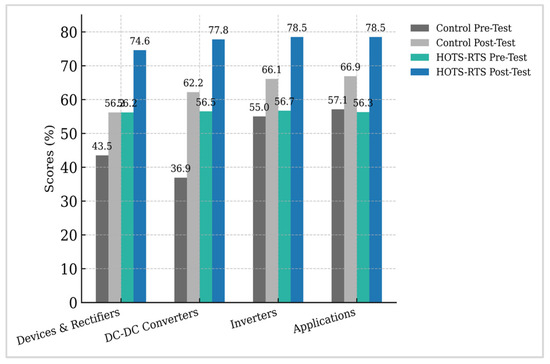
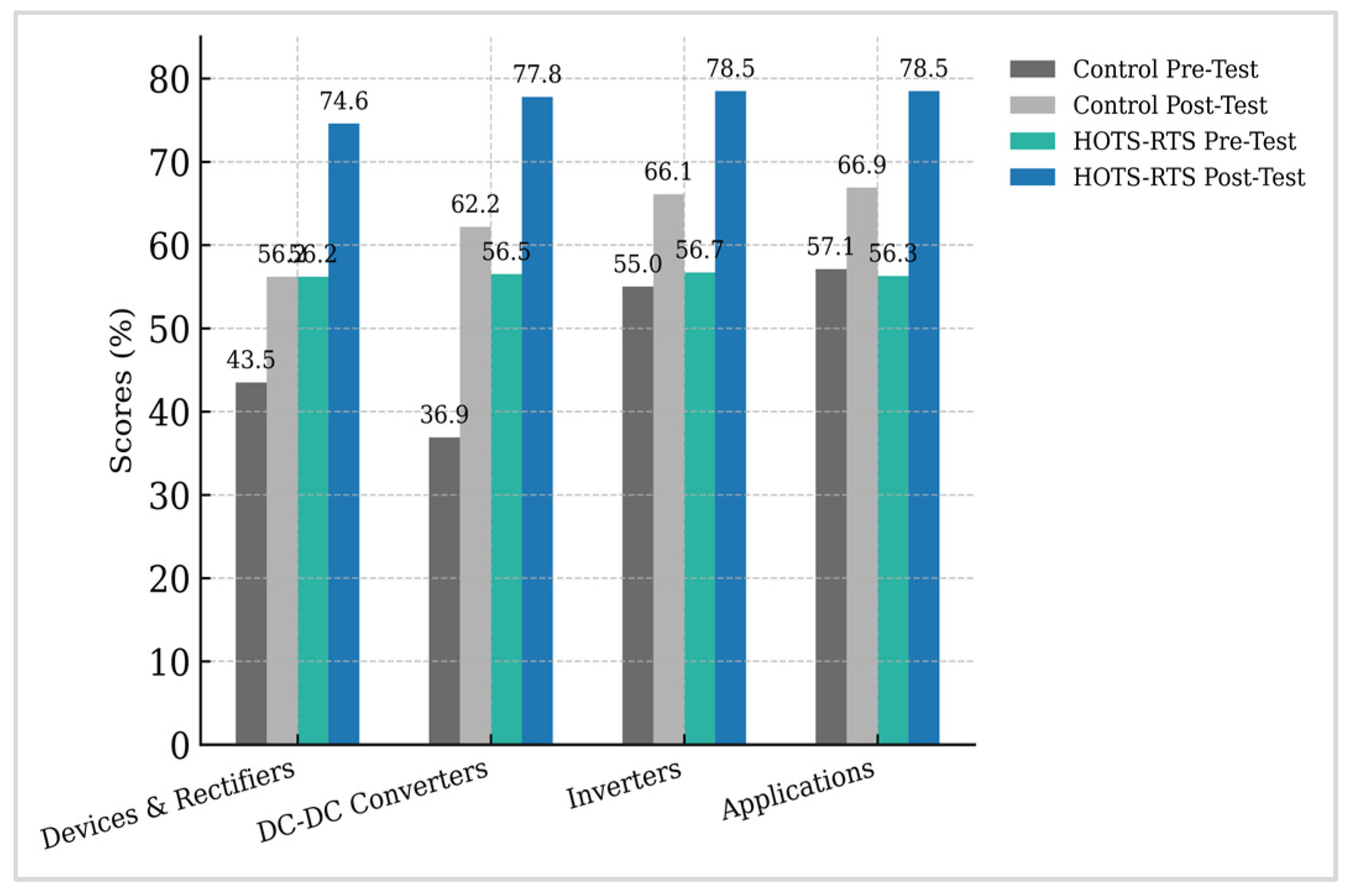
Pre- and post-test results indicated improvement in both groups, with significantly greater gains in the HOTS–RTS group. As summarised in Table 1, independent-samples t-tests confirm statistically significant differences across all topics, with large effect sizes. Normalised learning gains further favoured the experimental group. For example, in the DC–DC Converters topic, the HOTS–RTS group improved from 56.5% to 77.8%, compared to 56.0% to 65.2% in the control group; this difference was highly significant (t = 7.48, p < 0.001, d = 1.93). Figure 2 illustrates the steeper pre- to post-test learning gains achieved by the HOTS–RTS group.
Table 1.
Pre- and post-test results across topics.
Figure 2.
Pre-post-test scores (Control vs HOTS-RTS).
4.1.2. Distribution and Variability
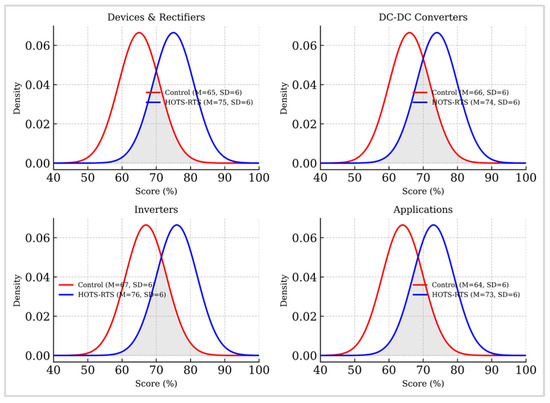
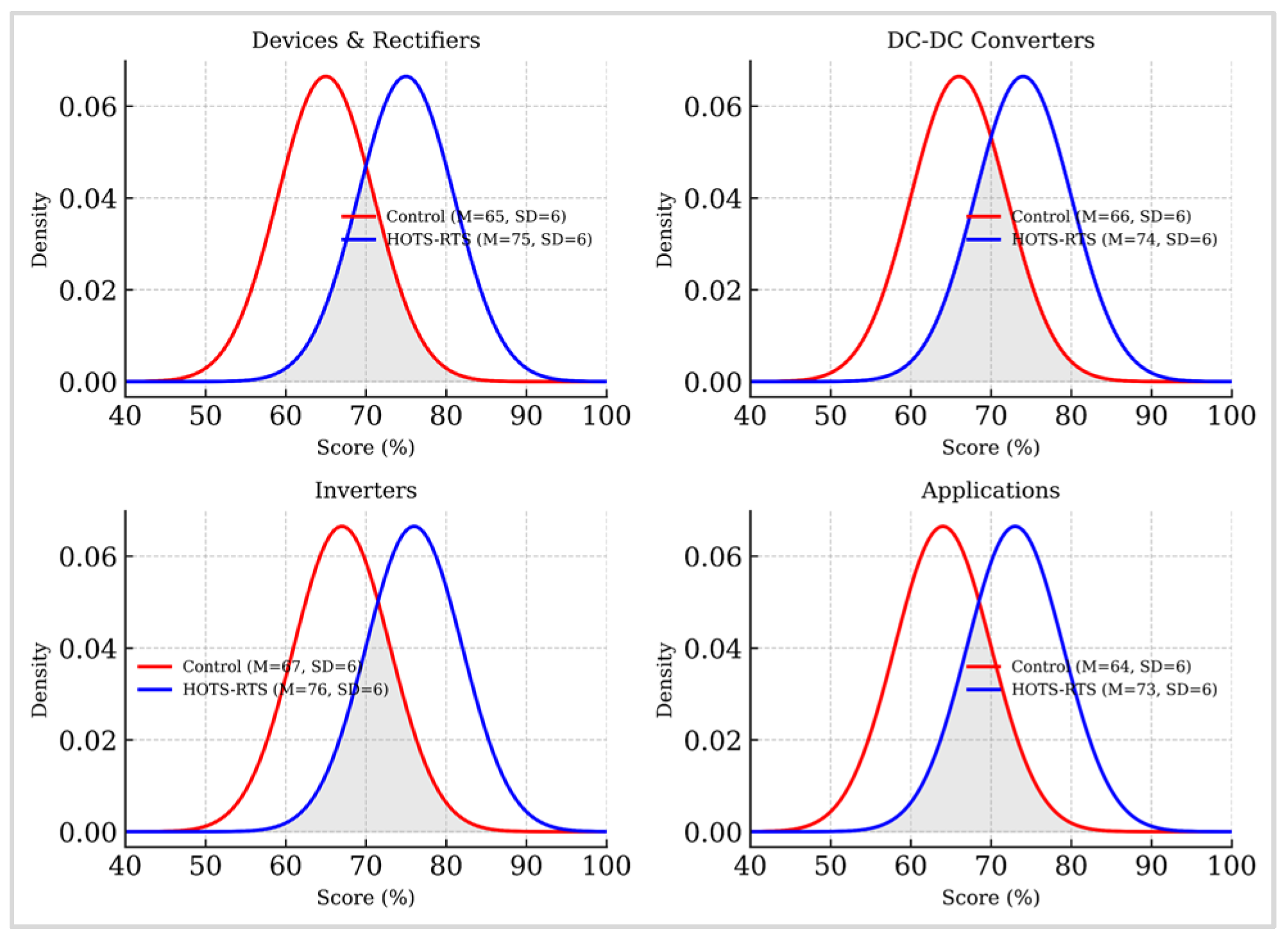
The distribution of post-test scores confirmed apparent differences between groups. Figure 3 presents standard distribution curves for the DC–DC Converters module, showing a distinct upward shift in the HOTS–RTS mean compared to the control.
Figure 3.
Normal distribution of post-test scores for control and HOTS–RTS groups.
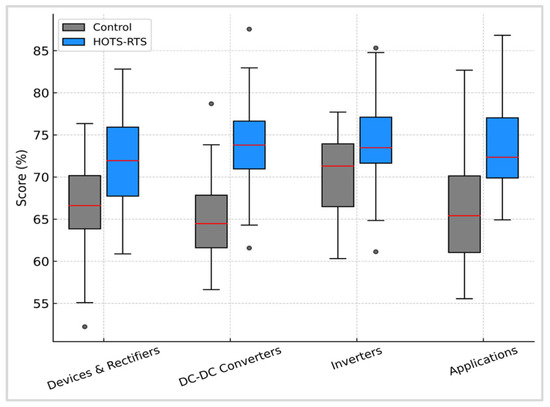
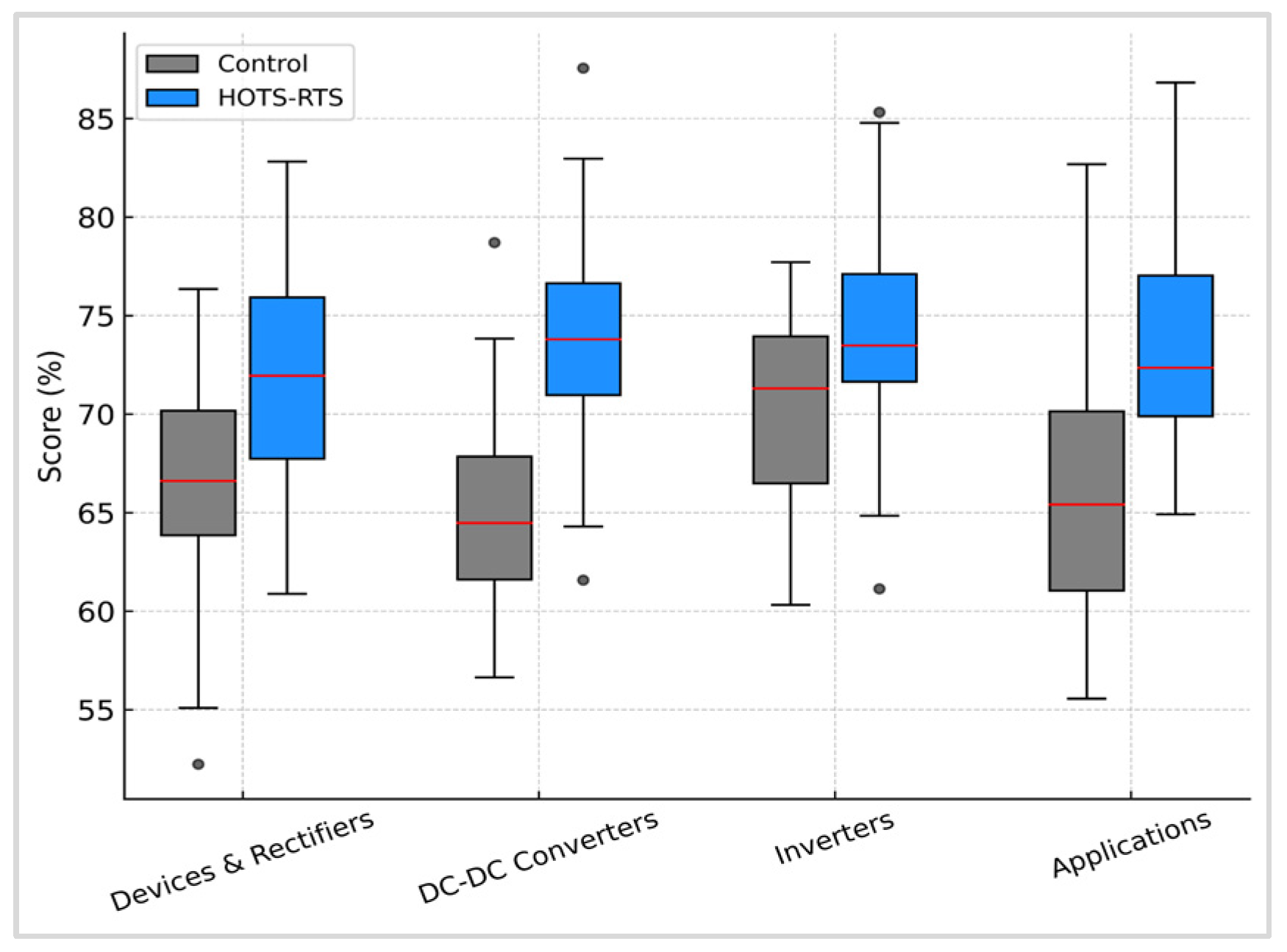
Figure 4 presents box plots across all topics, further indicating that the HOTS–RTS group not only achieved higher medians but also demonstrated reduced variance, indicating more consistent performance.
Figure 4.
Boxplot comparison of post-test scores between control and HOTS–RTS groups.
4.1.3. Topic-Level Comparison
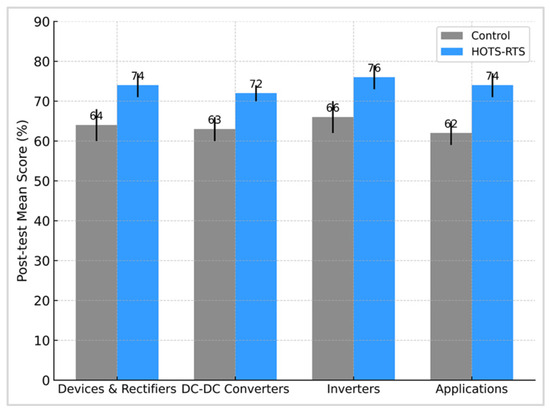
Figure 5 depicts a consolidated view of post-test mean scores across all four topics. HOTS–RTS students consistently outperformed their control counterparts, with error bars indicating standard deviations.
Figure 5.
Comparison of post-test mean score across all topics.
4.1.4. Survey Outcomes
Survey results confirmed strong positive perceptions among HOTS–RTS students. As shown in Table 2, over 80% rated clarity, confidence, engagement, and relevance as high or very high, with engagement (M = 4.52) and relevance (M = 4.47) receiving the highest mean scores.
Table 2.
Mean rating.
4.2. Qualitative Outcomes
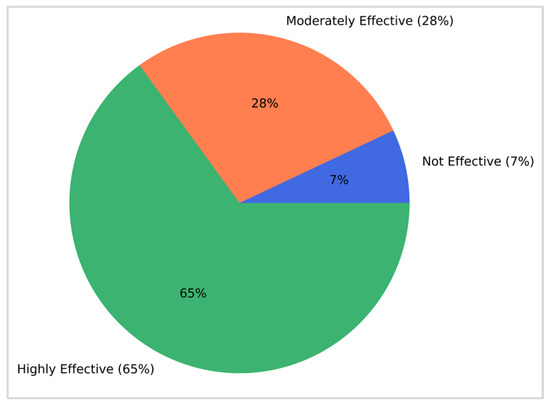
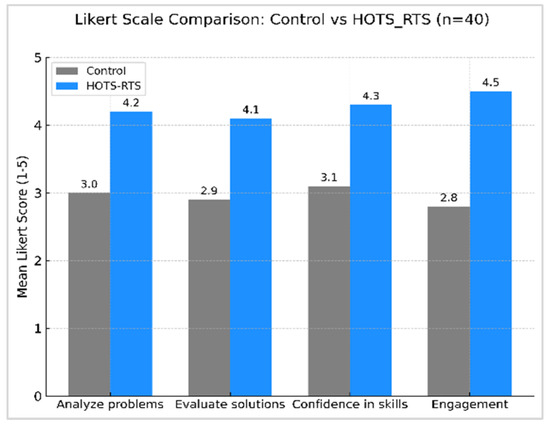
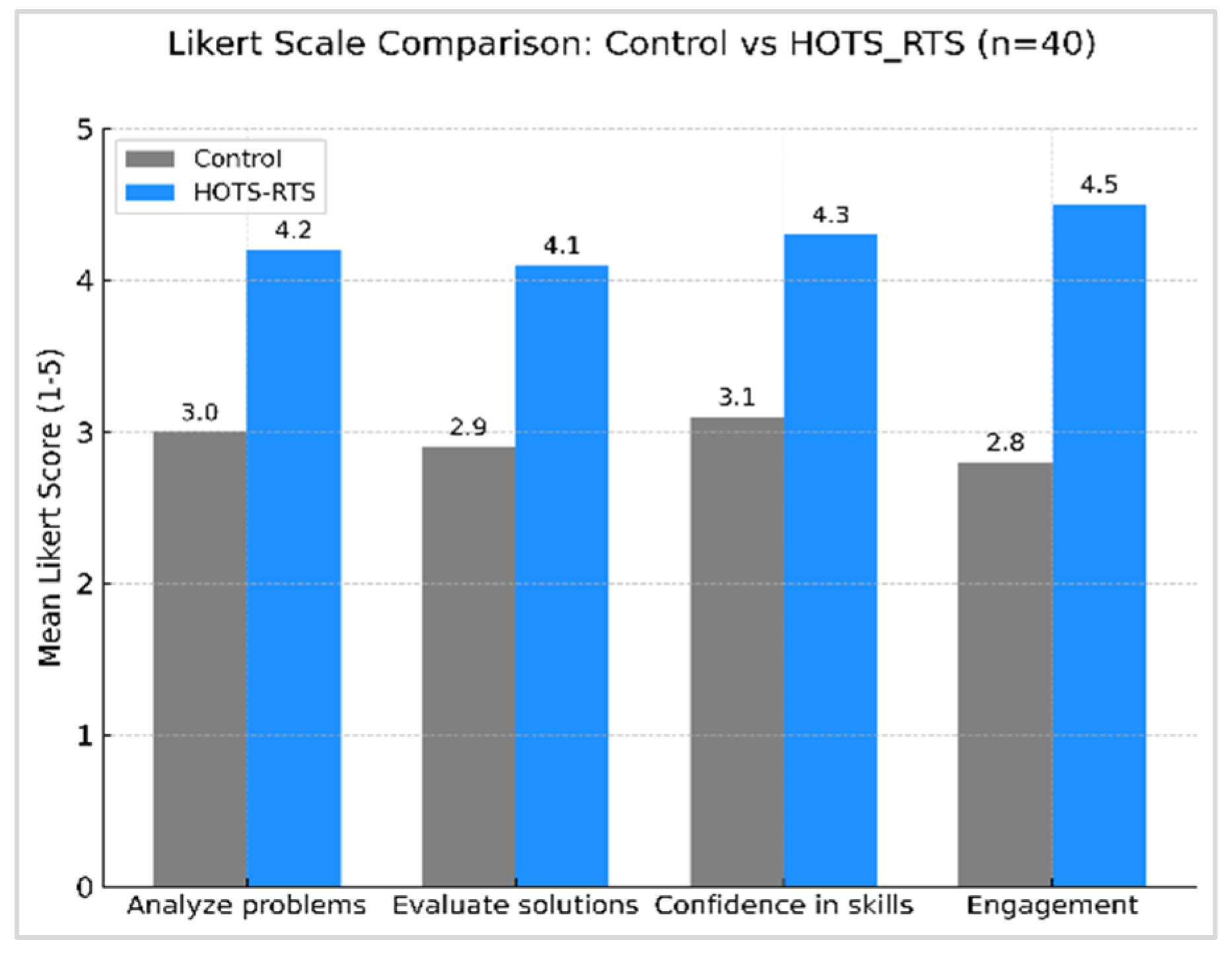
Thematic analysis identified four recurring themes: clarity, confidence, engagement, and relevance. Students reported that real-time simulation made abstract concepts more tangible and supported independent learning. As shown in Figure 6, 65% of students rated RTS as highly effective, 28% as moderately effective, and 7% as not effective. Likert-scale results further indicated that the HOTS–RTS group scored at least one point higher across all HOTS-related skills (Table 3), as illustrated in Figure 7.
Figure 6.
RTS effectiveness survey (n = 40).
Table 3.
Survey results (n = 40).
Figure 7.
Likert scale comparison.
Representative comments included the following:
- “The simulations made waveforms easier to understand—I could finally see the theory in action.”
- “I feel more confident in designing and testing circuits independently.”
- “The real-time feedback kept me engaged; it felt like real engineering practice.”
Instructor observations supported these themes, noting increased collaboration, problem-solving, and active participation in the HOTS–RTS group compared to the control.
4.3. Evaluation Metrics
Table 4 presents the evaluation metrics framework applied to diploma students to synthesise the findings. Results confirm significant cognitive gains, improved skills, higher lab performance, stronger engagement, and enhanced perceptions of real-world readiness.
Table 4.
Evaluation metrics framework.
5. Discussion
This study demonstrates that integrating HOTSs with RTS provides substantial pedagogical benefits in diploma-level power electronics education. The experimental group achieved more than double the learning gains of the control group (+20.1 vs. +9.5 points), with a large effect size (d = 1.9), confirming the intervention’s substantial statistical impact. Reduced performance variance further indicates that the HOTS–RTS approach not only enhanced achievement but also promoted greater equity in learning outcomes. Survey results reinforced these findings, with 65% of students rating RTS as highly effective and Likert-scale scores increasing by at least one point across analytical, evaluative, and affective domains. These outcomes align with prior research on simulation-enhanced, inquiry-driven instruction and reflect the learning preferences of Generation Z students, who respond positively to interactive, visually oriented, and technology-mediated environments. Positive perceptions of clarity, confidence, engagement, and real-world relevance also support findings in [10], which emphasise the importance of application-driven experiences in contemporary power engineering education. Qualitative evidence further substantiated the quantitative results. Student reflections highlighted the role of RTS in visualising abstract concepts, strengthening confidence in applying theory to practice, and enhancing collaborative learning. Instructor observations similarly noted increased participation, questioning, and initiative during design-focused tasks. Collectively, these findings illustrate that the HOTS–RTS framework moves learners beyond rote computation toward higher-order processes of analysis, evaluation, and creation, consistent with Bloom’s taxonomy. The results confirm that the HOTS–RTS framework advances multiple dimensions of learning. Quantitatively, it improves achievement and consistency; effectively, it enhances motivation and engagement; and qualitatively, it fosters clarity, confidence, and collaboration. By bridging cognitive rigour with authentic practice and aligning with the STREAMS paradigm, the framework demonstrates strong potential to prepare industry-ready power electronics graduates.
6. Conclusions
This study demonstrates that an HOTS–RTS pedagogical framework significantly enhances diploma-level learning in power electronics. Integrating higher-order thinking with real-time simulation produced significant learning gains, improved consistency in achievement, and strong, positive perceptions, particularly in engagement and real-world relevance. Qualitative findings further indicated gains in clarity, confidence, and collaboration. Overall, the framework effectively bridges theoretical rigour with practice-oriented competencies, aligning with the learning preferences of Generation Z and industry expectations. Future work should extend the framework to other power engineering domains, examine long-term learning retention, and assess scalability across larger and more diverse student populations to strengthen its generalizability and sustainability.
Funding
This research received no external funding.
Institutional Review Board Statement
The study was conducted in accordance with the South African National Research Ethics guidelines (2004) and was approved by the Institutional Review Board (or Ethics Committee) of Mangosuthu University of Technology (protocol code RD1/02/2025 and 28 March 2025).
Informed Consent Statement
Informed consent was obtained from all participants, who were informed of the study’s purpose, the voluntary nature of participation, the right to withdraw, and the measures to ensure confidentiality and anonymity.
Data Availability Statement
The data presented in this study are available from the corresponding author upon reasonable request. The data is not publicly available due to ethical restrictions and the need to protect participant confidentiality.
Acknowledgments
I am deeply grateful to my students for participating in this research.
Conflicts of Interest
No conflicts of interest were reported by the author.
References
- Kassakian, J.G.; Jahns, T.M. Evolving and Emerging Applications of Power Electronics in Systems. IEEE J. Emerg. Sel. Top. Power Electron. 2013, 1, 47–58. [Google Scholar] [CrossRef] [Scilit]
- Joddumahanthi, V.; Knypiński, Ł.; Gopal, Y.; Kasprzak, K. Review of Power Electronics Technologies in the Integration of Renewable Energy Systems. Appl. Sci. 2025, 15, 4523. [Google Scholar] [CrossRef] [Scilit]
- Rashid, M.H.; Rahman, M.F.; Patterson, D.; Cheok, A.; Betz, R. Power Electronics Handbook; Butterworth-Heinemann: Oxford, UK, 2023. [Google Scholar]
- Mohan, N.; Undeland, T.M.; Robbins, W.P. Power Electronics: Converters, Applications, and Design; John Wiley & Sons: Hoboken, NJ, USA, 2023; Volume 2. [Google Scholar]
- Yazdani, A.; Iravani, R. Voltage-Sourced Converters in Power Systems; Wiley: Hoboken, NJ, USA, 2010. [Google Scholar]
- Bose, B.K. Global Energy Scenario and Impact of Power Electronics in the 21st Century. IEEE Trans. Ind. Electron. 2013, 60, 2638–2651. [Google Scholar] [CrossRef] [Scilit]
- World Energy Outlook 2020—Analysis—IEA. Available online: https://www.iea.org/reports/world-energy-outlook-2020 (accessed on 24 September 2025).
- The Future of Jobs Report 2025. Available online: https://www.weforum.org/publications/the-future-of-jobs-report-2025/ (accessed on 7 May 2026).
- Holmes, D.G.; Lipo, T.A. Pulse Width Modulation for Power Converters: Principles and Practice; Wiley-IEEE Press: Hoboken, NJ, USA, 2003; Available online: https://ieeexplore.ieee.org/book/5264450 (accessed on 24 September 2025).
- Zhao, G. Research on Teaching Effect of Power Electronics Experiment Simulating Engineering Application System. IET Power Electron. 2022, 15, 1956–1963. [Google Scholar] [CrossRef] [Scilit]
- Flores-Arias, J.-M.; Moreno-Munoz, A.; Bellido, F.J.; Linan, M. Active Learning in Power Electronics: From Classroom to Laboratory. In Proceedings of the IEEE EDUCON 2010 Conference; IEEE: New York, NY, USA, 2010; pp. 1451–1454. [Google Scholar]
- Prince, M. Does Active Learning Work? A Review of the Research. J. Eng. Educ. 2004, 93, 223–231. [Google Scholar] [CrossRef] [Scilit]
- Hartikainen, S.; Rintala, H.; Pylväs, L.; Nokelainen, P. The Concept of Active Learning and the Measurement of Learning Outcomes: A Review of Research in Engineering Higher Education. Educ. Sci. 2019, 9, 276. [Google Scholar] [CrossRef] [Scilit]
- Lorin, W.; Anderson, D.R.K. A Taxonomy for Learning, Teaching, and Assessing: A Revision of Bloom’s Axonomy of Educational Objectives; Longman: London, UK, 2011; Available online: https://books.google.co.za/books?id=JPkXAQAAMAAJ&redir_esc=y&hl=en (accessed on 24 September 2025).
- Wilson, L.O. Bloom’s Taxonomy Revised—Understanding the New Version of Bloom’s Taxonomy. 2016. Available online: https://quincycollege.edu/wp-content/uploads/Anderson-and-Krathwohl_Revised-Blooms-Taxonomy.pdf (accessed on 24 September 2025).
- Krueger’s, A. Bloom’s Taxonomy on Bloom’s Taxonomy. Gift. Child Today 1981, 4, 30. [Google Scholar] [CrossRef] [Scilit]
- Benjamin, S.B.; Engelhart, D.M.; Edward, F.; Hill, H.W.; Krathwohl, D.R. Taxonomy of Educational Objectives; Longmans, Green: New York, NY, USA, 1956. [Google Scholar]
- Rahayu, S.; Rosawati, E.E. Development of Higher-Order Thinking Skills (HOTS) Assessment Instrument in Chemistry Using Socioscientific Issues Context: A Preliminary Trial. In Proceedings of the 4th International Conference on Life Science and Technology (ICoLiST), Malang, Indonesia, 29–30 September 2023; p. 030009. [Google Scholar]
- Oduro-Okyireh, T.; Mulyanti, B.; Rohendi, D.; Oduro-Okyireh, G.; Mensah, A.C.; Acheampong, K. The Mediating Role of Higher-Order Thinking Skill in the Relationship between Mathematics Strength and Achievement in Electrical and Electronic Engineering Education. Nurture 2024, 18, 73–90. [Google Scholar] [CrossRef] [Scilit]
- Junaidi, A.; Rahmaniar, R. Effectiveness of Learning Electric Power System Transmission Using Higher Order Thinking Skill-Based Simulation. AL-ISHLAH J. Pendidik. 2022, 14, 4105–4116. [Google Scholar] [CrossRef] [Scilit]
- Permana, M.P.; Syahruzah, J.K. Making Learning Media for HOTS-Based Transmission Course. In Proceedings of the 1st UPY International Conference on Education and Social Science (UPINCESS 2022); Atlantis Press SARL: Paris, France, 2023; pp. 435–443. [Google Scholar]
- Omar Faruque, M.D.; Strasser, T.; Lauss, G.; Jalili-Marandi, V.; Forsyth, P.; Dufour, C.; Dinavahi, V.; Monti, A.; Kotsampopoulos, P.; Martinez, J.A.; et al. Real-Time Simulation Technologies for Power Systems Design, Testing, and Analysis. IEEE Power Energy Technol. Syst. J. 2015, 2, 63–73. [Google Scholar] [CrossRef] [Scilit]
- Hu, Y.; Wu, W.; Zhang, B. Compacting and Partitioning-based Simulation Solution for Frequency-dependent Network Equivalents in Real-time Digital Simulator. IET Gener. Transm. Distrib. 2015, 9, 2526–2533. [Google Scholar] [CrossRef] [Scilit]
- von Jouanne, A.; Agamloh, E.; Yokochi, A. Power Hardware-in-the-Loop (PHIL): A Review to Advance Smart Inverter-Based Grid-Edge Solutions. Energies 2023, 16, 916. [Google Scholar] [CrossRef] [Scilit]
- Lauss, G.; Strunz, K. Accurate and Stable Hardware-in-the-Loop (HIL) Real-Time Simulation of Integrated Power Electronics and Power Systems. IEEE Trans. Power Electron. 2021, 36, 10920–10932. [Google Scholar] [CrossRef] [Scilit]

Disclaimer/Publisher’s Note: The statements, opinions and data contained in all publications are solely those of the individual author(s) and contributor(s) and not of MDPI and/or the editor(s). MDPI and/or the editor(s) disclaim responsibility for any injury to people or property resulting from any ideas, methods, instructions or products referred to in the content. |
© 2026 by the author. Licensee MDPI, Basel, Switzerland. This article is an open access article distributed under the terms and conditions of the Creative Commons Attribution (CC BY) license.