


Abstract
This paper presents a performance evaluation of next-generation sodium-ion cells employing Sodium Iron Pyrophosphate (NFPP) chemistry, which is now commercially available. Building on prior research into early-generation SiB technologies, the study investigates NFPP cells under varied operating conditions, including high and low temperatures, extreme C-rate discharge, and zero-volt storage. Results indicate that NFPP cells deliver exceptional high-power capability, sustaining continuous discharge rates up to 30C without degradation, and they exhibit strong thermal stability at elevated temperatures. While safety features such as zero-volt tolerance remain intact, low-temperature operation continues to pose challenges, particularly for charging, with irreversible capacity loss observed when exceeding manufacturer specifications. Despite a relatively low energy density (~79.75 Wh/kg), NFPP cells demonstrate significant potential for high-power applications requiring reliability and safety in harsh environments. These findings position NFPP chemistry as a critical step toward advancing sodium-ion technology for specialised energy storage solutions.
1. Introduction
The growing global demand for sustainable and cost-effective energy storage technologies has accelerated research into sodium-ion batteries (SiBs) as promising alternatives to conventional lithium-ion technologies. Driven by concerns over lithium resource scarcity, uneven geographical distribution, and high production costs, sodium-based chemistries leverage the natural abundance and low cost of sodium, offering an environmentally and economically viable pathway toward large-scale electrification [1,2].
Our previous study on SiBs provided insights into the capabilities and limitations of early-generation cells (using layered oxide cathode structures) backed by real-world laboratory testing in our temperature-controlled test chambers [3]. Our research demonstrated that SiBs offer compelling advantages over lithium-ion batteries (LiBs) in terms of cost, sustainability, and safety, primarily due to the abundance of sodium and the use of aluminium current collectors. Advantages include zero-volt storage and reduced risks associated with dendrite formation and thermal runaway.
Our performance testing revealed that SiBs can tolerate high ambient temperatures and achieve cycle efficiencies of up to 98%, making them suitable for harsh environments such as renewable energy zones. However, the study also highlighted key challenges: initial-production SiB cells exhibited lower energy density compared to LiBs; wide operating voltage ranges; and poor charging performance at low temperatures with permanent capacity losses of approximately 20% after high-rate discharges below 0 °C [3].
A widely circulated belief within industry and popular media is that SiBs exhibit superior low-temperature performance compared to LiBs. While an improvement is noted, SiBs also require strict charge protocols and safety mechanisms to prevent capacity degradation when operating in low-temperature environments. The International Renewable Energy Agency (IRENA) technology brief highlights potential advantages of SiBs for electric vehicles and stationary storage, noting their suitability for diverse environments and implying improved cold-weather performance [4]. However, our experimental results contradict this perception: SiBs tested under controlled sub-zero conditions exhibited significant capacity degradation and increased impedance, indicating that the assumed low-temperature resilience lacks empirical support. This discrepancy underscores the importance of validating promotional claims through rigorous scientific evaluation before widespread adoption.
Building on these findings, this paper reviews recent developments in sodium battery technologies and conducts an experimental evaluation of next-generation sodium-ion cells based on Sodium Iron Pyrophosphate (NFPP) chemistry that are now commercially available. NFPP cells promise enhanced power density, improved structural stability, and better low-temperature performance, addressing some of the shortcomings identified in our previous work testing layered oxide SiB cells. NFPP SiB cells have been likened to LFP (Lithium Ferro Phosphate or Lithium Iron Phosphate) in LiBs and exhibit similar characteristics [5].
This study aims to assess the real-world performance of commercially available NFPP cells under varied operating conditions, benchmark them against earlier SiB generations, and determine their suitability for applications requiring high reliability in harsh environmental conditions. It is not in the scope of this study to perform long-term cycle life studies of the NFPP cells.
2. Literature Review
Like LiB cells, SiB cells consist of the following essential components: anode, cathode, electrolyte, separator and current collector. Each of these components has been the focus of researchers around the world to achieve the theoretical performance of SiB cells while reducing manufacturing costs at production scales.
2.1. NFPP SIB55150140 Cell
In this study, the SIB55150140 NFPP cell, manufactured by Paragonage in Wuxi, China, was used for evaluation. The cell has a nominal capacity and voltage of 5.5 Ah and 3.0 V respectively. It weighs 200 g, which results in an energy density of approximately 79.75 Wh/kg which is relatively low compared to other SiB chemistries of between 120 and 150 Wh/kg, as tested in our previous study [3]. The basic specifications are provided in Table 1.
Table 1.
NFPP SiB cell basic specifications.
The cell construction given by the manufacturer’s datasheet [6] is:
- Cathode: NFPP
- Anode material: hard carbon
- Electrolyte + solvent: NaPF6 + carbonate blend
- Separator: Polyolefin (PE/PP) microporous separator
- Current collector: aluminium foil
- Binder and conductive additive: Polyvinylidene Fluoride (PVDF), Carboxymethyl Cellulose (CMC)/Styrene–Butadiene Rubber (SBR), or water-based binders; carbon black/graphene/Super P as a conductive additive
The complex temperature charge specifications are shown in Table 2. The low charge rates at low temperatures, such as 0.05C at 15 °C, are impractical for most applications.
Table 2.
NFPP SiB cell charge specifications.
Table 3 shows the impressive discharge specifications. The cell can discharge at very high rates (30C continuous and 100C pulsed), thus lending itself to applications which have high-load events. However, these high instantaneous discharge rates are only specified at temperatures between 0–45 °C and drop significantly as temperatures fall below 0 °C.
Table 3.
NFPP SiB cell discharge specifications.
2.2. The NFPP Cathode
Sodium Iron Pyrophosphate (NFPP), or Na4Fe3(PO4)2(P2O7), is a type of polyanionic cathode material known for its high thermal stability, excellent safety, and long cycle life [7]. NFPP SiB cells can be seen as having similar properties to LFP chemistries in LiBs. NFPP has an additional pyrophosphate, resulting in increased performance, stability and safety [7].
Cation doping is being investigated to improve the performance of standard NFPP cathodes. A 2023 study found that replacing a portion of iron (Fe) with manganese (Mn) improved electronic conductivity, with a high capacity retention of 84.8% even after 3000 cycles at high current rates (10C) [8].
2.3. The NFPP Hard-Carbon Anode
Hard carbon (HC) is currently the most commercially viable anode material in SiBs due to its structure, which intercalates Na+ more effectively than graphite, and is widely used in commercial Na-ion pouch cells. It can be synthesised from renewable sources, which reduces raw material costs compared to lithium-ion anodes [5].
SiBs using HC anodes exhibit superior thermal stability and wider operating temperature ranges (−30 °C to 60 °C). The expanded interlayer spacing of HC prevents the dendrite formation often seen in graphite/lithium systems, enhancing safety [9]. HC anodes can be used to increase the cell’s energy density to be closer to that of LiBs [10].
2.4. Electrolyte: NaPF6 + Carbonate Blend
The electrolyte is formed by dissolving sodium salt (NaPF6) in organic carbonate solvents. The exact solvent used was not specified by the manufacturer, but is deduced from the SEM analysis discussed later in this paper. NaPF6 dissolved in binary carbonate solvents typically exhibits the highest bulk ionic conductivity compared to other common sodium salts, such as NaClO4 or NaTFSI [10]. The use of NaPF6 also reduces corrosion at high operation voltages due to the formation of a protective AlF3/AlOx layer, which prevents corrosion at high operating voltages.
The NFPP is coated on both sides of an aluminium sheet, which is wrapped in a Polyolefin (PE/PP) microporous separator. The cathode layer sits between the anode wrapping.
3. Methodology and Test Setup
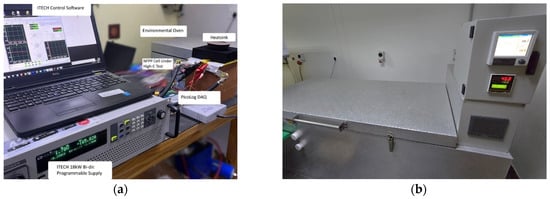
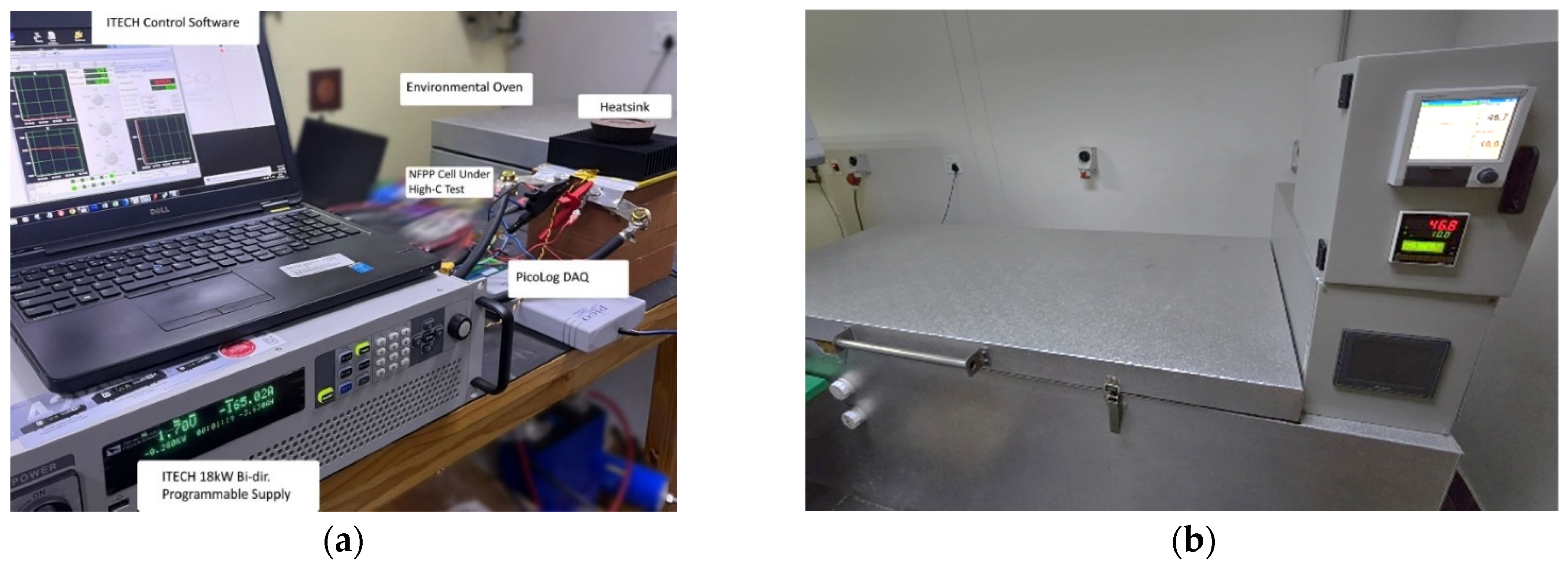
The cell temperature tests were performed in a programmable temperature-controlled environmental test chamber, shown in Figure 1b, allowing us to accurately record and characterise the cell’s discharge and charge performance over a wide range of temperatures. The cycle tests were only started once the internal temperature of the test chamber had stabilised at the setpoint.
Figure 1.
(a) Test setup for high-C discharge tests; (b) environmental test chamber with active temperature control.
In addition, high-C-rate tests were performed using the ITECH bi-directional programmable DC power supply, depicted in Figure 1a, in ambient air conditioned to approximately 23 °C. These tests are useful in determining maximum power output, identifying defects like poor welds, evaluating cell safety under load, and predicting performance degradation after high-C discharges over repeated cycles.
Deep discharge tests were also performed. Verification at deep discharge is important, as a key characteristic of SiB technology is the ability to be discharged fully or close to 0 V without damaging the cell or reducing its capacity.
Cycle tests for long-term performance and capacity retention were not performed as they are beyond the scope of this evaluation.
Test Equipment
- Temperature-controlled environmental test chamber (range of −65 °C to 85 °C);
- PicoLog data acquisition device to log temperature using LM35 sensors;
- EBCA40L Battery Cell Tester for cell-level, up to 40 A;
- ITEC IT6018-300-225, 18 kW regenerative bidirectional programmable DC power supply unit for charge/discharge cell and battery tests, cycle testing and high-current (high-C-rate) testing.
4. Test Results and Discussion
4.1. Nominal Testing at Room Temperature
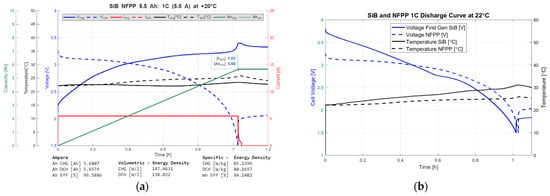
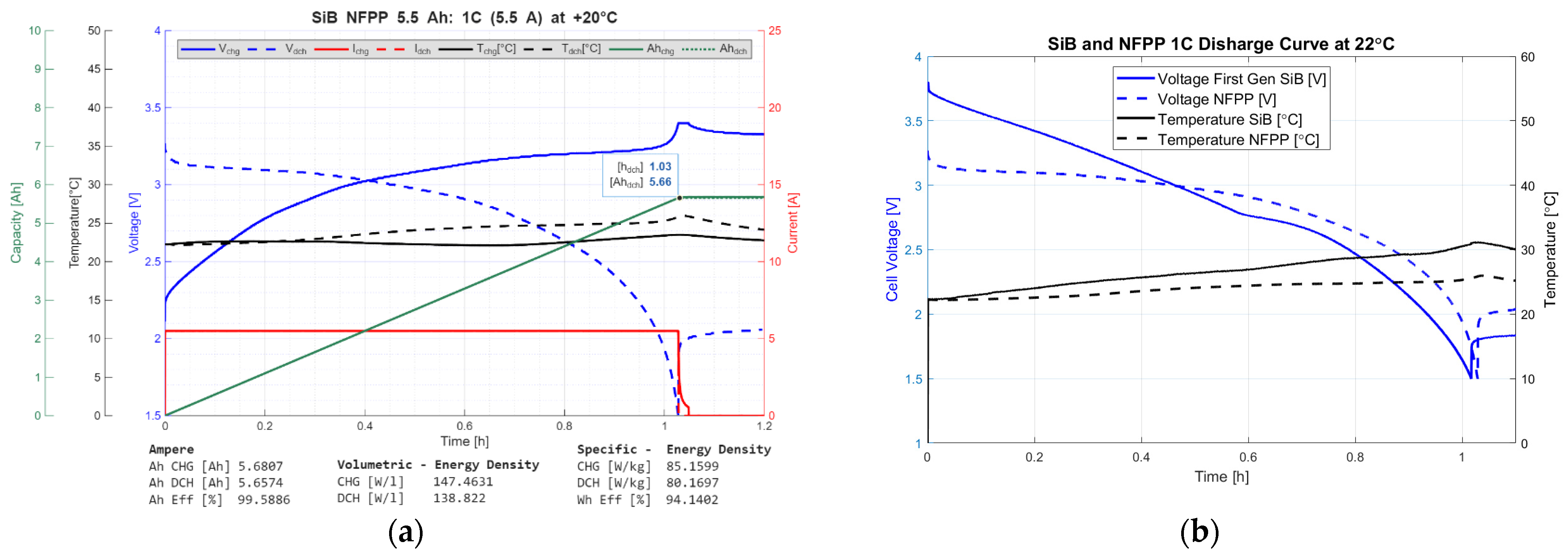
With the temperature being controlled to a nominal 20 °C, the NFPP cell was charged and discharged at 1C (5.5 A), with the data captured and plotted below in Figure 2. Similar to the previously tested SiB cells, the charge temperature is higher than the discharge temperature. The charge–discharge curve is close to a capacitive waveform.
Figure 2.
(a) NFPP cell cycle test at 1C (20 °C); (b) comparison of NFPP and previous SiB cell discharge curve at 1C (22 °C).
4.2. Voltage Curve of NFPP Cell
Figure 2b compares the voltage discharge curve of the NFPP cell to the previously tested SiB cells. The NFPP cells show a characteristically smooth discharge curve, with lower voltage variation. Approximately 80% of the usable capacity is available between 3.1 V and 2.6 V.
Similar to LFP chemistries in LIBs, NFPP SiB cells have a relatively flat curve across the cell’s usable capacity and a lower overall voltage range compared to non-phosphate chemistries. The narrower voltage range of the NFPP cells make them more adaptable for implementation in modern power conversion systems.
4.3. High Temperature Performance
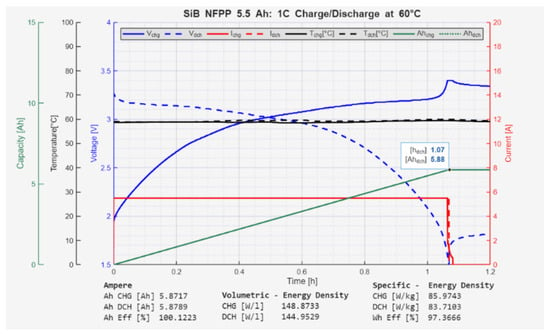
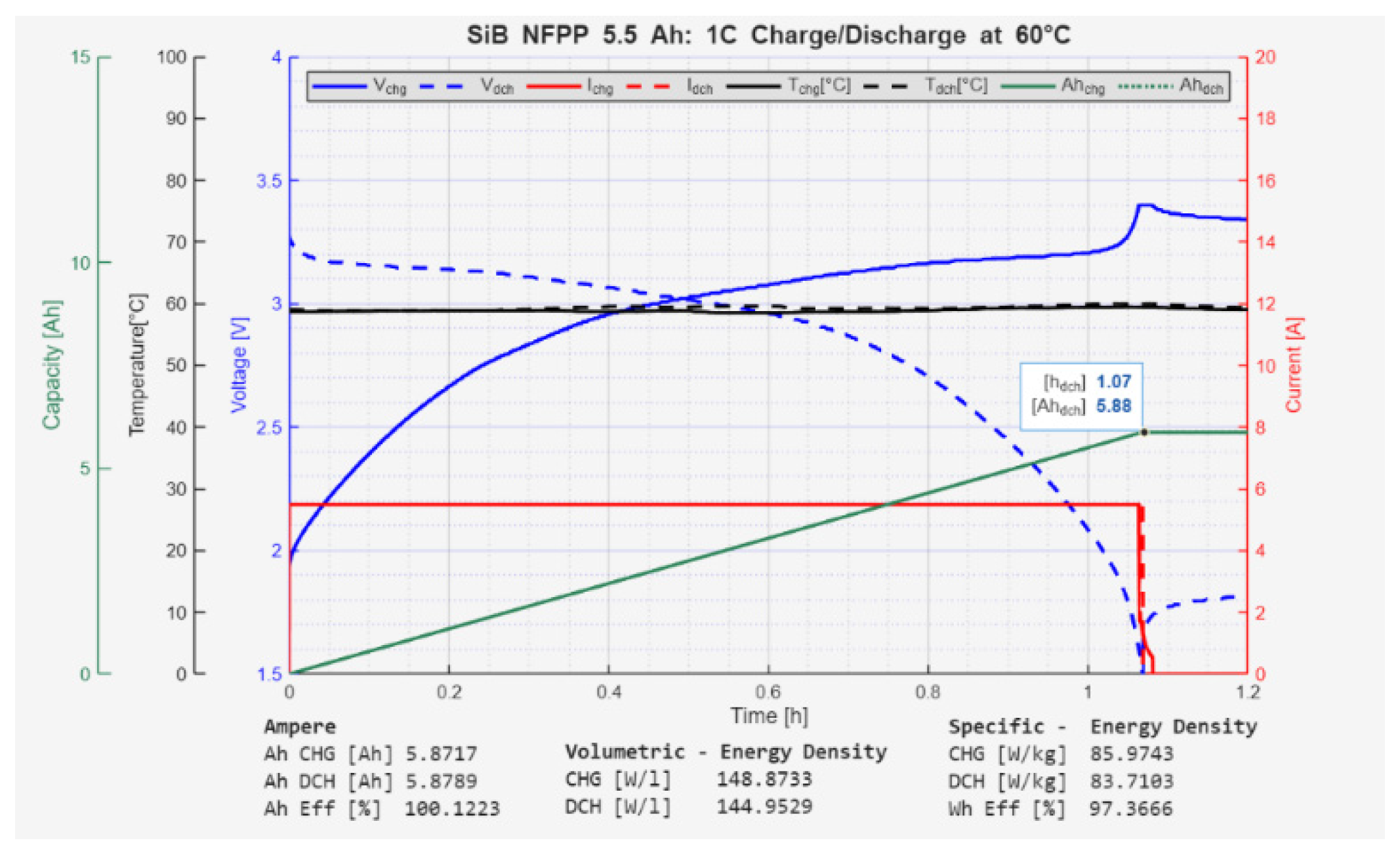
The 1C discharge tests at 60 °C, shown in Figure 3, confirm the excellent performance of NFPP cells at high temperatures, similar to previously tested SiB cells. This confirms the manufacturer’s claims of improved high-temperature performance. Multiple tests also confirmed a slight capacity improvement at higher temperatures.
Figure 3.
Plot of high-temperature NFPP cell cycle test at 1C (60 °C).
4.4. Low-Temperature Performance
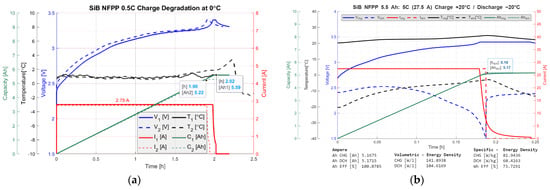
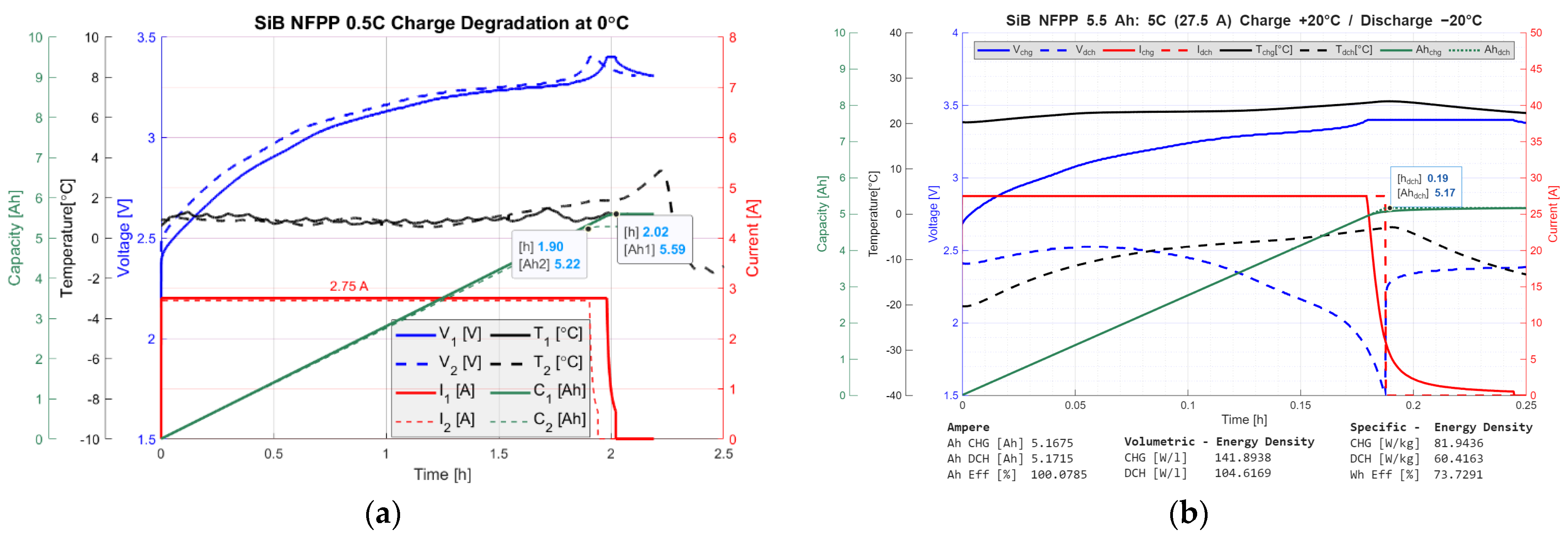
Manufacturers have claimed performance improvements in NFPP cells when operating at lower temperatures. To test these claims, 0.5C-rate tests were performed at 0 °C. The supplied NFPP datasheets specify high discharge rates of 20C at low temperatures (between 0 and 10 °C) but poor charging rates of 0.33C. Previously tested SiBs exhibited both poor charge and poor discharge performance at low temperatures [3].
Exceeding the specified charge rate specifications causes permanent damage to the cell. Charging at 0.5C at 0 °C (2.75 A, slightly outside of the allowed charge rate of 0.33C or 1.82 A) causes the cell to get damaged, leading to a loss in capacity that is illustrated in Figure 4a. In only two cycles at 0.5C, the capacity loss was 7%. A peculiar temperature rise at the end of the second cycle is also noted.
Figure 4.
(a) Low temperature 0.5C NFPP cycle test at 0 °C; (b) 5C discharge at −20 °C and 5C charge at +20 °C.
In the next sub-zero temperature tests, the cell was discharged at high C rates at −20 °C but was first heated to 20 °C before charging at 5C. As shown in Figure 4b, adopting this protocol allowed for no degradation to occur.
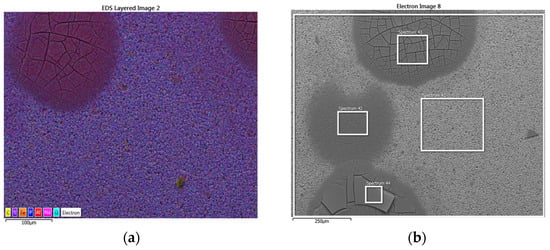
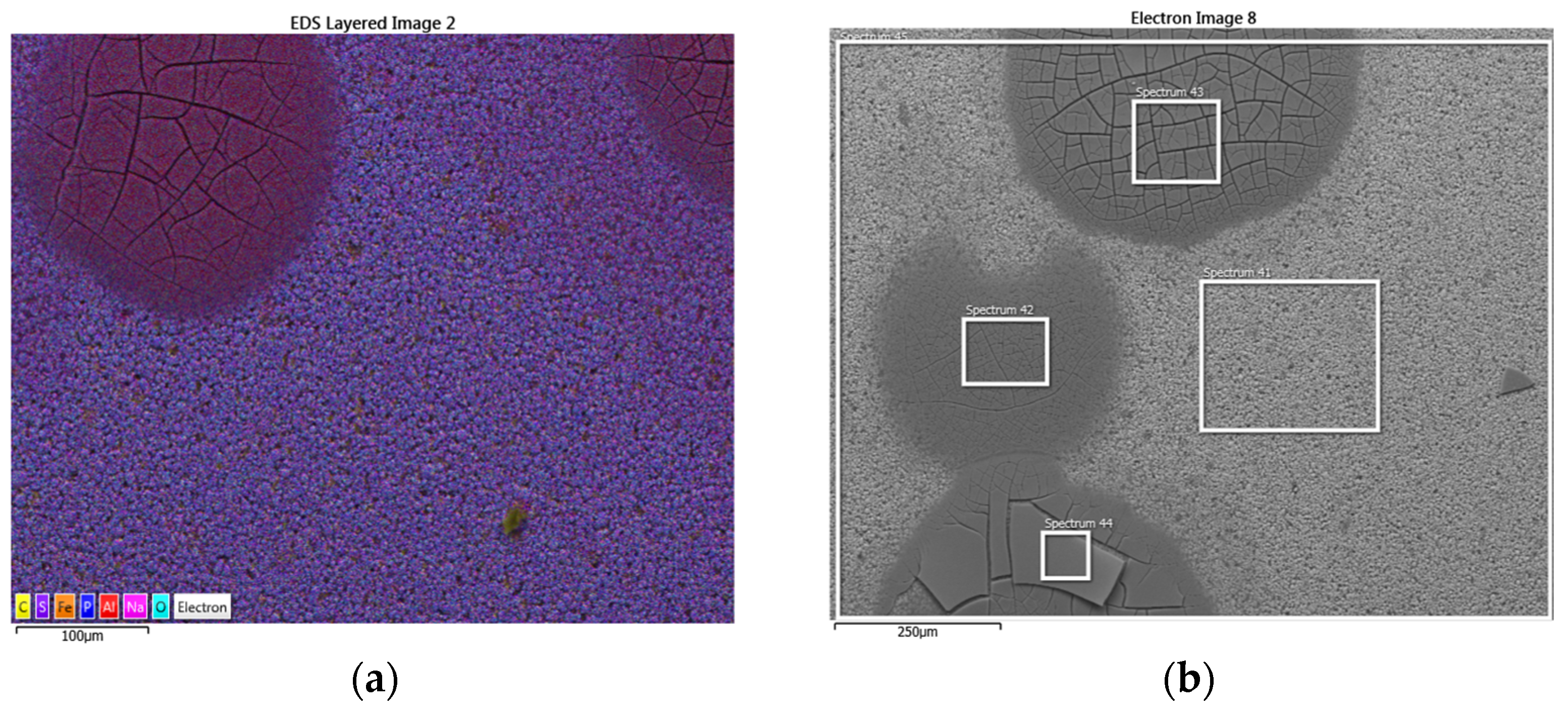
An SiB pouch cell, which was purposefully degraded by exceeding cold-temperature charge currents, was disassembled and analysed. An Energy-Dispersive X-ray Spectroscopy (EDS) (shown in Figure 5a) and Scanning Electron Microscopy (SEM) analysis (shown in Figure 5b) were performed on the cathode. The elements are identified as C, S, Fe, P, Al and Na. The identified sulfur (S) likely points to sulfur doping to improve electrochemical properties and long-term stability, as seen in the literature [11].
Figure 5.
Degraded cathode analysis: (a) EDS analysis; (b) SEM analysis on the degraded cathode.
Spectrum 43 in Figure 5b highlights an anomalous area believed to have suffered damage. Both the SEM and EDS methods show a high aluminium concentration and much lower concentrations of Fe, P and S on the anomaly.
The anomaly is theorised to have been caused by heat spots that occurred on the cathode when charging at cold temperatures at high currents. The electrolyte and heated aluminium current collector reacted with the aluminium solution passing through the cathode, quickly solidifying when it reached the colder surface temperature. Thus, the cracks (and in some cases, potholes) were visible due to gassing. This is called plating in some literature [12].
A similar effect is known to occur in lithium cells. Low temperatures, high state-of-charge (SOC), high charge current, high cell voltage and insufficient electrochemically active surface area can all cause lithium plating [12].
4.5. High-C-Rate Testing
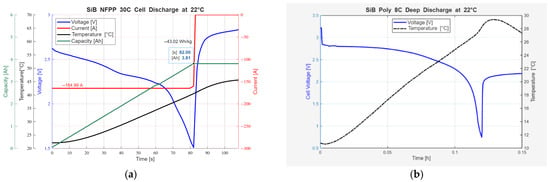
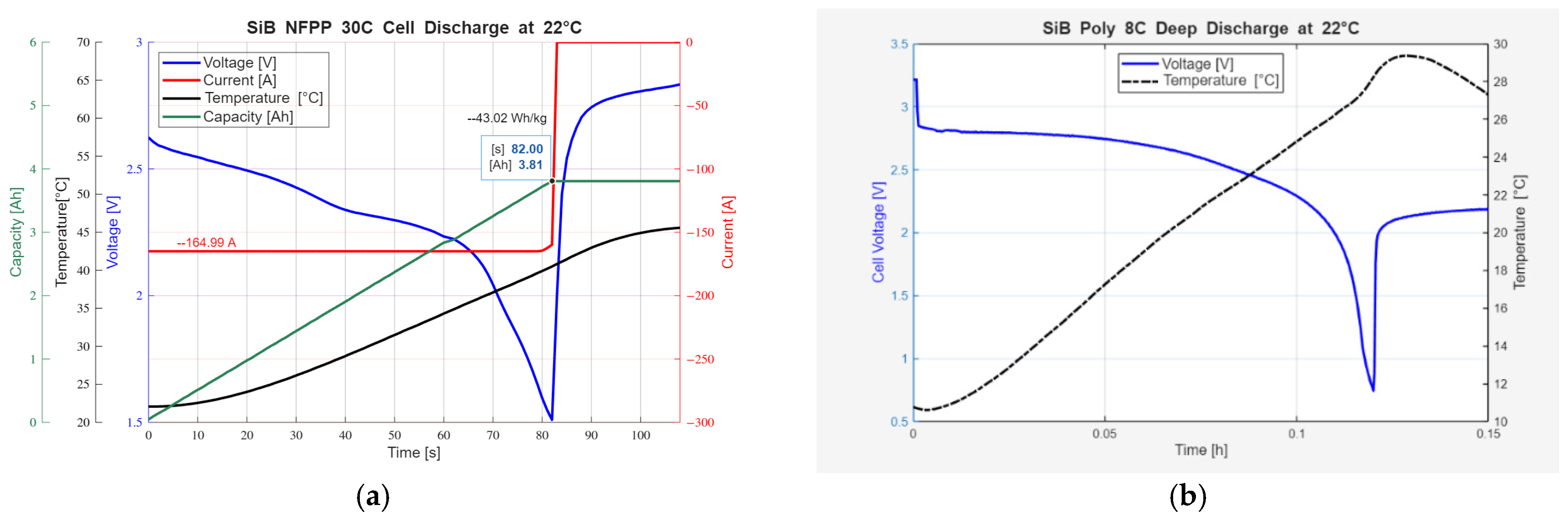
NFPP cell manufacturers claim extreme performance without any degradation. To verify this claim, a 30C (165 A) discharge test was successfully conducted at room temperature (22 °C), as shown in Figure 6a, without any noticeable degradation.
Figure 6.
(a) NFPP cell discharge at 30C (165 A) at 22 °C; (b) deep discharge test of NFPP cell.
4.6. Deep Discharge Test
A cell was discharged down to 0.8 V without any known damage, as shown in Figure 6b. The temperature showed an increased slope when the cell transitioned to the lower voltages. Upon disconnecting the load, the cell voltage jumped back to 2.2 V.
The large gap between the bottom of the dip and the recovery voltage indicates high internal resistance at the end of the discharge. However, the fact that it recovered to >2.0 V shows that the cell chemistry did not collapse; it remained stable despite being pulled down to less than 1 V.
5. Conclusions
The characterisation of Sodium Iron Pyrophosphate (NFPP) cells presented in this study provides a clear operational profile for the cell chemistry: NFPP cells trail in power density when compared to previous SiB chemistries (120–150 Wh/kg compared to around 80 Wh/kg), but this limitation is offset by exceptionally high C-rate performance. Much like LFP in LiBs, NFPP positions itself not as a high-energy-density solution but as a robust candidate for power-intensive applications.
Operational testing validated the manufacturer’s claims regarding extreme discharge capabilities, with cells successfully sustaining a 30C continuous discharge rate without degradation. This performance is supported by a stable, flat discharge curve that simplifies voltage regulation, though it necessitates advanced Battery Management System (BMS) algorithms for accurate state-of-charge (SOC) estimation due to the reduced voltage gradient. Furthermore, the chemistry exhibits a high safety profile, evidenced by its tolerance for its ability to handle deep discharges without capacity reduction.
The cells demonstrate excellent stability and capacity retention at high temperatures (45 °C to 60 °C), confirming their viability for harsh, high-heat environmental conditions. However, low-temperature operation requires careful thermal management despite general claims of cold-weather resilience, as our data indicates measurable capacity loss (7% after two cycles) when charging rates are exceeded at sub-zero temperatures.
Ultimately, NFPP chemistry is well-suited for stationary storage applications where safety, thermal stability, and rapid response times take precedence over gravimetric energy density. These characteristics make NFPP a compelling technology for grid stabilisation, renewable energy integration, and systems requiring a high cycle life under aggressive load profiles.
Author Contributions
Conceptualisation, I.G. and H.B.; methodology, I.G.; software, I.G.; validation, H.B., R.G. and G.v.d.K.; formal analysis, I.G.; investigation, H.B. and R.G.; resources, H.B.; data curation, I.G.; writing—original draft preparation, H.B. and R.G.; writing—review and editing, G.v.d.K.; visualisation, H.B.; supervision, I.G.; project administration, I.G.; funding acquisition, I.G. All authors have read and agreed to the published version of the manuscript.
Funding
This research was funded by the CSIR under project number: TSO-SOURCE GMB4025.
Institutional Review Board Statement
Not applicable.
Informed Consent Statement
Not applicable.
Data Availability Statement
Measurement data and full report analysis descriptions are stored in the CSIR Configuration Department and are accessible on request.
Acknowledgments
We thank the CSIR for providing the funding for the battery research program.
Conflicts of Interest
The authors declare no conflict of interest.
References
- Li, P.; Yuan, T.; Qiu, J.; Che, H.; Ma, Q.; Pang, Y.; Ma, Z.-F.; Zheng, S. A comprehensive review of layered transition metal oxide cathodes for sodium-ion batteries: The latest advancements and future perspectives. Mater. Sci. Eng. 2025, 163, 100902. [Google Scholar] [CrossRef] [Scilit]
- Casey, A.J.; D’Arpino, M. Performance of Sodium-Ion and Lithium-Ion Batteries for Energy Storage System Applications. In Proceedings of the IEEE Electrical Energy Storage Applications and Technologies Conference (EESAT), Charlotte, NC, USA, 20–21 January 2025; pp. 1–5. [Google Scholar]
- Grobler, I.; Banderker, H.; Govindsamy, R. Evaluating Sodium-Ion Batteries (SiB) and its Applications. In Proceedings of the 33rd Southern African Universities Power Engineering Conference (SAUPEC), Pretoria, South Africa, 29–30 January 2025. [Google Scholar]
- International Renewable Energy Agency (IRENA). Sodium-Ion Batteries: A Technology Brief. Nov. 2025. ISBN: 978-92-9260-697-8. Available online: https://www.irena.org/Publications/2025/Nov/Sodium-ion-batteries-A-technology-brief (accessed on 30 November 2025).
- Subaşı, Y.; Altenschmidt, L.; Lindgren, F.; Ericsson, T.; Häggström, L.; Tai, C.W.; Liu, H.; Younesi, R. Synthesis and characterization of a crystalline Na4Fe3(PO4)2(P2O7) cathode material for sodium-ion batteries. J. Mater. Chem. A 2024, 12, 23506–23517. [Google Scholar] [CrossRef] [Scilit]
- Paragonage: Product Specification of SIB55150140-5.5Ah, Document Number P2-RD-0000-048, 2025/03/21. Pangu New Energy. Wuxi, China. Available online: https://www.paragonage.com/en/contact/ (accessed on 30 November 2025).
- Tao, Q.; Ding, H.; Tang, X.; Zhang, K.; Teng, J.; Zhao, H.; Li, J. Mn-Doped Na4Fe3(PO4)2P2O7 as a Low-Cost and High-Performance Cathode Material for Sodium-Ion Batteries. Energy Fuels 2023, 37, 6230–6239. [Google Scholar] [CrossRef] [Scilit]
- Yu, R.; Liu, S.; Li, X.; Wei, B.; Wu, X. Study on thermal behavior and safety properties of Na4Fe3(PO4)2(P2O7) and NaNi1/3Fe1/3Mn1/3O2 cathode-based sodium ion battery. Batteries 2025, 11, 184. [Google Scholar] [CrossRef] [Scilit]
- Jia, S.; Zhang, B.; Gao, J.; Jin, G.; Wang, Y.; Sun, D.; Sun, T.; Wang, H.; Li, X.; Li, S. Biomass-derived hard carbon anodes: From structural engineering to industrial sodium-ion battery applications. Energy Storage Mater. 2025, 80, 104420. [Google Scholar] [CrossRef] [Scilit]
- Cheng, F.; Cao, M.; Li, Q.; Fang, C.; Han, J.; Huang, Y. Electrolyte salts for sodium-ion batteries: NaPF6 or NaClO4. ACS Nano 2023, 17, 18608–18615. [Google Scholar] [CrossRef] [Scilit] [PubMed]
- Neff, T.; Heßdörfer, J.; Bilican, A.; Kolb, L.; Reinert, F.; Krueger, A. Superior sulfur-doped carbon anodes for sodium-ion batteries through incorporation of onion-like carbon. Electrochim. Acta 2025, 537, 146912. [Google Scholar] [CrossRef] [Scilit]
- Edge, J.S.; O’Kane, S.; Prosser, R.; Kirkaldy, N.D.; Patel, A.N.; Hales, A.; Ghosh, A.; Ai, W.; Chen, J.; Yang, J.; et al. Lithium ion battery degradation: What you need to know. PCCP Phys. Chem. Chem. Phys. 2021, 23, 8200–8221. [Google Scholar] [CrossRef] [Scilit] [PubMed]

Disclaimer/Publisher’s Note: The statements, opinions and data contained in all publications are solely those of the individual author(s) and contributor(s) and not of MDPI and/or the editor(s). MDPI and/or the editor(s) disclaim responsibility for any injury to people or property resulting from any ideas, methods, instructions or products referred to in the content. |
© 2026 by the authors. Licensee MDPI, Basel, Switzerland. This article is an open access article distributed under the terms and conditions of the Creative Commons Attribution (CC BY) license.