


Abstract
Sunlight, air, and other natural resources are invaluable gifts that must be utilized responsibly to enhance human welfare while preserving the environment and protecting all forms of life. The reliance on fossil fuels has increasingly threatened these resources, which has made the exploration of sunlight and wind energy as major renewable energy sources a critical focus of research and development. Artificial intelligence (AI), originally developed to mimic human thought and decision-making processes, has become a transformative force in renewable energy systems by optimizing energy generation, management, and distribution for greater efficiency and sustainability. This paper shows the evolution of AI applications in wind, solar, geothermal, hydro, bioenergy, and hybrid energy systems over the last few decades. A bibliometric analysis of the literature was conducted systematically by reviewing relevant journal articles between 2000 and 2025. The analysis identifies research trends, collaboration patterns, emerging domains, and future directions. Different studies show that AI technologies’ capabilities improve several aspects of renewable energy for the purpose of integrating operations into the grid for users, specifically forecasting, improving system stability and frequency, and enabling transient stability assessment. The study highlights key challenges and provides high-level insights to guide future research and support the continued development and application of AI in renewable energy systems.
1. Introduction
The increasing depletion of fossil fuel reserves and the growing urgency of mitigating environmental impacts have accelerated the global shift toward renewable energy (RE) systems. Sustainable resources such as solar, wind, and hydropower are now central to achieving long-term energy security and reducing greenhouse gas emissions [1]. However, the intermittent and variable nature of these energy sources introduces significant challenges in forecasting, grid stability, and efficient system management. In response, artificial intelligence (AI) has emerged as a powerful enabler, offering advanced capabilities in prediction, optimization, and intelligent control of energy systems [2]. AI-driven approaches, particularly machine learning (ML) and deep learning (DL), are increasingly applied to enhance performance, reliability, and integration of renewable energy into modern smart grids. Over the last two decades, the application of AI in renewable energy has expanded rapidly, with a marked increase in research output after 2018, indicating a transition toward data-driven and automated energy systems [3]. Despite this rapid growth, the research landscape remains fragmented, with diverse methodologies, thematic domains, and collaboration structures that require systematic synthesis and evaluation. Understanding these patterns is essential for guiding future research and ensuring effective technological advancement. This study is significant as it provides a comprehensive and structured assessment of the evolution of AI applications across major renewable energy sectors, including solar, wind, hydropower, and smart grids. By identifying key research trends, dominant techniques, and emerging areas, the study offers valuable insights into how AI contributes to improving forecasting accuracy, system optimization, and overall energy efficiency. Methodologically, this study employs a bibliometric analysis approach using data collected from Google Scholar through the Publish or Perish 8 software, ensuring broad interdisciplinary coverage of peer-reviewed journal articles published between 2000 and 2025 [1]. A keyword-based search strategy was applied across titles, abstracts, and keywords, followed by a systematic screening process to remove irrelevant and duplicate records, resulting in a final dataset of 3051 publications [3]. Analytical tools, including VOSviewer 1.6.20 and Python, were used to perform network visualization, keyword co-occurrence analysis, and trend evaluation, enabling the identification of thematic structures, collaboration networks, and research evolution patterns [4]. Accordingly, the primary objective of this study is to systematically analyze the development of AI applications in renewable energy by identifying research trends, collaboration patterns, and emerging directions. The findings indicate a rapid increase in research activity after 2018, along with the growing dominance of machine learning, deep learning, and hybrid optimization techniques across renewable energy domains.
2. Methodology
The methodology of this study is based on a bibliometric analysis approach using data retrieved through Publish or Perish from Google Scholar, selected for its broad multidisciplinary coverage. The analysis focuses on peer-reviewed journal articles published between 2000 and 2025, identified through a keyword-based search (“Artificial Intelligence” AND “Renewable Energy”). A systematic screening process following PRISMA guidelines. The analysis was conducted using VOSviewer and Python-based tools, applying key bibliometric indicators to examine the development of AI applications in renewable energy systems.
2.1. Data Source and Database Selection
Bibliometric data for this study were obtained using Publish or Perish, which retrieves scholarly records from Google Scholar [5]. Google Scholar was selected owing to its extensive multidisciplinary coverage, enabling the inclusion of research outputs spanning diverse domains such as artificial intelligence, energy systems, and engineering. This broad scope is particularly advantageous for analysing interdisciplinary research areas, including AI applications in renewable energy systems, where relevant studies are often distributed across multiple disciplines and publication platforms [1,6]. The data collection covers the period from 2000 to 2025, thereby facilitating the identification of long-term research trends and the temporal evolution of the field. To ensure consistency and data quality, the analysis was restricted to peer-reviewed journal articles. Other document types, including books, theses, conference proceedings, and web-based sources, were excluded during the initial data cleaning stage.
Nevertheless, certain limitations associated with the use of Google Scholar should be acknowledged. The database may contain inconsistencies in indexing and citation counts [7], and it may occasionally retrieve duplicate or non-peer-reviewed records [6,7]. Furthermore, restricting the dataset to journal articles may result in the exclusion of relevant conference publications, which represent an important dissemination channel in artificial intelligence research [8]. To address these limitations, a rigorous data cleaning and screening procedure was implemented to remove duplicate and irrelevant entries. Despite these constraints, the adopted approach provides a sufficiently comprehensive and reliable dataset for conducting a bibliometric analysis of AI applications in renewable energy systems.
2.2. Search Strategy and Data Screening
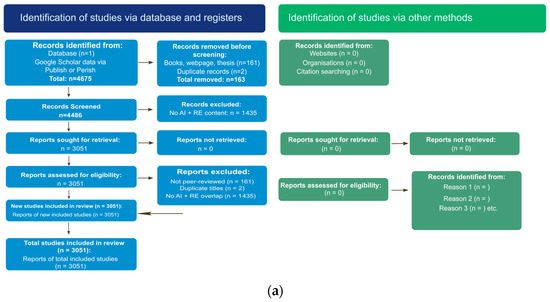
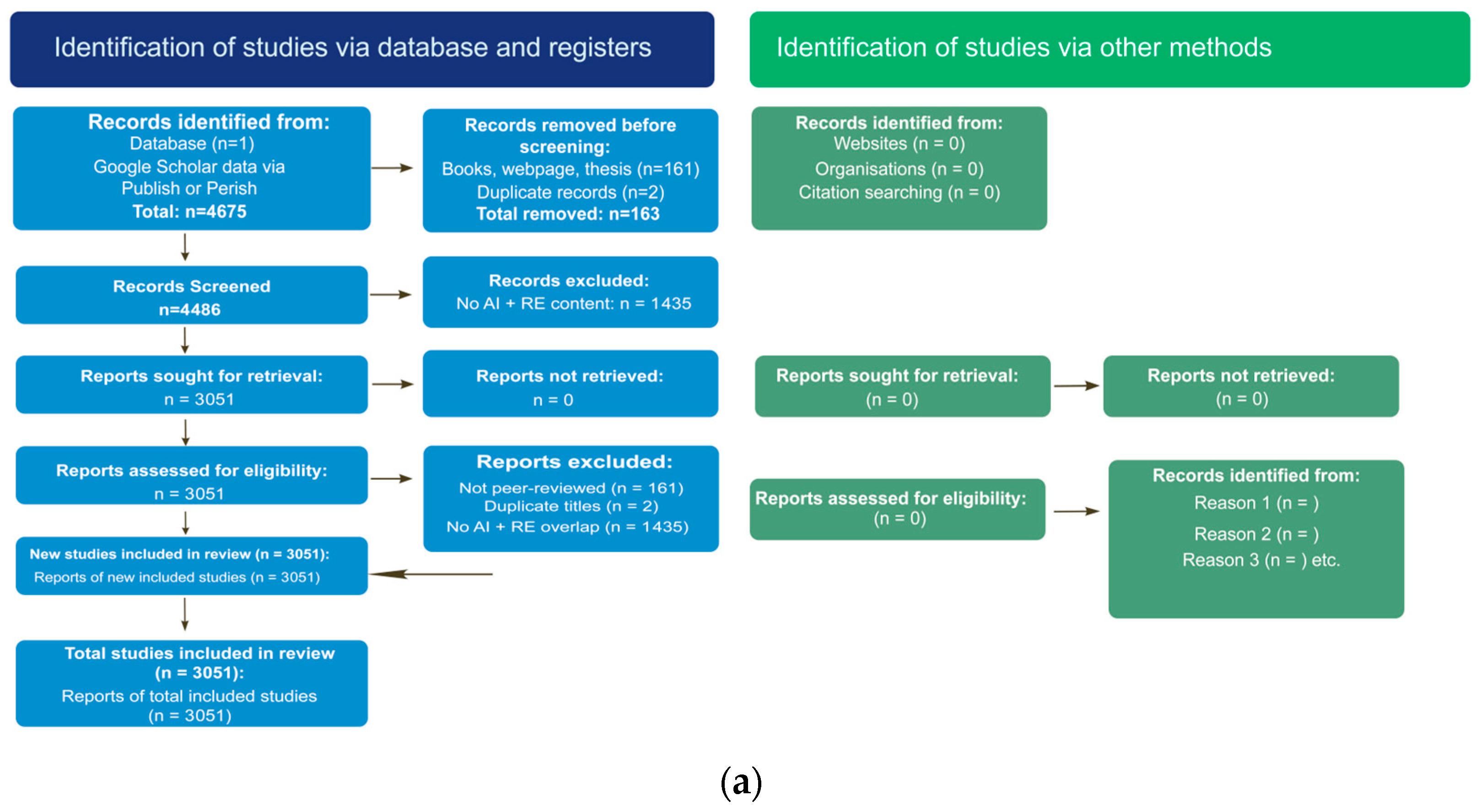
A keyword-based search strategy is adopted to identify relevant publications, using the query “Artificial Intelligence” AND “Renewable Energy,” which is applied across titles, abstracts, and keywords to ensure comprehensive retrieval of relevant studies. The initial search yields 4675 records, followed by a systematic screening procedure conducted through a structured workflow, during which irrelevant and duplicate records are removed, and eligibility criteria are applied to ensure the inclusion of relevant and high-quality studies [3]. After completing the screening and selection stages, a total of 3051 publications were retained for the final bibliometric analysis, as illustrated in the PRISMA flow diagram of Figure 1a.
Figure 1.
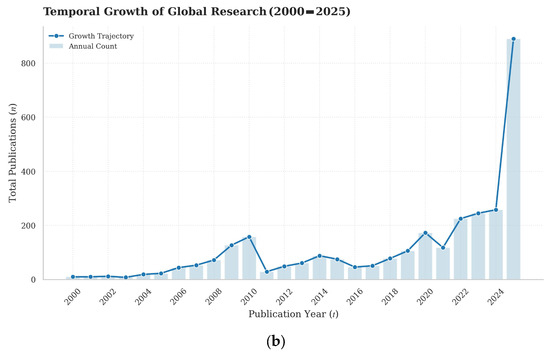
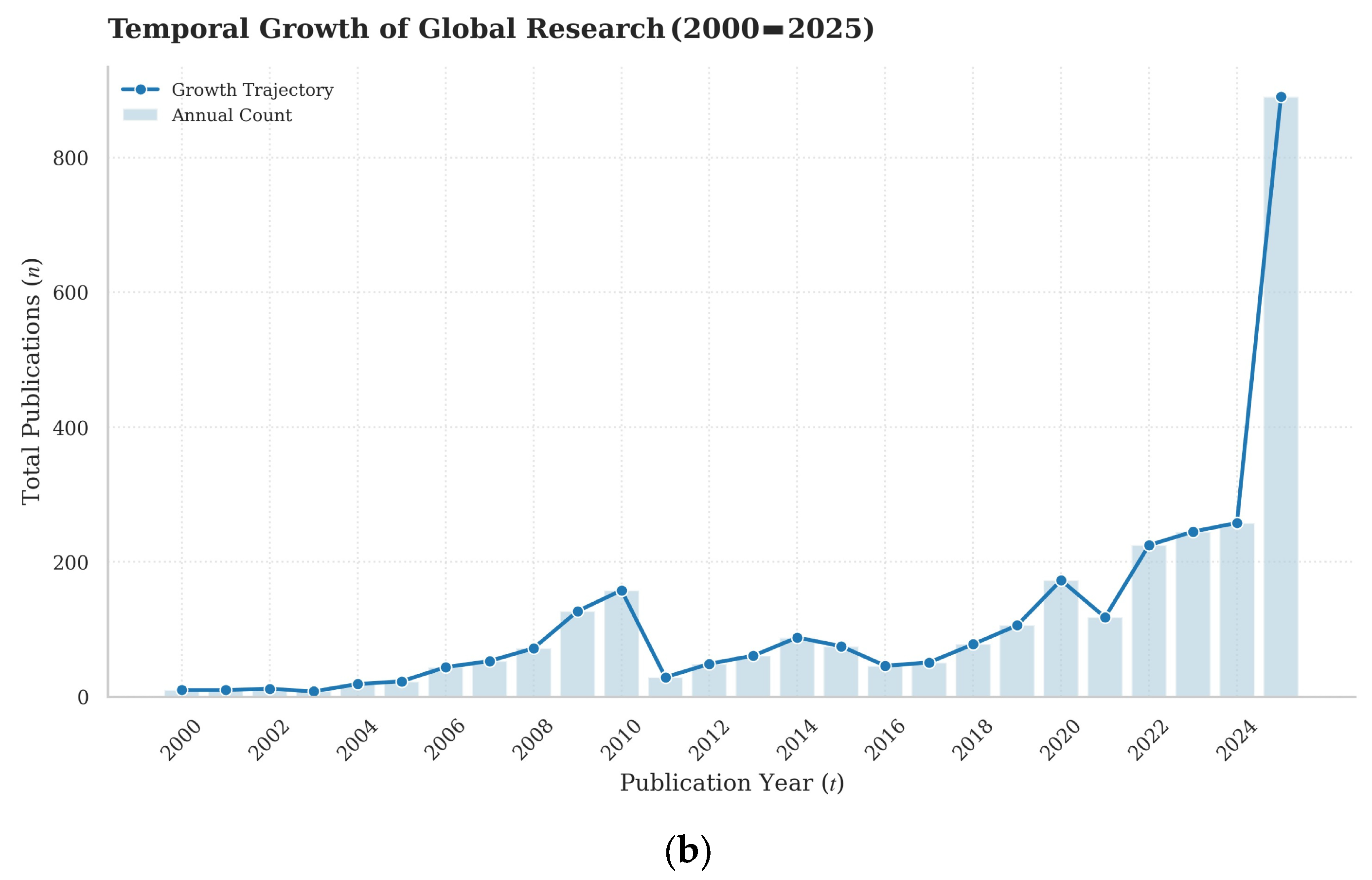
Schemes: (a) Prisma Methodological Flow diagram derived from [9]; (b) global research output trends (2000–2025) AI use in RET.
2.3. Bibliometric Analysis Tools and Indicators
The analysis is conducted using a combination of bibliometric visualization and computational tools, in which VOSviewer is employed to generate network visualization maps, including co-authorship networks and keyword co-occurrence networks [4], while Python-based tools are utilized for data processing, statistical analysis, and visualization of publication trends. Several bibliometric indicators are applied to evaluate the research landscape, including annual publication output to assess growth trends, keyword co-occurrence analysis to identify dominant and emerging themes, and network visualization mapping to examine relationships among authors, institutions, and countries [3]. In addition, thematic evolution analysis is performed to track changes in research focus over time. These indicators provide quantitative and structural insights into the development of AI applications in RE systems, enabling a comprehensive understanding of research trends and collaboration patterns.
3. Results and Analysis
Bibliometric analysis and Network analysis were performed using Python and VOSviewer to examine the structural relationships between AI and RE sources. Figure 1b, Figure 2, Figure 3, Figure 4 and Figure 5 show corresponding analysis results.
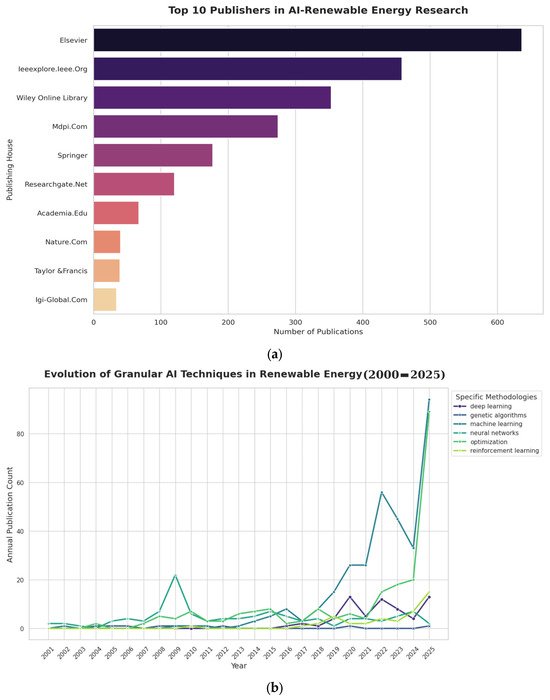
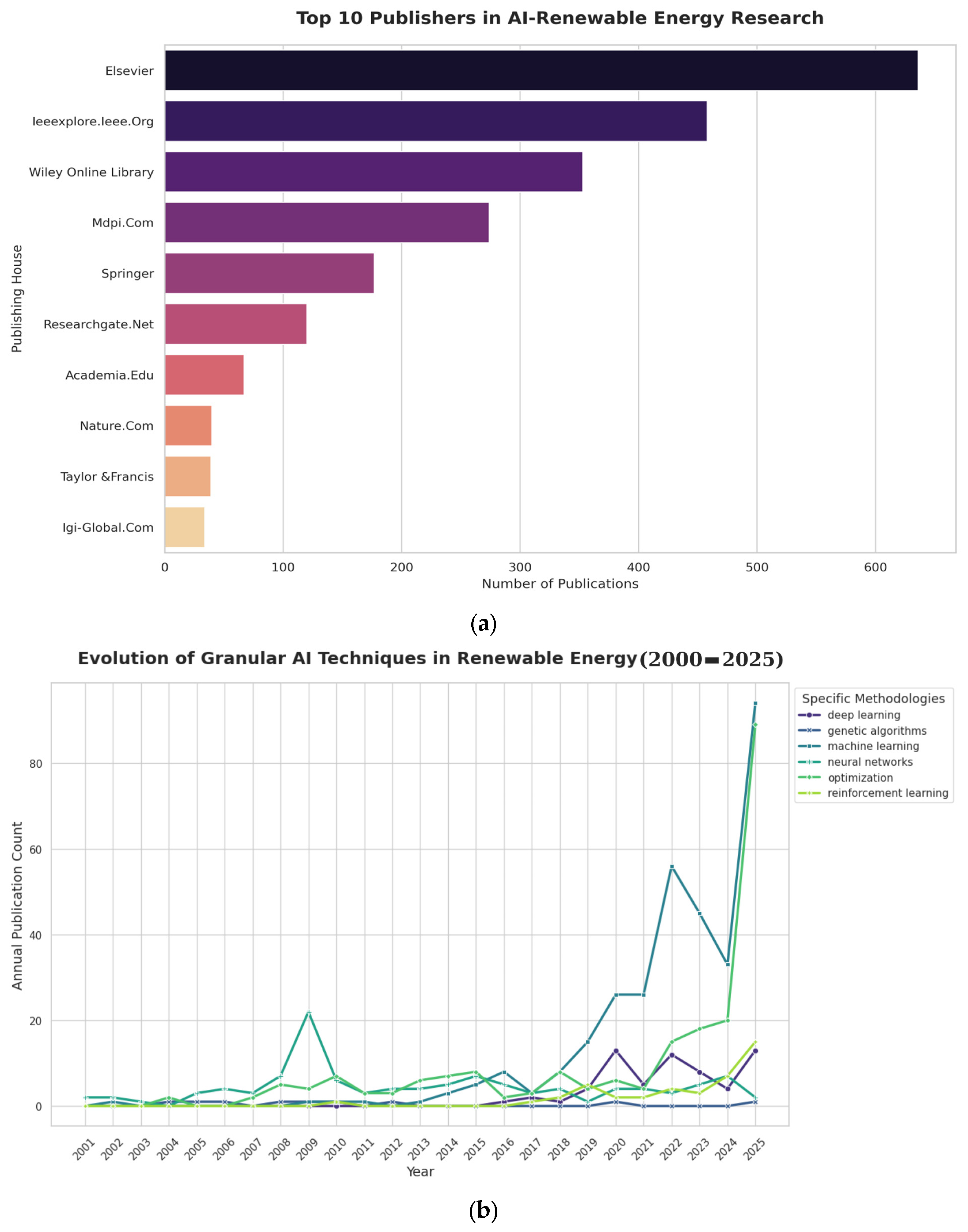
Figure 2.
(a) Top publishers in AI–renewable energy research; (b) growth of AI techniques in renewable energy research.
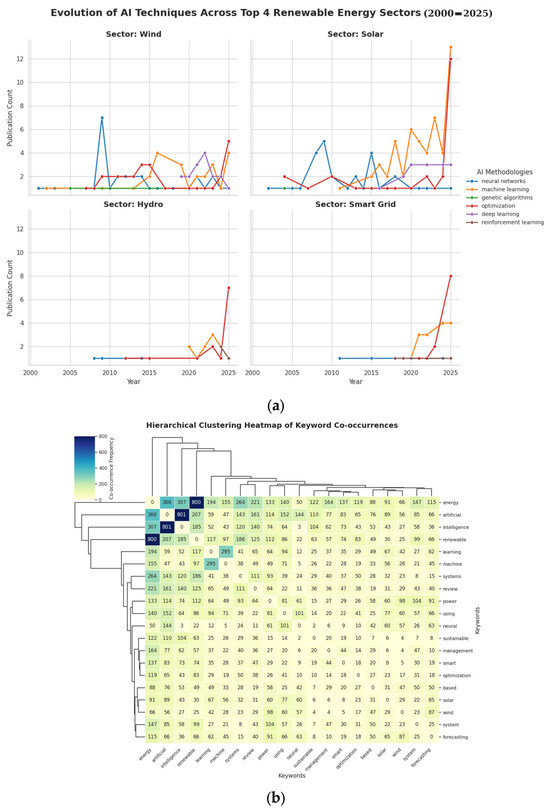
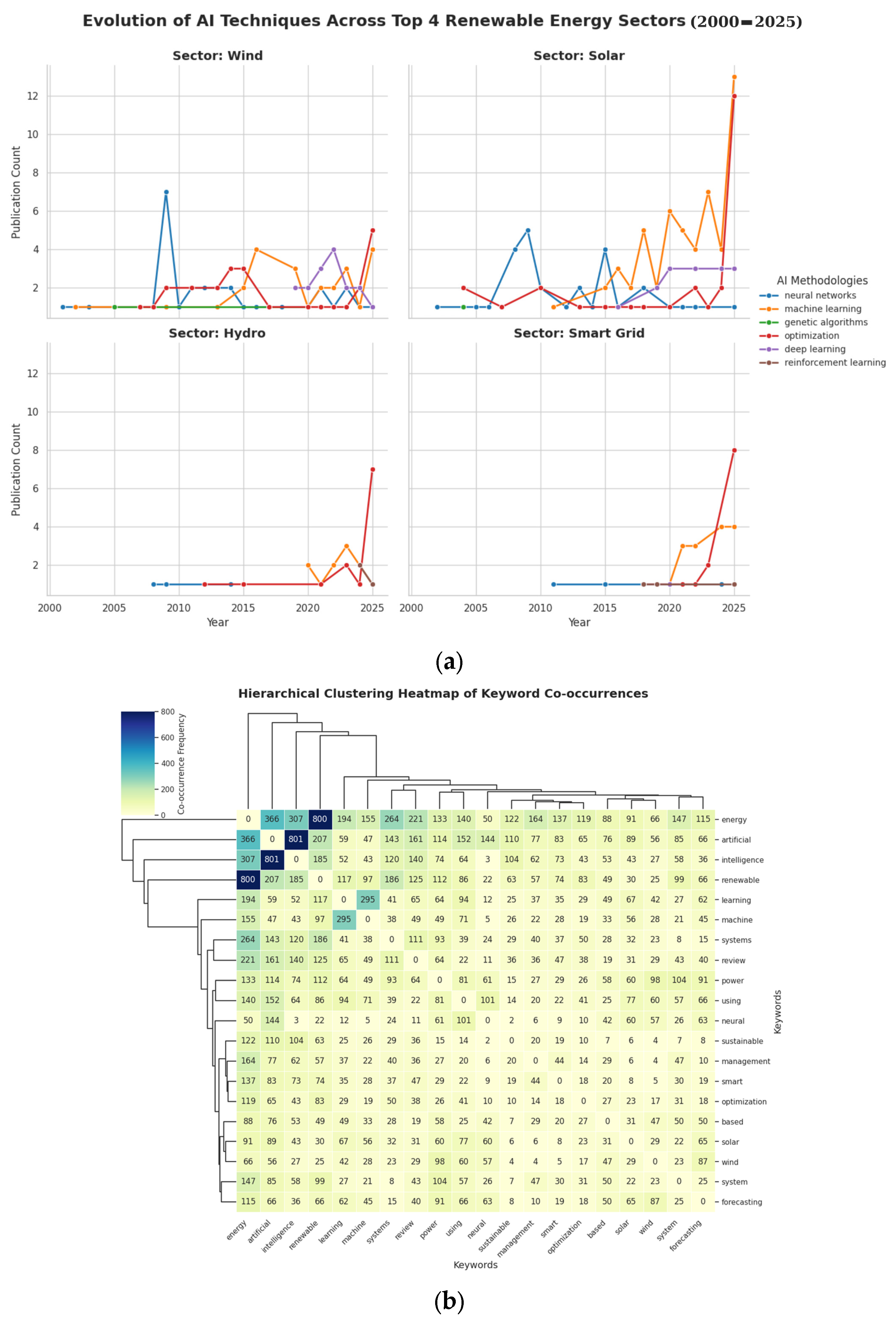
Figure 3.
(a) Comparative growth of AI techniques across major renewable energy domains; (b) hierarchical clustering heatmap of keyword co-occurrences showing thematic relationships in AI-based renewable energy research.
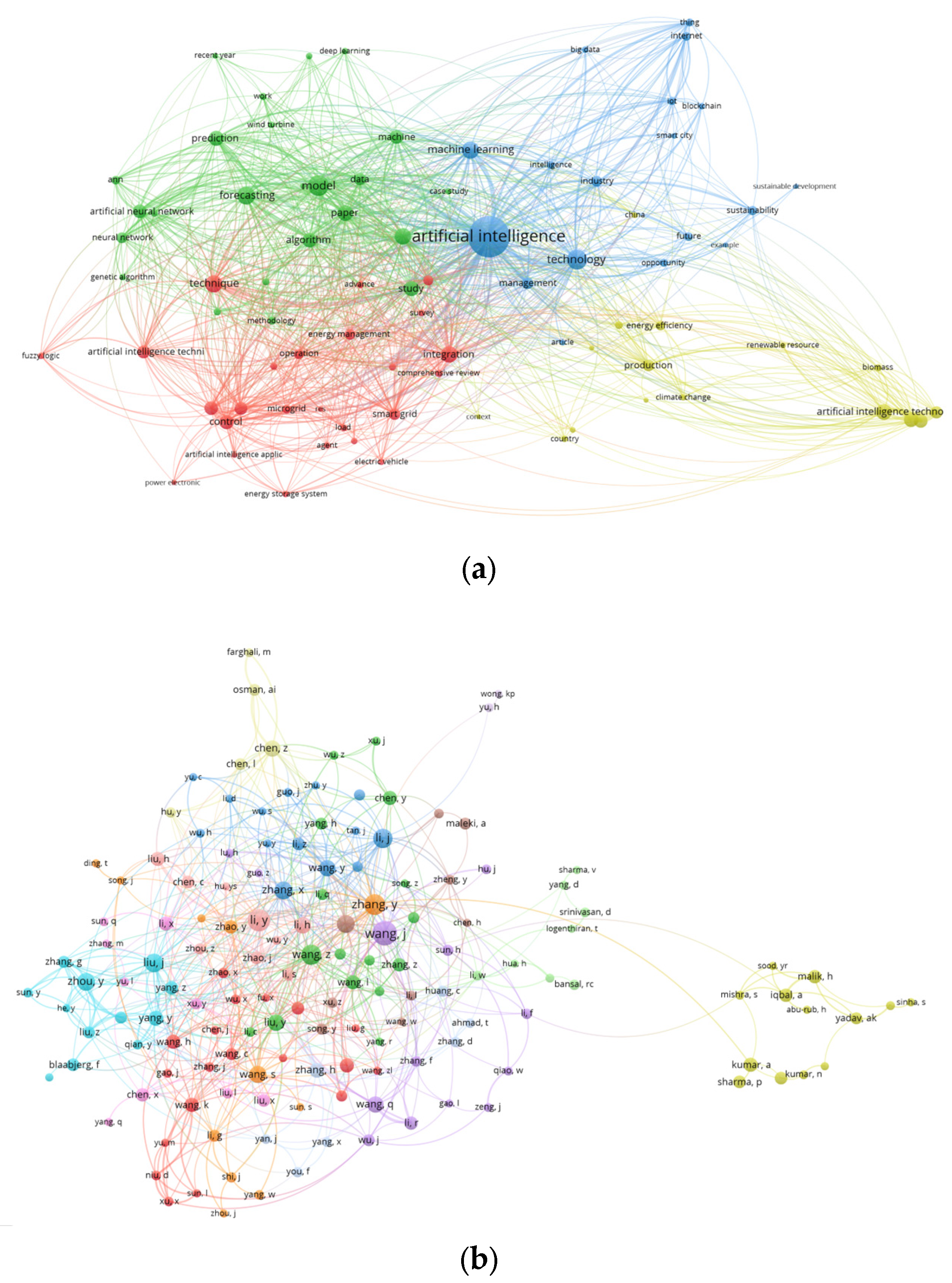
Figure 4.
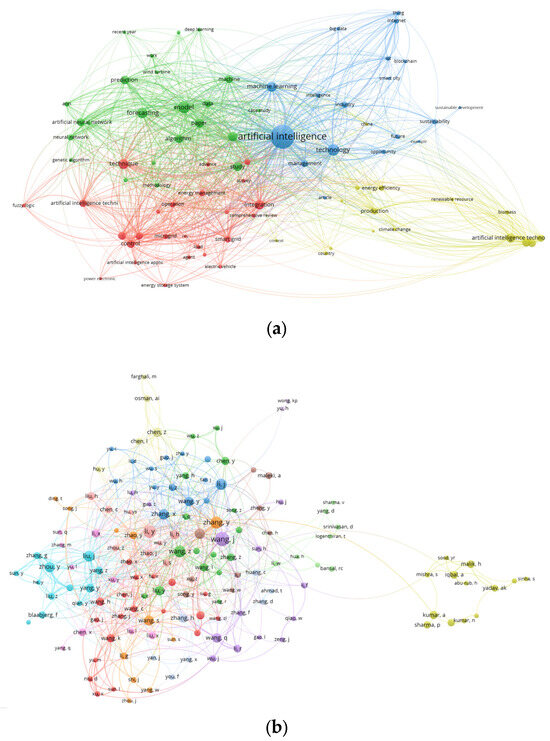
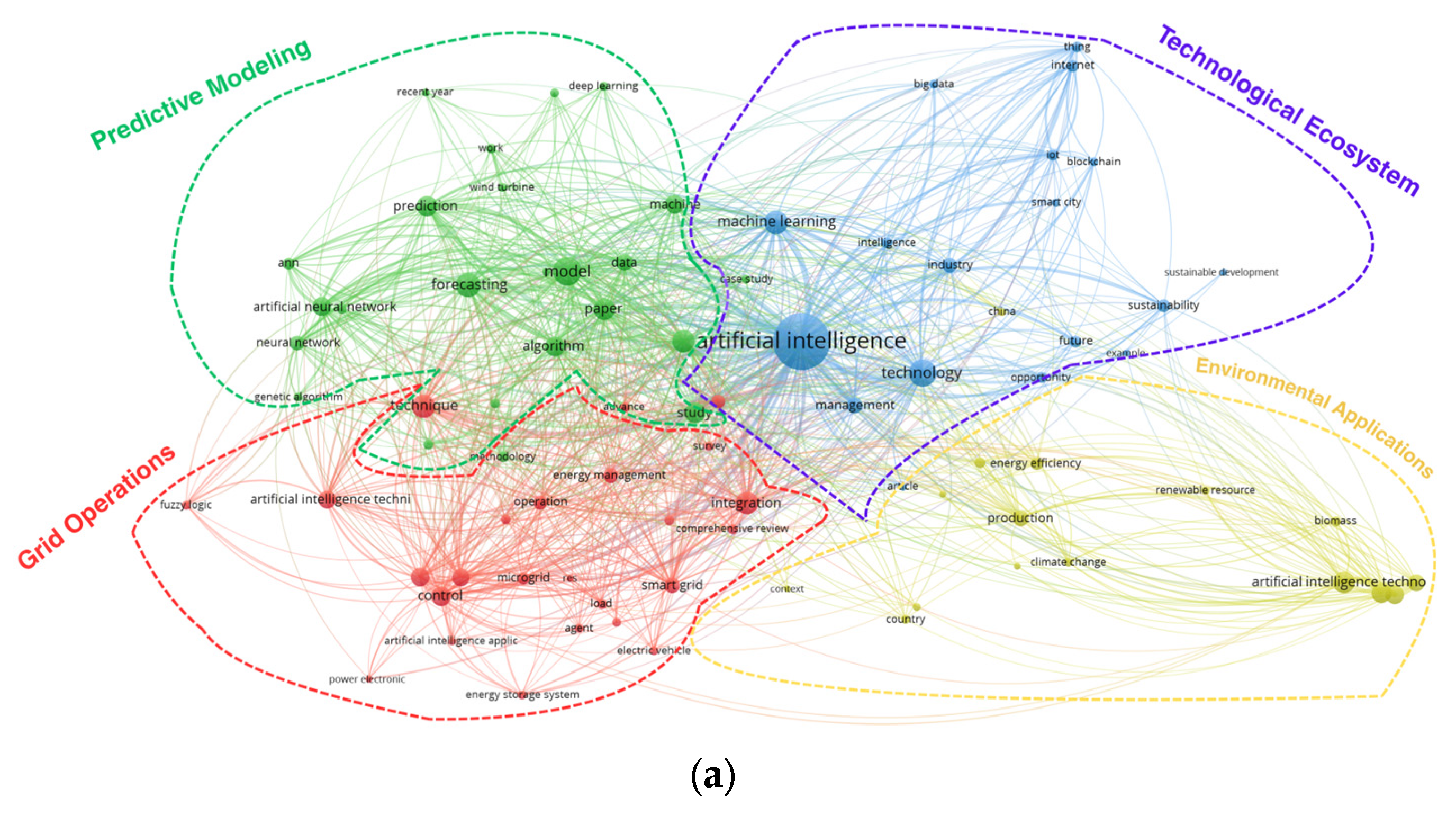
(a) Network visualization of keyword co-occurrences in renewable energy and AI research; (b) co-authorship network illustrating collaboration patterns among researchers.
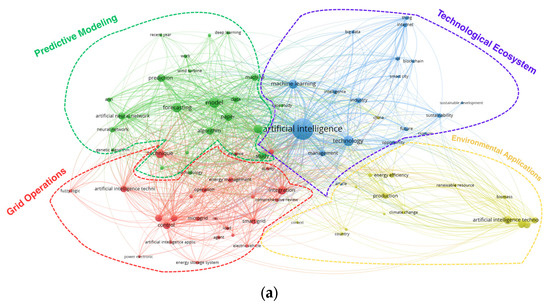
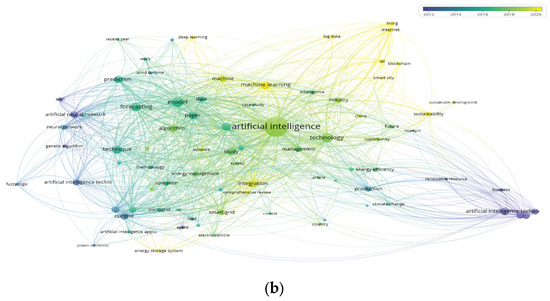
Figure 5.
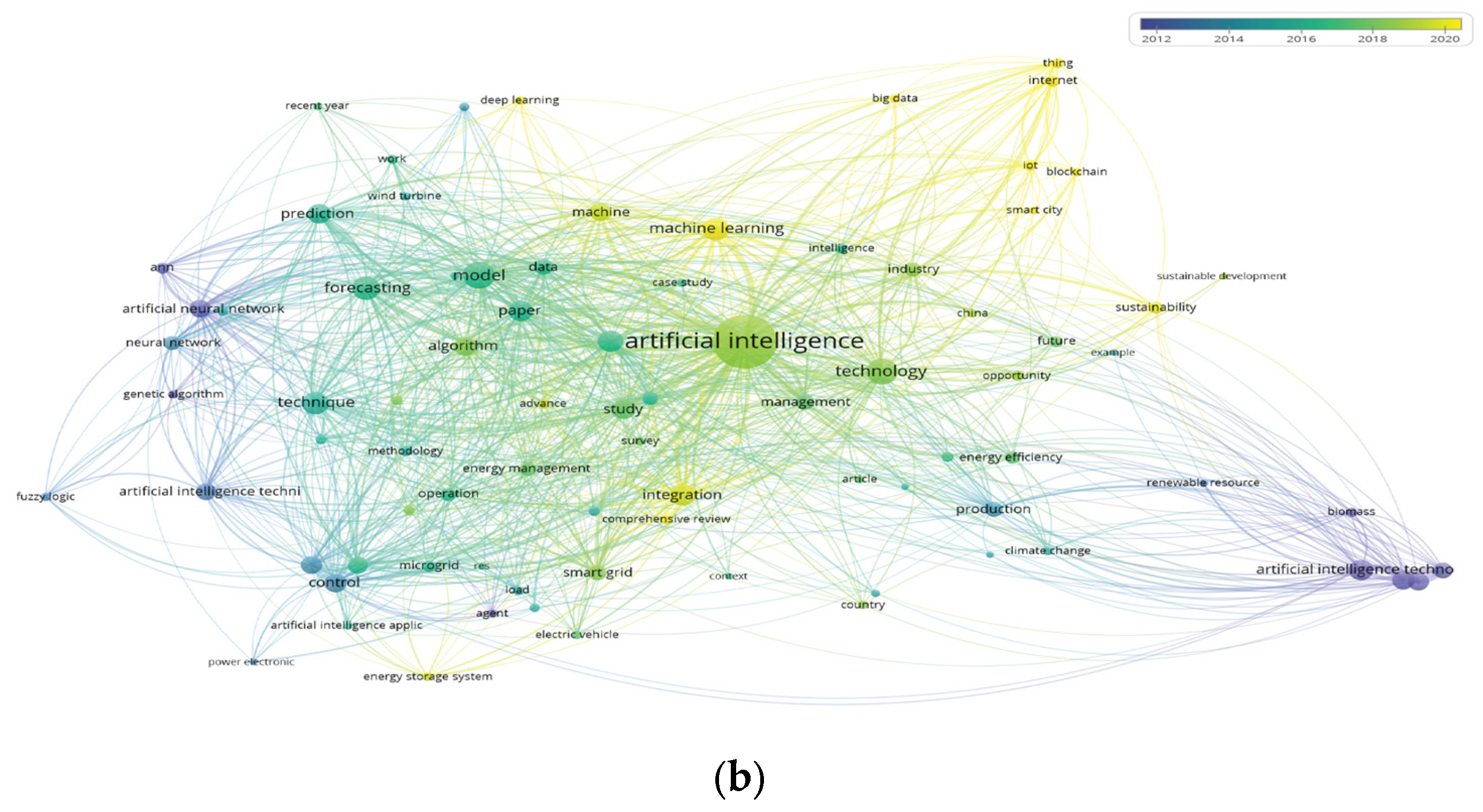
(a) Network clustering of AI applications across renewable energy domains; (b) research trend of the most essential topics in the energy field.
3.1. Bibliometric Analysis
Figure 2a presents the distribution of publications across publishers, indicating a highly concentrated landscape in which Elsevier is identified as the leading publisher, followed by IEEE Xplore and Wiley Online Library. This concentration suggests that a limited number of publishers function as primary dissemination hubs, collectively accounting for a substantial proportion of total publications and reflecting a centralized knowledge ecosystem, while the decline in publication counts beyond these leading platforms indicates a structural imbalance in dissemination opportunities and potential differences in visibility and citation impact. Figure 2b illustrates the temporal evolution of AI methodologies, indicating that publication activity remained relatively low before 2018, followed by a rapid and sustained increase across most techniques. Machine learning (ML) is identified as the dominant approach, with notable growth after 2020, while optimization techniques represent the second most prominent category and continue to expand. In recent years, deep learning (DL) and reinforcement learning (RL) have demonstrated clear upward trends, indicating a shift toward more complex and adaptive modeling approaches, which may be associated with increased data availability and computational capacity. Overall, these patterns indicate a transition from conventional methods toward data-driven and learning-based approaches, accompanied by increasing hybridization between ML and optimization techniques.
Figure 3a presents the hierarchical clustering heatmap of keyword co-occurrences, in which terms such as energy, artificial, renewable, intelligence, power, systems, learning, and forecasting constitute the conceptual core of the field, while strong pairings, including AI and energy renewable, indicate a close integration of AI within RE research. The clustering results identify four principal thematic domains: the AI energy nexus, methodological and computational approaches, application-specific domains, and management-oriented research, indicating a multi-layered structure that integrates conceptual, methodological, and application-driven components. Figure 3b illustrates the sectoral distribution of research, showing that wind and solar dominate the field, followed by smart grid and hydropower systems, while ML and optimization are identified as the primary methodologies across all sectors. A transition from conventional approaches toward data-driven techniques, including DL and neural networks, is observed, particularly after 2018, with solar and wind demonstrating comparatively higher levels of integration in forecasting and performance optimization, whereas smart grid and hydropower systems exhibit relatively slower adoption. Overall, the findings indicate an acceleration in AI adoption after 2018, increased reliance on hybrid frameworks, and a shift toward prediction, automation, and intelligent energy system management.
3.2. Network Analysis
Figure 4a presents the keyword co-occurrence network, in which AI is identified as the central node, indicating its dominant role across research themes. The network is organized into four major clusters: predictive modeling, grid operations, technological ecosystem, and environmental and policy-related research, with strong interconnections indicating a high degree of interdisciplinarity and integration across RE domains. Figure 4b illustrates a dense and highly connected network structure, in which multiple clusters are linked through central nodes, suggesting the presence of both established research communities and emerging contributors, while also reflecting strong collaboration and knowledge exchange within the field.
Figure 5a further confirms the network clustering of artificial intelligence (AI) applications in renewable energy systems, revealing four principal thematic domains: predictive modelling, grid operations, technological ecosystem, and environmental applications. The network is structured into distinct yet interconnected clusters, reflecting the inherently interdisciplinary nature of the research field. The predictive modelling cluster (green) is defined by keywords such as forecasting, prediction, model, and neural networks, underscoring the central role of AI in energy forecasting and performance analysis. The grid operations cluster (red) comprises terms including control, smart grid, microgrid, and energy management, indicating a strong focus on system optimization, control strategies, and real-time energy management. The technological ecosystem cluster (blue) encompasses keywords such as machine learning, big data, Internet of Things (IoT), and technology, representing the integration of AI with emerging digital infrastructures and data-centric systems. In parallel, the environmental applications cluster (yellow) includes terms such as energy efficiency, renewable resources, and climate change, highlighting the role of AI in sustainability, environmental monitoring, and policy-oriented applications. The strong interconnections among these clusters indicate a high degree of integration across domains, with artificial intelligence functioning as a central node linking predictive, operational, technological, and environmental dimensions. Collectively, the network reflects a highly interconnected and evolving research landscape, driven by the convergence of AI methodologies and renewable energy applications.
Figure 5b presents the temporal evolution of research themes in AI-based renewable energy systems using an overlay visualization, in which the colour gradient represents the average publication year of keywords, ranging from earlier studies (blue) to more recent developments (yellow). The results indicate that earlier research predominantly focused on foundational AI techniques, including artificial neural networks, genetic algorithms, and fuzzy logic, which were primarily applied to system modelling and initial optimization problems. These early-stage themes are largely associated with control systems, energy management, and basic forecasting applications. More recent research trends, highlighted in yellow, reveal a clear transition towards advanced and data-driven methodologies. Keywords such as machine learning, deep learning, big data, IoT, and smart city have become increasingly prominent, reflecting the growing integration of AI with digital technologies and intelligent energy infrastructures. In addition, emerging themes such as sustainability, energy efficiency, and climate change indicate an expanding focus on environmental applications and policy-relevant research. The central positioning of artificial intelligence, together with its strong connections to both earlier and emerging keywords, suggests a continuous evolution of the field from conventional computational approaches to more advanced, hybrid, and scalable AI-driven frameworks. Overall, the network analysis indicates a well-connected and evolving research landscape, characterized by increasing interdisciplinarity, thematic diversification, and methodological advancement.
4. Discussion
Advancements in AI for RE systems reveal a clear upward trend in research and application over the past two decades, driven by the urgent need to optimize RE generation, management, and grid integration. Early studies focused on foundational AI techniques such as ML and neural networks to improve forecasting accuracy and system stability in wind and solar power, while more recent work has expanded to include reinforcement learning, quantum machine learning, and AI-augmented reality for complex energy infrastructures [2,10]. Bibliometric analyses show increasing collaboration among researchers globally, reflecting growing interdisciplinary efforts to address challenges like intermittency, variability, and data complexity inherent in renewable sources [11]. The results of the present analysis indicate that the integration of AI into RE research has accelerated notably after 2018, which may be interpreted as a transition toward more data-driven, automated, and adaptive energy systems. These findings suggest that AI is increasingly applied across multiple domains, including wind, solar, smart grids, and hydropower systems. The field appears to be structured into four thematic domains: predictive modeling, grid operations, technological systems, and environmental applications, with wind and solar sectors showing comparatively higher levels of integration. These patterns indicate a shift toward data-driven and learning-based approaches, with increasing hybridization between ML and optimization techniques. They also highlight the growing importance of AI frameworks, expansion across energy sectors, and improvements in forecasting, system stability, and intelligent energy management. However, further investigation is required to better understand the role of AI across system components and its integration with emerging technologies, including IoT and smart systems. This study provides a bibliometric and network-based framework for identifying research trends, thematic domains, and structural relationships; however, the analysis is limited by its reliance on published literature, keyword-based methods, and a focus on quantitative patterns rather than detailed qualitative evaluation. Despite these limitations, the findings suggest that AI contributes to improvements in forecasting, system optimization, stability, and grid integration, thereby supporting the development of efficient and intelligent RE systems. Overall, this study provides a systematic mapping of the evolution of AI applications in RE systems, offering a structured understanding of emerging trends, thematic domains, and interdisciplinary linkages. Such insights may support researchers and policymakers in guiding future research directions and strategic decision-making. Nevertheless, the extent to which these developments will translate into fully scalable, resilient, and sustainable energy systems remains dependent on continued advances in data infrastructure, computational capabilities, and cross-domain collaboration.
5. Limitations of the Study
This study employs a structured bibliometric approach using Python and VOSviewer to examine the evolution of AI in RE systems; however, certain limitations arise from the adopted methodological framework. This study employs a structured bibliometric approach using Python and VOSviewer to examine the evolution of AI in RE systems; however, certain limitations arise from the adopted methodological framework. While this approach enables a systematic and large-scale assessment of research trends, several limitations should be acknowledged to contextualize the findings. First, the dataset is derived from Google Scholar through the Publish or Perish software, which provides extensive interdisciplinary coverage and enables the inclusion of a wide range of publications across artificial intelligence and renewable energy domains. However, reliance on a single database may introduce source-specific bias, as Google Scholar differs from curated databases such as Scopus and Web of Science in terms of indexing standards, citation tracking, and data curation. In particular, Google Scholar may include inconsistencies in metadata, broader document coverage, and variable citation counts, which can affect the comparability and standardization of bibliometric indicators.
Furthermore, the absence of cross-database validation limits the ability to verify the completeness and consistency of the retrieved dataset. Studies indexed exclusively in Scopus or Web of Science may not be fully captured, potentially leading to partial omission of relevant literature and influencing the overall representation of research trends and collaboration patterns. While data preprocessing and screening procedures were applied to enhance dataset quality, this limitation should be considered when interpreting the generalizability and robustness of the findings.
The keyword-based search strategy may not fully capture the diversity of terminology used across the field. Relevant studies employing related terms may be underrepresented if these terms are not explicitly linked to the selected keywords. As a result, the dataset may not exhaustively reflect all subdomains of AI-driven renewable energy research.
The analysis is based primarily on quantitative bibliometric indicators, including publication trends, keyword co-occurrence, and network relationships. While this enables a macro-level understanding of the research landscape, it does not incorporate detailed qualitative evaluation of individual studies.
The use of bibliometric mapping tools such as VOSviewer introduces methodological dependencies related to data structure, parameter selection, and normalization techniques. Network clustering and visualization outcomes may be sensitive to these configurations, which can influence the interpretation of thematic structures and relationships among research domains.
Citation-based metrics inherently favor older publications that have had more time to accumulate citations, potentially leading to an underrepresentation of recently published studies with emerging significance. Although the inclusion of recent publications supports the identification of new research directions, their relative impact should be interpreted with consideration of citation maturity.
Finally, the selected time frame (2000–2025) enables the analysis of long-term developments and recent trends; however, it does not capture the most recent advancements beyond the dataset. In addition, the analysis may be subject to language bias, as non-English publications are less likely to be comprehensively indexed and retrieved.
Despite these limitations, the adopted bibliometric framework provides a coherent and systematic overview of the evolution of AI applications in renewable energy systems. The findings offer meaningful insights into research trends, thematic domains, and collaboration patterns, while the acknowledged constraints highlight areas for methodological refinement and future investigation.
6. Research Challenges and Future Directions
AI adoption in RE has grown rapidly, but several persistent challenges and emerging research avenues remain. Across wind, solar, hydro, ocean, bioenergy, hydrogen, and hybrid systems, a major challenge is the availability, quality, and interoperability of data: many plants and regions still lack high-resolution, standardized datasets, which limit robust training, benchmarking, and transfer of AI models across technologies and climates [2,12]. Widespread reliance on opaque DL and ensemble methods also raises concerns about interpretability, trust, and accountability, particularly when AI is used in safety-critical forecasting [12]. As AI deployments scale, issues of computational cost, real-time performance, and energy footprint become more prominent, especially for large models used in grid-wide forecasting, predictive maintenance, and multi-energy optimization [10]. Further, the strong digitalization of renewable systems introduces security and privacy risks, including cyberattacks on AI-enabled control, data poisoning, and vulnerabilities in IoT-based monitoring infrastructures [10]. These technical barriers intersect with regulatory, ethical, and socio-economic constraints, such as immature policy frameworks for AI in critical infrastructure, algorithmic bias, unequal access to AI capabilities, and skills gaps in utilities and public agencies [13]. Future work, therefore, needs to be strongly data-centric, emphasizing open, high-quality, and domain-specific datasets as well as standardized benchmarks for diverse renewable technologies and regions, enabling fair comparison and transfer learning [14]. At the system level, research should expand toward multi-energy and sector-coupled systems co-optimizing electricity, heating/cooling, transport, and hydrogen [15]. Finally, stronger attention to cybersecurity-by-design, ethical guidelines, and human-centric, participatory design of AI tools is needed, along with interdisciplinary collaboration and capacity-building, to ensure that AI advances not only improve technical performance but also support a secure, equitable, and globally inclusive RE transition [16].
7. Conclusions
This study confirms that AI has emerged as a transformative force in RE research with a rapidly expanding and increasingly data-driven landscape, particularly accelerating after 2018. The bibliometric analysis identifies a substantial increase in research output over time, reflecting growing academic and industrial interest in applying AI to RE systems. ML and optimization techniques dominate the field, while DL and RL are gaining prominence, indicating a shift toward more advanced, hybrid, and adaptive methodologies. The research landscape is organized into four major thematic domains: predictive modeling, grid operations, technological ecosystems, and environmental applications, demonstrating strong interdisciplinarity and integration. Wind and solar energy systems exhibit the highest levels of AI adoption, particularly in forecasting and performance optimization, whereas smart grids and hydropower systems show comparatively slower but emerging engagement. In addition, geothermal energy, bioenergy, and ocean energy are also identified as relevant but comparatively underexplored areas within the AI-driven RE research landscape, indicating potential directions for future investigation. The findings suggest that AI is playing an increasingly critical role in improving forecasting accuracy, system optimization, grid stability, and overall energy management. This evolution supports the development of more efficient, intelligent, and sustainable energy systems capable of addressing key challenges such as variability and intermittency. The growing convergence of AI with RE also highlights the importance of interdisciplinary collaboration and integrated technological ecosystems. This study contributes a comprehensive bibliometric and network-based analysis that systematically maps the evolution of AI applications in RE systems by identifying key trends, thematic structures, and collaboration patterns. It provides both a macro-level understanding of the field and a structured foundation for future research and policy development. Despite these insights, several gaps remain. Future research should focus on deeper integration of AI with emerging technologies such as IoT and smart systems, as well as expanding applications in underrepresented areas. Additionally, combining bibliometric approaches with qualitative analyses would provide a more holistic understanding of real-world implementation and impact. Advancing AI-driven RE systems requires coordinated efforts among researchers, industry practitioners, and policymakers. Strategic investment in data infrastructure, computational capabilities, and interdisciplinary collaboration will be essential to accelerate innovation and support the transition toward resilient, intelligent, and sustainable energy systems.
Author Contributions
Conceptualization, S.T.J.S. and M.N.R.; methodology, M.N.R.; software, M.N.R.; validation, S.T.J.S. and M.N.R.; formal analysis, S.T.J.S. and M.N.R.; investigation, S.T.J.S. and M.N.R.; resources, M.N.R.; data curation, M.N.R.; writing—original draft preparation, M.N.R.; writing—review and editing, S.T.J.S. and M.N.R.; visualization, M.N.R.; supervision, S.T.J.S. All authors have read and agreed to the published version of the manuscript.
Funding
This research received no external funding.
Institutional Review Board Statement
Not applicable.
Informed Consent Statement
Not applicable.
Data Availability Statement
The dataset generated and analyzed during the current study is available from the corresponding author upon reasonable request.
Acknowledgments
The authors would like to acknowledge the support provided by the Nano Research Centre, Sylhet 3114, Bangladesh.
Conflicts of Interest
The authors declare no conflicts of interest.
References
- Martín-Martín, A.; Orduna-Malea, E.; Thelwall, M.; Delgado López-Cózar, E. Google Scholar, Web of Science, and Scopus: A Systematic Comparison of Citations in 252 Subject Categories. J. Informetr. 2018, 12, 1160–1177. [Google Scholar] [CrossRef] [Scilit]
- Ejiyi, C.J.; Cai, D.; Thomas, D.; Obiora, S.; Osei-Mensah, E.; Acen, C.; Eze, F.O.; Sam, F.; Zhang, Q.; Bamisile, O.O. Comprehensive Review of Artificial Intelligence Applications in Renewable Energy Systems: Current Implementations and Emerging Trends. J. Big Data 2025, 12, 169. [Google Scholar] [CrossRef] [Scilit]
- Donthu, N.; Kumar, S.; Mukherjee, D.; Pandey, N.; Lim, W.M. How to Conduct a Bibliometric Analysis: An Overview and Guidelines. J. Bus. Res. 2021, 133, 285–296. [Google Scholar] [CrossRef] [Scilit]
- van Eck, N.J.; Waltman, L. Software Survey: VOSviewer, a Computer Program for Bibliometric Mapping. Scientometrics 2010, 84, 523–538. [Google Scholar] [CrossRef] [Scilit] [PubMed]
- Harzing, A.; Van Der Wal, R. Google Scholar as a New Source for Citation Analysis. Ethics Sci. Environ. Politics 2008, 8, 61–73. [Google Scholar] [CrossRef] [Scilit]
- Delgado López-Cózar, E.; Orduña-Malea, E.; Martín-Martín, A. Google Scholar as a Data Source for Research Assessment. In Springer Handbook of Science and Technology Indicators; Glänzel, W., Moed, H.F., Schmoch, U., Thelwall, M., Eds.; Springer International Publishing: Cham, Switzerland, 2019; pp. 95–127. ISBN 978-3-030-02511-3. [Google Scholar]
- Orduna-Malea, E.; Ayllón, J.M.; Martín-Martín, A.; Delgado López-Cózar, E. Methods for Estimating the Size of Google Scholar. Scientometrics 2015, 104, 931–949. [Google Scholar] [CrossRef] [Scilit]
- Meho, L.I.; Yang, K. Impact of Data Sources on Citation Counts and Rankings of LIS Faculty: Web of Science versus Scopus and Google Scholar. J. Am. Soc. Inf. Sci. Technol. 2007, 58, 2105–2125. [Google Scholar] [CrossRef] [Scilit]
- Rethlefsen, M.L.; Page, M.J. PRISMA 2020 and PRISMA-S: Common Questions on Tracking Records and the Flow Diagram. J. Med. Libr. Assoc. 2022, 110, 253–257. [Google Scholar] [CrossRef] [Scilit] [PubMed]
- Ukoba, K.; Olatunji, K.O.; Adeoye, E.; Jen, T.-C.; Madyira, D.M. Optimizing Renewable Energy Systems through Artificial Intelligence: Review and Future Prospects. Energy Environ. 2024, 35, 3833–3879. [Google Scholar] [CrossRef] [Scilit]
- Xiang, H.; Li, X.; Liao, X.; Cui, W.; Liu, F.; Li, D. Artificial Intelligence in Renewable Energy Systems: Applications and Security Challenges. Energies 2025, 18, 1931. [Google Scholar] [CrossRef] [Scilit]
- Allal, Z.; Noura, H.N.; Salman, O.; Chahine, K. Machine Learning Solutions for Renewable Energy Systems: Applications, Challenges, Limitations, and Future Directions. J. Environ. Manag. 2024, 354, 120392. [Google Scholar] [CrossRef] [Scilit] [PubMed]
- Adewoyin, M.A.; Adediwin, O.; Audu, A.J. Artificial Intelligence and Sustainable Energy Development: A Review of Applications, Challenges, and Future Directions. Int. J. Multidiscip. Res. Growth Eval. 2025, 6, 196–203. [Google Scholar] [CrossRef] [Scilit]
- Afridi, Y.S.; Ahmad, K.; Hassan, L. Artificial Intelligence Based Prognostic Maintenance of Renewable Energy Systems: A Review of Techniques, Challenges, and Future Research Directions. Int. J. Energy Res. 2022, 46, 21619–21642. [Google Scholar] [CrossRef] [Scilit]
- Liu, Z.; Sun, Y.; Xing, C.; Liu, J.; He, Y.; Zhou, Y.; Zhang, G. Artificial Intelligence Powered Large-Scale Renewable Integrations in Multi-Energy Systems for Carbon Neutrality Transition: Challenges and Future Perspectives. Energy AI 2022, 10, 100195. [Google Scholar] [CrossRef] [Scilit]
- Togun, H.; Basem, A.; Dhahad, H.A.; Mohammed, H.I.; Biswas, N.; Homod, R.Z.; Chattopadhyay, A.; Sharma, B.K.; Niyas, H.; Alhassan, M.S.; et al. Artificial Intelligence in Renewable Energy: Comprehensive Insights into Challenges, Opportunities, and Future Trends. J. Therm. Anal. Calorim. 2026, 151, 143–173. [Google Scholar] [CrossRef] [Scilit]
Disclaimer/Publisher’s Note: The statements, opinions and data contained in all publications are solely those of the individual author(s) and contributor(s) and not of MDPI and/or the editor(s). MDPI and/or the editor(s) disclaim responsibility for any injury to people or property resulting from any ideas, methods, instructions or products referred to in the content. |
© 2026 by the authors. Licensee MDPI, Basel, Switzerland. This article is an open access article distributed under the terms and conditions of the Creative Commons Attribution (CC BY) license.