


Abstract
Extreme hydro-meteorological events are intensifying under climate change, disproportionately disrupting last-mile healthcare in flood-prone geographies. In this study, flood-adaptive primary care clinics (FAPCCs) integrated with islandable smart microgrids and a rapid-deploy medical technology stack (MedTech) are developed and evaluated to ensure continuity of essential services (triage, maternal and child health, vaccination cold-chain, minor procedures, diagnostics, and telemedicine) during fluvial, pluvial, and coastal flooding. Evidence on resilient health facilities, microgrid architectures, distributed energy resources, and modular clinical systems is presented in a multi-layer systems design: (1) a modular, amphibious, and elevatable clinic chassis; (2) a photovoltaic–battery–diesel hybrid system with demand-aware energy management; (3) redundant connectivity long-term evolution/fifth-generation, satellite, and very high frequency; (4) a rapid-deploy MedTech kit including point-of-care diagnostics, low-temperature cold-chain, negative-pressure isolation, and sterilization modules; and (5) flood-aware logistics using unmanned aerial vehicle/unmanned surface vehicle. A mixed-integer linear programming sizing is formulated and dispatched with a continuity-of-care reliability metric that couples energy availability to clinical throughput. Simulation across three archetypal sites (peri-urban delta, inland riverine, coastal estuary) shows that FAPCCs achieve the service availability of higher than 99.5% across 7-day grid outage scenarios while reducing fuel use by 62–81% relative to diesel-only baselines, maintaining vaccine temperatures within 2–8 °C with <0.1% thermal excursion time, and sustaining telemedicine quality of service with <150 ms median uplink latency in hybrid networks. A life-cycle cost analysis indicates a 7.1–9.8 year discounted payback from fuel displacement and avoided service loss. Deployment playbooks and policy guidance are also proposed for Ministries of Health and Disaster Agencies in monsoon-impacted regions.
1. Introduction
Floods are the most prevalent natural hazard globally, with escalating frequency and intensity under anthropogenic climate change. According to the World Meteorological Organization and the United Nations Office for Disaster Risk Reduction, over two billion people were directly affected by flood events between 2000 and 2020, with Southeast Asia and sub-Saharan Africa experiencing the highest levels of mortality and displacement [1,2,3,4]. Floods destroy infrastructure and trigger cascading impacts on health systems: waterborne diseases, injuries, disruption of chronic disease management, and psychological trauma. Primary healthcare, responsible for first-contact, continuous, and comprehensive services, faces the greatest vulnerability due to its dependency on reliable electricity, medical cold chains, and logistics [1,3].
The care industry forms the backbone of community-level health resilience, providing essential services including triage, antenatal and postnatal care, maternal- and child health, minor surgical procedures, vaccination programs, and chronic disease follow-up [5,6]. During floods, demand for these services increases dramatically. Yet clinics in flood-prone regions are often housed in non-resilient structures, relying on fragile grid connections, diesel generators subject to fuel scarcity, and road-based resupply chains that are quickly cut off [7,8]. As a result, clinics face service disruption precisely when continuity is most critical.
To address these vulnerabilities, the concept of flood-adaptive primary care clinics (FAPCCs) is introduced in this study with mobile, modular, and flood-ready healthcare nodes integrated with smart microgrids and rapid-deploy medical technology for the following.
- Energy resilience: Smart, islandable microgrids combining photovoltaics (PV), battery energy storage systems (BESS), and diesel backup enable reliable power autonomy for at least 7–10 days of grid outages [5,9].
- Clinical continuity: A tiered load design prioritizes vaccine cold-chains, emergency lighting, sterilization, and diagnostic equipment, with scalable modules for surge capacity [10,11,12].
- Flood-adaptive infrastructure: Amphibious chassis, elevatable decks, and pontoons reduce submersion risk, while unmanned aerial vehicle/unmanned surface vehicle (UAV/USV) logistics mitigate road inaccessibility [13,14,15,16].
- Digital health integration: Telemedicine and health information systems, enabled by long-term evolution/fifth-generation, satellite, and very high frequency hybrid communications, ensure continuity of remote consultations and referral pathways [13,14,15].
Traditional diesel solutions are insufficient due to fuel logistics vulnerabilities and high operating costs. Smart microgrids, enabled by hybrid inverters and advanced energy management systems, support demand-responsive prioritization of critical clinical loads [6,8]. At the same time, advances in portable and energy-efficient MedTech, such as solar-compatible vaccine refrigerators, point-of-care diagnostic kits, and negative-pressure isolation tents, allow clinics to operate effectively under constrained conditions [10,16,17,18,19]. Together, these innovations represent a paradigm shift from reactive relief clinics toward proactive, embedded, and resilient primary care infrastructure [3].
This study aims to design, model, and evaluate FAPCCs for flood-prone regions, with a focus on Southeast Asia. The developed multi-layer systems architecture for FAPCCs integrates energy, clinical, digital, and logistics components. Formulation of a mixed-integer linear programming (MILP) model that couples clinical service reliability with energy dispatch optimization, introducing the continuity-of-care reliability (CCR). Simulation of three archetypal flood contexts—peri-urban delta, inland riverine, and coastal estuary—to evaluate service availability, fuel savings, cold-chain integrity, telemedicine quality, and economic feasibility.
2. Literature Review
The resilience of health facilities has been a concern in disaster risk reduction frameworks. The World Health Organization (WHO) and Pan American Health Organization advocate that hospitals and clinics must remain operational during and after disasters, emphasizing structural, non-structural, and functional components [1,2]. Studies have highlighted the importance of redundancy in power, water, and supply chains as well as modular building approaches that can adapt to sudden hazards [3,4]. More recent reviews show that embedding climate-resilience measures into primary health infrastructure significantly reduces morbidity and mortality in disaster-prone regions [2,20].
Distributed energy systems, particularly microgrids, have emerged as a core strategy for powering critical facilities during outages. Early frameworks by Lasseter [5] and the United States Department of Energy programs [9] emphasized microgrid islanding, black-start capabilities, and tiered load prioritization. Hybrid configurations of photovoltaic–battery–diesel systems are widely reported to reduce life-cycle cost and improve reliability compared with diesel-only gensets [6,7,8]. Research shows optimal designs for health facilities typically require 1–3 days of energy autonomy for critical loads, with MILP or model predictive control ensuring service continuity [6,9]. Integration of DERs also contributes to emission reductions and aligns with national decarbonization pathways.
Vaccine and biological sample cold-chains are highly sensitive to power disruptions. The WHO’s Performance, Quality and Safety (PQS) system sets stringent requirements for vaccine storage at 2–8 °C [10]. Aranda et al. [11] demonstrated the utility of phase-change materials for maintaining thermal stability, while PATH [12] documented lessons from Cold Chain Equipment Optimization Platforms (CCEOP). Research emphasizes that embedding temperature loggers with real-time monitoring, combined with resilient microgrid power supplies, substantially reduces the risk of vaccine spoilage in flood scenarios [10,11,12].
Advances in portable MedTech support primary care continuity under disaster constraints. Devices such as battery-powered ultrasound units [18], portable autoclaves [16,17], and negative-pressure isolation tents [19] provide safe clinical operations with low power draw. The WHO and International Organization for Standardization (ISO) standards on sterilization (ISO 11135/17665) ensure quality assurance in decentralized contexts [17]. These modules are increasingly deployed in humanitarian settings, where rapid-deploy capacity is critical [19].
Floods frequently disrupt telecommunications, impeding referral pathways. Hybrid terrestrial-satellite connectivity with software-defined wide area network (SD-WAN) is documented as an effective approach to ensuring reliable bandwidth [13]. Health Level Seven Fast Healthcare Interoperability Resource (HL7 FHIR) standards [14] and the International Telecommunication Union (ITU) emergency telecom guidelines [13] provide interoperability for electronic health records and teleconsults. Empirical field trials of low Earth orbit (LEO) satellite constellations demonstrate median latencies of 250–300 ms, sufficient for telemedicine applications [15]. Collectively, these systems extend the reach of clinicians during flood-induced isolation.
UAVs have been trialed for the transport of blood samples and medical payloads, showing time savings and route redundancy when ground access is blocked [21]. Manyika et al. [22] emphasize their humanitarian applications, though regulatory approval remains a challenge [23]. Complementary USVs allow shallow-draft operations in inundated corridors, expanding the logistical envelope for primary care clinics [21,22,23].
The safe deployment of flood-adaptive clinics requires compliance with technical standards. International Electrotechnical Commission (IEC) 60364-7-710 and IEC 60601 govern medical electrical installations [24,25], while the Institute of Electrical and Electronics Engineers (IEEE) 1547 defines DER interconnection [8]. Cybersecurity is addressed through IEC 62443 [26], which is increasingly important in microgrid and telemedicine integration. The WHO’s Health Emergency and Disaster Risk Management framework [20] further underlines the multi-sectoral coordination needed for resilient primary healthcare.
3. Methodology
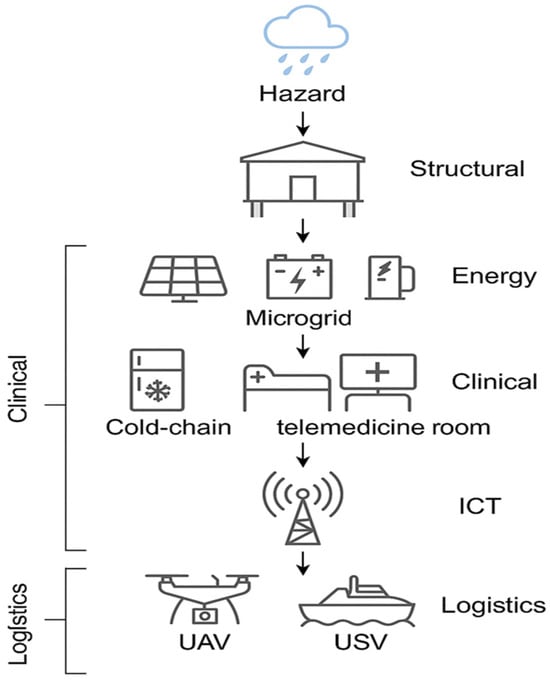
Figure 1 illustrates the multi-layer architecture of FAPCC, integrating hazard, structural, energy, clinical, ICT, and logistics layers into a unified system-of-systems model. Flood hazard inputs were characterized using design flood elevation (DFE), inundation duration, grid outage probability, and road inaccessibility probability. Geotechnical parameters (bearing capacity, scour risk) and connectivity maps (cellular coverage, satellite visibility) informed siting decisions. Table 1 summarizes representative hazard profiles for peri-urban, riverine, and coastal archetypes.
Figure 1.
Multi-layer architecture of the FAPCC (hazard, structural, energy, clinical, ICT, logistics layers).
Table 1.
Flood hazard profile inputs for peri-urban, riverine, and coastal archetypes.
Clinical loads were stratified into three tiers: Tier-1 (critical, e.g., vaccine cold-chain, suction, communications), Tier-2 (priority, e.g., ultrasound, centrifuge, HVAC for isolation), and Tier-3 (deferrable, e.g., laundry, EV charging). Table 2 presents daily energy demands by tier for the three archetypes.
Table 2.
Daily clinical load taxonomy by tier and archetype.
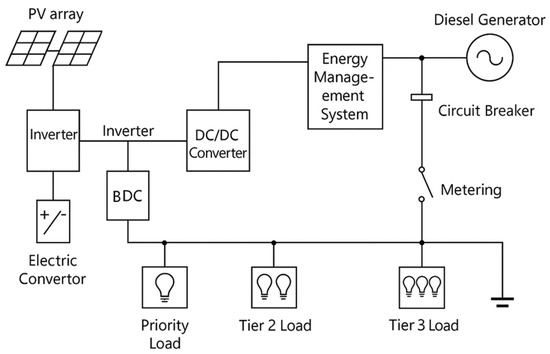
The proposed hybrid system consists of PV arrays (6–20 kWp), LiFePO4 battery storage (40–120 kWh), and a 12–20 kVA diesel genset with jacket-water heat recovery. Power electronics include a hybrid inverter, DC bus for ICT and refrigeration, and tiered load panels with controllable contactors. Table 3 details DER specifications. Figure 2 provides a one-line diagram of the architecture.
Table 3.
DER and balance-of-system specifications.
Figure 2.
Hybrid PV–BESS–diesel microgrid with tiered load panels.
A CCR index is defined to link load availability to clinical service continuity. A MILP-based optimization minimizes net present cost (NPC) while penalizing unmet critical loads and excessive fuel use. Constraints include power balance, state of charge dynamics, inverter/genset ratings, and cold-chain temperature stability.
A lumped resistor–capacitor model simulates vaccine refrigerator temperature dynamics. Door-open events and compressor duty cycles are explicitly modeled. Power allocation prioritizes cold-chain stability within 2–8 °C. Table 4 provides scenario definitions and ambient conditions. The ICT layer comprises SD-WAN routers with dual LTE/5G, LEO satellite backup, and VHF voice fallback. Telemetry uses Modbus/IEC 61850 gateways and resistor–capacitor protocols. Health data are managed via local FHIR-compatible servers with store-and-forward for offline continuity [27].
Table 4.
Scenario definitions and ambient conditions.
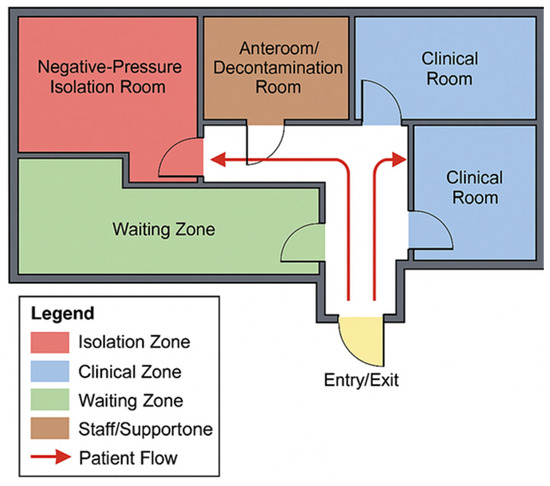
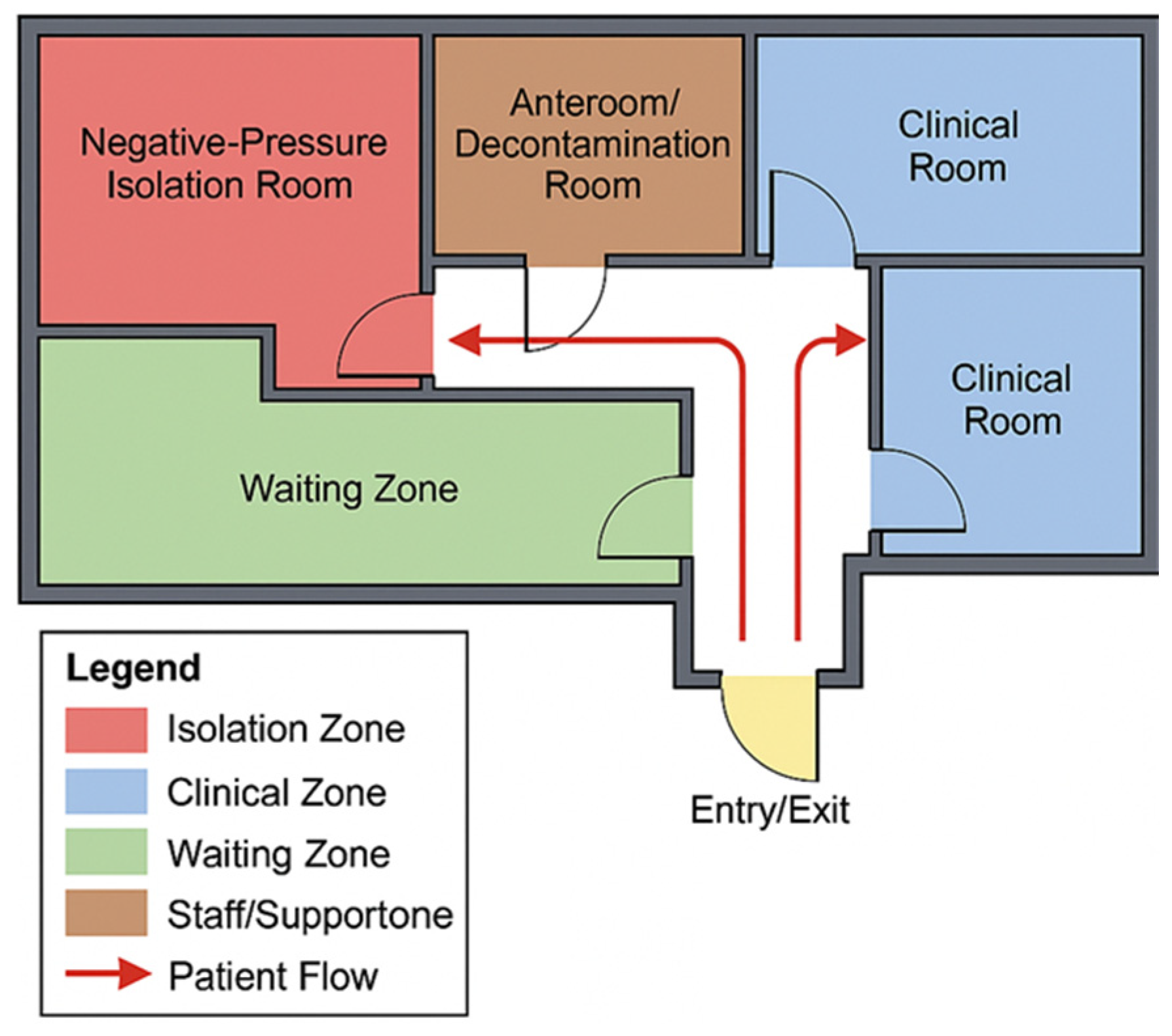
The infection prevention and control (IPC) layout incorporates zoned patient flows, with negative-pressure isolation rooms (−2.5 Pa), HEPA H14 filtration, and UV-C disinfection adjuncts. Figure 3 illustrates IPC zoning and flows.
Figure 3.
IPC zoning and patient flow schematic with negative-pressure isolation.
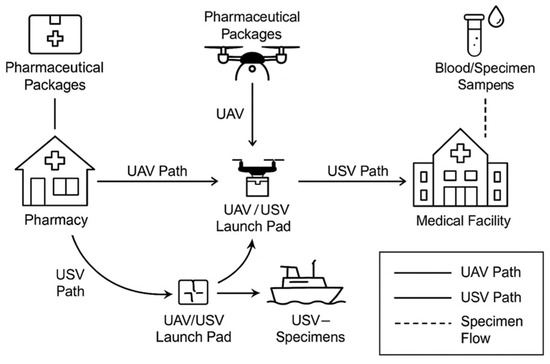
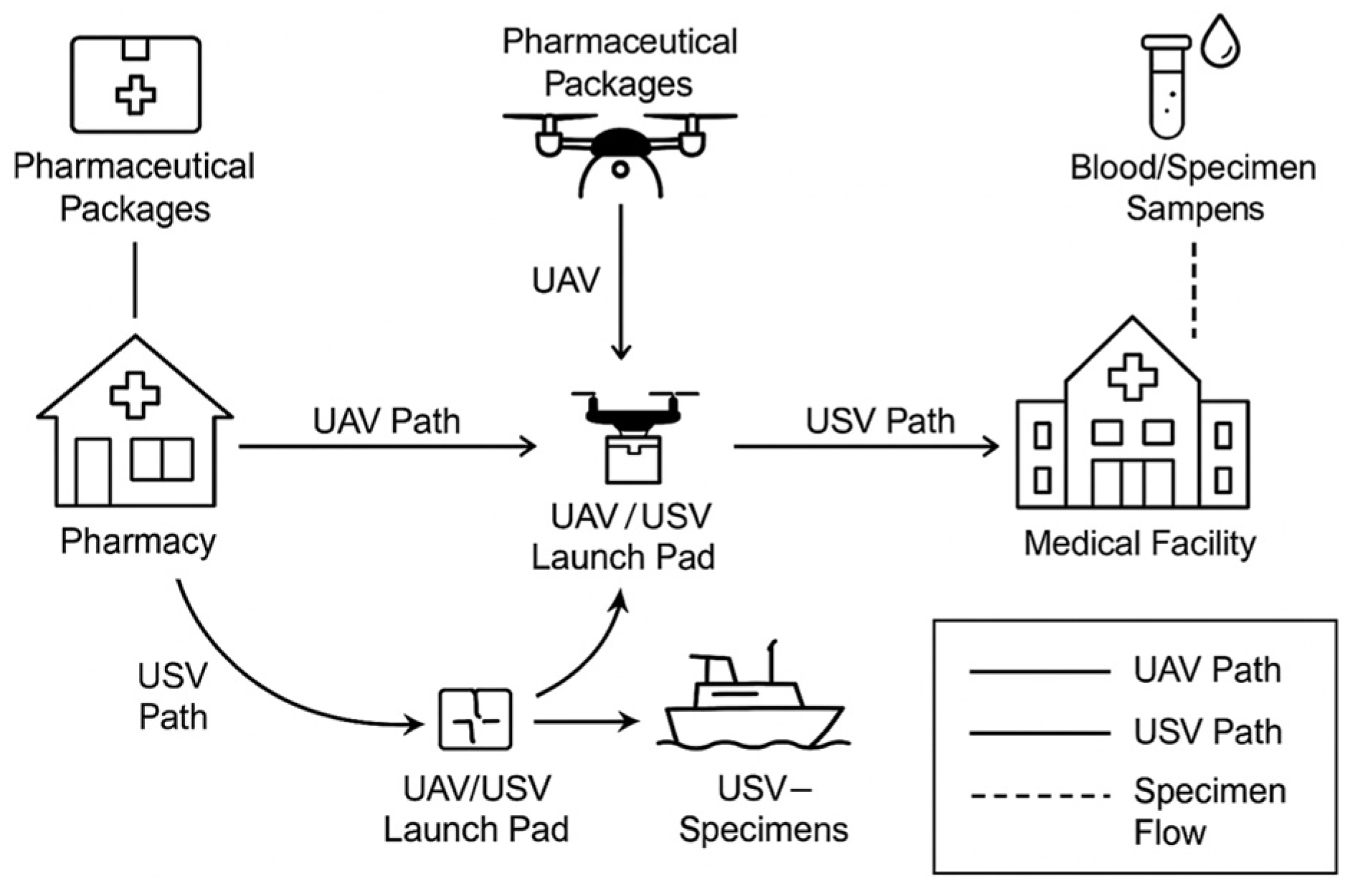
Clinics are elevated to DFE + 0.6 m freeboard with corrosion-resistant materials and sacrificial floodable skirts. Optional pontoon modules enable amphibious deployment. Quick-disconnect umbilicals facilitate rapid evacuation and redeployment. Unmanned systems support specimen transport and pharmaceutical resupply. UAVs carry 2 kg payloads over 20–30 km, while shallow-draft USVs operate along inundated corridors. Figure 4 depicts the logistics chain. Three scenarios (peri-urban delta, inland riverine, coastal estuary) simulate 7–10 day outages with varying isolation, ambient temperature, and access disruptions. Table 4 outlines these scenarios.
Figure 4.
UAV/USV logistics chain for pharmaceutical and specimen transport.
4. Results
Across all three scenarios, optimized systems (PV 12–18 kWp; BESS 60–100 kWh; 15 kVA genset) achieved CCR ≥ 0.995, ensuring no Tier-1 load shedding. Tier-2 loads, such as laundry and sterilization, were deferred during consecutive low-insolation days. Table 5 highlights the reliability and dispatch summary.
Table 5.
Reliability and dispatch summary (CCR, fuel use, PV contribution, BESS cycles).
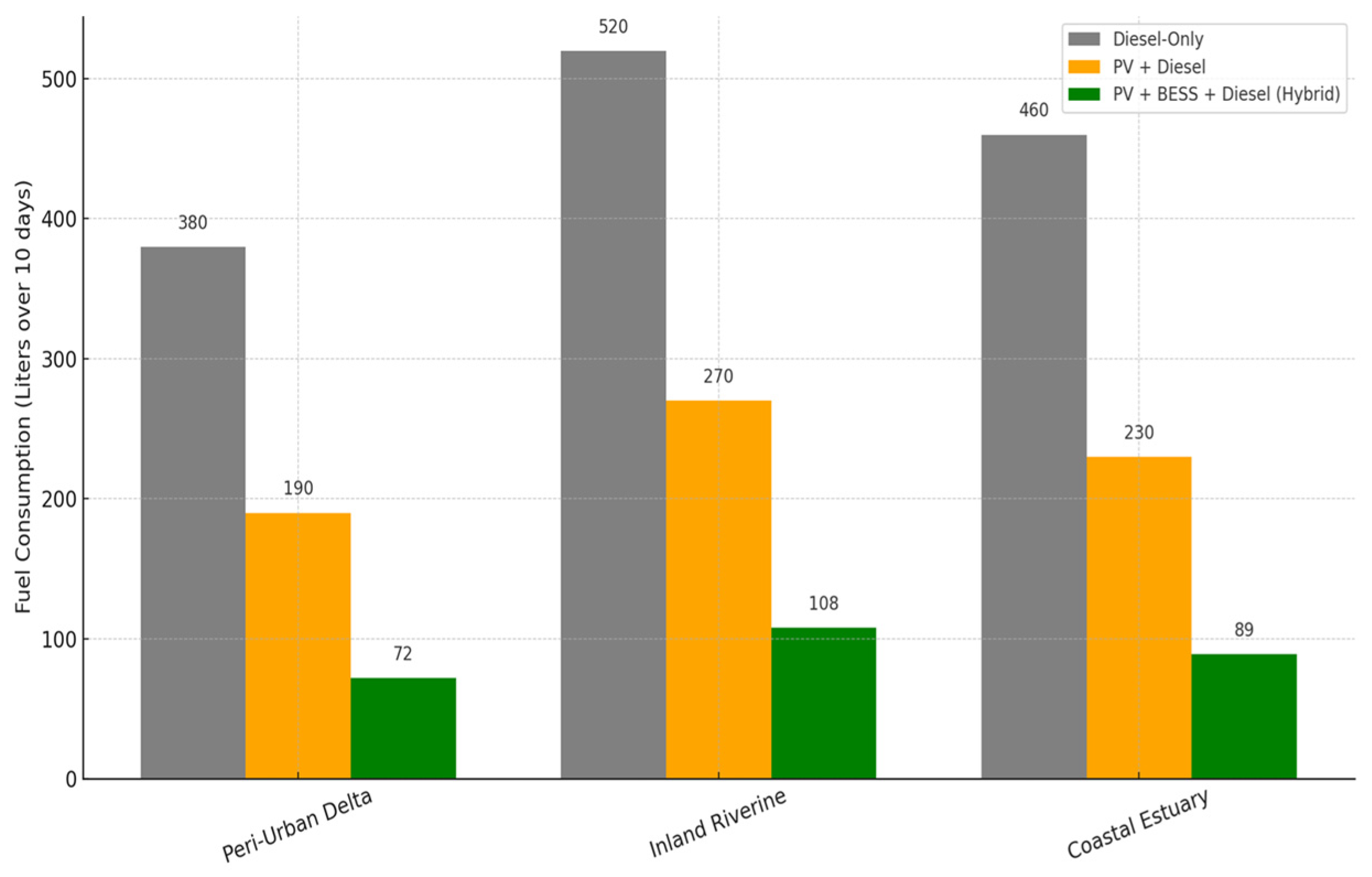
Relative to diesel-only baselines, hybrid systems reduced fuel consumption by 62–81%, with proportional CO2e reductions. Figure 5 compares fuel-use across architectures. Emissions savings directly contribute to ESG performance metrics for health systems.
Figure 5.
Fuel-use comparison across diesel-only and hybrid systems.
Vaccine refrigerators maintained 2–8 °C with <0.1% excursion time across all scenarios. Compressor duty increased during high ambient temperatures but remained within system capacity. Table 6 summarizes cold-chain performance.
Table 6.
Cold-chain performance metrics (temperature, excursion time, door-open events).
Bonded LTE/5G and satellite links achieved a median uplink latency of 142 ms, with packet loss <0.5%. Under cellular congestion, LEO satellite links sustained <300 ms latency. Table 7 summarizes network performance.
Table 7.
Network performance metrics (latency, availability).
Patient throughput decreased by 8–14% compared with baseline due to IPC zoning and triage bottlenecks, not energy shortages. Essential services such as vaccination, maternal care, and urgent triage were maintained. Hybrid microgrids achieved payback in 7.1–9.8 years through fuel savings and avoided service loss. Table 8 presents the economic summary. Table 9 highlights bill-of-materials and circularity features.
Table 8.
Economic summary (CAPEX, NPC, payback period).
Table 9.
Meta-bill of materials with circularity annotations.
5. Discussion
The simulation results highlight important tradeoffs in hybrid microgrid sizing. Larger PV arrays improve renewable fraction but require higher upfront capital, while oversized BESSs extend autonomy but risk underutilization. Diesel gensets remain essential for black-start and multi-day overcast periods, though careful right-sizing minimizes wet-stacking and reduces lifecycle operating expenditure. The CCR metric effectively linked energy reliability to service continuity, providing a clinically relevant performance indicator beyond conventional loss of power supply probability.
The clinic maintained uninterrupted Tier-1 services even under extended outages. However, clinical throughput declined by 8–14% due to IPC zoning constraints, triage time, and PPE usage rather than energy shortages. This underscores the importance of balancing energy system resilience with operational design. Negative-pressure isolation, although energy-intensive, proved critical for infection control in flood shelters where communicable disease risk is elevated. Optimized HVAC control and staggered sterilization cycles can reduce peak energy demand without compromising safety.
Maintaining vaccine cold-chain integrity was central to the system design. The thermal modeling validated the resilience of PQS-certified refrigerators under hybrid microgrid operation, with negligible temperature excursions. These findings suggest that prioritization of cold-chain and diagnostic equipment in EMS algorithms is essential for continuity of immunization programs during disasters. Integrating door-open sensors and predictive cooling strategies could further optimize compressor duty cycles.
Hybrid connectivity solutions achieved latency and reliability sufficient for teleconsults and e-referrals. Bonded LTE/5G and satellite links delivered high availability, though the costs of satellite subscriptions may pose barriers. Policy support for subsidized emergency bandwidth could enhance scalability. Store-and-forward EHR functions ensured continuity during temporary outages, aligning with international best practices for disaster telehealth.
UAV and USV integration provided critical redundancy in pharmaceutical and specimen logistics, mitigating the impact of road inaccessibility. Regulatory restrictions on BVLOS flights and medical payload certification remain barriers to operational deployment. Partnerships with civil aviation and maritime authorities are necessary to institutionalize such logistics pathways. Incorporating UAV/USV docking stations in the structural design of clinics enhances flexibility during prolonged inundation.
LCCA demonstrated favorable payback periods (7–10 years) compared with diesel-only systems, largely through fuel savings and avoided service disruption. In addition to direct cost savings, the ESG co-benefits, including reduced carbon emissions, improved health equity, and enhanced resilience, encourage investment. Financing models such as blended finance or climate resilience bonds could accelerate adoption in low-resource settings.
The integration of ICT with energy and clinical systems introduces cyber–physical vulnerabilities. IEC 62443 compliance and segmented networks are vital to prevent malicious interference. Governance frameworks should ensure clear delineation of responsibilities between health authorities, energy operators, and ICT providers. Training for staff on cyber hygiene is as essential as clinical or technical maintenance drills.
FAPCCs provide a scalable model for disaster-resilient primary care. Ministries of Health can embed such clinics into national disaster risk management strategies, while donor agencies can align funding with sustainable development goals (SDG) 3 (health) and 7 (energy). Regional cooperation through ASEAN and other platforms can harmonize standards, logistics corridors, and ICT protocols. Local manufacturing of modular chassis and solar components can reduce costs and improve supply chain security.
6. Conclusions
In this study, FAPCCs are developed by integrating smart microgrids, rapid-deploy medical technologies, and flood-resilient infrastructure to ensure continuity of essential services in flood-prone regions. By linking energy reliability with clinical service continuity using the CCR metric, the research demonstrated that hybrid PV–BESS–diesel microgrids can achieve >99.5% service availability under 7–10 day outage scenarios while significantly reducing fuel dependency and emissions.
In regard to energy resilience, PV–battery–diesel hybrids reduced fuel use by 62–81% compared with diesel-only systems, providing a sustainable pathway to resilient health services. Vaccine cold-chains and diagnostic services were maintained with negligible thermal excursions, safeguarding immunization and primary care continuity. Hybrid LTE/5G-satellite communications sustained telemedicine quality of service with <150 ms latency, supporting remote consultation and referral during isolation. Life-cycle cost analysis showed 7–10 year payback periods, demonstrating that resilience can align with financial sustainability. Modular, amphibious clinic structures with UAV/USV logistics provide flexible deployment in peri-urban, riverine, and coastal archetypes.
The integration of smart microgrids, portable MedTech, and resilient logistics offers a replicable model for Ministries of Health and disaster agencies seeking to safeguard primary care in the context of intensifying climate hazards. Beyond technical feasibility, the findings underscore the importance of embedding FAPCCs into broader disaster risk reduction and health system strengthening frameworks.
Future deployment should prioritize policy alignment with national disaster health strategies and regional frameworks (e.g., ASEAN disaster preparedness). Local manufacturing of modular clinic components and renewable technologies to enhance affordability and supply chain resilience. Capacity building for clinicians and engineers in energy management, infection prevention, and telehealth systems. Pilot programs to validate field performance under real-world hydrological events.
In conclusion, FAPCCs represent a transformative innovation for climate-resilient healthcare, bridging energy, health, and disaster management. Their deployment can help ensure equitable access to primary care, protect vulnerable populations, and advance progress toward Sustainable Development Goals in flood-affected regions worldwide.
Author Contributions
Conceptualization, W.Y.L. and W.S.L.; methodology, W.S.L.; software, W.S.L.; validation, W.S.L., W.Y.L.; formal analysis, W.S.L.; investigation, W.Y.L.; resources, W.S.L.; data curation, W.Y.L.; writing—original draft preparation, W.S.L.; writing—review and editing, W.Y.L.; visualization, W.Y.L.; supervision, W.Y.L.; project administration, W.Y.L.; funding acquisition, W.Y.L. All authors have read and agreed to the published version of the manuscript.
Funding
This research received no external funding.
Institutional Review Board Statement
Not applicable.
Informed Consent Statement
Not applicable.
Data Availability Statement
The data presented in this study are available on request from the corresponding author due to privacy.
Acknowledgments
During the preparation of this manuscript/study, the author used ChatGPT 4, for the purposes of image generation. The author has reviewed and edited the output and took full responsibility for the content of this publication.
Conflicts of Interest
The authors declare no conflicts of interest.
References
- World Health Organization. Safe Hospitals in Emergencies and Disasters: Structural, Non-Structural and Functional Indicators; WHO: Geneva, Switzerland, 2010. [Google Scholar]
- Paterson, J.; Berry, P.; Ebi, K.; Varangu, L. Health Care Facilities Resilient to Climate Change Impacts. Int. J. Environ. Res. Public Health 2014, 11, 13097–13116. [Google Scholar] [CrossRef] [Scilit] [PubMed]
- World Bank. Lifelines: The Resilient Infrastructure Opportunity; World Bank: Washington, DC, USA, 2019. [Google Scholar]
- UNDRR. Sendai Framework for Disaster Risk Reduction 2015–2030; United Nations: Geneva, Switzerland, 2015. [Google Scholar]
- Lasseter, R.H. Microgrids. In 2002 IEEE Power Engineering Society Winter Meeting; IEEE: New York, NY, USA, 2002; pp. 305–308. [Google Scholar] [CrossRef] [Scilit]
- Atef, M.; Alahakoon, S.; Wolfs, P.; Mumtahina, U.; Khatib, T.; Uddin, M. Energy Management in Microgrids: Commercial, Industrial, and Residential Perspectives. Energies 2026, 19, 419. [Google Scholar] [CrossRef] [Scilit]
- Navigant Research. Microgrid Deployment Tracker; Navigant Research: Boulder, CO, USA, 2020. [Google Scholar]
- IEEE Standards Association. IEEE 1547-2018—Standard for Interconnection and Interoperability of Distributed Energy Resources; IEEE: New York, NY, USA, 2018. [Google Scholar]
- Ton, D.T.; Smith, M.A. The U.S. DOE microgrid initiative. Electr. J. 2012, 25, 84–94. [Google Scholar] [CrossRef] [Scilit]
- WHO PQS Catalogue. Performance, Quality and Safety Devices for Immunization; WHO: Geneva, Switzerland, 2022. [Google Scholar]
- Zhang, X.; Shi, Q.; Luo, L.; Fan, Y.; Wang, Q.; Jia, G. Research Progress on the Phase Change Materials for Cold Thermal Energy Storage. Energies 2021, 14, 8233. [Google Scholar] [CrossRef] [Scilit]
- PATH. Cold Chain Equipment Optimization Platform (CCEOP) Lessons; PATH: Singapore, 2020. [Google Scholar]
- ITU. Emergency Telecommunications Guidelines; ITU: Geneva, Switzerland, 2019. [Google Scholar]
- HL7. FHIR Release 4; HL7: Ann Arbor, MI, USA, 2019. [Google Scholar]
- Starlink. Field Performance Briefs; Starlink: Hawthorne, CA, USA, 2023. [Google Scholar]
- Rutala, W.A.; Weber, D.J. Disinfection and sterilization in healthcare. Infect. Control Hosp. Epidemiol. 2016, 37, 1287–1308. [Google Scholar]
- ISO 11135:2014; Sterilization of Health-Care Products—Ethylene Oxide—Requirements for the Development, Validation and Routine Control of a Sterilization Process for Medical Devices. ISO: Geneva, Switzerland, 2024. Available online: https://www.iso.org/standard/56137.html (accessed on 2 February 2026).
- Gao, X.; Lv, Q.; Hou, S. Progress in the Application of Portable Ultrasound Combined with Artificial Intelligence in Pre-Hospital Emergency and Disaster Sites. Diagnostics 2023, 13, 3388. [Google Scholar] [CrossRef] [Scilit] [PubMed]
- WHO. Surgical Care Systems Strengthening: Improving Care for Every Patient, Everywhere; WHO: Geneva, Switzerland, 2017. [Google Scholar]
- WHO. Health Emergency and Disaster Risk Management Framework (Health EDRM); WHO: Geneva, Switzerland, 2019. [Google Scholar]
- Amukele, T.K.; Ness, P.S.; Tobian, A.A.R.; Boyd, J.; Street, J. Drone transport of blood products. Transfusion 2017, 57, 582–588. [Google Scholar] [CrossRef] [Scilit] [PubMed]
- Gilman, D. Unmanned Aerial Vehicles in Humanitarian Response. Available online: https://www.updwg.org/wp-content/uploads/2019/05/Unmanned-Aerial-Vehicles-in-Humanitarian-Response-OCHA-July-2014.pdf (accessed on 7 September 2025).
- Civil Aviation Authority (Various). BVLOS Regulatory Circulars; 2020–2024; Federal Aviation Administration: Washington, DC, USA, 2024.
- IEC 60364-7-710; Requirements for Special Installations or Locations—Medical Locations. IEC: Geneva, Switzerland, 2018.
- IEC 60601-2-24:2012; Medical Electrical Equipment. IEC: Geneva, Switzerland, 2012.
- Cindrić, I.; Jurčević, M.; Hadjina, T. Mapping of Industrial IoT to IEC 62443 Standards. Sensors 2025, 25, 728. [Google Scholar] [CrossRef] [Scilit] [PubMed]
- Solorio-García, M.Y.; Mata-López, W.A.; Álvarez-Flores, J.L.; Simón, J.; Castillo, V.H. Supporting Translation and Analysis of the Configuration of an Electrical Substation Automation System Based on the IEC 61850 2.0 Standard. Electricity 2026, 7, 15. [Google Scholar] [CrossRef] [Scilit]

Disclaimer/Publisher’s Note: The statements, opinions and data contained in all publications are solely those of the individual author(s) and contributor(s) and not of MDPI and/or the editor(s). MDPI and/or the editor(s) disclaim responsibility for any injury to people or property resulting from any ideas, methods, instructions or products referred to in the content. |
© 2026 by the authors. Licensee MDPI, Basel, Switzerland. This article is an open access article distributed under the terms and conditions of the Creative Commons Attribution (CC BY) license.