


Abstract
Herein, an environmentally benign strategy for the synthesis of complex nitrogenous heterocycles has been developed via an Isocyanide-Based Multicomponent Reaction (IMCR). Utilizing biomass-derived furfural as a renewable heteroaromatic aldehyde platform, some analogs of 1,5-disubstituted tetrazoles were successfully assembled through a four-component Ugi-azide reaction under green reaction conditions. The incorporation of the furan core adjacent to the tetrazole scaffold yields highly functionalized bis-heterocyclic hybrids that comply with the core principles of green chemistry.
1. Introduction
The development of multi-component reactions (MCRs) represents a significant advancement in diversity-oriented synthesis, enabling the efficient generation of complex chemical libraries from simple, readily available building blocks. Owing to their structural complexity and molecular diversity, MCR products are integral to disciplines such as medicinal chemistry, agrochemistry, and optics [1]. In this context, isocyanide-based multicomponent reactions (I-MCRs) have proven especially effective, as isocyanides uniquely exhibit both nucleophilic and electrophilic reactivity at a single carbon atom [2,3].
The Ugi reaction, first reported by Prof. Ivar Karl Ugi in 1959, is one of the most important and widely used I-MCRs. This reaction involves the combination of amines, aldehydes, carboxylic acids, and isocyanides to yield α-acylamino amide derivatives [4]. Additionally, the Ugi-azide (UA) reaction provides an efficient synthetic route to 1,5-disubstituted tetrazoles (1,5-DS-T). This transformation is achieved by substituting a carboxylic acid with TMSN3, resulting in the formation of 1,5-DS-T.
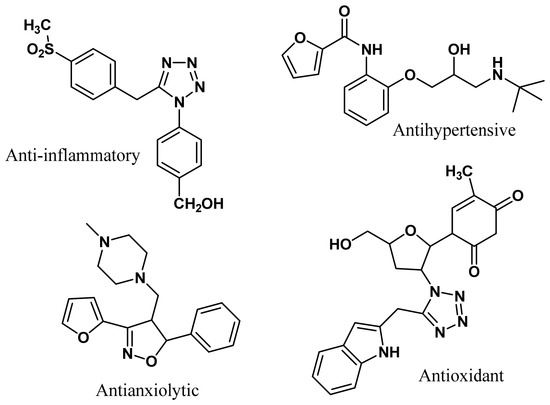
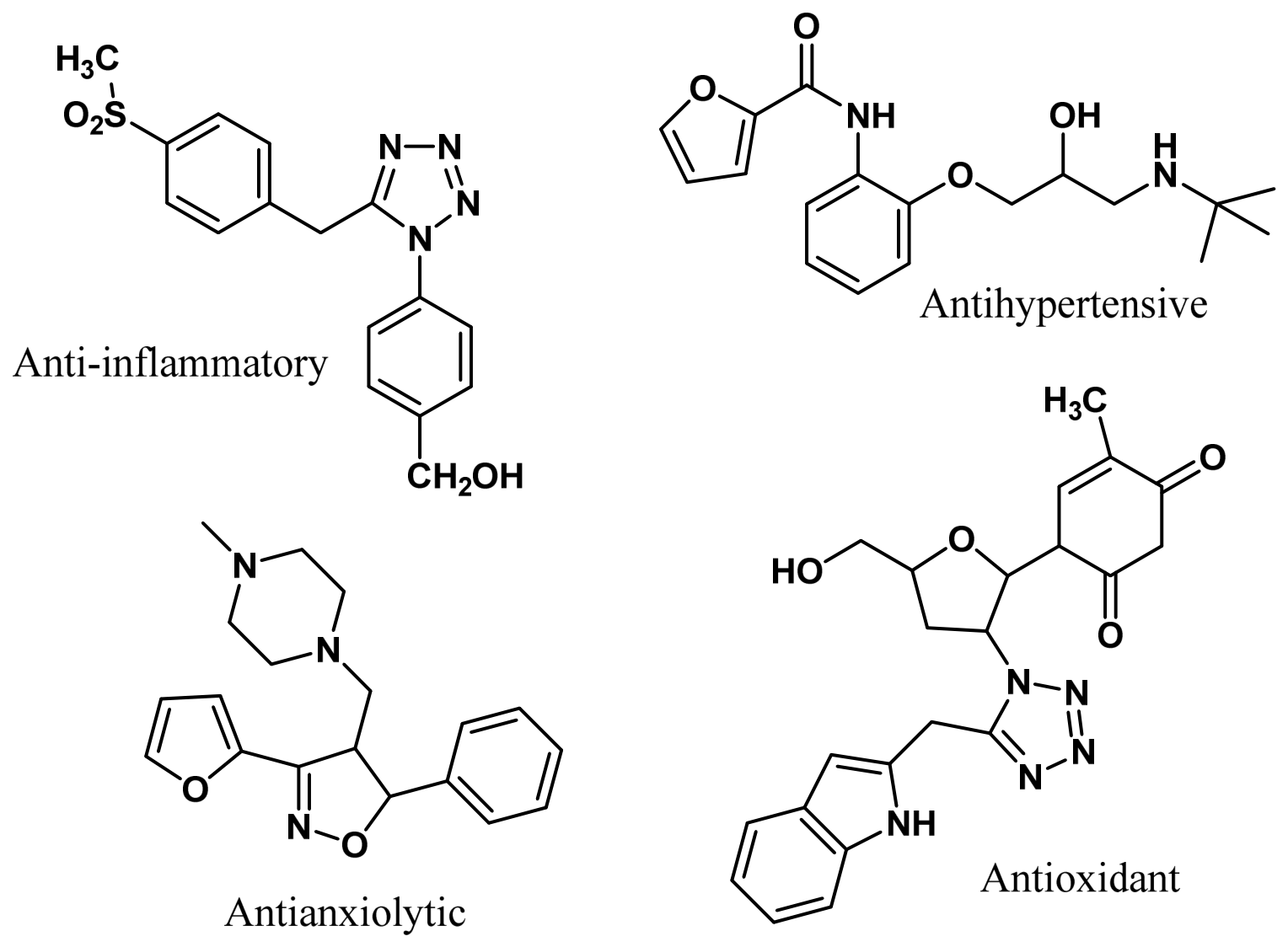
Tetrazoles are incorporated into a wide range of molecules in medicinal chemistry because they significantly influence the pharmacological properties of bioactive compounds, including antioxidant, anti-inflammatory, antitumoral, antifungal, and antimicrobial activities (Figure 1) [5,6,7,8,9,10,11]. The 1,5-DS-T ring is commonly utilized as a metabolically stable bioisostere for cis-amide groups in molecular design and in the synthesis of modified amino acids [12,13,14].
Figure 1.
Biologically active molecules containing 1,5-DS-T or furan moieties.
Furans are well-known heterocyclic compounds with significant applications in medicinal agents. While furan does not occur in animal metabolism, it is abundant in plant secondary metabolites such as furanolactones and furanocoumarins [15]. Based on various literature surveys, furan derivatives exhibit pharmacological activities, including antidepressant, anxiolytic, analgesic, anti-inflammatory, antihypertensive, antiarrhythmic, antimicrobial, and antidiuretic activities (Figure 1) [16,17].
Systematic investigation of diverse reagents and the applications of UA products have contributed to significant progress in the field. The use of renewable raw materials in I-MCRs offers a promising strategy to improve process sustainability and reduce reliance on fossil-derived resources [18]. As a result, there is growing research interest in MCRs that employ renewable feedstocks to broaden chemical diversity and minimize environmental impact.
2. Results and Discussion
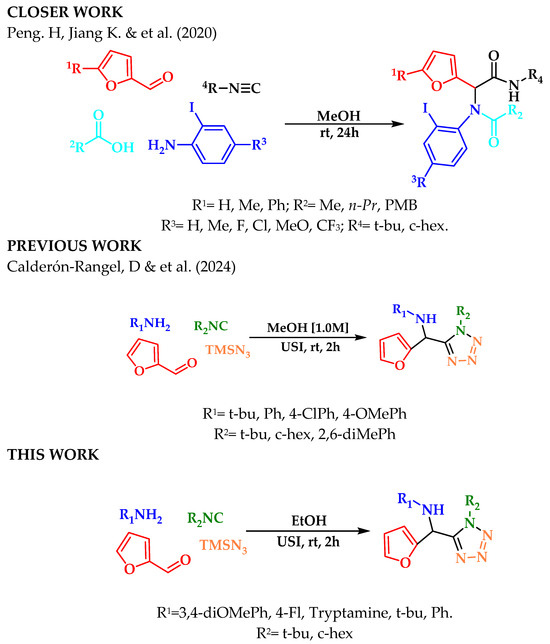
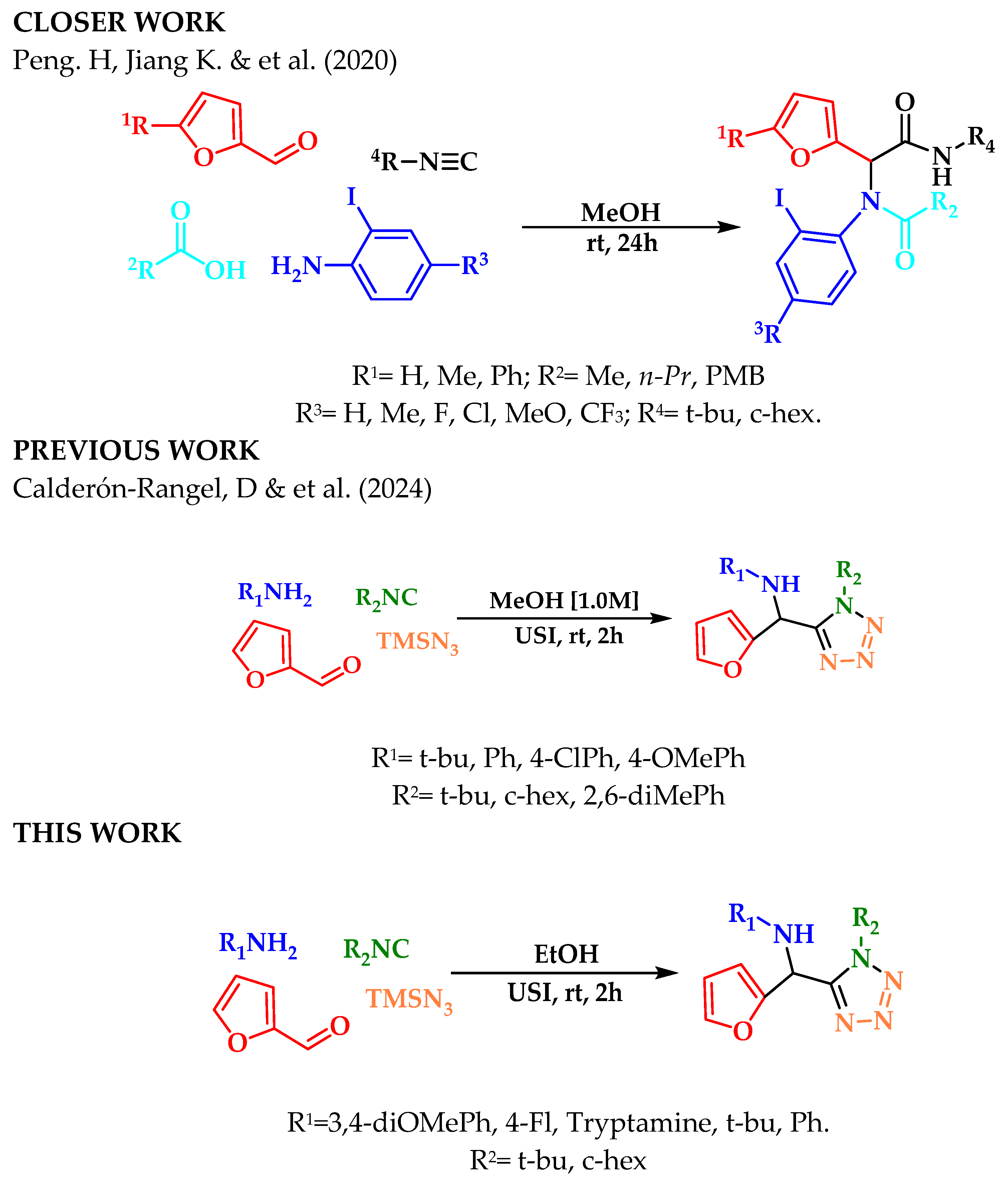
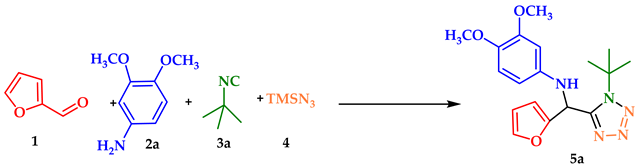
In this study, we synthesized a small library of bis-heterocycles containing 1,5-DS-1H-T and furan moieties using the Ugi-Azide reaction. In 2024, we reported assembling these compounds in methanol (Scheme 1). While effective, our new method offers significant environmental and synthetic advantages, including a shorter ultrasound-assisted protocol using ethanol as a safer, more environmentally friendly solvent alternative [19]. To optimize the reaction conditions, we selected 1,5-DS-T (5a) as a model compound. Furan-2-carbaldehyde (1), 3,4-dimethoxyaniline (2a), tert-butyl isocyanide (3a), and trimethylsilyl azide (4) were reacted under conventional conditions in ethanol at room temperature (Table 1, Entry 1), yielding 5a in 61%. To improve this outcome, attention was shifted to ultrasound irradiation (USI), an activation method that has recently attracted significant interest in modern synthetic chemistry for accelerating reaction rates and reducing reaction times at ambient temperature [20,21,22]. Because most reagents were liquids, we performed the reaction under solvent-free conditions (Table 1, Entry 2), yielding 51% after 2 h. Further optimization involved using water as the solvent (Table 1, Entry 3); however, this modification reduced the yield.
Scheme 1.
Previous work and this work [23,24].
Table 1.
Screening conditions for the synthesis of target molecule 5a.
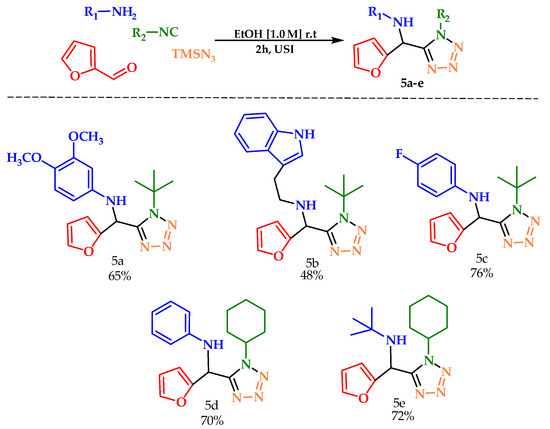
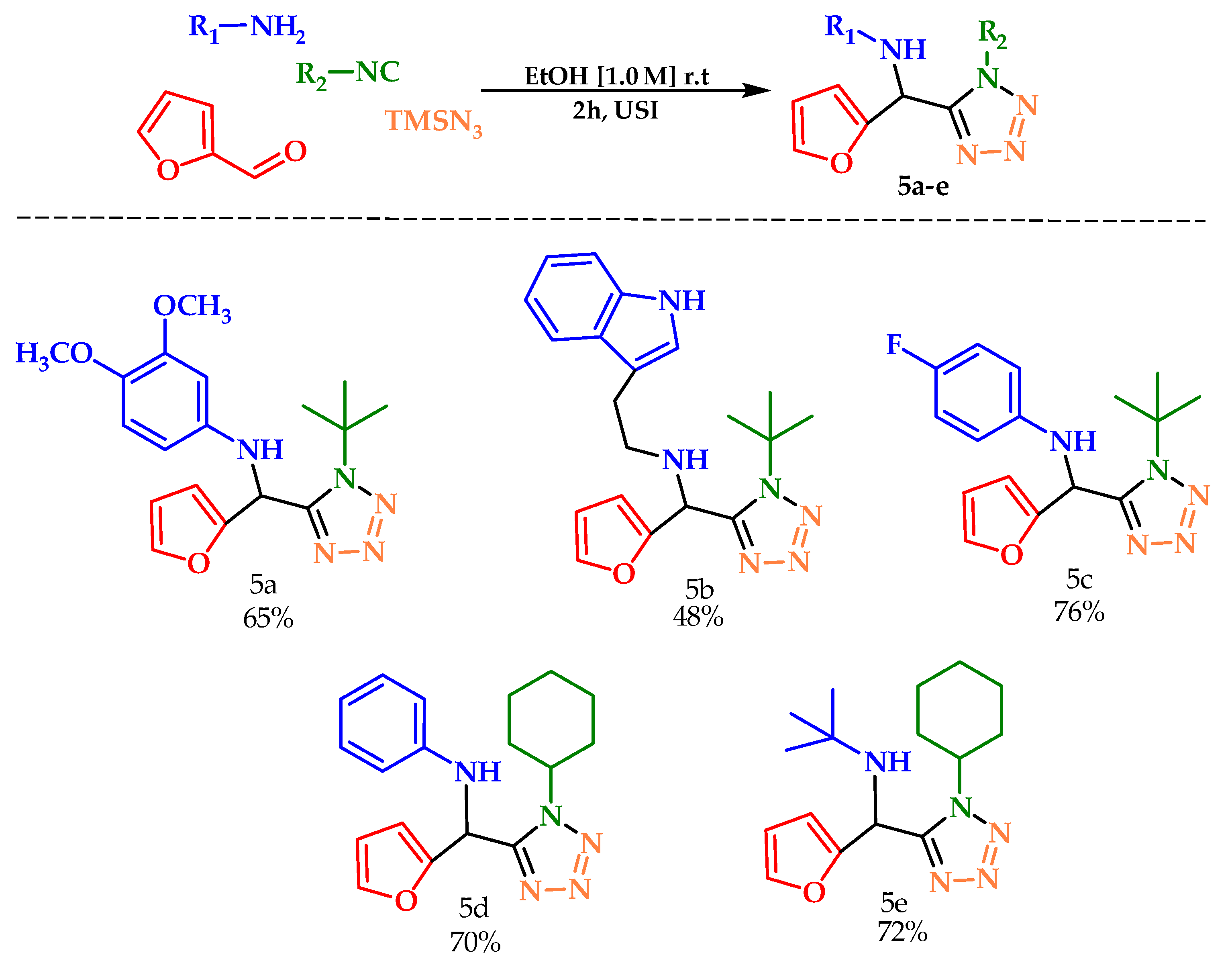
Ethanol combined with USI provided the best balance between reaction efficiency and solvent choice, offering a shorter protocol that reduces reliance on methanol commonly used in UA reactions. Under these optimized conditions, compound 5a was obtained in 65% yield after 2 h. The substrate scope was subsequently evaluated by varying the amine and isocyanide components, affording a series of furan-containing 1,5-disubstituted tetrazoles in 48–76% yield (Scheme 2). This modular approach enabled the incorporation of various substituents, providing a synthetically versatile platform for accessing structurally diverse furan–tetrazole bis-heterocycles.
Scheme 2.
Substrate Scope.
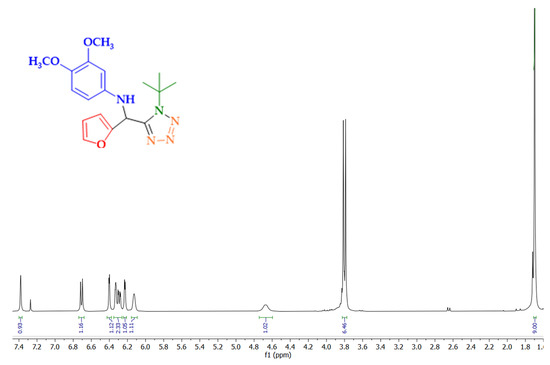
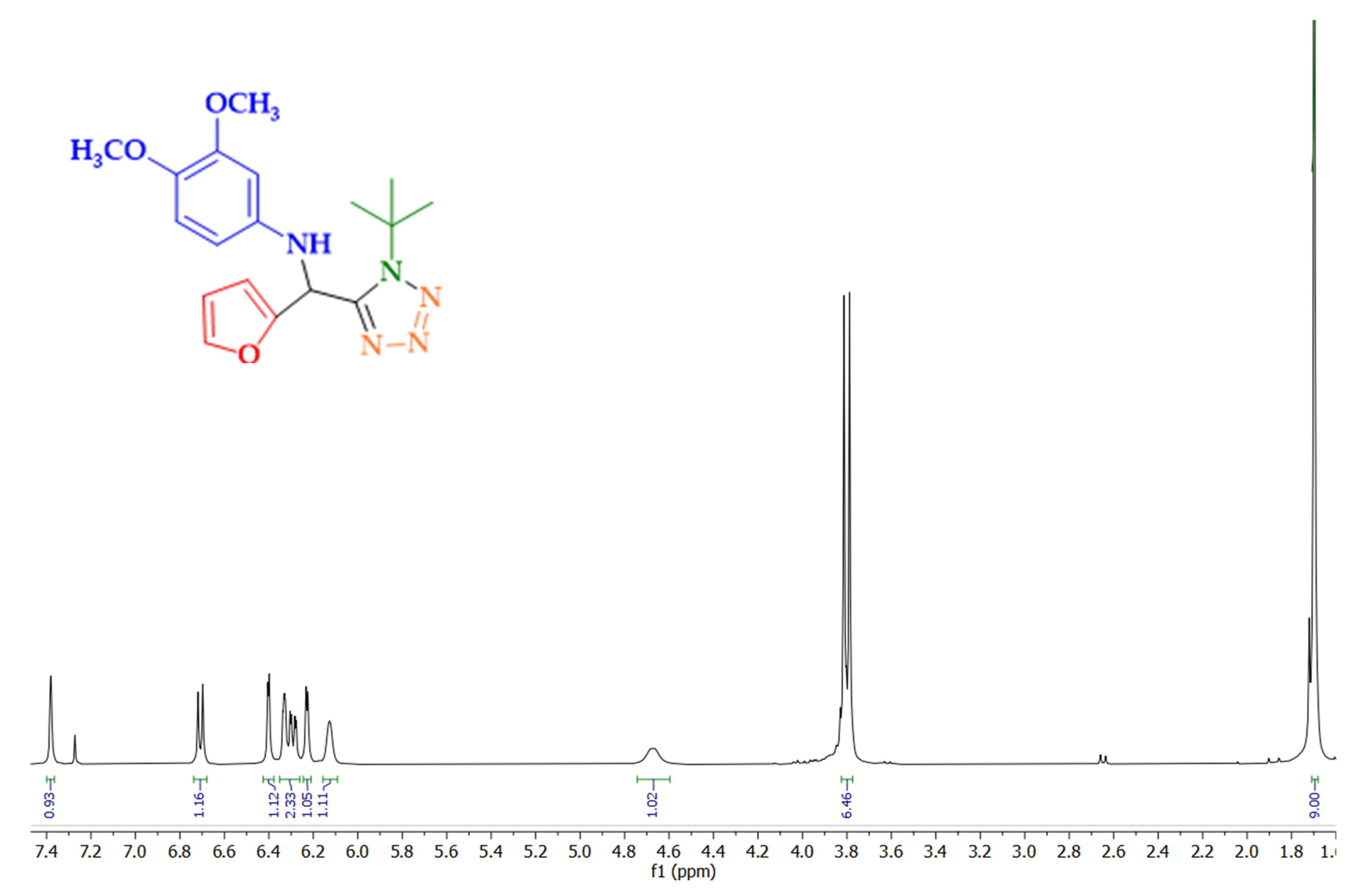
The 1H NMR spectrum of compound 5a is presented for characterization (Figure 2).
Figure 2.
1H NMR spectrum of compound 5a.
As shown, expanding the substrate scope allows the incorporation of privileged moieties encountered in drug design, including indole, fluorine, and methoxy motifs. These structural features are frequently associated with favorable physicochemical and pharmacokinetic properties, such as enhanced metabolic stability and target affinity [25]. Incorporating these motifs into molecular frameworks containing furan and tetrazole cores provides access to structurally diverse bis-heterocycles with potential for further biological evaluation.
3. Experimental Section
3.1. General Experimental Information
1H and 13C NMR spectra were acquired on a Bruker Avance III spectrometer (400 MHz, Bruker Corporation, Karlsruhe, Alemania). The solvent for NMR was CDCl3. Chemical shifts are reported in parts per million (δ/ppm). Tetramethylsilane was used as the internal reference for NMR (δH = 0 ppm). Coupling constants are reported in Hertz (J/Hz). Signal multiplicities are reported using standard abbreviations: singlet (s), doublet (d), triplet (t), doublet of doublets (dd), and multiplet (m). HRMS spectra were acquired via electrospray ionization (+) and recorded via the TOF method. The reaction progress was monitored by TLC, and the spots were visualized under UV light (254−365 nm). The products were isolated via flash column chromatography using silica gel (230−400 mesh) and eluents in different proportions. Melting points were determined on a Fisher-Johns apparatus (Electrothermal, Rochford, Reino Unido) and are uncorrected. Commercially available reagents were used without further purification. Structure names and drawings were performed using the ChemBioDraw software (version 16.0.1.4(61)).
3.2. General Procedure
In a sealed vial, Furan-2-carbaldehyde (1, 1.0 equiv.), amine (1.0 equiv.), isocyanide (3a-b, 1.0 equiv.), and trimethylsilyl azide (4, 1.2 equiv.) were dissolved in EtOH (1 M) and sonicated for 2 h at room temperature. The solvent was evaporated under reduced pressure, and the product was purified by flash chromatography using mixtures of ethyl acetate in hexanes as mobile phase and silica gel as stationary phase to obtain the corresponding products 5a-e. All reagents were obtained from Sigma-Aldrich.
3.3. Spectral Data
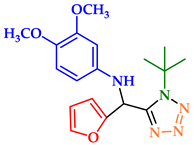
- N-((1-(tert-butyl)-1H-tetrazol-5-yl)(furan-2-yl)methyl)-3,4-dimethoxyaniline. Brown oil; Rf = 0.48 (Hexane-AcOEt, 1:1, v/v); 1H (400 MHz, CDCl3) δ 7.37 (s, 1H), 6.71 (d, J = 8.6 Hz, 1H), 6.40 (d, J = 2.7 Hz, 1H), 6.35–6.26 (m, 2H), 6.23 (d, J = 3.3, 1H), 6.13 (s, 1H), 4.67 (s, 1H), 3.80 (d, J = 10, 6H), 1.70 (s, 9H); 13C NMR (101 MHz, CDCl3) δ 153.88, 151.13, 149.92, 142.84, 139.93, 112.55, 110.88, 108.89, 106.37, 101.85, 61.82, 56.38, 55.84, 50.56, 29.98.
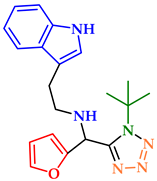
- N-benzyl-1-(1-(tert-butyl)-1H-tetrazol-5-yl)-1-(furan-2-yl)methanamine. Yellow oil; Rf = 0.42 (Hexane-AcOEt, 7:3, v/v); 1H (400 MHz, CDCl3) δ 9.91 (d, J = 7.02, 0.90 Hz, 1H), 7.58–7.56 (m, 1H), 7.38 (t, J = 1.70, 1.58 Hz, 1H), 7.37–7.34 (m, 1H), 7.20–7.17 (m, 2H), 7.14–7.04 (m, 3H), 6.58 (dd, J = 5.06, 1.58 Hz, 1H), 6.43 (dt, J = 5.60, 1.70, 0.67 Hz, 1H), 5.90 (d, J = 7.54, 0.67, 1H), 3.96–3.90 (m, 1H), 3.91–3.72 (m, 2H), 1.50 (s, 9H). 13C NMR (101 MHz, CDCl3) 152.8, 151.4, 142.4, 136.6, 127.8, 122.9, 121.9, 121.6, 119.8, 118.8, 113.3, 111.5, 110.8, 110.1, 59.9, 51.5, 45.6, 29.6, 27.4.
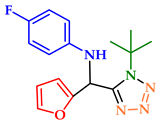
- N-((1-(tert-butyl)-1H-tetrazol-5-yl)(furan-2-yl)methyl)-4-fluoroaniline. Brown oil; Rf = 0.52 (Hexane-AcOEt, 1:1, v/v); 1H NMR (400 MHz, CDCl3) δ 7.37 (d, J = 1.6 Hz, 1H), 6.89 (t, J = 8.7 Hz, 1H), 6.75–6.68 (m, 2H), 6.33 (dd, J = 3.3, 1.9 Hz, 1H), 6.22 (d, J = 3.4 Hz, 1H), 6.14 (d, J = 10.0 Hz, 1H), 4.83 (d, J = 10.0 Hz, 1H), 1.70 (s, 9H). 13C NMR (101 MHz, CDCl3) δ 158.27, 155.90, 153.58, 150.85, 142.93, 141.78, 141.75, 116.35, 116.27, 116.09, 115.86, 61.93, 50.05, 29.96.
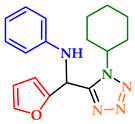
- N-((1-cyclohexyl-1H-tetrazol-5-yl)(furan-2-yl)methyl)aniline. Yellow-red solid; mp = 108–110 °C; Rf = 0.50 (Hex-AcOEt = 9:1; v/v); 1H NMR (400 MHz, CDCl3) δ 7.40 (s, 1H), 7.20–7.16 (m, 2H), 6.82–6.79 (m, 1H), 6.70 (d, J = 8.1 Hz, 2H), 6.38–6.36 (m, 1H), 6.34–6.32 (m, 1H), 6.08 (d, J = 5.9 Hz, 1H), 4.85 (d, J = 5.7 Hz, 1H), 4.53–4.47 (m, 1H), 2.07–2.01 (m, 1H), 1.96–1.92 (m, 2H), 1.89–1.83 (m, 2H), 1.75–1.71 (m, 1H), 1.64–1.60 (m, 1H), 1.37–1.26 (m, 3H); 13C NMR (101 MHz, CDCl3) δ 152.8, 150.0, 145.5, 143.2, 129.6, 119.8, 114.1, 111.3, 108.9, 58.9, 48.6, 33.1, 32.9, 25.6, 25.5, 24.9.
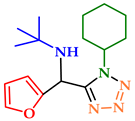
- N-((1-cyclohexyl-1H-tetrazol-5-yl)(furan-2-yl)methyl)-2-methylpropan-2-amine. Ambar solid; mp = 86–88 °C, Rf = 0.50 (Hex-AcOEt = 4:1; v/v); 1H NMR (400 MHz, CDCl3) δ 7.37 (s, 1H), 6.34–6.29 (m, 1H), 6.13–6.09 (m, 1H), 5.61 (s, 1H), 4.76–4.65 (m, 1H), 2.00–1.85 (m, 5H), 1.83–1.80 (m, 1H), 1.76–1.72 (m, 1H), 1.37–1.30 (m, 3H), 1.07 (s, 9H); 13C NMR (101 MHz, CDCl3) δ 154.8, 152.2, 142.6, 110.9, 107.5, 58.4, 51.9, 47.2, 32.9, 32.7, 29.4, 25.5, 25.5, 25.0.
4. Conclusions
Incorporating heterocyclic inputs into the Ugi-azide reaction increases structural complexity and broadens the applications of 1,5-DS-Ts. This study presents a greener, more efficient protocol that uses an environmentally friendly solvent and ultrasound irradiation to significantly reduce reaction times. The methodology also provides access to an expanded chemical space by employing highly functionalized amines with privileged motifs. The resulting furan-tethered Ugi adducts offer a platform for diverse post-condensation modifications. By combining renewable feedstocks with advanced medicinal chemistry in a sustainable process, this approach shows potential for industrial drug discovery.
Author Contributions
Conceptualization, R.G.-M.; formal analysis, R.G.-M.; investigation, K.A.G.-P.; methodology K.A.G.-P., D.G.-G., C.S.-A. and A.C.-D.; data curation, K.A.G.-P.; visualization, R.G.-M.; supervision, R.G.-M.; project administration; R.G.-M. writing—original draft preparation K.A.G.-P. and R.G.-M., funding acquisition, R.G.-M. All authors have read and agreed to the published version of the manuscript.
Funding
K.A.G.-P. (2119263/4067210), D.G.-G. (1233507/4039492), C.S.-A. (2119334/4067191), A.C.-D. (490344/2907767), R.G.-M. is grateful for the financial support from the UG-CIIC 070/2026 project.
Institutional Review Board Statement
Not applicable.
Informed Consent Statement
Not applicable.
Data Availability Statement
The original contributions presented in this study are included in the article. Further inquiries can be directed to the corresponding author.
Acknowledgments
All authors thank the Laboratorio Nacional de Caracterización de Propiedades Fisicoquímicas y Estructura Molecular UG-UAA (SECIHTI) for the time provided on the instrumentation.
Conflicts of Interest
The authors declare no conflicts of interest.
References
- Soural, M.; Bouillon, I.; Krchňák, V. Combinatorial Libraries of Bis-Heterocyclic Compounds with Skeletal Diversity. J. Comb. Chem. 2008, 10, 923–933. [Google Scholar] [CrossRef] [Scilit] [PubMed]
- Bhat, S.I.; Kigga, M.; Heravi, M.M. Multicomponent Reactions Based on In Situ Generated Isocyanides for the Construction of Heterocycles. Chem. Heterocycl. Comp. 2021, 57, 709–719. [Google Scholar] [CrossRef] [Scilit]
- Dömling, A. Recent Developments in Isocyanide Based Multicomponent Reactions in Applied Chemistry. Chem. Rev. 2005, 106, 17–89. [Google Scholar] [CrossRef] [Scilit] [PubMed]
- Bhattacharjee, S.; Gajurel, S. Revisit the Progress in the Ugi Reaction: Notable Advances in Synthesis and Applications. Tetrahedron Lett. 2026, 174, 155893. [Google Scholar] [CrossRef] [Scilit]
- Yuan, Y.; Li, M.; Apostolopoulos, V.; Matsoukas, J.; Wolf, W.M.; Blaskovich, M.A.T.; Bojarska, J.; Ziora, Z.M. Tetrazoles: A Multi-Potent Motif in Drug Design. Eur. J. Med. Chem. 2024, 279, 116870. [Google Scholar] [CrossRef] [Scilit] [PubMed]
- Reddivari, C.K.R.; Devineni, S.R.; Venkateshwarulu, J.K.M.; Baki, V.B.; Chippada, A.R.; Wudayagiri, R.; Venkata, R.R.Y.; Chamarthi, N.R. ZnBr2-SiO2 Catalyzed Green Synthesis of Tetrazoles: Molecular Docking and Antioxidant Activity Studies. Eur. J. Chem. 2017, 8, 66–75. [Google Scholar] [CrossRef] [Scilit][Green Version]
- Frías-López, A.A.; Vázquez-Fuentes, S.; Garibay-Manríquez, C.; Reyes De La Cruz, H.; Islas-Jácome, A.; Chacón-García, L.; Díaz-Cervantes, E.; López-Bucio, J.S.; Cortés-García, C.J. Synthesis, In Vitro Activity, and Molecular Docking of 1,5-Disubstituted Tetrazol-1,2,3-Triazole Hybrids against Fungal Plant Pathogen Botrytis cinerea and Colletotrichum gloeosporioides. J. Agric. Food Chem. 2025, 73, 27233–27241. [Google Scholar] [CrossRef] [Scilit] [PubMed]
- Rajasekaran, A.; Thampi, P.P. Synthesis and Antinociceptive Activity of Some Substituted-{5-[2-(1,2,3,4-Tetrahydrocarbazol-9-Yl)Ethyl]Tetrazol-1-Yl}alkanones. Eur. J. Med. Chem. 2005, 40, 1359–1364. [Google Scholar] [CrossRef] [Scilit] [PubMed]
- Roszkowski, P.; Szymańska-Majchrzak, J.; Koliński, M.; Kmiecik, S.; Wrzosek, M.; Struga, M.; Szulczyk, D. Novel Tetrazole-Based Antimicrobial Agents Targeting Clinical Bacteria Strains: Exploring the Inhibition of Staphylococcus Aureus DNA Topoisomerase IV and Gyrase. IJMS 2021, 23, 378. [Google Scholar] [CrossRef] [Scilit] [PubMed]
- Romagnoli, R.; Baraldi, P.G.; Salvador, M.K.; Preti, D.; Aghazadeh Tabrizi, M.; Brancale, A.; Fu, X.-H.; Li, J.; Zhang, S.-Z.; Hamel, E.; et al. Synthesis and Evaluation of 1,5-Disubstituted Tetrazoles as Rigid Analogues of Combretastatin A-4 with Potent Antiproliferative and Antitumor Activity. J. Med. Chem. 2012, 55, 475–488. [Google Scholar] [CrossRef] [Scilit] [PubMed]
- Jawabrah Al-Hourani, B.; Al-Awaida, W.; Matalka, K.Z.; El-Barghouthi, M.I.; Alsoubani, F.; Wuest, F. Structure–Activity Relationship of Novel Series of 1,5-Disubstituted Tetrazoles as Cyclooxygenase-2 Inhibitors: Design, Synthesis, Bioassay Screening and Molecular Docking Studies. Bioorganic Med. Chem. Lett. 2016, 26, 4757–4762. [Google Scholar] [CrossRef] [Scilit] [PubMed]
- Neochoritis, C.G.; Zhao, T.; Dömling, A. Tetrazoles via Multicomponent Reactions. Chem. Rev. 2019, 119, 1970–2042. [Google Scholar] [CrossRef] [Scilit] [PubMed]
- Ostrovskii, V.A.; Trifonov, R.E.; Popova, E.A. Medicinal Chemistry of Tetrazoles. Russ. Chem. Bull. 2012, 61, 768–780. [Google Scholar] [CrossRef] [Scilit]
- Kumari, S.; Carmona, A.V.; Tiwari, A.K.; Trippier, P.C. Amide Bond Bioisosteres: Strategies, Synthesis, and Successes. J. Med. Chem. 2020, 63, 12290–12358. [Google Scholar] [CrossRef] [Scilit] [PubMed]
- Mishra, A.K.; Singh, K.; Saha, S.; Bharadwaj, H.; Gupta, J.K.; Shah, K.; Kumar, S.; Jain, D.; Verma, H. Structural Insights and Biological Activities of Furan-Based Drugs in the Treatment of Human Diseases. CCHTS 2025, 28, 2781–2793. [Google Scholar] [CrossRef] [Scilit] [PubMed]
- Nivrutti, G.P. Furan: A Promising Scaffold for Biological Activity. Int. J. Adv. Biol. Biomed. Res. 2024, 12, 167–181. [Google Scholar] [CrossRef]
- Kumar, J.; Chawla, G.; Akhtar, M.; Sahu, K.; Rathore, V.; Sahu, S. Design, Synthesis and Pharmacological Evaluation of Some Novel Derivatives of 1-{[3-(Furan-2-Yl)-5-Phenyl-4,5-Dihydro-1,2-Oxazol-4-Yl]Methyl}-4-Methyl Piperazine. Arab. J. Chem. 2017, 10, 141–149. [Google Scholar] [CrossRef] [Scilit]
- Quishpe, J.P.; Tassano, T.; Ingold, M.; Porcal, W.; López, G.V. Sustainable Passerini and Ugi Multicomponent Reactions Using 5-Hydroxymethylfurfural and Other Biomass-Derived Feedstocks. Sustain. Chem. Pharm. 2026, 51, 102364. [Google Scholar] [CrossRef] [Scilit]
- Tobiszewski, M.; Namieśnik, J.; Pena-Pereira, F. Environmental Risk-Based Ranking of Solvents Using the Combination of a Multimedia Model and Multi-Criteria Decision Analysis. Green Chem. 2017, 19, 1034–1042. [Google Scholar] [CrossRef] [Scilit]
- Claudio-Catalán, M.Á.; Pharande, S.G.; Quezada-Soto, A.; Kishore, K.G.; Rentería-Gómez, A.; Padilla-Vaca, F.; Gámez-Montaño, R. Solvent- and Catalyst-Free One-Pot Green Bound-TypeFused Bis-Heterocycles Synthesis via Groebke–Blackburn–BienayméReaction/SNAr/Ring-Chain Azido-Tautomerization Strategy. ACS Omega 2018, 3, 5177–5186. [Google Scholar] [CrossRef] [Scilit] [PubMed]
- Shaabani, A.; Hooshmand, S.E. Diversity-Oriented Catalyst-Free Synthesis of Pseudopeptides Containing Rhodanine Scaffolds via a One-Pot Sequential Isocyanide-Based Six-Component Reactions in Water Using Ultrasound Irradiation. Ultrason. Sonochemistry 2018, 40, 84–90. [Google Scholar] [CrossRef] [Scilit] [PubMed]
- Pharande, S.G.; Escobosa, A.R.C.; Gámez-Montaño, R. Endogenous Water-Triggered and Ultrasound Accelerated Synthesis of 1,5- Disubstituted Tetrazoles via Solvent and Catalyst-Free Ugi-Azide Reaction. Green Chem. 2017, 19, 1259–1262. [Google Scholar] [CrossRef] [Scilit]
- Peng, H.; Jiang, K.; Zhen, G.; Wang, F.; Yin, B. Access to N-Unprotected 2-Amide-Substituted Indoles from Ugi Adducts via Palladium-Catalyzed Intramolecular Cyclization of o-Iodoanilines Bearing Furan Rings. RSC Adv. 2020, 10, 11750–11754. [Google Scholar] [CrossRef] [Scilit] [PubMed]
- Calderón-Rangel, D.; Rentería-Gómez, Á.; Cruz-Jiménez, A.E.; Rentería Gómez, M.A.; Jiménez-Halla, J.O.C.; Gámez-Montaño, R. Ultrasound-Assisted Diastereoselective Green Synthesis of Spiro-Fused-γ-Lactams Functionalized with an Amide Bond Heterocyclic Bioisostere via the Ugi Azide/Domino Process Coupled Strategy. Org. Biomol. Chem. 2024, 22, 5289–5295. [Google Scholar] [CrossRef] [Scilit] [PubMed]
- Wermuth, C.G.; Aldous, D.J.; Raboisson, P.; Rognan, D. The Practice of Medicinal Chemistry, 4th ed.; Elsevier Academic Press: London, UK, 2015; ISBN 978-0-12-417205-0. [Google Scholar]

Disclaimer/Publisher’s Note: The statements, opinions and data contained in all publications are solely those of the individual author(s) and contributor(s) and not of MDPI and/or the editor(s). MDPI and/or the editor(s) disclaim responsibility for any injury to people or property resulting from any ideas, methods, instructions or products referred to in the content. |
© 2026 by the authors. Licensee MDPI, Basel, Switzerland. This article is an open access article distributed under the terms and conditions of the Creative Commons Attribution (CC BY) license.