


Abstract
Technologies based on small-molecule fluorescent probes are indispensable tools for studying biological systems. In this study, a methodology was developed to synthesizer BODIPY fluorophores water-soluble by incorporating polyethylene glycol units. Our approach involved functionalizing compounds 1a, 1b, and 1c with polyethylene glycol units to achieve water solubility. This work presents the spectroscopic characteristics of a new class of water-soluble fluorescent dyes suitable for applications across various disciplines.
1. Introduction
Molecular imaging is a crucial technique for studying the biological processes underlying various conditions, such as cancer, neurological disorders, and cardiovascular diseases. Imaging involves the non-invasive visualization of living organisms [1]. The technique employs fluorescent probes to generate molecular images and visualize cellular functions and molecular processes. Through “in vivo” imaging, it is possible to observe the effects of a drug, monitor tumor growth, and study disease progression in both animals and plants [2].
Fluorescent probes suitable for “in vivo” imaging must exhibit absorption and emission in the visible or near-infrared spectral regions, as well as high quantum yields, stability and pharmacokinetics of the fluorophore and the conjugates [3].
Regarding the design of fluorescent probes, various strategies have been investigated to improve aqueous solubility using cyanine, fluorescein, rhodamine, and oxazine dyes [4,5,6]. However, few fluorescent probes based on BODIPY fluorophores have been explored [7,8,9,10]. Furthermore, many of these derivatives have not been applied to imaging due to their low solubility in aqueous media and poor absorption–emission properties.
Among the functional groups that confer aqueous solubility to the molecule, polyethylene glycol units are widely used. In 1970, Davis and Abuchowsky conducted a research on these polyethylene glycol molecules and introduced the concept of PEGylation. This concept involves a polymer-based drug delivery system for the treatment of diseases [11].
In other words, PEGylation is defined as a process in which one or more PEG (polyethylene glycol) chains are attached to a biomolecule to improve its pharmacokinetic, pharmacodynamic, and immunological properties [12].
Furthermore, PEG-based fluorescent probes offer numerous advantages over non-pegylated derivatives. The advantages of pegylated derivatives include resistance to proteolysis, increased solubility, reduced toxicity, increased tumor accumulation and reduced non-specific binding [13].
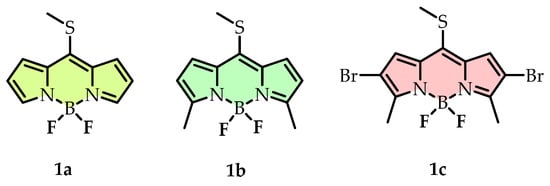
In this context, the aim is to design and synthesize a PEG-conjugated derivative. Our approach involves functionalizing 1a, 1b, and 1c with polyethylene glycol units to obtain water-soluble compounds, Figure 1.
Figure 1.
Starting materials for PEG-conjugated.
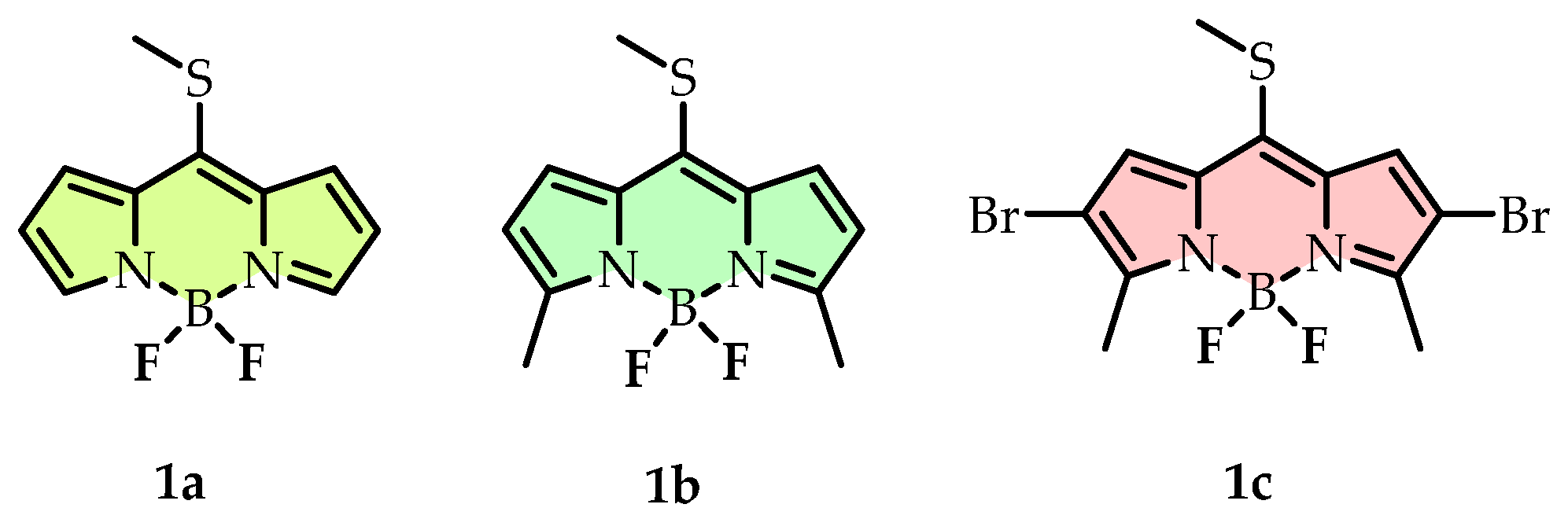
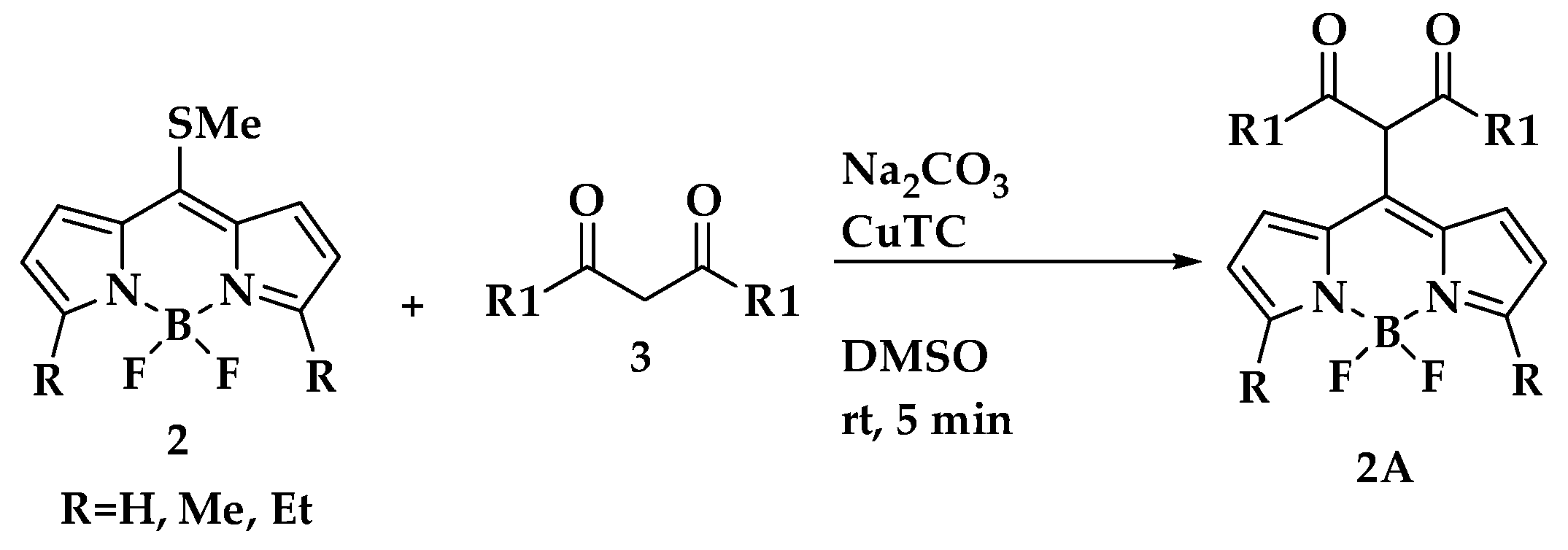
In 2014, Peña-Cabrera et al. reported the reactivity of the Biellmann BODIPY 2 with stabilized nucleophiles of the 1,3-dicarbonyl type (Scheme 1) [14]. Their protocol for incorporating stabilized 1,3-dicarbonyl carbon nucleophiles at the meso position of the BODIPY highlights the versatility of the Biellmann BODIPY in accessing derivatives that would not be obtainable via Lyndsey chemistry [14].
Scheme 1.
In previous studies, 1,3-dicarbonyl derivatives stabilized at the meso position of BODIPY were synthesized.
The methodology employs copper (I) salts-specifically CuTC (Copper(I) thiophene-2-carboxylate) as a thiophilic agent which presumably activates the thiomethyl group as a leaving group upon coordination (Scheme 2) [14]. Subsequently, soft nucleophiles attack the BODIPY core at the “meso” position, the resulting negative charge is stabilized by the pyrrolic nitrogens, and the -SMe group is ultimately expelled [14].
Scheme 2.
Reaction conditions for the incorporation of 1,3-dicarbonyl carbon nucleophiles.
The methodology described by Krueger et al. was used to functionalize a 1,3-diketone compound [15]. This methodology incorporates two glycol units into malonic acid through esterification with an alcohol (Scheme 3) (Figure 2) [15].
Scheme 3.
Methodology for incorporating two glycol units into malonic acid.
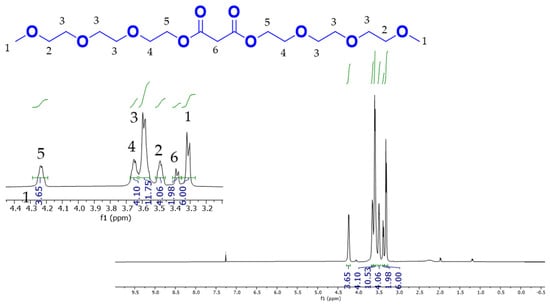
Figure 2.
1H NMR spectrum for compound 6 in CDCl3 with Bruker 400 (400 MHz), MA, USA.
2. Results
2.1. Activation of the Meso Position of 8-Thiomethyl-BODIPY
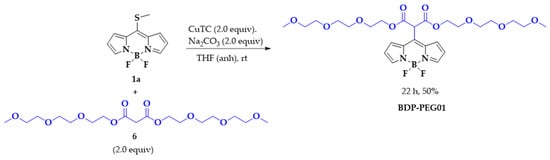
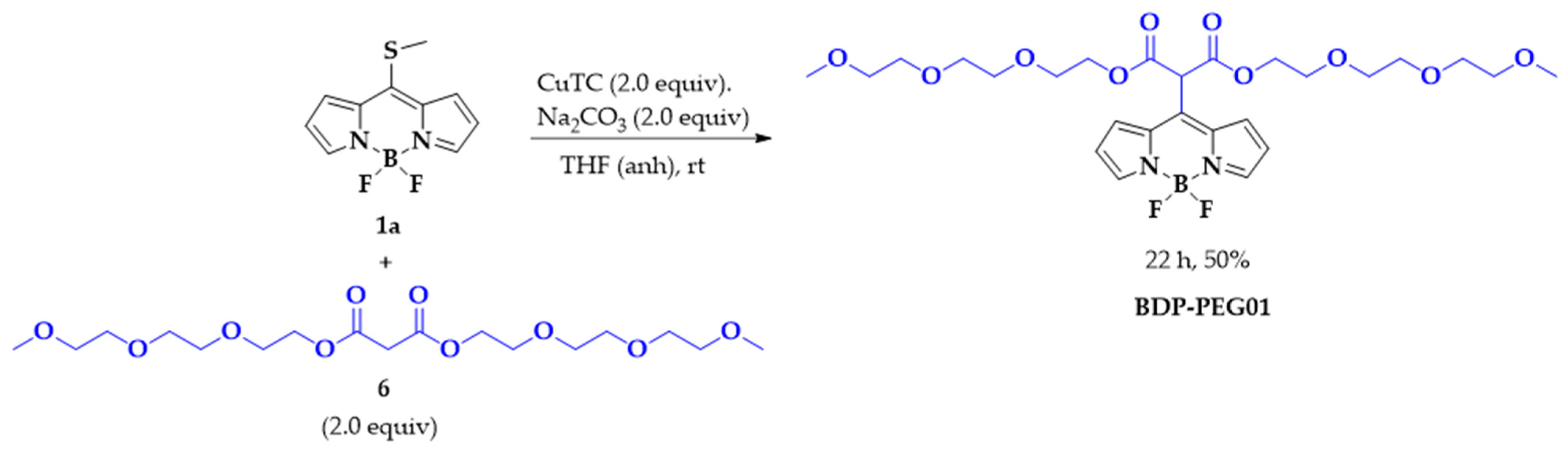
The results obtained indicate that the activation at the “meso” position of 8-thiomethyl-BODIPY 1a [16] is favored in THF anhydrous (Sigma-Aldrich Quimica S. de RL de CV, Toluca de Lerdo, Mexico); a base is required for anion formation, as is the presence of CuTC [17] for activation of the thiomethyl group at the “meso” position (Scheme 4).
Scheme 4.
Activation of 1a in the meso position with the glycol malonic ester 6.
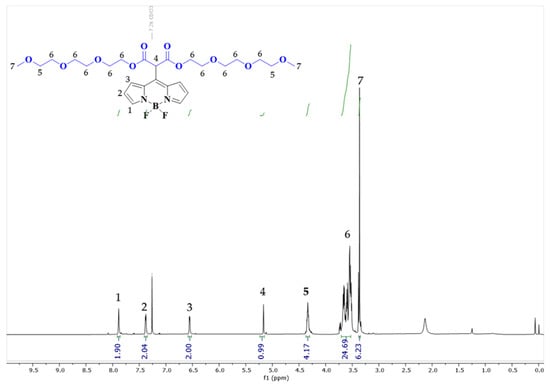
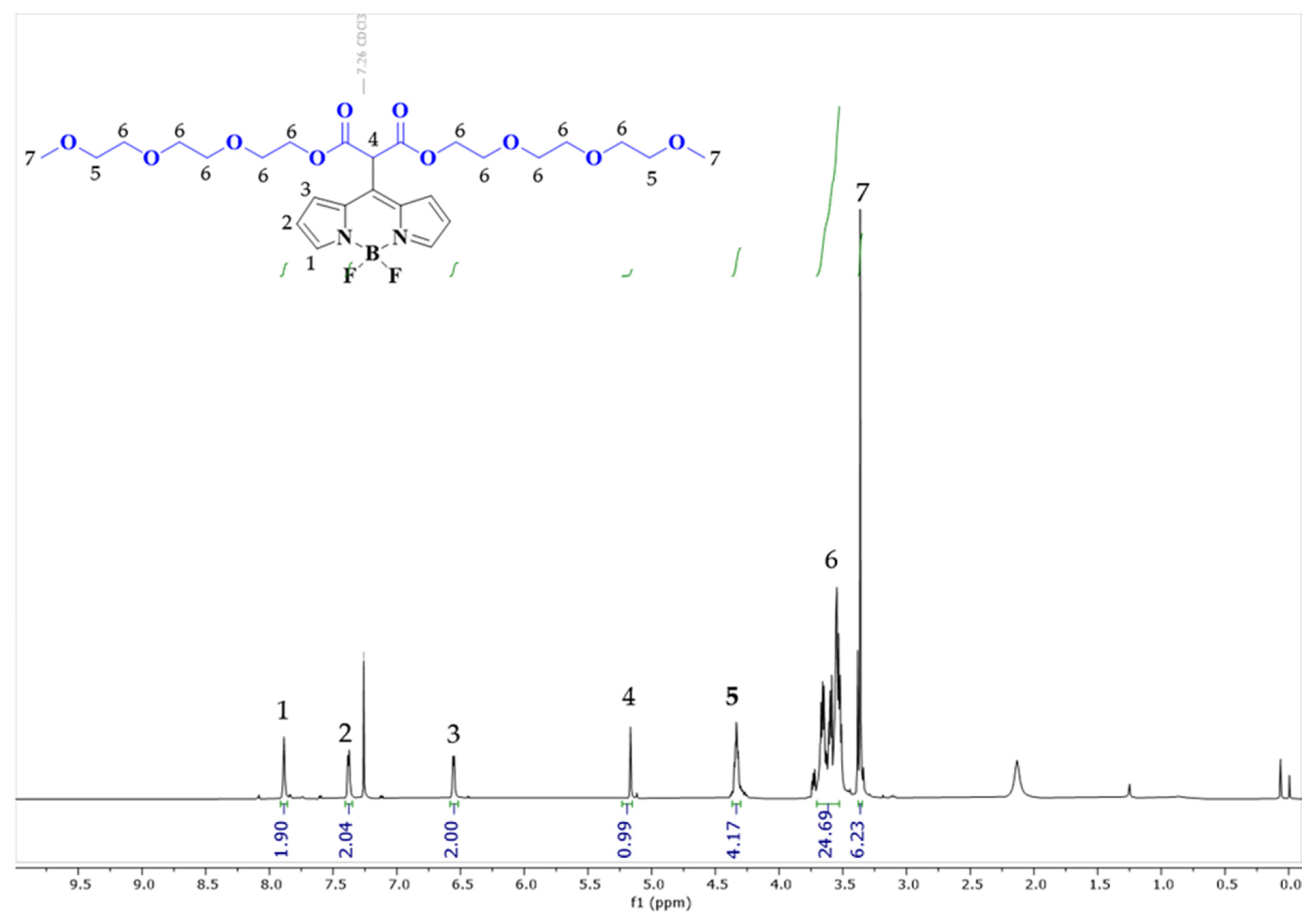
The 1H NMR (Bruker 400 (400 MHz), MA, EE. UU) spectrum of the “meso” activation product has three signals corresponding to the BODIPY core (7.88 ppm, 7.35 ppm, 6.58 ppm), integrating for six protons. Furthermore, the signal for the thiomethyl group at 2.89 ppm is absent (Figure 3), see Supplementary Materials.
Figure 3.
1H NMR spectrum for compound BDP-PEG01 with Bruker 400 (400 MHz), MA, USA.
2.2. Activation of the Meso Position of 3,5-Dimethyl-8-Thiomethyl-BODIPY
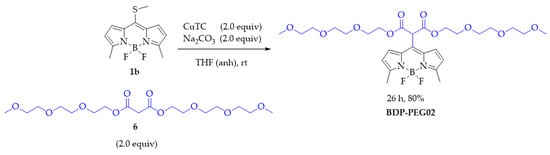
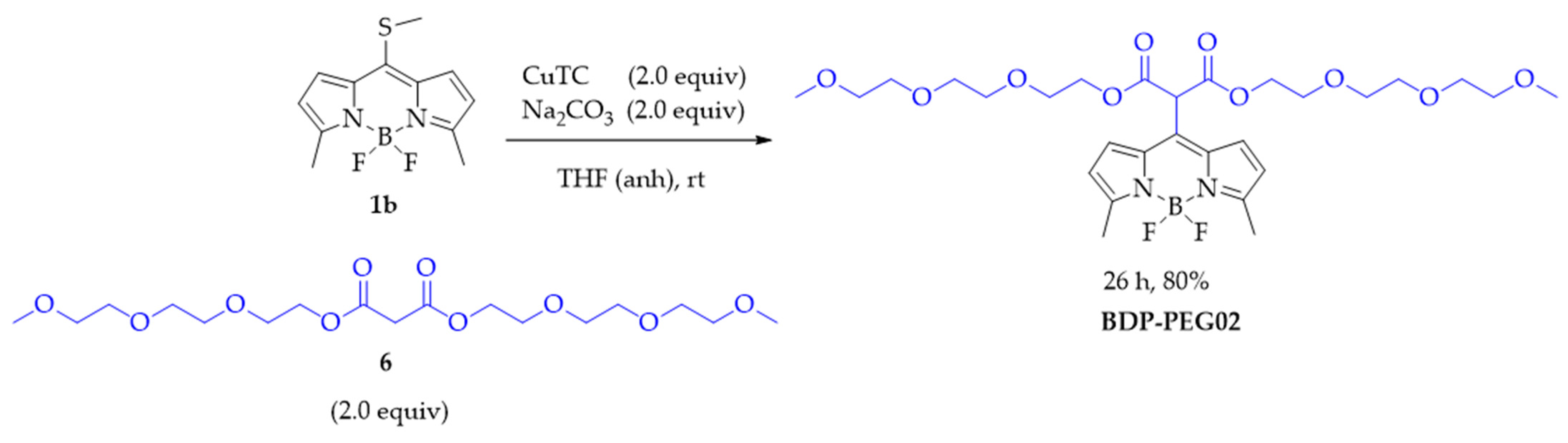
With a view to designing a water-soluble compound with red-shifted emission, an additional reaction with malonic glycol ester 6 to 1b [16] was proposed (Scheme 5).
Scheme 5.
Activation of 1b in the meso position with the malonic glycol ester 6.
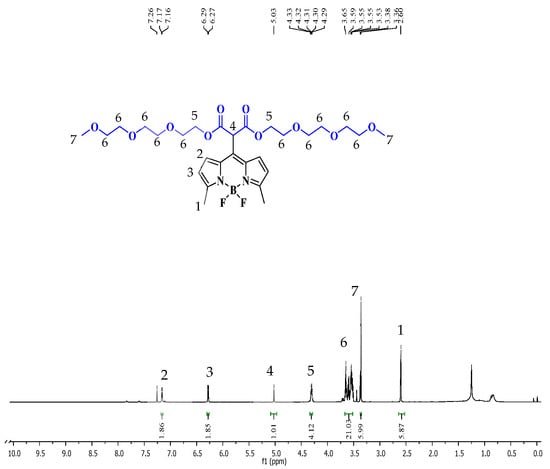
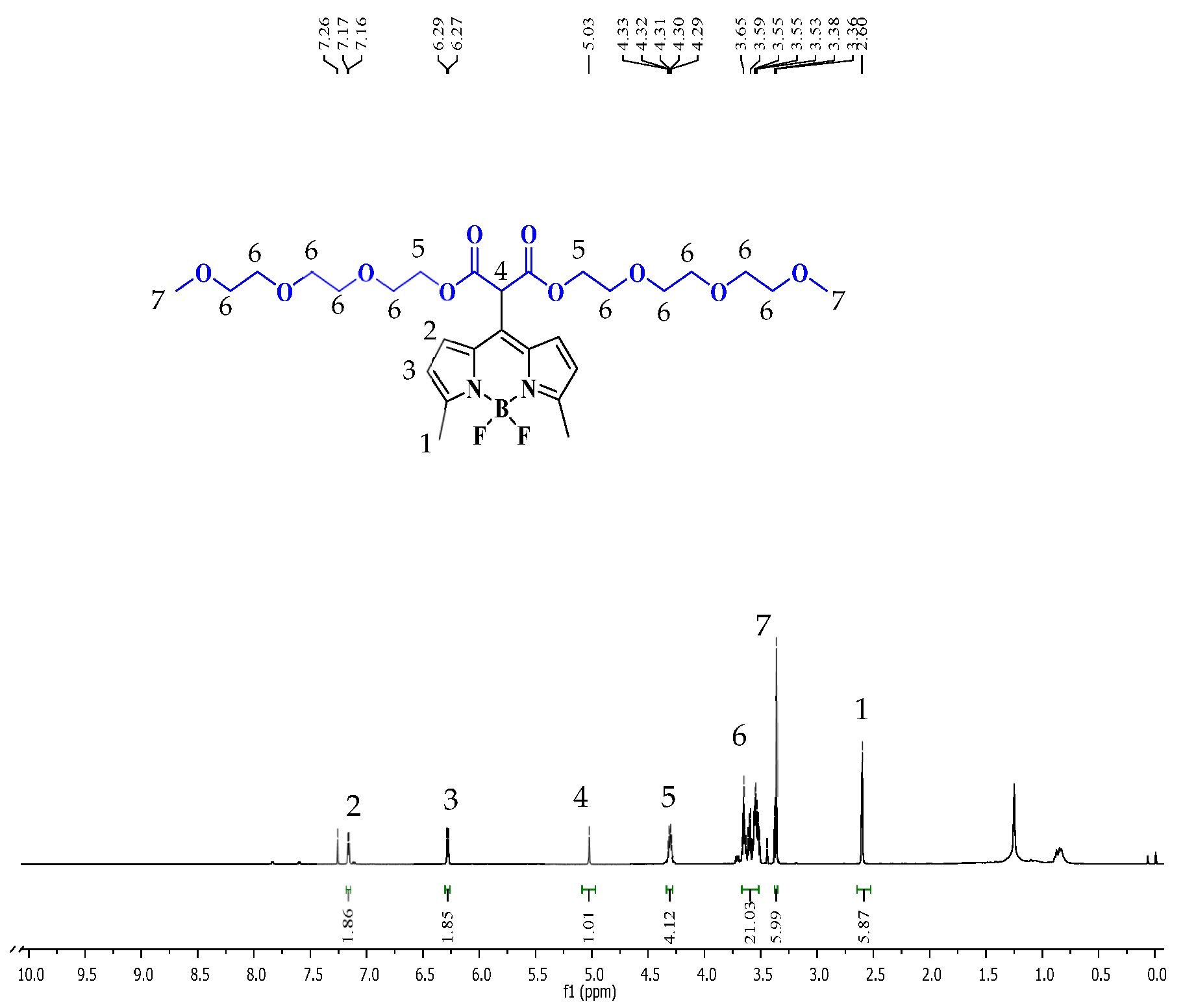
The product BODIPY-PEG02 was obtained via an addition-elimination reaction at the meso position of 1b, using THF anhydrous (Sigma-Aldrich Quimica S. de RL de CV, Toluca de Lerdo, Mexico) as the solvent. The characteristic signals for the BODIPY core (7.17 ppm and 6.58 ppm) are visible (Figure 4). In the 1H NMR spectrum, signals for the methyl groups at positions three and five are observed at 2.60 ppm, along with the characteristic signals associated with the “meso” addition in the diketone compound (Figure 4). See Supplementary Materials.
Figure 4.
1H-NMR spectrum for compound BODIPY-PEG02 with Bruker 400 (400 MHz), MA, USA.
2.3. Activation of the Meso Position of 2,6-Dibromo-3,5-Dimethyl-8-Thiomethyl-BODIPY 1c
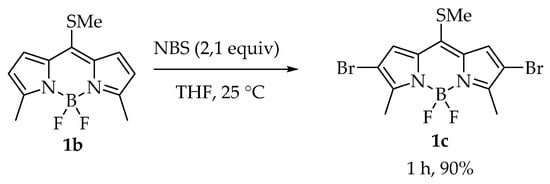
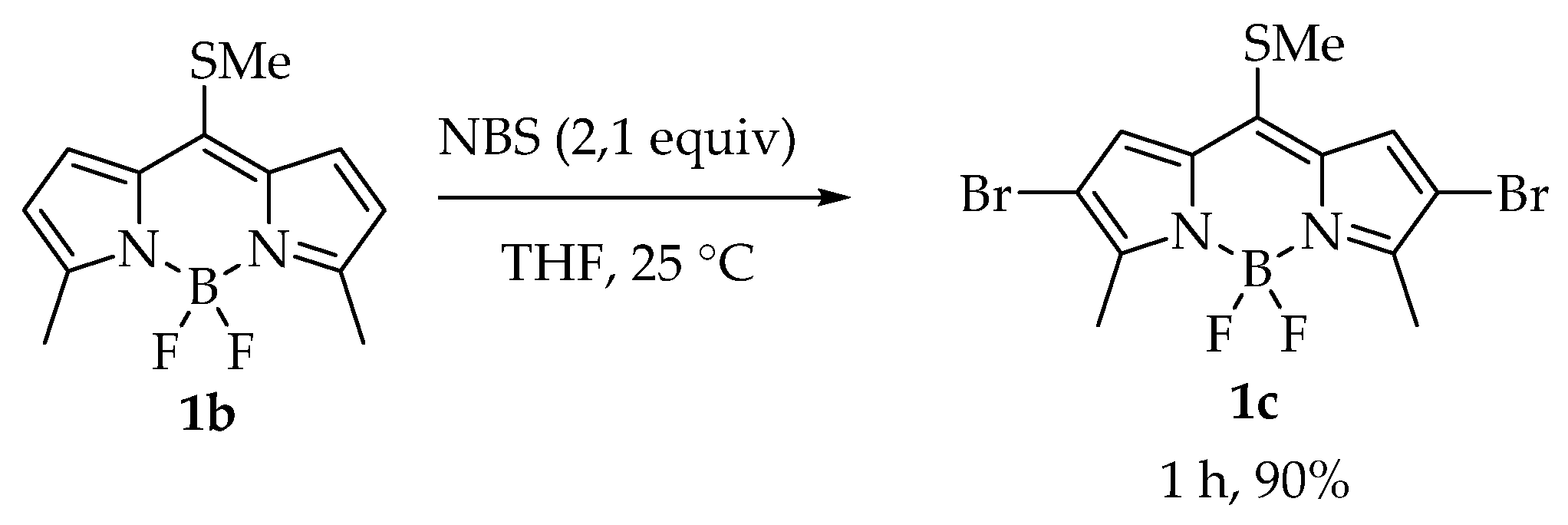
The new synthetic proposal involves the halogenation of 1b with NBS (Sigma-Aldrich Quimica S de RL de CV, Toluca de Lerdo, Mexico), followed by an addition-elimination reaction with the malonic glycol ester 6. Initially, the halogenation of 3,5-dimethyl-8-thiomethyl-BODIPY 1b was carried out (Scheme 6). The halogenation of 1b was performed using NBS (Sigma-Aldrich Quimica S de RL de CV, Toluca de Lerdo, Mexico) in THF anhydrous (Sigma-Aldrich Quimica S. de RL de CV, Toluca de Lerdo, Mexico) (Scheme 6) [18].
Scheme 6.
Halogenation of 1b in positions 2 and 6 with NBS.
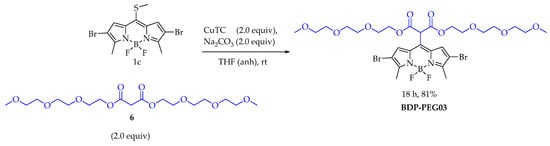
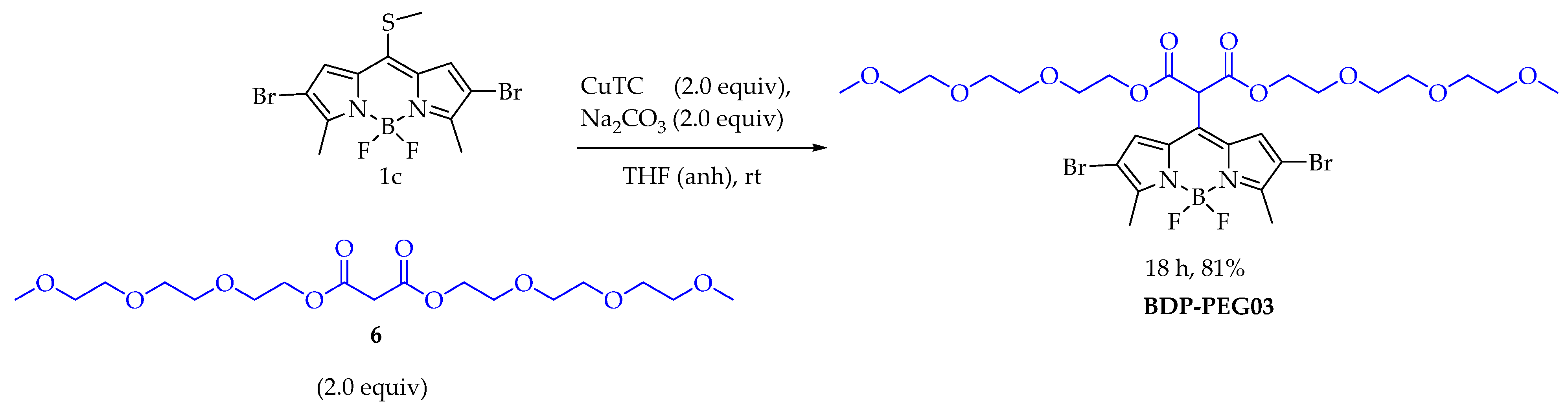
Subsequently, the addition of 1c was carried out in both DMSO anhydrous (Dimethyl sulfoxide, Sigma-Aldrich Quimica S de RL de CV, Toluca de Lerdo, Mexico) and THF. The addition reaction underwent decomposition in DMSO. However, the best results were obtained in THF anhydrous (Sigma-Aldrich Quimica S. de RL de CV, Toluca de Lerdo, Mexico) (Scheme 7). See Supplementary Materials.
Scheme 7.
Activation of 1c in the meso position with the malonic glycol ester 6.
2.4. Photophysical Properties of BODIPY-PEG Derivatives
Previous studies found that the incorporation of active methylenes in the meso position of the BODIPY core does not affect the spectral bands or the characteristic fluorescence intensity of BODIPY fluorophores [14]. The photophysical properties of the new BODIPY-PEG were determined in water with the Perkin Elmer Lambda 40 UV-Visible spectrophotometer (PerkinElmer, Shelton, CT, USA) and the Hitachi F-7000 fluorescence spectrophotometer (Hitachi High Technologies Corporation, Tokyo, Japan). The absorption and emission bands are like those of the BODIPY chromophore. The BDP-PEG01 derivative shows the highest value of quantum fluorescence yield of 28%, Table 1. The derivative BDP-PEG03 shows a bathochromic emission wavelengths of 560 nm, Table 1. The BDP-PEG02 compound could be used as a fluorescent probe because of its higher Stokes shift, Table 1. See Supplementary Materials.
Table 1.
Spectroscopic properties of BODIPY-PEG derivatives studied in this work in H2O.
3. Conclusions
In this research, we report the synthesis of new water-soluble BODIPY-derived compounds by functionalizing them with a polyethylene glycol 6 derivative. The methodology is described for activation at position eight. The methodology described for obtaining BODIPY-PEG compounds provides chemical yields greater than 50%. Their photophysical properties in water were determined for compounds BDP-PEG01, BDP-PEG02 and BDP-PEG03. The photophysical properties were determined and observed that functionalizing the BODIPY core with bromines caused a bathochromic shift in the fluorescent emission. Compound BODIPY-PEG01 exhibits the highest quantum efficiency. However, compound BDP-PEG03 shows the greatest bathochromic shift. These results provide a straightforward approach for obtaining water-soluble fluorophores for potential applications as fluorescent probes.
Supplementary Materials
The following supporting information can be downloaded at https://www.mdpi.com/article/10.3390/chemproc2026022170/s1. References [15,16,17,18,19] are cited in the supplementary materials.
Author Contributions
Writing—original draft preparation, A.U.-B. and E.P.-C.; writing A.U.-B. and E.P.-C.; review and editing, A.U.-B. and E.P.-C.; supervision, E.P.-C. and D.E.R.-O.; resources, E.P.-C. and D.E.R.-O. All authors have read and agreed to the published version of the manuscript.
Funding
This research was funded by DAIP (Dirección de Apoyo a la Investigacicón y el Posgrado) through the program CIIC-UG (076/2025 and 226/2026).
Institutional Review Board Statement
Not applicable.
Informed Consent Statement
Not applicable.
Data Availability Statement
The datasets presented in this article are not readily available. Requests for access to these datasets should be directed to E.P.-C.
Acknowledgments
Acknowledgments to the University of Guanajuato, the National Nuclear Magnetic Resonance Laboratory of the University of Guanajuato for the services, the Guanajuato National Laboratory UG-UAA-CONACyT (#316011), SECIHTI (Mexico) for the scholarship.
Conflicts of Interest
The authors declare no conflict of interest.
Abbreviations
The following abbreviations are used in this manuscript:
| BDP | Bodipy |
| PEG | Polyethylene glycol |
| BODIPY | Borondipirromethene |
| CuTC | Copper(I) thiophene-2-carboxylate |
References
- Rao, J.; Dragulescu-Andrasi, A.; Yao, H. Fluorescence imaging in vivo: Recent advances. Curr. Opin. Biotechnol. 2007, 18, 17–25. [Google Scholar] [CrossRef] [Scilit] [PubMed]
- Joshi, B.P.; Wang, T.D. Exogenous Molecular Probes for Targeted Imaging in Cancer: Focus on Multi-modal Imaging. Cancers 2010, 2, 1251–1287. [Google Scholar] [CrossRef] [Scilit] [PubMed]
- Kobayashi, H.; Ogawa, M.; Alford, R.; Choyke, P.L.; Urano, Y. New strategies for fluorescent probe design in medical diagnostic imaging. Chem. Rev. 2010, 110, 2620–2640. [Google Scholar] [CrossRef] [Scilit] [PubMed]
- Peneva, K.; Mihov, G.; Nolde, F.; Rocha, S.; Hotta, J.; Braeckmans, K.; Hofkens, J.; Uji-i, H.; Herrmann, A.; Mullen, K. Water-Soluble Monofunctional Perylene and Terrylene Dyes: Powerful Labels for Single-Enzyme Tracking. Angew. Chem. Int. Ed. Engl. 2008, 47, 3372–3375. [Google Scholar] [CrossRef] [Scilit] [PubMed]
- Reddington, M.V. Synthesis and properties of phosphonic acid containing cyanine and squaraine dyes for use as fluorescent labels. Bioconjug Chem. 2007, 18, 2178–2190. [Google Scholar] [CrossRef] [Scilit] [PubMed]
- Wang, H.; Lu, Z.; Lord, S.J.; Moerner, W.E.; Twieg, R.J. Modifications of DCDHF single molecule fluorophores to impart water solubility. Tetrahedron Lett. 2007, 48, 3471–3474, Correction in Tetrahedron Lett. 2011, 52, 5711. https://doi.org/10.1016/j.tetlet.2011.08.137. [Google Scholar] [CrossRef] [Scilit] [PubMed]
- Niu, S.L.; Ulrich, G.; Ziessel, R.; Kiss, A.; Renard, P.-Y.; Romieu, A. Water-Soluble BODIPY Derivatives. Org. Lett. 2009, 11, 2049–2052. [Google Scholar] [CrossRef] [Scilit] [PubMed]
- He, H.; Lo, P.-C.; Yeung, S.-L.; Fong, W.-P.; Ng, D.K.P. Synthesis and In Vitro Photodynamic Activities of Pegylated Distyryl Boron Dipyrromethene Derivatives. J. Med. Chem. 2011, 54, 3097–3102. [Google Scholar] [CrossRef] [Scilit] [PubMed]
- Luo, Y.; Prestwich, G.D. Synthesis and Selective Cytotoxicity of a Hyaluronic Acid−Antitumor Bioconjugate. Bioconjug. Chem. 1999, 10, 755–763. [Google Scholar] [CrossRef] [Scilit] [PubMed]
- He, H.; Lo, P.-C.; Yeung, S.-L.; Fong, W.-P.; Ng, D.K.P. Preparation of unsymmetrical distyryl BODIPY derivatives and effects of the styryl substituents on their in vitro photodynamic properties. Chem. Comm. 2011, 47, 4748–4750. [Google Scholar] [CrossRef] [Scilit] [PubMed]
- Knop, K.; Hoogenboom, R.; Fisher, D.; Schubert, U.S. Poly(ethylene glycol) in Drug Delivery: Pros and Cons as Well as Potential Alternatives. Angew. Chem. Int. 2010, 49, 6288. [Google Scholar] [CrossRef] [Scilit] [PubMed]
- Kim, J.H.; Park, K.; Nam, H.Y.; Lee, S.; Kim, K.; Kwon, I.C. Polymers for bioimaging. Prog. Polym. Sci. 2007, 32, 1031–1053. [Google Scholar] [CrossRef] [Scilit]
- Sibrian-Vázquez, M.; Jensen, T.J.; Vicente, M.G. Synthesis and cellular studies of PEG-functionalized meso-tetraphenylporphyrins. J. Photoch. Photobio. B Biol. 2007, 86, 9–21. [Google Scholar] [CrossRef] [Scilit] [PubMed]
- Gutiérrez-Ramos, B.D.; Bañuelos, J.; Arbeloa, T.; López-Arbeloa, I.; González-Navarro, P.E.; Wrobel, K.; Cerdán, L.; García-Moreno, I.; Costela, A.; Peña-Cabrera, E. Straightforward Synthetic Protocol for the Introduction of Stabilized C Nucleophiles in the BODIPY Core for Advanced Sensing and Photonic Applications. Chem. Eur. J. 2015, 21, 1755–1764. [Google Scholar] [CrossRef] [Scilit] [PubMed]
- Betz, P.; Krueger, A. Surface Modification of Nanodiamond under Bingel–Hirsch Conditions. Chem. Phys. Chem. 2012, 13, 2578–2584. [Google Scholar] [CrossRef] [Scilit] [PubMed]
- Goud, T.V.; Tutar, A.; Biellmann, J.-F. Synthesis of 8-heteroatom-substituted 4,4-difluoro-4-bora-3a,4a-diaza-s-indacene dyes (BODIPY). Tetrahedron 2006, 62, 5084–5091. [Google Scholar] [CrossRef] [Scilit]
- Zhang, S.; Zhang, D.; Liebeskind, L.S. Ambient Temperature, Ullmann-like Reductive Coupling of Aryl, Heteroaryl, and Alkenyl Halides. J. Org. Chem. 1997, 62, 2312–2313. [Google Scholar] [CrossRef] [Scilit] [PubMed]
- Peña-Cabrera, E.; Gómez-Duran, C.F.A.; Valois-Escamilla, I. Synthesis of 8-Thiomethyl-3,5-Dimethyl-Dihalogenated Boron Dipyrromethene. Mx Patent No. MX2014014819 A, 3 June 2016. [Google Scholar] [CrossRef] [Scilit] [PubMed]
- Grabolle, M.; Spieles, M.; Lesnyak, V.; Gaponik, N.; Eychmüller, A.; Resch-Genger, U. Determination of the Fluorescence Quantum Yield of Quantum Dots: Suitable Procedures and Achievable Uncertainties. Anal. Chem. 2009, 81, 6285. [Google Scholar] [CrossRef] [Scilit]



Disclaimer/Publisher’s Note: The statements, opinions and data contained in all publications are solely those of the individual author(s) and contributor(s) and not of MDPI and/or the editor(s). MDPI and/or the editor(s) disclaim responsibility for any injury to people or property resulting from any ideas, methods, instructions or products referred to in the content. |
© 2026 by the authors. Licensee MDPI, Basel, Switzerland. This article is an open access article distributed under the terms and conditions of the Creative Commons Attribution (CC BY) license.