


Abstract
Diabetes mellitus is a major global public health challenge associated with significant morbidity and mortality. Although α-glucosidase inhibitors are widely used in the management of postprandial hyperglycemia, currently available drugs are often associated with undesirable side effects, reduced patient compliance, and limited therapeutic effectiveness. Consequently, there is a growing need to identify novel inhibitors with improved efficacy and safety profiles. This study aimed to investigate the potential of 14 chalcone and 4 pyrazoline compounds (18 compounds in total) as potential α-glucosidase inhibitors using computational approaches. A library of compounds was designed using ChemDraw and subjected to geometry optimization with Spartan14 software. Drug-likeness, pharmacokinetic, and toxicity properties were assessed using SwissADME and ProTox-II servers. Molecular docking studies were performed against the α-glucosidase enzyme (PDB ID: 8YIE) using AutoDock Vina to determine binding affinities and interactions within the enzyme’s active site. ADMET analysis revealed that the majority of the compounds exhibited favorable pharmacokinetic characteristics and acceptable safety profiles. Among the screened compounds, compounds PC1 and PHPY exhibited the most favorable docking scores at −9.8 kcal/mol and −9.3 kcal/mol, respectively, surpassing the reference ligand acabose (AC1) (−8.8 kcal/mol). Detailed interaction analysis revealed the formation of key hydrogen bonds, π–π stacking, and π–alkyl interactions with critical active-site residues. These findings suggest that the investigated chalcone and pyrazoline compounds may be promising candidates for further investigation as potential α-glucosidase inhibitors. However experimental enzyme inhibition assays and appropriate safety studies are necessary to validate their predicted biological activity and establish their safety profiles.
1. Introduction
Diabetes mellitus is a heterogeneous group of metabolic disorders characterized by persistent hyperglycemia. Type 2 diabetes mellitus accounts for most cases and arises from the combined effects of insulin resistance and progressive pancreatic β-cell dysfunction. Its chronic complications include nephropathy, retinopathy, neuropathy, cardiovascular disease, and lower-limb amputation, making the disease a major cause of morbidity and mortality worldwide [1,2].
One therapeutic approach to postprandial hyperglycemia is inhibition of intestinal α-glucosidase, which delays the hydrolysis of dietary oligosaccharides and slows glucose absorption. Clinically used inhibitors such as acarbose, miglitol, and voglibose are effective but may cause gastrointestinal adverse effects, including flatulence, diarrhea, and abdominal discomfort [1,3]. Consequently, structurally diverse inhibitors with favorable pharmacokinetic and safety profiles remain of interest.
Chalcones are α,β-unsaturated carbonyl compounds containing two aromatic rings and are readily modified through substitution on either ring. Their conjugated framework can support hydrogen-bonding, π–π stacking, and hydrophobic contacts within enzyme binding sites [4]. Pyrazolines are five-membered nitrogen-containing heterocycles with broad medicinal chemistry applications, and substituted pyrazoline analogs have shown α-glucosidase inhibitory activity [5,6]. Computational screening can prioritize promising members of these chemical classes before resource-intensive biological testing [7].
This study therefore evaluated eighteen (18) computationally designed chalcones and pyrazolines compound by combining in silico ADMET and toxicity prediction with molecular docking against α-glucosidase. The objectives were to assess drug-likeness, estimate pharmacokinetic and toxicity properties, compare predicted binding affinities with acarbose, and characterize the active-site interactions of the leading compounds.
2. Materials and Methods
2.1. Compound Library and Geometry Optimization
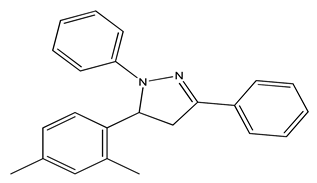
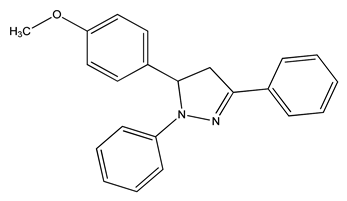
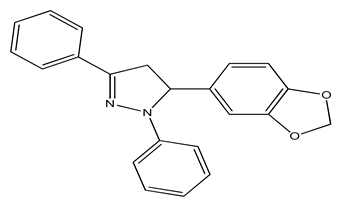
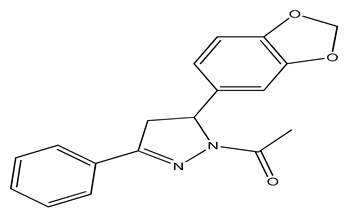
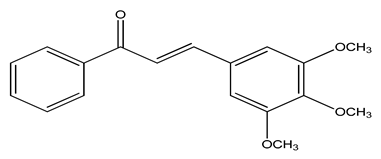
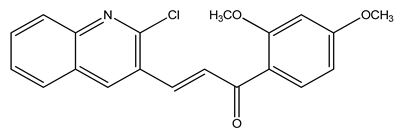
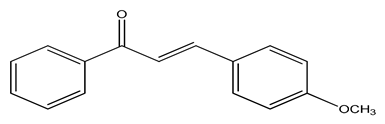
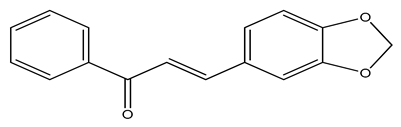
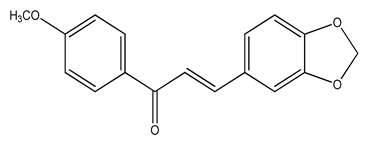
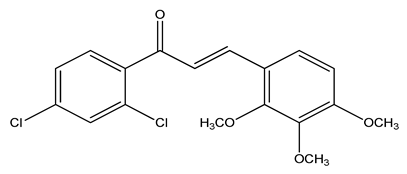
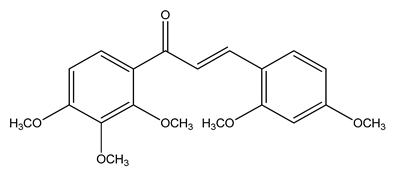
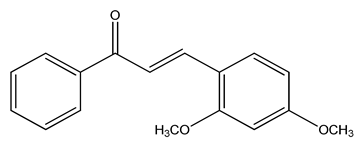
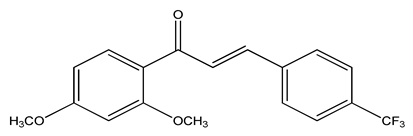
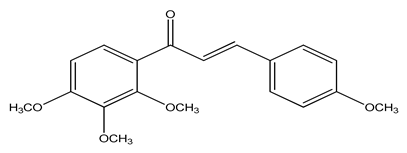
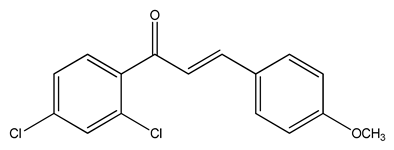
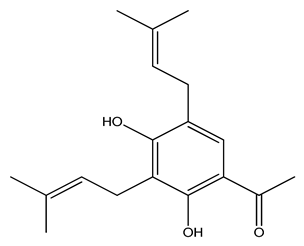
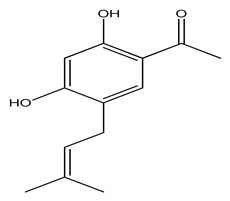
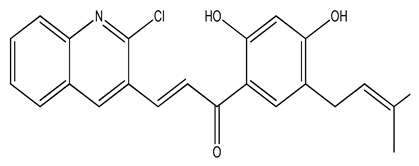
The test library comprised eighteen (18) computationally designed compounds: fourteen (14) chalcones (P4, P5, P6, P8, P9, P13, P17, P18, P21, P23, P25, PA1, PA2, and PC1) and four (4) pyrazolines (P2, P3, PHPY, and PYACT). Two-dimensional structures were generated in ChemDraw Ultra 12.0.2 (Cambridge soft corporation, Cambridge, MA, USA). The structures were converted to three-dimensional geometries and optimized in Spartan 14 version 1.1.8 (Wavefunction, Inc., Irvine, CA, USA) using the AM1 semi-empirical method. Optimized structures were exported to MOL2 format. The compound codes, IUPAC names, and corresponding chemical structures of the investigated pyrazoline and chalcone libraries are presented in Table 1 and Table 2 respectively.
Table 1.
Compound codes, IUPAC names, and chemical structures of the pyrazoline library (corresponding to Table 3.1 in the source project).
Table 2.
Compound codes, IUPAC names, and chemical structures of the chalcone library (corresponding to Table 3.2 in the source project).
2.2. In Silico ADME and Toxicity Prediction
Canonical SMILES strings were submitted to SwissADME (swiss institute of Bioformatics, Lausanne, Switzerland) to predict physicochemical properties, gastrointestinal absorption, and compliance with Lipinski’s rule of five [8]. The rule-of-five assessment used molecular weight, lipophilicity, hydrogen bond acceptors, and hydrogen bond donors as principal descriptors [9]. The predicted median lethal dose (LD50) and toxicity class were obtained from ProTox-II (Charite University Medicine Berlin, Berlin, Germany) [10]. These computational predictions were interpreted as preliminary indicators rather than as sustituents for experimental measurements.
2.3. Receptor and Ligand Preparation
The 1.7 Å crystal structure of α-glucosidase CmmB in complex with acarbose (PDB ID: 8YIE) was obtained from the RCSB Protein Data Bank [11]. The co-crystallized ligand and non-protein residues were removed from the receptor using UCSF Chimera 1.17.3 (Resourse for Biocomputing, Visualization, and Informatics, University of California, San Francisco, CA, USA) [12]. Hydrogen atoms and Gasteiger charges were added. Prepared receptor and ligand files were converted to PDBQT format in AutoDock Tools 1.5.6 (The Scripps Research Institute, La jolla, CA, USA). The co-crystallized ligand was prepared separately for redocking and comparison.
2.4. Molecular Docking and Interaction Analysis
Docking was performed with AutoDock Vina 1.1.2 (The Scripps Research Institute, La jolla, CA, USA) [13]. The search space was centered on the acarbose binding site. Grid dimensions were 32 × 48 × 20 Å along the x, y, and z axes, with center coordinates x = −1.371, y = −0.978, and z = 56.737. The co-crystallized ligand was redocked as a qualitative validation of pose recovery. Docked complexes were inspected using UCSF Chimera and Discovery Studio Visualizer 20.1.0 (BIOVIA Dassault Systemes, San Diego, CA, USA) to identify hydrogen bonds, electrostatic contacts, and aromatic or hydrophobic interactions. The details of the search space dimensions, along with the specific parameters used for molecular docking, are provided in Table 3.
Table 3.
Molecular docking search space parameters for α-glucosidase (PDB ID: 8YIE).
3. Results and Discussion
3.1. Predicted Drug-likeness and Toxicity
All eighteen (18) compounds were predicted to have high gastrointestinal absorption. Seventeen compounds had no Lipinski violation; P2 had one violation because its predicted MLogP was 4.90. Molecular weights ranged from 220.26 to 393.86 g/mol; MLogP values, from 1.67 to 4.90; hydrogen bond acceptors, from 1 to 6; and hydrogen bond donors, from 0 to 2. ProTox-II predicted LD50 values of 1000–3600 mg/kg and toxicity classes 4 or 5. Overall, the computational predictions suggested potentially favorable drug-likeness and preliminary toxicity profiles for the compound library. However, these predictions do not establish actual safety or exclude metabolic liabilities, formulation constraints, off-target effects, or organ-specific toxicity. The relevant in silico Pharmacokinetic and toxicological properties for the leading compounds (PC1 and PHPY) are detailed in Table 4.
Table 4.
In silico ADMET summary and properties of the two leading compounds.
3.2. Molecular Docking
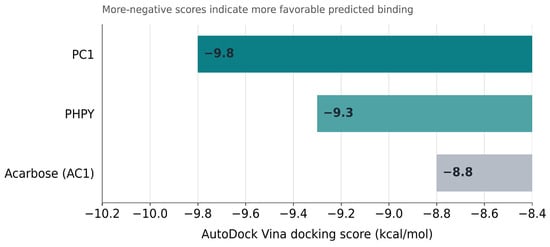
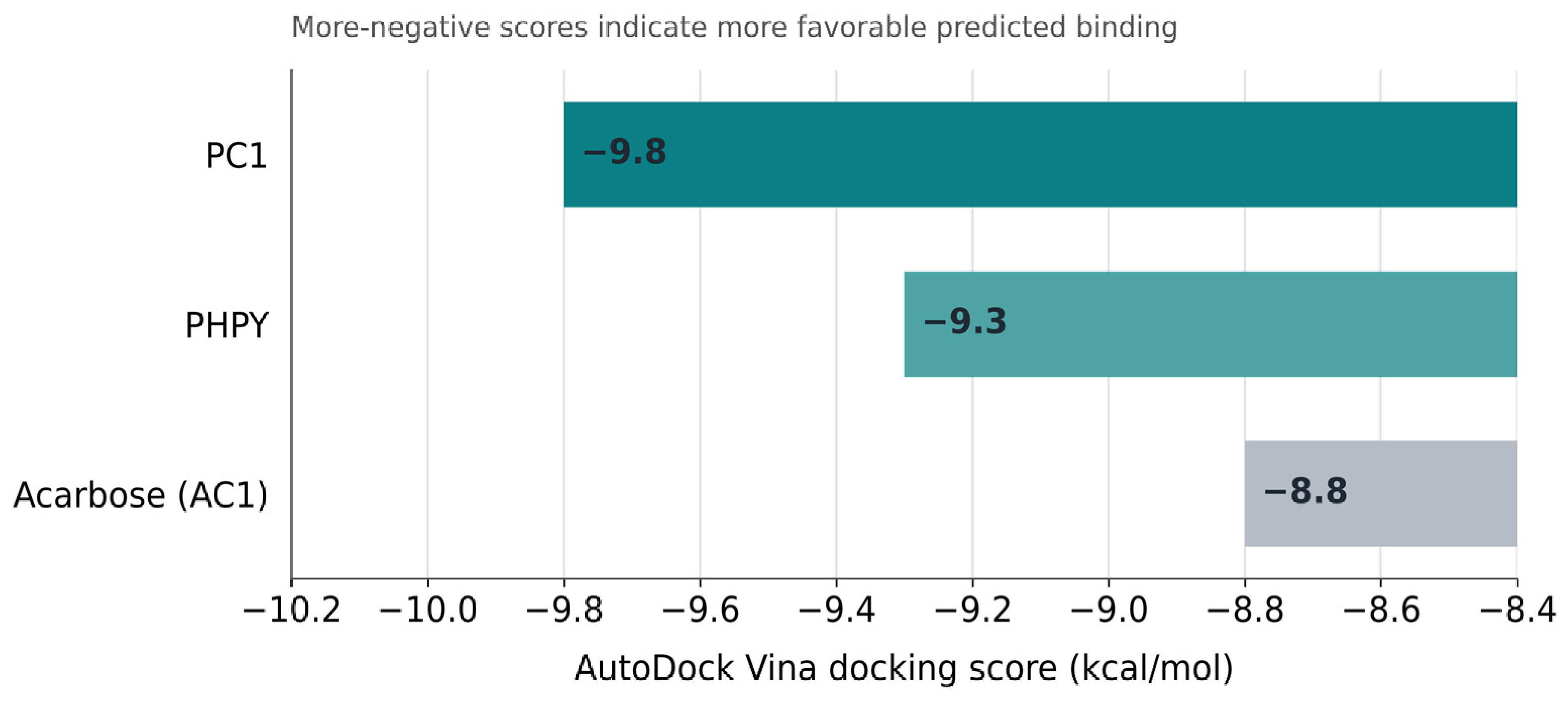
Docking scores across the test library ranged from −7.3 to −9.8 kcal/mol. PC1 produced the most favorable predicted docking score (−9.8 kcal/mol), followed by PHPY (−9.3 kcal/mol). Both values were more favorable than those of redocked acarbose (−8.8 kcal/mol), by 1.0 and 0.5 kcal/mol, respectively. These differences support prioritization, but they should not be interpreted as experimentally measured affinity because docking scores are model-dependent and do not fully account for receptor flexibility, solvation, entropy, or assay conditions. A comprehensive overview of these binding energies relative to the reference standard is illustrated in Figure 1, while detailed docking scores and relative binding differences are summarized in Table 5.
Figure 1.
Comparison of AutoDock Vina docking scores for PC1, PHPY, and the co-crystallized reference ligand acarbose (AC1).
Table 5.
Docking scores of the leading compounds and reference ligand.
3.3. Binding Site Interactions
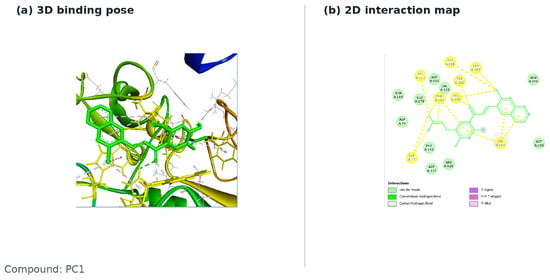
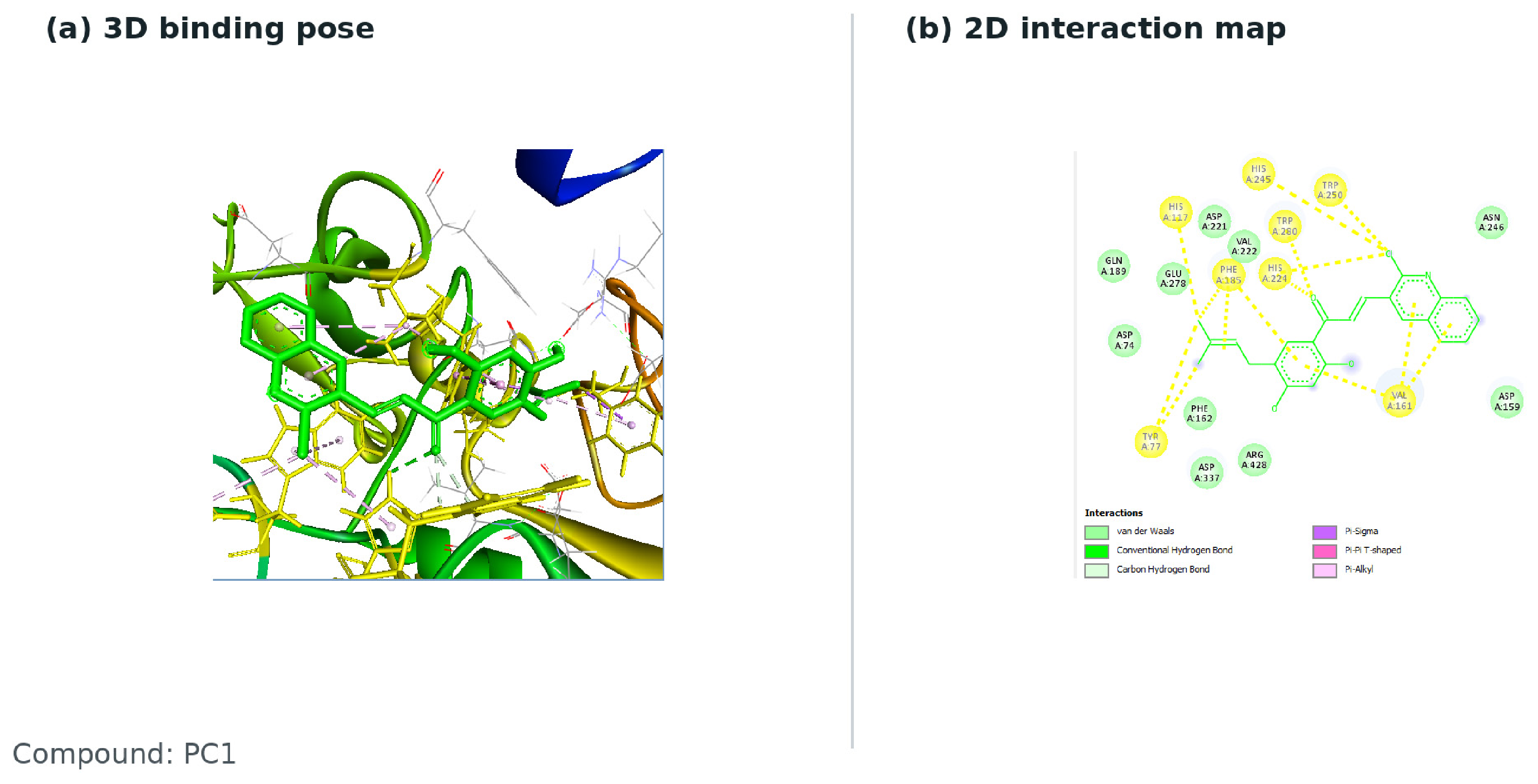
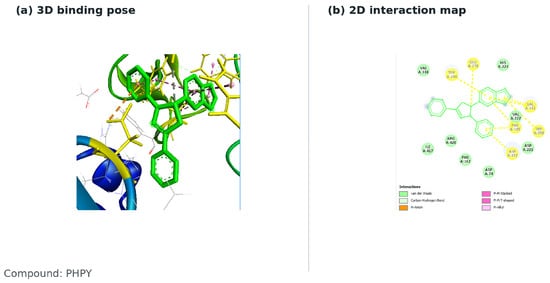
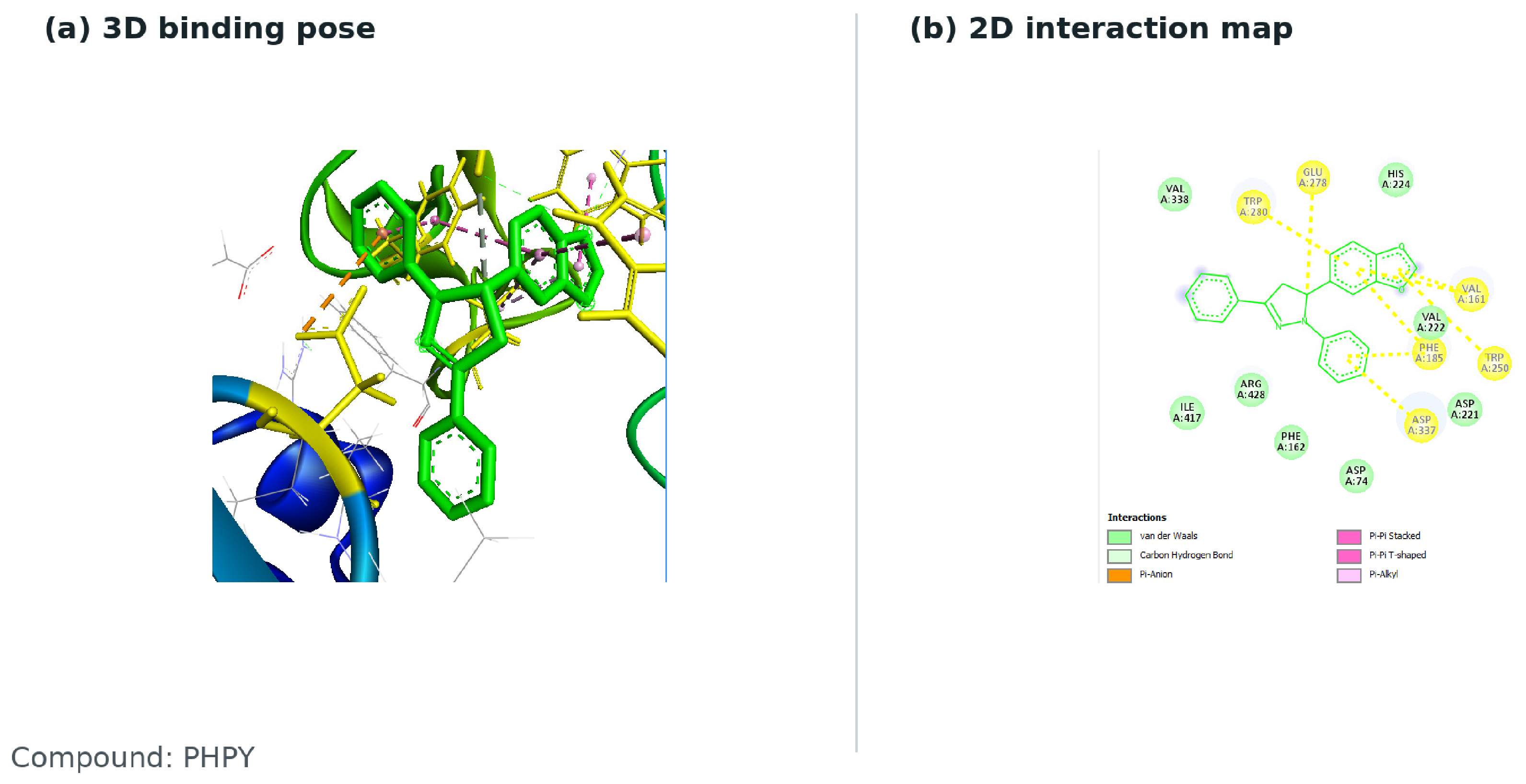
Acarbose interacted with a polar network that included Asp337, Glu278, Asp221, His117, Gln189, Arg428, Ser160, His224, and Tyr77. PC1 interacted with His224, Trp280, Tyr77, Phe185, His117, Trp250, and Val161. Notably, PC1 shared His117, His224, and Tyr77 with the reference–ligand interaction pattern. Its binding pose included conventional and carbon hydrogen bonds together with π-sigma, π–π T-shaped, and π-alkyl contacts. PHPY interacted Glu278, Asp337, Phe185, Trp280, Trp250, and Val161, with carbon-hydrogen bonding, a π-anion interaction, π–π stacking, π–π T-shaped contacts, and a π-alkyl contact. It also shared Glu278 and Asp 337 with the reference–ligand interaction pattern.
A complete summary of these primary contacts and interacting residues is provided in Table 6. Additionally, the detailed three-dimensional binding poses and two-dimensional interaction maps within the α-glucosidase active site are illustrated in Figure 2 for PCI and Figure 3 for PHPY.
Table 6.
Principal contacts observed for the leading compounds and acarbose.
Figure 2.
Predicted binding of PC1 within the α-glucosidase active site: (a) three-dimensional binding pose with PCI backbone shown in green; (b) two-dimensional residue interaction map depicting van der Waals (light green), conventional hydrogen bond (green), carbon hydrogen bond (pale green), pi-sigma (purple), pi-pi T-shaped (magenta), and pi-alkyl (light purple) interaction.
Figure 3.
Predicted binding of PHPY within the α-glucosidase active site: (a) three-dimensional binding pose with PHPY backbone shown in green; (b) two-dimensional residue-interaction map depicting van der Waals (green), carbon hydrogen bond (light green), pi-anion (orange), pi-pi stacked (dark pink), pi-pi T-shaped (medium pink), and pi-alkyl (purple) interactions.
The favorable predicted binding of PC1 may reflect the combined contribution of its substituted aromatic system, α,β-unsaturated carbonyl group, and hydrogen-bonding functionalities. Aromatic rings can occupy hydrophobic regions and support π interactions, while the hydroxy groups and carbonyl moiety can form polar contacts. PHPY’s fused dioxole and diphenyl-pyrazoline framework similarly provides multiple aromatic surfaces for hydrophobic and π-mediated stabilization. The interaction analysis result is consistent with the docking score ranking, but experimental enzyme kinetics will be required to establish inhibitory potency, mechanism, and selectivity.
3.4. Study Limitations
This investigation was entirely computational. No experimental synthesis, structural characterization, in vitro α-glucosidase inhibition, cytotoxicity, metabolic-stability, or in vivo efficacy data were generated. The redocking assessment was qualitative; an RMSD value was not reported in the source dataset. Furthermore, a single receptor conformation and one docking scoring function were used. Future work should therefore include experimental synthesis and structural characterization of the proposed compounds, replicate enzyme assays, kinetic characterization, orthogonal docking or molecular dynamics analyses, and experimental safety profiling before any therapeutic claim is made.
4. Conclusions
The combined in silico ADMET, toxicity, docking, and interaction analyses identified PC1 and PHPY as the highest-priority compounds in an eighteen-member chalcone/pyrazoline library. PC1 and PHPY achieved predicted binding scores of −9.8 and −9.3 kcal/mol, respectively, compared with −8.8 kcal/mol for acarbose (AC1). Both leads were predicted to have high gastrointestinal absorption, no Lipinski violations, and ProTox-II toxicity class 4. Detailed interaction analysis revealed the formation of key hydrogen bonds, π–π stacking, and π–alkyl interactions with critical active-site residues. PC1 reproduced interaction with His117, His224, and Tyr77; PHPY reproduced interaction with Glu278; and Asp337 was observed in the reference–ligand binding site. These results support experimental evaluation of PC1 and PHPY, especially in vitro α-glucosidase inhibition, dose–response and kinetic studies, cytotoxicity testing, and subsequent structural optimization.
Author Contributions
Conceptualization, F.A. and A.N.H.; methodology, F.A. and E.O.; investigation, F.A. and A.S.Y.; data curation, F.A. and E.O.; writing—original draft preparation, F.A.; writing—review and editing, A.N.H.; supervision, A.N.H. All authors have read and agreed to the published version of the manuscript.
Funding
This research received no external funding.
Institutional Review Board Statement
Not applicable. This computational study did not involve humans or animals.
Informed Consent Statement
Not applicable.
Data Availability Statement
The data supporting the findings are contained within this manuscript. Optimized structures and docking-output files are available from the corresponding author upon reasonable request.
Acknowledgments
The authors acknowledge the Department of Pharmaceutical and Medicinal Chemistry, Faculty of Pharmaceutical Sciences, Ahmadu Bello University, Zaria, for access to computational resources and technical support. Generative AI was used to assist with the language editing and formatting of the conference manuscript. The authors reviewed the article and remain responsible for the accuracy, originality, and integrity of the final content.
Conflicts of Interest
The authors declare no conflicts of interest.
References
- Agrawal, N.; Sharma, M.; Singh, S.; Goyal, A. Recent advances of α-glucosidase inhibitors: A comprehensive review. Curr. Top. Med. Chem. 2022, 22, 2069–2086. [Google Scholar] [CrossRef] [Scilit] [PubMed]
- Djeujo, F.M.; Ragazzi, E.; Urettini, M.; Sauro, B.; Cichero, E.; Tonelli, M.; Froldi, G. Magnolol and luteolin inhibition of α-glucosidase activity: Kinetics and type of interaction detected by in-vitro and in-silico studies. Pharmaceuticals 2022, 15, 205. [Google Scholar] [CrossRef] [Scilit] [PubMed]
- Etsassala, N.G.E.R.; Badmus, J.A.; Marnewick, J.L.; Egieyeh, S.; Iwuoha, E.I.; Nchu, F.; Hussein, A.A. Alpha-glucosidase and alpha-amylase inhibitory activities, molecular docking, and antioxidant capacities of Plectranthus ecklonii constituents. Antioxidants 2022, 11, 378. [Google Scholar] [CrossRef] [Scilit] [PubMed]
- Elkanzi, N.A.A.; Hrichi, H.; Alolayan, R.A.; Derafa, W.; Zahou, F.M.; Bakr, R.B. Synthesis of chalcones derivatives and their biological activities: A review. ACS Omega 2022, 7, 27769–27786. [Google Scholar] [CrossRef] [Scilit] [PubMed]
- Nehra, B.; Rulhania, S.; Jaswal, S.; Kumar, B.; Singh, G.; Monga, V. Recent advancements in the development of bioactive pyrazoline derivatives. Eur. J. Med. Chem. 2020, 205, 112666. [Google Scholar] [CrossRef] [Scilit] [PubMed]
- Khan, Y.; Khan, S.; Hussain, R.; Maalik, A.; Rehman, W. Synthesis, in-vitro bio-evaluation, and in-silico molecular docking studies of pyrazoline–thiazole hybrid analogues as promising anti-α-glucosidase and anti-urease agents. Molecules 2023, 28, 5215. [Google Scholar]
- Yadav, D.K.; Kumar, S.; Singh, H.; Kim, M.H. Molecular docking, QSAR and ADMET studies of withanolide analogs against breast cancer. Drug Des. Devel. Ther. 2017, 11, 1859–1870. [Google Scholar] [CrossRef] [Scilit] [PubMed]
- Daina, A.; Michielin, O.; Zoete, V. SwissADME: A free web tool to evaluate pharmacokinetics, drug-likeness and medicinal chemistry friendliness of small molecules. Sci. Rep. 2017, 7, 42717. [Google Scholar] [CrossRef] [Scilit] [PubMed]
- Lipinski, C.A.; Lombardo, F.; Dominy, B.W.; Feeney, P.J. Experimental and computational approaches to estimate solubility and permeability in drug discovery and development settings. Adv. Drug Deliv. Rev. 2001, 46, 3–26. [Google Scholar] [CrossRef] [Scilit] [PubMed]
- Banerjee, P.; Eckert, A.O.; Schrey, A.K.; Preissner, R. ProTox-II: A webserver for the prediction of toxicity of chemicals. Nucleic Acids Res. 2018, 46, W257–W263. [Google Scholar] [CrossRef] [Scilit] [PubMed]
- Saburi, W.; Tagami, T.; Usui, T.; Yu, J.; Ose, T.; Yao, M.; Mori, H. Molecular mechanism for the substrate specificity of Arthrobacter globiformis M6 α-glucosidase CmmB, belonging to glycoside hydrolase family 13 subfamily 30. Food Biosci. 2024, 61, 104516. [Google Scholar] [CrossRef] [Scilit]
- Pettersen, E.F.; Goddard, T.D.; Huang, C.C.; Couch, G.S.; Greenblatt, D.M.; Meng, E.C.; Ferrin, T.E. UCSF Chimera—A visualization system for exploratory research and analysis. J. Comput. Chem. 2004, 25, 1605–1612. [Google Scholar] [CrossRef] [Scilit] [PubMed]
- Trott, O.; Olson, A.J. AutoDock Vina: Improving the speed and accuracy of docking with a new scoring function, efficient optimization, and multithreading. J. Comput. Chem. 2010, 31, 455–461. [Google Scholar] [CrossRef] [Scilit] [PubMed]

Disclaimer/Publisher’s Note: The statements, opinions and data contained in all publications are solely those of the individual author(s) and contributor(s) and not of MDPI and/or the editor(s). MDPI and/or the editor(s) disclaim responsibility for any injury to people or property resulting from any ideas, methods, instructions or products referred to in the content. |
© 2026 by the authors. Licensee MDPI, Basel, Switzerland. This article is an open access article distributed under the terms and conditions of the Creative Commons Attribution (CC BY) license.