


Abstract
Background: Diabetes mellitus is frequently complicated by cardiovascular, neurological, and limb-threatening conditions, yet these complications are often evaluated separately. Heart failure, peripheral neuropathy, and lower-limb amputation may coexist in patients with advanced diabetes and may define a clinically severe cardio-neurovascular multimorbidity phenotype. This study evaluated the real-world overlap between these complications. Methods: This retrospective hospital-based study used four routinely generated patient-level exports from the electronic diabetes registry/clinical information system of the Clinical County Emergency Hospital Bihor, Oradea, Romania. The primary cohort comprised 2246 unique patients with diabetes and a recorded heart failure diagnosis; linked exports identified peripheral neuropathy and below- or above-ankle amputation. Results: Peripheral neuropathy was documented in 1028 patients (45.8%). Patients with neuropathy were older (median 70 [IQR 63–76] vs. 67 [IQR 59–73] years, p < 0.001) and had longer diabetes duration (15 [IQR 9–21] vs. 6 [IQR 1–11] years, p < 0.001) than patients without neuropathy. Any lower-limb amputation occurred in 35 patients (1.6%) and was more frequent among patients with neuropathy than among those without neuropathy (2.6% vs. 0.7%, p < 0.001). In the adjusted analysis, male sex, diabetes duration, and insulin therapy were independently associated with lower-limb amputation, whereas the association with neuropathy was attenuated. Conclusions: In this hospital-based retrospective cohort, peripheral neuropathy was common and identified a subgroup with longer-standing diabetes, more intensive therapy, and greater amputation burden. The findings indicate associations within a selected clinical population and should not be interpreted as causal or population-based estimates.
1. Introduction
Diabetes mellitus is a systemic metabolic disease associated with a broad spectrum of cardiovascular, neurological, renal, and limb-threatening complications. Although these complications are often evaluated separately in clinical practice and research, they frequently coexist in the same patient, particularly in advanced or long-standing diabetes. Heart failure, peripheral neuropathy, and lower-limb amputation represent three clinically severe manifestations of diabetes-related multimorbidity, each contributing to impaired functional status, increased healthcare utilization, and excess mortality [1,2,3].
The relationship between diabetes and heart failure is well established. Patients with diabetes have an increased risk of developing heart failure, while the coexistence of both conditions is associated with worse prognosis, higher hospitalization rates, and more complex therapeutic needs. Contemporary diabetes guidelines therefore emphasize cardiovascular risk assessment and the use of glucose-lowering therapies with proven cardiovascular and heart failure benefits, particularly sodium–glucose cotransporter 2 inhibitors in patients with type 2 diabetes and heart failure or high cardiovascular risk. However, cardiovascular management alone may not fully capture the systemic burden of advanced diabetes, especially when neurological and limb complications are also present [4,5].
Diabetic peripheral neuropathy is one of the most common chronic complications of diabetes and is closely related to disease duration, metabolic exposure, microvascular injury, and neurodegenerative changes. It may remain asymptomatic for long periods, but loss of protective sensation, motor imbalance, autonomic dysfunction, and altered foot biomechanics substantially increase the risk of ulceration and infection. Diabetes-related foot disease is therefore not the consequence of a single pathological process but rather the result of interactions between neuropathy, peripheral arterial disease, repetitive trauma, impaired wound healing, infection, and systemic metabolic vulnerability [6,7,8].
Lower-limb amputation represents one of the most severe outcomes of diabetes-related foot disease. Diabetic foot ulcers are major contributors to hospitalization, disability, infection-related morbidity, and mortality. A contemporary review reported that approximately 50–60% of diabetic foot ulcers become infected, and around 20% of moderate-to-severe infections result in lower-extremity amputation; the five-year mortality rate is approximately 30% after diabetic foot ulceration and exceeds 70% after major amputation. A recent meta-analysis also indicated a substantial amputation burden among patients with diabetic foot ulcers and identified male sex as one of the factors associated with amputation risk. These data underline that amputation should be interpreted not only as a local limb event but also as a marker of advanced systemic disease [9,10,11].
Despite the recognized clinical importance of these complications, the overlap between heart failure, peripheral neuropathy, and lower-limb amputation remains insufficiently characterized in routine real-world diabetes datasets. Most studies focus on cardiovascular outcomes, neuropathy, or diabetic foot disease separately, while fewer analyses examine how these complications cluster at the patient level. This is clinically relevant because patients with both heart failure and neuropathy may represent a high-risk subgroup in whom cardiovascular disease, neurological impairment, renal vulnerability, treatment intensification, and limb-threatening complications coexist [12].
The concept of cardio-neurovascular multimorbidity may help describe this integrated complication burden. In this framework, heart failure reflects advanced cardiovascular involvement, peripheral neuropathy reflects chronic neurological and microvascular injury, and lower-limb amputation represents a severe downstream outcome of neuropathic, vascular, infectious, and wound-healing failure. Evaluating these complications together may provide a more realistic picture of diabetes severity than analyzing each condition in isolation [13].
Therefore, the aim of this study was to evaluate the real-world overlap between heart failure, peripheral neuropathy, and lower-limb amputation in patients with diabetes. We compared patients with diabetes and heart failure according to documented peripheral neuropathy, quantified the burden of lower-limb amputation, and described an integrated cardio-neurovascular phenotype. Because of the retrospective cross-sectional design, the analyses were intended to identify associations rather than establish causal relationships.
2. Materials and Methods
2.1. Study Design and Data Source
This was a retrospective, observational, hospital-based study using four routinely generated patient-level exports from the electronic diabetes registry/clinical information system of the Clinical County Emergency Hospital Bihor, Oradea, Romania: a heart failure export, a peripheral neuropathy export, a below-ankle amputation export, and an above-ankle amputation export. The exports contained demographic and clinical fields, medication-level records, laboratory values when available, and a unique patient identifier (PatID). The cohort therefore represents patients actively recorded in a hospital diabetes service and should not be interpreted as a population-based sample of all people with diabetes. Patients entered the datasets through routine clinical care and record updates rather than through a study-specific screening program. The data used in this study covered the period from 1 June 2025 to 1 June 2026 and were extracted from the hospital electronic clinical information system on 15 July 2026.
The heart failure export was used as the primary study cohort. The peripheral neuropathy and lower-limb amputation exports were linked to the heart failure cohort using PatID. Heart failure was defined operationally as a recorded heart failure diagnosis/complication in the heart failure export; echocardiographic measurements, natriuretic peptide values, hospitalization criteria, and heart failure phenotype were not available in the provided export. Peripheral neuropathy was defined operationally as a recorded diagnosis in the peripheral neuropathy export; the export did not contain standardized examination or nerve conduction results. Below-ankle and above-ankle amputation were defined by the corresponding exports. Because the original files contained medication-level records, all analyses were aggregated at the patient level, and each patient was counted once.
2.2. Study Population
The primary cohort included all unique patients with diabetes mellitus and a recorded heart failure diagnosis in the hospital export. After removal of duplicate medication-level entries, 2246 unique patients were included in the final cohort.
Patients were classified as having documented peripheral neuropathy when their PatID was present in both the heart failure and peripheral neuropathy exports. Patients present in the heart failure export but not in the peripheral neuropathy export were classified as having no documented peripheral neuropathy. Any lower-limb amputation was defined as the presence of below-ankle and/or above-ankle amputation; patients present in both amputation exports were counted once.
2.3. Study Groups and Phenotype Definition
For the primary comparison, patients with diabetes and heart failure were divided into the following groups:
- Heart failure without documented peripheral neuropathy.
- Heart failure with documented peripheral neuropathy.
For the amputation analysis, the cohort was divided according to the presence or absence of any lower-limb amputation.
An integrated cardio-neurovascular phenotype was constructed because all patients had diabetes and heart failure by study design. The additional complication burden was defined by the presence of peripheral neuropathy and/or lower-limb amputation:
- Heart failure only: heart failure without documented peripheral neuropathy or lower-limb amputation.
- Heart failure with one additional complication: either peripheral neuropathy without amputation or amputation without documented neuropathy.
- Heart failure with peripheral neuropathy and lower-limb amputation: coexistence of heart failure, documented peripheral neuropathy, and any lower-limb amputation.
This classification was used to describe whether increasing complication burden was associated with longer diabetes duration and greater antidiabetic treatment complexity.
2.4. Variables
The following demographic and clinical variables were extracted when available: age, sex, diabetes type, diabetes duration, fasting glucose, and serum creatinine. Diabetes duration is expressed in years. Fasting glucose is expressed in mg/dL, and serum creatinine is expressed in mg/dL.
Because laboratory data were not available for all patients, the number of available observations was reported for variables with missing values. Variables with substantial missingness, particularly serum creatinine in the amputation subgroup, were described but not included in the main multivariable regression model.
2.5. Antidiabetic Treatment Classification
Antidiabetic medication data were extracted from the medication fields and classified into therapeutic classes. Because the original files were medication-level exports, each patient could have multiple medication records. Therapeutic exposure was therefore coded at the patient level as present or absent for each drug class.
The following antidiabetic therapeutic classes were analyzed: insulin therapy, GLP-1-based therapy, SGLT2 inhibitor therapy, metformin-containing therapy, sulfonylurea therapy, DPP-4 inhibitor therapy, acarbose therapy, meglitinide therapy, and thiazolidinedione therapy.
Fixed-dose combinations were assigned to all relevant therapeutic classes. For example, combinations containing metformin and an SGLT2 inhibitor were counted as both metformin-containing therapy and SGLT2 inhibitor therapy. Fixed insulin/GLP-1 combinations were counted as both insulin therapy and GLP-1-based therapy.
Therapeutic complexity was assessed using the total number of antidiabetic therapeutic classes recorded for each patient. Additional binary variables were created for treatment with at least two, at least three, and at least four therapeutic classes. Injectable therapy was defined as the presence of insulin therapy and/or GLP-1-based therapy. Combination treatment variables were also created for insulin plus GLP-1-based therapy, GLP-1-based therapy plus SGLT2 inhibitor therapy, insulin plus SGLT2 inhibitor therapy, and triple therapy with insulin, GLP-1-based therapy, and SGLT2 inhibitor therapy.
2.6. Outcomes
The primary outcome of interest was the presence of documented peripheral neuropathy among patients with diabetes and heart failure.
The secondary outcome was any lower-limb amputation, defined as below-ankle and/or above-ankle amputation. Below-ankle and above-ankle amputations were also described separately.
The exploratory outcome was the integrated cardio-neurovascular multimorbidity phenotype, based on the coexistence of heart failure, peripheral neuropathy, and lower-limb amputation.
2.7. Statistical Analysis
Continuous variables were assessed for normality using the Shapiro–Wilk test and are reported as median [interquartile range (IQR)] because the distributions were non-normal. Categorical variables are summarized as absolute frequencies and percentages. Patients were counted once using the unique patient identifier.
For comparisons between two groups, continuous variables were compared using the Mann–Whitney U test. Categorical variables were compared using the chi-square test or Fisher’s exact test, as appropriate.
For comparisons across the three integrated cardio-neurovascular phenotype groups, continuous variables were compared using the Kruskal–Wallis test, and categorical variables were compared using the chi-square test.
Logistic regression analysis was performed to identify factors associated with lower-limb amputation among patients with diabetes and heart failure. In univariable analysis, age was not associated with amputation (OR 1.00, 95% CI 0.97–1.04, p = 0.896), whereas male sex was associated with higher odds (OR 2.37, 95% CI 1.18–4.79, p = 0.016).
Univariable logistic regression was used to estimate crude odds ratios and 95% confidence intervals. Given the limited number of amputation events, the multivariable model was restricted a priori to four clinically relevant predictors.
A two-sided p-value < 0.05 was considered statistically significant. Due to the exploratory and retrospective nature of the study, results were interpreted as associations rather than causal relationships.
2.8. Ethical Considerations
The study protocol was approved by the Ethical Committee of the Clinical County Emergency Hospital Bihor (approval code 22733; 13 July 2026), Oradea, Romania. The analysis used routinely collected retrospective records linked by PatID and reported only aggregated results; no direct patient identifiers were included in the analytical dataset or manuscript. The consent requirements were determined in accordance with the institutional ethics decision.
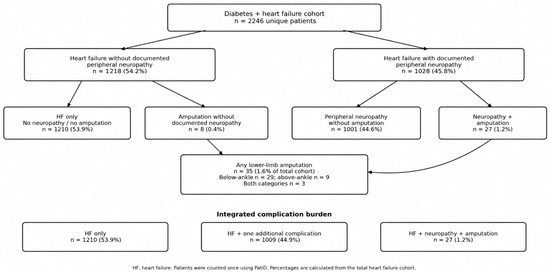
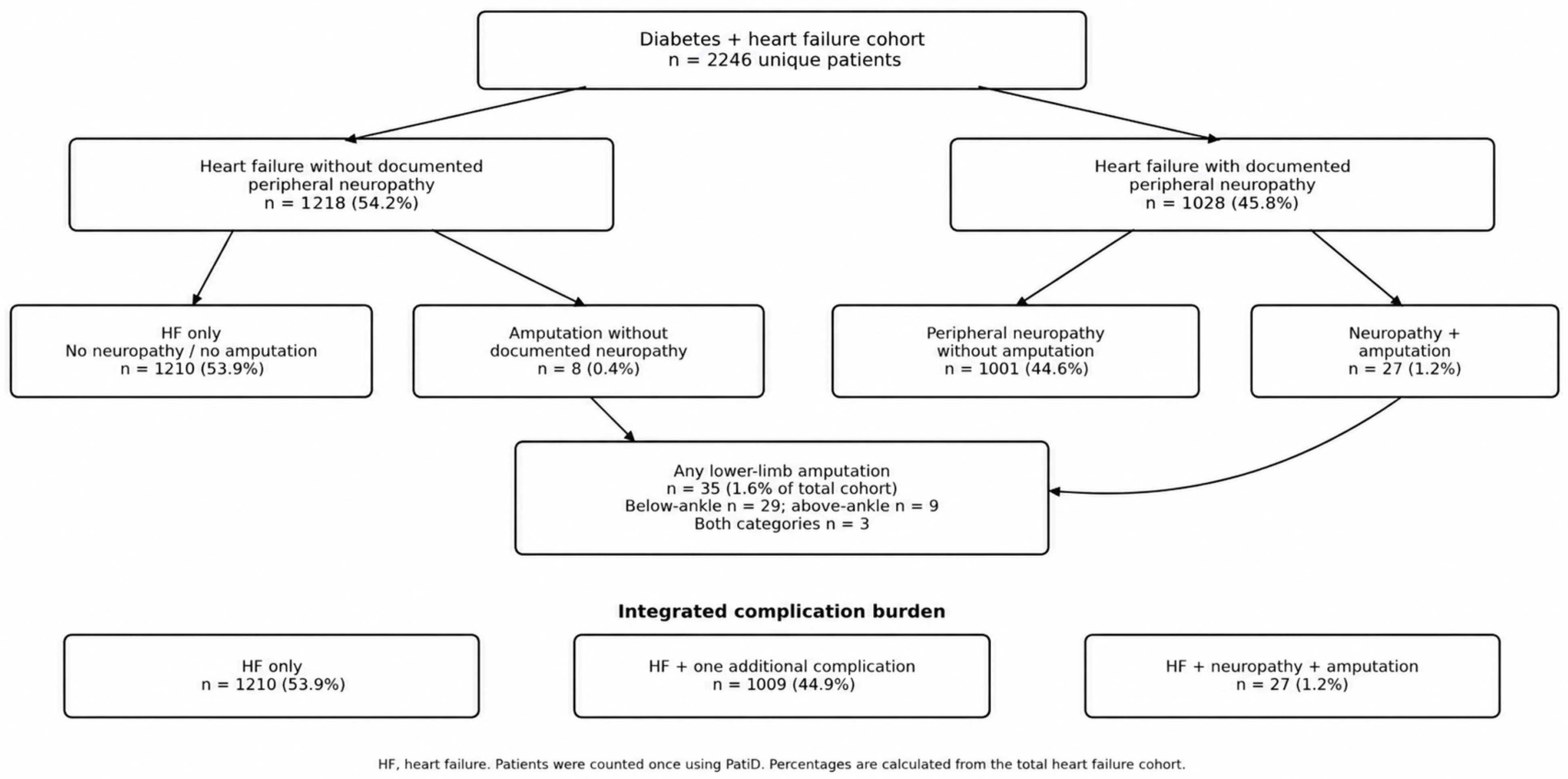
The study flowchart and cardio-neurovascular overlap are presented in Figure 1.
Figure 1.
Study flowchart and cardio-neurovascular overlap. The figure illustrates the linkage of patients with diabetes and heart failure to peripheral neuropathy and lower-limb amputation datasets. Patients were counted once using PatID. Any lower-limb amputation included below-ankle and/or above-ankle amputation; three patients appeared in both amputation categories and were counted once in the overall amputation variable.
3. Results
3.1. Study Population and Cardio-Neurovascular Overlap
The heart failure export included 2246 unique patients with diabetes and a recorded heart failure diagnosis. After linkage, 1028 patients (45.8%) had documented peripheral neuropathy and 1218 (54.2%) had no documented peripheral neuropathy. Any lower-limb amputation was identified in 35 patients (1.6%); 29 had below-ankle, and 9 had above-ankle amputation, with three patients present in both amputation exports.
The cohort had a median age of 68 [IQR 61–74] years; 1235 patients (55.0%) were female. Type 2 diabetes was recorded in 2166 patients (96.4%), type 1 diabetes in 79 (3.5%), and another diabetes type in 1 (0.04%). Median diabetes duration was 10 [IQR 4–17] years.
Patients with heart failure and peripheral neuropathy were older than those without neuropathy (median 70 [IQR 63–76] vs. 67 [IQR 59–73] years, p < 0.001) and had a longer diabetes duration (15 [IQR 9–21] vs. 6 [IQR 1–11] years, p < 0.001). Fasting glucose was available in 1519 patients and was higher in the neuropathy group (median 135 [IQR 130–155] vs. 130 [IQR 120–150] mg/dL, p < 0.001).
Any lower-limb amputation was more frequent in the neuropathy group than in the non-neuropathy group (2.6% vs. 0.7%, p < 0.001). Below-ankle amputation was also more frequent among patients with neuropathy (2.4% vs. 0.3%, p < 0.001), whereas above-ankle amputation was rare and similarly distributed (0.4% vs. 0.4%, p = 1.000). These patient-level frequencies are summarized in Table 1.
Table 1.
Baseline characteristics of patients with heart failure according to peripheral neuropathy status.
3.2. Antidiabetic Treatment Patterns and Therapeutic Complexity
Among the cohort, 2099 patients (93.5%) had at least one identifiable antidiabetic therapeutic class. Insulin therapy was recorded in 51.8% of patients with neuropathy versus 25.7% of those without neuropathy; GLP-1-based therapy in 29.6% vs. 14.8%; and SGLT2 inhibitor therapy in 27.3% vs. 20.4% (all p < 0.001). Metformin-containing therapy was recorded in 50.7% and 55.6%, respectively (p = 0.020).
The number of antidiabetic therapeutic classes was higher in patients with neuropathy (median 2 [IQR 1–2.25] vs. 1 [IQR 1–2], p < 0.001). Treatment with at least two classes was present in 68.4% vs. 45.3%, and treatment with at least three classes in 26.4% vs. 13.3% (both p < 0.001).
Any injectable therapy was recorded in 66.5% of patients with neuropathy versus 36.0% of those without neuropathy (p < 0.001). Insulin plus GLP-1-based therapy, GLP-1-based therapy plus an SGLT2 inhibitor, insulin plus an SGLT2 inhibitor, and triple therapy were also more frequent in the neuropathy group (all p < 0.001).
3.3. Lower-Limb Amputation Burden and Cardio-Neurovascular Severity
The frequency of lower-limb amputation according to neuropathy status is reported in Section 3.1. This section focuses on the clinical and therapeutic characteristics of patients with and without amputation.
Compared with patients without amputation, those with lower-limb amputation had a similar age distribution (median 69 [IQR 62.5–74] vs. 68 [IQR 61–74] years, p = 0.933), but a longer diabetes duration (20 [IQR 16–23] vs. 10 [IQR 4–16] years, p < 0.001). Male sex was more frequent in the amputation group (65.7% vs. 44.7%, p = 0.013).
Among patients with available measurements, creatinine was higher in the amputation group (median 1.36 [IQR 1.09–1.88] vs. 0.96 [IQR 0.80–1.26] mg/dL, p = 0.048); however, creatinine was available for only seven patients with amputation. Fasting glucose did not differ significantly (median 130 [IQR 130–150] vs. 130 [IQR 123–150] mg/dL, p = 0.610).
Insulin therapy was recorded in 77.1% of patients with amputation versus 37.0% of those without amputation (p < 0.001), and GLP-1-based therapy in 42.9% vs. 21.2% (p = 0.002). SGLT2 inhibitor use was 37.1% vs. 23.3% (p = 0.056), whereas metformin-containing therapy was 34.3% vs. 53.6% (p = 0.023).
The number of antidiabetic therapeutic classes was higher in the amputation group (median 2 [IQR 1–3] vs. 2 [IQR 1–2], p = 0.010). Any injectable therapy was recorded in 94.3% vs. 49.3% (p < 0.001), and treatment with at least three classes in 34.3% vs. 19.0% (p = 0.023) (Table 2).
Table 2.
Clinical and therapeutic characteristics according to lower-limb amputation status.
3.4. Predictors of Lower-Limb Amputation in Patients with Diabetes and Heart Failure
Logistic regression analysis was performed to identify factors associated with lower-limb amputation among patients with diabetes and heart failure. In univariable analysis, age was not associated with amputation risk (OR 1.00, 95% CI 0.97–1.04, p = 0.896). In contrast, the male sex was associated with more than a twofold higher odds of lower-limb amputation (OR 2.37, 95% CI 1.18–4.79, p = 0.016).
Each additional year of diabetes duration was associated with higher odds of lower-limb amputation (OR 1.09, 95% CI 1.06–1.13, p < 0.001). Peripheral neuropathy was associated with higher odds in univariable analysis (OR 4.08, 95% CI 1.85–9.02, p < 0.001).
Insulin therapy was associated with higher odds of amputation (OR 5.74, 95% CI 2.59–12.69, p < 0.001), as was GLP-1-based therapy (OR 2.79, 95% CI 1.42–5.48, p = 0.003). SGLT2 inhibitor therapy showed a borderline association (OR 1.94, 95% CI 0.97–3.88, p = 0.061), whereas metformin-containing therapy was associated with lower odds (OR 0.45, 95% CI 0.22–0.91, p = 0.026).
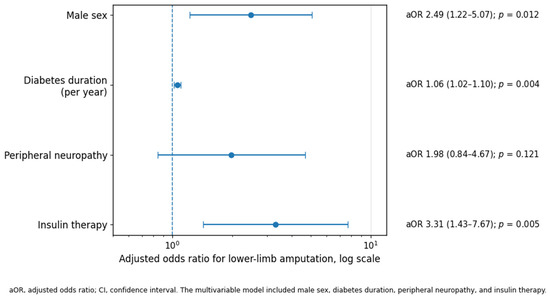
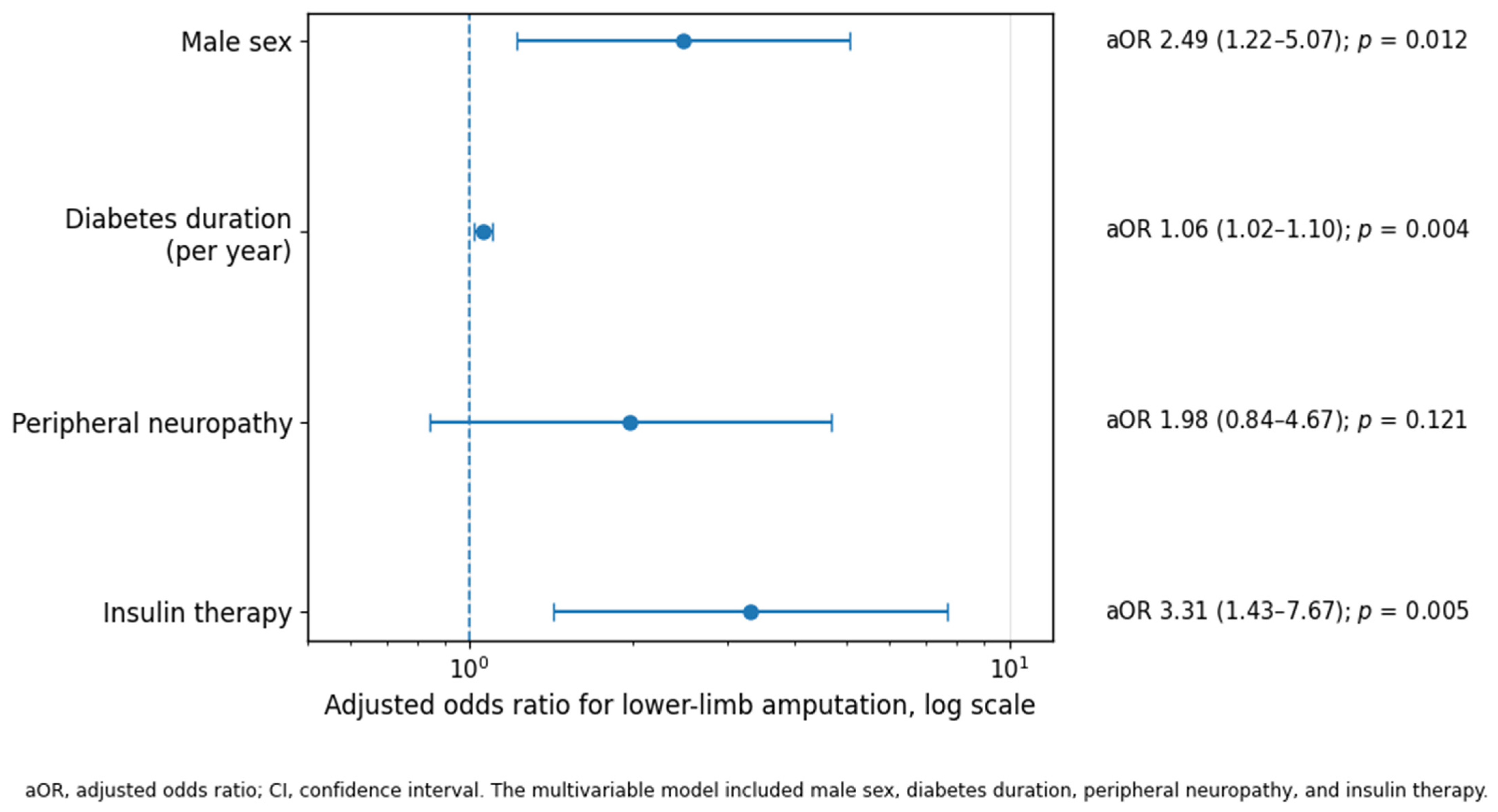
Because only 35 patients experienced lower-limb amputation, the parsimonious multivariable model included male sex, diabetes duration, peripheral neuropathy, and insulin therapy. Male sex (adjusted OR 2.49, 95% CI 1.22–5.07, p = 0.012), diabetes duration (adjusted OR 1.06 per year, 95% CI 1.02–1.10, p = 0.004), and insulin therapy (adjusted OR 3.31, 95% CI 1.43–7.67, p = 0.005) remained associated with amputation. The association with peripheral neuropathy was attenuated (adjusted OR 1.98, 95% CI 0.84–4.67, p = 0.121).
Table 3.
Logistic regression analysis of factors associated with lower-limb amputation.
Figure 2.
Adjusted predictors of lower-limb amputation. Forest plot showing adjusted odds ratios and 95% confidence intervals. The multivariable model included male sex, diabetes duration, peripheral neuropathy, and insulin therapy; the model was restricted because only 35 amputation events were present.
3.5. Integrated Cardio-Neurovascular Multimorbidity Phenotype
Patients were stratified according to the presence of peripheral neuropathy and/or lower-limb amputation. Because all patients had diabetes and heart failure by study design, 1210 patients (53.9%) had heart failure only, 1009 (44.9%) had heart failure plus one additional complication, and 27 (1.2%) had the combined heart failure–neuropathy–amputation phenotype.
The group with one additional complication included 1001 patients with neuropathy without amputation and 8 patients with amputation without documented neuropathy.
Median diabetes duration increased across the three phenotype groups: 5 [IQR 1–11], 15 [IQR 9–21], and 20 [IQR 16–23] years, respectively (p < 0.001). Insulin therapy was recorded in 25.4%, 51.3%, and 77.8%; GLP-1-based therapy in 14.8%, 28.8%, and 51.9%; and SGLT2 inhibitor therapy in 20.3%, 27.0%, and 40.7% of the groups, respectively (all p < 0.001).
Injectable therapy was recorded in 35.6%, 65.9%, and 96.3% of the three groups, respectively (p < 0.001). The number of therapeutic classes was also higher across the phenotype gradient (median 1 [IQR 1–2], 2 [IQR 1–2], and 2 [IQR 2–3], p < 0.001). These analyses are descriptive and do not establish temporal or causal relationships.
4. Discussion
This real-world retrospective study evaluated the overlap between heart failure, peripheral neuropathy, and lower-limb amputation in a large cohort of patients with diabetes. The main finding was that peripheral neuropathy was highly prevalent among patients with diabetes and heart failure, affecting 45.8% of the cohort. Patients with concomitant neuropathy had a longer duration of diabetes, were older, and showed a more intensive antidiabetic treatment profile than those without neuropathy. Lower-limb amputation was relatively uncommon, affecting 1.6% of the total cohort, but it was strongly concentrated among patients with peripheral neuropathy. Together, these findings support the presence of an integrated cardio-neurovascular phenotype in which chronic diabetes burden, heart failure, neuropathy, and limb complications coexist as expressions of advanced systemic disease.
The association between peripheral neuropathy and longer diabetes duration is biologically plausible and clinically expected. Diabetic peripheral neuropathy is generally considered a chronic microvascular and neurodegenerative complication of diabetes, promoted by long-term hyperglycemia, metabolic stress, inflammation, oxidative injury, and vascular dysfunction. In the present cohort, diabetes duration was approximately twice as long in patients with heart failure and neuropathy compared with those without neuropathy. This supports the interpretation that neuropathy identifies a subgroup with more prolonged exposure to metabolic injury rather than an isolated neurological complication. Similar mechanisms are also relevant to diabetic foot disease, where neuropathy, vascular disease, biomechanical stress, and impaired wound healing interact to increase the risk of ulceration and amputation [8,14,15,16].
A clinically important observation was the prevalence of lower-limb amputations among patients with concomitant neuropathy. Although only 35 patients had any lower-limb amputation, 77.1% of them also had documented peripheral neuropathy. The prevalence of amputation was significantly higher in patients with heart failure and neuropathy than in those without neuropathy. This finding is consistent with the established role of neuropathy as a major contributor to diabetic foot complications, particularly through loss of protective sensation, altered pressure distribution, delayed recognition of trauma, ulcer development, infection, and subsequent amputation risk. Contemporary reviews emphasize that diabetic foot ulcers are a major source of hospitalization, functional decline, lower-extremity amputation, and mortality, especially when neuropathy and vascular disease coexist [17,18,19].
The amputation subgroup showed a distinct severity profile. Compared with non-amputated patients, those with lower-limb amputation had a markedly longer diabetes duration, a higher proportion of male patients, more frequent insulin use, and greater therapeutic complexity. In the multivariable model, male sex, diabetes duration, and insulin therapy remained independently associated with lower-limb amputation. Peripheral neuropathy was strongly associated with amputation in univariable analysis, but its effect was attenuated after adjustment, suggesting that part of the neuropathy–amputation relationship is mediated or confounded by chronic diabetes burden and treatment intensity. This does not reduce the clinical importance of neuropathy; rather, it indicates that amputation occurs within a broader high-risk phenotype where neuropathy, long-standing diabetes, insulin-treated disease, and cardiometabolic vulnerability overlap [20,21,22].
The association between insulin therapy and lower-limb amputation should be interpreted carefully. In this retrospective dataset, insulin use should not be viewed as a causal determinant of amputation but rather as a marker of more advanced diabetes, longer disease duration, beta-cell failure, and higher complication burden. This interpretation is supported by recent literature showing that insulin-treated disease and prolonged diabetes duration are strong predictors of diabetic foot complications and amputation risk. In the present study, patients with the most severe phenotype—heart failure, neuropathy, and lower-limb amputation—had the highest insulin use and the highest number of antidiabetic therapeutic classes, reinforcing the concept of treatment intensity as a surrogate of disease complexity [23,24].
The observed patterns of GLP-1 receptor agonist and SGLT2 inhibitor use also deserve careful interpretation. Both classes were more frequently recorded among patients with neuropathy and among those with the combined neuropathy–amputation phenotype. This should not be interpreted as evidence that these therapies increase complication risk. More plausibly, patients receiving GLP-1-based therapy or SGLT2 inhibitors were clinically more complex, with longer diabetes duration, obesity or cardiometabolic risk, and established cardiovascular disease. Current diabetes standards emphasize the use of SGLT2 inhibitors and GLP-1 receptor agonists in patients with type 2 diabetes and cardiovascular or kidney risk, with SGLT2 inhibitors having a central role in heart failure and chronic kidney disease risk reduction. Therefore, the higher use of these therapies in complicated patients likely reflects contemporary therapeutic selection toward high-risk cardio-metabolic phenotypes [25,26,27].
The decrease in metformin-containing therapy across the severity gradient may reflect several clinical factors. Metformin is often used earlier in the therapeutic course of type 2 diabetes, whereas patients with longer disease duration and advanced complications may require injectable therapy or multidrug combinations. In addition, renal impairment, frailty, intolerance, or advanced heart failure may influence metformin prescribing. In the present study, creatinine values were limited, especially among amputated patients, preventing a robust evaluation of renal function as a driver of metformin discontinuation. Therefore, the lower frequency of metformin use in the most severe phenotype should be interpreted as a descriptive therapeutic pattern rather than as a direct marker of risk [28,29,30].
The integrated phenotype analysis provides one of the most relevant findings of this study. Diabetes duration, insulin use, GLP-1-based therapy, SGLT2 inhibitor use, multidrug therapy, and injectable treatment increased progressively from heart failure alone to heart failure with one additional complication and to the combined phenotype of heart failure, peripheral neuropathy, and amputation. This gradient suggests that complications do not occur randomly but cluster in patients with long-standing and therapeutically complex diabetes. The term “cardio-neurovascular multimorbidity” may therefore be useful to describe this subgroup, in which cardiac dysfunction, peripheral nerve injury, and limb-threatening complications coexist [31,32,33].
From a clinical perspective, these findings support the need for systematic foot and neuropathy assessment in patients with diabetes and heart failure. Heart failure clinics and diabetes services often focus on cardiovascular risk, glycemic control, kidney function, and medication optimization. However, the present results suggest that the coexistence of heart failure and neuropathy identifies a subgroup in whom limb risk should also be actively evaluated. This is particularly important because diabetic foot complications are potentially preventable through early screening, patient education, footwear assessment, vascular evaluation, and timely multidisciplinary care. Diabetic foot literature consistently highlights the major clinical burden of foot ulcers and amputations, including infection, hospitalization, disability, and increased mortality [34].
This study has several strengths. First, it used a large, real-world cohort of patients with diabetes and heart failure. Second, the analysis linked separate datasets for heart failure, peripheral neuropathy, and lower-limb amputation using a unique patient identifier, allowing an integrated evaluation of cardio-neurovascular overlap. Third, patients were counted once at the patient level, reducing duplication caused by medication-level records. Fourth, the analysis did not rely only on single complications but also evaluated therapeutic complexity and multimorbidity phenotypes.
Several limitations should also be acknowledged. The retrospective design prevents causal inference, and the findings should be interpreted as associations. The dataset was based on available clinical records and medication fields, so underdocumentation of neuropathy or amputation is possible. The number of amputation events was small, especially for above-ankle amputations, limiting the statistical power of subgroup analyses and requiring a parsimonious regression model. Laboratory variables were incompletely available, particularly creatinine in the amputation subgroup, preventing detailed adjustment for renal function. Important variables such as HbA1c, albuminuria, estimated glomerular filtration rate, peripheral artery disease, smoking, ulcer history, wound infection, revascularization, heart failure phenotype, and mortality were not consistently available. Finally, the dataset did not include repeated visits, so treatment effects over time or temporal progression from neuropathy to amputation could not be assessed.
5. Conclusions
In this hospital-based retrospective cohort of patients with diabetes and heart failure, peripheral neuropathy was common and was associated with longer diabetes duration, more intensive antidiabetic therapy, and higher lower-limb amputation burden. The combined phenotype was uncommon but concentrated among patients with the longest diabetes duration and greatest treatment complexity. These findings describe associations in a selected clinical population and should not be interpreted as causal or as prevalence estimates for the general population with diabetes.
Future longitudinal studies are needed to clarify temporal relationships between heart failure, neuropathy progression, therapeutic intensification, and lower-limb amputation risk and to determine whether integrated cardio-metabolic and foot-risk screening strategies can reduce severe limb outcomes in this high-risk population.
Author Contributions
Conceptualization, A.C.F., T.C.G. and M.S.P.; methodology, A.C.F., T.C.G. and M.S.P.; software, A.C.F., T.C.G. and M.S.P.; validation, A.C.F., T.C.G. and M.S.P.; formal analysis, A.C.F., T.C.G. and M.S.P.; investigation, A.C.F., T.C.G. and M.S.P.; resources, A.C.F., T.C.G. and M.S.P.; data curation, A.C.F., T.C.G. and M.S.P.; writing—original draft preparation, T.C.G.; writing—review and editing, T.C.G.; visualization, T.C.G.; supervision, M.S.P.; project administration, M.S.P.; funding acquisition, M.S.P. All authors have read and agreed to the published version of the manuscript.
Funding
The APC was funded by the University of Oradea, Oradea, Romania.
Institutional Review Board Statement
This study was conducted in accordance with the Declaration of Helsinki and approved by the Ethics Committee of the Clinical County Emergency Hospital Bihor (approval code: 22733, date: 13 July 2026), Oradea, Romania.
Informed Consent Statement
General informed consent was obtained from all subjects involved in the study.
Data Availability Statement
The original contributions presented in this study are included in this article. Further inquiries can be directed to the first author.
Acknowledgments
The authors would like to thank the University of Oradea, Oradea, Romania, for providing the necessary facilities and supporting the funding of the APC.
Conflicts of Interest
The authors declare no conflicts of interest.
Abbreviations
The following abbreviations are used in this manuscript:
| Abbreviation | Definition |
| CI | Confidence interval |
| DPP-4 | Dipeptidyl peptidase-4 |
| GLP-1 RA | Glucagon-like peptide-1 receptor agonist |
| HF | Heart failure |
| OR | Odds ratio |
| PatID | Patient identifier |
| SD | Standard deviation |
| SGLT2 | Sodium–glucose cotransporter-2 |
References
- American Diabetes Association Professional Practice Committee. 2. Diagnosis and classification of diabetes: Standards of care in diabetes—2024. Diabetes Care 2023, 47, S20–S42. [Google Scholar] [CrossRef] [Scilit] [PubMed]
- Czyz, S.; Marszal, W.; Sysło, O.; Saracen, N. Complex mechanisms underlying the coexistence of diabetic complications, chronic kidney disease, and hemorrhagic stroke: A case report. Cureus 2025, 17, e95844. [Google Scholar] [CrossRef] [Scilit] [PubMed]
- Zhao, L.; Yuan, J.; Yang, Q.; Ma, J.; Yang, F.; Zou, Y.; Liu, K.; Liu, F. Diabetes and its complications: Molecular mechanisms, prevention and treatment. Signal Transduct. Target. Ther. 2026, 11, 22. [Google Scholar] [CrossRef] [Scilit] [PubMed]
- Rosano, G.M.; Vitale, C.; Seferovic, P. Heart failure in patients with diabetes mellitus. Card. Fail. Rev. 2017, 3, 52–55. [Google Scholar] [CrossRef] [Scilit] [PubMed]
- Motie, M.; Evangelista, L.S.; Horwich, T.; Lombardo, D.; Zaldivar, F.; Hamilton, M.; Fonarow, G.C. Association between inflammatory biomarkers and adiposity in obese patients with heart failure and metabolic syndrome. Exp. Ther. Med. 2014, 8, 181–186. [Google Scholar] [CrossRef] [Scilit] [PubMed]
- Zhu, J.; Hu, Z.; Luo, Y.; Liu, Y.; Luo, W.; Du, X.; Luo, Z.; Hu, J.; Peng, S. Diabetic peripheral neuropathy: Pathogenetic mechanisms and treatment. Front. Endocrinol. 2023, 14, 1265372. [Google Scholar] [CrossRef] [Scilit] [PubMed]
- Albariqi, M.M.H.; Alradwan, I.A.; Alqahtani, S.M.; Majrashi, M.A.; Almutiri, B.J.; Jabaan, A.; Alzahrani, S. Diabetic peripheral neuropathy: Mechanisms and emerging therapies. Biology 2026, 15, 723. [Google Scholar] [CrossRef] [Scilit] [PubMed]
- Yang, Y.; Zhao, B.; Wang, Y.; Lan, H.; Liu, X.; Hu, Y.; Cao, P. Diabetic neuropathy: Cutting-edge research and future directions. Signal Transduct. Target. Ther. 2025, 10, 132. [Google Scholar] [CrossRef] [Scilit] [PubMed]
- McDermott, K.; Fang, M.; Boulton, A.J.M.; Selvin, E.; Hicks, C.W. Etiology, epidemiology, and disparities in the burden of diabetic foot ulcers. Diabetes Care 2023, 46, 209–221. [Google Scholar] [CrossRef] [Scilit] [PubMed]
- Edmonds, M.; Manu, C.; Vas, P. The current burden of diabetic foot disease. J. Clin. Orthop. Trauma 2021, 17, 88–93. [Google Scholar] [CrossRef] [Scilit] [PubMed]
- Rubio, J.A.; Jiménez, S.; Lázaro-Martínez, J.L. Mortality in patients with diabetic foot ulcers: Causes, risk factors, and their association with evolution and severity of ulcer. J. Clin. Med. 2020, 9, 3009. [Google Scholar] [CrossRef] [Scilit] [PubMed]
- Perveen, W.; Ahsan, H.; Rameen, S.; Fayyaz, S.; Zaif, A.; Paracha, M.A.; Nuhmani, S.; Khan, M.; Alghadir, A.H. Prevalence of peripheral neuropathy, amputation, and quality of life in patients with diabetes mellitus. Sci. Rep. 2024, 14, 14430. [Google Scholar] [CrossRef] [Scilit] [PubMed]
- Öztürk, B. Cardiac effects and comorbidities of neurological diseases. Turk. J. Med. Sci. 2024, 54, 1428–1437. [Google Scholar] [CrossRef] [Scilit] [PubMed]
- Poorrezaei, M.; Zakeri, M.A.; Kamiab, Z.; Shafiepour, M.; Khalili, P.; Hermis, A.H.; Hajwal, S.K.; Jawed, I.; Karimifard, M. Associations between peripheral neuropathy and cardiovascular complications in patients with type 2 diabetes mellitus: A cross-sectional study. Sci. Rep. 2025, 16, 2129. [Google Scholar] [CrossRef] [Scilit] [PubMed]
- He, Z.; Diao, J.; Hamel, F.G.; Duan, B. Innovative strategies for diabetic peripheral neuropathy: From clinical management to emerging bioengineering solutions. Bioact. Mater. 2026, 61, 312–338. [Google Scholar] [CrossRef] [Scilit] [PubMed]
- Tao, Y.; Zhang, H.; MacGilchrist, C.; Kirwan, E.; McIntosh, C. Prevalence and risk factors of painful diabetic neuropathy: A systematic review and meta-analysis. Diabetes Res. Clin. Pract. 2025, 222, 112099. [Google Scholar] [CrossRef] [Scilit] [PubMed]
- Ahmad, N.; Thomas, G.N.; Gill, P.; Chan, C.; Torella, F. Lower limb amputation in England: Prevalence, regional variation and relationship with revascularisation, deprivation and risk factors. A retrospective review of hospital data. J. R. Soc. Med. 2014, 107, 483–489. [Google Scholar] [CrossRef] [Scilit] [PubMed]
- Molina, C.S.; Faulk, J. Lower Extremity Amputation; StatPearls Publishing: Treasure Island, FL, USA, 2019. [Google Scholar]
- Baribeau, V.; Ponukumati, A.S.; Krafcik, B.M.; Newton, L.E.; Goodney, P.P. Scoping review of risk factors for lower extremity amputation in patients with concomitant diabetes mellitus and peripheral arterial disease. Ann. Vasc. Surg. 2025, 123, 387–400. [Google Scholar] [CrossRef] [Scilit] [PubMed]
- Gong, H.; Ren, Y.; Li, Z.; Zha, P.; Bista, R.; Li, Y.; Chen, D.; Gao, Y.; Chen, L.; Ran, X.; et al. Clinical characteristics and risk factors of lower extremity amputation in the diabetic inpatients with foot ulcers. Front. Endocrinol. 2023, 14, 1144806. [Google Scholar] [CrossRef] [Scilit] [PubMed]
- Kishore, T.R.; Kalluri, S.S.; Sarveswaran, V. A prospective study on independent risk factors for lower limb amputation in diabetic foot patients. Eur. J. Cardiovasc. Med. 2025, 15, 405–411. [Google Scholar] [CrossRef] [Scilit]
- Walicka, M.; Raczyńska, M.; Marcinkowska, K.; Lisicka, I.; Czaicki, A.; Wierzba, W.; Franek, E. Amputations of lower limb in subjects with diabetes mellitus: Reasons and 30-day mortality. J. Diabetes Res. 2021, 2021, 8866126. [Google Scholar] [CrossRef] [Scilit] [PubMed]
- Dosluoglu, H.H.; Lall, P.; Nader, N.D.; Harris, L.M.; Dryjski, M.L. Insulin use is associated with poor limb salvage and survival in diabetic patients with chronic limb ischemia. J. Vasc. Surg. 2010, 51, 1178–1189; discussion 1188–1179. [Google Scholar] [CrossRef] [Scilit] [PubMed]
- Dugbartey, G.J.; Alornyo, K.K.; Dapaa-Addo, C.O.; Kwashie, E.K.; Harley, Y.; Asiedu, B.N. Toxicological profile of anti-diabetic drugs and emerging measures to reduce the toxic burden. Toxicol. Rep. 2026, 16, 102247. [Google Scholar] [CrossRef] [Scilit] [PubMed]
- Homoródi, N.; Varga, É.; Szabó, Z.; Sztanek, F.; Harangi, M. Complementary yet distinct roles of glp-1 receptor agonists and sglt2 inhibitors in cardiovascular risk reduction. Biomedicines 2025, 13, 2595. [Google Scholar] [CrossRef] [Scilit] [PubMed]
- Youssef, M.E.; Yahya, G.; Popoviciu, M.S.; Cavalu, S.; Abd-Eldayem, M.A.; Saber, S. Unlocking the full potential of sglt2 inhibitors: Expanding applications beyond glycemic control. Int. J. Mol. Sci. 2023, 24, 6039. [Google Scholar] [CrossRef] [Scilit] [PubMed]
- Brata, R.; Pascalau, A.V.; Fratila, O.; Paul, I.; Muresan, M.M.; Camarasan, A.; Ilias, T. Hemodynamic effects of sglt2 inhibitors in patients with and without diabetes mellitus—A narrative review. Healthcare 2024, 12, 2464. [Google Scholar] [CrossRef] [Scilit] [PubMed]
- Bailey, C.J. Metformin: Therapeutic profile in the treatment of type 2 diabetes. Diabetes Obes. Metab. 2024, 26, 3–19. [Google Scholar] [CrossRef] [Scilit] [PubMed]
- Patiño-Cardona, S.; Pascual-Morena, C.; Sequí-Domínguez, I.; Álvarez-Bueno, C.; Martínez-Martínez, H.; de Miguel-Brox, M.; Priego-Jiménez, S.; Martínez-Vizcaíno, V. Safety of metformin in chronic kidney disease and type 2 diabetes mellitus: A systematic review and meta-analysis. Eur. J. Pharmacol. 2026, 1015, 178560. [Google Scholar] [CrossRef] [Scilit] [PubMed]
- Reed, S.; Taka, E.; Darling-Reed, S.; Soliman, K.F.A. Neuroprotective effects of metformin through the modulation of neuroinflammation and oxidative stress. Cells 2025, 14, 1064. [Google Scholar] [CrossRef] [Scilit] [PubMed]
- Cardoso, P.; Young, K.G.; Nair, A.T.N.; Hopkins, R.; McGovern, A.P.; Haider, E.; Karunaratne, P.; Donnelly, L.; Mateen, B.A.; Sattar, N.; et al. Phenotype-based targeted treatment of sglt2 inhibitors and glp-1 receptor agonists in type 2 diabetes. Diabetologia 2024, 67, 822–836. [Google Scholar] [CrossRef] [Scilit] [PubMed]
- Porterfield, L.R.; Nadeem, S.; Swanson, D.; Hayek, S.S.; Vaughan, E.M. Combination cardiometabolic therapy in type 2 diabetes: Optimizing sglt2 inhibitor and glp-1 receptor agonist use. Curr. Atheroscler. Rep. 2026, 28, 73. [Google Scholar] [CrossRef] [Scilit] [PubMed]
- Pantis, C.; Vesa, C.M.; Ghitea, T.C.; Trifan, D.F.; Brata, R.D.; Pop, N.O.; Moisi, M.I. Diabetes duration is associated with declining kidney function: Egfr and ckd burden across duration. J. Clin. Med. 2026, 15, 2235. [Google Scholar] [CrossRef] [Scilit] [PubMed]
- Adam, C.A.; Popiolek-Kalisz, J.; Akinci, B.; Manzi, G.; Ullah, I.; Beneki, E.; Mitu, F.; Batalik, L.; Ostojic, M.; Perone, F. Cardiac rehabilitation and cardiovascular prevention in patients with type 2 diabetes mellitus: From initial assessment to comprehensive management. J. Clin. Med. 2025, 14, 7791. [Google Scholar] [CrossRef] [Scilit] [PubMed]

Disclaimer/Publisher’s Note: The statements, opinions and data contained in all publications are solely those of the individual author(s) and contributor(s) and not of MDPI and/or the editor(s). MDPI and/or the editor(s) disclaim responsibility for any injury to people or property resulting from any ideas, methods, instructions or products referred to in the content. |
© 2026 by the authors. Licensee MDPI, Basel, Switzerland. This article is an open access article distributed under the terms and conditions of the Creative Commons Attribution (CC BY) license.