


Abstract
Background/Objective: Prediabetes is increasingly recognized as a state of chronic, low-grade inflammation that contributes to early β-cell dysfunction, insulin resistance, and progression to type 2 diabetes (T2D). This review synthesizes mechanistic and clinical evidence to characterize the inflammatory landscape of prediabetes, evaluate the consistency of candidate biomarkers, and assess potential for clinical translation. Methods: We conducted a structured narrative review and assessed 22 studies investigating inflammatory and metabolic biomarkers for prediabetes across experimental animal models, human pancreatic islets, and clinical cohorts. Biomarkers included cytokines, oxidative stress indicators, microRNAs, and immune-cell-associated factors. Studies included cross-sectional, longitudinal, and mechanistic designs. Results: Clinical studies generally reported higher CRP and hsCRP. In several cohorts, IL-6 and other inflammatory mediators were increased in individuals with prediabetes. However, inflammatory responses were not uniform across studies. One study reported elevated IL-10 and IL-4 in addition to hsCRP, while TNF-α and IL-6 were not significantly different. Overall, CRP and hsCRP demonstrated the strongest clinical translational evidence, with findings replicated across multiple cohorts and longitudinal evidence linking higher baseline hsCRP or CRP with increased risk of progression to T2D. Other candidates, including IL-6, TNF-α, adiponectin, SFRP4, oxidative stress markers, and microRNAs, remain promising but have more limited or inconsistent evidence for clinical application. Conclusions: Prediabetes is characterized by a multifaceted inflammatory response involving innate and adaptive immune pathways, altered cytokine and microRNA profiles, oxidative stress, and adipose–pancreatic interactions. Although inflammatory biomarkers may enhance conventional metabolic measures for risk stratification, current evidence does not establish any inflammatory marker as a standalone diagnostic test for prediabetes.
1. Introduction
According to the Centers for Disease Control and Prevention (CDC), more than 38 million Americans have diabetes (about 1 in 10), and about 90% to 95% of them have type 2 diabetes (T2D) [1]. An estimated 589 million adults aged 20–79 years old are living with diabetes [2]. The total number of adults living with diabetes is predicted to rise to 853 million (13%) by 2050 [2].
Type 2 diabetes is characterized by the insufficient production of insulin (the hormone that regulates blood glucose) in the pancreas or in the body’s effective use of the insulin it produces [3], leading to high levels of glucose (hyperglycemia) [2]. When high blood glucose is left untreated over time, it can damage many of the body’s organs, leading to disabling and life-threatening health conditions. Such complications include cardiovascular diseases (CVD), nerve damage (neuropathy), kidney damage (nephropathy), and lower-limb amputation. Another set of complications is eye diseases, such as glaucoma, which damages the optic nerve, and retinopathy, which mainly affects the retina, resulting in vision loss and even blindness [2]. Diabetes also imposes a substantial economic burden on countries, healthcare systems, people living with diabetes, and their families. The increase in global health expenditure due to diabetes has been substantial, growing from 232 billion U.S. dollars (USD) in 2007 to more than a trillion USD (1015 billion) in 2024 for adults aged 20–79 years [2].
Symptoms of type 2 diabetes can be mild, and they may take several years to be noticed [3]. Type 2 diabetes can be prevented or delayed with lifestyle changes [1]. Before progression to T2D, people may be in a prediabetic stage. Prediabetes is a serious condition that precedes diabetes. It is a metabolic state in which blood glucose levels are high but not high enough to be diagnosed as diabetic [4]. In a prediabetic stage, damage has already begun in various organs that leads to dysfunction in the eyes, kidneys, blood vessels, and heart [5]. Prediabetes is highly preventable with interventions, mitigating some of the potential consequences of progressing to T2D.
Following the 2025 American Diabetes Association (ADA) guidelines, prediabetes is diagnosed with a fasting plasma glucose test that ranges between 100 mg/dL and 125 mg/dL (measured at a single point in time) [6]. Another method established by the ADA is the HbA1c (average of blood sugar over the last 3 months) [6]. Although the HbA1c test is the most employed screening method for prediabetes, it may fail to adequately assess blood glucose variability [7].
The diagnostic accuracy of HbA1c can be influenced by biological variability, particularly due to individual differences in red blood cell lifespan [8,9]. Certain medical conditions, such as hemoglobinopathies, anemia, HIV, glucose-6-phosphate dehydrogenase deficiency, hemodialysis, recent blood transfusions, or pregnancy, may impact the precision of HbA1c measurements [10]. It is worth noting that certain racial groups are more susceptible to conditions that can affect the accuracy of HbA1c measurements [11]. For instance, African Americans are approximately 5.2 times more likely to have anemia than Non-Hispanic Whites, which may lead to an underestimation of HbA1c levels, thereby affecting the accuracy of its use in this group [11].
Prediabetes is also predicated on enlarged visceral adipose tissue that secretes different pro-inflammatory adipokines and cytokines, leading to a chronic low-grade inflammation state also known as metaflammation [12]. Consequently, insulin signaling pathways are targeted and lead to an insulin-resistant state, which affects the liver tissue, adipose tissue, and skeletal muscles [12]. An increase in the pro-inflammatory cytokines (e.g., interleukin- (IL-) 1, IL-6, tumor necrosis factor- (TNF-) α, C-reactive protein (CRP), transforming growth factor- (TGF-) β, and leptin) or the decrease in anti-inflammatory cytokines (e.g., interleukin-1 receptor antagonist (IL-1Ra), IL-4, IL-10, IL-13, and adiponectin) is the essential step in glucotoxicity- and lipotoxicity-induced mitochondrial injury, oxidative stress, and beta cell apoptosis in T2D [13,14,15].
Cytokines are small soluble proteins that mediate intracellular communication and control the growth and activity of blood cells and other cells that help the body’s immune and inflammatory responses [16]. While cytokines can be produced by many cell types, immune cells are the most important producers of these molecules [16]. Enlarged visceral adipose tissue secretes different pro-inflammatory adipokines and cytokines, leading to a state of chronic low-grade inflammation [12]. Consequently, insulin signaling pathways become targeted, leading to an insulin-resistant state, which affects liver tissue, adipose tissue, and skeletal muscles [12].
Interleukins are a group of cytokines that act as chemical signals between white blood cells [17]. IL-6 is a soluble mediator with a pleiotropic (a single gene that affects multiple phenotypic characteristics) effect on inflammation, immune response, and hematopoiesis (blood cell production) [18]. Hyperglycemia induces IL-6 production [19] and has been attributed to the formation of advanced glycation end products (bonding of a sugar molecule to a protein, lipid, or nucleic acid) by persistent hyperglycemia, contributing to the development of chronic inflammation [20]. After IL-6 is synthesized in a local lesion in the initial stage of inflammation, it moves to the liver through the bloodstream, followed by the rapid induction of an extensive range of acute-phase proteins such as CRP [18]. CRP is a pentameric protein synthesized by the liver and increases in response to inflammation. CRP is an acute-phase reactant protein primarily induced by the IL-6 action on the gene responsible for the transcription of CRP during the acute phase of an inflammatory/infectious process [21]. High-sensitivity C-reactive protein (hsCRP) is an acute-phase reactant protein with a brief lifespan of approximately 18 h and is considered a potential biomarker of subclinical inflammation, shown to increase in a hyperglycemic state [22]. hsCRP is produced and released by the liver under the stimulation of cytokines such as tumor necrosis factor alpha (TNF- α) and interleukins 1 and 6 during inflammation [23].
Monocyte chemoattractant protein-1 (MCP-1) is a pro-inflammatory cytokine that acts as a key chemokine in regulating the migration and infiltration of monocytes/and macrophages. The movement of monocytes from the bloodstream across the vascular endothelium is essential for normal immune surveillance of tissues and for initiating inflammatory responses [24]. Interferon gamma (INF-γ) is a pro-inflammatory cytokine that has been shown to have profound effects on both innate and adaptive immunity that facilitate host protection [25]. However, abnormal production of IFN-γ has been associated with disease pathology, including chronic autoimmune diseases such as inflammatory bowel disease and diabetes [25].
The purpose of this review is to assess biomarkers that are potentially correlated with diabetes. Identifying these biomarkers can potentially help recognize prediabetes before it evolves to T2D to provide early intervention and delay and/or prevent T2D complications.
2. Materials and Methods
This study is a structured narrative review that employed a systematic literature search to identify relevant publications. Although a reproducible search strategy and predefined eligibility criteria were used, the review was not conducted as a formal systematic review in accordance with PRISMA guidelines. Quality assessment for this study was conducted by defining the scope and criteria of the study, as well as by appraising the study by utilizing multiple sources, and by including clear inclusion and exclusion criteria (Table 1 below). This study includes a Supplementary Material that provides more detailed information about the materials and software used in each study, as requested by the editors. Additionally, the articles included were critically analyzed by the authors.
Table 1.
Inclusion and exclusion criteria.
The literature search was conducted using a custom Python-based data mining algorithm that queried the National Center for Biotechnology Information (NCBI) PubMed database. The algorithm retrieved article metadata, including title, authors, journal, publication year, DOI, abstract, and PubMed identifier (PMID), and exported the results to comma-separated value (CSV) files for subsequent screening.
Eight independent searches were performed using different combinations of the keywords listed in Table 2 to maximize retrieval of relevant studies while maintaining specificity. Searches were restricted to articles published between January 2014 and December 2024. Each query was limited to a maximum of 1000 records, corresponding to the retrieval limit imposed by the search algorithm.
Table 2.
Keyword search terms.
The choice of inflammatory markers was based on a preliminary search of the literature, as these were representative biomarkers selected based on their documented links to chronic low-grade inflammation with metabolic dysfunction and the development of prediabetes. Collectively, these markers capture multiple biological processes through which inflammation may contribute to β-cell dysfunction, insulin resistance, endothelial dysfunction, and progression toward type 2 diabetes.
The records obtained from all searches were merged into a single dataset. Duplicate articles, identified primarily by PubMed identifier (PMID) or DOI and confirmed by title, when necessary, were removed prior to screening. After duplicate removal, 178 unique articles remained for eligibility assessment.
Study selection was conducted in two stages. First, titles and abstracts were screened to determine their relevance to inflammatory biomarkers in prediabetes. Articles considered potentially eligible then underwent full-text review to confirm they satisfied the predefined inclusion criteria.
Eligible studies included longitudinal, cross-sectional, and case–control studies that investigated inflammatory biomarkers in humans with prediabetes, animal models, and human islets. Studies were excluded if they primarily focused on prediabetes in conjunction with unrelated medical conditions (e.g., hand infections or periodontitis), gestational diabetes, established type 1 or type 2 diabetes without a prediabetes cohort, pharmacological interventions (e.g., metformin efficacy), diet-induced diabetes models, physical activity interventions, or weight-loss interventions. The inclusion and exclusion criteria are summarized in Table 2. The final set of included studies was selected after applying these eligibility criteria during the full-text review.
Generative AI was used to conduct an exhaustive search for articles utilizing keywords of interest as a prompt. No new articles of interest were identified by AI.
3. Results
A total of 22 studies were included in this literature review, incorporating cross-sectional, cohort, longitudinal, experimental, and animal studies. Populations included adults, children, and animal models. Table 3 represents the components of the included articles, such as sample size, methods, and results. Collectively, these studies examined the relationship between prediabetes and low-grade inflammation, with a primary focus on circulating cytokines, inflammatory biomarkers, immune cell profiles, and metabolic correlates. Detailed information on the materials, instruments, and software reported in the reviewed studies is provided in the Supplementary Material.
Table 3.
Results of literature review.
3.1. Inflammatory Cytokines and Biomarkers in Prediabetes
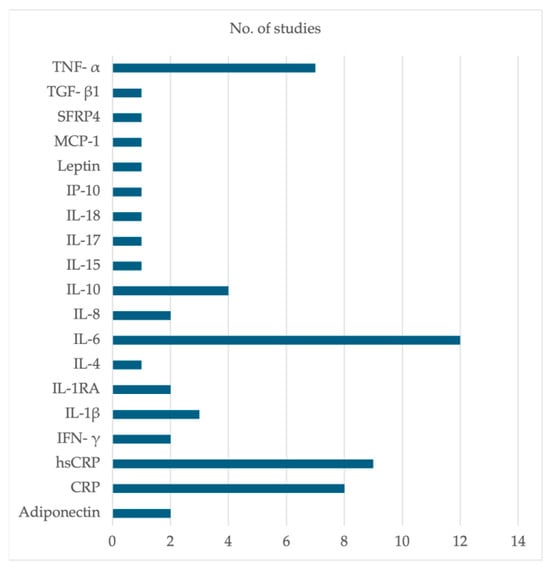
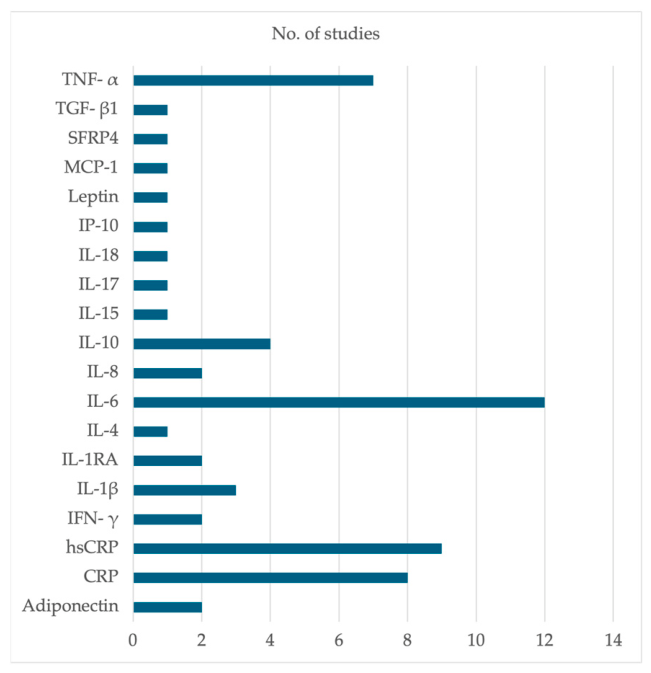
Across human studies, prediabetes was consistently associated with elevated systemic inflammation markers compared with normoglycemic controls. Table 4 illustrates either a significant increase (p < 0.05), significant decrease, or no significant difference between prediabetic subjects and control groups or in a normoglycemic stage. Cytokines that were examined in only one study were omitted from the Table for better visualization and comparison. Some of the other cytokines studied that were not included in Table 4 are IL-4, which was significantly elevated in prediabetic subjects compared to normoglycemic subjects in the Wang et al. (2016) [45] study. In a different study, IL-15 was significantly lower, leptin was significantly elevated, and there was no significant difference in IP-10 [42]. Lastly, SFRP4 was significantly elevated [43]. Figure 1 shows the distribution of all the studies that included cytokines and that were reviewed and summarized to illustrate how often each biomarker was investigated.
Table 4.
Biomarker findings.
Figure 1.
Frequencies of the studied cytokines.
3.1.1. Pro-Inflammatory Cytokines
Multiple studies [26,27,40,41,43,44] reported increased levels of pro-inflammatory cytokines, particularly IL-6, TNF-α, IL-1β, MCP-1, and IFN-γ, in individuals with prediabetes. The human islet study [46] demonstrated increased expression of TNF-α and IL-6 in pancreatic tissue from prediabetic donors, alongside elevated cytokine protein expression and impaired glucose-stimulated insulin secretion. Circulating IL-6 and TNF-α were frequently elevated in prediabetic populations and were often correlated with measures of insulin resistance, adiposity, and dysglycemia [27,38,40,43,44,47].
Longitudinal evidence [29,36] suggested that elevated baseline inflammatory cytokines, particularly CRP in combination with IL-6 or TNF-α, significantly increased the risk of progression from prediabetes to type 2 diabetes (T2D). Synergistic interactions between CRP and IL-6 conferred up to a five- to six-fold increased risk of incident T2D in some cohorts.
3.1.2. Acute-Phase and Inflammatory Proteins
High-sensitivity C-reactive protein (hsCRP) emerged as the most consistently elevated biomarker in prediabetes [28,29,30,31,35,37,45]. Elevated hsCRP levels were observed across diverse ethnic populations and age groups, including adults, older individuals, and children [28,31,35,37,39,45]. Several large population-based studies demonstrated significant associations between hsCRP and impaired fasting glucose (IFG), impaired glucose tolerance (IGT), and elevated HbA1c levels.
Higher hsCRP concentrations were associated with:
- Increased insulin resistance (HOMA-IR) [28,30].
- Greater central and general obesity [29].
- Abnormal amount of lipids (Dyslipidemia) [29].
- Reduced likelihood of regression from prediabetes to normoglycemia [29].
- Evidence also indicated that low-grade inflammation precedes overt dysglycemia, supporting a potential role for hsCRP as an early marker of metabolic dysfunction [34].
3.2. Immune Cell Dysregulation and Inflammatory Profiles
Alterations in immune cell composition and function were observed in both human and animal models of prediabetes.
Adaptive and Innate Immune Responses
Prediabetes and early T2D were characterized by:
- Increased pro-inflammatory immune cells, including neutrophils [31], monocytes [32,41], and mast cells [26].
- Reduced anti-inflammatory mediators, such as IL-10 [40,43] and B regulatory cells [40].
Importantly, animal studies demonstrated marked increases in mast cell infiltration and degranulation in pancreatic tissue and visceral adipose tissue during prediabetes [26]. Mast cell density strongly correlated with insulin resistance, inflammatory cytokine expression, and β-cell dysfunction, suggesting a mechanistic link between immune activation and early metabolic impairment [26].
3.3. Inflammation, Obesity, and Metabolic Risk Factors
Inflammatory markers were strongly associated with anthropometric and metabolic parameters. Elevated IL-6, hsCRP, MPO, and oxidative stress markers correlated with:
- Body mass index (BMI) [27,37].
- Waist circumference and waist-to-hip ratio [27,37].
- Blood pressure [37].
- Lipid abnormalities [41].
- Several studies emphasized that inflammation was more pronounced in individuals with central obesity, even in the absence of overt diabetes [27,29].
3.4. Inflammation and Glycemic Classification
Several studies [30,35] highlighted discrepancies between HbA1c-, fasting glucose-, and OGTT-based definitions of prediabetes. Individuals classified as prediabetic by HbA1c criteria often exhibited a more adverse inflammatory profile, even when glucose tolerance appeared normal by OGTT [35]. Elevated inflammatory scores, including hsCRP, fibrinogen, ESR, complement C3, and white blood cell counts, were more common in HbA1c-defined prediabetes [30].
3.5. Non-Human Evidence
Animal models of diet-induced prediabetes consistently demonstrated:
- Increased systemic and tissue-specific inflammation [26].
- Elevated circulating TNF-α, IL-6, CRP, and adhesion molecules [26,41].
- Progressive immune cell infiltration of adipose and pancreatic tissue [26,41].
- Worsening insulin resistance and β-cell dysfunction [26].
4. Discussion
An extensive literature review yielded 22 studies that identified different inflammatory cytokines associated with prediabetes and type 2 diabetes, of which 19 were on prediabetic subjects. Out of the 22 studies, two were conducted with animal models (Sprague–Dawley rats) [26,41], one used human pancreatic islet cells [46], and the remaining 19 studies were conducted on human subjects. Human participant studies (19) included four that were conducted on subjects from South Asia, three from East Asia, four from Southwest Asia, one from Southeast Asia, and five from European countries, including one conducted on children; lastly, two studies were conducted on subjects from Mexico.
This review consolidates evidence that prediabetes is not merely an intermediate glycemic state but rather a complex metabolic condition characterized by a multifaceted inflammatory response involving cytokine dysregulation [26,27,32,38,40,41,42,43,44,45,46,47], oxidative stress [27,37,38], immune cell activation [30,41], altered microRNA [47], and protein profiles [28,29,30,31,33,34,35,36,37,38,41,45]. Molecular analysis further highlights the interplay between metabolic dysregulation and immune activation, with markers such as miRNA-122, SFRP4, and oxidative stress indicators correlating with insulin resistance, dyslipidemia, and poor glucose regulation, suggesting that epigenetic and post-transcriptional regulatory mechanisms may contribute to inflammatory and metabolic dysregulation [43,47]. These findings reinforce prior work linking low-grade inflammation to early metabolic deterioration and progression toward type 2 diabetes (T2D) [13,15,19,23].
Mechanistic evidence is supported by animal studies that highlight a potential causal role for innate immune activation in the early stages of disease development [26,41]. For example, Abdel-Hamid et al. (2019) [26] used 44 Sprague–Dawley rats and found an increase in pancreatic mast cells, degranulation, IL-1β, IL-6, TNF-α, and TGF-β1 in prediabetic animals. Similarly, Mzimela et al. (2019) [41] reported an increase in inflammatory cell populations, TNF-α, CRP, and IL-6 in a diet-induced rat model. However, these findings should be interpreted cautiously since Mzimela et al. (2019) [41] included only six animals per group (12 rats in total), which may have limited statistical power and the generalizability of these findings. Larger, adequately powered animal studies are needed to confirm these observations.
Mechanistic human evidence is useful because it bridges animal and clinical evidence. The Weaver et al. (2021) [46] study examined 100 human pancreatic islets from 10 donors (five prediabetic and five healthy) and found increased TNF-α and IL-1β together with reduced glucose-stimulated insulin secretion in prediabetic islets. This provides evidence that inflammation may be associated with β-cell dysfunction at the tissue level. It is important to highlight that this supports mechanism-level, not population-level, diagnostic performance. The small number of donors is particularly important to mention. Although there were 100 islets, the independent biological units are the 10 donors, not 100 independent human participants.
Cross-sectional studies [27,30,31,34,37,38,39,43,45] demonstrate associations between inflammatory markers and prediabetes. For example, Agarwal et al. (2016) [27] found higher levels of IL-6, MPO, and MA in prediabetes and correlations with BMI, waist circumference, and WHR. A drawback is that they have limited ability to establish temporality or determine whether inflammatory biomarkers independently predict future dysglycemia.
Longitudinal designs [29,33,36,42] provide stronger translational evidence. Cheng et al. (2024) [29] followed 2874 individuals with prediabetes for four years and found that a higher baseline of hsCRP was associated with greater odds of progression to diabetes and lower odds of regression to normoglycemia. Similarly, Lainampetch et al. (2019) [36] studied 248 participants and found that a higher baseline of CRP was associated with progression to T2D. These studies provide a stronger argument for prognostic potential than studies that simply compare inflammatory markers between prediabetic and normoglycemic groups.
IL-6 has the largest number of studies in Figure 1 and has been frequently studied and correlated with inflammation. However, the evidence is less straightforward since some human studies show increased IL-6 [27,38,40,43,44,47], while Wang et al. (2016) [45] and Nagrani et al. (2021) [42] found no significant difference. This illustrates that high research interest does not necessarily translate into high clinical reliability. IL-6 may be biologically important, but it requires greater standardization and validation before clinical implementation. TNF-α has been studied less frequently than IL-6 while also demonstrating inconsistent clinical evidence. TNF-α is elevated in the animal models [26,41] and in the human islet study [46], supporting a mechanistic role. However, Lainampetch et al. (2019) [36], Nagrani et al. (2021) [42], and Wang et al. (2016) [45] did not find a significant increase in TNF-α in their human cohort. Thus, TNF-α may have strong mechanistic relevance but less established clinical reproducibility. IL-10 is particularly interesting, while Wang et al. (2016) [45] found increased IL-10, Sánchez-Pozos et al. (2024) [43] found decreased IL-10. The inflammatory phenotype of prediabetes may involve simultaneous activation of pro- and anti-inflammatory pathways, with the balance between these pathways varying according to metabolic phenotype and population characteristics. Sánchez-Pozos et al. (2024) [43] found elevated SFRP4 in prediabetes and T2D, with correlations with HbA1c, insulin resistance, and triglycerides. However, only one study evaluated SFRP4. Therefore, SFRP4 represents a promising candidate requiring replication in larger, diverse, longitudinal cohorts.
Currently, hsCRP and CRP have the strongest translational argument. Refer to Table 3 and Table 4 for relevant findings:
- Fiorentino et al. (2014) [30]: 711 participants; hsCRP increased in prediabetes.
- Ghule et al. (2021) [31]: 200 participants; hsCRP was higher in prediabetes and correlated with BMI, LDL, and total cholesterol.
- Grossmann et al. (2015) [32]: 15,010 participants; CRP showed strong differences across normoglycemia, prediabetes, and diabetes.
- Kato et al. (2019) [34]: 4101 participants; elevated CRP was associated with prediabetes, particularly IGT.
- Cheng et al. (2024) [29]: 2874 participants followed for four years; higher hsCRP was associated with progression to diabetes and lower likelihood of regression to normoglycemia.
- Lainampetch et al. (2019) [36]: baseline CRP was associated with progression to T2D.
- Ileri & Oguz (2024) [33]: 3542 participants; CRP was higher in impaired fasting glucose.
- Kavvasoglu et al. (2022) [35]: hsCRP was associated with prediabetes and diabetes.
These appear to be the strongest candidates because results are consistent across multiple studies, involving studies with large sample sizes, frequent association with prediabetes, and evidence spanning cross-sectional and longitudinal study designs. Most importantly, Cheng et al. (2024) [29] and Lainampetch et al. (2019) [36] provide evidence related to future diabetes progression, rather than simply cross-sectional differences. Thus, CRP and hsCRP are promising translational/prognostic biomarkers, but not yet sufficient to replace conventional glycemic measures.
Regarding cost and practicality, CRP/hsCRP have a practical advantage because they are circulating biomarkers already measured clinically, whereas multiplex cytokine panels and specialized molecular assays generally require greater clinical laboratory infrastructure.
Despite the consistency of many of the findings, there are some conflicting findings. For instance, Wang et al. (2016) [45] included 560 participants and found that hsCRP, IL-4, and IL-10 were significantly elevated in prediabetes and T2D, whereas TNF-α and IL-6 were not statistically significant. This contrasts with other studies such as Agarwal et al. (2016) [27] and Upadhyaya et al. (2014) [44], which found increased IL-6 in prediabetic subjects compared to normoglycemic individuals. Also, Sanchez-Pozos et al. (2024) [43] and Mendez-Frausto et al. (2021) [40] found decreased IL-10, and Zeinali et al. (2021) [47] found increased TNF-α statistically significant. The discrepancy may be due to population differences. Differences in age, ethnicity, baseline metabolic status, lifestyle, and comorbidities could influence cytokine concentrations. Obesity and adiposity may also play an important role because several studies found inflammatory markers correlated with BMI or other anthropometric measures. For example, Agarwal et al. (2016) [27] reported correlations between inflammatory markers and BMI, waist circumference, and WHR, while Ghule et al. (2021) [31] found hsCRP correlated with BMI, LDL, and total cholesterol. Therefore, an elevated inflammatory marker may partially reflect adiposity rather than prediabetes itself.
Additionally, the definition of prediabetic individuals is not the same across all studies. Kato et al. (2019) [34] separated impaired fasting glucose and impaired glucose tolerance and found a strong association between CRP and IGT. This suggests that prediabetes should not necessarily be treated as one homogeneous inflammatory state.
It is important to mention that none of the studies reviewed in this manuscript provide sufficient information to establish a clinically useful sensitivity, specificity, positive predictive value, negative predictive value, or standardized AUC for individual inflammatory biomarkers. Future studies should evaluate these markers against established diagnostic criteria and report ROC-AUC, sensitivity, specificity, predictive values, calibration, and incremental predictive value over conventional risk factors such as age, BMI, fasting glucose, and HbA1c.
Another important limitation identified in the reviewed studies is the lack of diversity in participant populations [27,28,29,30,31,32,33,34,35,37,39,42,44,47]. Most studies were conducted among Asian and European or predominantly Caucasian cohorts, with very few including Hispanic participants—despite evidence that Hispanic populations experience disproportionately high rates of prediabetes and T2D [48]. Additionally, most studies focused on adults [27,28,29,30,31,32,33,34,35,36,37,38,39,40,43,44,45,46,47], often middle-aged or older, leaving gaps in understanding inflammatory dynamics in younger individuals. Longitudinal studies incorporating diverse age groups and ethnicities are critical for capturing early biomarkers of disease progression and identifying population-specific risk factors.
Future research should prioritize the integration of inflammatory biomarkers with genetic, epigenetic, transcriptomic, and metabolomic data that may facilitate the development of more comprehensive models of disease susceptibility. Advances in machine learning and multi-omics approaches offer promising opportunities to identify biomarker combinations that improve early detection, risk stratification, and individual prevention strategies. Such approaches may ultimately enable precision medicine interventions aimed at interrupting inflammatory pathways before irreversible β-cell dysfunction occurs.
In addition, it is critical to recruit Hispanic participants and other underrepresented populations to ensure findings are generalizable and inclusive. Longitudinal studies beginning in childhood or adolescence could elucidate how inflammatory and metabolic markers evolve prior to the onset of disease and inform early detection strategies and targeted interventions to prevent progression to T2D.
Overall, evidence demonstrates that prediabetes is a pro-inflammatory state characterized by elevated cytokines [26,27,32,38,40,41,42,43,44,45,46,47], acute-phase proteins [28,29,30,31,33,34,35,36,37,38,41,45], immune cell dysregulation [30,41], and a strong association with obesity and insulin resistance [27,29,30,31,37,38,39]. Inflammation is not only associated with prediabetes but may precede and predict the progression to T2D, highlighting its potential role as both a biomarker and therapeutic target in early metabolic disease [26,29,32,41,44]. These findings highlight the potential of inflammatory biomarkers as tools for early detection, risk assessment, and the development of targeted interventions to prevent progression to T2D.
CRP and hsCRP currently have the strongest translational evidence among the inflammatory markers reviewed, because evidence extends beyond cross-sectional associations to longitudinal associations with progression to T2D. IL-6 and TNF-α have substantial mechanistic and observational evidence but demonstrate greater inconsistency and therefore require additional validation. Other markers, including IL-10 and SFRP4, are biologically interesting but currently lack sufficient consistency or longitudinal evidence to support clinical implementation. Currently, the literature supports inflammation as a biologically relevant feature of prediabetes, but it does not yet establish inflammatory biomarkers as standalone diagnostic tests for prediabetes.
Supplementary Materials
The following supporting information can be downloaded at: https://www.mdpi.com/article/10.3390/diabetology7090174/s1.
Author Contributions
L.V.G.M. and B.M. contributed to manuscript conception and design. L.V.G.M. conducted the systematic literature search, performed article screening and selection, and extracted and analyzed data. L.V.G.M. and B.M. critically revised the manuscript. All authors have read and agreed to the published version of the manuscript.
Funding
Research reported in this publication was supported by the National Institute On Minority Health And Health Disparities of the National Institutes of Health under Award Number U54MD007592. The content is solely the responsibility of the authors and does not necessarily represent the official views of the National Institutes of Health.
Institutional Review Board Statement
Not applicable.
Informed Consent Statement
Not applicable.
Data Availability Statement
This review article synthesizes and discusses previously published studies; no new data were generated.
Acknowledgments
The initial version of the data mining algorithm used to obtain the articles for this review was created by Laura Berrout Ramos. During the preparation of this manuscript, the authors used ChatGPT (model GPT-4o) for the purpose of the article search. The prompts used were “Find research articles published between 2014 and 2025 related to prediabetes/type 2 diabetes and the following keywords: c-reactive protein OR leptin OR interlukin-6 OR IL-6 OR leptin OR tissue necrosis factor OR adiponectin OR cytokines AND inflammation”. The authors have reviewed and edited the output and take full responsibility for the content of this publication.
Conflicts of Interest
The authors declare no conflicts of interest.
Abbreviations
The following abbreviations are used in this manuscript:
| T2DM | Type 2 Diabetes Mellitus |
| MPO | Myeloperoxidase |
| MA | Microalbumin |
| BMI | Body mass index |
| FPG | Fasting plasma glucose |
| WC | Waist circumference |
| WHR | Waist-to-hip ratio |
| hsCRP | High-sensitivity C-reactive protein |
| ESR | Erythrocyte sedimentation rate |
| WBC | White blood cells |
| C3 | Complement C3 |
| OGTT | Oral glucose tolerance test |
| LDL | Low-density lipoprotein |
| CRP | C-reactive protein |
| IFG | Impaired fasting glucose |
| IGT | Impaired glucose tolerance |
| IQR | Interquartile range |
| HOMA-IR | Homeostasis model assessment for estimation of insulin resistance |
| RDW | Red cell distribution width |
| 8-OHdG | 8-hydroxy-20 -deoxy-guanosine |
| MDA | Malondialdehyde |
| GSH | Reduced glutathione |
| PCA | Principal component analysis |
| HDL-c | High-Density Lipoprotein Cholesterol |
| HbA1c | Hemoglobin A1c |
| SFRP4 | Secreted frizzled-related protein 4 |
References
- Type 2 Diabetes. Available online: https://www.cdc.gov/diabetes/about/about-type-2-diabetes.html (accessed on 6 January 2026).
- International Diabetes Federation. Diabetes Atlas; International Diabetes Federation: Brussels, Belgium, 2025. [Google Scholar]
- Diabetes|World Health Organization (WHO) Fact Sheet. Available online: https://www.who.int/news-room/fact-sheets/detail/diabetes (accessed on 6 January 2026).
- Centers for Disease Control and Prevention. Prediabetes—Your Chance to Prevent Type 2 Diabetes. 2024. Available online: https://www.cdc.gov/diabetes/prevention-type-2/prediabetes-prevent-type-2.html (accessed on 6 January 2026).
- Tabák, A.G.; Herder, C.; Rathmann, W.; Brunner, E.J.; Kivimäki, M. Prediabetes: A high-risk state for diabetes development. Lancet 2012, 379, 2279–2290. [Google Scholar] [CrossRef] [Scilit] [PubMed]
- Americal Diabetes Association Professional Practice Committee. Diagnosis and Classification of Diabetes: Standards of Care in Diabetes—2026. Diabetes Care 2025, 48, S27–S49. [Google Scholar] [CrossRef] [Scilit] [PubMed]
- Song, J.; Wang, C.; Zhao, T.; Zhang, Y.; Xing, J.; Zhao, X.; Zhang, Y.; Zhang, Z. Multi-omics approaches for biomarker discovery and precision diagnosis of prediabetes. Front. Endocrinol. 2025, 16, 1520436. [Google Scholar] [CrossRef] [Scilit] [PubMed]
- English, E.; Idris, I.; Smith, G.; Dhatariya, K.; Kilpatrick, E.S.; John, W.G. The effect of anaemia and abnormalities of erythrocyte indices on HbA1c analysis: A systematic review. Diabetologia 2015, 58, 1409–1421. [Google Scholar] [CrossRef] [Scilit] [PubMed]
- Weykamp, C.; Siebelder, C.; Lenters, E.; Slingerland, R.; English, E. The risk of clinical misinterpretation of HbA1c: Modelling the impact of biological variation and analytical performance on HbA1c used for diagnosis and monitoring of diabetes. Clin. Chim. Acta 2023, 548, 117495. [Google Scholar] [CrossRef] [Scilit] [PubMed]
- American Diabetes Association. Classification and Diagnosis of Diabetes: Standards of Medical Care in Diabetes-2021. Diabetes Care 2021, 44, S15–S33. [Google Scholar] [CrossRef] [Scilit] [PubMed]
- Gandhi, S.J.; Hagans, I.; Nathan, K.; Hunter, K.; Roy, S. Prevalence, Comorbidity and Investigation of Anemia in the Primary Care Office. J. Clin. Med. Res. 2017, 9, 970–980. [Google Scholar] [CrossRef] [Scilit] [PubMed]
- Galicia-Garcia, U.; Benito-Vicente, A.; Jebari, S.; Larrea-Sebal, A.; Siddiqi, H.; Uribe, K.B.; Ostolaza, H.; Martín, C. Pathophysiology of Type 2 Diabetes Mellitus. Int. J. Mol. Sci. 2020, 21, 6275–6299. [Google Scholar] [CrossRef] [Scilit] [PubMed]
- Banerjee, M.; Saxena, M. Genetic polymorphisms of cytokine genes in type 2 diabetes mellitus. World J. Transl. Med. 2014, 5, 493–504. [Google Scholar] [CrossRef] [Scilit] [PubMed]
- Brunetti, A.; Brunetti, F.S.; Chiefari, E. Pharmacogenetics of type 2 diabetes mellitus: An example of success in clinical and translational medicine. World J. Transl. Med. 2014, 3, 141–149. [Google Scholar] [CrossRef] [Scilit]
- Saxena, M.; Srivastava, N.; Banerjee, M. Association of IL-6, TNF-α and IL-10 gene polymorphisms with type 2 diabetes mellitus. Mol. Biol. Rep. 2013, 40, 6271–6279. [Google Scholar] [CrossRef] [Scilit] [PubMed]
- Gauthier, T.; Chen, W. IFN-γ and TGF-β, Crucial Players in Immune Responses: A Tribute to Howard Young. J. Interferon Cytokine Res. 2022, 42, 643–654. [Google Scholar] [CrossRef] [Scilit] [PubMed]
- Gonzalez-Aparicio, M.; Alfaro, C. Implication of Interleukin Family in Cancer Pathogenesis and Treatment. Cancers 2021, 13, 1016. [Google Scholar] [CrossRef] [Scilit] [PubMed]
- Tanaka, T.; Narazaki, M.; Kishimoto, T. IL-6 in Inflammation, Immunity, and Disease. Cold Spring Harb. Perspect. Biol. 2014, 6, a016295. [Google Scholar] [CrossRef] [Scilit] [PubMed]
- Sommer, G.; Kralisch, S.; Stangl, V.; Vietzke, A.; Köhler, U.; Stepan, H.; Faber, R.; Schubert, A.; Lössner, U.; Bluher, M.; et al. Secretory products from human adipocytes stimulate proinflammatory cytokine secretion from human endothelial cells. J. Cell. Biochem. 2009, 106, 729–737. [Google Scholar] [CrossRef] [Scilit] [PubMed]
- Nevado, J.; Peiró, C.; Vallejo, S.; El-Assar, M.; Lafuente, N.; Matesanz, N.; Azcutia, V.; Cercas, E.; Sánchez-Ferrer, C.F.; Rodríguez-Mañas, L. Amadori adducts activate nuclear factor-κB-related proinflammatory genes in cultured human peritoneal mesothelial cells. Br. J. Pharmacol. 2009, 146, 268–279. [Google Scholar] [CrossRef] [Scilit] [PubMed]
- Singh, B.; Goyal, A.; Patel, B.C. C-Reactive Protein: Clinical Relevance and Interpretation. In StatPearls [Internet]; StatPearls Publishing: Treasure Island, FL, USA, 2025. [Google Scholar]
- Hossain, I.A.; Akter, S.; Bhuiyan, F.R.; Shah, M.R.; Rahman, M.K.; Ali, L. Subclinical inflammation in relation to insulin resistance in prediabetic subjects with nonalcoholic fatty liver disease. BMC Res. Notes 2016, 9, 266. [Google Scholar] [CrossRef] [Scilit] [PubMed]
- Gupta, A.K.; Kumar, D.; Rajvanshi, S.; Kumar, A.; Arya, T.V.S. To Study the Association of High Sensitivity C-Reactive Protein with Newly Diagnosed DM Type 2. J. Indian Acad. Clin. Med. 2015, 16, 12–15. [Google Scholar]
- Deshmane, S.L.; Kremlev, S.; Amini, S.; Sawaya, B.E. Monocyte chemoattractant protein-1 (MCP-1): An overview. J. Interferon Cytokine Res. 2009, 29, 313–326. [Google Scholar] [CrossRef] [Scilit] [PubMed]
- Alspach, E.; Lussier, D.; Schreiber, R. Interferon γ and Its Important Roles in Promoting and Inhibiting Spontaneous and Therapeutic Cancer Immunity. Cold Spring Harb. Perspect. Biol. 2019, 11, a028480. [Google Scholar] [CrossRef] [Scilit] [PubMed]
- Abdel-Hamid, A.A.M.; Firgany, A.E.-D.L. Correlation between pancreatic mast cells and the low grade inflammation in adipose tissue of experimental prediabetes. Acta Histochem. 2019, 121, 35–42. [Google Scholar] [CrossRef] [Scilit] [PubMed]
- Agarwal, A.; Hegde, A.; Yadav, C.; Ahmad, A.; Manjrekar, P.A.; Srikantiah, R.M. Assessment of oxidative stress and inflammation in prediabetes-A hospital based cross-sectional study. Diabetes Metab. Syndr. Clin. Res. Rev. 2016, 10, S123–S126. [Google Scholar] [CrossRef] [Scilit] [PubMed]
- Atalar, M.N.; Abuşoğlu, S.; Ünlü, A.; Tok, O.; İpekçi, S.H.; Baldane, S.; Kebapcılar, L. Assessment of serum galectin-3, methylated arginine and Hs-CRP levels in type 2 diabetes and prediabetes. Life Sci. 2019, 231, 116577. [Google Scholar] [CrossRef] [Scilit] [PubMed]
- Cheng, Z.-J.; Wang, Y.-F.; Jiang, X.-Y.; Ren, W.-Y.; Lei, S.-F.; Deng, F.-Y.; Wu, L.-F. High sensitivity C-reactive protein and prediabetes progression and regression in middle-aged and older adults: A prospective cohort study. J. Diabetes Investig. 2024, 15, 78–86. [Google Scholar] [CrossRef] [Scilit] [PubMed]
- Fiorentino, T.V.; Hribal, M.L.; Perticone, M.; Andreozzi, F.; Sciacqua, A.; Perticone, F.; Sesti, G. Unfavorable inflammatory profile in adults at risk of type 2 diabetes identified by hemoglobin A1c levels according to the American Diabetes Association criteria. Acta Diabetol. 2014, 52, 349–356. [Google Scholar] [CrossRef] [Scilit] [PubMed]
- Ghule, A.; Kamble, T.K.; Talwar, D.; Kumar, S.; Acharya, S.; Wanjari, A.; Gaidhane, S.A.; Agrawal, S. Association of Serum High Sensitivity C-Reactive Protein With Pre-diabetes in Rural Population: A Two-Year Cross-Sectional Study. Cureus 2021, 13, e19088. [Google Scholar] [CrossRef] [Scilit] [PubMed]
- Grossmann, V.; Schmitt, V.H.; Zeller, T.; Panova-Noeva, M.; Schulz, A.; Laubert-Reh, D.; Juenger, C.; Schnabel, R.B.; Abt, T.G.J.; Laskowski, R.; et al. Profile of the immune and inflammatory response in individuals with prediabetes and type 2 diabetes. Diabetes Care 2015, 38, 1356–1364. [Google Scholar] [CrossRef] [Scilit] [PubMed]
- Ileri, S.; Oguz, A. The relation of C-reactive protein and impaired fasting glucose: Could it be a predictor for prediabetic state? North Clin. Istanb. 2024, 11, 81–87. [Google Scholar] [CrossRef] [Scilit] [PubMed]
- Kato, K.; Otsuka, T.; Saiki, Y.; Kobayashi, N.; Nakamura, T.; Kon, Y.; Kawada, T. Association Between Elevated C-Reactive Protein Levels and Prediabetes in Adults, Particularly Impaired Glucose Tolerance. Can. J. Diabetes 2019, 43, 40–45.e2. [Google Scholar] [CrossRef] [Scilit] [PubMed]
- Kavvasoglu, B.; Akdemir, S.N.; Kurt, M. A routine but overlooked parameter for impaired glucose control: Red cell distribution width. Eur. Rev. Med. Pharmacol. Sci. 2022, 26, 2431–2436. [Google Scholar] [CrossRef] [Scilit] [PubMed]
- Lainampetch, J.; Panprathip, P.; Phosat, C.; Chumpathat, N.; Prangthip, P.; Soonthornworasiri, N.; Puduang, S.; Wechjakwen, N.; Kwanbunjan, K. Association of tumor necrosis factor alpha, interleukin 6, and C-reactive protein with the risk of developing type 2 diabetes: A retrospective cohort study of rural Thais. J. Diabetes Res. 2019, 2019, 9051929. [Google Scholar] [CrossRef] [Scilit] [PubMed]
- Mahat, R.K.; Singh, N.; Rathore, V.; Arora, M.; Yadav, T. Cross-sectional correlates of oxidative stress and inflammation with glucose intolerance in prediabetes. Diabetes Metab. Syndr. Clin. Res. Rev. 2019, 13, 616–621. [Google Scholar] [CrossRef] [Scilit] [PubMed]
- Malenica, M.; Klisić, A.; Meseldžić, N.; Dujić, T.; Bego, T.; Kotur-Stevuljević, J. Principal component analysis of the oxidative stress, inflammation, and dyslipidemia influence in patients with different levels of glucoregulation. J. Med. Biochem. 2023, 42, 427–436. [Google Scholar] [CrossRef] [Scilit] [PubMed]
- Medina Escobar, P.; Sakem, B.; Risch, L.; Risch, M.; Grebhardt, C.; Nydegger, U.E.; Stanga, Z. Glycaemic patterns in healthy elderly individuals and in those with impaired glucose metabolism—Exploring the relationship with nonglycaemic variables. Swiss Med. Wkly. 2019, 149, w20163. [Google Scholar] [CrossRef] [Scilit] [PubMed]
- Mendez-Frausto, G.; Romero-Aguilera, G.; Sanchez-Gutierrez, R.; García-Jacobo, R.E.; Lara-Ramírez, E.E.; Uresti-Rivera, E.E.; Gonzalez-Amaro, R.; Enciso-Moreno, J.A.; García-Hernández, M.H. B regulatory cells associated with changes in biochemical and inflammatory parameters in normal-glycemic individuals, pre-diabetes and T2DM patients. Diabetes Res. Clin. Pract. 2021, 173, 108692. [Google Scholar] [CrossRef] [Scilit] [PubMed]
- Mzimela, N.C.; Ngubane, P.S.; Khathi, A. The changes in immune cell concentration during the progression of pre-diabetes to type 2 diabetes in a high-fat high-carbohydrate diet-induced pre-diabetic rat model. Autoimmunity 2019, 52, 27–36. [Google Scholar] [CrossRef] [Scilit] [PubMed]
- Nagrani, R.; Foraita, R.; Wolters, M.; De Henauw, S.; Marild, S.; Molnár, D.; Moreno, L.A.; Russo, P.; Tornaritis, M.; Veidebaum, T.; et al. Longitudinal association of inflammatory markers with markers of glycaemia and insulin resistance in European children. Diabetes Metab. Res. Rev. 2021, 38, e3511. [Google Scholar] [CrossRef] [Scilit] [PubMed]
- Sanchez-Pozos, K.; Granados-Silvestre, M.A.; Nieto-Velázquez, N.G.; Mejía-Blanquel, M.A.; Galicia-Martínez, N.; Mandujano-Cerón, J.; Jaimes-Santoyo, J.; Ortiz-López, M.G. Role of secreted frizzled-related protein 4 in prediabetes and type 2 diabetes: A cross sectional study. BMC Endocr. Disord. 2024, 24, 78. [Google Scholar] [CrossRef] [Scilit] [PubMed]
- Upadhyaya, S.; Kadamkode, V.; Mahammed, R.; Doraiswami, C.; Banerjee, G. Adiponectin and IL-6: Mediators of inflammation in progression of healthy to type 2 diabetes in Indian population. Adipocyte 2014, 3, 39–45. [Google Scholar] [CrossRef] [Scilit] [PubMed]
- Wang, Z.; Shen, X.-H.; Feng, W.-M.; Ye, G.-F.; Qiu, W.; Li, B. Analysis of inflammatory mediators in prediabetes and newly diagnosed type 2 diabetes patients. J. Diabetes Res. 2016, 2016, 7965317. [Google Scholar] [CrossRef] [Scilit] [PubMed]
- Weaver, J.R.; Odanga, J.J.; Breathwaite, E.K.; Treadwell, M.L.; Murchinson, A.C.; Walters, G.; Fuentes, D.P.; Lee, J.B. An increase in inflammation and islet dysfunction is a feature of prediabetes. Diabetes Metab. Res. Rev. 2021, 37, e3405. [Google Scholar] [CrossRef] [Scilit] [PubMed]
- Zeinali, F.; Aghaei Zarch, S.M.; Jahan-Mihan, A.; Kalantar, S.M.; Vahidi Mehrjardi, M.Y.; Fallahzadeh, H.; Hosseinzadeh, M.; Rahmanian, M.; Mozaffari-Khosravi, H. Circulating microRNA-122, microRNA-126-3p and microRNA-146a are associated with inflammation in patients with pre-diabetes and type 2 diabetes mellitus: A case control study. PLoS ONE 2021, 16, e0251697. [Google Scholar] [CrossRef] [Scilit] [PubMed]
- U.S. Centers for Disease Control and Prevention; National Center for Health Statistics. Interactive Summary Health Statistics for Adults: Percentage of Diagnosed Diabetes for Adults Aged 18 and over, United States, 2024; U.S. Department of Health and Human Services: Hyattsville, MD, USA, 2025.



Disclaimer/Publisher’s Note: The statements, opinions and data contained in all publications are solely those of the individual author(s) and contributor(s) and not of MDPI and/or the editor(s). MDPI and/or the editor(s) disclaim responsibility for any injury to people or property resulting from any ideas, methods, instructions or products referred to in the content. |
© 2026 by the authors. Licensee MDPI, Basel, Switzerland. This article is an open access article distributed under the terms and conditions of the Creative Commons Attribution (CC BY) license.