


Abstract
The Leibstadt Nuclear Power Plant (KKL) recently completed a comprehensive full-scope Fire Probabilistic Safety Assessment (Fire PSA) to fulfill the updated Swiss regulatory requirements (ENSI-A05) and align with international standards. The study was conducted using the NUREG/CR-6850 framework, incorporating state-of-the-art methodologies across different areas of the study, advanced fire modeling tools (CFAST and FDS), and the latest plant-specific data. As part of detailed fire modeling, a bespoke methodology was developed, tailored to KKL’s plant-specific characteristics, to ensure a systematic and standardized approach to fire scenario analysis while maintaining quality, consistency, and traceability. The analysis focused on evaluating fire risks in critical plant areas, such as the drywell, containment, main control room, remote shutdown areas, and cable spreading room. For each scenario, the fire-generated conditions, such as the extent of fire propagation and the time to damage targets, were analyzed using plant-specific heat release rate (HRR) and calorific potential (CALPOT) values. The study also addressed aspects such as multi-compartment analysis, fire-induced cable impacts, and treatment of multiple spurious operations. This paper highlights the methodological enhancements achieved by integrating international best practices and KKL-specific adaptations into a unified fire modeling framework. The results provide critical insights into fire propagation dynamics, validate the effectiveness of safety features, and support risk-informed decision-making for enhanced fire safety and regulatory compliance. The outcomes of fire modeling were utilized to develop fire event trees and refine the consequences of fire scenarios, thereby enabling a more realistic estimation of fire risk in the KKL Fire PSA study. Overall, the KKL PSA aims to serve as a benchmark for future fire risk assessments in the nuclear industry.
1. Introduction
From 2019 to 2021, KKL undertook a comprehensive update of its internal Fire PSA study to meet the updated ENSI-A05 requirements [1] and align with international best practices, including the IAEA [2] and ASME PRA guidelines [3]. This extensive effort aimed to address evolving regulatory expectations, incorporate advancements in fire modeling methodologies, and leverage the latest plant-specific data to enhance the accuracy and reliability of fire risk assessments.
This project utilized up-to-date KKL databases, covering component lists, cable routing, fire loads, ventilation connections between compartments, fire suppression features, plant-specific walkdown inputs, and the latest internal events PSA model.
The revision of the Fire PSA study was based on the NUREG/CR-6850 framework [4,5], integrating state-of-the-art guidance and tools with plant-specific adaptations. The study utilized industry-recognized fire modeling software, such as consolidated fire and smoke transport (CFAST) and fire dynamics simulator (FDS), to simulate fire growth and propagation dynamics in critical plant areas.
A key component of this study was the development of a tailored fire modeling methodology, designed to integrate international best practices and guidelines into a unified, plant-specific framework [6,7,8,9,10,11,12,13,14,15,16,17]. The methodology enabled consistency, traceability, and quality assurance across all fire scenarios, ensuring a robust and reproducible approach to fire risk assessment. The outcomes of fire modeling were utilized to develop fire event trees and refine the consequences of fire scenarios, which enabled a more realistic estimation of fire risk in the Fire PSA study. This paper presents the methodological framework, key findings, and practical applications derived from KKL Fire PSA, highlighting its contribution to the continuous improvement of fire safety practices in the nuclear industry.
2. Past Experience
The internal fire analysis of KKL was re-evaluated between 2012 and 2015 to incorporate the enhancements made in the updated KKL PSA internal events study and to address recommendations from the IAEA International Probabilistic Safety Assessment Review Team (IPSART) mission conducted in 2014. This re-evaluation focused on revisiting the fire impact assessments and re-quantifying a specific set of scenarios retained after quantitative screening.
Following the 2016 Periodic Safety Review (PSR), the Swiss regulatory authority ENSI issued action points requiring verification of the validity of existing detailed analyses and the accuracy of previous fire simulation studies.
A comprehensive update of the KKL Fire PSA was deemed essential to achieve the following:
- Address regulatory comments from the PSR;
- Comply with enhanced regulatory guidelines;
- Integrate international best practices and standards;
- Leverage recent enhancements in KKL databases;
- Incorporate the latest generic data and plant-specific fire-related events;
- Reflect the ‘as-is’ status of the plant (e.g., plant retrofits and modifications);
- Consider the latest modeling enhancements carried out in the internal events PSA;
- Ensure consistency between deterministic and probabilistic safety assessments.
Fire simulations were performed in the past using COMPBRN III simulation tool, supported by experimental results available then. This fire simulation code is outdated and not considered sufficiently qualified for NPP fire modeling applications.
Although certain modeling principles from the previous Fire PSA study remain valid, the dominant compartment types have changed in the new study. This change is attributed to the revised compartment definitions, more comprehensive impact assessment, and the latest fire ignition frequency data. Consequently, it was necessary to analyze a new set of scenarios.
3. Methodological Framework
The KKL Fire PSA was conducted in accordance with NUREG/CR-6850 [4,5] and was notably enhanced by incorporating the most recent KKL technical databases, as well as state-of-the-art methodologies and guidance on fire modeling [8,9,10,14,15,16,17].
The study encompassed a comprehensive evaluation of fire-induced cable impacts, revision of fire impact files, treatment of multiple spurious operations, and a pragmatic approach to multi-compartment analysis. Additionally, the application of sophisticated fire modeling tools, such as CFAST and FDS, enabled precise fire simulations.
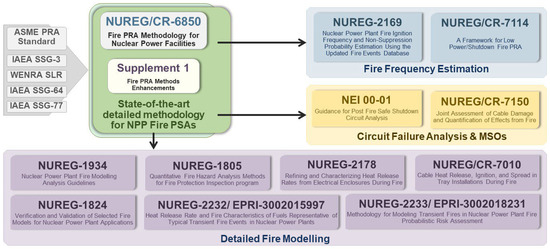
Figure 1 illustrates the methodological framework, synthesizing theme-specific international guidelines into a refined analytical process.
Figure 1.
Application of international guidelines in KKL Fire PSA.
Within this study, the broadly used fire modeling methodology was specifically tailored to the unique characteristics and requirements of the KKL. This customized approach was developed to provide a robust, reproducible, and detailed evaluation of fire scenarios at the plant, ensuring traceability and consistency across all analyses. By focusing on the specific needs of KKL, the methodology aligns with advanced analytical practices and complies with regulatory standards.
The fire scenario modeling process in this study follows the structured approach outlined in NUREG-1934 [8], with necessary modifications to account for KKL-specific characteristics, such as unique fire locations, propagation mechanisms, and ignition source properties. The key milestones of the fire scenario modeling process are outlined as follows:
- Defining fire modeling goals and objectives (time to damage, extent of fire propagation, hot gas layer (HGL) temperature, performance criteria of fire barriers, verification of spatial separation, etc.).
- Modeling of rooms, including an approach for room transformation (for complex geometries).
- Treatment of ventilation conditions (modeling of air leakages through doors, and use of a pseudo-wall vent for under-ventilated fires).
- Evaluation of fire modeling predictive parameters → selection of an appropriate fire modeling tool.
- Modeling of fire loads (ignition source and targets).
- Treatment of cable failures using empirical and thermally-induced electrical failure (THIEF) models.
- Evaluation of fire-generated conditions in the modeled enclosure.
- Sensitivity analysis to support the use of results (on fire parameters, geometric assumptions, damage criteria assumptions, etc.).
- Analysis and application of fire simulation results.
Following the quantitative screening stage, fire compartments identified as risk-significant were subjected to a comprehensive refinement phase. During this phase, the potential consequences of fire events were analyzed at a scenario level. Detailed plant walkdowns were conducted to verify the spatial information of ignition sources and targets, which are critical for modeling the fire scenarios. Additionally, an exhaustive review of plant documentation was conducted—including piping and instrumentation diagrams (P&IDs), equipment layout plans, cable routing diagrams, and heating, ventilation, and air conditioning (HVAC) system configuration, to ensure the accuracy and completeness of input data. The main objective was to determine the extent of fire damage from selected ignition sources, in terms of equipment impacted and their corresponding time to damage.
Fire growth and propagation dynamics were analyzed using CFAST and FDS over a two-hour simulation period. These simulations aimed to achieve a high-fidelity representation of fire-induced damage conditions within critical compartments. To ensure methodological rigor, a dedicated and plant-specific framework was developed, ensuring quality, consistency, and traceability throughout the fire modeling process. In total, 19 fire scenarios were analyzed in the following PSA-relevant buildings: drywell, containment, reactor auxiliary building, special emergency heat removal building, and operations building.
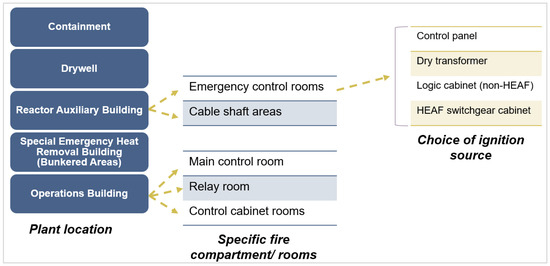
Scenarios were defined based on the type of ignition source and the room considered, such that the scenario represents the bounding fire-generated conditions for a given ignition source type in that room. For example, in remote shutdown areas, fire from the control panel, logic cabinet, high-energy arcing fault (HEAF) cabinet, non-HEAF switchgear cabinet, and transformer was modeled to cover all the main ignition source types. Likewise, in cable canals and cable shafts, fire development from cables was modeled. The scenario definition facilitates the use of fire modeling results for a given ignition source type (e.g., cabinet or panel) in symmetrical rooms and rooms with the same ignition source types. Seventeen scenarios were modeled using CFAST, and two complex scenarios originating from non-rectilinear geometry rooms were modeled using FDS.
Figure 2 illustrates the type of fire scenarios analyzed within the study.
Figure 2.
Types of fire scenarios analyzed for KKL.
The subsequent sections present the overarching principles and methodological steps followed in the KKL fire modeling framework. This includes a detailed discussion of the foundational concepts, assumptions, and analytical approaches that underpin the development and application of the fire modeling methodology. By addressing these generic aspects, the aim is to provide a thorough understanding of the systematic processes and considerations that guide the modeling efforts.
3.1. Step 1: Definition of Fire Modeling Goals and Objectives
The primary goals of the fire modeling process are to evaluate the potential consequences of fire scenarios, including the number of affected pieces of equipment, and to validate the spatial separation credited in defining specific fire compartments (e.g., drywell and containment). To achieve these goals, the following objectives were defined:
- Determine the time to damage for targets (e.g., equipment, cables) located near ignition sources and within the scenario boundary.
- Assess the extent of fire propagation and evaluate fire-generated conditions in the room, assuming a well-ventilated primary fire.
- Estimate the temperature of hot gas layer in adjacent rooms due to fire and/or smoke propagation from the main room where the fire scenario is postulated.
- Evaluate the maximum temperature and heat flux on fire doors and qualitatively assess their effectiveness in containing the fire.
- Evaluate the maximum smoke concentration, visibility, and habitability conditions for specific locations such as the main control room.
3.2. Step 2: Fire Scenario Characterization
This step involves a detailed characterization of all elements required to model a fire scenario. Key elements include the following:
- Room Details: Geometry, dimensions, and spatial layout of the enclosure.
- Ignition Source and Targets: Location and orientation of the ignition source, secondary combustibles, and targets within the enclosure.
- Ventilation Conditions: Airflow and oxygen availability in the room.
- Fire Protection Features: Credited fire protection measures, such as fire doors and suppression systems.
- Fire Parameters: Heat release rate (HRR), fire growth rate, calorific potential (CALPOT), and thermo-physical properties of materials.
- Damage Criteria: Damage thresholds for equipment and cable damage.
Focused plant walkdowns were conducted to provide scenario-specific inputs, such as selection of ignition sources, choice of fire location, spatial information, orientation of combustibles, and the nature of secondary fire loads.
3.3. Step 3: Room Modeling
For each fire scenario, all rooms connected to the primary fire room are identified and modeled. Connections through walls, ceilings, floors, vents, or doors are included if they influence fire-generated conditions. The modeling of adjacent rooms depends on the specific objectives of the scenario.
3.3.1. Fire Door Modeling
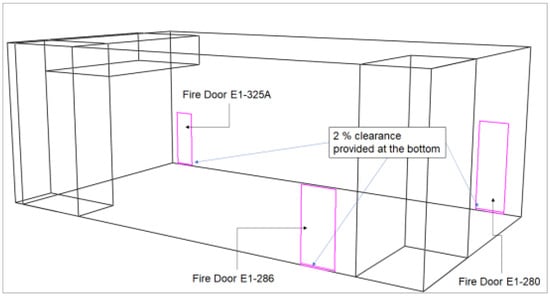
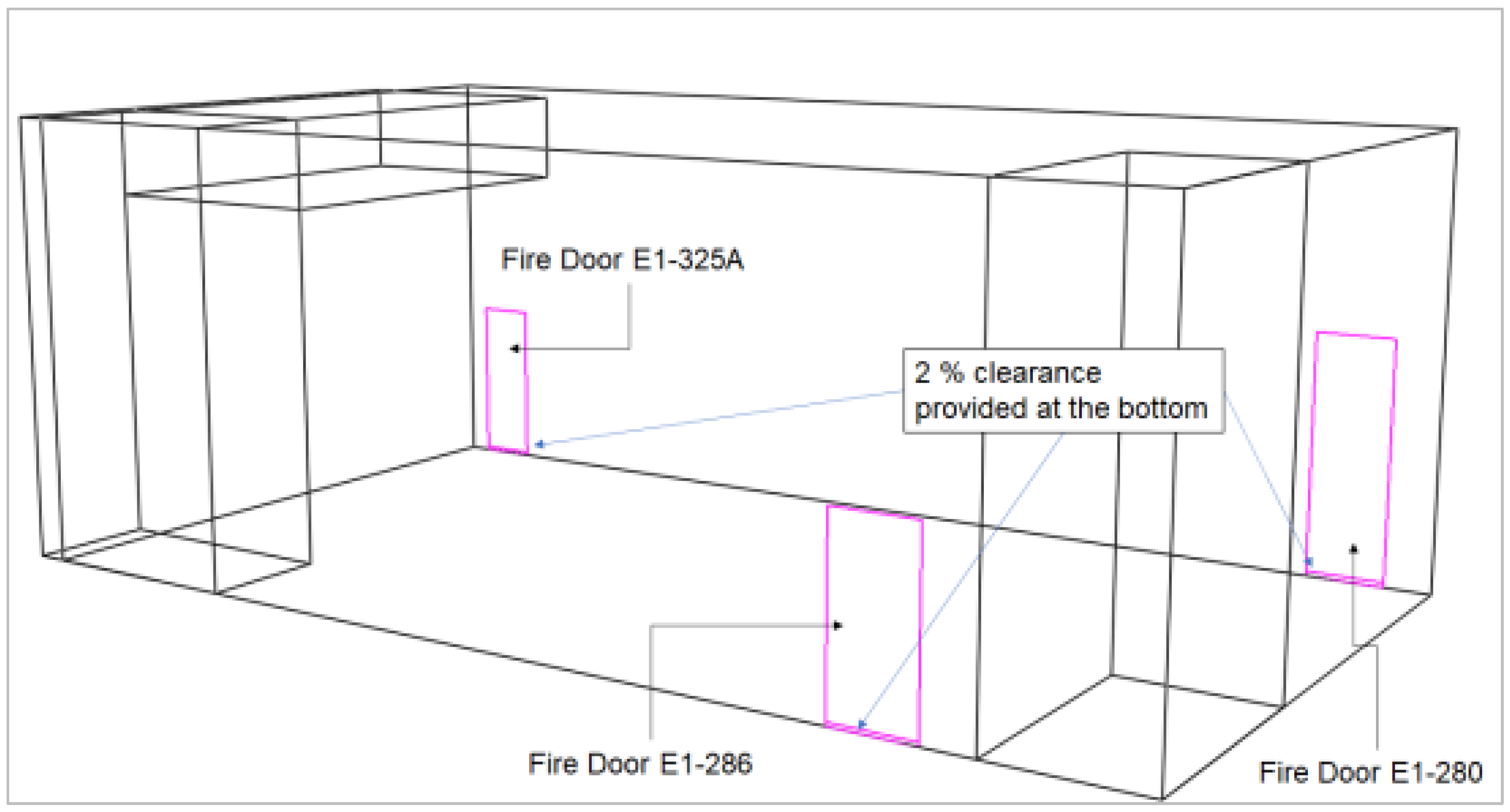
KKL fire doors are categorized into three resistance classes: EI30 (non-fire-rated), EI60 (60-min fire resistance), and EI90 (90-min fire resistance). Doors are initially modeled in a closed configuration, with air leakage through door clearances typically represented by an opening area equal to 2% of the total door height. For fire-rated doors, this opening area is increased by an additional 8% if the temperature on the exposed side reaches 400 °C, reflecting potential deformation possibilities at elevated temperatures. Non-fire-rated doors are conservatively assumed to open completely when the temperature on the exposed side reaches 100 °C, based on expert judgment.
An example of doors modeled for a fire scenario in the relay room is presented in Figure 3.
Figure 3.
Doors modeled in a relay room.
3.3.2. Vent Modeling
Ceiling and floor vents, if present, are modeled to reduce room temperature and pressure and to provide oxygen for combustion. For instance, in CFAST, a single ceiling or floor vent may be modeled at the center of the room by calculating the net opening area of all ceiling and floor vents in the room, or individual ceiling or floor vents may be modeled with their respective opening areas if their positions and opening areas are known. If the ceiling or floor vent supports the routing of cable trays, cables, or any other structural obstructions, the net opening area is calculated based on engineering judgment.
3.3.3. Room Geometry Transformation
Since fire modeling tools such as CFAST and FDS work best with rectilinear geometries, non-rectangular rooms are transformed into equivalent rectangular geometries. The transformation follows the predefined principles outlined below:
- Preservation of room height—to account for hot gas and smoke filling and to conserve the plume and ceiling jet correlations of the fire modeling tool.
- Preservation of room volume—to account for smoke filling and ventilation conditions. Typically, the length and/or width of the room are adjusted to maintain the overall aspect ratios close to the original aspect ratios and stay within the validation range of CFAST and FDS.
- The position of surrounding equipment and cables relative to the ignition source and surfaces is maintained to capture the radiation effects of fire.
- Preservation of total surface area of the boundaries—to conserve the heat transfer through walls, floor, and ceiling (depending on the location of the target of interest).
- Consideration of the limitations of the fire modeling tool—with respect to aspect ratio validation limits.
3.4. Step 4: Treatment of Ventilation Conditions in the Room
Ventilation conditions in the room (i.e., available oxygen) are critical for sustaining combustion of the fire loads in the scenario. They are expressed using the global equivalence ratio (denoted as Φ), which relates the energy release rate of the fire (HRR) to the energy release rate that can be supported by the mass flow rate of oxygen into the room. When the equivalence ratio is equal to 1, the exact amount of oxygen required for complete combustion is available in the enclosure. When the ratio is >1, the environment is fuel-rich, and the fire is considered to be under-ventilated. The reverse is true when the ratio is <1, signifying a well-ventilated environment, The calculation of equivalence ratio considers the opening area of wall vents and doors in the room.
Equivalence ratio is calculated as follows:
where
Φ = Q/(ΔHO2 ∙ mO2)
Q = heat release rate of the fire (kW);
ΔHO2 = H heat of combustion for oxygen (kJ/kg);
mO2 = mass flow rate of oxygen into the room (kg/s).
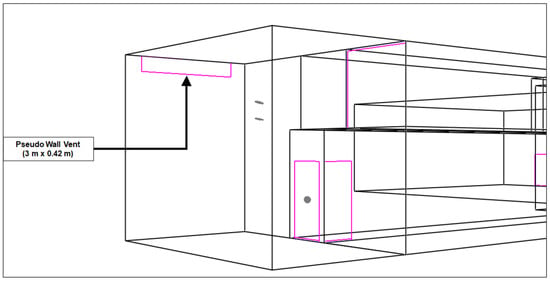
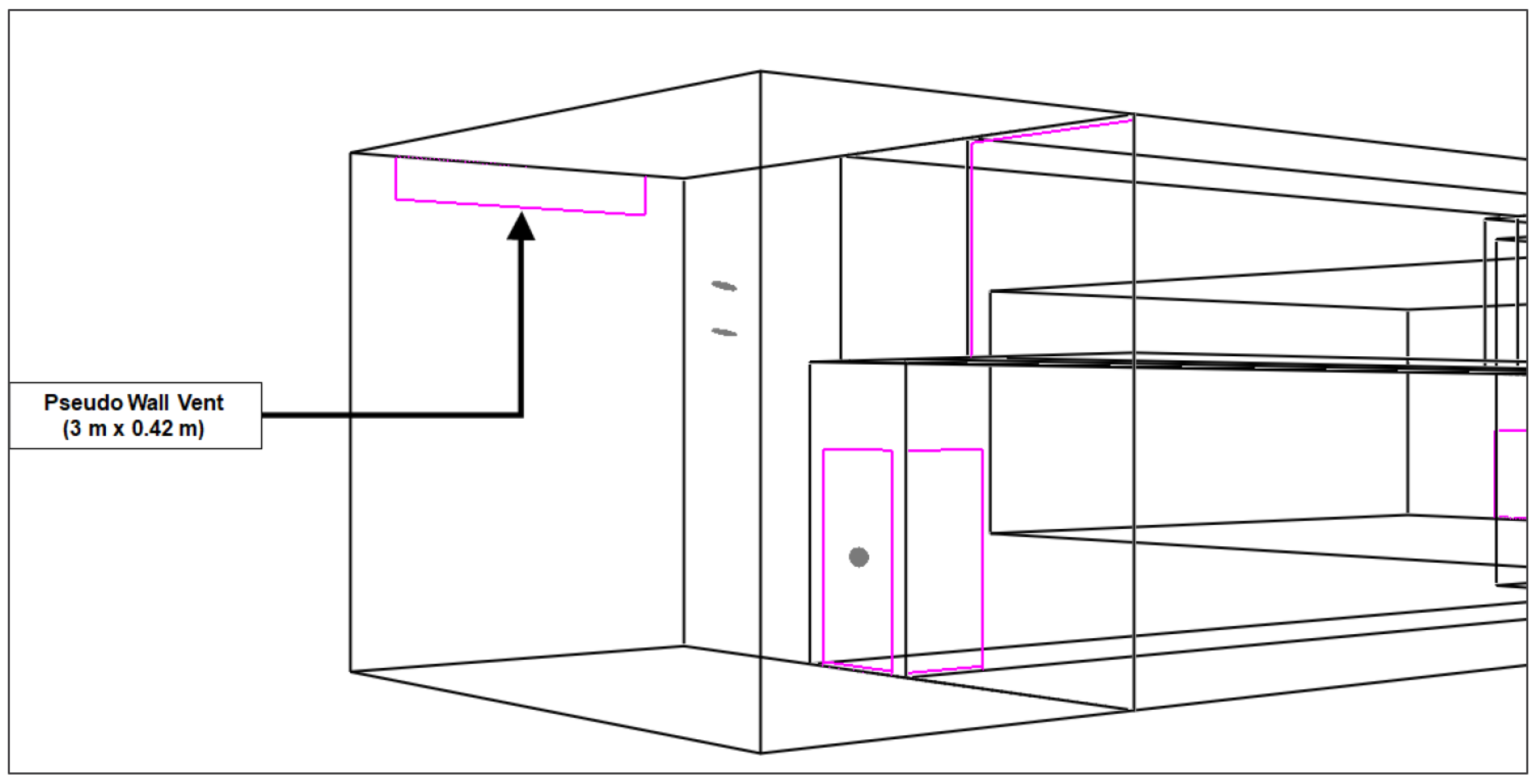
Modeling under-ventilated fires is challenging because the HRR profile for the fire is specified by the analyst and is not automatically adjusted by the fire models according to the conditions present in the room (which change dynamically based on fire behavior). To achieve the fire modeling objectives, the room must be well-ventilated to allow complete combustion of the primary fire. This implies that unless an additional oxygen supply is available in the room, the fire does not burn according to the defined HRR profile. In such cases, a pseudo-wall vent is provided in the room to ventilate the primary fire.
The positioning of the pseudo-wall vent depends on the specific room configuration, the location of the fire (ignition source), and the targets.
An example of a pseudo-wall vent created in a cable room is presented in Figure 4.
Figure 4.
Pseudo-wall vent in a cable room.
Positioning of the wall vent plays an important role in FDS; however, it is less significant in CFAST models.
3.5. Step 5: Fire Modeling Tool Selection
Fire models are categorized into three types based on their simplicity and the degree to which spatial and temporal issues can be solved: algebraic and empirical models (FDTs), two-zone models (CFAST), and CFD models (FDS). The choice of the fire modeling tool depends on various factors, including:
- Predictive capabilities of the tool;
- Limitations of a particular fire modeling tool;
- Scenario objectives;
- Complexity of the room geometry.
The ability of a fire modeling tool to predict the fire-generated conditions of a scenario close to a realistic case is measured based on how well the non-dimensional fire parameters fit within the validation ranges. The important non-dimensional fire parameters and their relevance to fire scenario modeling are calculated and verified based on the limits specified in NUREG-1824 [10]. These parameters include room aspect ratio, global equivalence ratio, fire Froude number (the fire Froude number is defined as the ratio of inertial to buoyancy-induced velocities, see Table 3-3 of NUREG-1824 [10]. Its value must be within the validation range of the CFAST and FDS tools), the flame height to ceiling height ratio, and the distance from the target to the fire. These parameters were evaluated for each scenario to determine the appropriate modeling tool. Suitable modifications were made if the ranges exceeded the validation limits of the tool. For instance, the lower and upper limits of the fire Froude number (Q*) for CFAST are 0.1 and 9.1, and for FDS, they are 0.1 and 63. This largely depends on the HRR of the fire. If the value is found to violate the validation range for a given scenario, the burning area of the primary fire is modified to be within this range. The modified Q* is then used to calculate the flame height and plume temperature.
3.6. Step 6. Modeling of Fire Loads
Accurate prediction of fire-generated conditions requires detailed information about fire loads, including their location, dimensions, orientation, and fire characteristics. The spatial and dimensional details are obtained from the scenario-specific walkdown checklists supported by disposition plans and photographs taken during walkdowns.
For each fire scenario, the fire loads in the room are categorized into ‘ignition source’ and ‘targets’. Typically, targets are the equipment or cables that result in initiating events or affect mitigation functions modeled in the PSA, or they can be secondary combustibles that aid in fire spread. For the KKL detailed fire modeling, the primary fire load is referred to as the ignition source, and all other fire loads in the model are referred to as targets. If the damage criterion for a target is met in the simulation, it will, in turn, be treated as an ignition source (i.e., secondary fire).
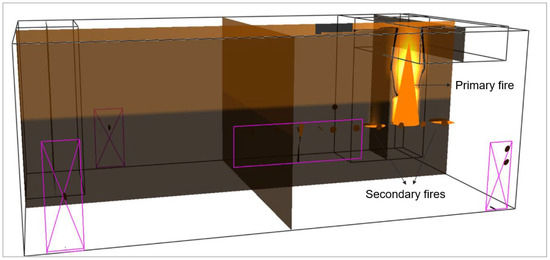
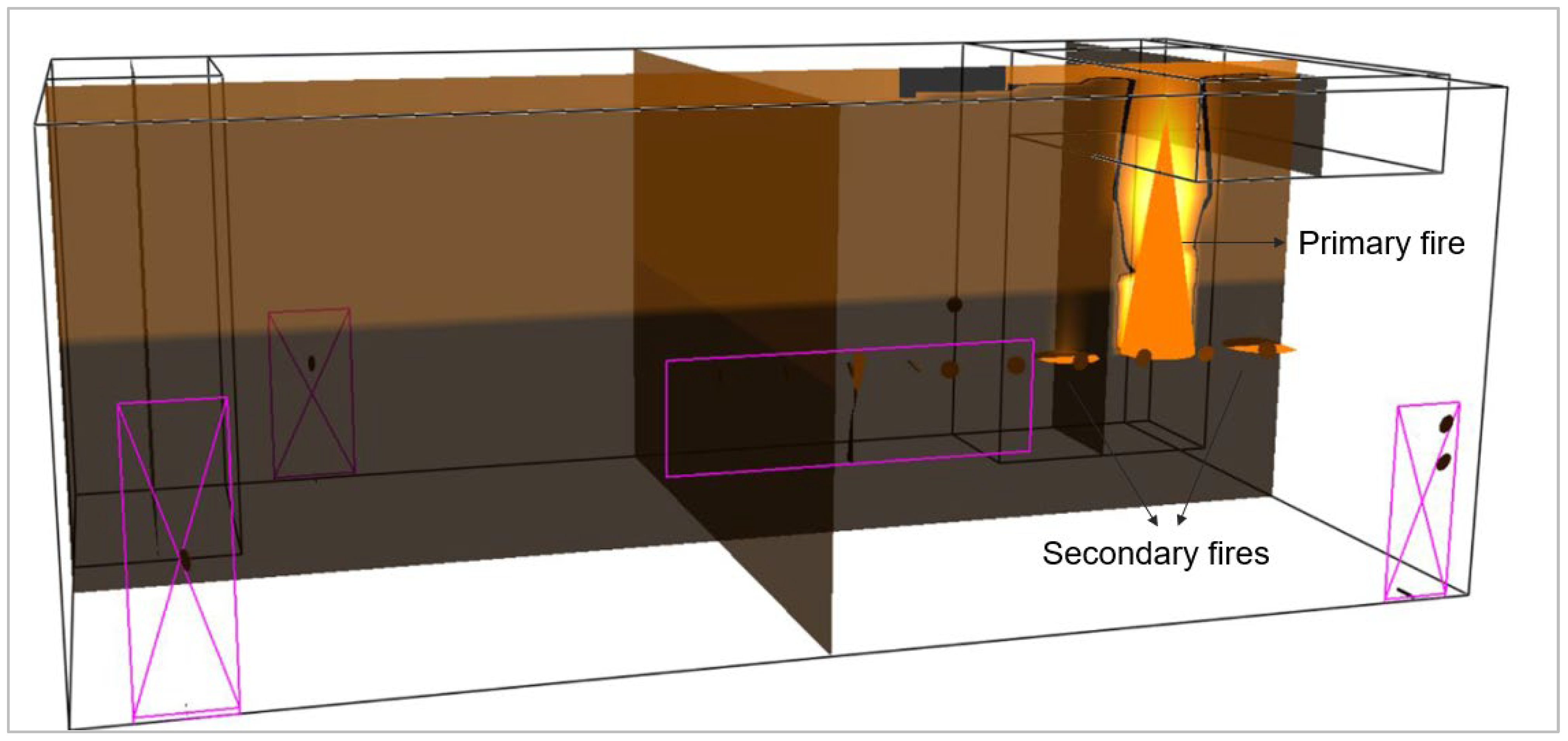
Figure 5 shows an illustration of primary fire and secondary fires in a relay room scenario.
Figure 5.
Primary fire and secondary fires in a relay room scenario.
Some key assumptions regarding damage criteria include the following:
- For motors, switchgears, solenoids, etc., the fire vulnerability is limited to the vulnerability of the cable supporting the component.
- Electronic components based on integrated circuit-type devices can fail at lower damage thresholds as observed in fire experiments; the damage thresholds are based on Appendix H of NUREG/CR-6850 [5].
- Electromechanical devices such as relays, switches, and circuit breakers are qualified to higher damage thresholds. Since detailed guidance is not available, their damage thresholds are conservatively assumed to be the same as those of solid-state control components.
Passive fire protection features were credited for cables (if available), to account for the severity of fire propagation from cables and delay the damage and ignition of cables to a certain extent, depending on the type of cables. Based on Appendix Q of NUREG/CR-6850 [5], a time delay of 20 min is considered for cable trays with solid bottoms and thermoset cables, and 4 min for thermoplastic cables. Additionally, thermally-induced electrical failure (THIEF) and empirical models were applied to predict the electrical and functional failure of cables, accounting for the time delay of heating from the outer insulation or jacket to the inner conductor material.
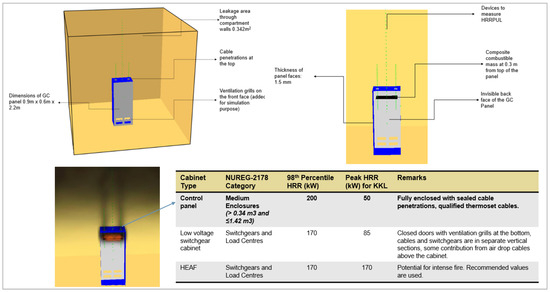
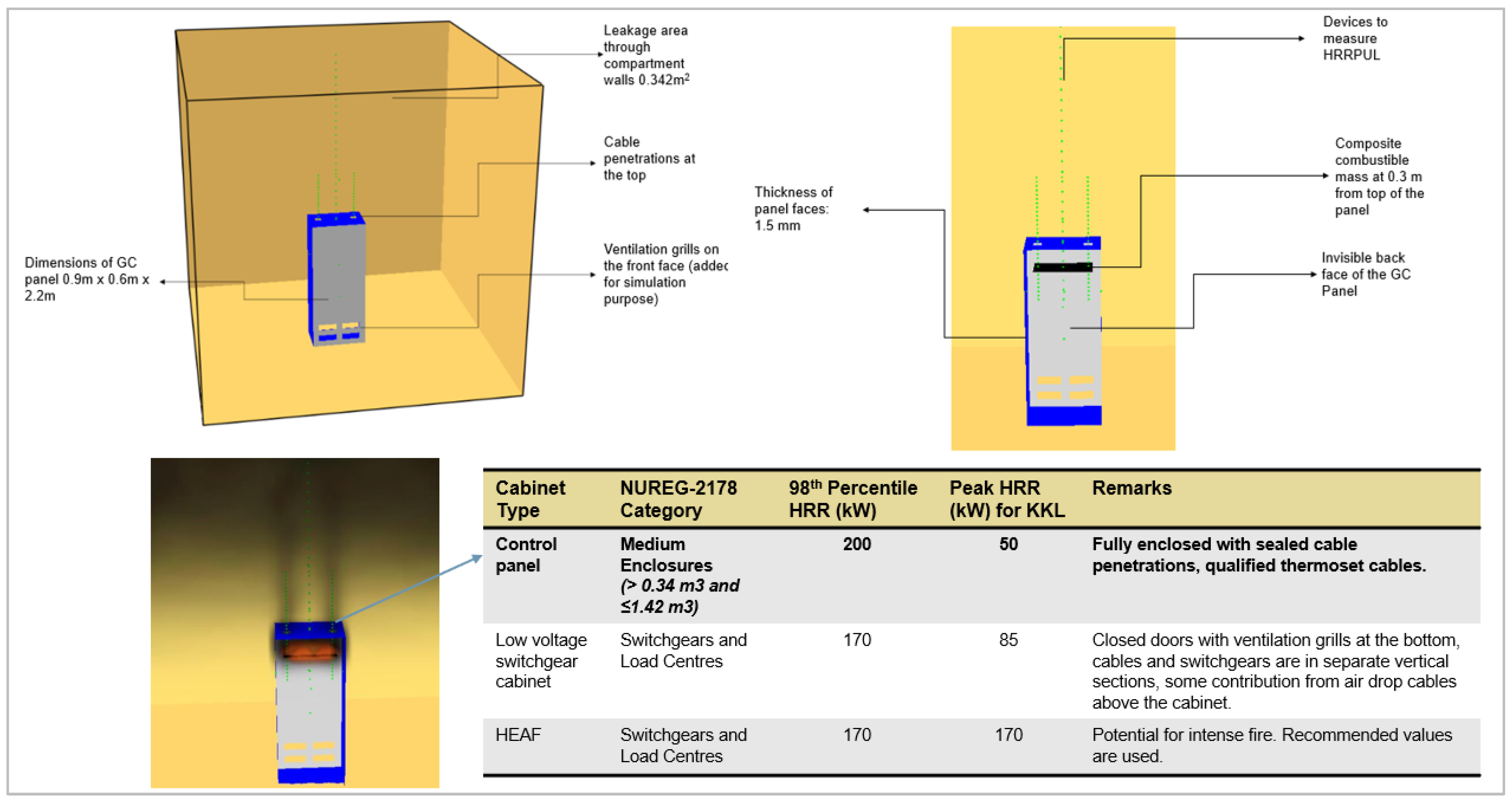
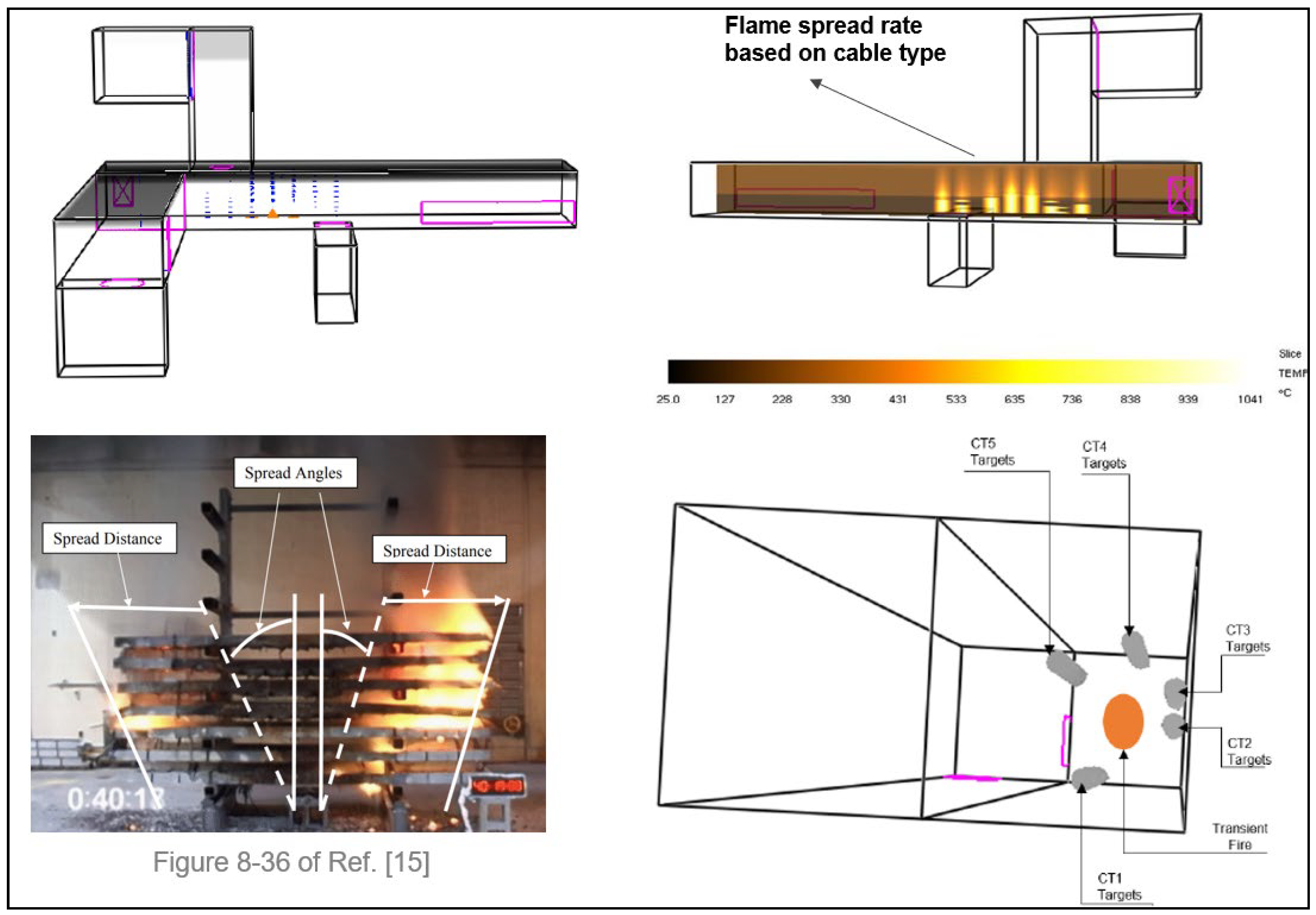
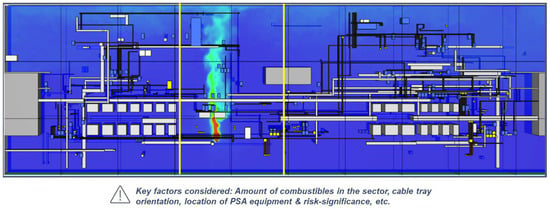
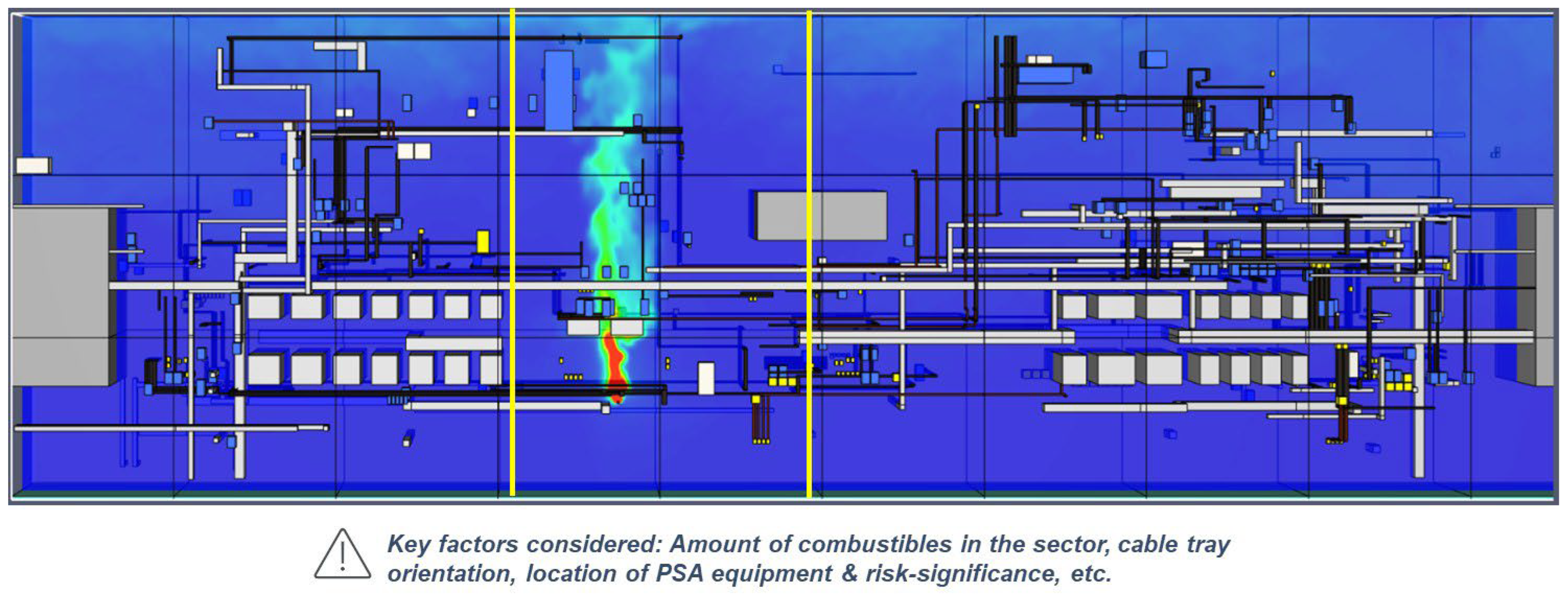
Examples of HRR selection and fire location selection are presented in Figure 6, Figure 7 and Figure 8.
Figure 6.
HRR selection for cabinet fires.
Figure 7.
Selection of fire location in cable rooms (Orange dot represents the transient fire (ignition source) and grey dots represent vertical cable trays, denoted as CT1 to CT5).
Figure 8.
Pyrosim render showing the selection of fire location in containment (sector 2 indicated within the yellow boundary).
3.7. Step 7: Modeling Assumptions
Some key global assumptions used for fire scenario modeling are listed below:
- Deflagration and detonation of fire loads, and fire-induced structural failures, are not considered in the scope.
- Cables within conduits are considered as potential damage targets but not as ignition sources, as they cannot contribute to fire growth.
- The incipient and decay phases of the fire growth stages are not considered in the modeling of fires. The decay time and its associated CALPOT are accounted for in the steady burning phase.
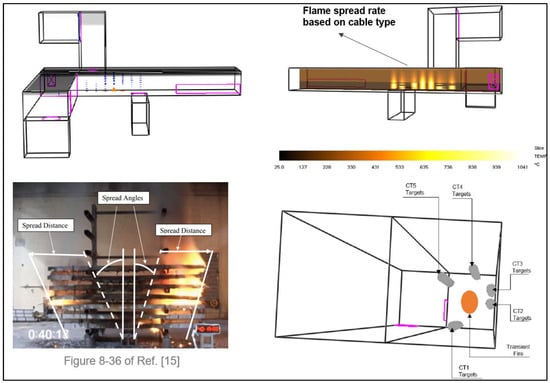
- Pyrolysis rates are independent of the irradiation level or gas temperature, except for cable trays, where flame spread models are used to propagate fire along the cable trays depending on the type of cables.
Scenario-specific assumptions, while critical to the analysis, are not discussed here for brevity.
3.8. Step 8: Sensitivity Analysis
Sensitivity analyses are conducted for each fire scenario to evaluate the impact of modeling assumptions and input parameters. This step is particularly important when fire-generated conditions appear overly conservative or conflict with plant design features. The results of these analyses are used to refine the model and ensure alignment with the physical and operational characteristics of the plant.
The scope of sensitivity analyses depends on the characteristics of the specific fire scenario. Among various parameters, the following have the most influence on fire-generated conditions:
- Choice of HRR and CALPOT values;
- Ventilation conditions;
- Location of fire source and targets;
- Zone of influence (ZOI) for different material choices;
- Insulation properties of cables (thermoset vs. thermoplastic);
- Presence of structural elements or obstructions in the path of the fire source and targets.
The impact of these parameters on fire-generated conditions can be either optimistic or conservative, depending on the scenario specificities.
3.9. Step 9: Quality Assurance and Documentation
A robust two-stage interactive review process was followed for every fire scenario model. The fire models were developed by an independent consulting organization (RELSAFE) and reviewed by KKL PSA team, with plant personnel participating in walkdowns and providing essential information required for fire modeling. The overall fire modeling methodology, individual fire scenario models, results, and documentation were peer-reviewed and quality-assured by an independent fire modeling expert with vast experience in NPP applications and other safety-critical industries.
A standardized reporting structure was adopted for documenting the modeling of fire scenarios. Each fire scenario report includes the following elements:
- Fire scenario definition and geometry;
- Model elements and inputs;
- Characterization of ignition sources, secondary combustibles, and targets;
- Evaluation of predictive parameters and simulation settings;
- Analysis of fire-generated conditions, such as surface temperatures, heat flux, and gas layer temperatures.
CFAST/FDS input files, list of equipment and cables, walkdown photographs, temperature and heat flux measurements on components and cables were included as supporting attachments.
4. Considered Fire Scenarios
Table 1 presents a selection of fire scenarios analyzed as part of a detailed fire modeling task in KKL Fire PSA, together with key outcomes. Scenario numbers, compartment identifiers, compartment fire protection features, and fire scenario characterization aspects are not discussed here for brevity.
Table 1.
Fire scenarios considered in KKL Fire PSA.
An example of a drywell lube oil fire scenario was presented at the PSAM&ASRAM17 Conference in 2024 in Sendai, Japan [18]. Refer to the conference proceedings for more details.
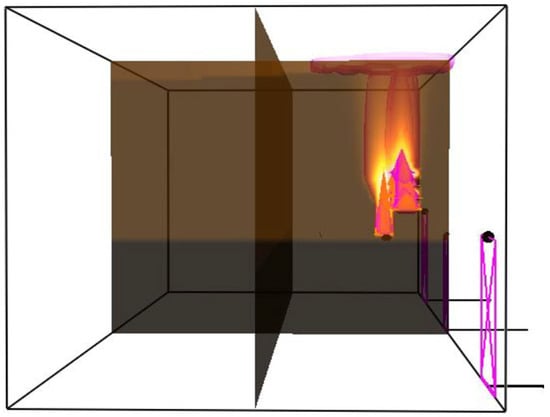
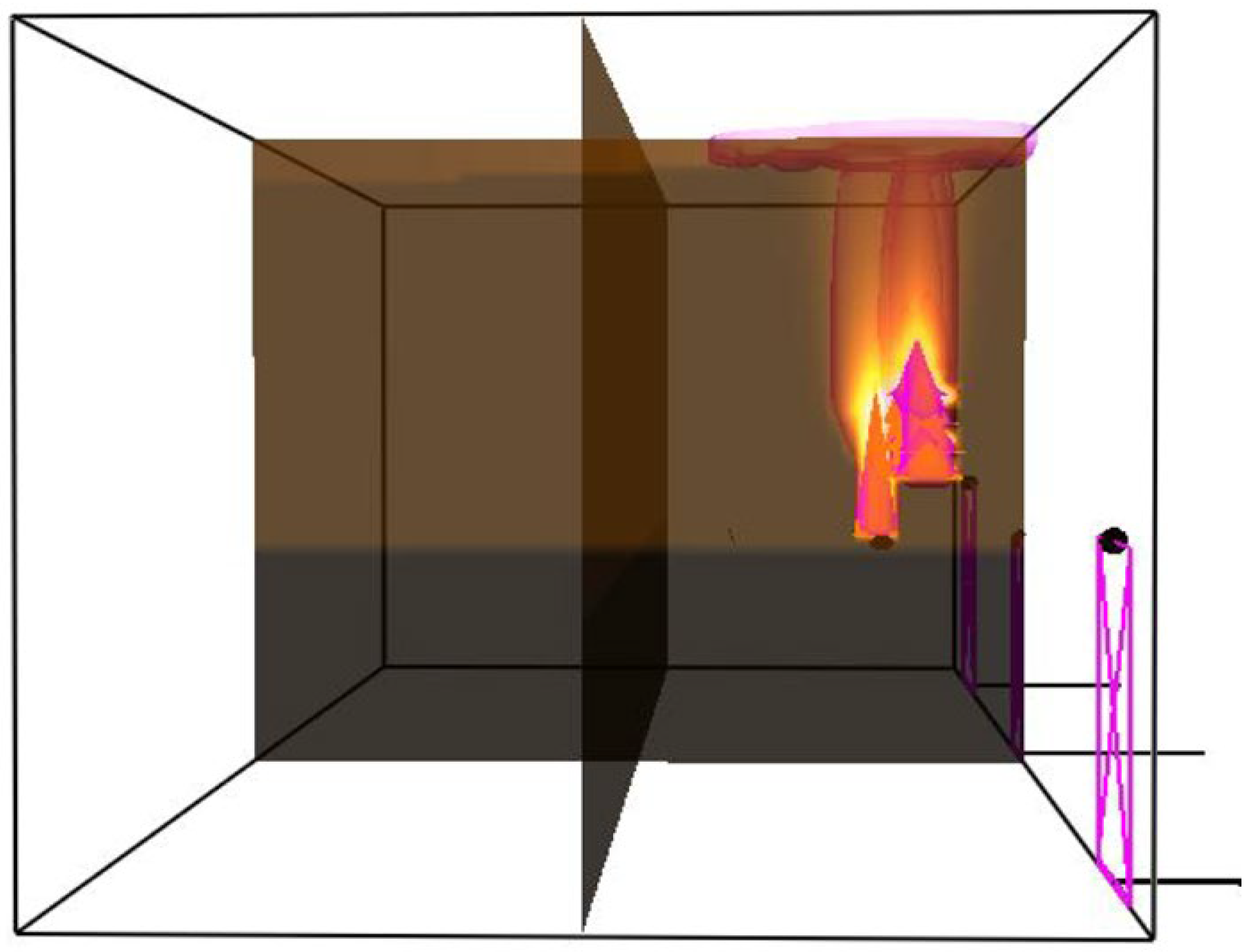
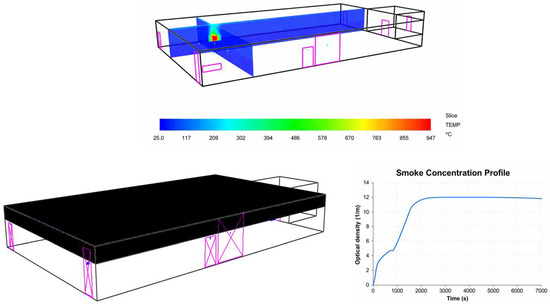
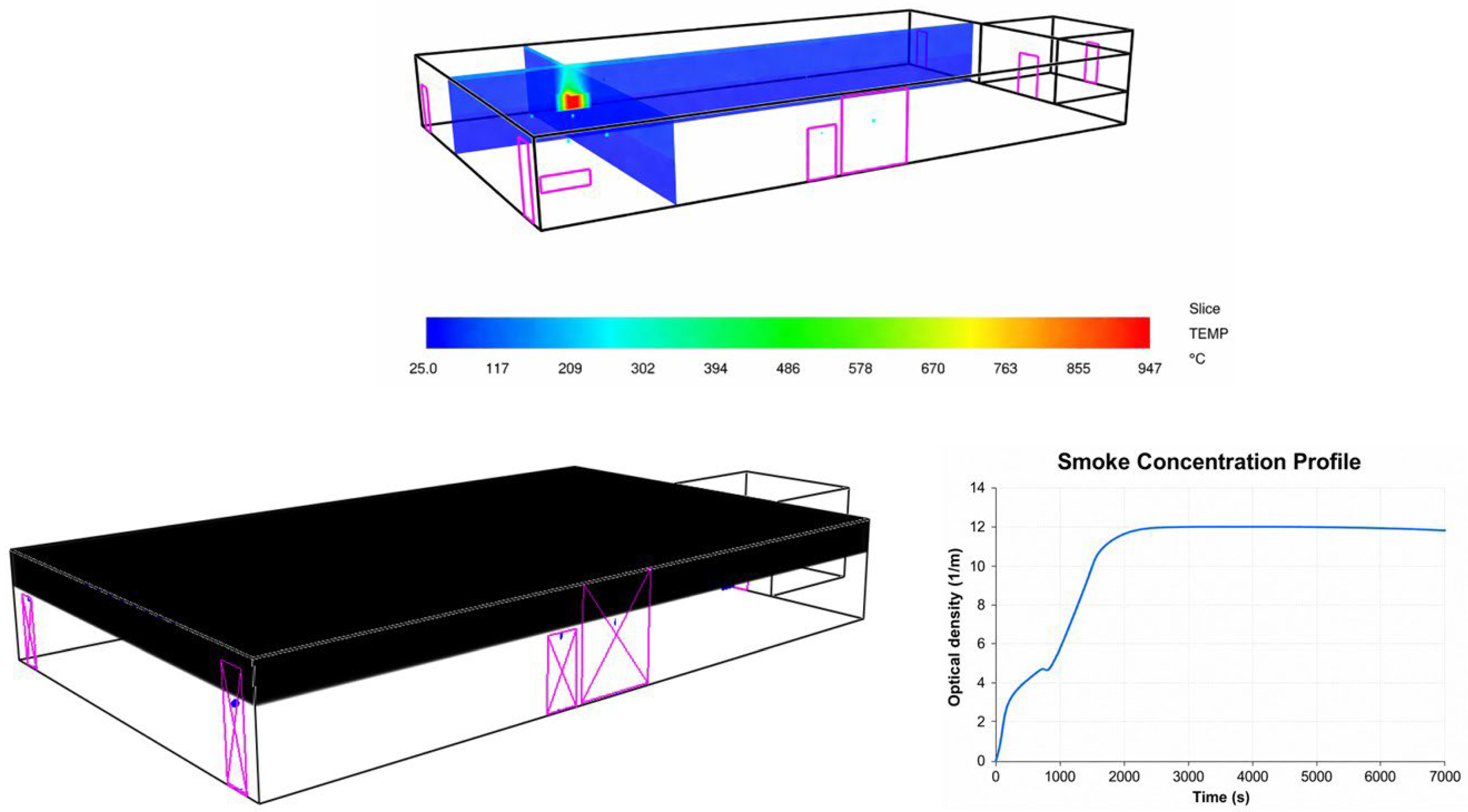
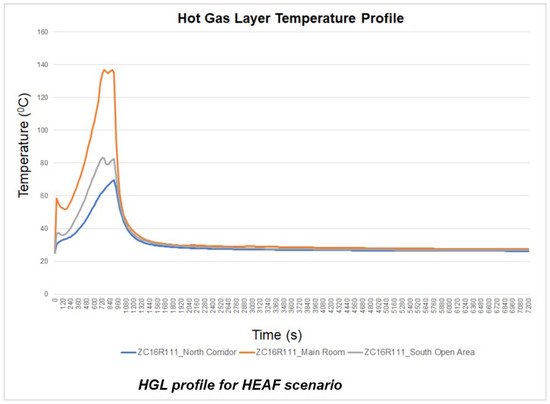
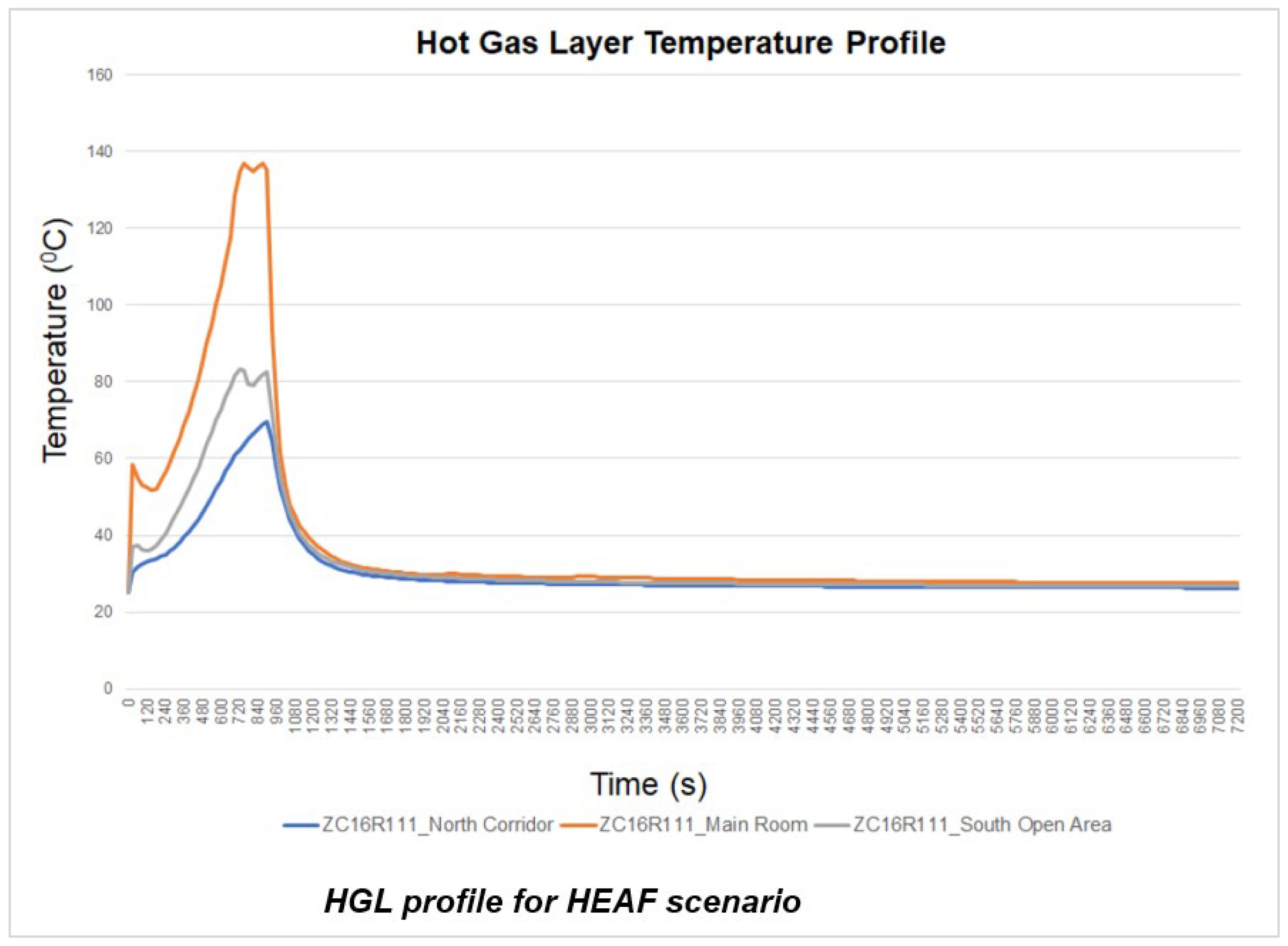
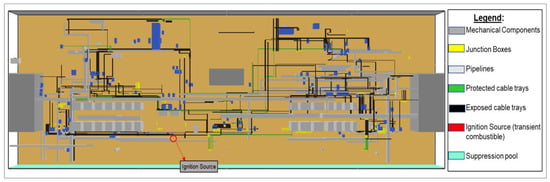
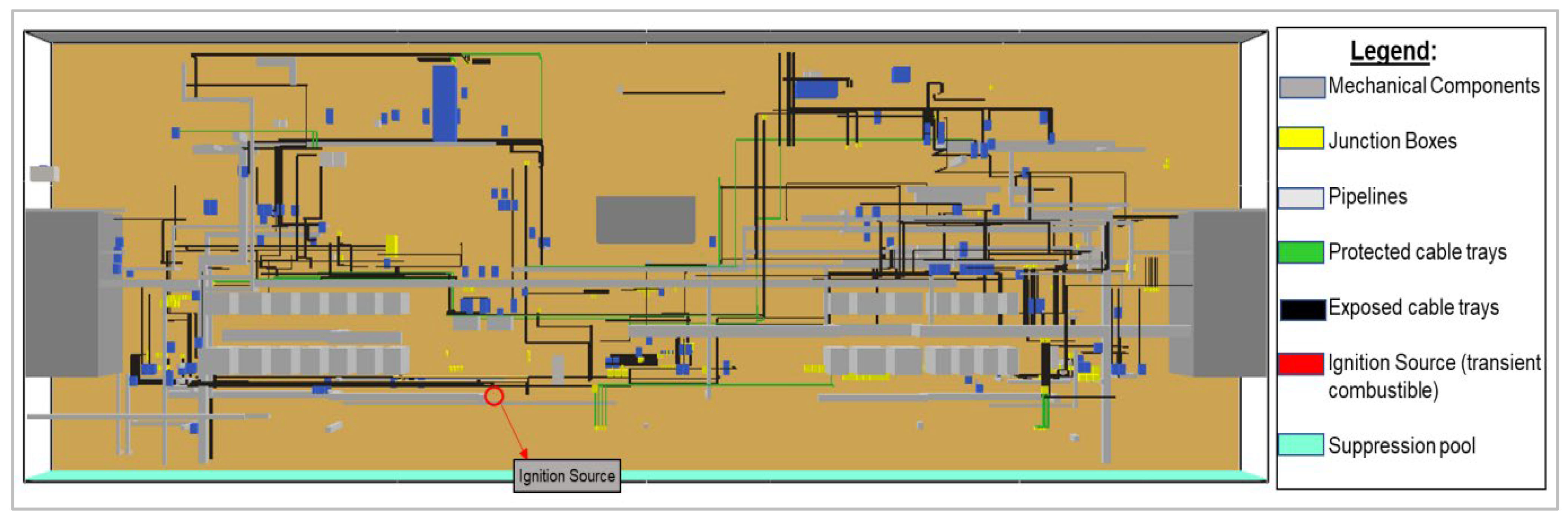
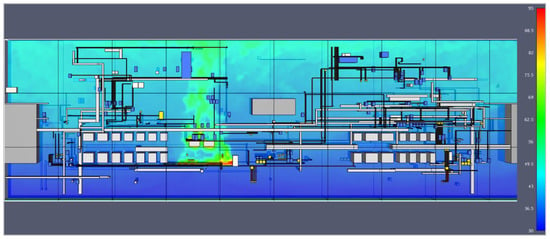
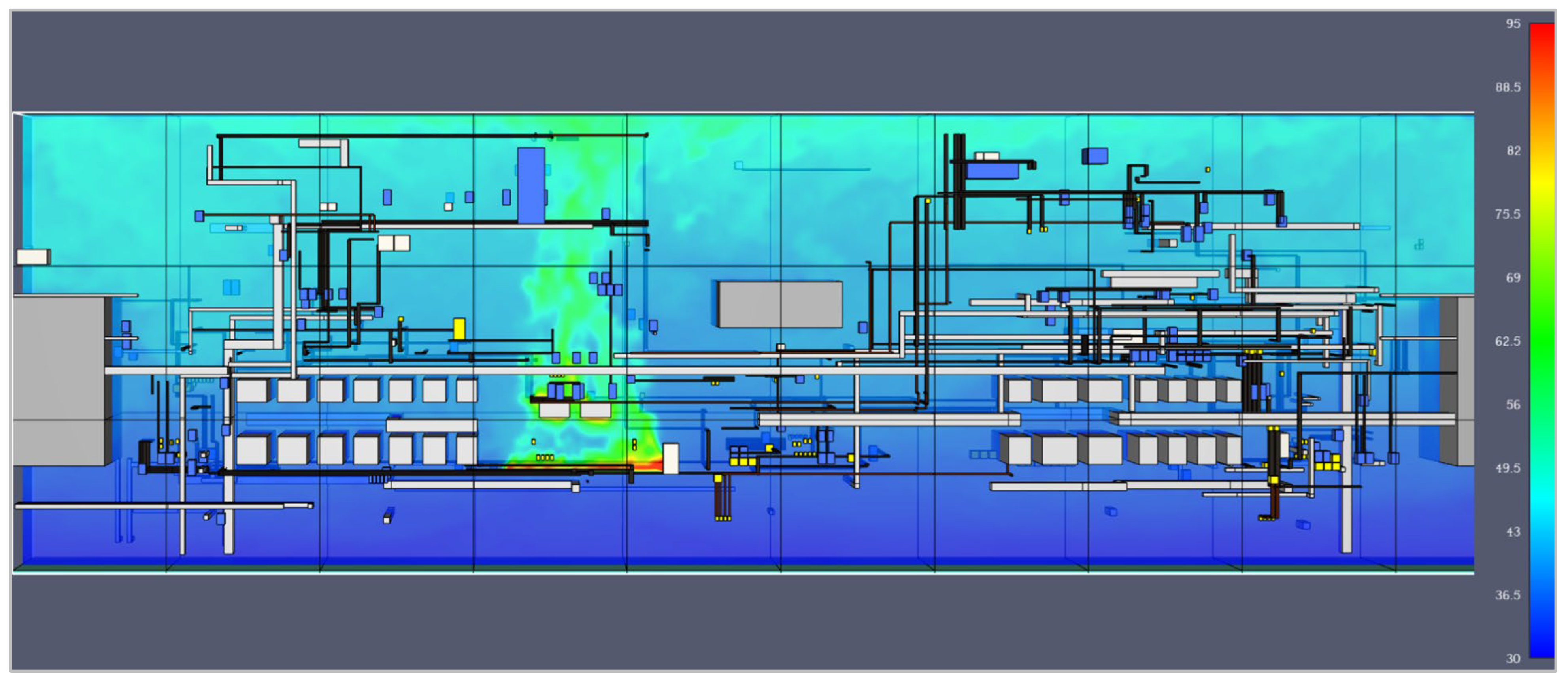
Figure 9, Figure 10, Figure 11, Figure 12 and Figure 13 show the rendering of fire-generated conditions in various scenarios.
Figure 9.
Iso-surface view showing 205 °C temperature contour at the cable tray elevations +9.8 m to +10.8 m in the cabinet room.
Figure 10.
Temperature and smoke concentration profile for MCR panel scenario.
Figure 11.
HGL profile in switchgear rooms for HEAF scenario.
Figure 12.
Layout of the containment FDS model (after geometry transformation) with ignition source in sector 2.
Figure 13.
Gas temperature profile in containment at 2160 s (temperature profile ranges from 30 °C to 95 °C).
5. Insights and Applications
The comprehensive Fire PSA conducted at KKL provided critical insights into fire behavior and its implications for plant safety. The integration of advanced fire modeling tools, such as CFAST and FDS, combined with plant-specific data and international best practices, has yielded a high-fidelity representation of fire-induced conditions. These insights are crucial for both operational safety and regulatory compliance. Key findings from the study include the following:
- Improved Understanding of Fire Propagation Dynamics: The detailed simulations revealed that fire propagation is highly dependent on the choice of fire parameters (HRR, CALPOT), spatial configuration of ignition sources, targets, and ventilation conditions. For example, the drywell lube oil fire scenario demonstrated limited horizontal and vertical propagation due to spatial separation and the use of fire-resistant materials.
- Validation of Safety Features: The study confirmed the effectiveness of passive fire protection measures, such as fire doors and cable tray enclosures, in mitigating fire spread and delaying damage to critical components. This validation supports the continued use of these features as part of the plant’s fire safety strategy.
- Enhancement of Risk-Informed Decision-Making: The results of Fire PSA have been integrated into the plant’s overall risk management framework, enabling more informed decisions regarding maintenance, operational strategies, housekeeping of the temporary and transient fire loads, and emergency response planning.
- Support for Regulatory Compliance: The methodology and findings align with Swiss regulatory requirements (ENSI-A05) and international standards, thereby enhancing regulatory acceptance and demonstrating KKL’s commitment to maintaining the highest safety standards.
- Application to Other Safety Studies: The fire modeling results have been utilized to refine deterministic fire analysis and to support risk-informed applications, including the optimization of fire protection systems and emergency response procedures.
These insights underscore the importance of a tailored, plant-specific approach to fire risk assessment in nuclear power plants. By leveraging advanced tools and methodologies, KKL Fire PSA has aimed to set a benchmark for future studies in the field.
6. Future Work and Trends
The following key areas offer valuable opportunities for further research and development to strengthen fire safety and improve the realism of fire risk assessment for nuclear power plants:
- Advancing and Refining Fire PSA Methods: Building on the solid technical foundation of NUREG/CR-6850 [4,5] and its associated guidelines [7,8,9,10,11,12,13,14,15,16,17], there are promising opportunities for further enhancement, particularly in areas such as multi-compartment analysis, treatment of I&C cable failure modes, multiple-spurious operations, and evaluation of fire-induced failure of exposed steel structures. Targeted research and development in these topics can continue to increase the robustness and reliability of Fire PSA.
- Implementing Component-Based Fire Ignition Frequency: The industry-wide implementation of Fire PSAs in recent decades has resulted in the availability of detailed fixed ignition source component counts, making it possible to calculate fire ignition frequencies directly at the component level rather than relying on the traditional plantwide apportionment method, based on the number of components per bin per plant. With the component-based methodology for fire ignition frequency calculation recently developed, the next critical step is its systematic implementation across the industry. This methodological shift will significantly enhance the accuracy of fire risk assessments, allow for more precise quantification of risk, and provide a flexible framework for efficiently updating fire risk models as plant configurations change.
- Reducing Conservatisms in Fire-Induced Cable Failures: Modeling of circuit failures continues to be an area of conservatism in most Fire PSAs. As a result, current Fire PSAs often assume worst-case failure modes for these cables, depending on how they are represented in PSA. Developing practical guidance and more differentiated models—similar to those used for power cables—offers the potential for more accurate and less pessimistic risk assessments.
- Expanding Fire Modeling Capabilities: Future studies could explore the use of hybrid modeling approaches that combine zone models (e.g., CFAST) and computational fluid dynamics (CFD) models (e.g., FDS) to achieve a more efficient and comprehensive understanding of fire dynamics in complex plant geometries.
- Enhancing Realism in Fire Simulations: Expanding current guidelines to include practical approaches for modeling under-ventilated fires, battery fires, cable shaft fires, and MCR abandonment scenarios can further improve model accuracy. Compiling the Fire PSA implementation experience from various licensees and supplementing existing methodologies with insights from practical applications would be valuable. Additional areas of interest include guidance on crediting in-cabinet fire detection or early-warning systems, and accounting for the dynamic effects of fire suppression systems on fire development, rather than relying on a binary assumption (i.e., suppression activated or not). Addressing these aspects would significantly enhance the realism of fire modeling.
- Developing more Realistic Damage Criteria: Unlike cables, the current damage criteria for various fixed equipment are based on conservative assumptions and empirical data. Further experimental research can help to establish more realistic damage criteria, particularly for modern materials and components used in nuclear power plants, such as digital I&C components.
- Assessment of Emerging Fire Hazards: As nuclear power plants adopt new technologies and materials, proactively evaluating the associated fire risks—such as those related to increased use of digital instrumentation and control systems—will support forward-looking fire safety strategies.
- Enhancing Collaboration and Knowledge Sharing: Ongoing collaboration between international regulatory bodies, research institutions, and industry stakeholders is crucial for the development of standardized methodologies and the sharing of best practices in fire risk assessment.
By addressing future-oriented topics, ongoing research can build on the foundation established by the KKL Fire PSA, contributing to the continuous improvement of fire safety practices within the nuclear industry.
7. Conclusions
The bespoke fire modeling methodology developed for KKL underscores the critical importance of integrating plant-specific data, state-of-the-art tools, and internationally recognized guidelines to achieve realistic, efficient, and plant-specific fire risk assessments. This tailored approach has ensured consistency, quality, and traceability throughout the study, yielding valuable insights into fire behavior and its potential impact on plant safety. By aligning closely with KKL’s unique configuration and operational conditions, the methodology not only enhances the safety and reliability of the plant but also ensures compliance with regulatory standards and contributes to the continuous improvement of fire safety practices.
The KKL-specific fire modeling methodology effectively utilized advanced methods and research frameworks, including NUREG and EPRI guidelines, combined with pragmatic assumptions and detailed plant-specific solutions. Key aspects of the methodology—such as the characterization of fire parameters (e.g., heat release rate, calorific potential, fire duration), scenario-specific modeling considerations (e.g., spatial details of equipment, cables, cable trays, and structures; fire location; and ventilation conditions), and the selection of appropriate modeling tools (e.g., based on predictive parameters, scenario objectives, and computational efficiency)—were meticulously tailored to reflect the unique design and operational features of KKL. This alignment ensured realistic fire conditions for each scenario, which were subsequently used to refine the scenario consequences in the Fire PSA study.
The implementation of this methodology within KKL’s internal Fire PSA framework has delivered significant cost and safety benefits. It has optimized the time and resources required for fire simulations. Moreover, the simulation results have proven to be a realistic and valuable resource for other safety studies and risk-informed applications, further supporting the plant’s commitment to maintaining the highest standards of safety and operational excellence.
In conclusion, the KKL fire modeling methodology represents a robust, efficient, and forward-looking approach to fire risk assessment in nuclear power plants. It serves as a model for the development of tailored methodologies that prioritize plant-specific needs while ensuring compliance with global safety standards and promoting continuous improvement in fire safety management.
Author Contributions
Conceptualization, A.T.S., P.Z., O.N., D.K., K.R. and V.A.; Methodology, A.T.S., O.N., D.K., K.R. and V.A.; Software, V.A.; Validation, A.T.S., P.Z., O.N. and V.A.; Formal analysis, V.A.; Investigation, A.T.S., D.K., K.R. and V.A.; Resources, A.T.S., P.Z., O.N., D.K. and K.R.; Data curation, A.T.S. and V.A.; Writing—original draft, A.T.S. and V.A.; Writing—review & editing, A.T.S. and V.A.; Visualization, V.A.; Supervision, A.T.S., P.Z., O.N., D.K. and K.R.; Project administration, A.T.S., D.K. and K.R.; Funding acquisition, P.Z., O.N., D.K. and K.R. All authors have read and agreed to the published version of the manuscript.
Funding
This publication describes the KKL-specific methodology developed within the scope of the fire PSA conducted at the Leibstadt NPP. The project was fully funded by KKL and did not rely on any external fundings, as it was not designed as a pure research initiative.
Data Availability Statement
All data and methods presented in this publication are based on project work carried out for the Leibstadt NPP (KKL Fire PSA). The key enhancements to methodological frameworks, modeling assumptions, data selection and applied tools are discussed in detail. In addition to the plant-specific data used for fire modeling and related developments, the original methodologies, data, and supporting references are publicly available and are explicitly listed in the References section.
Acknowledgments
The authors would like to thank KKL plant operators and other plant personnel for their support during fire modeling walkdowns and for guiding us to the right plant documents and procedures to obtain additional information for fire model development.
Conflicts of Interest
Albena Stoyanova, Pavol Zvoncek, and Olivier Nusbaumer are primary authors and employees of Kernkraftwerk Leibstadt AG. Devi Kompella, Karthik Ravichandran, and Vignesh Anandan are the co-authors and employees of RELSAFE PRA Consulting. The co-authors acted as external consultants to Kernkraftwerk Leibstadt AG for the detailed fire simulation studies on which this article is based. The authors declare that, although the authors are employed by organizations involved in the project, this employment did not influence the study design, data collection, analysis, interpretation, manuscript preparation, or the decision to publish. All authors had full access to all data and acted independently in the analysis and reporting of the results. No additional conflicts of interest exist.
References
- ENSI-A05; Probabilistic Safety Analysis (PSA): Quality and Scope. Swiss Federal Nuclear Safety Inspectorate (ENSI): Brugg, Switzerland, 2019.
- IAEA SSG-3; Development and Application of Level 1 Probabilistic Safety Assessment for Nuclear Power Plants. International Atomic Energy Agency: Vienna, Austria, 2010.
- ASME/ANS RA-Sb-2013; Standard for Level 1/Large Early Release Frequency Probabilistic Risk Assessment for Nuclear Power Plant Applications (Addenda to ASME/ANS RA-S-2008). The American Society of Mechanical Engineers: New York, NY, USA, 2013.
- United States Nuclear Regulatory Commission (USNRC); Electric Power Research Institute (EPRI). Fire PRA Methodology for Nuclear Power Facilities, Volume 2: Detailed Methodology; NUREG/CR-6850; United States Nuclear Regulatory Commission (USNRC): Washington, DC, USA; Electric Power Research Institute (EPRI): Palo Alto, CA, USA, 2005.
- United States Nuclear Regulatory Commission (USNRC); Electric Power Research Institute (EPRI). Fire Probabilistic Risk Assessment Methods Enhancements Supplement 1 to NUREG/CR-6850 and EPRI 1011989 Technical Report; NUREG/CR-6850/EPRI 1011989; United States Nuclear Regulatory Commission (USNRC): Washington, DC, USA; Electric Power Research Institute (EPRI): Palo Alto, CA, USA, 2010.
- WENRA SLR; Safety Reference Levels for Existing Reactors. Western European Nuclear Regulators Association: Bern, Switzerland, 2020.
- United States Nuclear Regulatory Commission (USNRC). Nuclear Power Plant Fire Ignition Frequency and Non-Suppression Probability Estimation Using the Updated Fire Events Database, United States Fire Event Experience Through 2009; NUREG-2169; United States Nuclear Regulatory Commission: Washington, DC, USA, 2015.
- United States Nuclear Regulatory Commission (USNRC); Electric Power Research Institute (EPRI). Nuclear Power Plant Fire Modelling Analysis Guidelines (NPP FIRE MAG) Final Report; EPRI 1023259/NUREG-1934; United States Nuclear Regulatory Commission (USNRC): Washington, DC, USA; Electric Power Research Institute (EPRI): Palo Alto, CA, USA, 2012.
- United States Nuclear Regulatory Commission (USNRC). Fire Dynamics Tool (FDTs): Quantitative Fire Hazard Analysis Methods for Fire Protection Inspection Program; NUREG-1805; United States Nuclear Regulatory Commission (USNRC): Washington, DC, USA, 2004.
- United States Nuclear Regulatory Commission (USNRC). Verification and Validation of Selected Fire Models for Nuclear Power Plant Applications—Final Report, Supplement 1; NUREG-1824; United States Nuclear Regulatory Commission (USNRC): Washington, DC, USA, 2016.
- United States Nuclear Regulatory Commission (USNRC). Joint Assessment of Cable Damage and Quantification of Effects from Fire (JACQUE-FIRE) Volume 2; NUREG-7150; BNL-NUREG-98204-2012; EPRI 3002001989; United States Nuclear Regulatory Commission (USNRC): Washington, DC, USA, 2014.
- United States Nuclear Regulatory Commission (USNRC). Methodology for Low Power/Shutdown Fire PRA; NUREG/CR-7114; United States Nuclear Regulatory Commission (USNRC): Washington, DC, USA, 2011.
- Nuclear Energy Institute (NEI). Guidance for Post Fire Safe Shutdown Circuit Analysis; NEI 00-01; Nuclear Energy Institute (NEI): Washington, DC, USA, 2019. [Google Scholar]
- United States Nuclear Regulatory Commission (USNRC). Refining and Characterizing Heat Release Rates from Electrical Enclosures During Fire (RACHELLE-FIRE), Volume 2: Fire Modeling Guidance for Electrical Cabinets, Electric Motors, Indoor Dry Transformers and the Main Control Board; NUREG-2178; United States Nuclear Regulatory Commission (USNRC): Washington, DC, USA, 2020.
- United States Nuclear Regulatory Commission (USNRC). Cable Heat Release, Ignition, and Spread in Tray Installations During Fire (CHRISTIFIRE) Phase 1: Horizontal Trays, Vol. 1; NUREG/CR-7010; United States Nuclear Regulatory Commission (USNRC): Washington, DC, USA, 2012.
- United States Nuclear Regulatory Commission (USNRC). Heat Release Rate and Fire Characteristics of Fuels Representative of Typical Transient Fire Events in Nuclear Power Plants; NUREG-2232/EPRI-3002015997; United States Nuclear Regulatory Commission (USNRC): Washington, DC, USA, 2020.
- United States Nuclear Regulatory Commission (USNRC). Methodology for Modeling Transient Fires in Nuclear Power Plant Fire Probabilistic Risk Assessment; NUREG-2233/EPRI-3002018231; United States Nuclear Regulatory Commission (USNRC): Washington, DC, USA, 2020.
- Stoyanova, A.; Zvoncek, P.; Nusbaumer, O.; Kompella, D.; Ravichandran, K.; Anandan, V. Approach to & Insights from Detailed Fire Simulation Studies at Leibstadt NPP. In Proceedings of the PSAM17&ASRAM2024 Conference, Sendai, Japan, 7–11 October 2024. [Google Scholar]

Disclaimer/Publisher’s Note: The statements, opinions and data contained in all publications are solely those of the individual author(s) and contributor(s) and not of MDPI and/or the editor(s). MDPI and/or the editor(s) disclaim responsibility for any injury to people or property resulting from any ideas, methods, instructions or products referred to in the content. |
© 2026 by the authors. Licensee MDPI, Basel, Switzerland. This article is an open access article distributed under the terms and conditions of the Creative Commons Attribution (CC BY) license.