


Abstract
Monitoring training load in professional soccer should account for sex-specific physiological rhythms, including menstrual cycle fluctuations. Although app-based tracking tools provide a non-invasive solution for estimating cycle phases, their relationship with performance metrics remains unclear. This study investigates whether external training load varies across menstrual cycle phases estimated via app-based tracking in professional female soccer players during pre-season and early competition. Thirty-one professional female soccer players (age: 23.29 ± 4.27 years) from two Spanish teams participated in this prospective, longitudinal, and observational study. Global Positioning System (GPS)-derived external load was recorded daily during all training sessions over five weeks of pre-season and early competition. Menstrual cycle phases were estimated using the FitrWoman app and classified into four physiological phases. Phase-based differences were analyzed using one-way ANOVA with post hoc tests. The follicular to ovulation phase consistently showed the highest values in total distance (TD), maximum velocity (Vmax), and walking distance compared to the other phases (all p ≤ 0.002). No significant effects were observed in the remaining GPS-derived variables. Overall, menstrual cycle phase may influence specific aspects of training load, and app-based monitoring may offer a feasible strategy to contextualize performance data in elite environments.
1. Introduction
Monitoring player status is a key component in designing and evaluating training performance in elite soccer [1]. In professional women’s soccer, this monitoring should also account for physiological rhythms unique to female athletes, such as the menstrual cycle [2]. This cycle is regulated by the hypothalamic–pituitary–ovarian axis [3] and is characterized by fluctuations in the secretion of sex hormones, primarily estrogen and progesterone [4]. The scientific literature has described how these hormones influence cardiovascular function, substrate utilization and thermoregulation [5,6,7]. Among eumenorrheic women, menstrual cycle length typically ranges from 21 to 35 days, with an average of approximately 28 days [8]. Traditionally, based on a 28-day model, the cycle is divided into two main phases: a follicular phase (days 1–14), characterized by high estrogen and low progesterone concentrations, and a luteal phase (days 15–28), characterized by low estrogen and high progesterone levels [7,9,10]. Although more detailed classifications exist [11,12], to date, no consensus has been reached within sport and exercise science regarding the nomenclature or the subdivision of menstrual cycle phases based on hormonal profiles [9].
Interest in the menstrual cycle has increased substantially in sport science, leading to a growing emphasis on methodological rigor in the estimation of menstrual phases. Recent position statements have recommended the use of hormonal verification to improve accuracy and standardization in research protocols [13]. While this level of control is valuable for advancing the understanding of endocrine responses, its implementation in elite team sports is often limited by logistical and financial restrictions [14]. In this context, app-based tracking tools have emerged as a feasible and non-invasive alternative for longitudinal monitoring in real training environments [14,15,16]. However, it remains unclear whether the phases estimated through these tools correspond to meaningful differences in physical performance.
A recent on-field study highlighted the absence of standardized guidelines for menstrual monitoring in sport and emphasized the value of individual tracking as a first step toward understanding cycle-related patterns in athlete behavior [14].
The relevance of this approach has recently been acknowledged at an institutional level. In 2023, FIFA launched its Women’s Health Project, emphasizing the importance of understanding how sex-specific physiology, including the menstrual cycle, can influence health and performance in soccer [17]. According to the report, 95% of players experience menstrual-related symptoms, 66% believe their performance is affected, 90% of players do not communicate menstrual cycle issues with coaches, and 85% identify a general lack of knowledge surrounding this issue. These figures underscore the demand for applied research capable of capturing the physiological complexity of female athletes in authentic training contexts. Although adapting training content to the menstrual phase may not be feasible in team sports due to asynchronous cycles and practical limitations [18], monitoring menstrual status over time could provide valuable context for interpreting training responses, managing fatigue, and supporting individualized follow-up.
The primary aim of this study is to examine whether external training load differs across menstrual cycle phases estimated using the FitrWoman app in professional female soccer players. Monitoring was conducted over a five-week period covering pre-season and early competition. We hypothesize that external training load may vary across phases, potentially reflecting the influence of cyclical hormonal fluctuations.
2. Results
Analysis of GPS-derived external load variables across the menstrual cycle revealed significant phase-related differences in several parameters (Table 1). Vmax differed significantly between phases (p < 0.001; η2p = 0.058), with higher values in the follicular to ovulation phase compared to luteal and premenstrual phases (both p < 0.001). Although no significant difference was found relative to the menstrual phase, descriptive data indicated that Vmax remained lower than in the follicular to ovulation phase and closely resembled the values observed during the luteal phase.
Table 1.
One-way ANOVA and descriptive statistics of GPS-derived performance variables by menstrual cycle phases: mean and standard deviations (mean ± SD).
TD and walking distance both showed significant phase-related differences. Regarding TD (p < 0.001; η2p = 0.058), values were significantly higher in the follicular to ovulation phase compared to all other phases (all p < 0.01), with the lowest values observed during the menstrual and premenstrual phases and intermediate values during the luteal phase. A comparable pattern was found for walking distance (p = 0.002; η2p = 0.038), which peaked during the follicular to ovulation phase as well, with significantly greater values than those recorded in the menstrual (p = 0.013) and premenstrual (p = 0.034) phases, although no significant difference was observed compared to the luteal phase (p = 0.164).
No statistically significant differences were observed across menstrual cycle phases for distance per minute, jogging, HIR, or MIR.
3. Discussion
This study explored menstrual cycle-related variations in GPS-derived external training load in professional female soccer players, based on phase estimations from the FitrWoman app.
We observed significantly higher Vmax during the follicular to ovulation phase compared to the luteal and premenstrual phases. A similar trend has been reported in professional basketball players [19], with GPS-based monitoring suggesting that the late follicular phase and ovulation may offer more favorable conditions for speed and explosive actions. Although the demands differ between sports, this phase-related pattern appears to align with the present findings. One possible explanation for this performance pattern lies in the known physiological effects of hormonal fluctuations throughout the menstrual cycle, particularly those presumed to occur during the phase estimated by the app. Estrogen is considered to have a neuroexcitatory role, while progesterone has been linked to decreased cortical excitability [20]. These contrasting actions suggest a differential impact on neuromuscular function, with estrogen supporting and progesterone potentially limiting force generation [21,22]. It has been proposed that strength and power capacities are more likely to be optimized under hormonal profiles characterized by low progesterone and elevated estrogen, such as those occurring during the late follicular phase [23]. In contrast, increased progesterone during the luteal phase may contribute to reduced neuromuscular efficiency. The ability to produce force rapidly depends in part on the initial rate of motor unit recruitment, a key determinant of explosive performance [24]. In soccer-specific contexts, this neuromuscular activation is particularly relevant to the lower limbs, as it underpins the capacity to progressively accelerate and reach Vmax.
Notably, the lower Vmax values observed in the premenstrual phase may be linked to increased fatigue and changes in mood and motivation, patterns frequently reported during this stage [10]. Although we did not find significant differences for the menstrual phase, descriptive values also remained below those recorded during the follicular to ovulation phase.
We also observed notable phase-related differences in both TD and walking distance, with values consistently higher during the follicular to ovulation phase and lower during the menstrual and premenstrual phases, especially for walking.
These findings may reflect physiological differences in the ability to sustain prolonged activity across phases. Estrogen has been associated with increased reliance on lipid oxidation and reduced glycogen utilization during submaximal exercise, particularly under conditions of moderate intensity [25]. It has also been linked to improved cardiovascular regulation during exercise [26]. These physiological effects may collectively support sustained locomotor activity during the follicular to ovulation phase.
In contrast, the lower values recorded in the menstrual and premenstrual phases may be related to physical symptoms frequently reported during these stages. These phases have been commonly associated with menstrual pain, swelling, and general physical discomfort, which could influence an athlete’s pacing strategy or overall movement behavior during training [27]. While the luteal phase presented intermediate results, the absence of significant differences in walking distance compared to the follicular to ovulation phase may reflect inter-individual variability in symptom expression, hormonal sensitivity, or adaptive strategies used by players across the cycle.
To our knowledge, only one previous study has examined menstrual cycle-related variations in external training load in elite female soccer players. In that analysis, TD and high-speed running (HSR) were significantly lower during the menstruation week compared to the post-ovulation week [28]. These findings partially align with the present results, which also showed lower TD in the menstrual and premenstrual phases. However, methodological differences should be considered in the comparison of these findings. Groff et al. [28] used specific 7-day windows based on day counting, whereas the present study used phases estimated through FitrWoman.
A similar direction was observed in a controlled study involving high-level female soccer players, in which performance in a Yo-Yo Intermittent Endurance Test showed a tendency to decline during the mid luteal phase compared to the early follicular phase [7]. While statistical significance was not reached, the authors interpreted this trend as a possible reduction in aerobic performance. Direct comparison with the present findings is limited by differences in study design. Julian et al. [7] assessed physical performance under standardized testing conditions, whereas the present study examined GPS-derived external load during regular training sessions. Nevertheless, both studies point toward a potential decrease in endurance-related outputs during the luteal phase.
A recent systematic review on the effects of the menstrual cycle on performance in female soccer players [29] reported that several studies assessing aerobic and intermittent endurance outcomes did not detect significant differences between phases. While results across the literature remain mixed, the present findings provide observational, field-based data suggesting a possible increase in total and walking distance during the follicular to ovulation phase. These patterns should be interpreted with caution, and additional studies using comparable methodologies are needed to confirm their consistency.
Finally, although we did not observe statistically significant differences across menstrual cycle phases for jogging, HIR, MIR, and distance per minute, most of these variables showed higher average values during the follicular to ovulation phase compared to the premenstrual phase, except for distance per minute. These trends reflect a similar phase-related response to that observed in TD and Vmax. Although not all variables appear equally sensitive, this consistency supports the idea that menstrual cycle monitoring may help identify individual patterns in external load, providing useful context for performance assessment in elite athletes [30].
4. Materials and Methods
4.1. Study Design
This was a prospective, longitudinal, and observational study designed to examine potential differences in training performance across distinct phases of the menstrual cycle in professional female soccer players. The study lasted five weeks during the 2022/23 season, including four weeks of pre-season and one week at the beginning of the competitive period. GPS-derived performance metrics were collected daily during all training sessions. Menstrual cycle phase was estimated using a mobile application specifically designed for female athletes. This observational study was conducted within a larger intervention study, although the present analysis was independent of the intervention and did not involve comparisons between intervention groups. Prior to starting the intervention, the protocol was approved by the Institutional Review Committee of the UCAM (code CE052204), following the Standards of Good Clinical Practice, and was conducted according to the Declaration of Helsinki. The clinical trial was registered at www.clinicaltrials.gov (accessed on 9 August 2022) (identifier NCT05525871). Current European legislation on the protection of personal data (Regulation (EU)2016/679) was complied with.
4.2. Participants
Research was conducted on a sample of 31 professional female players (age: 23.29 ± 4.27 years) from two soccer teams in the first and second Spanish professional Women’s Football League. The demographic characteristics of the players are displayed in Table 2.
Table 2.
Demographic data of the players: mean and standard deviations (mean ± SD).
The inclusion criteria for participant recruitment were as follows: (a) healthy subject with medical authorization for the practice of federated sport; (b) belongs to a team of the first or second division of the Spanish Women’s League. The exclusion criteria for the study were: (a) changing teams during pre-season; (b) history of drug, alcohol, or other substance abuse or other factors limiting their ability to cooperate during the study; (c) the use of oral contraceptives; (d) self-reported menstrual cycle irregularity, defined as an average cycle length outside the 21–35 day range. Three players met one or more of these criteria and were excluded, resulting in a final sample of 31 participants. All players were previously informed of the objectives and method of the research, signing informed consent forms before starting the research. In the case of minor players, it was their parents who signed the consent.
4.3. Menstrual Cycle
Two weeks prior to the start of pre-season, all players were contacted by the research team and instructed to begin tracking their menstrual cycle using the FitrWoman mobile app [31], version 2.9.20 (Orreco Ltd., Galway, Ireland), which has been used in previous studies [1,32,33,34,35].
They were also asked to retrospectively log the onset date of their most recent cycle to ensure that at least one full menstruation had been recorded before the start of the study. Throughout the five-week observation period, participants received daily reminders to update their records, and the research team provided ongoing supervision to ensure compliance. The research team had access to FitrWoman app data in real time via a remote desktop as part of the FitrCoach platform [36] (Orreco Ltd., Galway, Ireland). This system allowed the supervision of player tracking profiles, verification of menstrual log consistency, and export of historical data for analysis.
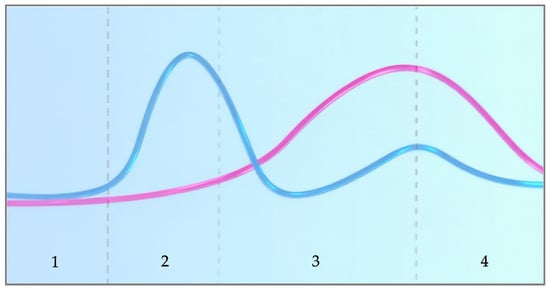
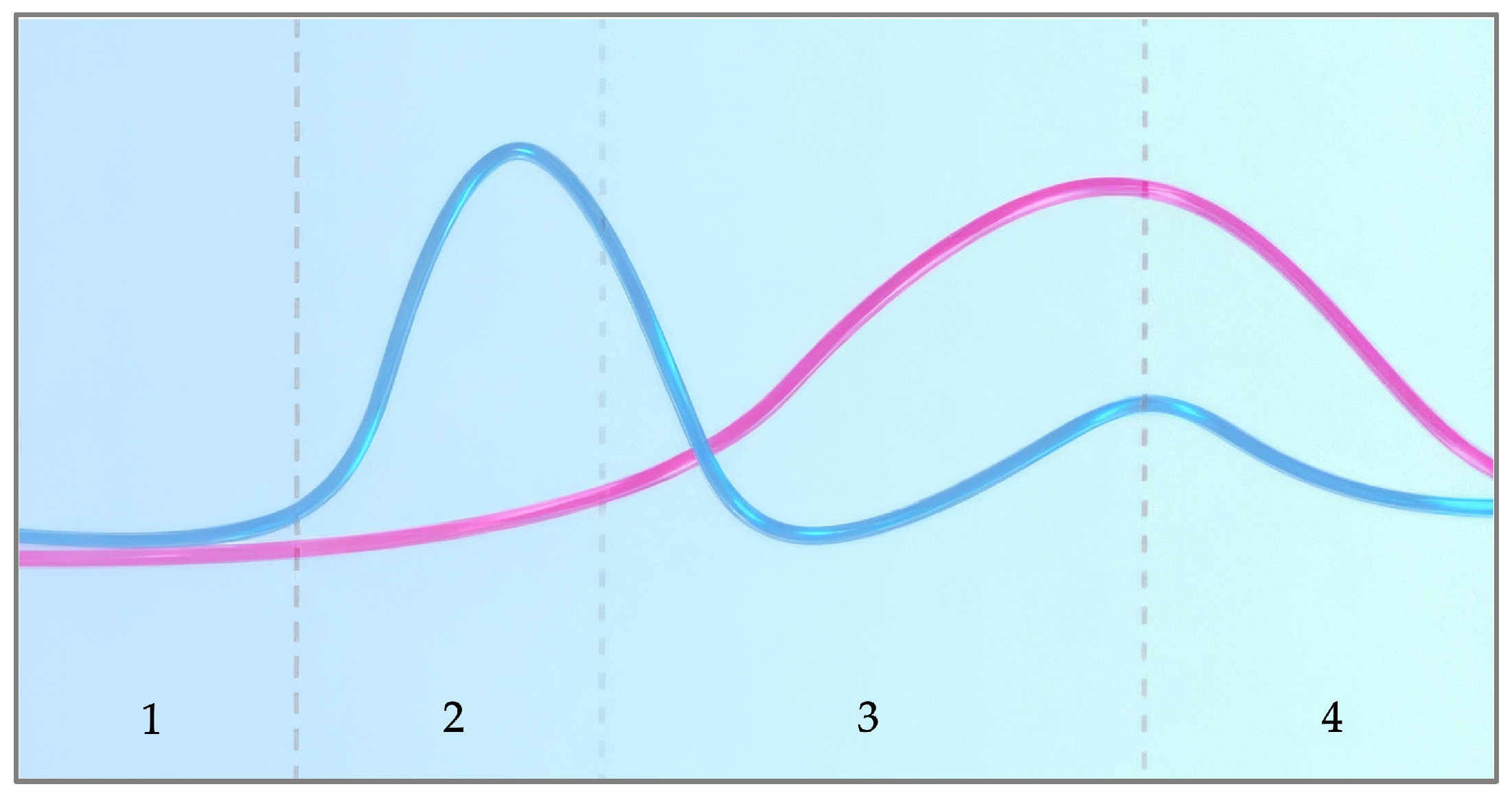
Based on the data entered by each player, the app’s proprietary algorithm classified each calendar day into one of four menstrual cycle phases: Menstruation (Early Follicular), Follicular to Ovulation, Luteal, and Premenstrual (Late Luteal). These categories and their physiological descriptions were defined by the app’s internal software and were adopted without modification for the present analysis. The research team then matched each day’s assigned phase with the corresponding GPS-derived training session, enabling all sessions to be categorized according to the menstrual cycle phase indicated by the application. The app assumes a eumenorrheic cycle length of 21 to 35 days, and its algorithm automatically adjusts to variations in the user’s reported cycle length. A visual representation of this classification model, as displayed within the app interface, is shown in Figure 1.
Figure 1.
Phase 1: Menstruation (Early Follicular); Phase 2: Follicular to Ovulation; Phase 3: Luteal; Phase 4: Premenstrual (Late Luteal); Blue line: Estrogen; Purple line: Progesterone.
According to the app, the Menstruation (Early Follicular) phase spans from the first day of bleeding until the cessation of menstrual flow, during which estrogen and progesterone levels are considered to be at their lowest. The Follicular to Ovulation phase begins once bleeding has ended and continues until the estimated day of ovulation; it is characterized by a steady rise in estrogen, while progesterone remains low. The Luteal phase follows ovulation and extends to approximately five days before the start of the next cycle, with both estrogen and progesterone remaining elevated. Finally, the Premenstrual (Late Luteal) phase comprises the final four to five days of the cycle and is marked by a progressive decline in both hormones.
This approach was selected due to logistical constraints related to professional sports environments. Access to players was limited throughout the observation period, and invasive testing procedures could not be implemented without disrupting club routines. In amateur teams or laboratory-based studies, daily hormonal sampling may be more feasible, but such methods were not applicable in this context.
4.4. Training Data
In team sports, external load is typically assessed through GPS-based tracking systems [37]. For this study, a lower-limb wearable GPS tracker (calf-worn) developed by Oliver Sports (Sport Data Innovation SL, Barcelona, Spain) was utilized to monitor player performance metrics during all training sessions throughout the five-week observation period. The device integrates Inertial Measurement Unit (IMU) sensors with a sampling rate of 50 Hz and GPS technology with a sampling rate of 25 Hz, enabling precise measurement of variables such as Vmax, TD, and distance per minute.
This system is currently included in the FIFA Innovation Programme [38], which aims to explore emerging electronic performance and tracking systems (EPTS) [39] to enhance the precision of collected data and the understanding of player performance. The Oliver device has also shown validity and reliability for measuring external load variables in soccer contexts [40,41].
The wearable tracker incorporates AI-supported software that provides actionable insights for players and coaching staff, enhancing individual and team performance. The software automatically categorized movement into four predefined speed thresholds: walking (0 to 7.1 km/h), jogging (7.1 to 14 km/h), high-intensity running (HIR) (14 to 22.3 km/h), and maximal intensity running (MIR) (22.3 to 36 km/h). These thresholds were fixed by the system and could not be adjusted. All phases of each training session, including warm-up and cool-down activities, were included in the analysis. GPS data from training sessions were obtained from the tracking software and exported into Microsoft Excel (Microsoft Corporation, Redmond, WA, USA) for further processing and analysis, resulting in a total of 376 player-session observations.
4.5. Statistical Analyses
SPSS Statistics 27 (SPSS, Inc., Chicago, IL, USA) was used for statistical analysis. Descriptive statistics were calculated and used to describe the GPS-derived training data. The statistics were reported as mean ± standard deviation (SD). The Shapiro–Wilk and Levene’s tests were used to verify the normality and homoscedasticity of the data, respectively.
One-way ANOVA was applied to TD and Vmax, as both variables met the assumption of normality. For the remaining variables (walking, jogging, HIR, and MIR), which showed non-normal distributions, the Kruskal–Wallis test was used as a non-parametric alternative. Post hoc comparisons were carried out using the Bonferroni test if homogeneity of variances was confirmed; otherwise, the Games–Howell test was applied. Effect sizes were estimated using partial eta squared (η2p) and classified as small (0.01 ≤ η2p < 0.06), medium (0.06 ≤ η2p < 0.14), or large (η2p ≥ 0.14), following conventional thresholds derived from Cohen’s criteria [42,43]. The level of statistical significance was set at p ≤ 0.05.
5. Limitations
This study has some limitations that should be acknowledged to contextualize the findings. One of them was the relatively small sample size of 31 female players, which reflects the inherent difficulty of accessing professional soccer teams. This is a common limitation in studies involving elite athletes. Menstrual cycle phases were estimated using an app-based tracking tool rather than through hormonal verification. While this approach is feasible and commonly applied in elite sport environments, it does not provide direct hormonal data or objective confirmation of ovulation, which may have affected the precision of phase classification. Furthermore, the menstrual phase estimates provided by the FitrWoman app have not been formally validated and should therefore be interpreted with caution. The observational design and the absence of control over training content make it difficult to isolate the effect of menstrual phase. Pre-season periodization may also have influenced performance outcomes, possibly acting as a confounding factor. Inter-individual variability in menstrual cycle characteristics and physical responses may also have contributed to the variability observed across phases. The five-week monitoring period may also have been too short to capture the full range of menstrual cycle variation and its potential impact on performance. Results should therefore be interpreted cautiously, particularly in extrapolations to longer observation periods or to other stages of the competitive calendar.
6. Practical Applications
Despite these limitations, the study provides practical insight into phase-related trends in training load under real-world conditions in professional female soccer. Tailoring training content to menstrual cycle phase is rarely feasible in team sports, mainly due to the asynchronous nature of players’ cycles and the logistical realities of collective training environments. Nevertheless, app-based tracking tools such as FitrWoman offer a practical and non-invasive way to incorporate sex-specific physiology into performance monitoring. The phase-related differences observed in TD, walking distance, and Vmax highlight the potential value of considering menstrual status as additional contextual information for the interpretation of external load data by coaching and performance staff. While hormonal verification would enhance precision, app-based tracking provides an accessible and realistic strategy to improve player monitoring, facilitate communication, and support evidence-based decision-making in women’s professional soccer.
7. Conclusions
This study aimed to examine whether external training load varies across menstrual cycle phases in professional female soccer players using an app-based monitoring tool (FitrWoman). The results revealed significant differences in Vmax, TD, and walking distance, with higher values consistently observed during the follicular to ovulation phase. Although other performance variables did not reach statistical significance, most followed a coherent directional trend supporting a potential phase-related influence. These findings suggest that menstrual cycle phase may have an impact on specific aspects of physical output under real training conditions. The use of a practical, non-invasive tracking tool underscores the feasibility of incorporating individualized cycle monitoring to contextualize external load data and support player-specific interpretation in elite environments. Future research should continue exploring how cyclical hormonal changes interact with training demands, emphasizing personalized approaches and applied methodologies suited to high-performance sport.
Author Contributions
Conceptualization, M.R.-M., R.A., F.J.L.-R., V.Á.-G., S.P.-P., J.C.M.-C., A.J.L.-R. and J.M.; methodology, M.R.-M., R.A., F.J.L.-R., V.Á.-G., S.P.-P., J.C.M.-C., A.J.L.-R. and J.M.; software, M.R.-M., R.A. and J.M.; validation, M.R.-M., R.A. and J.M.; formal analysis, M.R.-M., R.A. and J.M.; investigation, M.R.-M., R.A., F.J.L.-R., V.Á.-G., S.P.-P., J.C.M.-C., A.J.L.-R. and J.M.; resources, M.R.-M., R.A. and J.M.; data curation, M.R.-M., R.A. and J.M.; writing—original draft preparation, M.R.-M., R.A. and J.M.; writing—review and editing, M.R.-M., R.A. and J.M.; visualization, M.R.-M., R.A. and J.M.; supervision, M.R.-M., R.A., F.J.L.-R. and J.M.; project administration, F.J.L.-R.; funding acquisition, F.J.L.-R. All authors have read and agreed to the published version of the manuscript.
Funding
This research received no external funding.
Institutional Review Board Statement
The study was conducted in accordance with the Declaration of Helsinki and approved by the Ethics Committee of Universidad Católica de Murcia (UCAM) (protocol code CE052204 and date of approval 22 July 2022).
Informed Consent Statement
Informed consent was obtained from all subjects involved in the study.
Data Availability Statement
The data are contained within the article.
Acknowledgments
The authors thank the volunteers for participating in the study.
Conflicts of Interest
The authors declare no conflicts of interest.
Abbreviations
The following abbreviations are used in this manuscript:
| GPS | Global Positioning System |
| TD | Total distance |
| Vmax | Maximum velocity |
| HSR | High-speed running |
| EPTS | Electronic performance and tracking systems |
| HIR | High-intensity running |
| MIR | Maximal intensity running |
| SD | Standard deviation |
| BMI | Body Mass Index |
References
- Scott, D.; Bruinvels, G.; Norris, D.; Lovell, R. The Dose-Response in Elite Soccer: Preliminary Insights From Menstrual-Cycle Tracking During the FIFA Women’s World Cup 2019. Int. J. Sports Physiol. Perform. 2024, 19, 331–339. [Google Scholar] [CrossRef] [Scilit]
- Constantini, N.W.; Dubnov, G.; Lebrun, C.M. The menstrual cycle and sport performance. Clin. Sports Med. 2005, 24, e51–e82, xiii–xiv. [Google Scholar] [CrossRef] [Scilit]
- Mikkonen, R.; Ihalainen, J.; Davis-Wilson, H.; Hackney, A. The Hypothalamic–Pituitary–Ovarian Axis, Menstrual and Oral Contraceptive Cycles: Regulation and Function in the Context of Exercise and Sport; Springer: Cham, Switzerland, 2023; pp. 1–24. [Google Scholar] [CrossRef] [Scilit]
- Allen, A.M.; McRae-Clark, A.L.; Carlson, S.; Saladin, M.E.; Gray, K.M.; Wetherington, C.L.; McKee, S.A.; Allen, S.S. Determining menstrual phase in human biobehavioral research: A review with recommendations. Exp. Clin. Psychopharmacol. 2016, 24, 1–11. [Google Scholar] [CrossRef] [Scilit]
- Giersch, G.E.W.; Morrissey, M.C.; Katch, R.K.; Colburn, A.T.; Sims, S.T.; Stachenfeld, N.S.; Casa, D.J. Menstrual cycle and thermoregulation during exercise in the heat: A systematic review and meta-analysis. J. Sci. Med. Sport 2020, 23, 1134–1140. [Google Scholar] [CrossRef] [Scilit]
- Hackney, A.C. Menstrual Cycle Hormonal Changes and Energy Substrate Metabolism in Exercising Women: A Perspective. Int. J. Environ. Res. Public Health 2021, 18, 10024. [Google Scholar] [CrossRef] [Scilit]
- Julian, R.; Hecksteden, A.; Fullagar, H.H.; Meyer, T. The effects of menstrual cycle phase on physical performance in female soccer players. PLoS ONE 2017, 12, e0173951. [Google Scholar] [CrossRef] [Scilit]
- Reed, B.G.; Carr, B.R. The Normal Menstrual Cycle and the Control of Ovulation. In Endotext; Feingold, K.R., Ahmed, S.F., Anawalt, B., Blackman, M.R., Boyce, A., Chrousos, G., Corpas, E., de Herder, W.W., Dhatariya, K., Dungan, K., et al., Eds.; MDText.com, Inc.: South Dartmouth, MA, USA, 2000. [Google Scholar]
- Elliott-Sale, K.J.; Minahan, C.L.; de Jonge, X.; Ackerman, K.E.; Sipilä, S.; Constantini, N.W.; Lebrun, C.M.; Hackney, A.C. Methodological Considerations for Studies in Sport and Exercise Science with Women as Participants: A Working Guide for Standards of Practice for Research on Women. Sports Med. 2021, 51, 843–861. [Google Scholar] [CrossRef] [Scilit] [PubMed]
- Paludo, A.C.; Paravlic, A.; Dvořáková, K.; Gimunová, M. The Effect of Menstrual Cycle on Perceptual Responses in Athletes: A Systematic Review With Meta-Analysis. Front. Psychol. 2022, 13, 926854. [Google Scholar] [CrossRef] [Scilit]
- Prado, R.C.R.; Hackney, A.C.; Silveira, R.; Kilpatrick, M.W.; Takito, M.Y.; Asano, R.Y. Effect of Menstrual Cycle Phase on Perceived Exertion During Aerobic Exercise in Eumenorrheic Women: A Systematic Review and Meta-analysis. J. Womens Pelvic. Health Phys. Ther. 2024, 48, 91–102. [Google Scholar]
- McNulty, K.L.; Elliott-Sale, K.J.; Dolan, E.; Swinton, P.A.; Ansdell, P.; Goodall, S.; Thomas, K.; Hicks, K.M. The Effects of Menstrual Cycle Phase on Exercise Performance in Eumenorrheic Women: A Systematic Review and Meta-Analysis. Sports Med. 2020, 50, 1813–1827. [Google Scholar] [CrossRef] [Scilit] [PubMed]
- Elliott-Sale, K.J.; Altini, M.; Doyle-Baker, P.; Ferrer, E.; Flood, T.R.; Harris, R.; Impellizzeri, F.M.; de Jonge, X.J.; Kryger, K.O.; Lewin, G.; et al. Why We Must Stop Assuming and Estimating Menstrual Cycle Phases in Laboratory and Field-Based Sport Related Research. Sports Med. 2025, 55, 1339–1351. [Google Scholar] [CrossRef] [Scilit]
- Dupuit, M.; Meignié, A.; Chassard, T.; Blanquet, L.; LeHeran, J.; Delaunay, T.; Bernardeau, E.; Toussaint, J.F.; Duclos, M.; Antero, J. On-Field Methodological Approach to Monitor the Menstrual Cycle and Hormonal Phases in Elite Female Athletes. Int. J. Sports Physiol. Perform. 2023, 18, 1169–1178. [Google Scholar] [CrossRef] [Scilit]
- Grieger, J.A.; Norman, R.J. Menstrual Cycle Length and Patterns in a Global Cohort of Women Using a Mobile Phone App: Retrospective Cohort Study. J. Med. Internet Res. 2020, 22, e17109. [Google Scholar] [CrossRef] [Scilit]
- Santos, C.; Lopes, M.; Brito, J.; Kryger, K.O.; Wilke, C.; Travassos, B. Impact of the menstrual cycle and barriers to football and futsal performance in Portuguese players: A survey-based cross-sectional study. Front. Psychol. 2025, 16, 1576752. [Google Scholar] [CrossRef] [Scilit]
- FIFA. FIFA Launches the Women’s Health, Wellbeing, and Performance Project: Empowering Women in Sports. Available online: https://inside.fifa.com/womens-football/news/fifa-launches-the-womens-health-wellbeing-and-performance-project-empowering (accessed on 17 September 2026).
- Randell, R.K.; Clifford, T.; Drust, B.; Moss, S.L.; Unnithan, V.B.; De Ste Croix, M.B.A.; Datson, N.; Martin, D.; Mayho, H.; Carter, J.M.; et al. Physiological Characteristics of Female Soccer Players and Health and Performance Considerations: A Narrative Review. Sports Med. 2021, 51, 1377–1399. [Google Scholar] [CrossRef] [Scilit] [PubMed]
- Arenas-Pareja, M.; López-Sierra, P.; Ibáñez, S.J.; García-Rubio, J. Influence of Menstrual Cycle on Internal and External Load in Professional Women Basketball Players. Healthcare 2023, 11, 822. [Google Scholar] [CrossRef] [Scilit]
- Smith, M.J.; Adams, L.F.; Schmidt, P.J.; Rubinow, D.R.; Wassermann, E.M. Effects of ovarian hormones on human cortical excitability. Ann. Neurol. 2002, 51, 599–603. [Google Scholar] [CrossRef] [Scilit]
- Gordon, D.; Hughes, F.; Young, K.; Scruton, A.; Keiller, D.; Caddy, O.; Baker, J.; Barnes, R. The effects of menstrual cycle phase on the development of peak torque under isokinetic conditions. Isokinet. Exerc. Sci. 2013, 21, 285–291. [Google Scholar] [CrossRef] [Scilit]
- Pallavi, L.C.; Souza, U.J.D.; Shivaprakash, G. Assessment of Musculoskeletal Strength and Levels of Fatigue during Different Phases of Menstrual Cycle in Young Adults. J. Clin. Diagn. Res. 2017, 11, Cc11–Cc13. [Google Scholar] [CrossRef] [Scilit]
- Carmichael, M.A.; Thomson, R.L.; Moran, L.J.; Wycherley, T.P. The Impact of Menstrual Cycle Phase on Athletes’ Performance: A Narrative Review. Int. J. Environ. Res. Public Health 2021, 18, 1667. [Google Scholar] [CrossRef] [Scilit]
- Del Vecchio, A.; Negro, F.; Holobar, A.; Casolo, A.; Folland, J.P.; Felici, F.; Farina, D. You are as fast as your motor neurons: Speed of recruitment and maximal discharge of motor neurons determine the maximal rate of force development in humans. J. Physiol. 2019, 597, 2445–2456. [Google Scholar] [CrossRef] [Scilit]
- Oosthuyse, T.; Strauss, J.A.; Hackney, A.C. Understanding the female athlete: Molecular mechanisms underpinning menstrual phase differences in exercise metabolism. Eur. J. Appl. Physiol. 2023, 123, 423–450. [Google Scholar] [CrossRef] [Scilit]
- Moreau, K.L.; Stauffer, B.L.; Kohrt, W.M.; Seals, D.R. Essential role of estrogen for improvements in vascular endothelial function with endurance exercise in postmenopausal women. J. Clin. Endocrinol. Metab. 2013, 98, 4507–4515. [Google Scholar] [CrossRef] [Scilit]
- Brown, N.; Knight, C.J.; Forrest Née Whyte, L.J. Elite female athletes’ experiences and perceptions of the menstrual cycle on training and sport performance. Scand. J. Med. Sci. Sports 2021, 31, 52–69. [Google Scholar] [CrossRef] [Scilit]
- Groff, C.; Ieno, C.; Romagnoli, R.; Lista, M.; Sgrò, P.; Pittaccio, F.; Luigi, L.; Fattorini, L. Menstrual Cycle Phases and Elite Female Soccer During Training: Exercise Load Perception and External Workload Monitoring. J. Women’s Sports Med. 2024, 4, 38–48. [Google Scholar] [CrossRef] [Scilit]
- Hamed-Hamed, D.; González-Muñoz, A.; Cuevas-Cervera, M.; Perez-Montilla, J.J.; Aguilar-Nuñez, D.; Aguilar-García, M.; Pruimboom, L.; Navarro-Ledesma, S. Effects of the menstrual cycle on the performance of female football players. A Syst. Rev. Front. Physiol. 2024, 15, 1359953. [Google Scholar] [CrossRef] [Scilit]
- Bruinvels, G.; Hackney, A.C.; Pedlar, C.R. Menstrual Cycle: The Importance of Both the Phases and the Transitions Between Phases on Training and Performance. Sports Med. 2022, 52, 1457–1460. [Google Scholar] [CrossRef] [Scilit]
- FitrWoman. FitrWoman. Available online: https://www.fitrwoman.com (accessed on 17 September 2026).
- Bruinvels, G.; Goldsmith, E.; Blagrove, R.; Simpkin, A.; Lewis, N.; Morton, K.; Suppiah, A.; Rogers, J.P.; Ackerman, K.E.; Newell, J.; et al. Prevalence and frequency of menstrual cycle symptoms are associated with availability to train and compete: A study of 6812 exercising women recruited using the Strava exercise app. Br. J. Sports Med. 2021, 55, 438–443. [Google Scholar] [CrossRef] [Scilit]
- de Paula Oliveira, T.; Bruinvels, G.; Pedlar, C.R.; Moore, B.; Newell, J. Modelling menstrual cycle length in athletes using state-space models. Sci. Rep. 2021, 11, 16972. [Google Scholar] [CrossRef] [Scilit]
- Freemas, J.A.; Goss, C.S.; Ables, R.; Baker, T.B.; Bruinvels, G.; Mündel, T.; Martin, B.J.; Carter, S.J.; Chapman, R.F.; Schlader, Z.J. Fluid balance during physical work in the heat is not modified by the menstrual cycle when fluids are freely available. J. Appl. Physiol. 2023, 134, 1376–1389. [Google Scholar] [CrossRef] [Scilit]
- Roffler, A.; Fleddermann, M.T.; de Haan, H.; Krüger, K.; Zentgraf, K. Menstrual cycle tracking in professional volleyball athletes. Front. Sports Act. Living 2024, 6, 1408711. [Google Scholar] [CrossRef] [Scilit]
- FitrWoman. FitrCoach. Available online: https://www.fitrwoman.com/product/coach-platform (accessed on 17 September 2026).
- Gabbett, T.J. The training-injury prevention paradox: Should athletes be training smarter and harder? Br. J. Sports Med. 2016, 50, 273–280. [Google Scholar] [CrossRef] [Scilit] [PubMed]
- FIFA. Members of the FIFA Innovation Programme. Available online: https://inside.fifa.com/innovation/innovation-programme/members-of-the-fifa-innovation-programme (accessed on 17 September 2026).
- FIFA. A Decade of Assessing EPTS in Football. 2024. Available online: https://digitalhub.fifa.com/m/189cf989cd172936/original/A-Decade-of-Assessing-EPTS-in-Football-2024.pdf (accessed on 17 September 2026).
- Gadea Uribarri, H.; Lago Fuentes, C.; Bores Arce, A.; García, S.; Ibañez, E.; Serrano Luengo, C.; Mainer Pardos, E. Validity of a new tracking device for futsal match. Acta Kinesiol. 2023, 17, 17–21. [Google Scholar] [CrossRef] [Scilit]
- Santicchi, G.; Stillavato, S.; Cerveri, P.; Esposito, F.; Comi, A.; Frellicca, F.; Deriu, M.; Zago, M. Agreement of Total Distance and Speed Metrics Across Multiple Football Tracking Devices. In Proceedings of the 2024 IEEE International Workshop on Sport, Techonology and Research (STAR), Lecco, Italy, 8–10 July 2024; pp. 269–273. [Google Scholar] [CrossRef] [Scilit]
- Yagin, F.H.; Pinar, A.; de Sousa Fernandes, M.S. Statistical effect sizes in sports science. J. Exerc. Sci. Phys. Act. Rev. 2024, 2, 164–171. [Google Scholar]
- Richardson, J.T.E. Eta squared and partial eta squared as measures of effect size in educational research. Educ. Res. Rev. 2011, 6, 135–147. [Google Scholar] [CrossRef] [Scilit]

Disclaimer/Publisher’s Note: The statements, opinions and data contained in all publications are solely those of the individual author(s) and contributor(s) and not of MDPI and/or the editor(s). MDPI and/or the editor(s) disclaim responsibility for any injury to people or property resulting from any ideas, methods, instructions or products referred to in the content. |
© 2026 by the authors. Licensee MDPI, Basel, Switzerland. This article is an open access article distributed under the terms and conditions of the Creative Commons Attribution (CC BY) license.