


Abstract
Breastfeeding support delivered by nurses and midwives has expanded across healthcare settings, yet intervention models, outcome definitions, and care pathways remain heterogeneous. This study characterized a search-defined Web of Science (WoS) Core Collection corpus on breastfeeding support involving nursing and midwifery to identify research trends, intervention patterns, and knowledge gaps. Records from 2015 to 2025 were retrieved through a topic-based search. The WoS Article filter was applied at retrieval, and no language filter was imposed; however, this indexing category was not treated as equivalent to an empirical research design. Bibliometric indicators, thematic analyses, and conceptual mapping were performed using Bibliometrix and VOSviewer. version 1.6.21. The corpus comprised 1934 documents. Publication activity within the retrieved corpus was concentrated in maternity care, midwifery, and maternal-child health journals. The corpus’s conceptual structure centered on support, care, self-efficacy, maternal experience, and clinical vulnerability. Five thematic fronts covered support implementation, population determinants, hospital care pathways, postpartum interventions, and lactation biology. These bibliometric patterns characterize the structure of the search-defined corpus and do not establish the prevalence or effectiveness of nursing or midwifery interventions. The field has evolved toward measurable, continuity-oriented, and hybrid support models, but clearer intervention frameworks, harmonized outcomes, and longitudinal care models are still needed.
1. Introduction
Breastfeeding is widely recognized as the preferred form of infant feeding because it provides nutritional and immunological benefits and is associated with maternal and infant health outcomes [1]. However, initiation and continuation vary across populations and care settings and are influenced by maternal perceptions, sociocultural conditions, and the availability and quality of professional support [2,3,4,5]. These factors situate breastfeeding outcomes within broader care structures, where the organization, coordination, and quality of professional support shape maternal experience and continuity of care [4].
Early discontinuation is often linked to latch difficulties, perceived insufficient milk supply, and limited access to timely, skilled professional support [5,6]. Inconsistent guidance, poor communication, and weak follow-up can further disrupt continuity across services [3,6]. These conditions support timely professional interventions that combine early identification of breastfeeding difficulties, clinical assistance, and postpartum follow-up [4,7].
Nurses and midwives occupy sustained, profession-specific roles in breastfeeding support through their contact with mothers and infants across prenatal, perinatal, and postnatal care. Within their respective scopes of practice, nursing and midwifery care include clinical assessment, decision-making, continuity, and individualized responses to physiological and psychosocial needs. Breastfeeding outcomes therefore depend on how professional care is structured, coordinated, timed, and adapted to individual needs [1,3]. In nursing practice, structured support may include assessment, care planning, education, counseling, individualized clinical assistance, and outcome evaluation [8].
Interventions described in the literature combine education, counseling, clinical assistance, and follow-up across hospital, community, home, and digital settings. Theory-based multicomponent approaches have improved exclusive breastfeeding outcomes relative to routine care in some settings, but effects vary with intervention content, intensity, and implementation context [9]. Intervention design is also shaped by maternal autonomy, cultural sensitivity, and equitable access [1]. Differences in support definitions, intervention frameworks, delivery formats, and outcome selection continue to limit direct comparison across studies and complicate translation into standardized practice [2,3,4,10].
Evidence examining discontinuity of breastfeeding care, support needs reported by midwives and maternal-child health nurses, neonatal intensive care unit (NICU) care culture, and breastfeeding education and training indicates that the literature has advanced across multiple intervention and care domains, but not always in a coherent or easily comparable manner [3,6,11,12]. As a result, it remains difficult to determine how nursing-led breastfeeding support has evolved, which themes and intervention models have received greater attention, and where important knowledge gaps persist. A structured literature review is therefore needed to characterize these patterns and identify underexplored areas relevant to future research and care development.
Previous bibliometric studies have mapped breastfeeding from broader perspectives. A global Web of Science (WoS) analysis of 8509 articles published between 1980 and 2022 characterized publication growth, country and journal performance, co-citation structure, and research hotspots across breastfeeding research [13]. A subsequent nursing-focused analysis examined 2304 WoS articles published between 2014 and 2023 and described the general, social, and intellectual structure of breastfeeding research in nursing, with breastfeeding support among the prominent themes [14]. The present study differs in analytical focus rather than simply extending the time window: the search requires the joint presence of breastfeeding, nursing or midwifery, and intervention- or support-related concepts, allowing the retrieved corpus to be examined specifically for support models, care pathways, maternal vulnerability, and intervention-oriented thematic structures. This framing positions a search-defined corpus centered on nursing and midwifery breastfeeding support as the unit of bibliometric inquiry rather than breastfeeding research broadly or breastfeeding research in nursing as a whole.
The present study aimed to characterize the search-defined WoS Core Collection literature on breastfeeding support involving nursing and midwifery by integrating bibliometric indicators, thematic analysis, and conceptual mapping. The analysis was designed to identify temporal trends, thematic structures, intervention orientations, and knowledge gaps within the retrieved corpus and thereby inform the design and prospective evaluation of more clearly structured breastfeeding-support models in nursing and midwifery practice. Because the search strategy was intentionally broad and based solely on Web of Science, the analysis characterizes patterns within the retrieved corpus. It does not estimate the prevalence or effectiveness of nursing or midwifery interventions.
2. Results and Discussion
2.1. General Structure and Evolution of the Retrieved Corpus
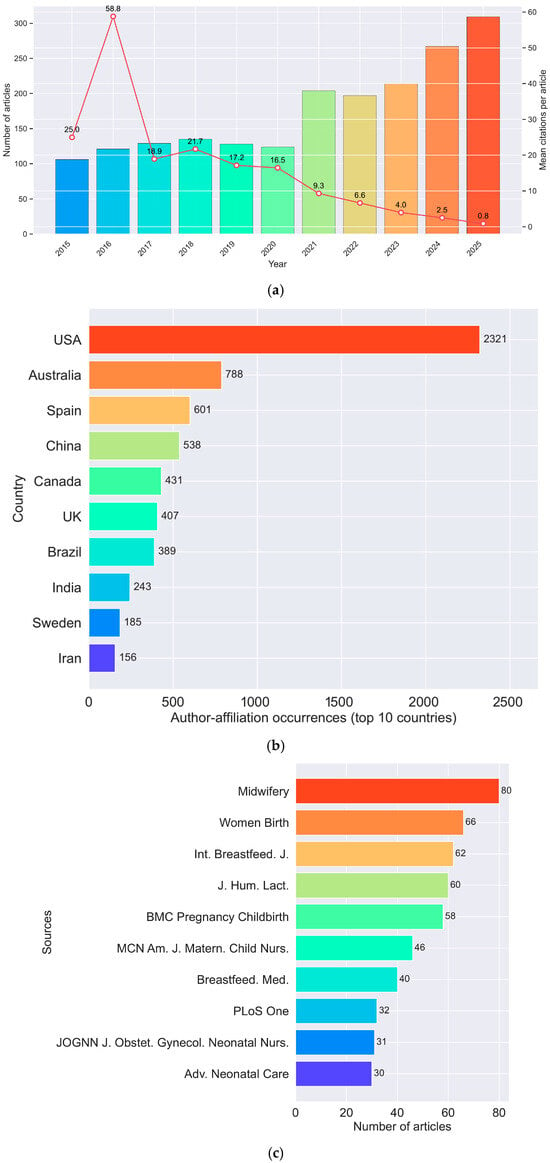
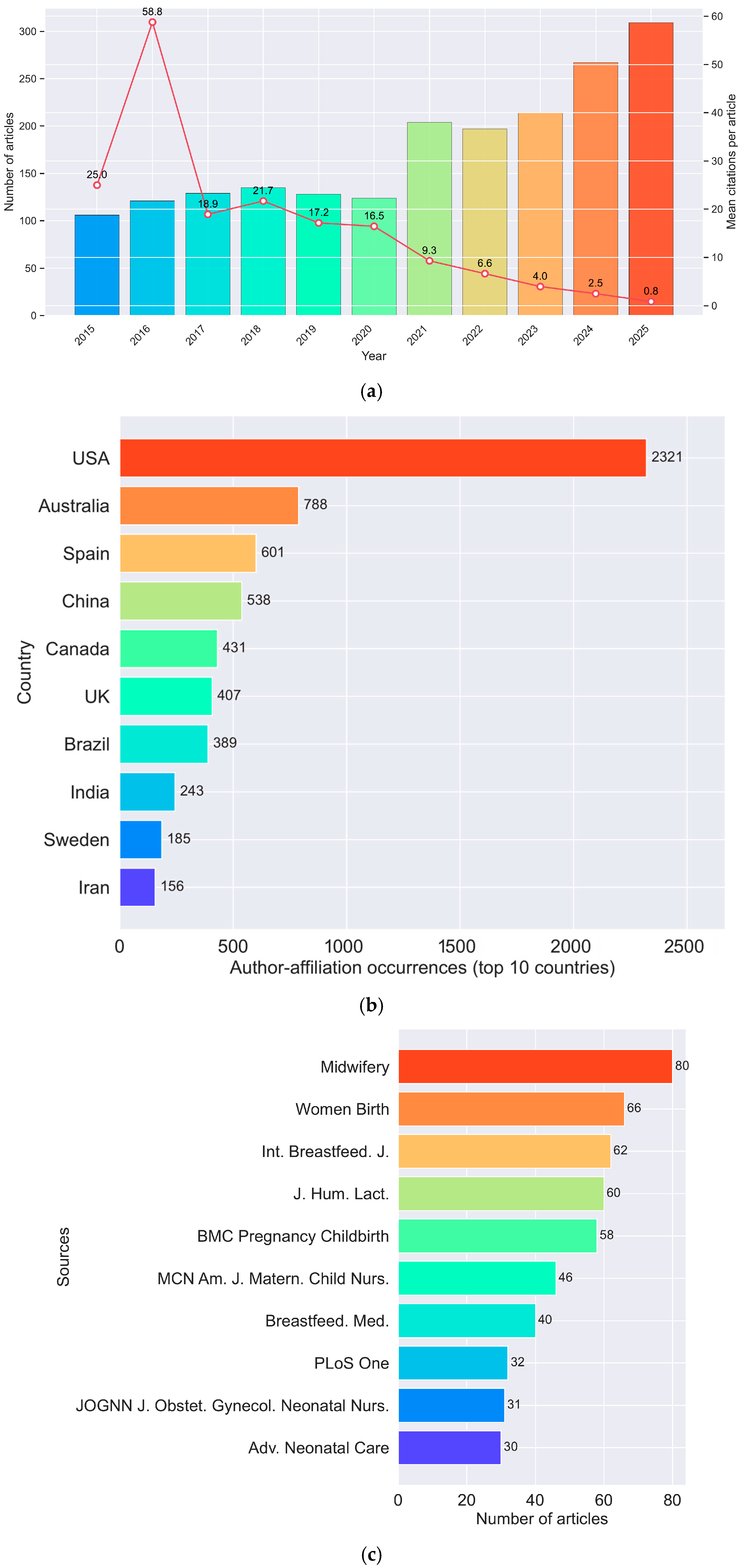
Figure 1a shows sustained growth in publications on breastfeeding support within healthcare delivery systems and nursing care. Highly cited contributions established the relevance of breastfeeding to maternal and child outcomes [15], while later studies examined fragmented follow-up, inconsistent professional advice, and weak continuity between hospital and community settings [3,6,12]. The intervention literature subsequently incorporated theory-based education, nurse-led online counseling, and telemedicine-assisted lactation support [9,16,17]. The 2016 mean-citation peak (58.8 citations per article) is strongly right-skewed by a single highly cited publication, which accrued 4209 citations and accounts for approximately 59% of all citations received by 2016 publications in the corpus [15]. Consequently, the 2016 annual mean does not represent the citation distribution among articles published that year. Lower mean citation counts in more recent years also reflect their shorter citation windows.
Figure 1.
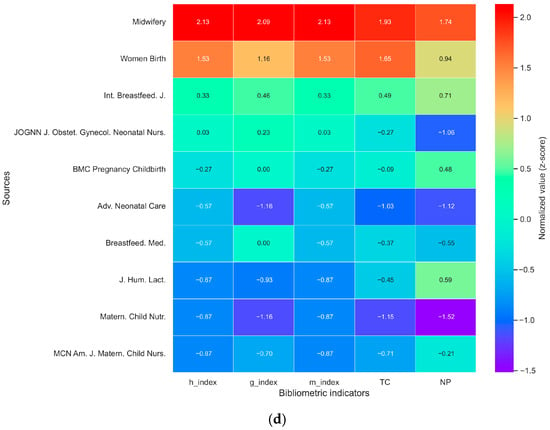
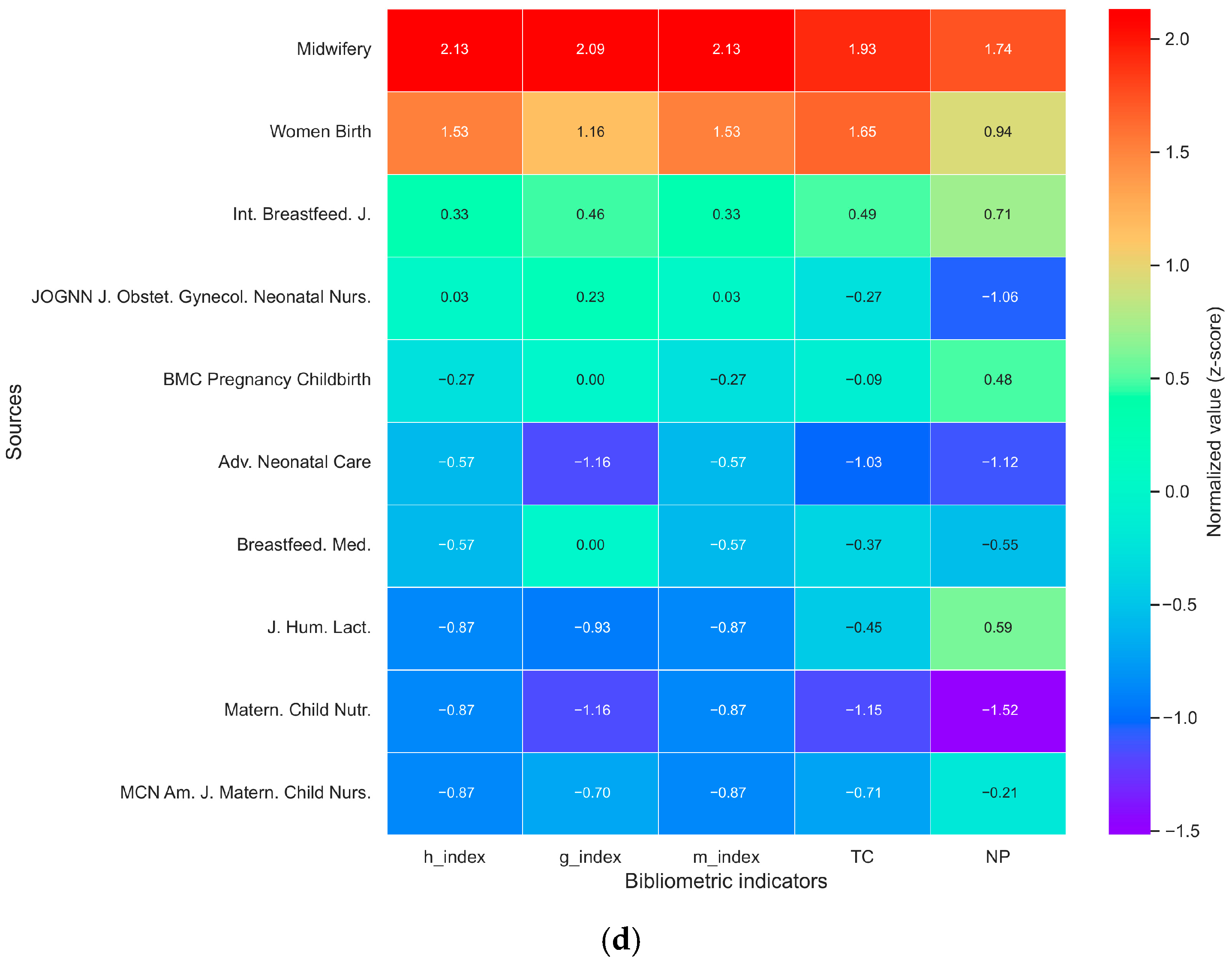
General structure of the literature on nursing-led interventions in breastfeeding support. (a) Annual scientific production and mean citations per article (2015–2025). The 2016 mean is strongly influenced by a single highly cited publication with 4209 citations [15]. (b) Ten countries with the highest author-affiliation frequencies in the retrieved corpus. Values represent author-affiliation occurrences across records rather than counts of unique authors. (c) Most relevant publication sources in the corpus. (d) Heatmap of standardized bibliometric indicators (h-index, g-index, m-index, total citations [TC], and number of publications [NP]) for the leading sources. For each indicator, the z-score expresses how many standard deviations a source lies above (positive values) or below (negative values) the mean of the sources displayed. Values near zero indicate proximity to that mean, while color intensity represents the magnitude and direction of the standardized difference.
This evolution places breastfeeding within care processes shaped by the quality, continuity, and organization of professional support. Education, counseling, and follow-up address modifiable barriers, although records in the retrieved corpus do not consistently specify how these components are integrated into discipline-specific nursing care models. This limited specification reduces the visibility of the nursing contribution and constrains comparison across interventions [7,10].
Figure 1b shows the ten countries with the highest affiliation-country frequencies among all coauthors in the retrieved corpus. These values are derived from author affiliations across documents and do not represent counts of unique authors. In the United States, the literature links infant feeding support to neonatal intensive care unit (NICU) routines, staffing conditions, and missed nursing care, connecting breastfeeding outcomes with bedside practice and care capacity [18,19]. Australian studies address postnatal support needs and transitions between maternity and community care [3]. Research from China and Malawi examines milk-supply concerns, professional support gaps, and context-specific intervention models [9,20,21]. Accordingly, differences among countries describe the distribution of affiliation-country occurrences in the corpus and should not be interpreted as proportions of the 9245 unique authors or as direct measures of service quality or clinical need.
Figure 1c,d locate much of the retrieved corpus’s publication activity in maternity care and midwifery journals. This pattern aligns with research that embeds breastfeeding support in continuity of care, institutional culture, and professional preparation [3,6,22]. The journals Midwifery and Women and Birth include studies on perinatal-care organization, training needs, care relationships, and support in diverse social settings [3,23,24], while specialized outlets publish practice-oriented work on lactation education, simulation, and hospital support [17,18,25]. The source pattern therefore places the corpus at the intersection of maternity-care organization, workforce preparation, and clinical service delivery.
2.2. Thematic Structure, Evolution, and Research Priorities Within the Retrieved Corpus
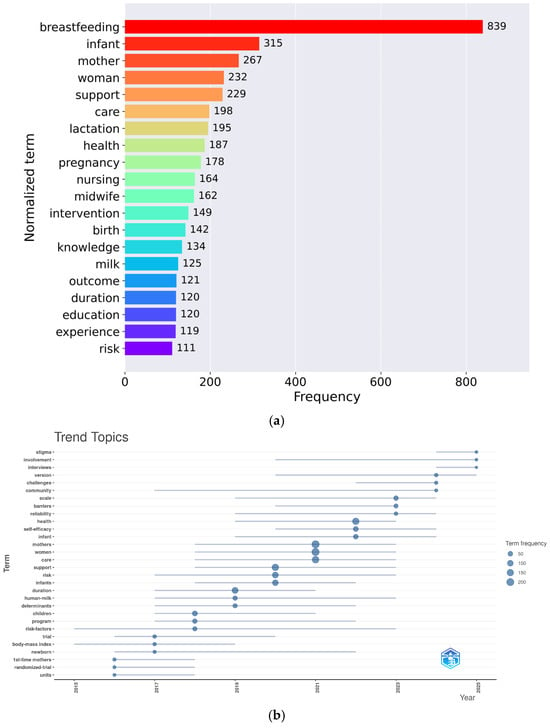
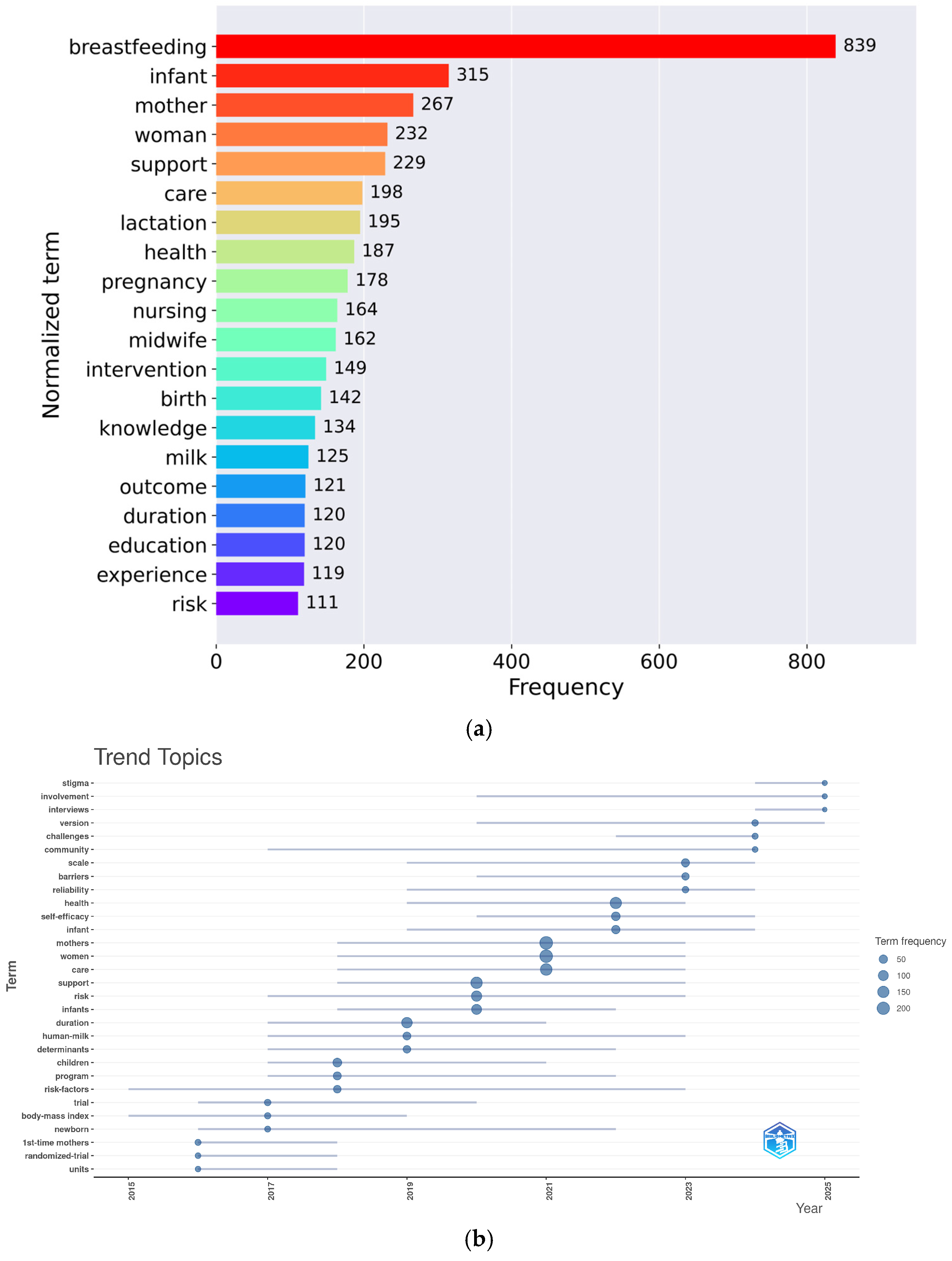
The ranked frequency profile of normalized terms (Figure 2a) is dominated by breastfeeding (n = 839), followed by infant (n = 315), mother (n = 267), woman (n = 232), support (n = 229), care (n = 198), and lactation (n = 195). The remaining high-frequency terms span health, pregnancy, nursing, midwifery, intervention, birth, knowledge, milk, outcomes, duration, education, experience, and risk. This distribution provides a quantitative diagnostic view of the corpus. It shows lexical breadth across maternal–infant populations, professional care, intervention research, and lactation-related domains rather than a single standardized intervention vocabulary. Within these domains, nursing interventions can be represented through education, clinical guidance, emotional support, and follow-up, but the corpus does not consistently distinguish those components. Breastfeeding outcomes are more often framed in terms of self-efficacy, perceived support, and educational exposure than in standardized intervention components [26,27,28]. This pattern is consistent with broad professional roles and limited specification of discrete clinical actions or measurable nursing outcomes.
Figure 2.
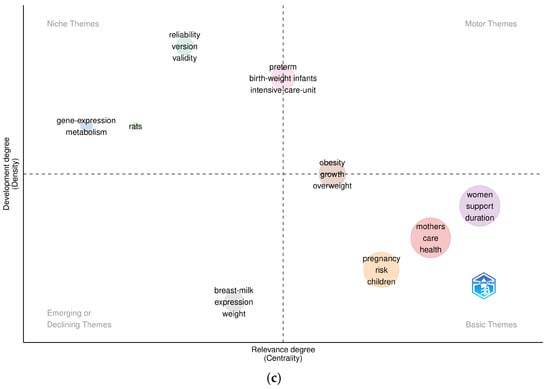
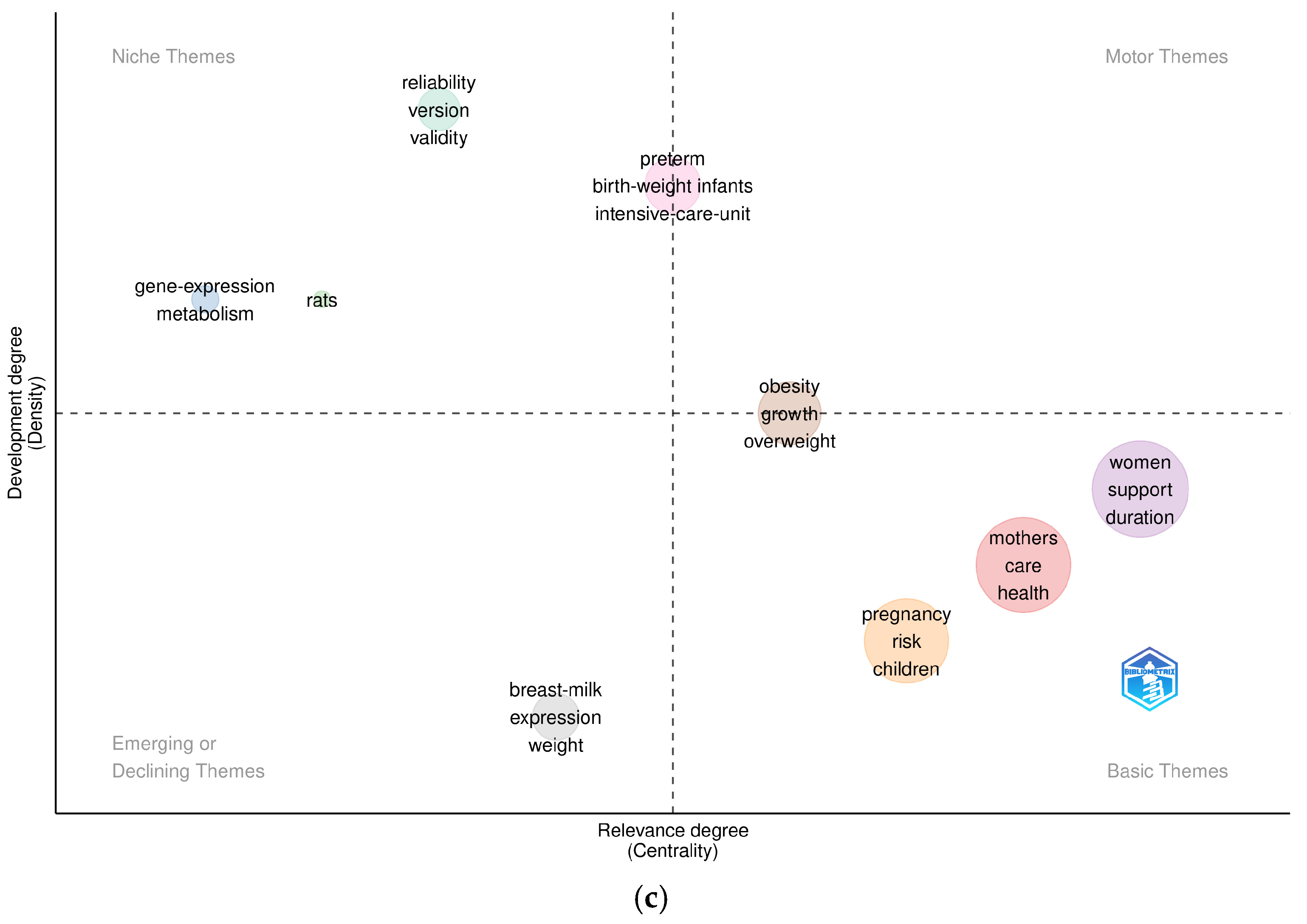
Conceptual structure and thematic evolution of the literature on nursing-led breastfeeding support. (a) Ranked horizontal bar chart of the 20 most frequent normalized terms in the retrieved corpus; values indicate aggregated frequencies after predefined lexical harmonization. (b) Trend topics showing the temporal evolution of recurrent terms. (c) Thematic map of the retrieved corpus based on centrality and density. Analytical provenance: (a) was reconstructed in Python 3.13.5 from the 50-term frequency table exported by bibliometrix after predefined lexical normalization and frequency aggregation; the 20 normalized terms with the highest resulting frequencies are displayed. (b) was generated from the 30-term trend-topic output exported by bibliometrix, with point size representing frequency and horizontal ranges representing the first quartile, median, and third quartile of publication year. (c) was generated with bibliometrix as a nine-cluster thematic map positioned by Callon centrality and Callon density.
Terms such as preterm, depression, stress, and risk connect the retrieved corpus with clinical-vulnerability research. Research frequently addresses NICU care, maternal psychological burden, and postpartum instability, where unit culture, milk-supply concerns, and follow-up shape support needs [6,17,29]. This concentration suggests that many studies respond to established difficulties, leaving preventive and anticipatory nursing frameworks less visible.
Figure 2b shows increasing use of terms such as self-efficacy, scale, and reliability, which reflects greater attention to measurable constructs for intervention evaluation. Nursing and educational interventions target maternal self-efficacy, while instrument-development studies assess breastfeeding attitudes, knowledge, and professional support capacity [17,30,31]. Measurement has become more standardized, although intervention content and delivery remain heterogeneous.
Terms such as barriers, challenges, community, and involvement indicate growing attention to implementation across hospital, home, digital, and community contexts. Recent studies examine father-inclusive education, continuity-of-care models, and online support environments that extend support beyond formal services [32,33,34]. These patterns emphasize continuity and adaptability across care settings [10].
The recent appearance of stigma and interviews suggests greater attention to experiences that outcome-centered designs may not capture adequately. Qualitative approaches examine how age, social marginalization, human immunodeficiency virus (HIV)-related counseling, and unit culture shape feeding decisions and support experiences [6,35,36]. These contexts show that nursing- and midwifery-led support is received within social and institutional conditions that influence its acceptability and feasibility.
Seen alongside Figure 2a,b, Figure 2c indicates that the field remains organized around broad maternal-child care categories rather than a fully consolidated intervention logic. Abstracts in the corpus repeatedly frame breastfeeding support in terms of care transitions, professional communication, and follow-up across settings, which helps explain why themes such as women, mothers, care, support, pregnancy, and risk remain central [3,12]. This centrality reflects both clinical relevance and conceptual breadth. Even when beneficial effects are reported, interventions are often embedded in broader packages of counseling, education, and routine care rather than defined as standardized, clearly bounded practices [5,9]. Figure 2c, therefore, suggests that “support” functions as the organizing concept of the field precisely because it absorbs multiple determinants at once, although that same breadth still limits intervention specificity.
The cluster around preterm infants, birth weight, and intensive care identifies a domain in which institutional conditions, support practices, and infant outcomes are explicitly connected. In neonatal settings, support is linked to human milk provision, maternal participation, and continuity of feeding practices, which makes nursing and midwifery actions more visible and measurable [6,18]. Care culture and staff preparation further shape how families experience feeding support under conditions of vulnerability [6,37].
Peripheral themes such as validity and reliability indicate continued development of instruments for attitudes, knowledge, and self-efficacy [30,38,39]. Breast-milk expression, weight, and metabolic themes connect the corpus with lactation physiology and developmental programming [40,41], reinforcing its multidisciplinary scope.
2.3. Citation Profile of the Most Influential Studies in the Corpus
Table 1 summarizes highly cited papers spanning public-health, biological, intervention, maternal-experience, and health-system contexts within the retrieved corpus. Foundational work framed breastfeeding as a life-course determinant of maternal and child health [15], while human-milk research emphasized variation in composition across lactation and maternal conditions [42]. Other influential studies linked early parenting guidance with infant growth [43], provider integration with maternity outcomes [44], and breastfeeding pain with postnatal depressive symptoms [45]. Together, these studies place breastfeeding support within clinical, experiential, biological, and service-organization contexts. The combined profile shows that citation influence in this corpus is distributed across epidemiological framing, biological context, intervention research, and care delivery.
The citation profile also shows that part of the field’s authority comes from studies that clarify the clinical or biological conditions under which support acquires practical consequences. In neonatal intensive care, skin-to-skin care was associated with longer breastfeeding duration, greater milk production, and more active parental participation, situating breastfeeding support within the management of fragile infants rather than within routine postpartum counseling alone [46]. Differences by parity further indicate that breastfeeding trajectories are not homogeneous across mothers, as prior experience shapes expectations, early problems, supplementation patterns, and long-term continuation [47]. Lactation physiology adds another layer, as milk production and composition may be shaped by genetics, diet, and environmental exposures, which limits explanations based exclusively on education or counseling [40]. Within the retrieved corpus, this group of studies broadens the analytical context beyond a purely behavioral interpretation.
The set of highly cited papers summarized in Table 1 also includes adjacent biological and epidemiological research. Milk glycans and infant-associated bifidobacteria connect human milk research with microbiology and prebiotic function [48]. Maternal breastfeeding history appears in environmental epidemiology as a determinant of per- and polyfluoroalkyl substances (PFAS) concentrations in research on type 2 diabetes (T2D) risk [49]. These papers broaden the corpus’s analytical range, although their relation to nursing-led support is peripheral and should be interpreted accordingly. The implications of WoS document-type classification for corpus interpretation are addressed in Section 2.5, Limitations.
Table 1.
Citation profile and comparative characteristics of the 10 most cited studies in the corpus.
2.4. Cluster Structure and Conceptual Integration Within the Retrieved Corpus
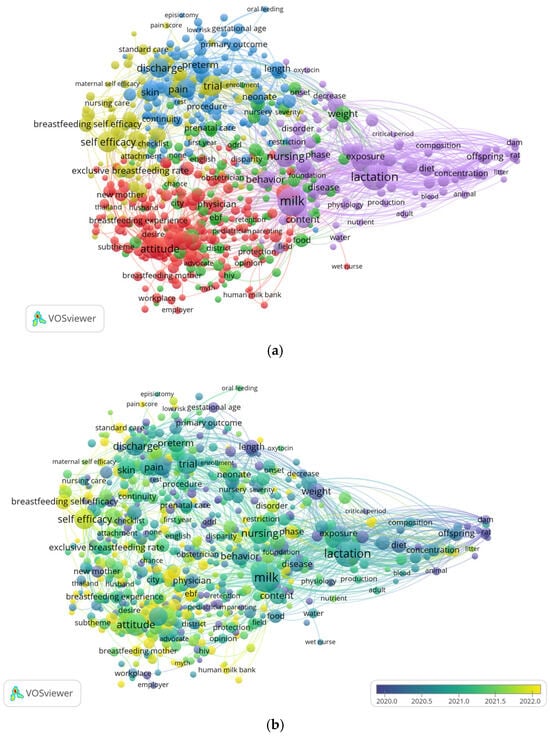
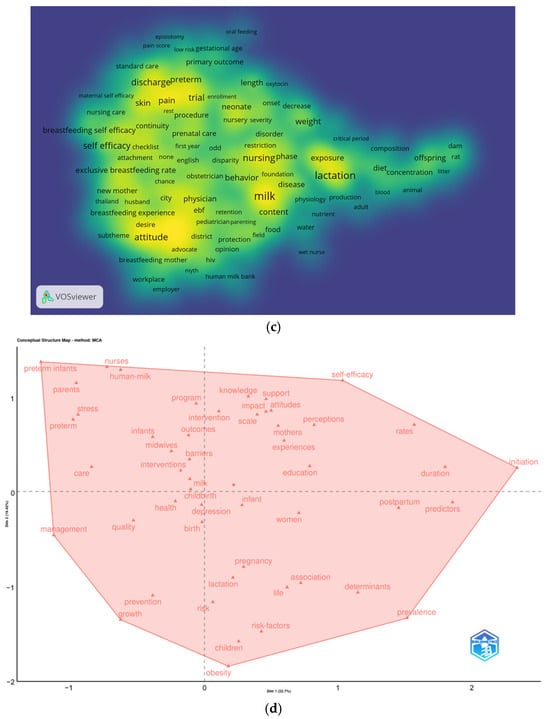
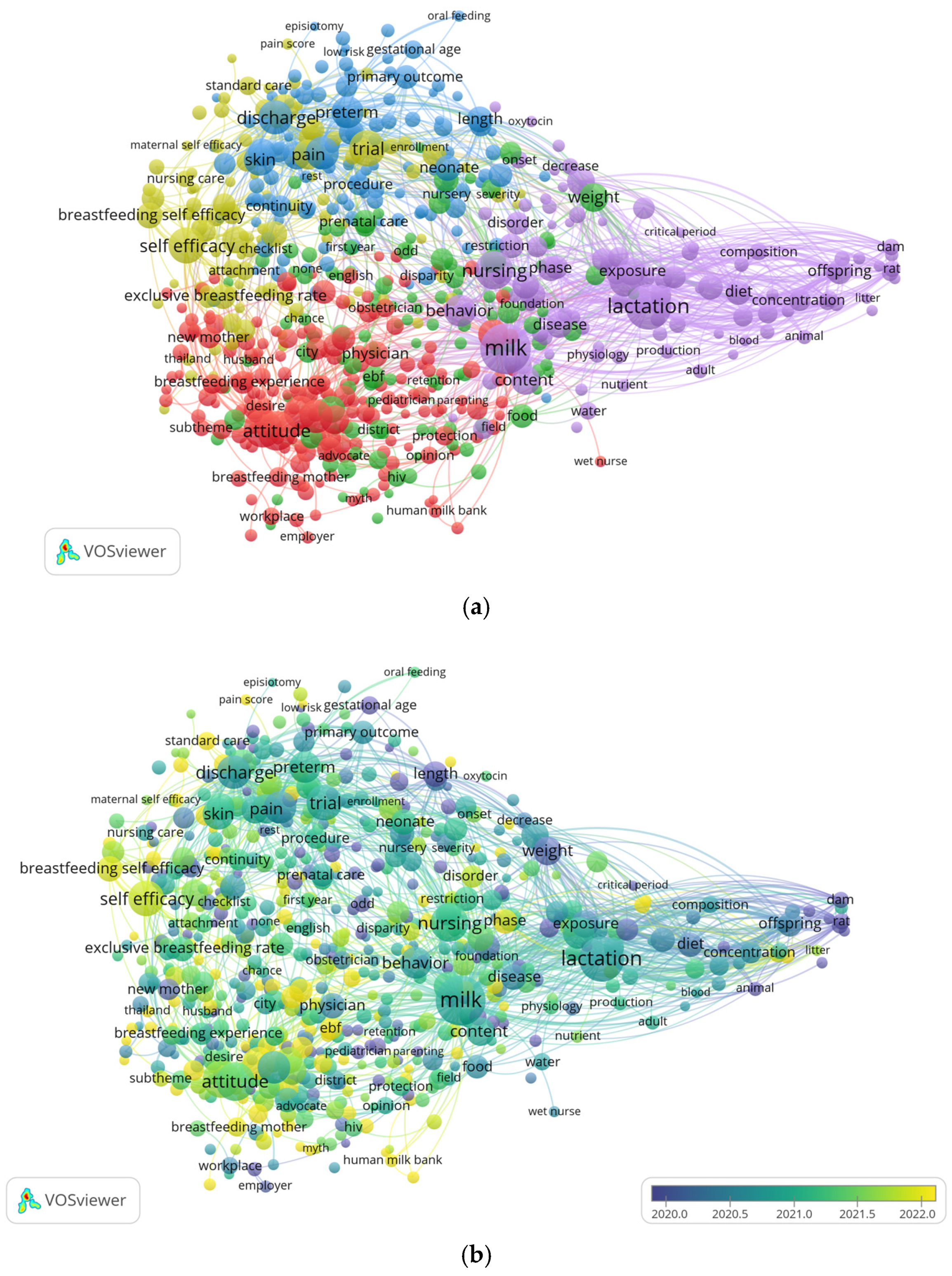
Figure 3a shows a five-cluster term co-occurrence network comprising 638 items, 55,741 links, and a total link strength of 97,677. The map was constructed in VOSviewer from terms extracted from titles and abstracts using binary counting and a minimum occurrence threshold of 10. Of 40,897 extracted terms, 1064 met this threshold; VOSviewer relevance scoring retained the 60% most relevant terms, yielding 638 mapped items after thesaurus-based normalization and filtering. The resulting clusters connect maternal adaptation, care delivery, public-health outcomes, clinical vulnerability, and lactation biology. Figure 3b adds the temporal distribution based on average publication year, whereas Figure 3c shows term density. Together, these views characterize the conceptual structure produced by the specified mapping procedure and facilitate comparison of research fronts according to thematic concentration, temporal distribution, and proximity to clinical implementation.
Figure 3.
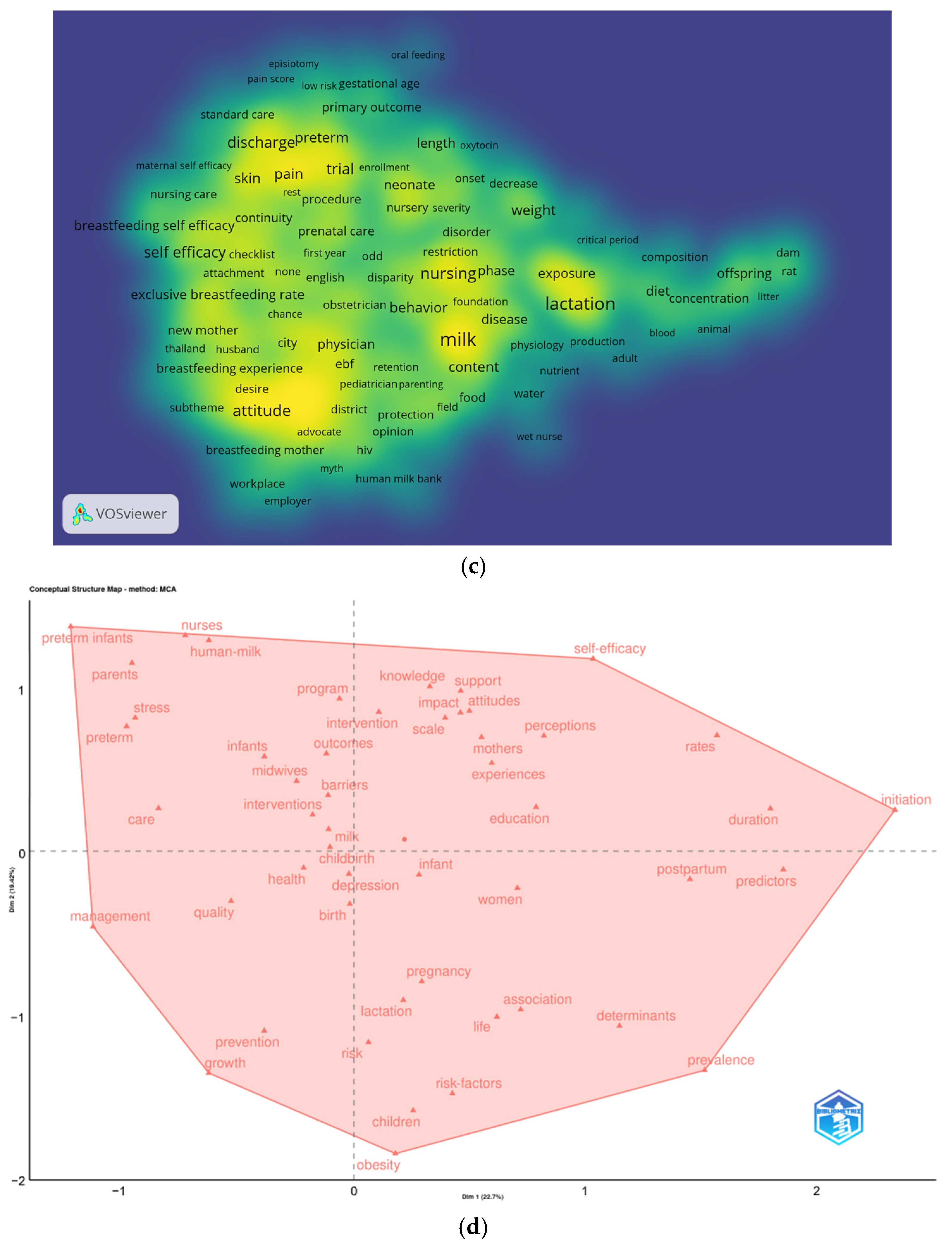
Term co-occurrence science map, temporal overlay, density distribution, and conceptual structure of the literature on nursing-led breastfeeding support. (a) VOSviewer network visualization of the five term co-occurrence clusters; cluster colors are defined by red-green-blue (RGB) values as follows: Cluster 1, RGB 214, 39, 40; Cluster 2, RGB 44, 160, 44; Cluster 3, RGB 31, 119, 180; Cluster 4, RGB 188, 189, 34; and Cluster 5, RGB 148, 103, 189. (b) VOSviewer overlay visualization based on average publication year. (c) VOSviewer density visualization of the same term map. (d) Multiple correspondence analysis (MCA) factorial map showing the conceptual integration within the retrieved corpus. Panel (d) was generated with bibliometrix using multiple correspondence analysis (MCA), not VOSviewer. For panels (a–c), label size and visibility follow the native VOSviewer item-weight and map-density scaling; labels were not manually resized or repositioned.
Cluster 1 (“Support implementation across care and social settings”) groups maternal beliefs, professional training, institutional standards, and post-discharge conditions. Support in this domain depends on timing, continuity between hospital and community services, and professional knowledge [3]. Reliance among professionals, limited time, inconsistent messages, and weak communication contribute to fragmented care [12]. Early cessation is also associated with the amount and quality of support available after birth [50]. The Baby Friendly Initiative provides an institutional framework, although implementation remains sensitive to organizational pressure, leadership, and team coherence [51].
Terms such as training, competency, and collaboration identify workforce preparation as a modifiable implementation component. Variability in education, training, and policy contributes to inconsistent support [11], although workforce readiness is modifiable through education [37]. Simulation-based training has been proposed to strengthen clinical skills and confidence [25], pointing toward organizational solutions. These patterns favor research linking role-specific training, policy, continuity, and auditable intervention components; structured programs combining education, individualized support, and follow-up provide an example of this approach [9].
The cluster also includes social conditions that shape breastfeeding continuation. Expectations, prior experience, return to work, and support networks connect clinical care with daily life. Prior breastfeeding experience is associated with different trajectories, which supports differentiated assessment of first-time mothers [47]. Pain and physical difficulties are associated with postnatal depressive symptoms [45], while short leave, inflexible schedules, and limited childcare constrain continuation after return to work [52]. Family-inclusive and multilevel interventions represent emerging responses [20,32]. Their standardization and adaptation to women’s circumstances remain open implementation questions.
Cluster 2 (“Population determinants, service coverage, and early-life outcomes”) frames breastfeeding support through public-health implementation and maternal-child outcomes. Terms such as early initiation, exclusive breastfeeding, prenatal care, facility, newborn care, weight, morbidity, mortality, and infection indicate an emphasis on population-level indicators. This pattern is consistent with work that treats breastfeeding as a life-course determinant [15], tests theory-based interventions for exclusive breastfeeding [9], and links skin-to-skin care with breastfeeding duration and milk production in vulnerable infants [46]. Terms related to weight and growth also connect support research with later developmental outcomes [43].
This cluster has advanced in identifying predictors more than in defining responsive care pathways. Terms such as risk factor, parity, body mass index, maternal education, employment, residence, and socioeconomic status show a strong epidemiological orientation and describe how breastfeeding practices vary across structural and demographic conditions [2]. The mapping does not establish which professional response should follow each risk profile. A productive next step would be to translate recurrent predictors into prospectively evaluated triage criteria and differentiated nursing or midwifery support, while avoiding causal interpretation of descriptive associations.
Cluster 2 also contains elements of scalable support models in settings constrained by cost, geography, or workforce availability. Terms such as community health worker, nurse midwife, kangaroo mother care, phone, text message, feasibility, low cost, husband, grandmother, government, and United Nations Children’s Fund (UNICEF) connect breastfeeding support with antenatal clinics, postnatal wards, community systems, and family networks. Studies in the corpus examine digital counseling, telemedicine-assisted follow-up, and partner-inclusive approaches [16,17,32]. Terms related to HIV and infection identify settings in which feeding counseling must account for biomedical risk and maternal autonomy [35]. Evaluation of these models would benefit from outcomes spanning initiation, continuation, maternal experience, and neonatal health.
Cluster 3 (“Hospital-based perinatal and neonatal care pathways”) centers on clinically bounded transitions such as labor, delivery-room practices, NICU admission, mother–infant separation, skin-to-skin contact, hospitalization, and discharge. In neonatal settings, support is linked to human milk provision, maternal participation, and continuity of feeding practices, making professional actions more visible and measurable [6,18]. Skin-to-skin contact and early breastfeeding initiation are also associated with breastfeeding outcomes and neonatal physiological regulation and depend on clinical condition, safety assessment, and service coordination [53].
Skin-to-skin care in term and preterm infants provides an example of an operationally defined practice associated with breastfeeding duration, milk production, and parental participation [46]. In this part of the corpus, support is therefore linked to procedures, timing, and institutional workflow rather than generalized encouragement alone.
Operational visibility does not necessarily produce pathway coherence. Terms related to continuity, discharge, hospital policy, documentation, referral, checklist, and quality improvement indicate that support is often evaluated at isolated clinical moments. Evidence of inconsistent messages and weak continuity between hospital and community care reinforces the need to connect delivery-room support, NICU or postpartum care, discharge planning, and follow-up within coordinated pathways [3,6,12]. Future studies could test bundled, time-linked protocols across these transitions rather than isolated practices [1,44].
Cluster 3 is positioned for translational and quality-improvement research because many of its outcomes are linked to institutional decisions. Terms related to clinical outcome, adverse event, readiness, guideline, and multidisciplinary team indicate attention to standardization and audit. Breastfeeding outcomes are shaped by system organization, provider integration, NICU routines, staffing, and care culture [6,18,37,44]. Most studies still evaluate narrow clinical windows, leaving uncertainty about whether gains achieved during hospitalization persist after discharge. Nurse- and midwife-led models could therefore link early clinical practices with postdischarge outcomes for preterm infants, low-birth-weight newborns, and dyads exposed to cesarean delivery or neonatal separation [46,47].
Cluster 4 (“Targeted postpartum intervention and maternal vulnerability”) groups terms related to self-efficacy, breastfeeding problems, pain, insufficient milk supply, postpartum depression, anxiety, first-time motherhood, home visits, video, educational interventions, and randomized controlled trials. This configuration identifies the part of the retrieved corpus most explicitly oriented toward modifying maternal trajectories after breastfeeding difficulties have become clinically or subjectively apparent. Breastfeeding outcomes in this domain are frequently examined in relation to maternal self-efficacy, perceived support, and educational exposure [26,27,28]. Parallel studies have focused on validating instruments to measure these constructs more precisely [17,30,31].
The main strength of this group is that it reveals an actionable intervention logic aligned with nursing practice. These findings support the development of stratified care models in which nursing interventions are adapted according to maternal risk profiles, clinical conditions, and early breastfeeding difficulties. This approach reinforces the role of nursing in the proactive management of breastfeeding, shifting from reactive problem-solving to anticipatory and personalized care. Terms such as routine care, usual care, randomized controlled trial, pretest, self-efficacy scale, and exclusive breastfeeding rate indicate that this part of the literature aims to test whether specific strategies can produce measurable gains relative to a comparison condition. That pattern is compatible with evidence showing that theory-based, multi-component interventions can improve exclusive breastfeeding rates when they combine education, individualized counseling, and follow-up beyond the immediate postpartum period [9]. At the same time, the prominence of first-time mothers, primiparous mothers, latch, engorgement, milk supply, and cesarean section suggests that intervention studies are increasingly organized around mothers who are more likely to encounter early breastfeeding disruption. This is coherent with findings that breastfeeding trajectories differ by parity, with primiparous mothers showing less favorable patterns in intended duration, supplementation, and continuation, thereby requiring more tailored support from the outset [47]. Cluster 4, therefore, suggests a research opportunity within the retrieved corpus: developing stratified postpartum support models that use clinical history and early breastfeeding difficulties to assign the intensity and type of nursing intervention.
This cluster also exposes a reactive, symptom-centered orientation. The co-occurrence of pain, nipple pain, breast problems, depressive symptoms, Edinburgh Postnatal Depression Scale (EPDS) score, anxiety, fatigue, and early cessation indicates that support is often studied after distress has emerged. Pain and physical breastfeeding difficulties are associated with postnatal depressive symptoms more clearly than duration alone [45]. Qualitative research similarly describes uncertainty, physical difficulty, and emotional strain when guidance is inconsistent or delayed [5]. Earlier risk identification and planned follow-up could be evaluated as ways to address these difficulties before they lead to cessation.
A second opportunity highlighted by this cluster is methodological. Because the terms include home visit, mobile application, video, educational program, standard care, usefulness, and positive effect, the cluster shows that the retrieved literature includes multiple delivery formats for individualized support. Targeted intervention research is not confined to face-to-face ward teaching. Hybrid and postdischarge formats may be feasible for sustaining support through the first days, weeks, and months postpartum [17]. However, the same pattern also suggests fragmentation in the selection of outcomes. The literature seems to evaluate a mixture of self-efficacy scores, exclusive breastfeeding rates, pain scores, depressive symptoms, satisfaction, and continuation, which makes it harder to compare studies directly and to determine which intervention components are driving observed effects [9,31,45]. From this perspective, Cluster 4 points to a promising but still unevenly consolidated research front: one that has advanced in identifying modifiable maternal targets and testing short-term interventions, but still needs integrative designs that connect symptom relief, psychological adaptation, and longer-term breastfeeding continuation within a common evaluative framework.
Cluster 5 (“Lactation biology, milk composition, and maternal–infant mechanisms”) points to a research front that expands breastfeeding support beyond care delivery and into the biological substrate of lactation itself. The co-occurrence of terms such as milk, lactation, milk production, composition, nutrient, protein, fatty acid, mammary gland, physiology, mechanism, exposure, diet, supplementation, gene, and offspring delineates a biologically oriented research domain. This domain concerns how maternal biology, milk constituents, and early-life exposures may shape infant development and later health. This pattern is consistent with work in the corpus showing that human milk is a dynamic biological system whose composition changes across lactation and is influenced by maternal nutritional status, physiology, and environmental conditions [42]. Related evidence indicates that lactation cannot be understood solely through behavioral counseling. Milk production and composition are shaped by genetics, diet, endocrine regulation, and environmental factors that modify mammary function and downstream infant exposure [40]. In that sense, Cluster 5 represents a biologically grounded component of the retrieved corpus, even though much of this evidence is not directly centered on nursing interventions.
The cluster treats breastfeeding as a developmental exposure as well as a feeding behavior. Terms such as growth, body weight, adulthood, disorder, disease, sensitive period, and offspring connect lactation-related processes with health trajectories beyond the postpartum period. This pattern is consistent with life-course research on breastfeeding and maternal-child health [15]. Environmental epidemiology also incorporates breastfeeding history when examining PFAS concentrations and later T2D risk [49]. These adjacent topics broaden the biological context of the corpus, although they provide limited direct evidence for nursing interventions.
At the same time, this cluster reveals a clear translational challenge. The presence of terms such as mouse, rat, pig, sow, dam, pup, mammary gland, liver, gene, and pathway indicates that a substantial portion of this domain draws on animal models and experimental biology. That is scientifically valuable because it allows mechanistic questions to be explored in ways that are not feasible in routine maternal–child care research. However, it also means that part of the knowledge structure surrounding breastfeeding support is built on evidence that is conceptually adjacent to nursing practice rather than directly actionable within it. The same tension appears in the corpus of human milk research. For example, mechanistic work on milk glycoproteins and released N-glycans showed that components of human milk can selectively promote infant-associated bifidobacteria, expanding breastfeeding research toward glycobiology and host–microbe interactions [48]. Yet such findings do not automatically translate into clearer decisions for nurses and midwives at the bedside unless they are connected to clinical questions about maternal counseling, milk handling, infant vulnerability, or feeding support. Within the retrieved corpus, Cluster 5 therefore highlights a boundary between biological evidence and directly actionable nursing or midwifery care.
Cluster 5 also suggests opportunities to connect biological variability with clinically meaningful support. Terms such as diet, supplementation, drug, concentration, milk sample, and nursing mother indicate attention to maternal inputs and milk composition. Maternal diet, environmental exposures, and lactation physiology can influence milk synthesis and function [40,42]. Translation into practice requires evidence that links these biological observations with specific counseling decisions; the keyword map alone cannot establish recommendations about diet, medication, or exposure management.
A corresponding research direction is to test whether biological variability can inform specific counseling and support decisions—for example, around diet, medication, or high-risk infants—without replacing the relational and educational dimensions of breastfeeding care. This would provide a clearer translational bridge between mechanistic milk science and nursing or midwifery practice.
Figure 3d shows that terms in the retrieved corpus form a continuous semantic space rather than distinct conceptual domains, organized around a shared maternal–infant core. Central terms such as milk, infant, and health indicate conceptual cohesion, but also reliance on broad categories rather than a stable vocabulary of intervention components. Within this corpus, breastfeeding support is represented as a multidisciplinary conversation on care, experience, outcomes, and vulnerability. However, it is still often framed as a general function of maternity care rather than a clearly defined nursing or midwifery model [3,12], despite growing efforts to formalize interventions [5,9].
The horizontal structure reflects partial separation between a care-oriented perspective (care, management, nurses, and midwives) and an epidemiological perspective (initiation, prevalence, and predictors). A research opportunity lies in translating risk profiles and outcome patterns into differentiated support strategies. Such translation would need to consider the association of breastfeeding with broader health outcomes, structural determinants of care, and prior maternal experience [2,15,47].
The vertical dimension further distinguishes between immediate care and long-term public health perspectives. The upper area emphasizes professional action and modifiable maternal factors such as self-efficacy and interventions, while the lower area reflects life-course and epidemiological concerns, including risk, obesity, and prevalence. Although both coexist, integration remains partial. Evidence from neonatal settings shows that nursing actions become more visible and measurable when linked to structured practices such as skin-to-skin care [46] and NICU-based feeding support [6]. Broader research frames breastfeeding as a determinant of long-term maternal–child health and growth trajectories [15,43,49].
Figure 3d also suggests movement toward standardized measurement and structured intervention. Self-efficacy and validated instruments make aspects of maternal adaptation measurable [30,31], while technology-supported interventions broaden delivery formats [17]. The continued presence of stress, depression, and perceived barriers indicates that technical measures capture only part of the support experience [45]. Integration of clinical care, psychosocial support, and population-level strategies remains an unresolved direction for intervention design [9,12,44].
2.5. Limitations
This study has several limitations related to corpus definition and bibliographic coverage. The analysis was based exclusively on the Web of Science Core Collection; Cumulative Index to Nursing and Allied Health Literature (CINAHL), which provides specialized coverage of nursing and allied-health literature, was not searched. Its omission may therefore have reduced the representation of nursing-specific and qualitative breastfeeding-support research [54]. WoS was selected a priori because it provides standardized bibliographic and citation metadata suitable for bibliometric analysis and is widely used in health-related bibliometric research [55]; the results characterize the search-defined WoS corpus rather than the entire nursing and midwifery breastfeeding-support literature.
The broad Topic query prioritized retrieval sensitivity over intervention specificity. The wildcard term nurs* may retrieve incidental uses such as nursing mothers, nursing cohort names, or nursery-related terminology, whereas support* may occur in records that do not describe a defined nursing or midwifery intervention. The resulting corpus therefore includes biological, epidemiological, and animal-model studies related to lactation but not directly representative of nursing- or midwifery-led breastfeeding support. These records were retained because the analysis was conducted on the predefined corpus obtained through the original search strategy, without post hoc relevance exclusions. Accordingly, publication counts, citation profiles, thematic structures, and conceptual maps describe this search-defined dataset and should not be regarded as an exhaustive inventory of nursing or midwifery interventions or as estimates of their prevalence or effectiveness. Future bibliometric studies combining WoS with CINAHL and explicit relevance screening could assess whether broader nursing-specific coverage modifies the patterns identified here.
Document-type classification constitutes an additional limitation of corpus interpretation. Although all 1934 records satisfied the WoS Article filter, this indexing category does not necessarily correspond to original empirical study design. Some highly cited records have characteristics of reviews, clinical reports, or broad analytical syntheses, and five records also carried the Retracted Publication label. These records were retained to preserve the predefined corpus and its citation structure. Their presence may affect descriptive and citation-based indicators; however, the substantive results of the retracted records were not used to support intervention effects, clinical recommendations, or the narrative discussion.
Temporal indicators are also affected by the database snapshot available at the search date. Although the analytical window ended in 2025 and the search was conducted on 1 April 2026, the 2025 publication count may remain subject to residual Web of Science indexing lag or subsequent metadata updates [56,57]. Because bibliometrix calculates the annual growth rate from the first and last annual publication counts, any later addition of 2025 records could slightly modify the reported compound annual growth rate (CAGR) of 11.29%. This does not alter the search-defined corpus analyzed in the present study, but the final-year publication count and endpoint-based growth estimate should be regarded as specific to the database snapshot retrieved on the stated search date.
3. Materials and Methods
3.1. Data Source and Search Strategy
This study was a bibliometric analysis of a predefined WoS corpus on breastfeeding support involving nursing and midwifery. The search was performed on April 1, 2026, on the Web of Science (WoS) Core Collection through the Advanced Search interface. WoS was selected a priori as the single bibliographic source because it provides standardized bibliographic and citation metadata suitable for reproducible citation-based mapping and is widely used in health-related bibliometric analyses [55]. No additional nursing-specific database, including CINAHL, was searched; accordingly, the study aimed to characterize the WoS-defined corpus rather than achieve exhaustive coverage of the nursing literature. Records were retrieved from the Topic field (TS) using the following query: TS=((breastfeed* OR “breast feeding” OR lactation OR “human milk” OR “infant feeding”) AND (nurs* OR “nursing care” OR “nursing support” OR “nurse-led” OR midwi*) AND (intervention* OR program* OR education* OR support* OR promotion)).
The Topic search was intentionally broad to capture the range of breastfeeding-support literature linked to nursing and midwifery. This choice increases retrieval sensitivity but reduces specificity because nurs* and support* can appear in contexts that do not reflect a direct professional intervention. No post-retrieval manual relevance filter was applied to redefine the primary bibliometric corpus; instead, this retrieval characteristic is treated explicitly as a limitation of corpus validity.
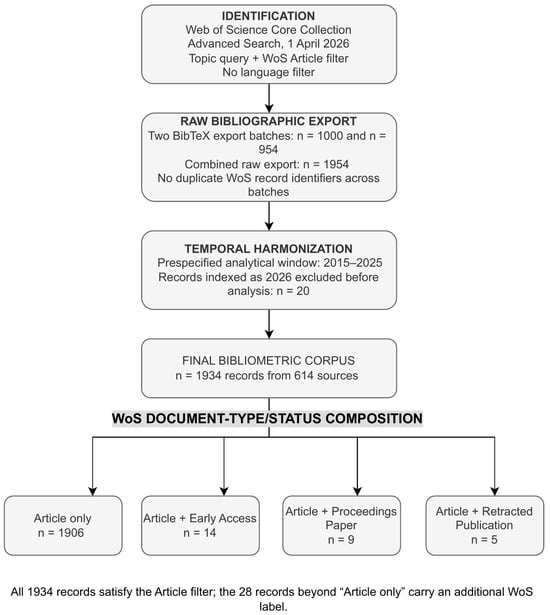
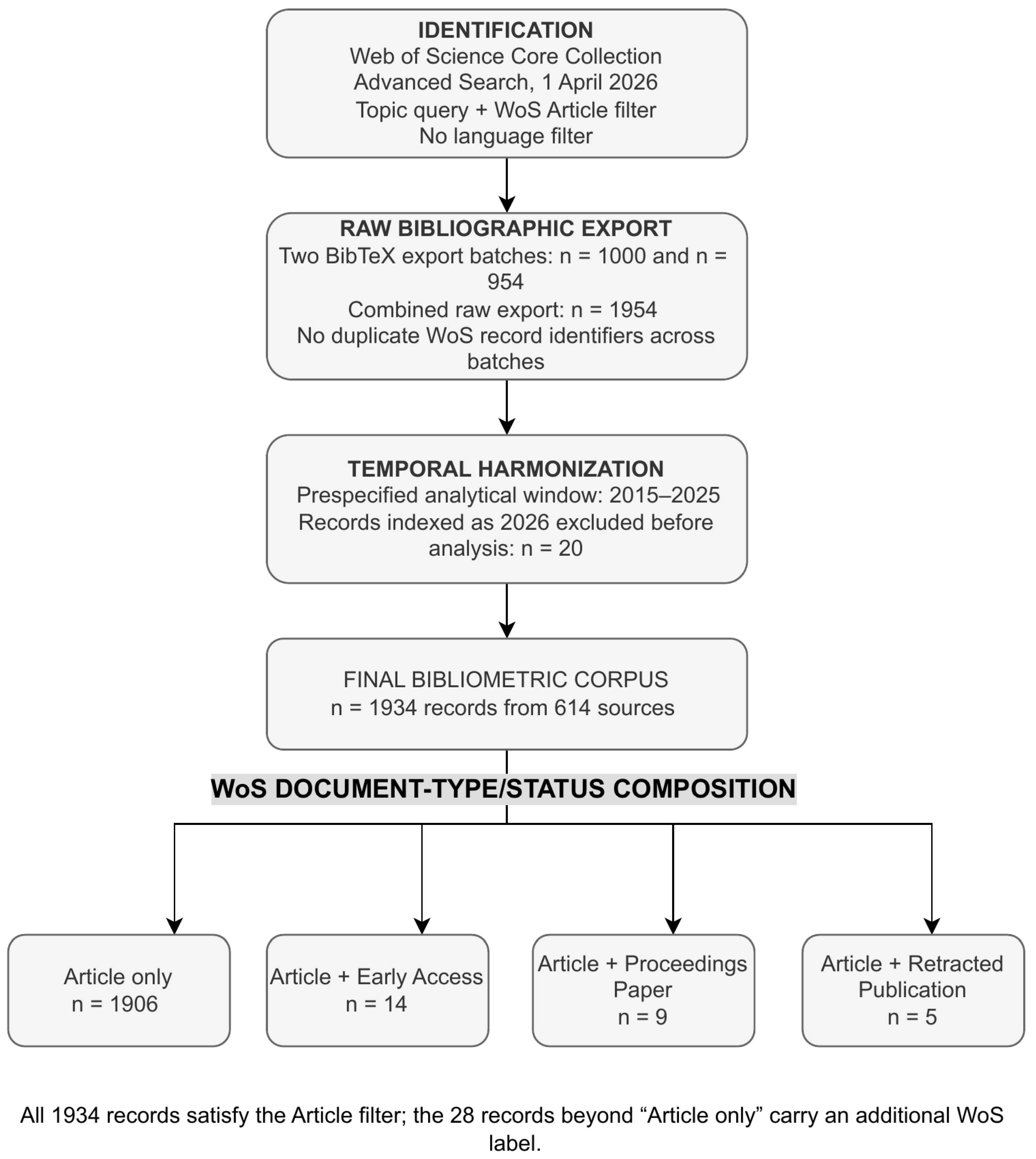
The WoS Article filter was applied at retrieval, and no language filter was used. This filter denotes a Web of Science document-indexing category and was not used as a proxy for original empirical study design. The analytical publication window was prespecified as 2015–2025. The WoS output was exported in two BibTeX batches using the Full Record option (n = 1000 and n = 954), yielding 1954 raw records with no duplicate WoS record identifiers across batches. During post-export verification, 20 records were found to carry a 2026 publication year in the exported WoS metadata despite the 2015–2025 restriction applied during retrieval. These records were excluded solely to preserve the prespecified analytical window, resulting in a final corpus of 1934 records. The retrieval and preprocessing sequence is summarized in Figure 4.
Figure 4.
PRISMA-style bibliometric record-flow diagram for construction of the search-defined WoS corpus. The figure reports database retrieval, export, temporal harmonization, and WoS document-type/status composition rather than systematic-review eligibility screening. No language filter was applied. All 1934 records satisfied the WoS Article filter; the 28 records beyond the 1906 Article-only records carried an additional WoS label (Early Access, Proceedings Paper, or Retracted Publication).
Figure 4 separates record retrieval and post-export verification of the publication window from the WoS document-type/status labels used to describe the final corpus. Because no title/abstract or full-text eligibility screening was performed, the diagram follows a Preferred Reporting Items for Systematic Reviews and Meta-Analyses (PRISMA)-style format rather than a PRISMA eligibility flow for a systematic review.
3.2. Bibliometric and Thematic Analysis with Bibliometrix
The bibliometric and thematic analyses were conducted in R version 4.3.3 (29 February 2024), “Angel Food Cake”, running on the x86_64-pc-linux-gnu (64-bit) platform, using bibliometrix version 5.2.1 [58]. The BibTeX file exported from WoS was imported into R for data conversion, descriptive bibliometric analysis, and generation of the intermediate tables used for thematic and conceptual analyses. Bibliometrix generated the source data for Figure 2a and the analytical outputs for trend topics (Figure 2b), the thematic map (Figure 2c), and the multiple correspondence analysis (MCA) factorial map (Figure 3d). The trend-topic output comprised 30 recurrent terms and summarized their frequencies together with the first quartile, median, and third quartile of publication year. The thematic map comprised nine clusters positioned according to Callon centrality and Callon density, while Figure 3d represented the conceptual structure in a two-dimensional MCA space.
The term-frequency data underlying Figure 2a were obtained using bibliometrix and standardized using a predefined normalization dictionary to harmonize selected lexical variants, singular/plural forms, and equivalent expressions. Frequencies corresponding to normalized terms were subsequently aggregated, and the 20 most frequent terms were ranked and displayed as a horizontal bar chart.
The final dataset comprised 1934 documents published in 614 sources. The mean document age was 4.94 years, and the average number of citations per document was 12.58. The annual growth rate reported by Bibliometrix was 11.29%. This indicator corresponds to the compound annual growth rate (CAGR) in publication output between the first and last years of the analyzed period [58,59]. It was calculated as:
where Nstart and Nend are the numbers of publications in the first and last years of the analytical period, respectively, and Ystart and Yend are the corresponding publication years. For the present corpus:
Because the search was conducted on 1 April 2026, the 2025 publication count may still be affected by residual Web of Science indexing delays or subsequent metadata updates. Delays between publication availability and database indexing have been documented in Web of Science, particularly for Early Access records [56]. Because 2025 constitutes the endpoint of the CAGR calculation, subsequent incorporation or updating of records assigned to that publication year could produce a small change in the reported annual growth rate.
The corpus included 4327 authors’ keywords and 2583 Keywords Plus. A total of 9245 authors contributed to the dataset, including 86 authors of single-authored documents. The number of single-authored documents was 88, the average number of co-authors per document was 5.63, and the proportion of international co-authorships was 19.95%. Within the exported WoS metadata, 1906 records were labeled Article only; 14 were labeled Article; Early Access; 9 were labeled Article; Proceedings Paper; and 5 (0.26% of the corpus) were labeled Article; Retracted Publication. All 1934 records therefore satisfied the Article filter. The apparent difference between 1934 total records and 1906 Article-only records reflects 28 records carrying Article together with an additional WoS label, not unaccounted records (1906 + 14 + 9 + 5 = 1934).
The five retracted records were all published in 2022 and were identified by their digital object identifiers (DOIs) as 10.1155/2022/5040461, 10.1155/2022/2396658, 10.1155/2022/2305239, 10.1155/2022/4949498, and 10.1155/2022/8466797. They were retained in the descriptive bibliometric corpus to preserve the predefined WoS dataset as retrieved. Their substantive results were not used to support intervention effects, clinical recommendations, or the narrative discussion. Retention therefore applies only to corpus-level descriptive indicators and does not treat the retracted articles as valid evidence.
3.3. Science Mapping with VOSviewer
VOSviewer version 1.6.20 was used exclusively for the term co-occurrence science maps shown in Figure 3a–c [60]. Terms were extracted from titles and abstracts and analyzed using binary counting with a minimum occurrence threshold of 10. Of 40,897 extracted terms, 1064 met this threshold; the VOSviewer relevance score was then used to retain the 60% most relevant terms, resulting in 638 items in the final map. The network contained 55,741 links and a total link strength of 97,677 and was partitioned into five clusters. The same map underlies the network visualization (Figure 3a), the overlay visualization based on average publication year (Figure 3b), and the density visualization (Figure 3c).
Before final visualization, a thesaurus file was used to standardize terminology, merge synonymous expressions, unify abbreviations, and remove generic or non-informative terms. The complete thesaurus and the machine-readable VOSviewer JavaScript Object Notation (JSON) network underlying Figure 3a–c have been deposited in Figshare and are publicly available at https://doi.org/10.6084/m9.figshare.33718552. The JSON file contains the complete 638-item map, including term coordinates, cluster assignments, occurrence counts, link metrics, and average publication year, and can be explored interactively using VOSviewer Online (https://app.vosviewer.com/) (accessed on 1 April 2026).
In the static representations shown in Figure 3a–c, label size and visibility follow the native VOSviewer visualization algorithm, which scales labels according to item weight and local map density. Individual labels were not manually resized or repositioned, preserving the occurrence-weighted visual hierarchy of the original map. The deposited JSON provides access to the complete interactive network, allowing detailed inspection of terms that may appear reduced in the static figure layout.
4. Conclusions and Recommendations
Within the search-defined WoS corpus, the bibliometric structure of the literature on breastfeeding support involving nursing and midwifery is organized across interconnected domains of maternal adaptation, care delivery, clinical vulnerability, early-life outcomes, and lactation biology. Publication growth and source concentration show sustained activity in maternity care, midwifery, and maternal-child health journals. Term-based bibliometric analyses identify self-efficacy, education, experience, care, and support as recurring constructs, while intervention components and outcome definitions remain heterogeneous. Hospital-based perinatal and neonatal pathways and targeted postpartum interventions show closer links between professional actions and measurable outcomes. Connections between epidemiological risk profiles, longitudinal care, and implementable nursing responses remain less developed. These patterns indicate that the retrieved corpus represents a substantial, heterogeneous body of literature; however, its bibliometric structure provides no evidence of intervention prevalence or effectiveness and does not establish a unified nursing or midwifery care model.
Recommendations for Research and Practice
Future research would benefit from prospectively evaluated frameworks that specify intervention components, provider roles, timing, intensity, and outcomes across prenatal preparation, birth, discharge, and community or digital follow-up. A shared core of outcomes could improve comparisons across studies by linking exclusive breastfeeding, maternal self-efficacy, symptom burden, emotional well-being, and continuation. Risk-stratified pathways warrant evaluation for mothers and infants facing early feeding difficulties or neonatal vulnerability. Biological research may inform counseling questions when supported by direct clinical evidence. These directions follow from patterns and gaps identified within the search-defined corpus and require effectiveness and implementation studies before routine adoption. Future bibliometric work should also test the robustness of these patterns by combining WoS with CINAHL and applying explicit relevance screening to distinguish direct nursing or midwifery breastfeeding-support studies from peripheral records.
Author Contributions
Conceptualization, J.M.A.G. and O.R.F.-C.; methodology, J.G.P.-F. and L.G.-C.; software, J.G.P.-F. and L.G.-C.; investigation, L.G.-C.; data curation, L.G.-C.; writing—original draft preparation, J.S.-L. and J.G.P.-F.; writing—review and editing, J.M.A.G., O.R.F.-C., E.P.-E. and E.C.-L.; visualization, J.A.G.-S. and E.A.C.-E. All authors have read and agreed to the published version of the manuscript.
Funding
This research received no external funding.
Institutional Review Board Statement
Not applicable.
Informed Consent Statement
Not applicable.
Data Availability Statement
The bibliometric dataset analyzed in this study comprised 1934 records retrieved from the Web of Science Core Collection. The complete WoS bibliographic export is not publicly redistributed because the underlying metadata are subject to Clarivate licensing conditions. To facilitate transparency and reproducibility without redistributing the licensed export, a list of 1889 unique DOIs corresponding to records for which a DOI was available in the analyzed corpus, the VOSviewer thesaurus used for terminology normalization, and the machine-readable VOSviewer JSON network underlying Figure 3a–c are publicly available in Figshare at https://doi.org/10.6084/m9.figshare.33718552. The JSON network can be explored interactively using VOSviewer Online (https://app.vosviewer.com/), allowing examination of the complete 638-item map beyond the constraints of the static figures. The search strategy, retrieval date, analytical window, and preprocessing procedures used to construct the search-defined corpus are reported in Section 3.1.
Acknowledgments
The authors acknowledge the Secretaría de Ciencia, Humanidades, Tecnología e Innovación (SECIHTI) for the recognition and support provided through the Sistema Nacional de Investigadoras e Investigadores (SNII), which contributes to the continuity of their academic and research activities.
Conflicts of Interest
The authors declare no conflicts of interest.
Abbreviations
The following abbreviations are used in this manuscript:
| CAGR | Compound annual growth rate |
| CINAHL | Cumulative Index to Nursing and Allied Health Literature |
| DOI | Digital object identifier |
| EPDS | Edinburgh Postnatal Depression Scale |
| HIV | Human immunodeficiency virus |
| JSON | JavaScript Object Notation |
| MCA | Multiple correspondence analysis |
| NICU | Neonatal intensive care unit |
| NP | Number of publications |
| PFAS | Per- and polyfluoroalkyl substances |
| PRISMA | Preferred Reporting Items for Systematic Reviews and Meta-Analyses |
| RGB | Red-green-blue |
| SECIHTI | Secretaría de Ciencia, Humanidades, Tecnología e Innovación |
| SNII | Sistema Nacional de Investigadoras e Investigadores |
| T2D | Type 2 diabetes |
| TC | Total citations |
| TS | Topic field |
| UNICEF | United Nations Children’s Fund |
| WoS | Web of Science |
References
- Barta, K.R. Ethical Considerations for Hospital-Based Infant Feeding Support. J. Obstet. Gynecol. Neonatal Nurs. 2022, 51, 243–256. [Google Scholar] [CrossRef] [Scilit] [PubMed]
- Al-Mawajdeh, S.R.; Obeidat, H.M.; Ababneh, A.A.; Al-Ajarmeh, K.G.; Khamaiseh, A.M.S.; Khresheh, R.M.; Basha, A.S. Predictors and Barriers to Breastfeeding Practices Among Jordanian Mothers: A Cross-Sectional Study. Sage Open 2024, 14, 21582440241299154. [Google Scholar] [CrossRef] [Scilit]
- McLelland, G.; Hall, H.; Gilmour, C.; Cant, R. Support Needs of Breast-Feeding Women: Views of Australian Midwives and Health Nurses. Midwifery 2015, 31, e1–e6. [Google Scholar] [CrossRef] [Scilit] [PubMed]
- Patnode, C.D.; Senger, C.A.; Coppola, E.L.; Iacocca, M.O. Interventions to Support Breastfeeding: Updated Evidence Report and Systematic Review for the US Preventive Services Task Force. JAMA 2025, 333, 1527. [Google Scholar] [CrossRef] [Scilit] [PubMed]
- Xiao, X.; Loke, A.Y.; Zhu, S.; Gong, L.; Shi, H.; Ngai, F. “The Sweet and the Bitter”: Mothers’ Experiences of Breastfeeding in the Early Postpartum Period: A Qualitative Exploratory Study in China. Int. Breastfeed. J. 2020, 15, 12. [Google Scholar] [CrossRef] [Scilit] [PubMed]
- Holdren, S.; Fair, C.; Lehtonen, L. A Qualitative Cross-Cultural Analysis of NICU Care Culture and Infant Feeding in Finland and the U.S. BMC Pregnancy Childbirth 2019, 19, 345. [Google Scholar] [CrossRef] [Scilit] [PubMed]
- Billah, S.M.; Ferdous, T.E.; Siddique, A.B.; Raynes-Greenow, C.; Kelly, P.; Choudhury, N.; Ahmed, T.; Gillespie, S.; Hoddinott, J.; Haider, R.; et al. The Effect of Electronic Job Aid Assisted One-to-one Counselling to Support Exclusive Breastfeeding among 0–5-month-old Infants in Rural Bangladesh. Matern. Child. Nutr. 2022, 18, e13377. [Google Scholar] [CrossRef] [Scilit] [PubMed]
- Blanco, S.; Aboul-Enein, B.H.; Benajiba, N.; Dodge, E. A Scoping Review of Breastfeeding Interventions and Programs Conducted Across Spanish-Speaking Countries. Health Promot. Pract. 2025, 26, 168–191. [Google Scholar] [CrossRef] [Scilit] [PubMed]
- Gu, Y.; Zhu, Y.; Zhang, Z.; Wan, H. Effectiveness of a Theory-Based Breastfeeding Promotion Intervention on Exclusive Breastfeeding in China: A Randomised Controlled Trial. Midwifery 2016, 42, 93–99. [Google Scholar] [CrossRef] [Scilit] [PubMed]
- Walsh, A.; Pieterse, P.; Mishra, N.; Chirwa, E.; Chikalipo, M.; Msowoya, C.; Keating, C.; Matthews, A. Improving Breastfeeding Support through the Implementation of the Baby-Friendly Hospital and Community Initiatives: A Scoping Review. Int. Breastfeed. J. 2023, 18, 22. [Google Scholar] [CrossRef] [Scilit] [PubMed]
- Chen, Y.-C.; Chen, Y.-H. Breastfeeding Education and Training for Hospital-Based Nurses and Midwives: A Scoping Review Protocol of Global Evidence. BMJ Open 2025, 15, e102871. [Google Scholar] [CrossRef] [Scilit] [PubMed]
- Garner, C.D.; Ratcliff, S.L.; Thornburg, L.L.; Wethington, E.; Howard, C.R.; Rasmussen, K.M. Discontinuity of Breastfeeding Care: “There’s No Captain of the Ship”. Breastfeed. Med. 2016, 11, 32–39. [Google Scholar] [CrossRef] [Scilit] [PubMed]
- Sabancı Baransel, E.; Uçar, T.; Çelik, O.T. Mapping Publication Status and Exploring Hotspots in a Research Field: Breastfeeding. J. Hum. Lact. 2023, 39, 441–455. [Google Scholar] [CrossRef] [Scilit] [PubMed]
- Ozen Cinar, I. General, Social, and Intellectual Structure of Breastfeeding Studies in the Field of Nursing: A Bibliometric Analysis on R Software. J. Pediatr. Nurs. 2025, 80, e24–e33. [Google Scholar] [CrossRef] [Scilit] [PubMed]
- Victora, C.G.; Bahl, R.; Barros, A.J.D.; França, G.V.A.; Horton, S.; Krasevec, J.; Murch, S.; Sankar, M.J.; Walker, N.; Rollins, N.C. Breastfeeding in the 21st Century: Epidemiology, Mechanisms, and Lifelong Effect. Lancet 2016, 387, 475–490. [Google Scholar] [CrossRef] [Scilit] [PubMed]
- Ramadan, O.M.E.; Alshammari, A.M.; Alruwaili, A.N.; Elsharkawy, N.B.; Alhaiti, A.; Baraka, N.I.M. Nurse-Led Telemedicine versus in-Person Lactation Support for Breastfeeding Initiation in Mothers of Low-Birth-Weight Infants: A Non-Inferiority Randomized Controlled Trial. BMC Pregnancy Childbirth 2025, 25, 1066. [Google Scholar] [CrossRef] [Scilit] [PubMed]
- Şimsek-Çetinkaya, Ş.; Gümüş Çaliş, G.; Kibris, Ş. Effect of Breastfeeding Education Program and Nurse-Led Breastfeeding Online Counseling System (BMUM) for Mothers: A Randomized Controlled Study. J. Hum. Lact. 2024, 40, 101–112. [Google Scholar] [CrossRef] [Scilit] [PubMed]
- Froh, E.; Dahlmeier, K.; Spatz, D.L. NICU Nurses and Lactation-Based Support and Care. Adv. Neonatal Care 2017, 17, 203–208. [Google Scholar] [CrossRef] [Scilit] [PubMed]
- Lake, E.T.; Staiger, D.O.; Cramer, E.; Hatfield, L.A.; Smith, J.G.; Kalisch, B.J.; Rogowski, J.A. Association of Patient Acuity and Missed Nursing Care in U.S. Neonatal Intensive Care Units. Med. Care Res. Rev. 2020, 77, 451–460. [Google Scholar] [CrossRef] [Scilit] [PubMed]
- Ouyang, Y.-Q.; Zhou, J.; Guo, J.-Y.; Wang, S.-Y.; Wang, X.; Zhou-Chen, Y.-B.; Redding, S.R.; Chen, H.-J. Effectiveness of a Breastfeeding Promotion Intervention Model Based on Society Ecosystems Theory for Maternal Women: A Study Protocol of Randomized Controlled Trial. Reprod. Health 2023, 20, 182. [Google Scholar] [CrossRef] [Scilit] [PubMed]
- Piccolo, O.; Kinshella, M.-L.W.; Salimu, S.; Vidler, M.; Banda, M.; Dube, Q.; Kawaza, K.; Goldfarb, D.M.; Nyondo-Mipando, A.L. Healthcare Worker Perspectives on Mother’s Insufficient Milk Supply in Malawi. Int. Breastfeed. J. 2022, 17, 14. [Google Scholar] [CrossRef] [Scilit] [PubMed]
- Permentier, H.; Reyskens, J.; Eerdekens, A. Mapping Lactation Education in Health Care Curricula in Belgium: A Quantitative Observational Study. Int. Breastfeed. J. 2025, 21, 11. [Google Scholar] [CrossRef] [Scilit] [PubMed]
- Alianmoghaddam, N.; Phibbs, S.; Benn, C. “I Did a Lot of Googling”: A Qualitative Study of Exclusive Breastfeeding Support through Social Media. Women Birth 2019, 32, 147–156. [Google Scholar] [CrossRef] [Scilit] [PubMed]
- Grabowski, A.; Chuisano, S.A.; Strock, K.; Zielinski, R.; Anderson, O.S.; Sadovnikova, A. A Pilot Study to Evaluate the Effect of Classroom-Based High-Fidelity Simulation on Midwifery Students’ Self-Efficacy in Clinical Lactation and Perceived Translation of Skills to the Care of the Breastfeeding Mother-Infant Dyad. Midwifery 2021, 102, 103078. [Google Scholar] [CrossRef] [Scilit] [PubMed]
- Sadovnikova, A.; Chuisano, S.A.; Ma, K.; Grabowski, A.; Stanley, K.P.; Mitchell, K.B.; Eglash, A.; Plott, J.S.; Zielinski, R.E.; Anderson, O.S. Development and Evaluation of a High-Fidelity Lactation Simulation Model for Health Professional Breastfeeding Education. Int. Breastfeed. J. 2020, 15, 8. [Google Scholar] [CrossRef] [Scilit] [PubMed]
- Chaves, A.F.L.; Ximenes, L.B.; Rodrigues, D.P.; Vasconcelos, C.T.M.; Monteiro, J.C.D.S.; Oriá, M.O.B. Intervenção Telefônica Na Promoção Da Autoeficácia, Duração e Exclusividade Do Aleitamento Materno: Estudo Experimental Randomizado Controlado. Rev. Lat. Am. Enferm. 2019, 27, e3140. [Google Scholar] [CrossRef] [Scilit] [PubMed]
- Öztürk, R.; Ergün, S.; Özyazıcıoğlu, N. Effect of Antenatal Educational Intervention on Maternal Breastfeeding Self-Efficacy and Breastfeeding Success: A Quasi-Experimental Study. Rev. Esc. Enferm. USP 2022, 56, e20210428. [Google Scholar] [CrossRef] [Scilit] [PubMed]
- Yang, X.; Gao, L.; Ip, W.-Y.; Sally Chan, W.C. Predictors of Breast Feeding Self-Efficacy in the Immediate Postpartum Period: A Cross-Sectional Study. Midwifery 2016, 41, 1–8. [Google Scholar] [CrossRef] [Scilit] [PubMed]
- Lin, Y.; Kang, Y.; Fan, Y.; Zheng, Y.; Cheng, X.; Jiang, X. Factors Affecting Breast Feeding for Premature Infants in the Neonatal Intensive Care Unit. Int. J. Clin. Exp. Med. 2020, 13, 4588–4597. [Google Scholar]
- Lechosa Muñiz, C.; Cobo Sánchez, J.L.; Herrera Castanedo, S.; Cornejo Del Río, E.; Mateo Sota, S.; Sáez De Adana Herrero, M. ECoLaE: Validación de un cuestionario sobre conocimientos y habilidades en lactancia materna para enfermería. Aten. Primaria 2020, 52, 373–380. [Google Scholar] [CrossRef] [Scilit] [PubMed]
- Sari, C.; Altay, N. Effects of Providing Nursing Care with Web-based Program on Maternal Self-efficacy and Infant Health. Public Health Nurs. 2020, 37, 380–392. [Google Scholar] [CrossRef] [Scilit] [PubMed]
- Ayele, W.M.; Tegegne, T.B.; Mekonen, A.M. A Community-Based Father Education Intervention on Breastfeeding Practice in Ethiopia: A Quasi-Experimental Study. BMC Pediatr. 2025, 25, 78. [Google Scholar] [CrossRef] [Scilit] [PubMed]
- Chaudry, Z.A.; Naz, T.; Arshad, I.; Zahoor, A.; Javaid, M.; Sikander, S. Innovative Continuum of Care to Promote Exclusive Breast Feeding in Pakistan: Protocol of a Pilot Randomised Controlled Trial. BMJ Paediatr. Open 2024, 8, e002562. [Google Scholar] [CrossRef] [Scilit] [PubMed]
- Morse, H.; Brown, A.; Grant, A. “Running on Goodwill and Fairydust”—Midwives’ Experiences of Facilitating and Delivering Local Breastfeeding Support via Facebook Groups: A Qualitative Descriptive Study. J. Hum. Nutr. Diet. 2025, 38, e13367. [Google Scholar] [CrossRef] [Scilit] [PubMed]
- Barr, E.A.; Lambert, C.C.; Picou, B.; Chandler, R.; Beach, R. Association of Nurses in AIDS Care Position on Breastfeeding and Chestfeeding: Ensuring Equity, Autonomy, Access, and Respect in HIV-Related Infant Feeding Decisions. J. Assoc. Nurses AIDS Care 2025, 36, 690–692. [Google Scholar] [CrossRef] [Scilit] [PubMed]
- Suglo, M.; Kpekura, S.; Yiryuo, L. Breastfeeding Challenges among Adolescent Mothers: A Phenomenological Study at the Korle Bu Teaching Hospital in Ghana. BMJ Open 2024, 14, e077504. [Google Scholar] [CrossRef] [Scilit] [PubMed]
- Blatz, M.A.; Huston, A.J.; Anthony, M.K. Influence of NICU Nurse Education on Intention to Support Lactation Using Tailored Techniques: A Pilot Study. Adv. Neonatal Care 2020, 20, 314–323. [Google Scholar] [CrossRef] [Scilit] [PubMed]
- Ingram, J.; Johnson, D.; Copeland, M.; Churchill, C.; Taylor, H. The Development of a New Breast Feeding Assessment Tool and the Relationship with Breast Feeding Self-Efficacy. Midwifery 2015, 31, 132–137. [Google Scholar] [CrossRef] [Scilit] [PubMed]
- Pol-Pons, A.; Aubanell-Serra, M.; Vidal, M.; Ojeda-Ciurana, I.; Martí-Lluch, R.; Ponjoan, A. Breast Feeding Basic Competence in Primary Care: Development and Validation of the CAPA Questionnaire. Midwifery 2016, 42, 87–92. [Google Scholar] [CrossRef] [Scilit] [PubMed][Green Version]
- Lee, S.; Kelleher, S.L. Biological Underpinnings of Breastfeeding Challenges: The Role of Genetics, Diet, and Environment on Lactation Physiology. Am. J. Physiol. Endocrinol. Metab. 2016, 311, E405–E422. [Google Scholar] [CrossRef] [Scilit] [PubMed]
- Pomar, C.A.; Van Nes, R.; Sánchez, J.; Picó, C.; Keijer, J.; Palou, A. Maternal Consumption of a Cafeteria Diet during Lactation in Rats Leads the Offspring to a Thin-Outside-Fat-inside Phenotype. Int. J. Obes. 2017, 41, 1279–1287. [Google Scholar] [CrossRef] [Scilit] [PubMed]
- Dror, D.K.; Allen, L.H. Overview of Nutrients in Human Milk. Adv. Nutr. 2018, 9, 278S–294S. [Google Scholar] [CrossRef] [Scilit] [PubMed]
- Savage, J.S.; Birch, L.L.; Marini, M.; Anzman-Frasca, S.; Paul, I.M. Effect of the INSIGHT Responsive Parenting Intervention on Rapid Infant Weight Gain and Overweight Status at Age 1 Year: A Randomized Clinical Trial. JAMA Pediatr. 2016, 170, 742. [Google Scholar] [CrossRef] [Scilit] [PubMed]
- Vedam, S.; Stoll, K.; MacDorman, M.; Declercq, E.; Cramer, R.; Cheyney, M.; Fisher, T.; Butt, E.; Yang, Y.T.; Powell Kennedy, H. Mapping Integration of Midwives across the United States: Impact on Access, Equity, and Outcomes. PLoS ONE 2018, 13, e0192523. [Google Scholar] [CrossRef] [Scilit] [PubMed]
- Brown, A.; Rance, J.; Bennett, P. Understanding the Relationship between Breastfeeding and Postnatal Depression: The Role of Pain and Physical Difficulties. J. Adv. Nurs. 2016, 72, 273–282. [Google Scholar] [CrossRef] [Scilit] [PubMed]
- Baley, J.; Committee on Fetus and Newborn; Watterberg, K.; Cummings, J.; Eichenwald, E.; Poindexter, B.; Stewart, D.L.; Aucott, S.W.; Puopolo, K.M.; Goldsmith, J.P. Skin-to-Skin Care for Term and Preterm Infants in the Neonatal ICU. Pediatrics 2015, 136, 596–599. [Google Scholar] [CrossRef] [Scilit] [PubMed]
- Hackman, N.M.; Schaefer, E.W.; Beiler, J.S.; Rose, C.M.; Paul, I.M. Breastfeeding Outcome Comparison by Parity. Breastfeed. Med. 2015, 10, 156–162. [Google Scholar] [CrossRef] [Scilit] [PubMed]
- Karav, S.; Le Parc, A.; Leite Nobrega De Moura Bell, J.M.; Frese, S.A.; Kirmiz, N.; Block, D.E.; Barile, D.; Mills, D.A. Oligosaccharides Released from Milk Glycoproteins Are Selective Growth Substrates for Infant-Associated Bifidobacteria. Appl. Environ. Microbiol. 2016, 82, 3622–3630. [Google Scholar] [CrossRef] [Scilit] [PubMed]
- Sun, Q.; Zong, G.; Valvi, D.; Nielsen, F.; Coull, B.; Grandjean, P. Plasma Concentrations of Perfluoroalkyl Substances and Risk of Type 2 Diabetes: A Prospective Investigation among U.S. Women. Environ. Health Perspect. 2018, 126, 037001. [Google Scholar] [CrossRef] [Scilit] [PubMed]
- Oakley, L.L.; Henderson, J.; Redshaw, M.; Quigley, M.A. The Role of Support and Other Factors in Early Breastfeeding Cessation: An Analysis of Data from a Maternity Survey in England. BMC Pregnancy Childbirth 2014, 14, 88. [Google Scholar] [CrossRef] [Scilit] [PubMed]
- Byrom, A.; Thomson, G.; Dooris, M.; Dykes, F. UNICEF UK Baby Friendly Initiative: Providing, Receiving and Leading Infant Feeding Care in a Hospital Maternity Setting—A Critical Ethnography. Matern. Child. Nutr. 2021, 17, e13114. [Google Scholar] [CrossRef] [Scilit] [PubMed]
- Riaz, S.; Condon, L. The Experiences of Breastfeeding Mothers Returning to Work as Hospital Nurses in Pakistan: A Qualitative Study. Women Birth 2019, 32, e252–e258. [Google Scholar] [CrossRef] [Scilit] [PubMed]
- Moore, E.R.; Bergman, N.; Anderson, G.C.; Medley, N. Early Skin-to-Skin Contact for Mothers and Their Healthy Newborn Infants. Cochrane Database Syst. Rev. 2016, 11, CD003519. [Google Scholar] [CrossRef] [Scilit] [PubMed]
- Wright, K.; Golder, S.; Lewis-Light, K. What Value Is the CINAHL Database When Searching for Systematic Reviews of Qualitative Studies? Syst. Rev. 2015, 4, 104. [Google Scholar] [CrossRef] [Scilit] [PubMed]
- Koo, M.; Lin, S.-C. An Analysis of Reporting Practices in the Top 100 Cited Health and Medicine-Related Bibliometric Studies from 2019 to 2021 Based on a Proposed Guidelines. Heliyon 2023, 9, e16780. [Google Scholar] [CrossRef] [Scilit] [PubMed]
- Zhu, Y. A Study of the Index Time of Early Access Articles. Scientometrics 2025, 130, 159–186. [Google Scholar] [CrossRef] [Scilit]
- Zhu, Y. Evaluation Methods and Empirical Research on Comprehensiveness, Accuracy and Timeliness of Early Access Indexing in the Web of Science. J. Inf. Sci. 2025, 01655515251379429. [Google Scholar] [CrossRef] [Scilit]
- Aria, M.; Cuccurullo, C. Bibliometrix: An R-Tool for Comprehensive Science Mapping Analysis. J. Informetr. 2017, 11, 959–975. [Google Scholar] [CrossRef] [Scilit]
- De La Hoz-M, J.; Montes-Escobar, K.; Salas-Macias, C.A.; Fors, M.; Ballaz, S.J. Using Latent Dirichlet Allocation Topic Modeling to Uncover Latent Research Topics and Trends in Renal Cell Carcinoma: Bibliometric Review. JMIR Cancer 2026, 12, e78797. [Google Scholar] [CrossRef] [Scilit] [PubMed]
- Van Eck, N.J.; Waltman, L. Software Survey: VOSviewer, a Computer Program for Bibliometric Mapping. Scientometrics 2010, 84, 523–538. [Google Scholar] [CrossRef] [Scilit] [PubMed]
Disclaimer/Publisher’s Note: The statements, opinions and data contained in all publications are solely those of the individual author(s) and contributor(s) and not of MDPI and/or the editor(s). MDPI and/or the editor(s) disclaim responsibility for any injury to people or property resulting from any ideas, methods, instructions or products referred to in the content. |
© 2026 by the authors. Licensee MDPI, Basel, Switzerland. This article is an open access article distributed under the terms and conditions of the Creative Commons Attribution (CC BY) license.