


Abstract
Green hydrogen is increasingly positioned as an energy vector capable of linking variable renewable electricity with storage, conversion, transport, and end-use sectors. This study examines the recent evolution of this research field through a combined bibliometric and thematic assessment of 1339 publications indexed in the Web of Science Core Collection for 2024–2026. VOSviewer was used to analyze publication dynamics, international co-authorship, keyword co-occurrence, and temporal thematic evolution. The bibliometric findings were further interpreted through a strengths, weaknesses, opportunities, and threats (SWOT) analysis informed by representative publications and a Research Maturity versus Emerging Potential Matrix positioning 47 author keywords. The results reveal rapidly increasing scientific activity, a highly interconnected international collaboration structure, and six major thematic clusters spanning hydrogen production, storage, renewable energy integration, techno-economic assessment, decarbonization, infrastructure, and digital optimization. Mature themes such as hydrogen, electrolysis, storage, and renewable energy remain the scientific foundation of the field, while renewable energy integration, techno-economic analysis, hydrogen infrastructure, supply chains, advanced electrolysis, and data-driven approaches show stronger recent momentum. Overall, the findings indicate a transition from technology-centered research toward system-oriented integration, where the future role of green hydrogen depends increasingly on coordinated technical, economic, infrastructural, and operational development.
1. Introduction
The accelerating deployment of renewable energy technologies is reshaping the structure of contemporary energy systems and increasing the need for greater flexibility, storage capacity, and cross-sector integration [1,2,3]. Solar and wind resources have become central components of the transition toward low-carbon energy systems; however, their variable and weather-dependent nature creates temporal mismatches between electricity generation and demand [1,3]. As renewable penetration increases, maintaining system balance therefore requires solutions capable of absorbing surplus electricity, storing energy over different time scales, and transferring renewable energy across sectors and end-use applications [2,3,4,5]. These challenges become increasingly significant as power systems move toward higher shares of variable renewable generation, reinforcing the need for flexible energy carriers capable of supporting both short- and long-term system balancing [1,2,3,5].
Within this evolving context, green hydrogen has gained increasing attention as an energy vector capable of connecting renewable electricity generation with storage, transport, industrial demand, mobility, and other energy-consuming sectors [6,7,8,9]. Produced through water electrolysis powered by renewable electricity, green hydrogen enables electrical energy to be converted into a storable and transportable chemical form [7,8,10,11]. Its relevance consequently extends beyond hydrogen production itself. Green hydrogen can contribute to long-duration energy storage, grid flexibility, sector coupling, Power-to-Hydrogen and Power-to-X pathways, and the progressive integration of electricity with industrial, thermal, and transport systems [6,9,12]. This multifunctional role places green hydrogen at the intersection of several major directions within the broader energy transition [9,12].
The scientific literature surrounding green hydrogen has expanded accordingly, reflecting growing interest in its production, storage, infrastructure, system integration, and end-use applications [13,14]. At the same time, the field has become increasingly heterogeneous. Research directions associated with renewable electricity integration, hydrogen storage, energy-system flexibility, grid integration, sector coupling, and Power-to-X configurations increasingly overlap and interact [15,16,17,18]. This evolution has created a research landscape characterized not by a single dominant trajectory, but by interconnected thematic areas developing at different rates and displaying different levels of scientific consolidation [13,14,15,16,17,18]. Understanding these relationships is particularly relevant for distinguishing mature areas of investigation from topics that are only beginning to gain prominence.
The rapid development of the field also creates a methodological challenge. Conventional narrative reviews are valuable for synthesizing technological knowledge and discussing individual applications, but they do not necessarily reveal how research communities are interconnected, how thematic structures are organized across a large bibliographic corpus, or how the relative prominence of research topics evolves over time. Bibliometric analysis offers a complementary perspective by enabling the systematic examination of publication patterns, scientific collaboration, conceptual relationships, and temporal dynamics [19,20,21,22]. Co-authorship networks can reveal the geographical structure of scientific collaboration [19,20], while keyword co-occurrence analysis can identify thematic clusters and relationships among the principal concepts shaping the field [21,22]. Overlay visualization further introduces a temporal dimension, helping to distinguish established topics from research directions that have gained more recent prominence [21,22].
Bibliometric mapping alone, however, primarily describes the structural and relational characteristics of the scientific corpus. A deeper interpretation is required to understand what these structures imply for the development of the research field [22,23,24,25]. In particular, highly connected or frequently occurring keywords may indicate consolidated areas of investigation, whereas terms with more recent temporal profiles may signal new directions of scientific interest [23,24]. Similarly, fragmented or weakly connected areas may reveal gaps, limitations, or opportunities for further integration. Combining bibliometric evidence with a structured thematic interpretation can therefore provide a more comprehensive understanding of both the current configuration of the field and its evolving research priorities [22,23,24,25].
Previous studies have mapped research trends and thematic structures in green hydrogen [21,23], combined bibliometric findings with patent, technological, and policy perspectives [25], or used keyword co-occurrence mapping to structure a broader thematic review of integrated multi-energy systems [26]. Recent studies increasingly connect green hydrogen with integrated multi-energy systems, artificial intelligence, smart-grid coordination, and digital optimization [26,27,28]. At the same time, growing attention is being directed toward optimization of hydrogen production pathways, the behavior of electrolyzers under intermittent renewable generation, infrastructure planning, and hybrid renewable energy systems [29,30,31,32]. The period 2024–2026 is therefore particularly relevant for capturing recent changes in research emphasis, the consolidation of previously emerging topics, and the appearance of new connections between green hydrogen, renewable energy integration, energy storage, grid flexibility, infrastructure, digital optimization, and sectoral applications [26,27,28,29,30,31,32]. Previous bibliometric and thematic studies have provided substantial insights into the development of green hydrogen research. Vankayala et al. [22] investigated the global green hydrogen value chain through bibliometric mapping and thematic analysis over 2009–2024. Romero-Paredes et al. [23] examined the conceptual and intellectual structure of green hydrogen research for decarbonization over 2000–2026, including consolidated research areas and underdeveloped thematic interfaces. Liu et al. [24] analyzed knowledge structures and technological transitions over 2010–2024 using an integrated scientometric approach, while Zainal et al. [25] combined bibliometric and patent analyses with technological and policy perspectives over 2014–2024. These investigations demonstrate that the identification of emerging research directions and the increasing importance of energy-system integration have already received considerable scientific attention.
Building on this evidence, the present study focuses specifically on the 2024–2026 literature addressing green hydrogen as an energy vector for renewable energy integration. Its analytical contribution lies in combining bibliometric mapping with a literature-informed SWOT assessment and a two-dimensional Research Maturity versus Emerging Potential Matrix. Country-level co-authorship analysis characterizes international scientific collaboration, while author-keyword co-occurrence and temporal indicators provide the basis for assessing the relative scientific consolidation and recent momentum of research directions. The resulting matrix enables the simultaneous positioning of the retained author keywords along these two dimensions, whereas the SWOT assessment contextualizes the identified patterns through evidence from representative publications. This integrated approach supports a structured interpretation of current and emerging research priorities within the analyzed corpus, without treating bibliometric prominence as evidence of technological readiness or deployment.
The study is guided by the following research questions (RQs):
- RQ1. How has research activity on green hydrogen as an energy vector for renewable energy integration evolved during the 2024–2026 period?
- RQ2. Which countries and international collaboration patterns characterize the recent scientific landscape of the field?
- RQ3. What are the dominant thematic clusters and conceptual relationships within recent research on green hydrogen and renewable energy integration?
- RQ4. Which research themes show the strongest signs of recent emergence, and how can their relative maturity and development potential be interpreted from the bibliometric evidence?
By addressing these questions, the study seeks to move beyond a descriptive overview of publication activity and provide an integrated interpretation of how the research field is structured, how its principal themes relate to one another, and which directions are gaining momentum. The resulting framework provides a basis for understanding the current scientific landscape of green hydrogen as an energy vector while also highlighting research areas that may shape its future role in increasingly renewable and integrated energy systems.
The main contribution of this study lies in the integration of structural bibliometric mapping with an interpretative framework specifically designed to capture both the consolidation and the recent evolution of research themes. Rather than treating collaboration patterns, thematic clusters, and temporal dynamics as isolated outputs, the proposed approach combines them within a coherent analytical sequence that links bibliometric evidence to thematic interpretation. This integration adds an explicit, two-dimensional classification of author keywords according to their relative scientific consolidation and recent research momentum, which cannot be obtained directly from co-occurrence or overlay maps alone, while the literature-informed SWOT assessment contextualizes the resulting research priorities. In this way, the study provides a compact methodological framework for examining the recent development of green hydrogen research and for supporting a more differentiated interpretation of its current scientific structure and future research potential.
2. Materials and Methods
The study methodology was structured into two complementary stages. The first focused on identifying and mapping the main research directions through a bibliometric analysis of recent scientific literature. The second stage aimed to deepen the interpretation of the bibliometric findings through a thematic assessment grounded in cluster structure, term connectivity, and temporal dynamics.
By combining these two perspectives, the study integrates a descriptive and relational analysis of the bibliographic corpus with a thematic interpretation designed to highlight established research areas, emerging directions, and the main opportunities and limitations associated with research on green hydrogen as an energy vector for renewable energy integration. The overall methodological framework and the sequence of the analytical stages are schematically illustrated in Figure 1.
Figure 1.
Schematic representation of the methodological framework adopted in the study.
2.1. Bibliometric Analysis
Bibliometric analysis was employed to characterize the recent structure of the research landscape and to examine the relationships among the main thematic areas and scientific communities within the field. This stage involved defining and selecting the bibliographic corpus, refining and harmonizing the retrieved data, and mapping the relevant bibliometric networks, thereby establishing a consistent basis for the subsequent thematic assessment of research directions.
2.1.1. Data Source and Search Strategy
The bibliographic data used for the bibliometric analysis were retrieved from the Web of Science Core Collection (WoSCC), selected for its multidisciplinary coverage, standardized bibliographic metadata, and compatibility with VOSviewer (version 1.6.20). Relying on a single database ensured greater consistency across the analyzed records while minimizing the duplication and metadata harmonization issues that can arise when datasets from multiple bibliographic sources are combined.
The analysis focused on scientific literature published between 2024 and 2026, a period selected to capture recent research directions and emerging themes related to the use of green hydrogen as an energy vector for renewable energy integration. As 2026 was still ongoing at the time of the analysis, data for that year were considered partial and included only publications indexed up to the retrieval date, 15 October 2026.
The bibliographic search was conducted using the Topic (TS) field in WoSCC, which covers titles, abstracts, author keywords, and Keywords Plus. The exact Boolean search expression was:
- TS=(“green hydrogen” AND (“renewable energy integration” OR “renewable electricity” OR “energy vector” OR “energy carrier” OR “hydrogen storage” OR “energy system integration” OR “grid integration” OR “grid flexibility” OR “power-to-hydrogen” OR “power-to-gas” OR “power-to-x” OR “sector coupling” OR “sector integration”))
The search covered the following WoSCC indexes: A&HCI, BKCI-SSH, BKCI-S, CCR-EXPANDED, ESCI, IC, CPCI-SSH, CPCI-S, SCI-EXPANDED, and SSCI.
Documents classified as Article and Review and published in English were included, as these document types were considered well suited to capturing both recent original contributions and synthesis studies relevant to the research field. Restricting the analysis to these categories helped ensure comparability across the bibliographic corpus while excluding publication types with a predominantly editorial, informational, or preliminary character. The use of English-language publications further supported terminological consistency and international comparability across the analyzed metadata. The records obtained after applying these selection criteria formed the initial dataset for the bibliometric analysis.
2.1.2. Data Selection, Refinement, and Harmonization
The initial set of 1571 records retrieved from WoSCC was examined to assess its relevance to the scope of the study. The selection process retained publications addressing green hydrogen in connection with renewable energy integration and its role as an energy vector, including related topics such as renewable electricity, hydrogen storage, energy system and grid integration, grid flexibility, Power-to-Hydrogen, Power-to-Gas, Power-to-X, sector coupling, and sector integration. Publications that included the term “green hydrogen” but focused predominantly on topics outside the analytical scope of the study were excluded.
The relevance screening was performed using the information available in the bibliographic records, with particular consideration given to publication titles, abstracts, and keywords. Records were retained when green hydrogen was substantively connected to renewable energy integration, hydrogen storage, power-system flexibility, integrated renewable–hydrogen systems, sector coupling, Power-to-X pathways, infrastructure, or sectoral applications of hydrogen as an energy vector. By contrast, publications focused predominantly on materials development, electrocatalysis, highly specific electrochemical mechanisms, or component-level investigations without a substantive link to renewable energy or energy-system integration were excluded. Records falling outside the 2024–2026 publication window or otherwise not meeting the eligibility criteria were also removed. Following this screening process, 232 records were excluded, resulting in a final bibliometric corpus of 1339 publications. Exclusions were primarily attributable to studies focusing on materials, electrochemistry, or individual components without a substantive connection to renewable energy system integration (n = 180). Additional exclusions concerned publications outside the specified publication-year range (n = 17), reviews centered on electrolysis processes or components (n = 12), hydrogen production pathways outside the study scope (n = 12), and other eligibility or publication-status criteria (n = 11). During the refinement stage, the consistency and completeness of the bibliographic metadata required for the subsequent analysis were examined. Particular attention was given to potential variations in terminology that could artificially fragment the bibliometric networks or lead to the same concept being represented by multiple labels. Accordingly, singular and plural forms, abbreviations, spelling variants, and synonymous or closely related terms referring to the same concept were harmonized where appropriate.
Keywords received particular attention because they formed the primary basis for the thematic mapping performed in VOSviewer. Highly generic terms, expressions with limited discriminatory value, and terms not directly relevant to the objectives of the study were excluded. At the same time, semantically equivalent expressions were consolidated to improve the consistency of the thematic representation and to preserve meaningful relationships among the research topics identified within the corpus.
The final corpus of 1339 publications was subsequently used to examine recent publication dynamics, geographic distribution, and patterns of scientific collaboration, as well as to identify the thematic structure, dominant clusters, and emerging topics associated with green hydrogen as an energy vector for renewable energy integration. The same corpus also provided the basis for the subsequent bibliometric-informed thematic assessment, including the SWOT analysis and the Research Maturity versus Emerging Potential Matrix.
2.1.3. Bibliometric Analysis and Mapping with VOSviewer
The bibliometric analysis was conducted using VOSviewer (version 1.6.20), which was employed to construct and visualize the bibliometric networks derived from the final corpus of 1339 publications. The analytical procedures were aligned with the objectives of the study and focused on two main dimensions: international scientific collaboration and the thematic structure of recent research on green hydrogen as an energy vector for renewable energy integration. Full counting was used throughout the network analyses.
International collaboration was examined through a co-authorship analysis at the country level, allowing the identification of collaboration patterns among the countries contributing to the scientific literature in the field. A minimum threshold of 15 publications per country was applied, while no minimum citation threshold was imposed. Countries meeting this criterion were retained for the final collaboration network.
The thematic structure of the field was explored through keyword co-occurrence analysis using author keywords as the unit of analysis. A minimum threshold of 10 occurrences was applied. Both thresholds were selected as intermediate settings to balance the inclusion of relevant network items with the readability and interpretability of the resulting bibliometric maps.
Prior to the final mapping, a VOSviewer thesaurus file was used to harmonize semantically equivalent terms, merge spelling and terminology variants, and exclude highly generic expressions with limited discriminatory value. The thesaurus contained nine term-replacement rules for consolidating equivalent expressions and eight exclusion entries for generic terms. For example, “renewable energies” and “renewable energy sources” were harmonized as “renewable energy”, while generic terms such as “energy”, “production”, and “costs” were excluded. The keyword co-occurrence network was normalized using the association strength method. Clustering was performed with a resolution of 1.00 and a minimum cluster size of one, with the “Merge small clusters” option enabled. The default layout parameters were retained (attraction = 2; repulsion = 1). The resulting network was used to identify the main concepts, the relationships among them, and the thematic clusters emerging from the corpus. Network visualization was subsequently used to illustrate the structure and connectivity of the retained author keywords.
To capture the temporal dimension of the field, keyword overlay visualization was applied to the same harmonized set of author keywords [23,33]. The average publication year associated with each term was used as the overlay score, enabling the identification of differences in the temporal distribution of the mapped keywords and supporting the distinction between established topics and those showing more recent prominence. These results were also used as an input for the subsequent assessment of research maturity and emerging potential.
Taken together, these bibliometric representations provide an integrated view of the structural and temporal organization of the field. By combining evidence on international collaboration, thematic concentration, inter-topic relationships, and the recent prominence of specific concepts, the analysis supports the identification of research areas that are established, consolidating, or gaining momentum. This integrated perspective forms the analytical basis for the thematic assessment developed in the following section, where the bibliometric findings are further examined in terms of domain strengths and limitations, as well as the relative maturity and emerging potential of the main research directions.
2.2. Bibliometric-Informed Thematic Assessment
The bibliometric findings were further examined through a thematic assessment designed to interpret the positioning and evolution of the main research directions identified within the corpus. Rather than introducing criteria external to the analyzed literature, this stage built directly on the evidence provided by the thematic cluster structure, term frequency and connectivity, and the temporal patterns revealed through overlay visualization. The assessment was carried out using two complementary tools: a bibliometric-informed SWOT analysis and a thematic positioning matrix based on research maturity and emerging potential.
2.2.1. Bibliometric-Informed SWOT Analysis
The SWOT analysis was used as a synthesis framework to provide a structured interpretation of the bibliometric findings and to highlight the main strengths, limitations, opportunities, and constraints characterizing the research field. Maqbool et al. [34] combined bibliometric analysis with SWOT assessments of hydrogen and ammonia storage technologies, providing a methodological precedent for this type of integration. In contrast, the SWOT analysis in the present study is used to interpret research-field patterns and priorities rather than to compare technological storage options. Rather than relying solely on qualitative judgment, the approach adopted in this study was grounded in the evidence generated through bibliometric mapping, including the thematic cluster structure, term frequency and connectivity, relationships among the main concepts, and the temporal patterns revealed by overlay visualization.
The assignment of elements to the four SWOT dimensions followed a distinct analytical logic. Strengths were associated with well-established and highly connected research directions, reflecting areas with a strong and consistent presence within the thematic networks. Weaknesses were linked to less developed, fragmented, or weakly connected areas, as well as to thematic discontinuities identified within the corpus. Opportunities were primarily associated with recently emerging or expanding topics and with themes connected to new applications or energy-system configurations. Threats were related to recurrent barriers and constraints reflected in the analyzed literature that may hinder the further development or integration of green hydrogen as an energy vector.
To strengthen the thematic interpretation, the bibliometric evidence was complemented by an examination of the titles, abstracts, and keywords of representative publications within each cluster. This step supported the assignment of the identified elements to the four SWOT dimensions and helped preserve their contextual meaning. This literature-based assessment complemented the bibliometric indicators by providing additional evidence for the technological, economic, and implementation-related implications of the identified research themes. To limit subjectivity, each SWOT element was linked to at least one dimension derived from the bibliometric analysis, including network position, thematic cluster membership, strength of relationships with other concepts, frequency of occurrence, and/or temporal evolution.
Accordingly, keyword occurrence, total link strength, and temporal patterns were interpreted as indicators of research prominence and evolution, while judgments concerning technological or operational implications were grounded in the representative studies cited in Table 1.
2.2.2. Research Maturity Versus Emerging Potential Matrix
To complement the bibliometric-informed SWOT analysis, a two-dimensional semi-quantitative matrix was developed to position the 47 retained author keywords according to two composite dimensions: Research Maturity and Emerging Potential. In this framework, author keywords represent the quantitative units of analysis, whereas research themes refer to their broader scientific interpretation within the analyzed field. The matrix was constructed from four bibliometric indicators derived from the analyzed corpus: occurrence frequency, total link strength (TLS), average publication year, and recent development dynamics. The first two indicators were used to quantify Research Maturity, whereas the latter two were used to quantify Emerging Potential. Consequently, the four basic indicators were reduced to two composite scores, which define the horizontal and vertical axes of the matrix.
Research Maturity was assessed using occurrence frequency and total link strength. Occurrence frequency, denoted by Oi, represents the number of publications in which keyword i appears and therefore reflects its visibility within the corpus. Total link strength, denoted by TLSi, represents the cumulative strength of the co-occurrence links between keyword i and the remaining keywords in the keyword network and therefore reflects its degree of thematic integration.
Because the raw values of occurrence frequency and TLS differ substantially in magnitude and distribution, both indicators were converted to percentile-based normalized scores ranging from 0 to 1. For any indicator the normalized score for keyword i was calculated as:
where ri is the ascending rank of keyword i for indicator X, and m is the total number of analyzed keywords. In the present study, m = 47. The lowest-ranked keyword therefore receives a normalized value of 0, while the highest-ranked keyword receives a value of 1. In the case of tied values, the average rank was used.
The Research Maturity Score (RMS) for keyword i was calculated as:
where Oi,norm is the percentile-normalized occurrence score and TLSi,norm is the percentile-normalized total link strength score. Equal weighting ensures that thematic visibility and network connectivity contribute equally to the assessment of research maturity.
Emerging Potential was evaluated using two additional indicators: Average Publication Year (APY) and Recent Development Dynamics (RD). APY reflects the temporal recency of the publications associated with each keyword. For keyword i, APY was calculated as:
where the summation is taken over the publication years y = 2024, 2025, and 2026, and ni,y is the number of publications from year y in which keyword i appears. In the present analysis, APY corresponds to the average publication year used in the VOSviewer overlay visualization.
Recent Development Dynamics were derived from the annual prevalence of each keyword within the corpus. For keyword i and year y, annual prevalence was calculated as:
where ni,y is the number of publications from year y containing keyword i, and Ny is the total number of publications included in the corpus for the same year. This relative measure was used instead of absolute annual counts in order to account for the overall increase in publication volume across the 2024–2026 period.
Recent Development Dynamics for keyword i, denoted by RDi, were quantified as the slope of the linear regression fitted to the three annual prevalence values corresponding to 2024, 2025, and 2026:
where the summation is taken over y = 2024, 2025, and 2026, ȳ is the mean of the three publication years, and Pi is the mean annual prevalence of keyword i. A positive RDi indicates an increasing relative presence of the keyword within the literature, whereas a negative value indicates a declining relative presence. Because the 2026 dataset includes only publications indexed up to 15 October 2026, RD was interpreted as a relative measure of recent scientific momentum rather than as a complete annual growth rate.
The APY and RD indicators were normalized using the same percentile-based procedure applied to occurrence frequency and TLS:
where rAPY,i and rRD,i are the respective ascending ranks of keyword i among the 47 analyzed keywords.
The Emerging Potential Score (EPS) for keyword i was subsequently calculated as:
where APYi,norm represents the normalized temporal recency score and RDi,norm represents the normalized recent development dynamics score. This formulation ensures that a keyword is assigned high emerging potential only when its recent temporal profile is accompanied by evidence of increasing relative prominence within the corpus.
The resulting RMS and EPS values define the two axes of the matrix. Research Maturity is represented on the horizontal axis, while Emerging Potential is represented on the vertical axis. The median values of the RMS and EPS distributions were used as internal reference thresholds for separating high and low values on each dimension:
The equal weights were adopted as a neutral baseline because no independently validated basis was available for prioritizing either indicator within each composite score. The median cutoffs were selected as distribution-based internal reference points to distinguish relatively higher and lower scores without imposing external thresholds.
Using these two thresholds, the matrix was divided into four analytical quadrants. Consolidated and Expanding Themes were those with both Research Maturity and Emerging Potential at or above their respective median thresholds. Mature Research Themes showed Research Maturity at or above the median but Emerging Potential below the median. Emerging Themes showed Research Maturity below the median but Emerging Potential at or above the median. Peripheral or Less-Developed Themes showed values below the median for both dimensions.
Thus, the analytical framework can be summarized as follows: occurrence frequency and TLS determine Research Maturity, whereas APY and RD determine Emerging Potential. The two resulting composite scores define the position of each keyword in one of the four quadrants of the matrix. The resulting classification should be interpreted exclusively in relation to the analyzed 2024–2026 bibliographic corpus. Research Maturity refers to scientific consolidation within literature and should not be interpreted as technological readiness or commercial maturity. Similarly, Emerging Potential reflects recent scientific momentum and relative thematic growth rather than a prediction of future technological or market development.
During manuscript preparation, OpenAI ChatGPT (GPT-5.6 Sol) was used as a language and editorial support tool to improve academic clarity, structure, and the organization of the presentation of bibliometric findings. All analytical procedures, calculations, methodological decisions, and scientific interpretations were performed, verified, and validated by the authors.
3. Results
The results are presented in two complementary stages that reflect the analytical framework established in the methodology. First, the bibliometric analysis is used to characterize the recent structure of the research field through three interconnected perspectives: international scientific collaboration, thematic organization, and temporal evolution. These dimensions are examined through country-level co-authorship mapping, keyword co-occurrence network analysis, and keyword overlay visualization, respectively.
The bibliometric outputs are then interpreted through indicators derived from the network structure, including publication dynamics, thematic clustering, collaboration patterns, term frequency, link strength, and temporal distribution. This integrated reading provides the basis for identifying dominant research areas, levels of thematic consolidation, emerging directions, and the main gaps identified across the analyzed literature.
In the second stage, the bibliometric findings are synthesized through a bibliometric-informed thematic assessment. The results are further interpreted using a SWOT framework [34] and a Research Maturity versus Emerging Potential Matrix, allowing the structural and temporal characteristics of the field to be translated into a broader assessment of its strengths, limitations, development opportunities, and evolving research priorities.
3.1. Bibliometric Analysis Results
The bibliometric analysis was structured around three complementary dimensions designed to capture the collaborative, thematic, and temporal organization of the research field. International scientific collaboration was examined through country-level co-authorship mapping, while the thematic structure was explored through keyword co-occurrence analysis. The temporal evolution of the field was subsequently assessed using keyword overlay visualization, enabling the identification of topics that have gained more recent prominence within the analyzed corpus.
Taken together, these three perspectives provide a comprehensive view of how research on green hydrogen as an energy vector for renewable energy integration is organized and how it has evolved during the 2024–2026 period. The resulting maps and associated bibliometric indicators were used to identify leading countries, dominant thematic clusters, key concepts, patterns of connectivity, and emerging research directions, thereby establishing the empirical basis for the subsequent thematic assessment.
The annual distribution of publications also indicates a clear increase in research activity over the analyzed period. The final corpus included 323 publications from 2024, 485 from 2025, and 531 from 2026. This corresponds to an increase of approximately 50.2% between 2024 and 2025. Moreover, although the 2026 dataset covers only publications indexed up to 15 October 2026, the number of publications had already exceeded the total recorded for 2025 by approximately 9.5%. These results indicate sustained and rapidly increasing scientific interest in green hydrogen as an energy vector for renewable energy integration [21,23,24,25]. The partial nature of the 2026 data should nevertheless be considered when interpreting the most recent publication dynamics.
3.1.1. International Scientific Collaboration
Country-level co-authorship analysis revealed a strongly interconnected international research network. Of the 114 countries represented in the final bibliometric corpus, 37 met the threshold of at least 15 publications and were included in the visualization. The resulting network comprised four collaboration clusters, 306 links, and a total link strength of 744, highlighting the substantial degree of international scientific interaction within recent research on green hydrogen and renewable energy integration [20,23,24]. The resulting collaboration structure is illustrated in Figure 2.
Figure 2.
Country-level co-authorship network in green hydrogen research during 2024–2026. Countries with at least 15 publications were included. Node size represents publication output, link thickness indicates the strength of co-authorship relationships, and colors identify the four collaboration clusters generated by VOSviewer.
China was the most productive country, with 232 publications, followed by Germany (117), Italy (111), the United States (104), Saudi Arabia (85), England (77), India (73), Australia (66), Spain (64), South Korea (63), and Canada (60). China also occupied a highly central position in the collaboration structure, with a total link strength of 119. Saudi Arabia recorded the highest TLS in the network (122), despite a considerably lower publication output, suggesting a particularly strong orientation toward international co-authorship; this pattern is consistent with recent scientometric evidence identifying China as a leader in publication volume while highlighting Saudi Arabia and major European countries as central actors in green hydrogen collaboration networks [24]. The United States also showed high connectivity (TLS = 92), followed by England (78), Germany (69), India (62), Canada (58), Egypt (57), and Spain (54).
As shown in Figure 2, the collaboration structure was organized into four distinct clusters. Cluster 1 was predominantly European and included Germany, Italy, Spain, Denmark, the Netherlands, Portugal, Finland, Poland, Austria, and Greece, together with Brazil, Chile, and South Africa. Cluster 2 comprised several major global contributors, including China, the United States, England, Australia, South Korea, Türkiye, Malaysia, Pakistan, Iran, Ireland, and Oman. Cluster 3 grouped mainly Middle Eastern and North African countries, including Saudi Arabia, the United Arab Emirates, Egypt, Morocco, Algeria, Jordan, and Iraq, together with India and France. Cluster 4 was smaller and consisted of Canada, Japan, Norway, and Bangladesh.
Figure 2 also highlights the central position of China and the strong cross-cluster connectivity of countries such as the United States, Saudi Arabia, England, Germany, India, Canada, and Egypt. Overall, the network combines pronounced regional clustering with extensive cross-cluster interaction, indicating that the recent scientific landscape is shaped not only by publication output but also by the intensity and breadth of international co-authorship relationships [19,20,23,24].
3.1.2. Thematic Structure of the Research Field
Keyword co-occurrence analysis was used to examine the thematic structure of recent research on green hydrogen and renewable energy integration. Using a minimum threshold of 10 occurrences and applying the thesaurus-based harmonization procedure described in the Methods section, 47 author keywords were retained. The resulting network comprised six clusters, 513 links, and a total link strength of 2036, indicating a densely interconnected thematic structure.
Green hydrogen represented the dominant concept in the network, with 527 occurrences and a total link strength of 796. It was followed by renewable energy (184 occurrences; TLS = 337), hydrogen (127; TLS = 191), electrolysis (111; TLS = 243), techno-economic analysis (108; TLS = 196), hydrogen storage (98; TLS = 171), hydrogen production (82; TLS = 138), decarbonization (69; TLS = 150), energy transition (67; TLS = 139), levelized cost of hydrogen (66; TLS = 124), and energy storage (64; TLS = 145). These values indicate that the field is structured around a combination of hydrogen production technologies, renewable energy integration, storage, system-level decarbonization, and techno-economic assessment [9,13,17,22].
As illustrated in Figure 3, the first cluster was mainly associated with storage, transition, infrastructure, and sustainability-oriented assessment. It included hydrogen storage, energy storage, energy transition, hydrogen economy, life cycle assessment, hydrogen supply chain, hydrogen infrastructure, renewable hydrogen, underground hydrogen storage, circular economy, economic analysis, and green ammonia. The coexistence of storage-related concepts with infrastructure and life-cycle perspectives suggests a research direction concerned with the broader deployment conditions required for hydrogen to function as an energy vector [15,16,35,36,37,38].
Figure 3.
Keyword co-occurrence network of recent research on green hydrogen and renewable energy integration. Author keywords occurring at least 10 times were included after thesaurus-based harmonization. Node size represents keyword occurrence frequency, link thickness indicates co-occurrence strength, and colors identify the six clusters generated by VOSviewer.
The second cluster was centered on renewable hydrogen system design and economic performance. It included green hydrogen, green hydrogen production, electrolyzer, renewable energy integration, solar energy, wind energy, photovoltaic, proton exchange membrane (PEM) electrolysis, levelized cost of hydrogen, techno-economic analysis, multi-objective optimization, and hydrogen refueling station. The strong position of techno-economic analysis and levelized cost of hydrogen within this cluster emphasizes the importance of economic feasibility and system optimization in the integration of renewable electricity with hydrogen production [10,11,17,29,30,39,40,41].
The third cluster reflected the broader system-integration and decarbonization dimension of the field. It comprised hydrogen, decarbonization, Power-to-X, Power-to-Gas, sector coupling, renewable electricity, alkaline water electrolysis, ammonia, blue hydrogen, hydrogen energy, and climate change. This thematic grouping links hydrogen conversion pathways with sector integration and decarbonization strategies, illustrating the role of hydrogen within wider energy-system transformation pathways [2,5,9,12,42].
The fourth cluster combined electrolysis-oriented research with emerging digital and optimization-related topics. It included electrolysis, hydrogen production, energy efficiency, sustainability, artificial intelligence, machine learning, PEM electrolyzer, and Power-to-Hydrogen. This configuration highlights the increasing interaction between hydrogen production technologies and data-driven or optimization-based approaches aimed at improving operational performance and integration with variable renewable electricity [18,26,27,28,43,44,45].
A smaller fifth cluster grouped fuel cell, microgrid, and optimization, reflecting research concerned with downstream hydrogen utilization and local integrated energy-system operation [40,46]. The sixth cluster consisted of renewable energy, which remained a highly central node despite forming a separate cluster in the VOSviewer solution. Its high occurrence frequency and total link strength confirm its cross-cutting role across the thematic structure rather than indicating thematic isolation.
Overall, the keyword network shows that recent research is organized around several strongly connected thematic domains rather than a single technological pathway. Production technologies, renewable electricity integration, storage, techno-economic performance, system decarbonization, infrastructure, and emerging digital approaches are closely interlinked, reinforcing the role of green hydrogen as both a technological solution and a system-level energy vector [9,22,32,35,40,42,43,46].
3.1.3. Temporal Evolution and Emerging Themes
Keyword overlay visualization was used to examine the temporal evolution of the thematic structure identified in the co-occurrence network. The same set of 47 harmonized author keywords was considered, with node color representing the average publication year associated with each term. Because the analysis covers the relatively short 2024–2026 period, the temporal differences should be interpreted comparatively, as indicators of relative recency within the corpus rather than as absolute measures of thematic maturity.
Several author keywords displayed comparatively earlier average publication years. These included ammonia (2024.71), economic analysis (2024.75), Power-to-Gas (2024.85), blue hydrogen (2024.91), sector coupling (2024.95), energy storage (2024.95), and hydrogen (2024.97). Their position toward the earlier end of the overlay scale suggests that these concepts were already well represented in the initial part of the analyzed period and constitute relatively established components of the recent green hydrogen research landscape [6,12,15,16,35,37]. By contrast, several keywords showed markedly more recent temporal profiles. Artificial intelligence exhibited the highest average publication year among the mapped terms (2025.64), followed by hydrogen infrastructure (2025.60), renewable energy integration (2025.54), techno-economic analysis (2025.49), hydrogen supply chain (2025.47), PEM electrolysis (2025.45), and wind energy (2025.41). These values indicate that recent research increasingly emphasizes digital approaches, infrastructure development, system integration, economic assessment, and the coupling of hydrogen production with renewable electricity [18,26,27,28,31,37,38,39,40,41,42,43,44,45].
Other keywords positioned between these two temporal extremes suggest areas undergoing continued consolidation. Green hydrogen had an average publication year of 2025.20, while hydrogen storage reached 2025.12 and energy transition 2025.21. Green hydrogen production (2025.33), multi-objective optimization (2025.33), and alkaline water electrolysis (2025.32) displayed somewhat more recent profiles, indicating continued development of production technologies and system-optimization approaches alongside the broader expansion of green hydrogen research [14,29,30,39,40,41,47,48].
As illustrated in Figure 4, the temporal distribution does not suggest a replacement of established themes by entirely new research directions. Instead, the recent literature appears to be expanding from established foundations in hydrogen production, storage, Power-to-Gas, and sector coupling toward increasingly integrated research involving renewable-energy systems, infrastructure, techno-economic optimization, and data-driven methods. In particular, the recent prominence of artificial intelligence and machine learning points to an emerging digital dimension within the field [18,26,27,28,43,44,45], while the increasing visibility of hydrogen infrastructure, supply chains, and renewable energy integration reflects a growing shift from individual technologies toward system-level deployment [9,31,37,38,40,41,42].
Figure 4.
Keyword overlay visualization shows the temporal evolution of research themes in green hydrogen and renewable energy integration. Node size represents keyword occurrence frequency, while node color indicates the average publication year of the associated publications, with keywords having earlier average publication years shown toward the blue end of the scale and those with more recent values toward the yellow end. Overall, the overlay visualization indicates a transition from technology-centered research toward more integrated and implementation-oriented perspectives [9,22,26,31,40,42,43]. The coexistence of established technological themes with more recent topics related to digitalization, infrastructure, system integration, and optimization provides the temporal basis for the subsequent assessment of research maturity and emerging potential.
3.2. Bibliometric-Informed Thematic Assessment
The bibliometric findings presented in Section 3.1 were further synthesized through a thematic assessment aimed at translating the structural and temporal patterns identified in the research field into a higher-level interpretation. This stage integrated evidence from the collaboration network, thematic clusters, keyword connectivity, and temporal evolution, together with the bibliometric indicators derived from the three maps. The assessment was developed through two complementary approaches: a bibliometric-informed SWOT analysis and a Research Maturity versus Emerging Potential Matrix. These two analytical perspectives were used to distinguish between consolidated and emerging research directions, identify recurrent strengths and limitations within the field, and highlight areas with greater potential for future development. Rather than introducing an independent layer of interpretation, the thematic assessment remained grounded in the bibliometric evidence generated from the analyzed corpus and in the critical examination of representative publications associated with the main thematic clusters [22,23,24,25,34].
3.2.1. Bibliometric-Informed SWOT Analysis
The SWOT analysis was used to synthesize the structural and temporal implications of the bibliometric findings and to clarify the current positioning of green hydrogen research within the broader context of renewable energy integration. The classification of elements across the four SWOT dimensions was derived from indicators obtained from the analyzed corpus, including keyword occurrence frequency, total link strength, cluster membership, network position, and temporal profile. While bibliometric indicators provided the structural and temporal basis for the SWOT classification, the interpretation of the identified strengths, weaknesses, opportunities, and threats was further supported by a critical assessment of findings reported in the underlying literature. This evidence-based approach supports a distinction between well-consolidated research directions, comparatively less-developed areas, topics showing strong potential for further expansion, and factors that may constrain the future development and system integration of green hydrogen [22,23,24,25,34]. The resulting synthesis is presented in Table 1, which summarizes the main strengths, weaknesses, opportunities, and threats identified through the combined bibliometric and literature-based assessment.
Table 1.
Bibliometric-informed SWOT analysis of green hydrogen research for renewable energy integration.
The SWOT results portray a research field with a clearly consolidated scientific core. Green hydrogen, renewable energy, electrolysis, storage, and techno-economic assessment occupy central positions within the thematic network, supported by strong connectivity and a substantial international collaboration structure [9,14,17,39,42,47,48]. The density of relationships among these topics suggests that the field is moving beyond the study of isolated technological components toward increasingly integrated research frameworks in which production, storage, economic performance, and energy-system interaction are considered jointly [9,32,40,42,50].
Differences in research maturity are more evident in areas associated with large-scale implementation. Hydrogen infrastructure and supply chains [15,31,35,37,38,49], artificial intelligence, and advanced optimization methods [18,26,27,28,43,44,45] display more recent temporal profiles and remain less consolidated than the established technological core. This pattern points to a gradual shift in research priorities, from demonstrating the technical feasibility of green hydrogen technologies toward addressing the conditions required for their effective operation, integration, and management within real energy systems [15,18,26,27,28,31,38,43,44,45,49].
The most relevant opportunities emerge within this transition. The recent prominence of renewable energy integration, hydrogen infrastructure, hydrogen supply chain, artificial intelligence, and techno-economic analysis indicates growing attention to deployment, optimization, and system-level coordination [26,28,31,38,39,40,41,42,43,49,50]. The convergence of digital tools, economic assessment, and renewable energy integration may therefore become a particularly important direction for the next phase of research development [26,28,40,41,42,43,50].
The main threats arise from the uneven pace at which the different components required for large-scale deployment are advancing. Economic performance, infrastructure availability, storage, and system integration remain prominent in the thematic landscape, indicating that technological progress alone is insufficient to ensure wider implementation [15,16,17,30,31,37,39,49,51,52].
Zhang et al. [39] projected that green hydrogen would become economically competitive in only 0.30% of Chinese regions by 2030 under the investigated scenarios, highlighting persistent economic constraints. Namazifard et al. [31] demonstrated that hydrogen infrastructure requirements are strongly influenced by sector-specific industrial demand and economic conditions, identifying pipeline repurposing as a preferred option. Talouizet et al. [51] identified well integrity, sealing-material degradation, and hydrogen leakage as critical technical challenges affecting underground hydrogen storage.
Future development will increasingly depend on the ability to align technological performance with economic viability, infrastructure expansion, and emerging tools for optimization, monitoring, and system control.
3.2.2. Research Maturity vs. Emerging Potential Matrix
The Research Maturity versus Emerging Potential Matrix provides an integrated view of how the author keywords retained from the bibliometric analysis are positioned in terms of scientific consolidation and recent development. As illustrated in Figure 5, the keywords are distributed across four distinct quadrants, reflecting different combinations of maturity and emerging potential within the 2024–2026 corpus. The analyzed corpus comprises 323 publications from 2024, 485 from 2025, and 531 from 2026, indexed up to 15 October. The substantial contribution of the most recent year supports the identification of emerging research directions within the analyzed field. The matrix includes all 47 author keywords retained for the thematic assessment, with their positions determined by the calculated Research Maturity Score (RMS) and Emerging Potential Score (EPS).
Figure 5.
Research Maturity versus Emerging Potential Matrix of Green Hydrogen Research Themes Related to Renewable Energy Integration. The matrix represents the 47 retained author keywords, with quadrant boundaries defined by the median RMS (0.494565217) and EPS (0.4891304348) values.
The upper-right quadrant, corresponding to Consolidated and Expanding Themes, brings together topics that combine a strong structural position with continued recent momentum. Green hydrogen, renewable energy integration, techno-economic analysis, green hydrogen production, levelized cost of hydrogen, life cycle assessment, and energy transition are particularly relevant in this respect. Their positioning suggests that the field is progressively moving beyond the study of hydrogen production as an isolated technological process and toward a broader system perspective in which economic performance, environmental assessment, and integration with renewable energy systems are becoming increasingly central.
The upper-left quadrant contains Emerging Themes that remain comparatively less consolidated but display strong recent development. Hydrogen infrastructure, hydrogen supply chain, artificial intelligence and machine learning applied to hydrogen production and system optimization, advanced electrolysis technologies, and underground hydrogen storage are representative of this pattern. Their position points to a growing research interest in the conditions required for the effective deployment and operation of hydrogen-based energy systems, including infrastructure development, supply-chain organization, digital optimization, and advanced production and storage solutions.
The lower-right quadrant groups Mature Research Themes, including hydrogen, electrolysis, renewable energy, hydrogen production, hydrogen storage, energy storage, decarbonization, and Power-to-X. These themes show a high degree of scientific consolidation but comparatively lower recent momentum. Their position indicates that they form the established technological and conceptual foundation of the field, upon which more recent and implementation-oriented research directions are developing.
The lower-left quadrant comprises Peripheral or Less-Developed Themes within the analyzed corpus. These topics show comparatively lower levels of both consolidation and recent growth. Their position should be interpreted in relative bibliometric terms and within the specific scope of the present dataset, rather than as an indication of limited technological or strategic relevance.
Taken together, the matrix indicates a growing emphasis on system-level integration in the recent research landscape, although the relative positioning of certain emerging themes remains sensitive to the temporal coverage of the dataset. Established work on hydrogen production, electrolysis, storage, and renewable energy remains central, while increasing attention is directed toward renewable energy integration, infrastructure, supply chains, techno-economic assessment, digital methods, and system-level deployment. This pattern suggests that green hydrogen research is entering a phase in which the main scientific challenge is no longer limited to improving individual technologies, but increasingly concerns their coordinated integration into complex renewable energy systems.
In this context, the matrix provides a direct response to RQ4 by distinguishing between themes that are already scientifically consolidated and those that are currently gaining prominence. By combining structural and temporal indicators, it offers a more differentiated interpretation of recent research development than temporal recency alone and highlights the areas most likely to shape the next stage of green hydrogen research as an energy vector for renewable energy integration.
4. Discussion
The results show that recent research on green hydrogen is undergoing both rapid expansion and an increasing emphasis on system-level integration. The growth in publication activity during 2024–2026 addresses RQ1, but the more important development lies in the changing scope of the research agenda. Green hydrogen is increasingly investigated not only through the performance of production technologies, but through its ability to connect renewable electricity with storage, conversion, infrastructure, transport, and end-use applications. This broadening of the research focus reinforces its role as an energy vector within increasingly integrated renewable energy systems [6,7,8,9,12,15,22,31,40,42].
The international collaboration structure examined in RQ2 supports this transition toward a system-level perspective. The field is highly interconnected, although scientific productivity and collaborative centrality do not always coincide. This distinction is relevant because research leadership in green hydrogen appears to depend not only on publication volume, but also on participation in international knowledge networks. Such collaboration is particularly important in a field shaped by strong regional differences in renewable energy availability, infrastructure readiness, industrial demand, and decarbonization pathways [19,20,23,24,25].
The thematic organization identified in RQ3 confirms that the field is no longer structured around a single technological pathway. Hydrogen production, electrolysis, storage, renewable energy integration, techno-economic assessment, decarbonization, infrastructure, and digital optimization form a densely interconnected research landscape [9,13,14,15,16,17,18,29,30,31,32,40,42,43,44,45]. The separation of these topics into thematic clusters should therefore not be interpreted as fragmentation. Their strong interconnections indicate that the scientific value of green hydrogen increasingly depends on the interaction between technological, economic, environmental, and operational dimensions [36,53,54,55,56,57]. This is central to the concept of hydrogen as an energy vector, whose relevance is determined by its capacity to link renewable generation with storage, conversion, transport, and demand rather than by the efficiency of a single component [6,7,8,9,12,15,42,58,59,60].
Figure 5 directly addresses RQ4 by distinguishing consolidated research themes from directions displaying stronger recent momentum. The comparatively lower emerging potential of mature themes reflects their established position within the analyzed literature rather than diminishing scientific relevance [3,6,7,8,9,12,15,16,17,42,47,48,61,62,63,64]. Although the overlay map shows relatively recent profiles for artificial intelligence (APY = 2025.64), hydrogen infrastructure (2025.60), renewable energy integration (2025.54), and techno-economic analysis (2025.49), the matrix differentiates the first two as Emerging Themes and the latter two as Consolidated and Expanding Themes. This distinction, which cannot be obtained from temporal recency alone, refines research priorities by separating less consolidated directions requiring further investigation from established areas that continue to expand. The literature-informed SWOT assessment contextualizes these priorities through the economic, infrastructural, and operational constraints reported in representative studies.
The emerging and consolidated-expanding quadrants highlight increasing attention to the conditions required for the practical deployment of hydrogen technologies, particularly infrastructure planning, supply-chain coordination, techno-economic viability, and system optimization [18,26,27,28,29,30,31,37,38,39,40,41,42,43,44,45,49,50,51,52,65,66,67,68,69,70,71]. These findings suggest that research progress increasingly concerns the coordinated operation of hydrogen production, storage, transport, and end-use applications within renewable energy systems [9,15,31,35,37,38,40,41,42,49,72,73,74,75]. The growing prominence of artificial intelligence and machine learning reinforces this interpretation. Their connections with hydrogen production, electrolysis, energy efficiency, and Power-to-Hydrogen in the keyword network indicate increasing research interest in predictive management, operational optimization, and coordination with variable renewable electricity [18,26,27,28,43,44,45,68,69,70,71].
The combined SWOT and maturity–emergence analyses also reveal an important tension within the field. Green hydrogen research benefits from a strong technological base, extensive international collaboration, and increasing thematic integration, yet the components required for large-scale deployment are not developing at the same pace. Economic viability, infrastructure availability, storage capacity, supply-chain organization, and system coordination remain closely intertwined with technological progress [15,16,17,30,31,35,37,38,39,40,41,49,50,51,52,54,76,77,78,79,80]. This means that improvements in electrolysis efficiency or hydrogen production alone are unlikely to determine the future role of green hydrogen [14,29,30,47,48,61,62,63,64]. Wider implementation will depend on the ability to align technical performance with economic, infrastructural, and operational conditions across the entire hydrogen value chain [9,15,17,31,35,38,40,42,49,54,76,77,78,79,80].
On this basis, the bibliometric patterns suggest four specific directions for further hydrogen-system research: (i) coordinated operation of variable renewable generation, electrolysis, hydrogen storage, and end-use demand; (ii) spatial and sectoral planning of hydrogen infrastructure and supply chains; (iii) comparative techno-economic and life-cycle assessment of integrated renewable–hydrogen configurations; (iv) evaluation of artificial intelligence (AI)-assisted forecasting and energy-management strategies under representative operating conditions. The first and third directions build on consolidated and expanding research themes, whereas infrastructure, supply chains, and digital methods represent comparatively less consolidated emerging areas. These directions require further technical modeling, case studies, or experimental validation to establish their practical feasibility and performance, which cannot be inferred from bibliometric prominence alone.
The central conclusion emerging from the four research questions is therefore that green hydrogen research is shifting from technology-centered investigation toward system-oriented integration. The established scientific core remains essential, but the themes gaining momentum increasingly concern renewable energy integration, infrastructure, techno-economic performance, supply chains, and intelligent system operation [9,22,26,31,40,42,43,49,50,65,68,69,70,71,72,73,74,75,81,82,83]. Green hydrogen is becoming scientifically significant not simply as a production technology, but as an energy vector whose value lies in its capacity to transfer renewable energy across time, sectors, and applications [6,9,12,15,42,57,58,72,74,80,81,82,83]. This transition defines the current research frontier and provides the clearest interpretation of the recent evolution of the field.
The present study also has several limitations that should be considered when interpreting the results. The analysis was based exclusively on the Web of Science Core Collection and therefore reflects the coverage, indexing practices, and metadata available within this database. The 2024–2026 time window was intentionally selected to capture the most recent research developments, but it also limits the analysis to a relatively short period. In addition, the 2026 dataset was incomplete at the retrieval date and included only publications indexed up to 15 October 2026. Consequently, the relative positions of author keywords within the maturity–emergence matrix may evolve as additional publications from 2026 become available and are indexed. The use of author keywords and threshold-based bibliometric mapping may also reduce the visibility of highly specific or newly emerging topics that have not yet reached sufficient occurrence frequency. Threshold sensitivity checks identified 47, 37, and 33 countries distributed across 5, 4, and 5 clusters at cutoffs of 10, 15, and 20 publications, respectively. Corresponding author-keyword thresholds of 8, 10, and 12 occurrences yielded 73, 47, and 38 terms distributed across 7, 6, and 4 clusters. Although the number of clusters varied, the principal thematic directions remained identifiable, while lower-frequency topics such as hydrogen infrastructure and machine learning were not retained at the strictest keyword threshold.
A separate sensitivity assessment of the maturity–emergence matrix showed that assigning 60/40 or 40/60 weights changed one of the 47 quadrant classifications in each case, whereas alternative tie-ranking rules produced no changes. Replacing the median cutoffs with mean, 45th-percentile, or 55th-percentile thresholds changed three, three, and six classifications, respectively; 38 keywords retained their original quadrants across all eight configurations, supporting the main thematic interpretation while highlighting sensitivity near classification boundaries. Finally, the Research Maturity and Emerging Potential scores provide a relative bibliometric positioning within the analyzed corpus and should not be interpreted as direct measures of technological readiness, commercial maturity, or future market relevance.
Future research could extend the analysis over a longer temporal horizon and compare the recent patterns identified here with earlier phases in the development of green hydrogen research. A dedicated sensitivity analysis could further assess the stability of emerging-theme rankings across alternative observation periods and successive updates of the bibliometric dataset. Additional bibliographic databases could also be incorporated to assess the robustness of the thematic structure across different indexing systems. Particular attention should be given to the themes identified as emerging or expanding, especially hydrogen infrastructure, supply chains, renewable energy integration, techno-economic optimization, advanced electrolysis, and data-driven methods applied to hydrogen systems [61,62,63,64,65,66,67,68,69,70,71,72,73,74,75,81,82,83]. Their evolution may provide important evidence on whether the current transition from technology-centered research toward integrated renewable–hydrogen systems becomes a sustained direction in the scientific literature [9,22,26,31,40,42,43,65,66,67,68,69,70,71,72,73,74,75,81,82,83].
The practical relevance of these research directions is also reflected in the need to coordinate hydrogen production, compression, storage, and downstream demand within integrated renewable–hydrogen systems. Recent studies illustrate this interdependence through comparative assessments of compression technologies for decentralized hydrogen infrastructure [84], model-based optimization of PEM electrolysis accounting for downstream compression [85], and coordinated scheduling of hydrogen production and compression within urban energy systems [86].
5. Conclusions
This study examined recent research on green hydrogen as an energy vector for renewable energy integration through a combined bibliometric and thematic assessment of the 2024–2026 literature. The analysis addressed four complementary dimensions: publication dynamics, international scientific collaboration, thematic structure, and the relative maturity and emerging potential of the main research directions.
The findings indicate rapid expansion of the field, accompanied by a growing emphasis on system-level integration. Research is moving beyond a predominantly technology-centered focus on hydrogen production, electrolysis, and storage toward a broader system perspective that increasingly incorporates renewable energy integration, techno-economic performance, infrastructure, supply chains, optimization, and coordinated operation. The international collaboration network also indicates that this transition is taking place within a highly interconnected, yet geographically heterogeneous, scientific research environment.
The thematic structure indicates that production- and storage-related research remains foundational, while deployment- and optimization-oriented research themes show stronger recent momentum. This differentiation reflects varying levels of scientific maturity rather than a replacement of established technological directions. The main conclusion is that the scientific relevance of green hydrogen increasingly lies in its role as an integrating energy vector rather than as an isolated production technology. Its future contribution to renewable energy systems will depend on the coordinated development of technical performance, economic viability, infrastructure, storage, supply-chain organization, and intelligent system operation. The transition identified in the recent literature therefore points toward a new stage of research focused on the practical integration and deployment of hydrogen within complex, flexible, and increasingly renewable energy systems.
The combined bibliometric-informed SWOT analysis and Research Maturity versus Emerging Potential Matrix provide a structured framework for distinguishing established research areas from emerging directions and for interpreting the evolution of the scientific landscape. This approach supports the identification of current research priorities and highlights the thematic areas most likely to influence the next phase of green hydrogen development as an energy vector within renewable energy systems.
Sensitivity checks showed that 38 of the 47 author keywords retained their quadrant assignments across all eight alternative configurations, supporting the overall thematic interpretation while highlighting the sensitivity of individual classifications near quadrant boundaries.
Author Contributions
Conceptualization, R.-A.F.; methodology, R.-A.F. and O.F.; software, R.-A.F. and O.F.; validation, R.-A.F.; formal analysis, R.-A.F. and O.F.; investigation, R.-A.F. and O.F.; resources, R.-A.F. and O.F.; data curation, R.-A.F. and O.F.; writing—original draft preparation, R.-A.F. and O.F.; writing—review and editing, R.-A.F. and O.F.; visualization, R.-A.F.; supervision, R.-A.F.; project administration, R.-A.F.; funding acquisition, R.-A.F. All authors have read and agreed to the published version of the manuscript.
Funding
This research received no external funding.
Institutional Review Board Statement
Not applicable.
Informed Consent Statement
Not applicable.
Data Availability Statement
The bibliographic data analyzed in this study were retrieved from the Web of Science Core Collection (WoSCC). Processed data supporting the findings of this study are available from the corresponding author upon reasonable request.
Acknowledgments
The authors acknowledge the financial support provided through the National Research Grant GNAC–ARUT 2023, Contract No. 35/01.07.2024, funded by the Technical University of Cluj-Napoca, Romania. The authors are also grateful to the Technical University of Cluj-Napoca, a member of the European University of Technology Alliance (EUt+), for the institutional support and research environment that contributed to the completion of this study. During the preparation of this manuscript, the authors used OpenAI ChatGPT (GPT-5.6 Sol) for language refinement, improvement in academic clarity and structure, and support in organizing and presenting the bibliometric findings. The authors reviewed, verified, and edited all AI-assisted content and take full responsibility for the accuracy, integrity, and final content of this publication.
Conflicts of Interest
The authors declare no conflicts of interest.
References
- Eidi, R.; Gilmour, D.; Jorat, M.E. Cross-sector barriers and integrated solution pathways for solar, wind and hydropower energy systems. Next Energy 2026, 11, 100532. [Google Scholar] [CrossRef] [Scilit]
- Agarwal, A.; Sharma, T. Integrated energy system modeling perspectives for future decarbonization pathways based on sector coupling, life-cycle emissions and vehicle-to-grid integration. Renew. Sustain. Energy Rev. 2025, 215, 115620. [Google Scholar] [CrossRef] [Scilit]
- Khan, S.H. Energy storage systems for deep decarbonization: A critical review. J. Energy Storage 2026, 150, 120485. [Google Scholar] [CrossRef] [Scilit]
- Felseghi, R.A.; Pleșa, A.; Popa, A.S. Electrification of the thermal load in an industrial hall by replacing conventional energy with solar energy. Int. J. Energy Res. 2024, 2024, 6459432. [Google Scholar] [CrossRef] [Scilit]
- Battaglia, V.; Vanoli, L. Optimizing renewable energy integration in new districts: Power-to-X strategies for improved efficiency and sustainability. Energy 2024, 305, 132312. [Google Scholar] [CrossRef] [Scilit]
- Risco-Bravo, A.; Varela, C.; Bartels, J.; Zondervan, E. From green hydrogen to electricity: A review on recent advances, challenges, and opportunities on power-to-hydrogen-to-power systems. Renew. Sustain. Energy Rev. 2024, 189, 113930. [Google Scholar] [CrossRef] [Scilit]
- Ahmad, S.; Ullah, A.; Samreen, A.; Qasim, M.; Nawaz, K.; Ahmad, W.; Alnaser, A.; Kannan, A.M.; Egilmez, M. Hydrogen production, storage, transportation and utilization for energy sector: A current status review. J. Energy Storage 2024, 101, 113733. [Google Scholar] [CrossRef] [Scilit]
- Yang, J.Z.; Lam, T.Y.; Luo, Z.X.; Cheng, Q.; Wang, G.B.; Yao, H. Renewable energy driven electrolysis of water for hydrogen production, storage, and transportation. Renew. Sustain. Energy Rev. 2025, 218, 115804. [Google Scholar] [CrossRef] [Scilit]
- Kebede, M.H.; Ustolin, F.; Völler, S.; Korpås, M.; Oleinikova, I. System integration of large-scale green hydrogen production: Conceptualization, challenges, and opportunities. Energy Convers. Manag. X 2025, 28, 101365. [Google Scholar] [CrossRef] [Scilit]
- Felseghi, R.A.; Oprea, C.I.; Ungureșan, P.V.; Bian, M.I.; Moga, L.M. Solar-to-hydrogen production potential across Romania’s hydrogen ecosystems: Integrated PV-electrolysis modelling and techno-environmental assessment. Appl. Sci. 2026, 16, 3110. [Google Scholar] [CrossRef] [Scilit]
- Ungureşan, P.V.; Felseghi, R.A. Technical assessment of floating photovoltaic systems for green hydrogen production in the Someş-Tisa hydrographic basin, Romania. Int. J. Hydrogen Energy 2026, 269, 157182. [Google Scholar] [CrossRef] [Scilit]
- Zhai, Y.C.; He, Y.; Shao, J.M.; Zhang, W.L.; Tong, X.F.; Wang, Z.H.; Weng, W.B. Review of hydrogen-driven Power-to-X technology and application status in China. Processes 2024, 12, 1518. [Google Scholar] [CrossRef] [Scilit]
- Anand, C.; Chandraja, B.; Nithiya, P.; Akshaya, M.; Tamizhdurai, P.; Shoba, G.; Subramani, A.; Kumaran, R.; Yadav, K.K.; Gacem, A.; et al. Green hydrogen for a sustainable future: A review of production methods, innovations, and applications. Int. J. Hydrogen Energy 2025, 111, 319–341. [Google Scholar] [CrossRef] [Scilit]
- Mohsen, F.M.; Mjbel, H.M.; Challoob, A.F.; Alkhazaleh, R.; Alahmer, A. Advancements in green hydrogen production: A comprehensive review of prospects, challenges, and innovations in electrolyzer technologies. Fuel 2026, 404, 136251. [Google Scholar] [CrossRef] [Scilit]
- Gholami, Z.; Gholami, F.; Simek, J.; Vakili, M. Advancing hydrogen infrastructure: A review of storage and transportation solutions for a sustainable future. Rev. Chem. Eng. 2025, 41, 711–739. [Google Scholar] [CrossRef] [Scilit]
- Mwakipunda, G.C.; Kouassi, A.K.F.; Ayimadu, E.T.; Komba, N.A.; Nadege, M.N.; Mgimba, M.M.; Ngata, M.R.; Yu, L. Underground hydrogen storage in geological formations: A review. J. Rock Mech. Geotech. Eng. 2025, 17, 6704–6741. [Google Scholar] [CrossRef] [Scilit]
- Shanian, S.; Savadogo, O. A critical review of the techno-economic analysis of the hydrogen production from water electrolysers using multi-criteria decision making (MCDM). J. New Mater. Electrochem. Syst. 2024, 27, 107–134. [Google Scholar] [CrossRef] [Scilit]
- Motiramani, M.; Solanki, P.; Patel, V.; Talreja, T.; Patel, N.; Chauhan, D.; Singh, A.K. AI-ML techniques for green hydrogen: A comprehensive review. Next Energy 2025, 8, 100252. [Google Scholar] [CrossRef] [Scilit]
- Irham, A.; Roslan, M.F.; Jern, K.P.; Hannan, M.A.; Mahlia, T.M.I. Hydrogen energy storage integrated grid: A bibliometric analysis for sustainable energy production. Int. J. Hydrogen Energy 2024, 63, 1044–1087. [Google Scholar] [CrossRef] [Scilit]
- Kut, P.; Pietrucha-Urbanik, K.; Zelenáková, M. Assessing the role of hydrogen in sustainable energy futures: A comprehensive bibliometric analysis of research and international collaborations in energy and environmental engineering. Energies 2024, 17, 1862. [Google Scholar] [CrossRef] [Scilit]
- Osman, S.H.; Yatim, N.S.M.; Elham, O.S.J.; Shaari, N.; Zakaria, Z. Three decades of hydrogen energy research: A bibliometric analysis on the evolution of green hydrogen technologies. Sustain. Energy Fuels 2025, 9, 3182–3202. [Google Scholar] [CrossRef] [Scilit]
- Vankayala, S.; Singh, V.; Sriprasath, V.J.; Dhiman, B. Trends, challenges, and opportunities in the global green hydrogen value chain: A comprehensive bibliometric and thematic analysis. Sustain. Futures 2025, 10, 100966. [Google Scholar] [CrossRef] [Scilit]
- Romero-Paredes, S.F.; Campoverde-Pillajo, C.D.; Peralta-Gamboa, D.A. Mapping the scientific landscape of green hydrogen for decarbonization: A bibliometric and thematic analysis. Clean. Energy Syst. 2026, 15, 100281. [Google Scholar] [CrossRef] [Scilit]
- Liu, P.; Wang, F.Z.; Chen, C.Y. Global knowledge structures and evolutionary dynamics of green hydrogen technology research revealed by integrated scientometric analysis. Discov. Appl. Sci. 2026, 8, 828. [Google Scholar] [CrossRef] [Scilit]
- Zainal, B.S.; Reza, M.S.; Fattah, I.M.R.; Osman, N.; Mahlia, T.M.I. Green hydrogen development: Bibliometric and patent landscape analysis with technology and policy perspectives for the global energy transition. Int. J. Energy Res. 2026, 2026, 3163637. [Google Scholar] [CrossRef] [Scilit]
- Niazi, H.; Taghizad-Tavana, K.; Nezhad, A.E.; Canani, A.; Hagh, M.T.; Paidar, P. Green hydrogen in integrated multi-energy systems: Technological pathways, policy and market perspectives, and the role of artificial intelligence. Fuels 2026, 7, 37. [Google Scholar] [CrossRef] [Scilit]
- Venkittaraman, A.; Hariharan, H. Artificial intelligence for green hydrogen technology and renewable energy integration: A comprehensive review. Anal. Bioanal. Electrochem. 2026, 18, 70–95. [Google Scholar]
- Bibih, M.; Choukri, K.; El Khaili, M.; Chakir, H.E. AI-enabled integration of smart grids and green hydrogen: A system-level review of flexibility, control, and cyber-physical energy systems. Appl. Sci. 2026, 16, 2504. [Google Scholar] [CrossRef] [Scilit]
- Shanmugasundaram, S.; Thangaraja, J.; Rajkumar, S.; Ashok, S.D.; Sivaramakrishna, A.; Shamim, T. A review on green hydrogen production pathways and optimization techniques. Process Saf. Environ. Prot. 2025, 197, 107070. [Google Scholar] [CrossRef] [Scilit]
- Nachit, I.; Naanani, H.; Ikharrazne, L. Dynamic and techno-economic assessment of electrolyser technologies under intermittent renewable energy: Performance and cost competitiveness across six countries. Int. J. Hydrogen Energy 2026, 201, 152841. [Google Scholar] [CrossRef] [Scilit]
- Namazifard, N.; Lenaerts, E.; Delarue, E.; Vingerhoets, P. Advancing hydrogen infrastructure planning: A scalable bottom-up approach for industrial demand scenarios. Energy Convers. Manag. 2026, 357, 121414. [Google Scholar] [CrossRef] [Scilit]
- Kaur, S.; Kumar, R.; Singh, K.; Singh, S. Systematic review of hydrogen, biomass, biogas, and solar photovoltaics in hybrid renewable energy systems: Advancements, challenges, and future directions. Int. J. Hydrogen Energy 2025, 137, 160–189. [Google Scholar] [CrossRef] [Scilit]
- Szafraniec, M.; Walek, T. Storage-Supported Renewable Power Systems and Energy Independence of Countries: A Bibliometric Analysis of the Current State of the Art and Future Perspectives. Energies 2026, 19, 4287. [Google Scholar] [CrossRef] [Scilit]
- Maqbool, M.A.; Rizvi, M.J.; Lee, Y.C.; Rosales, P.B. Current Options and Future Trends in Green Fuels Storage. Energies 2026, 19, 2256. [Google Scholar] [CrossRef] [Scilit]
- Kim, S.; Park, J.; Heo, S.; Lee, J.H. Green hydrogen vs green ammonia: A hierarchical optimization-based integrated temporal approach for comparative techno-economic analysis of international supply chains. J. Clean Prod. 2024, 465, 142750. [Google Scholar] [CrossRef] [Scilit]
- Ajeeb, W.; Neto, R.C.; Baptista, P. Life cycle assessment of green hydrogen production through electrolysis: A literature review. Sustain. Energy Technol. Assess. 2024, 69, 103923. [Google Scholar] [CrossRef] [Scilit]
- Saboori, H.; Pishbahar, H.; Karimi, S.; Almustafa, K.; Katrib, J. Integrated design and co-optimization of hybrid tank and salt cavern for green hydrogen storage in renewable-driven desalination plants. Desalination 2026, 620, 119591. [Google Scholar] [CrossRef] [Scilit]
- Ali, A.; Shaaban, M.F.; Abdelfatah, A.; Naby, S.A.; Hooshyar, A.; Sayed, A. Optimal planning of hydrogen supply chains and EVs charging in renewable-powered smart distribution networks. Int. J. Hydrogen Energy 2026, 235, 155115. [Google Scholar] [CrossRef] [Scilit]
- Zhang, X.C.; Hong, X.D.; Liao, Z.W.; Wang, J.D.; Yang, Y.R. High-resolution maps highlighting the cost competitiveness of China’s green hydrogen production. Energy Convers. Manag. 2024, 322, 119112. [Google Scholar] [CrossRef] [Scilit]
- Isaac, J.; Haidar, A.M.A.; Sabri, M.F.M.; Abdullah, M.O. Techno-economic analysis and dynamic operation of green hydrogen-integrated microgrid: An application study. Next Energy 2025, 9, 100418. [Google Scholar] [CrossRef] [Scilit]
- Sunil, A. Green hydrogen powered electric vehicle charging station: Multi-objective optimization for techno-economic feasibility and grid integration. Int. J. Hydrogen Energy 2026, 219, 153934. [Google Scholar] [CrossRef] [Scilit]
- Park, J.; Kang, S.; Kim, S.; Kim, H.; Cho, H.S.; Lee, J.H. Enhancing the economic viability and reliability of renewables based electricity supply through Power-to-Gas-to-Power with green hydrogen. Energy Convers. Manag. 2024, 310, 118485. [Google Scholar] [CrossRef] [Scilit]
- Shojaei, S.M.; Aghamolaei, R.; Ghaani, M.R. Recent Advancements in Applying Machine Learning in Power-to-X Processes: A Literature Review. Sustainability 2024, 16, 9555. [Google Scholar] [CrossRef] [Scilit]
- Vila, D.; Hornberger, E.; Toigo, C. Machine learning based state-of-charge prediction of electrochemical green hydrogen production: Zink-Zwischenschritt-Elektrolyseur (ZZE). Energy AI 2024, 16, 100355. [Google Scholar] [CrossRef] [Scilit]
- Shi, J.H.; Zhang, X.Q.; Zhang, H.R.; Wang, Q.L.; Yan, J.Y.; Xiao, L.D. Automated detection and diagnosis of leak fault considering volatility by graph deep probability learning. Appl. Energy 2024, 361, 122939. [Google Scholar] [CrossRef] [Scilit]
- Togun, H.; Basem, A.; Jweeg, M.J.; Anqi, A.E.; Mohammed, H.I.; Karthikeyan, S.; Rashid, F.L.; Chattopadhyay, A.; Sharma, B.K.; Agyekum, E.B. Fuel cell electric vehicles: Innovations, challenges, and the path to sustainable mobility. Int. Commun. Heat Mass Transf. 2026, 172, 110520. [Google Scholar] [CrossRef] [Scilit]
- Tüysüz, H. Alkaline Water Electrolysis for Green Hydrogen Production. Acc. Chem. Res. 2024, 57, 558–567. [Google Scholar] [CrossRef] [Scilit] [PubMed]
- Wang, J.B.; Wen, J.F.; Wang, J.R.; Yang, B.; Jiang, L. Water electrolyzer operation scheduling for green hydrogen production: A review. Renew. Sustain. Energy Rev. 2024, 203, 114779. [Google Scholar] [CrossRef] [Scilit]
- Ren, W.X.; Cao, Y.W.; Yang, Q.; Zhang, Z.Y.; Wang, Q.R.; Nie, X.W.; Huang, J.L. Life cycle assessment of green hydrogen supply chains for vehicle use in China. Renew. Energy 2026, 256, 124093. [Google Scholar] [CrossRef] [Scilit]
- Akhlisah, Z.N.; Ker, P.J.; Roslan, M.F.; Hannan, M.A.; Zhao, N. Renewables-integrated microgrids for low-carbon ammonia production: Technologies, economic and environmental perspectives. Int. J. Hydrogen Energy 2026, 277, 157615. [Google Scholar] [CrossRef] [Scilit]
- Talouizet, H.; Ouadif, L.; Kitri, S. The Integrity and Tightness of Underground Hydrogen Storage Systems: A Critical Review of Geological Barriers, Well Sealing, Leakage Risks and Future Perspectives. Hydrogen 2026, 7, 116. [Google Scholar] [CrossRef] [Scilit]
- Batista, M.L.; Palato, F.; Rodrigues, G.; Demarbaix, A.; Méndez, Y.A.D.; Cunha, S.S., Jr. A Review on Optimization and Damage Simulation in Cylinders for Green Hydrogen Storage. Appl. Compos. Mater. 2026, 33, 65. [Google Scholar] [CrossRef] [Scilit]
- Stafford, W.H.L.; Chaba, K.J.; Russo, V.; Goga, T.; Roos, T.H.; Sharp, M.; Nahman, A. Life cycle assessment of green ammonia production at a coastal facility in South Africa. Front. Energy 2025, 19, 1072–1092. [Google Scholar] [CrossRef] [Scilit]
- Manfredi, A.; Traverso, M.; Manfrida, G.; Fiaschi, D. Systematic literature review on the application of social LCA to H2 technology in the energy sector. Int. J. Life Cycle Assess. 2026, 31, 75. [Google Scholar] [CrossRef] [Scilit]
- Koj, J.C.; Zapp, P.; Wieland, C.; Goerner, K.; Kuckshinrichs, W. Life cycle environmental impacts and costs of water electrolysis technologies for green hydrogen production in the future. Energy Sustain. Soc. 2024, 14, 64. [Google Scholar] [CrossRef] [Scilit]
- Kim, M.; Nachtergaele, P.; Lee, D.; Kim, M.; Kim, J.; You, F.Q.; Charles, M. Prospective sustainability assessment of water electrolyzer green hydrogen process systems: A monetization-based approach. Appl. Energy 2026, 415, 127934. [Google Scholar] [CrossRef] [Scilit]
- Goyal, A.; Bhattacharya, K. Optimal design of a decarbonized sector-coupled microgrid: Electricity-heat-hydrogen-transport sectors. IEEE Access 2024, 12, 38399–38409. [Google Scholar] [CrossRef] [Scilit]
- Menefee, A.H.; Schwartz, B.A. Comparing green hydrogen and green ammonia as energy carriers in utility-scale transport and subsurface storage. Energy Clim. Change 2024, 5, 100163. [Google Scholar] [CrossRef] [Scilit]
- Shen, H.P.; del Granado, P.C.; Jorge, R.S.; Löffler, K. Environmental and climate impacts of a large-scale deployment of green hydrogen in Europe. Energy Clim. Change 2024, 5, 100133. [Google Scholar] [CrossRef] [Scilit]
- Sun, T.Y.; Shrestha, E.; Hamburg, S.P.; Kupers, R.; Ocko, I.B. Climate impacts of hydrogen and methane emissions can considerably reduce the climate benefits across key hydrogen use cases and time scales. Environ. Sci. Technol. 2024, 58, 5299–5309. [Google Scholar] [CrossRef] [Scilit] [PubMed]
- Qureshi, F.; Asif, M.; Khan, A.; Husain, A.; Aldawsari, H.; Yusuf, M.; Verma, S.K.; Khan, M.Y. Sustainable energy prospects: Advancements in green hydrogen production through proton exchange membrane water electrolysis. Int. J. Hydrogen Energy 2025, 141, 954–978. [Google Scholar] [CrossRef] [Scilit]
- Lim, S.; Im, S.; Muhammad, H.A.; Im, J.H.; Kim, C.; Lee, Y.D. Rigorous modeling and wind energy integrated simulation of an alkaline water electrolysis system. Energy 2026, 347, 140474. [Google Scholar] [CrossRef] [Scilit]
- Chu, C.C.; Suhainin, M.D.; Pg Haji Omar Ali, D.N.H.A.; Lim, J.Y.; Swee, P.S.; Raymundo, J.Y.; Tan, R.X.H.; Yap, M.K.; Khoo, H.F.; Suhaimi, H.; et al. A techno-economic assessment of steam methane reforming and alkaline water electrolysis for hydrogen production. Hydrogen 2025, 6, 23. [Google Scholar] [CrossRef] [Scilit]
- Elgamal, G.A.; El-Shabasy, A.B.; Abdelkhalek, M.; Hamed, A.M.; Abdelkader, A.M. Modeling and real-world application of green hydrogen production and storage technologies. Discov. Appl. Sci. 2026, 8, 448. [Google Scholar] [CrossRef] [Scilit]
- Mrabti, R.N.; El Hassani, H.; Boutammachte, N.; Mrabti, R.N. Integrated spatial and multiperiod optimization of Morocco’s green hydrogen supply chain using mixed integer linear programming and a FlexSim/FloWorks based digital twin simulation. Hydrogen 2026, 7, 130. [Google Scholar] [CrossRef] [Scilit]
- Murray, F.; Kousheshi, N.; Mehr, A.S. Life cycle assessment of large-scale underground hydrogen storages: Salt caverns, aquifers and depleted gas reservoirs. Int. J. Hydrogen Energy 2026, 231, 154907. [Google Scholar] [CrossRef] [Scilit]
- Chen, S.L.; Xiao, X.Z.; Li, Z.N.; Ouyang, L.Z. The perspective of offshore wind power: Based hydrogen production, hydrogen storage, and hydrogen transportation. Mater. Today 2025, 90, 800–814. [Google Scholar] [CrossRef] [Scilit]
- Palacios, R.A.; Villanueva, J.M.M.; Morales-Villanueva, A.; Aranda, C.B.; Torres, O.A.W.; García, J.E.V.; Soriano, R.M.D.; Rodriguez, E.R. Development of a digital twin model for a hydrogen production plant based on artificial intelligence techniques. IEEE Access 2026, 14, 46371–46391. [Google Scholar] [CrossRef] [Scilit]
- Xie, Y.; Ling, X. Forecasting green hydrogen production in China: Hybrid deep learning assessment of economic, environmental, and renewable energy integration. Renew. Energy 2026, 256, 124414. [Google Scholar] [CrossRef] [Scilit]
- Taghizad-Tavana, K.; Ghanbari-Ghalehjoughi, M.; Safari, A.; Hagh, M.T.; Nezhad, A.E. From green hydrogen production to artificial intelligence-driven energy management in hydrogen fuel cell electric vehicles: A comprehensive review of technologies, optimization techniques, international standards, and investment programs. Appl. Energy 2025, 399, 126534. [Google Scholar] [CrossRef] [Scilit]
- Alipour, B.; Ghasemnejad, H.; Dorahaki, S.; Rashidinejad, M.; Zhou, D.M.; Muyeen, S.M. Forecasting techniques for green hydrogen energy community scheduling: A comprehensive review and case study. Int. J. Hydrogen Energy 2026, 258, 156490. [Google Scholar] [CrossRef] [Scilit]
- Zhou, J.L.; Fan, F.L.; Ye, X.R.; Wang, Z.Y.; Xu, J.K.; Zhang, H.; Jiang, J.H.; Xue, R.; Sun, C.Y.; Song, K.; et al. Power-to-hydrogen-ammonia coordination and planning for integrated energy systems with ammonia co-firing and waste heat recovery. Appl. Energy 2026, 406, 127258. [Google Scholar] [CrossRef] [Scilit]
- Ucok, M.D. Advancing sustainable transport: Renewable energy integration in hydrogen refueling stations. Renew. Sustain. Energy Rev. 2026, 226, 116393. [Google Scholar] [CrossRef] [Scilit]
- Kaleem, A.; Zaman, A.; Wills-Johnson, N.; Rajakaruna, S.; Mero, S. Power-to-hydrogen in high-renewable isolated grids: Market conditions, cost drivers and deployment pathways in Australia: A Western Australia case study. Energy Convers. Manag. X 2026, 32, 102311. [Google Scholar] [CrossRef] [Scilit]
- de Vries, J.; Tekeli, S.; Ursavas, E.; Zhu, S.X. Structuring hydrogen storage networks: Matching geological capacity with future demand in the Northern Netherlands. Int. J. Hydrogen Energy 2026, 199, 152686. [Google Scholar] [CrossRef] [Scilit]
- Roy, T.K.; Saha, S.; Oo, A.M.T. Techno-economic and environmental optimization of hydrogen-based hybrid energy systems for remote off-grid Australian communities. Energy Convers. Manag. X 2025, 27, 101083. [Google Scholar] [CrossRef] [Scilit]
- Everink, R.; Tekeli, S.; Zhu, S.X.; Ursavas, E. Assessing the feasibility of power-to-hydrogen pathways in the Netherlands’ industrial clusters: A techno-economic analysis for 2024, 2030, and 2050. Int. J. Hydrogen Energy 2026, 250, 155791. [Google Scholar] [CrossRef] [Scilit]
- Bouafia, M.; Bendaoud, M.; Yahyaoui, S.; El Fathi, A. Techno-economic assessment of large-scale green hydrogen and ammonia production in Morocco under uncertainty by adopting a multi-site and multi-scenario approach. Int. J. Hydrogen Energy 2026, 254, 156194. [Google Scholar] [CrossRef] [Scilit]
- Tatti, R.; Petrollese, M.; Marchionni, M. Techno-economic and environmental analysis of an optimized hydrogen refueling station integration in a renewable energy microgrid. Energies 2026, 19, 3677. [Google Scholar] [CrossRef] [Scilit]
- Thatte, A.A.; Kogekar, P.; Malyan, A.; Choudhary, S.; Ningthoujam, J. A comparative techno-economic assessment of utility-scale power-to-gas-to-power pathways involving green hydrogen: An Indian case study. Next Energy 2026, 13, 100889. [Google Scholar] [CrossRef] [Scilit]
- Clennar, T.; Du, Y.; Liu, Z.Q. Lab-scale green hydrogen and fuel cell microgrid digital twin. Energy Convers. Manag. 2026, 350, 120928. [Google Scholar] [CrossRef] [Scilit]
- Akpolat, A.N. Enhancing operational reliability for high penetration of green hydrogen production in energy islands: A Power-to-X case study. Int. J. Hydrogen Energy 2025, 144, 593–610. [Google Scholar] [CrossRef] [Scilit]
- Rehman, S.; Menesy, A.S.; Zayed, M.E.; Zaery, M.; Al-Shaikhi, A.; Mohandes, M.A.; Irshad, K.; Kassas, M.; Abido, M.A. Synergistic sizing and energy management strategy of combined offshore wind with solar floating PV system for green hydrogen and electricity co-production using multi-objective dung beetle optimization. Results Eng. 2025, 25, 104399. [Google Scholar] [CrossRef] [Scilit]
- Konuhova, M.; Bezrukovs, V.; Bezrukovs, V.; Berzins, A.; Buryi, M.; Liepins, K.; Popov, A.I. Hydrogen compression technologies for decentralized green hydrogen infrastructure: A review from mechanical compressors to near-isothermal liquid-piston and electrochemical systems. Technologies 2026, 14, 654. [Google Scholar] [CrossRef] [Scilit]
- Bornemann, L.; Lange, J.; Kaltschmitt, M. Optimizing temperature and pressure in PEM electrolyzers: A model-based approach to enhanced efficiency in integrated energy systems. Energy Convers. Manag. 2025, 325, 119338. [Google Scholar] [CrossRef] [Scilit]
- Xie, M.; Jiang, X.; Lu, Y. Modeling and optimal scheduling of a hydrogen production-enriched compressing-integrated urban energy system. Hydrogen 2026, 7, 32. [Google Scholar] [CrossRef] [Scilit]
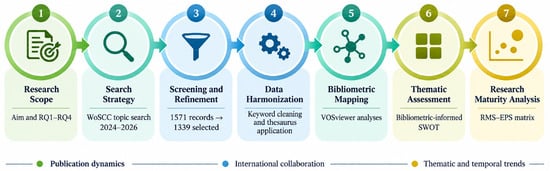
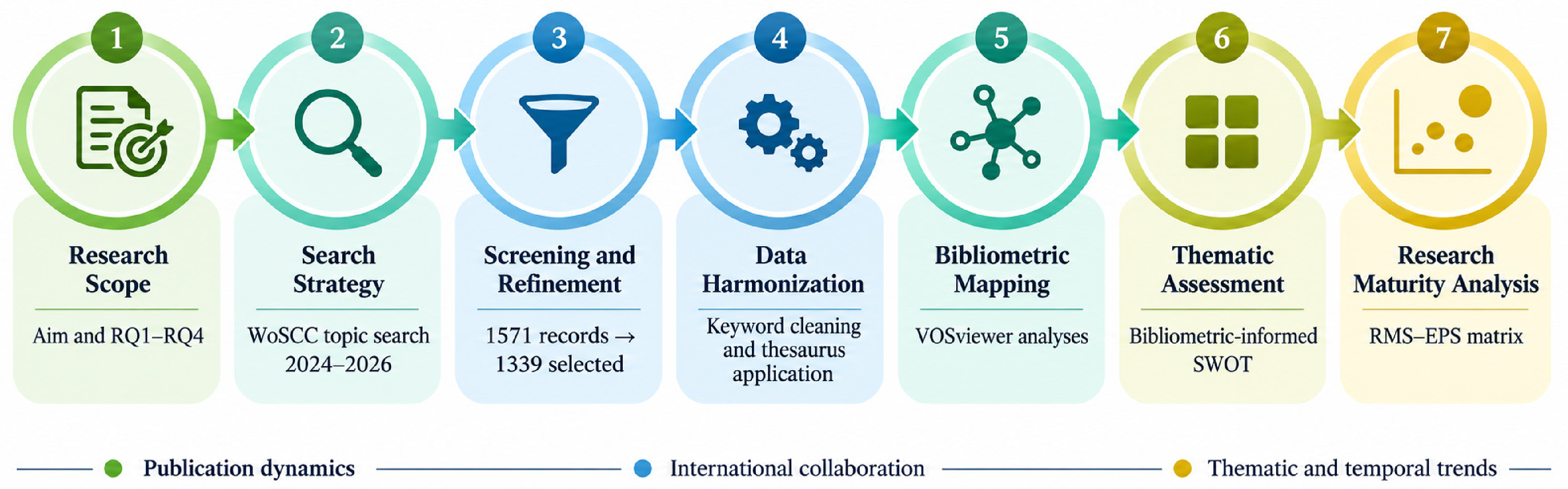
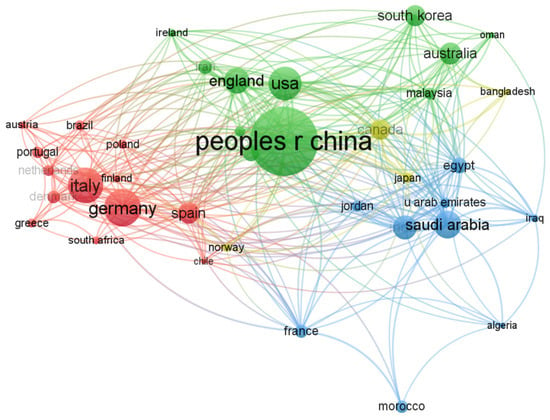
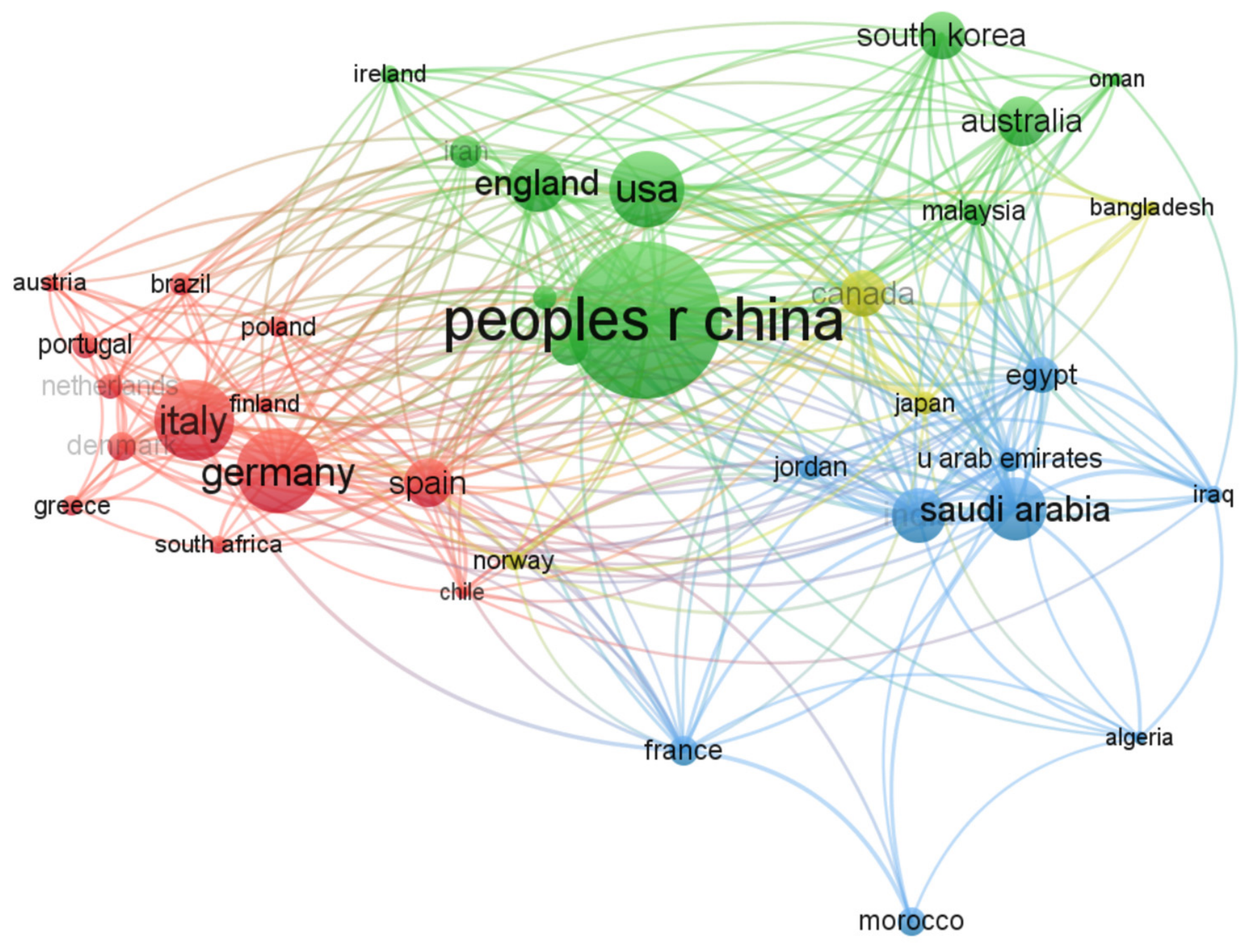
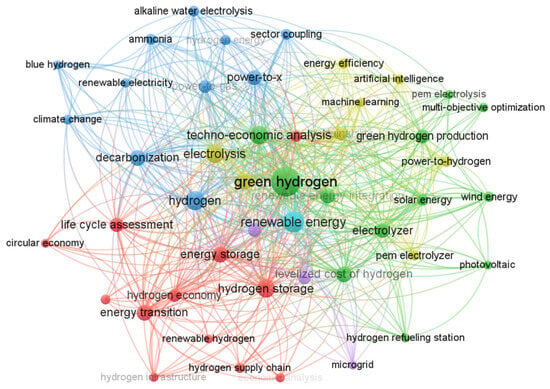
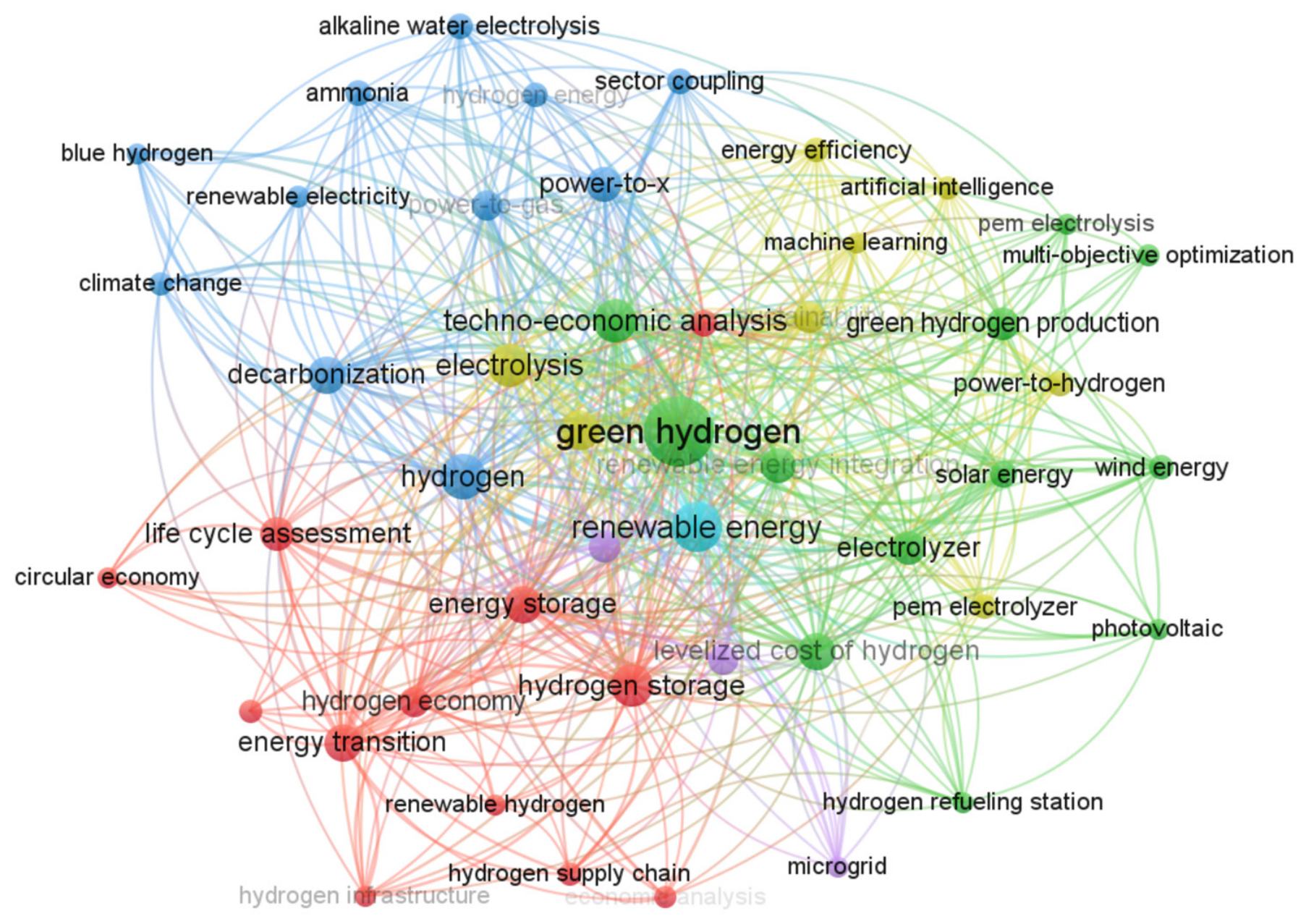
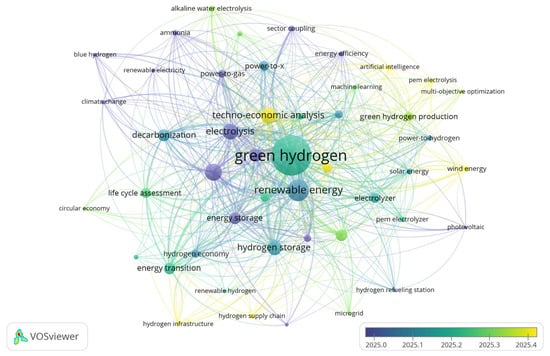
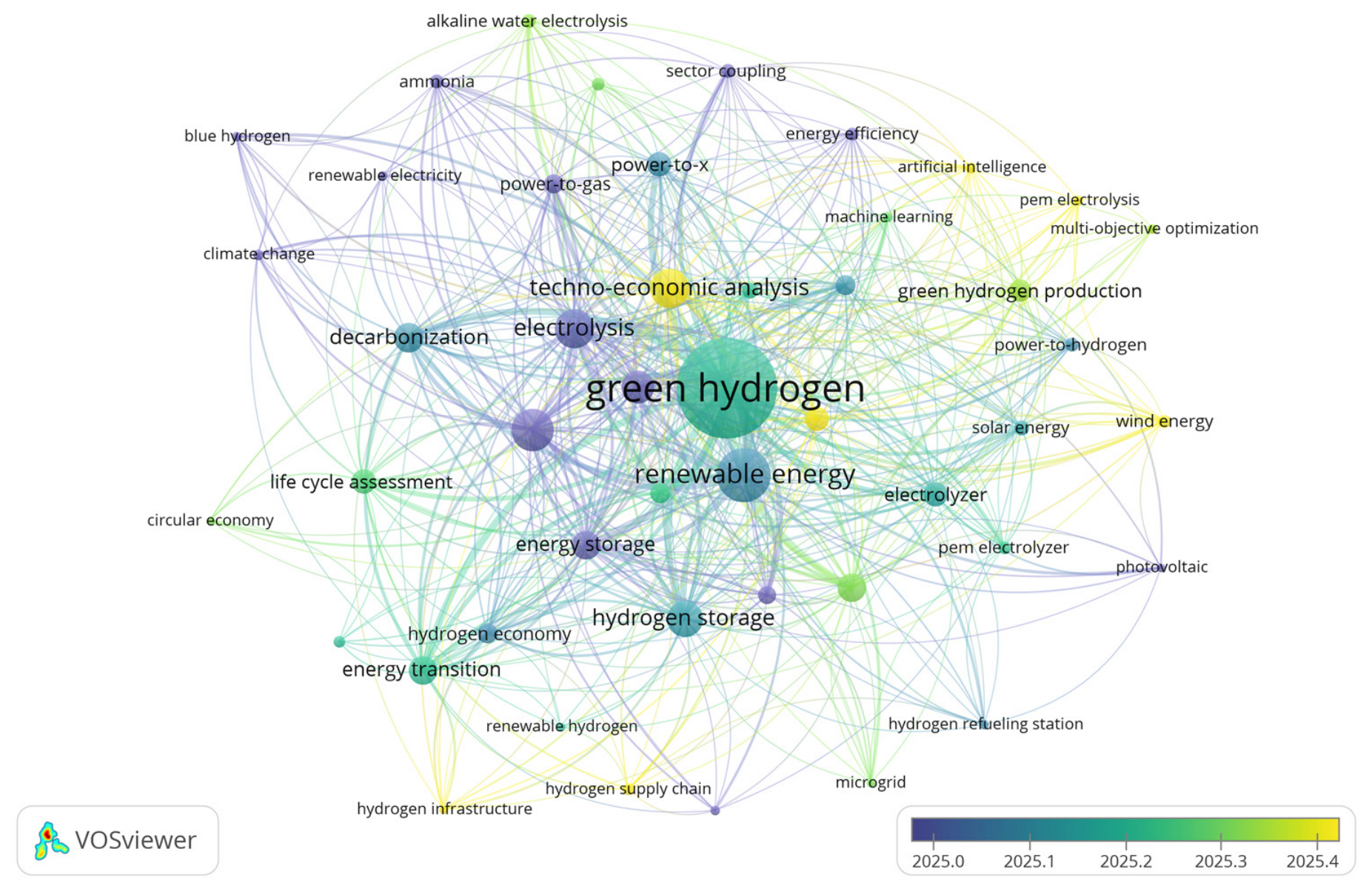
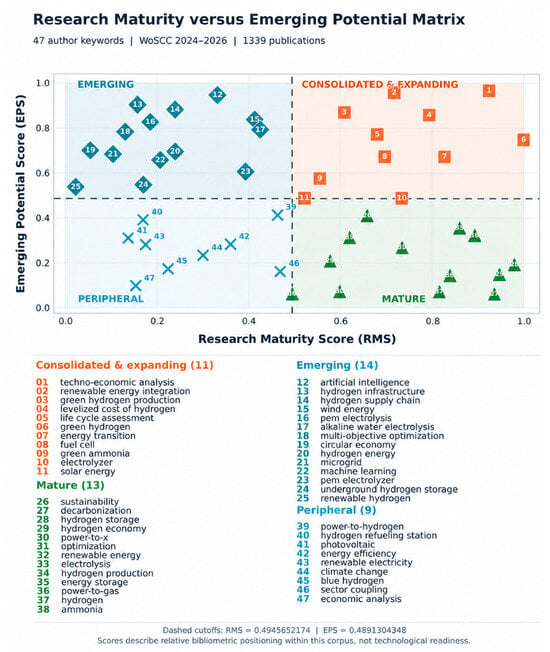
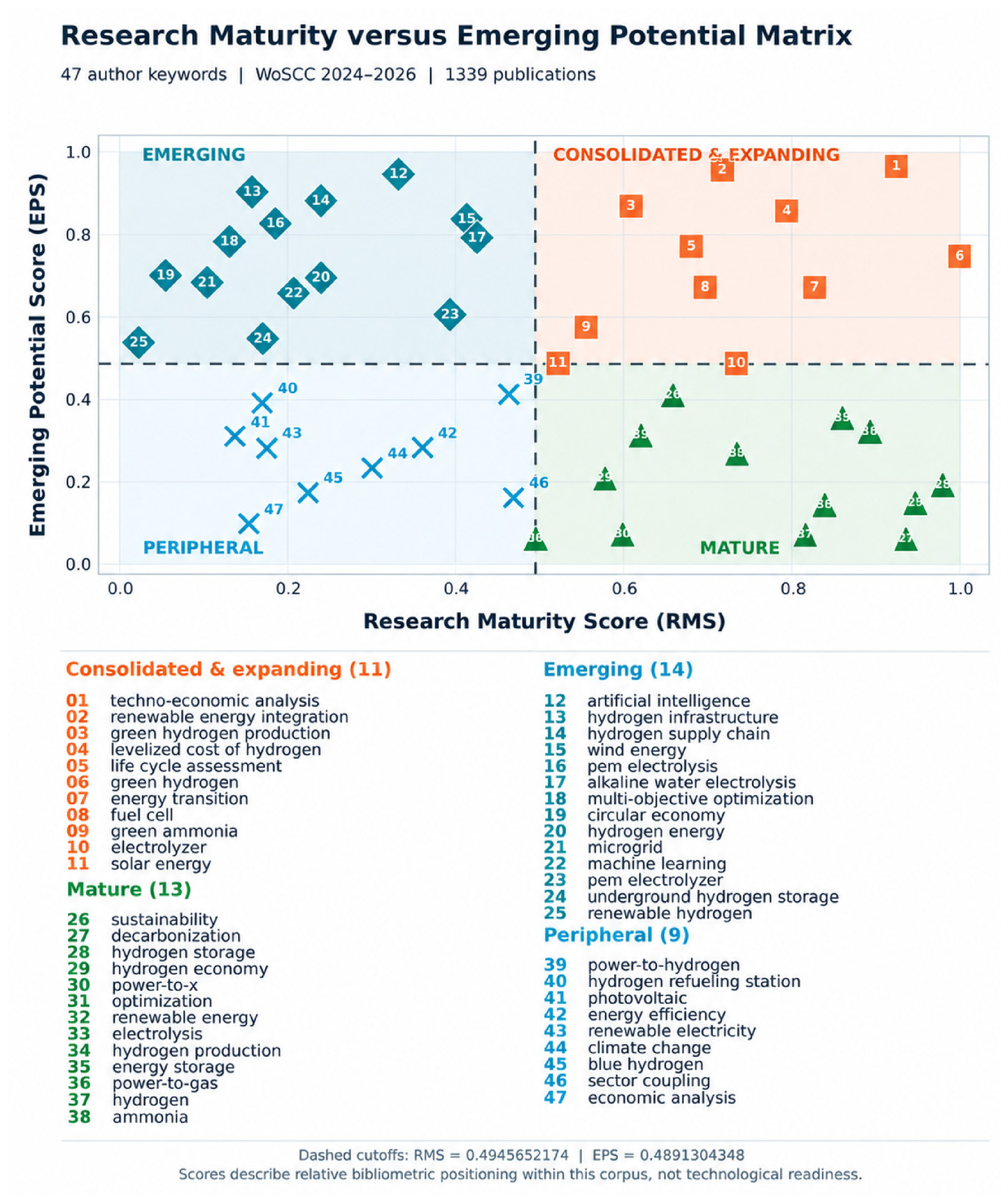
Disclaimer/Publisher’s Note: The statements, opinions and data contained in all publications are solely those of the individual author(s) and contributor(s) and not of MDPI and/or the editor(s). MDPI and/or the editor(s) disclaim responsibility for any injury to people or property resulting from any ideas, methods, instructions or products referred to in the content. |
© 2026 by the authors. Licensee MDPI, Basel, Switzerland. This article is an open access article distributed under the terms and conditions of the Creative Commons Attribution (CC BY) license.