


Abstract
Geogenic (“white”) hydrogen is discussed as a complement to electrolytic hydrogen. Exploration leads in France, the United States, and Australia; in Germany, Austria, and Switzerland (D-A-CH), it remains largely academic. This review synthesizes international evidence on formation, exploration, conditioning, and use, and evaluates each country’s potential. Rift-inversion orogens such as the Alps are modelled as favorable for serpentinization-driven generation, but favorability for generation is not favorability for retention: the rapidly exhuming, meteorically flushed Alpine nappes retain poorly, whereas Germany’s older, better-sealed provinces lack a strong source. On present evidence, no D-A-CH province satisfies both, and no hydrogen-targeted borehole data have been published in the region. A third, economic condition is quantifiable: Bourakébougou, the only producing site, delivered about 45 t H2 per year in a one-day flow test, against a parameter-sensitive viability benchmark of 0.9–9 kt and 130 kt for one world-scale ammonia plant. Should an accumulation be proven, the constraint is quantity, not quality: remuneration ranges from 1 EUR/kg as grid gas to 13 EUR/kg at the pump, so modest volumes enter at the low-value end. Since April 2026, natural hydrogen is a ‘bergfreier Bodenschatz’ under Germany’s Federal Mining Act, the region’s only statutory basis; Switzerland leads in permitting.
1. Introduction
Hydrogen is a key component of decarbonization strategies for hard-to-electrify sectors including steelmaking, chemical production and heavy-duty transport. National strategies in Germany, Austria, and Switzerland focus almost exclusively on electrolytic (“green”) hydrogen and on hydrogen imports [1]. In parallel, a distinct and rapidly growing body of research has emerged around geogenic, “white” or “natural” or “gold” hydrogen, i.e., H2 generated by subsurface geochemical processes and potentially recoverable from natural accumulations in a manner analogous to natural gas [2,3,4,5,6,7]. This literature is based on early documentation of hydrogen-rich gas in wells of the North American Mid-Continent, which was attributed in the 1980s to serpentinization of ultramafic rocks in the Precambrian basement of Kansas [8,9]. In this review, “geogenic hydrogen” is used throughout as the umbrella term for H2 formed by natural subsurface processes. “Natural”, “white”, and “gold” hydrogen are synonyms in the cited literature [2,10] and are retained only where a source, a legal text, or an established compound term uses them (e.g., the German Federal Mining Act refers to “natural hydrogen”). “Orange” hydrogen, i.e., hydrogen generated by stimulated serpentinization, denotes a different concept and is treated separately [11]. Interest, including commercial exploration, has so far concentrated on France, the United States, Australia, and several African and South American basins [4,12], while recent field evidence from Albania and geodynamic modeling have drawn increasing attention to ophiolitic and mountain belt settings, including the Alps [13]. Austria and Switzerland are substantially shaped by the Alpine orogen, while Germany’s main target regions for geogenic hydrogen include crystalline basement massifs, an active continental rift, and major sedimentary basins. Together, the three D-A-CH countries offer a geologically diverse cross-section of settings currently discussed in the geogenic hydrogen literature.
This review covers the entire D-A-CH region. It synthesizes the international evidence base on formation mechanisms and exploration methods (Section 2, Section 3 and Section 4), reviews the geological potential and current research status of Germany, Austria, and Switzerland (Section 5, Section 6 and Section 7), provides a comparative synthesis (Section 8), discusses shared regulatory and economic barriers to development (Section 9), and covers technical requirements and applications (Section 10). It concludes with priority research needs (Section 11 and Section 12). The review aims to assess the extent to which geogenic hydrogen in the D-A-CH region could ultimately provide a recoverable feedstock for the chemical industry. The literature was identified by searches of Scopus, Web of Science, and Google Scholar combining the terms “natural”, “geologic”, “geogenic”, “white”, or “gold” with “hydrogen”, individually and together with the regional and geological terms used in Section 5, Section 6 and Section 7 (e.g., Alps, ophiolite, serpentinite, Variscan basement, Upper Rhine Graben), supplemented by backward and forward citation tracking from recent syntheses [2,5,10,14,15,16,17]. The search covered the literature up to September 2026 and was updated in October 2026 as part of the revision. The geoscientific evidence base draws on peer-reviewed geoscience literature, national geological-survey reports and, for the most recent developments (2025–2026), specialist trade press and institutional press releases, cross-checked against primary sources wherever available. The chemical-technological part is likewise based on the most recent literature in this field. Throughout, we distinguish between three types of evidence: field observations (measured concentrations, fluxes and flow tests), inferences by geological analogy, and model-based estimates. For the D-A-CH region, no borehole flow-rate data and no in situ gas composition from hydrogen-targeted wells have been published to date. Every statement on D-A-CH prospectivity in this review is therefore of the second or third kind and is identified as such.
2. Formation Mechanisms and Geological Systems
The dominant proposed mechanism for generating geogenic hydrogen is the serpentinization of iron-bearing ultramafic rock. In this process, the ferrous iron in olivine and pyroxene is oxidized by water to form magnetite, releasing hydrogen (H2) [10,14,18]. Additional mechanisms discussed in the literature include radiolysis of water by natural radioactivity in crystalline basement, mechanochemical generation on freshly fractured silicate surfaces in active fault zones [19,20,21,22] and, more speculatively, deep microbial and thermogenic pathways [23]. As in conventional petroleum systems, an economically relevant accumulation requires the coincidence of a source rock, a porous or fractured reservoir, and an effective seal capable of retaining the small, highly diffusive H2 molecule [6]. This general framework has recently been reinforced by a comprehensive synthesis of the controls on natural-hydrogen generation, migration and accumulation in the continental crust [24] and, more directly, by field measurements of intense, sustained H2 degassing (up to 84 vol% H2 in gallery gas, with at least 200 t H2/yr vented) from an actively serpentinizing chromitite body in the Bulqizë ophiolite, Albania [25]. To date, this is the clearest direct subsurface confirmation that ophiolite-hosted serpentinization can sustain a substantial H2 flux; whether such a flux would be economically relevant is another question (Section 10.11). A comprehensive summary aimed at a broad scientific and industrial audience further distinguishes such naturally occurring accumulations from anthropogenically stimulated serpentinization at depth (‘orange hydrogen’), a distinction of potential relevance to future enhanced-recovery concepts in already-drilled D-A-CH settings such as the Upper Rhine Graben [11].
2.1. Reductive Hydrogen Generation
For olivine (Mg1.6Fe2+0.4SiO4), the reaction is well constrained stoichiometrically and proceeds via hydration to magnetite (Fe3O4), releasing molecular hydrogen. The corresponding reaction for orthopyroxene in the enstatite-ferrosilite series (Mg,Fe2+)2Si2O6 differs in one respect that affects the hydrogen balance. Pyroxene is richer in silica than olivine; therefore, its hydration yields serpentine and talc or dissolved silica rather than brucite. In harzburgite, the two reactions therefore buffer each other’s silica activity. This coupling is not coincidental because ferroan brucite is metastable, and rising silica activity is one of the conditions under which it decomposes. This process liberates Fe2+ for oxidation to magnetite and releases H2 [26]. Both reactions are commonly grouped under the term “serpentinization”.
The hydrous magnesium silicates produced by these reactions belong to the serpentine subgroup. The three principal members of this subgroup share a common ideal composition but differ in the curvature and stacking of their layers. Lizardite and chrysotile are both ideally Mg3Si2O5(OH)4 and are the low-temperature members. Lizardite is the most abundant serpentine mineral by volume. Antigorite, the high-temperature member that forms above roughly 300–320 °C, is neither ideally stoichiometric nor hydroxyl-saturated. Its 17-polysome structure corresponds to Mg48Si34O85(OH)62. Aluminum-bearing minerals, such as amesite (Mg2Al2SiO5(OH)4), form where aluminum is supplied by spinel or pyroxene. However, they remain subordinate in ultramafic protoliths. This subgroup—and thus the geological process—is named after serpentinite, a rock with a mottled green appearance resembling snakeskin. Thus, “serpentine” denotes the mineral subgroup rather than any individual member. This distinction is significant because antigorite is the phase that is stable at higher temperatures. Therefore, the low-grade ocean-floor serpentinites of the Platta and Totalp nappes and the high-pressure, antigorite-bearing assemblages of Zermatt–Saas, which are discussed in Section 7, differ in their mineralogy and not just in their degree of deformation [27,28,29]. The reactions for mantle olivine (Fo90) that predominate in natural systems are [14,30]:
3 [Fe2SiO4∙9 Mg2SiO4]+ 41 H2O → 15 Mg3Si2O5(OH)4 + 9 Mg(OH)2 + 2 Fe3O4 + 2 H2
The reduction of water is also illustrated in the scientific literature by the distinct reaction of Fe(OH)2 resulting from olivine serpentinization (Fo83) [11]. The reaction is initiated by
of which Fe(OH)2 reacts with water to give magnetite (Fe3O4) and hydrogen:
[Fe2SiO4∙5 Mg2SiO4]+ 9 H2O → 3 Mg3Si2O5(OH)4 + Mg(OH)2 + 2 Fe(OH)2
3 Fe(OH)2 → Fe3O4 + 2 H2O + H2
The overall reaction is here:
3 [Fe2SiO4∙5 Mg2SiO4]+ 23 H2O → 9 Mg3Si2O5(OH)4 + 3 Mg(OH)2 + 2 Fe3O4 + 2 H2
Serpentinization is not confined to a single tectonic environment. However, it requires ultramafic rock to be in contact with circulating water. Since olivine-rich lithologies belong to the mantle rather than the basaltic and gabbroic oceanic crust, the environments in which large-scale serpentinization occurs are those in which mantle material is tectonically exhumed or hydrothermally accessed. These environments include magma-poor rifted margins and slow-spreading ridges, where peridotite is denuded along low-angle detachment faults during continental breakup and seafloor spreading. Other environments include ophiolites, where such lithosphere has been subsequently obducted onto continental crust, and subduction zones, where hydrated lithosphere is carried back to depth. Throughout, the controlling variable is access of water to unreacted ultramafic rock. The same requirement underlies the rift-inversion mechanism discussed below [13,14].
The best-characterized active example is the Lost City hydrothermal field on the Atlantis Massif, located approximately 15 km west of the Mid-Atlantic Ridge axis. There, mantle peridotite exposed along a detachment fault is undergoing serpentinization in situ. Seawater circulating through the fractured peridotite reacts at depth at temperatures of the order of 150–300 °C and discharges at the seafloor at only 40–91 °C, with a pH of 9–11 and H2 concentrations reaching approximately 15 mmol/kg seawater [31]. Ferrous iron (Fe2+) in olivine and orthopyroxene is oxidized to ferric iron (Fe3+). Some of it forms magnetite (Fe2+Fe3+2O4), while the remainder is retained as Fe2+ in serpentine and brucite. The reduction of water releases H2, while the reduction of dissolved inorganic carbon yields methane and short-chain hydrocarbons [32]. Proskurowski et al. established the abiogenic origin of these hydrocarbons at this site [31].
The yield of fully serpentinized mantle peridotite is several hundred moles of H2 per cubic meter of rock, which translates into approx. 12.2 m3 H2 per m3 of rock (25 °C), but it depends strongly on temperature and the composition of the protolith. Below approximately 200 °C, iron preferentially partitions into serpentine and brucite rather than magnetite, resulting in a lower hydrogen yield. This phenomenon is the basis of the 200–350 °C serpentinization window referred to throughout this review [33,34,35]. The hydrogen generated in this process is a primary electron donor for chemosynthetic primary production in the deep biosphere, sustaining ecosystems independent of sunlight [30].
Two features of this system are directly relevant to the D-A-CH discussion. First, the host rock is exhumed mantle rather than oceanic crust. Second, the field lies far from the spreading axis, and the serpentinization reaction itself largely supplies its heat rather than proximity to a magma chamber. Therefore, prospectivity follows the distribution of accessible, unreacted ultramafic rock rather than the distribution of active magmatic centers. This point is revisited in Section 6 and Section 7, where the mapped Alpine serpentinites are shown to be largely reacted out.
Recent numerical geodynamic modeling, however, shows that subsequent mountain building, specifically the inversion of a former rift into a collisional orogen, can produce substantially more favorable conditions than the classic settings. Orogens are colder than active rifts, which is why larger volumes of exhumed mantle material remain within the 200–350 °C “serpentinization window” for longer. Additionally, the annual H2 generation capacity in the overriding mantle wedge during rift inversion can be up to twenty times higher than during the preceding rift phase [13]. A 2026 follow-up study incorporating erosion into the same modeling framework finds that the Pyrenees and the Alps are modeled as comparatively favorable settings among the mountain belts examined, while cautioning that erosion plays an ambivalent role: it promotes mantle exhumation and hence H2 generation but can also breach the sealing cover needed to retain accumulations if too rapid or prolonged [36]. A systematic soil-gas survey across the Aquitaine foreland basin in the western Pyrenees nonetheless found generally low background H2 concentrations, with only localized, structurally controlled hotspots, indicating that geodynamic favorability alone does not guarantee widespread near-surface seepage [37]. The two orogens are, moreover, not interchangeable. The Pyrenees formed by the inversion of a Cretaceous hyperextended rift with only limited subduction, and their exhumed mantle bodies record low-grade overprint at shallow crustal levels [36,37,38]. The Alps, in contrast, record the opening and subsequent subduction of a Jurassic ocean basin (the Alpine Tethys): parts of its exhumed mantle escaped strong overprint (Platta, Totalp), whereas others were subducted to eclogite facies (Zermatt–Saas), and present-day rock uplift is markedly faster than in the Pyrenees (Section 7 and Section 8.2) [13,39,40,41]. Results calibrated mainly on the Pyrenees therefore cannot be transferred to the Alps without local testing (Section 11.2).
A separate, complementary line of evidence comes from long-term field monitoring rather than modeling. A decadal study at the Kidd Creek mine (Timmins, Ontario) provided the first long-term, high-resolution dataset of its kind: continuous H2 discharge was recorded at 35 boreholes over up to 11 years in Precambrian basement at depths down to 2.39 km, with mine-wide emissions estimated at ~140 t H2/yr [42]. The study indicates that sustained accumulation favors old, water-poor, microbiologically inactive crystalline settings, since both microbial consumption and abiotic secondary reactions (e.g., methanation) rapidly deplete H2 in younger, water-rich systems. This consideration is directly relevant to determining which D-A-CH target regions are more or less prospective.
2.2. Radiolytic Hydrogen Generation
Because ferrous iron is not always available at depth, a second mechanism—radiolytic dissociation of water by ionizing radiation (α, β, γ) from the decay of U, Th, and K in granitic or gneissic basement—is invoked for crystalline settings that lack ultramafic rock, such as parts of the Bohemian Massif and NE Bavaria:
2 H2O → 2 H2 + O2
This process is not self-limiting by mass balance alone: the O2 produced is continuously scavenged by oxidation of Fe2+-bearing minerals, which prevents back-reaction and allows H2 to accumulate over geological time. However, the generation rates are orders of magnitude lower than serpentinization for a given rock volume [24].
2.3. Mechanochemical Hydrogen Generation
A third mechanism is mechanochemical. When silicate rock is fractured or crushed, as during fault slip, silicon radicals formed on the fresh surfaces react with water to form silanol groups and release H2 [20,21]. The process was first identified based on H2 anomalies in soil gas along active faults in Japan, proposed as an indicator of fault activity [19], and has since been reproduced in rock-crushing experiments, in which H2 release increases with grinding time and thus with the fresh surface area generated [20,21]. Seismogenic H2 has also been proposed as an energy source for subsurface microbial life [22]. Two features limit its relevance as a resource: generation is bound to active fault zones and to episodes of deformation, and it declines once fresh surfaces are passivated. For exploration, its main significance is as a source of false positives. Fault-bound soil-gas anomalies may record recent deformation rather than a deep, charged reservoir, and H2 can be generated by the drill bit itself [43]. Both considerations bear directly on the interpretation of soil-gas data in the D-A-CH region (Section 5.2).
3. International Evidence Base: Key Case Studies
Table 1 summarizes representative case studies discussed in the recent literature, ranging from the longest-standing documented case of natural-hydrogen utilization worldwide (Mali) and systematic continental-scale prospectivity mapping (USA), through the orogen-scale modeling results for the Alps and Pyrenees, to the specific target regions and pilot activities identified in Germany, Austria, and Switzerland.
Table 1.
Selected international and D-A-CH case studies of geogenic hydrogen occurrence and exploration.
Across these cases, the exploration literature points to a shared conclusion: the global geological hydrogen inventory is substantial, with a modeled energy content approximately twice that of all proven natural gas reserves. However, the economically recoverable fraction remains unknown, is likely highly heterogeneous, and has not yet been proven on a commercial scale outside of Mali [2,24,48]. The D-A-CH cases in Table 1 illustrate this heterogeneity within a single region: Germany’s targets rest on basement and rift geology broadly analogous to sites already studied elsewhere, whereas Austria’s and Switzerland’s Alpine settings correspond directly to the orogenic mechanism newly highlighted by geodynamic modeling, giving them a model-based geological rationale that has yet to be tested by any field observation.
4. Exploration and Assessment Methods
Exploration approaches reported in the literature include surface soil-gas surveys and vegetation-index anomalies over suspected seepage structures, isotopic and noble-gas (He/H2) fingerprinting of borehole and mine gases, passive seismic and magnetotelluric imaging of basement structure, and, most recently, systems-based prospectivity mapping that formally combines source, reservoir, and seal probability layers, as pioneered at continental scale by the US Geological Survey [47]. No comparable systematic mapping exercise has yet been published for any D-A-CH country. Mapping, however, establishes only the geological framework. Exploration for geogenic hydrogen ultimately requires a process-based assessment of whether generation, migration, trapping, and retention operate, in the right sequence and with the right timing, at a given site, i.e., the hydrogen equivalent of a petroleum-system or play analysis [3,6,24]. The USGS approach is a first step in this direction because it treats source, reservoir, and cap as separate probability layers [47]; Section 8 applies this process chain qualitatively to the D-A-CH provinces. German activity, led by the Bundesanstalt für Geowissenschaften und Rohstoffe (BGR), remains at the stage of targeted geological reconnaissance [49]. The Swiss Jorat program is, to date, the only D-A-CH activity to have reached a permitted field-survey stage, employing passive seismic, magnetotelluric, gravity, and soil-gas methods without invasive drilling [55].
Gas-phase composition is central to assessing whether a D-A-CH target zone could feasibly supply a chemical-industry feedstock, yet it is also the parameter most rarely measured. Table 2 summarizes what has actually been reported, as distinct from what is inferred by analogy; the “Basis” column makes this distinction explicit for each zone. The clearest documented dataset comes not from a hydrogen-specific survey but from three decades of deep-geothermal brine geochemistry in the Upper Rhine Graben (Soultz-sous-Forêts, Rittershoffen): the free-gas phase separated from produced brine is dominated by CO2 (88–93 mol%), with N2 (5–10 mol%), CH4 (~2 mol%), and only trace He, Ar, and H2S. To date, H2 itself has not been reported as a significant component of these produced brines, in contrast to the qualitative co-production rationale advanced for the region [57]. At the other extreme, the 2024 northeastern Bavaria soil-gas survey reports only the H2 concentration itself (>1000 ppm, sensor-limited). As no accompanying analysis of N2, CH4, noble gases, or He has yet been published, the co-produced gas matrix there remains unknown. For Austria and Switzerland, no field gas analyses of any kind have been published for the target ophiolite and basement units. The only quantitative basis for expecting a given composition is analogy with other serpentinizing ophiolites such as the Bulqizë chromitite gallery gas, at up to 84 vol% H2 [25], and the broader systematic assessment of western European and eastern Mediterranean ophiolites (including the northwestern Alps), which ranks prospectivity but likewise reports no direct D-A-CH gas analyses [58]. Thus, there is an asymmetry between good compositional data for which H2 is not the target, such as Rhine Graben brines, and essentially no compositional data for which H2 is the target, such as in Bavaria, Austria, and Switzerland.
Table 2.
Known and inferred gas-phase composition of D-A-CH target zones of potential interest for hydrogen recovery. “Measured” denotes published field analyses at or near the site; “inferred” denotes expectation by geological analogy or modeling. No in situ gas composition from a hydrogen-targeted borehole has been published for any zone.
5. Germany: Geological Potential and Current Research
Four regions appear in the German discussion (Figure 1): (1) the North German Basin, (2) the Erzgebirge, (3) northeastern Bavaria (Münchberg Massif), where a Variscan iron-rich obducted ultramafic body is near the surface and could host serpentinization reactions, and (4) the Upper Rhine Graben, an active continental rift with elevated geothermal gradients and existing deep geothermal infrastructure that could allow the co-production of H2-bearing fluids. The following outlines the current state of knowledge as completely as possible to allow readers to assess individual situations personally.
Figure 1.
Schematic, simplified overview of candidate regions discussed for geogenic hydrogen in the D-A-CH region. The map marks areas discussed in the literature; it does not indicate the presence, magnitude, or ranking of a resource: 1—North German basin (unconfirmed), 2—Erzgebirge, Saxony (unconfirmed), 3—northeastern Bavaria, 4—the Upper Rhine Graben (Germany), 5—Speik Complex (Austria), 6—Err, Platta, and Totalp nappes (Graubünden, Switzerland), 7—Valais ophiolite nappes (Switzerland). Map created by the authors using Natural Earth 1:10 m Admin 0—Countries vector data (public domain). Illustration based on [36,49,60,61,62,63].
5.1. North German Basin
No peer-reviewed paper, BGR report, or state survey publication has assessed the basin for natural hydrogen. Instead, a large body of literature exists on underground hydrogen storage in salt caverns and the Bunter Sandstone, which is a different subject. There are no known ultramafic or serpentinite bodies in its basement, which consists of Avalonian–Caledonian accreted crust that was intruded by a Permo-Carboniferous magmatic province dominated by felsic rocks.
5.2. NE Bavaria
A first concrete field indication for geogenic H2 emerged when, in 2024, soil-gas surveys conducted by GeoZentrum Nordbayern recorded H2 concentrations exceeding 1000 ppm (the upper limit of the field sensor used) at several sites in northern Bavaria, in particular the Münchberg Massif. The investigators describe the value as unprecedented in the published literature. A systematic quantification of flow rates and a follow-up pilot phase are planned but not yet published [49,60]. The reading must therefore be treated with caution. Near-surface soil-gas H2 has well-known shallow, non-geogenic origins, including nitrogen-fixing root nodules, buried organic matter, landfills, and infrastructure leakage; along faults, it may also be generated mechanochemically (Section 2). Without isotopic (δD of H2) or co-gas analyses, a deep source cannot be distinguished from these alternatives, and a sensor-limited reading is in any case an upper bound of unknown origin. To date, no borehole, flow-rate, or in situ composition data exist for the Münchberg Massif. Nevertheless, this finding should be considered in light of a sobering regional analog.
5.3. Erzgebirge (Saxony)
Due to ongoing, highly intensive mining activities, there have been more than a century of mine and borehole gas observations in the adjacent Saxonian Erzgebirge region. The region’s Variscan crystalline basement terrane is intersected by comparable deep Hercynian fault systems. In this region, the presence of abundant mantle-derived nitrogen (N2), methane (CH4), and helium (He) has been documented, yet no hydrogen (H2) has been documented. This underscores the fact that fault-hosted gas flow in this basement province does not necessarily imply H2 generation at depth [59]. On the other hand, one could argue that the >800 years of mining activities have acted as a tremendous H2 drainage system, making it difficult to prove the presence of H2 in a mostly degassed mountain range. This is, in fact, instantaneous on a geological timescale. Erzgebirge basement gases carry 0.3–3 vol% He and up to 34 vol% CH4, described as radiogenic. However, the occurrence of H2 has not yet been reported. Radiogenic He is direct evidence that radiolytic and radiogenic production has operated in this terrane over geological time. This means that H2 was very likely generated and subsequently consumed by abiotic methanation and microbial activity rather than never produced. This reads as a much more plausible H2-sink signature and extends directly to NE Bavaria, which sits in the same Variscan terrane.
Nevertheless, there is an area of interest in the Erzgebirge, which is the Zöblitz serpentinite body. To date, it has only been examined for its olivine mineralogy, which is relevant for assessing its hydrogen generation potential, since olivine content drives serpentinization-derived hydrogen production. However, this study does not measure or discuss H2 itself [64]. A more substantial case can be made for the ultramafic bodies of the Saxonian Erzgebirge than the gas record alone suggests. The Zöblitz serpentinite is one of several garnet-peridotite occurrences in the region, including Ansprung, Oberlochmühle, Niederlochmühle, and Lochmühle. The petrology of these rocks has been thoroughly studied [65,66]. A comparable body is found in the Saxonian Granulitgebirge [67]. The garnet water content of these rocks indicates an abyssal peridotite protolith rather than a mantle-wedge origin [66]. The associated ultrahigh-pressure garnetites reveal two stages of alteration: ocean-floor serpentinization of the host peridotite followed by dehydration at depths exceeding 100 km during subduction [68].
Petrogenetically, this is the same sequence described for the Zermatt–Saas unit in Section 7. Therefore, the Saxon bodies are not a different class of target than the Alpine ones, but rather, an older and colder equivalent. The paleo-versus-active distinction developed in Section 7 applies to them equally: their olivine has long since been consumed. The exploration target would again be unreacted peridotite at depth, rather than the mapped serpentinite itself. However, no H2 analysis has been published for the Zöblitz body or any other Saxon or Bohemian ultramafic occurrence. The existing petrological work, including the aforementioned study of ilmenite exsolution in Zöblitz olivine, does not address hydrogen.
In addition, there has been an observation in Schlema–Alberoda in the 1960s which may be worth investigating. Several gas emissions were investigated at one mine level, and hydrogen was present in low concentrations. Yet, the underlying records are not accessible.
The regional gas record must therefore be read with care. The absence of H2 in extensive Erzgebirge mine and borehole analyses is indicative of fault-hosted gases in mining districts rather than ultramafic bodies [59]. Ultramafic bodies lie outside sampled fault systems and have never been targeted. These two observations are compatible: a weak or long-exhausted basement gas source and an untested source rock located a few tens of kilometers away.
5.4. Upper Rhine Graben
A neighboring reference point is the Lorraine Basin in France, where a 2023 methane borehole unexpectedly recorded H2 concentrations of up to 20% at 1250 m depth. Model estimates of a total inventory of up to 46 Mt H2 rank this deposit among the largest postulated occurrences worldwide [45]. No German study of comparable resolution has been published yet, and a recent assessment by the Society of Petroleum Engineers (SPE) concluded that Germany lags behind France and the United States in terms of geoscientific baseline data and exploration-specific regulations [52].
6. Austria: Alpine Ophiolites and Emerging Research
Substantially all of Austria’s territory lies within the Eastern Alps, an orogen formed by the closure of the former Penninic and Alpine Tethys ocean basins, followed by the collision of the European and Adriatic plates. This tectonic history has exposed ultramafic and ophiolitic rock formations. The Austroalpine equivalent of Zermatt–Saas-type material (See Section 7) is the Speik Complex at Hochgrössen in northern Styria. It is a genuine subducted meta-ophiolite, with eclogite lenses embedded in a serpentinite body, Mid-Ocean Ridge Basalt (MORB)/back-arc basalt geochemistry, and of Silurian high-pressure metamorphic age [69,70]. A mechanistically comparable ophiolite body elsewhere in the Alpine–Dinaride belt is the Bulqizë chromite mine in Albania, which now provides direct field confirmation that this setting can sustain substantial H2 degassing [25]. It provides a concrete yet untested analog for the Austrian target units, consistent with the systematic prospectivity assessment of Western European ophiolites, which also includes the Swiss northwestern Alps among the belts it models as comparatively prospective [58].
The principal exposed ultramafic body in this setting is the Speik Complex, a dismembered Paleozoic meta-ophiolite within the Lower Austroalpine basement. It crops out along the Gleinalm–Stubalm and Seckau mountain ridges in Styria. Its two most extensively studied massifs are Kraubath, located about 15 km southwest of Leoben, and Hochgrössen in the Rottenmann/Liezen district. The complex consists of dunite, harzburgite, and orthopyroxenite with chromite layers that are variably serpentinized to greenschist-lower amphibolite facies [61]. It is of oceanic, MORB-type origin, rather than a continental mantle source [61,71]. Notably, eclogite-facies relics preserved within the Hochgrössen serpentinite body indicate subduction to significant depths prior to exhumation. This suggests a more complex situation than that of the shallowly obducted Bulqizë ophiolite, where H2 flux has been directly measured [69].
However, no comparable gas measurements have been published for the Speik Complex or any other Austrian ultramafic body, such as surface seeps, springs, or soil gas surveys. The evidence assembled here is based on bedrock petrology and establishes geological plausibility rather than demonstrating the occurrence of H2. The Austrian national geological survey has not yet published a geogenic hydrogen assessment for the country. For this reason, there are no subsurface hydrogen data [72]. Nevertheless, Austria hosts substantial existing subsurface expertise relevant to eventual hydrogen exploration and storage through RAG Austria AG’s depleted gas field operations and pilot underground hydrogen storage projects [73].
7. Switzerland: Alpine Basement, Ophiolites, and the Jorat Pilot Project
Switzerland is, among the three D-A-CH countries, geologically the most fully Alpine, and has also progressed furthest in translating scientific interest into a licensed exploration activity. Switzerland’s serpentinite occurrences are not a single, uniform target, but rather two geologically distinct populations. Each has a different tectonic history and, plausibly, different present-day reactivity. This distinction is largely absent from popular reporting on “Swiss white hydrogen”, yet it is central to any serious exploration assessment.
Preliminary field reconnaissance has been reported as indicating possible “hydrogen kitchens” at depth in the cantons of Graubünden and Valais, where Alpine ophiolite nappes such as the Platta and Zermatt–Saas units expose iron-rich mantle-derived rocks brought close to the surface by continental collision [13,53]. The same reporting is explicit that these results are preliminary and that no economically viable extraction has been demonstrated anywhere [53].
Graubünden: In southeastern Switzerland, the Err, Platta, and Totalp nappes are some of the best-documented remnants of a fossil ocean-continent transition (OCT) in the world. They expose the distal, hyperextended margin of the Adriatic plate as it rifted to form the Jurassic Alpine Tethys [39]. During this rifting process, mantle peridotite was tectonically exhumed to the Jurassic seafloor along low-angle detachment faults. There, it was hydrated in situ, producing the classic “Steinmann Trinity” association of serpentinized peridotite, pillow basalt, and radiolarian chert. This association was first described in this very area. The Totalp unit near Davos is a well-mapped example with detailed structural cross-sections that document how the serpentinized peridotite body relates to the overlying Jurassic sedimentary sequence [39]. Importantly, much of the Platta nappe experienced only weak Alpine metamorphic overprint (lower greenschist facies, <350 °C). This means that the original, ocean-floor-style serpentinization fabric has been comparatively well-preserved, rather than reset by later collision. The Platta population straddles the transition at below 350 °C, while the Zermatt–Saas population (Valais) sits firmly in the antigorite field at 500–550 °C. Thus, the two Swiss populations are separated by a named mineral reaction rather than an inference from grade.
Valais: By contrast, the serpentinites exposed around the high-pressure Zermatt–Saas unit belong to a slice of oceanic lithosphere that was subducted to depths of roughly 70–80 km before being exhumed. The Zermatt–Saas ophiolite has been described as possibly the largest continuous slice of oceanic lithosphere ever detached from a subduction zone [62]. These rocks record not the original seafloor hydration event but a subsequent, high-pressure dehydration reaction during Alpine subduction: at 500–550 °C and ~2.5 GPa, antigorite and brucite break down to form olivine, chlorite, and magnetite, releasing a fluid phase and leaving a diagnostic mineral texture that is exceptionally well documented in the Zermatt–Saas serpentinites [63]. This reaction matters directly for the H2 question because it is mineralogically the same iron-oxidation/magnetite-forming chemistry invoked for shallow serpentinization-driven H2 generation, just occurring at depth and temperature rather than near the surface.
There is an open scientific controversy over the redox state of fluids. The current literature contests whether these deep dehydration fluids are hydrogen-rich (reduced) or hydrogen-poor (oxidized), and the Zermatt–Saas locality is the central test case: Piccoli et al. infer reduced fluids from Zermatt–Saas itself [62], Debret and Sverjensky argue for strongly oxidizing fluids [74], and Evans and Frost question on mass-balance grounds whether deserpentinization can oxidize the mantle wedge at all [75]. Disagreements remain about two specific questions: whether deserpentinization decreases a rock’s oxidizing capacity (e.g., by reducing its magnetite content) and whether the fluids released by deserpentinization contain substances that can oxidize the surrounding mantle wedge [62,74,75]. The redox state is now understood to be heterogeneous depending on the composition of the protolith and the local thermal structure. We therefore treat the H2 yield of high-pressure dehydration as an open question, and the global estimate below as conditional on the reduced end-member.
A geodynamic study of high-pressure slab serpentinization estimated that H2 generation from the Zermatt–Saas type could total approximately 108 kg/yr worldwide. This is roughly one to two orders of magnitude below mid-ocean-ridge serpentinization, but it could be significant when integrated over geological time [76]. This is a global, first-order estimate, not a Swiss-specific flux measurement. The H2 in question is generated at depths of tens of kilometers. This should be noted as it is well beyond any conceivable exploration target. Its relevance lies in its status as an independent, model-based confirmation that the type of reaction exposed at Zermatt–Saas is a real, non-trivial source of H2 at the planetary scale. It is not primarily evidence for an accessible Swiss resource.
At the European level, the Swiss Alps are modeled as potentially prospective for geogenic hydrogen. A recent probabilistic prospectivity model examined ophiolite and ultramafic complexes in western Europe and the eastern Mediterranean. By weighing geothermal heat flux, magnetic anomalies, and the occurrence of hyperalkaline springs against the Bulqizë region of Albania as a calibration case, the northwestern Alps emerged as a modeled target region. They are comparable to the Apennines (Italy), Dinarides (Balkan Peninsula), Hellenides (Greece), and Troodos (Cyprus) in this regard [58].
When discussing the occurrence and exploitability of geogenic H2, the distinction between paleo and active serpentinization is key. The most important conceptual point for hydrogen recovery is determining if there are rocks at a reasonable depth that can produce hydrogen today. Both the Graubünden and Valais serpentinite bodies are, at outcrop, essentially fully reacted. Their original olivine has already been consumed by ocean-floor or subduction-zone serpentinization and dehydration reactions that, in most cases, concluded tens to over a hundred million years ago. Therefore, the exploration target is not the mapped serpentinite itself but rather unreacted olivine-bearing peridotite that may persist at depth beneath or adjacent to these units and remain in contact with actively circulating water. A 2026 research roadmap paper by the natural hydrogen community explicitly identifies this source rock/reservoir characterization gap as one of the field’s primary scientific uncertainties. This uncertainty is applicable to the Swiss Alpine setting as much as anywhere else [2].
In May 2026, Swiss Geo Energy was granted the country’s first exploration permit to target natural hydrogen, helium, and deep geothermal energy jointly for the Jorat project in the Canton of Vaud [55]. The permitted program is confined to non-invasive geophysical and geochemical methods, including passive seismology, magnetotellurics, gravimetry, and soil-gas surveys. The underlying geological rationale explicitly states that Alpine ophiolite sequences and crystalline basement formations are, in principle, amenable to hydrogen generation through serpentinization [56]. The Jorat program is an empirical test of a geological hypothesis in the early stages, rather than a proven resource. Nonetheless, it is the most concrete field activity targeting geogenic hydrogen in the D-A-CH region to date.
8. Comparative Synthesis Across the D-A-CH Region
Table 3 summarizes the comparative status of the three countries along institutional, geological, exploration-stage, and regulatory dimensions. Three contrasts stand out. First, Germany’s target geology (basement massifs, an active rift, and a large sedimentary basin) is mechanistically more heterogeneous than the orogen-dominated settings of Austria and Switzerland, which fall more directly within the specific rift-inversion mechanism recently modeled as favorable [13]. Second, this framing only considers generation capacity. As explained in Section 8.2 and Section 8.3, the retention and preservation criteria point in the opposite direction. Therefore, a more favorable generation setting does not constitute a more favorable prospect by itself. Third, Switzerland has nonetheless converted scientific interest into a permitted field program, which plausibly reflects private-sector engagement rather than underlying geological promise. A rigorous comparative assessment of subsurface promise across the three countries has not been published and would be needed to confirm this interpretation.
Table 3.
Comparative snapshot of institutions, target geology, exploration stage, and regulatory status for geogenic hydrogen in Germany, Austria, and Switzerland (status as of mid-2026).
As in a petroleum system, an accumulation of geogenic hydrogen forms only if a chain of processes operates in sequence: generation in a source rock, migration to a reservoir, trapping and retention beneath an effective seal, and preservation against consumption over geological time [2,6,24]. A failure at any link is sufficient to prevent an accumulation, however favorable the others. The following subsections assess the D-A-CH provinces along this chain; all assessments are qualitative and rest on analogy and modeling, as no subsurface data specific to hydrogen exist for the region (Section 1).
8.1. Generation
The first condition is generation, which requires a source rock with available ferrous iron that remains within the 200–350 °C serpentinization window for a sufficient amount of time for the reaction to proceed [13,14,35]. Rift-inversion models that categorize the Alps as a favorable setting explain the generation capacity of the orogenic mantle wedge, but not the trapping [13,36]. The modeled generation, moreover, occurs at depth. Water inflows along the Sedrun section of the Gotthard Base Tunnel, at depths ranging from 900 to 2350 m below the surface, have rock temperatures of only 30 to 45 °C [79]. The depth interval accessible to exploration drilling beneath the Alpine massifs therefore lies far below the serpentinization window, and an actively generating peridotite body would have to be sought at depths of about 10 km, which is consistent with the conclusion already reached for the Zermatt–Saas system [76]. A comparison between the fertile lherzolites of the Western Pyrenees and the depleted harzburgites of Northern California reveals relatively low generation rates of ~0.1 to ~0.5 t H2 yr−1 km−3 of reactive rock. Integrating this over the full reactive volumes, this corresponds to total production rates of ~300 to ~600 t H2/yr [38].
In the German basement provinces, the balance is reversed. Radiolysis proceeds orders of magnitude more slowly than serpentinization for a given rock volume [24], and the lack of H2 reports in the Erzgebirge gas record suggests a weak source rather than a leaky trap [59]. Mechanochemical generation along active faults (Section 2) is transient and fault-bound, and is unlikely to charge an accumulation of economic size [20,21].
8.2. Migration, Trapping, and Retention
The second condition is that hydrogen migrates from its source into a porous or fractured reservoir and is retained there beneath an effective seal. Because of its small molecular size, high diffusivity, and buoyancy, H2 migrates readily along faults and fractures, and laboratory experiments on potential reservoir and seal rocks show that its transport depends strongly on water saturation and capillary entry pressure [80]. Experience from underground hydrogen storage confirms that seal integrity, rather than reservoir capacity, is usually the limiting factor for retaining H2 in porous media [81]. The only producing field shows what an effective trap looks like: at Bourakébougou, hydrogen is held beneath only slightly fractured dolerite sills that act as seals, and overlying aquifers further restrict its diffusion toward the surface [82].
When applied to the Alps, the retention criterion is considerably less encouraging than the generation criterion. Present-day rock uplift reaches approximately 2.5 mm/yr in the northwestern Alps, well above the rates in the Pyrenees [40]. The erosion sensitivity of the model was principally explored against the latter. The same 2026 study that ranks the Alps favorably cautions that rapid or prolonged erosion breaches the sealing cover required to retain an accumulation [36]. Additionally, the Alpine nappe stack does not offer a continuous regional seal above the ophiolitic units of Graubünden and Valais. The Triassic evaporite horizons, which could potentially serve this purpose, are the décollement levels along which the nappes were emplaced. Consequently, they are structurally disrupted rather than intact [41].
The problem is compounded by alpine hydrogeology. The tunnel inflows cited in Section 8.1 are of meteoric origin. These inflows have largely displaced the older saline formation waters that are otherwise characteristic of continental basement [79]. The accessible interval is thus an open, topographically driven, and meteorically flushed system. This is the antithesis of the closed, ancient, and hypersaline fracture network in which the Kidd Creek hydrogen has been preserved. In this context, the hyperalkaline springs, which are used as a positive indicator in ophiolite prospectivity screening, are ambiguous evidence. They indicate active low-temperature serpentinization but also a pathway open to the surface.
Two additional observations support this interpretation. First, the Aquitaine soil-gas survey, conducted in a foreland setting adjoining the orogen that the models rank the most favorable of all, revealed only localized, structurally controlled H2 anomalies rather than pervasive seepage [37]. Second, the Bulqizë occurrence might appear to contradict the argument but does not. That system is hosted in a shallowly obducted, weakly metamorphosed ophiolite slab in a region of comparatively modest relief. In contrast, the Alpine equivalents were subducted to eclogite facies before exhumation and are pervasively deformed [25,69]. In any case, the Albanian hydrogen is being vented into mine galleries rather than produced from a sealed trap.
The German targets invert this balance. The Variscan crystalline basement consolidated during the Carboniferous period and has remained tectonically quiescent since the Permian period, except in the Upper Rhine Graben. In the North German Basin, it is overlain by Zechstein evaporites, which are the most competent regional seal in the area. According to the retention criteria, it therefore scores markedly better than the Alpine nappes. The Upper Rhine Graben, as an actively circulating rift, again makes retention a questionable term.
8.3. Preservation
Even a trapped accumulation must survive over geological time. Hydrogen is a preferred electron donor for subsurface microorganisms, notably hydrogenotrophic methanogens, sulfate reducers, and acetogens, and microbial consumption is documented both in natural settings and in underground gas storage, where it converts H2 to CH4 and H2S [83,84]. Abiotic methanation and the reduction of ferric minerals add to this sink. The Kidd Creek record shows that preservation is more likely in older, water-poor, and microbiologically quiescent crystalline environments because microbial consumption and abiotic methanation rapidly deplete H2 in younger, water-rich systems [42]. Microbial consumption is, in turn, suppressed at high temperature and salinity [83,84]. By these criteria, the shallow, fresh, meteoric, and comparatively cool Alpine fracture waters (Section 8.2) favor consumption rather than preservation. The German basement record points the same way from a different direction: radiogenic helium accompanied by methane but no hydrogen in the Erzgebirge is most plausibly read as generation followed by consumption (Section 5.3) [59]. Preservation is thus not a separate German advantage but a further uncertainty that only borehole sampling of formation fluids can resolve.
8.4. Combined Assessment
Therefore, the comparison summarized in Table 3 should be read along the process chain rather than along a single axis of generation potential. Based on the current evidence, none of the D-A-CH provinces satisfy all conditions. The Alpine countries have a better-motivated source, a poorer trap, and poorer preservation conditions. Germany’s basement provinces have a better trap and a weaker source. The Upper Rhine Graben is an actively circulating rift, so retention is again a questionable term. However, three decades of brine geochemistry have not identified H2 as a significant component [57]. This perspective is more testable than geological plausibility alone. It identifies seal integrity and fluid residence time, rather than generation capacity, as the parameters on which D-A-CH prospectivity will turn. We emphasize that this is a statement about the present evidence, not a verdict on geological potential: none of these conditions has yet been tested in the region by hydrogen-targeted drilling.
9. Regulatory Considerations
9.1. European Union
Within the EU regime, two categories of hydrogen must be distinguished. Renewable hydrogen is a renewable fuel of non-biological origin (RFNBO) as defined in Art. 2(36) of Directive (EU) 2018/2001 as amended by RED III, i.e., a fuel whose energy content is derived from renewable sources other than biomass [85]. Geogenic hydrogen does not meet this definition. Its energy content derives from the oxidation of ferrous iron or from radioactive decay, not from a renewable source, even though it is produced without direct CO2 emissions or electricity input [86]. It therefore cannot be counted toward the RFNBO targets for industry and transport that Germany and Austria, as EU member states, must transpose. The appropriate category is low-carbon hydrogen under Directive (EU) 2024/1788 [87], discussed below. While not bound by RED III, Switzerland faces a similar issue. As a non-EU state, it is not directly affected by the directive. However, its own mining and subsurface resource legislation does not currently allow for dedicated natural hydrogen exploration licenses. Commentators have noted that legal amendments similar to those already undertaken in France would be necessary for exploration drilling to proceed [54,88,89].
Directive (EU) 2024/1788 [87], issued on 13 June 2024, establishes common rules for the internal markets for renewable gas, natural gas, and hydrogen. As the title suggests, this directive establishes “common rules for the transport, supply, and storage of hydrogen using the hydrogen system” [87]. It establishes rules regarding the organization and operation of the sector, market access, and the criteria and procedures for granting authorizations for hydrogen networks, supply, and storage, as well as the operation of the system (Art. 1 [4]). It does not address the extraction of geogenic hydrogen. It does, however, define low-carbon hydrogen as hydrogen whose energy content is derived from non-renewable sources and which meets a greenhouse gas emission reduction threshold of 70% relative to the fossil fuel comparator (Art. 2(11)) [87]. This is the category into which geogenic hydrogen falls. Commission Delegated Regulation (EU) 2025/2359 supplements Directive (EU) 2024/1788 [87] by providing the methodology to evaluate greenhouse gas emission reductions from low-carbon fuels [90]. With a fossil comparator of 94 g CO2-eq/MJ, the 70% threshold corresponds to 28.2 g CO2-eq/MJ, or about 3.38 kg CO2-eq per kg H2 at a lower heating value of 120 MJ/kg. Published life-cycle estimates for geogenic hydrogen lie well below this value (Section 11.8) [86]. The methodology does not contain provisions specific to geogenic hydrogen, so how emissions from drilling, gas separation, and co-produced methane would be accounted for remains to be clarified. Two practical consequences follow. First, low-carbon status gives access to certification and to the hydrogen market under common rules, but not to the RFNBO sub-targets of RED III, which only renewable hydrogen can meet; geogenic hydrogen would therefore compete without the demand created by these mandates. Second, certification would require plant-specific, measured emission data, which no D-A-CH prospect can yet supply.
9.2. Germany
Until 2026, Germany had taken a markedly more cautious stance. On 26 February 2026, the Hydrogen Acceleration Act (Wasserstoffbeschleunigungsgesetz, WasserstoffBG) was adopted by the German parliament. It was published as BGBl. 2026 I Nr. 84 on 1 April 2026, and it took effect on 2 April 2026 [78]. Among the amendments to the Federal Mining Act (Bundesberggesetz, BBergG), natural hydrogen is defined for the first time as a freely mineable mineral resource (§ 3 [3] BBergG). The BBergG explicitly applies to all natural resources of natural origin (§ 3 [1] BBergG), which includes geogenic hydrogen. This places exploration squarely within the §§ 6 et seq. BBergG permission regime, as well as extraction under approval/mine ownership. The traditional rules of prospecting, exploration, and extraction apply.
In cases not covered by the BBergG, the Federal Building Law (Baugesetzbuch [91]) would apply, in addition to the respective building regulations of the federal states. Depending on the origin of white hydrogen, the latter could become relevant in unique cases. The same applies to the specific excavation rules adopted by a few federal states (Bayrisches Abgrabungsgesetz [92], Abgrabungsgesetz Nordrhein-Westfalen [93], Brandenburgische Bau-Abgrabungsverordnung [94]).
9.3. Austria
Austria has not passed legislation equivalent to the German WasserstoffBG, and its Mineral Raw Materials Act (Mineralrohstoffgesetz, MinroG) [95] has not been amended to cover hydrogen; its most recent amendment does not address it [96]. Currently, neither green nor white hydrogen is covered by a dedicated Austrian regime. Specifically, geogenic hydrogen is not included in the exhaustive lists of freely mineable mineral resources (bergfreie Bodenschätze, § 3 (1) MinroG) or federally owned mineral resources (§ 4 (1) MinroG). The third category of resources to which the MinroG applies is other mineral resources (§ 5 (1) MinroG). Since hydrogen is not a mineral resource, the MinroG does not apply by virtue of this provision. In practice, this creates three implementation barriers. First, there is no instrument by which an explorer could acquire an exclusive exploration or production right for hydrogen, so that a discovery would not be protected against third parties. Second, it is unclear which authority would be competent for a deep exploration well targeting hydrogen alone. Third, hydrocarbons are federally owned mineral resources (§ 4 (1) MinroG), so any methane co-produced with hydrogen (Table 2) would fall under a different ownership regime than the hydrogen in the same gas stream.
In 2024, Austria’s parliament adopted the Hydrogen Promotion Act (Bundesgesetz über die Förderung der Erzeugung von erneuerbarem Wasserstoff nichtbiogenen Ursprungs/WFöG [97]). Its scope of application is limited to “hydrogen whose energy content is derived from renewable energy sources, with the exception of biomass” (§ 2 [1] WFöG). Therefore, this Act is not applicable to geogenic hydrogen, the focus of this paper. Consequently, no dedicated Austrian mining-law regime currently applies specifically to geogenic hydrogen. General permitting, water, environmental, and other project-specific requirements would still apply and would need to be identified for an exploration or production project.
9.4. Switzerland
In Switzerland, mining law is regulated at the cantonal level. Swiss cantons maintain the so-called “Bergregal”, or sovereignty over natural resources. Consequently, Switzerland has no federal mining act. For each hydrogen project, the relevant cantonal laws must be identified.
Switzerland’s cantonal permitting system allowed the Jorat surface survey permit to be granted because the permitted activities are limited to non-invasive geophysical and geochemical methods. However, no cantonal decision has been published because, under Vaud’s LRNSS, the permis de recherche en surface is a departmental decision, and such permits are not published individually. A subsequent drilling phase, however, would likely test the limits of the existing framework more directly. With 26 cantons and their distinct legal approaches to mining law, identifying the applicable framework for specific projects is an intricate task. Some cantons have specific mining laws and take a raw-materials-centered approach, explicitly mentioning the materials covered by the laws. Other cantons address the use of the subsurface and take a more space-oriented approach.
In the case of Canton Vaud, the 2018 “Law on Natural Resources of the Subsoil” (LRNSS) [98] covers “raw materials such as metals, ores, minerals, salts (other than gypsum), and brines” (Art. 2 [a]), hydrocarbons, deep geothermal energy, and the use of the subsurface for storage. Hydrogen is not included in the scope of applicability. The LRNSS replaced the cantonal mining law of 1891 and the hydrocarbons law of 1957 [99], and its Art. 4 prohibits the exploration and exploitation of hydrocarbons; hydrocarbons discovered fortuitously may be exploited only if the resulting CO2 emissions are fully compensated. A motion to permit gas production in times of shortage was rejected by the cantonal parliament on 1 October 2024 [100]. This creates a specific implementation barrier. Geogenic hydrogen commonly occurs together with methane (Table 2), so a future drilling phase at Jorat would have to establish how co-produced methane is treated under the hydrocarbon ban. The LRNSS provides staged permits for surface exploration (Arts. 21–24) and subsurface exploration (Arts. 25–27), the latter normally granted to holders of a surface permit after at least two years of active research; the Jorat permit is at the first of these stages.
Other European states, notably France, have already adapted their national mining laws to allow for specific exploration licenses for natural hydrogen [88,89].
10. Technical Requirements for Utilization as a Chemical-Industry Feedstock
Even if a geologically proven, flowing accumulation were identified in the D-A-CH region, converting a raw wellstream into a feedstock usable by the chemical industry would require substantial gas-conditioning, purification, transport, and scale-matching infrastructure that is largely separate from the exploration challenge.
10.1. Wellhead Gas Conditioning
As with natural gas production, a raw geogenic H2 stream would first require removal of particulates, water, and condensable hydrocarbons before further processing. Unlike natural gas, however, the relevant co-produced species are typically N2, CH4, He, and noble gases rather than higher hydrocarbons, so conditioning trains would need to be re-optimized rather than adopted unchanged from oil-and-gas practice.
10.2. Bulk Separation and Purification
Pressure swing adsorption (PSA) is the dominant industrially proven technology for bulk H2/N2/CH4 separation and is capable of producing hydrogen purities well in excess of 99.9%, typically via multi-bed (“polybed”) cyclic adsorption processes. Membrane separation offers a lower-capital-cost alternative or pre-concentration step, particularly where moderate purity suffices or where combined with PSA in a hybrid train [101]. Geogenic H2 is expected to contain other gases of geogenic occurrence, such as helium (He) or radon (Rn), because it will preferably be trapped under non-permeable layers in order to be economically exploitable. Therefore, helium recovery will be an issue in several D-A-CH target settings (Table 2). A cryogenic or membrane/PSA helium recovery train could be a suitable solution for these settings. Although helium is a valuable noble gas whose occurrence in exploitable amounts may generate revenue, potential radon contamination may necessitate more intensive gas purification. In other words, the separation sequence will most likely mirror the established practice for helium-bearing natural gas. Thus, the required technology is already commercially available.
10.3. Geogenic Hydrogen in Fuel Cells
Purity specification depends strongly on end use and is frequently conflated in public discussion. Fuel cell-grade hydrogen must meet the stringent, species-specific impurity limits. ISO 14687 [102] sets these limits specifically for Grade D hydrogen (the PEM fuel cell road vehicle grade, covering both Type I gaseous and Type II liquid hydrogen), and they have stayed the same from the 2019 edition through the 2025 revision (Table 4). For information on wellstream composition, the reader is kindly referred to Table 2.
Table 4.
ISO 14687:2025 Grade D limits relevant to a geogenic H2 wellstream.
This illustrates the sensitivity of proton-exchange membrane catalysts to trace contamination.
10.4. Geogenic Hydrogen in Ammonia Synthesis
Although chemical feedstock use is less demanding in terms of absolute purity, it is still sensitive to specific poisons. For example, iron-based Haber–Bosch ammonia synthesis catalysts experience generally strong, permanent poisoning from S and halogen compounds, while oxygenates (O2, CO, CO2, H2O) usually are reversible surface poisons. Nevertheless, severe exposure can oxidize or structurally damage the active iron, and repeated oxygenate excursions can cause irreversible recrystallization damage [103,104,105]. In addition, even an amount ≤1 ppm of oxygen-containing impurities can lower the activity of an industrial iron catalyst by approximately one order of magnitude [106].
10.5. Geogenic Hydrogen in Methanol Synthesis
Methanol synthesis catalysts, which are typically based on Cu/ZnO/Al2O3 on an industrial scale, are also sensitive to gas impurities. Sulfur compounds chemically poison copper (Cu) and convert zinc oxide (ZnO) into sulfide phases. Chlorides can accelerate copper migration and sintering. Additionally, Fe/Ni carbonyls may deposit metals that reduce activity or promote unwanted reactions [107,108,109,110]. A geogenic H2 stream containing residual O2 from near-surface ingress, or H2S from reaction with sulfide minerals, would therefore require dedicated guard-bed polishing (e.g., deoxygenation, ZnO sulfur guards) upstream of any synthesis loop, in addition to the bulk PSA/membrane separation train [107].
10.6. Selective Hydrogenation of Olefins and Alkynes
There are two large classes of industrial hydrogen use that fall far below the fuel cell and synthesis gas specifications discussed above. Both are relevant to the question of whether a geogenic stream could find an outlet before finding a refinery-independent market. The first is the selective hydrogenation of unsaturated hydrocarbons. In a steam cracker complex, acetylene must be removed from the C2 cut below the ethylene polymerization specification. Methylacetylene and propadiene must be removed from the C3 cut. Diolefins must be removed from pyrolysis gasoline. All of this is done over palladium-based catalysts [111,112,113]. Fat and oil hardening over nickel catalysts belongs to the same category.
The striking feature of these processes, for the present purpose, is that their sensitivity profile is close to the inverse of ammonia synthesis. In the synthesis loops discussed above, carbon monoxide is an irreversible poison, but in selective hydrogenation, it is a deliberate selectivity enhancer. It is widely used industrially to suppress over-hydrogenation to ethane. This effect is due to the lowering of the alkene binding energy on palladium rather than simple site blocking [114]. Industrial cracker feeds carry carbon monoxide at concentrations of around 40 ppm in the tail-end configuration and 2800 ppm in the front-end configuration [113]. These catalysts are deactivated by the same suite of compounds that govern the synthesis loops: sulfur, phosphorus, arsenic, zinc, mercury, lead, and halides [115,116]. Nickel hydrogenation catalysts are particularly sensitive to sulfur [117].
Based on the evidence presented in Section 4, a geogenic wellstream is typically free of carbon monoxide, and carbon dioxide is the dominant carbon species if it is present at all. The problematic component for this application is H2S when sulfide minerals are present in the reservoir and the inert load. While inerts do not poison the catalyst, they dilute the recycle gas, lower the hydrogen partial pressure, and raise purge losses. The tolerances can be tight; for example, published guidance for edible oil hydrogenation specifies inerts below 0.2 vol% and carbon monoxide below 0.03 vol% in the hydrogen supply [118]. Therefore, for a stream in which nitrogen and methane are measured in the tens of percent range rather than the tenths range, bulk separation would remain necessary. However, the polishing duty would be limited to sulfur guard beds rather than the full deoxygenation and carbon-oxide removal train required upstream of a synthesis loop.
10.7. Refinery Hydroprocessing
The second class, which is more consequential for the D-A-CH region, is refinery hydroprocessing. Together, hydrotreating for sulfur and nitrogen removal and hydrocracking account for the greatest industrial demand for hydrogen in Europe. Unlike synthesis loops, they have never depended on high-purity hydrogen. A refinery hydrogen network is a mixed system fed by net gas from a catalytic reformer, off-gases from a hydrocracker and a hydrotreater, and, where present, a dedicated steam-reforming plant. In a representative network, the sources range from 69 to 93 vol% H2, with the remaining volume being C1–C5 hydrocarbons and up to 2 vol% H2S. The sinks are specified at minimum purities of 75.5 to 85 vol% H2, with maximum hydrocarbon content of 13.5 to 23.7 vol% and maximum H2S content of 0.5 to 1.5 vol% [119].
The contrast with the specifications in Table 4 is stark. While ISO 14687 limits Grade D caps to 300 µmol mol−1, a hydrotreater inlet can contain up to approximately one-quarter mole fraction of other species. Two further inversions reinforce this point. Hydrotreating catalysts of the CoMo and NiMo types are only active in the sulfided state. Therefore, a minimum H2S partial pressure must be maintained in the recycle gas. This is commonly achieved by injecting dimethyl disulfide or using sour makeup gas when the feed is too clean [120,121]. Sulfur, the most toxic element in ammonia and methanol synthesis, is a necessary component here, though it simultaneously inhibits the direct desulfurization pathway. Conversely, the species that constrain refinery makeup hydrogen are carbon oxides, which are typically held below 10 µmol/mol combined because they undergo exothermic methanation over the catalyst and form nickel carbonyl at low temperatures. These are precisely the species that a geogenic stream is least likely to contain.
Nevertheless, the inert load imposes a real, quantifiable penalty. Experimentally, methane has been shown to be inert toward a commercial NiMo/γ-Al2O3 hydrotreating catalyst; therefore, it does not poison. However, by diluting the gas phase, methane lowers the hydrogen partial pressure, thereby reducing conversion. This effect can be offset by raising the total system pressure. In heavy gas oil hydrotreating, raising the inlet hydrogen partial pressure from 4.6 to 8.9 MPa increased hydrodesulfurization from 94.9% to 96.7%, hydrodenitrogenation from 55.1% to 83.9%, and hydrodearomatization from 46.0% to 58.0%. Hydrodenitrogenation is the most sensitive to partial pressure of the three processes [122]. Therefore, a diluted geogenic feed would be usable but would require higher compression duty, a higher recycle-to-makeup ratio, and increased purge. The makeup gas in such units is normally purer than the recycle gas because impurities accumulate in the loop [123]. Table 5 gives an overview of hydrogen quality requirements across industrial end uses.
Table 5.
Hydrogen quality requirements across industrial end uses, ordered by decreasing stringency.
10.8. Scale, and the D-A-CH Geography
Lowering the purity requirement does not reduce the volume requirement. German refineries consume approximately 640,000 t H2/yr across 102 Mt of crude capacity, which equates to about 6000 t H2 per Mt of crude. A hydrocracking-heavy site, such as the Rheinland refinery, uses nearly 500 t/d [126,127]. Based on this, the refineries adjoining the German target regions would each require 20,000–95,000 t H2/yr. Even a mid-sized distillate hydrotreater consumes roughly 14,000 t H2/yr, which is about one hundred times the entire mine-wide discharge extrapolated at Kidd Creek and 70 times the Bulqizë vent [128]. The smallest plausible single unit still exceeds the most well-documented natural discharge on Earth by an order of magnitude.
A second observation follows from geography, and it is not encouraging. Of the German target regions, only the Upper Rhine Graben is adjacent to a refinery: MiRO Karlsruhe is the second-largest refinery in Germany, with an output of 14.9 Mt/yr and a demand of about 90,000 t H2/yr [129]. The Bavarian refinery cluster, consisting of Neustadt, Vohburg, Ingolstadt, and Burghausen, has a capacity of about 19 Mt/yr. It is located along the Danube and Inn corridors in the south and southeast, rather than in the northeast, where the Münchberg Massif and the reported soil-gas anomaly are situated. The North German Basin has two significant refineries in Schwedt and Heide, but as discussed in Section 5.1, there is no identified source rock. In other words, across the German targets, subsurface prospectivity and hydrogen-consuming infrastructure are nearly anti-correlated: one region has a field measurement but no proximate outlet, while the regions with outlets have either no source rock or no measurement. Austria’s sole refinery, located in Schwechat, is situated in the Vienna Basin, approximately 200 km from the Speik Complex. Switzerland’s only refinery, situated in Cressier, is located west of the Alpine ophiolite nappes [130,131].
The practical implication is that the refinery route, although by far the least demanding on gas quality, would in the D-A-CH region require either transport infrastructure or a discovery in the Upper Rhine Graben specifically—the one target where three decades of brine geochemistry have not reported H2 as a significant component. Conversely, this is the strongest argument yet for treating the Upper Rhine Graben as a distinct case: it is the only D-A-CH setting where an accumulation, if one existed, would have an immediate industrial outlet at matched scale.
10.9. Admixture into a Local Gas Grid
A third outlet requires minimal gas conditioning. Hydrogen can be mixed into existing natural gas distribution networks for space and process heating. In these networks, impurities such as nitrogen, methane, and carbon dioxide are normal components of the delivered gas. German technical rules no longer specify a single admissible hydrogen fraction. Instead, admission is assessed on a case-by-case basis according to the gas composition and connected infrastructure. Generally, about 10 vol% is regarded as attainable. A 2025 supplement was introduced to explicitly accommodate admixtures of about 20 vol%, lowering the permissible relative density [132]. The Austrian and Swiss rules permit 10 vol% and 10 mol%, respectively. The Swiss limit is conditional upon a network safety assessment. At the European level, Regulation (EU) 2024/1789 requires member states to accept blends of up to 2 vol% at cross-border interconnection points. The regulation describes blending as a last-resort solution in its preamble [133].
Field demonstrations in the region are well underway. As part of the DVGW and Avacon H2-20 program, the hydrogen content of an existing distribution network in Saxony-Anhalt was increased to 20 vol% across approximately 350 domestic appliances. This was accomplished with no safety-related issues and no grid modifications [134]. Netze BW operated an isolated section in Öhringen with a maximum hydrogen content of 30 vol% [135]. In Bavaria, a distribution grid in Markt Hohenwart has supplied households with 100 vol% hydrogen since 2023. The intention is to transition to commercial supply contracts in 2026 [136]. The technical constraints are well understood. The practical limits for existing appliances are around 20–30 vol%, with flashback in premixed burners becoming relevant above 20–25 vol% for cooking appliances. Interchangeability, rather than the hydrogen fraction itself, is the governing criterion [137,138]. The situation is more challenging for industrial process heat. Blends of 40 vol% have been shown to slightly improve combustion efficiency in heat treatment furnaces while increasing NOx emissions by between 10% and twofold depending on the combustion regime [139]. In practice, the binding limit is typically determined not by the general rule, but by the most sensitive connected consumer. For a compressed natural gas filling station, for example, it is set at around 2 vol%, and even lower for glass manufacturing [140].
The decisive difference from the above applications is one of scale. Since hydrogen’s volumetric calorific value is about 30% that of methane, a 20% hydrogen admixture provides about 7% of the delivered energy [141]. A distribution grid serving 2000 households with a typical German consumption rate of 18,000 kWh/yr would absorb approximately 75 t H2/yr at that admixture. In contrast, a grid serving 10,000 households would absorb about 380 t H2/yr. These quantities are comparable to documented natural hydrogen discharges worldwide. For example, the Bourakébougou production, the Kidd Creek discharge, and the Bulqizë vent could each supply a settlement of between one and five thousand households. The published economic viability threshold of 107–108 m3/yr, on the same basis, corresponds to the gas demand of a town of 50,000 to a city of 500,000 [142]. Grid admixture is the only end use examined here whose scale matches that of naturally occurring hydrogen. Since gas distribution networks exist wherever settlements are located, grid admixture is the only end use co-located with every target region considered in this review.
This accessibility comes at a cost. While grid gas is valued at 25 to 45 EUR/MWh, hydrogen is valued at only 0.8 to 1.5 EUR/kg as a fuel, which is well below its worth as a chemical or refinery feedstock. Furthermore, combustion destroys the co-produced helium, which is often the more valuable product in many settings. The four applications considered in this section therefore form two opposing sequences. When ordered by gas quality requirement, they run from fuel cells down to grid admixture. However, ordered by consumer scale and realized value, they run in the reverse direction. A geogenic accumulation in the D-A-CH region would enter at the accessible, low-value end of the spectrum and could only move up it if its reserves were substantially larger than those documented so far.
10.10. Transport and Storage
Where a produced field lies close to existing gas infrastructure, blending into or dedicated repurposing of steel pipelines is technically possible but is constrained by hydrogen embrittlement (HE) of pipeline steel [143]. In fact, transporting hydrogen through existing steel pipelines has emerged as a critical technology for scaling up the hydrogen economy, yet its feasibility depends on overcoming a well-documented materials science challenge rather than on an inherent safety issue. Under pressure, atomic hydrogen diffuses into the steel lattice, reducing ductility and fracture toughness. This promotes crack initiation and propagation, especially at welds and regions of elevated mechanical stress [144,145]. HE susceptibility varies substantially with steel grade, microstructure, operating pressure, and hydrogen partial pressure. This means that blanket safety assessments cannot be extrapolated across pipeline systems of differing vintage and specification [146].
Nevertheless, empirical and full-scale experimental studies suggest that hydrogen transport can be managed within defined operational parameters. Full-scale leakage simulations of buried pipelines have shown that hydrogen does not leak preferentially relative to methane. This challenges the assumption that, due to its smaller molecular size, hydrogen poses a disproportionately higher leakage risk in field conditions [143,144]. Similarly, experimental assessments of hydrogen–natural gas blends suggest that the risk of explosion is not measurably elevated below a threshold of approximately 25 vol% H2. This provides an empirical basis for near-term blending strategies in existing distribution networks [144]. However, these findings primarily pertain to blended rather than pure hydrogen service. Structural integrity under pure hydrogen transport at transmission-scale pressures remains an active area of investigation, particularly regarding fatigue crack growth and long-term service life prediction [147].
The current evidence base collectively supports the conclusion that there is a well-documented degradation mechanism causing subcritical cracking, reduced fracture toughness, and increased fatigue crack growth, which becomes more severe at higher H2 partial pressure and is only partially mitigated by flow-velocity and pressure management. Next, hydrogen can be transported through metallic pipelines within defined material and operational limits. This is contingent on steel compatibility screening, blend-ratio constraints, and continued investment in structural integrity monitoring and predictive life assessment models. However, this is not an unconditional safety guarantee [143,144,147].
Both the Upper Rhine Graben and the northeast Bavarian target areas lie within reach of existing high-pressure gas transmission infrastructure. The North German Basin adds established salt-cavern storage capacity, which was originally developed for natural gas. It should be noted that the basin is discussed here as infrastructure rather than a prospect. No assessment of its natural hydrogen potential has been published. No ultramafic source rock is known in its Avalonian–Caledonian basement, whose Permo-Carboniferous magmatism is felsic [148]. Its nitrogen-rich gases, reaching 90% nitrogen in the eastern basin, derive from fixed ammonium in Paleozoic sediments rather than any process associated with hydrogen generation [149]. In fact, the standard regional gas compilation does not report H2 as a measured component at all, so the basin is better described as unexamined than unprospective. Northern Germany’s relevance here is that it possesses buffering and transport capacity that the Alpine target regions of Austria and Switzerland lack due to their lack of comparable cavern geology. The salt-cavern storage capacity, which was originally developed for natural gas, gives the North German Basin an advantage over the Alpine target regions in Austria and Switzerland, which lack comparable cavern geology, when it comes to eventual large-scale buffering and transport.
10.11. Scale Matching
Perhaps the most understated technical barrier is the mismatch between currently measured or modeled geogenic H2 flow rates and the throughput required by chemical-industry consumers. A single world-scale ammonia plant with a production scale of 2000 t NH3/d (730,000 t NH3/yr) consumes 130,000 t H2/yr. A Mega-Methanol® with a daily production volume of 5000 t methanol consumes 230,000 t H2/yr [150]. By comparison, the most detailed long-term field dataset available worldwide, which is the Kidd Creek mine, indicates a mine-wide discharge of ≈140 t H2/yr, extrapolated mine-wide from 35 boreholes [42]. This is several orders of magnitude below the demand of a single synthesis train. Therefore, future prospectivity mapping must explicitly target concentrated accumulations rather than diffuse seepage [47]. There are no case studies for the chemical industry’s utilization. The industry would likely require the aggregation of output from many wells or fields. There is no demonstrated precedent for this configuration anywhere in the world, including Mali.
These figures can now be evaluated using a published viability criterion, rather than relying solely on industrial demand. A recent assessment of natural hydrogen flow rates concluded that economic production requires sustained rates of the order of 107–108 m3/yr, equivalent to approximately 900–9000 t H2/yr. This must be maintained at a high level of purity over a field life of 20–30 years [142]. The threshold value is itself parameter-sensitive. It reflects a particular set of assumptions on gas price, well cost, well productivity, gas purity, and field life, and would change with any of these variables; it should therefore be read as an order-of-magnitude benchmark rather than a sharp cut-off. None of the three best-documented natural occurrences would qualify against that threshold. Bourakébougou, the only site from which natural hydrogen has been produced and used, delivered approximately 547,500 m3/yr, or around 45 t H2/yr, based on a single-day flow test; this is approximately a factor of 20 below the criterion, although a single-day test cannot establish a sustained rate in either direction. The Kidd Creek and Bulqizë discharges discussed above are of a similar magnitude. This threshold is instructive for the present purpose since it is between the hydrogen demand of a small or mid-sized refinery hydrotreater and one to two orders of magnitude below that of a world-scale ammonia plant. Therefore, a D-A-CH accumulation large enough to be economically viable according to this criterion would be suited to refinery hydroprocessing, and only a substantially larger one would serve a synthesis loop. Table 6 gives a comparison.
Table 6.
Natural hydrogen occurrences, the published viability threshold, and industrial demand, on one scale [25,42,44,142]. Measured values are field observations of very different quality; the threshold is a model-based criterion (Section 10.11).
Finally, the economic viability of geogenic hydrogen remains highly uncertain. Its potential as a feedstock for the chemical industry will ultimately depend on sustained, economically recoverable production. While fluctuations in the natural supply of hydrogen could be mitigated by coupling geogenic production with electrolytic hydrogen, the productivity, long-term stability, and pressure support of natural reservoirs are currently poorly understood. If future reservoirs are unable to deliver stable production rates or respond quickly to changes in demand, industrial integration will likely rely on hybrid supply concepts that combine geogenic and electrolytic hydrogen with buffer storage. This would introduce additional process control, storage, and infrastructure complexities beyond the gas conditioning and purification requirements discussed above. None of these engineering steps are novel on their own because each has established analogues in the natural gas and industrial gas industries. Their combination with an as-yet-uncharacterized, geologically heterogeneous D-A-CH resource constitutes a distinct engineering research task. This task is separate from the geological exploration requirements already discussed.
10.12. Economic Considerations
Literature-based cost estimates suggest recovery costs in the range of roughly 0.1–3 USD/kg H2 under favorable purity and reservoir conditions [45]. This is well below current green-hydrogen production costs, but these figures rest on a small number of documented cases, chiefly Mali and modeled US and French scenarios, and cannot yet be transferred to any unproven D-A-CH prospect. Mali-based costs in particular reflect a shallow well of about 110 m in a setting with low drilling, labor, and permitting costs and a gas that is used with minimal treatment [44]. In Central Europe, target depths, drilling and labor costs, permitting and environmental-compliance requirements, and the likely need for gas separation (Section 10.2) would all be higher. A joint April 2026 expert statement by the German science academies concludes that substantial research gaps remain regarding the quantity, detectability, and recoverability of natural hydrogen in Germany, and that any contribution to the energy transition is likely to remain local in scale [151]. No comparable statement has yet been published for Austria or Switzerland.
Remuneration spans roughly an order of magnitude, from about 1 EUR/kg as grid gas to about 13 EUR/kg at a filling station. It runs counter to accessibility, as uses requiring no purification pay the least, while uses requiring the most demanding specifications pay the most. Published techno-economic estimates for natural hydrogen production cluster at 0.5 to 2.0 USD/kg in optimistic base cases, rising to about 5.50 USD/kg for a reservoir ten times the size of the Mali well [152,153]. Thus, the entire remuneration range for heat overlaps the plausible cost range, and the business case is marginal even under favorable assumptions. Value accrues only above the purification step. A discovery would need the scale to serve a refinery or the purity to serve mobility. However, no documented occurrence combines both.
One additional counterintuitive observation is worth mentioning. A hydrogen filling station that dispenses 200 to 1000 kg H2 per day consumes 70 to 370 t per year, which is the same order of magnitude as the Kidd Creek and Bulqizë discharges. Mobility is the only high-value outlet whose scale a natural occurrence could meet. What disqualifies it is purity alone. The reported cost of upgrading an 85% feed to above 99% is only about 0.6 USD/kg H2. Whether the remaining step to Grade D is affordable remains an open question based on current evidence, and it deserves to be posed as such.
Table 7 provides an approximate estimate of how much a producer would receive per kilogram on the European market. This amount is determined by the product each use displaces.
Table 7.
Indicative remuneration for geogenic hydrogen by end use, from the value of the displaced product. European prices, 2025–2026 [154,155,156].
The value of helium is often discussed in relation to the real value of geogenic hydrogen. Although helium can be found in the gas mixture, it is not necessarily the value driver. Whether co-produced helium affects the revenue of a small discovery depends entirely on its concentration. In fact, the Bourakébougou gas in Mali contains 0.049 vol% helium, which is about six times below the conventional economic recovery threshold of 0.3 vol%. For every 1000 m3 of an 80% H2 stream with 0.05 vol% helium, the helium is worth approximately 6 USD, whereas the hydrogen is worth about 86 EUR at grid-gas value. At 0.3 vol%, helium is worth about 40% of the hydrogen value. Only above roughly 1 vol% does helium exceed the value of hydrogen. Therefore, one should correctly state that helium may dominate geogenic hydrogen economics only above about 1 vol%, and that no helium has yet been measured in any D-A-CH target [157,158].
11. Critical Assessment and Open Questions
Several open questions apply across the D-A-CH region, in addition to the country-specific gaps noted above; many of them mirror research priorities recently identified at the international level [2].
11.1. Reservoir Characterization
No D-A-CH target region has published borehole-derived porosity, permeability, flow-rate, H2 concentration, or in situ gas composition data. All current assessments rest on surface geology and, for the Alpine countries, regional geodynamic modeling rather than direct subsurface measurement.
11.2. Transferability of the Orogenic Mechanism
The rift-inversion serpentinization model that favors the Alps was developed and validated primarily against the Pyrenees and generic orogen geometries. Its applicability to the specific tectonic units exposed in the Eastern Alps and in Graubünden/Valais has not yet been tested against local structural and thermal data.
11.3. Gas Purity and Processing
Geogenic hydrogen typically co-occurs with nitrogen, methane, helium, and noble gases. Economical separation to fuel-cell-grade purity has not been demonstrated at industrial scale for any Alpine or German setting.
11.4. Environmental Risks and Permitting Acceptance
Exploration boreholes in populated Alpine valleys or in the densely settled Upper Rhine Graben raise land-use, seismicity and groundwater questions. Three risks deserve particular attention. First, gas leakage: hydrogen is an indirect greenhouse gas because it prolongs the atmospheric lifetime of methane and affects ozone and stratospheric water vapor, and its warming effect per unit mass is highest on short time horizons [159]. Leakage from wells, whether through casing, cement, or the surrounding rock, therefore matters for climate as well as safety, and hydrogen-specific well-integrity issues are only beginning to be reviewed [160]. Second, groundwater: dissolved H2 at millimolar concentrations stimulates microbial sulfate reduction and methanogenesis, shifts redox conditions, and can generate H2S [161]. In Alpine areas, fractured-crystalline and karst aquifers, which are important drinking-water resources, have short residence times and limited capacity for natural attenuation, and the same meteoric flushing that impairs retention (Section 8.2) would carry leaked gas or altered water quickly to springs [79]. Third, induced seismicity, which has already halted deep-geothermal projects in the Upper Rhine Graben and northern Switzerland, and would need to be addressed for any stimulation or large-volume production. No D-A-CH country has yet articulated a hydrogen-specific environmental assessment framework for geogenic-hydrogen exploration, although general environmental, water-protection, drilling, and permitting law continues to apply. Baseline monitoring of soil-gas and groundwater H2 before drilling, leakage-detection thresholds, and well-integrity standards for hydrogen service are not specified in any of the three countries, and the thresholds that trigger an environmental impact assessment for subsurface extraction were written for petroleum, natural gas, or deep geothermal energy.
11.5. End-Use Matching
No assessment has determined which industrial outlet a D-A-CH accumulation could realistically serve. The requirements differ by three orders of magnitude in purity and by four in throughput. The answer determines the conditioning train, location, and revenue. The question is not whether geogenic hydrogen is usable, but rather, how it can be used. This question has not yet been posed.
11.6. Viability Threshold
A minimum sustained wellhead flow of 107 m3/a over two to three decades has been proposed as the criterion for economic production, compared to observed natural flows of 105–107 m3/a. No D-A-CH prospect has been evaluated using this or any other comparable criterion. This evaluation should precede exploration drilling.
11.7. Helium Concentration
Helium is produced alongside natural hydrogen and can be economically recovered above 0.3 vol%. It becomes the dominant product above 1 vol%. However, the Bourakébougou gas contains only 0.049 vol%. Helium has not been measured in any D-A-CH target, yet it may determine the economic viability of a given accumulation. Therefore, it should be included in the analytical suite of any exploration program. The Jorat permit already covers helium and is well placed to provide the first such data.
11.8. Carbon Intensity and Regulatory Qualification
Life-cycle emissions of geogenic hydrogen production have been estimated at approximately 0.37 kg of CO2 equivalent per kg of H2 [86], which is well below the 3.38 kg of CO2 equivalent per kg implied by the 70% savings threshold of the EU low-carbon hydrogen methodology [87,90] (Section 9.1). However, this margin is not unconditional. The estimate is most sensitive to the methane fraction of the raw gas and rises toward 1.5 kg CO2 equivalent per kg for a methane-rich remainder. In D-A-CH settings where co-produced methane is possible, carbon intensity is a measurable quantity, not an assumption.
11.9. Downstream Constraints on Grid Injection
Where admixture into a distribution network is contemplated, the admissible hydrogen fraction is set by the most sensitive connected consumer rather than by the general standard, which is around 2 vol% when supplying a compressed natural gas filling station. Therefore, the relevant survey for a prospective region is of the customers on the grid. No such survey has been undertaken for any D-A-CH target area.
Taken together, these open questions suggest that, for the time being, geogenic hydrogen in the D-A-CH region is best treated as a subject of applied geoscientific research rather than a near-term energy resource. This characterization applies particularly to Austria, where no domestic program yet exists, and somewhat to Switzerland, where the Jorat permit is an early empirical test.
12. Conclusions and Research Needs
Geogenic hydrogen is a well-documented geochemical phenomenon, and the international evidence base has grown considerably. Kidd Creek provides the first long-term flux record, Bulqizë provides the clearest confirmation that ophiolite-hosted serpentinization can sustain a substantial flux, and geodynamic modeling provides a mechanistic rationale for considering rift-inversion mountain belts, such as the Alps, as potentially prospective on the basis of modeling. However, within the D-A-CH region, this review finds different types of prospectivity in each country, but no empirical resource evidence. Germany’s targets are limited to obducted ultramafic bodies and an active rift, Austria’s are limited to the Eastern Alpine ophiolites, and Switzerland’s are limited to the Alpine nappes and the licensed Jorat program. However, no proven accumulation, published flow rate, or borehole-derived reservoir data exist in any of the three countries.
Two conditions must be met simultaneously: generation and, in the broader sense developed in Section 8, retention, which comprises migration, trapping and preservation. On present evidence, no D-A-CH province meets both conditions. Generation favors the Alpine settings, where rift inversion holds exhumed mantle within the serpentinization window. Retention favors the older, colder, and better-sealed basement provinces of Germany. The Alpine nappes are rapidly being exhumed and flushed by meteoric water to depths accessible by drilling. Prospectivity in this region will therefore depend on seal integrity and fluid residence time rather than generation capacity. Exploration efforts should focus on these factors.
These conclusions describe the current state of knowledge, not the geological potential. The absence of a proven accumulation in the region reflects, to a large extent, the absence of exploration: no hydrogen-targeted well has yet been drilled in any of the three countries. The two-condition argument identifies where evidence is missing; it does not demonstrate that no accumulation exists. What the present evidence does support is narrower: geological plausibility alone does not establish a resource, and the decisive data (seal integrity, fluid residence time, sustained flow, and gas composition) can be acquired with existing methods.
A third condition has become quantifiable since the earlier literature was written. It has been argued that economic production requires sustained wellhead flows of 107–108 m3/yr over two to three decades. At present, observed natural flows are 105–107 m3/yr. Yet, there are no long-term data. Based on this, it has been concluded that natural hydrogen from self-replenishing systems is unlikely to be economically recoverable. Bourakébougou is the only site from which natural hydrogen has been produced and used. It delivered approximately 45 t/yr and falls below the lower-bound benchmark by about a factor of twenty. Any D-A-CH prospect should be assessed against this benchmark before exploration drilling begins.
Should an accumulation nonetheless be established, the constraint is quantity rather than quality. The applications examined here form two sequences. Ordered by gas quality requirement, they range from fuel cell hydrogen at 99.97 mol% to grid admixture. In this sequence, the co-produced nitrogen and methane cease to be contaminants. Ordered by consumer scale and remuneration per kilogram, they range from about 1 EUR/kg as grid gas to 13 EUR/kg at a filling station. Therefore, a modest D-A-CH accumulation would enter at the accessible, low-value end, where the revenue achievable overlaps the production cost, and the business case is correspondingly marginal. Migration up that ladder depends on reserve size, not gas conditioning.
On the regulatory side, the position has changed materially. Since April 2026, natural hydrogen has been classified as a mineral resource not subject to landowner ownership (bergfreier Bodenschatz) under the Federal Mining Act. This gives Germany the clearest statutory basis in the region. Meanwhile, Austria and Switzerland have no such basis, and Switzerland’s lead lies in field permitting rather than in law. With estimated life-cycle emissions of approximately 0.37 kg CO2 equivalent per kg H2, natural hydrogen would surpass the EU’s low-carbon hydrogen threshold by a significant margin, although this margin narrows considerably when the raw gas contains high concentrations of methane.
Priority research needs common to all three countries include:
- Process-based prospectivity assessment that goes beyond mapping: USGS-style source, reservoir and seal mapping adapted to basement, rift, and orogenic settings, coupled with quantitative constraints on migration pathways, seal capacity for H2, fluid residence time and microbial consumption.
- Pilot boreholes should report H2 concentration and sustained flow rate against an explicit viability criterion. A threshold of 107–108 m3/yr over a 20- to 30-year field life provides such a criterion [142]. Adopting this criterion would enable the Jorat program and any subsequent German or Austrian drilling to be evaluated based on a common, published standard rather than on qualitative expectations of potential.
- Targeted testing of the rift-inversion serpentinization model against local structural and thermal data in the Eastern Alps and Graubünden/Valais, and
- Clarification of the applicability of existing mining and subsurface resource law in all three countries, as well as the EU renewable-hydrogen framework under RED III and the low-carbon-hydrogen framework under Directive (EU) 2024/1788 [87], to geogenic sources.
The critical transition for natural hydrogen in the D-A-CH region is thus from geological plausibility to quantitative resource evidence, including reservoir characterization, sustained flow measured against a published viability criterion, gas composition (including helium), and recoverability. Until these exist, geogenic hydrogen should be regarded as a scientifically active but pre-commercial research field across all three countries, and, prudently, as one whose most likely near-term contribution is local rather than industrial.
Author Contributions
Conceptualization, M.B. and G.S.; validation, M.B., R.F., M.A. and G.S.; writing—original draft preparation, M.B.; writing—review and editing, M.B., R.F., M.A. and G.S.; supervision, M.B. All authors have read and agreed to the published version of the manuscript.
Funding
This research received no external funding.
Data Availability Statement
No new data were generated or analyzed in this study. All data supporting the findings are publicly available from the cited sources.
Acknowledgments
The authors thank Carsten Pätzold (Institute of Chemical Technology) for help with the manuscript, and Bastian F. Hansel (Institute of Chemical Technology) for assistance with the artwork in Figure 1. During the preparation of this manuscript, the authors used Claude (Version 2.26454.2 (75afdd) Anthropic PBC, San Francisco, CA, USA) and DEEPL (Version 26.9.1.21220 DEEPL SE, Cologne, Germany) for the purposes of improving the clarity and consistency of language and to cross-check formulations. All scientific content, analyses, interpretations, and conclusions were developed and verified by the authors. The authors have reviewed and edited the output and take full responsibility for the content of this publication.
Conflicts of Interest
The authors declare that they have no known competing financial interests or personal relationships that could have appeared to influence the work reported in this paper.
References
- German Federal Ministry for Economic Affairs and Climate Protection. National Hydrogen Strategy Update; BMWK: Berlin, Germany, 2023. Available online: https://www.bundeswirtschaftsministerium.de/Redaktion/EN/Publikationen/Energie/national-hydrogen-strategy-update.html (accessed on 2 September 2026).
- Etiope, G.; Ellis, G.S.; Ardakani, O.H.; Boreham, C.J.; Klitzke, P.; Martín-Monge, A.; Reis, H.L.; Templeton, A.S.; Kim, H.S.; Gaucher, E.; et al. Understanding the resource potential of natural hydrogen on Earth: Scientific gaps, uncertainties and recommendations. Earth-Sci. Rev. 2026, 275, 105413. [Google Scholar] [CrossRef] [Scilit]
- Jackson, O.; Lawrence, S.R.; Hutchinson, I.P.; Stocks, A.E.; Barnicoat, A.C.; Powney, M. Natural hydrogen: Sources, systems and exploration plays. Geoenergy 2024, 2, geoenergy2024-002. [Google Scholar] [CrossRef] [Scilit]
- Moretti, I.; Burridge, G.; Frery, E.; Reis, H.; Font, C.; Sandison, T. An overview of natural hydrogen exploration activity worldwide. Sci. Tech. Energy Transit. 2026, 81, 27. [Google Scholar] [CrossRef] [Scilit]
- Liu, M.; Warner, T.; Zhao, Y.; Xia, Z.; Zhang, D.; Zhan, P.; Frohman, R.; Creason, G.; Seol, Y. Geologic hydrogen: From natural occurrences to anthropogenic generation—A review of fundamentals, potential, challenges and prospects. Earth-Sci. Rev. 2026, 274, 105338. [Google Scholar] [CrossRef] [Scilit]
- Willemsen, F.H.J.; Miocic, J.M. Natural hydrogen in Europe: A continental-scale geological prospectivity assessment. Geoenergy 2026, 4, geoenergy2025-053. [Google Scholar] [CrossRef] [Scilit]
- Liu, J.; Liu, Q.; Xu, H.; Ding, Q.; Zhu, D.; Meng, Q. Genesis and energy significance of natural hydrogen. Unconv. Resour. 2023, 3, 176–182. [Google Scholar] [CrossRef] [Scilit]
- Angino, E.E.; Coveney, R.M., Jr.; Goebel, E.D.; Zeller, E.J.; Dreschhoff, G. Hydrogen and nitrogen—Origin, distribution, and abundance, a followup. Oil Gas J. 1984, 82, 142–146. [Google Scholar]
- Coveney, R.M., Jr.; Goebel, E.D.; Zeller, E.J.; Dreschhoff, G.A.M.; Angino, E.E. Serpentinization and the origin of hydrogen gas in Kansas. AAPG Bull. 1987, 71, 39–48. [Google Scholar] [CrossRef] [Scilit]
- Zgonnik, V. The occurrence and geoscience of natural hydrogen: A comprehensive review. Earth-Sci. Rev. 2020, 203, 103140. [Google Scholar] [CrossRef] [Scilit]
- Blay-Roger, R.; Bach, W.; Bobadilla, L.F.; Ramirez Reina, T.; Odriozola, J.A.; Amils, R.; Blay, V. Natural hydrogen in the energy transition: Fundamentals, promise, and enigmas. Renew. Sustain. Energy Rev. 2024, 189, 113888. [Google Scholar] [CrossRef] [Scilit]
- Crow, J.M. Underground hydrogen could spur a green-energy revolution—If companies can find it. Nature 2026, 657, 590–591. [Google Scholar] [CrossRef] [Scilit] [PubMed]
- Zwaan, F.; Brune, S.; Glerum, A.C.; Vasey, D.A.; Naliboff, J.B.; Manatschal, G.; Gaucher, E.C. Rift-inversion orogens are potential hot spots for natural H2 generation. Sci. Adv. 2025, 11, eadr3418. [Google Scholar] [CrossRef] [Scilit] [PubMed]
- Klein, F.; Bach, W.; McCollom, T.M. Compositional controls on hydrogen generation during serpentinization of ultramafic rocks. Lithos 2013, 178, 55–69. [Google Scholar] [CrossRef] [Scilit]
- Wong, K.; Cascone, M.; Giovannelli, D.; Vitale Brovarone, A. Formation and fluxes of natural hydrogen in the crust and upper mantle. Earth-Sci. Rev. 2026, 275, 105400. [Google Scholar] [CrossRef] [Scilit]
- Laalam, A.; Bazazi, P. Geological generation, global potential, and techno-economic assessment of natural hydrogen systems. Int. J. Hydrogen Energy 2026, 249, 155905. [Google Scholar] [CrossRef] [Scilit]
- Karimian Torghabeh, A.; Hashemi, S.H.; Ebrahimi Moghaddam, M.; Kamali, M.; Pradhan, B. Natural hydrogen (white hydrogen) exploration methods and identification of sources: A comprehensive overview. Gondwana Res. 2026, 155, 107–119. [Google Scholar] [CrossRef] [Scilit]
- Moghanirahimi, K.; Esteban, L.; Pervukhina, M.; Arif, M.; Iglauer, S.; Keshavarz, A. A review of natural hydrogen generation from iron-rich rocks: Mechanisms, influencing factors, techniques, and knowledge gaps. Earth-Sci. Rev. 2026, 281, 105584. [Google Scholar] [CrossRef] [Scilit]
- Wakita, H.; Nakamura, Y.; Kita, I.; Fujii, N.; Notsu, K. Hydrogen release: New indicator of fault activity. Science 1980, 210, 188–190. [Google Scholar] [CrossRef] [Scilit] [PubMed]
- Kita, I.; Matsuo, S.; Wakita, H. H2 generation by reaction between H2O and crushed rock: An experimental study on H2 degassing from the active fault zone. J. Geophys. Res. 1982, 87, 10789–10795. [Google Scholar] [CrossRef] [Scilit]
- Saruwatari, K.; Kameda, J.; Tanaka, H. Generation of hydrogen ions and hydrogen gas in quartz–water crushing experiments: An example of chemical processes in active faults. Phys. Chem. Miner. 2004, 31, 176–182. [Google Scholar] [CrossRef] [Scilit]
- McMahon, S.; Parnell, J.; Blamey, N.J.F. Evidence for seismogenic hydrogen gas, a potential microbial energy source on Earth and Mars. Astrobiology 2016, 16, 690–702. [Google Scholar] [CrossRef] [Scilit] [PubMed]
- Zheng, Q.; Wu, R.; Li, P.; Ding, Z.; Zhang, W.; Mei, H.; Zhang, W.; Liang, J.; Fan, Q. A critical review on abiotic geologic hydrogen generation: Mechanisms and controls. Earth-Sci. Rev. 2026, 276, 105453. [Google Scholar] [CrossRef] [Scilit]
- Ballentine, C.J.; Karolytė, R.; Cheng, A.; Sherwood Lollar, B.; Gluyas, J.G.; Daly, M.C. Natural hydrogen resource accumulation in the continental crust. Nat. Rev. Earth Environ. 2025, 6, 342–356. [Google Scholar] [CrossRef] [Scilit]
- Truche, L.; Donzé, F.-V.; Goskolli, E.; Muceku, B.; Loisy, C.; Monnin, C.; Dutoit, H.; Cerepi, A. A deep reservoir for hydrogen drives intense degassing in the Bulqizë ophiolite. Science 2024, 383, 618–621. [Google Scholar] [CrossRef] [Scilit] [PubMed]
- Templeton, A.S.; Ellison, E.T. Formation and loss of metastable brucite: Does Fe(II)-bearing brucite support microbial activity in serpentinizing ecosystems? Philos. Trans. R. Soc. A 2020, 378, 20180423. [Google Scholar] [CrossRef] [Scilit] [PubMed]
- Evans, B.W.; Hattori, K.; Baronnet, A. Serpentinite: What, why, where? Elements 2013, 9, 99–106. [Google Scholar] [CrossRef] [Scilit]
- Capitani, G.; Mellini, M. The modulated crystal structure of antigorite: The m = 17 polysome. Am. Mineral. 2004, 89, 147–158. [Google Scholar] [CrossRef] [Scilit]
- McCollom, T.M.; Seewald, J.S. Serpentinites, hydrogen, and life. Elements 2013, 9, 129–134. [Google Scholar] [CrossRef] [Scilit]
- Joseph, A. Investigating Seafloors and Oceans—From Mud Volcanoes to Giant Squid; Elsevier: Amsterdam, The Netherlands, 2017; pp. 307–375. [Google Scholar]
- Proskurowski, G.; Lilley, M.D.; Seewald, J.S.; Früh-Green, G.L.; Olson, E.J.; Lupton, J.E.; Sylva, S.P.; Kelley, D.S. Abiogenic hydrocarbon production at Lost City hydrothermal field. Science 2008, 319, 604–607. [Google Scholar] [CrossRef] [Scilit] [PubMed]
- Martin, W.; Baross, J.; Kelley, D.; Russell, M.J. Hydrothermal vents and the origin of life. Nat. Rev. Microbiol. 2008, 6, 805–814. [Google Scholar] [CrossRef] [Scilit] [PubMed]
- McCollom, T.M.; Bach, W. Thermodynamic constraints on hydrogen generation during serpentinization of ultramafic rocks. Geochim. Cosmochim. Acta 2009, 73, 856–875. [Google Scholar] [CrossRef] [Scilit]
- Isah, A.; Samouei, H.; Okoroafor, E.R. Assessing the effect of mineralogy and reaction pathways on geological hydrogen (H2) generation in ultramafic and mafic (basaltic) rocks. Hydrogen 2025, 6, 76. [Google Scholar] [CrossRef] [Scilit]
- Moradi, R.; Rajabi, M.S.; Didari, H.; Jha, B.; Sahimi, M. Geologic hydrogen as an emerging fuel: Experimental insights, thermodynamics, kinetics, and reactive transport modeling. Fuel 2026, 411, 137821. [Google Scholar] [CrossRef] [Scilit]
- Zwaan, F.; Glerum, A.C.; Brune, S.; Vasey, D.A.; Naliboff, J.B.; Manatschal, G.; Gaucher, E.C. The impact of erosion efficiency on rift-inversion orogen evolution: Implications for serpentinization-derived natural H2 resources. J. Geophys. Res. Solid Earth 2026, 131, e2025JB033255. [Google Scholar] [CrossRef] [Scilit]
- Lefeuvre, N.; Truche, L.; Donzé, F.-V.; Ducoux, M.; Barré, G.; Fakoury, R.-A.; Calassou, S.; Gaucher, E.C. Native H2 exploration in the western Pyrenean foothills. Geochem. Geophys. Geosyst. 2021, 22, e2021GC009917. [Google Scholar] [CrossRef] [Scilit]
- Christiansen, R.; Sobh, M.; Ostertag-Henning, C.; Gianni, G.; Saspiturry, N.; Chevrot, S.; Langenheim, V.; García-Pintado, J.; Gabriel, G. Controls on natural hydrogen generation during serpentinization of mantle rocks. Nat. Commun. 2026, 17, 5211. [Google Scholar] [CrossRef] [Scilit] [PubMed]
- Epin, M.-E.; Manatschal, G.; Amann, M. Defining diagnostic criteria to describe the role of rift inheritance in collisional orogens: The case of the Err–Platta nappes (Switzerland). Swiss J. Geosci. 2017, 110, 419–438. [Google Scholar] [CrossRef] [Scilit]
- Nocquet, J.-M.; Sue, C.; Walpersdorf, A.; Tran, T.; Lenôtre, N.; Vernant, P.; Cushing, M.; Jouanne, F.; Masson, F.; Baize, S.; et al. Present-day uplift of the western Alps. Sci. Rep. 2016, 6, 28404. [Google Scholar] [CrossRef] [Scilit] [PubMed]
- Pfiffner, O.A. Geology of the Alps, 2nd ed.; Wiley-Blackwell: New York, NY, USA, 2014. [Google Scholar]
- Sherwood Lollar, B.; Warr, O. Decadal record of continental H2 reservoirs reveals potential for subsurface microbial life and natural H2 exploration. Proc. Natl. Acad. Sci. USA 2026, 123, e2603895123. [Google Scholar] [CrossRef] [Scilit] [PubMed]
- Pengg, A.; Misch, D.; Tari, G.; Sachsenhofer, R.F.; Zach, C.; Stranzl, C. Drilling-induced hydrogen: A challenge for natural hydrogen exploration. Int. J. Hydrogen Energy 2025, 149, 150091. [Google Scholar] [CrossRef] [Scilit]
- Prinzhofer, A.; Cissé, C.S.T.; Diallo, A.B. Discovery of a large accumulation of natural hydrogen in Bourakebougou (Mali). Int. J. Hydrogen Energy 2018, 43, 19315–19326. [Google Scholar] [CrossRef] [Scilit]
- Bohrloch Statt Elektrolyse: Weißer Wasserstoff Strömt Tonnenweise Aus Dem Boden. VDI Nachrichten/Ingenieur.de, 19 May 2026. Available online: https://www.ingenieur.de/technik/fachbereiche/energie/bohrloch-statt-elektrolyse-weisser-wasserstoff-stromt-tonnenweise-aus-dem-boden/ (accessed on 2 September 2026).
- Everts, A.J.W.; Bonnie, J.; Loosveld, R. Natural hydrogen development—Potential and challenges. Int. J. Hydrogen Energy 2025, 142, 26–39. [Google Scholar] [CrossRef] [Scilit]
- Gelman, S.E.; Hearon, J.S.; Ellis, G.S. Prospectivity Mapping for Geologic Hydrogen; version 1.2; 22 January 2025; U.S. Geological Survey Professional Paper 1900; U.S. Geological Survey: Reston, VA, USA, 2025. [Google Scholar] [CrossRef] [Scilit]
- Ellis, G.S.; Gelman, S.E. Model predictions of global geologic hydrogen resources. Sci. Adv. 2024, 10, eado0955. [Google Scholar] [CrossRef] [Scilit] [PubMed]
- Klitzke, P.; Bagge, M.; Hasch, M.; Koglin, N.; Ruppel, A.; Fazlikhani, H.; Johann, F.; Goldmann, J.-F.; Löwer, A.; Ostertag-Henning, C. Petrological and geophysical characterization of a paleo natural hydrogen kitchen—Serpentinites of the Münchberg Massif, Germany. In Proceedings of the EGU General Assembly 2025, Vienna, Austria, 27 April–2 May 2025. EGU25-11413. [Google Scholar] [CrossRef] [Scilit]
- Hasch, M.; Klitzke, P.; Bagge, M.; Koglin, N.; Ostertag-Henning, C. The formation of the Münchberg Massif. In Proceedings of the EGU General Assembly 2026, Vienna, Austria, 3–8 May 2026. EGU26-18428. [Google Scholar] [CrossRef] [Scilit]
- Löfken, J.O. Weiß ist Die Hoffnung. Neue Energie, 19 February 2025. Available online: https://www.neueenergie.net/artikel/wissen/energie/wei%C3%9F-ist-die-hoffnung (accessed on 2 September 2026).
- Echavez, R.A.; Hagemann, B.; Ganzer, L.; Hincapie, R.E. Natural hydrogen in Germany: Challenges, opportunities, and the path forward. In Proceedings of the SPE Annual Technical Conference and Exhibition, Houston, TX, USA, 6–8 October 2025. SPE-227918-MS. [Google Scholar] [CrossRef] [Scilit]
- Hänggi, P.; Gaucher, E.C.; Wanner, C. Exploration of natural hydrogen in the Lower Engadine window, Switzerland. In Proceedings of the Goldschmidt Conference, Lyon, France, 9–14 July 2023. Poster. [Google Scholar]
- Jorio, L. White Hydrogen—Switzerland Joins the Scramble for “Clean Oil”. Swissinfo.ch, 17 June 2025. Available online: https://www.swissinfo.ch/eng/sci-tech/natural-hydrogen-switzerland-joins-the-scramble-for-clean-oil/48929638 (accessed on 2 September 2026).
- Arnoldi, M. Swiss Geo Energy Secures Three-Way Permit for Energy Source Exploration in Switzerland. Mining Weekly, 4 May 2026. Available online: https://www.miningweekly.com/article/swiss-geo-energy-secures-three-way-permit-for-energy-source-exploration-in-switzerland-2026-05-04 (accessed on 4 September 2026).
- Cariaga, C. Permit Granted for Geothermal, Hydrogen, and Helium Exploration in Jorat, Switzerland. ThinkGeoEnergy, 4 May 2026. Available online: https://www.thinkgeoenergy.com/permit-granted-for-geothermal-hydrogen-and-helium-exploration-in-jorat-switzerland/ (accessed on 4 September 2026).
- Sanjuan, B.; Millot, R.; Innocent, C.; Dezayes, C.; Scheiber, J.; Brach, M. Major geochemical characteristics of geothermal brines from the Upper Rhine Graben granitic basement with constraints on temperature and circulation. Chem. Geol. 2016, 428, 27–47. [Google Scholar] [CrossRef] [Scilit]
- Donzé, F.-V.; Lefeuvre, N.; Truche, L.; Yao, Y.; Vujević, I.; Dutoit, H. Natural hydrogen exploration within Western European and the eastern Mediterranean ophiolites and ultramafic complexes. Geochem. Explor. Environ. Anal. 2024, 24, geochem2024-043. [Google Scholar] [CrossRef] [Scilit]
- Weinlich, F.H. The nitrogen and methane gas occurrences of the Saxonian Erzgebirge and its adjacent areas—Geochemistry and origin. Z. Dtsch. Ges. Geowiss. 2008, 159, 317–329. [Google Scholar] [CrossRef] [Scilit]
- GeoZentrum Nordbayern, Friedrich-Alexander-Universität Erlangen-Nürnberg. Natural Hydrogen—The Treasure Hidden Underground. Press Release, 8 November 2024. Available online: https://www.fau.eu/2024/11/news/natural-hydrogen-the-treasure-hidden-underground/ (accessed on 2 September 2026).
- Melcher, F.; Meisel, T.; Puhl, J.; Koller, F. Petrogenesis and geotectonic setting of ultramafic rocks in the Eastern Alps: Constraints from geochemistry. Lithos 2002, 65, 69–112. [Google Scholar] [CrossRef] [Scilit]
- Piccoli, F.; Hermann, J.; Pettke, T.; Connolly, J.A.D.; Kempf, E.D.; Vieira Duarte, J.F. Subducting serpentinites release reduced, not oxidized, aqueous fluids. Sci. Rep. 2019, 9, 19573. [Google Scholar] [CrossRef] [Scilit] [PubMed]
- Li, X.; Rahn, M.; Bucher, K. Serpentinites of the Zermatt-Saas ophiolite complex and their texture evolution. J. Metamorph. Geol. 2004, 22, 159–177. [Google Scholar] [CrossRef] [Scilit]
- Massonne, H.-J.; Neuser, R.D. Ilmenite exsolution in olivine from the serpentinite body at Zöblitz, Saxonian Erzgebirge—Microstructural evidence using EBSD. Mineral. Mag. 2005, 69, 119–124. [Google Scholar] [CrossRef] [Scilit]
- Schmädicke, E.; Evans, B.W. Garnet-bearing ultramafic rocks from the Erzgebirge, and their relation to other settings in the Bohemian Massif. Contrib. Mineral. Petrol. 1997, 127, 57–74. [Google Scholar] [CrossRef] [Scilit]
- Schmädicke, E.; Gose, J. Low water contents in garnet of orogenic peridotite: Clues for an abyssal or mantle-wedge origin? Eur. J. Mineral. 2019, 31, 715–730. [Google Scholar] [CrossRef] [Scilit]
- Schmädicke, E.; Gose, J.; Will, T.M. The P–T evolution of ultrahigh-temperature garnet-bearing ultramafic rocks from the Saxonian Granulitgebirge Core Complex, Bohemian Massif. J. Metamorph. Geol. 2010, 28, 489–508. [Google Scholar] [CrossRef] [Scilit]
- Schmädicke, E.; Will, T.M. Origin of Erzgebirge ultrahigh-pressure garnetite: Formation from a basaltic protolith by serpentinization-assisted metasomatism? J. Metamorph. Geol. 2023, 41, 1237–1259. [Google Scholar] [CrossRef] [Scilit]
- Faryad, S.W.; Melcher, F.; Hoinkes, G.; Puhl, J.; Meisel, T.; Frank, W. Relics of eclogite facies metamorphism in the Austroalpine basement, Hochgrössen (Speik Complex), Austria. Mineral. Petrol. 2002, 74, 49–73. [Google Scholar] [CrossRef] [Scilit]
- Schmülling, N.; Froitzheim, N.; Janák, M.; Gerdes, A.; Wagner, S.; Scott, J.; Pakulla, J.J.; Münker, C. Lu-Hf garnet dating of eclogite from Hochgrößen (Speik Complex, Lower Central Austroalpine): Evidence for Silurian (c. 438 Ma) high-pressure metamorphism. Aust. J. Earth Sci. 2025, 118, 301–312. [Google Scholar] [CrossRef] [Scilit]
- Meisel, T.; Melcher, F.; Tödt, W.; Sinigoi, S. Re-Os isotopes in orogenic peridotite massifs in the Eastern Alps, Austria. Chem. Geol. 1997, 143, 217–229. [Google Scholar] [CrossRef] [Scilit]
- GeoSphere Austria. Geology—Portrait and Mandate; GeoSphere Austria: Vienna, Austria. Available online: https://www.geosphere.at/en/about-us/portrait/geology (accessed on 2 September 2026).
- Zauner, A.; Fazeni-Fraisl, K.; Wolf-Zoellner, P.; Veseli, A.; Holzleitner, M.-T.; Lehner, M.; Bauer, S.; Pichler, M. Multidisciplinary assessment of a novel carbon capture and utilization concept including Underground Sun Conversion. Energies 2022, 15, 1021. [Google Scholar] [CrossRef] [Scilit]
- Debret, B.; Sverjensky, D.A. Highly oxidising fluids generated during serpentinite breakdown in subduction zones. Sci. Rep. 2017, 7, 10351. [Google Scholar] [CrossRef] [Scilit] [PubMed]
- Evans, K.A.; Frost, B.R. Deserpentinization in subduction zones as a source of oxidation in arcs: A reality check. J. Petrol. 2021, 62, egab016. [Google Scholar] [CrossRef] [Scilit]
- Merdith, A.S.; Daniel, I.; Sverjensky, D.; Andreani, M.; Mather, B.; Williams, S.; Vitale Brovarone, A. Global hydrogen production during high-pressure serpentinization of subducting slabs. Geochem. Geophys. Geosyst. 2023, 24, e2023GC010947. [Google Scholar] [CrossRef] [Scilit]
- Bezwoda, N.; Schöpfer, M.; Grasemann, B.; Tari, G. Fault-controlled migration of geogenic hydrogen in the Lavanttal Basin (Austria). In Proceedings of the EGU General Assembly 2026, Vienna, Austria, 3–8 May 2026. EGU26-5645. [Google Scholar] [CrossRef] [Scilit]
- Federal Republic of Germany. Gesetz zur Beschleunigung der Verfügbarkeit von Wasserstoff und zur Änderung Weiterer Rechtlicher Rahmenbedingungen für den Wasserstoffhochlauf und Weiterer Energierechtlicher Vorschriften. BGBl. 2026 I Nr. 84. Available online: https://www.gesetze-im-internet.de/wasserstoffbg/BJNR0540B0026.html (accessed on 2 September 2026).
- Stober, I.; Giovanoli, F.; Wiebe, V.; Bucher, K. Deep hydrochemical section through the Central Alps: Evolution of deep water in the continental upper crust and solute acquisition during water–rock interaction along the Sedrun section of the Gotthard Base Tunnel. Swiss J. Geosci. 2022, 115, 9. [Google Scholar] [CrossRef] [Scilit]
- Strauch, B.; Pilz, P.; Hierold, J.; Zimmer, M. Experimental simulations of hydrogen migration through potential storage rocks. Int. J. Hydrogen Energy 2023, 48, 25808–25820. [Google Scholar] [CrossRef] [Scilit]
- Heinemann, N.; Alcalde, J.; Miocic, J.M.; Hangx, S.J.T.; Kallmeyer, J.; Ostertag-Henning, C.; Hassanpouryouzband, A.; Thaysen, E.M.; Strobel, G.J.; Schmidt-Hattenberger, C.; et al. Enabling large-scale hydrogen storage in porous media—The scientific challenges. Energy Environ. Sci. 2021, 14, 853–864. [Google Scholar] [CrossRef] [Scilit]
- Maiga, O.; Deville, E.; Laval, J.; Prinzhofer, A.; Diallo, A.B. Trapping processes of large volumes of natural hydrogen in the subsurface: The emblematic case of the Bourakebougou H2 field in Mali. Int. J. Hydrogen Energy 2024, 50, 640–647. [Google Scholar] [CrossRef] [Scilit]
- Gregory, S.P.; Barnett, M.J.; Field, L.P.; Milodowski, A.E. Subsurface microbial hydrogen cycling: Natural occurrence and implications for industry. Microorganisms 2019, 7, 53. [Google Scholar] [CrossRef] [Scilit] [PubMed]
- Dopffel, N.; Jansen, S.; Gerritse, J. Microbial side effects of underground hydrogen storage—Knowledge gaps, risks and opportunities for successful implementation. Int. J. Hydrogen Energy 2021, 46, 8594–8606. [Google Scholar] [CrossRef] [Scilit]
- Directive (EU) 2023/2413 of the European Parliament and of the Council of 18 October 2023 Amending Directive (EU) 2018/2001, Regulation (EU) 2018/1999 and Directive 98/70/EC as Regards the Promotion of Energy from Renewable Sources, and Repealing Council Directive (EU) 2015/652. OJ L, 2023/2413, 31 October 2023. Available online: https://eur-lex.europa.eu/eli/dir/2023/2413/oj/eng (accessed on 11 September 2026).
- Brandt, A.R. Greenhouse gas intensity of natural hydrogen produced from subsurface geologic accumulations. Joule 2023, 7, 1818–1831. [Google Scholar] [CrossRef] [Scilit]
- Directive (EU) 2024/1788 of the European Parliament and of the Council of 13 June 2024 on Common Rules for the Internal Markets for Renewable Gas, Natural Gas and Hydrogen, Amending Directive (EU) 2023/1791 and Repealing Directive 2009/73/EC (Recast). OJ L, 2024/1788, 15 July 2024. Available online: https://eur-lex.europa.eu/eli/dir/2024/1788/oj (accessed on 9 October 2026).
- Ordonnance n° 2022-536 du 13 Avril 2022 Modifiant le Modèle Minier et les Régimes Légaux Relevant du Code Minier, Art. 3. JORF n° 0088, 14 April 2022; NOR TREL2205855R. Available online: https://www.legifrance.gouv.fr/eli/ordonnance/2022/4/13/TREL2205855R/jo/texte (accessed on 9 October 2026).
- Arrêté du 23 Novembre 2023 Accordant un Permis Exclusif de Recherches de Mines d’Hydrogène Natif, Hélium et Substances Connexes dit « Sauve Terre H2 » (Département des Pyrénées-Atlantiques). JORF n° 0280, 3 December 2023, texte n° 2; NOR ECOL2330172A. Available online: https://www.legifrance.gouv.fr/jorf/id/JORFTEXT000048501854 (accessed on 9 October 2026).
- Commission Delegated Regulation (EU) 2025/2359 of 8 July 2025 Supplementing Directive (EU) 2024/1788 of the European Parliament and of the Council by Specifying a Methodology for Assessing Greenhouse Gas Emissions Savings from Low-Carbon Fuels. OJ L, 2025/2359, 21 November 2025. Available online: https://eur-lex.europa.eu/eli/reg_del/2025/2359/oj (accessed on 9 October 2026).
- Baugesetzbuch in der Fassung der Bekanntmachung vom 3. November 2017. BGBl. 2017 I, p. 3634. Available online: https://www.bgbl.de/xaver/bgbl/start.xav?start=%2F%2F*%5B%40attr_id%3D%27bgbl117s3634.pdf%27%5D#/switch/tocPane?_ts=1791461217595 (accessed on 8 October 2026).
- Bayerisches Abgrabungsgesetz. GVBl. 1999, p. 532. Available online: https://www.gesetze-bayern.de/Content/Document/BayAbgrG (accessed on 8 October 2026).
- Gesetz zur Ordnung von Abgrabungen. GV. NW. 1979, p. 922. Available online: https://recht.nrw.de/system/files/BH/3652-4662.pdf (accessed on 8 October 2026).
- Verordnung Über Bauaufsichtliche Anforderungen an Abgrabungen und Aufschüttungen im Land Brandenburg vom 30. Oktober 1998. GVBl. II/98, p. 618. Available online: https://bravors.brandenburg.de/de/verordnungen-212089 (accessed on 9 October 2026).
- Bundesgesetz Über Mineralische Rohstoffe (Mineralrohstoffgesetz—MinroG). BGBl. I Nr. 38/1999. Available online: https://www.ris.bka.gv.at/Ergebnis.wxe?Abfrage=Bundesnormen&Kundmachungsorgan=&Index=&Titel=&Gesetzesnummer=&VonArtikel=&BisArtikel=&VonParagraf=&BisParagraf=&VonAnlage=&BisAnlage=&Typ=&Kundmachungsnummer=&Unterzeichnungsdatum=&FassungVom=13.10.2026&VonInkrafttretedatum=&BisInkrafttretedatum=&VonAusserkrafttretedatum=&BisAusserkrafttretedatum=&NormabschnittnummerKombination=Und&ImRisSeitVonDatum=&ImRisSeitBisDatum=&ImRisSeit=Undefined&ResultPageSize=100&Suchworte=Mineralrohstoffgesetz&Position=1&SkipToDocumentPage=true (accessed on 9 October 2026).
- Bundesgesetz, mit dem das Mineralrohstoffgesetz Geändert Wird (MinroG-Novelle IE-R 2025) (MinroG-Novelle IE-R 2025). BGBl. I Nr. 90/2025, 23 December 2025. Available online: https://www.ris.bka.gv.at/Dokumente/BgblAuth/BGBLA_2025_I_90/BGBLA_2025_I_90.pdf (accessed on 9 October 2026).
- Bundesgesetz Über Die Förderung der Erzeugung von Erneuerbarem Wasserstoff Nicht Biogenen Ursprungs (Wasserstoffförderungsgesetz—WFöG). BGBl. I Nr. 69/2024. Available online: https://www.ris.bka.gv.at/GeltendeFassung.wxe?Abfrage=Bundesnormen&Gesetzesnummer=20012636 (accessed on 9 October 2026).
- Canton de Vaud. Loi 730.02 sur les Ressources Naturelles du Sous-sol du 11 Décembre 2018; Canton de Vaud: Lausanne, Switzerland, 2018.
- Canton de Vaud. Loi 685.21 sur les Hydrocarbures du 26 Novembre 1957; Canton de Vaud: Lausanne, Switzerland, 1957.
- Grand Conseil du Canton de Vaud. Motion Marc-Olivier Buffat et Consorts—Modification de l’Art. 4 de la Loi sur les Ressources Naturelles du Sous-sol (LRNSS) du 11 Décembre 2018 (22_MOT_36). Deposited 13 September 2022; Not Taken into Consideration 1 October 2024. Available online: https://www.vd.ch/gc/depute-e-s/detail-objet/objet/22_MOT_36/membre/23305 (accessed on 2 October 2026).
- Luberti, M. Review of polybed pressure swing adsorption for hydrogen purification. Int. J. Hydrogen Energy 2022, 47, 10911–10933. [Google Scholar] [CrossRef] [Scilit]
- ISO 14687:2025; Hydrogen Fuel Quality—Product Specification. International Organization for Standardization: Geneva, Switzerland, 2025. Available online: https://www.iso.org/standard/82660.html (accessed on 2 September 2026).
- Waugh, K.C.; Butler, D.; Hayden, B.E. The mechanism of the poisoning of ammonia synthesis catalysts by oxygenates O2, CO and H2O: An in situ method for active surface determination. Catal. Lett. 1994, 24, 197–210. [Google Scholar] [CrossRef] [Scilit]
- Folke, J.; Song, H.; Schittkowski, J.; Schlögl, R.; Ruland, H. Oxygen poisoning in laboratory testing of iron-based ammonia synthesis catalysts and its potential sources. Chem. Ing. Tech. 2020, 92, 1567–1573. [Google Scholar] [CrossRef] [Scilit]
- Attari Moghaddam, A.; Krewer, U. Poisoning of ammonia synthesis catalyst considering off-design feed compositions. Catalysts 2020, 10, 1225. [Google Scholar] [CrossRef] [Scilit]
- Hansen, S.I.; Sjølin, B.H.; Castelli, I.E.; Vegge, T.; Jensen, A.D.; Christensen, J.M. The importance of gas purity in catalytic ammonia synthesis. J. Catal. 2025, 450, 116223. [Google Scholar] [CrossRef] [Scilit]
- Quinn, R.; Dahl, T.A.; Toseland, B.A. An evaluation of synthesis gas contaminants as methanol synthesis catalyst poisons. Appl. Catal. A Gen. 2004, 272, 61–68. [Google Scholar] [CrossRef] [Scilit]
- Schittkowski, J.; Ruland, H.; Laudenschleger, D.; Girod, K.; Kähler, K.; Kaluza, S.; Muhler, M.; Schlögl, R. Methanol synthesis from steel mill exhaust gases: Challenges for the industrial Cu/ZnO/Al2O3 catalyst. Chem. Ing. Tech. 2018, 90, 1419–1429. [Google Scholar] [CrossRef] [Scilit]
- Guoyong, C.; Dagang, A.; Chengyue, L. Sulfur poisoning and tolerance of methanol synthesis catalysts. In Studies in Surface Science and Catalysis; Bartholomew, C.H., Butt, J.B., Eds.; Elsevier: Amsterdam, The Netherlands, 1991; Volume 68, pp. 539–547. [Google Scholar] [CrossRef] [Scilit]
- Wernicke, H.J.; Plass, L.; Schmidt, F. Methanol generation. In Methanol: The Basic Chemical and Energy Feedstock of the Future (Asinger’s Vision Today); Bertau, M., Offermanns, H., Plass, L., Schmidt, F., Wernicke, H.J., Eds.; Springer: Heidelberg, Germany, 2014; pp. 51–301. [Google Scholar]
- Borodziński, A.; Bond, G.C. Selective hydrogenation of ethyne in ethene-rich streams on palladium catalysts. Part 1. Catal. Rev. 2006, 48, 91–144. [Google Scholar] [CrossRef] [Scilit]
- Borodziński, A.; Bond, G.C. Selective hydrogenation of ethyne in ethene-rich streams on palladium catalysts. Part 2. Catal. Rev. 2008, 50, 379–469. [Google Scholar] [CrossRef] [Scilit]
- Lan, X.; Chen, J.G.; Wang, T. Recent advances in thermocatalytic acetylene selective hydrogenation. Chem. Soc. Rev. 2025, 54, 7654–7705. [Google Scholar] [CrossRef] [Scilit] [PubMed]
- López, N.; Bridier, B.; Pérez-Ramírez, J. Discriminating reasons for selectivity enhancement of CO in alkyne hydrogenation on palladium. J. Phys. Chem. C 2008, 112, 9346–9350. [Google Scholar] [CrossRef] [Scilit]
- Bartholomew, C.H. Mechanisms of catalyst deactivation. Appl. Catal. A Gen. 2001, 212, 17–60. [Google Scholar] [CrossRef] [Scilit]
- Albers, P.; Pietsch, J.; Parker, S.F. Poisoning and deactivation of palladium catalysts. J. Mol. Catal. A 2001, 173, 275–286. [Google Scholar] [CrossRef] [Scilit]
- Irandoust, S.; Edvardsson, J. Poisoning of nickel-based catalysts in fat hydrogenation. J. Am. Oil Chem. Soc. 1993, 70, 1149–1156. [Google Scholar] [CrossRef] [Scilit]
- Ariaansz, R.F. Hydrogenation in Practice; AOCS Lipid Library, American Oil Chemists’ Society, rev. 16 February 2022. Available online: https://www.aocs.org/resource/hydrogenation-in-practice/ (accessed on 5 September 2026).
- Deng, C.; Li, W.; Feng, X. Refinery hydrogen network management with key factor analysis. Chem. Eng. Trans. 2013, 35, 61–66. [Google Scholar] [CrossRef] [Scilit]
- Egorova, M. Study of Aspects of Deep Hydrodesulfurization by Means of Model Reactions. Ph.D. Thesis, ETH Zürich, Zürich, Switzerland, 2003. Diss. ETH No. 15376. Available online: https://iacweb.ethz.ch/doc/publications/diss_egorova.pdf (accessed on 5 September 2026).
- Topsøe, H.; Clausen, B.S.; Massoth, F.E. Hydrotreating catalysis. In Catalysis—Science and Technology; Anderson, J.R., Boudart, M., Eds.; Springer: Berlin/Heidelberg, Germany, 1996; Volume 11. [Google Scholar] [CrossRef] [Scilit]
- Mapiour, M.; Sundaramurthy, V.; Dalai, A.K.; Adjaye, J. Effects of hydrogen partial pressure on hydrotreating of heavy gas oil derived from oil-sands bitumen: Experimental and kinetics. Energy Fuels 2010, 24, 772–784. [Google Scholar] [CrossRef] [Scilit]
- Robinson, P.R.; Dolbear, G.E. Hydrotreating and hydrocracking: Fundamentals. In Practical Advances in Petroleum Processing; Hsu, C.S., Robinson, P.R., Eds.; Springer: New York, NY, USA, 2006. [Google Scholar] [CrossRef] [Scilit]
- Lubenau, U.; Bültemeier, H.; Marrune, C.; Hüttenrauch, J.; Pietsch, P.; Janssen, M.; Reger, M. H2 Purity—Hydrogen Quality in an Overall German Hydrogen Network; DBI Gas- und Umwelttechnik GmbH/Frontier Economics: Leipzig, Germany, 2022; Available online: https://www.frontier-economics.com/de/de/nachrichten-einblicke/news/news-article-i9427-industry-mobility-and-energy-plants-need-different-hydrogen-qualities/ (accessed on 5 September 2026).
- Vogt, K. Technical Q&A: Minimum H2S in Hydrotreater Recycle Gas (2011, Q11) and CO+CO2 in PSA Hydrogen for Hydrotreating (2013, Q53); American Fuel & Petrochemical Manufacturers: Washington, DC, USA; Available online: https://www.afpm.org/print/pdf/node/42759 (accessed on 5 September 2026).
- Nowega GmbH. Hydrogen Becomes Reality; Initiative GET H2; Nowega GmbH: Münster, Germany; Available online: https://www.get-h2.de/en/ (accessed on 5 September 2026).
- German National Organization Hydrogen (NOW). European Consortium with Shell and ITM Power Announce Agreement to Build Electrolysis at Rhineland Refinery; Press Release; German National Organization Hydrogen (NOW): Berlin, Germany, 2018; Available online: https://www.now-gmbh.de/aktuelles/pressemitteilungen/weltgroesste-wasserstoff-elektrolyse-entsteht-in-der-rheinland-raffinerie/ (accessed on 5 September 2026).
- Treese, S.A. Hydrogen production and management for petroleum processing. In Handbook of Petroleum Processing; Treese, S., Pujadó, P., Jones, D., Eds.; Springer: Cham, Switzerland, 2015. [Google Scholar] [CrossRef] [Scilit]
- En2x—Wirtschaftsverband Fuels und Energie. Raffinerien und Produktion. Available online: https://en2x.de/maerkte/raffinerien-und-produktion/ (accessed on 5 September 2026).
- OMV AG. Annual Report 2022, Business Overview; OMV AG: Schwechat, Austria, 2023; Available online: https://reports.omv.com/en/annual-report/2022/directors-report/refining-marketing/business-overview.html (accessed on 5 September 2026).
- Varopreem. Manufacturing Hubs; Zug, Switzerland. Available online: https://www.varopreem.com/en/business/manufacturing-hubs/ (accessed on 5 September 2026).
- DVGW. Relative Dichte—2. Gasfamilie, 1st ed.; DVGW-Arbeitsblatt G 260-B1; DVGW: Bonn, Germany, 2025; Available online: https://www.dvgw-regelwerk.de/technische-regel/dvgw-arbeitsblatt-g-260-b1/dc27ad (accessed on 7 September 2026).
- Regulation (EU) 2024/1789 of the European Parliament and of the Council of 13 June 2024 on the Internal Markets for Renewable Gas, Natural Gas and Hydrogen, Article 21(1) and Recital 74. OJ L, 2024/1789, 15 July 2024. Available online: https://eur-lex.europa.eu/eli/reg/2024/1789/oj/eng (accessed on 7 September 2026).
- Dörr, H.; Brandes, A.; Kronenberger, M.; Janßen, N.; Gehrmann, S. Wasserstoff in der Gasinfrastruktur—DVGW/Avacon-Pilotvorhaben mit bis zu 20 Vol.-% Wasserstoff-Einspeisung in Erdgas: H2-20 Abschlussbericht; DVGW Project G 201902; DVGW: Bonn, Germany, 2023; Available online: https://www.avacon-netz.de/content/dam/revu-global/avacon-netz/documents/avacon_netz/forschungsprojekte/H2-20-Kurzfassung-final.pdf (accessed on 7 September 2026).
- Netze BW GmbH. Wasserstoff-Insel Öhringen—Abschluss, 23 April 2024. Available online: https://www.netze-bw.de/news/abschluss-wasserstoff-insel-oehringen (accessed on 7 September 2026).
- Thüga AG; Energie Südbayern. H2Direkt: Läuft!, 24 October 2024. Available online: https://www.thuega.de/stadtwerke-der-zukunft/h2direkt-laeuft/ (accessed on 7 September 2026).
- Sîrbu, T.M.; Iolu, C.E.; Prisecaru, T. Combustion characteristics of hydrogen-enriched natural gas with a focus on residential appliances: A review. Hydrogen 2026, 7, 20. [Google Scholar] [CrossRef] [Scilit]
- de Vries, H.; Mokhov, A.V.; Levinsky, H.B. The impact of natural gas/hydrogen mixtures on the performance of end-use equipment: Interchangeability analysis for domestic appliances. Appl. Energy 2017, 208, 1007–1019. [Google Scholar] [CrossRef] [Scilit]
- Mayrhofer, M.; Koller, M.; Seemann, P.; Prieler, R.J.; Hochenauer, C. Assessment of natural gas/hydrogen blends as an alternative fuel for industrial heat treatment furnaces. Int. J. Hydrogen Energy 2021, 46, 21672–21686. [Google Scholar] [CrossRef] [Scilit]
- Müller-Syring, G.; Henel, M. Wasserstofftoleranz der Erdgasinfrastruktur Inklusive Aller Assoziierten Anlagen; DVGW Research Report G 1-02-12; DBI Gas- und Umwelttechnik GmbH: Bonn, Germany, 2014; Available online: https://www.dvgw.de/medien/dvgw/forschung/berichte/g1_02_12.pdf (accessed on 7 September 2026).
- Franco, A.; Rocca, M. Hydrogen injection into natural gas grids as a flexibility option for renewable energy integration and storage. Hydrogen 2025, 6, 112. [Google Scholar] [CrossRef] [Scilit]
- Franke, D.; Klitzke, P.; Bagge, M.; Lutz, R.; Ostertag-Henning, C.; Blumenberg, M.; Thiel, C.; Bahr, A. The relationship between natural hydrogen flow rates and production viability. Sci. Rep. 2026, 16, 3036. [Google Scholar] [CrossRef] [Scilit] [PubMed]
- Kappes, M.; Perez, T. Hydrogen blending in existing natural gas transmission pipelines: A review of hydrogen embrittlement, governing codes, and life prediction methods. Corros. Rev. 2023, 41, 319–347. [Google Scholar] [CrossRef] [Scilit]
- Li, J.; Song, F.; Zhang, X. A review on hazards and risks to pipeline operation under transporting hydrogen energy and hydrogen-mixed natural gas. Sci. Tech. Energy Transit. 2024, 79, 9. [Google Scholar] [CrossRef] [Scilit]
- Fan, X.; Cheng, F. Hydrogen pipelines and embrittlement in gaseous environments: An up-to-date review. Appl. Energy 2025, 387, 125636. [Google Scholar] [CrossRef] [Scilit]
- Martin, P.; Ocko, I.B.; Esquivel-Elizondo, S.; Kupers, R.; Cebon, D.; Baxter, T.; Hamburg, S.P. A review of challenges with using the natural gas system for hydrogen. Energy Sci. Eng. 2024, 12, 3995–4009. [Google Scholar] [CrossRef] [Scilit]
- Giannini, L.; Razavi, N.; Alvaro, A.; Paltrinieri, N. Embrittlement, degradation, and loss prevention of hydrogen pipelines. MRS Bull. 2024, 49, 464–477. [Google Scholar] [CrossRef] [Scilit]
- Benek, R.; Kramer, W.; McCann, T.; Scheck, M.; Negendank, J.F.W.; Korich, D.; Huebscher, H.-D.; Bayer, U. Permo-Carboniferous magmatism of the Northeast German Basin. Tectonophysics 1996, 266, 379–404. [Google Scholar] [CrossRef] [Scilit]
- Mingram, B.; Hoth, P.; Lüders, V.; Harlov, D. The significance of fixed ammonium in Palaeozoic sediments for the generation of nitrogen-rich natural gases in the North German Basin. Int. J. Earth Sci. 2005, 94, 1010–1022. [Google Scholar] [CrossRef] [Scilit]
- Haid, J.; Koss, U. Lurgi’s Mega-Methanol technology opens the door for a new era in downstream applications. In Studies in Surface Science and Catalysis, Natural Gas Conversion VI; Iglesia, E., Spivey, J.J., Fleisch, T.H., Eds.; Elsevier: Amsterdam, The Netherlands, 2001; Volume 136, pp. 399–404. [Google Scholar]
- Erlach, B.; Borgmann, M.; Achtziger-Zupančič, P.; Fischedick, M.; Klitzke, P.; Pittel, K.; Renn, J.; Zwaan, F. Geological Hydrogen—An Overlooked Energy Source? Acatech: Munich, Germany, 2026. [Google Scholar] [CrossRef]
- Patonia, A.; Lambert, M.; Lin, N.; Shuster, M. Natural (Geologic) Hydrogen and Its Potential Role in a Net-Zero Carbon Future; Paper ET38; Oxford Institute for Energy Studies: Oxford, UK, 2024; Available online: https://www.oxfordenergy.org/publications/natural-geologic-hydrogen-and-its-potential-role-in-a-net-zero-carbon-future-is-all-that-glitters-gold/ (accessed on 7 September 2026).
- Mathur, Y.; Moise, H.; Aydın, Y.; Mukerji, T. Techno-economic analysis of natural and stimulated geological hydrogen. Int. J. Hydrogen Energy 2025, 165, 150872. [Google Scholar] [CrossRef] [Scilit]
- European Commission, DG Energy. Quarterly Report on European Gas Markets; European Commission: Brussels, Belgium, 2026; Volume 18, Available online: https://ec.europa.eu/transparency/documents-register/api/files/SWD(2026)147_0/de00000001079845 (accessed on 7 September 2026).
- European Hydrogen Observatory. The European Hydrogen Market Landscape; European Commission: Brussels, Belgium, 2025; Available online: https://observatory.clean-hydrogen.europa.eu/sites/default/files/2025-11/The%20European%20hydrogen%20market%20landscape_November%202025.pdf (accessed on 7 September 2026).
- Musa, M.; Hosseini, T.; Sander, R.; Frery, E.; Sayyafzadeh, M.; Haque, N.; Kinaev, N. Techno-economic assessment of natural hydrogen produced from subsurface geologic accumulations. Int. J. Hydrogen Energy 2024, 93, 1283–1294. [Google Scholar] [CrossRef] [Scilit]
- Goodin, R.C. Helium and rare gases. In Mineral Commodity Summaries 2026; U.S. Geological Survey: Reston, VA, USA, 2026; pp. 96–97. [Google Scholar]
- Gorgi, A.; Yousefi, M.M.; Jafari, M.; Abbasi, M. Advances in membrane-based helium recovery from natural gas—Materials, process integration, and techno-economic perspectives. Front. Membr. Sci. Technol. 2026, 5, 1778324. [Google Scholar] [CrossRef] [Scilit]
- Ocko, I.B.; Hamburg, S.P. Climate consequences of hydrogen emissions. Atmos. Chem. Phys. 2022, 22, 9349–9368. [Google Scholar] [CrossRef] [Scilit]
- Sun, B.; Zhang, M.; Sun, Q.; Zhong, J.; Shao, G. Review on natural hydrogen wells safety. Nat. Commun. 2025, 16, 369. [Google Scholar] [CrossRef] [Scilit] [PubMed]
- Berta, M.; Dethlefsen, F.; Ebert, M.; Schäfer, D.; Dahmke, A. Geochemical effects of millimolar hydrogen concentrations in groundwater: An experimental study in the context of subsurface hydrogen storage. Environ. Sci. Technol. 2018, 52, 4937–4949. [Google Scholar] [CrossRef] [Scilit] [PubMed]
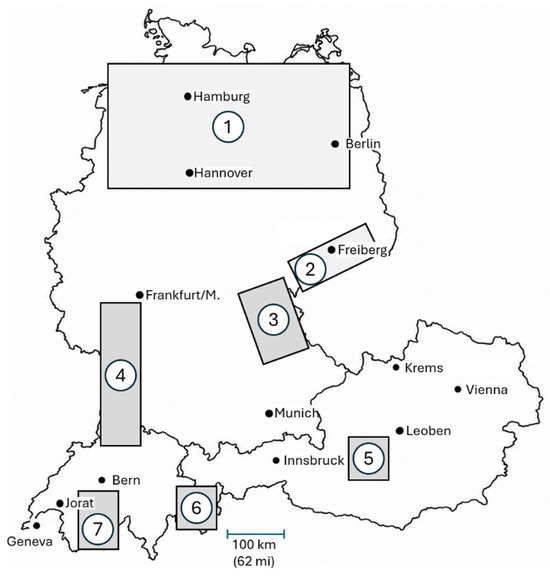
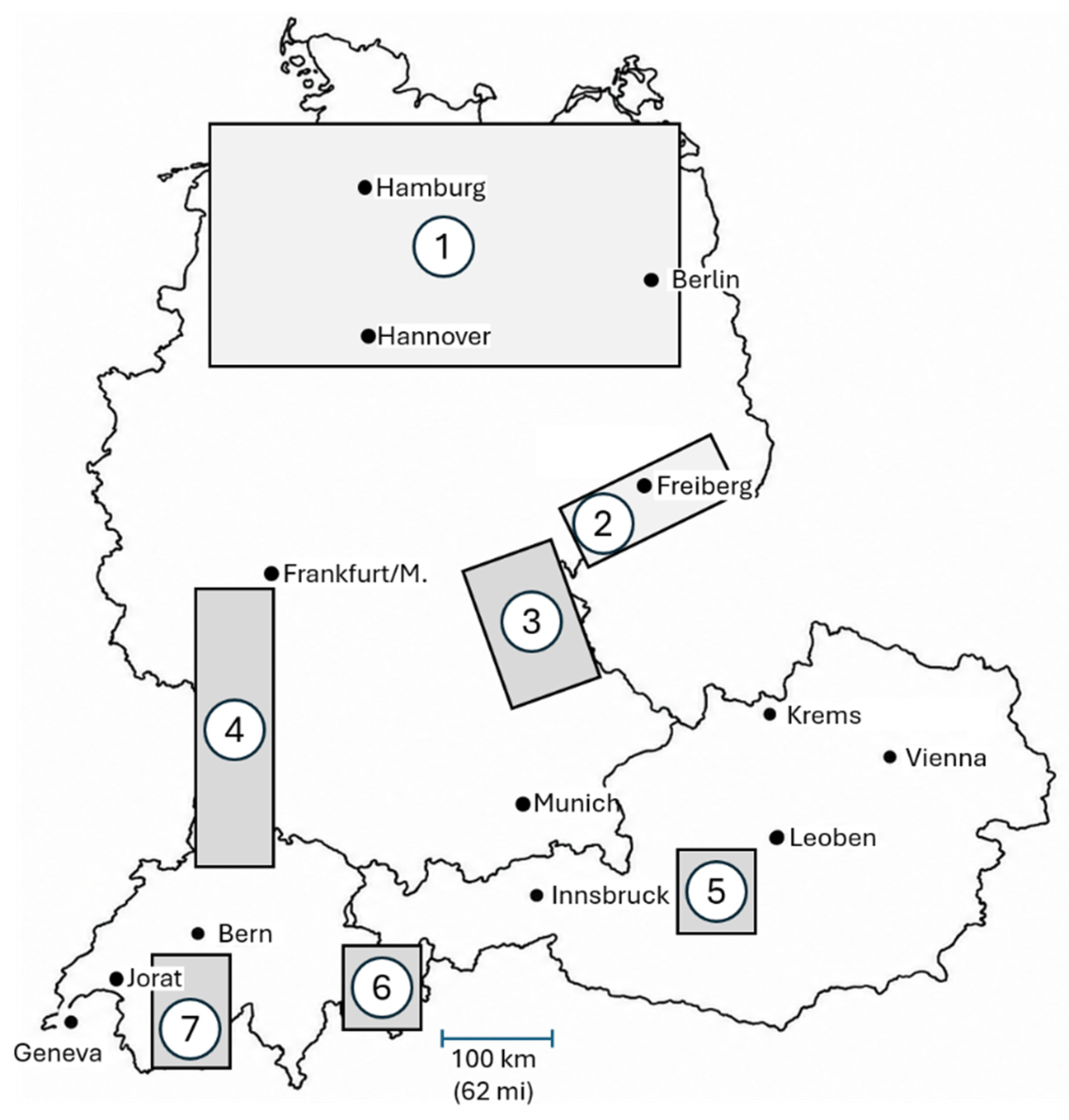

Disclaimer/Publisher’s Note: The statements, opinions and data contained in all publications are solely those of the individual author(s) and contributor(s) and not of MDPI and/or the editor(s). MDPI and/or the editor(s) disclaim responsibility for any injury to people or property resulting from any ideas, methods, instructions or products referred to in the content. |
© 2026 by the authors. Licensee MDPI, Basel, Switzerland. This article is an open access article distributed under the terms and conditions of the Creative Commons Attribution (CC BY) license.