


Abstract
Handling hydrogen-rich atmospheres requires materials that do not deteriorate in the presence of hydrogen and that ensure safe operation. Often high strength metallic materials, however, may show catastrophic mechanical failure in the presence of hydrogen. This phenomenon, called hydrogen embrittlement, can be very dangerous, as these failures occur in a time-delayed and sudden manner. Two commercially available materials, AMPCOLOY® 83, a copper beryllium alloy, and AMPCO® 18, an aluminum bronze, have been investigated to clarify their susceptibility to hydrogen embrittlement. Hydrogen permeation measurements were performed to assess diffusivity in the materials, and hydrogen content was analyzed by thermal desorption analysis (TDA) after electrochemical charging. Mechanical properties in hydrogen-affected state were assessed by slow strain rate tensile tests (SSRT), with in situ electrochemical charging and post-test fractographic inspection of the fracture surfaces. While the aluminum bronze showed no noticeable hydrogen-related deterioration, copper beryllium alloy experienced some embrittlement, however, having a low fracture strain even in the uncharged state.
1. Introduction
Hydrogen has been used in the past mainly in the chemical, petrochemical and aerospace industries [1,2]. A long history of knowledge and experience handling hydrogen and describing its interaction with materials can be found in the literature, e.g., [3,4]. Based on environmental constraints and the request to reduce non-renewable energy sources, hydrogen has become an attractive alternative to substitute current non-renewable energy supplies [5,6,7].
Hydrogen has been recognized as a temporary energy storage or energy carrier, either as liquid or gas [8], and as a compound for chemical reactions, e.g., in the production of ammonia or methanol or in direct combustion processes, such as the propulsion of rockets. The use of hydrogen has been governed for decades by elaborated industry safety standards based on experience and unforeseen accidents, e.g., [9]. One class of materials that is notoriously prone to hydrogen embrittlement is high-strength steels with a yield strength above 350 MPa and an ultimate strength above 700 MPa. On the other hand, not many metal alloys offer that level of strength. Copper alloys can achieve a similar range of strength, and an initial study [10] suggested their strong potential for relevant applications such as hydrogen production via electrolysis, storage in underground cavities or tanks, and use in fuel cells to power vehicles, which are now gaining interest [11,12,13]. The existing standards may need to be adjusted to maintain a high level of safety. Risk analysis and rules are thus currently under preparation [14,15].
Materials that have been safely used in the past, e.g., in natural gas environments, may now require additional precautions to avoid catastrophic failures when used in hydrogen environments. Research programs are ongoing in Germany and Europe (e.g., German flagship projects TransHyDE, H2Giga, EU projects HyLINE or HYDAM) to investigate the susceptibility of materials towards hydrogen embrittlement for many applications. It is essential to understand that material modifications or processing steps may change the susceptibility to hydrogen embrittlement. It is therefore crucial to assess the final product’s susceptibility. In principle, tests for embrittlement can be conducted in liquid hydrogen (below −253 °C at atmospheric pressure), in gaseous hydrogen, or in hydrogen produced in an electrochemical environment (usually aqueous, acidic or basic). Each physical state may impose different modes of interaction on the materials. The focus of this work is on aqueous electrochemical hydrogen charging. Various mechanisms have been proposed for hydrogen entering a metallic material from an aqueous environment and are reasonably understood and accepted [16,17,18,19].
Hydrogen embrittlement, a serious material failure mechanism, is regarded as a “low” temperature phenomenon, which occurs at temperatures below ~200 °C [20,21]. At higher temperatures, other hydrogen-related failures may prevail, e.g., hydrogen attack, internal formation/evolution of methane or de-carburization of carbon-containing materials, i.e., steels [22]. These failure modes are not within the scope of this publication. Since many new applications operate in the temperature range where embrittlement occurs (e.g., at room temperature), questions about how to assess potential material embrittlement become important. Several standards have been stipulated to test for hydrogen embrittlement [23,24,25,26,27], most notably ISO 7539-7:2005 and ASTM G129-00. In principle, tests can be conducted with pre-charged or in situ-charged samples from either gaseous or electrolytic environments at various temperatures and pressures. Based on the large number of standards, the test conditions should reflect each final application as closely as possible, especially with respect to pressure and temperature.
Hydrogen charging in electrolytic environments with the possible aid of cathodic polarization and/or recombination poison introduces high amounts of hydrogen atoms to the surface of the samples [28]. However, this strategy is temperature-limited by the boiling point of the electrolyte. The resulting hydrogen penetration depth also strongly depends on the diffusion coefficient and, consequently, on the temperature. At ambient temperature, the diffusion coefficients for hydrogen in commonly used steels can vary from 10−5 to 10−7 cm2/s for ferritic steels, from 10−12 to 10−15 cm2/s for austenitic steels [10,18,29], and for pure copper, from 10−8 to 10−10 cm2/s [30]. In contrast to electrochemical charging, pre-charging in gaseous atmospheres can be achieved over a much broader temperature and pressure range. Elevated temperatures promote the dissociation of hydrogen molecules and enhance their diffusivity, resulting in a more homogeneous distribution of hydrogen within the test samples after shorter exposure times [17]. On the other hand, charging at elevated temperature often does not reflect the operational conditions, as many applications operate at or near ambient temperature. In addition, higher temperatures may induce microstructural changes in the material, potentially influencing its response to hydrogen interactions. It is therefore essential to match the test conditions to the operating conditions to achieve the relevant property data. This work focuses on ambient temperatures, as this reflects the most common scenario in many applications.
It is worth noting that attempts are undertaken to compare the intensity of hydrogen charging via gas phase to electrolytic hydrogen charging, e.g., [31,32]. Electrolytic charging generally leads to higher hydrogen fugacity and increased levels of hydrogen in the material. Nevertheless, the intensity is strongly dependent on the chosen conditions, i.e., the current density, overpotential, electrolyte, and surface condition. To the knowledge of the authors, no such comparison is available for copper-based materials, but it is assumed from the literature cited above that the chosen electrolytic charging conditions should represent demanding operating conditions under high pressure of gaseous hydrogen. The novelty of this work lies in the investigation of industrially produced rods of commercially available alloys and the assessment of their susceptibility to hydrogen embrittlement.
2. Materials and Methods
The investigations focused on the following two commercially available copper alloys manufactured by AMPCO METAL S.A., Marly, Switzerland (Table 1).
Table 1.
Materials used in this investigation, including product form, condition, and nominal strength, according to the respective supplier datasheet.
The nominal chemical compositions of both alloys in wt.% are shown in Table 2.
Table 2.
Nominal composition of materials investigated [33,34].
AMPCOLOY® 83 is a copper alloy containing 1.9% beryllium (UNS C17200), hereafter referred to as “copper beryllium”. Among all the available copper alloys, copper beryllium alloys exhibit the highest ultimate strength and yield strength. The mechanical properties are derived by thermal treatment, i.e., solution annealing followed by precipitation hardening with or without prior cold deformation [35]. AMPCO® 18 is a versatile copper–aluminum alloy, hereafter referred to as “aluminum bronze” with a good mixture of strength, hardness, wear, and fatigue resistance. The rods of both alloys were supplied by AMPCO METALS® and taken from serial production (AMPCO® 18: ø 28.6 (+/−0.10), extruded and drawn; AMPCOLOY® 83: ø 31.8 (+/−0.127), extruded).
Permeation discs were cut from each rod to a thickness of ~500 µm using EDM and afterwards ground to P1000, aiming at an average sample thickness of ~100 µm (Table 3). By removing about 200 µm of material from both sides of the discs, it was assured that the surface affected by the EDM was sufficiently removed. The thickness of each sample was measured in five positions, and the average value was used to evaluate the permeation measurements. Before the permeation experiment, both sides of each disc were cleaned in acetone and ethanol to remove surface contaminants and sputter-coated with 20 nm of Pd (Leica EM ACE600, Nussloch, Germany, Pd target: Robeko, Germany, 99.95%) to prevent uncontrolled surface reactions (e.g., corrosion) and to enhance the rate of oxidation on the oxidation side during the permeation test.
Table 3.
Average thickness of permeation samples in µm.
The permeation tests were performed in electrolytic double cells after Devanathan and Stachurski [36,37] and according to DIN EN ISO 17081 [38]. The samples were electrochemically charged with hydrogen in 0.1 mol/L NaOH (VWR, Darmstadt, Germany, analytical grade) with 0.25 g/L As2O3 (ThermoScientific, Darmstadt, Germany, 99.99%, metals basis) as recombination poison and a 5 mA/cm2 cathodic charging current density. The temperature was controlled at 25 °C. The sample absorbs atomic hydrogen generated on the sample surface in the charging cell. This hydrogen diffuses through the sample thickness to the oxidizing cell, where it is oxidized. The oxidation signal intensity is a direct measure of the amount of hydrogen transmitted. In principle, the hydrogen diffusion coefficient can be determined from these measurements (after DIN EN ISO 17081 [38]). However, due to the low hydrogen diffusivity in fcc copper-based materials and experimental constraints, the tests had to be stopped after 235 h of charging, even if no hydrogen signal was observed on the oxidation side. An upper limit of the diffusion coefficient could therefore be determined from the conducted experiments, instead of deriving an exact value from a breakthrough time. Three tests were performed on each material.
The mechanical properties of the materials were investigated via slow strain rate tensile tests (SSRT) at a strain rate of 1 × 10⁻⁶ s−1. A 50 kN universal testing machine (Inspekt Table 50, Hegewald & Peschke, Nossen, Germany) and a custom-built electrolytic cell (IPS Elektroniklabor GmbH & Co. KG, Münster, Germany) were employed for the tests. The cylindrical SSRT-samples were fabricated first by EDM cutting of cylindrical rods ø 11.0 mm × 200 mm along the extrusion direction and machining to the final sample geometry using conventional CNC machining. The samples had a diameter of 4 mm in the central region and 20 mm parallel length, in accordance with DIN EN ISO 6892-1 [39], but adapted with respect to the overall length to comply with the boundary conditions of the electrochemical cell. A technical drawing of the SSRT sample is available in the Supplementary Material of this article. The tests were performed on samples in the as-received state, as a reference without hydrogen charging in comparison to in situ electrochemical hydrogen charging in 0.1 mol/L NaOH with 0.25 g/L As2O3 as recombination poison. This resembles a relatively strong hydrogen charging condition in a basic electrolyte that does not cause significant corrosion of the copper-based materials. The electrolyte was deaerated with argon to ensure oxygen-free conditions. The advantage of in situ electrochemical charging is that a constant supply of hydrogen is maintained throughout the entire experiment. This contrasts with testing pre-charged samples (either gas phase H-charging or electrochemical H-charging), where effusive losses occur during the handling and set-up of the tensile test, and special care must be taken to minimize them. Furthermore, the applied load during the tensile test will enhance the hydrogen mobility in the material due to the widened lattice. To ensure the precise charging of the tensile specimen, only the central region of the tensile specimen (parallel testing length and radius region) was exposed to the electrolyte, while a protective paint covered the remaining parts. Just prior to placing the SSRT sample in the electrolytic cell, the surface of this central region was activated by manual grinding with P1000 SiC paper (Struers, Willich, Germany) and cleaning with ethanol. The size of the unprotected area was used to define the current setting during galvanostatic charging to ensure cathodic charging with 5 mA/cm2. After fracture, the specimens were removed from the cell, cleaned with deionized water and ethanol, and stored in liquid nitrogen within 10 min.
The hydrogen content of the SSRT specimens was subsequently analyzed by thermal desorption analysis (TDA) using a Galileo G8 system with an infrared furnace IR07 (Bruker, Karlsruhe, Germany). Immediately before the analysis, the samples were removed from the liquid nitrogen, thawed in ethanol for 10 min, dried, and transferred to the measurement system. A quasi-isothermal setup at 400 °C (i.e., heating to 400 °C with maximum power, maintaining 400 °C until measurement is completed) was used to measure the tensile specimens. One sample of each material in the as-received state was also analyzed for comparison. Fracture surfaces of the as-received and H-charged material after the SSRT test were examined after the hydrogen analysis by SEM (Hitachi Flex SEM 1000 II, Tokyo, Japan), and the reduction of area was evaluated using a profile projector (Werth, Gießen, Germany).
3. Results and Discussion
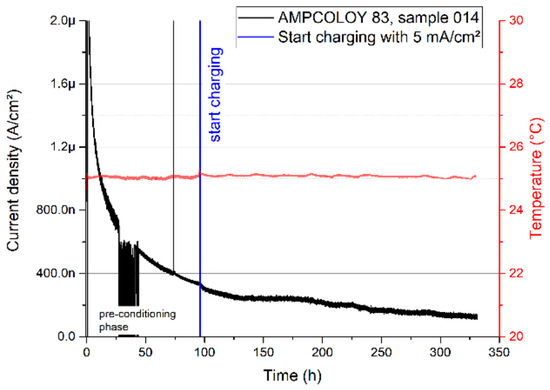
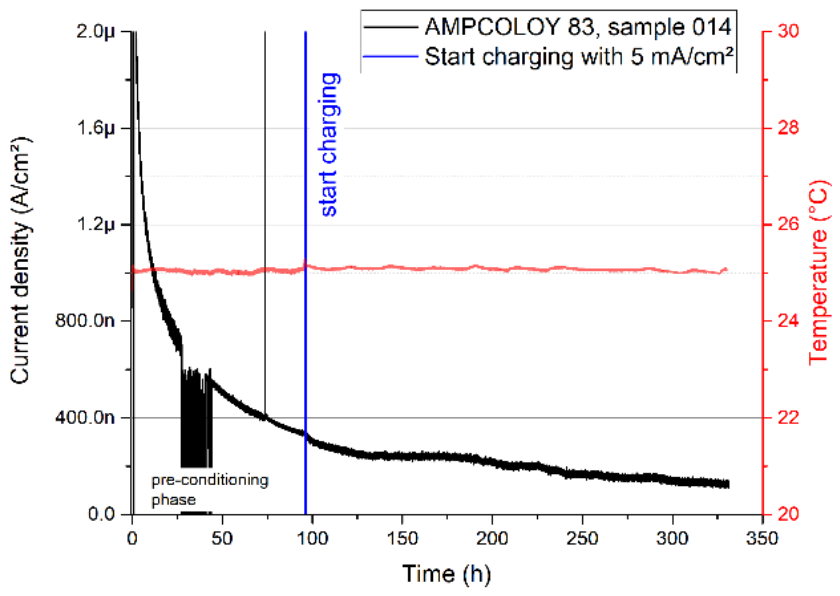
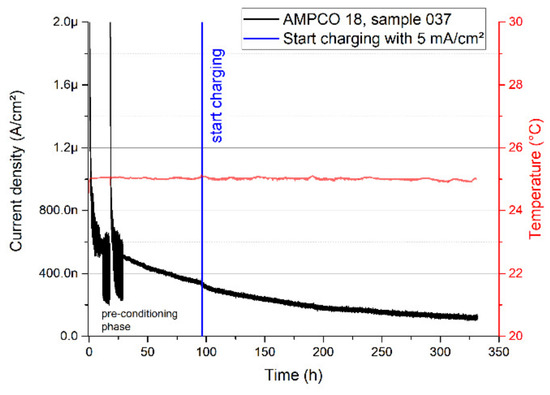
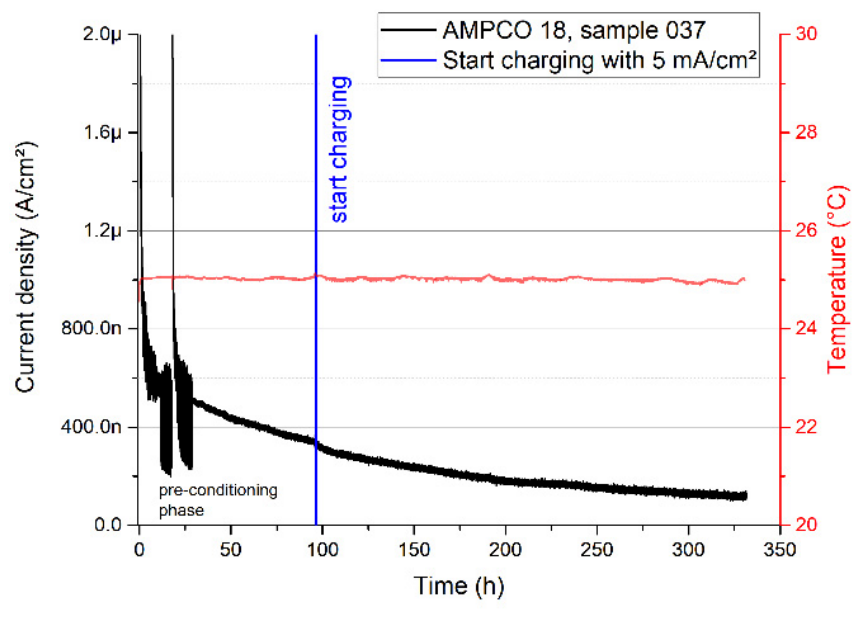
The result of a permeation test on copper beryllium is shown in Figure 1. The current signal of the oxidation side is shown as a black line. The red line is the temperature during the test, and the vertical blue line indicates the start of the hydrogen charging. The current density shows a steep drop immediately at the start of the test, then gradually slows and usually reaches an almost constant value. This pre-conditioning phase of the test is related to initial surface reactions (oxidation) and also includes noise signals at very low and very high current densities. On the investigated materials, the current density continuously decreased to values below 1 µA/cm2; however, our setup did not reach values below 0.1 µA/cm2 as recommended by the standard DIN EN ISO 17081:2014-10 [38] within a reasonable time. It was decided to start the hydrogen charging (blue vertical line) after 96 h of pre-conditioning, where values below 400 nA/cm2 were observed. The oxidation signal continued to decrease after charging was started. Only small fluctuations (for example the slightly stationary trend at 150 h and 225 h in Figure 1) in the current density were observed; however, these were not congruent over the three samples tested of each material. It is therefore believed that such fluctuations were not related to hydrogen flux at the oxidation side. A significant increase observed on all three samples of a material would indicate hydrogen atoms having diffused through the permeation sample; however, this was not observed on all three investigated samples of each material. Figure 2 likewise shows the results of a permeation test on aluminum bronze, where also no hydrogen was detected on the oxidation side of the cell after 235 h of electrolytic hydrogen charging.
Figure 1.
Signal response for electrochemically charged copper beryllium in 0.1 mol/L NaOH with 0.25 g/L As2O3 as recombination poison and 5 mA/cm2 cathodic charging current density at room temperature with 20 nm Pd coating on both sides.
Figure 2.
Signal response for electrochemically charged aluminum bronze in 0.1 mol/L NaOH with 0.25 g/L As2O3 as recombination poison, 5 mA/cm2 cathodic charging current density at room temperature, and with 20 nm Pd coating on both sides.
The absence of a permeation signal indicates that hydrogen did not fully permeate the samples under the given conditions within the duration of hydrogen charging of 235 h. The methods described in DIN EN ISO 17081 [38] for the evaluation of the effective diffusion coefficient can thus not be used to calculate the diffusion coefficient of the material. However, the breakthrough-time method, Equation (1) [40], can be used to derive the upper limit of the effective diffusion coefficient, i.e., diffusion in the investigated material must have been slower than the calculated value.
with Deff as the effective diffusion coefficient, L as the sample thickness and tb as the breakthrough time (time from start of charging until oxidation signal rises).
Based on the results, the derived upper limits of the diffusion coefficients for aluminum bronze and copper beryllium are Deff ≤ 9.5 × 10⁻¹⁶ m2/s (9.5 × 10⁻¹² cm2/s) and Deff ≤ 1.4 × 10⁻¹⁵ m2/s (1.4 × 10⁻¹¹ cm2/s), respectively. These values are in agreement with the literature data for pure copper [41,42].
Using the following Equation (2) [43], one can estimate the mean square displacement of diffusing species under optimum conditions, i.e., samples are perfectly homogeneous without inclusions and grain boundaries (which is unrealistic) and have no surface cracks or other irregularities that could promote hydrogen uptake:
with x being the penetration depth, D the diffusion coefficient, t the diffusion time, and a as constant parametric value between 2 and 20. Table 4 shows the calculated penetration depth for two arbitrarily chosen diffusion coefficients for three different times to illustrate the ingress of hydrogen over time.
Table 4.
Estimated penetration depth in µm after 30 days, 1 and 10 years of charging time using 2 different diffusion coefficients (Factor a = 2).
Even after 10 years of exposure, the expected penetration of hydrogen for both hypothetical diffusion coefficients is less than 1 mm. Based on these calculations, the affected area of tubes with a wall thickness of, e.g., 5 mm is relatively small, and most of the cross section remains unaffected. The limited embrittlement depth in a material can even be observed from the fracture surface analysis of tensile samples with different hydrogen charging states [44].
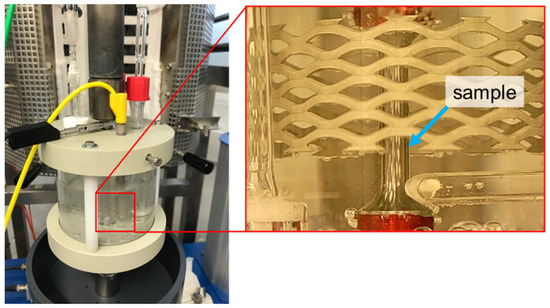
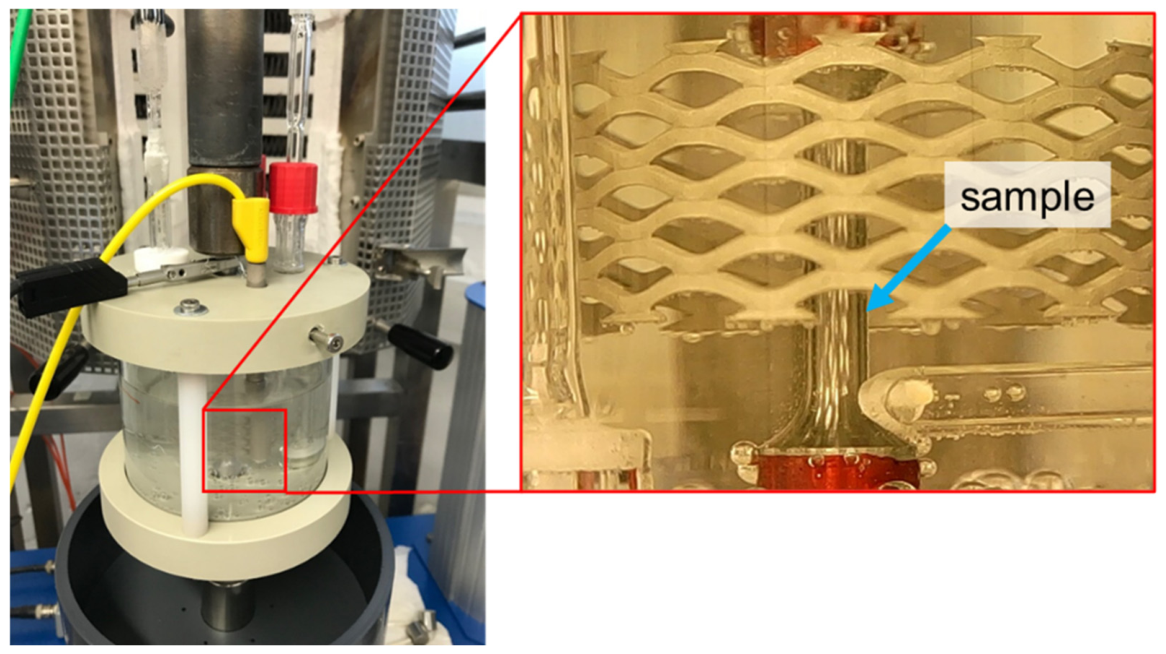
Slow strain rate tensile tests and the subsequent analysis of the fractured sample surfaces in combination with hydrogen analysis were performed to provide more details of the material response towards hydrogen exposure. The experimental setup for performing an SSRT with in situ electrochemical hydrogen charging is shown in Figure 3. The cylindrical sample geometry used for the tests is in accordance with DIN EN ISO 6892-1 [39]; however, due to the dimensions of the electrolyte cell, there is an increased total length (see Supplementary Material Figure S1 for details). Only the region with a reduced diameter is exposed to the electrolyte, while the remainder of the sample is coated with protective paint (see zoomed inset in Figure 3).
Figure 3.
Test setup for the slow strain rate test. The sample is encapsulated by a container holding the electrolyte during testing (strain rate: 1 × 10⁻⁶ s−1, test at ambient temperature). The zoomed image shows the test length of the sample exposed to the electrolyte, while the remainder of the sample is coated with protective paint.
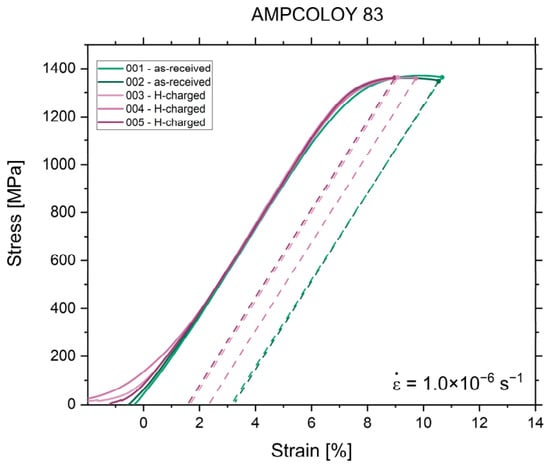
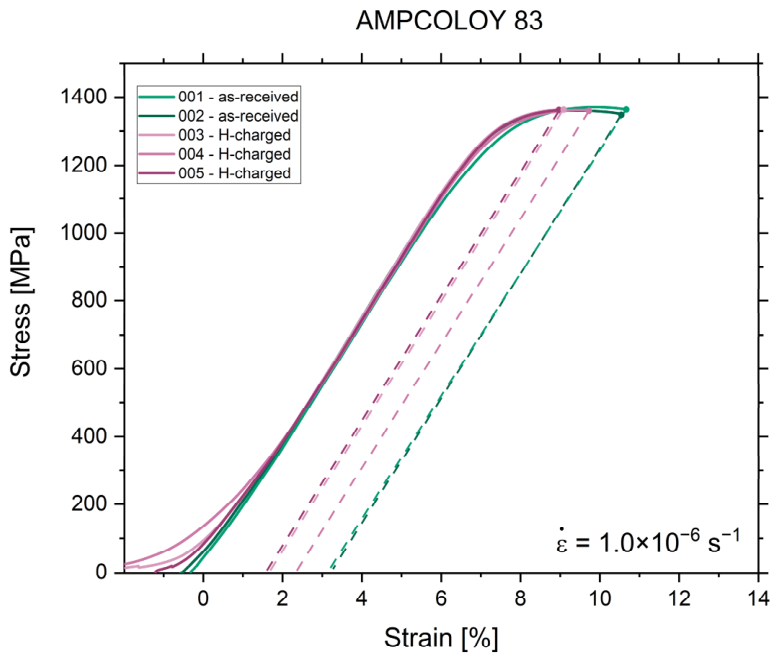
The stress–strain curves from the copper beryllium tests are shown in Figure 4. The initially slow increase in stress is an artefact of the electric insulation between the specimens and the sample grip of the universal test machine, which was achieved with PTFE tape. At the beginning of the test, the PTFE tape is compacted, leading to a seemingly lower stiffness of the load train. The stress–strain curves were consequently corrected for this artefact by taking the maximum slope as the system stiffness and linearly extrapolating to the intercept with the x-axis to define the zero-strain point. The curves indicate a noticeable decrease in fracture strain for the H-charged samples. However, copper beryllium has a very low strain to failure even in the uncharged state, and the absolute decline is only about 1.3%. This is usually accounted for in the design of such brittle materials. The A5 values derived from the curves are given in Table 5, together with the yield strength Rp0.2 and the ultimate tensile strength Rm. No significant deterioration in yield strength or tensile strength is observed for the H-charged samples.
Figure 4.
Stress–strain curves of the slow strain rate tensile tests on copper beryllium.
Table 5.
Measured mechanical properties from SSRT-tests for copper beryllium in the as-received and H-charged condition. The properties according to the material certificate were Rm = 1268 MPa and A5 = 5%.
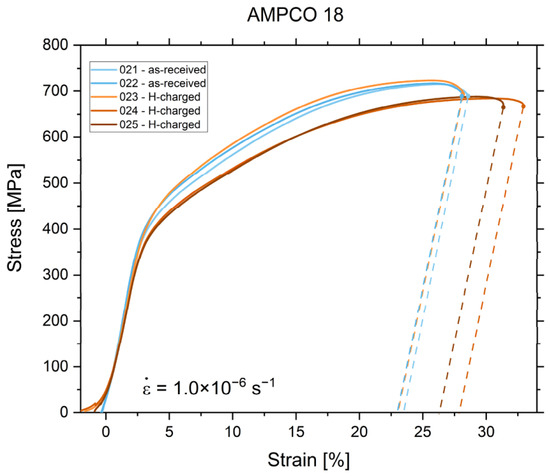
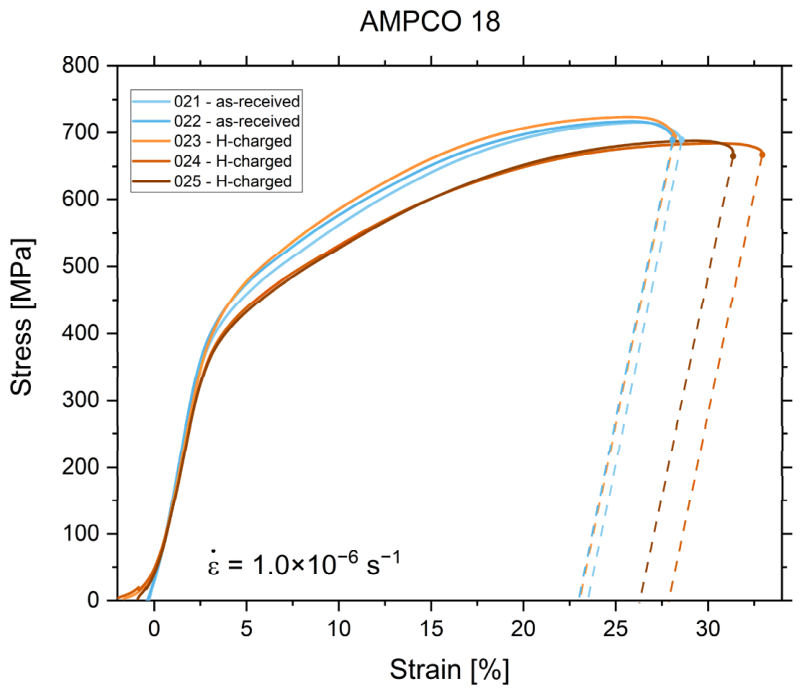
The stress–strain curves from the tests on the aluminum bronze show fracture strains above 20% in the slow strain rate tests (Figure 5) and no significant difference between the as-received and the H-charged state. Two individual measurements in the H-charged state yielded the highest fracture strains of 26.4% and 28%, indicating that the samples failed in the plastic deformation regime. These values are therefore beyond the design limitations of components and well beyond the minimum fracture strain specified in the material datasheet (A5 = 14%). Table 6 lists the fracture strain values of all tested samples of aluminum bronze, along with their yield strength Rp0.2 and ultimate tensile strength Rm.
Figure 5.
Stress–strain curves of the slow strain rate tensile tests on the aluminum bronze.
Table 6.
Measured mechanical properties from SSRT tests for the aluminum bronze in the as-received and H-charged condition. The properties according to the material certificate were Rm = 772 MPa and A5 = 14%.
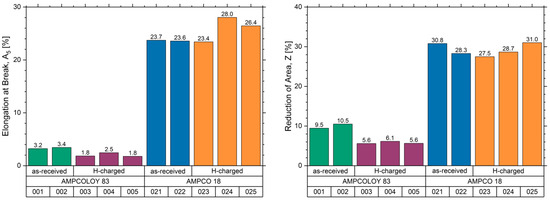
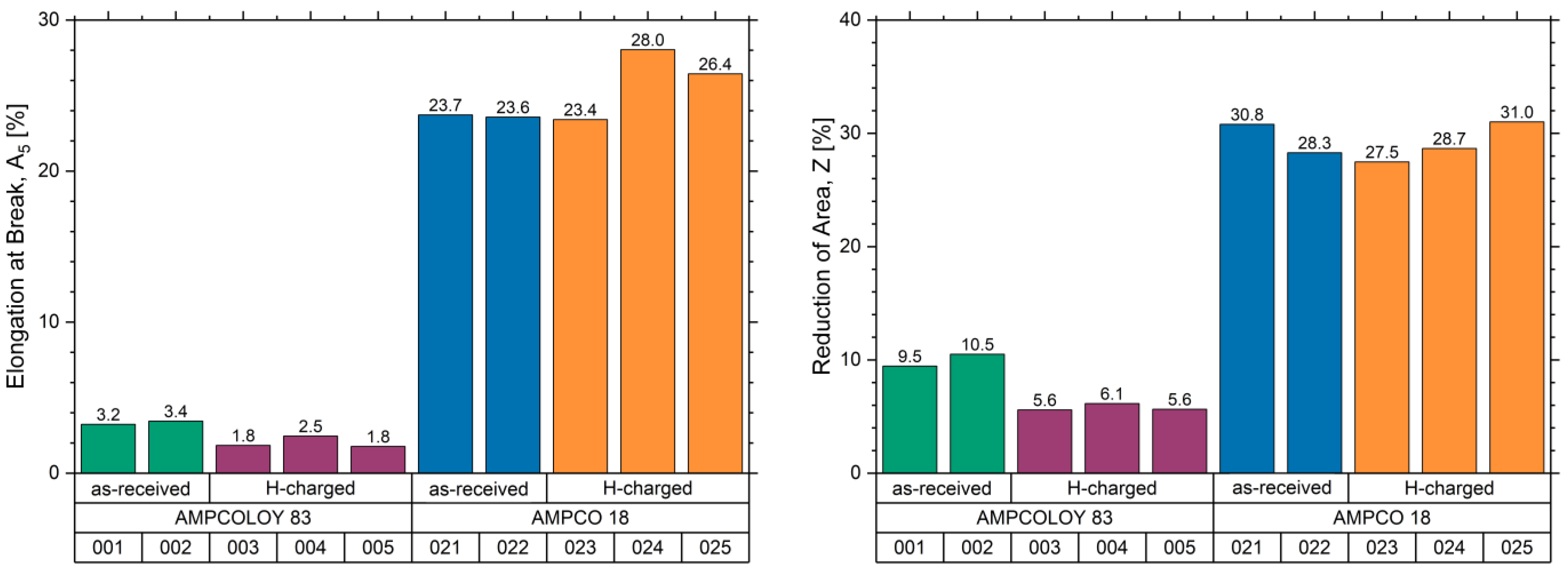
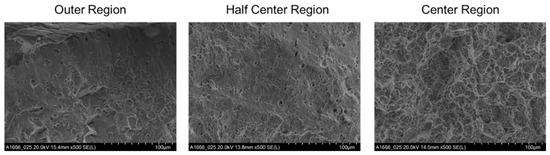
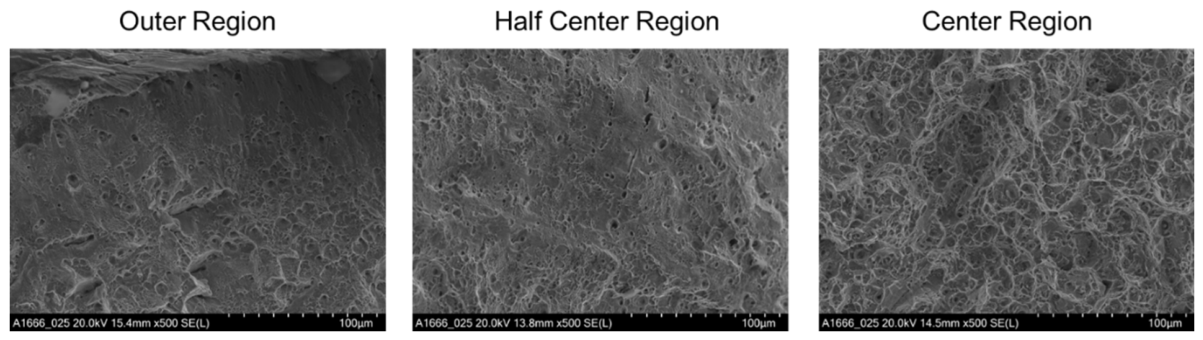
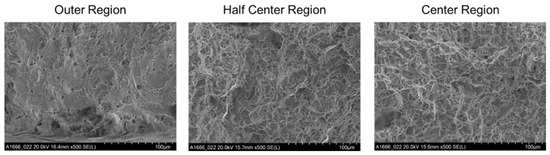
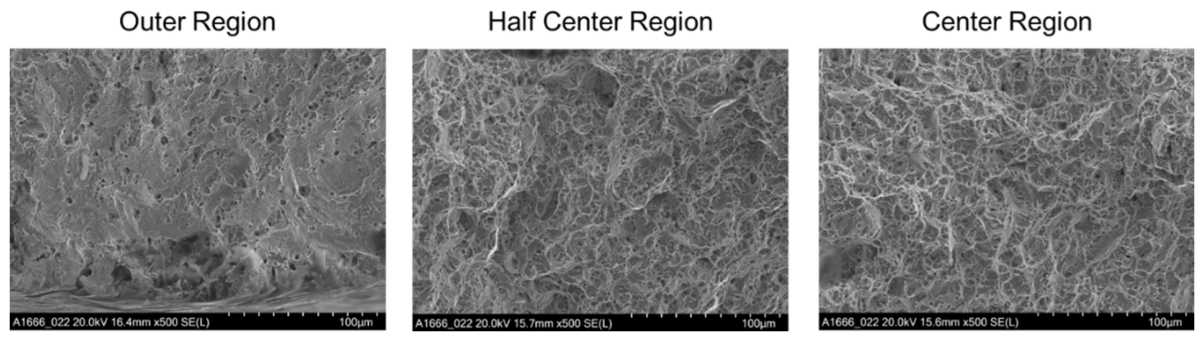
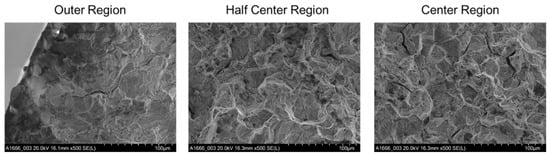
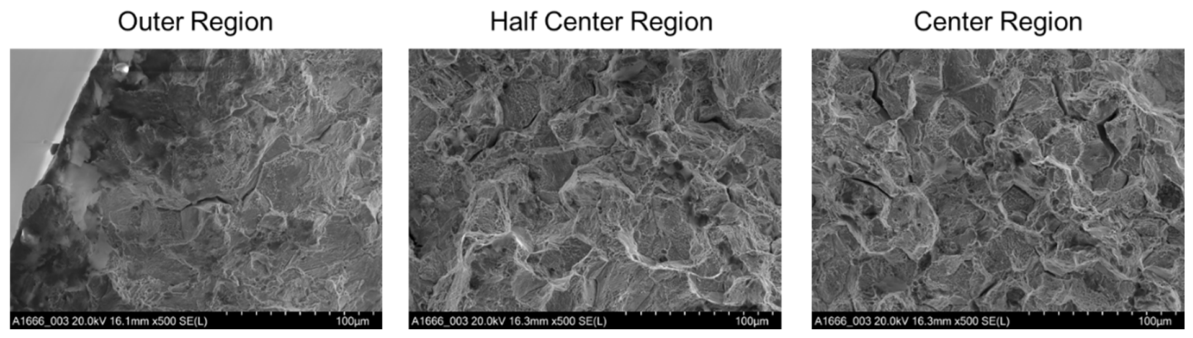
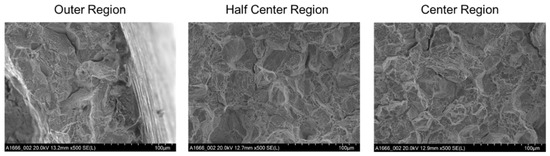
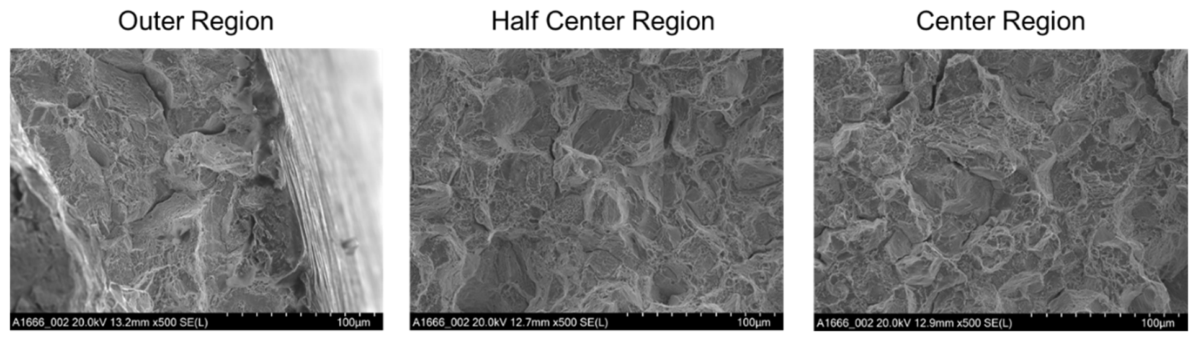
To visualize and compare the differences between the as-received and H-charged states, the fracture strain values and the reduction of area for both investigated alloys are plotted in Figure 6. The reduction of area values mostly resemble the observations made on the fracture strain. A noticeable decrease in the reduction of area can be seen for copper beryllium in the H-charged state, which is, however, relatively small when the brittle behavior of the material in the as-received state and its high strength are considered. The values for the aluminum bronze lie within the same scatter band for the as-received and the H-charged state or are even slightly increased (e.g., elongation at break), which strengthens the material resistance against hydrogen embrittlement. This is in line with the results from the permeation tests, which suggest negligible hydrogen penetration depth into the aluminum bronze samples during the SSRT tests over the duration of 24 h. Consequently, the ductile fracture mode that is seen in the SEM investigation of the fracture surfaces of the aluminum bronze in Figure 7 and Figure 8 was expected. Ductile dimples are visible in the outer region of the fracture surface and even more evident in the intermediate radius (half center region) and in the center of the fracture surface (center region).
Figure 6.
Elongation at break and reduction of area of both investigated alloys in the as-received and H-charged state.
Figure 7.
Fracture surface of the aluminum bronze in the as-received state.
Figure 8.
Fracture surface of the aluminum bronze in the H-charged state.
The SEM images of the fracture surfaces of copper beryllium (Figure 9 and Figure 10) show the expected presence of intergranular cracks after the tensile test in both the charged and as-received states. This copper alloy (UNS C17200) was investigated by several other authors on different (lower) strength levels [10,45,46]. Their results emphasize that this alloy does not embrittle in hydrogen atmospheres under static mechanical conditions.
Figure 9.
Fracture surface of copper beryllium in the as-received state.
Figure 10.
Fracture surface of copper beryllium in the H-charged state.
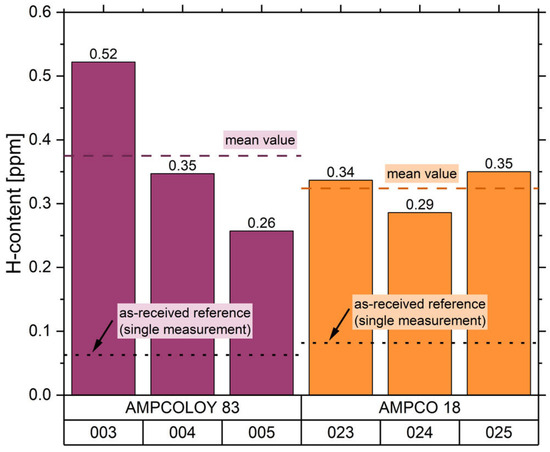
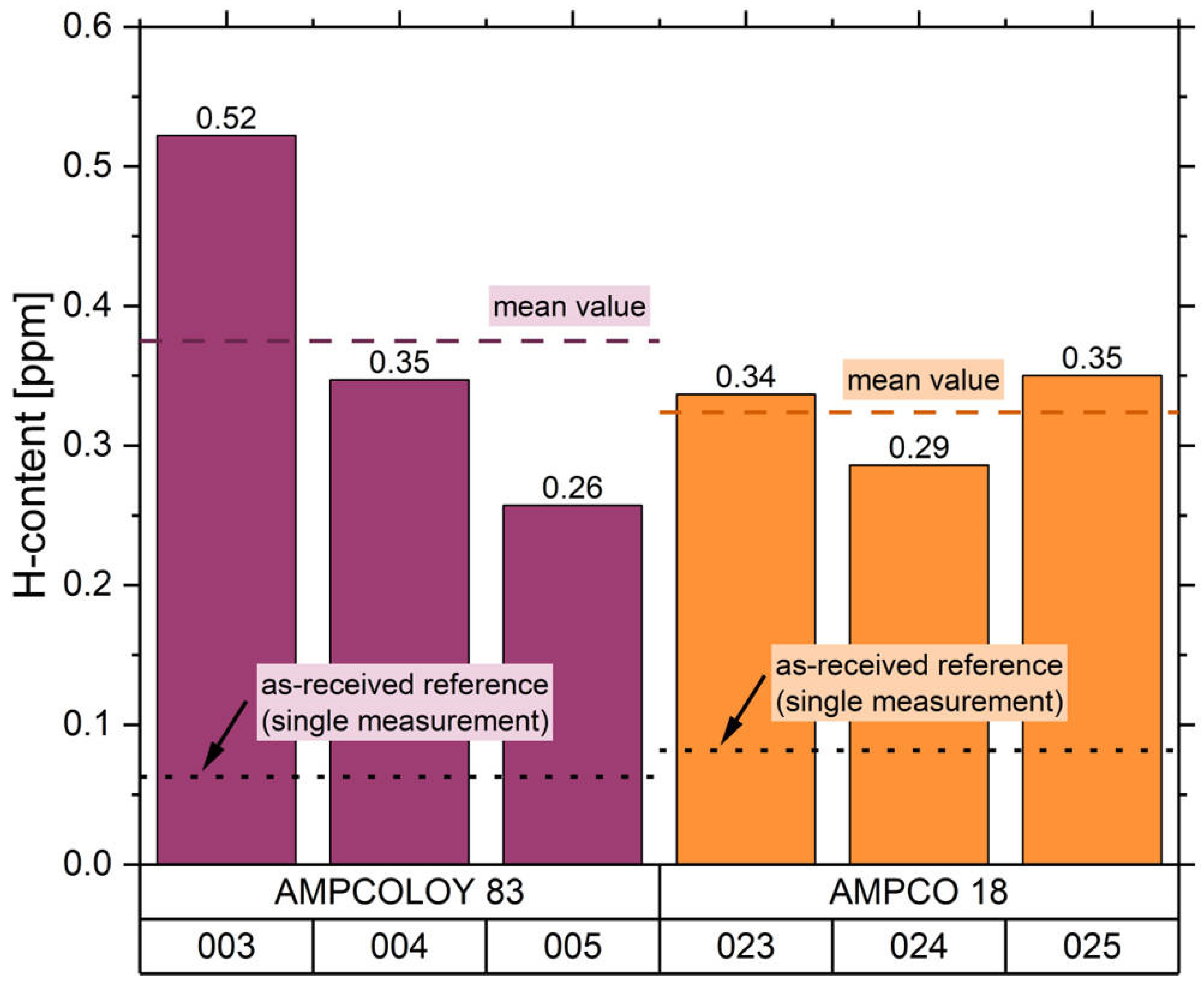
The results of the hydrogen analysis of the SSRT samples are shown in Figure 11. It should be noted that the results may be affected by the experimental conditions, because the thermal desorption technique relates an absolute hydrogen quantity (moles of H2-gas molecules detected) to the volume of the whole sample. The volume to calculate the hydrogen content was limited to the region of the tensile specimen exposed to the electrolyte and charged with hydrogen. However, the complete specimen, which had to be inserted into the TDA measurement device to reduce hydrogen effusion prior to the measurement, comprises a much larger volume, and therefore, contaminations may be introduced from a larger specimen volume. This may be one reason for the significant scatter in the hydrogen results for copper beryllium. Furthermore, given the low diffusivity of hydrogen in the investigated materials, only a shallow near-surface volume was charged with hydrogen within the limited time of the tensile test. Nevertheless, the hydrogen content measured of the H-charged samples was clearly increased compared to the as-received samples.
Figure 11.
Hydrogen content of SSRT samples using thermal desorption analysis (TDA).
The hydrogen contents determined for the copper-based materials in this work (mean of 0.38 ppm for copper beryllium, mean of 0.32 ppm for aluminum bronze) are very low. However, when stating and comparing the measured hydrogen concentrations in copper-based materials, it must be considered that the actual volume charged with hydrogen was considerably lower due to the low hydrogen diffusion coefficient. Hydrogen could only diffuse to a depth of ~30 µm during the SSRT test duration (~90 h for aluminum bronze) and was thus not homogeneously distributed throughout the sample volume of both materials.
Regarding the impact on the mechanical properties, for aluminum bronze, the mechanical properties in the H-charged state were almost identical to those in the as-received state. On the other hand, a decrease in fracture strain and a reduction of area were observed for copper beryllium after hydrogen charging. Considering the material’s high strength far above 1000 MPa and overall limited ductility in the as-received state, this reduction is reasonable, and in general, these are strength parameters, where alloyed heat-treatable steels also show a high susceptibility even to small amounts of hydrogen such as measured in this work [22]. A comparison with earlier work on the critical hydrogen content in other Cu alloys [10] shows that the ductility loss in the highest-strength materials is not easily transferable to other alloys and depends on the alloy composition, microstructure, secondary phases, and residual stresses. However, design engineers should be aware that hydrogen permeation and accumulation in sub-surface areas may initiate cracks in the strongest Cu alloys.
To summarize, the low diffusion coefficient in Cu alloys is highly beneficial, and the embrittlement in the very surface near region can be neglected for many applications and most likely for most Cu alloys with an ultimate strength below 1000 MPa, such as aluminum bronze. The copper beryllium shows a moderate embrittlement (i.e., lower fracture strain and reduction of area), although having relatively low ductility even in the uncharged state. Generally, more data would be helpful, especially at higher charging temperatures under pressure—when diffusion strongly increases (exponential dependency)—to understand the behavior of copper alloys with respect to hydrogen embrittlement beyond the conditions tested in this study.
4. Conclusions
Two commercially available copper alloys (AMPCOLOY® 83 and AMPCO® 18) have been tested for their susceptibility to hydrogen embrittlement. In permeation tests, samples were electrochemically charged with hydrogen in 0.1 mol/L NaOH with 0.25 g/L As2O3 as recombination poison and a 5 mA/cm2 charging current density with 20 nm Pd coating on both sides for up to 235 h at room temperature, following the guidelines according to DIN EN ISO 17081 [38]. Only an upper limit of the diffusion coefficients could be determined from the measurements, since no hydrogen breakthrough was detected. SSRT tests with in situ H-charging (to avoid possible effusion effects) were conducted to investigate the loading curve and fracture behavior. The fractured surfaces have been examined by SEM. The uptake of hydrogen during tests was measured by TDA of the SSRT samples (no Pd coating applied), and the overall uptake of hydrogen was in the order of 0.5 ppmv (or less). However, these values are based on a virtual homogeneous distribution of hydrogen in the material. Given the extremely low diffusion coefficients, the findings indicate shallow penetration profiles of a few tens of µm even after 200 h of charging, where the local hydrogen concentration might have been higher. However, the affected depth is estimated to be less than 300 µm even after 1 year of exposure (charging) time.
The high strength material AMPCOLOY® 83, which already has low ductility in the as-received condition, indicates a loss of ductility after hydrogen charging. However, this could be related to the microstructure of the high strength condition investigated here, since the literature data indicate no effect when the material is tempered to lower strength [36,37,38]. In the highest-strength condition, investigated here, fractography revealed intergranular cracks after tensile testing, even in the as-received state. The alloy AMPCO® 18, on the other hand, with an ultimate strength around 700 MPa, showed no embrittlement under the given test conditions and retained its elongation at break and reduction of area.
Supplementary Materials
The following supporting information can be downloaded at: https://www.mdpi.com/article/10.3390/hydrogen7030104/s1, Figure S1: Technical drawing of the tensile sample geometry used in this study, manufactured according to DIN EN ISO 6892-1:2020 but with increased total sample length.
Author Contributions
Conceptualization, M.R. and K.O.; formal analysis, M.R., S.S. and D.K.; investigation, M.R., S.S. and D.K.; resources, L.G. and M.C.G.; writing—original draft preparation, M.R. and K.O.; writing—review and editing, S.S., D.K. and M.C.G.; visualization, M.R., S.S. and D.K.; supervision, M.C.G.; funding acquisition, L.G. and M.C.G. All authors have read and agreed to the published version of the manuscript.
Funding
AMPCO Metal S.A. provided funding for the execution of the study and is covering the article publishing charge.
Data Availability Statement
The original contributions presented in this study are included in the article/Supplementary Material. Further inquiries can be directed to the corresponding author.
Acknowledgments
The help of S. Arat with permeation testing and M. Thalheimer with SEM investigations is gratefully acknowledged.
Conflicts of Interest
The author Mr. Lionel Girard was employed by AMPCO Metal S.A. AMPCO Metal S.A. provided funding for the execution of the study and is covering the article publishing charge. The author Mr. Klaus Ohla has been involved as a consultant and expert witness in AMPCO Metal S.A. The sponsor had no role in the design, execution, interpretation, or writing of the study. The authors declare that the research was conducted in the absence of any commercial or financial relationships that could be construed as a potential conflict of interest.
References
- Cecere, D.; Giacomazzi, E.; Ingenito, A. A review on hydrogen industrial aerospace applications. Int. J. Hydrogen Energy 2014, 39, 10731–10747. [Google Scholar] [CrossRef] [Scilit]
- Mosca, L.; Palo, E.; Colozzi, M.; Iaquaniello, G.; Salladini, A.; Taraschi, S. Hydrogen in chemical and petrochemical industry. In Current Trends and Future Developments on (Bio-)Membranes: New Perspectives on Hydrogen Production, Separation, and Utilization; Iulianelli, A., Basile, A., Eds.; Elsevier: Amsterdam, The Netherlands, 2020; pp. 387–410. ISBN 9780128173848. [Google Scholar]
- Dwivedi, S.K.; Vishwakarma, M. Hydrogen embrittlement in different materials: A review. Int. J. Hydrogen Energy 2018, 43, 21603–21616. [Google Scholar] [CrossRef] [Scilit]
- Li, X.; Ma, X.; Zhang, J.; Akiyama, E.; Wang, Y.; Song, X. Review of Hydrogen Embrittlement in Metals: Hydrogen Diffusion, Hydrogen Characterization, Hydrogen Embrittlement Mechanism and Prevention. Acta Metall. Sin. 2020, 33, 759–773. [Google Scholar] [CrossRef] [Scilit]
- Depover, T.; Monbaliu, O.; Wallaert, E.; Verbeken, K. Effect of Ti, Mo and Cr based precipitates on the hydrogen trapping and embrittlement of Fe–C–X Q&T alloys. Int. J. Hydrogen Energy 2015, 40, 16977–16984. [Google Scholar] [CrossRef] [Scilit]
- Depover, T.; Pérez Escobar, D.; Wallaert, E.; Zermout, Z.; Verbeken, K. Effect of hydrogen charging on the mechanical properties of advanced high strength steels. Int. J. Hydrogen Energy 2014, 39, 4647–4656. [Google Scholar] [CrossRef] [Scilit]
- Matsuo, T.; Yamabe, J.; Matsuoka, S. Effects of hydrogen on tensile properties and fracture surface morphologies of Type 316L stainless steel. Int. J. Hydrogen Energy 2014, 39, 3542–3551. [Google Scholar] [CrossRef] [Scilit]
- Mazloomi, K.; Gomes, C. Hydrogen as an energy carrier: Prospects and challenges. Renew. Sustain. Energy Rev. 2012, 16, 3024–3033. [Google Scholar] [CrossRef] [Scilit]
- Rothwell, J. Maintaining the Integrity of Process Plant Susceptible to High Temperature Hydrogen Attack: Part 2: Factors Affecting Carbon Steels; Health and Safety Executive (HSE): London, UK, 2018.
- Kniep, D.; Rudolphi, M.; Ohla, K.; Frehn, A.; Galetz, M.C. Hydrogen diffusivity, solubility, and embrittlement of high-strength copper alloys in comparison to stainless steel. npj Mater. Degrad. 2025, 9, 56. [Google Scholar] [CrossRef] [Scilit]
- Barba, J.; Cañas-Carretón, M.; Carrión, M.; Hernández-Labrado, G.R.; Merino, C.; Muñoz, J.I.; Zárate-Miñano, R. Integrating Hydrogen into Power Systems: A Comprehensive Review. Sustainability 2025, 17, 6117. [Google Scholar] [CrossRef] [Scilit]
- Waltham, D.; Holt, K.B.; Kuenzel, S.; Basu, A.; Lecoeur, N. Subsurface flow batteries: Concept, benefits and hurdles. Geol. Soc. Lond. Spec. Publ. 2023, 528, 491–505. [Google Scholar] [CrossRef] [Scilit]
- Tahmasbi, M.; Siavashi, M.; Ahmadi, R. A comprehensive review of hydrogen production and storage methods: Fundamentals, advances, and SWOT analysis. Energy Convers. Manag. X 2025, 26, 101005. [Google Scholar] [CrossRef] [Scilit]
- DIN e.V. Standardization Roadmap for Hydrogen Technologies. Available online: https://www.din.de/en/innovation-and-research/hydrogen/standardization-roadmap-for-hydrogen-technologies (accessed on 21 October 2025).
- Jordan, T.; Askar, E.; Holtappels, K.; Deeg, S.; Jopen, M.; Stoll, U.; Reinecke, E.-A.; Krause, U.; Beyer, M.; Markus, D. State of Knowledge and Technology Regarding Hydrogen Safety. Chem. Ing. Tech. 2024, 96, 192–210. [Google Scholar] [CrossRef] [Scilit]
- Jürgensen, J.; Pohl, M. Impact and Detection of Hydrogen in Metals. HTM J. Heat Treat. Mater. 2023, 78, 257–275. [Google Scholar] [CrossRef] [Scilit]
- Li, Q.; Ghadiani, H.; Jalilvand, V.; Alam, T.; Farhat, Z.; Islam, M.A. Hydrogen Impact: A Review on Diffusibility, Embrittlement Mechanisms, and Characterization. Materials 2024, 17, 965. [Google Scholar] [CrossRef] [Scilit] [PubMed]
- Kniep, D.; Schewe, S.; Rudolphi, M.; Galetz, M.C. Hydrogen permeation and embrittlement behavior of ferritic SOEC/SOFC interconnect candidates. Int. J. Hydrogen Energy 2025, 136, 843–851. [Google Scholar] [CrossRef] [Scilit]
- Krella, A. Hydrogen-Induced Degradation of Metallic Materials-A Short Review. Materials 2025, 18, 597. [Google Scholar] [CrossRef] [Scilit] [PubMed]
- Anderson, T.L.; Anderson, T.L. Fracture Mechanics; CRC Press: Boca Raton, FL, USA, 2005; ISBN 9780429125676. [Google Scholar]
- Michler, T.; Schweizer, F.; Wackermann, K. Review on the Influence of Temperature upon Hydrogen Effects in Structural Alloys. Metals 2021, 11, 423. [Google Scholar] [CrossRef] [Scilit]
- Kuron, D. (Ed.) Wasserstoff und Korrosion: Festschrift zum 60. Geburtstag von Prof. Dr. Hubert Gräfen; Kuron: Bonn, Germany, 1986; ISBN 3-923623-03-8. [Google Scholar]
- ASTM G129-21; Practice for Slow Strain Rate Testing to Evaluate the Susceptibility of Metallic Materials to Environmentally Assisted Cracking. ASTM International: West Conshohocken, PA, USA, 2021.
- ISO 7539-7:2005; Corrosion of Metals and Alloys—Stress Corrosion Testing: Part 7: Method for Slow Strain Rate Testing. ISO: Genewa, Switzerland, 2005.
- ASTM G142-98; Test Method for Determination of Susceptibility of Metals to Embrittlement in Hydrogen Containing Environments at High Pressure, High Temperature, or Both. ASTM International: West Conshohocken, PA, USA, 1998.
- ASTM F519-23; Test Method for Mechanical Hydrogen Embrittlement Evaluation of Plating/Coating Processes and Service Environments. ASTM International: West Conshohocken, PA, USA, 2023.
- DIN EN 2832:1993-04; Luft- und Raumfahrt; Wasserstoffversprödung von Stählen; Kerbzugversuch. Deutsche Fassung EN_2832:1993. DIN Media GmbH: Berlin, Germany, 1993.
- Truschner, M.; Trautmann, A.; Mori, G. The Basics of Hydrogen Uptake in Iron and Steel. Berg-Hüttenmännischen Monatshefte 2021, 166, 443–449. [Google Scholar] [CrossRef] [Scilit]
- Yamabe, J.; Takakuwa, O.; Matsunaga, H.; Itoga, H.; Matsuoka, S. Hydrogen diffusivity and tensile-ductility loss of solution-treated austenitic stainless steels with external and internal hydrogen. Int. J. Hydrogen Energy 2017, 42, 13289–13299. [Google Scholar] [CrossRef] [Scilit]
- Magnusson, H.; Frisk, K. Diffusion, Permeation and Solubility of Hydrogen in Copper. J. Phase Equilib. Diffus. 2017, 38, 65–69. [Google Scholar] [CrossRef] [Scilit]
- Hoschke, J.; Roethig, M.; Tapia-Bastidas, C.V.; Chowdhury, M.F.W.; Venezuela, J.; Shu, Y.; Gray, E.; Atrens, A. Determination of the hydrogen fugacity during cathodic hydrogen charging of X65 D pipeline steel. Corros. Sci. 2025, 243, 112580. [Google Scholar] [CrossRef] [Scilit]
- Jack, T.A.; Fazeli, F.; Szpunar, J. Equivalence of hydrogen uptake in X70 pipeline steel via gaseous and electrochemical charging. Int. J. Hydrogen Energy 2025, 123, 150–161. [Google Scholar] [CrossRef] [Scilit]
- AMPCO METAL S.A. Technical Data Sheet AMPCOLOY® 83. Available online: https://www.ampcometal.com/documents/A83_EX_E_US.pdf (accessed on 21 October 2025).
- AMPCO METAL S.A. Technical Data Sheet AMPCO® 18. Available online: https://www.ampcometal.com/documents/A18_EX_E.pdf (accessed on 21 October 2025).
- Wenschot, P. Metallurgy of Copper and Copper Alloys; AMPCO METAL: Marly, Switzerland, 2019; ISBN 978-80-972313-5-4. Available online: https://academy.ampcometal.com/technical-paper-aluminium-bronze-in-corrosive-environments-0 (accessed on 22 July 2026).
- Devanathan, M.; Stachurski, Z. The adsorption and diffusion of electrolytic hydrogen in palladium. Proc. R. Soc. Lond. A 1962, 270, 90–102. [Google Scholar] [CrossRef] [Scilit]
- Devanathan, M.A.V.; Stachurski, Z.; Beck, W. A Technique for the Evaluation of Hydrogen Embrittlement Characteristics of Electroplating Baths. J. Electrochem. Soc. 1963, 110, 886. [Google Scholar] [CrossRef] [Scilit]
- DIN EN ISO 17081:2014-10; Method of Measurement of Hydrogen Permeation and Determination of Hydrogen Uptake and Transport in Metals by an Electrochemical Technique. DIN Media GmbH: Berlin, Germany, 2014.
- DIN EN ISO 6892-1:2020-06; Metallische Werkstoffe—Zugversuch—Teil 1: Prüfverfahren bei Raumtemperatur (ISO 6892-1:2019). Deutsche Fassung EN_ISO_6892-1:2019. DIN Media GmbH: Berlin, Germany, 2020.
- ASTM G 148:1997; Practice for Evaluation of Hydrogen Uptake, Permeation, and Transport in Metals by an Electrochemical Technique. ASTM International: West Conshohocken, PA, USA, 1997.
- San Marchi, C.; Somerday, B.P. Technical Reference for Hydrogen Compatibility of Materials; Sandia Report SAND2012-7321; Sandia: Livermore, CA, USA, 2012. [Google Scholar]
- Horinouchi, H.; Shinohara, M.; Otsuka, T.; Hashizume, K.; Tanabe, T. Determination of hydrogen diffusion and permeation coefficients in pure copper at near room temperature by means of tritium tracer techniques. J. Alloys Compd. 2013, 580, S73–S75. [Google Scholar] [CrossRef] [Scilit]
- Shewmon, P. Diffusion in Solids, 2nd ed.; Springer International Publishing: Cham, Switzerland, 2016; ISBN 9783319482064. [Google Scholar]
- Brilz, M.; Chakamnan, A.; Szabo, M.; Hoche, H.; Damyanov, D.; Klein, M.; Oechsner, M. Utilizing controlled hydrogen-assisted pre-cracking to assess the fracture toughness of high-strength steels. Eng. Fract. Mech. 2025, 314, 110742. [Google Scholar] [CrossRef] [Scilit]
- Ogawa, Y.; Yamabe, J.; Matsunaga, H.; Matsuoka, S. Material performance of age-hardened beryllium–copper alloy, CDA-C17200, in a high-pressure, gaseous hydrogen environment. Int. J. Hydrogen Energy 2017, 42, 16887–16900. [Google Scholar] [CrossRef] [Scilit]
- Jürgensen, J.; Frehn, A.; Ohla, K.; Stolz, S.; Pohl, M. Effect of Hydrogen Charging on the Mechanical Properties of High-Strength Copper-Base Alloys, Austenitic Stainless Steel AISI 321, Inconel 625 and Ferritic Steel 1.4511. Metals 2024, 14, 588. [Google Scholar] [CrossRef] [Scilit]

Disclaimer/Publisher’s Note: The statements, opinions and data contained in all publications are solely those of the individual author(s) and contributor(s) and not of MDPI and/or the editor(s). MDPI and/or the editor(s) disclaim responsibility for any injury to people or property resulting from any ideas, methods, instructions or products referred to in the content. |
© 2026 by the authors. Licensee MDPI, Basel, Switzerland. This article is an open access article distributed under the terms and conditions of the Creative Commons Attribution (CC BY) license.