


Abstract
Disturbed granite residual soil slopes are highly susceptible to rainfall-induced erosion because loose surface particles can be rapidly detached and transported by runoff. Polymer-film treatment and vegetation establishment are both used for surface protection, but the sediment-delivery behavior of a polymer–vegetation system during the establishment stage remains insufficiently clarified. This study examined the erosion-control response of granite residual soil slopes treated with modified hydrophilic polyurethane (W-OH), Cynodon dactylon seeding, and their combined application under simulated rainfall. Seed germination tests were first conducted to identify a suitable W-OH application range for vegetation establishment. Then, 60-min rainfall erosion tests were performed under three slope angles (33°, 45°, and 53°) and three rainfall intensities (90, 180, and 270 mm·24 h−1). Sediment-yield ratios, sediment transmission ratios, interaction indices, and within-event temporal slopes were used to evaluate the relationship between the W-OH film and vegetation establishment. The results showed that high W-OH concentration strongly inhibited seed emergence, while the 1–4% concentration range at 1.5 L·m−2 provided a more suitable basis for evaluating W-OH-assisted vegetation protection. Untreated slopes exhibited increasing sediment yield with slope angle and rainfall intensity, confirming the high erosion sensitivity of granite residual soil. Cynodon dactylon seeding reduced sediment delivery, but its protective effect remained dependent on rainfall and terrain conditions. In the combined treatment, sediment yield decreased as W-OH concentration increased, indicating improved surface stabilization relative to vegetation-only slopes. These findings provide experimental support for optimizing W-OH-assisted vegetation measures for early-stage sediment control on rainfall-eroded granite residual soil slopes.
1. Introduction
Rainfall-induced erosion on disturbed slopes is an important source of sediment delivery in many subtropical and tropical regions. This problem is particularly relevant for granite residual soil, which is widely distributed in southern China and is frequently exposed by highway, railway, urban construction, and other engineering activities [1,2,3]. Owing to long-term physical and chemical weathering, granite residual soil commonly exhibits a loose structure, heterogeneous particle-size distribution, weak interparticle bonding, and pronounced water sensitivity [4]. Under rainfall, the combined effects of raindrop impact, infiltration, surface runoff, soil disintegration, and shallow rill initiation can rapidly detach and transport soil particles downslope [5,6]. As slope angles and rainfall intensity increase, runoff-driven sediment transport becomes more active, and exposed granite residual soil slopes may develop into strong event-scale sediment sources. Therefore, reducing rainfall-driven sediment yield from such disturbed slopes is not only an engineering concern but also an important issue for soil and water conservation.
Vegetation-based soil conservation measures are widely used to reduce surface erosion and improve the ecological recovery of disturbed slopes. Common measures include hydroseeding, thick-layer soil spray-seeding, vegetated concrete, and three-dimensional erosion-control mats [7,8,9]. Liu et al. [10] investigated roadside slopes in the Three Gorges Reservoir Area and showed that vegetation reduced runoff generation and sediment yield while improving soil shear strength. Cheng et al. [11] developed a vegetation concrete system for slope protection and greening engineering, demonstrating that the cement–soil–vegetation composite layer could support plant growth while improving surface stability. However, their effectiveness is often limited during the early stage of vegetation establishment. Before roots form a continuous reinforcement network and before aboveground biomass provides sufficient surface cover, the exposed soil surface remains vulnerable to raindrop-induced detachment and runoff scouring [12,13]. In addition, some engineering-oriented protection methods rely on cementitious or synthetic materials, which may increase cost, reduce environmental compatibility, or limit long-term ecological restoration [14]. These limitations highlight the need for soil conservation measures that can provide immediate erosion resistance while remaining compatible with vegetation establishment.
Modified hydrophilic polyurethane, referred to as W-OH, has attracted attention as a potential surface-stabilizing amendment for erosion-prone soils. When exposed to water, W-OH can react to form a porous elastic gel or film that wraps soil particles and strengthens the shallow surface layer [15,16]. Linag et al. [17] applied W-OH to Pisha sandstone and reported that the polymer film formed on the particle surface could enhance erosion resistance and promote vegetation restoration in severely eroded areas. Zhu et al. [18] used simulated rainfall tests to evaluate W-OH-treated colluvial deposits in collapsing gully regions, and found that W-OH reduced soil detachment and sediment loss by improving the bonding state of surface particles. Peng et al. [19] further investigated W-OH treatment for red soil and granite red soil under rainfall erosion conditions, showing that hydrophilic polyurethane could reduce rill erosion, although its effectiveness depended on soil type and application conditions. In addition to these studies on other erosion-prone geomaterials, recent studies have directly examined the application of W-OH to granite residual soil. Liu et al. [20] reported that W-OH treatment improved the disintegration resistance of granite residual soil by cementing and wrapping soil particles and by forming a porous elastic film after solidification; the improvement generally increased with W-OH concentration and application amount. Subsequently, Liu et al. [21] evaluated W-OH-treated granite residual soil slopes under simulated rainfall and showed that W-OH substantially reduced sediment loss under different solution concentrations, rainfall intensities, and slope gradients. These studies provide a direct experimental basis for using W-OH as an early-stage protection material for granite residual soil slopes.
Despite these advances, the transition from immediate surface stabilization to vegetation-supported erosion control remains insufficiently understood for disturbed granite residual soil slopes. Previous studies have generally evaluated polymer amendments and vegetation-based measures as separate erosion-control strategies. Polymer treatments are often discussed in terms of their ability to form a protective surface layer and reduce short-term particle detachment, whereas vegetation measures are commonly assessed after plant cover or root reinforcement has developed. In practical slope restoration, these two processes occur within the same evolving surface system. A polymer-treated slope is not hydrologically static during vegetation establishment; wetting, drying, irrigation, seedling emergence, and root growth may gradually modify the continuity of the treated surface. At the same time, vegetation may reduce runoff velocity and sediment transport, but its protective effect is limited before a stable plant–soil structure is formed. As a result, the sediment-delivery response of a polymer–vegetation system may differ from that of either a fresh polymer film or vegetation alone. This uncertainty is particularly relevant for granite residual soil because its loose structure and water sensitivity make sediment release highly dependent on surface condition during rainfall events. For such slopes, it is not sufficient to determine whether a stabilizer can reduce erosion immediately after application; it is also necessary to understand whether the treated surface can maintain effective sediment control while allowing vegetation to establish. Therefore, a clearer evaluation of the short-term and establishment-stage erosion responses of W-OH-assisted vegetation systems is needed to support their use as soil conservation measures under rainfall-driven erosion conditions.
To address this issue, Cynodon dactylon was introduced as a vegetation-establishment treatment, and its individual and combined effects with W-OH were evaluated under controlled simulated rainfall. Preliminary disintegration and seed germination results were used to screen a suitable W-OH concentration range, while rainfall erosion tests were conducted to compare untreated, W-OH-treated, Cynodon dactylon-seeded, and W-OH–Cynodon dactylon-treated slopes under different slope angles and rainfall intensities. The objectives were to evaluate the concentration dependence of sediment control in the combined treatment, characterize within-event sediment delivery and to provide experimental guidance for early-stage ecological protection of rainfall-eroded granite residual soil slopes.
2. Materials and Experimental Methods
2.1. Materials
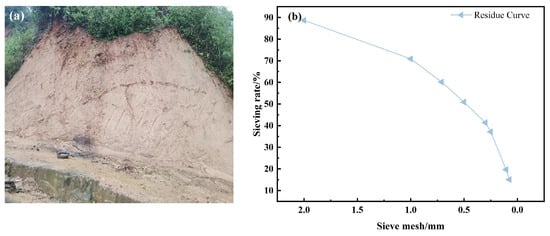
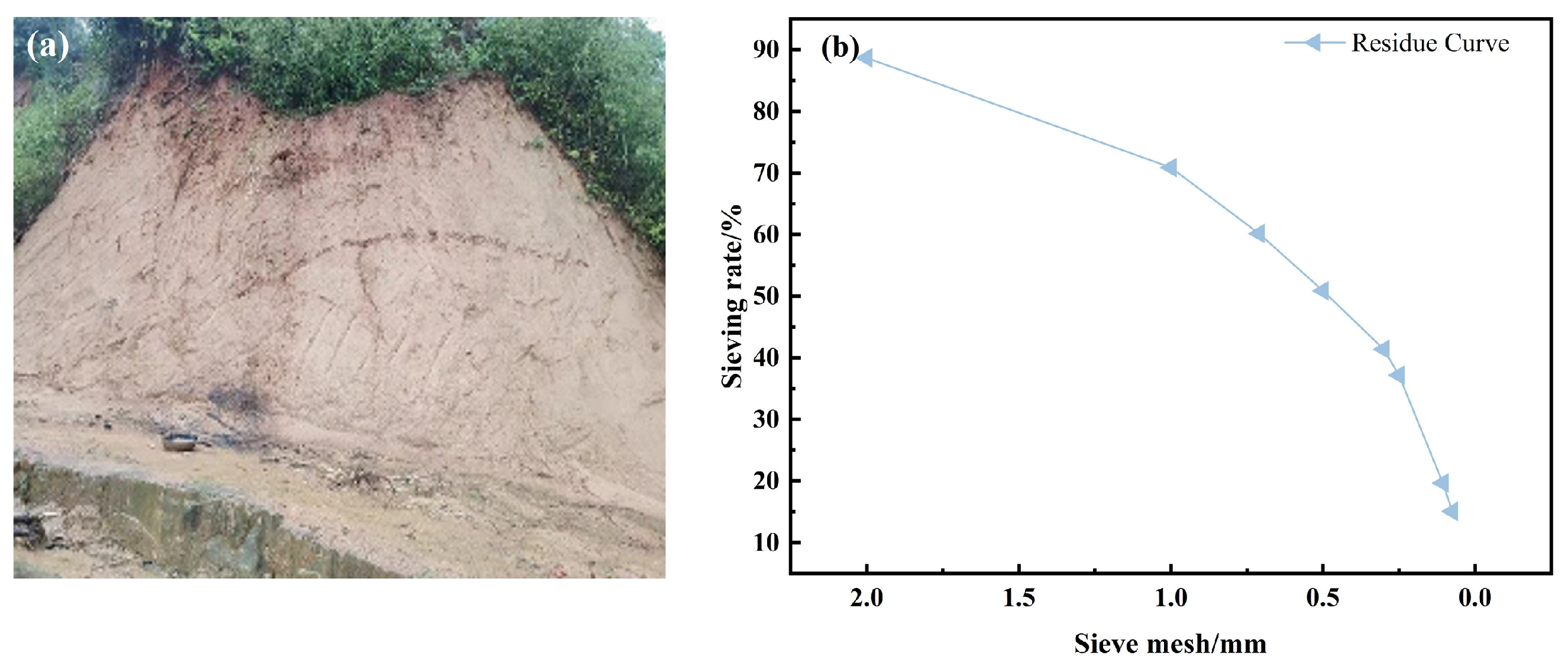
The granite residual soil used in this study was collected from an excavated slope in Xiangtan, Hunan Province, China. The sampling depth was approximately 4–6 m below the exposed slope surface. Figure 1a shows the soil was yellowish brown and had a loose granular structure, which is typical of weathered granite-derived residual soils. Field observation showed visible cracks and local erosion traces on the exposed slope surface, indicating that the material was sensitive to rainfall wetting and had a high potential for sediment release under runoff-producing rainfall events [22]. The particle-size distribution curve in Figure 1b showed a progressively decreasing sieving rate with decreasing sieve size, suggesting a heterogeneous gradation and the coexistence of coarse and fine particles. This gradation feature is relevant to rainfall erosion because loose surface particles can be detached by raindrop impact and subsequently transported by surface runoff.
Figure 1.
Sampling slope and particle size distribution of granite residual soil: (a) in situ condition; (b) particle size distribution.
The basic physical and mechanical properties of the granite residual soil were determined according to the Standard for Geotechnical Testing Method (GB/T 50123-2019) [23]. As illustrated in Table 1, the soil had a natural water content of 15.75%, a natural density of 1.84 g cm−3, a liquid limit of 36.7%, a plastic limit of 19.2%, and a plasticity index of 17.53. Its cohesion and internal friction angle were 27.6 kPa and 15.1°, respectively. These properties indicate that the tested soil had moderate plasticity but relatively limited shear resistance once exposed to rainfall wetting and runoff scouring.
Table 1.
The main physical and mechanical properties of granite residual soil.
The modified hydrophilic polyurethane (W-OH) was a light-yellow transparent liquid before reaction. After contact with water, W-OH rapidly formed a milky white elastic gel or film with favorable mechanical stability [24]. Once formed, the gel did not undergo a secondary reaction when exposed to water again. The main physical and chemical properties of W-OH are summarized in Table 2.
Table 2.
The main physical and chemical properties of W-OH.
Cynodon dactylon seeds were used as the vegetation material. This species was selected because of its tolerance to warm and sun-exposed slope environments, making it suitable for evaluating vegetation establishment on exposed granite residual soil slopes [25]. In this study, Cynodon dactylon was not treated as an independent ecological restoration objective, but as a vegetation-based soil conservation measure whose effect on sediment delivery could be compared with that of the W-OH polymer film and their combined treatment.
2.2. Experimental Methods
2.2.1. Seed Germination Test
Seed germination tests were conducted to screen the W-OH concentration and application dosage before the simulated rainfall erosion experiments. A total of 10 treatments were designed. The Blank group was prepared without W-OH and served as the control. For the W-OH-treated groups, three solution concentrations, namely 1%, 4%, and 8%, were used, and each concentration was applied at equivalent dosages of 0.5, 1.0, and 1.5 L·m−2. Transparent plastic culture containers with drainage and ventilation holes were used for the germination test. Granite residual soil was uniformly mixed with the corresponding W-OH solution concentration and equivalent dosage and then placed into containers. Two hundred Cynodon dactylon seeds were evenly sown on the soil surface and covered with approximately 0.5 cm of the same treated soil. All containers were maintained under natural light and subjected to the same irrigation regime. The emergence time, cumulative number of germinated seeds, and seedling growth status were recorded daily. Germination percentage was calculated as the ratio of emerged seeds to the total number of sown seeds.
2.2.2. Simulated Rainfall Erosion Test
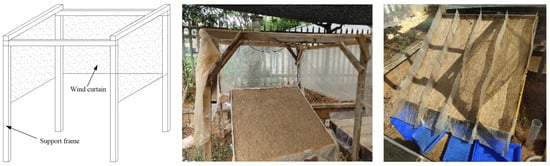
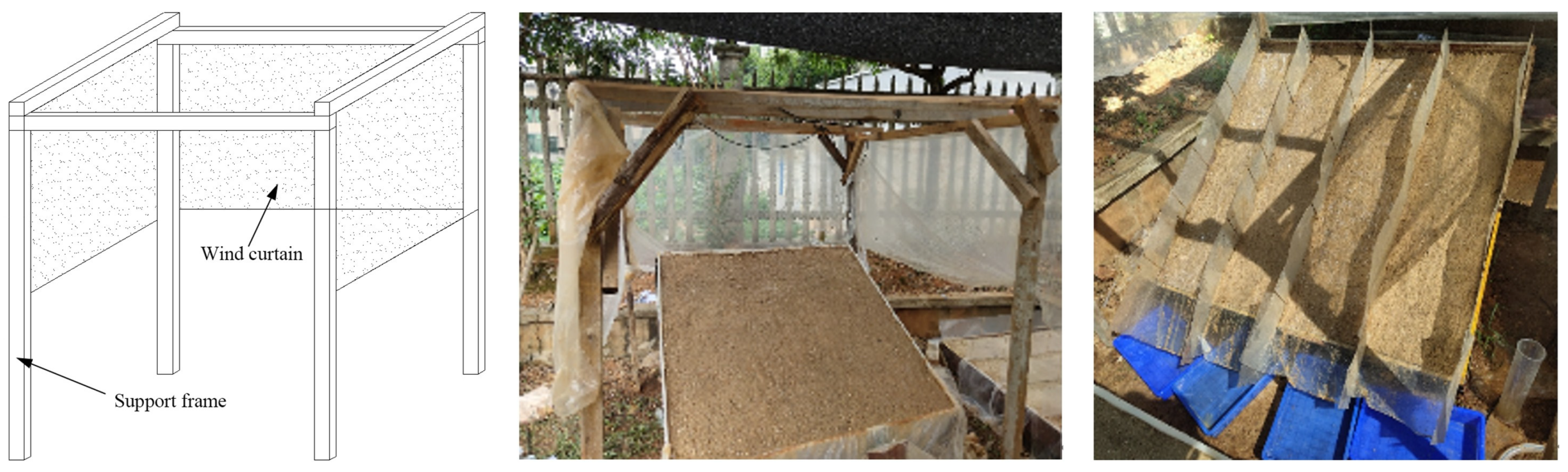
Simulated rainfall erosion experiments were conducted to evaluate rainfall-driven sediment yield from granite residual soil slopes under different surface treatments. The experimental system consisted of a slope model and a simulated rainfall device, as shown in Figure 2. The slope model was composed of a slope frame, a base, planting boxes, and a runoff-guiding trough. The slope frame was welded using 40 mm equal-angle steel, and its internal dimensions were 1.6 m in length and 1.6 m in width. Equal-angle steel ribs were installed at 40 cm intervals at the bottom of the frame to improve structural stability during soil placement and rainfall testing. The planting boxes provided a bounded soil layer for preparing the tested slope surface, whereas the runoff-guiding trough was used to collect and direct the runoff–sediment mixture generated during rainfall. The slope model allowed the slope angle to be adjusted before each experiment. Three slope angles, namely 33°, 45°, and 53°, were selected to represent gentle, intermediate, and relatively steep slope conditions commonly encountered in disturbed engineering slopes [26,27]. The rainfall simulator consisted of a support frame, wind curtains, and a spraying system. The wind curtains were installed around the test area to reduce the disturbance of ambient airflow on raindrop trajectories and to improve the stability of rainfall distribution over the slope surface.
Figure 2.
Slope model and simulated rainfall erosion test system.
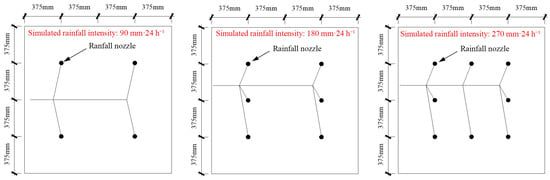
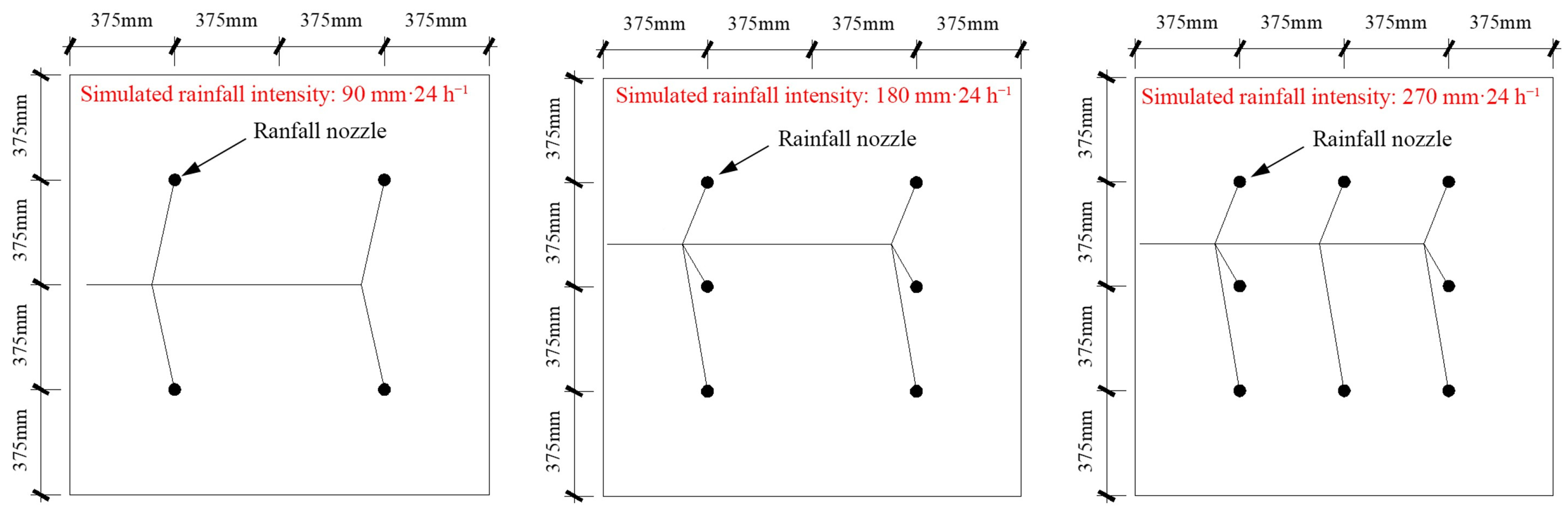
The spraying system was installed above the slope model, and the three rainfall levels were produced using different pre-determined nozzle configurations. Before the formal erosion experiments, preliminary spraying tests were conducted to determine the number and spatial arrangement of rainfall nozzles required to obtain the target rainfall intensities. The finalized nozzle arrangements are shown in Figure 3. The nozzle positions were arranged within the rainfall coverage area at 375 mm intervals in both longitudinal and transverse directions, which helped improve the spatial coverage of simulated rainfall over the model slope.
Figure 3.
Nozzle arrangements for the three simulated rainfall intensities.
Three simulated rainfall intensities, namely 90, 180, and 270 mm·24 h−1, were selected to represent heavy to extreme rainfall conditions and to examine the effects of rainfall forcing on runoff-driven sediment delivery from the treated and untreated slopes [28,29]. After the nozzle configurations had been finalized, the rainfall simulator was calibrated using collecting containers distributed across the slope surface. For each finalized nozzle arrangement, rainfall intensity was calculated from the collected water volume and the collection area. The calibration results were used to confirm that the selected nozzle configurations could generate the target rainfall intensities as stably and uniformly as possible during the sediment-yield tests. Specifically, the simulated rainfall system consisted of copper nozzles connected by 4/7 capillary tubes and mounted on top of a support frame at a height of 1.5 m. The water flow rate Q through the capillary tubes was controlled using a rotameter, and the rainfall intensity R was regulated by varying the number of nozzles. The rainfall intensity of the simulated rainfall system was calculated according to Equation (1):
where R is the rainfall intensity (mm/24 h), Q is the water flow rate (m3/min), and S is the rainfall area (m2).
Four surface treatments were designed to compare the individual and combined effects of the W-OH polymer film and vegetation establishment on rainfall-driven sediment delivery, as summarized in Table 3. TM1 was used as the untreated control, representing the exposed granite residual soil surface. TM2 represented the W-OH-treated surface and Table 4 reproduces the retained TM2 cumulative values used in this manuscript. The study reported in Reference [21] used the same granite residual soil, slope angles (33°, 45°, and 53°), and rainfall intensities (90, 180, and 270 mm/24 h) as the present study. TM3 represented the Cynodon dactylon-seeded surface, and TM4 represented the combined W-OH-treated and Cynodon dactylon-seeded surface.
Table 3.
Treatment methods used in the slope erosion test.
Table 4.
Cumulative sediment yields of the TM2 [21].
Before each test, the slope model was adjusted to the target slope angle, and the water content of the granite residual soil was restored to its natural state. Subsequently, the granite residual soil was placed into the slope model in 5-cm-thick layers. Based on the bottom area of the model trough and the target layer thickness (5 cm), together with the natural water content and target dry density of the soil, the required soil mass for each layer was calculated and weighed out. After placement, the soil was lightly compacted to the design thickness, and no additional soil was added during compaction. The surface of the underlying layer was roughened before the next layer was placed to improve the contact and continuity between adjacent soil layers. For TM2 and TM4, W-OH solutions were prepared at target concentrations and uniformly sprayed onto the shallow surface layer at an application dosage of 1.5 L m−2. For TM3 and TM4, Cynodon dactylon seeds were evenly broadcast over the slope surface and then covered with a thin layer of granite residual soil to improve seed–soil contact. The vegetated treatments were maintained under natural light and subjected to the same irrigation regime until initial grass establishment. Rainfall erosion tests were then conducted to evaluate sediment-yield responses under the prescribed slope angles and rainfall intensities.
The slope surface was pre-wetted before formal testing. Once initial runoff appeared at the slope toe, water supply was stopped, and the model was left undisturbed for 15 min to reduce differences in the initial moisture condition. The simulated rainfall system was then activated, and each test lasted for 60 min. During the test, runoff and sediment were guided into collection containers through the outlet channel and sampled at fixed time intervals. The collected runoff-sediment mixture was allowed to settle, after which the supernatant was removed and the remaining sediment was oven-dried and weighed. The cumulative sediment yield per unit slope area (Mcum, as defined in Equation (2)) was used as the evaluation index for slope scouring resistance under different slope angles, rainfall intensities, and surface treatment methods.
where Mcum is the cumulative sediment yield per unit slope area, mi is the oven-dried sediment mass collected during the sampling interval, n is the number of sampling intervals, and A is the effective slope area. In this study, n = 4 for each 60 min rainfall event and A is 0.64 m2. Each experimental condition was repeated three times, and the mean value was used for analysis.
2.2.3. Microscopic Characterization
Scanning electron microscopy (SEM) was performed using a ZEISS Gemini 300 scanning electron microscope (Carl Zeiss AG, Berlin, Germany) to examine the effects of W-OH concentration on the microstructure of granite residual soil. Specimens with an approximate volume of 1 cm3 were extracted from untreated soil and soils sprayed with 1%, 4%, and 8% W-OH solutions. All specimens were dried at low temperature for 24 h and subsequently sputter-coated with gold before SEM observation.
3. Results
3.1. Effects of W-OH on Cynodon dactylon Seed Germination
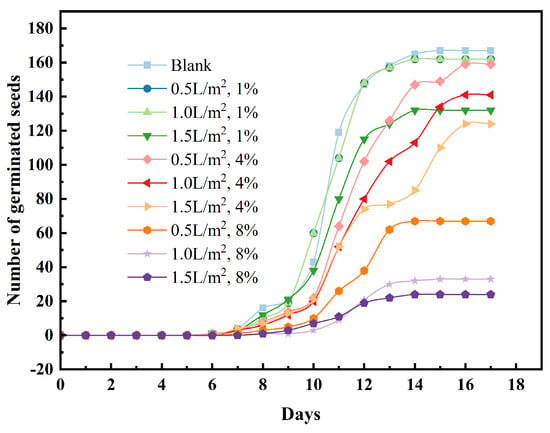
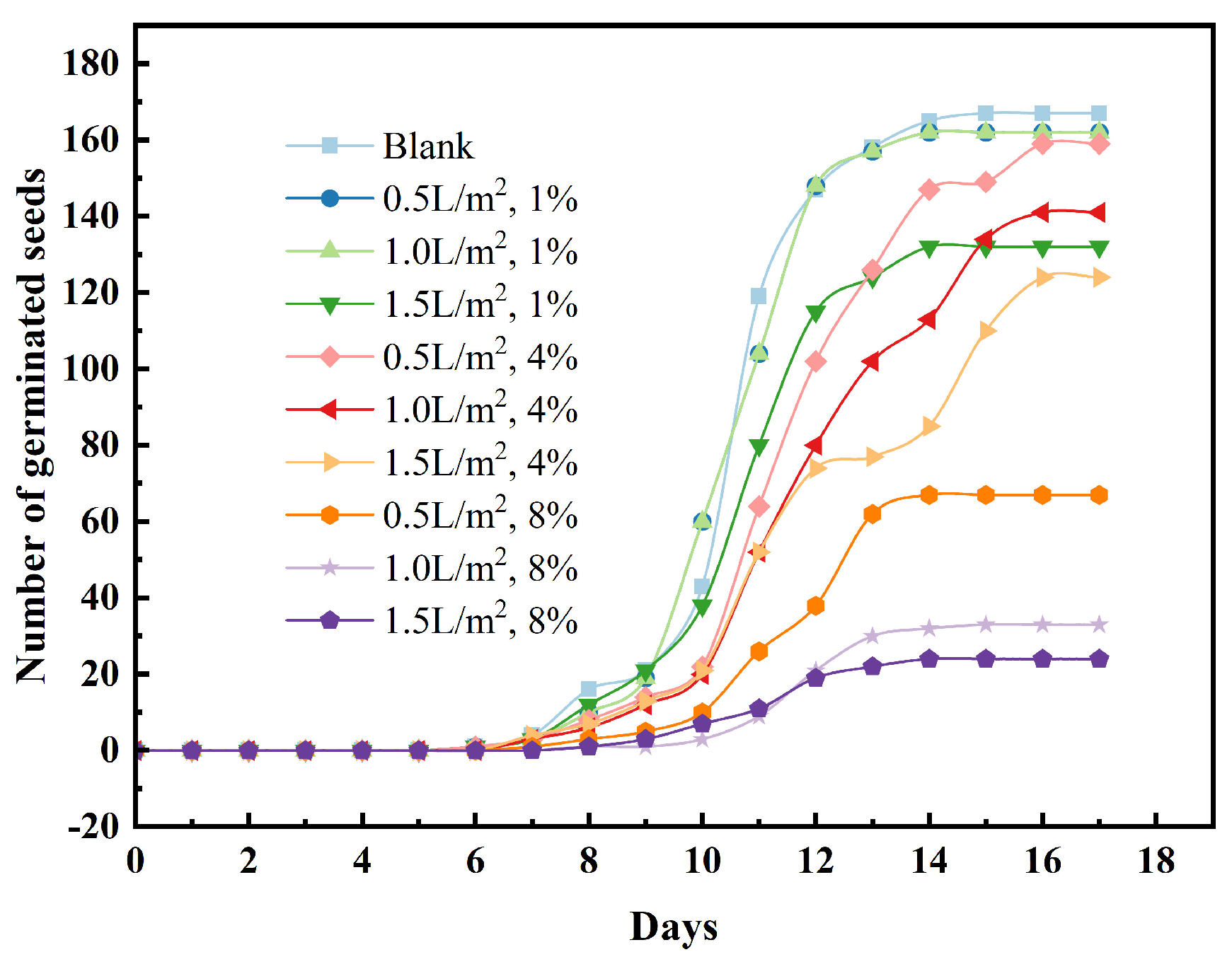
The seed germination results exhibited a different concentration-dependent response, as illustrated in Figure 4. Germination in all groups began after approximately 7 d and increased rapidly between Days 9 and 14 before reaching a relatively stable level. The untreated group produced approximately 166 germinated seeds. At a W-OH concentration of 1%, the final numbers of germinated seeds were approximately 162, 162, and 131 at application amounts of 0.5, 1.0, and 1.5 L·m−2, respectively, indicating a limited inhibitory effect at low concentration. At 4%, the corresponding values decreased to approximately 158, 140, and 123, whereas only approximately 66, 32, and 24 seeds germinated under the three application amounts of 8% W-OH. The inhibition of seed germination intensified with both W-OH concentration and application amount, with the 8% treatments showing particularly pronounced adverse effects. Meanwhile, a previously published study by our research group confirmed that 4% W-OH could already achieve a strong soil-stabilizing effect, and its anti-disintegration capacity at 1.0 L·m−2 was comparable to that of 8% W-OH under the same application amount [20]. Therefore, in the subsequent rainfall tests, the W-OH concentration range was adjusted from the initial levels of 1%, 4%, and 8% to 1%, 2%, 3%, and 4%, while the application amount was maintained at 1.5 L·m−2 to examine concentration-dependent sediment control after initial grass establishment.
Figure 4.
Germination of Cynodon dactylon seeds under different W-OH concentrations and application amounts.
3.2. Sediment Yield of Untreated Slopes Under Rainfall Forcing
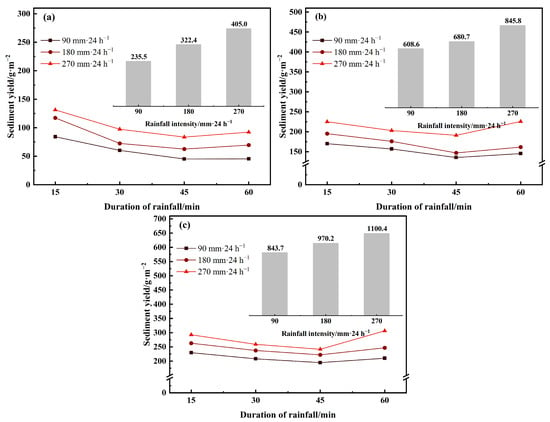
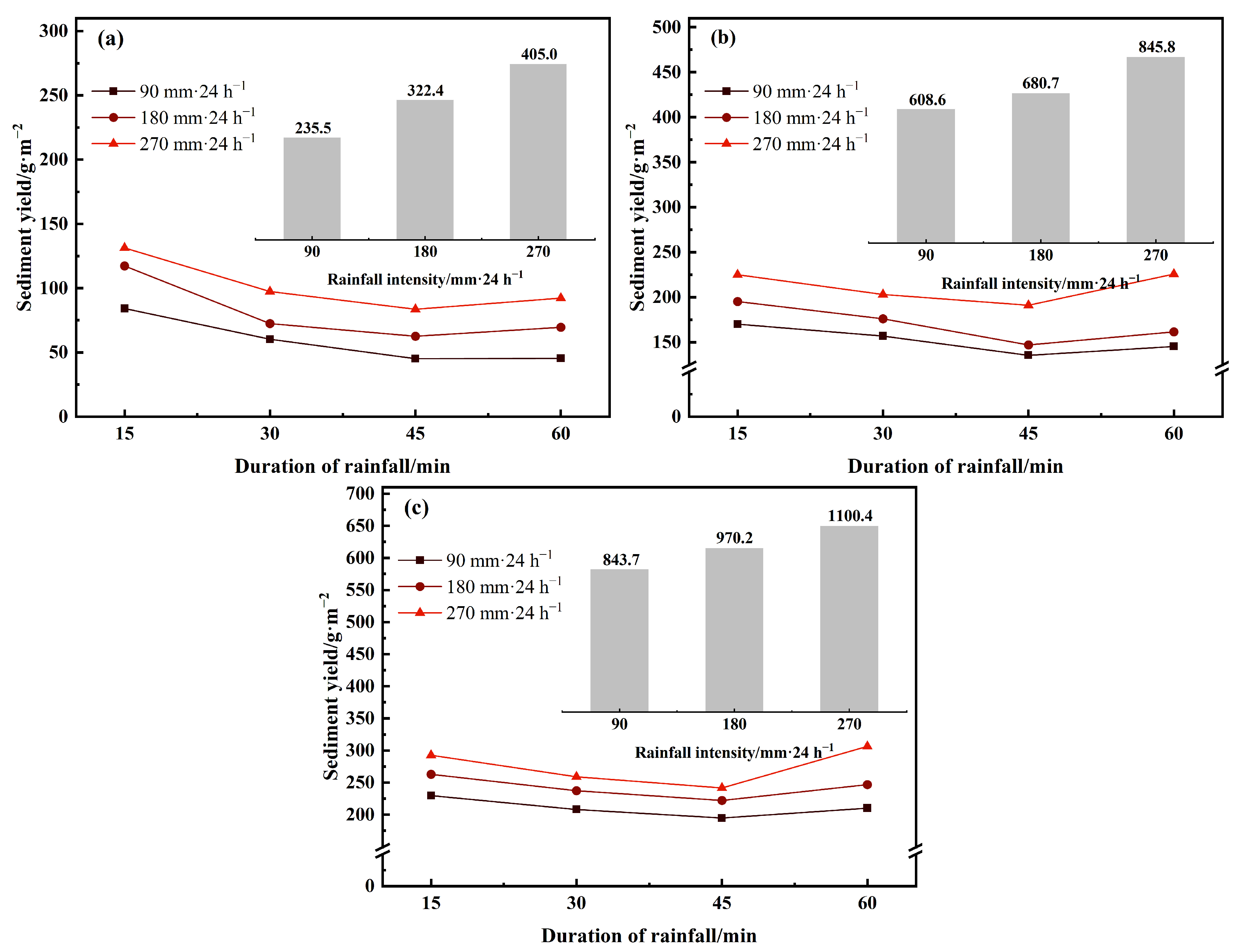
Figure 5 reveals an increase in total sediment yield from the untreated slopes with both slope angle and rainfall intensity. At rainfall intensities of 90, 180, and 270 mm·24 h−1, the total sediment yield increased from 235.5, 322.4, and 405.0 g·m−2 at a slope angle of 33° to 843.7, 970.2, and 1100.4 g·m−2 at 53°, respectively. The increase associated with slope angle was generally more pronounced than that caused by rainfall intensity, demonstrating the high susceptibility of untreated granite residual soil slopes to erosion on steep terrain [30]. The sediment yield during each 15-min interval fluctuated within a relatively narrow range and showed no sustained increase with rainfall duration. This relatively stable temporal response may be attributed to the rapid removal of initially loose surface particles, followed by a temporary balance between rainfall-induced detachment and sediment transport [31]. These results provide the untreated reference against which the erosion-control performance of the subsequent slope treatments was evaluated.
Figure 5.
Sediment yields of untreated slopes under different slope angles and rainfall intensities: (a) 33°; (b) 45°; (c) 53°.
3.3. Sediment-Yield Reduction by Vegetation Under Rainfall Forcing
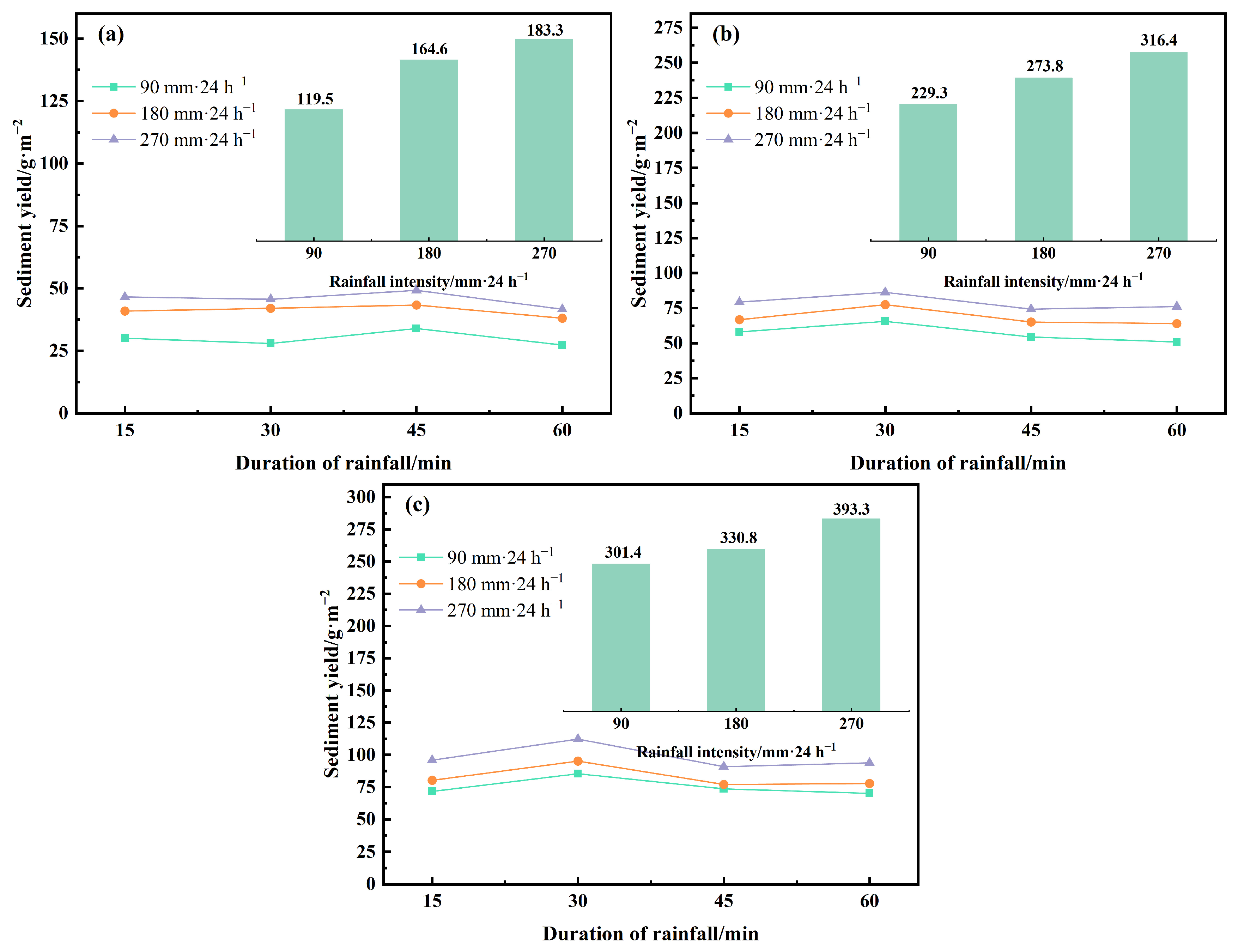
The sediment yield from the Cynodon dactylon-seeded slopes remained relatively stable among the four 15-min rainfall intervals, with no continuous increase as rainfall progressed, as illustrated in Figure 6. At 33°, the sediment yield per interval ranged from 27.4 to 34.0, 38.1 to 43.4, and 41.7 to 49.3 g m−2 under rainfall intensities of 90, 180, and 270 mm·24 h−1, respectively. The corresponding ranges increased to 51.0–65.7, 64.1–77.6, and 74.4–86.4 g m−2 at 45°, and further increased to 70.3–85.5, 77.2–95.3, and 91.0–112.4 g m−2 at 53°. A moderate peak generally occurred after 30 or 45 min of rainfall, followed by a slight decrease or stabilization. This pattern suggests that vegetation reduced sediment detachment and transport but did not fully eliminate the influence of runoff concentration during the rainfall event [32].
Figure 6.
Sediment yields of Cynodon dactylon-seeded slopes under simulated rainfall: (a) 33°; (b) 45°; (c) 53°.
The cumulative sediment yields from the Cynodon dactylon-seeded slopes were 119.5, 164.6, and 183.3 g m−2 at 33°; 229.3, 273.8, and 316.4 g m−2 at 45°; and 301.4, 330.8, and 393.3 g m−2 at 53° under rainfall intensities of 90, 180, and 270 mm·24 h−1, respectively. Cumulative sediment yield increased consistently with both rainfall intensity and slope angle. At the same rainfall intensity, increasing the slope angle from 33° to 53° increased the cumulative sediment yield by approximately 2.1–2.5 times. The effect of slope angle was more pronounced than that of rainfall intensity, showing that the erosion resistance provided by grass cover became progressively less effective as the slope steepened. Compared with the untreated slopes, Cynodon dactylon seeding substantially reduced cumulative sediment yield under all test conditions. The reductions were 48.9–54.7% at 33°, 59.8–62.6% at 45°, and 64.3–65.9% at 53°. Compared with the untreated slope, the Cynodon dactylon-protected slope exhibited a significant reduction in mean cumulative sediment yield at all tested slope gradients. Within-group comparisons further indicated that the absolute sediment yield on the Cynodon dactylon-protected slope still increased with increasing slope gradient; nevertheless, it still achieved better performance under steep-slope conditions than under gentle-slope conditions.
3.4. Sediment-Yield Response of Combined W-OH–Vegetation Treatment
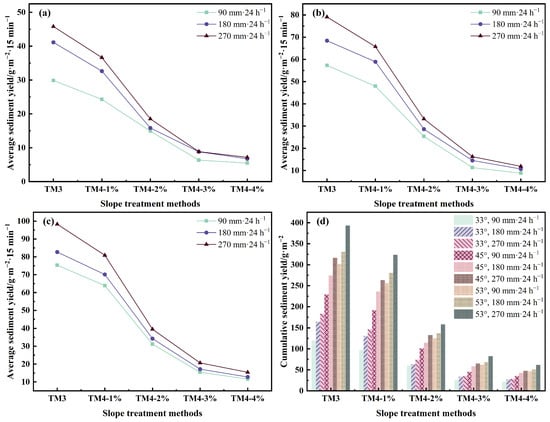
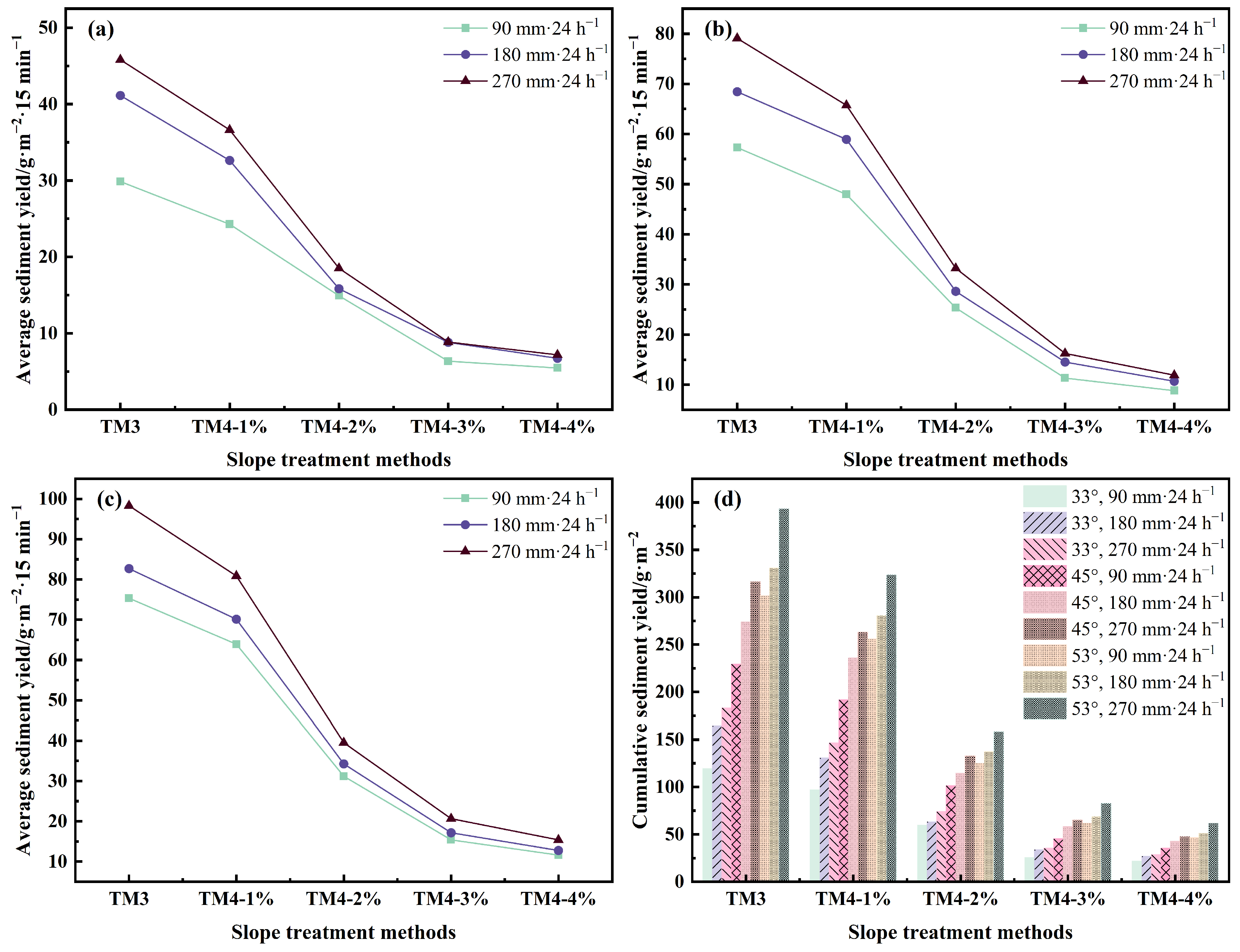
The combined W-OH and Cynodon dactylon treatment further reduced sediment delivery from the vegetated granite residual soil slopes. As shown in Figure 7a–c, the average sediment yield per 15-min interval decreased continuously as the W-OH concentration increased in the Cynodon dactylon-seeded slopes. The Cynodon dactylon-only treatment (TM3) consistently produced the highest sediment yield, whereas the addition of 1% W-OH resulted in a moderate reduction. A more pronounced decrease occurred when the concentration increased from 1% to 2% and subsequently to 3%. At 4% W-OH, the average sediment yield reached its minimum under all slope and rainfall conditions. Although the difference between the 3% and 4% treatments was smaller than that observed between the lower-concentration treatments, a further reduction remained evident at 4%. Rainfall intensity also affected the results, with the average sediment yield generally following the order of 270 > 180 > 90 mm·24 h−1 at each concentration.
Figure 7.
Sediment yields of W-OH-treated and Cynodon dactylon-seeded slopes under simulated rainfall: (a) 33°; (b) 45°; (c) 53°; (d) cumulative sediment yielding.
The effect of slope angle remained apparent in the combined treatment. At the same W-OH concentration and rainfall intensity, the average sediment yields generally increased as the slope angle increased from 33° to 45° and 53°. This slope-dependent difference was particularly evident in the Cynodon dactylon-only and 1% W-OH treatments. As the W-OH concentration increased, the absolute differences among the three slope angles became smaller, although the 53° slopes continued to exhibit the highest sediment yield. The cumulative results in Figure 7d showed the same overall pattern. Under each rainfall condition, cumulative sediment yield increased with slope angle and decreased with W-OH concentration. Compared with Cynodon dactylon-only slopes, all combined treatments reduced cumulative sediment loss, and the reduction became progressively greater as the W-OH concentration increased.
The sediment-yield data for the W-OH-treated slopes without Cynodon dactylon seeding were compared with those reported in a previously published study by our research group [21]. Compared with these data, the addition of Cynodon dactylon seeds did not produce an additional reduction in sediment yield during the present rainfall tests. At 1% W-OH, the two treatments exhibited relatively similar erosion responses under several combinations of slope angle and rainfall intensity, although the combined treatment produced higher sediment yields under the more adverse conditions. At concentrations of 2–4%, the cumulative sediment yields from the combined treatment were generally higher than those from the corresponding W-OH-only treatment, with the difference becoming more evident on the 45° and 53° slopes.
3.5. Microscopic Morphology Analysis
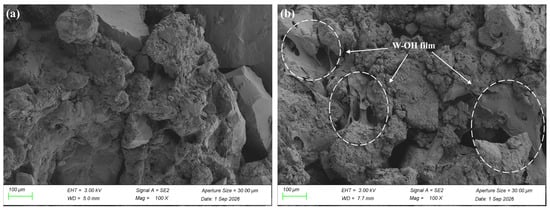
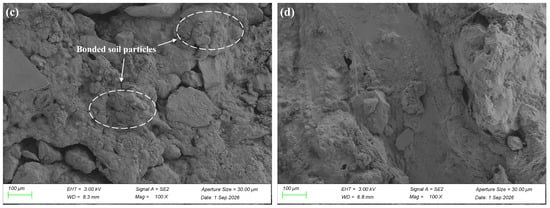
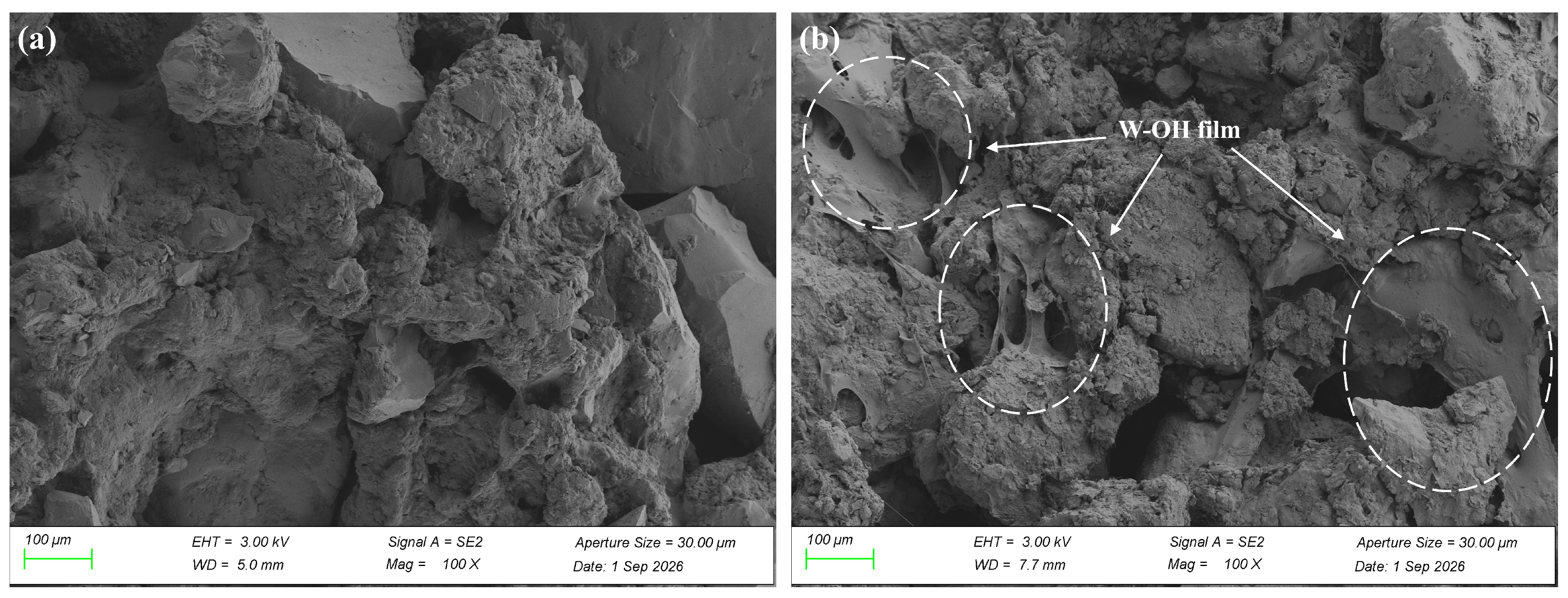
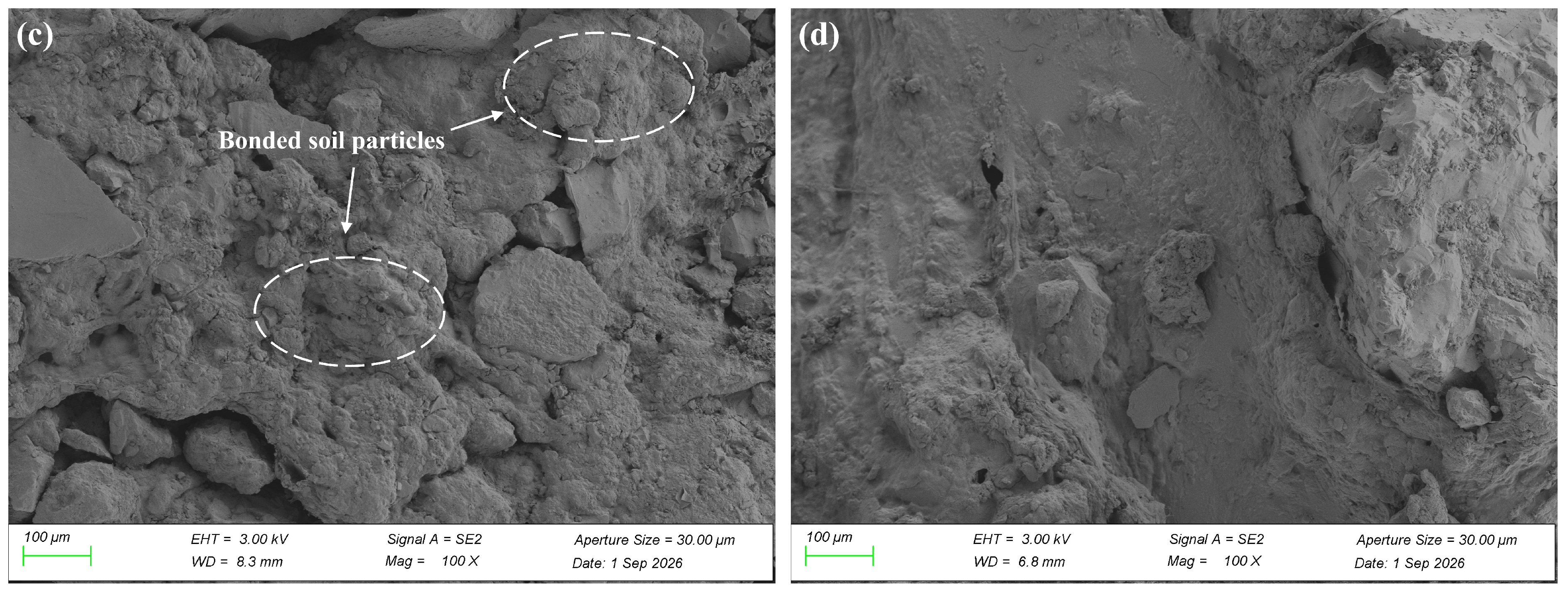
Figure 8 illustrates a concentration-dependent change in the microstructure of granite residual soil following W-OH application. As shown in Figure 8a, the untreated soil exhibits irregular particles with exposed, rough surfaces and distinct interparticle voids, without the membrane-like bridges observed in the treated samples. Figure 8b demonstrated that introducing 1% W-OH produces localized films that coat portions of the particle surfaces and span adjacent grains, while leaving considerable void space and exposed granular material. As the concentration increases to 4%, particle bonding becomes more apparent: fine particles adhere to larger grains, and neighboring particles form more closely associated aggregates in Figure 8c. Compared with the localized bridges observed at 1%, this morphology suggests a greater contribution of W-OH to interparticle bonding. At 8%, extensive film-like coverage in Figure 8d partially obscures individual particle boundaries and covers or bridges more of the visible interparticle spaces, although localized openings remain. Collectively, these observations suggest that increasing W-OH concentration promotes the development of a more integrated soil–polymer structure through surface coating, particle bridging, and aggregate formation. Such structural connections may limit particle detachment under raindrop impact and runoff scouring. Meanwhile, the extensive coverage observed at 8% suggests a possible physical constraint on seedling emergence.
Figure 8.
SEM images of granite residual soil sprayed with different concentrations of W-OH: (a) blank; (b) 1%W-OH; (c) 4%W-OH; (d) 8%W-OH.
4. Discussion
The results show that rainfall-driven sediment yield from granite residual soil slopes was controlled not only by rainfall intensity and slope angle, but also by the way in which each surface treatment modified sediment detachment and delivery. The untreated slopes acted as a direct sediment source under rainfall, whereas W-OH treatment, Cynodon dactylon seeding, and their combined application all reduced sediment loss to different degrees. However, the erosion responses of these treatments were not simply ranked by the presence or absence of polymer film or vegetation. In particular, the combined W-OH–Cynodon dactylon treatment produced substantially less sediment than the untreated and vegetation-only slopes, but it did not outperform the corresponding fresh W-OH-only treatment. Accordingly, this section provides a comprehensive and systematic analysis of the issue.
4.1. Sediment-Yield Ratio Between W-OH–Cynodon dactylon and W-OH-Only Treatments
A direct comparison between the W-OH–Cynodon dactylon combined treatment (TM4) and the W-OH-only treatment (TM2) was conducted to quantify the change in erosion-control performance following vegetation establishment. For each matched W-OH concentration, slope angle, and rainfall intensity, a sediment-yield ratio was calculated by dividing the cumulative sediment yield of TM4 by that of TM2:
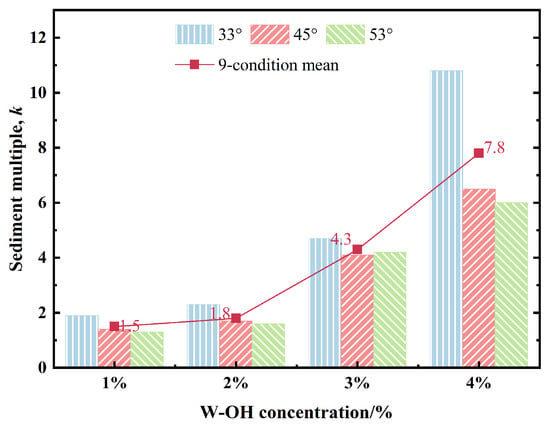
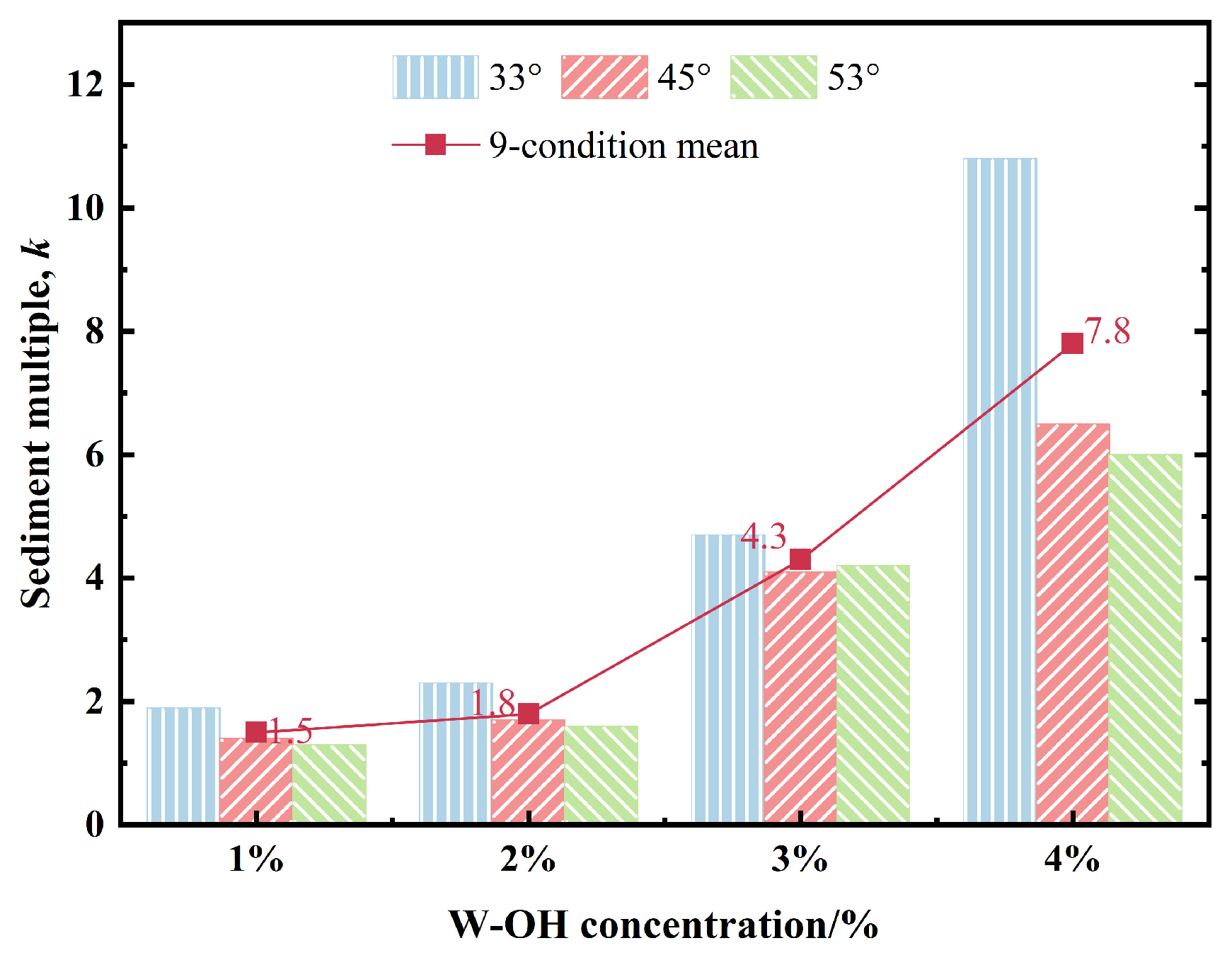
where MTM4 and MTM2 denote the cumulative sediment yields of the combined and W-OH-only treatments, respectively. A ratio greater than 1.0 indicates that TM4 delivered more sediment than TM2 under the same experimental condition. The bars in Figure 9 represent the mean ratios obtained under the three rainfall intensities at each slope angle, whereas the line represents the mean across all nine slope-angle–rainfall-intensity conditions.
Figure 9.
Sediment-yield ratio of W-OH–Cynodon dactylon slopes to W-OH-only slopes.
As shown in Figure 9, the sediment-yield ratios exceeded 1.0 under all examined conditions, demonstrating that the mature, combined slopes consistently produced more sediment than the corresponding slopes protected solely by W-OH. The nine-condition ratio increased markedly with W-OH concentration, from approximately 1.5 at 1% to 1.9, 4.3, and 7.8 at 2%, 3%, and 4%, respectively. Therefore, although increasing W-OH concentration continuously reduced the cumulative sediment yield of both treatments, the relative performance difference between TM4 and TM2 became progressively greater.
These sediment-yield contrasts can be considered in relation to the development of the protective surface during vegetation establishment. The relatively fresh W-OH film provided the initial surface protection in TM2. In TM4, vegetation growth occurred alongside irrigation, wetting–drying processes, and solar exposure over approximately 45 days. These concurrent processes may have influenced surface structure and sediment delivery, producing an overall response characteristic of the combined system at the time of testing [33,34]. This facilitates a multi-perspective consideration of W-OH concentration selection according to the different ecological stages of slopes when designing W-OH-based ecological slope restoration.
4.2. Concentration Selection and Sediment Control During Vegetation Establishment
The selection of W-OH concentration for combined slope protection requires consideration of both soil stabilization and vegetation establishment. The emergence tests showed that increasing W-OH concentration and application amount reduced the number of emerged seedlings, with the strongest suppression occurring at 8% W-OH (Figure 4). At an application amount of 1.5 L·m−2, approximately 131 and 123 seedlings emerged at 1% and 4% W-OH, respectively, compared with approximately 24 at 8%. Earlier disintegration tests also showed that, at 1.0 L·m−2, the resistance achieved with 4% W-OH was comparable to that obtained with 8% W-OH [20]. These findings supported examining the lower concentration range of 1–4%, with intermediate concentrations of 2% and 3% included to characterize the sediment-yield response.
The rainfall experiments used a fixed solution application amount of 1.5 L·m−2, providing a common application basis for comparing concentrations. Under this scheme, cumulative sediment yield from the combined treatment decreased as W-OH concentration increased across the tested slope angles and rainfall intensities. All combined treatments produced less sediment than the vegetation-only treatment. The reductions were more pronounced as concentration increased from 1% to 2% and then to 3%, while the additional decrease from 3% to 4% was smaller. Thus, the upper part of the tested range provided greater sediment control, accompanied by a smaller incremental improvement between the two highest concentrations.
The emergence and rainfall results highlight different considerations in concentration selection. The emergence screen favored lower concentrations over 8%, whereas sediment control within the selected 1–4% range improved toward its upper end. Evaluating these responses together provides a basis for considering erosion protection alongside the establishment of vegetation. The fixed application amount allowed this concentration response to be examined under a consistent solution-volume condition, while the emergence tests demonstrated the additional relevance of application amount to plant establishment. These observations support evaluating W-OH application schemes at both the initial and establishment stages. Comparisons at matched treatment ages, accompanied by observations of runoff, vegetation development, and film condition, would further inform the selection of concentration and application timing.
4.3. Temporal Evolution of Sediment Yield During Rainfall
The cumulative sediment yield used in Figure 9 characterizes the overall erosion response during the 60-min rainfall test but does not describe how sediment delivery changes as rainfall proceeds. To examine this temporal behavior, the sediment yields measured over four consecutive 15-min intervals under each slope-angle–rainfall-intensity condition were fitted using a linear relationship. The resulting temporal slope b represents the average change in sediment yield between two successive 15-min intervals, which was calculated as:
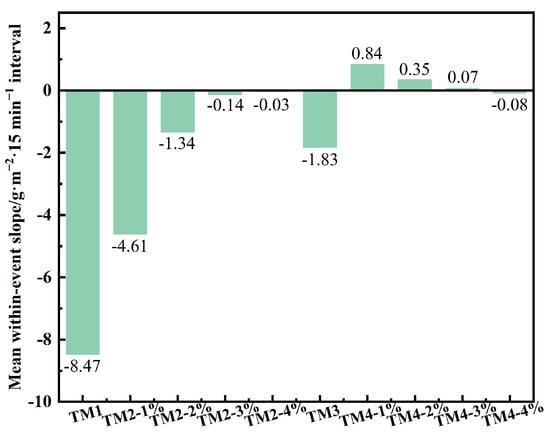
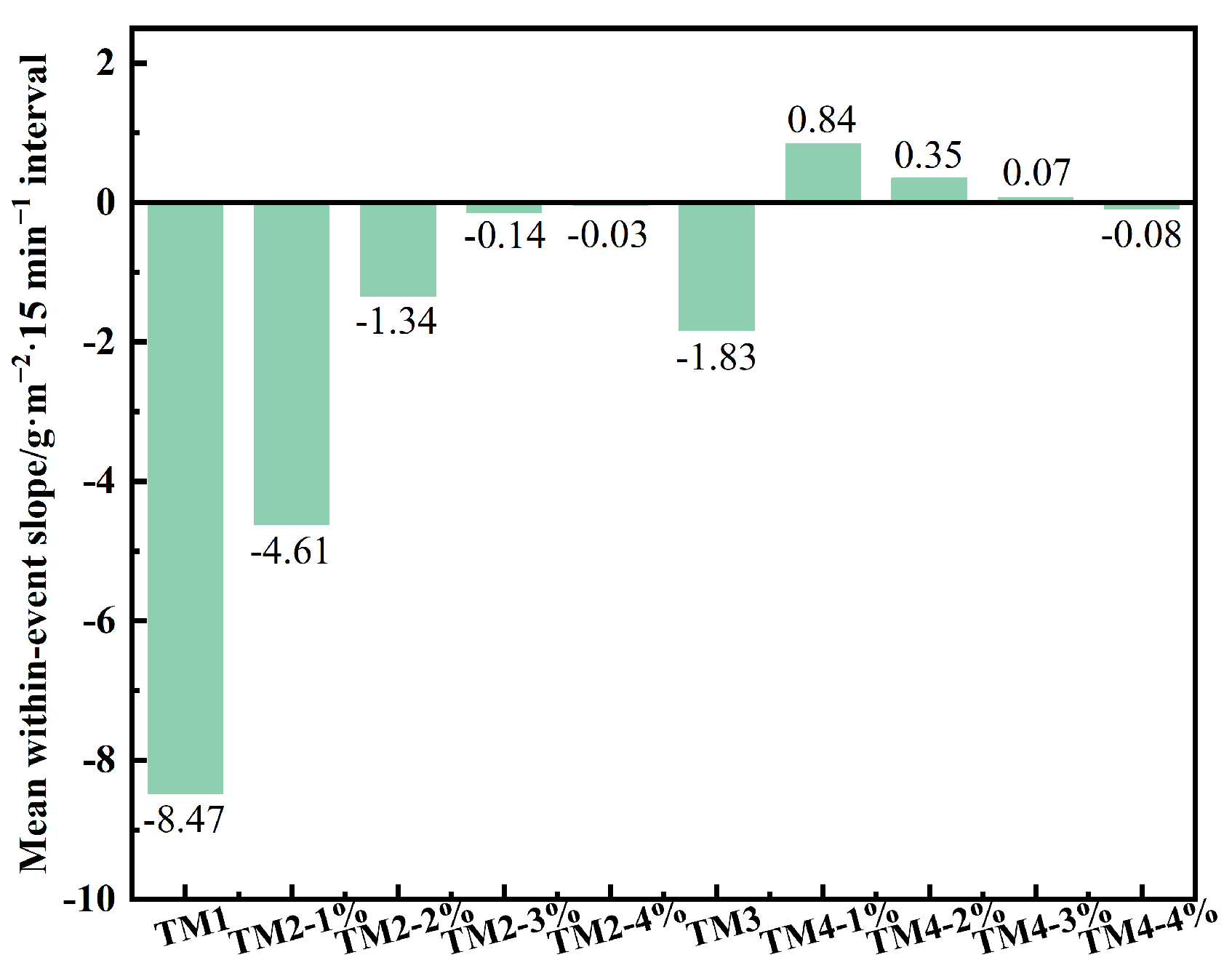
where j denotes the sequence of the four 15-min sampling intervals, Mj is the sediment yield during interval j, and and are their corresponding mean values. Accordingly, b represents the average change in sediment yield between two successive 15-min intervals. A negative value indicates that sediment delivery decreases as rainfall proceeds, a value close to zero indicates a relatively stable erosion response, and a positive value represents increasing sediment delivery during the rainfall. The slope was calculated separately for each of the nine slope-angle–rainfall-intensity conditions, and each bar in Figure 10 represents the arithmetic mean of the nine resulting slopes.
Figure 10.
Temporal slope of sediment yield under different treatments.
The untreated slopes exhibited the most negative value, reaching −8.47 g·m−2 per 15-min interval. This pronounced decrease indicates that sediment delivery was concentrated primarily during the early stage of rainfall [35]. The initial raindrop impact and runoff formation likely removed a large proportion of the loose and readily detachable surface particles, after which the availability of erodible material gradually declined. The Cynodon dactylon-only treatment showed a smaller negative slope of −1.83 g·m−2 per 15-min interval, suggesting that vegetation reduced the magnitude of early sediment release and maintained a more stable erosion response over the rainfall duration. The W-OH-only slopes also exhibited negative slopes at all concentrations. Sediment delivery became progressively more uniform as the W-OH concentration increased. At 1%, the relatively large negative slope indicates that some detachable particles remained available at the beginning of rainfall, despite the overall reduction in cumulative erosion. By contrast, the slopes approaching zero at 3% and 4% indicate that the stronger and more continuous W-OH film restricted initial particle detachment and maintained consistently low sediment yields throughout the rainfall.
A different temporal pattern was observed for the combined W-OH–Cynodon dactylon treatment. At 1% and 2%, the positive slopes indicate that sediment delivery tended to increase as rainfall continued, in contrast to the front-loaded and subsequently declining responses of the untreated, Cynodon dactylon-only, and W-OH-only slopes. This delayed increase is consistent with progressive runoff concentration and the gradual activation of preferential flow paths within the mature combined surface. Possible local discontinuities associated with seedling emergence and root penetration may have facilitated localized water entry through the W-OH film, while continued rainfall could enlarge these preferential pathways and promote the detachment and transport of underlying soil particles [36]. At 3%, the mean slope was close to zero, while at 4% it became slightly negative. This transition suggests that a sufficiently concentrated W-OH film retained greater structural continuity after vegetation establishment and was more capable of suppressing the delayed increase in sediment delivery. Although root penetration and film aging may still have modified the mature protective layer, the stronger polymer network formed at 3–4% W-OH likely restricted the development and connection of preferential erosion pathways during rainfall.
5. Conclusions
This study investigated rainfall-driven sediment delivery from granite residual soil slopes during vegetation establishment by combining seed germination tests, simulated rainfall erosion tests, sediment-yield ratio analysis, sediment transmission analysis, and within-event temporal evaluation. The main conclusions are as follows:
- (1)
- Seed emergence decreased with increasing W-OH concentration and application amount, particularly at 8%. The emergence screen and previously reported disintegration results guided selection of the 1–4% concentration range. Rainfall tests examined this range at a fixed application amount of 1.5 L m−2 after initial vegetation establishment.
- (2)
- Vegetation-only slopes showed 48.9–65.9% lower mean cumulative sediment yield than untreated slopes. Absolute yield increased with slope angle and rainfall setting, showing the relevance of both factors to protection performance under the tested conditions.
- (3)
- The combined W-OH–Cynodon dactylon treatment produced lower mean yields than vegetation alone, with yields decreasing as W-OH concentration increased from 1% to 4%. The 1-d W-OH reference provides additional context for protection at a different treatment stage.
This study clarified the short-term erosion-control behavior of W-OH and Cynodon dactylon-seeded protection, but the time-dependent roles of the polymer film and vegetation were not fully separated. In particular, the evolution of W-OH film continuity, root development, and their respective contributions to sediment reduction during vegetation establishment remain to be quantified. Future work should therefore track the coupled evolution of W-OH film integrity and vegetation reinforcement over time, so that the respective contributions of the polymer barrier and the developing root system can be separated more clearly.
Author Contributions
S.L.: Conceptualization, Methodology, Investigation, Formal Analysis, Writing—Original Draft. L.L.: Methodology, Resources, Supervision, Project Administration, Writing—Review and Editing. Y.W.: Investigation, Data Curation, Validation. Z.L. (Zhiyuan Lu): Software, Formal Analysis, Visualization. Y.C.: Investigation, Visualization, Writing—Review and Editing. Z.L. (Zhengdong Luo): Conceptualization, Validation, Funding Acquisition, Writing—Review and Editing. All authors have read and agreed to the published version of the manuscript.
Funding
The authors acknowledge the project supported by the Construction Science and Technology Program of Hubei Province (Grant No. JK2024084), the Outstanding Youth Project supported by the Scientific Research Fund of Hunan Provincial Education Department (Grant No. 24B1051), and the Scientific Research Fund of Yunnan Provincial Education (Grant No. 2026J1844).
Institutional Review Board Statement
Not applicable.
Informed Consent Statement
Not applicable.
Data Availability Statement
The raw data supporting the conclusions of this article will be made available by the authors on request.
Conflicts of Interest
Authors Sheng Li, Liangliang Li, Yongpan Wang were employed by the company named “The Third Engineering Co., Ltd. of CCCC Third Highway Engineering Co., Ltd.” The remaining authors declare that the research was conducted in the absence of any commercial or financial relationships that could be construed as potential conflicts of interest.
References
- Liu, W.; Song, X.; Luo, J.; Hu, L. The processes and mechanisms of collapsing erosion for granite residual soil in southern China. J. Soils Sediments 2020, 20, 992–1002. [Google Scholar] [CrossRef] [Scilit]
- Chen, J.; Lei, X.W.; Zhang, H.L.; Lin, Z.; Wang, H.; Hu, W. Laboratory model test study of the hydrological effect on granite residual soil slopes considering different vegetation types. Sci. Rep. 2021, 11, 14668. [Google Scholar] [CrossRef] [Scilit]
- Liu, X.; Zhang, X.; Kong, L.; Wang, G.; Liu, H. Formation mechanism of collapsing gully in southern China and the relationship with granite residual soil: A geotechnical perspective. CATENA 2022, 210, 105890. [Google Scholar] [CrossRef] [Scilit]
- Liu, X.; Zhang, X.; Kong, L.; Wang, G.; Liu, H. Chemical weathering indices and how they relate to the mechanical parameters of granite regolith from southern China. CATENA 2022, 216, 106400. [Google Scholar] [CrossRef] [Scilit]
- Lan, B.; Jia, B.; Wu, Y.; Yi, X.; Feng, W.; Li, Y. Strength characteristics in saturation process and rainfall-induced landslide failure mechanism of granite residual soil. Front. Earth Sci. 2025, 13, 1578923. [Google Scholar] [CrossRef] [Scilit]
- Liu, W.; Ouyang, G.; Luo, X.; Luo, J.; Hu, L.; Fu, M. Moisture content, pore-water pressure and wetting front in granite residual soil during collapsing erosion with varying slope angle. Geomorphology 2020, 362, 107210. [Google Scholar] [CrossRef] [Scilit]
- Faiz, H.; Ng, S.; Rahman, M. A state-of-the-art review on the advancement of sustainable vegetation concrete in slope stability. Constr. Build. Mater. 2022, 326, 126502. [Google Scholar] [CrossRef] [Scilit]
- Shen, Y.; Li, Q.; Pei, X.; Wei, R.; Yang, B.; Lei, N.; Zhang, X.; Yin, D.; Wang, S.; Tao, Q. Ecological restoration of engineering slopes in China—A review. Sustainability 2023, 15, 5354. [Google Scholar] [CrossRef] [Scilit]
- Dorairaj, D.; Osman, N. Present practices and emerging opportunities in bioengineering for slope stabilization in Malaysia: An overview. PeerJ 2021, 9, e10477. [Google Scholar] [CrossRef] [Scilit]
- Liu, Y.; Wang, T.; Cai, C.; Li, Z.; Cheng, D. Effects of vegetation on runoff generation, sediment yield and soil shear strength on road-side slopes under a simulation rainfall test in the Three Gorges Reservoir Area, China. Sci. Total Environ. 2014, 485–486, 93–102. [Google Scholar] [CrossRef] [Scilit]
- Cheng, J.; Luo, X.; Shen, Z.; Guo, X. Study on vegetation concrete technology for slope protection and greening engineering. Pol. J. Environ. Stud. 2020, 29, 4017–4028. [Google Scholar] [CrossRef] [Scilit]
- Wu, S.; Leng, Y.; Song, F.; Wu, P.; Nan, J.; Zhang, J. Development of a spray-seeding substrate under simulated rainfall for the restoration of open-pit mine slopes: Insights from a model study in the Qinling Mountains. Environ. Earth Sci. 2026, 85, 179. [Google Scholar] [CrossRef] [Scilit]
- Lann, T.; Bao, H.; Lan, H.; Zheng, H.; Yan, C.; Peng, J. Hydro-mechanical effects of vegetation on slope stability: A review. Sci. Total Environ. 2024, 926, 171691. [Google Scholar] [CrossRef] [Scilit] [PubMed]
- Markiewicz, A.; Koda, E.; Kiraga, M.; Wrzesiński, G.; Kozanka, K.; Naliwajko, M.; Vaverková, M.D. Polymeric products in erosion control applications: A review. Polymers 2024, 16, 2490. [Google Scholar] [CrossRef] [Scilit]
- Ma, W.; Tang, P.; Zhou, X.; Li, G.; Zhu, W. Study on the failure mechanism of a modified hydrophilic polyurethane material Pisha sandstone system under dry-wet cycles. Polymers 2022, 14, 4837. [Google Scholar] [CrossRef] [Scilit]
- Qin, X.; Ni, A.; Zhang, N.; Chen, Z. Erosion control and growth promotion of W-OH material on red clay highway slopes: A case study in South China. Sustainability 2021, 13, 1144. [Google Scholar] [CrossRef] [Scilit]
- Liang, Z.; Wu, Z.; Noori, M.; Yang, C.; Yao, W. A new ecological control method for Pisha sandstone based on hydrophilic polyurethane. J. Arid Land 2017, 9, 790–796, Erratum in J. Arid Land 2017, 9, 953. [Google Scholar] [CrossRef] [Scilit]
- Zhu, X.; Liang, Y.; Tian, Z.; Wang, X.; Qiu, X. Effect of W-OH, a hydrophilic polyurethane polymer, in controlling erosion of two typical erodible soils in southern China. Arab. J. Geosci. 2020, 13, 1163. [Google Scholar] [CrossRef] [Scilit]
- Peng, C.; Xu, H.; Zhu, X.; Zhang, S.; Mi, M. A new approach for controlling rill erosion in two typical erodible soils in southern China. Land Degrad. Dev. 2025, 36, 4130–4144. [Google Scholar] [CrossRef] [Scilit]
- Liu, Y.; Zhang, B.; Shen, C.; Luo, Z. Influence of W-OH material on the disintegration characteristics of granite residual soil. Guangdong Archit. Civ. Eng. 2023, 30, 23–26. (In Chinese) [Google Scholar]
- Liu, Y.; Zhang, B.; Shen, C.; Luo, Z. Study on the scour resistance of w-oh reinforced granite residual soil slope. J. Munic. Technol. 2023, 41, 15–19. (In Chinese) [Google Scholar]
- Rahardjo, H.; Lee, T.T.; Leong, E.C.; Rezaur, R.B. Response of a residual soil slope to rainfall. Can. Geotech. J. 2005, 42, 340–351. [Google Scholar] [CrossRef] [Scilit]
- GB/T 50123-2019; Standard for Geotechnical Testing Method. China Planning Press: Beijing, China, 2019.
- Liu, Z.; Chen, Q.; Li, L.; Luo, Q.; Zhou, C.; Wang, C. Experimental investigation on water retention property of rubble improved by modified hydrophilic polyurethane. Sci. Rep. 2025, 15, 5544. [Google Scholar] [CrossRef] [Scilit]
- Esmaili, S.; Salehi, H. Effects of temperature and photoperiod on postponing bermudagrass (Cynodon dactylon [L.] Pers.) turf dormancy. J. Plant Physiol. 2012, 169, 851–858. [Google Scholar] [CrossRef] [Scilit]
- Mhaske, S.N.; Pathak, K.; Basak, A. A comprehensive design of rainfall simulator for the assessment of soil erosion in the laboratory. CATENA 2019, 172, 408–420. [Google Scholar] [CrossRef] [Scilit]
- Khan, M.N.; Gong, Y.; Hu, T.; Lal, R.; Zheng, J.; Justine, M.F.; Azhar, M.; Che, M.; Zhang, H. Effect of slope, rainfall intensity and mulch on erosion and infiltration under simulated rain on purple soil of south-western Sichuan Province, China. Water 2016, 8, 528. [Google Scholar] [CrossRef] [Scilit]
- Xiao, Y.; Yin, S.; Yu, B.; Fan, C.; Wang, W.; Xie, Y. The most extreme rainfall erosivity event ever recorded in China up to 2022: The 7.20 storm in Henan Province. Hydrol. Earth Syst. Sci. 2023, 27, 4563–4577. [Google Scholar] [CrossRef] [Scilit]
- Zhang, X.; Zhu, Q.; Sang, J.; Ding, X. Effects of rainfall and the slope gradient on the soil and water loss in a purple soil area. Soil Water Res. 2022, 17, 232–242. [Google Scholar] [CrossRef] [Scilit]
- Valencia-Gallego, V.; Montoya, L.J. Erosion mechanisms in unpaved roads: Effects of slope, rainfall, and soil type. Air Soil Water. Res. 2024, 17, 11786221241272396. [Google Scholar] [CrossRef] [Scilit]
- Gao, K.; Kong, Z.; Li, Y.; Zhao, F.; Cai, B.; Shi, D.; Wang, R. Experimental study on runoff and sediment production of the fully weathered granite backfill slope under heavy rain in Longling, Yunnan Province. Sustainability 2024, 16, 1454. [Google Scholar] [CrossRef] [Scilit]
- He, Z.; Yuan, G.; Hao, S.; Tong, H.; Zhang, R. Mechanism analysis of the effects of rainfall intensity, grass coverage, and slope on slope erosion processes. Water 2025, 17, 1194. [Google Scholar]
- Li, L.; Tang, C.-S.; Xu, J.-J.; Wei, Y.; Dong, Z.-H.; Liu, B.; Zhang, X.-Y.; Shi, B. Exploring an eco-friendly approach to improve soil tensile behavior and cracking resistance. J. Rock. Mech. Geotech. Eng. 2024, 16, 4272–4284. [Google Scholar] [CrossRef] [Scilit]
- Mas, M.T.; Verdú, A.M.C.; Pardo, G.; Pueyo, J.; Claramunt, J.; Cirujeda, A. Shoot and biomass reduction of perennial weeds using hydromulches and physical changes in the mulches. J. Plant Dis. Prot. 2024, 131, 433–443. [Google Scholar] [CrossRef] [Scilit]
- Luo, B.; Han, Z.; Yang, J.; Wang, Q. Assessment of erosion characteristics in purple and yellow soils using simulated rainfall experiments. Int. J. Environ. Res. Public Health 2022, 19, 357. [Google Scholar] [CrossRef] [Scilit]
- Durado, A.D.; Ara, I.; Bajwa, D.S.; Gramig, G.; DeVetter, L.W.; Weyers, S.L.; Formiga, A.; Galinato, S.; Ahmad, W.; Weiss, B.D.; et al. Rain-fastness and puncture resistance of biodegradable horticultural hydromulches. Ind. Crops Prod. 2025, 234, 121472. [Google Scholar] [CrossRef] [Scilit]

Disclaimer/Publisher’s Note: The statements, opinions and data contained in all publications are solely those of the individual author(s) and contributor(s) and not of MDPI and/or the editor(s). MDPI and/or the editor(s) disclaim responsibility for any injury to people or property resulting from any ideas, methods, instructions or products referred to in the content. |
© 2026 by the authors. Licensee MDPI, Basel, Switzerland. This article is an open access article distributed under the terms and conditions of the Creative Commons Attribution (CC BY) license.