


Abstract
Background: The growing awareness of breast cancer’s molecular diversity has not changed the technical foundations of surgery itself, but it has profoundly reshaped how surgeons think about surgery. Rather than molecular biology prescribing specific surgery, it is the surgeon’s interpretation of biological behavior—tumor subtype, genomic risk, treatment responsiveness—that influences surgical timing, extent, and feasibility. This is particularly important in the developing world, where mastectomy continues to be the default surgery, not always because it is required, but because biological nuance is underutilized in surgical planning. This review integrates existing evidence, guidelines, and real-world clinical experience to show how a surgeon who understands tumor biology can meaningfully expand safe breast conservation, de-escalate axillary surgery, and align operative choices with systemic therapy. In essence, molecular biology becomes a lens through which surgeons can practice more personalized, precise, and less invasive surgery, without compromising oncologic safety. Recent findings: We present evidence-based algorithms focusing on Luminal A, Luminal B, HER2-positive, and triple-negative subtypes, while discussing the nuances of multifocal and multicentric disease, metaplastic histologies, and discordant lesion management. The review addresses axillary management in the molecular era, specifying the appropriateness of sentinel lymph node biopsy, targeted axillary dissection, or completion axillary dissection, and how subtype-specific nodal responses to neoadjuvant therapy can guide de-escalation strategies. Through clinical vignettes, we exemplify how molecular integration into surgical planning can modify clinical courses, enabling oncoplastic conservation in downstaged tumors and justifying definitive resection in chemo-resistant cases. We examine the implications of germline and somatic genetic testing on surgical decision-making, particularly in relation to BRCA1/2 and PALB2 mutation carriers, alongside ethical and practical counseling considerations. Additionally, we review emerging biomarkers—such as circulating tumor DNA and immune and radiomic signatures—and propose research priorities for their incorporation into surgical trials. Conclusions: Effective implementation necessitates enhanced surgeon education, standardized assays, and multidisciplinary coordination to promote equitable access, consistent utilization of biology-driven algorithms, and rigorous quality oversight. This review furnishes breast surgeons with a pragmatic framework for translating molecular knowledge into multidisciplinary, patient-centered care pathways that optimize oncological safety, aesthetic outcomes, and overall quality of life.
1. Introduction
The evolution of breast cancer treatment has witnessed a remarkable transformation from Halsted’s era of radical surgery to the current age of precision oncology [1,2,3]. As eloquently stated by Dr. Blake Cady, “Biology is King, Patient selection is Queen, Technical maneuvers (Surgery) are the Prince and Princess,” and in today’s landscape, shared decision-making has emerged as the Emperor. This hierarchy captures the paradigm shift we are living through: surgery is no longer simply an exercise in anatomical excision, but rather a biologically informed, patient-centered, and context-sensitive intervention.
While the technical repertoire of breast surgery has expanded, the fundamental challenge is no longer about “what can be done” but rather “what should be done, and for whom.” This is particularly true in the era of oncoplastic surgery, which is not merely a skill set but a mindset. It represents a philosophy where oncological safety is balanced with quality of life, body image, and psychosocial well-being [4,5]. For a surgeon to truly embrace this approach, the entire practice must be reoriented—from preoperative counseling and multidisciplinary tumor board discussions to radiological mapping, pathology integration, and postoperative survivorship care. Oncoplastic thinking demands not just technical expertise, but a comprehensive strategy built around biology and patient values.
Central to this transformation is the recognition that small nuances in tumor biology can alter surgical decision-making. The identification of intrinsic molecular subtypes—Luminal A, Luminal B, HER2-positive, and triple-negative breast cancer (TNBC)—has redefined surgical approach, the role of neoadjuvant therapy, and the extent of axillary surgery. For instance, high pathological complete response (pCR) rates in HER2-positive and TNBC tumors following neoadjuvant therapy allow more breast-conserving options, while indolent Luminal A tumors may be best served by upfront surgery and selective axillary de-escalation [6]. Similarly, the advent of genetic testing for BRCA1/2 and PALB2 mutations has added an additional layer of surgical complexity, where prophylactic mastectomy or contralateral risk-reduction must be considered as part of the treatment continuum [7].
The modern breast surgeon must therefore become an interpreter of biology, integrating molecular markers, genomic risk, and therapeutic responsiveness into surgical plans. This integration ensures that surgery is optimized—not maximal—delivering oncological safety while avoiding unnecessary morbidity. In practical terms, this means tailoring the timing of surgery to systemic responsiveness, customizing extent of resection to biological aggressiveness, and embedding reconstructive strategies into the treatment plan from the outset.
The need for this mindset shift is even more acute in India, and in the subcontinent in general. Despite global advances in precision oncology, outcomes in India remain suboptimal, driven largely by the lack of population-specific data that capture the unique clinical, molecular, and socio-environmental characteristics of disease. Approximately 30–40% of Indian women present with locally advanced breast cancer; the median age at diagnosis is only 49 years; mortality rates approach 50%; and TNBC prevalence is 22–27%—nearly double that of Western data [8,9]. Furthermore, mastectomy remains the standard in 65–80% of cases, even in tier-1 centers, highlighting the gap between what is surgically possible and what is being practiced [10].
These sobering statistics emphasize why the Indian context cannot simply import Western algorithms. Instead, it requires biology-driven, context-specific surgical strategies that account for earlier onset, more aggressive disease, and the psychosocial priorities of younger women. In such a landscape, the philosophy of de-escalation—“less is more”—is not about minimalism, but about precision and optimization. It is about doing enough to secure oncological control while avoiding excess that compromises quality of life.
Thus, from a surgeon’s point of view, an oncoplastic practice must be consciously designed around molecular biology, especially in the Indian context. It is not sufficient for the surgeon to master techniques of volume displacement or replacement; the surgeon must also master the art of translating biological subtleties into surgical choices. Only through this integration can we ensure that Indian women not only survive breast cancer but also live with dignity, wholeness, and quality of life.
2. Tumor Biology as the Compass of Surgical Practice in Breast Cancer
The integration of molecular biology into surgical planning has profoundly transformed the practice of breast cancer surgery, particularly in oncoplastic settings where oncological safety must balance with functional and aesthetic outcomes. Traditionally, the surgeon’s decisions were guided by anatomical considerations—tumor size, nodal involvement, and breast-to-tumor ratio. Today, these decisions are increasingly contingent on the biological behavior of tumors, defined by receptor status, proliferation indices, histological subtype, and germline alterations. The nuances of how these factors influence upfront surgery, as well as the role of neoadjuvant systemic therapy, axillary management, and reconstruction strategies, are illustrated across the spectrum of molecular subtypes. It is within these clinical scenarios that the surgeon’s understanding of molecular biology becomes most critical—particularly in oncoplastic practice, where the philosophy of “less is more” drives de-escalation without compromising oncological safety. Small nuances, such as distinguishing a low-proliferation Luminal A tumor from an aggressive TNBC, or recognizing the chemoresistant behavior of metaplastic histology, can radically alter the surgical plan. This is an institutional experience from a single breast oncoplastic surgeon unit in India. The following cases are presented as representative examples drawn from our clinical algorithm and were chosen for their educational value in demonstrating specific decision-making challenges. They are not intended to establish treatment algorithms or supersede the broader evidence base. Rather, they illustrate how tumor biology, disease extent, anatomy, treatment response, and patient preferences are integrated in contemporary breast surgical practice. Follow-up was maintained for all patients, with favorable patient-reported outcomes and no evidence of recurrence during the reported follow-up period.
The Luminal A subtype exemplifies this shift. With low Ki67 indices, such as 10%, these tumors are inherently endocrine-responsive and demonstrate limited benefit from neoadjuvant chemotherapy (NACT). Unlike HER2-enriched or triple-negative breast cancers (TNBC), which often require NACT for downstaging or chemosensitivity assessment, Luminal A cancers achieve little pathological complete response. In one premenopausal patient with multifocal disease, upfront surgery with breast conservation was prioritized. The favorable tumor-to-breast ratio and the availability of advanced oncoplastic tools, such as the LTAP flap, allowed preservation of form without compromising oncologic margins. Even when two of six sentinel lymph nodes were positive, the sequencing of adjuvant systemic therapy was shaped by biology rather than dictated by surgical failure, showing how molecular features guided surgical planning and reconstruction strategy.
Equally instructive is the scenario where axillary staging itself can be tailored by biology. In carefully selected Luminal A patients with small, node-negative, endocrine-sensitive tumors, omission of sentinel lymph node biopsy (SLNB) has been safely explored [11,12]. A patient treated with neoadjuvant hormonal therapy (NAHT) underwent therapeutic mammoplasty without SLNB, based on low-grade biology, reassuring imaging, and evidence supporting conservative axillary management in such contexts. Final pathology confirmed the wisdom of this biology-driven de-escalation, reflecting a paradigm in which surgery is no longer performed reflexively but after critical evaluation of tumor kinetics and response to endocrine manipulation.
In contrast, Luminal B disease highlights the heterogeneity that demands individualized strategies. The choice between NAHT and NACT for HR+/HER2- breast cancer is guided by menopausal status, tumor grade, hormone receptor expression, and proliferative activity. NAHT is generally favored for strong ER/PR-positivity and low- to intermediate-grade tumors, particularly in postmenopausal patients, whereas NACT is preferred for high-grade tumors, highly proliferative disease, or tumors with lesser hormone dependence. Alternatively, selected patients who are candidates for NACT but decline chemotherapy may be offered NAHT, with ovarian suppression in the premenopausal setting. A postmenopausal patient with bilateral Grade II Luminal B cancers and a Ki67 of ~20% responded well to NAHT, permitting downstaging and therapeutic mammoplasty. In contrast, a younger premenopausal patient with Grade III Luminal B disease and a high proliferative index (Ki67 65%) progressed despite NACT and ultimately required mastectomy with LD flap reconstruction and axillary dissection. This juxtaposition demonstrates how reliance on guidelines alone is insufficient—surgeons must interpret biology dynamically to pivot between breast-conserving approaches and radical surgery. The role of molecular biology in guiding surgical decision-making is perhaps most vividly illustrated in HER2-positive disease, where systemic therapy has the power to fundamentally reshape the surgical landscape. A 45-year-old female presented with a 4.5 cm HER2-positive left breast mass and reactive axillary nodes, a scenario that in earlier decades would have dictated mastectomy and axillary clearance. The advent of targeted therapy, however, has altered this trajectory. Following HER2-directed neoadjuvant chemotherapy (NACT), the patient demonstrated a marked radiological response with substantial tumor reduction, though areas of ductal carcinoma in situ (DCIS) persisted. This highlights a critical nuance: while HER2-positive invasive components are often exquisitely sensitive to systemic therapy, DCIS can be less responsive, requiring careful surgical planning to ensure oncological safety.
At this juncture, the molecular profile dictated not only the sequencing of treatment but also the scope of surgery. Tumor shrinkage opened the door to breast-conserving strategies, yet the persistence of DCIS raised the risk of margin positivity. In this case, the decision was made to proceed with a therapeutic mastectomy and sentinel lymph node biopsy (SLNB). Histopathology confirmed clear surgical margins, a 2.2 cm residual tumor, and persistent DCIS, highlighting the dual challenges of HER2-positive disease: excellent systemic responsiveness but an unpredictable in situ component.
One of the most striking illustrations of why molecular biology must be integral to surgical decision-making in breast cancer comes from the experience with metaplastic triple-negative breast cancers (TNBCs). Although TNBCs are often considered highly chemosensitive and are standardly treated through neoadjuvant chemotherapy (NACT) for tumor downstaging, metaplastic carcinomas—a histologic variant within TNBC—behave quite differently. They are recognized for their chemoresistant biology and poor response rates, a nuance that has profound surgical implications.
This case exemplifies this dilemma. A 45-year-old woman presented with a large, 7.6 cm right breast lesion, initially staged as locally advanced but without nodal or distant involvement. In line with conventional TNBC protocols, NACT was initiated at an outside center with the expectation of disease shrinkage. However, when the patient came to our practice, the mid-treatment reassessment revealed quite the opposite—progression with nipple–areolar complex involvement, focal invasion of the pectoralis, and new suspicious axillary nodes. The disease trajectory had outpaced systemic control, effectively converting what might have been a breast conservation candidate into a salvage mastectomy. Final pathology confirmed a massive 12 cm metaplastic margin-free TNBC, but no nodal disease. This case starkly demonstrates that assuming all TNBCs behave uniformly ignores the distinct chemoresistance of metaplastic histologies. By the time biology declared itself through progression, the surgical window for conservation had been lost.
This learning fundamentally altered the approach for subsequent cases like the one described next. A 72-year-old woman with a 3.6 cm irregular left breast lesion was diagnosed upfront as metaplastic TNBC. Here, informed by the failure of NACT in the previous case, the surgical team opted directly for upfront surgery—a left mastectomy with sentinel node biopsy. The result was a 2.5 cm tumor excised with clear margins and negative nodes, with no need for salvage or escalated surgery.
Taken together, these cases emphasize that the surgical algorithm for TNBC cannot be applied in a blanket fashion. While many TNBCs warrant NACT, metaplastic variants represent a biologically distinct subset where upfront surgery, as demonstrated and suggested in the studies by Chichura et al., Balasubramanian et al. and Corso et al., even for large or borderline operable tumors, may be the safer course [13,14,15,16]. Another scenario where TNBCs warrant upfront surgery is the presence of a known pathogenetic germline mutation such as BRCA1. BRCA1-associated TNBC is characterized by aggressive biology and elevated recurrence risk, which typically strengthens the rationale for systemic therapy. However, systemic therapy is not always feasible. One patient with a 1.8 cm BRCA1-positive TNBC and unsuspicious axillary nodes had multiple drug allergies that contraindicated standard NACT. In this scenario, surgery offered both definitive local control and a risk-reducing strategy. The patient underwent bilateral skin- and nipple-sparing mastectomy with LD flap reconstruction, balancing therapeutic intent with prophylaxis against contralateral breast cancer, a well-recognized risk in BRCA1 carriers. Taken together, these examples highlight that the surgical algorithm for TNBC cannot be applied in a blanket fashion. Biology—whether in the form of histologic subtype, chemosensitivity profile, or germline mutation—must shape the surgical decision. For select patients, upfront surgery, rather than systemic therapy, represents not only a pragmatic choice but also the most biologically rational strategy to optimize oncological control and long-term outcomes. Germline mutations provide a further dimension to biology-driven surgical decision-making. Genetic risk, particularly in BRCA1/2 carriers, shifts surgical planning from tumor control alone to lifetime risk reduction, integrating oncological safety with prophylaxis against future primaries. The challenges of TNBC also highlight the variability of systemic responses that drive surgical choices. While some patients achieve pCR after NACT and are eligible for limited resections with oncoplastic reconstruction, others show progression despite chemotherapy. Surgical decisions in TNBC must, therefore, be adaptive: one patient required salvage wide excision with a Grissoti flap after disease progression during NACT; another achieved pCR but still required extensive excision of fibrotic tissue to ensure clearance of the original tumor bed. Others, despite partial response, developed early recurrences, reflecting the persistence of resistant clones. Collectively, these experiences highlight TNBC as a subtype where surgical planning must dynamically integrate therapeutic response, imaging changes, and an understanding of its aggressive biology.
Biological heterogeneity within the same breast also challenges conventional decision-making. A young woman with multifocal/multicentric disease had lesions representing both TNBC and HR-positive subtypes and a recurrence presenting as HER2+. Treating her as a single biological entity would have risked undertreatment of the more aggressive component. Instead, biopsy confirmation of each lesion informed a nuanced plan: initial NACT for TNBC, followed by therapeutic mammoplasty, endocrine therapy for the HR-positive component, and eventually HER2-directed therapy for recurrent HER2-positive lesions. This case highlights the importance of biopsying all radiological lesions and maintaining vigilance for clonal evolution over time.
Taken together, these scenarios highlight how molecular biology is not a parallel stream but the very substrate of modern surgical decision-making. Whether in deciding between upfront surgery and NACT, tailoring axillary strategies, managing metaplastic or multifocal disease, or guiding surgery in germline carriers, the surgeon’s role is redefined. No longer only an operator, the oncoplastic surgeon becomes an integrator of imaging, pathology, systemic biology, and patient context. In India, where patients are younger, present later, and often harbor aggressive subtypes, this integration becomes even more urgent. Safe breast conservation and advanced reconstruction in such settings are possible only when biology, surgical judgment, and patient-centered decision-making converge.
3. The Axilla in the Molecular Era: From Radical Clearance to Tailored Precision
The therapeutic indications for axillary lymph node dissection (ALND) have become increasingly limited as of 2025 and are now influenced by tumor biology rather than anatomy alone [17]. In fact, the de-escalation of therapeutic axillary surgery has been directly paralleled by biology-driven escalation in the use of primary systemic therapy (PST) and by expectations of clinical as well as pathological response to PST [18]. Importantly, axillary pathological complete response (pCR) rates in patients who present with clinically node-positive (cN+) disease can be as high as 60–70% in HER2-positive and TNBC subtypes [19]. Landmark studies such as Alliance [20], SENTINA [21], SN-FNAC [22], and ASLAN [23] have aimed to improve the accuracy of sentinel lymph node biopsy (SLNB) after neoadjuvant chemotherapy (NACT). More recent investigations such as EUBREAST-01 [24] have even explored the omission of axillary staging in clinically node-negative (cN0) patients, while trials are evaluating omission of regional nodal irradiation (RNI) in patients who achieve ypN0 status after systemic therapy.
In early-stage cN0 Luminal A patients, particularly postmenopausal women, the likelihood of axillary involvement is very low, raising the question of whether diagnostic axillary surgery is necessary at all. Here, trials such as OPBC-03/TAXIS are investigating tailored axillary surgery (TAS) in both upfront and post-NACT settings [25]. TAS aims either to remove the optimal number of lymph nodes necessary for adjuvant treatment planning (e.g., determining eligibility for cyclin-dependent kinase [CDK] inhibitors) or to reduce nodal burden to a level that is adequately manageable by systemic therapy. For example, the ongoing Tailor RT trial (NCT03488693) is assessing whether patients with estrogen receptor-positive, HER2-negative tumors who are clinically node-positive or T3N0, but have a recurrence score < 25 by Oncotype DX, may safely avoid RNI.
Multiple pivotal studies, including CALGB 9343 [26], SOUND [27], and INSEMA [28], have demonstrated that even diagnostic axillary surgery may not be necessary in carefully selected patients, particularly postmenopausal women with early-stage Luminal A breast cancer. In such patients, the risk of axillary involvement is sufficiently low that omission of SLNB does not compromise oncological safety [11,12].
While these trials define an evolving standard of care, others—such as OPBC-03/TAXIS [25] and EUBREAST-01 [24]—remain investigational and should not yet guide practice outside a trial context. Axillary decision-making is not dictated by molecular subtype alone, but by the integration of clinical nodal status, imaging, response to neoadjuvant therapy, surgical mapping accuracy, pathology, radiotherapy planning, and systemic therapy implications.
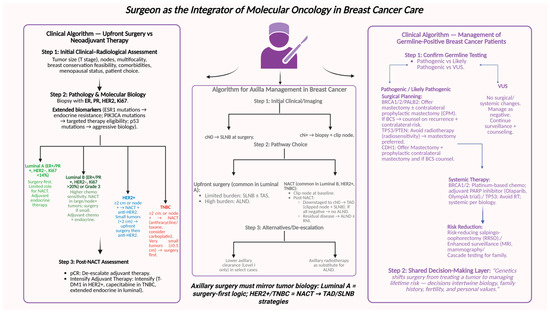
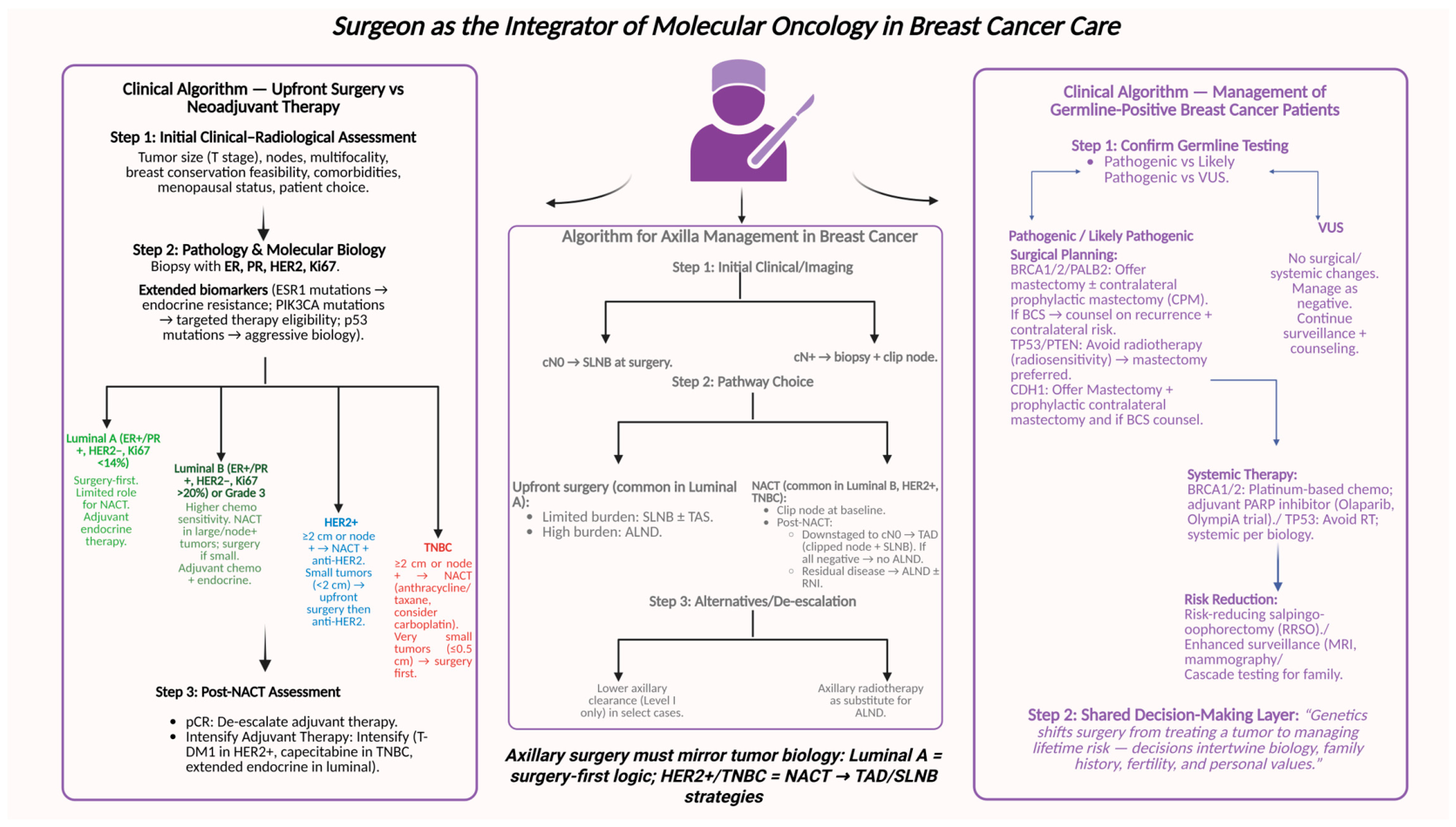
Figure 1 is a schematic representation of incorporating molecular information in a clinical decision-making algorithm.
Figure 1.
Surgeon as the Integrator of Molecular Oncology in Breast Cancer Care. (Created in BioRender. Research, P. (2026) https://biorender.com/n0wh1u5).
4. Genetics in Surgical Oncology: The Implications of Germline and Somatic Mutations
Precision oncology is advancing rapidly with advancements in genomic technologies. Germline testing identifies high-risk individuals and guides risk-reducing strategies, while somatic testing informs targeted therapy selection [29].
Germline mutations in BRCA1, BRCA2, and PALB2 are associated with increased risk of breast, ovarian, prostate, and pancreatic cancers (HBOC Syndrome) [30]. Somatic testing has been historically underutilized in breast cancer, but tools like Oncotype Dx and Mammaprint are now utilized to predict recurrence risk, allowing escalation or de-escalation of adjuvant therapy [31,32,33,34,35]. Somatic PIK3CA and ESR1 mutations, linked to chemotherapy resistance in HR+ breast cancer [36,37,38], have enabled targeted approaches (e.g., PIK3CA/AKT/mTOR pathway inhibitors) for hormone-resistant metastatic disease [39,40,41,42,43]. Efficacy of PARP inhibitors in somatic BRCA mutation [44,45], as well as tumor mutational burden as a predictor of immunotherapy response in TNBC [46,47], are avenues currently being investigated.
Although prophylactic mastectomy is recommended for BRCA1/2 and PALB2 carriers based on patient history, family history and clinical parameters [33,48], comparable outcomes for breast-conserving surgery have been reported [7,49,50,51,52]. Risk-reducing salpingo-oophorectomy may offer greater survival benefit than prophylactic mastectomy in BRCA carriers [53,54].
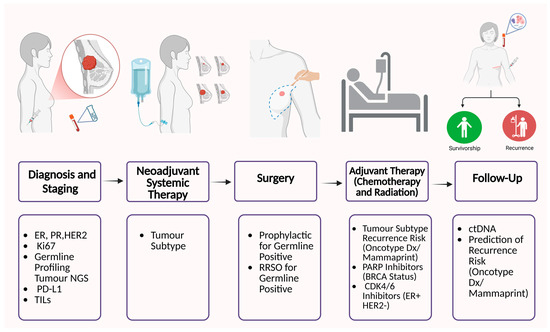
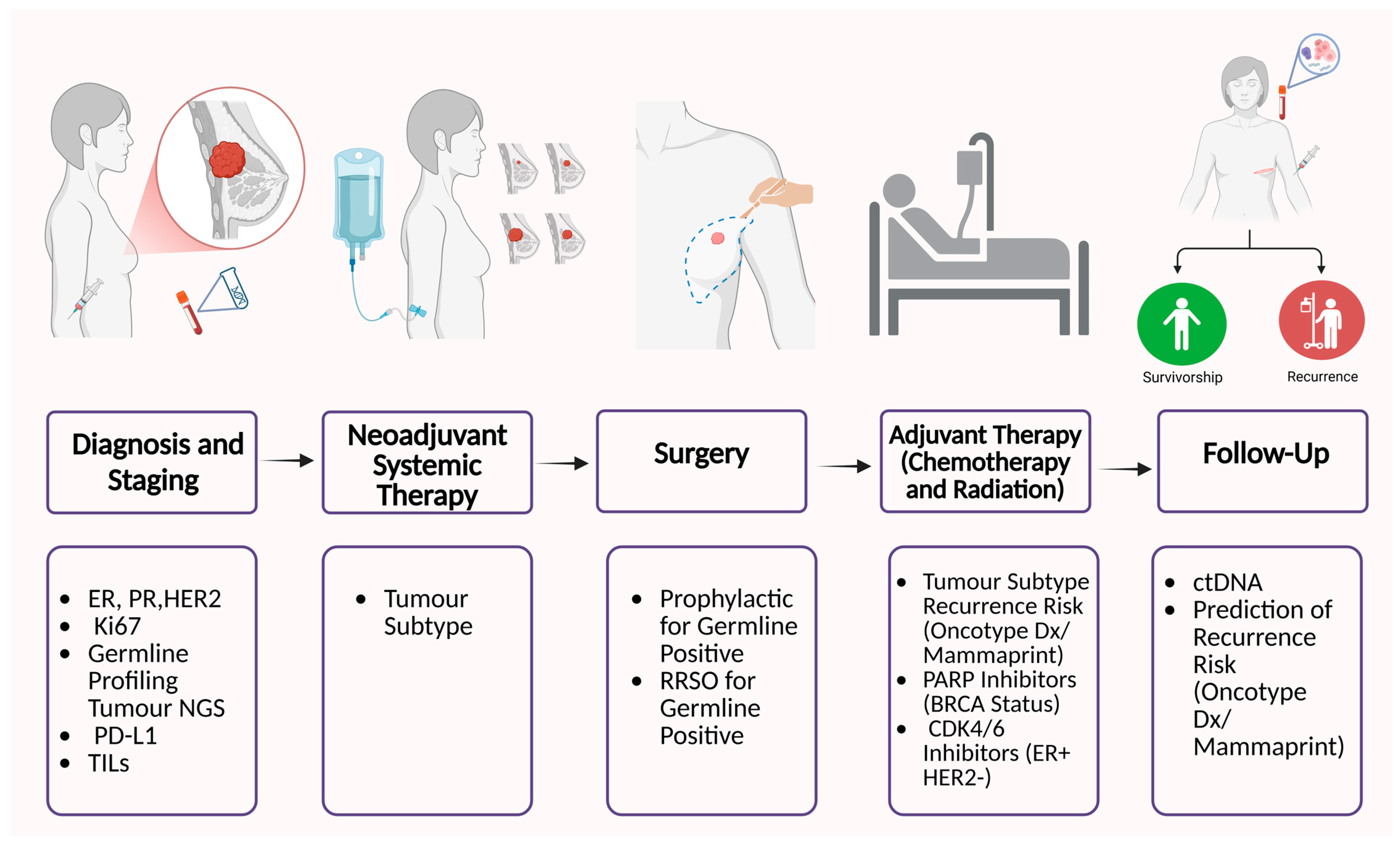
Germline testing also raises unique ethical concerns, as results affect the patient’s entire family; pre- and post-test counseling is essential to address both clinical implications and emotional impact [55,56,57,58]. In India, genetic testing is limited mainly due to poor awareness among patients as well as clinicians and financial constraints. There is an urgent need to not only improve awareness in patients, but also improve the practice of treating clinicians to enable appropriate recommendations for genetic testing based on guidelines [58]. Figure 2 illustrates how molecular profiling informs the breast cancer treatment pathway.
Figure 2.
Schematic representation of the incorporation of molecular profiling tests in various aspects of the breast cancer treatment pathway. (Created in BioRender. Research, P. (2026) https://biorender.com/75bjpiz).
6. Emerging Biomarkers: Not Yet Surgical Tools, but Essential Surgical Knowledge
In addition to somatic and germline mutation testing, several new approaches to biomarker identification are under investigation. Circulating tumor DNA (ctDNA) provides a non-invasive method to detect tumor mutations. ctDNA-based ESR1 mutation testing is now used to identify chemotherapy resistance in HR+ metastatic breast cancer [64]. Another promising prognostic and predictive biomarker is tumor-infiltrating lymphocytes (TILs). Higher TIL scores in TNBC are linked to improved survival, while in other subtypes, TILs may predict response to immunotherapy [65]. Programmed death-ligand 1 (PD-L1) is also under evaluation as a predictive marker for TNBC response to immunotherapy [66]. Although well established in hematological malignancies, epigenetic markers have not shown significant benefit in breast cancers. Combination strategies with chemotherapy are being explored [67]. miRNAs offer potential as biomarkers as well as therapeutic targets but remain at preclinical stages [68]. Several studies are now also exploring pathways to incorporate AI/ML for biomarker-driven prognostic modeling and image-based diagnosis in radiology and pathology [69,70,71]. Although most of the emerging biomarkers currently being investigated are either in pre-clinical stages or in the metastatic setting, it is essential that the breast surgeon stays informed to enable efficient implementation in their clinical practice when needed.
7. Conclusions
Breast cancer surgery has transitioned from an era of radicalism to one of precision, where optimal therapeutic choices emerge from balancing tumor biology with anatomical extent, treatment response, technical considerations, and patient-centered factors.
Molecular subtyping, genomic assays, and germline testing have redefined surgical sequencing, the extent of resection, and axillary management. For the modern breast surgeon, particularly in oncoplastic practice, mastery lies not merely in technical proficiency but in the ability to interpret and translate tumor biology into safe, optimized, and patient-centered surgical plans.
Over the past two decades, advances in systemic therapy have fundamentally reshaped the treatment landscape. Genomic assays now help identify HR+ patients who may be spared from chemotherapy and be treated with endocrine therapy alone [34,35], while HER2-targeted therapies and immunotherapies have expanded treatment options for HER2-positive and triple-negative disease. Yet, these developments have not diminished the central role of surgery. Rather, they have created the conditions for surgery to become more precise, less invasive and better aligned with preserving the quality of life.
Against this backdrop, the role of the surgeon is undergoing a paradigm shift. Surgery can no longer be viewed as a purely technical act of tumor excision or axillary clearance. Instead, the breast surgeon must serve as the nerve center of multidisciplinary care, interpreting tumor biology and integrating systemic therapy, radiology, pathology, genetics, and reconstructive options into a coherent treatment pathway. This biological literacy is vital for tailoring the timing, extent, and type of surgery while balancing oncological safety with the philosophy of “less is more”. The need for such an integrated approach is particularly urgent in India, where younger age at presentation, a higher prevalence of aggressive subtypes and persistent reliance on mastectomy highlight the gap between biological understanding and surgical practice. This review integrates published evidence with selected real-world clinical scenarios from a single practice, which may limit generalizability. In addition, variability in access to molecular testing, targeted therapies, and multidisciplinary care may restrict the implementation of biology-driven surgical strategies across resource-diverse settings.
Ultimately, the convergence of molecular biology, shared decision-making, and oncoplastic philosophy offers a pathway toward more personalized, less morbid, and more equitable breast cancer care.
Author Contributions
Conceptualization: C.B.K. and S.J.; Methodology: S.J. and R.M.; Investigation: S.J., R.M., S.L. and N.A.; Formal analysis: S.J., R.M., S.L., N.A. and A.V.; Resources: C.D. and C.B.K.; Data curation: N.A., S.L. and R.M.; Writing—Original draft: R.M., S.J., S.L. and A.V.; Writing—Review and editing: S.J., R.M., S.L. and A.V.; Visualization: V.L., C.M. and S.J.; Supervision: S.J. and R.M.; Project administration: S.J., R.M., C.D. and C.B.K. All authors have read and agreed to the published version of the manuscript.
Funding
This research received no external funding.
Institutional Review Board Statement
Consent was obtained from all the patients whose cases are described in this review. The study was conducted in accordance with the Declaration of Helsinki and approved by the PCCM-CTCR Independent Ethics Committee (Registration ID—EC/NEW/INST/2021/2443) on 30 September 2022.
Data Availability Statement
The data presented in this study are available on request from the corresponding author due to ethical reasons.
Acknowledgments
We would like to thank the whole team at CTCR-PCCM for their unwavering dedication. We would also like to thank the IRMI-DBT/WT India Alliance for the fellowship received by Sneha Joshi. All the authors acknowledge Bajaj Auto Ltd-CSR Research grant GC-7027 for providing support for research activities at the Prashanti Cancer Care Mission, Pune.
Conflicts of Interest
The authors declare no conflicts of interest.
Abbreviations
| Abbreviation | Full form |
| AI/ML | Artificial Intelligence/Machine Learning |
| ALND | Axillary Lymph Node Dissection |
| BCS | Breast Conservation Surgery |
| BRCA1/2 | BReast CAncer Gene 1/2 |
| CDK | Cyclin-Dependent Kinase |
| cN+ | Clinically Node-Positive |
| cN0 | Clinically Node-Negative |
| ctDNA | Circulating Tumor DNA |
| DCIS | Ductal Carcinoma In Situ |
| ESR1 | Estrogen Receptor 1 |
| HBOC | Hereditary Breast and Ovarian Cancer syndrome |
| HER2 | Human Epidermal Growth Factor Receptor 2 |
| HR+ | Hormone Receptor Positive |
| IHC | Immunohistochemistry |
| LD flap | Latissimus Dorsi Flap |
| LTAP | Lateral Thoracic Artery Perforator |
| miRNA | MicroRNA |
| NACT | Neo-Adjuvant Chemotherapy |
| NAHT | Neo-Adjuvant Hormonal Therapy |
| NGS | Next Generation Sequencing |
| OPBCT | Oncoplastic Breast Conserving Therapy |
| PALB2 | Partner And Localizer of BRCA2 |
| PARP | Poly (ADP-Ribose) Polymerase |
| pCR | Pathologic Complete Response |
| PD-L1 | Programmed Death-Ligand 1 |
| PIK3CA | Phosphatidylinositol-4,5-Biphosphate 3-Kinase Catalytic Subunit Alpha |
| PST | Primary Systemic Therapy |
| RCTs | Randomized Controlled Trials |
| RNI | Regional Nodal Irradiation |
| RRSO | Risk-Reducing Salpingo-Oophorectomy |
| sBCT | Standard Breast Conserving Therapy |
| SDM | Shared Decision-Making |
| SLNB | Sentinel Lymph Node Biopsy |
| TAS | Tailored Axillary Surgery |
| TILs | Tumor Infiltrating Lymphocytes |
| TMB | Tumor Mutational Burden |
| TNBC | Triple Negative Breast Cancer |
References
- Fisher, B.; Anderson, S.; Bryant, J.; Margolese, R.G.; Deutsch, M.; Fisher, E.R.; Jeong, J.-H.; Wolmark, N. Twenty-Year Follow-up of a Randomized Trial Comparing Total Mastectomy, Lumpectomy, and Lumpectomy plus Irradiation for the Treatment of Invasive Breast Cancer. N. Engl. J. Med. 2002, 347, 1233–1241. [Google Scholar] [CrossRef] [Scilit] [PubMed]
- Veronesi, U.; Saccozzi, R.; Del Vecchio, M.; Banfi, A.; Clemente, C.; De Lena, M.; Gallus, G.; Greco, M.; Luini, A.; Marubini, E.; et al. Comparing Radical Mastectomy with Quadrantectomy, Axillary Dissection, and Radiotherapy in Patients with Small Cancers of the Breast. N. Engl. J. Med. 1981, 305, 6–11. [Google Scholar] [CrossRef] [Scilit] [PubMed]
- Ozmen, V. Paradigm Shift from Halstedian Radical Mastectomy to Personalized Medicine. J. Breast Health 2017, 13, 50–53. [Google Scholar] [CrossRef] [Scilit] [PubMed]
- Clough, K.B.; Kaufman, G.J.; Nos, C.; Buccimazza, I.; Sarfati, I.M. Improving Breast Cancer Surgery: A Classification and Quadrant per Quadrant Atlas for Oncoplastic Surgery. Ann. Surg. Oncol. 2010, 17, 1375–1391. [Google Scholar] [CrossRef] [Scilit] [PubMed]
- Vieira, R.A.D.C.; Bailão-Junior, A.; De Oliveira-Junior, I. Does Breast Oncoplastic Surgery Improve Quality of Life? Front. Oncol. 2023, 12, 1099125. [Google Scholar] [CrossRef] [Scilit] [PubMed]
- Antonini, M.; Mattar, A.; Pereira, T.M.; Oliveira, L.L.; Teixeira, M.D.; Amorim, A.G.; Ferraro, O.; Oliveira, L.C.D.; Ramos, M.D.N.M.; Cavalcante, F.P.; et al. Pathologic Complete Response and Breast Cancer Survival Post-Neoadjuvant Chemotherapy: A Systematic Review and Meta-Analysis of Real-World Data. Heliyon 2025, 11, e43069. [Google Scholar] [CrossRef] [Scilit]
- Pouptsis, A.; Swafe, L.; Patwardhan, M.; Stavraka, C. Surgical and Systemic Treatment of Hereditary Breast Cancer: A Mini-Review with a Focus on BRCA1 and BRCA2 Mutations. Front. Oncol. 2020, 10, 553080. [Google Scholar] [CrossRef] [Scilit] [PubMed]
- Kulkarni, A.; Kelkar, D.A.; Parikh, N.; Shashidhara, L.S.; Koppiker, C.B.; Kulkarni, M. Meta-Analysis of Prevalence of Triple-Negative Breast Cancer and Its Clinical Features at Incidence in Indian Patients with Breast Cancer. JCO Glob. Oncol. 2020, 6, 1052–1062. [Google Scholar] [CrossRef] [Scilit] [PubMed]
- Mehrotra, R.; Yadav, K. Breast Cancer in India: Present Scenario and the Challenges Ahead. World J. Clin. Oncol. 2022, 13, 209–218. [Google Scholar] [CrossRef] [Scilit] [PubMed]
- Chatterjee, S. Is India Overdoing Mastectomy? Indian J. Surg. 2021, 83, 275–277. [Google Scholar] [CrossRef] [Scilit]
- Lucocq, J.; Baig, H.; Elder, K.; Urquhart, G.; Sharma, R.; Romics, L.; Elsberger, B. Feasibility of the Omission of Axillary Surgery in Node-Negative Early Breast Cancer: A Systematic Review and Meta-Analysis. Breast 2025, 83, 104559. [Google Scholar] [CrossRef] [Scilit] [PubMed]
- Lee, M.K.; Montagna, G.; Pilewskie, M.L.; Sevilimedu, V.; Morrow, M. Axillary Staging Is Not Justified in Postmenopausal Clinically Node-Negative Women Based on Nodal Disease Burden. Ann. Surg. Oncol. 2023, 30, 92–97. [Google Scholar] [CrossRef] [Scilit] [PubMed]
- Chichura, A.M.; Chen, X.; Nelis, M.; Kopicky, L.; Wei, W.; Ali, A.; Tendulkar, R.; Al-Hilli, Z. Neoadjuvant Chemotherapy Is Associated with Worse 5-Year Overall Survival in Patients with Metaplastic Breast Cancer Compared with Primary Surgery: A National Cancer Database Analysis. Ann. Surg. Oncol. 2025, 32, 8525–8533. [Google Scholar] [CrossRef] [Scilit] [PubMed]
- Nelis, M.; Chichura, A.; Al-Hilli, Z. ASO Author Reflections: Reevaluating Treatment Sequence in Metaplastic Breast Cancer. Ann. Surg. Oncol. 2025, 32, 8534–8535. [Google Scholar] [CrossRef] [Scilit] [PubMed]
- Balasubramanian, A.; Iyer, P.; Ranganathan, R.; Murhekar, K.; Dhanushkodi, M.; Ganesarajah, S.; Velusami, S.; Krishnamurthy, A. Metaplastic Carcinoma of the Breast: Real-World Outcome from a Tertiary Cancer Centre in India. Ecancermedicalscience 2022, 16, 1429. [Google Scholar] [CrossRef] [Scilit] [PubMed]
- Corso, G.; Frassoni, S.; Girardi, A.; De Camilli, E.; Montagna, E.; Intra, M.; Bottiglieri, L.; Margherita De Scalzi, A.; Fanianos, D.M.; Magnoni, F.; et al. Metaplastic Breast Cancer: Prognostic and Therapeutic Considerations. J. Surg. Oncol. 2021, 123, 61–70. [Google Scholar] [CrossRef] [Scilit] [PubMed]
- Boland, M.R. Modern Management of the Axilla. J. Surg. Oncol. 2024, 130, 23–28. [Google Scholar] [CrossRef] [Scilit] [PubMed]
- Connors, C.; Al-Hilli, Z. De-Escalation of Axillary Surgery After Neoadjuvant Therapy. Clin. Breast Cancer 2024, 24, 385–391. [Google Scholar] [CrossRef] [Scilit] [PubMed]
- Samiei, S.; Simons, J.M.; Engelen, S.M.E.; Beets-Tan, R.G.H.; Classe, J.-M.; Smidt, M.L.; EUBREAST Group. Axillary Pathologic Complete Response After Neoadjuvant Systemic Therapy by Breast Cancer Subtype in Patients with Initially Clinically Node-Positive Disease: A Systematic Review and Meta-Analysis. JAMA Surg. 2021, 156, e210891. [Google Scholar] [CrossRef] [Scilit] [PubMed]
- Giuliano, A.E. Axillary Dissection vs No Axillary Dissection in Women with Invasive Breast Cancer and Sentinel Node Metastasis: A Randomized Clinical Trial. JAMA 2011, 305, 569. [Google Scholar] [CrossRef] [Scilit] [PubMed]
- Kuehn, T.; Bauerfeind, I.; Fehm, T.; Fleige, B.; Hausschild, M.; Helms, G.; Lebeau, A.; Liedtke, C.; Minckwitz, G.V.; Nekljudova, V.; et al. Sentinel-Lymph-Node Biopsy in Patients with Breast Cancer before and after Neoadjuvant Chemotherapy (SENTINA): A Prospective, Multicentre Cohort Study. Lancet Oncol. 2013, 14, 609–618. [Google Scholar] [CrossRef] [Scilit] [PubMed]
- Boileau, J.-F.; Poirier, B.; Basik, M.; Holloway, C.M.B.; Gaboury, L.; Sideris, L.; Meterissian, S.; Arnaout, A.; Brackstone, M.; McCready, D.R.; et al. Sentinel Node Biopsy After Neoadjuvant Chemotherapy in Biopsy-Proven Node-Positive Breast Cancer: The SN FNAC Study. J. Clin. Oncol. 2015, 33, 258–264. [Google Scholar] [CrossRef] [Scilit] [PubMed]
- Ryu, J.M.; Han, W.; Lee, H.-B.; Ahn, S.G.; Kim, H.J.; Park, H.S.; Choi, J.S.; Kim, H.; Lee, J.E. Selective Avoidance of Sentinel Lymph Node Biopsy after Neoadjuvant Chemotherapy in Patients with HER-2 Positive/Triple Negative Breast Cancer: Prospective, Multi-Center, Single-Arm Study (ASLAN). J. Clin. Oncol. 2023, 41, TPS624. [Google Scholar] [CrossRef] [Scilit]
- Reimer, T.; Glass, A.; Botteri, E.; Loibl, S.; Gentilini, O.D. Avoiding Axillary Sentinel Lymph Node Biopsy after Neoadjuvant Systemic Therapy in Breast Cancer: Rationale for the Prospective, Multicentric EUBREAST-01 Trial. Cancers 2020, 12, 3698. [Google Scholar] [CrossRef] [Scilit] [PubMed]
- Weber, W.P.; Matrai, Z.; Hayoz, S.; Tausch, C.; Henke, G.; Zimmermann, F.; Montagna, G.; Fitzal, F.; Gnant, M.; Ruhstaller, T.; et al. Tailored Axillary Surgery with or without Axillary Lymph Node Dissection Followed by Radiotherapy in Patients with Clinically Node-Positive Breast Cancer (OPBC-03/SAKK 23/16/IBCSG 57-18/ABCSG-53/GBG-101-TAXIS). J. Clin. Oncol. 2024, 42, TPS611. [Google Scholar] [CrossRef] [Scilit]
- Hughes, K.S.; Schnaper, L.A.; Berry, D.; Cirrincione, C.; McCormick, B.; Shank, B.; Wheeler, J.; Champion, L.A.; Smith, T.J.; Smith, B.L.; et al. Lumpectomy plus Tamoxifen with or without Irradiation in Women 70 Years of Age or Older with Early Breast Cancer. N. Engl. J. Med. 2004, 351, 971–977. [Google Scholar] [CrossRef] [Scilit] [PubMed]
- Gentilini, O.D.; Botteri, E.; Sangalli, C.; Galimberti, V.; Porpiglia, M.; Agresti, R.; Luini, A.; Viale, G.; Cassano, E.; Peradze, N.; et al. Sentinel Lymph Node Biopsy vs No Axillary Surgery in Patients with Small Breast Cancer and Negative Results on Ultrasonography of Axillary Lymph Nodes: The SOUND Randomized Clinical Trial. JAMA Oncol. 2023, 9, 1557. [Google Scholar] [CrossRef] [Scilit] [PubMed]
- Reimer, T.; Stachs, A.; Veselinovic, K.; Kühn, T.; Heil, J.; Polata, S.; Marmé, F.; Müller, T.; Hildebrandt, G.; Krug, D.; et al. Axillary Surgery in Breast Cancer—Primary Results of the INSEMA Trial. N. Engl. J. Med. 2025, 392, 1051–1064. [Google Scholar] [CrossRef] [Scilit] [PubMed]
- Tischler, J.; Crew, K.D.; Chung, W.K. Cases in Precision Medicine: The Role of Tumor and Germline Genetic Testing in Breast Cancer Management. Ann. Intern. Med. 2019, 171, 925–930. [Google Scholar] [CrossRef] [Scilit] [PubMed]
- Petrucelli, N.; Daly, M.B.; Pal, T. BRCA1- and BRCA2-Associated Hereditary Breast and Ovarian Cancer. In GeneReviews®; Adam, M.P., Bick, S., Mirzaa, G.M., Pagon, R.A., Wallace, S.E., Amemiya, A., Eds.; University of Washington: Seattle, WA, USA, 1993. [Google Scholar]
- Berton Giachetti, P.P.M.; Carnevale Schianca, A.; Trapani, D.; Marra, A.; Toss, A.; Marchiò, C.; Dieci, M.V.; Gentilini, O.D.; Criscitiello, C.; Kalinsky, K.; et al. Current Controversies in the Use of Oncotype DX in Early Breast Cancer. Cancer Treat. Rev. 2025, 135, 102887. [Google Scholar] [CrossRef] [Scilit] [PubMed]
- Andre, F.; Ismaila, N.; Allison, K.H.; Barlow, W.E.; Collyar, D.E.; Damodaran, S.; Henry, N.L.; Jhaveri, K.; Kalinsky, K.; Kuderer, N.M.; et al. Biomarkers for Adjuvant Endocrine and Chemotherapy in Early-Stage Breast Cancer: ASCO Guideline Update. J. Clin. Oncol. 2022, 40, 1816–1837. [Google Scholar] [CrossRef] [Scilit] [PubMed]
- National Comprehensive Cancer Network. NCCN Clinical Practice Guidelines in Oncology: Genetic/Familial High-Risk Assessment: Breast, Ovarian, Pancreatic, and Prostate. Version 3.2026. 2026. Available online: https://www.nccn.org/guidelines/guidelines-detail?category=2&id=1545 (accessed on 21 July 2026).
- Cardoso, F.; van’t Veer, L.J.; Bogaerts, J.; Slaets, L.; Viale, G.; Delaloge, S.; Pierga, J.-Y.; Brain, E.; Causeret, S.; DeLorenzi, M.; et al. 70-Gene Signature as an Aid to Treatment Decisions in Early-Stage Breast Cancer. N. Engl. J. Med. 2016, 375, 717–729. [Google Scholar] [CrossRef] [Scilit] [PubMed]
- Sparano, J.A.; Gray, R.J.; Makower, D.F.; Pritchard, K.I.; Albain, K.S.; Hayes, D.F.; Geyer, C.E.; Dees, E.C.; Goetz, M.P.; Olson, J.A.; et al. Adjuvant Chemotherapy Guided by a 21-Gene Expression Assay in Breast Cancer. N. Engl. J. Med. 2018, 379, 111–121. [Google Scholar] [CrossRef] [Scilit] [PubMed]
- Schagerholm, C.; Robertson, S.; Toosi, H.; Sifakis, E.G.; Hartman, J. PIK3CA Mutations in Endocrine-Resistant Breast Cancer. Sci. Rep. 2024, 14, 12542. [Google Scholar] [CrossRef] [Scilit] [PubMed]
- Grinshpun, A.; Chen, V.; Sandusky, Z.M.; Fanning, S.W.; Jeselsohn, R. ESR1 Activating Mutations: From Structure to Clinical Application. Biochim. Biophys. Acta BBA—Rev. Cancer 2023, 1878, 188830. [Google Scholar] [CrossRef] [Scilit] [PubMed]
- Zhou, D.; Ouyang, Q.; Liu, L.; Liu, J.; Tang, Y.; Xiao, M.; Wang, Y.; He, Q.; Hu, Z.-Y. Chemotherapy Modulates Endocrine Therapy-Related Resistance Mutations in Metastatic Breast Cancer. Transl. Oncol. 2019, 12, 764–774. [Google Scholar] [CrossRef] [Scilit] [PubMed]
- Hao, C.; Wei, Y.; Meng, W.; Zhang, J.; Yang, X. PI3K/AKT/mTOR Inhibitors for Hormone Receptor-Positive Advanced Breast Cancer. Cancer Treat. Rev. 2025, 132, 102861. [Google Scholar] [CrossRef] [Scilit] [PubMed]
- Steelman, L.S.; Martelli, A.M.; Cocco, L.; Libra, M.; Nicoletti, F.; Abrams, S.L.; McCubrey, J.A. The Therapeutic Potential of mTOR Inhibitors in Breast Cancer. Br. J. Clin. Pharmacol. 2016, 82, 1189–1212. [Google Scholar] [CrossRef] [Scilit] [PubMed]
- Fuso, P.; Muratore, M.; D’Angelo, T.; Paris, I.; Carbognin, L.; Tiberi, G.; Pavese, F.; Duranti, S.; Orlandi, A.; Tortora, G.; et al. PI3K Inhibitors in Advanced Breast Cancer: The Past, The Present, New Challenges and Future Perspectives. Cancers 2022, 14, 2161. [Google Scholar] [CrossRef] [Scilit] [PubMed]
- Ma, C.X.; Luo, J.; Naughton, M.; Ademuyiwa, F.; Suresh, R.; Griffith, M.; Griffith, O.L.; Skidmore, Z.L.; Spies, N.C.; Ramu, A.; et al. A Phase I Trial of BKM120 (Buparlisib) in Combination with Fulvestrant in Postmenopausal Women with Estrogen Receptor–Positive Metastatic Breast Cancer. Clin. Cancer Res. 2016, 22, 1583–1591. [Google Scholar] [CrossRef] [Scilit] [PubMed]
- Turner, N.C.; Oliveira, M.; Howell, S.J.; Dalenc, F.; Cortes, J.; Gomez Moreno, H.L.; Hu, X.; Jhaveri, K.; Krivorotko, P.; Loibl, S.; et al. Capivasertib in Hormone Receptor–Positive Advanced Breast Cancer. N. Engl. J. Med. 2023, 388, 2058–2070. [Google Scholar] [CrossRef] [Scilit] [PubMed]
- Khalid, T.; Cutress, R.I.; Remer, M.; Copson, E.R. Clinical Impact of Somatic Genomic Testing on Breast Cancer Care. Clin. Oncol. 2025, 37, 103665. [Google Scholar] [CrossRef] [Scilit] [PubMed]
- Tung, N.; Hollis, R.L.; Viale, G.; Tweed, C.; Lukashchuk, N.; Birrer, M. Questions and Answers on PARP Inhibitor Use in Somatic BRCA-Mutated Breast Cancers. J. Natl. Cancer Inst. 2026, 118, 205–213. [Google Scholar] [CrossRef] [Scilit] [PubMed]
- O’Meara, T.A.; Tolaney, S.M. Tumor Mutational Burden as a Predictor of Immunotherapy Response in Breast Cancer. Oncotarget 2021, 12, 394–400. [Google Scholar] [CrossRef] [Scilit] [PubMed]
- Das, R.; Deb, S.; Suresh, P.K. TMB as a Predictive Biomarker for ICI Response in TNBC: Current Evidence and Future Directions for Augmented Anti-Tumor Responses. Clin. Exp. Med. 2025, 26, 25. [Google Scholar] [CrossRef] [Scilit] [PubMed]
- Sessa, C.; Balmaña, J.; Bober, S.L.; Cardoso, M.J.; Colombo, N.; Curigliano, G.; Domchek, S.M.; Evans, D.G.; Fischerova, D.; Harbeck, N.; et al. Risk Reduction and Screening of Cancer in Hereditary Breast-Ovarian Cancer Syndromes: ESMO Clinical Practice Guideline. Ann. Oncol. 2023, 34, 33–47. [Google Scholar] [CrossRef] [Scilit] [PubMed]
- Emiroglu, S.; Özkurt, E.; Cabıoglu, N.; Igci, A.; Saip, P.; Yazici, H.; Ozmen, T.; Ozmen, V.; Muslumanoglu, M.; Tukenmez, M. Is Breast Conserving Surgery Efficacious in Breast Cancer Patients with BRCA1 or BRCA2 Germline Mutation? Breast Cancer Targets Ther. 2023, 15, 163–173. [Google Scholar] [CrossRef] [Scilit] [PubMed]
- Mahiou, K.; Bonneau, C.; Coutant, C.; Martin, A.-L.; Gaudin, C.; Fournier, M.; Jacot, W.; Kieffer, A.; Sauterey, B.; Tredan, O.; et al. Effect of Breast Surgery on Quality of Life in BRCA Mutation Carriers With Invasive Breast Cancer: A CANTO Database Study. Clin. Breast Cancer 2025, 25, 792–800. [Google Scholar] [CrossRef] [Scilit] [PubMed]
- Davey, M.G.; Davey, C.M.; Ryan, É.J.; Lowery, A.J.; Kerin, M.J. Combined Breast Conservation Therapy versus Mastectomy for BRCA Mutation Carriers—A Systematic Review and Meta-Analysis. Breast 2021, 56, 26–34. [Google Scholar] [CrossRef] [Scilit] [PubMed]
- Lee, J.; Ryu, J.M.; Kim, H.-K.; Park, H.S.; Kang, B.; Ahn, S.G.; Chung, M.S.; Shin, S.-H.; Go, J.; Kim, S.; et al. Long-Term Oncologic Outcome of Breast-Conserving Surgery in Breast Cancer with BRCA 1/2 Mutation (ON-BRCA II, KoREa-BSG 06). J. Clin. Oncol. 2024, 42, 552. [Google Scholar] [CrossRef] [Scilit]
- Blondeaux, E.; Sonnenblick, A.; Agostinetto, E.; Bas, R.; Kim, H.J.; Franzoi, M.A.; Bernstein-Molho, R.; Linn, S.; Kwong, A.; Pogoda, K.; et al. Association between Risk-Reducing Surgeries and Survival in Young BRCA Carriers with Breast Cancer: An International Cohort Study. Lancet Oncol. 2025, 26, 759–770. [Google Scholar] [CrossRef] [Scilit] [PubMed]
- Ludwig, K.K.; Neuner, J.; Butler, A.; Geurts, J.L.; Kong, A.L. Risk Reduction and Survival Benefit of Prophylactic Surgery in BRCA Mutation Carriers, a Systematic Review. Am. J. Surg. 2016, 212, 660–669. [Google Scholar] [CrossRef] [Scilit] [PubMed]
- Charron, M.; Kaiser, B.; Dauge, A.; Gallois, H.; Lapointe, J.; Dorval, M.; Nabi, H.; Joly, Y. Integrating Hereditary Breast and Ovarian Cancer Genetic Counselling and Testing into Mainstream Clinical Practice: Legal and Ethical Challenges. Crit. Rev. Oncol. Hematol. 2022, 178, 103797. [Google Scholar] [CrossRef] [Scilit] [PubMed]
- Petrova, D.; Cruz, M.; Sánchez, M.-J. BRCA1/2 Testing for Genetic Susceptibility to Cancer after 25 Years: A Scoping Review and a Primer on Ethical Implications. Breast 2022, 61, 66–76. [Google Scholar] [CrossRef] [Scilit] [PubMed]
- Malhotra, H.; Pramanik, R.; Srinivas, S.; Kotwal, P.; Mehra, N.; Gupta, S.; Rajkumar, T.; Sarin, R.; Kanakasetty, G.B.; Bapna, A.; et al. Genetic Counselling, Testing, and Management of Hereditary Breast and Ovarian Cancer Syndrome in India: Updated Expert Consensus Recommendations from Indian Society of Medical and Pediatric Oncology. Indian J. Med. Paediatr. Oncol. 2025, 46, 233–252. [Google Scholar] [CrossRef] [Scilit]
- Verma, A.; Nag, S.; Hasan, Q.; Selvakumar, V.P.P. Mainstreaming Genetic Counseling for BRCA Testing into Oncology Clinics—Indian Perspective. Indian J. Cancer 2019, 56, S38–S47. [Google Scholar] [CrossRef] [Scilit] [PubMed]
- Freedman, R.A.; Kouri, E.M.; West, D.W.; Keating, N.L. Racial/Ethnic Disparities in Knowledge about One’s Breast Cancer Characteristics. Cancer 2015, 121, 724–732. [Google Scholar] [CrossRef] [Scilit] [PubMed]
- Mazzocco, K.; Masiero, M.; Carriero, M.C.; Pravettoni, G. The Role of Emotions in Cancer Patients’ Decision-Making. Ecancermedicalscience 2019, 13, 914. [Google Scholar] [CrossRef] [Scilit] [PubMed]
- Zheng, H.; Yang, L.; Hu, J.; Yang, Y. Behaviour, Barriers and Facilitators of Shared Decision Making in Breast Cancer Surgical Treatment: A Qualitative Systematic Review Using a ‘Best Fit’ Framework Approach. Health Expect. 2024, 27, e14019. [Google Scholar] [CrossRef] [Scilit] [PubMed]
- Aristokleous, I.; Öberg, J.; Pantiora, E.; Sjökvist, O.; Navia, J.E.; Mani, M.; Karakatsanis, A. Effect of Standardised Surgical Assessment and Shared Decision-Making on Morbidity and Patient Satisfaction after Breast Conserving Therapy: A Cross-Sectional Study. Eur. J. Surg. Oncol. 2023, 49, 60–67. [Google Scholar] [CrossRef] [Scilit] [PubMed]
- Chen, L.; Lu, J.; Chen, B.; Zhang, X. Effect of Shared Decision-Making in Patients with Breast Cancer Undergoing Breast Reconstruction Surgery: A Systematic Review and Meta-Analysis. Asia-Pac. J. Oncol. Nurs. 2024, 11, 100596. [Google Scholar] [CrossRef] [Scilit] [PubMed]
- Guerini-Rocco, E.; Venetis, K.; Cursano, G.; Mane, E.; Frascarelli, C.; Pepe, F.; Negrelli, M.; Olmeda, E.; Vacirca, D.; Ranghiero, A.; et al. Standardized Molecular Pathology Workflow for ctDNA-Based ESR1 Testing in HR+/HER2- Metastatic Breast Cancer. Crit. Rev. Oncol. Hematol. 2024, 201, 104427. [Google Scholar] [CrossRef] [Scilit] [PubMed]
- Valenza, C.; Taurelli Salimbeni, B.; Santoro, C.; Trapani, D.; Antonarelli, G.; Curigliano, G. Tumor Infiltrating Lymphocytes across Breast Cancer Subtypes: Current Issues for Biomarker Assessment. Cancers 2023, 15, 767. [Google Scholar] [CrossRef] [Scilit] [PubMed]
- Núñez Abad, M.; Calabuig-Fariñas, S.; Lobo De Mena, M.; Torres-Martínez, S.; García González, C.; García García, J.Á.; Iranzo González-Cruz, V.; Camps Herrero, C. Programmed Death-Ligand 1 (PD-L1) as Immunotherapy Biomarker in Breast Cancer. Cancers 2022, 14, 307. [Google Scholar] [CrossRef] [Scilit] [PubMed]
- Brown, L.J.; Achinger-Kawecka, J.; Portman, N.; Clark, S.; Stirzaker, C.; Lim, E. Epigenetic Therapies and Biomarkers in Breast Cancer. Cancers 2022, 14, 474. [Google Scholar] [CrossRef] [Scilit] [PubMed]
- Muñoz, J.P.; Pérez-Moreno, P.; Pérez, Y.; Calaf, G.M. The Role of MicroRNAs in Breast Cancer and the Challenges of Their Clinical Application. Diagnostics 2023, 13, 3072. [Google Scholar] [CrossRef] [Scilit] [PubMed]
- Datwani, S.; Khan, H.; Niazi, M.K.K.; Parwani, A.V.; Li, Z. Artificial Intelligence in Breast Pathology: Overview and Recent Updates. Hum. Pathol. 2025, 162, 105819. [Google Scholar] [CrossRef] [Scilit] [PubMed]
- Yagin, F.H.; Gormez, Y.; Al-Hashem, F.; Ahmad, I.; Ahmad, F.; Ardigò, L.P. Biomarker Discovery and Development of Prognostic Prediction Model Using Metabolomic Panel in Breast Cancer Patients: A Hybrid Methodology Integrating Machine Learning and Explainable Artificial Intelligence. Front. Mol. Biosci. 2024, 11, 1426964. [Google Scholar] [CrossRef] [Scilit] [PubMed]
- Ferroni, P.; Zanzotto, F.M.; Riondino, S.; Scarpato, N.; Guadagni, F.; Roselli, M. Breast Cancer Prognosis Using a Machine Learning Approach. Cancers 2019, 11, 328. [Google Scholar] [CrossRef] [Scilit] [PubMed]
Disclaimer/Publisher’s Note: The statements, opinions and data contained in all publications are solely those of the individual author(s) and contributor(s) and not of MDPI and/or the editor(s). MDPI and/or the editor(s) disclaim responsibility for any injury to people or property resulting from any ideas, methods, instructions or products referred to in the content. |
© 2026 by the authors. Licensee MDPI, Basel, Switzerland. This article is an open access article distributed under the terms and conditions of the Creative Commons Attribution (CC BY) license.