


Abstract
We report a sealed-tube-assisted one-pot oxidative aromatization of in situ-generated dihydropyrazolo[1,5-a]pyrimidine intermediates to afford polymethoxylated pyrazolo[1,5-a]pyrimidine derivatives using sodium persulfate in ethanol, utilizing the Mg-Al hydrotalcite (Mg-Al HT) as a solid base catalyst. Dihydropyrazolo[1,5-a]pyrimidine intermediates are firstly produced efficiently by an aza-Michael addition followed by a cyclocondensation sequence under sealed tube condition performed by Q-tube instrument and subsequently aromatized in situ utilizing sodium persulfate as a sustainable oxidant in a true one-pot fashion. Subsequent treatment of the catalyst-containing reaction mixture with sodium persulfate under sealed-tube heating afforded the corresponding aromatized products. Control experiments showed that the oxidation was enhanced under ambient-air conditions, while appreciable conversion was retained after nitrogen purging. This integrated operation is kinetically advantageous: direct addition of persulfate to the crude reaction mixture provides the target pyrazolo[1,5-a]pyrimidines in up to 91–92% isolated yield within 10 min, whereas oxidation of isolated intermediates under otherwise identical conditions requires longer reaction times. Optimized conditions utilize merely 3 mol% Na2S2O8, yielding the necessary pyrazolo[1,5-a]pyrimidines with an isolated yield of up to 91% within 10 min, demonstrating superior efficiency and environmental compatibility compared to N-bromosuccinimide and selenium dioxide. The approach accommodates various aminopyrazoles with polymethoxy chalcone, facilitating quick access to a limited collection of purine-mimetic heterocycles with possible therapeutic relevance. The methodology tolerates the recyclable Mg–Al hydrotalcite catalyst and the use of ethanol as a benign solvent, aligning the overall process with the principles of sustainable chemistry through reduced energy input, low oxidant loading, and minimized waste generation.
1. Introduction
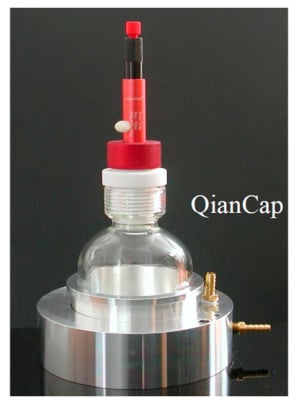
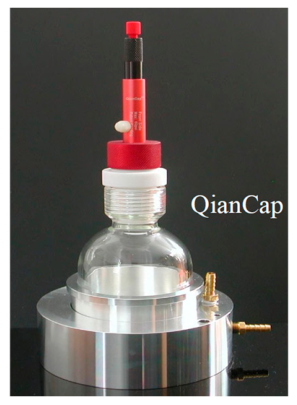
Chalcones, bearing an α,β-unsaturated carbonyl system, are widely recognized as a privileged scaffold in medicinal chemistry because of their easy synthesis, structural diversity, and broad spectrum of reported biological activities [1], including anticancer [2,3,4,5,6], anti-inflammatory [7], antimicrobial [8], and antioxidant [9]. In particular, polymethoxy chalcones derived from trimethoxyacetophenones have attracted considerable attention [10,11,12]. The presence of multiple electron-donating methoxy groups enhances conjugation and modulates the electronic properties of the aromatic ring, thereby improving pharmacological profiles and enabling tunable reactivity for subsequent heterocyclization. For example, chalcones obtained from 2,4,6-trimethoxyacetophenone exhibited significant inhibition of nitric oxide production in LPS-stimulated RAW 264.7 cells, highlighting their potential as anti-inflammatory leads and allowing quantitative structure–activity relationships to be established [13,14]. At the same time, fused pyrimidine-containing heterocycles, and in particular pyrazolo[1,5-a]pyrimidine fused systems, are well documented as key pharmacophores in many bioactive molecules, which has stimulated the development of efficient synthetic routes starting from suitably functionalized chalcones [15,16]. The condensation of chalcones with 3(5)-aminopyrazoles provides a straightforward entry to dihydropyrazolopyrimidines via a tandem Michael addition cyclization sequence [17]. In this transformation, the nucleophilic aminopyrazole initially adds to the activated α,β-unsaturated carbonyl system of the chalcone, followed by intramolecular cyclocondensation and subsequent dehydration to furnish the fused pyrazolo-pyrimidine core in a single operation under relatively mild conditions [16]. In recent years, dihydroazolopyrimidine frameworks and their aromatized congeners have been explored as key motifs in kinase inhibitors, nucleoside-mimetic antivirals, CNS-active agents, and enzyme modulators, underscoring their broad pharmacological potential [18]. At the same time, pyrazolopyrimidines have already been validated in medicinal chemistry as robust drug-like scaffolds, with several representatives progressing to clinical candidates or marketed drugs, particularly in oncology and inflammatory diseases [15]. We previously succeeded in introducing a green protocol for the synthesis of dihydroazolopyrimidine frameworks utilizing the Q-tube system [19]. Consequently, the development of efficient and sustainable synthetic strategies that promote the interconversion of dihydroazolopyrimidines into pyrazolopyrimidines is of considerable importance, as these transformations provide rapid access to structurally diverse purine-mimetic libraries from common precursors, thereby accelerating hit-to-lead optimization and significantly contributing to the overall drug discovery process. In the context of green chemistry, the Q-tube® system (Figure 1) has emerged as a practical non-conventional technology that enables high-pressure, over-boiling transformations with shortened reaction times, improved yields, and reduced energy consumption, and has been successfully applied to the eco-friendly synthesis of various nitrogen-containing heterocycles [19,20,21,22].
Figure 1.
The Q-tube system.
Furthermore, nanostructured Mg–Al hydrotalcite is an attractive, low-cost, and reusable solid base catalyst that can replace conventional homogeneous bases, offering high activity and selectivity in C–C bond-forming and related transformations while minimizing waste and simplifying workup [19,23,24]. Against this background, the present work focuses on the synthesis and transformation of dihydroazolopyrimidine derivatives into pyrazolopyrimidines as a versatile platform for the discovery of new bioactive molecules with potential therapeutic applications. The development of a Q-tube-assisted Mg–Al hydrotalcite-catalyzed protocol for the synthesis of pyrazolopyrimidine derivatives from trimethoxyacetophenone chalcones and aldehydes is highly desirable, as it couples a pharmacologically relevant chalcone precursor with a valuable heterocyclic target under sustainable conditions, aligning with the principles of green chemistry and enabling the rapid generation of structurally diverse scaffolds for further biological evaluation.
2. Materials and Methods
Thin-layer chromatography was performed on Merck 60 GF254 (Merck, Darmstadt, Germany) silica gel plates pre-coated with a fluorescent indicator, with detection conducted via UV irradiation at 254 and 360 nm. The melting points were ascertained via the Stuart melting point apparatus (Stuart, Stone, UK) without modifications. IR spectra were obtained using the Nicolet iS10 FT-IR spectrometer (Thermo Fisher Scientific, Waltham, MA, USA) utilizing a Smart iTR (Thermo Fisher Scientific, Waltham, MA, USA), an ultrahigh-performance, adaptable attenuated total reflectance sampling accessory from Thermo Fisher Scientific. A Bruker Avance III 400 spectrometer (Bruker, Billerica, MA, USA) (9.4 T, 400.13 MHz for 1H, 100.62 MHz for 13C, and 376.25 MHz for 19F) equipped with a 5-mm BBFO probe (Bruker, Billerica, MA, USA) was utilized to acquire NMR spectra at 298 K. Chemical changes (δ in ppm) are referenced against internal standards. Mass spectra were recorded on a Thermo ISQ single quadrupole gas chromatography–mass spectrometer (Thermo Fisher Scientific, Waltham, MA, USA). Elemental studies were conducted using a EuroVector C, H, N, and S analyzer (EA3000 series) (Pavia, Italy). Q-tube-assisted reactions were performed in a Q-Tube-safe pressure reactor from Q Labtech (Washington, DC, USA) equipped with a cap/sleeve, pressure adapter (max. 8.2 bar), needle, borosilicate glass tube, Teflon septum, and catch bottle. Mg-Al HT [23], chalcone 1 [25], and 5-aminopyrazole derivatives [26] were prepared according to the reported literature.
2.1. Preparation of Mg-Al Hydrotalcite Catalyst
The Mg-Al hydrotalcite catalyst used in this work was prepared according to the procedure reported by Mokhtar et al. [23], following the preparation conditions corresponding to the most catalytically active hydrotalcite sample (as synthesized) described herein. An aqueous solution containing Mg(NO3)2·6H2O (1 mmol) and Al(NO3)3·9H2O (1 mmol), corresponding to a Mg/Al molar ratio of [1:1], was added dropwise to an aqueous alkaline solution of NaOH (1 M) and Na2CO3 (1 M) under vigorous stirring. The pH of the reaction mixture was maintained at 10 throughout the coprecipitation process by the controlled addition of the alkaline solution.
The resulting suspension was stirred and aged at 80 °C for 5 h. The precipitate was collected by filtration, washed repeatedly with deionized water until the filtrate reached approximately neutral pH, and then dried at 80 °C for 16 h. The obtained material was used directly as the hydrotalcite catalyst. The catalyst used in the present study was the uncalcined form of Mg-Al hydrotalcite material identified as the most active catalyst [23]. The FT-IR data of the freshly prepared catalyst before use are provided in Figure S1 (cf. Supporting Information).
2.2. General Procedure for the Q-Tube-Assisted Synthesis of Pyrazolo[1,5-a]pyrimidines 4a–e
A mixture of trimethoxyacetophenone-derived chalcone 1 (1.0 mmol), the appropriate 5-aminopyrazole 2 (1.0 mmol), and Mg-Al hydrotalcite (200 mg) in ethanol (10 mL) was placed in a Q-tube reaction vial equipped with a magnetic stir bar, equipped with a Teflon septum, a pressure adapter, a needle, and a catch bottle. The reactor was sealed under ambient air without prior purging. The sealed vessel was heated at 110 °C in a heating block under vigorous stirring until TLC indicated complete consumption of the starting materials and formation of the corresponding dihydropyrazolo[1,5-a]pyrimidine intermediate 3 (typically 15 min). The pressure in the reactor was generated autogenously during heating. The maximum observed pressure was 8.2 bar. The reaction progress was monitored by TLC. After completion of the cyclization step, the vessel was cooled to room temperature before opening. Then, sodium persulfate (Na2S2O8, 3 mol% relative to 1) was added in a single portion under air. The vessel was resealed and reheated under the same conditions until TLC monitoring confirmed complete conversion to the aromatized pyrazolo[1,5-a]pyrimidine derivative 4 (≈10 min). After cooling to room temperature, the reaction mixture was filtered to recover the solid Mg–Al hydrotalcite catalyst, which was washed thoroughly with hot ethanol, dried, and reused in subsequent runs. The combined filtrate and washings were concentrated under reduced pressure, and the crude residue was purified by recrystallization from ethanol and a drop of DMF to afford the analytically pure pyrazolo[1,5-a]pyrimidine products 4a–e (91–92% isolated yield).
2.2.1. 2-Methyl-3-phenyl-7-(4-(trifluoromethyl)phenyl)-5-(3,4,5-trimethoxyphenyl)pyrazolo[1,5-a]pyrimidine (4a)
Mp = 279–280 °C; IR (KBr) vmax/cm−1: 1606 (C=N) cm−1; 1H NMR (400 MHz, DMSO-d6) δ: 2.22 (s, 3H, CH3), 3.67 (s, 3H, OCH3), 3.91 (s, 6H, 2 OCH3), 6.99 (s, 2H, ArH), 7.51–7.58 (m, 6H, ArH), 7.66–7.69 (m, 3H, ArH + pyrimidine H-6); 13C NMR (100 MHz, DMSO-d6) δ: 16.7, 55.8, 61.2, 101.3, 103.5, 125.0, 125.6, 125.9, 126.3, 127.6, 127.9, 128.6, 128.9, 132.0, 132.9, 137.6, 138.7, 141.3, 149.4, 155.2, 156.2; MS (m/z): 519 (M+). (Found: C, 67.25; H, 4.57; N, 8.00. C29H24F3N3O3 requires C, 67.05; H, 4.66; N, 8.09%).
2.2.2. 3-(Phenyldiazenyl)-7-(4-(trifluoromethyl)phenyl)-5-(3,4,5-trimethoxyphenyl)pyrazolo[1,5-a]pyrimidin-2-amine (4b)
Mp = 291–293 °C; IR (KBr) vmax/cm−1: 3318, 3180 (NH2), 1602 (C=N) cm−1; 1H NMR (400 MHz, DMSO-d6) δ: 3.78 (s, 3H, OCH3), 3.95 (s, 6H, 2 OCH3), 7.29 (br s, 2H, NH2, D2O exchangeable), 7.36–7.37 (m, 1H, ArH), 7.38–7.39 (m, 2H, ArH), 7.66 (s, 2H, ArH), 7.88 (d, 2H, J = 7.44 Hz, ArH), 7.94 (s, 1H, Pyrimidine H), 8.02 (d, 2H, J = 8.03 Hz, ArH); 13C NMR (100 MHz, DMSO-d6) δ: 56.7, 60.7, 105.5, 106.9, 115.4, 124.4, 125.7, 125.7, 129.0, 129.6, 131.3, 136.6, 140.6, 144.6, 147.6, 150.6, 153.4, 156.7; MS (m/z): 548 (M+). (Found: C, 61.48; H, 4.18; N, 15.25. C28H23ClF3N6O3 requires C, 61.31; H, 4.23; N, 15.32%).
2.2.3. 7-(4-(Trifluoromethyl)phenyl)-3-((3-(trifluoromethyl)phenyl)diazenyl)-5-(3,4,5-trimethoxyphenyl)pyrazolo[1,5-a]pyrimidin-2-amine (4c)
Mp > 300 °C; IR (KBr) vmax/cm−1: 3316, 3189 (NH2), 1599 (C=N) cm−1; 1H NMR (400MHz, DMSO-d6) δ: 3.78 (s, 3H, OCH3), 3.94 (s, 6H, 2 OCH3), 7.40 (br s, 2H, NH2, D2O exchangeable), 7.68–7.74 (m, 4H, ArH), 7.98–8.03 (m, 3H, ArH + Pyrimidine H), 8.15 (d, 1H, J = 7.7 Hz, ArH), 8.27–8.29(m, 3H, ArH); 13C NMR (100 MHz, DMSO-d6) δ: 56.6, 60.7, 105.5, 107.3, 115.9, 118.7, 123.1, 124.7, 125.6, 125.7, 126.0, 130.8, 131.3, 132.1, 135.1, 140.7, 144.8, 147.8, 152.9, 153.7, 153.8, 156.9; MS (m/z): 616 (M+). (Found: C, 56.69; H, 3.53; N, 13.54. C29H22F6N6O3 requires C, 56.50; H, 3.60; N, 13.63%).
2.2.4. 3-(4-Nitrophenyldiazenyl)-7-(4-(trifluoromethyl)phenyl)-5-(3,4,5-trimethoxyphenyl)pyrazolo [1,5-a]pyrimidin-2-amine (4d)
Mp > 300 °C; IR (KBr) vmax/cm−1: 3312, 3182 (NH2), 1603 (C=N) cm−1; 1H NMR (400 MHz, DMSO-d6) δ: 3.69 (s, 3H, OCH3), 3.85 (s, 6H, 2 OCH3), 6.05 (br s, 2H, NH2, D2O exchangeable), 6.89 (s, 2H, ArH), 7.56 (d, 2H, J = 8.04 Hz, ArH), 7.76 (d, 2H, J = 8.12 Hz, ArH), 7.98–8.01 (m, 3H, ArH + pyrimidine H), 8.29 (d, 2H, J = 8.9 Hz, ArH); 13C NMR (100 MHz, DMSO-d6) δ: 56.5, 60.6, 99.2, 104.7, 116.2, 121.9, 123.3, 125.2, 126.0, 126.1, 128.4, 129.5, 130.1, 138.8, 145.8, 147.2, 147.3, 153.3, 158.2; MS (m/z): 593 (M+). (Found: C, 56.87; H, 3.68; N, 16.41. C28H22F3N7O5 requires C, 56.66; H, 3.74; N, 16.52%).
2.2.5. 3-(4-Tolyldiazenyl)-7-(4-(trifluoromethyl)phenyl)-5-(3,4,5-trimethoxyphenyl)pyrazolo[1,5-a]pyrimidin-2-amine (4e)
Mp > 300 °C; IR (KBr) vmax/cm−1: 3329, 3201 (NH2), 1600 (C=N) cm−1; 1H NMR (400 MHz, DMSO-d6) δ 2.38 (s, 3H, CH3), 3.78 (s, 3H, OCH3), 3.95 (s, 6H, 2 OCH3), 7.24 (br s, 2H, NH2, D2O exchangeable), 7.32 (d, 2H, J = 8.2 Hz, ArH), 7.66 (s, 2H, ArH), 7.78 (d, 2H, J = 8.24 Hz, ArH), 7.92 (s, 1H, Pyrimidine H), 8.01 (d, 2H, J = 8.36 Hz, ArH), 8.30 (d, 2H, J = 8.12 Hz, ArH); 13C NMR (100 MHz, DMSO-d6) δ: 21.4, 56.7, 60.7, 105.5, 106.7, 115.1, 121.6, 125.6, 125.7, 130.2, 131.0, 131.3, 132.3, 135.3, 138.8, 140.6, 144.5, 147.4, 151.4, 152.8, 156.6; MS (m/z): 562 (M+). (Found: C, 62.11; H, 4.41; N, 14.82. C29H25F3N6O3 requires C, 61.92; H, 4.48; N, 14.94%).
3. Results and Discussion
The FT-IR spectrum of the as-synthesized Mg–Al hydrotalcite is shown in Figure S1. A broad absorption band centered at approximately 3492 cm−1 is assigned to the stretching vibration of hydroxyl groups in the brucite-like layers and hydrogen-bonded interlayer/adsorbed water molecules. The band observed at approximately 1642 cm−1 corresponds to the bending vibration of molecular water, (H–O–H).
The strong band located at approximately 1367 cm−1 is attributed to the asymmetric stretching vibration of interlayer carbonate anions, (CO32−), which commonly compensate for the positive charge generated by partial substitution of Mg2+ by Al3+ in the hydroxide layers. Bands in the lower-wavenumber region, typically between 400 and 800 cm−1, are associated with Mg–O, Al–O, and O–M–O lattice vibrations of the Mg–Al hydroxide layers. Overall, the FT-IR features are consistent with a carbonate containing Mg-Al hydrotalcite-type material. Nevertheless, the FT-IR data provide supportive structural evidence.
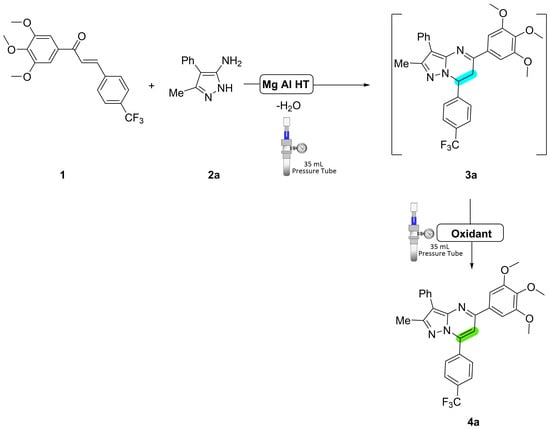
The interaction of chalcone 1 [25] with a certain aminopyrazole derivative 2a as a possible precursor for physiologically active pyrazolo[1,5-a]pyrimidine featuring a trifluoromethyl group was examined. We intended to validate a selection of Mg-Al Hydrotalcite as a solid-base catalyst, previously confirmed in our earlier research under sealed-tube (Q-tube) conditions [19], to enhance the synthesis of the dihydropyrazolo[1,5-a]pyrimidine scaffold. In this study, we further oxidize the synthesized dihydropyrazolo[1,5-a]pyrimidine intermediate 3a without separation in a successive procedure. The catalytic efficacy of the Mg Al HT catalysts [19,23] was assessed in the synthesis of dehydropyrazolo[1,5-a]pyrimidine through the aza-Michael addition reaction, utilizing aminopyrazole derivative 2a and chalcone 1 (Scheme 1) as the initial model reaction to validate the application of Mg Al HT under Q-tube conditions in ethanol. Optimization of its subsequent oxidation to product 4a was investigated (Table 1).
Scheme 1.
Model reaction for the synthesis of pyrazolo[1,5-a]pyrimidine 4a under Q-tube conditions.
Table 1.
Optimization of oxidant type and oxidant loading for the one-pot Q-tube-assisted synthesis of pyrazolo[1,5-a]pyrimidine 4a.
Based on our previous finding [19], we used 200 mg of Mg Al HT as a solid base catalyst for the reaction of chalcone 1 with aminopyrazole 2a in ethanol under Q-tube till formation of the intermediate 3a, as examined by TLC, when the starting materials were no longer detectable in TLC (this took 15 min, which is denoted as time 1). Subsequently, several oxidants were scanned without separating intermediate 3 (Table 1).
Table 1 shows that three different oxidants were scanned for our reaction depicted in Scheme 1; sodium persulfate (Na2S2O8) gives the highest isolated yield (92%) and the shortest reaction time (10 min) [this time is denoted as time 2] (Entry 2), indicating the most efficient oxidation under the Q tube conditions. This fits with the strong oxidizing power of persulfate and its ability to generate sulfate radical anions under thermal/pressure conditions. Selenium oxide (SeO2) gives an almost identical yield (90%) but needs a slightly longer time (15 min) (Entry 3). NBS is clearly less effective: lower yield (77%) and longer time (30 min) (Entry 1). Mechanistically, NBS is primarily a brominating agent that can act as a mild oxidant via radical pathways, but it is not a strong clean dehydrogenation/aromatization reagent. The lower yield and longer time suggest competing bromination/side reactions and incomplete oxidation of the dehydro system. Therefore, among the oxidants examined, sodium persulfate was selected as the oxidant of choice. In addition to providing the highest yield in the shortest reaction time, Na2S2O8 is an inexpensive and readily available inorganic salt whose reduction product is an environmentally benign sulfate [27]. Persulfate-based oxidation processes are widely applied in environmental remediation and are considered compatible with green-chemistry guidelines. In contrast, selenium dioxide, although efficient, generates toxic selenium waste and requires stricter handling and disposal procedures [28], which reduces its attractiveness from both economic and environmental perspectives. The amount of sodium persulfate was optimized (Entries 2 and 4–6), in which it was found that 3 mol% is the best amount that attained 91% yield in 10 min under Q tube reaction. To the best of our knowledge, this is the first application of sodium persulfate as an oxidant for the aromatization of dehydro-pyrazolo[1,5-a]pyrimidines under Q-tube conditions. To evaluate the effect of Q-tube heating, the model reaction was also conducted under conventional reflux using the same substrate ratio, catalyst loading, solvent volume, and oxidant loading. Under conventional reflux, pyrazolo[1,5-a]pyrimidine 4a was obtained in 80% isolated yield after 2 h, whereas the Q-tube protocol afforded the product in 91% isolated yield within a substantially shorter overall reaction time. The improved performance under Q-tube conditions is plausibly attributed mainly to heating the sealed reaction mixture above the normal boiling point of ethanol under autogenous pressure. The higher reaction temperature is expected to accelerate the base-catalyzed aza-Michael addition/cyclocondensation sequence as well as the subsequent persulfate-mediated dehydrogenative aromatization. In addition, the sealed reactor prevents solvent evaporation and helps maintain a constant reaction volume and substrate concentration during heating. The reaction vessel was sealed under ambient air.
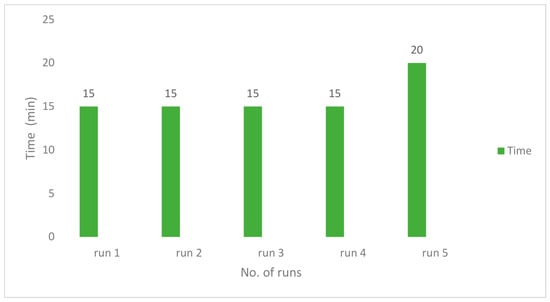
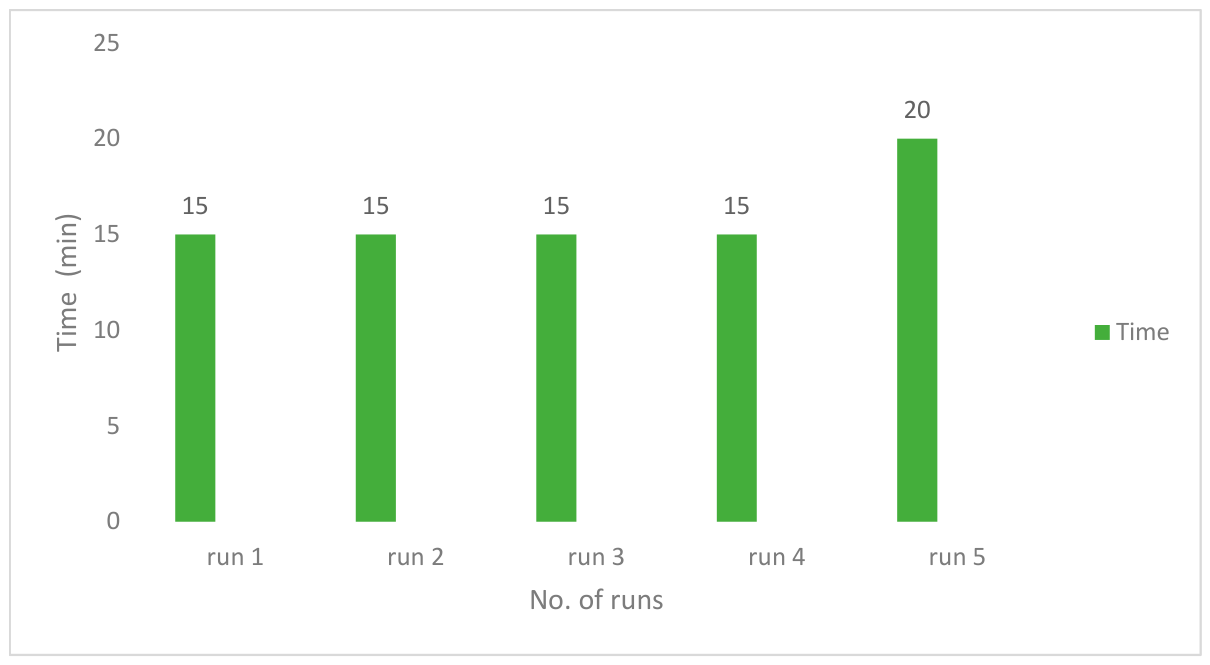
The application of the Q-tube in organic synthesis provides numerous benefits, such as accelerated reaction rates and increased conversions at comparatively moderate temperatures and pressures, utilizing conventional heating blocks or oil baths instead of specialized expensive apparatuses [21]. In comparison to microwave irradiation, Q-tube-assisted heating is more cost-effective and simpler to scale, as it eliminates the requirement for specialized microwave reactors and intricate scale-up procedures, while still facilitating efficient energy transfer and safe operation at elevated pressure [29]. This technique adheres to green chemistry principles by decreasing the energy consumption, reducing the reaction durations, and facilitating the use of heterogeneous recyclable base catalysts, thus diminishing both the environmental and economic impact of the process [30]. Notably, the use of the sustainable Mg-Al HT catalyst plays a key role in this transformation, as it can be reused up to five consecutive cycles without any loss of activity (Figure 2) for the formation of the dehydro intermediate 3a. Notably, each time, the yield of the final product 4a is the same, 92%.
Figure 2.
Reusability of Mg-Al HT for the formation of intermediate 3a.
Figure 2 shows that the solid base catalyst Mg-Al hydrotalcite can be reused for up to four consecutive cycles without any change in reaction time (Time 1) for the formation of dihydropyrazolo[1,5-a]pyrimidine intermediate 3a. The longer reaction time observed in the fifth cycle is attributed to the gradual loss of catalyst mass during recovery and reuse. The overall yield for the formed pyrazolo[1,5-a]pyrimidine 4a does not change in each case until the fourth run after the reaction, 92%.
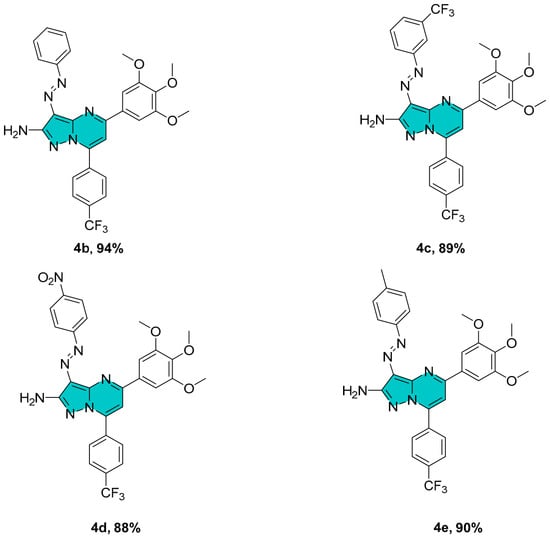
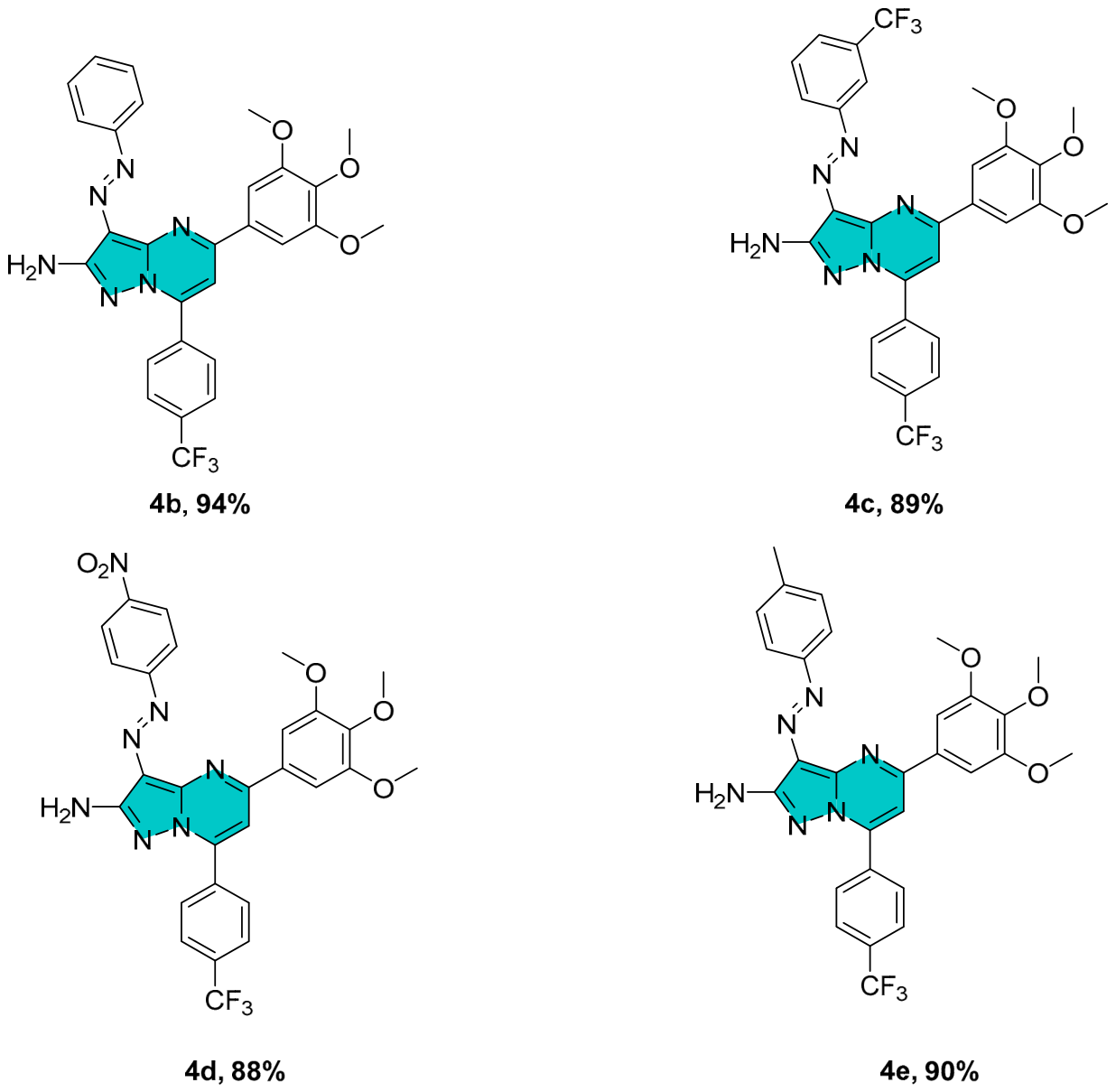
Moreover, the scope and generality of our protocol were extended to test other derivatives as represented in Figure 3. The substrate set was selected from available 5-aminopyrazole precursors that furnished the corresponding dihydropyrazolo[1,5-a]pyrimidine intermediates under the initial cyclization conditions. Four of the examined substrates contain an azo substituent on the pyrazole ring. These substrates were included to evaluate the feasibility of the oxidative aromatization in the presence of an azo chromophore, which may influence the electronic properties, oxidation behavior, and stability of the products. Because azo-substituted pyrazoles constitute a distinct structural subclass relative to simple arylpyrazoles, the present results should not be interpreted as establishing equivalent applicability to all pyrazolo[1,5-a]pyrimidine derivatives.
Figure 3.
The structures of the synthesized pyrazolo[1,5-a]pyrimidine derivatives.
Notably, our one-pot protocol, in which sodium persulfate is added directly without isolating intermediate 3a (Scheme 1), proved clearly superior. To probe the impact of this design, intermediate 3a and the catalyst were first isolated, and 3a was then subjected to oxidation with persulfate under Q-tube conditions to afford 4a. Interestingly, in this stepwise variant, complete conversion required a longer reaction time (15 min), underscoring the advantage of the original one-pot sequence. Notably, the superior performance of the one-pot protocol relative to the oxidation of isolated intermediate 3a may result from preservation of the catalytic reaction environment generated during the cyclization step. In the direct one-pot procedure, Na2S2O8 was added to the crude reaction mixture without removing the Mg-Al hydrotalcite catalyst. Consequently, intermediate 3a remained in contact with the heterogeneous catalyst and in the original ethanol medium during the aromatization step. The basic sites of Mg-Al hydrotalcite may facilitate deprotonation of the dihydropyrazolo[1,5-a]pyrimidine intermediate, whereas the catalyst surface may contribute to persulfate activation under the heated Q-tube conditions. Avoiding filtration, isolation, drying, and redissolution of intermediate 3a may additionally reduce material loss and preserve favorable substrate dispersion and catalyst–substrate interactions.
Residual reactants, soluble intermediates, or minor byproducts in the crude reaction mixture may also influence the oxidation kinetics. However, their individual contributions were not examined in the present work; therefore, no specific promotional role is assigned to these species. The accelerated oxidation is accordingly presented as an empirical advantage of the one-pot procedure, while detailed mechanistic elucidation will require additional control experiments.
For the role of the presence of Mg-Al HT during the oxidation step (one-pot reaction), we performed a control experiment using isolated intermediate 3a under otherwise identical Q-tube conditions in the presence and absence of Mg-Al hydrotalcite. The oxidation was conducted using isolated 3a (1 mmol), sodium persulfate 3 mol% relative to 3a), ethanol (10 mL), at 110 °C, for 10 min, in a sealed Q-tube reactor under air.
In the absence of Mg-Al hydrotalcite, product 4a was obtained in 69% isolated yield after 20 min. In contrast, in the presence of Mg-Al hydrotalcite, product 4a was obtained in 91% isolated yield in 10 min under the same conditions. These results demonstrate that Mg-Al hydrotalcite improves the efficiency of the oxidation step under the employed Q-tube conditions.
A second control experiment was performed under an inert atmosphere to evaluate the potential contribution of molecular oxygen. The sealed-tube reactor was purged with nitrogen before sealing to minimize the oxygen content in the headspace. Under these conditions, product 4a was obtained in 73% isolated yield after 10 min, whereas the corresponding reaction performed under non-purged conditions afforded 4a in 91% isolated yield. The lower yield under nitrogen demonstrates that the presence of air, and thus molecular oxygen, has a beneficial effect on the oxidation. Nevertheless, the substantial conversion observed under nitrogen indicates that sodium persulfate also promotes oxidation under the reaction conditions. Accordingly, the oxidation is most appropriately described as being enhanced by molecular oxygen in the presence of sodium persulfate, rather than being attributed exclusively to either oxidant.
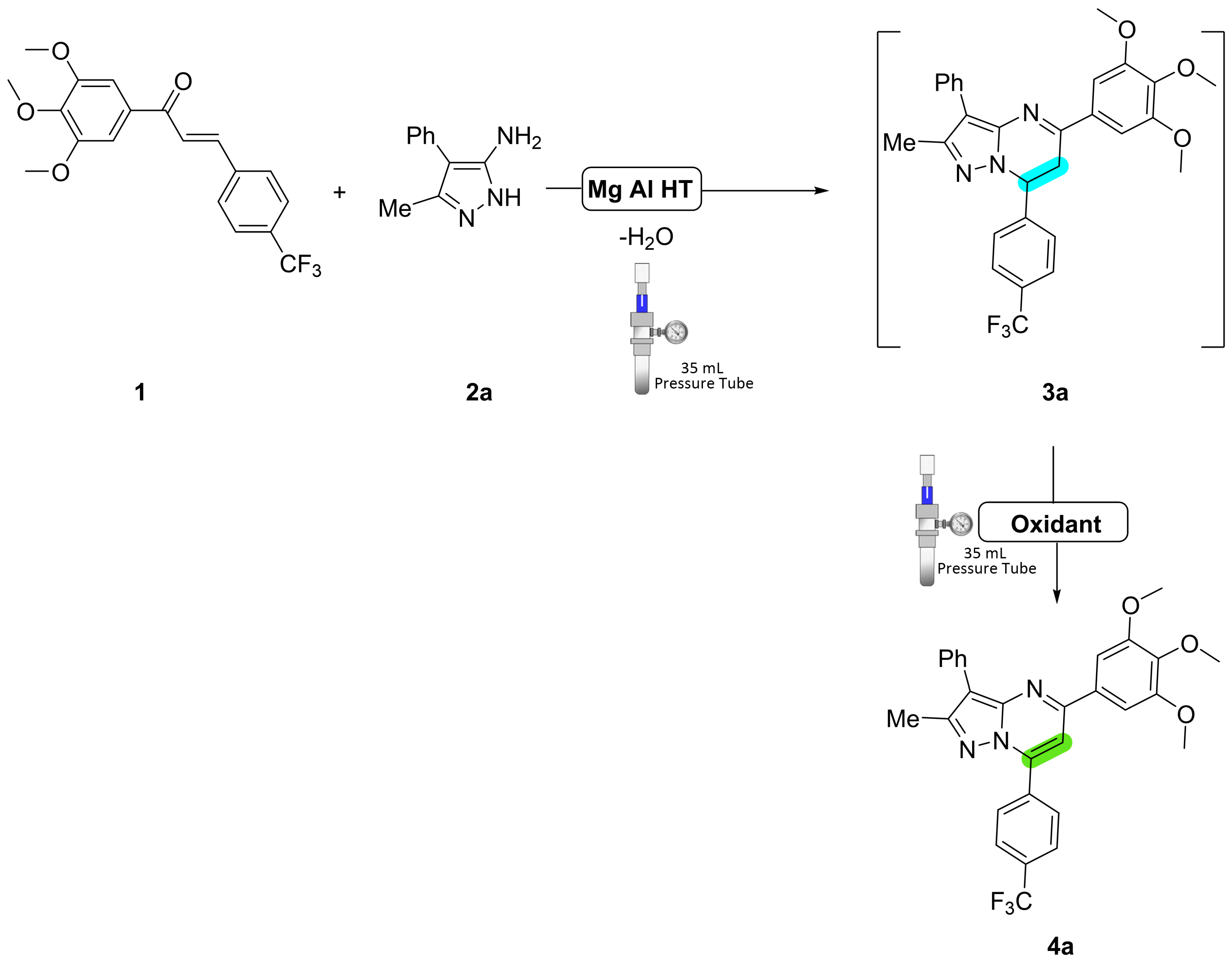
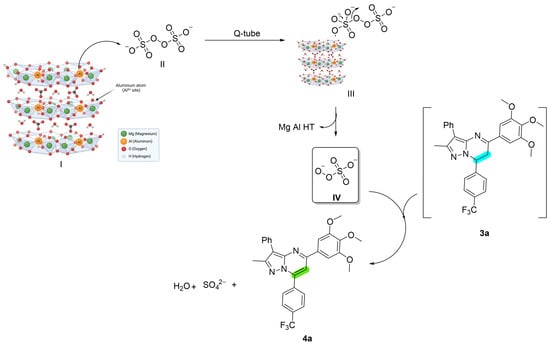
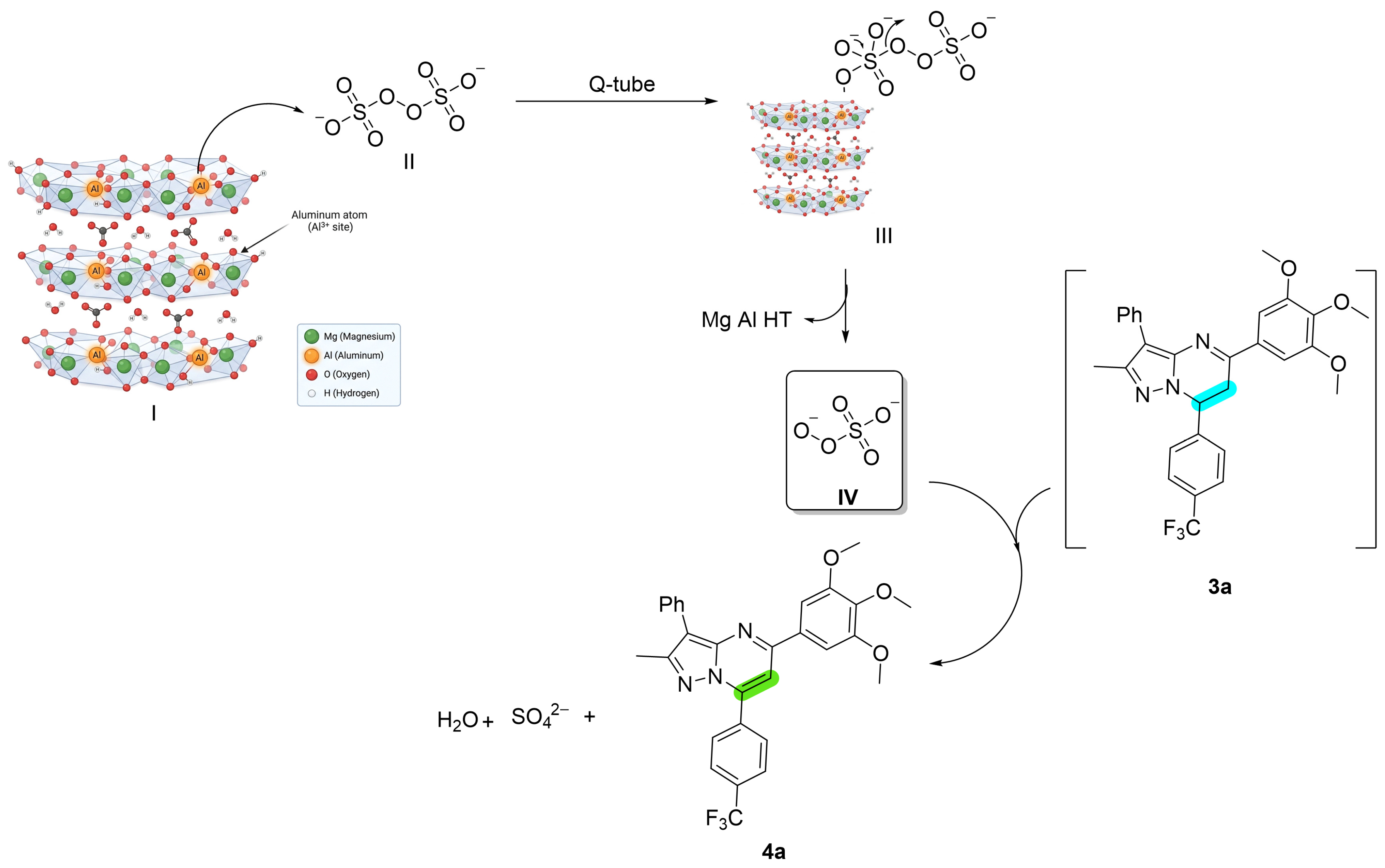
The control experiments indicate that Mg–Al hydrotalcite improves the efficiency of the oxidation stage and that molecular oxygen enhances the reaction under air-containing conditions. The observed effect may involve surface-base-assisted deprotonation of intermediate 3a and/or interactions between sodium persulfate and hydroxylated/basic surface sites. However, the identities of the active surface sites and reactive oxidizing species were not determined. Therefore, no detailed molecular mechanism is proposed. Scheme 2 illustrates the overall oxidative aromatization of dihydropyrazolo[1,5-a]pyrimidine intermediate 3a to the corresponding pyrazolo[1,5-a]pyrimidine product 4a under the applied sealed-tube conditions. The results indicate that the oxidation is promoted by sodium persulfate and enhanced in the presence of molecular oxygen.
Scheme 2.
Overall oxidative aromatization of dihydropyrazolo[1,5-a]pyrimidine intermediate 3a to pyrazolo[1,5-a]pyrimidine product 4a under the applied sealed-tube conditions.
4. Conclusions
We developed a Q-tube-assisted one-pot method for the sustainable synthesis of polymethoxylated pyrazolo[1,5-a]pyrimidine derivatives from trimethoxyacetophenone-based chalcones and 5-aminopyrazoles in ethanol utilizing Mg Al HT as a base catalyst and sodium persulfate as an oxidant. The sequence advances through the swift generation of dihydropyrazolo[1,5-a]pyrimidine intermediates under Q tube conditions, followed by in situ aromatization employing sodium persulfate as an eco-friendly oxidant, yielding the target pyrazolo[1,5-a]pyrimidines with isolated yields of up to 91–92% within 10 min for the oxidation process. Systematic oxidant screening revealed that, under the tested conditions, the addition of sodium persulfate promoted aromatization of the dihydropyrazolo[1,5-a]pyrimidine intermediate. Nitrogen-purging experiments showed that the presence of air enhanced the oxidation, indicating that molecular oxygen contributes to the overall process. Accordingly, the individual redox roles of sodium persulfate and molecular oxygen cannot be fully separated on the basis of the present data.
Among the additives examined under the tested air-containing sealed-tube conditions, sodium persulfate afforded the highest isolated yield within the shortest reaction time, exhibiting excellent efficiency alongside a more advantageous environmental profile due to its innocuous sulfate byproducts. The Mg Al hydrotalcite catalyst can be employed for a minimum of four successive cycles without considerable decline in activity, and the one-pot process demonstrated kinetic superiority over a stepwise alternative where the intermediate is isolated before oxidation. Collectively, these attributes’ rapid reaction times, elevated yields, recyclable heterogeneous catalysis, minimal oxidant usage, and the employment of ethanol as an environmentally friendly solvent emphasize the significance of this methodology as a sustainable pathway to medicinally pertinent pyrazolo[1,5-a]pyrimidine scaffolds and accentuate the wider applicability of Q-tube technology in green heterocyclic synthesis.
Supplementary Materials
The following supporting information can be downloaded at https://www.mdpi.com/article/10.3390/suschem7030054/s1, Figure S1: FT-IR of the as-synthesized Mg-Al HT; Figure S2: NMR Charts of the synthesized Compounds.
Funding
This research received no external funding.
Institutional Review Board Statement
Not applicable.
Informed Consent Statement
Not applicable.
Data Availability Statement
All data are available on request.
Acknowledgments
The author acknowledges King Abdulaziz University for support.
Conflicts of Interest
The author declares no conflicts of interest.
References
- Elkanzi, N.A.A.; Hrichi, H.; Alolayan, R.A.; Derafa, W.; Zahou, F.M.; Bakr, R.B. Synthesis of chalcone derivatives and their biological activities: A review. ACS Omega 2022, 7, 27769–27786. [Google Scholar] [CrossRef] [Scilit]
- Bois, F.; Beney, C.; Boumendjel, A.; Mariotte, A.-M.; Conseil, G.; Di Pietro, A. Halogenated chalcones with high-affinity binding to P-Glycoprotein: Potential modulators of multidrug resistance. J. Med. Chem. 1998, 41, 4161–4164. [Google Scholar] [CrossRef] [Scilit]
- Bois, F.; Boumendjel, A.; Mariotte, A.-M.; Conseil, G.; Di Petro, A. Synthesis and biological activity of 4-alkoxy chalcones: Potential hydrophobic modulators of p-glycoprotein-mediated multidrug resistance. Bioorg. Med. Chem. 1999, 9, 2691–2695. [Google Scholar] [CrossRef] [Scilit]
- Boumendjel, A.; Macalou, S.; Valdameri, G.; Pozza, A.; Gauthier, C.; Arnaud, O.; Nicolle, E.; Magnard, S.; Falson, P.; Terreux, R.; et al. Targeting the multidrug ABCG2 transporter with flavonoidic inhibitors: In vitro optimization and in vivo validation. Curr. Med. Chem. 2011, 18, 3387–3401. [Google Scholar] [CrossRef] [Scilit]
- Han, Y.; Riwanto, M.; Go, M.-L.; Ee, P.L.R. Modulation of breast cancer resistance protein (BCRP/ABCG2) by non-basic chalcone analogues. Eur. J. Pharm. Sci. 2008, 35, 30–41. [Google Scholar] [CrossRef] [Scilit]
- Valdameri, G.; Gauthier, C.; Terreux, R.; Kachadourian, R.; Day, B.J.; Winnischofer, S.M.B.; Rocha, M.E.M.; Frachet, V.; Ronot, X.; Di Pietro, A.; et al. Investigation of chalcones as selective inhibitors of the breast cancer resistance protein: Critical role of methoxylation in both inhibition potency and cytotoxicity. J. Med. Chem. 2012, 55, 3193–3200. [Google Scholar] [CrossRef] [Scilit]
- Pereira, R.; Silva, A.M.S.; Ribeiro, D.; Silva, V.L.M.; Fernandes, E. Bis-chalcones: A review of synthetic methodologies and anti-inflammatory effects. Eur. J. Med. Chem. 2023, 252, 115280. [Google Scholar] [CrossRef] [Scilit]
- Yang, S.; Miao, G.; Wang, X.; Zhou, F.; Yuan, Z.; Wei, F.; Ji, L.; Wang, X.; Dong, G.; Wang, Y. Development of membrane-targeting chalcone derivatives as antibacterial agents against multidrug-resistant bacteria. Eur. J. Med. Chem. 2024, 280, 116969. [Google Scholar] [CrossRef] [Scilit]
- Guglielmi, P.; Mathew, B.; Secci, D.; Carradori, S. Chalcones: Unearthing their therapeutic possibility as monoamine oxidase B inhibitors. Eur. J. Med. Chem. 2020, 205, 112650. [Google Scholar] [CrossRef] [Scilit]
- Mahmoud, A.; Elkhalifa, D.; Alali, F.; Al Moustafa, A.E.; Khalil, A. Novel polymethoxylated chalcones as potential compounds against KRAS-mutant colorectal cancers. Curr. Pharm. Des. 2020, 26, 1622–1633. [Google Scholar] [CrossRef] [Scilit]
- Toublet, F.-X.; Laurent, A.; Pouget, C. A review of natural and synthetic chalcones as anticancer agents targeting topoisomerase enzymes. Molecules 2025, 30, 2498. [Google Scholar] [CrossRef] [Scilit]
- Yin, H.; Long, J.; Kong, Y.; Yin, X.; Liu, Y.; Xu, Y.; Nie, Y.; Liu, X.; Tang, Y.; Shi, X.; et al. Synthesis and biological evaluation of polymethoxy homoisoflavanones as tubulin polymerization inhibitors. Eur. J. Med. Chem. 2026, 303, 118395. [Google Scholar] [CrossRef] [Scilit]
- Chiaradia, L.D.; dos Santos, R.; Vitor, C.E.; Vieira, A.A.; Leal, P.C.; Nunes, R.J.; Calixto, J.B.; Yunes, R.A. Synthesis and pharmacological activity of chalcones derived from 2,4,6-trimethoxyacetophenone in RAW 264.7 cells stimulated by LPS: Quantitative structure–activity relationships. Bioorg. Med. Chem. 2008, 16, 658–667. [Google Scholar] [CrossRef] [Scilit]
- Jin, X.Y.; Lee, S.H.; Park, P.H.; Hur, J.; Kim, S.A.; Kim, H.S.; Sohn, D.H. 2′-Methoxy-4′,6′-bis(methoxymethoxy)chalcone inhibits nitric oxide production in lipopolysaccharide-stimulated RAW 264.7 macrophages. Basic Clin. Pharmacol. Toxicol. 2010, 106, 454–460. [Google Scholar] [CrossRef] [Scilit]
- Mahajan, A.T.; Shivani; Datusalia, A.K.; Coluccini, C.; Coghi, P.; Chaudhary, S. Pyrazolo[1,5-a]pyrimidine as a prominent framework for tropomyosin receptor kinase (Trk) inhibitors—Synthetic strategies and SAR insights. Molecules 2024, 29, 3560. [Google Scholar] [CrossRef] [Scilit]
- Arias-Gómez, A.; Godoy, A.; Portilla, J. Functional pyrazolo[1,5-a]pyrimidines: Current approaches in synthetic transformations and uses as an antitumor scaffold. Molecules 2021, 26, 2708. [Google Scholar] [CrossRef] [Scilit]
- Kolosov, M.A.; Beloborodov, D.A.; Kulyk, O.G.; Orlov, V.D. Synthesis of 2,5,7-triaryl-4,7(6,7)-dihydropyrazolo[1,5-a]pyrimidine-3-carbonitriles by reaction of 5(3)-amino-3(5)-aryl-1H-pyrazole-4-carbonitriles with chalcones. J. Heterocycl. Chem. 2014, 51, E89–E92. [Google Scholar] [CrossRef] [Scilit]
- Hammouda, M.M.; Gaffer, H.E.; Elattar, K.M. Insights into the medicinal chemistry of heterocycles integrated with a pyrazolo[1,5-a]pyrimidine scaffold. RSC Med. Chem. 2022, 13, 1150–1196. [Google Scholar] [CrossRef] [Scilit]
- Al-Romaizan, A.N.; Bawaked, S.M.; Saleh, T.; Moustafa, M.M. The Q-tube-assisted green sustainable synthesis of fused azines: New synthetic opportunities via innovative green technology. Appl. Sci. 2023, 13, 11864. [Google Scholar] [CrossRef] [Scilit]
- Al-Zaydi, K.M.; Saleh, T.S.; Alqahtani, N.F.; Bagazi, M.S. Bis(pyridine)enaminone as a precursor for the synthesis of bis(azoles) and bis(azine) utilizing recent economic green chemistry technology: The Q-tube system. Molecules 2023, 28, 2355. [Google Scholar] [CrossRef] [Scilit]
- Nacca, F.G.; Merlino, O.; Mangiavacchi, F.; Krasowska, D.; Santi, C.; Sancineto, L. The Q-tube system, a nonconventional technology for green chemistry practitioners. Curr. Green Chem. 2017, 4, 58–66. [Google Scholar] [CrossRef] [Scilit]
- El-Bendary, M.M.; Akhdhar, A.; Saleh, T. Novel biologically active paddlewheel-like palladium thiocyanate complex catalyzed cyanation of alkyl bromide utilizing Q-tube system: A green perspective. Polyhedron 2024, 252, 116889. [Google Scholar] [CrossRef] [Scilit]
- Mokhtar, M.; Saleh, T.S.; Basahel, S.N. Mg–Al hydrotalcites as efficient catalysts for aza-Michael addition reaction: A green protocol. J. Mol. Catal. A Chem. 2012, 353–354, 122–131. [Google Scholar] [CrossRef] [Scilit]
- Saleh, T.S.; Narasimharao, K.; Ahmed, N.S.; Basahel, S.N.; Al-Thabaiti, S.A.; Mokhtar, M. Mg–Al hydrotalcite as an efficient catalyst for microwave-assisted regioselective 1,3-dipolar cycloaddition of nitrilimines with the enaminone derivatives: A green protocol. J. Mol. Catal. A Chem. 2013, 367, 12–22. [Google Scholar] [CrossRef] [Scilit]
- Edwards, M.L.; Stemerick, D.M.; Sunkara, P.S. Chalcones: A new class of antimitotic agents. J. Med. Chem. 1990, 33, 1948–1954. [Google Scholar] [CrossRef] [Scilit]
- Saleh, T.S.; Mekky, A.E.M.; Al-Bogami, A.S. Convergent synthesis strategy of novel fused azines: 1H-15N HMBC NMR as a tool for assertion of the site selectivity of aza-Michael addition reaction. Curr. Org. Synth. 2016, 13, 278–290. [Google Scholar] [CrossRef] [Scilit]
- Lin, D.; Fu, Y.; Li, X.; Wang, L.; Hou, M.; Hu, D.; Li, Q.; Zhang, Z.; Xu, C.; Qiu, S.; et al. Application of persulfate-based oxidation processes to address diverse sustainability challenges: A critical review. J. Hazard. Mater. 2022, 440, 129722. [Google Scholar] [CrossRef] [Scilit]
- Młochowski, J.; Wójtowicz-Młochowska, H. Developments in synthetic application of selenium(IV) oxide and organoselenium compounds as oxygen donors and oxygen-transfer agents. Molecules 2015, 20, 10205–10243. [Google Scholar] [CrossRef] [Scilit]
- Al-Zaydi, K.M.; Saleh, T.S.; Alqahtani, N.F.; Bagazi, M.S. Q-tube-assisted green synthesis of bis(azoles) and bis(azines) linked to arene unit. Polycycl. Aromat. Compd. 2023, 43, 3887–3895. [Google Scholar] [CrossRef] [Scilit]
- AlMarzouq, D.S.; Elnagdi, N.M.H. Glycerol and Q-tubes: Green catalyst and technique for synthesis of polyfunctionally substituted heteroaromatics and anilines. Molecules 2019, 24, 1806. [Google Scholar] [CrossRef] [Scilit]

Disclaimer/Publisher’s Note: The statements, opinions and data contained in all publications are solely those of the individual author(s) and contributor(s) and not of MDPI and/or the editor(s). MDPI and/or the editor(s) disclaim responsibility for any injury to people or property resulting from any ideas, methods, instructions or products referred to in the content. |
© 2026 by the author. Licensee MDPI, Basel, Switzerland. This article is an open access article distributed under the terms and conditions of the Creative Commons Attribution (CC BY) license.