


Abstract
This study investigates the synthesis of La0.6Ca0.4FeO3 (LCF) perovskite via a ball milling method for application in reverse water–gas shift chemical looping (RWGS-CL) for CO2-to-CO conversion. Unlike conventional wet-chemical routes such as the Pechini method, the ball milling approach offers a solvent-free, scalable synthesis using low-cost metal oxide precursors (e.g., La2O3, CaO, Fe2O3). Structural analysis by XRD confirmed the successful formation of single-phase cubic perovskite, with no secondary phases when using oxide precursors. Crystallite size increased with calcination temperature, from 118.9 Å (no calcination) to 404.3 Å (1050 °C). BET analysis revealed a decrease in surface area from 2.5 m2/g (no calcination) to 0.51 m2/g (1050 °C), consistent with sintering at higher temperatures. TPR-H2 and TPO-CO2 studies revealed that non-calcined LCF possesses slightly enhanced redox properties, with oxygen vacancy formation and CO2 reoxidation activity both at 500 °C. RWGS-CL experiments demonstrate that all LCF samples exhibit stable CO production (910–970 µmol/gLCF) over multiple cycles at 500 °C, with comparable performance across calcination conditions. A cost and sensitivity analysis reveals that the ball milling method had lower synthesis costs by approximately 92% at the laboratory-scale and 88% at the industrial-scale compared to the Pechini method, highlighting its strong potential for large-scale perovskite production.
1. Introduction
The increasing availability of carbon dioxide (CO2) has intensified the search for efficient and scalable CO2 conversion technologies. A promising approach is the reverse water–gas shift chemical looping (RWGS-CL) process, which enables the conversion of CO2 into carbon monoxide (CO), a valuable feedstock for synthetic fuels and chemicals [1]. RWGS-CL operates through a two-step redox cycle, where a metal oxide is first reduced by a reducing agent, typically hydrogen (H2), followed by reoxidation with CO2 to produce CO [2]. This process offers advantages over conventional RWGS reactions by avoiding the direct mixing of reactants, minimizing unwanted side reactions, and enhancing CO selectivity [3]. Perovskite-type oxides have emerged as attractive redox materials for RWGS-CL due to their ability to reversibly form and eliminate oxygen vacancies, facilitating CO2 reduction under cyclic operating conditions [4,5].
Previous studies have demonstrated the efficacy of La-based perovskites, such as La0.5Ba0.5FeO3 (LBF), La0.75Sr0.25FeO3 (LSF), and La0.6Ca0.4FeO3 (LCF), in enhancing CO yield and stability in RWGS-CL [6,7,8]. Supported perovskite, for example, silica-supported LBF (LBF/SiO2) and silica-supported LSF (LSF/SiO2), have been shown to improve CO2 adsorption and increase carbonate formation, leading to enhanced reaction performance [9,10]. However, there remains a need to explore alternative perovskite compositions and synthesis methods to optimize material properties for long-term application.
Conventional synthesis methods for perovskite oxides typically involve solid-state reactions or sol–gel techniques [11,12]. The solid-state reaction method requires high-temperature calcination over long times, often leading to large particle sizes and limited control over defect structures [13,14,15]. Sol–gel based techniques, such as the Pechini method, provide better homogeneity but can involve complex processing steps (e.g., long stirring to transfer from solution to gel, and long-time/high-temperature calcination) and expensive precursors [16,17,18] and solvents. Thus, the sol–gel-based technique is difficult to scale up. In this study, we investigate La0.6Ca0.4FeO3 (LCF) as a potential perovskite candidate for RWGS-CL. Unlike conventional solid-state synthesis, ball milling, a technique known to enhance material homogeneity, reduce particle size, and promote defect formation [19], is employed to achieve the targeted material. Ball milling introduces high-energy mechanical forces that improve mixing and induce structural modifications, which may lead to superior redox performance [20].
In this work, the direct synthesis and the effect of calcination temperature are examined for their impact on the physicochemical properties. By systematically evaluating the structural, redox, and catalytic properties of ball-milled LCF, we aim to elucidate its potential advantages over previously studied perovskite materials. This work provides new insights into the role of synthesis methods in optimizing perovskite performance for CO2 conversion, advancing the development of efficient chemical looping systems.
2. Experimental Methods
2.1. Synthesis of La0.6Ca0.4FeO3 (LCF) by Ball Milling
LCF was synthesized using a vertical planetary ball mill (XQM-8A; Tencan; Changsha, China). In this study, metal oxide precursors are prepared by calcination of metal nitrates, aiming to compare the resulting perovskite with that made from the same metal nitrate precursors. Similar perovskites would be formed by directly using metal oxide precursors. The precursor materials included La2O3 (derived from the calcination of La(NO3)3·6H2O, 800 °C, 4 h under air; Heeger Materials, ≥99.99%; Denver, CO, United States), CaO (HiMedia, ≥95%; Kennett Square, PA, United States), and Fe2O3 (obtained from the calcination of Fe(NO3)3·9H2O, 600 °C, 4 h under air; Sigma-Aldrich, ≥99.95%; St. Louis, MO, United States). Additionally, to compare the effects of different precursor materials, ball milling was performed separately using La(NO3)3·6H2O and Fe(NO3)3·9H2O to synthesize a control sample—LaFeO3 (LF). The goal was to determine which precursor combination yields better performance in RWGS-CL. The ball milling process was conducted at 550 rpm for 8 h with a ball-to-powder ratio (BPR) of 10:1. Each milling batch produced approximately 100 g of the respective perovskite material. Following ball milling, the powder samples underwent different post-treatment conditions: no calcination (LCF-NC or LF-NC), calcination at 800 °C (LCF-800 or LF-800), 950 °C (LCF-950 or LF-950), or 1050 °C (LCF-1050 or LF-1050), each for 8 h.
2.2. Characterization Techniques
2.2.1. X-Ray Diffraction (XRD)
X-ray diffraction (XRD) was used to analyze the crystal structure of fresh and thermally processed samples. The measurements were performed using a Bruker X-ray Diffractometer (Bruker; Massachusetts, UK) with Cu Kα radiation (λ = 0.154 nm) over a 2θ range of 20° to 80°, employing a step size of 0.0102° and a step time of 1.2 s/step.
2.2.2. N2-Physisorption
N2-physisorption was measured using a Quantachrome Autosorb IQ analyzer (Anton Paar; Graz, Austria) to determine the specific surface area. Samples were degassed at 300 °C, and N2 adsorption–desorption isotherms at 77 K were collected ( = 0.05–0.3). Brunauer–Emmett–Teller (BET) surface area analysis was conducted to determine the surface area, and the Barrett–Joyner–Halenda (BJH) method was conducted to determine the porosity of the samples.
2.2.3. Scanning Electron Microscopy (SEM)
Scanning electron microscopy (SEM) was performed using a Hitachi SU70 scanning electron microscope (Hitachi; Santa Clara, CA, United States) to examine the morphology and particle size of the prepared LCF samples. Prior to analysis, the powder samples were dispersed onto conductive carbon tape mounted on aluminum SEM stubs. The samples were imaged under high vacuum at appropriate accelerating voltages and magnifications to obtain representative surface morphology images. Particle sizes were estimated from the SEM images by measuring multiple particles using image analysis software, and the average particle size was reported.
2.2.4. Redox Properties Testing
A lab-scale microreactor system (custom-built) was used to conduct temperature-programmed and four-cycle RWGS-CL experiments. Approximately 100 mg of the sample was placed between glass wool plugs in a quartz U-tube reactor, heated by a furnace. Gas flow was regulated using mass flow controllers (Alicat; Tucson, AZ, United States), with He, H2, and CO2 (Airgas, purity ≥ 99.99%) as feed gases. The reactor effluent was analyzed using a mass spectrometer (MS; MKS Cirrus 3; Andover, MA, USA).
For temperature-programmed reduction under hydrogen (TPR-H2), approximately 100 mg of the sample was placed between glass wool plugs in a quartz U-tube reactor. The reactor was heated from room temperature to 800 °C at a rate of 10 °C/min under a 10% H2/He gas flow (50 sccm).
For temperature-programmed oxidation with CO2 (TPO-CO2), approximately 100 mg of the sample was placed between glass wool plugs in a quartz U-tube reactor. The samples were first reduced at 500 °C for 30 min in 10% H2/He (50 sccm) and then cooled to 100 °C under He (50 sccm). The samples were subsequently heated to 800 °C at 10 °C/min in a 10% CO2/He flow (50 sccm).
For the four-cycle RWGS-CL experiments (looping), approximately 100 mg of the sample was placed between glass wool plugs in a quartz U-tube reactor. The sample was first heated to 500 °C in He (50 sccm). Reduction was performed in 10% H2/He (50 sccm, 30 min), followed by oxidation in 10% CO2/He (50 sccm, 30 min). Each reduction-oxidation sequence constituted one cycle, with four cycles conducted per material.
2.2.5. Cost and Sensitivity Analysis
To compare the economic feasibility of the ball milling method for synthesizing LCF with the conventional Pechini method, a cost analysis was performed considering the cost of the precursors, energy required, equipment needed, and process time for lab-scale (100 g) and industrial-scale (1000 kg) production of the LCF material.
Catcost v1.1.0 model [21] was used to estimate manufacturing cost. This free tool adjusts material cost estimates according to the entered production scale, which helps with early-stage cost estimations and decision-making [22]. 2021 is considered the basis year, with losses during production (waste/spoilage) equal to 3%. The description of assumptions made, including input costs, is provided in the Supporting Information.
For each synthesis method, the sensitivity analysis was performed to understand the impact of varying a certain cost input on the net cost. This is an important step for evaluating uncertainty and for better understanding opportunities and risks, facilitating decision-making. It provides information to visualize where the process can be improved.
The sensitivity analysis was performed on raw material cost, waste losses, product mass yield, and selling margin, with a ± 30% variation in precursor cost. Sensitivity analysis was conducted using the Catcost v1.1.0 model, as described for cost analysis.
3. Results and Discussion
3.1. Structural and Morphological Properties
3.1.1. XRD Analysis
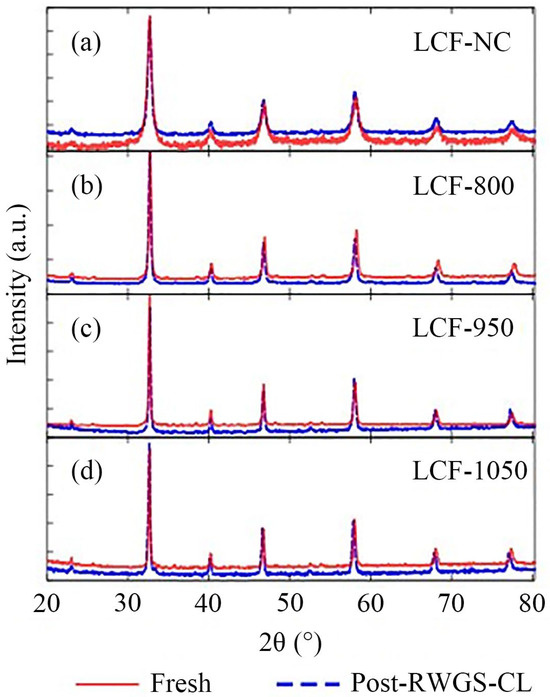
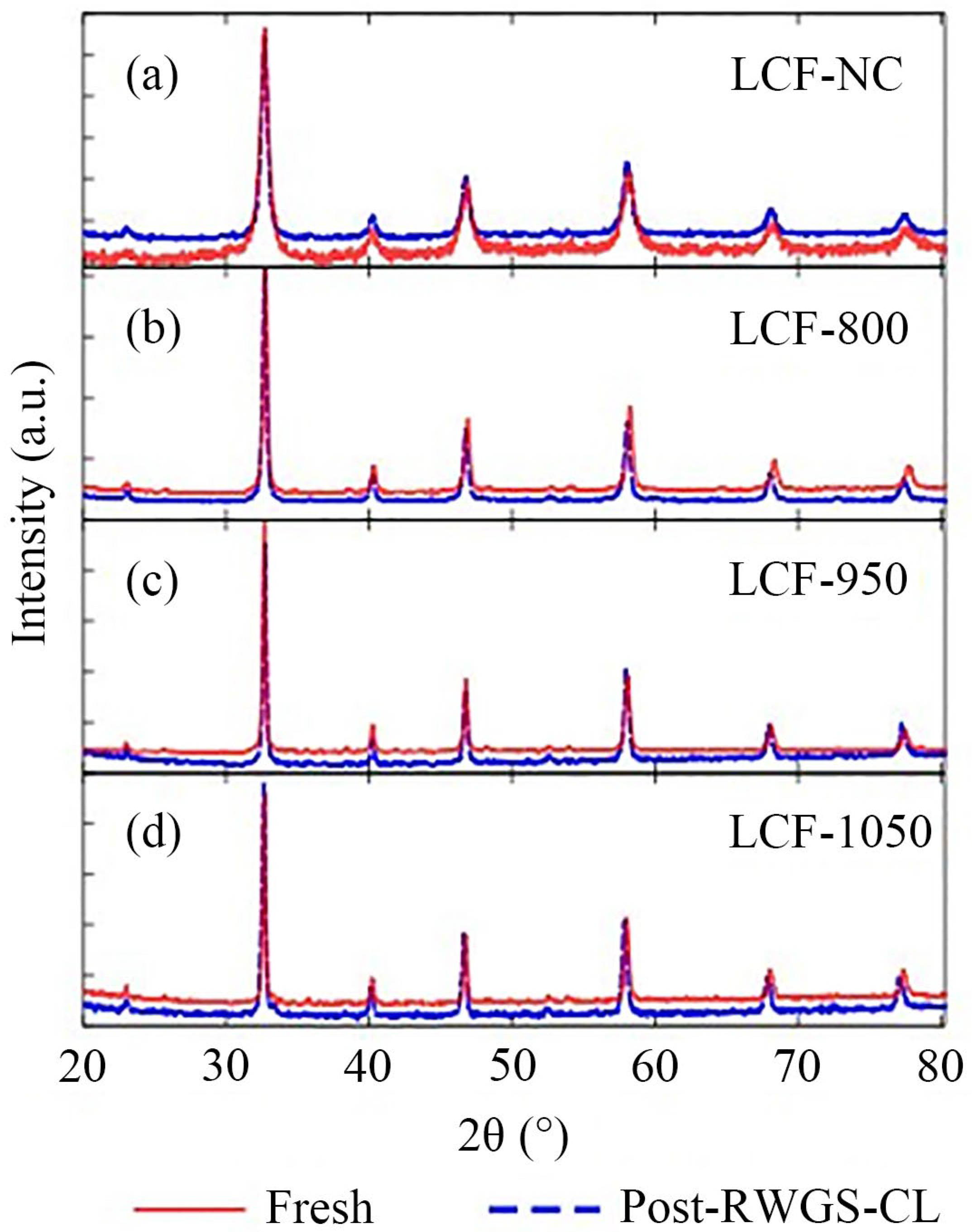
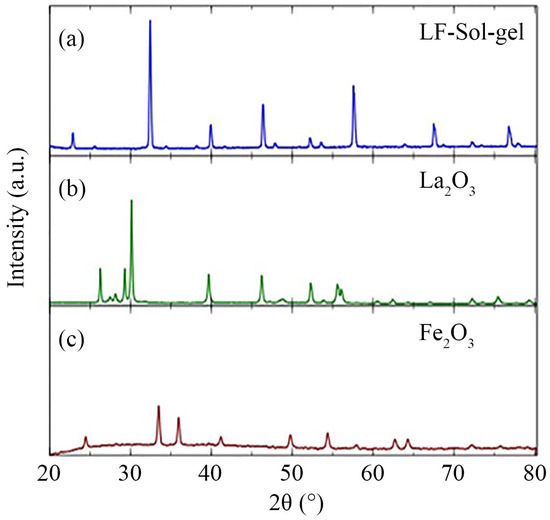
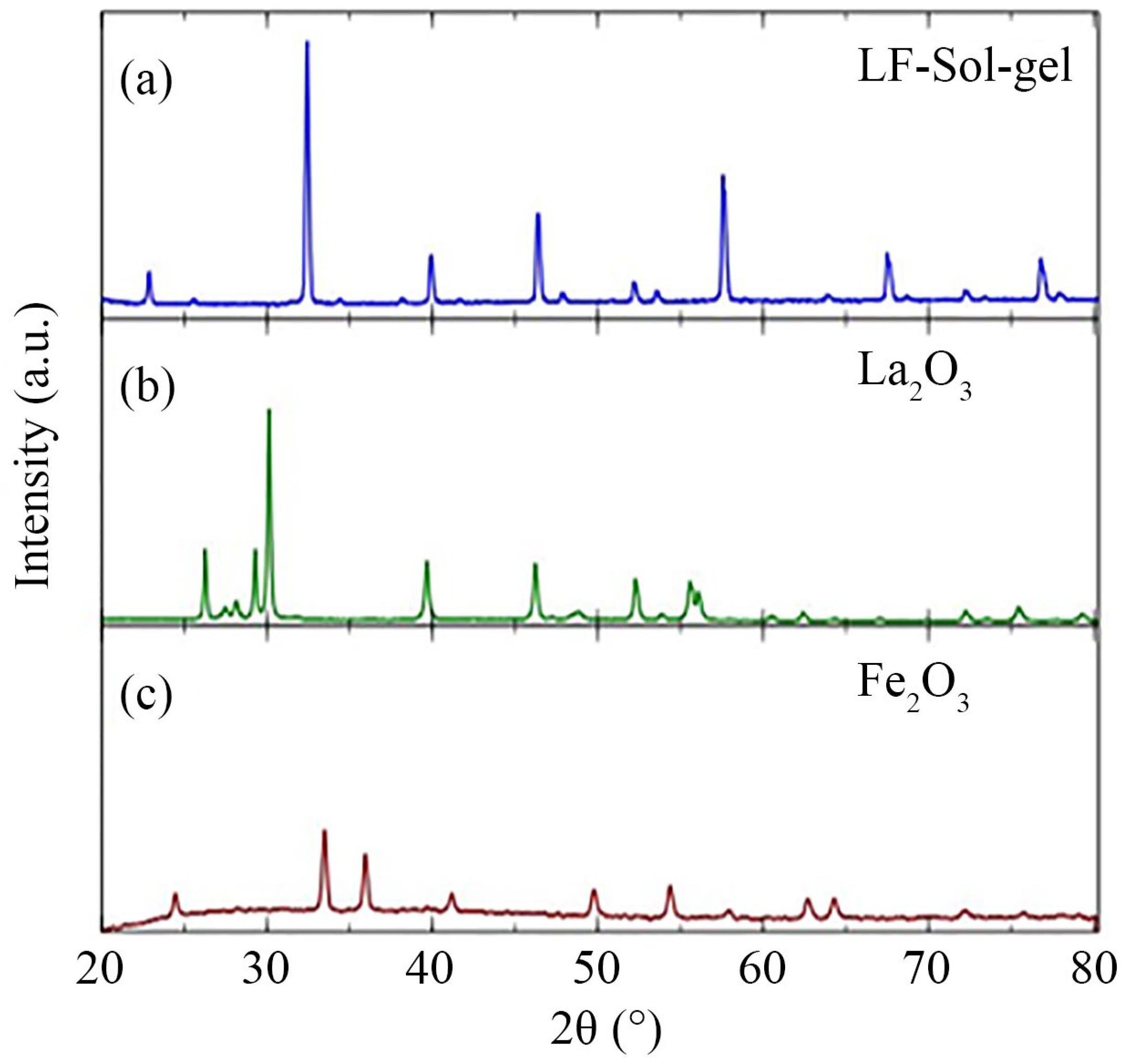
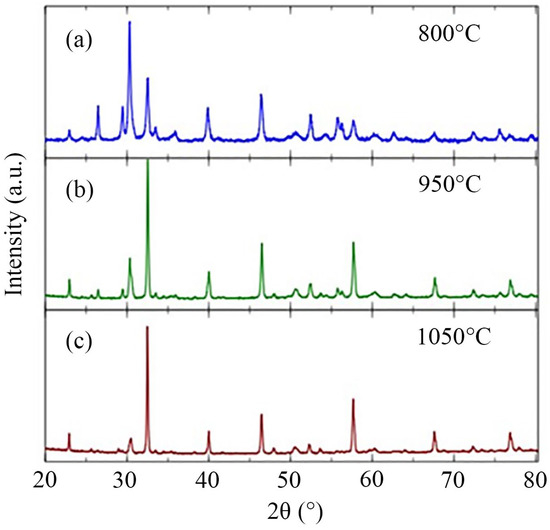
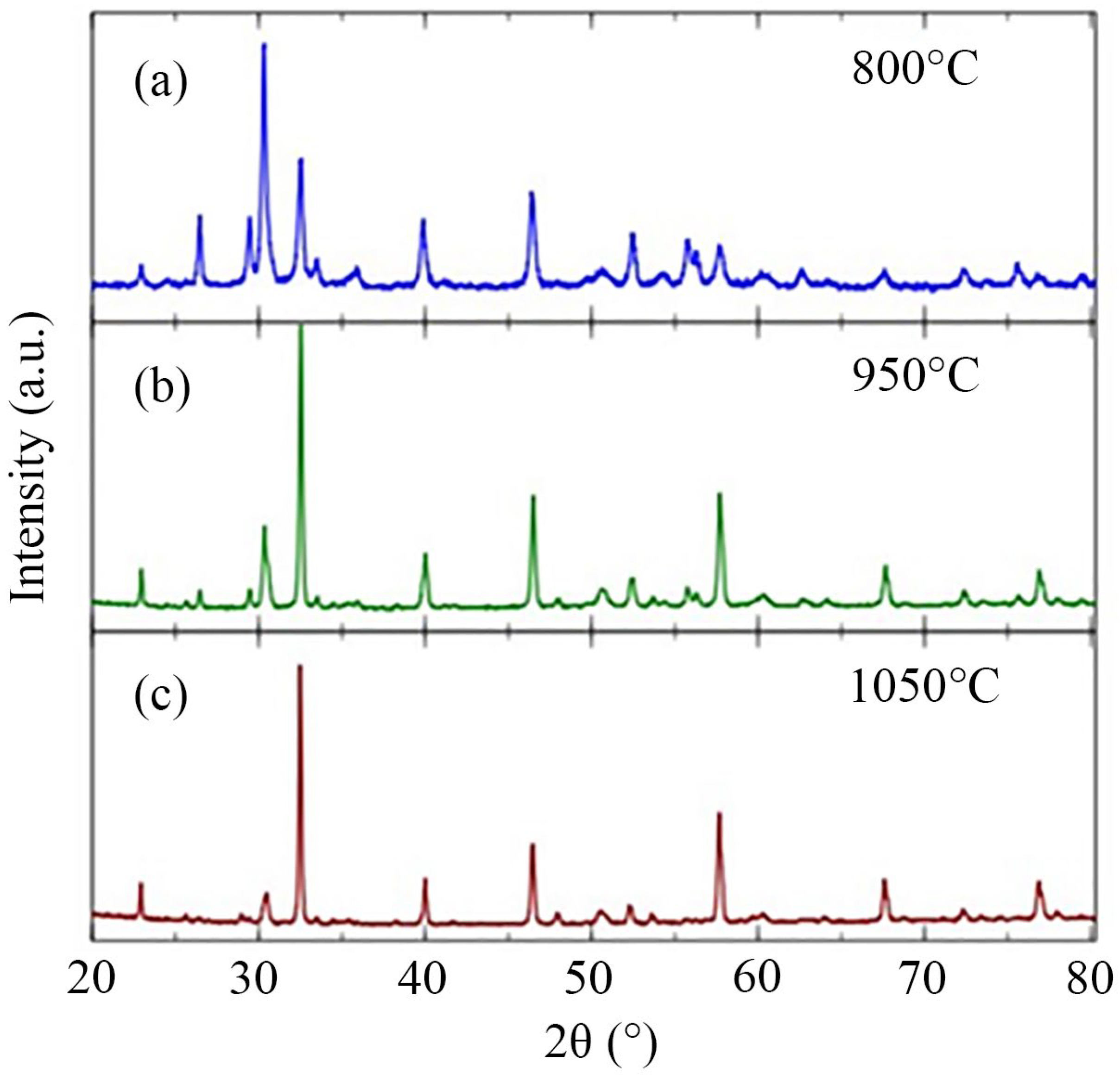
XRD analysis confirmed the formation of a cubic perovskite structure for LCF synthesized using La2O3, CaO, and Fe2O3, with no detectable secondary phases (Figure 1). The diffraction lines observed at 2θ values of 23°, 32°, 40°, 47°, 53°, 58°, 67°, and 77° are characteristic of the perovskite structure (ref. JCPDS No. 01-075-0279 [23]). The crystallite sizes, estimated using the Scherrer equation based on the main diffraction line at 2θ = 32°, are 118.9, 252.7, 336.9, and 404.3 Å for LCF-NC, LCF-800, LCF-950, and LCF-1050, respectively. These results clearly demonstrate that the crystallite size increases with rising calcination temperature. In contrast, samples synthesized using La(NO3)3·6H2O and Fe(NO3)3·9H2O, besides the expected perovskite phases (standard LaFeO3 synthesized by the Pechini method, Figure 2a, ref. JCPDS No. 37-1493 [24]), exhibited distinct peaks at 29.5° and 30.5° (La2O3, Figure 2b, ref. JCPDS No. 05-0602 [25]) and at 33° and 36° (Fe2O3, Figure 2c, ref. JCPDS No. 33-0664 [26]), indicating incomplete reaction and presence of unconverted precursors (Figure 3). This suggests that using metal oxide precursors allows more effective phase formation via ball milling, whereas nitrate-based synthesis cannot yield a pure perovskite oxide phase under the same synthesis conditions.
Figure 1.
XRD results of ball-milling synthesized LCF using metal oxide precursors and calcined at different temperatures: (a) no calcination (NC), (b) 800 °C, (c) 950 °C, and (d) 1050 °C.
Figure 2.
XRD results of referenced samples: (a) LaFeO3 made by sol–gel; (b) La2O3 made by calcinating La(NO3)3·6H2O; (c) Fe2O3 made by calcinating Fe(NO3)3·9H2O.
Figure 3.
XRD patterns of LF synthesized by ball milling using nitrate precursors and calcined at different temperatures: (a) 800 °C; (b) 950 °C; (c) 1050 °C.
The crystalline phase characteristic of the perovskite structure remains unchanged in the spent materials after four cycles (Figure 1), with diffraction line intensities comparable to those of the fresh LCF. A slight shift toward lower 2θ angles is observed for several lines, and this feature was also reported in the literature [27]. Overall, these results indicate that the materials maintain structural stability without significant deactivation and could be recycled beyond the four cycles tested.
3.1.2. N2-Physisorption Results
The BET results (Table 1) show a decreasing trend in surface area with increasing calcination temperature. The LCF-NC sample exhibits the highest surface area (2.51 m2/g), while LCF-1050 drops to 0.51 m2/g. The total pore volume also significantly decreases from 0.020 cm3/g (LCF-NC) to 0.001 cm3/g (LCF-1050), accompanied by a reduction in average pore size. These results suggest that high-temperature treatment leads to sintering and densification of the material, reducing accessible porosity [28]. Compared to LCF synthesized by the Pechini method (LCF-P), which has a surface area of 1.59 m2/g, the ball-milled LCF-NC provides a modest improvement, though the scalability and simplicity of ball milling remain significant advantages. SEM analysis of fresh LCF-1050 revealed an average particle size of 4.23 μm, which is significantly smaller than the 196 μm observed for LCF synthesized via the Pechini method (Figures S1 and S2).
Table 1.
Results of BET surface area, BJH total pore volume, and average pore diameter tested by N2-physisorption.
3.2. Redox Properties and Oxygen Vacancy Formation
3.2.1. H2-TPR Analysis
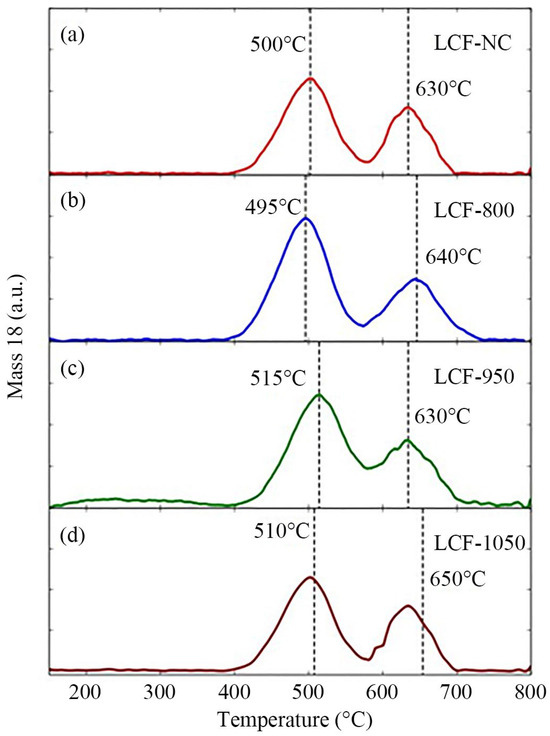
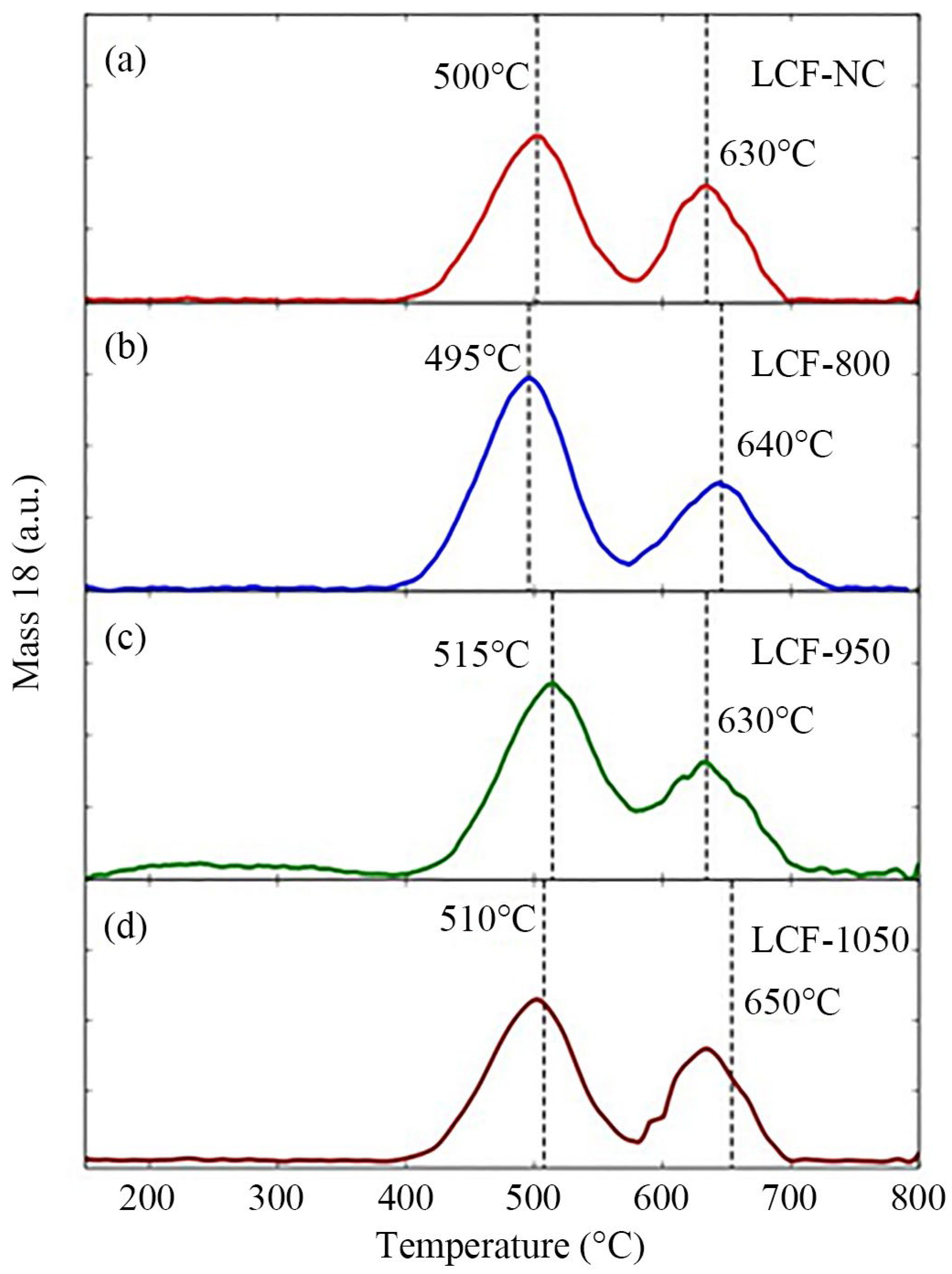
The temperature-programmed reduction (H2-TPR) results (Figure 4) reveal that LCF-NC exhibits multiple reduction peaks centered at approximately 500 to 515 °C and 640 °C. This indicates different reduction phases of LCF as shown by the TPR traces. The peak at approximately 500 °C is from the formation of an oxygen vacancy, and the peak at approximately 640 °C is from the decomposition of the perovskite structure. Compared with LCF synthesized without calcination and at high calcination temperatures, the high calcination temperature leads to a modest increase in reduction temperature. These results suggest that ball milling without high-temperature treatment produces materials with slightly higher redox properties, which is beneficial for cyclic redox processes like RWGS-CL. To benchmark the redox behavior of the ball-milled LCF against materials prepared by other synthesis routes, the H2-TPR profile was compared with the LCF synthesized by the Pechini method [30,31]. Compared with Pechini-derived LCF reported in the literature, the ball-milled LCF exhibits comparable low-temperature redox behavior (reduction temperature of 500 to 515 °C vs. 500 °C), indicating that ball milling is an effective alternative synthesis route for producing redox-active LCF.
Figure 4.
H2-TPR results of LCF synthesized by the ball milling method calcined at different temperatures: (a) no calcination, (b) 800 °C, (c) 950 °C, and (d) 1050 °C.
3.2.2. CO2 -TPO Analysis
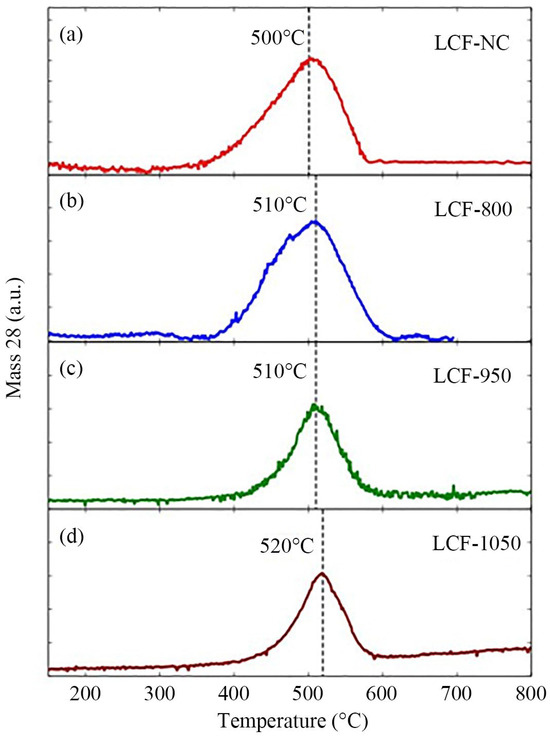
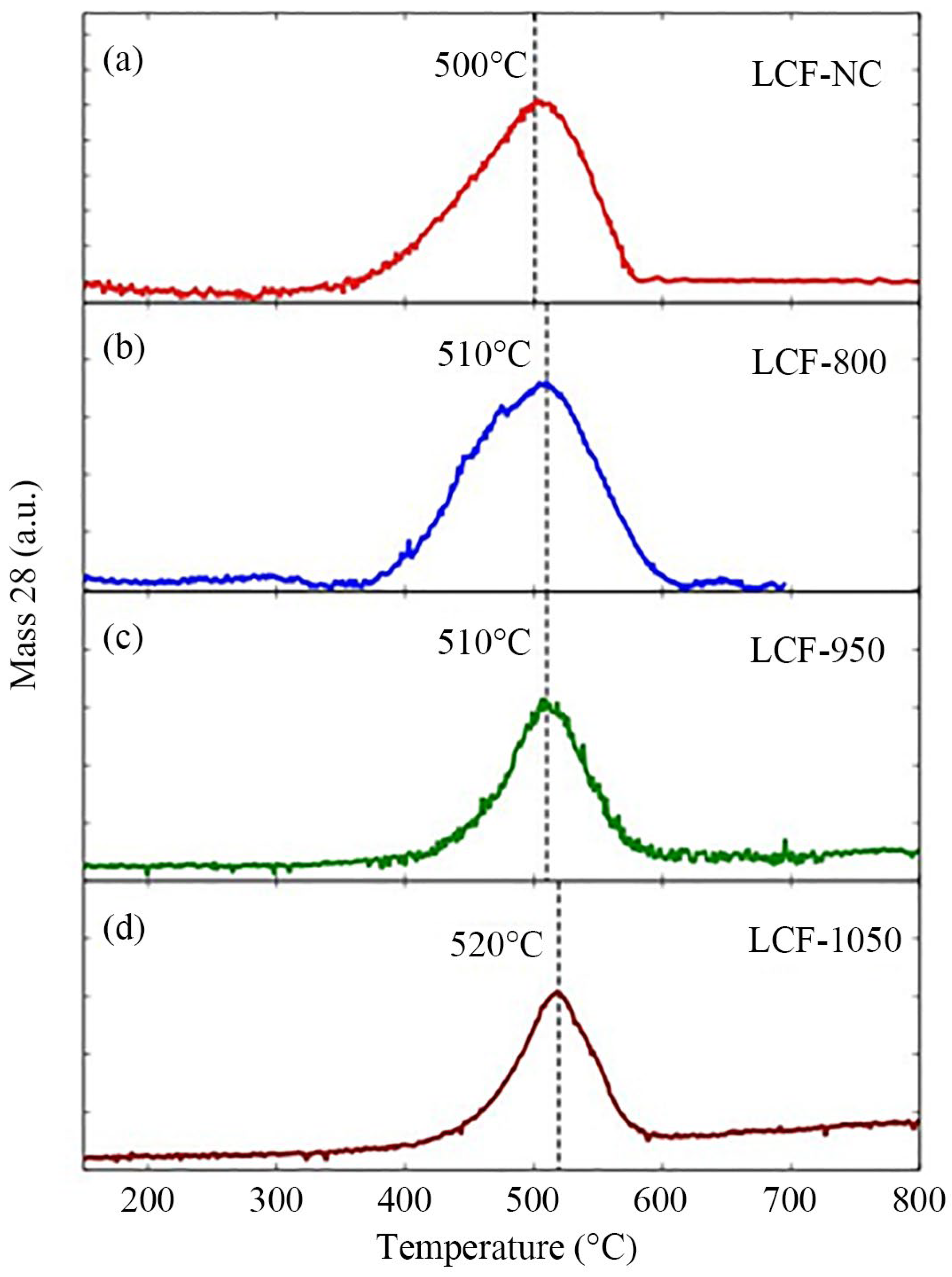
Temperature-programmed oxidation (CO2-TPO) experiments complemented the H2-TPR results by delineating the reoxidation behavior. The oxidation results for the reduced LCF typically displayed a broad peak centered around 500 °C (Figure 5). This peak is attributed to the reoxidation of the oxygen-deficient sites by converting CO2 to CO. The TPO results further suggest that reoxidation kinetics are influenced by its thermal history. The samples calcined at higher temperatures showed relatively higher oxidation temperature, indicating that the formation of a well-ordered crystalline structure requires more energy to be oxidized. Additionally, non-calcination LCF and low-temperature calcination LCF (800 °C) showed broader oxidation peaks due to the heterogeneous defect structure generated during ball milling.
Figure 5.
CO2-TPO results of LCF synthesized by the ball milling method calcined at different temperatures: (a) no calcination, (b) 800 °C, (c) 950 °C, and (d) 1050 °C.
3.3. CO2 Conversion and Chemical Looping Performance
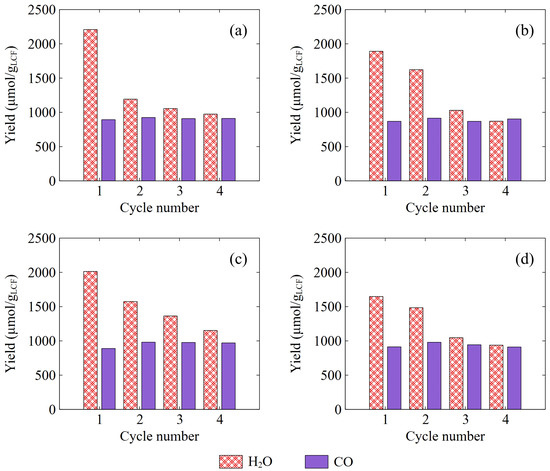
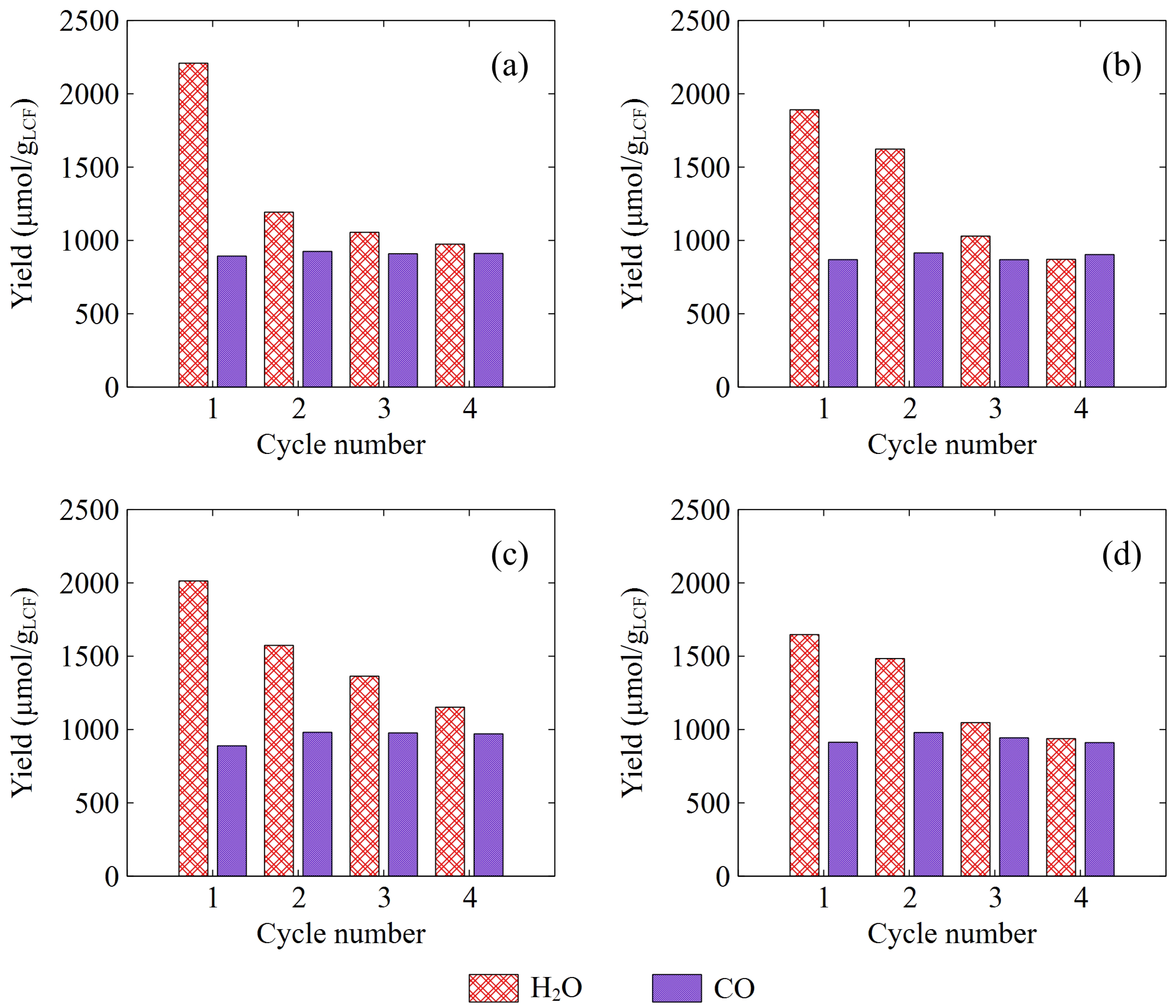
The CO2 conversion performances of ball-milled LCF samples were evaluated through four-cycle RWGS-CL at 500 °C, as shown in Figure 6. Product yields are reported as the CO signal intensity from mass spectrometry, which reflects the extent of CO formation during the oxidation step of each cycle. Prior to these 4 cycles, the first two redox cycles exhibit a large difference between H2O and CO production due to the surface impurities, which are considered as the pretreatment cycles before activating the materials and stabilizing the redox behavior [6]. As a result, all ball-milled LCF exhibits stable CO yield (calculated by averaging the CO yield of third and fourth redox cycles) in RWGS-CL experiments, which are 910, 900, 970, and 910 µmol/gLCF for LCF-NC, LCF-800, LCF-950, and LCF-1050, respectively.
Figure 6.
RWGS-CL results of LCF synthesized by the ball milling method calcined at different temperatures: (a) no calcination, (b) 800 °C, (c) 950 °C, and (d) 1050 °C.
The LCF-NC sample (Figure 6a), which was directly made after the ball-milling process without high-temperature calcination, exhibited the highest H2O yield in the first cycle because there were more residues on the surface. With increased calcination temperature, the first-cycle H2O yield decreases, because surface residues are removed by high-temperature calcination. However, even after calcination at 1050 °C, pretreatment of two redox cycles is still necessary. Then, the non-calcination LCF is considered as having the same RWGS-CL performance as high-temperature calcination LCF.
3.4. Cost and Sensitivity Analysis
The Catcost v1.1.0 model was used to estimate the manufacturing cost. To evaluate the economic feasibility of the ball milling method for synthesizing LCF, a comparative cost analysis was performed with the conventional Pechini method. The analysis considers both precursor and process-related costs for producing LCF at lab-scale (100 g; Table 2) and industrial-scale (1000 kg; Table 3).
Ball milling utilizes relatively low-cost oxide precursors (La2O3, CaO, and Fe2O3), totaling approximately $118 for 100 g of product. In contrast, the Pechini method relies on metal nitrates and organic agents (citric acid and ethylene glycol), leading to a significantly higher precursor cost of $1432. Consider the overhead cost, the cost for LCF is $2.1/g by ball milling and $25.5/g by the Pechini method. When scaling to 1000 kg of LCF, the economic advantage of ball milling becomes even more pronounced. Bulk precursor sourcing reduces the oxide-based material cost to $32,500, compared to $274,100 for nitrate-based synthesis. As a result, the cost for LCF is $58/kg by ball milling and $487/kg by the Pechini method.
Overall, in the lab-scale (100 g) synthesis, the cost per gram of LCF synthesized by ball milling ($2.1/g) is approximately nearly 8% of that from the Pechini route ($25.5/g). On an industrial scale, the cost per kilogram of LCF synthesized by ball milling ($58/kg) is approximately nearly 12% of that from the Pechini route ($487/kg). Thus, the ball milling method significantly reduced the cost by using metal oxides instead of metal nitrates and eliminating the need for a complexing reagent. Beyond its economic advantage, ball milling also offers a simpler, solvent-free process with fewer steps and has the potential to lower the environmental impacts, especially when comparing the life cycle assessment [32] of processes using ball milling and magnetic stirring (as expected for the Pechini method), but further investigation is needed to confirm it. Due to its scalability, low cost, and ease of implementation, ball milling presents a promising synthesis route for large-scale industrial production of perovskite-type oxides. This method is especially attractive for applications like RWGS-CL, where cost-effectiveness and material throughput are critical for commercialization.
Table 2.
Cost analysis of 100g LCF synthesized by ball milling and Pechini methods.
Table 3.
Cost analysis of 1000kg LCF synthesized by ball milling and Pechini methods.
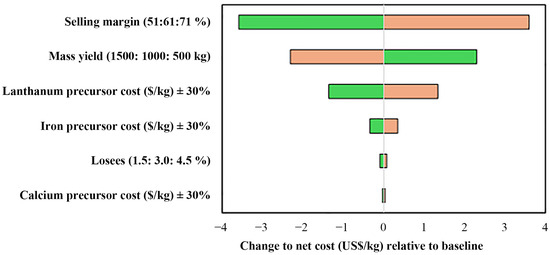
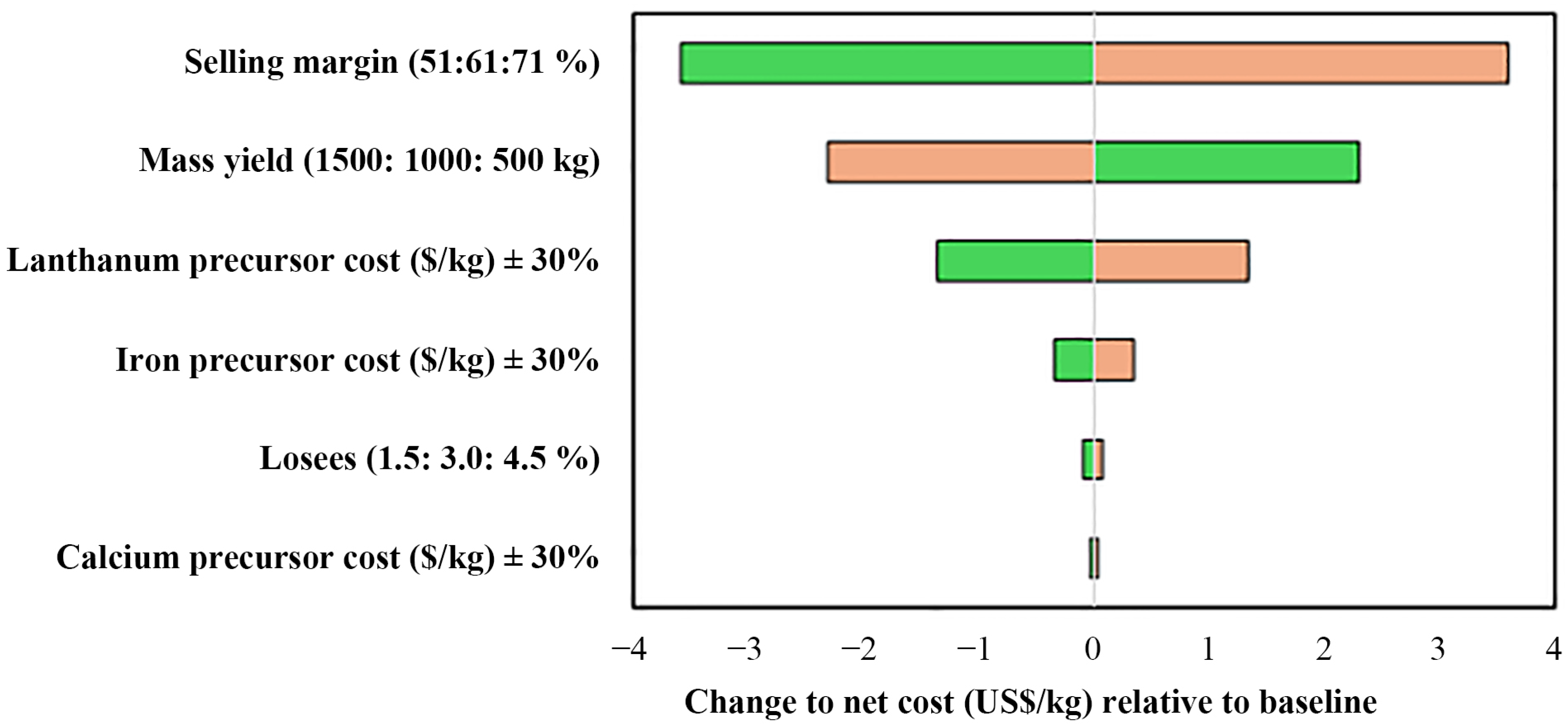
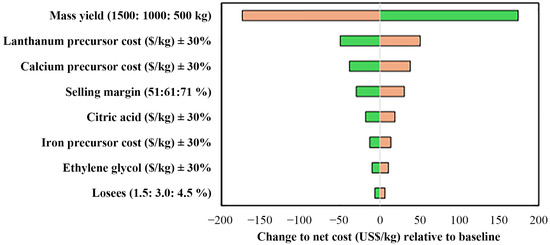
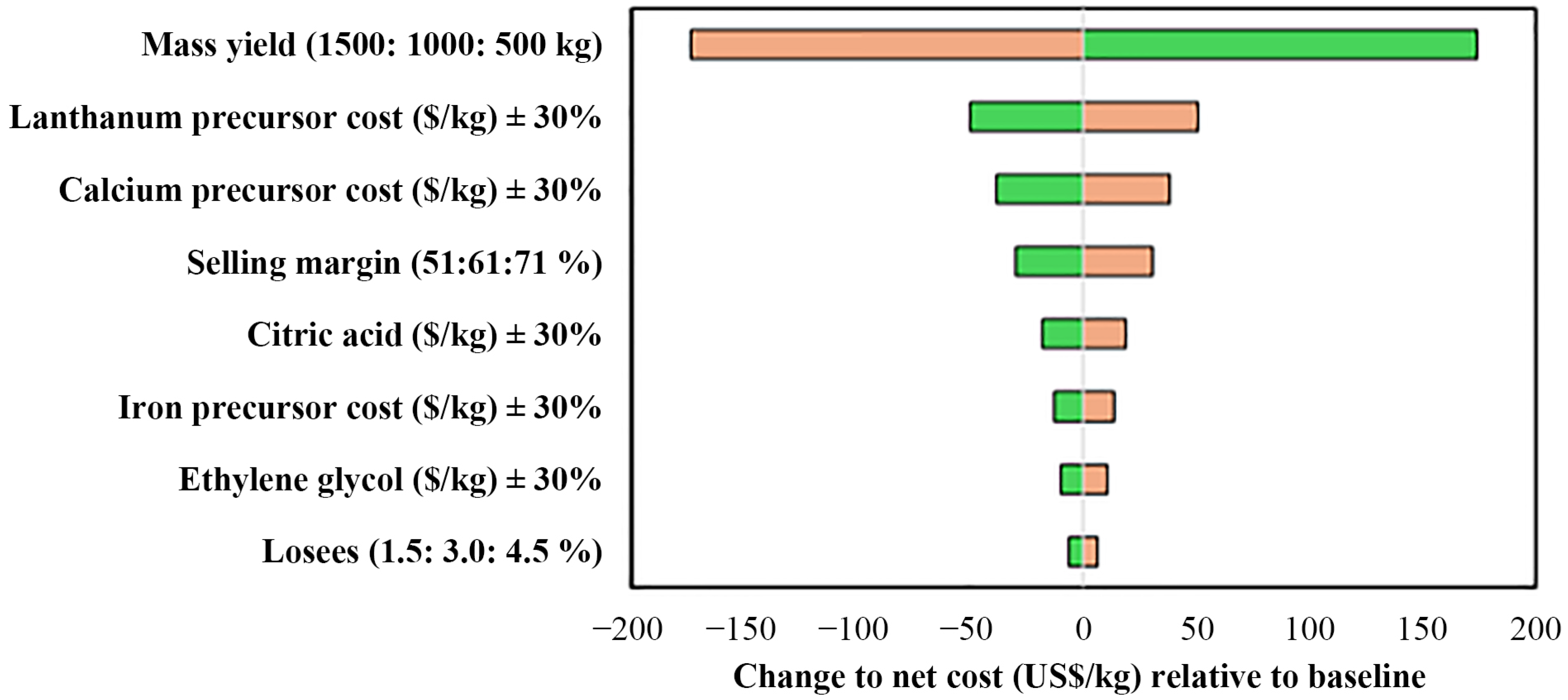
For the sensitivity analysis, the three variation levels represent the lower-case, base-case, and upper-case scenarios, respectively. This explanation clarifies why Figure 7 and Figure 8 show a range of variations for each variable analyzed. The sensitivity analysis of LCF synthesized by ball milling (Figure 7) shows that among the selected parameters, the selling margin, the catalyst mass yield, and lanthanum precursor cost had a significant effect on the synthesized catalyst cost. The results show that the costs of iron and calcium precursors, as well as the estimated losses, do not significantly affect the net catalyst cost. The results emphasize that the catalyst cost can be reduced by increasing the catalyst mass yield to produce more than 1000 kg of catalyst, which is also expected to reduce the bulk cost of metal precursors.
Figure 7.
Sensitivity analysis for the synthesis of LCF synthesized by ball milling. Baseline catalyst cost of US$ 57.78 per kg of catalyst. 2021 is considered the basis year. The orange bar represents the high value, and the green bar represents the lower value.
Figure 8.
Sensitivity analysis for the synthesis of LCF synthesized by the Pechini method. Baseline catalyst cost of US$ 486.97 per kg of catalyst. 2021 is considered the basis year. The orange bar represents the high value, and the green bar represents the lower value.
Considering the sensitivity analysis of LCF synthesized by the Pechini method (Figure 8), it should be noted that the baseline catalyst cost ($487/kg of catalyst) is much higher than the baseline cost of LCF synthesized by ball milling ($58/kg of catalyst). The metal precursors used in the Pechini method have a higher cost than the precursors used in the ball milling method, based on the base case of producing 1000 kg. Along the same lines as discussed before, lanthanum precursor cost is the highest among the metal precursor costs.
In summary, for both synthesis methods, it can be stated that catalyst cost varies greatly with manufacturing scale, as shown in the graphical results for catalyst mass yield, with the Pechini method representing the highest net cost to produce LCF catalyst.
4. Conclusions
In this study, LCF perovskite was synthesized using a ball milling method and evaluated for CO2-to-CO conversion via RWGS-CL. The results demonstrate that using oxide precursors (La2O3, CaO, and Fe2O3) in ball milling leads to the successful formation of a pure perovskite phase without impurities, unlike nitrate-based precursors. Structural characterization confirmed that the perovskite structure remains intact across different calcination conditions, though higher calcination temperatures reduce surface area and pore volume due to sintering.
Redox characterization showed that the non-calcined and low-temperature calcined LCF samples exhibit favorable oxygen vacancy formation and reoxidation properties, while high-temperature calcined LCF required slightly higher redox temperature. RWGS-CL experiments at 500 °C revealed that all LCF samples, regardless of post-treatment temperature, provided consistent CO yields after initial pretreatment cycles. These results proved that ball milling without calcination is a promising one-step method for the synthesis of pure LCF for converting CO2 to CO via the RWGS-CL reaction.
A comparative cost analysis further supports the industrial relevance of the ball milling method. It showed that LCF synthesized via ball milling is significantly more cost-effective, with material costs approximately 92% lower at the lab scale and 88% lower at the industrial scale, compared to the Pechini method. Combined with its simplicity, scalability, and solvent-free nature, ball milling emerges as a promising route for large-scale production of perovskite oxides for CO2 conversion applications.
The sensitivity analysis results for the LCF synthesis by ball milling and by the Pechini method show that the manufacturing scale has the greatest effect on the net material cost, with the Pechini method showing the highest baseline cost ($487/kg), considering 2021 the base year for calculations. Considering the metal precursors used in the synthesis, lanthanum precursors represent the biggest contribution in cost compared to the calcium and iron precursors.
Supplementary Materials
The following supporting information can be downloaded at: https://www.mdpi.com/article/10.3390/suschem7030035/s1. Figure S1: SEM results of fresh LCF synthesized by ball milling method; Figure S2: SEM results of fresh LCF synthesized by Pechini method; Table S1: Precursor cost for 100 g LCF synthesis by ball milling method; Table S2: Precursor cost for 100 g LCF synthesis by Pechini method; Table S3: Precursor cost for 1000 kg LCF synthesis by ball milling method; Table S4: Precursor cost for 1000 kg LCF synthesis by Pechini method. Table S5: Summary of CatCost parameters used for sensitivity analysis. Supporting Information is available free of charge.
Author Contributions
H.S. was the main author contributing to methodology, analysis, and writing the original draft. F.P. and H.S. contributed to the economic analysis and edited the manuscript. H.S. and P.S. contributed to the characterization techniques and to writing, revising, and editing the manuscript. V.R.B. and J.N.K. led the overall project and contributed to writing, revising, and editing the manuscript. All authors have read and agreed to the published version of the manuscript.
Funding
This study was funded by NSF grants (IIP-1743623 and IIP-1913722) and the Florida High Tech Corridor.
Institutional Review Board Statement
Not applicable.
Informed Consent Statement
Not applicable.
Data Availability Statement
The original contributions presented in this study are included in the article/Supplementary Materials. Further inquiries can be directed to the corresponding author.
Acknowledgments
The authors thank Jay Bieber and Lukasz Wojtas for technical assistance with SEM and XRD, respectively.
Conflicts of Interest
J.N.K. and V.R.B. declare patents and other financial interests in this technology. The remaining authors declare no conflicts of interest.
References
- Daza, Y.A.; Kent, R.A.; Yung, M.M.; Kuhn, J.N. Carbon Dioxide Conversion by Reverse Water–Gas Shift Chemical Looping on Perovskite-Type Oxides. Ind. Eng. Chem. Res. 2014, 53, 5828–5837. [Google Scholar] [CrossRef] [Scilit]
- Lee, M.; Kim, Y.; Lim, H.S.; Jo, A.; Kang, D.; Lee, J.W. Reverse Water–Gas Shift Chemical Looping Using a Core–Shell Structured Perovskite Oxygen Carrier. Energies 2020, 13, 5324. [Google Scholar] [CrossRef] [Scilit]
- Schmidt, C.; Shi, H.; Maiti, D.; Hare, B.J.; Bhethanabotla, V.R.; Kuhn, J.N. Chemical looping approaches to decarbonization via CO2 repurposing. Discov. Chem. Eng. 2023, 3, 15. [Google Scholar] [CrossRef] [Scilit]
- Bulfin, B.; Zuber, M.; Gräub, O.; Steinfeld, A. Intensification of the reverse water–gas shift process using a countercurrent chemical looping regenerative reactor. Chem. Eng. J. 2023, 461, 141896. [Google Scholar] [CrossRef] [Scilit]
- Maiti, D.; Hare, B.J.; Daza, Y.A.; Ramos, A.E.; Kuhn, J.N.; Bhethanabotla, V.R. Earth abundant perovskite oxides for low temperature CO2 conversion. Energy Environ. Sci. 2018, 11, 648–659. [Google Scholar] [CrossRef] [Scilit]
- Shi, H.; Bhethanabotla, V.R.; Kuhn, J.N. Role of Ba in low temperature thermochemical conversion of carbon dioxide with LaFeO3 perovskite oxides. J. CO2 Util. 2021, 51, 101638. [Google Scholar] [CrossRef] [Scilit]
- Daza, Y.A.; Maiti, D.; Hare, B.J.; Bhethanabotla, V.R.; Kuhn, J.N. More Cu, more problems: Decreased CO2 conversion ability by Cu-doped La0.75Sr0.25FeO3 perovskite oxides. Surf. Sci. 2016, 648, 92–99. [Google Scholar] [CrossRef] [Scilit]
- Hare, B.J.; Maiti, D.; Meier, A.J.; Bhethanabotla, V.R.; Kuhn, J.N. CO2 Conversion Performance of Perovskite Oxides Designed with Abundant Metals. Ind. Eng. Chem. Res. 2019, 58, 12551–12560. [Google Scholar] [CrossRef] [Scilit]
- Shi, H.; Bhethanabotla, V.R.; Kuhn, J.N. Pelletized SiO2-supported La0.5Ba0.5FeO3 for conversion of CO2 to CO by a reverse water-gas shift chemical looping process. J. Ind. Eng. Chem. 2023, 118, 44–52. [Google Scholar] [CrossRef] [Scilit]
- Hare, B.J.; Maiti, D.; Daza, Y.A.; Bhethanabotla, V.R.; Kuhn, J.N. Enhanced CO2 Conversion to CO by Silica-Supported Perovskite Oxides at Low Temperatures. ACS Catal. 2018, 8, 3021–3029. [Google Scholar] [CrossRef] [Scilit]
- Feldhoff, A.; Arnold, M.; Martynczuk, J.; Gesing, T.M.; Wang, H. The sol–gel synthesis of perovskites by an EDTA/citrate complexing method involves nanoscale solid state reactions. Solid State Sci. 2008, 10, 689–701. [Google Scholar] [CrossRef] [Scilit]
- Stojanovic, B.D. Mechanochemical synthesis of ceramic powders with perovskite structure. J. Mater. Process. Technol. 2003, 143–144, 78–81. [Google Scholar] [CrossRef] [Scilit]
- Lee, G.-J.; Park, E.-K.; Yang, S.-A.; Park, J.-J.; Bu, S.-D.; Lee, M.-K. Rapid and direct synthesis of complex perovskite oxides through a highly energetic planetary milling. Sci. Rep. 2017, 7, 46241. [Google Scholar] [CrossRef] [Scilit] [PubMed]
- Kumar, A.; Dutta, S.; Kim, S.; Kwon, T.; Patil, S.S.; Kumari, N.; Jeevanandham, S.; Lee, I.S. Solid-State Reaction Synthesis of Nanoscale Materials: Strategies and Applications. Chem. Rev. 2022, 122, 12748–12863. [Google Scholar] [CrossRef] [Scilit] [PubMed]
- Webber, K.G.; Clemens, O.; Buscaglia, V.; Malič, B.; Bordia, R.K.; Fey, T.; Eckstein, U. Review of the opportunities and limitations for powder-based high-throughput solid-state processing of advanced functional ceramics. J. Eur. Ceram. Soc. 2024, 44, 116780. [Google Scholar] [CrossRef] [Scilit]
- Navas, D.; Fuentes, S.; Castro-Alvarez, A.; Chavez-Angel, E. Review on Sol-Gel Synthesis of Perovskite and Oxide Nanomaterials. Gels 2021, 7, 275. [Google Scholar] [CrossRef] [Scilit] [PubMed]
- Huízar-Félix, A.M.; Hernández, T.; de la Parra, S.; Ibarra, J.; Kharisov, B. Sol–gel based Pechini method synthesis and characterization of Sm1−xCaxFeO3 perovskite 0.1≤x≤0.5. Powder Technol. 2012, 229, 290–293. [Google Scholar] [CrossRef] [Scilit]
- Popa, M.; Kakihana, M. Synthesis of lanthanum cobaltite (LaCoO3) by the polymerizable complex route. Solid State Ion. 2002, 151, 251–257. [Google Scholar] [CrossRef] [Scilit]
- Calderón Bedoya, P.A.; Botta, P.M.; Bercoff, P.G.; Fanovich, M.A. Influence of the milling materials on the mechanochemical synthesis of magnetic iron oxide nanoparticles. J. Alloys Compd. 2023, 939, 168720. [Google Scholar] [CrossRef] [Scilit]
- Xue, S.; Mao, H.; Li, J.; Sun, X.; Gong, Z.; Fan, B.; Shao, G.; Wang, H.; Xu, H.; Zhang, R.; et al. One-step synthesis of all-inorganic high-entropy dual-phase Cs‘B’Br3/Cs‘B’2Br5 perovskite nanocrystals by high-energy ball milling. Ceram. Int. 2023, 49, 35202–35212. [Google Scholar] [CrossRef] [Scilit]
- Van Allsburg, K.M.; Tan, E.C.D.; Super, J.D.; Schaidle, J.A.; Baddour, F.G. Early-stage evaluation of catalyst manufacturing cost and environmental impact using CatCost. Nat. Catal. 2022, 5, 342–353. [Google Scholar] [CrossRef] [Scilit]
- Anekwe, I.M.S.; Lora, E.E.S.; Subramanian, K.A.; Kozlov, A.; Zhang, S.; Oboirien, B.; Isa, Y.M. Techno-economic and life-cycle analysis of single-step catalytic conversion of bioethanol to fuel blendstocks over Ni-doped HZSM-5 zeolite catalyst. Energy Convers. Manag. X 2024, 22, 100529. [Google Scholar] [CrossRef] [Scilit]
- Zhang, L.; Zeng, Y.; Li, H.; Su, H.; Zhang, W.; Zheng, H.; Wen, N.; Huang, X.; Long, J. Engineering B-Site Configurational Entropy in Perovskite Oxides for Enhanced Alkaline Oxygen Evolution Reaction. ChemSusChem 2026, 19, e70498. [Google Scholar] [CrossRef] [Scilit] [PubMed]
- Liu, Q.; You, Z.; Zeng, S.J.; Guo, H. Infrared properties of Mg-doped LaFeO3 prepared by sol–gel method. J. Sol.-Gel Sci. Technol. 2016, 80, 860–866. [Google Scholar] [CrossRef] [Scilit]
- Lin, N.; Wang, R.; Yu, W.; Wang, M.; Xu, Y. Up-Conversion Luminescence Enhancement and Temperature Sensitivity Properties of La2O3: Yb3+/Er3+ Nanoparticles Induced via Tri-Doping Li+ Ions. ChemistrySelect 2021, 6, 7213–7222. [Google Scholar] [CrossRef] [Scilit]
- Liu, L.; Fu, S.; Lv, X.; Yue, L.; Fan, L.; Yu, H.; Gao, X.; Zhu, W.; Zhang, W.; Li, X.; et al. A Gas Sensor With Fe2O3 Nanospheres Based on Trimethylamine Detection for the Rapid Assessment of Spoilage Degree in Fish. Front. Bioeng. Biotechnol. 2020, 8, 567584. [Google Scholar] [CrossRef] [Scilit] [PubMed]
- Daza, Y.A.; Maiti, D.; Kent, R.A.; Bhethanabotla, V.R.; Kuhn, J.N. Isothermal reverse water gas shift chemical looping on La0.75Sr0.25Co(1−Y)FeYO3 perovskite-type oxides. Catal. Today 2015, 258, 691–698. [Google Scholar] [CrossRef] [Scilit]
- Han, R.; Wang, Y.; Xing, S.; Pang, C.; Hao, Y.; Song, C.; Liu, Q. Progress in reducing calcination reaction temperature of Calcium-Looping CO2 capture technology: A critical review. Chem. Eng. J. 2022, 450, 137952. [Google Scholar] [CrossRef] [Scilit]
- Bidrawn, F.; Lee, S.; Vohs, J.; Gorte, R. The Effect of Ca, Sr, and Ba Doping on the Ionic Conductivity and Cathode Performance of LaFeO3. J. Electrochem. Soc. 2008, 155, B660–B665. [Google Scholar] [CrossRef] [Scilit]
- Lim, H.S.; Lee, M.; Kang, D.; Lee, J.W. Role of transition metal in perovskites for enhancing selectivity of methane to syngas. Int. J. Hydrogen Energy 2018, 43, 20580–20590. [Google Scholar] [CrossRef] [Scilit]
- Oh, D.; Colombo, F.; Nodari, L.; Kim, J.H.; Kim, J.K.; Lee, S.; Kim, S.; Kim, S.; Lim, D.-K.; Seo, J.; et al. Rocking chair-like movement of ex-solved nanoparticles on the Ni-Co doped La0.6Ca0.4FeO3-δ oxygen carrier during chemical looping reforming coupled with CO2 splitting. Appl. Catal. B Environ. 2023, 332, 122745. [Google Scholar] [CrossRef] [Scilit]
- Yang, N.; Sheng, X.; Ti, L.; Jia, H.; Ping, Q.; Li, N. Ball-milling transesterification process on biodiesel production: RSM optimization, life cycle assessment and market dynamics analysis. Energy 2023, 283, 129201. [Google Scholar] [CrossRef] [Scilit]
- Lanthanum(III) Oxide. Available online: https://www.sigmaaldrich.com/US/en/product/aldrich/l4000?utm_source=google&utm_medium=cpc&utm_campaign=22099353999&utm_content=&gad_source=1&gad_campaignid=22109359894&gbraid=0AAAAAD8kLQQ97LE0Z4hhMIwmKk1kaWiSk&gclid=Cj0KCQjwjo7DBhCrARIsACWauSk264dhsWS1GN0J8FMGkiDK09xpJYriyTg27V-UC0_0lSHXK9mfCKIaAknFEALw_wcB (accessed on 17 December 2025).
- Calcium Oxide. Available online: https://www.sigmaaldrich.com/US/en/substance/calciumoxide56081305788 (accessed on 17 December 2025).
- Iron(III) Oxide. Available online: https://www.sigmaaldrich.com/US/en/substance/ironiiioxide159691309371 (accessed on 13 December 2025).
- Lanthanum(III) Nitrate Hexahydrate. Available online: https://www.sigmaaldrich.com/US/en/search/la(no3)3?focus=products&page=1&perpage=30&sort=relevance&term=la%28NO3%293&type=product (accessed on 17 December 2025).
- Calcium Nitrate Tetrahydrate. Available online: https://www.sigmaaldrich.com/US/en/search/cano3?focus=products&page=1&perpage=30&sort=relevance&term=CaNO3&type=product (accessed on 17 December 2025).
- Iron(III) Nitrate Nonahydrate. Available online: https://www.sigmaaldrich.com/US/en/search/fe(no3)3?focus=products&page=1&perpage=30&sort=relevance&term=Fe%28NO3%293&type=product (accessed on 8 December 2025).
- Citric Acid. Available online: https://www.sigmaaldrich.com/US/en/search/citric-acid?focus=products&page=1&perpage=30&sort=relevance&term=Citric%20acid&type=product (accessed on 10 December 2025).
- Ethylene Glycol. Available online: https://www.sigmaaldrich.com/US/en/search/ethylene-glycol?focus=products&page=1&perpage=30&sort=relevance&term=Ethylene%20glycol&type=product (accessed on 12 December 2025).
- High Quality 99.99% Pure Lanthanum Oxide (La2O3) Excellent Chemical Additive Materials Good Price. Available online: https://www.alibaba.com/product-detail/High-Pure-Lanthanum-Oxide-99-99_10000023532715.html?spm=a2700.7724857.0.0.485670e2V93Gvy (accessed on 10 December 2025).
- High Quality Calcium Oxide Quick Lime Purity 95% Best Brand Supplier Price. Available online: https://hongyu8888.en.made-in-china.com/product/enqRplrJqjkG/China-High-Quality-Calcium-Oxide-Quick-Lime-Purity-95-Best-Brand-Supplier-Price.html?pv_id=1j2qamvb8e0d&faw_id=1j2qar4nu95d&bv_id=1j2qar4o4f83&pbv_id=1j2qamu56ec5m (accessed on 8 December 2025).
- Iron Oxide Red for Chemical Fertilizer for Cement for Concrete Flooring Powder Blue for Epoxy Floor Paint 99% Nano Micron Size. Available online: https://www.alibaba.com/product-detail/iron-oxide-red-for-chemical-fertilizer_1601259481418.html?spm=a2700.7724857.0.0.704538f0wHhW23 (accessed on 10 December 2025).
- Factory Supply Lanthanum(III) Nitrate Hexahydrate with La(NO3)3 CAS 10277-43-7 Lanthanum Nitrate With Nice Price. Available online: https://www.alibaba.com/product-detail/Factory-Supply-Lanthanum-III-Nitrate-Hexahydrate_1601014444011.html?spm=a2700.galleryofferlist.normal_offer.d_title.69a013a0RM9ayL (accessed on 10 December 2025).
- Calcium Threonate Powder Food Grade CAS 70753-61-6 Assay 99% C8H14CaO10 Calcium L-Threonate. Available online: https://www.alibaba.com/product-detail/Calcium-Threonate-Powder-Food-Grade-CAS_1600991474732.html?spm=a2700.galleryofferlist.normal_offer.d_title.561713a0CS91Tw (accessed on 10 December 2025).
- 99% Ferric Nitrate Price Iron Nitrate Nonahydrate. Available online: https://www.alibaba.com/product-detail/99-Ferric-Nitrate-Price-Iron-Nitrate_1600820644048.html?spm=a2700.galleryofferlist.normal_offer.d_title.332513a0tC8uXk (accessed on 10 December 2025).
- 99.5% Purity Food Grade ENSIGN TTAC LEMON STAR Citric Acid Monohydrate Anhydrous Competitive Price Food Additive. Available online: https://www.alibaba.com/product-detail/99-5-Purity-Food-Grade-ENSIGN_1601367646934.html?spm=a2700.galleryofferlist.normal_offer.d_title.31c613a0aaaQvp&priceId=31800ee795da4c00913daf1ffe547a29 (accessed on 10 December 2025).
- Factory Supply 99.9% MEG Monoethylene Glycol Ethylene Glycol Ethylene Glycol Liquid. Available online: https://www.alibaba.com/product-detail/Factory-Supply-99-9-MEG-Monoethylene_1601523642161.html?spm=a2700.galleryofferlist.normal_offer.d_title.5d3213a0fozDok&priceId=9cf109372bc9456589e59dd2bb18170f (accessed on 10 December 2025).

Disclaimer/Publisher’s Note: The statements, opinions and data contained in all publications are solely those of the individual author(s) and contributor(s) and not of MDPI and/or the editor(s). MDPI and/or the editor(s) disclaim responsibility for any injury to people or property resulting from any ideas, methods, instructions or products referred to in the content. |
© 2026 by the authors. Licensee MDPI, Basel, Switzerland. This article is an open access article distributed under the terms and conditions of the Creative Commons Attribution (CC BY) license.