


Abstract
Background: Ecuador enacted the 2015 Organic Law for Labor Justice and Recognition of Domestic Work to strengthen employment stability and worker protection. Among its provisions, the reform established safeguards against pregnancy- and maternity-related dismissal and extended pension protection to people performing unpaid household work. This study examines whether the female employment-to-population ratio followed a different trajectory after the reform. Methods: The Synthetic Control Method was applied to annual country-level data from 1991 to 2023. Ecuador was compared with a weighted combination of eight Latin American and Caribbean countries that approximated its pre-reform employment trajectory. Placebo-in-time and placebo-in-space tests, post-treatment-to-pre-treatment mean squared prediction error (MSPE) ratios, an expanded-donor-pool analysis, and leave-one-out analyses were used to assess the stability of the comparison. Results: Female employment in Ecuador fell below the synthetic counterfactual after 2015, with a gap of approximately −3.0 percentage points in 2015 and a most negative annual gap of approximately −10.9 percentage points. Ecuador had the largest post/pre MSPE ratio, approximately 26, across Ecuador and the eight donor-placebo assignments. The corresponding placebo-based rank p-value was 1/9 = 0.111, the smallest attainable value with eight donor placebos; it therefore did not reach the conventional 5% or 10% significance levels. Conclusions: The evidence shows a sustained post-2015 divergence beginning in the reform year, but it does not establish that the reform caused the decline. The oil price collapse and the 2015–2016 economic slowdown coincided with the onset of the divergence, while the COVID-19 pandemic may have affected the gap from 2020 onward. These overlapping shocks limit causal attribution. Hiring responses, informality, and unpaid care burdens are therefore discussed as plausible mechanisms rather than empirically tested explanations.
1. Introduction
Labor reforms can change female employment through multiple, potentially opposing channels. Employment protection rules and enforcement can affect firm size, unemployment, and the level and distribution of employment [1,2]. Informal work is heterogeneous and not uniformly synonymous with inferior work [3]. Although men have a slightly higher global rate of informal employment, women are disproportionately represented in its most vulnerable segments, including contributing family work, home-based work, and domestic work [4]. In Latin America, gender gaps persist in labor force participation and job quality [5]. Care responsibilities, household structures, and sectoral demand also shape female employment [5,6]. A legal expansion of rights may therefore improve job retention and economic security while producing limited aggregate gains when care constraints and weak formal-sector absorption remain unchanged.
In Ecuador, the Organic Law for Labor Justice and Recognition of Domestic Work was published and came into force on 20 April 2015 [7]. The law designated indefinite-term contracts as the typical form of stable employment and permitted probationary periods of up to 90 days, or 15 days for paid domestic work [7]. It introduced a ceiling of 24 unified basic salaries on individual profit-sharing payments, effective 1 January 2016; the Constitutional Court declared the ceiling unconstitutional on 21 March 2018 [7,8]. The law also established a judicial action through which dismissals during pregnancy or maternity may be declared ineffective. Once a dismissal is declared ineffective, the employment relationship is treated as uninterrupted, pending remuneration is paid with a 10% surcharge, and a worker who elects not to return receives compensation equivalent to one year of remuneration, in addition to the ordinary compensation for unjustified dismissal [7]. The reform established a contributory pension regime for persons performing unpaid household work, covering old age, death, and qualifying permanent disabilities. Affiliation began upon application, while contribution bases and state subsidies varied according to household income [7,9]. Implementation was staggered: pre-reform fixed-term contracts remained governed by their existing terms, and the Ecuadorian Social Security Institute (Instituto Ecuatoriano de Seguridad Social, IESS) adopted the implementing regulation for unpaid household work on 18 June 2015, followed by the necessary administrative and information-system adjustments [7,9]. For this reason, the annual observation for 2015 represents partial exposure rather than a full year of uniform implementation of the law.
In this paper, we focus on female employment because several provisions of the reform directly concern women. Protection against ineffective dismissal during pregnancy and maternity applies specifically to women, while the recognition of unpaid household work addresses an activity performed predominantly by women [6,7]. These provisions could affect female employment through job retention, hiring, labor-market entry, and reentry. For this reason, the female employment-to-population ratio is used to assess whether the post-reform trajectory for women differed from the estimated counterfactual. However, this outcome does not capture other possible effects of the reform, including pension affiliation, employment formalization, earnings, or job quality.
The reform creates an analytical puzzle because the same provisions may protect workers already employed while changing employers’ incentives for future hiring and contract choice [1,2,7]. Recognizing unpaid household work may expand social protection without necessarily reducing the time constraints that limit paid employment [6,7]. Therefore, the direction of the aggregate employment response is not self-evident.
The central empirical question is whether the female employment-to-population ratio in Ecuador followed a different path after the 2015 reform from the counterfactual trajectory estimated for synthetic Ecuador. Because the reform coincided with the 2014–2016 oil price collapse and economic slowdown, while the post-treatment period later included the COVID-19 pandemic, the Synthetic Control Method (SCM) gap is interpreted as a post-2015 divergence rather than definitive proof that the law caused the observed change. The contribution lies in providing a transparent country-level counterfactual comparison, an assessment of design-specific robustness, and a clear statement of the limits of policy attribution in relation to Sustainable Development Goals 5 and 8.
Section 2 develops competing expectations derived from labor-demand theory, discrimination theory, human capital theory, institutional economics, and care-economy approaches. These perspectives prevent the aggregate results from being attributed to a single mechanism that the data cannot directly observe.
2. Theoretical Framework and Empirical Expectations
2.1. Labor Demand and Employment Protection
Employment is a stock shaped by both entries and exits. Stronger dismissal protection can preserve existing matches by reducing involuntary separations, but it can also increase the expected cost of creating a formal job. The aggregate effect depends on whether retention gains exceed any reduction in hiring and whether wages or other employment margins adjust. Evidence on mandated maternity benefits illustrates that the statutory payer and the final economic incidence need not be the same when compensation can adjust [10]. A review of evidence from developing countries concludes that the average efficiency effects of employment protection are usually modest and can operate in either direction, while women, young people, and less-skilled workers are disproportionately likely to remain outside coverage [11].
Evidence from specific Latin American reforms illustrates several adjustment margins without establishing that the same mechanisms apply in Ecuador. Colombia’s 1990 reduction in dismissal costs increased transitions into and out of unemployment among covered formal workers relative to uncovered informal workers [12]. Evidence from a regression discontinuity design in Chile showed women hired by firms subject to an employer-funded childcare mandate received starting wages approximately 9–20% below those observed when the same firms were not subject to the requirement; however, the study did not identify a hiring effect [13]. Evidence from Brazil shows that firms can adjust through nonregistration and off-the-books hiring and that firm and labor informality need not move together after policy changes [14].
When applied to Ecuador, this perspective yields two opposing expectations. A retention-dominant response predicts a stable or higher female employment-to-population ratio after implementation because protected workers remain employed longer. A hiring-adjustment response predicts a lower trajectory if firms create fewer formal positions or change contract arrangements. Because the outcome measures employment at the population level rather than hiring and separation flows, the SCM can estimate the net aggregate pattern but cannot identify which margin changed.
2.2. Discrimination and Human-Capital Channels
Discrimination theory adds a gender-specific channel to this framework. Employers may act on discriminatory preferences [15] or use group averages when individual productivity is imperfectly observed [16]. If pregnancy, maternity, or care responsibilities are treated as signals of future absence or adjustment costs, stronger protection could reduce discriminatory dismissals while increasing anticipatory discrimination at the hiring stage. The broader literature on gender gaps shows that observed disparities reflect occupational allocation, work experience, institutional arrangements, and unequal family responsibilities, rather than a single source [17]. The resulting prediction is conditional: effective enforcement can protect incumbents, whereas cost-based statistical discrimination may disadvantage prospective workers.
Human capital models emphasize that career interruptions and reduced work experience can lower subsequent earnings [18]. By reducing separations among covered workers, stronger protection could, in principle, preserve accumulated experience and labor-force attachment. These gains may be particularly important for women whose employment histories are frequently interrupted by unpaid care. However, the positive channel requires continued access to employment. If reduced hiring or unresolved care constraints limit entry and reentry, stronger protection for current employees may coexist with fewer opportunities for women outside protected employment.
2.3. Institutions, Informality, and Care Constraints
Institutional economics distinguishes between a formal legal rule and its implementation in practice. North’s framework suggests that the effects of formal rules depend on enforcement, organizational incentives, and informal constraints [19]. In labor markets with extensive informality, adjustment can occur through nonregistration or off-the-books hiring, while self-employment remains a heterogeneous source of informal work [3,4,14]. Therefore, a reform can strengthen de jure protection for covered workers while producing a muted aggregate response if a large share of women remains beyond effective coverage.
The care economy perspective separates recognition from redistribution. The reform extended pension protection to unpaid household workers [7,9], but recognition alone does not necessarily reduce the time constraints imposed by unpaid care [6,20]. Childcare availability, affordability, and hours compatible with paid work can reduce care constraints; however, comparative evidence shows heterogeneous effects across settings and groups [6,21]. Event-study estimates for Chile, Mexico, Peru, and Uruguay show that motherhood reduces women’s employment and shifts those who remain employed toward part-time work, self-employment, and informality [22]. According to an Economic Commission for Latin America and the Caribbean (ECLAC) compilation, women performed 81.5% of all hours devoted to unpaid domestic and care work in Ecuador; the estimate is based on the 2012 national time-use data and therefore documents a structural imbalance that predates the reform [23]. From this perspective, an employment law without a commensurate reduction in care constraints may improve protection without producing a measurable increase in aggregate female employment.
2.4. Comparative Evidence and Integrated Expectations
Comparative evidence illustrates how these channels vary across policy designs and labor-market settings. European studies and a broader review of high-income countries indicate that effects vary by leave duration, time horizon, and intervention type [24,25,26]. A review of studies with plausibly causal designs in lower- and middle-income countries found predominantly positive maternal labor-market responses when childcare constraints were relaxed [27]. In Chile, the randomized offer of Programa 4 a 7, a free after-school childcare program for children aged 6–13, increased maternal labor-force participation by 4.3 percentage points and the probability of working at least one month during the intervention period by 3.4 percentage points [28]. Public pre-primary expansion in Argentina increased maternal employment [29]. A regression discontinuity study in Argentina found that preschool attendance of the youngest child increased the probability of full-time maternal employment and weekly hours, with no effect for children who were not the youngest in the household [30]. Neighborhood-randomized access to public childcare for children aged 0–4 in poor urban Nicaragua increased mothers’ work by 12 percentage points [31]. Evidence from Brazil further shows that economy-wide policy changes can generate gender-differentiated labor market effects [32].
Quasi-experimental evidence on maternity leave also cautions against the assumption of a uniform response. Colombia’s 2011 extension of maternity leave from 12 to 14 weeks was associated with increased inactivity, informality, and self-employment among women of high-fertility age groups [33]. Although the Colombian reform involved different legal provisions, populations, and outcomes, it provides relevant comparative evidence of how maternity-related labor regulations may influence employment adjustments.
The Ecuadorian context makes institutional and care channels especially relevant. An IDB technical note documents persistent female informality in Ecuador [34]. Official evidence documents deterioration in employment quality between 2015 and 2016, including increased informal-sector employment and a negative net balance of entries into social-security-registered employment in 2016 [35]. In March 2019, urban labor-force participation and adequate-employment rates among women remained below those among men [36]. Related research examines female labor supply and the choice between formal and informal employment in Ecuador [37]. A difference-in-differences study of an earlier reform that extended health-insurance coverage to the children of formal workers found an increase of approximately 2 percentage points in formal employment among parents, driven mainly by transitions from unregistered to registered employment [38]. A World Bank overview documents the overrepresentation of women in informal work and their lower access to contributory pensions [39]. These sources establish structural context and demonstrate that benefit design can affect formalization incentives; however, they do not test the mechanisms of the 2015 reform. The reform could therefore generate heterogeneous effects across protected employees, prospective formal workers, informal workers, and unpaid household workers. An aggregate employment-to-population ratio averages across these groups and may conceal gains for one group alongside losses or limited entry for others.
Three integrated expectations are proposed. First, a retention-and-human-capital scenario predicts a non-negative post-reform employment gap once implementation begins. Second, a labor-demand and discrimination scenario predicts a negative or initially negative gap if reduced hiring outweighs improved retention. Third, an institutional and care-constraint scenario predicts a small, heterogeneous, or null aggregate gain because legal coverage and social recognition do not automatically change informality or unpaid care time. These are competing expectations rather than mechanisms that can be identified by the SCM. The SCM can estimate the gap between Ecuador and its synthetic comparator, but it cannot allocate that gap among these channels or separate them fully from contemporaneous macroeconomic shocks. Table 1 summarizes the competing theoretical expectations and clarifies what the aggregate SCM pattern can and cannot establish.
Table 1.
Competing theoretical expectations and their relationship to the aggregate SCM outcome.
3. Materials and Methods
3.1. Study Design and Identification Strategy
The Synthetic Control Method (SCM) was used to estimate the trajectory of female employment in Ecuador after the 2015 reform relative to a weighted counterfactual [40]. Ecuador was the treated unit, and 2015 was the intervention year. The analysis covered 1991–2023, providing 24 pre-treatment observations and nine post-treatment observations. The SCM constructs a non-negative, convex combination of untreated countries that minimizes pre-treatment differences. The difference between the observed trajectory for Ecuador and its synthetic counterpart after 2015 is defined as the estimated employment gap. Interpreting this gap as the causal effect of the law would require adequate pre-treatment fit, no anticipation or spillovers, and no other Ecuador-specific post-2015 shock that altered female employment relative to the donor countries. The overlap with major macroeconomic shocks makes these conditions uncertain. In addition, because the law entered into force in April and implementation was phased, the annual observation for 2015 reflects only partial exposure.
3.2. Data and Variables
The primary outcome was the employment-to-population ratio for women aged 15 years and older, expressed as the percentage of the corresponding female population that was employed (World Bank indicator SL.EMP.TOTL.SP.FE.ZS, modeled ILO estimate) [41]. The SCM predictor vector consists of the outcome in 2005, 2010, and 2014, which anchors the pre-reform level and the most recent trajectory. Table 2 presents the complete predictor vector. Because GDP is measured in current U.S. dollars, this diagnostic reflects price and exchange-rate movements as well as real output. Aggregate nominal GDP in current U.S. dollars (World Bank indicator NY.GDP.MKTP.CD) is used only for the macroeconomic diagnostic and is expressed in billions [42]. This variable was not used as a control to isolate the reform.
Table 2.
Pre-treatment outcome anchors used to construct synthetic Ecuador.
Figure 1.
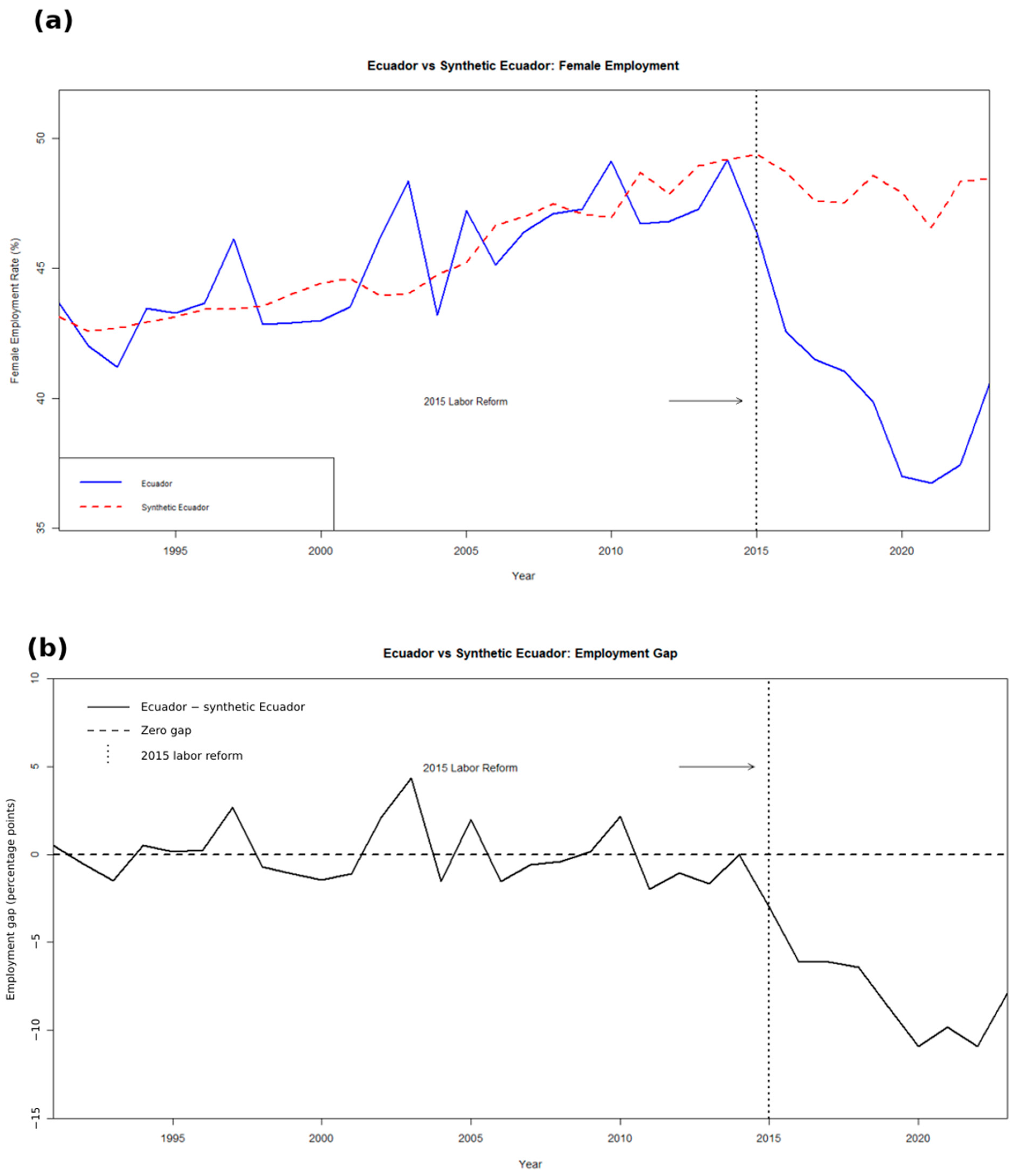
Female employment-to-population ratio in Ecuador and synthetic Ecuador, 1991–2023: (a) observed and synthetic trajectories; (b) treated-minus-synthetic gap. The vertical dotted line marks 2015; gap values are percentage points.
The analytical donor pool comprised Bolivia, Chile, the Dominican Republic, Guatemala, Honduras, Mexico, Paraguay, and Peru. These eight Latin American and Caribbean countries had complete series in the study data file and formed the pool used for the reported weights and placebo comparisons. Restricting the donor pool to the region was intended to improve broad institutional and macroeconomic comparability relative to a worldwide pool, but it does not establish identical exposure to commodity prices, recessions, the pandemic, or other labor reforms. The analysis therefore assumes that the Ecuadorian reform did not affect donor countries and treats unmeasured donor contamination as an identification limitation. An expanded complete-case Latin American and Caribbean pool was used for sensitivity analysis. Its similar trajectory indicates that the principal pattern is not specific to the eight-country pool, but it does not resolve donor contamination or differential exposure to other shocks and therefore does not strengthen causal attribution.
3.3. Construction of the Synthetic Control
Donor weights were selected to minimize pre-treatment differences between Ecuador and the synthetic unit, subject to non-negative weights that sum to one. The three outcome anchors shown in Table 2 were the predictors used for optimization. All eight countries in the main pool received positive weights, and the largest weight was 0.267. Pre-treatment fit was evaluated using anchor gaps, the full pre-treatment trajectory, and the mean squared prediction error (MSPE) over 1991–2014. The post/pre MSPE ratio was calculated by dividing the mean squared gap over 2015–2023 by the mean squared gap over 1991–2014. Consistent with current guidance on synthetic controls, these diagnostics are interpreted as evidence of counterfactual fit and extremeness, not as substitutes for the identifying assumptions [43].
3.4. Validation and Robustness Tests
Placebo-in-time tests assigned the intervention to 2000 and 2005 to assess whether comparable divergences appeared before treatment. Placebo-in-space tests re-estimated the SCM for each of the eight donor countries as if they had received the intervention. Because the donor pool is small, all eight donor placebos are displayed and retained in the rank calculation rather than being excluded using a pre-treatment-fit threshold. The placebo-based rank p-value was calculated as the proportion of the nine assignments—Ecuador and the eight donor placebos—with a post/pre MSPE ratio at least as large as that of Ecuador. Because Ecuador ranked first, the value was 1/9 = 0.111. The leave-one-out analyses sequentially removed each positively weighted donor. The expanded donor pool specification assessed the sensitivity to sample composition. Finally, Ecuador’s nominal GDP was compared with synthetic nominal GDP to determine whether the employment divergence coincided with broader macroeconomic divergence. GDP is potentially affected by the same post-treatment shocks and is therefore diagnostic only.
3.5. Software
All statistical analyses were performed using R version 4.4.2 (R Foundation for Statistical Computing, Vienna, Austria). The synthetic control method was implemented using the Synth package (version 1.1-10). Data management and visualization were performed using tidyverse (version 2.0.0) and ggplot2 (version 4.0.3), respectively.
4. Results
4.1. Pre-Treatment Fit and Donor Weights
Table 2 reports the three pre-treatment outcome anchors used in the SCM predictor vector. The absolute treated–synthetic differences were 1.995 percentage points in 2005, 2.163 percentage points in 2010, and 0.006 percentage points in 2014. The near-exact match in 2014 is informative because it is the final pre-reform anchor, although the earlier differences show that fit is not exact throughout the pre-treatment period. Figure 1 therefore presents the full pre-treatment trajectory as well as the post-treatment path.
Table 3 lists the weights of the donors. Bolivia has the largest weight (0.267), followed by Honduras (0.169), Peru (0.117), Paraguay (0.105), Guatemala (0.092), Mexico (0.090), the Dominican Republic (0.081), and Chile (0.079). All weights are below 0.30, so the counterfactual is a regional mixture rather than reliance on a single comparison country.
Table 3.
Country weights in synthetic Ecuador.
4.2. Main Synthetic-Control Estimates
Figure 1 compares the observed and synthetic female-employment trajectories and plots the treated-minus-synthetic gap. The series followed broadly similar movements before 2015, although fit was approximate rather than exact in several earlier years. After 2015, female employment remained below the synthetic trajectory. The gap was approximately −3.0 percentage points in 2015, averaged approximately −6.1 percentage points over 2015–2019, and became more negative in the later post-treatment years. This post-2015 divergence is the primary SCM result; it is not, by itself, proof that the law caused the difference.
Table 4 summarizes the principal synthetic-control estimates and placebo inference.
Table 4.
Summary of the principal synthetic-control result and placebo inference.
4.3. Placebo Tests
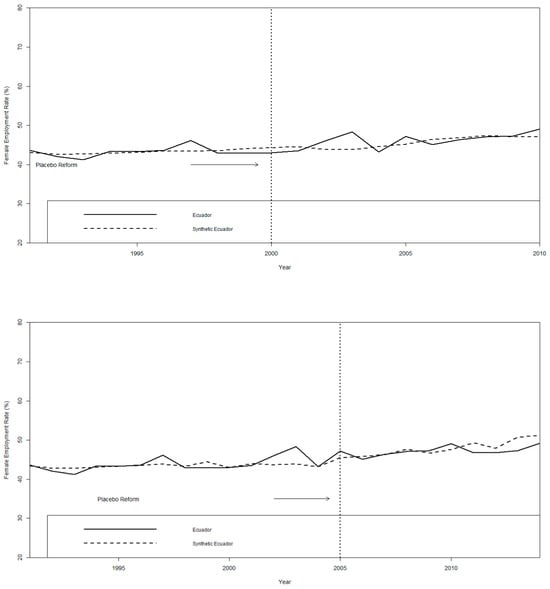
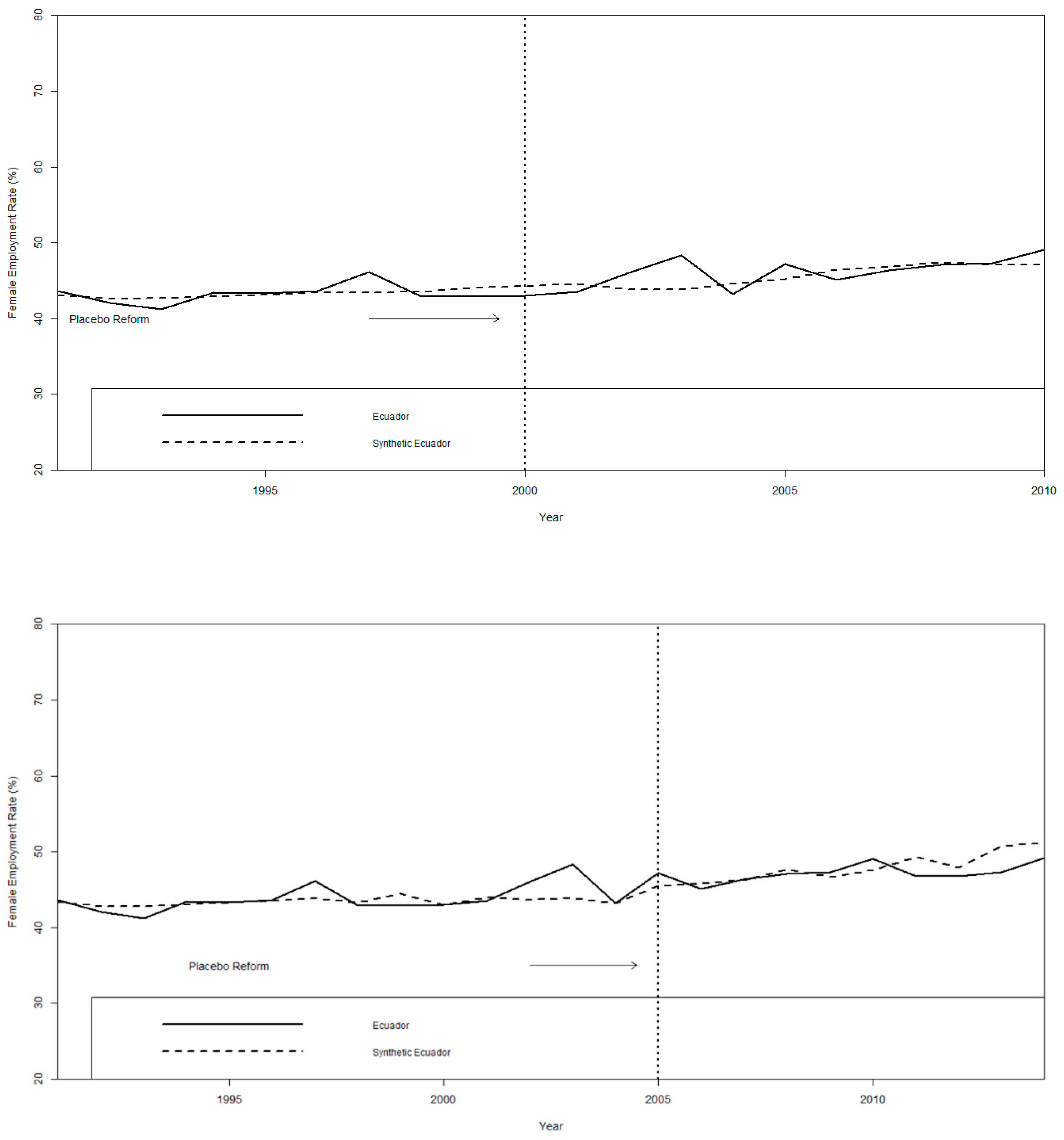
Figure 2 shows the placebo-in-time assignments in 2000 and 2005. In both cases, observed and synthetic Ecuador remain relatively close after the false intervention year, and neither assignment produces a persistent break comparable to the divergence after 2015.
Figure 2.
Placebo-in-time tests with artificial intervention years in 2000 and 2005. Solid and dashed lines represent the observed female employment-to-population ratio in Ecuador and its synthetic counterpart, respectively. Vertical dotted lines mark the artificial intervention years used in the placebo-in-time tests.
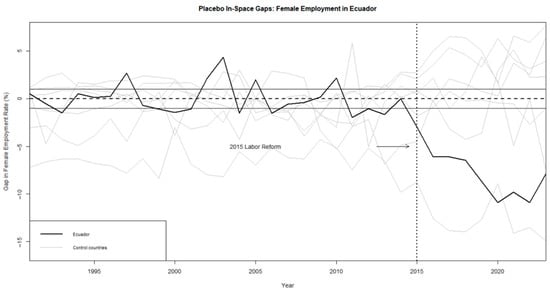
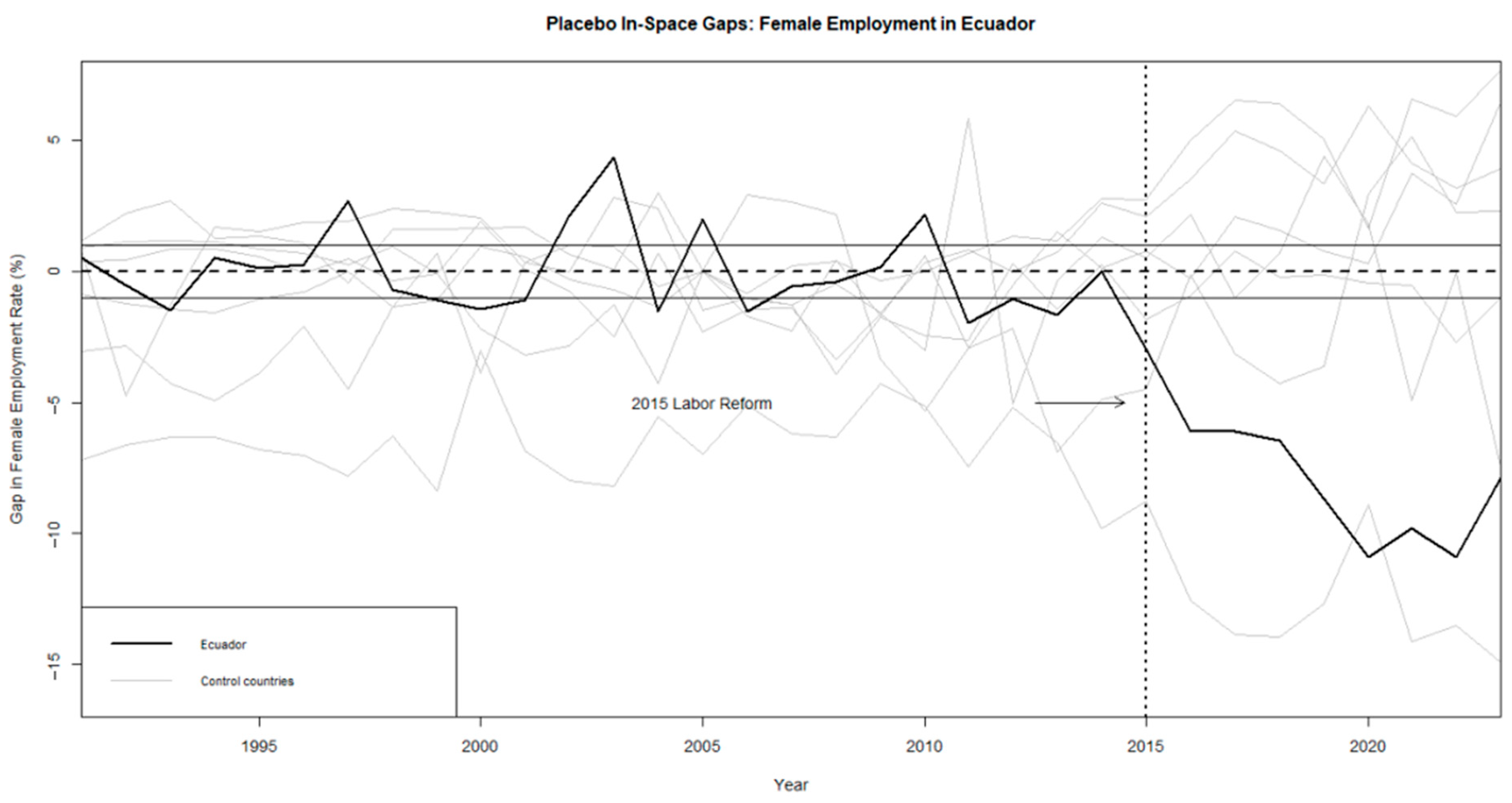
Figure 3 displays the gaps obtained when each donor country is treated as if it had received intervention. After 2015, the gap for Ecuador became more negative than most gaps for the donor placebos. This comparison shows that the post-2015 pattern is unusual within the small donor set, but it does not identify which Ecuador-specific event produced this divergence.
Figure 3.
Placebo-in-space gaps for Ecuador and the eight donor countries. All donor placebos are retained in the comparison. The horizontal dashed line indicates a zero gap, corresponding to no difference between observed and synthetic female employment-to-population ratios. The vertical dotted line marks the 2015 labor reform. Gaps are expressed in percentage points.
4.4. MSPE Ratio and Leave-One-Out Tests
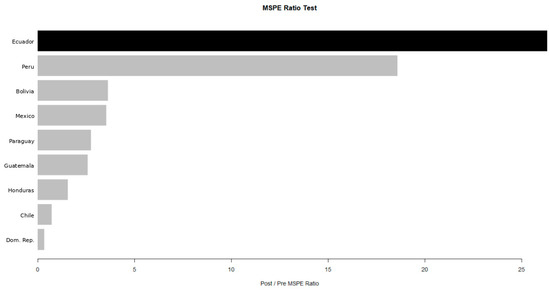
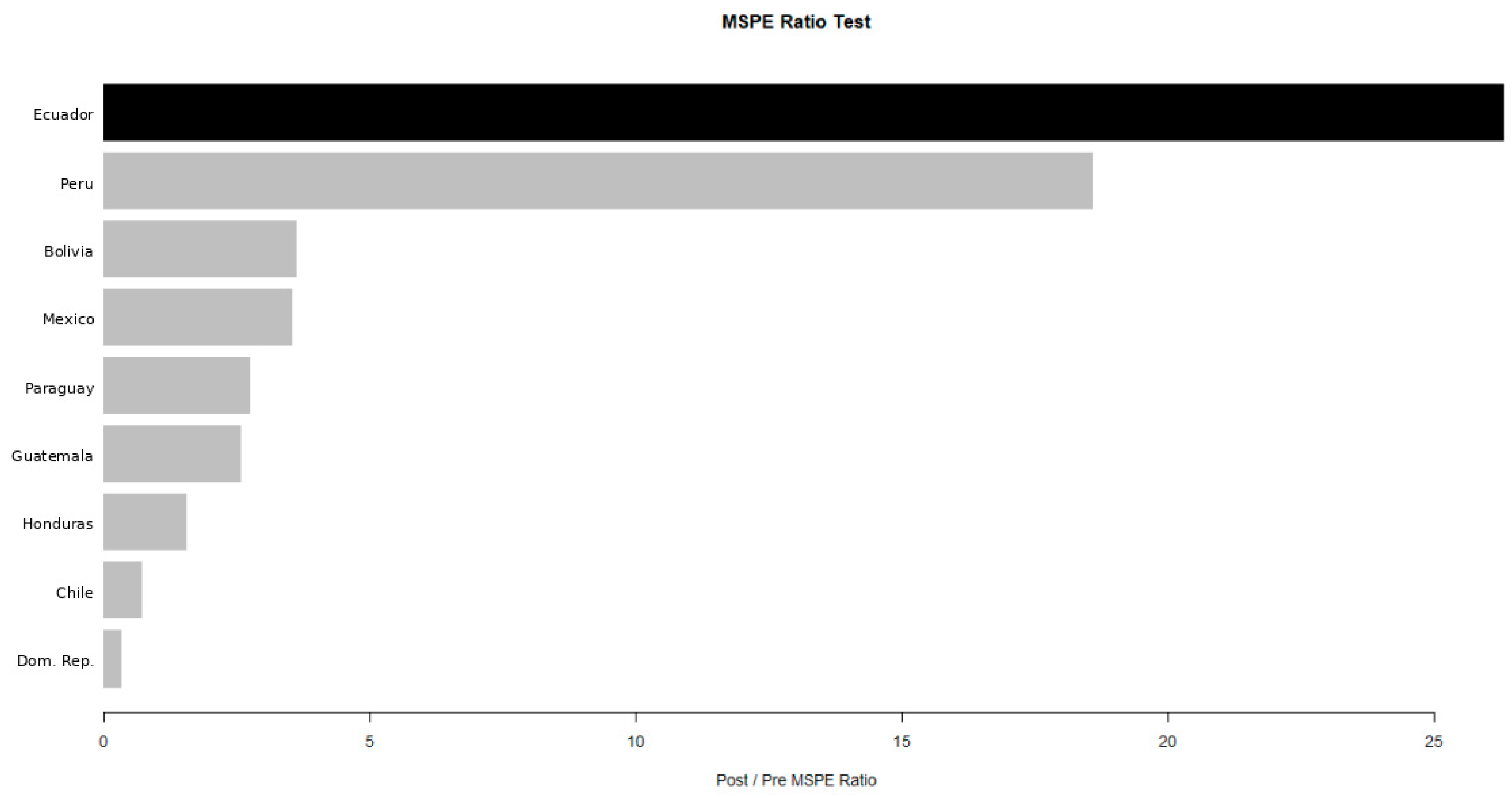
Figure 4 reports the ratio of post-treatment MSPE to pre-treatment MSPE. The ratio for Ecuador is approximately 26, the largest of the nine assignments; Peru has the next-largest ratio at approximately 19. Ecuador therefore ranks first, but the finite placebo distribution is coarse: the rank p-value is 1/9 = 0.111, the smallest attainable value with eight donor placebos. The result is extreme within the available placebo distribution but does not meet conventional 5% or 10% significance levels. It indicates that the post-2015 increase in prediction error was large relative to the available donor placebos, without distinguishing the reform from other Ecuador-specific shocks with similar timing.
Figure 4.
Post-treatment–pre-treatment MSPE ratio for Ecuador and all eight donor-placebo assignments.
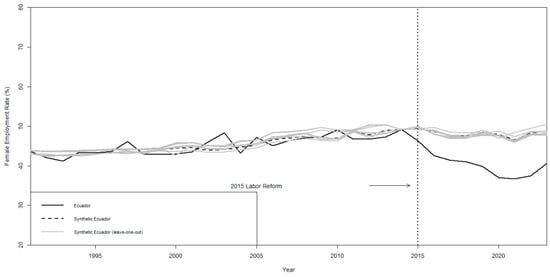
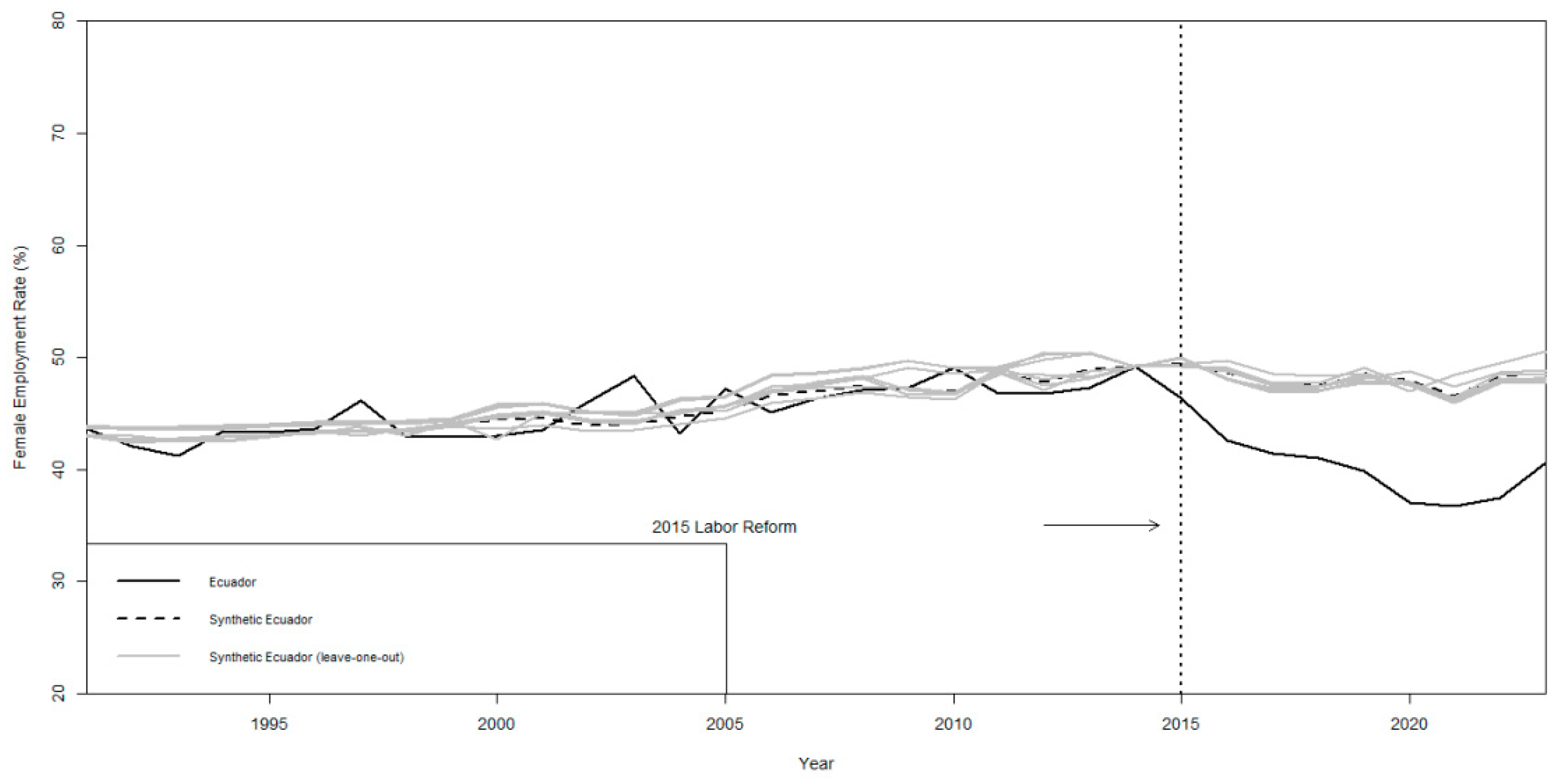
Figure 5 shows the SCM estimates after excluding each positively weighted donor. The pre-treatment paths remain close to the principal synthetic series, and the post-2015 counterfactuals remain above observed Ecuador. Therefore, the estimated divergence is not driven by any single donor country, although the annual magnitude varies across iterations.
Figure 5.
Leave-one-out analysis for each positively weighted donor. The vertical dotted line marks the 2015 labor reform. The solid black line shows the observed female employment-to-population ratio in Ecuador, the dashed black line shows the baseline synthetic estimate, and the gray lines show synthetic estimates obtained by excluding one positively weighted donor country at a time.
4.5. Donor-Pool Sensitivity and Macroeconomic Diagnostic
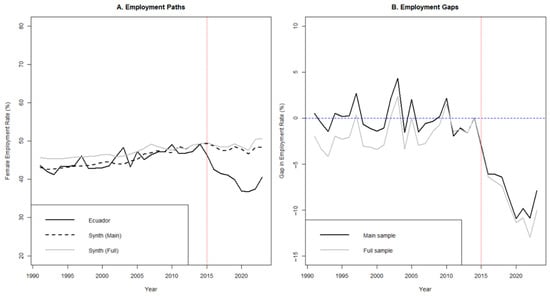
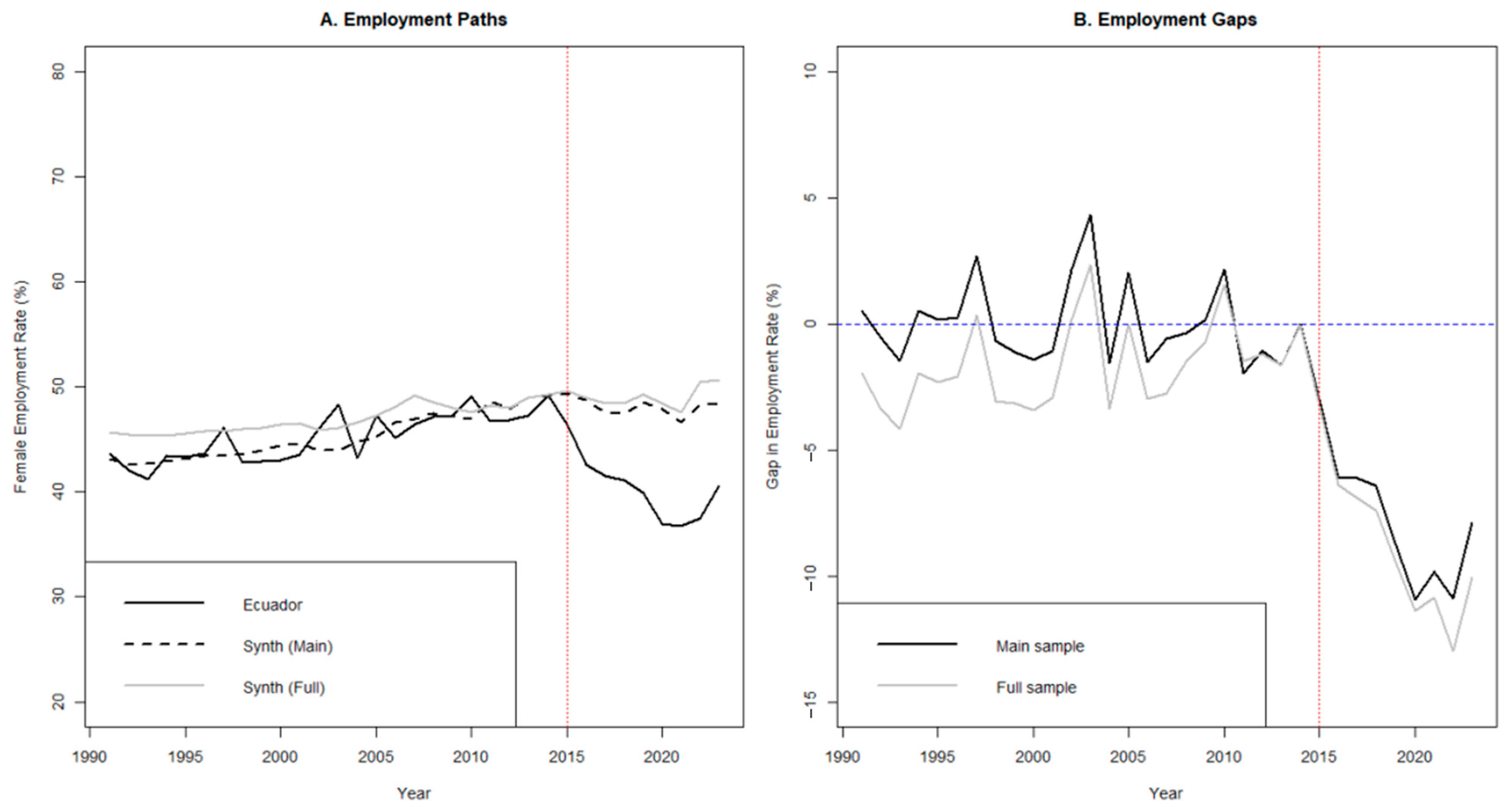
Figure 6 compares the synthetic estimates constructed from the main eight-country donor pool and the expanded complete-case regional pool. The two synthetic series follow similar pre-2015 patterns and remain above the observed female employment afterward. This result reduces the concern that the pattern is an artifact of the principal pool definition, but it does not eliminate possible donor contamination or differential exposure to country-specific shocks.
Figure 6.
Female employment estimates using the main and expanded donor pools. The blue horizontal dashed line in panel (B) indicates a zero gap between observed and synthetic female employment-to-population ratios. The red vertical dotted lines mark the 2015 labor reform in both panels. Employment gaps in panel (B) are expressed in percentage points.
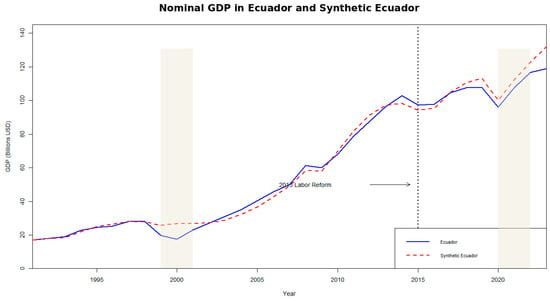
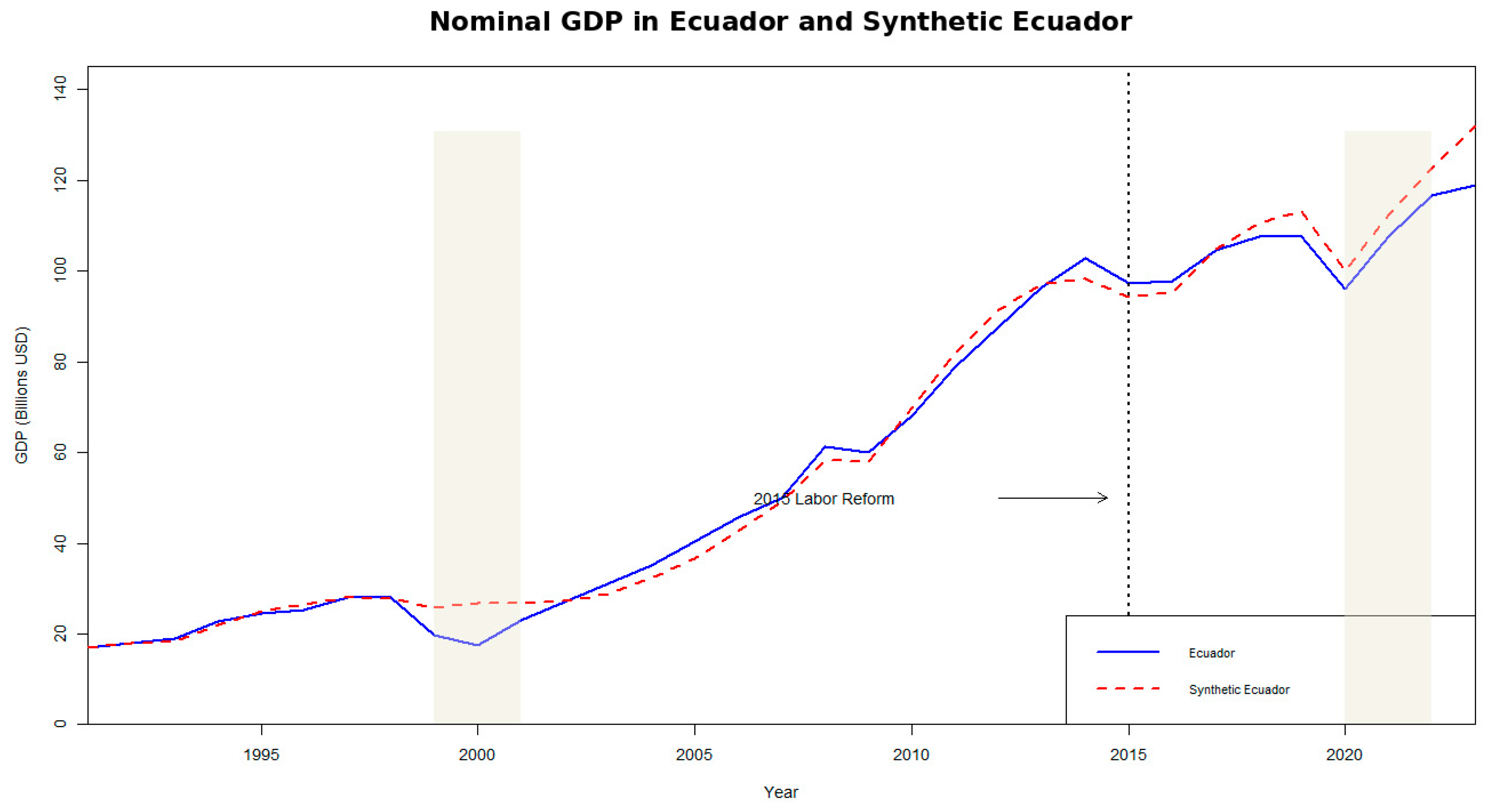
Figure 7 compares the nominal GDP in Ecuador with the synthetic nominal GDP, both measured in current U.S. dollars and expressed in billions. The two series broadly follow similar pre-2015 trends, although the match is imperfect. In several post-2015 years, synthetic GDP lies above observed GDP. The comparison indicates that the period of employment divergence also included macroeconomic divergence; it is a diagnostic of possible confounding, not evidence that GDP mediates or explains the employment gap.
Figure 7.
Nominal GDP in Ecuador and synthetic Ecuador, 1991–2023 (current U.S. dollars, billions). The vertical dotted line marks the 2015 labor reform. The solid blue and dashed red lines represent nominal GDP in Ecuador and synthetic Ecuador, respectively. Shaded bands highlight major downturn periods for visual context only. GDP is expressed in billions of current U.S. dollars.
5. Discussion
5.1. Theoretical Interpretation of the Empirical Pattern
The central finding is a sustained negative gap between observed and synthetic female employment after 2015. The final pre-treatment anchor is nearly exact, although the earlier gaps and full trajectory show that pre-treatment fit is approximate rather than perfect. The donor-pool and leave-one-out analyses indicate that the post-2015 pattern is not driven by a single donor or pool definition, while the placebo analyses place the increase in prediction error at the extreme of the available nine-unit distribution. Nevertheless, the placebo-based rank p-value is 0.111 and does not meet the conventional 5% or 10% significance levels. The most defensible interpretation is therefore a notable post-2015 divergence between Ecuador and the regional synthetic comparator, not proof that the law caused the divergence.
Relative to the framework in Section 2, the observed trajectory does not display the aggregate improvement predicted by a strong retention-and-human-capital scenario. This does not establish that dismissal protection failed for workers who were already covered. The female employment-to-population ratio combines job retention, hiring, labor-market entry, and exit, and it cannot reveal whether protected incumbents experienced greater stability. Therefore, microlevel retention gains could coexist with weaker entry or hiring and still produce a negative aggregate gap.
The negative direction is consistent with a labor demand and discrimination scenario in which expected employment or adjustment costs may affect hiring and other employment decisions [11,12,13,14,15,16]. Evidence on mandated maternity and childcare benefits also shows that compensation can be adjusted to group-specific costs [10,13]. This pattern is compatible with an institutional setting in which informality limits the reach of statutory protection and a care economy in which social recognition does not remove constraints on paid work [20,21,22,23,34,37]. These theoretical parallels do not confirm any particular mechanism. The data do not contain measures of vacancies, hiring, dismissals, contract type, social security affiliation, employer expectations, childcare access, or unpaid care time. Moreover, the institutional and care scenarios principally predict a muted positive response rather than necessarily a decline; explaining the size and persistence of the negative gap therefore requires attention to labor demand and the macroeconomic environment.
The diagnostic and sensitivity analyses clarify different aspects of the comparison but do not adjudicate among mechanisms. The placebo analyses show that the increase in prediction error was unusual within the available donor set, whereas the leave-one-out analysis shows that the estimated path was not dependent on a single donor. Neither exercise reveals whether the gap arose from the reform, differential exposure to shocks, or an interaction between the reform and preexisting structural conditions.
5.2. Macroeconomic Context and Identification
The timing of macroeconomic shocks is central to this interpretation. The oil price collapse began in 2014 and contributed to a balance-of-payments crisis and GDP stagnation in 2015; real GDP then contracted by 1.2% in 2016 [44,45]. The COVID-19 pandemic affected employment from 2020 onward; regional evidence shows that women experienced sharper employment losses in 2020, although changes in gender gaps varied across countries and recovery stages [46,47]. Because the pandemic began five years after the reform, it cannot explain the initial divergence, although it may have affected the size of the gap from 2020 onward. Donor countries experienced some of the same global events, but exposure varied according to oil dependence, fiscal capacity, sectoral composition, and pandemic conditions. A shock affecting Ecuador and its weighted donors identically would not explain the gap; differential exposure could. The nominal GDP diagnostic shows contemporaneous macroeconomic divergence, but GDP measured in current U.S. dollars reflects price and exchange-rate movements as well as output and therefore does not identify a real-output shock or causal pathway. It also cannot determine whether the reform and the downturn interacted, for example, by changing employer responses during a period of weak demand.
5.3. Policy Implications
The policy implication is not that employment protection should be abandoned but that its design and financing should account simultaneously for retention, hiring, informality, and care. The comparative evidence reviewed in Section 2.4 indicates that childcare expansions can improve maternal labor-market participation and employment in Chile, Argentina, and Nicaragua [28,29,31]. Although these interventions differ from Ecuadorian labor legislation, they support the development of affordable childcare, early education, and service schedules compatible with paid work. Broader family-policy research also indicates that leave design may influence female employment, with effects that vary across settings [21,24,25,26]. Portable social protection, stronger enforcement against pregnancy-related discrimination, and financing arrangements that distribute rather than concentrate mandated-benefit costs are additional institutional options for Ecuador, although they were not evaluated here. Future monitoring should distinguish separations, hiring, contract types, and formalization rather than rely only on aggregate employment stocks.
5.4. Limitations and Research Agenda
Several limitations define the scope of the analysis. First, only one aggregate outcome is examined, precluding assessment of formalization, wages, social-security coverage, hours, job quality, hiring, or separations. Second, annual national data conceal regional, sectoral, age, education, parental-status, and rural–urban heterogeneity; the denominator comprising women aged 15 years or older may also mask changes in age composition. Third, the small donor pool produced a coarse placebo distribution, with a minimum attainable p-value of 0.111. This placebo-based p-value is defined relative to the nine available assignments and should not be interpreted as conventional sampling-based inference. Fourth, the synthetic control relied on three lagged outcome anchors, and fit was not exact in every pre-treatment year. Fifth, restricting the donor pool to the region does not guarantee the absence of comparable reforms, donor contamination, or differential exposure to commodity prices and country-specific crises. Sixth, 2015 was a partial-exposure year, and the reform package could not be decomposed into component effects. Seventh, the oil price collapse and the 2015–2016 slowdown coincided with the onset of the divergence, while the pandemic overlapped with the later post-treatment period. The nominal GDP diagnostic also uses current U.S. dollar values and should not be interpreted as a direct measure of real economic activity. These limitations prevent the observed gap from being uniquely assigned to the law or any theoretical mechanism.
Because modeled international indicators may be revised over time, the reproducibility materials should retain the exact analytical data vintage rather than substitute a later live download. Future research should use Ecuadorian household surveys and linked employer–employee data to examine the margins distinguished by the theoretical framework. Outcomes should include hiring, separations, formal employment, income, social-security coverage, hours, and contract types, disaggregated by sector, age, parental status, and territory. Designs that exploit narrower institutional thresholds or variations in enforcement and implementation could help distinguish pregnancy-related protection from macroeconomic changes. Pre-pandemic windows, explicit measures of oil exposure and sectoral demand, and qualitative evidence from employers and workers could further clarify these mechanisms. The social-insurance component for unpaid household workers should also be evaluated as a distinct policy outcome rather than inferred from the aggregate employment ratio.
6. Conclusions
The female employment-to-population ratio in Ecuador fell below the trajectory of synthetic Ecuador after 2015. The estimated gap was approximately −3.0 percentage points in 2015, and the most negative annual gap was approximately −10.9 percentage points. Placebo analyses indicated that the pattern was unusual within the comparison set, whereas donor-pool and leave-one-out analyses showed that it was not driven by one donor or pool definition. Nevertheless, Ecuador ranks first among the nine treated and placebo assignments, yielding a placebo-based rank p-value of 0.111, which does not meet the conventional 5% or 10% significance levels. At the aggregate level, the trajectory does not display the improvement implied by a strong retention-and-human-capital scenario. The observed pattern could reflect hiring adjustments or limited institutional and care-policy reach, but these correspondences with theory do not constitute tests of the proposed mechanisms. The oil price collapse and the 2015–2016 slowdown overlap with the onset of the divergence, while the COVID-19 pandemic may have affected the later gaps. Moreover, the aggregate outcome cannot identify formalization, job quality, hiring behavior, informality, or care burdens. The evidence therefore supports a cautious conclusion of post-2015 divergence without unique causal attribution to the law or any single theoretical channel.
Author Contributions
Writing—original draft preparation, M.Y.B.-H.; writing—review and editing, M.F.-H. and W.G.-P.; supervision, M.F.-H.; methodology, J.C.; data curation, J.C., E.A.-P. and O.B.-G. All authors have read and agreed to the published version of the manuscript.
Funding
This research received no external funding.
Institutional Review Board Statement
Not applicable.
Informed Consent Statement
Not applicable.
Data Availability Statement
The outcome (SL.EMP.TOTL.SP.FE.ZS) and nominal GDP diagnostic (NY.GDP.MKTP.CD) originate from the World Bank Gender Data Portal and World Development Indicators. The results reported here use the analytical data vintage downloaded for the original study. Because the modeled World Bank series can be revised, the exact study dataset, donor weights, and output files are available from the corresponding author upon reasonable request and should be used to reproduce the reported estimates.
Conflicts of Interest
The authors declare no conflicts of interest.
References
- Almeida, R.; Carneiro, P. Enforcement of Labor Regulation and Firm Size. J. Comp. Econ. 2009, 37, 28–46. [Google Scholar] [CrossRef] [Scilit]
- Heckman, J.J.; Pagés, C. The Cost of Job Security Regulation: Evidence from Latin American Labor Markets; National Bureau of Economic Research: Cambridge, MA, USA, 2000. [Google Scholar]
- Maloney, W.F. Informality Revisited. World Dev. 2004, 32, 1159–1178. [Google Scholar] [CrossRef] [Scilit]
- International Labour Organisation. Women and Men in the Informal Economy: A Statistical Picture; International Labour Organization: Geneva, Switzerland, 2013. [Google Scholar]
- Marchionni, M.; Gasparini, L.; Edo, M. Brechas de Género en América Latina. Un Estado de Situación; CAF: Caracas, Venezuela, 2019. [Google Scholar]
- Addati, L.; Cattaneo, U.; Esquivel, V.; Valarino, I. Care Work and Care Jobs for the Future of Decent Work; ILO: Geneva, Switzerland, 2018. [Google Scholar]
- Asamblea Nacional del Ecuador. Ley Orgánica para la Justicia Laboral y Recocimiento del Trabajo en el Hogar; Asamblea Nacional del Ecuador: Quito, Ecuador, 2015. Available online: https://www.asambleanacional.gob.ec/es/publicacion/39630-ley-organica-para-la-justicia-laboral-y-recocimiento (accessed on 1 July 2026).
- Corte Constitucional del Ecuador. Sentencia No. 002-18-SIN-CC, Casos Nos. 0035-15-IN, 0029-15-IN, 0032-15-IN, 0034-15-IN, 0095-15-IN y 0030-15-IN Acumulados; Corte Constitucional del Ecuador: Quito, Ecuador, 2018.
- Instituto Ecuatoriano de Seguridad Social. Resolución No. C.D. 492: Reglamento para la Afiliación de las Personas que Realizan Trabajo No Remunerado del Hogar; Instituto Ecuatoriano de Seguridad Social: Quito, Ecuador, 2015.
- Gruber, J. Disability Insurance Benefits and Labor Supply. J. Political Econ. 2000, 108, 1162–1183. [Google Scholar] [CrossRef] [Scilit] [PubMed]
- Betcherman, G. Labor Market Regulations: What Do We Know about Their Impacts in Developing Countries? World Bank Res. Obs. 2015, 30, 124–153. [Google Scholar] [CrossRef] [Scilit]
- Kugler, A.D. The Impact of Firing Costs on Turnover and Unemployment: Evidence from the Colombian Labour Market Reform. Int. Tax Public Financ. 1999, 6, 389–410. [Google Scholar] [CrossRef] [Scilit]
- Prada, M.F.; Rucci, G.; Urzúa, S.S. The Effect of Mandated Child Care on Female Wages in Chile; National Bureau of Economic Research: Cambridge, MA, USA, 2015. [Google Scholar]
- Ulyssea, G. Firms, Informality, and Development: Theory and Evidence from Brazil. Am. Econ. Rev. 2018, 108, 2015–2047. [Google Scholar] [CrossRef] [Scilit]
- Becker, G.S. The Economics of Discrimination; University of Chicago Press: Chicago, IL, USA, 2010. [Google Scholar]
- Aigner, D.J.; Cain, G.G. Statistical Theories of Discrimination in Labor Markets. Ilr Rev. 1977, 30, 175–187. [Google Scholar] [CrossRef] [Scilit]
- Blau, F.D.; Kahn, L.M. The Gender Wage Gap: Extent, Trends, and Explanations. J. Econ. Lit. 2017, 55, 789–865. [Google Scholar] [CrossRef] [Scilit]
- Mincer, J.; Polachek, S. Family Investments in Human Capital: Earnings of Women. J. Political Econ. 1974, 82, S76–S108. [Google Scholar] [CrossRef] [Scilit] [PubMed]
- North, D.C. Institutions, Institutional Change and Economic Performance; Cambridge University Press: Cambridge, UK, 1990. [Google Scholar]
- Folbre, N. Measuring Care: Gender, Empowerment, and the Care Economy. J. Hum. Dev. 2006, 7, 183–199. [Google Scholar] [CrossRef] [Scilit]
- Ferragina, E. Family Policy and Women’s Employment Outcomes in 45 High-income Countries: A Systematic Qualitative Review of 238 Comparative and National Studies. Soc. Policy Adm. 2020, 54, 1016–1066. [Google Scholar] [CrossRef] [Scilit]
- Berniell, I.; Berniell, L.; de la Mata, D.; Edo, M.; Marchionni, M. Motherhood and Flexible Jobs: Evidence from Latin American Countries. World Dev. 2023, 167, 106225. [Google Scholar] [CrossRef] [Scilit]
- Economic Commission for Latin America and the Caribbean. The Care Society: A Horizon for Sustainable Recovery with Gender Equality; United Nations: Santiago, Chile, 2022. [Google Scholar]
- Ruhm, C.J. The Economic Consequences of Parental Leave Mandates: Lessons from Europe. Q. J. Econ. 1998, 113, 285–317. [Google Scholar] [CrossRef] [Scilit]
- Lalive, R.; Zweimüller, J. How Does Parental Leave Affect Fertility and Return to Work? Evidence from Two Natural Experiments. Q. J. Econ. 2009, 124, 1363–1402. [Google Scholar] [CrossRef] [Scilit]
- Olivetti, C.; Petrongolo, B. The Economic Consequences of Family Policies: Lessons from a Century of Legislation in High-Income Countries. J. Econ. Perspect. 2017, 31, 205–230. [Google Scholar] [CrossRef] [Scilit] [PubMed]
- Halim, D.; Perova, E.; Reynolds, S. Childcare and Mothers’ Labor Market Outcomes in Lower-and Middle-Income Countries. World Bank Res. Obs. 2023, 38, 73–114. [Google Scholar] [CrossRef] [Scilit]
- Martínez, C.; Perticará, M. Childcare Effects on Maternal Employment: Evidence from Chile. J. Dev. Econ. 2017, 126, 127–137. [Google Scholar] [CrossRef] [Scilit]
- Berlinski, S.; Galiani, S.; Gertler, P. The Effect of Pre-Primary Education on Primary School Performance. J. Public Econ. 2009, 93, 219–234. [Google Scholar] [CrossRef] [Scilit]
- Berlinski, S.; Galiani, S.; Mc Ewan, P.J. Preschool and Maternal Labor Market Outcomes: Evidence from a Regression Discontinuity Design. Econ. Dev. Cult. Change 2011, 59, 313–344. [Google Scholar] [CrossRef] [Scilit] [PubMed]
- Hojman, A.; Boo, F.L. Public Childcare Benefits Children and Mothers: Evidence from a Nationwide Experiment in a Developing Country. J. Public Econ. 2022, 212, 104686. [Google Scholar] [CrossRef] [Scilit]
- Gaddis, I.; Pieters, J. The Gendered Labor Market Impacts of Trade Liberalization: Evidence from Brazil. J. Hum. Resour. 2017, 52, 457–490. [Google Scholar] [CrossRef] [Scilit]
- Uribe, A.M.T.; Vargas, C.O.; Bustamante, N.R. Unintended Consequences of Maternity Leave Legislation: The Case of Colombia. World Dev. 2019, 122, 218–232. [Google Scholar] [CrossRef] [Scilit]
- Mahé, C.; Zanoni, W.; Oliveri, M.L. Womens Informal Labor Market Participation in Ecuador; Inter-American Development Bank: Washington, DC, USA, 2022. [Google Scholar]
- Instituto Nacional de Estadística y Censos. Panorama Laboral y Empresarial del Ecuador 2017; Instituto Nacional de Estadística y Censos: Quito, Ecuador, 2017. [Google Scholar]
- Banco Central del Ecuador. Reporte Trimestral de Mercado Laboral, Marzo 2019; Banco Central del Ecuador: Quito, Ecuador, 2019. [Google Scholar]
- Jara, H.X.; Rattenhuber, P.; UNU-WIDER. Female Labour Supply and Informal Employment in Ecuador; WIDER Working Paper; UNU-WIDER: Helsinki, Finland, 2022; Volume 2022. [Google Scholar]
- Molina-Vera, A. The Impact of an Extension of Workers’ Health Insurance on Formal Employment: Evidence from Ecuador. World Dev. 2021, 141, 105364. [Google Scholar] [CrossRef] [Scilit]
- World Bank. Gender Gaps in Ecuador: An Overview; World Bank: Washington, DC, USA, 2018. [Google Scholar]
- Abadie, A.; Diamond, A.; Hainmueller, J. Synthetic Control Methods for Comparative Case Studies: Estimating the Effect of California’s Tobacco Control Program. J. Am. Stat. Assoc. 2010, 105, 493–505. [Google Scholar] [CrossRef] [Scilit]
- World Bank Ecuador. Employment to Population Ratio, 15+, Female (%); Gender Data Portal; World Bank Ecuador: Quito, Ecuador, 2026. [Google Scholar]
- World Bank. GDP (Current US$); Indicator NY.GDP.MKTP.CD; World Bank: Washington, DC, USA, 2026. [Google Scholar]
- Abadie, A. Using Synthetic Controls: Feasibility, Data Requirements, and Methodological Aspects. J. Econ. Lit. 2021, 59, 391–425. [Google Scholar] [CrossRef] [Scilit]
- World Bank Group. Global Economic Prospects, January 2016; World Bank: Washington, DC, USA, 2016. [Google Scholar]
- Valle, A.; Aguirre, I. Panorama Económico Del Ecuador En Tiempos de Coronavirus. Apunt. Econ. 2020, 23, 1–27. [Google Scholar]
- UN Women. The Economic Impact of COVID-19 on Women in Latin America and the Caribbean; UN Women: New York, NY, USA, 2020. [Google Scholar]
- Acevedo, I.; Castellani, F.; Lotti, G.; Székely, M. Labor Market Gender Gaps in the Time of COVID-19 in Latin America and the Caribbean; Inter-American Development Bank: Washington, DC, USA, 2022. [Google Scholar]

Disclaimer/Publisher’s Note: The statements, opinions and data contained in all publications are solely those of the individual author(s) and contributor(s) and not of MDPI and/or the editor(s). MDPI and/or the editor(s) disclaim responsibility for any injury to people or property resulting from any ideas, methods, instructions or products referred to in the content. |
© 2026 by the authors. Licensee MDPI, Basel, Switzerland. This article is an open access article distributed under the terms and conditions of the Creative Commons Attribution (CC BY) license.