


Abstract
Geopolitical fragmentation, intensifying geoeconomic competition, and the securitisation of economic relations are reshaping the international environment and changing the conditions under which the European Union (EU) conducts its external economic policy. As economic interdependence has become a source of both prosperity and vulnerability, the EU has begun to redefine the relationship between openness, resilience, and economic security. This article examines how these developments are reshaping the EU’s geoeconomic model and its role within an evolving global order. The study develops an analytical framework that links geopolitical pressures, external dependencies, and institutional responses to the Union’s geoeconomic adaptation. The research employs a concept-driven qualitative design combining qualitative content analysis, analytically focused comparison, and process-oriented interpretation of key EU strategic documents and the relevant academic literature. The study shows that the EU is developing a hybrid geoeconomic model that combines openness with resilience, market integration with economic security, and international cooperation with a stronger capacity to manage critical vulnerabilities. This process reflects a longer-term adjustment of the Union’s external economic strategy and its international role. The article advances current debates on geoeconomics, European integration, and global governance by explaining how geopolitical fragmentation is reshaping the EU’s external action in a more contested international environment.
1. Introduction
The global environment is undergoing profound change. Geopolitical fragmentation, sharper geoeconomic competition, technological rivalry, and the securitisation of international economic relations are changing how states and regional organisations pursue influence and defend their interests. Assumptions that shaped the post-Cold War liberal international order—particularly the belief that deeper economic interdependence would promote stability, prosperity, and political convergence—are no longer widely accepted [1]. Economic interdependence is still associated with efficiency and mutual benefits, but it has become a source of structural vulnerability, political leverage, and economic coercion [2]. Economic instruments play a much more visible role in international competition than before, while the distinction between economic, foreign, and security policy has become less clear [3].
Interest in geoeconomics has expanded in response to these developments. In this article, geoeconomics refers to the deliberate use of trade, investment, finance, technology, industrial policy, and other economic instruments to advance political objectives, strengthen national or regional positions, and influence the international environment. Major powers now rely more heavily on export controls, technological standards, industrial subsidies, investment restrictions, and control over critical supply chains, alongside more traditional instruments of statecraft [4]. The geopolitical rivalry between the United States and China illustrates this development particularly well, although its consequences extend far beyond bilateral relations. The COVID-19 pandemic and Russia’s invasion of Ukraine exposed weaknesses in tightly interconnected production networks and showed that economic interdependence cannot be examined separately from geopolitical risk [5,6].
These developments have changed the way international economic relations are understood and have pushed economic security towards the centre of political debate. In this study, economic security is defined as the capacity of the European Union to preserve the functioning of critical economic systems, reduce excessive external dependencies, and maintain the ability to pursue autonomous policy choices under conditions of geopolitical uncertainty. The term geoeconomic transformation is used here to describe the longer-term adaptation of the EU’s external economic model through the gradual incorporation of resilience, economic security, and strategic autonomy into its external economic governance.
For the European Union (EU), this shift represents not only an economic challenge but also an institutional and political one. As one of the world’s largest trading powers and a major beneficiary of globalisation, the EU built its international position on regulatory influence, multilateral cooperation, and open markets [7,8]. The foundations of this model have weakened under the pressure of geopolitical fragmentation, technological rivalry, and the securitisation of economic relations. Disruptions in global value chains, technological competition, energy insecurity, and economic coercion have revealed vulnerabilities that received relatively little attention during earlier stages of globalisation [2]. The Union is reconsidering not only the balance between openness and security, but also its role in an international environment that has become considerably more fragmented.
A rapidly expanding body of literature examines geoeconomics, economic security, strategic autonomy, and the external economic policy of the European Union. Most studies, however, deal with these topics separately. They usually focus on individual policy instruments, particular sectors, or selected aspects of the Union’s external action. Much less attention has been paid to explaining how these developments interact and reshape the EU’s geoeconomic model as a whole. The relationship between geopolitical fragmentation, structural vulnerabilities, institutional adaptation, and the changing international role of the Union remains only partially integrated within existing research. This article addresses that gap by examining these processes as parts of one longer-term transformation.
The study builds on the analysis of the European Union’s geopolitical reorientation presented by Ivančík and Andrassy (2026) [1], who argued that the Union entered a new phase of adaptation during the period of polycrisis. Here, the focus shifts to its geoeconomic dimension. The analysis explores how geopolitical change has influenced the EU’s external economic strategy, expanded its geoeconomic policy instruments, and altered the relationship between economic governance, international influence, and global governance.
This development can be seen in the wider use of concepts such as open strategic autonomy, economic security, de-risking, industrial policy, investment screening, and anti-coercion measures [9]. These initiatives should not be viewed as isolated policy responses. Together, they point to a gradual adjustment in the way the European Union positions itself in an international environment shaped by systemic rivalry and geopolitical uncertainty. The Union has not abandoned openness. It is, however, modifying its external economic strategy to preserve its international influence while limiting exposure to critical vulnerabilities [10].
Against this background, the article examines how geopolitical fragmentation is reshaping the EU’s geoeconomic evolution and its place in the international order. The central research question is formulated as follows: How are geopolitical transformations reshaping the geoeconomic model of the European Union?
Answering this question requires more than describing individual EU policy initiatives. Existing studies provide valuable insights into particular instruments and policy fields, but they rarely explain how these changes interact within an overall transformation of the Union’s geoeconomic model. The analysis presented here adopts an integrated analytical perspective linking geopolitical change, structural vulnerabilities, institutional adaptation, and policy responses within a single explanatory framework. The objective is not only to identify what has changed in the EU’s external economic policy, but also to explain why these changes represent a deeper structural transformation.
We argue that geopolitical fragmentation, intensifying great powers rivalry, and the securitisation of economic relations are driving a transition from a predominantly market-oriented model towards a hybrid geoeconomic framework centred on economic security, resilience, and strategic autonomy [11]. This transition does not replace the traditional objectives of competitiveness, innovation, and openness. It changes the way these objectives are interpreted by placing greater emphasis on external vulnerabilities, international positioning, and the capacity to respond to external shocks over the long term.
The article makes four main contributions to the literature. It first develops an analytical framework that brings together geopolitical fragmentation, weaponised interdependence, systemic vulnerabilities, economic security, and institutional adaptation within a single explanatory model of the EU’s geoeconomic transformation. It moves beyond analyses of individual policy instruments by interpreting recent EU initiatives as interconnected elements of a wider process of geoeconomic adaptation. Another contribution lies in explaining how changes in the international environment have reshaped not only the Union’s external economic policies but also the relationships between economic governance, international influence, and strategic autonomy. Finally, the article argues that the EU’s changing geoeconomic role should be understood as a long-term structural transformation, not a temporary reaction to successive geopolitical crises. In doing so, it contributes to ongoing discussions on European integration and global governance.
The remainder of the article is organised as follows. Section 2 presents the theoretical foundations of the study and introduces the analytical framework used in the analysis. Section 3 explains the research design and methodological approach. Section 4 examines the empirical evidence on the drivers and manifestations of the EU’s geoeconomic transformation. Section 5 discusses the implications of these findings for the Union’s international role, European integration, and global governance. The final section summarises the principal conclusions and identifies several directions for future research.
2. Theoretical Framework
2.1. Geoeconomics and Economic Statecraft
The closer interaction between economics, security, and foreign policy has revived academic interest in geoeconomics as a useful framework for analysing present international relations. Classical geopolitics explained international competition mainly through military capabilities and territorial control. Geoeconomics, by contrast, focuses on the use of economic instruments as sources of influence in a highly interconnected international system [12]. This development reflects wider changes in the global distribution of power, where trade, finance, technology, investment, and control over critical resources have become essential components of international competition [13].
In its broadest interpretation, geoeconomics examines how states use economic instruments to pursue political and geopolitical objectives [14]. Although there is broad agreement that economic instruments have become an integral part of international competition, scholars differ in how they conceptualise geoeconomics itself. Earlier approaches emphasise the deliberate use of economic instruments as tools of statecraft [15]. More recent contributions view geoeconomics as an analytical perspective that captures structural changes in the relationship between economics, security, and international power [12,16].
Competition among major powers is now expressed not only through export controls, industrial policy, investment restrictions, technological standards, sanctions, or control over critical supply chains, but also through the closer integration of economic and security objectives. Economic interdependence has therefore acquired a dual character. It continues to generate prosperity and support international integration, while simultaneously creating external dependencies that may be converted into instruments of political influence. As a result, the traditional distinction between economic policy, foreign policy, and national security has become far less clear.
Even though this a more comprehensive interpretation has become widely accepted, there is still no consensus on whether geoeconomics should be regarded as a distinct theoretical approach or simply as an analytical perspective linking economic and geopolitical processes.
The same developments have increased the importance of economic statecraft. Traditionally, the concept referred to the deliberate use of economic instruments in support of foreign policy objectives [17]. Today, it has become a prominent feature of global governance. States rely on cooperative instruments, including trade agreements, investment promotion, development assistance, and long-term economic partnerships, but they also employ coercive measures such as sanctions, tariffs, export restrictions, and financial pressure [6,18]. The expanding use of these instruments by the United States and China illustrates that economic tools have become an integral part of systemic competition and of efforts to shape the international order [16,19]. In the European context, Sattich and Inderberg (2019) argue that geoeconomics offers a useful analytical framework for examining how Member States pursue national interests through economic instruments within the institutional setting of the European Union [20]. Their interpretation extends geoeconomic analysis beyond global power competition by demonstrating its relevance for understanding bilateral political and economic relations among EU Member States.
For the European Union, these changes represent more than an adjustment of external economic policy. They point to a gradual evolution of the Union’s international role. For many years, the EU exercised influence mainly through regulatory power, market integration, and multilateral engagement. This understanding is reflected in the concept of Market Power Europe, which explains how the size and attractiveness of the EU’s internal market enable the Union to influence the behaviour of external actors through regulatory and economic instruments [21]. The Union is now complementing these traditional sources of influence with policies aimed at strengthening resilience, reducing external dependencies, and protecting critical sectors [10]. This development suggests that the EU is adapting not only its geoeconomic policy instruments but also the foundations of its external economic governance in response to geopolitical fragmentation and stronger international competition [22]. Although the literature broadly recognises the growing importance of economic instruments in international competition, there is still less agreement on how these developments are reshaping the relationship between market power, economic security, and the EU’s evolving role as a geoeconomic actor.
2.2. Weaponised Interdependence and Structural Vulnerabilities
The rising importance of geoeconomics is closely associated with the concept of weaponised interdependence, which has become an influential lens for analysing international relations and global governance. Liberal approaches to international political economy traditionally viewed economic interdependence as a source of mutual gains, cooperation, and international stability [23]. More recent research has shown that asymmetrical patterns of interdependence may generate opportunities for political leverage, coercion, and influence [24]. Babić et al. (2022) locate these developments within a wider transformation of the international political economy, arguing that geopolitical competition is reshaping economic governance, industrial policy, and international economic relations [25]. Economic networks are no longer understood only as channels of integration. They have become structures through which power is exercised.
This perspective reflects changes in the architecture of the international system. Global production networks, financial infrastructures, digital ecosystems, and technological platforms connect states more closely than ever before, although these connections remain unevenly distributed. Actors occupying central positions within such networks are able to influence the behaviour of others by controlling access to markets, technologies, financial systems, or critical resources [26]. Economic interdependence thus performs two functions simultaneously. It supports economic growth and international integration, but it also creates vulnerabilities that may be exploited for geopolitical purposes [27]. The capacity to shape or restrict these flows has consequently become an important source of international influence [28].
The implications of these vulnerabilities became particularly visible during the COVID-19 pandemic and the subsequent disruptions to global supply chains. Shortages of semiconductors, pharmaceuticals, medical equipment, and critical raw materials exposed the risks associated with an excessive concentration of production and sourcing. Russia’s invasion of Ukraine reinforced this lesson by demonstrating how energy dependence and economic networks can be transformed into instruments of geopolitical pressure [29]. These developments challenged earlier assumptions about the inherently beneficial nature of economic interdependence and accelerated a broad reassessment of resilience, diversification, and geopolitical risk in international economic relations.
Within the European Union, these challenges are especially visible in sectors characterised by high external dependence, including energy, semiconductors, critical raw materials, advanced manufacturing, and digital technologies [30,31]. In this article, a strategic vulnerability refers to an external dependency that becomes politically and economically consequential when it combines a high concentration of supply, limited substitutability, and systemic importance for the Union’s economic or technological capacity. Issues that were once discussed mainly in terms of efficiency and competitiveness are now assessed through the lenses of resilience, security, and geopolitical exposure. In this article, weaponised interdependence refers to a situation in which actors occupying advantageous positions within asymmetric economic networks can use control over economic flows, markets, technologies, or critical resources to create political leverage over more dependent actors [24]. By itself, however, it does not explain how governments or regional organisations respond to such vulnerabilities. This limitation highlights the stronger role of economic security as a complementary analytical perspective for understanding the European Union’s evolving geoeconomic adaptation.
2.3. Economic Security and Strategic Autonomy
Growing awareness of external dependencies and supply-chain vulnerabilities has moved economic security to the centre of debates on the European Union’s international role. Economic security can be understood as the ability of a state or political entity to preserve prosperity, political stability, and the functioning of critical economic systems under conditions of geopolitical tension, external disruption, or systemic uncertainty [32]. Herranz-Surrallés et al. (2024) argue that this development reflects a geoeconomic reorientation of the Single Market, in which economic security plays an important role in shaping the European Union’s external economic governance [33]. Economic openness alone is no longer regarded as sufficient to safeguard long-term resilience or strategic autonomy, a change that reflects the evolving international environment [22].
The implications extend well beyond changing economic policy priorities. They point to a fundamental redefinition of how states respond to a more contested international order. Earlier approaches focused on efficiency, market optimisation, and cost reduction. Economic security adds further considerations, including resilience, diversification, adaptive capacity, and the ability to withstand external shocks [34]. The objective is not to reduce economic interdependence itself but to prevent excessive external dependencies that may constrain political decision-making or expose critical sectors to external pressure. Economic security has now become one of the principal mechanisms through which governments seek to balance economic openness with geopolitical competition.
The practical consequences of this evolution can be observed across a widening range of EU policies. The European Chips Act, the Critical Raw Materials Act, foreign investment screening, the Anti-Coercion Instrument, and the European Economic Security Strategy demonstrate that economic security has become an integral component of both the Union’s external action and its internal governance. They illustrate the European Union’s expanding reliance on autonomous trade and investment instruments intended to address external economic risks while preserving its commitment to an open international economy [35]. Together, these initiatives show how the EU is adapting its policy framework to an international environment in which economic resilience, technological capabilities, and strategic autonomy influence both economic performance and geopolitical positioning [30]. Although existing research explains the rationale behind these policy initiatives, understanding the EU’s geoeconomic transformation requires examining how geopolitical change, structural vulnerabilities, and institutional adaptation interact within a common analytical framework.
The literature reviewed in this chapter indicates broad agreement that geopolitical competition has fundamentally altered the relationship between economics and security. The individual strands of research, however, approach this transformation from different analytical perspectives. Studies of geoeconomics explain the expanding use of economic instruments in pursuit of political objectives. Research on weaponised interdependence demonstrates how asymmetric economic networks create new forms of structural vulnerability and coercive influence. Work on economic security and strategic autonomy focuses mainly on the institutional and policy responses developed by the European Union. Each perspective highlights an important dimension of present geoeconomic change. Taken together, they provide the conceptual foundation for analysing how external structural pressures, vulnerabilities, and institutional adaptation interact within a single process of the EU’s geoeconomic transformation.
2.4. Analytical Framework
Building on the theoretical discussion presented in the preceding sections, this study develops an analytical model that explains how geopolitical change reshapes the European Union’s geoeconomic transformation. Recent EU policy initiatives are interpreted not as isolated responses to successive crises, but as interconnected manifestations of a longer-term process of institutional and strategic adaptation. The objective is not to replace existing approaches to geoeconomics, economic security, or strategic autonomy. The model brings together their principal insights within a single explanatory structure that captures the interaction between geopolitical fragmentation, structural vulnerabilities, institutional responses, and the changing geoeconomic role of the European Union.
The proposed model combines several complementary strands of scholarship. It draws on geoeconomic approaches examining the relationship between economic instruments and geopolitical objectives, research on weaponised interdependence explaining how asymmetric economic networks generate vulnerabilities, and studies of economic security and strategic autonomy analysing institutional responses to external dependencies. It does not introduce an entirely new theoretical perspective. Its contribution lies in integrating these approaches into a coherent explanatory structure suited to the specific context of the European Union’s evolving geoeconomic governance.
The model is organised as a sequential explanatory structure consisting of four analytically connected stages. Each stage represents a distinct explanatory link between structural changes in the international environment and corresponding changes in the EU’s geoeconomic governance. Viewed as a single explanatory sequence, the four stages explain both how the Union adapts to geopolitical fragmentation and why this adaptation gradually transforms its external economic model.
The first stage identifies geopolitical fragmentation and intensifying rivalry among major powers as the principal structural drivers reshaping the international environment in which the European Union operates. These developments increase uncertainty and alter the conditions under which external economic policy is formulated.
The second stage explains how these structural changes modify patterns of economic interdependence. Dependencies previously associated mainly with economic efficiency become potential sources of geopolitical leverage and systemic vulnerability.
The third stage focuses on the institutional implications of this changing environment. As awareness of external vulnerabilities grows, the European Union has incorporated resilience, economic security, and strategic autonomy into its policy framework, thereby redefining the objectives of its external economic governance.
The fourth stage examines the resulting process of geoeconomic transformation. New policy instruments, regulatory mechanisms, and institutional responses are interpreted as interconnected manifestations of a strategic adaptation through which the Union redefines its international role under conditions of sustained geopolitical fragmentation.
These four stages should not be interpreted as a simple chronological sequence. They represent analytically distinct but mutually reinforcing mechanisms that explain the logic of the EU’s geoeconomic transformation. Their explanatory strength lies in demonstrating how geopolitical fragmentation generates cumulative institutional responses that gradually reshape the Union’s external economic governance. This integrated perspective distinguishes the proposed model from approaches that examine individual policy instruments or strategic initiatives in isolation.
Economic security, de-risking strategies, industrial policy, investment screening mechanisms, technology-related regulation, and supply-chain diversification should be understood as mutually reinforcing elements of the same adaptive process [10,24]. Their importance lies not only in their individual policy objectives, but also in what they reveal collectively about the changing relationship between economics, security, and international influence within the European Union.
Figure 1 summarises the analytical logic underpinning this argument. As the figure illustrates, geopolitical fragmentation and strategic rivalry create conditions in which vulnerabilities can emerge within highly interconnected economic systems. These vulnerabilities create pressures for resilience-building, economic security, and strategic adaptation, ultimately contributing to the reconfiguration of the EU’s geoeconomic model and its evolving position in the international system.
Figure 1.
Analytical Framework of the EU’s Geoeconomic Transformation. Source: Authors’ own elaboration based on the literature on geoeconomics, economic statecraft, weaponised interdependence, economic security, and strategic autonomy.
The analytical model presented in Figure 1 provides the conceptual foundation for the empirical analysis developed in the following sections. The analysis examines how these mechanisms operate in practice and evaluates the extent to which they are reshaping the EU’s geoeconomic transformation, its external economic relations, and its capacity to act as a geoeconomic actor under conditions of sustained geopolitical competition. The model serves not only as a conceptual illustration but also as the principal analytical instrument guiding the interpretation of the empirical evidence presented in the remainder of the article.
3. Methodology and Research Design
3.1. Research Design
This study employs a concept-driven qualitative research design to examine the European Union’s geoeconomic transformation under conditions of geopolitical fragmentation and systemic change in the international order. Given the complexity of the phenomenon under investigation, an interpretative and explanatory perspective is adopted instead of a hypothesis-testing econometric approach. The aim is not to estimate causal effects between individual variables but to explain the mechanisms through which geopolitical change reshapes the EU’s geoeconomic adaptation, its external economic policies, and its role in an evolving global environment. This approach follows established concept-driven qualitative research in international political economy (e.g., Farrell & Newman, 2019 [24]; Scholvin & Wigell, 2018 [12]).
The research proceeds from the assumption that the EU’s geoeconomic transformation is a multidimensional process shaped simultaneously by political, economic, technological, and institutional factors. Such developments cannot be adequately captured through a single quantitative indicator or a narrowly specified causal model. Attention is directed towards identifying patterns of change, relationships among key variables, and the mechanisms linking geopolitical fragmentation, structural vulnerabilities, economic security, and institutional adaptation within the European Union.
3.2. Methods and Analytical Approach
To answer the research question, the article combines qualitative content analysis, analytically focused comparison, and process-oriented interpretation. Qualitative content analysis is used to examine the evolution of key concepts, policy priorities, and strategic narratives contained in official European Union documents. Particular attention is paid to concepts such as economic security, de-risking, open strategic autonomy, resilience, and geoeconomic governance.
The document corpus consists mainly of key EU policy and strategic documents published between 2019 and 2025, including the European Economic Security Strategy, the European Chips Act, the Critical Raw Materials Act, REPowerEU, the Industrial Strategy for Europe, together with related communications issued by the European Commission and the European Council. The analysis is organised around seven analytical categories derived from the theoretical framework: geopolitical fragmentation, strategic rivalry, weaponised interdependence, systemic vulnerabilities, economic security, geoeconomic adaptation, and the evolving EU geoeconomic model. These categories serve as interpretative coding dimensions for the systematic examination of changes in policy priorities, institutional responses, and strategic orientation across the selected documents.
An analytically focused comparison is employed to assess how the EU’s geoeconomic approach has evolved in response to major geopolitical developments, including the COVID-19 pandemic, intensifying US–China rivalry, and Russia’s invasion of Ukraine. This makes it possible to distinguish structural changes from short-term policy responses and to identify longer-term shifts in the Union’s external economic strategy.
Process-oriented interpretation is applied to explain how external geopolitical pressures have contributed to the expansion of the EU’s geoeconomic instruments and strategic priorities. Figure 1 provides the analytical reference point for tracing the relationships between geopolitical change, structural vulnerabilities, economic security, and policy adaptation. The analysis seeks not only to identify what has changed, but also to explain why these changes have occurred and how, taken together, they reshape the EU’s role within a fragmenting international order.
3.3. Data Sources
The analysis draws upon two complementary categories of sources. The first comprises official policy and strategic documents published by the European Commission, the European Council, the European Parliament, the European External Action Service, and other EU institutions. These documents constitute the primary empirical basis for examining changes in the Union’s geoeconomic priorities, policy instruments, and institutional responses. Particular attention is devoted to documents addressing economic security, industrial policy, strategic autonomy, critical raw materials, technological governance, resilience, and supply-chain security.
The second category consists of peer-reviewed academic literature on geoeconomics, economic statecraft, economic security, European integration, international political economy, and global governance. This literature provides the conceptual background for interpreting the observed policy developments and situating them within ongoing theoretical debates.
To support the qualitative analysis, the study draws on selected aggregate indicators reported in official EU documents and internationally recognised statistical databases, particularly Eurostat and the European Innovation Scoreboard, together with sector-specific data published by the European Commission. These indicators are used to illustrate patterns of strategic dependence, technological capacity, innovation performance, and selected dimensions of the EU’s economic security.
The empirical evidence presented in the Section 4 is used to support the qualitative interpretation of the analysed developments, not to test statistical relationships or causal effects. Their primary role is to illustrate the structural conditions within which the EU’s geoeconomic transformation is unfolding and to strengthen the empirical grounding of the analysis. The analysis therefore focuses on how different forms of external dependence correspond to different types of vulnerability and different forms of institutional response, using the analytical categories defined in the theoretical framework as the basis for comparison.
3.4. Limitations
Several limitations should be acknowledged. First, the study examines the European Union as a collective strategic actor and therefore does not systematically analyse differences among individual Member States. Second, geopolitical and geoeconomic developments continue to evolve rapidly, while several of the policy initiatives discussed remain at relatively early stages of implementation. Their long-term effectiveness should therefore be assessed with appropriate caution. Third, although qualitative analysis is well suited to examining complex institutional and political processes, it does not permit precise measurement of causal effects.
These limitations do not reduce the suitability of the selected methodological approach for explaining the drivers, mechanisms, and implications of the EU’s geoeconomic transformation. By combining conceptual analysis, comparative assessment, and empirical contextualisation, the study offers a coherent analytical basis for understanding how geopolitical change is reshaping the European Union’s role in a more fragmented international order.
4. Results
4.1. Geopolitical Drivers of the EU’s Geoeconomic Transformation
The empirical analysis shows that the European Union’s geoeconomic transformation is driven by major changes in the international environment. In line with the analytical model presented in Figure 1, three closely connected drivers can be identified: intensifying rivalry among major powers, the expanding use of economic interdependence for geopolitical purposes, and the fragmentation of the liberal international economic order. Together, they have changed the environment in which the EU formulates its external economic strategy and pursues its international objectives.
The most important driver is the rivalry between the United States and China. Unlike earlier phases of globalisation, when economic convergence and mutual gains were widely expected, relations between the major powers are now shaped by competition over technology, industrial capacity, supply chains, and access to critical resources [36]. Export controls, trade restrictions, industrial subsidies, and investment screening have become regular instruments of this competition [13].
The EU-China relationship illustrates the resulting tension particularly clearly. China remains a major economic partner of the European Union, while the structure of bilateral trade also reveals substantial asymmetries. In 2025, EU exports of goods to China amounted to €199.5 billion, compared with €559.5 billion in EU imports from China [37]. The relationship therefore combines continued economic interdependence with concerns about market access, industrial competition, technological dependence, and supply-chain concentration. The EU response has not been based on comprehensive economic disengagement. It has increasingly combined continued trade and investment relations with de-risking measures intended to reduce vulnerabilities in areas considered economically or geopolitically sensitive.
This approach is also visible in the investment dimension of EU-China relations. The Comprehensive Agreement on Investment concluded in principle in December 2020 was intended to improve market access and establish more balanced conditions for European investors in China, but it has not proceeded to ratification [38]. The episode illustrates the dual character of the EU’s geoeconomic approach: economic engagement remains important, but market access, reciprocity, technological security, and geopolitical considerations increasingly shape the conditions under which such engagement is pursued (see Table 1).
Table 1.
Selected EU Trade and Investment Agreements Relevant to the EU’s Geoeconomic Position.
Economic relations are no longer assessed only through the prism of efficiency or comparative advantage. They are now closely associated with resilience, international influence, and long-term geopolitical positioning. For the European Union, whose prosperity has long depended on open markets and global value chains, this development has fundamentally altered the conditions under which it operates internationally.
A second driver is the use of economic interdependence as a source of geopolitical leverage. The analysis shows that financial systems, technological ecosystems, trade networks, and supply chains can be employed in pursuit of geopolitical objectives [15]. The sanctions introduced against Russia after its invasion of Ukraine, together with export restrictions targeting advanced semiconductor technologies, demonstrate that economic relations have become instruments of political influence extending well beyond commercial exchange. Within the European Union, these developments have heightened concerns about external dependencies, particularly in sectors that are essential for technological development, industrial competitiveness, and long-term resilience.
The third driver is the fragmentation of the liberal international economic order. European integration developed during a period characterised by expanding globalisation, relatively stable multilateral institutions, and high levels of economic openness. That environment has changed substantially [40]. Protectionist measures, more active industrial policies, geopolitical rivalry, and mounting pressure on multilateral institutions have reduced the predictability of international economic relations and increased uncertainty [19]. Under these conditions, the European Union has complemented its long-standing commitment to openness with policies intended to strengthen resilience, reduce strategic dependencies, and preserve its capacity to act in a more contested international environment.
The empirical evidence supports the analytical model presented in Figure 1. Geopolitical fragmentation has changed not only the external environment surrounding the European Union but also the way in which the Union understands economic security, strategic vulnerability, and its own role as a geoeconomic actor. Within the proposed analytical model, these developments represent the external structural drivers that initiate the subsequent process of geoeconomic adaptation examined in the following sections.
A consistent pattern can be observed across the EU strategic documents analysed in this study and published between 2022 and 2025. The European Economic Security Strategy, REPowerEU, the Industrial Strategy Update, and the Critical Raw Materials Act all identify geopolitical fragmentation, strategic dependencies, and supply-chain resilience as closely related challenges requiring a coordinated policy response. Their consistency supports the interpretation that the observed changes represent a structural transformation of the EU’s geoeconomic approach, not a series of isolated reactions to individual crises.
4.2. The Evolution of the EU Geoeconomic Model
The analysis indicates that the European Union’s geoeconomic model is undergoing a gradual but substantial transformation. The Union has not abandoned economic openness. It is redefining the conditions under which openness can coexist with resilience, economic security, and strategic autonomy in a more contested international environment. This adjustment reflects a growing recognition that excessive external dependencies may weaken not only economic performance but also the EU’s ability to protect its interests and exercise influence beyond its borders [14].
For several decades, the EU’s international economic role rested on trade liberalisation, regulatory influence, and support for a rules-based multilateral system. Economic interdependence was widely seen as a source of prosperity and political stability that reduced incentives for confrontation. A series of external shocks challenged this assumption. The COVID-19 pandemic exposed the fragility of highly concentrated supply chains. The energy crisis that followed Russia’s invasion of Ukraine demonstrated the geopolitical risks associated with dependence on a limited number of suppliers [29]. These experiences showed that economic openness alone cannot guarantee the Union’s long-term resilience.
The European Economic Security Strategy illustrates this change particularly well. It marks an important shift in the way external economic risks are understood and addressed. More attention is now devoted to diversification, resilient supply chains, the protection of critical technologies, and the reduction in excessive strategic dependencies. Equally important is the decision not to pursue comprehensive economic decoupling. The preference for de-risking reflects the EU’s intention to preserve the benefits of openness while strengthening its capacity to operate under conditions of geopolitical uncertainty [11].
The same direction can be observed across the Union’s wider policy agenda. Earlier approaches focused mainly on efficiency and market optimisation [17]. More recent initiatives place stronger emphasis on resilience, adaptability, technological capacity, and the protection of critical sectors. This does not represent a departure from the EU’s traditional economic model. It signals its adjustment to an international environment in which competitiveness, security, and geopolitical influence have become more closely interconnected [27]. The Union’s geoeconomic transformation should be seen as more than the sum of individual policy initiatives. It reflects a gradual redefinition of how the EU seeks to maintain its international position in a more fragmented global order.
The evolution of the EU’s geoeconomic model is best understood as a long-term process, not a series of reactions to successive crises. Through this process, the Union is adapting its external economic strategy, strengthening resilience, and redefining its role as a geoeconomic actor under conditions of persistent geopolitical change.
The strategic documents analysed in this study point in the same direction. A comparison of the European Economic Security Strategy, the European Chips Act, the Critical Raw Materials Act, REPowerEU, and related policy initiatives reveals a consistent pattern in which economic security, resilience, and strategic autonomy have emerged as complementary principles of the Union’s external economic governance.
This consistency provides empirical support for interpreting the EU’s geoeconomic transformation as a long-term process of institutional adaptation, not a collection of isolated policy responses. The cross-sector comparison, however, indicates that this adaptation does not take the same form across all areas of economic dependence. The type of vulnerability influences the type of policy response: concentrated resource dependence is addressed mainly through diversification and supply-security measures, technological dependence through industrial and capacity-building policies, and exposure to asymmetric economic pressure through defensive instruments such as sanctions, investment screening, and anti-coercion measures. The analytical significance of this pattern lies in the connection between the structure of vulnerability and the form of institutional response. Within the analytical model presented in Figure 1, this relationship connects the external drivers discussed in Section 4.1 with the sectoral manifestations of geoeconomic adaptation analysed in Section 4.3.
4.3. Critical Sectors of Geoeconomic Adaptation
The analysis identifies the clearest manifestations of the EU’s geoeconomic adaptation in sectors where economic importance coincides with geopolitical vulnerability. These sectors are becoming central not only to the Union’s economic resilience but also to its technological capabilities, industrial competitiveness, and position within a highly contested international system.
Table 2 presents selected indicators illustrating the extent of the EU’s external dependencies in several critical sectors. The comparison shows that external dependence does not have the same geoeconomic significance across all sectors. Dependencies become particularly consequential where supply is concentrated, substitution is limited, and the affected sector has systemic relevance for the Union’s technological capacity, industrial production, or green transition.
Table 2.
Selected Indicators of Critical Dependencies and Economic Security in the European Union.
The indicators therefore allow a distinction between external dependence as a general condition of economic openness and strategic vulnerability as a condition in which dependence can constrain the Union’s capacity to act.
This distinction is important for understanding the EU’s geoeconomic adaptation because the policy response varies according to the type and concentration of vulnerabilities rather than following a uniform response to external dependence.
Figure 2 provides a complementary overview by comparing the EU’s present position in selected critical supply chains with the policy objectives adopted in response to these dependencies. The comparison illustrates the scale of the adjustment now under way and explains why reducing critical vulnerabilities has become an important element of the Union’s geoeconomic adaptation and its ability to operate effectively in a more fragmented international environment.
Figure 2.
Critical Dependencies and Policy Targets in Key EU Geoeconomic Sectors. Source: Authors’ compilation based on [30,41,42,43].
4.3.1. The Semiconductor Sector
The semiconductor industry has become one of the most visible examples of the close relationship between economic competitiveness and security. Semiconductors are indispensable for digitalisation, artificial intelligence, advanced manufacturing, defence systems, and critical infrastructure. Their production, however, remains concentrated in only a few locations worldwide, making global supply chains vulnerable to disruption and geopolitical pressure [26].
The data presented in Table 1 illustrate the scale of this challenge. The European Union currently produces about 10% of global semiconductors, while the European Chips Act sets the objective of increasing this share to around 20% by 2030 [41]. The comparison between the existing production position and the policy target indicates that the EU is not simply seeking to increase industrial output. It is attempting to alter the structure of a vulnerability created by limited domestic production capacity and concentration in external technological supply chains. The policy response therefore combines capacity expansion with an attempt to reduce the political and economic consequences of technological dependence.
4.3.2. Critical Raw Materials
Critical raw materials represent another area where economic and geopolitical interests intersect. The European Union remains highly dependent on external suppliers of resources needed for renewable energy technologies, batteries, digital industries, and advanced manufacturing [42]. In several categories, this dependence is concentrated on a very limited number of suppliers. As illustrated in Table 1 and Figure 2, reliance on imported rare earth elements and other critical minerals creates vulnerabilities that extend well beyond economic considerations [43].
These dependencies do not constitute vulnerabilities of the same magnitude simply because they are external. Their geoeconomic significance increases where supply is concentrated, substitution is difficult, and the affected materials are important for multiple industrial and technological sectors. The Critical Raw Materials Act responds to this particular combination by promoting domestic extraction, processing, recycling, and a more diversified supply structure [43]. The analytical implication is that the EU’s response is directed not at eliminating external dependence as such, but at reducing the concentration and substitutability risks that can turn dependence into political and economic leverage. This approach reduces excessive dependence without abandoning economic openness [44].
Energy represents a further dimension of the EU’s geoeconomic vulnerability. The disruption of Russian energy supplies after 2022 exposed not only the risks associated with natural gas but also the wider dependence on imported fossil fuels. In 2021, Russia accounted for 28% of extra-EU crude oil imports, making oil an important component of the Union’s external energy exposure [29]. The subsequent reduction in Russian oil imports was accompanied by a shift towards suppliers such as the United States, Norway, Kazakhstan, and Saudi Arabia, which reduced the concentration of dependence on a single external actor but did not eliminate the EU’s reliance on external energy markets [45]. In 2024, oil and petroleum products still accounted for 67% of EU energy imports, while the overall energy import dependency rate remained at 57% [46].
The geoeconomic significance of this adjustment lies in the combination of diversification and energy transition. REPowerEU links the reduction in fossil-fuel dependence with accelerated deployment of renewable energy, energy savings, and diversification of external suppliers [29]. Renewable energy therefore has a dual function in the EU’s geoeconomic transformation: it contributes to decarbonisation while also reducing exposure to external suppliers of fossil fuels. The transition does not eliminate external dependence, but it changes its structure from concentrated dependence on a limited number of fossil-fuel suppliers towards a more diversified configuration involving energy technologies, raw materials, infrastructure, and multiple external partners. The analytical significance of this shift is that geoeconomic adaptation can reduce the coercive potential of a dependency even when dependence itself remains present.
The same logic underpins cooperation with a wider group of international partners in critical raw materials and related infrastructure projects, helping to spread supply risks while preserving an open network of economic relations.
4.3.3. Green Technologies and the Energy Transition
Green technologies and the energy transition form another important dimension of the EU’s geoeconomic adaptation. Although decarbonisation is primarily driven by environmental objectives, recent geopolitical shocks have shown that energy and technology policies have an important geopolitical dimension [47]. Renewable energy technologies, batteries, and clean-energy supply chains are now assessed not only in terms of sustainability but equally with regard to industrial competitiveness and economic security [48,49].
This close interaction between climate policy, industrial competitiveness, and economic security shows that the green transition has become an integral part of the EU’s geoeconomic adaptation. Investments in energy transformation contribute not only to climate goals but equally to stronger resilience and a greater capacity to respond to geopolitical disruptions [29,48].
4.3.4. Digital Infrastructure and Advanced Technologies
Digital infrastructure and advanced technologies constitute another key area of geoeconomic adaptation [50]. Artificial intelligence, cloud computing, cybersecurity, telecommunications networks, and digital platforms influence economic performance as well as national security [51]. Dependence on external providers raises concerns that extend beyond competitiveness because technological dependence can combine with control over critical infrastructure, data, standards, and essential digital services. The vulnerability is therefore not determined only by the market share of external providers but by their position within infrastructures that are difficult to substitute without substantial economic and institutional costs.
European initiatives aimed at strengthening digital sovereignty respond directly to these concerns. More generally, they show that digital governance has become an important component of the EU’s geoeconomic strategy. The objective is not to reduce participation in global technological networks but to ensure that continued integration strengthens the Union’s autonomy without creating new structural vulnerabilities [5].
The sectoral comparison points to a more specific conclusion. External dependence does not produce a uniform form of strategic vulnerability, and the EU does not respond to all dependencies through the same policy instrument. Semiconductor dependence is addressed primarily through domestic capacity-building and industrial policy; critical raw-material dependence through diversification, extraction, processing, and recycling; energy dependence through supplier diversification and technological transition; and digital dependence through measures aimed at technological capacity, infrastructure, and digital sovereignty. The common pattern is therefore not the elimination of external interdependence, but its selective restructuring according to the source and configuration of vulnerability.
This finding extends the interpretation beyond the individual policy objectives stated in the analysed EU documents. Considered separately, these initiatives address different sectors and risks. Compared across sectors, however, they reveal a recurring institutional logic in which the EU seeks to change the conditions under which external dependence can be converted into economic or geopolitical leverage. The geoeconomic transformation identified in this study therefore consists not simply of adding new policy instruments, but of a selective restructuring of interdependence around the management of strategic vulnerabilities.
This interpretation supports the view that recent sectoral initiatives form part of a long-term process of institutional adaptation, not isolated responses to individual economic challenges. Within the analytical model presented in Figure 1, they represent the practical expression of the Union’s geoeconomic adaptation, showing how changing strategic priorities are translated into concrete policies across critical sectors of the European economy. They provide the empirical basis for the discussion in the next section, which examines the implications of these developments for the EU’s international role and its approach to global governance.
4.4. The Expansion of the EU’s Geoeconomic Toolbox
The transformation of the EU’s geoeconomic model is visible not only in changing policy priorities but equally in the instruments through which the Union pursues its external objectives. For many years, the EU relied mainly on regulatory influence, access to its internal market, and support for multilateral cooperation. Today, its policy toolkit is becoming wider and more diversified, with a stronger focus on reducing vulnerabilities and improving the Union’s capacity to respond to geopolitical uncertainty.
Table 3 links the main areas of external dependence with the policy instruments adopted to address them. The comparison shows that the expansion of the EU’s geoeconomic toolbox is differentiated according to the type of vulnerability identified in each sector. Supply concentration is addressed primarily through diversification and resilience measures, technological dependence through industrial and capacity-building policies, and exposure to coercive economic pressure through defensive instruments such as sanctions, investment screening, and the Anti-Coercion Instrument. The pattern observed across these sectors indicates that the EU’s geoeconomic toolbox is not simply expanding in size; its composition is changing in response to different forms of strategic vulnerability.
Table 3.
Critical Dependencies and Geoeconomic Responses of the European Union.
One of the clearest examples of this development is the use of sanctions within the Union’s external action. The extensive sanctions adopted against Russia after its invasion of Ukraine illustrate the EU’s readiness to employ economic measures in support of long-term foreign policy objectives [3,13]. They likewise demonstrate that economic instruments are no longer viewed only as mechanisms of market regulation but have become part of the Union’s geopolitical practice.
The Anti-Coercion Instrument marks another important step in this direction. Introduced in response to the rising use of economic pressure by third countries, it strengthens the EU’s capacity to react collectively when coercive measures target either individual Member States or the Union as a whole [2]. A similar rationale can be observed in the expansion of foreign investment screening and export-control mechanisms [50]. Although these instruments differ in their immediate purpose, they all seek to limit vulnerabilities arising from asymmetric interdependence while protecting critical technologies, infrastructure, and other key assets.
Industrial policy has assumed a much stronger role in the Union’s geoeconomic strategy. The European Chips Act, the Net-Zero Industry Act, and the Critical Raw Materials Act illustrate a more selective use of public policy in sectors regarded as essential for technological capability, industrial resilience, and long-term economic development [43]. Their importance extends well beyond the sectors they directly regulate. They indicate that protecting critical capabilities has become a permanent element of the EU’s external economic strategy and its international positioning [52].
The same tendency can be seen across the Union’s external economic governance as a whole. Greater attention is now paid to resilience, secure supply chains, technological capability, and institutional flexibility alongside the traditional objectives of competitiveness and market integration. The expansion of the geoeconomic toolbox is not simply a series of policy adjustments. It points to a gradual change in the way the European Union seeks to protect its interests and exercise influence in a more fragmented international environment.
The evidence presented in Table 3 suggests that the EU is developing a more integrated geoeconomic framework. Openness and international cooperation remain fundamental principles, but they are now complemented by instruments designed to strengthen resilience, reduce critical dependencies, and reinforce strategic autonomy. The range of measures adopted during the last few years illustrates how closely geopolitical considerations have become linked with the Union’s external economic policy.
The policy instruments examined in this study reveal a consistent pattern of institutional adaptation rather than a collection of independent regulatory initiatives. Considered together, the analysed documents show that sanctions, investment screening, industrial policy, technological sovereignty, and supply-chain resilience are becoming more closely integrated within a common geoeconomic framework. This pattern supports the interpretation that the expansion of the Union’s geoeconomic toolbox forms part of a long-term transformation of external economic governance driven by structural geopolitical change, not by a sequence of temporary responses to individual crises.
The evidence presented in this section shows how changes in the international environment affect the structure of economic dependence and how different forms of vulnerability are addressed through differentiated institutional adaptation.
5. Discussion
The empirical analysis presented in the previous section shows that the relationship between external dependence and EU policy response is differentiated across sectors. Geopolitical fragmentation does not produce a uniform form of vulnerability, and the EU does not respond to external dependence through a single type of instrument. The cross-sector comparison indicates that the form of institutional adaptation varies according to the structure of vulnerability, with different combinations of diversification, capacity-building, industrial policy, technological governance, and defensive instruments emerging in response to different forms of dependence. This finding provides the basis for interpreting the EU’s geoeconomic transformation as a process of restructuring interdependence rather than simply expanding economic-security policies.
The results suggest that the EU’s geoeconomic transformation cannot be explained simply as a reaction to a succession of crises. It is better understood as a long-term process through which the Union is adapting its external economic strategy to an international environment shaped by geopolitical fragmentation, technological rivalry, and the securitisation of economic relations [5]. Much of the existing literature examines economic security, strategic autonomy, industrial policy, or external economic governance separately. The analysis presented here connects these dimensions through the relationship between the structure of external dependence and the form of institutional response. The cross-sector comparison shows that the EU’s geoeconomic adaptation is differentiated rather than uniform: the Union seeks to restructure concentrated dependencies, strengthen domestic capacity in technologically sensitive sectors, diversify external suppliers, and develop defensive instruments in cases where asymmetric interdependence creates possibilities for economic coercion. The contribution of the article therefore lies not simply in bringing these policy developments together, but in identifying a common institutional logic through which different forms of vulnerability are translated into different forms of geoeconomic adaptation.
5.1. Why Has the EU Become More Geoeconomic?
The analysis suggests that the EU’s stronger geoeconomic orientation stems not simply from a general increase in external dependence, but from changes in the structure and political significance of economic interdependence. During much of the post-Cold War period, economic openness and market integration were widely regarded as mutually beneficial and broadly compatible with political stability [23]. The sectoral evidence examined in this study shows that this assumption becomes problematic when external dependence is concentrated in areas of systemic importance and when substitution is difficult. Under these conditions, interdependence can become a source of political leverage, consistent with the logic of weaponised interdependence described by Farrell and Newman (2019) [24]. The EU’s geoeconomic turn can therefore be interpreted as an attempt to modify the conditions under which interdependence creates strategic vulnerability.
The European Union has responded by bringing economic policy, external action, and security policy into much closer alignment [53]. This should not be interpreted as a retreat from globalisation. The Union continues to support open markets and international cooperation, but it is adjusting its policies to an international economy in which geopolitical competition has become a lasting feature. From this perspective, geoeconomic adaptation is less about limiting openness than about making openness more sustainable under conditions of geopolitical uncertainty.
5.2. The Emergence of a Hybrid Geoeconomic Model
The analysis suggests that the European Union is gradually developing a distinct model of geoeconomic adaptation. It neither follows a path of economic nationalism nor seeks to preserve the highly liberal approach that characterised earlier stages of European integration [8]. The cross-sector evidence shows that the defining feature of this model is selective restructuring of interdependence: the Union continues to rely on international markets and external partners, while seeking to reduce concentrated dependencies and strengthen domestic capacity in areas where external exposure can constrain economic or political action. This adjustment illustrates how the Union is redefining the relationship between economic openness and its geopolitical responsibilities [8,10].
A defining feature of this model is its attempt to reconcile objectives that are often difficult to pursue simultaneously. Policies designed to improve resilience and security may reduce economic efficiency, while an exclusive focus on efficiency can create new structural vulnerabilities [9]. The concepts of de-risking and open strategic autonomy capture this balancing effort. Their purpose is not to replace openness but to make it more sustainable under changing geopolitical conditions.
The development of this model is shaped not only by external pressures but equally by the institutional character of the European Union. Unlike sovereign powers that can centralise decisions on economic security, the EU depends on coordination among Member States with different economic structures, industrial capacities, and political priorities. Its geoeconomic adaptation has been gradual, advancing through negotiation, compromise, and institutional learning instead of through abrupt strategic change [54].
5.3. Contradictions and Structural Constraints
The analysis identifies several structural tensions that are likely to influence the future direction of the EU’s geoeconomic strategy.
The first concerns the relationship between openness and security. Reducing systemic vulnerabilities often requires stronger public intervention, tighter regulation, or selective restrictions. Such measures may improve resilience, but they can weaken the openness that has long supported European competitiveness and international engagement. Preserving an appropriate balance between these objectives is likely to remain one of the Union’s most demanding governance tasks.
A second tension concerns resilience and competitiveness. Diversifying supply chains, expanding domestic production, or creating redundancy in critical sectors strengthens resilience but usually comes at the cost of higher expenditure and lower short-term competitiveness [55]. These trade-offs may be justified by long-term considerations, yet they can weaken the competitive position of European firms if comparable burdens are not faced by producers elsewhere.
Strategic autonomy creates another dilemma. Although it has become one of the defining concepts of recent EU policy, complete autonomy is neither realistic nor desirable in a highly interconnected global economy [56]. The key issue is not how to eliminate interdependence but how to manage it in ways that reduce excessive concentrations of risk while preserving the benefits of international openness [24].
The process is complicated further by internal asymmetries within the European Union. Member States differ in fiscal capacity, technological development, industrial structure, and political priorities. These differences continue to limit the coherence of collective geoeconomic action. Successive crises have encouraged closer coordination, but they have not removed the structural constraints arising from the Union’s internal diversity.
5.4. Implications for European Integration
The implications of these developments extend far beyond economic policy. They suggest that geoeconomic adaptation is becoming an important dimension of the European Union’s evolution as an international actor. Earlier stages of European integration focused mainly on market creation, regulatory harmonisation, and economic openness. The present phase places much stronger emphasis on resilience, institutional capacity, and the ability to respond collectively to systemic geopolitical challenges [22,32].
This development should not be seen as a departure from the principles that have guided European integration for decades. It is an attempt to preserve those principles under markedly different international conditions [57,58]. The long-term effectiveness of the EU’s geoeconomic model will depend on its ability to balance openness with resilience, competitiveness with security, and strategic autonomy with continued international interdependence.
The analysis suggests that the Union’s geoeconomic adaptation is reshaping its international role. As geopolitical competition and the securitisation of economic relations become more pronounced, the capacity to manage asymmetric interdependence is likely to become one of the main sources of European influence within the evolving system of global governance [10]. This interpretation is consistent with the central argument developed throughout the article: the EU’s changing international role is best understood as a long-term process of institutional geoeconomic adaptation, not as a temporary response to successive geopolitical shocks.
6. Conclusions
This article examined how ongoing geopolitical change is reshaping the geoeconomic model of the European Union and, more broadly, its position within an evolving international order. The study was motivated by the fragmentation of the global environment, the securitisation of economic relations, and the rising importance of economic security in the Union’s external policy. Drawing on the literature on geoeconomics, economic statecraft, strategic autonomy, and economic security, it developed an analytical framework linking geopolitical fragmentation, structural vulnerabilities, institutional adaptation, and the EU’s changing geoeconomic strategy.
The analysis shows that the Union’s geoeconomic transformation is driven mainly by three interconnected developments: intensifying rivalry among major powers, the expanding use of economic interdependence as a source of geopolitical influence, and the exposure of vulnerabilities embedded in highly interconnected economic systems. These developments have changed the conditions under which the European Union formulates its external economic strategy. They have challenged earlier assumptions that openness, market integration, and economic efficiency alone could provide a sufficient basis for long-term resilience.
The study further argues that the European Union is not moving towards economic isolation or comprehensive protectionism; it is developing a hybrid geoeconomic model that combines openness with resilience, market integration with economic security, and international cooperation with stronger strategic capacity. The more prominent role of economic security, de-risking, industrial policy, supply-chain diversification, and technological governance illustrates this process of adaptation. At the same time, these developments do not represent a break with the principles that have traditionally shaped European integration.
The study contributes to the literature by identifying a differentiated pattern of EU geoeconomic adaptation. The cross-sector comparison shows that external dependence does not translate automatically into strategic vulnerability and that strategic vulnerability does not generate a uniform policy response. Instead, the structure of dependence shapes the type of institutional adaptation: concentrated resource dependencies encourage diversification and supply-security measures, technological dependencies encourage capacity-building and industrial policy, energy vulnerabilities encourage supplier diversification and technological transition, while asymmetric interdependence and exposure to economic coercion encourage defensive instruments. This finding extends existing interpretations of the EU’s geoeconomic turn by showing that the transformation involves not simply a broader use of economic-security instruments, but a selective restructuring of interdependence according to the type and configuration of vulnerability.
The implications extend beyond economic policy alone. The findings indicate that the future direction of European integration will depend not only on the Union’s ability to balance openness with security, competitiveness with resilience, and strategic autonomy with continued interdependence, but also on its capacity to manage different forms of vulnerability without abandoning the benefits of international economic integration. From this perspective, the EU’s geoeconomic transformation is better understood as a long-term process of selectively restructuring interdependence through differentiated institutional adaptation rather than as a temporary reaction to successive crises.
Further research could examine the long-term effectiveness of the Union’s emerging geoeconomic instruments, compare patterns of adaptation across individual Member States, and explore how the EU’s evolving geoeconomic model may influence the future architecture of global governance and international economic cooperation.
Author Contributions
The R.I. and K.K. contributed equally to the conceptualization, methodology, investigation, formal analysis, writing—original draft preparation, and writing—review and editing of this study. All authors have read and agreed to the published version of the manuscript.
Funding
This research received no external funding.
Institutional Review Board Statement
Not applicable.
Informed Consent Statement
Not applicable.
Data Availability Statement
The research material used in this study consists of publicly available policy documents, institutional materials, and scholarly literature.
Acknowledgments
AI-assisted language support (Gemini (the ordinary free version)) was used solely as an editorial and linguistic aid to improve the quality and clarity of English expression and the accuracy of specialized terminology. It was not used to generate scientific ideas, research results, analytical conclusions, or scientific contributions presented in the manuscript.
Conflicts of Interest
The authors declare no conflicts of interest.
References
- Ivančík, R.; Andrassy, W. The geopolitical transformation of the EU in the era of polycrisis: Hybrid adaptation of a compound polity after 2022. World 2026, 7, 69. [Google Scholar] [CrossRef] [Scilit]
- Hackenbroich, J.; Zerka, P.; Lauter, J. Tough Trade: The Hidden Costs of Economic Coercion; Policy Brief; European Council on Foreign Relations: Berlin, Germany, 2022; Available online: https://ecfr.eu/publication/tough-trade-the-hidden-costs-of-economic-coercion/ (accessed on 8 August 2026).
- Ivančík, R.; Dušek, J. The geoeconomic turn: European Union economic security in an era of global fragmentation. Entrep. Sustain. Issues 2026, 13, 79–90. [Google Scholar] [CrossRef] [Scilit]
- Moisio, S.; Paasi, A. From geopolitical to geoeconomic? The changing political rationalities of state space. Geopolitics 2013, 18, 267–283. [Google Scholar] [CrossRef] [Scilit]
- Damen, M.G.H. From Values to Economic Security: The Transformation of the EU’s Economic Model 2016–2026; Briefing; European Parliamentary Research Service: Brussels, Belgium, 2026; Available online: https://www.europarl.europa.eu/RegData/etudes/BRIE/2026/783766/EPRS_BRI(2026)783766_EN.pdf (accessed on 8 August 2026).
- Mallard, G.; Eggel, D.; Galvin, M. War by other means? Geoeconomics in the 21st century. Glob. Chall. 2022, 12. [Google Scholar]
- Brhlíková, R. Politiky Európskej Únie po Lisabone; Univerzita Konštantína Filozofa v Nitre: Nitra, Slovakia, 2013. [Google Scholar]
- Conzelmann, T.; Vanhoonacker, S. The European Union in a Geo-Economic World: Towards a New Inter-Institutional Balance? Insight from the Journal of Common Market Studies. Available online: https://jcms.ideasoneurope.eu/2025/10/12/the-european-union-in-a-geo-economic-world-towards-a-new-inter-institutional-balance/ (accessed on 8 August 2026).
- Gehrke, T. EU Open Strategic Autonomy and the Trappings of Geoeconomics; Policy Brief; Egmont Royal Institute for International Relations: Brussels, Belgium, 2022; Available online: https://egmontinstitute.be/app/uploads/2022/06/EU-Open-Strategic-Autonomy_Gehrke_2022.pdf (accessed on 8 August 2026).
- Bauerle Danzman, S.; Meunier, S. The EU’s geoeconomic turn: From policy laggard to institutional innovator. J. Common Mark. Stud. 2024, 62, 1097–1115. [Google Scholar] [CrossRef] [Scilit]
- Szczepański, M. New EU Economic Security Doctrine; Briefing; European Parliamentary Research Service: Brussels, Belgium, 2025; Available online: https://www.europarl.europa.eu/RegData/etudes/BRIE/2025/772915/EPRS_BRI(2025)772915_EN.pdf (accessed on 8 August 2026).
- Scholvin, S.; Wigell, M. Power politics by economic means: Geoeconomics as an analytical approach and foreign policy practice. Comp. Strategy 2018, 37, 73–84. [Google Scholar] [CrossRef] [Scilit]
- Hilpert, H.G.; Lohmann, S. The Return of Power Politics to the Market: Theory and Practice of the Geoeconomic Zeitenwende; SWP Research Paper; Stiftung Wissenschaft und Politik (SWP): Berlin, Germany, 2026; Available online: https://www.swp-berlin.org/publications/products/research_papers/2026RP07_Geoeconomic_Zeitenwende.pdf (accessed on 8 August 2026).
- Luttwak, E.N. From geopolitics to geo-economics: Fiction and social regulation. New Perspect. Q. 1990, 7, 17–23. [Google Scholar]
- Blackwill, R.D.; Harris, J.M. War by Other Means: Geoeconomics and Statecraft; Harvard University Press: Cambridge, MA, USA, 2016. [Google Scholar]
- Wigell, M.; Scholvin, S.; Aaltola, M. (Eds.) Geo-Economics and Power Politics in the 21st Century: The Revival of Economic Statecraft; Routledge: London, UK, 2019. [Google Scholar]
- Breslin, S.; Nesadurai, H.E.S. Economic statecraft, geoeconomics and regional political economies. Pac. Rev. 2023, 36, 927–948. [Google Scholar] [CrossRef] [Scilit]
- Baldwin, D.A. Economic Statecraft; Princeton University Press: Princeton, NJ, USA, 1985. [Google Scholar]
- Ulatowski, R. From geopolitics to geoeconomics and back: Why the age of geoeconomics is over. Aust. J. Int. Aff. 2025, 79, 755–776. [Google Scholar] [CrossRef] [Scilit]
- Sattich, T.; Inderberg, T.H.J. EU geoeconomics: A framework for analyzing bilateral relations in the European Union. J. Common Mark. Stud. 2019, 57, 502–514. [Google Scholar] [CrossRef] [Scilit]
- Damro, C. Market Power Europe. J. Eur. Public Policy 2012, 19, 682–699. [Google Scholar] [CrossRef] [Scilit]
- Meunier, S.; Nicolaïdis, K. The geopoliticization of European trade and investment policy. J. Common Mark. Stud. 2019, 57, 103–113. [Google Scholar] [CrossRef] [Scilit]
- Keohane, R.O.; Nye, J.S. Power and Interdependence; Little, Brown and Company: Boston, MA, USA, 1977. [Google Scholar]
- Farrell, H.; Newman, A.L. Weaponized interdependence: How global economic networks shape state coercion. Int. Secur. 2019, 44, 42–79. [Google Scholar] [CrossRef] [Scilit]
- Babic, M.; Dixon, A.D.; Liu, I.T. (Eds.) The Political Economy of Geoeconomics: Europe in a Changing World, 1st ed.; Palgrave Macmillan: Cham, Switzerland, 2022. [Google Scholar]
- Alcidi, C. EU Economic Security: Confronting the Dual Challenge of China and the US; Policy Insights; Centre for European Policy Studies: Brussels, Belgium, 2025; Available online: https://www.ceps.eu/ceps-publications/eu-economic-security-confronting-the-dual-challenge-of-china-and-the-us/ (accessed on 8 August 2026).
- Škare, M.; Radolović, S.; Tvaronavičienė, M. Managing the institutional environment and impact on the competitiveness of transitional economies. Entrep. Sustain. Issues 2021, 8, 504–526. [Google Scholar] [CrossRef] [Scilit]
- Farrell, H.; Newman, A. Underground Empire: How America Weaponized the World Economy; Penguin Books: London, UK, 2023. [Google Scholar]
- European Commission. REPowerEU Plan; COM(2022) 230 Final; European Commission: Brussels, Belgium, 2022; Available online: https://eur-lex.europa.eu/legal-content/EN/TXT/?uri=COM%3A2022%3A230%3AFIN&qid=1653033742483 (accessed on 8 August 2026).
- European Commission. Joint Communication to the European Parliament, the European Council, and the Council, JOIN (2023) 20 Final (On European Economic Security Strategy); European Commission: Brussels, Belgium, 2023; Available online: https://eur-lex.europa.eu/legal-content/EN/TXT/?uri=celex:52023JC0020 (accessed on 8 August 2026).
- Peráček, T.; Kaššaj, M. The impact of effective public administration and European digital connectivity on building smart cities: An analysis of legal frameworks, policy initiatives and transformative impact in the emerging era of artificial intelligence. Jurid. Trib. 2025, 15, 720–745. [Google Scholar]
- Szczepański, M. Strengthening EU Economic Security. From Crisis Response to Proactive Anticipation: Joining the Dots for a Resilient Economy; Briefing; European Parliamentary Research Service: Brussels, Belgium, 2026; Available online: https://www.europarl.europa.eu/RegData/etudes/BRIE/2026/785674/EPRS_BRI(2026)785674_EN.pdf (accessed on 8 August 2026).
- Herranz-Surrallés, A.; Damro, C.; Eckert, S. The geoeconomic turn of the Single European Market? Conceptual challenges and empirical trends. J. Common Mark. Stud. 2024, 62, 919–937. [Google Scholar] [CrossRef] [Scilit]
- Raudeliūnienė, J.; Tvaronavičienė, M.; Dzemyda, I.; Sepehri, M. Sustainable entrepreneurship through energy stewardship: Role of values and behavioural patterns. Entrep. Sustain. Issues 2014, 2, 107–117. [Google Scholar] [CrossRef] [Scilit]
- Verellen, T.; Hofer, A. The unilateral turn in EU trade and investment policy. Eur. Foreign Aff. Rev. 2023, 28, 1–14. [Google Scholar] [CrossRef] [Scilit]
- Csurgai, G. The increasing importance of geoeconomics in power rivalries in the twenty-first century. Geopolitics 2018, 23, 38–46. [Google Scholar] [CrossRef] [Scilit]
- European Commission. EU Trade Relations with China. European Commission—Directorate-General for Trade and Economic Security. 2026. Available online: https://policy.trade.ec.europa.eu/eu-trade-relationships-country-and-region/countries-and-regions/china_en (accessed on 20 August 2026).
- European Commission. EU-China Agreement Explained. Directorate-General for Trade and Economic Security. European Commission—Directorate-General for Trade and Economic Security. 2026. Available online: https://policy.trade.ec.europa.eu/eu-trade-relationships-country-and-region/countries-and-regions/china/eu-china-agreement/agreement-explained_en (accessed on 20 August 2026).
- European Commission. EU Trade Agreements. European Commission—Directorate-General for Trade and Economic Security—Directorate-General for Trade and Economic Security. 2026. Available online: https://policy.trade.ec.europa.eu/eu-trade-relationships-country-and-region/negotiations-and-agreements_en (accessed on 20 August 2026).
- Ilik, G.; Adamczyk, A. The EU’s compensatory power amid global transactionalism. Stud. Eur. Stud. Eur. Aff. 2025, 29, 155–171. [Google Scholar] [CrossRef] [Scilit]
- European Parliament; Council of the European Union. Regulation (EU) 2023/1781 Establishing a Framework of Measures for Strengthening Europe’s Semiconductor Ecosystem (European Chips Act). Off. J. Eur. Union 2023, L 229, 1–45. [Google Scholar]
- European Commission. Proposal for a Regulation Establishing a Framework for Ensuring a Secure and Sustainable Supply of Critical Raw Materials (Critical Raw Materials Act); COM(2023) 160 Final; European Commission: Brussels, Belgium, 2023. [Google Scholar]
- Ragonnaud, G. Implementing the EU’s Critical Raw Materials Act; Briefing; European Parliamentary Research Service: Brussels, Belgium, 2024. [Google Scholar]
- Ragonnaud, G. Securing Europe’s Supply of Critical Raw Materials: The Material Nature of the EU’s Strategic Goals; Briefing; European Parliamentary Research Service: Brussels, Belgium, 2023. [Google Scholar]
- Eurostat. Reduced Levels of EU-Russia Trade Continue. European Commission. 2024. Available online: https://ec.europa.eu/eurostat/web/products-eurostat-news/w/ddn-20240222-2 (accessed on 20 August 2026).
- Eurostat. Energy in Europe: Imports Dependency. European Commission. 2026. Available online: https://ec.europa.eu/eurostat/web/products-eurostat-news/w/wdn-20260318-1 (accessed on 20 August 2026).
- Aiginger, K.; Rodrik, D. Rebirth of industrial policy and an agenda for the twenty-first century. J. Ind. Compet. Trade 2020, 20, 189–207. [Google Scholar] [CrossRef] [Scilit]
- Okunevičiūtė Neverauskienė, L.; Dirma, V.; Tvaronavičienė, M.; Danilevičienė, I. Assessing the role of renewable energy in the sustainable economic growth of the European Union. Energies 2025, 18, 760. [Google Scholar] [CrossRef] [Scilit]
- Peráček, T.; Kaššaj, M. Strategic management of urban services using artificial intelligence in the development of sustainable smart cities—Managerial and legal challenges. Sustainability 2026, 18, 582. [Google Scholar] [CrossRef] [Scilit]
- Khalatur, S.; Masiuk, Y.; Kachula, S.; Brovko, L.; Karamushka, O.; Shramko, I. Entrepreneurship development management in the context of economic security. Entrep. Sustain. Issues 2021, 9, 558–573. [Google Scholar] [CrossRef] [Scilit]
- Dušek, J. Evropské Výzvy a Transformace: Multidimenzionální Perspektivy Digitalizace, Integrace a Regionálního Rozvoje v 21. století; Vysoká Škola Evropských a Regionálních Studií: České Budějovice, Czech Republic, 2025. [Google Scholar]
- Findeisen, F.; Wernert, Y. Meeting the Costs of Resilience: The EU’s Critical Raw Materials Strategy Must Go the Extra Kilometer; Policy Brief; Jacques Delors Centre: Berlin, Germany, 2023. [Google Scholar]
- García Bercero, I.; Poitiers, N. From Strategy to Doctrine: The Next Steps for European Economic Security; Policy Brief; Bruegel: Brussels, Belgium, 2025. [Google Scholar]
- Tagliapietra, S.; Veugelers, R. Fostering the industrial component of the European Green Deal: Key principles and policy options. Intereconomics 2021, 55, 305–310. [Google Scholar] [CrossRef] [Scilit]
- van Wieringen, K.; Fernández Álvarez, M. Securing the EU’s Supply of Critical Raw Materials; At a Glance; European Parliamentary Research Service: Brussels, Belgium, 2022. [Google Scholar]
- Lippert, B.; von Ondarza, N.; Perthes, V. (Eds.) Strategic Autonomy and the Transformation of the EU; SWP Research Paper; Stiftung Wissenschaft und Politik (SWP): Berlin, Germany, 2020. [Google Scholar]
- Roberts, A.; Choer Moraes, H.; Ferguson, V. Toward a geoeconomic order in international trade and investment. J. Int. Econ. Law 2019, 22, 655–676. [Google Scholar] [CrossRef] [Scilit]
- Peráček, T. The perspectives of European society and the European cooperative as a form of entrepreneurship in the context of the impact of European economic policy. Online J. Mod. New Eur. 2020, 34, 38–56. [Google Scholar] [CrossRef] [Scilit]
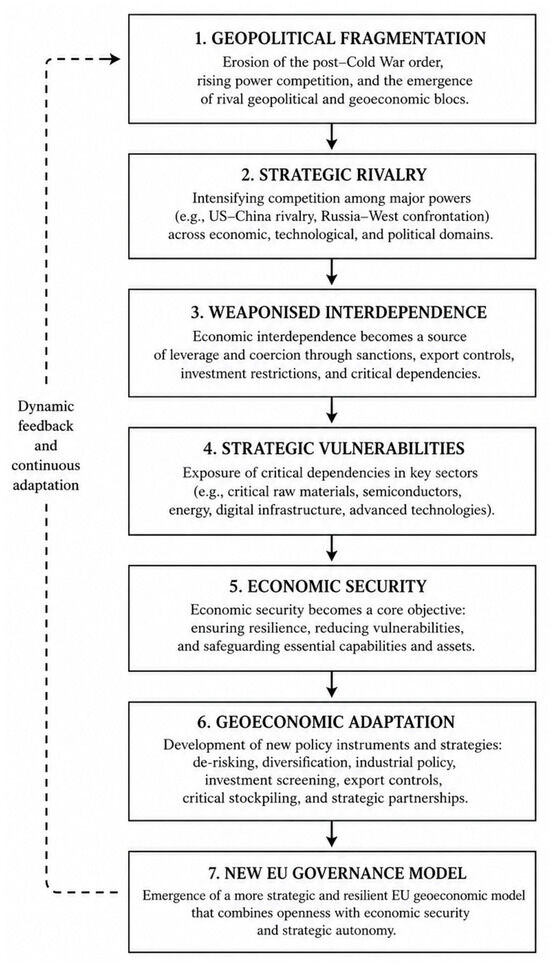
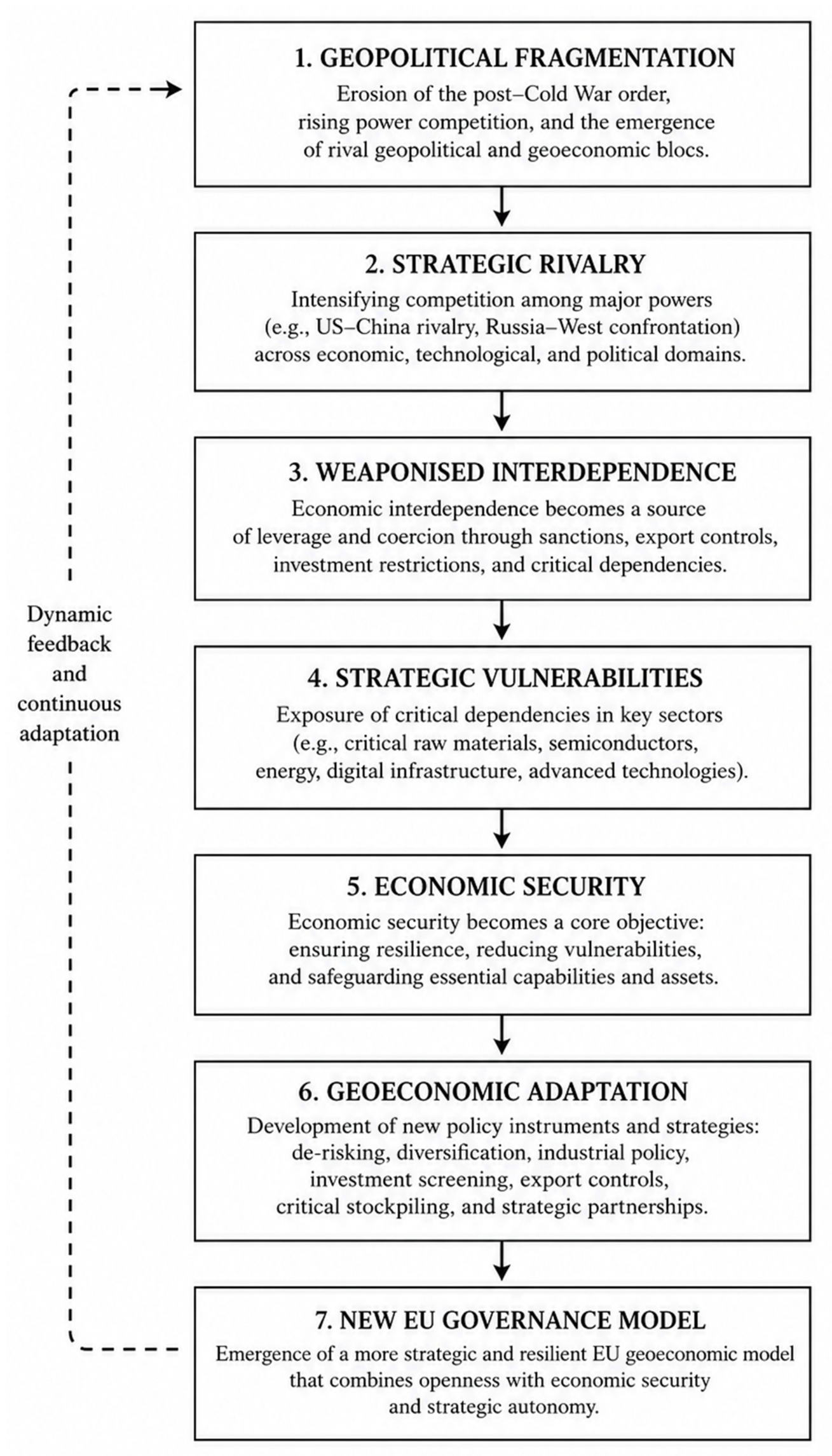
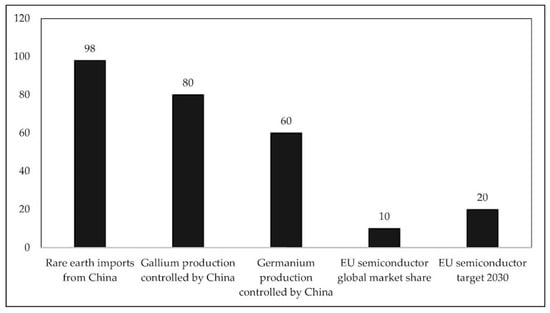
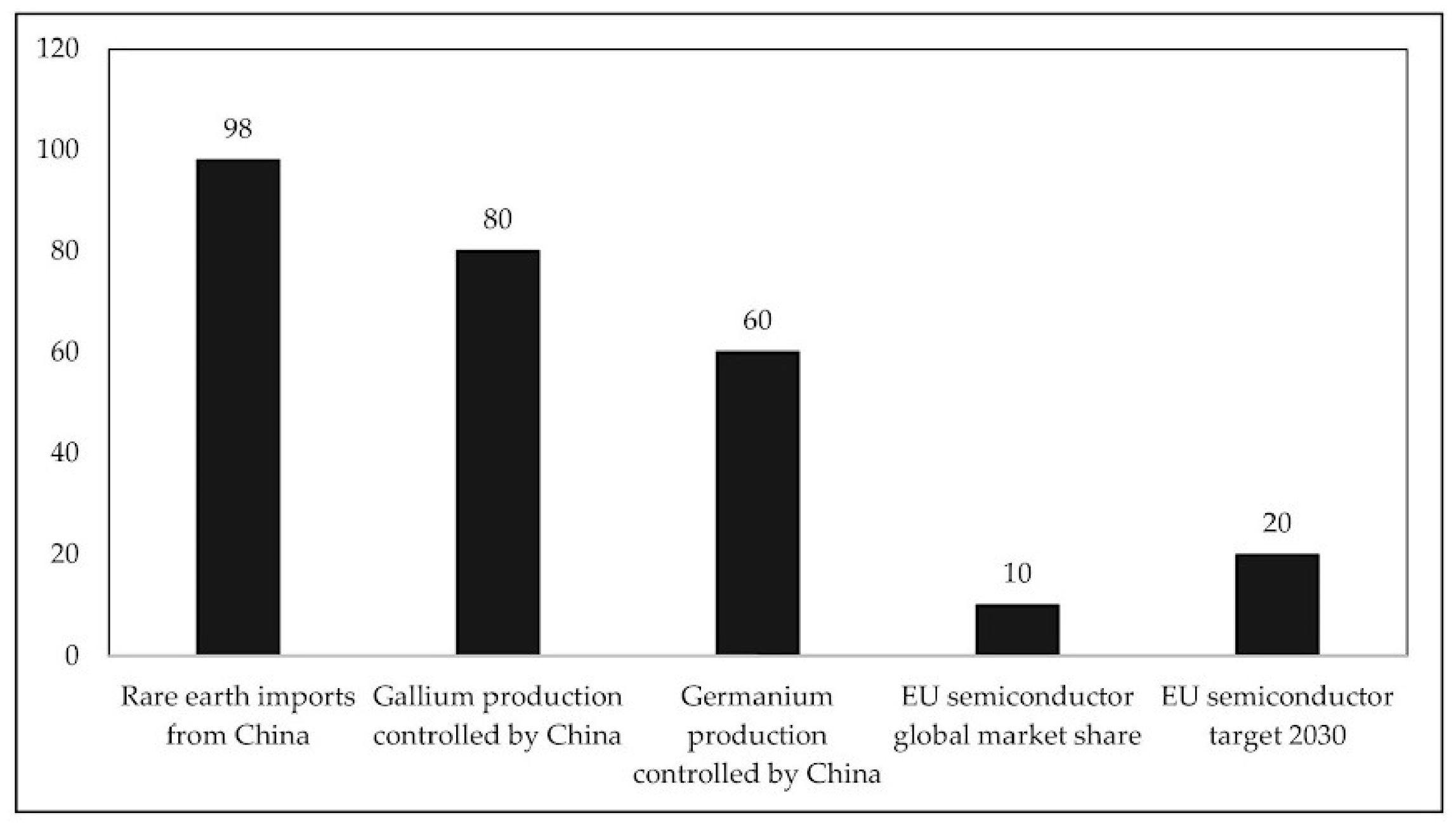

Disclaimer/Publisher’s Note: The statements, opinions and data contained in all publications are solely those of the individual author(s) and contributor(s) and not of MDPI and/or the editor(s). MDPI and/or the editor(s) disclaim responsibility for any injury to people or property resulting from any ideas, methods, instructions or products referred to in the content. |
© 2026 by the authors. Licensee MDPI, Basel, Switzerland. This article is an open access article distributed under the terms and conditions of the Creative Commons Attribution (CC BY) license.