


Abstract
The transition from sustainable human resource management (S-HRM) toward common good human resource management (CG-HRM) has introduced new research challenges for the academic community. This study examines the nexus among CG-HRM, employee resilience, and sustainable corporate performance, as assessed through the triple-bottom-line framework. First, the study evaluates the relationship between CG-HRM and sustainable corporate performance, followed by an examination of whether employee resilience moderates these relationships. The study also examines the moderated mediation effect of employee resilience via social performance on the relationship between CG-HRM and both economic and environmental performance. The research was conducted with 370 respondents from companies in the Republic of Serbia, using the PLS-SEM methodology. The results suggest that CG-HRM is directly related to environmental and economic performance, but not to social performance. Moreover, social performance showed a positive relationship with environmental and economic performance. The results also suggest that CG-HRM is indirectly associated with environmental and economic performance through the mediating effect of social performance, with employee resilience moderating the first segment of these indirect relationships. Thus, the study enhances the understanding of the mechanisms connecting CG-HRM, employee resilience, and sustainable corporate performance. Furthermore, the findings provide useful implications for managers seeking to integrate sustainability into HRM systems and improve sustainable business outcomes.
1. Introduction
Since its inception, sustainable human resource management (S-HRM) has undergone several key transformations. Each transformation has emphasized a different aspect of sustainability. Aust [1] identified four key aspects of S-HRM—socially responsible human resource management (SR-HRM), green HRM (GHRM), triple bottom line HRM (TBL-HRM), and common good HRM (CG-HRM). S-HRM has progressed significantly since the end of the twentieth century, when the principles of corporate social responsibility (CSR) were integrated into HRM. The first form involves strengthening ethical principles, fair treatment of employees, responsible business and management practices toward the social community, diversification, and well-being of employees [2,3,4]. Environmental movements constituted GHRM with the main goal of reducing the harmfulness of the company’s business activities on the environment. The transformation of the basic functions of HRM through green recruitment, selection, training, and rewards was intended to change the behavior of employees so that it becomes environmentally responsible. Sustainable human resource management is typically conceptualized in traditional literature as a TBL-HRM [5,6]. TBL represents the most widely accepted framework for defining S-HRM and defines it as balancing and optimizing economic, environmental, and social outcomes [7]. The most recent form, CG-HRM, integrates the principle that business should contribute to solving collective societal problems. The first three types have been examined in empirical research, particularly in relation to employee behavior [3,8,9,10,11,12,13,14]. However, CG-HRM remains relatively new in academic circles, and empirical research to evaluate its effects is almost non-existent.
CG-HRM introduced an outside-in perspective. This perspective asks how companies can use their resources, expertise, and experience to address major economic, social, and environmental challenges. These challenges include technological change, environmental pollution, global warming, and demographic change [4,15,16]. However, companies are left struggling to translate HRM practices into balanced environmental, social, and economic outcomes. Although previous studies have shown that sustainability-oriented HRM practices can improve organizational performance, the data are scattered and often assume uniformly beneficial outcomes across different performance dimensions. The role of CG-HRM, which incorporates ethical, sociological, and environmental factors, remains underexplored in empirical studies. Furthermore, insufficient emphasis has been devoted to the circumstances in which CG-HRM is either more or less effective, particularly in non-Western and transitional economy settings.
The inspiration for CG-HRM came from the concept of the common good, which is variously defined in the literature. In the realm of politics, “the common good” denotes the interests shared by all citizens [17]. In the economic sense, the economy of the common good is an alternative economic model in which the common good is the basic purpose of all economic activities [18] and is based on values such as reciprocity and dignity [19]. The common good in this paradigm presupposes dealing with the permanent problems of modern society, such as unemployment, job insecurity, and poverty [1]. One of the premises of CG-HRM is happiness and well-being, as a new important criterion for the evaluation of social progress. The grand global challenges of the United Nations, such as reducing poverty and ensuring prosperity for all, are at the core of CG-HRM. The concept of CG-HRM represents a revolution in human resource management (HRM) because, compared to previous forms, it places collective interests above organizational and even individual interests [20]. CG-HRM focuses on the well-being of employees [6], but in a broader context that includes job security and benefits for the entire social community. This way of managing human resources has reoriented the focus of companies from profit creation to more important sustainability problems. Solving these problems is a priority, as they relate primarily to ensuring prosperity for the entire social community [1]. Grand challenges are characterized as urgent, intricate issues of global significance, including climate change, pandemic prevention, biodiversity loss, plastic pollution, poverty, and social inequalities, among others [21]. Despite increased efforts to highlight the reorientation of HRM, Austen and Piwowar-Sulej [4] point to a gap in the literature when it comes to research dealing with key global challenges, such as inequalities, employment security, and climate change. Environmental protection is an important challenge faced by modern society.
CG-HRM differs from related forms of S-HRM mainly through its broader social orientation [1,4,20]. In addition, instead of focusing on limiting the negative effects of business, the primary goal of CG-HRM is to place environmental protection and social sustainability at the top of the priority list [1]. Instead of balancing social, environmental, and economic goals, CG-HRM tends to place the common good and the protection of collective interests in the focus of HR practice. In addition, CG-HRM goes beyond earlier approaches by emphasizing internal initiatives for the common good, instead of changes in HR practices caused by external pressures, such as the expectations of key stakeholders and changes in environmental protection laws. The novelty of this concept is reflected in the fact that it is not oriented to a limited number of stakeholders, but advocates a multi-stakeholder and socio-ecological focus [22]. Inspired by altruism and collectivism [20], CG-HRM introduced a new philosophy in HRM. It requires companies to reassess their operational practices and move from a profit-centric inside-out perspective toward an outside-in perspective focused on environmental and societal impact [1].
In addition to challenging traditional HRM, CG-HRM differs from its predecessors, although these differences may appear subtle. SR-HRM is employee-centered, promoting the well-being, diversity, and inclusion of employees, as long as it is economically beneficial. SR-HRM has a more instrumental character. Its main purpose is to support CSR strategies, while being less focused on a broader ethical philosophy. In contrast, CG-HRM is actively contributing to the common good. The principles of green HRM are integrated into the CG-HRM framework. The principle of the common good restricts corporations to engage solely in business activities that do not adversely affect the environment [19]. The conservation of the environment is crucial for societal prosperity, which is why an ecological element analogous to GHRM has been incorporated into CG-HRM. However, the main focus of GHRM is on economics and the environment. Nevertheless, the environmental dimension is only maintained to the extent that it serves the economic objective, a situation that is comparable to that of socially responsible HRM [4]. Although TBL-HRM introduced a broader perspective of sustainability within HR practices, it still retains a strong economic orientation. TBL-HRM refers to HRM approaches that yield beneficial environmental and social outcomes while expressly targeting economic results in both the short- and long-term [18,23]. In contrast to CG-HRM, TBL-HRM emphasizes balance rather than ethical objectives and is more performance-driven.
Piwowar-Sulej [18] emphasizes the need to determine the factors and outcomes of CG-HRM. To date, it is known that S-HRM has the potential to contribute to environmental, social, and economic performance [24], but there is a lack of research linking CG-HRM to sustainable corporate performance. Given the unknowns surrounding CG-HRM and companies’ fears that implementing CG-HRM will impair overall performance, this paper seeks to examine the effects of these practices on sustainable corporate performance. At the same time, this motivates companies to practically implement this philosophy. Sustainable corporate performance is analyzed using the prism of TBL and includes social, environmental, and economic performance. An often mentioned concept in the context of sustainable HRM is employee resilience. Resilience emerges from the employability of human resources, a key outcome of S-HRM. A primary objective of S-HRM is to cultivate a proficient workforce that will excel in the labor market [11]. De Vos and Van Heijden [25] assert that HRM impacts the development of sustainable careers for employees, thus enhancing their resilience, which comes to the fore in conditions of high dynamism of the environment. The idea of this research model is to test the effects of resilience in the domain of the CG-HRM relationship and sustainable corporate performance.
The general objective of this paper is to determine the nature of the relationship between CG-HRM, sustainable corporate performance, and employee resilience. The specific objectives are as follows: (1) to determine the impact of CG-HRM on the three dimensions of sustainable corporate performance; (2) examine the effects of social performance on environmental and economic performance; (3) test the moderating influence of employee resilience on the relationship between CG-HRM and three dimensions of sustainable corporate performance; and (4) explore the conditional nature of these relationships within a transition economy context. The originality of the study lies in clarifying these complex relationships through a research model that, to the authors’ knowledge, has not been previously applied.
This study addresses multiple significant gaps in the existing literature. Initially, this involves previous studies on sustainability-oriented HRM that have primarily concentrated on GHRM or SR-HRM, frequently analyzing isolated aspects of sustainability instead of employing a holistic approach. Empirical investigations into CG-HRM are scarce and predominantly theoretical, with minimal studies evaluating its effect on performance. Secondly, the majority of research presumes linear and universally positive correlations between HR practices and performance, overlooking the potential for non-uniform or even contradictory impacts across several sustainability aspects. The moderating function of employee resilience has not been explored, despite theoretical assertions indicating that the efficacy of HR procedures is contingent upon employee characteristics.
In addition to the introductory and concluding parts, the paper contains four other parts. The first part provides a literature review. The second part explains the research methodology, including the methods used for empirical research, the formation of the questionnaire, data collection procedure, and the explanation of the sample structure. The third part provides an overview of the results obtained by applying statistical analyses, while the last part presents the discussion.
2. Literature Review
2.1. Common Good Human Resource Management
CG-HRM was created as a response to the criticism of previous types of S-HRM that only partially succeeded in contributing to sustainable development. Previous concepts of S-HRM, despite showing concern for the welfare of the community, focused on the company itself, instead of promoting ultimate goals such as solving climate change, preventing natural disasters, corruption, unemployment, and pandemics [15]. While previous HRM models represented an adaptation of traditional HRM, keeping the economic purpose as the primary goal, CG-HRM represents a radical turn in the previous way of thinking and orientation of HR practices [20]. Because CG-HRM is still under-researched, it is ambitious to expect that it can be precisely and clearly defined. Nevertheless, approximate definitions of CG-HRM are proposed in the literature. According to Aust et al. [1], CG-HRM is an innovative HRM model that places collective interests above individual interests or at least equalizes them. Cooke [20] (p. 1387) posits that CG-HRM is an HRM approach that is “process-oriented, relational, and collective”, with a focus on society and grand societal challenges. In a practical sense, CG-HRM represents the grounding of the idea of the common good in HR policies and procedures [26].
Although there is no single definition, prominent authors describe CG-HRM by emphasizing several core characteristics. Aust et al. [1] assert that there are four main principles of HRM that are centered on the common good and emphasize its social implications and challenges. These principles include (1) an outside-in perspective, which addresses significant global challenges; (2) equitable and fair working relationships that foster relationships of trust and organizational success; (3) adherence to the psychological contract to safeguard human needs in the workplace, including safety, security, and purposeful work; and (4) opportunity for stakeholder participation in decision-making—addressing global challenges at the local level. Brunetto et al. [27] state the following four principles on which CG-HRM is based: (1) the practice of HRM should be oriented toward the realization of sustainable development goals; (2) the principles of fairness and equality should be respected in HRM; (3) it is necessary to practice labor democracy; and (4) the psychological contract should be maintained because it supports the common good.
Despite the limited empirical evidence regarding the implementation of the common good principle in HRM, initiatives like “B Corps” [28] and the Economy of the Common Good [29] demonstrate that certain companies are actively pursuing HRM that is centered on the common good [6]. B Corps represent a global movement of almost 7000 companies across 90 countries. This figure has nearly tripled in comparison to the 2019 statistics [28]. B Corps are companies accredited by the non-profit organization “B Lab” since 2006 for meeting rigorous standards of social and environmental performance and transparency. These organizations leverage their business as a catalyst for attaining shared prosperity, enabling them to attract and retain top personnel while distinguishing their brand in the marketplace [28]. The Economy for the Common Good is an international movement that promotes a holistic and consistent alternative economic model. This model prioritizes the welfare of individuals, future generations, and environmental conservation. This ideology posits that companies should establish a balance sheet of the common good [29]. At the national level, success is evaluated based on the product of the common good rather than gross domestic product [30]. The authors introduced the Happy Planet Index and gross national happiness as substitutes for gross domestic product. The Common Good Balance Sheet is a value-centric success assessment instrument and reporting mechanism for businesses, individuals, communities, and institutions showing the extent to which a company aligns with principles such as human dignity, solidarity, and economic sustainability [30]. It advocates for corporate decisions that uphold human rights, equity, and justice. Workplace democracy and environmental conservation are fundamental non-commercial objectives promoted by CG-HRM [31]. Nonetheless, individual companies have implemented tangible measures to promote the common good. However, transitioning the primary focus from economic objectives to broader goals presents a significant challenge within the existing institutional and organizational framework [1].
CG-HRM is often explained through AMO theory. Kundu and Gahlawat [32] argued, based on AMO theory, that HRM methods enhance organizational performance by augmenting employee capabilities, fostering motivation, and generating opportunities. Employee motivation is attained by consistent feedback and suitable rewards for performance. Facilitating opportunities includes promoting knowledge exchange, employee participation, and engagement in activities for the collective benefit. Employees excel when they possess sufficient competencies, suitable motivation to meet objectives, and opportunity for engagement in activities [33]. According to the conservation of resources (COR) theory, CG-HRM is a crucial organizational resource that offers employees psychological and social resources [6]. The COR theory suggests that individuals seek to obtain, preserve, and safeguard significant resources, including psychological, social, and material assets. These resources may manifest as energy, support, meaningfulness, competences, and emotional stability, all of which are crucial for optimal functioning and performance. Nevertheless, COR theory posits that the effects of resource-providing actions depend on individuals’ current resource levels. Employees with elevated personal resources, such as resilience, may exhibit reduced reliance on organizational procedures for resource acquisition. In such instances, the marginal benefit of HRM procedures may diminish, resulting in weaker or potentially negative interaction effects. Conversely, when employees depend more significantly on organizational support, HR strategies may exert a greater influence on outcomes. Applying this approach, Lu et al. [6] discovered that CG-HRM fosters favorable employee-level outcomes, culminating in innovative behavior via multiple pathways including workplace thriving and meaningfulness.
Psychological capital is an idea that integrates four positive psychological resources, referred to as HERO: hope, efficacy, resilience, and optimism [34,35]. From this viewpoint, employee resilience in this framework constitutes a significant asset that can forecast additional favorable results, including sustainable corporate performance. Simultaneously, contingency theory elucidates the CG-HRM approach [20] and supports this model, positing that the impact of CG-HRM is contingent upon the level of employee resilience. There is no singular optimal method of management. Sustainable corporate outcomes rely on the alignment between practices and contextual elements. Consequently, CG-HRM strategies should be consistent with the attributes and resources of employees.
2.2. Employee Resilience
In the domain of sustainable human resource management, employee resilience is particularly relevant. Employee resilience refers to the employee’s capacity to respond to workplace challenges [36]. Contemporary authors characterize resilience as “the adaptive behavioral capacity of employees to mobilize, integrate, and utilize organizational resources” [37] (p. 354). Southwick et al. [38] define resilience as “positive functioning during and after a disaster” (p. 1). Personal resilience is essential in both personal and professional environments [39]. Among the most frequently cited definitions of this concept, resilience is defined as “the ability of employees to use resources to continuously adapt and thrive at work, even when faced with challenging circumstances” [40]. Taken together, these definitions emphasize adaptation, resource use, and the ability to thrive under challenging conditions.
The concept of resilience has a strong theoretical basis. Bardoel et al. [41] explain resilience under the auspices of positive psychology and COR theory and analyze the relevance of this concept for HRM. Those authors conclude that a coherent set of human resource management practices can foster employees, increase psychological capital, and support the development of positive attitudes and behaviors. In turn, these practices can improve company performance, both in periods of great turbulence and during relatively stable business phases. Resilient employees are more emotionally stable, cope better with changes in the workplace, and are more open to new experiences. The concept of resilience emerged around the 1970s [39], although it has only recently received the attention it deserves in the academic world. The concept of resilience became particularly important during the challenges of the global financial crisis in 2008. Research has shown that resilient employees cope better with constant changes in the work environment [41] and recover faster and more easily after facing difficult working conditions [39,42].
The key dimensions of resilience include: living authentically, finding one’s call, maintaining perspective, managing stress, cooperating interactively, staying healthy, and building networks [43]. Each dimension reflects a specific aspect of adaptive functioning at work. According to Caniëls et al. [42], employee resilience has two components: a genetic component and an acquired component. The genetic component of resilience is a relatively stable component that reflects resilience as a personality characteristic. The acquired component is a behavior that varies over time and in different situations [40]. In this sense, employee resilience can be viewed from two perspectives: as an inherited trait and as an acquired adaptive behavior.
Employee resilience can be enhanced by certain S-HRM practices, such as the development of social support at work, work–life balance, employee assistance programs, employee development programs, flexible work arrangements, and diversity management [41]. Social support and interpersonal relationships based on reciprocal care in the service of the common good can influence the strengthening of resilience. The balance between life and work should ensure the health and well-being of employees. When work–life balance promotes healthy family and community relationships, employees can develop greater psychological and sociological resilience resources that they can exploit in psychologically demanding workplace situations. Resilience training is of great importance. Flexible work arrangements encourage greater employee satisfaction [44], their retention, and better individual performance [45], which synergistically create superior overall company performance. Together, CG-HRM and employee resilience may therefore contribute to sustainable corporate performance.
2.3. Sustainable Corporate Performance
Modern business performance management involves considering a triple-bottom-line that encompasses economic, environmental, and social performance [46]. The components of sustainable corporate performance are interdependent. Although environmental and social responsibilities are often synonymous with sustainability, economic performance is a key factor in a company’s capacity to implement socially and environmentally responsible initiatives. The launch of such initiatives, in turn, contributes to better economic performance, which illustrates their close and reciprocal connection. New jobs and social well-being depend on profitability and growth. By identifying the key factors of economic performance, management gains insight into the areas where investments should be directed and thus achieves a balance between the three pillars of sustainability. The TBL is a cohesive framework enabling firms to assess and convey their sustainability initiatives, practices, and overall performance by balancing the environmental, social, and economic dimensions [47,48]. According to Abreu et al. [49], all three dimensions of corporate performance are equally vital to sustainable business. The environmental aspect was primarily considered within the framework of social sustainability; therefore, some indicators can be classified within both social and environmental performance.
Economic sustainability is recognized as the most challenging component of the TBL framework [50]. In practice, financial performance is most often related to sales growth, market share, and profit, as well as long-term cost reduction [51]. However, considering corporate performance exclusively as economic performance creates a limited managerial perspective and leads to the neglect of other significant business results that increase company value in the modern environment. Economic performance indicators play an important role in evaluating the overall company performance but are insufficient on their own. They provide only partial insight into the achieved performance and represent the result of past events. Traditional financial indicators do not provide information on how the results were achieved. The essence of economic performance within the triple-bottom-line concept remains the same. However, the focus is not exclusively on profit, as in the traditional approach, but on the effects of financial performance on social and environmental performance. In addition, in the context of the TBL, the contribution of a company’s financial performance to the economic development of the wider community is also valued [52]. Nevertheless, several authors assert that the economic dimension of the TBL encompasses a broader range, including absenteeism rates, employee loyalty and motivation, cost per hire, and average tenure [48,53].
Social performance reflects the ethical dimension of a company’s operations [54]. Although long considered an ill-defined, elusive, ambiguous, and subjective concept, social performance has evolved in recent years, taking on a clearer and more specific form, and now placing an emphasis on the employee experience [55]. According to Omidi and Shafiee [56], social performance as a whole consists of three aspects: employment attractiveness, reputation, and organizational citizenship behavior. The first dimension shows the degree to which the observed company is a desirable employer for candidates in the labor market. Employer branding strategy is used as a tool to improve this dimension of social performance. Internally and externally, a company strives to create a positive image among current employees and potential candidates in the labor market, in order to provide itself with the necessary knowledge, skills, and talents for the implementation of future business activities. Reputation is defined as the collective assessment of an organization by stakeholders that goes beyond their actual knowledge of the company [57] and includes aspects such as well-known and quality products and/or services, as well as the company’s reputation among employees and members of their environment [58]. Slavković and Mirić [59] assert that corporate reputation serves as an essential tool for attracting and retaining employees. Finally, organizational citizenship behavior involves the overall voluntary activities within the organization that are not directly and “explicitly included in the formal reward system” [60,61].
Environmental performance was first studied as an integral part of social performance. However, with the increasing interest of companies in protecting the environment, it is emerging as a stand-alone measure of sustainable performance. Poor environmental performance of a company has negative implications for its finances [62,63]. In turn, this limits the opportunities and resources for implementing socially responsible initiatives and undermines the social performance of the company. Corporate environmental performance captures a firm’s effectiveness in implementing sustainable practices that reduce environmental impact [64] and is assessed based on the degree of waste reduction, pollution and emissions of harmful gases, rational energy use, reduced use of toxic and harmful materials, the frequency of environmental accidents, as well as the existence of a system for the production of environmentally safe products [65]. The International Organization for Standardization [66] defines environmental performance as “the measurable outcomes of an environmental management”.
2.4. Hypotheses Development
To date, CG-HRM has been the subject of only a few academic publications, most of which are theoretical or qualitative in nature. CG-HRM, as a special paradigm, is presented in the work of Aust et al. [1]. Those authors analyzed how CG-HRM contributes to the realization of the Sustainable Development Goals (SDGs) [21]. Li et al. [67] identified that perceived institutional pressures for sustainability inside companies are the primary catalyst for the adoption of CG-HRM, which influences employees’ contributions to organizational sustainability. Järlström et al. [68] showed that practices such as HR development, inclusiveness and diversity, employee engagement, and consideration of employee well-being substantially improve organizational sustainable performance. The authors assert that these methods represent SR-HRM rather than CG-HRM, as they prioritize the interests of internal company stakeholders [18]. Therefore, it is important to examine the correlation between CG-HRM and sustainable corporate performance. CG-HRM appears to be associated with employee performance [6], indicating that these approaches improve overall corporate performance. Legese et al. [69] discovered a positive correlation between GHRM and sustainable organizational performance evaluated via the TBL framework. Saini and Bhaker [70] assert that S-HRM practices correlate positively with corporate success. Previous studies have concentrated on evaluating the impact of HRM on overall organizational performance. so the impact of S-HRM on all three pillars remains unclear. Although CG-HRM is typically anticipated to improve social performance through the promotion of ethical ideals and stakeholder-focused practices, this correlation may not consistently be direct. The efficacy of CG-HRM is contingent upon the underlying institutional and organizational structure. In transition economies, when CSR practices are not well institutionalized and social efforts are not thoroughly integrated into organizational frameworks, CG-HRM may predominantly emphasize operational and environmental dimensions over social outcomes. As a result, its influence on social performance may be constrained or indirect.
According to this background, the following hypotheses are developed:
H1a.
CG-HRM is associated with environmental performance.
H1b.
CG-HRM is associated with economic performance.
H1c.
CG-HRM is associated with social performance.
The relationship between a company’s social performance and the other two elements of sustainable corporate performance can be understood in several ways. One viewpoint posits that social and environmental performance collectively support economic success in the long-term. This relationship may also be reciprocal, and it may be argued that robust economic performance fosters the conditions that are essential for the implementation of social and environmental initiatives. Positive results in employee health, safety, and related social outcomes may benefit the company as a whole. Moreover, relative to environmental and economic performance, social performance is the greatest contributor to overall sustainable performance [71]. Kwong et al. [72] found that social performance influences economic performance by enhancing a company’s reputation. Alsayegh et al. [71] determined that economic sustainability is contingent upon social and environmental performance. In light of these interdependencies, the study proposes the following hypotheses:
H2a.
Social performance is associated with environmental performance.
H2b.
Social performance is associated with economic performance.
Pham et al. [73] relied on social exchange theory and examined how CG-HRM affects the ethical behavior of employees and organizational citizenship behaviors toward the individual. Those authors found a direct and positive effect, as well as an indirect mediation effect through value commitment. Lu et al. [6] found that sustainable HRM based on common good values (CGVs) positively affects employee resilience and leads to a high level of work engagement among employees. Employee resilience improves overall organizational resilience, which directly improves performance [74]. It can motivate employees to participate in initiatives that contribute to the development of the social community and the preservation of the environment. In addition, this behavior has the potential to reduce absenteeism and reduce the turnover rate, which may improve company performance. Employee retention provides a stable base of knowledge and skills that are necessary for the realization of sustainable development goals. A study of healthcare workers and patients found that employee resilience has a statistically significant impact on the sustainable performance of healthcare institutions [75]. Furthermore, employee resilience is a positive predictor of financial performance in the tourism sector [76].
Kurniawan et al. [77] discovered that GHRM engages with digital resilience to improve sustainability. Mushtaq and Akhtar [78] discovered that S-HRM positively affects organizational resilience, resulting in enhanced sustainability outcomes encompassing economic, social, and environmental dimensions. Although employee resilience is generally regarded as a beneficial psychological asset that enhances the impact of organizational practices, different theoretical perspectives suggest that this relationship may not always be reinforcing. According to COR theory, people with higher resilience possess stronger internal resources, which may reduce their dependence on organizational support systems. The incremental influence of CG-HRM on outcomes like economic performance may diminish, resulting in weaker or potentially adverse interaction effects. This substitution effect highlights that individual and organizational resources may not consistently be complementary. Moreover, the correlation between CG-HRM and environmental performance may exhibit reduced sensitivity to individual-level characteristics such as resilience. Environmental outcomes are frequently influenced by formal structures, procedures, and technical investments rather than the psychological traits of employees. Consequently, the moderating effect of resilience in this relationship may be constrained. In light of this context, the study posits the following hypotheses:
H3a.
Employee resilience moderates the relationship between CG-HRM and environmental performance.
H3b.
Employee resilience moderates the relationship between CG-HRM and economic performance.
H3c:
Employee resilience moderates the relationship between CG-HRM and social performance.
H4a.
Employee resilience moderates the indirect relationship between CG-HRM and environmental performance through social performance.
H4b.
Employee resilience moderates the indirect relationship between CG-HRM and economic performance through social performance.
Although HRM for the common good is gaining increasing traction in the literature and is receiving significant attention from researchers and practitioners, companies may be concerned that its adoption could ultimately result in reduced efficiency and employee performance, as this approach prioritizes collective interests over individual firms [1]. CG-HRM is open to non-business goals such as decent work, workplace democracy, social justice, and environmental protection [31], which raises concerns that its implementation could compromise the achievement of business targets. For example, a company may worry that employees who are trained to behave in accordance with high ethical standards will be discouraged from looking for creative or more efficient ways to do their jobs. The company may also fear that these employees will not be able to meet task deadlines because they prioritize respecting the principle of the “common good” [6]. This explains why some managers, despite their innate concern for sustainability and the common good, hesitate to explore the potential of CG-HRM for their company [79,80]. In addition, CG-HRM also involves certain paradoxes. Namely, the question arises of how to achieve a compromise between diversification and inclusion, on the one hand, and collective identity, on the other hand, because not all employees share the same attitudes and beliefs [20]. Figure 1 shows the research model.
Figure 1.
The research model. Source: Authors.
3. Materials and Methods
3.1. Data Collection Procedure
The questionnaire method was used to collect primary data. The dominant sampling method implemented was the “snowball” type. This is a technique for recruiting respondents whereby a smaller number of respondents assists the researcher in identifying potential future respondents, and the number of sampled individuals grows through a multiplying effect. Part of the questionnaire was distributed in paper form, while the remainder was made available electronically. Each questionnaire included a cover letter explaining the purpose and objective of the research as well as presenting the anonymity and confidentiality of the collected data. Several procedural measures were applied to reduce the possibility of common method bias. Participation in the study was voluntary and anonymous, and respondents were informed that the data would only be used for academic purposes. In addition, respondents were informed that there were no right or wrong answers, while the questionnaire items were formulated in a neutral manner and organized into separate thematic sections. These procedures were intended to reduce evaluation apprehension and socially desirable responding. The data collection process lasted from May 2024 to January 2025.
3.2. Instruments
The questionnaire consists of four parts. Each part contains a certain number of statements. The first section addresses the CG-HRM and includes 10 statements formed on the basis of research by Lu et al. [6]—for instance, “The company practices training to encourage responsible behavior of employees” or “Bonuses awarded to employees depend on ethical and responsible behavior at work”. To assess employee resilience, a scale containing 10 items was developed by modifying items from studies undertaken by Winwood et al. [43] and Naswall et al. [37]. Examples include: “I can handle a heavy workload for a long period of time” and “The work I do fits into my personal value and belief system”.
Environmental performance was measured using six items formulated based on research by Zhu et al. [81] and Zaid et al. [82]. Examples are “The company has increased the use of renewable energy sources” and “The company takes care of the recycling of raw materials”. Social performance was measured with six items adopted from the study undertaken by Omidi & Shafie [56], for instance “Choosing this employer is one of my best choices” and “The company participates in charitable actions”. The third section measured economic performance through seven statements formulated based on research by Xu & Peng [51] and Omidi & Shafie [56], e.g., “The company has higher profitability compared to the previous time period” and “The company has a greater competitive advantage in the market compared to the previous time period”. The last part of the questionnaire collected demographic data.
The measurement items were selected because they had been previously used in studies closely related to sustainable HRM, employee resilience, and sustainable corporate performance. Since the original items were formulated in English, they were translated into Serbian and adapted to the local linguistic and organizational context. The authors reviewed the translated items to ensure semantic equivalence, conceptual clarity, and appropriateness for employees in Serbian companies. Minor wording adjustments were made where necessary, without changing the conceptual meaning of the original items.
Before the main data collection, a pre-test was conducted with 30 respondents to examine item clarity, wording adequacy, and the preliminary reliability of the scales. The obtained Cronbach’s alpha coefficients exceeded the recommended threshold of 0.70, supporting the use of the instrument in the main study. After the main data collection, the psychometric quality of the scales was further assessed through the PLS-SEM measurement model assessment.
3.3. Participants
Initially, 500 invitations to participate in the survey were distributed in paper-based and electronic form. In addition to these initial invitations, the snowball sampling procedure enabled respondents and organizational contacts to forward the questionnaire to other eligible employees. In total, 370 valid questionnaires were collected. This number corresponds to 74% of the initially distributed invitations. However, because the questionnaire could also be shared through referrals, the exact total number of individuals reached through secondary contacts could not be precisely determined. Therefore, this figure should be interpreted as a participation rate relative to the initial invitations rather than as a strict probability-sampling response rate.
The snowball sampling technique was used to broaden access to eligible respondents employed in medium-sized and large organizations. Since direct access to employees across different companies usually depends on organizational contacts and internal gatekeepers, this approach enabled the researchers to reach respondents who are familiar with organizational HRM practices and sustainability-related outcomes. Nevertheless, as a non-probability sampling technique, snowball sampling may involve selection bias and limits the generalizability of the findings. Accordingly, the results should be interpreted as context-specific rather than fully representative of all companies.
The adequacy of the sample size was assessed through an a priori power analysis by using G*Power 3.1.9.7. Assuming a significance level of 0.05, statistical power of 0.80, a medium effect size of f2 = 0.15, and a maximum of five predictors in the most complex structural equation, the minimum required sample size was approximately 92 respondents. Therefore, the final sample of 370 respondents was considered sufficient for the PLS-SEM analysis.
Because the snowball procedure did not allow the exact number of all individuals reached through secondary referrals to be determined, a direct comparison between respondents and non-respondents was not possible. Therefore, potential non-response bias was assessed using the early–late respondents approach, where late respondents are treated as a proxy for non-respondents. The first 25% and the last 25% of valid responses were compared across the main study constructs using independent-samples t-tests. The results revealed no statistically significant differences between early and late respondents in terms of CG-HRM, environmental performance, economic performance, social performance, and employee resilience, with p-values ranging from 0.065 to 0.982. These findings suggest that non-response bias is unlikely to substantially affect the results.
The sample structure is presented in Table 1. Based on gender criteria, the observed sample was predominantly female, with a participation rate of 69.2%. The largest age group in the sample comprised respondents under 30 years of age (51.4%). In terms of educational qualifications, individuals with a Master’s degree constituted the largest cohort (53.5%), followed by individuals with a Bachelor’s degree (38.6%). Most employees in the sample (77%) worked in companies with more than 250 employees. The remaining respondents worked in companies with between 51 and 250 employees. Most employees in the sample worked in production companies (52.4%). Additionally, the largest part of the sample was employed in foreign-owned companies (55.7%), while 145 employees worked in domestic private firms.
Table 1.
Sample structure.
3.4. Data Analysis Procedure
Statistical analyses were undertaken in a two-step approach. Measurement model assessment following established PLS-SEM procedures is the initial step in statistical data processing, which evaluates the reliability and validity of the path model. Subsequently, partial least squares structural equation modeling was implemented to assess the structural model. Ringle et al. [83] highlight the prevalence of this method in HRM research. The growing number of publications in HRM employing PLS-SEM is notable [13,84,85,86]. Moreover, numerous studies adopt this technique to evaluate moderation–mediation models [87,88,89,90]. This technique was deemed the most pertinent, as the ultimate purpose of the present study was to assess the significance of the relationships between CG-HRM, employee resilience, and sustainable corporate performance. This study also encompassed moderation–mediation analysis.
4. Results
Initially, the measurement model was assessed following established PLS-SEM procedures to evaluate the extent to which the observed indicators reliably and validly represented the latent constructs. During the assessment of the measurement model, two items showed insufficient factor loadings and were therefore removed from further analysis: “The company is committed to environmental protection” from the Environmental performance construct, and “I effectively interact with coworkers when unexpected challenges arise at work” from the Employee resilience construct. After their removal, all retained item loadings were above the recommended threshold of 0.70. Figure 2 shows the loadings for the retained indicators across all constructs. The five-factor measurement structure was theoretically grounded in the previous research and empirically supported by the reliability, AVE, HTMT, and Fornell–Larcker results. Overall, these results support the current measurement structure.
Figure 2.
Factor loadings. Source: Authors.
The Cronbach’s alpha was calculated for each construct, and the findings suggest that the constructs showed an acceptable level of internal consistency, as the minimum threshold of 0.7 was exceeded [91]. Composite reliability values ranged from 0.935 to 0.976, significantly exceeding the recommended threshold of 0.7 [92]. The results of this study indicate that convergent validity had been confirmed, since all average variance extracted (AVE) values exceeded 0.70, deemed a very good threshold according to Alarcón & Sánchez [93]. Table 2 shows the values of these indicators.
Table 2.
Cronbach’s alpha, composite reliability, and AVE.
Given that some constructs showed high values of Cronbach’s alpha and composite reliability, additional attention was given to possible multicollinearity among the indicators. The indicator VIF values ranged from 2.855 to 7.508. Most indicators were below the conservative threshold of 5.0, while all values were below the more liberal threshold of 10.0. Therefore, the results did not indicate a critical level of multicollinearity that would require item elimination.
The discriminant validity was established according to the heterotrait–monotrait (HTMT0.90) criteria proposed by Henseler et al. [94]. The results in Table 3 indicate that the values were below the maximum threshold of 0.90, implying that the measurement model meets the criteria for discriminant validity.
Table 3.
HTMT0.90.
Discriminant validity was evaluated by applying the Fornell–Larcker criterion [95]. The obtained values are displayed in Table 4. The Fornell–Larcker criterion stipulates that the square root of the extracted variance of a latent variable must exceed all correlations with the remaining latent variables [95].
Table 4.
Fornell–Larcker criterion.
The results indicate that the requirements for discriminant validity were met, as the AVE root values in the diagonal cells surpassed those in the corresponding cells below for each observable variable. The aforementioned parameters indicate that the measurement model is both valid and reliable, a necessary condition for the evaluation and analysis of the structural model.
The cross-validated Redundancy Index (Stone-Geisser’s Q2) was employed to evaluate the validity of the structural model. It was calculated for all endogenous variables using the blindfolding option in PLS. The Q2 values were 0.376, 0.557, and 0.513 for environmental, economic, and social performance, respectively. All Q2 values were positive, indicating that the model has predictive relevance [96,97]. The R2 coefficient shows that the model explains 54.1% of the variance in environmental performance, 77.5% in economic performance, and 53.7% in social performance. This results demonstrate a very high level of the model’s explanatory power. Additionally, the standardized root mean square residual (SRMR) was used to evaluate the model’s fit to the data. The results indicate that the SRMR of the model is 0.065, which meets the criteria suggested by Hu and Bentler [98]. The values are shown in Table 5.
Table 5.
Structural model assessment.
Table 6 illustrates the evidence for the direct effects. The path coefficients for direct effects indicate that CG-HRM was positively related to environmental performance (ß = 0.266) and economic performance (ß = 0.257). The effect on social performance was not statistically significant. Social performance was also significantly related to both environmental and economic performance (ß = 0.562 and ß = 0.655, respectively).
Table 6.
Direct effects.
Table 7 presents the moderation and indirect effects. It was determined that employee resilience moderates the relationship between common good HRM and economic performance. However, the moderating effect on the relationship between CG-HRM and environmental performance was not supported in this sample. According to the resulting values, employee resilience also moderates the relationship between common good HRM and social performance. The authors conducted additional tests on the suggested study model and assessed the moderation–mediation effects. CG-HRM was found to affect environmental and economic performance through the mediating role of social performance and the moderating role of employee resilience. Nonetheless, social performance did not act as a mediator in the relationships between CG-HRM and environmental and economic performance.
Table 7.
Indirect effects.
As an additional robustness check, potential endogeneity was examined following the Gaussian copula logic for PLS-SEM [99,100] using the latent variable scores obtained from the PLS-SEM estimation. The diagnostic was conducted for all structural equations in the model, including the equations for social performance, environmental performance, and economic performance. The non-normality of the potentially endogenous predictors was first confirmed, which allowed the Gaussian copula diagnostic to be applied.
The results provided mixed evidence. In the equation for social performance, the copula term for the interaction between CG-HRM and employee resilience was statistically significant (p < 0.001), while the copula terms for CG-HRM (p = 0.727) and employee resilience (p = 0.093) were not significant. In the equation for environmental performance, the copula terms for social performance and employee resilience were statistically significant (both p < 0.001), while the copula terms for CG-HRM (p = 0.054) and the interaction term (p = 0.481) were not significant at the 0.05 level. In the equation for economic performance, the copula terms for CG-HRM (p < 0.001), social performance (p < 0.001), and the interaction term (p = 0.003) were statistically significant, while the copula term for employee resilience was not significant (p = 0.094). These results indicate that potential endogeneity cannot be completely excluded for some structural relationships. Therefore, the structural coefficients should be interpreted with caution, especially in terms of causal claims.
5. Discussion
CG-HRM showed a positive relationship with environmental performance, confirming Hypothesis H1a. CG-HRM practices align corporate objectives with the value creation of all stakeholders, particularly those most impacted by specific global issues, including environmental concerns. CG-HRM links human resource practices with environmental responsibility, consistent with the perspective of Aust et al. [1] that CG-HRM advocates for environmental consciousness and sustainable principles. These elements can be embedded in HR activities; thus, CG-HRM seeks employees who integrate environmental responsibility into their professional identity. CG-HRM has the potential to promote responsible behaviors, such as organizational citizenship behavior toward the environment (OECB). CG-HRM intersects with Green HRM, which has been empirically validated to impact OECB [79]. CG-HRM aligns contemporary HR practices with values of the common good, fostering responsible behavior among employees and management, and may support stronger environmental performance. CG-HRM may contribute to shaping employees’ attitudes and beliefs, thereby supporting environmentally friendly behaviors that are linked to stronger environmental performance [86]. CG-HRM endeavors to systematically integrate environmental stewardship into all human resource management processes, making environmental consequences more visible. An HRM system focused on the common good, including planetary health, may therefore support environmental outcomes. These results are partially aligned with the studies conducted by Li et al. [67], Järlström et al. [68], Legese et al. [69], and Saini and Bhaker [70]. According to contingency theory, the beneficial impacts of CG-HRM are likely to be more significant in environmental performance areas when the practices are well-matched with the green organizational strategy.
Although philanthropic initiatives are often assumed to require a sacrifice of profit, our findings suggest a positive relationship between CG-HRM and economic performance. This finding helps reconcile the tension between the common-good objectives and profit maximization. Hypothesis H1b is confirmed. CG-HRM demonstrates care for employees, and they reciprocate with higher commitment and loyalty. This serves as further evidence that profit and responsible conduct toward the environment and individuals are not mutually exclusive. CG-HRM may inhibit short-term profits; however, it can promote long-term economic sustainability by enhancing corporate reputation, encouraging positive employee behaviors, and establishing legitimacy, solidarity, and reciprocity. CG-HRM signals concern for employees who may respond with stronger commitment and loyalty. These factors may enhance economic performance. Lu et al. [6] discovered that organizational CG-HRM practices enhance employees’ perception of work meaningfulness, fostering employee thriving, and in turn, innovative behavior at the organizational level. Additionally, meaningfulness also facilitates thriving and consequently innovative behavior at the individual level. All of these factors possess the capacity to enhance economic performance. A corporate dedication to the common good enhances a company’s reputation, thereby attracting investors and top talent, which can lead to improved economic performance. From a COR perspective, CG-HRM provides employees with important psychological and social resources, including support, purpose, and ethical alignment. These resources can increase employees’ capacity to contribute to organizational economic objectives.
Aust et al. [21] assert that CG-HRM has the potential to promote environmental and societal change; however, this research did not provide evidence of a direct relationship between CG-HRM and social performance. Therefore, Hypothesis H1c was not supported. The absence of a direct relationship with social performance may be explained in several ways. A company’s image and reputation may depend on various factors, including product quality and market longevity. The selection of an employer is influenced by various factors and is not solely determined by the incorporation of CSR activities within the HRM framework. Moreover, social impacts may require a longer duration to materialize than what studies can document. Another alternative explanation is that CG-HRM may influence social performance indirectly via organizational commitment or the company’s reputation, even when the direct effect is not significant. From a contingency theory perspective, this study suggests that the efficacy of CG-HRM is conditional upon contextual and institutional factors. In transitional economies, social responsibility activities may be inadequately integrated into organizational structures, hence constraining the direct influence of HR practices. Moreover, from a psychological capital point of view, the conversion of HR procedures into social results may necessitate elevated levels of employee internal resources, including engagement, resilience, and prosocial motivation. In the absence of these facilitating conditions, CG-HRM may remain primarily operational rather than socially visible.
Social performance was positively related to environmental and economic performance, confirming hypotheses H2a and H2b. Social performance appears to provide a relevant foundation for positive outcomes in the other two pillars. Social performance may foster trust, stability, innovation, and loyalty, which are important components of environmental and economic success. Social performance reflects stronger relationships with employees, who consequently feel valued, supported, and heard. This increases their likelihood of participating in environmentally friendly initiatives. Such employees may be more likely to conserve energy, utilize resources judiciously, and minimize waste. Social performance also signifies improved relationships with various stakeholders, including customers and the community. Employees of a socially esteemed company often experience a sense of pride, which makes them more inclined to remain with the organization and contribute to its financial success. Companies with exceptional social performance tend to attract and retain top talent, thereby establishing a robust knowledge base that yields various financial advantages. Conversely, companies with inadequate social performance, including labor scandals and human rights violations, result in consumer boycotts, investor withdrawals, and negative media portrayals, which directly impact sales and share prices. This finding is broadly consistent with the research by Kwong et al. [72], which established that social performance influences economic performance through company reputation. Comparable conclusions were derived from Sila and Cek [101]. The findings align with the research by Zhou et al. [102], which revealed that CSR enhances environmental performance both directly and through the mediation effects of GHRM and green innovation. Furthermore, the findings are partially aligned with the research by Cek and Eyupoglu [103], who established that social performance positively affects economic performance. The outcome contradicts the findings of Dobre et al. [104], who determined that social performance negatively impacts economic metrics in both service and manufacturing firms.
According to our findings, employee resilience did not significantly moderate the relationship between CG-HRM and environmental performance. Thus, Hypothesis H3a was not supported. CG-HRM showed a positive direct relationship with environmental performance, suggesting that these HR practices are effective independently of other resources. CG-HRM represents a sophisticated human resource technique that is typically carefully structured, hence reducing the influence of individual personality and psychological resources. Environmental performance is frequently influenced by formal structures, policies, and technology systems, rendering it less responsive to fluctuations in employee attributes. This finding is consistent with contingency theory by demonstrating that various performance dimensions are affected by distinct mechanisms. This may suggest that the CG-HRM–environmental performance relationship is less dependent on individual resilience levels.
The results suggest that employee resilience negatively moderated the relationship between CG-HRM and economic performance, supporting Hypothesis H3a. This unexpected result may be explained in several ways. High employee resilience may reduce the visible economic contribution of CG-HRM because resilient employees can solve problems independently. This finding can be explained from the perspective of COR theory. Resilient employees rely more on personal resources than on organizational HRM practices, making them less dependent on CG-HRM practices. CG-HRM showed a positive relationship with economic performance. It fosters equity, support, and employee welfare. CG-HRM may reduce adversity and uncertainty for employees, as job insecurity is acknowledged as a significant global concern. When resilience is diminished, employees heavily depend on the support offered by CG-HRM. From a psychological capital perspective, resilient personnel possess an internal locus of control; they show strength, maturity, and adeptness in managing stress, reflecting a substitution effect. Resilient employees do not rely on HR policies for security. They exhibit productivity, reduced absenteeism, and a desire for an ethical work environment, elevated ecological norms, justice, and reciprocity, which may reduce the marginal contribution of CG-HRM to economic performance. Consequently, employee resilience diverts the effects of CG-HRM toward other outcomes, weakening short-term financial outcomes. Another potential explanation is based on motivational systems. Resilient employees are motivated by challenges, personal development, and autonomy; while they seek a just workplace, they may view CG-HRM as excessively protective and lacking in stimulation. These individuals may not improve economic performance within the constraints of CG-HRM procedures. From a contingency theory perspective, this suggests that the efficacy of HR strategies is not universally advantageous but rather contingent upon a balance between organizational and individual resource levels. Resilient employees may challenge or resist CG-HRM practices if they perceive them as performative, or they may demand better working conditions that reduce short-term economic gains.
The results suggest that employee resilience moderated the relationship between CG-HRM and social performance, confirming Hypothesis H3c. The direct correlation between CG-HRM and social performance was not statistically significant; however, employee resilience appears to condition this relationship. This means that this relationship is far more sophisticated than a simple main effect. In other words, CG-HRM does not inherently result in social performance. Nonetheless, it may require resilient employees to act as catalysts. From a psychological capital approach, resilience strengthens employees’ ability to adapt, interact, and participate in socially-oriented behaviors. According to COR theory, resilience constitutes a significant personal asset that enhances the advantages of organizational resource allocation, resulting in a resource gain effect. The results imply that the relationship between CG-HRM and social performance may depend on employee resilience as a psychological resource.
Another potential reason for the cancellation of the direct effect is that the relationship between CG-HRM and social performance is beneficial for certain individuals, while it may be weaker for employees lacking such attributes. The aggregation of these positive and negative impacts may yield no direct impact. Previous research grounded in COR theory highlights the resource-enhancing function of HRM practices; however, the findings of this study indicate a more complex interplay wherein employee resilience not only amplifies but may also replace the effects of CG-HRM, resulting in both positive and negative interaction outcomes. Despite the absence of previous studies examining this association, the findings of Mushtaq and Akhtar [78] are comparable.
Additional tests were performed on the proposed research model to evaluate the moderation–mediation effects. Social performance does not serve as a mediator between CG-HRM and environmental performance. However, the results suggest that CG-HRM is indirectly related to environmental performance through social performance, with employee resilience moderating the first segment of this indirect relationship. Hypothesis H4a is supported. From a contingency perspective, this suggests that mediating processes are not uniformly engaged but rather contingent upon specific enabling situations. Moreover, the psychological capital perspective emphasizes the significance of individual competencies in facilitating the mediation role of social performance. Resilient employees may be better able to translate CG-HRM into stronger social performance, including employee well-being, fairness, and corporate reputation, which eventually fosters improved environmental performance. This occurs because CG-HRM entails long-term investments that do not always produce immediate outcomes. Several characteristics of resilient employees may support this process. CG-HRM fosters psychological safety and promotes open dialogue regarding ethics. In such an environment, resilient employees may be less reluctant to voice concerns, thereby actively engaging in the enhancement of social norms. Moreover, the implementation of CG-HRM projects necessitates transformative change, and resilient employees swiftly adjust to these alterations, ensuring that social performance indicators remain stable throughout these transitions. Furthermore, effective social performance correlates with reduced turnover, indicating that employees are more inclined to participate in green HRM practices due to their alignment with the company’s long-term vision. Environmental initiatives, such as reducing waste or using greener resources, may be more effective when supported by strong social performance.
The results suggest that CG-HRM is related to economic performance through the mediating role of social performance and the moderating role of employee resilience, confirming Hypothesis H4b. This indicates a complex interaction. Social performance did not previously serve as a mediator between CG-HRM and economic performance. Employee resilience negatively moderated the association between CG-HRM and economic success. However, when social performance was added as a mediator, the coefficient turned positive. This moderated mediation pattern suggests a compelling and theoretically robust array of interactions. The main insight is that employee resilience diminishes the direct correlation between CG-HRM and economic performance while simultaneously enhancing the indirect correlation through social performance. Employee resilience may substitute for CG-HRM in producing immediate economic benefits while also complementing CG-HRM in transforming it into social value. In this moderated mediation model, employee resilience appears to weaken one pathway while strengthening the other. These outcomes were unexpected. The findings may be attributed to the limitations of CG-HRM alone in generating social performance outcomes. The translation of HR strategies into social outcomes necessitates supplementary enabling conditions, such as employee resilience. From a contingency viewpoint, social performance constitutes a context-sensitive mechanism that is engaged solely under certain individual circumstances.
6. Conclusions
The study offers a comprehensive assessment of how CG-HRM is related to sustainable corporate performance by concurrently integrating environmental, social, and economic dimensions while considering employee resilience as a vital contingency factor. Using data from employees in the Republic of Serbia, the study moves beyond simple linear interpretations and illustrates that the efficacy of CG-HRM is contingent and context-specific. This provides a more nuanced understanding of how CG-HRM practices convert into sustainable outcomes in developing and transition economies. This study presents empirical evidence for CG-HRM as a holistic driver of sustainability, in contrast to prior studies. However, CG-HRM was not directly related to social performance. This raises the question: Does CG-HRM primarily serve instrumental business and environmental goals rather than social objectives? The non-significant path suggests that simply implementing CG-HRM practices may not translate into improved social outcomes without mediators. This study enhances the HRM and sustainability literature by illustrating that the impacts of CG-HRM are complex, conditional, and non-linear, influenced by employee capabilities and mediated through interrelated sustainability pathways. Current studies on CG-HRM have primarily focused on developed economies, especially in Western Europe, where institutional support for sustainability is more sophisticated. Nonetheless, empirical investigations into CG-HRM are scarce and predominantly theoretical, with minimal studies analyzing its impacts. By focusing on Serbia, this study adds empirical evidence from a distinct institutional and economic setting, demonstrating that the impacts of CG-HRM are more selective and situational than the more uniform patterns observed in industrialized economies.
6.1. Theoretical Implications
This study examined a multifaceted sustainability model involving several direct, moderating, and moderated mediation pathways. The proposed model suggests that HR practices, particularly those oriented toward the common good, serve not merely as support functions but as important antecedents of sustainable outcomes. This undermines the conventional notion that regards HRM as solely operational. Additionally, the model endorses a resource-based perspective. Human capital can therefore be viewed as a strategic asset that engenders a robust competitive advantage through exceptional economic and environmental performance. The economic benefits of CG-HRM depend on employee resilience and operate through several mechanisms. CG-HRM primarily improves economic performance directly; nonetheless, this relationship requires careful interpretation.
This study incorporates employee resilience as a moderating variable while examining the relationship between CG-HRM and performance. The findings suggest that the sustainable outcomes of CG-HRM depend partly on psychological resources. The inclusion of employee resilience as a moderating variable suggests that CG-HRM is not universally successful, and its efficacy might be contingent upon resilience levels. The findings reported are consistent with contingency theory and the principles of person-organization fit. Employee resilience manifests as a context-dependent resource with both beneficial and detrimental effects. This challenges the conventional notion in positive organizational behavior theory that generally depicts resilience as universally advantageous. The finding suggests a possible substitution effect between personal competencies and institutional methodologies. Such an interpretation expands the resource-based view by demonstrating that organizational-level resources and individual-level resources may substitute for one another rather than complement each other. Significant moderated–mediation pathways suggest that sustainability effects arise from multi-stage processes rather than straightforward linear correlations. It is insufficient to assume a standardized mechanism through which CG-HRM generates economic benefit. This complex mechanism may generate value differently depending on employees’ psychological resources. The study suggests that CG-HRM may create economic value through different pathways depending on employees’ psychological resources. When employees exhibit reduced resilience, CG-HRM mostly enhances economic performance via direct productivity improvements. When employee resilience is heightened, CG-HRM primarily creates economic benefit through improved social performance. CG-HRM operates as a value multiplier through social capital.
By examining environmental, social, and economic performance separately, the study supports the TBL framework. It further suggests relationships between the dimensions. The significant theoretical implication is that sustainable outcomes are not instantaneous; rather, they arise via the influence of several factors, such as employee resilience. Highlighting social performance as a precursor to environmental and economic performance enhances the theoretical significance of the study. It extends stakeholder theory, indicating that employee well-being and CSR foster favorable financial and environmental results. Thus, social performance emerges as a fundamental enabling capability rather than a simple side effect. This study re-positions social performance from a dependent variable to a strategic intermediary construct. This theoretically enhances the TBL perspective by demonstrating that its dimensions are asymmetrical and unevenly influenced.
6.2. Practical Implications
The findings of this study provide numerous practical insights for managers, HR professionals, and organizations that aim to employ CG-HRM in order to improve their sustainability and performance results. Companies should allocate resources toward efforts that promote the common good, such as environmentally sustainable recruitment practices and eco-friendly performance evaluation methods. By going beyond legal compliance and designing HR systems that promote dignity, engagement, and employee development, organizations may turn CG-HRM into a source of competitive advantage. CG-HRM is designed not just to address global challenges but also to provide economic and environmental benefits. Additionally, particular emphasis should be placed on social performance. Companies should not assume that CG-HRM practices inherently improve employee well-being, social responsibility, and community involvement. Consequently, managers should introduce complementary measures, such as employee well-being programs, inclusive human resources policies, and CSR activities. Social performance should be intentionally managed, rather than being regarded as a direct outcome of CG-HRM. Managers should recognize that employee resilience has a multifaceted impact; it enhances the impact of CG-HRM on social performance while diminishing its effect on economic performance.
Managers should cultivate resilience carefully, as employees with high resilience may depend less on formal HR systems, hence diminishing the added value of CG-HRM. Resilience can be fostered through stress management, psychological support, and adaptive leadership. The primary implication for managers is to synchronize HR practices with employee attributes. In highly resilient teams, managers should implement greater autonomy and adaptable human resource policies. In less resilient teams, managers need to employ more systematic HR support and guidance. Considering the interrelation among the three elements of sustainable corporate performance, decision-makers should avoid separate efforts and instead implement integrated social, economic, and environmental strategies.
Employee resilience does not affect the correlation between CG-HRM and environmental performance. This suggests that companies do not necessarily need to rely on highly resilient employees for the successful implementation of environmental HRM initiatives. Rather, they should implement CG-HRM consistently and carefully. The findings suggest that CG-HRM indirectly enhances environmental performance by improving social performance, a connection that is amplified when employees exhibit more resilience. Managers should recognize that environmental outcomes are shaped not just by formal HR processes but also by the social and psychological conditions within their organization. Investments in inclusivity and employee welfare should be complemented by initiatives that are aimed at strengthening employee resilience. By simultaneously advancing socially responsible HR practices and psychological capacity, companies can enhance the environmental advantages of CG-HRM and achieve more sustainable performance outcomes.
6.3. Limitations
Notwithstanding its significant contribution, this research encounters some contextual, methodological, and design-related limitations. The main limitation is the context-specific scope of the study, which focuses on companies operating in Serbia. Consequently, the results may be affected by national culture, economic circumstances, or the institutional and regulatory framework. Future studies should re-examine these relationships in other geographical and institutional contexts to improve the generalizability of the findings. Another limitation refers to the use of self-reported data that are collected from a single source. Although procedural measures were applied during data collection to reduce the possibility of common method bias, this issue cannot be completely excluded. Future studies could reduce this risk by collecting data from multiple sources, including employees, managers, and objective organizational records. In addition, although an endogeneity diagnostic based on the Gaussian copula approach was conducted, the results suggest that some structural relationships may still be affected by potential endogeneity. This is consistent with the cross-sectional nature of the study and suggests that the findings should be interpreted as evidence of theoretically grounded associations rather than as definitive causal effects. Future research should address this issue using longitudinal designs, multi-source data, or appropriate instrumental-variable approaches.
Beyond the overall sample, future studies could conduct segment-based analyses to clarify the causal relationships among CG-HRM, employee resilience, and sustainable corporate performance, taking into account the effects of gender, age, educational attainment, and particular organizational characteristics. Moreover, future research could refine this model by integrating other forms of employee behavior to reveal novel mechanisms through which CG-HRM is related to sustainable corporate performance. This study exclusively examines employee resilience as a moderating variable. Additional significant contextual aspects, including leadership style, company culture, and employee involvement, may further clarify the efficacy of CG-HRM. A further limitation concerns the assessment of performance constructs, which was based on perceptual measures rather than objective performance indicators.
Author Contributions
Conceptualization, M.M.V. and M.S.; methodology, M.M.V. and V.D.; software, M.S.; validation, M.M.V., V.D. and M.S.; formal analysis, V.D.; investigation, M.M.V.; resources, M.M.V.; data curation, M.M.V.; writing—original draft preparation, M.M.V. and V.D.; writing—review and editing, M.M.V., V.D. and M.S.; visualization, M.M.V.; supervision, M.S.; project administration, M.M.V.; funding acquisition, M.M.V. All authors have read and agreed to the published version of the manuscript.
Funding
This research received no external funding.
Institutional Review Board Statement
The study was conducted in accordance with the Declaration of Helsinki, and approved by the Institutional Review Board of University of Kragujevac (protocol code IV-02-427/15 and 21 June 2023).
Informed Consent Statement
Informed consent was obtained from all subjects involved in the study.
Data Availability Statement
The data presented in this study are available on request from the corresponding author due to ethical reasons.
Conflicts of Interest
The authors declare no conflicts of interest.
Abbreviations
The following abbreviations are used in this manuscript:
| HRM | Human Resource Management |
| S-HRM | Sustainable-Human Resource Management |
| GHRM | Green Human Resource Management |
| CG-HRM | Common Good-Human Resource Management |
| SR-HRM | Socially Responsible-Human Resource Management |
| TBL-HRM | Triple Bottom Line-Human Resource Management |
| CSR | Corporate Social Responsibility |
References
- Aust, I.; Matthews, B.; Muller-Camen, M. Common Good HRM: A Paradigm Shift in Sustainable HRM? Human Resour. Manag. Rev. 2020, 30, 100705. [Google Scholar] [CrossRef] [Scilit]
- Bansal, P.; Song, H.-C. Similar But Not the Same: Differentiating Corporate Sustainability from Corporate Responsibility. Acad. Manag. Ann. 2017, 11, 105–149. [Google Scholar] [CrossRef] [Scilit]
- Pimenta, S.; Duarte, A.P.; Simões, E. How Socially Responsible Human Resource Management Fosters Work Engagement: The Role of Perceived Organizational Support and Affective Organizational Commitment. Soc. Responsib. J. 2024, 20, 326–343. [Google Scholar] [CrossRef] [Scilit]
- Austen, A.; Piwowar-Sulej, K. An Integrative Literature Review on Sustainability-Oriented HRM: How Multilevel Thinking May Help to Extend the State of the Art. J. Change Manag. 2025, 25, 229–259. [Google Scholar] [CrossRef] [Scilit]
- Bush, J.T. Win-Win-Lose? Sustainable HRM and the Promotion of Unsustainable Employee Outcomes. Hum. Resour. Manag. Rev. 2020, 30, 100676. [Google Scholar] [CrossRef] [Scilit]
- Lu, Y.; Zhang, M.M.; Yang, M.M.; Wang, Y. Sustainable Human Resource Management Practices, Employee Resilience, and Employee Outcomes: Toward Common Good Values. Hum. Resour. Manag. 2023, 62, 331–353. [Google Scholar] [CrossRef] [Scilit]
- Khilji, A.B.; Haq, S.U. From Hidden to Unhidden: Triple Bottom Line through the Lens of Human Resources: A Qualitative Perspective. J. Manag. Info 2024, 11, 160–174. [Google Scholar] [CrossRef] [Scilit]
- He, J.; Kim, H. The Effect of Socially Responsible HRM on Organizational Citizenship Behavior for the Environment: A Proactive Motivation Model. Sustainability 2021, 13, 7958. [Google Scholar] [CrossRef] [Scilit]
- Shao, D.; Peng, Y.; Ji, Y. Exploring the Effect of Socially Responsible Human Resource Management on Employee Resilience: The Role of Basic Psychological Needs and Collectivism. Bus. Ethics Environ. Resp. 2023, 32, 910–924. [Google Scholar] [CrossRef] [Scilit]
- Sayeeswari, T.S.; Manivannan, S.K. What Impact Do Green HRM Practices Have on Employee Green Behavior? Employee Engagement and Personality Traits. Adv. Consum. Res. 2025, 2, 4357–4363. [Google Scholar]
- Gomes, G.; Coelho, A.; Ribeiro, N. A Systematic Literature Review on Sustainable HRM and Its Relations with Employees’ Attitudes: State of Art and Future Research Agenda. J. Organ. Eff. People Perform. 2024, 12, 37–56. [Google Scholar] [CrossRef] [Scilit]
- Usman, M.; Malik, S.; Kamal, M.K.; Rajput, I.; Rajar, H.A.; Maham, M.; Raza, M.Q. Integrating Triple Bottom Line in HR Practices: Enhancing Organizational Performance in Pakistan’s Confectionary Industry. Bull. Bus. Econ. 2024, 13, 184–189. [Google Scholar] [CrossRef] [Scilit]
- Lin, Z.; Gu, H.; Gillani, K.Z.; Fahlevi, M. Impact of Green Work–Life Balance and Green Human Resource Management Practices on Corporate Sustainability Performance and Employee Retention: Mediation of Green Innovation and Organisational Culture. Sustainability 2024, 16, 6621. [Google Scholar] [CrossRef] [Scilit]
- Somuah, C.O.; Mensah, H.K.; Okyere, G.A.; Gyimah, P.; Kamil, N.M. A Systematic Review on Socially Responsible Human Resource Management: Implications for Social Value Creation. Corp. Soc. Responsib. Environ. 2025, 32, 5102–5118. [Google Scholar] [CrossRef] [Scilit]
- Dyllick, T.; Muff, K. Clarifying the Meaning of Sustainable Business: Introducing a Typology From Business-as-Usual to True Business Sustainability. Organ. Environ. 2016, 29, 156–174. [Google Scholar] [CrossRef] [Scilit]
- Ren, S.; Cooke, F.L.; Stahl, G.K.; Fan, D.; Timming, A.R. Advancing the Sustainability Agenda through Strategic Human Resource Management: Insights and Suggestions for Future Research. Hum. Resour. Manag. 2023, 62, 251–265. [Google Scholar] [CrossRef] [Scilit]
- Waheed, H.; Kohn, M. The Common Good. In The Stanford Encyclopedia of Philosophy; Zalta, E.N., Nodelman, U., Eds.; Metaphysics Research Lab, Stanford University: Stanford, CA, USA, 2024. [Google Scholar]
- Piwowar-Sulej, K. Core Sustainability-Oriented HRM Practices: A Follow-Up Hybrid Literature Review. Sustain. Dev. 2026, 1–17. [Google Scholar] [CrossRef] [Scilit]
- Hollensbe, E.; Wookey, C.; Hickey, L.; George, G.; Nichols, C.V. Organizations with Purpose. Acad. Manag. J. 2014, 57, 1227–1234. [Google Scholar] [CrossRef] [Scilit]
- Cooke, F.L. From Strategic HRM to Sustainable HRM ? Exploring a Common Good Approach Through a Critical Reflection on Existing Literature. Hum. Resour. Manag. 2025, 64, 1381–1399. [Google Scholar] [CrossRef] [Scilit]
- Aust, I.; Cooke, F.L.; Muller-Camen, M.; Wood, G. Achieving Sustainable Development Goals through Common-Good HRM: Context, Approach and Practice. Ger. J. Hum. Resour. Manag. Z. Für Pers. 2024, 38, 93–110. [Google Scholar] [CrossRef] [Scilit]
- Dutta, D.; Althaf, A.; Topno, J.S. Transforming Talent Acquisition for Sustainable HRM: A Structuration Perspective. J. Organ. Eff. People Perform. 2026, 13, 297–322. [Google Scholar] [CrossRef] [Scilit]
- Kramar, R. Sustainable Human Resource Management: Six Defining Characteristics. Asia Pac. J. Hum. Res. 2022, 60, 146–170. [Google Scholar] [CrossRef] [Scilit]
- Dimitri, C.; Ficapal-Cusí, P.; Enache-Zegheru, M.; Torrent-Sellens, J. A Bibliometric Analysis of Organization-Based Self-Esteem Integrating Sustainable Human Resource Management Perspectives. World 2025, 6, 64. [Google Scholar] [CrossRef] [Scilit]
- De Vos, A.; Van der Heijden, B.I. Current Thinking on Contemporary Careers: The Key Roles of Sustainable HRM and Sustainability of Careers. Curr. Opin. Environ. Sustain. 2017, 28, 41–50. [Google Scholar] [CrossRef] [Scilit]
- Hoffman, R.C.; Shipper, F.M. Shared Core Values of High Performing Employee-Owned Enterprises. J. Manag. Spiritual. Relig. 2018, 15, 285–304. [Google Scholar] [CrossRef] [Scilit]
- Brunetto, Y.; Farr-Wharton, B.; Wankhade, P.; Saccon, C.; Xerri, M. Managing Emotional Labour: The Importance of Organisational Support for Managing Police Officers in England and Italy. Int. J. Hum. Resour. Manag. 2023, 34, 832–854. [Google Scholar] [CrossRef] [Scilit]
- Honeyman, R.; Jana, T. The B Corp Handbook, 2nd ed.; Berrett-Koehler Publishers, Inc.: Oakland, CA, USA, 2019. [Google Scholar]
- Felber, C. Change Everything: Creating an Economy for the Common Good; Deuticke im Paul Zsolnay Verlag: Vienna, Austria, 2015. [Google Scholar]
- Felber, C.; Hagelberg, G. The Economy for the Common Good. In The New Systems Reader; Speth, J.G., Courrier, K., Eds.; Routledge: Abingdon, UK, 2020; pp. 39–57. [Google Scholar]
- Frémeaux, S.; Michelson, G. The Common Good of the Firm and Humanistic Management: Conscious Capitalism and Economy of Communion. J. Bus. Ethics 2017, 145, 701–709. [Google Scholar] [CrossRef] [Scilit]
- Kundu, S.C.; Gahlawat, N. Socially Responsible HR Practices and Employees’ Intention to Quit: The Mediating Role of Job Satisfaction. Hum. Resour. Dev. Int. 2015, 18, 387–406. [Google Scholar] [CrossRef] [Scilit]
- Patnaik, B.; Shukla, M.K. Diversity and Equality Management System and Perceived Organisational Performance: A Mediating Role of Organisational Citizenship Behaviour. Bus. Perspect. Res. 2021, 9, 215–234. [Google Scholar] [CrossRef] [Scilit]
- Luthans, F.; Avolio, B.J.; Avey, J.B.; Norman, S.M. Positive Psychological Capital: Measurement and Relationship with Performance and Satisfaction. Pers. Psychol. 2007, 60, 541–572. [Google Scholar] [CrossRef] [Scilit]
- Goel, S. The Power of Psychological Capital: A Comprehensive Review of Data on Resilience, Hope, Optimism, and Efficacy. Afr. J. Biomed. Res. 2024, 27, 2182–2191. [Google Scholar] [CrossRef] [Scilit]
- Iqbal, Q.; Piwowar-Sulej, K. Sustainable Leadership, Environmental Turbulence, Resilience, and Employees’ Wellbeing in SMEs. Front. Psychol. 2022, 13, 939389. [Google Scholar] [CrossRef] [Scilit] [PubMed]
- Näswall, K.; Malinen, S.; Kuntz, J.; Hodliffe, M. Employee Resilience: Development and Validation of a Measure. J. Manag. Psychol. 2019, 34, 353–367. [Google Scholar] [CrossRef] [Scilit]
- Southwick, S.M.; Bonanno, G.A.; Masten, A.S.; Panter-Brick, C.; Yehuda, R. Resilience Definitions, Theory, and Challenges: Interdisciplinary Perspectives. Eur. J. Psychotraumatol. 2014, 5, 25338. [Google Scholar] [CrossRef] [Scilit]
- Athota, V.S.; Malik, A. Managing Employee Well-Being and Resilience for Innovation: Evidence from Knowledge-Intensive Service Industries; Palgrave Macmillan: Cham, Switzerland, 2019. [Google Scholar]
- Kuntz, J.R.C.; Näswall, K.; Malinen, S. Resilient Employees in Resilient Organizations: Flourishing Beyond Adversity. Ind. Organ. Psychol. 2016, 9, 456–462. [Google Scholar] [CrossRef] [Scilit]
- Bardoel, E.A.; Pettit, T.M.; De Cieri, H.; McMillan, L. Employee Resilience: An Emerging Challenge for HRM. Asia Pac. J. Hum. Res. 2014, 52, 279–297. [Google Scholar] [CrossRef] [Scilit]
- Caniëls, M.C.J.; Hatak, I.; Kuijpers, K.J.C.; De Weerd-Nederhof, P.C. Trait Resilience Instigates Innovative Behaviour at Work? A Cross-lagged Study. Creat. Innov. Manag. 2022, 31, 274–293. [Google Scholar] [CrossRef] [Scilit]
- Winwood, P.C.; Colon, R.; McEwen, K. A Practical Measure of Workplace Resilience: Developing the Resilience at Work Scale. J. Occup. Environ. Med. 2013, 55, 1205–1212. [Google Scholar] [CrossRef] [Scilit]
- Indradewa, R.; Prasetio, A.A. The Influence of Flexible Working Arrangements and Work-Life Balance on Job Satisfaction: A Double-Layered Moderated Mediation Model. J. Ekon. Dan Bisnis 2023, 26, 449–476. [Google Scholar] [CrossRef] [Scilit]
- Rohayu Ismail, S.; Lendai Michael, F. Systematic Review of Flexible Work Arrangements Impact on Employee Performance. Int. J. Acad. Res. Bus. Soc. Sci. 2023, 13, 824–838. [Google Scholar] [CrossRef] [Scilit] [PubMed]
- Proença, T. Sustainability and the role of HRM. Rev. Adm. Empres. 2022, 62, e0000-0028. [Google Scholar] [CrossRef] [Scilit]
- Nogueira, E.; Gomes, S.; Lopes, J.M. Triple Bottom Line, Sustainability, and Economic Development: What Binds Them Together? A Bibliometric Approach. Sustainability 2023, 15, 6706. [Google Scholar] [CrossRef] [Scilit]
- Sabino, A.; Moreira, A.; Cesário, F.; Pinto Coelho, M. Measuring Sustainability: A Validation Study of a Triple Bottom Line (TBL) Scale in Portugal. Emerg. Sci. J. 2024, 8, 899–916. [Google Scholar] [CrossRef] [Scilit]
- Abreu, M.F.; Alves, A.C.; Moreira, F. Business Overall Performance and Sustainability Effectiveness: An Indicator to Measure Companies’ Lean–Green Compliance. Sustainability 2024, 16, 4508. [Google Scholar] [CrossRef] [Scilit]
- Milojević, S.; Slavković, M.; Knežević, S.; Zdravković, N.; Stojić, V.; Adamović, M.; Mirčetić, V. Concern or Opportunity: Implementation of the TBL Criterion in the Healthcare System. Systems 2024, 12, 122. [Google Scholar] [CrossRef] [Scilit]
- Xu, Y.; Peng, Q. An Empirical Study on the Relationship between Green Supplier Development and Firm Performance. Am. J. Ind. Bus. Manag. 2018, 8, 930–945. [Google Scholar] [CrossRef]
- Kocmanová, A.; Dočekalová, M. Corporate Sustainability: Environmental, Social, Economic and Corporate Performance. Acta Univ. Agric. Silvic. Mendel. Brun. 2014, 59, 203–208. [Google Scholar] [CrossRef] [Scilit]
- Sitko, R. Sustainable Human Resource Management: Using HRM to Achieve Long-Term Social, Environmental and Business Goals, 1st ed.; Kogan Page, Limited: London, UK, 2023. [Google Scholar]
- Orlitzky, M.; Louche, C.; Gond, J.-P.; Chapple, W. Unpacking the Drivers of Corporate Social Performance: A Multilevel, Multistakeholder, and Multimethod Analysis. J. Bus. Ethics 2017, 144, 21–40. [Google Scholar] [CrossRef] [Scilit]
- Arfaoui, N.; Hofaidhllaoui, M.; Chawla, G. Social Performance of the Company: An Explanation Centralized on the Social and Technological Factors. EuroMed J. Bus. 2019, 15, 102–126. [Google Scholar] [CrossRef] [Scilit]
- Omidi, F.; Shafiee, M.M. The Impact of Corporate Social Responsibility on Social Performance, Financial Performance and Customer Reactions in the Food Industry. Int. J. Bus. Innov. Res. 2018, 17, 249. [Google Scholar] [CrossRef] [Scilit]
- Van Der Merwe, A.W.A.J.; Puth, G. Towards a Conceptual Model of the Relationship between Corporate Trust and Corporate Reputation. Corp. Reput. Rev. 2014, 17, 138–156. [Google Scholar] [CrossRef] [Scilit]
- Schlager, T.; Bodderas, M.; Maas, P.; Luc Cachelin, J. The Influence of the Employer Brand on Employee Attitudes Relevant for Service Branding: An Empirical Investigation. J. Serv. Mark. 2011, 25, 497–508. [Google Scholar] [CrossRef] [Scilit]
- Slavković, M.; Mirić, M. Do Employees Benefit from Employer Branding Strategy: The Mediator Role of Affective Commitment. Strateg. Manag. 2024, 29, 32–47. [Google Scholar] [CrossRef] [Scilit]
- Organ, D.W. Organizational Citizenship Behavior: The Good Soldier Syndrome; Issues in organization and management series; Lexington Books: Lexington, MA, USA, 1988. [Google Scholar]
- Malik, S.Y.; Hayat Mughal, Y.; Azam, T.; Cao, Y.; Wan, Z.; Zhu, H.; Thurasamy, R. Corporate Social Responsibility, Green Human Resources Management, and Sustainable Performance: Is Organizational Citizenship Behavior towards Environment the Missing Link? Sustainability 2021, 13, 1044. [Google Scholar] [CrossRef] [Scilit]
- Flammer, C. Does Corporate Social Responsibility Lead to Superior Financial Performance? A Regression Discontinuity Approach. Manag. Sci. 2015, 61, 2549–2568. [Google Scholar] [CrossRef] [Scilit]
- Jia, J.; Li, Z. Corporate Environmental Performance and Financial Distress: Evidence from Australia. Aust. Account. Rev. 2022, 32, 188–200. [Google Scholar] [CrossRef] [Scilit]
- Batool, F.; Mohsin, M.; Alwadi, B.M. Green Innovation and Environmental Performance: The Moderating Roles of Governance and Policy. World 2025, 6, 29. [Google Scholar] [CrossRef] [Scilit]
- Shahzad, M.; Qu, Y.; Javed, S.A.; Zafar, A.U.; Rehman, S.U. Relation of Environment Sustainability to CSR and Green Innovation: A Case of Pakistani Manufacturing Industry. J. Clean. Prod. 2020, 253, 119938. [Google Scholar] [CrossRef] [Scilit]
- ISO 14031:2021; Environmental Management—Environmental Performance Evaluation—Guidelines. ISO (the International Organization for Standardization): Geneva, Switzerland, 2021. Available online: https://www.iso.org/standard/81453.html (accessed on 3 March 2026).
- Li, T.; Zhang, M.M.; Lu, Y.; Yang, M.M.; Wang, Y.; Yi, L. Common Good HRM Practices and Employee Involvement in Sustainability: A Social Exchange Perspective. Proceedings 2023, 2023, 14445. [Google Scholar] [CrossRef] [Scilit]
- Järlström, M.; Saru, E.; Viitasaari, M.; Akrivou, K. Integrating ‘Common Good’ Authenticity for Sustainable Human Resource Management Reporting. Ger. J. Hum. Resour. Manag. Z. Für Pers. 2024, 38, 159–182. [Google Scholar] [CrossRef] [Scilit]
- Legese, M.A.; Zhou, S.; Tiruneh, W.A.; Ying, H. How Green HRM Enhances Sustainable Organizational Performance: A Capability-Building Explanation Through Green Innovation and Organizational Culture. Sustainability 2026, 18, 764. [Google Scholar] [CrossRef] [Scilit]
- Saini, S.; Bhaker, S.K. How Sustainable HRM Affects Organizational Performance? A Review and Research Agenda. Int. J. Creat. Res. Thoughts 2024, 12, 514–526. [Google Scholar]
- Alsayegh, M.F.; Abdul Rahman, R.; Homayoun, S. Corporate Economic, Environmental, and Social Sustainability Performance Transformation through ESG Disclosure. Sustainability 2020, 12, 3910. [Google Scholar] [CrossRef] [Scilit]
- Kwong, C.; Bhattarai, C.R.; Bhandari, M.P.; Cheung, C.W.M. Does Social Performance Contribute to Economic Performance of Social Enterprises? The Role of Social Enterprise Reputation Building. Int. J. Entrep. Behav. Res. 2023, 29, 1906–1926. [Google Scholar] [CrossRef] [Scilit]
- Pham, N.T.; Jabbour, C.J.C.; Pereira, V.; Usman, M.; Ali, M.; Vo-Thanh, T. Common Good Human Resource Management, Ethical Employee Behaviors, and Organizational Citizenship Behaviors toward the Individual. Hum. Res. Manag. J. 2023, 33, 977–1000. [Google Scholar] [CrossRef] [Scilit]
- Aljuaid, A.A. Determining Organizational Resilience through Employee Resilient Characteristics and Supportive HR Practices: The Moderating Effect of Managerial Resilience. PLoS ONE 2025, 20, e0335751. [Google Scholar] [CrossRef] [Scilit]
- Akintunde-Adeyi, J.F.; Akinbode, J.O.; Akinola, E.T. Employees’ Resilience, Organizational Culture and Sustainable Performance of Tertiary Hospitals in Oyo State, Nigeria. J. Prof. Bus. Rev. 2023, 8, e03350. [Google Scholar] [CrossRef] [Scilit]
- Prayag, G.; Dassanayake, D.M.C. Tourism Employee Resilience, Organizational Resilience and Financial Performance: The Role of Creative Self-Efficacy. J. Sustain. Tour. 2023, 31, 2312–2336. [Google Scholar] [CrossRef] [Scilit]
- Kurniawan, B.; Marnis; Samsir; Jahrizal. A Conceptual Framework for Sustainable Human Resource Management: Integrating Green Practices, Ethical Leadership, and Digital Resilience to Advance the SDGs. Sustainability 2025, 17, 9904. [Google Scholar] [CrossRef] [Scilit]
- Mushtaq, S.; Akhtar, S. Sustainable HRM Strategies, Enhancing Organizational Resilience and Advancing Sustainability Goals. J. Manag. Dev. 2024, 43, 712–726. [Google Scholar] [CrossRef] [Scilit]
- Lu, H.; Cai, S.; Liu, Y.; Chen, H. How GHRM Impacts Employee OCBE: The Role of Emotions and Value Discrepancy. Int. J. Manpow. 2023, 44, 318–333. [Google Scholar] [CrossRef] [Scilit]
- Luthra, S.; Mangla, S.K.; Shankar, R.; Prakash Garg, C.; Jakhar, S. Modelling Critical Success Factors for Sustainability Initiatives in Supply Chains in Indian Context Using Grey-DEMATEL. Prod. Plan. Control 2018, 29, 705–728. [Google Scholar] [CrossRef] [Scilit]
- Zhu, Q.; Sarkis, J.; Lai, K. Institutional-Based Antecedents and Performance Outcomes of Internal and External Green Supply Chain Management Practices. J. Purch. Supply Manag. 2013, 19, 106–117. [Google Scholar] [CrossRef] [Scilit]
- Zaid, A.; Talib Bon, T.; Jaaron, A.A.M. Green Human Resource Management Bundle Practices and Manufacturing Organizations for Performance Optimization: A Conceptual Model. Int. J. Eng. Technol. 2018, 7, 87–91. [Google Scholar] [CrossRef] [Scilit]
- Ringle, C.M.; Sarstedt, M.; Mitchell, R.; Gudergan, S.P. Partial Least Squares Structural Equation Modeling in HRM Research. Int. J. Hum. Resour. Manag. 2020, 31, 1617–1643. [Google Scholar] [CrossRef] [Scilit]
- Slavkovic, M.; Eric, D.; Miric, M.; Simonovic, M. Leveraging a Synergy in Motivation to Effect Job Satisfaction of Healthcare Professionals in Public Blood Bank Units: A Cross-Sectional Study. J. Multidiscip. Healthc. 2023, 16, 3203–3214. [Google Scholar] [CrossRef] [Scilit]
- Vadithe, R.N.; Rajput, R.C.; Kesari, B. Impact of Green HRM Implementation on Organizational Sustainability in IT Sector: A Mediation Analysis. Sustain. Futur. 2025, 9, 100507. [Google Scholar] [CrossRef] [Scilit]
- Asfah, A.I.N.; Rifani, A. Employee Green Behaviour and Environmental Performance: Pathways to Organizational Sustainability in Indonesian State Owned-Enterprises. Asian J. Manag. Entrep. Soc. Sci. 2025, 5, 539–559. [Google Scholar] [CrossRef]
- Mohaimen, M.A.; Mahmud, I.; Hassan, M.S.; Amin, M.B.; Roy, S.K. Unveiling HRM Dynamics through PLS Model: The Moderating Roles of Self-Efficacy and Organizational Commitment in Work Engagement and Talent Turnover Intention. Soc. Sci. Humanit. Open 2025, 11, 101327. [Google Scholar] [CrossRef] [Scilit]
- Niraula, G.P.; Kharel, S.; Mainali, B.P. HRD Practices and Employee Engagement: A Moderated Mediation Model with POS as Mediator and Affective Commitment as Moderator. Int. J. Sociol. Soc. Policy 2026, 46, 75–91. [Google Scholar] [CrossRef] [Scilit]
- Shakoor, A.; Haider, S.; Akhtar, M.H.; Asadullah, M.A. Moderated Mediation between Work–Life Conflict and Employee Turnover Intentions: The Role of Job Dissatisfaction and Workplace Social Support. Int. J. Organ. Anal. 2023, 31, 1037–1060. [Google Scholar] [CrossRef] [Scilit]
- Makumbe, W. Green Human Resources Management and Green Performance: A Mediation–Moderation Mechanism for Green Innovation and Green Knowledge Sharing. Sustainability 2024, 16, 10849. [Google Scholar] [CrossRef] [Scilit]
- Nunnally, J.C.; Bernstein, I.H. Psychometric Theory, 3rd ed.; McGraw-Hill Series in Psychology; McGraw-Hill: New York, NY, USA, 1994. [Google Scholar]
- Hair, J.F.; Hult, T.; Ringle, C.; Sarstedt, M. A Primer on Partial Least Squares Structural Equation Modeling (PLS-SEM), 2nd ed.; Sage: Los Angeles, CA, USA, 2017. [Google Scholar]
- Alarcon, D.; Sanchez, J. Assessing Convergent and Discriminant Validity in the ADHD-R IV Rating Scale: User-Written Commands for Average Variance Extracted (AVE), Composite Reliability (CR), and Heterotrait-Monotrait Ratio of Correlations (HTMT). In Proceedings of the Spanish STATA Meeting 2015, Madrid, Spain, 22 October 2015. [Google Scholar]
- Henseler, J.; Ringle, C.M.; Sarstedt, M. A New Criterion for Assessing Discriminant Validity in Variance-Based Structural Equation Modeling. J. Acad. Mark. Sci. 2015, 43, 115–135. [Google Scholar] [CrossRef] [Scilit]
- Fornell, C.; Larcker, D.F. Evaluating Structural Equation Models with Unobservable Variables and Measurement Error. J. Mark. Res. 1981, 18, 39. [Google Scholar] [CrossRef] [Scilit]
- Stone, M. Cross-Validatory Choice and Assessment of Statistical Predictions. J. R. Stat. Soc. Ser. B Stat. Methodol. 1974, 36, 111–133. [Google Scholar] [CrossRef] [Scilit]
- Geisser, S. A Predictive Approach to the Random Effect Model. Biometrika 1974, 61, 101–107. [Google Scholar] [CrossRef] [Scilit]
- Hu, L.; Bentler, P.M. Fit Indices in Covariance Structure Modeling: Sensitivity to Underparameterized Model Misspecification. Psychol. Methods 1998, 3, 424–453. [Google Scholar] [CrossRef]
- Hult, G.T.M.; Hair, J.F.; Proksch, D.; Sarstedt, M.; Pinkwart, A.; Ringle, C.M. Addressing Endogeneity in International Marketing Applications of Partial Least Squares Structural Equation Modeling. J. Int. Mark. 2018, 26, 1–21. [Google Scholar] [CrossRef] [Scilit]
- Sarstedt, M.; Ringle, C.M.; Cheah, J.-H.; Ting, H.; Moisescu, O.I.; Radomir, L. Structural Model Robustness Checks in PLS-SEM. Tour. Econ. 2020, 26, 531–554. [Google Scholar] [CrossRef] [Scilit]
- Sila, I.; Cek, K. The Impact of Environmental, Social and Governance Dimensions of Corporate Social Responsibility on Economic Performance: Australian Evidence. Procedia Comput. Sci. 2017, 120, 797–804. [Google Scholar] [CrossRef] [Scilit]
- Zhou, S.; Tiruneh, W.A.; Legese, M.A. The Effect of Corporate Social Responsibility on Environmental Performance: The Mediating Role of Green Innovation and Green Human Resource Management. Int. J. Emerg. Mark. 2024, 19, 3848–3868. [Google Scholar] [CrossRef] [Scilit]
- Cek, K.; Eyupoglu, S. Does Environmental, Social and Governance Performance Influence Economic Performance? J. Bus. Econ. Manag. 2020, 21, 1165–1184. [Google Scholar] [CrossRef] [Scilit]
- Dobre, E.; Stanila, G.; Brad, L. The Influence of Environmental and Social Performance on Financial Performance: Evidence from Romania’s Listed Entities. Sustainability 2015, 7, 2513–2553. [Google Scholar] [CrossRef] [Scilit]
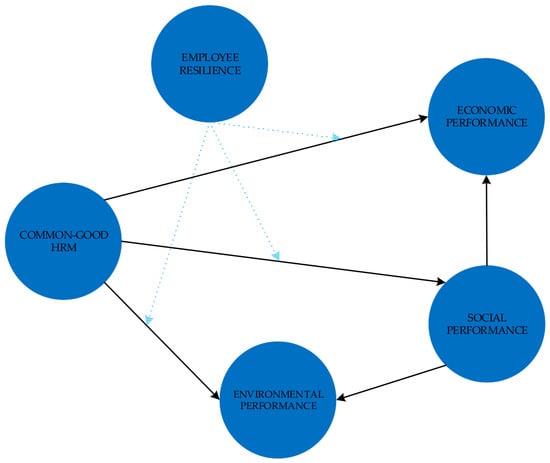
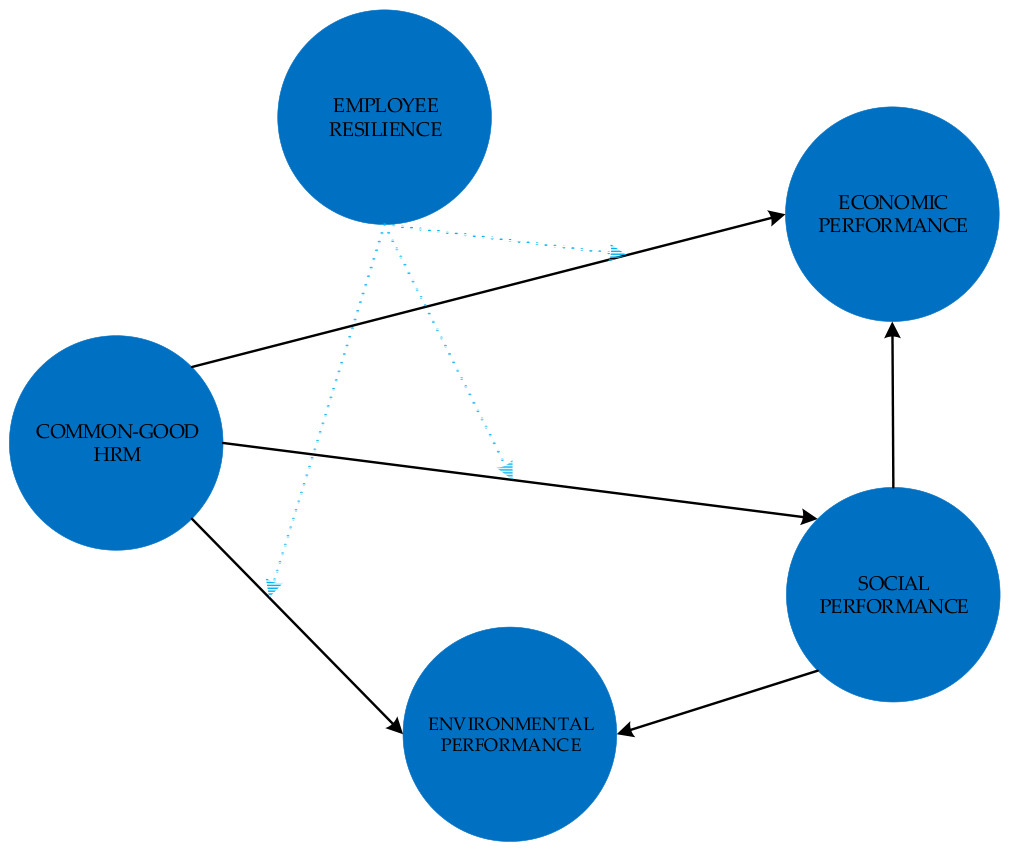
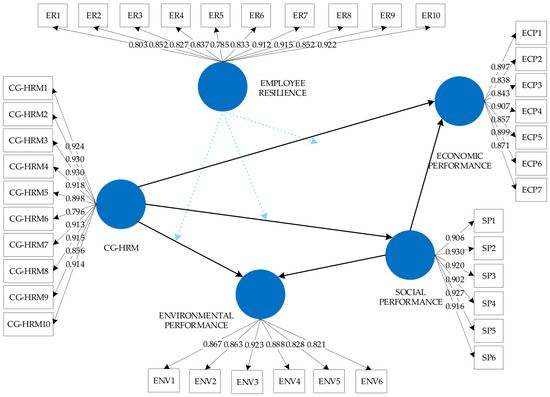
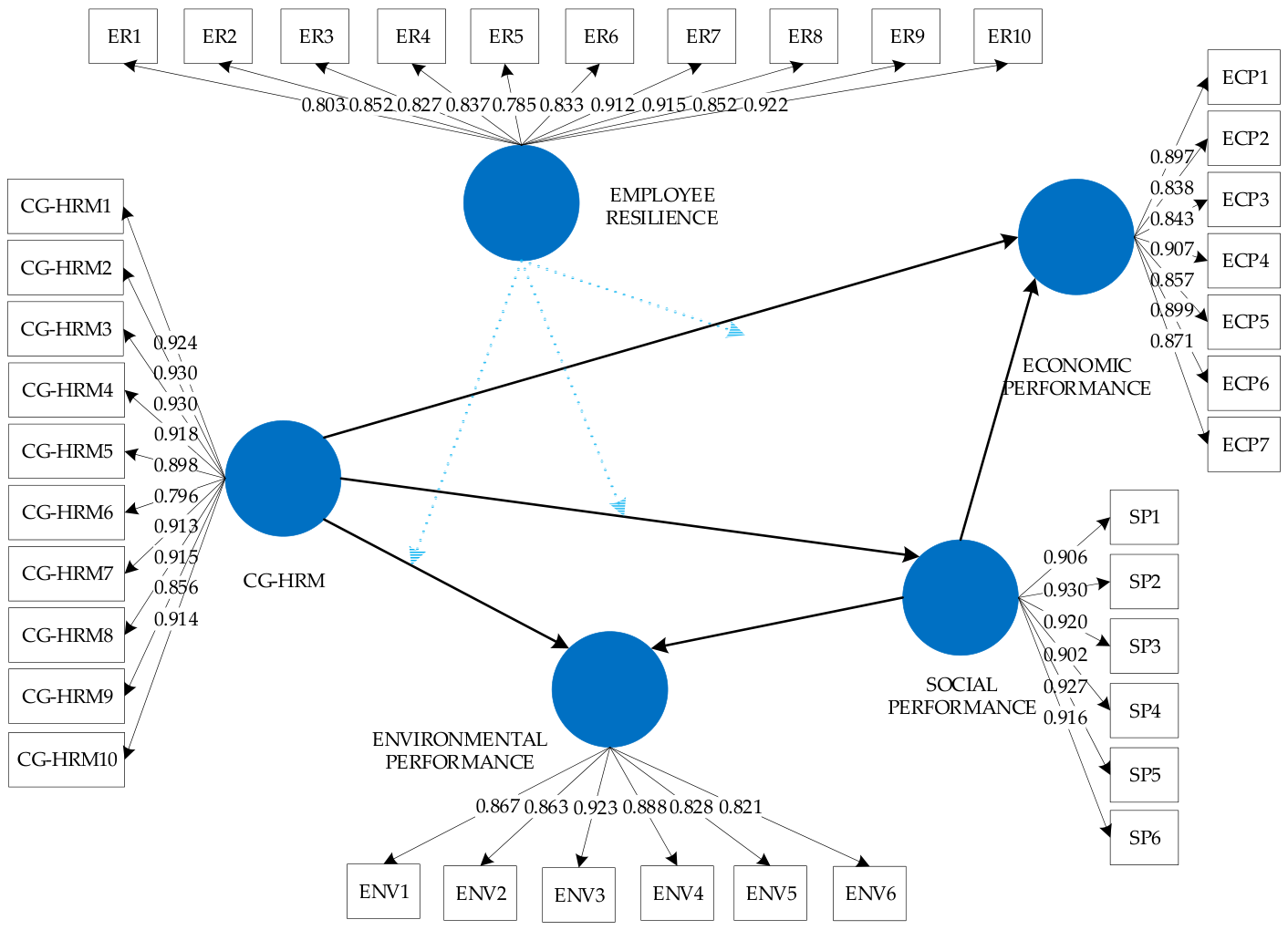

Disclaimer/Publisher’s Note: The statements, opinions and data contained in all publications are solely those of the individual author(s) and contributor(s) and not of MDPI and/or the editor(s). MDPI and/or the editor(s) disclaim responsibility for any injury to people or property resulting from any ideas, methods, instructions or products referred to in the content. |
© 2026 by the authors. Licensee MDPI, Basel, Switzerland. This article is an open access article distributed under the terms and conditions of the Creative Commons Attribution (CC BY) license.