


Abstract
The accelerated expansion of artificial intelligence (AI) is reshaping economic systems, labour markets and democratic life, giving rise to hybrid human–AI societies. In this context, education becomes a strategic arena for enabling sustainable and socially just transitions within the Fourth Industrial Revolution. This article examines how digital competence can be reconceptualized to prepare future citizens and educators for these emerging societal configurations, with particular attention to the Ibero-American context. A conceptual framework is proposed that integrates algorithmic literacy, critical data awareness, AI ethics, human–AI collaboration skills, and civic and socio-emotional capacities as core dimensions of “next-decade” digital competence. Methodologically, the study combines three complementary approaches: (a) a structured review of interdisciplinary literature on AI, digital competence and sustainability; (b) an analysis of international and regional policy documents and competence frameworks relevant to Ibero-America; and (c) selected empirical insights drawn from the first author’s doctoral research on digital competence and AI use in teacher education. The findings reveal significant tensions between rapid AI adoption and persistent structural inequalities in the Global South, while identifying key leverage points for aligning teacher education, public policy and institutional strategies with the Sustainable Development Goals. The proposed framework aims to support policymakers, universities and international organizations in fostering inclusive and sustainable AI-driven social change while mitigating new forms of exclusion and dependency.
1. Introduction
The accelerated expansion of artificial intelligence (AI) is rapidly transforming contemporary societies, reshaping economic systems, labour markets, governance structures, and everyday social interactions. Advances in machine learning, large language models, data analytics, and algorithmic decision-making increasingly mediate social life, public policy, and democratic processes. These developments have led to the emergence of AI-driven environments in which human agency, institutional decision-making, and social relations are deeply intertwined with automated systems [1,2].
While AI-driven innovation offers significant gains in efficiency and new forms of coordination, it also raises critical concerns related to inequality, power asymmetries, ethical governance, and the sustainability of social development, particularly in contexts marked by structural vulnerabilities [3,4].
This evolution highlights the need to move beyond purely instrumental approaches to technology use and to integrate critical, ethical, and reflective dimensions into competence frameworks. Recent studies on technology-enhanced learning environments, including augmented reality applications in science education, have demonstrated improvements in student engagement, motivation, and conceptual understanding, reinforcing the importance of developing advanced digital competences in educational contexts.
In this context, education plays a central role in preparing individuals to critically engage with AI-driven environments. Beyond technical skills, there is a growing need to foster ethical awareness, civic responsibility, and critical thinking in increasingly data-driven societies [5,6,7,8].
Digital competence has been widely recognized as a foundational concept for addressing these challenges. Early frameworks emphasized operational and technical skills; however, more recent approaches conceptualize digital competence as a multidimensional construct integrating cognitive, ethical, and social dimensions [9,10,11,12]. Frameworks such as DigComp and DigCompEdu highlight key areas including information literacy, communication, content creation, safety, and problem-solving [13].
For conceptual clarity, it is important to distinguish between related terms used throughout this study. Digital literacy generally refers to basic skills required to access and use digital technologies, whereas digital competence encompasses a broader set of cognitive, ethical, and social capacities for critical and responsible engagement. AI literacy focuses specifically on understanding and interacting with artificial intelligence systems. In this article, digital competence is used as the overarching concept integrating these dimensions.
However, the rapid diffusion of AI technologies challenges the adequacy of existing competence frameworks. Algorithmic systems increasingly shape access to information, influence behaviour through persuasive design, and automate decisions previously made by humans [2,14]. This has led to calls for integrating algorithmic literacy, critical data awareness, and AI ethics into competence models [2,15]. Without these capacities, individuals risk becoming passive users rather than active agents capable of critically engaging with AI systems.
At the same time, education systems face increasing pressure to align with labour market demands associated with the Fourth Industrial Revolution. Policy discourses emphasize adaptability, creativity, and collaboration in technologically mediated environments [16,17]. While these priorities are relevant, an excessive focus on employability risks overlooking ethical, civic, and socio-emotional dimensions of learning, potentially reinforcing existing inequalities [3,18].
These challenges are particularly significant in regions such as Ibero-America, where digital transformation coexists with persistent structural inequalities. Despite advances in connectivity, disparities in educational quality, institutional capacity, and access to digital resources remain [4,19]. Empirical studies in higher education further highlight uneven development of digital competence, particularly in its critical and reflective dimensions [20,21]. In such contexts, AI may simultaneously foster innovation while intensifying dependency and exclusion.
Teacher education may play a crucial role in this landscape. Teachers are not only users of digital technologies but also mediators of students’ engagement with them. Their level of digital competence influences how technologies are integrated into pedagogical practices and how students develop critical digital behaviours [22,23]. However, many programs remain focused on instrumental uses of technology, with limited attention to ethical and societal implications [24].
Emerging research suggests that digital competence may function as a protective and regulatory resource in technology-intensive environments. Higher levels of competence are associated with healthier patterns of technology use, greater autonomy, and reduced vulnerability to problematic behaviours [25,26]. From this perspective, digital competence contributes not only to effective technology use but also to maintaining human agency and critical awareness in AI-mediated contexts [21,27].
Despite growing interest, research remains fragmented across domains such as AI ethics, education, sustainability, and policy. Additionally, much of the literature is dominated by perspectives from high-income countries, with limited attention to regional specificities. This gap highlights the need for integrative frameworks that connect these domains and provide context-sensitive approaches.
In response, this study aims to reconceptualize digital competence as a multidimensional framework for sustainable and socially just digital societies, with a focus on the Ibero-American context.
2. Materials and Methods
2.1. Research Design and Data Sources
This study employs a qualitative and conceptual methodological design to develop an integrative framework of digital competence for hybrid AI-mediated environments, with particular attention to education, sustainability, and social change in the Ibero-American context. Rather than involving direct human participation, the research draws on multiple documentary and empirical sources. First, a structured review of interdisciplinary literature on artificial intelligence, digital competence, education, ethics, and sustainability was conducted using major academic databases, prioritizing recent publications while incorporating seminal contributions. Second, international, regional, and national policy documents and competence frameworks related to digital competence and AI in education were analyzed to identify dominant narratives, strategic priorities, and underlying normative assumptions. Third, selected empirical insights from the first author’s doctoral research on digital competence and AI use in teacher education were incorporated to contextualize and refine the conceptual analysis. The research followed an iterative process in which findings from the literature review, policy analysis, and empirical insights were compared and synthesized to identify key challenges in Ibero-American education.
To enhance transparency, it is important to clarify the role of the empirical insights referenced in this study. These insights are derived from the first author’s ongoing doctoral research on digital competence and AI use in teacher education within the Ibero-American context. The doctoral study follows a mixed-method approach, including survey data and semi-structured interviews with pre-service teachers and university educators.
In the present article, these empirical insights are not treated as a primary dataset nor subjected to systematic analysis. Instead, they are used selectively to contextualize and support the conceptual interpretation developed through the literature and policy analysis.
Selection criteria included relevance to AI in education, digital competence frameworks, ethical governance, and social implications of technology. Rather than aiming for exhaustive coverage, the review seeks conceptual integration across disciplines. The empirical insights referenced are used solely for contextual support and do not constitute a primary dataset or statistical analysis.
The sample includes participants from teacher education programs across selected institutions, focusing on their perceptions, practices, and challenges related to digital competence and the integration of AI in educational contexts. Data collection involves self-reported dimensions of digital competence, as well as qualitative reflections on ethical, pedagogical, and technological dimensions of AI use.
2.2. Conceptual Dimensions of Digital Competence
These dimensions are not operationalized as measurable variables but are presented as conceptual categories derived from the integrative analysis.
2.2.1. Digital Competence Dimensions
Digital competence has evolved from a focus on technical skills toward a multidimensional construct that includes cognitive, ethical, and social capacities for responsible technology use.
2.2.2. AI Ethics and Governance
This dimension focuses on ethical principles and governance issues associated with AI, such as transparency, accountability, fairness, and human oversight. The analysis examines how ethical considerations are incorporated into digital competence frameworks and education policies, especially in relation to social justice and democratic values.
2.2.3. Human–AI Collaboration Skills
Human–AI collaboration is considered a core competence for future societies. This dimension includes skills related to working alongside AI systems, understanding their limitations, and maintaining human agency in automated environments. It serves to evaluate educational approaches that move beyond substitution toward meaningful collaboration.
2.2.4. Civic and Socio-Emotional Capacities
The final analytical component addresses civic engagement, socio-emotional learning, and citizenship in digital societies. It includes capacities such as critical participation, ethical judgment, empathy, and collective responsibility, which are essential for sustainable and inclusive AI-driven social transitions.
2.3. Data Analysis
The data analysis followed a qualitative, integrative, and iterative analytical strategy designed to support the development of a conceptual framework of digital competence for AI-mediated contexts. Given the non-experimental nature of the study, the analysis did not involve statistical testing but instead focused on systematic comparison, synthesis, and theoretical integration across multiple data sources.
First, the academic literature identified through the structured review was subjected to thematic analysis. Publications were read in full and coded inductively to identify recurring concepts, assumptions, and analytical categories related to artificial intelligence, digital competence, sustainability, and education. Initial codes were progressively refined and grouped into higher-order themes, such as algorithmic literacy, ethical governance, human–AI interaction, digital inequality, and civic responsibility. This process enabled the identification of dominant trends as well as conceptual gaps in existing frameworks.
Second, policy documents and competence frameworks were analyzed using qualitative document analysis. These materials were examined to identify how digital competence and AI-related skills are framed at institutional and governance levels, with particular attention to normative orientations, strategic priorities, and implicit models of citizenship and employability. The analysis focused on detecting convergences and divergences between international guidelines and regional Ibero-American policies, especially regarding ethical considerations, social inclusion, and sustainability. Policy statements were compared against findings from the academic literature to assess alignment or disjunction between research-based knowledge and policy discourse.
Third, selected empirical insights from the first author’s doctoral research were incorporated through an interpretive lens. Rather than being analyzed as an independent dataset, these insights were used to contextualize and critically reflect on the themes emerging from the literature and policy analysis. This step allowed the identification of practical tensions between normative competence frameworks and lived educational realities in teacher education contexts.
Finally, the findings from all three analytical strands were synthesized through a process of constant comparison. This integrative phase aimed to connect individual themes into a coherent conceptual structure, highlighting relationships between digital competence dimensions, AI ethics, human–AI collaboration, and civic capacities. The outcome of this analytical process is a multidimensional framework intended to inform educational practice, policy development, and future research in the context of sustainable AI-driven social transitions.
As summarized in Table 1, the study integrates multiple data sources and analytical components, including literature review, policy analysis, and selected empirical insights, to develop the proposed conceptual framework.
Table 1.
Summary of data sources and analytical components of the study.
3. Conceptual Synthesis of Literature
The following section presents a conceptual synthesis derived from the integrative analysis of the literature, policy documents, and contextual empirical insights. These findings do not represent statistical results but rather theoretical patterns and interpretative relationships identified across sources.
3.1. Thematic Patterns in the Literature
The integrative analysis of the reviewed literature, policy documents, and empirical insights revealed recurring patterns regarding the relationship between digital competence, artificial intelligence, and sustainable social transitions. Across academic sources, digital competence is consistently described as a multidimensional construct extending beyond technical proficiency to include critical, ethical, and civic capacities. A dominant trend in the literature indicates that frameworks emphasizing reflective and regulatory dimensions of digital competence are more closely associated with positive educational and social outcomes, whereas narrowly instrumental approaches tend to overlook risks related to dependency, exclusion, and loss of agency.
Within policy frameworks, a strong emphasis on employability-oriented digital skills was observed, often accompanied by limited articulation of ethical governance, algorithmic accountability, or socio-emotional dimensions. This imbalance mirrors tensions identified in empirical teacher education contexts, where educators report confidence in basic digital operations but lower preparedness for addressing AI-related ethical challenges and critical data practices. These patterns suggest an inverse relationship between the depth of digital competence frameworks and the likelihood of problematic or uncritical engagement with AI-driven systems.
When the different data sources were compared, a consistent association emerged: higher levels of critical, ethical, and civic digital competence were linked to lower risks of unreflective technology use, dependency, and vulnerability to algorithmic influence. Conversely, contexts characterized by fragmented or instrumental competence models exhibited greater exposure to risks such as automation bias, reduced autonomy, and unequal participation in digital societies. This pattern supports the conceptual assumption that digital competence may function as a protective and enabling resource within hybrid human–AI environments.
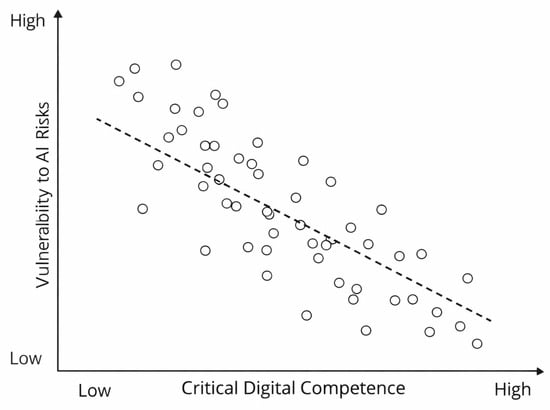
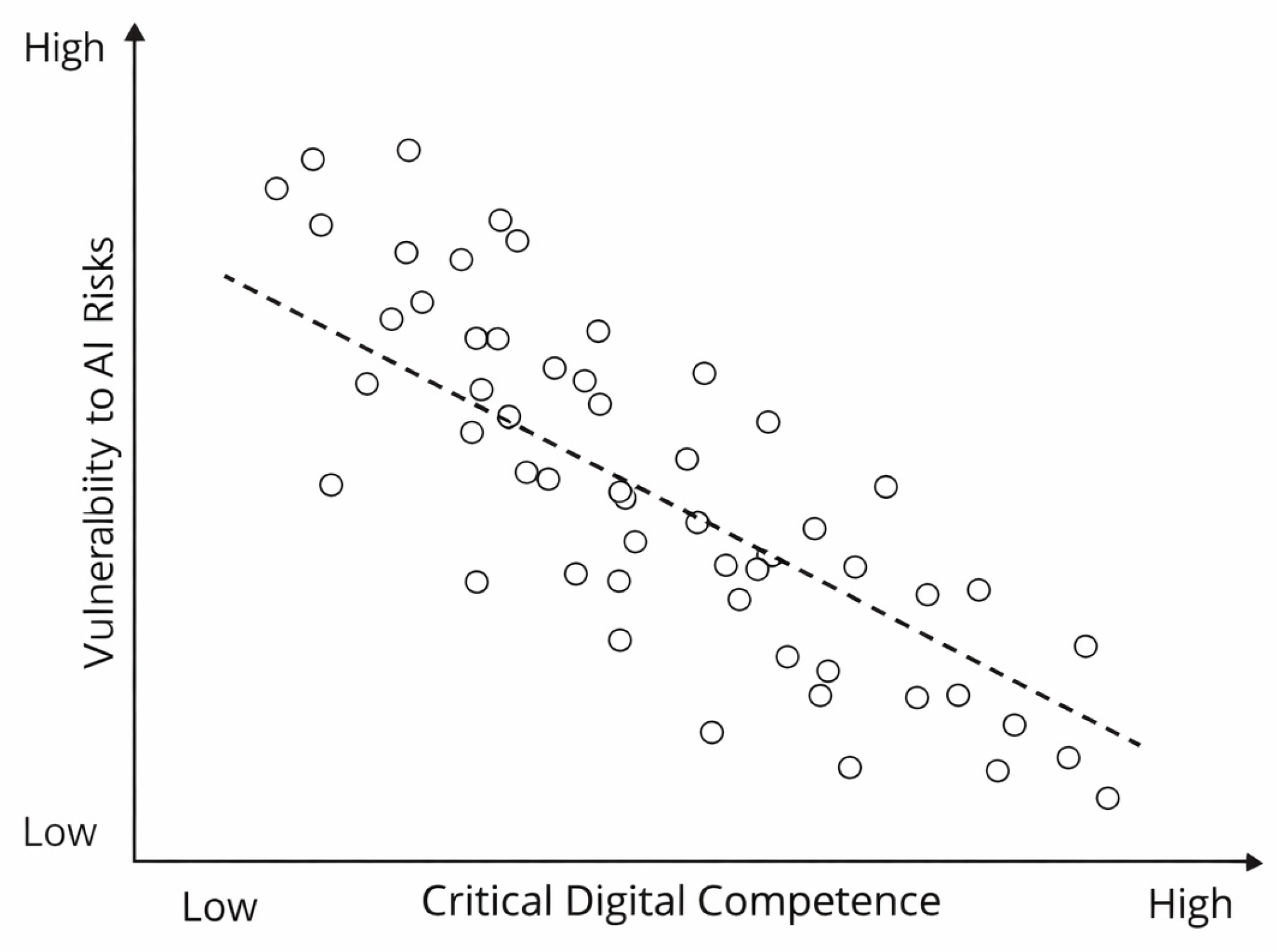
As illustrated in Figure 1, the conceptual relationship between digital competence and AI-related risks suggests a negative association, where higher levels of competence may reduce vulnerability to such risks.
Figure 1.
Conceptual framework diagram illustrating the relationship between digital competence and AI-related risks. Conceptual framework diagram (not empirically tested).
3.2. Conceptual Relationships Between Digital Competence and AI-Related Risks
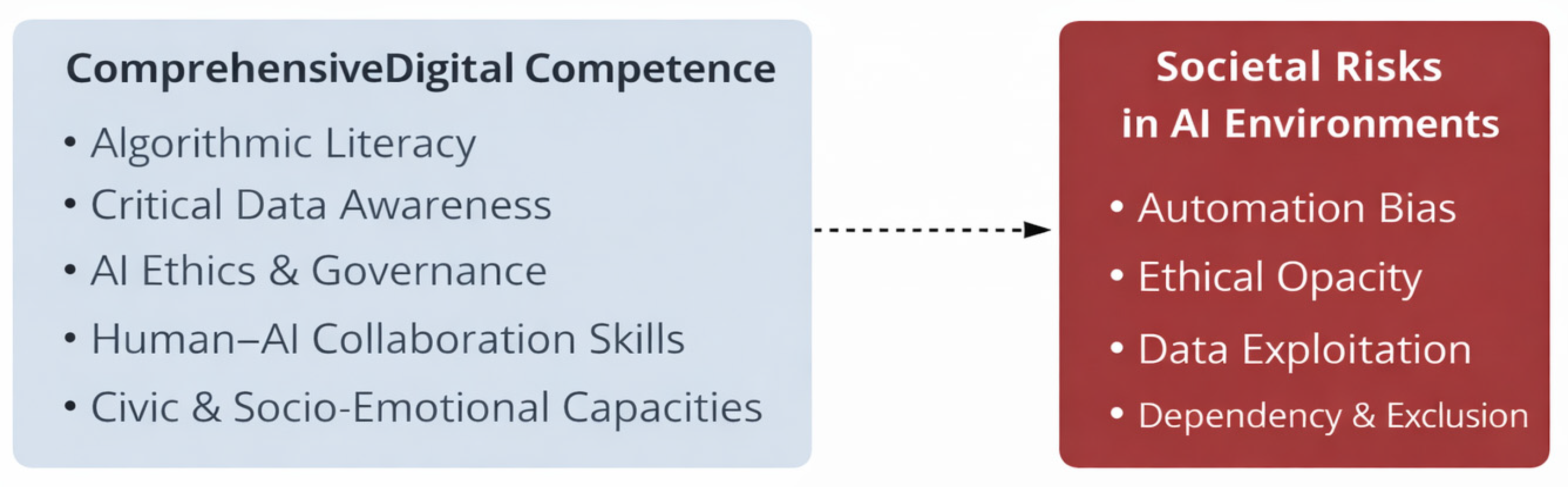
The figures presented in this study are conceptual diagrams intended to illustrate theoretical relationships and do not represent empirically tested models. Building on the descriptive synthesis, a conceptual structural diagram was developed to illustrate the directional relationship between digital competence and societal risks associated with AI adoption. The model positions digital competence as a latent multidimensional construct encompassing algorithmic literacy, critical data awareness, AI ethics, human–AI collaboration skills, and civic and socio-emotional capacities. These dimensions collectively influence individuals’ and institutions’ capacity to engage with AI systems in responsible, sustainable, and socially just ways.
The conceptual framework indicates strong internal coherence, as each competence dimension contributes to mitigating specific AI-related risks, including automation bias, ethical opacity, data exploitation, and social exclusion. The synthesis of literature and policy analysis indicates that the absence or weak integration of these dimensions increases susceptibility to dependency and unequal power relations in AI-mediated contexts. Conversely, robust competence frameworks enhance human agency and support inclusive participation in digital societies.
The model further illustrates that digital competence exerts a moderating influence on AI impacts rather than a deterministic one. AI systems do not inherently generate social harm; instead, risks emerge when educational and institutional capacities to critically govern and collaborate with these systems are insufficient. This perspective aligns with sustainability-oriented approaches emphasizing governance, regulation, and education as key levers for shaping technological trajectories.
Table 2 provides a synthesized overview of the core conceptual dimensions that constitute the proposed framework of “next-decade” digital competence and their analytical relationships with key challenges emerging in hybrid AI-mediated environments. Rather than representing empirical variables or statistical associations, the table functions as a heuristic device that organizes insights derived from the systematic literature review, policy document analysis, and selected empirical inputs. Its primary purpose is to clarify how different dimensions of digital competence interact to mitigate risks and support sustainable and socially just AI-driven transformations.
Table 2.
Summary of conceptual dimensions and analytical relationships within the proposed digital competence framework.
The first dimension, digital competence dimensions, reflects the evolution of competence frameworks from predominantly instrumental and operational skills toward more complex configurations that incorporate algorithmic literacy, critical data awareness, and reflective technology use. This dimension highlights that basic technical proficiency alone is insufficient for navigating AI-mediated environments, particularly as algorithmic systems increasingly shape access to information, opportunities, and decision-making processes. The framework emphasizes that advanced competence components are essential for sustaining human agency and informed participation.
The second dimension, AI ethics and governance, focuses on normative principles such as transparency, accountability, fairness, and human oversight. The table illustrates how ethical governance operates as a cross-cutting axis that connects digital competence with broader societal values, underscoring that without explicit ethical grounding, digital competence risks being reduced to employability-oriented skills detached from democratic and sustainability concerns.
Human–AI collaboration skills constitute the third dimension. Here, collaboration is conceptualized not as the substitution of human judgment by automated systems, but as a relational process in which humans understand, supervise, and meaningfully interact with AI technologies. This dimension highlights the importance of recognizing system limitations, avoiding automation bias, and preserving human responsibility in decision-making contexts.
The fourth dimension, civic and socio-emotional capacities, situates digital competence within the social and collective sphere. The table indicates how capacities such as ethical judgment, empathy, critical participation, and civic responsibility are integral to managing the social consequences of AI adoption, particularly in addressing inequality, exclusion, and dependency in Global South and Ibero-American contexts.
Overall, Table 2 indicates that the proposed framework is not additive but relational: the dimensions reinforce one another and collectively shape how education systems, institutions, and societies engage with AI. By articulating these interconnections, the table provides a conceptual foundation for policy design, teacher education, and future empirical research oriented toward sustainable human–AI coexistence.
The comparative analysis presented in Table 3 highlights both the continuity and innovation of the proposed framework. While existing models such as DigComp and DigCompEdu provide a solid foundation for understanding digital competence, they do not explicitly address the emerging challenges associated with artificial intelligence. The proposed framework extends these models by integrating AI-specific dimensions, including algorithmic literacy, critical data awareness, and human–AI collaboration.
Table 3.
Comparative alignment of digital competence frameworks.
Furthermore, it emphasizes the relational and ethical nature of digital competence, incorporating civic and socio-emotional capacities as central components. This positioning allows the framework to respond more effectively to the complexities of AI-mediated contexts, particularly in contexts where issues of inequality, governance, and sustainability are central.
The relationships illustrated in this figure are conceptual and intended for theoretical interpretation. They do not represent empirically tested or statistically derived associations.
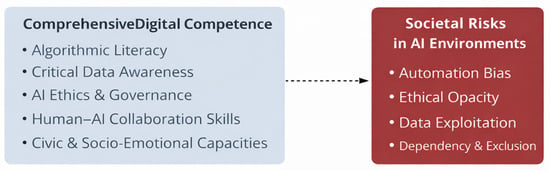
The conceptual structural model presented in Figure 2 illustrates the theoretically grounded negative association between comprehensive digital competence and societal risks emerging in AI-driven environments. Digital competence is conceptualized as a multidimensional construct integrating algorithmic literacy, critical data awareness, AI ethics, human–AI collaboration skills, and civic and socio-emotional capacities. Together, these dimensions moderate how AI systems influence individual behavior, institutional practices, and broader social structures. As levels of digital competence increase, vulnerability to risks such as automation bias, ethical opacity, data exploitation, dependency, and social exclusion is reduced. The model emphasizes that AI technologies are not inherently harmful; rather, adverse outcomes tend to arise when educational and governance capacities are insufficient to guide their responsible and ethical use. By foregrounding human agency and ethical oversight, the model highlights education as a central lever for shaping sustainable and socially just AI-mediated futures at both institutional and societal levels.
Figure 2.
Conceptual framework of digital competence in AI-driven environments (illustrative relationships).
To illustrate the conceptual relationship between digital competence and AI-related risks, Figure 2 presents a simplified framework highlighting how higher levels of competence may be associated with reduced vulnerability in AI-driven environments.
3.3. Comparative Insights Across Contexts
Additional comparative analysis across educational, policy, and regional contexts revealed consistent patterns regarding the moderating role of digital competence. Across Ibero-American teacher education settings, competence frameworks that incorporate ethical reflection and socio-emotional learning were more closely aligned with sustainable and inclusive AI integration than those focused primarily on technical skill acquisition. These patterns were consistent across gender, disciplinary background, and institutional type, suggesting that the protective role of digital competence operates broadly rather than being context-specific.
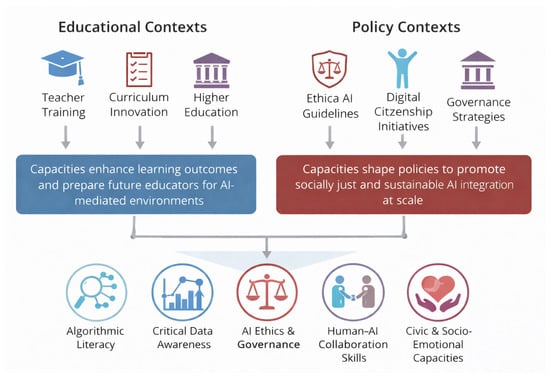
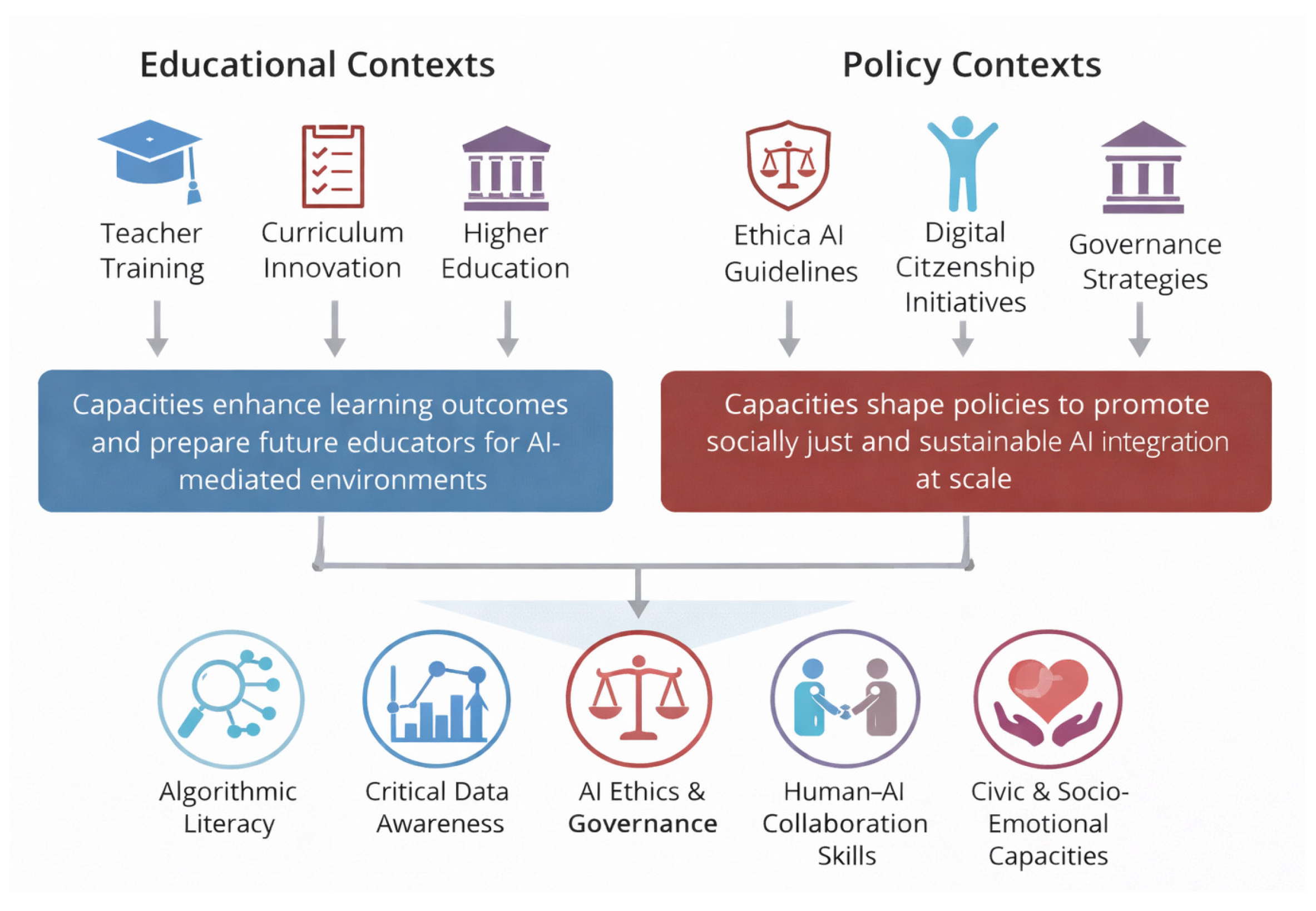
As illustrated in Figure 3, the proposed conceptual framework highlights the interactions between educational and policy contexts, showing how digital competence dimensions contribute to both learning outcomes and broader governance strategies in AI-driven environments.
Figure 3.
Conceptual framework illustrating interactions between educational and policy contexts in AI-driven environments (not empirically tested).
Comparisons between international and regional policy documents further highlighted convergence at the level of discourse but divergence in terms of implementation. While ethical AI and sustainability are frequently emphasized, concrete mechanisms for developing advanced and critical digital competence remain unevenly articulated and applied. This gap contributes to the persistence of structural inequalities and limits educators’ capacity to critically engage with AI systems in practice.
Overall, the findings suggest that comprehensive digital competence may function as a stabilizing factor in digital societies, reducing vulnerability to dependency and exclusion while supporting human agency, democratic participation, and socially sustainable forms of technological integration across diverse contexts.
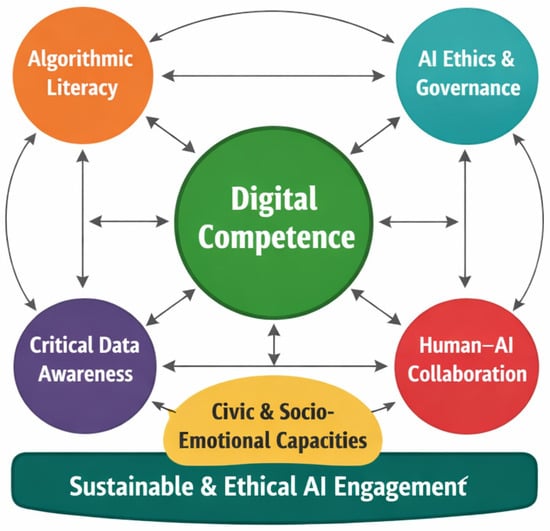
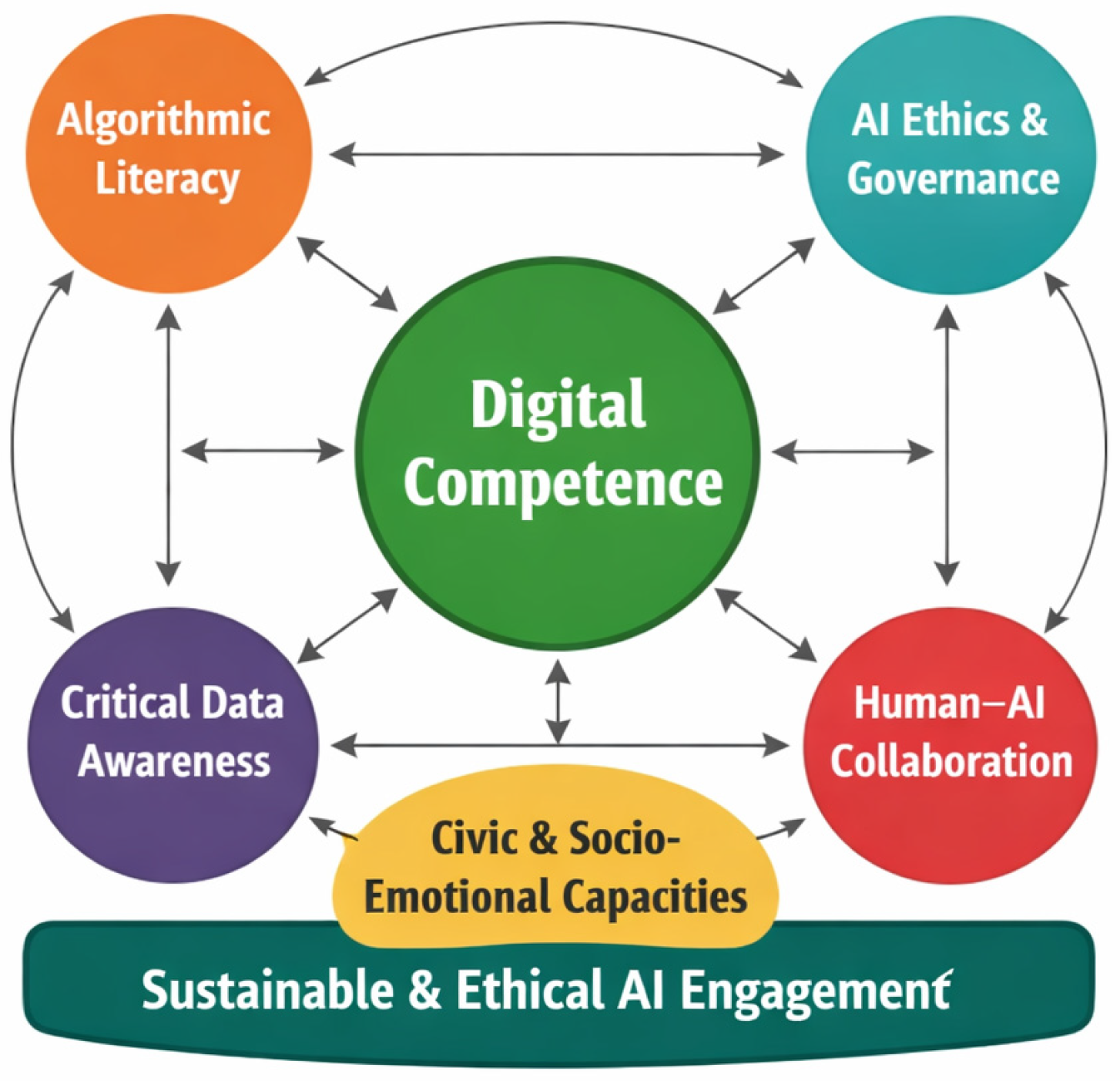
As shown in Figure 4, the integrated conceptual framework presents the interrelationships between key dimensions of digital competence, highlighting their combined role in fostering sustainable and ethical engagement with AI.
Figure 4.
Integrated conceptual framework of digital competence dimensions in hybrid human–AI environments (not empirically tested).
This figure provides an integrated visual summary of the proposed digital competence framework, illustrating the interconnections between its five core dimensions: algorithmic literacy, critical data awareness, AI ethics and governance, human–AI collaboration skills, and civic and socio-emotional capacities. Rather than operating independently, these dimensions are conceptualized as mutually reinforcing components that collectively shape how individuals and institutions engage with AI-driven environments. The diagram highlights the central role of digital competence as a moderating factor that supports ethical, sustainable, and socially responsible interaction with artificial intelligence systems.
To further clarify the proposed dimensions, Appendix A provides illustrative indicators that support their interpretation and potential application in educational and policy contexts.
4. Discussion
This study aimed to reconceptualize digital competence in the context of AI-driven societal transformations. The findings suggest that digital competence, understood as a multidimensional construct, may play a key role in shaping how individuals and institutions engage with AI environments.
A key contribution of this study is to extend existing models of digital competence by emphasizing the need to integrate ethical, critical, and socio-political dimensions in AI-driven contexts. While such skills remain relevant, the results of this study align with scholars who argue that they are insufficient for addressing the ethical, political, and social challenges introduced by AI [11,12]. This critique is consistent with earlier multidimensional models of digital competence and digital literacy that emphasized the integration of technical, cognitive, and communicative dimensions [9,10].
The conceptual synthesis presented here supports the view that digital competence must be expanded to include algorithmic literacy, critical data awareness, and ethical reasoning in order to sustain human agency in increasingly automated environments.
The association identified between comprehensive digital competence and reduced societal risks linked to AI resonates with critical perspectives in AI ethics and governance. Scholars have emphasized that AI systems are not neutral technologies but socio-technical assemblages embedded in power relations and institutional structures [2,14,19]. Rather than treating ethical AI as a purely technical or regulatory issue, the findings suggest that ethical governance should be supported by citizens’ and educators’ competences to critically engage with AI systems.
This perspective is consistent with critical reviews of AI in education, which highlight the rapid expansion of AI applications alongside a persistent lack of attention to ethical, social, and pedagogical implications. The present framework contributes to this debate by positioning education as a key site where these dynamics can be critically addressed.
The results also provide conceptual support for arguments that digital competence may function as a protective factor in technology-intensive environments. Research has shown that higher levels of critical digital competence are associated with healthier technology use patterns, greater self-regulation, and reduced vulnerability to problematic behaviors [25,26,27].
Extending these insights to AI-mediated contexts, this study suggests that competence dimensions such as human–AI collaboration skills and socio-emotional capacities are crucial for mitigating risks such as automation bias and over-reliance on algorithmic recommendations. This reinforces the idea that digital competence should not be understood solely as an enabler of technological use, but also as a mechanism for regulating technology’s influence on human decision-making.
A particularly relevant contribution concerns the emphasis on civic and socio-emotional capacities. These capacities are essential for addressing the collective consequences of AI adoption, including inequality and social fragmentation, aligning with critical social theory perspectives on digital power and democracy [1,3,28].
The Ibero-American focus adds an important contextual dimension. In regions marked by structural inequalities and uneven digitalization, the risks associated with AI adoption may be amplified [4,19]. Empirical studies in higher education highlight uneven development of digital competence, particularly in critical and reflective dimensions [20,21].
The comparative analysis further reveals a gap between policy rhetoric and implementation. While ethical AI and sustainability are frequently invoked, their operationalization remains uneven, echoing critiques of governance frameworks that lack concrete mechanisms [15,18].
Teacher education emerges as a critical leverage point. Teachers’ digital competence significantly influences how technologies are integrated into pedagogical practices [22,23]. Programs that prioritize instrumental training without ethical reflection risk reinforcing uncritical technology adoption.
Another key implication concerns the relational nature of the framework. Its dimensions are mutually reinforcing, aligning with holistic approaches to education and sustainability [27].
The findings also contribute to debates on the future of work. While digital competence is often framed in terms of employability, this study highlights that AI-driven environments involve multiple interacting dimensions that shape social and educational outcomes [16,17].
From a governance perspective, the framework supports participatory approaches, emphasizing the role of education in enabling democratic oversight of AI systems [2,18].
Despite its contributions, the study is limited by its conceptual nature, and further empirical research is needed to validate and refine the proposed framework.
Given the conceptual nature of this study, further empirical research is needed to explore how digital competence develops over time and how it influences engagement with AI across different contexts.
Overall, digital competence, when understood as an ethical, critical, and civic capacity, may play a key role in shaping sustainable and socially just AI-driven transformations.
To enhance practical applicability, this study outlines implementation pathways across curriculum, teacher education, and institutional strategies. At the curriculum level, this includes integrating algorithmic literacy, critical data awareness, and AI ethics into learning activities. For example, a six-week teacher education module may include (1) introduction to AI systems; (2) analysis of real-world applications; (3) evaluation of algorithmic recommendations; (4) ethical case discussions; (5) collaborative AI-supported tasks; and (6) reflective assessment activities.
At the institutional level, strategies include developing AI governance policies, promoting interdisciplinary collaboration, and supporting professional development for educators.
The framework also demonstrates transferability across contexts. In high-income environments, it may support more ethically grounded AI integration, while in low-resource contexts it may prioritize access, critical awareness, and inclusive strategies. This adaptability highlights its relevance across diverse educational systems.
Given the conceptual nature of this study, the relationships identified should be interpreted as theoretical and indicative rather than causal.
4.1. Limitations
This study has several limitations that should be acknowledged when interpreting its findings and conceptual contributions. First, the research adopts a predominantly conceptual and integrative design, relying on the synthesis of academic literature, policy documents, and selected empirical insights rather than on original large-scale empirical data collection. While this approach is appropriate for theory-building and framework development, it necessarily limits the ability to draw causal inferences or to generalize findings across populations and contexts. The proposed framework should therefore be understood as an analytical and heuristic model rather than as an empirically validated structure.
Second, although selected empirical insights from the first author’s doctoral research were incorporated to contextualize and inform the conceptual analysis, these inputs were not analyzed as an independent dataset within the scope of this article. As a result, empirical evidence may play a supporting rather than a confirmatory role. Future studies would benefit from dedicated empirical designs explicitly aimed at testing the relationships and mechanisms proposed in the framework across diverse educational settings.
Third, the study places particular emphasis on the Ibero-American context in order to address gaps in the literature related to the Global South and regions characterized by structural inequalities. While this contextual focus strengthens the relevance of the analysis for underrepresented settings, it may also limit the direct applicability of some conclusions to regions with different institutional, cultural, or technological conditions. Comparative research across multiple regions would be necessary to assess the transferability and adaptability of the proposed framework at a global scale.
Fourth, the analysis of policy documents and competence frameworks is constrained by the availability, accessibility, and level of detail of publicly available materials. Policy texts often emphasize aspirational goals while providing limited information on implementation processes, evaluation mechanisms, or actual educational practices. Consequently, the study may not fully capture the complexities and constraints involved in translating policy discourse into practice.
Finally, the multidimensional nature of concepts such as digital competence, civic capacity, and socio-emotional skills presents inherent challenges related to conceptual clarity and operationalization. While this study seeks to integrate these dimensions coherently, differences in definitions and theoretical traditions across disciplines may lead to alternative interpretations. Further empirical and methodological work is needed to refine these constructs and explore their practical implications in educational and policy contexts.
4.2. Future Directions
Building on the findings of this study, future research should prioritize the development and evaluation of intervention-based designs that move beyond correlational and conceptual analyses. One particularly relevant direction involves implementing structured digital competence interventions—such as workshops, curricular modules, or cross-disciplinary training programs—and examining their longitudinal effects on digital behaviors. By tracking changes in technology use patterns over time, future studies could assess whether strengthening digital competence leads to measurable reductions in problematic smartphone use and related forms of digital dependency. Demonstrating such effects would provide robust empirical support for universities and policymakers to invest in digital competence as a strategic lever for promoting sustainable and healthy technology engagement.
In addition to intervention studies, future research should explore the psychological and behavioral mechanisms that mediate the relationship between digital competence and problematic digital behaviors. Constructs such as self-regulation, time management, technology mindfulness, and emotional coping strategies are likely to play a key role in explaining how digital competence exerts its protective influence. Examining these mediators would allow researchers to move from descriptive associations toward more explanatory models that clarify how competence translates into behavioral outcomes. Such work would also contribute to refining competence frameworks by identifying which dimensions are most influential in different contexts.
Another promising avenue concerns the extension of the proposed framework to other forms of digital dependence beyond problematic smartphone use. Given the frequent co-occurrence of behaviors such as excessive social media use, online gaming, streaming overuse, and short-form video consumption, future studies should investigate whether digital competence may function as a stabilizing factor a general protective factor across multiple digital environments. Theoretical models such as the I-PACE framework provide a useful foundation for generating testable hypotheses regarding the interaction between personal predispositions, affective regulation, and executive control. Empirical research could examine, for example, whether reflective and evaluative digital skills reduce susceptibility to persuasive design features or algorithmic reinforcement mechanisms across platforms.
Future research should also deepen the behavioral interpretation of digital competence by linking competence dimensions to concrete usage patterns and everyday practices. Item-level analyses of digital behavior dimensions can shed light on how specific habits—such as compulsive checking, extended unplanned use, or anxiety when disconnected—are shaped by varying levels of competence. Understanding these micro-level dynamics would help clarify how abstract competence constructs are enacted in daily digital routines.
Finally, further work is needed to explore how digital competence can be meaningfully embedded across university curricula and institutional strategies. Comparative studies across disciplines may reveal how competence development differs in education, health sciences, engineering, and social sciences and how domain-specific applications can support healthier and more intentional engagement with AI-driven technologies. Such research would strengthen the practical relevance of digital competence frameworks and support their role in fostering sustainable, inclusive, and socially responsible digital futures.
5. Conclusions
This study indicates that digital competence, when reconceptualized as a multidimensional and ethically grounded construct, may play a central protective and enabling role in digital societies. Rather than being limited to technical or instrumental skills, digital competence emerges as a key factor for moderating the social risks associated with AI-driven environments, including dependency, uncritical technology use, and the erosion of human agency. By integrating algorithmic literacy, critical data awareness, AI ethics, human–AI collaboration skills, and civic and socio-emotional capacities, the proposed framework highlights the importance of education in shaping sustainable and socially just technological futures, in line with contemporary debates on ethical AI and societal governance [2,19].
The findings reinforce the view that digital competence can function as a form of psychological and societal defense, supporting individuals’ capacity to regulate their interaction with digital technologies and to critically engage with AI-mediated systems. This protective function extends beyond individual well-being to encompass broader social outcomes, such as democratic participation, ethical decision-making, and resistance to exclusionary or exploitative technological practices. In this sense, digital competence operates at the intersection of education, governance, and social sustainability, aligning with theories of self-regulation, critical digital literacy, and responsible innovation that emphasize human agency in technologically mediated contexts [1,3,9].
The findings suggest that digital competence should not be limited to employability but also include ethical and civic capacities necessary for responsible participation in digital societies. Universities, teacher education programs, and policymakers are encouraged to integrate comprehensive digital competence development into curricula and institutional strategies, not only to prepare individuals for AI-driven labor markets but also to foster healthier, more intentional, and ethically informed relationships with technology. By learning to critically evaluate information, understand algorithmic processes, manage privacy and attention, and reflect on the societal consequences of AI, learners can become active and empowered participants in digital societies rather than passive subjects of technological systems.
In an era in which AI and smartphones are deeply embedded in everyday life, fostering comprehensive digital competence may be one of the most practical and promising strategies for mitigating the adverse effects of rapid technological change. By positioning digital competence as a cornerstone of sustainable social transitions, this study contributes to ongoing debates on how education can support inclusive, democratic, and human-centered AI-mediated futures, particularly in regions such as Ibero-America where technological transformation and structural inequality intersect [29,30].
Author Contributions
Conceptualization, D.C.T. and M.G.G.; methodology, D.C.T.; software, M.B.; validation, M.G.G., R.S.-V. and D.C.T.; formal analysis, D.C.T.; investigation, M.G.G.; resources, M.B.; data curation, D.C.T.; writing—original draft preparation, D.C.T.; writing—review and editing, M.B.; visualization, R.S.-V.; supervision, D.C.T.; project administration, M.B.; funding acquisition, D.C.T. All authors have read and agreed to the published version of the manuscript.
Funding
This research received no external funding.
Institutional Review Board Statement
Ethical review and approval were not required for this study, as it is based on a conceptual and qualitative analysis of academic literature, policy documents, and previously collected empirical insights used for illustrative purposes only. No new data were collected from human participants, and no personal or identifiable information was processed.
Informed Consent Statement
Not applicable. This study does not report original empirical data collected directly from human participants. Any empirical insights referenced are drawn from previously conducted research and are used solely for illustrative and contextual purposes.
Data Availability Statement
No new data were created or analyzed in this study. The article is based on a conceptual synthesis of academic literature, policy documents, and previously published or author-owned empirical materials used for contextualization.
Acknowledgments
The authors would like to acknowledge prior institutional and academic contexts that informed the development of this work. The conceptual insights presented in this article were shaped by previous research experiences in higher education and teacher education settings in Ibero-America. The authors also thank colleagues who provided informal feedback during the conceptual development of the framework. No external funding or technical assistance was received for this study.
Conflicts of Interest
The authors declare no conflicts of interest.
Abbreviations
The following abbreviations are used in this manuscript:
| AI | Artificial Intelligence |
| DC | Digital Competence |
Appendix A. Illustrative Items from Referenced Instruments
This appendix presents illustrative analytical indicators associated with the core dimensions of the proposed digital competence framework for digital societies. The elements included are conceptual in nature and serve to clarify how each dimension may be interpreted in educational and policy contexts. They do not correspond to survey items or measurement instruments and are not used for empirical assessment.
| Framework Dimension | Illustrative Indicators |
| Algorithmic Literacy | Understanding how AI systems generate recommendations; recognizing algorithmic bias; awareness of automated decision-making processes |
| Critical Data Awareness | Ability to question data sources and data use; understanding data privacy implications; awareness of surveillance and profiling practices |
| AI Ethics and Governance | Knowledge of ethical principles such as transparency, accountability, and fairness; recognition of ethical risks in AI deployment; understanding human oversight mechanisms |
| Human–AI Collaboration Skills | Ability to work alongside AI systems while maintaining human judgment; recognition of AI limitations; avoidance of automation bias |
| Civic and Socio-Emotional Capacities | Critical participation in digital societies; ethical responsibility; empathy, autonomy, and reflective decision-making in AI-mediated environments |
References
- Ress, S.A.; Cafaro, F. “I Want to Experience the Past”: Lessons from a Visitor Survey on How Immersive Technologies Can Support Historic Interpretation. Information 2020, 12, 15. [Google Scholar] [CrossRef] [Scilit]
- Jobin, A.; Ienca, M.; Vayena, E. The global landscape of AI ethics guidelines. Nat. Mach. Intell. 2019, 1, 389–399. [Google Scholar] [CrossRef] [Scilit]
- Selwyn, N. Should Robots Replace Teachers? AI and the Future of Education; Polity Press: Cambridge, UK, 2019. [Google Scholar]
- Hilbert, M. Big Data for Development: A Review of Promises and Challenges. Dev. Policy Rev. 2016, 34, 135–174. [Google Scholar] [CrossRef] [Scilit]
- Amigud, A.; Pell, D.J. Responsible and Ethical Use of AI in Education: Are We Forcing a Square Peg into a Round Hole? World 2025, 6, 81. [Google Scholar] [CrossRef] [Scilit]
- Bozkurt, A.; Karadeniz, A.; Baneres, D.; Guerrero-Roldán, A.E.; Rodríguez, M.E. Artificial Intelligence and Reflections from Educational Landscape: A Review of AI Studies in Half a Century. Sustainability 2021, 13, 800. [Google Scholar] [CrossRef] [Scilit]
- Hwang, G.-J.; Xie, H.; Wah, B.W.; Gašević, D. Vision, Challenges, Roles and Research Issues of Artificial Intelligence in Education. Comput. Educ. Artif. Intell. 2020, 1, 100001. [Google Scholar] [CrossRef] [Scilit]
- Magnani, L. Autonomy and the Ownership of Our Own Destiny: Tracking the External World and Human Behavior, and the Paradox of Autonomy. Philosophies 2020, 5, 12. [Google Scholar] [CrossRef] [Scilit]
- Ferrari, A. Digital Competence in Practice: An Analysis of Frameworks. Educ. Sci. 2018, 8, 12. [Google Scholar]
- Pérez-Escoda, A.; García-Ruiz, R.; Aguaded, I. Dimensions of Digital Literacy Based on Five Models of Development. Cult. Educ. 2019, 31, 232–266. [Google Scholar] [CrossRef] [Scilit]
- Cassibba, R.; Ferrarello, D.; Mammana, M.F.; Musso, P.; Pennisi, M.; Taranto, E. Teaching Mathematics at Distance: A Challenge for Universities. Educ. Sci. 2021, 11, 1. [Google Scholar] [CrossRef] [Scilit]
- García-Moreno, M.Á.; Yáñez, D.F.; Diago, P.D. Introduction to Computational Mathematics Using the Historical Solutions of the “Hundred Fowls” Problem. Educ. Sci. 2023, 13, 18. [Google Scholar] [CrossRef] [Scilit]
- Redecker, C. European Framework for the Digital Competence of Educators: DigCompEdu. Education Sciences 2020, 10, 14. [Google Scholar]
- Mittelstadt, B.D. Principles Alone Cannot Guarantee Ethical AI. Nat. Mach. Intell. 2019, 1, 501–507. [Google Scholar] [CrossRef] [Scilit]
- Stahl, B.C. Artificial Intelligence for a Better Future: An Ecosystem Perspective. Information 2021, 12, 15. [Google Scholar]
- Acemoglu, D.; Restrepo, P. Artificial Intelligence, Automation, and Work. In The Economics of Artificial Intelligence: An Agenda; University of Chicago Press: Chicago, IL, USA, 2019. [Google Scholar] [CrossRef] [Scilit]
- Autor, D.H. Why Are There Still So Many Jobs? The History and Future of Workplace Automation. J. Econ. Perspect. 2015, 29, 3–30. [Google Scholar] [CrossRef] [Scilit]
- Floridi, L.; Cowls, J. A Unified Framework of Five Principles for AI in Society. Harv. Data Sci. Rev. 2019, 1. [Google Scholar] [CrossRef] [Scilit]
- Van Dijk, J. Digital Divide: Impact of Access. In The International Encyclopedia of Media Effects; Wiley: Hoboken, NJ, USA, 2017. [Google Scholar] [CrossRef] [Scilit]
- Stella, M. Forma Mentis Networks Reconstruct How Italian High Schoolers and International STEM Experts Perceive Teachers, Students, Scientists, and School. Educ. Sci. 2020, 10, 17. [Google Scholar] [CrossRef] [Scilit]
- Bourke, M.; Kinsella, W.; Prendeville, P. The Implementation of an Ethical Education Curriculum in Secondary Schools in Ireland. Educ. Sci. 2020, 10, 14. [Google Scholar] [CrossRef] [Scilit]
- Kubsch, M.; Touitou, I.; Nordine, J.; Fortus, D.; Neumann, K.; Krajcik, J. Transferring Knowledge in a Knowledge-in-Use Task—Investigating the Role of Knowledge Organization. Educ. Sci. 2020, 10, 20. [Google Scholar] [CrossRef] [Scilit]
- Huang, X. Improving Communicative Competence through Synchronous Communication in Computer-Supported Collaborative Learning Environments: A Systematic Review. Educ. Sci. 2018, 8, 15. [Google Scholar] [CrossRef] [Scilit]
- Renbarger, R.; Beaujean, A. A Meta-Analysis of Graduate School Enrollment from Students in the Ronald E. McNair Post-Baccalaureate Program. Educ. Sci. 2020, 10, 16. [Google Scholar] [CrossRef] [Scilit]
- Tao, S.; Reichert, F.; Law, N.W.Y.; Rao, N. Digital Technology Use and Adolescent Mental Health Before and During the COVID-19 Pandemic: The Roles of Internet Addiction and Digital Competence. Behav. Sci. 2023, 26, 10. [Google Scholar] [CrossRef] [Scilit] [PubMed]
- Iqbal, J.; Asghar, M.Z.; Ashraf, M.A.; Yi, X. The Impacts of Emotional Intelligence on Students’ Study Habits in Blended Learning Environments: The Mediating Role of Cognitive Engagement during COVID-19. Behav. Sci. 2022, 12, 14. [Google Scholar] [CrossRef] [Scilit] [PubMed]
- Brand, M.; Wegmann, E.; Stark, R.; Müller, A.; Wölfling, K.; Robbins, T.W.; Potenza, M.N. The Interaction of Person-Affect-Cognition-Execution (I-PACE) model for addictive behaviors: Update, generalization to addictive behaviors beyond internet-use disorders, and specification of the process character of addictive behaviors. Neurosci. Biobehav. Rev. 2019, 104, 1–10. [Google Scholar] [CrossRef] [Scilit] [PubMed]
- Ismath Ramzy, M.; Ghavifekr, S. Women Quazi in a Minority Context: An Overview of Sri Lankan Experience. Societies 2019, 9, 13. [Google Scholar] [CrossRef] [Scilit]
- Van Deursen, A.J.A.M.; van Dijk, J.A.G.M. The First-Level Digital Divide Shifts from Inequalities in Physical Access to Inequalities in Material Access. N. Media Soc. 2019, 21, 354–375. [Google Scholar] [CrossRef] [Scilit]
- Van Dijk, J. The Digital Divide; Polity Press: Cambridge, UK, 2020. [Google Scholar]

Disclaimer/Publisher’s Note: The statements, opinions and data contained in all publications are solely those of the individual author(s) and contributor(s) and not of MDPI and/or the editor(s). MDPI and/or the editor(s) disclaim responsibility for any injury to people or property resulting from any ideas, methods, instructions or products referred to in the content. |
© 2026 by the authors. Licensee MDPI, Basel, Switzerland. This article is an open access article distributed under the terms and conditions of the Creative Commons Attribution (CC BY) license.