


Abstract
The milpa (a traditional Mesoamerican agricultural system) constitutes a dynamic space with a great diversity of agro-food and sociocultural resources. The objective of this study was to evaluate the milpa’s contribution to food self-sufficiency and to document perceptions of its attributes and cultural significance in San Felipe Tejalápam, Oaxaca. Using a mixed-methods design that included food frequency questionnaires, 24 h dietary recalls (n = 50), and semi-structured interviews (n = 12), the percentage of adequacy (PA) and the symbolic perception of the milpa were analyzed. The results indicate that milpa foods are important for local nutrition, providing significantly higher percentages of adequacy (p ≤ 0.05) for carbohydrates (63.72%), fiber (69.72%), and iron (77.22%). However, the system proved insufficient in energy (42.35%), protein (32.38%), vitamin C (2.69%), vitamin E (0.17%), and potassium (11.14%) compared to external food sources. From a cultural perspective, the milpa was identified as a pillar of community identity. Participants highlighted its culinary properties, health benefits, and its role as a driver of economic and food self-sufficiency. It is concluded that the milpa not only satisfies key nutritional needs but also preserves ancestral knowledge and strengthens the social fabric of the population.
1. Introduction
The milpa system is a traditional form of agriculture practiced by Indigenous peoples for thousands of years, primarily in Mexico and Central America. Paleobotanical studies indicate that the first domestications of maize and squash began 9000 years ago, as mentioned by the National Commission for the Knowledge and Use of Biodiversity (CONABIO) [1]. Together, they constitute a dynamic space with a great diversity of plant genetic resources, among which maize stands out as the main species, interacting with various other species such as beans, squash, chili peppers, quelites (edible wild greens), and insects (grasshoppers) [1]. Its importance lies in three dimensions: nutritional, because it provides food self-sufficiency and a balanced, nutritious diet; cultural, because it is a symbol of identity and resilience for peasant and indigenous communities where the milpa is linked to community traditions; and ecological, because it maintains soil fertility without the intensive use of chemical fertilizers. This work focuses on the study of the nutritional and cultural importance of the milpa as a solid foundation for the conservation of this agro-food system, given that in recent decades, research has focused solely on the ecological and agronomic aspects of the milpa, neglecting its sociocultural and nutritional dimensions.
The FAO [2] defines food self-sufficiency as a condition in which the food needs of a population, country, or region are met through local agricultural production. The milpa system is a comprehensive model of food self-sufficiency that ensures people obtain the necessary nutrients for adequate nutrition from what they themselves produce without depending on external sources.
Studies by González [3] and Pérez-Vázquez [4], conducted in San Pedro El Alto, Temascalcingo, State of Mexico, Mexico and Ocotal, Veracruz, Mexico, are examples of food self-sufficiency. The authors mention that in these communities, food resources from the milpa and the family garden are an essential part of the diet, since their production is mainly intended for self-consumption, ensuring the survival of the family with relative food autonomy, where the importance of food self-sufficiency of each community lies, and trying to cover aspects of access, availability, stability and biological use of food.
On the other hand, it has been shown that the milpa is the leading supplier of macronutrients such as carbohydrates (corn 13 g, beans 21.8 g, squash 3.4 g), proteins (corn 2.2 g, beans 7.6 g, squash 1.6 g), lipids (corn 0.9 g, beans 0.5 g, squash 0.1 g) [5], and of essential micronutrients such as dietary fiber (corn 2.2 g, beans 5.3 g, squash 1.4 g), vitamin A (corn 0.9 µg, beans 0 µg, squash 12.3 µg), vitamin C (corn 3.4 mg, beans 0 mg, squash 11.8 mg), vitamin E (corn 0.49 mg, beans 0.94 mg, squash 0.93 mg), calcium (corn 1.5 mg, beans 43.1 mg, pumpkin 22.8 mg), zinc (corn 0.46 mg, beans 4.7 mg, pumpkin 7.48 mg), iron (corn 0.4 mg, beans 1.8 mg, pumpkin 0.5 mg) and potassium (corn 52.3 mg, beans 519.1 mg, pumpkin 183.9 mg) [5].
From a cultural perspective, “cultivating a milpa” encompasses a whole sociocultural and historical fabric that sustains the community and its families. In Mexico, the history and cultivation of corn (as milpa) hold great importance; it is the foundation of the culture, in both tangible (family work or community organization) and intangible (festivals, ancestral knowledge, or rituals) aspects that give identity to each Indigenous group and agricultural producer throughout the nation [4]. Therefore, it is affirmed that the milpa is not only the activity of planting, but also community and family activities ranging from seed selection to harvesting and preparing foods derived from the milpa for everyday meals and for celebrations or rituals that are part of the campesino’s identity [6].
Studies exist on the cultural importance of corn and the milpa (traditional Mesoamerican agricultural system). For example, García Franco [7] emphasizes the importance of valuing different types of corn for food. For instance, the Isthmus corn (zapalote chico) is used in the Isthmus of Tehuantepec to make totopos (tortilla chips), and the bolita corn is used in the Central Valleys to make tlayudas (large, thin tortillas). Different varieties of corn contain varying amounts of sugars and starches, resulting in diverse flavors and textures. It is important to consider that the culinary uses of different corn varieties have contributed to their preservation.
While other studies reveal that the milpa system is a means of understanding the world and an essential component of the cultural, spiritual, and ecological identity of rural Mesoamerican communities, comprising ancestral knowledge, rituals, and community values [8], the study by Duarte Reyes [9] shows that the possibility of this food self-sufficiency in rural communities is increasingly threatened by problems such as small landholdings, migration that forces milpa farmers to other regions, the aging of the agricultural population, corn imports, changing dietary patterns with increased consumption of ultra-processed foods, and adverse climatic conditions that negatively impact local food production. It is important to emphasize that, within the process of globalization, migration contributes to the erosion of food identity and culture. This phenomenon has led to dietary changes, fostering a fusion between local gastronomy and new cultural trends [10]. This has resulted in the loss of traditional agri-food systems in Mexico, such as the milpa.
All of the above is reflected in rural communities through changes in the food system, impacts on food access, and overall well-being. As a result, there is an increase in food individualization, contributing to the growing food anxiety of contemporary consumers [11]. This phenomenon is associated with a double burden of malnutrition, characterized by both nutrient deficiencies and excesses, leading to diet-related diseases such as overweight, obesity, diabetes, and hypertension, as well as micronutrient deficiencies [12], hence the importance of documenting the milpa system.
Although the theoretical nutritional properties of crops are known, there is little documented evidence on how actual self-sufficiency in specific communities, such as San Felipe Tejalápam, achieves (or fails to achieve) adequate macro- and micronutrient intake for the adult population. Furthermore, contemporary factors such as migration, the aging of farmers, and the increased consumption of ultra-processed foods are threatening the continuity of the milpa system. However, there is a lack of local studies documenting the symbolic perceptions and cultural attributes that farmers themselves assign to the milpa as a resilience mechanism in the face of these changes.
The objective of this research was to evaluate the contribution of self-consumption of products from the milpa system to cover the food and nutritional self-sufficiency of a population of adult farmers from San Felipe Tejalápam, Oaxaca, as well as to document the perception that farmers have about the attributes of the milpa for food and its cultural significance.
2. Materials and Methods
2.1. Study Area
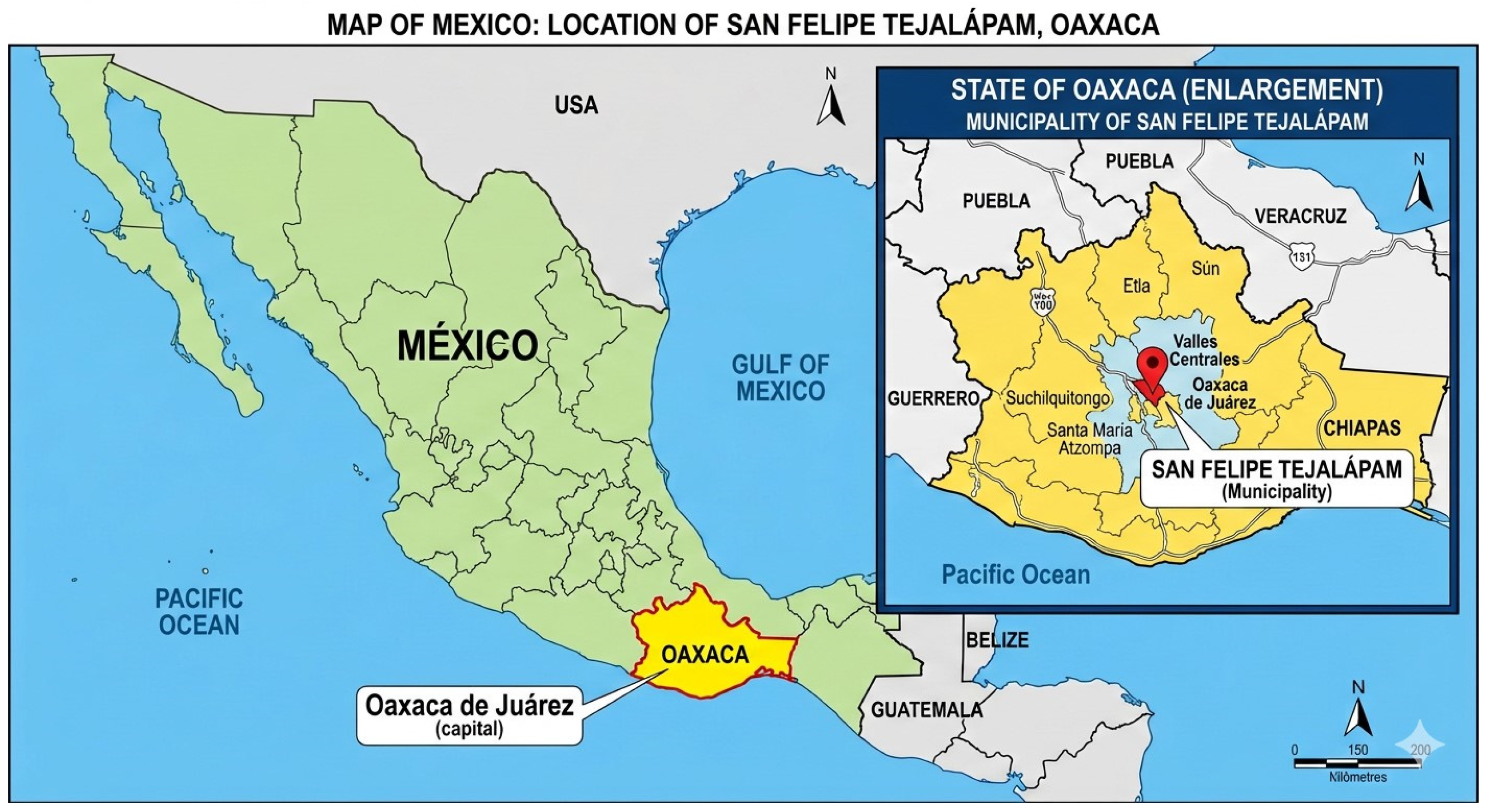
For the selection of the community of San Felipe Tejalápam, Oaxaca, updated 2020 statistical data from the National Institute of Statistics and Geography (INEGI) were used to identify its sociocultural characteristics and the presence of milpa production in the area. The availability of municipal authorities to conduct the study was also considered. San Felipe Tejalápam is located at 17°4′46.2″ N, 96°52′41.16″ W, at an altitude of 1670 m above sea level (Google, n.d.). The population in 2024 was 8231 inhabitants, of which 4291 were women, and 3940 were men [13]. The municipality of San Felipe Tejalápam covers an area of 76.55 square km. The community of San Felipe Tejalapam is located in the southern state of Oaxaca, Mexico (Figure 1).
Figure 1.
Macro and micro location of the study locality, San Felipe Tejapalam, Oaxaca, Mexico. Source: Own elaboration.
The municipality of San Felipe Tejalápam has a Köppen climate type (A)C(wo), classified as a semi-warm sub-humid climate, belonging to group C. The average annual temperature is above 18 °C, the temperature of the coldest month is below 18 °C, and the temperature of the warmest month is above 22 °C. Precipitation in the driest month is less than 40 mm; summer rains have a P/T index below 43.2, and winter rainfall accounts for 5% to 10.2% of the total annual rainfall. A temperate climate prevails in the forested areas of the Jalapa del Valle and La Unión communities, while a semi-warm climate is found in the populated areas. The soil in the valley area of San Felipe Tejalápam is a variable soil type with slow oxidation processes and a coarse texture with rocks, giving the earth a brownish-coffee color. This soil is suitable for agriculture when properly hydrated and fertilized. In the plains, there is a medium-textured soil where native vegetation grows. In the lower mountains, native vegetation is predominantly oak trees in a semi-temperate climate, while in the upper mountains, there is a forest of conifers and broadleaf trees, predominantly pines, in a temperate climate. The soil is classified as follows: Regosol (72.98%), Luvisol (15.83%), Fluvisol (6.64%), Cambisol (3.62%), and Acrisol (0.93%) [13].
2.2. Methodology
The research was conducted in two stages: the first involved collecting quantitative data to identify the habits and consumption frequencies of foods from the milpa (traditional Mesoamerican agricultural system) and from external sources; the second involved obtaining qualitative data through interviews to analyze adults’ perceptions of the importance of the milpa for maintaining food culture. In this investigation, the quantitative and qualitative components were sequential. First, the quantitative part was addressed, and once this stage was completed, the qualitative part (subsample) of the study was carried out. These were integrated into separate sections to facilitate their analysis and understanding.
For sample selection, convenience sampling was used, employing the snowball sampling technique. This was due to the dispersed nature of the population and the specific data required. In this method, at the end of each survey, each participating household was asked to nominate another household for inclusion in the study. These participating households were selected from the three sectors of the community (east, center, and west).
Using a qualitative-descriptive approach, a sample of 50 households was selected. This size is justified by the principle of theoretical saturation [14]. Since the analysis of these cases, the collection of additional data has shown redundancy without contributing significant variability to the findings on consumption practices [15]. This strategy enabled an easily accessible study and ensured depth that prioritizes the richness of the information.
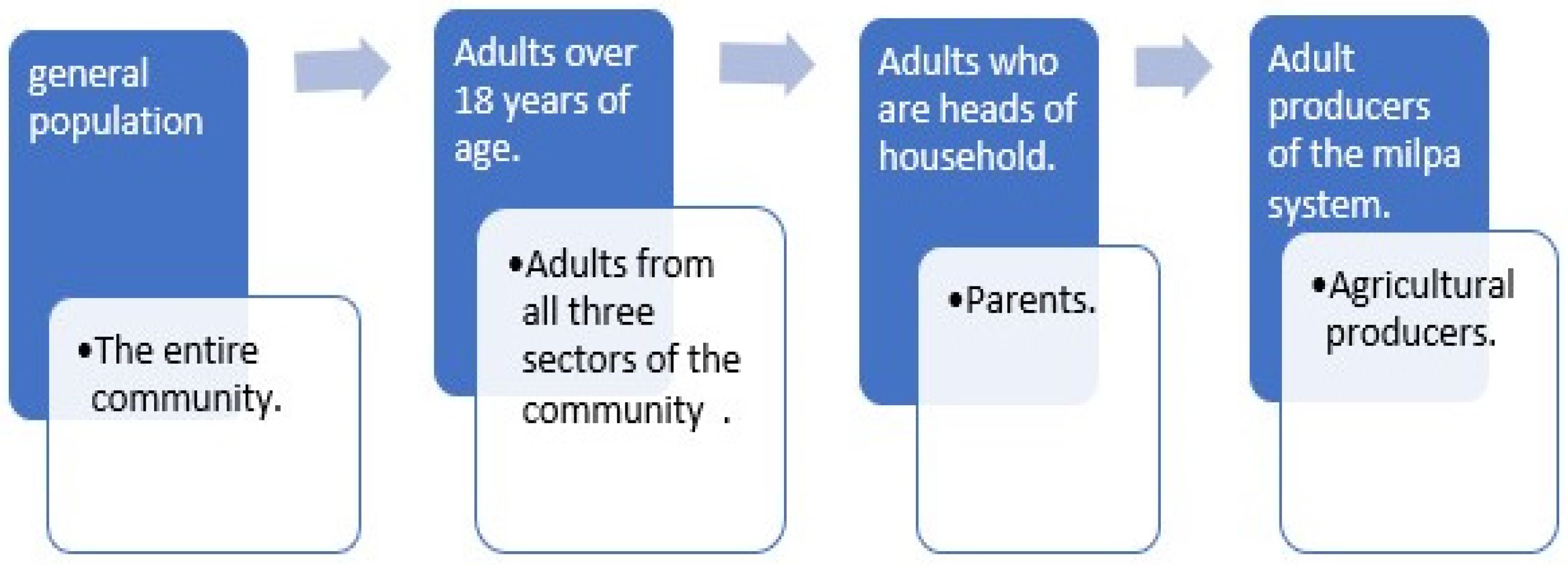
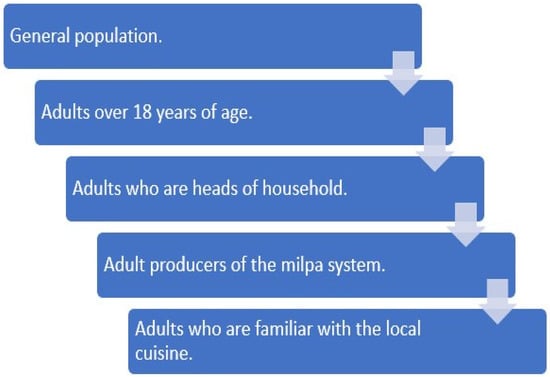
The first participant of the quantitative component, who began with an initial convenience sample from snowball sampling, had to meet the following eligibility criteria: be originally from the municipality, be of legal age, be the head of household, and be a producer of the milpa system. This is exemplified in Figure 2.
Figure 2.
Flowchart of the selection of participants for the quantitative component. Source: Own elaboration.
2.3. Quantitative Component
The selection criteria for interviewees were: belonging to a family group that produces milpa (being that farmer who produces corn, beans, squash and quelites together during the same agricultural cycle, in agricultural extension within the municipality and using the natural rain cycle), living in one of the three representative geographic sectors of the locality, being originally from the area, adults who are familiar with the local cuisine and providing voluntary participation through informed consent. This is shown in Figure 3.
Figure 3.
Flowchart of the selection of participants for the qualitative component. Source: Own elaboration.
2.4. Data Collection Instruments
The fieldwork was conducted during January and February 2024. The authors and nutrition professionals carried out data collection. Two instruments were used: (a) a questionnaire consisting of 247 questions covering the following topics: sociodemographic data, and the production and consumption of foods from the milpa system: corn, beans, squash, quelites (edible wild greens), and grasshoppers. This instrument was validated through a pilot test, (b) a 24-h recall survey [14] this instrument collected information on food intake during the previous 24 h, including the three main meals: breakfast, lunch, and dinner, as well as any snacks and/or foods consumed occasionally throughout the day. A pilot test was conducted on a random subsample of the population using the food frequency questionnaire, which was adapted from the Shamah-Levy instrument, from which the relevant questions for this study were extracted [16].
This instrument was administered only once because the farmers’ multiple responsibilities and long working days in the fields did not allow for its repetition. Electronic images (stored on cell phones) were also used as a visual aid to help them respond appropriately to the data collection instrument.
Informed consent was obtained verbally from each of the farmers who were part of the study, and this was documented on the data collection instrument. The applicator read the instrument to facilitate understanding among all participants.
These instruments were used to estimate total energy consumption and macro- and micronutrient intake. Based on this data, the contents of kilocalories, carbohydrates, proteins, dietary fiber, lipids, cholesterol, retinol (vitamin A), ascorbic acid (vitamin C), vitamin E, calcium, zinc, iron, and potassium of foods from the milpa were calculated, using adult equivalent tables [5] for foods from the milpa and external sources to estimate the real contribution of the milpa system to food self-sufficiency. In the data collection instrument, the foods were already separated into two sections: first, those from the milpa, and second, those not from the milpa, to facilitate their analysis during and after data collection.
Macronutrients were calculated using the percentage distribution of the caloric molecule recommended by the World Health Organization (WHO): protein = 15%, carbohydrates = 55%, fats = 30%, cholesterol = 290 mg, and dietary fiber = 30 g. For vitamins and minerals, the recommendations proposed by the National Academy of Sciences [17] were used.
Subsequently, the adequacy percentages for energy, macronutrients, and micronutrients were calculated by multiplying total consumption by 100 and dividing the result by the Recommended Daily Intake (RDI), according to WHO (2018) guidelines.
Student’s t-tests for independent samples were performed to determine the level of significance (p ≤ 0.05) between macro- and micronutrients from the milpa and external sources, given that the data met the assumptions of normality and homoscedasticity. The analyses were performed using IBM SPSS Statistics version 26.0.
2.5. Methodology of the Qualitative Component
The qualitative component of the research was conducted through semi-structured interviews, audio-recorded with the consent of 12 people from San Felipe Tejalápam: 7 women and 5 men, aged 25 to 62 (Table 1). All participants were involved in corn farming. The snowball sampling technique [18] was used, in which each participant recommended another person with similar characteristics to participate in the study, provided they lived in one of the three sections of the community, thus ensuring sociocultural representativeness.
Table 1.
List of participants in the qualitative analysis.
The inclusion criteria for participation in the interview were, original residents of San Felipe Tejalápam, coverage of all three sectors of the community: east, center, and west, participants were either farmers, adults who are familiar with the local cuisine, and participants agreed to participate voluntarily.
Interviews were conducted using a structured interview guide to collect qualitative field research data. The interviews were audio-only recorded to foster greater trust and openness among the interviewees. Open-ended questions were used to capture highly detailed responses. Each interview lasted between 30 and 60 min.
The selection of appropriate questions stemmed from the instrument’s design, which focused on topics of high interest to the research and reinforced the previously obtained quantitative data, also collected in the field.
A pilot test was conducted with a similar population to ensure the clarity and application of the questions. After revising 4 items, the final version of the interview guide was completed, comprising 20 main open-ended questions and 16 follow-up questions to address ambiguous responses. The final version included the following main items: Part 1: Corn and Culture. Part 2: Transmission of Knowledge. Part 3: Knowledge of the Benefits of the Milpa. Part 4: Uses of the Milpa. Part 5: Problems of the Milpa. Part 6: Projections for the Milpa.
To maintain data confidentiality, the interviews were numbered E1 through E12 according to the chronological order in which they were conducted.
The interview consisted of two thematic axes: (a) the cultural significance of the milpa (considering values and rituals, and the perception of milpa foods, from their health and nutritional attributes) and (b) the particular symbolism of corn, beans, squash, and other crops. Once the 12 interviews were conducted, the audio from each was transcribed to create a written record. These transcriptions were made verbatim, respecting each response’s language, including grammatical and/or phonetic aspects, meanings and signifiers, and the colloquialisms and expressions used by each person.
Subsequently, the first coding of responses was carried out, consisting of carefully examining the data to identify the meaning of the interviewees’ responses and to conceptualize the first important quotes and codes.
During initial coding, 59 codes were generated from 410 direct quotes from each interviewee’s responses. Of these 59 codes, 9 were identified based on the highest frequency of mentions. In the final stage of the process, axial coding was performed, relating the categories and subcategories of the narratives and grouping the resulting attributes and meanings [19].
The qualitative data were analyzed using ATLAS.ti software (Version 25, Scientific Software Development GmbH, Berlin, Germany).
3. Results and Discussion
3.1. Results from the Study Area
According to data from the National Council for the Evaluation of Social Development Policy (CONEVAL) and the 2022 annual report on poverty and social backwardness from the Ministry of Welfare (BIENESTAR), 76.7% of the population of the municipality lived in poverty in 2020, with 46.9% experiencing moderate poverty and 29.8% extreme poverty. Corn and beans are the main crops grown in the municipality. The majority of the land is rainfed, with 1480 hectares dedicated to corn and 75 hectares to black beans. Only 110 hectares of corn and 30 hectares of beans are irrigated, and the majority of the production is for self-consumption.
The 2020 census reported that 12.66% of the population experienced food insecurity, broken down as follows: 662 were categorized as experiencing moderate insecurity (8.42%) and 380 as experiencing severe insecurity (4.83%) [13].
54.9% of the households surveyed have a female head of household. This percentage exceeds the national average of 33%, according to the National Institute of Statistics and Geography (INEGI). The age of the head of household ranged from 23 to 83 years, with an average age of 55 years for all respondents.
60% of the heads of household only completed primary school, and only 3% have a university education. Regarding the most spoken language, Spanish was the most common among the heads of household surveyed (94%), despite the community being predominantly Zapotec. This is because the heads of household reported that their parents no longer taught them to speak Zapotec.
Despite being a community with a high rate of labor migration to the USA, 88% of those interviewed reported having no relatives who had migrated. This contrasts with data from 2024, when the municipality maintained a Very High Migration Intensity level according to the National Population Council, in which more than 35% of its inhabitants had left the community.
3.2. Results of Food Consumption Frequency
The milpa in the municipality consists mainly of corn (white, blue, and red), black beans, and native squash (Guicha and Tamala varieties). It is planted during the rainy season, taking advantage of the annual rainfall cycle. Associated species include quelites, edible weeds such as chepil, quintonil, chepiche, squash vines, and purslane. Grasshoppers can also be obtained from the milpa as an alternative source of animal protein. Most of the milpa is for self-consumption.
Tortillas, tlayudas (a large white corn tortilla (about 30–40 cm in diameter) that is left on the griddle longer than normal until it acquires a semi-toasted, leathery and brittle texture), and tostadas (tortilla that has been subjected to heat (on a griddle or fried) until it loses all its moisture and becomes completely brittle) are consumed 17.5, 8.69, and 2.61 times per week, respectively, collectively representing the highest consumption. Conversely, the corn-derived foods with the lowest consumption are huitlacoche (Edible parasitic fungus (Ustilago maydis) that grows on ears of young corn during the rainy season), esquites (tender corn kernels (maize) boiled or sautéed with garlic, onion, salt and sometimes chili), and elotes, at 0.11, 0.26, and 0.25 times per week, respectively. This is attributed to the time of year the survey was conducted, and to the fact that these products are mainly obtained as ears of corn for tortilla production.
Beans are consumed 4.16 times per week, with beans being the least consumed of all the legumes (0.02). This is higher than the national figures for bean consumption of 2 to 3 times per week on average. Pumpkin seeds are consumed almost once a week (0.84), mainly due to their availability and favorable storage conditions. Epazote (3.03) and hierba santa (1.37) are the quelites (edible wild greens) most consumed weekly due to their daily use in food preparation; this is similar to the national figures for quelites consumption of 2 to 3 times per week on average. In contrast, chilacayota (0.19), huazontle (0.01), hierbamora (0.01), and chapulines (grasshoppers) as an animal protein source from the milpa (0.24) are consumed very little weekly.
Regarding external foods, soft drinks (2.83) are consumed almost 3 times per week, followed by potato chips (1.16). Conversely, frozen foods (meat or fish) (0.03) and margarine (0.06) are consumed very little.
3.3. Results of Macro- and Micronutrient Intake
Based on calculations of macro- and micronutrient intake across the groups, it was found that foods from the milpa (a traditional Mesoamerican agricultural system) provide significant amounts of calories. However, they do not exceed 50%. However, they contribute more than external foods (27.74%) to meeting the recommendations. The milpa foods mentioned in the 24 h dietary recalls were the following: tortillas, tostadas, tlayudas, beans, memelas (a corn tortilla thicker than normal, usually oval or elliptical), atole (a corn-based drink), white cornmeal, chili peppers, and green beans.
Milpa foods are the primary source of carbohydrates in the subjects’ diets (63.72%), while external foods contribute a smaller relative proportion (23.06%).
The milpa foods consumed by the respondents, such as whole corn, beans, and quelites (edible wild greens), are rich in fiber. For this reason, these foods provide more fiber, resulting in a high PA (69.72). However, the external foods consumed did not provide significant amounts of fiber, as they were mostly refined foods (19.11).
Another important finding is that the source of cholesterol primarily came from external foods, such as meats, dairy products, and processed meats (92.32%), whereas the milpa is not of animal origin, which is why it is low in cholesterol (0%).
The milpa foods provided a large amount of calcium (67.67). This is because the nixtamalization process (cooking and soaking the corn in an alkaline solution, such as water with lime or ash) provides calcium, and because some quelites consumed by the adults surveyed, such as purslane, are rich in this mineral. In comparison with external foods, the calcium contribution is lower, since respondents were inconsistent in their consumption of foods not from the milpa, such as dairy products (PA 43.78).
The significant quantities of beans and quelites consumed by the study participants resulted in a higher iron intake (PA 77.22) than that obtained from external sources (PA 21.45). It should be noted that bean consumption is consistent and almost daily among the participants, which explains these high iron intake figures. However, it is important to note that the iron in plant-based foods is non-heme iron (Table 2).
Table 2.
Descriptive statistics of the mean percentage of adequacy values of macro and micronutrients from milpa foods and foods not from the milpa.
Other results showed that foods consumed from the milpa (a traditional Mesoamerican agricultural system) are low in vitamins A and C, potassium, and zinc. This is because there is a lack of variety in participants’ diets; most of the foods they consume are high in simple carbohydrates and refined sugars, such as bread, pasta, soups, and soft drinks. In recent decades, rural communities in Mexico have experienced changes in their traditional diet (food transition), displacing local foods rich in vitamins and minerals with ultra-processed foods high in calories and trans fats.
The majority of calories in the diet come from foods derived from the milpa (traditional Mesoamerican agricultural system), accounting for almost half of the total intake at 70.11%. In contrast, most of the protein consumed comes from foods not derived from the milpa, accounting for 41.62% of total intake at 77.0%.
The results of this study showed that the percentage of nutritional adequacy in kcal from milpa products was 42.35%. This figure is lower than that reported by González et al. [20], who studied the traditional diet of two rural communities, where the average percentage of adequacy in kcal intake was above the 100% requirement established for the age and sex of the inhabitants. Only 27.74% of kcal came from foods outside the milpa.
As for the average protein adequacy from the milpa, it is only 32.08%, meaning that only one-third of the protein consumed in the typical diet comes from the milpa. Most of this protein comes from beans, as protein is the main component of this legume, and corn is one of the three most important macronutrients. This represents lower consumption than that identified by González et al. [20]. In contrast, we found that protein intake is higher from foods not derived from the milpa (traditional Mesoamerican agricultural system), at 41.62%.
The majority of lipids come from foods not derived from the milpa, accounting for 32.75% of total intake and 43.21% of total intake. Carbohydrates are primarily provided by milpa-derived foods, accounting for 63.72% of total intake. The lipid adequacy percentage in the milpa in the community is very low, averaging 10.46%, compared to 32.75% for lipids from foods not produced in the milpa. This is clearly due to the lower fat content of milpa products, especially saturated fats. On the other hand, the milpa provides beneficial unsaturated fats, specifically omega-3 and omega-6 fatty acids. Regarding carbohydrate adequacy in the milpa (traditional Mesoamerican agricultural system), the average is 63.72%, compared to 23.06% in non-milpa foods.
This data can be compared with the findings of González et al. [20], in which total fat and carbohydrates were above the average of 100% of the established requirements for the age and sex of the inhabitants of rural communities. This shows that in our study community, adequacy levels for any macronutrient are not close to 100%, not even when combined across milpa and non-milpa foods.
Fiber is also mainly provided by foods derived from the milpa, accounting for almost 70% of total intake at 88.85%. In this case, the high fiber values are due to the fact that milpa is an important contributor of soluble and insoluble fiber to the diets of rural communities. As for the fiber content of the milpa, it is 69.72%, very close to the average reported by González et al. [20] in their study of two rural communities, which ranged from approximately 75.3% to 84.4%. This indicates that the milpa is an important contributor of soluble and insoluble fiber to our diet, which prevents cholesterol absorption and stimulates its elimination through the bile ducts, thus reducing the risk of cardiovascular disease in the adult and elderly population.
On the other hand, a high fiber content suggests a potential for preventing chronic degenerative diseases, such as diabetes and obesity, which are often associated with low-fiber diets. These findings coincide with the evidence reported by Almaguer-González et al. [21], which highlights the protective role of milpa foods against current diseases.
Cholesterol is provided entirely by foods not derived from the milpa. Cholesterol is found to be zero in foods from the resulting cornfield due to the natural lack of this element in the vegetables. The cholesterol content of the milpa was negligible due to the biological nature of the plants themselves, as all cholesterol was supplied exclusively by foods not derived from the milpa (92.33%).
The contribution of vitamin A is almost equivalent for both foods, not from the milpa and foods from the milpa. Conversely, vitamin C is almost entirely supplied by foods not derived from the milpa (traditional Mesoamerican agricultural system), accounting for 35.89% of the total, which is 38.58%. Although vitamin E consumption is minimal, it is primarily supplied by foods not derived from the milpa.
Calcium intake is one of the few nutrients that exceeds 100% adequacy, as it originates mainly from foods derived from the milpa, reaching 67.68% of the total, which is 111.47%. Iron intake is also higher, thanks to foods derived from the milpa, at 77.22% of the total, which is 98.67%. Zinc intake is also higher for foods derived from the milpa, at 29.32% of the total 51.44%. The potassium levels required are provided mainly by foods, not from the milpa, with 34.76% of a total of 46.21%.
Regarding the percentages of adequate intake of vitamins A and C, potassium, and zinc from the milpa, these are very low. This data is identical to that reported by Gonzáles et al. [20], indicating that a dietary transition is occurring in current rural communities (a shift from local foods of high nutritional value to ultra-processed foods). The contribution of the milpa to the nutritional needs of adult farmers: the results confirm that these foods are still present in the diet of the rural population of San Felipe to cover their needs for energy, carbohydrates, and iron, coinciding with previous studies on the milpa system [22].
Table 3 shows the results with significant differences (p < 0.05) in the adequacy of most nutrients between milpa foods and external foods.
Table 3.
Independent-samples t-test comparing the percentages of adequacy for energy, macro- and micronutrients in foods from the milpa and in external foods (not milpa) (n = 50).
3.4. Results of the Perception on the Importance of the Milpa in the Culture
Regarding the qualitative component, the study sought to identify the elements of the sociocultural context of family production units that influence the production and consumption of products from the milpa system. These qualitative results were categorized into two pre-established themes: (a) The attributes of milpa foods and (b) The cultural significance of the milpa.
The following codes were created according to two pre-established categories: (a) the attributes of milpa foods, and (b) the cultural significance of the milpa (Table 4).
Table 4.
Code with its frequency in each category.
The first part of the code refers to the milpa as the backbone of community identity. Its importance lies in the interconnection between health, the land, and the community. The ingredients of the milpa are the pillars of traditional cuisine and are recognized in the communities as a model of balanced nutrition. In the cultural aspect, the codes mention that corn is the symbolic axis of life. The management of the milpa is a collective science that dictates the rhythm of life for the community, and if the milpa were to disappear, the community’s food self-sufficiency would be at risk.
Participants’ narratives on the following themes: the cultural significance of the milpa and the perception of milpa-grown foods based on their attributes. In each narrative, the farmer directly and literally expresses the importance of the milpa to himself, his family, and his community (Table 5).
Table 5.
Attributes and meaning of the milpa with their qualitative narratives.
First, regarding the attributes of milpa foods, the most important elements present were:
For people, milpa foods have gastronomic properties, are healthy, and are versatile. These attributes are summarized by Harguindeguy [23] when he states that “the peasant imbued with the logic of the milpa system, sees first of all food and the more diverse, the more varied the diet will be: the peasants see food, but also plants with curative and medicinal uses not only in the cultivated plants but in the wild herbs, a term too western, since for traditional peasants there are no herbs in general, they have a name and function” (p. 19).
García Franco [7] also emphasizes the importance of regional food models that incorporate combinations of locally significant foods. These regional food models have gained prestige in recent times. A culturally relevant diet can be transmitted between generations, adapting to new ingredients and incorporating the social relationships that develop around food.
Regarding the cultural significance of the milpa, the most relevant aspects were as follows: corn holds cultural value in traditional food; the milpa is a traditional crop of the locality; knowledge of milpa cultivation and consumption is a communal knowledge; milpa foods provide family sustenance, economic support, and self-sufficiency. This is interpreted as meaning that “under the reproductive logic, what is produced is what will be consumed, what is required to satisfy needs, plus a surplus. Most societies have produced surpluses, the surpluses necessary for conviviality and those demanded by the masters” [23]. It should be noted that cultivation and food were also adversely affected by the loss of milpa due to climate change and a lack of government support.
These meanings are reinforced by what Leyva-Trinidad [10] mentions, that the milpa is a representative example of an agro-cultural system that promotes the rescue and conservation of traditional Mexican foods; likewise, the same author concludes in her study that the traditional milpa system, based on family labor, has provided families with food and nutritional sovereignty and security, as well as multifunctionality of activities and cultural identity.
This study has the following limitations. Its cross-sectional design and sample size do not allow for establishing cause-and-effect relationships; only associations can be established, and it is exploratory in nature. Furthermore, applying a single 24 h recall generally leads to underreporting of consumption among the adult population. Seasonality in this study may have affected the availability of certain milpa foods, making them scarcer. Therefore, we can say that the data on consumption frequency cannot be generalized to other study sites with more stable seasonal conditions. Although this study did not focus on migration, the baseline data obtained can be useful for future research related to migration. Therefore, it is suggested to continue with research on traditional agri-food systems and eating habits in rural communities in Mexico.
4. Conclusions
The milpa (traditional Mesoamerican agricultural system) is nutritionally important for the rural population that practices milpa production, but it is not sufficient on its own. Its strength lies in its contribution of energy, fiber, and iron, but it requires supplementation to cover micronutrients such as vitamins C, E, A, and potassium through specific nutritional supplementation.
External foods (those not from the milpa) are a diverse source of beneficial nutrients, providing important micronutrients not obtained from the milpa. However, some foods present risks, such as high cholesterol and fat levels, suggesting the need for interventions to guide people toward a sustainable diet. Regarding micronutrients, it is worth noting that vitamins A, C, E, as well as zinc and potassium, have very low levels of adequacy. This points to the need to integrate strategies to supplement the diet with other types of healthy foods that are important sources of these vitamins to correct this deficiency, revalue the production of milpa (traditional Mesoamerican agricultural system), diversify nutritious crops, revive the harvesting of quelites (edible wild greens), and strengthen local supply chains to reduce dependence on external and processed foods.
In the sociocultural context, the attributes of milpa foods and their cultural significance were identified. The former gives the milpa gastronomic and nutritional value, making it a staple food for the community. The latter refers to the cultural importance of the milpa, which ranges from its value as a traditional crop and a source of community knowledge to its role as an economic and food source, an organizational function, and an essential component of local agriculture and gastronomy.
Author Contributions
Conceptualization, S.O.D.O. and M.E.P.-F.; methodology, S.O.D.O. and M.E.P.-F.; validation, M.E.P.-F.; formal analysis, S.O.D.O. and M.E.P.-F.; investigation, S.O.D.O. and M.E.P.-F.; resources, M.E.P.-F.; data curation, S.O.D.O. and M.E.P.-F.; writing—original draft preparation, S.O.D.O. and M.E.P.-F.; writing—review and editing S.N.J.C., J.Y.L.-C. and I.M.G.; supervision M.E.P.-F.; project administration, M.E.P.-F. All authors have read and agreed to the published version of the manuscript.
Funding
The Secretary of Science, Humanities, Technology and Innovation (SECIHTI) is grateful for the scholarship for doctoral studies in Sciences in Conservation and Use of Natural Resources at CIIDIR-IPN Oaxaca Unit. The Secretary of Research and Postgraduate Studies (SIP) of the National Polytechnic Institute is also grateful for the funding provided. This study is the product of participation in projects SIP 20240797 and SIP 20250556.
Institutional Review Board Statement
The study did not involve any medical or psychological intervention, experimental manipulation, or the collection of identifiable human data that would require review by an ethics committee. All procedures complied with the ethical standards of the institutional and national research committees and with the Declaration of Helsinki.
Informed Consent Statement
Informed consent was obtained from participants before data collection; participation was voluntary, and the study was conducted within the community’s usual activities. No personal, biometric, or sensitive information was collected.
Data Availability Statement
The data presented in this study are available on request from the corresponding author.
Acknowledgments
To the Secretariat of Science, Humanities, Technology and Innovation (SECIHTI) for the scholarship for doctoral studies in Sciences in Conservation and Use of Natural Resources at CIIDIR-IPN Oaxaca Unit. To the Secretariat of Research and Postgraduate Studies (SIP) of the National Polytechnic Institute for the funding provided. To the corn producers and the general population of the community of San Felipe Tejalapa, Etla, Oaxaca for their time and shared knowledge. During the preparation of this manuscript the authors used ATLAS.ti software (version 25) for the analysis of the qualitative data. The authors have reviewed and edited the output and take full responsibility for the content of this publication.
Conflicts of Interest
The authors declare no conflicts of interest.
Abbreviations
The following abbreviations are used in this manuscript:
| PM | Coming from the cornfield |
| NPM | Not from the cornfield |
| PA | Percentage of adequacy |
References
- CONABIO. La Milpa; National Commission for the Knowledge and Use of Biodiversity: Mexico City, Mexico, 2016. [Google Scholar]
- FAO. The State of Food Security and Nutrition in the World 2022: Adapting Food and Agricultural Policies to Make Healthy Diets More Affordable; FAO: Rome, Italy, 2022. [Google Scholar]
- González, A.Y. Milpa and food security: The case de San Pedro El Alto, México. Rev. Cienc. Soc. 2018, 2, 24–36. [Google Scholar] [CrossRef] [Scilit]
- Pérez-Vázquez, D.L.-T. The role of the milpa in food and nutritional security in households of Ocotal Texizapan, Veracruz, México. Polibotánica 2020, 49, 279–299. [Google Scholar]
- Lizaur, A.B.P.; Laborde, L.M.; González, B.P. Sistema mexicano de alimentos equivalentes; Fomento de Nutrición y Salud: Ciudad de Mexico, Mexico, 2014. [Google Scholar]
- De Oca, E.R. La Milpa Amatleca Como Estrategia de Vida; Universidad Autónoma del Estado de Morelos: Morelos, Mexico, 2017. [Google Scholar]
- García-Franco, A.; Gómez-Galindo, A.A. La milpa y la alimentación en México. Educ. Quím. 2023, 34, 108–116. [Google Scholar] [CrossRef] [Scilit]
- Boege, E. The milpa system and the biocultural heritage of indigenous peoples and comparable peasant communities in Mexico. In The Milpa System and the Biocultural Heritage of Indigenous Peoples and Peasant Communities; Domínguez, C.M., Ed.; Secretaría de Cultura INAH, Edo de México: Mexico City, Mexico, 2022. [Google Scholar]
- Duarte Reyes, R. Saberes Mazatecos Naxi’í y Autosuficiencia Alimentaria Campesina en San Jerónimo Tecóatl, Oaxaca; UAM-Xochimilco: Mexico City, Mexico, 2022. [Google Scholar]
- Leyva Trinidad, D.A.; Pérez Vázquez, A. Loss of culinary roots due to the transformation in food culture. Rev. Mex. Cienc. Agríc. 2015, 6, 867–881. [Google Scholar]
- Popkin, B. An overview on the nutrition transition and its health: The Bellagio meeting. Public Health Nutr. 2002, 5, 93–103. [Google Scholar] [PubMed]
- Moreno-Altamirano, L.; Hernández-Montoya, D.; Silberman, M.; Capraro, S.; García-García, J.J.; Soto-Estrada, G.; Sandoval-Bosh, E. La transición alimentaria y la doble carga de malnutrición: Cambios en los patrones alimentarios de 1961 a 2009 en el contexto socioeconómico méxicano. Arch. Lat. Nut. 2014, 64, 231–240. [Google Scholar]
- Ayuntamiento, H. Municipal Development Plan. Oaxaca, Mexico, 2022. Available online: https://sisplade.oaxaca.gob.mx/bm_sim_services/PlanesMunicipales/2020_2022_/340.pdf (accessed on 15 July 2025).
- Glaser, B.G.; Strauss, A.L. The Discovery of Grounded Theory: Strategies for Qualitative Research. Int. J. Qual. Methods 1967, 5, 227–228. [Google Scholar]
- Guest, G.; Bunce, A.; Johnson, L. How many interviews are enough? An experiment with data saturation and variability. Field Methods 2006, 18, 59–82. [Google Scholar] [CrossRef] [Scilit]
- Shamah-Levy, T.; Villalpando, S. Procedures Manual for Nutrition Projects; Instituto Nacional de Salud Pública: Cuernavaca, Mexico, 2006. [Google Scholar]
- Institute of Medicine (US) Subcommittee on Interpretation and Uses of Dietary Reference Intakes; Institute of Medicine (US) Standing Committee on the Scientific Evaluation of Dietary Reference Intakes. DRI Dietary Reference Intakes: Applications in Dietary Assessment; National Academies Press: Washington, DC, USA, 2020. [Google Scholar]
- Castro, A.B.S.; Blanco, C.M.C. Sampling in qualitative research. Nure Investig. 2007, 27, 111111. [Google Scholar]
- San Martín Cantero, D. Teoría fundamentada y Atlas.ti: Recursos metodológicos. Rev. Elect. Inv. Educ. 2014, 16, 103–122. [Google Scholar]
- Ibáñez, L.G.; Sanchez, J.S.; Bonilla, A.G.; Carrera, D.M.; Lopez, A.M.; Villalvazo, I.T.; Alvarez, M.E.M. Evaluation of nutritional status and diet quality in two rural communities, Puebla, Mexico. Nutr. Clin. Diet. Hosp. 2021, 41, 30–38. [Google Scholar]
- Almaguer-González, J.A.; García-Ramírez, H.J.; Vargas-Vite, V.; Padilla-Mirazo, M. Strengthening Health with Food, Exercise and Good Humor: The Milpa Diet, a Model of Healthy and Culturally Relevant Mesoamerican Eating; Secretaría de Salud: Mexico City, Mexico, 2017. [Google Scholar]
- Falkowski, T.B.; Chankin, A.; Diemont, S.A.W.; Pedian, R.W. More than just corn and calories: A comprehensive assessment of the performance and nutritional content of a traditional milpa maya lacandona. Food Secur. 2019, 11, 389–404. [Google Scholar] [CrossRef] [Scilit]
- Harguindeguy, L.C. The milpa as a sustainable alternative oriented towards good living. Scr. Ethnol. 2021, 43, 9–36. [Google Scholar]

Disclaimer/Publisher’s Note: The statements, opinions and data contained in all publications are solely those of the individual author(s) and contributor(s) and not of MDPI and/or the editor(s). MDPI and/or the editor(s) disclaim responsibility for any injury to people or property resulting from any ideas, methods, instructions or products referred to in the content. |
© 2026 by the authors. Licensee MDPI, Basel, Switzerland. This article is an open access article distributed under the terms and conditions of the Creative Commons Attribution (CC BY) license.