


Abstract
The rapid proliferation of generative artificial intelligence (AI) has intensified concerns regarding misinformation, identity fraud, privacy, and public trust in AI governance. This study examines the associations among perceived exposure to AI-generated manipulation, fear of AI fraud, privacy protection behavior, and trust in AI governance. Informed by Protection Motivation Theory, a theoretically specified sequential model of associations among Exposure to AI Manipulation, Fear of AI Fraud, Privacy Protection Behavior, and Trust in AI Governance was evaluated. Data were collected from 2683 respondents across ten countries using Prolific. The measurement model was assessed through exploratory and confirmatory factor analyses, while the proposed associations were examined using covariance-based structural equation modeling and bootstrap analysis of specific indirect associations. Perceived exposure to AI manipulation was positively associated with fear of AI fraud, which was positively associated with privacy protection behavior. Privacy protection behavior was positively associated with trust in AI governance. However, exposure was not directly associated with privacy protection behavior or trust, while fear was not directly associated with trust. Significant specific indirect and sequential indirect associations were identified within the specified model and should be interpreted as model-dependent statistical associations. Interpreted through the lens of Protection Motivation Theory, the findings identify a theoretically consistent pattern of associations among perceived technological exposure, AI-related fear, privacy-protective behavior, and institutional trust. Because the data are cross-sectional, these associations do not establish temporal or causal ordering among the constructs.
1. Introduction
Generative artificial intelligence has rapidly transformed digital communication, enabling the creation of highly realistic synthetic text, images, audio, and video that increasingly blur the boundary between authentic and fabricated information [1,2,3]. As deepfakes and other forms of AI-generated manipulation become more accessible, ordinary users may find it increasingly difficult to determine whether the digital content they encounter is genuine, altered, or entirely AI-generated. This uncertainty creates growing challenges related to misinformation, identity fraud, privacy violations, and declining trust in digital information ecosystems [4,5]. AI-generated manipulation should therefore be understood not only as a technological problem but also as a broader societal and governance challenge concerning how individuals recognize digital risks, protect themselves, and maintain confidence in institutions responsible for governing AI [6].
The ability to fabricate convincing digital content threatens not only personal privacy and cybersecurity but also broader societal values, including public trust, democratic legitimacy, and institutional credibility [7,8]. As individuals become increasingly exposed to manipulated digital content, they are required to evaluate the authenticity of online information while simultaneously adapting their behaviors to minimize potential risks [9,10,11]. In this context, digital literacy becomes particularly important because individuals need not only access to digital technologies but also the ability to critically assess AI-generated content, recognize potential manipulation, and make informed decisions about the protection of their personal information. This growing policy relevance is also reflected in recent European Union regulatory developments, including the Digital Omnibus on AI, which reinforces the role of AI literacy within the evolving European framework for trustworthy and human-centered AI governance [12]. Consequently, understanding how people perceive and psychologically respond to AI-generated manipulation has become an important research priority for both scholars and policymakers seeking to develop effective AI governance frameworks [13,14].
Although considerable attention has been devoted to AI ethics [11,15,16], algorithmic transparency [17,18], misinformation [19,20], and institutional regulation [21,22], considerably less is known about how perceived encounters with potentially manipulated AI-generated content are associated with individual risk perceptions, privacy-protective behavior, and trust in AI governance. In particular, it remains unclear whether perceived exposure to such content is associated with fear of AI-enabled fraud, whether fear of AI fraud is associated with stronger privacy protection behavior, and how these constructs are jointly associated with trust in AI governance. Existing studies largely examine technological, ethical, or regulatory aspects of AI-generated content separately, leaving the relationships among these psychological, behavioral, and institutional dimensions insufficiently connected. This represents an important gap because effective AI governance depends not only on regulatory and technological safeguards but also on how individuals perceive risks and respond to them. Against this background, the present study addresses the following research question: How are perceived exposure to AI-generated manipulation, fear of AI fraud, privacy protection behavior, and trust in AI governance associated within a theoretically specified sequential framework?
To address this research gap, the present study develops and empirically evaluates a theoretically specified sequential model of associations among Exposure to AI Manipulation, Fear of AI Fraud, Privacy Protection Behavior, and Trust in AI Governance. Informed by Protection Motivation Theory [23,24], the proposed framework specifies Fear of AI Fraud and Privacy Protection Behavior as sequentially positioned correlates between perceived Exposure to AI Manipulation and Trust in AI Governance. Specifically, the framework evaluates whether greater perceived exposure is associated with stronger Fear of AI Fraud, whether Fear of AI Fraud is associated with greater Privacy Protection Behavior, and whether Privacy Protection Behavior is associated with higher Trust in AI Governance. Unlike previous studies that primarily examine individual relationships between AI exposure and behavioral outcomes [25,26], the present study evaluates these direct and specific indirect associations within an integrated structural framework. The proposed ordering is theoretically specified and should not be interpreted as establishing temporal or causal precedence among the constructs.
The study makes three principal contributions to the literature. First, it draws on Protection Motivation Theory to examine Fear of AI Fraud as a psychological correlate of both perceived technological exposure and privacy-protective behavior in the context of AI-generated deception. Second, it contributes to research on AI governance and institutional trust by examining how Privacy Protection Behavior is associated with both AI-related risk perceptions and confidence in governance institutions within the specified model. Third, the study provides a methodological contribution by evaluating both direct and specific sequential indirect associations within an integrated structural framework, thereby enabling a more comprehensive assessment of the model-dependent pattern of relationships among the focal constructs.
The remainder of the paper is organized as follows. Section 2 reviews the relevant literature and develops the research hypotheses. Section 3 describes the research methodology, data collection procedures, and analytical approach. Section 4 presents the empirical results, while Section 5 discusses the theoretical and practical implications of the findings. The final section concludes the paper by outlining its principal contributions, limitations, and directions for future research.
2. Literature Review and Hypothesis Development
2.1. AI Manipulation and Fear of AI Fraud
The rapid development of generative artificial intelligence has fundamentally transformed the digital information environment [27]. Recent advances in large language models, image generation, voice cloning, and deepfake technologies have substantially increased the volume of synthetic content circulating across digital platforms, making it increasingly difficult for individuals to distinguish authentic information from AI-generated manipulation [4,5]. While these technologies provide significant opportunities for innovation, they simultaneously introduce new societal risks by facilitating misinformation, identity impersonation, financial fraud, and malicious deception [7,8]. Perceived exposure to AI-generated manipulation has therefore emerged as an important correlate of perceived technological risk. According to risk perception theory [28,29], individuals evaluate emerging technologies not only according to their objective characteristics but also through subjective assessments of uncertainty, vulnerability, and potential harm [28]. Greater perceived exposure to synthetic media may be associated with greater awareness of the possibility that digital content is fabricated, manipulated, or intentionally deceptive. Such awareness may also be associated with perceptions of personal vulnerability and stronger concerns about becoming a victim of AI-enabled fraud.
Protection Motivation Theory (PMT) provides a useful theoretical perspective for interpreting the proposed association [23,24]. PMT conceptualizes responses to threatening information through threat and coping appraisal processes, including evaluations of threat severity and vulnerability as well as the perceived efficacy and costs of protective responses [30,31]. In the present context, PMT therefore provides a conceptual basis for examining the association between perceived exposure to AI-generated manipulation and fear of AI-related fraud. Within AI environments, greater perceived exposure to manipulated images, videos, and synthetic media may heighten perceived vulnerability to digital deception and fraudulent AI-generated content, potentially contributing to greater Fear of AI Fraud [32,33]. Recent studies similarly suggest that the growing realism of AI-generated content is associated with lower confidence in digital authenticity and greater public concern regarding malicious AI applications [4,7]. Accordingly, greater perceived difficulty in distinguishing synthetic from authentic content may be associated with stronger perceived risks of deception and fraudulent activities. On this basis, the following hypothesis is proposed:
H1.
Exposure to AI Manipulation is positively associated with Fear of AI Fraud.
2.2. Fear of AI Fraud, Privacy Protection Behavior, and Trust in AI Governance
Fear represents one of the most immediate psychological responses to perceived technological threats [34,35]. Within digital environments increasingly characterized by AI-generated manipulation, concerns about identity theft, financial fraud, impersonation, and deceptive content have become increasingly relevant to understanding individuals’ protective behaviors [36,37]. Rather than representing merely a negative emotional response, fear may also be associated with adaptive behavioral responses related to the management of perceived vulnerability [24,36]. Protection Motivation Theory (PMT) provides a theoretical perspective for understanding protective responses to perceived threats through threat and coping appraisal processes [23,24]. In the present context, PMT therefore provides a conceptual basis for examining the association between Fear of AI Fraud and privacy-protective behavior.
Greater awareness of risks associated with AI-generated fraud may be associated with stronger engagement in behaviors aimed at minimizing potential harm, including restricting personal information sharing, adjusting privacy settings, verifying digital sources, and exercising greater caution when interacting with online content [38,39,40,41]. Similar conclusions have been reported in studies examining privacy protection and online security behavior, which consistently demonstrate that perceived digital risks are associated with stronger self-protective practices [42,43].
Although perceived exposure to AI-generated manipulation may also be directly associated with privacy protection, previous research suggests that technological exposure alone may not necessarily correspond to differences in privacy-protective behavior. Individuals may encounter manipulated or misleading online content without reporting substantially different digital behaviors, suggesting that emotional perceptions of risk may represent an important correlate of protective responses [24,28]. Nevertheless, greater perceived exposure may be associated with greater awareness of AI-related threats, providing a theoretical basis for examining a direct association between Exposure to AI Manipulation and Privacy Protection Behavior. Accordingly, the following hypotheses are proposed:
H2.
Exposure to AI Manipulation is positively associated with Privacy Protection Behavior.
H3.
Fear of AI Fraud is positively associated with Privacy Protection Behavior.
Beyond its relevance to individual behavior, AI-generated manipulation also raises broader questions regarding public confidence in institutions responsible for regulating artificial intelligence [44]. Institutional trust has traditionally been understood as individuals’ willingness to rely on institutions perceived as competent, ethical, and capable of managing societal risks [45,46]. In the context of AI governance, citizens increasingly expect governments, regulatory agencies, and legal systems to establish safeguards against AI-enabled fraud, misinformation, and privacy violations [5].
Fear of AI-generated fraud may be associated with evaluations of institutional capacity because individuals who perceive greater technological risks may also pay greater attention to the ability of governance institutions and legal mechanisms to address those risks [47,48]. The proposed association between Privacy Protection Behavior and Trust in AI Governance can be understood in terms of the complementary roles of individual and institutional responses to digital risk. Individuals who actively engage in privacy protection may be more attentive to the legal safeguards, institutional responses, and governance mechanisms intended to protect citizens from AI-related risks [49,50,51]. Privacy calculus theory further suggests that individuals evaluate risks alongside available protective mechanisms when managing personal information online [43,52]. From this perspective, personal privacy practices are not assumed to produce institutional trust; rather, stronger engagement with privacy and risk management may coexist with greater recognition of and confidence in institutional mechanisms that support such protection. A positive association between Privacy Protection Behavior and Trust in AI Governance is therefore theoretically plausible.
Conversely, greater perceived exposure to AI-generated manipulation may be associated with lower institutional trust if encounters with synthetic deception coincide with perceptions that existing governance mechanisms are insufficiently effective in addressing AI-related risks. Greater perceived exposure to manipulated content may therefore be associated with lower confidence in institutional capacity to protect citizens from emerging digital threats. Accordingly, the following hypotheses are proposed:
H4.
Fear of AI Fraud is positively associated with Trust in AI Governance.
H5.
Privacy Protection Behavior is positively associated with Trust in AI Governance.
H6.
Exposure to AI Manipulation is negatively associated with Trust in AI Governance.
2.3. Proposed Specific Indirect Associations
While previous studies have predominantly examined associations between technological exposure and privacy concerns, trust, or behavioral intentions, considerably less attention has been devoted to the psychological and behavioral factors that may characterize these relationships. Informed by Protection Motivation Theory [24], the present study examines Fear of AI Fraud and Privacy Protection Behavior as theoretically relevant psychological and behavioral correlates within the proposed pattern of associations between perceived Exposure to AI Manipulation and Trust in AI Governance. From this perspective, perceived exposure to AI-generated manipulation may be associated with heightened concern about fraud-related risks [53,54], while stronger fear of such risks may be associated with greater engagement in privacy-protective practices, including limiting personal information disclosure, strengthening privacy settings, and critically evaluating online content [55,56]. PMT therefore provides a theoretical lens for understanding the proposed associations between perceived technological risk, fear, and protective behavior.
The framework is also conceptually informed by the Extended Parallel Process Model (EPPM) [57], which distinguishes between fear-control and danger-control responses to perceived threats. Within the present framework, EPPM provides a complementary theoretical perspective on protective responses to perceived technological threats [58,59], with Privacy Protection Behavior conceptualized as a protective behavioral correlate. The proposed association between Privacy Protection Behavior and Trust in AI Governance is grounded in the complementary roles of individual and institutional responses to digital risk. Individuals who engage more actively in privacy protection may also be more attentive to the legal safeguards, institutional responses, and governance mechanisms intended to address AI-related risks. Personal privacy practices are therefore not assumed to produce institutional trust; rather, stronger engagement with privacy and risk management may be associated with greater recognition of and confidence in institutional mechanisms that support such protection. On this basis, the theoretically specified model examines Privacy Protection Behavior as an intermediate construct within the proposed pattern of associations between AI-related risk perceptions and Trust in AI Governance, without assuming that the cross-sectional data establish temporal precedence among these constructs. The resulting specific indirect associations are therefore interpreted as model-dependent statistical associations consistent with the theory-informed specification, rather than as evidence of temporal or causal processes. Accordingly, the following hypotheses concerning specific indirect associations are proposed:
H7.
Exposure to AI Manipulation has a positive specific indirect association with Privacy Protection Behavior through Fear of AI Fraud within the theoretically specified model.
H8.
Fear of AI Fraud has a positive specific indirect association with Trust in AI Governance through Privacy Protection Behavior within the theoretically specified model.
H9.
Exposure to AI Manipulation has a positive specific sequential indirect association with Trust in AI Governance through Fear of AI Fraud and Privacy Protection Behavior within the theoretically specified model.
The theoretical relationships proposed in this study are summarized in Figure 1, which presents the conceptual framework and the corresponding research hypotheses. Collectively, these hypotheses specify a theoretically proposed pattern of direct and indirect associations linking perceived Exposure to AI Manipulation, Fear of AI Fraud, Privacy Protection Behavior, and Trust in AI Governance.
Figure 1.
Proposed conceptual framework and research hypotheses.
3. Materials and Methods
Data were collected via the Prolific online research platform [60,61] between January and June 2026. Recruitment was open to eligible Prolific participants from ten purposively selected countries: the United States, United Kingdom, Australia, Canada, Germany, the Netherlands, France, Spain, Italy, and Ireland. These countries were selected to ensure geographical diversity while maintaining relatively comparable levels of technological development and digitalization, which was particularly relevant to the study of AI-generated content, online fraud, privacy-protective behavior, and trust in AI governance. The study was not designed to produce nationally representative estimates or country-level comparisons, and no predetermined country quotas were imposed. Consequently, the relative size of each national subsample reflects differential participation within the eligible Prolific participant pools rather than proportional representation of the respective national populations.
The questionnaire was administered in English across all ten countries. English fluency was included as a Prolific prescreening criterion, ensuring that only participants who had indicated fluency in English were eligible to participate. A single English-language version was used to maintain identical item wording across the pooled multinational sample and to avoid potential measurement variation introduced by multiple translated versions. Participants received compensation in accordance with Prolific’s standard payment requirements applicable at the time of data collection. Each participant was identified through a unique Prolific participant ID and was permitted to submit only one response, thereby preventing duplicate participation at the platform level. Prolific has been widely recognized as a reliable source of high-quality and diverse participant samples for behavioral and social science research.
To ensure the quality and relevance of the sample, respondents were required to meet three screening criteria: (1) daily Internet use, (2) prior awareness of artificial intelligence (AI), and (3) active use of at least one social media platform. An embedded attention-check item instructed respondents to select “Agree” in response to a designated statement. All respondents who completed the questionnaire passed this attention check. A total of 123 responses were excluded: 41 respondents did not satisfy the screening criteria, while 82 respondents did not complete the questionnaire. Consequently, the final analytical sample consisted of 2683 participants. Because incomplete questionnaires were removed during the screening process, no missing data remained in the final dataset.
Respondents completed the questionnaire in an average of 14.3 min, with a median completion time of 13.8 min, suggesting a satisfactory level of engagement with the survey instrument.
Overall, the sample included respondents across all reported gender, age, education, employment, and digital-engagement categories, although its composition was characterized by relatively high levels of education and digital engagement. Gender representation was nearly balanced, with 1360 females (50.7%) and 1323 males (49.3%). Age distribution covered all adult age groups, although younger and middle-aged respondents predominated. Participants aged 25–34 years represented the largest cohort (29.1%), followed by those aged 35–44 years (20.9%) and 18–24 years (19.2%). Respondents aged 45–54 years accounted for 14.6%, while 10.7% were between 55 and 64 years, and 5.5% were aged 65 years or older. Consequently, nearly seventy percent of the sample consisted of individuals younger than 45 years, representing the demographic segment most exposed to digital technologies and AI-enabled online environments.
The educational profile indicated a highly educated sample. The largest proportion held a Bachelor’s degree (31.4%), followed by a Master’s degree (22.9%), while 20.4% had completed high school education. Smaller proportions reported a college diploma (14.5%), doctoral degree (6.7%), or another educational background (4.1%). Overall, more than 60% of respondents possessed at least a bachelor’s degree, indicating that the sample was relatively highly educated. Employment status further reflected a socioeconomically active population. A majority were employed full-time (58.0%), while 10.2% were self-employed and 8.0% worked part-time. Students accounted for 8.5%, unemployed respondents for 7.1%, retirees for 5.0%, and other employment categories represented 3.2% of the sample. This distribution indicates that most participants routinely interact with digital technologies in professional or educational settings.
The resulting pooled multinational sample comprised participants from all ten selected countries. Country-level comparisons were not part of the original study design, and the national groups were therefore not initially treated as separate analytical groups. The largest share originated from the United States (30.5%), followed by the United Kingdom (19.9%), Australia (9.9%), Canada (9.1%), and Germany (9.1%). Additional participants came from the Netherlands (6.1%), France (4.6%), Spain (4.0%), Italy (3.8%), and Ireland (3.1%). Because no country-specific quotas were applied, these proportions should not be interpreted as reflecting the population distribution of the participating countries. Regarding residential context, 67.4% of respondents lived in urban areas, 19.7% in suburban environments, and 12.9% in rural communities. The predominance of urban residents is consistent with previous research showing higher exposure to digital infrastructure, AI-based services, and social media ecosystems within metropolitan regions.
Digital engagement was particularly high. Daily internet use exceeded six hours for 62.8% of participants, including 36.5% who reported using the internet between 6 and 8 h daily and 26.3% who spent more than eight hours online each day. Only 9.3% reported spending less than three hours online daily. These findings confirm that the respondents represent an intensely connected digital population regularly exposed to online information environments where AI-generated and manipulated content is increasingly prevalent.
Similarly, social media engagement was substantial. More than 72% reported using social media often (40.4%) or very often (32.1%), whereas only 8.7% indicated rare or no social media use. The most frequently used platform was YouTube (26.7%), followed by Instagram (21.7%), Facebook (19.4%), and TikTok (18.7%), while LinkedIn (5.3%), Reddit (4.2%), and other platforms (4.0%) represented smaller shares. This distribution suggests exposure to a wide variety of algorithmically curated content environments in which AI-generated media can rapidly disseminate. Respondents also reported substantial familiarity with artificial intelligence. Nearly 59% indicated using AI weekly (28.7%) or daily (29.9%), while 23.4% reported monthly use. Only 18.0% used AI rarely or never. Such widespread adoption indicates that participants possessed sufficient experience with AI technologies to provide informed evaluations of AI-generated misinformation and privacy-related risks. Experience with deepfakes was also widespread. A majority (60.8%) reported having encountered deepfake content, while 25.0% were uncertain whether they had seen one and only 14.2% indicated that they had never encountered such material. These findings highlight both the increasing prevalence of AI-generated synthetic media and the continuing difficulty many individuals experience in recognizing manipulated digital content.
Exposure to cybercrime was similarly common. More than one-third of respondents (36.7%) reported having been targeted by an online scam, whereas 49.3% had not experienced such attacks and 14.0% were uncertain. This substantial prevalence of scam exposure provides additional justification for examining trust, perceived authenticity, and privacy concerns in contemporary digital ecosystems. Finally, respondents generally expressed moderate to high confidence in their own ability to identify manipulated online content. Approximately 49.9% rated their ability as high (34.5%) or very high (15.4%), while 32.7% selected a moderate level and 17.4% reported low or very low confidence. Although self-perceived detection ability appears relatively strong, previous research suggests that subjective confidence frequently exceeds actual detection accuracy, particularly when evaluating sophisticated AI-generated deepfakes. Consequently, this discrepancy further underscores the relevance of investigating how perceptions of AI manipulation influence trust, privacy concerns, and behavioral intentions.
Overall, the demographic profile indicates that the sample consists primarily of digitally active, highly educated adults with considerable exposure to AI technologies, social media platforms, and manipulated online content. These characteristics make the sample particularly appropriate for examining the mechanisms through which artificial intelligence, deepfakes, and privacy concerns contribute to the contemporary crisis of digital trust.
3.1. Instrument Development, Content Validation, and Scale Purification
The survey instrument was developed following an extensive review of the literature on artificial intelligence, deepfakes, online misinformation, privacy protection, institutional trust, and responsible AI governance. Rather than adopting a single existing measurement scale, the questionnaire was designed by integrating concepts and item formulations derived from established theoretical and empirical research on AI-generated manipulation and authenticity uncertainty, protection motivation and AI-related fraud concerns, privacy-protective behavior, institutional trust, and responsible AI governance [4,7,23,24,38,41,42,43,44,45,46,47,48,52,53,55]. The conceptual literature informing each questionnaire item is mapped individually in Appendix A (Table A1). The initial instrument comprised 30 items measuring six conceptual domains associated with AI-generated manipulation, perceived authenticity uncertainty, fear of AI fraud, privacy protection behavior, institutional trust, and responsible AI use. All items were assessed using a five-point Likert scale ranging from 1 (strongly disagree) to 5 (strongly agree). The complete questionnaire is presented in Appendix A (Table A1).
Prior to data collection, the initial questionnaire was independently reviewed by five experts with relevant academic expertise in the study domain. The experts evaluated the items for conceptual relevance, clarity, wording, and correspondence with the intended constructs. Their feedback was used to refine the wording and content of the questionnaire before its administration through Prolific.
To minimize capitalization on chance and provide independent validation of the measurement model, the final sample was randomly divided into two approximately equal subsamples using the random-sampling procedure in IBM SPSS Statistics 29. Exploratory factor analysis (EFA) using Maximum Likelihood extraction with Direct Oblimin rotation was performed on the first subsample (n = 1349), whereas the second subsample (n = 1334) was reserved for confirmatory factor analysis (CFA) and structural equation modeling (SEM). Following established recommendations for scale purification, items exhibiting weak factor loadings, substantial cross-loadings, or limited conceptual consistency with the emerging factor structure were removed in an iterative process [62,63,64]. The initial EFA-based purification resulted in the exclusion of six items (Authenticity Doubt, Trust Uncertainty, Reality Uncertainty, Responsible Development, Developer Accountability, and Regulatory Support), yielding a 24-item, four-factor solution comprising Exposure to AI Manipulation, Fear of AI Fraud, Privacy Protection Behavior, and Trust in AI Governance. The retained items were subsequently reassessed for content validity to ensure conceptual correspondence between each indicator and its intended construct and to minimize potential overlap between antecedents and outcomes.
This assessment resulted in the removal of the Privacy Protection item (“Concerns about AI have made me more protective of my privacy”), because its wording explicitly incorporated AI-related concern into the behavioral outcome. Three additional items were removed from Trust in AI Governance: Government Regulation (“Governments should play a stronger role in regulating AI technologies”), Ethical Standards (“Strong ethical standards are necessary for AI development”), and Algorithm Transparency (“AI systems should be transparent about generated content”). These items reflected normative preferences regarding AI regulation, ethical standards, and transparency rather than confidence in the competence and effectiveness of governance institutions.
The resulting 20-item measurement model therefore comprised seven indicators of Exposure to AI Manipulation, five indicators of Fear of AI Fraud, four indicators of Privacy Protection Behavior, and four indicators of Trust in AI Governance. Exposure to AI Manipulation should be interpreted as perceived exposure to an AI-manipulated information environment rather than as a measure of exposure frequency alone. Its retained indicators capture both reported encounters with AI-generated content and respondents’ perceived difficulty in evaluating the authenticity of such content, including perceived realism, skepticism, and confusion between authentic and fabricated information. Fear of AI Fraud, by contrast, captures affective concern about fraud, scams, impersonation, deception, and identity theft. Privacy Protection Behavior is behaviorally framed and comprises greater caution in sharing personal information, adjustment of privacy settings, avoidance of posting sensitive information, and verification of websites or platforms before providing personal data. Accordingly, the retained Identity Theft Concern item was treated as an indicator of Fear of AI Fraud rather than privacy-protective behavior, whereas Sensitive Information Avoidance and Source Verification were retained as behavioral indicators of Privacy Protection Behavior. This refined four-factor measurement structure was subsequently evaluated through CFA using the independent validation subsample (n = 1334).
3.2. Statistical Analyses
The data were analyzed using a series of complementary statistical procedures. Potential common-method variance was examined using Harman’s single-factor test and a full collinearity assessment based on variance inflation factors (VIFs), with values below 3.3 used as the reference criterion. These procedures were treated as diagnostic assessments rather than as tests capable of ruling out same-source bias. The full collinearity results are reported in Appendix B (Table A2). The suitability of the data for factor analysis was evaluated using the Kaiser–Meyer–Olkin (KMO) measure and Bartlett’s test of sphericity. The underlying factor structure was explored through exploratory factor analysis (EFA) using Maximum Likelihood extraction with Direct Oblimin rotation, and the resulting Pattern Matrix was examined to evaluate factor loadings and cross-loadings. Factor retention was evaluated using the eigenvalue-greater-than-one criterion, inspection of the scree plot, and Horn’s parallel analysis conducted on the exploratory subsample (n = 1349), with observed eigenvalues compared with the corresponding 95th-percentile eigenvalues generated from random data. Following the initial EFA-based scale purification, the retained indicators were reassessed for content validity to identify items that conceptually overlapped with antecedent constructs or represented normative policy preferences rather than the intended latent construct.
The resulting refined 20-item, four-factor measurement model was then evaluated through confirmatory factor analysis (CFA) using the independent validation subsample and Maximum Likelihood (ML) estimation. The five-point Likert items were treated as approximately continuous for ML estimation, given the large validation sample and the absence of substantial multivariate non-normality. To assess whether the theoretically specified constructs were better represented as distinct dimensions or as more parsimonious combined factors, the hypothesized four-factor model was compared with three plausible alternative measurement models: a three-factor model combining Exposure to AI Manipulation with Fear of AI Fraud, a three-factor model combining Fear of AI Fraud with Privacy Protection Behavior, and a one-factor model in which all 20 retained indicators loaded on a single latent factor. Comparative model evaluation additionally considered the Akaike Information Criterion (AIC) and Bayesian Information Criterion (BIC), with lower values indicating comparatively better fit. Multivariate normality was assessed prior to model estimation using multivariate kurtosis and its associated critical ratio. Model fit was assessed using multiple goodness-of-fit indices, including χ2, degrees of freedom (df), χ2/df, GFI, AGFI, NFI, IFI, TLI, CFI, RMR, SRMR, and RMSEA.
Reliability and convergent validity were evaluated using composite reliability (CR) and average variance extracted (AVE), while discriminant validity was assessed using both the Fornell–Larcker criterion and the heterotrait–monotrait ratio (HTMT). The proposed conceptual framework was subsequently evaluated using covariance-based structural equation modeling (CB-SEM). Because the structural specification estimated the recursive paths among the four latent constructs, global model fit was not interpreted as evidence supporting the proposed directional or temporal ordering over alternative orderings. The structural paths were therefore treated as model-dependent associations within the theoretically specified framework. Given the cross-sectional design, neither the direct nor the specific indirect associations were interpreted as establishing causal effects or temporal precedence among the constructs. As a sensitivity analysis, two theoretically plausible alternative recursive orderings were additionally examined. The first reversed the ordering of Fear of AI Fraud and Privacy Protection Behavior, whereas the second reversed the ordering of Privacy Protection Behavior and Trust in AI Governance. These alternative specifications were evaluated to determine whether the observed cross-sectional covariance structure could empirically distinguish the theoretically proposed ordering from plausible reverse orderings.
Direct structural associations were evaluated using unstandardized (B) and standardized (β) path coefficients, standard errors (SE), critical ratios (C.R.), p-values, and 95% bootstrap confidence intervals. Specific indirect associations were examined using bootstrap analysis with 5000 resamples, with unstandardized specific indirect estimates and their 95% percentile bootstrap confidence intervals reported separately from standardized indirect estimates. Total associations and their 95% bootstrap confidence intervals were also examined. The explanatory power of the model was assessed using coefficients of determination (R2). All statistical analyses were performed using IBM SPSS Statistics 29 and IBM SPSS AMOS 29.
4. Results
The measurement model was evaluated through a series of statistical analyses, including assessments of common method bias, exploratory factor analysis, and confirmatory factor analysis. Harman’s single-factor test was conducted using the full sample (N = 2683) as an initial assessment of the potential influence of common method bias. The unrotated principal component analysis extracted a single factor explaining 31.917% of the total variance, which is below the recommended threshold of 50% [65]. Given the limitations of the single-factor test, an additional full collinearity assessment was conducted using the final four constructs. Full collinearity VIF values ranged from 1.158 to 2.040, with all values below the conservative threshold of 3.3 (Appendix B, Table A2). Taken together, these diagnostics did not indicate substantial common method bias, although they cannot entirely exclude potential same-source effects.
Exploratory factor analysis (EFA) was subsequently performed on the first randomly selected subsample (n = 1349). The Kaiser–Meyer–Olkin (KMO) measure of sampling adequacy was 0.962, indicating that the data were suitable for factor analysis. Bartlett’s test of sphericity was significant (χ2 = 15,764.257, df = 435, p < 0.001), confirming that the correlation matrix was appropriate for factor extraction. As presented in Table 1, the conventional eigenvalue-greater-than-one criterion identified four factors, with eigenvalues of 9.331, 3.385, 1.531, and 1.030, jointly explaining 50.924% of the total variance. Inspection of the scree plot was also consistent with retention of four factors.
Table 1.
Results of the exploratory factor analysis (EFA; n = 1349).
As an additional factor-retention assessment, Horn’s parallel analysis was conducted on the same exploratory subsample. The first three observed eigenvalues (9.331, 3.385, and 1.531) exceeded the corresponding 95th-percentile eigenvalues generated from random data (1.319, 1.275, and 1.242), whereas the fourth observed eigenvalue (1.030) did not exceed the corresponding random-data eigenvalue (1.216). Parallel analysis therefore favored a more parsimonious three-factor solution. Given this divergence across factor-retention criteria, the dimensionality of the measurement model was not considered conclusively established by the exploratory analysis alone and was subsequently evaluated using CFA and alternative measurement-model comparisons on the independent validation subsample.
As presented in Table 2, the 24 items retained following the initial EFA loaded primarily on their intended factors, with loadings ranging from 0.515 to 0.850 and generally low cross-loadings. The rotated EFA solution was interpretable in terms of four theoretically specified dimensions comprising Exposure to AI Manipulation, Trust in AI Governance, Privacy Protection Behavior, and Fear of AI Fraud. However, as reported in Table 1, parallel analysis favored a more parsimonious three-factor solution. Accordingly, the exploratory evidence regarding dimensionality was treated as mixed rather than as conclusive support for the four-factor structure. Because satisfactory empirical factor loadings do not by themselves establish content validity, the 24 retained indicators were subsequently reassessed for their conceptual correspondence with the intended constructs and for potential construct contamination. As described in Section 3.1, this reassessment resulted in the removal of Privacy Protection, Government Regulation, Ethical Standards, and Algorithm Transparency before CFA, yielding the refined 20-item measurement model evaluated on the independent validation subsample. The dimensionality of this refined measurement model was subsequently examined through CFA and direct comparison of the theoretically specified four-factor model with plausible alternative measurement structures.
Table 2.
Pattern Matrix for Items Retained after Initial EFA-Based Purification (n = 1349).
Confirmatory factor analysis (CFA) was performed on the second independent subsample (n = 1334) using the refined 20-item measurement model and Maximum Likelihood (ML) estimation. The multivariate kurtosis value was −1.317, with a critical ratio of −0.811, indicating no substantial departure from multivariate normality. The hypothesized four-factor model demonstrated a good fit to the data (χ2(164) = 316.790, p < 0.001, χ2/df = 1.932, GFI = 0.976, AGFI = 0.969, NFI = 0.969, IFI = 0.985, TLI = 0.983, CFI = 0.985, RMR = 0.014, SRMR = 0.025, RMSEA = 0.026, 90% CI [0.022, 0.031], PCLOSE = 1.000).
To further evaluate the distinctiveness of the proposed four-factor measurement structure, the hypothesized model was compared with three theoretically plausible alternative measurement models on the same independent validation subsample (Table 3). The first alternative combined Exposure to AI Manipulation and Fear of AI Fraud into a single factor, given their comparatively high latent association. The second combined Fear of AI Fraud and Privacy Protection Behavior, which likewise showed substantial construct overlap. The third specified a single common factor underlying all 20 retained indicators. Each alternative specification produced poorer fit than the hypothesized four-factor model (Table 3). The four-factor model also yielded the lowest AIC (408.790) and BIC (647.803) values among the competing specifications, further favoring the hypothesized measurement structure on comparative fit and parsimony criteria.
Table 3.
Comparison of Alternative Measurement Models (CFA; n = 1334).
Merging Exposure to AI Manipulation and Fear of AI Fraud resulted in χ2(167) = 863.835, CFI = 0.932, TLI = 0.922, and RMSEA = 0.056, while merging Fear of AI Fraud and Privacy Protection Behavior resulted in χ2(167) = 516.592, CFI = 0.966, TLI = 0.961, and RMSEA = 0.040. The one-factor model showed substantially poorer fit (χ2(170) = 2162.537, CFI = 0.804, TLI = 0.781, RMSEA = 0.094). These alternative-model comparisons therefore provide additional support for retaining the four-factor specification, while the conceptual overlap indicated by the subsequent discriminant-validity analyses warrants continued caution in interpreting the constructs as fully distinct.
Standardized factor loadings ranged from 0.554 to 0.810 (Table 4). All retained indicators loaded positively on their intended latent constructs, with standardized loadings exceeding 0.50, supporting retention of the indicators for subsequent validity assessment and structural analysis.
Table 4.
Confirmatory Factor Analysis Results for the Refined Measurement Model (CFA; n = 1334).
Composite reliability (CR) ranged from 0.668 to 0.909 (Table 5). Exposure to AI Manipulation, Trust in AI Governance, and Fear of AI Fraud demonstrated CR values above 0.70, whereas Privacy Protection Behavior showed a slightly lower CR of 0.668. AVE values ranged from 0.335 to 0.590, with Exposure to AI Manipulation exceeding the conventional 0.50 benchmark [63,66]. Trust in AI Governance and Fear of AI Fraud showed AVE values of 0.417 and 0.428, respectively, whereas Privacy Protection Behavior exhibited a lower AVE of 0.335. These results provide clear evidence of convergent validity for Exposure to AI Manipulation, whereas convergent validity was more limited for Trust in AI Governance, Fear of AI Fraud, and particularly Privacy Protection Behavior. Accordingly, the measurement properties of these constructs were interpreted cautiously and considered jointly with the standardized factor loadings, composite reliability, discriminant-validity assessment, and overall fit of the measurement model.
Table 5.
Composite Reliability and Convergent Validity of the Refined Measurement Model (CFA; n = 1334).
Importantly, the conventional AVE benchmark should not be interpreted as an isolated or absolute criterion for construct retention. Methodological research has cautioned against rigid reliance on fixed AVE and CR cut-offs because these indices are affected by the number of indicators and the magnitude and homogeneity of factor loadings [67]. Accordingly, lower AVE values warrant qualification rather than automatic construct deletion, particularly when the indicators remain theoretically coherent and other measurement evidence is considered jointly. In the present study, all retained indicators loaded positively and above 0.50 on their intended constructs, the hypothesized four-factor model demonstrated satisfactory global fit, and alternative models combining theoretically related constructs showed poorer comparative fit. We therefore retained the theoretically specified constructs while explicitly treating the lower AVE values, particularly for Privacy Protection Behavior, as a measurement limitation requiring cautious interpretation.
The Fornell–Larcker criterion [66] provided only partial support for discriminant validity (Table 6). Specifically, the correlation between Exposure to AI Manipulation and Fear of AI Fraud (r = 0.769) marginally exceeded the square root of the AVE for Exposure to AI Manipulation (0.768), while the correlation between Privacy Protection Behavior and Fear of AI Fraud (r = 0.742) exceeded the corresponding square roots of AVE (0.579 and 0.654, respectively). Given these results, discriminant validity was additionally evaluated using the heterotrait–monotrait ratio (HTMT), a more sensitive criterion for detecting insufficient construct distinctiveness [68].
Table 6.
Fornell–Larcker Criterion for Discriminant Validity of the Refined Measurement Model (CFA; n = 1334).
All HTMT values were below the conservative threshold of 0.85, ranging from 0.293 to 0.782 (Table 7). Bootstrap analysis with 5000 resamples further showed that the upper bounds of the 95% percentile bootstrap confidence intervals remained below 0.85 for all construct pairs. The highest HTMT was observed between Exposure to AI Manipulation and Fear of AI Fraud (HTMT = 0.782, 95% CI [0.750, 0.813]), followed by Fear of AI Fraud and Privacy Protection Behavior (HTMT = 0.745, 95% CI [0.696, 0.791]). Thus, although the Fornell–Larcker criterion indicated meaningful overlap for some construct pairs, the HTMT results and their bootstrap confidence intervals provide additional evidence of empirical distinctiveness. Nevertheless, the comparatively high associations involving Fear of AI Fraud indicate conceptual proximity among these constructs and warrant cautious interpretation.
Table 7.
Heterotrait–Monotrait Ratio (HTMT) of Correlations for the Refined Measurement Model (CFA; n = 1334).
The structural model was subsequently estimated using the refined 20-item measurement model. Because all six possible recursive paths among the four latent constructs were specified, the structural model imposed no additional restrictions on the latent covariance structure relative to the CFA model. Consequently, the CFA and structural models produced identical global fit statistics (χ2 = 316.790, df = 164, χ2/df = 1.932, RMR = 0.014, GFI = 0.976, AGFI = 0.969, NFI = 0.969, IFI = 0.985, TLI = 0.983, CFI = 0.985, RMSEA = 0.026, 90% CI [0.022, 0.031], PCLOSE = 1.000). These identical fit statistics reflect the equivalent covariance structure of the two specifications and are therefore not interpreted as independent evidence supporting the proposed directional ordering among the latent constructs. As a sensitivity analysis, the theoretically specified structural ordering was compared with two plausible alternative recursive orderings. The first reversed the ordering of Fear of AI Fraud and Privacy Protection Behavior, whereas the second reversed the ordering of Privacy Protection Behavior and Trust in AI Governance. Both alternative specifications produced identical global fit to the theoretically specified model (χ2(164) = 316.790, χ2/df = 1.932, CFI = 0.985, TLI = 0.983, RMSEA = 0.026, 90% CI [0.022, 0.031], AIC = 408.790, BIC = 647.803). The observed cross-sectional covariance structure therefore did not empirically distinguish among these directional specifications. The theoretically proposed ordering was retained as a theory-informed representation of the associations rather than as an empirically established temporal or causal sequence.
Figure 2 presents the theoretically specified structural model. The estimated structural coefficients revealed a differentiated pattern of model-dependent associations among the four latent constructs, with statistically significant associations observed for Exposure to AI Manipulation–Fear of AI Fraud, Fear of AI Fraud–Privacy Protection Behavior, and Privacy Protection Behavior–Trust in AI Governance. These coefficients are interpreted within the specified model and do not establish temporal or causal ordering among the constructs.
Figure 2.
Structural equation model of the proposed research framework.
The structural model results are presented in Table 8. Exposure to AI Manipulation was strongly and positively associated with Fear of AI Fraud (β = 0.769, p < 0.001), supporting H1. In contrast, Exposure to AI Manipulation was not significantly associated with Privacy Protection Behavior (β = 0.008, p = 0.889) or Trust in AI Governance (β = 0.013, p = 0.827); thus, H2 and H6 were not supported. Fear of AI Fraud was also not significantly associated with Trust in AI Governance (β = 0.033, p = 0.715), providing no support for H4. Fear of AI Fraud was strongly and positively associated with Privacy Protection Behavior (β = 0.736, p < 0.001), supporting H3 and indicating that greater fear of AI-related fraud was associated with stronger engagement in protective privacy behaviors. Privacy Protection Behavior was positively associated with Trust in AI Governance (β = 0.434, p < 0.001), supporting H5 and indicating that stronger privacy-protective behavior was associated with greater confidence in the capacity and effectiveness of institutions responsible for addressing AI-related risks.
Table 8.
Structural Model Results (SEM; n = 1334).
Overall, the refined structural model revealed a differentiated pattern of model-dependent associations. Statistically significant associations were observed between Exposure to AI Manipulation and Fear of AI Fraud, between Fear of AI Fraud and Privacy Protection Behavior, and between Privacy Protection Behavior and Trust in AI Governance. By contrast, Exposure to AI Manipulation was not significantly associated with Privacy Protection Behavior or Trust in AI Governance, and Fear of AI Fraud was not significantly associated with Trust in AI Governance. Within the theoretically specified ordering, this pattern was consistent with the proposed specific indirect associations linking perceived exposure to AI-generated manipulation with Trust in AI Governance through Fear of AI Fraud and Privacy Protection Behavior. These relationships should be interpreted as conditional on the specified model rather than as evidence of temporal or causal sequencing. The corresponding specific indirect associations were subsequently examined using bootstrap analysis and are reported in Table 9.
Table 9.
Specific Indirect Associations (SEM; n = 1334).
To examine the proposed specific indirect associations, bootstrap analyses with 5000 resamples were conducted. All three specific indirect associations were statistically significant, with none of the 95% bootstrap confidence intervals including zero (Table 9). A statistically significant specific indirect association between Exposure to AI Manipulation and Privacy Protection Behavior was observed through Fear of AI Fraud (unstandardized specific indirect association B = 0.298, 95% bootstrap CI [0.237, 0.367], p < 0.001), supporting H7. A statistically significant specific indirect association between Fear of AI Fraud and Trust in AI Governance was observed through Privacy Protection Behavior (B = 0.314, 95% bootstrap CI [0.206, 0.455], p < 0.001), supporting H8. Finally, a statistically significant specific sequential indirect association between Exposure to AI Manipulation and Trust in AI Governance was observed through Fear of AI Fraud and Privacy Protection Behavior (B = 0.159, 95% bootstrap CI [0.105, 0.230], p < 0.001), supporting H9. The bootstrap results therefore provide evidence of statistically significant specific indirect associations for H7–H9 within the theoretically specified model. Given the cross-sectional design, these estimates are interpreted as model-dependent statistical indirect associations rather than as evidence of temporal or causal mediation. Accordingly, the findings are consistent with the hypothesized pattern of indirect associations among perceived exposure to AI-generated manipulation, Fear of AI Fraud, Privacy Protection Behavior, and Trust in AI Governance, conditional on the specified structural ordering.
Table 10 presents the coefficients of determination (R2) for the endogenous constructs in the refined structural model. The model explained 59.1% of the variance in Fear of AI Fraud and 55.1% of the variance in Privacy Protection Behavior. The explained variance in Trust in AI Governance was lower, at 21.8%. Thus, within the specified structural model, considerably more variance was accounted for in Fear of AI Fraud and Privacy Protection Behavior than in Trust in AI Governance.
Table 10.
Explained Variance (R2) of the Endogenous Constructs (SEM; n = 1334).
Covariate-Adjusted Sensitivity Analysis
As a further sensitivity analysis, the structural model was re-estimated while adjusting for participant characteristics that could plausibly confound the observed associations, including country, age, frequency of AI use, and prior online scam experience. Age and AI-use frequency were entered as ordered covariates. Country was represented by dummy variables, with the United States as the reference category, while prior scam experience was represented by dummy variables for “Yes” and “Not sure,” with “No” as the reference category. The covariates were specified as predictors of Fear of AI Fraud, Privacy Protection Behavior, and Trust in AI Governance and were allowed to covary with Exposure to AI Manipulation and with one another. The results of the covariate-adjusted structural model are presented in Table 11.
Table 11.
Covariate-Adjusted Structural Model Sensitivity Analysis.
The covariate-adjusted model demonstrated good fit, χ2(372) = 609.245, χ2/df = 1.638, CFI = 0.989, TLI = 0.985, RMSEA = 0.015, 90% CI [.013, 0.018], and RMR = 0.008. Importantly, adjustment for participant characteristics did not materially alter the substantive pattern of structural associations. Exposure to AI Manipulation remained strongly associated with Fear of AI Fraud (β = 0.766, p < 0.001), Fear of AI Fraud remained associated with Privacy Protection Behavior (β = 0.729, p < 0.001), and Privacy Protection Behavior remained associated with Trust in AI Governance (β = 0.444, p < 0.001). The three direct associations that were non-significant in the primary model also remained non-significant after adjustment. Thus, the principal structural associations were robust to adjustment for the included observed participant characteristics, specifically country, age, AI-use frequency, and prior scam experience.
5. Discussion
The findings indicate that Trust in AI Governance was not directly associated with perceived Exposure to AI Manipulation. Instead, the theoretically specified model identified a significant specific indirect association involving Exposure to AI Manipulation, Fear of AI Fraud, Privacy Protection Behavior, and Trust in AI Governance. The theoretical contribution of the study therefore lies in identifying a theory-informed, model-dependent pattern of statistical associations among these constructs rather than in validating a psychological or behavioral sequence. This distinction is particularly important because the alternative structural specifications produced identical global fit, indicating that the observed cross-sectional covariance structure does not independently establish the proposed directional ordering.
5.1. Associations Between Perceived Exposure and Trust: The Role of Fear of AI Fraud and Privacy Protection Behavior
The results indicate that Trust in AI Governance was not directly associated with perceived Exposure to AI Manipulation, although a significant specific sequential indirect association between these constructs was observed within the theoretically specified model. Perceived exposure alone was not significantly associated with individuals’ confidence in the capacity and effectiveness of institutions responsible for addressing AI-related risks. Greater perceived exposure was strongly associated with Fear of AI Fraud, Fear of AI Fraud was positively associated with Privacy Protection Behavior, and Privacy Protection Behavior was positively associated with Trust in AI Governance. This pattern is consistent with the theoretically proposed ordering derived from PMT; however, the alternative structural specifications produced identical global fit, and the cross-sectional covariance structure therefore does not independently support this directional ordering over plausible alternatives. Accordingly, these findings should be interpreted as model-dependent statistical associations rather than as evidence of a validated psychological or behavioral sequence.
From a theoretical perspective, these results can be interpreted through the lens of Protection Motivation Theory (PMT), which provides a useful perspective for understanding associations between perceived technological threats and protective responses [23,24]. While PMT has traditionally been applied to health and cybersecurity contexts, the present findings are consistent with its theoretical relevance to the domain of AI-generated deception. Perceived exposure alone was not associated with stronger privacy-protective behavior; however, a significant specific indirect association between these constructs was observed through Fear of AI Fraud within the specified model. Fear of AI Fraud may therefore represent an important psychological correlate connecting perceived exposure to AI-generated manipulation with privacy-protective behavior, although its position as a temporal or causal mediator cannot be established from the present cross-sectional data.
A complementary interpretation is provided by risk perception theory, which proposes that individuals evaluate emerging technologies primarily through perceived uncertainty, vulnerability, and potential consequences rather than objective probabilities [28,29]. The strong association between Exposure to AI Manipulation and Fear of AI Fraud indicates that perceived encounters with AI-manipulated digital environments are closely related to perceptions of digital vulnerability. However, neither Exposure to AI Manipulation nor Fear of AI Fraud were directly associated with Trust in AI Governance. The significant specific indirect associations instead position Privacy Protection Behavior as an intermediate construct within the theoretically specified model linking perceived technological risk and institutional trust. Trust should therefore be interpreted as part of this model-dependent pattern of associations rather than as a demonstrated downstream consequence of perceived technological risk or privacy-protective behavior.
This interpretation is also consistent with institutional trust theory, which emphasizes perceptions of institutional competence, legitimacy, and capacity to manage societal risks [44,45]. Privacy Protection Behavior was positively associated with Trust in AI Governance, whereas Exposure to AI Manipulation and Fear of AI Fraud were not directly associated with institutional trust. This pattern suggests that individual engagement in managing digital risks may be relevant to how governance institutions are evaluated. Within the theoretically specified model, Privacy Protection Behavior occupies an intermediate position in the significant indirect association between perceived AI-generated manipulation and Trust in AI Governance. This statistical position should not, however, be interpreted as evidence that privacy-protective behavior temporally precedes or causes institutional trust.
5.2. Fear as a Psychological Link to Protective Behavioral Adaptation
A particularly important implication of the present findings is that Fear of AI Fraud should not be interpreted merely as a negative emotional response associated with perceived AI-generated manipulation but also as an important psychological correlate of privacy-protective behavior. Although fear is commonly associated with anxiety and uncertainty, psychological theories propose that perceived threat can be associated with protective responses when effective coping strategies are perceived as available [23,24]. Within the context of AI-generated deception, the strong positive association between Fear of AI Fraud and Privacy Protection Behavior is therefore theoretically consistent with the possibility that AI-related fear coexists with privacy-protective behavior rather than reflecting exclusively adverse responses to perceived technological risk. Individuals reporting greater fear of deepfakes, identity impersonation, and AI-enabled fraud also reported stronger engagement in behaviors aimed at protecting personal information and digital identities. This pattern is consistent with Protection Motivation Theory (PMT), which conceptualizes protective behavior in relation to threat and coping appraisals [23]. In the present model, perceived Exposure to AI Manipulation was strongly associated with Fear of AI Fraud, while Fear of AI Fraud was strongly associated with Privacy Protection Behavior. Moreover, a significant specific indirect association between Exposure to AI Manipulation and Privacy Protection Behavior was observed through Fear of AI Fraud within the theoretically specified model. Taken together, these findings position Fear of AI Fraud as an important psychological correlate within the specified pattern of associations between perceived exposure to AI-generated manipulation and privacy-protective behavior. This statistical position should not be interpreted as evidence that fear temporally or causally mediates this relationship.
The results also resonate with the Extended Parallel Process Model (EPPM), which distinguishes between maladaptive fear-control responses and adaptive danger-control responses [56]. According to this framework, perceived threats may encourage protective responses when individuals believe that effective coping actions are available. The positive association observed between Fear of AI Fraud and Privacy Protection Behavior is consistent with the possibility that AI-related threat perceptions can coexist with constructive protective behavior. However, because the present study did not directly distinguish between danger-control and fear-control responses, the findings should not be interpreted as demonstrating either the occurrence or temporal development of a specific danger-control or fear-control response process. More broadly, the results contribute to the literature on digital resilience by suggesting that concern about AI-generated manipulation may be associated with greater engagement in protective digital practices rather than solely with adverse emotional responses. From a policy and educational perspective, this pattern highlights the potential value of equipping individuals with effective privacy practices, AI literacy, and information-verification skills that may support informed responses to AI-related risks. From this perspective, Fear of AI Fraud may be associated with adaptive forms of engagement with emerging AI-related risks rather than solely with adverse responses to digital technologies.
5.3. Privacy Protection Behavior and Trust in AI Governance
One of the theoretical contributions of this study is the examination of Privacy Protection Behavior as an intermediate construct within the theoretically specified associations between perceived technological risk and institutional trust. While previous research has primarily examined privacy protection in relation to perceived digital risks, the present findings extend this perspective by examining Privacy Protection Behavior in relation to both psychological responses to AI-related risks and broader evaluations of institutional governance. Neither Exposure to AI Manipulation nor Fear of AI Fraud was directly associated with Trust in AI Governance, whereas Privacy Protection Behavior showed a significant positive association with institutional trust. Moreover, significant specific indirect associations involving Privacy Protection Behavior were observed within the theoretically specified model. This pattern shifts attention from exposure and fear alone toward privacy-protective behavior as an important component of the associations between perceived AI-related risks and Trust in AI Governance, without establishing that it functions as a temporal or causal mediator.
This interpretation is consistent with institutional trust theory, which emphasizes institutional competence, legitimacy, and capacity to manage societal risks [44,45]. One possible interpretation is that individuals who actively engage in privacy-protective behavior may also perceive governance institutions as more relevant or effective in addressing AI-related risks, particularly when individual protective efforts coexist with institutional safeguards. The observed positive relationship between Privacy Protection Behavior and Trust in AI Governance is therefore consistent with an interplay between individual agency and perceived institutional capacity rather than with a direct relationship between perceived technological exposure and institutional trust.
The findings also resonate with the concept of privacy calculus, according to which individuals evaluate perceived risks and expected benefits when making decisions about information disclosure [42,51]. Within digital environments increasingly characterized by AI-generated deception, stronger Privacy Protection Behavior may reflect more deliberate individual risk-management strategies. The positive association between Privacy Protection Behavior and Trust in AI Governance suggests that engagement in such protective practices is also related to greater confidence in the capacity and effectiveness of institutions and legal mechanisms responsible for addressing AI-related risks. Privacy Protection Behavior can therefore be understood as an intermediate construct within the theoretically specified pattern of associations between perceived technological risk and confidence in AI governance.
The significant specific sequential indirect association is also consistent with this interpretation. Specifically, within the theoretically specified ordering, greater perceived Exposure to AI Manipulation was associated with stronger Fear of AI Fraud, Fear of AI Fraud was associated with greater Privacy Protection Behavior, and Privacy Protection Behavior was associated with higher Trust in AI Governance. Importantly, the direct association between Exposure to AI Manipulation and Trust in AI Governance was not statistically significant, whereas the specific sequential indirect association through Fear of AI Fraud and Privacy Protection Behavior was statistically significant within the specified model. This pattern challenges simplified models that focus exclusively on a direct association between technological exposure and institutional trust and highlights the potential importance of considering psychological and behavioral constructs when examining this relationship. Because the data are cross-sectional, however, the observed specific indirect associations should be interpreted as model-dependent statistical relationships consistent with the proposed theoretical ordering rather than as evidence of temporal or causal mediation. From a broader societal perspective, the findings suggest that efforts to strengthen public confidence in AI governance may benefit from complementing institutional safeguards with initiatives promoting AI literacy, privacy awareness, information verification, and practical self-protection. Privacy Protection Behavior may therefore represent an important behavioral correlate within the broader pattern of associations between AI-related risk perceptions and confidence in governance institutions.
5.4. Theoretical, Conceptual, and Methodological Contributions
The principal contribution of this study lies in identifying a theoretically meaningful pattern of direct and specific indirect associations among perceived Exposure to AI Manipulation, Fear of AI Fraud, Privacy Protection Behavior, and Trust in AI Governance. Rather than exhibiting a significant direct association with institutional trust, perceived exposure was indirectly associated with Trust in AI Governance through Fear of AI Fraud and Privacy Protection Behavior under the theoretically specified ordering. This contribution should be understood as support for a theory-informed, model-dependent pattern of statistical associations rather than as empirical validation of the proposed psychological or behavioral sequence. Because plausible alternative structural specifications produced identical global fit, the observed covariance structure does not independently establish the directional ordering among these constructs.
The present study therefore contributes to the emerging literature on artificial intelligence, digital trust, and technology governance by integrating perceived technological exposure, emotional appraisal, privacy-protective behavior, and institutional trust within a single theoretical framework. Previous studies have frequently examined exposure to AI-generated content in relation to privacy concerns, institutional trust, or technology acceptance. The present findings offer a more nuanced perspective: Exposure to AI Manipulation was not directly associated with either Privacy Protection Behavior or Trust in AI Governance but was strongly associated with Fear of AI Fraud. Fear of AI Fraud was strongly associated with Privacy Protection Behavior, which was positively associated with Trust in AI Governance. The significant specific indirect associations further indicate the relevance of jointly considering psychological and behavioral constructs when examining the relationship between perceived exposure to AI-generated manipulation and institutional trust, while not establishing a directional psychological or behavioral sequence among them.
The findings also extend the application of Protection Motivation Theory (PMT) to the study of AI-generated deception [23,24]. Rather than being associated solely with adverse emotional responses, Fear of AI Fraud was strongly and positively associated with Privacy Protection Behavior. A significant specific indirect association between Exposure to AI Manipulation and Privacy Protection Behavior was also observed through Fear of AI Fraud within the theoretically specified model. This pattern is consistent with the PMT proposition that perceived threats can be related to protective responses when individuals engage in coping behavior. In the context of AI-generated manipulation, Fear of AI Fraud may therefore be understood as an important psychological correlate within the association between perceived technological risk and privacy-protective behavior. Furthermore, the findings contribute to theories of institutional trust by positioning Privacy Protection Behavior as an important intermediate construct within the theoretically specified associations between AI-related risk perceptions and confidence in AI governance [44,45]. The significant specific indirect association between Fear of AI Fraud and Trust in AI Governance through Privacy Protection Behavior is consistent with this interpretation, although it does not establish that Privacy Protection Behavior temporally or causally mediates this relationship.
Previous research has often conceptualized institutional trust primarily in relation to perceived governmental competence or technological regulation. The present study suggests that individual engagement in managing digital risks is also relevant to the relationship between technological risk perceptions and institutional trust. Institutional trust may therefore be examined in relation to the interplay between individual protective behavior and perceived institutional capacity rather than exclusively in relation to technological exposure. Beyond these theoretical implications, the present study also provides a methodological contribution. Three of the six hypothesized direct structural associations were statistically non-significant, whereas bootstrap analysis identified statistically significant specific indirect and specific sequential indirect associations within the theoretically specified model. Considering both direct and specific indirect associations therefore provided a more differentiated description of the observed relationships than consideration of the direct associations alone.
At the same time, the alternative-ordering sensitivity analysis demonstrated that the cross-sectional covariance structure could not distinguish the theoretically specified ordering from plausible reverse orderings. The robustness of the principal structural associations was further supported by the covariate-adjusted sensitivity analysis. After adjustment for country, age, AI-use frequency, and prior scam experience, the substantive pattern of significant and non-significant structural associations remained unchanged. This finding reduces concern that the principal associations are attributable to these observed participant characteristics, although it does not eliminate the possibility of residual confounding by unmeasured characteristics or same-source bias. This combination of findings underscores the importance of reporting indirect associations together with explicit tests of alternative specifications and appropriate caution regarding temporal and causal interpretation in cross-sectional AI governance research.
Finally, the specific indirect association examined under the theoretically proposed ordering represents a conceptual feature of the proposed framework rather than evidence of an empirically validated sequence. By jointly considering emotional appraisal, privacy-protective behavior, and institutional trust, the study offers a more comprehensive account of the observed associations surrounding perceived AI-generated manipulation than approaches focused exclusively on direct relationships. The integration of perceived technological exposure, emotional appraisal, privacy-protective behavior, and institutional trust within a single theoretical framework extends existing perspectives on AI governance by emphasizing the potential interdependence of individual and institutional dimensions. The findings therefore suggest that Trust in AI Governance should be examined not only in relation to institutional capacity but also in relation to citizens’ privacy-protective behavior and perceptions of AI-related risk. These relationships remain associational, and their temporal and causal ordering requires confirmation through longitudinal or experimental research.
5.5. Practical and Policy Implications
Beyond its theoretical contributions, the present study offers several practical implications for AI governance, public policy, technology developers, and educational institutions. The findings suggest that public trust in AI governance should be considered in relation to more than regulatory frameworks alone. The observed specific indirect association under the theoretically specified ordering highlights the relevance of both psychological responses to AI-related risks and individuals’ engagement in privacy-protective behaviors within the specified model. From a policy perspective, these findings provide a rationale for considering citizen-centered initiatives addressing privacy protection and AI literacy alongside regulatory interventions, while the cross-sectional design does not establish that such initiatives would causally increase public trust.
For policymakers and regulatory authorities, the findings suggest that AI governance strategies may usefully consider citizen-level capabilities alongside legal compliance and technical standards. While regulations remain essential for establishing accountability and transparency, the observed associations indicate that citizens’ knowledge and skills for responding to AI-generated manipulation are also relevant to the broader governance context. Public awareness campaigns, digital literacy initiatives, and educational programs focusing on deepfake recognition, identity theft concerns, and responsible AI use may therefore represent useful complements to regulatory efforts. Such initiatives should be viewed as policy responses consistent with the observed associations rather than as interventions demonstrated by the present study to increase public trust.
The findings also have implications for organizations developing and deploying AI technologies. AI developers and digital platform providers may consider users’ capacity to protect themselves against AI-enabled deception as one relevant dimension of trustworthy digital environments. Privacy-by-design principles, transparent AI labeling, identity verification mechanisms, deepfake detection tools, and user-centered privacy controls represent practical measures aligned with concerns reflected in the present findings. Supporting users’ privacy-protective practices may therefore be considered not only as a cybersecurity objective but also as a citizen-centered component of broader approaches to trustworthy AI governance. The present findings do not, however, establish that implementing these measures would itself increase Trust in AI Governance.
Educational institutions may likewise play an important role in supporting societal resilience to AI-generated manipulation. Given the significant associations involving Privacy Protection Behavior in the specified model, digital education may usefully extend beyond basic cybersecurity awareness to include AI literacy, critical evaluation of synthetic media, verification of online information, and responsible management of personal data. These competencies are directly relevant to informed engagement with AI-generated content and privacy-related risks; however, the present study does not establish that developing such competencies would causally increase confidence in governance institutions. The predominance of highly educated, urban, and digitally active respondents should also be considered when interpreting the practical implications of the findings. The results should not be generalized to the broader populations of the participating countries, particularly to groups with lower levels of education, digital engagement, or exposure to AI-enabled online environments.
Finally, the study was based on a pooled multinational sample drawn from ten countries rather than a cross-national comparative design. Measurement invariance and country-specific structural relationships were not examined; consequently, the findings should not be interpreted as demonstrating that the proposed relationships operate equivalently across national or regulatory contexts. Future cross-cultural research should therefore test measurement invariance and examine potential heterogeneity in the proposed psychological and behavioral relationships across countries, regulatory systems, and levels of technological development. Nevertheless, the present findings provide a basis for considering citizen-centered initiatives addressing AI literacy, privacy awareness, and practical self-protection alongside institutional regulation. Taken together, the observed associations highlight the relevance of both institutional capacity and citizens’ ability to navigate and protect themselves within rapidly evolving AI environments, while the effectiveness of specific interventions in strengthening public trust requires separate longitudinal or experimental evaluation.
6. Conclusions
The rapid proliferation of AI-generated content has fundamentally transformed the digital information environment, creating unprecedented challenges for privacy, security, and public trust. Against this backdrop, the present study examined the associations among perceived Exposure to AI Manipulation, Fear of AI Fraud, Privacy Protection Behavior, and Trust in AI Governance within a theoretically specified structural model. Rather than revealing only direct associations, the findings identified a significant specific sequential indirect association between Exposure to AI Manipulation and Trust in AI Governance through Fear of AI Fraud and Privacy Protection Behavior under the theoretically specified ordering. Trust in AI Governance was not directly associated with perceived Exposure to AI Manipulation. Importantly, the principal pattern of significant and non-significant structural associations remained substantively unchanged after adjustment for country, age, AI-use frequency, and prior scam experience, providing additional evidence of robustness to these observed participant characteristics. Instead, the findings highlight the relevance of psychological and behavioral factors for understanding the associations between perceived AI-related risks and evaluations of the institutions responsible for addressing them.
Beyond its theoretical contributions, the study advances current understanding of AI governance by identifying Privacy Protection Behavior as an important intermediate construct within the theoretically specified associations involving Fear of AI Fraud and institutional trust. By integrating perceived technological exposure, emotional appraisal, privacy-protective behavior, and institutional trust within a single theoretical framework, the proposed model draws on Protection Motivation Theory to examine a more differentiated pattern of relationships surrounding public trust in AI governance. The findings further highlight the importance of considering both direct and specific indirect associations, suggesting that analyses focused exclusively on direct relationships may provide an incomplete account of the relationships among perceived AI-generated manipulation, AI-related fear, privacy-protective behavior, and institutional trust.
Despite these contributions, several limitations should be acknowledged. First, the cross-sectional research design does not permit causal inference, establish temporal precedence among the constructs, or capture changes in perceptions over time. Moreover, the alternative-ordering sensitivity analysis showed that plausible recursive orderings produced identical global fit, confirming that the observed covariance structure could not empirically distinguish among these directional specifications. The theoretically specified ordering should therefore be interpreted as a theory-informed, model-dependent representation of the observed associations rather than as an empirically established temporal or causal sequence.
Second, respondents from ten countries were analyzed as a pooled multinational sample, and measurement invariance and country-specific structural relationships were not examined. Accordingly, the findings should not be interpreted as evidence of cross-national equivalence or consistency of the proposed relationships. The covariate-adjusted sensitivity analysis indicated that the principal structural associations remained substantively unchanged after adjustment for country, age, AI-use frequency, and prior scam experience. This finding provides additional evidence of robustness to these observed participant characteristics; however, residual confounding by unmeasured individual or contextual characteristics cannot be excluded. Moreover, the predominance of highly educated, urban, and digitally active respondents limits population-level generalization. Because all focal constructs were measured through self-reported responses collected within the same questionnaire, residual common-method variance and other forms of same-source bias cannot be ruled out.
Third, several measurement limitations should be considered when interpreting the findings. Convergent validity was comparatively limited for Privacy Protection Behavior, Fear of AI Fraud, and Trust in AI Governance, with Privacy Protection Behavior showing the lowest AVE and composite reliability. Although the retained indicators were theoretically coherent, all standardized loadings exceeded 0.50, the four-factor measurement model demonstrated strong global fit, and alternative measurement models showed poorer comparative fit, the lower AVE and reliability estimates warrant caution when interpreting associations involving these constructs.
Fourth, although the proposed model accounted for substantial variance in Fear of AI Fraud and Privacy Protection Behavior, the variance accounted for in Trust in AI Governance was comparatively lower. This suggests that additional factors—such as political trust, institutional performance, digital literacy, previous experiences with online fraud, cultural context, and individual differences in technology acceptance—should be incorporated into future research.
Future studies should therefore employ longitudinal and cross-cultural research designs to investigate how Trust in AI Governance evolves as AI technologies become increasingly embedded in everyday life and to test the temporal ordering proposed in the present framework. Cross-national research should specifically test measurement invariance and potential heterogeneity in structural relationships across national and regulatory contexts. Further research should also examine the associations of institutional transparency, algorithmic accountability, AI literacy, media literacy, and trust in public authorities with citizens’ responses to AI-generated manipulation. Longitudinal and experimental designs would be particularly valuable for determining whether the theoretically specified ordering among Exposure to AI Manipulation, Fear of AI Fraud, Privacy Protection Behavior, and Trust in AI Governance is supported over time. As synthetic media continue to evolve in sophistication and societal influence, understanding the psychological, behavioral, and institutional dimensions associated with AI-related risks will become increasingly important for informing effective, trustworthy, and human-centered AI governance.
Author Contributions
Conceptualization, A.V. and Z.P.; methodology, A.V. and Đ.S.; software, B.B.; validation, A.V. and M.S.; formal analysis A.V.; investigation, Z.P.; resources, A.V., Z.P. and B.B.; data curation, M.S. and Đ.S.; writing—original draft preparation, A.V.; writing—review and editing, A.V.; visualization, Z.P. and Đ.S.; supervision, A.V., B.B. and M.S. All authors have read and agreed to the published version of the manuscript.
Funding
This research received no external funding.
Institutional Review Board Statement
The study was conducted in accordance with the Declaration of Helsinki, and approved by the Ethics Committee of Singidunum University (protocol code 186, 30 December 2025) for studies involving humans.
Informed Consent Statement
Informed consent was obtained from all subjects involved in the study.
Data Availability Statement
The dataset used in this study was collected via the Prolific platform and is not publicly available due to privacy, data protection considerations, and third-party restrictions. The data are stored by the authors in an Excel file containing anonymized responses. A deidentified item-level dataset was provided to the journal through the submission system for editorial and peer-review purposes. The data can also be made available from the corresponding author upon reasonable request.
Conflicts of Interest
The authors declare no conflicts of interest.
Appendix A
Table A1.
Survey Questionnaire and Item Retention After Scale Purification.
Appendix B
Table A2.
Full Collinearity Assessment.
References
- Tran, T. From generativity to governance: Reframing co-creation in the artificial intelligence-metaverse era. Soc. Sci. Humanit. Open 2026, 13, 102966. [Google Scholar] [CrossRef] [Scilit]
- Sánchez, M.A. Exploring value creation of generative artificial intelligence in organizations: A systematic review. Strateg. Bus. Res. 2025, 1, 100015. [Google Scholar] [CrossRef] [Scilit]
- Hynek, N.; Gavurova, B.; Kubak, M. Risks and benefits of artificial intelligence deepfakes: Systematic review and comparison of public attitudes in seven European countries. J. Innov. Knowl. 2025, 10, 100782. [Google Scholar] [CrossRef] [Scilit]
- Chesney, R.; Citron, D. Deepfakes and the new disinformation war: The coming age of post-truth geopolitics. Foreign Aff. 2019, 98, 147–155. Available online: https://www.jstor.org/stable/26798018 (accessed on 2 August 2026).
- Floridi, L.; Chiriatti, M. GPT-3: Its nature, scope, limits, and consequences. Minds Mach. 2020, 30, 681–694. [Google Scholar] [CrossRef] [Scilit]
- Dwivedi, Y.K.; Kshetri, N.; Hughes, L.; Slade, E.L.; Jeyaraj, A.; Kar, A.K.; Baabdullah, A.M.; Koohang, A.; Raghavan, V.; Ahuja, M.; et al. So what if ChatGPT wrote it? Multidisciplinary perspectives on opportunities, challenges and implications of generative conversational AI for research, practice and policy. Int. J. Inf. Manag. 2023, 71, 102642. [Google Scholar] [CrossRef] [Scilit]
- Vaccari, C.; Chadwick, A. Deepfakes and disinformation: Exploring the impact of synthetic political video on deception, uncertainty, and trust in news. Soc. Media Soc. 2020, 6, 2056305120903408. [Google Scholar] [CrossRef] [Scilit]
- Westerlund, M. The emergence of deepfake technology: A review. Technol. Innov. Manag. Rev. 2019, 9, 40–53. [Google Scholar] [CrossRef] [Scilit]
- Doan, T.V.; Truong, T.L.H.; Nguyen, M. Navigating trust and deception: Digital nomads’ perceptions of hospitality deepfake advertising. Strateg. Bus. Res. 2026, 2, 100159. [Google Scholar] [CrossRef] [Scilit]
- Verma, A. Deepfakes and the crisis of digital authenticity: Ethical challenges in the age of synthetic media. J. Inf. Commun. Ethics Soc. 2026, 24, 59–76. [Google Scholar] [CrossRef] [Scilit]
- Maiti, M.; Kayal, P.; Vujko, A. A study on ethical implications of artificial intelligence adoption in business: Challenges and best practices. Future Bus. J. 2025, 11, 34. [Google Scholar] [CrossRef] [Scilit]
- European Parliament and Council of the European Union. Regulation (EU) 2026/1744 of the European Parliament and of the Council of 8 July 2026 amending Regulations (EU) 2024/1689, (EU) 2018/1139 and (EU) 2023/1230 as Regards the Simplification of the Implementation of Harmonised Rules on Artificial Intelligence (Digital Omnibus on AI). Off. J. Eur. Union 2026, L 2026/1744. Available online: https://eur-lex.europa.eu/legal-content/EN/TXT/?uri=CELEX:32026R1744 (accessed on 11 September 2026).
- Bakir, V.; Laffer, A.; McStay, A.; Miranda, D.; Urquhart, L. On manipulation by emotional AI: UK adults’ views and governance implications. Front. Sociol. 2024, 9, 1339834. [Google Scholar] [CrossRef] [Scilit]
- Ahmed, S.; Masood, M.; Bee, A.W.T.; Ichikawa, K. False failures, real distrust: The impact of an infrastructure failure deepfake on government trust. Front. Psychol. 2025, 16, 1574840. [Google Scholar] [CrossRef] [Scilit]
- Gómez García, M.; Troche, D.C.; Boumadan, M.; Soto-Varela, R. Digital competence, AI and sustainable social transitions: An Ibero-American framework for hybrid human–AI societies. World 2026, 7, 59. [Google Scholar] [CrossRef] [Scilit]
- Hillis, C.; Bhattacharjee, M.; AlMousawi, B.; Martens, R.; Eltanahy, T.; Ono, S.; Hui, M.; Pham, B.; Swab, M.; Cormack, G.V.; et al. AI ethics education: A scoping review of pedagogy, curriculum, and assessment. Inf. Process. Manag. 2026, 63, 104767. [Google Scholar] [CrossRef] [Scilit]
- Zheng, Y.; Farhan, M. Algorithmic transparency and citizen trust in digital governance: A cross-national analysis of AI adoption in public services. Technol. Soc. 2026, 88, 103445. [Google Scholar] [CrossRef] [Scilit]
- Choi, H. How fairness, accountability, and transparency shape algorithmic legitimacy and continuous usage intention in AI-driven OTA contexts: The moderating role of price sensitivity. J. Open Innov. Technol. Mark. Complex. 2026, 12, 100823. [Google Scholar] [CrossRef] [Scilit]
- Hossain, M.; Jabbari, J. Reading between the lies: Reading achievement, socioeconomic inequality, and adolescents’ resistance to misinformation. Soc. Sci. Res. 2026, 139, 103398. [Google Scholar] [CrossRef] [Scilit]
- Grzybowska, H.; Lemiale, V. The influence of misleading agents spreading misinformation on evacuee behaviour during emergency evacuations: A theoretical study. Simul. Model. Pract. Theory 2026, 152, 103324. [Google Scholar] [CrossRef] [Scilit]
- Yao, M.; Chen, W.; Mallek, S.; Shahzadi, I. Regulatory governance and AI innovation quality: A cross-country evaluation of technology, institutions, and ESG outcomes. Technol. Forecast. Soc. Change 2026, 230, 124733. [Google Scholar] [CrossRef] [Scilit]
- Herrera, F.; Calderón, R. Opacity as a feature, not a flaw: Role-sensitive explainability, institutional trust, and the LoBOX ethics governance framework for AI. Technol. Soc. 2026, 86, 103302. [Google Scholar] [CrossRef] [Scilit]
- Rogers, R.W. A protection motivation theory of fear appeals and attitude change. J. Psychol. 1975, 91, 93–114. [Google Scholar] [CrossRef] [Scilit]
- Rogers, R.W. Cognitive and physiological processes in fear appeals and attitude change: A revised theory of protection motivation. In Social Psychophysiology; Cacioppo, J.T., Petty, R.E., Eds.; Guilford Press: New York, NY, USA, 1983; pp. 153–177. [Google Scholar]
- Nguyen, T.T.; Phan, T.T.H. Deepfake awareness and privacy protective behaviours: Evidence from Vietnamese young faceswap apps users. Inf. Comput. Secur. 2026. Epub ahead of printing. [Google Scholar] [CrossRef] [Scilit]
- Cochran, J.D.; Napshin, S.A. Deepfakes: Awareness, concerns, and platform accountability. Cyberpsychol. Behav. Soc. Netw. 2021, 24, 164–172. [Google Scholar] [CrossRef] [Scilit]
- Ngo, T.T.A.; Nguyen, N.D.M.; Nguyen, N.A. Understanding the adoption of AI-generated deepfake content on social media: An extended Information Acceptance Model (IACM) approach. Telemat. Inform. Rep. 2026, 22, 100327. [Google Scholar] [CrossRef] [Scilit]
- Slovic, P. Perception of risk. Science 1987, 236, 280–285. [Google Scholar] [CrossRef] [Scilit]
- Hoorens, V. Risk perception. In The Wiley Encyclopedia of Health Psychology; Sweeny, K., Robbins, M.L., Cohen, L.M., Eds.; Wiley: Hoboken, NJ, USA, 2020. [Google Scholar] [CrossRef] [Scilit]
- Vo, N.D.Q.; Nguyen-Phuoc, D.Q.; Pervez, A.; Lee, J.J. Parents protect their children when travelling: Exploring traffic safety behavioral intentions through the lens of cognitive appraisal and protection motivation theories. Accid. Anal. Prev. 2026, 228, 108421. [Google Scholar] [CrossRef] [Scilit]
- Zhang, X.; Shao, X.; Zheng, Y. Dining with dogs or doubts? Understanding customers’ perceptions of pet-friendly restaurants through perceived risk and protection motivation theory. Int. J. Hosp. Manag. 2027, 140, 104819. [Google Scholar] [CrossRef] [Scilit]
- Clark, S.; Lewandowsky, S. The continued influence of AI-generated deepfake videos despite transparency warnings. Commun. Psychol. 2026, 4, 13. [Google Scholar] [CrossRef] [Scilit]
- Májovský, M.; Černý, M.; Kasal, M.; Komarc, M.; Netuka, D. Artificial intelligence can generate fraudulent but authentic-looking scientific medical articles: Pandora’s box has been opened. J. Med. Internet Res. 2023, 25, e46924. [Google Scholar] [CrossRef] [Scilit]
- Montag, C.; Kraus, J.; Baumann, M.; Rozgonjuk, D. The propensity to trust in (automated) technology mediates the links between technology self-efficacy and fear and acceptance of artificial intelligence. Comput. Hum. Behav. Rep. 2023, 11, 100315. [Google Scholar] [CrossRef] [Scilit]
- Yang, X.; Song, B.; Chen, L.; Ho, S.S.; Sun, J. Technological optimism surpasses fear of missing out: A multigroup analysis of presumed media influence on generative AI technology adoption across varying levels of technological optimism. Comput. Hum. Behav. 2025, 162, 108466. [Google Scholar] [CrossRef] [Scilit]
- Pei, W.; Wang, F.; Chua, Y.T. AI can be cyberbullying perpetrators: Investigating individuals’ perceptions and attitudes towards AI-generated cyberbullying. Technol. Soc. 2026, 84, 103089. [Google Scholar] [CrossRef] [Scilit]
- Qadri, U.A.; Moustafa, A.M.A.; Ghani, M.A. They misused me! Digital literacy’s dual role in AI marketing manipulation and unethical young consumer behavior. Young Consum. 2025, 26, 744–764. [Google Scholar] [CrossRef] [Scilit]
- Floyd, D.L.; Prentice-Dunn, S.; Rogers, R.W. A meta-analysis of research on protection motivation theory. J. Appl. Soc. Psychol. 2000, 30, 407–429. [Google Scholar] [CrossRef] [Scilit]
- Srivastava, R.K.; Gurme, V. Artificial intelligence and consumer behaviour on social media: A study of personalization, trust, and privacy. Meas. Digit. 2026, 5, 100021. [Google Scholar] [CrossRef] [Scilit]
- Zhang, K.; Pang, H. How does risk information exposure affect AI-driven technology users’ privacy protection? Combining social amplification of risk framework and technology threat avoidance theory. Technol. Soc. 2026, 84, 103104. [Google Scholar] [CrossRef] [Scilit]
- Yan, W.; Liu, Y.-L.; Mamaeva, V.; Dong, F.; Tao, G.; Li, R.; Yang, H. Generative AI literacy: Scale development and its influence on privacy protection behaviors and information verification behaviors. Telecommun. Policy 2026, 50, 103117. [Google Scholar] [CrossRef] [Scilit]
- Malhotra, N.K.; Kim, S.S.; Agarwal, J. Internet users’ information privacy concerns (IUIPC): The construct, the scale, and a causal model. Inf. Syst. Res. 2004, 15, 336–355. [Google Scholar] [CrossRef] [Scilit]
- Dinev, T.; Hart, P. An extended privacy calculus model for e-commerce transactions. Inf. Syst. Res. 2006, 17, 61–80. [Google Scholar] [CrossRef] [Scilit]
- Engin, Z. Human-AI governance (HAIG): A trust-utility approach. J. Responsible Technol. 2026, 26, 100167. [Google Scholar] [CrossRef] [Scilit]
- Mayer, R.C.; Davis, J.H.; Schoorman, F.D. An integrative model of organizational trust. Acad. Manag. Rev. 1995, 20, 709–734. [Google Scholar] [CrossRef] [Scilit]
- Rousseau, D.M.; Sitkin, S.B.; Burt, R.S.; Camerer, C. Introduction to special topic forum: Not so different after all: A cross-discipline view of trust. Acad. Manag. Rev. 1998, 23, 393–404. Available online: http://www.jstor.org/stable/259285 (accessed on 2 August 2026). [CrossRef] [Scilit]
- Cremaschi, A.; Lee, D.-J.; Leonelli, M. Understanding support for AI regulation: A Bayesian network perspective. Int. J. Eng. Bus. Manag. 2025, 17, 1–18. [Google Scholar] [CrossRef] [Scilit]
- Hermanns, L.; Degen, K.; Teubner, T. Balancing innovation and safeguards for public legitimacy: A typology of sentiment toward AI regulation in the EU and US. Gov. Inf. Q. 2026, 43, 102142. [Google Scholar] [CrossRef] [Scilit]
- Rodríguez-Priego, N.; Porcu, L.; Prados-Peña, M.B.; Crespo-Almendros, E. Perceived customer care and privacy protection behavior: The mediating role of trust in self-disclosure. J. Retail. Consum. Serv. 2023, 72, 103284. [Google Scholar] [CrossRef] [Scilit]
- Chen, M.; Chen, M. Trust, privacy fatigue, and the informed consent dilemma in mobile app privacy pop-ups: A grounded theory approach. J. Theor. Appl. Electron. Commer. Res. 2025, 20, 179. [Google Scholar] [CrossRef] [Scilit]
- Miltgen, C.L.; Smith, H.J. Exploring information privacy regulation, risks, trust, and behavior. Inf. Manag. 2015, 52, 741–759. [Google Scholar] [CrossRef] [Scilit]
- Culnan, M.J.; Armstrong, P.K. Information privacy concerns, procedural fairness, and impersonal trust: An empirical investigation. Organ. Sci. 1999, 10, 104–115. Available online: http://www.jstor.org/stable/2640390 (accessed on 2 August 2026). [CrossRef] [Scilit]
- Chernyaeva, O.; Lee, O.-K.D.; Hong, T. From fake to AI-generated: Leveraging information manipulation theory and explainable AI for robust detection of manipulated reviews. Decis. Support Syst. 2025, 197, 114522. [Google Scholar] [CrossRef] [Scilit]
- Zhou, J.; Zhang, D.; Zhu, J.; Wang, F.; Bi, C. Speaking like humans, spreading like machines: A study on opinion manipulation by artificial-intelligence-generated content driving the Internet Water Army on social media. Information 2025, 16, 850. [Google Scholar] [CrossRef] [Scilit]
- Quach, S.; Dang, S.; Thaichon, P.; Le, D.; Le, T.H.H. Data vulnerability: Does privacy protection behaviour improve digital well-being? Eur. J. Mark. 2025, 59, 207–239. [Google Scholar] [CrossRef] [Scilit]
- Boerman, S.C.; Kruikemeier, S.; Zuiderveen Borgesius, F.J. Exploring motivations for online privacy protection behavior: Insights from panel data. Commun. Res. 2021, 48, 953–977. [Google Scholar] [CrossRef] [Scilit]
- Witte, K. Putting the fear back into fear appeals: The extended parallel process model. Commun. Monogr. 1992, 59, 329–349. [Google Scholar] [CrossRef] [Scilit]
- Liu, J.; Niu, Z. Decoding anti-substance use public service announcements: Content analysis grounded in the Elaboration Likelihood Model and Extended Parallel Process Model. JMIR Form. Res. 2026, 10, e85703. [Google Scholar] [CrossRef] [Scilit]
- Morosan, C. Rethinking information disclosure to GenAI in hotels: An extended parallel process model. Int. J. Hosp. Manag. 2025, 124, 103965. [Google Scholar] [CrossRef] [Scilit]
- Peer, E.; Brandimarte, L.; Samat, S.; Acquisti, A. Beyond the Turk: Alternative platforms for crowdsourcing behavioral research. J. Exp. Soc. Psychol. 2017, 70, 153–163. [Google Scholar] [CrossRef] [Scilit]
- Douglas, B.D.; Ewell, P.J.; Brauer, M. Data quality in online human-subjects research: Comparisons between MTurk, Prolific, CloudResearch, Qualtrics, and SONA. PLoS ONE 2023, 18, e0279720. [Google Scholar] [CrossRef] [Scilit]
- Costello, A.B.; Osborne, J. Best practices in exploratory factor analysis: Four recommendations for getting the most from your analysis. Pract. Assess. Res. Eval. 2005, 10, 7. [Google Scholar] [CrossRef]
- Hair, J.F., Jr.; Hult, G.T.M.; Ringle, C.M.; Sarstedt, M. A Primer on Partial Least Squares Structural Equation Modeling (PLS-SEM), 3rd ed.; Sage: Thousand Oaks, CA, USA, 2022. [Google Scholar] [CrossRef] [Scilit]
- Tabachnick, B.G.; Fidell, L.S. Using Multivariate Statistics, 7th ed.; Pearson: New York, NY, USA, 2019. [Google Scholar]
- Podsakoff, P.M.; MacKenzie, S.B.; Lee, J.-Y.; Podsakoff, N.P. Common method biases in behavioral research: A critical review of the literature and recommended remedies. J. Appl. Psychol. 2003, 88, 879–903. [Google Scholar] [CrossRef] [Scilit]
- Fornell, C.; Larcker, D.F. Evaluating structural equation models with unobservable variables and measurement error. J. Mark. Res. 1981, 18, 39–50. [Google Scholar] [CrossRef] [Scilit]
- Valentini, F.; Damásio, B.F. Average variance extracted and composite reliability: Reliability coefficients. Psicol. Teor. Pesqui. 2016, 32, e322225. [Google Scholar] [CrossRef] [Scilit]
- Henseler, J.; Ringle, C.M.; Sarstedt, M. A new criterion for assessing discriminant validity in variance-based structural equation modeling. J. Acad. Mark. Sci. 2015, 43, 115–135. [Google Scholar] [CrossRef] [Scilit]
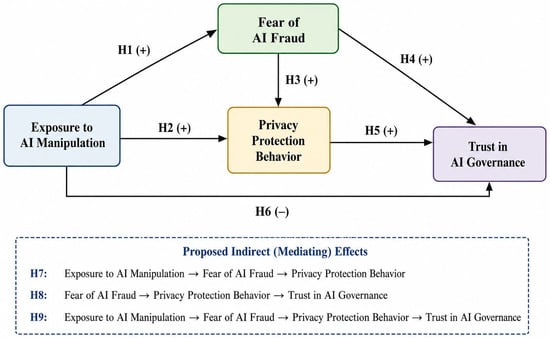
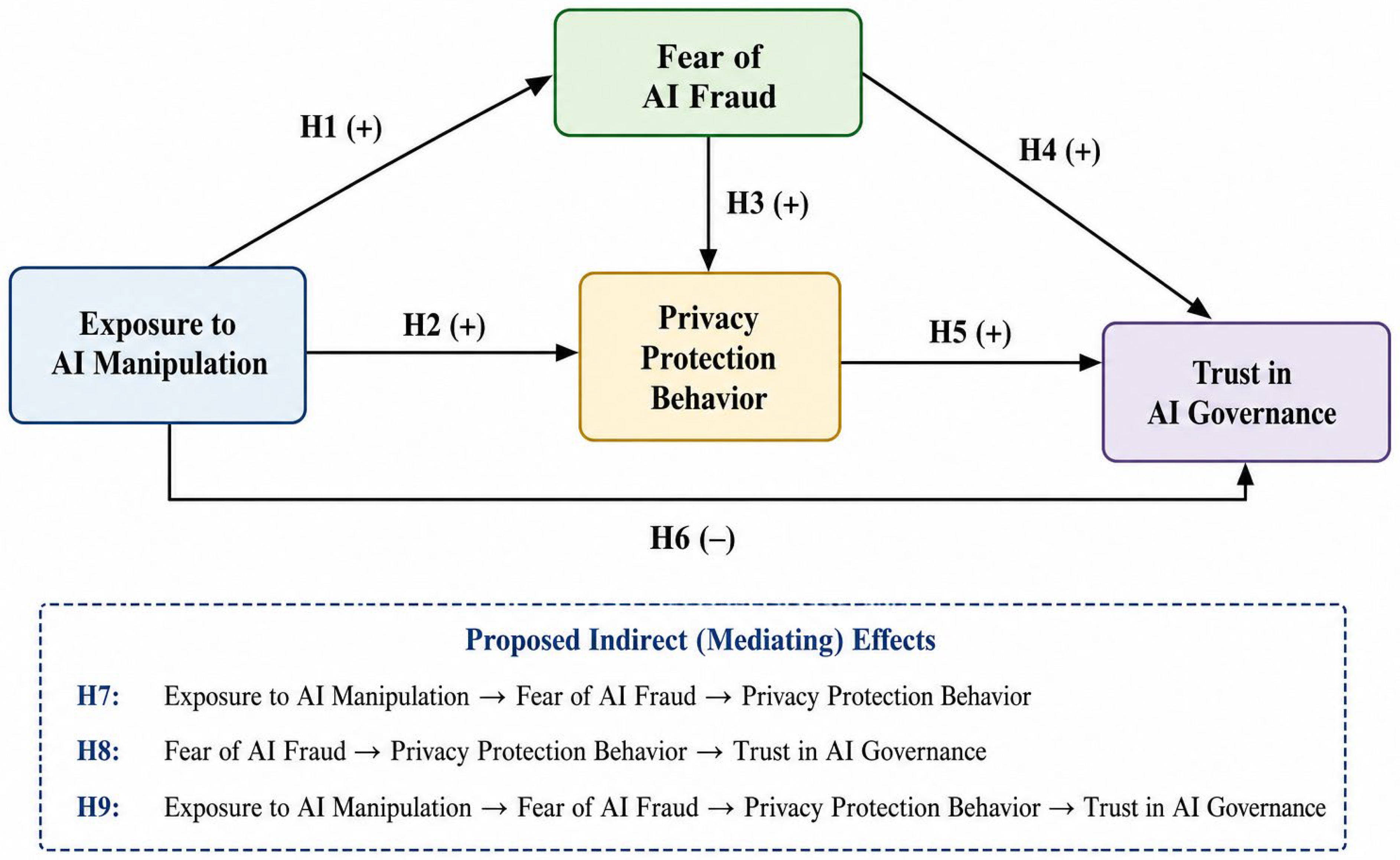
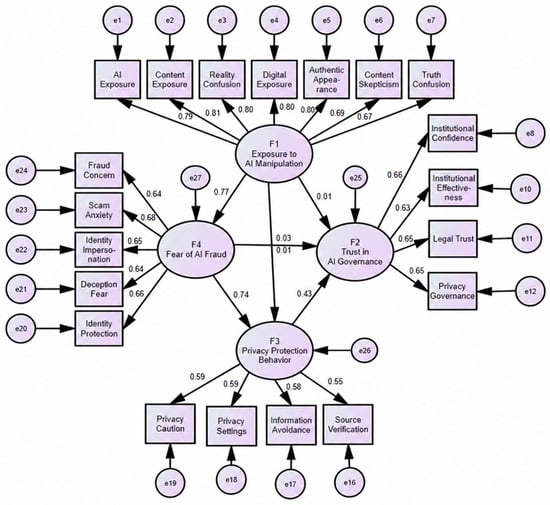
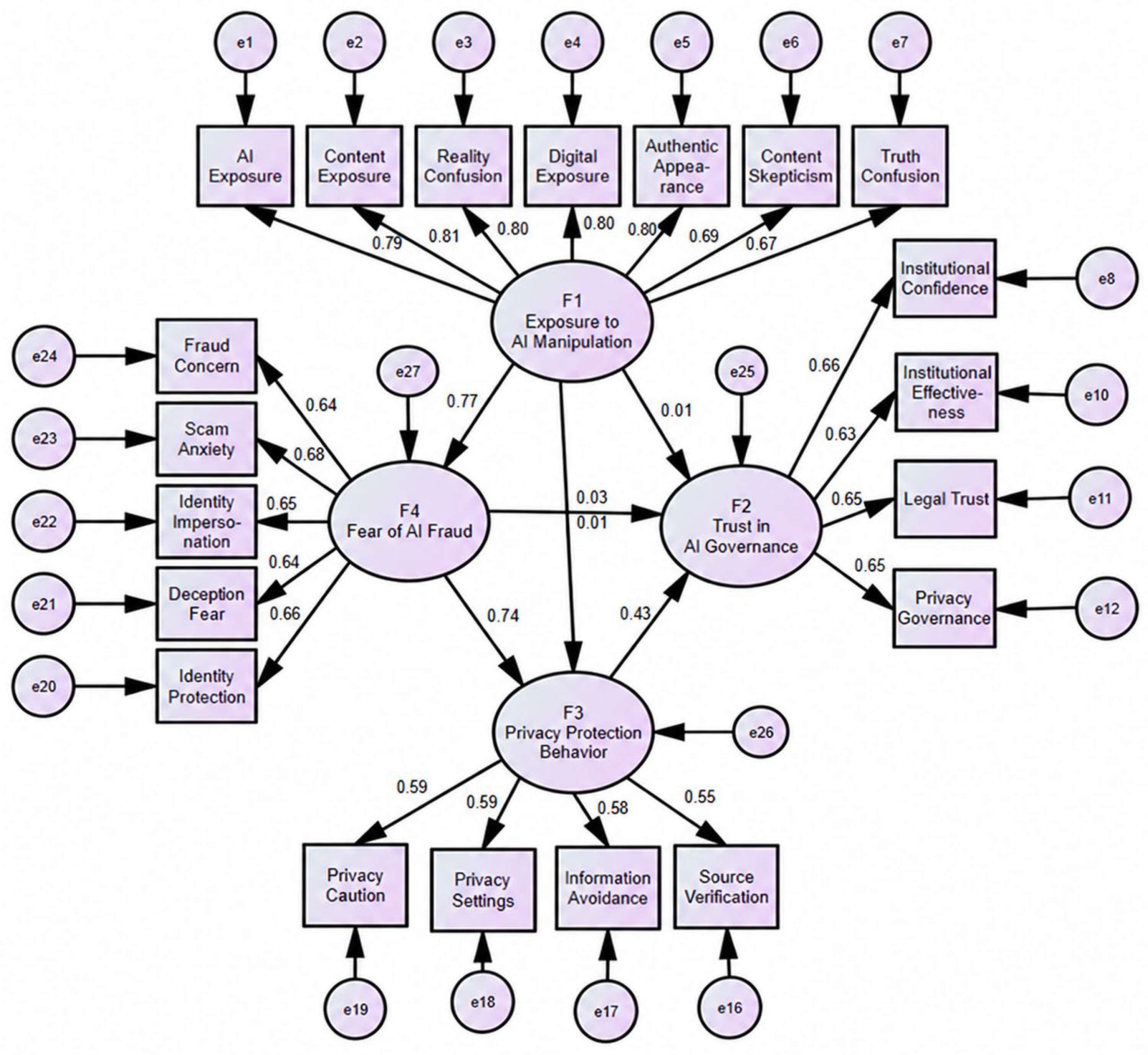

Disclaimer/Publisher’s Note: The statements, opinions and data contained in all publications are solely those of the individual author(s) and contributor(s) and not of MDPI and/or the editor(s). MDPI and/or the editor(s) disclaim responsibility for any injury to people or property resulting from any ideas, methods, instructions or products referred to in the content. |
© 2026 by the authors. Licensee MDPI, Basel, Switzerland. This article is an open access article distributed under the terms and conditions of the Creative Commons Attribution (CC BY) license.