


Abstract
In this work we propose a mild, diffusion-controlled method for generating unstable thioaldehydes from stable precursors (Bunte salts or thiocyanates) using tertiary amine vapors (NEt3 or DIPEA). The reactions were conducted in a closed system consisting of two nested vials, allowing slow amine evaporation to maintain a low steady-state concentration of thiocarbonyl intermediates in the reaction mixture. This technique effectively suppressed unwanted side processes and enabled efficient trapping by cyclopentadiene, 2,3-dimethylbutadiene, and isoprene at room temperature. While thiocyanates served as alternatives for low-polarity solvents, Bunte salts proved superior, providing a wider substrate range and higher cycloadduct yields (up to 84%). Additionally, rapid transesterification of the thiocarbonyl intermediate was observed when using methanol as a solvent. Overall, the diffusion mixing technique avoids thermal activation, offering a mild and efficient synthetic route to 3,6-dihydro-2H-thiopyrans, particularly when employing less reactive dienes.
1. Introduction
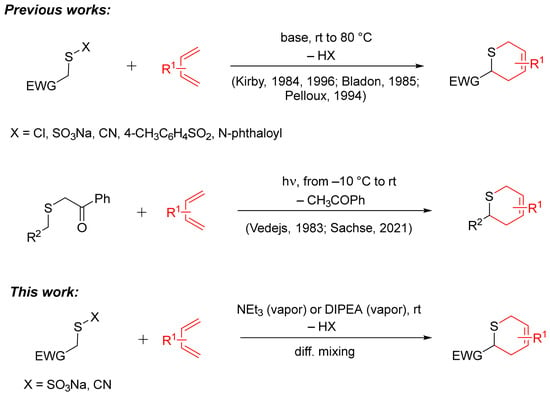
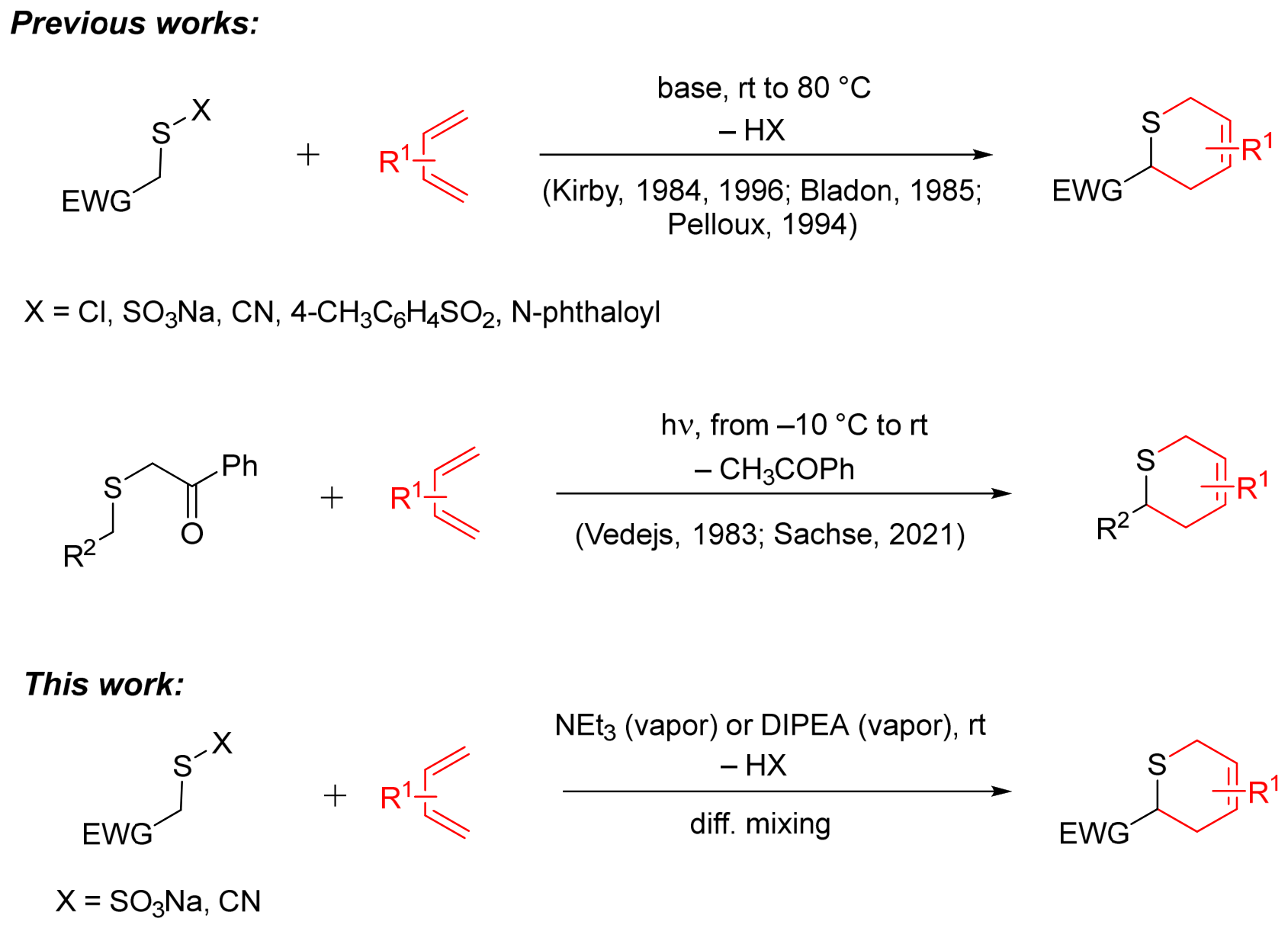
Thioaldehydes and thioketones are reactive dienophiles and dipolarophiles widely used in Diels–Alder and 1,3-dipolar cycloaddition reactions [1,2,3,4,5]. The use of thiocarbonyl compounds in these reactions enables the formation of conformationally rigid heterocyclic frameworks with high selectivity under mild conditions, which is important for the targeted synthesis of a range of sulfur-containing natural compounds and their analogs [6,7,8,9,10]. Due to their tendency to undergo oligomerization (specifically, trimerization) under cycloaddition reaction conditions, thiocarbonyl compounds are typically generated in situ. This is generally achieved by eliminating good leaving groups from the corresponding precursors using a base [1,11,12,13,14,15] or irradiation [5,16,17,18] (Scheme 1). Bunte salts (X= SO3Na, Scheme 1) are common precursors of thioaldehydes and thioketones [11,19,20,21,22] due to their ease of synthesis, storage stability, and the absence of the pungent odor characteristic of many organosulfur compounds. However, reactions of Bunte salts with dienes in the presence of bases typically require thermal activation (heating to 80–100 °C under reflux conditions). Under such conditions, cycloaddition can become reversible [2,11,12,13], leading to reduced yields of the target products. Phthalimide and tosyl precursors of thioaldehydes (X = N-phthaloyl, 4-CH3C6H4SO2; Scheme 1) undergo similar reactions at room temperature [14,15], but their use is limited by the multi-step synthesis of the starting compounds and difficulties in scaling up.
Scheme 1.
Methods for generating thioaldehydes for [4+2] cycloaddition reactions with dienes, described previously [5,11,12,13,14,15,17] and in the present work.
Another method for generating thiocarbonyl compounds is based on the photochemical cleavage of phenacyl sulfides via a Norrish type II reaction (Scheme 1, middle row), which enables the target Diels–Alder reaction to proceed at room temperature or lower. However, this method can trigger radical processes in the reaction mixture that lead to the degradation of starting materials and products [17,21], thereby limiting the choice of substrates.
An experimental technique involving diffusion mixing of tertiary amine vapors with the other components of the reaction mixture was previously proposed by us and effectively used to generate unstable nitrile oxides and nitrilimines via the dehydrohalogenation of hydrazonyl halides or N-hydroxyimidoyl halides [23,24,25,26]. The slow uptake of amine molecules from the gas phase by the reaction mixture made it possible to maintain an extremely low steady-state concentration of intermediates; this significantly reduced the probability of unwanted collisions between active molecules and suppressed their side dimerization.
We hypothesized that a similar method for generating unstable compounds could be successfully applied to the synthesis of thioaldehydes via the elimination of readily leaving groups from stable precursors. The slow generation of trace amounts of thiocarbonyl compounds in solution could minimize the formation of unwanted by-products and enable the efficient trapping of the intermediate by dienes under mild conditions, without the need for thermal or photochemical activation.
2. Materials and Methods
All solvents used were purified and dehydrated using the methods described in [27]. All starting reagents were purchased from commercial sources Sigma-Aldrich (St. Louis, MO, USA). 2-Bromo-1-(4-methoxyphenyl)ethan-1-one was synthesized in accordance with the reported literature method [28]. Reactions were checked by TLC analysis using silica plates with a fluorescent indicator (254 nm) and spots visualized in an iodine chamber. 1H and 13C NMR spectra were recorded on Bruker Avance 400 (Bruker Corporation, Billerica, MA, USA) and Agilent 400-MR spectrometers (Agilent Technologies, Santa Clara, CA, USA) (400 MHz for 1H, 101 MHz for 13C). Chemical shifts are reported in parts per million relative to TMS. Elemental analysis was performed using a TruSpec Micro CHNS elemental analyzer equipped with a TruSpec Micro Oxygen Add-on (LECO Corporation, St. Joseph, MI, USA) by combusting the sample in a high-temperature furnace at 1050 °C. The sample mass was approximately 2 mg. Carbon, hydrogen, and sulfur were determined simultaneously using independent IR detectors, while nitrogen was measured using a thermal conductivity detection system.
General Procedure for the Preparation of Bunte Salts 1–3.
Bunte salts were prepared according to a modified literature procedure [29]. A mixture of the corresponding alkyl halide (10 mmol), sodium thiosulfate pentahydrate (2.98 g, 12 mmol, 1.2 equiv.), water (5 mL), and MeOH (15 mL) was stirred at 65 °C for 1 h. After cooling to room temperature, the mixture was concentrated under reduced pressure at 40–45 °C to remove volatile solvents. The resulting residue was treated with petroleum ether (20 mL) and sonicated in an ultrasonic bath. The mixture was then filtered, and the precipitate was washed several times with small portions of petroleum ether. The filtrate was discarded, and the remaining solid was treated with MeOH (40 mL) at 50 °C. The undissolved residue was filtered off, and the filtrate was concentrated in vacuo to afford the target product. The presence of inorganic impurities (such as sodium halides or residual thiosulfate) and water does not interfere with the subsequent synthetic step. The effective organic content of the obtained Bunte salts, determined by carbon elemental analysis, was directly factored into the stoichiometry of the next step.
Sodium S-(2-ethoxy-2-oxoethyl) sulfurothioate (1). From ethyl 2-bromoacetate (1.67 g, 10 mmol) and sodium thiosulfate pentahydrate (2.98 g, 12 mmol), compound 1 (1.52 g, 68%, calculated for the pure substance based on elemental analysis) was obtained as a white solid.
1H NMR (400 MHz, DMSO-d6): δ 4.09 (q, J = 7.1 Hz, 2H), 3.70 (s, 2H), 1.18 (t, J = 7.1 Hz, 3H). 13C NMR (101 MHz, DMSO-d6): δ 169.2, 61.2, 14.1. HRMS (ESI−) m/z calcd for C4H7O5S2−, [M−Na]−: 198.9729, found: 198.9733.
Sodium S-(cyanomethyl) sulfurothioate (2). From chloroacetonitrile (0.76 g, 10 mmol) and sodium thiosulfate pentahydrate (2.98 g, 12 mmol), compound 2 (1.10 g, 63%, calculated for the pure substance based on elemental analysis) was obtained as a light yellow solid.
1H NMR (400 MHz, DMSO-d6): δ 3.85 (s, 2H). 13C NMR (101 MHz, DMSO-d6): δ 118.5, 18.9. HRMS (ESI−) m/z calcd for C2H2NO3S2−, [M−Na]−: 151.9471, found: 151.9470.
Sodium S-(2-(4-methoxyphenyl)-2-oxoethyl) sulfurothioate (3). From 2-bromo-1-(4-methoxyphenyl)ethan-1-one (2.29 g, 10 mmol) and sodium thiosulfate pentahydrate (2.98 g, 12 mmol), compound 3 (2.19 g, 77%, calculated for the pure substance based on elemental analysis) was obtained as a light yellow solid.
1H NMR (400 MHz, DMSO-d6): δ 7.98–7.89 (m, 2H), 7.06–6.98 (m, 2H), 4.28 (s, 2H), 3.82 (s, 3H). 13C NMR (101 MHz, DMSO-d6): δ 193.6, 163.3, 131.0 (2C), 128.4, 113.9 (2C), 55.6, 40.8. HRMS (ESI−) m/z calcd for C9H9O5S2−, [M−Na]−: 260.9886, found: 260.9893.
General Procedure for the Hetero–Diels–Alder Reaction of Dienes with Thioaldehydes Generated In Situ from Bunte Salts under Diffusion Mixing Conditions.
A mixture of the corresponding Bunte salt (0.57 mmol, 1.0 equiv., calculated for the pure substance), CaCl2 2H2O (84 mg, 0.57 mmol, 1.0 equiv.), and the appropriate diene (2.85–5.70 mmol, 5.0–10.0 equiv.) in ethanol or methanol (3–5 mL) was placed into a 15 mL vial (1.3 cm diameter). This vial was then enclosed inside a 50 mL vial (2.8 cm diameter) containing a tertiary amine (0.5 mL, NEt3 or DIPEA). The reaction mixture was stirred at room temperature for 2–10 days. After the reaction was completed (TLC or NMR control), the mixture from the inner vial was transferred to a separatory funnel, diluted with chloroform (15 mL), and washed with 2% aqueous HCl (10 mL). The aqueous phase was further extracted with chloroform (10 mL). The combined organic phases were dried over anhydrous Na2SO4, and the solvent was removed under reduced pressure. The resulting residue was purified by column chromatography on silica gel using chloroform as an eluent.
Ethyl (1R*,3R*,4S*)-2-thiabicyclo[2.2.1]hept-5-ene-3-carboxylate (4a) and ethyl (1R*,3S*,4S*)-2-thiabicyclo[2.2.1]hept-5-ene-3-carboxylate (4b). From Bunte salt 1 (127 mg, 0.57 mmol), CaCl2 2H2O (84 mg, 0.57 mmol), cyclopentadiene (188 mg, 2.85 mmol, 5.0 equiv.) and NEt3 in ethanol, the separated isomers 4a (14 mg, 13%) and 4b (54 mg, 51%) were obtained as yellow oils.
Minor isomer 4a: 1H NMR (400 MHz, CDCl3): δ 6.39 (dd, J = 5.4, 2.8 Hz, 1H), 5.96 (dd, J = 5.4, 3.2 Hz, 1H), 4.22 (q, J = 7.2 Hz, 2H), 4.14–4.10 (m, 1H), 3.56–3.53 (m, 1H), 3.31 (s, 1H), 1.92 (br d, J = 9.5 Hz, 1H), 1.68 (dt, J = 9.5, 2.1 Hz, 1H), 1.30 (t, J = 7.2 Hz, 3H). 13C NMR (101 MHz, CDCl3): δ 173.6, 138.6, 132.6, 61.4, 51.6, 49.7, 49.1, 48.3, 14.3. HRMS (ESI+) m/z calcd for C9H13O2S+, [M+H]+: 185.0631, found: 185.0639.
Major isomer 4b: 1H NMR (400 MHz, CDCl3): δ 6.47 (dd, J = 5.4, 2.9 Hz, 1H), 5.88 (dd, J = 5.4, 3.1 Hz, 1H), 4.22 (d, J = 3.9 Hz, 1H), 4.17–4.09 (m, 2H), 4.08–4.05 (m, 1H), 3.77–3.72 (m, 1H), 1.69 (dt, J = 9.2, 2.3 Hz, 1H), 1.60 (br d, J = 9.2 Hz, 1H), 1.24 (t, J = 7.1 Hz, 3H). 13C NMR (101 MHz, CDCl3): δ 171.8, 138.4, 130.7, 61.3, 53.0, 52.1, 51.8, 48.5, 14.3. HRMS (ESI+) m/z calcd for C9H13O2S+, [M+H]+: 185.0631, found: 185.0632.
(1R*,3R*,4S*)-2-Thiabicyclo[2.2.1]hept-5-ene-3-carbonitrile (5a) and (1R*,3S*,4S*)-2-thiabicyclo[2.2.1]hept-5-ene-3-carbonitrile (5b). From Bunte salt 2 (100 mg, 0.57 mmol), CaCl2 2H2O (84 mg, 0.57 mmol), cyclopentadiene (188 mg, 2.85 mmol, 5.0 equiv.) and NEt3 in ethanol, the mixture of isomers 5a and 5b (61 mg, dr = 37:63, 78%) was obtained as a yellow oil. Detailed atom numbering and signal assignments based on 2D NMR spectra are provided in the Supporting Information.
1H NMR (400 MHz, CDCl3): δ 6.59 (dd, J = 5.5, 2.9 Hz, 1H, H5), 6.44 (dd, J = 5.5, 2.9 Hz, 1H, H5’), 6.05 (dd, J = 5.5, 3.1 Hz, 1H, H1), 5.88 (dd, J = 5.5, 3.2 Hz, 1H, H1’), 4.29–4.26 (m, 1H, H6’), 4.27 (d, J = 3.8 Hz, 1H, H8), 4.26–4.29 (m, 1H, H6), 3.80–3.74 (m, 2H, H2 + H2’), 3.28–3.27 (m, 1H, H8’), 1.82–1.77 (m, 2H, H7’), 1.76 (dt, J = 9.7, 2.2 Hz, 1H, H7), 1.52 (br d, J = 9.7 Hz, 1H, H7). 13C NMR (101 MHz, CDCl3): δ 139.5 (C5), 139.1 (C5’), 130.6 (C1’), 129.7 (C1), 120.6 (C9’), 119.9 (C9), 53.4 (C6), 52.6 (C6’), 51.0 (C2’), 50.6 (C7), 49.5 (C7’), 48.9 (C2), 35.0 (C3), 34.9 (C3’). HRMS (ESI+) m/z calcd for C7H8NS+, [M+H]+: 138.0372, found: 138.0366.
((1R*,3R*,4S*)-2-Thiabicyclo[2.2.1]hept-5-en-3-yl)(4-methoxyphenyl)methanone (6a) and ((1R*,3S*,4S*)-2-Thiabicyclo[2.2.1]hept-5-en-3-yl)(4-methoxyphenyl)methanone (6b). From Bunte salt 3 (162 mg, 0.57 mmol), CaCl2 2H2O (84 mg, 0.57 mmol), cyclopentadiene (188 mg, 2.85 mmol, 5.0 equiv.) and NEt3 in ethanol, the mixture of isomers 6a and 6b (111 mg, dr = 45:55, 79%) was obtained after 3 days of stirring as a white solid. Alternatively, extending the reaction time to 10 days resulted in the exclusive formation of the thermodynamically more stable isomer 6a (121 mg, 86% yield), which was isolated as a white solid.
Isomer 6a: 1H NMR (400 MHz, CDCl3): δ 7.95–7.87 (m, 2H), 6.95–6.88 (m, 2H), 6.44 (dd, J = 5.5, 2.8 Hz, 1H), 6.07 (dd, J = 5.5, 3.2 Hz, 1H), 4.12 (br s, 1H), 4.00 (s, 1H), 3.84 (s, 3H), 3.63 (br s, 1H), 1.88 (d, J = 9.5 Hz, 1H), 1.74 (dd, J = 9.5, 2.2 Hz, 1H). 13C NMR (101 MHz, CDCl3): δ 196.4, 163.7, 138.6, 133.4, 130.6, 130.3 (2C), 113.8 (2C), 55.5, 52.8, 52.0, 49.4, 46.6. HRMS (ESI+) m/z calcd for C14H15O2S+, [M+H]+: 247.0787, found: 247.0789.
Isomer 6b: 1H NMR (400 MHz, CDCl3): δ 7.96–7.92 (m, 2H), 6.95–6.89 (m, 2H), 6.36 (dd, J = 5.5, 2.9 Hz, 1H), 6.17 (dd, J = 5.5, 3.1 Hz, 1H), 5.07 (d, J = 3.5 Hz, 1H), 4.07 (br s, 1H), 3.85 (s, 3H), 3.76 (br s, 1H), 1.79–1.73 (m, 2H). 13C NMR (101 MHz, CDCl3): δ 195.2, 163.7, 136.6, 132.7, 130.6 (2C), 130.1, 113.9 (2C), 55.6, 53.4, 51.7, 48.3 (2C). HRMS (ESI+) m/z calcd for C14H15O2S+, [M+H]+: 247.0787, found: 247.0791.
Ethyl 4,5-dimethyl-3,6-dihydro-2H-thiopyran-2-carboxylate (7). From Bunte salt 1 (127 mg, 0.57 mmol), CaCl2⸱2H2O (84 mg, 0.57 mmol), 2,3-dimethylbutadiene (234 mg, 2.85 mmol, 5.0 equiv.) and DIPEA in ethanol, compound 7 (86 mg, 75%) was obtained as a yellow oil.
1H NMR (400 MHz, CDCl3): δ 4.18 (q, J = 7.1 Hz, 2H), 3.60 (t, J = 6.4 Hz, 1H), 3.11 (br d, J = 16.8 Hz, 1H), 3.03 (br d, J = 16.8 Hz, 1H), 2.47–2.40 (m, 2H), 1.73–1.70 (m, 3H), 1.70–1.67 (m, 3H), 1.27 (t, J = 7.1 Hz, 3H). 13C NMR (101 MHz, CDCl3): δ 171.9, 125.8, 123.2, 61.4, 41.2, 34.3, 30.8, 20.2, 19.5, 14.2. HRMS (ESI+) m/z calcd for C10H17O2S+, [M+H]+: 201.0943, found: 201.0940.
4,5-Dimethyl-3,6-dihydro-2H-thiopyran-2-carbonitrile (8). From Bunte salt 2 (100 mg, 0.57 mmol), CaCl2⸱2H2O (84 mg, 0.57 mmol), 2,3-dimethylbutadiene (234 mg, 2.85 mmol, 5.0 equiv.) and DIPEA in ethanol, compound 8 (71 mg, 81%) was obtained as a yellow oil.
1H NMR (400 MHz, CDCl3): δ 3.77–3.73 (m, 1H), 3.49 (br d, J = 17.1 Hz, 1H), 2.93 (br d, J = 17.1 Hz, 1H), 2.58 (br d, J = 17.6 Hz, 1H), 2.39 (br d, J = 17.6 Hz, 1H), 1.74 (br s, 3H), 1.68 (br s, 3H). 13C NMR (101 MHz, CDCl3): δ 123.6, 123.3, 118.8, 34.7, 28.9, 25.7, 19.9, 19.5. HRMS (ESI+) m/z calcd for C8H12NS+, [M+H]+: 154.0684, found: 154.0689.
Ethyl 5-methyl-3,6-dihydro-2H-thiopyran-2-carboxylate (9a) and ethyl 4-methyl-3,6-dihydro-2H-thiopyran-2-carboxylate (9b). From Bunte salt 1 (127 mg, 0.57 mmol), CaCl2⸱2H2O (84 mg, 0.57 mmol), isoprene (388 mg, 5.70 mmol, 10.0 equiv.) and DIPEA in ethanol, the mixture of isomers 9a and 9b (89 mg, rr = 65:35, 84%) was obtained as a yellow oil.
1H NMR (400 MHz, CDCl3): δ 5.64–5.56 (m, 1H’), 5.55–5.50 (m, 1H), 4.22–4.14 (m, 2H + 2H’), 3.68–3.60 (m, 1H’), 3.59–3.53 (m, 1H), 3.20–3.16 (m, 2H’), 3.09–3.03 (m, 2H), 2.55–2.47 (m, 2H), 2.44–2.38 (m, 2H’), 1.74 (s, 3H + 3H’), 1.33–1.22 (m, 3H + 3H’). 13C NMR (101 MHz, CDCl3): δ 171.9 (C), 171.8 (C’), 133.8 (C’), 130.7 (C), 120.7 (C), 117.6 (C’), 61.5 (C + C’), 40.8 (C’), 39.8 (C), 32.5 (C’), 29.0 (C), 28.5 (C), 25.7 (C’), 24.8 (C’), 24.4 (C), 14.3 (C + C’). HRMS (ESI+) m/z calcd for C9H15O2S+, [M+H]+: 187.0787, found: 187.0790.
5-Methyl-3,6-dihydro-2H-thiopyran-2-carbonitrile (10a) and 4-methyl-3,6-dihydro-2H-thiopyran-2-carbonitrile (10b). From Bunte salt 2 (100 mg, 0.57 mmol), CaCl2⸱2H2O (84 mg, 0.57 mmol), isoprene (388 mg, 5.70 mmol, 10.0 equiv.) and DIPEA in ethanol, the mixture of isomers 10a and 10b (60 mg, rr = 71:29, 76%) was obtained as a yellow oil.
1H NMR (400 MHz, CDCl3): δ 5.71–5.66 (m, 1H’), 5.53–5.48 (m, 1H), 3.83–3.79 (m, 1H’), 3.74–2.70 (m, 1H), 3.59–3.53 (m, 1H’), 3.52–3.44 (m, 1H), 3.15–3.06 (m, 1H’), 2.98–2.90 (m, 1H), 2.66–2.48 (m, 2H + 1H’), 2.42–2.34 (m, 1H’), 1.79 (s, 3H), 1.73 (s, 3H’). 13C NMR (101 MHz, CDCl3): δ 131.5 (1C’), 131.1 (1C), 118.8 (1C’), 118.7 (1C’), 118.4 (1C), 117.7 (1C), 33.2 (1C’), 29.3 (1C), 27.5 (1C), 25.5 (1C’), 24.5 (1C + 1C’), 24.4 (1C), 24.2 (1C’). HRMS (ESI+) m/z calcd for C7H10NS+, [M+H]+: 140.0528, found: 140.0523.
(4-Methoxyphenyl)(5-methyl-3,6-dihydro-2H-thiopyran-2-yl)methanone (11a) and (4-methoxyphenyl)(4-methyl-3,6-dihydro-2H-thiopyran-2-yl)methanone (11b). From Bunte salt 3 (162 mg, 0.57 mmol), CaCl2⸱2H2O (84 mg, 0.57 mmol), isoprene (388 mg, 5.70 mmol, 10.0 equiv.) and DIPEA in ethanol, the mixture of isomers 11a and 11b (98 mg, rr = 66:34, 69%) was obtained as a white solid.
1H NMR (400 MHz, CDCl3): δ 8.04–7.94 (m, 2H + 2H’), 6.99–6.77 (m, 2H + 2H’), 5.67–5.58 (m, 1H + 1H’), 4.52–4.46 (m, 1H’), 4.44–4.39 (m, 1H), 3.87 (s, 3H + 3H’), 3.19–2.92 (m, 2H + 2H’), 2.67–2.57 (m, 1H), 2.56–2.44 (m, 1H + 1H’), 2.42–2.33 (m, 1H’), 1.79 (br s, 3H’), 1.78 (br s, 3H). 13C NMR (101 MHz, CDCl3): δ 194.6 (C), 194.5 (C’), 163.6 (C + C’), 134.7 (C), 131.6 (C’), 131.1 (2C), 131.0 (2C’), 130.2 (C), 128.1 (C’), 121.4 (C), 117.0 (C’), 113.8 (2C + 2C’), 55.6 (C + C’), 41.4 (C’), 40.5 (C), 31.2 (C’), 28.6 (C), 27.3 (C), 25.2 (C’), 24.8 (C’), 24.4 (C). HRMS (ESI+) m/z calcd for C14H17O2S+, [M+H]+: 249.0944, found: 249.0942.
Methyl (1R*,3R*,4S*)-2-thiabicyclo[2.2.1]hept-5-ene-3-carboxylate (12a) and methyl (1R*,3S*,4S*)-2-thiabicyclo[2.2.1]hept-5-ene-3-carboxylate (12b). From Bunte salt 1 (127 mg, 0.57 mmol), CaCl2⸱2H2O (84 mg, 0.57 mmol), cyclopentadiene (188 mg, 2.85 mmol, 5.0 equiv.) and NEt3 in methanol, the separated isomers 12a (11 mg, 11%) and 12b (50 mg, 52%) were obtained as yellow oils.
Minor isomer 12a: 1H NMR (400 MHz, CDCl3): δ 6.38 (dd, J = 5.4, 2.8 Hz, 1H), 5.95 (dd, J = 5.4, 3.2 Hz, 1H), 4.14–4.10 (m, 1H), 3.75 (s, 3H), 3.56–3.53 (m, 1H), 3.31 (s, 1H), 1.90 (br d, J = 9.5 Hz, 1H), 1.68 (dt, J = 9.5, 2.0 Hz, 1H). 13C NMR (101 MHz, CDCl3): δ 174.1, 138.6, 132.6, 52.6, 51.7, 49.5, 49.1, 48.3. HRMS (ESI+) m/z calcd for C8H11O2S+, [M+H]+: 171.0474, found: 171.0481.
Major isomer 12b: 1H NMR (400 MHz, CDCl3): δ 6.47 (dd, J = 5.4, 2.9 Hz, 1H), 5.88 (dd, J = 5.4, 3.1 Hz, 1H), 4.22 (d, J = 3.9 Hz, 1H), 4.09–4.06 (m, 1H), 3.77–3.73 (m, 1H), 3.66 (s, 3H), 1.69 (dt, J = 9.2, 2.3 Hz, 1H), 1.60 (br d, J = 9.2 Hz, 1H). 13C NMR (101 MHz, CDCl3): δ 172.3, 138.4, 130.7, 53.0, 52.4, 51.9, 51.7, 48.5. HRMS (ESI+) m/z calcd for C8H11O2S+, [M+H]+: 171.0474, found: 171.0475.
Methyl 4,5-dimethyl-3,6-dihydro-2H-thiopyran-2-carboxylate (13). From Bunte salt 1 (127 mg, 0.57 mmol), CaCl2⸱2H2O (84 mg, 0.57 mmol), 2,3-dimethylbutadiene (234 mg, 2.85 mmol, 5.0 equiv.) and DIPEA in methanol, compound 13 (74 mg, 70%) was obtained as a yellow oil.
1H NMR (400 MHz, CDCl3): δ 3.71 (s, 3H), 3.61 (t, J = 6.2 Hz, 1H), 3.09 (br d, J = 16.9 Hz, 1H), 3.02 (br d, J = 16.9 Hz, 1H), 2.45–2.39 (m, 2H), 1.71–1.68 (m, 3H), 1.68–1.65 (m, 3H). 13C NMR (101 MHz, CDCl3): δ 172.2, 125.7, 123.1, 52.5, 40.9, 34.1, 30.5, 20.0, 19.4. HRMS (ESI+) m/z calcd for C9H15O2S+, [M+H]+: 187.0787, found: 187.0789.
Methyl 5-methyl-3,6-dihydro-2H-thiopyran-2-carboxylate (14a) and methyl 4-methyl-3,6-dihydro-2H-thiopyran-2-carboxylate (14b). From Bunte salt 1 (127 mg, 0.57 mmol), CaCl2⸱2H2O (84 mg, 0.57 mmol), isoprene (388 mg, 5.70 mmol, 10.0 equiv.) and DIPEA in methanol, the mixture of isomers 14a and 14b (74 mg, rr = 65:35, 75%) was obtained as a yellow oil. Detailed atom numbering and signal assignments based on 2D NMR spectra are provided in the Supporting Information.
1H NMR (400 MHz, CDCl3): δ 5.64–5.58 (m, 1H’, H1’), 5.55–5.50 (m, 1H, H2), 3.73 (s, 3H + 3H’, 3H11 + 3H11’), 3.66 (t, J = 6.1 Hz, 1H’, H4’), 3.59 (t, J = 6.1 Hz, 1H, H4), 3.20–3.16 (m, 2H’, 2H6’), 3.09–3.03 (m, 2H, 2H6), 2.55–2.48 (m, 2H, 2H3), 2.44–2.39 (m, 2H’, 2H3’), 1.74 (br s, 3H, 3H7), 1.73 (br s, 3H’, 3H7’). 13C NMR (101 MHz, CDCl3): δ 172.31 (C8), 172.25 (C8’), 133.8 (C2’), 130.7 (C1), 120.6 (C2), 117.5 (C1’), 52.58 (C11’), 52.57 (C11), 41.0 (C4’), 39.6 (C4), 32.5 (C3’), 29.0 (C6), 28.4 (C3), 25.6 (C6’), 24.7 (C7’), 24.4 (C7). HRMS (ESI+) m/z calcd for C8H13O2S+, [M+H]+: 173.0631, found: 173.0625.
General Procedure for the Preparation of Thiocyanates 15–17.
Thiocyanates were prepared according to a modified literature procedure [30]. A mixture of the corresponding alkyl halide (10 mmol) and ammonium thiocyanate (0.91 g, 12 mmol, 1.2 equiv.) in ethanol (30 mL) was heated to reflux for 1 h. After cooling to room temperature, the mixture was diluted with chloroform (30 mL) and washed with water (30 mL). The aqueous phase was further extracted with chloroform (30 mL). The combined organic phases were dried over anhydrous Na2SO4, and the solvent was removed under reduced pressure. The resulting residue was purified by column chromatography on silica gel using chloroform as an eluent.
Ethyl 2-thiocyanatoacetate (15). From ethyl 2-bromoacetate (1.67 g, 10 mmol) and ammonium thiocyanate (0.91 g, 12 mmol), compound 15 (1.00 g, 69%) was obtained as a light yellow oil.
1H NMR (400 MHz, CDCl3): δ 4.26 (q, J = 7.2 Hz, 2H), 3.76 (s, 2H), 1.31 (t, J = 7.2 Hz, 3H). 13C NMR (101 MHz, CDCl3): δ 166.2, 110.8, 63.0, 35.0, 14.1. HRMS (ESI+) m/z calcd for C5H8NO2S+, [M+H]+: 146.0270, found: 146.0273.
2-Thiocyanatoacetonitrile (16). From chloroacetonitrile (0.76 g, 10 mmol) and ammonium thiocyanate (0.91 g, 12 mmol), compound 16 (0.72 g, 73%) was obtained as an orange oil.
1H NMR (400 MHz, CDCl3): δ 3.80 (s, 2H). 13C NMR (101 MHz, CDCl3): δ 113.4, 108.6, 19.1. HRMS (ESI+) m/z calcd for C3H3N2S+, [M+H]+: 99.0011, found: 99.0003.
1-(4-Methoxyphenyl)-2-thiocyanatoethan-1-one (17). From 2-bromo-1-(4-methoxyphenyl)ethan-1-one (2.29 g, 10 mmol) and ammonium thiocyanate (0.91 g, 12 mmol), compound 17 (1.18 g, 57%) was obtained as a white solid.
1H NMR (400 MHz, CDCl3): δ 7.96–7.87 (m, 2H), 7.02–6.95 (m, 2H), 4.72 (s, 2H), 3.90 (s, 3H). 13C NMR (101 MHz, CDCl3): δ 189.3, 164.9, 131.0 (2C), 127.0, 114.5 (2C), 112.3, 55.8, 43.1. HRMS (ESI+) m/z calcd for C10H10NO2S+, [M+H]+: 208.0427, found: 208.0426.
General Procedure for the Hetero–Diels–Alder Reaction of Dienes with Thioaldehydes Generated In Situ from 2-Thiocyanatoacetonitrile under Diffusion Mixing Conditions.
A mixture of 2-thiocyanatoacetonitrile 16 (56 mg, 0.57 mmol, 1.0 equiv.) and the appropriate diene (2.85–5.70 mmol, 5.0–10.0 equiv.) in chloroform (3–5 mL) was placed into a 15 mL vial (1.3 cm diameter). This vial was then enclosed inside a 50 mL vial (2.8 cm diameter) containing a tertiary amine (0.5 mL, NEt3 or DIPEA). The reaction mixture was stirred at room temperature for 2–4 days. After the reaction was completed (TLC or NMR control), the mixture from the inner vial was transferred to a separatory funnel, diluted with chloroform (15 mL), and washed with 2% aqueous HCl (10 mL). The aqueous phase was further extracted with chloroform (10 mL). The combined organic phases were dried over anhydrous Na2SO4, and the solvent was removed under reduced pressure. The resulting residue was purified by column chromatography on silica gel using chloroform as an eluent.
(1R*,3R*,4S*)-2-Thiabicyclo[2.2.1]hept-5-ene-3-carbonitrile (5a) and (1R*,3S*,4S*)-2-thiabicyclo[2.2.1]hept-5-ene-3-carbonitrile (5b). From 2-thiocyanatoacetonitrile 16 (56 mg, 0.57 mmol), cyclopentadiene (188 mg, 2.85 mmol, 5.0 equiv.) and NEt3, the mixture of isomers 5a and 5b (41 mg, dr = 63:37, 53%) was obtained as a yellow oil. The NMR and HRMS spectral data were identical to those reported above.
4,5-Dimethyl-3,6-dihydro-2H-thiopyran-2-carbonitrile (8). From 2-thiocyanatoacetonitrile 16 (56 mg, 0.57 mmol), 2,3-dimethylbutadiene (234 mg, 2.85 mmol, 5.0 equiv.) and DIPEA, compound 8 (43 mg, 49%) was obtained as a yellow oil. The NMR and HRMS spectral data were identical to those reported above.
5-Methyl-3,6-dihydro-2H-thiopyran-2-carbonitrile (10a) and 4-methyl-3,6-dihydro-2H-thiopyran-2-carbonitrile (10b). From 2-thiocyanatoacetonitrile 16 (56 mg, 0.57 mmol), isoprene (388 mg, 5.70 mmol, 10.0 equiv.) and DIPEA, the mixture of isomers 10a and 10b (41 mg, rr = 71:29, 52%) was obtained as a yellow oil. The NMR and HRMS spectral data were identical to those reported above.
3. Results and Discussion
We initiated in this work a study on the feasibility of generating thioaldehydes under conditions of diffusion mixing their stable precursors with a volatile reagent, a technique we have previously applied for the generation of other reactive compounds [23,24,25,26]. Prior literature data suggested thioaldehydes could be generated in situ via base-catalyzed eliminations from Bunte salts that bear electron-withdrawing groups at the α-position [11,19,20,21,22]. According to the described procedure, the thioaldehyde is generated transiently from the corresponding Bunte salts by the slow dropwise addition of triethylamine in an alcohol or alcohol–benzene mixture. Successful subsequent cycloaddition requires the presence of one equivalent of CaCl2·2H2O to sequester the sulfite anions formed, which would otherwise undergo undesirable interactions with the intermediate’s thiocarbonyl group. In the case of cyclopentadiene, good yields of the target heterocycles can be achieved at room temperature [11]. Heating was required for less active dienes [11,19,20], but even under such conditions, cycloadducts can be obtained in unsatisfactory yields [19].
We firstly investigated the generation of thioaldehydes from Bunte salts 1–3 in the presence of highly reactive cyclopentadiene and the less active 2,3-dimethylbutadiene and isoprene using our developed diffusive mixing technique. NEt3 and DIPEA were selected as the amines capable of slowly evaporating from an external vessel and being absorbed by the reaction mixture, as they had previously demonstrated effectiveness in the diffusion mixing method [23]. Furthermore, the target reactions were studied at room temperature and 0 °C, since heating the reaction mixture is not always feasible due to the thermal instability of certain starting substrates and cycloadducts [2,11,12,22].
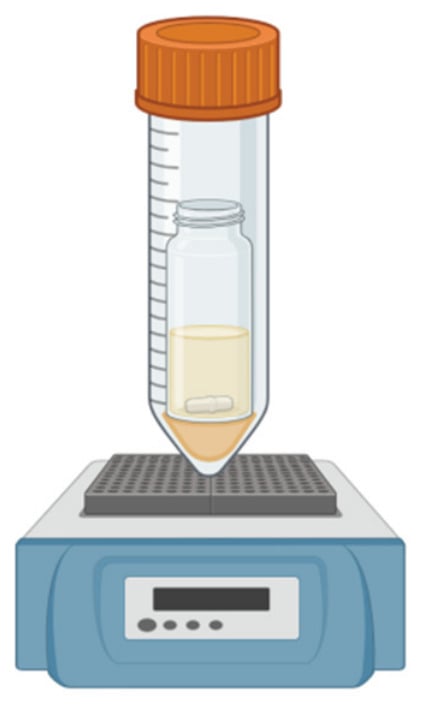
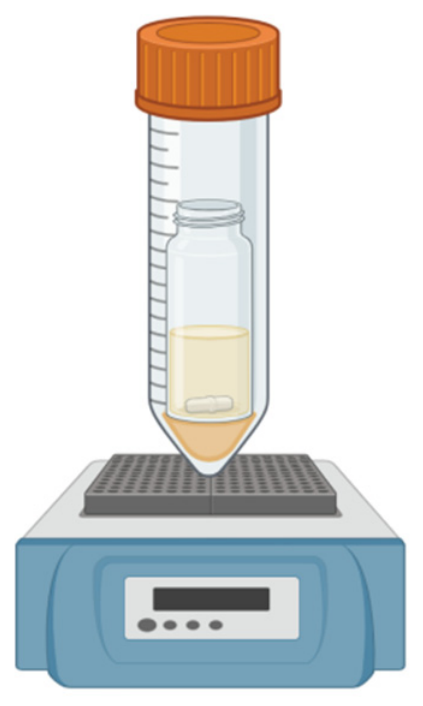
The apparatus for conducting reactions via diffusive mixing consisted of a closed system comprising two nested vials of different diameters (Figure 1). The inner vial contained a solution of the thioaldehyde precursor (a Bunte salt) and a diene. The outer vial contained a tertiary amine (NEt3 or DIPEA), which slowly evaporated and was absorbed by the reaction mixture in the inner vial. This reaction setup allows for the steady generation of the active thioaldehyde within the inner vial at low concentrations over an extended period, effectively suppressing its oligomerization. If necessary, the reaction temperature can be lowered by placing the apparatus in a refrigerator or freezer.
Figure 1.
Device for performing reactions via diffusion mixing (prepared using the free drawing software BioRender, 2026; https://www.biorender.com/).
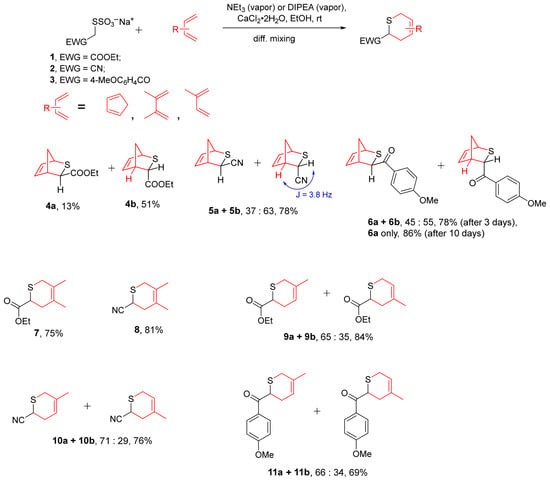
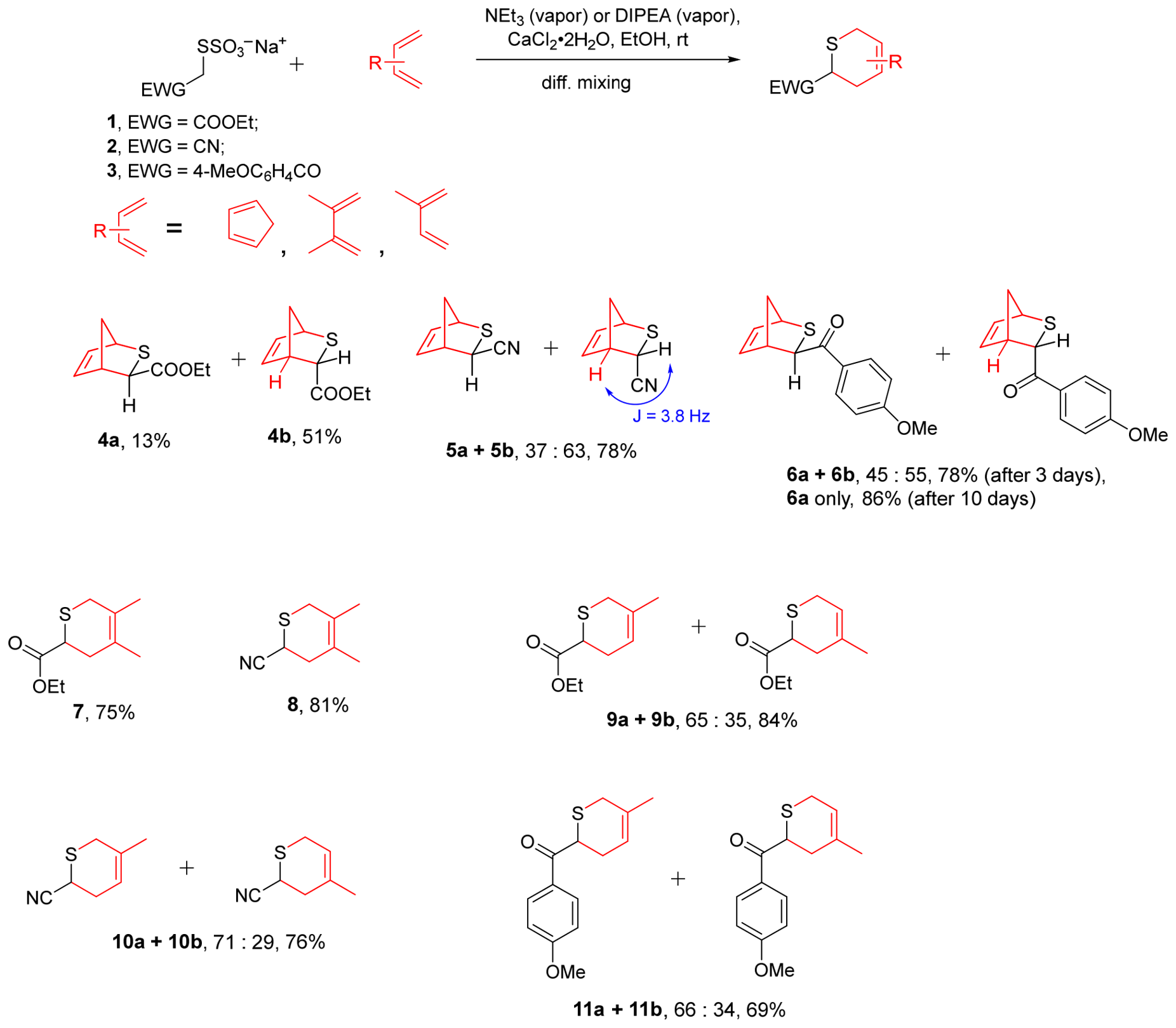
In the first stage, we investigated the diffusion of NEt3 and DIPEA vapors into ethanolic solutions of Bunte salts 1–3 containing 1 equivalent of calcium chloride and a 5–10-fold excess of diene. It was found that for the highly reactive cyclopentadiene, varying the reaction temperature and the nature of the amine had virtually no effect on the yields of cycloaddition adducts 4–6; however, the reaction proceeded most rapidly at room temperature using NEt3 (Scheme 2). For the less reactive 2,3-dimethylbutadiene and isoprene, conducting the reactions at room temperature in the presence of DIPEA proved optimal. When the lower-boiling triethylamine was used, the yields of heterocycles 7–11 decreased by 10–20%; this may be attributed to the more rapid accumulation of the thiocarbonyl intermediate in the reaction mixture and its subsequent oligomerization, which competes with the desired Diels–Alder reaction. Carrying out the process at 0 °C resulted in an approximately 2.5-fold decrease in the yields of compounds 7–11. This can be ascribed to the slow rate of the target [4+2] cycloaddition, which leads to an increased concentration of the thioaldehyde in solution and accelerates competing background pathways. Attempts to further vary the conditions did not lead to improved yields of compounds 4–11. Doubling the excess of CaCl2·2H2O had virtually no effect on the adduct yields, whereas use of less polar solvents (ethyl acetate, chloroform) resulted in a significant slowing of the reaction due to the poor solubility of the starting salts.
Scheme 2.
Reactions of Bunte salts 1–3 with conjugated dienes in EtOH under diffusion mixing with NEt3 or DIPEA vapors.
We investigated the generation of thioaldehydes from Bunte salt 1 in the presence of a highly reactive cyclopentadiene (yielding adducts 4a and 4b) and less reactive isoprene (yielding adducts 9a and 9b). The reaction yields were found to be highly dependent on the reaction conditions (Table 1). First, we compared the amine delivery techniques. Using our diffusive method (Entry 1) provided the highest yields for both dienes. When the amine was delivered via a syringe pump over 24 h (Entry 2), the yields decreased, indicating that local concentration gradients can still occur during slow liquid addition. The most drastic drop in yields occurred with the one-portion addition of the amine (Entry 3). Next, we examined the influence of the nature of the amine and the temperature (Entries 4 and 5). For highly reactive cyclopentadiene, maintaining a controlled rate of amine addition proved essential. Consequently, the yields of the cycloadducts obtained via the slow dropwise addition of the amine solution and via the diffusion of its vapors were comparable, as both methods ensure the efficient trapping of the in situ-generated thioaldehyde by the active diene. Conversely, for the less reactive isoprene, the most efficient results were observed when using DIPEA. In the case of NEt3, the diffusion mixing method provided lower yields of the cycloadducts, and its dropwise addition gave poor results. Furthermore, MALDI-TOF mass spectrometry confirmed that the side-products formed under all investigated amine delivery methods possessed an identical qualitative composition (see Supplementary Information, Figures S45–S47).
Table 1.
Generation of thioaldehydes under various reaction conditions.
Finally, we evaluated the role of the CaCl2·2H2O additive. To address the potential influence of water of hydration, we also performed the reaction using anhydrous CaCl2 (Entry 6). The results showed no significant difference compared to the dihydrate (Entry 1), indicating that the trace amount of water introduced by the hydrate practically does not affect the reaction outcome. However, the complete omission of calcium chloride (Entry 7) resulted in the formation of only trace amounts of the target cycloadducts. This experimental observation directly confirms that unsequestered sulfite anions actively intercept the thiocarbonyl intermediate, preventing the desired [4+2] cycloaddition.
It should be noted that, under optimized reaction conditions using the diffusion mixing method, the adducts formed by the interaction of thioaldehydes with cyclopentadiene 4–6 were isolated, with yields comparable to those reported in the literature [11]. At the same time, for 2,3-dimethylbutadiene and isoprene, the diffusion mixing method made it possible to avoid thermal activation and obtain the target heterocycles 7–11 under milder conditions (at room temperature, as opposed to heating to 80 °C in an ethanol–benzene mixture in the non-diffusion procedure) and with higher yields than those described in the literature [11]. These results demonstrate that the controlled generation and maintenance of a low steady-state concentration of thiocarbonyl intermediates are particularly important for their effective interaction with less reactive dienes.
Reactions involving the diffusion mixing of thioaldehydes with cyclopentadiene at room temperature yield predominantly substituted norbornenes in which the electron-withdrawing group derived from the starting Bunte salt adopts the endo-configuration, consistent with the rules of orbital control in Diels–Alder reactions. The spatial configuration of the major endo-adducts 4b–6b was confirmed by 1H NMR spectroscopic data, specifically the presence of a spin–spin coupling constant of 3.5–4.0 Hz between the exo-proton at the substituent-bearing carbon and the adjacent bridgehead CH proton (see Scheme 2) [31]. In the synthesis of heterocycle 6, the possibility of kinetic and thermodynamic control over the reaction was observed. For instance, reacting Bunte salt 3 with cyclopentadiene in the presence of triethylamine vapors for 3 days yields a mixture of isomers with a slight predominance of the endo-adduct 6b. However, extending the reaction time to 10 days results in the formation of the thermodynamically more stable exo-isomer 6a as the sole product; in this isomer, steric strain between the C(O)Ar substituent and the bicyclic framework is minimized. In contrast, extended monitoring of the reactions for ester 4 and nitrile 5 revealed that their diastereomeric ratios shift only negligibly over time toward the minor diastereomer. This indicates that equilibration in these cases is far less pronounced compared to the process observed for adducts 6a and 6b.
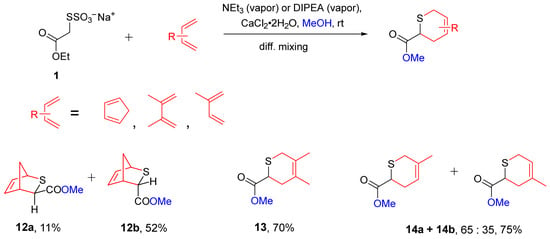
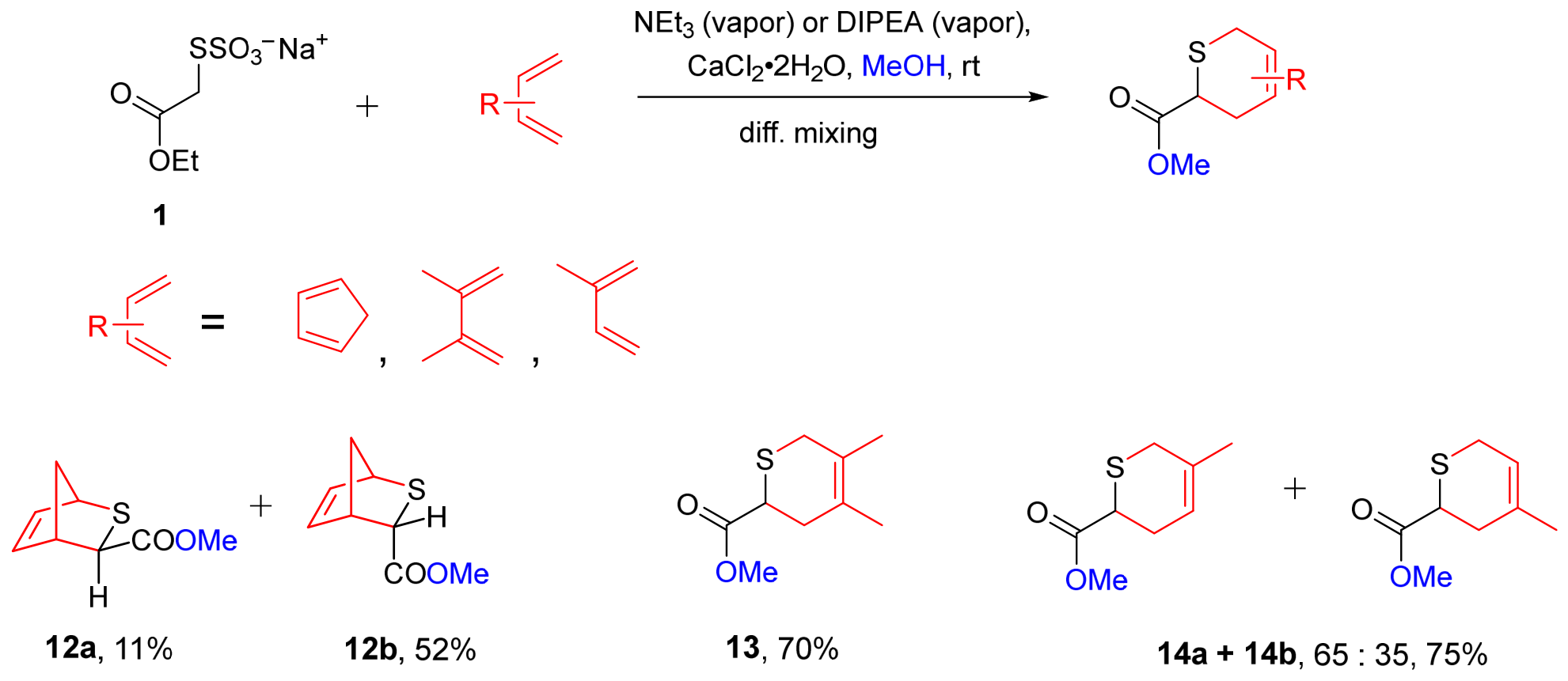
The structures of cycloadducts 7 and 8, synthesized from 2,3-dimethylbutadiene, were unambiguously confirmed by 1H and 13C NMR spectroscopy. In the 1H NMR spectra, the symmetric substitution pattern of the two methyl groups at the double bond of the thiopyran ring correlates with two distinct narrow signals in the olefinic-methyl region, which match the two characteristic sp2-carbon signals in the 13C NMR spectra. Crucially, the non-equivalence of the ring environment is demonstrated by the methylene protons. In the case of nitrile 8, due to the rigidity of the heterocycle and the strong anisotropic effect of the asymmetric C-2 center, all four protons of the two CH2 groups become highly diastereotopic and are fully resolved into four individual signals with characteristic geminal coupling constants (Figure S21). The structures of the regioisomeric products 9–11 were established using two-dimensional HMBC and HSQC NMR spectroscopy. For the major isomer, the HMBC NMR spectrum exhibits a cross-peak corresponding to a three-bond heteronuclear interaction between the vinylic proton of the thiopyran ring and the carbon atom of the CH-EWG group (see Supplementary Information, Figure S38). Using optimized cycloaddition conditions, we carried out a series of analogous reactions of Bunte salts 1–3 with cyclopentadiene, 2,3-dimethylbutadiene, and isoprene in methanol. It was found that the reaction of these dienes with salt 1, which contains a COOEt group, resulted exclusively in the formation of methyl esters 12–14 in good combined yields of 63–75% (Scheme 3).
Scheme 3.
Reactions of Bunte salt 1 with conjugated dienes in MeOH under diffusion mixing with Et3N or DIPEA vapors.
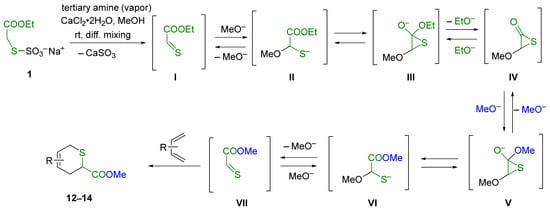
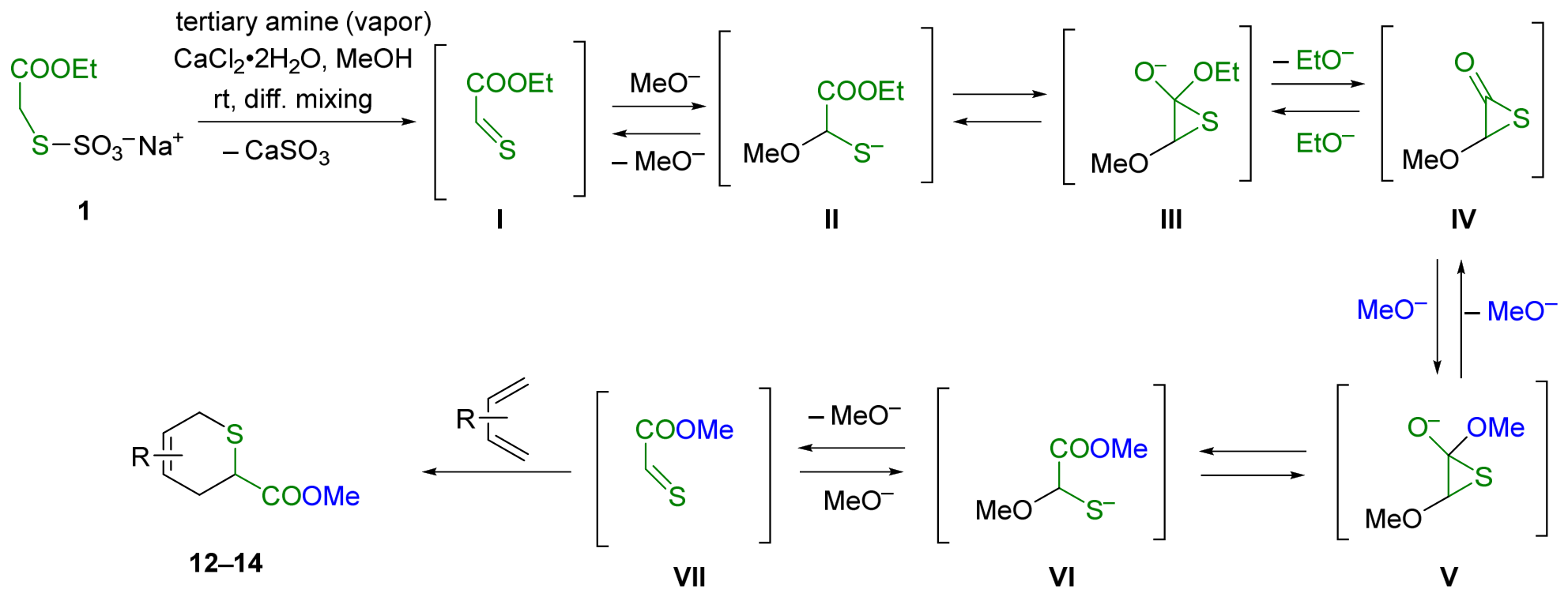
It is worth noting that the ethyl esters 12–14 do not undergo transesterification when kept in a methanolic solution in the presence of NEt3 within two days. This suggests that substitution of the alkoxy group proceeds only via a thiocarbonyl intermediate. The proposed mechanism of this substitution is shown in Scheme 4. First, the methanolate anion attacks the reactive C=S bond of thioaldehyde I, generating a strongly nucleophilic thiolate anion species II. Subsequently, this anion undergoes an intramolecular attack on the C=O bond, leading to the formation of episulfide III. The subsequent elimination of the ethanolate anion yields heterocycle IV. In the following stages, intermediate IV transforms into thioaldehyde VII (bearing a COOMe group) via the intermediate formation of episulfide V and thiolate anion VI. The formation of exclusively methyl adducts during the reaction with reactive cyclopentadiene suggests that the transesterification of the thiocarbonyl compound in excess methanol proceeds quite rapidly.
Scheme 4.
Proposed mechanism of transesterification during the formation of products 12–14.
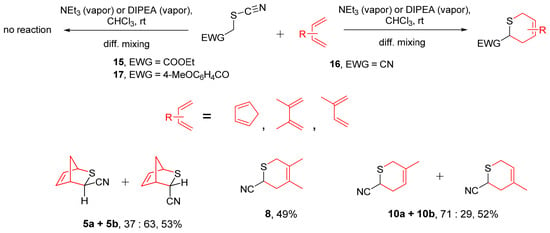
Next, we investigated organic thiocyanates 15–17 bearing electron-withdrawing substituents at the α-position as precursors to thioaldehydes. Like Bunte salts 1–3, these compounds are easily synthesized from the corresponding alkyl halides (see Materials and Methods), stable during storage, and capable of eliminating a leaving group upon treatment with bases. It was found that compounds 15 and 17, bearing carbonyl and ester groups, proved to be unreactive toward dienes under diffusion mixing conditions with NEt3 or DIPEA vapors at room temperature and could be recovered almost quantitatively from the reaction mixture. This suggests that the proton of the CH2 group in these molecules lacks sufficient acidity. In contrast, thiocyanate 16, which bears a stronger electron-withdrawing substituent (cyano-group), readily underwent transformations analogous to those of Bunte salts, generating a thioaldehyde that subsequently formed cycloadducts in the reaction with conjugated dienes (Scheme 5).
Scheme 5.
Reactions of thiocyanates 15–17 with conjugated dienes under diffusion mixing with Et3N or DIPEA vapors.
We optimized the conditions for the thiocyanate 16 [4+2]-cycloaddition using isoprene as a model substrate. As with Bunte salts 1–3, the reaction with cyclopentadiene proceeded efficiently in the presence of NEt3, whereas reactions with 2,3-dimethylbutadiene and isoprene required the use of the higher-boiling DIPEA. The choice of solvent also significantly influenced the yields of adducts 5, 8, and 10. When the reaction was carried out in chloroform or dichloromethane, the target heterocycles were isolated in 49–53% yields, whereas the use of methanol or ethyl acetate resulted in a sharp decrease to 10–25%.
Overall, the use of thiocyanate 16 affords compounds 5, 8, and 10 in lower yields compared to Bunte salt 2, with which yields reach 76–81%. This may be attributed to the generation of a strong nucleophile—the cyanide anion—during the reaction between the amine and the thiocyanate; this anion can add to the intermediate’s thiocarbonyl group and trigger side reactions. Nevertheless, compound 16 can serve as a synthetic alternative to Bunte salt 2 when the reaction needs to be carried out in low-polarity solvents.
4. Conclusions
Thus, this work successfully demonstrated the feasibility of using a diffusion-based method involving tertiary amine vapors for the controlled in situ generation of thioaldehydes from Bunte salts or thiocyanates. It was established that the subsequent trapping of the thiocarbonyl compounds by dienes proceeds with good yields under the mild conditions required for the synthesis of thermally unstable adducts. The diffusion-based [4+2] cycloaddition technique was shown to effectively suppress unwanted side reactions of thioaldehydes by maintaining a low steady-state concentration of the latter in solution—a factor of particular importance when using less reactive dienes. Bunte salts were demonstrated to be more convenient thioaldehyde precursors than thiocyanates owing to the wider range of substrates that can be employed and the high yields of cycloadducts obtained.
Supplementary Materials
The following supporting information can be downloaded at https://www.mdpi.com/article/10.3390/org7040052/s1: Figures S1–S44: NMR spectra of starting compounds and reaction products; Figures S45–S47: MALDI–TOF mass spectra of the reaction side-products.
Author Contributions
Conceptualization, D.E.S. and E.K.B.; methodology, D.E.S.; validation, I.A.L., Y.K.G. and N.V.Z.; investigation, D.E.S., I.A.L. and Y.K.G.; data curation, N.V.Z.; writing—original draft preparation, D.E.S.; writing—review and editing, E.K.B.; funding acquisition, E.K.B. All authors have read and agreed to the published version of the manuscript.
Funding
This research was funded by the Russian Science Foundation under grant number 24-13-00004. NMR studies were supported by the M.V. Lomonosov Moscow State University Program of Development.
Data Availability Statement
The original contributions presented in this study are included in the article/Supplementary Material. Further inquiries can be directed to the corresponding author.
Conflicts of Interest
The authors declare no conflicts of interest.
Abbreviations
The following abbreviations are used in this manuscript:
| NMR | Nuclear magnetic resonance |
| TMS | Tetramethylsilane |
| TLC | Thin-layer chromatography |
| HRMS | High-resolution mass spectrometry |
| DIPEA | N,N-Diisopropylethylamine |
References
- Capozzi, G.; Menichetti, S.; Nativi, C.; Rosi, A.; Valle, G. Phthalimidosulfenyl Chloride. Part 5. Reaction with Enolizable Carbonyl Compounds and Synthesis of Functionalized Thiones. Tetrahedron 1992, 48, 9023–9032. [Google Scholar] [CrossRef] [Scilit]
- Kirby, G.W.; McGregor, W.M. The Transient Dienophile Diethyl Thioxomalonate and Its S-Oxide (Sulphine) Formed by Retro-Diels-Alder Cleavage Reactions. J. Chem. Soc. Perkin Trans. 1 1990, 19, 3175–3181. [Google Scholar] [CrossRef] [Scilit]
- Perreault, S.; Poirier, M.; Léveillé, P.; René, O.; Joly, P.; Dory, Y.; Spino, C. Mechanism and Regioselectivity of the Cycloaddition of Thiones Derived from Meldrum’s Acid, Malonates, or Other Dicarbonyls. J. Org. Chem. 2008, 73, 7457–7466. [Google Scholar] [CrossRef] [Scilit] [PubMed]
- Altintas, O.; Glassner, M.; Rodriguez-Emmenegger, C.; Welle, A.; Trouillet, V.; Barner-Kowollik, C. Macromolecular Surface Design: Photopatterning of Functional Stable Nitrile Oxides. Angew. Chem. Int. Ed. 2015, 54, 5777–5783. [Google Scholar] [CrossRef] [Scilit] [PubMed]
- Vedejs, E.; Perry, D.A.; Houk, K.N.; Rondan, N.G. Regiochemistry in Thiocarbonyl Diels-Alder Additions: Reversal of Selectivity by Substituent Effects in Thioaldehydes. J. Am. Chem. Soc. 1983, 105, 6999–7001. [Google Scholar] [CrossRef] [Scilit]
- Prabhakaran, J.; Lhermitte, H.; Das, J.; Sasi-Kumar, T.K.; Grierson, D.S. The Synthesis of a Sulfone Containing Analogue of the Esperamicin-A1 Aglycone: A Hetero Diels-Alder Approach. Synlett 2000, 2000, 658–662. [Google Scholar] [CrossRef] [Scilit]
- Vedejs, E.; Reid, J.G.; Rodgers, J.D.; Wittenberger, S.J. Synthesis of Cytochalasins: The Route to Sulfur-Bridged [11]Cytochalasans. J. Am. Chem. Soc. 1990, 112, 4351–4357. [Google Scholar] [CrossRef] [Scilit]
- Xia, Y.; Yi, Y.; Shi, Y.; Long, T.; Wang, H. Enzymatic Generation of Thioaldehyde Motifs by Flavin-Dependent Cysteine Decarboxylases for Peptide Bioconjugation and Macrocyclization. Org. Lett. 2023, 25, 6035–6039. [Google Scholar] [CrossRef] [Scilit] [PubMed]
- Davison, E.K.; Hume, P.A.; Sperry, J. Total Synthesis of an Isatis indigotica-Derived Alkaloid Using a Biomimetic Thio-Diels-Alder Reaction. Org. Lett. 2018, 20, 3545–3548. [Google Scholar] [CrossRef] [Scilit] [PubMed]
- Murphy, B.; Šnajdr, I.; Machara, A.; Endoma-Arias, M.A.A.; Stamatatos, T.C.; Cox, D.P.; Hudlický, T. Conversion of Thebaine to Oripavine and Other Useful Intermediates for the Semisynthesis of Opiate-Derived Agents: Synthesis of Hydromorphone. Adv. Synth. Catal. 2014, 356, 2679–2687. [Google Scholar] [CrossRef] [Scilit]
- Kirby, G.W.; Lochead, A.W.; Sheldrake, G.N. Generation of Thioaldehydes from Sodium Thiosulphate S-Esters (Bunte Salts). J. Chem. Soc. Chem. Commun. 1984, 20, 922–923. [Google Scholar] [CrossRef] [Scilit]
- Bladon, C.M.; Ferguson, I.E.G.; Kirby, G.W.; Lochead, A.W.; McDougall, D.C. Ethyl and Methyl Thioxoacetates, Dienophilic Thioaldehydes Formed from Sulphenyl Chlorides by 1,2-Elimination. J. Chem. Soc. Perkin Trans. 1 1985, 14, 1541–1545. [Google Scholar] [CrossRef] [Scilit]
- Pelloux, N.; Vallee, Y.; Duchenet, V. Sulfur (Or Selenium)-Mediated Synthesis of Methanoanthracene Derivatives. The First Synthesis of a Seleno-Cyanohydrin. Phosphorus Sulfur Silicon Relat. Elem. 1994, 89, 17–23. [Google Scholar] [CrossRef] [Scilit]
- Kirby, G.W.; Lochead, A.W.; Williamson, S. Dienophilic Thioaldehydes and Dithioesters Formed by Base-Catalysed Cleavage of Alkyl Phthalimidosulfanylacetates. J. Chem. Soc. Perkin Trans. 1 1996, 25, 977–984. [Google Scholar] [CrossRef] [Scilit]
- Kirby, G.W.; Lochead, A.W.; Sheldrake, G.N. Transformation of Thiosulphonates into α-Sulphonyldisulphides, a New Class of Thioaldehyde Precursors. J. Chem. Soc. Chem. Commun. 1984, 20, 1469–1470. [Google Scholar] [CrossRef] [Scilit]
- Sachse, F.; Schneider, C. Cooperative Photoinduced/Brønsted Acid Catalyzed Cycloaddition of Transient Thioaldehydes and Ortho-Quinone Methides toward a Synthesis of Benzo[e][1,3]Oxathiines. Org. Lett. 2021, 23, 2682–2686. [Google Scholar] [CrossRef] [Scilit] [PubMed]
- Sachse, F.; Gebauer, K.; Schneider, C. Continuous Flow Synthesis of 2H-Thiopyrans via Thia-Diels–Alder Reactions of Photochemically Generated Thioaldehydes. Eur. J. Org. Chem. 2021, 2021, 64–71. [Google Scholar] [CrossRef] [Scilit]
- Ong, M.J.H.; Hewitt, R.J. Synthesis of 1,4,2-Oxathiazoles via Norrish Type II Generation of Thiocarbonyls. ChemistrySelect 2019, 4, 10532–10535. [Google Scholar] [CrossRef] [Scilit]
- Larsen, S.D.; Fisher, P.V.; Libby, B.E.; Jensen, R.M.; Mizsak, S.A.; Watt, W.; Ronk, W.R.; Hill, S.T. Cyclopentene Synthesis from 1,3-Dienes via Base-Induced Ring Contraction of 3,6-Dihydro-2H-Thiopyrans: Studies on Diastereoselection and Mechanism. J. Org. Chem. 1996, 61, 4725–4738. [Google Scholar] [CrossRef] [Scilit] [PubMed]
- Shimizu, H.; Kudo, N.; Kataoka, T.; Hori, M. Synthesis and Thermal Transformation of Stable Monocyclic λ4-Thiabenzenes. J. Chem. Soc. Perkin Trans. 1 2001, 30, 2269–2276. [Google Scholar] [CrossRef] [Scilit]
- Valiulin, R.A.; Bhuvan Kumar, N.N.; Kuznetsov, D.M.; Kutateladze, A.G. Cascade Transformations Involving Thiocarbonyls: Photoassisted Access to Bicyclic Thiiranes and Oxapentalenes. J. Sulfur Chem. 2012, 34, 209–221. [Google Scholar] [CrossRef] [Scilit]
- Kouissa, B.; Beghidja, N.; Bouchouit, K.; Youcef, M. Cycloaddition Reaction of Ethyl Thioxoacetate and the Dienamine Derived from Pummerer’s Ketone. J. Chem. 2013, 2013, 813451. [Google Scholar] [CrossRef] [Scilit]
- Shybanov, D.E.; Filkina, M.E.; Kukushkin, M.E.; Grishin, Y.K.; Roznyatovsky, V.A.; Zyk, N.V.; Beloglazkina, E.K. Diffusion Mixing with a Volatile Tertiary Amine as a Very Efficient Technique for 1,3-Dipolar Cycloaddition Reactions Proceeding via Dehydrohalogenation of Stable Precursors of Reactive Dipoles. New J. Chem. 2022, 46, 18575–18586. [Google Scholar] [CrossRef] [Scilit]
- Shybanov, D.E.; Kukushkin, M.E.; Grishin, Y.K.; Roznyatovsky, V.A.; Tafeenko, V.A.; Abo Qoura, L.; Pokrovsky, V.S.; Yarovaya, O.I.; Belyaevskaya, S.V.; Volobueva, A.S.; et al. 1,3-Dipolar Cycloaddition of Nitrile Oxides and Nitrilimines to (−)-β-Caryophyllene: Stereoselective Synthesis of Polycyclic Derivatives and Their Biological Testing. Int. J. Mol. Sci. 2024, 25, 11435. [Google Scholar] [CrossRef] [Scilit] [PubMed]
- Kuznetsova, J.V.; Tkachenko, V.T.; Petrovskaya, L.M.; Filkina, M.E.; Shybanov, D.E.; Grishin, Y.K.; Roznyatovsky, V.A.; Tafeenko, V.A.; Pestretsova, A.S.; Yakovleva, V.A.; et al. [3+2]-Cycloaddition of Nitrile Imines to Parabanic Acid Derivatives—An Approach to Novel Spiroimidazolidinediones. Int. J. Mol. Sci. 2024, 25, 18. [Google Scholar] [CrossRef] [Scilit] [PubMed]
- Shybanov, D.E.; Grishin, Y.K.; Roznyatovsky, V.A.; Yarovaya, O.I.; Zarubaev, V.V.; Niukalova, M.A.; Garshinina, A.V.; Salakhutdinov, N.F.; Zyk, N.V.; Beloglazkina, E.K. Synthesis, Structure, and Antiviral Activity of Camphene-Based Spiroisoxazolines. ChemistrySelect 2025, 10, e03734. [Google Scholar] [CrossRef] [Scilit]
- Tietze, L.F.; Eicher, T. Reaktionen und Synthesen im Organisch-Chemischen Praktikum und Forschungslaboratorium, 2nd ed.; Wiley-VCH: Weinheim, Germany, 1991; ISBN 978-3527308741. [Google Scholar]
- Chen, J.; Liu, D.; Butt, N.; Li, C.; Fan, D.; Liu, Y.; Zhang, W. Palladium-Catalyzed Asymmetric Hydrogenation of α-Acyloxy-1-Arylethanones. Angew. Chem. Int. Ed. 2013, 52, 11632–11636. [Google Scholar] [CrossRef] [Scilit] [PubMed]
- Li, Y.; Xie, W.; Jiang, X. Mechanistic Study of a Photocatalyzed C–S Bond Formation Involving Alkyl/Aryl Thiosulfate. Chem. A Eur. J. 2015, 21, 16059–16065. [Google Scholar] [CrossRef] [Scilit] [PubMed]
- Pirenne, V.; Kurtay, G.; Voci, S.; Bouffier, L.; Sojic, N.; Robert, F.; Bassani, D.M.; Landais, Y. Eosin-Mediated Alkylsulfonyl Cyanation of Olefins. Org. Lett. 2018, 20, 4521–4525. [Google Scholar] [CrossRef] [Scilit] [PubMed]
- Gordon, A.J.; Ford, R.A. The Chemist’s Companion: A Handbook of Practical Data, Techniques, and References; John Wiley & Sons: New York, NY, USA, 1972. [Google Scholar]

Disclaimer/Publisher’s Note: The statements, opinions and data contained in all publications are solely those of the individual author(s) and contributor(s) and not of MDPI and/or the editor(s). MDPI and/or the editor(s) disclaim responsibility for any injury to people or property resulting from any ideas, methods, instructions or products referred to in the content. |
© 2026 by the authors. Licensee MDPI, Basel, Switzerland. This article is an open access article distributed under the terms and conditions of the Creative Commons Attribution (CC BY) license.