


Abstract
Ensuring Quality of Service (QoS) in complex, large scale, and centralized Software-Defined Networking (SDN) environments remains a major challenge for the scientific community, network administrators or operators, and industry. The SDN networking model promises to improve and optimize QoS in dynamic environments by enhancing network applications related to traffic management. It provides centralized control, flexibility, abstraction, and programmability of network resources. However, these expectations have not been fully met, primarily due to the difficulties associated with integrating or adapting traditional QoS mechanisms (routing, queue management, resource reservation) into the SDN architecture, the limitations of the OpenFlow protocol, and the highly dynamic nature of modern networks. Given the wide variety of networking environments, such as Internet of Things (IoT), data centers, cloud compounding, fog computing, 5G/6G networks and others, the core challenge is the lack of a standardized workflow for the integration of QoS mechanisms into SDN. Previous studies primarily focus on specific QoS mechanisms in SDN, particular application domains, or architectural aspects, offering limited comprehensive comparisons of QoS requirements, implementation approaches, evaluation methodologies, and the limitations of individual studies. To address these gaps, this study combines bibliometric analysis with a systematic review of selected publications from 2020 to 2026, providing an up-to-date and comprehensive overview of the latest research advances, emerging trends, and technological developments in the field. Furthermore, it critically examines the QoS requirements, implementation approaches, evaluation methodologies, and limitations reported in the selected studies, thereby offering a structured synthesis of the current state of the art and identifying promising directions for future research.
1. Introduction
1.1. Software-Defined Networking
In recent years, technological advances, the rapid growth in the number of interconnected devices, and the increasing demand for ubiquitous networking have significantly influenced the evolution of networked systems, heightening their complexity [1]. The widespread adoption of Internet technologies and the continuous expansion of Internet-based applications have resulted in a substantial increase in network traffic and an urgent need to satisfy QoS requirements. Traditional IP networks were unable to cope with these new demands [2] necessitating a redesign of their control and management mechanisms. These challenges were addressed through the emergence of SDN.
SDN introduced the separation of the control plane and the data plane, enabling greater agility and adaptability in packet forwarding, which is performed by switches under the guidance of an external logical entity known as the SDN controller. This architectural shift enables the dynamic configuration and management of network resources, enhancing the efficient operation of the network [3]. Table 1 summarizes the key differences between the two network architectures (legacy networks and SDN), highlighting the fundamental differences in structure, operation, and capabilities.
Table 1.
A brief comparison between legacy networks and SDN.
The foundational architecture of SDN includes three layers: the data layer, the control layer, and the application layer. In the application (or management) layer, which is the highest layer, the SDN applications reside. The application layer sends network application requests to the controller through the northbound interface. The controller then forwards these requests, in the form of rules, to the switches. It ensures that applications do not interfere with the various network devices, providing flexibility and programmability in network management [2,4,5].
The control layer functions as the “brain” of the network [2] includes one or more SDN controllers. The controller is responsible for managing the network and maintaining a complete and up to date view of its global state [6]. Based on this global view, it makes decisions about the configuration of rules and policies that govern network operation according to the needs and requirements of the applications. The controller directly influences the QoS of the SDN network, as it is responsible for decisions related to resource allocation and the enforcement of policies that ensure service reliability and the network’s ability to scale [7].
The data layer (or forwarding plane) consists mainly of simple infrastructure devices (e.g., switches, routers) that are interconnected either wired or wireless. These devices, whether hardware based or software based, are responsible for forwarding packets according to the rules and instructions provided by the SDN controller. Communication between this layer and the controller layer above is achieved through an interface known as the Southbound Interface, with the OpenFlow protocol being the most widely used implementation. Within the data layer, QoS rules can be applied, QoS-enabled implementations deployed, QoS management mechanisms operated, and QoS-related information stored [8].
1.2. Quality of Service in Networking
As networks continue to evolve, ensuring service quality remains a challenging and demanding task in modern networks [9]. Modern networks host not only traditional services, such as web and computing services, but also AI, analytics, and mapping services, which require the transmission of enormous volumes of data [10]. The wide diversity of network environments, coupled with their high-performance requirements, introduces significant complexity in achieving consistent performance and delivering effective services. This requirement is further amplified by the explosive growth of real time applications, which introduce several and increasingly stringent QoS demands [7]. Many of these applications generate elephant flows, characterized by long-lived, high-volume data transfers, that consume substantial network resources, increase latency, and exacerbate packet loss [11]. Consequently, they compete with and reduce the effectiveness of the vast majority of mice flows that are highly sensitive to delay [12]. A fundamental objective in any network architecture is the preservation and continuous enhancement of QoS [13]. In large-scale networks, it becomes essential to design and deploy scalable QoS mechanisms capable of supporting real-time applications with stringent requirements for latency, reliability, and bandwidth.
QoS is a critical concern for any networked system, as it reflects the network’s ability to meet the technical requirements of applications and, consequently, to ensure the Quality of Experience (QoE) perceived by end users [14]. However, improving QoS requires a careful balance between the demands of applications and the availability of network resources [15].
1.3. Why QoS in SDN Is a Significant Research Domain
It is evident that traditional network architectures are inherently limited in their ability to meet the stringent latency requirements imposed by contemporary applications due to their static operational paradigm and their inability to provide a holistic view of the network [7]. In contrast, the centralized and programmable architecture of SDN provides new opportunities for hosting QoS mechanism, capable of adapting to network conditions and application requirements. SDN introduces new expectations for handling the heterogeneity and large-scale of modern networks [16], while enhancing QoS support across fundamental network mechanisms, such as routing, traffic scheduling, dynamic load balancing, resource allocation, real-time traffic classification, and other related functions. The ability to dynamically intervene in the network and make decisions for real time multimedia applications has been shown to provide significant advantages over traditional network architectures [17]. These capabilities make SDN well-suited and instrumental in the effective implementation of QoS mechanisms.
Despite these architectural advantages, providing QoS in SDN remains one of the most prominent research challenges. Several issues arise from SDN’s capabilities that must be fully addressed, including the additional overhead introduced by continuous controller driven monitoring, scalability concerns, and the management of real time flow rules. To tackle these challenges discussed later in this paper, the research community has proposed a wide range of solutions, including QoS aware routing algorithms, intelligent traffic engineering techniques, machine learning based approaches, and enhanced controller architectures. In the rapidly evolving networking landscape, QoS in SDN continues to be a pivotal and dynamic research domain, with the overarching goal of improving network performance and reliability.
1.4. Contributions
Although QoS in SDN continues to attract the interest of the scientific community, the existing literature remains scattered on various mechanisms, metrics, application domains, and evaluation practices. Several studies focus on specific aspects such as QoS-driven routing in a network, traffic management, load balancing, controller placement, or machine learning-based optimization. However, few studies offer a comprehensive overview and thorough evaluation of current research that connects QoS requirements with relevant SDN mechanisms, application environments, evaluation methods, and other limitations. With this study, we try to fill this gap. This study analyzes the state of the art in QoS functionality in SDN using the Bibliometric-Systematic Literature Review (B-SLR) approach [18]. Specifically, it aims to:
- Identify influential publications, major research trends, and key topics in QoS for SDN.
- Examine QoS mechanisms, implementation and optimization approaches, and evaluation methodologies, highlighting the limitations of existing solutions.
- Identify research gaps, open challenges, and promising future research directions to support the development of effective, adaptive, and scalable QoS solutions in SDN environments.
The rest of this paper is organized as follows. Section 2 discuss the related work, while Section 3 presents the research methodology. Section 4 analyzed and interpreted the bibliometric findings while in Section 5 content analysis is presented. Finally, Section 6 concludes the paper and illustrates future research directions.
2. Related Work
In recent years, the growing adoption of SDN and the increasing need to support QoS requirements have motivated the publication of several surveys in this research area [9]. Most existing studies focus on specific QoS mechanisms, such as QoS-aware routing, traffic engineering, traffic management, and load balancing in SDN environments [19,20,21].
In addition, many literature reviews consider the use of optimization, machine learning, and dynamic resource allocation techniques to support QoS requirements in IoT, cloud, and 5G network environments [22,23,24,25]. Other studies investigate operational issues such as energy efficiency, the reliability of SDN architectures, efficient network traffic management, and controller-related issues associated with QoS [7,26]. In addition, existing research has examined the evolution of SDN technologies and QoS mechanisms through both comparative and thematic approaches [27].
Although these reviews of the literature provide useful information about QoS support in SDN, several of them still focus on specific mechanisms, architectural aspects, or application frameworks instead of offering a comprehensive classification of QoS requirements and corresponding SDN mechanisms [28,29]. Moreover, existing SDN studies associated with QoS employ a variety of evaluation methodologies, such as analytical modeling, simulation, emulation, and experiments based on testbeds, but these approaches are often not synthesized into a wider comparative evaluation framework [30,31]. B-SLR analysis goes beyond individual reviews by mapping the broader research landscape of SDN and QoS, rather than focusing on isolated mechanisms or architectures. Based on mathematical and statistical methods, it reveals the dominant research themes, key publications and authors, and influential journals and countries. In contrast to existing approaches, this B-SLR analysis integrates these fragmented perspectives at a higher level of synthesis, highlighting the most prevalent methods, gaps in evaluation practices, and the evolution of QoS research from static networks to dynamic environments, such as IoT and 5G, enabled by SDN-driven automation.
3. Methodology and Research Design
In this study, we adopted a combined bibliometric and systematic literature review approach to provide a comprehensive and methodologically rigorous overview of current research on QoS in SDN. Following the framework proposed by Marzi et al. [18], this approach integrates quantitative analysis of the research landscape with a systematic examination of the existing scientific literature, enabling the identification of key research trends, themes, and knowledge gaps. The methodology comprises the following steps: (a) formulation of the research questions, (b) definition of the search strategy and research query, (c) selection of the databases, (d) specification of inclusion and exclusion criteria, and quality assessment procedures.
The B-SLR methodology adopted in this study integrates the quantitative field-mapping capabilities of bibliometric analysis with the qualitative rigor of systematic literature reviews, resulting in a more comprehensive, reliable and nuanced understanding of a research domain. Bibliometric analysis involves quantitative mapping of the literature, the use of Visualization of Similarities (VOS) techniques, and the identification of key research trends. In contrast, the Systematic Literature Review (SLR) involves a structured process of literature review, screening, full-text assessment, data extraction, and addressing research questions. Bibliometric analysis captures the research landscape at a macro level, while the SLR identifies, evaluates, and synthesizes the theoretical foundations and practical approaches applied in SDN to improve and optimize QoS at a micro level. This integrated methodology provides a comprehensive understanding of the research field that neither approach could achieve independently. This study employs the B-SLR methodology to investigate how SDN technology can enhance QoS, identify emerging research directions, and synthesize contributions from different interdisciplinary fields. It also aims to identify approaches that address current networking challenges and meet the QoS requirements of modern network traffic.
3.1. Research Questions
This comprehensive and systematic review of the current literature on QoS in SDN is guided by a set of research questions (RQ). These questions serve to clarify the important aspects of the technologies and techniques used to apply QoS in networked systems. In addition, they guide the analysis of the literature review by helping to identify, evaluate, interpret, and synthesize relevant studies, while also indicating areas that require further research. The study is structured around the following research questions:
- RQ1: How has the relevant research evolved in recent years, and what are the key emerging trends? This question is motivated by the need to remain in line with current scientific developments and understand how QoS research within SDN has evolved over time. Its purpose is to highlight the growth patterns of publications, identify thematic shifts, and reveal emerging research directions that shape the field.
- RQ2: In SDN systems, how are application-specific QoS requirements classified according to their underlying metrics and characteristics? This research question aims to systematically document the most commonly used QoS metrics and application requirements, clarifying their objectives and the specific meanings they convey within the context of SDN.
- RQ3: How are QoS approaches/solutions evaluated? This question is intended to identify the most widely adopted methodologies and evaluation models used in the literature for assessing new QoS solutions in SDN. By uncovering these methodological patterns, the findings will help reveal promising research directions and highlight gaps to be addressed.
- RQ4: In modern networked systems, what core problems can be effectively addressed through QoS optimization? This question identifies the major performance and management challenges in contemporary networks and examines how QoS optimization techniques can mitigate them.
- RQ5: Across which domains or environments is QoS applied? This question aims to identify the domains in which SDN is currently adopted and in which QoS mechanisms are applied. In addition, it will help reveal emerging areas where the integration of SDN and QoS could offer significant benefits.
- RQ6: What are the current limitations and research gaps in QoS mechanisms and how do these challenges influence future trends in QoS design for modern networked systems? Explores open issues, scalability and interoperability limitations, standardization gaps, and how these shape future QoS research and architectural evolution.
3.2. Search Strategy
To answer these research questions, scientific papers were searched for in various online databases that index high quality academic content, such as Scopus [32], ACM [33], and IEEE Xplore [34]. These databases are internationally recognized and contain a large volume of scientific material, including journal articles, books, and conference proceedings from various sources and publishers (e.g., Elsevier, ACM, IEEE, MDPI, SpringerLink). The query formulated in each database’s search engine included the keywords “Software Defined Networking” and “Quality of Service” in various forms.
To improve the selection of related publications, the inclusion/exclusion criterion was applied only to keywords that appeared either in the article title. This approach ensured that the final dataset included publications with a meaningful emphasis on QoS in SDN environments, rather than those that mentioned the terms randomly or in unrelated contexts. By narrowing the scope in this way, we increased the thematic consistency of the literature included in our analysis.
The query that was submitted to the Scopus database was as follows:
TITLE ( ( “software defined networking” OR “software-defined networking” OR “software defined networks” OR “software-defined networks” OR SDN ) AND ( “quality of service” OR “quality of services” OR QoS ) ) AND NOT TITLE ( survey OR surveys OR review OR “survey paper” OR “review paper” OR “systematic review” OR “literature review” ) AND PUBYEAR > 2019 AND PUBYEAR < 2027.
Similar queries were conducted in other scientific databases.
3.3. Inclusion and Exclusion Criteria
To ensure that the most relevant, clear and meaningful studies were retained from the initial search for QoS in SDN, we applied specific inclusion and exclusion criteria to the search results. Studies that did not focus primarily on QoS within SDN environments or examined QoS without the involvement of SDN technologies were excluded. Duplicate records, non-peer-reviewed material, editorials and books were also removed.
In contrast, studies that addressed the interplay between QoS and SDN—particularly those that examined performance, delay, scheduling, traffic management, and SDN controller-related policies—were included. The inclusion and exclusion criteria applied are summarized below. The additional inclusion criteria that we define are listed in Table 2. Documents that failed to meet these criteria were excluded from this study.
Table 2.
Eligibility criteria for study selection.
3.4. Quality Assessment
To further ensure that the final studies we selected are scientifically sound, we applied three basic indicators: accessibility, content, and reproducibility [35]. The quality assessment of the content was conducted using the criteria proposed by Mahanra Rao et al. [36].
- The purpose of the research is clearly articulated.
- The methodology is described in a clear and understandable manner.
- The proposed approach aligns consistently with the stated problem.
- The results are presented and explained thoroughly.
- The conclusions are well supported by the findings.
After applying data screening, duplicates and ineligible documents were removed, reducing the number of publications to 171.
4. Bibliometric Analysis of QoS Research in SDN
In this section, we first present the results of the bibliometric analysis [37], following the methodology of Lim et al. [38]. We employed the VOSviewer version 1.6.20 [39] and the Bibliometrix and Biblioshiny packages in R (version 4.5.2), using RStudio (version 2026.01.0) [40] as the development environment. The analysis was based on metadata extracted from scientific databases as described in Section 3.2. VOSviewer is a widely used visualization tool for bibliometric analysis, employing the Visualization of Similarities (VoS) technique to represent extracted knowledge in a structured, interpretable, and meaningful manner [41]. Bibliometrix and Biblioshiny are excellent R packages, useful for quantitative analysis in bibliometric field.
4.1. General Information
During the period 2020–2026, 560 authors collaborated to produce 171 scientific articles, which were published in 105 different sources. The average number of authors per paper is 3.81, while only three papers were written by a single author. The international collaboration stands at 23.98%. Key characteristics of the field include a high research production rate (with documents having an average age of 3.31 years), an active knowledge base comprising 5224 bibliographic references, and consistent communicative diffusion, reflected in an average of 14.13 citations per publication.
4.1.1. Annual Scientific Production
The analysis of the number of publications and citations by year provides an overview of research activity and scientific impact over time in the field of QoS in SDN. Figure 1 illustrates the annual scientific output from 2020 to 2026, revealing clear year-to-year fluctuations. During the period 2020–2022, the number of publications ranged from 25 to 35 per year, with the highest value recorded in 2021. A similar pattern can be observed during the following three-year period, with an average of 24.5 publications per year. In 2026, a pronounced decline is observed, with the annual number of publications falling below 15. However, 2026 represents a partial year; thus, the observed decline in the number of publications should be interpreted with caution. To avoid misleading interpretations, we have normalized the publication count for 2026. As shown in the in the inset of Figure 1, the value for 2026 is an estimate rather than the actual annual publication count. This value is estimated based on the publications indexed during the data-collection period and is clearly identified as a projection to avoid misleading interpretations. The resulting trend suggests relatively stable research activity, reflecting the increasing maturity of the field in recent years.
Figure 1.
Annual scientific production in QoS in SDN-related studies, as estimated using the Bibliometrix package in R, over the last seven years.The inset figure presents the same results, with the 2026 value replaced by the normalized estimate.
This temporal evolution indicates that QoS research in SDN has maintained a sustained presence in the scientific literature, with continued research activity and ongoing contributions to the field.
4.1.2. Average Citations per Year
Figure 2 displays the average annual number of citations per document, which ranges from approximately 0.69 to 4.67 citations, while the mean total number of citations per article ranges from 0.69 to 32.72. In both cases, the lowest average is observed in 2026, whereas the highest is recorded in 2020. Although the overall trend is downward, the relatively high levels of citations underscore the significance and influence of publications in this field. The declining pattern may reflect fluctuations within the study period, partly because the data for 2026 cover only part of the year and more recent publications have had less time to accumulate citations.
Figure 2.
Annual distribution of average citation counts over the period 2020–2026.
4.2. Author Metrics
4.2.1. Author Productivity
Figure 3 presents the top ten prolific authors in the QoS–SDN domain. Jehad Ali and Byeong-hee Roh (five publications) ranks first, followed by Murat Karakuş (four publications), and Guler E., Huang Y., Mohammadi R., Nassiri M., Taleb T., Wang Z., and Zhang Y. (all with three publications). According to Lotka’s law, the scientific productivity of the vast majority of authors is relatively low, whereas only a small proportion of authors exhibit high productivity. Figure 4 (solid curve) illustrates the distribution of authors’ scientific productivity. The observed distribution exhibits the general pattern described by Lotka’s law, with a high proportion of authors contributing only a small number of publications and progressively fewer authors exhibiting higher scientific productivity. However, the observed distribution does not closely match the theoretical Lotka distribution, with notable differences particularly among authors with one publication. Nevertheless, the overall pattern is broadly consistent with the underlying principle of Lotka’s law, which characterizes scientific productivity as highly concentrated among a relatively small proportion of authors. Specifically, Figure 4 shows that more than 80% of the researchers have published only a single document. This finding may indicate that the field continues to attract new researchers, many of whom contribute to a limited number of publications. In contrast, a relatively small group of highly active researchers constitutes the core of knowledge production and exhibits substantially higher scientific productivity.
Figure 3.
Top 10 most prolific authors. Darker color intensity indicates authors with higher publication productivity.
Figure 4.
The application of Lotka’s law of scientific productivity on the publication of papers.
4.2.2. Most Locally Cited Authors
Figure 5 presents the ten leading authors whose work has received the highest number of citations within the dataset under this analysis, highlighting those who have achieved the greatest impact based on their citation counts. According to the citation counts, Ali J. ranks first with ten citations, followed by Roh B.-H. with nine citations. Guo X., Li Z., Lin H., and Peng M. rank jointly third with eight citations each, while Aldegheishem A., Alrajeh N., Elbasheer M., and Lloret J. rank jointly fourth with seven citations each.
Figure 5.
Authors with the highest number of local citations. The color intensity represents the number of local citations received by the authors, while the size of each circle represents their publication productivity.
4.3. Sources Metrics
4.3.1. Most Relevant Sources
For the evaluation of sources (journals, conferences, or proceedings), quantitative measures and indicators are used, such as the number of publications, their impact, and collaboration patterns. The most productive sources in terms of publication output are Applied Sciences (Switzerland), the IEEE Internet of Things Journal, and Sensors, with seven publications each, followed by IEEE Access with five publications. Six additional sources, that are Computer Networks, Computers, Materials & Continua, Concurrency and Computation: Practice and Experience, Electronics (Switzerland), IEEE Transactions on Network and Service Management, and International Journal of Communication Systems, have four publications each. These results are presented in Figure 6.
Figure 6.
Sources with the highest number of publications.
4.3.2. Sources’ Local Impact
The Sources’ Local Impact metric reflects the citation impact of a specific scientific source or publication within the dataset analyzed in the study. Figure 7 presents the ten sources with the highest local impact, as identified through the analysis of the dataset using the Bibliometrix package in R. IEEE Internet of Things Journal ranks first, with a total of 281 citations, followed by IEEE Access with 167 citations and IEEE Transactions on Network and Service Management with 144 citations. Other sources follow with lower citation counts.
Figure 7.
Relevant sources with most local citations.
It is worth noting that although Applied Sciences (Switzerland) has a comparable number of publications (7), its corresponding publications have received substantially fewer citations (56). This difference highlights the distinction between publication productivity and citation impact within the literature examined in this study.
4.4. County Specific Metrics
Figure 8 presents the distribution of scientific publications per country, based on the institutional affiliations of all contributing authors. The color intensity reflects each country’s publication volume, while countries without active research output are shown in grey. China ranks first with 68 publications, followed by India (35 articles) and the Iran and Saudi Arabia (18 articles). Collectively, these four countries account for 46.8% of global research output, whereas the remaining 43 countries exhibit substantially lower levels of scientific productivity. Figure 9 illustrates the impact of these publications by depicting the geographical distribution of citations received. China records the highest number of citations, followed by India and Iran. However, when considering the average number of citations per publication, Finland ranks first (57), followed by Australia (50.30), and United Kingdom (39.50).
Figure 8.
The distribution of scientific publications per country.
Figure 9.
The ten most cited countries.
4.5. Document Specific Metrics
4.5.1. Most Globally and Locally Cited Documents
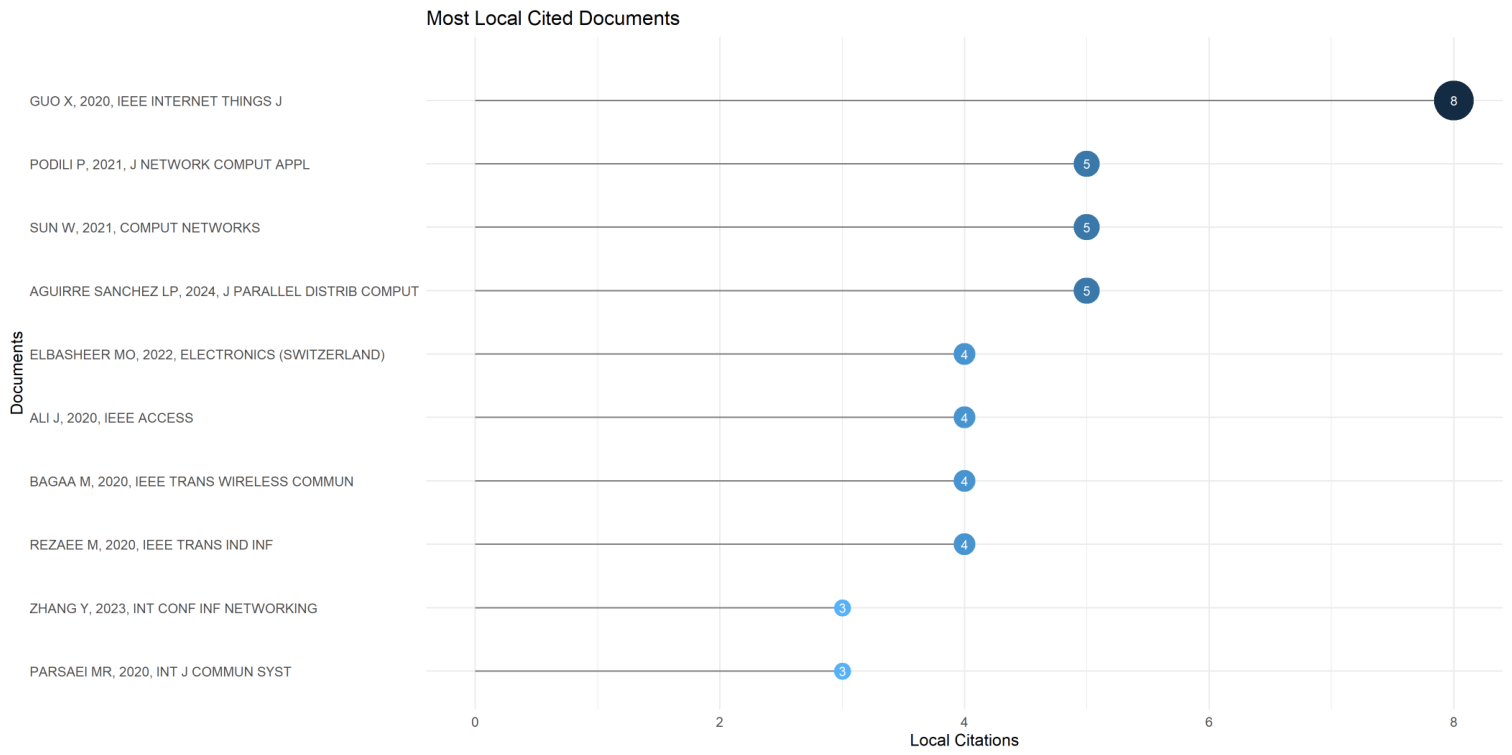
The document analysis, based on the number of citations received by each scientific publication, highlights the relative impact of contributions within the research field. The citation analysis was conducted from two perspectives: global citations and local citations received by the publications. The first approach examines the total number of citations received by a scientific work across the entire scholarly literature, including citations originating from other research fields. The second approach considers the number of citations a publication has received within the dataset under study and, consequently, within the specific research domain being analyzed. The results, shown in Figure 10, indicate that the work by Guo et al. [42], ranks first with 143 citations. It is followed by the publication of Kumar et al. [43], with 99 citations, while the article by Shah et al. [44], with 89 citations ranks third. The first two approaches focused on developing a QoS-aware routing mechanism to address issues such as scalability, QoS, security, and dynamic traffic, while keeping routing decisions fast and efficient. The authors of the third-ranked study investigated mechanisms for maintaining QoS requirements during user mobility in MEC environments and proposed an architecture aimed at minimizing latency, service interruptions, and communication degradation.
As illustrated in Figure 11, the study by Guo et al. [42] has the highest number of local citations, followed by the studies by Podili et al. [45], Sun et al. [46], and Sanchez et al. [47]. The analysis reveals that the study by Guo et al. [42] ranks at the top of the list in terms of both local and global citations. This position indicates the prominence and recognition of the work both within the specific research field under investigation and across the broader scientific domain. A similar pattern can be observed for the remaining studies included in the list, with the number of global citations generally exceeding the number of local citations. This suggests that these works have attracted considerable attention not only within the focal research area but also across related scientific disciplines.
Figure 10.
Most globally cited documents, ranked in descending order of citation counts ([26,42,43,44,46,48,49,50,51,52]).
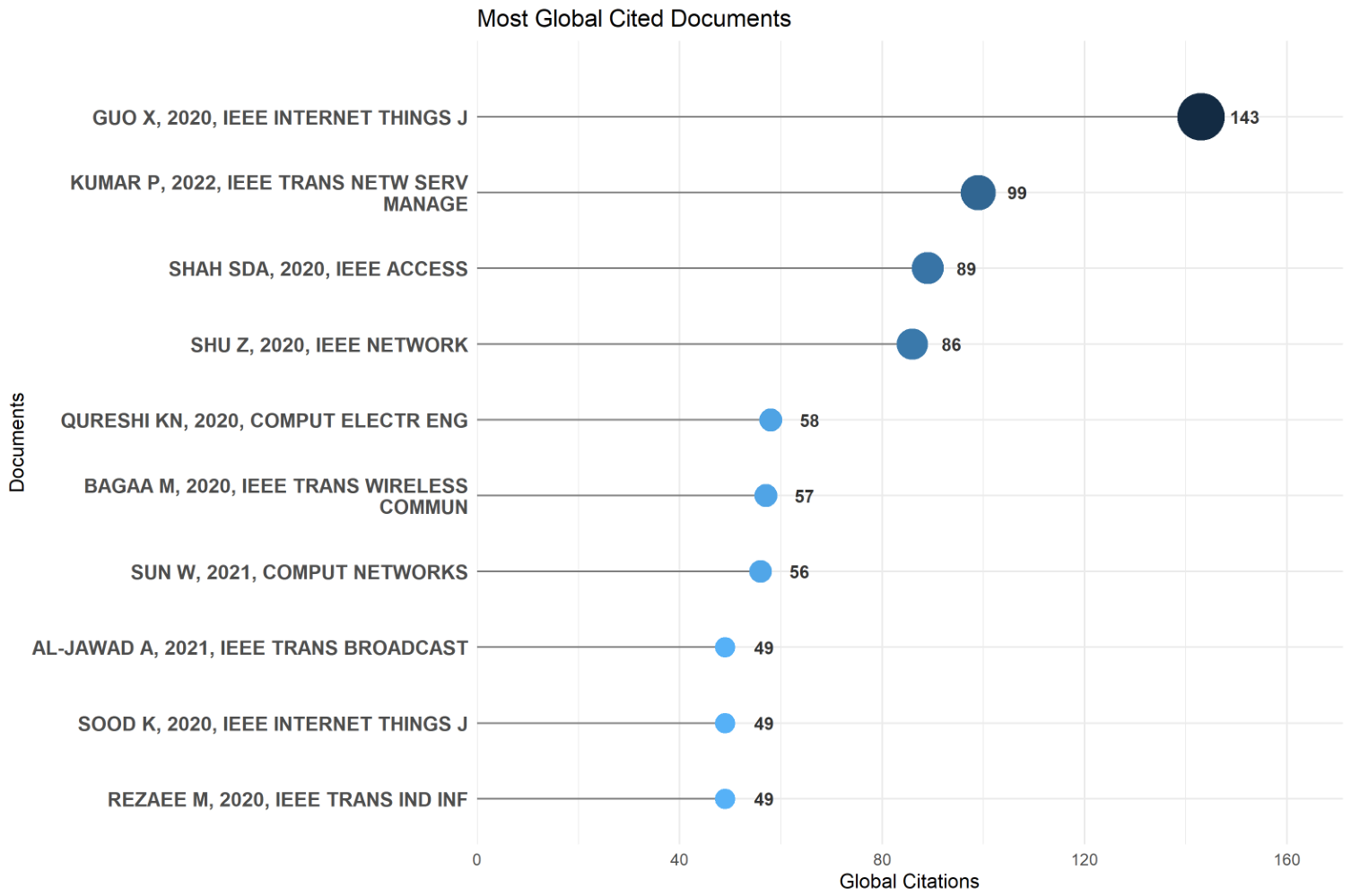
Figure 11.
Most locally cited documents, ordered from highest to lowest number of local citations ([42,45,46,47,49,52,53,54,55,56]).
4.5.2. Co-Occurrence of Keywords
Co-occurrence refers to the frequency with which two or more elements appear together within a publication or a collection of documents [37]. Visualizing keyword co-occurrence through the construction of a co-occurrence network captures the interactions between keywords, highlights research hotspots and scientific interconnections, can indicate potential research gaps, and reveal emerging trends. For the analysis of the authors keyword co-occurrence network, the VOSviewer tool was employed, and the keywords with identical or highly similar meanings were merged using the thesaurus function of VOSviewer. The minimum frequency threshold for a keyword was set to 2. Out of the total 387 keywords, only 79 met this criterion. As illustrated in Figure 12, keywords constitute the nodes of the co-occurrence network, where the size of each node is proportional to the frequency of the term, and the thickness of the links between keywords reflects the number of their co-occurrences. The figure also shows clusters of different colors, each representing a distinct thematic area.
Figure 12.
Instance of co-occurrence map of authors’ keywords using VOSViewer tool. (a) Co-occurrence network. (b) Overlay network (evolution map).
The co-occurrence analysis revealed the main thematic clusters, which correspond to the key research areas of QoS in SDN and computing. The terms SDN and QoS occupy a central position in the network, followed by terms such as IoT, routing, deep reinforcement learning, load balancing, and others. The high frequency of occurrence of these terms indicates that research in this field focuses primarily on issues related to routing, load balancing, and resource allocation, as well as on more specialized topics such as task scheduling, blockchain, energy efficiency, and security, across various environments, including fog computing, IoT, 5G, edge computing, VANETs, and others.
The strong interconnections among the keywords (e.g., QoS and SDN) indicate that the different thematic areas within the field exhibit strong interactions and significant scientific relevance. The keyword co-occurrence analysis further demonstrates that QoS is a dynamically evolving research field, increasingly expanding toward new application scenarios and case studies, while primarily leveraging algorithms and mechanisms based on artificial intelligence. This conclusion is supported by the analysis presented in Figure 12b and, in particular, by the keywords displayed in yellow, which represent the most recent or emerging research topics.
4.5.3. Trend Topics
A widely adopted approach to thematically mapping a scientific field is the classification of research topics using a dual metric framework that incorporates the indicators of density and centrality [41,57]. Density reflects the internal cohesion of a group, whereas centrality measures the importance of a node (or entity) within the network. For this analysis, the maximum number of author keywords considered for constructing the thematic map was set to 250, the minimum occurrence frequency was set to five (5), and the Louvain algorithm was selected for clustering. The keyword co-occurrence analysis identifies the dominant thematic areas, which are visualized as bubbles (Figure 13). Each bubble represents a research area, is labeled with the most frequently occurring keyword, and has a size proportional to the level of research interest it attracts. Its position on the two dimensional map reveals the importance of the topic according to the density and centrality indicators.
Figure 13.
Thematic map of the research field based on authors’ keywords and co-word network analysis.
As shown in Figure 13, three thematic areas emerge in the “niche themes” quadrant (high density–low centrality), and terms such as network performance, QoE, and wireless networks are identified. These topics are well developed and internally cohesive but exhibit limited external linkage to the broader research domain [57,58]. The issues related to machine learning, NFV, traffic classification, and VANET fall within the “emerging or declining themes” quadrant (low density–low centrality). The “motor themes” quadrant (high density–high centrality) includes topics associated with resource allocation, 5G, optimization, and traffic engineering. These represent mature research areas that frequently appear in the literature [41,59]. The “basic themes” quadrant (low density–high centrality) contains the main topics of SDN and QoS, while other topics, such as OpenFlow, IoT, security, fog computing, and 6G, have a lower publication volume, as indicated by their smaller circles. These themes are connected to fundamental research areas but have not yet been explored in depth and lack a dense body of dedicated literature [57,60].
Finally, in the center of the map, topics related to routing, edge computing, blockchain, and Internet of Vehicle (IoV) are identified. These topics represent central themes that connect and bridge different areas of the research domain.
5. Content Analysis
To gain deeper theoretical insights, a systematic content review was conducted, guided by the findings of the bibliometric analysis and the research questions outlined in Section 3. The synthesis aims to elucidate the research areas illustrated in Figure 12 and Figure 13, revealing the fundamental transformations brought about by SDN technology and highlighting progress or stagnation across its various application domains during the period 2020–2026. Given that SDN emerged in 2009 and has since become a key networking infrastructure, the period 2020–2026 was selected to capture the latest developments and most recent research findings within the identified areas of interest.
5.1. RQ2: Classification of QoS Requirements and Their Metrics
We examine which QoS metrics and indicators are most commonly employed by researchers in their studies, as these are not merely monitoring parameters but serve as criteria to ensure service quality and as optimization tools that guide decision-making processes. From a bibliometric perspective, metrics shape the research objective, validate the results, enable comparison across studies, reveal limitations, and contribute to the classification of scientific work. The aggregated findings of the analysis show that the implementation of QoS mechanisms within a network varies according to the requirements and constraints of the applications and services operating over the network. To evaluate the level of QoS achieved, researchers employ a wide range of quantitative metrics, which can be broadly grouped into the following categories:
- Performance: latency/delay, jitter, throughput, response time, bandwidth, packet loss rate, flow-setup time, control-plane latency, etc.
- Dependability: availability, reliability, elasticity, scalability, and security.
- Resource Related Metrics: CPU Utilization, memory utilization, storage utilization, network utilization, load balancing index, and
- Other: energy efficiency, economic metrics (e.g., cost).
Performance metrics measure how effectively a service operates while dependability [61] metrics assess the degree of confidence that the service functions as required when needed, Resource-related metrics (or resource utilization metrics) refer to indicators that measure how efficiently network or system resources are allocated and consumed during operation. In addition to the above metrics, several other indicators are also examined, including those that assess economic performance, energy-related factors, and similar dimensions. QoS metrics are employed not only to monitor network operation and identify potential performance issues, but also to evaluate mechanisms designed to enhance or optimize QoS, to feed decision-making processes, to compare alternative QoS approaches, and to verify the extent to which QoS requirements are satisfied.
Table 3 presents detailed information regarding the use and application of QoS metrics across the research studies examined.
Table 3.
QoS metrics used for evaluating network and system performance.
5.2. RQ3: Evaluation of QoS Approaches in SDN
Evaluation, that is, the determination of the value, nature, or character of a service, constitutes a theoretical tool and a supporting process for researchers [92]. The inherent characteristics of SDN networks, such as centralized control and statistics collection, provide a flexible framework for an accurate evaluation with acceptable overhead.
The most common evaluation approaches, as shown Figure 14, are classified into three main categories: computer simulation (for simulation or emulation), analytical models, and empirical measurements in real operating environments.
Figure 14.
A taxonomy of evaluation tools.
Most of the scientific works are based on simulation and emulation using frameworks such as Mininet, NS-2/NS-3 and OMNeT++. These tools provide researchers with increased flexibility and the ability to precisely control experimental conditions, enabling the evaluation of QoS mechanisms in a variety of network environments, such as random fluctuations in network behavior resulting from applied topologies or traffic flows. Mininet is a popular general-purpose network emulation platform suitable for monitoring basic performance metrics [93]. However, it has limitations when evaluating performance under resource contention, large-scale network conditions, heavy traffic loads, and multimedia workloads, particularly high-bitrate video streaming, multiple concurrent flows, and delay-sensitive applications. In contrast, NS-3 and OMNeT++ face high computational costs when simulating large-scale networks and have a steep learning curve. Simulation makes it possible to systematically compare the proposed algorithms, configure parameters and define criteria, supports the execution of repeated tests, and automates the data collection process.
Other researchers employ analytical methods based on mathematical models, such as queuing theory and stochastic processes. These approaches enable the estimation of QoS indicators, including delay and throughput, offering a theoretical perspective on system performance. However, they depend on underlying assumptions and their primary limitation is that their results may deviate significantly, either slightly or substantially, when applied to real-world environments.
Empirical evaluation is carried out either in real systems or in testbed environments, yet the limited number of related studies highlights the difficulty of conducting such experiments. The development, operation, and maintenance of such infrastructures entail significant cost and complexity, making them difficult for the scientific community to adopt and resulting in their limited use. In several cases, studies have employed hybrid approaches, combining real implementations with controlled simulation environments, as mentioned above, in an effort to approximate real-world operating conditions as closely as possible.
The analysis of existing work shows that simulation and emulation approaches dominate, due to their ease of implementation and the ability to control experimental parameters. However, these methods cannot provide the same level of confidence and reliability as evaluations conducted on real networks.
To provide a more comprehensive assessment of the evaluation approaches, Table 4 presents a comparative analysis of 16 selected publications investigating different QoS mechanisms in SDN environments. In addition to the evaluation methods and tools employed, the table summarizes the experimental conditions, comparison methods, key findings, and reported advantages and limitations of each approach. This analysis goes beyond classifying the studies by examining the experimental conditions under which the reported results were obtained.
Table 4.
A summary of QoS approaches in SDN.
A comparative analysis of the studies shows that the proposed mechanisms can improve various QoS parameters, depending on the specific problems they are designed to address. Routing and traffic management approaches demonstrate improvements in delay, throughput, and packet loss compared with the corresponding baseline methods. Other studies focus primarily on maintaining QoS under congested conditions, managing resources across different network slices, or supporting services with diverse QoS requirements. However, the reported improvements cannot be directly compared across studies because they are obtained using different network topologies, traffic parameters, and experimental conditions.
Despite these positive results, the analysis reveals several important limitations. Many approaches are evaluated exclusively through simulation or modeling, often using small-scale topologies or simplified assumptions about network behavior. In addition, the evaluations are frequently restricted to specific applications, controllers, or traffic conditions, making it difficult to generalize the findings. Furthermore, some mechanisms exhibit increased computational overhead as network size grows, whereas others increase the complexity of forwarding-rule management or require additional control-plane resources.
The findings suggest that the effectiveness of a QoS solution depends not only on its ability to improve specific performance metrics but also on its scalability, implementation complexity, and ability to operate under dynamic network conditions. Therefore, further evaluation using larger and more realistic infrastructures, well-defined experimental conditions, and consistent comparison methods is needed.
5.3. RQ4: QoS-Based Solutions to Common Network Problems
The literature review identifies a wide range of challenges in networks and networked systems that affect QoS support. These challenges are commonly classified into several major categories, including routing issues, resource allocation, offloading, flow scheduling, load balancing, and controller placement. Many of these issues can be mitigated through advanced QoS optimization techniques that leverage the logically centralized control plane and the global network-state awareness provided by SDN architectures.
A significant portion of the literature focuses on routing techniques for ensuring QoS in existing networks by leveraging the SDN controller’s global visibility of the network topology. Traditional approaches, such as linear programming and the classical Dijkstra algorithm, are characterized by slow convergence, limited ability to handle complex QoS requirements, and insufficient adaptability to the dynamic demands of modern applications. Numerous studies examine the use of machine learning algorithms, including k-means, reinforcement learning (RL), and deep RL, exploiting the SDN controller’s capability to collect real-time network-state data and train corresponding models. However, many of these solutions are designed for specific application domains (e.g., IoT) and cannot be easily generalized to other types of networks. Widely adopted approaches integrate graph neural networks (GNNs) with multi-agent reinforcement learning (MARL) to develop intelligent schemes capable of responding to the dynamic behavior of network flows, while other works employ fuzzy logic to enhance decision-making under uncertainty. The literature also includes numerous studies that either combine multiple techniques, modify existing solutions, or propose entirely new methods. Although incorporating intelligence into routing decision-making can improve network performance and QoS in SDN, these benefits should not be considered unconditional, as several computational and scalability challenges may remain. Specifically, these include: (a) the additional CPU and memory resources required by the SDN controller to execute machine learning algorithms [46,47]; (b) the challenges associated with deployment in large-scale networks [47]; (c) the additional monitoring, computation, and control-message overhead associated with the controller’s periodic collection of flow statistics and network-state information [50]; and (d) the computational requirements of model inference, reward evaluation, QoS-priority updates, and routing reconfiguration [71].
Similarly, although graph neural networks (GNNs) can improve routing and traffic-engineering performance, the reported results should not necessarily be generalized to all network environments [95]. GNN-based approaches require computational resources for representing network states and performing message-passing operations among graph nodes. These operations may increase CPU and memory consumption as network size, graph connectivity, and the frequency of network-state updates increase. Consequently, their practical suitability depends on the complexity of the network, the computational capabilities of the controller, and the trade-off between QoS improvements and computational overhead.
As demonstrated by analysis of the literature, enhancing QoS in SDN through load balancing constitutes a critical issue. To address this challenge, various approaches have been proposed, which can be broadly classified into two main categories: those based on conventional load-balancing techniques that rely on traditional algorithms, and those that leverage artificial intelligence and machine learning. The primary objective of applying load-balancing mechanisms is to ensure the QoS of the network. This is made feasible by the SDN controller’s ability to detect congestion points and apply load-balancing algorithms that prevent the overloading of specific links or switches. Moreover, the capability of SDN to reconfigure forwarding rules in real time enables the immediate rerouting of flows when network conditions change, ensuring stable service quality even in environments characterized by high variability.
Enhancing QoS in Software SDN is closely linked to the effective use of resource allocation, scheduling, and offloading mechanisms, which enable the optimal utilization of limited network resources. Resource allocation allows the adaptive assignment of bandwidth, priorities, and routing paths so that critical applications receive the required performance guarantees, while scheduling mechanisms determine the order and manner in which way flows are served, aiming to reduce delay and jitter. At the same time, offloading techniques enable the transfer of computational or network load to appropriate nodes or edge infrastructures, relieving pressure on critical parts of the network and improving overall efficiency. These mechanisms can also be used in combination to implement adaptive and reliable QoS policies, particularly in environments characterized by high variability and increased performance demands.
Table 5 summarizes the network challenges and the corresponding contributions of the reviewed studies.
Table 5.
Network challenges and QoS solutions.
5.4. RQ5: Where QoS Optimization Matters in Modern Networked Systems
The Quality of Service associated with SDN networks is naturally found in different types of networks, each with its own requirements and constraints. For example, IoT technology is usually resource limited, while mobile networks such as 5G and 6G aim to achieve low latency and reliability. In contrast, cloud and large-scale data center environments prioritize high performance and efficient resource allocation. Such heterogeneity prevents the adoption of a universal QoS solution. Consequently, we investigate the application of QoS across various network environments and assess the distinct challenges each environment introduces, as revealed by bibliographic data analysis.
To provide a clearer understanding of the application domains of QoS in SDN environments, Table 6 presents a comparative analysis of 20 selected publications, identifying the applications investigated, the characteristics of network traffic, the corresponding QoS requirements, and the network environments considered. This comparison facilitates the identification of common performance requirements across application categories, as well as the limitations associated with each category.
Table 6.
A list of target applications and QoS approaches in SDN.
The comparative analysis shows that QoS requirements are depended on not only by the network environment but also by traffic characteristics and the nature of the application. Even within the same network category, different services may prioritize different performance metrics, which must be taken into account when designing and evaluating QoS mechanisms.
5.4.1. IoT and IIoT Environments
IoT technologies deployed in SDN environments involve a high number of devices communicating with each other, but with limited computing power and low energy efficiency. In these systems, QoS is necessary to ensure as much as possible that data is delivered fast and without causing losses, especially for applications that transfer data in real time. However, implementing QoS in such environments is not simple. Due to the constrained battery capacity of IoT devices and the inherent challenges of powering them, the use of complex mechanisms is limited, while the large number of network nodes further hinders smooth implementation. Moreover, the wireless nature of IoT communication introduces unavoidable interference and packet loss, which in turn undermines network stability and degrades performance.
The flexibility of SDN technology enables its integration with IoT environments and the implementation of efficient routing mechanisms. QoS-aware routing decisions are made centrally by the SDN controller, while packet forwarding is performed locally by network devices, without requiring controller intervention for every packet. This separation helps address the CPU, memory, and energy constraints of IoT devices, provided that gateways and switches have sufficient forwarding capabilities and QoS support. However, ensuring QoS requires adequate network resources (e.g., bandwidth), up-to-date view of network conditions, and mechanisms for congestion prediction and response. These requirements are particularly important for real-time IoT applications, which have strict latency and packet-loss constraints.
In industrial (IIoT) environments, the requirements become even more demanding. Applications such as automation and real-time data transfer require very low latency and high reliability. Even low latency or communication errors can affect system operation. In addition, these environments contain various devices and protocols from both legacy and modern technologies, making coordination more complicated. As a result, QoS assurance in IIoT systems is concerned not only with performance, but also with managing complexity and maintaining stable operation under strict conditions.
5.4.2. 5G and 6G Networks
SDN-based solutions have gained significant attention in 5G and 6G networks because SDN enables the integration of QoS management functions, such as resource monitoring, route calculation, call admission control, resource reservation and allocation, scheduling, and traffic classification, into the SDN controller [48]. Notably, 5G supports diverse service categories, including Enhanced Mobile Broadband (eMBB), Ultra-Reliable Low-Latency Communications (URLLC), and Massive Machine-Type Communications (mMTC), serving applications such as cloud computing, smart grids, remote healthcare, and energy systems. This diversity makes it challenging to apply uniform QoS policies, particularly under highly variable traffic conditions and limited network resources [98].
To address these challenges, network slicing enables multiple logical networks to share the same physical infrastructure while maintaining distinct resource management and QoS policies. SDN provides programmable traffic control, whereas Network Function Virtualization (NFV) facilitates the deployment and management of virtualized network functions [48]. However, sharing physical resources across slices complicates performance management and QoS assurance. Proposed solutions include adaptive radio resource allocation among slices [99] and dynamic queue configuration using SDN, OpenFlow, and OVSDB [100]. Despite these advances, maintaining the required QoS remains challenging when resources are insufficient or coordination across network components is necessary [101].
Looking ahead, 6G networks are expected to achieve outstanding QoS with demands for dynamic QoS management to support increasingly stringent requirements, including high data rates, ultra-low latency, high reliability, massive connectivity, and energy efficiency [102]. Although SDN offers flexible network control, many implementations still rely on predefined rules and static resource allocation, limiting their ability to adapt to rapidly changing conditions. Emerging service concepts, such as Massive Ultra-Reliable Low-Latency Communications (mURLLC) and Mobile Broadband Reliable Low-Latency Communications (MBRLLC), reflect the anticipated convergence of these requirements, although they are not yet formally established 6G service categories [101]. Other anticipated priorities include supporting high mobility, ensuring continuous coverage across heterogeneous network environments, and improving energy efficiency and network performance [98,103]. These developments highlight the need for dynamic resource management and coordinated end-to-end QoS policies spanning access, core, and edge computing networks. Achieving consistent QoS in such heterogeneous and dynamic environments remains an open research challenge.
5.4.3. Data Center and Cloud Environments
Data centers and cloud computing environments focus mainly on a solution to efficient management of network and computing resources, supporting multiple applications and users while meeting QoS requirements such as bandwidth guaranties, low latency, and reliable service provisioning. Compared to other technologies such as IoT, these environments are based on virtual infrastructure where there is a high demand for bandwidth and processing power, as well as integrated storage capabilities. Therefore, ensuring high performance is necessary, especially for latency-sensitive applications. At the same time, the coexistence of multiple services in the same environment introduces challenges in resource management and performance isolation. QoS is also affected by dynamic traffic patterns, high workload variability, and virtual machine deployment. As the scale of a data center or cloud environment increases, the complexity of managing traffic and allocating resources grows accordingly.
5.4.4. Fog and Edge Computing Environments
In fog and edge computing environments, a fundamental challenge is determining where data should be processed in order to meet the QoS requirements of applications. Instead of sending all data to centralized cloud servers, processing is performed closer to end users, helping reduce latency and response time. This approach particularly benefits applications that require rapid reactions, such as real-time monitoring and control systems.
However, a key limitation in these environments is that edge nodes have significantly fewer computational and storage resources compared to cloud data centers, making them less efficient at handling demanding services, especially when multiple applications run concurrently. When several services share the same infrastructure, resource scarcity can degrade performance and lead to unstable system behavior [94].
Furthermore, these environments consist of highly heterogeneous devices and operate under constantly changing network conditions. Such variability negatively affects QoS provisioning, as the system must continuously adapt to fluctuations in traffic and workload [13,86].
5.4.5. Multimedia and Real-Time Applications
Multimedia and real-time applications are the most sensitive to performance issues on a network, as they transfer data with real and strict-time constraints. Services such as video streaming, online games and real-time communication require a high-quality network in terms of packet loss, delay, and transmission delay. Under these conditions, even small errors occurring in the network in terms of packet delay or delivery will directly affect the user experience. Increased delay will have a negative impact on immediacy during interaction, while packet loss and delay variability (jitter) degrade the quality of audio and video. Great research interest is attracted by the dynamic nature of multimedia traffic. The high demand for network resources and multimedia services is constantly increasing, while traffic patterns exhibit a high degree of variability, which makes it difficult to ensure consistent performance. Finally, the simultaneous presence of many users and coexisting services within the same network often leads to resource exhaustion. This resource scarcity intensifies demand and adversely impacts the effectiveness of QoS mechanisms.
5.5. RQ6: Current Limitations and Research Gaps in QoS for SDN
Despite the extensive and long-standing research around the integration of QoS mechanisms in SDN networks, their implementation is accompanied by significant challenges. The proposed solutions, although most often efficient in controlled environments, often face limitations when applied to dynamic and large-scale networks. In this section, we analyze the main weaknesses and open issues that affect the effectiveness of QoS in SDN systems.
Scalability is one of the most critical challenges in SDN networks, due to the centralized control architecture, which relies on one or more controllers [26]. In large-scale environments characterized by numerous flows and highly dynamic traffic, controllers must process a substantial volume of requests in real time, potentially leading to controller bottlenecks [7]. These bottlenecks can delay flow-rule installation, increase response times, and limit the network’s ability to adapt to changing conditions. Consequently, QoS provisioning may be adversely affected by delayed control decisions and inefficient flow management. Several approaches have been proposed to address these challenges, including hierarchical and distributed controller architectures, dynamic load balancing, and optimized controller placement. More specifically, hierarchical [54] and distributed [26] approaches can reduce the workload of individual controllers and improve scalability. However, hierarchical architectures may introduce additional communication delays between control levels, whereas distributed architectures require controller synchronization and coordination, potentially increasing control-plane overhead. Therefore, their effectiveness in improving QoS should be assessed in terms of controller workload, Controller–Switch and Controller–Controller communication latency, and flow-setup time. Despite these approaches, balancing scalability with efficient QoS provisioning remains an open research challenge.
The dynamic nature of network traffic is another major challenge for effective implementation of QoS mechanisms in SDN environments. The requirements of real-time applications such as streaming, VoIP and IoT applications, where minimizing latency and packet loss is a key requirement for implementing QoS are constantly changing. The continuous growth in network load and variability in traffic conditions make it challenging to effectively enforce QoS policies, even using centralized control. Moreover, the necessity to collect and process information from the network immediately creates an additional burden on the controller, resulting in additional delay in decision making. In summary, ensuring QoS in dynamic environments remains a challenging problem, as existing approaches do not fully address the requirements of continuously changing network conditions and workloads.
Despite extensive research efforts by the scientific community to address the aforementioned challenges, the evaluation of QoS mechanisms in SDN networks relies heavily on simulation and emulation. Although these approaches offer flexibility, reproducibility, and control over experimental conditions, they cannot fully reproduce all the complexities and dynamic behaviors of operational networks. In particular, simulation models may not capture the effects of real hardware, protocol implementations, and interactions between network components. Consequently, the limited validation of proposed mechanisms in real-world environments makes it difficult to assess the extent to which reported performance gains generalize to practical deployment scenarios. However, even studies conducted using real-world testbeds may have limitations and require further investigation. Moreover, simplifying assumptions adopted in experimental evaluations may lead to an overestimation of the effectiveness of proposed QoS mechanisms. Consequently, limited empirical validation remains an important gap in the literature, hindering the assessment of whether reported results can be generalized to real-world deployment scenarios.
Beyond these evaluation-related challenges, the design and operation of QoS mechanisms in SDN networks introduce additional complexity. Many recent approaches employ advanced techniques, such as machine learning and optimization algorithms, to improve resource allocation and traffic management. Although these techniques can enhance network performance, they may also introduce computational overhead and increase system complexity [46]. These challenges become particularly significant in large-scale and latency-sensitive environments, where decisions must be made within strict time constraints. Furthermore, integrating such mechanisms into existing network infrastructures may increase management overhead and complicate deployment and maintenance. Therefore, developing computationally efficient, scalable, and practically deployable QoS mechanisms remains a key challenge in SDN-based networks.
Furthermore, interoperability and standardization remain important challenges to the successful integration of QoS mechanisms in SDN environments. Although SDN provides considerable flexibility and programmability, the coexistence of heterogeneous devices, protocols, and controller platforms can create significant implementation challenges [104,105]. QoS mechanisms are often designed around the specific requirements and characteristics of particular network environments, which may limit their portability and applicability across different infrastructures. These limitations become especially significant in multi-domain and hybrid networks, where SDN-based components must interoperate with traditional networking systems. Moreover, the lack of universally adopted interfaces and interoperability standards for certain aspects of SDN management can increase configuration and coordination overhead. Consequently, achieving interoperable, standardized, and portable QoS mechanisms remains an important challenge for the practical deployment of QoS-enabled SDN systems.
6. Conclusions
In this work, we investigate QoS in SDN through a combination of bibliometric and content analyzes. The aim was not only to describe how the field has developed in recent years but also to examine how QoS is defined, measured, evaluated, and applied across different SDN environments. The results show that QoS in SDN remains an active and complex research field. Our analysis indicates that QoS is no longer limited to improving individual performance metrics, such as latency or throughput, but also encompasses reliability, scalability, resource utilization, energy efficiency, traffic variability, and the ability of the network to support increasingly demanding application requirements. This diversity of requirements makes it challenging to develop a universally applicable QoS solution, as different environments prioritize different performance objectives.
The main contribution of this study is to bring together the different aspects of QoS and SDN synergy research in a structured and comprehensive perspective, providing a clearer understanding of the progress achieved in the field and the areas that are not yet adequately explored. The main open challenges are as follows:
- Scalability and efficient QoS provisioning: Ensuring that SDN can provide QoS guarantees as the number of switches, flows, users, and network demands increases, without excessive control-plane overhead.
- QoS in dynamic network environments: Maintaining QoS under changing network conditions, fluctuating traffic loads, mobility, congestion, and frequent topology changes.
- Supporting emerging high-bandwidth applications: Ensuring QoS under heavy traffic generated by AI, augmented reality (AR), virtual reality (VR), multimedia streaming, and real-time analytics.
- Impact of machine learning and optimization algorithms on QoS: Evaluating how integrating machine learning, optimization algorithms, and intelligent traffic management affects end-to-end QoS, controller overhead, decision-making latency, and resource consumption.
- Impact of security mechanisms on QoS: Investigating the performance trade-offs introduced by computationally intensive security mechanisms, including their effects on latency, throughput, packet loss, and control-plane performance.
- Alignment with emerging application requirements: Updating QoS mechanisms and evaluation methodologies to reflect the requirements of modern applications, including ultra-low-latency communication, real-time interaction, and time-sensitive data delivery.
- Evaluation of SDN-specific QoS metrics and incorporating AoI: Incorporating metrics that capture the performance of the SDN control plane and its interaction with the data plane, such as control-plane latency, topology discovery time, flow setup time, flow-rule installation latency, control-message overhead, and network reconfiguration time. In addition, traditional QoS evaluation needs to be extended beyond delay and throughput to account for the freshness of information, particularly in IoT, industrial control, and real-time monitoring applications.
Addressing these challenges through research is essential for the effective integration of SDN computing technologies across a wide range of domains, with the aim of enhancing QoS capabilities in terms of both performance and versatility.
Author Contributions
Conceptualization, C.S. and S.V.M.; methodology, E.S. and S.V.M.; validation, E.S. and S.V.M.; investigation, I.K. and S.V.M.; resources, I.K. and S.V.M.; data curation, I.K. and S.V.M.; writing—original draft preparation, I.K. and S.V.M.; writing—review and editing, E.S., I.K. and S.V.M.; visualization, I.K. and C.S. and S.V.M.; supervision, S.V.M. All authors have read and agreed to the published version of the manuscript.
Funding
This research received no external funding.
Institutional Review Board Statement
Not applicable.
Informed Consent Statement
Not applicable.
Data Availability Statement
The original contributions presented in this study are included in the article. Further inquiries can be directed to the corresponding author.
Conflicts of Interest
The authors declare no conflicts of interest.
References
- Faezi, S.; Shirmarz, A. A comprehensive survey on machine learning using in software defined networks (SDN). Hum. Centric Intell. Syst. 2023, 3, 312–343. [Google Scholar] [CrossRef] [Scilit]
- Kreutz, D.; Ramos, F.M.; Verissimo, P.E.; Rothenberg, C.E.; Azodolmolky, S.; Uhlig, S. Software-defined networking: A comprehensive survey. Proc. IEEE 2014, 103, 14–76. [Google Scholar] [CrossRef] [Scilit]
- Kulkarni, M.; Goswami, B.; Paulose, J.; Malakalapalli, L. Unlocking the power of software-defined networking (sdn) in revolutionizing network management. In Advanced Cyber Security Techniques for Data, Blockchain, IoT, and Network Protection; IGI Global Scientific Publishing: Hershey, PA, USA, 2025; pp. 309–336. [Google Scholar]
- Singh, S.; Jha, R.K. A survey on software defined networking: Architecture for next generation network. J. Netw. Syst. Manag. 2017, 25, 321–374. [Google Scholar] [CrossRef] [Scilit]
- Benzekki, K.; El Fergougui, A.; Elbelrhiti Elalaoui, A. Software-defined networking (SDN): A survey. Secur. Commun. Netw. 2016, 9, 5803–5833. [Google Scholar] [CrossRef] [Scilit]
- Hu, F.; Hao, Q.; Bao, K. A Survey on Software-Defined Network and OpenFlow: From Concept to Implementation. IEEE Commun. Surv. Tutor. 2014, 16, 2181–2206. [Google Scholar] [CrossRef] [Scilit]
- Keshari, S.K.; Kansal, V.; Kumar, S. A systematic review of quality of services (QoS) in software defined networking (SDN). Wirel. Pers. Commun. 2021, 116, 2593–2614. [Google Scholar] [CrossRef] [Scilit]
- Kaljic, E.; Maric, A.; Njemcevic, P.; Hadzialic, M. A Survey on Data Plane Flexibility and Programmability in Software-Defined Networking. IEEE Access 2019, 7, 47804–47840. [Google Scholar] [CrossRef] [Scilit]
- Karakus, M.; Durresi, A. Quality of service (QoS) in software defined networking (SDN): A survey. J. Netw. Comput. Appl. 2017, 80, 200–218. [Google Scholar] [CrossRef] [Scilit]
- Wang, Z.; Li, Z.; Liu, G.; Chen, Y.; Wu, Q.; Cheng, G. Examination of WAN traffic characteristics in a large-scale data center network. In Proceedings of the 21st ACM Internet Measurement Conference, Virtual, 1–5 November 2021; pp. 1–14. [Google Scholar]
- Wassie, G.; Ding, J.; Wondie, Y. Detecting and predicting models for QoS optimization in SDN. J. Comput. Netw. Commun. 2024, 2024, 3073388. [Google Scholar] [CrossRef] [Scilit]
- Xie, S.; Hu, G.; Xing, C.; Liu, Y. Online Elephant Flow Prediction for Load Balancing in Programmable Switch-Based DCN. IEEE Trans. Netw. Serv. Manag. 2024, 21, 745–758. [Google Scholar] [CrossRef] [Scilit]
- Rostami, M.; Goli-Bidgoli, S. An overview of QoS-aware load balancing techniques in SDN-based IoT networks. J. Cloud Comput. 2024, 13, 89. [Google Scholar] [CrossRef] [Scilit]
- Ogbodo, E.U.; Abu-Mahfouz, A.M.; Kurien, A.M. A survey on 5G and LPWAN-IoT for improved smart cities and remote area applications: From the aspect of architecture and security. Sensors 2022, 22, 6313. [Google Scholar] [CrossRef] [Scilit] [PubMed]
- Mohammadi, R.; Akleylek, S.; Ghaffari, A.; Shirmarz, A. Taxonomy of traffic engineering mechanisms in software-defined networks: A survey. Telecommun. Syst. 2022, 81, 475–502. [Google Scholar] [CrossRef] [Scilit]
- Zafar, A.; Samad, F.; Syed, H.J.; Ibrahim, A.O.; Alohaly, M.; Elsadig, M. An Advanced Strategy for Addressing Heterogeneity in SDN-IoT Networks for Ensuring QoS. Appl. Sci. 2023, 13, 7856. [Google Scholar] [CrossRef] [Scilit]
- Al-Haddad, R.; Velazquez, E.S. A Survey of Quality of Service (QoS) Protocols and Software-Defined Networks (SDN) From the Traditional to the Latest Network Architecture. In Proceedings of the Science and Information Conference, London, UK, 10–12 July 2018; Springer: Berlin/Heidelberg, Germany, 2018; pp. 527–545. [Google Scholar]
- Marzi, G.; Balzano, M.; Caputo, A.; Pellegrini, M.M. Guidelines for bibliometric-systematic literature reviews: 10 steps to combine analysis, synthesis and theory development. Int. J. Manag. Rev. 2025, 27, 81–103. [Google Scholar] [CrossRef] [Scilit]
- Sharma, S.; Staessens, D.; Colle, D.; Palma, D.; Goncalves, J.; Figueiredo, R.; Morris, D.; Pickavet, M.; Demeester, P. Implementing quality of service for the software defined networking enabled future internet. In Proceedings of the 2014 Third European Workshop on Software Defined Networks, Budapest, Hungary, 1–3 September 2014; IEEE: Piscataway, NJ, USA, 2014; pp. 49–54. [Google Scholar]
- Bi, Y.; Han, G.; Lin, C.; Peng, Y.; Pu, H.; Jia, Y. Intelligent Quality of Service Aware Traffic Forwarding for Software-Defined Networking/Open Shortest Path First Hybrid Industrial Internet. IEEE Trans. Ind. Inform. 2020, 16, 1395–1405. [Google Scholar] [CrossRef] [Scilit]
- Kamboj, P.; Pal, S. A policy based framework for quality of service management in software defined networks. Telecommun. Syst. 2021, 78, 331–349. [Google Scholar] [CrossRef] [Scilit]
- Govindarajan, K.; Meng, K.C.; Ong, H.; Tat, W.M.; Sivanand, S.; Leong, L.S. Realizing the quality of service (QoS) in software-defined networking (SDN) based cloud infrastructure. In Proceedings of the 2014 2nd International Conference on Information and Communication Technology (ICoICT), Bandung, Indonesia, 28–30 May 2014; IEEE: Piscataway, NJ, USA, 2014; pp. 505–510. [Google Scholar]
- Choudhary, S.; Dorle, S. A quality of service-aware high-security architecture design for software-defined network powered vehicular ad-hoc networks using machine learning-based blockchain routing. Concurr. Comput. Pract. Exp. 2022, 34, e6993. [Google Scholar] [CrossRef] [Scilit]
- Chen, J.; Liao, C.; Wang, Y.; Jin, L.; Lu, X.; Xie, X.; Yao, R. AQMDRL: Automatic quality of service architecture based on multistep deep reinforcement learning in software-defined networking. Sensors 2022, 23, 429. [Google Scholar] [PubMed]
- Xu, C.; Chen, B.; Fu, P.; Qian, H. A dynamic resource allocation model for guaranteeing quality of service in software defined networking based cloud computing environment. In Proceedings of the International Conference on Cloud Computing and Security, Nanjing, China, 13–15 August 2015; Springer: Berlin/Heidelberg, Germany, 2015; pp. 206–217. [Google Scholar]
- Qureshi, K.N.; Hussain, R.; Jeon, G. A distributed software defined networking model to improve the scalability and quality of services for flexible green energy internet for smart grid systems. Comput. Electr. Eng. 2020, 84, 106634. [Google Scholar] [CrossRef] [Scilit]
- Mehraban, S.; Yadav, R.K. Traffic engineering and quality of service in hybrid software defined networks. China Commun. 2024, 21, 96–121. [Google Scholar] [CrossRef] [Scilit]
- Lozano-Rizk, J.E.; Rivera-Rodriguez, R.; Nieto-Hipolito, J.I.; Villarreal-Reyes, S.; Galaviz-Mosqueda, A.; Vazquez-Briseno, M. Quality of service in software defined networks for scientific applications: Opportunities and challenges. Program. Comput. Softw. 2020, 46, 561–568. [Google Scholar] [CrossRef] [Scilit]
- Yan, G.; Wang, J.; Ren, S.; Xue, C. A Review of Routing Optimization Techniques for Quality of Service Assurance in Software-Defined Networks. In Proceedings of the 2023 2nd Asia Conference on Algorithms, Computing and Machine Learning, Shanghai, China, 17–19 March 2023; pp. 167–174. [Google Scholar]
- Chen, Y.J.; Wang, L.C.; Lin, F.Y.; Lin, B.S.P. Deterministic quality of service guarantee for dynamic service chaining in software defined networking. IEEE Trans. Netw. Serv. Manag. 2017, 14, 991–1002. [Google Scholar] [CrossRef] [Scilit]
- Regencia, J.E.T.; Yu, W.E.S. Introducing a test framework for quality of service mechanisms in the context of software-defined networking. In Proceedings of the Sixth International Congress on Information and Communication Technology: ICICT 2021, London, UK, 25–26 February 2021; Springer: Berlin/Heidelberg, Germany, 2021; Volume 2, pp. 687–699. [Google Scholar]
- Scopus. Available online: https://www.scopus.com/sources (accessed on 10 August 2026).
- Association for Computing Machinery—acm.org. Available online: https://www.acm.org/ (accessed on 10 August 2026).
- IEEE. IEEE Xplore Digital Library. Available online: https://ieeexplore.ieee.org/Xplore/home.jsp (accessed on 10 August 2026).
- Suárez López, D.; Álvarez Rodríguez, J.M.; Molina-Cardenas, M. Toward a Model to Evaluate Machine-Processing Quality in Scientific Documentation and Its Impact on Information Retrieval. Appl. Sci. 2023, 13, 13075. [Google Scholar] [CrossRef] [Scilit]
- Mahanra Rao, V.; Ramasamy, R.K.; Sayeed, M.S. BERT-Based Approaches for Web Service Selection and Recommendation: A Systematic Review with a Focus on QoS Prediction. Future Internet 2025, 17, 543. [Google Scholar] [CrossRef] [Scilit]
- Donthu, N.; Kumar, S.; Mukherjee, D.; Pandey, N.; Lim, W.M. How to conduct a bibliometric analysis: An overview and guidelines. J. Bus. Res. 2021, 133, 285–296. [Google Scholar] [CrossRef] [Scilit]
- Lim, W.M.; Kumar, S.; Donthu, N. How to combine and clean bibliometric data and use bibliometric tools synergistically: Guidelines using metaverse research. J. Bus. Res. 2024, 182, 114760. [Google Scholar] [CrossRef] [Scilit]
- Arruda, H.; Silva, E.R.; Lessa, M.; Proença, D., Jr.; Bartholo, R. VOSviewer and bibliometrix. J. Med. Libr. Assoc. JMLA 2022, 110, 392. [Google Scholar] [CrossRef] [Scilit] [PubMed]
- Aria, M.; Cuccurullo, C. bibliometrix: An R-tool for comprehensive science mapping analysis. J. Inf. 2017, 11, 959–975. [Google Scholar] [CrossRef] [Scilit]
- Luthra, C.; Deshwal, P.; Kushwah, S.; Gokarn, S. A bibliometric review analysing intellectual landscape and mapping emerging themes on green purchase in the past three decades. IIMT J. Manag. 2024, 1, 216–241. [Google Scholar] [CrossRef] [Scilit]
- Guo, X.; Lin, H.; Li, Z.; Peng, M. Deep-Reinforcement-Learning-Based QoS-Aware Secure Routing for SDN-IoT. IEEE Internet Things J. 2020, 7, 6242–6251. [Google Scholar] [CrossRef] [Scilit]
- Kumar, P.; Bhushan, S.; Halder, D.; Baswade, A.M. FybrrLink: Efficient QoS-Aware Routing in SDN Enabled Future Satellite Networks. IEEE Trans. Netw. Serv. Manag. 2022, 19, 2107–2118. [Google Scholar] [CrossRef] [Scilit]
- Shah, S.D.A.; Gregory, M.A.; Li, S.; Fontes, R.D.R. SDN enhanced multi-access edge computing (MEC) for E2E mobility and QoS management. IEEE Access 2020, 8, 77459–77469. [Google Scholar] [CrossRef] [Scilit]
- Podili, P.; Kataoka, K. TRAQR: Trust aware End-to-End QoS routing in multi-domain SDN using Blockchain. J. Netw. Comput. Appl. 2021, 182, 103055. [Google Scholar] [CrossRef] [Scilit]
- Sun, W.; Wang, Z.; Zhang, G. A QoS-guaranteed intelligent routing mechanism in software-defined networks. Comput. Netw. 2021, 185, 107709. [Google Scholar] [CrossRef] [Scilit]
- Aguirre Sanchez, L.P.; Shen, Y.; Guo, M. DQS: A QoS-driven routing optimization approach in SDN using deep reinforcement learning. J. Parallel Distrib. Comput. 2024, 188, 104851. [Google Scholar] [CrossRef] [Scilit]
- Shu, Z.; Taleb, T. A Novel QoS Framework for Network Slicing in 5G and beyond Networks Based on SDN and NFV. IEEE Netw. 2020, 34, 256–263. [Google Scholar] [CrossRef] [Scilit]
- Bagaa, M.; Dutra, D.L.C.; Taleb, T.; Samdanis, K. On SDN-Driven Network Optimization and QoS Aware Routing Using Multiple Paths. IEEE Trans. Wirel. Commun. 2020, 19, 4700–4714. [Google Scholar] [CrossRef] [Scilit]
- Al-Jawad, A.; Comşa, I.S.; Shah, P.; Gemikonakli, O.; Trestian, R. An Innovative Reinforcement Learning-Based Framework for Quality of Service Provisioning Over Multimedia-Based SDN Environments. IEEE Trans. Broadcast. 2021, 67, 851–867. [Google Scholar] [CrossRef] [Scilit]
- Sood, K.; Karmakar, K.K.; Yu, S.; Varadharajan, V.; Pokhrel, S.R.; Xiang, Y. Alleviating Heterogeneity in SDN-IoT Networks to Maintain QoS and Enhance Security. IEEE Internet Things J. 2020, 7, 5964–5975. [Google Scholar] [CrossRef] [Scilit]
- Rezaee, M.; Yaghmaee Moghaddam, M.H. SDN-Based Quality of Service Networking for Wide Area Measurement System. IEEE Trans. Ind. Inform. 2020, 16, 3018–3028. [Google Scholar] [CrossRef] [Scilit]
- Elbasheer, M.O.; Aldegheishem, A.; Lloret, J.; Alrajeh, N. A QoS-Based routing algorithm over software defined networks. J. Netw. Comput. Appl. 2021, 194, 103215. [Google Scholar] [CrossRef] [Scilit]
- Ali, J.; Roh, B.H. An Effective Hierarchical Control Plane for Software-Defined Networks Leveraging TOPSIS for End-to-End QoS Class-Mapping. IEEE Access 2020, 8, 88990–89006. [Google Scholar] [CrossRef] [Scilit]
- Zhang, Y.; Cui, M.; Abadeer, M.; Gorlatch, S. A QoS-Aware Routing Mechanism for SDN-Based Integrated Networks. In Proceedings of the 2023 International Conference on Information Networking (ICOIN), Bangkok, Thailand, 11–14 January 2023; pp. 287–292. [Google Scholar] [CrossRef] [Scilit]
- Parsaei, M.R.; Boveiri, H.R.; Javidan, R.; Khayami, R. Telesurgery QoS improvement over SDN based on a Type-2 fuzzy system and enhanced cuckoo optimization algorithm. Int. J. Commun. Syst. 2020, 33, e4426. [Google Scholar] [CrossRef] [Scilit]
- Woldeamanuel, A.G.; Kebede, T.N. Mapping the Landscape of Tax Revenue Research: A Bibliometric Analysis of Its Evolution, Current Status, and Emerging Frontiers. J. Tax Reform 2025, 11, 512–531. [Google Scholar] [CrossRef] [Scilit]
- Pham, T.D.T.; Lo, F.Y.; Huarng, K.H. Unmasking privacy apprehension: A bibliometric review of mobile sharing economy applications. J. Innov. Knowl. 2025, 10, 100656. [Google Scholar] [CrossRef] [Scilit]
- Murgado-Armenteros, E.M.; Gutiérrez-Salcedo, M.; Torres-Ruiz, F.J.; Cobo, M.J. Analysing the conceptual evolution of qualitative marketing research through science mapping analysis. Scientometrics 2015, 102, 519–557. [Google Scholar] [CrossRef] [Scilit]
- García-Lillo, F.; Seva-Larrosa, P.; Sánchez-García, E. On the basis of research on ‘green’in the disciplines of management and business. J. Bus. Res. 2024, 172, 114432. [Google Scholar] [CrossRef] [Scilit]
- Ghahramani, M.H.; Zhou, M.; Hon, C.T. Toward cloud computing QoS architecture: Analysis of cloud systems and cloud services. IEEE/CAA J. Autom. Sin. 2017, 4, 6–18. [Google Scholar] [CrossRef] [Scilit]
- Shi, Y.; Yang, Q.; Huang, X.; Li, D.; Huang, X. An SDN-Enabled Framework for a Load-Balanced and QoS-Aware Internet of Underwater Things. IEEE Internet Things J. 2023, 10, 7824–7834. [Google Scholar] [CrossRef] [Scilit]
- Ali, J.; Roh, B.H. Quality of service improvement with optimal software-defined networking controller and control plane clustering. Comput. Mater. Contin. 2021, 67, 849–875. [Google Scholar] [CrossRef] [Scilit]
- Mahmoudi, M.; Avokh, A.; Barekatain, B. SDN-DVFS: An enhanced QoS-aware load-balancing method in software defined networks. Clust. Comput. 2022, 25, 1237–1262. [Google Scholar] [CrossRef] [Scilit]
- Kamboj, P.; Pal, S.; Bera, S.; Misra, S. QoS-Aware Multipath Routing in Software-Defined Networks. IEEE Trans. Netw. Sci. Eng. 2023, 10, 723–732. [Google Scholar] [CrossRef] [Scilit]
- Su, Y.; Jiang, P.; Chen, H.; Deng, X. A QoS-Guaranteed and Congestion-Controlled SDN Routing Strategy for Smart Grid. Appl. Sci. 2022, 12, 7629. [Google Scholar] [CrossRef] [Scilit]
- Skondras, E.; Michalas, A.; Vergados, D.D.; Michailidis, E.T.; Miridakis, N.I. Network slicing on 5G vehicular cloud computing systems. Electronics 2021, 10, 1474. [Google Scholar] [CrossRef] [Scilit]
- Karakus, M. GATE-BC: Genetic Algorithm-Powered QoS-Aware Cross-Network Traffic Engineering in Blockchain- Enabled SDN. IEEE Access 2024, 12, 36523–36545. [Google Scholar] [CrossRef] [Scilit]
- Ahammad, I.; Khan, M.A.R.; Salehin, Z.U. QoS Performance Enhancement Policy through Combining Fog and SDN. Simul. Model. Pract. Theory 2021, 109, 102292. [Google Scholar] [CrossRef] [Scilit]
- Zhang, L.; Lu, Y.; Zhang, D.; Cheng, H.; Dong, P. DSOQR: Deep Reinforcement Learning for Online QoS Routing in SDN-Based Networks. Secur. Commun. Netw. 2022, 2022, 4457645. [Google Scholar] [CrossRef] [Scilit]
- Ali, J.; Song, H.H.; Roh, B. An SDN-based framework for E2E Qos guarantee in Internet of Things devices. IEEE Internet Things J. 2024, 12, 605–622. [Google Scholar] [CrossRef] [Scilit]
- Akinola, A.T.; Adigun, M.O.; Mudali, P. Incorporating stability estimation into quality of service routing in an SDN-based data centre network. In Proceedings of the Fifth International Congress on Information and Communication Technology: ICICT 2020, London, UK, 20–21 February 2020; Springer: Berlin/Heidelberg, Germany, 2020; Volume 2, pp. 406–416. [Google Scholar]
- Rahouti, M.; Xiong, K.; Xin, Y.; Ghani, N. QoSP: A priority-based queueing mechanism in software-defined networking environments. In Proceedings of the 2021 IEEE International Performance, Computing, and Communications Conference (IPCCC), Austin, TX, USA, 29–31 October 2021; IEEE: Piscataway, NJ, USA, 2021; pp. 1–7. [Google Scholar]
- Dou, S.; Guo, Z. Quest: Quality of Service-Centric Resilient Routing for Software-Defined Wide Area Networks. IEEE Trans. Netw. 2026, 34, 4555–4569. [Google Scholar] [CrossRef] [Scilit]
- Babbar, H.; Parthiban, S.; Radhakrishnan, G.; Rani, S. A genetic load balancing algorithm to improve the QoS metrics for software defined networking for multimedia applications. Multimed. Tools Appl. 2022, 81, 9111–9129. [Google Scholar] [CrossRef] [Scilit]
- Alidadi, A.; Arab, S.; Askari, T. A novel optimized routing algorithm for QoS traffic engineering in SDN-based mobile networks. ICT Express 2022, 8, 130–134. [Google Scholar] [CrossRef] [Scilit]
- Gharbaoui, M.; Martini, B.; Castoldi, P. A WAN Infrastructure Manager Prototype for QoS-based Multi-Site SDN-Enabled NFV Orchestration. J. Netw. Syst. Manag. 2025, 33, 54. [Google Scholar] [CrossRef] [Scilit]
- Zare Soltani, M.A.; Hosseini Seno, S.A.; Mohajerzadeh, A. Efficient dynamic load balancing in software-defined networks using policy gradient: A strategy for enhanced QoS and reduced energy consumption. Computing 2025, 107, 159. [Google Scholar] [CrossRef] [Scilit]
- Zhong, H.; Wu, F.; Xu, Y.; Cui, J. QoS-Aware Multicast for Scalable Video Streaming in Software-Defined Networks. IEEE Trans. Multimed. 2021, 23, 982–994. [Google Scholar] [CrossRef] [Scilit]
- Dhandapani, M.; Vetriselvi, V.; Aishwarya, R. CoopAI-Route: DRL Empowered Multi-Agent Cooperative System for Efficient QoS-Aware Routing for Network Slicing in Multi-Domain SDN. CMES Comput. Model. Eng. Sci. 2024, 140, 2449–2486. [Google Scholar] [CrossRef] [Scilit]
- Eiza, M.H.; Raschellà, A. A Hybrid SDN-based Architecture for Secure and QoS aware Routing in Space-Air-Ground Integrated Networks (SAGINs). In Proceedings of the 2023 IEEE Wireless Communications and Networking Conference (WCNC), Glasgow, UK, 26–29 March 2023; Volume 2023. [Google Scholar] [CrossRef] [Scilit]
- Narimani, Y.; Zeinali, E.; Mirzaei, A. QoS-aware resource allocation and fault tolerant operation in hybrid SDN using stochastic network calculus. Phys. Commun. 2022, 53, 101709. [Google Scholar] [CrossRef] [Scilit]
- Serag, R.H.; Abdalzaher, M.S.; Elsayed, H.A.E.A.; Sobh, M. Software Defined Network Traffic Classification for QoS Optimization Using Machine Learning. J. Netw. Syst. Manag. 2025, 33, 41. [Google Scholar] [CrossRef] [Scilit]
- Khozam, S.; Blanc, G.; Tixeuil, S.; Totel, E. QoSentry: A Reinforcement Learning Framework for QoS-Preserving DDoS Mitigation in Software-Defined Networks. J. Netw. Syst. Manag. 2025, 33, 97. [Google Scholar] [CrossRef] [Scilit]
- Aguirre Sanchez, L.P.; Shen, Y.; Guo, M. MDQ: A QoS-Congestion Aware Deep Reinforcement Learning Approach for Multi-Path Routing in SDN. J. Netw. Comput. Appl. 2025, 235, 104082. [Google Scholar] [CrossRef] [Scilit]
- Fröhlich, P.; Gelenbe, E.; Fiołka, J.; Chęciński, J.; Nowak, M.; Filus, Z. Smart sdn management of fog services to optimize qos and energy. Sensors 2021, 21, 3105. [Google Scholar] [CrossRef] [Scilit] [PubMed]
- Lee, G.M.; Lee, C.W.; Roh, B.H. QoS Support Path Selection for Inter-Domain Flows Using Effective Delay and Directed Acyclic Graph in Multi-Domain SDN. Electronics 2022, 11, 2245. [Google Scholar] [CrossRef] [Scilit]
- Wu, Q.; Liu, Q.; Jia, Z.; Xin, N.; Chen, T. P4SQA: A P4 Switch-Based QoS Assurance Mechanism for SDN. IEEE Trans. Netw. Serv. Manag. 2023, 20, 4875–4886. [Google Scholar] [CrossRef]
- Lin, S.; Zhang, S.; Chen, X.; Nong, X. Software-defined networking enabled optical data center network with flexible QoS provisioning. Opt. Commun. 2023, 530, 129129. [Google Scholar] [CrossRef] [Scilit]
- Mehmood, K.T.; Atiq, S.; Hussain, M.M. Enhancing QoS of Telecom Networks through Server Load Management in Software-Defined Networking (SDN). Sensors 2023, 23, 9324. [Google Scholar] [CrossRef] [Scilit] [PubMed]
- Zhang, Y.; Gorlatch, S. Optimizing energy efficiency of QoS-based routing in software-defined networks. In Proceedings of the 17th ACM Symposium on QoS and Security for Wireless and Mobile Networks, Alicante, Spain, 22–26 November 2021; pp. 87–94. [Google Scholar]
- Huang, J.; Liu, F.; Zhang, J. Multi-dimensional QoS evaluation and optimization of mobile edge computing for IoT: A survey. Chin. J. Electron. 2024, 33, 859–874. [Google Scholar] [CrossRef] [Scilit]
- Muelas, D.; Ramos, J.; De Vergara, J.E.L. Assessing the limits of mininet-based environments for network experimentation. IEEE Netw. 2018, 32, 168–176. [Google Scholar] [CrossRef] [Scilit]
- Herrera, J.L.; Galan-Jimenez, J.; Foschini, L.; Bellavista, P.; Berrocal, J.; Murillo, J.M. QoS-Aware Fog Node Placement for Intensive IoT Applications in SDN-Fog Scenarios. IEEE Internet Things J. 2022, 9, 13725–13739. [Google Scholar] [CrossRef] [Scilit]
- Ye, M.; Zhang, J.; Guo, Z.; Chao, H.J. FlexDATE: Flexible and Disturbance-Aware Traffic Engineering with Reinforcement Learning in Software-Defined Networks. IEEE/ACM Trans. Netw. 2023, 31, 1433–1448. [Google Scholar] [CrossRef] [Scilit]
- Karakus, M.; Guler, E.; Uludag, S. QoSChain: Provisioning Inter-AS QoS in Software-Defined Networks With Blockchain. IEEE Trans. Netw. Serv. Manag. 2021, 18, 1706–1717. [Google Scholar] [CrossRef] [Scilit]
- Xue, X.; Wang, F.; Agraz, F.; Pagès, A.; Pan, B.; Yan, F.; Guo, X.; Spadaro, S.; Calabretta, N. SDN-Controlled and Orchestrated OPSquare DCN Enabling Automatic Network Slicing With Differentiated QoS Provisioning. J. Light. Technol. 2020, 38, 1103–1112. [Google Scholar] [CrossRef] [Scilit]
- Serôdio, C.; Cunha, J.; Candela, G.; Rodriguez, S.; Sousa, X.R.; Branco, F. The 6G ecosystem as support for IoE and private networks: Vision, requirements, and challenges. Future Internet 2023, 15, 348. [Google Scholar] [CrossRef] [Scilit]
- Mei, J.; Wang, X.; Zheng, K.; Boudreau, G.; Sediq, A.B.; Abou-Zeid, H. Intelligent radio access network slicing for service provisioning in 6G: A hierarchical deep reinforcement learning approach. IEEE Trans. Commun. 2021, 69, 6063–6078. [Google Scholar] [CrossRef] [Scilit]
- Bojović, P.D.; Malbašić, T.; Vujošević, D.; Martić, G.; Bojović, Ž. Dynamic QoS management for a flexible 5G/6G network core: A step toward a higher programmability. Sensors 2022, 22, 2849. [Google Scholar] [CrossRef] [Scilit] [PubMed]
- Hurtado Sanchez, J.A.; Casilimas, K.; Caicedo Rendon, O.M. Deep reinforcement learning for resource management on network slicing: A survey. Sensors 2022, 22, 3031. [Google Scholar] [CrossRef] [Scilit] [PubMed]
- Bouchmal, O.; Cimoli, B.; Stabile, R.; Vegas Olmos, J.J.; Tafur Monroy, I. From classical to quantum machine learning: Survey on routing optimization in 6G software defined networking. Front. Commun. Netw. 2023, 4, 1220227. [Google Scholar] [CrossRef] [Scilit]
- Chowdhury, M.Z.; Shahjalal, M.; Ahmed, S.; Jang, Y.M. 6G wireless communication systems: Applications, requirements, technologies, challenges, and research directions. IEEE Open J. Commun. Soc. 2020, 1, 957–975. [Google Scholar] [CrossRef] [Scilit]
- Yusuf, M.N.; Bin Abu Bakar, K.; Isyaku, B.; Mukhlif, F. Distributed Controller Placement in Software-Defined Networks with Consistency and Interoperability Problems. J. Electr. Comput. Eng. 2023, 2023, 6466996. [Google Scholar] [CrossRef] [Scilit]
- Abood, M.S.; Wang, H.; Virdee, B.S.; He, D.; Fathy, M.; Yusuf, A.A.; Jamal, O.; Elwi, T.A.; Alibakhshikenari, M.; Kouhalvandi, L.; et al. Improved 5G network slicing for enhanced QoS against attack in SDN environment using deep learning. IET Commun. 2024, 18, 759–777. [Google Scholar] [CrossRef] [Scilit]
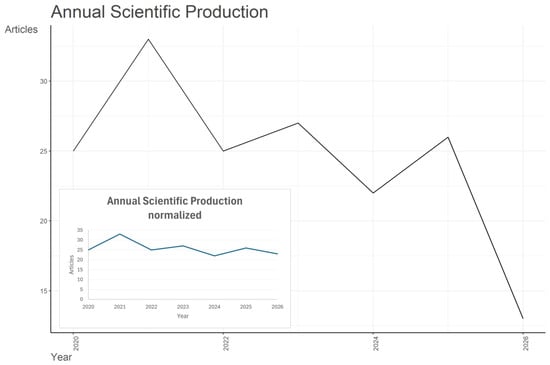
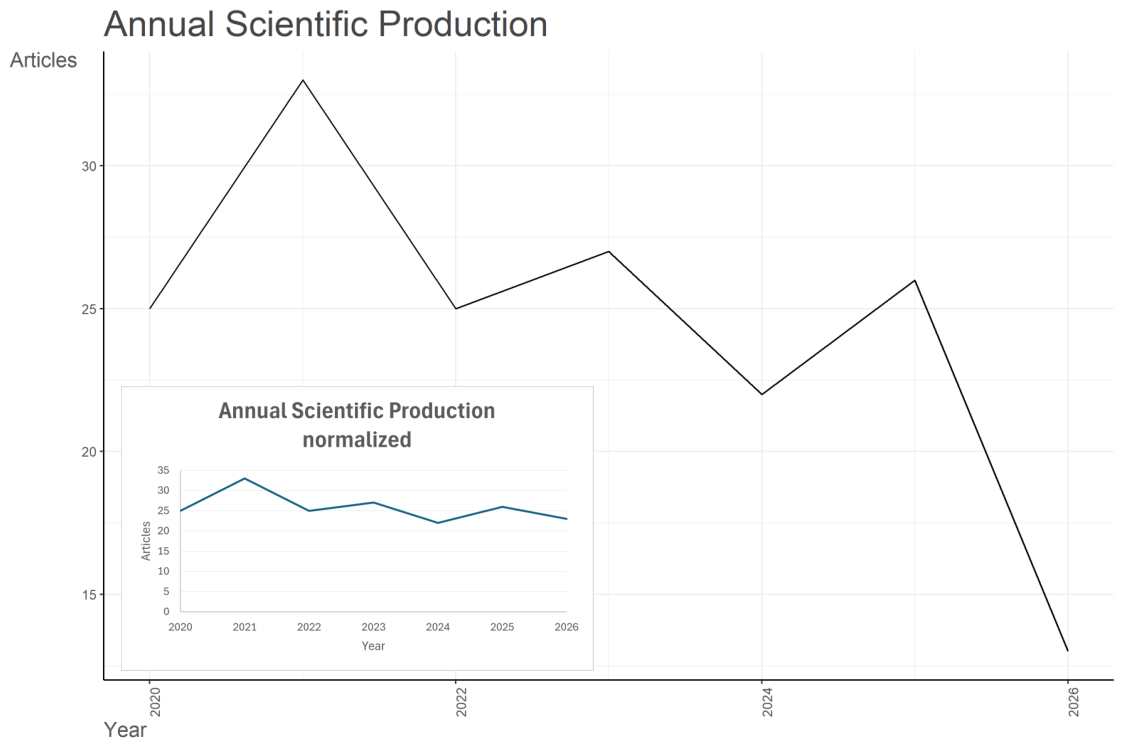

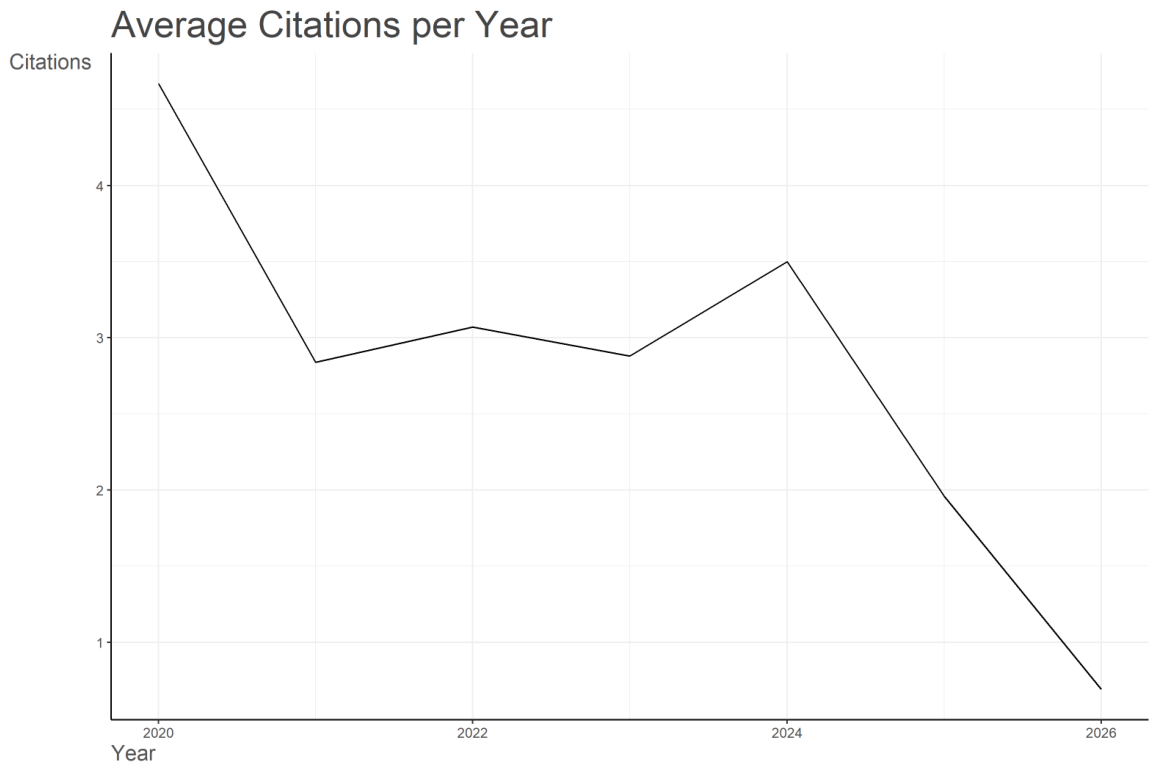
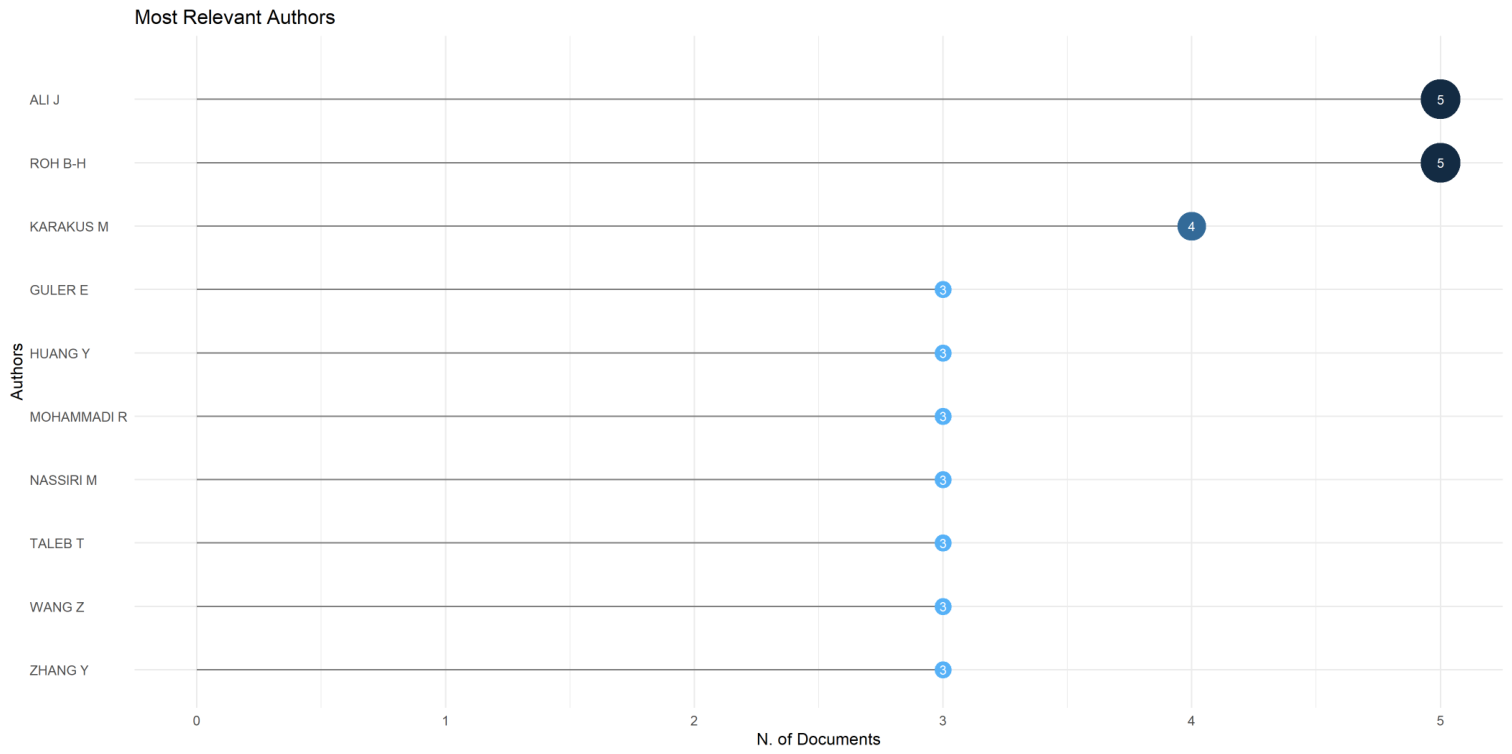


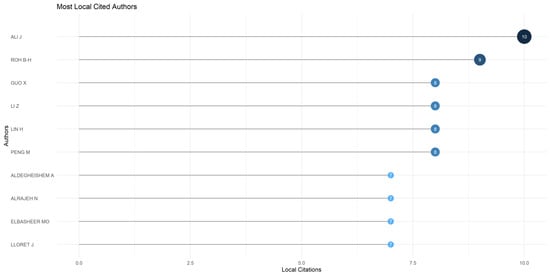
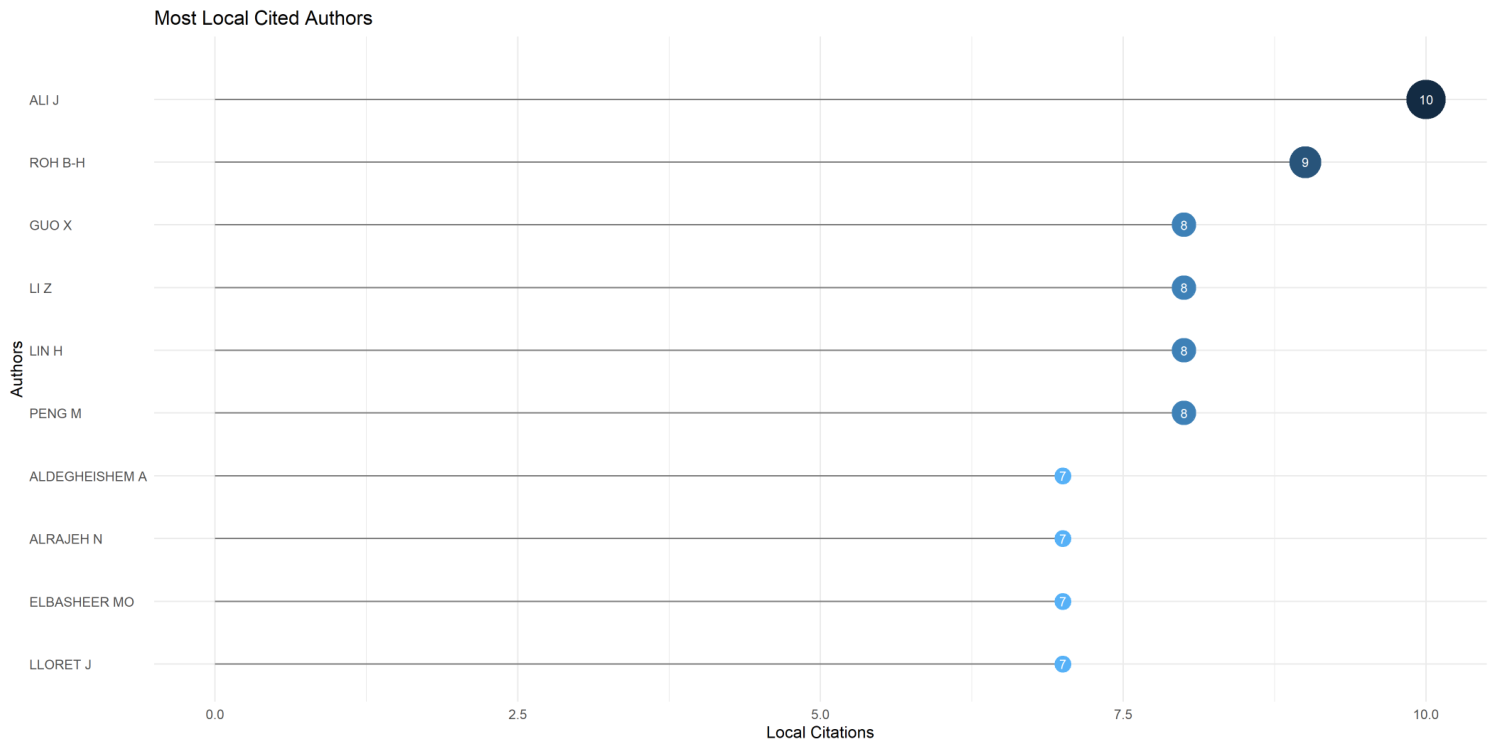
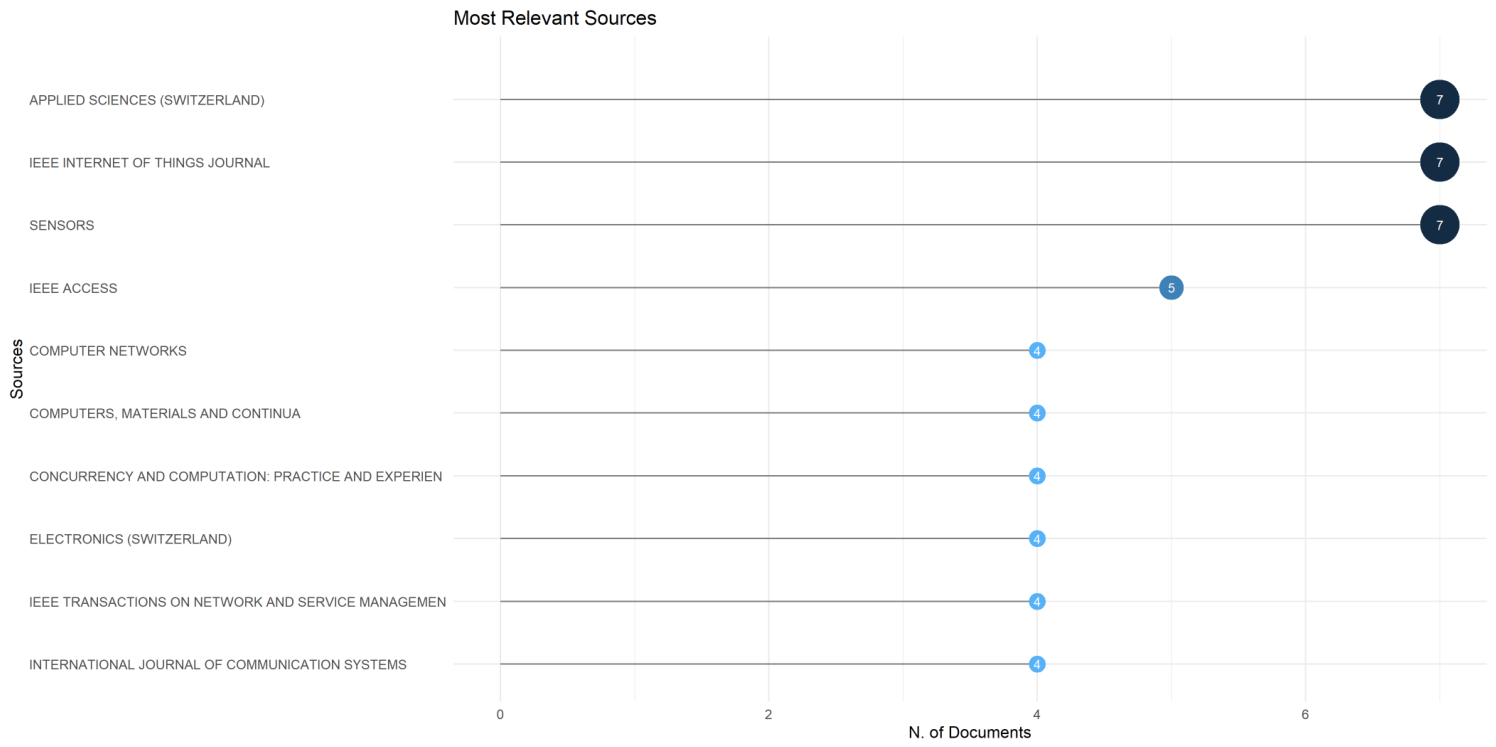
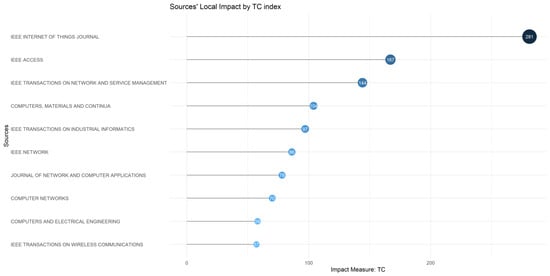
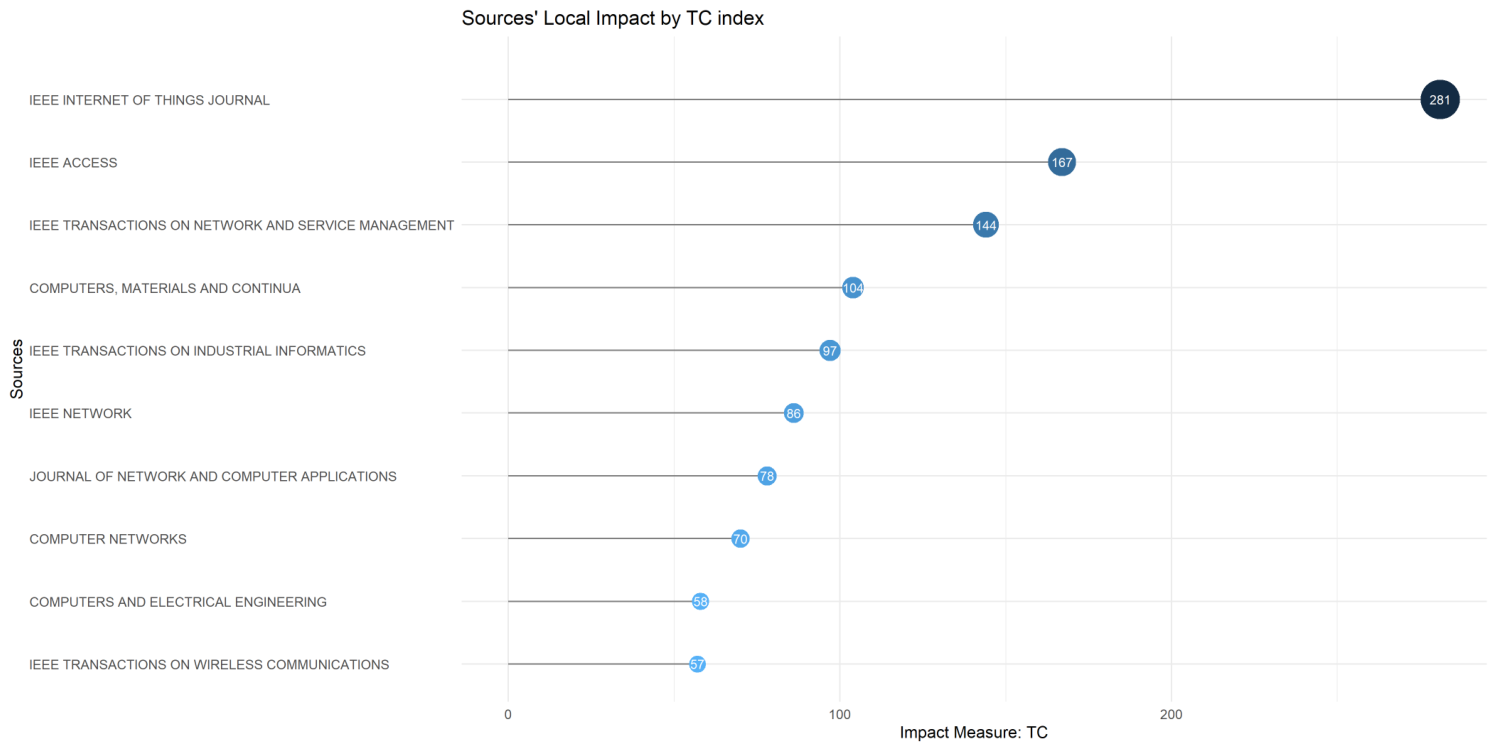
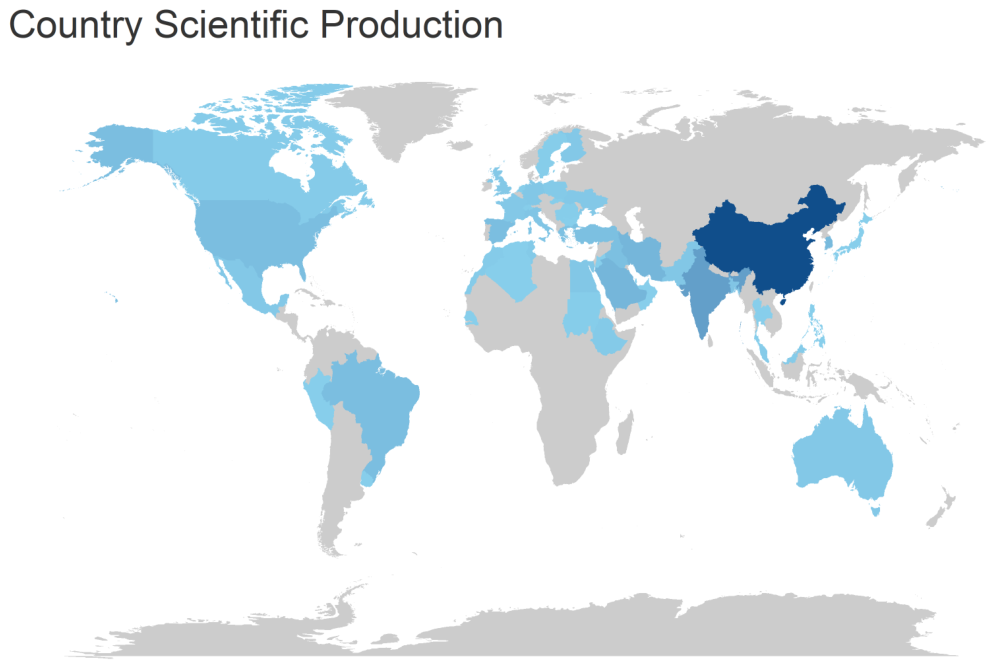
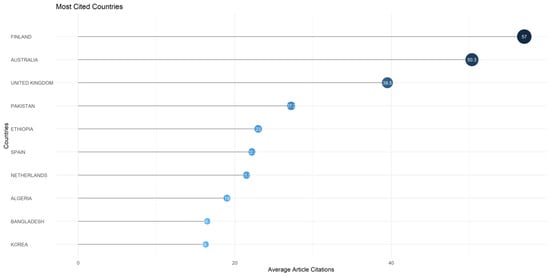
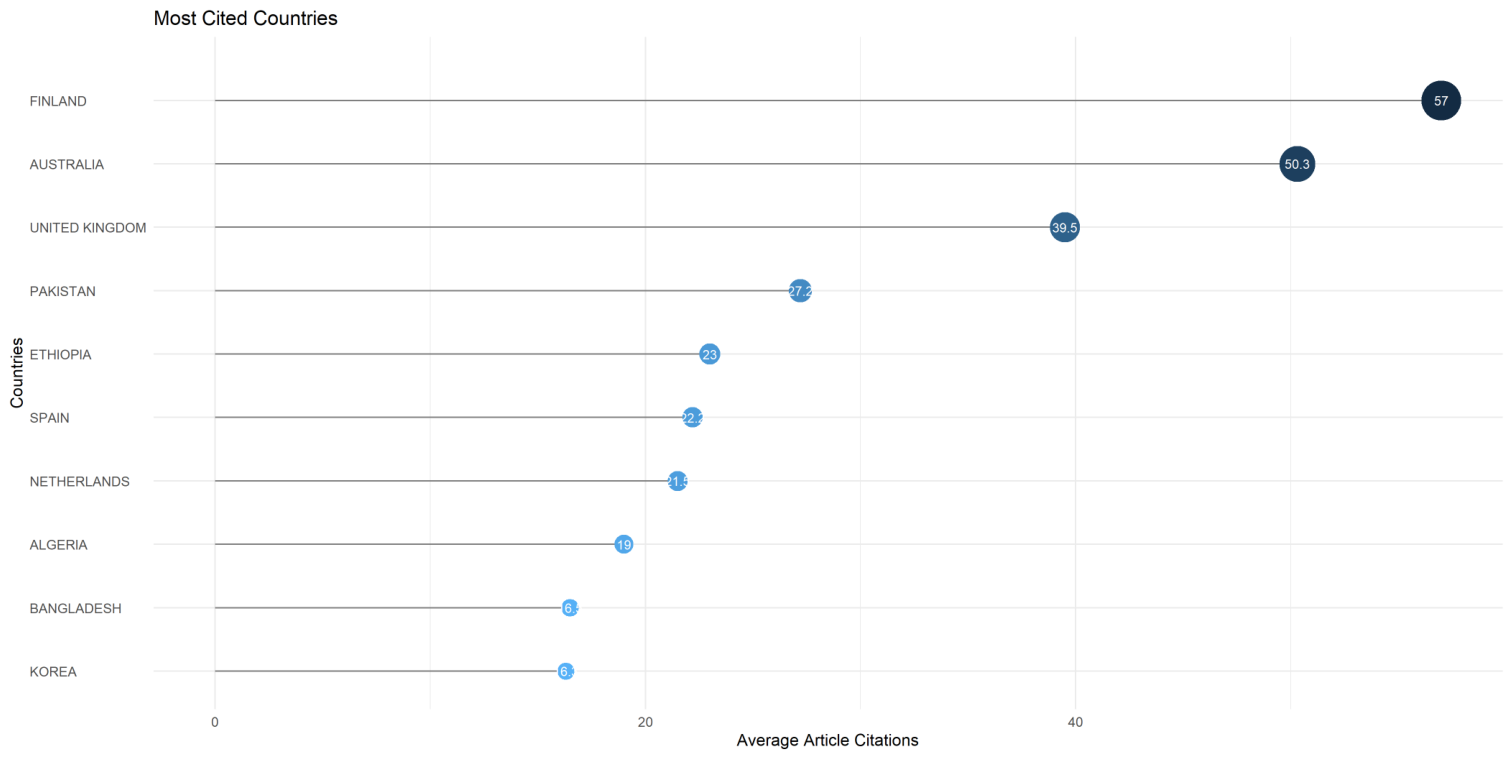
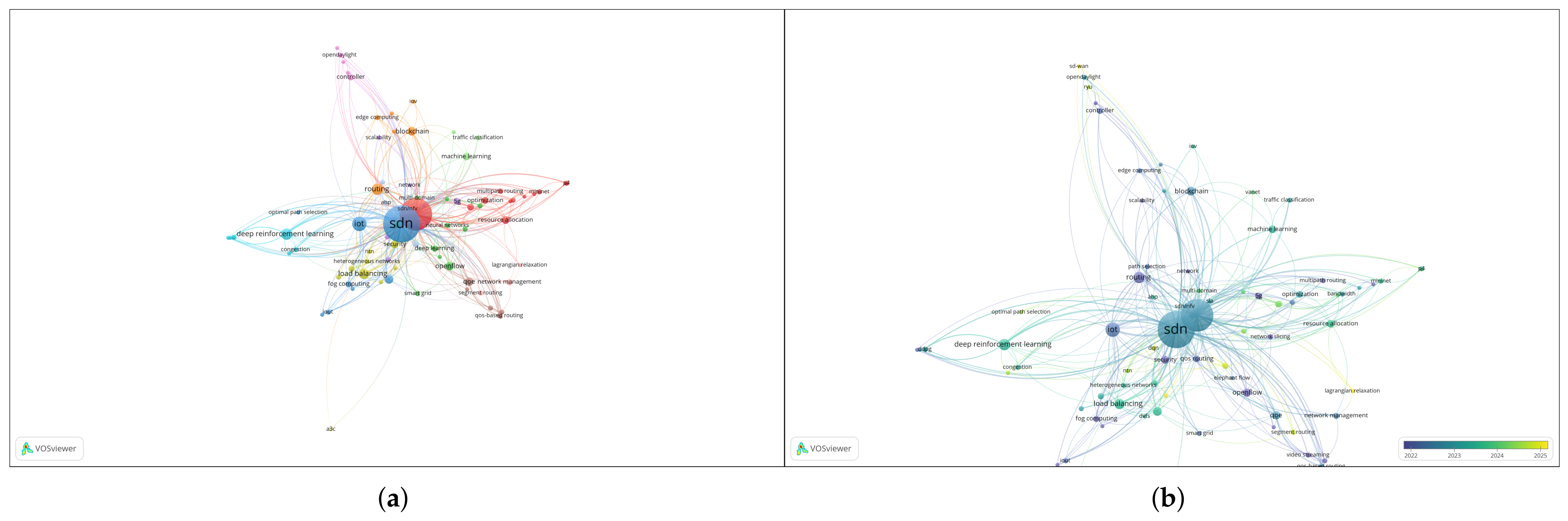
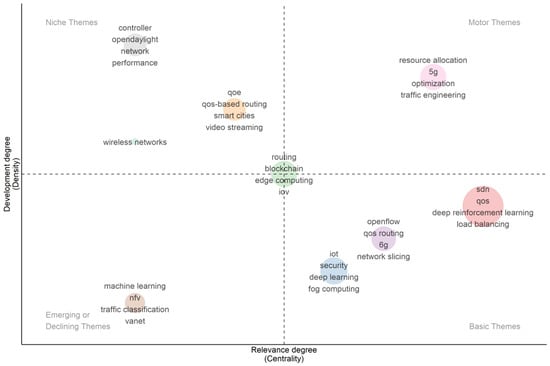
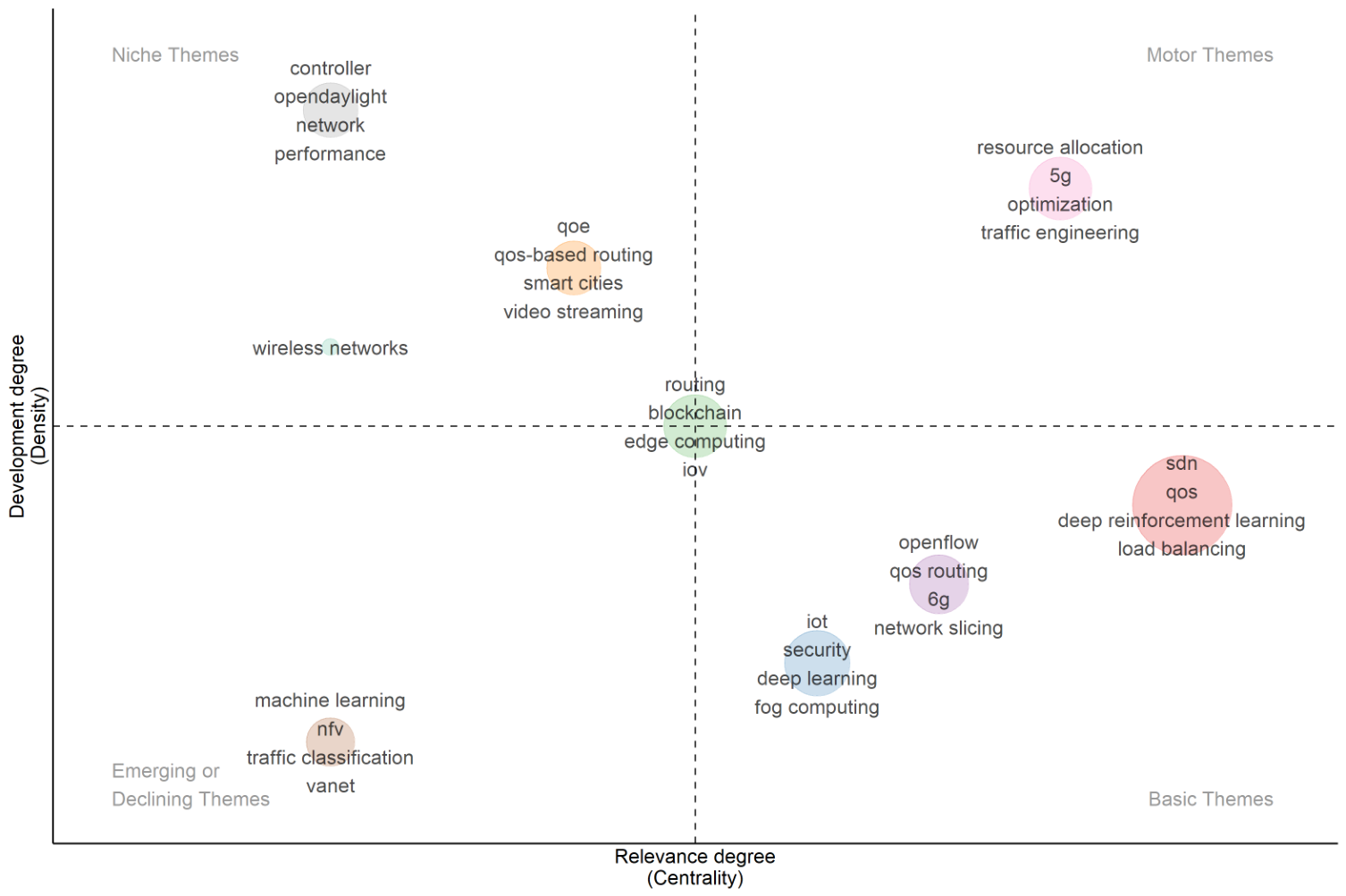
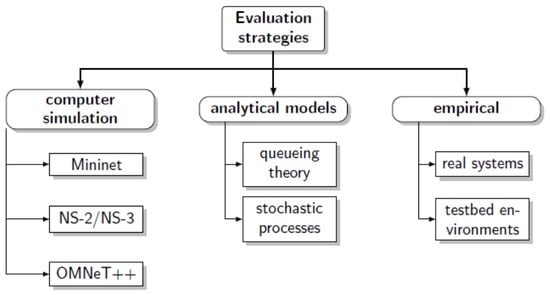
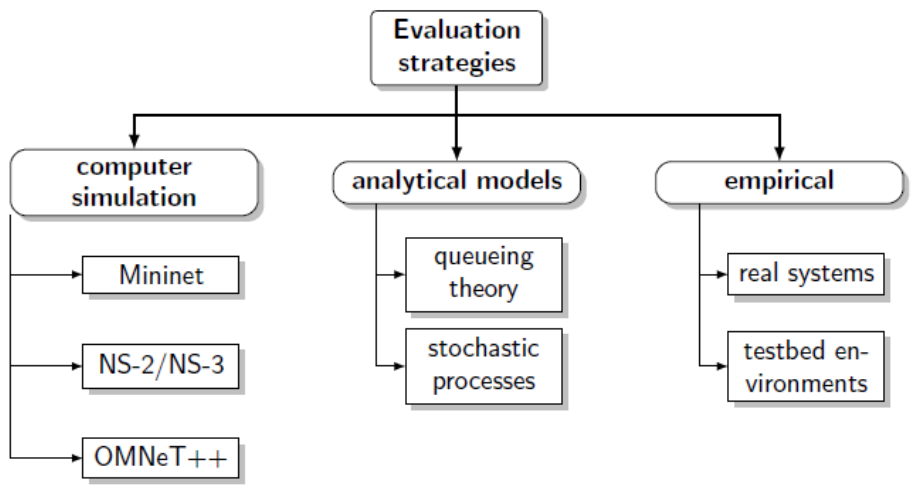

Disclaimer/Publisher’s Note: The statements, opinions and data contained in all publications are solely those of the individual author(s) and contributor(s) and not of MDPI and/or the editor(s). MDPI and/or the editor(s) disclaim responsibility for any injury to people or property resulting from any ideas, methods, instructions or products referred to in the content. |
© 2026 by the authors. Licensee MDPI, Basel, Switzerland. This article is an open access article distributed under the terms and conditions of the Creative Commons Attribution (CC BY) license.