


Abstract
This study examines the significant growth of e-commerce in Romania, which has surpassed the rates of expansion observed in other more developed countries of the European Union. Based on market analysis by sector-specific companies, the Romanian e-commerce market has reached over €6.5 billion. This rapid growth trajectory is expected to continue, driven by various factors, including the impact of the COVID-19 pandemic and the natural evolution of the market. The main purpose of this study is to assess the expansion of the e-commerce market in Romania, identify the key factors behind this growth, and project future market values. Data for this analysis has been collected from industry reports, market analysis, and relevant statistical databases. The study uses a quantitative approach, utilizing financial data and growth rates to forecast future market trends. The dataset includes financial figures from e-commerce sales, digital services such as bill payments, and airline and hotel bookings from 2018 to 2023. Projections for 2024 and beyond were derived from this historical data. In 2019, the e-commerce market in Romania was valued at €4.68 billion, representing a significant increase compared to previous years. By 2020, amid the pandemic, the market value increased to €5.5 billion, marking a 38.4% increase from the previous year. Forecasts for 2024 estimate that the market will exceed €8 billion. In addition, when related digital services are included, the total market value could exceed €10 billion, illustrating the substantial economic impact of the online sector and the growth potential. This study highlights the dynamic nature of the e-commerce landscape in Romania and underlines the significant economic opportunities it presents.
1. Introduction
Romania is at the forefront of the digital economies in Central and Eastern Europe (CEE), masterfully reflected in the vibrant echo of its e-commerce market, in a continuous process of evolution. Since the onset of the coronavirus pandemic (COVID-19), there has been an impressive acceleration of expansion in the e-commerce sector. As consumers have enthusiastically embraced the option of purchasing various products and services online, virtual sales by Romanian businesses have experienced a rapid rise, culminating in a distinct peak in the first year of the pandemic [1]. At the same time, there has been a significant increase in the proportion of businesses operating via the internet, particularly in areas such as restaurants, which have focused their efforts on online channels and delivery services [2].
However, even though the presence of e-commerce in the revenue structure remains considerable for companies operating online, sources of vulnerability such as the level of living costs, galloping inflation, and rising prices hover as a latent threat to market stability as Romanians seek to optimize their spending [3].
In the context of Southeast Europe, the Romanian e-commerce market is emerging as an increasingly influential player, showing a growth dynamic that far exceeds the global average, registering an annual rate of 16.6% [4]. Projected prospects indicate an estimated total value of €10 billion by 2025, which underlines the huge potential of this economic branch. According to data provided by the eBook E-Commerce Growth Strategies, it is estimated that by that year around 54% of the country’s population will be using e-commerce services [5].
The report also points out that the revenues generated by the Romanian e-commerce market will reach €7 billion by 2023 and will approach the €12 billion mark by 2027. These projections underline the significant role this sector will play in the Romanian economy in the coming years. In the local e-commerce market, more than 100 online shops are handling a considerable volume of daily orders, registering over 1000 transactions [6]. However, significant growth is expected over the next few years, estimated at around five times, driven by the various digital transformation trends that will shape the local e-commerce landscape. This projection is fueled in particular by the proliferation of marketplaces, the growth of cross-border sales and the advancement of automation in e-commerce, all of which are embedded in a framework that also integrates elements of artificial intelligence [7]. This phenomenon not only enriches the user experience through optimized product presentation, but also reinforces the analysis in this area, as found in the e-commerce sector reports produced by specialized agencies.
With all of the favorable conditions for rapid growth, the Romanian e-commerce market is expected to record annual growth rates exceeding the global average of 10%. The expansion of internet access in almost all regions of the country, together with modern technology infrastructure and the simplification of the online shopping process, is leading to a steady increase in the number of Romanians opting for online shopping [8], including in rural areas, gradually abandoning purchases in physical stores.
According to the data in the eBook E-Commerce Growth Strategies (Limitless Agency), in 2022, the average revenue generated by each e-commerce user in Romania was over €484, and this is expected to increase to almost €900 per user by 2027 [5,9]. Thus, in the coming years, Romania is expected to become a benchmark on the regional e-commerce map.
According to the same data, the number of e-commerce users is expected to grow to 10.6 million by 2025, representing about 54% of the country’s total population, and to over 11 million users by 2027. Currently, only 45% of Romanians shop online, despite an internet penetration rate of over 90%. In comparison, in the Nordic countries, the percentage of those shopping online is as high as 95%.
In 2022, the northwest and central regions of Romania stood out with the highest proportion of people opting to shop online. However, overall, residents of Bucharest and the county Ilfov ranked first, with 58.3% saying they had made purchases online in the last three months. About half of the Romanians using e-commerce services place two orders in three months and only 12% shop online up to six times a month [10]. In addition, 49% are willing to pay a higher price for a well-known brand and 57% are willing to invest more in eco-friendly products.
In terms of product categories, in 2022, Romanians spent significant amounts online in the following areas: fashion—€2.63 billion (representing 46% of the total e-commerce market); electronics—€1.1 billion (19%); personal and home care products—€885 million (15%); toys, hobbies, DIY—€590 million (10%); food—€146 million (2.6%); furniture—€125 million (2.2%); music, movies, games—€88.9 million (1.5%); drinks—€32.1 million (0.5%) [11].
At the same time, 21% of Romanians buy online from foreign websites. In terms of the origin of these platforms, almost a third prefer online shops in China (27%), followed by those in EU Member States (23%) and the USA (4%).
The report highlights that the main reasons why Romanians choose to shop online are to save time (85%), avoid the stress associated with shopping in physical stores (70%) and to save money (69%). At the same time, those who do not opt for online purchases cite as reasons the desire to see the products before purchase (64%), lack of confidence in receiving the product ordered (55%), concern about high delivery costs (50%), and lack of knowledge needed to order online (15%) [12]. Many respondents also indicated that they give up shopping online because of a lack of complete product information, pictures, descriptions, or reviews.
In terms of the preferred payment method, payment on delivery remains the most used (31%), followed by online payment by card (26%), digital wallet and mobile payments (23%), bank transfers (19%), and other methods.
The report in the eBook E-Commerce Growth Strategies (Limitless Agency), developed to educate and support the Romanian e-commerce market, is a comprehensive resource containing over 90 tested strategies and recommendations for optimizing online sales [5]. It is written with input from 24 experts in the fields of e-commerce, online marketing, e-commerce technologies, design, logistics, and legislation, and is dedicated to entrepreneurs looking to expand their online presence, online marketing investors and marketing specialists managing online stores [13].
According to data provided by the latest European E-Commerce Report 2023, cited by the Romanian Association of Online Shops (ARMO) [14], Romania ranks 3rd in Central and Eastern Europe and 12th in the whole of Europe in terms of online sales of goods and services, contributing to 3.17% of the GDP. Within the European Union, Romania maintains the same leading position in Central and Eastern Europe, ranking 3rd after Poland and the Czech Republic in terms of online sales volume. Romania’s e-commerce sector accounts for almost 60% of the total sales of goods and services in Eastern Europe, generating an estimated turnover of €9.95 billion in 2023, out of a total of €17.6 billion [15].
Although the most significant e-commerce figures are recorded in the UK, France, and Germany, Romania stands out for its impressive growth in sales volume, with a 51% increase, ranking second in Europe in this respect after Estonia (with a 106% increase); see Figure 1.
Figure 1.
The revenue generated by the e-commerce market in Romania from 2018 to 2023 (in billions of euros).
This article starts with introductory and prospective notions of the e-commerce market in Romania, as well as what the online market in this country looks like, focusing on the most important characteristics of the user type and the impact that this segment has generated in the economic area. Subsequently, after this introduction, Section 2 focuses on the development of this area of e-commerce after 2020, and how the pandemic has influenced the harmonious development of e-commerce, including generating market analysis, forecasts and extremely important data from the online market. Section 3 is a milestone at the starting point for every online merchant, with a focus on the use of automation and AI solutions to scale online businesses. Methods and ways to generate benefits for these businesses are presented, as well as the most impactful modules through which sales can be achieved, as well as a leading position in the market. Section 4 summarizes the concluding aspect and future directions that the study will take, having already performed intense analysis on handling time algorithms, price descending, stock synchronization, composite products, and product bundles.
2. Related Work and Market Analysis
2.1. Studies and Analysis on the Impact and Influence of the Pandemic Period on Consumer Online Shopping Behavior
The impact of the pandemic has accelerated transformations and challenges in various areas. Intensive use of the internet has enabled people to be connected to continuous streams of real-time information, and digital innovations, together with electronic products and services, have become essential supports for customers and organizations. Behavioral changes, both personal and organizational, have been influenced by restrictions and temporary bottlenecks [16]. In this context, e-commerce platforms dedicated to books and literature have seen a significant increase in overall traffic, by more than 15% between January and March 2020.
As of March 2020, online commerce was no longer just an option, but an imperative for both businesses and consumers. In the face of the COVID-19 pandemic, many economic entities active in online commerce have had to adapt quickly to the new conditions [17]. As a result, many online retailers have launched new products and services, adopting innovative sales strategies in the context of the pandemic. However, the evolution of the e-commerce sector has been varied and influenced by the specificities of each country [18,19].
We can say that the first part of 2020 has been marked by high online orders, with significant increases coming from most parts of the world. One example is the Asia–Pacific region, where online orders increased by more than 70% in direct comparison with the same period of the previous year. In the case of North America, online orders managed to grow exponentially, reaching approximately 100% by the end of May 2020 compared to the previous year. For the territory of Europe, the growth was uniform and the average online orders were around 50%.
Arguably, according to data provided by the USA Bureau of Reclamation, the share of online sales has been on an upward slope in the USA for the last two decades, and when those restrictions were imposed, the acceleration was extremely high. As a result, in the second quarter of 2020, online sales grew more than 30% over the first quarter of 2020 and more than 45% over 2019 [20]. As in other areas, some sectors experienced stronger and faster growth than others during the pandemic period. According to reports from the IMF—Food Retailing Industry Speaks, shortly after the onset of the pandemic, more precisely after the first 3–4 days, food sales tripled. Food deliveries from restaurants saw a significant increase, up 16% in Germany and 31% in the USA as of 31 March 2019. The situation was similar for clothing (25% compared to 26%) and household cleaning products, with about 9% for Germany and about 26% for the United States.
Therefore, we can say that the SARS-CoV-2 pandemic has generated a significant change in terms of consumer demand for food and non-food services. Specifically, since March 2020, restaurant bookings have dropped sharply, all caused by the imposition of competent authorities, and in most cases, those food establishments have closed.
The global pandemic has influenced consumer behavior, but it has also changed it more conservatively and protectively not only when it comes to their own lives, but also food. In terms of online traffic generated by marketplaces, figures show that for October 2020, it increased by more than 35% compared to January 2020. Another new area that was highly appreciated during that period was sports equipment, which saw an increase of around 24%, and also cosmetics, with an increase of around 4%. The most affected sector in this whole equation was tourism and hospitality, registering a significant reduction of over 43%; on top of that, even the media sector suffered with a decrease of around 13.2%.
E-commerce, however, is not intended to compete with or replace traditional commerce, but rather to help companies adapt to any type of challenge and withstand the challenges of today’s environment. There are also advantages, especially in terms of versatility and adaptability, and even small businesses have been able to identify new opportunities for international markets, identifying new suppliers or areas in which to expand.
Global e-commerce has expanded tremendously, registering a significant increase in sales of over 1336 billion dollars in 2014, and in 2020, we already have over 4206 billion dollars. Therefore, at a global level, electronic commerce is expected to total over 6.33 trillion dollars in 2024 worldwide. This expansion is expected to be in continuous growth, proving that this e-commerce business model is becoming an extremely profitable option. In a word, from 2020, that reset provided by the SARS-CoV-2 pandemic has shown that e-commerce can be an essential tool and an extremely viable solution for consumers, especially in times of crisis, as well as a gear and a key engine in the economies of small, medium, and large enterprises.
Compared to the traditional market, B2C e-commerce brings significant challenges for corporations, forcing them to address additional complexities. Billions of online users are simultaneously changing their behavior to save time and benefit from the convenience of online shopping from the comfort of their own homes. In 2018, global e-retail sales grew by 22.9% compared to 2017, accounting for 12.2% of total global retail sales. This trend suggests that there are significant opportunities for expansion in this sector. Internet users have at their disposal a diverse range of online platforms where they can browse, compare, and purchase the desired products or services. While some sites are specifically dedicated to the business-to-business (B2B) segment, individual consumers also benefit from numerous digital options.
In 2019, the top two e-commerce companies were Alibaba, which held 15% of the market with a gross value of goods of US$538 billion, and Amazon, with a 13% share of global e-commerce. Online retail platforms have seen significant increases in traffic amid the global coronavirus pandemic as a large portion of the population has stayed at home and resorted to online ordering for items they would normally have purchased in stores. In 2020, Amazon.com had an average monthly traffic of nearly 3.68 billion visitors, followed by eBay.com with an average of 1.01 billion visits per month.
In 2020, global e-retail sales reached $3.9 trillion, with the Asia–Pacific region generating $2.45 trillion, driven by China’s significant influence. North America came in second with $749 billion in e-retail revenue. The crisis generated by SARS-CoV-2 highlighted a favorable behavior of online commerce, with a predominance of sales for products that can be classified as “hobby or entertainment” [21,22,23]. During the pandemic, consumer behavior underwent radical changes. Fear of the possibility of infection and strict isolation measures have greatly boosted the expansion of e-commerce. International studies have shown that the pandemic has had a substantial impact on consumer behavior, leading to an increase in online purchases. Among the factors influencing consumer behavior online, the influence of the media, according to several studies, and the benefits offered by e-commerce stand out. The outlook for 2021 indicates a continued focus on online shopping. Although e-commerce growth will not reach the significant level seen in 2020, online sales are still expected to grow by around 14.30% this year.
E-commerce has seen explosive growth in recent years, becoming a key component of the global economy. This study examines the evolution of e-commerce globally, highlighting significant trends and providing insight into the main markets in the field. As of 26 June 2023, the total number of global e-commerce sites has surpassed 26.5 million, marking a significant increase compared to 2019, when there were only 9.2 million. This upward trend has been accelerated by the COVID-19 pandemic, which has led to a forced migration of commerce to online [2,24].
The United States holds the lead in terms of the number of online stores, with a total of 13.98 million sites. Figure 2 shows a top 10 list of countries with the most online shops.
Figure 2.
Top 10 countries with the most e-commerce websites (26 June 2023).
E-commerce has expanded significantly in recent years and has become an essential part of the global economy. Several factors, including the COVID-19 pandemic, which has boosted consumer and business adoption of online commerce, have driven accelerated growth. The USA remains the global leader in e-commerce, but emerging markets such as Brazil, India, and Russia show significant growth potential in the coming years. The total number of e-commerce sites globally has seen a significant increase during the period under review, from 9.2 million in 2019 to 26.5 million in 2023. This rapid expansion reflects the growing adoption of online commerce by businesses and consumers.
The year 2021 saw explosive growth in e-commerce, driven by the COVID-19 pandemic. The restrictions imposed by social distancing and the limitations imposed on traditional commerce have forced many businesses to move their operations online. This shift has led to a doubling of the number of e-commerce sites by 2021, with a staggering 204% annual growth. The meteoric growth in 2021 was followed by a moderation in 2022, when the number of e-commerce sites grew by 39%. While lower than the previous year’s growth, this rate indicates a persistence of online business migration, even after the immediate impact of the pandemic has subsided. In 2023, annual growth slowed to 1.1%, suggesting a possible stabilization of the market after several years of rapid expansion, according to My e-Box estimates. E-commerce experienced significant growth in 2019–2023, marked by a surge in 2021 following the COVID-19 pandemic. Although the pace of growth slowed in 2022 and 2023, the total number of e-commerce sites remains significant, indicating a lasting transformation in the way businesses operate and consumers shop. Figure 2 shows a ranking of the countries with the most online shops [25].
The United States holds the global leadership position in e-commerce, with a remarkable 13,982,500 online stores. This dominance reflects the highly digitized nature of the USA economy and the significant importance of online shopping in the USA consumer behavior. The UK ranks second with 1,239,400 online stores, demonstrating a substantial digital economy. The significant presence of European countries in the top 20, including Germany, France, Russia, Italy, the Netherlands, Spain, and Poland, highlights the maturity and high adoption rate of e-commerce in the region, see Figure 3.
Figure 3.
Top 50 countries with most online shops.
Romania stands out in the rankings, ranking 23rd worldwide with 117,400 online shops. This performance demonstrates an upward trend and accelerates the development of e-commerce in our country. Figure 4 shows the ranking of countries with the fastest acceleration in the e-commerce segment.
Figure 4.
Ranking of countries with the fastest acceleration in the e-commerce segment.
Therefore, the presence of small countries, such as Singapore, Ireland, and New Zealand, highlights the fact that their size is not a handicap or a limiting factor for the expansion of electronic commerce. Even developing countries, such as Nigeria, Pakistan, or Indonesia, although they are positioned in a lower area of the ranking, manage to maintain a significant number of online stores, an aspect that illustrates that there is an upward trend in the online environment. Shopify stands out as the most prevalent technology for building e-commerce sites, holding over 15% of the market share and being used by nearly 4 million sites. In competition, WooCommerce and Squarespace e-commerce hold 13.85% and 4.74% shares, respectively. Figure 5 shows the hierarchy of platforms in the following order: platform, number of online stores, and global market share.
Figure 5.
Ranking of online platform by number of stores and market share.
Nearly 4 million online stores implement the Shopify platform. WooCommerce follows closely behind, being used by just over 3.6 million websites. Squarespace e-commerce technology is integrated into just over 1.2 million websites. These three platforms are the only ones to have crossed the 1 million user mark. All other e-commerce website builder solutions are used by less than 1 million websites each.
This continued growth underscores the rapid transformation of the global market, with a forecast for 2024 indicating sales of $6.33 trillion, representing an annual growth of 8.8%. The main contributors to this growth are China and the United States, which together will generate more than $4.1 trillion in e-commerce sales in 2023. These two countries are also home to most of the world’s top 10 e-commerce companies.
In addition, the proliferation of mobile technology has played a crucial role in the growth of this sector, with an estimate that in 2024, more than 2.71 billion people will shop online, of which a significant proportion will use mobile devices for purchases. Mobile commerce sales are forecast to reach $2.5 trillion in 2024, compared to $2.2 trillion in 2023, highlighting consumers’ growing reliance on mobile devices for online shopping.
2.2. Analysis of the Impact of the Pandemic Period on E-Commerce in Romania and Exposure of SaaS Solutions with Scalable Potential at the European Level
The volume of e-commerce sales in Romania experienced substantial growth in 2019, reaching €4.68 billion. In the context of 2020, marked by the COVID-19 pandemic and social distancing measures, mobility restrictions, and the expansion of teleworking, e-commerce sales reached the level of 5.5 billion euros. This led to an impressive 38.4% growth in the online sector in Romania.
Fashion items dominate the preferences of e-commerce consumers in Romania, closely followed by electronics and media products. The country’s capital, Bucharest, has the highest percentage of online payments, this phenomenon being considerably influenced by delivery platforms such as Glovo, Food Panda, UberEats, and Bolt, which also have a section specialized in non-food product deliveries, called e-commerce. The fashion segment was the main source of revenue between 2017 and 2020, generating approximately 943 million USD in 2020. It is estimated that in 2021 this will exceed the 1 billion USD threshold. On the other hand, electronics and media sales recorded revenues of 607 million USD in 2020. The average revenue per user from e-commerce in Romania was $283 in 2020, according to Digital Market Outlook estimates. This indicator is expected to increase to $380 by 2025. The number of e-commerce users in Romania has been growing steadily every year. In 2017, it was 5.2 million, reaching 8.3 million in 2018. It is estimated that by 2025, the number of e-commerce users will increase to around 10.7 million.
It can be said that during the pandemic, the behavior of users regarding the way Romanians buy has changed drastically, with an increase of approximately 13% in terms of e-commerce and appetite for online shopping, in direct relation to 2019. In addition to all of this, the average amount they spend on online shopping has grown impressively, being approximately 41% higher than the previous year. An accelerated trend was seen in the area of catering services, such as cooked food delivery, registering a 124% increase over the previous year. The number of users paying online by card has grown by an impressive 14% this year compared to 2019, according to a survey conducted by iSense Solutions for GpeC. During the COVID-19 pandemic, the beauty sector experienced a spectacular jump, with online sales increasing by 309.5% in April 2020 compared to the same month of the previous year. The books, movies, and music segments also saw considerable growth in online sales, up 22.4%.
Although Romania ranks in the top 10 areas with high-speed internet access, with more than 10 million Romanians using the internet every day and around 300,000 making daily purchases online, the country remains behind in terms of average online purchases, with only 45% of internet users having made at least one online purchase in the last 12 months. Bulgaria ranks lower, with 42% of internet users making purchases online.
Therefore, the method of penetration of electronic commerce has increased in Romania from 26.5% in 2017, reaching approximately 43% in 2020, and by 2025 it is expected that this share will reach over 57% according to sources from Digital Market Outlook.
The MerchantPro platform reports a 5.4% sales growth in Q1 2024 compared to the same period last year. This trend is similar to the overall market trend, according to the MerchantPro Compass indicator, which shows a 5.5% increase in the number of transactions in 2023 compared to 2022. Although the pace of growth has slowed, the market maintains a positive trajectory, demonstrating increasing maturity. An analysis of active online stores on the MerchantPro platform reveals an average sales growth of 5.9% between January and March 2024, compared to the same period in 2023. The number of customer orders saw a moderate increase of 5.4%, with a significant increase of 14% in February 2024. Figure 6 represents the increase of sales and orders registered by active online stores in the period January–March 2024 compared to the same period in 2023.
Figure 6.
Sales and orders growth in Q1 2024 compared to Q1 2023.
The analysis carried out by MerchantPro is based on data from online stores, which are active in 2022 and 2023, and this exposes us to the fact that there is an increase in sales by only $3 from one year to the next. In terms of the number of orders placed by customers this year, growth remains moderate at +5.5%. According to the MerchantPro data, the most dynamic market segment was Baby Products, where the number of orders increased by more than 20%. In contrast, for the first time in three years, the fashion segment contracted, with a −10% drop in the number of transactions. Against the backdrop of inflation and declining purchasing power, the average order value recorded by stores on the MerchantPro platform was around €54 in 2023, 2.5% lower than in 2022, when the level was €55.5. In Q1 of 2023, the increase in the number of transactions was +27%, but in Q2 the pace slowed to 5.8%, followed by two consecutive quarters with declines compared to the equivalent periods in 2022. Quarter 3 saw a decline of −1% and Quarter 4, traditionally the best quarter of the year, saw a decline of −3.8%. Although Black Friday week sales and special offer days saw an increase of +10%, this momentum was not enough to sustain quarter-on-quarter growth.
According to MerchantPro’s analysis, the 35–44 age group has the highest share of e-commerce usage, with nearly a quarter of the total. The 25–34 age group has a similar share of 23.82% and the 45–54 age group contributes 23.52%. On the other hand, young adults aged 18–24 and people aged 55–64 are less active in e-commerce, accounting for less than 28% combined. Figure 7 illustrates the growth in the number of transactions and average order value in 2023 by quarter. The blue bars represent the percentage increase in transactions, and the red line shows the average order value in euros for each quarter.
Figure 7.
Transaction growth and average order value in 2023.
The main directions of market influence and prospects for 2024 include the use of artificial intelligence, automation, diversification of business models, intensifying competition, and revolutionizing digital marketing. The local e-commerce market has matured and competition is growing, especially from international brands. Merchants need to adopt an agile approach and implement new technologies to optimize their operations and remain competitive. Those who invest in automation and innovation will be the big winners in online retail. According to estimates by GPeC, ARMO, the Romanian e-commerce sector is valued at approximately €7 billion by the end of 2023, representing an increase of around 10% compared to the €6.3 billion recorded in 2022.
This estimate excludes services, utility payments, digital content, air tickets, holidays and travel, hotel bookings, and tickets for shows or other events. If these items were included, the total value would exceed €10 billion. Figure 8 shows the value of the e-commerce market in Romania.
Figure 8.
Value of the e-commerce market in Romania.
According to data provided by the National Institute of Statistics (INS), in 2023, the main categories of products and services purchased online by Romanians were clothing items, with a percentage of 79.6%, followed by deliveries from restaurants, luxury chains, and food and catering services, which amounted to 32.7%. Figure 9 illustrates the main categories of products and services bought online by Romanians in 2023.
Figure 9.
Main categories of products and services bought online by Romanians in 2023.
According to the study carried out by iSense Solutions for GPeC in September 2023, the average annual online expenses of Romanians varied according to the product category. In 2023, Romanians spent an average of 157 USD on pet products, compared to 133 USD in 2022. Spending on baby items increased to 144 USD in 2023, compared to 132 USD in 2022. Security and surveillance equipment increased from 114 USD in 2022 to 122 USD in 2023. Spending on books, magazines, e-books, music, and movies increased slightly, from 76 USD in 2022 to 79 USD in 2023. Figure 10 illustrates the average annual online expenses of Romanians for different categories of products and services in 2022 and 2023.
Figure 10.
Annual online spending comparison 2022 vs. 2023.
The participation of e-commerce in the total revenues of Romanian companies has registered a significant increase in recent years. In 2009, it represented 2%, it rose to 6% in 2013, and reached 9% in 2018. During the conference organized by the Romanian Association of Online Stores during the first edition of the National Day of Electronic Commerce, Luca Cassetti, Secretary General of E-Commerce Europe, emphasized that, despite the challenges, Romania will keep the leading position in the European Union in terms of the significant expansion of electronic commerce. The online sector has become the focus of interest for entrepreneurs, registering a growth of 31% in 2020, and the outlook for 2021 is promising. Despite this, the sector faces difficulties related to the lack of trust in online payments, with Bucharest leading the way with 43%, followed by Cluj with 11% and Timis with 7.5%. In addition, the declining interest in online shopping is affecting the development of e-commerce, as many customers still prefer to buy products from physical stores.
Limited interaction with online retailers and low levels of digital skills among individuals (for example, in 2019, this was 31% in Romania, 56% in the EU-27, 78% in Denmark, 78% in Germany, 79% in the Netherlands, and 83% in Norway, with Bulgaria having only 29%) are relevant factors. In addition, the low number of personal computers leads to a lower penetration of internet users. Romania has an insight rate of 73.8%, compared to 87.8% in Europe, 97.8% in Denmark, 96% in Germany, 95.6% in the Netherlands and 98.4% in Norway. Except for Bulgaria, which has a lower rate of 66.7% on 31 December 2020, these figures negatively affect the development of e-commerce.
Other news from the e-commerce and SaaS platform area comes from GoMag, which in 2023 has recorded more than 3 million euros and the platform has seen considerable growth with more than 4000 customers. They are predicting a 2024 full of surprises, especially as they have launched GoMag Insights, which is an all-in-one marketing tool that has managed to incorporate a multitude of functions dedicated to traffic monitoring. Estimates for the year 2024 are that there is the potential for a more than 30% increase in sales compared to 2023, approaching around €40,000,000 Euros, and the number of online stores to exceed 5500 customers, highlighting considerable growth in the segments of pets supplies, home and garden, fashion, etc. Having such figures, the company wants and has started the procedures of expansion in neighboring countries, namely the Republic of Moldova, Bulgaria, and Hungary.
In terms of solutions in Romania, which is taking a step forward and starting to take shape in neighboring countries, this time we have to expose the point of view of the Paketa Group, which in 2023 transported over 100 million parcels, being one of the best-known players in its field. In this situation, the department dedicated to Romania has great and extremely precise objectives for 2024, an increase of more than 50% in partnerships and an increase of more than 30% in turnover.
For the Czech Packeta Group, Romania is more than just an expansion market; it is an essential regional hub supporting foreign markets such as Bulgaria, Greece, and Turkey. According to company representatives, Romania has the potential to become a strategic connection point to other markets in Southeast Europe. Packeta currently works with more than 1800 online stores and local sellers and aims to grow by around 50% by the end of the year. In addition, Packeta Romania’s turnover is expected to grow by 30% to €21.7 million in 2023. Entrepreneur Simona Kijonková founded Packeta Group in 2010 under the name Zásilkovna as a Czech logistics–technology franchise project. Since then, the company has experienced continuous growth, reaching a turnover of €294 million in 2023 and transporting almost 106 million parcels across all its entities. At the end of 2023, Packeta Group had more than 15,000 of its own pick-up points in four countries, including 6200 Z-BOX lockers, and more than 137,000 partner pick-up points in Europe. It also offers delivery services in 33 countries, including Europe, the US, and the United Arab Emirates.
In this context, 2024 started with a major change for the Czech group, which announced a new owner. Specifically, Packeta Group’s shareholders, including Packeta Romania, have agreed on a full sale to a consortium of CVC Capital Partners and Emma Capital, with financial support from R2G. The transaction requires the approval of the relevant regulatory authorities and is expected to be completed in the first half of the year. Terms of the transaction were not disclosed. The Romanian subsidiary continues its plans with clear targets for growth from 2024. Packeta Romania manages logistics in key markets in Southeast Europe, including Greece, Turkey, and Bulgaria. The company currently operates two warehouses in Romania, in Bucharest and Oradea, with areas ranging from 2500 to 3000 square meters.
2.3. Emphasizing the Influence of Competitive Platforms within the Romanian E-Commerce Sector and Outlining Strategies to Sustain Profitability in This Market
Online shops in China are gaining more and more ground among consumers. Shein and Temu stand out in particular. Estimates indicate that Romanians place more than 15,000 orders on these platforms every day, buying a wide range of products from clothes and accessories to electronics and more. This momentum on these platforms has been achieved through the viralisation of materials on TikTok where other influencers or content creators have ordered different products and subsequently received affiliate codes or significant discounts, constantly promoting the platforms on social media and generating significant impact for the Temu and Shein platforms. Although the prices are attractive and the product selection is vast, there are some associated risks. Product quality can be uncertain, and the return process can be costly and not always worth the effort. One strategy to gain a foothold in the market could be to merge with companies in the United States, a move that could lead to the dethroning of the giant Amazon. This also affects the market in Europe, where major players such as eBay, Cdiscount, Etsy, Pepita, Skroutz, Allegro, Emag, and other marketplaces are suffering losses. The influence of the two big players in China is being felt, especially as they are opening strategic warehouses in important parts of Europe to deliver in a relatively short time, even reaching delivery times of 3–7 days.
Temu Marketplace is owned by the Chinese group PDD Holdings. It has a market value that exceeds $190 billion; this marketplace has made its appearance in Romania since 2023, growing the market, and in 2024 began aggressive campaigns in the online environment, largely taking over the e-commerce area. According to the analysis carried out by the specialized agencies, they have observed that the public Temu focuses on is the one that wants to buy products at low prices, aware of their quality, although the operator has told press trusts such as Libertatea that it is a marketplace and that it constantly checks the merchants, but at the same time they want them to strictly comply with all regulations and offer compliant products and specifications.
The online campaigns they generate are present on Facebook, Instagram, TikTok, and Google, but also on many others, and seeing the massive demand in Romania, Temu has generated a new subdomain with the extension .ro, retaining users through a wheel of fortune when creating an account with discounts and extremely attractive prices.
If we look at the world’s largest retail company, which has about 300 million users and sales of over $500 billion, it could be dethroned by the combination of the two competitors Shein and Temu. Shein has amassed around 90 million users and will most likely surpass 150 million users by 2024, of which more than 20% are from the USA. For the year 2023, Shein has registered sales of over 22 billion dollars. Temu entered global markets in 2022, and Bloomberg reports that the marketplace has over 70 million users in the USA alone. Often products that most people used to order from Amazon or other platforms are now priced much lower on Temu and Shein, starting at derisory costs. The Romanian market is an extremely exciting one for the two competitors, and this has been speculated by both Temu and Shein.
At the moment, at the beginning of 2024, Romanians generate more than 15,000 orders daily on the two marketplaces. Figure 11 illustrates the daily visitors on the e-commerce platforms Temu, Shein, AliExpress, and eMag.
Figure 11.
Comparison of e-commerce platforms on the Romanian market.
eMAG.ro has the highest number of daily visitors, ranging between 3 and 7 million visitors per day. The variability of traffic is high, with multiple peaks and rapid drops, indicating promotional campaigns or seasonal events. AliExpress has moderate visitor numbers, between 500,000 and 1 million visitors per day. Traffic is more stable compared to eMAG.ro, indicating a steady and loyal user base. SHEIN has a lower number of visitors, ranging between 100,000 and 300,000 per day. Traffic is relatively constant with minor variations, suggesting regular use by loyal customers. Temu has the lowest number of daily visitors, between 100,000 and 400,000. Although the number of visitors is the lowest, traffic is constant, suggesting a niche market with loyal users. eMAG.ro dominates the market in terms of the number of visitors, but its traffic is highly variable, which may indicate a dependence on promotional campaigns, be it holiday or Black Friday campaigns. On the other hand, AliExpress and SHEIN have more stable user bases, with less dramatic variations in daily traffic. Temu has the lowest traffic, but its stability may indicate the high loyalty of its users. These observations are realized with applications such as SimilarWeb PRO, Ahrefs, Google Keyword Planner, and DataForSEO API.
Chinese online shops Shein and Temu have become very popular in Romania thanks to their low prices and wide variety of products. Romanians place over 10,000 orders on these platforms every day, buying clothes, accessories, electronics, and more. Although prices are attractive, there are numerous complaints about product quality, incorrect sizes and return difficulties. Returns can be expensive and complicated, which discourages many customers from returning defective or poor-quality products.
Shein and Temu stand out for their aggressive marketing strategies and competitive pricing, putting pressure on online retail giants like Amazon. Shein has about 90 million users, while Temu, launched in 2022, already has more than 70 million users in the USA alone.
On Shein, the daily number of orders varies between 4000 and 6000, with traffic steady with moderate variations. Also, on Temu, daily orders range from 4000 to 6000, similar to Shein. Traffic is constant but with slightly higher variations compared to Shein. Therefore, Figure 12 shows the daily number of orders for Shein and Temu. In the graph below, the solid blue line represents the total daily orders for Shein and Temu, frequently exceeding 10,000 orders per day. This underlines the growing popularity of these platforms in Romania.
Figure 12.
The graph shows the daily number of orders for Shein and Temu.
The trend line for Shein (dotted green) and Temu (dotted orange) shows whether there is an increase or decrease in the number of orders over time. The solid blue line represents the total daily orders for Shein and Temu, highlighting their combined popularity.
3. Analysis Model Proposal, Testing, and Results
Online shops in Romania lose more than 50% of sales due to a lack of automation of operational processes, according to an analysis and studies conducted in the e-commerce market. Currently, about 3 to 5% of online shops in Romania use process automation, and then only in force majeure situations. However, market analysis shows that this percentage has been increasing over the past two years as Romanian online store managers, initially focused on automation in sales and marketing, begin to recognize the importance of extending automation to all operational areas to optimize management and reduce costs.
We can say that the most important solutions sought by online stores in Romania about the functionalities they need are found. The management and allocation of dynamic prices in terms of platforms, and the adjustment of product prices in real time, are all based on market demand, the number of visits, the behavior of consumers, or how the competition acts.
The constant and fast synchronization of stocks between the suppliers that the platforms have, and the decrease in the number of orders from various sources or the integration between various platforms and online stores and the notification when the stocks reach minimum thresholds or tend to run out block the purchase of products or change to pre-ordered products. Automatically generating a pre-order for customers and ensuring the relationship with them is as flexible as possible, but at the same time remaining competitive in the market, is important.
In addition to these, automatic invoicing and closing through receipts, accounting balance sheets, and automatic generation of AWBs can reduce the workload of operators in the logistics or warehouse area by more than 30–40%. All of these functionalities combined with goods management or picking list modules can efficiently assist users at every step so that they can operationalize more than 70% of the internal processes, managing to reduce dead times or human error, which are extremely common when handling goods or managing stocks in deposits.
When we discuss automation and the use of artificial intelligence in the year 2024 and the introduction of automation dedicated to the processes and management of stocks, products, descriptions, orders, operationalization, and the inclusion of some AI modules in the relationship with customers, the trend is upward and full of contrast. Being pressured by the entrepreneurial environment and the lack of qualified labor in these fields, automation takes over and becomes a central pillar, capable of increasing productivity and ensuring the optimal management of resources in organizations. The adoption of automation and the inclusion of price detector modules, dynamic prices, automatic invoicing, warehouse automation, supply chain optimization, and automated and scaled warehouses through warehouse management applications are significant. All of these elements significantly reduce human effort and processing time and increase productivity.
Regarding the way customers approach this area of automation, the upward trend highlights that the budgets allocated for operations of this type at the beginning varied between 1000 and 3000 Euros, but when they noticed that there was a potential for the replacement of manual work and that the results are noticeable, they began to gradually increase the amounts invested in automation to the limit of 10,000 Euros annually with an upward trend. Neighboring countries, such as Austria, Poland, Germany, France, and Belgium, have an advantage in this chapter because companies adjust their automation budgets by more than 10 times compared to the Romanian market. These practices substantially scale up e-commerce processes, especially in the dropshipping and supply areas, because processing times are reduced and because of automatic delivery times. Investments in the integration and development of new modules in the direction of management by aggregating ERP and CRM to add value are also embraced in other countries, currently, Romania remains on an upward trend, but with a 6% of the potential e-commerce market.
3.1. The Importance of Synchronising Stocks and Prices across Sales Channels
According to the studies carried out when there is a permanent synchronization between the prices that a seller practices on various e-commerce platforms, the degree of customer satisfaction is high because the customer has the possibility to choose a desired product according to the purchase price, see Table 1. This procedure saves a lot of time wasted in operationalization; automatic price updating between several sales channels can be achieved by uploading product feeds, which contain at least one product identification code and, through matching logic between them, can automatically update prices on all sales channels without the need for manual adjustment and operator intervention. This information is extracted from the automation market in Romania, specifically through the Ecap and Syncap SaaS solutions.
Table 1.
Mathematical conversion model highlighting the importance of price automation and scaling in e-commerce.
Therefore, we can highlight the method by which the degree of accuracy in saving time is identified through automation procedures, these being identification through Formulas (1)–(3):
When discussing how we can reduce costs through automation we must also consider the following aspects in Formulas (4)–(6):
These aspects should not be neglected, which include the degree of customer satisfaction, around which all of these aspects revolve in Formulas (7) and (8):
The application of the model can be taken on an individual case and can be presented in the form where the number of products N = 1000, and for manual price adjustment by an operator we have a time of the form , and the time required for the automatic updating of prices will be discussed in terms of . When we consider the operational costs of manual adjustments the form of applying the model, it will be of the form = 0.5 USD/product, and the cost of operationalization and automation will be of the form , with a probabilistic degree of customer satisfaction of the form S = 7, and the increase in the degree of satisfaction through price synchronization is represented by , see Table 2.
Table 2.
Generic results by applying the model in e-commerce.
To further extrapolate what was highlighted, both in the study and in the economic model generated by this automation modality, an identical situation was generated by analyzing the exposure for 1000 products, 5000 products, 10,000 products, 20,000 products, 30,000 products, 40,000 products, and 50,000 products, this flow being extremely common and covering every customer pattern that an automation solution can have, including data that were exposed using Ecap and Syncap reports.
Having this information, the necessary correlations were made to highlight the different variables, and depending on the number of products, to clearly show how much automation impacts an online store. We can say that the total time saved is treated separately; thus, the total manual time is highlighted by the blue color and reflects the manual price adjustment for all products, and the total automatic time for adjustment by automation solutions is in orange, and the time saved is the ratio between manual and automatic and is in green.
We can say that customer satisfaction will also be taken into account, and this is weighed in the standard case without automation, or how to explain satisfaction with the manual operation; this is outlined in blue, and satisfaction with the operation of this procedure is outlined in orange. It can be seen that along with the degree of operationalization, there are two important factors that we adjust, those of time and cost, but what is not exposed and is extremely important is the reduction of the degree of human error in mapping prices by an operator. Therefore, it can be seen very clearly that this model exhibits a high degree of accuracy and offers significant benefits to those using synchronization and automation modules in the direction of e-commerce and beyond.
This model has been tested on several clients whose online stores, within 5–6 months, have achieved considerable increases that exceeded 30%, all down to aspects related to the synchronization of prices and stocks. This aspect brings a high degree of satisfaction to the customer because they will know that the product exists and will reach them and that they were not deceived. Another aspect is that in terms of internal processes, it is much more beneficial for a company to know everything, including their stocks and prices, at the same time.
Another way in which the presented model was applied and tested on the part of the clients refers to the way to expose, on the sales platforms, a solution for mediating delivery times. This is necessary because most of those who sell online use suppliers from various countries, and the products are not in stock in Romania. Customers must know the average delivery time; even if the products will arrive within 4–7 days from placing the order, it is important that the final beneficiary knows this aspect and that the delivery time is displayed on the platforms. Even the achievement of the average delivery is important in this entire e-commerce ecosystem.
The logic of retaining virtual stocks or the introduction of virtual stocks based on the times contractually stipulated by suppliers represents another feature that can substantially scale online sales. We cannot neglect the aspect of the recommended products, which take on similar characteristics and particularities to the products searched for directly on the pages of online stores, which is an extremely important factor. There is a degree of change of mind among buyers that tends to be at 30–40% when it comes to the home decoration categories, IT and C, fashion, beauty, or telecommunications. These domains have multiple products, these being differentiated only by one characteristic, and that variation can produce a sale in the end.
According to the tests carried out, under the conditions of using a solution dedicated to the automation of repetitive processes, an optimization of over 80% is obtained; more precisely, the processing of an order or an AWB takes less than 7 s, and around 15 s including listing them in order and preparing parcels for delivery. Therefore, in conditions where there is a strictly established flow regarding these procedures, more than 300 orders can be processed in the first part of the day, and after 12:00, the operators or staff dedicated to these processes should deal with other activities dedicated to supporting online stores, by adding new products or preparing promotional packages, see Figure 13.
Figure 13.
Graph showing correlations between different variables according to the number of products for an online shop.
Through such optimizations, we obtain a degree of satisfaction for all parties involved, and from the tests carried out with the help of automation solutions, it was observed that in 2020, at the beginning of the pandemic, the analyzed online stores were processing around 1000–1500 orders per month with two operators, and within 4 years, their sales volume reached over 12,000–15,000 sales, and two operators are used for operation. This is possible also through the use of WMS-type solutions to optimize warehouse operations.
3.2. Using Artificial-Intelligence-Based Modules in Content Generation and Customer Interaction
In today’s circumstances, it is extremely difficult to keep up with the avalanche of AI-based solutions in generating product images, AI descriptions, and animations. The shift from standard, manual operations to everything automated, but also guided by AI, leads to a trend of the virtual translated into reality. An online shop, benefiting from integrations of AI solutions, already gives an impression to customers of being extremely up-to-date with the trends, especially as the moment they arrive on the respective page they are greeted by virtual assistants, who intensively study their behavior and preferences, suggesting products, offers, packages, and prices being adjusted according to the customer’s channel and conversational mode. In a word, online shops, besides the fact that until now they were not a huge effort for the developer and the user, will now be 100% operational and automated, without the need for operator intervention, with orders being processed automatically, AWBs being generated and uploaded directly into accounting and management applications, and order data arriving instantly to couriers. The use of artificial intelligence (AI) to enhance written and video content is revolutionizing the way digital content is created and consumed. AI can generate consistent and relevant text that is tailored to the target audience, optimized for SEO and personalized for each user, which significantly increases reader engagement and satisfaction. In video, AI can automate editing, captioning, preview generation and even the creation of entirely new video content through deep learning and machine learning techniques. This automation not only reduces the time and costs associated with content production, but also enables massive scaling, allowing companies to produce and distribute large volumes of high-quality content in a very short time. The AI-driven approach also allows for continuous adjustment of content based on user feedback and market trends, ensuring that materials remain relevant and engaging.
To illustrate the significant impact of an artificial-intelligence-based solution in adjusting product images for online stores and marketplaces, it is essential to emphasize how these technologies can highlight the essential features of products. AI can optimize images in a way that captures the attention of customers and visitors, often influencing purchase decisions through the visual appearance of products alone. Therefore, we have a situation, which 4–5 years ago required manual editing by specialized, creative people with skills in graphic design and more, in which there are now tools capable of outlining product images which are extremely impactful in the marketplace today, achieving much better conversion rates than any other solution used.
In the following case, in Figure 14, we have two images generated with the help of artificial intelligence through AI module DALL-E. The images are presented to show how it sees a product and what image it must create for that category, as well as the time it such generation takes.
Figure 14.
(a) A simple product image of a mobile phone case on a white background. The phone case is sleek and modern, clearly displayed front and center to showcase the phone case. (b) A captivating product image of a mobile phone case, with a modern and stylish background created by AI.
It can be said that when the experiences of the past years required the use of graphic artists, the estimated costs for each processed image varied between 2 and 5 USD, and for 100 images, a time of approximately 8–10 h was required. Today, we are talking about extremely low costs, and the processing times for an image have decreased considerably, reaching approximately 30–40 s for a simple product image, and for one with some AI load and complex graphic elements, times of approximately 1 min. Table 3 shows the impact generated by AI.
Table 3.
The impact generated by AI in the creation of product images and the efficiency of these tools in relation to the time spent by a human user in generating the necessary content.
We consider these elements presented extremely important for the scaling of online businesses, but at the same time, an alarm signal is raised, because artificial intelligence is starting to take shape in many more extremely vast fields. This can be an advantage for companies or providers, but at the same time, essential notions and relational capabilities between work groups will be lost, which more recently must use artificial intelligence to keep up with a large part of the competition. This study highlights the trends and only part of the characteristics regarding the development of the field of electronic commerce and how it impacts certain automation or AI services.
4. Discussion
It is clear that this manuscript highlights how e-commerce markets can be kept viable both in Romania and in neighboring countries, but also how this e-commerce market has been influenced by the pandemic wave, making it extremely clear that the period of inactivity and the shift to online of most populations have made e-commerce a real trend and a good one for those who sell online. However, although the trend is an upward one, this period has also benefited China’s largest manufacturing companies, evidenced by their appetite to outsource to most countries. This has been observed from the studies and analyses conducted and presented in this manuscript.
The rapid increase in daily orders on platforms such as Shein and Temu highlights a significant shift in consumer behavior in Romania. With over 10,000 orders placed daily, these Chinese e-commerce giants have successfully capitalized on the market demand for affordable and diverse product offerings. The data indicate that Shein and Temu are gaining traction, likely driven by aggressive marketing strategies and their ability to offer low-cost fashion and electronics. This trend underscores the broader phenomenon of fast fashion’s appeal, despite persistent issues regarding product quality and customer service challenges.
A critical examination of the data reveals that while both Shein and Temu experience consistent daily order volumes ranging from 4000 to 6000, the overall trend suggests a steady growth trajectory. This pattern may be attributed to the extensive promotional activities on social media platforms such as Facebook, Instagram, and TikTok. Moreover, the presence of a significant number of orders underscores the platforms’ ability to meet consumer needs, despite the potential drawbacks associated with fast fashion such as environmental impact and quality control issues. These aspects necessitate a balanced view of the growth in order volumes, acknowledging both the economic benefits and the socio-environmental costs. Furthermore, the comparison with Amazon highlights the competitive dynamics within the global e-commerce market. While Amazon remains a dominant force with its extensive user base and substantial annual sales, the emergence of Shein and Temu presents a formidable challenge. Their ability to capture market share through low prices and wide product ranges exemplifies a disruptive approach in the e-commerce landscape. The analysis indicates that the fusion of Chinese efficiency with robust marketing in Western markets has the potential to reshape consumer preferences and retail strategies globally. Thus, ongoing research and monitoring are essential to understand the long-term implications of these trends on consumer behavior, market competition, and environmental sustainability.
This article followed a very well-defined trend, especially since in the field of electronic commerce there are no articles that deal in a certain way with this problem of automating processes, optimizing workflows, or developing methods, models, and algorithms that will encourage the field to grow. The solutions certainly exist and enjoy their impact on many companies, but the research is completely lacking because those who produce these changes come from the private environment, without having the necessary time to present them effectively academically or as a research model through which to shape new directions.
A comparison with other research articles in the same direction is extremely difficult to achieve because there are not many articles in the literature that lead to a practical part, especially in this area of automating repetitive processes in e-commerce and scaling online businesses based on artificial intelligence. The results obtained using the proposed solutions will also be published in the form of manuscripts or guidance for those in the field, especially since the feasibility and usefulness of the solutions are extremely obvious. Other new approaches in terms of advanced algorithms and SaaS-type solutions are in the works, in which the online stores that will participate must be asked to express their concerns about the publication of the results obtained for each one separately.
As future study directions and implementations, other studies based on group testing of more than 150–200 users of digital platforms are already being worked on. Subsequently, it is also necessary to track their profitability and the profitability depending on the products, sales channels, tools used, suppliers, product categories, or other aspects that make up this entire ecosystem that revolves around e-commerce. We are intensively studying SaaS (Software as a Service) systems and algorithms that adjust processes and automate certain components of e-commerce, and the following materials will also aim to present case studies that significantly impact the field and how regional economies can develop.
5. Conclusions
In the context of the rapid and continuous transformations of the global commercial landscape, our study conclusively emphasizes the evolution and impact of e-commerce in Romania and internationally, highlighting the innovations and contributions brought by automated e-commerce process management solutions. In this comprehensive review, we explored the multiple facets of e-commerce, including growth trends, consumer behavioral changes, and the technological advancements that facilitate these changes.
Over the years, e-commerce has shown significant growth, becoming an essential pillar of the digital economy. In Romania, the share of e-commerce in the total turnover of companies has increased remarkably, from 2% in 2009 to 6% in 2013, to 9% in 2018, and to 12% in 2020, with an increase that is projected to reach, in 2030, over 30–40% of the total number of companies in the market. This growth trend is supported by the many advantages of online shopping, including convenience, product variety, and affordability. During the conference organized by the Romanian Association of Online Stores, it was emphasized that, despite the challenges, Romania will maintain its leading position in the EU in terms of e-commerce growth. The COVID-19 pandemic has catalyzed a profound shift in consumer buying behaviors, accelerating the shift to e-commerce. Concerns about health safety and isolation restrictions have significantly boosted online commerce, increasing the number of people using cards for online payments by 14% in 2020 compared to 2019. Sectors such as beauty saw spectacular increases, with an increase of 309.5% in April 2020 compared to the same period of the previous year. The books, movies, and music sectors also saw a significant increase in online sales of 22.4%. This trend underscores the crucial role of e-commerce in ensuring economic continuity and meeting consumer needs in times of crisis.
A key aspect of this study is the focus on technological innovations and the contributions made by automated solutions. Implementing an advanced automation model has demonstrated a significant reduction in time and costs associated with manual processes. For example, for managing 1000 products, the total time required dropped from 5000 min to just 1000 min, and costs were reduced from $500 to $100. This efficiency underscores the potential of automation to optimize e-commerce operations, providing tangible benefits to both merchants and consumers.
Our automation model has been tested and validated on various product volumes, from 1000 to 50,000, demonstrating the scalability and efficiency of our solution. This allowed the evaluation of performances in various conditions and highlighted the adaptability of the model in different business scenarios. Data analysis through Ecap and Syncap reports provided critical insights for the continuous improvement of automation solutions, thus confirming their relevance and positive impact in the dynamics of modern e-commerce. Despite significant progress, the e-commerce market continues to face various challenges. These include the need to secure online transactions, manage logistics and deliveries, and maintain customer satisfaction in an ever-changing digital environment. However, the major trends for 2024, including artificial intelligence, automation, diversification of business models, and reinvented digital marketing, point to promising directions for the future development of e-commerce.
We can display everything in the form of a graph showing the main elements of the components called processing time and costs, sampled over a 12-month timeline, with everything forming representative and distinct scenarios, starting from the first stage of analyzing the processing of 500 orders per month, to 1000 or 2000 orders per month, and all of the costs reported. Because the time spent by an operator in carrying out the procedures dedicated to processing orders and validating information can be a factor in which human error can occur, as well as downtime.
When we weigh the use of dedicated automation solutions and we already have a synchronization of stocks, prices, bulk data processing, and validation, the degree of error also drops dramatically. An operator can spend up to 5 min for each invoice depending on the information needed or the eventual mistakes they make. If every month we have 500 orders and for these we take more than 40–50 s and we add up those dead times in a year we have more than 50,000 h, while the use of automated processes decreases the number of hours to around 50 h. Time savings grow exponentially as order volumes increase; see Figure 15.
Figure 15.
Comparative analysis of processing times and costs for manual vs. automated e-commerce order management.
We can also say that there is a cost associated with manual processing, including the one that has to be borne for the payment of the operators. When we also weigh this cost, we see how useful a solution for automation and synchronization of processes is. The model demonstrates the scalability of automated solutions while maintaining efficiency in increasing order volumes. Manual processing becomes increasingly impractical as order volumes grow, highlighting the critical need for automation in scaling operations. The study clearly illustrates the substantial benefits of implementing automation in e-commerce operations. By dramatically reducing processing time and costs, automated systems not only increase operational efficiencies, but also enable scalability, which is essential to sustain growth in a competitive marketplace. The findings underscore the need for businesses to adopt automation technologies, including AI, to remain viable and competitive.
The generated model validates the practicality and economic advantages of automation, with significant implications for e-commerce strategies. As consumer demand and online transactions continue to grow, embracing automated solutions will be pivotal in driving forward operational excellence and market responsiveness. The provided graph and detailed analysis offer a compelling case for the transition towards automated e-commerce processing, emphasizing both the short-term efficiencies and long-term strategic benefits. This evidence-based approach demonstrates how automation can be a game-changer in optimizing e-commerce operations, ensuring sustained profitability and a competitive edge.
In conclusion, this study highlighted the rapid evolution of e-commerce and its profound impact on the global economy and consumer behavior. Automation and innovative technologies play a crucial role in this transformation, providing efficient and scalable solutions that significantly improve e-commerce operations. By implementing these solutions, companies can successfully navigate current challenges and capitalize on emerging opportunities, thereby securing a competitive position in the global market.
This research not only highlights the importance of innovation in e-commerce but also actively contributes to the development of an advanced model that optimizes processes and reduces costs, bringing tangible and sustainable benefits to the entire industry. The efforts put into the implementation of these innovative and automated solutions have demonstrated a significant increase in operational efficiency and a reduction in costs, thus underscoring their relevance in the current and future context of e-commerce.
Author Contributions
Conceptualization, E.Z. and A.N.; methodology, E.Z.; software, E.Z.; validation, E.Z. and A.N.; formal analysis, A.N.; investigation, E.Z.; resources, A.N.; data curation, E.Z.; writing—original draft preparation, E.Z.; writing—review and editing, A.N.; visualization, A.N.; supervision, E.Z.; project administration, E.Z. All authors have read and agreed to the published version of the manuscript.
Funding
This research received no external funding.
Data Availability Statement
Data is contained within the article.
Conflicts of Interest
The authors declare no conflicts of interest.
References
- Crawford, J.; Cifuentes-Faura, J. Sustainability in higher education during the COVID-19 pandemic: A systematic review. Sustainability 2022, 14, 1879. [Google Scholar] [CrossRef] [Scilit]
- Nistor, A.; Zadobrischi, E. The Consumption Analysis of Economic Media at the Regional Level in a Developing Country. Sustainability 2022, 14, 16140. [Google Scholar] [CrossRef] [Scilit]
- Mănescu, V. The Adoption of New Ecommerce Technologies in Romanian SME. In Proceedings of the 2nd International Academic Conference on Management and Economics, Madrid, Spain, 28–30 October 2020. [Google Scholar]
- The Rise of Digital Challengers. How Digitization Can Become the Next Growth Engine for Central and Eastern Europe. Digital McKinsey. 2018. Available online: https://www.aspeninstitute.ro/wp-content/uploads/2019/05/Rise-of-Digital-Challengers_Perspective-on-Romania.pdf (accessed on 26 June 2024).
- E-Book: Ecommerce Growth Strategies. Available online: https://limitless.ro/ebook-ecommerce-growth-strategies/ (accessed on 27 June 2024).
- GPeC E-Commerce Romania 2022 Report. Available online: https://www.gpec.ro/blog/en/gpec-e-commerce-romania-2022-report-e-commerce-market-in-romania-reached-a-steady-growth-level (accessed on 28 June 2024).
- Cazabat, G.; Paraschiv, D.M.; Călin, A.C.; Popovici, O.C. A Contemporaneous Statistical Note on E-Commerce Adoption in Romania–Based SMEs. Amfiteatru Econ. 2019, 21, 177–193. [Google Scholar] [CrossRef] [Scilit]
- Nistor, A.; Zadobrischi, E. Analysis and Estimation of Economic Influence of IoT and Telecommunication in Regional Media Based on Evolution and Electronic Markets in Romania. Telecom 2022, 3, 195–217. [Google Scholar] [CrossRef] [Scilit]
- Statista. Revenue per User of the E-Commerce Market in Romania from 2020 to 2029 (in U.S. Dollars). Available online: https://www.statista.com/forecasts/1197667/e-commerce-average-revenue-per-user-romania (accessed on 28 June 2024).
- Mitrică, B.; Săgeată, R.; Mocanu, I.; Grigorescu, I.; Dumitraşcu, M. Competitiveness and cohesion in Romania’s regional development: A territorial approach. Geod. Vestn. 2021, 65, 440–458. [Google Scholar] [CrossRef] [Scilit]
- Business Review. Available online: https://business-review.eu/business/e-commerce/study-limitless-agency-romanians-spent-2-6-billion-euros-online-249621 (accessed on 28 June 2024).
- GPeC Romanian E-Commerce 2021 Report. Available online: https://www.gpec.ro/blog/en/gpec-romanian-e-commerce-2021-report (accessed on 29 June 2024).
- Statista. E-Commerce in Romania–Statistics & Facts. Available online: https://www.statista.com/topics/7418/e-commerce-in-romania/#topicOverview (accessed on 30 June 2024).
- Romanian Association of Online Shops (ARMO). Available online: https://armo.ro/blog/2023/10/02/raportul-european-ecommerce-2023/ (accessed on 30 June 2024).
- European E-Commerce Report. 2023. Available online: https://ecommerce-europe.eu/wp-content/uploads/2023/11/European-Ecommerce-Report-2023-Light-Version.pdf?trk=public_post_comment-text (accessed on 30 June 2024).
- Aviv-Reuven, S.; Rosenfeld, A. Publication patterns’ changes due to the COVID-19 pandemic: A longitudinal and short-term scientometric analysis. Scientometrics 2021, 126, 6761–6784. [Google Scholar] [CrossRef] [Scilit] [PubMed]
- Guthrie, C.; Fosso-Wamba, S.; Arnaud, J.B. Online consumer resilience during a pandemic: An exploratory study of e-commerce behavior before, during and after a COVID-19 lockdown. J. Retail. Consum. Serv. 2021, 61, 102570. [Google Scholar] [CrossRef] [Scilit]
- Ratchford, B.; Soysal, G.; Zentner, A.; Gauri, D.K. Online and offline retailing: What we know and directions for future research. J. Retail. 2022, 98, 152–177. [Google Scholar] [CrossRef] [Scilit]
- Szász, L.; Bálint, C.; Csíki, O.; Nagy, B.Z.; Rácz, B.-G.; Csala, D.; Lloyd, H.C. The impact of COVID-19 on the evolution of online retail: The pandemic as a window of opportunity. J. Retail. Consum. Serv. 2022, 69, 103089. [Google Scholar] [CrossRef] [Scilit]
- UN Trade & Development (UNCTAD). Available online: https://unctad.org/news/covid-19-has-changed-online-shopping-forever-survey-shows (accessed on 30 June 2024).
- Nguyen, T.M.A.; Nguyen, H. Factors Affecting Consumer’s Online Shopping Behavior during the COVID-19 Pandemic: An Integrative Model. In Proceedings of the 4th Asia Pacific Management Research Conference (APMRC 2022), Surabaya, Indonesia, 18–20 May 2022. [Google Scholar] [CrossRef] [Scilit]
- Fang, Y.-S.; Fang, L.-C. A Review of Chinese E-Commerce Research: 2001–2020. IEEE Access 2022, 10, 49015–49027. [Google Scholar] [CrossRef] [Scilit]
- Attar, R.W.; Almusharraf, A.; Alfawaz, A.; Hajli, N. New Trends in E-Commerce Research: Linking Social Commerce and Sharing Commerce: A Systematic Literature Review. Sustainability 2022, 14, 16024. [Google Scholar] [CrossRef] [Scilit]
- Campisi, T.; Russo, A.; Basbas, S.; Bouhouras, E.; Tesoriere, G. A literature review of the main factors influencing the e-commerce and last-mile delivery projects during COVID-19 pandemic. Transp. Res. Procedia 2023, 69, 552–559. [Google Scholar] [CrossRef] [Scilit]
- Lopes, M.; Reis, J.; Melão, N.; Costa, J. Towards Digital Transformation: A Case Study to Identify and Mitigate COVID-19 in the Retail Industry. In Quality Innovation and Sustainability, Proceedings of the ICQUIS 2022, Aveiro, Portugal, 3–4 May 2022; De Oliveira Matias, J.C., Oliveira Pimentel, C.M., dos Reis, J.C.G., das Dores, J.M.C.M., Santos, G., Eds.; Springer Proceedings in Business and Economics; Springer: Cham, Switzerland, 2023. [Google Scholar] [CrossRef] [Scilit]
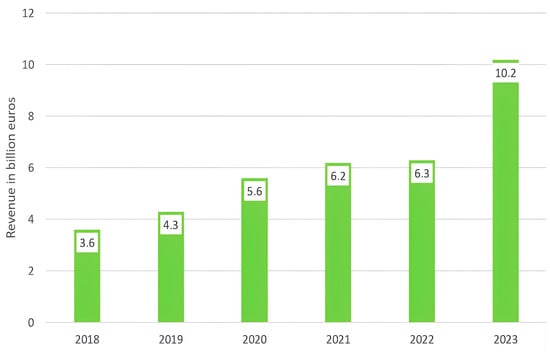
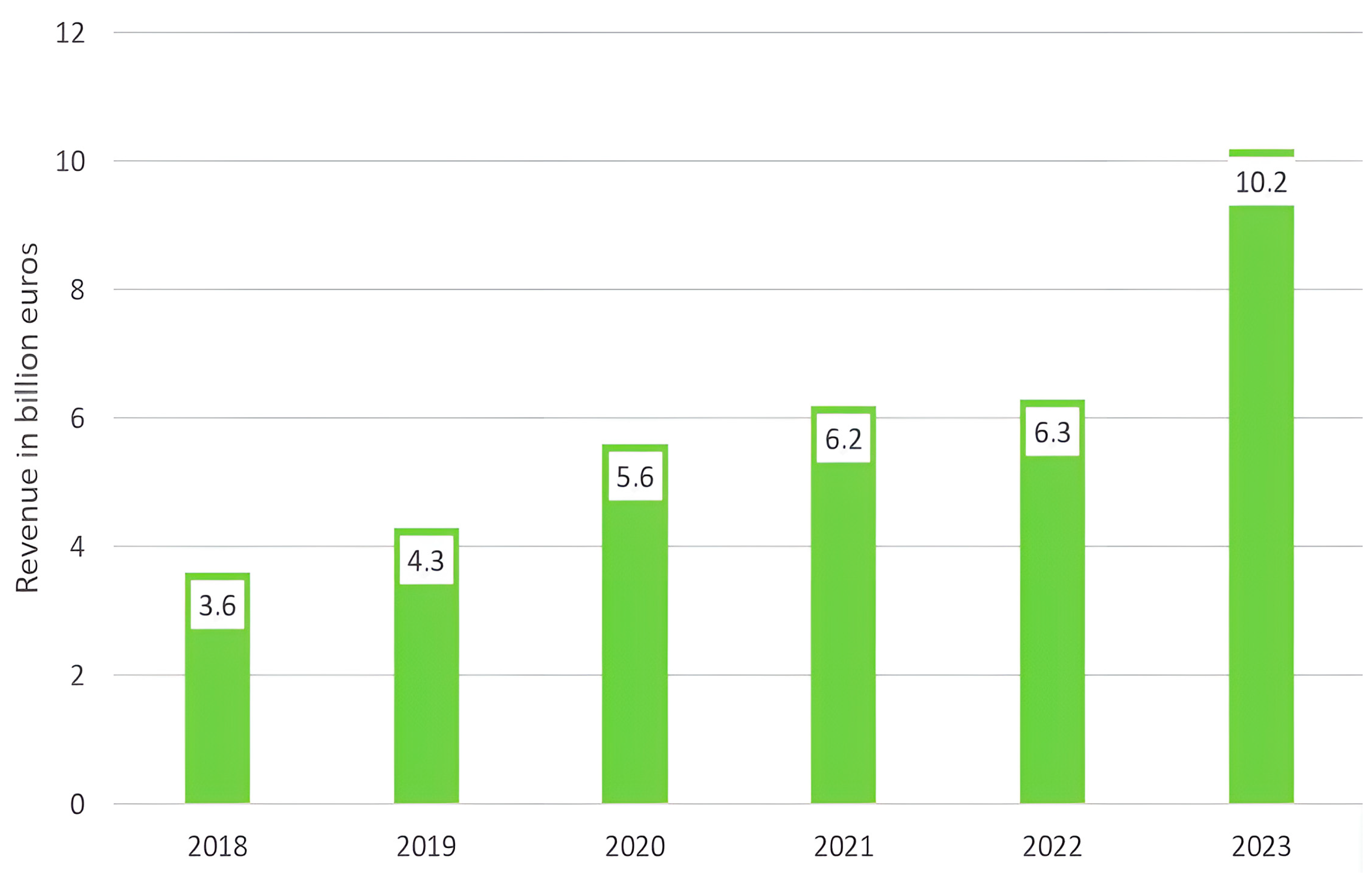
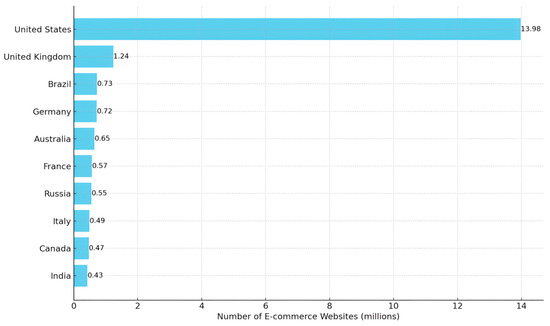
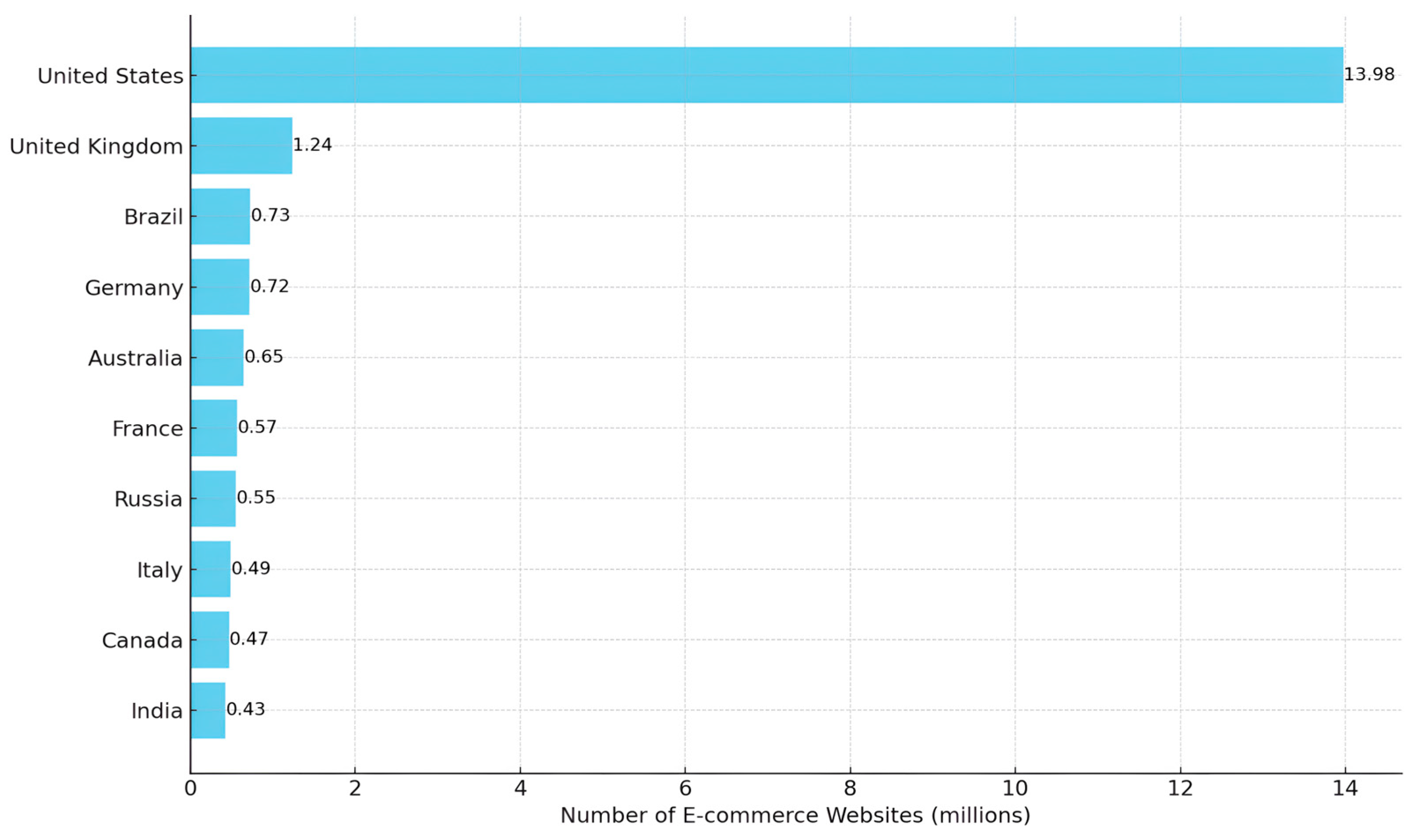
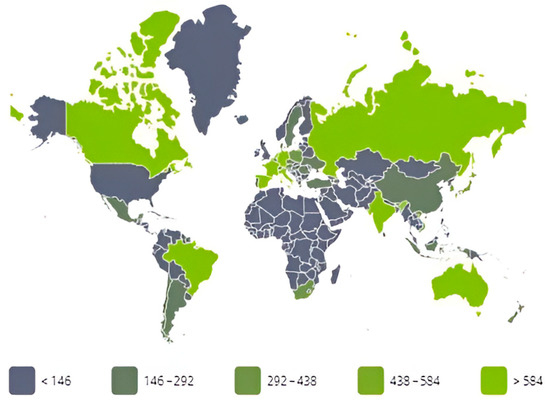
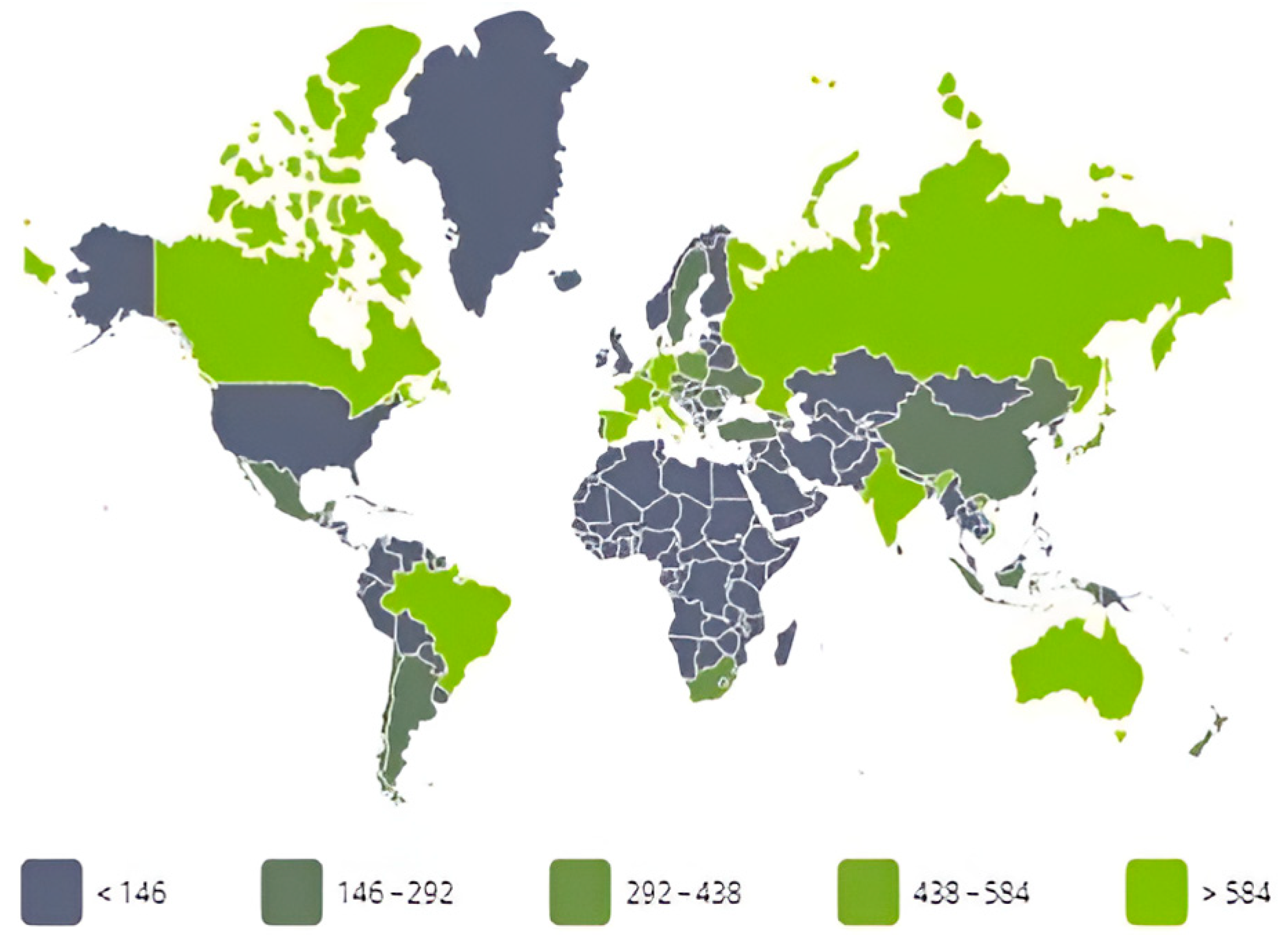
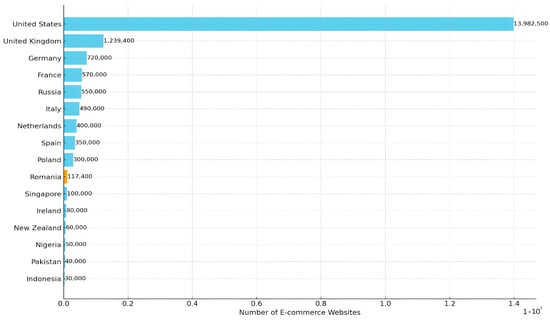
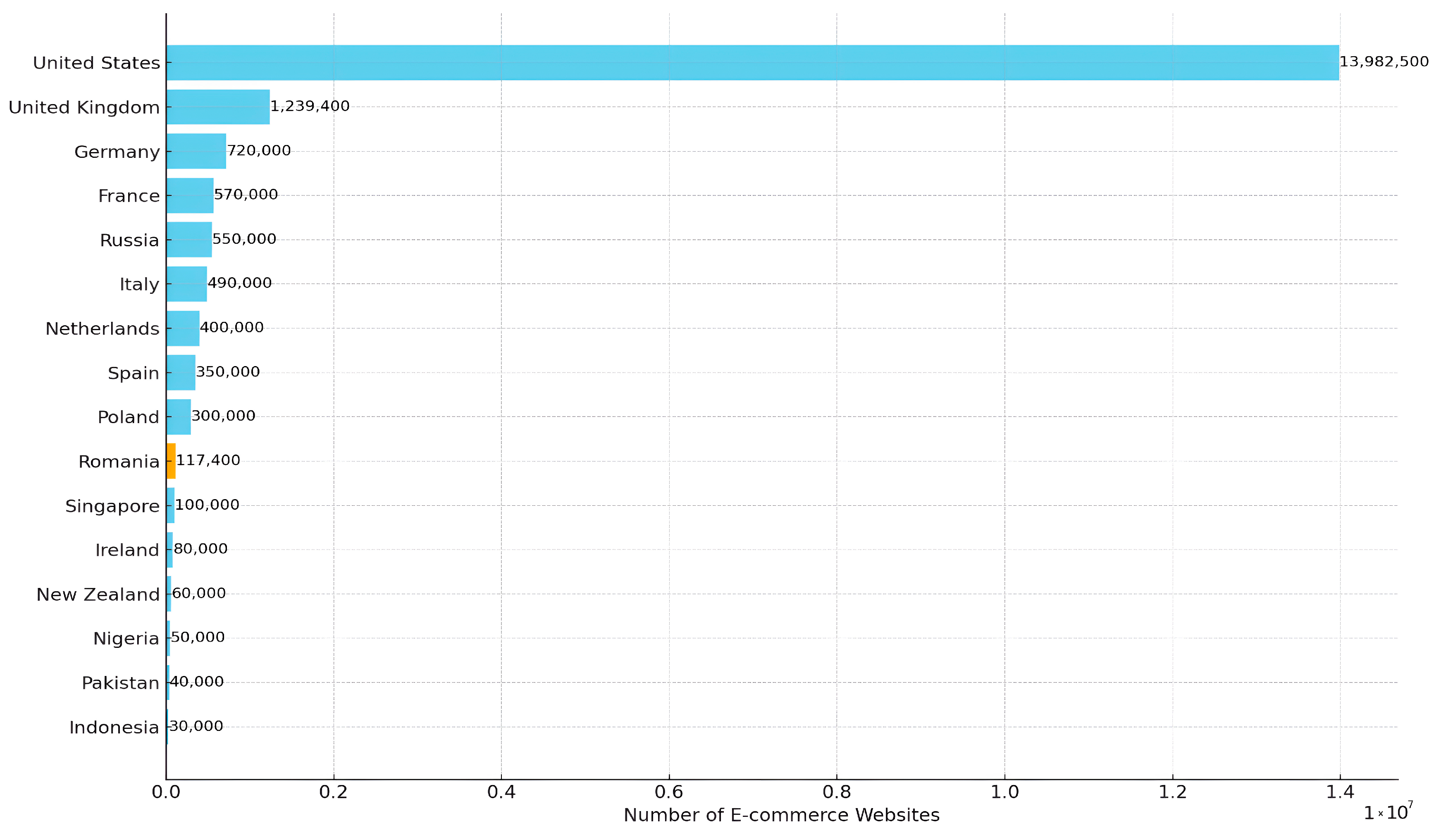
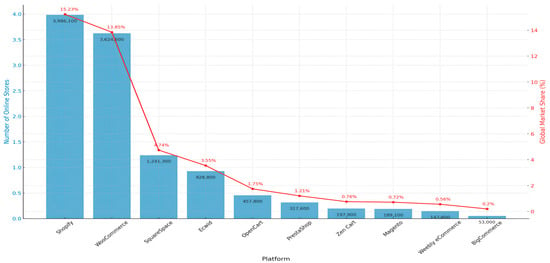
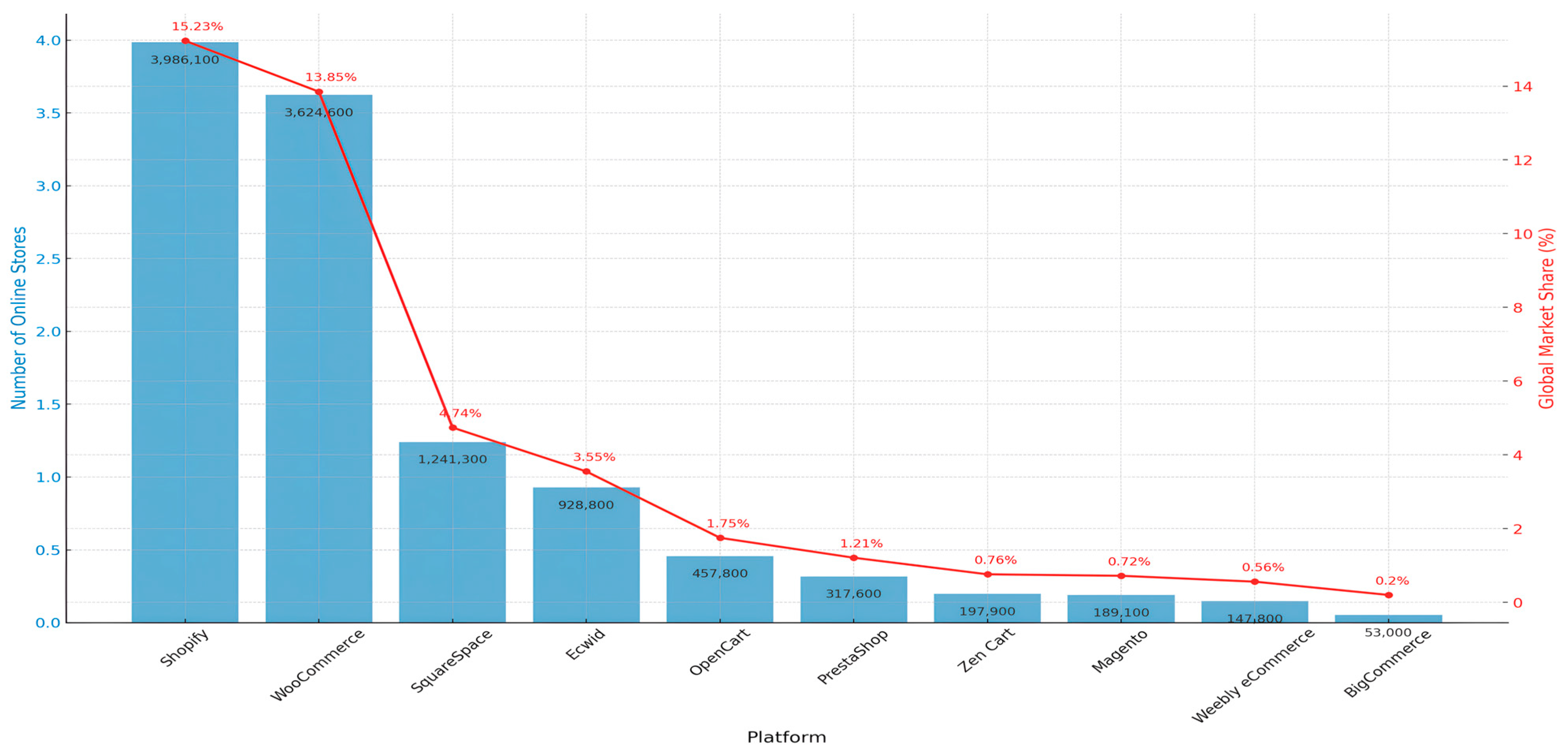
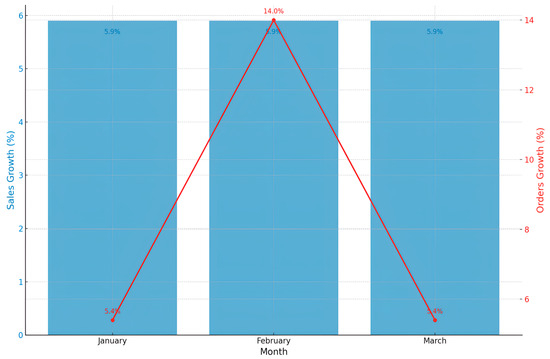
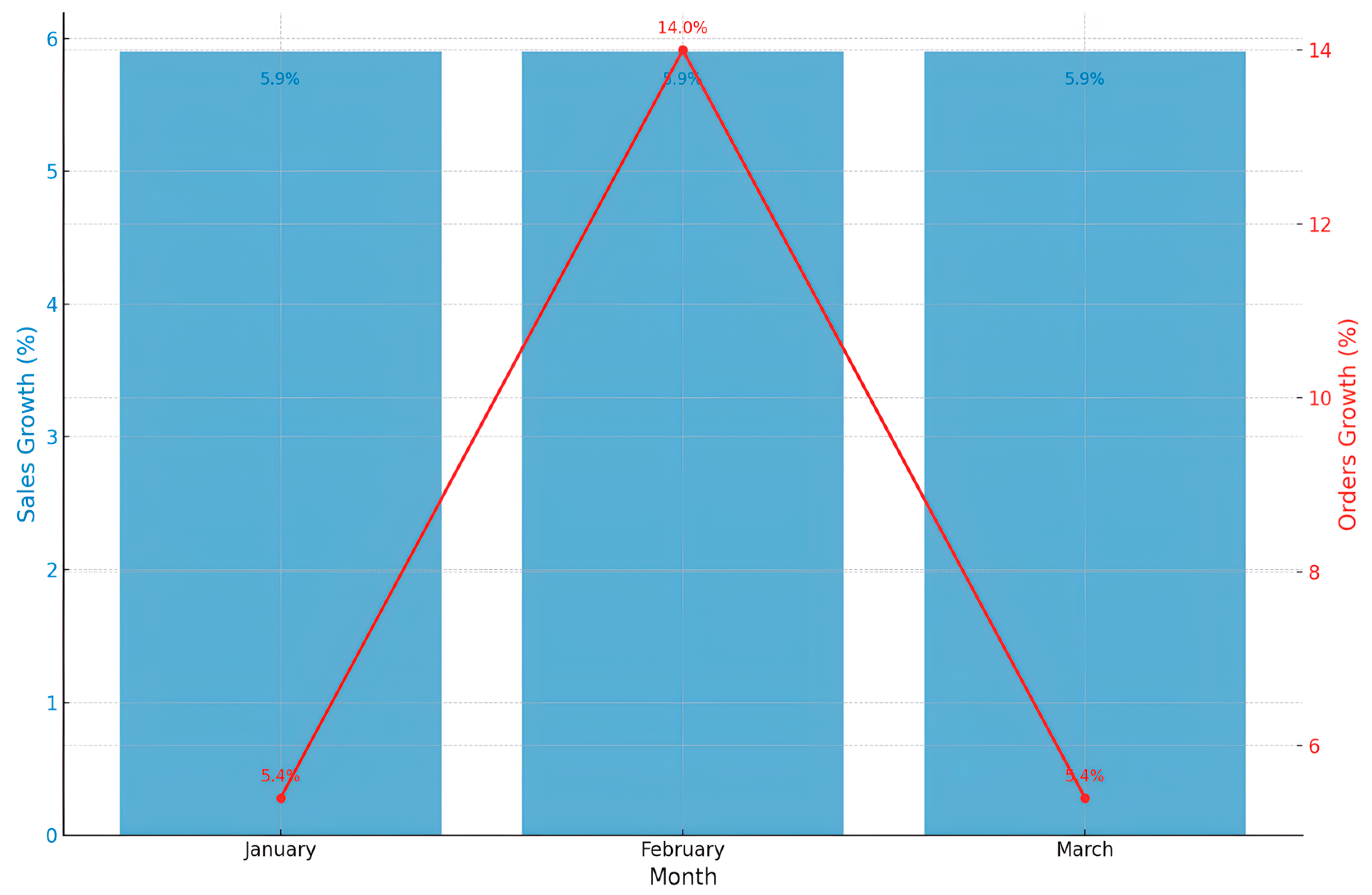
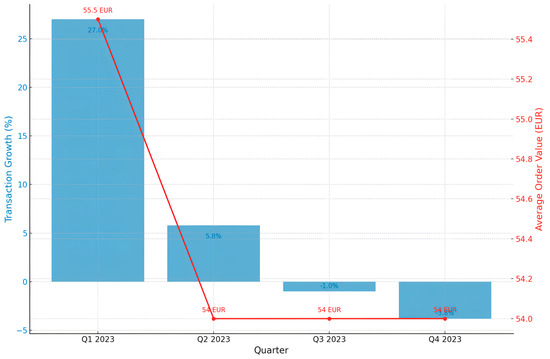
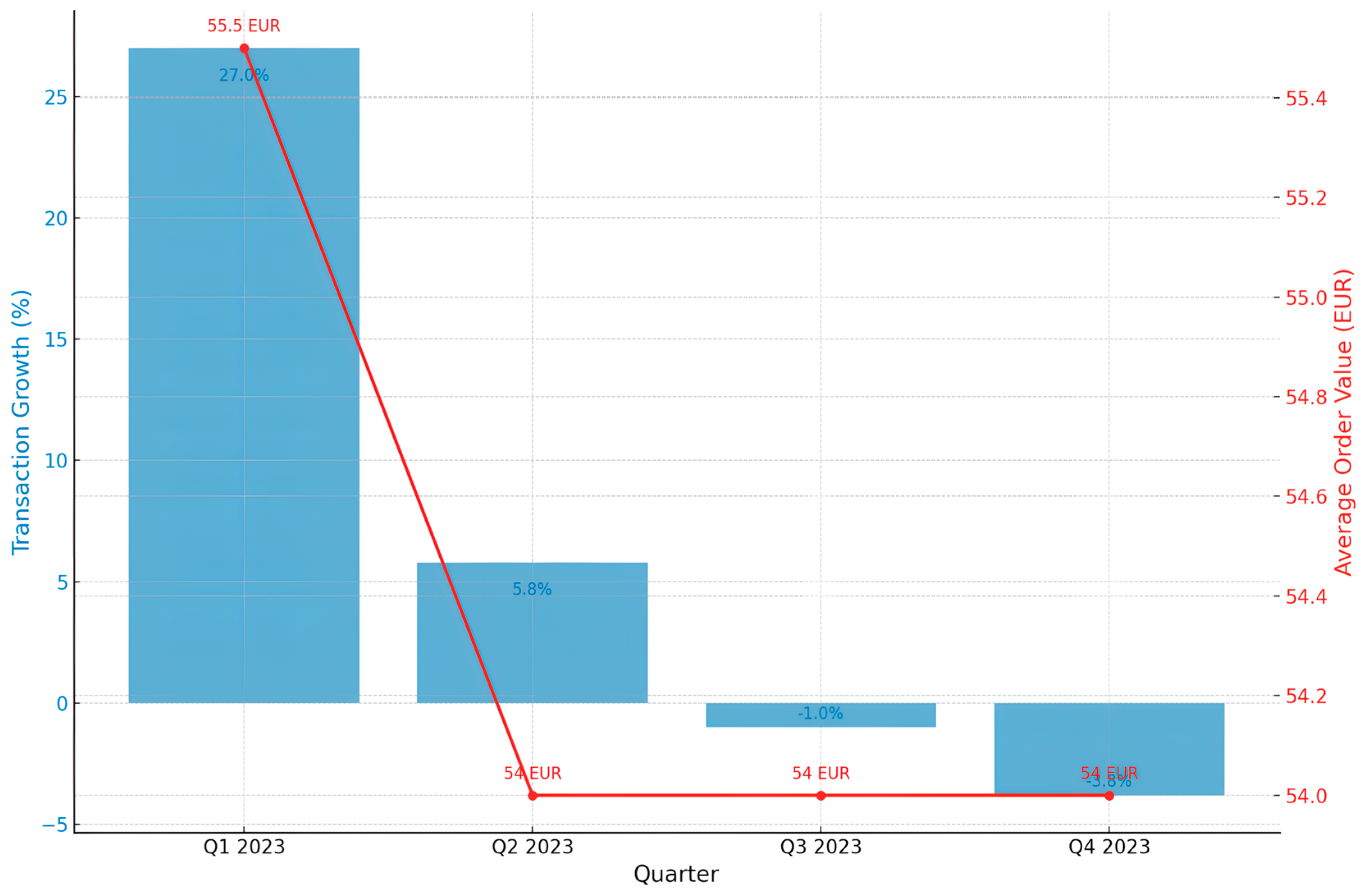
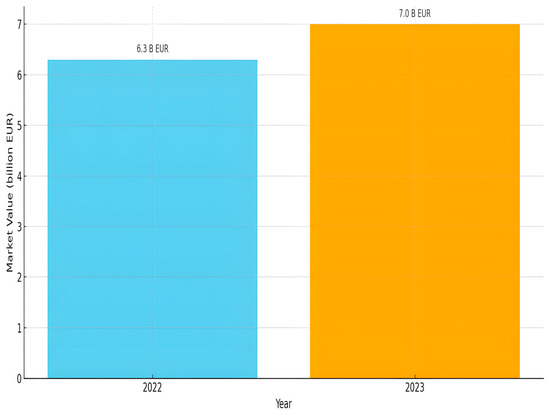
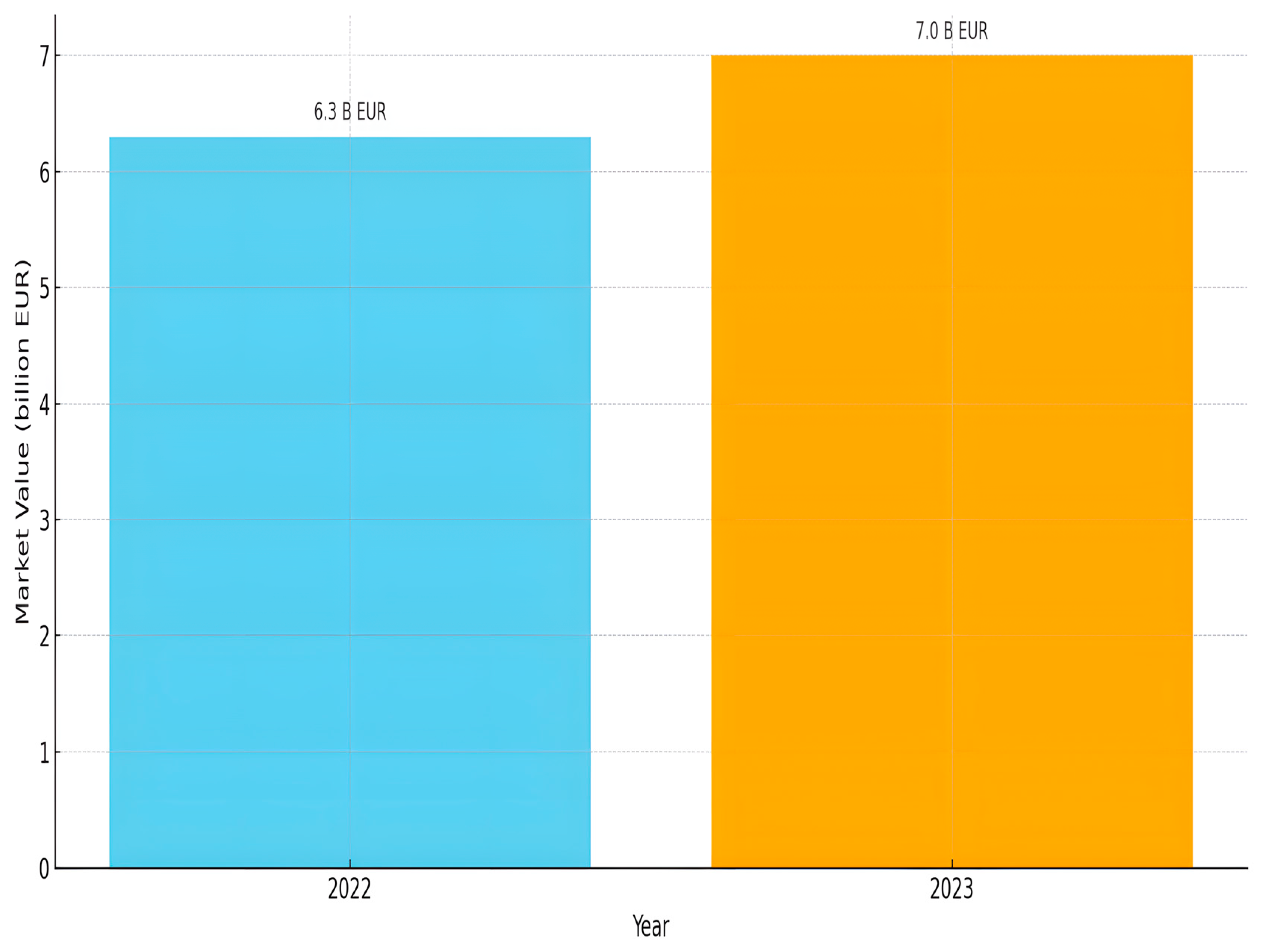
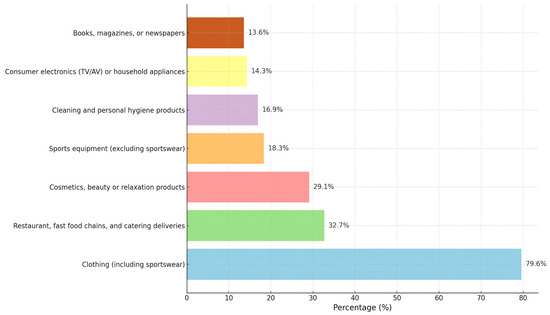
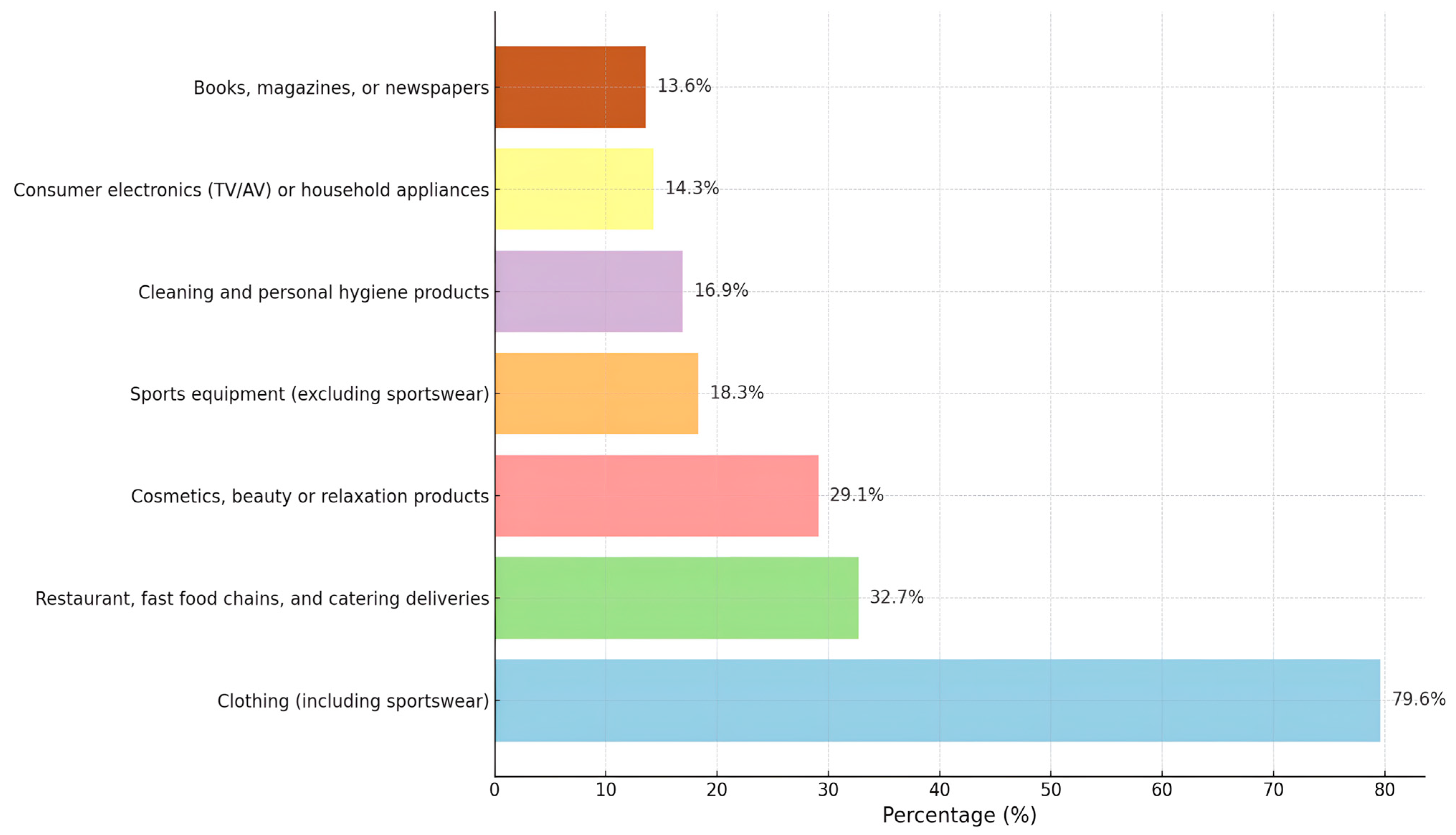
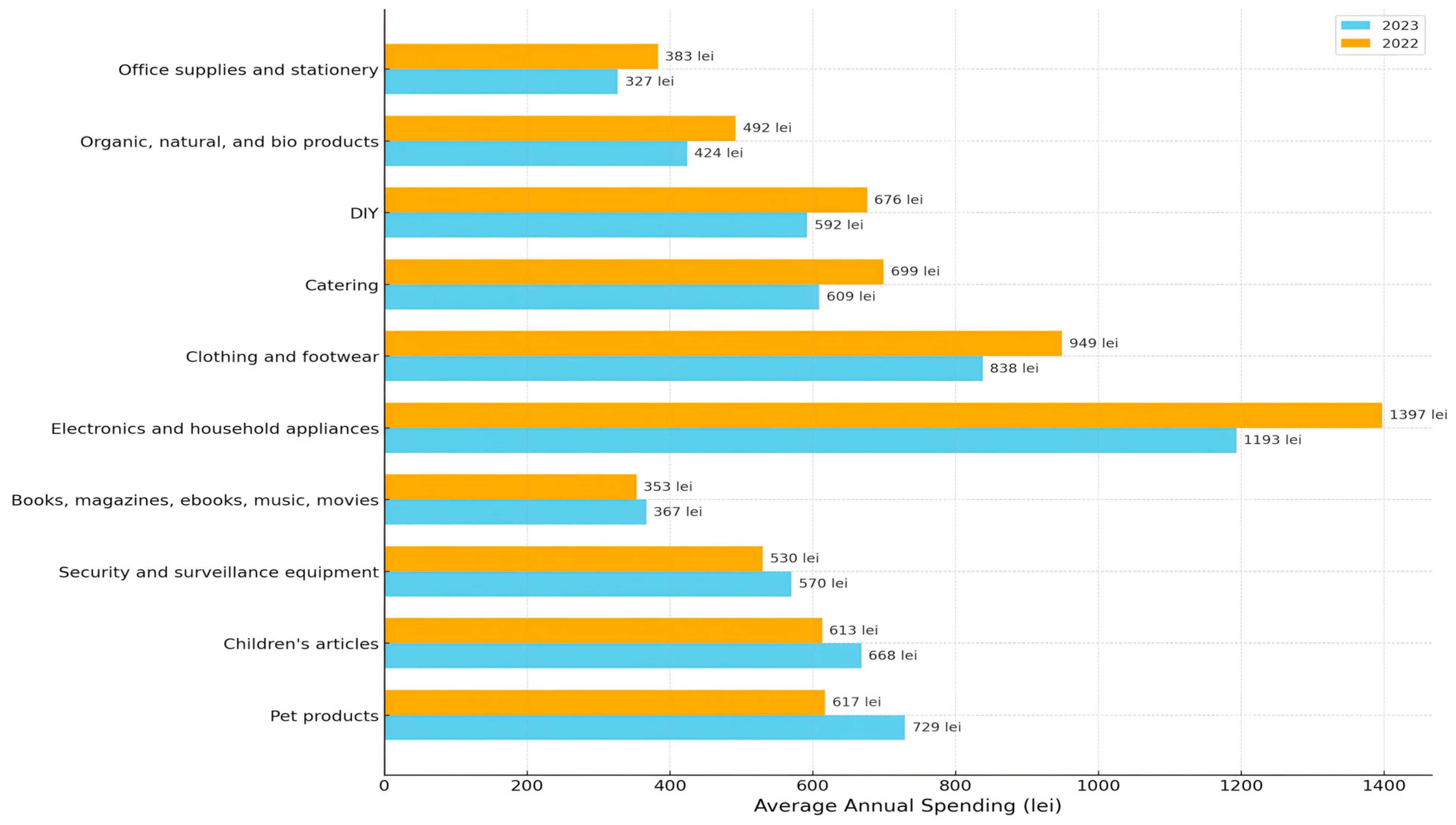
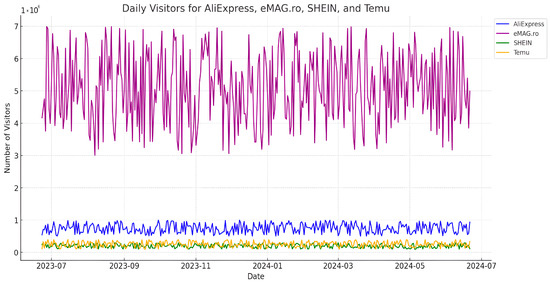
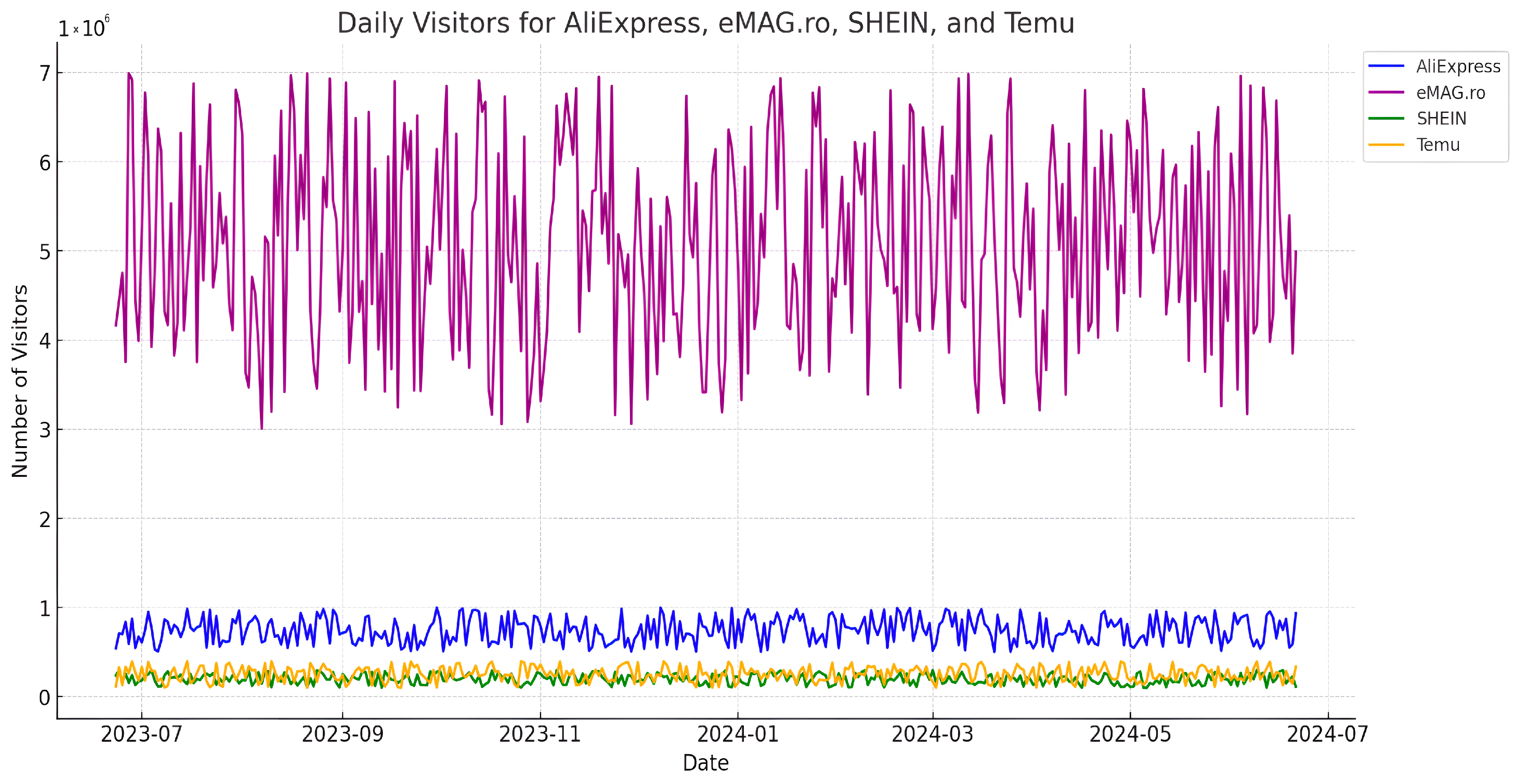
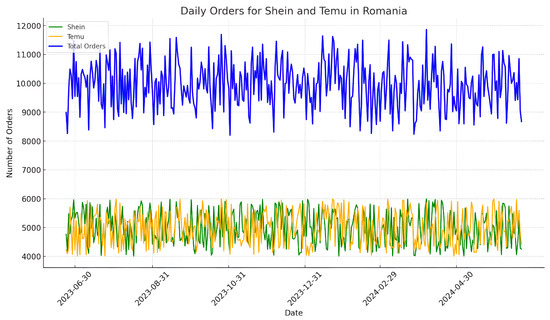
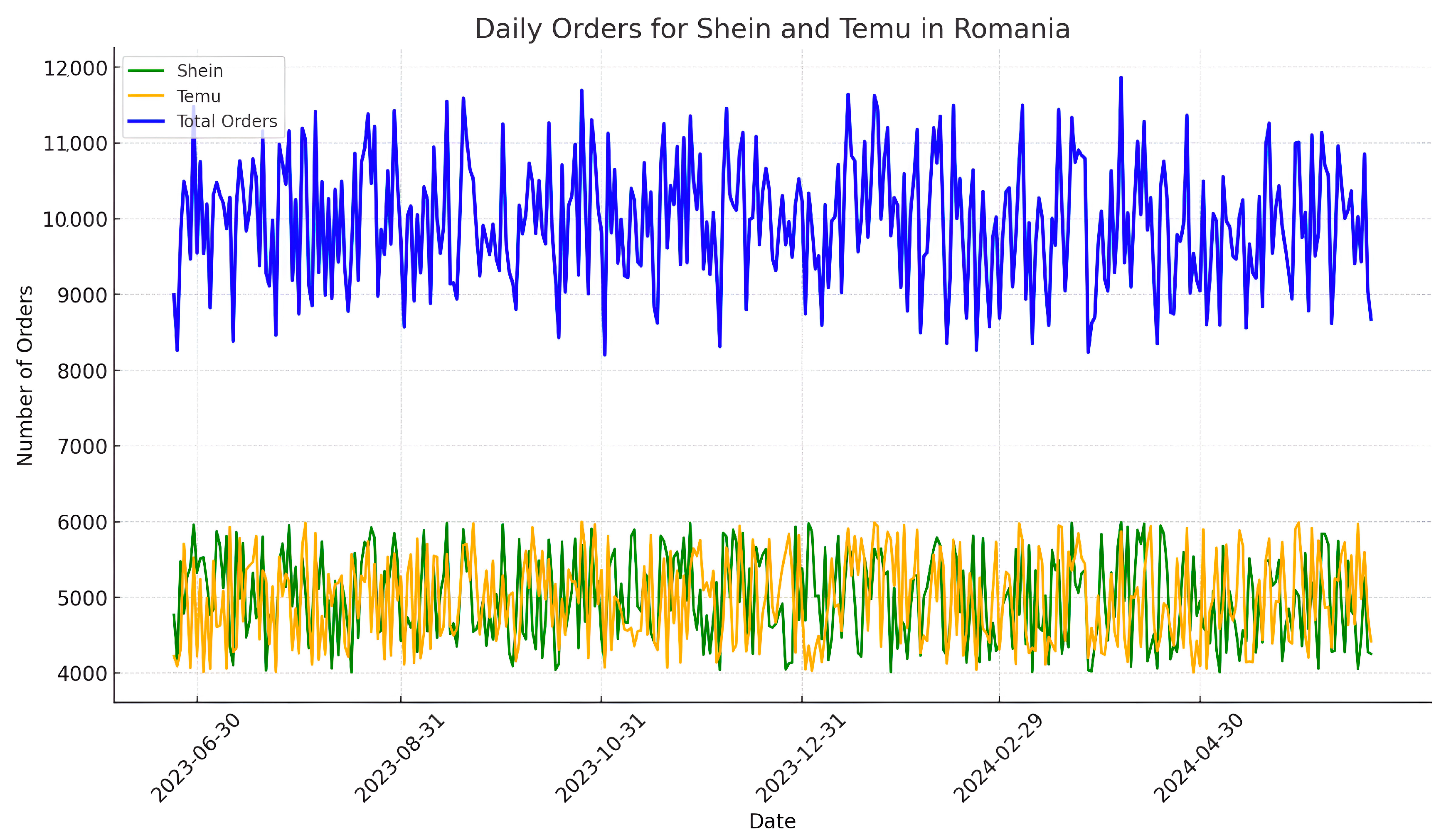
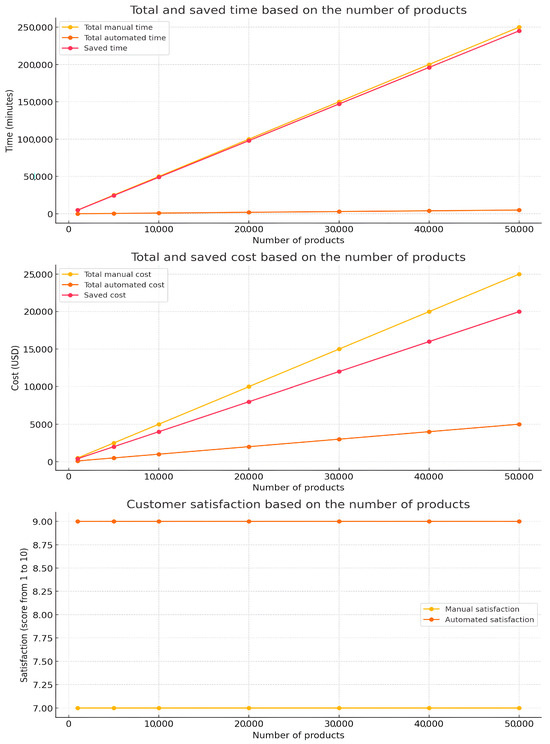
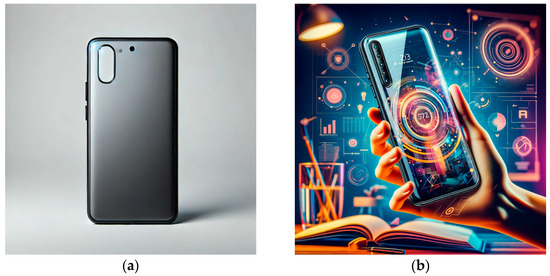
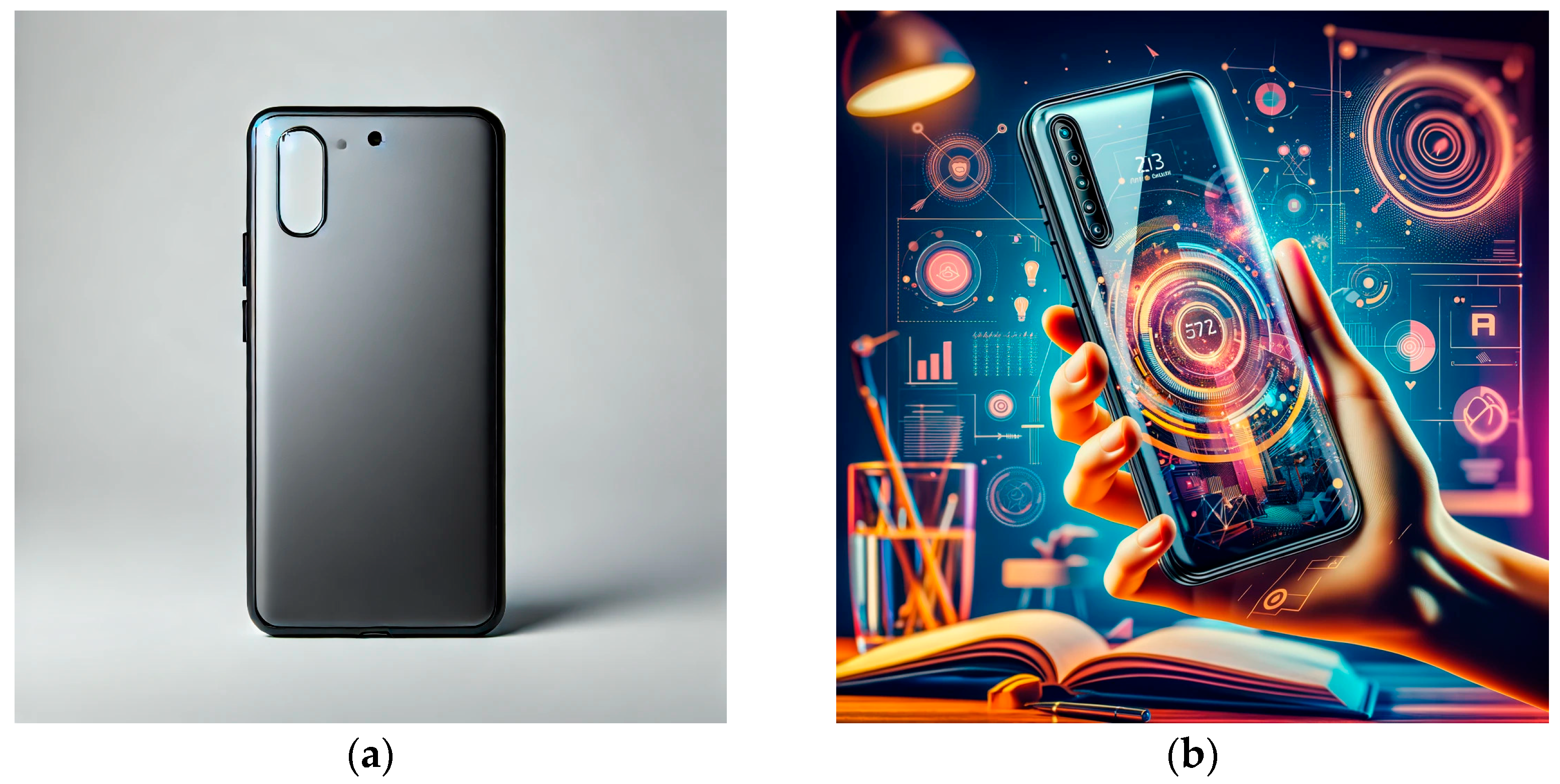
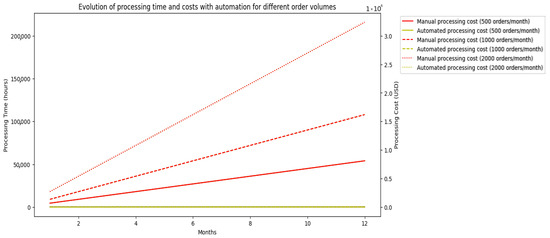
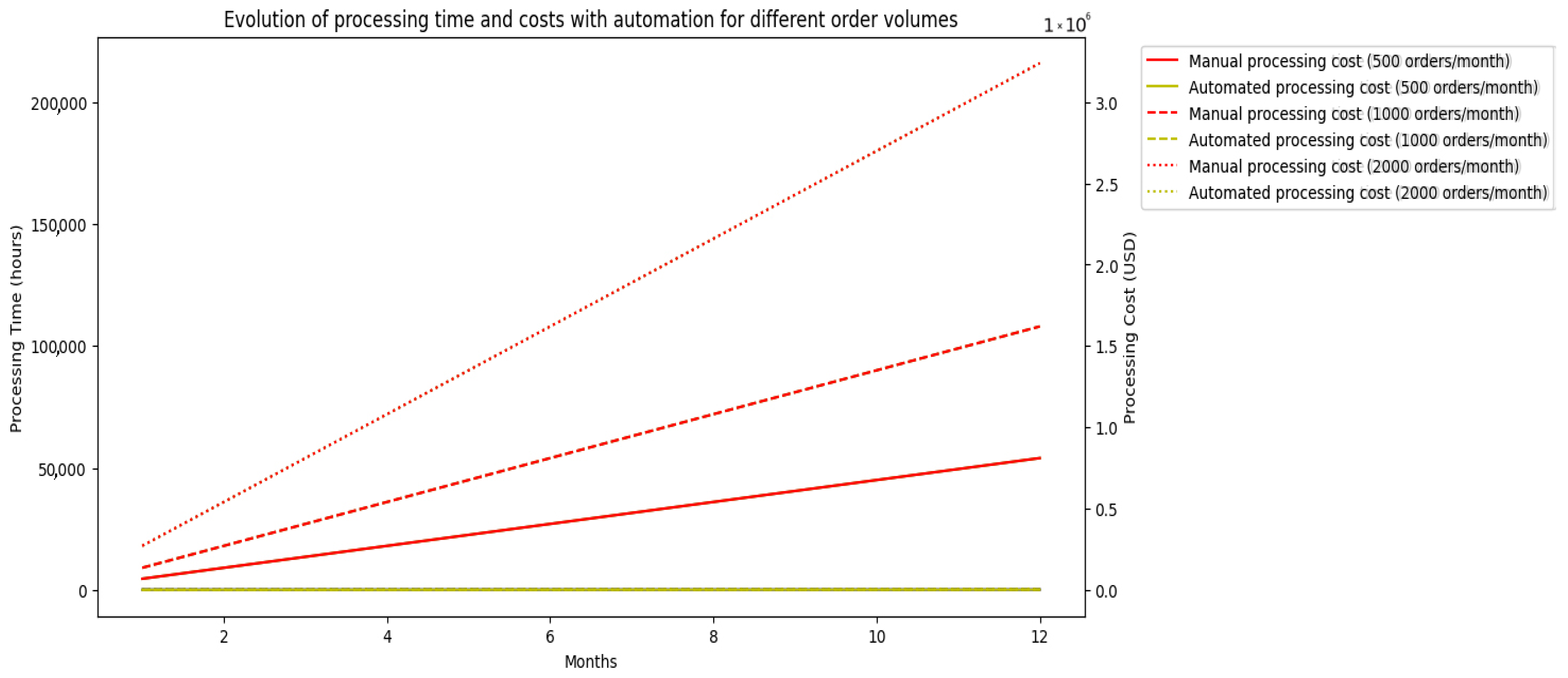

Disclaimer/Publisher’s Note: The statements, opinions and data contained in all publications are solely those of the individual author(s) and contributor(s) and not of MDPI and/or the editor(s). MDPI and/or the editor(s) disclaim responsibility for any injury to people or property resulting from any ideas, methods, instructions or products referred to in the content. |
© 2024 by the authors. Licensee MDPI, Basel, Switzerland. This article is an open access article distributed under the terms and conditions of the Creative Commons Attribution (CC BY) license (https://creativecommons.org/licenses/by/4.0/).