


Abstract
Background/Objectives: Major depressive disorder (MDD) has been increasingly associated with alterations of the gut microbiome through the microbiota–gut–brain axis. However, published findings remain highly heterogeneous, limiting identification of reproducible microbial signatures associated with depression. This systematic review aimed to evaluate reproducible taxonomic and functional gut microbiome alterations in patients with MDD compared with healthy controls. Methods: A systematic literature search was conducted in PubMed/MEDLINE, Scopus, Web of Science Core Collection, and the Cochrane Library for studies published between January 2016 and December 2025. Observational human studies evaluating gut microbiome composition in adults with clinically diagnosed MDD and healthy control groups were included. Methodological quality was assessed using the Newcastle-Ottawa Scale. Due to substantial methodological heterogeneity, findings were synthesized using structured qualitative narrative analysis. Results: Sixteen observational studies were included in the qualitative synthesis. Findings related to alpha diversity were inconsistent across studies, whereas beta diversity alterations demonstrated greater reproducibility across independent cohorts. The most recurrent microbiome pattern involved depletion of short-chain fatty acid (SCFA)-producing bacteria, particularly Faecalibacterium and Roseburia, together with recurrent alterations affecting members of the Ruminococcaceae, Lachnospiraceae, and Clostridia groups. Functional microbiome alterations demonstrated greater consistency than higher-level taxonomic findings and included reduced butyrate synthesis pathways, dysregulated amino acid and tryptophan metabolism, increased lipopolysaccharide biosynthesis, and enrichment of pro-inflammatory microbial signatures. Antidepressant-naïve cohorts generally demonstrated more homogeneous dysbiosis patterns than mixed-treated populations. Conclusions: Current evidence suggests that functional gut microbiome dysregulation may represent a more reproducible biological feature of MDD than isolated taxonomic alterations alone. However, substantial heterogeneity in study design, participant characteristics, sequencing methodologies, and analytical approaches continues to limit clinical translation. Large-scale longitudinal multi-omics studies using standardized methodologies are required to clarify the role of the gut microbiome in depressive disorders and to evaluate the potential utility of microbiome-based biomarkers and interventions in mental health and public health practice.
1. Introduction
Major depressive disorder (MDD) remains one of the leading contributors to the global burden of disease and disability worldwide [1]. According to the Global Burden of Disease Study 2021, depressive disorders affect approximately 332 million people globally, corresponding to nearly 4% of the world population [1]. Among adults, prevalence is estimated at approximately 5%, including 4% among men and 6% among women [1]. In addition to emotional and cognitive symptoms, depression is associated with impaired social functioning, reduced quality of life, decreased work productivity, increased healthcare utilization, and elevated mortality risk, including suicide and cardiovascular complications [1,2]. The burden of depressive disorders further increased during the COVID-19 pandemic, with an estimated 53.2 million additional cases globally in 2020 [2]. Despite the availability of pharmacological and psychotherapeutic interventions, treatment outcomes remain heterogeneous, and a substantial proportion of patients fail to achieve sustained remission [3].
Growing evidence suggests that depression is a multifactorial disorder involving interactions between neuroendocrine, metabolic, inflammatory, and environmental mechanisms [3,4,5]. In recent years, increasing attention has been directed toward the gut microbiome as a potentially important component in the pathophysiology of psychiatric disorders [4,5,6,7]. From a public health perspective, the gut microbiome represents a biologically dynamic and potentially modifiable system influenced by nutrition, lifestyle, medication exposure, environmental factors, and host physiology [5,6,7,8].
The gut microbiome consists of trillions of microorganisms involved in metabolic, endocrine, immune, and neural regulation [6,7]. Through the microbiota–gut–brain axis, intestinal microorganisms may influence central nervous system functioning through immune, endocrine, metabolic, and neural signaling pathways [5,6,7,8,9]. Experimental and clinical evidence suggests that gut microbial metabolites participate in the regulation of intestinal barrier integrity, inflammatory responses, neurotransmitter synthesis, and hypothalamic–pituitary-adrenal axis activity [8,9,10].
Short-chain fatty acids (SCFAs), particularly butyrate, acetate, and propionate, are among the most extensively studied microbial metabolites in gut–brain axis research [8,10]. SCFAs are produced through bacterial fermentation of dietary fiber and contribute to maintenance of epithelial barrier function and modulation of immune and inflammatory signaling [8,10]. Bacterial taxa belonging to the families Ruminococcaceae and Lachnospiraceae play a central role in SCFA production and intestinal homeostasis [10,11].
Accumulating evidence indicates that gut microbiota alterations are associated with multiple chronic diseases, including inflammatory bowel disease, irritable bowel syndrome, obesity, asthma, autoimmune disorders, neurodegenerative diseases, and psychiatric conditions [11,12,13,14,15,16,17]. Population-based microbiome studies have also demonstrated associations between gut microbial composition and mental health outcomes. In a microbiome-wide association study involving more than 7000 participants, several microbial taxa were significantly associated with depressive symptoms [18]. Similarly, depletion of the genera Coprococcus and Dialister was associated with lower quality of life and increased depressive symptom severity in a large population cohort study [19].
Over the past decade, numerous observational studies have investigated gut microbiota composition in patients with MDD. Several reports demonstrated reduced abundance of short-chain fatty acid–producing bacteria and increased representation of potentially pro-inflammatory taxa in depressive disorders [20,21,22,23,24]. Associations between gut microbiota composition and anxiety symptoms, sleep quality, and treatment response have also been described [20,21,22,23,24,25]. However, findings remain highly heterogeneous. Previous studies included substantially different populations, including patients with depression and anxiety disorders, individuals with subclinical depressive symptoms, pregnant women with psychological distress, and patients with bipolar disorder [20,21,22,23,24,25,26]. In addition, studies differed in diagnostic criteria, medication exposure, geographic regions, sequencing methodologies, and bioinformatic approaches [21,22,23,24,25,26,27].
As a result, reported alterations in gut microbiota composition remain inconsistent across studies, particularly at higher taxonomic levels. Findings involving the phyla Firmicutes and Bacteroidetes, as well as microbial diversity indices, have shown limited reproducibility [24,25,26,27,28]. Although previous systematic reviews and meta-analyses summarized general microbiome alterations in depression, many focused primarily on overall diversity measures or selected bacterial taxa without systematically evaluating reproducibility of taxonomic findings across studies [24,27,28,29].
From a public health perspective, identification of reproducible microbiome patterns associated with depression may contribute to improved understanding of disease mechanisms and support future development of microbiome-informed prevention, risk stratification, and therapeutic approaches. Given the rapid expansion of microbiome research and the substantial heterogeneity of published findings, an updated structured synthesis focused on reproducibility of taxonomic alterations is needed.
Therefore, the aim of this systematic review was to evaluate taxonomic alterations in the gut microbiome in patients with major depressive disorder compared with healthy controls, with particular emphasis on reproducibility of findings and sources of heterogeneity across studies.
2. Materials and Methods
This systematic review was conducted in accordance with the Preferred Reporting Items for Systematic Reviews and Meta-Analyses (PRISMA 2020) guidelines [30]. The review protocol was registered in the International Prospective Register of Systematic Reviews (PROSPERO) under registration number CRD420261410339 [31]. The completed PRISMA checklist is provided in the Supplementary Materials (Table S1).
The objective of the review was to evaluate reproducible taxonomic alterations in the gut microbiome among patients with major depressive disorder (MDD) compared with healthy controls and to assess potential sources of heterogeneity across studies.
2.1. Eligibility Criteria
Eligibility criteria were defined before the screening process to ensure methodological consistency and minimize selection bias during study inclusion (Table 1).
Table 1.
Eligibility criteria for study selection.
The eligibility criteria were developed to ensure inclusion of clinically comparable studies evaluating gut microbiome composition specifically in MDD. Restricting the population to adults with depressive disorders reduced heterogeneity associated with pediatric microbiome development and severe psychiatric comorbidities. Studies focused primarily on bipolar disorder, schizophrenia, or neurological diseases were excluded because microbiome alterations may substantially differ across psychiatric and neurodegenerative conditions.
Only studies including healthy control groups were considered eligible in order to allow direct comparison of taxonomic composition between patients with depression and non-depressed individuals. Experimental animal studies were excluded because their findings are not directly comparable to human observational microbiome data.
The publication period was limited to studies published between 2016 and 2025 to reflect contemporary microbiome sequencing technologies and current bioinformatic approaches. Earlier microbiome studies frequently used limited sequencing depth and outdated taxonomic classification pipelines, reducing comparability with more recent investigations.
2.2. Search Strategy
A comprehensive electronic literature search was conducted in PubMed/MEDLINE, Scopus, Web of Science Core Collection, and the Cochrane Library to identify studies evaluating gut microbiota alterations in patients with major depressive disorder. The search included publications from 1 January 2016 to 31 December 2025. The final electronic database search was conducted on 15 January 2026.
The search strategy was developed using combinations of controlled vocabulary terms and free-text keywords related to depressive disorders and gut microbiota. Boolean operators (“AND”, “OR”) were applied to maximize sensitivity while maintaining specificity for observational human studies. Search strategies were adapted according to the indexing systems and technical requirements of each database (Table 2).
Table 2.
Search strategies and number of identified records.
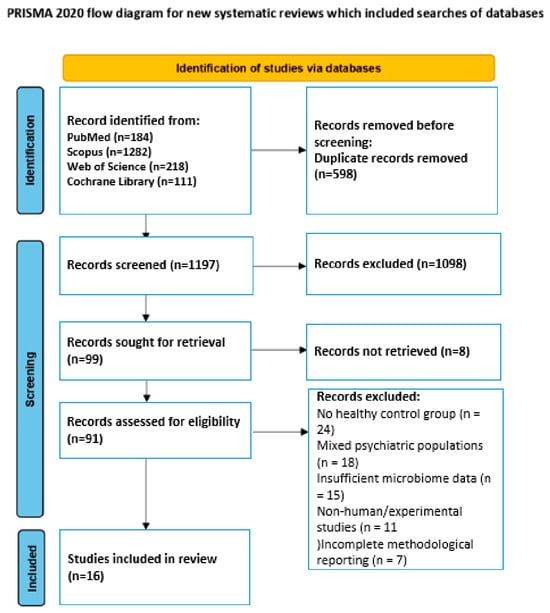
Overall, 1795 records were identified across all databases. After removal of 598 duplicate records, 1197 publications remained for title and abstract screening.
During the initial screening stage, 1098 records were excluded because they were unrelated to major depressive disorder, did not evaluate gut microbiota composition, represented animal or experimental studies, or were review articles, conference abstracts, editorials, or non-original publications.
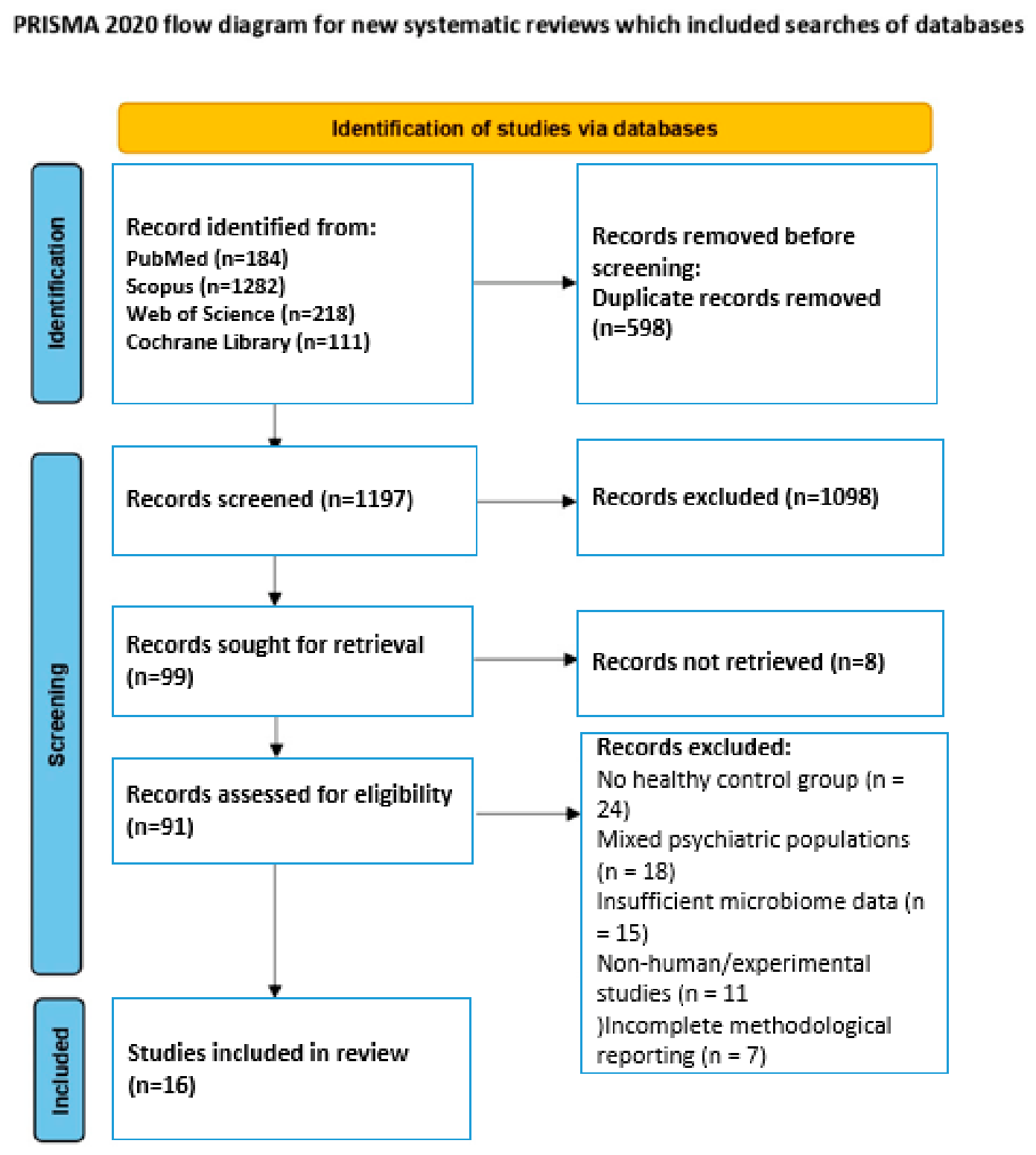
A total of 99 full-text articles were assessed for eligibility. Of these, 83 studies were excluded after full-text review for the following reasons: absence of healthy control group (n = 24); mixed psychiatric populations without separate MDD analysis (n = 18); insufficient taxonomic microbiome data (n = 15); non-human or experimental design (n = 11); duplicate cohorts or overlapping datasets not retrieved (n = 8); incomplete methodological reporting (n = 7). Ultimately, 16 studies met all eligibility criteria and were included in the qualitative synthesis. The detailed study selection process is presented in the PRISMA 2020 [30] flow diagram (Figure 1).
Figure 1.
The detailed study selection process is presented in the PRISMA 2020 [30] flow diagram.
2.3. Study Selection and Data Extraction
Study selection was independently performed by two reviewers using a two-stage screening process. During the first stage, titles and abstracts were evaluated to identify potentially relevant publications. Studies meeting the eligibility criteria or those with uncertain eligibility based on abstract review underwent full-text assessment.
Full-text articles were independently reviewed by both investigators. Disagreements regarding study eligibility were resolved through discussion and consensus. When consensus could not be reached, a third reviewer was consulted.
Data extraction was performed using a standardized extraction form developed prior to analysis. Information collected from each study included publication year, country, study design, sample size, demographic characteristics, diagnostic criteria for MDD, medication exposure, microbiome sequencing methodology, diversity measures, reported taxonomic alterations, and functional or metabolic findings. Particular attention was given to reproducibility of bacterial taxa across studies and to factors potentially contributing to heterogeneity, including geographic region, sequencing platform, and population characteristics.
Definition of Reproducibility
To improve interpretability and consistency of qualitative synthesis, reproducibility of microbiome findings was evaluated based on the frequency and directionality of reported taxonomic alterations across included studies. Findings reported in ≥70% of studies with consistent directionality were interpreted as highly reproducible, whereas findings identified in 40–69% of studies were considered moderately reproducible. Alterations reported inconsistently or in fewer than 40% of studies were classified as having low reproducibility.
Both taxonomic and functional microbiome findings were evaluated using this structured narrative framework. Particular attention was given to short-chain fatty acid–producing bacteria, inflammatory-associated taxa, and microbial metabolic pathways repeatedly identified across independent cohorts. Because of substantial heterogeneity in sequencing methodologies, bioinformatic pipelines, participant characteristics, and statistical reporting, reproducibility assessment was intended to identify general consistency of findings rather than establish quantitative pooled effect estimates.
2.4. Risk-of-Bias Assessment
Methodological quality of the included studies was evaluated using the Newcastle–Ottawa Scale (NOS), a validated tool commonly used for assessment of observational studies included in systematic reviews (Table 3).
Table 3.
Risk-of-bias assessment using the Newcastle–Ottawa Scale (NOS).
The NOS evaluates studies across three domains: selection of study participants, comparability of study groups, and adequacy of exposure or outcome assessment. Studies scoring 7–9 points were considered low risk of bias, studies scoring 5–6 points were classified as moderate risk, and studies scoring ≤ 4 points were considered high risk of bias. Quality assessment was independently conducted by two reviewers.
Overall, methodological quality was moderate to high across the included studies. Lower NOS scores were primarily attributable to small sample sizes, limited adjustment for potential confounding factors, mixed antidepressant exposure, and restricted population representativeness. Although microbiome sequencing methodologies were generally well described, the predominance of observational designs limits causal inference regarding the relationship between gut microbiota alterations and major depressive disorder.
2.5. Data Synthesis
A formal meta-analysis was not performed because substantial methodological and clinical heterogeneity was identified across the included studies. Important differences were observed in participant characteristics, diagnostic criteria, antidepressant exposure, sequencing methodologies, taxonomic classification pipelines, and reporting of microbiome outcomes.
Pooling these heterogeneous data into a single quantitative estimate could therefore produce potentially misleading conclusions. The heterogeneity extended beyond effect size variability and involved substantial differences in study populations, diagnostic criteria, antidepressant exposure, sequencing technologies, taxonomic resolution, bioinformatic pipelines, and reported microbiome outcomes, precluding calculation of meaningful pooled effect estimates or formal heterogeneity statistics such as I2. Similarly, subgroup analyses were considered inappropriate because of the limited number of studies within individual methodological strata.
Taxa were grouped according to consistency of reported findings, with particular attention to repeatedly identified short-chain fatty acid-producing bacteria and inflammation-associated microbial taxa. Descriptive frequencies of recurrent bacterial alterations were additionally calculated to identify the most reproducible microbiome patterns associated with major depressive disorder.
To facilitate interpretation of recurrent findings, a semi-quantitative assessment of reproducibility was performed. For each microbial taxon, studies were categorized according to the reported direction of change (decreased abundance, increased abundance, no significant difference, or inconsistent findings). Reproducibility categories were defined a priori for the present review and were used solely as descriptive indicators of consistency across independent studies. Only taxa reported in at least three independent studies were included in the reproducibility matrix.
3. Results
3.1. Characteristics of Included Studies
The final qualitative synthesis included 16 observational studies published between 2019 and 2025. Fourteen studies used a case–control design [32,33,34,36,37,38,40,41,42,43,44,45,46,47], whereas two studies applied cross-sectional analytical approaches [35,39] (Table 4).
Table 4.
Description of included studies.
Most investigations originated from China (n = 10) [33,34,35,37,38,39,40,42,43,44,45], followed by the United States (n = 2) [32,41], Taiwan (n = 1) [46], Italy (n = 1) [47], Russia (n = 1) [36], and one multicenter international cohort [39].
Depression was assessed using DSM-IV, DSM-5, ICD-10 criteria, or validated depression rating scales. Antidepressant-naïve or drug-free participants were specifically evaluated in six studies [33,35,36,38,40,44], whereas the remaining investigations included mixed-treated or partially medicated cohorts [32,34,37,41,45,46,47].
Microbiome analysis was predominantly based on 16S rRNA sequencing [32,33,38,41,42,43,44,45,46,47]. Shotgun metagenomic sequencing was applied in four studies [34,35,36,37], and recent investigations increasingly incorporated multi-omics and metabolomic integration approaches [39,40,44].
Several studies additionally evaluated specific clinical correlates, including inflammatory biomarkers [32,44], cognitive dysfunction [33], sleep quality [43], anxiety symptoms [41], postpartum depression [45], and neuroimaging associations [46].
3.2. Diversity Findings
Findings related to alpha diversity demonstrated substantial heterogeneity across the included studies. Several investigations reported reduced microbial richness and community evenness in patients with MDD [32,33,34,35,38,40,43,44], whereas others observed no significant differences between depressive and control cohorts [36,37,41,45,46]. Increased alpha diversity was reported only occasionally and was generally limited to smaller cohorts [42,47].
In contrast, alterations in beta diversity were more consistently identified across studies. Multiple investigations demonstrated significant differences in overall microbial community composition between patients with MDD and healthy controls [32,33,34,35,36,37,38,39,40,42,43,44]. These findings were observed across geographically distinct populations and different sequencing platforms, suggesting that compositional restructuring of the gut microbiome may represent a more reproducible feature of depression than alpha diversity measures alone.
Importantly, significant beta diversity separation was also observed in several antidepressant-naïve cohorts [33,35,36,38,40,44], indicating that microbiome alterations cannot be explained solely by psychopharmacological treatment exposure.
Overall, the available evidence suggests that community composition (beta diversity) demonstrates greater consistency across studies than within-sample diversity measures (alpha diversity), which remain highly heterogeneous among MDD cohorts (Table 5).
Table 5.
Diversity findings across included studies.
3.3. Reproducible Taxonomic Alterations
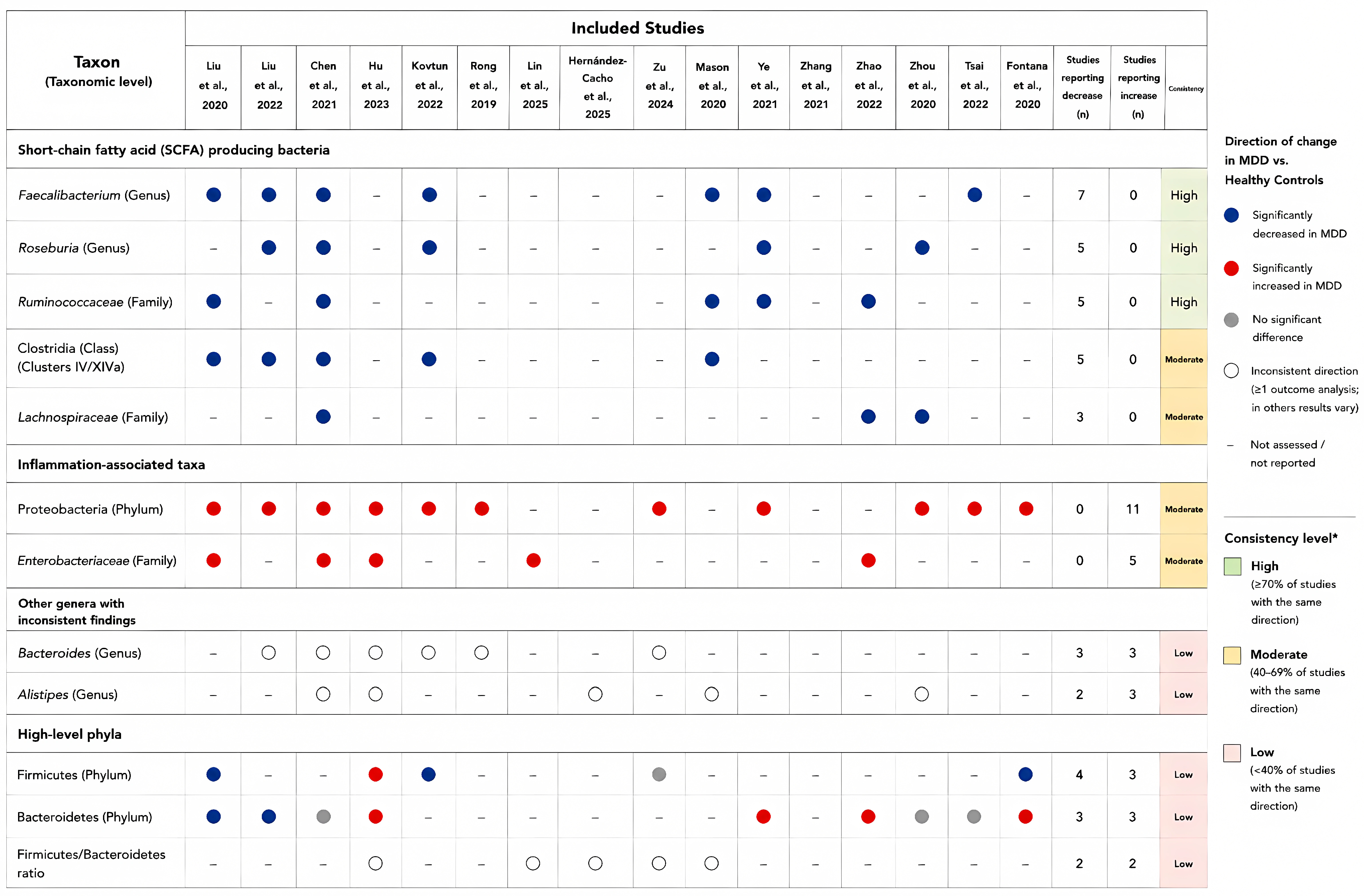
Across the included studies, the most consistently reported microbial alterations involved depletion of short-chain fatty acid-producing taxa. Reduced abundance of Faecalibacterium was identified in seven studies, representing the most reproducible taxonomic finding associated with major depressive disorder [32,33,34,36,41,42,45]. Several investigations additionally linked lower Faecalibacterium abundance to increased depressive symptom severity, inflammatory dysregulation, and impaired microbial metabolic activity (Table 6).
Table 6.
Most reproducible taxonomic alterations in depression.
Reduced abundance of Roseburia, another major butyrate-producing genus, was reported in five studies [33,34,36,42,45]. Similarly, decreased abundance of members of the family Ruminococcaceae was observed in five studies [32,34,41,42,44], while depletion of taxa belonging to the class Clostridia was identified in five studies [32,33,34,36,41]. Reduced abundance of Lachnospiraceae was reported in three studies [34,44,45].
Collectively, these findings indicate a recurrent loss of beneficial anaerobic microorganisms involved in fermentation of dietary fiber and production of SCFAs, particularly butyrate. Given the established role of butyrate in maintaining intestinal barrier integrity, modulating immune responses, and facilitating gut–brain communication, depletion of SCFA-producing bacteria may represent a biologically meaningful microbial signature of MDD.
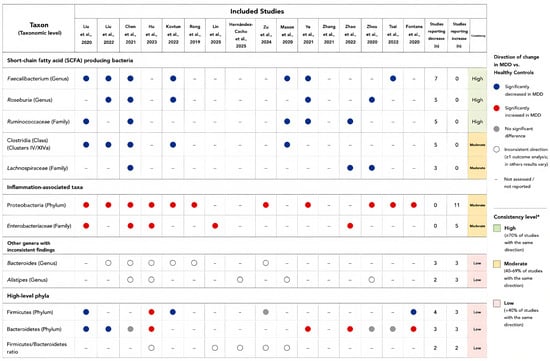
In contrast, alterations involving higher taxonomic levels demonstrated substantial heterogeneity across studies. Increased abundance of Proteobacteria was reported in multiple independent cohorts [32,33,34,35,36,37,40,42,45,46,47], whereas findings regarding Bacteroides, Alistipes, Firmicutes, and the Firmicutes/Bacteroidetes ratio varied considerably between populations and study designs [35,39,40,45]. These observations suggest that functional alterations of microbial communities may be more reproducible than changes in individual taxa. A detailed study-by-study matrix of taxonomic alterations underlying the reproducibility analysis is presented in Supplementary Table S2 to facilitate interpretation of Figure 2 and ensure transparency of data synthesis.
Figure 2.
Reproducibility of taxonomic alterations reported across studies of major depressive disorder [32,33,34,35,36,37,38,39,40,41,42,43,44,45,46,47]. * Consistency level was assigned using a semiquantitative narrative synthesis approach based on the proportion of studies reporting concordant directions of change: high (≥75%), moderate (50–74%), and low (<50%).
The reproducibility and directionality of major taxonomic alterations identified across included studies are summarized in Figure 2. Reproducibility categories should be interpreted as indicators of consistency across independent studies rather than pooled quantitative effect estimates.
Each column represents an included study and each row represents a microbial taxon or taxonomic group. Blue circles indicate significantly decreased abundance in MDD, red circles indicate significantly increased abundance, gray circles indicate no significant difference, open circles indicate inconsistent findings, and dashes indicate that the taxon was not assessed or not reported. Summary columns show the number of studies reporting decreased or increased abundance and the corresponding reproducibility category. Reproducibility categories were assigned using a semi-quantitative narrative synthesis approach based on the proportion of studies reporting concordant directions of change.
3.4. Moderately Reproducible and Inconsistent Findings
Moderately reproducible alterations included increased abundance of inflammation-associated taxa, particularly Proteobacteria and members of the family Enterobacteriaceae, which were reported in several independent cohorts [34,35,42,44,47]. These taxa are commonly associated with microbial dysbiosis, intestinal barrier dysfunction, and systemic inflammatory activation.
In contrast, alterations involving Bacteroides [33,34,35,36,37,40], Alistipes [34,35,39,41,44], and Actinobacteria [34,39,40,44] demonstrated inconsistent directionality across studies. Some cohorts reported enrichment of these taxa in MDD, whereas others observed reduced abundance or no significant differences. Similar inconsistencies were observed across studies employing different sequencing platforms and analytical approaches.
At higher phylogenetic levels, reproducibility remained limited. Reported alterations involving Firmicutes and Bacteroidetes varied substantially between cohorts [32,33,34,35,36,37,38,39,40,41,42,43,44,45,46,47]. Likewise, the Firmicutes/Bacteroidetes ratio demonstrated inconsistent associations with depression and appeared highly dependent on study population characteristics, dietary factors, medication exposure, and analytical methodology (Table 7).
Table 7.
Moderately reproducible and inconsistent microbiome findings.
These findings indicate that broad taxonomic measures may be less informative than specific microbial taxa or functional microbial pathways when characterizing the gut microbiome in MDD.
3.5. Functional and Metabolic Alterations
Compared with taxonomic findings, functional microbiome alterations demonstrated greater reproducibility across studies.
Reduced pathways related to short-chain fatty acid biosynthesis, particularly butyrate metabolism, were reported in several metagenomic and multi-omics investigations [33,35,36,38,39,40,44]. Disturbances in amino acid metabolism and tryptophan-related pathways were additionally identified in multiple cohorts [34,38,39,40] (Table 8).
Table 8.
Functional and metabolic microbiome alterations in MDD.
Recent large-scale studies demonstrated increased lipopolysaccharide biosynthesis pathways and enrichment of pro-inflammatory microbial metabolic signatures in patients with depression [35,38]. Multi-omics investigations additionally identified alterations in glycerophospholipid metabolism and multiple circulating metabolites associated with depressive symptom severity [39,40,44]. Functional findings included both directly measured metagenomic data and pathway inferences derived from multi-omics analytical approaches reported in the primary studies. Consequently, interpretation of functional alterations should take into account differences in sequencing technologies and analytical methodologies across studies.
Notably, several antidepressant-naïve cohorts demonstrated persistence of functional microbiome alterations independent of psychopharmacological treatment exposure [33,35,36,38,40,44]. These findings suggest that functional microbial dysregulation may represent an intrinsic feature of MDD rather than a secondary consequence of antidepressant treatment.
Overall, functional alterations related to SCFA metabolism, inflammatory signaling, and host-microbiome metabolic interactions appeared more consistent across studies than individual taxonomic findings.
3.6. Sources of Heterogeneity
Substantial heterogeneity was identified across included studies. Major sources of variability included geographic region, dietary patterns, antidepressant exposure, sequencing methodology, diagnostic criteria, microbiome bioinformatic pipelines, and differences in participant clinical characteristics.
Studies involving antidepressant-naïve participants generally demonstrated more homogeneous microbiome signatures than mixed-treated cohorts [33,35,36,38,40,44], suggesting a potential influence of psychopharmacological exposure on microbial composition. In contrast, mixed-treated cohorts frequently exhibited greater variability in reported taxonomic alterations [32,34,37,41,45,46,47].
Methodological heterogeneity additionally reflected differences in sequencing resolution. Earlier investigations primarily relied on 16S rRNA sequencing [32,33,41,42,43,44,45,46,47], whereas more recent studies increasingly incorporated shotgun metagenomics and multi-omics approaches [34,35,36,37,38,39,40,44], enabling functional characterization beyond taxonomic composition alone.
Overall, the reviewed evidence suggests that functional metabolic alterations demonstrate greater reproducibility than higher-level taxonomic composition across independent MDD cohorts.
4. Discussion
This systematic review evaluated reproducibility of gut microbiome alterations in major depressive disorder across observational human studies published between 2016 and 2025. Despite substantial taxonomic heterogeneity, several recurrent microbiome patterns were consistently identified across independent cohorts. The most reproducible alterations involved depletion of short-chain fatty acid-producing bacteria, particularly Faecalibacterium, Roseburia, and several members of the Ruminococcaceae, Lachnospiraceae, and Clostridia groups, although the frequency of individual taxonomic findings varied across studies.
A key observation of this review is that functional alterations appeared to demonstrate greater consistency across studies than taxonomic alterations. While individual bacterial taxa varied between cohorts, several studies consistently demonstrated disturbances in pathways related to butyrate synthesis, inflammatory signaling, amino acid metabolism, and lipopolysaccharide biosynthesis [33,35,36,38,39,40,44]. These observations suggest that microbial functional activity may represent a more robust biological correlate of depression than taxonomic composition alone.
The recurrent depletion of SCFA-producing bacteria may have important biological implications. SCFAs, particularly butyrate, contribute to maintenance of intestinal epithelial integrity, regulation of immune responses, modulation of neuroinflammatory signaling, and maintenance of gut barrier function [8,10]. Reduced abundance of butyrate-producing taxa may therefore contribute to increased intestinal permeability, systemic inflammation, and altered neuroimmune communication through the microbiota-gut–brain axis. Associations between reduced Faecalibacterium abundance and greater depressive symptom severity were additionally reported in several cohorts [33,35,38], supporting the potential clinical relevance of these alterations.
The present findings are generally consistent with previous systematic reviews reporting microbiome dysbiosis in depressive disorders [24,25,27,28,29]. Recent evidence syntheses also reported substantial heterogeneity of microbiome findings in depressive disorders while emphasizing the potential importance of inflammation-related and short-chain fatty acid-producing taxa [48,49,50,51,52]. A large meta-analysis by Gao et al. demonstrated inconsistent findings regarding alpha diversity and higher-level taxonomic composition across depression studies, highlighting substantial methodological variability between cohorts [48]. Contemporary reviews have further emphasized heterogeneity in microbiome findings while supporting the involvement of microbiota-gut-brain axis dysfunction, inflammatory pathways, and microbial metabolic disturbances in depression pathophysiology [49,50].
Recent reviews increasingly support the role of microbiota–gut–brain axis dysfunction in depression pathophysiology [50,51,52,53]. Current evidence suggests that inflammatory microbial pathways, microbial metabolites, and host-microbiome interactions may contribute to depression through immune activation, impaired intestinal barrier function, and neuroinflammatory signaling [50,51,52,53].
Recent microbiome-wide association studies and multi-omics investigations have additionally demonstrated associations between depressive symptoms and microbial metabolic signatures related to amino acid metabolism, bile acid pathways, short-chain fatty acid production, and inflammatory signaling [51,54,55,56]. Collectively, these findings support the concept that microbiome-associated metabolic dysfunction may represent a more reproducible feature of depression than individual taxonomic alterations.
Unlike previous reviews, the present study focused specifically on reproducibility of reported microbiome alterations across observational human studies and incorporated recent metagenomic and multi-omics investigations published after 2022 [48,54,55,56]. This approach enabled identification of microbial taxa and functional pathways demonstrating the greatest consistency across heterogeneous study populations and methodologies.
Antidepressant exposure emerged as an additional source of heterogeneity. Studies involving antidepressant-naive participants generally demonstrated more consistent microbiome alterations than mixed-treated cohorts [33,35,36,38,40,44]. This observation suggests that psychopharmacological treatment may substantially influence gut microbial composition and may partially contribute to inconsistent findings across the literature. At the same time, persistence of microbiome alterations in drug-naïve cohorts indicates that at least part of the observed dysbiosis may be associated with depressive pathology itself rather than medication effects alone.
Heterogeneity remains a central challenge in depression-related microbiome research. Geographic variation, dietary patterns, ethnicity, sequencing platforms, bioinformatic pipelines, and differences in diagnostic criteria likely contributed to variability in reported findings. Most included studies originated from East Asian populations, particularly China, which may additionally limit generalizability to other geographic and ethnic populations. Furthermore, several studies included relatively small cohorts, increasing the probability of unstable taxonomic estimates and limited reproducibility.
Important methodological variability was also observed across studies. Earlier investigations primarily relied on 16S rRNA sequencing, whereas more recent studies increasingly incorporated shotgun metagenomics and multi-omics approaches [34,35,36,37,38,39,40,44]. Although 16S sequencing remains widely used, it provides limited species-level and functional resolution compared with metagenomic analysis. Continued adoption of multi-omics approaches may improve both reproducibility and biological interpretation of microbiome findings in depression.
From a public health perspective, these findings have potential implications for prevention, risk stratification, and personalized intervention strategies. Depression represents a major contributor to disability and healthcare burden worldwide [1,2], while the gut microbiome represents a potentially modifiable biological system influenced by diet, lifestyle, environmental exposures, and medication use [5,6,7,8]. Identification of reproducible microbiome patterns associated with depressive disorders may facilitate development of microbiome-informed prevention strategies and adjunctive therapeutic approaches. Nevertheless, current evidence remains insufficient to support clinical implementation of microbiome-based biomarkers or interventions, and substantial methodological standardization is still required before such approaches can be reliably integrated into psychiatric practice.
Future research should prioritize large multicenter cohorts, standardized sequencing and bioinformatic pipelines, comprehensive assessment of dietary and medication exposures, and longitudinal designs capable of evaluating temporal relationships between microbiome alterations and depressive symptoms. Integration of metagenomics, metabolomics, inflammatory biomarkers, and detailed clinical phenotyping may further improve understanding of biologically relevant microbiome signatures in depression.
Strengths and Limitations
This review has several important strengths. First, it focused specifically on the reproducibility of gut microbiome findings in major depressive disorder rather than solely providing a descriptive summary of reported bacterial alterations. This approach enabled identification of microbial taxa and functional pathways that remained relatively consistent across independent cohorts despite substantial methodological heterogeneity. Second, the review included studies involving clinically diagnosed major depressive disorder or validated depressive symptom phenotypes together with healthy comparison groups, allowing a comprehensive evaluation of microbiome alterations across depressive populations. Third, the review incorporated recent metagenomic and multi-omics investigations published between 2016 and 2025, thereby reflecting contemporary advances in microbiome research and enabling assessment of both taxonomic and functional microbial changes.
Several limitations should also be considered. Most included studies employed observational case–control or cross-sectional designs, limiting causal inference regarding the relationship between gut microbiota alterations and depression. Accordingly, it remains uncertain whether the observed microbiome alterations represent causal mechanisms contributing to depression, downstream consequences of the disorder, or secondary effects related to treatment exposure and lifestyle factors. Substantial methodological heterogeneity was observed across studies, including differences in diagnostic criteria, participant characteristics, antidepressant exposure, sequencing technologies, bioinformatic pipelines, and reporting of microbiome outcomes. Sample sizes varied considerably, and several cohorts remained relatively small, potentially affecting the stability and reproducibility of reported taxonomic findings.
Differences in diet, body mass index, smoking habits, medication exposure, and comorbid conditions are recognized determinants of gut microbiome composition and may partially explain inter-study variability observed across included cohorts. Although many primary studies adjusted for some of these factors, the extent of adjustment varied substantially between studies and residual confounding cannot be excluded.
Another important limitation relates to the geographic distribution of the available evidence. Most included studies were conducted in East Asian populations, particularly in China, which may limit the generalizability of findings to populations with different dietary habits, environmental exposures, healthcare systems, and genetic backgrounds. In addition, a quantitative meta-analysis was not performed because of substantial clinical and methodological heterogeneity across studies. Instead, findings were synthesized using a structured narrative approach and a semi-quantitative assessment of reproducibility. Finally, publication bias cannot be excluded, particularly given the growing scientific interest in microbiome-related psychiatric research and the tendency for positive findings to be reported more frequently than null results.
5. Conclusions
The findings of this systematic review indicate that gut microbiome alterations are associated with major depressive disorder, although substantial heterogeneity remains across studies. The most reproducible microbiome patterns involved depletion of short-chain fatty acid -producing bacteria, particularly Faecalibacterium and Roseburia, together with recurrent alterations affecting members of the Ruminococcaceae, Lachnospiraceae, and Clostridia groups. These findings suggest a common pattern of disruption among microbial communities involved in butyrate production and maintenance of gut microbial homeostasis.
Compared with taxonomic findings, functional microbiome alterations appeared to demonstrate greater consistency across studies. Disturbances in pathways related to butyrate metabolism, inflammatory signaling, lipopolysaccharide biosynthesis, and amino acid metabolism were repeatedly identified across independent cohorts, suggesting that microbial functional dysregulation may represent a more reproducible biological feature of depression than individual taxonomic alterations alone.
Despite these findings, methodological heterogeneity, limited standardization, geographic concentration of available evidence, and the predominance of observational study designs continue to restrict the clinical applicability of current evidence. Therefore, currently available data remain insufficient to support routine implementation of microbiome-based biomarkers or therapeutic interventions in psychiatric practice.
Future large-scale longitudinal studies integrating metagenomics, metabolomics, inflammatory biomarkers, and detailed clinical phenotyping are required to clarify causal relationships between gut microbiota and depression. Improved methodological standardization and multicenter validation will be essential for determining whether microbiome-informed prevention strategies, risk stratification tools, or adjunctive therapeutic approaches can contribute to future mental health and public health practice.
Supplementary Materials
The following supporting information can be downloaded at: https://www.mdpi.com/article/10.3390/epidemiologia7040104/s1, Table S1: The PRISMA checklist; Table S2: Study-by-Study Matrix of Taxonomic Alterations Included in the Reproducibility Analysis.
Author Contributions
Conceptualization, G.D., M.G. and S.K. (Samat Kozhakhmetov); methodology, G.D., M.G. and S.K. (Sundetgali Kalmakhanov); validation, S.K. (Samat Kozhakhmetov), A.K. (Almagul Kushugulova), A.K. (Alibek Kossumov) and S.K. (Sundetgali Kalmakhanov); formal analysis, G.D., M.G. and A.D.; investigation, G.D., M.G., S.K. (Samat Kozhakhmetov) and A.D.; data curation, G.D., M.G. and A.D.; writing—original draft preparation, G.D. and M.G.; writing—review and editing, M.G., S.K. (Samat Kozhakhmetov), A.K. (Almagul Kushugulova), A.K. (Alibek Kossumov), S.K. (Sundetgali Kalmakhanov) and A.D.; visualization, G.D., M.G. and A.D.; supervision, A.K. (Almagul Kushugulova), S.K. (Sundetgali Kalmakhanov) and A.K. (Alibek Kossumov); project administration, M.G. and A.K. (Almagul Kushugulova); resources, S.K. (Samat Kozhakhmetov), A.K. (Almagul Kushugulova) and A.K. (Alibek Kossumov). All authors have read and agreed to the published version of the manuscript.
Funding
This research received no external funding.
Institutional Review Board Statement
Ethical review and approval were waived for this study as this is a systematic review of the published literature.
Informed Consent Statement
Not applicable.
Data Availability Statement
The original contributions presented in this study are included in the Article/Supplementary Materials. Further inquiries can be directed to the corresponding author.
Conflicts of Interest
The authors declare no conflicts of interest.
References
- GBD 2021 Diseases and Injuries Collaborators. Global incidence, prevalence, years lived with disability (YLDs), disability-adjusted life-years (DALYs), and healthy life expectancy (HALE) for 371 diseases and injuries in 204 countries and territories and 811 subnational locations, 1990–2021: A systematic analysis for the Global Burden of Disease Study 2021. Lancet 2024, 403, 2133–2161. [Google Scholar] [CrossRef] [Scilit] [PubMed]
- Santomauro, D.F.; Mantilla Herrera, A.M.; Shadid, J.; Zheng, P.; Ashbaugh, C.; Pigott, D.M.; Abbafati, C.; Adolph, C.; Amlag, J.O.; Aravkin, A.Y.; et al. Global prevalence and burden of depressive and anxiety disorders in 204 countries and territories in 2020 due to the COVID-19 pandemic. Lancet 2021, 398, 1700–1712. [Google Scholar] [CrossRef] [Scilit] [PubMed]
- Kappelmann, N.; Rein, M.; Fietz, J.; Mayberg, H.S.; Craighead, W.E.; Dunlop, B.W.; Nemeroff, C.B.; Keller, M.; Klein, D.N.; Arnow, B.A.; et al. Psychotherapy or medication for depression? Using individual symptom meta-analyses to derive a Symptom-Oriented Therapy (SOrT) metric for a personalised psychiatry. BMC Med. 2020, 18, 170. [Google Scholar] [CrossRef] [Scilit] [PubMed]
- Foster, J.A.; Rinaman, L.; Cryan, J.F. Stress and the gut-brain axis: Regulation by the microbiome. Neurobiol. Stress 2017, 7, 124–136. [Google Scholar] [CrossRef] [Scilit] [PubMed]
- Cryan, J.F.; O’Riordan, K.J.; Cowan, C.S.M.; Sandhu, K.V.; Bastiaanssen, T.F.S.; Boehme, M.; Codagnone, M.G.; Cussotto, S.; Fulling, C.; Golubeva, A.V.; et al. The microbiota–gut–brain axis. Physiol. Rev. 2019, 99, 1877–2013. [Google Scholar] [CrossRef] [Scilit] [PubMed]
- Mayer, E.A.; Knight, R.; Mazmanian, S.K.; Cryan, J.F.; Tillisch, K. Gut microbes and the brain: Paradigm shift in neuroscience. J. Neurosci. 2014, 34, 15490–15496. [Google Scholar] [CrossRef] [Scilit] [PubMed]
- Carabotti, M.; Scirocco, A.; Maselli, M.A.; Severi, C. The gut–brain axis: Interactions between enteric microbiota, central and enteric nervous systems. Ann. Gastroenterol. 2015, 28, 203–209. [Google Scholar] [PubMed]
- Dalile, B.; Van Oudenhove, L.; Vervliet, B.; Verbeke, K. The role of short-chain fatty acids in microbiota–gut–brain communication. Nat. Rev. Gastroenterol. Hepatol. 2019, 16, 461–478. [Google Scholar] [CrossRef] [Scilit] [PubMed]
- Martin, C.R.; Osadchiy, V.; Kalani, A.; Mayer, E.A. The brain–gut–microbiome axis. Cell. Mol. Gastroenterol. Hepatol. 2018, 6, 133–148. [Google Scholar] [CrossRef] [Scilit] [PubMed]
- Fan, Y.; Pedersen, O. Gut microbiota in human metabolic health and disease. Nat. Rev. Microbiol. 2021, 19, 55–71. [Google Scholar] [CrossRef] [Scilit] [PubMed]
- Hou, K.; Wu, Z.X.; Chen, X.Y.; Wang, J.Q.; Zhang, D.; Xiao, C.; Zhu, D.; Koya, J.B.; Wei, L.; Li, J.; et al. Microbiota in health and diseases. Signal Transduct. Target. Ther. 2022, 7, 135. [Google Scholar] [CrossRef] [Scilit] [PubMed]
- Tremlett, H.; Bauer, K.C.; Appel-Cresswell, S.; Finlay, B.B.; Waubant, E. The gut microbiome in human neurological disease: A review. Ann. Neurol. 2017, 81, 369–382. [Google Scholar] [CrossRef] [Scilit] [PubMed]
- Nguyen, T.T.; Hathaway, H.; Kosciolek, T.; Knight, R.; Jeste, D.V. Gut microbiome in serious mental illnesses: A systematic review and critical review. Schizophr. Res. 2021, 234, 24–40. [Google Scholar] [CrossRef] [Scilit] [PubMed]
- Bastiaanssen, T.F.S.; Cussotto, S.; Claesson, M.J.; Clarke, G.; Dinan, T.G.; Cryan, J.F. Gutted! Unraveling the role of the microbiome in major depressive disorder. Harv. Rev. Psychiatry 2020, 28, 26–39. [Google Scholar] [CrossRef] [Scilit] [PubMed]
- Morais, L.H.; Schreiber, H.L.; Mazmanian, S.K. The gut microbiota–brain axis in behaviour and brain disorders. Nat. Rev. Microbiol. 2021, 19, 241–255. [Google Scholar] [CrossRef] [Scilit] [PubMed]
- Cani, P.D.; Moens de Hase, E.; Van Hul, M. Gut Microbiota and Host Metabolism: From Proof of Concept to Therapeutic Intervention. Microorganisms 2021, 9, 1302. [Google Scholar] [CrossRef] [Scilit] [PubMed]
- Abdel-Aziz, M.I.; Vijverberg, S.J.H.; Neerincx, A.H.; Kraneveld, A.D.; Maitland-van der Zee, A.H. The crosstalk between microbiome and asthma: Exploring associations and challenges. Clin. Exp. Allergy 2019, 49, 1067–1086. [Google Scholar] [CrossRef] [Scilit] [PubMed]
- Radjabzadeh, D.; Bosch, J.A.; Uitterlinden, A.G.; Ikram, M.A.; Vernooij, M.W.; Zwinderman, A.H.; Stricker, B.H.; Tiemeier, H.; Fu, J. Gut microbiome-wide association study of depressive symptoms. Nat. Commun. 2022, 13, 7128. [Google Scholar] [CrossRef] [Scilit] [PubMed]
- Valles-Colomer, M.; Falony, G.; Darzi, Y.; Tigchelaar, E.F.; Wang, J.; Tito, R.Y.; Schiweck, C.; Kurilshikov, A.; Joossens, M.; Wijmenga, C.; et al. The neuroactive potential of the human gut microbiota in quality of life and depression. Nat. Microbiol. 2019, 4, 623–632. [Google Scholar] [CrossRef] [Scilit] [PubMed]
- Winter, G.; Hart, R.A.; Charlesworth, R.P.G.; Sharpley, C.F. Gut microbiome and depression: What we know and what we need to know. Rev. Neurosci. 2018, 29, 629–643. [Google Scholar] [CrossRef] [Scilit] [PubMed]
- Kelly, J.R.; Borre, Y.; O’Brien, C.; Patterson, E.; El Aidy, S.; Deane, J.; Kennedy, P.J.; Beers, S.; Scott, K.; Moloney, G.; et al. Transferring the blues: Depression-associated gut microbiota induces neurobehavioural changes in the rat. J. Psychiatr. Res. 2016, 82, 109–118. [Google Scholar] [CrossRef] [Scilit] [PubMed]
- Peirce, J.M.; Alviña, K. The role of inflammation and the gut microbiome in depression and anxiety. J. Neurosci. Res. 2019, 97, 1223–1241. [Google Scholar] [CrossRef] [Scilit] [PubMed]
- Yang, B.; Wei, J.; Ju, P.; Chen, J. Effects of regulating intestinal microbiota on anxiety symptoms: A systematic review. Gen. Psychiatry 2019, 32, e100056. [Google Scholar] [CrossRef] [Scilit] [PubMed]
- Cheung, S.G.; Goldenthal, A.R.; Uhlemann, A.C.; Mann, J.J.; Miller, J.M.; Sublette, M.E. Systematic review of gut microbiota and major depression. Front. Psychiatry 2019, 10, 34. [Google Scholar] [CrossRef] [Scilit] [PubMed]
- Knudsen, J.K.; Bundgaard-Nielsen, C.; Hjerrild, S.; Nielsen, R.E.; Leutscher, P.; Sørensen, S. Gut microbiota variations in patients diagnosed with major depressive disorder—A systematic review. Brain Behav. 2021, 11, e02177. [Google Scholar] [CrossRef] [Scilit] [PubMed]
- Evans, S.J.; Bassis, C.M.; Hein, R.; Assari, S.; Flowers, S.A.; Kelly, M.B.; Young, V.B.; Ellingrod, V.E.; McInnis, M.G. The gut microbiome composition associates with bipolar disorder and illness severity. J. Psychiatr. Res. 2017, 87, 23–29. [Google Scholar] [CrossRef] [Scilit] [PubMed]
- Nikolova, V.L.; Hall, M.R.B.; Hall, L.J.; Cleare, A.J.; Stone, J.M.; Young, A.H. Perturbations in gut microbiota composition in psychiatric disorders. JAMA Psychiatry 2021, 78, 1343–1354. [Google Scholar] [CrossRef] [Scilit] [PubMed]
- Simpson, C.A.; Diaz-Arteche, C.; Eliby, D.; Schwartz, O.S.; Simmons, J.G.; Cowan, C.S.M. The gut microbiota in anxiety and depression-A systematic review. Clin. Psychol. Rev. 2021, 83, 101943. [Google Scholar] [CrossRef] [Scilit] [PubMed]
- Sanada, K.; Nakajima, S.; Kurokawa, S.; Barceló-Soler, A.; Ikuse, D.; Hirata, A.; Yoshizawa, A.; Tomizawa, Y.; Salas-Valero, M.; Noda, Y.; et al. Gut microbiota and major depressive disorder: A systematic review and meta-analysis. J. Affect. Disord. 2020, 266, 1–13. [Google Scholar] [CrossRef] [Scilit] [PubMed]
- Page, M.J.; McKenzie, J.E.; Bossuyt, P.M.; Boutron, I.; Hoffmann, T.C.; Mulrow, C.D.; Shamseer, L.; Tetzlaff, J.M.; Akl, E.A.; Brennan, S.E.; et al. The PRISMA 2020 statement: An updated guideline for reporting systematic reviews. BMJ 2021, 372, n71. [Google Scholar] [CrossRef] [Scilit] [PubMed]
- PROSPERO Registration Record: CRD420261410339. Available online: https://www.crd.york.ac.uk/PROSPERO/view/CRD420261410339 (accessed on 29 May 2026).
- Liu, R.T.; Rowan-Nash, A.D.; Sheehan, A.E.; Walsh, R.F.L.; Sanzari, C.M.; Korry, B.J.; Belenky, P. Reductions in anti-inflammatory gut bacteria are associated with depression in a sample of young adults. Brain Behav. Immun. 2020, 88, 308–324. [Google Scholar] [CrossRef] [Scilit] [PubMed]
- Liu, P.; Gao, M.; Liu, Z.; Zhang, Y.; Tu, H.; Lei, L.; Wu, P.; Zhang, A.; Yang, C.; Li, G.; et al. Gut Microbiome Composition Linked to Inflammatory Factors and Cognitive Functions in First-Episode, Drug-Naive Major Depressive Disorder Patients. Front. Neurosci. 2022, 15, 800764. [Google Scholar] [CrossRef] [Scilit] [PubMed]
- Chen, Y.H.; Xue, F.; Yu, S.F.; Li, X.S.; Liu, L.; Jia, Y.Y.; Yan, W.J.; Tan, Q.R.; Wang, H.N.; Peng, Z.W. Gut microbiota dysbiosis in depressed women: The association of symptom severity and microbiota function. J. Affect. Disord. 2021, 282, 391–400. [Google Scholar] [CrossRef] [Scilit] [PubMed]
- Hu, X.; Li, Y.; Wu, J.; Zhang, H.; Huang, Y.; Tan, X.; Wen, L.; Zhou, X.; Xie, P.; Olasunkanmi, O.I.; et al. Changes of gut microbiota reflect the severity of major depressive disorder: A cross sectional study. Transl. Psychiatry 2023, 13, 137. [Google Scholar] [CrossRef] [Scilit] [PubMed]
- Kovtun, A.S.; Averina, O.V.; Angelova, I.Y.; Yunes, R.A.; Zorkina, Y.A.; Morozova, A.Y.; Pavlichenko, A.V.; Syunyakov, T.S.; Karpenko, O.A.; Kostyuk, G.P.; et al. Alterations of the Composition and Neurometabolic Profile of Human Gut Microbiota in Major Depressive Disorder. Biomedicines 2022, 10, 2162. [Google Scholar] [CrossRef] [Scilit] [PubMed]
- Rong, H.; Xie, X.H.; Zhao, J.; Lai, W.T.; Wang, M.B.; Xu, D.; Liu, Y.H.; Guo, Y.Y.; Xu, S.X.; Deng, W.F.; et al. Similarly in depression, nuances of gut microbiota: Evidences from a shotgun metagenomics sequencing study on major depressive disorder versus bipolar disorder with current major depressive episode patients. J. Psychiatr. Res. 2019, 113, 90–99. [Google Scholar] [CrossRef] [Scilit] [PubMed]
- Lin, S.K.; Chen, H.C.; Chen, I.M.; Hsu, C.D.; Huang, M.C.; Liu, C.M.; Wu, S.I.; Chen, P.Y.; Chen, C.H.; Kuo, P.H. Dysbiosis and depression: A study of gut microbiota alterations and functional pathways in antidepressant-naïve mood disorder patients. Transl. Psychiatry 2025, 15, 290. [Google Scholar] [CrossRef] [Scilit] [PubMed]
- Hernández-Cacho, A.; García-Gavilán, J.F.; Atzeni, A.; Konstanti, P.; Belzer, C.; Vioque, J.; Corella, D.; Fitó, M.; Vidal, J.; Mela, V.; et al. Multi-omics approach identifies gut microbiota variations associated with depression. npj Biofilms Microbiomes 2025, 11, 68. [Google Scholar] [CrossRef] [Scilit] [PubMed]
- Zu, X.; Xin, J.; Xie, H.; Xu, X.; Shen, Y.; Wang, J.; Tian, S.; Wen, Y.; Li, H.; Yang, J.; et al. Characteristics of gut microbiota and metabolic phenotype in patients with major depressive disorder based on multi-omics analysis. J. Affect. Disord. 2024, 344, 563–576. [Google Scholar] [CrossRef] [Scilit] [PubMed]
- Mason, B.L.; Li, Q.; Minhajuddin, A.; Czysz, A.H.; Coughlin, L.A.; Hussain, S.K.; Koh, A.Y.; Trivedi, M.H. Reduced anti-inflammatory gut microbiota are associated with depression and anhedonia. J. Affect. Disord. 2020, 266, 394–401. [Google Scholar] [CrossRef] [Scilit] [PubMed]
- Ye, X.; Wang, D.; Zhu, H.; Wang, D.; Li, J.; Tang, Y.; Wu, J. Gut Microbiota Changes in Patients With Major Depressive Disorder Treated With Vortioxetine. Front. Psychiatry 2021, 12, 641491. [Google Scholar] [CrossRef] [Scilit] [PubMed]
- Zhang, Q.; Yun, Y.; An, H.; Zhao, W.; Ma, T.; Wang, Z.; Yang, F. Gut Microbiome Composition Associated With Major Depressive Disorder and Sleep Quality. Front. Psychiatry 2021, 12, 645045. [Google Scholar] [CrossRef] [Scilit] [PubMed]
- Zhao, H.; Jin, K.; Jiang, C.; Pan, F.; Wu, J.; Luan, H.; Zhao, Z.; Chen, J.; Mou, T.; Wang, Z.; et al. A pilot exploration of multi-omics research of gut microbiome in major depressive disorders. Transl. Psychiatry 2022, 12, 8. [Google Scholar] [CrossRef] [Scilit] [PubMed]
- Zhou, Y.; Chen, C.; Yu, H.; Yang, Z. Fecal Microbiota Changes in Patients With Postpartum Depressive Disorder. Front. Cell. Infect. Microbiol. 2020, 10, 567268. [Google Scholar] [CrossRef] [Scilit] [PubMed]
- Tsai, C.F.; Chuang, C.H.; Wang, Y.P.; Lin, Y.B.; Tu, P.C.; Liu, P.Y.; Wu, P.S.; Lin, C.Y.; Lu, C.L. Differences in gut microbiota correlate with symptoms and regional brain volumes in patients with late-life depression. Front. Aging Neurosci. 2022, 14, 885393. [Google Scholar] [CrossRef] [Scilit] [PubMed]
- Fontana, A.; Manchia, M.; Panebianco, C.; Paribello, P.; Arzedi, C.; Cossu, E.; Garzilli, M.; Montis, M.A.; Mura, A.; Pisanu, C.; et al. Exploring the Role of Gut Microbiota in Major Depressive Disorder and in Treatment Resistance to Antidepressants. Biomedicines 2020, 8, 311. [Google Scholar] [CrossRef] [Scilit] [PubMed]
- Gao, M.; Wang, J.; Liu, P.; Tu, H.; Zhang, R.; Zhang, Y.; Sun, N.; Zhang, K. Gut microbiota composition in depressive disorder: A systematic review and meta-analysis. Transl. Psychiatry 2023, 13, 379. [Google Scholar] [CrossRef] [Scilit] [PubMed]
- Luqman, A.; He, M.; Hassan, A.; Ullah, M.; Zhang, L.; Rashid Khan, M.; Din, A.U.; Ullah, K.; Wang, W.; Wang, G. Mood and microbes: A comprehensive review of intestinal microbiota’s impact on depression. Front. Psychiatry 2024, 15, 1295766. [Google Scholar] [CrossRef] [Scilit] [PubMed]
- Toader, C.; Dobrin, N.; Costea, D.; Glavan, L.-A.; Covache-Busuioc, R.-A.; Dumitrascu, D.-I.; Bratu, B.-G.; Costin, H.-P.; Ciurea, A.V. Mind, Mood and Microbiota—Gut–Brain Axis in Psychiatric Disorders. Int. J. Mol. Sci. 2024, 25, 3340. [Google Scholar] [CrossRef] [Scilit] [PubMed]
- Kolobaric, A.; Andreescu, C.; Jašarević, E.; Hong, C.H.; Roh, H.W.; Cheong, J.Y.; Kim, Y.K.; Shin, T.S.; Kang, C.S.; Kwon, C.O.; et al. Gut microbiome predicts cognitive function and depressive symptoms in late life. Mol. Psychiatry 2024, 29, 3064–3075. [Google Scholar] [CrossRef] [Scilit] [PubMed]
- Liu, P.; Ouyang, Y.; Gao, Z.; Tan, J.; Chen, X.; Xiao, Y.; Wang, Y.; Liu, J.; Liu, B.; Gao, B.; et al. Decoding the gut-brain axis in depression: Mechanistic insights and functional microbiota-based interventions. J. Funct. Foods 2025, 133, 107029. [Google Scholar] [CrossRef] [Scilit]
- Zhu, Z.; Cheng, Y.; Liu, X.; Xu, X.; Ding, W.; Ling, Z.; Liu, J.; Cai, G. The microbiota-gut-brain axis in depression: Unraveling the relationships and therapeutic opportunities. Front. Immunol. 2025, 16, 1644160. [Google Scholar] [CrossRef] [Scilit] [PubMed]
- Zeng, L.; Zhang, S.; Liu, R.; Wang, L.; Tan, Y. The Microbiota-Gut-Brain Axis in Depression: Mechanisms, Microbiota-Targeted Interventions, and Translational Challenges. Int. J. Microbiol. 2025, 2025, 6750078. [Google Scholar] [CrossRef] [Scilit] [PubMed]
- Clerici, L.; Bottari, D.; Bottari, B. Gut Microbiome, Diet and Depression: Literature Review of Microbiological, Nutritional and Neuroscientific Aspects. Curr. Nutr. Rep. 2025, 14, 30. [Google Scholar] [CrossRef] [Scilit] [PubMed]
- Corrivetti, G.; Monaco, F.; Vignapiano, A.; Marenna, A.; Panarello, E.; Di Gruttola, B.; Landi, S.; Malvone, R.; Vecchi, C.; Leo, S.; et al. Precision medicine for depression: Improving treatment response and remission. Asian J. Psychiatry 2025, 110, 104585. [Google Scholar] [CrossRef] [Scilit] [PubMed]

Disclaimer/Publisher’s Note: The statements, opinions and data contained in all publications are solely those of the individual author(s) and contributor(s) and not of MDPI and/or the editor(s). MDPI and/or the editor(s) disclaim responsibility for any injury to people or property resulting from any ideas, methods, instructions or products referred to in the content. |
© 2026 by the authors. Licensee MDPI, Basel, Switzerland. This article is an open access article distributed under the terms and conditions of the Creative Commons Attribution (CC BY) license.