


Abstract
Emerging organic pollutants, principally antibiotics, synthetic dyes and per- and polyfluoroalkyl substances (PFAS), persist in aquatic systems because of chemical stability, incomplete metabolic transformation and limited removal in conventional biological and physical treatment. Hybrid nanocatalysts coupled with advanced oxidation processes (AOPs) and, for PFAS, advanced reduction processes (ARPs) are the principal research responses. Four architectures dominate the recent literature: hollow nanostructures that improve photon utilization and shorten carrier diffusion paths; metal-free floatable composites that ease recovery and surface oxygenation; carbon-nanostructure heterojunctions; and nanomaterial-reinforced membranes that combine rejection with catalytic degradation. These materials are most often paired with visible-light or solar photocatalysis and with peroxymonosulfate (PMS) activation. Laboratory parent-compound removals commonly exceed 80–95% in synthetic single-solute solutions, yet total organic carbon (TOC) mineralization, reusability after documented regeneration, and energy or cost metrics remain sparsely reported. Electrical energy per order (EE/O) for laboratory photocatalysis is frequently greater than 100 kWh m−3 order−1, whereas optimized ultraviolet/hydrogen peroxide (UV/H2O2) systems can approach 0.06 kWh m−3 order−1 at full scale. Reported PMS treatment costs for real chemical-industry wastewater span 0.43–4.66 € kg−1 chemical oxygen demand (COD) under the tariff assumed by the source study. Reactor evidence is dominated by short-duration batch slurry vessels and laboratory membrane modules; continuous-flow and multi-month operational data are scarce. This review maps design evidence, performance data and process configurations in the peer-reviewed literature from 2010 to 2026. It integrates a bibliometric reading of publication trends and keyword evolution, distinguishes parent-compound removal from TOC mineralization and from fluoride release, and identifies the experimental and sustainability gaps that currently limit confident extrapolation to engineered treatment systems.
1. Introduction
Emerging organic pollutants are anthropogenic organic chemicals that are not routinely regulated as a class, are incompletely removed by conventional wastewater treatment, and are detected in surface water, groundwater, finished drinking water, or treated effluent at concentrations of ecological or public-health concern [1,2]. The three classes treated in this review are antibiotics and related pharmaceuticals, synthetic dyes, and PFAS.
Antibiotics enter aquatic environments chiefly through incomplete human and veterinary metabolism. Between 30% and 90% of administered doses, and more than 75% of administered tetracycline doses, are excreted as parent compounds or bioactive metabolites in sewage and agricultural runoff [3,4]. Klein et al. (2018) documented a 65% rise in global antibiotic consumption, expressed in defined daily doses (DDD), between 2000 and 2015, driven largely by low- and middle-income countries [5]. The same group later recorded a 16.3% increase across 67 reporting countries from 2016 to 2023, from 29.5 to 34.3 billion DDD, and projected a 52.3% rise by 2030 in the absence of policy intervention, to an estimated 75.1 billion DDD [6]. Residues in rivers, lakes, sediments, and finished drinking water contribute to selection for antibiotic-resistant bacteria and antibiotic-resistance genes (ARGs) [1,3,7]. Ambient tetracycline concentrations in surface water are typically in the nanogram-per-liter to low microgram-per-liter range; European waters average 0–20 ng L−1 [4,8]. Milligram-per-liter values occur in some hospital and livestock effluents and are the concentrations used in most laboratory AOP studies, not the concentrations that characterize rivers [3,4]. A global survey of 258 rivers in 104 countries found that at 25.7% of sites at least one active pharmaceutical ingredient exceeded concentrations regarded as safe for aquatic organisms or as relevant to antimicrobial-resistance selection [2]. Whether hybrid AOP systems reduce ARG abundance, as opposed to parent-antibiotic concentration, is rarely measured and is treated as an evidence gap in Section 6 [7].
PFAS constitute a second class of concern. The carbon–fluorine bond resists hydrolysis, photolysis, and microbial degradation, which is the basis of the designation “forever chemicals” [9,10,11]. Conventional reverse osmosis (RO) routinely rejects more than 99% of long-chain perfluoroalkyl acids under environmentally relevant conditions; tight nanofiltration (NF) also performs in the high-ninety-percent range for long-chain species, while short-chain and ultrashort-chain analogs are retained less efficiently [11,12]. Both processes generate a concentrated residual that still requires destruction, and both are constrained by fouling and energy demand [11,13]. Hydroxyl-radical AOPs are weak defluorination tools for perfluoroalkyl acids. Hydrated-electron ARPs, principally ultraviolet/sulfite (UV/sulfite) and ultraviolet/iodide (UV/iodide), electrochemical reduction, and hybrid NF/RO–ARP trains are the processes that break C–F bonds [9,10,14]. Fluoride mass balance, not parent-compound rejection, is the appropriate destruction metric [10,14].
Synthetic dyes released from textiles, leather, and food processing are mobile, chemically stable, and only partly removed by adsorption or biodegradation [15]. Approximately 80% of dye-containing wastewaters are still discharged untreated or used for irrigation in many production regions [15]. Global production of synthetic dyes is of the order of 7 × 10⁵ tons per year; textile wet processing is a large freshwater user, not a multi-gigaton mass discharge of dye liquor [15]. Even at low residual color, these effluents reduce photic-zone irradiance and carry compounds with documented aquatic toxicity [15].
Conventional biological treatment and physical separation are limited by low degradation rates, long hydraulic residence times, formation of potentially bioactive transformation products, and inhibition of microbial activity at high antibiotic or toxicant concentrations [1,7,16,17]. Primary and secondary municipal processes achieve only partial removal of many pharmaceuticals and can yield negative net removal for some PFAS because precursor biotransformation generates perfluoroalkyl acids [1,11]. AOPs generate strongly oxidizing species, including hydroxyl radicals (·OH), sulfate radicals (SO4−), and superoxide, that attack a wide range of organic structures [3,18,19]. Within the literature examined here, the processes most frequently coupled with hybrid nanocatalysts are visible-light and solar photocatalysis and PMS activation by Fe2+, heat, ultraviolet radiation, or electrochemical methods [20,21,22,23]. For PFAS, those oxidation routes are supplemented by ARPs that generate hydrated electrons [9,10,14].
Hybrid nanocatalyst designs address the limitations of single-component materials. Hollow nanostructures increase specific surface area, promote internal light reflection, and shorten carrier migration distances [24]. Metal-free floatable composites based on graphitic carbon nitride (g-C3N4), graphene derivatives, or covalent organic frameworks (COFs) allow recovery by skimming and improve surface oxygenation [25,26]. Carbon nanostructures spanning fullerenes, carbon nanotubes, graphene and quantum dots are assembled into heterojunctions that enhance adsorption and reactive-oxygen-species generation [27,28]. Polymer or ceramic membranes reinforced with graphene oxide, carbon nanotubes, metal–organic frameworks (MOFs), COFs or MXenes combine size-exclusion or electrostatic rejection with catalytic degradation [13,29,30]. Charge transfer across these hybrids is described in the literature as type-II, Z-scheme, or S-scheme; the three arrangements are defined in Section 2 [31,32]. Laboratory studies report higher parent-compound removal for hybrids than for the corresponding single-component catalysts under controlled conditions [3,23,24]. Quantitative kinetic constants that are transferable across reactor geometries, TOC or dissolved organic carbon (DOC) mineralization, fluoride release for PFAS, documented regeneration protocols, and EE/O or life-cycle metrics remain the exception [16,18,20,33,34,35].
What distinguishes the present review is the joint treatment of three questions that decide whether laboratory results can be translated into engineered systems: the quality of the design evidence offered for synergistic or additive effects; the reactor configurations and hydraulic regimes under which those data were obtained; and the sustainability metrics that accompany the performance claims. Bibliometric mapping of publication trends and keyword evolution places those technical findings in the broader research trajectory of catalytic water treatment [36].
1.1. Novelty and Contribution to the Literature
Prior reviews of photocatalysis, nanocatalysts, and AOPs for emerging contaminants have concentrated on material families, band-structure engineering, or laboratory removal percentages [3,23,37]. Paiu et al. (2025) surveyed heterogeneous photocatalysis with attention to reactors, quantum yield, and EE/O, but did not organize the evidence by hybrid architecture or treat ARPs for PFAS [23]. Samuel et al. (2025) and Cunha et al. (2026) assessed technological readiness of photocatalytic membrane reactors and the readiness of photocatalysis for scale, without a comparative audit of hollow, floatable, carbon-hybrid, and membrane classes against a common reporting standard [38,39]. Rueda-Marquez et al. (2020) examined toxicity reduction in real wastewaters, which this review uses as the benchmark for the ecotoxicity gap rather than as a substitute for design and sustainability analysis [16].
The present review therefore does three things not previously outlined in the literature. First, it maps four hybrid classes and evaluates the experimental evidence cited for improved charge separation, radical generation, and synergy, including explicit definitions of type-II, Z-scheme, and S-scheme heterojunctions [24,25,26,27,31,32]. Second, it records the reactor geometry, hydraulic regime, and recovery method actually used, and it separates batch-slurry percentages from continuous-flow and pilot evidence [23,38,40]. Third, it compiles the scarce cost, EE/O, reusability, leaching, and life-cycle data, distinguishes COD reduction from TOC mineralization, and treats fluoride release as the PFAS destruction metric [14,18,20,33,34,35]. A targeted bibliometric reading from 2010 to 2026 tests whether the dimensions that are thin in the experimental record (continuous flow, mineralization, matrix effects, sustainability metrics) are equally thin in the keyword landscape [36]. The product is an assessment of the evidence base, not a catalog of isolated removal percentages.
1.2. Scope and Literature Selection
Claims in this review about what the literature does and does not contain are restricted to the records retained after the protocol below. Databases searched include Web of Science Core Collection and Scopus. The search date for the revision is 1 September 2026. The publication window is 1 January 2010 to that date, with narrative emphasis on 2020–2026.
Indicative topic strings, combined with Boolean AND/OR and truncated where the database allows, were hybrid OR composite OR heterojunction OR “hollow nano*” OR floatable OR “g-C3N4” OR MXene OR “metal–organic framework” OR “covalent organic framework”; photocataly* OR “advanced oxidation” OR peroxymonosulfate OR persulfate OR “advanced reduction” OR “hydrated electron” OR “UV/sulfite”; antibiotic OR tetracycline OR sulfamethoxazole OR dye OR “methylene blue” OR rhodamine OR PFAS OR PFOA OR PFOS; wastewater OR “water treatment”.
Inclusion criteria: peer-reviewed research articles or critical reviews that report hybrid or composite nanocatalysts coupled to an AOP or ARP for an emerging organic pollutant in water, and that provide at least one quantitative performance, kinetic, mineralization, energy, cost, leaching, or reactor datum. Exclusion criteria: nitrate-to-ammonia electrosynthesis, carbon dioxide conversion, hydrogen storage, volatile-organic-compound oxidation in air, biomedical MOF composites, plastic-waste upcycling, and handbook chapters without extractable primary data. Screening was conducted by title and abstract, then by full text. After removal of off-scope records, Tables in this manuscriptextract quantitative fields from 13 primary laboratory or field studies. Class-level gap statements also use the hollow, floatable, and carbon reviews [24,25,26,27,28]. Absence claims in Section 4, Section 5 and Section 6 therefore take the form “none of those 13 extracted primary studies reported X,” not a count of the whole Scopus or Web of Science photocatalysis corpus. The bibliometric corpora and their PRISMA or retrieval counts remain those in Section 7.1. Data extracted for all Tables below are catalyst identity and loading; pollutant and initial concentration; matrix (synthetic or real); oxidant or reductant and dose; light source and intensity where relevant; reactor type and volume; parent-compound removal; TOC, DOC or COD; fluoride release for PFAS; apparent rate constant; analytical method and limit of quantification when stated; reuse cycles and regeneration conditions; EE/O or treatment cost; and leaching measurements. COD is recorded as a bulk oxidation surrogate and is not treated as mineralization. Mineralization is TOC or DOC removal. PFAS destruction is fluoride mass balance [10,14].
To situate the subsequent critical discussion, a focused bibliometric overview of the literature on hybrid nanocatalysts coupled to advanced oxidation processes for emerging organic pollutants was assembled from recent peer-reviewed bibliometric and scientometric studies spanning 2010–2025. Primary data sources were the Web of Science Core Collection and Scopus databases. Search strategies combined descriptors for hybrid or composite photocatalysts, advanced oxidation processes, and the principal target pollutant classes. After removal of duplicates and non-relevant records, the resulting corpora were examined for temporal growth, geographical distribution, keyword co-occurrence, and thematic evolution using standard visualization tools. The synthesis presented here draws exclusively on quantitative trends reported in dedicated bibliometric studies rather than generating primary citation counts. The bibliometric companion search used the catalytic water- and wastewater-treatment string set described by Alazaiza et al. (2026) and is reported in Section 7 [36].
2. Hybrid Nanocatalyst Designs Reported in the Literature
Hybrid nanocatalysts used with AOPs and with ARPs for PFAS fall into four morphological and compositional classes (Figure 1): hollow nanostructures, metal-free floatable composites, carbon-nanostructure hybrids, and nanomaterial-reinforced membranes [13,24,25,26,27]. Charge transfer within those classes is described as type-II, Z-scheme, or S-scheme [31,32]. Magnetic composites and unmodified carbon–metal-oxide mixtures appear less often and are not treated as a separate class.
Figure 1.
Four hybrid architectures used with advanced oxidation processes, and with advanced reduction processes for PFAS, together with the three charge-transfer arrangements defined in the text. Panel A: hollow particle; dashed curved arrows show internal photon reflection and the diamond marks the shortened carrier path across the thin shell. Panel B: metal-free g-C3N4 or covalent-organic-framework sheet at the air–water interface; yellow arrows are incident photons (hν) and the green arrow is interfacial O2 supply. Panel C: carbon-nanostructure hybrid; the blue arrow is electron extraction from the semiconductor (SC) into the graphene or carbon-nanotube scaffold. Panel D: polymer or ceramic membrane skin; long-chain PFAS are rejected on the feed side and the downward arrow is water flux to the permeate. Lower row: in type-II transfer the blue arrow moves electrons to the lower conduction band and the red arrow moves holes to the higher valence band; in Z-scheme transfer the diagonal arrow is recombination of the weaker pair, so the stronger electron and hole are retained; in S-scheme transfer the purple arrow is the internal field that drives the same recombination of the unused pair. RP/SC-I is the reduction photocatalyst; OP/SC-II is the oxidation photocatalyst. Heterojunction type is a charge-transfer description, not a fifth morphological class.
Type-II, Z-scheme, and S-scheme arrangements all start from two semiconductors with staggered band edges. In a type-II junction, the photogenerated electron moves to the lower conduction band and the hole to the higher valence band; spatial separation is improved, but the remaining redox potentials are those of the weaker partner [31]. In a Z-scheme junction, the electron in the lower conduction band recombines with the hole in the higher valence band, so the electron on the more negative conduction band and the hole on the more positive valence band are retained [31]. An S-scheme junction pairs a reduction photocatalyst with an oxidation photocatalyst. After contact, an internal electric field, band bending, and Coulomb interaction drive recombination of the useless carriers and retain the useful pair [32]. These three terms are used below only in that sense.
2.1. Hollow Nanostructures
Hollow nanomaterials are particles or tubes whose interior is empty or occupied by a distinct yolk. Morphologies are single-shell spheres, multi-shell spheres, yolk–shell particles, and hollow tubes [24]. Three design aims recur. Multiple internal reflections increase the optical path. The thin shell shortens the distance that a photogenerated carrier must travel before it reaches a surface reaction site. The inner and outer surfaces raise the specific surface area relative to a solid particle of the same outer diameter [24].
Synthesis routes are hard-template, soft-template, self-template, and template-free. Shell thickness, porosity, and mechanical integrity are set by the route and by the calcination program [24]. Reported shell thicknesses in the hollow-photocatalyst literature compiled by Xu et al. (2026) are typically a few tens of nanometers; specific surface areas commonly fall in the range 20–200 m2 g−1, depending on wall porosity [24]. Those values are not interchangeable across studies because nitrogen-adsorption protocols and outgassing temperatures differ.
Doping and heterojunction construction are often added to the hollow scaffold. Fe/Cu co-doped BiOBr nanosheets and nitrogen- or carbon-doped hollow carbon nitrides are cited for intermediate gap states that extend visible absorption [24]. A self-templated hollow NiTiO3/C–Ag/Ag3PO4 (NT/C–AAP) S-scheme sphere is a documented primary example: 0.5 g L−1 catalyst, 10 mg L−1 tetracycline, 96% parent disappearance in 60 min under a 150 W solar simulator and 82% TOC removal in 3 h; parent disappearance reached the analytical ceiling in 40 min under a 400 W visible lamp [41]. Under the same solar protocol, the hollow sphere outperformed a core–shell analog (18% removal) and aggregated NiTiO3 particles (47% removal) [41]. AAP in that study denotes the Ag/Ag3PO4 component, not a second pollutant. Xu et al. (2026) also describe a hollow tubular BiVO4 coupled to copper tetraphenylporphyrin as a Z-scheme system for model emerging contaminants under visible light [24]. These comparisons are internally valid. They are not photon-flux-normalized or loading-normalized rate constants and cannot be ranked against other reactors [19,23].
2.2. Metal-Free Floatable Hybrids
The second class immobilizes a metal-free semiconductor on a low-density support so that the composite floats. The active components most often reported are g-C3N4, graphene oxide, reduced graphene oxide, and COFs [25,26]. Floatation is introduced to avoid the recovery losses of slurries and to keep the catalyst in the photic zone of an open tank [25]. Graphene oxide and reduced graphene oxide act as electron acceptors and transport mediators. COFs contribute tunable porosity and a π-conjugated framework [25,26].
Elimian et al. (2025) reviewed fabrication routes and performance against dyes, antibiotics, and pathogens, and recorded improved surface oxygenation and skimming recovery relative to non-floatable powders [26]. Complementary floating g-C3N4 systems show sustained buoyancy under visible light, but the studies rarely report the mass of catalyst recovered after each cycle or the wash solvent used [25,26]. Hybridization with ultrasound or piezoelectric excitation has been proposed; quantitative rate data for those couplings remain few [25]. Claims of “easy recovery” are therefore accepted only when recovered mass, solvent, thermal program, and residual activity are stated.
2.3. Carbon-Nanostructure Hybrids
Zero- to three-dimensional carbon bodies (fullerenes, carbon nanotubes, graphene derivatives, carbon quantum dots, nanodiamonds and nanoporous carbons) are coupled to TiO2, ZnO, g-C3N4 or metal chalcogenides [27,28]. Fullerenes improve visible absorption when paired with those oxides. Carbon nanotubes supply conductivity and mesoporosity. Graphene derivatives gain catalytic function through oxidation, reduction, or heteroatom doping [27]. Carbon quantum dots add up-conversion photoluminescence [27]. Transition-metal selenides paired with g-C3N4 or TiO2 are a recent subclass used for dyes and pharmaceuticals; their activity is attributed to a narrow gap, high conductivity, and multi-valent redox behavior [28].
Kale et al. (2026) attribute the gain in adsorption and reactive-oxygen-species generation to surface area, defect density, and tunable electronics [27]. Those attributions are supported by comparative removal percentages and, in a minority of papers, by scavenger tests. They are not supported by microkinetic models that separate adsorption, charge separation, and surface reaction [19,42].
2.4. Nanomaterial-Reinforced Membranes
Graphene oxide, carbon nanotubes, MOFs, COFs, or MXenes are embedded in polymer or ceramic matrices so that size exclusion or electrostatic rejection operates together with catalytic degradation [13,29,30]. For PFAS, the stated mechanisms are dimensional sieving, hydrophobic adsorption and, in photocatalytic membranes, light-driven attack on the retained load [12,13]. Laboratory rejection of long-chain perfluoroalkyl acids by these hybrids is commonly reported above 95%; short-chain analogs are more often above 80% under the authors’ chosen pressure and recovery [13]. Conventional RO, by comparison, routinely exceeds 99% rejection of long-chain acids; the hybrid advantage, where it exists, is therefore not rejection of long-chain PFAS but the combination of rejection with a destructive function and, in some modules, improved short-chain retention [12,13]. Ceramic membranes modified for sulfamethoxazole and graphene-oxide-cross-linked MOF/COF membranes for antibiotics and bisphenol A are related subclasses that report high rejection with gains in flux or fouling resistance [29,30]. Long-term flux decline at stated transmembrane pressure, and specific flux in L m−2 h−1 bar−1, are seldom given [23,38].
2.5. Reported Evidence of Improved Charge Separation or Radical Generation
Across the four classes, authors ascribe higher laboratory removal to one or more of: internal scattering in hollow cavities; shortened carrier paths; higher surface area; directional transfer across a Z-scheme or S-scheme interface; and electron-accepting behavior of graphene derivatives or carbon nanotubes [24,27,31,32,41]. In PMS systems, activation by Fe2+, heat, ultraviolet light, or an electrode raises COD removal relative to PMS alone, with electrochemical activation giving the highest COD removal in the one real-industrial comparison available [20]. Ferrous activation of PMS also supplies identifiable transformation products for pharmaceuticals such as losartan [21]. These claims rest on comparative percentages, apparent first-order constants, and occasional scavenger experiments. They do not rest on photon-flux-normalized rate constants, apparent quantum efficiencies, or space-time yields [18,23,35].
2.6. Critical Notes on Experimental Conditions
Most degradation data are obtained in synthetic solutions of a single solute at 10–50 mg L−1, concentrations that exceed ambient surface-water values by three to six orders of magnitude for antibiotics [3,4,8,41]. Reaction times are often 30–120 min. TOC or DOC mineralization is reported less often than parent disappearance. Catalyst loading, lamp type, incident irradiance, and reactor optical thickness vary widely, so apparent rate constants cannot be compared across papers [19,23]. Hollow and floatable syntheses are multi-step and laboratory-scale; mechanical and photochemical stability under continuous flow is rarely measured [24,26]. Real-matrix tests appear in only a small fraction of studies [16,20]. Hybrid architectures can therefore be said to improve laboratory removal relative to the single-component control used in the same paper. The magnitude and durability of that improvement in an engineered reactor are not established by the present corpus.
3. Performance Against Emerging Organic Pollutants
The literature evaluates the four hybrid classes against antibiotics and related pharmaceuticals, synthetic dyes, and PFAS. A smaller set of papers uses COD of chemical-industry wastewater as a bulk surrogate. Performance is reported most often as parent-compound removal. Apparent first-order constants and TOC or DOC mineralization are less frequent. Nearly all quantitative photocatalytic results come from synthetic aqueous solutions [3,37].
3.1. Antibiotics and Related Pharmaceuticals
Tetracycline, sulfamethoxazole, sulfathiazole, oxytetracycline (OTC), ciprofloxacin (CIP), ofloxacin, levofloxacin, and carbamazepine are the compounds most often chosen [3,37]. Laboratory parent removal commonly exceeds 80–95% under the authors’ lamp and loading; TOC removal, when measured, is lower and varies widely [3].
Three primary studies illustrate the pattern and its limits. Hollow NT/C–AAP removed 96% of 10 mg L−1 tetracycline in 60 min under a 150 W solar simulator at 0.5 g L−1 loading, with 82% TOC reduction after 3 h [41]. Parent disappearance reached the analytical ceiling in 40 min under 400 W visible light [41]. Those figures describe one catalyst in deionized water. They do not describe ambient nanogram-per-liter tetracycline in river water [4,8]. Frustrated-Lewis-pair g-C3N4 (CN-OH-15) gave an apparent first-order constant of 0.045 min−1 for tetracycline, 4.1 times the constant of pristine g-C3N4 (0.011 min−1) under the same visible-light protocol, and 87% parent removal in 60 min [43]. The fold change is an internal comparison. It is not a loading-normalized or photon-normalized figure of merit [19]. Molecularly imprinted TiO2@Fe2O3@g-C3N4 (MFTC) removed 96.8% of sulfamethoxazole from a synthetic mixture containing sulfadiazine, ibuprofen, and bisphenol A, approximately twice the removal of the competing solutes, which is evidence of imprinted selectivity rather than of mineralization [44]. Copper single-atom catalysts activating PMS have been shown, in one documented case, to remove 96.47% of OTC within 60 min [45]. Across the broader Cu single-atom/PMS set, parent removal of sulfamethoxazole, OTC, or CIP is often 95–100% in 30–60 min, while TOC removal in the same family of papers ranges from 14% to 85% according to coordination environment, dose, and time [3,45]. Lumping those TOC values into one table cell would imply a single system. They are a range across systems.
High parent-antibiotic removal in synthetic water is therefore reproducible. It is not evidence of detoxification. Some sulfonamide transformation products retain antibacterial activity when the para-amino group is preserved [17]. ARG fate is seldom measured in these hybrid experiments [7].
3.2. Synthetic Dyes
Rhodamine B, methylene blue, and related xanthene and azo dyes are used as optical probes for hybrid activity [15,26,27,28]. Fe/Cu-doped BiOBr, floatable g-C3N4 or COF composites, and carbon- or selenide-based heterojunctions decolorize these dyes under visible light faster than the parent semiconductor in the same paper [26,27,28]. Laboratory decolorization frequently exceeds 90% within 30–90 min [15,26]. Decolorization is not TOC removal. Chromophore cleavage can leave aromatic amines and other transformation products that Lin et al. (2023) identify as the principal residual hazard of incompletely treated dye wastewater [15]. None of the 13 extracted primary studies reported a named dye together with catalyst loading, reaction time, and a TOC or DOC mineralization metric. Dye work is therefore discussed here as decolorization evidence and is not given a row in Table 1.
Table 1.
Selected quantitative performance data for hybrid nanocatalyst and AOP/ARP systems. Parent removal is not mineralization. COD is not TOC. NR, not reported; NA, not applicable. Concentrations are in mg L−1.
3.3. Per- and Polyfluoroalkyl Substances (PFAS)
Nanomaterial-reinforced membranes are the principal hybrid platform used for PFAS [13]. Under laboratory pressure-driven conditions, rejection above 95% is reported for long-chain acids (PFOA, PFOS, and related compounds) and above 80% for short-chain analogs [13]. Conventional RO rejects more than 99% of long-chain perfluoroalkyl acids at environmentally relevant pH and concentration; tight NF is typically in the high-ninety-percent range for the same acids and is less reliable for ultrashort-chain species [12]. Hybrid membranes should therefore be judged on short-chain retention, catalytic destruction of the concentrate, fouling resistance, and specific flux, not on long-chain rejection percentages that RO already exceeds [11,12,13]. Rejection is a separation metric. It is not defluorination.
3.4. Per- and Polyfluoroalkyl Substances: Advanced Reduction and Defluorination
Hydroxyl-radical AOPs are poor tools for perfluoroalkyl acids because the C–F bond is not readily attacked by ·OH [9,10]. ARPs that generate hydrated electrons (e_aq−) are the processes that achieve substantial defluorination [10,14]. UV/sulfite and UV/iodide are the most documented homogeneous routes [10]. Electrochemical reduction and sequential NF/RO plus UV/sulfite treat the concentrated residual rather than the raw feed [11,14]. Tan et al. (2025) showed that electron transfer from e_aq− to the PFAS molecule is rate-limiting in UV/sulfite, that defluorination proceeds stepwise, and that 34 of 41 structures reached near-complete fluoride release under their conditions [14]. Head-group identity and chain length control the rate [10,14]. The appropriate destruction metric is the fluoride mass balance, not parent-compound disappearance and not COD [10,14]. Hybrid nanocatalysts enter this chemistry as electrodes, as photocatalysts that inject electrons, or as the membrane stage that shrinks the volume sent to an ARP [11,13]. That role is still documented mainly at laboratory scale.
3.5. Chemical-Industry Wastewater, with COD as an Oxidation Surrogate
Sagir et al. (2025) compared PMS alone with Fe2+, heat, ultraviolet, and electrochemical activation on real chemical-industry wastewater [20]. Inactivated PMS removed 18.0% of COD. Activation raised COD removal to 54.2% (Fe2+), 41.4% (heat), 51.6% (UV), and 82.1% (electrochemical); after Box–Behnken optimization, the validated COD removals were 59.5%, 47.5%, 57%, and 91%, respectively [20]. UV254 removals for the four optimized activated routes were 83.8%, 78.5%, 83.0%, and 94.5% [20]. Treatment costs reported by those authors span 0.43–4.66 € kg−1 COD, with electrochemical activation the lowest at 0.43 € kg−1 COD [20]. The tariff, reference year, and currency basis are those of Sagir et al. (2025) and are not restated as universal unit costs [20].
COD measures oxidant demand. Partial oxidation lowers COD without converting carbon to CO2. TOC or DOC is the mineralization metric. First-order constants fitted to COD of a site-specific industrial matrix are not transferable rate parameters [19,20]. Table 1 summarizes the selected quantitative performance data for hybrid nanocatalyst and AOP/ARP systems.
3.6. Kinetic Modeling Approaches
Apparent first-order rate laws dominate the quantitative treatment of parent-compound disappearance [19]. The integrated form used throughout the corpus is
where C0 and C are the parent concentrations at time zero and time t, and k is the apparent first-order constant (min−1). Equation (1) is the low-coverage limit of the Langmuir–Hinshelwood rate law r = k_LH K C/(1 + K C) when K C ≪ 1 [42]. At high coverage, the observed order falls toward zero, and a single k fitted at one C0 is no longer transferable [19,42]. Representative internally consistent values are k = 0.045 min−1 for CN-OH-15 versus 0.011 min−1 for pristine g-C3N4 under one visible-light protocol [43]. Fold statements such as “nearly fourfold” or “2- to 10-fold” are retained only as within-study ratios and are not used to rank materials across laboratories [19,43]. “Complete removal” is replaced by parent concentration below the authors’ limit of quantification [41].
Box–Behnken and related response-surface designs have been used to relate COD and UV254 removal to oxidant dose, activator intensity, and pH [20]. The resulting quadratic models are empirical. They are not elementary-step rate laws.
The corpus does not supply systematic C0 series that map the first-order to saturation transition, scavenger titrations that partition ·OH versus SO4− contributions in real matrices, continuous-flow data from which intrinsic constants could be extracted, or microkinetic models that include adsorption, charge separation and surface reaction as separate steps [19,42]. Apparent constants therefore rank catalysts inside one batch vessel. They are not design parameters for another geometry.
3.7. Matrix Effects and Mineralization
Almost all kinetic and removal data in Section 3.1, Section 3.2, Section 3.3 and Section 3.4 were generated in deionized or buffered water containing one solute. Where real or simulated wastewater is used, principally the chemical-industry COD study and occasional river- or tap-water tests, parent removal falls relative to the pure-water result, consistent with scavenging by dissolved organic matter and inorganic ions [3,16,20]. Mineralization, defined here as TOC or DOC removal, is reported far less often than parent disappearance and is lower when both are given [3,41]. COD reduction records partial oxidation and is not entered in the mineralization column of Table 1 [20,46]. For PFAS, fluoride release is the destruction metric [10,14]. High Table 1 percentages therefore cannot be read as detoxification. Some antibiotic transformation products remain bioactive [17]. Seed-germination or Vibrio fischeri assays, used for other AOP effluents, are rare in the hybrid-nanocatalyst set [16,46].
4. Reactor Configurations and Process Aspects
The high parent-compound removals in Section 3 were obtained almost entirely in small batch vessels. Continuous-flow, fixed-bed, and pilot data are scarce, and multi-month operation is largely absent [23,38,39,40]. This section records the geometries that were actually used, states the mass-transfer and light-attenuation constraints that those geometries impose, and identifies the recovery and scale observations that can be defended from the retained literature.
4.1. Why Reactor Geometry Governs the Reported Rates
Photocatalytic rate in a slurry or film is set by the coincidence of photons, catalyst surface, and pollutant, not by the intrinsic semiconductor kinetics alone [23,40,42]. Two dimensionless constraints recur.
Light attenuation in a slurry follows a Beer–Lambert form. The local volumetric rate of photon absorption declines exponentially with optical path, catalyst loading, and the effective extinction coefficient of the suspension [23]. Beyond an optical thickness of order one, additional catalyst darkens the interior rather than increasing the illuminated volume. Apparent first-order constants fitted in a 50–200 mL beaker therefore embed that particular path length and loading. They do not transfer to a deeper tank [19,23].
Mass transfer is described by a Damköhler number, the ratio of the characteristic surface reaction rate to the characteristic supply rate of pollutant or oxidant to the surface [40]. When that ratio is much greater than one, the observed rate reports film diffusion or internal pore diffusion, not the kinetic constant of the semiconductor. Immobilized films and membrane skins are the configurations in which this limit is most often reached [23,30]. Floatable sheets operating at the air–water interface improve photon arrival and oxygenation, but they still require a documented liquid-side coefficient if the rate is to be treated as intrinsic [25,26].
Neither optical thickness nor a Damköhler number is routinely reported in the hybrid-nanocatalyst papers retained here. That omission, not only the diversity of lamps, is why the k values in Table 1 cannot be ranked across studies [19,23].
4.2. Batch Slurry Reactors
Hollow nanostructures, carbon-nanostructure hybrids, and powdered metal-free catalysts are tested predominantly in magnetically stirred slurry vessels of tens to a few hundred milliliters, irradiated by an external or immersed ultraviolet, visible, or solar-simulator lamp [23,24,27]. Without agitation, the powder settles, the optical path shortens at the illuminated face, and the dark volume grows [25,26]. Loadings, incident irradiance, and vessel diameter differ among papers, so Equation (1) constants from these vessels remain protocol-specific [19]. Stirred batch geometry does not reproduce the residence-time distribution, turbulence intensity, or vertical irradiance profile of a process tank [23,40].
PMS studies use the same stirred-batch format for Fe2+, heat, and ultraviolet activation, and a laboratory electrochemical cell for anodic activation [20]. Electrode material and current density control the mix of SO4−, ·OH, and direct electron transfer [20]. Every chemical-industry wastewater trial in Sagir et al. (2025) [20] was a batch trial. No residence-time distribution, no steady-state conversion, and no continuous electrochemical cell are reported in that source [20].
4.3. Floatable Configurations
Metal-free floatable hybrids are intended to sit at the air–water interface so that mechanical suspension is unnecessary, photon collection occurs in a thin surface layer, and recovery is by skimming [25,26]. The configuration addresses two slurry defects. The experimental evidence remains limited to a batch dish or tank. Vertical irradiance profiles, liquid-side mass-transfer coefficients, and multi-cycle recovered mass under prolonged illumination are rarely given [25,26]. Floatation is therefore a plausible engineering direction. It is not yet a demonstrated process advantage.
4.4. Immobilized Films, Flow Photoreactors and Membranes
Immobilizing the catalyst on a wall, fiber, foam or membrane removes the need for downstream solid–liquid separation and allows continuous flow [23,38,40]. The penalty is a diffusion boundary layer and, in opaque supports, a dark face [23,40]. Annular, flat-plate, and packed-bed photoreactors are the geometries in which that penalty has been analyzed for conventional photocatalysts [23,40]. Equivalent optical and hydraulic characterization is uncommon for the four hybrid classes defined in Section 2.
Nanomaterial-reinforced membranes are the principal non-slurry hybrid configuration [13,29,30]. Modules are laboratory dead-end or cross-flow NF, RO, or forward-osmosis cells [13]. Forward osmosis lowers hydraulic pressure and remains subject to fouling and reverse-solute flux [13]. Ceramic membranes modified for sulfamethoxazole have been tested only at laboratory scale [29]. Catalytic membranes that oxidize the retained load while filtering it are reviewed by Ma et al. (2025); the open questions are catalyst adhesion, oxidant delivery to the skin, and cleaning compatibility [30].
Flux is not interpretable without transmembrane pressure. The figure of 10–30 L m−2 h−1 that appeared in the submitted manuscript for “certain microfiltration hybrids” is withdrawn. It was uncited, it is low for clean-water microfiltration, and it cannot be converted to specific flux without the corresponding pressure [23]. Future reports should state specific flux in L m−2 h−1 bar−1, the feed matrix, the recovery, and the duration over which flux was averaged.
Photocatalytic membrane reactors combine a photoreactor with a separation step. Samuel et al. (2025) conclude that micropollutant removal in continuous PMR operation can be high, that technology readiness remains in the TRL 5–7 band, and that light distribution, anti-fouling stability, and energy intensity are the binding constraints [38]. Oscillatory shear has reduced fouling more effectively than aeration in some configurations [38]. Capital cost still exceeds that of a membrane bioreactor or an ozonation train in the comparisons those authors assemble [38]. Cunha et al. (2026) reach a consistent conclusion for photocatalysis at large: laboratory percentages are not evidence that the process is ready for scale [39].
4.5. Catalyst Recovery
Recovery methods named in the corpus are magnetic separation when a magnetic phase is present, flotation and skimming for floatable sheets, filtration or centrifugation for slurries, and physical retention in a membrane matrix [25,26,38]. Quantitative recovery efficiency, cumulative mass loss, and the effect of the recovery step on the next cycle are sporadic [26,41]. Pilot cross-flow ultrafiltration has recovered more than 99% of TiO2-based powders with low reversible fouling in isolated reports; that result is exceptional in the hybrid set, not routine [38]. Regeneration conditions (wash solvent, thermal program, duration) are addressed in Section 5.
4.6. Scale Observations That Can Be Defended
Xu et al. (2026) note that hollow spheres are easier to produce at larger batch size than hollow tubes, and that continuous operation would require immobilization on a support or in a membrane [24]. Membrane papers name fouling, matrix stability, and nanomaterial cost as scale barriers [13,30]. Natural-sunlight experiments are uncommon relative to solar simulators [23]. No multi-month continuous photocatalytic run, no paired laboratory-versus-pilot comparison for the four hybrid classes, and no standardized technoeconomic benchmark appear in the studies retained after the protocol in Section 1.2 [38,39]. Reaction times remain 30–120 min in most photocatalytic papers, at controlled pH, on synthetic single-solute feeds [3,41].
The removal percentages in Table 1 therefore describe short, optically and hydraulically uncharacterized laboratory batches. Transfer to an engineered reactor cannot be assessed from those percentages [23,38,39,40].
5. Sustainability and Practical Metrics
Sustainability claims in this literature rest on four quantities that are actually measured: treatment cost in a named matrix, electrical energy per order, reuse over a stated number of cycles with a stated regeneration protocol, and life-cycle impact. Leaching of metal ions or carbon nanomaterials is a fifth quantity that is required and is rarely supplied [22,26]. The set of numbers is small. It does not support a ranking of the four hybrid classes.
5.1. Treatment Cost
Sagir et al. (2025) reported operating costs for PMS treatment of real chemical-industry wastewater, after Box–Behnken optimization, as 4.66 € kg−1 COD for Fe2+ activation, 2.60 € kg−1 COD for heat, 2.40 € kg−1 COD for ultraviolet radiation and 0.43 € kg−1 COD for electrochemical activation [20]. Electrochemical activation is the lowest of those four routes under the electricity tariff, labor assumption, and reference year used by those authors [20]. The figures are not unit costs for other matrices, other countries, or other years. They exclude catalyst manufacture, electrode replacement beyond the test, and residual disposal [20]. Comparable itemized costs for hollow, floatable, carbon-hybrid, or membrane photocatalysts were not found in the retained set.
5.2. Electrical Energy per Order as the Mandatory Metric for Electrically Driven Systems
Bolton et al. (2001) defined electrical energy per order (EE/O) as the electrical energy, in kilowatt-hours, required to reduce the concentration of a target solute by one order of magnitude in one cubic meter of water [18]. Keen et al. (2018) specified how that figure must be reported for UV/H2O2 reactors if comparisons across laboratories are to be valid: lamp type, fluence, water absorbance, scavenger background, and whether the value is bench, pilot, or full scale [34]. This review treats EE/O as the mandatory energy metric for every electrically driven hybrid system, including electrolytic PMS cells, UV-activated PMS, UV/sulfite ARPs, and lamp-driven photocatalysis [18,34,35].
Miklos et al. (2018) assembled EE/O values across AOPs and found three groups [35]. Ozone, UV/H2O2, UV/persulfate, UV/chlorine, and electron-beam processes have median EE/O below 1 kWh m−3 order−1. Photo-Fenton, plasma, and electrolytic AOPs occupy the interval 1–100 kWh m−3 order−1. Ultraviolet photocatalysis, ultrasound, and microwave processes have median values above 100 kWh m−3 order−1 and were judged not yet energy-efficient [35]. An optimized full-scale UV/H2O2 plant can approach 0.06 kWh m−3 order−1; that value is a high-efficiency benchmark, not a typical laboratory photocatalytic result [18,34,35]. Photocatalytic–ozonation hybrids often fall between photocatalysis and UV/H2O2 [23,35]. Equivalent EE/O figures are rarely supplied for the hollow, floatable, carbon-hybrid, and catalytic-membrane systems that dominate Section 2 and Section 3 [23]. Without them, a hybrid that removes 96% of tetracycline in a 100 mL dish cannot be compared with UV/H2O2 on energy [18,41].
Solar-driven reactors substitute collector area and optical efficiency for electrical EE/O. Those collectors still require a reported fluence and a water-absorbance correction if solar figures of merit are to be compared [18,23].
5.3. Reusability, Regeneration and Leaching
Reuse is mentioned more often than it is measured. Mady et al. (2026) reported that hollow NT/C–AAP retained 96% of its tetracycline activity after five solar cycles, with only minor structural change [41]. Floatable g-C3N4 systems have been described as declining modestly after ten cycles while remaining buoyant [26]. Those two results are the quantitative anchors. Statements that a catalyst is stable over “multiple cycles with minimal loss” are not accepted unless the paper states the wash solvent or thermal program, the duration of each regeneration, the recovered catalyst mass, and the residual activity after each cycle [24,25,26,41].
A hybrid that removes a pollutant and releases metal ions or carbon particles into the treated water substitutes one contamination for another [22]. Javed et al. (2025) note that Fe–S materials used to activate persulfate must be assessed for iron release if they are to be described as environmentally compatible [22]. Most studies retained here do not report effluent metal concentrations or particle counts. The protocol adopted for future work is to (i) measure dissolved metal ions by inductively coupled plasma in the treated effluent after each cycle; (ii) extend the sequence to at least 50 cycles or to a documented decline below a stated activity threshold; (iii) record cumulative catalyst mass loss; (iv) for carbon hybrids, report a particle or total-organic-carbon blank that distinguishes shed nanomaterial from pollutant carbon [22,26]. Until those measurements exist, leaching remains an unquantified secondary-pollution risk.
Membrane papers acknowledge fouling and name cleaning as necessary. They do not supply multi-month flux and rejection series under a realistic cleaning regime [13,30,38]. Specific flux versus time, with the cleaning recipe, is the missing durability metric for that class.
5.4. Life-Cycle Assessment and Intermediate Toxicity
Life-cycle assessment of the four hybrid classes themselves is not reported by any of the 13 extracted primary studies. Rezaie et al. (2025) applied LCA to related recyclable nano-photocatalysts used against 2,4-dichlorophenol and identified catalyst synthesis and electricity as the dominant inventory items [33]. Increasing the number of reuse cycles lowers the synthesis burden allocated to each cubic meter treated [33]. Embodied energy of templates, solvents, and calcination, and end-of-life fate of the spent hybrid, remain unreported for hollow NT/C–AAP, floatable g-C3N4, carbon–selenide heterojunctions and MOF/COF membranes [24,26,28,33]. The Sagir costs in Table 2 are therefore operational expenditures under laboratory or small-batch conditions. They are not full resource intensities.
Table 2.
Quantitative sustainability metrics that can be cited from named sources. Costs follow the tariff and year of Sagir et al. (2025) [20] and are not generalized. EE/O ranges are medians or benchmarks from process-wide reviews, not measurements on the four hybrid classes.
Toxicity of transformation products is recognized in the antibiotic AOP literature and is rarely measured on hybrid-nanocatalyst effluents [3,7,16]. Some sulfonamide products retain antibacterial activity [17]. Seed-germination assays have been used for other AOP trains, including electro-oxidation/ozonation of sunscreen-bearing water, and show that parent removal can coincide with residual phytotoxicity [46]. Those assays are not standard in the hybrid set [16]. ARG selection by residual antibiotics or transformation products is noted in Section 1 and is not quantified for these materials [7].
No ranking of the four hybrid classes on cost, energy, reuse, or life-cycle impact is justified by Table 2. The actionable requirements that follow from the table are to report EE/O for every electrically driven experiment [18,34]; report regeneration conditions and cumulative mass loss [26,41]; report effluent metals and shed carbon [22]; and do not treat laboratory parent-removal percentages as sustainability evidence [33,39].
6. Pilot-Scale Evidence and Ecotoxicity
6.1. Pilot-Scale Installations That Can Be Named
Samuel et al. (2025) benchmarked ten pilot- or full-scale photocatalytic membrane reactors and placed the class at technology readiness level (TRL) 5–7 [38]. Light distribution, anti-fouling stability, and energy intensity are the constraints they name against TRL 8–9 [38]. Capital cost in that comparison exceeds that of membrane bioreactors and ozonation [38]. The same review records an integrated unit of 72 m3 day−1 that achieved 99% micropollutant removal [38]. The plant identity, the target list, the influent concentrations, the campaign duration, and the analytical method are those of the underlying installation as summarized by Samuel et al. (2025); they are not re-extracted here from a primary plant report [38]. The figure is therefore a review-level benchmark, not an independently audited mass balance.
A named river-water campaign is available. Hamdan et al. (2024) operated a low-pressure hybrid membrane photocatalytic reactor with ZnO–kaolin (0.05 g L−1, 0.5 bar, 225 W ultraviolet) on Sembrong river water [47]. Under those conditions, they reported 86% ammoniacal nitrogen, 92% COD, 85% biochemical oxygen demand, and 99% suspended solids, and an 18% reduction in flux decline relative to the ultrafiltration baseline without the hybrid photocatalyst [47]. The Water Quality Index rose to 87.17 (Class II) [47]. Those endpoints are sanitary and bulk-organic metrics. They are not parent-compound removals of tetracycline, sulfamethoxazole, or PFAS, and they are not TOC mineralization of an emerging pollutant [47]. The installation demonstrates that a hybrid MPR can treat real river water at pilot hydraulic scale. It does not demonstrate emerging-pollutant destruction.
A named PFAS train is available. Liu et al. (2021) ran a hybrid nanofiltration plus UV/sulfite field demonstration for 30 days on AFFF-impacted groundwater at a United States Department of Defense site, targeting 12 detected PFAS [48]. Nanofiltration rejection was at least 95% for most of those acids at 90% permeate recovery; short-chain sulfonic acids lost rejection when recovery was raised to 97%, while a reverse-osmosis element held at least 99% across that recovery range [48]. UV/sulfite treatment of the nanofiltration reject (10 mM sulfite, pH 11.2) destroyed more than 75% of the detected PFAS mass in 4 h and more than 90% in 8 h [48]. Perfluorocarboxylic acids were removed faster than sulfonic acids; PFOS required less than 4 h; EE/O was at most 13.1 kWh m−3 for the carboxylic acids and 14.1 kWh m−3 for PFOS, and exceeded 100 kWh m−3 for the more recalcitrant short-chain sulfonic acids [48]. This is the process architecture required by the title of the present review: separation coupled to hydrated-electron destruction, with fluoride-relevant mass removal and an energy metric [10,14,48].
A named solar PMS campaign is available. Berruti et al. (2023) treated real urban wastewater in a 10 L compound parabolic collector under natural sunlight with 1 mM PMS [49]. Three spiked contaminants of emerging concern (diclofenac, sulfamethoxazole, trimethoprim) reached 80% summed removal after 27 min (2.0 kJ L−1 accumulated UV-A) [49]. Naturally occurring bacteria fell to the 2 CFU mL−1 detection limit after 15 min [49]. Antibiotic-resistant bacteria were inactivated; ARG copies declined only partly (intI1 30%, 16S rRNA 19%, sul1 14%, and smaller reductions for blaCTX-M32, qnrS, blaTEM and tetM after 120 min) [49]. Aliivibrio fischeri and seed assays showed no residual eco- or phytotoxicity under the reported protocol [49]. The estimated cost, including land, was 0.96 € m−3 [49]. The reactor volume is 10 L. The result is a small-pilot solar validation, not a work-scale demonstration.
None of the 13 extracted primary studies reported a multi-month continuous campaign for hollow or floatable hybrids [24,26,41]. Five to ten laboratory reuse cycles, as in NT/C–AAP and floating g-C3N4, remain the durability record for those two classes [26,41].
6.2. Ecotoxicity, Transformation Products and Resistance Genes
Rueda-Marquez et al. (2020) reviewed photocatalytic treatment of real industrial and municipal wastewaters and showed that parent-compound or COD removal can coincide with a decrease, a plateau, or an increase in measured toxicity, depending on the assay, the matrix, and whether the catalyst itself dissolves [16]. Vibrio fischeri (now Aliivibrio fischeri) is widely used and is not always the relevant receptor for the receiving water [16]. Zhang et al. (2024) and Li et al. (2023) reach the same qualitative conclusion for antibiotic AOPs: incomplete mineralization produces transformation products whose ecotoxicity and ARG-selection potential are incompletely mapped [3,7]. Some sulfonamide products retain antibacterial activity when the para-amino substitution survives [17]. Seed assays on electro-oxidation/ozonation effluents of sunscreen-bearing water likewise show that high TOC or COD removal does not guarantee the absence of phytotoxicity [46].
Hybrid-nanocatalyst papers rarely apply those assays to their own effluents [3,16]. Berruti et al. (2023) provide an exception at pilot scale and found no residual eco- or phytotoxicity after solar PMS, together with only partial ARG attenuation [49]. That combination (bacterial inactivation without proportional ARG collapse) is the public-health gap flagged in Section 1 [7,49]. It is not closed by a 96% tetracycline disappearance in deionized water [41].
Leaching of the catalyst into the treated water is an ecotoxicity source in its own right. Irradiated ZnO has been shown to inhibit V. fischeri more strongly than irradiated TiO2 in ciprofloxacin studies, so a ZnO–kaolin pilot cannot treat catalyst dissolution as invisible [16,47]. The effluent-metal and particle protocol set out in Section 5.3 applies at pilot scale as well as in the laboratory [22]. Table 3 therefore cites Javed et al. (2025) and Elimian et al. (2025) for that row rather than leaving the cell unsourced [22,26].
Table 3.
Pilot-scale observations that can be identified, and biological gaps that the pilots do not close. Bulk sanitary percentages are not emerging-pollutant mineralization.
6.3. Prospects for Raising Technology Readiness
The four hybrid classes do not sit at the same point on the path from laboratory demonstration to an engineered unit process, and the missing measurements differ by architecture. Hollow nanostructures remain close to the bench because the shell that supplies internal reflection is also the part that collapses or sheds under stirring, pumping, and repeated recovery [24,41]. A credible next step is immobilization on a support, or magnetic recovery that leaves the cavity intact, combined with an optical-thickness and Damköhler characterization of the vessel actually used, so that the apparent constant in Equation (1) can be separated from light attenuation and film diffusion [23,42]. Until effluent metals are tracked over a reuse sequence long enough to reveal slow dissolution, and until an EE/O or a solar collector-area equivalent is reported in a real matrix, the 96% tetracycline result of NT/C–AAP cannot be read as a process specification [18,22,41].
Floatable metal-free sheets already solve two slurry problems, settlement and photic-zone loss, yet the published campaigns still end when the dish is emptied [25,26]. What is required is a recovered-mass balance after each skim, a liquid-side coefficient at the air–water interface, and activity retained under natural sunlight in water that contains dissolved organic matter rather than a single model dye [25,26]. Residual metal dopant, where any remains from synthesis, belongs in the same effluent ledger as the iron release demanded of Fe–S activators [22].
Carbon-nanostructure and chalcogenide heterojunctions share those kinetic and energy obligations and carry an additional particle-release question. Shed graphene, nanotube, or quantum-dot fragments are themselves carbon in the treated water, and a TOC blank that cannot distinguish catalyst carbon from pollutant carbon leaves the mineralization claim uninterpretable [22,27,28]. The same reporting standard applied to hollow and floatable materials therefore applies here, with the blank included.
Nanomaterial-reinforced and photocatalytic membranes are the only class already exercised at pilot hydraulic scale [38,47,48]. Their remaining gates are operational rather than synthetic. Specific flux must be stated at a named transmembrane pressure and followed through a documented cleaning recipe, so that the 18% fouling benefit reported for ZnO–kaolin against its ultrafiltration baseline can be compared with other modules [30,47]. For PFAS, rejection without a destruction stage simply relocates the load. The nanofiltration plus UV/sulfite field train of Liu et al. (2021) already shows how that stage is specified: fluoride-relevant mass removal in the concentrate, chain-length dependence, and EE/O by compound class [48]. Samuel et al. (2025) set the volume marker for industrial adoption of photocatalytic membrane reactors at campaigns above 1000 m3 day−1 [38]. Below that volume, and without the flux, cleaning, and concentrate-destruction records just named, the class remains in the TRL 5–7 band those authors assigned [38].
Hollow and floatable hybrids, judged against the same criteria, remain at TRL 4–5. The PFAS separation–destruction train is a site demonstration rather than a catalog unit process [48]. None of the 13 extracted primary studies combine continuous flow, multi-month durability, a real matrix, a mineralization or fluoride balance, and an energy or cost figure that can be compared with UV/H2O2 or ozonation on equal terms [18,35,38,39]. That combination, not a further increase in laboratory parent-removal percentage, is the condition for treating these materials as candidates for work-scale water treatment.
7. Bibliometric Analysis of the Research Landscape
The maps in this section summarize published bibliometric and scientometric studies of catalytic and photocatalytic water treatment, AOPs, and PFAS removal, so that the evidence gaps in Section 2, Section 3, Section 4, Section 5 and Section 6 can be placed against the shape of the literature rather than against an undocumented corpus [23,36,50,51,52]. Search windows, database names, and record counts are those of the cited studies.
7.1. Sources and Limits of the Maps
Alazaiza et al. (2026) retrieved 1550 Scopus records on catalytic water and wastewater treatment for 2010–2025, screened them using PRISMA (1265 articles and 285 reviews), and mapped them with VOSviewer [36]. A companion AOP-focused set from the same group comprises 481 Scopus documents from 2010 to November 2025, with an average annual growth of 22.7% [50]. Ansari et al. (2024) examined the longer photocatalytic water-treatment record and reported 26,847 documents in Scopus up to August 2023, of which China alone accounted for 43.02% [51]. Fang et al. (2024) analyzed 3975 Web of Science papers and 436 patents on PFAS-removal technologies up to 2023 [52]. Paiu et al. (2025) supply the process-level reading of photocatalytic reactors that those counts do not themselves provide [23]. No percentage split of photocatalysis versus Fenton, persulfate, ozonation, and electrochemical AOPs is restated here, because the submitted manuscript did not identify the query, the date, or the corpus behind that split.
7.2. Growth and Geography
Output on catalytic and photocatalytic AOPs for water treatment rose sharply after about 2015 [36,50,51]. China, the United States and India are the leading national contributors in the catalytic-treatment set; Tsinghua University, the Indian Institutes of Technology and the University of California system appear as dense institutional nodes [36]. In the smaller AOP-only set, China accounts for 192 of 481 documents and the United States for 64, with Tongji University and the Università degli Studi di Salerno among the most visible addresses [50]. Ansari et al. (2024) place China, India, Japan, the United States, and Spain in the top five of the broader photocatalytic corpus [51]. Fang et al. (2024) find the same China–United States pairing at the head of PFAS-removal publishing [52]. Chemical Engineering Journal, Water Research, Science of the Total Environment, Chemosphere, and Journal of Water Process Engineering recur as venues [50]. These patterns describe productivity. They do not describe the quality of mineralization, energy, or pilot reporting inside the papers.
7.3. Keyword Structure and Its Movement Through Time
Co-occurrence maps in the catalytic-treatment study resolve three clusters (Figure 2) that correspond closely to the architecture of the present review [36]. One cluster is built around photocatalytic degradation, TiO2, semiconductors, and visible light, which is the materials-and-architecture pole occupied here by hollow, floatable, and carbon-hybrid designs [24,25,26,27,36]. A second cluster gathers Fenton-like chemistry, hydroxyl and sulfate radicals, hydrogen peroxide, and reaction kinetics, which is the AOP pole of Section 3 and Section 5 [20,35,36]. A third cluster gathers hybrid catalytic systems, carbon materials, and metal–organic frameworks, which is the membrane-and-composite pole of Section 2.4 and Section 4.4 [13,30,36]. Ansari et al. (2024) show that dyes still dominate contaminant keywords in the photocatalytic corpus (36.74% of named targets), with phenolics next and antibiotics at 11.70%, a distribution that explains why so many hybrid papers still use rhodamine B or methylene blue as the optical probe [51]. Fang et al. (2024) show that PFAS-removal keywords have moved from incidental decomposition toward enhanced defluorination, hydrated-electron chemistry, metal–organic frameworks and, more recently, machine-learning descriptors [52]. Hydrated-electron and photocatalytic-degradation terms are both present in that PFAS map, which is consistent with the oxidation–reduction pairing required by the title of this review [10,14,52].
Figure 2.
Schematic keyword landscape for hybrid nanocatalysts and AOPs applied to emerging organic pollutants, synthesized from published co-occurrence maps for 2010–2025 [36,50,51,52]. Blue: photocatalytic materials and architectures. Green: advanced oxidation and radical chemistry. Orange: target pollutants and hybrid system concepts, including membranes, floatable designs, and PFAS. Bubble size indicates relative prominence in the source maps. Spatial proximity is thematic, not a primary VOS viewer run performed for this review.
The temporal overlay is equally consistent across studies. Early keywords are TiO2, ultraviolet irradiation, and dye decolorization [36,51]. Later keywords are visible-light nanocomposites, Z-scheme and S-scheme heterojunctions, recovery-oriented architectures, antibiotics, and PFAS [31,32,36,51,52]. Continuous-flow reactors, life-cycle assessment, pilot-scale operation, mineralization, and transformation-product toxicity remain sparse nodes [23,33,36,38]. That sparsity is the bibliometric counterpart of the experimental gaps recorded in Section 4, Section 5 and Section 6. It is not an argument that those topics are unimportant.
7.4. Implications for the Present Review
The publication record is large and still growing [36,50,51]. The four hybrid classes sit inside that growth. The same maps show that the terms which would allow an engineer to specify a reactor (continuous flow, optical thickness, EE/O, multi-month flux, fluoride balance, transformation-product toxicity) have not grown in proportion [23,36,38]. Design papers occupy the blue cluster. Performance papers occupy the orange cluster. The green cluster is well populated with radical names and poorly populated with mineralization and energy keywords. Closing that imbalance is the purpose of the reporting checklist in Section 8.
8. Minimum Reporting Checklist
Every electrically driven experiment should state EE/O, or a solar collector-area equivalent, with lamp or collector type, water absorbance, and whether the value is bench, pilot, or works scale [18,34,38]. Parent-compound removal should be accompanied by TOC or DOC, and for PFAS by a fluoride mass balance [10,14]. Apparent first-order constants should be labeled as protocol-specific and should not be used to rank materials across laboratories unless incident irradiance, loading, and optical path are reported [19,23]. Mixed-order or Langmuir–Hinshelwood fits require a concentration series [19,42].
Catalyst reuse should record the wash solvent or thermal program, the duration of each regeneration, the recovered mass and the residual activity after each cycle, preferably over at least 50 cycles or until activity falls below a stated threshold [24,41]. Treated effluent should be analyzed for dissolved metals and, for carbon hybrids, for particles that can be distinguished from pollutant carbon [22,26]. Membrane papers should report specific flux at a named transmembrane pressure, the cleaning recipe and the flux recovered after each clean [13,30]. PFAS trains that reject but do not destroy the concentrate should say so [13].
Biological closure requires at least one assay that can detect residual toxicity or ARG selection after parent removal [7,16]. Claims of “complete removal” should be replaced by concentration below a stated limit of quantification. Claims of “easy recovery” should be replaced by a mass balance. Claims of readiness for scale should be replaced by a TRL assignment that cites hydraulic capacity, duration, and matrix [38,39].
If those items are present, a hollow sphere, a floating sheet, a carbon heterojunction, or a catalytic membrane can be compared with UV/H2O2, ozonation, or a membrane bioreactor on equal terms [35,38,39]. Until they are present, the honest description of this literature is that hybrid nanocatalysts are a productive laboratory platform whose engineering case remains unmade.
9. Conclusions
This review examined four hybrid nanocatalyst classes (hollow nanostructures, metal-free floatable composites, carbon-nanostructure heterojunctions and nanomaterial-reinforced membranes) coupled to advanced oxidation processes and, for PFAS, to advanced reduction processes. The question was not whether laboratory parent-compound removal can exceed 90%. It can, and it does so repeatedly in synthetic water. The question was whether the published record supplies the kinetic, hydraulic, mineralization, energy and biological evidence that would allow those percentages to be treated as design values. It does not.
Antibiotics, dyes and PFAS are not interchangeable targets. Ambient tetracycline in surface water is measured in nanograms to low micrograms per liter, not in the milligram-per-liter solutions used to generate most tabulated photocatalytic results. Dye decolorization is not total organic carbon removal. Long-chain PFAS rejection by conventional reverse osmosis already exceeds 99%; hybrid membranes add value only where they improve short-chain retention, resist fouling, or feed a destructive stage. Hydroxyl-radical oxidation does not defluorinate perfluoroalkyl acids at a useful rate. Hydrated-electron reduction does, and the fluoride mass balance, not parent disappearance, is the destruction metric. The title of the review is therefore justified only when that reduction chemistry is kept in view.
Within each hybrid class, the laboratory gains relative to the single-component control used in the same paper are real. Hollow nickel titanate composites outperform core–shell and aggregated analogs under one solar protocol and still leave a substantial fraction of the carbon unmineralized. Frustrated-Lewis-pair carbon nitride raises an apparent first-order constant several-fold against its own pristine control. Molecularly imprinted ternary oxides select for sulfamethoxazole in a mixed feed. Copper single-atom catalysts activate peroxymonosulfate against oxytetracycline. Those comparisons are internally valid. They are not photon-normalized, loading-normalized or matrix-normalized figures of merit, and first-order constants fitted in small slurries embed the optical thickness and mass-transfer regime of that vessel.
Reactor evidence remains thin. Almost all photocatalytic data are short batch runs. Floatable sheets have not been shown to keep a recovered-mass balance under natural sunlight in water that contains dissolved organic matter. Photocatalytic membrane reactors sit at a mid-range technology-readiness level. The named pilots that survive a source check are a river-water membrane photocatalytic reactor whose endpoints are sanitary rather than emerging-pollutant mineralization, a small solar peroxymonosulfate collector that inactivates bacteria more completely than it removes resistance-gene copies, and a field nanofiltration plus ultraviolet/sulfite train that destroys PFAS mass in the concentrate at a measured energy per order. Hollow and floatable hybrids have no equivalent campaign.
Sustainability numbers are fewer still. Itemized operating costs exist for peroxymonosulfate treatment of one industrial wastewater under one tariff year. Process-wide energy reviews place ultraviolet photocatalysis in a high electrical-energy-per-order band and ultraviolet/hydrogen peroxide in a low band. Hybrid photocatalysts seldom report electrical energy per order at all. Life-cycle assessment of the four classes themselves was not found; related nano-photocatalyst inventories identify synthesis and electricity as the dominant items. Reuse is typically five to ten laboratory cycles. Effluent metals and shed carbon are not systematically measured. Transformation-product toxicity may fall, stay, or rise after parent removal. Those facts preclude any ranking of the four classes on environmental or economic grounds.
Bibliometric maps of catalytic and photocatalytic water treatment reproduce the same imbalance. Publication counts have grown rapidly, with a small group of countries at the head of output. Keyword clusters follow materials, radical chemistry, and target pollutants. Continuous flow, mineralization, energy per order, pilot operation and transformation-product toxicity remain sparse nodes. The maps describe where the field writes. They do not repair the gaps in what it measures.
Hybrid nanocatalysts therefore improve laboratory oxidative and, in the PFAS case, reductive performance relative to the controls chosen by their authors. They are not yet specified as unit processes. Further increments in laboratory parent-removal percentage will not change that status. What will change it is routine reporting of the quantities listed in Section 8, obtained in water that resembles the intended feed, in a reactor whose optics and hydraulics are stated, over a duration that can reveal slow deactivation and slow leaching.
Author Contributions
Conceptualization, A.D.C.; methodology, A.D.C.; software, A.D.C.; validation, A.D.C.; formal analysis, A.D.C.; investigation, A.D.C.; resources, A.D.C. and M.T.; data curation, A.D.C.; writing—original draft preparation, A.D.C.; writing—review and editing, A.D.C. and M.T.; visualization, A.D.C.; supervision, A.D.C. and M.T.; project administration, A.D.C. and M.T.; funding acquisition, M.T. All authors have read and agreed to the published version of the manuscript.
Funding
This research was funded by NRF Africa-Japan Collaborative Research (AJ-CORE) grant, grant number AJCR240820261195.
Institutional Review Board Statement
Not applicable.
Informed Consent Statement
Not applicable.
Data Availability Statement
No new data were created or analyzed in this study. Data sharing is not applicable to this article.
Conflicts of Interest
The authors declare no conflicts of interest.
Abbreviations
| Abbreviation | Expansion |
| AFFF | aqueous film-forming foam |
| AOP | advanced oxidation process |
| ARB | antibiotic-resistant bacteria |
| ARG | antibiotic-resistance gene |
| ARP | advanced reduction process |
| BOD | biochemical oxygen demand |
| CAPEX | capital expenditure |
| CB | conduction band |
| CEC | contaminant of emerging concern |
| CIP | ciprofloxacin |
| CN | carbon nitride |
| COD | chemical oxygen demand |
| COF | covalent organic framework |
| CPC | compound parabolic collector |
| DDD | defined daily dose |
| DOC | dissolved organic carbon |
| EE/O | electrical energy per order |
| FO | forward osmosis |
| g-C3N4 | graphitic carbon nitride |
| GWP | global-warming potential |
| LCA | life-cycle assessment |
| LMH | liters per square meter per hour (L m−2 h−1) |
| MBR | membrane bioreactor |
| MFTC | molecularly imprinted TiO2@Fe2O3@g-C3N4 |
| MOF | metal–organic framework |
| MPR | membrane photocatalytic reactor |
| NF | nanofiltration |
| NR | not reported (tables only) |
| NA | not applicable (tables only) |
| NT/C–AAP | hollow NiTiO3/C–Ag/Ag3PO4 |
| OTC | oxytetracycline |
| PFAS | per- and polyfluoroalkyl substances |
| PFCA | perfluorocarboxylic acid |
| PFOA | perfluorooctanoic acid |
| PFOS | perfluorooctane sulfonic acid |
| PFSA | perfluorosulfonic acid |
| PMR | photocatalytic membrane reactor |
| PMS | peroxymonosulfate |
| PRISMA | Preferred Reporting Items for Systematic Reviews and Meta-Analyses |
| RO | reverse osmosis |
| ROS | reactive oxygen species |
| SMX | sulfamethoxazole |
| SS | suspended solids |
| TMP | trimethoprim (Section 6.1; DCF = diclofenac) |
| TOC | total organic carbon |
| TRL | technology readiness level |
| UF | ultrafiltration |
| UV | ultraviolet |
| UV254 | ultraviolet absorbance at 254 nm |
| VB | valence band |
| WQI | Water Quality Index |
| WW | wastewater (tables) |
References
- Yang, Y.; Ok, Y.S.; Kim, K.-H.; Kwon, E.E.; Tsang, Y.F. Occurrences and removal of pharmaceuticals and personal care products (PPCPs) in drinking water and water/sewage treatment plants: A review. Sci. Total Environ. 2017, 596–597, 303–320. [Google Scholar] [CrossRef] [Scilit] [PubMed]
- Wilkinson, J.L.; Boxall, A.B.A.; Kolpin, D.W.; Leung, K.M.Y.; Lai, R.W.S.; Galbán-Malagón, C.; Adell, A.D.; Mondon, J.; Metian, M. Marchant, Pharmaceutical pollution of the world’s rivers. Proc. Natl. Acad. Sci. USA 2022, 119, e2113947119. [Google Scholar] [CrossRef] [Scilit] [PubMed]
- Zhang, Q.; Zheng, D.; Bai, B.; Ma, Z.; Zong, S. Insight into antibiotic removal by advanced oxidation processes (AOPs): Performance, mechanism, degradation pathways, and ecotoxicity assessment. Chem. Eng. J. 2024, 500, 157134. [Google Scholar] [CrossRef] [Scilit]
- Xu, L.; Zhang, H.; Xiong, P.; Zhu, Q.; Liao, C.; Jiang, G. Occurrence, fate, and risk assessment of typical tetracycline antibiotics in the aquatic environment: A review. Sci. Total Environ. 2021, 753, 141975. [Google Scholar] [CrossRef] [Scilit] [PubMed]
- Klein, E.Y.; Van Boeckel, T.P.; Martinez, E.M.; Pant, S.; Gandra, S.; Levin, S.A.; Goossens, H.; Laxminarayan, R. Global increase and geographic convergence in antibiotic consumption between 2000 and 2015. Proc. Natl. Acad. Sci. USA 2018, 115, E3463–E3470. [Google Scholar] [CrossRef] [Scilit] [PubMed]
- Klein, E.Y.; Impalli, I.; Poleon, S.; Denoel, P.; Cipriano, M.; Van Boeckel, T.P.; Pecetta, S.; Bloom, D.E.; Nandi, A. Global trends in antibiotic consumption during 2016–2023 and future projections through 2030. Proc. Natl. Acad. Sci. USA 2024, 121, e2411919121. [Google Scholar] [CrossRef] [Scilit] [PubMed]
- Li, S.; Wu, Y.; Zheng, H.; Li, H.; Zheng, Y.; Nan, J.; Ma, J.; Nagarajan, D.; Chang, J.-S. Antibiotics degradation by advanced oxidation process (AOPs): Recent advances in ecotoxicity and antibiotic-resistance genes induction of degradation products. Chemosphere 2023, 311, 136977. [Google Scholar] [CrossRef] [Scilit] [PubMed]
- Antos, J.; Piosik, M.; Ginter-Kramarczyk, D.; Zembrzuska, J.; Kruszelnicka, I. Tetracyclines contamination in European aquatic environments: A comprehensive review of occurrence, fate, and removal techniques. Chemosphere 2024, 353, 141519. [Google Scholar] [CrossRef] [Scilit] [PubMed]
- Gar Alalm, M.; Boffito, D.C. Mechanisms and pathways of PFAS degradation by advanced oxidation and reduction processes: A critical review. Chem. Eng. J. 2022, 450, 138352. [Google Scholar] [CrossRef] [Scilit]
- Cui, J.; Gao, P.; Deng, Y. Destruction of per- and polyfluoroalkyl substances (PFAS) with advanced reduction processes (ARPs): A critical review. Environ. Sci. Technol. 2020, 54, 3752–3766. [Google Scholar] [CrossRef] [Scilit] [PubMed]
- Tshangana, C.S.; Nhlengethwa, S.T.; Glass, S.; Denison, S.; Kuvarega, A.T.; Nkambule, T.T.I.; Mamba, B.B.; Alvarez, P.J.J.; Muleja, A.A. Technology status to treat PFAS-contaminated water and limiting factors for their effective full-scale application. npj Clean Water 2025, 8, 41. [Google Scholar] [CrossRef] [Scilit]
- Xiong, J.; Hou, Y.; Wang, J.; Liu, Z.; Qu, Y.; Li, Z.; Wang, X. The rejection of perfluoroalkyl substances by nanofiltration and reverse osmosis: Influencing factors and combination processes. Environ. Sci. Water Res. Technol. 2021, 7, 1928–1943. [Google Scholar] [CrossRef] [Scilit]
- Wang, J.; Habiba, U.; Reza, M.S.; Fattah, I.M.R.; Altaee, A.; Mahlia, T.M.I. Nanomaterial-enhanced membranes for PFAS remediation: Mechanistic insights, technology performance, and pathways to scalable implementation. J. Water Process Eng. 2026, 81, 109341. [Google Scholar] [CrossRef] [Scilit]
- Tan, S.; Wang, R.; Wang, K.; Yang, Z.; Chen, Y.; Zhang, Y. Unravelling the structure-dependent defluorination mechanisms of per- and polyfluoroalkyl substances by hydrated electrons in UV/sulfite. Nat. Water 2025, 3, 734–745. [Google Scholar] [CrossRef] [Scilit]
- Lin, J.; Ye, W.; Xie, M.; Seo, D.H.; Luo, J.; Wan, Y.; Van der Bruggen, B. Environmental impacts and remediation of dye-containing wastewater. Nat. Rev. Earth Environ. 2023, 4, 785–803. [Google Scholar] [CrossRef] [Scilit]
- Rueda-Marquez, J.J.; Levchuk, I.; Fernández Ibañez, P.; Sillanpää, M. A critical review on application of photocatalysis for toxicity reduction of real wastewaters. J. Clean. Prod. 2020, 258, 120694. [Google Scholar] [CrossRef] [Scilit]
- Majewsky, M.; Wagner, D.; Delay, M.; Bräse, S.; Yargeau, V.; Horn, H. Antibacterial activity of sulfamethoxazole transformation products (TPs): General relevance for sulfonamide TPs modified at the para position. Chem. Res. Toxicol. 2014, 27, 1821–1828. [Google Scholar] [CrossRef] [Scilit] [PubMed]
- Bolton, J.R.; Bircher, K.G.; Tumas, W.; Tolman, C.A. Figures-of-merit for the technical development and application of advanced oxidation technologies for both electric- and solar-driven systems (IUPAC Technical Report). Pure Appl. Chem. 2001, 73, 627–637. [Google Scholar] [CrossRef]
- Tran, H.D.; Nguyen, D.Q.; Do, P.T.; Tran, U.N.P. Kinetics of photocatalytic degradation of organic compounds: A mini-review and new approach. RSC Adv. 2023, 13, 16915–16925. [Google Scholar] [CrossRef] [Scilit] [PubMed]
- Sagir, D.; Özen, İ.; Arslan Çene, G.; Guvenc, S.Y.; Can Güven, E.; Varank, G.; Çifçi, D.İ. Investigation of different activation methods in peroxymonosulfate oxidation for the treatment of chemical industry wastewater. J. Environ. Chem. Eng. 2025, 13, 119861. [Google Scholar] [CrossRef] [Scilit]
- Medici, A.; Luongo, G.; Pedatella, S.; Previtera, L.; Di Fabio, G.; Zarrelli, A. Tackling losartan contamination: The promise of peroxymonosulfate/Fe(II) advanced oxidation processes. Molecules 2024, 29, 2237. [Google Scholar] [CrossRef] [Scilit] [PubMed]
- Javed, J.; Zhou, Y.; Ullah, S.; Gao, T.; Yang, C.; Han, Y.; Wu, H. Progress and perspectives on pyrite-derived materials applied in advanced oxidation processes for the elimination of emerging contaminants from wastewater. Molecules 2025, 30, 2194. [Google Scholar] [CrossRef] [Scilit] [PubMed]
- Paiu, M.; Lutic, D.; Favier, L.; Gavrilescu, M. Heterogeneous photocatalysis for advanced water treatment: Materials, mechanisms, reactor configurations, and emerging applications. Appl. Sci. 2025, 15, 5681. [Google Scholar] [CrossRef] [Scilit]
- Xu, H.; Li, J.; Chu, Y.; Zhao, C.; Fang, N. Hollow nanostructured photocatalysts for eliminating emerging wastewater pollutants. J. Environ. Chem. Eng. 2026, 14, 120730. [Google Scholar] [CrossRef] [Scilit]
- Dai, L.; Li, B.; Li, Z.; Yu, C. Floatable photocatalysts: Design principles and application advances. J. Environ. Chem. Eng. 2024, 12, 113029. [Google Scholar] [CrossRef] [Scilit]
- Elimian, E.; Sánchez-Montes, I.; Gamal El-Din, M. Hybrid metal-free floatable photocatalysts for catalytic degradation of organic contaminants and inactivation of pathogens in water. Appl. Surf. Sci. Adv. 2025, 28, 100811. [Google Scholar] [CrossRef] [Scilit]
- Kale, A.M.; Gautam, J.; Rawal, J.; Varma, P.; Lee, S.J.; Lee, S.-Y.; Park, S.-J. Carbon nanostructures for photocatalytic degradation of organic pollutants: Synthesis strategies and functionalization techniques. Mater. Sci. Eng. R 2026, 167, 101131. [Google Scholar] [CrossRef] [Scilit]
- Manos, D.; Konstantinou, I. Recent advances in transition metal selenide-based catalysts for organic pollutant degradation by advanced oxidation processes. Catalysts 2025, 15, 938. [Google Scholar] [CrossRef] [Scilit]
- Lee, Y.-Y.; Chang-Chien, G.-P.; Li, I.-C.; Huang, B.-W.; Nguyen, M.-K.; Pham, M.-T.; Wu, C.-H. Advanced ceramic membranes: Novel strategies for sulfamethoxazole removal in wastewater treatment. J. Environ. Chem. Eng. 2024, 12, 114674. [Google Scholar] [CrossRef] [Scilit]
- Ma, X.; Deng, X.; Yuan, F.; Wang, Q.; Low, Z.-X.; Zhong, Z.; Wang, H.; Xing, W. Challenges and opportunities in catalytic membrane-based oxidation-filtration systems for water remediation. Chem. Eng. J. 2025, 519, 165546. [Google Scholar] [CrossRef] [Scilit]
- Low, J.; Yu, J.; Jaroniec, M.; Wageh, S.; Al-Ghamdi, A.A. Heterojunction photocatalysts. Adv. Mater. 2017, 29, 1601694. [Google Scholar] [CrossRef] [Scilit] [PubMed]
- Xu, Q.; Zhang, L.; Cheng, B.; Fan, J.; Yu, J. S-scheme heterojunction photocatalyst. Chem 2020, 6, 1543–1559. [Google Scholar] [CrossRef] [Scilit]
- Rezaie, A.; Khaki, E.; Boleydei, H.; Khoshnevisan, B.; Fayyaz, S. Environmental, energy and economic assessment of four recyclable nano-sized semiconductor photocatalysts to remove 2,4-dichlorophenol. J. Water Process Eng. 2025, 77, 108351. [Google Scholar] [CrossRef] [Scilit]
- Keen, O.S.; Bolton, J.; Litter, M.; Bircher, K.; Oppenländer, T. Standard reporting of electrical energy per order (EEO) for UV/H2O2 reactors (IUPAC Technical Report). Pure Appl. Chem. 2018, 90, 1487–1499. [Google Scholar] [CrossRef] [Scilit]
- Miklos, D.B.; Remy, C.; Jekel, M.; Linden, K.G.; Drewes, J.E.; Hübner, U. Evaluation of advanced oxidation processes for water and wastewater treatment—A critical review. Water Res. 2018, 139, 118–131. [Google Scholar] [CrossRef] [Scilit] [PubMed]
- Alazaiza, M.Y.D.; Bin Mokaizh, A.A.; Atta, M.R.; Al-Mahmodi, A.F.; Nassani, D.E.; Al Lawati, M.; Abushammala, M.F.M. Global research evolution in catalytic water and wastewater treatment: A bibliometric analysis toward sustainable and resilient technologies. Catalysts 2026, 16, 291. [Google Scholar] [CrossRef] [Scilit]
- Nannou, C.; Maroulas, K.N.; Tsamtzidou, C.; Ladomenou, K.; Kyzas, G.Z. Photocatalytic degradation of veterinary antibiotics in wastewaters: A review. Sci. Total Environ. 2025, 966, 178765. [Google Scholar] [CrossRef] [Scilit] [PubMed]
- Samuel, H.M.; Mecha, C.A.; Kipchumba, N.; Suliman, Z.A. Recent advances in photocatalytic membrane reactors, technological readiness and progress towards industrial scale adoption. J. Water Process Eng. 2025, 80, 109172. [Google Scholar] [CrossRef] [Scilit]
- Cunha, I.L.C.; de Assis, G.C.; Metolina, P.; Palharim, P.H.; de Gusmão, C.A.; Kulay, L.; Teixeira, A.C.S.C.; Ramos, B. Is photocatalysis ready for scale yet? Processes 2026, 14, 102. [Google Scholar] [CrossRef] [Scilit]
- Thomson, C.G.; Lee, A.-L.; Vilela, F. Heterogeneous photocatalysis in flow chemical reactors. Beilstein J. Org. Chem. 2020, 16, 1495–1549. [Google Scholar] [CrossRef] [Scilit] [PubMed]
- Mady, A.H.; Baynosa, M.L.; Saad, M.; Dhakal, G.; Tuma, D.; Kim, W.K.; Shim, J.-J. Morphology-engineered hollow NiTiO3/C–Ag/Ag3PO4 S-scheme heterojunction photocatalyst: Mechanistic insights into sunlight-driven tetracycline degradation. Adv. Compos. Hybrid Mater. 2026, 9, 108. [Google Scholar] [CrossRef] [Scilit]
- Turchi, C.S.; Ollis, D.F. Photocatalytic degradation of organic water contaminants: Mechanisms involving hydroxyl radical attack. J. Catal. 1990, 122, 178–192. [Google Scholar] [CrossRef] [Scilit]
- Xiao, Y.; Mguni, L.L.; Chen, Y.; Xu, X.; Sun, Z.; He, Z.; Wang, S.; Carabineiro, S.A.C.; Yao, Y.; Zhu, J. Engineering frustrated Lewis pairs on graphitic carbon nitride for efficient photocatalytic degradation and detoxification of tetracycline. Nano Res. 2026, 19, 94908399. [Google Scholar] [CrossRef] [Scilit]
- Zhang, J.-Y.; Ding, J.; Liu, L.-M.; Wu, R.; Ding, L.; Jiang, J.-Q.; Pang, J.-W.; Li, Y.; Ren, N.-Q.; Yang, S.-S. Selective removal of sulfamethoxazole by a novel double Z-scheme photocatalyst: Preferential recognition and degradation mechanism. Environ. Sci. Ecotechnol. 2023, 17, 100308. [Google Scholar] [CrossRef] [Scilit] [PubMed]
- Liu, X.; Pei, Y.; Cao, M.; Yang, H.; Li, Y. Highly dispersed copper single-atom catalysts activated peroxymonosulfate for oxytetracycline removal from water: Mechanism and degradation pathway. Chem. Eng. J. 2022, 450, 138194. [Google Scholar] [CrossRef] [Scilit]
- Ayala Bueno, S.; Balderas-Hernández, P.; Roa-Morales, G.; Ibanez, J.G. Emerging pollutant removal (sunscreens) through advanced oxidation processes. Processes 2025, 13, 1468. [Google Scholar] [CrossRef] [Scilit]
- Hamdan, M.A.H.; Madon, R.H.; Hairom, N.H.H.; Mohd Makhtar, S.N.N.; Ahmad, M.K.; Abd Hamed, N.K.; Awang, Z.; Abu Bakar Sidik, D.; Ahmad Norrahma, S.S.; Madon, R.M.H.; et al. High-efficiency river water treatment via pilot-scale low-pressure hybrid membrane photocatalytic reactor (MPR) utilizing ZnO-Kaolin photocatalyst. J. Water Process Eng. 2024, 68, 106543. [Google Scholar] [CrossRef] [Scilit]
- Liu, C.J.; McKay, G.; Jiang, D.; Tenorio, R.; Cath, J.T.; Amador, C.; Murray, C.C.; Brown, J.B.; Wright, H.B.; Schaefer, C.; et al. Pilot-scale field demonstration of a hybrid nanofiltration and UV-sulfite treatment train for groundwater contaminated by per- and polyfluoroalkyl substances (PFASs). Water Res. 2021, 205, 117677. [Google Scholar] [CrossRef] [Scilit] [PubMed]
- Berruti, I.; Nahim-Granados, S.; Abeledo-Lameiro, M.J.; Oller, I.; Polo-López, M.I. Peroxymonosulfate/solar process for urban wastewater purification at a pilot plant scale: A techno-economic assessment. Sci. Total Environ. 2023, 881, 163407. [Google Scholar] [CrossRef] [Scilit] [PubMed]
- Alazaiza, M.Y.D.; Alzghoul, T.M.; Farobie, O.; Al-Yazeedi, A.-A.; Abu Amr, S.S.; Bashir, M.J.K. Advanced oxidation processes in water treatment: Mapping 15 years of scientific progress and collaboration. Environments 2026, 13, 103. [Google Scholar] [CrossRef] [Scilit]
- Ansari, M.; Moussavi, G.; Samoili, S.; Giannakis, S. An exploration of the four-decade-long history of photocatalytic water treatment: Analysis of key advancements, underlying relationships, and failures along the way. Sol. RRL 2024, 8, 2300776. [Google Scholar] [CrossRef] [Scilit]
- Fang, X.; Jin, L.; Sun, X.; Huang, H.; Wang, Y.; Ren, H. A data-driven analysis to discover research hotspots and trends of technologies for PFAS removal. Environ. Res. 2024, 251, 118678. [Google Scholar] [CrossRef] [Scilit] [PubMed]
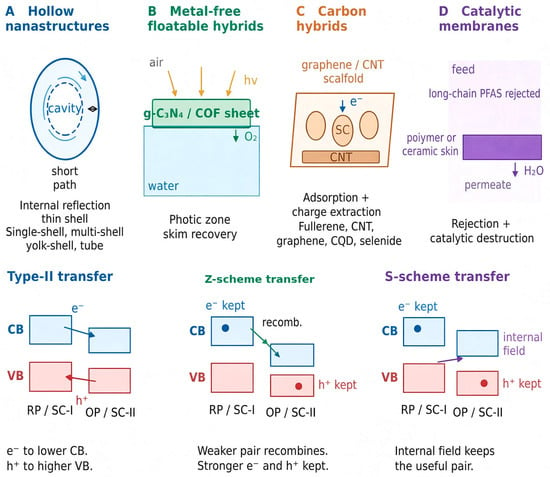
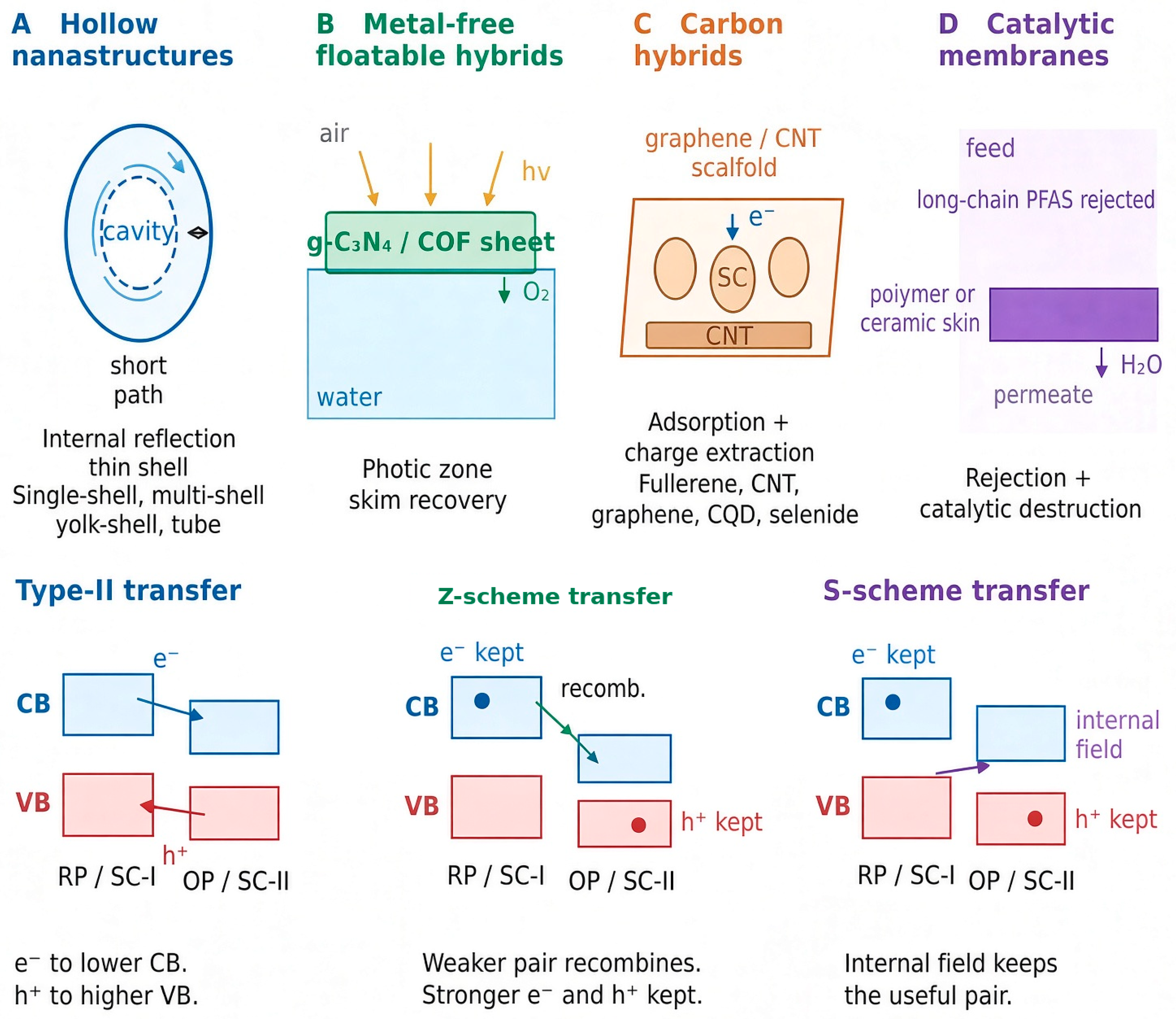
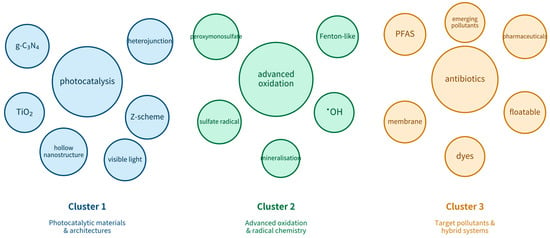
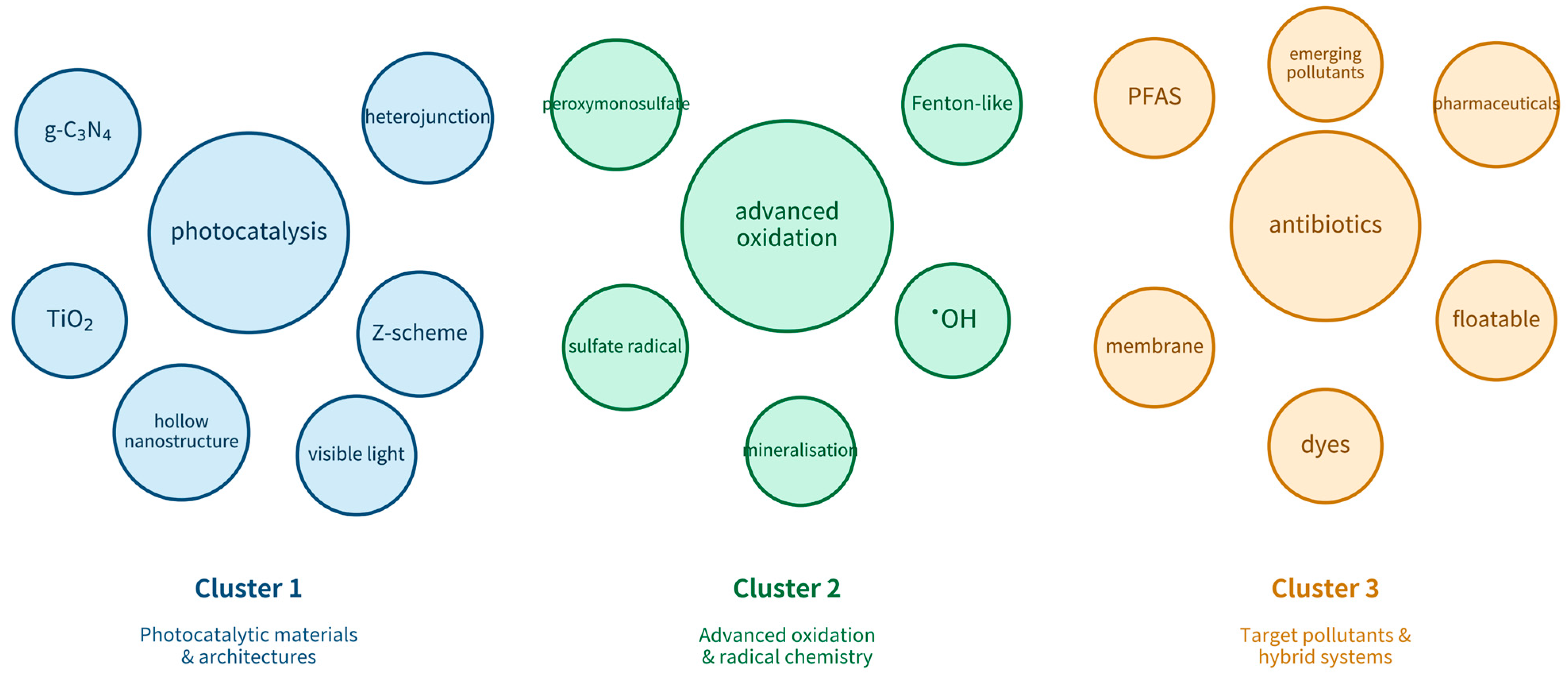

Disclaimer/Publisher’s Note: The statements, opinions and data contained in all publications are solely those of the individual author(s) and contributor(s) and not of MDPI and/or the editor(s). MDPI and/or the editor(s) disclaim responsibility for any injury to people or property resulting from any ideas, methods, instructions or products referred to in the content. |
© 2026 by the authors. Licensee MDPI, Basel, Switzerland. This article is an open access article distributed under the terms and conditions of the Creative Commons Attribution (CC BY) license.