


Abstract
Glass sponges (Porifera: Hexactinellida) have been the subject of scientific investigation for over two centuries, yet the temporal and thematic structure of this research effort has never been quantitatively evaluated. Here, we assessed taxonomic activity, geographical and bathymetric coverage, and keyword trends extracted from the indexed literature. We found two different periods of intense taxonomic activity occurring in the late 19th century and early 20th century, and then following World War II, with a steady increase in currently indexed publication output following the establishment of the modern peer-review system. However, research has been disproportionately concentrated on mesophotic and bathyal depths, whereas shallow and abyssal glass sponges have received comparatively little attention, while hadal records remained largely confined to the non-indexed literature until very recently. Furthermore, we found a decline in the number of active experienced glass sponge taxonomists, with few new experts being trained. This mismatch occurs as abyssal and hadal environments become increasingly accessible, potentially constraining our ability to adequately study the taxonomy and ecology of ultra-deep glass sponges.
1. Introduction
Few animal groups share the long evolutionary history and ecological importance of the phylum Porifera Grant, 1836. One of the four classes of the Porifera, glass sponges (Hexactinellida Schmidt, 1870 [1]), are characterized by a unique syncytial tissue organization, with a siliceous skeleton composed of spicules with a six-rayed, triaxonic symmetry [2,3]. The class is mostly represented by deep-sea species, being one of the most abundant and diverse megabenthic groups below in deep environment [4,5]. Nonetheless, few glass sponge assemblages are present in a limited number of shallow locations: British Columbia, submersed caves in the Mediterranean (France and Croatia), fjords in southern New Zealand, and coastal Antarctica [5,6,7,8,9]. These habitats are generally characterized by cold-water conditions, and only a few glass sponge species are currently known to form reefs in such coastal environments [10,11]. Our knowledge of their global distribution remains fragmented [4], but continues to improve with increasing deep-sea exploration.
The classification of glass sponges has traditionally relied on the subdivision into two subclasses, Hexasterophora Schulze, 1886, and Amphidiscophora Schulze, 1886, defined by differences in their siliceous skeletal components, namely spicules, and in particular in the microscopic components, the microscleres [2]. Hexasterophora are characterized by the presence of star-shaped microscleres called hexasters, while Amphidiscophora lack hexasters and instead possess a distinct microsclere type known as amphidiscs [2] although exceptions occur and some hexasterophoran genera may also exhibit amphidisc-like microscleres [12,13]. Molecular phylogeny mostly supports the traditional Linnaean classification [14,15], but it also revealed uncertainties at multiple taxonomic levels, including the status of several high-level ranks. An emblematic case is represented by dictyonal skeletons, which appear to have evolved multiple times across independent lineages, and several traditionally recognized taxa are non-monophyletic [16,17]. These findings have prompted substantial revisions of the higher classification of Hexactinellida, including the resurrection of the order Sceptrulophora Mehl, 1992 [17,18]. Over the period covered by our bibliometric survey, glass sponge systematics has shifted from a pure morphology- and spicule-based approach towards integrative taxonomy, combining morphological and molecular evidence [16,19,20].
Significant discoveries have continued to reshape our understanding of the group and our ability to study them, with shallow and easily accessible glass sponges from British Columbia and France that allowed us to acquire baseline knowledge about the larval stage, physiology, ecology, and genomics of the class [21,22,23,24,25]. Despite these progresses, substantial knowledge gaps persist in the biogeography and physiology of the class. The deep sea remains one of the least sampled environments on Earth, resulting in major regional coverages between the Northern and Southern Hemispheres [26,27] and between oceans (i.e., very few data from the Indian Ocean [28]). Many aspects of glass sponges’ life cycle remain unknown and are inferred from shallow, accessible species, particularly about reproductive and larval stages, with information about post-larval early stages and settlement in the deep sea being scarce and fragmented, and totally absent for Amphidiscosida [25,29]. These limitations complicate attempts to generalize biological and ecological patterns across the class, and even more so across depth gradients, as very little information exists for deeper records of glass sponges in the hadal zone [30,31].
Previous syntheses remain fundamental for understanding Hexactinellida, but they addressed different objectives from those of the present review. Reiswig [29] provided a taxonomic and systematic reassessment of the class after more than a century of study, while Leys et al. [3] reviewed the broader biology of glass sponges, including their morphology, physiology, ecology, distribution, and abundance. However, these works were not designed to quantify how research effort on glass sponges is distributed across bathymetric zones, oceans, taxonomic groups, or research themes.
Here, we use a bibliometric and bathymetric framework to assess how glass sponge research has developed over time, how published studies are distributed across oceans and depth zones, and which research themes remain most represented or underrepresented. We also evaluate taxonomic effort through patterns of species description and authorship. By doing so, we assess whether recent advances in deep-sea exploration, molecular systematics, and image-based surveys have reduced historical bathymetric and thematic biases in Hexactinellida research, or whether knowledge of the class remains concentrated in particular depths and research areas.
2. Materials and Methods
2.1. Software and Packages List
Analyses were performed with a combination of VOSviewer (ver. 1.6.20 [32]) and RStudio (ver. 2025.09.1+401) as an IDE for R [33]. All code is publicly available on GitHub (https://github.com/MUDSRC/BibliometricAnalysis (accessed on 30 June 2026). We used the following packages in R: bibliometrix (ver. 5.1.1; [34]); dplyr (ver. 1.1.4; [35]); forcats (ver. 1.0.1; [36]); ggplot2 (ver. 4.0.0; [37]); lubridate (ver. 1.9.4; [38]); purrr (ver. 1.1.0; [39]); readr (ver. 2.1.5; [40]); readxl (ver. 1.4.5; [41]); rlang (ver. 1.1.6; [42]); stringr (ver. 1.5.2; [43]); tibble (ver. 3.3.0; [44]); tidyr (ver. 1.3.1; [45]); tidytext (ver. 0.4.3; [46]); tidyverse (ver. 2.0.0; [47]); worrms (ver. 0.4.3; [48]).
2.2. Taxonomic Effort Evaluation
The R package worrms was used to extract a list of all accepted taxa within the class Hexactinellida (Aphia ID = 22612) from the WoRMS (World Register of Marine Species) database via its API. The resulting CSV file contained all taxonomic ranks from class to species (Supplementary Material Table S1), along with AphiaID, authorship, and year of description. Subfamilies and subgenera were manually added, but no subspecies were retrieved [49], given the current lack of molecular studies on infraspecific taxa in glass sponges. The year of description of each single species was extracted to visualize the taxonomic effort over the years.
2.3. Bibliometric Analyses
Metadata of the relevant scientific literature was downloaded from Scopus (https://www.scopus.com/pages/home (accessed on 12 October 2025) and Web of Science (WoS; https://www.webofscience.com/wos/woscc/smart-search (accessed on 12 October 2025) repositories in October 2025. The original query used was: “hexactinellida OR hexactinellid OR hexactinellids OR (glass AND sponge) OR (glass AND sponges).” However, the terms (glass AND sponge) and (glass AND sponges) returned numerous articles from the medical field (e.g., silicosis, lung diseases) and materials science (e.g., glass and sponge-like materials), which were largely unrelated to the intended topic. After exporting all available fields, the two datasets were imported into Microsoft Excel as two separate CSV files. The two were then merged with Biblioshiny, from the R package Bibliometrix [34].
Because the dataset was retrieved exclusively from Scopus and Web of Science, publications not indexed in these databases could not be systematically recovered. This particularly affects older publications, monographs, expedition reports, and papers published in specialized or historical journals that are not indexed or are only partially indexed in these repositories. Given the database-based nature of the bibliometric dataset, we did not manually add non-indexed sources in order to maintain a reproducible and internally consistent search strategy.
The combined dataset was manually refined by removing documents that were irrelevant to the topic based on titles and abstracts; papers were retained if they included any glass-sponge-related content (sponge- or deep-sea-related sources with no mention of glass sponges were excluded). Papers focused on other sponge classes (e.g., Demospongiae Sollas, 1885, Calcarea Bowerbank, 1862) were kept only when they provided ecological, taxonomic, or comparative context relevant to glass sponges, and similarly for the description of hexactinellid-associated fauna.
For the manually refined dataset, each paper was screened for bathymetric, geographical, and topical information. When a paper reported a sampling depth or depth range, it was assigned to one or more bathymetric zones, defined as: shallow (<50 m), mesophotic (51–200 m), bathyal (201–3000 m), abyssal (3001–6000 m), and hadal (>6000 m). Depth was assigned based on the depth at which the study was conducted or where the samples were collected. If no depth or bathymetric range was mentioned, no bathymetric zone was assigned. This included generic papers, biomimetic studies, reviews, phylogenetic studies, methodological papers, biochemical studies, and paleontological studies.
Similarly, each paper was assigned to one or more geographical regions: North Pacific Ocean, South Pacific Ocean, North Atlantic Ocean, South Atlantic Ocean, Indian Ocean, Southern Ocean, and Mediterranean Sea. Paleontological studies were not assigned to a geographical region, as geographical assignment was reserved for studies involving living specimens, recent samples, or direct field observations. Basin-focused studies were assigned to the closest major oceanic region; for example, studies located on the Atlantic side of the Arctic Sea were assigned to the North Atlantic Ocean.
Each paper was also assigned to one or more broad topic categories: biology and taxonomy, ecology, paleontology, and biotechnology. These categories were defined based on the main clusters identified in the keyword co-occurrence network. In the bathymetric, geographical, and topic classifications, papers assigned to more than one category were fractionally weighted across the relevant groups, so that each paper contributed a total weight of one within each classification scheme.
Data cleaning was performed in R to correct synonyms and misspellings in keywords using a custom normalization dictionary developed for this study. Both author keywords and index keywords were extracted from each paper, merged, and standardized by removing irrelevant terms and harmonizing variants (e.g., plural/singular, hyphenation, multi-word inconsistencies). Special characters (accents, diacritics, etc.) were temporarily removed to avoid character-encoding issues during processing and restored after the analysis.
Biblioshiny was used to analyze the cleaned dataset, annual scientific production, and publications per journal. The analysis of keyword co-occurrence was performed in VOSviewer with the cleaned dataset. Both author and index keywords were used with a full counting method. Only keywords with at least 10 occurrences were included in the final network. The network was generated using association strength as a normalization method (to improve cluster separation and readability), with attraction and repulsion values set to 2 and 0, respectively. Clustering was performed with a resolution of 1.00, and the minimum cluster size was set to 1. We produced a standard co-occurrence network visualization and an overlay visualization where the color of each node represents the average publication year for that specific keyword, ranging from blue (old topics) to yellow (emerging topics).
3. Results
3.1. Taxonomic Effort
As of November 2025, the World Porifera Database [50] lists a total of 710 accepted species of glass sponges. The current classification consists of two subclasses, four orders (plus “Hexasterophora incertae sedis”), 19 families (with seven subfamilies), and 126 genera (with 26 subgenera). Figure 1 presents the number of species described per year and the cumulative taxonomic effort over 191 years. One-hundred four researchers participated in taxonomic descriptions. Franz Eihlard Schulze (1840–1921) was the primary taxonomist for the class and described 147 species. The ten most prolific contributors to taxonomy were Franz E. Schulze (Germany, 147 taxa), Konstantin Tabachnick (Russia, 117), Henry M. Reiswig (Canada, 94), Isao Ijima (Germany, then Japan, 92), Claude Lévi (France, 66), Michelle Kelly (New Zealand, 49), Dorte Janussen (Germany, 36), Emile Topsent (France, 34), Robert Lendenfeld (Austria, 33), and Larisa Menshenina (Russia, 26).
Figure 1.
Number of species described per year (in blue) and consequential cumulative number of species described (in red) for the class Hexactinellida.
3.2. Bibliometric Analyses
Our combined database searches returned 1903 records. Manual refinement reduced this number to 931 relevant records, which formed the basis for the study-effort classification and were successfully imported into Biblioshiny. The Biblioshiny “Main Information” table was used to provide descriptive summary statistics (Table 1). The documents span the period 1876–2025 and were published across 331 sources. Articles, including records jointly classified as articles and other document types, represented 817 records (87.8%), while reviews accounted for a further 63 records (6.8%). The remaining records included book chapters, books, conference and proceedings papers, corrections, editorials, letters, notes, meeting abstracts, news items, short surveys, and 13 documents without an assigned category. A total of 2525 authors contributed to the database, with an average of 4.72 co-authors per document and an international co-authorship rate of 43.82%. Seventy-two authors produced 103 single-authored documents. The dataset had an annual publication growth rate of 2.24%, a mean document age of 15.1 years, and an average of 29.78 citations per document.
Table 1.
Main descriptive information of the bibliographic collection analyzed obtained from Biblioshiny.
The overall trend shows an increase in publications on the topic, reaching a maximum in 2013 with 38 documents (Figure 2). Some early documents published by Clarke [51], Sollas [52,53], and Hinde [54] were outliers in our indexed database: they appeared much earlier than all the others, so they were removed to focus the analysis on the period of sustained indexed publication growth. Excluding these, the main publication period (1962–2025) has an average annual output of 17.5 papers (SD = 15.7, median = 12). After 2005, the number of indexed publications per year remained consistently above 20, and after 2012 above 30 (excluding 2025, not concluded at the time of the analysis).
Figure 2.
Annual number of publications; blue line represents the overall trend over the years; red vertical line marks the start of the COVID-19 pandemic.
The top three journals by number of publications were the Journal of Paleontology (42 documents), Zootaxa (40), and Frontiers in Marine Science (33) (Figure 3). Other notable journals included Deep-Sea Research Part I: Oceanographic Research Papers (24), the Journal of the Marine Biological Association of the United Kingdom (22), Marine Ecology Progress Series (22), Deep-Sea Research Part II: Topical Studies in Oceanography (16), Palaeogeography, Palaeoclimatology, Palaeoecology (13), PLoS One (12), Marine Biodiversity (10), and PeerJ (10). Thirty-five sources published between five and ten papers, while 283 published fewer than five.
Figure 3.
Rank−frequency distribution of major journals (with more than 5 publications), highlighting the top three journals for the number of publications in our dataset.
3.3. Study Effort
3.3.1. Bathymetric Range
Of the 927 sources in the manually refined list, we were able to assign a bathymetric range to 366 of them (39%) (Figure 4A). Studies in the bathyal zone comprised almost half of the assigned papers (165.9) and showed a notable increase before the COVID-19 pandemic, making this the most abundant depth category. Mesophotic studies started early in the timeline and remained consistently the second most represented depth range (94.6 studies), followed by abyssal (66.9). Studies in shallow waters (including those mentioning glass sponges in marine caves) accounted for 36.6 papers. Only three studies covered or mentioned hadal glass sponges.
Figure 4.
(A) Occurrence of publications partitioned by bathymetric zone, including “Not assigned” papers. (B) Violin plot showing the number of publications per year across bathymetric zones. Darker colors represent deeper zones.
Temporal patterns differed among bathymetric zones (Figure 4B). Mesophotic studies appeared earliest in the dataset and remained present across most of the publication timeline. Bathyal studies became especially frequent after the 2010s, forming the most represented bathymetric category overall. Abyssal studies also increased mostly in recent decades, although they remained less represented than bathyal studies. Shallow-water records were more scattered through time, maintaining a low presence, while hadal glass sponge studies appeared only after 2019.
3.3.2. Geographical Area
Of the 927 papers in the manually refined list, we were able to assign a geographical area to 329 of them, while 604 papers (65.2%) did not contain sufficient geographical information for assignment (Figure 5A). Among the assigned publications, the North Pacific was the most represented region, accounting for 116.5 papers (12.5% of the full dataset), followed by the North Atlantic with 83 papers (9%). The Southern Ocean was also relatively well represented, with 49 papers (5.3%), while the Mediterranean Sea accounted for 27 papers (2.9%). The Indian Ocean, South Pacific, and South Atlantic were less represented, with 22.4 (2.4%), 17 (1.8%), and 11.2 papers (1.2%), respectively. Overall, the geographical distribution of the literature was strongly skewed towards the North Pacific and North Atlantic, whereas southern and Indo-Pacific regions remained comparatively underrepresented; specifically, the North Atlantic and the North Pacific accounted for more than 20% of the full dataset, and more than 60% of the studies that were geographically assigned in our analysis.
Figure 5.
Publications by geographical area. (A) Occurrence of publications partitioned by geographical area, including “Not assigned” papers. (B) Violin plot showing the number of publications per year across the different geographical areas.
The North Atlantic was the first region to appear in our dataset, followed by the Southern Ocean and the Mediterranean Sea. The North Pacific appeared later, around 1990, but registered a strong increase in publications after the 2010s (Figure 5B), becoming the most represented geographical region overall. Publications from the Indian Ocean, South Pacific, and South Atlantic were more temporally restricted and mostly concentrated in recent decades.
3.3.3. Research Topics
The co-occurrence of 119 keywords that appeared at least ten times in the dataset was mapped using VOSviewer. The network (Figure 6A) revealed four keyword clusters: a central taxonomy-focused cluster (in yellow), an ecology cluster (red), a biotechnology cluster (in blue), and a paleontology cluster (in green). The taxonomy cluster also includes a few molecular and genomic-related keywords (“phylogeny”; “molecular phylogeny”; “sequence”), but it mostly groups strict taxonomic terms and sponge classes and orders (most importantly, “hexactinellida”), with reference to Antarctica. The ecology cluster focuses on deep-sea biodiversity and the ecology of the class. Prominent terms include “ecology”, “deep-sea”, “diversity”, “biodiversity”, “Atlantic”, and to a lesser degree “Pacific”, along with other benthic groups such as “corals” and a general “megafauna”. While the two previous clusters are extremely well interconnected, the paleontology cluster has some notable links to the taxonomy cluster, but the majority of nodes are within the cluster itself. This is the consequence of three factors: the presence of “porifera” in the cluster; the presence of geology-related terms (“lagerstatte”, “shale”); and study locations being no longer marine and not relevant to contemporary glass sponge science (“mountains”; the Chinese province of Anhui; the Danish island of Bornholm). The biotechnology cluster, instead, highlights long-term interest in spicules, silica biomineralization, protein expression, and skeletal architecture in glass sponges. However, despite the number of studies focused on the mechanical properties of Euplectella aspergillum Owen 1871, this species does not emerge as a keyword in the network. Moreover, although genomic and molecular phylogeny terms are assigned to the taxonomy cluster, their spatial proximity to biotechnology nodes suggests they function as a conceptual bridge between classical systematics and biomineralization-focused research.
Figure 6.
(A) Keyword co-occurrence network: biology and taxonomy cluster (yellow), ecology cluster (red), biotechnology cluster (blue), and paleontology cluster (green). (B) Keyword co-occurrence network with average publication year overlay; keywords with older average publication years appear in violet, while more recent ones appear in yellow.
Overlaying the network by the average publication year (Figure 6B) revealed contrasting temporal patterns. Although the dataset used covers a period from 1960 to 2025, the keywords’ average publication years are centered between 2010 and 2018. This misalignment emerges from the strong increase in publications over recent decades, and the average publication year captures the mean temporal distribution of specific keywords instead of the historical origin; these two facts explain the strong skew towards 2010–2018. Keywords in the taxonomy and paleontology clusters are spread across the entire temporal span, indicating no clear temporal bias toward older or more recent research. Keywords associated with the biotechnology cluster show earlier average publication years, suggesting that this research focus was more prominent in earlier decades. Temporal patterns indicate a declining interest in several species associated with the biotechnology cluster. In particular, studies focusing on Rhabdocalyptus dawsoni Lambe, 1893, whose accepted name is now Acanthascus (Rhabdocalyptus) dawsoni (Lambe, 1893) [21,55] and Monorhaphis chuni Schulze, 1904 [56,57,58], reflect a concentration of influential studies published prior to 2010. Instead, Pheronema carpenteri (Thomson, 1869) remains a recurrent topic in the ecology cluster, given the large number of studies that focus on this species [59,60,61,62,63]; however, its average publication year (2015) is intermediate relative to other ecology-related keywords, reflecting sustained research attention across multiple decades rather than a predominantly recent focus.
A more detailed analysis of the most common keywords revealed 45 “common keywords” (frequency > 25) with a median value of 34 and a mean of 64.62 ± 99.65 (avg ± SD). The three most common keywords were “Porifera” (538 occurrences), “Hexactinellida” (481 occurrences), and “Demospongiae” (109 occurrences) (Figure 7A). After the latter, the number of occurrences dropped below 100, and after “British Columbia” below 50. Temporal analysis (Figure 7B) shows that “Metazoa, “Hexactinellida, and “Porifera” are the first keywords to appear in the dataset, followed by “Demospongiae” and “Rhabtocalyptus-dawsoni”, and by the remaining other keywords shortly after. “Rhabtocalyptus-dawsoni” is also the only keyword to disappear before 2020 without reappearing, in line with Figure 5B, confirming a declining interest in this species.
Figure 7.
Most common keywords (>25 occurrences). (A) Absolute frequency of keywords in the dataset. (B) Violin plots showing the temporal distribution of each keyword across the time span considered.
After dividing the sources according to the clusters from Figure 6, we found that “Biology and Taxonomy” was the most represented topic, accounting for 385.2 publications (41.4% of the full dataset) (Figure 8A). “Ecology” was the second most represented topic, with 224.4 publications (24.1%), followed by “Paleontology” with 188.4 publications (20.3%). “Biotechnology” had only 131.9 publications (14.2%), representing the smallest of the four topic categories.
Figure 8.
Publications by topic. (A) Occurrence of publications partitioned by topic. (B) Violin plot showing the number of publications per year across different research topics.
Temporal trends at the paper level broadly reflected the patterns observed in the keyword analyses but provided a clearer overview of changes in research focus through time (Figure 8B). Biology and taxonomy appeared earliest in the dataset and remained the dominant research topic across the full timeline, with a strong concentration of publications after 2010. Ecology and paleontology also appeared early, but became more prominent mainly in recent decades, particularly after the 2000s. Biotechnology showed a narrower temporal distribution, with most publications concentrated after the 2000s and 2010s. Results from Figure 6 and Figure 8 confirm the centrality of taxonomy and organismal biology in indexed glass sponge research. They also highlight a slight decrease in paleontological studies after the 2010s, coinciding with a comparable increase in ecology-focused publications. Biotechnology remained the most niche topic, with a rapid surge of interest between 2000 and 2010.
4. Discussion
Glass sponge science has historically focused on mesophotic and bathyal species. While shallow and abyssal glass sponges have received increasing attention after the 2000s, hadal glass sponges have been virtually absent from peer-reviewed publications pre-2022, confined to expedition reports and monographs [12,64,65,66]. These kinds of sources also represent the earlier way of publishing species descriptions, with taxonomy representing a central pillar of glass sponge science, connecting biotechnology, ecology, and paleontology. Today, however, the taxonomy of this group is at risk: few active specialists remain, and fewer early-career researchers are being trained to replace them.
4.1. Taxonomic Effort
The taxonomic history of glass sponges is complex, with several species originally described as members of other groups before the formal recognition of Hexactinellida as a distinct taxon [29]. The first formally described living species later attributed to glass sponges is generally considered to be Hyalonema sieboldi Gray, 1835. An early attempt to separate these sponges from other groups was made by Thomson [67] through his “Vitrea” taxon, although this still included some lithistid demosponges. Only a few years later, Schmidt [1] refined the concept of “Hexactinellidae”, helping to establish the modern taxonomic concept of the class [29].
Taxonomy represents one of the core lines of research within glass sponge science. Our analysis revealed two main periods of intense taxonomic activity: a huge number of species descriptions from the 1880s to the 1930s (with a peak between 1880 and 1890), and from the 1990s to the present (Figure 1). The first increase likely reflects the expansion of deep-sea exploration and classical taxonomic work during the late 19th and early 20th centuries. In particular, the publication of major expedition reports, including Schulze’s treatment of the Hexactinellida collected by H.M.S. Challenger, provided a large number of new species descriptions from material collected during early deep-sea expeditions and early works of Ijima [68,69,70]. The second increase, beginning around the 1990s, is probably driven by a combination of renewed deep-sea sampling, increased accessibility of deep-sea technologies, and the broader expansion of scientific publishing. Therefore, the recent rise should not necessarily be interpreted only as a glass-sponge-specific trend, but also as part of the wider growth in scientific output over recent decades.
After a highly productive early period when every new sampled glass sponge could have easily been a new species, the mid-20th century witnessed a pronounced decline in the description of new species. In contrast with the latter and today’s protocols, the majority of these early descriptions come from monographs and expedition reports rather than journals, as we can see in production from Franz E. Schulze [69,71], Isao Ijima [70,72,73,74], Emile Topsent [75] and Robert von Lendenfeld [76]. However, it must be acknowledged that many of these early descriptions are inadequate by modern standards, and holotypes could be in very poor condition or even lost [77]. No new species were described during the decade preceding the Second World War and for more than ten years after it ended. Taxonomic publications resumed only with the exceptional revisionary contribution of Claude Levi in 1964 [65]. This does not imply a total absence of expeditions following the end of the war (as many of the pioneering deep-sea expeditions such as Galathea and Vityaz began in the early 1950s). Rather, it highlights the consistent time lag between discovery and publication, which can often be decades long. Today, the number of described species continues to increase, driven largely by expeditions to previously unexplored or scarcely sampled regions, such as Antarctica [78,79], the Clarion–Clipperton Zone [80,81], the Bering Sea [82,83,84], and the Kuril–Kamchatka Trench [85,86].
Beyond historical fluctuations, glass sponge taxonomy is now affected by the “taxonomic impediment” [87,88]. Identifying species already described is a slow process, usually carried out by a limited number of experts or curators, but the capacity to describe new species is even rarer and slower [77,89]. This challenge is amplified in the big data era, as rapid molecular approaches contrast sharply with the slower pace of classical taxonomy. However, at the current time and technological development, these new techniques are not yet enough to describe a new species on their own [88,90,91], while crucial in cutting costs in conservation and ecology. An example of this unalignment between classic taxonomy and new molecular techniques can be seen in the Hyalonema genus, which includes 121 accepted species but for which we have only 53 species-level sequences on GenBank (www.ncbi.nlm.nih.gov/genbank (accessed on 30 June 2026)). Molecular techniques coupled with taxonomical comparison over a high number of specimens could resolve the monophyly of certain taxonomic ranks (e.g., the family Euretidae and the subfamilies of Euretidae and Euplectellidae), as well as clarify the possible existence of subspecies within Hexactinellida, long-standing and complex issues that are currently unresolved [19,49,92]. Integrative taxonomy is a slow, expensive, but necessary process that should become the norm in order to attract new talents into taxonomy with highly transferable skills [93,94].
The current population of glass sponge taxonomists is composed of scholars who are approaching or have surpassed the age of retirement, leaving few young researchers to inherit their expertise (pers. com). Only five of the ten most prolific taxonomists retrieved are still alive: Konstantin M. Tabachnick, Michelle Kelly, and Larisa Menshenina, all of whom remain professionally active, and Dorte Janussen and Claude Lévi, both retired. This demographic imbalance highlights a critical generational gap in taxonomic expertise. Species descriptions are typically published in highly specialized journals with low impact factors (excluding the “Zootaxa” phenomenon), receiving limited attention outside their niche [95,96]. When this limited visibility is combined with the extensive training required to specialize in a particular group [97], taxonomy becomes less appealing to students, as well as to funding bodies who favor applied hypothesis-driven science. As a result, taxonomy risks being regarded as a secondary research activity, with attention and resources that will shift towards more popular topics [96]. Yet its importance remains fundamental. Our findings from the co-occurrence network emphasized the close connection between taxonomy, ecology, and paleontology. As Agnarsson and Kuntner [98] highlighted, taxonomy is a critical pillar of biological sciences; without it, the foundations of phylogeny, ecology, and conservation biology are weakened, since each depends on accurate species identification and classification.
4.2. Bibliometric Analyses
Our bibliometric analysis considers only the peer-reviewed literature properly indexed in global databases and thus excludes the early pre-peer-review literature or highly specialized niche works that were never digitally cataloged. This is important because much of the foundational deep-sea literature, such as major 19th- and early 20th-century expeditions (Challenger, Valdivia, Siboga, and the Galathea expeditions), was published outside modern peer-review frameworks [99]. Oceanography and deep-sea research had a major push from military interest in seafloor mapping and acoustics due to the Cold War [100,101]; however, these military-driven surveys and expeditions did not have a focus on biological sampling. The combination of a shift in the funding landscape towards non-biological aimed expeditions and being at the beginning of the peer-review system could explain why, even with a solid knowledge preceding the two world wars, glass sponge science saw a renewed growth from the 1960s onwards. This phenomenon afflicts both general glass sponge research, taxonomic descriptions, and palaeontological studies, with the latter two slowly shifting from monographs to indexed publications.
During the years that followed, and particularly after the 1990s, with the introduction of digital indexation (regarding this study, WoS introduced digital indexing in the 1990s and Scopus in 2004), keyword analysis confirms the centrality of paleontology and taxonomy in glass sponge research. This stable presence is confirmed by the prominence of journals such as Journal of Paleontology and Zootaxa, which together published the largest number of studies in our dataset.
4.3. Bathymetric Range
Glass sponges are deep-sea animals that have been mostly studied at mesophotic and bathyal depths. These bathymetric ranges represent a compromise between depth and accessibility, as they are located on or near the continental margin [102]. Shallow waters are more accessible from a depth perspective, and glass sponges occur only in a few cold-water locations or inside caves [3,7], which limits scuba-based investigations and, consequently, the number of publications. Knowledge of abyssal glass sponges has increased in recent years, with a slow but steady rise in the number of publications. This growth has been driven by advances in deep-sea technologies and the increasing number of scientific expeditions conducted in international waters. Moreover, deep-sea-mining-related studies, in particular in the Clarion–Clipperton Zone [80,81], strongly contributed to the increased scientific interest in the Pacific abyssal zone.
In contrast, hadal glass sponges have received little attention, despite recent evidence indicating far higher abundance and diversity than previously expected [31]. The historical scarcity of hadal records for glass sponges is a direct consequence of technological limitations and the geographical remoteness of most hadal zones. For most of the twentieth century, biological research below 6000 m was constrained by extreme logistical, financial, and technical challenges [103]. As a result, depth-distribution patterns inferred from the literature and biodiversity databases have been strongly biased toward bathyal and upper abyssal zones, reinforcing the assumption that glass sponges are rare or marginal components of hadal ecosystems. Therefore, their distribution remains poorly understood, with this knowledge gap reflected in global biodiversity databases such as OBIS (https://obis.org; accessed on 30 June 2026), which, for example, display only 6 glass sponges deeper than 6000. Three of these records correspond to a single specimen, collected during the second Danish Galathea expedition (1950–1952) at 6770 m depth northeast of New Zealand and identified by Lévi (1964). The two remaining hadal glass sponges come from the same region, are currently part of the NIWA Invertebrate Collection, and have not yet been published in the peer-reviewed literature.
While only two sources have explicitly mentioned hadal glass sponges, they have been sporadically reported in books and expedition summaries [12,64,65,66]. They mostly consist of isolated observations, a few species descriptions, or anecdotal reports. Hadal glass sponges appeared in our peer-reviewed collection only in 2022, being briefly observed in the Java Trench [30]. A comprehensive assessment of known hadal glass sponges was published only later [31], extending the depth range of the class to beyond 7000 m and documenting 31 new morphotypes from a variety of hadal regions, based on more than 120 directly observed specimens. Whether there is a bathymetric or an environmental gradient that glass sponges cannot pass remains an unanswered question for the future. With only three species formally described from the hadal zone (Caulophacus (Caulophacus) hadalis Lévi, 1964; Caulophacus (Caulodiscus) lotifolium Ijima, 1903; Hyalonema (Cyliconema) apertum Schulze, 1886), there is an important and immediate opportunity for improving our biogeographical and taxonomical knowledge at the same time, possibly phylogenetically linking hadal species to neighboring abyssal taxa.
4.4. Geographical Distribution
The geographical distribution of the studies retrieved shows a strong bias towards the Northern Hemisphere, with the North Pacific and the North Atlantic being the most studied locations. This does not represent a major presence of glass sponges in the Northern Hemisphere, but rather highlights historical and logistical biases in deep-sea research effort, institutional capacities, and access to appropriate sampling infrastructures; visual estimation of the deep seafloor [26], its mapping resolution [27] and specimen sampling [104] confirm this bias towards the Northern Hemisphere, with major knowledge gaps for the Southern Hemisphere.
The North Atlantic was the first geographical area represented in our dataset, with Pheronema carpenteri (Thomson, 1869) being the main species of interest in the area. This species has been studied from multiple perspectives, including population structure, ecology, associated assemblages, and microbiome composition [59,60,63,105,106,107,108]. Other North Atlantic studies focused more broadly on deep-sea communities from the Mid-Atlantic Ridge and adjacent areas, including sponge assemblages and other benthic communities associated with seamounts, ridges, and bathyal to abyssal habitats [109,110,111,112,113,114,115,116,117].
Studies in the Antarctic environment followed a different trend, as it has long been considered a key environment for glass sponges, due to its cold and silica-rich waters, but as an extreme and isolated environment, it has been historically understudied, with many studies focusing on the Weddell Sea and carried out by German researchers, as part of the EASUZ, the ANDEEP I-III, and the SYSTCO expeditions [78,79,118,119,120,121,122]; it is worth noticing that even if research is carried out with specific time-limited projects, the research output for glass sponges in the Southern Ocean remains stable across the years.
In the case of the Mediterranean Sea, the oldest publication retrieved was the discovery of the Hexactinellid Cave [7], reflecting the importance of and cave-associated glass sponge records in this region [9,24], with a few additions and records for deep-sea species in recent years [123,124].
In contrast, the North Pacific appears later in the dataset but becomes the most represented region overall, especially after the 2010s. This increase likely reflects both the expansion of Pacific deep-sea exploration and the exceptional research attention given to British Columbia’s shallow reefs [10,23,125,126,127], various Pacific Seamounts [116,128,129,130,131], and the Clarion–Clipperton Zone [81,132,133,134,135,136].
4.5. Research Trends
Glass sponges have been historically studied mostly from a taxonomic point of view. This is not only confirmed by our results, biased by indexed-only publication, but also by the various monographs and non-indexed books, by various authors already discussed in the previous sections [71,74,137,138]. Taxonomic papers keep improving our understanding of the biodiversity of glass sponges in new areas [139] and of the phylogenetic relations within the class [14], with an increase in molecular techniques and integrative taxonomy [140], combining classical spicule-based approach and genetic markers.
Paleontological research represents another major component of the glass sponge literature. This is expected, given the rich fossil record of Hexactinellida and the historical importance of fossil sponge reefs, particularly in Mesozoic and Jurassic deposits [141,142]. Many paleontological studies are closely connected to taxonomy, because they focus on the description, revision, and interpretation of fossil taxa and reef-building assemblages [143,144,145,146].
Compared to other classes of sponges (where research about in situ experiments, population assessments, larval ecology, molecular biology, and biochemistry represent some of the normal methodologies), glass sponges suffer from the limited experimental capabilities in deep-sea environments. Nevertheless, recent years have seen a steady increase in experimental and large-scale ecological studies on the physiology of shallow and cave glass sponges, conducted both in vivo and in situ [3,11,23,147].
Biomaterialogical and bioinspired materials science studies remained a niche topic in the field, and can be divided into two main topics: structural biomimetics and materials properties, in particular regarding the ultrastructure of Euplectella [148,149,150,151] and the molecular mechanisms of silica deposition [152,153,154], with a specific set of the literature focused on giant spicule-bearing Monorhaphis chuni Schulze, 1904 [56,57,58]; molecular applications, from the use of glass sponges as natural eDNA samplers [155] to the study of bacterial communities [107,108,156,157]. While the first topics were trending in the first years of the 2000s, and while biomaterialogy and biomimetics are still subjects of publication nowadays, molecular studies are becoming increasingly relevant. A recent review by Ehrlich [158], the biomimetic potential of sponge biosilica remains largely unexplored, as only a few species have been investigated in sufficient detail. Possible applications extend from bioinspired architecture [159] and the development of improved optical fibers [160,161], to biomedical technologies, including topical peptide-delivery systems [162] and scaffolds for bone-tissue engineering [163]. Thus, biomimetics remains a relevant and developing research direction, even as molecular and biotechnological studies are becoming increasingly prominent [153,158].
Our bibliometric research shows that glass sponges have been and are still studied from different points of view. Taxonomy and paleontology remain central to the field, with ecological studies becoming more present as the deep-sea becomes more accessible, while biotechnological investigations are shifting from bio silica and biomimicry towards more modernomics approaches.
4.6. Limitations of Current Bibliometric Databases
Publications before the 1960s, particularly species descriptions from the 19th century, are difficult to compare with the modern literature [77]. Early works did not lack scientific accuracy, as natural history and taxonomy were often evaluated through editorial judgment and correspondence between specialists, but some practices accepted at the time would not be accepted today. For example, Gray [164] established Semperella from Semper’s description of Hyalonema schultzei Semper, 1868, without examining the type material. Beyond such taxonomic examples, the main difference lies in publication format and bibliographic structure [99]. At that time, access to publishing and data collection was limited to a small number of individuals, usually from privileged backgrounds; early authors such as Franz Eilhard Schulze and Isao Ijima contributed with a large number of descriptions enclosed in impressive monographs [69,70,71,74]. These works remain taxonomically valid, but database-based bibliometric workflows do not easily capture them.
Many early monographs and reports are currently not indexed following modern standards, being absent from popular search engines and, in many cases, lacking a DOI, a key feature of modern bibliographical research [165]. This represents an important limitation for bibliometric analyses, which is further complicated by differences in coverage between Scopus and Web of Science, as both databases show specific biases in terms of disciplines, journals, document types, countries, and languages [166]. Non-English publications are rarely translated (such as Koltun’s monograph [138], made available in English in 1972), remaining accessible solely in their original language, as for “Bottom fauna of the West Pacific deep-sea trenches” by Belyaev and Mironov [64], still available only in Russian, or Schrammen’s paleontological and taxonomic work (e.g., as “Die Kieselspongien der oberen Kreide von Nordwestdeutschland” [137]), which can be found only in German. This is further exemplified by Schmidt’s Grundzüge einer Spongien-Fauna des atlantischen Gebietes (1870), a fundamental work for the development of the taxonomy of glass sponges, but one that remains difficult to retrieve through modern indexing systems and is not available in English [1,29]. These limitations are not restricted to the historical literature: journals may also be removed from online indexed repositories for a variety of reasons, and their presence or absence can directly affect the results obtained from database-specific queries.
4.7. Future Directions of Glass Sponge Science
The future of glass sponge science will depend on the possibility of maintaining taxonomic expertise while training a new generation of taxonomists, at a time when both physical samples and image-based observations are rapidly increasing. Combining reliable taxonomic knowledge with large in situ image datasets represents a natural objective for the coming decades and could substantially accelerate the documentation of glass sponge diversity in poorly explored areas, especially in the Southern Hemisphere; this cannot be done if early works remain locked behind language barriers, lack of proper indexation, or paywalls [167]. Rather than treating image-based observations only at the class level, regional reference lists of morphotypes, supported by known species and type material, could allow identifications to begin at lower ranks, such as family or genus. This would improve biodiversity and distribution assessments, even when species-level identification still requires detailed taxonomic investigation through specimen examination and spicule preparations.
Video-based surveys could also be integrated with molecular data, opening the possibility of combining image-derived community information with eDNA and other DNA-based approaches. However, this potential remains limited by the scarcity of comprehensive and publicly available reference sequences for many hexactinellid families and genera, and by the fact that existing sequences are not always linked to confidently identified species or voucher material. A multi-integrative approach combining image-based morphotypes, specimen-based taxonomy, and DNA-based community data built on reliable reference libraries is ambitious but should represent a major objective for glass sponge research in the coming decades.
5. Conclusions
Glass sponge research has historically been dependent on large oceanographic expeditions bringing back massive collections, often analyzed in the following years, and resulting in extensive taxonomic monographs. Although taxonomic activity remains a core topic, our results show that the apparent structure of the field is also influenced by indexing biases, as many older monographs, expedition reports, non-English publications are lacking DOIs and remain absent from modern databases such as Scopus and Web of Science. Glass sponge science is now diversifying, with increasing attention to ecology, physiology, omics, biomaterials, and biomimicry. This diversification is uneven in the field: bathyal and mesophotic studies remain comparatively better represented than abyssal and especially hadal ones, while several geographical areas, particularly in the Southern Hemisphere, remain understudied. As deep-sea exploration expands, the number of specimens and image-based observations exceeds the descriptive capacity of the limited number of specialists. The main challenge for the coming decades will be to maintain and strengthen taxonomic expertise while integrating new molecular, ecological, and technological approaches, so that newly explored regions and depths can be properly characterized and finally start to fill geographical and bathymetric gaps.
Supplementary Materials
The following supporting information can be downloaded at https://www.mdpi.com/article/10.3390/oceans7040068/s1, Table S1: Accepted species of Hexactinellids as of November 2025.
Author Contributions
A.M.: Conceptualization, Data Curation, Methodology, Formal Analysis, Visualization, Writing—Original Draft, Writing—Review and Editing. T.B.: Supervision, Writing—Review and Editing. A.J.J.: Supervision, Writing—Review and Editing, Project Administration, Funding. All authors have read and agreed to the published version of the manuscript.
Funding
This work was supported by the University of Western Australia through a Scholarship for International Research Fees and a Minderoo–UWA Deep-Sea Research Centre Project Scholarship awarded to AM. The Minderoo–UWA Deep-Sea Research Centre is supported by the Minderoo Foundation.
Institutional Review Board Statement
Not Applicable.
Informed Consent Statement
Not Applicable.
Data Availability Statement
Bibliometric raw data is publicly available on Zenodo: 10.5281/zenodo.18919181. All scripts used can be found on GitHub: https://github.com/MUDSRC/BibliometricAnalysis (accessed on 30 June 2026).
Acknowledgments
We want to thank Dorte Janussen (Senckenberg Forschungsinstitut und Naturmuseum) for her valuable suggestions on the glass sponge community evolution and authorship, and for the material shared with us. Lastly, many thanks also to Brett C. Gonzalez (University of Western Australia) for advice on taxonomic conventions, and Julian Partridge (University of Western Australia) for suggestions that helped improve the manuscript and broaden its scope.
Conflicts of Interest
The authors declare no conflicts of interest.
References
- Schmidt, O. Grundzüge Einer Spongien-Fauna Des Atlantischen Gebietes; Wilhelm Engelmann: Leipzig, Germany, 1870. [Google Scholar]
- Reiswig, H.M. Class Hexactinellida Schmidt, 1870. In Systema Porifera; Hooper, J.N.A., Van Soest, R.W.M., Willenz, P., Eds.; Springer: Boston, MA, USA, 2002; pp. 1201–1210. [Google Scholar]
- Leys, S.P.; Mackie, G.O.; Reiswig, H.M. The Biology of Glass Sponges. In Advances in Marine Biology; Elsevier: Amsterdam, The Netherlands, 2007; Volume 52, pp. 1–145. [Google Scholar] [CrossRef] [Scilit] [PubMed]
- Tabachnick, K.R. Distribution of Recent Hexacitnellida. In Sponges in Time and Space; Routledge: London, UK, 1994; p. 544. [Google Scholar]
- Van Soest, R.W.M.; Boury-Esnault, N.; Vacelet, J.; Dohrmann, M.; Erpenbeck, D.; De Voogd, N.J.; Santodomingo, N.; Vanhoorne, B.; Kelly, M.; Hooper, J.N.A. Global Diversity of Sponges (Porifera). PLoS ONE 2012, 7, e35105. [Google Scholar] [CrossRef] [Scilit] [PubMed]
- Conway, K.W.; Barrie, J.V.; Austin, W.C.; Luternauer, J.L. Holocene Sponge Bioherms on the Western Canadian Continental Shelf. Cont. Shelf Res. 1991, 11, 771–790. [Google Scholar] [CrossRef] [Scilit]
- Vacelet, J.; Boury-Esnault, N.; Harmelin, J.-G. Hexactinellid Cave, a Unique Deep-Sea Habitat in the Scuba Zone. Deep-Sea Res. I Oceanogr. Res. Pap. 1994, 41, 965–973. [Google Scholar] [CrossRef] [Scilit]
- Leys, S.; Wilson, K.; Holeton, C.; Reiswig, H.; Austin, W.; Tunnicliffe, V. Patterns of Glass Sponge (Porifera, Hexactinellida) Distribution in Coastal Waters of British Columbia, Canada. Mar. Ecol. Prog. Ser. 2004, 283, 133–149. [Google Scholar] [CrossRef] [Scilit]
- Bakran-Petricioli, T.; Vacelet, J.; Zibrowius, H.; Petricioli, D.; Chevaldonné, P.; Raa, T. New Data on the Distribution of the ‘Deep-Sea’ Sponges Asbestopluma hypogea and Oopsacas minuta in the Mediterranean Sea: New Distribution Data on Mediterranean ‘Deep-Sea’ Sponges. Mar. Ecol. 2007, 28, 10–23. [Google Scholar] [CrossRef] [Scilit]
- Chu, J.; Leys, S. High Resolution Mapping of Community Structure in Three Glass Sponge Reefs (Porifera, Hexactinellida). Mar. Ecol. Prog. Ser. 2010, 417, 97–113. [Google Scholar] [CrossRef] [Scilit]
- Chu, J.; Maldonado, M.; Yahel, G.; Leys, S. Glass Sponge Reefs as a Silicon Sink. Mar. Ecol. Prog. Ser. 2011, 441, 1–14. [Google Scholar] [CrossRef] [Scilit]
- Tabachnick, K.R. Family Rossellidae Schulze, 1885. In Systema Porifera; Hooper, J.N.A., Van Soest, R.W.M., Willenz, P., Eds.; Springer: Boston, MA, USA, 2002; pp. 1441–1505. [Google Scholar]
- Tabachnick, K.R. Family Euplectellidae Gray, 1867. In Systema Porifera; Hooper, J.N.A., Van Soest, R.W.M., Willenz, P., Eds.; Springer: Boston, MA, USA, 2002; pp. 1388–1434. [Google Scholar]
- Dohrmann, M.; Janussen, D.; Reitner, J.; Collins, A.G.; Wörheide, G. Phylogeny and Evolution of Glass Sponges (Porifera, Hexactinellida). Syst. Biol. 2008, 57, 388–405. [Google Scholar] [CrossRef] [Scilit] [PubMed]
- Dohrmann, M.; Göcke, C.; Janussen, D.; Reitner, J.; Lüter, C.; Wörheide, G. Systematics and Spicule Evolution in Dictyonal Sponges (Hexactinellida: Sceptrulophora) with Description of Two New Species. Zool. J. Linn. Soc. 2011, 163, 1003–1025. [Google Scholar] [CrossRef] [Scilit]
- Reiswig, H.M.; Dohrmann, M. Three New Species of Glass Sponges (Porifera: Hexactinellida) from the West Indies, and Molecular Phylogenetics of Euretidae and Auloplacidae (Sceptrulophora): Three New West Indies Glass Sponges. Zool. J. Linn. Soc. 2014, 171, 233–253. [Google Scholar] [CrossRef] [Scilit]
- Dohrmann, M.; Kelley, C.; Kelly, M.; Pisera, A.; Hooper, J.N.A.; Reiswig, H.M. An Integrative Systematic Framework Helps to Reconstruct Skeletal Evolution of Glass Sponges (Porifera, Hexactinellida). Front. Zool. 2017, 14, 18. [Google Scholar] [CrossRef] [Scilit] [PubMed]
- Mehl, D. Die Entwicklung Der Hexactinellida Seit Dem Mesozoikum; Paläobiologie, Phylogenie Und Evolutionsökologie; Berliner geowissenschaftliche Abhandlungen Reihe E (Paläobiologie); Freie Universität Berlin: Berlin, Germany, 1992; Volume 2, pp. 1–164. [Google Scholar]
- Dohrmann, M.; Collins, A.G.; Wörheide, G. New Insights into the Phylogeny of Glass Sponges (Porifera, Hexactinellida): Monophyly of Lyssacinosida and Euplectellinae, and the Phylogenetic Position of Euretidae. Mol. Phylogenet. Evol. 2009, 52, 257–262. [Google Scholar] [CrossRef] [Scilit] [PubMed]
- Dohrmann, M.; Reiswig, H.M.; Kelly, M.; Mills, S.; Schätzle, S.; Reverter, M.; Niesse, N.; Rohde, S.; Schupp, P.; Wörheide, G. Expanded Sampling of New Zealand Glass Sponges (Porifera: Hexactinellida) Provides New Insights into Biodiversity, Chemodiversity, and Phylogeny of the Class. PeerJ 2023, 11, e15017. [Google Scholar] [CrossRef] [Scilit] [PubMed]
- Leys, S.P.; Mackie, G.O.; Meech, R.W. Impulse Conduction in a Sponge. J. Exp. Biol. 1999, 202, 1139–1150. [Google Scholar] [CrossRef] [Scilit] [PubMed]
- Yahel, G.; Whitney, F.; Reiswig, H.M.; Eerkes-Medrano, D.I.; Leys, S.P. In Situ Feeding and Metabolism of Glass Sponges (Hexactinellida, Porifera) Studied in a Deep Temperate Fjord with a Remotely Operated Submersible. Limnol. Oceanogr. 2007, 52, 428–440. [Google Scholar] [CrossRef] [Scilit]
- Francis, W.R.; Eitel, M.; Vargas, S.; Garcia-Escudero, C.A.; Conci, N.; Deister, F.; Mah, J.L.; Guiglielmoni, N.; Krebs, S.; Blum, H.; et al. The Genome of the Reef-Building Glass Sponge Aphrocallistes vastus Provides Insights into Silica Biomineralization. R. Soc. Open Sci. 2023, 10, 230423. [Google Scholar] [CrossRef] [Scilit] [PubMed]
- Santini, S.; Schenkelaars, Q.; Jourda, C.; Duchesne, M.; Belahbib, H.; Rocher, C.; Selva, M.; Riesgo, A.; Vervoort, M.; Leys, S.P.; et al. The Compact Genome of the Sponge Oopsacas minuta (Hexactinellida) Is Lacking Key Metazoan Core Genes. BMC Biol. 2023, 21, 139. [Google Scholar] [CrossRef] [Scilit] [PubMed]
- Maldonado, M.; Wahab, M.A.A. Phylum Porifera. In Atlas of Marine Invertebrate Larvae; Elsevier: Amsterdam, The Netherlands, 2025; pp. 113–148. [Google Scholar]
- Bell, K.L.C.; Johannes, K.N.; Kennedy, B.R.C.; Poulton, S.E. How Little We’ve Seen: A Visual Coverage Estimate of the Deep Seafloor. Sci. Adv. 2025, 11, eadp8602. [Google Scholar] [CrossRef] [Scilit] [PubMed]
- Niyazi, Y.; Thomas, E.A.; Pucino, N.; Swanborn, D.J.B.; Stewart, H.A.; Jamieson, A.J. Status of Global Seafloor Mapping Effort and Priority Areas for Future Mapping. Front. Mar. Sci. 2025, 12, 1543885. [Google Scholar] [CrossRef] [Scilit]
- Thomas, E.A.; Bond, T.; Kolbusz, J.L.; Niyazi, Y.; Swanborn, D.J.B.; Jamieson, A.J. Deep-Sea Ecosystems of the Indian Ocean >1000 m. Sci. Total Environ. 2024, 957, 176794. [Google Scholar] [CrossRef] [Scilit] [PubMed]
- Reiswig, H.M. Hexactinellida after 132 Years of Study—What’s New? Boll. Musei Inst. Biol. Univ. Genova 2004, 68, 71–84. [Google Scholar]
- Jamieson, A.J.; Stewart, H.A.; Weston, J.N.J.; Lahey, P.; Vescovo, V.L. Hadal Biodiversity, Habitats and Potential Chemosynthesis in the Java Trench, Eastern Indian Ocean. Front. Mar. Sci. 2022, 9, 856992. [Google Scholar] [CrossRef] [Scilit]
- Marchiò, A.; Jamieson, A.J.; Stewart, H.A. Through the Glass Ceiling: Extending the Depth Range of Glass Sponges (Porifera: Hexactinellida). Mar. Biol. 2025, 172, 88. [Google Scholar] [CrossRef] [Scilit]
- Van Eck, N.J.; Waltman, L. Manual for VOSviewer; Version 1.6.15; Universiteit Leinden: Leiden, The Netherlands, 2020. [Google Scholar]
- R Core Team. R: A Language and Environment for Statistical Computing; R Foundation for Statistical Computing: Vienna, Austria, 2025. [Google Scholar]
- Aria, M.; Cuccurullo, C. Bibliometrix: An R-Tool for Comprehensive Science Mapping Analysis. J. Informetr. 2017, 11, 959–975. [Google Scholar] [CrossRef] [Scilit]
- Wickham, H.; François, R.; Henry, L.; Müller, K.; Vaughan, D. Dplyr: A Grammar of Data Manipulation; Posit Software, PBC: Boston, MA, USA, 2023. [Google Scholar]
- Wickham, H. Forcats: Tools for Working with Categorical Variables (Factors); Posit Software, PBC: Boston, MA, USA, 2025. [Google Scholar]
- Wickham, H. Ggplot2: Elegant Graphics for Data Analysis; Springer: New York, NY, USA, 2016. [Google Scholar]
- Grolemund, G.; Wickham, H. Dates and Times Made Easy with Lubridate. J. Stat. Softw. 2011, 40, 1–25. [Google Scholar] [CrossRef] [Scilit]
- Wickham, H.; Henry, L. Purrr: Functional Programming Tools; Posit Software, PBC: Boston, MA, USA, 2025. [Google Scholar]
- Wickham, H.; Hester, J.; Bryan, J. Readr: Read Rectangular Text Data; Posit Software, PBC: Boston, MA, USA, 2024. [Google Scholar]
- Wickham, H.; Bryan, J. Readxl: Read Excel Files; Posit Software, PBC: Boston, MA, USA, 2025. [Google Scholar]
- Henry, L.; Wickham, H. Rlang: Functions for Base Types and Core R and “Tidyverse” Features; Posit Software, PBC: Boston, MA, USA, 2025. [Google Scholar]
- Wickham, H. Stringr: Simple, Consistent Wrappers for Common String Operations; Posit Software, PBC: Boston, MA, USA, 2023. [Google Scholar]
- Müller, K.; Wickham, H. Tibble: Simple Data Frames; Posit Software, PBC: Boston, MA, USA, 2025. [Google Scholar]
- Wickham, H.; Vaughan, D.; Girlich, M. Tidyr: Tidy Messy Data; Posit Software, PBC: Boston, MA, USA, 2024. [Google Scholar]
- Silge, J.; Robinson, D. Tidytext: Text Mining and Analysis Using Tidy Data Principles in R. J. Open Source Softw. 2016, 1, 37. [Google Scholar] [CrossRef] [Scilit]
- Wickham, H.; Averick, M.; Bryan, J.; Chang, W.; McGowan, L.D.; François, R.; Grolemund, G.; Hayes, A.; Henry, L.; Hester, J.; et al. Welcome to the Tidyverse. J. Open Source Softw. 2019, 4, 1686. [Google Scholar] [CrossRef] [Scilit]
- Chamberlain, S.; Vanhoorne, B. Worrms: World Register of Marine Species (WoRMS) Client. Available online: https://cran.r-project.org/web/packages/worrms/index.html (accessed on 30 June 2026).
- Lopes, D.A.; Hajdu, E.; Reiswig, H.M. Taxonomy of Farrea (Porifera, Hexactinellida, Hexactinosida) from the Southwestern Atlantic, with Description of a New Species and a Discussion on the Recognition of Subspecies in Porifera. Can. J. Zool. 2011, 89, 169–189. [Google Scholar] [CrossRef] [Scilit]
- de Voogd, N.; Alvarez, B.; Boury-Esnault, N.; Cárdenas, P.; Díaz, M.-C.; Dohrmann, M.; Downey, R.; Goodwin, C.; Hajdu, E.; Hooper, J.; et al. World Porifera Database. Available online: https://www.marinespecies.org/porifera (accessed on 21 May 2026).
- Clarke, J.M. The Great Glass-Sponge Colonies of the Devonian; Their Origin, Rise, and Disappearance. J. Geol. 1920, 28, 25–37. [Google Scholar] [CrossRef] [Scilit]
- Sollas, W.J. II.—On Eubrochus clausus, a Vitreo-Hexactinellid Sponge from the Cambridge “Coprolite” Bed. Geol. Mag. 1876, 3, 398–403. [Google Scholar] [CrossRef] [Scilit]
- Sollas, W.J. On Astroconia Granti, a New Lyssakine Hexactinellid from the Silurian Formation of Canada. Q. J. Geol. Soc. 1881, 37, 254–260. [Google Scholar] [CrossRef] [Scilit]
- Hinde, G.J. III.—On Palæosaccus Dawsoni, Hinde, a New Genus and Species of Hexactinellid Sponge from the Quebec Group (Okdovician) at Little Métis, Quebec, Canada. Geol. Mag. 1893, 10, 56–59. [Google Scholar] [CrossRef] [Scilit]
- Boyd, I. The Spicule Jungle of Rhabdocalyptus dawsoni: A Unique Microhabitat. Bachelor’s Thesis, University of Victoria, Victoria, BC, Canada, 1981. [Google Scholar]
- Müller, W.E.G.; Eckert, C.; Kropf, K.; Wang, X.; Schloßmacher, U.; Seckert, C.; Wolf, S.E.; Tremel, W.; Schröder, H.C. Formation of Giant Spicules in the Deep-Sea Hexactinellid Monorhaphis chuni (Schulze 1904): Electron-Microscopic and Biochemical Studies. Cell Tissue Res. 2007, 329, 363–378. [Google Scholar] [CrossRef] [Scilit] [PubMed]
- Wang, X.; Schröder, H.C.; Müller, W.E.G. Chapter 3 Giant Siliceous Spicules from the Deep-Sea Glass Sponge Monorhaphis chuni. In International Review of Cell and Molecular Biology; Elsevier: Amsterdam, The Netherlands, 2009; Volume 273, pp. 69–115. [Google Scholar]
- Jochum, K.P.; Wang, X.; Vennemann, T.W.; Sinha, B.; Müller, W.E.G. Siliceous Deep-Sea Sponge Monorhaphis chuni: A Potential Paleoclimate Archive in Ancient Animals. Chem. Geol. 2012, 300–301, 143–151. [Google Scholar] [CrossRef] [Scilit]
- Rice, A.L.; Thurston, M.H.; New, A.L. Dense Aggregations of a Hexactinellid Sponge, Pheronema carpenteri, in the Porcupine Seabight (Northeast Atlantic Ocean), and Possible Causes. Prog. Oceanogr. 1990, 24, 179–196. [Google Scholar] [CrossRef] [Scilit]
- Barthel, D.; Tendal, O.S.; Thiel, H. A Wandering Population of the HexactinelIid Sponge Pheronema carpenteri on the Continental Slope off Morocco, Northwest Africa. Mar. Ecol. 1996, 17, 603–616. [Google Scholar] [CrossRef] [Scilit]
- McIntyre, F.D.; Drewery, J.; Eerkes-Medrano, D.; Neat, F.C. Distribution and Diversity of Deep-Sea Sponge Grounds on the Rosemary Bank Seamount, NE Atlantic. Mar. Biol. 2016, 163, 143. [Google Scholar] [CrossRef] [Scilit]
- Vieira, R.P.; Bett, B.J.; Jones, D.O.B.; Durden, J.M.; Morris, K.J.; Cunha, M.R.; Trueman, C.N.; Ruhl, H.A. Deep-Sea Sponge Aggregations (Pheronema carpenteri) in the Porcupine Seabight (NE Atlantic) Potentially Degraded by Demersal Fishing. Prog. Oceanogr. 2020, 183, 102189. [Google Scholar] [CrossRef] [Scilit]
- Gregório, I.; Xavier, J.R.; Davies, A.J. Present and Future Distribution of the Deep-Sea Habitat-Forming Sponge—Pheronema carpenteri (Thomson, 1869) in a Changing Ocean. Deep. Sea Res. Part I Oceanogr. Res. Pap. 2024, 213, 104390. [Google Scholar] [CrossRef] [Scilit]
- Belyaev, G.M.; Mironov, A.N. Bottom fauna of the West Pacific Deep-Sea Trenches; Transaction of the P.P. Shirshov Institute of Oceanology; Academy of Sciences of the USSR: Moscow, Russia, 1977; Volume 108. [Google Scholar]
- Lévi, C. Spongiaires des zones bathyale, abyssale et hadale. In Scientific Results of The Danish Deep-Sea Expedition Round the World, 1950–1952; Galathea Report; Danish Science Press: Copenhagen, Denmark, 1964; Volume 7, pp. 63–112. [Google Scholar]
- Jamieson, A. The Hadal Zone: Life in the Deepest Oceans, 1st ed.; Cambridge University Press: Cambridge, UK, 2015. [Google Scholar]
- Thomson, W. On the “Vitreous” Sponges. Ann. Mag. Nat. Hist. 1868, 1, 114–132. [Google Scholar] [CrossRef] [Scilit]
- Schulze, F.E. Hexactinelliden Des Indischen Oceanes. I. Die Hyalonematiden. Abh. Preuss. Akad. Wiss. Berl. 1895, 2, 24–27. [Google Scholar]
- Schulze, F.E. Hexactinelliden Des Indischen Oceanes. II. Die Hexasterophora. Abh. Preuss. Akad. Wiss. Berl. 1896, 3, 63. [Google Scholar]
- Ijima, I. The Genera and Species of Rossellidae. Annot. Zool. Jpn. 1898, 2, 41–55. [Google Scholar]
- Schulze, F.E. Über Den Bau Und Das System Der Hexactinellide. Abh. Königl. Akad. Wiss. Berl. 1886, 1887, 1–97. [Google Scholar] [CrossRef] [Scilit]
- Ijima, I. On Two New Hexactinellida from Sagami Bay. Zool. Mag. 1895, 7, 93–96. [Google Scholar] [CrossRef] [Scilit]
- Ijima, I. Notice of New Hexactinellida from Sagami Bay. Zool. Anz. 1896, 504, 249–254. [Google Scholar]
- Ijima, I. The Hexactinellida of the Siboga Expedition. In Siboga-Expeditie. Uitkomsten op Zoologisch, Botanisch, Oceanographisch en Geologisch Gebied Verzameld in Nederlandsch Oost-Lndië 1899–1900 aan Boord H.M. ‘Siboga’ Onder Commando van Luitenant ter zee 1e kl. G.F. Tydemann. 106 (Monographie VI); E.J. Brill: Leiden, The Netherlands, 1927; pp. 1–383. [Google Scholar]
- Topsent, P.E. Les Hexasterophora Recueillies Par La Scotia Dans l’Antarctique. Bullettin L’institut Oceanogr. 1910, 166, 1–18. [Google Scholar]
- von Ledenfeld, R. The Sponges. 3. Hexactinellida; Reports on the Scientific Results of the Expedition to the Eastern Tropical Pacific, in Charge of Alexander Agassiz, by the U.S. Fish Commission Steamer “Albatross”, from October, 1904, to March, 1905, Lieut. Commander L.M. Garrett, U.S.N., Commanding, and of Other Expeditions of the “Albatross”, 1891–1899 (29); Memoirs of the Museum of Comparative Zoology at Harvard College: Cambridge, MA, USA, 1915; Volume 2. [Google Scholar]
- Godfray, H.C.J. Challenges for Taxonomy. Nature 2002, 417, 17–19. [Google Scholar] [CrossRef] [Scilit] [PubMed]
- Janussen, D.; Tabachnick, K.R.; Tendal, O.S. Deep-Sea Hexactinellida (Porifera) of the Weddell Sea. Deep-Sea Res. II Top. Stud. Oceanogr. 2004, 51, 1857–1882. [Google Scholar] [CrossRef] [Scilit]
- Janussen, D.; Reiswig, H.M. Hexactinellida (Porifera) from the ANDEEP III Expedition to the Weddell Sea, Antarctica. Zootaxa 2009, 2136, 1–20. [Google Scholar] [CrossRef] [Scilit]
- Kersken, D.; Janussen, D.; Martínez Arbizu, P. Deep-Sea Glass Sponges (Hexactinellida) from Polymetallic Nodule Fields in the Clarion-Clipperton Fracture Zone (CCFZ), Northeastern Pacific: Part I—Amphidiscophora. Mar. Biodivers. 2018, 48, 545–573. [Google Scholar] [CrossRef] [Scilit]
- Kersken, D.; Janussen, D.; Arbizu, P.M. Deep-Sea Glass Sponges (Hexactinellida) from Polymetallic Nodule Fields in the Clarion-Clipperton Fracture Zone (CCFZ), Northeastern Pacific: Part II—Hexasterophora. Mar. Biodivers. 2019, 49, 947–987. [Google Scholar] [CrossRef] [Scilit]
- Tabachnick, K.R.; Menshenina, L.L.; Ehrlich, H. New Findings of Ijimaiella (Porifera: Hexactinellida: Euplectellidae) from the Bering Sea. Invert. Zool. 2022, 19, 185–190. [Google Scholar] [CrossRef] [Scilit]
- Tabachnick, K.R.; Menshenina, L.L.; Ehrlich, H. Rossellidae (Porifera: Hexactinellida) from the Bering Sea and off Bering Island. Invert. Zool. 2023, 20, 57–89. [Google Scholar] [CrossRef] [Scilit]
- Tabachnick, K.R.; Menshenina, L.L. Hyalonematidae (Porifera: Hexactinellida) from the North Pacific Abyssal Zone (Bering Sea and Alaskan Golf). Invert. Zool. 2024, 21, 279–303. [Google Scholar] [CrossRef] [Scilit]
- Bogorov, V.G. Fauna of the Kurile-Kamchatka Trench and Its Environment; Proceedings of the Shirshov Institute of Oceanology; Academy of Sciences of the USSR: Moscow, Russia, 1973; Volume 86. [Google Scholar]
- Downey, R.V.; Janussen, D. New Insights into the Abyssal Sponge Fauna of the Kurile–Kamchatka Plain and Trench Region (Northwest Pacific). Deep. Sea Res. Part II Top. Stud. Oceanogr. 2015, 111, 34–43. [Google Scholar] [CrossRef] [Scilit]
- Fontaine, B.; Perrard, A.; Bouchet, P. 21 Years of Shelf Life between Discovery and Description of New Species. Curr. Biol. 2012, 22, R943–R944. [Google Scholar] [CrossRef] [Scilit] [PubMed]
- Engel, M.S.; Ceríaco, L.M.P.; Daniel, G.M.; Dellapé, P.M.; Löbl, I.; Marinov, M.; Reis, R.E.; Young, M.T.; Dubois, A.; Agarwal, I.; et al. The Taxonomic Impediment: A Shortage of Taxonomists, Not the Lack of Technical Approaches. Zool. J. Linn. Soc. 2021, 193, 381–387. [Google Scholar] [CrossRef] [Scilit]
- De Carvalho, M.R.; Bockmann, F.A.; Amorim, D.S.; Brandão, C.R.F. Systematics Must Embrace Comparative Biology and Evolution, Not Speed and Automation. Evol. Biol. 2008, 35, 150–157. [Google Scholar] [CrossRef] [Scilit]
- Ebach, M.C.; Holdrege, C. DNA Barcoding Is No Substitute for Taxonomy. Nature 2005, 434, 697. [Google Scholar] [CrossRef] [Scilit] [PubMed]
- Boero, F. The Study of Species in the Era of Biodiversity: A Tale of Stupidity. Diversity 2010, 2, 115–126. [Google Scholar] [CrossRef] [Scilit]
- Cárdenas, P.; Pérez, T.; Boury-Esnault, N. Sponge Systematics Facing New Challenges. In Advances in Marine Biology; Elsevier: Amsterdam, The Netherlands, 2012; Volume 61, pp. 79–209. [Google Scholar]
- Dayrat, B. Towards Integrative Taxonomy. Biol. J. Linn. Soc. 2005, 85, 407–415. [Google Scholar] [CrossRef] [Scilit]
- Schlick-Steiner, B.C.; Steiner, F.M.; Seifert, B.; Stauffer, C.; Christian, E.; Crozier, R.H. Integrative Taxonomy: A Multisource Approach to Exploring Biodiversity. Annu. Rev. Entomol. 2010, 55, 421–438. [Google Scholar] [CrossRef] [Scilit] [PubMed]
- Pinto, Â.P.; Mejdalani, G.; Mounce, R.; Silveira, L.F.; Marinoni, L.; Rafael, J.A. Are Publications on Zoological Taxonomy under Attack? R. Soc. Open Sci. 2021, 8, 201617. [Google Scholar] [CrossRef] [Scilit] [PubMed]
- Löbl, I.; Klausnitzer, B.; Hartmann, M.; Krell, F.-T. The Silent Extinction of Species and Taxonomists—An Appeal to Science Policymakers and Legislators. Diversity 2023, 15, 1053. [Google Scholar] [CrossRef] [Scilit]
- Coleman, C.O. Taxonomy in Times of the Taxonomic Impediment—Examples from the Community of Experts on Amphipod Crustaceans. J. Crustac. Biol. 2015, 35, 729–740. [Google Scholar] [CrossRef] [Scilit]
- Agnarsson, I.; Kuntner, M. Taxonomy in a Changing World: Seeking Solutions for a Science in Crisis. Syst. Biol. 2007, 56, 531–539. [Google Scholar] [CrossRef] [Scilit] [PubMed]
- Moxham, N.; Fyfe, A. The Royal Society and the Prehistory of Peer Review, 1665–1965. Hist. J. 2018, 61, 863–889. [Google Scholar] [CrossRef] [Scilit]
- Mitchell, N.C. Comparing the Post-WWII Publication Histories of Oceanography and Marine Geoscience. Scientometrics 2020, 124, 843–866. [Google Scholar] [CrossRef] [Scilit]
- Doel, R.E. Cold War and Earth Sciences. In Handbook of the Historiography of the Earth and Environmental Sciences; Aronova, E., Sepkoski, D., Tamborini, M., Eds.; Historiographies of Science; Springer Nature: Cham, Switzerland, 2025; pp. 297–323. [Google Scholar]
- Levin, L.A.; Dayton, P.K. Ecological Theory and Continental Margins: Where Shallow Meets Deep. Trends Ecol. Evol. 2009, 24, 606–617. [Google Scholar] [CrossRef] [Scilit] [PubMed]
- Jamieson, A.J. A Contemporary Perspective on Hadal Science. Deep-Sea Res. II Top. Stud. Oceanogr. 2018, 155, 4–10. [Google Scholar] [CrossRef] [Scilit]
- Saeedi, H. Gaps and Drivers of Global Marine Animal Biodiversity from the Surface to Abyss. Nat. Commun. 2026, 17, 4553. [Google Scholar] [CrossRef] [Scilit] [PubMed]
- Bett, B.J.; Rice, A.L. The Influenceof Hexactinellid Sponge (Pheronema carpenteri) Spicules on the Patchy Distribution of Macrobenthos in the Porcupine Seabight (Bathyal Ne Atlantic). Ophelia 1992, 36, 217–226. [Google Scholar] [CrossRef] [Scilit]
- Viegas, C.; Juliano, M.; Colaço, A. Larval Dispersal and Physical Connectivity of Pheronema carpenteri Populations in the Azores. Front. Mar. Sci. 2024, 11, 1393385. [Google Scholar] [CrossRef] [Scilit]
- Conway, J.; January, G.G.; Muddiman, K.J.; Dorrington, R.; Howell, K.L.; Upton, M. Impact of Growth Conditions on the Abundance and Diversity of Cultivable Bacteria Recovered from Pheronema carpenteri and Investigation of Their Antimicrobial Potential. FEMS Microbes 2025, 6, xtaf016. [Google Scholar] [CrossRef] [Scilit] [PubMed]
- Hesketh-Best, P.J.; Koch, M.J.; Foster, N.L.; Warburton, P.J.; Upton, M.; Howell, K. A Metagenomic Exploration of the Bacterial Community Composition of Two Deep-Sea Pheronema carpenteri Sponge Aggregations from the North Atlantic; Insights into Ecosystem Services. bioRxiv 2026. [Google Scholar] [CrossRef] [Scilit]
- Iken, K.; Brey, T.; Wand, U.; Voigt, J.; Junghans, P. Food Web Structure of the Benthic Community at the Porcupine Abyssal Plain (NE Atlantic): A Stable Isotope Analysis. Prog. Oceanogr. 2001, 50, 383–405. [Google Scholar] [CrossRef] [Scilit]
- Gebruk, A.V.; Krylova, E.M. Megafauna of the Charlie–Gibbs Fracture Zone (Northern Mid-Atlantic Ridge) Based on Video Observations. J. Mar. Biol. Assoc. 2013, 93, 1143–1150. [Google Scholar] [CrossRef] [Scilit]
- Beazley, L.I.; Kenchington, E.L.; Murillo, F.J.; Sacau, M.D.M. Deep-Sea Sponge Grounds Enhance Diversity and Abundance of Epibenthic Megafauna in the Northwest Atlantic. ICES J. Mar. Sci. 2013, 70, 1471–1490. [Google Scholar] [CrossRef] [Scilit]
- Xavier, J.R.; Tojeira, I.; Van Soest, R.W.M. On a Hexactinellid Sponge Aggregation at the Great Meteor Seamount (North-East Atlantic). J. Mar. Biol. Assoc. 2015, 95, 1389–1394. [Google Scholar] [CrossRef] [Scilit]
- Bell, J.B.; Alt, C.H.S.; Jones, D.O.B. Benthic Megafauna on Steep Slopes at the Northern Mid-Atlantic Ridge. Mar. Ecol. 2016, 37, 1290–1302. [Google Scholar] [CrossRef] [Scilit]
- Ramiro-Sánchez, B.; González-Irusta, J.M.; Henry, L.-A.; Cleland, J.; Yeo, I.; Xavier, J.R.; Carreiro-Silva, M.; Sampaio, Í.; Spearman, J.; Victorero, L.; et al. Characterization and Mapping of a Deep-Sea Sponge Ground on the Tropic Seamount (Northeast Tropical Atlantic): Implications for Spatial Management in the High Seas. Front. Mar. Sci. 2019, 6, 278. [Google Scholar] [CrossRef] [Scilit]
- Wudrick, A.; Beazley, L.; Culwick, T.; Goodwin, C.; Cárdenas, P.; Xavier, J.; Kenchington, E. A Pictorial Guide to the Epibenthic Megafauna of Orphan Knoll (Northwest Atlantic) Identified from In Situ Benthic Video Footage; Canadian Technical Report of Fisheries and Aquatic Sciences; Bedford Institute of Oceanography: Dartmouth, NS, Canada, 2020. [Google Scholar]
- Mitchell, E.G.; Harris, S. Mortality, Population and Community Dynamics of the Glass Sponge Dominated Community “The Forest of the Weird” from the Ridge Seamount, Johnston Atoll, Pacific Ocean. Front. Mar. Sci. 2020, 7, 565171. [Google Scholar] [CrossRef] [Scilit]
- Hartwell, A.M.; Wheat, A.E.; Dijkstra, J.A. Natural Warming Differentiates Communities and Increases Diversity in Deep-Sea Ridge Flank Hydrothermal Systems. Commun. Biol. 2024, 7, 379. [Google Scholar] [CrossRef] [Scilit] [PubMed]
- Barthel, D.; Gutt, J. Sponge Associations in the Eastern Weddell Sea. Antart. Sci. 1992, 4, 137–150. [Google Scholar] [CrossRef] [Scilit]
- Barthel, D. Fish Eggs and Pentacrinoids in Weddell Sea Hexactinellids: Further Examples for the Structuring Role of Sponges in Antarctic Benthic Ecosystems. Polar Biol. 1997, 17, 91–94. [Google Scholar] [CrossRef] [Scilit]
- Gatti, S. The Role of Sponges in High-Antarctic Carbon and Silicon Cycling-a Modelling Approach (Die Rolle Der Schwämme Im Hochantarktischen Kohlenstoff- Und Silikatkreislauf—Ein Modellierungsansatz); Alfred-Wegener-Institut für Polar- und Meeresforschung: Bremerhaven, Germany, 2002; Volume 434, pp. 1–124. [Google Scholar]
- Göcke, C.; Janussen, D. Sponge Assemblages of the Deep Weddell Sea: Ecological and Zoogeographic Results of ANDEEP I–III and SYSTCO I Expeditions. Polar Biol. 2013, 36, 1059–1068. [Google Scholar] [CrossRef] [Scilit]
- Buskowiak, D.; Janussen, D. An Exceptional Occurrence of Deep-Sea Sponges in the Region of Former Larsen Ice Shelves, Antarctic Peninsula, with the Description of Two New Species. Mar. Biodivers. 2021, 51, 8. [Google Scholar] [CrossRef] [Scilit]
- Boury-Esnault, N.; Vacelet, J.; Reiswig, H.M.; Fourt, M.; Aguilar, R.; Chevaldonné, P. Mediterranean Hexactinellid Sponges, with the Description of a New Sympagella Species (Porifera, Hexactinellida). J. Mar. Biol. Assoc. 2015, 95, 1353–1364. [Google Scholar] [CrossRef] [Scilit]
- Boury-Esnault, N.; Vacelet, J.; Dubois, M.; Goujard, A.; Fourt, M.; Pérez, T.; Chevaldonné, P. New Hexactinellid Sponges from Deep Mediterranean Canyons. Zootaxa 2017, 4236, 118–134. [Google Scholar] [CrossRef] [Scilit] [PubMed]
- Krautter, M.; Conway, K.W.; Barrie, J.V.; Neuweiler, M. Discovery of a “Living Dinosaur”: Globally Unique Modern Hexactinellid Sponge Reefs off British Columbia, Canada. Facies 2001, 44, 265–282. [Google Scholar] [CrossRef] [Scilit]
- Archer, S.K.; Dennison, G.; Tryon, L.; Byers, S.; Dunham, A. Invertebrate Settlement and Diversity on a Glass Sponge Reef. Can. Field Nat. 2020, 134, 1–15. [Google Scholar] [CrossRef] [Scilit]
- Dunham, A.; Clyde, G.; Stacey, C.; Burke, L.; Johannessen, S.; Conway, K. Causes of Historical Decline of the Glass Sponge Reefs in British Columbia, Canada. Estuar. Coast. Shelf Sci. 2026, 336, 109851. [Google Scholar] [CrossRef] [Scilit]
- McClain, C.R.; Lundsten, L.; Ream, M.; Barry, J.; DeVogelaere, A. Endemicity, Biogeography, Composition, and Community Structure On a Northeast Pacific Seamount. PLoS ONE 2009, 4, e4141. [Google Scholar] [CrossRef] [Scilit] [PubMed]
- Shen, C.; Cheng, H.; Zhang, D.; Lu, B.; Wang, C. A New Species of the Glass Sponge Genus Walteria (Hexactinellida: Lyssacinosida: Euplectellidae) from Northwestern Pacific Seamounts, Providing a Biogenic Microhabitat in the Deep Sea. Acta Oceanol. Sin. 2021, 40, 39–49. [Google Scholar] [CrossRef] [Scilit]
- Shen, C.; Yan, R.; Lu, B.; Li, Z.; Zhang, R.; Zhang, D.; Wang, C. Dissimilarity of Megabenthic Community Structure between Deep-Water Seamounts with Cobalt-Rich Crusts: Case Study in the Northwestern Pacific Ocean. Sci. Total Environ. 2024, 945, 173914. [Google Scholar] [CrossRef] [Scilit] [PubMed]
- Kennedy, B.R.; Auscavitch, S.; Shank, T.M.; Sartor, C.; Tennaba, A.; Weinnig, A.M.; Rotjan, R.D. Multi-Faceted Examination of a Deepwater Seamount Reveals Ecological Patterns Among Coral and Sponge Communities in the Equatorial Pacific. Sci. Rep. 2025, 15, 2270. [Google Scholar] [CrossRef] [Scilit] [PubMed]
- Amon, D.J.; Ziegler, A.F.; Dahlgren, T.G.; Glover, A.G.; Goineau, A.; Gooday, A.J.; Wiklund, H.; Smith, C.R. Insights into the Abundance and Diversity of Abyssal Megafauna in a Polymetallic-Nodule Region in the Eastern Clarion-Clipperton Zone. Sci. Rep. 2016, 6, 30492. [Google Scholar] [CrossRef] [Scilit] [PubMed]
- Amon, D.; Ziegler, A.; Drazen, J.; Grischenko, A.; Leitner, A.; Lindsay, D.; Voight, J.; Wicksten, M.; Young, C.; Smith, C. Megafauna of the UKSRL Exploration Contract Area and Eastern Clarion-Clipperton Zone in the Pacific Ocean: Annelida, Arthropoda, Bryozoa, Chordata, Ctenophora, Mollusca. Biodivers. Data J. 2017, 5, e14598. [Google Scholar] [CrossRef] [Scilit] [PubMed]
- Kersken, D.; Kocot, K.; Janussen, D.; Schell, T.; Pfenninger, M.; Martínez Arbizu, P. First Insights into the Phylogeny of Deep-Sea Glass Sponges (Hexactinellida) from Polymetallic Nodule Fields in the Clarion-Clipperton Fracture Zone (CCFZ), Northeastern Pacific. Hydrobiologia 2018, 811, 283–293. [Google Scholar] [CrossRef] [Scilit]
- Bribiesca-Contreras, G.; Dahlgren, T.G.; Amon, D.J.; Cairns, S.; Drennan, R.; Durden, J.M.; Eléaume, M.P.; Hosie, A.M.; Kremenetskaia, A.; McQuaid, K.; et al. Benthic Megafauna of the Western Clarion-Clipperton Zone, Pacific Ocean. ZooKeys 2022, 1113, 1–110. [Google Scholar] [CrossRef] [Scilit] [PubMed]
- Simon-Lledó, E.; Amon, D.J.; Guadalupe, B.-C.; Cuvelier, D.; Durden, J.M.; Ramalho, S.P.; Uhlenkott, K.; Arbizu, P.M.; Benoist, N.; Copley, J.; et al. Abyssal Pacific Seafloor Megafauna Atlas; Zenodo: Geneva, Switzerland, 2023. [Google Scholar]
- Schrammen, A. Die Kieselspongien Der Oberen Kreide von Nordwestdeutschland (Herausgegeben Mit Unterstützung Der Preußischen Akademie Der Wissenschaften in Berlin). Teil I. Tetraxonia, Monaxonia Und Silicea Incert. Sedis. Teil II. Triaxonia (Hexactinellida). Palaeontogr.-Suppl. 1912, SV, 1–385. [Google Scholar]
- Koltun, V.M. Sponge Fauna of the Northwestern Pacific from the Shallow to the Hadal Depths. Communication I. In Fauna of the Kuril–Kamchatka Trench and Its Environment; Bogorov, V.G., Ed.; Proceedings of the Shirshov Institute of Oceanology; Academy of Sciences of the USSR: Moscow, Russia, 1970; Volume 86, pp. 179–233. [Google Scholar]
- Domingos, C.; Kersken, D.; Hendry, K.; Schuster, A.; Taylor, M.L.; Xavier, J.R. Deep-Sea Glass Sponge Fauna (Porifera, Hexactinellida) of the Tropical Central Atlantic Seamounts: New Species and Diversity Patterns. Zootaxa 2026, 5795, 1–94. [Google Scholar] [CrossRef] [Scilit] [PubMed]
- Dohrmann, M.; Göcke, C.; Reed, J.; Janussen, D. Integrative Taxonomy Justifies a New Genus, Nodastrella Gen. Nov., for North Atlantic “Rossella” Species (Porifera: Hexactinellida: Rossellidae). Zootaxa 2012, 3383, 1–13. [Google Scholar] [CrossRef] [Scilit]
- Flügel, E.; Golonka, J.; Kießling, W. (Eds.) Phanerozoic Reef Patterns; SEPM (Society for Sedimentary Geology): Claremore, OK, USA, 2002. [Google Scholar]
- Wulff, J. Sponge Contributions to the Geology and Biology of Reefs: Past, Present, and Future. In Coral Reefs at the Crossroads; Hubbard, D.K., Rogers, C.S., Lipps, J.H., Stanley, G.D., Eds.; Coral Reefs of the World; Springer: Dordrecht, The Netherlands, 2016; Volume 6, pp. 103–126. [Google Scholar]
- Krautter, M. Fossil Hexactinellida: An Overview. In Systema Porifera; Hooper, J.N.A., Van Soest, R.W.M., Willenz, P., Eds.; Springer: Boston, MA, USA, 2002; pp. 1211–1223. [Google Scholar]
- Pisera, A. Palaeontology of Sponges—A Review. Can. J. Zool. 2006, 84, 242–261. [Google Scholar] [CrossRef] [Scilit]
- Dohrmann, M.; Vargas, S.; Janussen, D.; Collins, A.G.; Wörheide, G. Molecular Paleobiology of Early-Branching Animals: Integrating DNA and Fossils Elucidates the Evolutionary History of Hexactinellid Sponges. Paleobiology 2013, 39, 95–108. [Google Scholar] [CrossRef] [Scilit]
- Frisone, V.; Pisera, A.; Preto, N. A Highly Diverse Siliceous Sponge Fauna (Porifera: Hexactinellida, Demospongiae) from the Eocene of North-Eastern Italy: Systematics and Palaeoecology. J. Syst. Palaeontol. 2016, 14, 949–1002. [Google Scholar] [CrossRef] [Scilit]
- Pile, A.J.; Young, C.M. The Natural Diet of a Hexactinellid Sponge: Benthic–Pelagic Coupling in a Deep-Sea Microbial Food Web. Deep-Sea Res. I Oceanogr. Res. Pap. 2006, 53, 1148–1156. [Google Scholar] [CrossRef] [Scilit]
- Aizenberg, J.; Weaver, J.C.; Thanawala, M.S.; Sundar, V.C.; Morse, D.E.; Fratzl, P. Skeleton of Euplectella Sp.: Structural Hierarchy from the Nanoscale to the Macroscale. Science 2005, 309, 275–278. [Google Scholar] [CrossRef] [Scilit] [PubMed]
- Weaver, J.C.; Aizenberg, J.; Fantner, G.E.; Kisailus, D.; Woesz, A.; Allen, P.; Fields, K.; Porter, M.J.; Zok, F.W.; Hansma, P.K.; et al. Hierarchical Assembly of the Siliceous Skeletal Lattice of the Hexactinellid Sponge Euplectella Aspergillum. J. Struct. Biol. 2007, 158, 93–106. [Google Scholar] [CrossRef] [Scilit] [PubMed]
- Chen, H.; Jia, Z.; Li, L. Lightweight Lattice-Based Skeleton of the Sponge Euplectella Aspergillum: On the Multifunctional Design. J. Mech. Behav. Biomed. Mater. 2022, 135, 105448. [Google Scholar] [CrossRef] [Scilit] [PubMed]
- Santivongskul, P.; Fox, K.; Tran, P. Microstructural Hierarchy of Euplectella aspergillum: Mechanical Insights and Biomimetic Applications. Bioinspir. Biomim. 2025, 20, 051001. [Google Scholar] [CrossRef] [Scilit] [PubMed]
- Ehrlich, H.; Deutzmann, R.; Brunner, E.; Cappellini, E.; Koon, H.; Solazzo, C.; Yang, Y.; Ashford, D.; Thomas-Oates, J.; Lubeck, M.; et al. Mineralization of the Metre-Long Biosilica Structures of Glass Sponges Is Templated on Hydroxylated Collagen. Nat. Chem. 2010, 2, 1084–1088. [Google Scholar] [CrossRef] [Scilit] [PubMed]
- Ehrlich, H.; Voronkina, A.; Tabachnick, K.; Kubiak, A.; Ereskovsky, A.; Jesionowski, T. Silactins and Structural Diversity of Biosilica in Sponges. Biomimetics 2024, 9, 393. [Google Scholar] [CrossRef] [Scilit] [PubMed]
- Voronkina, A.; Romanczuk-Ruszuk, E.; Przekop, R.E.; Lipowicz, P.; Gabriel, E.; Heimler, K.; Rogoll, A.; Vogt, C.; Frydrych, M.; Wienclaw, P.; et al. Honeycomb Biosilica in Sponges: From Understanding Principles of Unique Hierarchical Organization to Assessing Biomimetic Potential. Biomimetics 2023, 8, 234. [Google Scholar] [CrossRef] [Scilit] [PubMed]
- Brodnicke, O.B.; Meyer, H.K.; Busch, K.; Xavier, J.R.; Knudsen, S.W.; Møller, P.R.; Hentschel, U.; Sweet, M.J. Deep-sea Sponge Derived Environmental DNA Analysis Reveals Demersal Fish Biodiversity of a Remote Arctic Ecosystem. Environ. DNA 2023, 5, 1405–1417. [Google Scholar] [CrossRef] [Scilit]
- Bayer, K.; Busch, K.; Kenchington, E.; Beazley, L.; Franzenburg, S.; Michels, J.; Hentschel, U.; Slaby, B.M. Microbial Strategies for Survival in the Glass Sponge Vazella Pourtalesii. mSystems 2020, 5, e00473-20. [Google Scholar] [CrossRef] [Scilit] [PubMed]
- Busch, K.; Slaby, B.M.; Bach, W.; Boetius, A.; Clefsen, I.; Colaço, A.; Creemers, M.; Cristobo, J.; Federwisch, L.; Franke, A.; et al. Biodiversity, Environmental Drivers, and Sustainability of the Global Deep-Sea Sponge Microbiome. Nat. Commun. 2022, 13, 5160, Correction in Nat. Commun. 2022, 13, 6546. https://doi.org/10.1038/s41467-022-33966-7. [Google Scholar] [CrossRef] [Scilit] [PubMed]
- Ehrlich, H. Architectured Biosilica in Sponges a Unique Source for Bioinspired Design. In Biomimicry─A Functional Approach; Bels, V., Gorb, S.N., Gurka, R., Eds.; Biologically-Inspired Systems; Springer Nature: Cham, Switzerland, 2026; Volume 20, pp. 17–72. [Google Scholar]
- Chayaamor-Heil, N. From Bioinspiration to Biomimicry in Architecture: Opportunities and Challenges. Encyclopedia 2023, 3, 202–223. [Google Scholar] [CrossRef] [Scilit]
- Aizenberg, J.; Sundar, V.C.; Yablon, A.D.; Weaver, J.C.; Chen, G. Biological Glass Fibers: Correlation Between Optical and Structural Properties. Proc. Natl. Acad. Sci. USA 2004, 101, 3358–3363. [Google Scholar] [CrossRef] [Scilit] [PubMed]
- Ehrlich, H.; Maldonado, M.; Parker, A.R.; Kulchin, Y.N.; Schilling, J.; Köhler, B.; Skrzypczak, U.; Simon, P.; Reiswig, H.M.; Tsurkan, M.V.; et al. Supercontinuum Generation in Naturally Occurring Glass Sponges Spicules. Adv. Opt. Mater. 2016, 4, 1608–1613. [Google Scholar] [CrossRef] [Scilit]
- Zhang, C.; Duan, J.; Huang, Y.; Chen, M. Enhanced Skin Delivery of Therapeutic Peptides Using Spicule-Based Topical Delivery Systems. Pharmaceutics 2021, 13, 2119. [Google Scholar] [CrossRef] [Scilit] [PubMed]
- Choi, S.; Kim, J.H.; Kang, T.H.; An, Y.-H.; Lee, S.J.; Hwang, N.S.; Kim, S.-H. Biomimetic Marine-Sponge-Derived Spicule-Microparticle-Mediated Biomineralization and YAP/TAZ Pathway for Bone Regeneration In Vivo. Biomater. Res. 2024, 28, 0056. [Google Scholar] [CrossRef] [Scilit] [PubMed]
- Gray, J.E. Note on Hyalonema Schultzei. Semper. Ann. Mag. Nat. Hist. 1868, 2, 373–377. [Google Scholar] [CrossRef] [Scilit]
- Turki, H.; Fraumann, G.; Taieb, M.A.H.; Aouicha, M.B. Global Visibility of Publications through Digital Object Identifiers. Front. Res. Metr. Anal. 2023, 8, 1207980. [Google Scholar] [CrossRef] [Scilit] [PubMed]
- Mongeon, P.; Paul-Hus, A. The Journal Coverage of Web of Science and Scopus: A Comparative Analysis. Scientometrics 2016, 106, 213–228. [Google Scholar] [CrossRef] [Scilit]
- Hayes, D.P. The Growing Inaccessibility of Science. Nature 1992, 356, 739–740. [Google Scholar] [CrossRef] [Scilit]
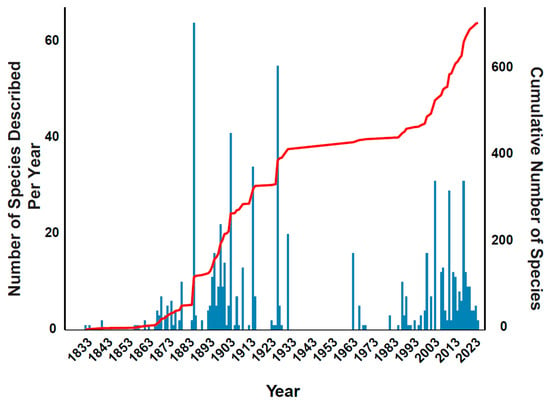
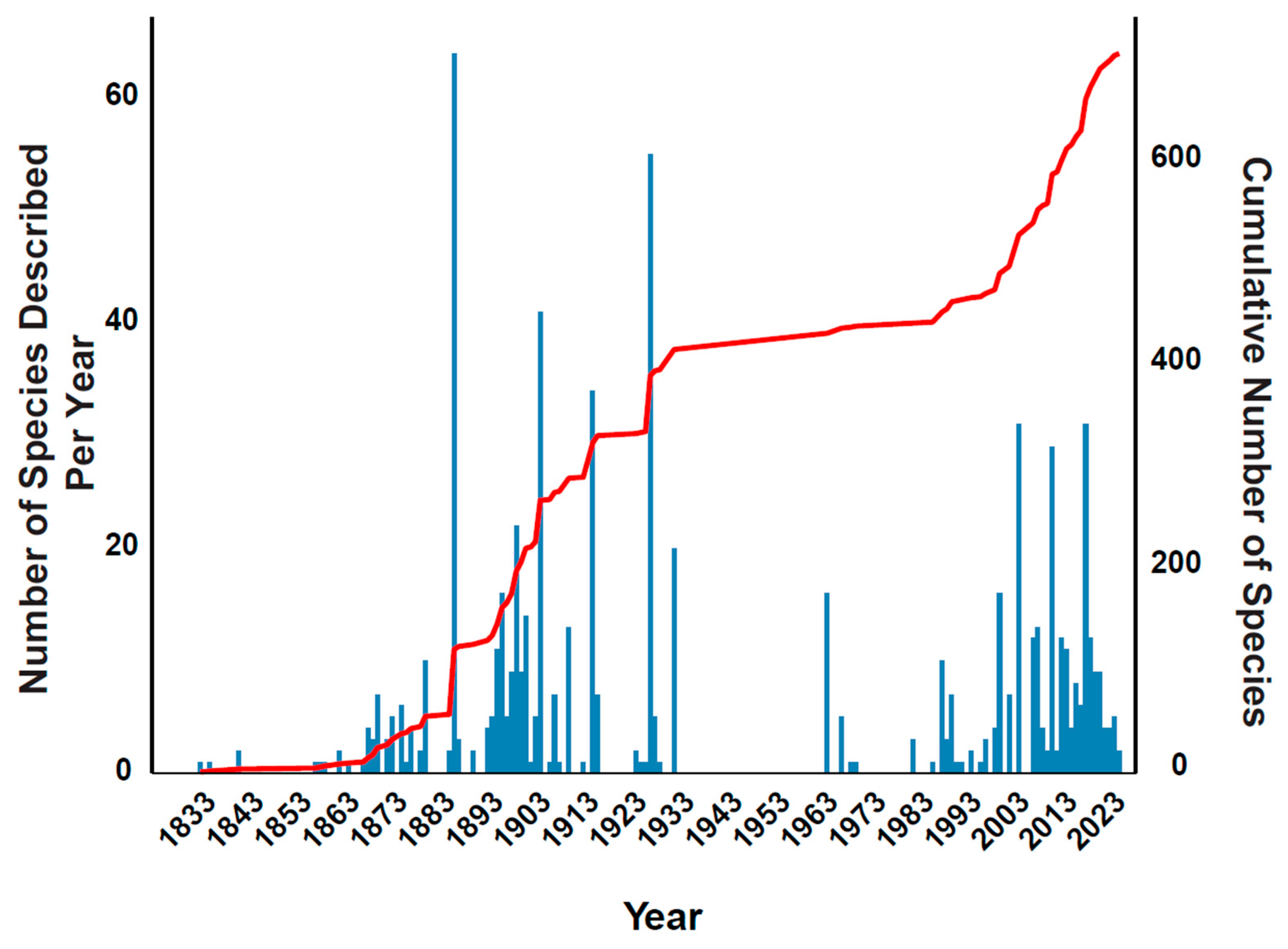
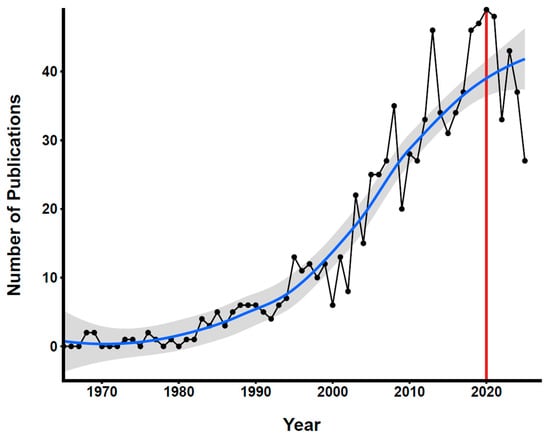
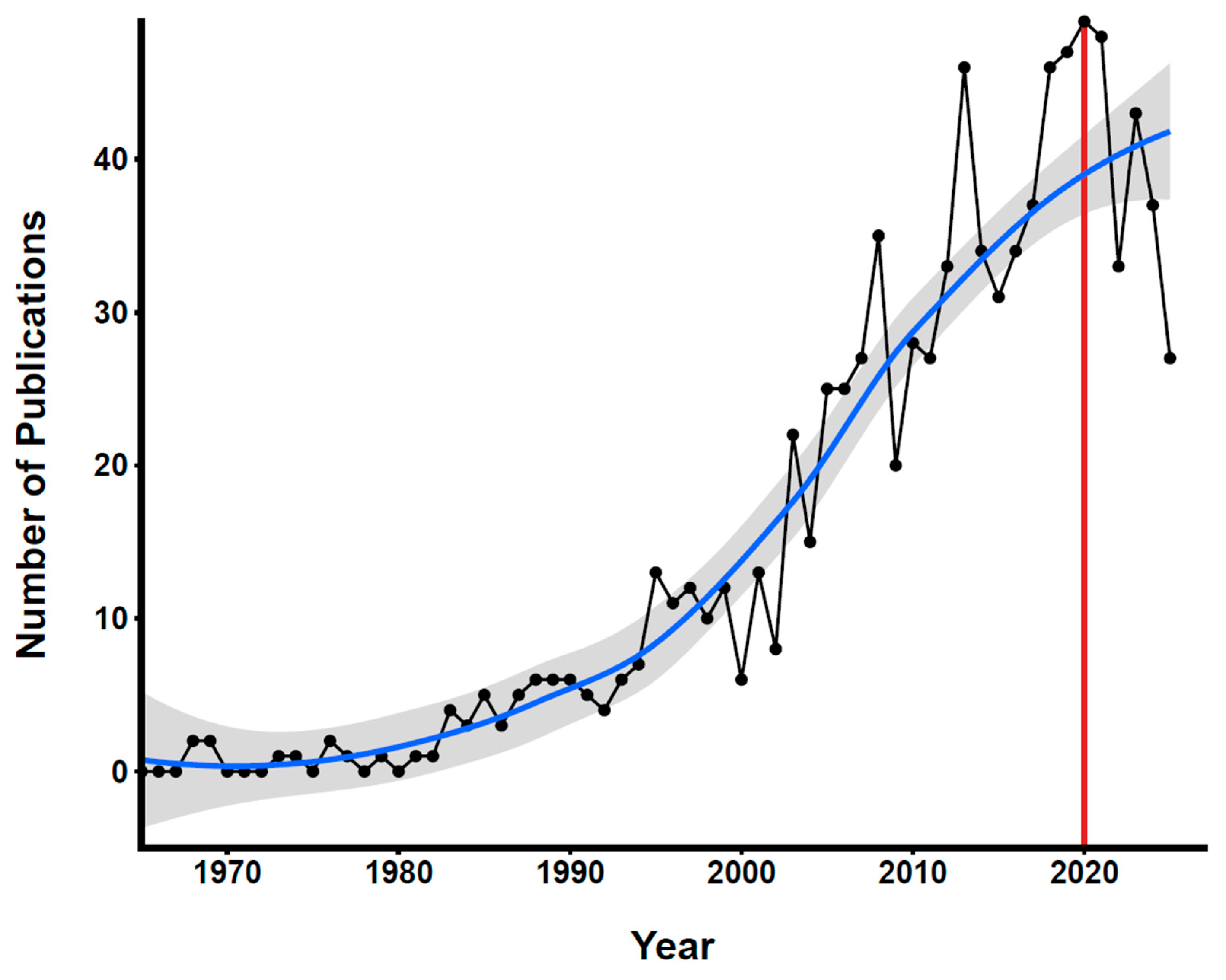
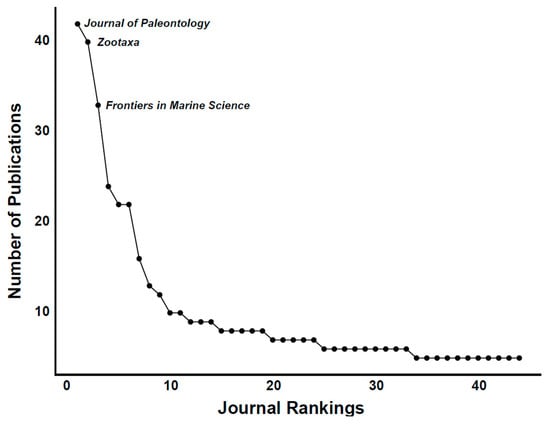
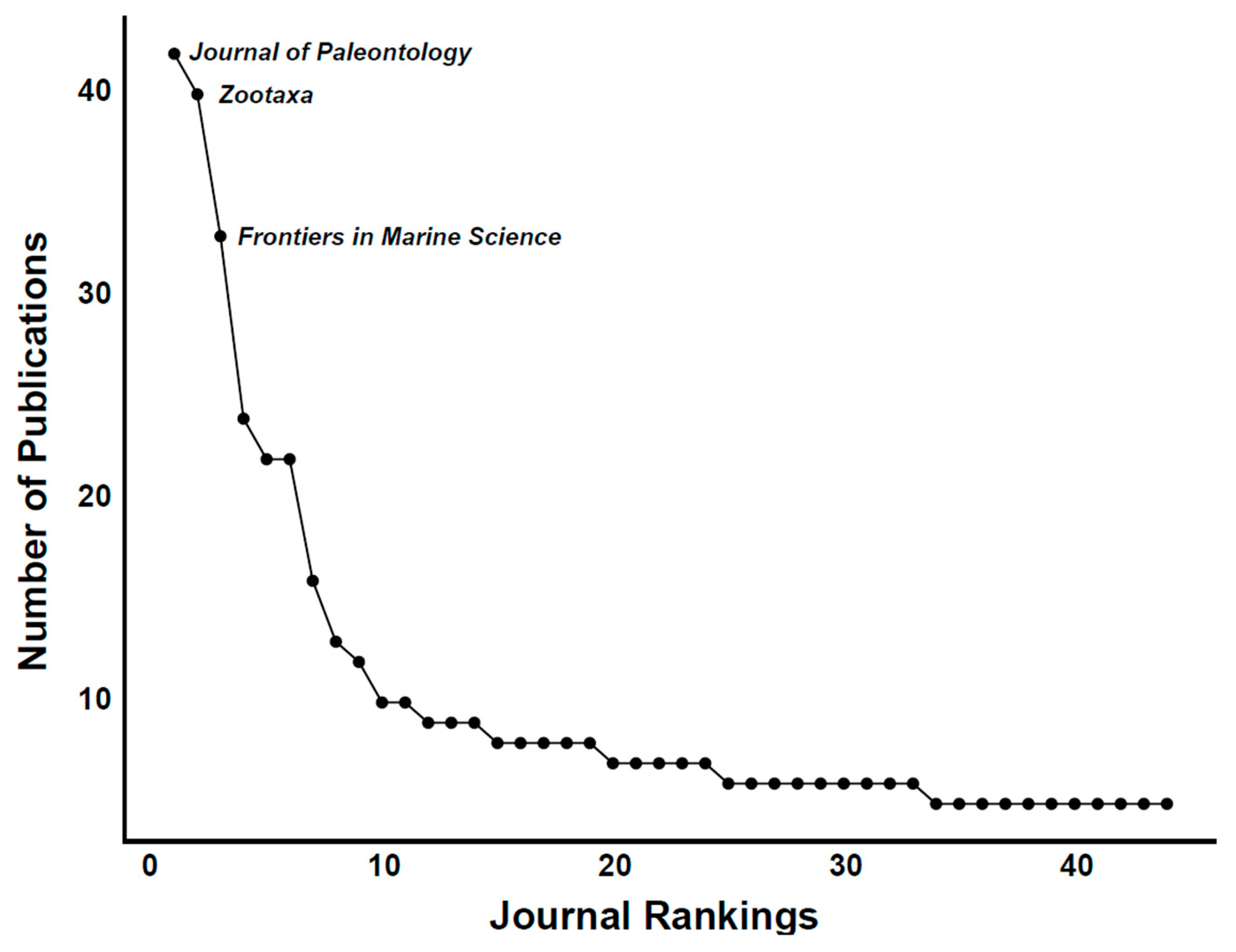
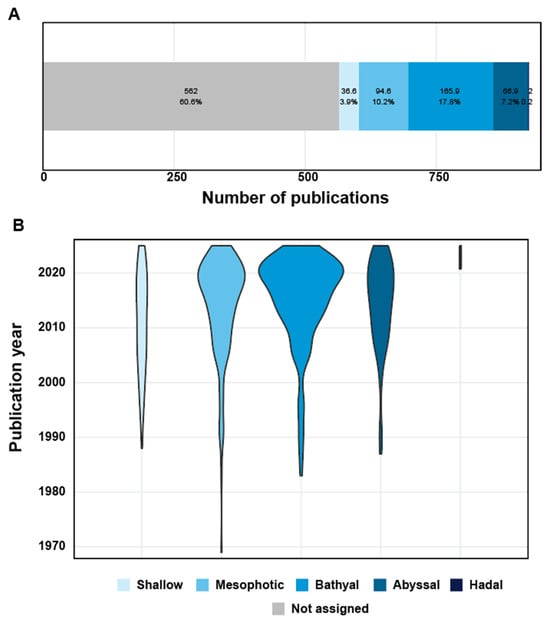
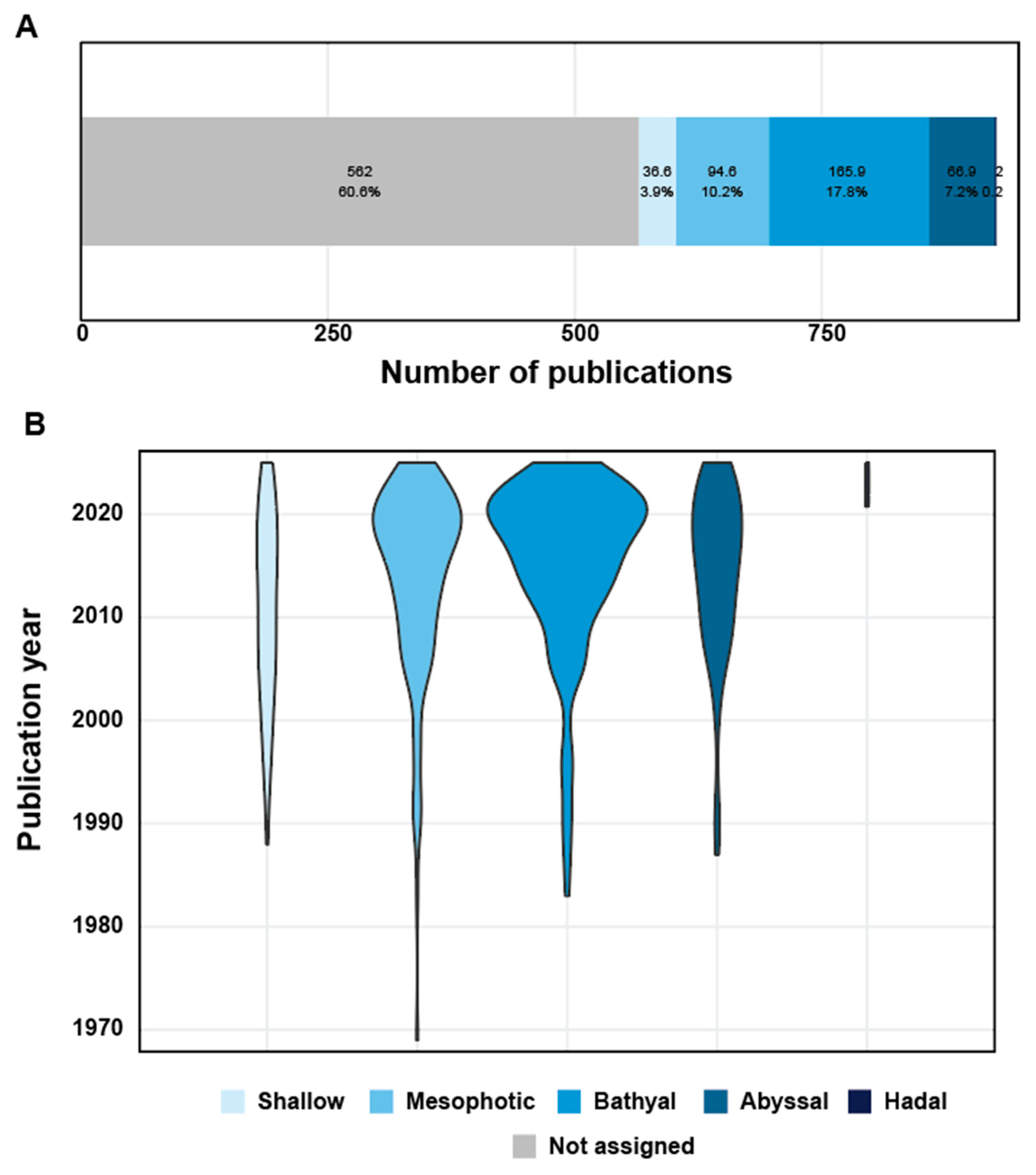
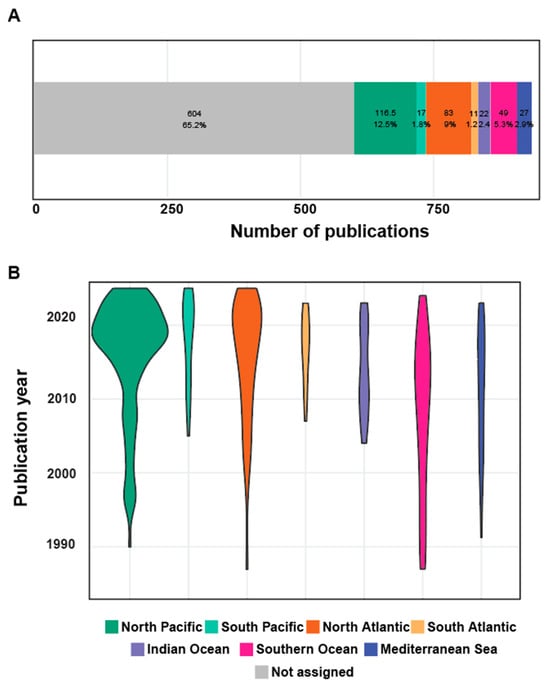
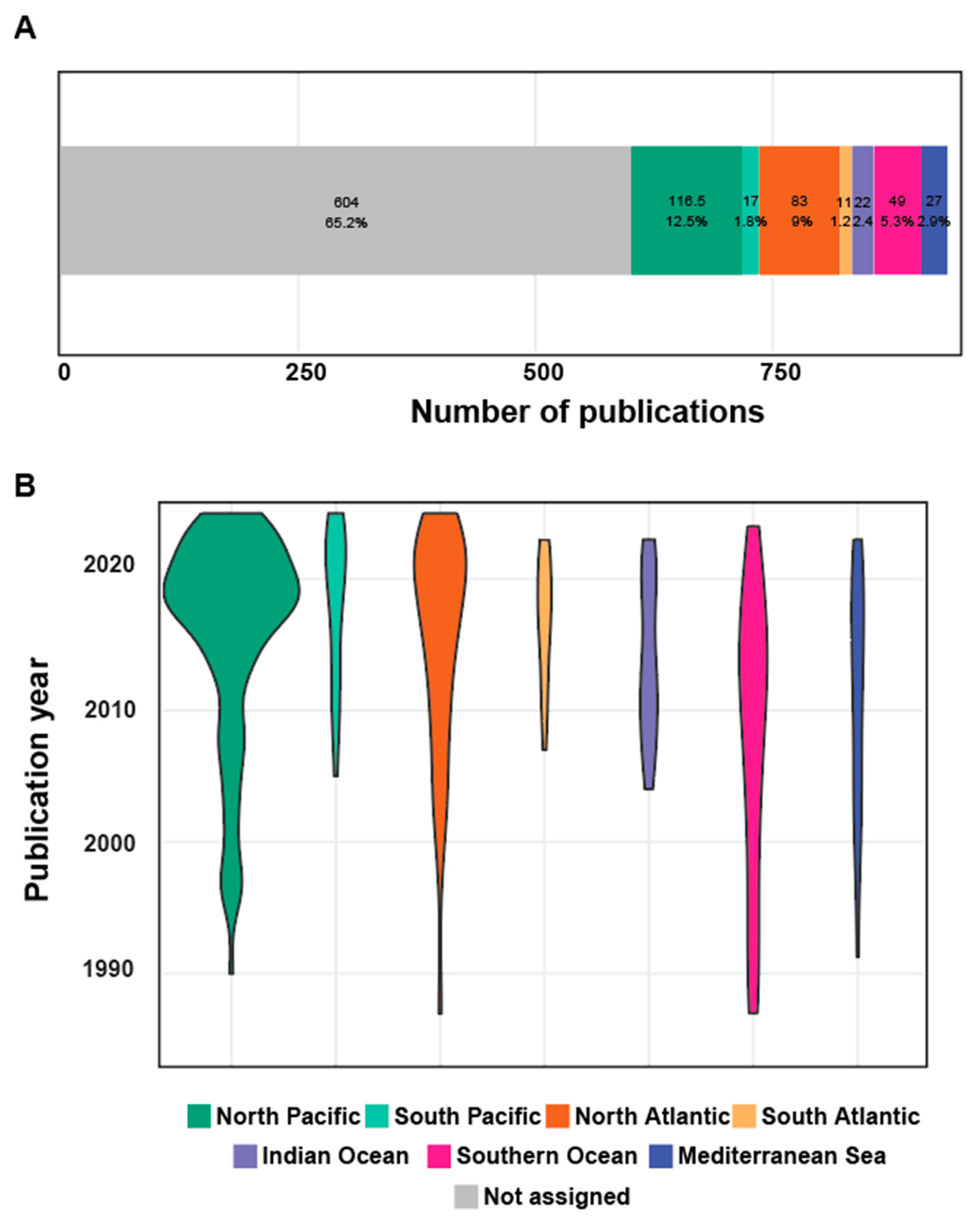
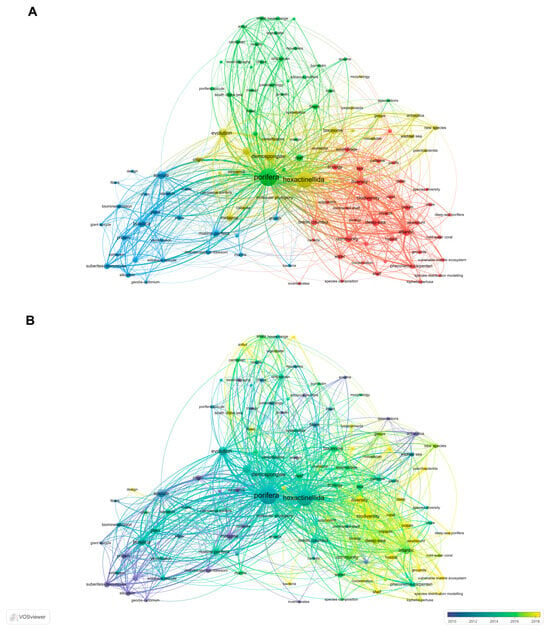
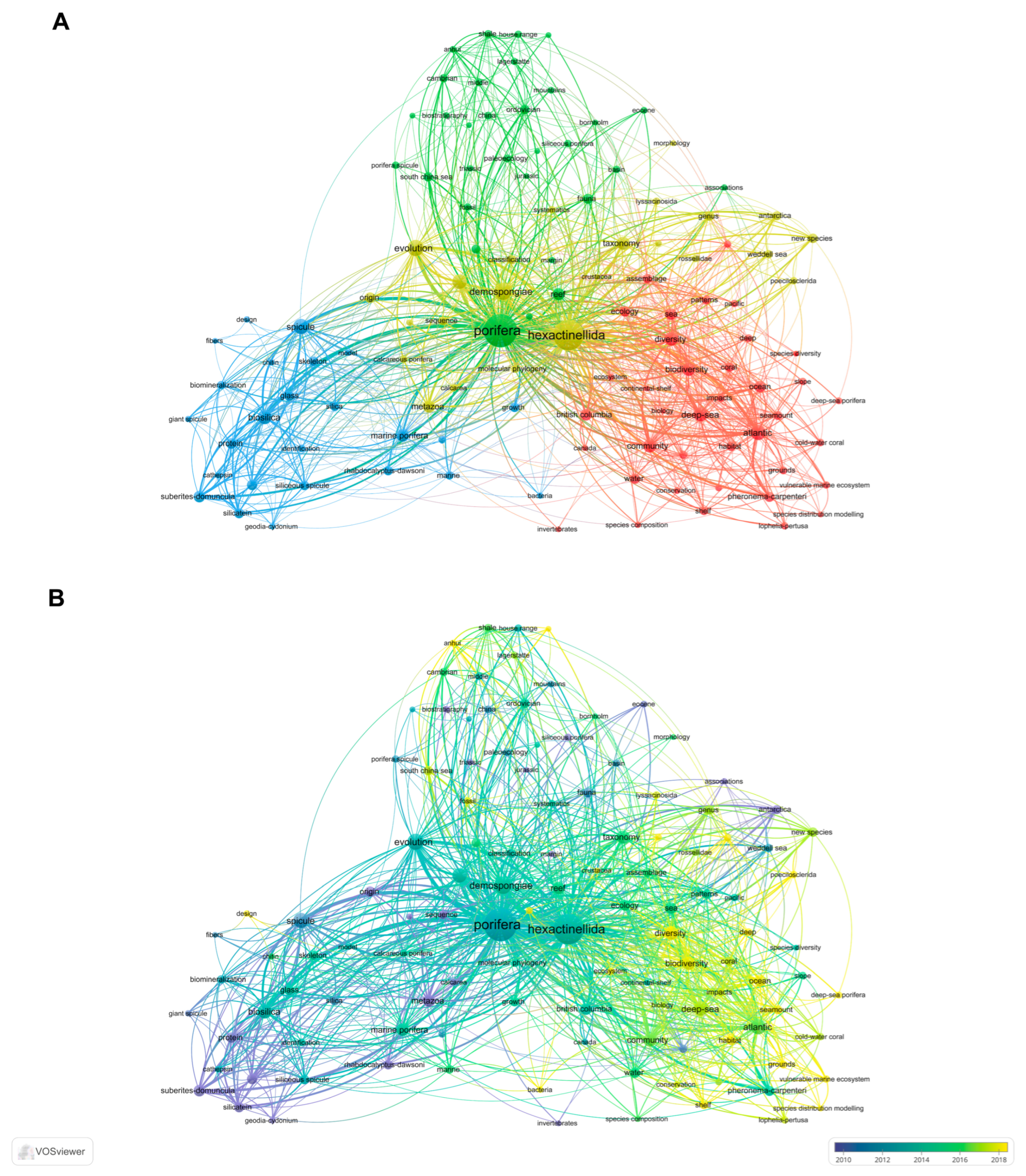
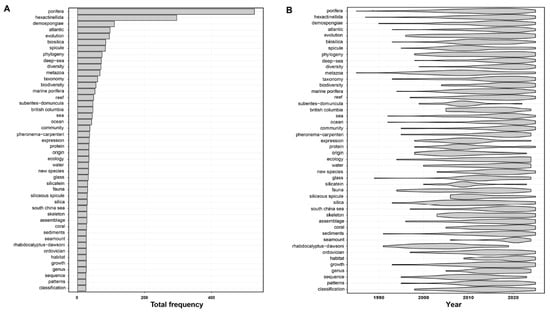
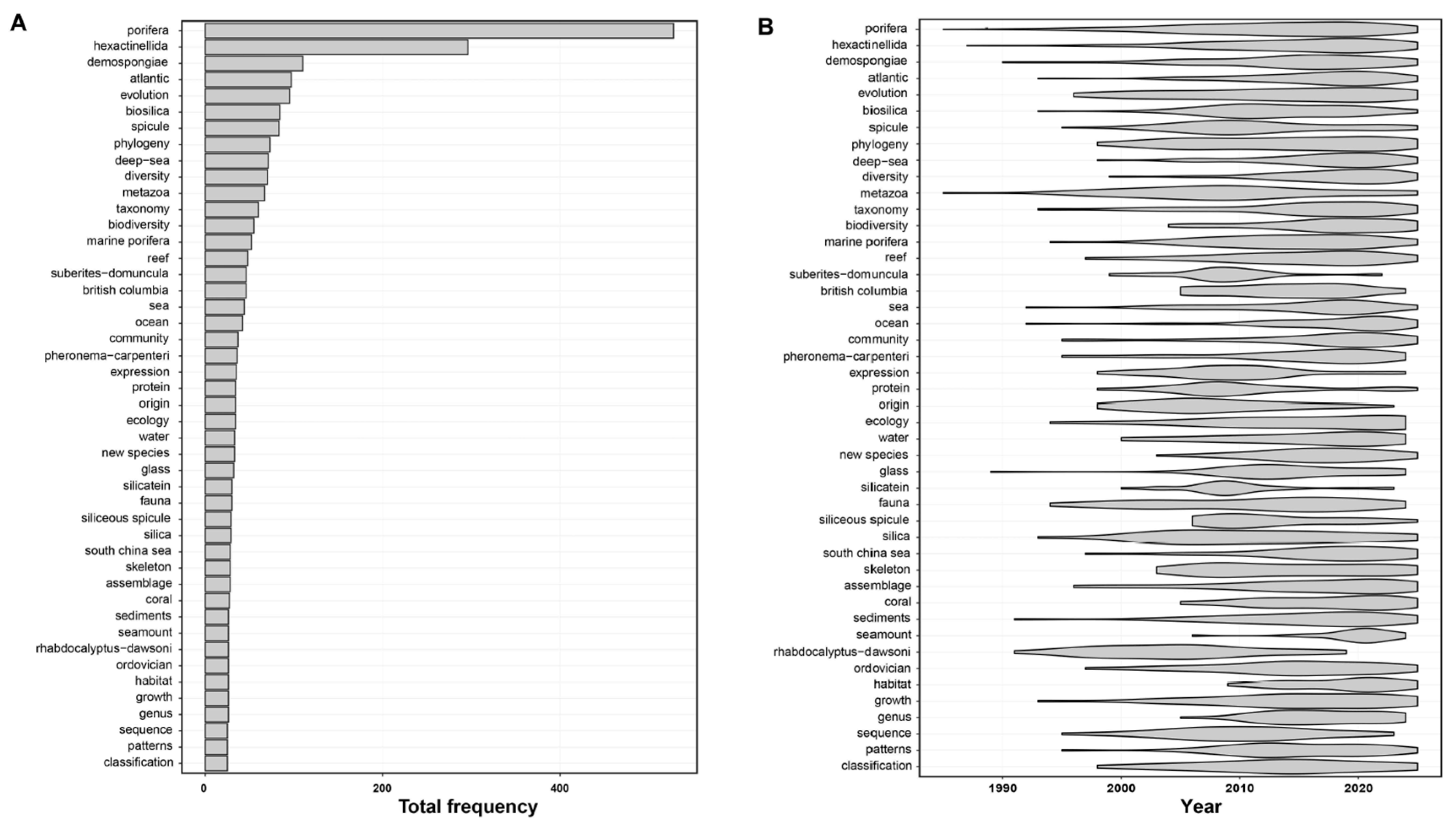
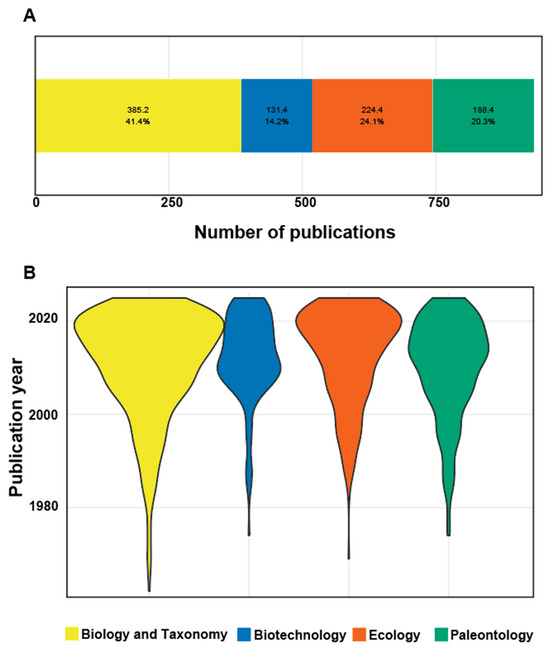
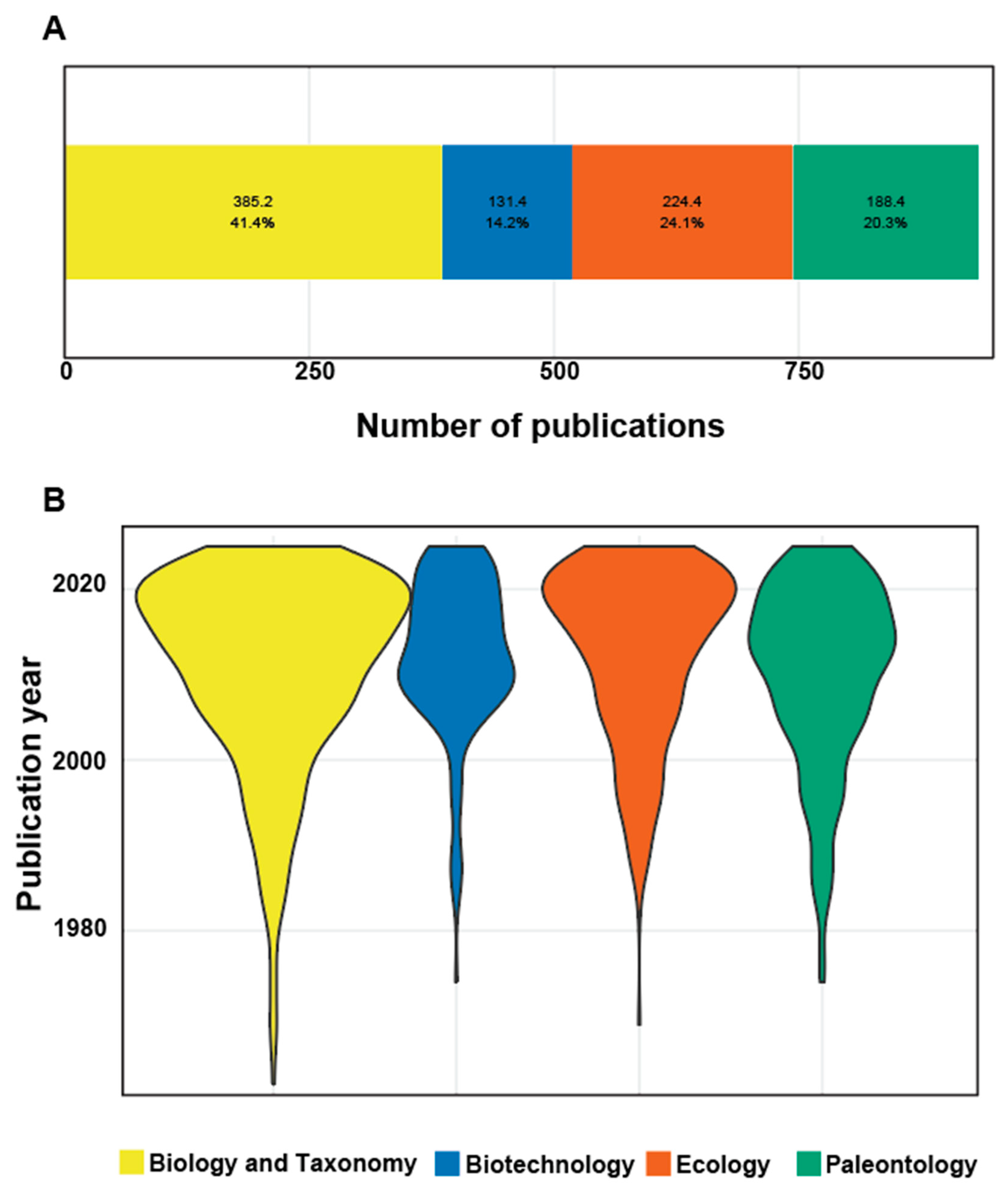

Disclaimer/Publisher’s Note: The statements, opinions and data contained in all publications are solely those of the individual author(s) and contributor(s) and not of MDPI and/or the editor(s). MDPI and/or the editor(s) disclaim responsibility for any injury to people or property resulting from any ideas, methods, instructions or products referred to in the content. |
© 2026 by the authors. Licensee MDPI, Basel, Switzerland. This article is an open access article distributed under the terms and conditions of the Creative Commons Attribution (CC BY) license.