



Prosthesis, Volume 8, Issue 2 (February 2026) – 9 articles
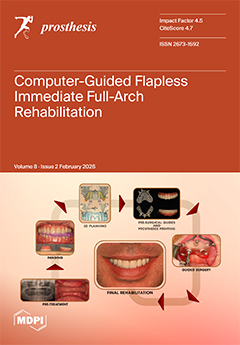
Cover Story (view full-size image):
Full-arch rehabilitations in immediate function have redefined the treatment approach for complete edentulism. Computer-guided flapless surgery allowed a less invasive procedure and a more comfortable post-operative period for the patient. This retrospective study reported the 12-year clinical and 10-year radiographic outcomes of computer-guided flapless implant placement following the All-on-4 concept in 111 patients. Good long-term outcomes were registered for prostheses and implants, demonstrating long-term predictability, while dealing with a high rate of mechanical complications in a sample with a high prevalence of patients with heavy bruxing habits and systemic conditions. These findings support the digitally planned minimally invasive surgery protocol that served as the precursor for navigated surgery, as a reliable solution for complex full-arch rehabilitation. View this paper
- Issues are regarded as officially published after their release is announced to the table of contents alert mailing list.
- You may sign up for e-mail alerts to receive table of contents of newly released issues.
- PDF is the official format for papers published in both, html and pdf forms. To view the papers in pdf format, click on the "PDF Full-text" link, and use the free Adobe Reader to open them.
Previous Issue
Next Issue
