


Highlights
What are the main findings?
- Quantum uncertainty and wavefunction collapse are described within a phenomenological thermodynamic framework as emerging from recursive entropy dynamics rather than fundamental randomness.
- The framework predicts that quantum localization occurs continuously over a finite, nonzero timescale rather than through instantaneous state projection.
What are the implications of the main findings?
- Recursive localization introduces experimentally testable signatures that may distinguish the proposed mechanism from instantaneous state projection.
- By linking recursive entropy organization with quantum measurement, the framework offers a new perspective on quantum foundations and provides a roadmap for future theoretical and experimental investigation.
Abstract
Quantum uncertainty and wavefunction collapse remain among the most conceptually unresolved aspects of microscopic physics. Here, we investigate whether uncertainty and collapse-like electron localization may admit a complementary thermodynamic interpretation through recursive entropy-field dynamics. The electron is modeled as a dynamically evolving entropy field geometry composed of structural, electromagnetic, and thermal entropy components maintained through continuous recursive interaction with the surrounding vacuum entropy field. Within this framework, uncertainty emerges from incomplete temporal accessibility to rapidly evolving recursive electron configurations occurring beneath experimentally accessible timescales. Repeated recursive phase sampling naturally produces probabilistic measurement statistics and approximately Gaussian localization statistics. Electron–photon interaction is further modeled through phase-matched recursive entropy coupling, where repeated entropy transfer progressively reorganizes the electron entropy geometry toward localization. Numerical simulations reproduce finite-width Dirac-delta-like localization behavior, localization saturation after a finite number of recursive cycles, and intrinsically nonzero collapse timescales, with a lower bound of approximately 3.2 × 10⁻²⁰ s for an electron at rest under ideal recursive coupling. These results suggest that wavefunction collapse may emerge as a finite recursive thermodynamic localization process rather than an instantaneous state projection. The framework further provides a qualitative thermodynamic interpretation that relates normalized recursive accessibility to Born probability, discusses recursive entropy evolution as a possible physical basis for intrinsic quantum timescales, and outlines how Bell-type correlations may emerge within an extended recursive entropy framework. Together, these results establish a phenomenological foundation for exploring recursive entropy dynamics underlying quantum uncertainty and localization while identifying model-dependent predictions that may provide targets for future experimental investigation.
1. Introduction
Quantum mechanics stands as one of the most successful scientific theories ever developed, providing remarkably accurate descriptions of atomic structure, spectroscopy, chemical bonding, condensed matter phenomena, and an extensive range of microscopic physical processes. Its predictive framework has been confirmed with extraordinary precision across countless experiments and has become an indispensable foundation of modern physics. Yet, despite this unparalleled empirical success, the physical origin of quantum uncertainty and the mechanism by which a distributed quantum state gives rise to a single localized measurement outcome remain among the most enduring conceptual questions in contemporary science. Within the conventional formalism, uncertainty is quantified through operator relations. At the same time, the emergence of a definite measurement outcome is described by probabilistic postulates that accurately reproduce experimental statistics while leaving the underlying microscopic physical mechanism governing individual measurement events unspecified. Consequently, although the mathematical formalism of quantum mechanics is exceptionally well established, understanding the physical processes that originate quantum uncertainty and localization continues to motivate active investigation across quantum foundations, quantum information science, and quantum thermodynamics [1].
Over the past several decades, substantial progress has been made toward understanding quantum measurement from multiple complementary perspectives. Decoherence theory has demonstrated that interactions between a quantum system and its surrounding environment rapidly suppress observable quantum interference, providing a compelling explanation for the emergence of effective classical behavior without requiring modifications to the Schrödinger equation [2]. In parallel, objective-collapse models introduce additional stochastic dynamical processes that produce genuine wavefunction localization, yielding experimentally testable deviations from conventional quantum theory while preserving agreement with established quantum phenomena over currently accessible scales [3]. More recently, advances in quantum information theory and open quantum systems have further clarified the roles of entanglement, environmental interactions, and information exchange in the measurement process, significantly enriching our understanding of the quantum-to-classical transition [4,5]. Collectively, these approaches have substantially advanced the physical interpretation of quantum measurement, yet they also illustrate that the microscopic origin of individual measurement outcomes remains an active area of theoretical investigation, motivating continued exploration of complementary physical frameworks.
Beyond the physical mechanisms proposed for quantum measurement, two foundational principles continue to place essential constraints on any attempt to develop a deeper microscopic description of quantum phenomena. The first is the Born rule, which establishes the probabilistic relationship between the quantum wavefunction and experimentally observed measurement outcomes, forming one of the central postulates of quantum mechanics [6]. Although its predictive accuracy has been confirmed across an extraordinary range of experiments, the question of whether these probabilities should be regarded as fundamental or interpreted within broader foundational frameworks remains an active topic of investigation across quantum foundations [7]. The second is Bell’s theorem, together with decades of increasingly sophisticated experimental tests, which demonstrate that no theory that is simultaneously local and based on predetermined hidden variables can reproduce all quantum correlations predicted by quantum mechanics [8,9]. Consequently, any proposed microscopic framework seeking to interpret quantum uncertainty or measurement must not only account for observed probabilistic behavior but also remain consistent with the experimentally established constraints imposed by Bell nonlocality. These considerations therefore serve not as obstacles to new theoretical developments but as essential benchmarks against which any deeper physical interpretation must ultimately be evaluated. Accordingly, contemporary developments in quantum foundations increasingly seek not only mathematically consistent descriptions of quantum behavior, but also physically motivated frameworks that explain how probabilistic measurement outcomes emerge while remaining fully consistent with experimentally established quantum phenomena.
In parallel with these developments, growing interest has emerged in exploring quantum phenomena through the broader perspectives of thermodynamics, statistical physics, and information theory. Advances in quantum thermodynamics have demonstrated that entropy, information flow, environmental coupling, and nonequilibrium dynamics play fundamental roles in describing the evolution of microscopic physical systems, suggesting that quantum measurement may also possess an underlying thermodynamic structure extending beyond its conventional probabilistic formulation [10,11,12]. Rather than viewing thermodynamics solely as a macroscopic consequence of quantum mechanics, these developments raise the intriguing possibility that microscopic entropy organization, recursive correlations, and system–environment interactions may themselves contribute to the emergence of observable quantum behavior. Such perspectives do not seek to replace the predictive formalism of quantum mechanics, which remains extraordinarily successful, but instead explore whether familiar quantum phenomena may admit complementary physical interpretations grounded in the dynamical organization and transport of entropy across multiple scales. Within this broader scientific context, investigating thermodynamic mechanisms underlying quantum uncertainty and localization represents a natural extension of ongoing efforts that explore the physical foundations of quantum measurement.
Motivated by these developments, the present work investigates whether quantum uncertainty and wavefunction localization may admit a complementary thermodynamic interpretation based on recursive entropy-field dynamics. Building upon the recursive entropy framework —S-Theory—introduced previously by Solomon (2026) [13], we develop a phenomenological model in which the electron is described as a dynamically evolving entropy field undergoing continuous recursive organization through interactions with an ambient vacuum entropy reservoir. In this model, quantum uncertainty is interpreted not as intrinsic indeterminism, but as the observable consequence of unresolved recursive entropy dynamics occurring on timescales substantially shorter than conventional measurements can resolve. Similarly, wavefunction localization is interpreted as a finite thermodynamic process arising from recursive entropy redistribution during electron–photon interactions, rather than as an instantaneous postulate. The objective of the present study is therefore not to replace the mathematical formalism of quantum mechanics, but to investigate whether a recursive thermodynamic description can provide a physically meaningful phenomenological interpretation of quantum uncertainty and localization while remaining consistent with the established experimental foundations of quantum theory.
Specifically, this work investigates three fundamental questions. First, can recursive entropy-field dynamics provide a physically meaningful phenomenological interpretation of quantum uncertainty through unresolved microscopic recursive organization? Second, can wavefunction localization be interpreted as a finite thermodynamic process arising from recursive entropy redistribution during electron–photon interactions? Third, does the proposed framework generate experimentally testable predictions capable of distinguishing finite thermodynamic localization from the effectively instantaneous collapse assumed in conventional quantum mechanics? By addressing these questions, the present study aims to establish a coherent thermodynamic interpretation of quantum uncertainty and localization while providing a foundation for future investigations into the microscopic origins of quantum probability, recursive field dynamics, and their relationship to the broader framework of quantum foundations. The detailed physical formulation of the recursive entropy-field model, including its description of entropy exchange between the electron and its surrounding vacuum environment, is developed in the following section.
2. The Recursive Electron as a Dynamic Entropy Field
In the present framework, the electron is modeled as a dynamically evolving entropy field rather than a permanently localized point object. This description is motivated by the experimentally established wave–particle behavior of the electron and by longstanding efforts to interpret microscopic particles through underlying dynamical structure [14,15]. In our previous work, we introduced a complementary thermodynamic framework—S-Theory—in which entropy is treated not merely as a statistical quantity but as a structured field capable of organizing the electron entropy field through correlation and recursive evolution. Within this formulation, the electron was modeled as an entropy field (S-field) composed of three interacting components: a localized core entropy (), a structured electromagnetic entropy field (), and a residual thermal entropy field (), all embedded within a surrounding vacuum entropy background (), given by
Here, denotes the extremely highly correlated entropy associated with electron localization and structural persistence. governs strongly correlated entropy that extends the electromagnetic accessibility of the electron. reflects residual, fluctuating, less-correlated entropy coupled to the surrounding thermal and vacuum environment. The detailed physical construction and entropy-field geometry of these coupled components were developed previously, and only the aspects relevant to recursive measurement dynamics are summarized here.
2.1. Generalized Entropy and the Electron Entropy Field
Unlike classical thermodynamic entropy, which quantifies the multiplicity of microscopic configurations associated with a macroscopic thermodynamic state, the generalized entropy employed in S-Theory extends the concept to describe the local configurational organization of an underlying entropy substrate. The term “entropy substrate” is used phenomenologically to denote the underlying ensemble of local entropic configurational elements introduced in S-Theory. In conventional statistical mechanics, the entropy of a system is expressed through the Boltzmann relation,
where counts the number of microscopic configurations compatible with a specified macroscopic state. Entropy, conventionally, therefore represents a scalar measure of the configurational freedom of an entire thermodynamic system. S-Theory proposes that the observable electron is assumed to arise from an underlying distribution of elemental entropic configurations (called ‘entropic quanta’) whose microscopic degrees of freedom collectively define the electron’s macroscopic entropy state. These elemental entropy configurations are introduced as conceptual counting elements used to describe local configurational freedom and correlation within the proposed entropy field. They should not be interpreted as elementary particles or fundamental field quanta, but rather as the microscopic entities whose configurations are counted in the generalized entropy description [13]. Rather than assigning a single entropy value to the entirety of the electron, S-Theory considers the local entropy associated with a tiny control volume surrounding each position . Analogous to Boltzmann’s statistical interpretation, the local entropy is determined by counting the number of admissible microscopic configurations of the underlying entropic elements within that local region, subject to their correlation structure and local geometry. The spatial distribution of these local entropy values therefore defines a generalized entropy field, or S-field, describing the internal organization of the electron [13].
A central postulate of S-Theory is that the physical manifestation of this entropy field depends not only on the number of accessible microscopic configurations, but also on the degree of correlation among the underlying entropic elements. Weakly correlated configurations contribute to thermal entropy, , representing fluctuating background organization. More strongly correlated configurations give rise to the structured electromagnetic entropy field, , while maximally correlated configurations form the localized entropy core, , associated with persistent mass localization. The entropy field was represented through a normalized entropy density,
where denotes a characteristic maximum entropy scale of the local system, allowing entropy-field interactions to be modeled independently of dimensional scaling. Thus, within the present framework, the observable electron is represented by three coupled entropy-field components indicated in Equation (1), whose spatial distributions collectively define the electron entropy field. The electron entropy field is further assumed to exist within a surrounding vacuum entropy environment, . Unlike the three entropy-field components shown in Equation (1), is not treated as a static constituent of the electron itself. Rather, it represents the surrounding entropy reservoir with which the electron continually exchanges entropy through recursive interaction. Consequently, the electron should not be interpreted as a static entropy distribution, but as a dynamically maintained entropy field whose internal organization continually evolves through recursive interaction with the surrounding vacuum entropy environment, and the recursive evolution is modeled through the normalized nonlinear recursive fractal relation,
where represents the instantaneous local entropy density field configuration, the subsequent recursive state, and an external entropy contribution.
2.2. Physical Interpretation and Phenomenological Motivation of the Recursive Evolution
The recursive evolution introduced in Equation (3) should not be interpreted as an abstract mathematical iteration, but rather as a phenomenological description of the continual thermodynamic updating of the electron entropy field. Therefore, the quadratic recursion is not claimed to be a unique or necessary evolution law for S-Theory. Alternative nonlinear recursive forms may also support entropy-driven organization, and determining which functional forms are physically admissible or equivalent requires further theoretical investigation. Here, each recursive step begins when an existing entropy-field configuration interacts with newly accessible entropy from the surrounding environment, . During this interaction, the current recursive state first undergoes nonlinear self-organization through the pointwise quadratic update, increasing the correlations among the local entropy-field elements and producing a highly organized configuration. The newly accessible entropy is then incorporated, allowing the system to establish a new recursively organized entropy-field configuration corresponding to the updated state . Once this new equilibrium is established, it becomes the initial state for the subsequent recursive cycle. The recursive evolution therefore represents a sequence of evolving thermodynamic states governed by successive entropy organization and environmental entropy exchange, rather than repeated application of a purely mathematical map.
Physically, the recursive update represents a process of entropy organization rather than simple entropy addition. The source term should not be interpreted as a scalar quantity that is linearly added to the existing entropy field. Instead, it represents the surrounding entropy available to participate in the recursive interaction. During each recursive cycle, this surrounding entropy enables redistribution and reorganization of the existing entropy correlations within the electron. Consequently, the updated field represents a newly organized entropy configuration arising from the combined effects of the previous entropy organization and its interaction with the added surrounding entropy environment.
In S-Theory, recursive organization is inherently cooperative and therefore nonlinear. As entropy correlations develop, the existing organization influences subsequent organization, allowing localized entropy structures to reinforce or relax through successive recursive cycles. A purely linear update cannot adequately represent such cooperative assembly because the evolution depends upon the current state of correlation itself. Since each recursive update depends upon the organization established during the preceding update, the evolution is state-dependent. Such state dependence naturally leads to cooperative nonlinear evolution rather than purely additive dynamics. Among the family of nonlinear recursive maps that could be considered, the quadratic recursion adopted in the present work represents the simplest phenomenological evolution law capable of describing recursive self-amplification while remaining computationally tractable. Similar quadratic recursive maps have long served as canonical models in nonlinear dynamics, demonstrating how repeated application of simple local update rules can generate hierarchical organization, self-similar structures, and rich emergent behavior [16,17,18].
The recursive evolution may therefore be interpreted as a constrained thermodynamic ascent toward entropy with progressively more organized configurations permitted by the surrounding entropy environment. Existing entropy correlations determine the organization already present within the electron, while the surrounding entropy field provides the configurational freedom available for further organization. Each recursive update therefore represents a transition toward a new metastable entropy configuration, which subsequently serves as the initial condition for the next recursive cycle. When additional recursive organization is no longer supported by the surrounding entropy environment, the entropy field naturally relaxes through the reverse recursive evolution introduced in Section 2.4, returning toward a broader, less correlated entropy configuration while maintaining dynamic thermodynamic equilibrium with its surroundings. Accordingly, the recursive evolution equation should be interpreted as a phenomenological thermodynamic evolution law describing continual entropy organization, relaxation, and state-to-state inheritance within the electron entropy field.
2.3. Hierarchical Description of Physical Reality in S-Theory
One of the central motivations of S-Theory [13] is to establish a consistent physical hierarchy linking microscopic recursive dynamics, quantum mechanics, and continuum physics within a single thermodynamic framework. The present work proposes that these three descriptions do not represent competing theories but rather successive levels of approximation describing the same underlying physical reality. At the most fundamental level, physical reality is proposed to consist of a recursively evolving entropy field. Rather than treating particles, wavefunctions, or space-time as primary entities, S-Theory assumes that localized entropy continuously evolves through discrete recursive updates following the cycle via Equation (3). In Equation (3), each recursive state represents a dynamically maintained maximum-entropy equilibrium corresponding to the entropy accessible under the prevailing environmental conditions. During the recursive update, the existing entropy field (Sn) is progressively organized first, producing a transient state of increased correlation and reduced spatial extent. This ‘compressed’ manifestation is denoted . It should not be interpreted as a separate recursive equilibrium but rather as the intermediate physical configuration of the Sn state through which the system passes while reorganizing toward the next maximum-entropy recursive state that incorporates the ambient entropy field Sc. As the surrounding entropy contribution is incorporated, the updated configuration reaches a new dynamically maintained maximum-entropy equilibrium under the expanded entropy environment. Conversely, if the external entropy contribution is removed, reverse recursion relaxes the compressed geometry back toward the preceding expanded equilibrium, completing the reversible cycle. The existence of a recursive and reversible dynamic equilibrium within the sub-quantum layer represents the fundamental ontology of the S-Theory, where physical evolution occurs through local recursive interactions and entropy exchange with the surrounding vacuum field.
The hierarchy proposed here should therefore be regarded as phenomenological rather than as a completed mathematical derivation between scales. In particular, the present formulation does not derive the Schrödinger equation from the recursive entropy dynamics. Standard quantum mechanics remains the established effective description at the quantum scale, and demonstrating that an appropriate coarse-grained limit of the recursive dynamics reproduces or remains consistent with Schrödinger evolution is an important requirement for further development of S-Theory. Accordingly, the present work is restricted to examining whether the proposed recursive thermodynamic model can phenomenologically reproduce selected localization characteristics, rather than claiming a general reconstruction of quantum dynamics.
Because these recursive updates occur on extremely short timescales and entropy transfer strongly depends on recursive phase compatibility, individual recursive events remain inaccessible to direct experimental observation. Measurements therefore cannot directly resolve the underlying recursive evolution. Instead, observations sample an accessibility envelope generated by many unresolved recursive states. Within this interpretation, the probabilistic formalism of quantum mechanics, including the wavefunction and Born probability, represents an effective statistical description of unresolved recursive dynamics rather than the fundamental physical reality itself. Localization corresponds to the recursive concentration of entropy toward the state. In this regime, the entropy field manifests as localized matter, giving rise to the observable particle-like properties of electrons, including position, momentum, kinetic energy, and potential energy. Wave–particle duality therefore reflects different manifestations of the same recursively evolving entropy field under different observational constraints rather than two fundamentally distinct physical entities.
At macroscopic scales, where enormous numbers of recursive systems interact simultaneously, the probabilistic quantum description naturally gives rise to continuum field theories. Differential and integral formulations, continuum thermodynamics, electromagnetism, and relativistic space-time descriptions emerge as coarse-grained approximations obtained by averaging many underlying recursive entropy interactions. Consequently, continuum field equations are interpreted as effective macroscopic descriptions rather than the fundamental laws governing physical reality. Within this hierarchical framework, S-Theory does not seek to replace quantum mechanics or relativity. Instead, it proposes a deeper thermodynamic ontology from which both theories emerge as successful effective descriptions operating at different observational scales.
2.4. Recursive Amplification of S-Field (RAS) of the Electron with Vacuum Entropy Field
For the stationary electron in vacuum considered here, the external recursive forcing term is identified with the surrounding vacuum entropy field,
Within this interpretation, recursion represents a continual process of entropy correlation and de-correlation through which the weak but spatially extended vacuum entropy field continuously drives reorganization among the electron entropy components. Through sustained recursive forcing by , entropy dynamically shifts between less-correlated thermal states (), coherent electromagnetic organization (), and localized structural persistence (). Regions of weakly correlated entropy associated with may progressively organize into a more coherent electromagnetic structure (), while stronger recursive correlation promotes localized structural persistence through . Because the stationary electron is assumed to exist in dynamic thermodynamic equilibrium with the surrounding vacuum entropy field, recursive localization must also permit relaxation. Otherwise, recursive amplification alone would progressively drive the electron toward permanent localization even in apparent rest.
In the idealized reversible limit, entropy relaxation may be represented through an approximate inverse recursive evolution,
allowing the electron entropy geometry to relax toward a more expanded, less correlated configuration. Under this interpretation, the resting electron in a vacuum is maintained through continual recursive cycling between entropy correlation and relaxation rather than static equilibrium. Electron persistence, therefore, emerges not from static permanence but from sustained recursive maintenance through continuous entropy exchange with the surrounding vacuum environment. Consequently, under sustained interaction with the surrounding vacuum entropy environment, the stationary electron is interpreted as a dynamically maintained recursive equilibrium rather than a permanently fixed localized object. Even in apparent rest, weak but continuous interaction with induces an ongoing recursive reorganization of the electron entropy geometry. Note that Equation (5) is understood in the complex domain of the entropy field, with the physically relevant square-root branch selected consistently with the recursive trajectory.
Figure 1 illustrates the representative recursive entropy-field geometry of the electron developed, including the coupled , , and distributions, with the field. Figure 2 represents the cross-sectional entropy profiles. Because recursive organization and relaxation occur continuously, the electron is proposed to cycle between comparatively expanded and compressed entropy states, producing alternating regimes of enhanced electromagnetic accessibility and localization. This recursive pulsing behavior establishes the baseline entropy state of the electron in vacuum and provides the physical foundation for uncertainty and localization dynamics developed in subsequent sections.
Figure 1.
Resting electron in vacuum as a recursive entropy cycle with the Compton period as a natural time scale.
Figure 2.
Cross-sectional entropy profiles demonstrating how entropy densities progressively converge during recursive compression.
2.5. Recursive Amplification of S-Field (RAS) Cycle Limits, Accessibility Fields and Compton Frequency
The recursive entropy dynamics naturally define two limiting configurations of the electron entropy field corresponding to expanded and compressed recursive states, as indicated in Figure 1 and Figure 2. In the expanded configuration (), the electron exhibits a broader entropy geometry dominated by extended and distributions, producing enhanced spatial accessibility and wave-like manifestation. By contrast, recursive compression drives increasing entropy correlation toward the localized structural component (), yielding a more compact configuration () associated with enhanced localization and particle-like accessibility. Importantly, these states are not interpreted as distinct physical entities, but rather as complementary phases of the same recursively evolving electron system. Under sustained interaction with the surrounding vacuum entropy environment, the electron is therefore proposed to undergo a continual recursive cycle of entropy expansion and compression,
as illustrated schematically in Figure 1 and Figure 2. Within this interpretation, wave-like and particle-like manifestations emerge as complementary accessibility states of a continuously evolving entropy geometry rather than mutually exclusive behaviors of a static point particle. The recursive entropy cycle further suggests the existence of an intrinsic dynamical timescale associated with the stationary electron. In conventional quantum theory, the electron possesses a characteristic Compton frequency,
corresponding to a period,
This timescale is interpreted as the characteristic period of one complete recursive entropy cycle of the electron in equilibrium with the surrounding vacuum entropy field. Under this interpretation, the apparent stationary electron represents a rapidly evolving recursive system whose internal entropy geometry continuously reorganizes over timescales inaccessible to conventional detectors. This intrinsic recursive period becomes particularly important in the context of measurement, as it provides the characteristic timescale governing recursive phase sampling, electron–photon interaction, and finite localization dynamics developed in subsequent sections.
In summary, if the electron continuously evolves through rapidly changing recursive entropy configurations, then any finite-duration measurement samples only a limited subset of its accessible entropy geometry. Under such conditions, uncertainty may emerge naturally from incomplete temporal sampling of the evolving recursive state rather than from intrinsic indeterminacy alone. In this view, the experimentally observed probabilistic behavior of the electron reflects unresolved recursive phase sampling beneath accessible measurement timescales. This interpretation motivates the thermodynamic treatment of quantum uncertainty developed in Section 3.
2.6. Recursive Cycle as Internal Clocks—Connection to Lorentz Invariance
Time occupies a fundamental role in both quantum mechanics and relativity, yet neither theory specifies the microscopic physical process that constitutes the ticking of a clock. In special relativity, time is defined operationally through physical clocks, and different inertial observers compare the rates of these clocks according to the Lorentz transformations. Every observer measures the passage of their own proper time normally, while differences in clock rates become apparent only when clocks belonging to different inertial frames are compared. Relativity therefore provides a precise description of how time is measured and compared between observers. However, it does not specify the microscopic origin of the physical processes that generate these clock ticks.
Within the broader S-Theory framework, time is interpreted differently [13]. Rather than treating time as a fundamental background parameter, it is interpreted through the recursive transition between entropy states, represented by the Smax → Smin → Smax cycle. Other exploratory extensions of S-Theory applications toward biological systems and a broader unified framework have also used this interpretation [19,20]. Therefore, every physical system continuously evolves through successive recursive cycles or ‘ticks’, and the completion of one recursive cycle defines one intrinsic clock tick for that system. In this view, the passage of proper time is simply the counting of successive recursive entropy cycles. Time is therefore not an independent physical entity but an emergent quantity arising from the continual recursive evolution of entropy fields.
For the stationary electron, the present work adopts the Compton period
as the natural characteristic timescale of one complete recursive entropy cycle. S-Theory proposes that the characteristic Compton timescale represents the recursive equilibrium cycle of the electron interacting continuously with the surrounding vacuum entropy field. When an electron absorbs energy and momentum, such as through an electron–photon interaction, the recursive equilibrium is proposed to reorganize into a new moving state through entropy transfer. Although the recursive interaction domain with the surrounding vacuum entropy field is altered with a different ‘tick’, the electron continues to measure its own evolution through successive recursive cycles. Consequently, the electron does not experience its own clock as running slower, since each completed recursive cycle still represents one intrinsic clock tick. Differences in clock rates arise only when the recursive clocks of different inertial systems are compared by an external observer, consistent with the operational principles of special relativity. Therefore, within this interpretation, S-Theory does not modify the experimentally verified predictions of Lorentz time dilation. Rather, it proposes a microscopic thermodynamic interpretation of the physical origin of proper time by identifying recursive entropy cycles of evolution as the process underlying the operation of physical clocks.
3. The Thermodynamic Origin of Quantum Uncertainty
Quantum uncertainty remains one of the most fundamental yet conceptually unresolved features of microscopic physics. In conventional quantum mechanics, repeated measurements of identically prepared electrons produce probabilistic outcomes governed by the uncertainty relation,
which limits simultaneous accessibility to position and momentum. Although the mathematical structure of quantum theory predicts measurement outcomes with extraordinary precision, the physical mechanism underlying why measurement outcomes appear probabilistic remains debated. If the electron exists as a continuously evolving recursive entropy field rather than a permanently localized object, then uncertainty may admit a complementary physical interpretation. Here, uncertainty is explored as a consequence of incomplete temporal access to rapidly evolving recursive entropy configurations occurring beneath experimentally accessible measurement timescales.
S-Theory proposes that a stationary electron evolves continuously through rapidly changing recursive entropy configurations governed by its intrinsic recursive timescale (). Because experimentally accessible measurements occur over finite durations that are substantially longer than the characteristic recursive cycle of the electron, any individual observation samples only a limited subset of the evolving entropy geometry. Consequently, repeated measurements need not interrogate identical instantaneous electron configurations, even under nominally identical preparation conditions. Instead, each measurement accesses a different recursive phase of the evolving electron entropy field, producing variation in measured observables across repeated trials. Under this interpretation, probabilistic measurement outcomes emerge naturally from unresolved recursive phase sampling occurring beneath experimentally accessible temporal resolution rather than from intrinsic randomness alone.
Because the electron entropy geometry evolves continuously during recursive expansion and compression, different recursive phases naturally provide different spatial accessibility to measurement. During expanded recursive states (), the electron entropy field exhibits broader and distributions, producing a comparatively extended region over which interaction with a detector or external perturbation may occur. By contrast, recursive compression toward progressively concentrates entropy density toward the localized structural component (), reducing the accessible spatial extent of measurement. Under this interpretation, measurement does not sample a fixed electron position, but rather an evolving accessibility geometry whose spatial distribution depends on the instantaneous recursive phase of the electron at the moment of interaction.
To represent this evolving measurement accessibility, a phase-dependent accessibility field is introduced in which the probability of localization depends on the instantaneous recursive geometry of the electron entropy field. Accessibility is modeled as a weighted contribution of the coupled electron entropy components,
where the recursive weighting function governs the degree of entropy expansion and compression throughout the recursive cycle, and controls the comparatively weak but extended contribution of the surrounding vacuum entropy field. Expanded recursive phases favor broader spatial accessibility, whereas compressed phases progressively restrict accessibility toward the localized entropy core. Figure 3 illustrates the limiting recursive accessibility geometries corresponding to expanded and compressed electron states. Under this interpretation, measurement samples a continuously evolving accessibility envelope rather than a permanently fixed spatial electron configuration.
Figure 3.
Phase-dependent accessible electron entropy geometry used for collapse sampling. (a) Expanded configuration showing broad collapse accessibility. (b) Compressed configuration showing enhanced localization near the electron core.
To examine the consequences of unresolved recursive phase sampling, repeated electron measurements were simulated through a Monte Carlo ensemble in which individual measurements sampled different recursive phases of the evolving electron entropy field. For each emitted electron, a recursive phase was assigned, producing a distinct instantaneous accessibility geometry from which localization was probabilistically sampled. Figure 4 illustrates the resulting ensemble of collapse locations superimposed on the evolving electron entropy field. Measurements occurring during expanded recursive states preferentially sample broader spatial regions, whereas measurements occurring during compressed recursive phases become increasingly concentrated near the localized entropy core. Although individual recursive electron trajectories remain deterministic within the present framework, repeated unresolved-phase sampling naturally introduces statistical variability in measured outcomes.
Figure 4.
Simulated collapse events superimposed on the total electron entropy field background.
Figure 5 shows the resulting positional distribution obtained from repeated recursive measurements. Remarkably, an approximately Gaussian measurement distribution emerges naturally without assuming probability as a fundamental property of the electron itself. Instead, probabilistic behavior appears as an emergent ensemble consequence of unresolved recursive entropy dynamics occurring beneath experimentally accessible timescales. Under this interpretation, the wavefunction may be viewed as a representation of recursively evolving measurement accessibility rather than a purely abstract probabilistic object.
Figure 5.
Resulting position distribution generated from repeated recursive measurements, showing the simulated distribution and Gaussian comparison.
Connection to the Born Rule and Unitary Evolution
In conventional quantum mechanics, the Born rule states that the probability density for observing a particle at position is given by the squared magnitude of the wavefunction, . Together with the unitary evolution governed by the Schrödinger equation, this postulate ensures that, although the spatial probability distribution evolves continuously in time, the total integrated probability remains normalized. Quantum mechanics therefore predicts how the observable probability distribution changes during evolution while conserving the total probability of finding the particle. In the entropy field model, the phase-dependent accessibility function plays an analogous, but physically distinct, role. At every instant of the recursive cycle, the electron possesses a unique accessibility geometry determined by its evolving entropy configuration. Expanded recursive phases produce broader accessibility envelopes, whereas recursive compression progressively concentrates accessibility toward the structural entropy core. Consequently, the accessibility field evolves continuously with recursive phase while preserving the total integrated accessibility available to measurement, providing a conserved normalization principle that is conceptually analogous to the conservation of total probability under unitary evolution.
The present work does not claim an exact derivation of the Born probability, , from the recursive entropy formalism. Instead, it proposes a thermodynamic interpretation in which the observed probability distribution emerges from repeated measurements of a rapidly evolving recursive accessibility field. Because experimentally accessible measurements cannot resolve the intrinsic recursive timescale of the electron, each measurement samples the evolving accessibility field at an effectively unresolved recursive phase. Individual measurements therefore probe different instantaneous accessibility geometries, while repeated measurements reconstruct the phase-independent accessibility envelope. Within this interpretation, the Born probability distribution is viewed as the observable statistical manifestation of an underlying recursively evolving accessibility field rather than as a fundamental postulate.
The Monte Carlo simulations presented in Figure 4 and Figure 5 are consistent with this interpretation. Figure 4 illustrates how localization events are distributed over the evolving accessibility field, whereas Figure 5 demonstrates that repeated recursive phase sampling naturally produces a stable Gaussian-like positional distribution despite the deterministic recursive evolution of each individual electron trajectory. Although these results do not constitute a derivation of the Born rule, they demonstrate that unresolved recursive accessibility dynamics can generate experimentally observable statistical behavior from an underlying deterministic recursive process.
The Gaussian-like localization observed here develops through the modeled recursive evolution, which progressively amplifies the more strongly localized region while weakening the outer regions of the distribution. Thus, the significance of the simulation lies not in Gaussianity alone, but in the recursive evolution through which spatial concentration develops. Gaussian profiles can also arise from stochastic averaging or central-limit behavior; consequently, the final Gaussian-like form should not be interpreted as a unique signature of the proposed mechanism. To assess sample-size dependence, an additional convergence analysis was performed using 500, 1000, 2000, 5000, and 10,000 simulated measurements under otherwise identical model conditions. As the sample size increased, statistical fluctuations in the sampled distribution decreased, and the localization width approached a stable value. In particular, the calculated width changed from approximately 1549 fm at 5000 measurements to 1553 fm at 10,000 measurements, a difference of less than 0.3%, while the distribution remained centered close to zero. The kurtosis similarly stabilized near 4, rather than the Gaussian value of 3, indicating that the converged distribution retains a sharper central peak than an exact Gaussian.
Finally, the recursive accessibility field determines the spatial domain within which localization is physically accessible, but it does not itself determine the final localization point. The final localized position is proposed to emerge during the collapse dynamics discussed in Section 4, where entropy transferred during the measurement interaction both drives recursive localization and contributes to the transport of the electron toward its final localized state. The accessibility field therefore determines where localization may occur, whereas the collapse dynamics determine where localization ultimately occurs within that accessible domain.
Because the present interpretation assumes that experimentally accessible measurements average over unresolved recursive electron dynamics, agreement with the Born probability is expected whenever the intrinsic recursive timescale remains substantially shorter than the temporal resolution. Under these conditions, repeated measurements effectively sample the full range of recursive phases and reconstruct the phase-independent accessibility envelope, recovering the familiar statistical behavior predicted by conventional quantum mechanics. Conversely, if future experiments were capable of probing timescales approaching the intrinsic recursive cycle of the electron, phase averaging may become incomplete; the present framework predicts that the assumptions underlying phase averaging would begin to break down, potentially leading to measurable departures from the Born probability distribution. The present work does not attempt to quantify such deviations, and establishing their mathematical form and experimental observability remains an important objective for future development of the recursive entropy formalism. If probabilistic accessibility arises from recursive electron evolution, then localization during measurement requires a physical interaction capable of reorganizing the evolving entropy geometry. The following section, therefore, investigates electron–photon coupling as a candidate mechanism for finite recursive localization.
4. Electron–Photon Coupling and Recursive Localization
If quantum uncertainty reflects incomplete temporal accessibility to a continuously evolving recursive electron entropy geometry, then localization during measurement requires a physical interaction capable of reorganizing the accessible entropy field. In conventional quantum mechanics, localization is introduced through measurement postulates or interaction with an external apparatus, yet the microscopic mechanism through which an individual electron becomes spatially localized remains debated. In S-Theory, measurement is interpreted as a recursive entropy interaction between the evolving electron entropy field and an external perturbing structure. Because photons mediate the majority of experimentally accessible electron measurements, the present study focuses specifically on electron–photon coupling as a candidate physical mechanism through which recursive localization may emerge.
In this interpretation, the photon is modeled as a propagating entropy structure dominated primarily by correlated electromagnetic entropy () with comparatively weak structural localization and residual thermal contribution. Because the photon is not permanently localized in the same manner as the electron, its entropy geometry is assumed to remain spatially extended during propagation. At experimentally relevant energies, the characteristic spatial extent of the photon entropy field is estimated to exceed that of the electron entropy geometry by several orders of magnitude, implying that electron–photon interaction occurs through prolonged overlap rather than instantaneous point-like contact. Consequently, during photon transit, the comparatively compact electron entropy field is effectively embedded within the larger propagating photon entropy envelope, producing a finite interaction window during which recursive coupling may occur. Figure 6 illustrates the relative entropy geometries of the electron and photon fields used in the present model.
Figure 6.
Normalized entropy-field geometry of the electron and the local photon interaction envelope. Electron localization arises from a compact , whereas the photon consists primarily of distributed , , and components. Only the local interaction region relevant to recursive coupling is shown.
Because the characteristic recursive timescale of the electron is substantially faster than the evolving phase state of the propagating photon entropy field, electron–photon interaction is proposed to occur through multiple recursive coupling opportunities during a single transit event. Although the photon entropy geometry changes comparatively slowly across the interaction interval, the rapidly evolving electron continuously cycles through recursive expansion and compression phases. Consequently, the electron repeatedly encounters transient windows of recursive compatibility with the incoming photon field. During these intervals, phase matching between compatible entropy geometries permits efficient transfer of correlated photon entropy into the evolving electron field, whereas mismatched recursive phases produce weak or negligible coupling. Therefore, localization does not arise from a single instantaneous interaction but instead emerges through a sequence of recursive phase-matched coupling events occurring across a finite interaction window.
During phase-matched recursive coupling, correlated electromagnetic entropy from the photon field is proposed to transfer progressively into compatible components of the evolving electron entropy geometry, particularly and . This transfer increases local entropy correlation within the electron field, progressively reorganizing the entropy geometry toward stronger central coherence. Because recursive amplification preferentially reinforces regions of higher correlation, successive coupling events naturally suppress weaker peripheral entropy distributions while increasing entropy density toward the localized structural component (). As recursive interaction proceeds, the electron entropy field therefore undergoes progressive narrowing accompanied by increasing central entropy concentration and converges the evolving electron entropy geometry toward a localized state.
To represent this process, recursive localization is modeled through a photon-coupled recursive amplification relation,
where represents the coupled photon entropy contribution and defines the phase-dependent recursive coupling efficiency during each interaction window. Because recursive compatibility varies dynamically throughout photon transit, coupling strength evolves continuously across successive recursive stages, producing intermittent intervals of strong and weak entropy transfer.
4.1. Relative Timescales and Recursive Interaction Opportunities
The relative geometry of the photon and electron entropy fields further motivates consideration of their respective dynamical timescales during interaction. Although the photon entropy field may locally encompass the electron entropy geometry, the photon simultaneously propagates at the speed of light, thereby limiting the duration over which recursive coupling can occur. Electron–photon interaction, therefore, does not occur under static conditions, but rather within a finite transit interval determined by the characteristic interaction length scale and photon velocity. A central question consequently emerges: given the extremely short interaction time available, can recursive entropy amplification occur sufficiently rapidly to produce measurable localization?
The characteristic recursive timescale of the electron may be estimated through the Compton frequency,
which for the electron yields
corresponding to a recursive period of
This period is interpreted as the characteristic timescale of one complete recursive entropy cycle of the electron in equilibrium with the surrounding vacuum entropy field. By contrast, the interaction duration between a propagating photon and the electron is constrained by the photon transit time across the effective interaction region,
where denotes the characteristic interaction length scale. For an interaction region comparable to the electron electromagnetic entropy envelope approaching atomic dimensions,
the corresponding photon transit time becomes
An order-of-magnitude estimate further suggests that multiple recursive interaction opportunities are physically plausible during a single photon transit event. Because the characteristic recursive timescale of the electron () is substantially shorter than the effective interaction duration of the extended photon entropy field, a propagating photon may overlap with many recursive electron configurations during transit. The number of recursive opportunities may therefore be approximated as
The approximate number of recursive entropy cycles available during photon transit is therefore
Thus, even within the extremely short interaction interval imposed by photon propagation at the speed of light, the electron may undergo on the order of twenty recursive entropy cycles during a single photon transit across an atomic-scale entropy envelope.
The phase-dependent recursive coupling dynamics are illustrated in Figure 7, where intervals of strong recursive compatibility are interspersed with comparatively weak or negligible interaction windows. Because recursive coupling efficiency depends on instantaneous compatibility between the evolving electron entropy geometry and the comparatively slow phase evolution of the photon entropy field, entropy transfer occurs intermittently rather than continuously throughout photon transit. Strong coupling intervals correspond to recursive phase matching, during which correlated photon entropy is efficiently phase-locked into the evolving electron field, whereas incompatible recursive phases contribute comparatively little localization forcing.
Figure 7.
Phase-matched recursive coupling opportunities during photon transit.
4.2. Phase-Locked Recursive Entropy Transfer and the Physical Mechanism of Collapse
Unlike conventional interpretations in which collapse is treated as an instantaneous state reduction, the present recursive entropy framework interprets localization as the cumulative outcome of repeated phase-matched recursive interactions occurring during finite electron–photon interaction. The electron is continuously undergoing recursive entropy evolution according to Equation (3), while the photon propagates through the interaction region carrying a finite correlated entropy field. Because the characteristic recursive period of the electron is many orders of magnitude shorter than the photon transit time, the electron undergoes numerous recursive updates during a single photon interaction. Consequently, localization is not governed by a single interaction event but by a sequence of recursive opportunities through which entropy exchange may occur.
Each successful phase-locking event initiates a recursive update of the existing electron entropy field. The incoming entropy contribution does not simply increase the total entropy of the electron. Rather, interaction with first drives nonlinear recursive organization of the existing recursive state through the quadratic update of Equation (3), increasing correlations among neighboring entropy-field elements and progressively organizing the entropy geometry toward its minimum spatial manifestation. This organization corresponds to the recursive localization process illustrated in Figure 8. As progressively more phase-matched entropy is incorporated, the recursive system explores increasingly organized configurations until sufficient correlated entropy has accumulated to establish a new dynamically stable recursive equilibrium corresponding to the updated state that incorporates Sc. Two physically distinct outcomes may then occur in this scenario. If sufficient correlated entropy is transferred through successive phase-matched interactions, recursive organization reaches saturation, and the coupled electron–photon system establishes a new recursive equilibrium state. The remaining transferred entropy is subsequently manifested through the corresponding dynamical response of the localized system while maintaining overall energy conservation. Conversely, if the accumulated entropy transfer remains insufficient to sustain the updated recursive state, reverse recursion relaxes the entropy geometry toward its preceding equilibrium configuration, allowing the photon to continue without complete localization.
Figure 8.
The recursive localization process across successive recursive stages, showing how repeated phase-matched entropy transfer drives the electron entropy geometry toward an increasingly localized configuration.
The recursive localization behavior further exhibits several mathematical characteristics associated with a finite-width approximation to the Dirac delta distribution, suggesting a thermodynamic interpretation of wavefunction collapse. In the ideal mathematical limit, the Dirac delta function is characterized by progressive narrowing of spatial width,
simultaneous amplification of peak magnitude,
and conservation of total integrated content,
The recursive localization simulations reproduce the finite physical analog of these behaviors: entropy width decreases progressively across recursive stages, central entropy density increases sharply, and integrated entropy remains conserved despite substantial geometric restructuring. Because physical systems possess finite interaction times and finite energy transfer, complete singular collapse is not expected. Instead, localization approaches a finite-width entropy kernel increasingly resembling a physically realizable approximation to Dirac-delta-like collapse, as shown in Figure 9.
Figure 9.
Area-normalized recursive localization showing emergence of a finite-width Dirac-delta-like entropy kernel. Conservation of integrated entropy reveals the mathematical structure of recursive localization under photon-driven RAS compression.
The distinction between Figure 8 and Figure 9 highlights two complementary interpretations of recursive localization. Figure 8 presents the recursive evolution of the electron entropy geometry using peak-normalized profiles, emphasizing the progressive narrowing and geometric compression of the physical electron entropy field during photon-driven recursive localization. By contrast, Figure 9 preserves total integrated entropy through area normalization, thereby exposing the mathematical structure of the localization process. Under this normalization, recursive narrowing is accompanied by rapid amplification of central entropy density while conserving the total entropy content of the evolving field. This behavior closely resembles the defining mathematical properties of the Dirac delta distribution, in which decreasing spatial width is compensated by increasing peak magnitude while preserving finite integrated area.
Importantly, the present framework does not predict an ideal mathematical singularity. Because physical electron–photon interaction occurs through finite recursive coupling and limited entropy transfer, localization instead approaches a finite-width entropy kernel that increasingly resembles a physically realizable approximation to a Dirac delta function. In this sense, recursive localization may provide a thermodynamic interpretation of particle localization in which the probabilistic electron accessibility field progressively reorganizes toward a finite delta-like localization state rather than undergoing instantaneous projection. The emergence of delta-like behavior through recursive entropy dynamics therefore provides a mathematically recognizable bridge between recursive thermodynamic localization and conventional quantum collapse formalism.
Unlike the mathematical Dirac delta function, which possesses zero spatial width and an infinite peak amplitude, the recursive entropy framework interprets localization as the formation of a finite-width entropy core whose characteristic spatial extent reflects the minimum physically attainable localization domain produced by recursive entropy organization. The finite-width Dirac kernel introduced in the present work therefore should not be viewed merely as a numerical regularization to remove mathematical singularities but rather as a physically meaningful representation of finite localization. Since localization always retains a non-zero spatial extent, the corresponding momentum uncertainty remains finite, providing a natural thermodynamic interpretation consistent with the Heisenberg uncertainty principle. Hence, the Heisenberg uncertainty principle is not interpreted as an intrinsic limitation imposed upon measurement itself but as a direct consequence of finite recursive localization. Complete point localization would require an infinitely compressed entropy configuration, which the recursive entropy dynamics do not permit. Instead, localization saturates at a finite entropy core determined by recursive accessibility and entropy transfer, thereby preserving a finite uncertainty in both position and momentum.
The quantitative signatures of recursive localization are summarized in Figure 10a–d through four independent diagnostics. First, the full-width-at-half-maximum (FWHM) decreases rapidly across early recursive stages, demonstrating accelerated spatial compression of the electron entropy geometry toward localization. Second, central entropy density exhibits nonlinear amplification before approaching saturation, reflecting progressive concentration of correlated entropy near the structural core. Third, the integrated entropy content remains approximately conserved throughout recursive evolution, indicating that localization arises through entropy redistribution and geometric reorganization rather than entropy creation or destruction. Finally, the effective photon entropy reservoir progressively becomes less effective for entropy transfer, reflecting finite transfer of correlated electromagnetic entropy into the evolving electron field. Together, these diagnostics demonstrate that recursive electron–photon coupling naturally generates a finite-width localization process possessing the principal mathematical signatures associated with collapse-like behavior.
Figure 10.
The quantitative signatures of recursive localization: (a) Width collapse. (b) Peak density growth. (c) Area conservation delta test. (d) Available photon entropy.
The recursive simulations further suggest that localization approaches a finite threshold rather than unlimited compression. While entropy concentration increases rapidly during the early recursive stages, localization begins to saturate after a small number of recursive amplification cycles ( in the present idealized case). Beyond this regime, additional phase-matched entropy transfer contributes progressively less toward localization and increasingly toward post-localization reorganization of the electron entropy state. It is important to emphasize that the significance of the present recursive entropy framework does not rest solely upon reproducing approximately Gaussian localization profiles or finite-width Dirac-like kernels, since similar distributions may arise in other stochastic sampling procedures or averaging processes. Rather, the principal contribution of the present model is the emergence of a coherent set of physically related phenomena from a single recursive thermodynamic evolution law.
Here, the numerical simulations simultaneously reproduce recursive accessibility evolution, progressive entropy localization, continuous finite-time collapse, conservation of integrated accessibility during recursive evolution, finite-width localization cores, and phase-dependent localization dynamics. These results arise naturally rather than being independently imposed through separate physical assumptions. Consequently, the present work suggests that the predictive value of the recursive entropy framework lies not in any individual localization profile, but in the self-consistent emergence of multiple experimentally relevant features from a common recursive physical mechanism.
Although the present numerical results demonstrate the internal consistency of the recursive entropy model, further benchmarking against alternative recursive update laws and weighting functions would provide an even stronger assessment of the robustness and uniqueness of the proposed framework. Such sensitivity analyses, together with systematic comparison against existing collapse models, represent important directions for future numerical investigation and will help determine which observable features are generic consequences of recursive dynamics and which constitute unique predictions of the recursive entropy formulation.
4.3. Finite Collapse Timing Prediction and Proposed Experimental Signatures of Finite Recursive Collapse
Because recursive localization develops through successive phase-matched entropy interactions rather than an instantaneous state projection, the present framework interprets particle localization as a continuous recursive localization process occurring over a finite number of cycles. During electron–photon interaction, each update reorganizes the electron entropy-field geometry according to Equation (3), producing a new accessibility configuration. Consequently, localization is not viewed as a single discontinuous event but as a sequence of evolving Recursive Amplification of S-field (RAS) states,
where denotes the recursive state at which localization saturation is reached. Following completion of the interaction, the recursive evolution may proceed along one of two pathways. If no stable entropy transfer occurs, the electron relaxes through the reverse recursive sequence toward the expanded equilibrium accessibility configuration (RAS0), recovering its original dynamic equilibrium state. Alternatively, successful phase-matched entropy transfer establishes a new recursive equilibrium characterized by increased entropy, momentum, and kinetic energy, about which the electron subsequently continues its recursive evolution.
To quantify this evolution, let denote the instantaneous accessibility field associated with the th recursive state. Physically, describes the relative accessibility of every spatial location to measurement during that particular recursive configuration. Since each recursive update modifies the entropy-field geometry, the accessibility field also changes after every recursive cycle,
where corresponds to the expanded equilibrium accessibility geometry (RAS0), represents the accessibility field after one recursive localization update (RAS1), and denotes the saturated accessibility configuration. Consequently, the accessibility images illustrated in Figure 3 should be interpreted as successive snapshots of the recursive localization process rather than independent spatial distributions. Note that P(r, ϕ) defined in Equation (8) represents the phase-dependent accessibility field, and evaluating this field at the recursive phase defines the corresponding accessibility profile , up to normalization. To compare successive recursive accessibility geometries independently of their overall magnitude, each accessibility field is normalized according to
where the denominator represents the total accessibility of the electron field at that particular recursive state. Thus, every recursive accessibility image is normalized independently before comparison and consequently
where denotes the spatial domain, is the spatial position being evaluated, and is simply the dummy spatial coordinate used in the normalization integral. This indicates that every recursive accessibility configuration possesses the same total normalized accessibility. Recursive localization therefore redistributes accessibility within the electron entropy field without creating or destroying it. As the entropy field reorganizes during successive recursive updates, accessibility becomes progressively concentrated toward the structural entropy core while its total normalized accessibility remains unchanged. Thus, collapse is interpreted as a continuous geometric redistribution of accessibility rather than an instantaneous creation or loss of localization. This preservation of normalized accessibility is analogous to the conservation of wavefunction normalization during unitary evolution in conventional quantum mechanics, although here the conserved quantity is the normalized accessibility associated with each recursive entropy state rather than the probability amplitude itself.
Unlike the Born probability density, which describes the statistical distribution of measurement outcomes, represents the instantaneous normalized accessibility geometry generated by the recursive entropy dynamics. Repeated measurements sample many unresolved recursive accessibility configurations, giving rise to the statistical behavior discussed in Section 3. A direct experimental observable is the localization width of each normalized accessibility distribution,
where denotes the measurement coordinate, is the average location of the accessibility distribution,
and measures the spatial width of the accessibility geometry associated with the th recursive state. Equation (15) therefore measures the spatial extent of each successive accessibility image shown schematically in Figure 3. As recursive entropy organization proceeds, the accessibility geometry contracts progressively toward the structural entropy core, producing the localization sequence
where corresponds to localization saturation. Unlike the conventional interpretation of instantaneous wavefunction collapse, the present framework predicts a measurable recursive localization trajectory composed of successive accessibility geometries. The cumulative recursive organization responsible for this evolution can be quantified by the dimensionless recursive localization function
such that and . Here, RAS denotes the accessibility configuration after the th recursive amplification cycle. Accordingly, corresponds to the initial expanded equilibrium configuration (RAS0), while denotes localization saturation at RAS after approximately recursive cycles . Thus, provides a normalized measure of the progressive contraction of the accessibility geometry generated by the recursive dynamics, without prescribing an independent analytical evolution law.
Using the recursive electron timescale introduced in Section 2,
the characteristic collapse interval for an electron at rest is estimated as
where η is an effective recursive coupling efficiency determined by the entropy content of the interacting photon, interaction geometry, and recursive phase compatibility. Accordingly, the present framework predicts that wavefunction collapse is intrinsically finite, with a characteristic localization interval no shorter than approximately 3.2 × 10⁻²⁰ s for an electron initially at rest under ideal recursive coupling (η = 1), thereby excluding instantaneous (t = 0) state projection. The value 3.2 × 10⁻²⁰ s is not prescribed as an input to the localization simulation. Rather, under the ideal-coupling condition η = 1, it follows from the number of recursive cycles required for localization in the simulated collapse profile together with the identification of the electron recursive period with the Compton period. Numerical estimates indicate that a single photon transit may provide on the order of twenty recursive interaction opportunities, whereas localization typically saturates after only four to six recursive updates. Consequently, recursive localization is predicted to reach saturation well before the electron–photon interaction terminates, after which additional recursive interactions produce negligible further contraction of the accessibility geometry. For a moving electron, however, the intrinsic recursive cycle is expected to transform with the electron’s relativistic clock. Consequently, the collapse interval given by Equation (18) applies specifically to an electron initially at rest, while the corresponding localization time for moving electrons must incorporate the appropriate relativistic transformation of the recursive timescale. For example, for a moving electron, the recursive period is expected to transform consistently with the relativistic proper time. Accordingly, an external observer would measure , where . At , , yielding a collapse interval approximately longer than that predicted for an electron initially at rest.
Although several objective collapse models likewise predict finite collapse times [21,22,23], the physical mechanisms underlying these models differ fundamentally from the recursive entropy framework proposed here. Models such as the Ghirardi–Rimini–Weber (GRW [21]) spontaneous localization theory, Continuous Spontaneous Localization (CSL [22]), and gravitationally induced collapse models [23] generally attribute localization to stochastic spontaneous collapse processes or gravity-dependent collapse mechanisms characterized by phenomenological collapse parameters or mass-dependent scaling laws. In contrast, the present framework interprets localization as a deterministic recursive entropy-transfer process governed by the intrinsic recursive timescale of the entropy field together with the phase-dependent entropy coupling between the localized entropy field and its surrounding environment. Consequently, the distinguishing prediction of the recursive entropy framework is not merely that collapse requires a finite duration, but that the localization trajectory, coherence evolution, and characteristic collapse time are expected to scale with recursive entropy accessibility and phase compatibility rather than with stochastic collapse probabilities or phenomenological localization constants. Future experimental comparison of these alternative scaling behaviors may therefore provide a direct means of distinguishing recursive entropy dynamics from existing objective collapse theories while remaining fully consistent with current quantum-mechanical observations.
4.4. Bell’s Theorem, Hidden Variables, and the Recursive Entropy Framework
Bell’s theorem [24] is one of the most important theoretical developments in the foundations of quantum mechanics because it establishes fundamental constraints on any microscopic theory attempting to explain quantum uncertainty and measurement. Historically, hidden-variable theories were proposed to restore determinism by assuming that quantum systems possess additional underlying variables which uniquely determine measurement outcomes. Bell demonstrated, however, that any theory satisfying both locality and predetermined hidden variables must obey specific statistical inequalities. Numerous experiments have since demonstrated violations of Bell’s inequalities, indicating that the observed quantum correlations cannot be explained by conventional local hidden-variable models. Consequently, Bell’s theorem serves as an essential benchmark for any theoretical framework seeking to extend or provide a deeper physical interpretation of quantum mechanics.
The recursive entropy framework proposed in the present work should not be interpreted as a conventional hidden-variable theory in Bell’s sense. Rather than assigning predetermined values to future measurement outcomes, S-Theory proposes that physical systems exist as continuously evolving recursive entropy fields whose microscopic configurations change through successive recursive updates. Because these updates occur on extremely short timescales and are strongly influenced by recursive phase and environmental entropy exchange, measurements do not reveal predetermined microscopic states but instead sample an evolving accessibility field generated by the unresolved recursive dynamics. Within this interpretation, the probabilistic formalism of quantum mechanics reflects the observational consequence of unresolved recursive evolution rather than intrinsic randomness or predetermined hidden variables. The present work focuses exclusively on the recursive dynamics of a single entropy field and its connection to quantum uncertainty and localization. Consequently, it does not attempt to derive the quantitative correlations observed in Bell-type experiments involving spatially separated entangled systems. However, the shared vacuum entropy contribution, Svacuum, provides a possible physical pathway through which spatially separated recursive systems may remain correlated through a common entropy environment. Bell’s theorem therefore remains an important physical constraint that any complete recursive entropy theory must ultimately satisfy, including quantitative reproduction of the observed Bell-type correlations. Rather than viewing this limitation as a contradiction, the present framework identifies it as a natural next stage in the development of the theory.
Within the hierarchical structure introduced in Section 2.3, Bell experiments operate at the emergent quantum layer, whereas the recursive entropy dynamics developed in the present work belong to the deeper sub-quantum layer. In S-Theory, all recursive systems are continuously immersed within the surrounding vacuum entropy field, , which participates in the recursive evolution of every localized entropy field. This shared recursive substrate provides a possible physical mechanism through which multipartite recursive correlations may emerge without requiring predetermined local hidden variables. At present, however, the mathematical description of such recursive correlations has not yet been developed, and therefore no claim is made that the present work constitutes a complete solution to Bell nonlocality. Future investigations will extend the recursive entropy framework to coupled multipartite systems to determine whether experimentally observed Bell correlations arise naturally from recursive vacuum-mediated entropy dynamics while remaining fully consistent with established quantum predictions.
5. Future Directions and Ongoing Extensions
Scattering, KE, and Post-Localization Dynamics: The present work has focused intentionally on an idealized localization limit in which coupled photon entropy is used predominantly for recursive electron confinement. Under realistic measurement conditions, however, localization is unlikely to consume the entirety of the coupled photon entropy reservoir. The present framework instead suggests that recursive localization approaches a finite threshold after a small number of recursive amplification stages, beyond which remaining correlated entropy may contribute to post-localization dynamics. These processes may include translational motion of the localized electron, redistribution of organized entropy into kinetic energy, residual scattered electromagnetic entropy, and orbital restructuring in bounded systems. Under this interpretation, kinetic and potential energy may emerge naturally as complementary manifestations of entropy organization, with localization corresponding to maximal entropy confinement and subsequent motion reflecting organized entropy transfer beyond localization saturation.
Orbital Transfer and Fine Structure: A second important extension concerns entropy-mediated orbital transitions in bound quantum systems. Because localization saturation is predicted to occur after finite recursive coupling, photon-driven recursive entropy transfer may continue to reorganize the post-localized electron entropy geometry within bounded electromagnetic environments. Such dynamics may provide a thermodynamic framework for understanding orbital transitions, excitation pathways, and radiative relaxation through recursive entropy redistribution rather than instantaneous state projection alone. Future work will investigate whether recursive entropy coupling may further clarify unresolved physical interpretations of fine structure, electron–photon resonance, and quantum transition probabilities within atomic systems.
6. Conclusions
The present work has developed a phenomenological recursive entropy framework that interprets quantum uncertainty and particle localization as emergent consequences of continuous recursive entropy dynamics rather than fundamental probabilistic postulates. The electron is described as a recursively evolving entropy-field geometry composed of structural, electromagnetic, thermal, and vacuum entropy components that continuously reorganize through recursive interaction with their surrounding entropy environment. Quantum measurement is therefore interpreted as a finite recursive localization process rather than an instantaneous mathematical state projection. A central contribution of this work is the introduction of a hierarchical physical description linking recursive entropy dynamics, effective quantum behavior, and continuum thermodynamics. At the most fundamental level, recursive entropy organization governs the evolution of the electron accessibility geometry through successive recursive updates. At the effective quantum level, repeated measurements sample unresolved recursive accessibility configurations, providing a qualitative thermodynamic interpretation of probabilistic measurement outcomes. At macroscopic scales, continuum thermodynamic descriptions emerge as effective approximations of the underlying recursive dynamics. This hierarchy clarifies the scope of the present framework while providing a conceptual bridge between microscopic recursive entropy organization and observable quantum behavior.
The recursive localization mechanism predicts that electron–photon interaction continuously reorganizes the accessibility geometry of the electron through successive recursive states rather than producing an instantaneous collapse. Each recursive update generates a new normalized accessibility configuration whose spatial geometry progressively contracts toward the structural entropy core while preserving its total normalized accessibility. Consequently, particle localization is interpreted as a measurable recursive localization trajectory characterized by evolving accessibility geometry, decreasing localization width, localization saturation after a finite number of recursive cycles, and an intrinsically nonzero collapse interval. For an electron initially at rest, the present framework predicts a lower bound of approximately 3.2 × 10⁻²⁰ s under ideal recursive coupling, distinguishing recursive localization from the conventional assumption of instantaneous state projection. The present framework should be viewed as a phenomenological thermodynamic interpretation rather than a replacement for conventional quantum mechanics. The recursive entropy dynamics provide a qualitative physical interpretation of probabilistic quantum behavior while remaining fully compatible with the established predictive success of quantum mechanics. The present study also identifies several experimentally testable observables—including accessibility–localization trajectories, localization width evolution, recursive saturation, and systematic dependence on interaction conditions—that may distinguish the proposed framework from both conventional quantum mechanics and existing objective-collapse models.
Several important developments remain for future investigation. These include connecting the recursive evolution law to principles of thermodynamics, establishing a quantitative connection between recursive accessibility and the Born probability rule, extending the framework to multipartite systems, entanglement and Bell-type correlations, incorporating relativistic recursive dynamics, developing recursive decoherence theory, and deriving continuum entropy transport equations as macroscopic limits of the underlying recursive entropy dynamics. The present work therefore establishes a unified phenomenological framework in which recursive entropy organization, accessibility dynamics, quantum uncertainty, and finite particle localization are interpreted within a common thermodynamic picture. Whether recursive entropy dynamics ultimately provides a deeper microscopic foundation for quantum measurement remains an open scientific question. Nevertheless, by formulating quantitative, model-dependent predictions that provide targets for future experimental testing, together with a coherent physical interpretation of recursive localization, the present framework provides a foundation for future theoretical and experimental investigations into the microscopic origin of quantum measurement and particle localization.
Funding
This research received no external funding.
Data Availability Statement
All numerical and simulation data are presented within the figures and text of this paper. The underlying MATLAB R2025a code for entropy field generation, recursive amplification, and collapse simulation is available from the corresponding author upon request for editorial or peer review.
Acknowledgments
The author acknowledges the use of artificial intelligence (AI)-assisted tools during the preparation of this work to support the development and refinement of MATLAB codes employed in the numerical simulations and to assist in literature exploration. All scientific concepts, theoretical developments, interpretations, numerical results, and conclusions were developed, verified, and approved by the author, who assumes full responsibility for the content of this publication.
Conflicts of Interest
The author declares no conflict of interest.
References
- Schlosshauer, M. Decoherence, the Measurement Problem, and Interpretations of Quantum Mechanics. Rev. Mod. Phys. 2005, 76, 1267–1305. [Google Scholar] [CrossRef] [Scilit]
- Schlosshauer, M. Decoherence: From Interpretation to Experiment. In Quantum, Probability, Logic: Itamar Pitowsky’s Work and Influence; Fundamental Theories of Physics; Springer: Berlin/Heidelberg, Germany, 2022; Volume 204, pp. 45–64. [Google Scholar] [CrossRef] [Scilit]
- Bassi, A.; Lochan, K.; Satin, S.; Singh, T.P.; Ulbricht, H. Models of Wave-Function Collapse, Underlying Theories, and Experimental Tests. Rev. Mod. Phys. 2013, 85, 471–527. [Google Scholar] [CrossRef] [Scilit]
- Zurek, W.H. Decoherence, Einselection, and the Quantum Origins of the Classical. Rev. Mod. Phys. 2003, 75, 715–775. [Google Scholar] [CrossRef] [Scilit]
- Breuer, H.-P.; Petruccione, F. The Theory of Open Quantum Systems; Oxford University Press: Oxford, UK, 2002; ISBN 9780199213900. [Google Scholar]
- Jaeger, G. Developments in Quantum Probability and the Copenhagen Approach. Entropy 2018, 20, 420. [Google Scholar] [CrossRef] [Scilit] [PubMed]
- Fuchs, C.A.; Schack, R. Quantum-Bayesian Coherence. Rev. Mod. Phys. 2013, 85, 1693–1715. [Google Scholar] [CrossRef] [Scilit]
- Cavalcanti, E.G.; Wiseman, H.M. Implications of Bell’s Theorem for Quantum Foundations. Nat. Rev. Phys. 2021, 3, 11–27. [Google Scholar]
- Brunner, N.; Cavalcanti, D.; Pironio, S.; Scarani, V.; Wehner, S. Bell Nonlocality. Rev. Mod. Phys. 2014, 86, 419–478. [Google Scholar] [CrossRef] [Scilit]
- Goold, J.; Huber, M.; Riera, A.; del Rio, L.; Skrzypczyk, P. The Role of Quantum Information in Thermodynamics—A Topical Review. J. Phys. A Math. Theor. 2016, 49, 143001. [Google Scholar] [CrossRef] [Scilit]
- Vinjanampathy, S.; Anders, J. Quantum Thermodynamics. Contemp. Phys. 2016, 57, 545–579. [Google Scholar] [CrossRef] [Scilit]
- Binder, F.; Correa, L.A.; Gogolin, C.; Anders, J.; Adesso, G. (Eds.) Thermodynamics in the Quantum Regime: Fundamental Aspects and New Directions; Springer International Publishing: Cham, Switzerland, 2019. [Google Scholar]
- Solomon, J.T. The Entropy Field Structure and the Recursive Collapse of the Electron: A Thermodynamic Foundation for Quantum Behavior. Quantum Rep. 2026, 8, 5. [Google Scholar] [CrossRef] [Scilit]
- Hestenes, D. The zitterbewegung interpretation of quantum mechanics. Found. Phys. 1990, 20, 1213–1232. [Google Scholar] [CrossRef] [Scilit]
- de Broglie, L. Non-Linear Wave Mechanics: A Causal Interpretation; Elsevier: Amsterdam, The Netherlands, 1960. [Google Scholar]
- May, R.M. Simple Mathematical Models with Very Complicated Dynamics. Nature 1976, 261, 459–467. [Google Scholar] [CrossRef] [Scilit] [PubMed]
- Feigenbaum, M.J. Quantitative Universality for a Class of Nonlinear Transformations. J. Stat. Phys. 1978, 19, 25–52. [Google Scholar] [CrossRef] [Scilit]
- Mandelbrot Benoit, B. The Fractal Geometry of Nature; W. H. Freeman: New York, NY, USA, 1982. [Google Scholar]
- Solomon, J.T. Why Life? Why God? A Ladder of Entropic Evolution: A Unified S-Theory for Entropy, Energy, Matter, Life, Intelligence, and AI; Amazon Publishing: Seattle, WA, USA, 2025; ISBN 979-8-290-41501-7. [Google Scholar]
- Solomon, J.T. Entropy-Driven Orbital Formation: A Thermodynamic Foundation for the Hydrogen Atom. Phys. Sci. Quantum Sci. Technol. 2025; preprint. [CrossRef] [Scilit]
- Ghirardi, G.C.; Rimini, A.; Weber, T. Unified Dynamics for Microscopic and Macroscopic Systems. Phys. Rev. D 1986, 34, 470–491. [Google Scholar] [CrossRef] [Scilit] [PubMed]
- Pearle, P. Combining Stochastic Dynamical State-Vector Reduction with Spontaneous Localization. Phys. Rev. A 1989, 39, 2277–2289. [Google Scholar] [CrossRef] [Scilit] [PubMed]
- Penrose, R. On Gravity’s Role in Quantum State Reduction. Gen. Relativ. Gravit. 1996, 28, 581–600. [Google Scholar] [CrossRef] [Scilit]
- Bell, J.S. On the Einstein Podolsky Rosen Paradox. Physics 1964, 1, 195–200. [Google Scholar] [CrossRef] [Scilit]
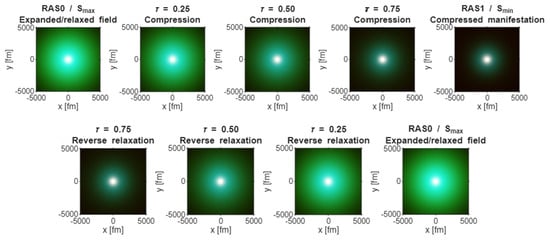
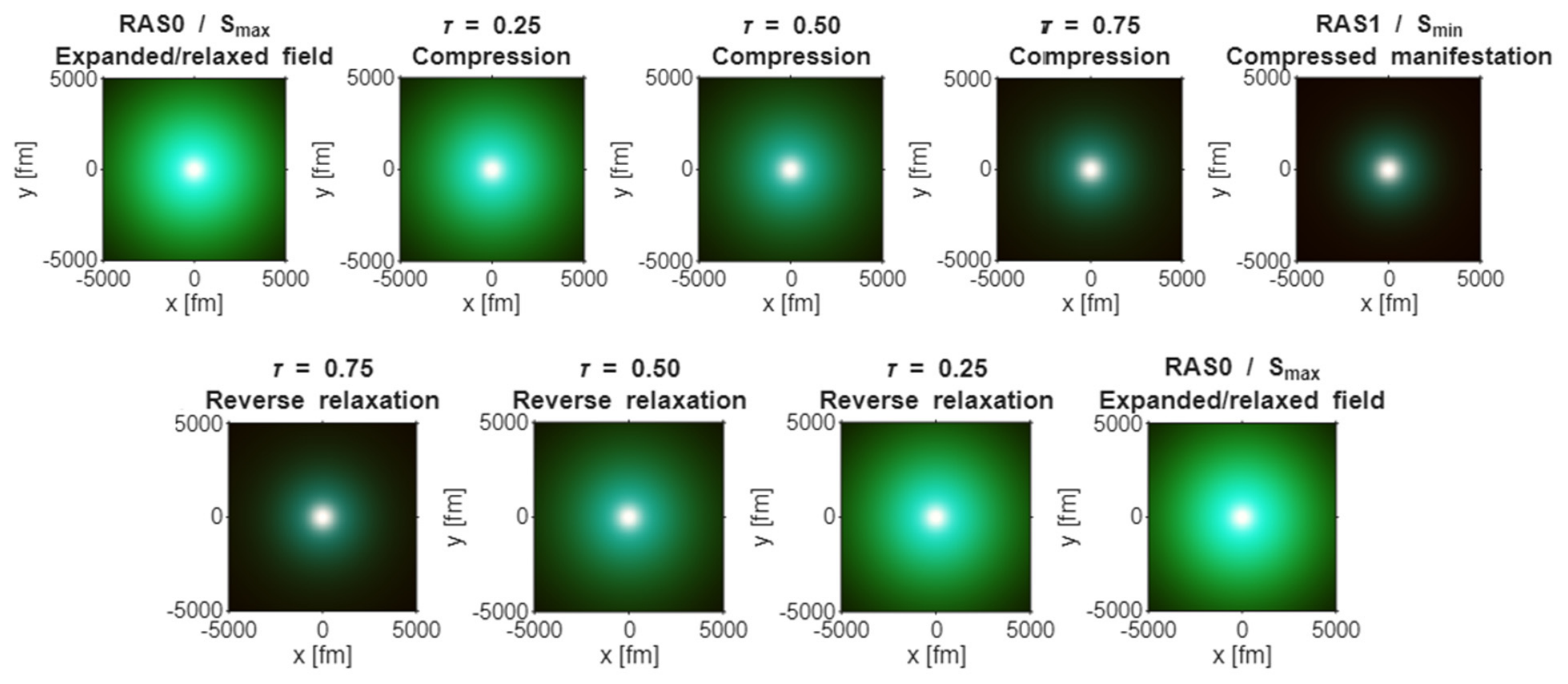
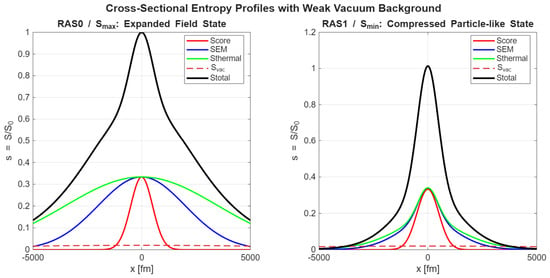
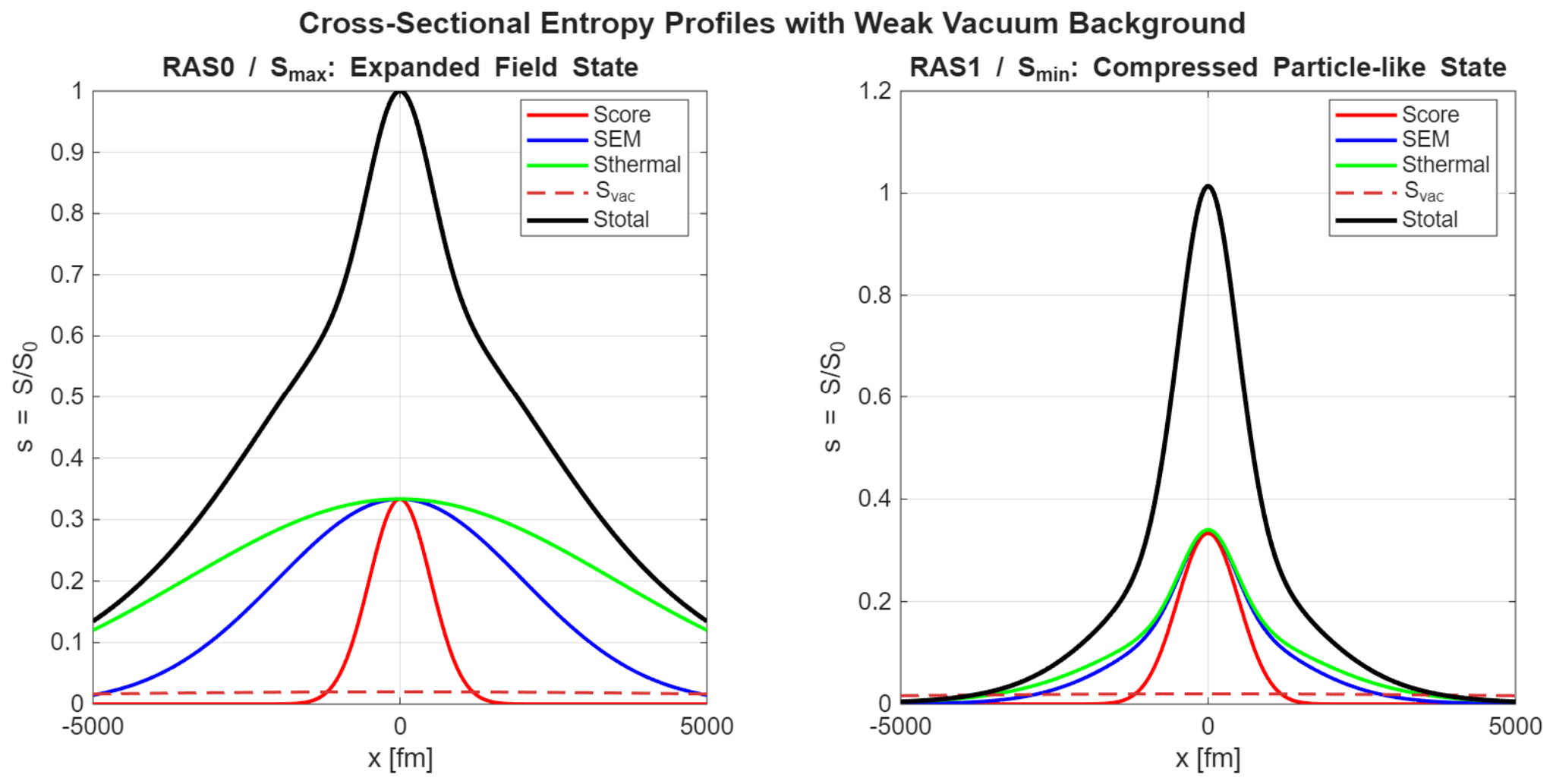
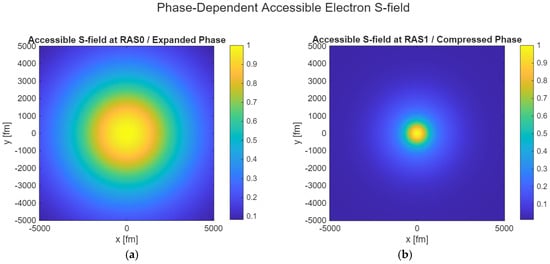
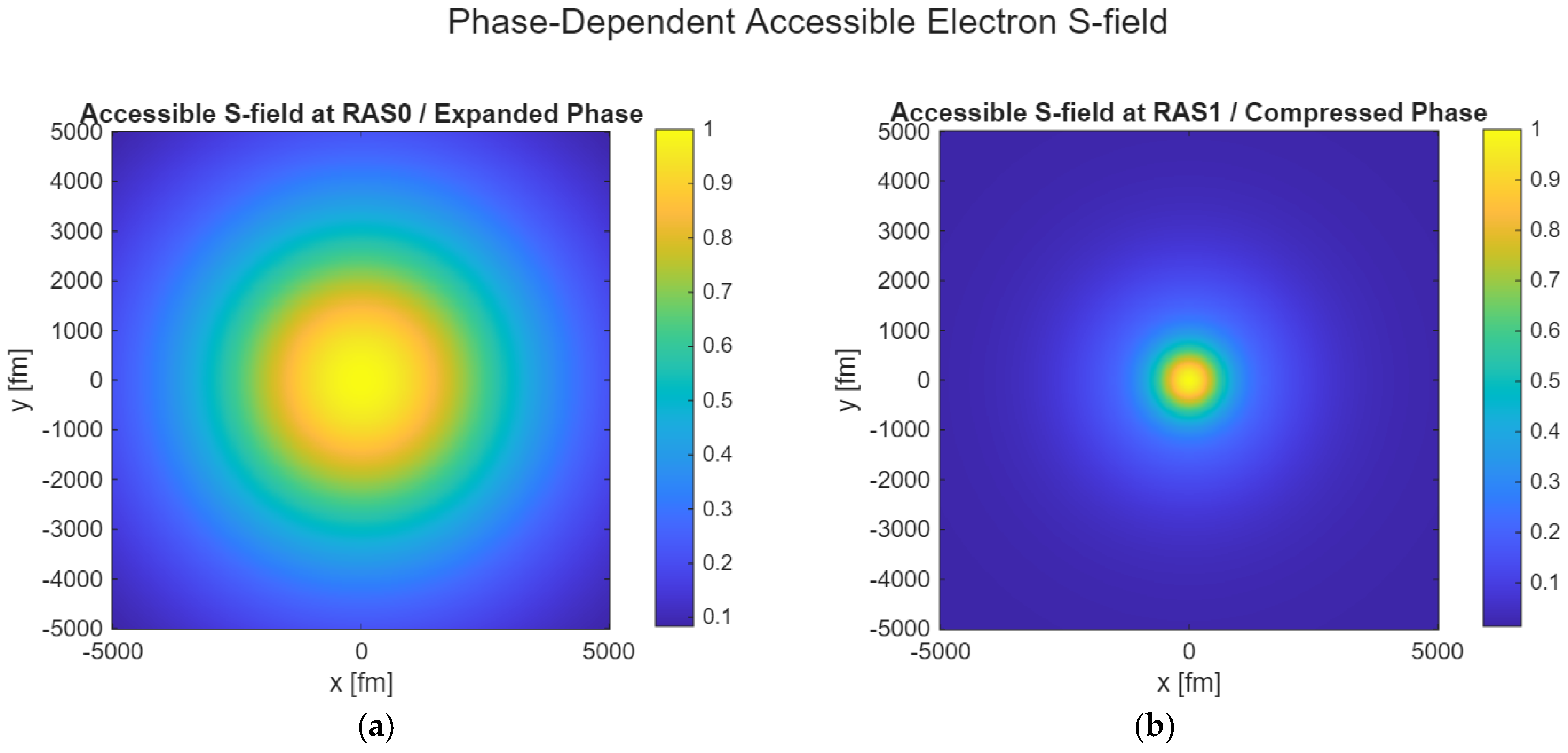
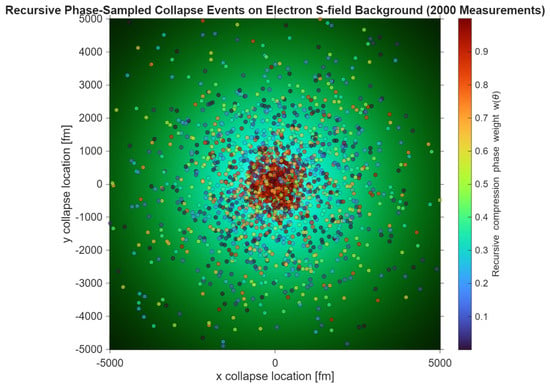
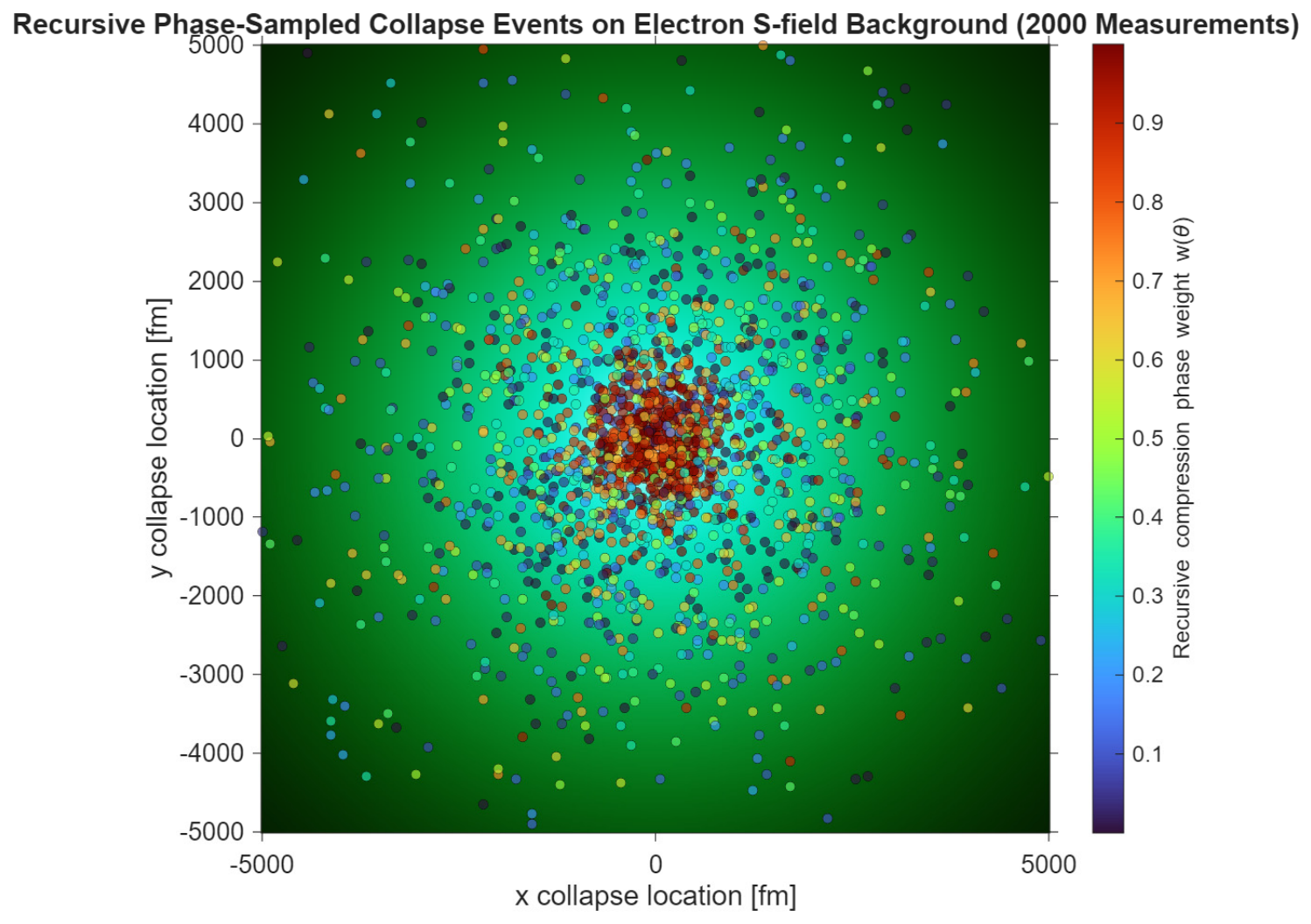
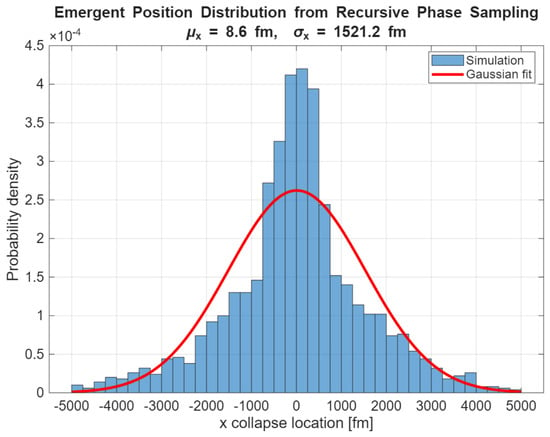
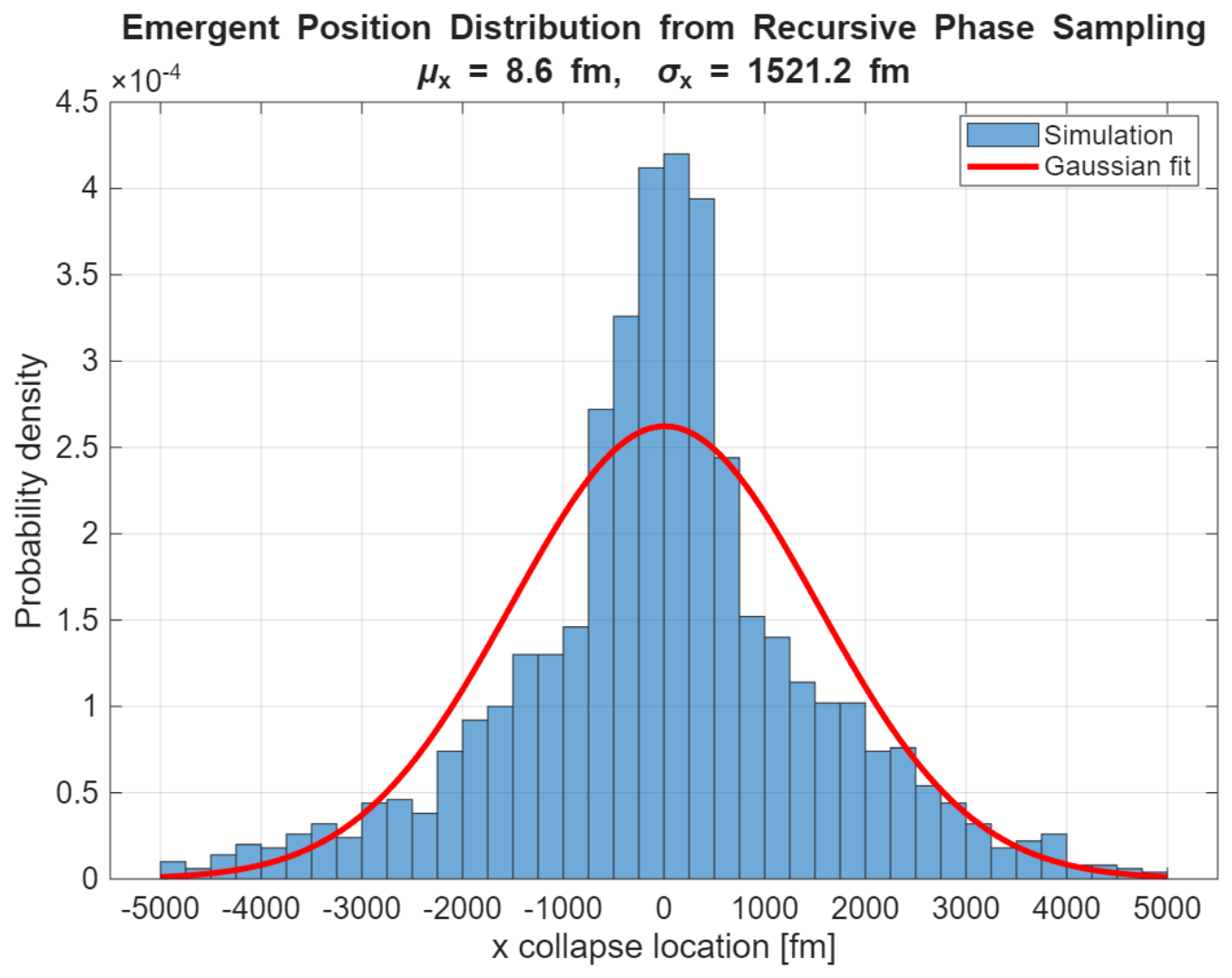
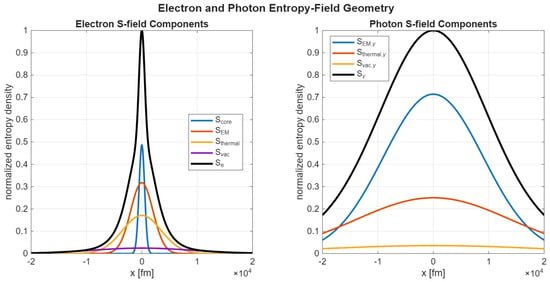
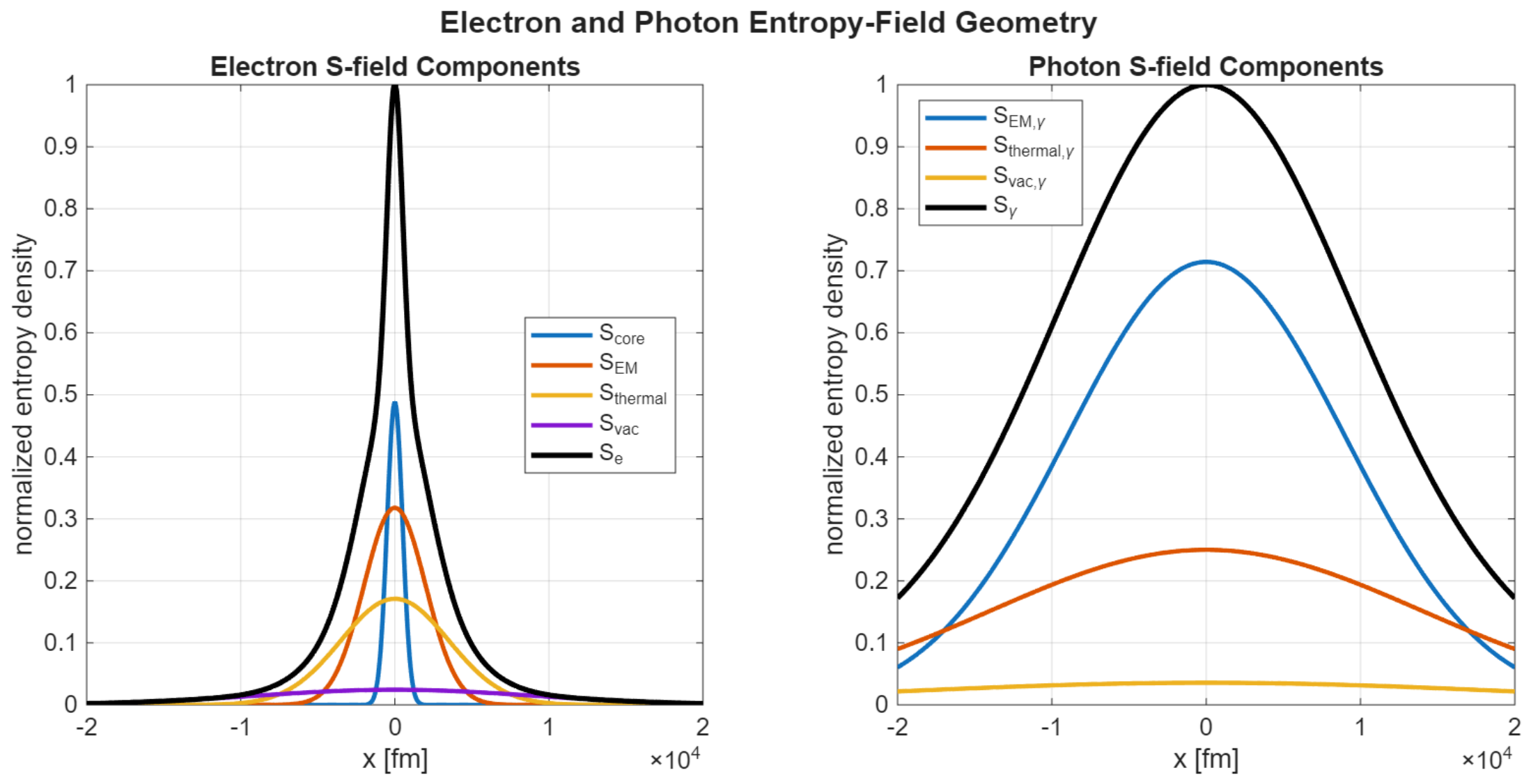
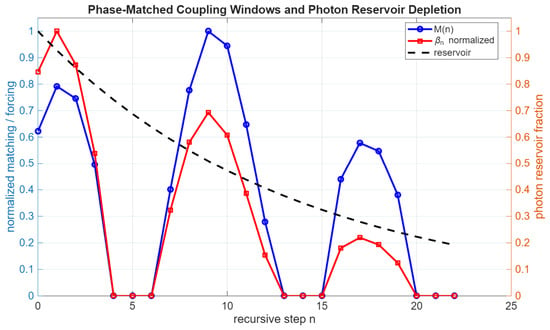
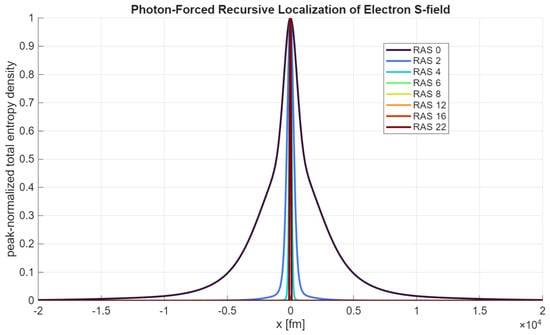
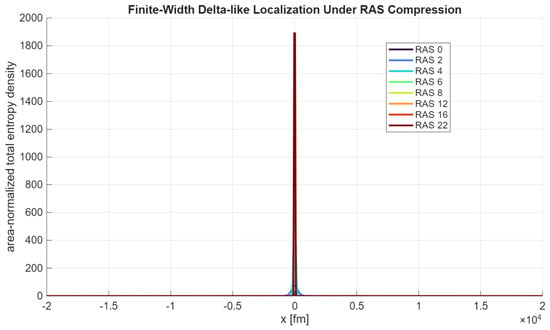
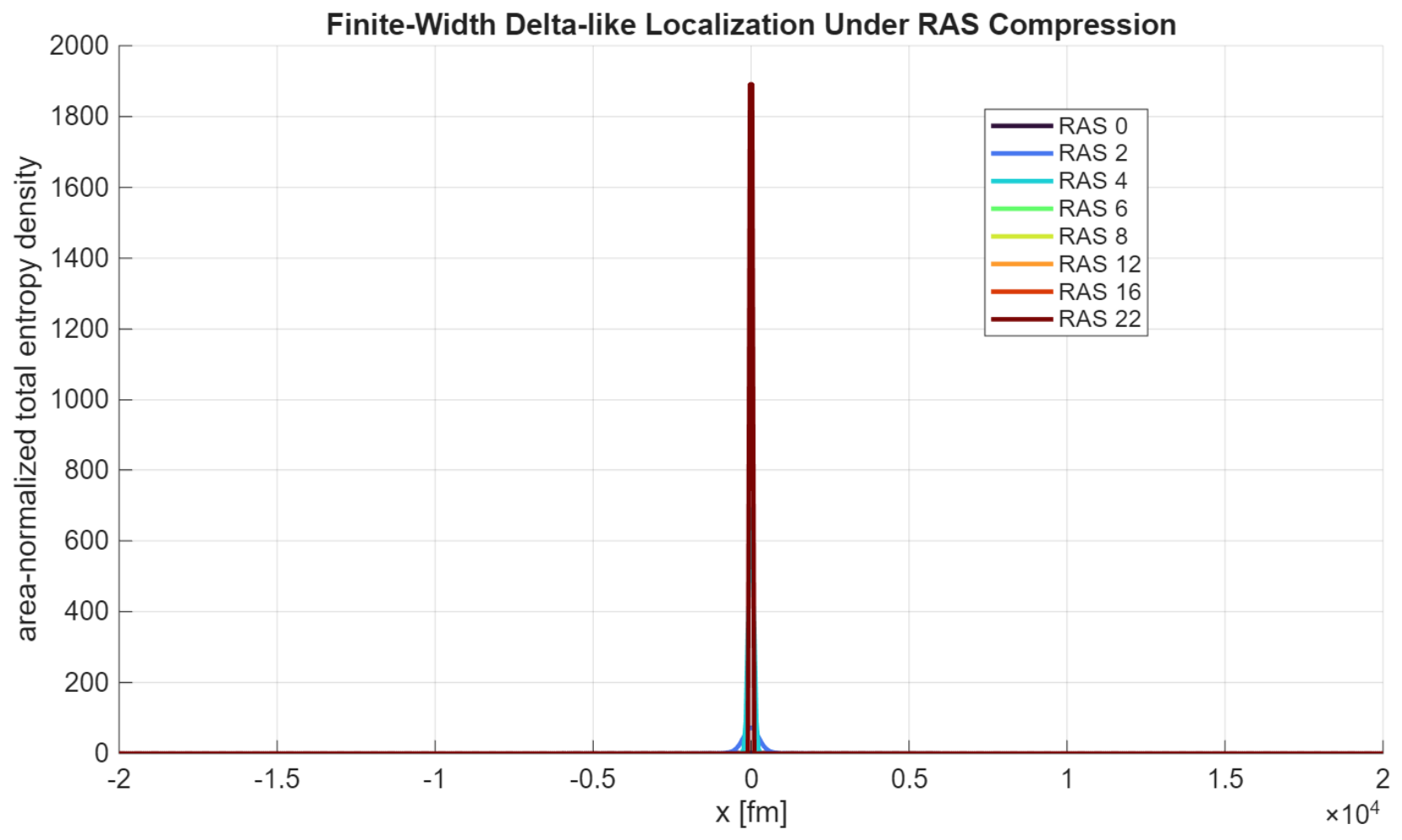
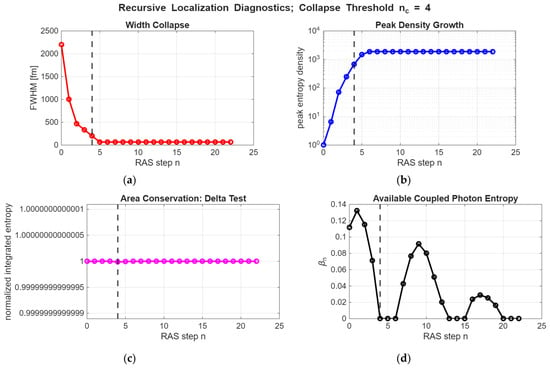
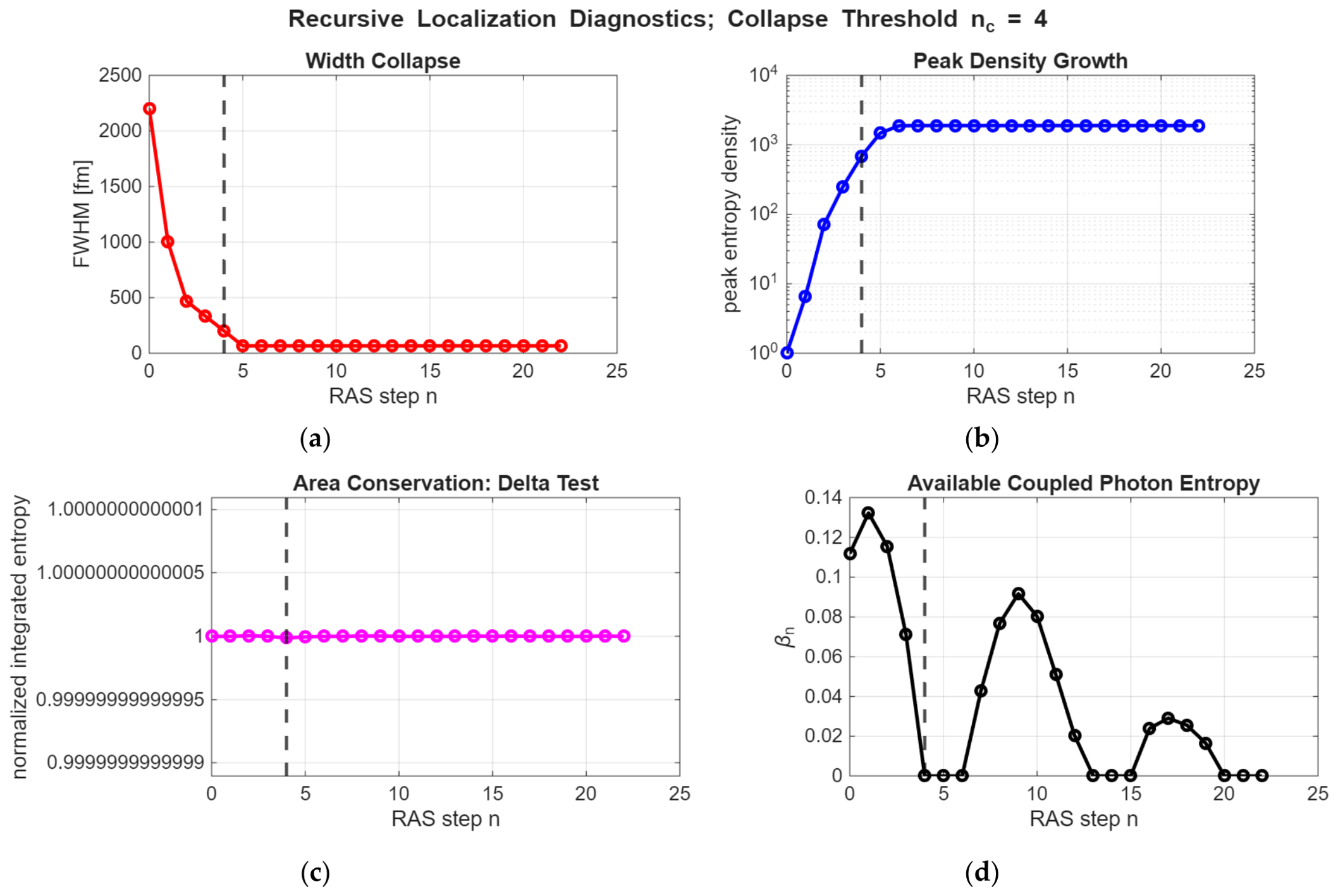
Disclaimer/Publisher’s Note: The statements, opinions and data contained in all publications are solely those of the individual author(s) and contributor(s) and not of MDPI and/or the editor(s). MDPI and/or the editor(s) disclaim responsibility for any injury to people or property resulting from any ideas, methods, instructions or products referred to in the content. |
© 2026 by the author. Licensee MDPI, Basel, Switzerland. This article is an open access article distributed under the terms and conditions of the Creative Commons Attribution (CC BY) license.