


Abstract
Entropy has evolved from a secondary thermodynamic property (Clausius, 1865) to a potentially fundamental organizing structure of physical reality, particularly through its gravitational manifestation in the Bekenstein–Hawking formula. This article systematically reviews four theoretical developments (2015–2024) that test this hypothesis using analytical methods from quantum information theory, holographic duality, and quantum gravity. First, we examine how the quantum island formula (Equation (1)) resolves the black hole information paradox by demonstrating that fine-grained entropy depends on global causal structure rather than local degrees of freedom. Second, we analyze the Complexity = Volume and Complexity = Action conjectures, showing that computational complexity encodes post-thermalization dynamics on exponentially long timescales, with predicted maximum complexity testable in SYK simulations. Third, we examine the scope and limitations of three gravity frameworks (AdS/CFT holography, emergent gravity, loop quantum gravity) in addressing entropy’s role in initial conditions and extract their distinct observational signatures for 2025–2035 experiments. Fourth, we explore entropy–motion duality through mixed metric signatures; while the correspondence is suggestive, its full physical interpretation remains conjectural outside semiclassical and toy-model contexts. We articulate quantum entropic relationalism as an epistemological framework wherein entropy constitutes an objective relational structural property encoding physical relations without substantial reducibility. This synthesis suggests spacetime emerges from quantum entanglement substrates, with testability prospects via gravitational interferometry (LISA, Einstein Telescope), quantum simulators, and cosmological observations (Cosmic Microwave Background (CMB)-S4, LiteBIRD) anticipated by 2035.
1. Introduction
Entropy, from its thermodynamic formulation by Clausius in 1865 to its contemporary incarnations in quantum gravity, is one of the most powerful and enigmatic concepts in theoretical physics. Its intellectual trajectory spans three major conceptual revolutions that have progressively transformed our understanding of the very nature of physical reality. The first revolution came with Boltzmann in 1877, who reinterpreted thermodynamic entropy according to the formula as a measure of the number of microstates compatible with a given macrostate [1], establishing the fundamental link between statistical mechanics and thermodynamics. The second revolution emerged with Shannon in 1948 and Jaynes in 1957, who demonstrated the formal equivalence between thermodynamic entropy and informational entropy [2,3], revealing that entropy fundamentally quantifies our ignorance about the microscopic state of a system. The third revolution, inaugurated by Bekenstein in 1973 and Hawking in 1975, established that a black hole has entropy proportional to the area of its horizon, , where represents the Planck length [4,5]. This discovery unified thermodynamics, quantum mechanics, and gravity for the first time, suggesting that entropy potentially constitutes a primary organizing structure transcending traditional divisions between physical domains. This latest discovery catalyzed a radical epistemological transformation whose implications continue to unfold half a century later. Entropy ceases to be a secondary thermodynamic property and potentially becomes the very foundation from which space–time, energy–matter, and their dynamic laws emerge. This hierarchical reversal, comparable to the transition from ether as a primary substance to electromagnetic fields as fundamental entities, nevertheless raises three persistent puzzles that motivate a thorough epistemological reassessment.
1.1. Three Fundamental Puzzles
The first puzzle concerns the ontological status of entropy, which is ambiguous to say the least. Boltzmann’s formula depends essentially on coarse-graining, i.e., the partitioning of phase space into distinct macrostates. Two observers using different partitionings will necessarily assign different entropies to the same macroscopic state . Wheeler articulated this tension by asking whether entropy was not fundamentally anthropomorphic [6]. Jaynes attempted to resolve this tension by adopting a radical epistemological position, asserting that entropy measures exclusively our subjective ignorance [7]. However, this subjectivist interpretation faces insurmountable difficulties in the face of black hole entropy, whose value seems manifestly independent of any particular observer and encodes objective geometric properties of the horizon.
The second enigma emerges on a cosmological scale and concerns the origin of fundamental temporal asymmetry. The current observable universe has a total entropy , dominated by supermassive black holes, but exhibited an extraordinarily low entropy at the time of recombination [8]. Penrose calculates that the probability of spontaneously obtaining such an ordered configuration is of the order of [9], suggesting that a fundamental physical explanation is required. Three contemporary programs attempt to solve this puzzle by different means: the eternal inflationary multiverse [10], Penrose’s conformal cyclic cosmology [11], and the quantum bounce of loop quantum gravity [12]. These incompatible approaches reveal the lack of theoretical consensus regarding the cosmological origin of entropic asymmetry.
The third puzzle concerns the black hole information paradox and reveals an apparent incompatibility between quantum unitarity and the thermodynamics of horizons. When a black hole evaporates via Hawking radiation, the information encoded in the pure initial state appears to be irretrievably lost, violating the fundamental unitarity of quantum mechanics [13]. Page demonstrated in 1993 that if the evolution is unitary, the entropy of the external radiation must necessarily decrease after the “Page time” [14], without any physical mechanism allowing this decrease being known until 2019. The partial resolution via the quantum island formula (Equation (1)), developed by Penington and by Almheiri, Engelhardt, Marolf, and Maxfield, unifies semi-classical geometry and quantum entanglement [15,16]. The entropy of a radiation system is calculated by including a geometric “island” located inside the black hole, whose contribution depends on the overall causal structure. This discovery reveals that gravitational entropy is no longer a local property but emerges from a global geometric optimization that is intrinsically dependent on the causal structure of spacetime.
1.2. Central Thesis: Quantum Entropic Relationalism (QER)
These three enigmas converge toward a radical conceptual hypothesis that this article systematically develops and defends. Our central thesis asserts that gravitational entropy constitutes a relational quantity emerging from spatial partitions, causal structures, and quantum entanglement, thus transcending the traditional dichotomy between absolute objectivity and anthropomorphic subjectivity. This conceptual relativization, analogous to the transition from Newtonian absolute spacetime to Einsteinian general relativity, where simultaneity becomes relative to the reference frame without becoming subjective, constitutes the central epistemological contribution of this article (Figure 1).
Figure 1.
Schematic synthesis of Quantum Entropic Relationalism (QER). Entropy occupies the relational core connecting three interdependent structures: causal partitioning of spacetime (horizons, quantum islands), quantum entanglement between subsystems, and emergent gravitational geometry (Ryu–Takayanagi, entropic Einstein equations). Solid arrows denote entropy’s direct mediating role, quantified by the indicated formulas; dashed arrows indicate the mutual constitutive relations between the three pillars themselves (e.g., modular flow linking causal structure to entanglement, holographic duality linking entanglement to geometry). The diagram illustrates that none of the three vertices is ontologically prior: each is defined only in relation to the others, which is precisely the relational thesis QER defends.
Three arguments structure this relational thesis. The first concerns the spatial relationality revealed by the AdS/CFT correspondence. The entanglement entropy of a subregion A is calculated via the area of an extremal surface according to the Ryu–Takayanagi formula [17] . In particular, depends intrinsically on the chosen spatial partition, but this relationality encodes a perfectly objective geometric structure in gravitational spacetime. Two observers choosing different partitions will calculate different entropies, not because of subjective ignorance, but because they measure distinct relational geometric invariants.
The second argument concerns the causal relationality revealed by the island formula. This formula generalizes Ryu–Takayanagi according to
where the optimization encodes the causal connectivity between the outer and inner regions [18]. Before Page time, the optimization selects the empty island; afterwards, it switches to a non-trivial island, producing a geometric phase transition. This transition demonstrates that fine-grained entropy depends essentially on the global causal structure. Two observers with access to causally distinct regions will calculate different entropies, not because of subjective ignorance, but because they measure distinct relational invariants anchored in the objective causal structure.
The third argument is based on the informational emergence proposed by the “It from Qubit” program. This program conjectures that spatial geometry emerges from quantum entanglement patterns [19,20]. If this conjecture holds true, then entropy, which precisely measures entanglement, logically precedes spatial geometry. The relationality of entropy then stems from a fundamental ontological fact: in a universe emerging from quantum information, all quantities necessarily reflect correlations between subsystems, never isolated intrinsic properties.
1.3. Conceptual Challenges and Testability
This relational thesis faces three major challenges. The first concerns the distinction between objective relationality and epistemic subjectivity. We defend a distinction inspired by structural relationalism [21,22]: a quantity is relationally objective if its value depends on invariant physical relations (causality, topology, quantum correlations) rather than arbitrary epistemic conventions (units, coordinates, conventional coarse-graining). Gravitational entropy clearly satisfies the first criterion.
The second challenge concerns the compatibility between relationality and objective phenomena such as black hole evaporation. We argue that this compatibility exists by analogy with special relativity: although simultaneity is relative, objective phenomena emerge covariantly. Similarly, although fine-grained entropy is relative, invariant quantities such as the evaporation rate emerge universally. Relationality means structured, non-arbitrary contextuality.
The third challenge concerns empirical testability. We identify three concrete experimental avenues emerging on the horizon for 2025–2035. First, third-generation gravitational interferometry (LISA–Ball Aerospace, Boulder, United States, and Einstein Telescope–AMOS, Liège, Belgium) could detect quantum deviations in the quasi-normal modes of black holes, testing the unitary corrections predicted by the island formula (Equation (1)) [23]. Second, quantum simulators implementing the SYK model will allow direct measurement of computational complexity and testing of the Maldacena–Shenker–Stanford chaos bound under controlled conditions. Third, observational cosmology (CMB-S4, LiteBIRD, Chiba, Japan) will search for signatures of a quantum rebound in the primordial power spectrum, potentially testing one of the predictions of loop quantum gravity [24].
1.4. QER and Standard Structural Realism
It is important to clarify precisely how QER relates to, and departs from, standard structural realism as defended by Ladyman and Rovelli. Ontic structural realism typically asserts a general metaphysical thesis: relations are ontologically prior to relata across physical theories as a whole, often motivated by considerations drawn from the history and philosophy of quantum field theory and spacetime physics. QER does not merely import this thesis into a new domain; it advances a more specific and empirically constrained claim about a particular physical quantity, gravitational entropy, grounded in concrete formal results (the island formula, the Ryu–Takayanagi correspondence, holographic complexity) that were unavailable when structural realism was first articulated. Three features distinguish QER from the general structuralist position. First, QER identifies a precise physical criterion for objectivity, namely dependence on invariant causal and entanglement structures rather than on arbitrary coordinate or conventional choices, which yields directly testable consequences (Page-time phase transitions, complexity growth rates) rather than a purely metaphysical commitment. Second, QER’s relationality is explicitly partition-dependent without being observer-dependent: the entropy of a subregion changes with the choice of causal or spatial partition, a feature with no direct analogue in the original structuralist proposals concerning particles or fields. Third, QER remains agnostic about the deeper ontological question of whether relations are truly prior to relata in all physical contexts; it defends the narrower and more defensible claim that, specifically for gravitational entropy, contextual objectivity is the correct description warranted by current theoretical and observational evidence. In this sense, QER should be understood as a domain-specific extension and empirical sharpening of structural relationalism, rather than as a distinct global metaphysical framework competing with it.
1.5. Structure of the Article
This article systematically examines four major contemporary debates (2015–2024) that test this relational thesis while revealing its limitations and implications. Section 2 analyzes the resolution of the information paradox via quantum islands, proposing a precise criterion for experimental testability: if the island formula (Equation (1)) is correct, late quantum correlations must exhibit an observable phase transition at Page time, detectable by quantum interferometry on simulated radiation in laboratory analogues. Section 3 examines how the entanglement entropy of the boundary theory encodes the emergent geometry of the bulk via the Ryu–Takayanagi conjecture, clarifying the ontological status of spacetime as an informational construct while assessing the limits of this correspondence for realistic, non-AdS gravity. Section 4 argues that the computational complexity , which encodes the post-thermalization dynamics, constitutes an objective physical invariant definable via an intrinsic geometric metric in the space of unitary operators. We predict , testable in simulations of the SYK model. Section 5 focuses on entropy–motion duality through the exploration of metric signatures and complex time. Our central epistemological contribution, developed throughout these four investigations and synthesized in the Section 6, articulates a framework that we call quantum entropic relationalism. This position rejects naive realism (entropy as an intrinsic property), instrumentalism (entropy as a mere tool), and Bayesian subjectivism (entropy as an anthropic construction). It argues that entropy is an objective relational structural property encoding real physical relations without being reducible to pre-existing substantial entities. This framework, inspired by Rovelli and Ladyman [25], resolves the tensions between objectivity and observer dependence by recognizing that objective relational structures can depend on physical contexts without becoming subjective.
2. The Information Paradox and the Quantum Island Formula
The black hole information paradox, formulated by Hawking in 1976, is one of the most profound conceptual crises in contemporary theoretical physics [13]. Its partial resolution via the quantum island formula (Equation (1)), developed between 2019 and 2020, transforms our understanding of the relational nature of gravitational entropy. This section first examines the paradox and the constraints imposed by quantum unitarity, then analyzes the island formula and its implications for the causal structure of information, before critically evaluating its limits of validity and empirical testability.
2.1. The Paradox: Unitarity Versus Thermodynamics
The paradox arises from the confrontation between two seemingly unavoidable principles. Quantum mechanics requires that all physical evolution be unitary, rigorously preserving the information encoded in the quantum state. For an isolated system evolving according to a Hamiltonian H, the evolution operator is unitary, implying that the von Neumann entropy of a pure state remains zero: for all times t. Conversely, Hawking’s semi-classical calculation establishes that a black hole of mass M emits thermal radiation at temperature , with a Planckian spectrum independent of its formation [5]. This radiation causes gradual evaporation according to , with a characteristic evaporation timescale [26]
The radiation is described by a mixed thermal state with a non-zero entropy proportional to the area of the horizon.
The paradox reaches its apex when considering the complete evolution. An initial pure state collapses into a black hole, then evaporates completely via thermal radiation. In the semi-classical approximation, the entropy of the radiation increases monotonically: where decreases with the residual mass. Upon complete evaporation, only high-entropy thermal radiation remains. The overall evolution thus transforms a pure state into a mixed state, violating quantum unitarity. Hawking initially concluded that the information is objectively destroyed, requiring a modification of quantum mechanics in the presence of gravity. This conclusion met with vehement opposition, culminating in 1997 with a famous bet between Hawking and Preskill. Hawking finally conceded the point to Preskill in 2004, without however providing a precise quantitative mechanism [27].
An important quantitative constraint was established by Page in 1993 [14]. Consider a bipartite radiation–black hole system evolving unitarily from a pure state. The entanglement entropy of the radiation follows a universal evolution curve described as follows: initially, when the radiation contains few quanta compared to the residual black hole, the entanglement increases linearly. At the “Page time” defined by the entropy reaches a maximum and then decreases, following for . Upon complete evaporation, the system returns to a pure state: . This “Page curve” requires that any unitary theory of quantum gravity must predict a decrease in entropy after the Page time. Hawking’s calculation, predicting monotonic growth, clearly violates this constraint. Identifying the physical mechanism responsible for this transition was the central challenge for three decades.
2.2. The Island Formula: Geometric Transition and Unitarity
A partial solution emerged in 2019–2020 with the discovery of the “quantum island formula” (Equation (1)) by Penington and by Almheiri, Engelhardt, Marolf, and Maxfield [15,16]. This formula generalizes the holographic prescription of Ryu–Takayanagi by incorporating geometric contributions from causally disconnected regions. Consider an asymptotic region R collecting radiation. The fine-grained entropy is given by:
where the optimization is performed on all possible “islands” in the geometric interior, and denotes the von Neumann entropy of the matter fields in . The boundary contributes to geometric entropy via the generalized Bekenstein–Hawking equation, while encodes quantum fluctuations. Physically, this formula describes a dynamic geometric competition. At early times , optimization selects the empty island , reproducing the semi-classical result: . Entropy increases linearly with the accumulation of thermal radiation. At Page time, a geometric phase transition occurs. Optimization switches to a configuration where the island extends into the interior of the black hole. This island is causally disconnected from R by the horizon, but contributes via the surface term . For , the dominant contribution comes from this surface: , which decreases with evaporation. The entropy thus follows Page’s curve, guaranteeing unitarity. Almheiri and his collaborators demonstrated that this formula quantitatively reproduces Page’s curve in computable models, particularly for eternal black holes in Anti-de Sitter coupled to thermal baths [28].
The physical interpretation highlights a deeply relational structure of gravitational entropy. Traditionally, the entropy of a region was conceptualized as a local property, depending solely on the degrees of freedom contained in that region. The island formula (Equation (1)) demonstrates that this locality is illusory in quantum gravity: the fine-grained entropy of R depends essentially on the global geometry, including causally disconnected regions such as the interior of the black hole. In the AdS/CFT correspondence, the island corresponds to the “quantum entanglement wedge” describing the correlations between radiation and residual gravitational degrees of freedom. The transition at reflects a topological reorganization of this wedge: before, it encompasses only the exterior; afterwards, it penetrates the horizon and geometrically connects the exterior and interior via emerging “quantum wormholes”. This structure transforms our understanding of the horizon: classically an absolute causal barrier, it becomes quantum permeable in terms of information via entanglement correlations. Hayden and Preskill demonstrated that this informational “leak” is rapid: after throwing a quantum into a black hole, the information reappears after only (Planck units), much shorter than [29].
2.3. Conceptual Limitations and Empirical Testability
Despite its success, the island formula (Equation (1)) faces three major limitations that circumscribe its validity. First, the semi-classical regime of validity breaks down in the final stages of evaporation. The derivation assumes a well-defined classical geometry with perturbative quantum corrections. When the residual mass approaches the Planck mass , the curvature diverges and the quantum fluctuations of the metric become of order unity. The island formula, based on the geometric identification of extremal surfaces , cannot be extrapolated without a complete theory of non-perturbative quantum gravity. Marolf and Maxfield estimate that corrections become dominant when , suggesting that the last e-folds of evaporation escape the semi-classical framework [30].
Second, generalization to dynamic cosmological spacetime remains problematic. Rigorous derivations rely heavily on the AdS/CFT correspondence, applicable to asymptotically stationary Anti-de Sitter spaces with a conformal boundary. Our observable universe, described by a Friedmann metric with a positive cosmological constant, has neither an AdS asymptote nor a spatial boundary, but a de Sitter cosmological horizon. Generalizing the formula to these realistic spacetimes is a major technical challenge.
Third, direct experimental inaccessibility raises a crucial epistemological question. Stellar-mass astrophysical black holes have evaporation times years, far exceeding the age of the universe years. Direct observation of Hawking radiation and its quantum corrections seems impossible with current or foreseeable technology. This inaccessibility calls into question the scientific status of the formula: is it a testable scientific prediction or a metaphysical mathematical construct?
Three indirect testing avenues are nevertheless possible: Quantum simulators can create analogues of black holes in controlled condensed matter systems. Recent experiments with Bose–Einstein condensates have simulated acoustic horizons and measured spectra analogous to that of Hawking [31]. These analogues rely on manipulating the trapping potential and the condensate flow-velocity profile, creating an acoustic horizon where the flow speed exceeds the local speed of sound. Although profoundly different from gravitational black holes, these systems share universal causal structures and allow for testing unitary predictions in quantum systems. Recent proposals aim to create quantum analogues of the SYK model with superconducting qubits, where the Page curve could be measured directly via quantum state tomography. Third-generation gravitational interferometry (LISA, Einstein Telescope) will achieve sufficient sensitivities to detect quasi-normal modes of black holes with unprecedented precision. If the horizon has a fine microscopic structure, subtle deviations ( to ) from classical predictions will appear in the spectrum of QNMs, potentially resolvable in the next decade [23]. Finally, correlations in the cosmic microwave background could carry signatures of evaporation from microscopic primordial black holes formed in the early universe. The CMB-S4 and LiteBIRD missions, planned for 2030, will achieve sensitivities that will constrain or detect these effects [32].
2.4. Epistemological Implications: Causal Relationality of Entropy
Beyond its technical scope, the island formula (Equation (1)) highlights an elegant epistemological structure concerning the relational nature of entropy. It demonstrates that the fine-grained entropy of a region depends essentially on the overall causal structure of spacetime, including causally inaccessible regions. This relationality has three interconnected dimensions. Spatial relationality implies that entropy depends on the spatial division chosen to partition spacetime: observers using different foliations will calculate geometrically distinct islands and therefore different entropies. Causal relationality implies that entropy depends on the causal structure defined by the observer’s light cone: observers at different positions will have access to distinct causal regions, and their entropies will reflect these objective causal differences. Informational relationality indicates that entropy depends on the entanglement correlations between the observed region and its complement, correlations that are objective physical invariants of the global quantum state. This triple relationality transcends the traditional philosophical dichotomy between epistemic subjectivity and ontological objectivity. Gravitational entropy is neither purely subjective (it encodes objective geometric and causal invariants) nor purely objective in the naive sense (it depends intrinsically on the observational context and spatial partitioning). This intermediate position constitutes what we call “objective causal relationality”: fundamental physical properties are not intrinsic attributes of substantial entities, but objective relations between subsystems anchored in the causal and informational structure. This perspective aligns with the structural relationalism defended by Rovelli in quantum gravity and Ladyman in the philosophy of science [21,22]. The island formula (Equation (1)) possibly foreshadows a notable epistemological change: the absolute notion of entropy as an intrinsic property could be replaced by a relational conception in which entropy would emerge from the overall causal and informational structure of the quantum gravitational universe.
3. Entropy of Entanglement in AdS/CFT
The Anti-de Sitter/Conformal Field Theory (AdS/CFT) correspondence, conjectured by Maldacena in 1999, is the most precise realization of the holographic principle, establishing an exact duality between quantum gravitational theory in dimensions and non-gravitational quantum field theory in d dimensions [33]. This correspondence radically transforms our understanding of the link between geometry and quantum information: it suggests that the very structure of geometric spacetime emerges from entanglement correlations in dual quantum theories. This section first examines the Ryu–Takayanagi conjecture linking entropy and geometry, then analyzes the “geometry-from-entanglement” paradigm and its implications for the emergence of spacetime, before critically evaluating the limits of validity of the correspondence and its relevance to realistic gravitational physics.
3.1. The Ryu–Takayanagi Conjecture: Quantifying Entanglement Geometrically
In 2006, Ryu and Takayanagi proposed an important formula quantitatively linking the entanglement entropy of a region in conformal field theory to a geometric quantity in the dual AdS space [17]. Consider a two-dimensional conformal theory defined on the boundary of an Anti-de Sitter space , in its ground state corresponding to pure AdS space. For a spatial region A on the boundary, its von Neumann entanglement entropy , where is the reduced density matrix, is given by
where denotes the extremal surface (minimizing the area) in the geometric interior that is homologous to A: and can be continuously deformed to A without crossing singularities. is Newton’s gravitational constant in the bulk.
This formula has several properties that validate its consistency. First, it automatically satisfies the fundamental axioms of entanglement entropy. Strong subadditivity follows directly from geometric inequalities for minimal surfaces. The monogamy of entanglement for disjoint regions is verified geometrically via triangulation. Second, it quantitatively reproduces the known results in conformal field theory. For a single interval of length ℓ in a CFT2 with central charge c, the direct calculation of replicas gives where is an ultraviolet regulator. The Ryu–Takayanagi prescription reproduces this result exactly by identifying where R is the AdS radius of curvature. Third, it generalizes naturally outside of equilibrium. In 2007, Hubeny, Rangamani, and Takayanagi extended the conjecture to time-dependent states by replacing extremal surfaces with extremal 2-co-dimensional surfaces in full spacetime, anchored on given time slices at the boundary [34].
The conjecture was rigorously proven in the semi-classical regime by several groups between 2013 and 2016. Lewkowycz and Maldacena developed an elegant derivation using the gravitational “replica trick” [35]. The entanglement entropy in the CFT can be calculated via . Holographically, corresponds to the gravitational partition function on a space replicated n times with conical identifications along . In the semi-classical limit (equivalent to for gauge theories), the dominant gravitational action corresponds precisely to the Einstein–Hilbert action evaluated on the extremal surface, reproducing the Ryu–Takayanagi formula. Faulkner and his collaborators demonstrated in 2013 that this derivation generalizes to theories with quantum corrections, establishing the generalized formula including matter contributions [36]:
where represents the von Neumann entropy of quantum matter fields in the region bounded by . This generalized formula is precisely the basis of the island formula (Equation (1)) discussed above.
3.2. Emergent Geometry: Spacetime from Entanglement
The Ryu–Takayanagi conjecture suggests a new epistemological perspective: the geometry of spacetime is not fundamental but emerges from entanglement correlations in an underlying quantum theory. This proposal ontologically transforms our conception of spacetime, reducing it to an emergent informational structure. Three major results support this “geometry-from-entanglement” paradigm.
Van Raamsdonk demonstrated in 2010 that the geometric connectivity of the AdS bulk directly reflects entanglement in the boundary CFT [19]. Let us consider a CFT on two disjoint spatial regions A and B, dual to a geometrically connected AdS space. If the quantum state factorizes (zero entanglement), the geometry of the dual bulk develops a singularity that topologically separates the regions associated with A and B. Conversely, restoring entanglement geometrically “stitches” spacetime back together. This correspondence was tested quantitatively by constructing double thermofield states in two-dimensional CFTs: two identical but causally disconnected CFTs, in a maximally entangled state , are dual to an eternal AdS black hole (Schwarzschild–AdS geometry) with two outer horizons connected by an “Einstein–Rosen wormhole” . Changing the entanglement by perturbing the state changes the geometry of the wormhole, with a quantitative correspondence between mutual entropy and the minimum volume of the wormhole throat.
Swingle and Van Raamsdonk proposed in 2014 that this connection can be generalized: the local geometry of spacetime emerges from entanglement Hamiltonians in the dual theory [37]. The modular Hamiltonian for a region A in a state is defined via where . Faulkner and his collaborators demonstrated that first-order variations of under perturbations correspond holographically to variations of the bulk metric in the causal wedge associated with A [38]. More precisely, for infinitesimal perturbations of the expectation values of local operators in the CFT, the corresponding variation encodes the metric perturbation in the bulk via a linear integral relation. This correspondence suggests that Einstein’s equations themselves emerge as consistency conditions for entanglement Hamiltonians, rather than as fundamental laws. From this perspective, gravitational dynamics represents a collective thermodynamic property of microscopic quantum degrees of freedom, analogous to the emergence of hydrodynamics from statistical mechanics.
Finally, in 2017, Cao, Carroll, and Michalakis established a quantitative connection between quantum complexity and geometric volume [39]. They demonstrated that in certain tensor network states reproducing the AdS/CFT structure, the maximum spatial volume in the bulk is proportional to the minimum circuit complexity required to prepare the boundary state from a simple reference state. This “complexity = volume” correspondence was generalized by Susskind and his collaborators in 2016 in the “complexity = action” conjecture, proposing that the complexity of a boundary state is proportional to the gravitational action evaluated in a specific causal region of the bulk [40]. These conjectures suggest that the geometric notions of space, volume, and even time emerge from more fundamental quantum informational structures. Space–time would thus be a “holographic illusion”: an effective macroscopic description of an intrinsically non-spatial and non-temporal quantum system.
3.3. Limits of Validity and Relevance for Realistic Gravity
Despite its impressive theoretical successes, the AdS/CFT correspondence faces three major limitations that restrict its explanatory power for realistic quantum gravity. First, its dependence on supersymmetry limits its generality. The best-understood examples (notably the original duality between four-dimensional theory in four dimensions and IIB-type supergravity on ) rely heavily on supersymmetry, which imposes strong algebraic constraints that guarantee consistency and computability. However, the observable universe shows no evidence of exact supersymmetry: no bosonic or fermionic superpartners have been detected up to the TeV scales accessible at the LHC. If supersymmetry is only approximate or absent, the mechanisms ensuring AdS/CFT duality may collapse. Attempts have been made to construct non-supersymmetric dualities (notably via continuous deformations that break supersymmetry), but none have achieved the level of technical control of the supersymmetric examples. This dependence raises the following question: does AdS/CFT represent a universal property of quantum gravity, or is it a mathematical artifact specific to highly symmetrical, unrealistic theories?
Secondly, the topological and causal gap with our universe is fundamental. Our observable universe has a positive cosmological constant , corresponding asymptotically to De Sitter spacetime. Anti-De Sitter space has a constant with radically different causal properties: AdS space has a temporally accessible spatial boundary at infinity, allowing a quantum theory to be rigorously defined at the boundary. De Sitter space, conversely, has a cosmological horizon with no accessible spatial boundary, making it difficult to define a dual theory. Numerous attempts to construct a “dS/CFT correspondence” have been proposed since 2001, but none has achieved a consensus or precision comparable to that of AdS/CFT. Recently, work by Witten (2024) has explored formulations using Euclidean CFTs or “stretched horizon” holographs, but these proposals remain highly speculative and have not produced testable observational predictions [41]. This limitation is crucial: if the AdS/CFT correspondence does not generalize to that of De Sitter, its explanatory power for real cosmology is fundamentally limited.
It is worth noting that the very interpretive weight placed on the Ryu–Takayanagi conjecture and its generalizations has itself been questioned. Some authors have argued that the formal elegance of the entanglement-geometry correspondence risks encouraging an unwarranted ontological inflation, whereby a powerful computational tool within a specific, highly symmetric class of models (AdS/CFT) is prematurely elevated to a universal statement about the nature of spacetime itself [42,43]. Others have emphasized that the tensor-network toy models frequently invoked to illustrate “geometry from entanglement” (e.g., MERA constructions) reproduce only kinematic, not dynamical, features of gravity, leaving open whether entanglement is genuinely explanatorily prior to geometry or merely correlated with it in these specific solvable settings [44]. These dissenting voices do not invalidate the QER framework, but they usefully temper any premature generalization of the “geometry-from-entanglement” paradigm beyond its demonstrated domain of applicability.
Third, the microscopic mechanism of geometric emergence remains unclear. Although the Ryu–Takayanagi conjecture establishes a quantitative correspondence between entropy and geometry, it does not provide an explicit constructive mechanism for reconstructing the bulk metric from the boundary data. What precise mathematical structure in the Hilbert space of the CFT encodes the local geometry? How do localized excitations in the bulk (gravitons, particles) emerge from the operators of the CFT? Substantial progress has been made via “tensor networks”, discrete structures of contracted tensors reproducing the entanglement correlations characteristic of AdS/CFT. In 2012, Swingle demonstrated that the MERA (Multi-scale Entanglement Renormalization Ansatz) tensor network has an emergent hyperbolic geometry analogous to AdS [20]. However, these discrete models reproduce only approximately the continuous limit of AdS, and the precise reconstruction of gravitational dynamics (Einstein’s equations) from tensor rules remains incomplete. Without a constructive microscopic mechanism, AdS/CFT risks remaining an elegant mathematical correspondence rather than a fully explanatory physical theory.
Despite these limitations, AdS/CFT nevertheless offers relevant indirect testing avenues for real physics. Ultra-relativistic heavy ion collisions create a quark–gluon plasma at extreme temperatures ( K), behaving like a viscous fluid with a viscosity–entropy ratio close to the minimal holographic bound predicted by AdS/CFT [45]. Experimental measurements at RHIC and LHC have quantitatively confirmed this prediction with an accuracy of ∼20%, constituting an interesting indirect test. Strongly correlated condensed matter systems (notably high-temperature superconductors and quantum spin liquids) exhibit properties (transport, thermodynamics) that are qualitatively similar to holographic predictions. Although these systems are not gravitational, they share a similar mathematical structure of strong entanglement, suggesting a universal applicability of holographic methods. Finally, quantum simulators with superconducting qubits or trapped ions are beginning to directly implement tensor networks and structured entangled states. Recent experiments at Google and IBM have created states that reproduce the entanglement structure characteristic of emergent geometries, allowing for experimental testing of “geometry-from-entanglement” conjectures in laboratory-controlled systems [46].
3.4. Implications: Informational Ontology of Spacetime
Beyond its technical applications, AdS/CFT suggests a profound ontological revision of the nature of spacetime. In the classical relativistic conception, spacetime is the fundamental arena in which physical phenomena unfold: a differentiable manifold equipped with a Lorentzian metric, existing independently of matter fields. AdS/CFT radically reverses this ontological hierarchy: spacetime becomes an emergent structure, secondary to quantum correlations in a non-spatial microscopic theory. This perspective aligns with the “structural realism” defended by Ladyman and Ross: fundamental entities are not substances localized in spacetime, but relational structures (entanglement patterns, quantum correlations) from which spacetime itself emerges as a collective approximation [25].
This emergence has two major epistemological implications. On the one hand, it dissolves the “ground state” problem in quantum gravity: at the fundamental level, no pre-existing geometric structure is required, as geometry itself is dynamically generated by quantum correlations. This dissolution is crucial for unifying gravity and quantum mechanics, as it avoids the circularity of quantizing a (metric) field defined on a geometric structure that is itself dynamic. On the other hand, it suggests an instrumentalist conception of classical space-time: smooth geometry appears only within certain limits (large N, strong coupling) where microscopic correlations organize themselves collectively. Outside these limits, particularly at the Planck scale, the very notion of spatial locality could become ill-defined, even meaningless. Space–time would thus be analogous to temperature in thermodynamics: a collective emergent property of a system with many degrees of freedom, devoid of meaning for arbitrary microscopic configurations. This radical perspective requires a fundamental change in our understanding of the nature of space–time: it is no longer a fixed, immutable entity, but rather a dynamic, emergent property of a system with many degrees of freedom devoid of meaning for arbitrary microscopic configurations. It requires a complete reconceptualization of the nature of physical reality, replacing traditional spatial materialism with a “structural informationism” where quantum information constitutes the fundamental ontology.
4. Computational Complexity and Entropy Growth
Computational complexity, a central concept in theoretical computer science that quantifies the minimum resources (time, logic gates, memory) required to prepare a quantum state or perform a unitary transformation, has emerged since 2016 as a new fundamental observable in quantum gravity. Unlike entanglement entropy, which rapidly saturates at thermalization, complexity grows linearly over exponentially long timescales, potentially encoding information inaccessible to traditional entropic measures [40]. This section first examines holographic conjectures linking complexity and gravitational geometry, then analyzes the “maximum complexity growth” paradigm and its implications for non-equilibrium thermodynamics, before critically evaluating definitional ambiguities and prospects for empirical testability.
4.1. Holographic Conjectures: “Complexity = Volume” and “Complexity = Action”
Quantum circuit complexity measures the minimum number of elementary gates in a universal set needed to prepare a target state from a reference state : . This definition depends crucially on the choice of the set of gates and the reference state, ambiguities that we will discuss later. In 2014, Susskind and Stanford proposed that, in the AdS/CFT context, the complexity of a boundary state has a natural geometric dual in the gravitational bulk. Two main conjectures were formulated.
First, the “Complexity = Volume” conjecture (CV), initially proposed by Susskind in 2014, postulates that the circuit complexity of a boundary state at time is proportional to the maximum spatial volume of a hypersurface in the bulk anchored on the time slice at the boundary [47]:
where denotes the hypersurface of maximum volume homologous to the slice , and ℓ is a characteristic scale of the system (typically the AdS radius or thermal length). This conjecture was motivated by the observation that, for an eternal AdS black hole (dual to a maximally entangled double thermofield state), the volume of the region “behind the horizon” increases linearly with time on exponentially long scales , a behavior qualitatively similar to the growth of complexity predicted for quantum chaotic systems.
Next, the “Complexity = Action” (C = A) conjecture, proposed by Brown, Roberts, Susskind, Swingle, and Zhao in 2016, instead relates complexity to the gravitational action evaluated in a specific causal region of the bulk [48]:
where denotes the Wheeler–DeWitt gravitational action (Einstein–Hilbert action with appropriate boundary terms) evaluated over the “Wheeler–DeWitt region” , defined as the intersection of the past and future causal cones of the boundary slice . This conjecture has the advantage of being manifestly covariant and automatically reproducing the temporal growth properties observed for black holes.
These conjectures were tested in various contexts where complexity can be calculated independently. For integrable two-dimensional CFTs, between 2006 and 2010, Nielsen and his collaborators developed a geometrization of complexity as a geodesic distance on the space of unitaries equipped with an appropriate Finsler metric [49]. Jefferson and Myers demonstrated in 2017 that, for these systems, the CA conjecture quantitatively reproduces circuit complexity with an appropriate choice of gates and metric, while CV gives qualitatively consistent but quantitatively different results [50]. For tensor network systems that approximately reproduce the AdS/CFT structure, Caputa and his collaborators established in 2018 that the tensor contraction depth (discrete analogue of complexity) is indeed proportional to the emergent geometric volume [51]. These partial validations suggest that the conjectures highlight genuine aspects of the holographic structure, although they do not constitute rigorous mathematical proofs.
4.2. Maximal Growth and Quantum Chaos
An important property of gravitational complexity emerges from the dynamic analysis of black holes. For an eternal AdS black hole with mass M, temperature , and entropy , both conjectures predict linear growth of complexity at late times [52]:
This growth persists on an exponential time scale (scrambling time characterizing the complete delocalization of perturbative information), reaching a maximum saturation value corresponding to the complete exploration of exponential Hilbert space. This exponentially prolonged growth contrasts sharply with entanglement entropy, which saturates at thermalization on a scale : .
Susskind proposed in 2018 that this linear growth represents a universal “maximum rate of complexification” for chaotic quantum systems, analogous to a gravitational “Lloyd bound” [53]. The original Lloyd bound, established in quantum computing, states that the maximum rate of quantum operations is bounded by , where E is the available energy. Gravitational growth precisely saturates this bound with , suggesting that black holes are the most computationally efficient systems in nature: they maximize complexity for a given energy. This enhanced property profoundly links gravity, information, and quantum chaos. The link with quantum chaos was made explicit via “out-of-time-order correlators” (OTOC), quantities that diagnose quantum information scrambling. The OTOC is defined as where and are local operators. For chaotic systems, decreases exponentially with a quantum Lyapunov rate characterizing sensitivity to perturbations. Maldacena, Shenker, and Stanford demonstrated in 2016 that, for holographic systems, the Lyapunov rate saturates the universal bound (MSS bound), and the growth in complexity is directly related to OTOC decoherence [54]. This connection suggests that complexity quantitatively measures the “depth” of quantum chaos: systems that rapidly reach high complexity exhibit effective information scrambling.
This perspective transforms our understanding of non-equilibrium thermodynamics. Traditionally, thermalization is described by entropy reaching its maximum compatible with constraints. However, entropy alone does not describe the fine structure of the thermalized state: many distinct microcanonical states share the same entropy but differ radically in their correlation structure and causal history. Complexity provides a complementary observable characterizing this fine structure. A system can be entropically thermalized () while continuing to become more complex (), encoding its historical trajectory in long-range correlations. This distinction is crucial for understanding thermodynamic irreversibility: the increase in entropy characterizes the initial relaxation phase, while the increase in complexity characterizes the prolonged phase of complete scrambling reaching deep statistical equilibrium. Black holes, as paradigmatic gravitational thermodynamic systems, illustrate this temporal distinction between rapid entropic thermalization and prolonged scrambling complexification.
4.3. Ambiguities, Conceptual Challenges, and Empirical Perspectives
Despite its theoretical potential, holographic complexity faces three major limitations that currently restrict its explanatory and predictive scope. First, the definition of quantum complexity suffers from fundamental ambiguities. Circuit complexity is intrinsically dependent on the choice of universal gate set : changing the set quantitatively (and sometimes qualitatively) alters the complexity. For a given state, different sets can yield complexities that differ by polynomial or even exponential factors. Furthermore, the choice of reference state is arbitrary: should we choose the ground state, the conformal vacuum, or a zero-temperature state? Each choice implicitly encodes physical assumptions about what constitutes microscopic “simplicity” or “triviality”. This definitional ambiguity contrasts with von Neumann entropy, which is defined unambiguously from the density matrix without arbitrary choices. In 2018, Chapman and colleagues explored different definitions (Krylov complexity, Nielsen complexity with various metrics), but no consensus emerged on the “correct” physical definition [55]. Without a canonical definition, quantitative predictions remain fragile and dependent on the chosen scheme.
Second, the ontological status of complexity remains controversial. Is it an objective physical property of the quantum state, or an epistemic property dependent on our computational and representational capabilities? Entanglement entropy, although dependent on spatial partitioning, has a clear physical meaning: it quantifies objective quantum correlations between subsystems, measurable via tomography experiments. Complexity, conversely, seems intrinsically linked to our algorithmic description: a state that appears complex in one representation may be simple in another (via a change of basis, hidden symmetries, or compressibility structures). This representational dependence suggests that complexity may be more epistemic than ontological. Aaronson argued in 2016 that in cryptographic contexts, complexity effectively measures an observer’s ignorance rather than an intrinsic property [56]. If this interpretation also applies in a holographic context, the physical meaning of the CV and CA conjectures becomes problematic: why would objective geometric quantities (volume, action) correspond to observer-dependent epistemic properties? This ontological tension requires further epistemological clarification.
Third, the direct empirical testability of holographic complexity remains extremely limited. Unlike entanglement entropy, which can be measured experimentally using quantum interferometry and state tomography techniques, circuit complexity does not have a standard measurement protocol. Measuring the complexity of an arbitrary quantum state essentially requires solving the NP-hard problem of finding the minimal circuit, a computationally infeasible task for systems with many qubits. Susskind proposed that the temporal growth of complexity could be accessed via OTOC measurements in quantum simulators, but this connection is rigorously established only for specific holographic models. Nevertheless, three indirect testing avenues are emerging. Quantum entanglement experiments in controlled simulators (trapped ions, superconducting qubits) can measure the growth of Krylov complexity, a quantity algorithmically related to circuit complexity. Numerical simulations of QCD on a lattice, modeling quark–gluon plasma, can extract proxies of complexity (thermalization depth, temporal correlation structures) comparable to holographic predictions via gravitational duality. Although these calculations are not yet feasible with quantitative precision, algorithmic developments (tensor methods, hybrid quantum computing) could enable comparisons within the current decade. Finally, observations of gravitational waves from black hole mergers potentially describe indirect signatures of internal complexity. In particular, the “ringdown” (oscillatory phase post-merger) could be sensitive to the complexity structure of the horizon via couplings between quasi-normal modes.
4.4. Implications: Towards a Thermodynamics of Complexity
Beyond the technical challenges, the emergence of complexity as a gravitational observable suggests a conceptual extension of thermodynamics. Traditional thermodynamics (first and second laws) is based on two quantities: energy E and entropy S, linked by equilibrium relations . This binary structure was extended by Bardeen, Carter, and Hawking in 1973 to black hole thermodynamics, identifying temperature (surface gravity) and entropy (horizon area). The CV and CA conjectures suggest that a third fundamental thermodynamic quantity exists: complexity , conjugated to an intensive variable that is still poorly understood.
In 2018, Susskind proposed that this intensive variable be a “complexity pressure” , defined by in unitary evolution [57]. This pressure measures the “force” of complexification, reaching its maximum for maximally chaotic systems (black holes). A “first extended law of thermodynamics” would then include , where the complexity term encodes the energy costs of preparing highly structured states. Brown and his collaborators explored this extension in 2019, deriving thermodynamic relations linking temperature, energy, entropy, and complexity for rotating AdS black holes [58]. These relations generalize Smarr’s laws and classical thermodynamic potentials.
This extended thermodynamics has implications for understanding irreversibility. The second law of thermodynamics states that, for an isolated system, (entropy growth), characterizing relaxation toward thermal equilibrium. A “second law of complexity” could state that (growth of complexity), characterizing the scrambling and exploration of Hilbert space. Essentially, these two laws operate on radically different time scales: while entropic thermalization occurs on a scale of , complete scrambling occurs on a scale of . This temporal separation explains why thermalized systems (entropic equilibrium) continue to evolve (complexification): traditional thermodynamic equilibrium corresponds only to a partial equilibrium where macroscopic entropy reaches saturation, while the microscopic structure continues to become more complex until it reaches deep statistical equilibrium, where all memory of the initial conditions is erased. Black holes, as universal thermodynamic attractors, embody this process: they represent the final state of maximum entropy and maximum complexity, simultaneously achieving both forms of equilibrium. This dual perspective fundamentally enriches our understanding of the thermodynamic arrow of time, suggesting that it has two complementary aspects: an entropic arrow (thermal irreversibility) and a complexity arrow (informational irreversibility), both rooted in the causal structure of quantum gravity.
5. Entropy–Motion Duality: Metric Signatures and Complex Time
5.1. Wick Rotation and Euclidean–Lorentzian Duality
A little-known but important conceptual thread runs through contemporary theoretical physics: the correspondence between the nature of entropy and the metric signature of spacetime. In the standard formulation, physics operates in Lorentzian signature where time t is distinct from space, allowing for causal propagation and Hamiltonian dynamics. Entropy, on the other hand, seems naturally associated with the Euclidean signature obtained by rotating Wick , transforming real time into pure imaginary time [59]. This dichotomy suggests a profound duality: the world of energy, characterized by Lorentzian signature and pure real time, governs dynamics and conservation, while the world of information, defined by Euclidean signature and pure imaginary time, encodes the entropic structure and thermal correlations. This conceptual partition between two seemingly disjoint physical regimes emerges naturally as soon as one carefully examines the mathematical formalism underlying fundamental theories.
The connection first appears in the formulation of Feynman’s thermal path integral. The canonical partition function at temperature is written as a Euclidean integral with an imaginary period , identifying thermodynamic formalism and Euclidean quantum mechanics [60,61]. The thermodynamic entropy emerges naturally from this Euclidean formulation, while the unitary evolution governing real time preserves quantum information via Hamiltonian dynamics. This duality finds geometric expression in the Hartle–Hawking construction for the initial state of the quantum universe, obtained by a Euclidean integral over compact geometries without boundaries, eliminating the initial singularity at the cost of “creating time from space” [62]. The absence of initial temporal boundary conditions—replaced by Euclidean geometric regularity—transforms the cosmological question “why these initial conditions?” into the mathematical constraint “which regular Euclidean geometry?”, illustrating how the transition to Euclidean signature reformulates causal problems in informational-geometric terms.
5.2. Hawking Temperature and Kubo–Martin–Schwinger (KMS) Periodicity
Hawking radiation crystallizes this duality in an interesting way. A static observer near a Schwarzschild black hole detects a thermal spectrum with temperature even though the global Lorentzian geometry contains no thermal matter [5]. The deep origin lies in a complex analytical structure of the quantum vacuum: the vacuum modes of an accelerated observer in flat Minkowski space (Rindler coordinates) are related to those of an inertial observer by a Wick rotation in the , transforming the real Lorentzian boost into an imaginary Euclidean rotation. The “vacuum modes” here are not defined on an additional or special space: they are solutions of the quantum field equations on Minkowski spacetime, restricted to the right Rindler wedge and decomposed with respect to the boost time . Introducing the radial distance from the Rindler horizon, the two-dimensional sector takes the form (with )
Here is the dimensionless Lorentzian boost parameter; if is the observer’s proper time and a its proper acceleration, one may equivalently write . The Wick rotation turns the same plane into the Euclidean continuation of the Rindler plane,
Thus the Euclidean geometry is a flat cone in polar coordinates, with its tip representing the Rindler horizon. Smoothness at the tip forbids a conical deficit and fixes the imaginary-boost-time period to (or when expressed in proper-time units). This periodicity is therefore a consequence of Euclidean regularity, not an extra condition imposed on the modes. Analyticity of the Minkowski vacuum across the horizon then makes its correlation functions obey the KMS periodicity, yielding the Unruh temperature; locally, replacing a by the surface gravity gives the corresponding Hawking temperature. The “vacuum” label consequently refers to positive frequency with respect to the chosen Lorentzian time flow, whereas the Euclidean cone explains its thermal appearance to an accelerated observer. This transformation reveals that what one observer considers “vacuum” appears as a “thermal bath” to a differently accelerated observer, a purely kinematic effect encoded in the complex structure of the transformations. This periodicity in imaginary time rigorously defines thermal states in quantum field theory via the KMS condition: , identifying temperature with periodicity in the imaginary time direction [63,64]. The Euclidean formalism then reveals an underlying geometry: Schwarzschild’s analytically continued spacetime becomes a periodic geometry without conical singularities only if the period , where , is a surface gravity [65]. This Euclidean regularity imposes a Hawking temperature as a necessary geometric condition, and not as a thermodynamic property “added” ad hoc to the gravitational system.
The Bekenstein–Hawking entropy is then obtained via the standard thermodynamic relation applied to the regularized Euclidean action, providing a paradigmatic example of entropy emerging from Euclidean geometric informational structure rather than from counting microstates in Lorentzian dynamic formulation [66]. This derivation suggests that gravitational entropy is not an ordinary thermodynamic property resulting from our ignorance of microstates, but a fundamental geometric quantity accessible only via analytical continuation to a Euclidean signature. Imaginary time is therefore not a mere computational artifact but an authentic physical dimension encoding thermal-entropic information that does not exist in the real Lorentzian formulation.
5.3. Entanglement and Geometry: From Euclidean to Lorentzian
The AdS/CFT correspondence extended by Maldacena in 1997 elevates this duality to the rank of a structuring principle of quantum gravity. In its original formulation, the conformal field theory defined on the Euclidean boundary fully encodes the Euclidean gravitational geometry in the bulk [67]. The entanglement entropy of a spatial region A on the boundary—a purely informational quantity defined via the density matrix reduction then —determines the minimum surface area in the Euclidean geometry of the bulk via the Ryu–Takayanagi formula [17]. This geometric relation—Euclidean area is proportional to quantum information correlation—embodies the information–geometry duality in its most explicit form.
However, the Lorentzian continuation required to describe physics with causal time evolution introduces significant conceptual subtleties. The covariant prescription developed by Hubeny, Rangamani, and Takayanagi in 2007 replaces minimal Euclidean surfaces with extremal surfaces in Lorentzian geometry, respecting causal constraints but losing the simple variational definition as a pure geometric minimum [34]. The transition from Euclidean to Lorentzian thus transforms a mathematically well-posed problem of area minimization into a causally constrained problem of extremization under temporal conditions, reflecting a deep and irreducible tension: entropy, an essentially informational quantity defined at a fixed instant, resists natural incorporation into Lorentzian Hamiltonian dynamics governed by continuous temporal evolution.
This tension culminates in the current debate on “entanglement wedge”: does the entropy calculated via the extremal surface encode the information contained in the causal region of the bulk bounded by null geodesics (dynamic Lorentzian interpretation favoring causality) or in the instantaneous Euclidean “slice” anchored on (atemporal informational interpretation favoring correlations)? [18] Quantum extremal surfaces generalize the classical prescription by including entropic corrections from the bulk, but a conceptual hesitation remains: do these corrections reflect Lorentzian causal dynamics (information propagated by light cones) or an underlying Euclidean structure (geometrically encoded information)? The lack of consensus reveals that the coherent unification of entropy and causality remains an unachieved goal.
5.4. Complexity and Signature: Beyond the Dichotomy
The holographic complexity program developed by Stanford and Susskind between 2014 and 2020 suggests a partial resolution via the transcendent hybrid concept of pure dichotomy. The computational complexity —the minimum number of unitary quantum gates needed to construct the state from the simple reference—describes the post-thermalization dynamics inaccessible to entropy saturated at the equilibrium value [40,48]. Two dual conjectures emerge naturally: complexity proportional to the maximum geodesic volume anchored on the horizon (CV conjecture) and complexity proportional to the gravitational action integrated over a Wheeler–DeWitt region bounded by the past and future horizons (CA conjecture). These two propositions intrinsically mix distinct metric signatures in a non-trivial way. The maximum volume is enclosed by a spatial surface that locally has a Euclidean signature but is anchored in the dynamic Lorentzian foliation evolving causally according to the time flow. Conversely, the Wheeler–DeWitt action integrates over the Lorentzian causal region bounded by null surfaces (horizons) but measures the “informational volume” analogous to the Euclidean quantity [52]. This hybridization suggests the necessary overcoming of the pure Euclidean–Lorentzian dichotomy inherited from classical formulations. Complexity, unlike entropy defined at a fixed instant, is intrinsically sequential—it encodes the complete causal history of the construction of the state. Its geometric dual must therefore incorporate a complete Lorentzian causal structure (light cones, horizons, propagation) while measuring an “informational volume” counting degrees of freedom according to Euclidean logic.
Detailed numerical verifications in the SYK (Sachdev–Ye–Kitaev) model confirm this intuition in a quantitatively precise manner: complexity grows linearly on exponentially long time scales , well after thermal entropy saturation, capturing the process of information scrambling—an essentially Lorentzian phenomenon governed by quantum chaos and causal information propagation [54,68]. This prolonged growth, absent from purely Euclidean entropic descriptions, demonstrates the need to incorporate Lorentzian temporal aspects in order to describe the complete informational dynamics of quantum gravitational systems.
5.5. Implications: Towards a Mixed Signature Physics
These developments converge towards our conjecture: fundamental physics cannot be formulated either in purely Euclidean signature describing a timeless informational world, or purely in Lorentzian signature describing a causal dynamic world, but requires a mixed signature structure where Euclidean–Lorentzian transitions encode authentic physical degrees of freedom that cannot be eliminated. This thesis finds convergent support in three seemingly independent fields.
We emphasize that while the correspondence is suggestive of a deep connection between thermalization and signature duality, its full physical interpretation remains conjectural. Current derivations are limited to semiclassical regimes and holographic toy models (AdS/CFT, MERA tensor networks). A fully general formulation valid across all regimes, including Planckian scales and realistic cosmological backgrounds, remains an open question.
Instanton configurations—Euclidean solutions of finite action interpolating between topologically distinct vacua—govern fundamental non-perturbative transitions such as the decay of the metastable vacuum and the nucleation of cosmic bubbles, processes that are completely absent from the classical Lorentzian formulation restricted to continuous Hamiltonian evolution [69]. These Euclidean “paths”, although appearing “imaginary” in complex formalism, produce real quantitative observable effects via the decay rate , suggesting that Euclidean configurations possess a hybrid ontology that cannot be reduced to a simple computational artifice. The quantum tunneling effect, already a central phenomenon in non-relativistic quantum mechanics, can be naturally interpreted as a temporary excursion into a Euclidean regime (imaginary time) allowing a barrier crossing that is classically forbidden before returning to real Lorentzian evolution. The formal relationship , identifying an inverse temperature and an imaginary time, transcends simple mathematical correspondence to reveal a physical duality: any closed dynamic system evolving unitarily according to a Hamiltonian (Lorentzian temporal description) has a Euclidean “thermal twin” encoding identical correlations via the partition function at effective temperature [70]. Entropy then appears not as a thermodynamic property “added” by subjective ignorance about microstates, but as an alternative geometric perspective on complete unitary dynamics—the change in metric signature revealing the hidden informational structure present ab initio in the Lorentzian description but inaccessible without a complex analytical continuation. This thermofield equivalence suggests that the usual distinction between “reversible unitary dynamics” (Lorentzian) and “irreversible thermal evolution” (Euclidean) reflects the limitation of our conceptual partition rather than a fundamental ontological dichotomy. If spatial geometry does indeed emerge from a quantum entanglement structure according to the Van Raamsdonk program initiated in 2010, and if entanglement is precisely quantized via entropy defined in Euclidean formulation, then “real” Lorentzian spacetime with a causal structure necessarily emerges from a more fundamental Euclidean informational substrate [19]. The “sewing” of distinct Euclidean regions via precise thermal identifications (Bisognano’s theorem–Wichmann theorem linking algebraic modularity and the Lorentzian boost) gradually reconstructs global Lorentzian causality from purely local informational data. This geometric reconstruction reverses traditional ontological priorities by suggesting that (Euclidean) information-correlation causally precedes (Lorentzian) energy-dynamics, a view that is drastically opposed to the classical intuition favoring the substantial reality of material objects evolving over time.
However, significant conceptual tensions remain unresolved at this stage. Computational complexity, although describing essential Lorentzian aspects such as temporal growth and causal scrambling, still lacks a rigorous mathematical definition independent of the arbitrary choice of elementary gates constituting the computational “alphabet” [71]. Different sets of gates produce distinct metrics on the state space, complicating identification with the unique invariant geometric quantity. The quantum island formula (Equation (1)), an apparent unification of entropy and geometry that resolves the information paradox, currently applies rigorously only in the semi-classical regime where the Lorentzian–Euclidean dichotomy remains conceptually well defined via standard analytic continuation. With regard to full non-perturbative quantum gravity—whether via spin foam (loop quantum gravity), noncommutative geometries, or M-theory—the very notion of “metric signature” could lose its precise operational meaning, replaced by an abstract algebraic structure from which the Euclidean and Lorentzian signatures would emerge as distinct classical limits corresponding to different asymptotic regimes [72,73]. The duality between entropy and motion, a direct physical manifestation of the Euclidean–Lorentzian mathematical duality, is therefore not an isolated technical curiosity but constitutes a window revealing a conceptual architecture of fundamental physical reality. The intuitive opposition between a static informational world characterized by entropy, entanglement, and timeless correlations, and the dynamic energetic world governed by forces, particles, and temporal causality, could be an artifact of our inherited classical formulation, destined to gradually dissolve into a quantum-gravitational synthesis where information and energy, geometry and dynamics, Euclidean and Lorentzian, unify into a mathematical structure that is still largely unimaginable but whose contours are beginning to emerge through these recent developments.
6. Conclusions
The systematic exploration of the entropic paradigm highlights a major conceptual transformation in our understanding of fundamental physical reality. This intellectual trajectory, from 19th-century Clausian thermodynamics to contemporary developments in quantum gravity, gradually reveals entropy not as a secondary thermodynamic property or an epistemological artifact of our ignorance, but as a primary organizing structure encoding the constitutive relations of spacetime itself.
Our central contribution articulates the framework of quantum entropic relationalism as an epistemological position that transcends the traditional dichotomies between substantialist realism and instrumentalism. This perspective argues that entropy constitutes an objective relational structural property: it encodes authentic physical relations without being reducible to pre-existing substantial entities or dependent on subjective anthropic constructions. The relational structures thus revealed possess contextual objectivity: their value depends on causal and informational partitioning, but this dependence reflects the physical structure of causality and information rather than arbitrary observational choices. Converging technical results establish this thesis on three complementary pillars. First, the quantum islands formula (2019–2020) resolves the black hole information paradox by demonstrating that the fine-grained entropy of a region depends essentially on its overall causal structure: the dynamic emergence of islands inside the horizon reflects the non-local redistribution of information during Hawking evaporation, preserving unitarity while respecting semi-classical effective causality. This solution transcends the naive division between inside and outside, revealing that information is located neither exclusively in the radiation nor in the residual black hole, but distributed over a relational structure encompassing both subsystems and their quantum correlations. Second, the Complexity = Volume and Complexity = Action conjectures establish that computational depth (a measure of relational complexity that quantifies the structural richness of correlations) is identified with the geometric volume of regions inside the horizon or with gravitational action in the Wheeler–DeWitt region. This correspondence suggests that temporal evolution is fundamentally a process of progressive enrichment of the relational structure: the arrow of time emerges from the thermodynamic irreversibility of increasing entanglement, with geometric complexification reflecting informational scrambling that continues well beyond entropic saturation. The temporal distinction between rapid entropic thermalization (scale ) and prolonged scrambling complexification (scale ) describes the complete informational dynamics that are absent from purely thermodynamic descriptions. Third, the entanglement-geometry paradigm, crystallized in the Ryu–Takayanagi conjecture and its extensions, establishes that the entanglement entropy of a boundary region is calculated as the minimal (or extremal) area of surfaces of the bulk anchored on that region. This geometric-informational correspondence highlights that the metric structure emerges from quantum entanglement patterns: classical geometry appears as a condensed macroscopic phase from an entangled relational microscopic substrate. Einstein’s equations emerge as thermodynamic equations of state reflecting maximum entropic equilibrium: curvature is not a deformation of a substantial continuum but a gradient of entanglement density.
Critical analysis nevertheless highlights three major limitations that temper enthusiasm. First, the semi-classical validity of the derived formulas collapses at Planck scales and during the final phases of evaporation, where quantum fluctuations of the metric become dominant. Second, generalization to realistic cosmological spacetime (notably de Sitter with accelerated expansion) remains problematic, as most derivations rely heavily on the AdS/CFT structure, which is difficult to extrapolate. Third, the precise microscopic mechanisms of “geometric condensation” from entangled states to a smooth classical metric remain partially opaque, requiring a more detailed understanding of the role of entanglement in the evolution of spacetime.
Our exploration of entropy–motion duality via mixed metric signatures deepens this vision. The formal correspondence between inverse temperature and imaginary time is suggestive of a deep connection between thermalization and signature duality; however, its full physical interpretation remains conjectural. Current derivations are limited to semiclassical regimes and holographic toy models such as AdS/CFT and MERA tensor networks. A fully general formulation valid across all regimes—including Planckian scales and realistic cosmological backgrounds—remains an open question. Within these constraints, the correspondence hints at a potentially profound duality: closed dynamic systems (temporal Lorentzian description) and their Euclidean “thermal twins” (atemporal entropic description) may encode complementary geometric perspectives on a single informational reality. Entropy would then not appear as a thermodynamic property “added” by subjective ignorance, but as an alternative geometric perspective on the complete unitary dynamics: changes in metric signature revealing the underlying informational structure. Instanton configurations, the quantum tunneling effect, and the growth of complexity prolonged after entropic saturation are consistent with this conjecture. Should this picture hold, fundamental physics would require a mixed-signature structure where Euclidean–Lorentzian transitions encode authentic physical degrees of freedom that cannot be eliminated.
Emerging experimental validations, although indirect, qualitatively corroborate this theoretical framework. The ultrafast thermalization of quark–gluon plasma at RHIC achieves the viscosity–entropy ratio predicted by the holographic bound. Quantum scrambling experiments on NISQ processors (Google, IBM) directly measure out-of-time-order correlators (OTOCs) and observe the exponential growth characteristic of quantum chaos with Lyapunov exponents compatible with the Maldacena–Shenker–Stanford bound . Tensor network simulations implement states that reproduce the entanglement structure characteristic of emerging geometries. The next generation of instruments (LISA/Einstein Telescope gravitational interferometry, CMB-S4/LiteBIRD missions, upgraded EHT telescope) will achieve the sensitivities required to detect potential signatures of microscopic structure in horizons via quasi-normal modes, gravitational echoes, or shadow anomalies.
On the cosmological front, we examine how three gravity frameworks address initial entropy fine-tuning. Loop quantum gravity offers a resolution through the quantum bounce: it replaces the initial singularity with a previous contraction phase connected via a Planck-scale region where quantum gravitational repulsion dominates. This mechanism naturally preserves unitarity through the transition, avoiding fine-tuning problems while producing specific observational predictions (notably on the primordial tensor spectrum and large-scale CMB anomalies) potentially discriminable with future instrumental precision. By contrast, multiverse scenarios require additional structure (landscape of vacua, eternal inflation) and remain difficult to falsify observationally. Penrose’s conformal cyclic cosmology is geometrically elegant but relies on speculative assumptions about infinitely remote future infinity and lacks clear contact with particle-physics observables. We conclude that loop quantum gravity currently offers the most economical framework for addressing initial conditions within entropic relationalism, though decisive observational discrimination between these scenarios remains a goal for 2030–2035 observations.
Beyond the technical aspects, this conceptual revision has profound epistemological consequences for our understanding of the nature of the physical world. Traditional substantialist ontology (positing space–time as an ontologically primitive entity in which fields and particles evolve) gives way to a processual, relational ontology where informational relations constitute the primary foundation. Space, time, and local causality emerge as effective macroscopic structures from a microscopic substrate of non-spatialized quantum entanglement. This ontological inversion conceptually resolves persistent tensions: the information paradox (non-local information distributed over a global relational structure), EPR non-locality (remote correlations reveal that spatiality is a derived notion; for example, measurements of correlated spins in an entangled particle pair at a distance occur without superluminal signaling), and the quantum measurement problem (decoherence emerges from environmental entanglement without objective collapse).
Research prospects are organized along three main lines. Theoretically, the unification of complementary approaches (AdS/CFT holography, tensor networks, loop quantum gravity, causal set theories, non-commutative geometry) remains a priority objective, likely requiring the identification of cross-cutting organizing principles (principle of geometric emergence from entanglement, the principle of entropy maximization under causal constraints). Computationally, the development of dedicated quantum simulators will enable the experimental testing of relational predictions in controlled systems, gradually building an “experimental science of quantum geometry”. Observationally, optimal use of new-generation instruments will focus on discriminating signatures: fine structure of horizons via quasi-normal modes, post-merger echoes of gravitational waves, CMB anomalies compatible with quantum rebound, and correlations in the distribution of primordial black holes.
Spacetime would thus emerge as an entropic relational order of a fundamental informational system: not as a pre-existing substance but as a dynamic network of quantum correlations in perpetual reconfiguration. This vision, a convergence between quantum gravity, information theory, thermodynamics, and relational philosophy, outlines the contours of a physics in which entropy, far from being a measure of subjective ignorance or a secondary thermodynamic property, constitutes the primary architecture of reality itself.
Funding
This research received no external funding.
Data Availability Statement
No new data were created or analyzed in this study. Data sharing is not applicable to this article, which is a theoretical and conceptual review.
Acknowledgments
This manuscript was revised and linguistically enhanced using DeepL Pro 1.97.0, an artificial intelligence-powered translation and language editing tool. DeepL Pro was employed exclusively for correcting grammar, improving clarity, and refining the overall linguistic quality of the manuscript. No DeepL Pro-generated content was used to create novel scientific arguments, theoretical claims, or conclusions. All scientific contributions, conceptual frameworks, data analysis, and interpretations remain the sole intellectual property and responsibility of the authors. This disclosure is made in accordance with current guidelines on the responsible use of AI tools in academic publishing.
Conflicts of Interest
The author declares no conflicts of interest.
References
- Boltzmann, L. Über die Beziehung zwischen dem zweiten Hauptsatze des mechanischen Wärmetheorie und der Wahrscheinlichkeitsrechnung. Wien. Berichte 1877, 76, 373–435. [Google Scholar]
- Shannon, C.E. A Mathematical Theory of Communication. Bell Syst. Tech. J. 1948, 27, 379–423. [Google Scholar] [CrossRef] [Scilit]
- Jaynes, E.T. Information Theory and Statistical Mechanics. Phys. Rev. 1957, 106, 620–630. [Google Scholar] [CrossRef] [Scilit]
- Bekenstein, J.D. Black Holes and Entropy. Phys. Rev. D 1973, 7, 2333–2346. [Google Scholar] [CrossRef] [Scilit]
- Hawking, S.W. Particle Creation by Black Holes. Commun. Math. Phys. 1975, 43, 199–220. [Google Scholar] [CrossRef] [Scilit]
- Wheeler, J.A. Information, Physics, Quantum: The Search for Links. In Complexity, Entropy, and the Physics of Information; Zurek, W.H., Ed.; Addison-Wesley: Redwood City, CA, USA, 1990; pp. 3–28. [Google Scholar]
- Jaynes, E.T. The Gibbs Paradox. In Maximum Entropy and Bayesian Methods; Smith, C.R., Erickson, G.J., Neudorfer, P.O., Eds.; Springer: Dordrecht, The Netherlands, 1992; pp. 1–21. [Google Scholar]
- Egan, C.A.; Lineweaver, C.H. A Larger Estimate of the Entropy of the Universe. Astrophys. J. 2010, 710, 1825–1834. [Google Scholar] [CrossRef] [Scilit]
- Penrose, R. Singularities and Time-Asymmetry. In General Relativity: An Einstein Centenary Survey; Hawking, S.W., Israel, W., Eds.; Cambridge University Press: Cambridge, UK, 1979; pp. 581–638. [Google Scholar]
- Guth, A.H. Eternal Inflation and Its Implications. J. Phys. A Math. Theor. 2007, 40, 6811–6826. [Google Scholar] [CrossRef] [Scilit]
- Penrose, R. Cycles of Time: An Extraordinary New View of the Universe; Bodley Head: London, UK, 2010. [Google Scholar]
- Ashtekar, A.; Singh, P. Loop Quantum Cosmology: A Status Report. Class. Quantum Gravity 2011, 28, 213001. [Google Scholar] [CrossRef] [Scilit]
- Hawking, S.W. Breakdown of Predictability in Gravitational Collapse. Phys. Rev. D 1976, 14, 2460–2473. [Google Scholar] [CrossRef] [Scilit]
- Page, D.N. Average Entropy of a Subsystem. Phys. Rev. Lett. 1993, 71, 1291–1294. [Google Scholar] [CrossRef] [Scilit]
- Penington, G. Entanglement Wedge Reconstruction and the Information Paradox. J. High Energy Phys. 2020, 9, 2. [Google Scholar] [CrossRef] [Scilit]
- Almheiri, A.; Engelhardt, N.; Marolf, D.; Maxfield, H. The Entropy of Bulk Quantum Fields and the Entanglement Wedge of an Evaporating Black Hole. J. High Energy Phys. 2019, 9, 63. [Google Scholar] [CrossRef] [Scilit]
- Ryu, S.; Takayanagi, T. Holographic Derivation of Entanglement Entropy from AdS/CFT. Phys. Rev. Lett. 2006, 96, 181602. [Google Scholar] [CrossRef] [Scilit]
- Engelhardt, N.; Wall, A.C. Quantum Extremal Surfaces: Holographic Entanglement Entropy beyond the Classical Regime. J. High Energy Phys. 2015, 1, 73. [Google Scholar] [CrossRef] [Scilit]
- Van Raamsdonk, M. Building Up Spacetime with Quantum Entanglement. Gen. Relativ. Gravit. 2010, 42, 2323–2329. [Google Scholar] [CrossRef] [Scilit]
- Swingle, B. Entanglement Renormalization and Holography. Phys. Rev. D 2012, 86, 065007. [Google Scholar] [CrossRef] [Scilit]
- Ladyman, J. What Is Structural Realism? Stud. Hist. Philos. Sci. 1998, 29, 409–424. [Google Scholar] [CrossRef] [Scilit]
- Rovelli, C. Relational Quantum Mechanics. Int. J. Theor. Phys. 1996, 35, 1637–1678. [Google Scholar] [CrossRef] [Scilit]
- Cardoso, V.; Franzin, E.; Pani, P. Is the Gravitational-Wave Ringdown a Probe of the Event Horizon? Phys. Rev. Lett. 2016, 116, 171101, Erratum in Physical Review Letters 2016, 117, 089902. [Google Scholar] [CrossRef] [Scilit]
- Ashtekar, A.; Pawłowski, T.; Singh, P. Quantum Nature of the Big Bang. Phys. Rev. Lett. 2006, 96, 141301. [Google Scholar] [CrossRef] [Scilit]
- Ladyman, J.; Ross, D. Every Thing Must Go: Metaphysics Naturalized; Oxford University Press: Oxford, UK, 2007. [Google Scholar]
- Adler, R.J. Six Easy Roads to the Planck Scale. Am. J. Phys. 2010, 78, 925–932. [Google Scholar] [CrossRef] [Scilit]
- Hawking, S.W. Information Loss in Black Holes. Phys. Rev. D 2005, 72, 084013. [Google Scholar] [CrossRef] [Scilit]
- Almheiri, A.; Hartman, T.; Maldacena, J.; Shaghoulian, E.; Tajdini, A. Replica Wormholes and the Entropy of Hawking Radiation. J. High Energy Phys. 2020, 5, 13. [Google Scholar] [CrossRef] [Scilit]
- Hayden, P.; Preskill, J. Black Holes as Mirrors: Quantum Information in Random Subsystems. J. High Energy Phys. 2007, 9, 120. [Google Scholar] [CrossRef] [Scilit]
- Marolf, D.; Maxfield, H. Transcending the Ensemble: Baby Universes, Spacetime Wormholes, and the Order and Disorder of Black Hole Information. J. High Energy Phys. 2020, 8, 44. [Google Scholar] [CrossRef] [Scilit]
- Steinhauer, J. Observation of Quantum Hawking Radiation and Its Entanglement in an Analogue Black Hole. Nat. Phys. 2016, 12, 959–965. [Google Scholar] [CrossRef] [Scilit]
- Carr, B.; Kohri, K.; Sendouda, Y.; Yokoyama, J. Constraints on Primordial Black Holes. Rep. Prog. Phys. 2021, 84, 116902. [Google Scholar] [CrossRef] [Scilit]
- Maldacena, J. The Large N Limit of Superconformal Field Theories and Supergravity. Int. J. Theor. Phys. 1999, 38, 1113–1133. [Google Scholar] [CrossRef] [Scilit]
- Hubeny, V.E.; Rangamani, M.; Takayanagi, T. A Covariant Holographic Entanglement Entropy Proposal. J. High Energy Phys. 2007, 07, 062. [Google Scholar] [CrossRef] [Scilit]
- Lewkowycz, A.; Maldacena, J. Generalized Gravitational Entropy. J. High Energy Phys. 2013, 8, 90. [Google Scholar] [CrossRef] [Scilit]
- Faulkner, T.; Lewkowycz, A.; Maldacena, J. Quantum Corrections to Holographic Entanglement Entropy. J. High Energy Phys. 2013, 11, 74. [Google Scholar] [CrossRef] [Scilit]
- Swingle, B.; Van Raamsdonk, M. Universality of Gravity from Entanglement. Available online: https://arxiv.org/abs/1405.2933 (accessed on 15 August 2026).
- Faulkner, T.; Guica, M.; Hartman, T.; Myers, R.C.; Van Raamsdonk, M. Gravitation from Entanglement in Holographic CFTs. J. High Energy Phys. 2014, 3, 51. [Google Scholar] [CrossRef] [Scilit]
- Cao, C.; Carroll, S.M.; Michalakis, S. Space from Hilbert Space: Recovering Geometry from Bulk Entanglement. Phys. Rev. D 2017, 95, 024031. [Google Scholar] [CrossRef] [Scilit]
- Susskind, L. Computational Complexity and Black Hole Horizons. Fortschritte Der Phys. 2016, 64, 24–43. [Google Scholar] [CrossRef] [Scilit]
- Witten, E. A Background-Independent Algebra in Quantum Gravity. J. High Energy Phys. 2024, 3, 77. [Google Scholar] [CrossRef] [Scilit]
- Giddings, S.B. Nonlocality versus Complementarity: A Conservative Approach to the Information Problem. Class. Quantum Gravity 2011, 28, 25002. [Google Scholar] [CrossRef] [Scilit]
- Marolf, D. Emergent Gravity Requires Kinematic Nonlocality. Phys. Rev. Lett. 2015, 114, 31104. [Google Scholar] [CrossRef] [Scilit]
- Balasubramanian, V.; Hayden, P.; Maloney, A.; Marolf, D.; Ross, S.F. Multiboundary Wormholes and Holographic Entanglement. Class. Quantum Gravity 2014, 31, 185015. [Google Scholar] [CrossRef] [Scilit]
- Kovtun, P.; Son, D.T.; Starinets, A.O. Viscosity in Strongly Interacting Quantum Field Theories from Black Hole Physics. Phys. Rev. Lett. 2005, 94, 111601. [Google Scholar] [CrossRef] [Scilit]
- Nahum, A.; Ruhman, J.; Vijay, S.; Haah, J. Quantum Entanglement Growth under Random Unitary Dynamics. Phys. Rev. X 2017, 7, 31016. [Google Scholar] [CrossRef] [Scilit]
- Susskind, L. Entanglement Is Not Enough. Fortschritte Der Phys. 2016, 64, 49–71. [Google Scholar] [CrossRef] [Scilit]
- Brown, A.R.; Roberts, D.A.; Susskind, L.; Swingle, B.; Zhao, Y. Holographic Complexity Equals Bulk Action? Phys. Rev. Lett. 2016, 116, 191301. [Google Scholar] [CrossRef] [Scilit]
- Nielsen, M.A. A Geometric Approach to Quantum Circuit Lower Bounds. Quantum Inf. Comput. 2006, 6, 213–262. [Google Scholar] [CrossRef] [Scilit]
- Jefferson, R.A.; Myers, R.C. Circuit Complexity in Quantum Field Theory. J. High Energy Phys. 2017, 10, 107. [Google Scholar] [CrossRef] [Scilit]
- Caputa, P.; Kundu, N.; Miyaji, M.; Takayanagi, T.; Watanabe, K. Anti-de Sitter Space from Optimization of Path Integrals in Conformal Field Theories. Phys. Rev. Lett. 2017, 119, 71602. [Google Scholar] [CrossRef] [Scilit]
- Stanford, D.; Susskind, L. Complexity and Shock Wave Geometries. Phys. Rev. D 2014, 90, 126007. [Google Scholar] [CrossRef] [Scilit]
- Susskind, L. Why Do Things Fall? Available online: https://arxiv.org/abs/1802.01198 (accessed on 15 August 2026).
- Maldacena, J.; Shenker, S.H.; Stanford, D. A Bound on Chaos. J. High Energy Phys. 2016, 8, 106. [Google Scholar] [CrossRef] [Scilit]
- Chapman, S.; Eisert, J.; Hackl, L.; Heller, M.P.; Jefferson, R.; Marrochio, H.; Myers, R.C. Complexity and Entanglement for Thermofield Double States. SciPost Phys. 2019, 6, 34. [Google Scholar] [CrossRef] [Scilit]
- Aaronson, S. The Complexity of Quantum States and Transformations: From Quantum Money to Black Holes. Electron. Colloq. Comput. Complex. 2016, TR16, 1869239. [Google Scholar]
- Susskind, L. Three Lectures on Complexity and Black Holes. Available online: https://arxiv.org/abs/1810.11563 (accessed on 15 August 2026).
- Brown, A.R.; Roberts, D.A.; Susskind, L.; Swingle, B.; Zhao, Y. Complexity, Action, and Black Holes. Phys. Rev. D 2016, 93, 86006. [Google Scholar] [CrossRef] [Scilit]
- Gibbons, G.W.; Hawking, S.W. Action Integrals and Partition Functions in Quantum Gravity. Phys. Rev. D 1977, 15, 2752–2756. [Google Scholar] [CrossRef] [Scilit]
- Feynman, R.P.; Hibbs, A.R. Quantum Mechanics and Path Integrals; McGraw-Hill: New York, NY, USA, 1965. [Google Scholar]
- Halliwell, J.J.; Hartle, J.B. Wave Functions Constructed from an Invariant Sum over Histories Satisfy Constraints. Phys. Rev. D 1991, 43, 1170–1194. [Google Scholar] [CrossRef] [Scilit]
- Hartle, J.B.; Hawking, S.W. Wave Function of the Universe. Phys. Rev. D 1983, 28, 2960–2975. [Google Scholar] [CrossRef] [Scilit]
- Haag, R.; Hugenholtz, N.M.; Winnink, M. On the Equilibrium States in Quantum Statistical Mechanics. Commun. Math. Phys. 1967, 5, 215–236. [Google Scholar] [CrossRef] [Scilit]
- Bisognano, J.J.; Wichmann, E.H. On the Duality Condition for Quantum Fields. J. Math. Phys. 1976, 17, 303–321. [Google Scholar] [CrossRef] [Scilit]
- Gibbons, G.W.; Perry, M.J. Black Holes and Thermal Green Functions. Proc. R. Soc. A 1978, 358, 467–494. [Google Scholar] [CrossRef] [Scilit]
- Jacobson, T. Thermodynamics of Spacetime: The Einstein Equation of State. Phys. Rev. Lett. 1995, 75, 1260–1263. [Google Scholar] [CrossRef] [Scilit] [PubMed]
- Witten, E. Anti de Sitter Space and Holography. Adv. Theor. Math. Phys. 1998, 2, 253–291. [Google Scholar] [CrossRef] [Scilit]
- Maldacena, J.; Stanford, D. Remarks on the Sachdev-Ye-Kitaev Model. Phys. Rev. D 2016, 94, 106002. [Google Scholar] [CrossRef] [Scilit]
- Coleman, S. The Fate of the False Vacuum: Semiclassical Theory. Phys. Rev. D 1977, 15, 2929–2936, Erratum in Physical Review D 1977, 16, 1248. [Google Scholar] [CrossRef] [Scilit]
- Kubo, R. Statistical-Mechanical Theory of Irreversible Processes. I. General Theory and Simple Applications to Magnetic and Conduction Problems. J. Phys. Soc. Jpn. 1957, 12, 570–586. [Google Scholar] [CrossRef] [Scilit]
- Brown, A.R.; Susskind, L. Second Law of Quantum Complexity. Phys. Rev. D 2018, 97, 086015. [Google Scholar] [CrossRef] [Scilit]
- Rovelli, C.; Vidotto, F. Covariant Loop Quantum Gravity: An Elementary Introduction to Quantum Gravity and Spinfoam Theory; Cambridge University Press: Cambridge, UK, 2014. [Google Scholar]
- Baez, J.C. Spin Foam Models. Class. Quantum Gravity 1998, 15, 1827–1858. [Google Scholar] [CrossRef] [Scilit]
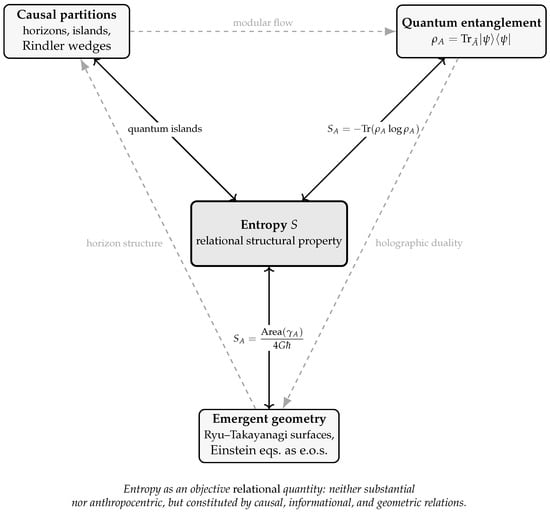
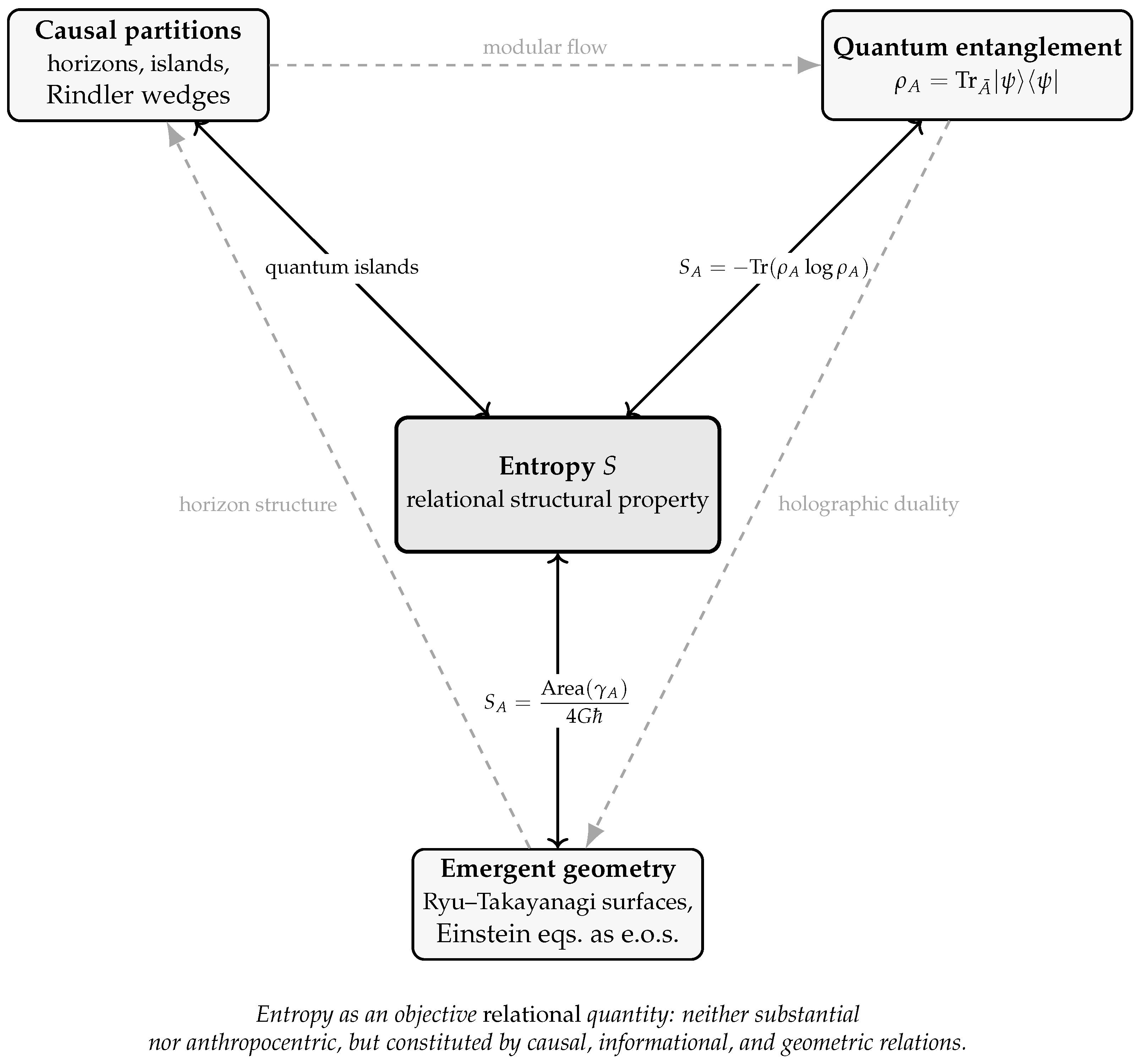
Disclaimer/Publisher’s Note: The statements, opinions and data contained in all publications are solely those of the individual author(s) and contributor(s) and not of MDPI and/or the editor(s). MDPI and/or the editor(s) disclaim responsibility for any injury to people or property resulting from any ideas, methods, instructions or products referred to in the content. |
© 2026 by the author. Licensee MDPI, Basel, Switzerland. This article is an open access article distributed under the terms and conditions of the Creative Commons Attribution (CC BY) license.